Galápagos Islands – Day 1: Welcome to the Wild Zoo
GALÁPAGOS ISLANDS
Day 1: Welcome to the Wild Zoo
October 22, 2025
PART I
Another insanely long and expensive taxi ride to the airport later, and I was ready to embark on a new adventure – the very reason I had wanted to visit Ecuador for so long: the Galápagos Islands.
Located roughly 1,000 kilometres west of mainland Ecuador, the Galápagos archipelago comprises 127 islands, islets and exposed rocks scattered across the equatorial Pacific. Nineteen of these are considered large, although only four – Santa Cruz, San Cristóbal, Isabela and Floreana – are permanently inhabited. Isabela is by far the largest, accounting for more than half of the archipelago’s landmass, while tiny Darwin and Wolf lie isolated far to the north.

All the islands are volcanic, having formed as the Nazca Plate moved over a geological hotspot. Consequently, the younger western islands remain rugged and volcanically active, whereas those farther east are older, lower and more heavily eroded. Together, their landscapes range from stark lava fields and towering calderas to misty highlands, mangrove forests and white-sand beaches, all surrounded by waters enriched by the meeting of several major ocean currents.
Needless to say, this makes the Galápagos a haven for unique wildlife and extraordinary natural beauty. Often described as a living museum and showcase of evolution, the islands helped shape Charles Darwin’s ideas about evolution by natural selection. They are home to species found nowhere else on Earth, including giant tortoises, marine iguanas and several of Darwin’s finches, all set against landscapes of black lava, white-sand beaches and crystal-clear waters teeming with marine life.
In Transit
Before the big adventure I had planned for myself I had half a day to roam around San Cristóbal. And before that, I had to be officially allowed into the archipelago.
At the time, foreign visitors needed a $20 Transit Control Card, used to record and manage movement into and out of the islands, as well as a $200 Galápagos National Park entrance fee that helped fund conservation and sustainable development across the province. What I hadn’t realised was that the latter had to be paid in cash. This meant being told off at the island’s airport and given five minutes to materialise $200 out of nowhere.
Luckily, waiting outside the airport was Miriam, a taxi driver who kindly dropped me off at an ATM in the centre of town at light speed before taking me back to the airport to finalise my entry. Having no plans whatsoever for the rest of the day, I also accepted her offer to take me around the island on a quick, impromptu tour that would cost me an arm and a leg. As excited as I was to explore, I was beginning to feel faint whenever I thought about how much money I had already spent. While planning the trip, I knew it was gonna be expensive, but I hadn’t appreciated just how expensive it would be.
Given that I’d have little to no time on land after that day, I immediately took her up on the offer – budget be damned. I dropped my bags off at the hotel and headed straight back out.
The Wildlife Before the Tour
Having not had a chance to smoke since before the flight, I practically begged Miriam for a minute to myself before we started the tour.
As I lit my cigarette, I finally had the opportunity to take everything in. With my hotel conveniently located on the seafront, the promenade proved to be the perfect place to stop. It was at that exact moment, as I stared out towards the sea, that I remembered Jonathan, the expedition leader from my Antarctic cruise, telling us that smokers often witness the most wildlife because they spend so much time standing around outdoors.
There, right in front of me, practically lay an entire zoo. The Galápagos sea lions were naturally the most obvious sight. Then came the frigatebirds gliding overhead, the enormous Sally Lightfoot crabs scuttling across the shore and a marine iguana hauling itself out of the water after a dive. One view and I was already hooked!
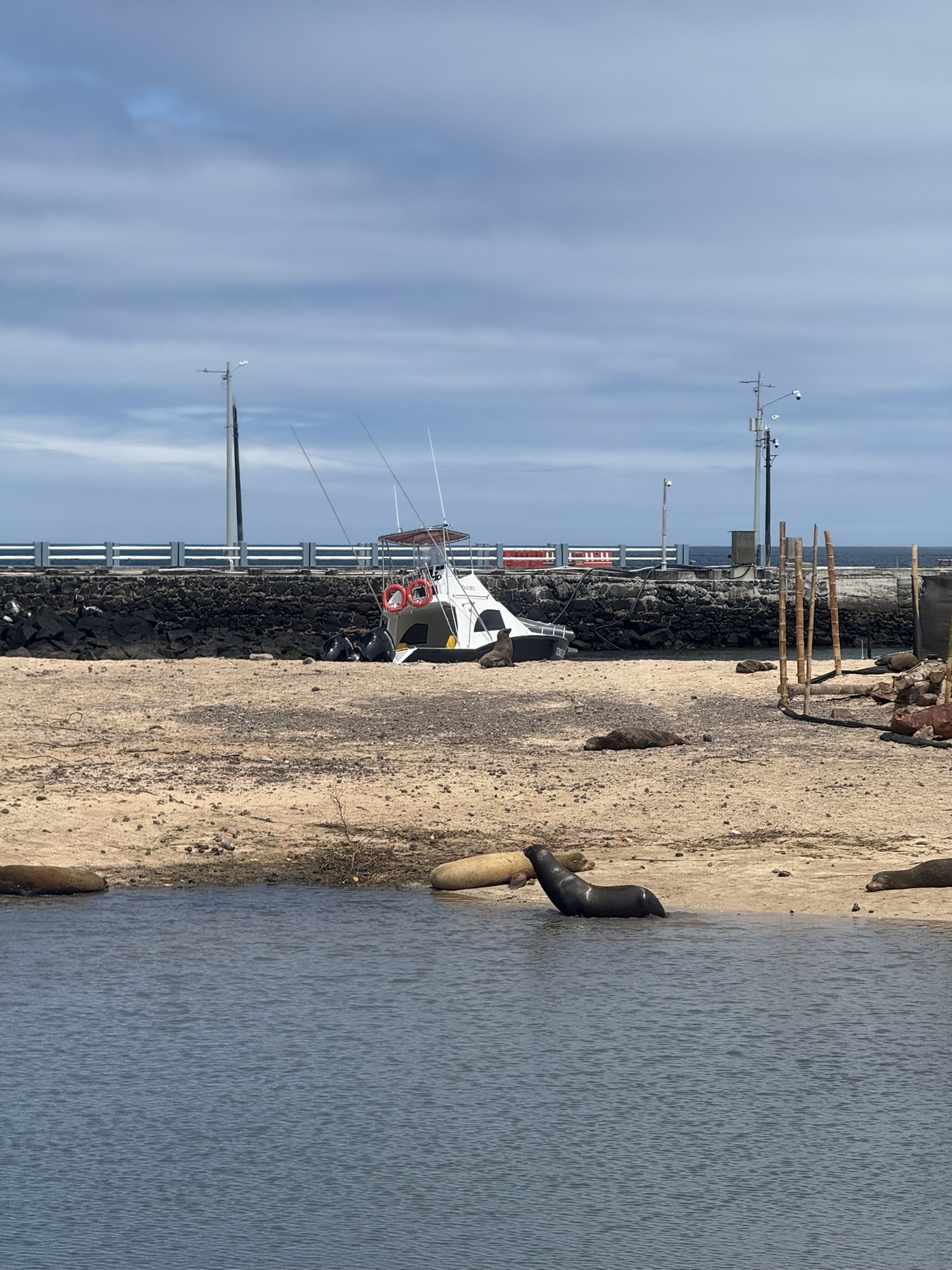
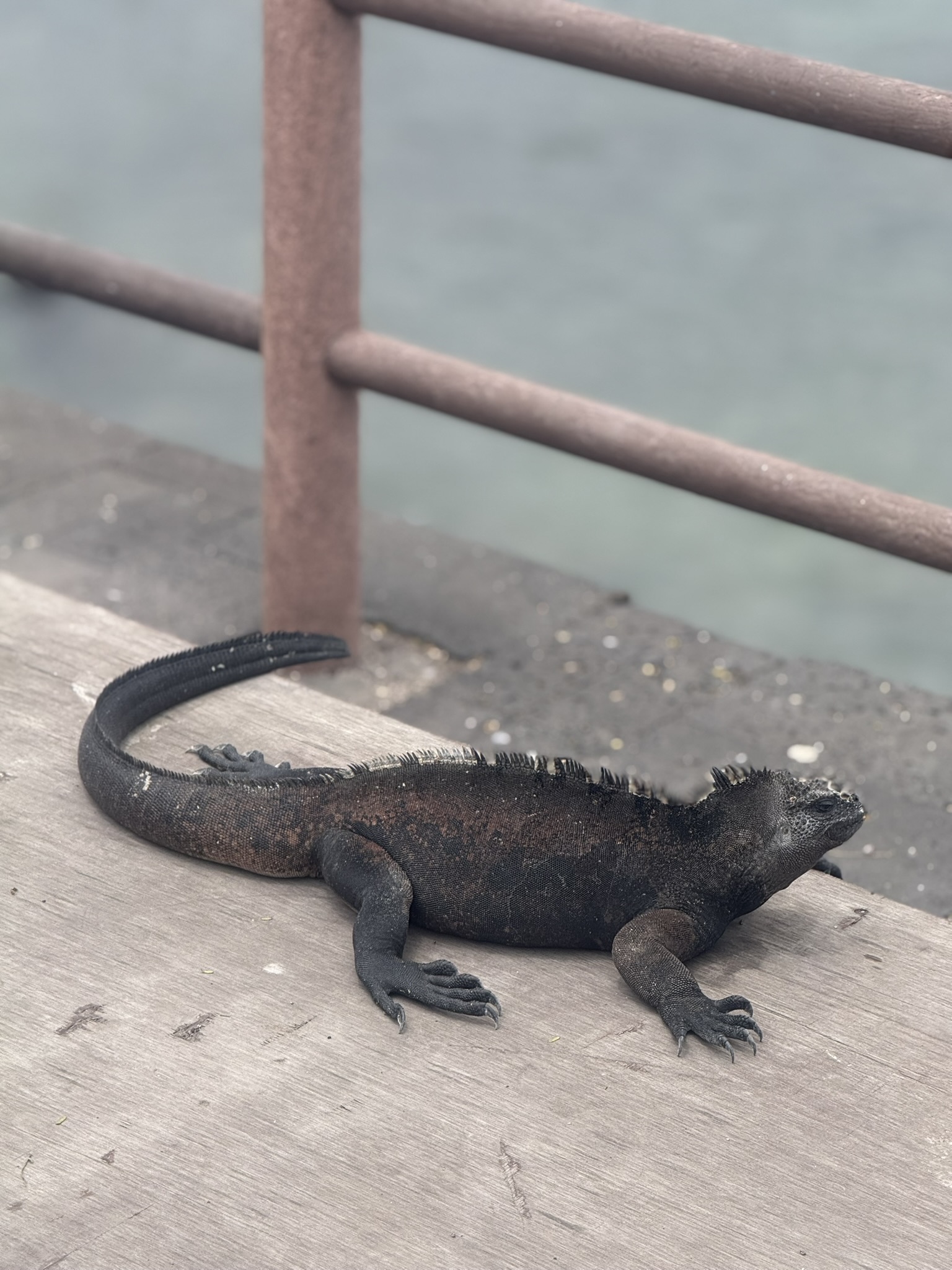
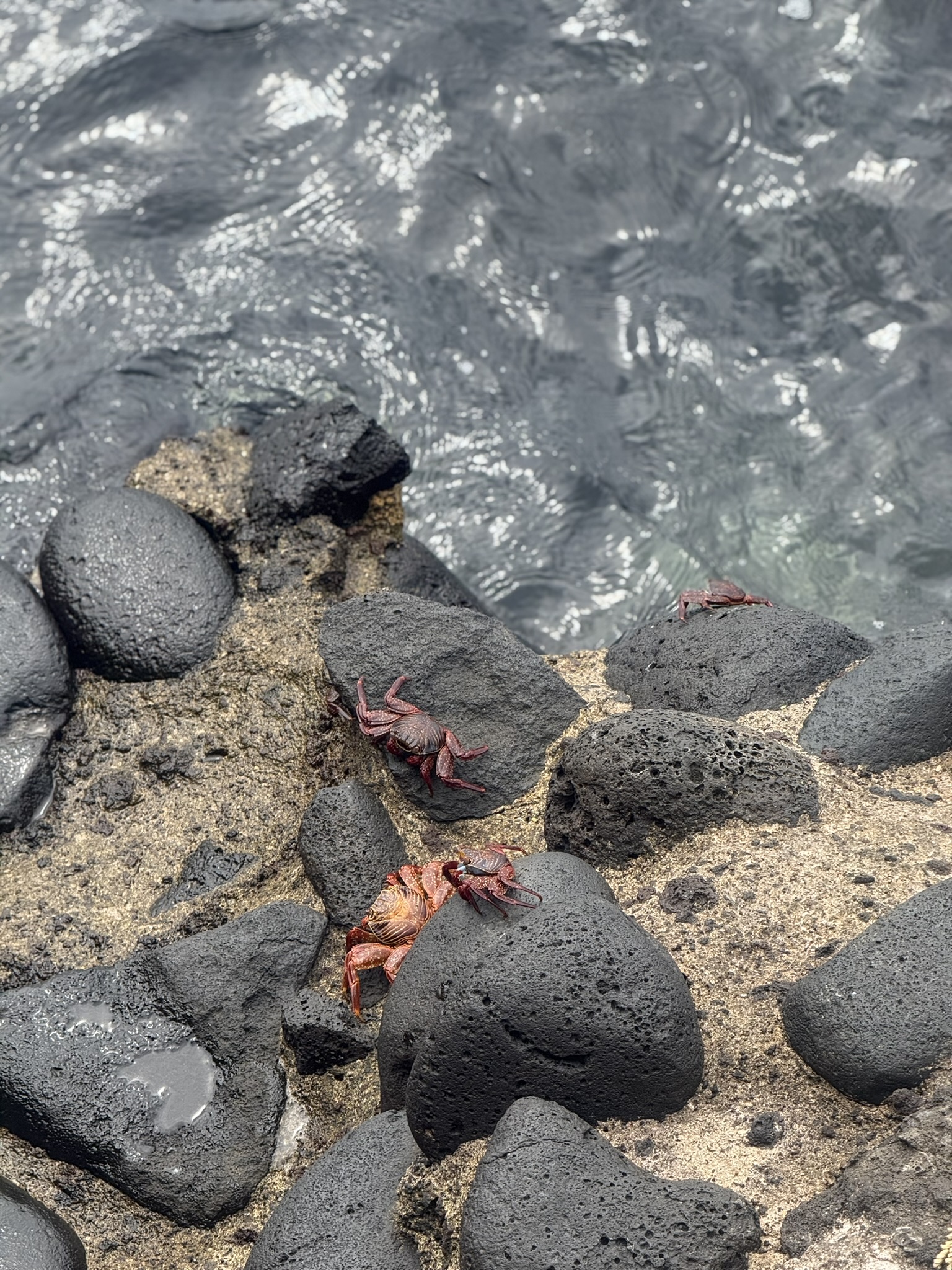
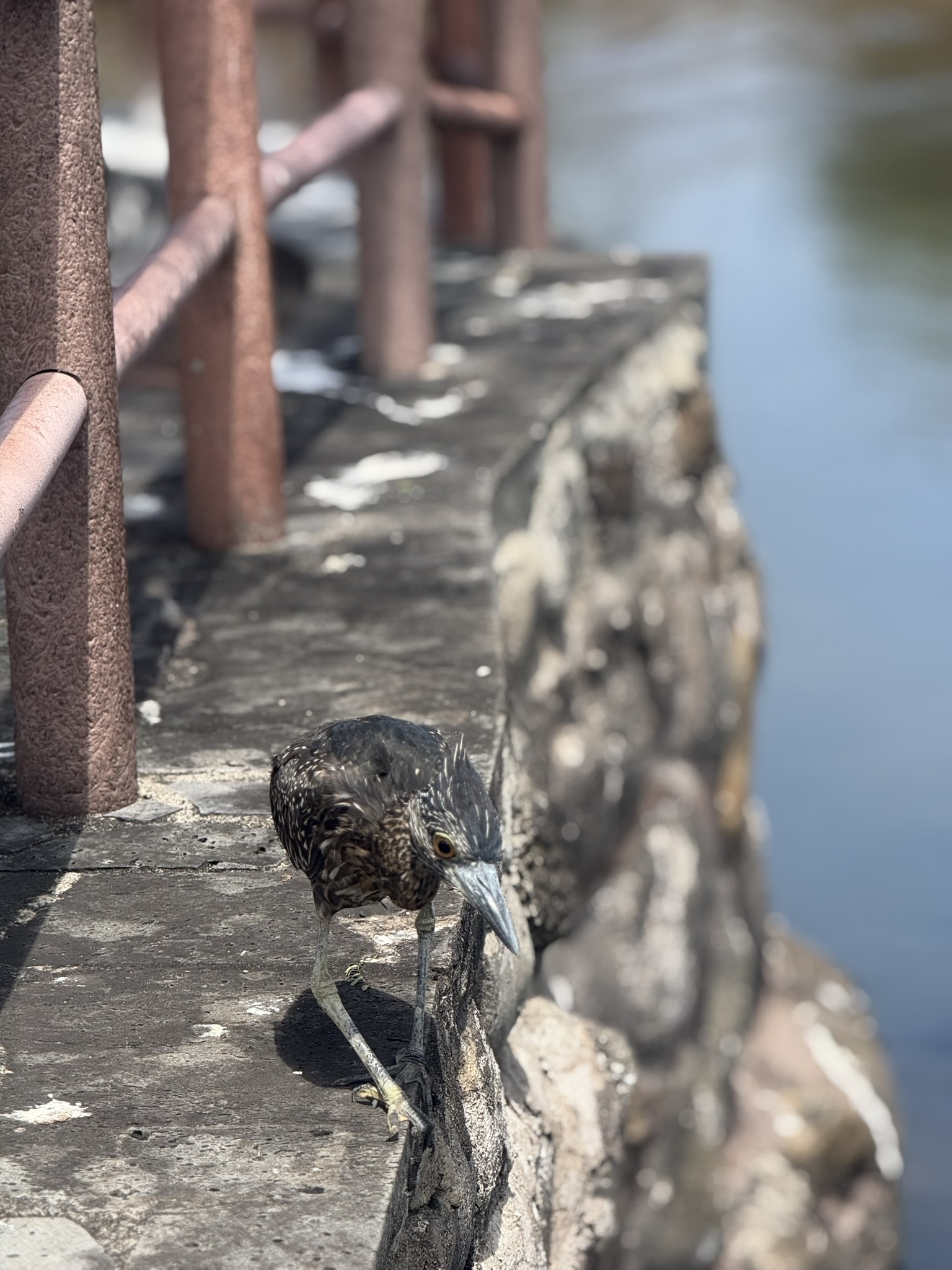
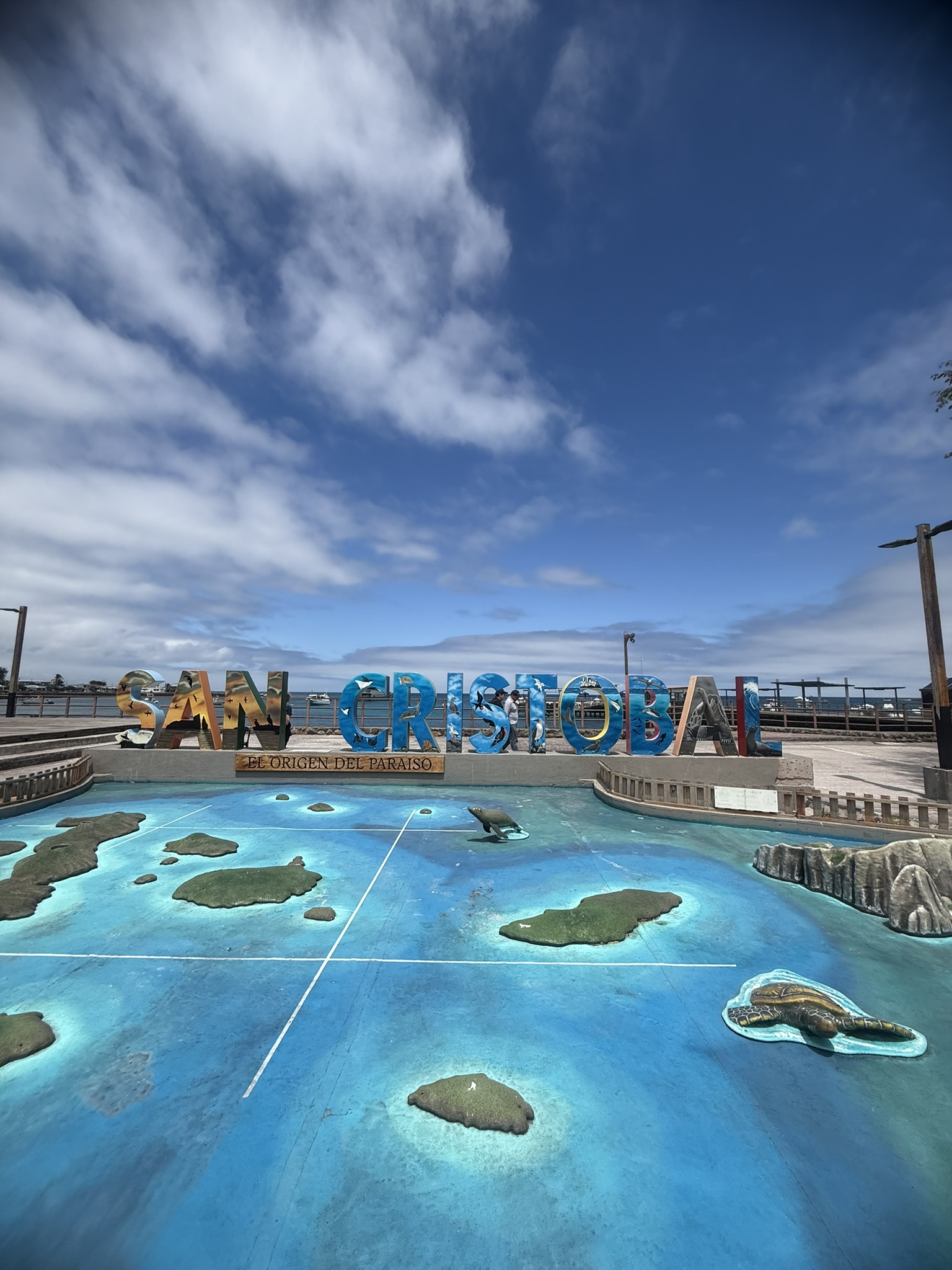
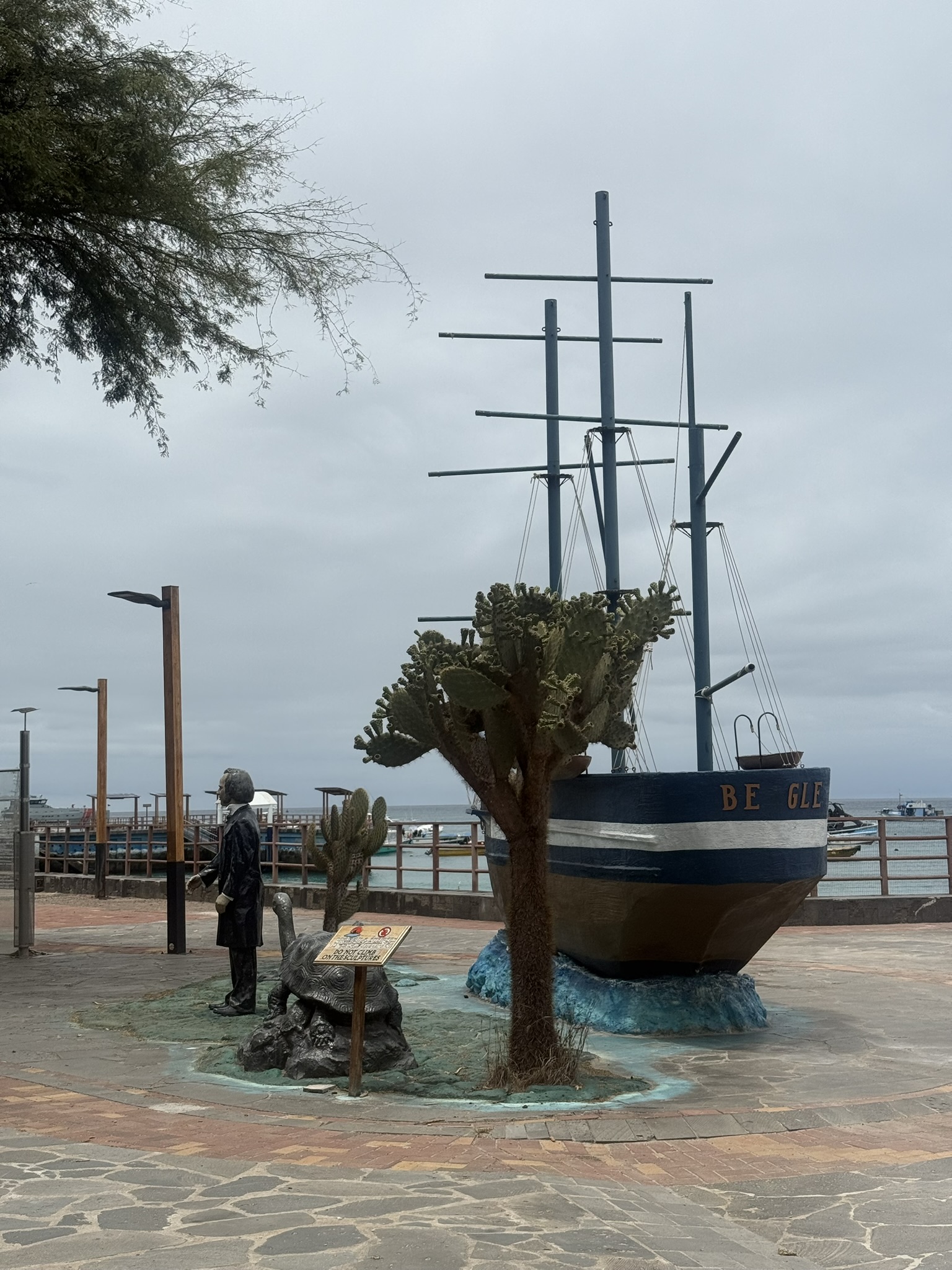
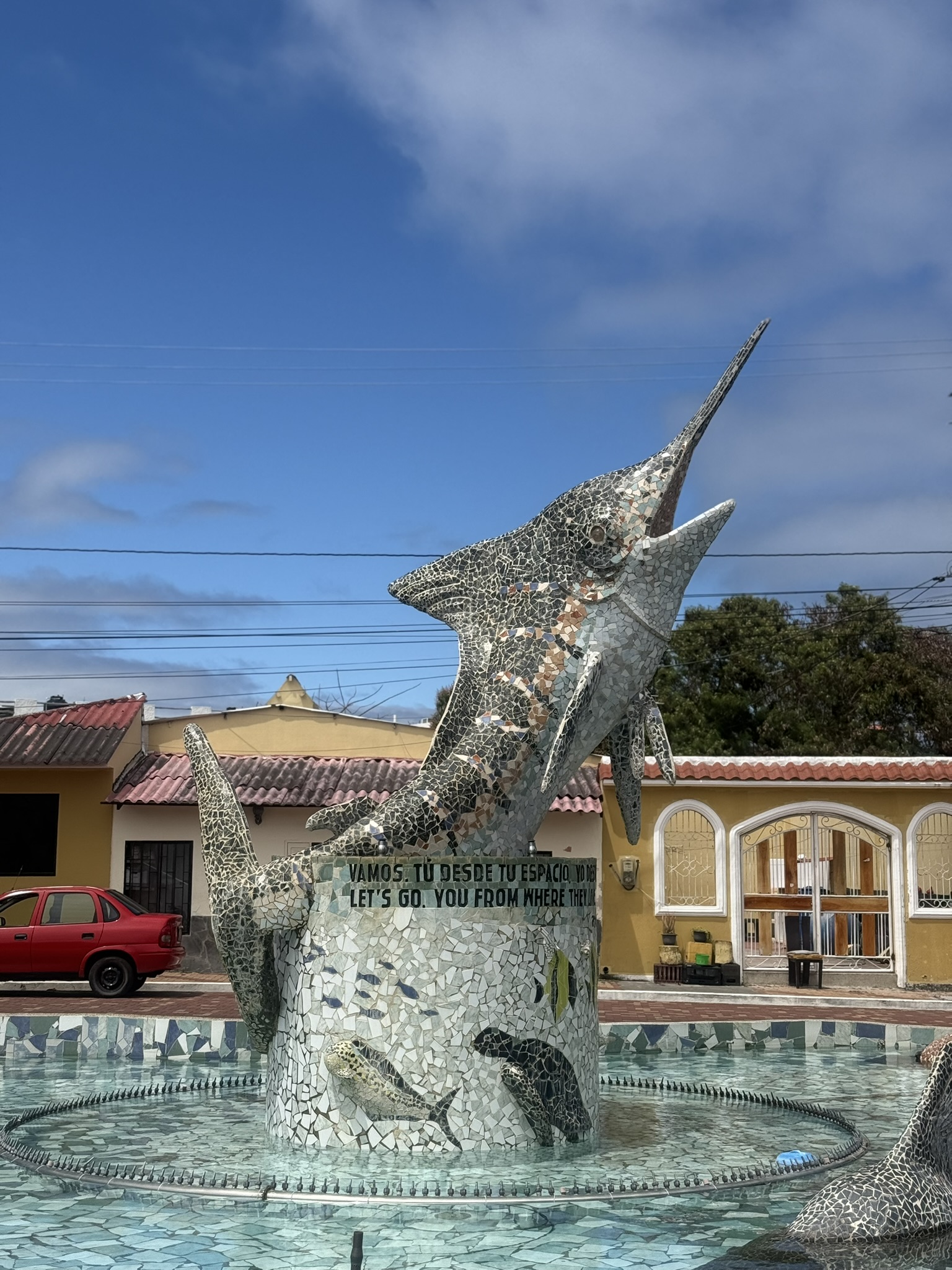
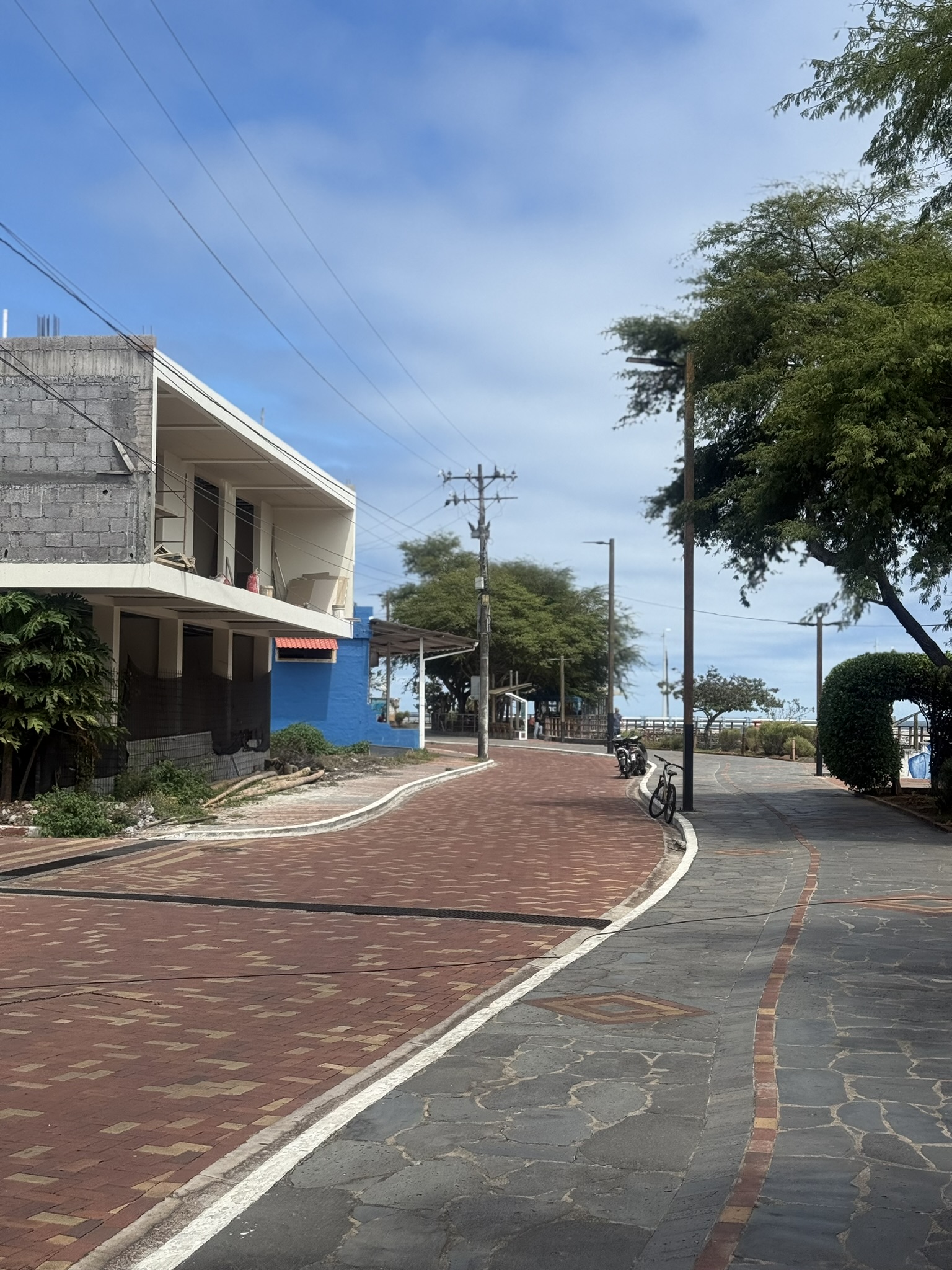
That said, I only had a few hours at my disposal before sunset, so I did my best to tear my eyes away from the glorious scene, expecting the highlights of the tour to somehow eclipse it. And so, I got back in the car and just like that, we were on our way. As we drove, Miriam gave me a brief introduction to the archipelago, explaining that only four islands have permanent civilian settlements:
- Santa Cruz: The archipelago’s largest population centre.
- San Cristóbal: Home to the provincial capital, Puerto Baquerizo Moreno.
- Isabela: With most of its population concentrated around Puerto Villamil.
- Floreana: Home to a tiny community in Puerto Velasco Ibarra
Most residents live within designated towns and rural areas because approximately 97% of the archipelago’s land is protected as part of the Galápagos National Park. This, she explained, was mostly due to freshwater scarcity. Luckily, San Cristóbal’s highlands contain El Junco – one of the archipelago’s few permanent freshwater lakes. Other inhabited areas, she went on, rely on rainfall, groundwater and desalination to meet the needs of residents and visitors.
As we went inland towards our first stop, I could immediately see how dramatically conditions changed across the island. The sunny coast contrasted completely with the roads wrapped in cloud at higher elevations. Here, Miriam pointed out all kinds of cultivated crops and plants, including bananas, papayas and coffee, along with an apparently endless list of others.
PART II
The Giants of Cerro Colorado
Our first stop was the Galapaguera de Cerro Colorado, a breeding and rearing centre for the giant tortoises of San Cristóbal. Miriam explained that it had been created to help conserve and rebuild the island’s tortoise population, which had been severely depleted by hunting and introduced species.
Once at the entrance, I was welcomed by a guide who gave me a brief lecture on these majestic beasts. He told me that Galápagos giant tortoises are among the most iconic and longest-living animals on Earth. The archipelago itself takes its name from galápago, an old Spanish word associated with tortoises. Twelve living species are generally recognised, although their taxonomy continues to evolve as new genetic evidence emerges, with each population having adapted to the particular conditions of its island or volcano. The tortoises are mostly herbivorous, feeding on grasses, leaves, fruit and cacti. Adults can weigh around 250 kilograms and routinely live for more than 100 years, with a few captive individuals surviving well beyond 170! There are also several differences between the sexes, with males generally growing much larger and having concave plastrons as well as longer, thicker tails.
Being unsure how much time I’d have on land, I had worried that I might leave the archipelago without seeing the incredible creatures that most people travelled here to find. Needless to say, this unplanned excursion had me over the moon. I’d get to see tortoises at different stages of life, from tiny hatchlings inside protected enclosures to enormous adults roaming through semi-natural habitats. The centre, the guide explained, mimicked their natural environment while protecting younger tortoises from introduced predators until they were large and strong enough to be released into the wild.
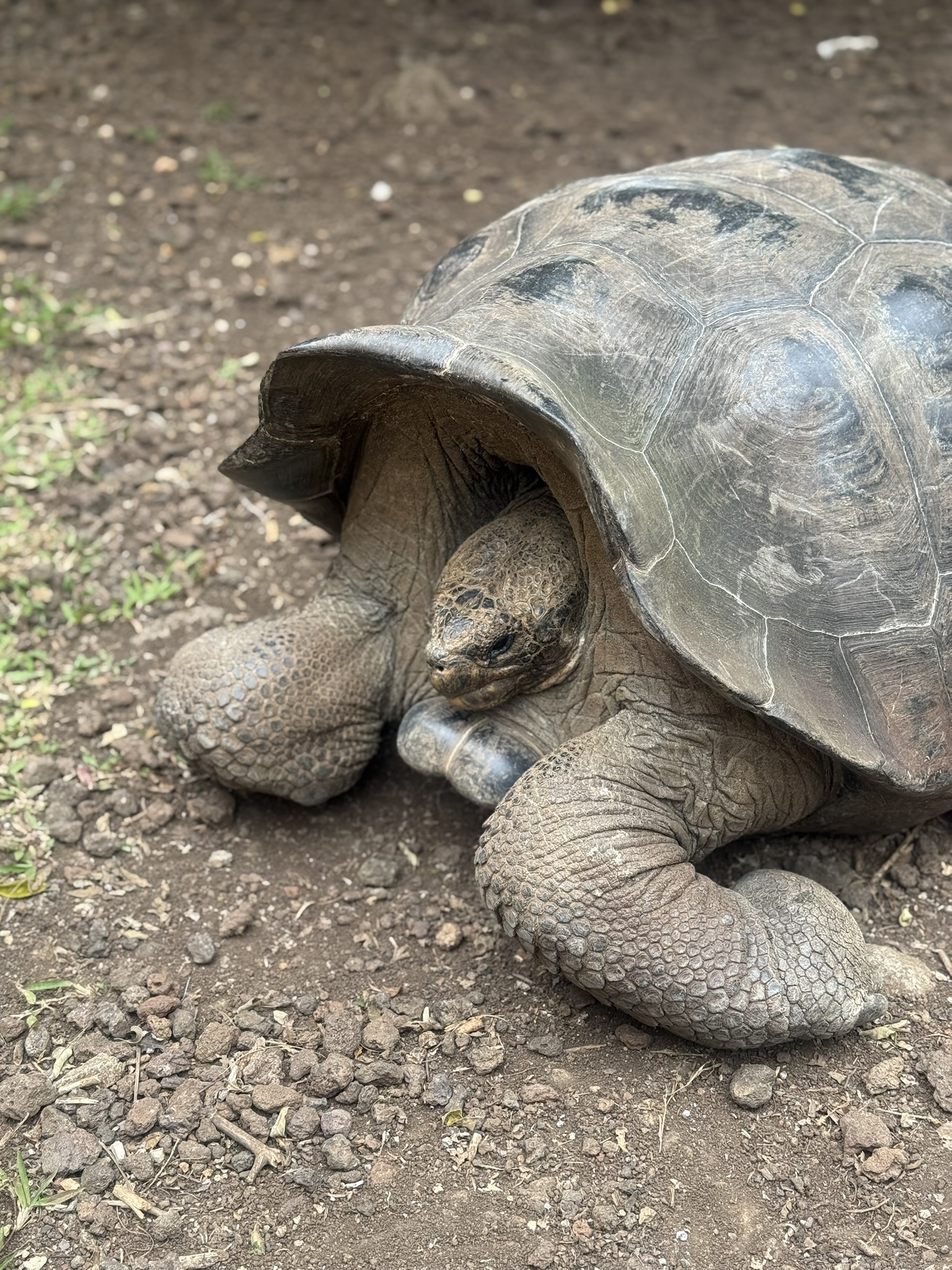
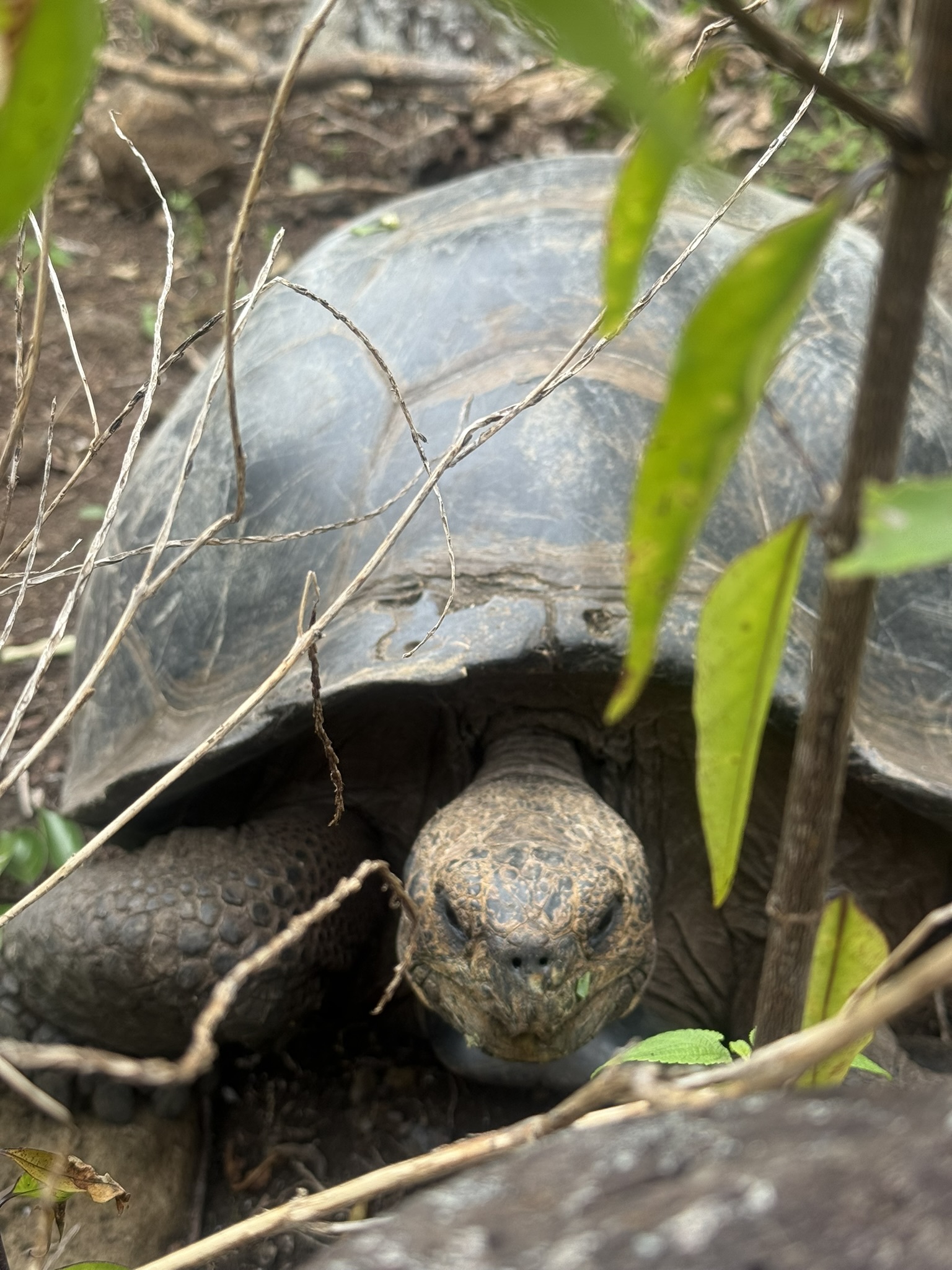
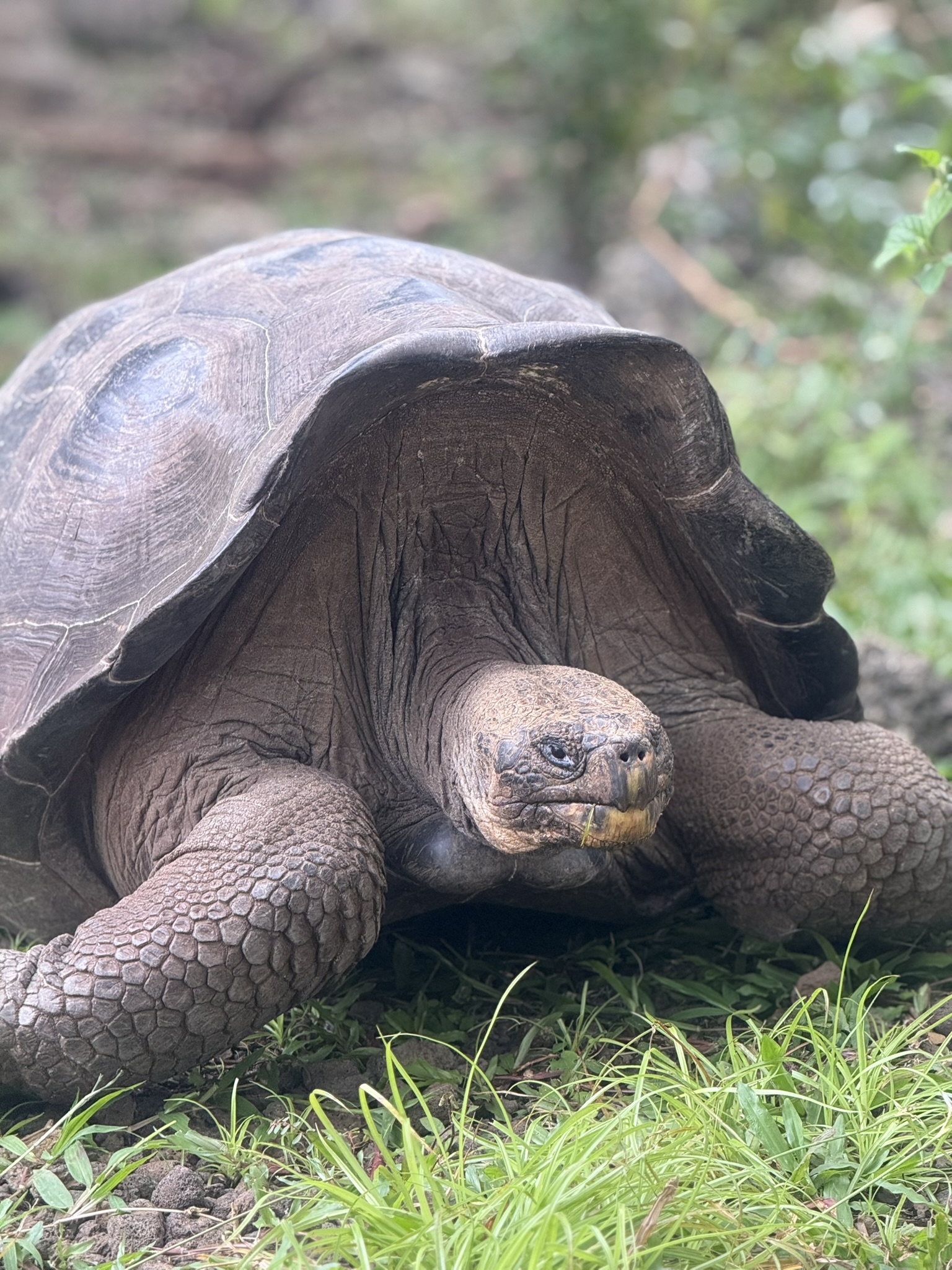
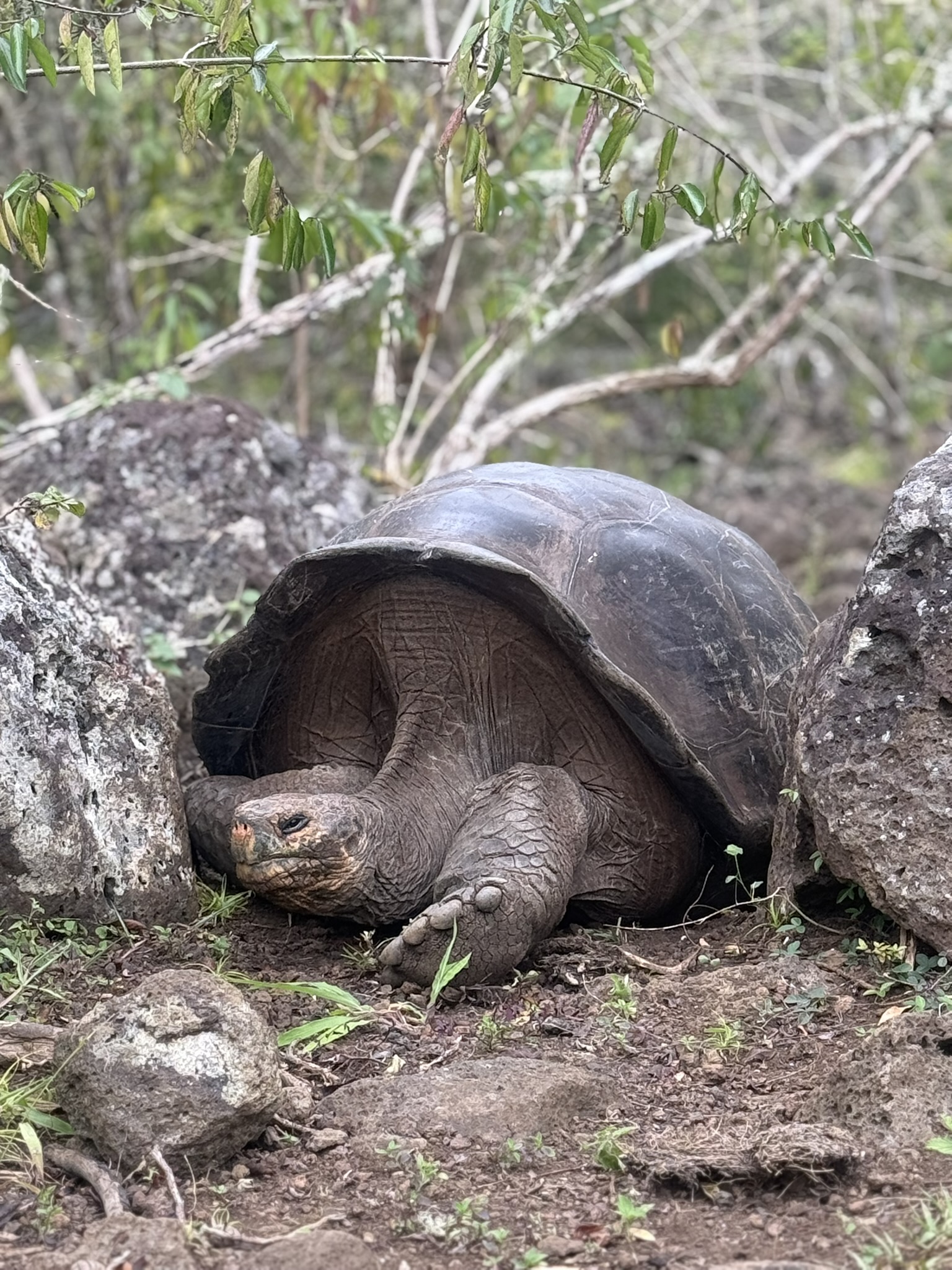
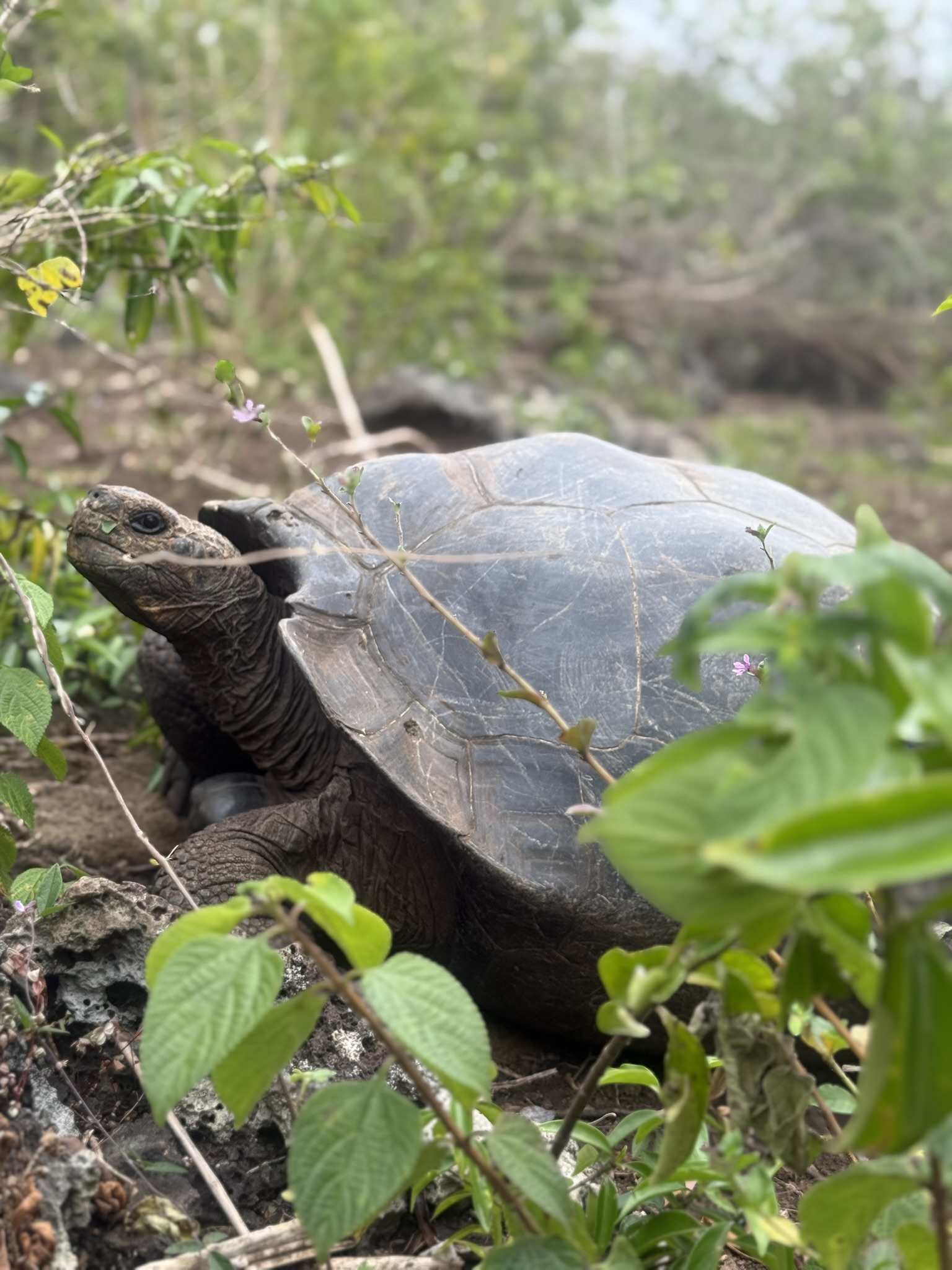
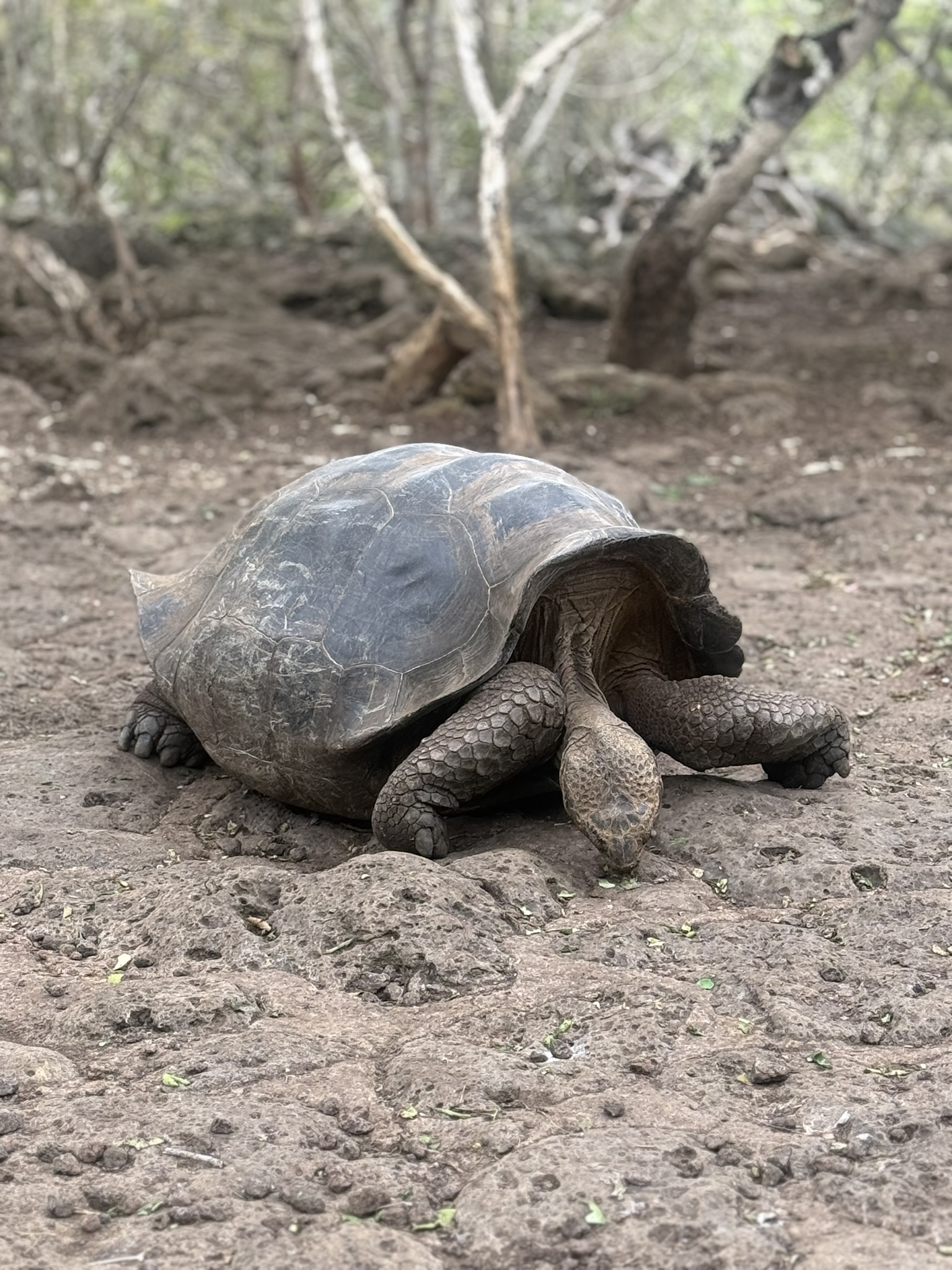
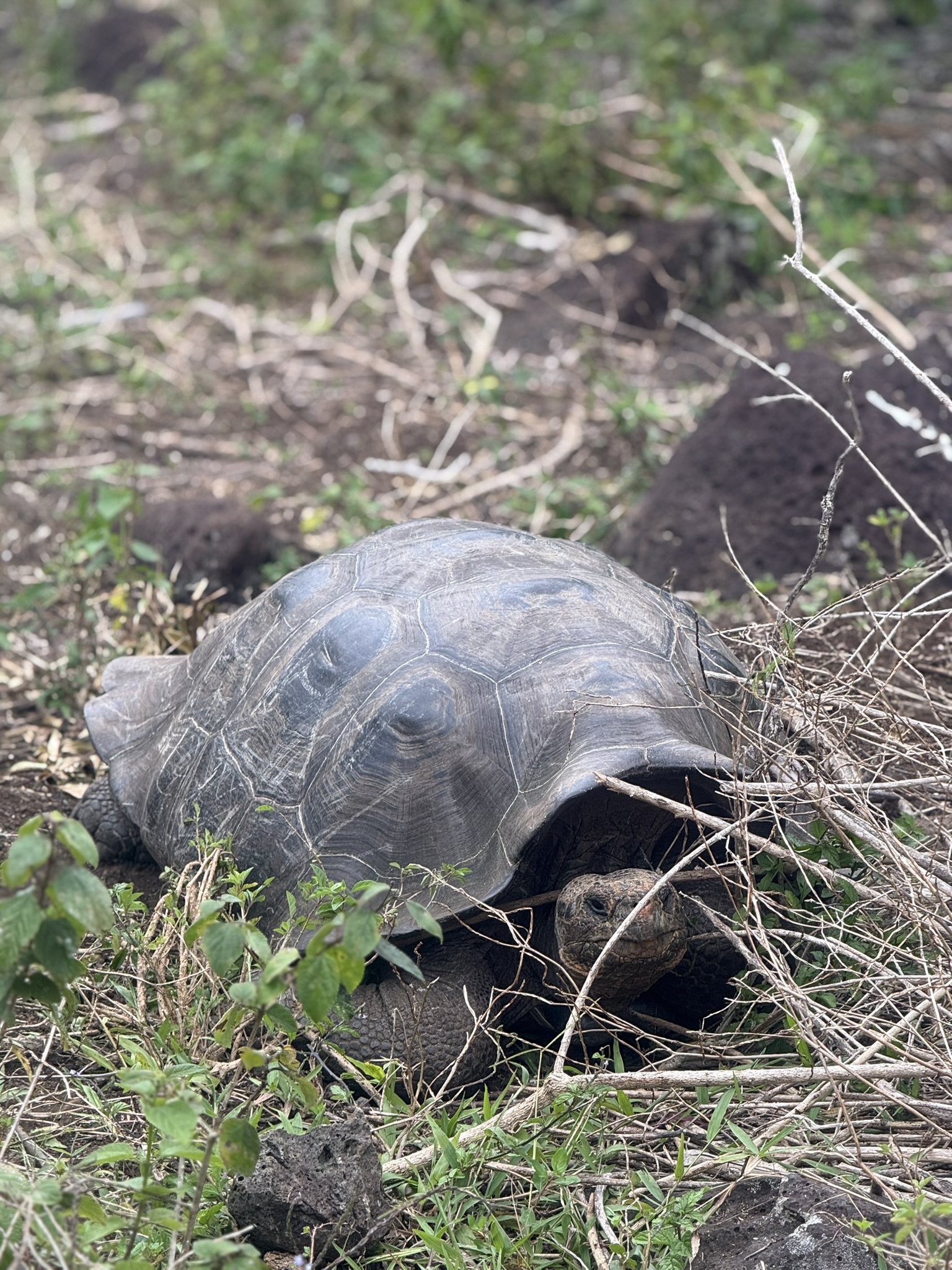
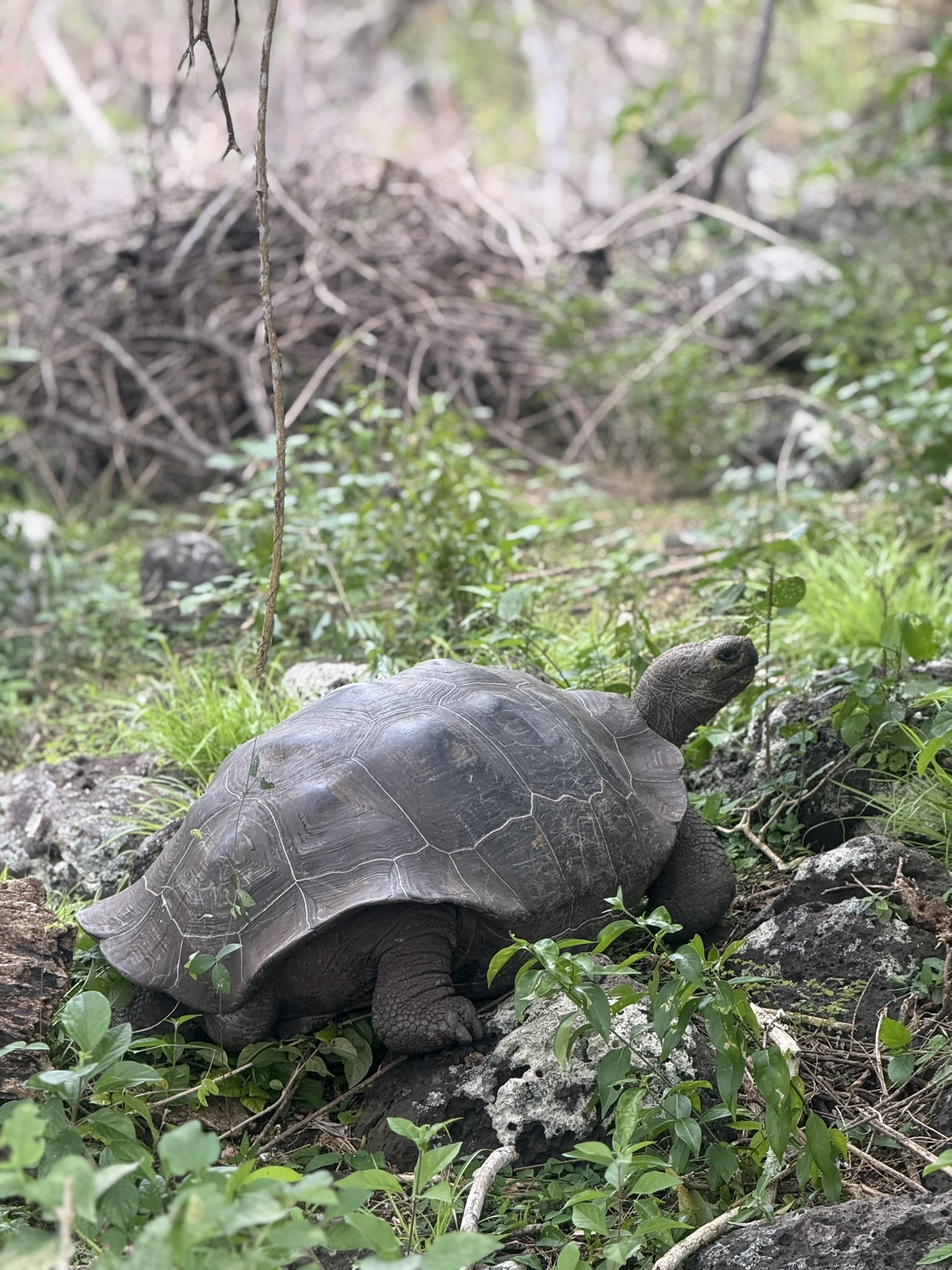
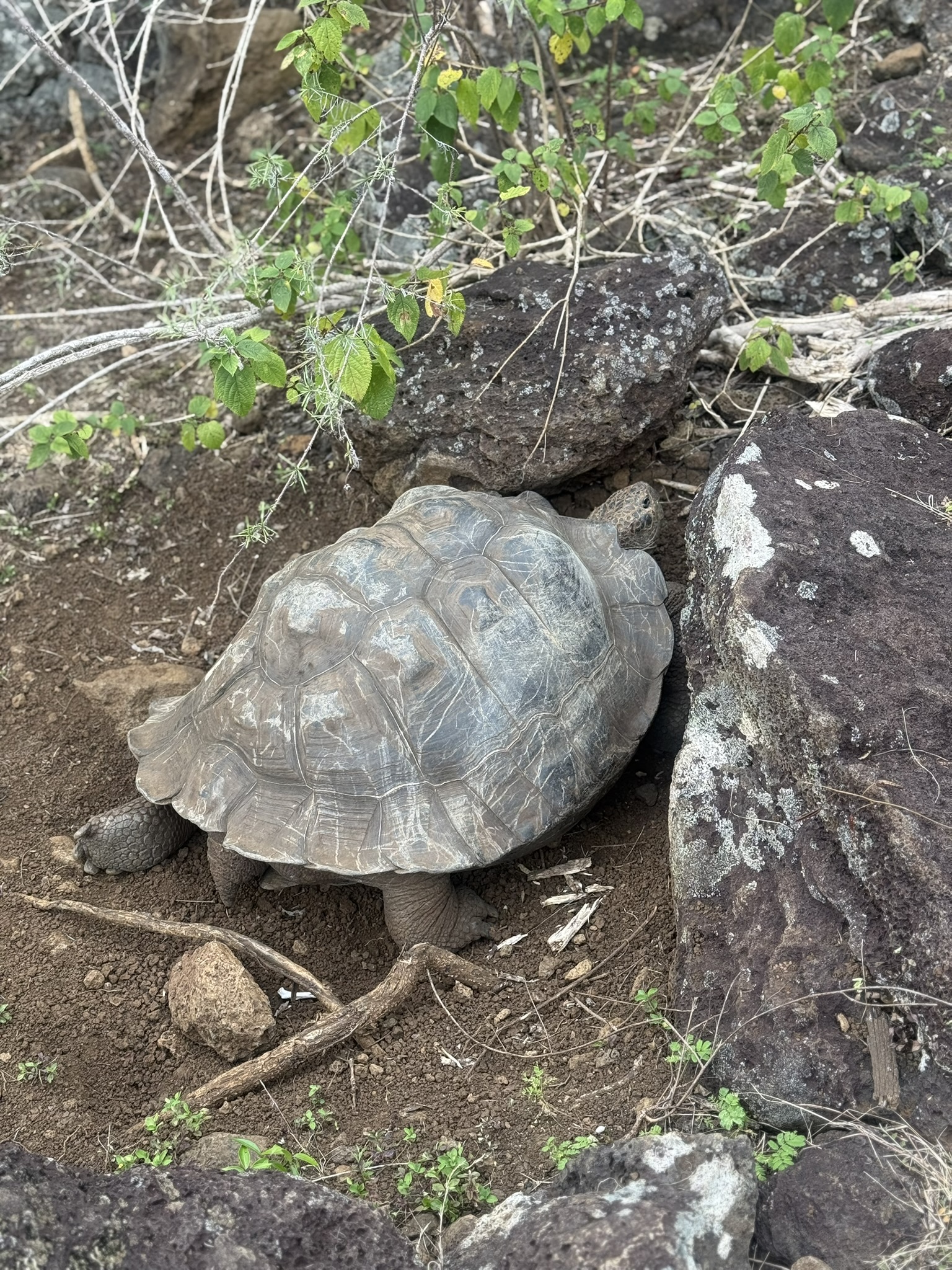
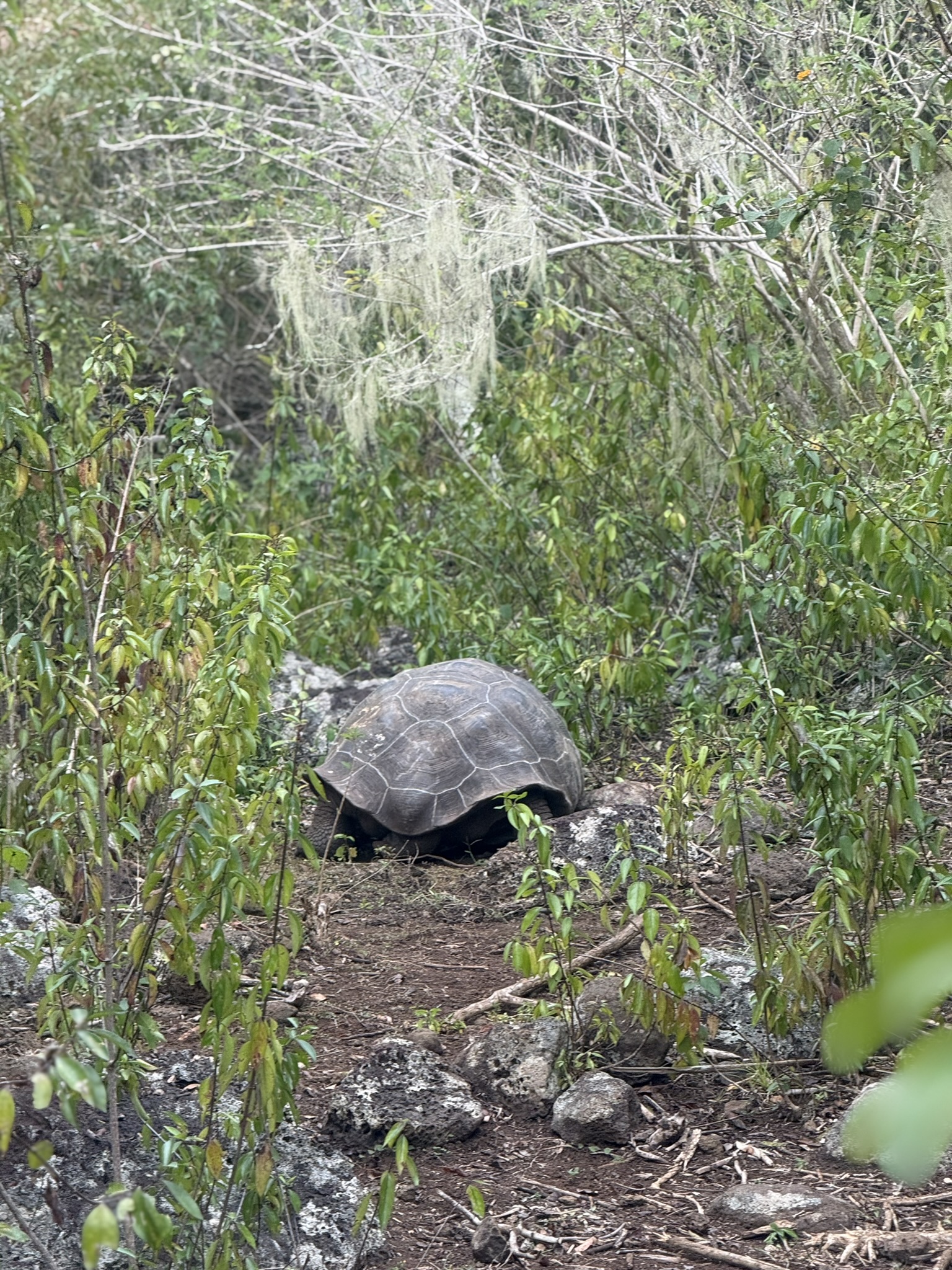
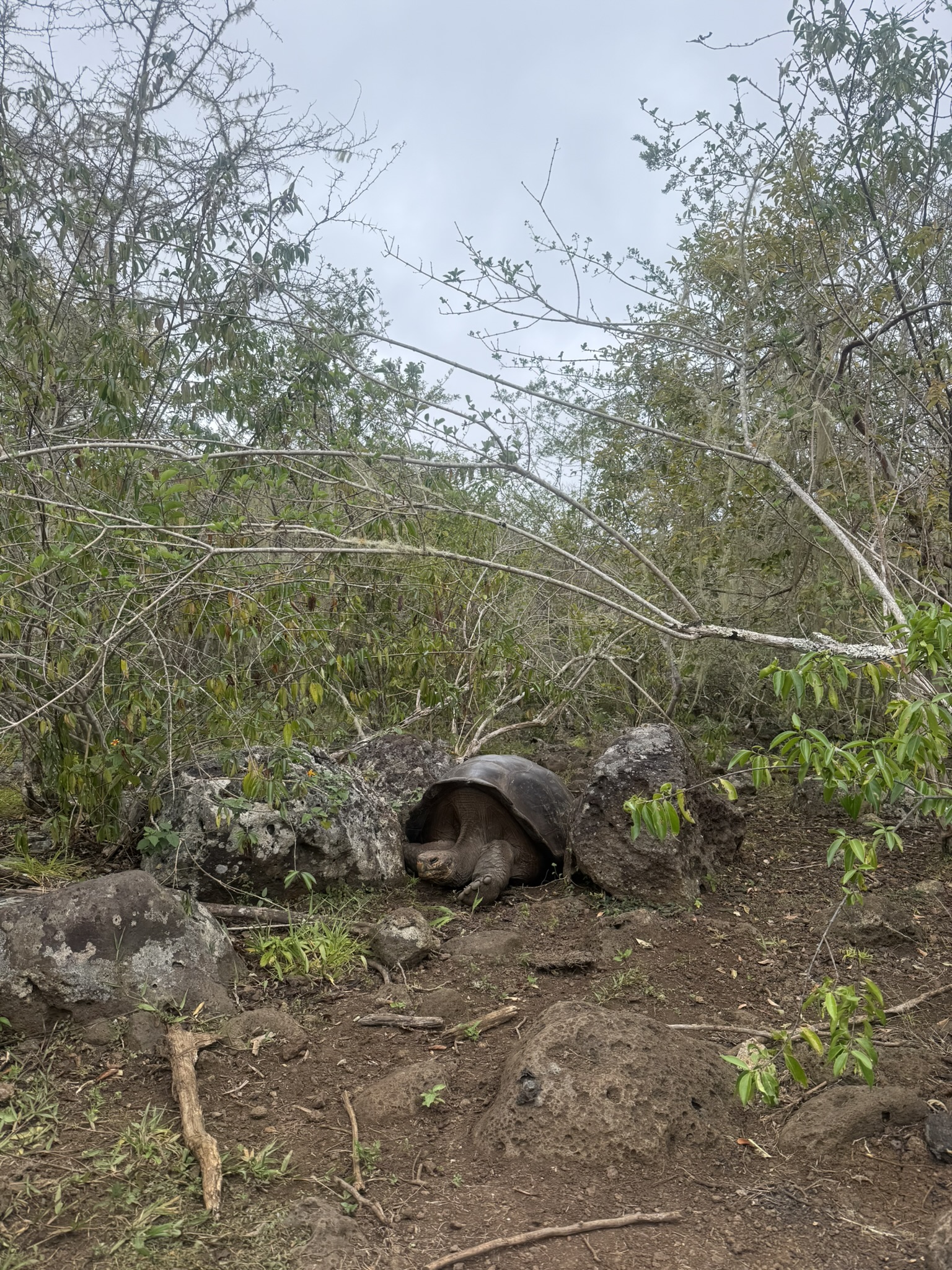
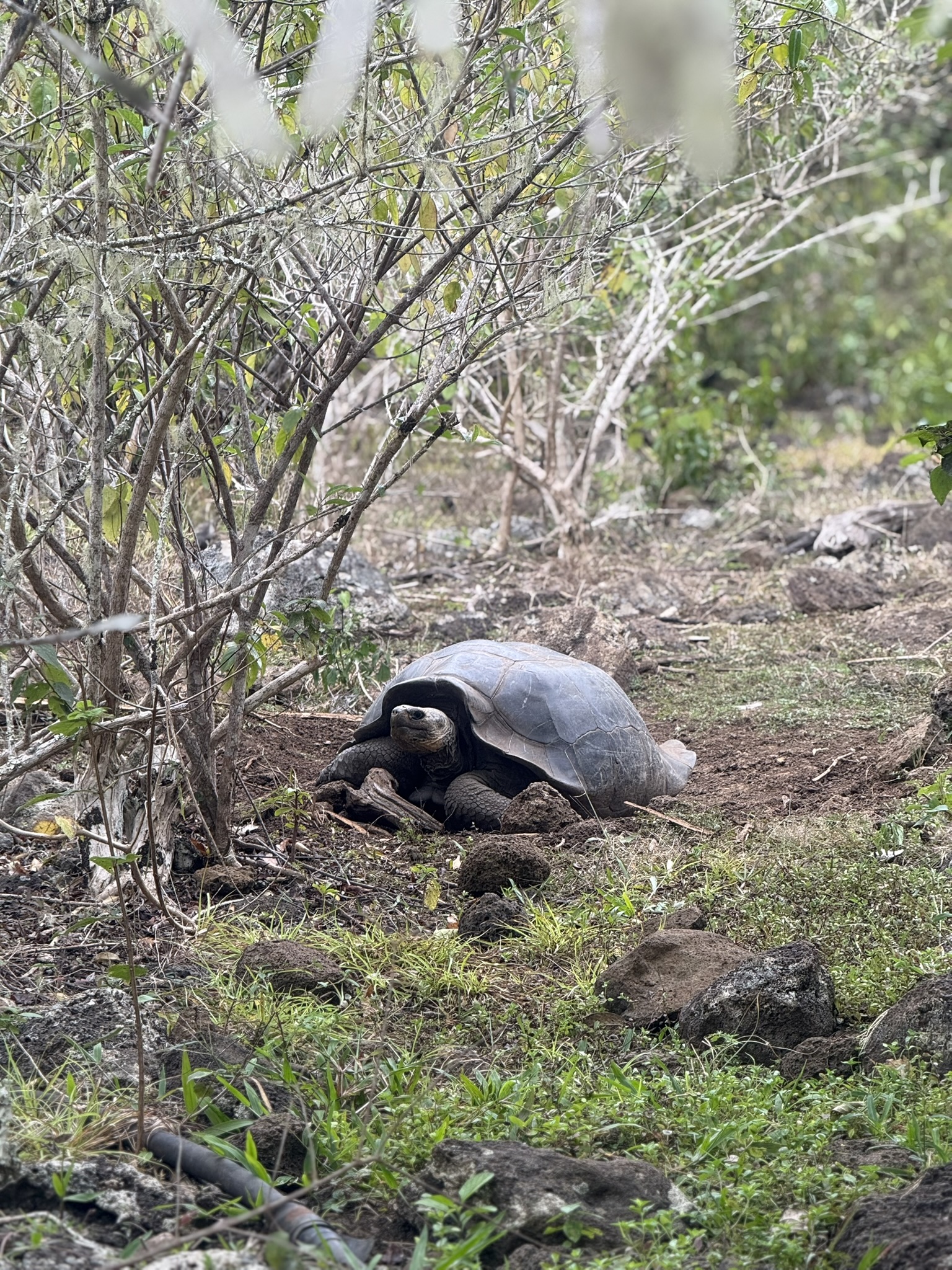
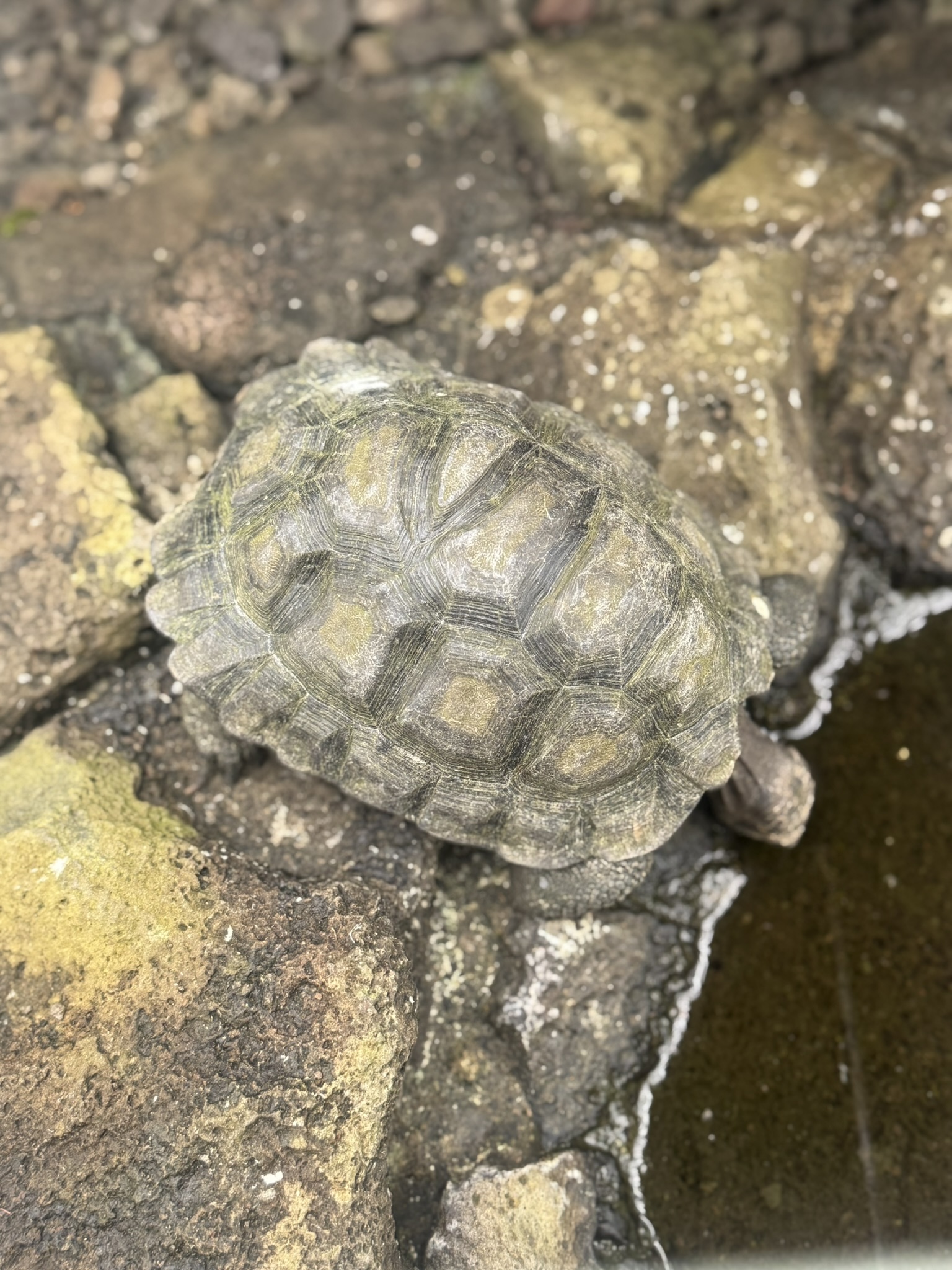
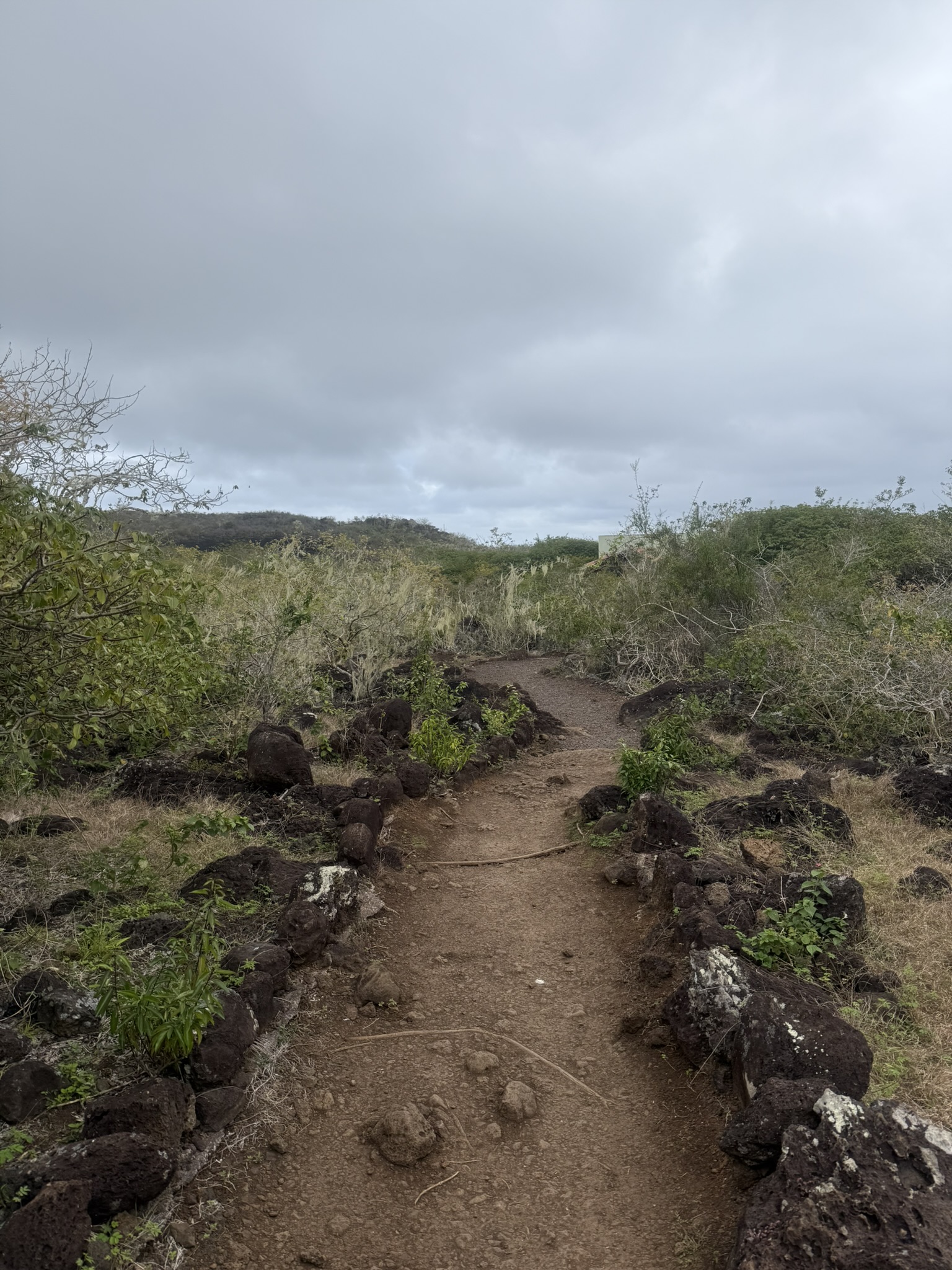
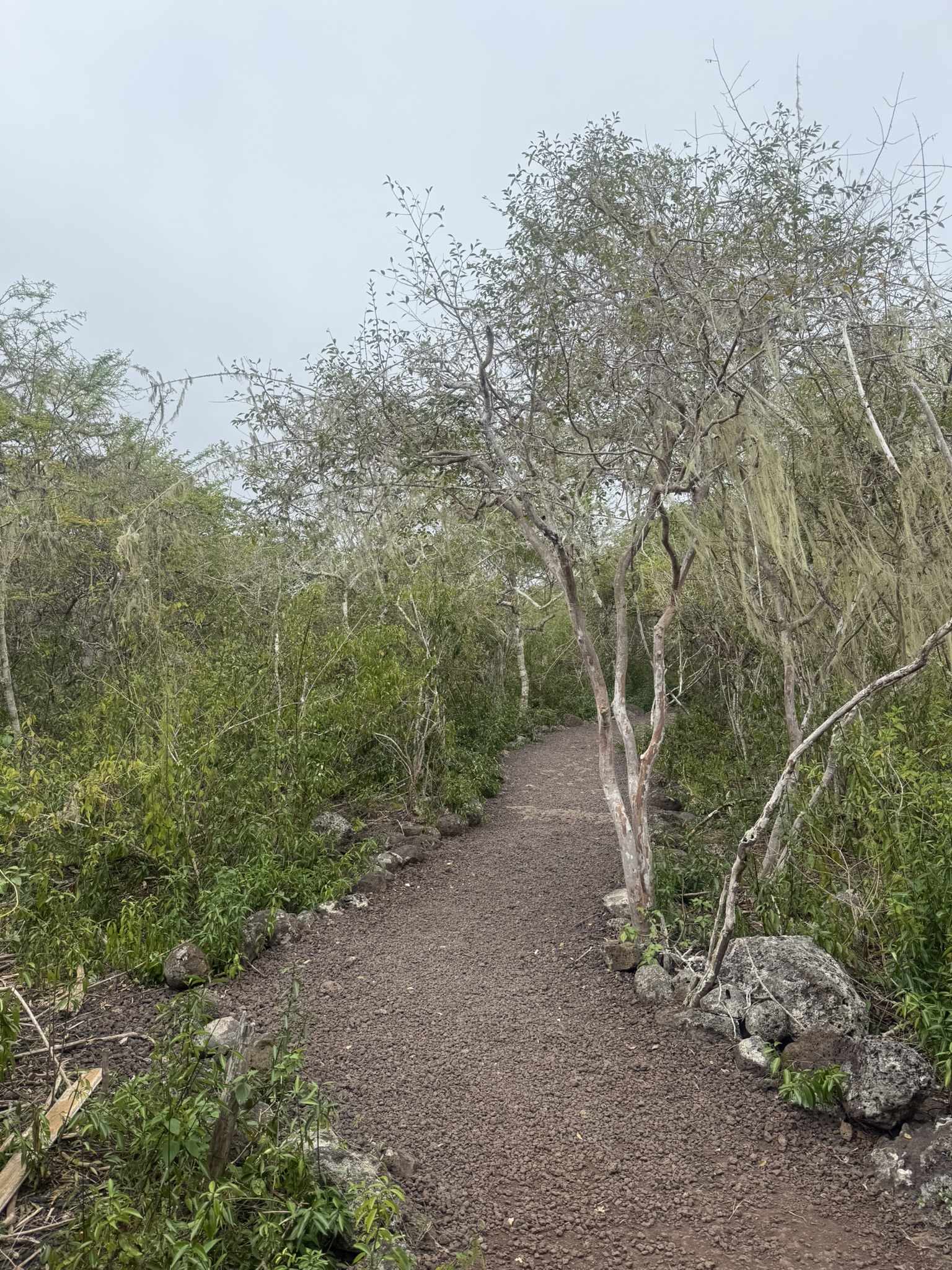
We hadn’t even reached the beginning of the trail when we encountered the first one, an enormous tortoise that left my jaw on the floor. It was practically a rehash of seeing Komodo dragons in Indonesia, with my brain once again unable to process the true size of the animal despite all the photographs and documentaries I had seen beforehand. They were so, so huge!
As I continued along the path, I encountered several more, each one leaving me just as awestruck as the last. I also spotted plenty of other wildlife, including Darwin’s finches, San Cristóbal mockingbirds, yellow warblers and lava lizards. I could only imagine how bewildering it must have been for Darwin to set foot on these islands without knowing what he was going to find!
Boobies Above Puerto Chino
While driving towards our second stop, I asked Miriam to pull over beside a crumbling lookout tower that resembled an abandoned lighthouse. I expected the view from the top of the hill to be gorgeous, and let’s just say I wasn’t wrong. From there, I could appreciate a sweeping view of San Cristóbal’s coastline, including Puerto Chino – our next destination.

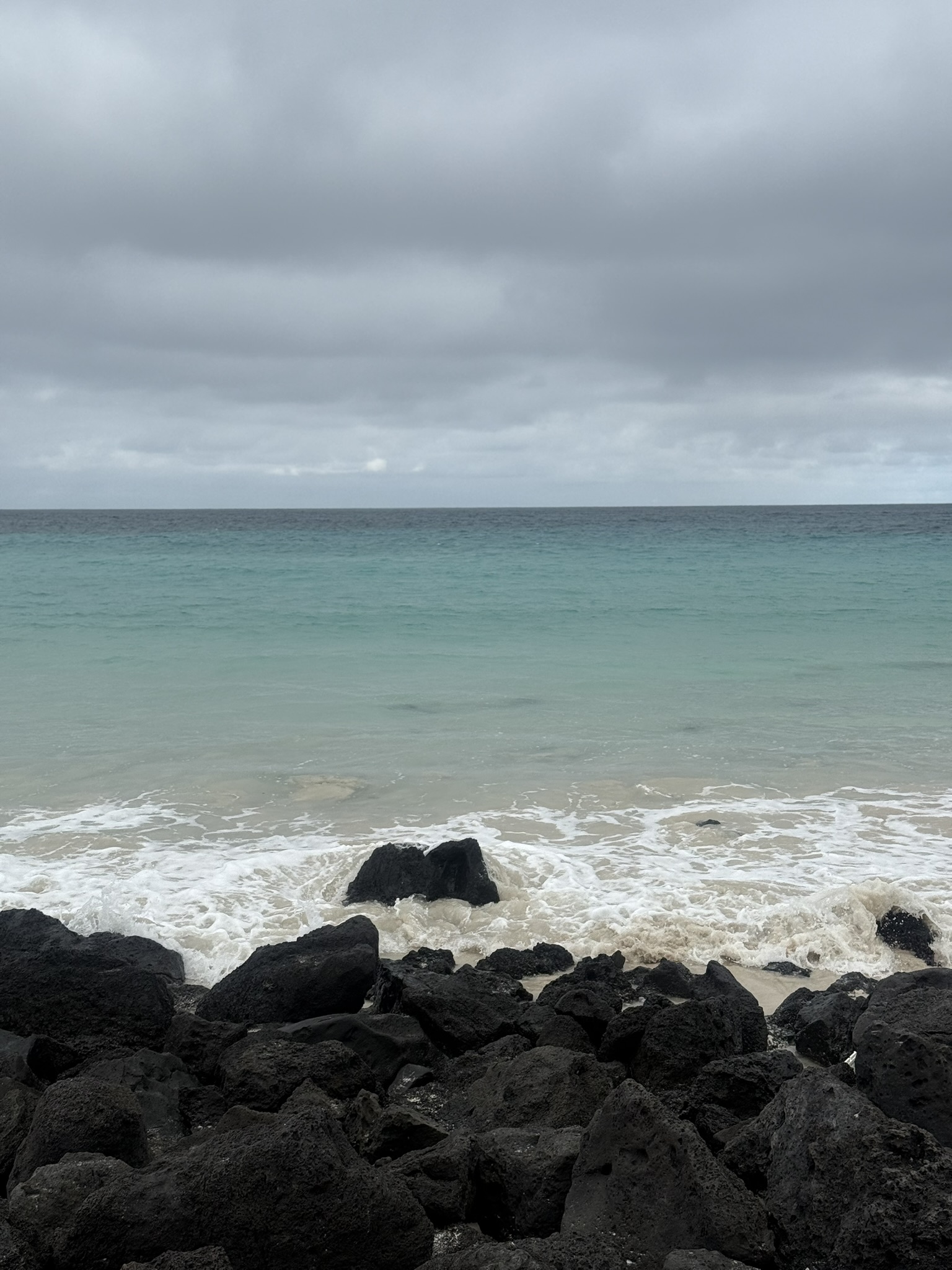
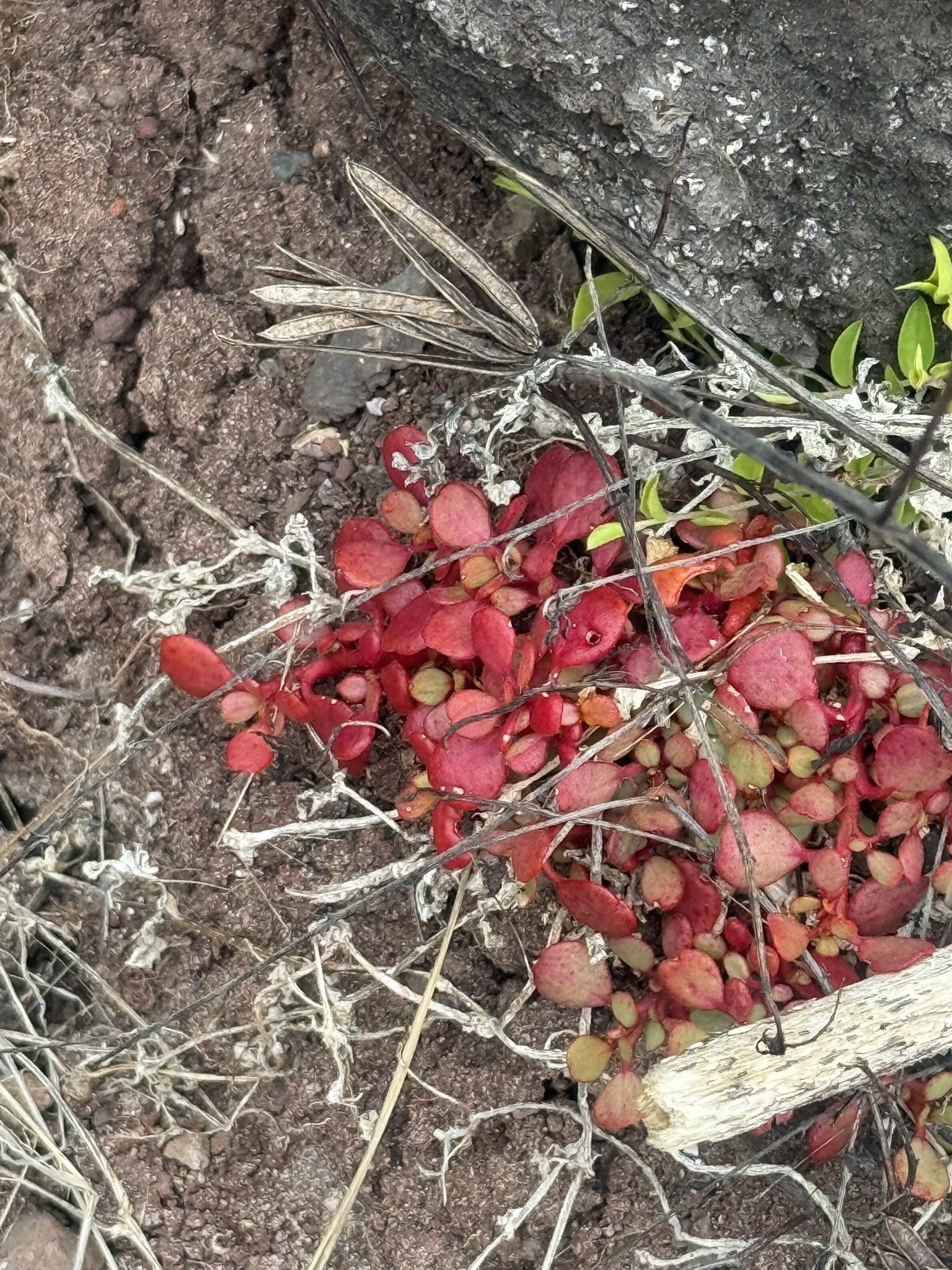
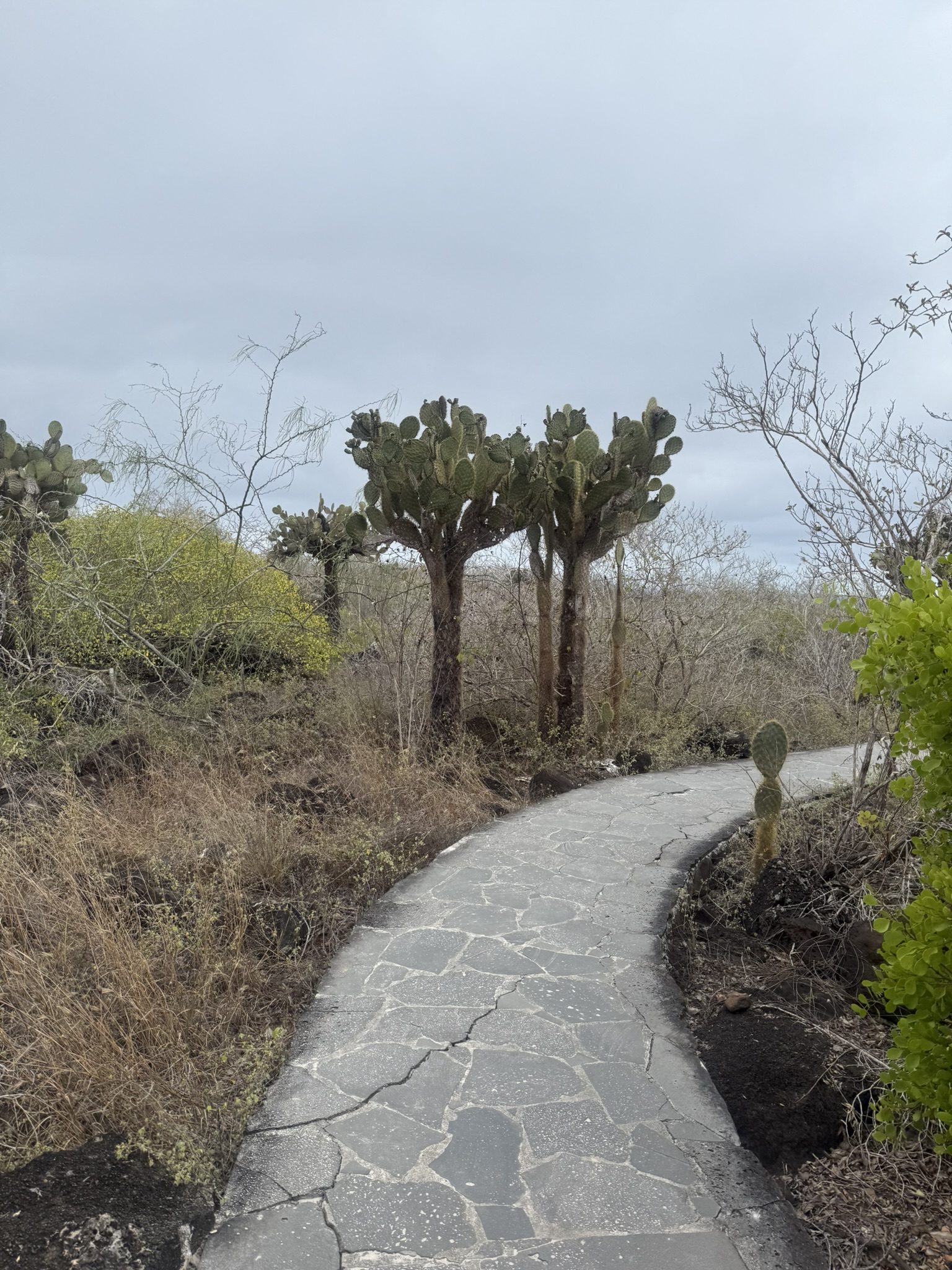
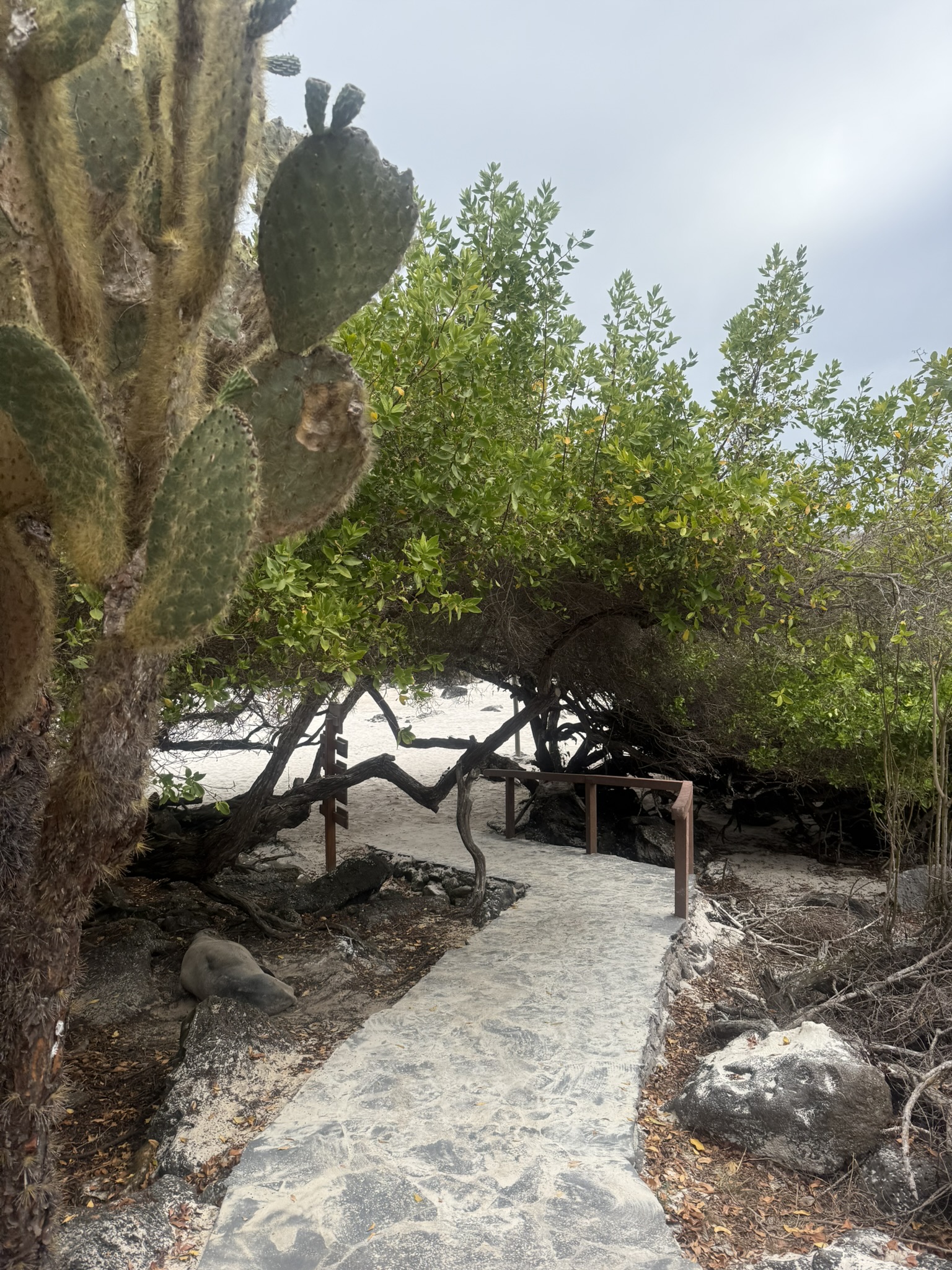
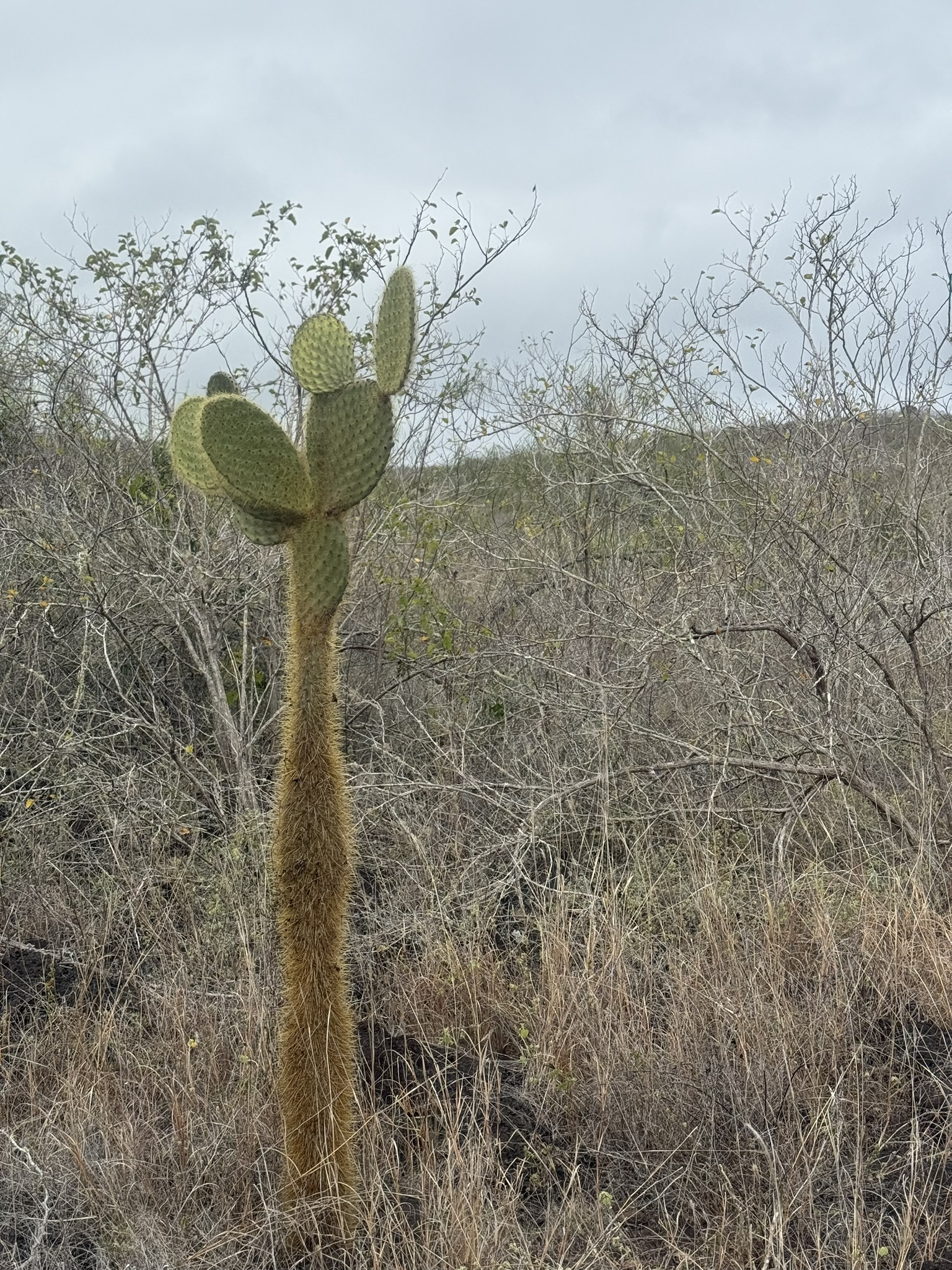
Once we reached the parking area, we set off along a short trail leading towards the beach. The dry volcanic path was lined with lava rocks, low shrubs, palo santo trees and distinctive Galápagos prickly pear cacti, not to mention all the finches, mockingbirds and lava lizards we encountered along the way. At the end of the trail lay Puerto Chino, a serene white-sand cove with the most turquoise of waters, surrounded by rugged black lava formations and dramatic cliffs.
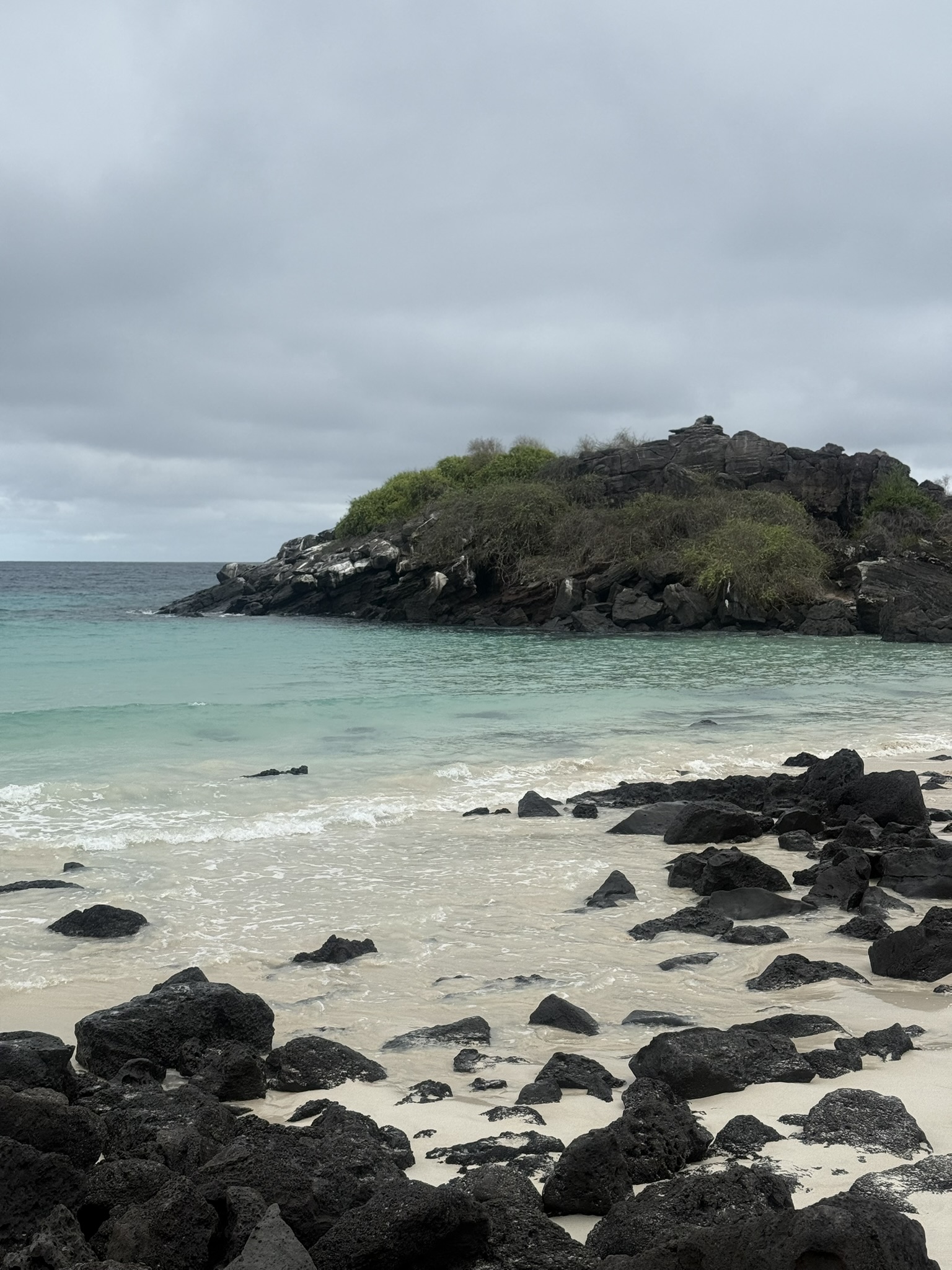
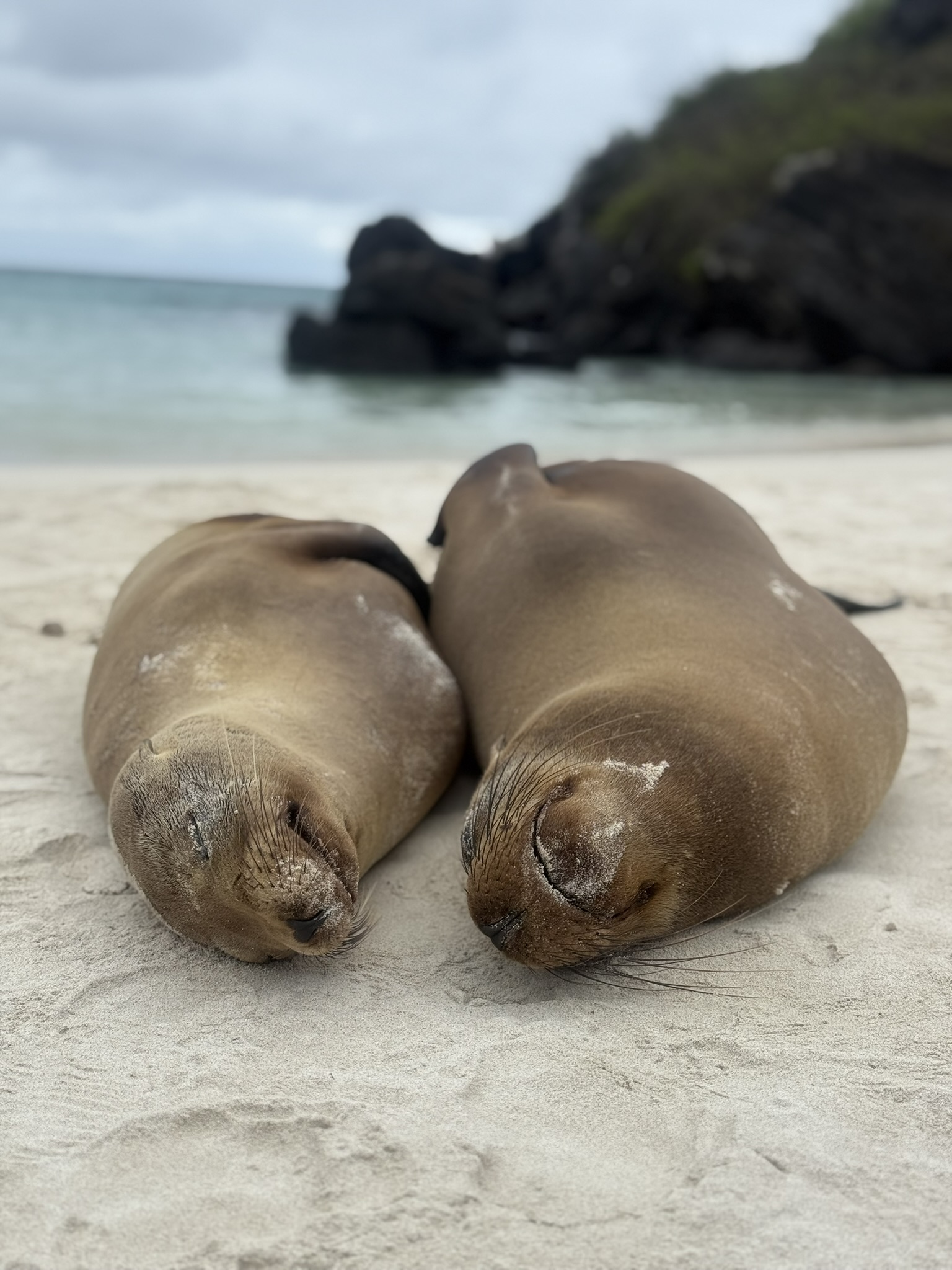
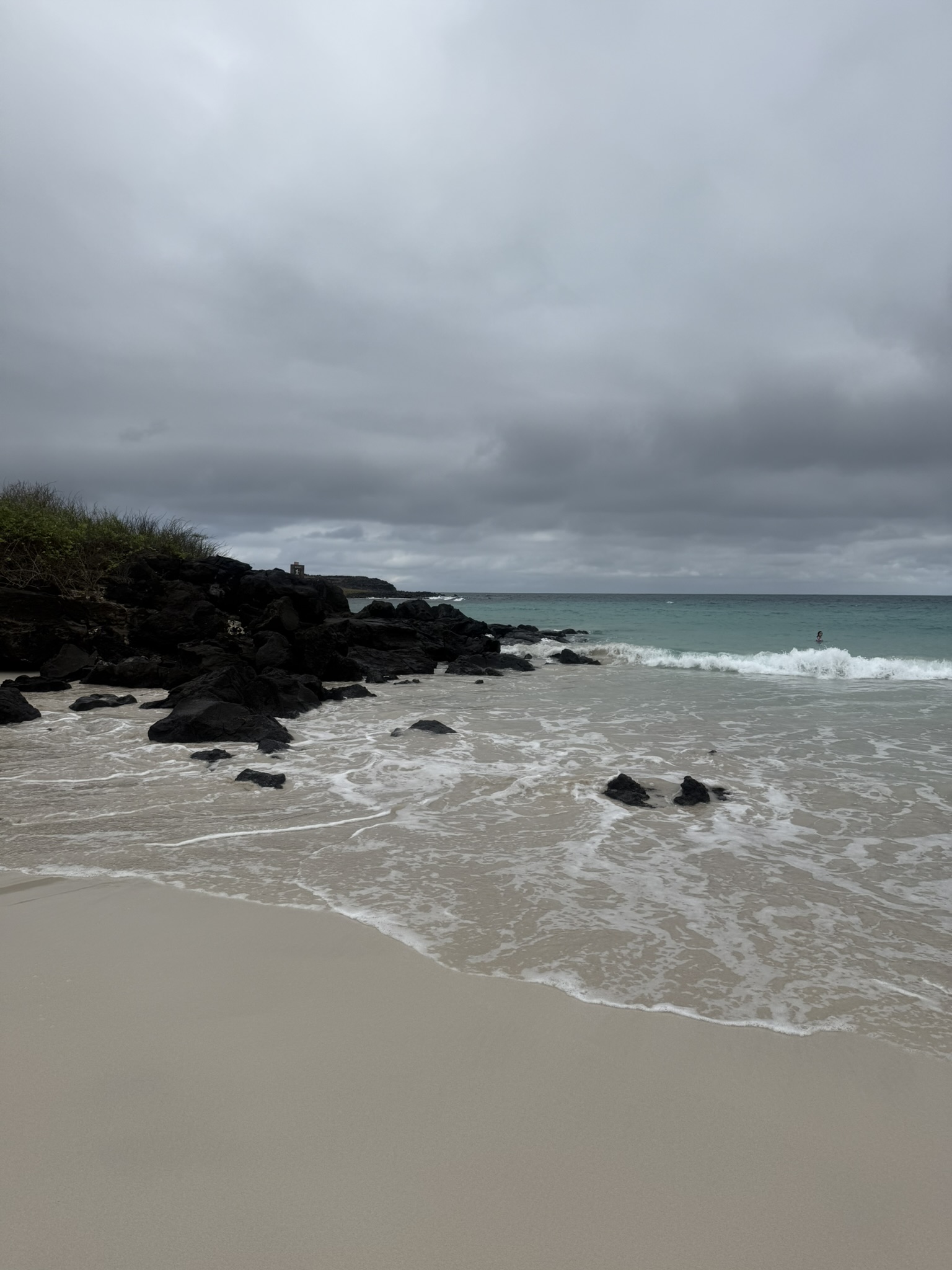
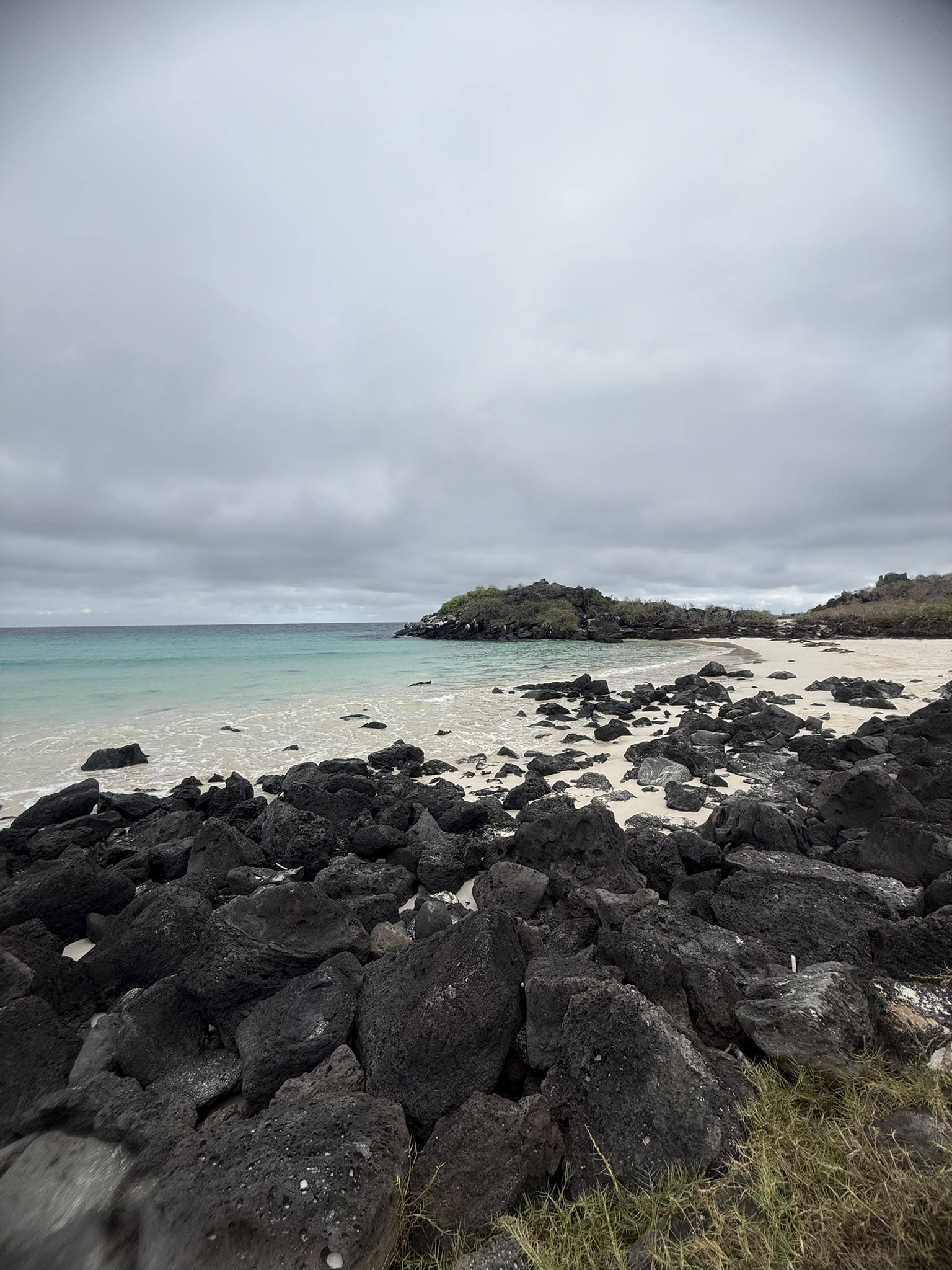
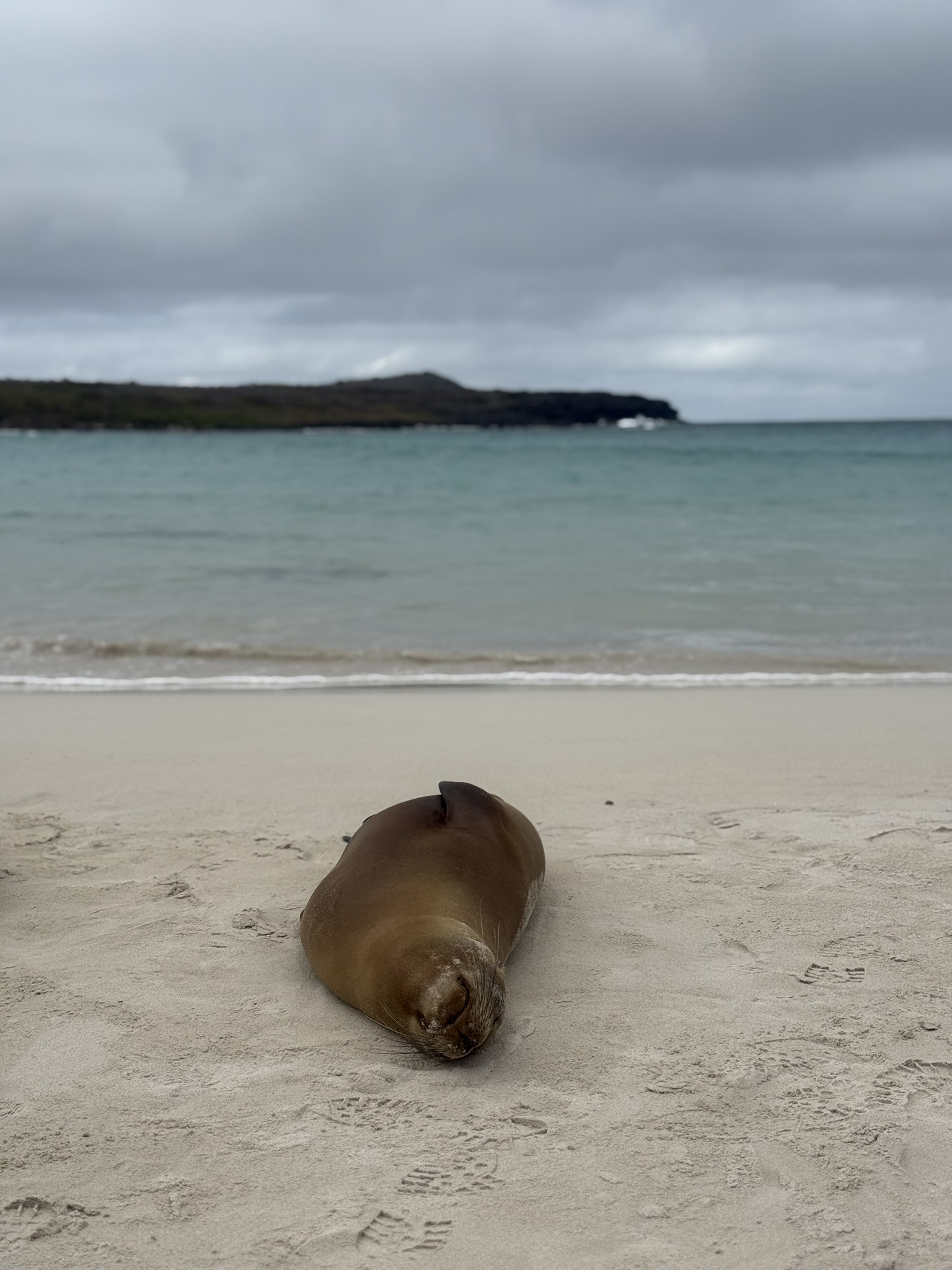
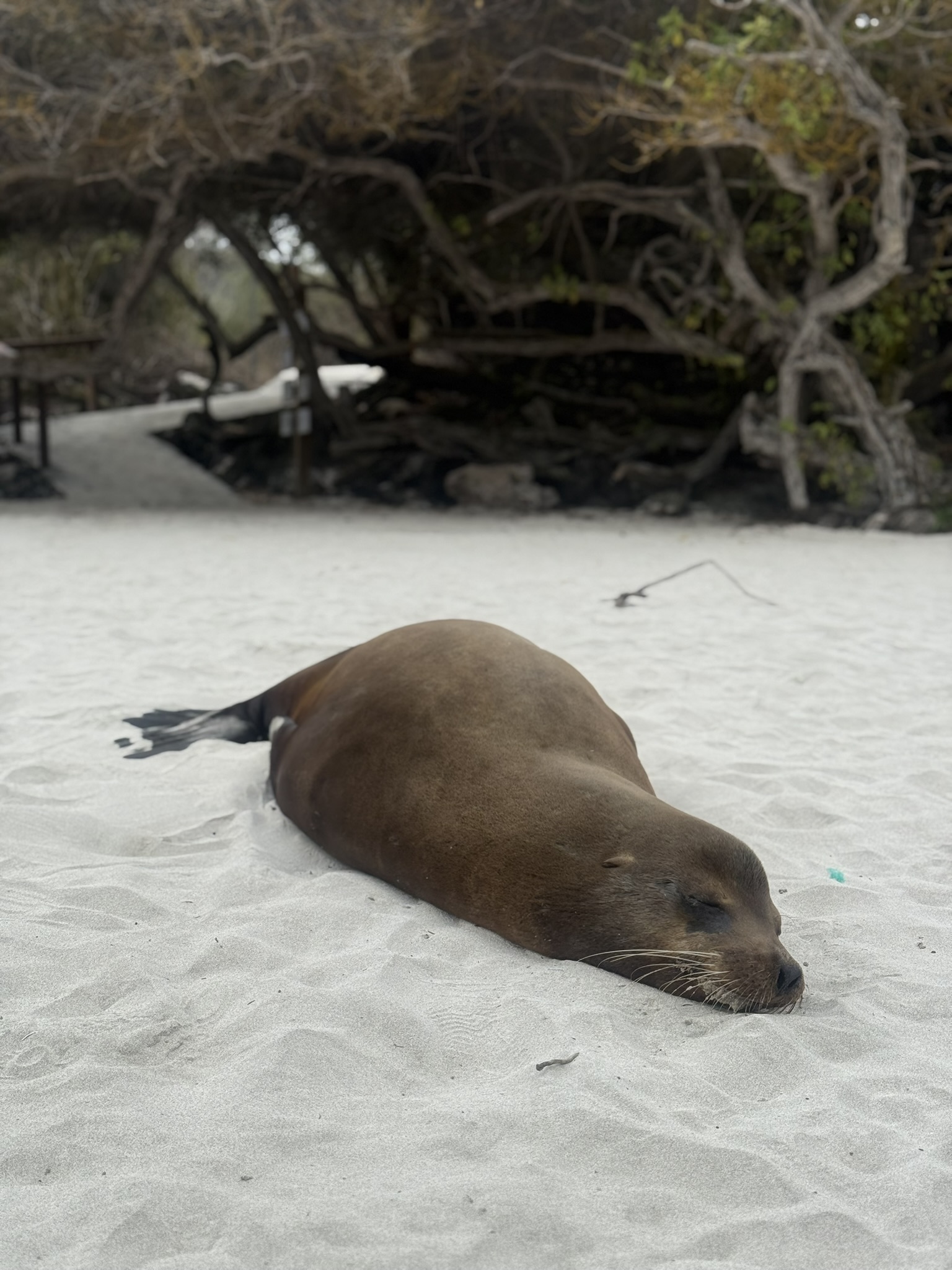
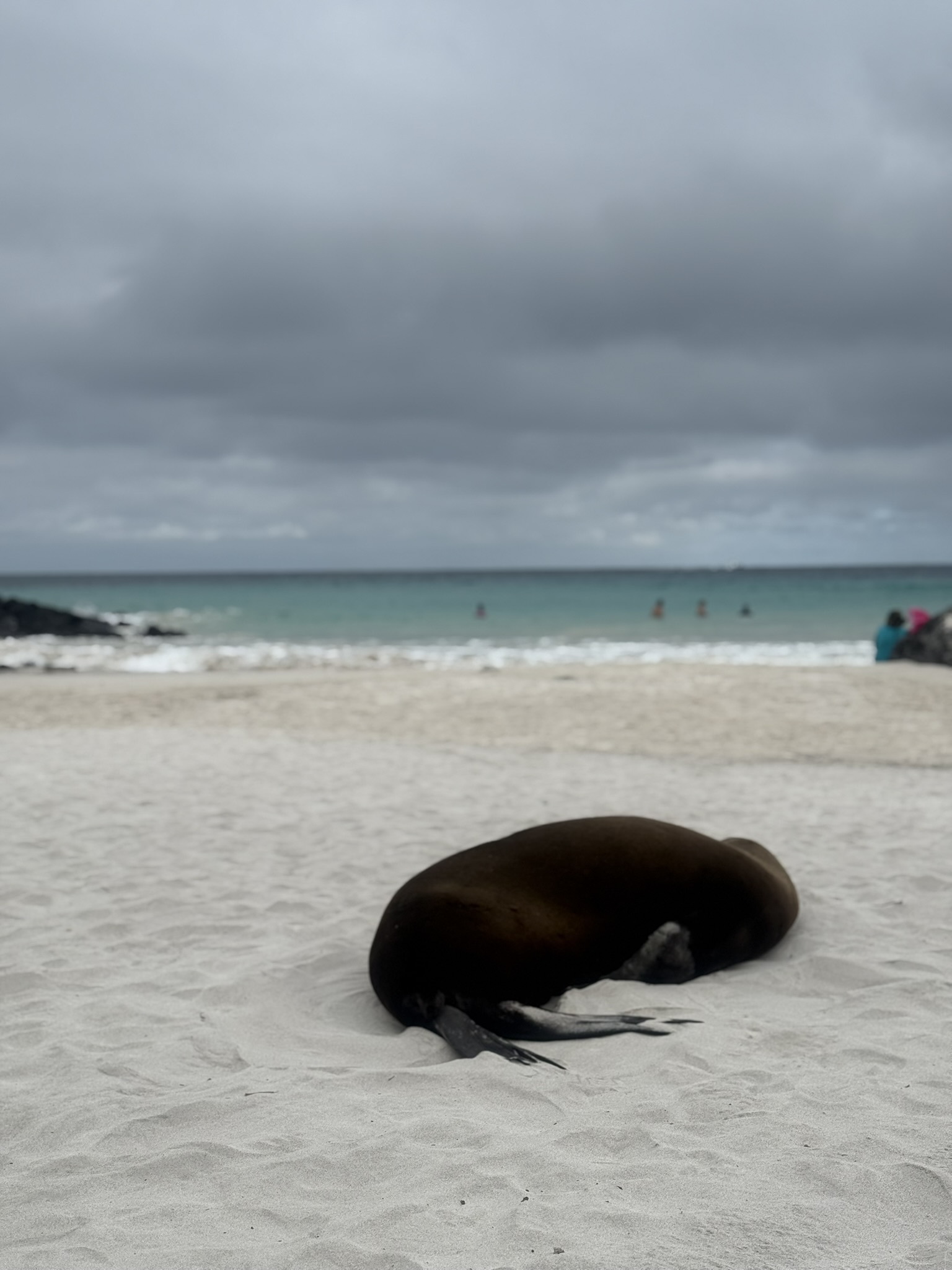
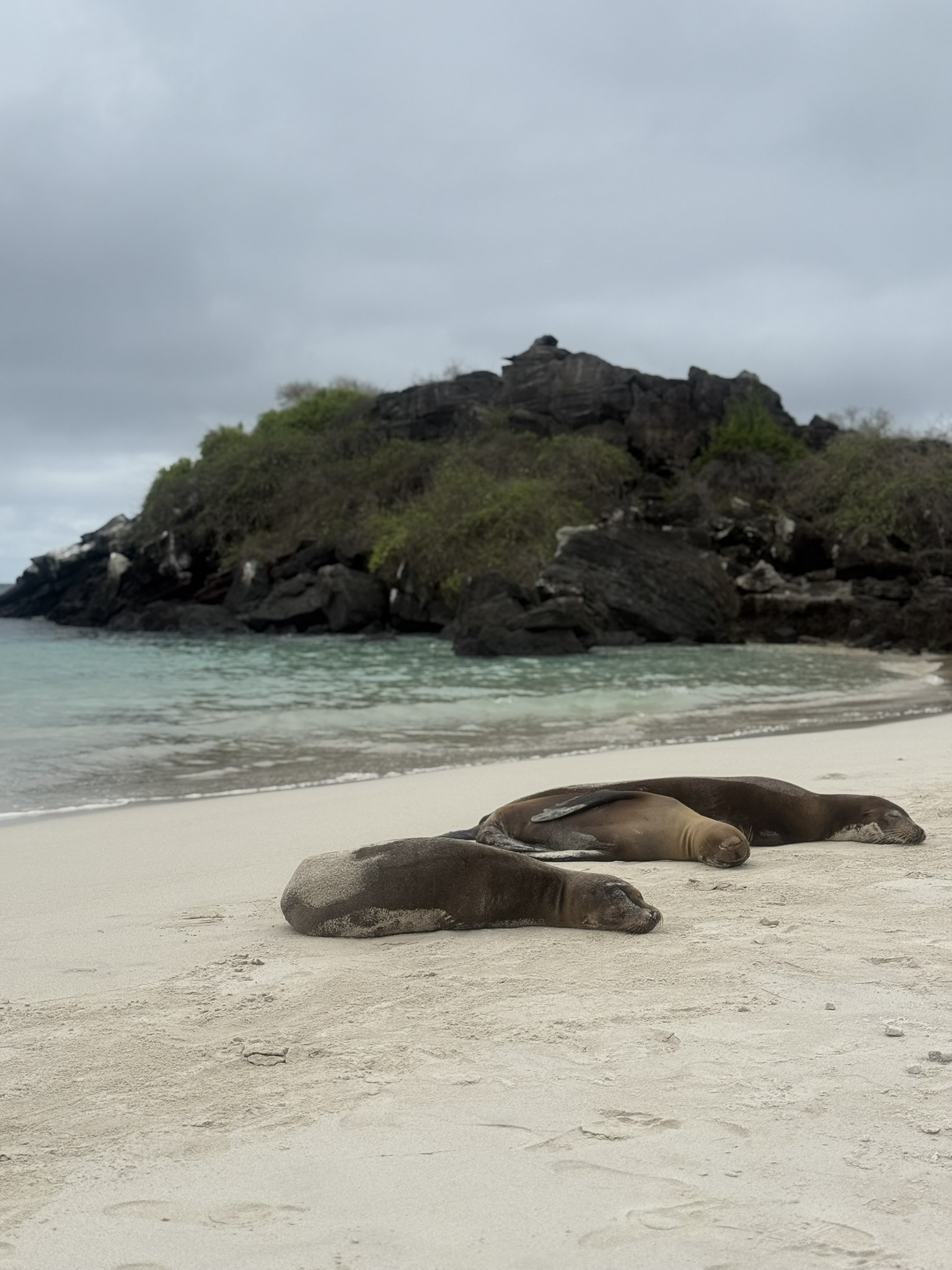
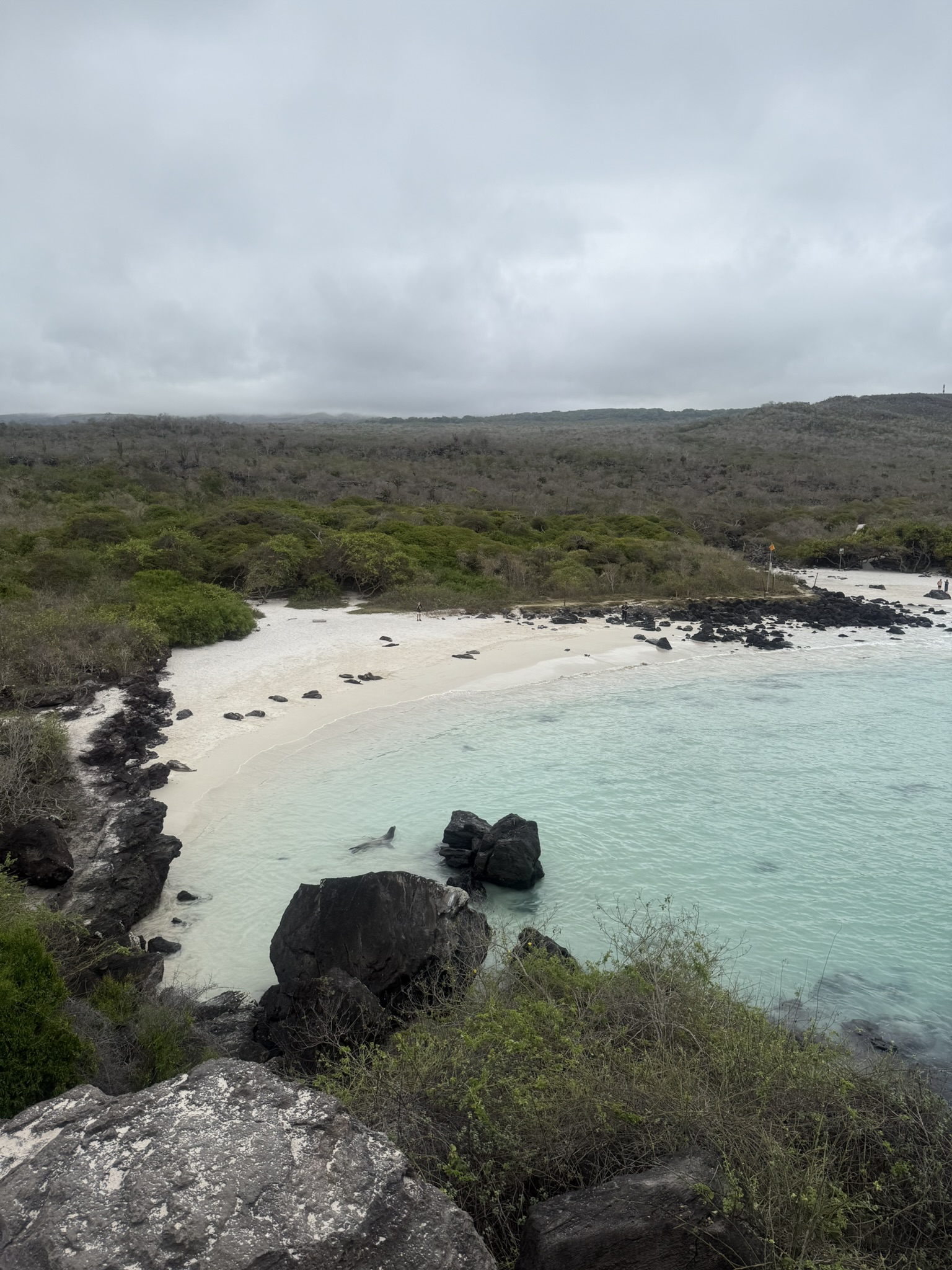
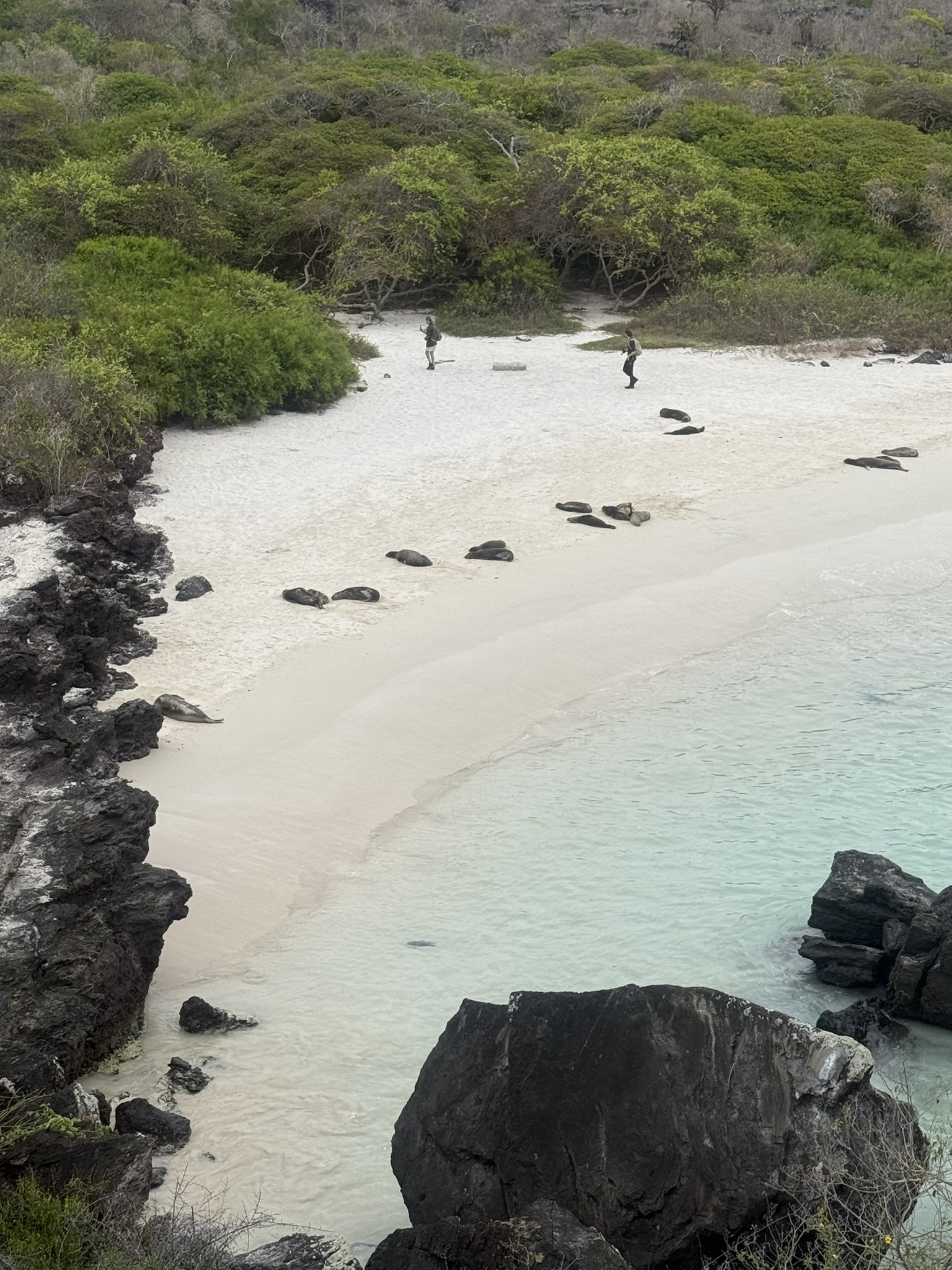
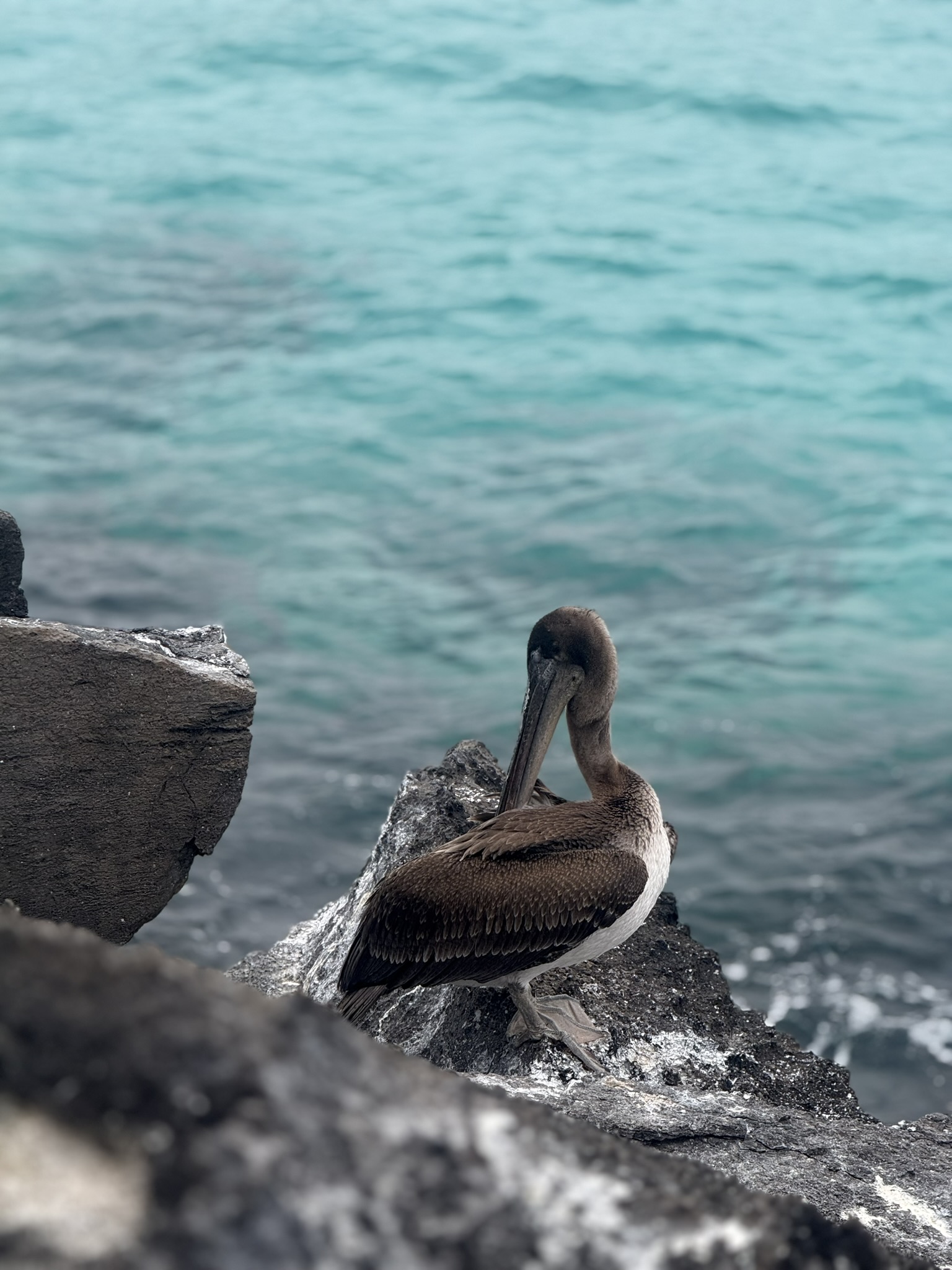
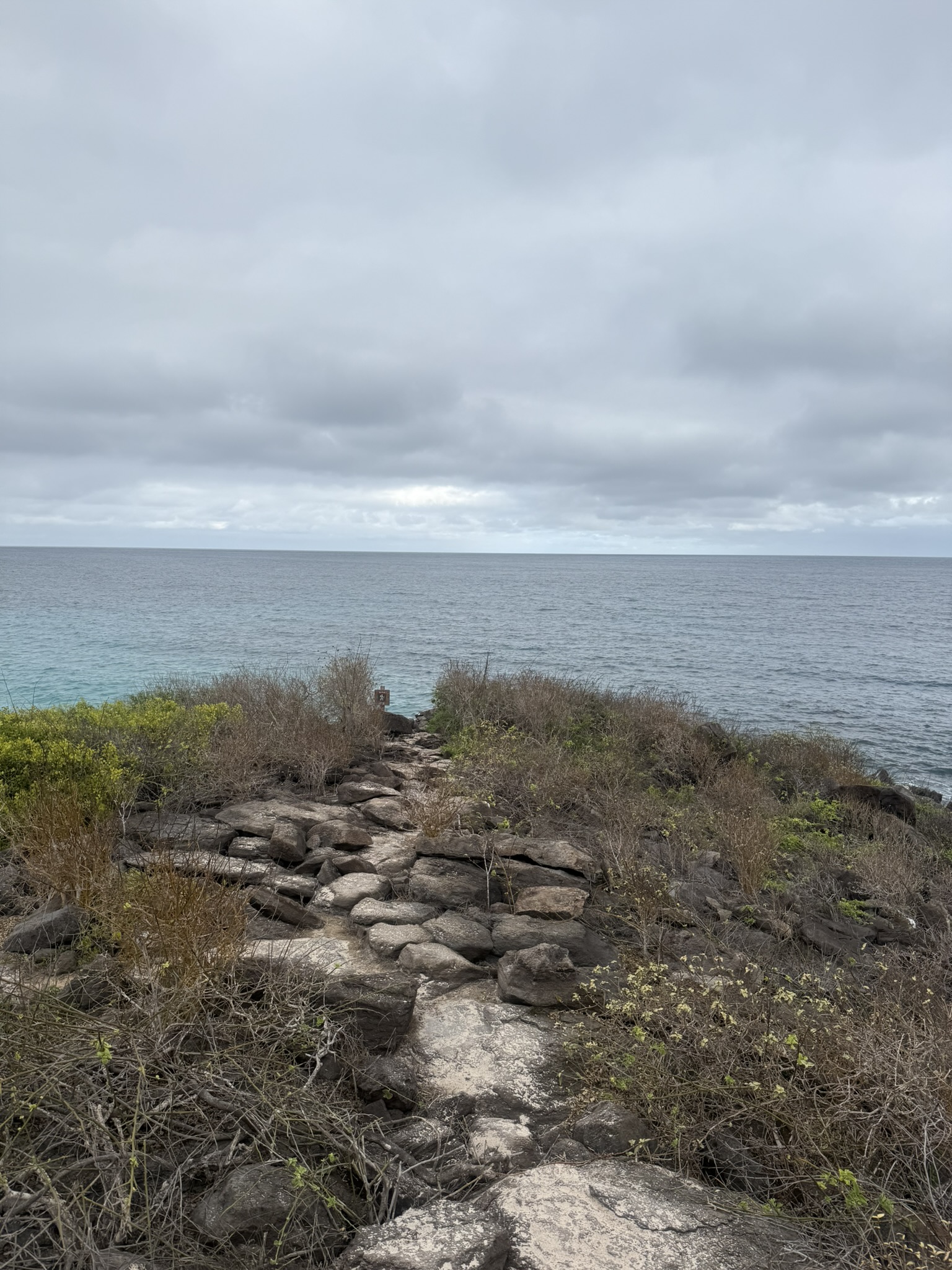
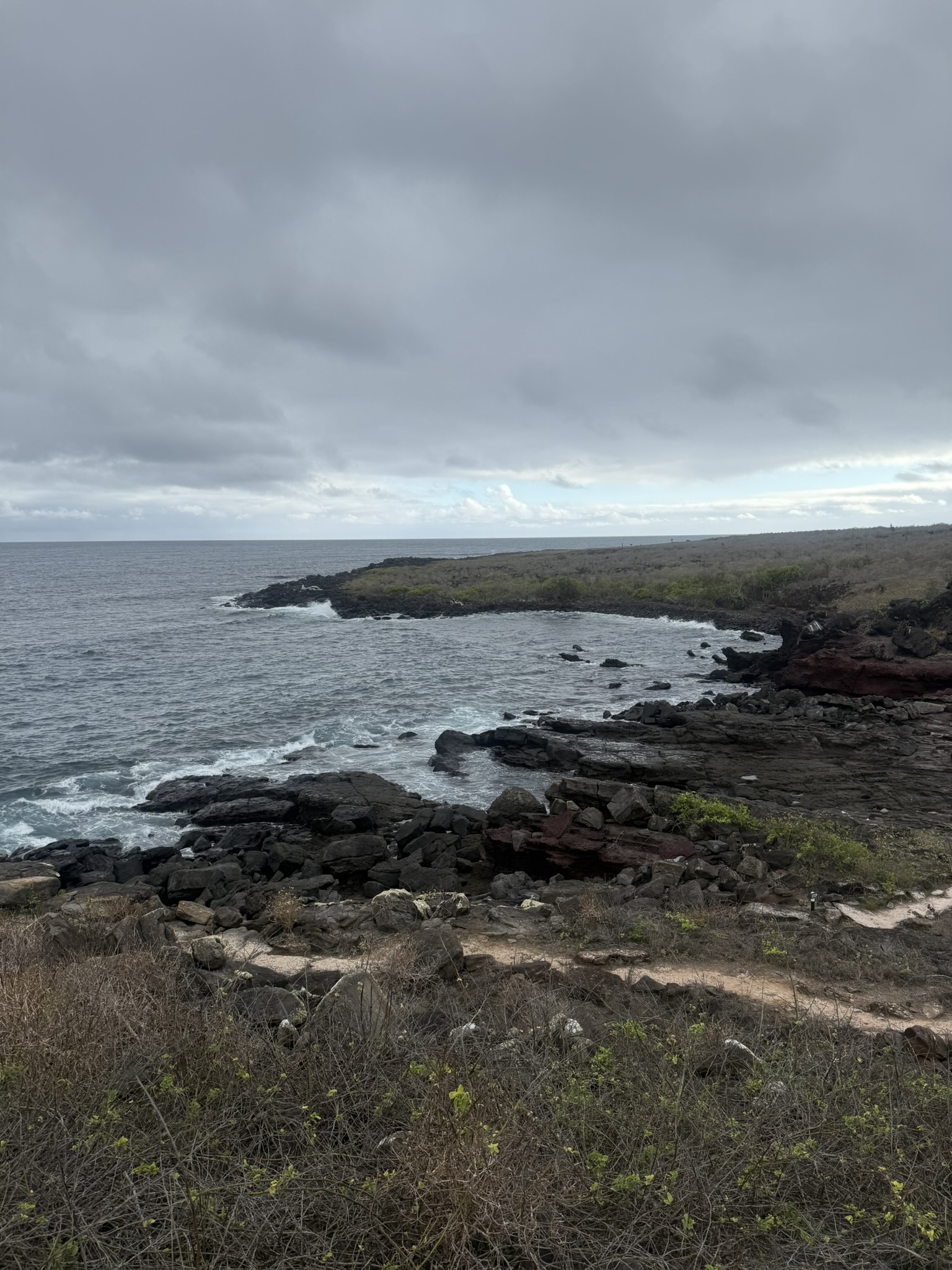
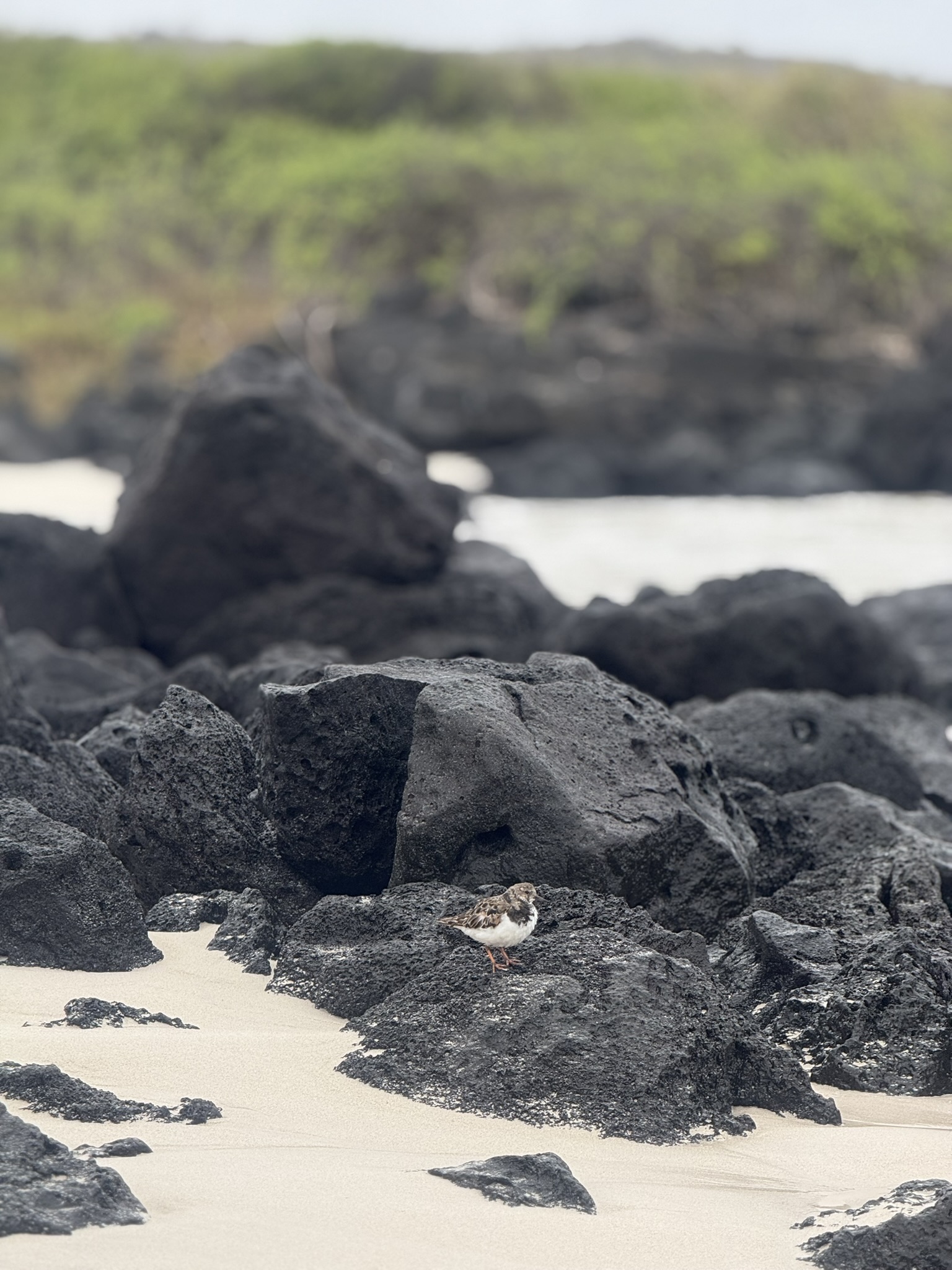
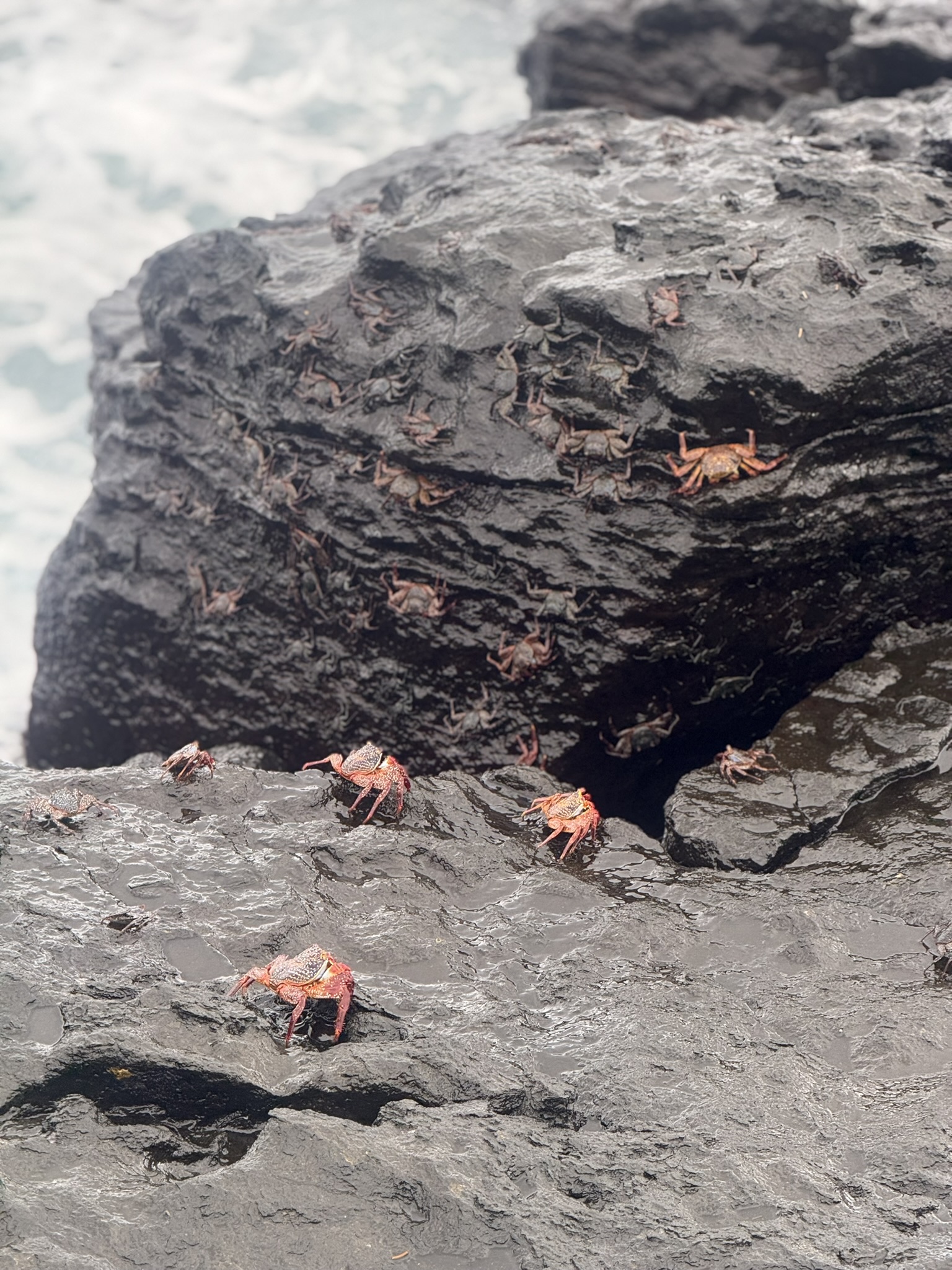
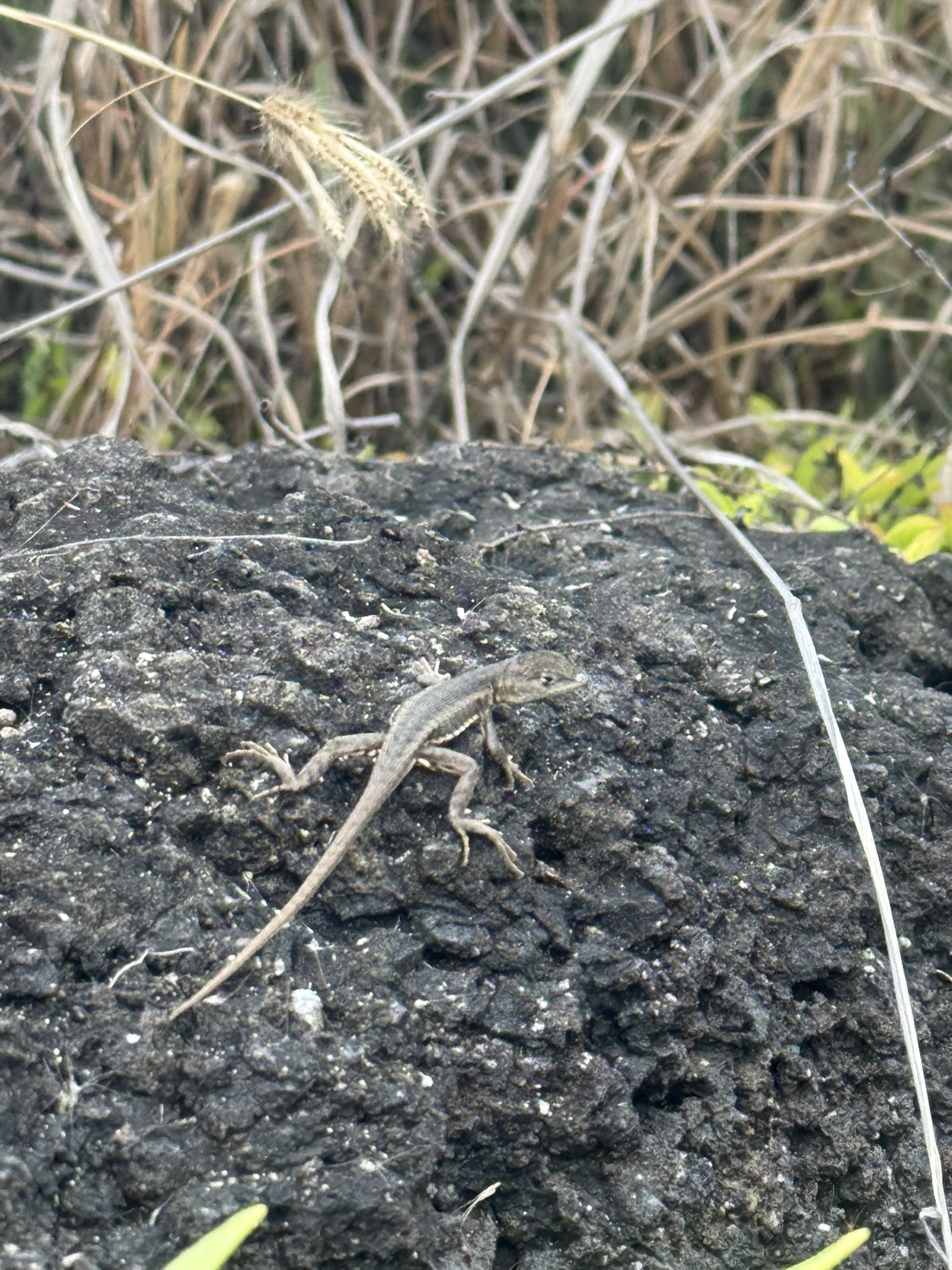
While I could have spent hours admiring the beach and the sea lions lazing around, there was another reason for our visit. A short climb up the rocky hill to the right of the beach led us to a panoramic viewpoint overlooking the Pacific and the surrounding coastline. Yet that wasn’t why we had walked up there either. Nope. It was for another bird. And not the pelican perched atop the cliff either. It was for the blue-footed boobies!

Blue-footed boobies, Miriam told me, are iconic Galápagos seabirds known for their brilliantly coloured feet. Their blue-green colour is produced through a combination of microscopic collagen structures and carotenoid pigments obtained from their diet, with brighter feet generally signalling better health. Apparently, during courtship, males perform a funny high-stepping dance to display them to potential mates. They are also spectacular hunters, plunging into the ocean from heights of more than 20 metres to catch fish such as sardines and anchovies. The name “booby” comes from the Spanish word bobo, meaning foolish or clownish, as early sailors considered the birds clumsy on land and unusually unafraid of humans.
Having already seen red-footed boobies in Belize, my booby collection was certainly growing. I mean, come on. Who doesn’t like a good booby, huh?
A Crater Lost in the Clouds
After taking our time admiring the gorgeous birds and the magnificent vista below us, it was time for our third and final stop: El Junco Lagoon – the freshwater crater lake Miriam had mentioned before.
Filled primarily by rainfall, El Junco lies within the caldera of an extinct volcano at an elevation of around 700 metres. Surrounded by ferns and other native and endemic vegetation, it is also a popular bathing spot for frigatebirds, which use the freshwater to wash salt from their feathers before preening.
With the road completely swallowed by cloud, I assumed I wasn’t gonna be able to see much once we reached the crater – an assumption that was proved correct the second we got there. While it would’ve been nice to set my eyes on yet another of one San Cristóbal’s highlights, I had arrived here with no plans whatsoever – I was already more than happy with everything I had managed to see!
And so, I asked Miriam to take me back into town so I could rest before whatever came next. After all, my real Galápagos adventure hadn’t even begun!