Komodo National Park – Day 4: The Reptilian King
KOMODO NATIONAL PARK
Day 4: The Reptilian King
May 18, 2023
PART I
The fourth day promised to be one of the very best days. After our first dive, we’d be visiting the highlight of the archipelago, and after that, we’d have more dives to look forward to.
Our first dive was at Loh Namu reef. Without wanting to sound jaded, this dive was a pretty standard one, seeing only the common stuff we had kinda gotten used to by then – apart from a gorgeous juvenile striped sweetlip which stole our hearts. Also it was super cold and the current was strong-ish. Still fun though, still fun.
Enter: The Apex Predator
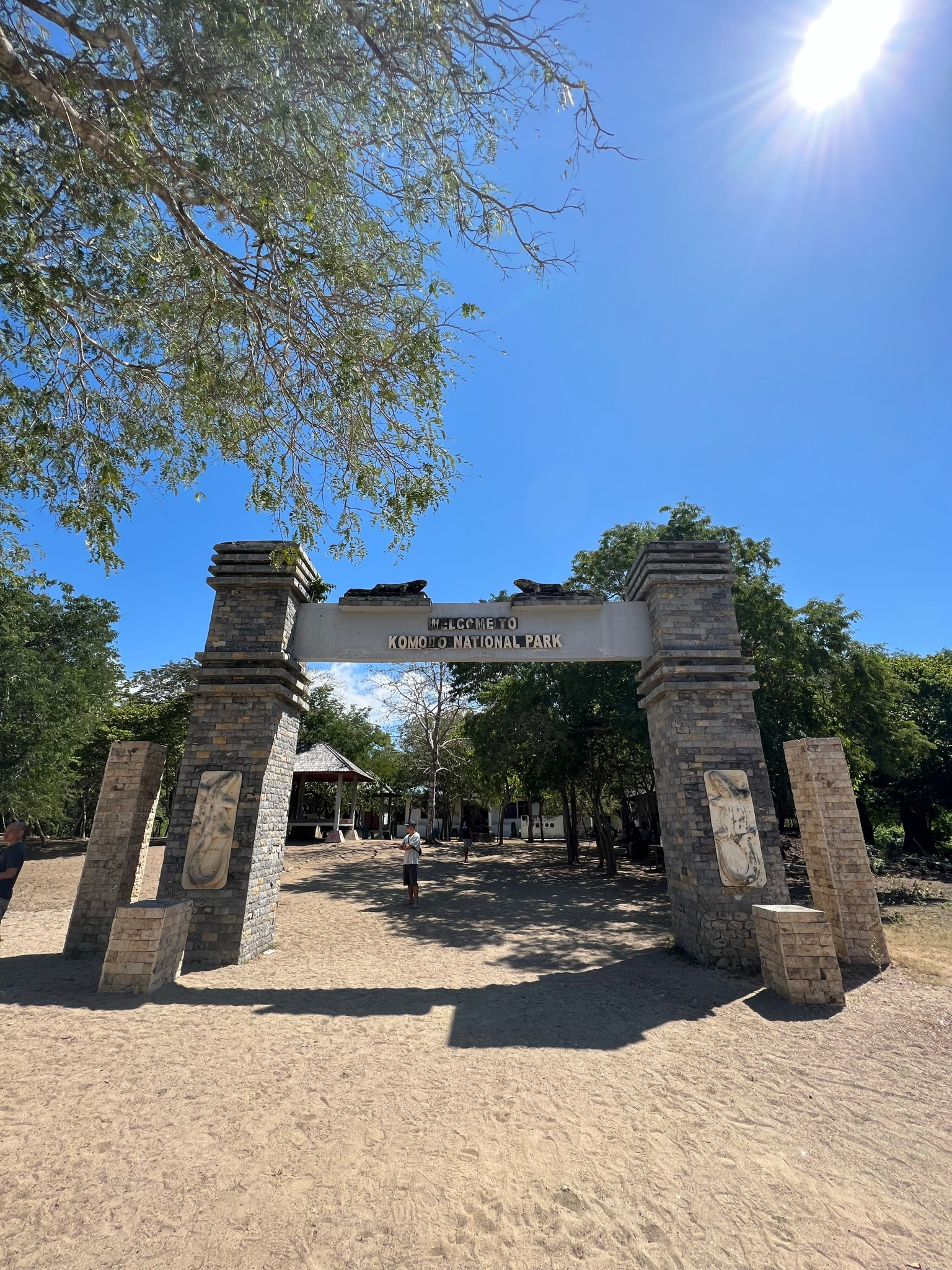
The main event, this time round, would be above the surface. After drying off and having our breakfast, we found ourselves on the Zodiac once again, this time heading towards Komodo Island.
I don’t suppose I need to explain what’s so special about this particular island, but, for completeness’ sake, I guess I will. While the entire National Park is considered to be one of the New 7 Wonders of Nature (making it my third of the seven), on this particular island one is most likely to encounter the formidable Komodo dragon – the largest extant lizard on planet Earth, with at least 1500 being found here.
The second we arrived at the jetty, I could hardly contain my excitement. You see, back when I was a kid, this was the one animal I was obsessed about. I grew up collecting these stickers found on chocolate wrappers featuring all kinds of animals which you’d collate on the Kraš Animal Kingdom album. Everyone seemed to have one of those back in the day. I think that’s how my love for animals first began. Over the years, especially over the previous one, I had managed to check off many of those animals I could only dream of seeing (and many more). Ironically, whale sharks and quetzals weren’t on it, but this one was. Of the five phyla of vertebrates (or at least that’s how many there were back when I was still a kid), I had a favourite, and, in less than a year, I had seen two. Now I’d get to cross off the third, leaving only axolotls and jaguars (still can’t get over not seeing a wild one in Central America!).
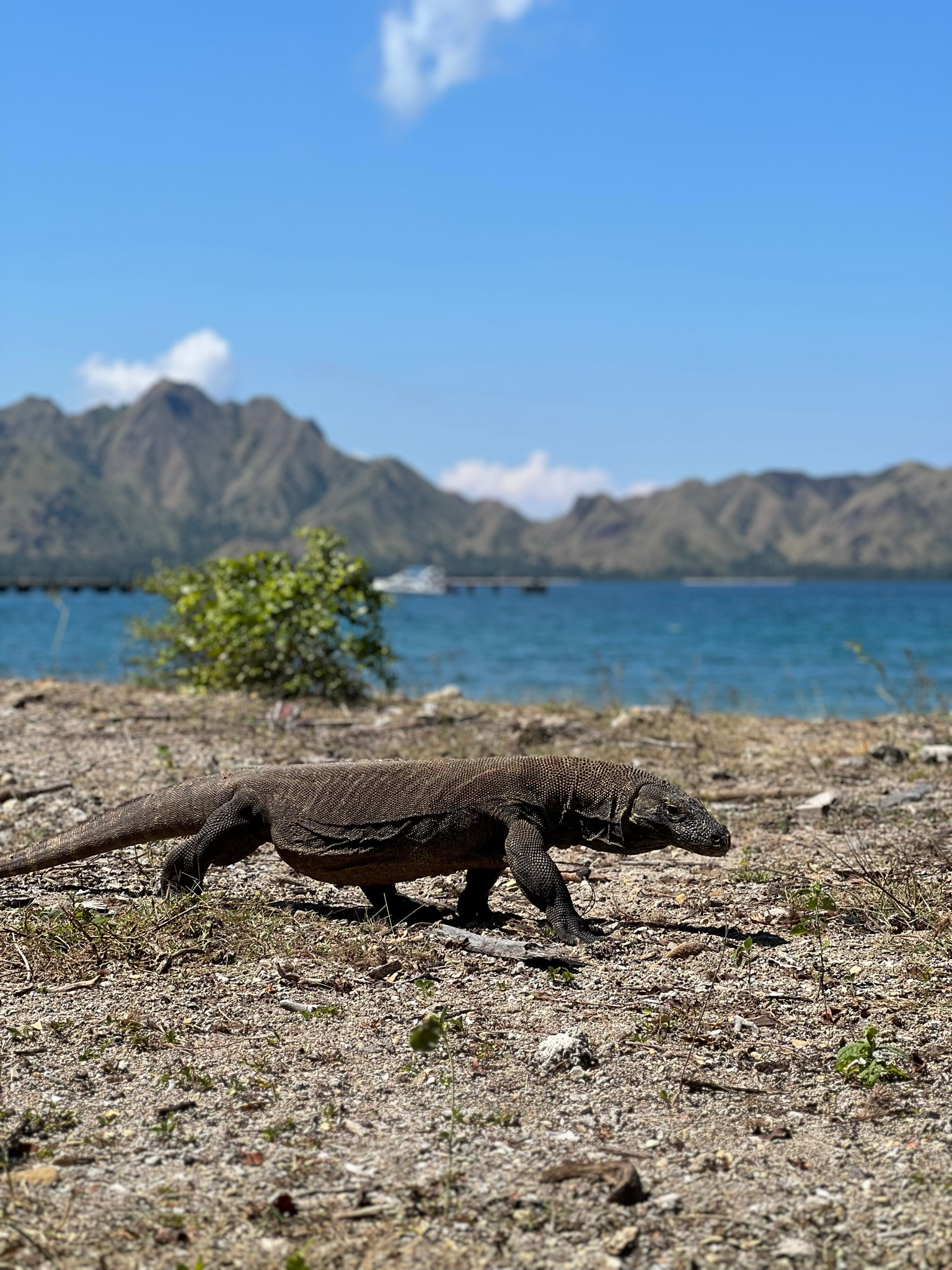
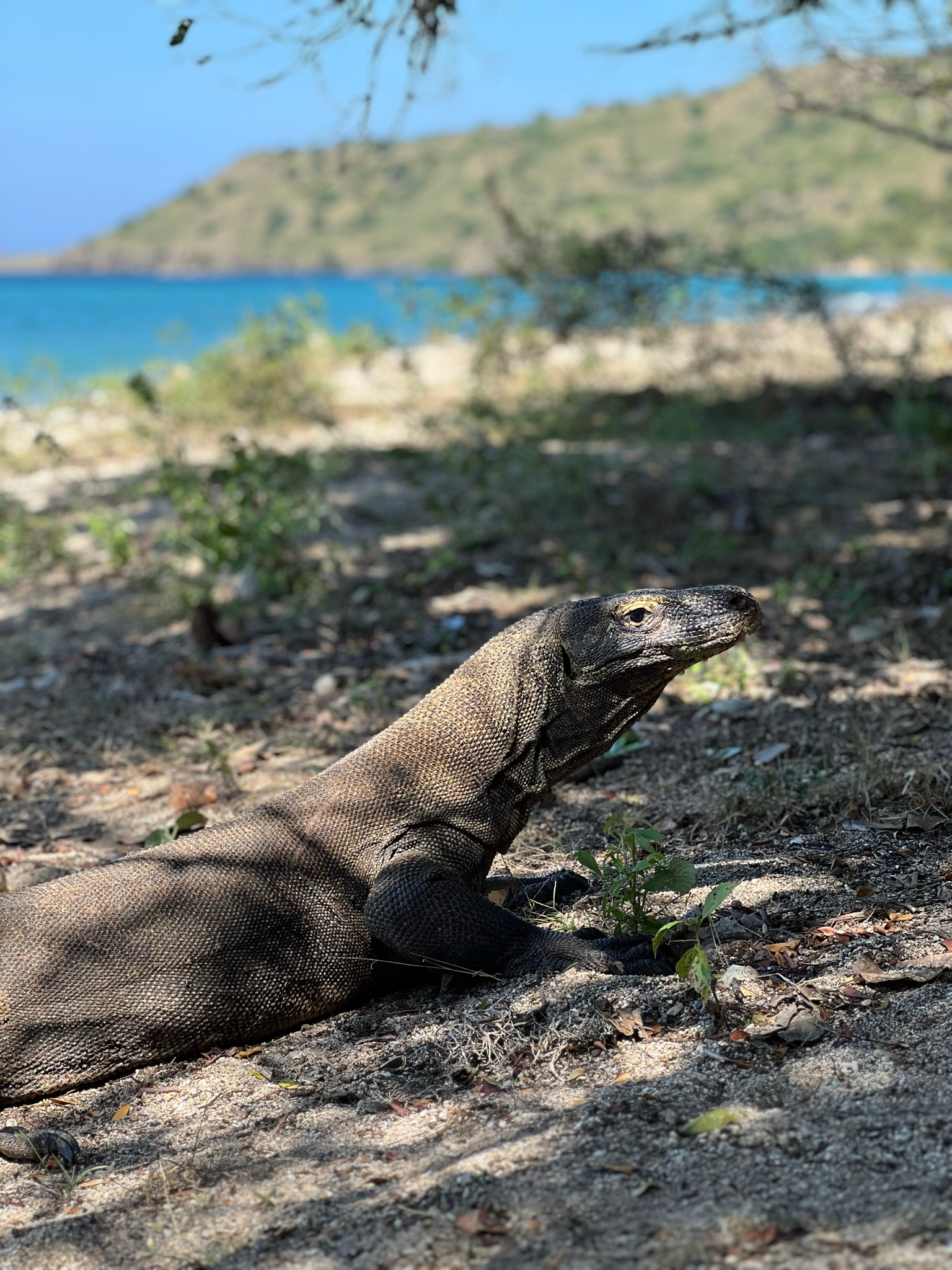
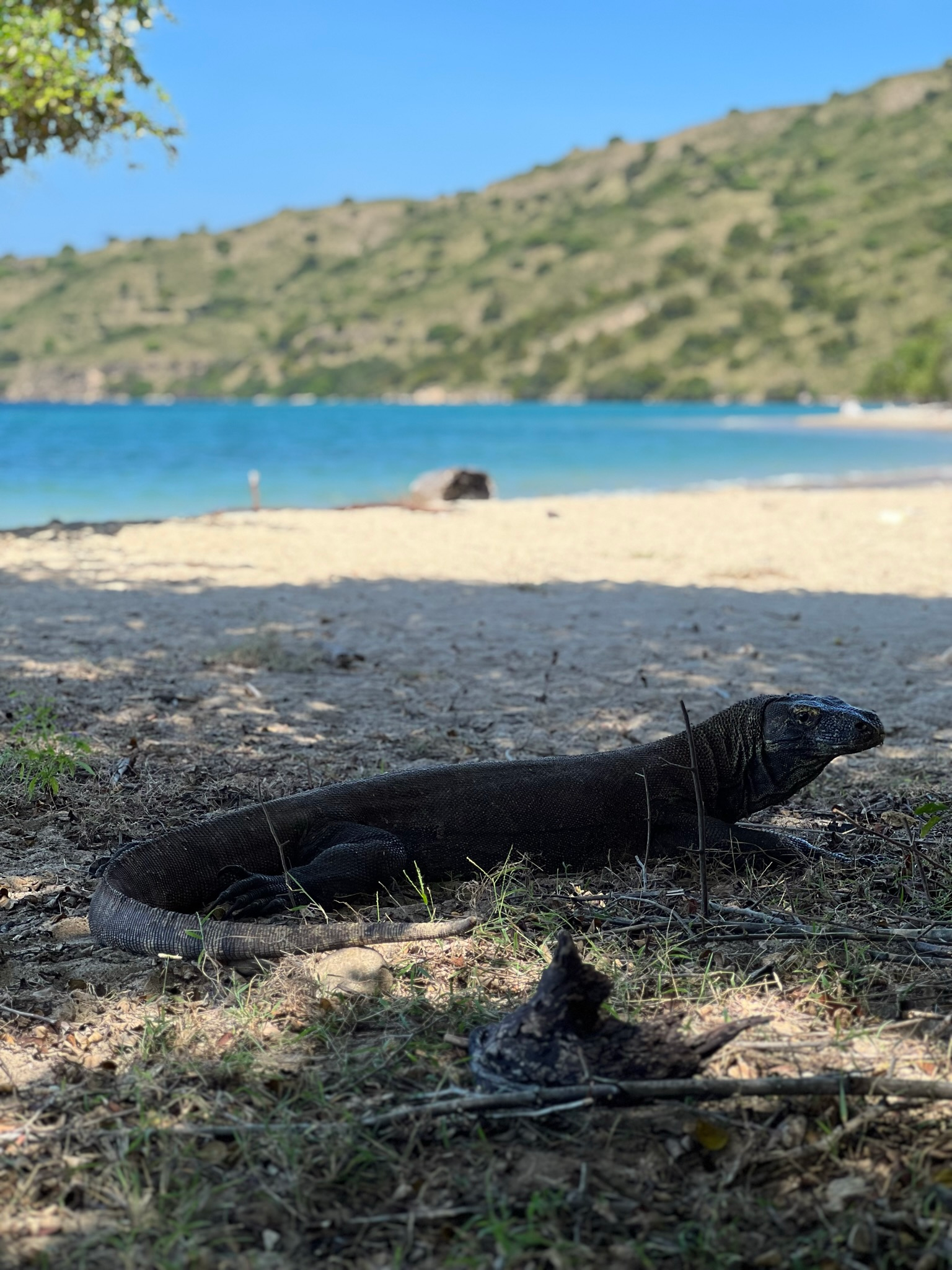
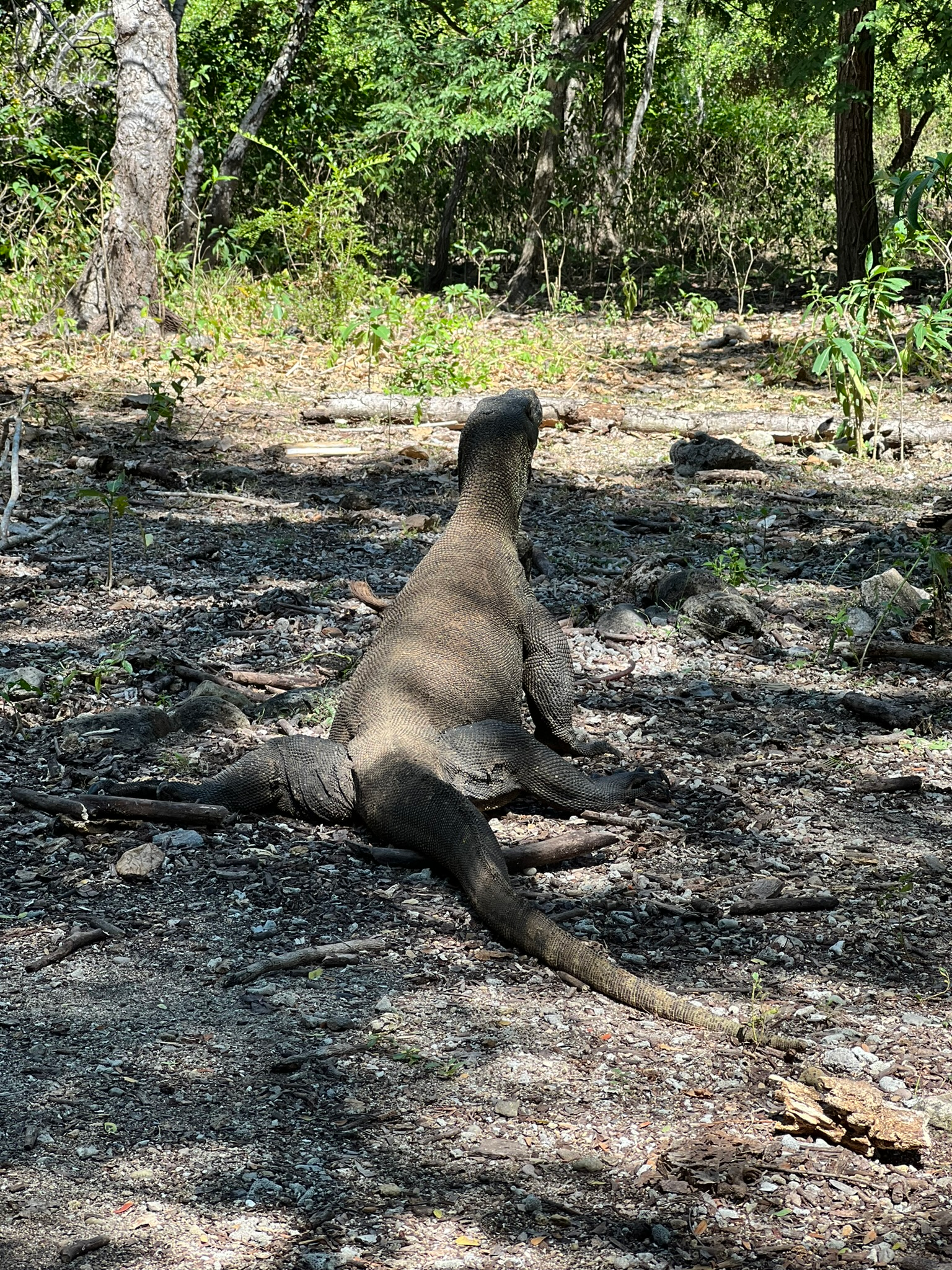
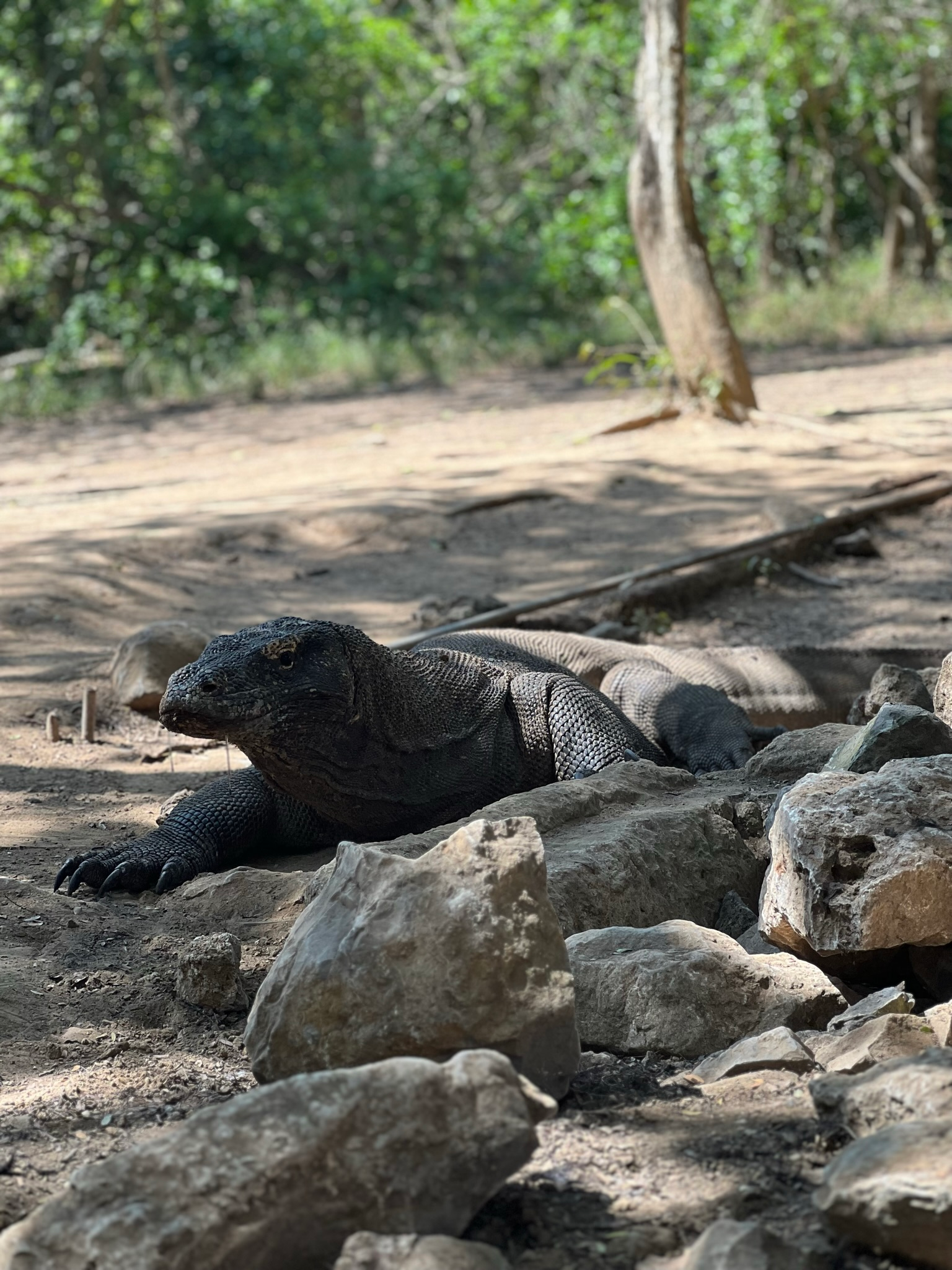
Lo and behold, the second we started off on the trail around the island, our guide signalled for us to hush and get closer. I just couldn’t believe the time had finally come! And there, right in front of us, in the flesh and cold blood, was the island’s apex predator – a two-metre female Komodo dragon basking on the sand. As similar as they might be to other monitor lizards and iguanas, lemme just say that their massive size and their bulk sets them aside from anything else I had ever seen. In fact, it did feel like I was staring at a real-life dragon. If only they had wings!
A Living Dragon
We stood around the huge lizard as our guide started explaining anything and everything that had to do with Komodo dragons.
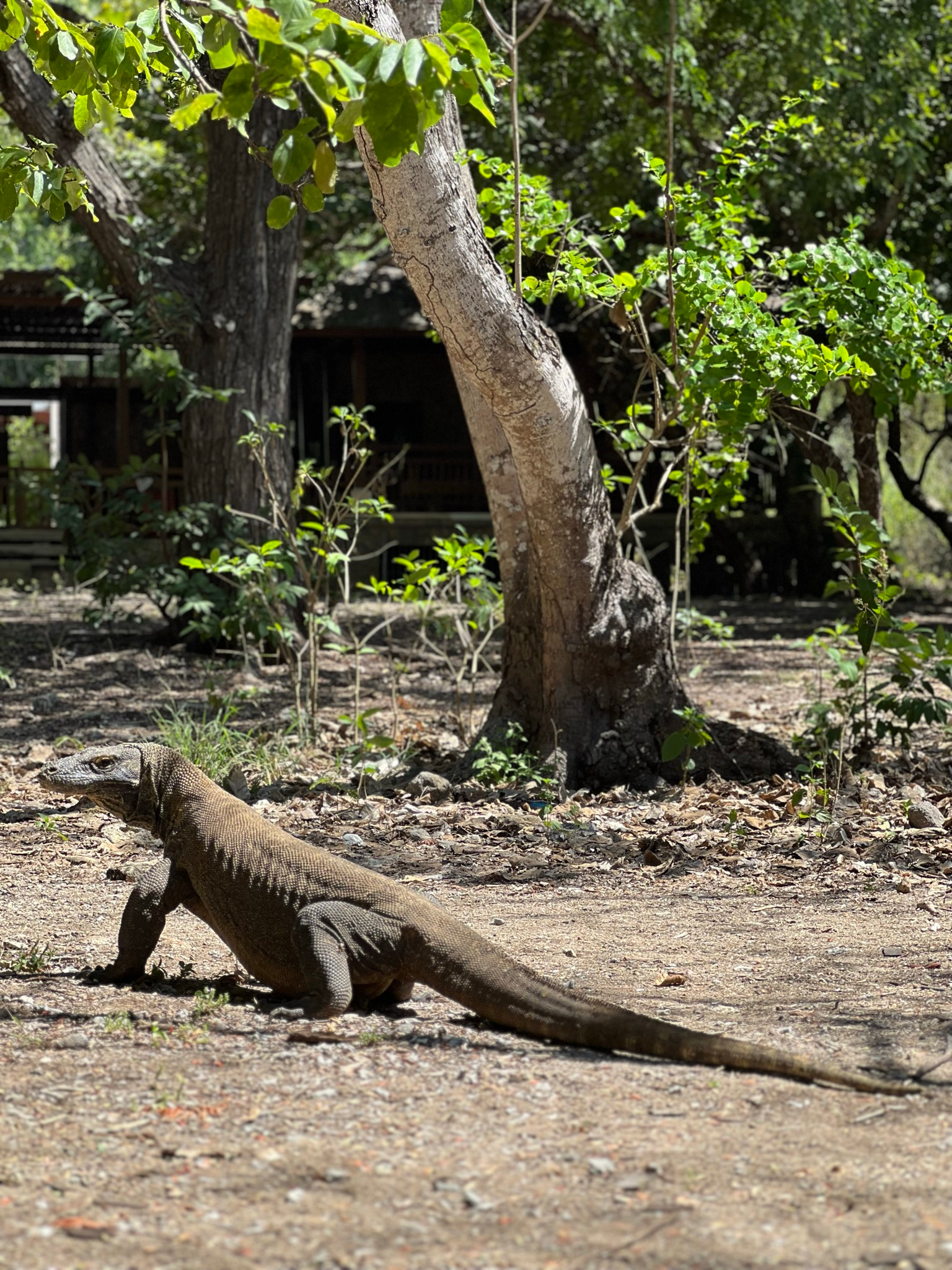
He told us that these beasts, averaging a length of two metres and weighing around seventy kilograms, have an outer armour made of scales and a tail that is longer than their body. Their huge mouths boast some sixty serrated teeth and a forked snake-like tongue. If their prey does not succumb to their often-fatal bite, these monsters will then chase them down. After eating some 80% of their body weight at one go, their slow metabolism allows them to fast for an entire month – basking in the sun to aid their metabolism in the meantime and going for a short swim when they get overheated. How awesome are they?!
Our guide also told us that contrary to popular belief, they do not, in fact, harbour special types of bacteria in their mouth that would cause sepsis in their victims after they’re bit. Not only that, but Komodo dragons are actually quite meticulous when it comes to oral hygiene, spending some fifteen minutes cleaning their mouth by licking leaves after every meal. That said, recent studies have shed some light on what might be going on in their prey’s bodies after a bite – with haemo-neurotoxins being produced in their venom glands aiding their untimely demise.
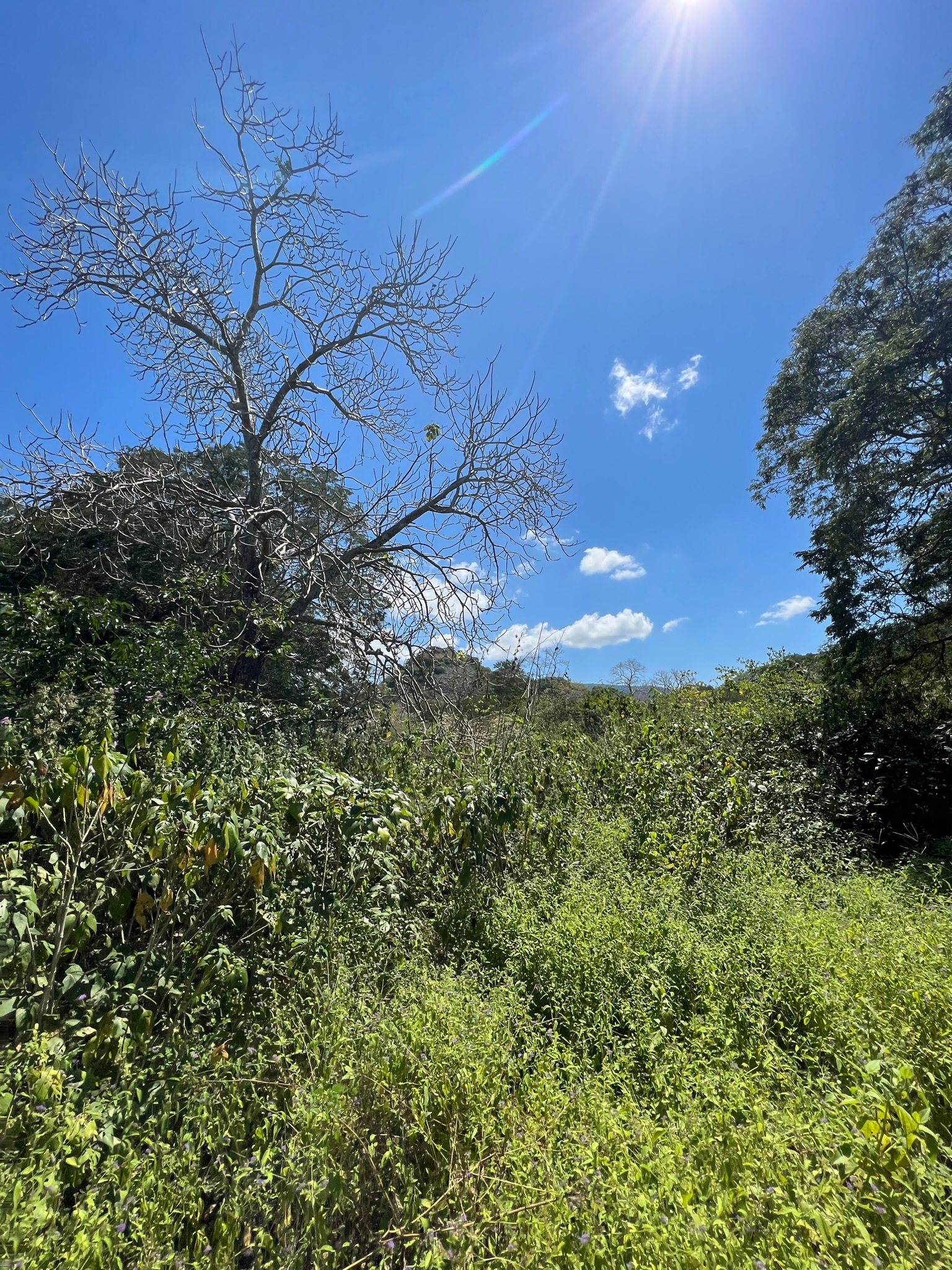
Staring right at one of them, it made all this seem a bit improbable, given how lazy it seemed – its gait slow and somewhat clumsy. Perhaps it’d take hunger to get them going! Having said that, I was truly in awe of the creature in front of me, finding myself unable to take eyes off it. Until we had to go on with our walk to see if we could spot some more, that is. We walked on a trail running through a deciduous forest, with tamarind trees all around. We walked and walked, spotting a peacock and rusa deer but no other dragons. Until we got to a clearing where a crowd was all huddled around something – a huge male specimen.

Doubtless annoyed by the presence of so many people flocking around it, I crouched down to its level, respecting the five-metre distance enforced by the park rangers (all wielding a long, forked stick at all times just in case they decide to attack). I looked it straight in the eyes, trying to somehow tame it telepathically. In my head, he’d slowly approach me, nudging me softly, as if to tell me I had earned his respect and that I was now able to ride him. As he lay there, locking eyes with me as drool hung down from his mouth, I figured this was not in fact Game of Thrones and that I was not the Father of Dragons.
We then continued on the path that would lead us to the entrance once again. Here, we saw a baby female, looking pretty much like any other iguana or big lizard I had ever seen. One day, however, this one would grow up to become a huge beast. And just like that, it was the end of another successful excursion – at the end of which I had fulfilled yet another childhood dream!
PART II
Pink Beach
Still on a high, much like when I had seen the whale shark and the quetzal, I had to shake it off and focus on the next dive. This would be at Pink Beach – one of seven beaches in the world to have such a colour due to the presence of red forams mixed with the sand.
Once again, the dive was incredible though we didn’t get to see anything too special, save for a school of lanternfish, a white frogfish, and a shoal of juvenile striped eel catfish – the curious little creatures an apparent mix of catfish and eels. Don’t get me wrong, it was still an amazing dive, as all dives in Indonesia seem to be, but describing the same things over and over isn’t really in the best interest of my (likely) one and only reader – myself.
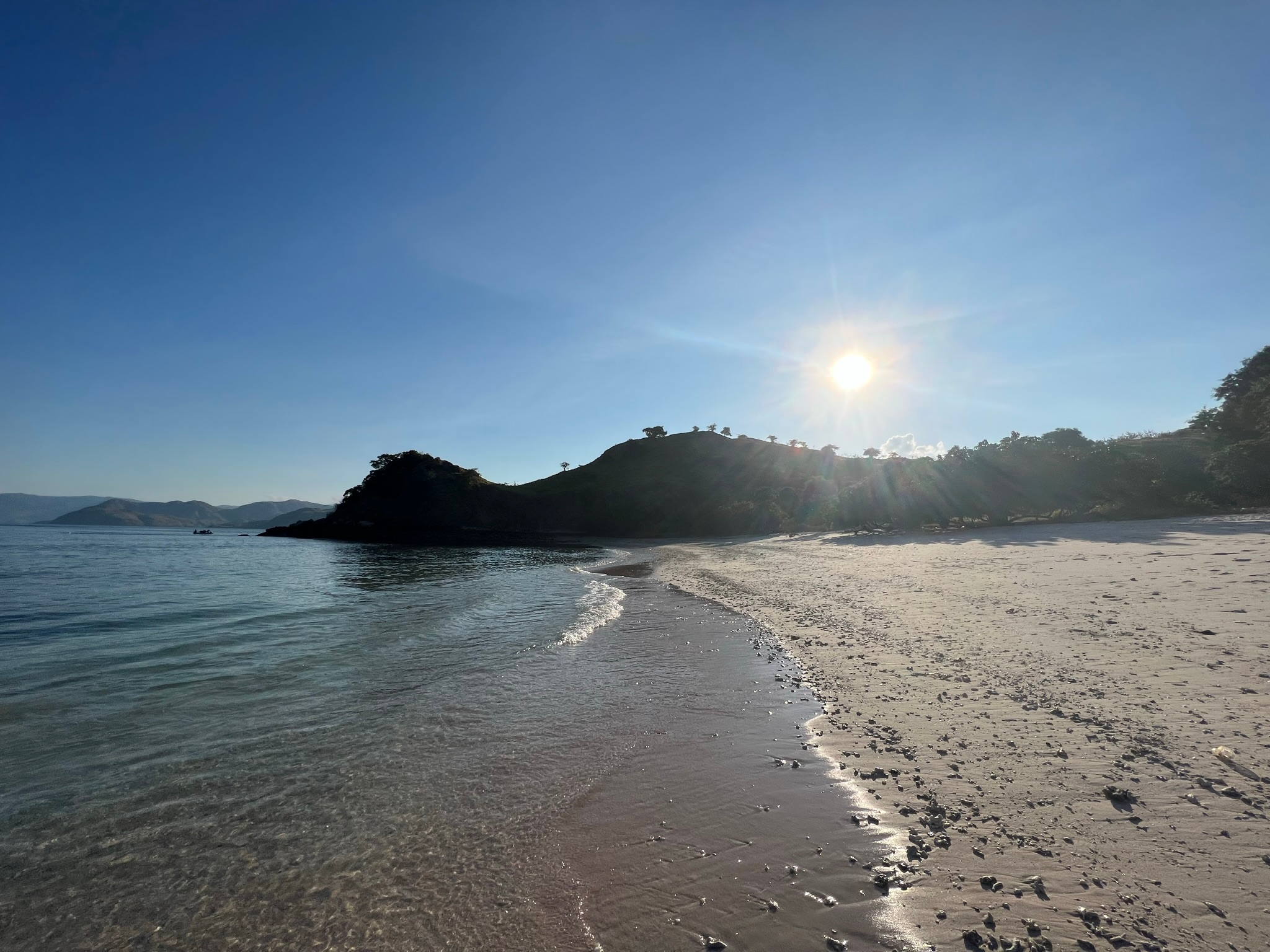
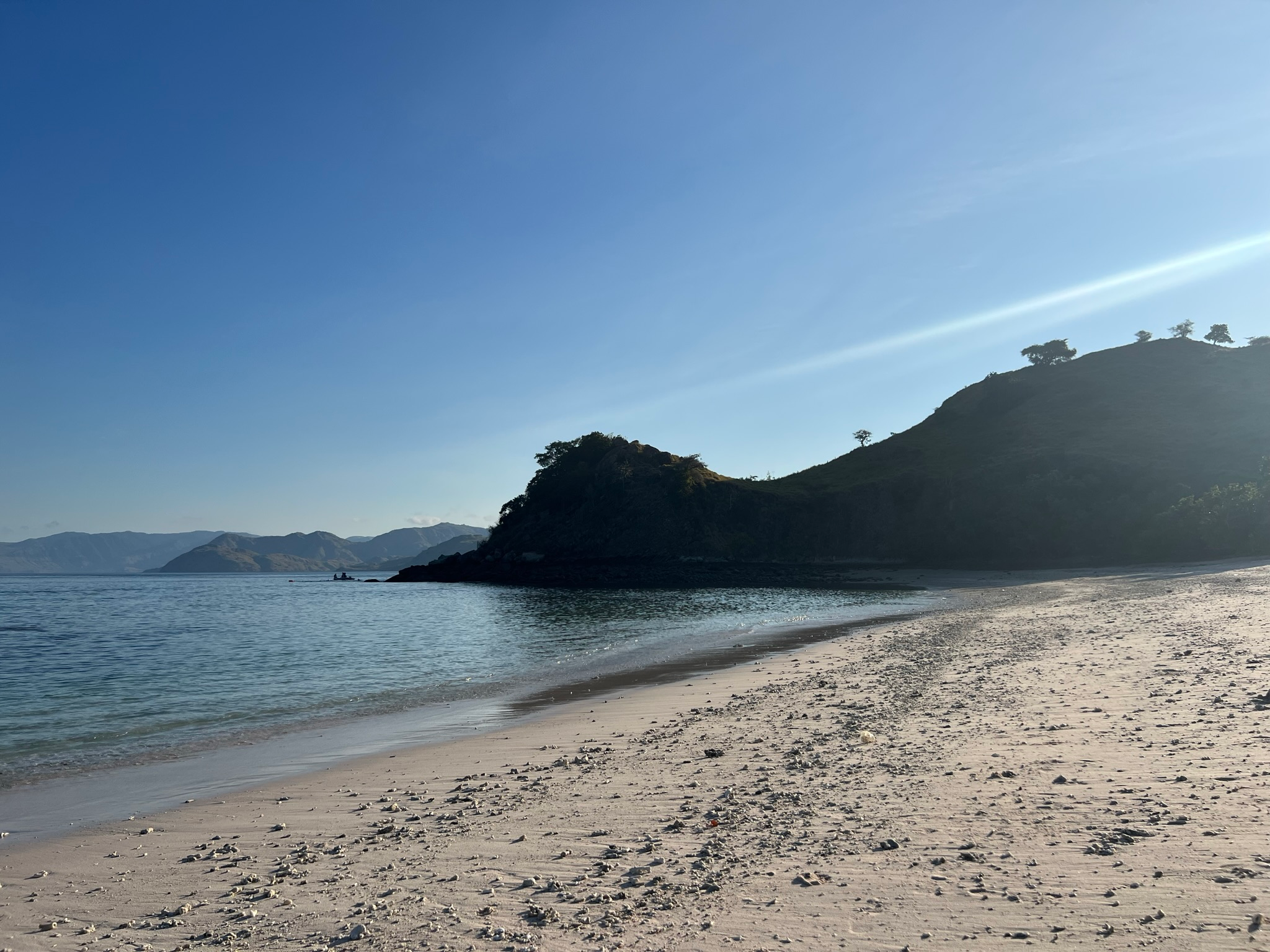
Perhaps more interesting is our excursion to Pink Beach, which, in retrospect, should be called Pinkish Beach, with its white sand having an elusive pinkish tinge when observed from this one specific angle. Squinting also helped our imagination. As ‘normal’ as this beach might have been, I was still super happy to lie on a beach away from everyone else and continue my contemplative sessions.
I tried my best, I really did, but with drones hovering above me with their constant buzzing and zooming around, I just couldn’t concentrate on anything. That said, running without a care in the world straight into the ocean did give me that same feeling of overpowering liberty and freedom as it used to. Once again, I was free. No better feeling than that.
Night Dive at Pulau Lasa
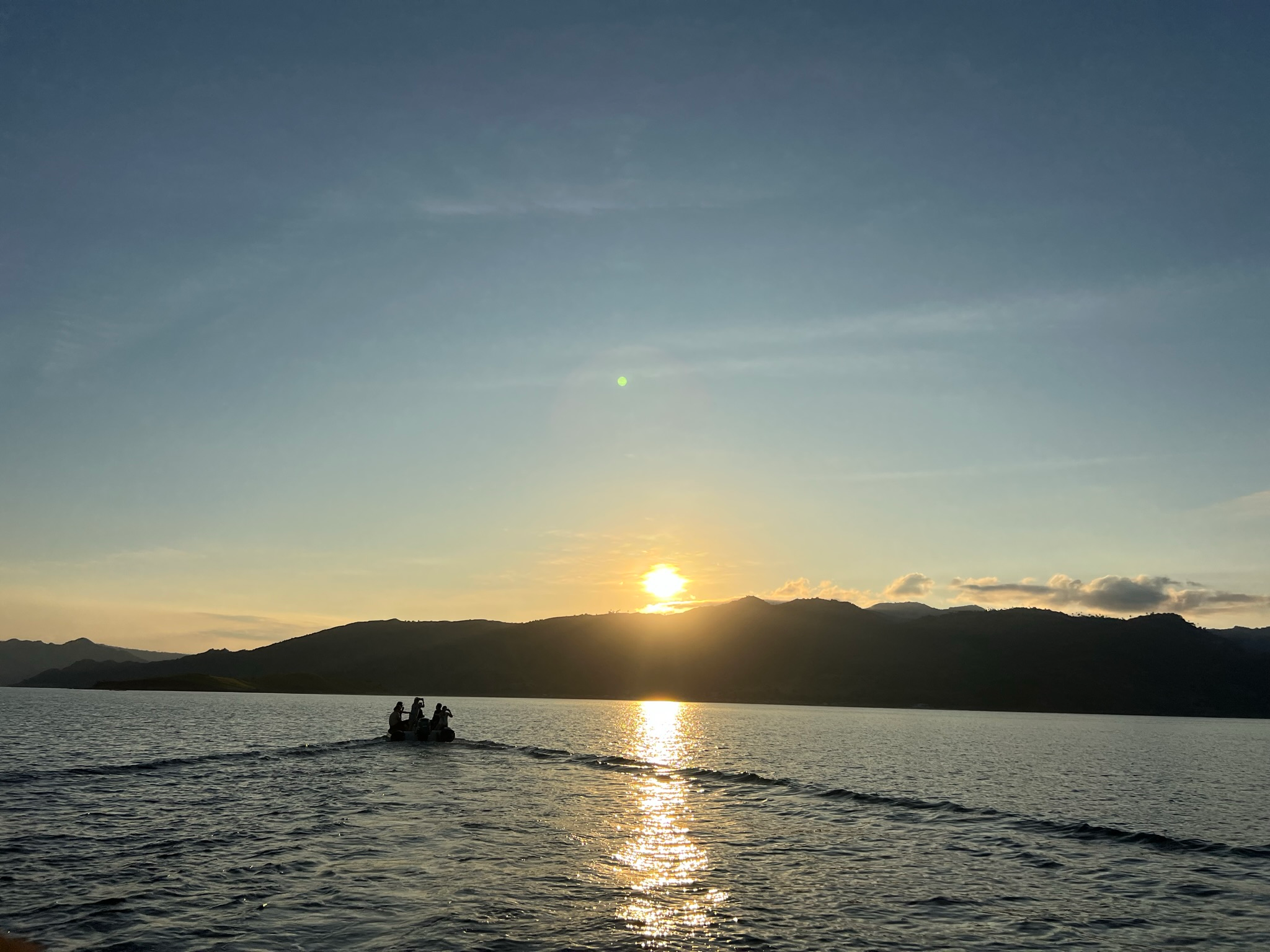
Our next night dive would be at Pulau Lasa. With Darmin and Indra swearing they had seen at least three blue-ringed octopi on their last dive here, you can imagine my anticipation to go down.
To top it off, Xie Zheng and Hu Kai were gonna pass up on the dive and Anurag was gonna join Nina’s group so they could take some cool photos of him (during a night dive…) – meaning I’d have Indra as my very own private divemaster. This time round, I geared up as fast as humanly possible, jumping straight onto the Zodiac before anyone else, trembling with excitement, chanting out “BLUE RINGED OCTOPUS!” over and over. I had been quite lucky thus far – perhaps I would be this time round too. Soon, Indra too was on the Zodiac and as soon as we arrived at the site, we immediately started our descent.
The second we reached the sandy bottom, Indra started banging on his tanks. It was a tiny, tentacled blue animal. It must’ve been the infamous blue-ringed octopus! Man was I lucky, to have stumbled upon it after the first minute – this must’ve been faith, right?! Only when I got a closer look did I realise it was actually another type of creature – a hummingbird bobtail squid. The tiny electric blue squid, no bigger than a centimetre, started using its two long tentacles to lift sand off the seafloor, burying itself completely save for its perfectly camouflaged eyes. It was the most impressive, yet cutest thing I’d ever seen!
This dive… Well, this dive was crazy. Honestly, there’s no better way to describe it. It was simply crazy. It was roughly an hour of Indra banging on his tank, pointing at one thing or another, and the second I’d take his place to observe the fascinating creature he’d have found, he’d already be banging on his tank to show me the next. Crazy! We saw so many things that it makes more sense for me to list them down instead of writing endlessly about them:
- Tropical bobtail squid (so damn cute!)
- Pygmy squid (lives up to its name)
- Bigfin reef squid (bioluminescent freaks)
- Flamboyant cuttlefish (sexy and sleek)
- Long arm octopus (like a moving booger)
- Blue spotted stingray (yawn)
- Elegant squat lobster (looks just like a weevil!)
- Long-legged spider crabs (heebie-jeebies)
- Remora (they suck, hehe)
- Forskal’s sidegill slug (it was huge)
- Striped paper bubble sea snail (so damn cool!)
- Flower’s flatworm (so elegant and curvy)
- Red spiny seahorse (I’m the luckiest…)
- Flounder (meh)
- Cowfish (including a baby one!)
- Shortfin lionfish (tiny devils)
- Crocodile flathead (two on top of each other)
One particular creature I have to highlight is the Melibe viridis sea slug. When Indra pointed it out to me, I was awestruck. It felt like I was staring right at an extraterrestrial being. The translucent, gelatinous slug features five pairs of hairy, clumsy legs it uses to get around. But, the most striking feature, perhaps, is its oral veil – a net of some sorts found on their heads which expands in order to scan the substrate for prey, at which point the super sensitive papillae signal the net to contract, effectively vacuuming their victims before starting to digest them. Whilst according to most sources these things grow up to a size of around twelve centimetres, I swear the one I saw was easily twice that size if not larger. I swear on Grey’s Anatomy. That’s how serious I am.
It was also the first time I saw a sea pen – having had mentioned wanting to see one just that same morning. And that’s not to mention the common stuff we’d see on every dive, like coral crabs and sleeping fish. We didn’t get to see the blue-ringed octopus after all, but honestly, I couldn’t have given less of a crap at the end of such an amazing dive.
As many great dives as I had, I can guarantee this was by far my favourite one – ever. I felt like a kid on Christmas morning, every single thing we’d spot sending me in a frenzy of exhilaration. Man I love night dives. Man I love diving. And man do I love the friggin’ sea!