Tromsø – Day 4: Beyond Time
TROMSØ
Day 4: Beyond Time
December 01, 2024
PART I
With the rest of the gang wanting to enjoy a slow morning at our place, I ventured out alone in the hope of connecting a little more deeply with our snowy surroundings.
Right behind the house ran a main road skirting the edge of the sea. I strolled along it until I found a comfortable rock beside the water, where I sat staring at the stracciatella-like hills facing me, their snowy slopes reflected in the deep blue water that perfectly complemented the sky.
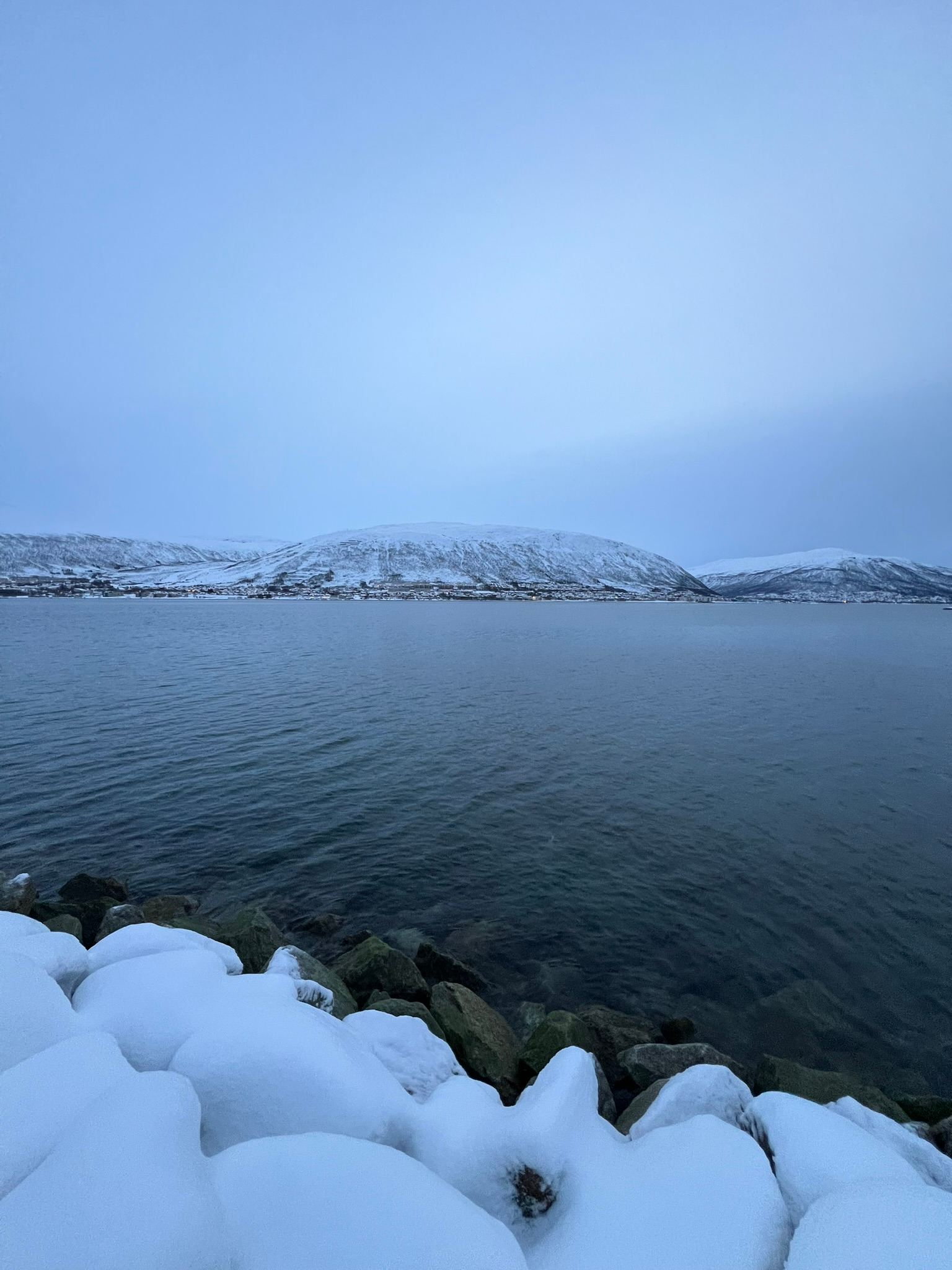
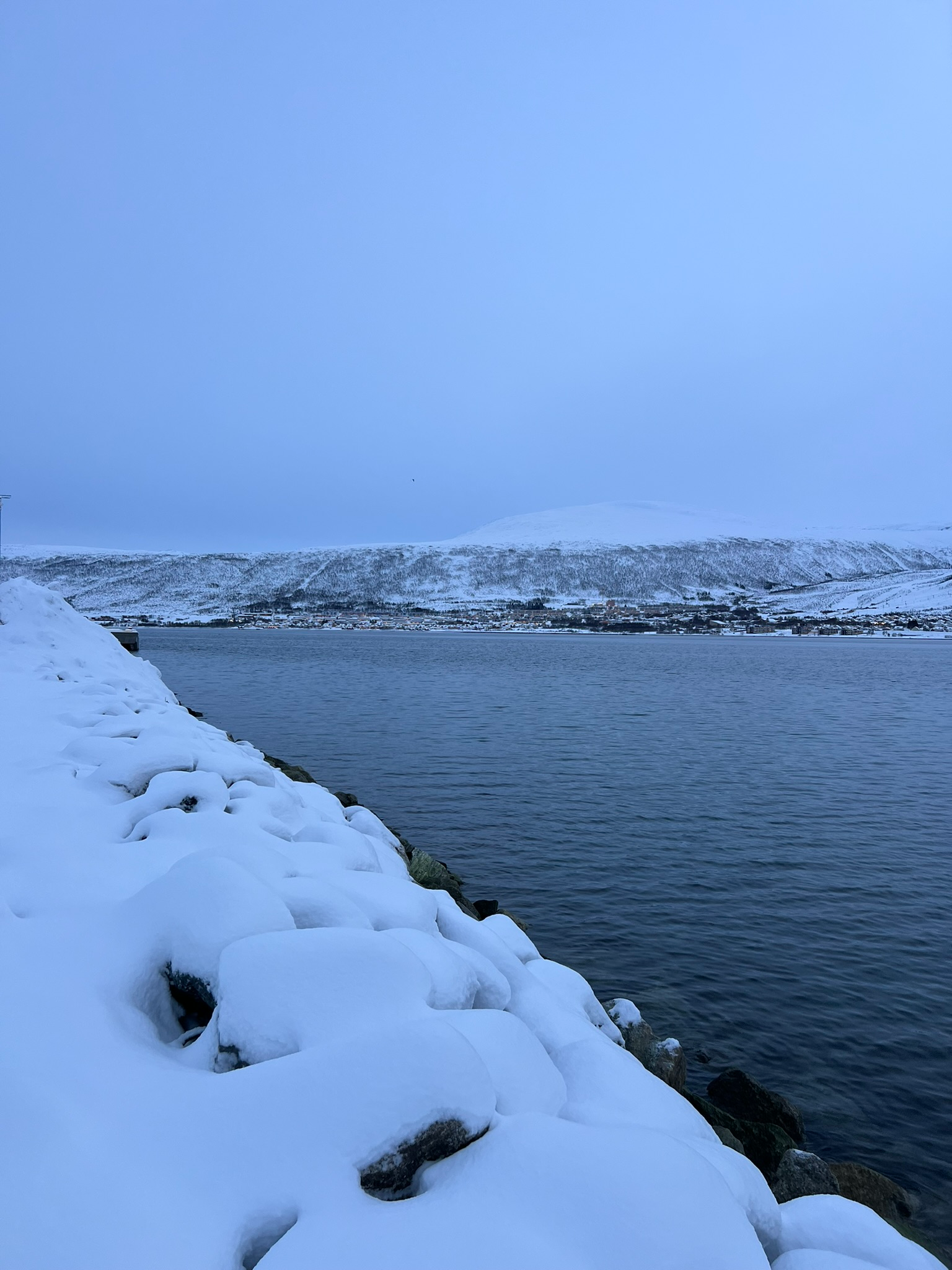
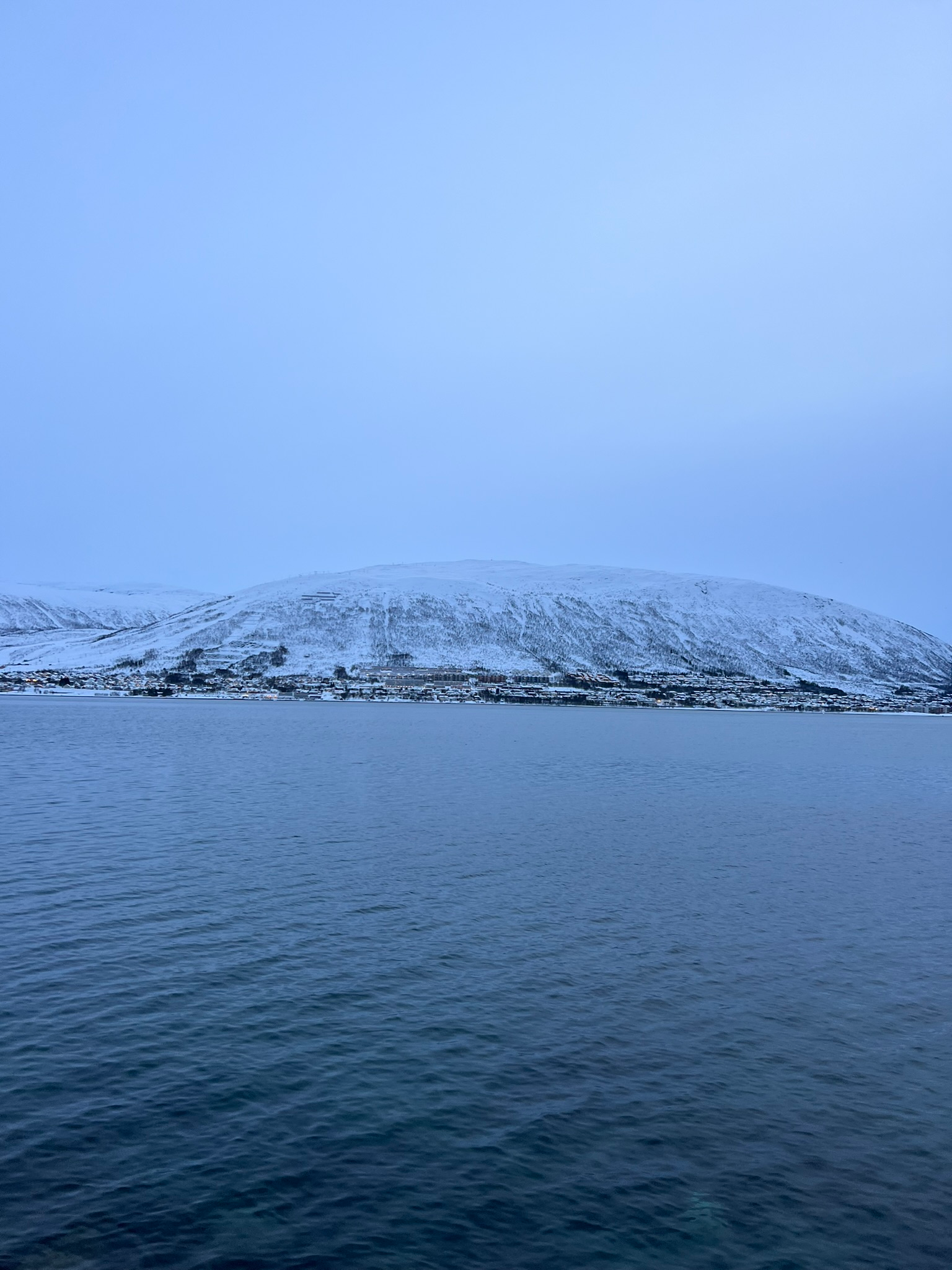
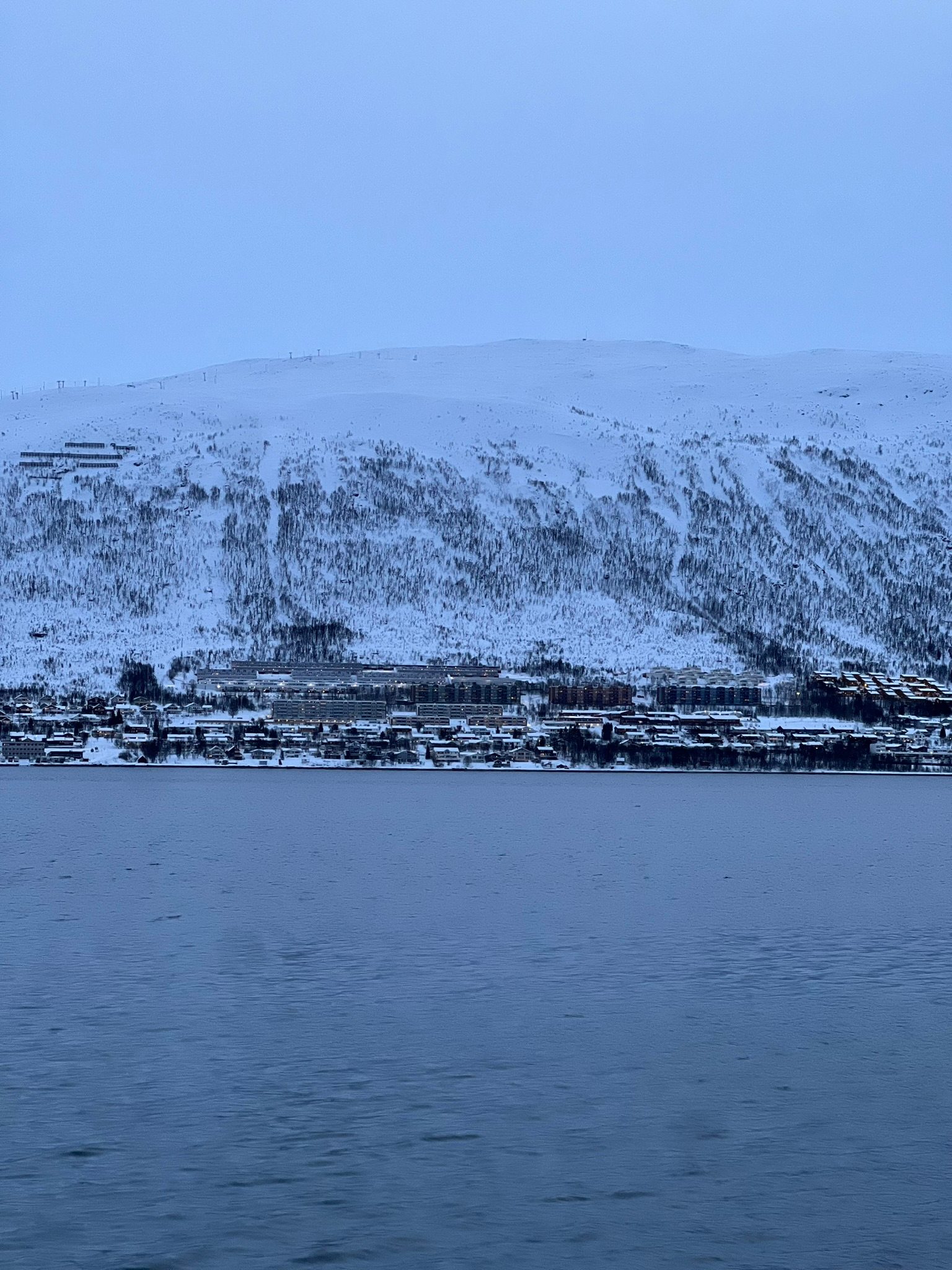
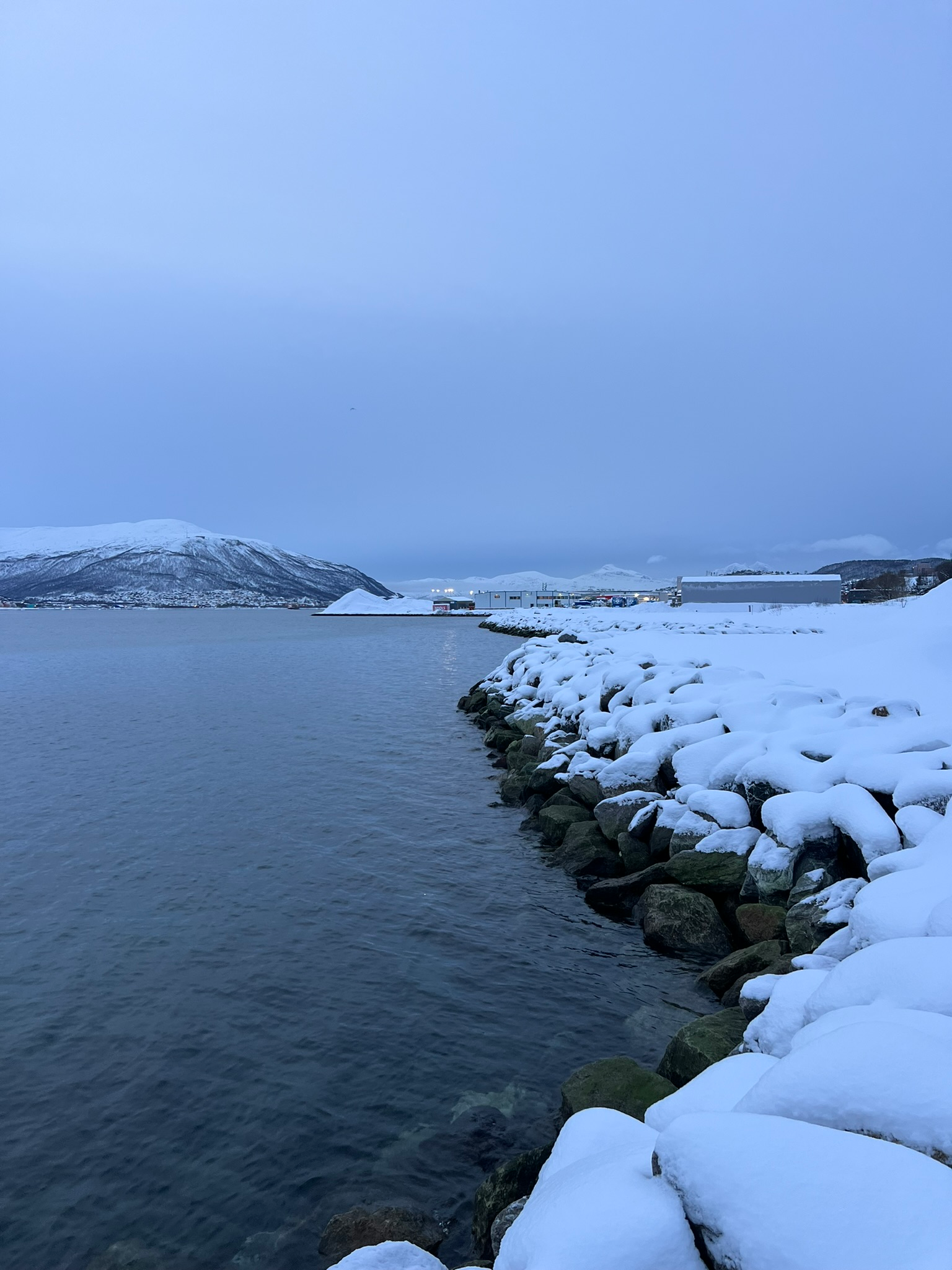
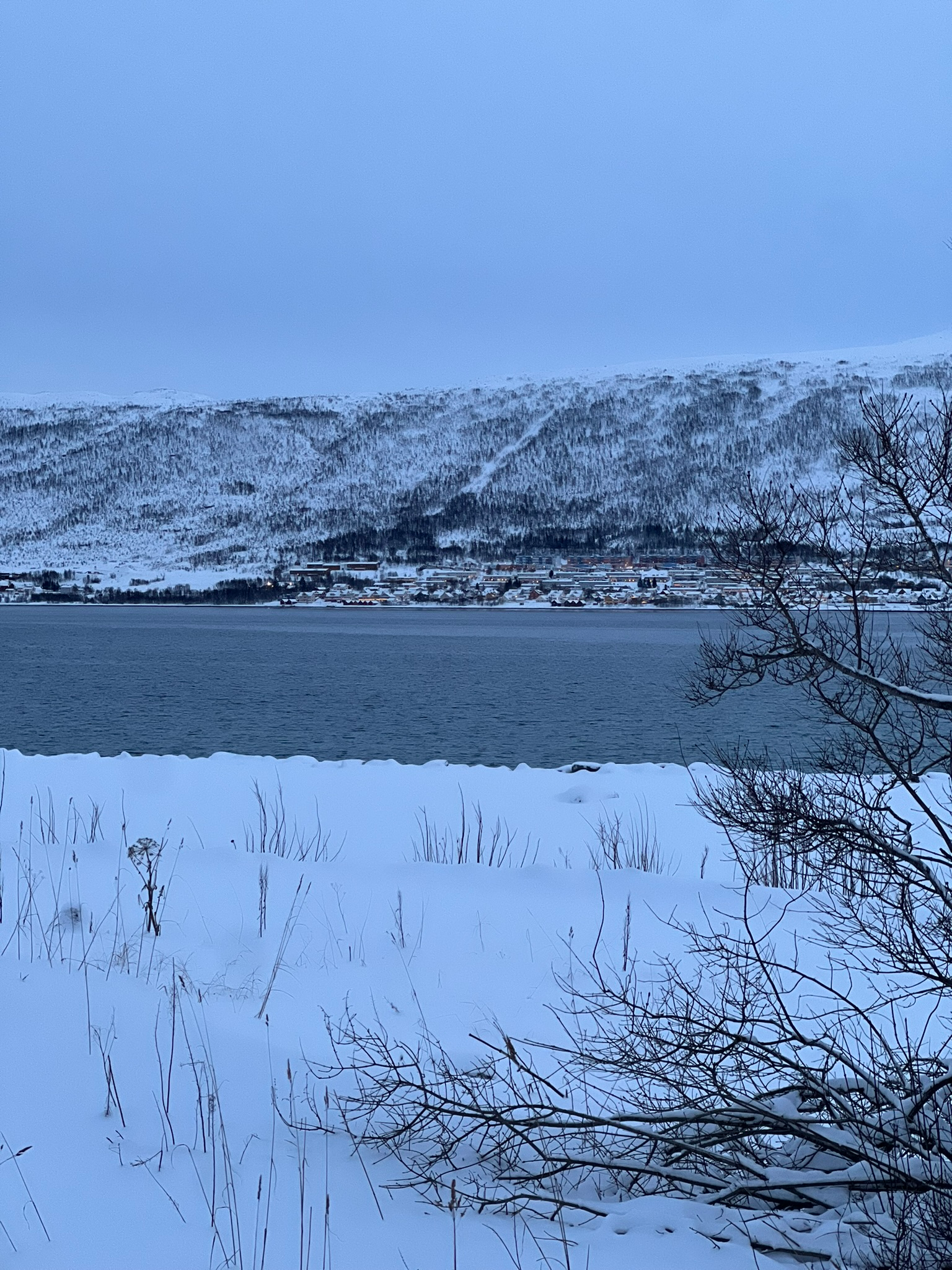
As I sat there in complete silence and solitude, I could’ve given just about anything to spend a few more months over there. We had only landed a few days earlier, and at first I’d had no idea how the locals managed to cope with the polar night. Yet there I was, only a couple of days later, already wishing I could stay.
Tromsø from Above
After my little contemplative session, I rejoined the others, as we had a full day of plans ahead of us.
First up was Fjellheisen, Tromsø’s cable car, which carried us from Tromsdalen to the upper station on Storsteinen, 421 metres above sea level. The ride itself only took a few minutes, but the panorama waiting at the top was breathtaking, to say the least. Tromsø’s lights shimmered below us, the city nestled among dark fjords, islands and snow-covered mountains stretching far into the distance.

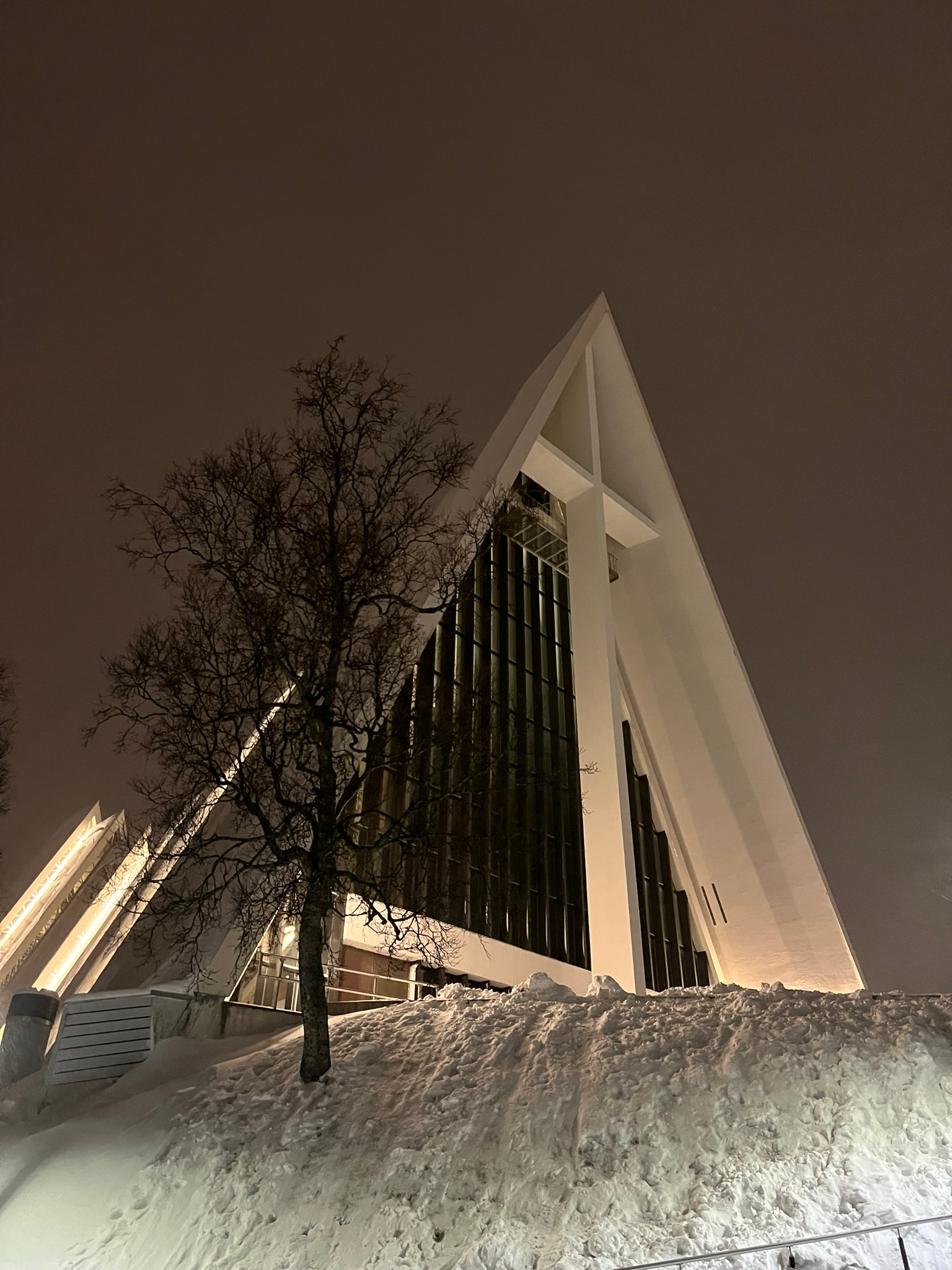
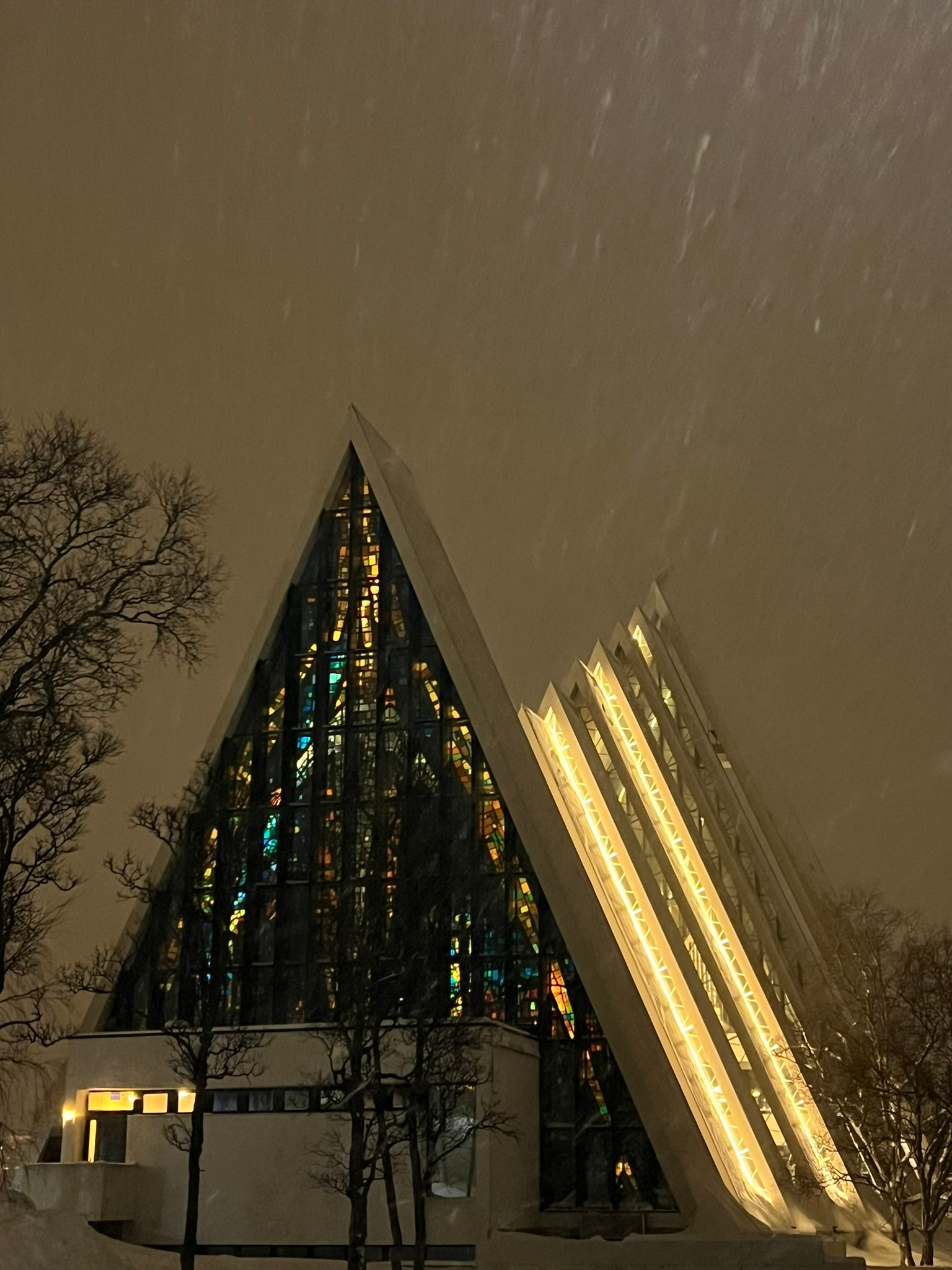
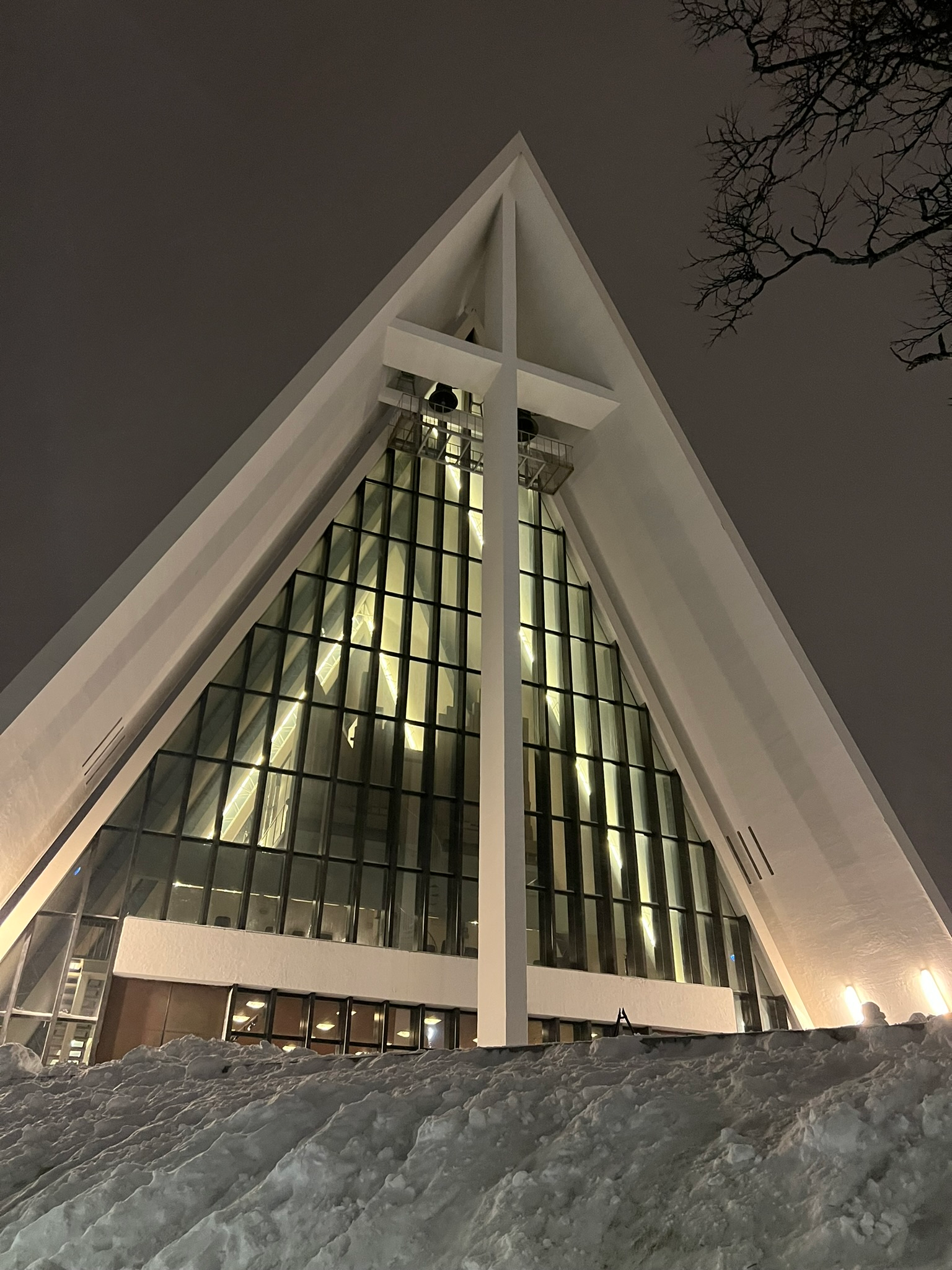
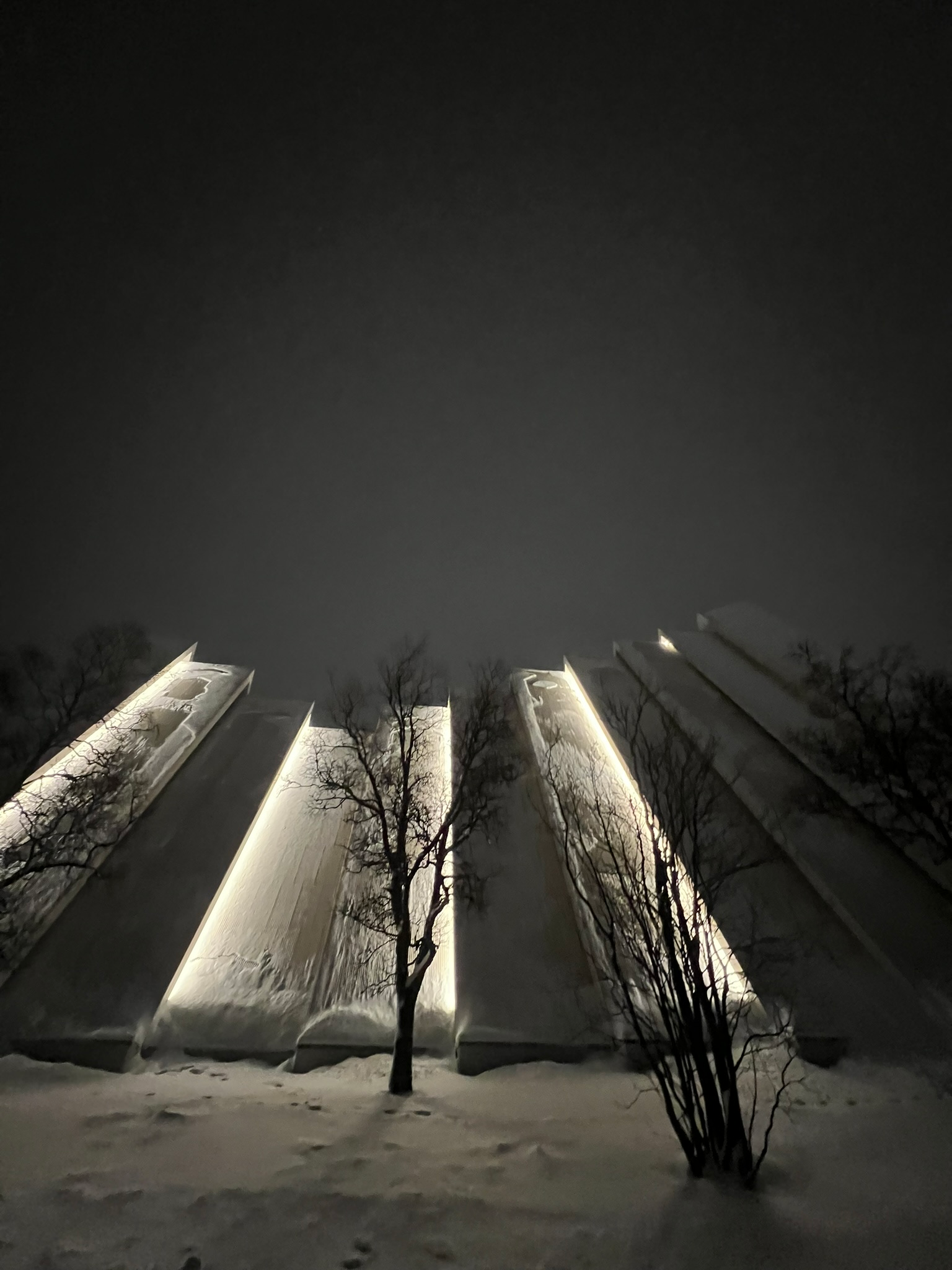
Once we’d had our fill of the view, we headed back down and walked towards the Arctic Cathedral. Despite its famous nickname, it is officially called Tromsdalen Church. Its striking modernist structure consists of a series of aluminium-coated concrete slabs, creating a sharp triangular silhouette that, to me, resembled an enormous iceberg rising from the snow.
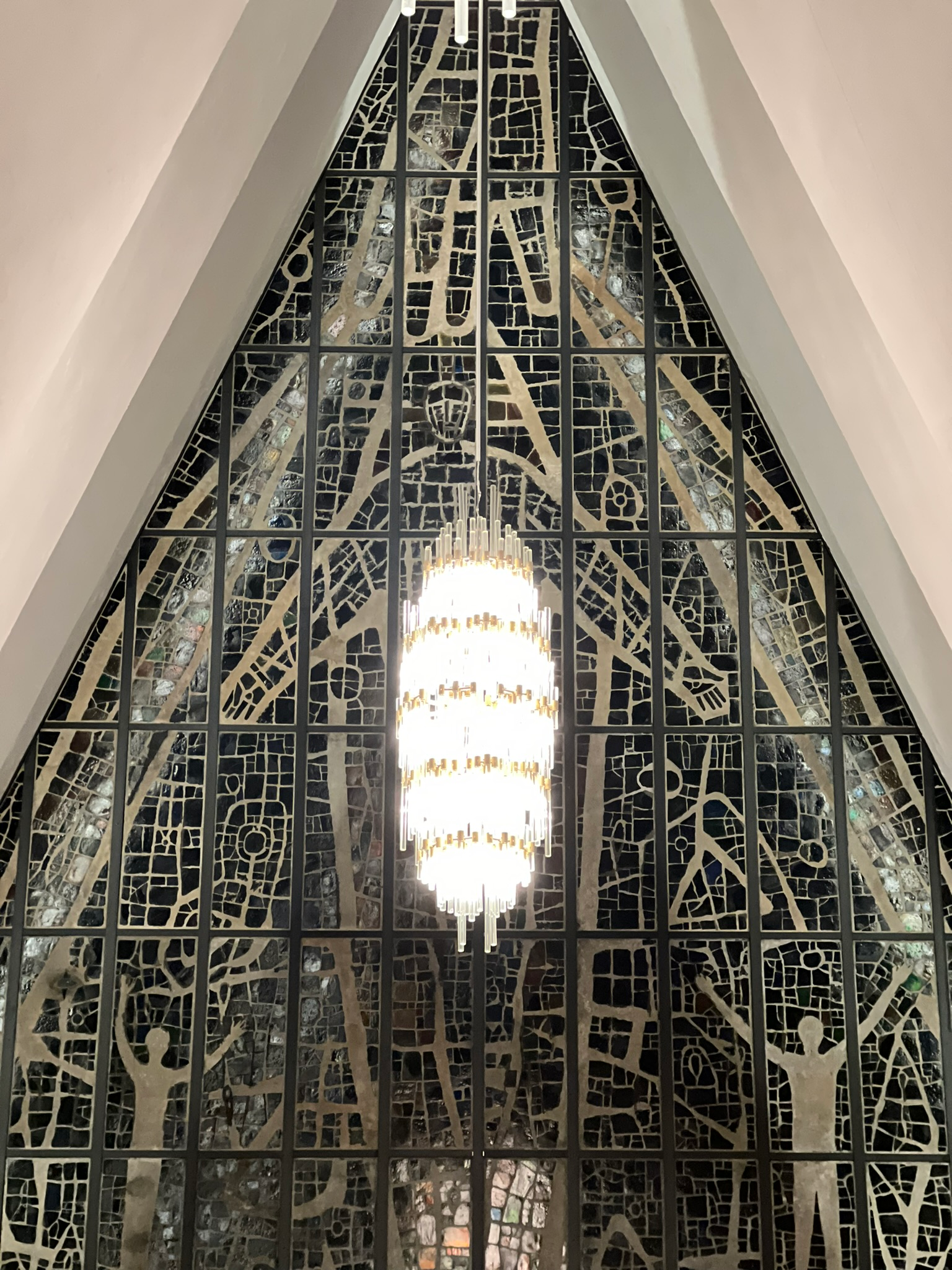
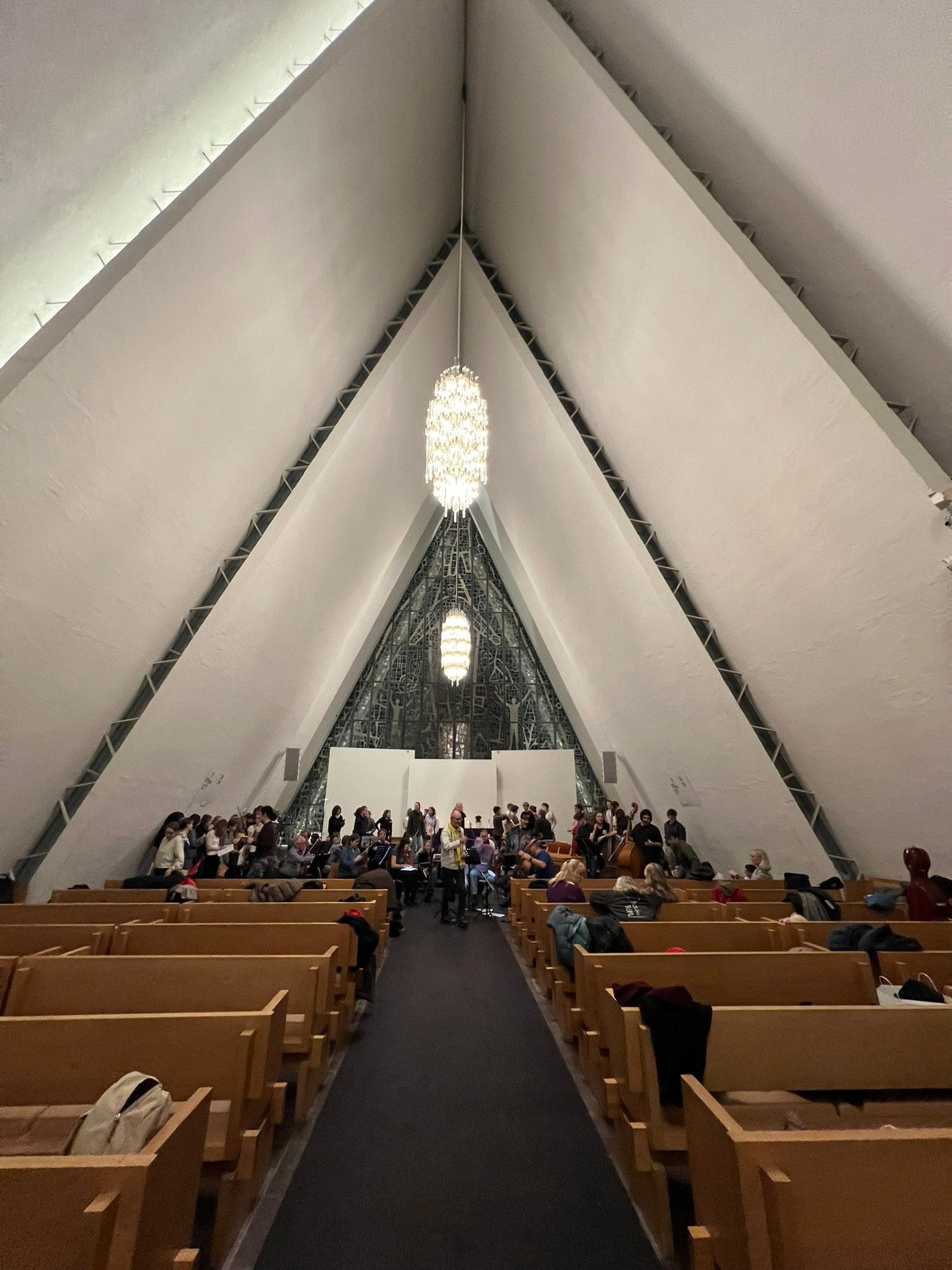
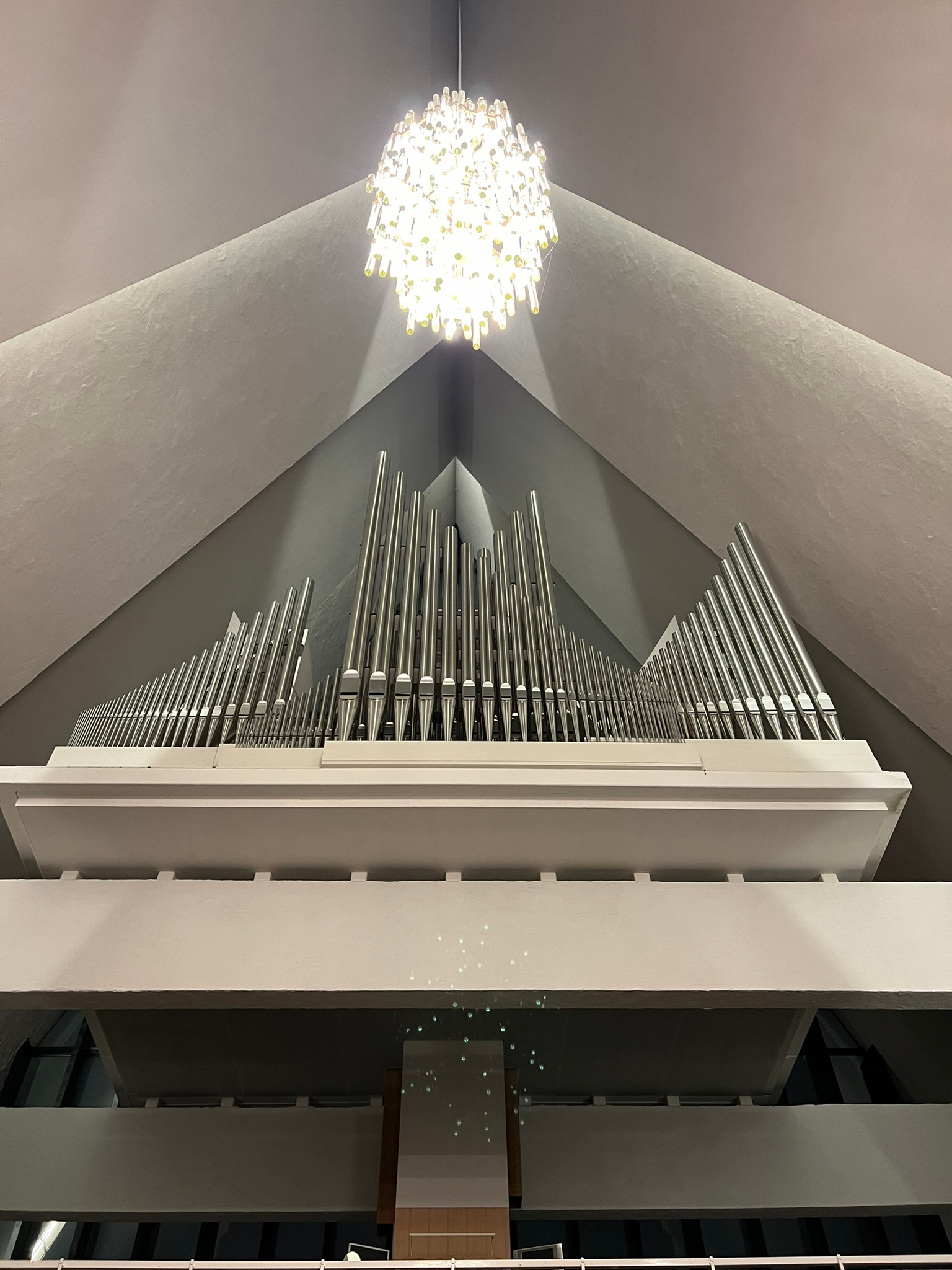
The inside was far more minimalist, although the enormous glass mosaic behind the altar added a dramatic burst of colour. Installed in 1972, seven years after the church was inaugurated, the artwork depicts rays of light passing through Christ and humanity. Even the organ had been designed to match the building, its shape evoking sails and drifting sheets of ice.
PART II
Chasing Instagram Myths
After a quick lunch, we prepared for another short road trip – one inspired by a couple of Instagram fads that Akash and Zara were kinda obsessed with.
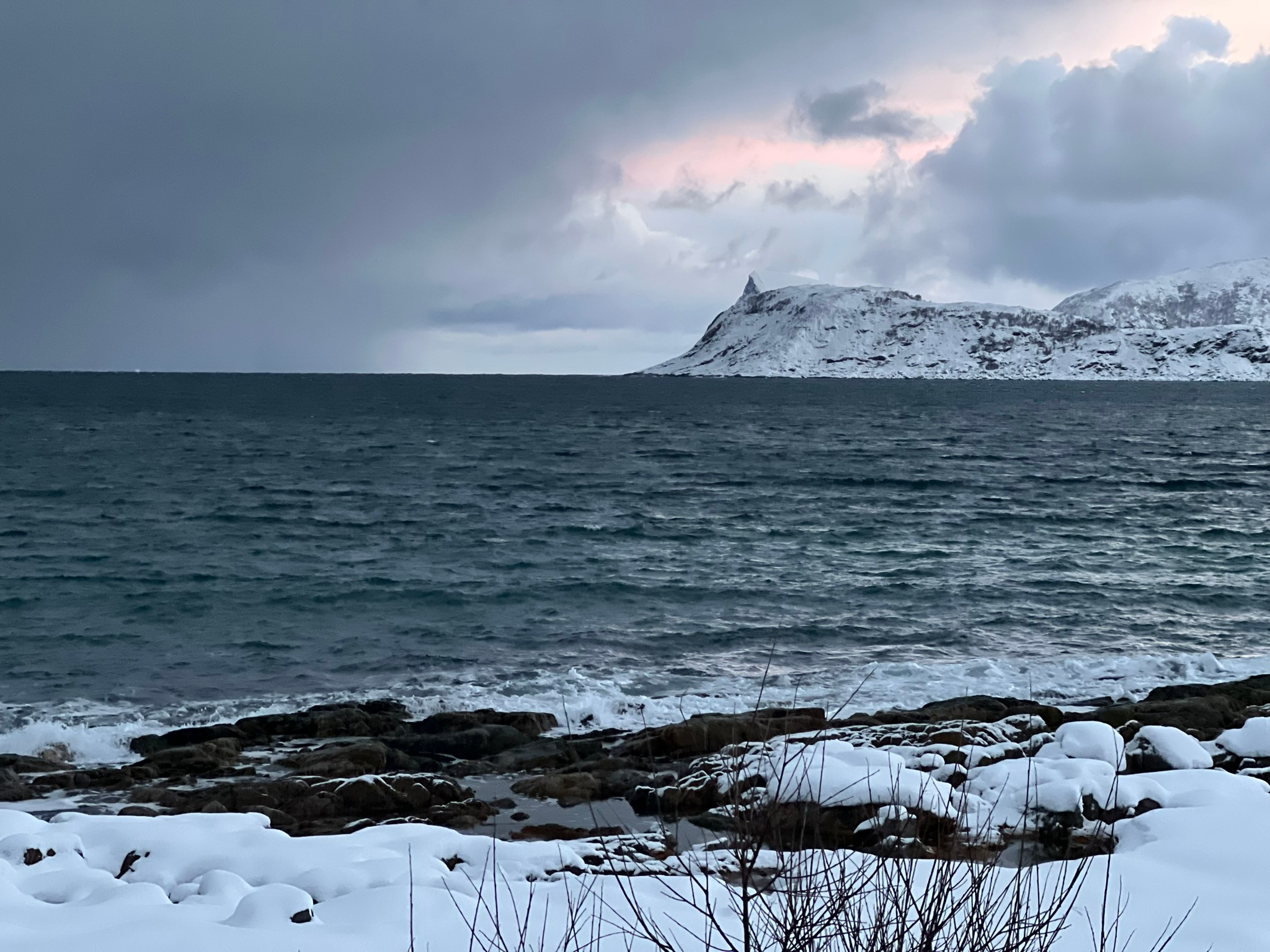
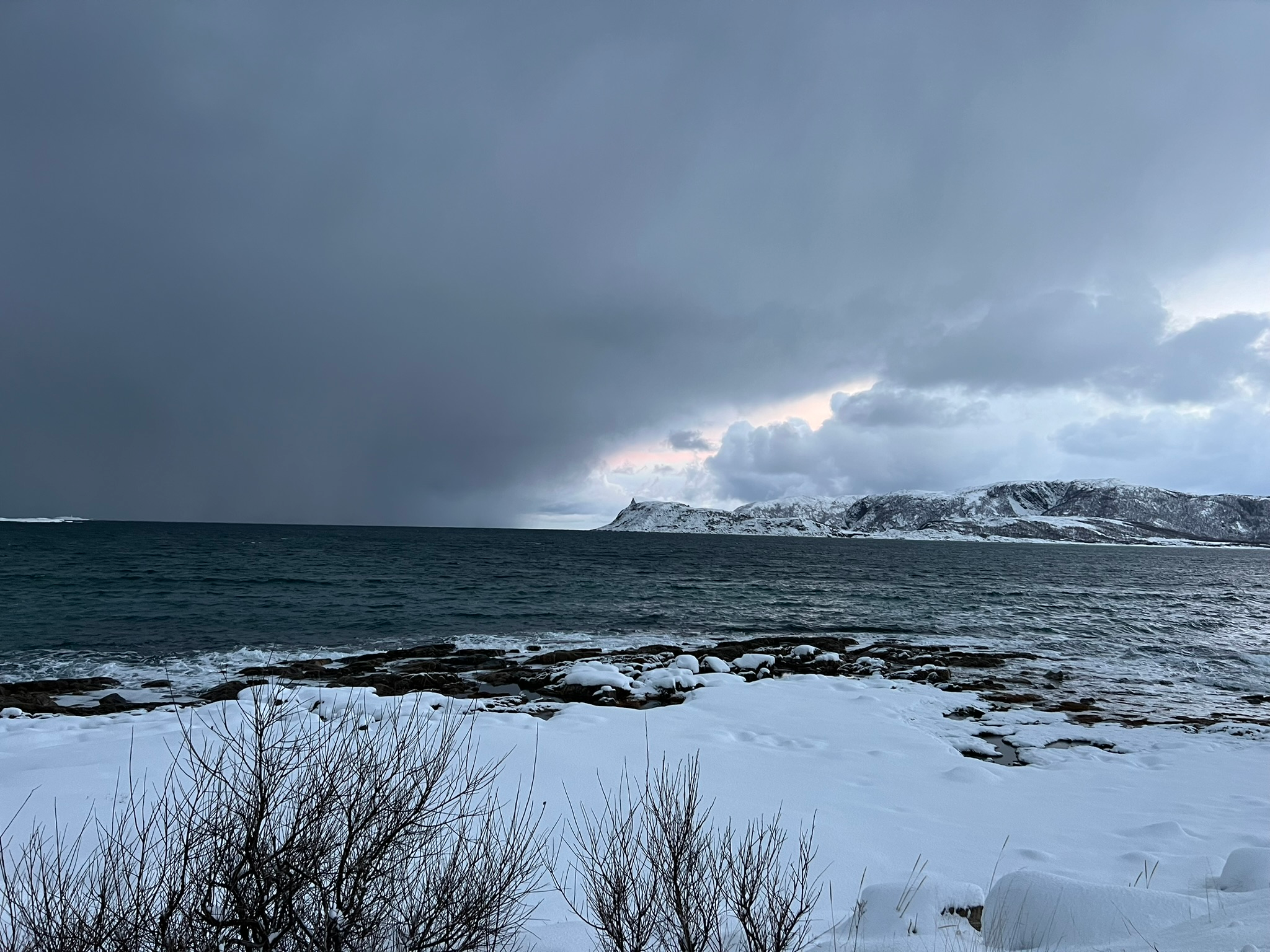
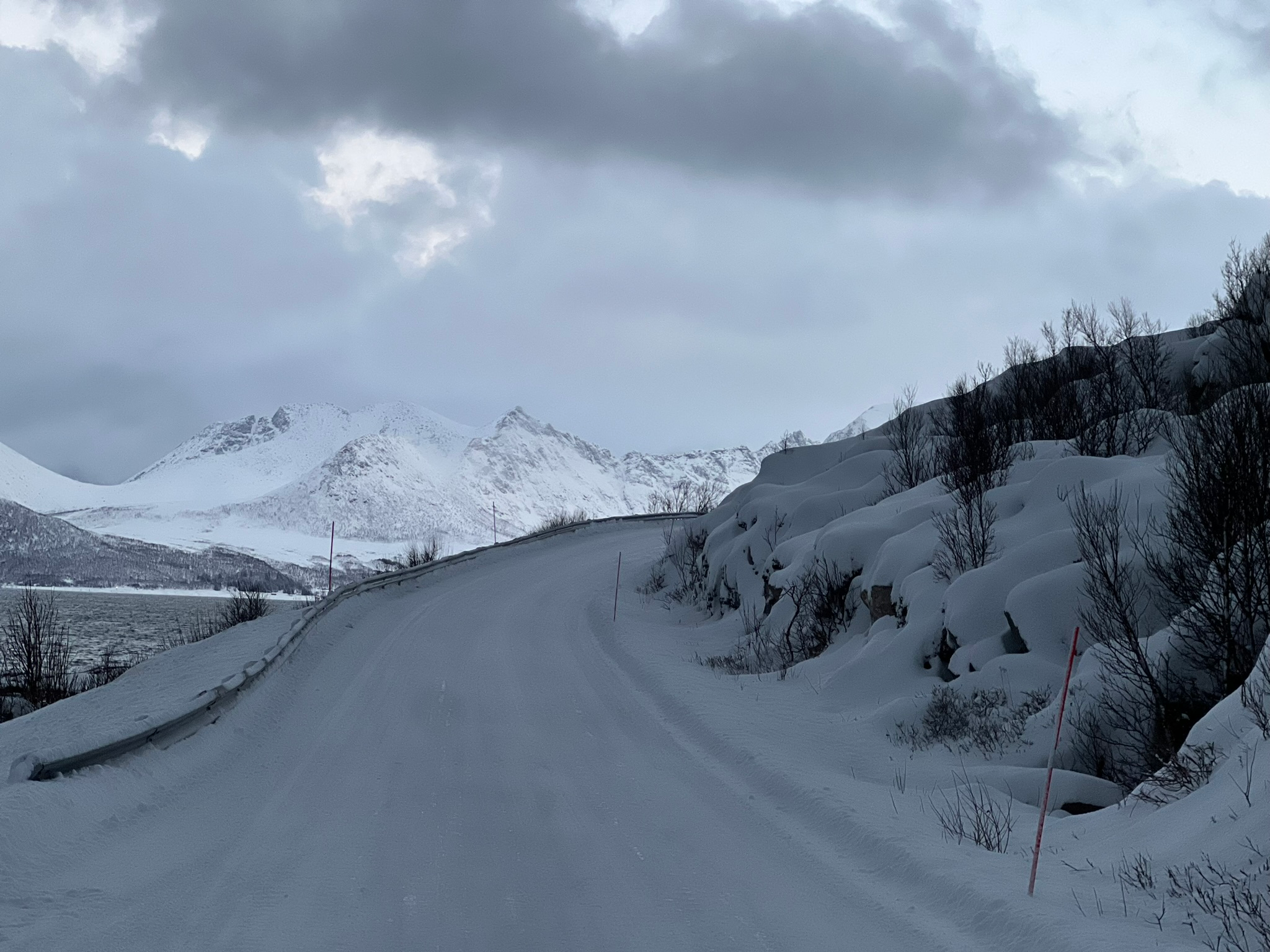
We headed west from Tromsø, following a road that twisted between steep mountains and a long, narrow fjord. The water below was so calm and glassy that it reflected the sky and jagged peaks like a mirror. Time and time again, we’d pull over to take photos of the surreal scenes surrounding us, with every bend revealing another stretch of wilderness that felt completely untouched.
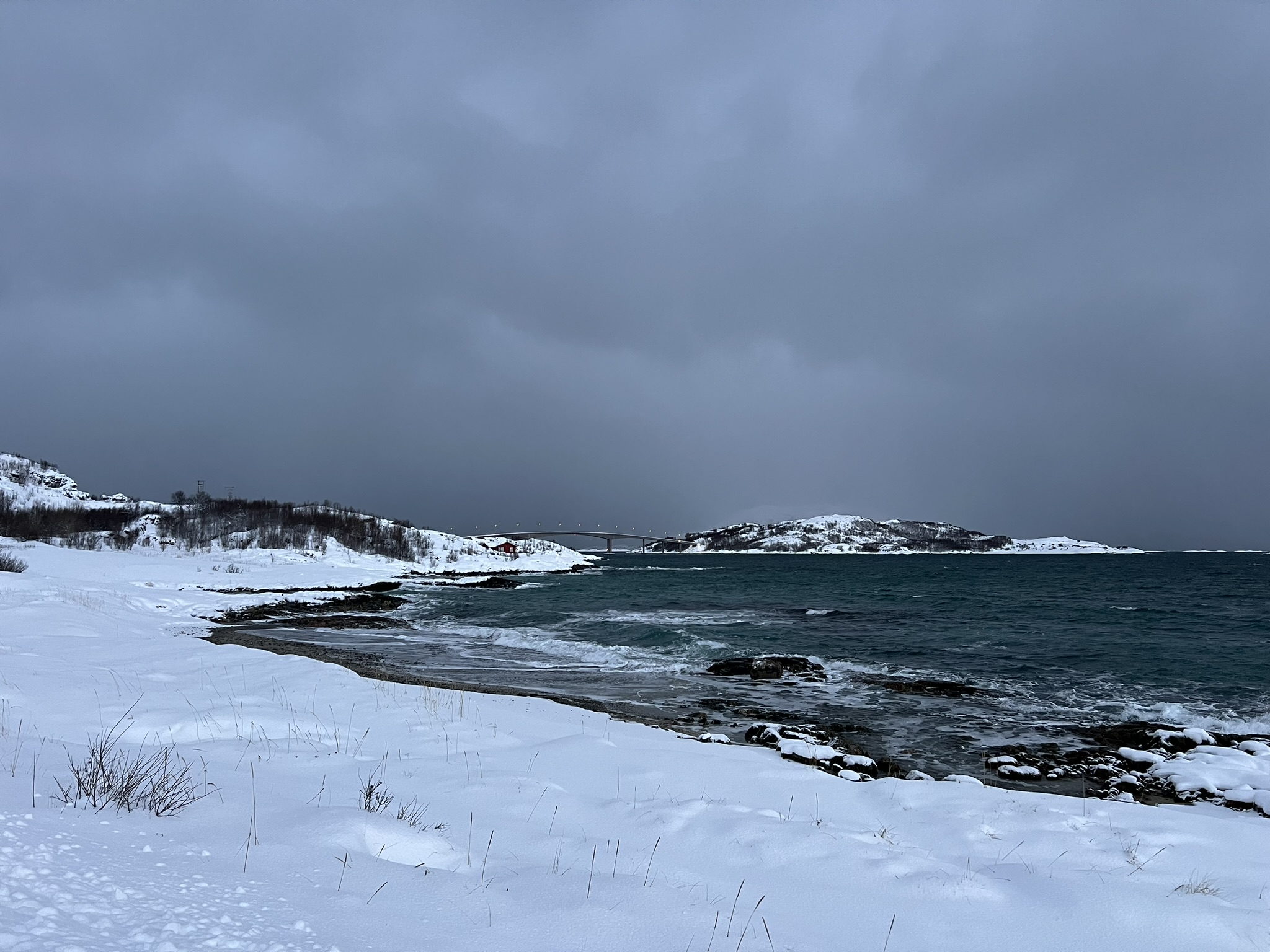
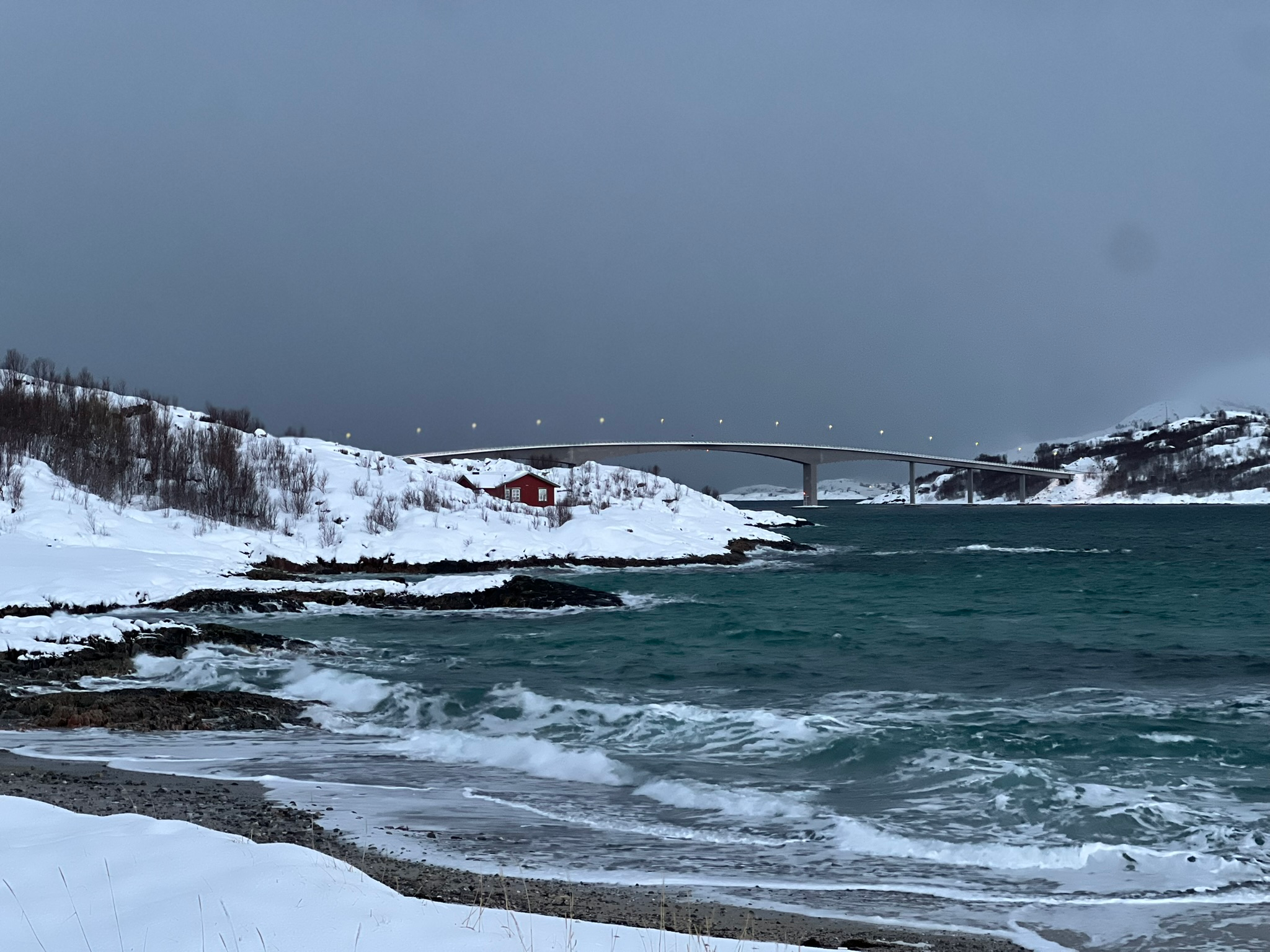
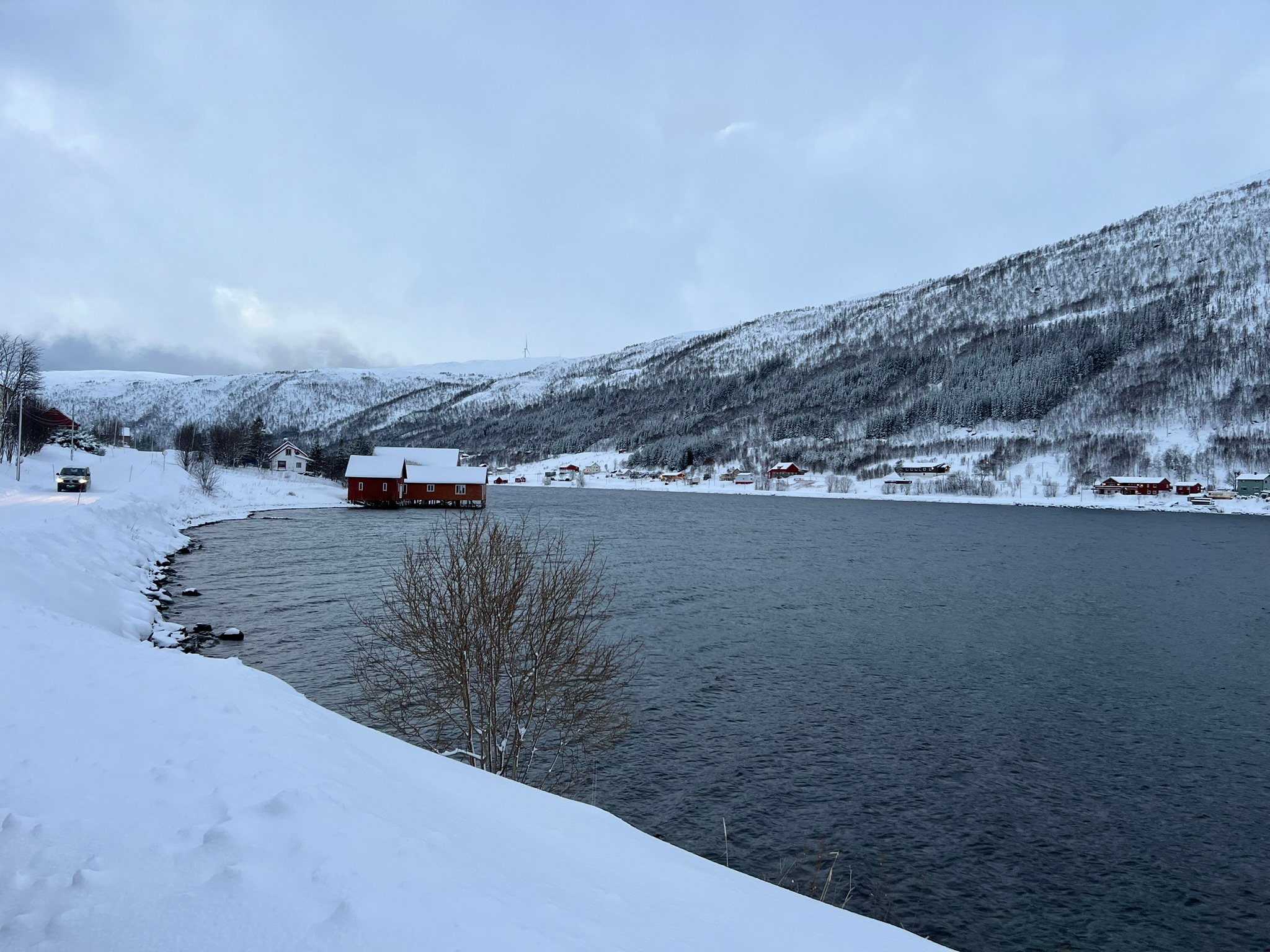
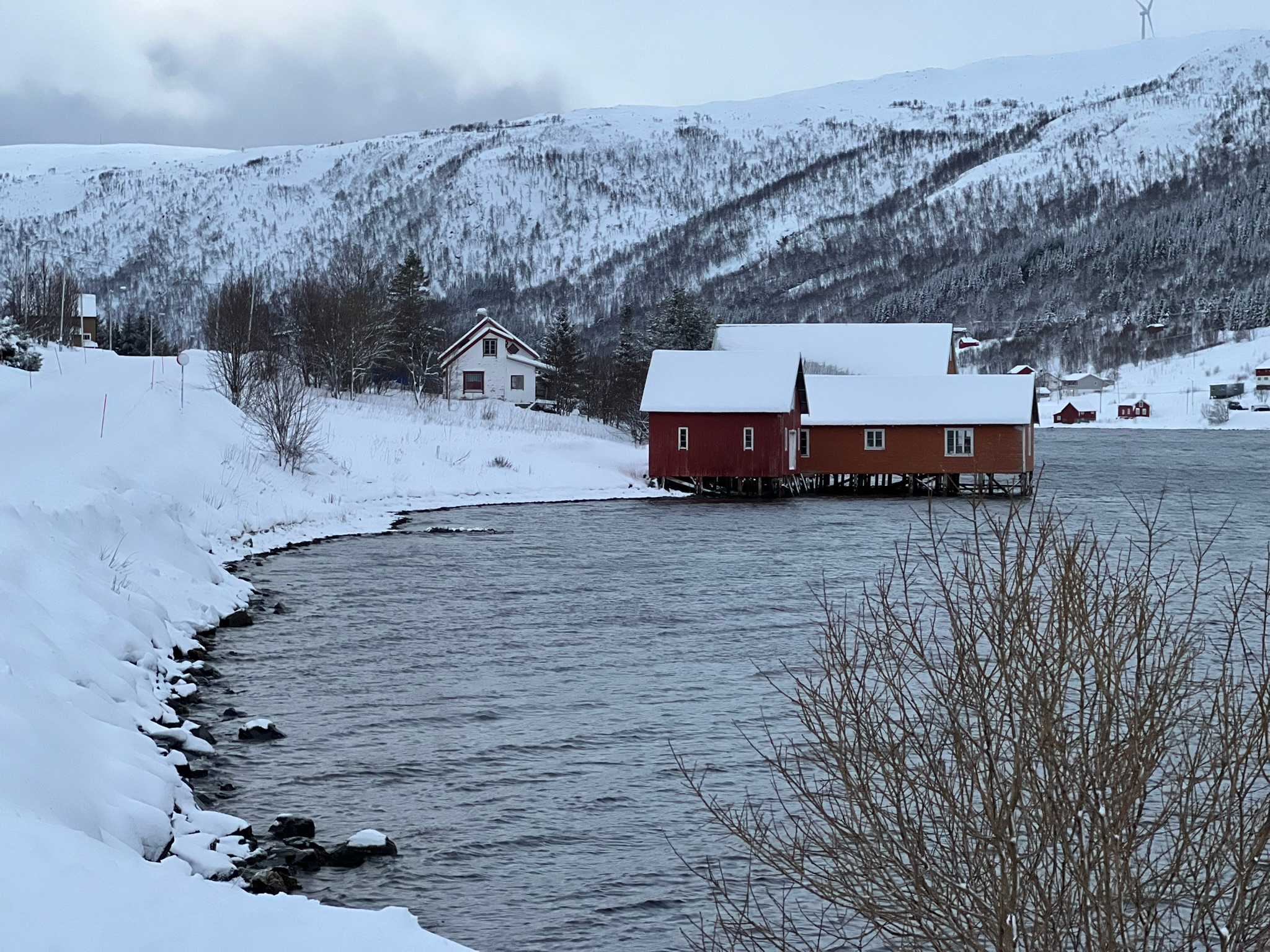
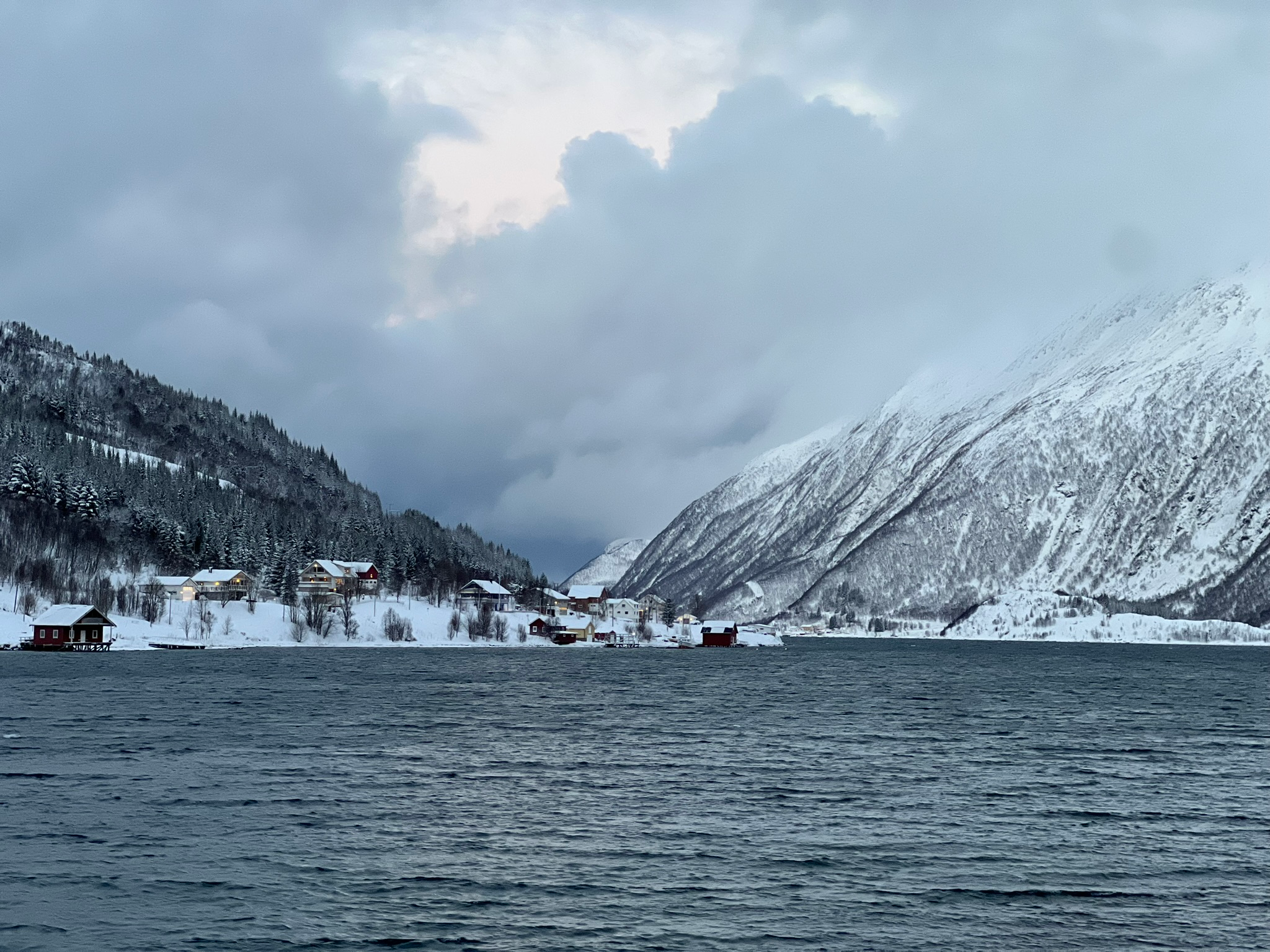
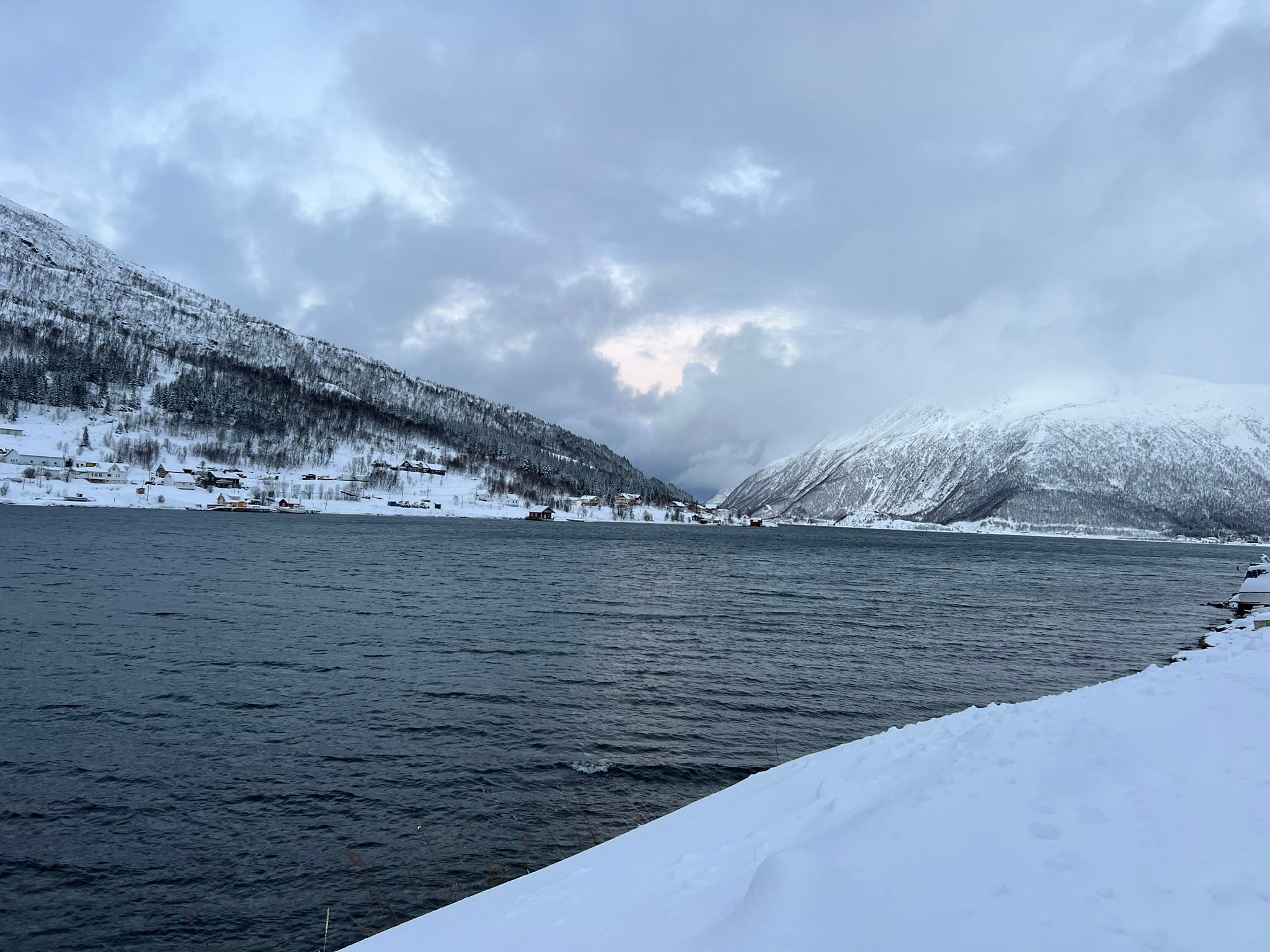
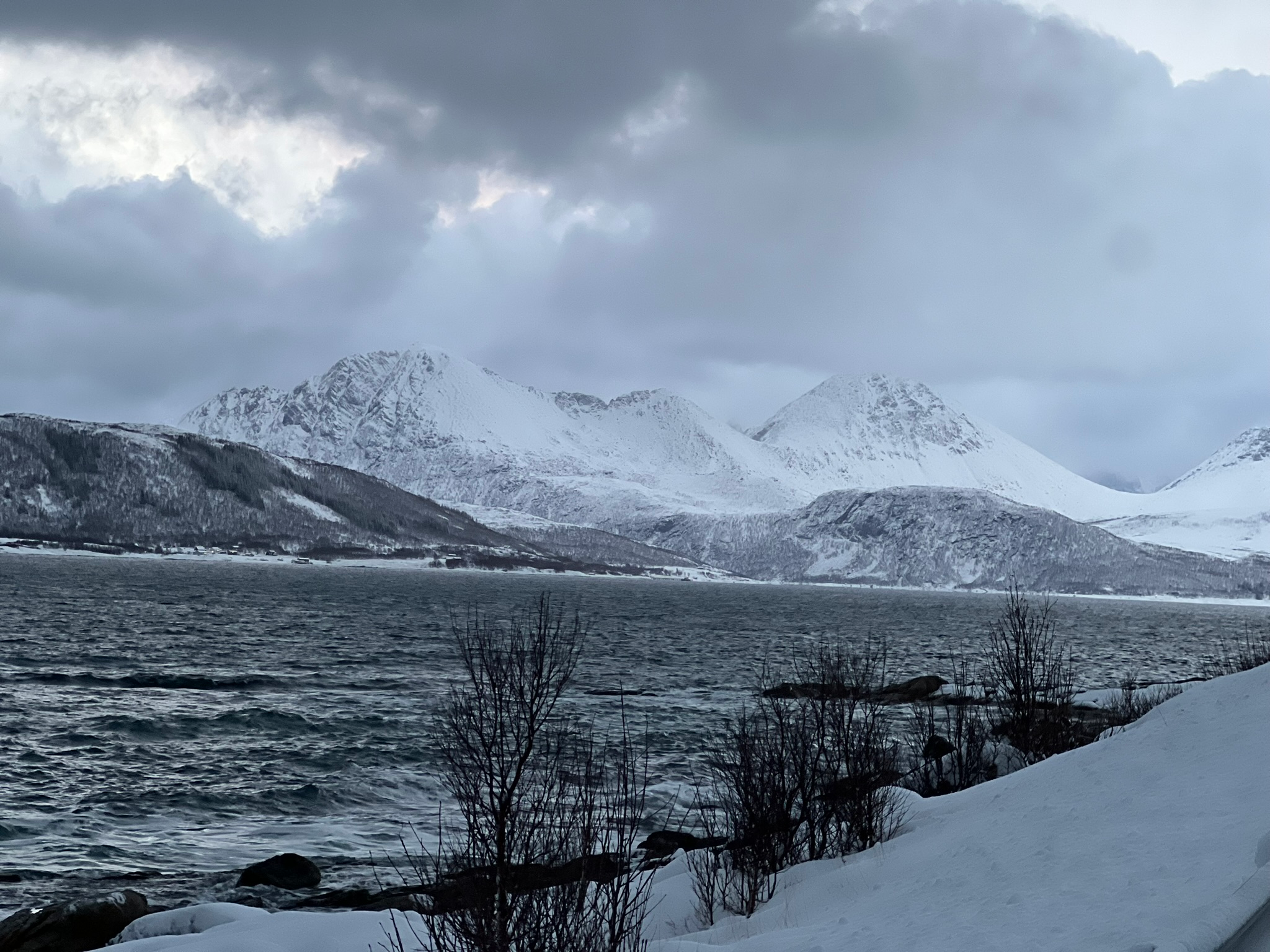
One of the supposed highlights of our road trip was the infamous James Bond Bridge, which the others believed had appeared in No Time to Die. A quick Google search left me feeling rather suspicious about the bridge standing in front of us. Turns out, the bridge we had stumbled upon was Sommarøy Bridge – and it had absolutely nothing to do with James Bond.
The road featured in the movie was actually the Atlantic Road in western Norway, whose most famous landmark is the dramatic Storseisundet Bridge. Unfortunately, that happened to be way down in the south, roughly a 20-hour drive from where we were standing. Not exactly nearby. Luckily, the others had no idea. I figured I’d let them enjoy their moment, so I didn’t mention a word. To this day, they still claim we visited the James Bond Bridge!
The Island that Stopped Time
Though it hadn’t appeared in any films, Sommarøy Bridge was still a sight to behold. It carried us across the water towards our destination – the tiny fishing community of Sommarøy.
The island is famous for its white sandy beaches, turquoise water and little wooden houses scattered across rocky, snow-covered hills. That wasn’t exactly why we had come here, though. Nope. A few years earlier, a widely shared campaign had claimed that Sommarøy wanted to become the world’s first “time-free zone”. The idea was that, because the island experienced weeks of continuous daylight beneath the midnight sun and long periods of winter darkness under the polar night, its inhabitants had developed a far more relaxed relationship with clocks and conventional schedules.
In reality, nobody on Sommarøy had abandoned time. The idea had originated as a tourism campaign created by Innovation Norway and Visit Norway with support from local participants. Innovation Norway later apologised for failing to make its involvement clear from the beginning. Naturally, the first thing Zara did when we arrived was ask a local what time it was. You can imagine her disappointment when he calmly told her it was 3PM. I imagine the poor guy must get that all the time!
Though we didn’t exactly manage to fulfil the expectations that Instagram had created for us, I couldn’t have been happier with the road trip. We might not have found the James Bond Bridge or a community living beyond the constraints of time, but we had driven through some of the most beautiful scenery I had ever seen. That was more than enough for me.
Into Tromsø’s Polar Past
Once back in the city, we had the rest of the evening all to ourselves. While the others headed back to our place to chill, I decided to pay a visit to the Polar Museum.
The museum is housed in Tromsø’s old customs complex, a collection of protected wooden buildings dating back to the 1830s and sitting right beside the harbour. With its creaking floors, low ceilings and dimly lit rooms, the building set the mood right from the start. The exhibitions were equal parts history lesson and Arctic storytelling, filled with taxidermy, old rifles, handwritten journals, photographs and dioramas that brought Norway’s long obsession with the far north to life. The main sections included:
Norway’s Arctic trapping and hunting activities were historically centred on the Svalbard archipelago, which was once commonly referred to as Spitsbergen. The first recorded Norwegian overwintering expedition took place in 1794 and 1795, but the industry expanded considerably during the late 19th and early 20th centuries, driven by the demand for fur, skins, oil, blubber and ivory.
Overwintering trappers from northern Norway lived in remote cabins, hunting animals with valuable winter pelts and relying on seals, birds, eggs, reindeer and ptarmigan for additional food and income. Their activities severely depleted several animal populations, although protections introduced throughout the 20th century eventually allowed many of them to recover. Some trappers returned to the Arctic for decades, enduring isolation, darkness and brutal weather while developing a deep connection with the wilderness around them. Although a successful season could be profitable, the work remained extremely dangerous and unpredictable. The main animals hunted included:
- Whales: Large-scale European whaling around Svalbard began during the early 17th century, with English and Dutch fleets primarily targeting bowhead whales for their oil and baleen. Norwegian whaler Svend Foyn later transformed modern whaling through his development of the grenade-tipped harpoon cannon during the 1860s, which made it possible to hunt faster species such as rorquals. Norwegian industrial whaling subsequently expanded into other regions, including Antarctic waters during the early 20th century. Belugas and other smaller whales were also taken around Svalbard alongside sealing operations. Centuries of intensive Arctic whaling caused bowhead populations around Svalbard to collapse almost completely. Norway continues to conduct regulated commercial hunting of North Atlantic minke whales today.
- Seals: Norwegian sealing expanded during the 18th and 19th centuries, with Tromsø eventually becoming one of the most important sealing centres in northern Norway. Ships travelled into the pack ice around Greenland and Jan Mayen, known as the West Ice, as well as towards the White Sea and Novaya Zemlya in the East Ice. Harp seals and hooded seals were hunted in large numbers for their oil and skins, with crews clubbing or shooting the animals on the ice floes. The expeditions were incredibly perilous, with crews facing violent storms, shifting ice and the constant risk of their vessels becoming trapped or crushed. Commercial sealing declined considerably after the Second World War and is now conducted on a far smaller scale than during its peak.
- Walruses: Walruses were heavily exploited by European hunters from the 17th century onwards because of the value of their ivory tusks, oil and hides. Their tendency to gather in large numbers at predictable coastal haul-out sites made them particularly vulnerable. Russian Pomors and later Norwegian hunters and trappers targeted them intensively around Svalbard, driving the local population close to extinction. Walruses were finally protected in Svalbard in 1952, when only a few hundred were believed to remain. Their population has since increased, and they have begun returning to haul-out sites that had remained abandoned for decades.
- Arctic foxes: Arctic foxes were one of the primary targets of overwintering trappers because their thick winter fur was particularly valuable. Norwegian trapping increased during the late 19th century, with hunters using deadfall traps designed to kill the foxes without damaging their pelts. They were trapped throughout Svalbard, often alongside polar bears, and the number caught each season varied according to fur prices and local abundance. Regulated trapping continues in designated areas today, although the Svalbard population is currently considered stable and abundant.
- Polar bears: These massive creatures were extensively hunted by Norwegian ship-based hunters and overwintering trappers for roughly a century. Methods included shooting, baited traps, self-firing set guns and the occasional live capture of cubs for zoos. Norwegian hunters killed at least 30,000 polar bears across the wider Arctic during this period, with their skins and live cubs providing valuable supplementary income. Polar bears received full protection in Svalbard in 1973, allowing their numbers to recover. However, climate-driven sea-ice loss now poses a very different and potentially greater threat to their long-term survival.
- Reindeer: Svalbard reindeer were heavily hunted between approximately 1860 and 1925, providing trappers and mining communities with an essential source of fresh meat during the long polar winters. Their naturally docile behaviour and the open, treeless terrain made them relatively easy to approach, causing the population to decline dramatically. Hunting was prohibited in 1925, allowing the population to recover and recolonise much of its former range. A limited, quota-based hunt for Svalbard residents was reintroduced in 1983 and continues under strict regulation.
Among the famous trappers highlighted by the museum were two particularly fascinating characters:
- Henry Rudi: Born in Tromsø, Henry Marentius Rudi abandoned his job in a shop at the age of 19 to pursue a life in the Arctic. His first overwintering expedition took him to the remote island of Hopen, where he began a career that would span more than four decades. He overwintered 27 times across Svalbard, Jan Mayen and Greenland, earning the nickname the “Polar Bear King”. Rudi was credited with 713 polar bears killed during the expeditions in which he participated, although the total also included animals shot by his companions rather than by Rudi alone. During the Second World War, he served in a Danish-led sled patrol in north-eastern Greenland that defended the region against German weather-station expeditions. After retiring from Arctic trapping, he returned to Tromsø, where he became a popular storyteller and regularly entertained locals with tales of his adventures over drinks at Ølhallen.
- Wanny Woldstad: Born Ivanna Margrethe Ingvardsen Dvergbjerg on Sommarøy, Wanny was a twice-widowed mother of two sons who became Northern Norway’s first female taxi driver. Through her work, she frequently encountered trappers returning from the Arctic and grew fascinated by their stories. In 1932, the experienced trapper Anders Sæterdal invited her to join him in Svalbard, making her the first woman to overwinter there specifically as a professional trapper rather than as a trapper’s wife. Based in Hyttevika in Hornsund, she proved her doubters wrong by becoming a fully active and equal trapping partner, shooting her first polar bear in December 1932. She spent five consecutive winters in Svalbard with Sæterdal, with her two teenage sons joining them during later seasons. She hunted polar bears and foxes, maintained the cabins, baked bread and recorded her experiences in detail. After leaving trapping behind, she became a popular lecturer and published a memoir about her Arctic life in 1956.
Norse seafarers were among the earliest European explorers of the North Atlantic, settling Iceland during the ninth century and Greenland during the late tenth century. However, there is no confirmed evidence that they reached Svalbard.
The first undisputed European record of the archipelago came from Dutch navigator Willem Barentsz in 1596, after which whalers, hunters and trappers began venturing into the region. Norway later played a pivotal role in Arctic exploration, particularly during the late 19th and early 20th centuries, a period often associated with the Heroic Age of polar exploration. These expeditions were driven by scientific curiosity, national pride and the desire to discover new routes and territories. Two of the most notable Norwegian polar explorers were:
- Fridtjof Nansen: Nansen was a scientist first and an explorer second, whose revolutionary ideas reshaped Arctic exploration. In 1888, he led the first documented crossing of the Greenland ice cap on skis, proving that its interior could be traversed. His masterpiece, however, was the Fram expedition of 1893 to 1896. Nansen deliberately froze his custom-built ship, Fram, into the pack ice north of Siberia and allowed the natural transpolar drift to carry it across the Arctic Ocean. The ship’s rounded hull had been specially designed to rise above the ice rather than be crushed by its pressure. After around 18 months, it became clear that the drift would not take Fram close enough to the North Pole. Nansen and Hjalmar Johansen therefore left the ship and continued north using dog sledges and kayaks. They reached 86°14′ N, the farthest north any human had travelled at the time, before turning back towards Franz Josef Land. There, they spent the winter alone in a crude stone shelter before eventually encountering the British explorer Frederick Jackson at Cape Flora and returning to Norway. The expedition confirmed the existence of a transpolar drift, gathered unprecedented oceanographic data and introduced techniques that would influence generations of future polar explorers.
- Roald Amundsen: Amundsen was the consummate professional explorer, obsessed with preparation, efficiency and learning from those who already knew how to survive in the polar environment. Mentored by Nansen and later granted the use of Fram, he achieved a string of historic polar firsts. From 1903 to 1906, he sailed the small sloop Gjøa through the Northwest Passage, becoming the first person to navigate the entire route in a single ship and during one expedition. Along the way, his crew conducted valuable magnetic observations near Gjoa Haven and demonstrated that the North Magnetic Pole changed position over time. In 1911, Roald Amundsen led a five-man team that became the first to reach the South Pole, arriving on 14 December. Robert Falcon Scott’s British expedition reached the same point 35 days later but tragically perished on the return journey. Using dog sledges, carefully positioned supply depots and superior skiing skills honed in the Arctic, Amundsen’s party completed the roughly 3,000-kilometre round trip from their base at the Bay of Whales in just 99 days. They planted the Norwegian flag at 90° S and returned safely without losing a single member of the team. After conquering the South Pole, Amundsen turned his attention north once again. In 1926, together with Umberto Nobile, Lincoln Ellsworth and an international crew, he flew the Italian-built airship Norge from Svalbard, across the geographic North Pole and onwards to Alaska. This became the first verified flight over the North Pole and the first confirmed aerial crossing of the Arctic Ocean. Amundsen disappeared in 1928 while searching for survivors from Nobile’s crashed airship Italia, ending his life as dramatically as he had lived it. His meticulous planning, mastery of skis and dog teams and willingness to embrace new technology made him one of the most successful polar explorers of the Heroic Age.
Having heard so much about Amundsen during my expedition in Antarctica, you can imagine how inspiring it was to read about his incredible feats here in his home country. To leave everything behind and venture forth into the unknown… That was truly the golden age!