The valley and harbour
Wied means valley in Maltese. The name links this narrow coastal inlet with Żurrieq and its long relationship with the sea.
A short but dramatic south-coast paddle from Wied iż-Żurrieq beneath the Blue Grotto arch, into the sea-cave system and on to Wied Babu before retracing the limestone coast.
Blue Grotto is famous from the viewpoint above, but the scale of the arch and caves only really lands when you approach them at sea level.
The route begins inside Wied iż-Żurrieq, using the sheltered inlet as a launch before turning onto Malta’s exposed southern coast.
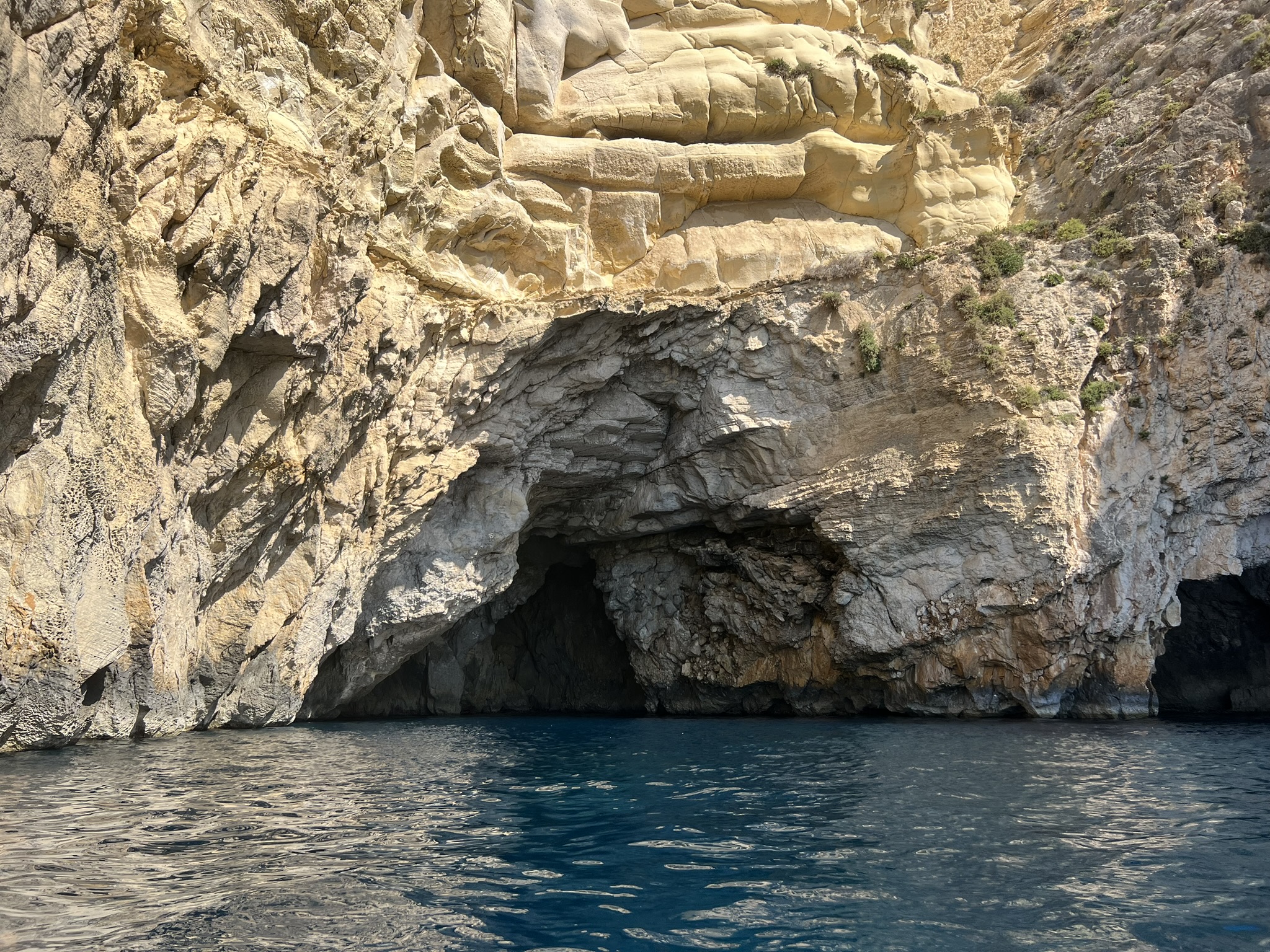
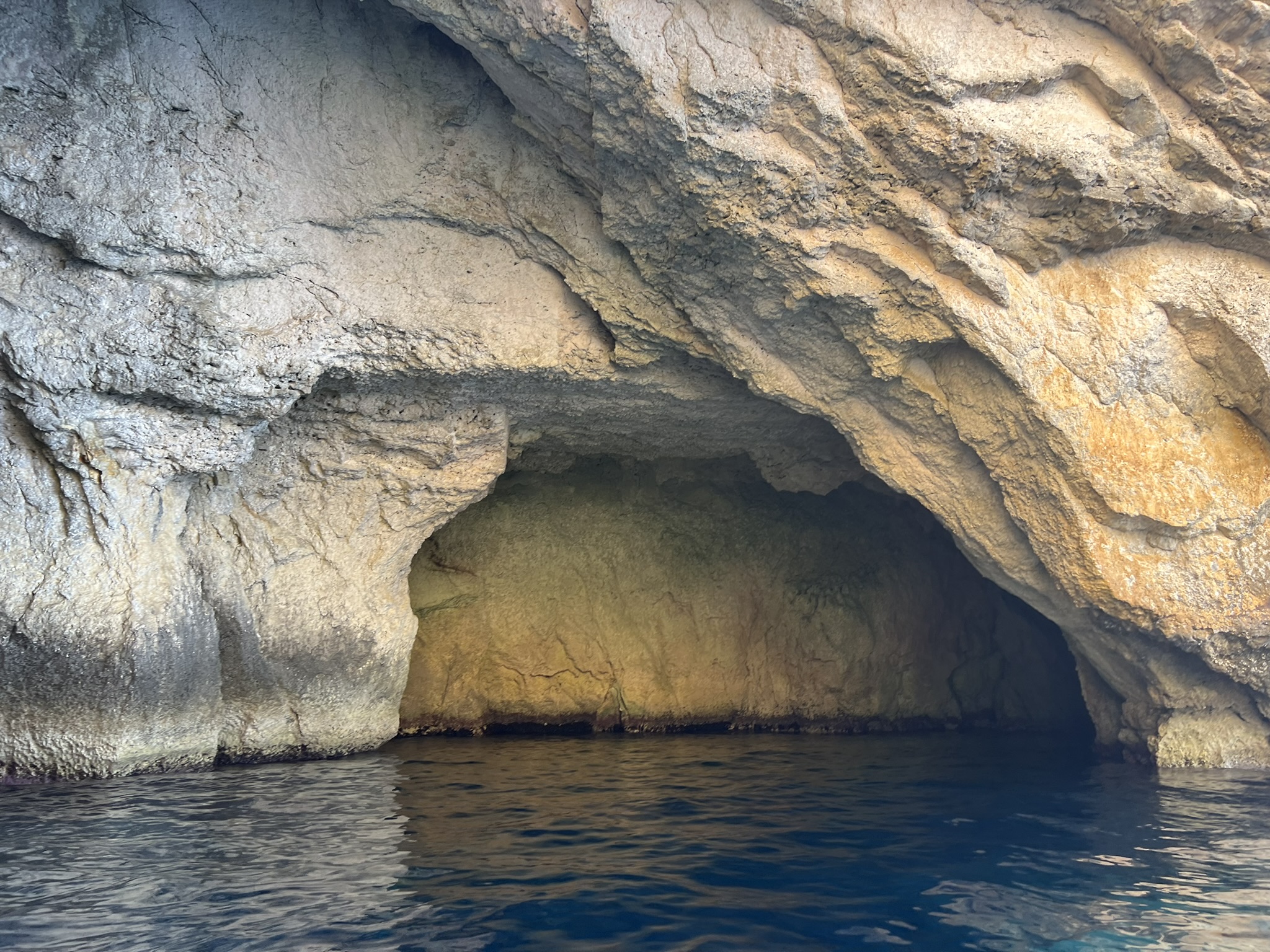
Blue Grotto is the headline stop: a limestone arch and connected sea caves where reflected light can turn the water and cave walls an intense blue.
Instead of turning back immediately, continue to Wied Babu for a second, narrower coastal landscape before retracing the same short stretch to the harbour.
It packs a huge natural arch, sea caves, high limestone cliffs and a second hidden inlet into barely more than two kilometres.
The route is short, but its names tell the story of valleys, an arch and the deep blue water that made this coast famous.
Wied means valley in Maltese. The name links this narrow coastal inlet with Żurrieq and its long relationship with the sea.
Il-Ħnejja means “the arch”. The English name Blue Grotto became popular after the site was compared with Capri’s Grotta Azzurra.
The extra leg reaches another steep-sided wied, where the cliffs narrow around the inlet before the route turns back.
Leave the harbour, explore the arch and caves when conditions allow, continue to Wied Babu and then retrace the coast.
The full route is compact, so the interest comes from exploring the coastline rather than covering distance.
Cave entry is optional and should always be dictated by swell, rebound, visibility and boat traffic.
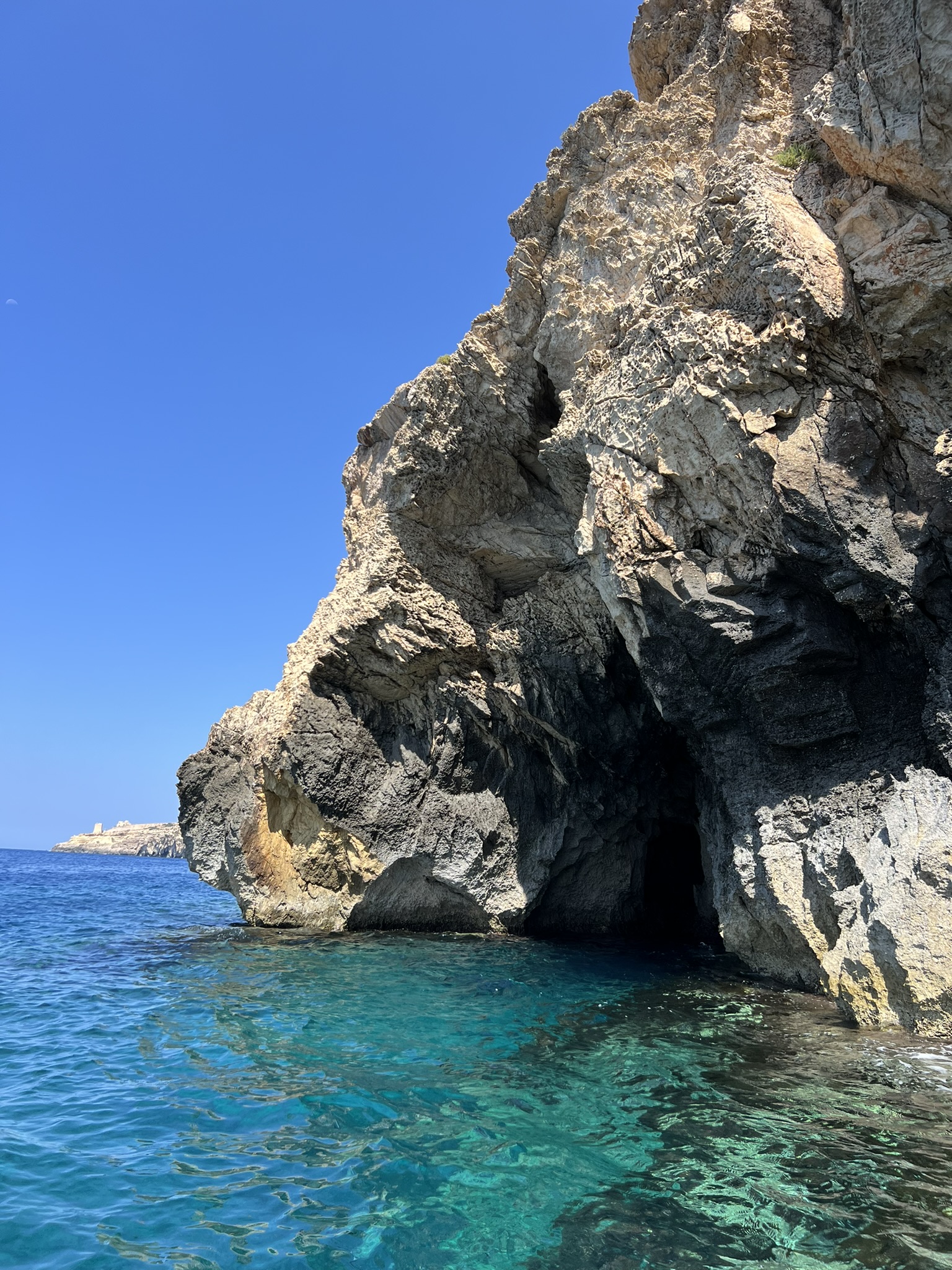
Launch inside the inlet, stay clear of working boats and turn onto the south coast where the rock walls rise quickly above the kayak.
Il-Ħnejja is the route’s defining moment. When the sea is settled and the approaches are clear, the kayak gives a close view of the arch, cave mouths and reflected blue light.
Continue beyond the headline attraction to Wied Babu, where the coast narrows into another steep-sided inlet and the route feels immediately less busy.
Turn back along the same cliffs, give the cave entrances and sightseeing boats plenty of room, then finish inside the shelter of Wied iż-Żurrieq.
It is a short return, but the harbour approach can be the busiest part of the paddle. Slow down, stay visible and keep clear of boats entering or leaving the inlet.
The route is short enough to look easy on a map, but the south coast is exposed and the cave system concentrates both swell and traffic.
A sheltered start feeding directly onto an exposed coast.
Caves magnify small mistakes in judging swell.
Morning gives the route its best combination of light and usually quieter conditions.
Pack for exposed coast and cave exploration, not the short distance.
Twenty-one photographs from the paddle, kept in the sequence supplied for the route log.






Six clips from the paddle, kept in the sequence supplied for the video log.
The route is short, but there is very little dead distance. The harbour opens almost immediately onto cliffs, caves and the huge arch of Il-Ħnejja.
From a kayak, the best part is the change in scale. The viewpoint makes Blue Grotto look like a single feature; from the water it becomes a whole sequence of rock walls, cave mouths, reflected light and open sea.
Wied Babu is worth adding because it changes the rhythm of the paddle. After the famous grotto, the narrower inlet feels quieter and gives the route a natural turning point.
This is one to take slowly. The appeal is not the distance but being able to stop, look into the caves when conditions allow and read the coastline from a few centimetres above the water.
Wied iż-Żurrieq, Blue Grotto and Wied Babu fit into a compact paddle, but the arch, sea caves and sheer limestone make it feel much larger from the kayak.
The recorded route, Blue Grotto context and background to the surrounding coast.