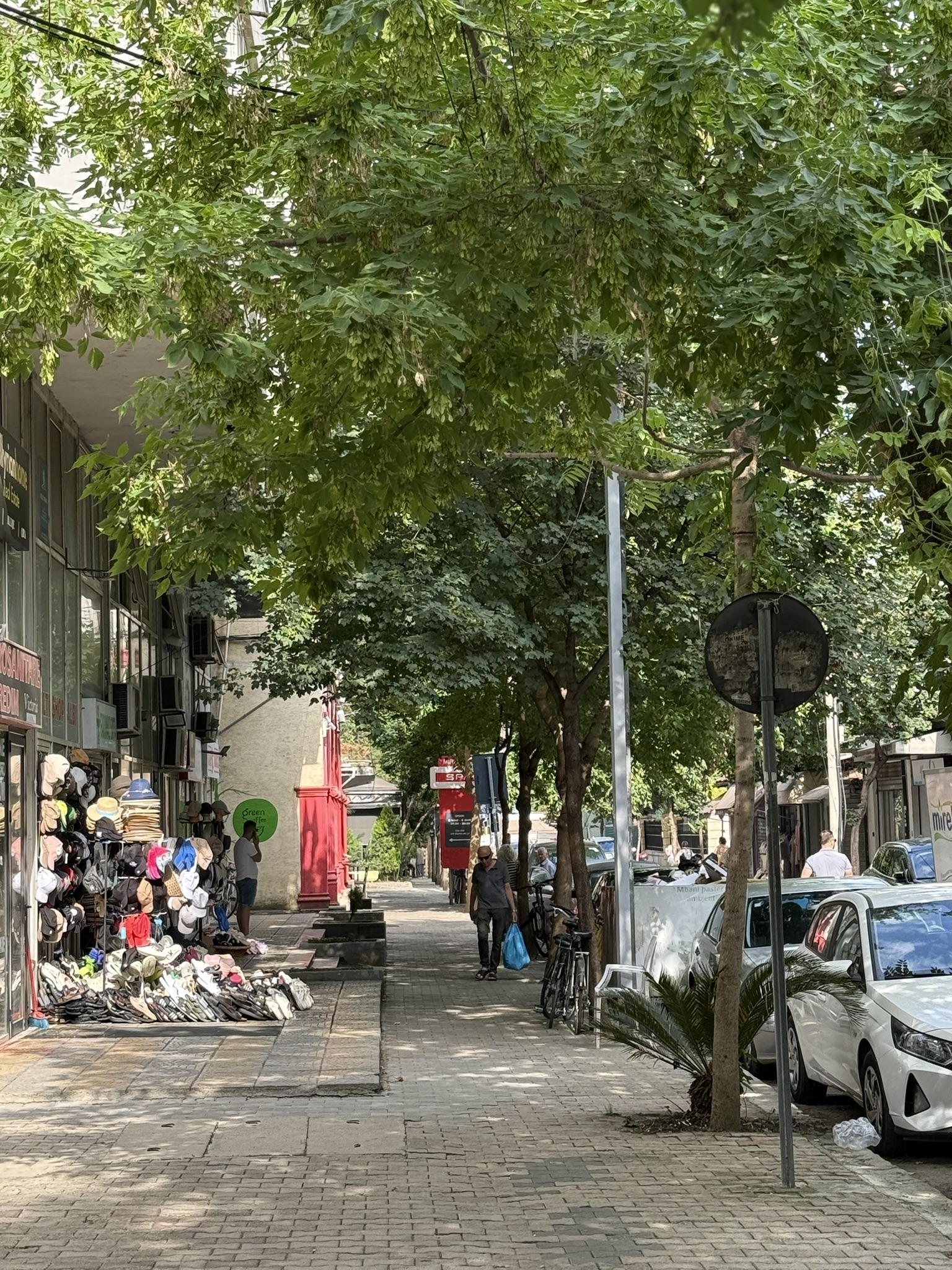
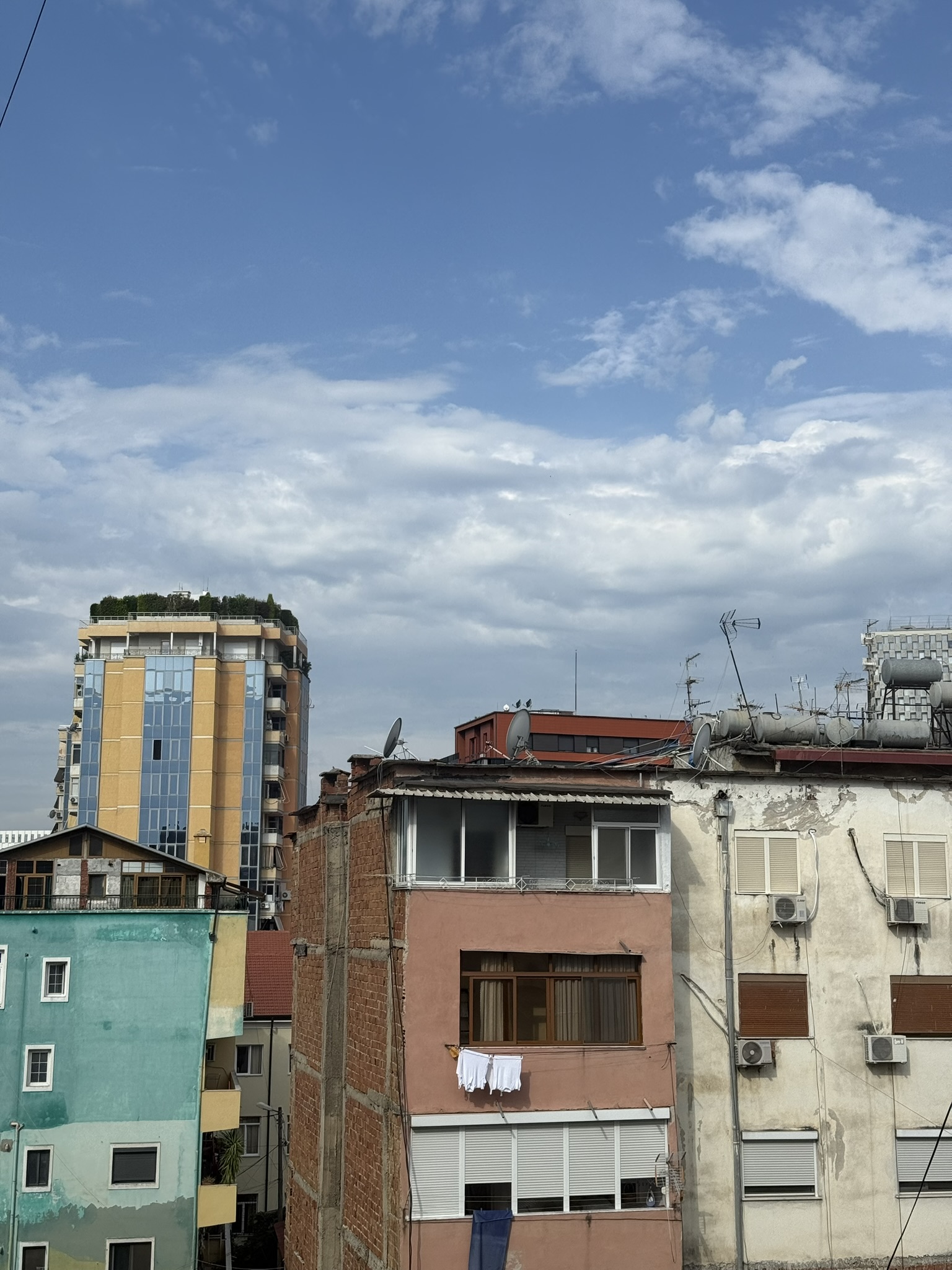
Despite Albania being so close to Malta, it had taken me an entire day of travelling to get to Tirana. I arrived late at night and practically collapsed onto the bed the second I reached my hotel. The following morning, I woke up ready to rumble. I took to the streets and wandered around the streets for a while.
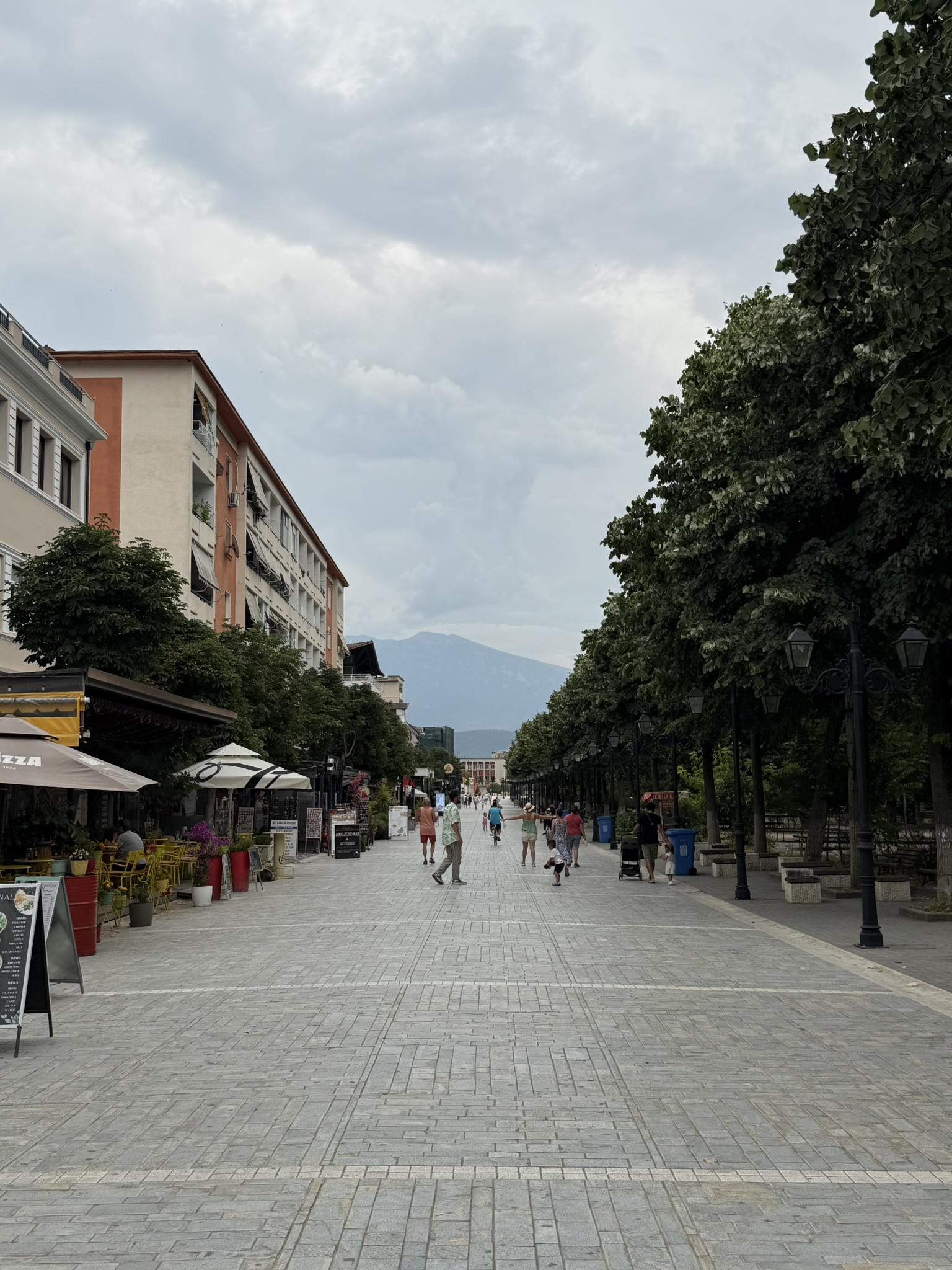
Tirana, the capital of Albania, is a lively and colourful city that blends its complicated past with a fresh, modern energy. Once defined by strict communist rule and grey uniformity, it has transformed into a hub of creativity, café culture and youthful vibrancy. The city is known for its street art, revitalised neighbourhoods and blend of Ottoman, Italian and communist-era architecture. With mountains on its doorstep, an increasingly dynamic food scene and a friendly local atmosphere, Tirana felt both chaotic and welcoming.
Unfortunately, I wouldn’t have much time to explore it. My plan for the day included a tour covering several highlights outside the capital, so I walked to the pick-up point, where a coach was already waiting. Along with dozens of other tourists, I climbed aboard and carefully selected a comfortable window seat from which I could appreciate the views along the way.
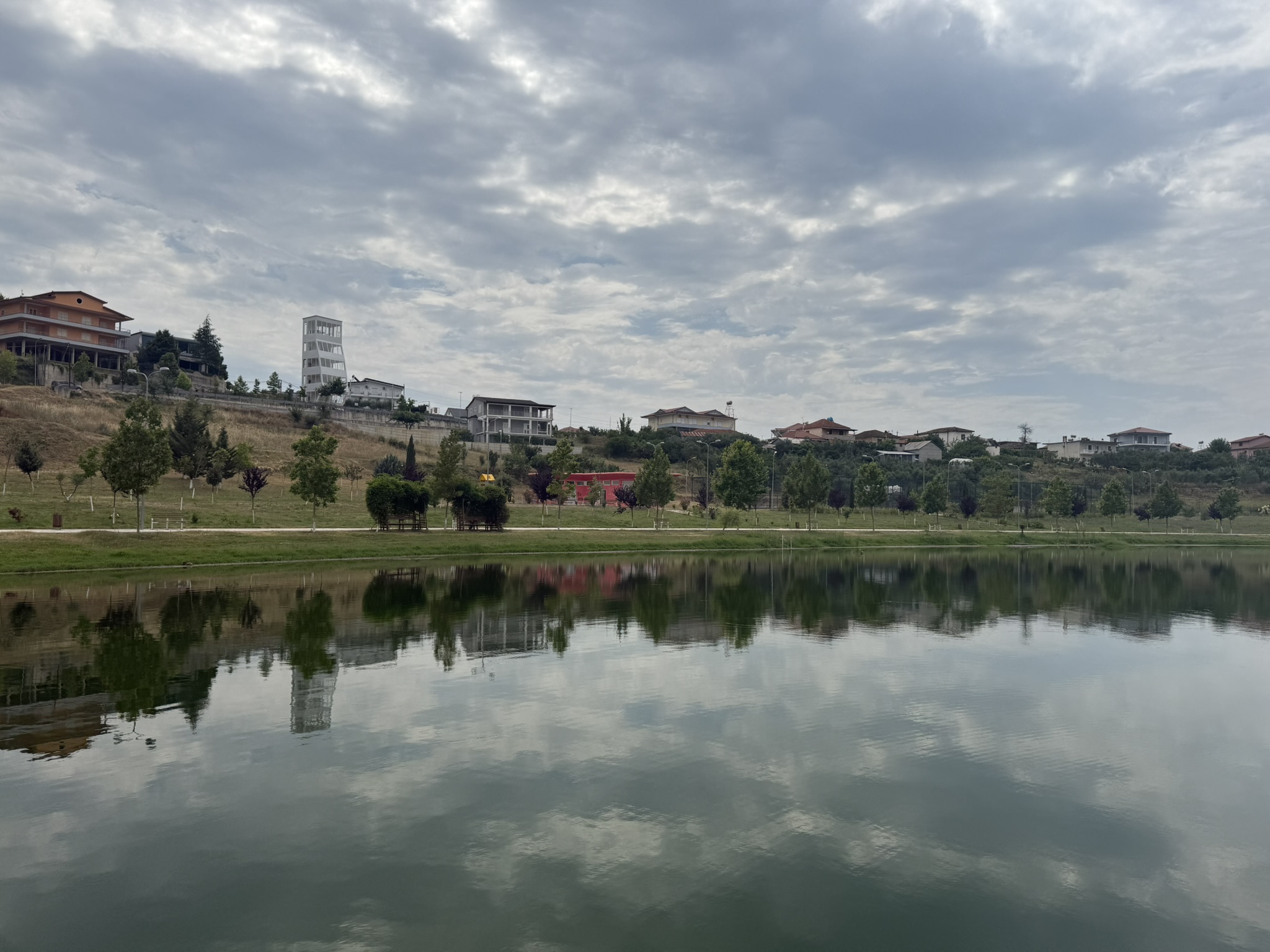
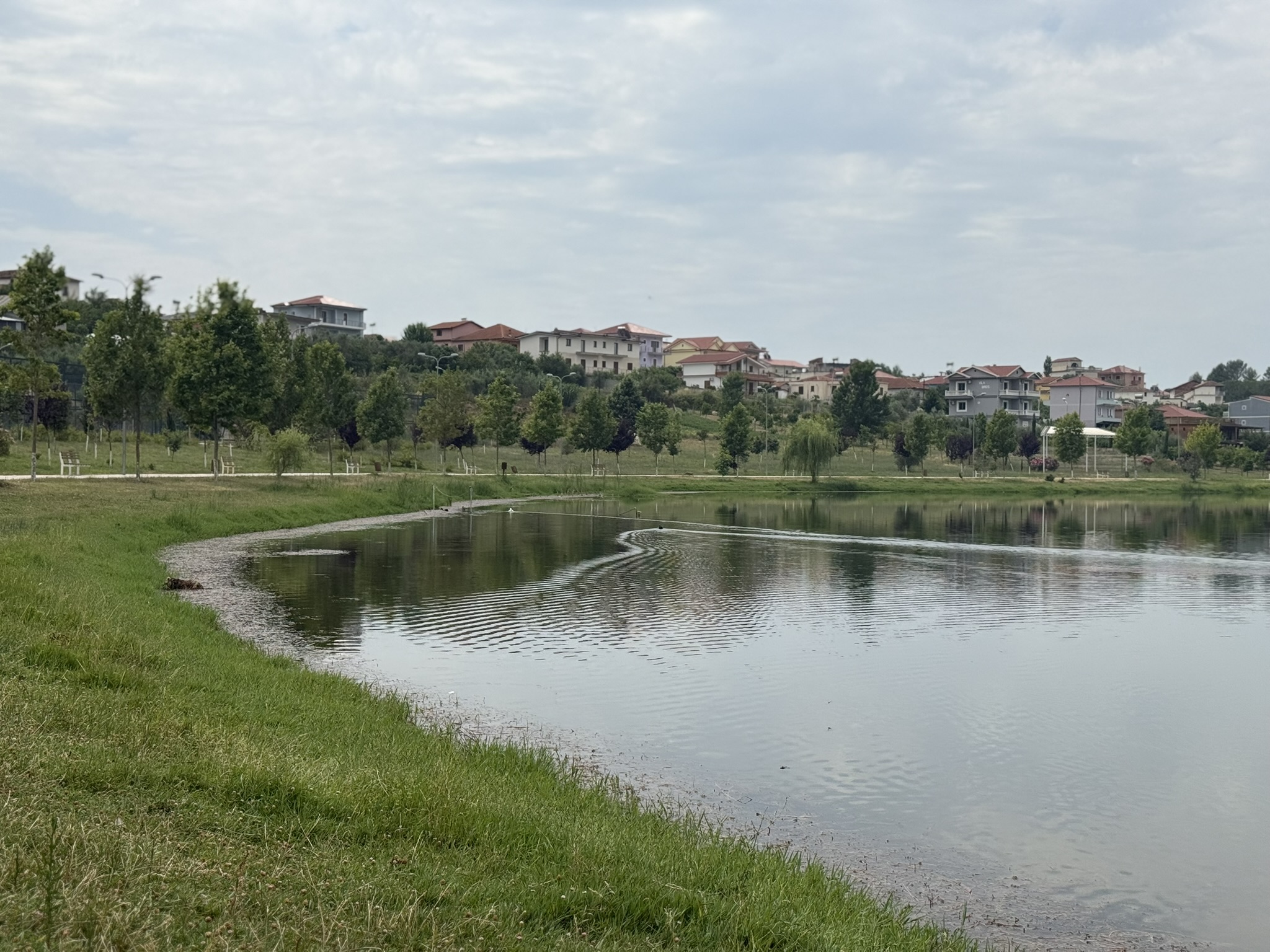
Lake Belsh
The drive to our first stop was nothing short of scenic. We passed through lush, undulating countryside as our guide, Nicholas, pointed out remnants of Albania’s industrial and communist past.
These included the enormous Elbasan Metallurgical Combine, one of the regime’s most ambitious industrial projects and built with Chinese assistance, along with oil infrastructure and old military installations. He also told us about agriculture in central and southern Albania, where rows of plastic-covered greenhouses, which he called serra, were used to regulate growing conditions.
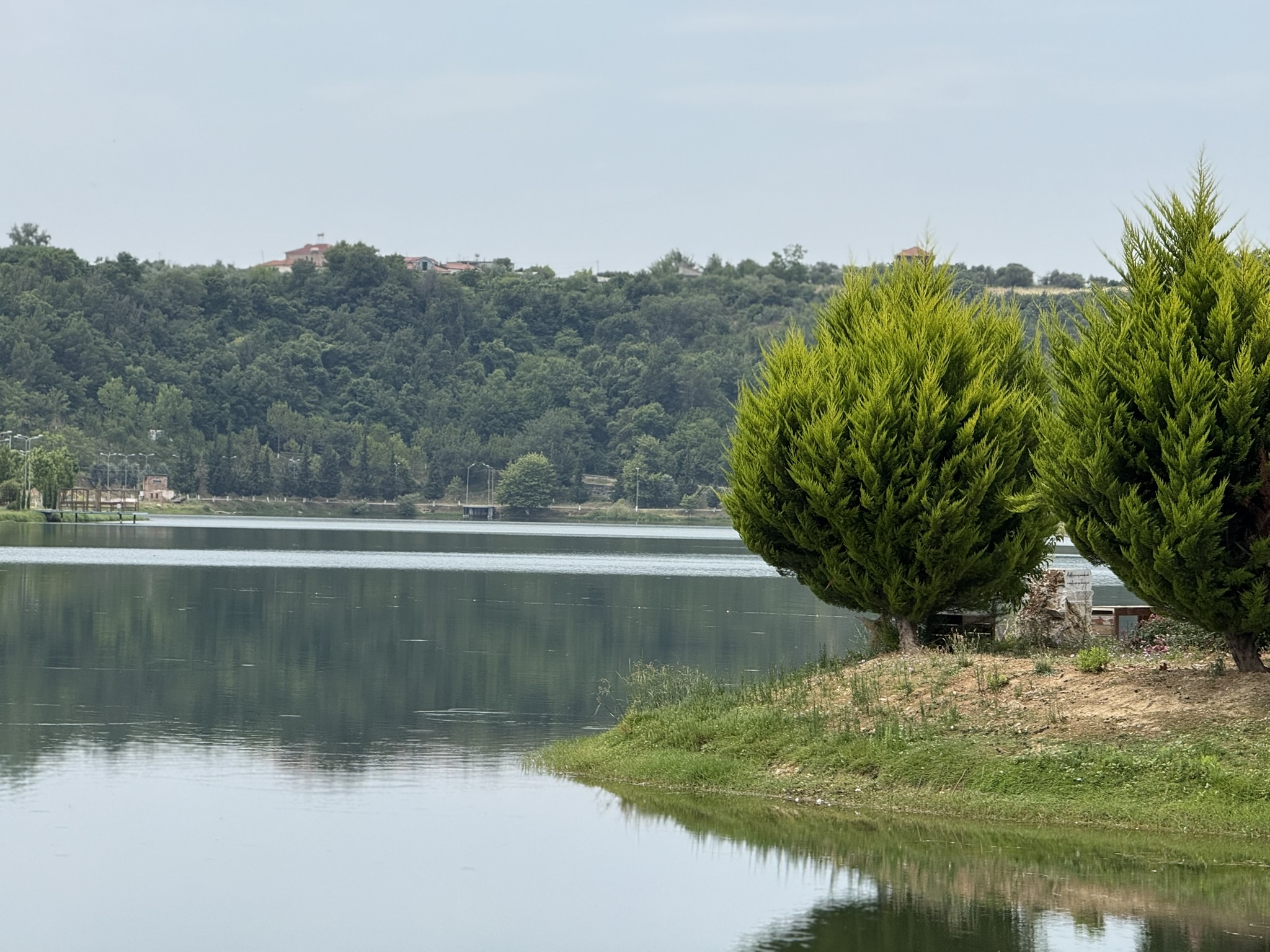
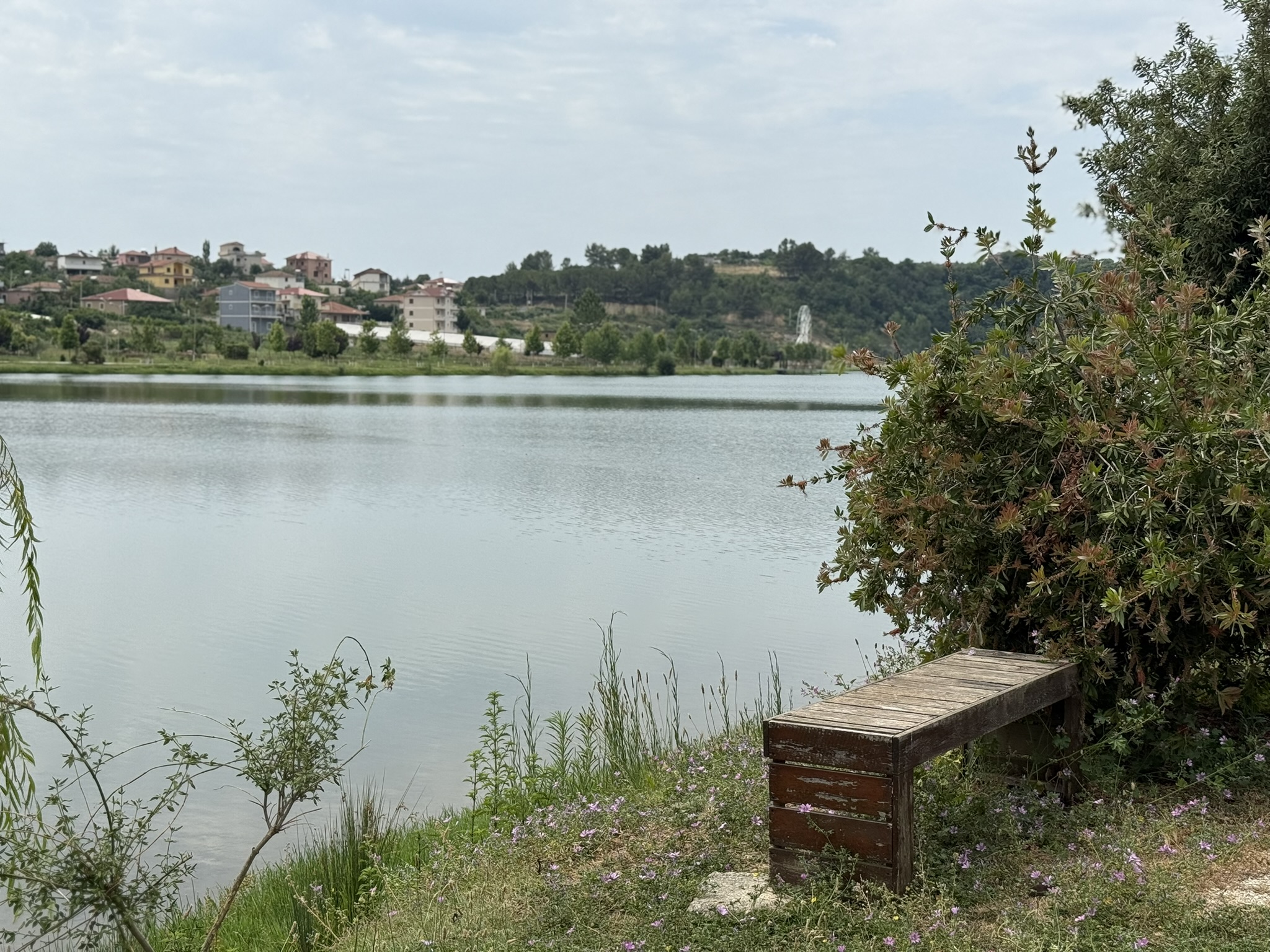
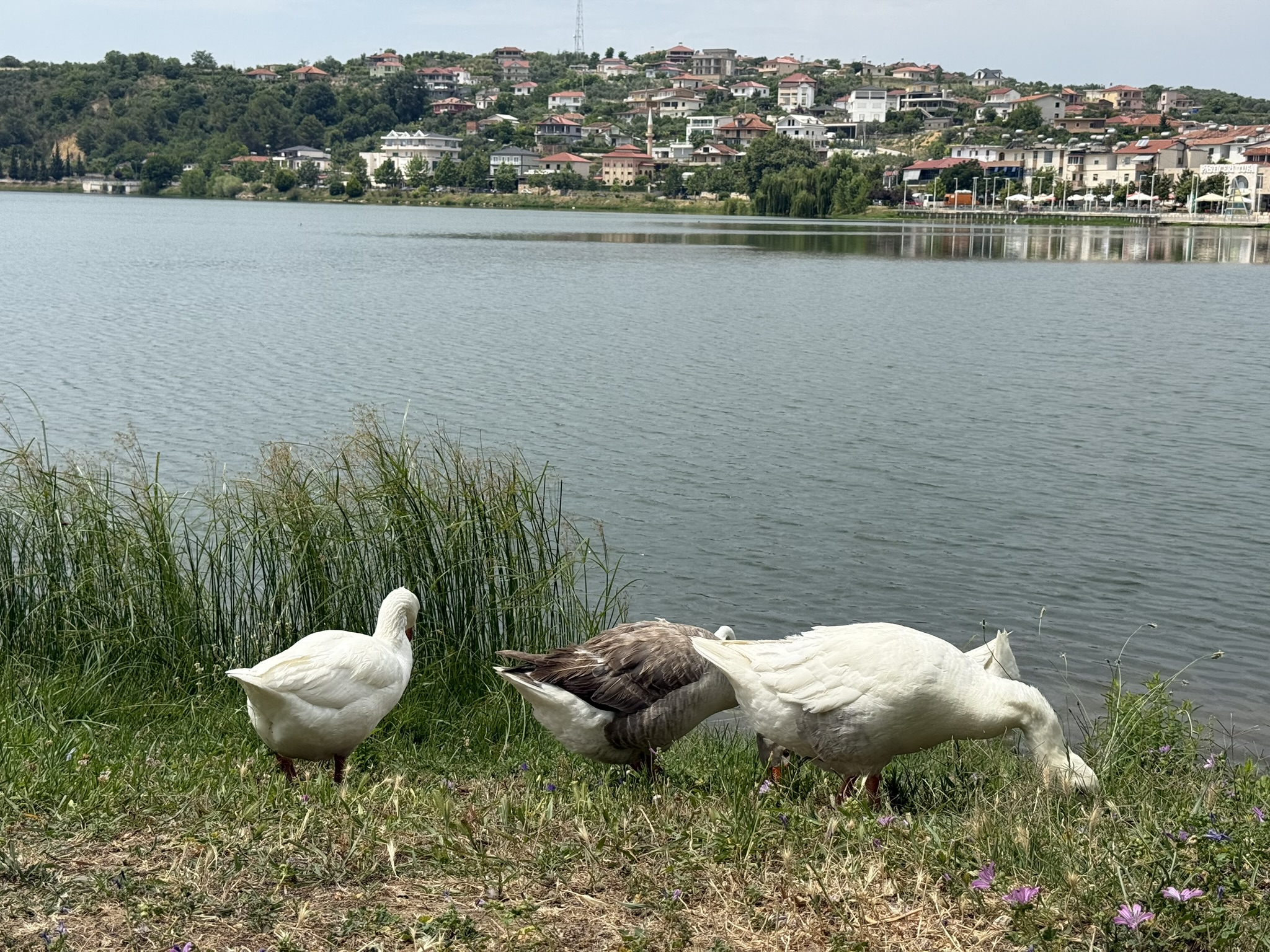
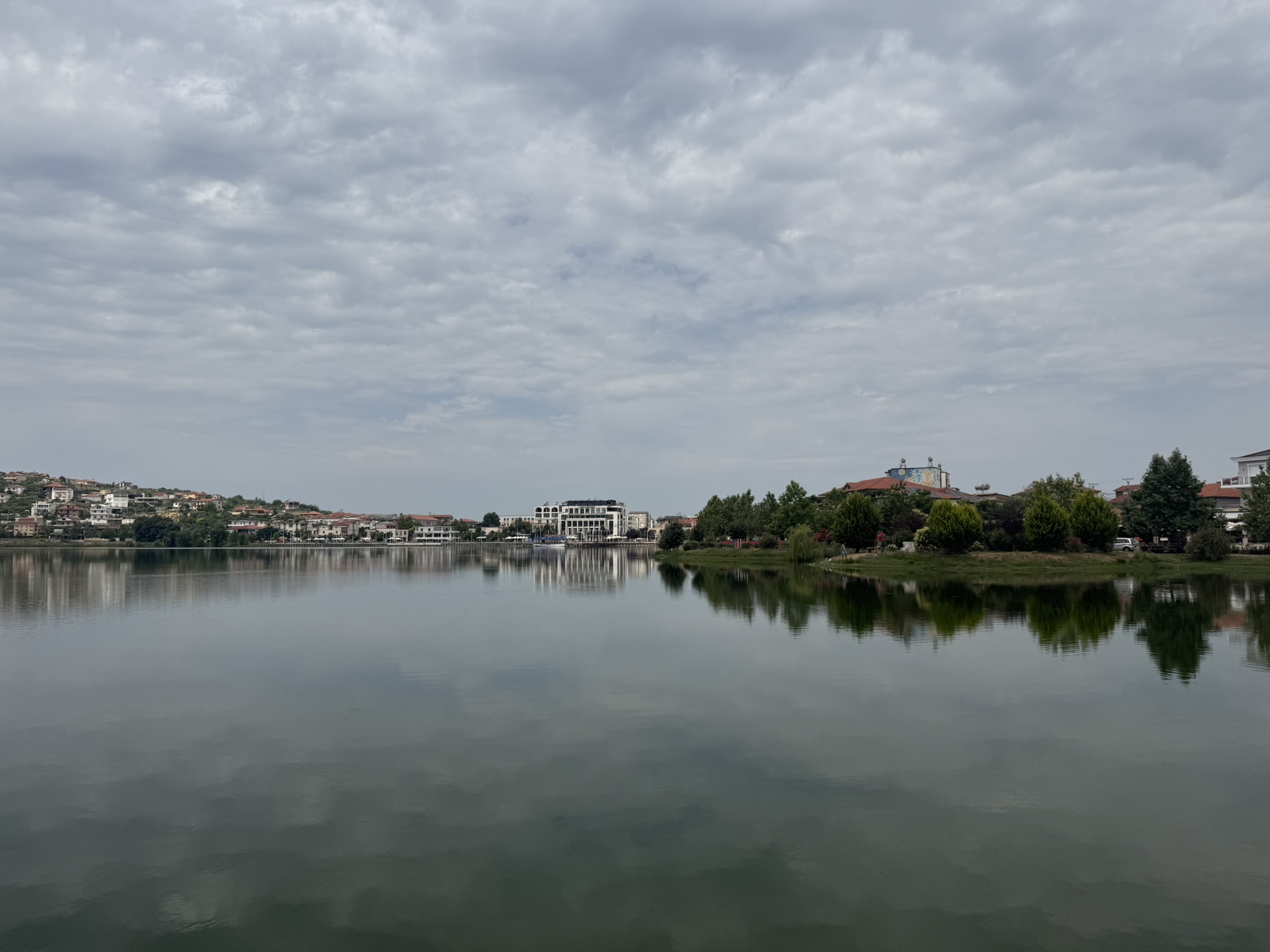
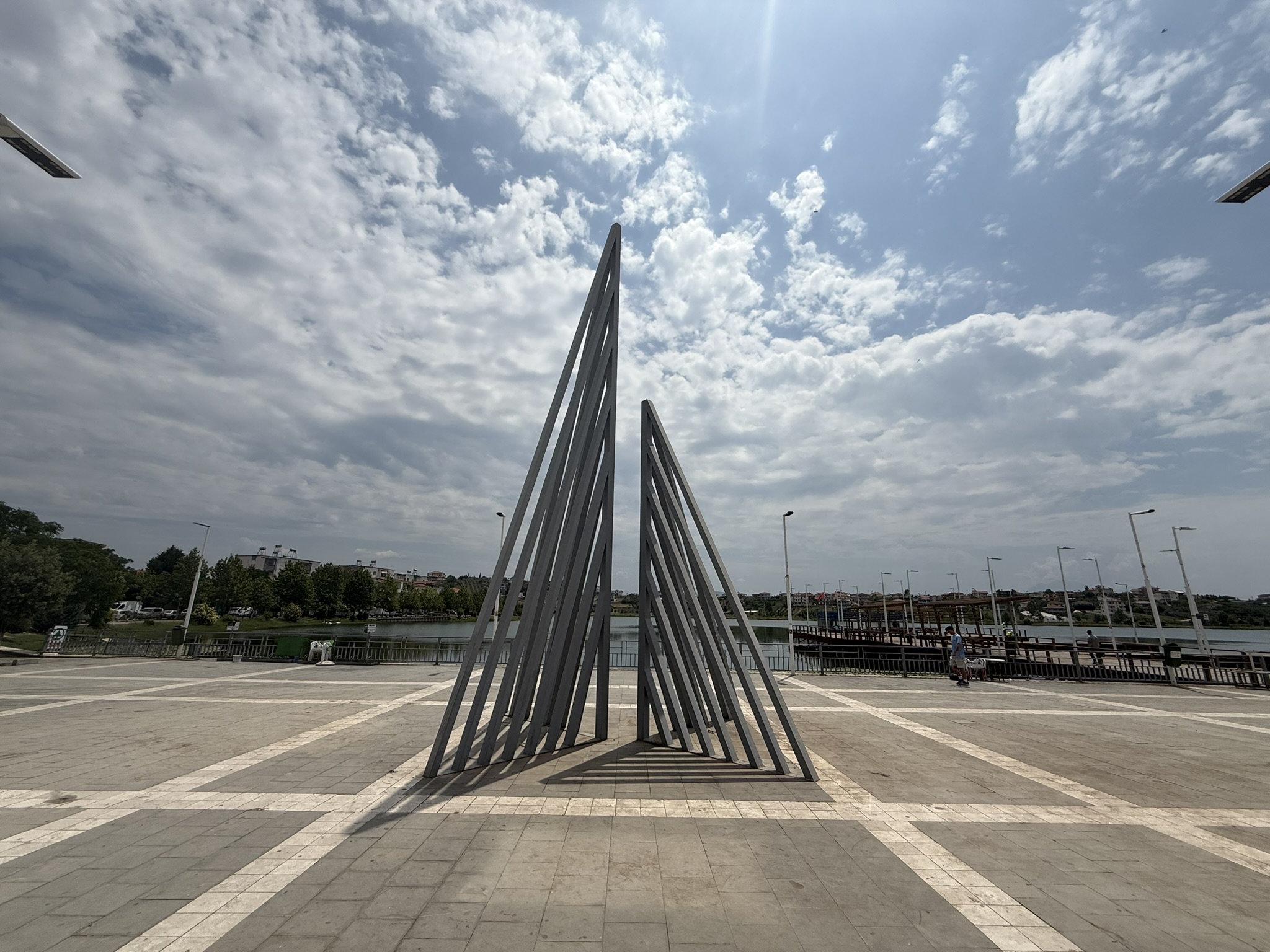
Then we arrived at Belsh Lake, one of the many lakes scattered throughout the rolling Dumre region. The lake appeared like a mirror sprawled across the hills, its surface smooth and still. Olive trees and tall reeds surrounded the water, with the only ripples coming from a few ducks gliding slowly across it. It was the kind of peace I hadn’t felt in ages. We had about an hour there, which I spent walking around the lake and appreciating its beauty. I couldn’t have felt calmer if I’d tried.
That is, until I got back on the bus. I immediately noticed that someone had taken the seat I had so carefully handpicked. No big deal – I sat somewhere else. Big deal. A grumpy older woman immediately demanded that I move, claiming that it was her seat. Lacking the energy to argue, I conceded and gave her the spot I had originally claimed. Now stuck in an aisle seat and unable to appreciate the views, I spent the rest of the drive reading. Not a bad compromise.
A City Within the Walls
Next up was the town of Berat. Before getting the chance to explore its picturesque streets, however, we drove up the hill above the town to visit Berat Castle.
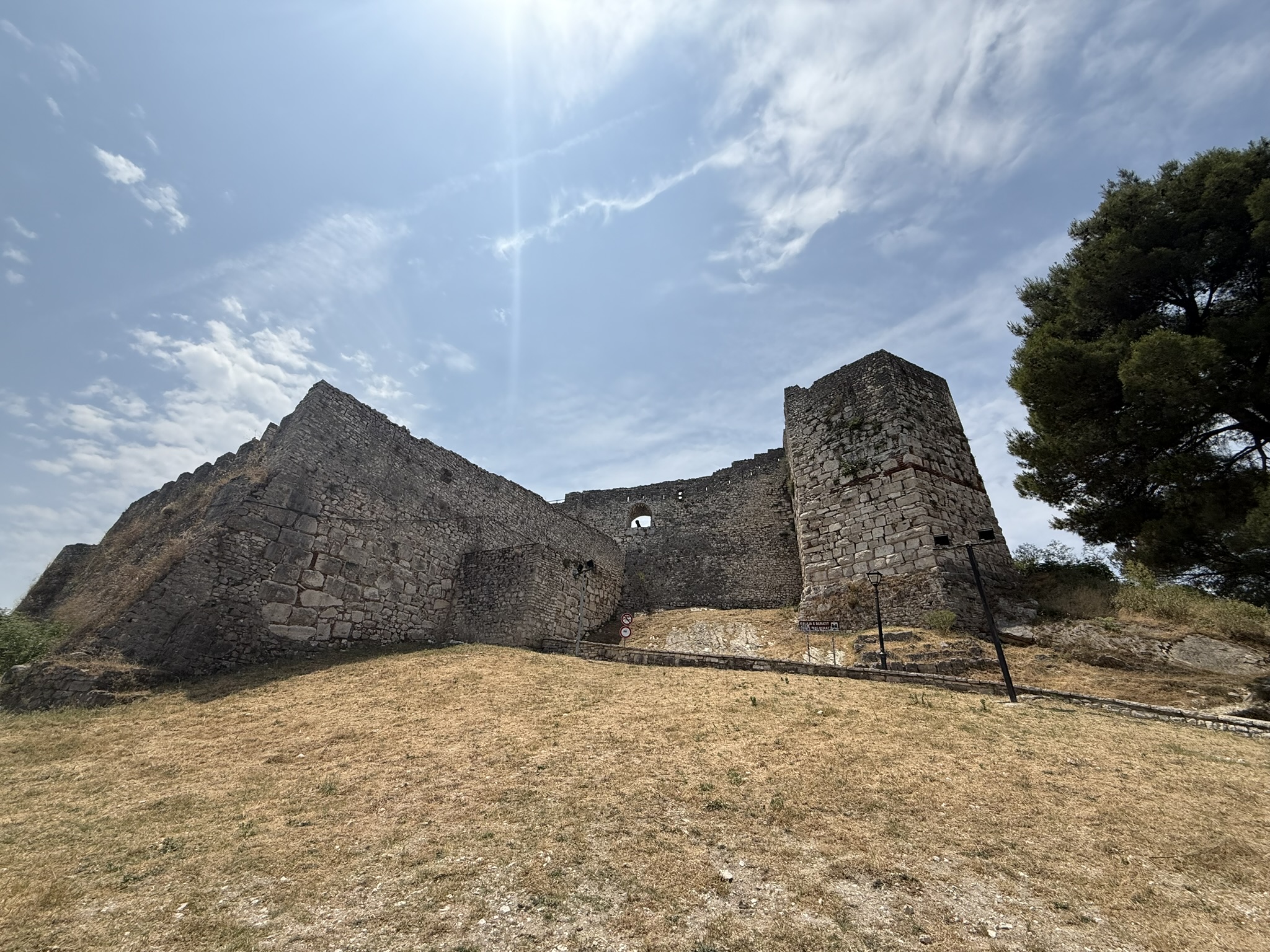
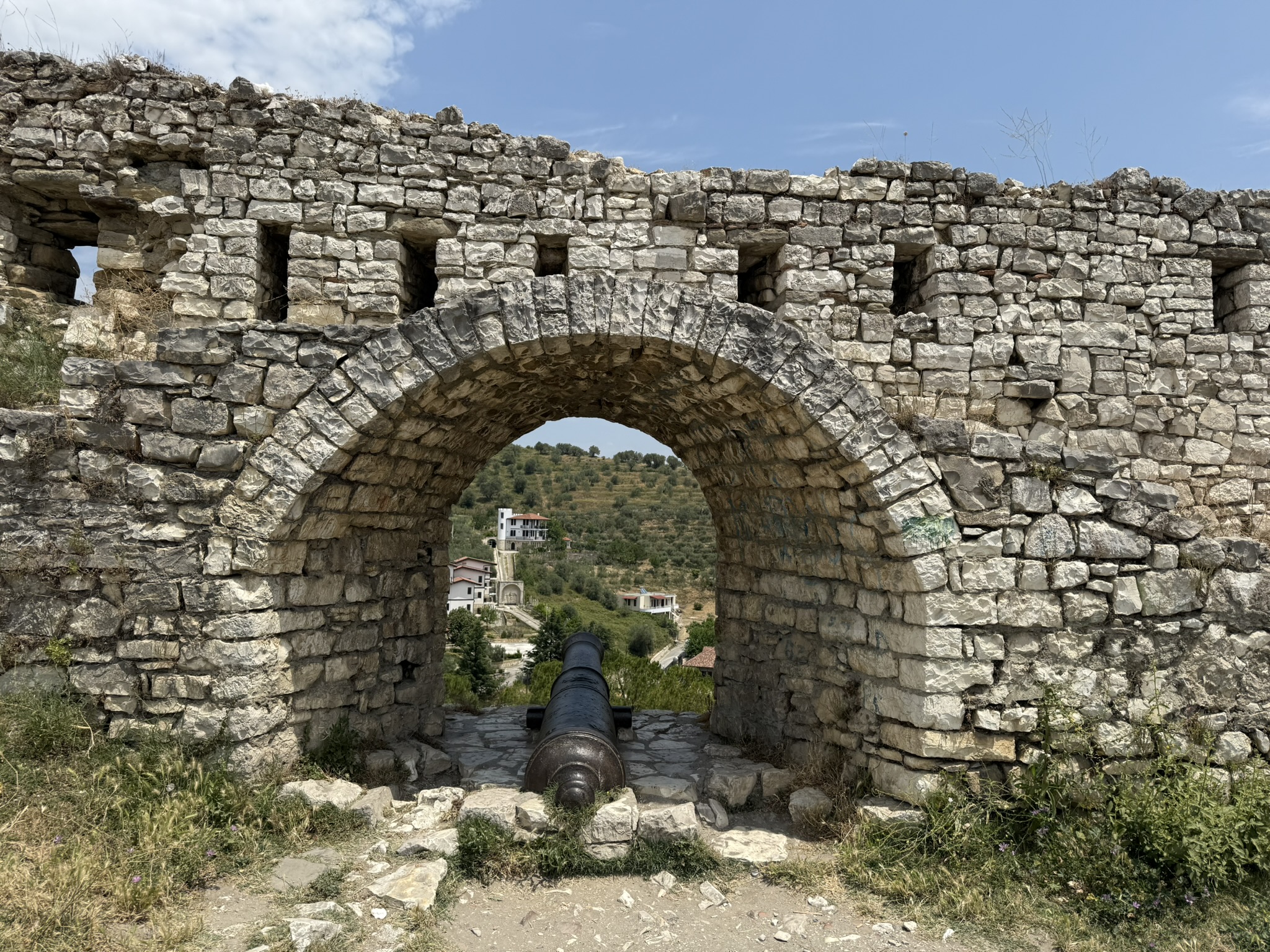
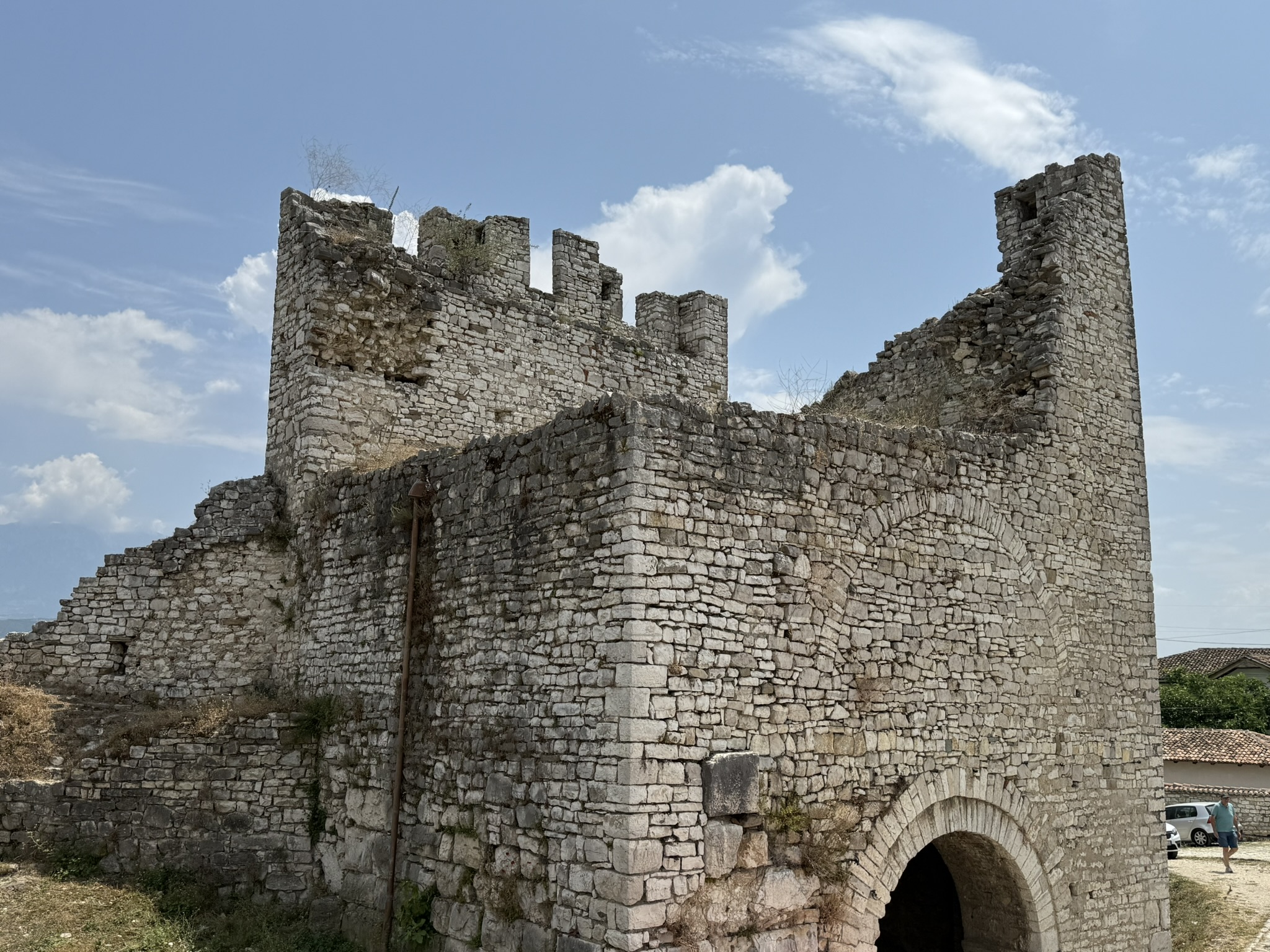
Berat Castle, also known locally as Kala, is a vast hilltop fortress overlooking the town and the Osum River. Its origins date back to the 4th century BC, although most of the fortifications visible today were constructed or extensively rebuilt during the Byzantine and medieval periods. Romans, Byzantines and Ottomans all occupied and modified the site, leaving the castle with a layered architectural character. Its strategic location allowed it to protect the surrounding region while also serving as a political, military and religious centre. What makes Berat Castle particularly unusual today is a small community still lives within its walls!
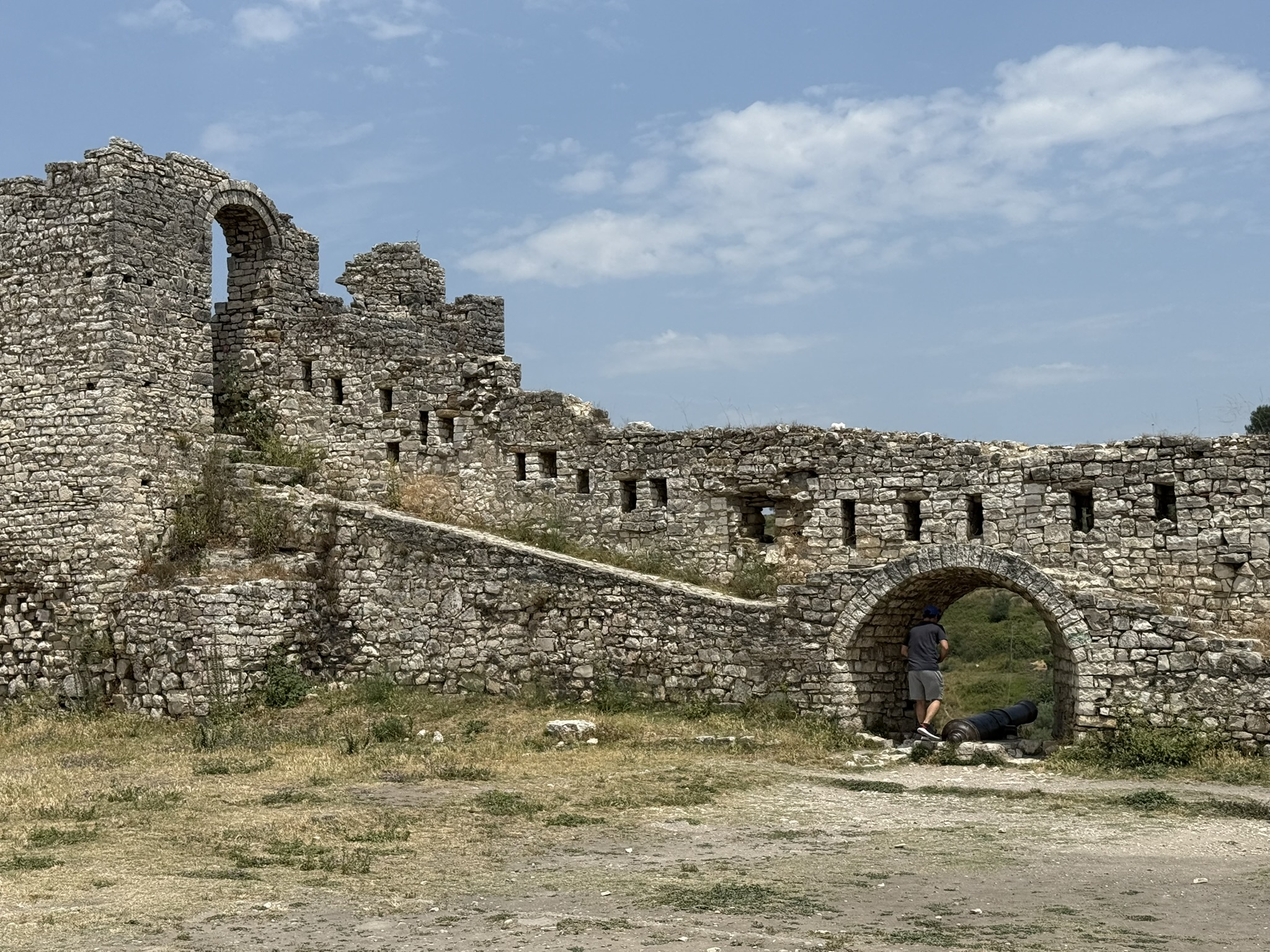
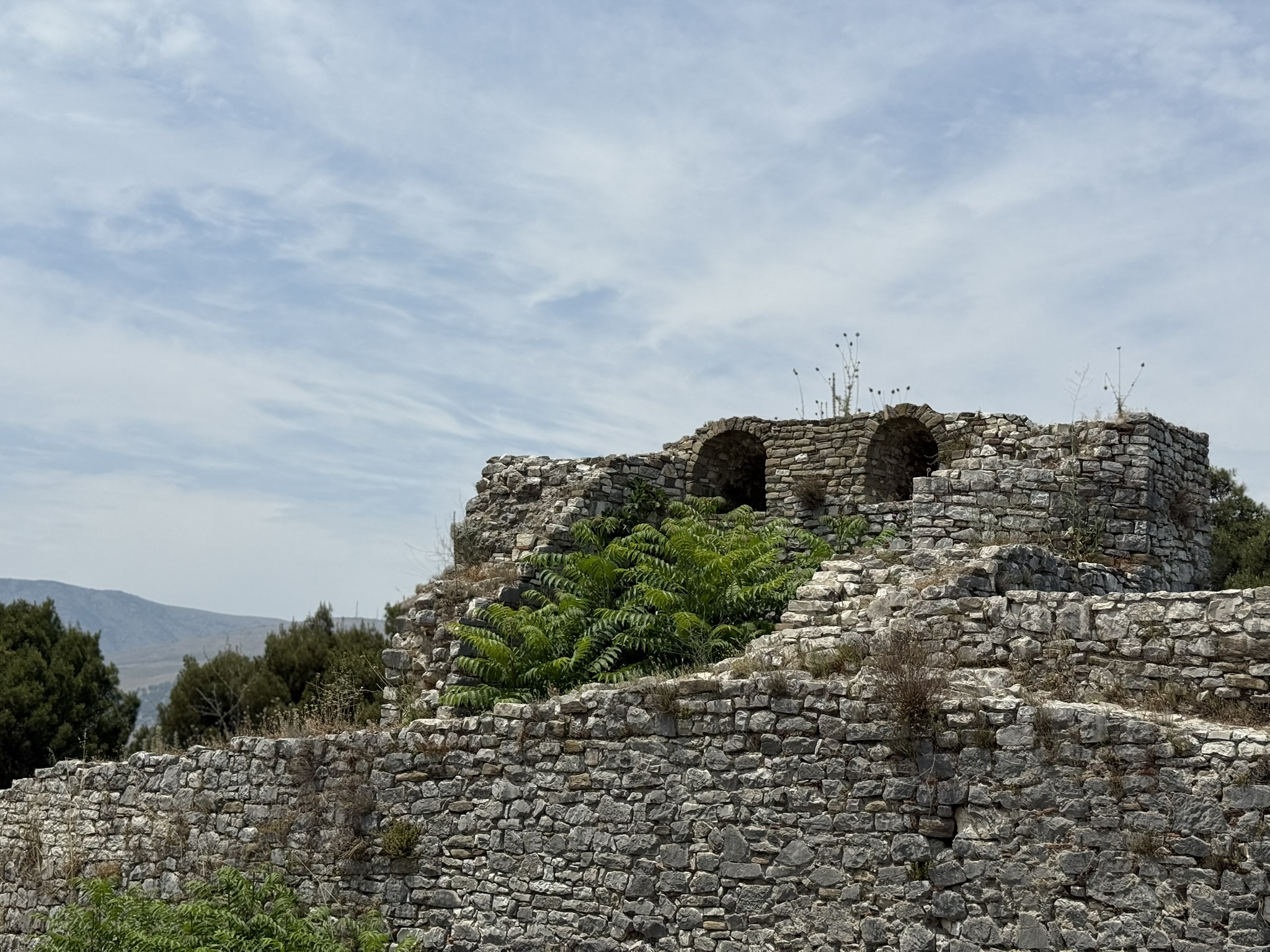
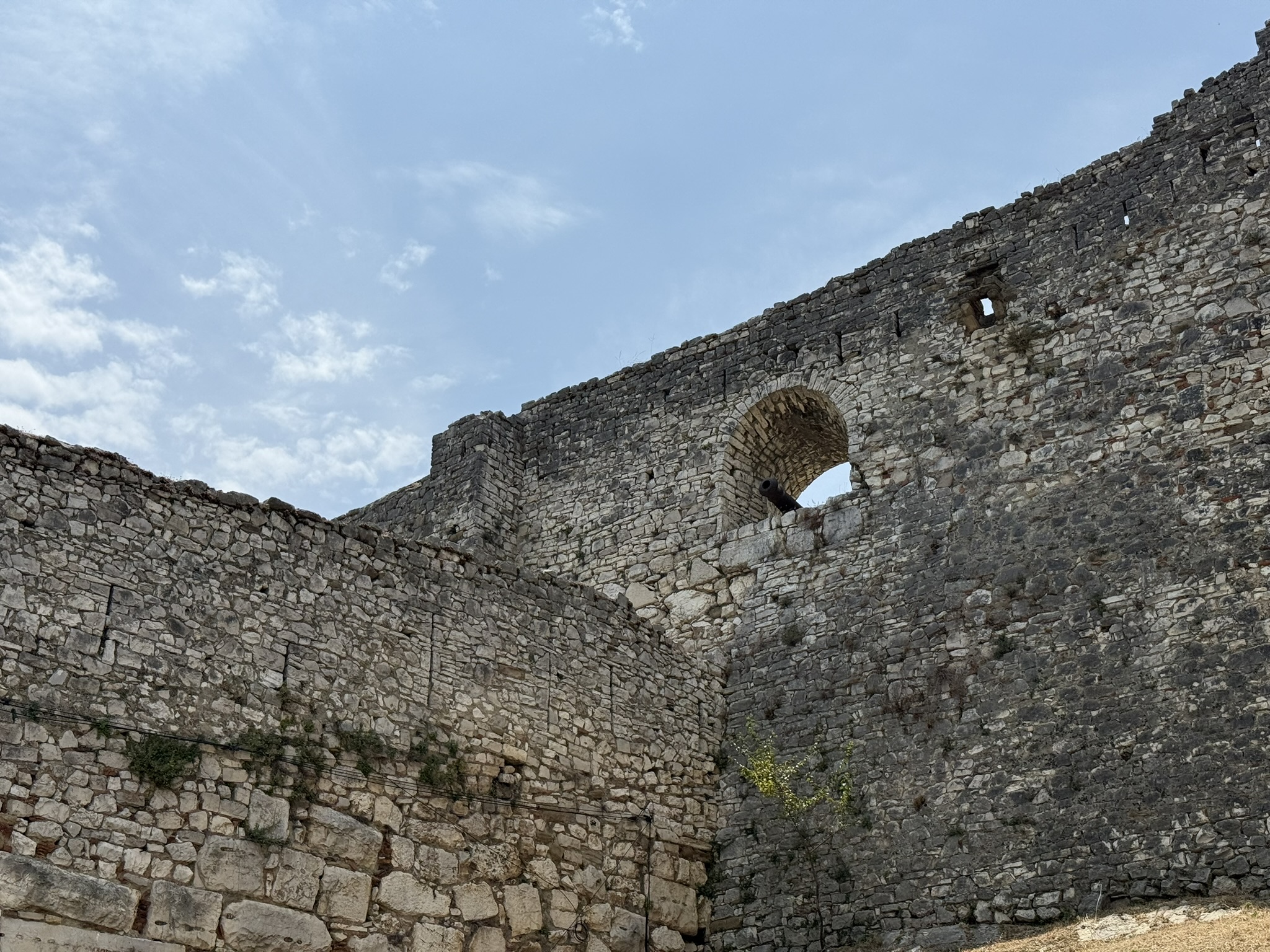
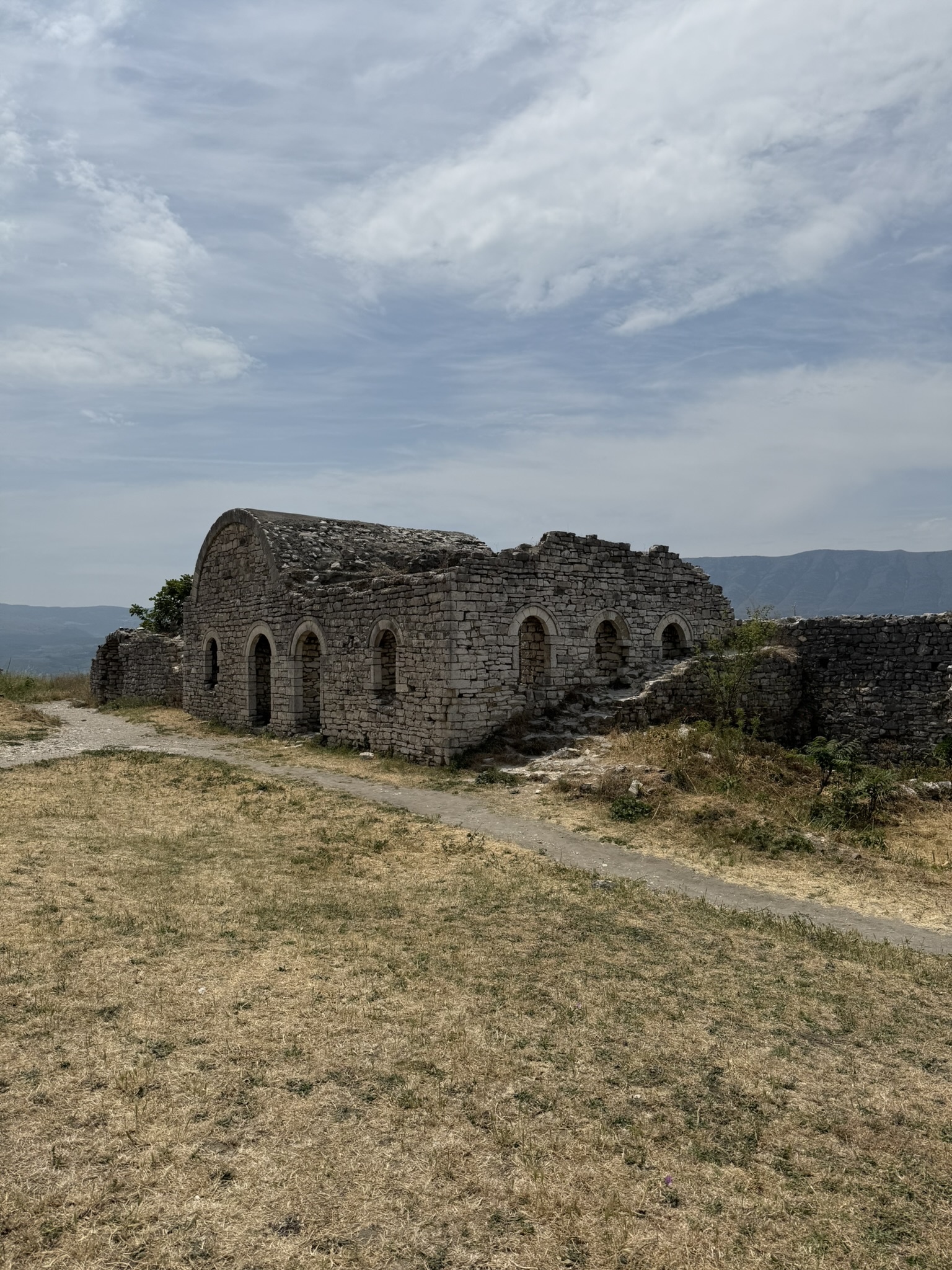
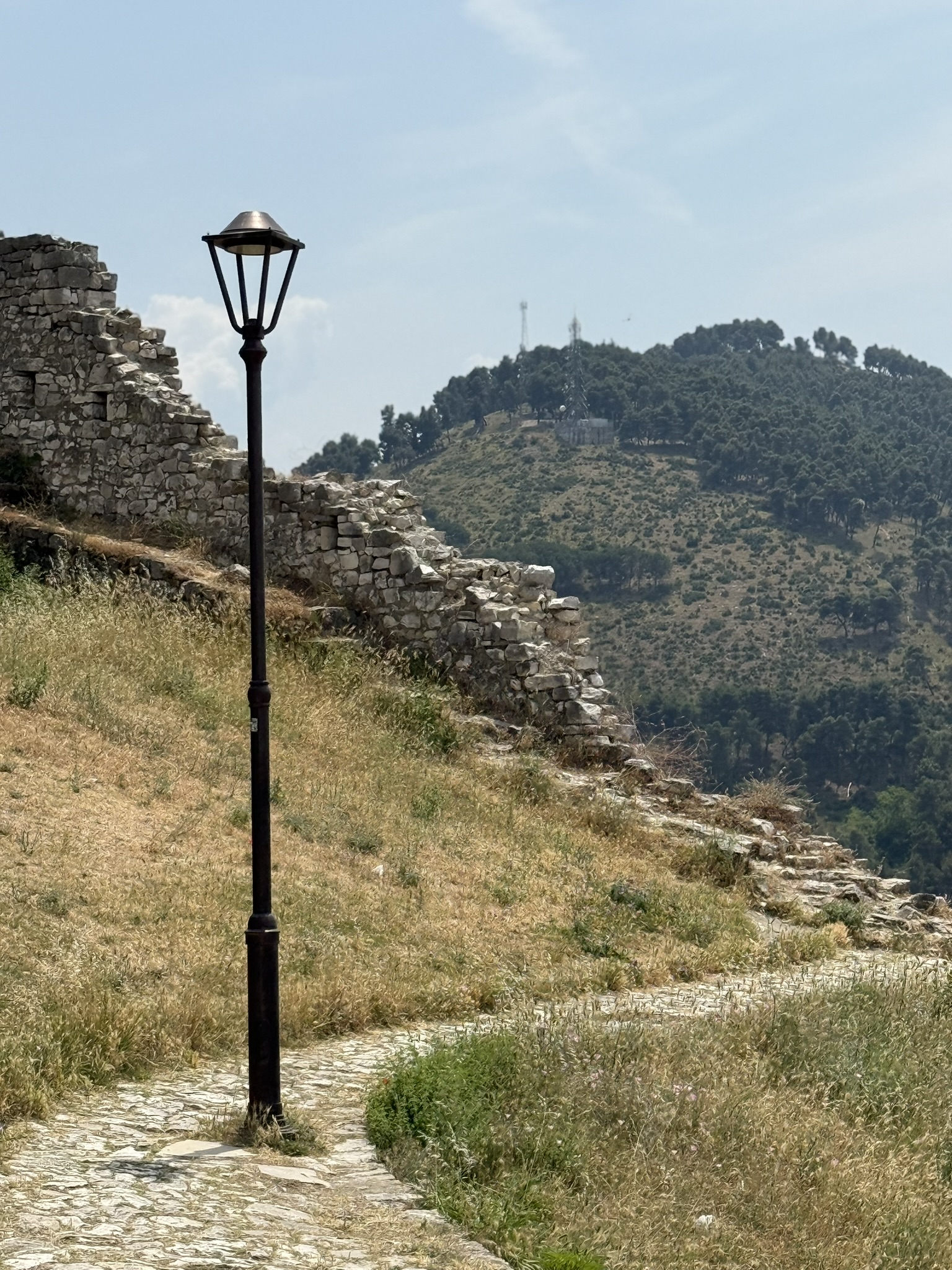
Once inside, I couldn’t help but feel as though I had stepped back in time. Cobbled lanes wound between traditional stone houses, defensive walls and towers that had stood for centuries. Nicholas explained that the castle was not one single monument but an entire fortified settlement. At its highest point stood the acropolis, once the military core of the fortress, while the surrounding residential quarter contained houses, churches, mosque ruins, cisterns and defensive structures built to follow the irregular shape of the rocky hill.
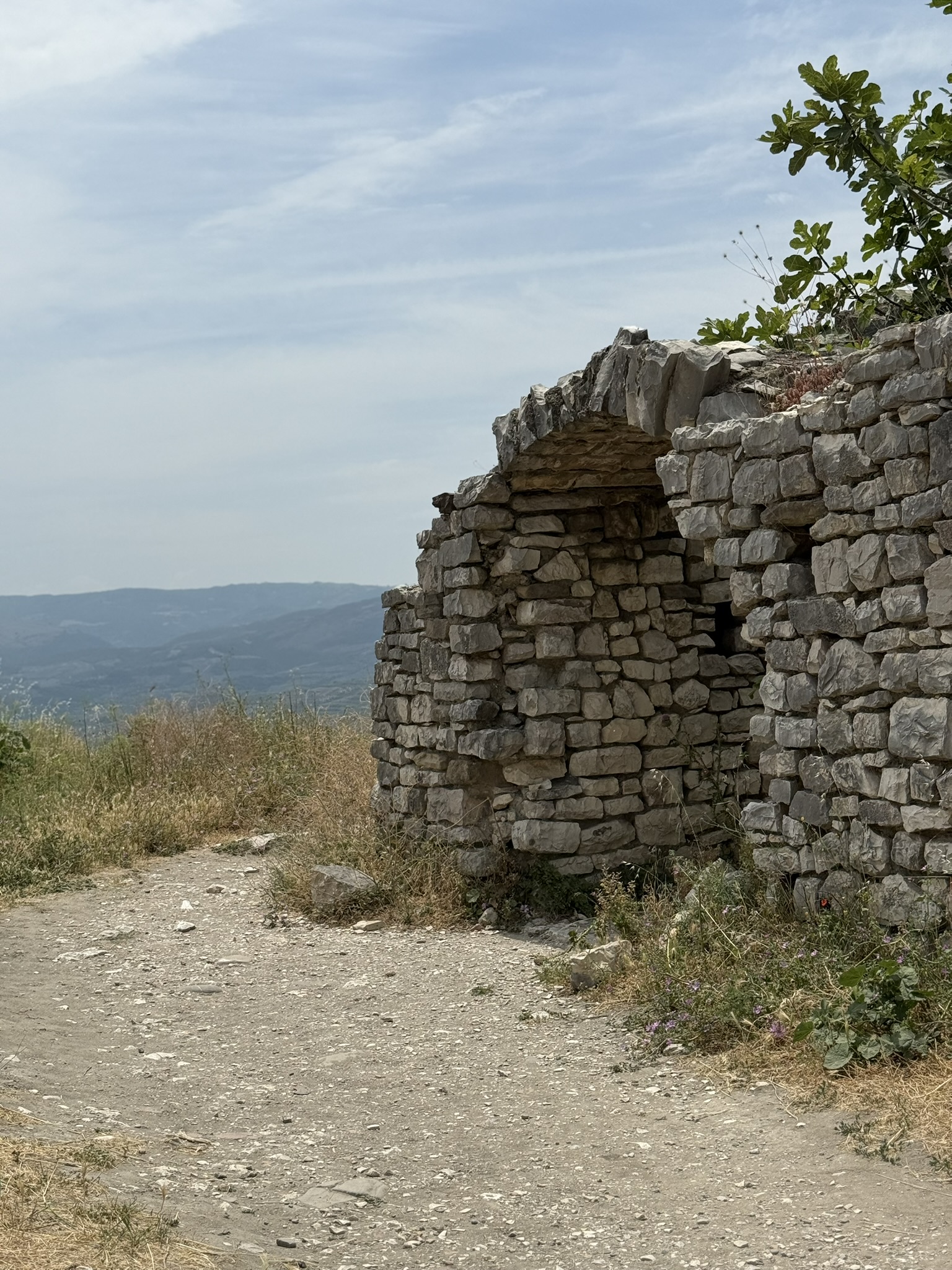
The castle’s long history of rebuilding was visible everywhere. Different sections of wall had been constructed, repaired and strengthened by successive civilisations, while many of the traditional houses had also been rebuilt or adapted following earthquakes. Rather than feeling like a perfectly preserved monument frozen in time, the citadel felt like a place that had repeatedly been damaged, repaired and reshaped while somehow continuing to survive.
Emperors and Early Christianity
The whirlwind tour of Berat Castle took us around some of the major highlights:
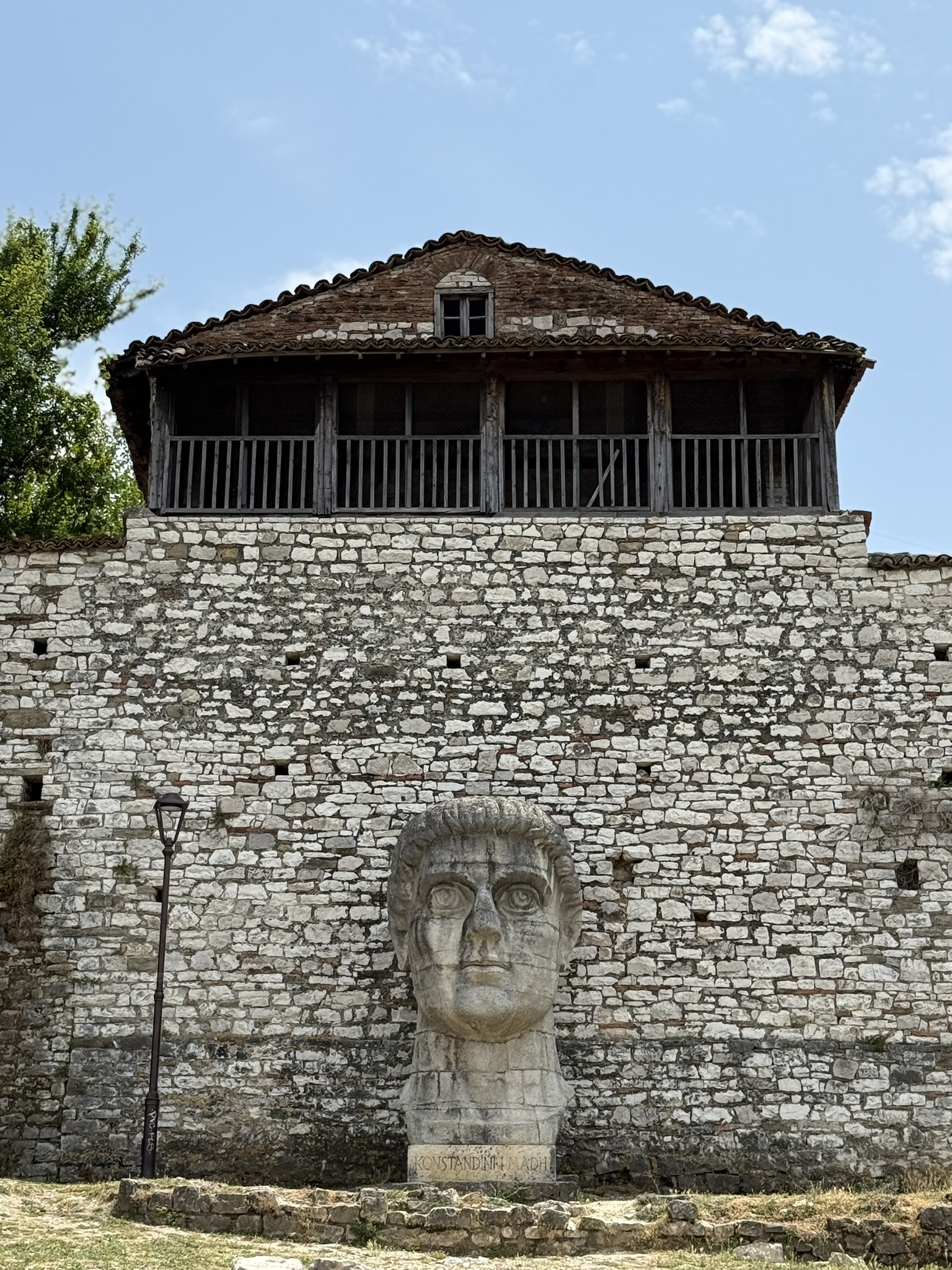
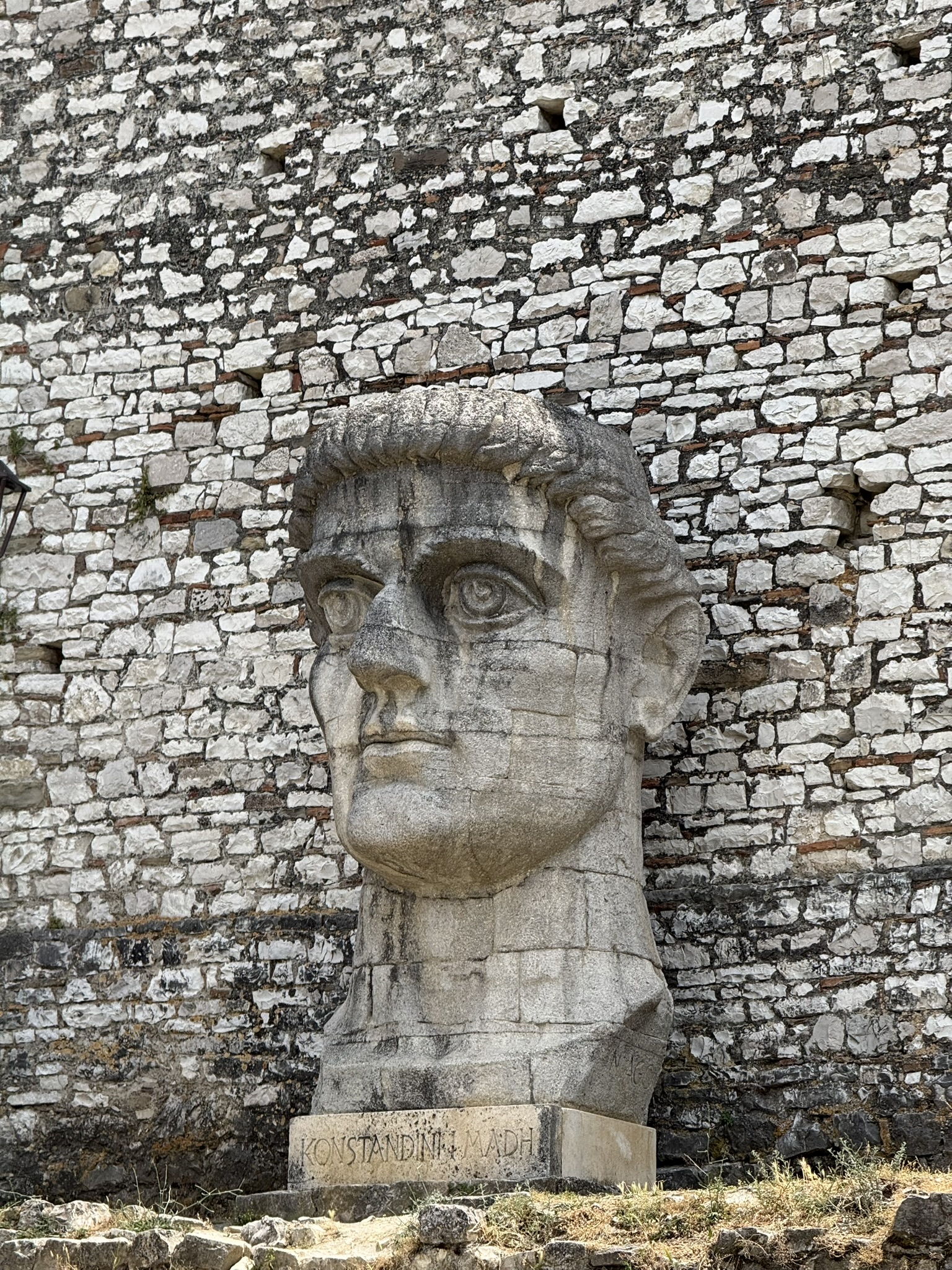
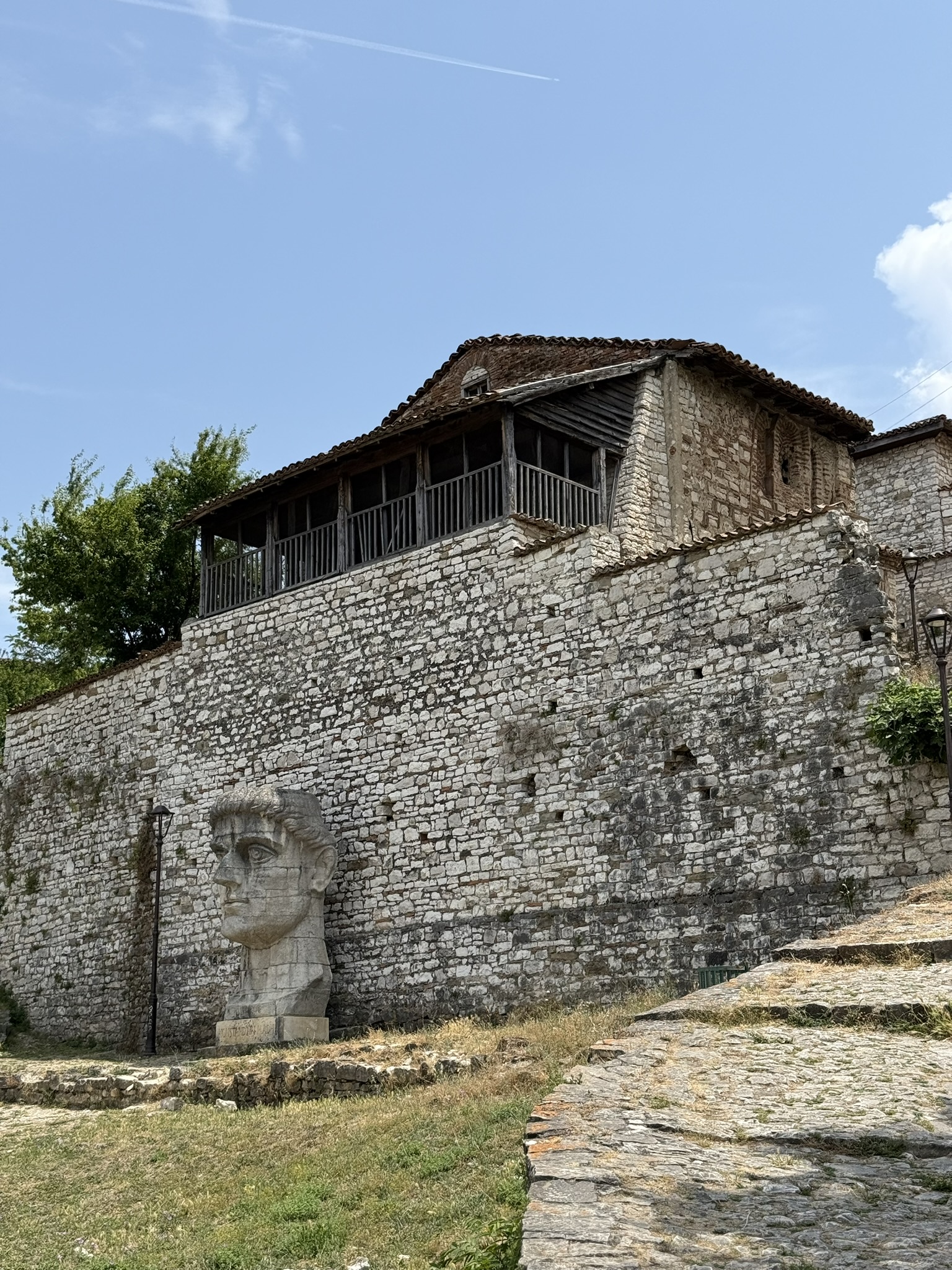
Bust of Constantine the Great: Constantine was the Roman emperor associated with the Edict of Milan in AD 313, which granted religious toleration to Christianity and other faiths throughout the empire. He later refounded the ancient city of Byzantium as Constantinople, establishing it as a new imperial capital. Standing there inside Berat Castle, his image served as an immediate reminder of the region’s deep Roman and Byzantine connections.
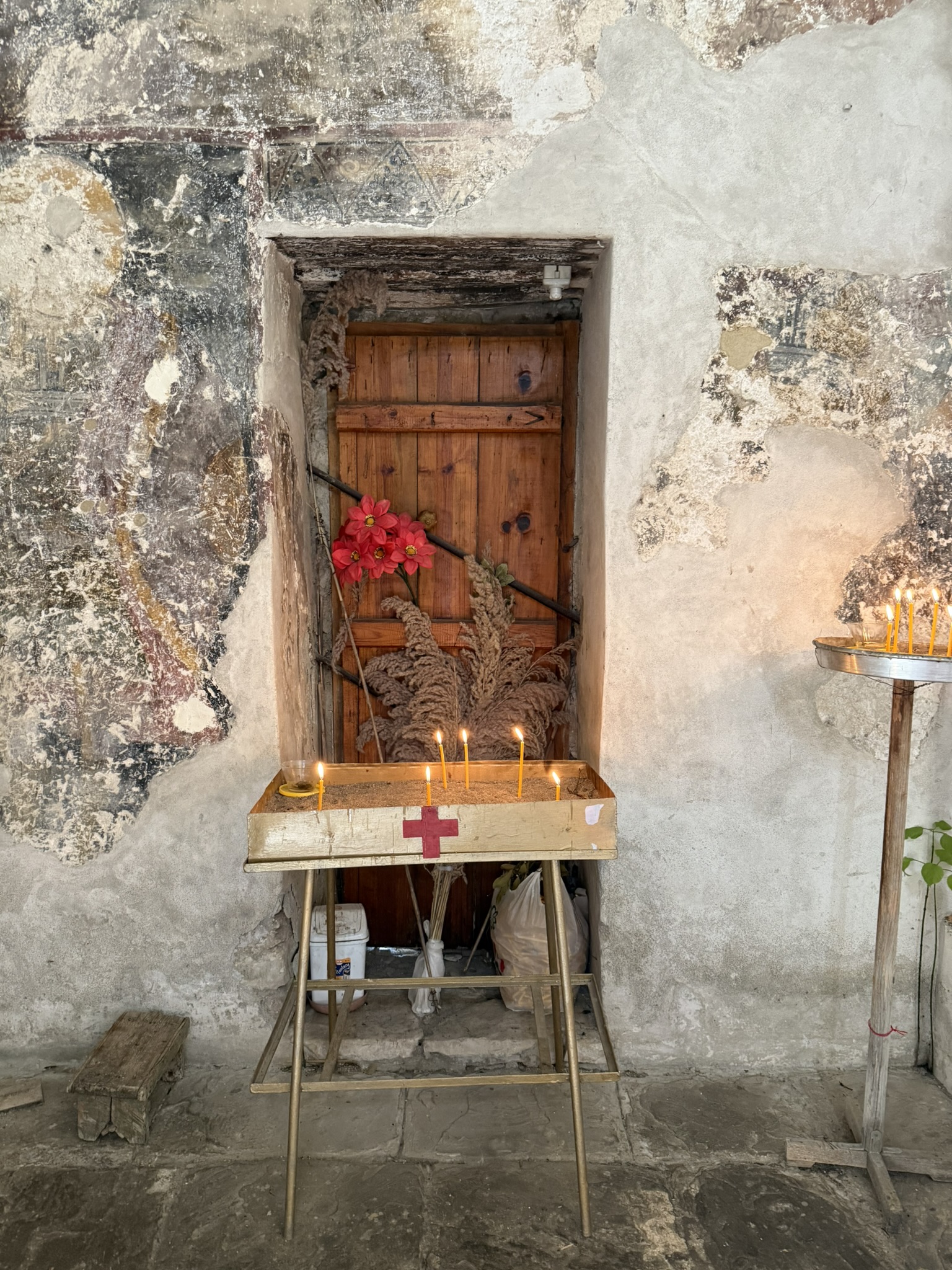
Church of St Mary of Blachernae: One of the oldest and best-preserved churches within the fortress. Dating from around the 13th or 14th century, the church was built using alternating layers of stone and brick, a characteristic feature of late Byzantine architecture. Its interior frescoes were painted in 1578 by Nikola, the son of the famous Albanian iconographer Onufri. Although Albania would later come under Ottoman rule, Christian communities continued living and worshipping within the castle walls.
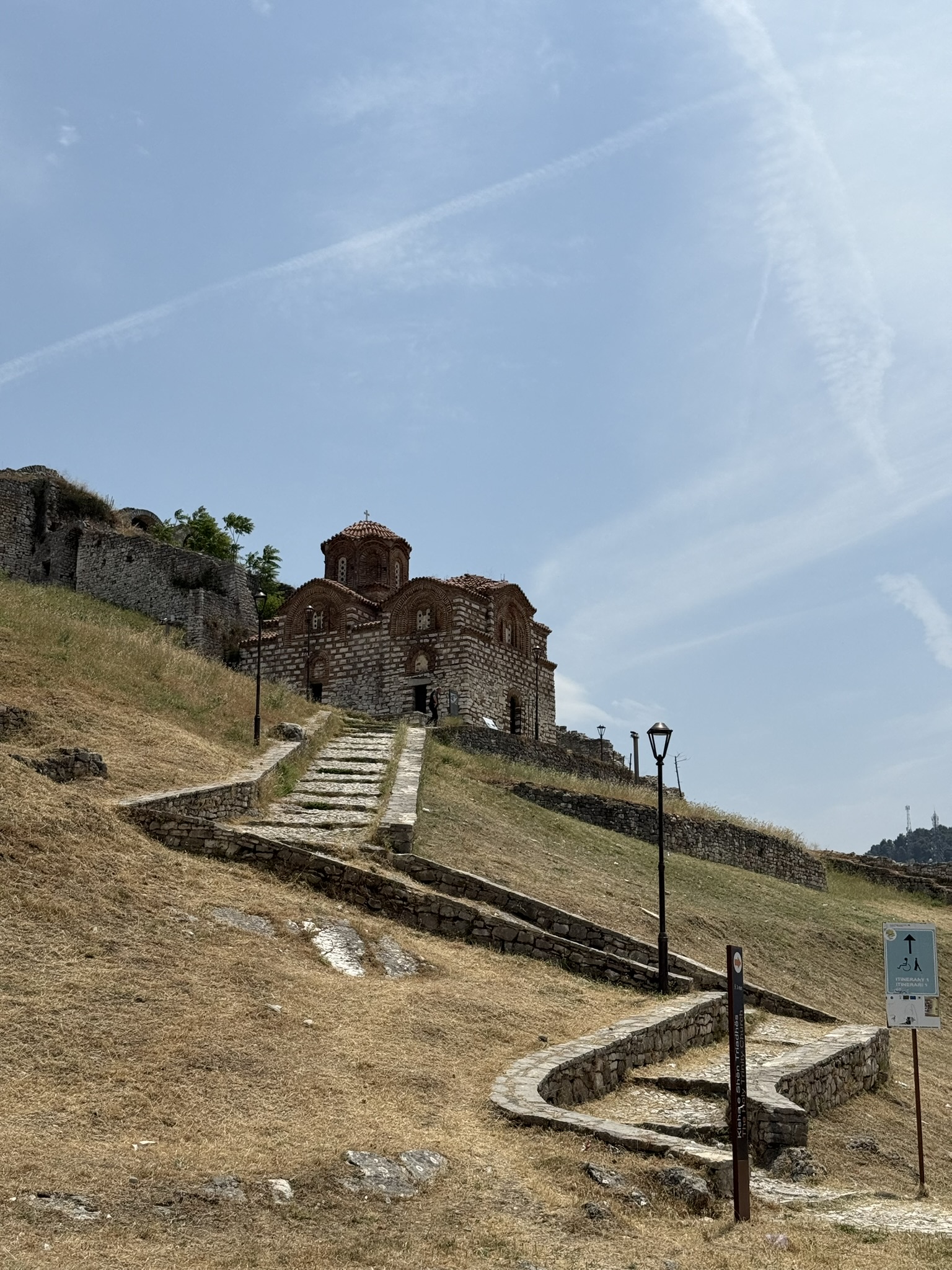
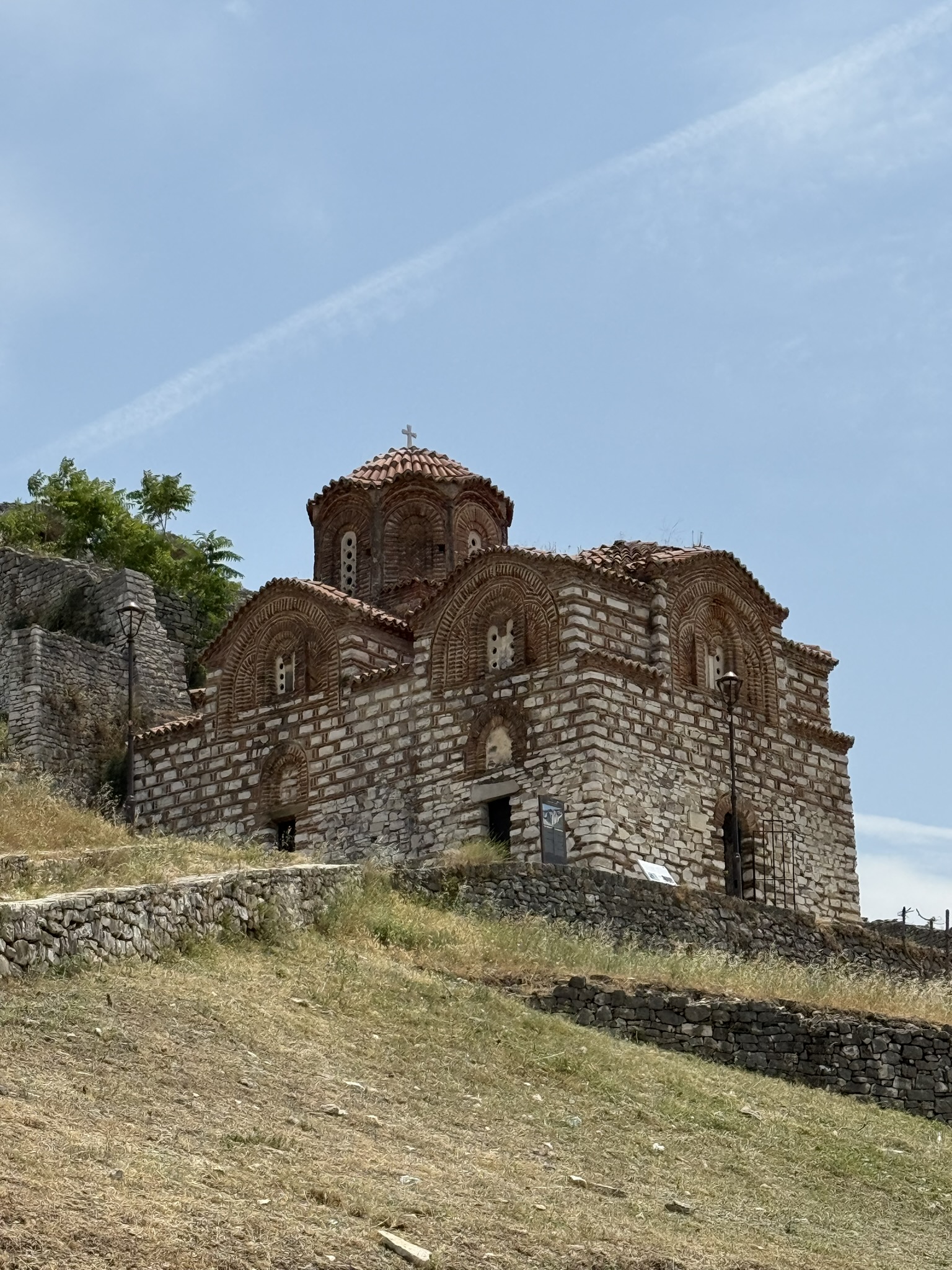
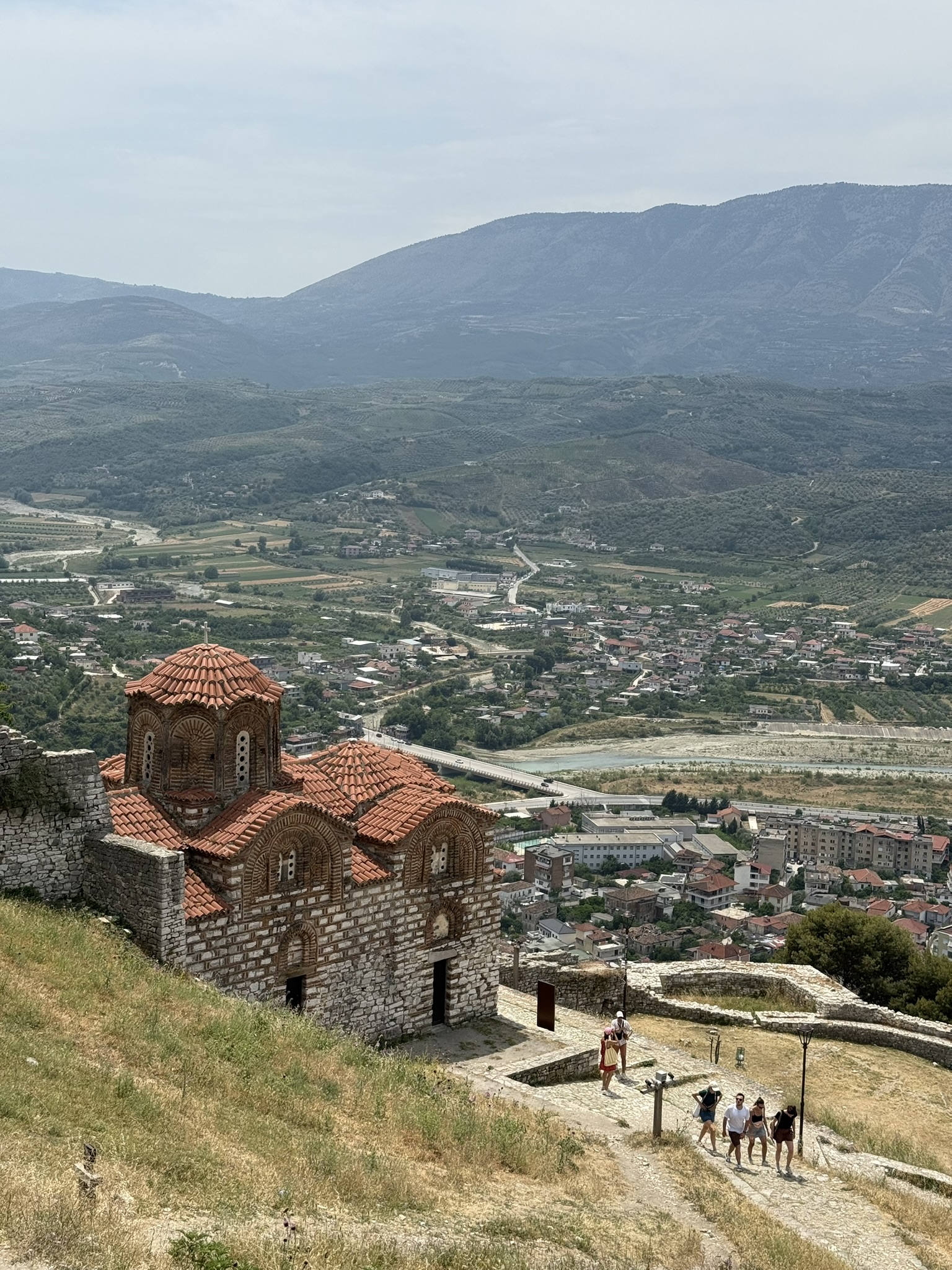
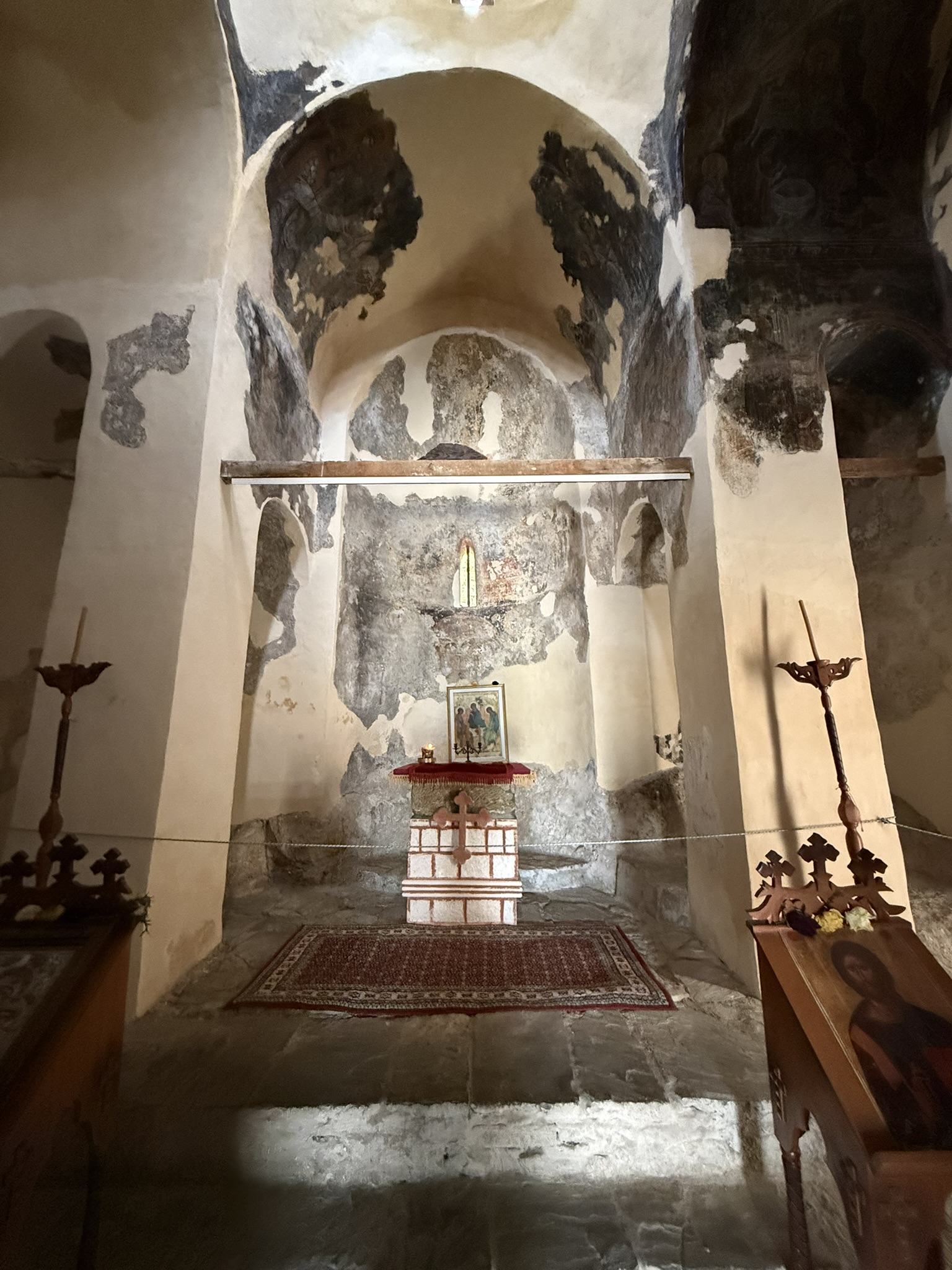
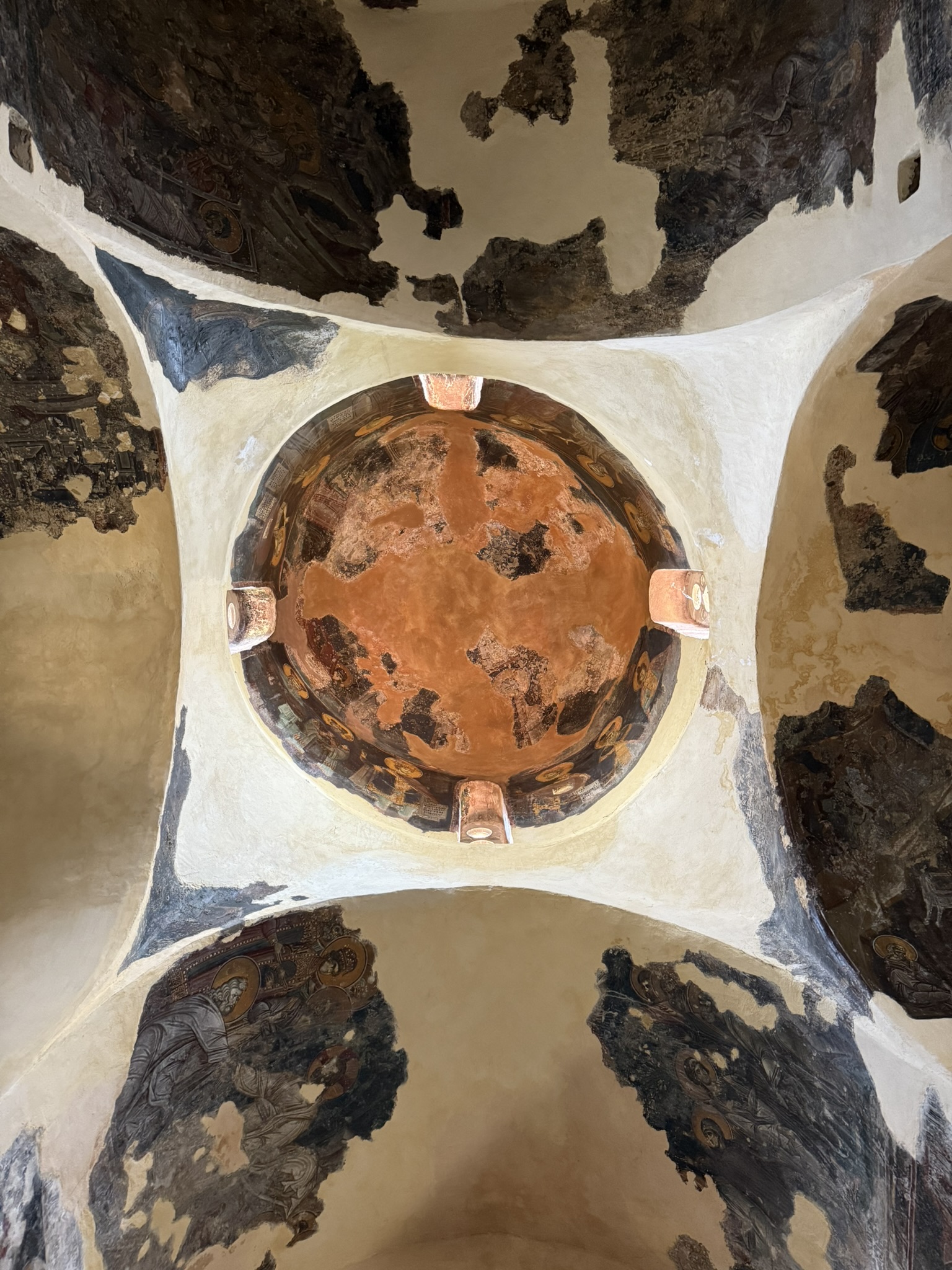
Church of the Holy Trinity: A late 13th to early 14th-century Byzantine church perched near the southern wall of the castle. Its cross-in-square design, octagonal dome and alternating layers of stone and red brick makes it one of the most visually distinctive monuments in the fortress. Fragments of its original medieval frescoes still survive inside, portraying biblical scenes, saints and angels. The church’s position is every bit as impressive as its architecture – sitting on the edge of the rocky hillside as if hanging above the Osum Valley. Even after centuries of earthquakes, invasions and political upheaval, the structure remained remarkably complete.
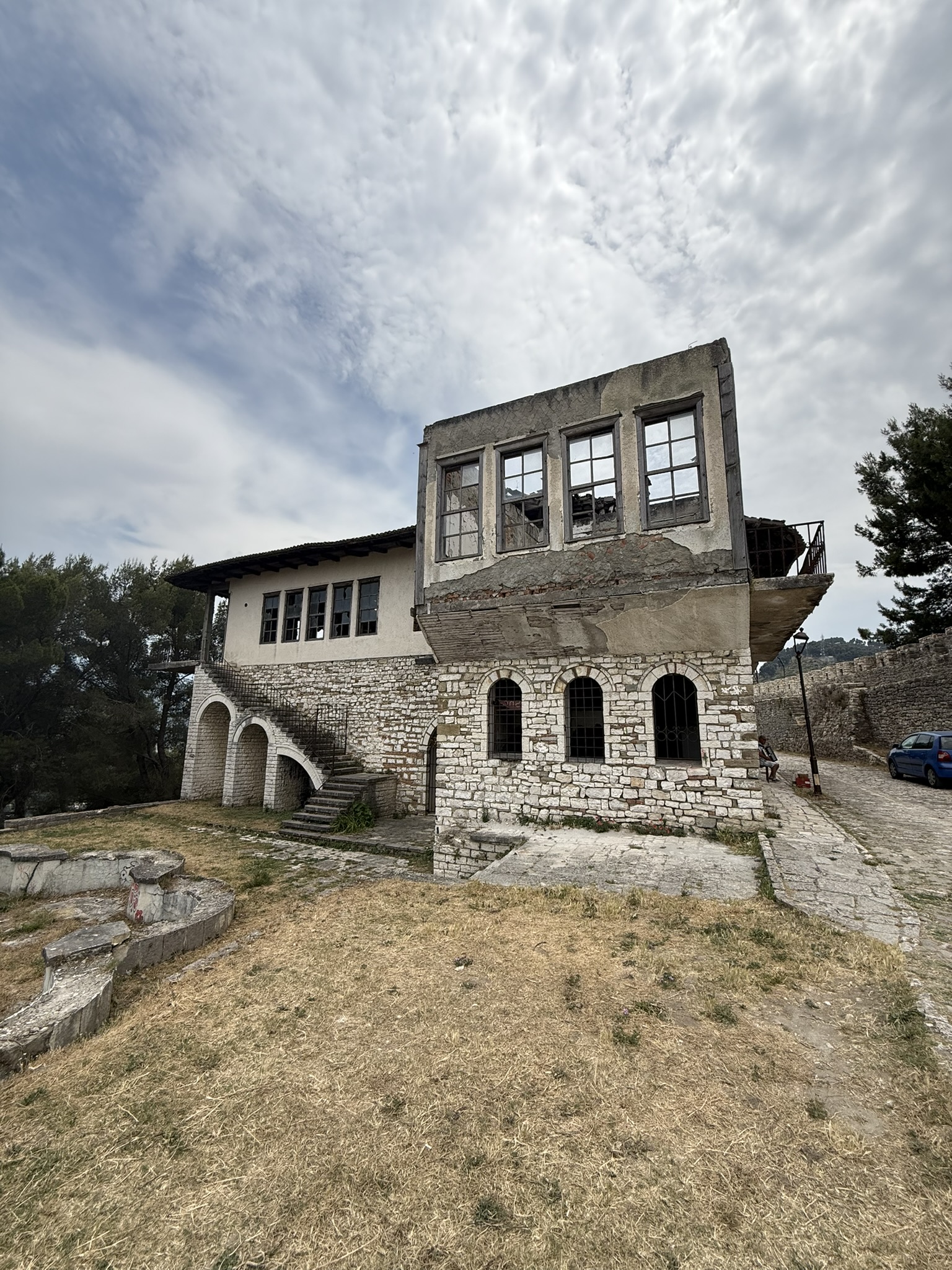
Church of St George: From the outside, this church looks more like a traditional house than a religious building. This was largely the result of alterations made during the 20th century. During the communist era, the upper section of the church was demolished and the building was reconstructed for use as a government residence, leaving much of its original religious appearance hidden beneath later additions.
White Mosque: Built during the second half of the 15th century, it is believed to have served the rulers and military garrison stationed within the fortress. Only fragments remain today after the mosque was severely damaged around the late 18th or early 19th century.
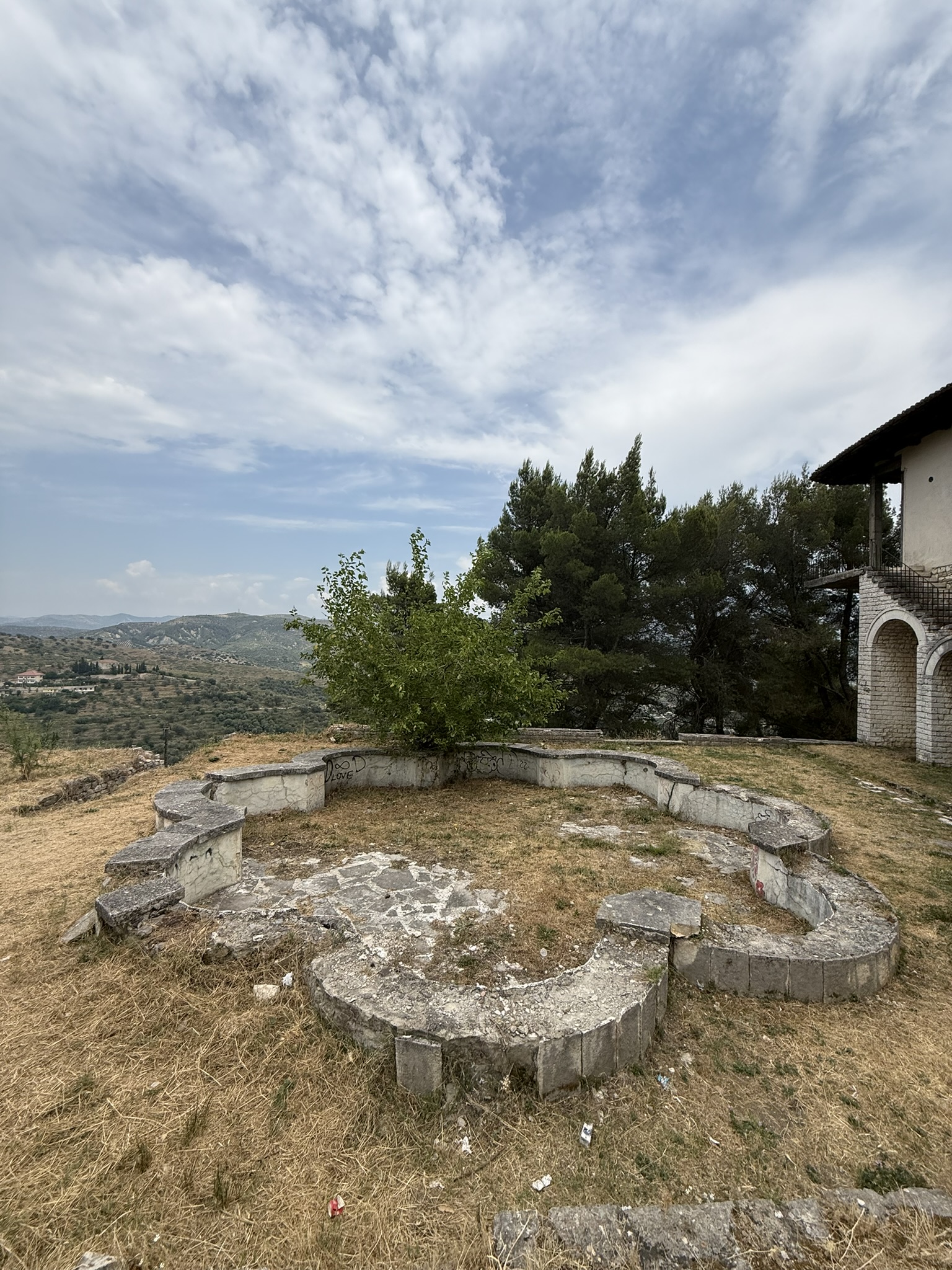
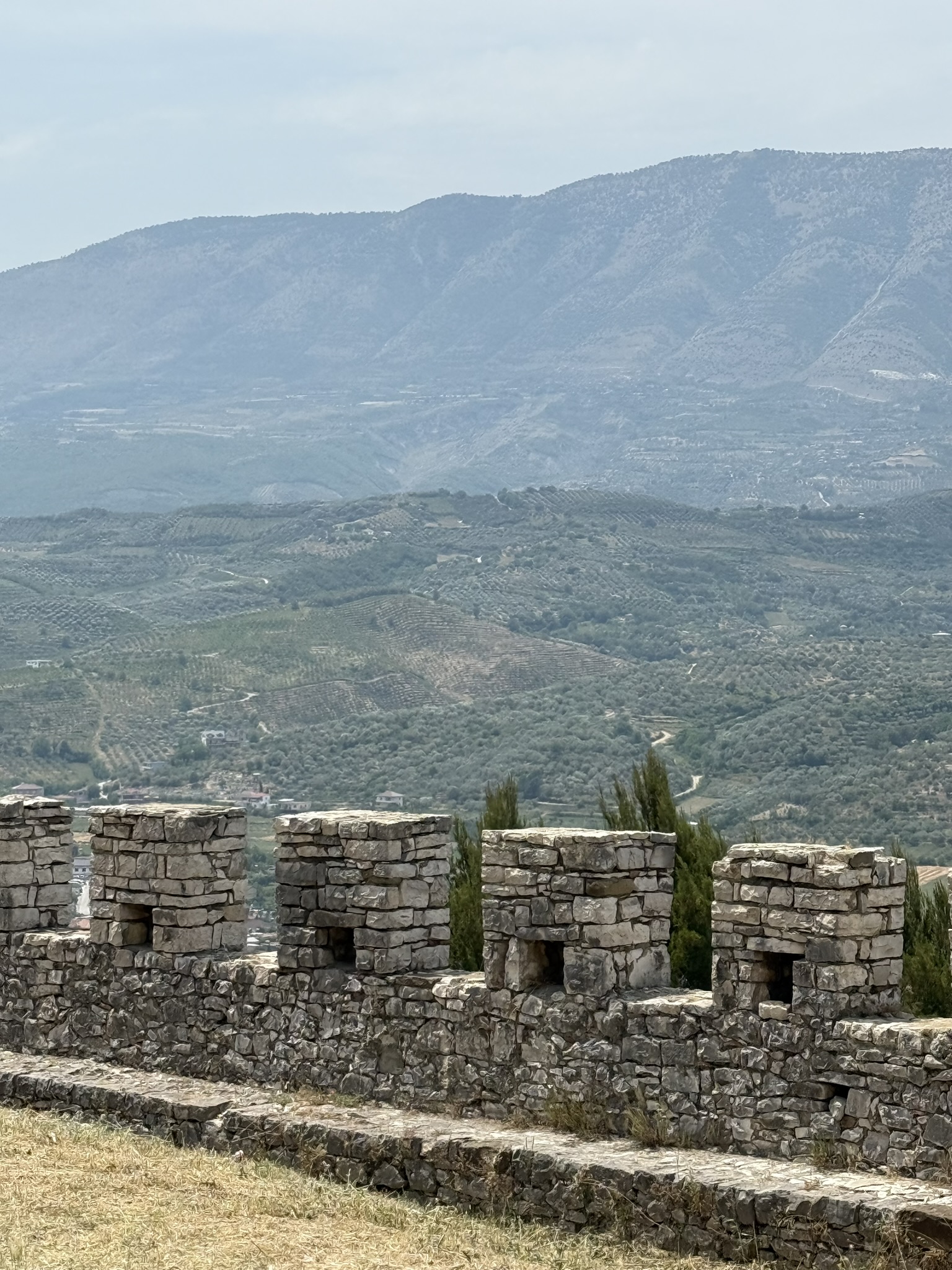
After the tour, we were left to our own devices and given some time to explore the site at our leisure. I walked along the fortress walls, wandered among the remains of buildings once used by the garrison and came across the ruins of a former palace complex. I also found the enormous water cistern known locally as Saranxha, which once helped maintain the castle’s water supply during daily life and prolonged sieges.
To conclude our tour of the citadel, we made our way to a viewpoint offering sweeping views over the Osum Valley and the town of Berat below. Truly stunning!
PART II
The Bus Wars
After the castle tour, I got back on the bus to find the seat I had so carefully handpicked taken. No big deal – I sat somewhere else. Big mistake.
A grumpy older woman immediately demanded that I move, claiming that it was her seat. Lacking the energy to argue, I conceded and gave her the spot I had originally claimed. Now stuck in an aisle seat and unable to appreciate the views, I took out my Kindle and started reading. Not a bad compromise. Until this British lady came and shooed me off. I tried another seat, only to be told that one was also taken. It was like playing musical chairs.
That was when I lost it. Oh God, did I make a scene. In fact, it was a whole soliloquy. “What is this, preschool? Is your name written anywhere? And what about my original seat? How much did you pay for the tour? Am I somehow a less deserving customer than you?”. At that point, Nicholas stepped in and asked whether there was a problem. I told him that I appeared to have misplaced the seating chart that had surely been handed out before the tour.
Then I marched towards the front, sat in the seat that happened to be his and parked myself there. He knew better than to try to move me and simply stood beside me. I felt like a spoiled and entitled tourist, but come on!
The City of a Thousand Windows
Livid and hangry, I was pleased to discover that we had only one more stop left – the town of Berat itself.
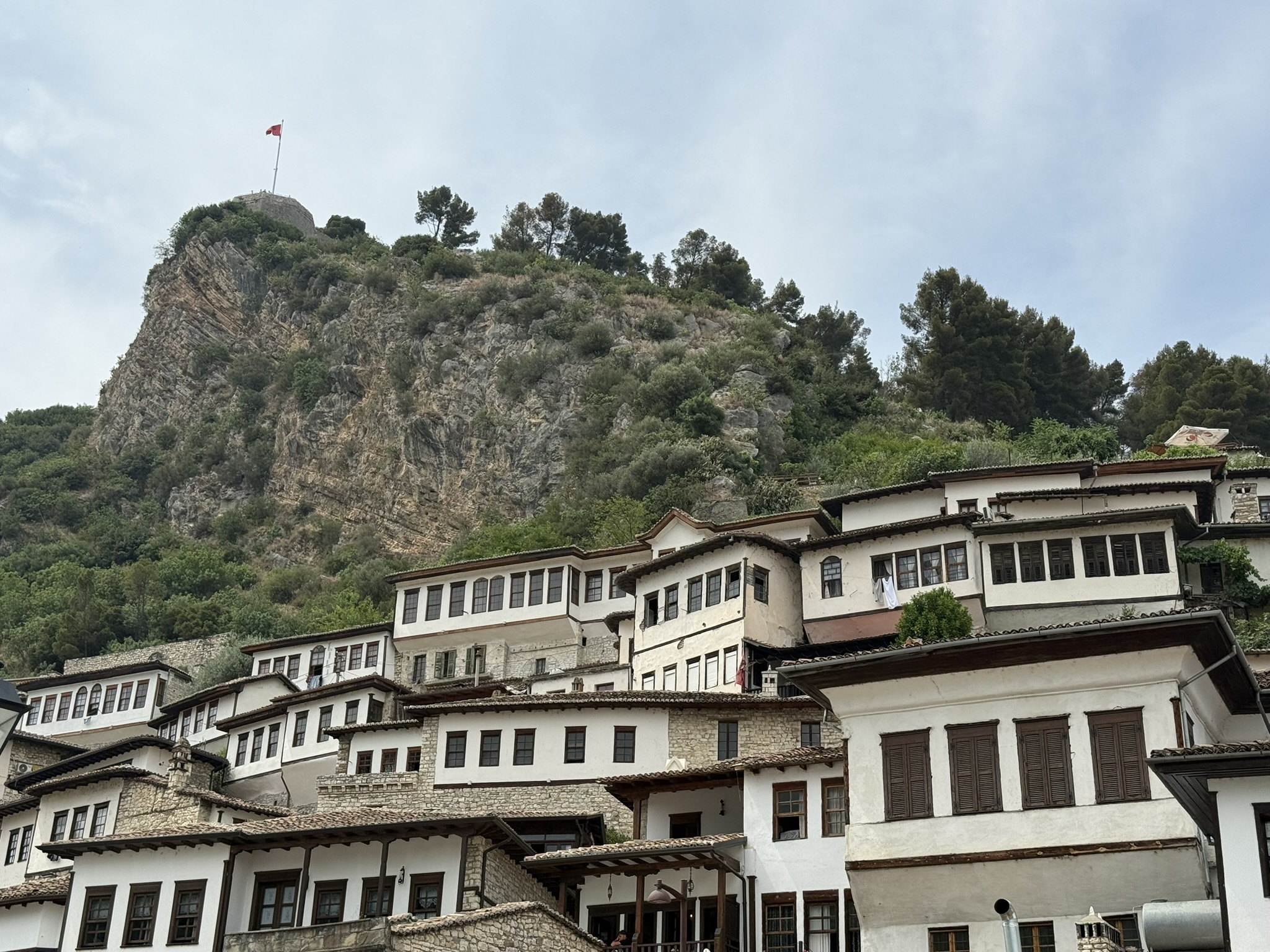
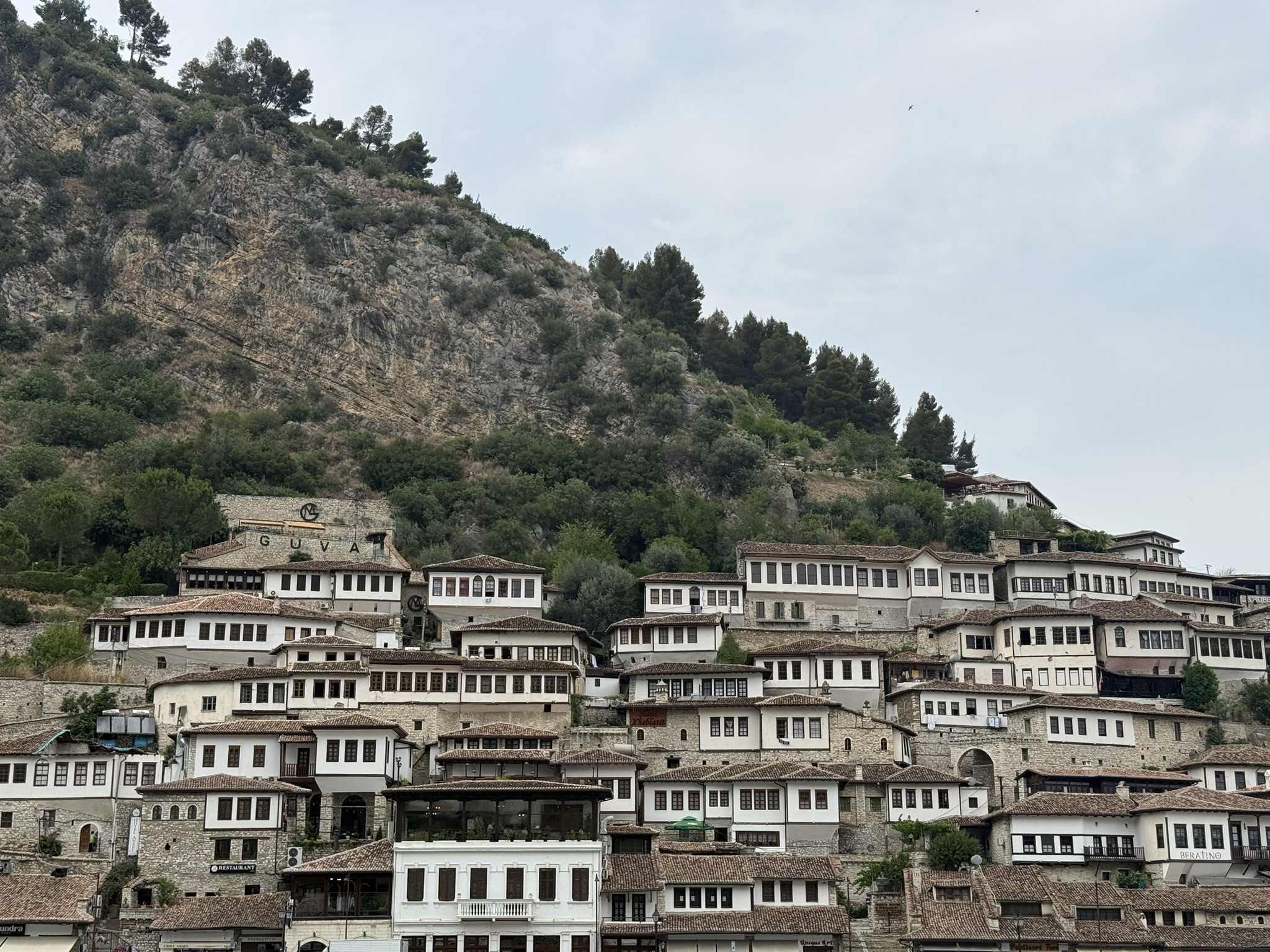
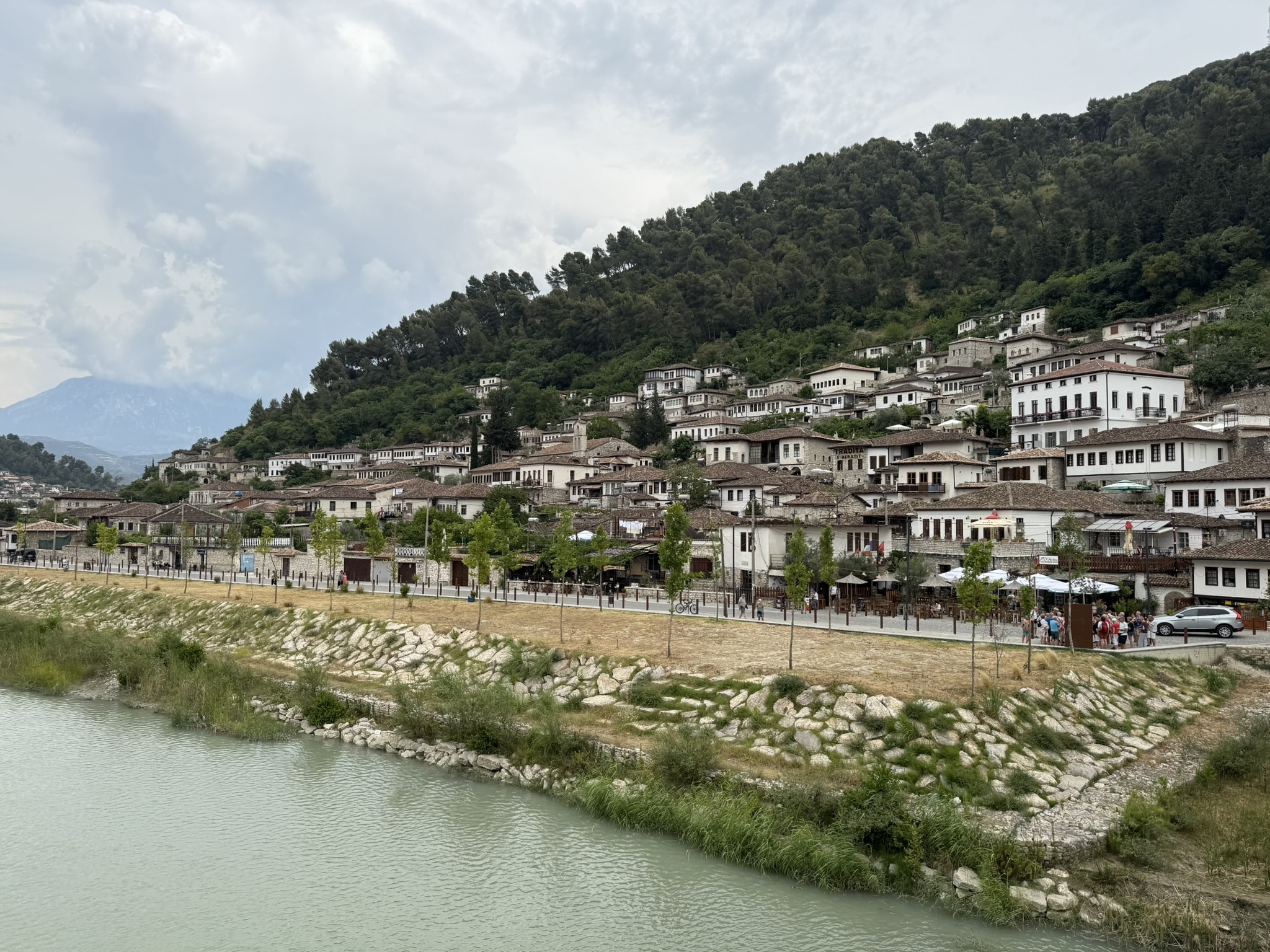
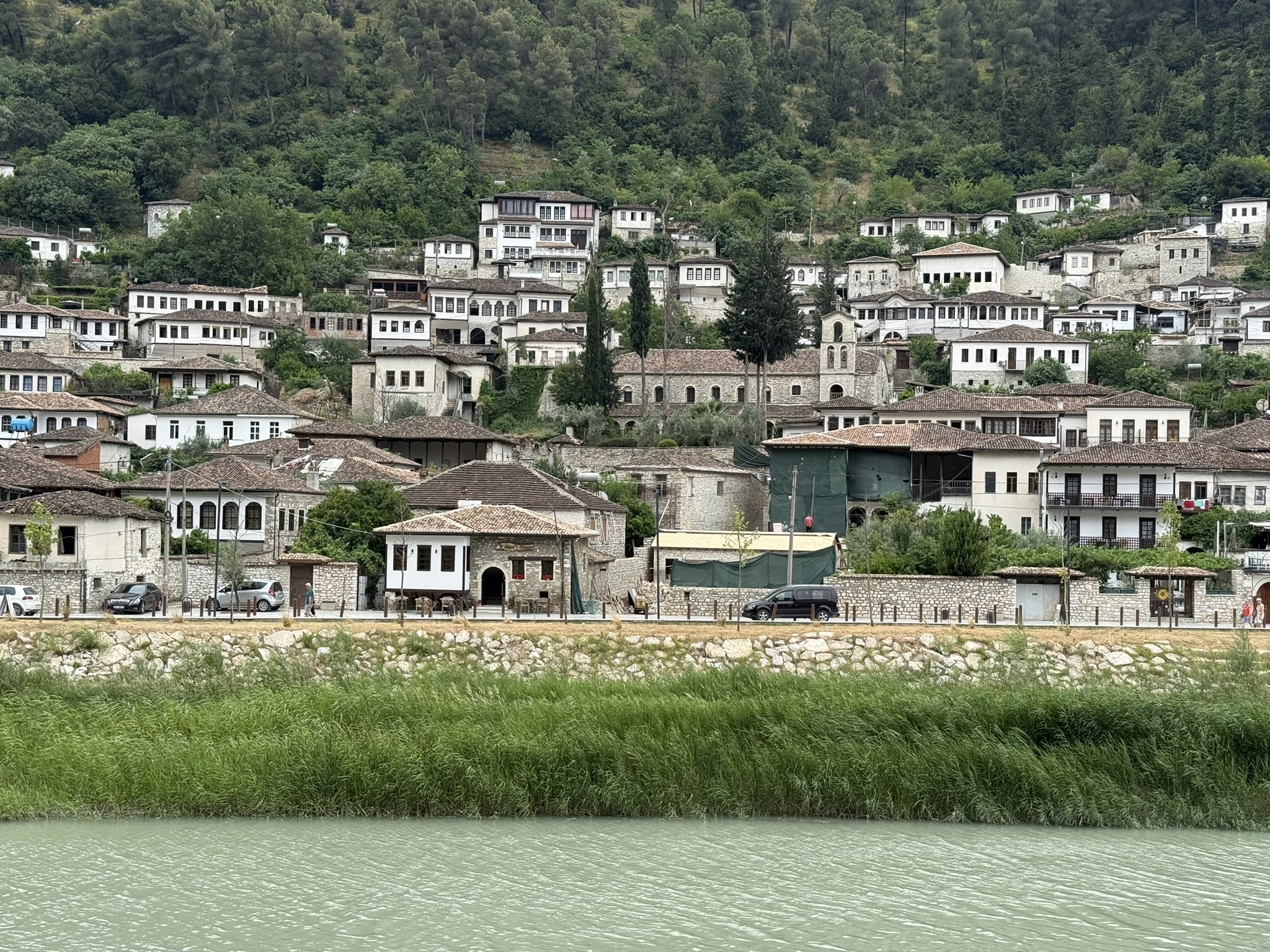
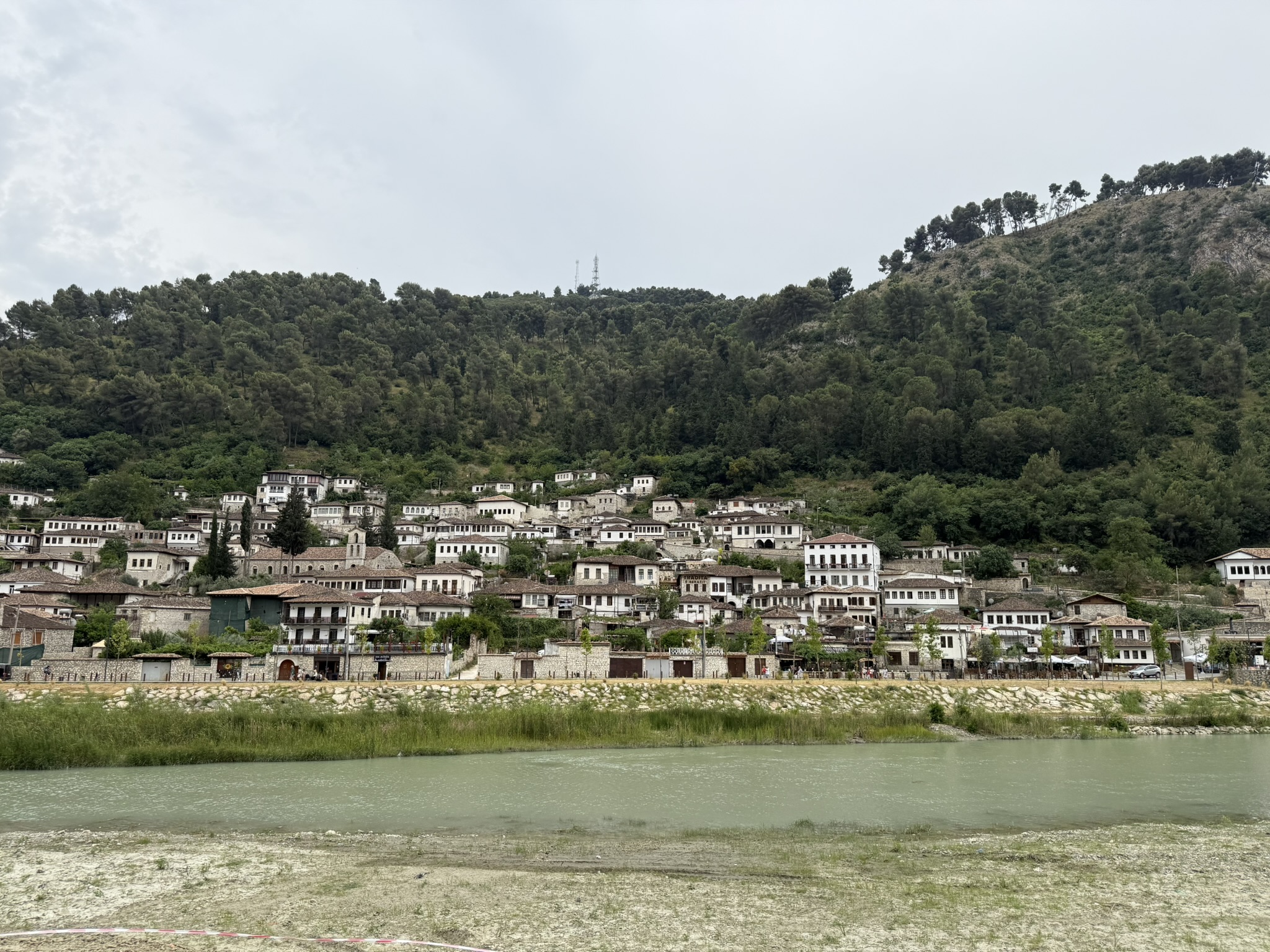
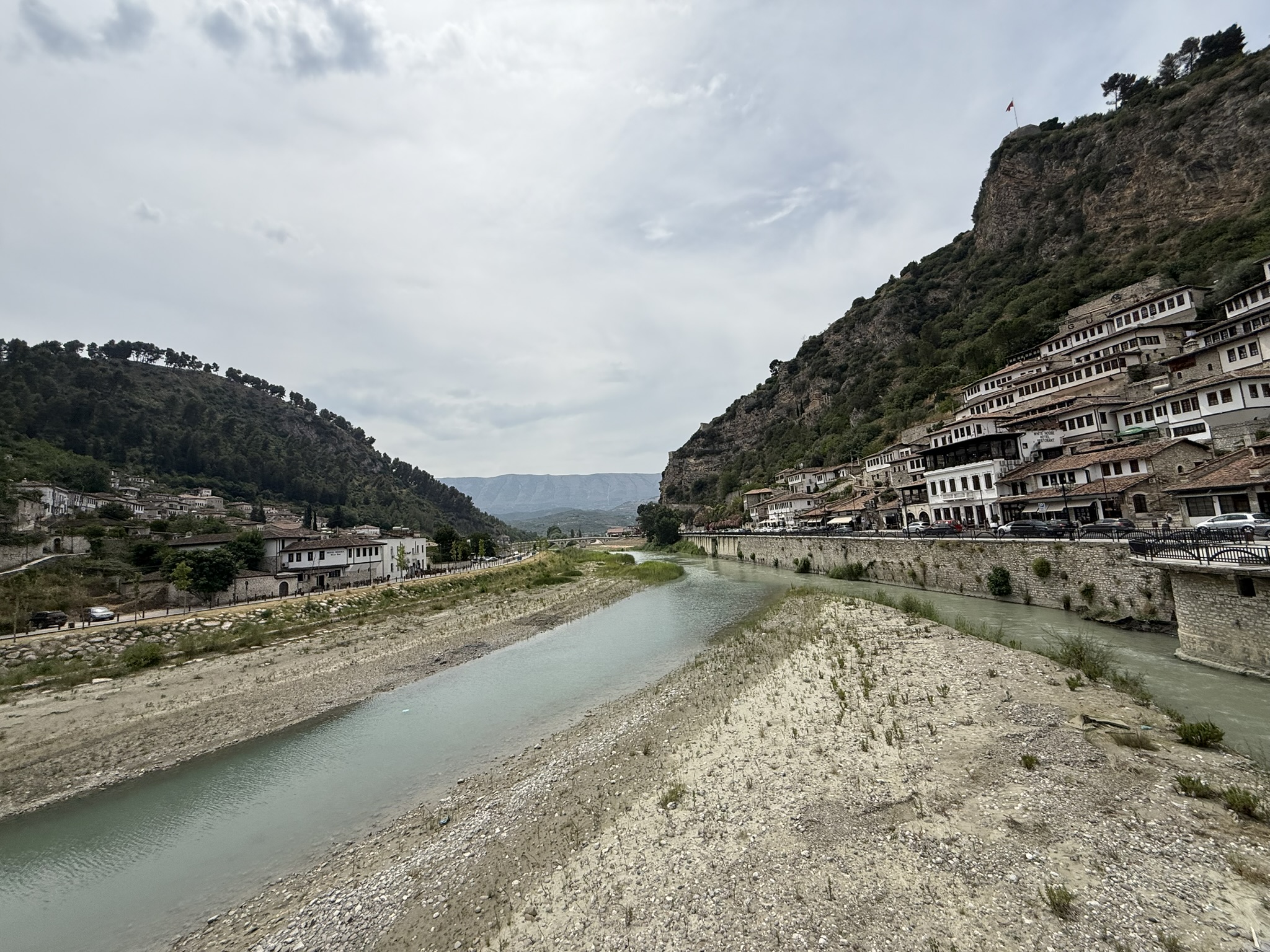
Berat is one of Albania’s most enchanting towns, a living postcard of Ottoman-era architecture nestled along the banks of the Osum River in central Albania. Known as the “City of a Thousand Windows” because of the countless windows lining its whitewashed hillside houses, its historic centre was added to UNESCO’s World Heritage List in 2008. The old town, Nicholas explained, is divided into three main historic areas:
Mangalem: Traditionally associated with the city’s Muslim community.
Gorica: Associated with its Christian population.
Castle District: The still-inhabited area crowning the hill above them.
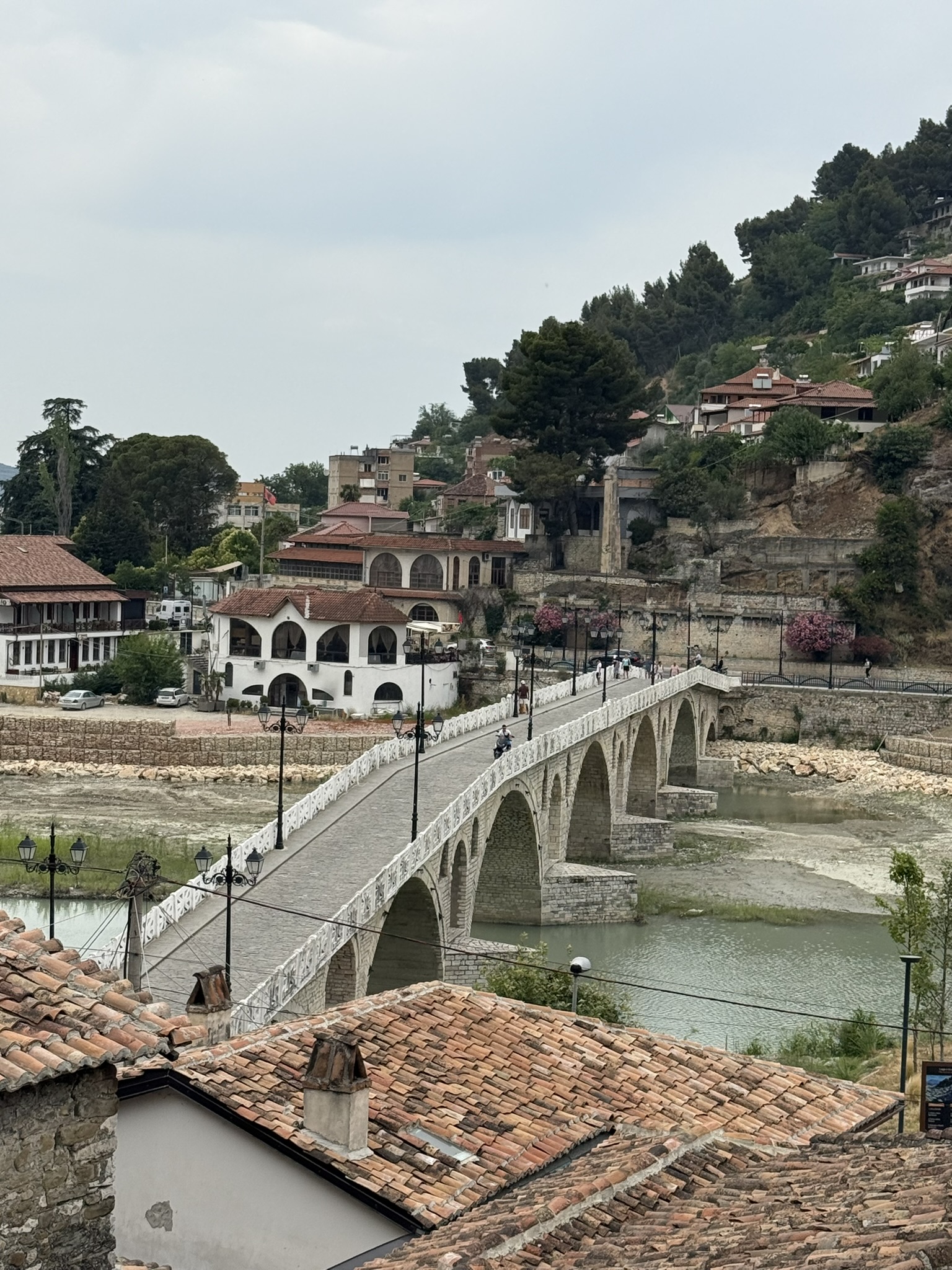
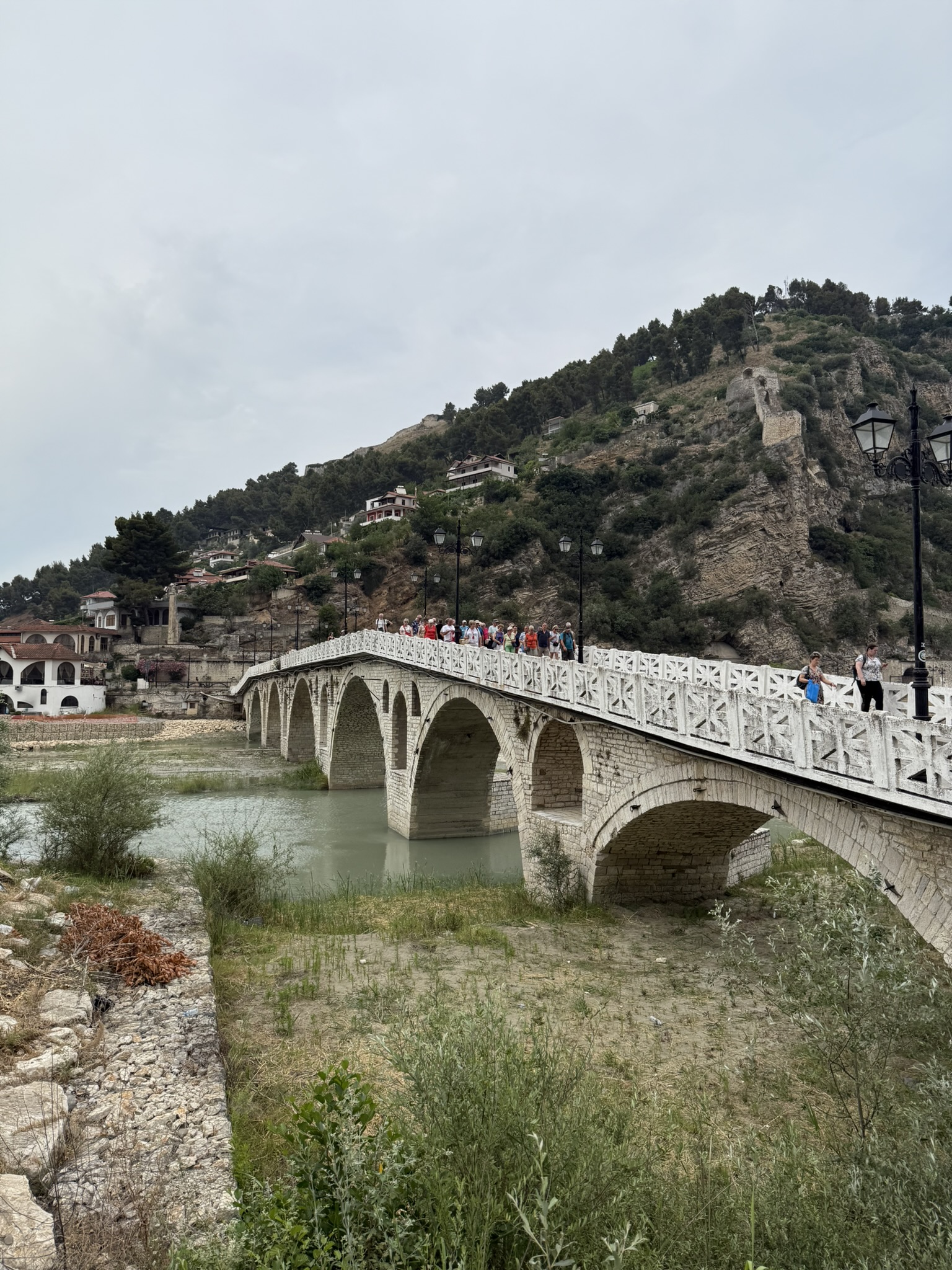
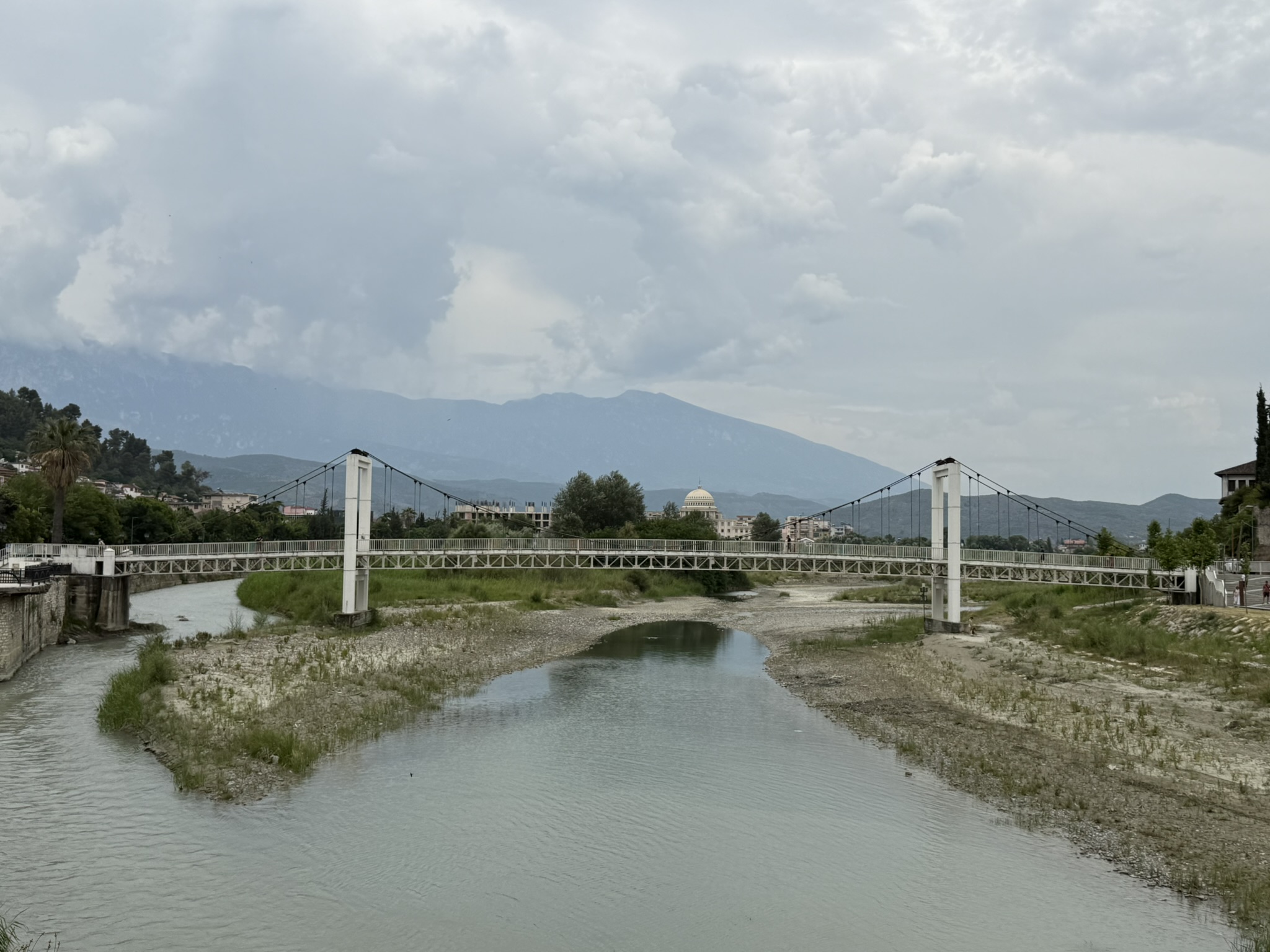
Here, we had a couple of hours to kill before returning to Tirana. By that point, I had one thing and one thing only on my mind – food. I practically ran across the Gorica Bridge – a gorgeous stone bridge that connects Mangalem to Gorica – to reach one of the most picturesque parts of town and had lunch at the first restaurant I could find. Once sufficiently fed, I proceeded to roam around the Gorica neighbourhood while attempting to absorb every single detail despite my nearly fatal food coma.
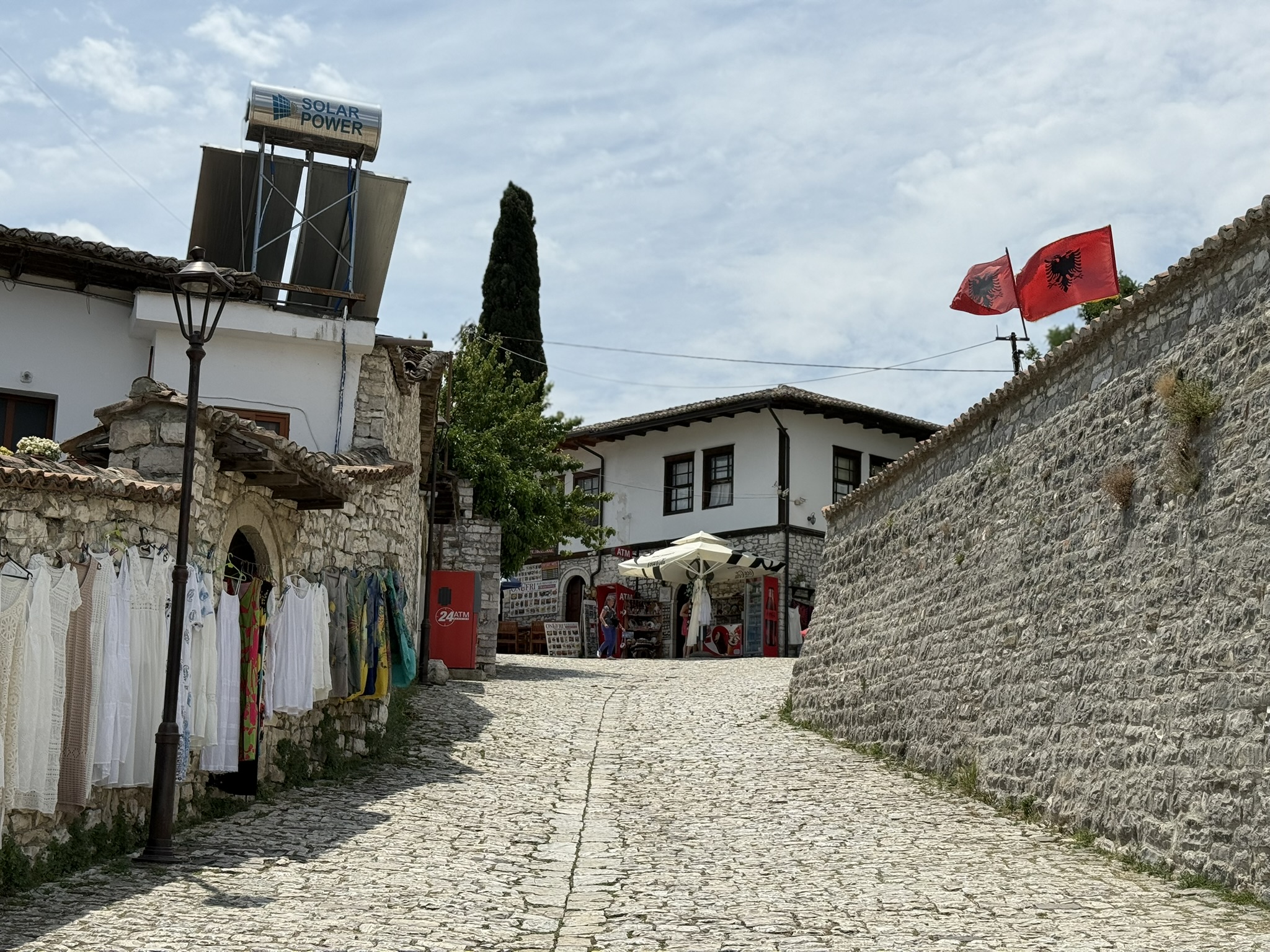
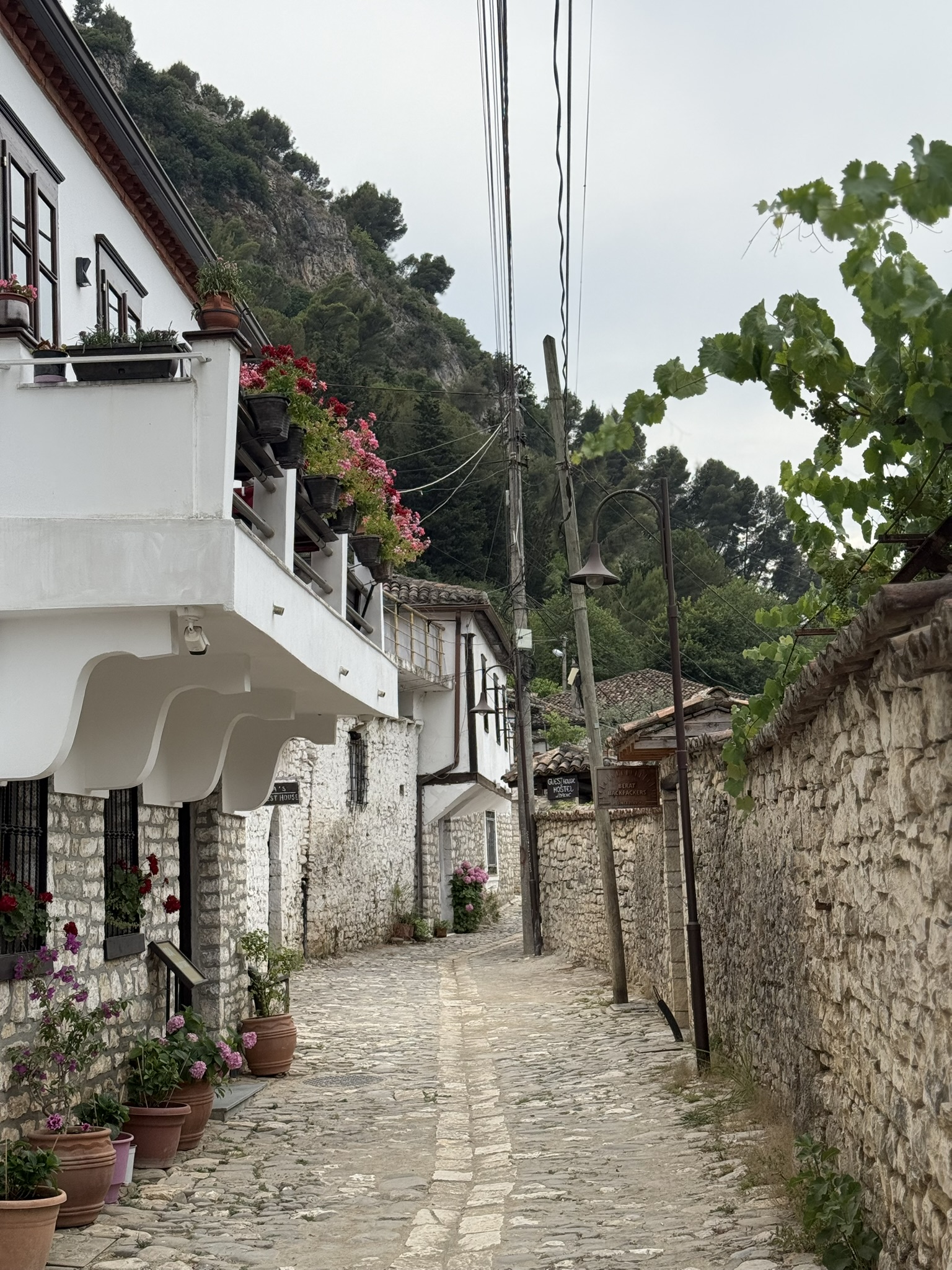
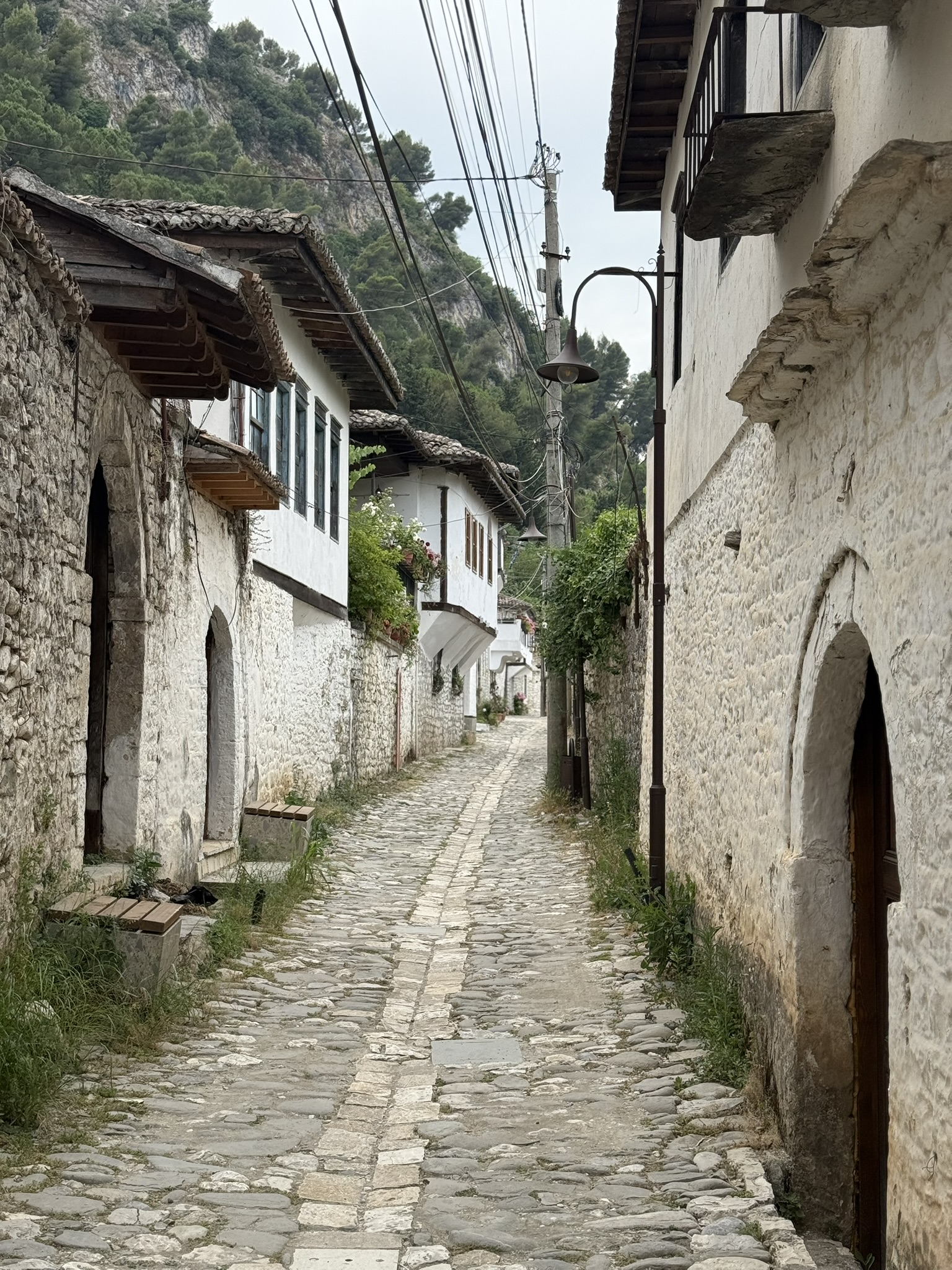
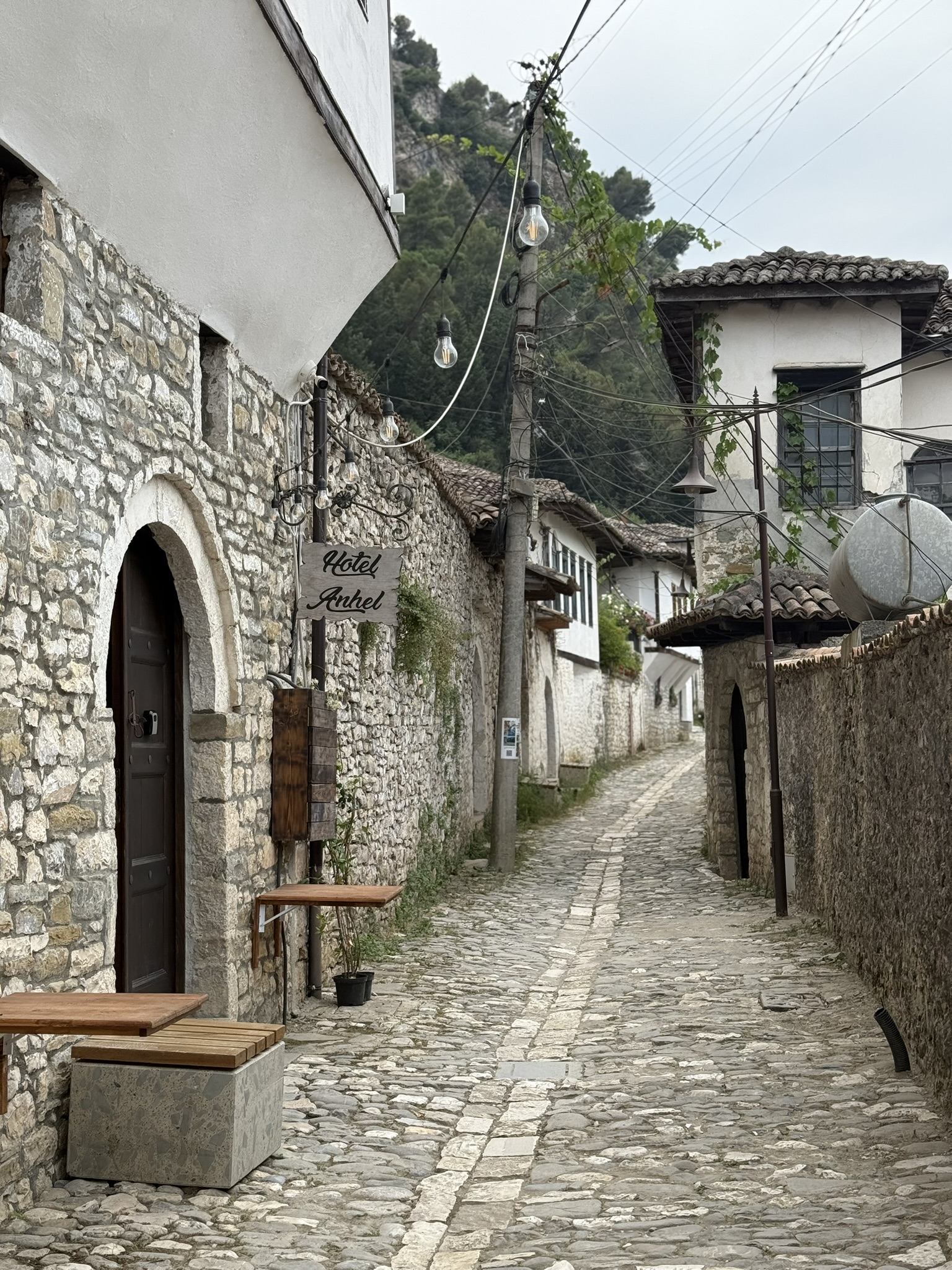
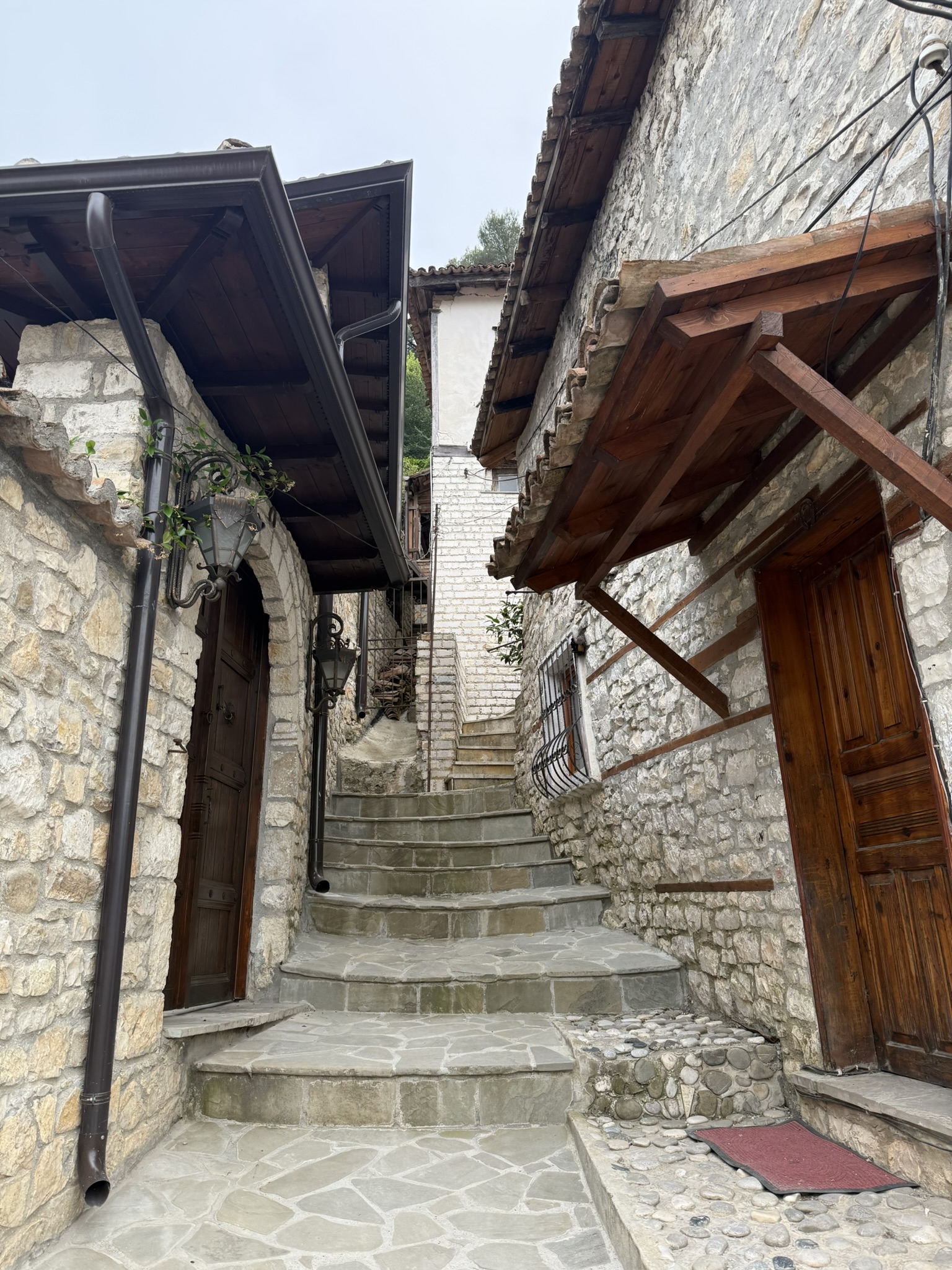
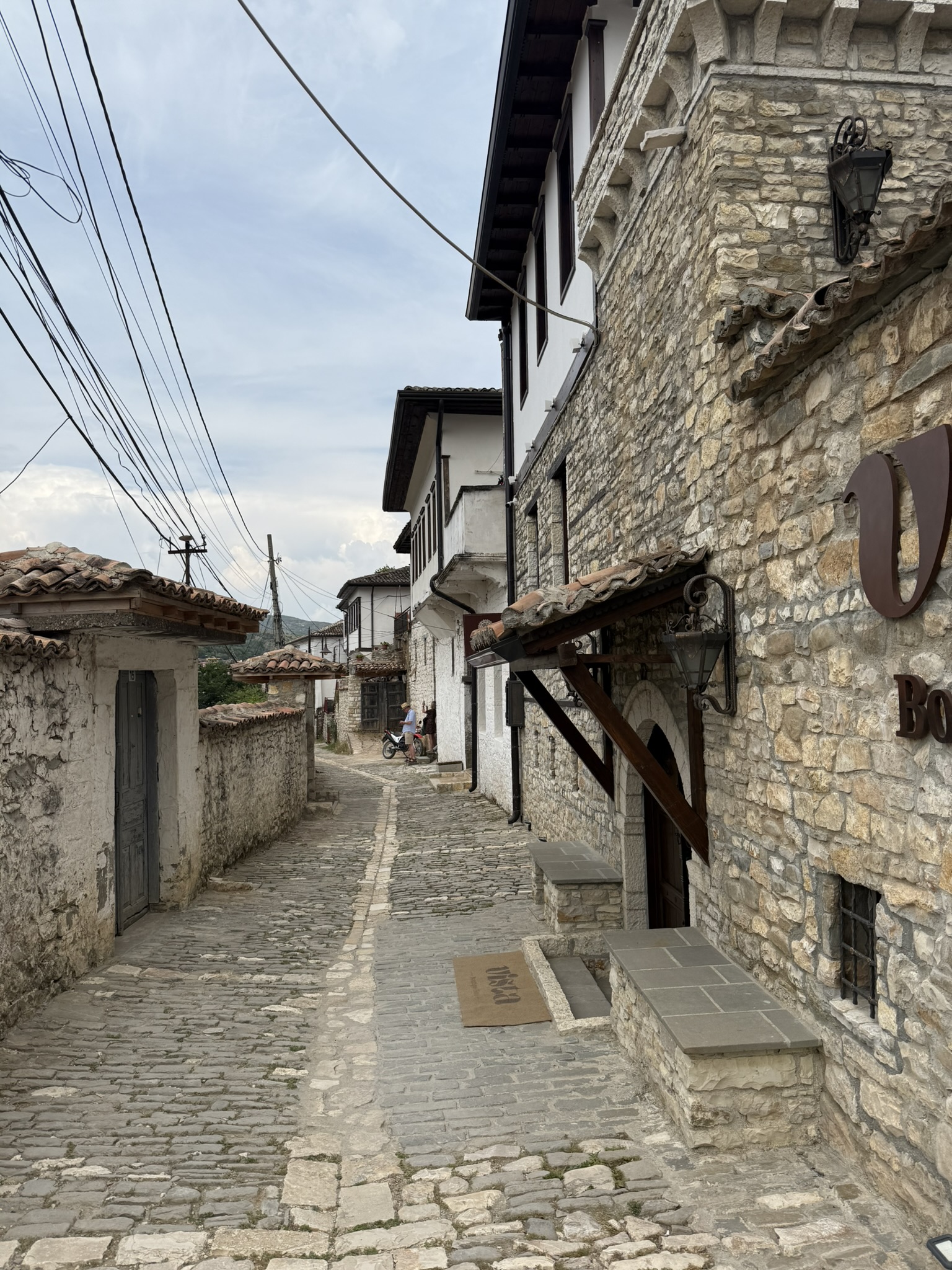
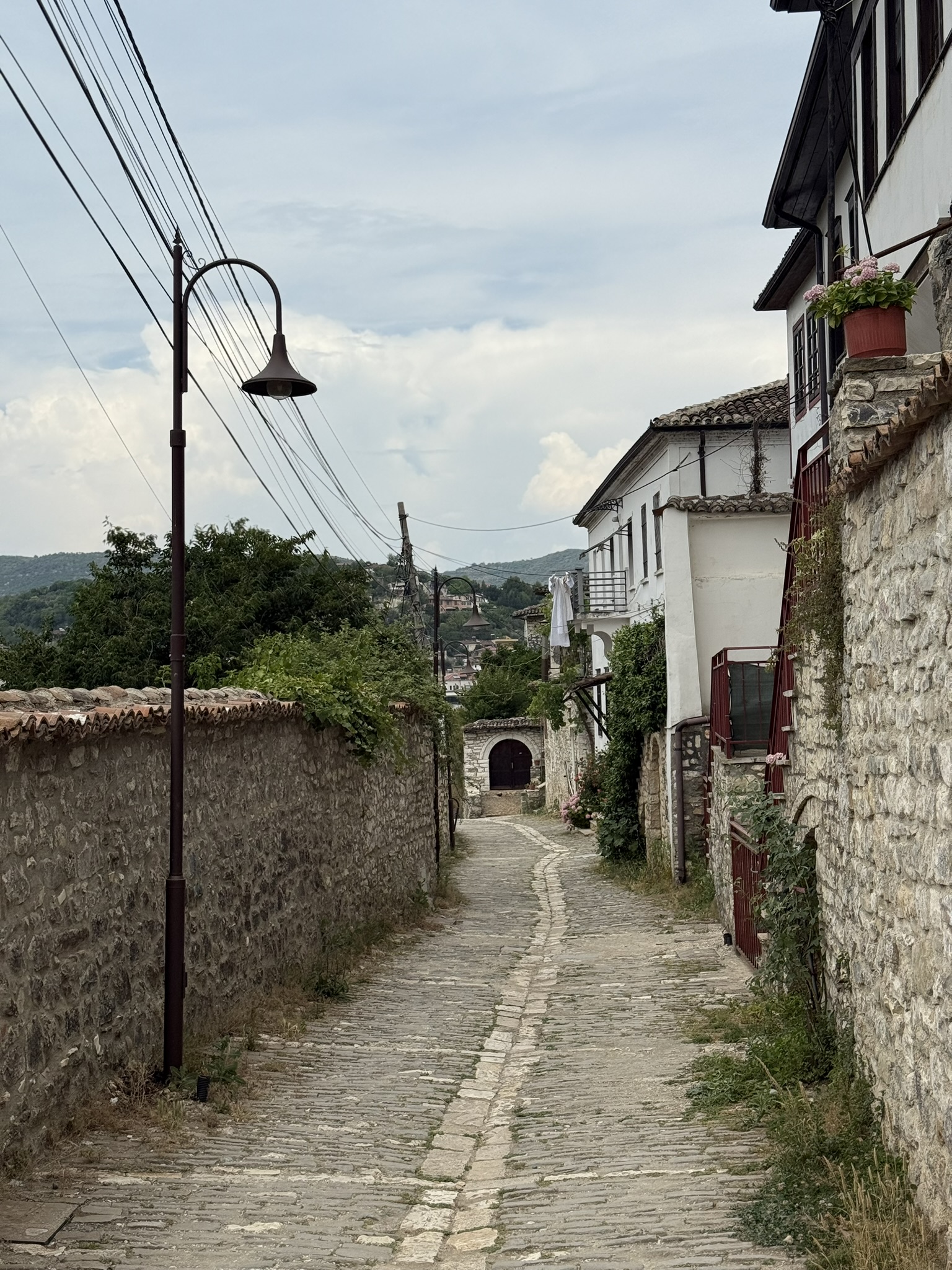
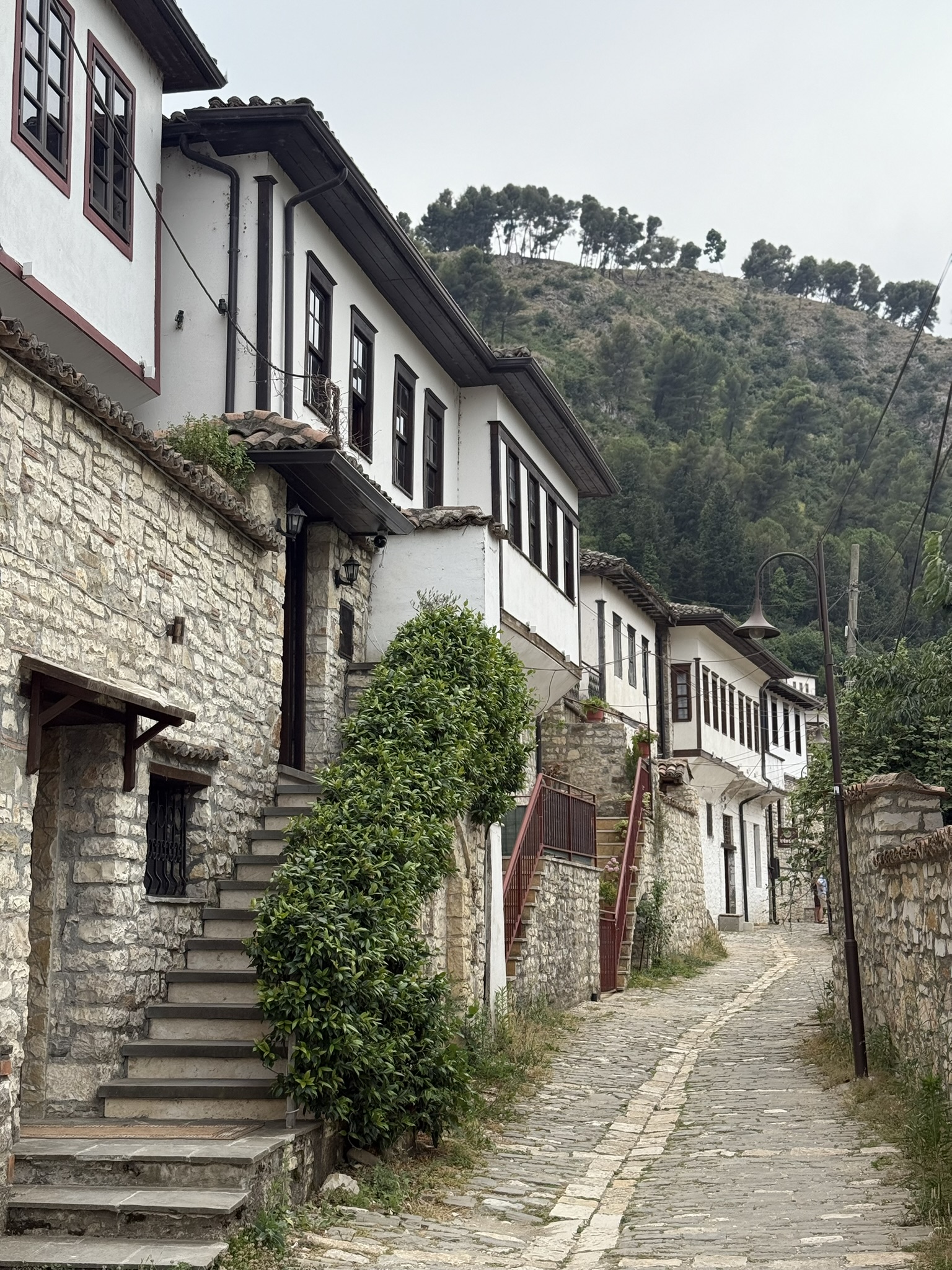
Strolling along Gorica’s narrow cobblestone streets, which twisted gently uphill, I felt as though I was walking through a perfectly preserved open-air museum. Sturdy stone houses lined the lanes, their wooden balconies draped with grapevines and flowers. Shuttered windows punctuated walls of stone and faded plaster, while arches and hidden courtyards appeared around almost every corner.
Across the Osum
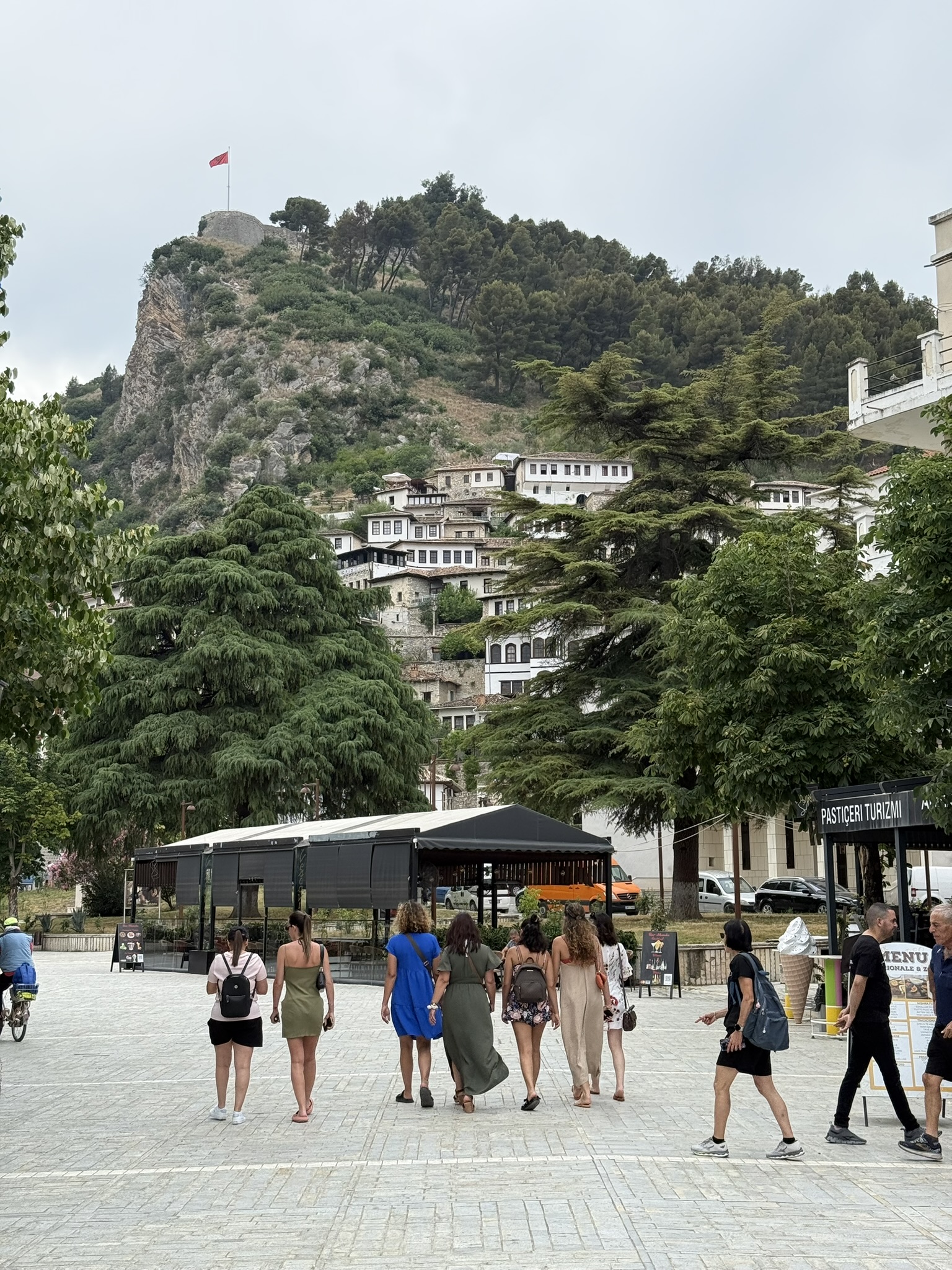
Afterwards, I crossed the bridge once again, this time able to appreciate the dramatic river gorge and the houses piled one above another along the hillside. From the opposite bank, the seemingly endless rows of windows made the town truly live up to its nickname.
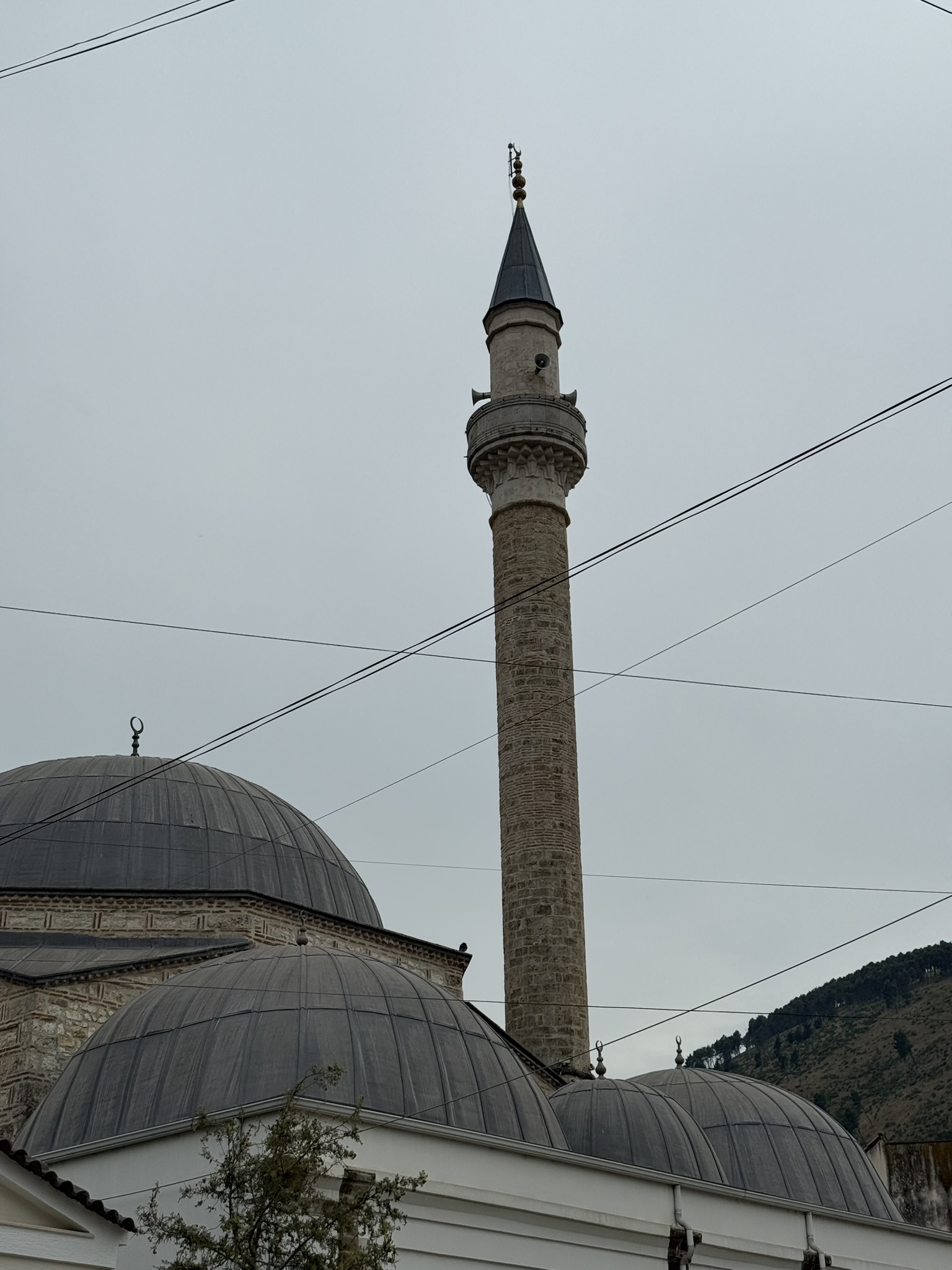
I then had some time to explore Mangalem. I passed several Ottoman-era mosques and became pleasantly lost among narrow cobbled lanes and arched passageways, with bougainvillea and grapevines spilling over the walls. The houses rose above one another, their large windows facing out towards the river as though the entire hillside were watching me pass.
Once we were back on the bus, the British women who had practically torn my head off for trying to sit in “her” seat approached me and apologised for her behaviour earlier. For once, I chose not to rise above it and continued my rant. “You’ll never see me again. So rather than demanding forgiveness, maybe just learn how to share.” Perhaps a tad overdramatic, but hey, that’s just me.