Amman: The City of Jerash
AMMAN
The City of Jerash
April 11, 2025
Somehow, our final full day in Jordan had arrived. It didn’t feel real. After everything we had packed into the past two weeks – deserts, ruins, mountains, canyons, dives and far too many unforgettable moments – I still couldn’t quite believe that, by the following morning, we would be leaving it all behind. Thankfully, Jordan wasn’t done with us just yet. We still had another day trip lined up – this time to the ancient city of Jerash!
Historically known as Gerasa, Jerash is one of the best-preserved Roman provincial cities in the world and one of the highlights of Jordan’s archaeological treasures. It was traditionally counted among the cities of the Decapolis – a group of Hellenistic cities that later came under Roman influence across the eastern Mediterranean. Following the Roman conquest of the region in the 1st century BC, Gerasa flourished, particularly during the 1st and 2nd centuries AD, becoming a vibrant centre of commerce, civic life and religion.

Jerash: In all its Glory
Having decided to go around the site guideless – on account of having the entire day to ourselves and wanting to spend as much time as we wanted roaming around. Luckily enough, there were plenty of information boards around that it pretty much felt as if we had a guide anyways! Some of the main highlights that welcomed us at the entrance:
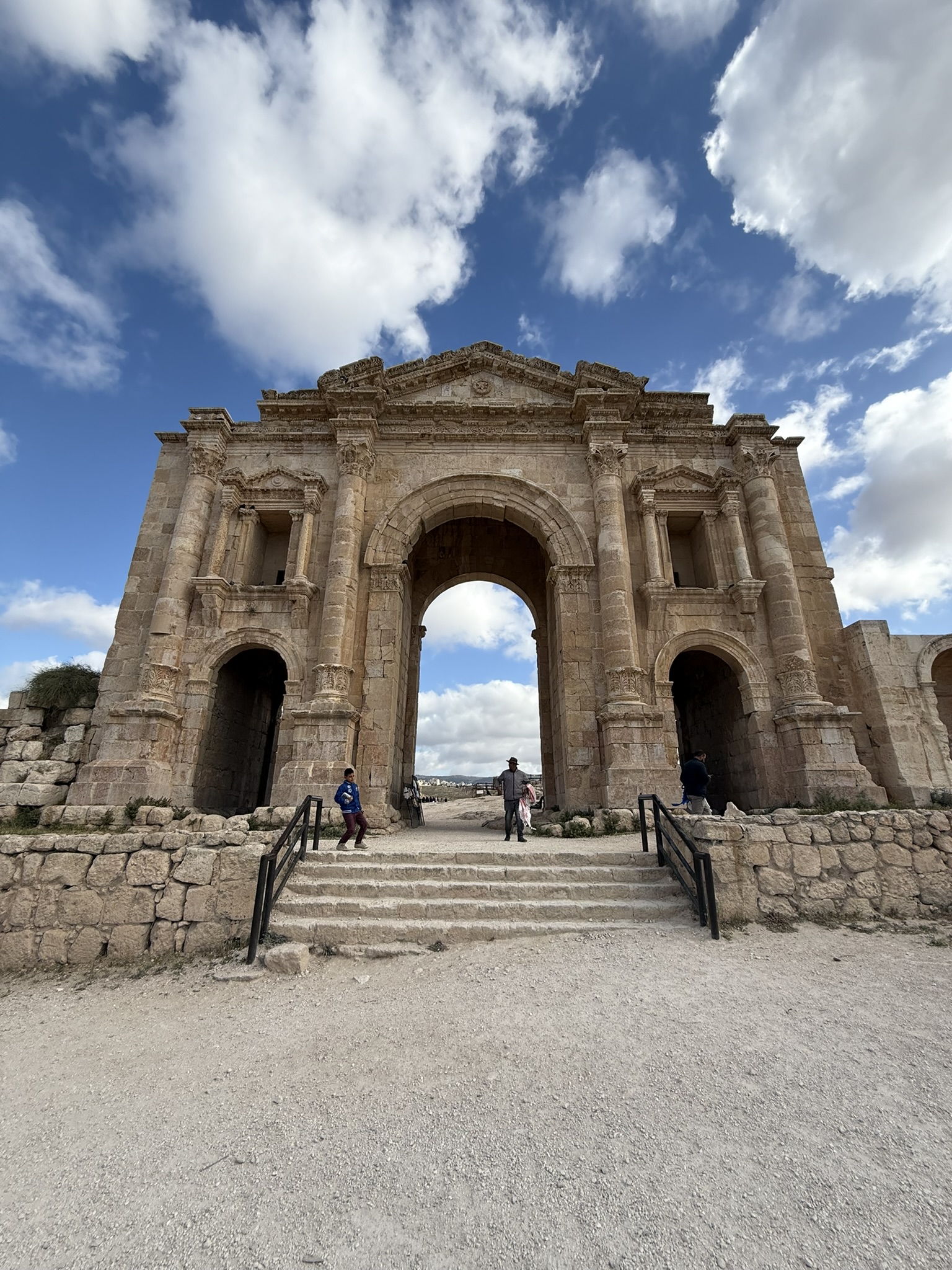
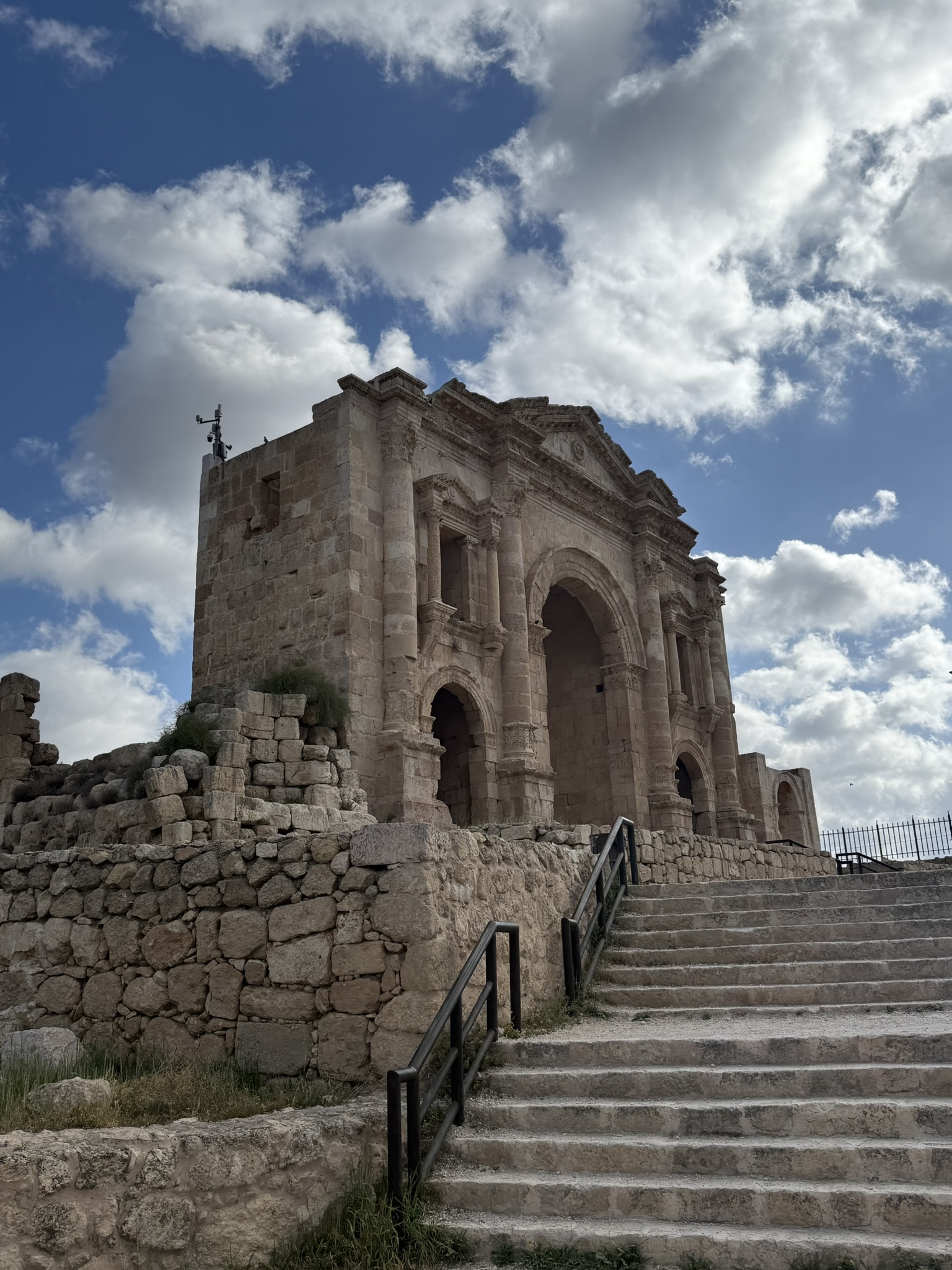
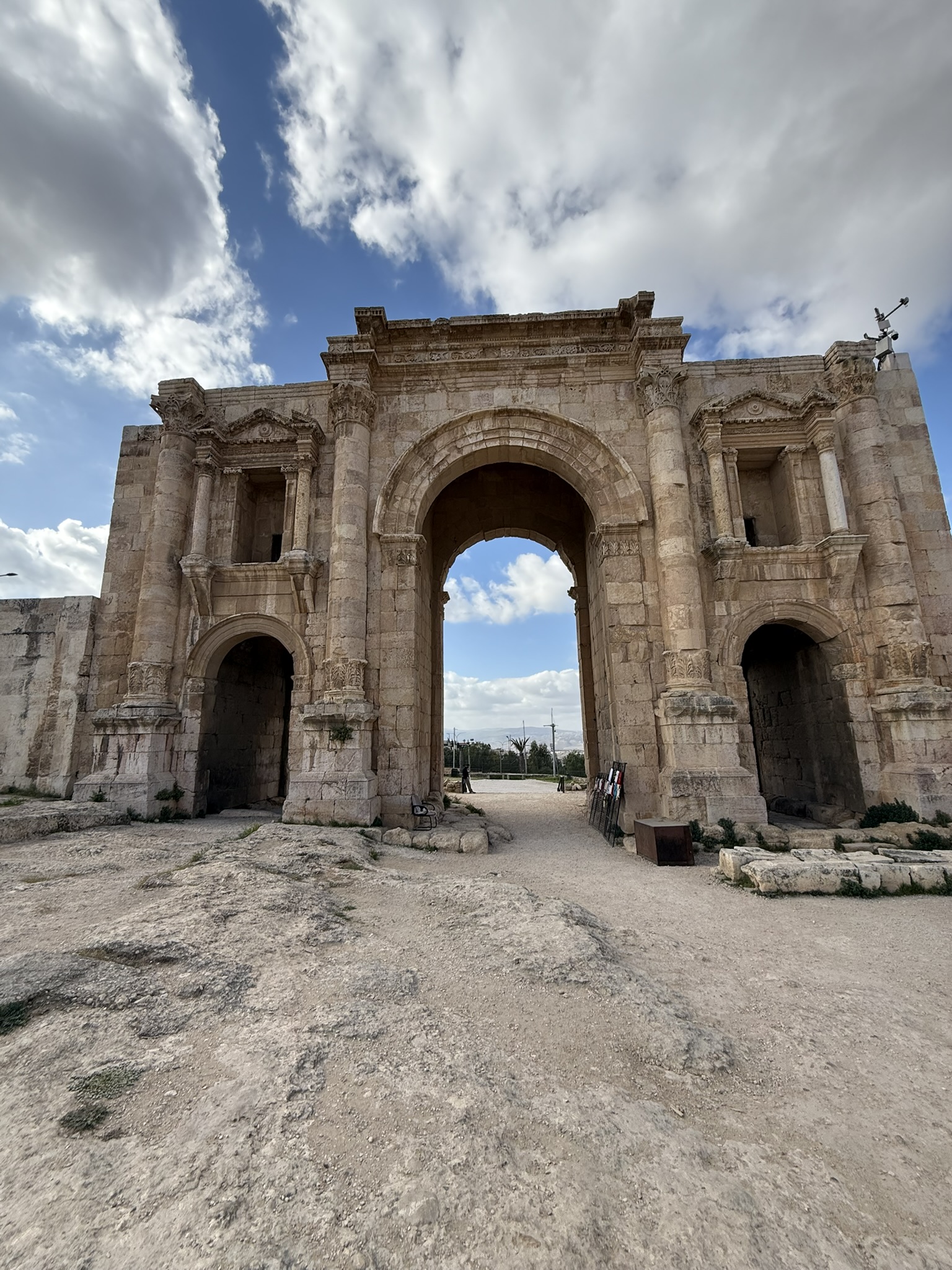
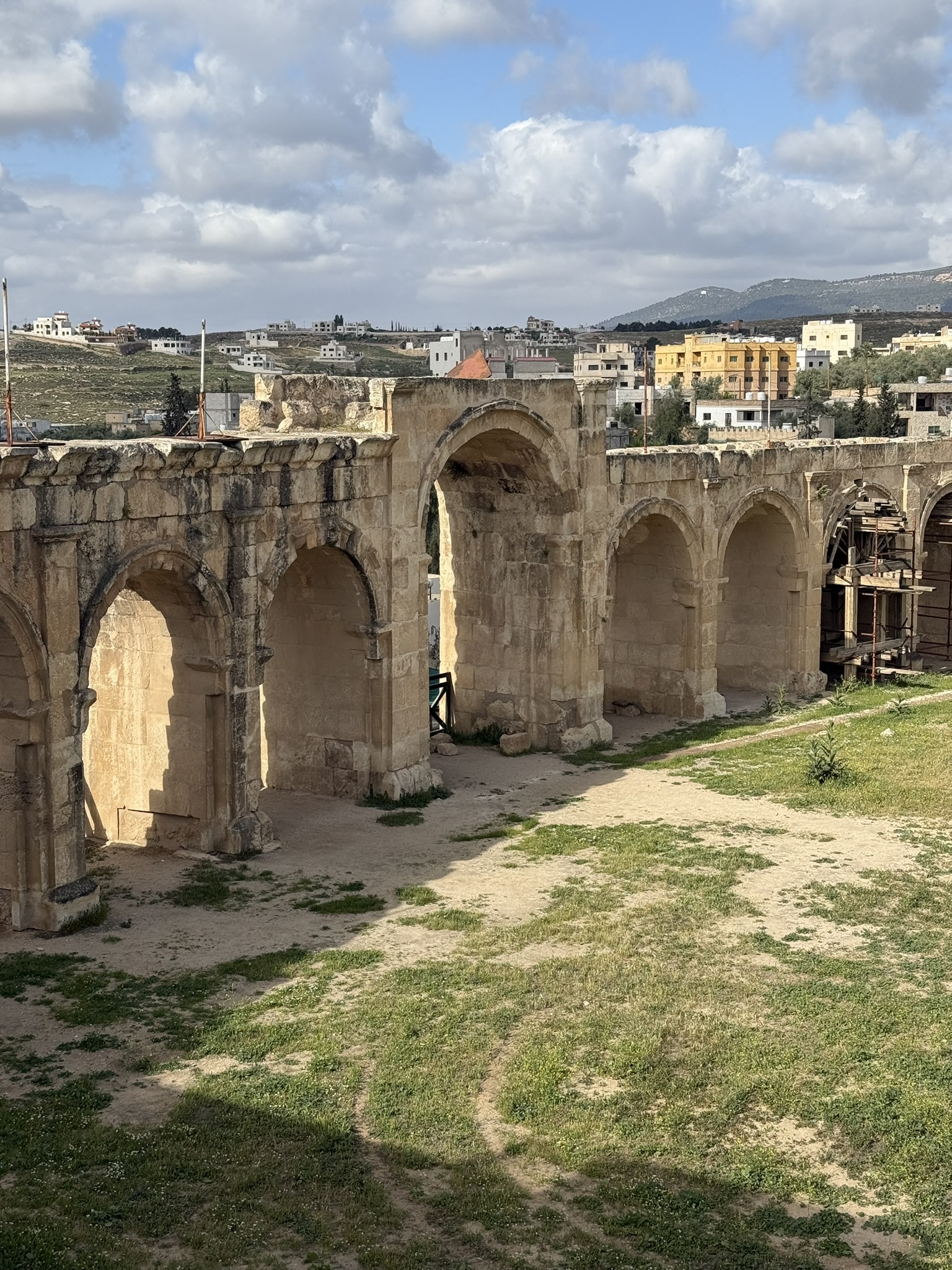
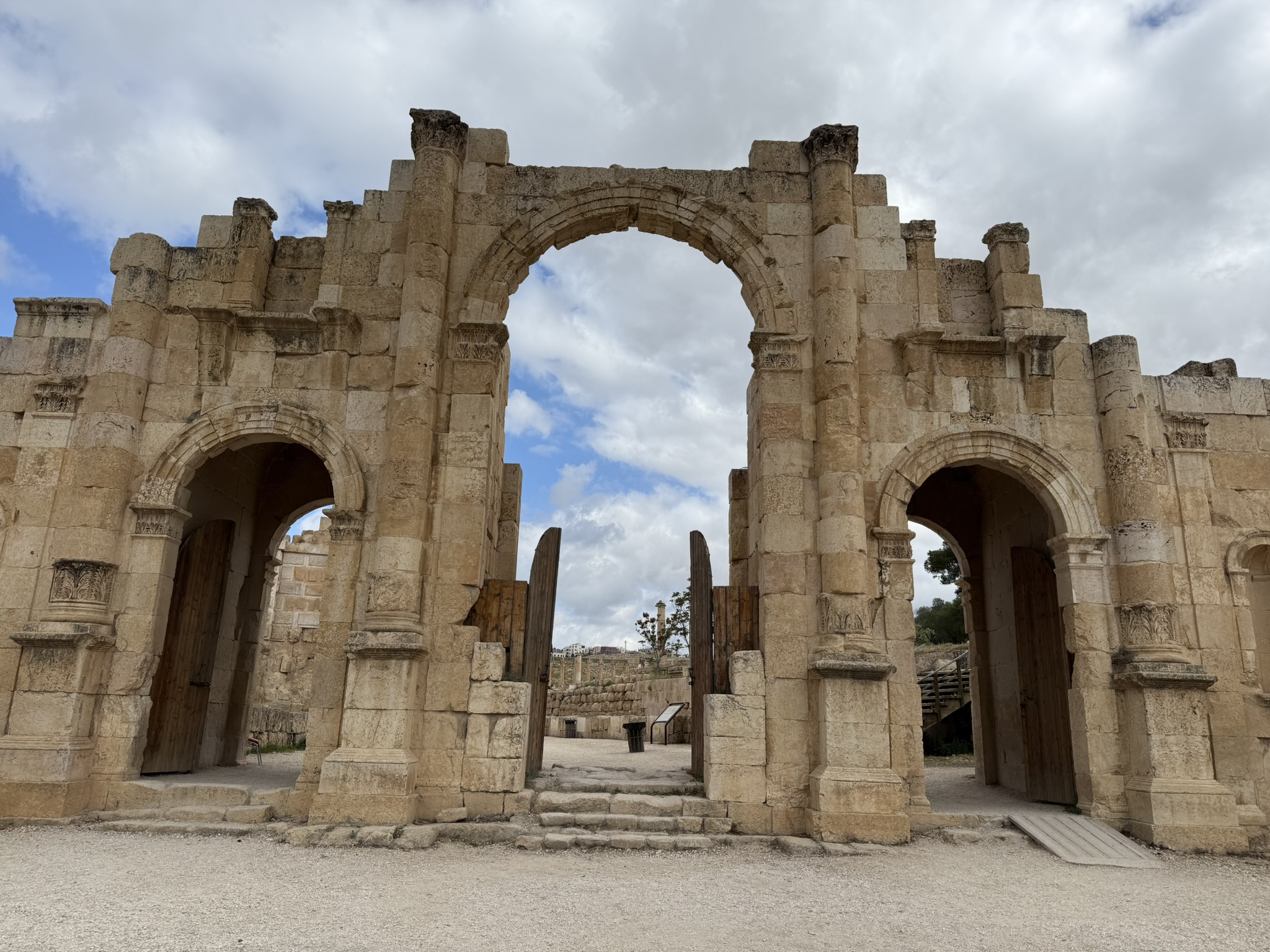
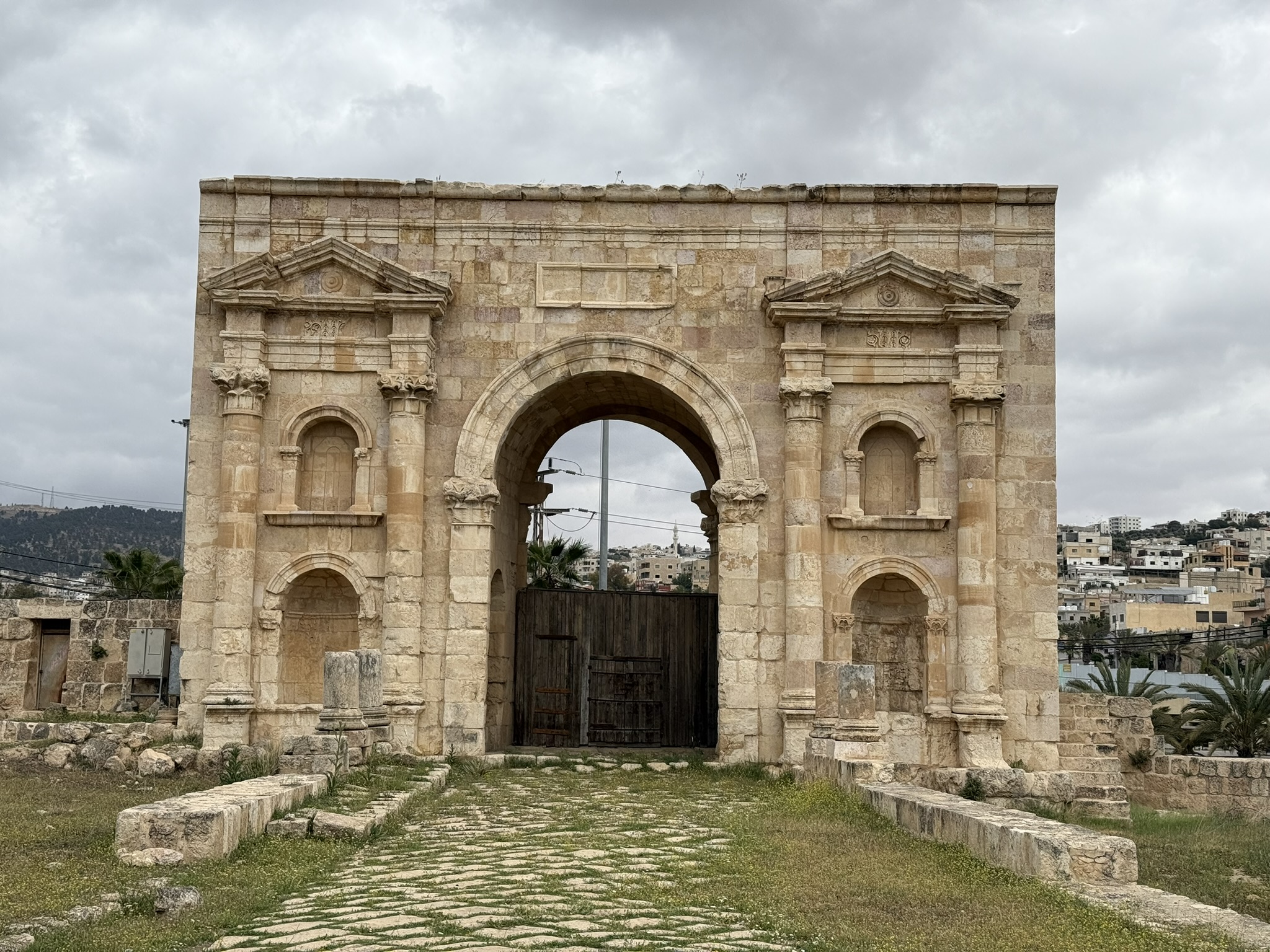
- Hadrian’s Arch: A monumental triple-bayed gateway built around 130 AD to commemorate Emperor Hadrian’s visit to Gerasa. Decorated with engaged columns topped by distinctive composite capitals, it originally stood outside the city walls, possibly forming part of an ambitious southern expansion that was never completed. Today, it remains one of Jerash’s most iconic monuments.
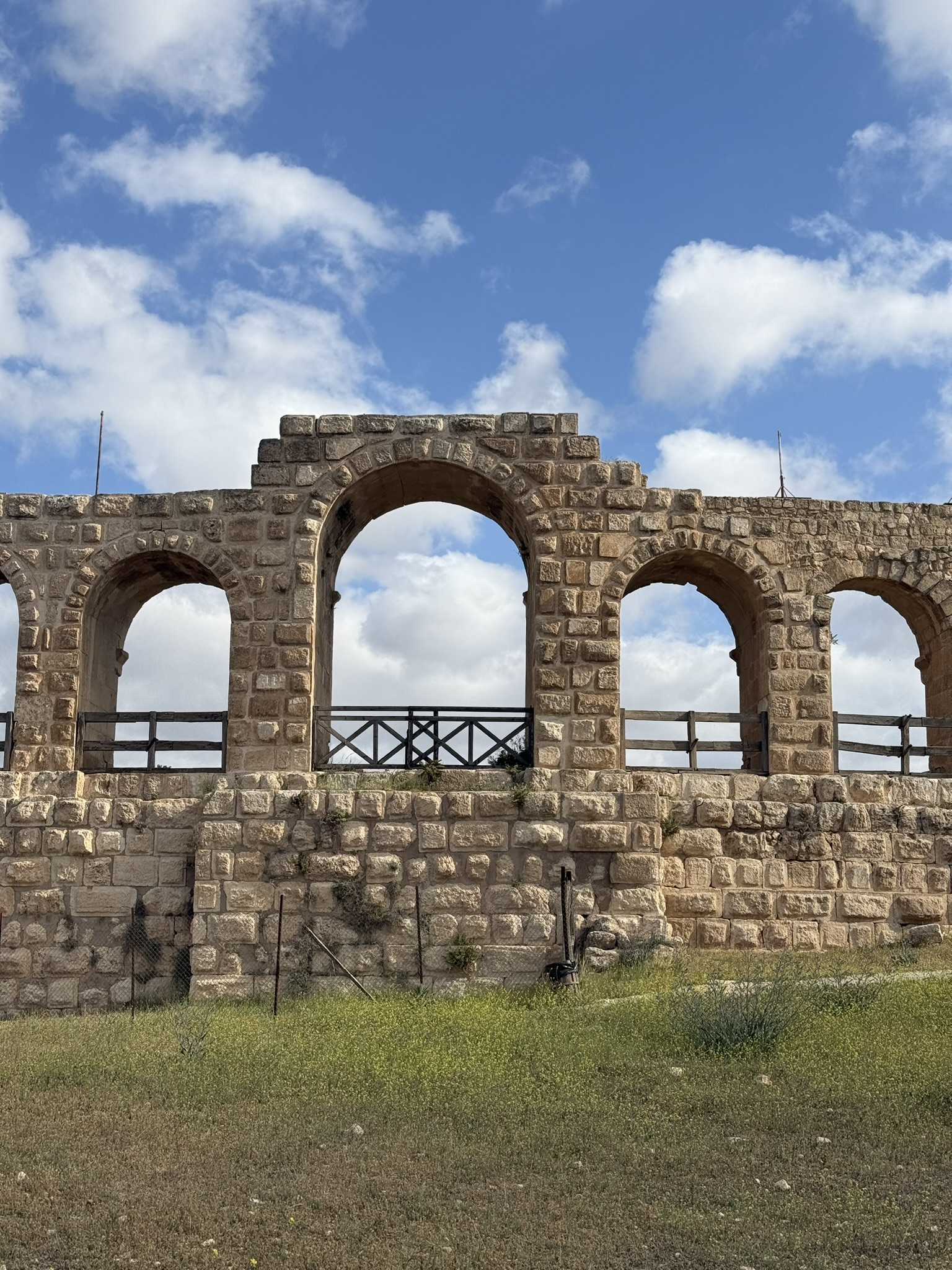
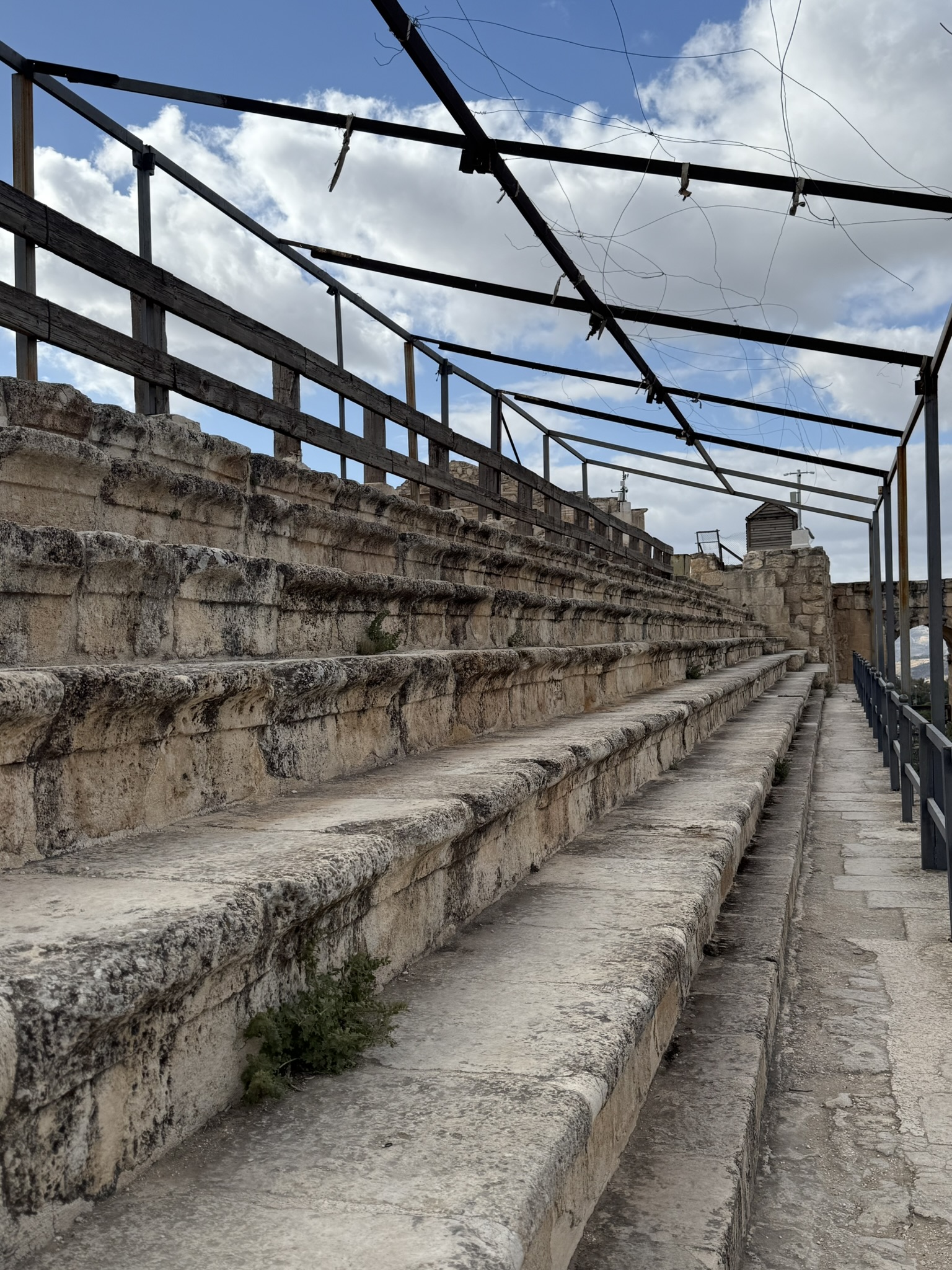
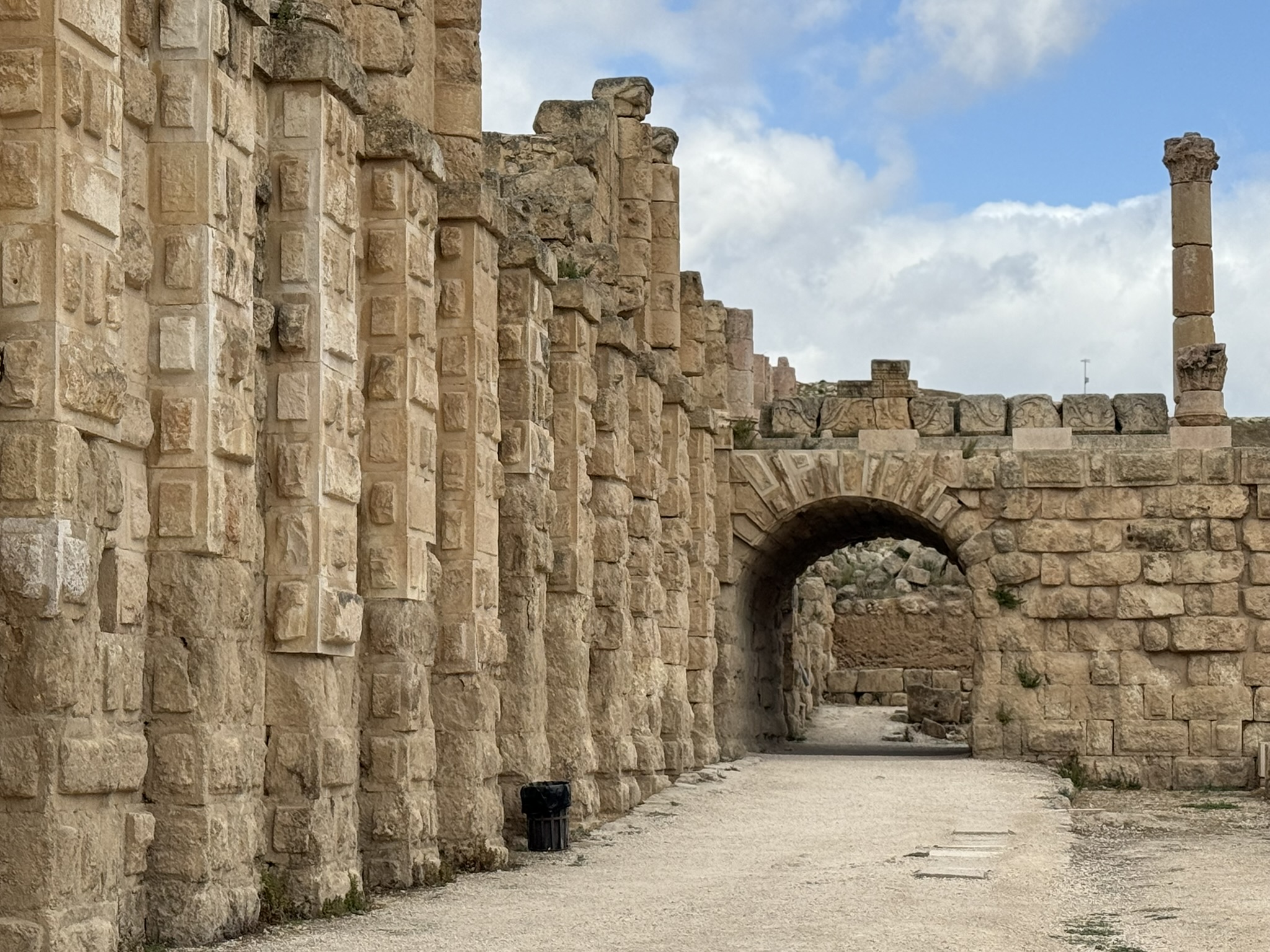
- Hippodrome: A long arena constructed during the 2nd century AD for horse and chariot racing. Although relatively small by Roman standards, it is one of the best-preserved hippodromes from the empire, particularly around the arched starting gates where the horses would once have been positioned. The arena was later partly converted for gladiatorial contests before sections of it were occupied by workshops and craftspeople.
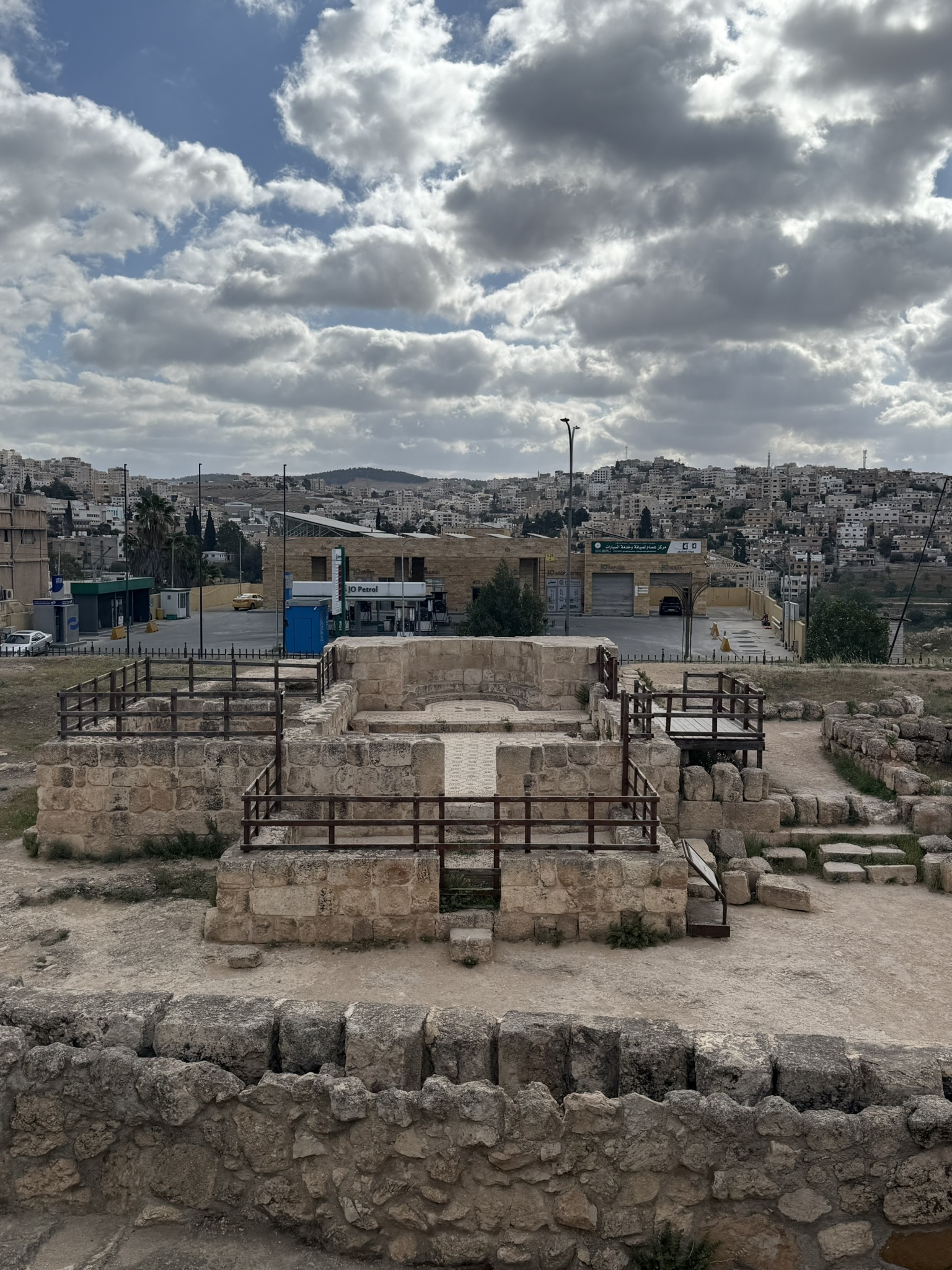
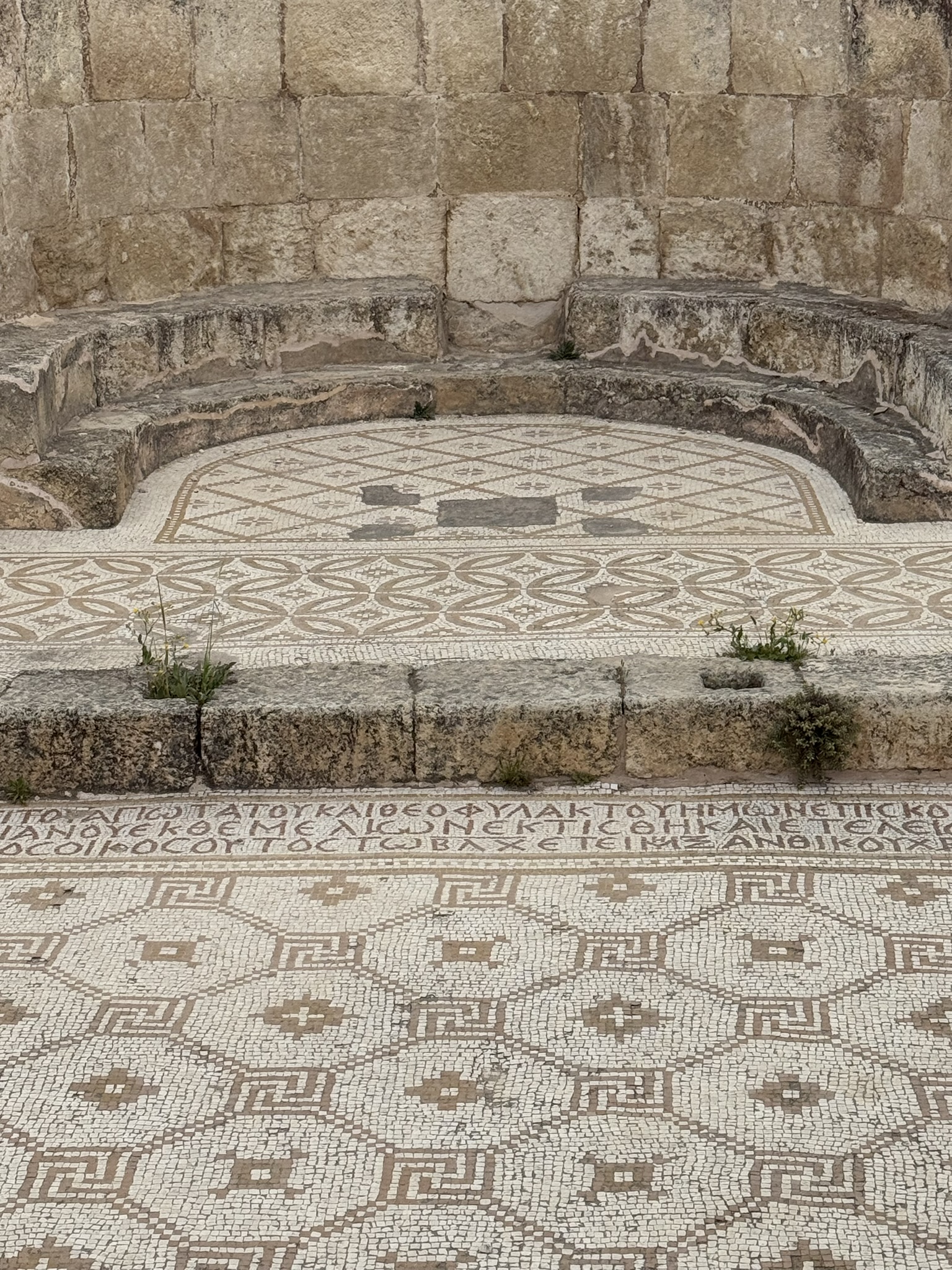
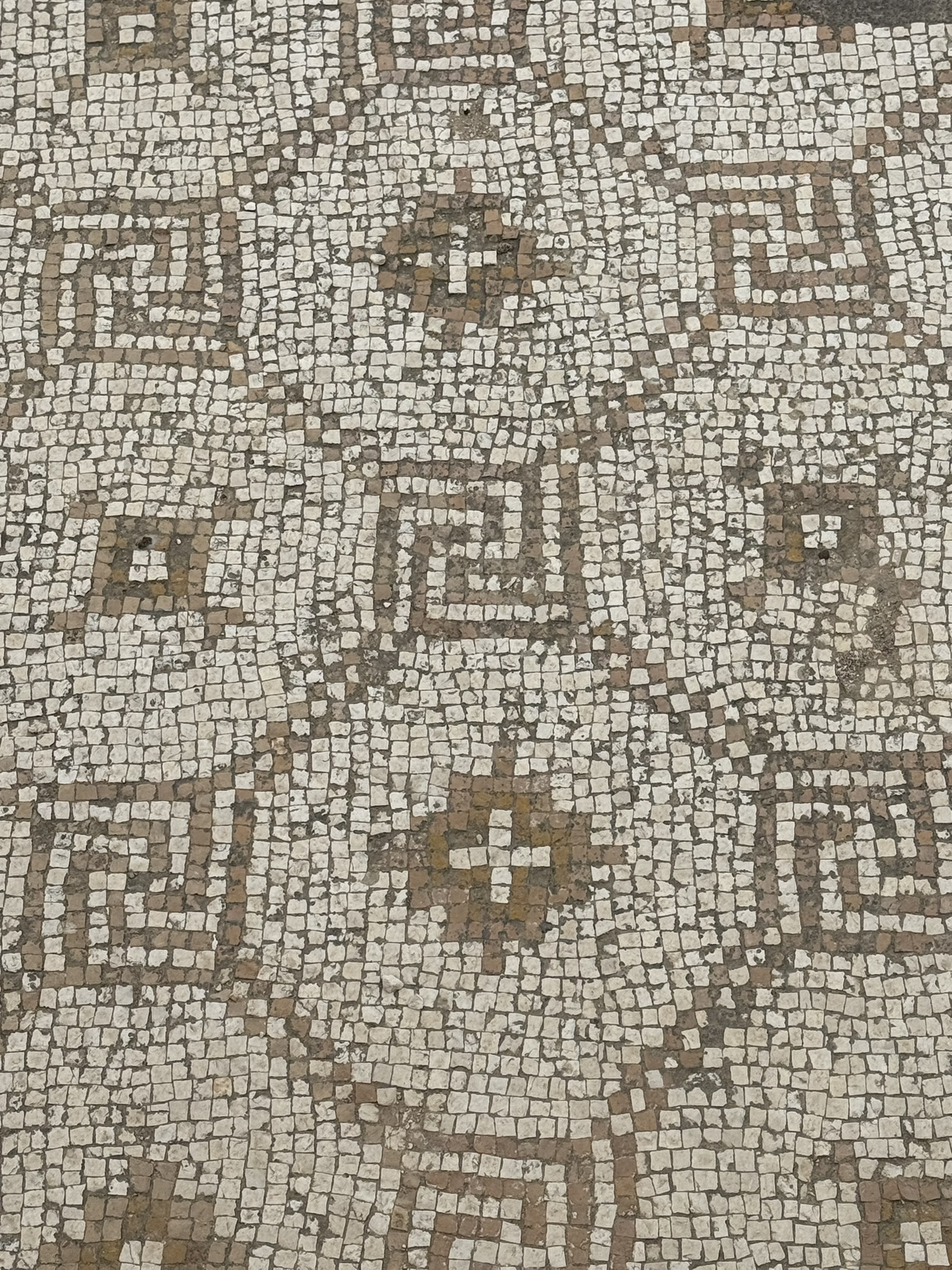
- Church of Marianos: A rectangular Byzantine basilica built around 570 AD during the episcopate of Bishop Marianos. Its central nave was flanked by side aisles, while sections of its mosaic flooring still display geometric patterns and other decorative motifs.
The City Centre
A long walkway then led us towards the city proper, which was once enclosed within an almost complete circuit of fortified walls and entered through monumental gates in the north and south.
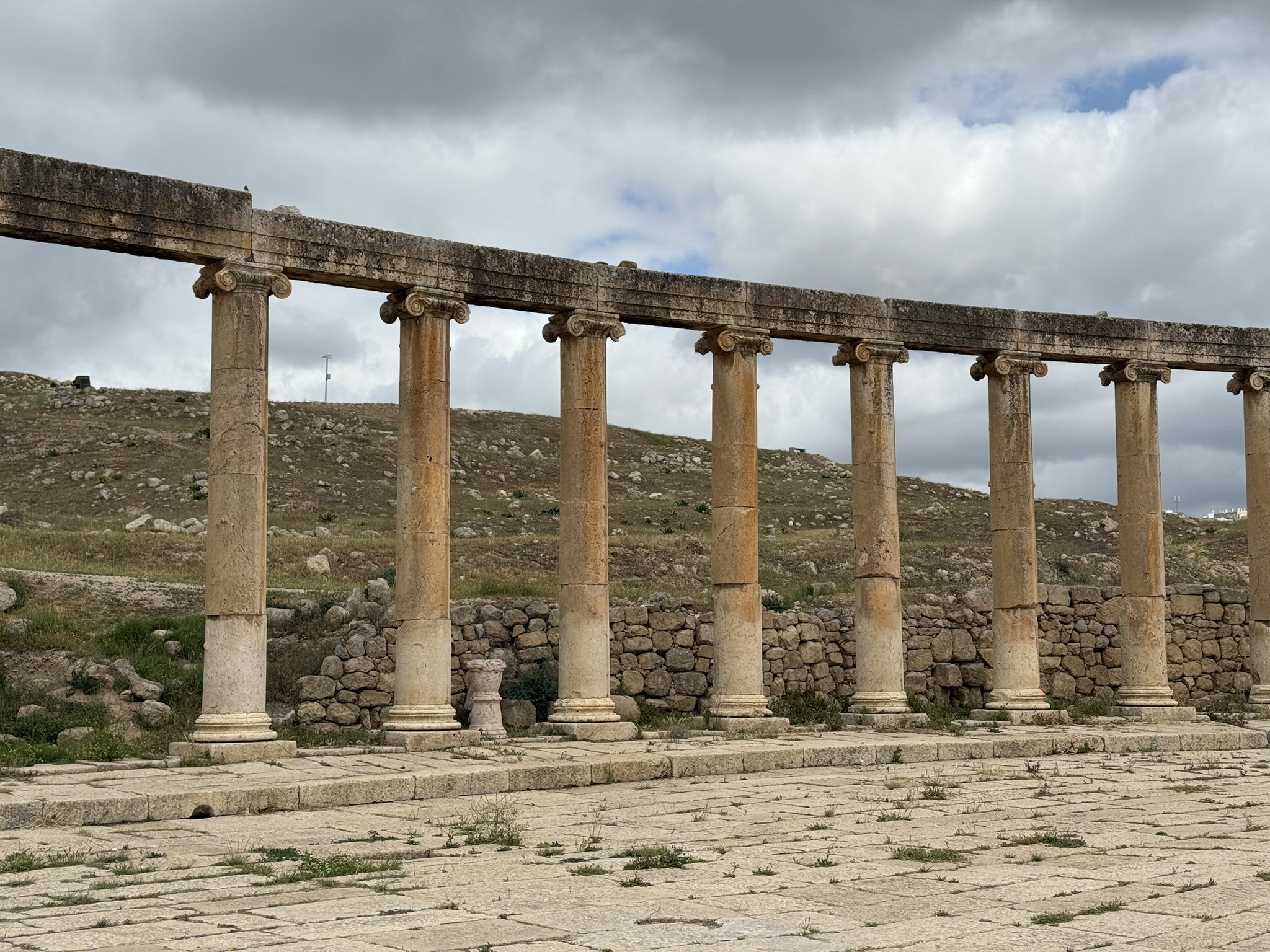
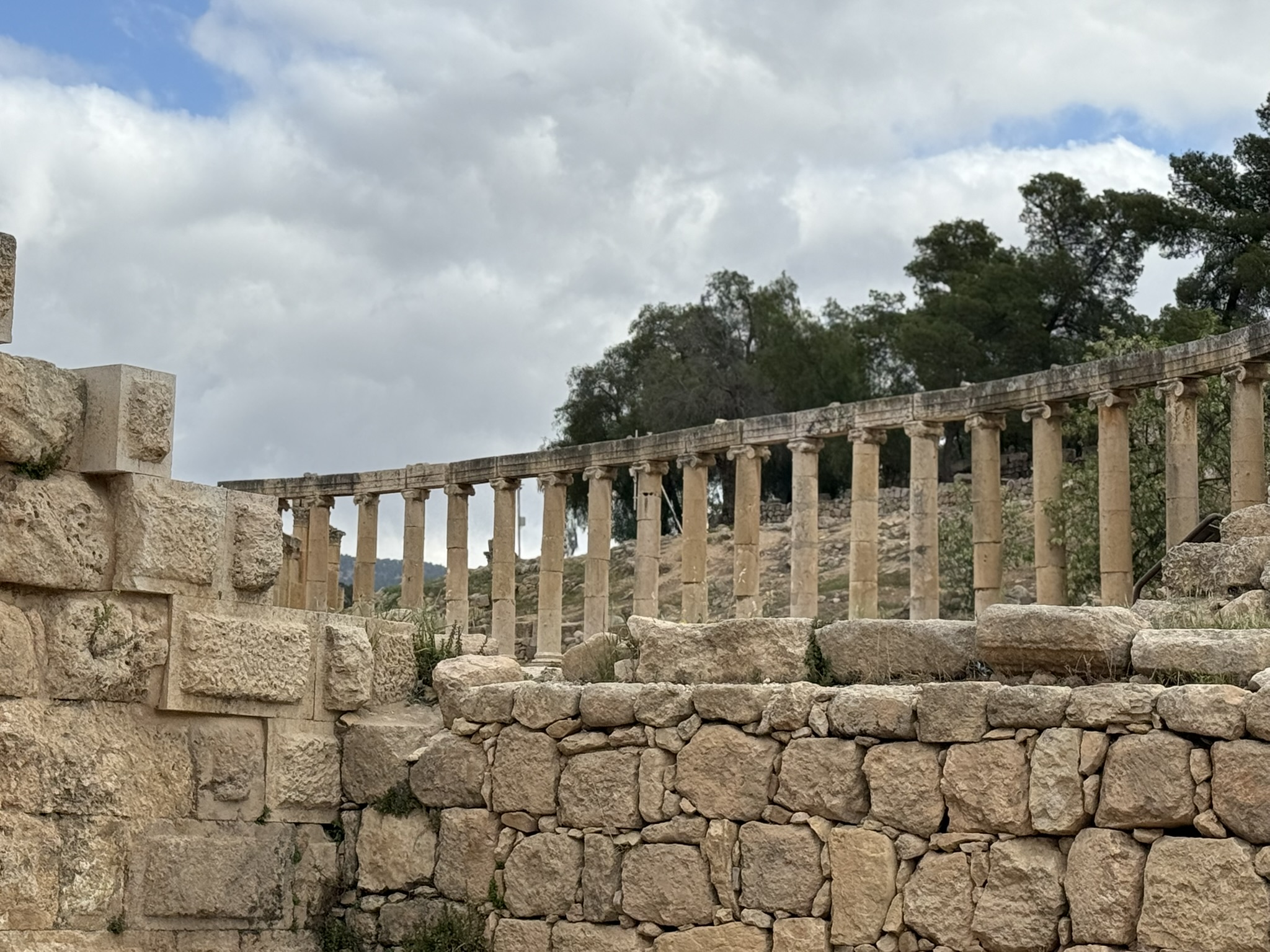
We made our way through the South Gate, which opened onto the Oval Plaza – an extraordinary space measuring roughly 90 by 80 metres and surrounded by a sweeping colonnade of Ionic columns. Rather than being a conventional rectangular Roman forum, the plaza’s unusual shape allowed it to connect the differently aligned axes of the Temple of Zeus and the Cardo. It would have hosted gatherings, ceremonies and other aspects of public life, although its exact functions may have changed over the centuries.
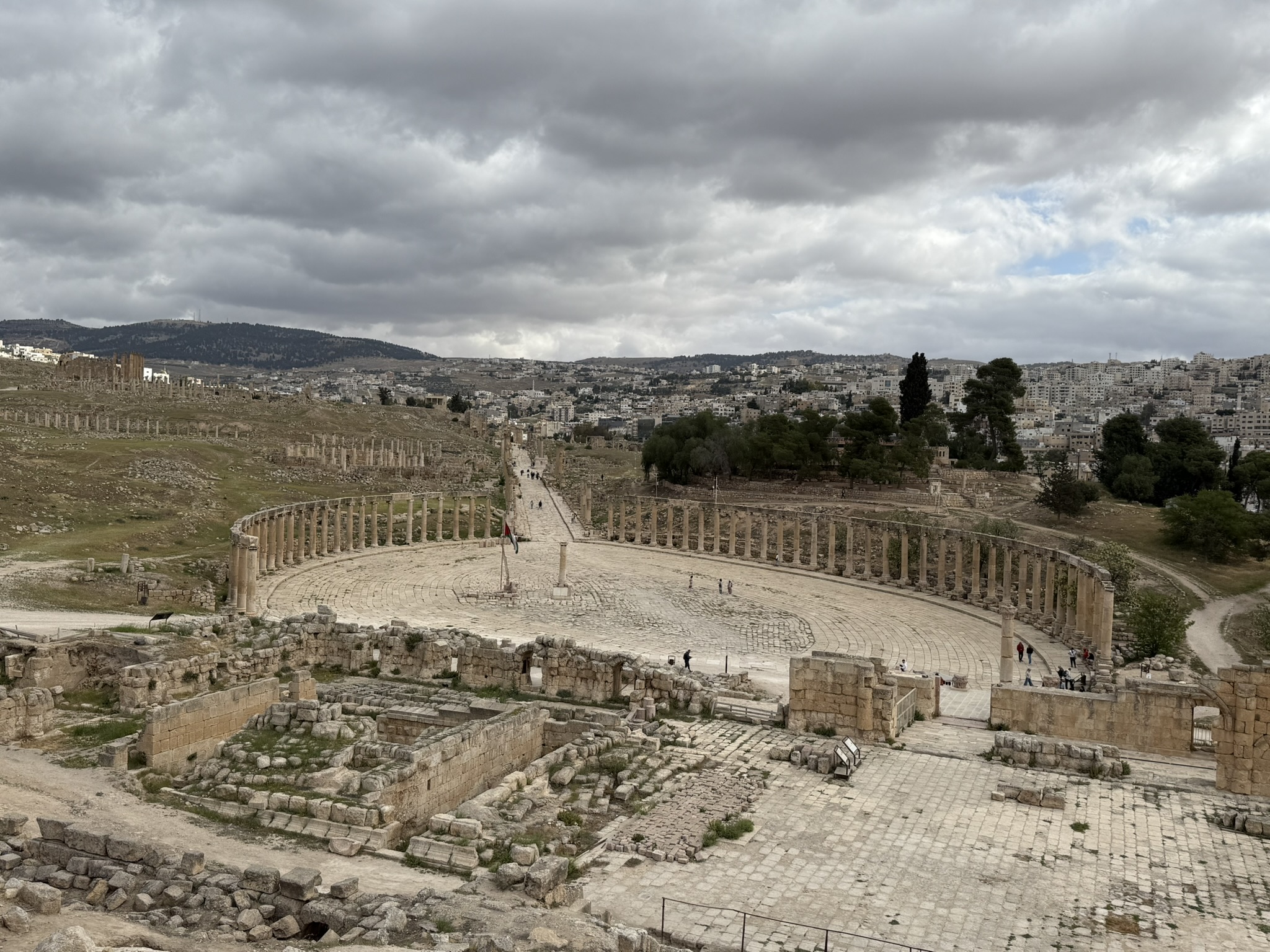
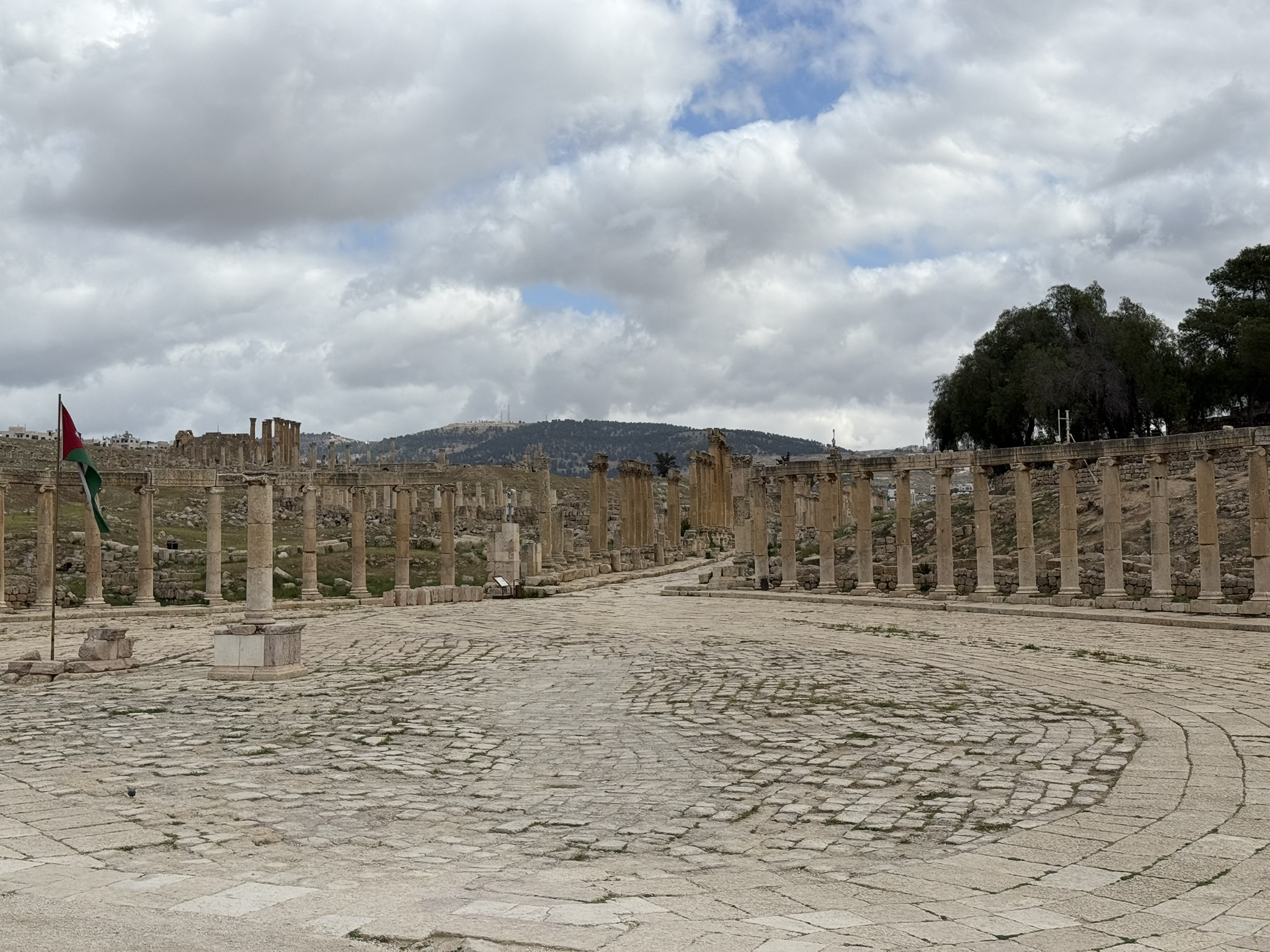
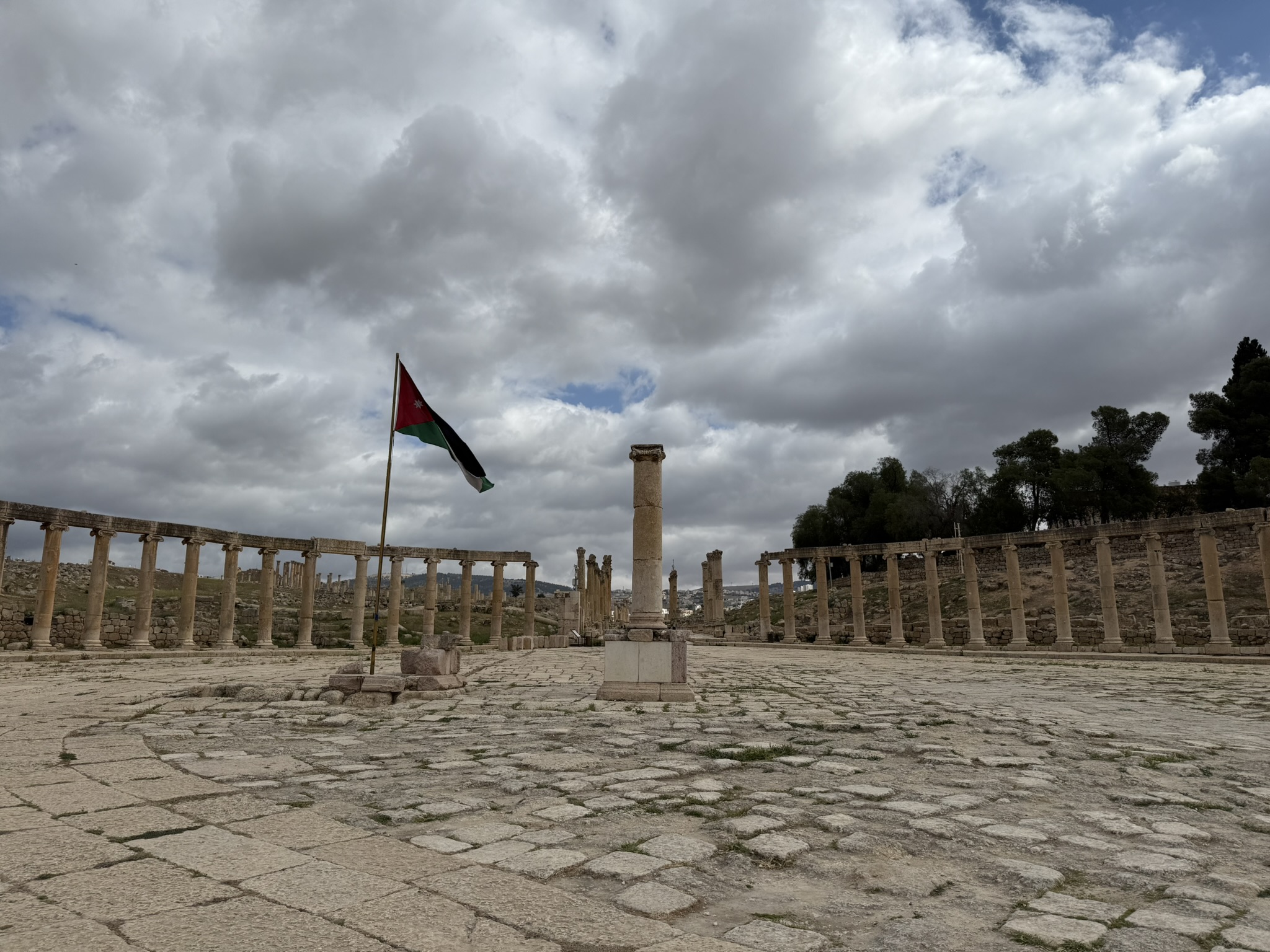
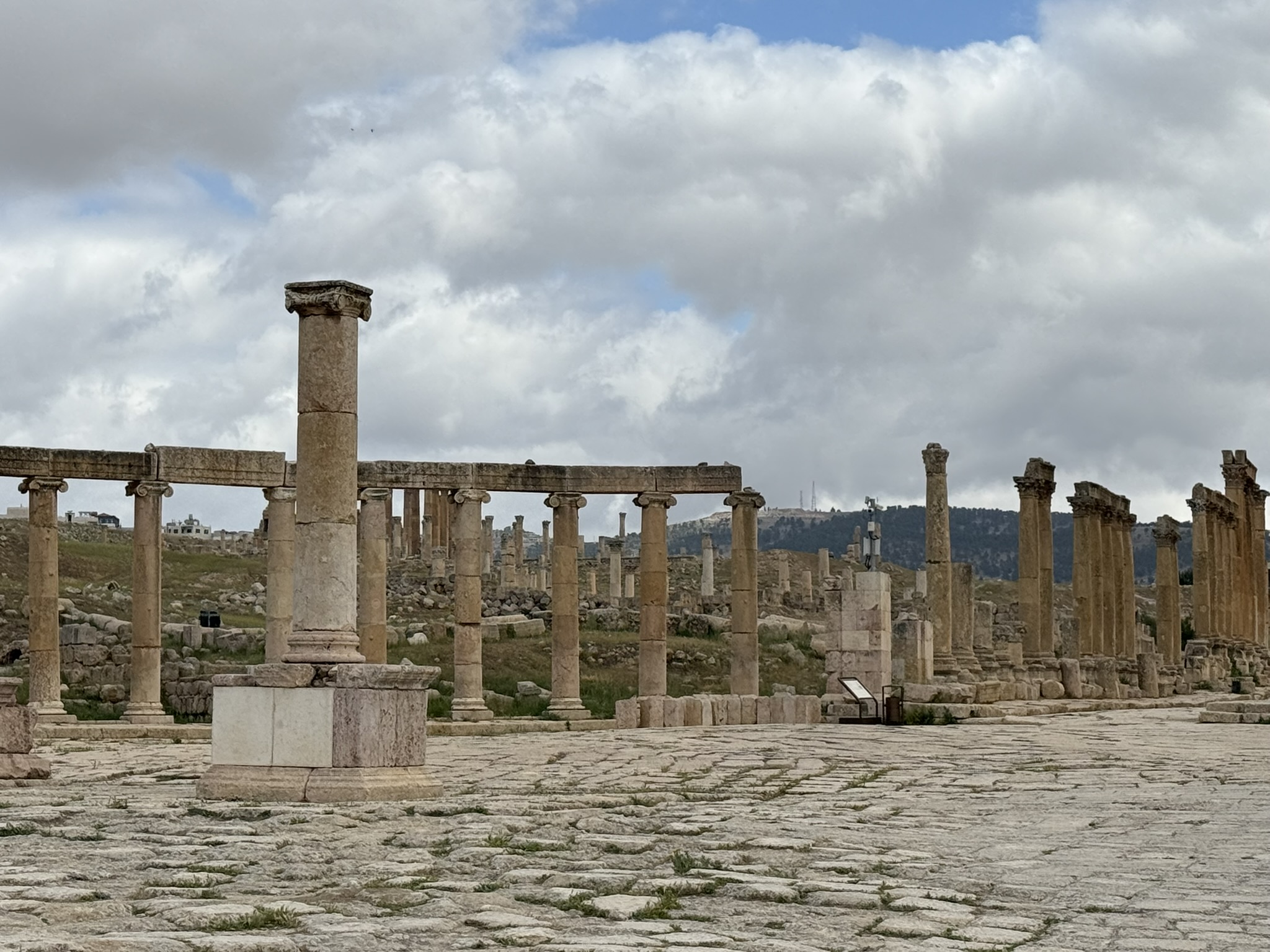
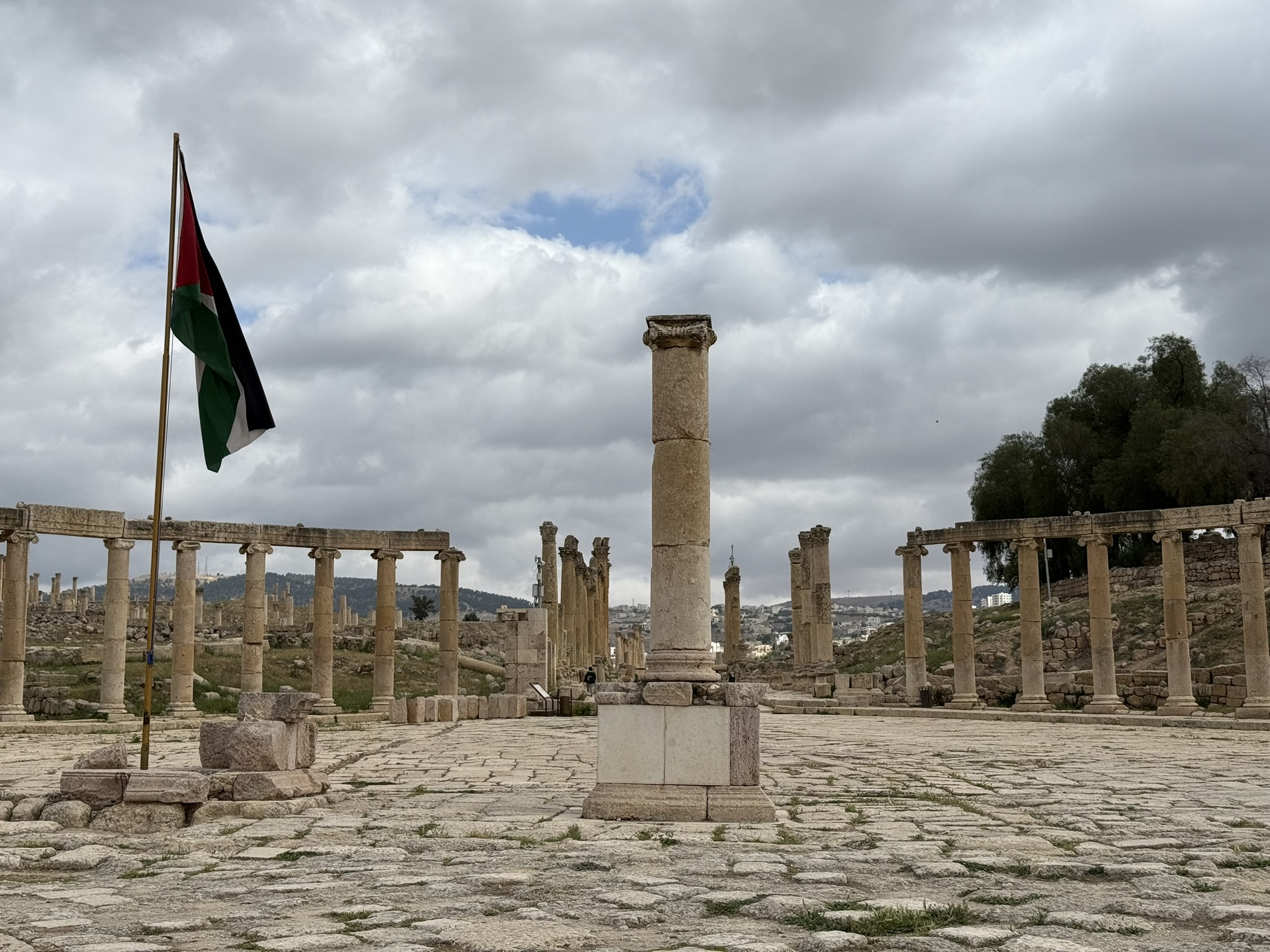
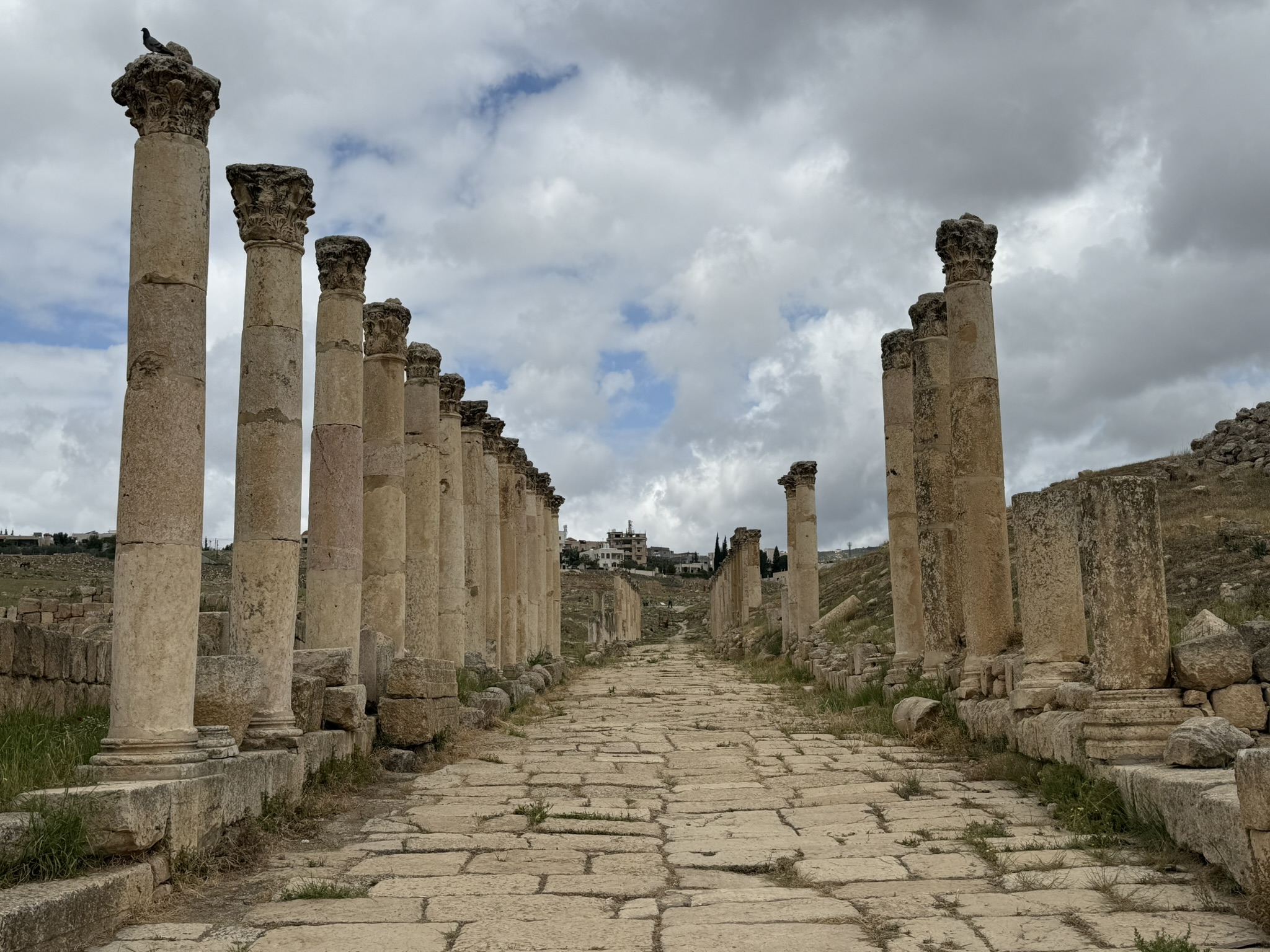
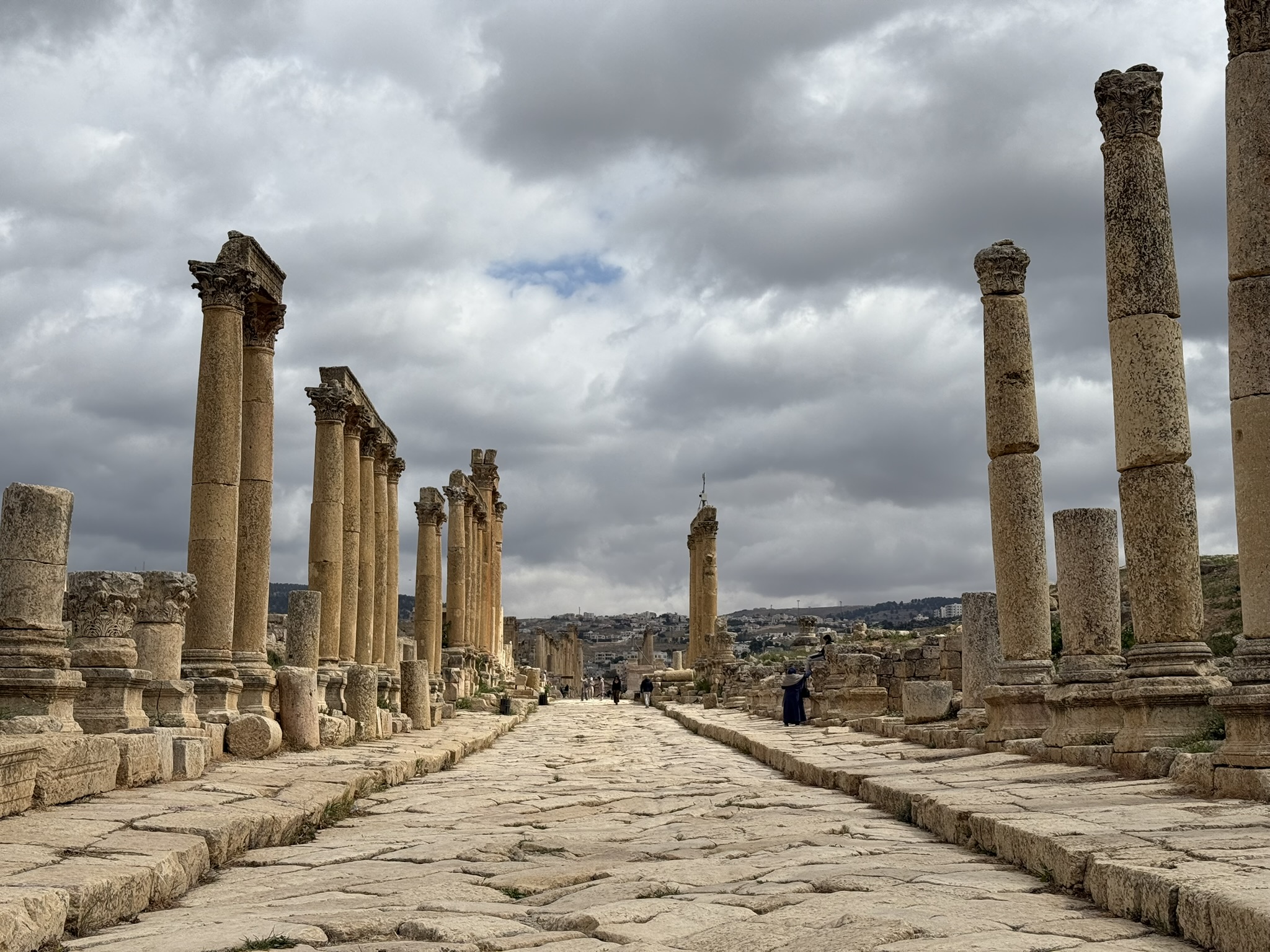
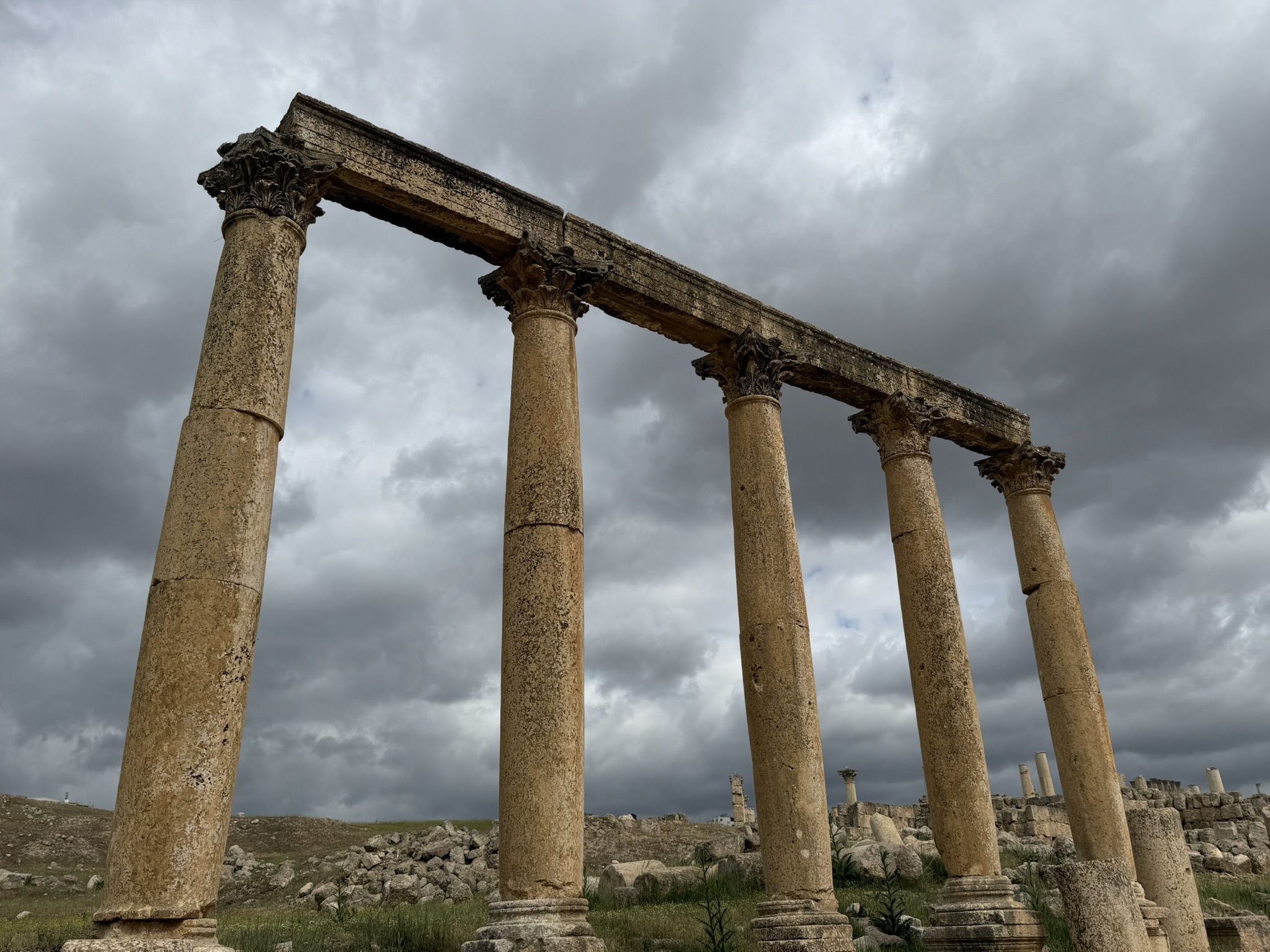
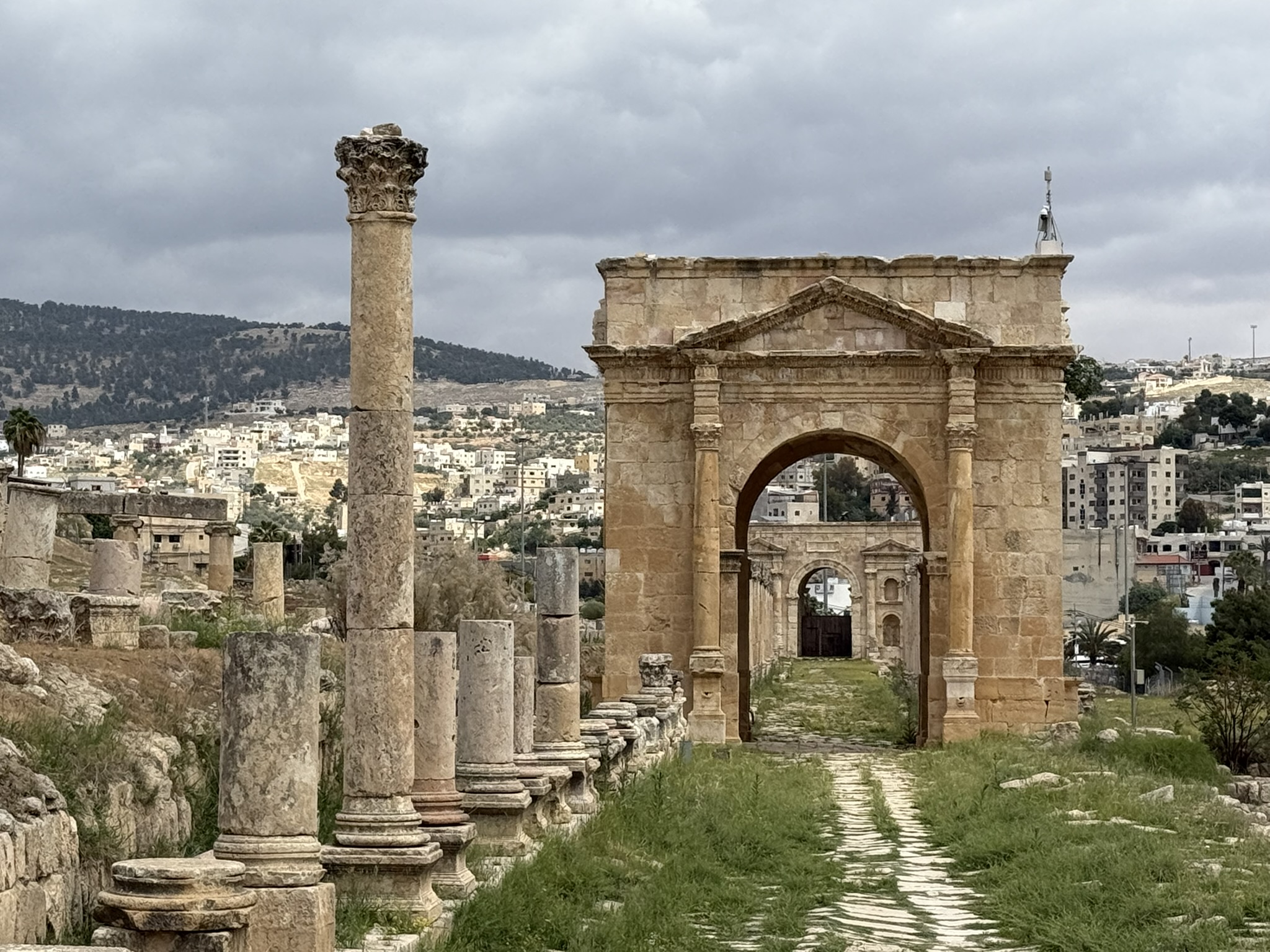
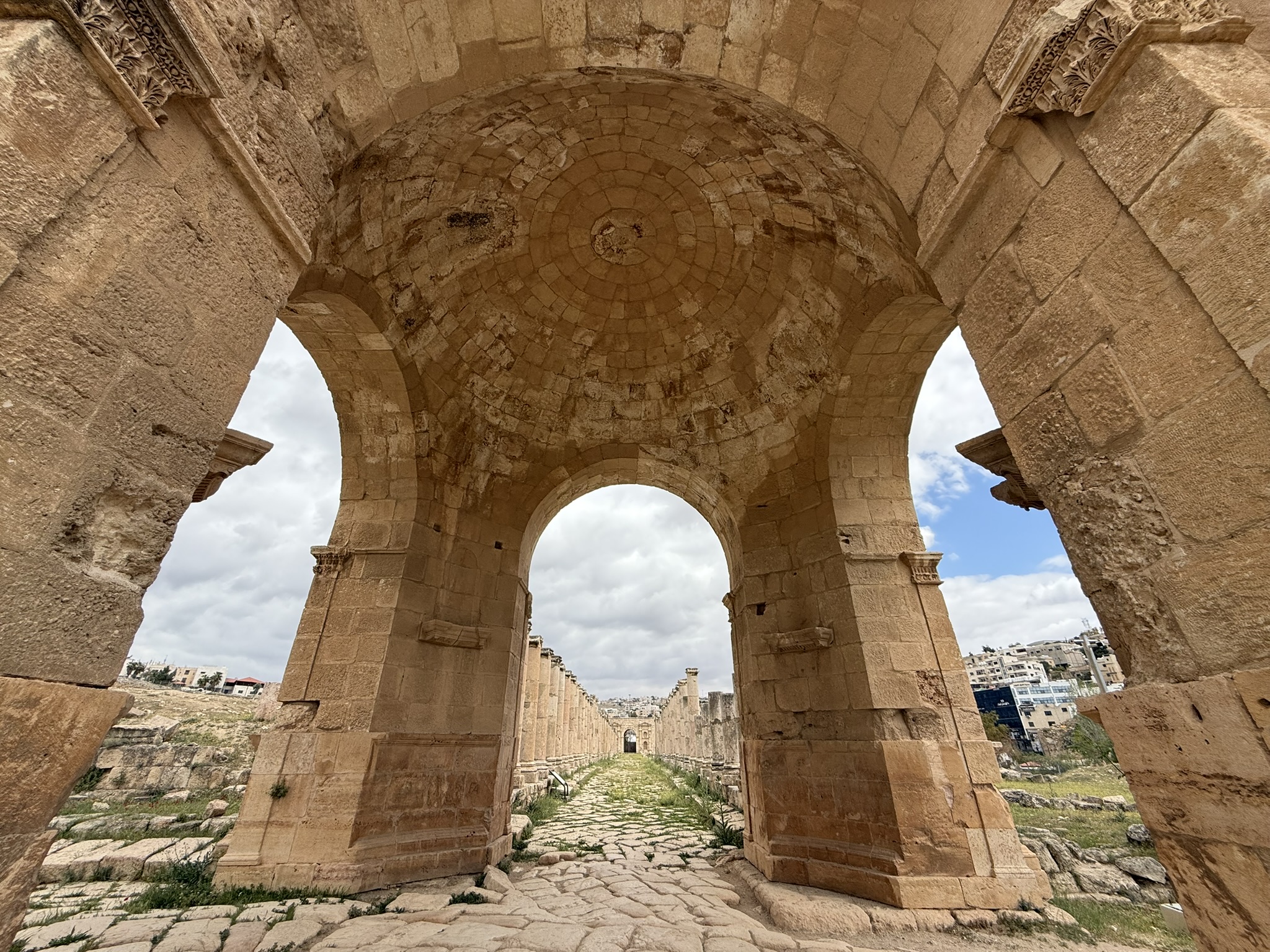
Connecting the Oval Plaza to the North Gate on the other side is the Cardo Maximus, also known as the Colonnaded Street – a striking example of Roman urban planning. Extending for approximately 805 metres, it formed the main north-to-south thoroughfare of ancient Gerasa and was lined with columns, shops, fountains, civic buildings and places of worship. Its stone paving and shaded porticoes would have linked the city’s religious, commercial and social spaces.
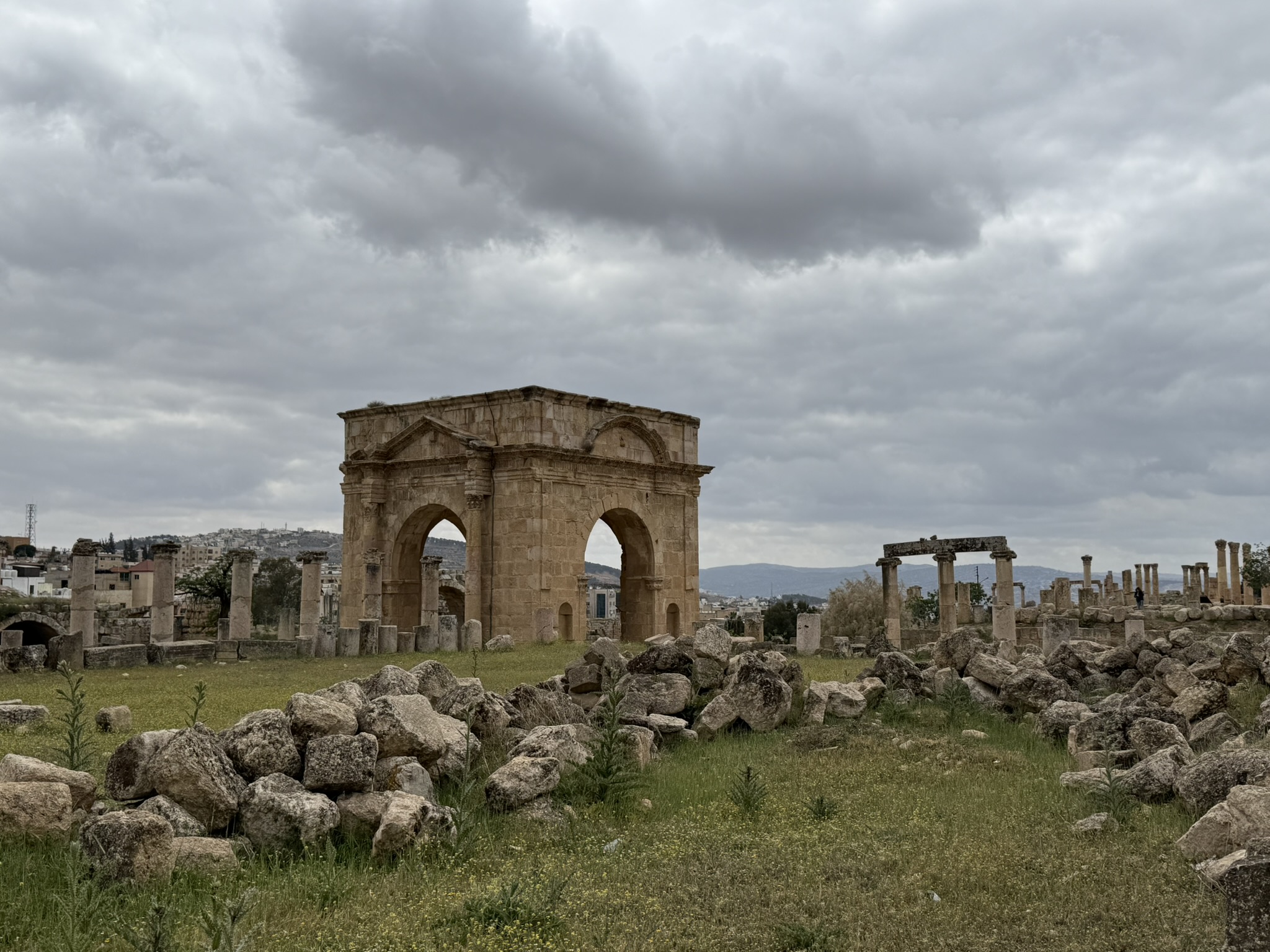
The Colonnaded Street served as the spine of the city, intersected by two major east-to-west streets known as the northern and southern Decumani. These routes connected the monumental western half of Gerasa with the eastern districts beyond the river, much of which remains hidden beneath the modern city. The intersections between the Cardo and the Decumani were marked by tetrapyla – monumental four-way structures that emphasised the geometry of the Roman street plan.
Together, the Cardo, Decumani and surrounding porticoes created a carefully organised network through which residents, traders and visitors could navigate the city.
Engineering an Empire
As we walked along the street, I could only imagine the bustle of Roman life – merchants hawking their goods, citizens gathering in public squares and priests moving between the temples.
The Romans constructed streets like these with incredible precision. The large paving slabs were laid across carefully prepared ground, while parts of the roadway were slightly cambered to help rainwater drain towards channels and sewers. Porticoes along either side created shaded walkways, and several of the ancient drains, manholes and lifting rings remain visible to this day.
As if that wasn’t enough proof of their architectural prowess, the Romans were also masters of water engineering. Gerasa developed an extensive system of springs, aqueducts, cisterns, channels and fountains to collect and distribute water throughout the city. A major water-supply system was established around 125 AD and later expanded as the city and its public baths grew. Water was channelled towards fountains, baths and other buildings before overflowing into the drainage system beneath the streets.
This careful management of water supported daily life, public hygiene and the city’s continued expansion, showcasing both the ingenuity and practicality of Roman urban planning.
Temples, Theatres and Fountains
Needless to say, temples, theatres, baths, churches, fountains and public squares were sprawled throughout the city. Among the most iconic structures were:
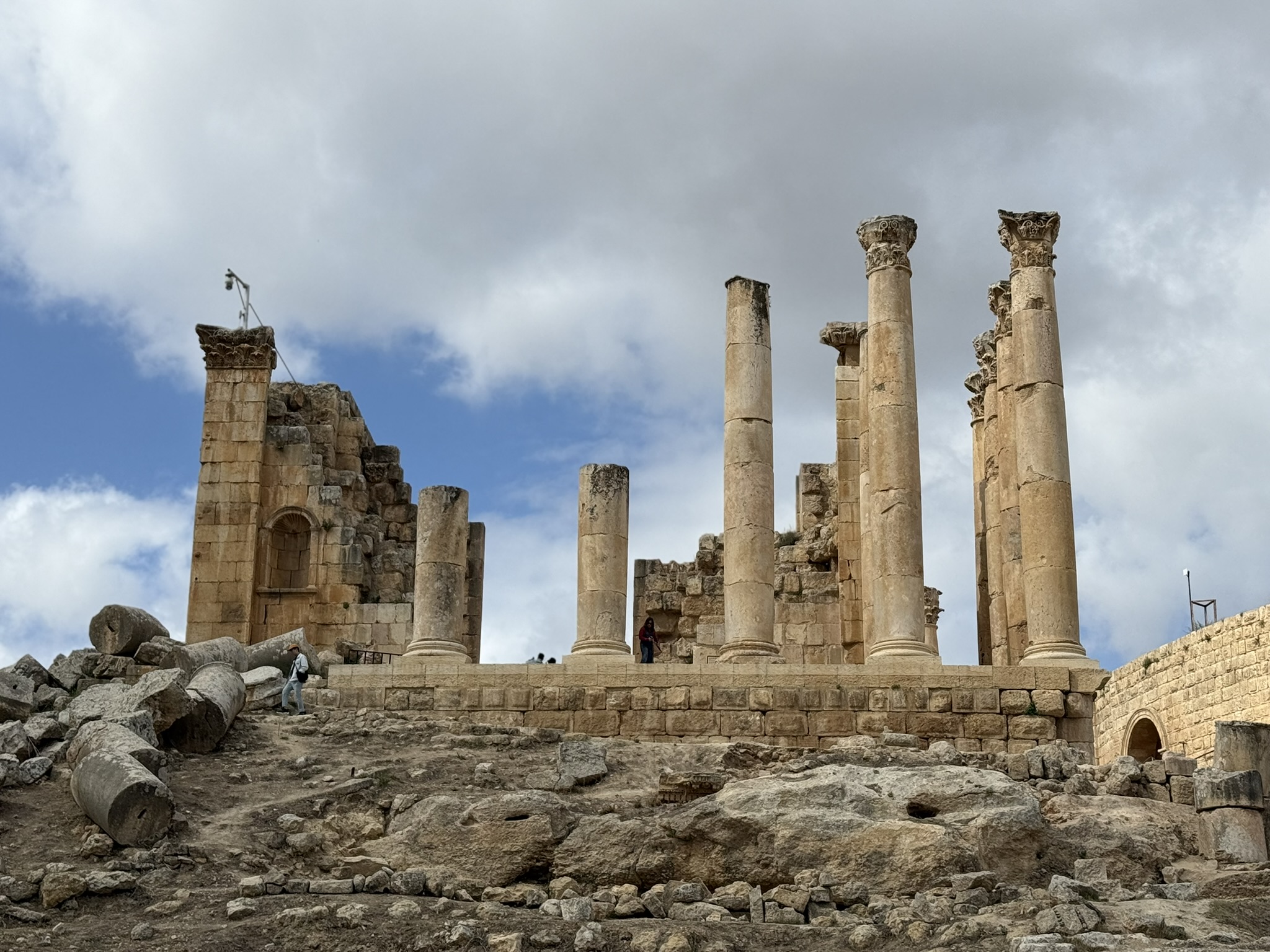
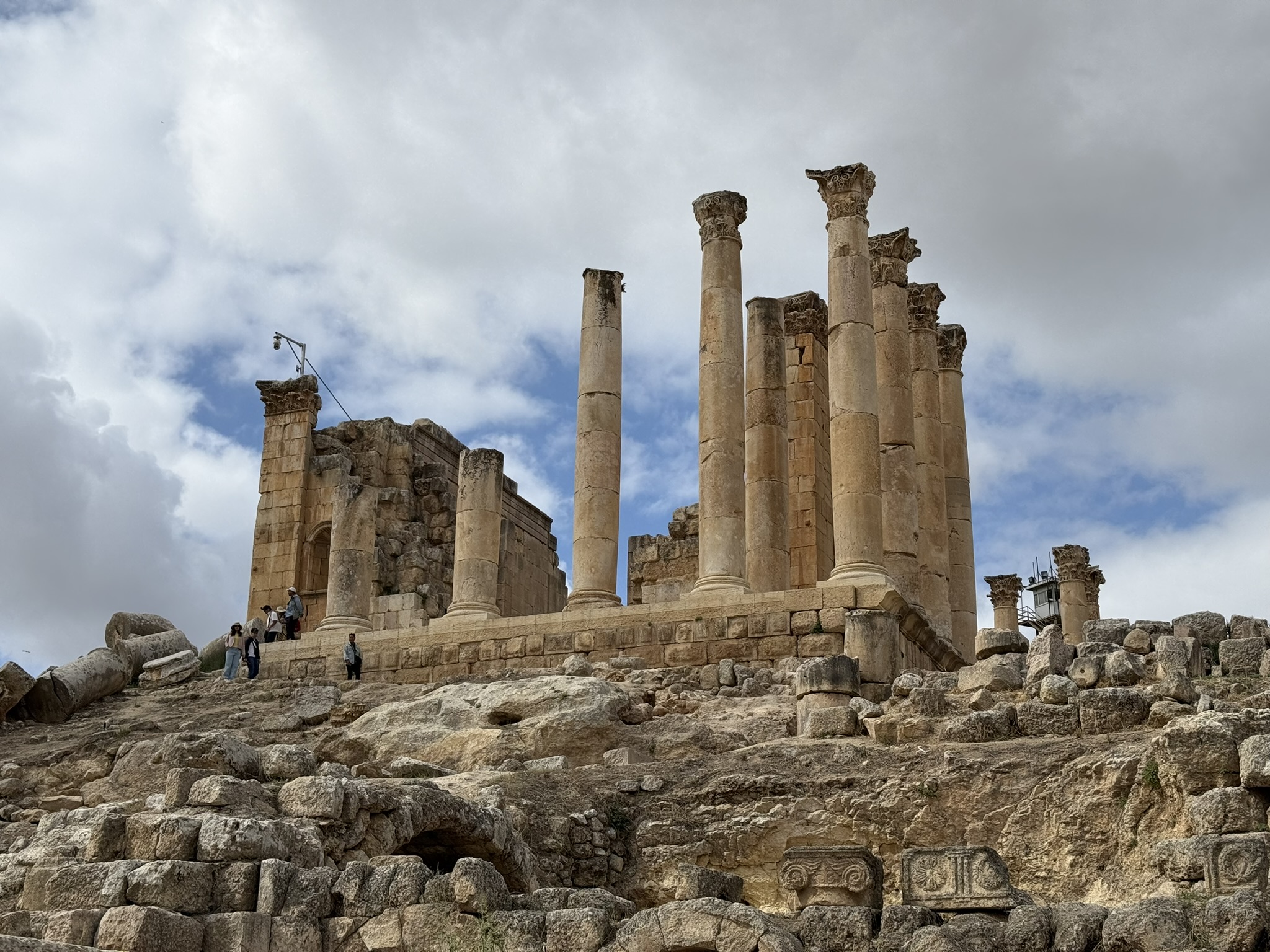
- Temple of Zeus: The hilltop sanctuary of Zeus was among the oldest sacred areas in Gerasa, although the monumental complex visible today was largely constructed and remodelled during the Roman period. Set upon terraces above the Oval Plaza, it was approached by broad stairways and would have served as a major centre for worship and public ceremonies. Though much of the temple now lies in ruins, its remaining columns and foundations hint at the grandeur of the original structure. From the top of the hill, we could admire a stunning view over the Oval Plaza and the Cardo.
- Temple of Artemis: The largest and most impressive sanctuary in Jerash was dedicated to Artemis, the city’s patron goddess. Construction began during the 2nd century AD, although the ambitious project was never entirely completed. Only 12 of the planned 32 columns were erected, but the surviving columns still give the sanctuary an incredible sense of scale and elegance. The temple included an inner shrine, side chambers and a vast system of underground vaults, while a grand staircase once led worshippers towards the sacred precinct.
- Temple of Dionysus and the Cathedral: The original Roman sanctuary dedicated to Dionysus no longer survives as a separate, intact temple. During the 4th century, one of Jerash’s earliest churches was constructed over its remains, reusing several architectural elements from the earlier pagan buildings. The resulting cathedral demonstrates how Gerasa’s religious landscape gradually changed as Christianity spread through the city.
- Roman theatres: Jerash boasts two remarkably well-preserved Roman theatres, each reflecting the city’s vibrant cultural and civic life. The South Theatre, built between approximately 80 and 96 AD, could accommodate more than 3,000 spectators and was used for performances, music and public gatherings. Its acoustics remain impressive, and it continues to host performances during the Jerash Festival. The North Theatre was constructed and expanded between the late 2nd and early 3rd centuries and could hold around 2,500 spectators. It was probably used for musical performances, poetry readings, assemblies and speeches.
- Roman baths: Jerash contained at least seven public bath complexes, which functioned as important social and recreational centres. The West Baths were among the earliest and contained separate rooms for hot, warm and cold bathing, alongside a large palaestra where visitors could gather or exercise. The city’s baths were supplied by the same extensive water network that fed its fountains and public buildings, while heated rooms would have relied upon furnaces and underfloor heating.
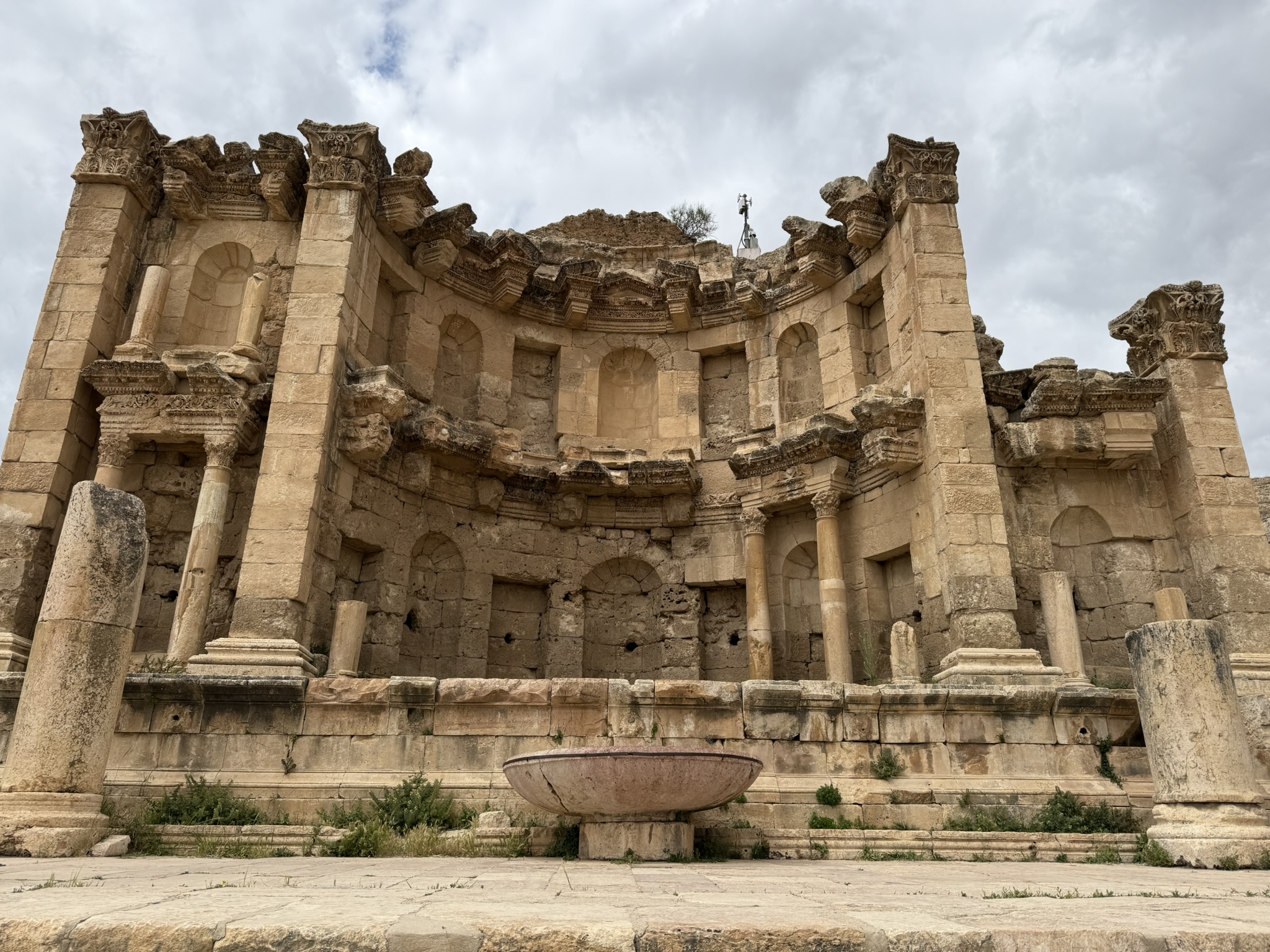
- Nymphaeum: This grand monumental fountain was built around 190 or 191 AD to meet Gerasa’s increasing demand for public water. Its richly decorated two-storey façade once featured Corinthian columns, marble panels, painted plaster and carved niches. Water poured from sculpted lion heads into a wide basin before overflowing into the street’s drainage system. It was both a practical public resource and a spectacular display of the city’s wealth.
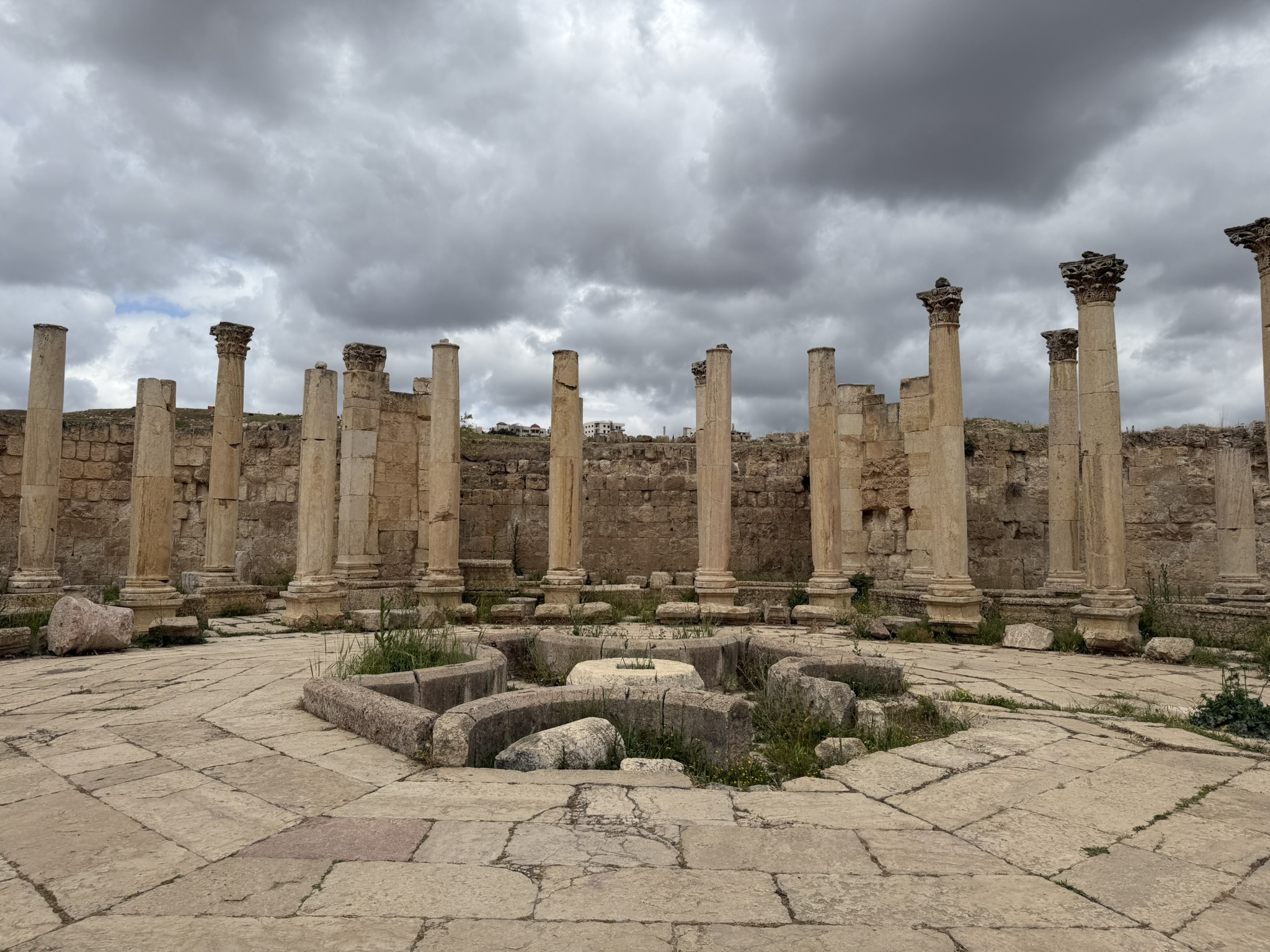
- Macellum: Jerash’s main food market, built beside the Cardo during the 2nd century AD. Its distinctive octagonal courtyard was surrounded by Corinthian columns and merchant stalls, with a fountain standing at its centre. One stall may even have belonged to a butcher, as archaeologists discovered a stone counter bearing knife marks and carvings of animal heads – a fascinating glimpse into the everyday commercial life of ancient Gerasa.
- Later structures: While Jerash is best known for its Roman and Byzantine monuments, archaeological discoveries have also revealed extensive occupation during the Umayyad and later Islamic periods. Former Roman buildings were converted into workshops, homes and commercial spaces, while churches continued to be used by Christian communities under early Islamic rule. The modern city eventually developed primarily on the eastern side of the river, particularly after Circassian families settled there during the late 19th century.
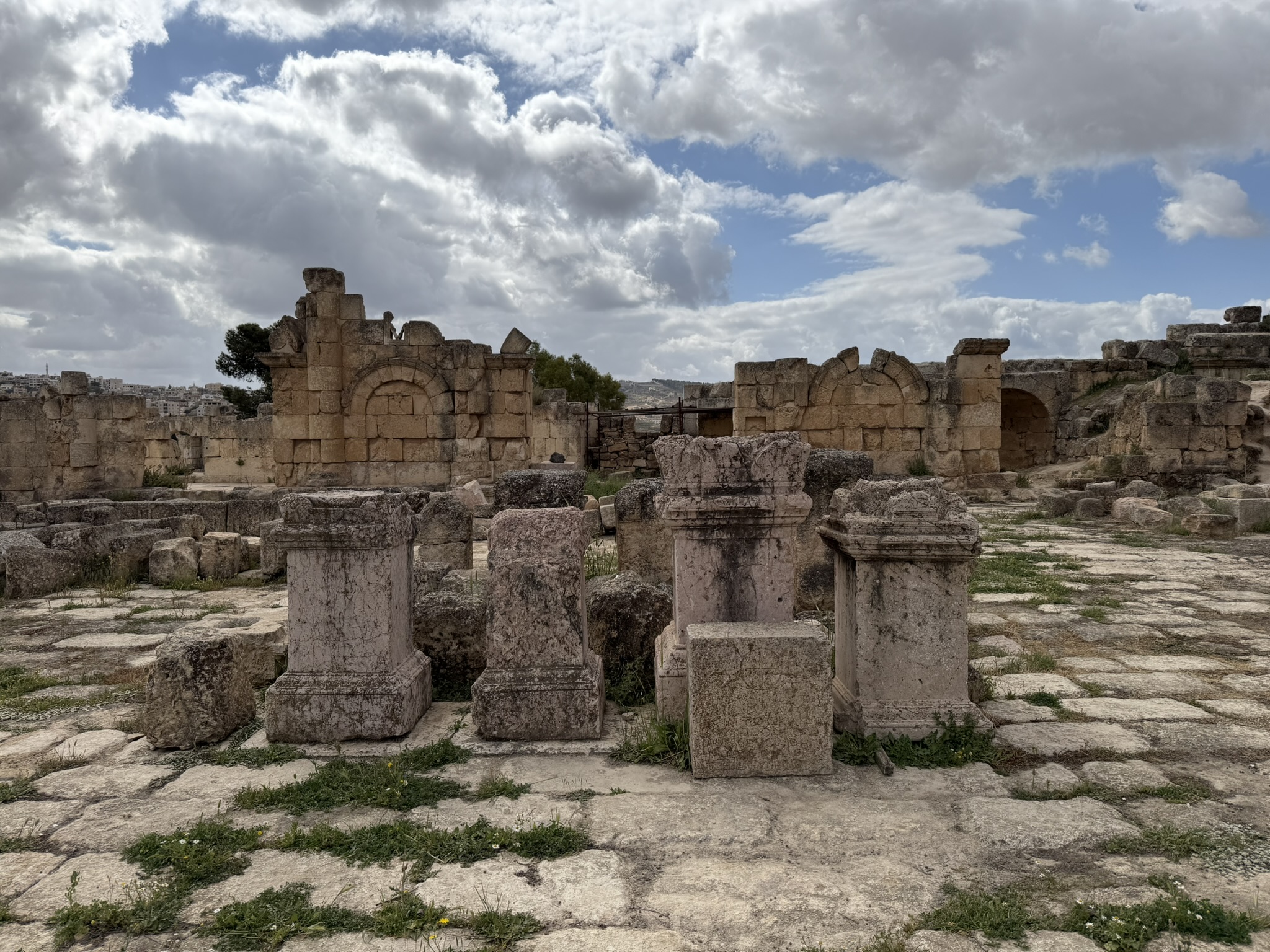
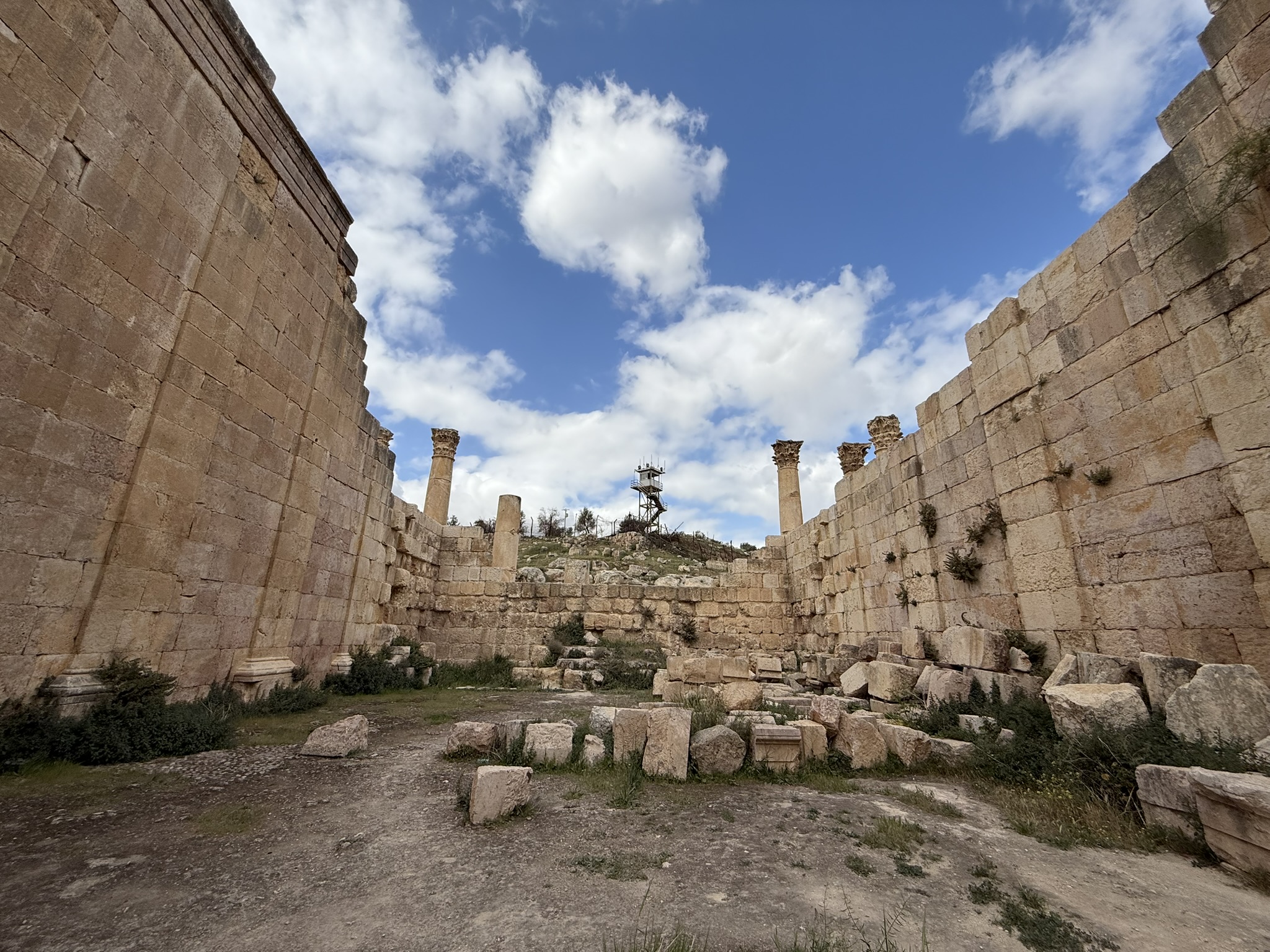
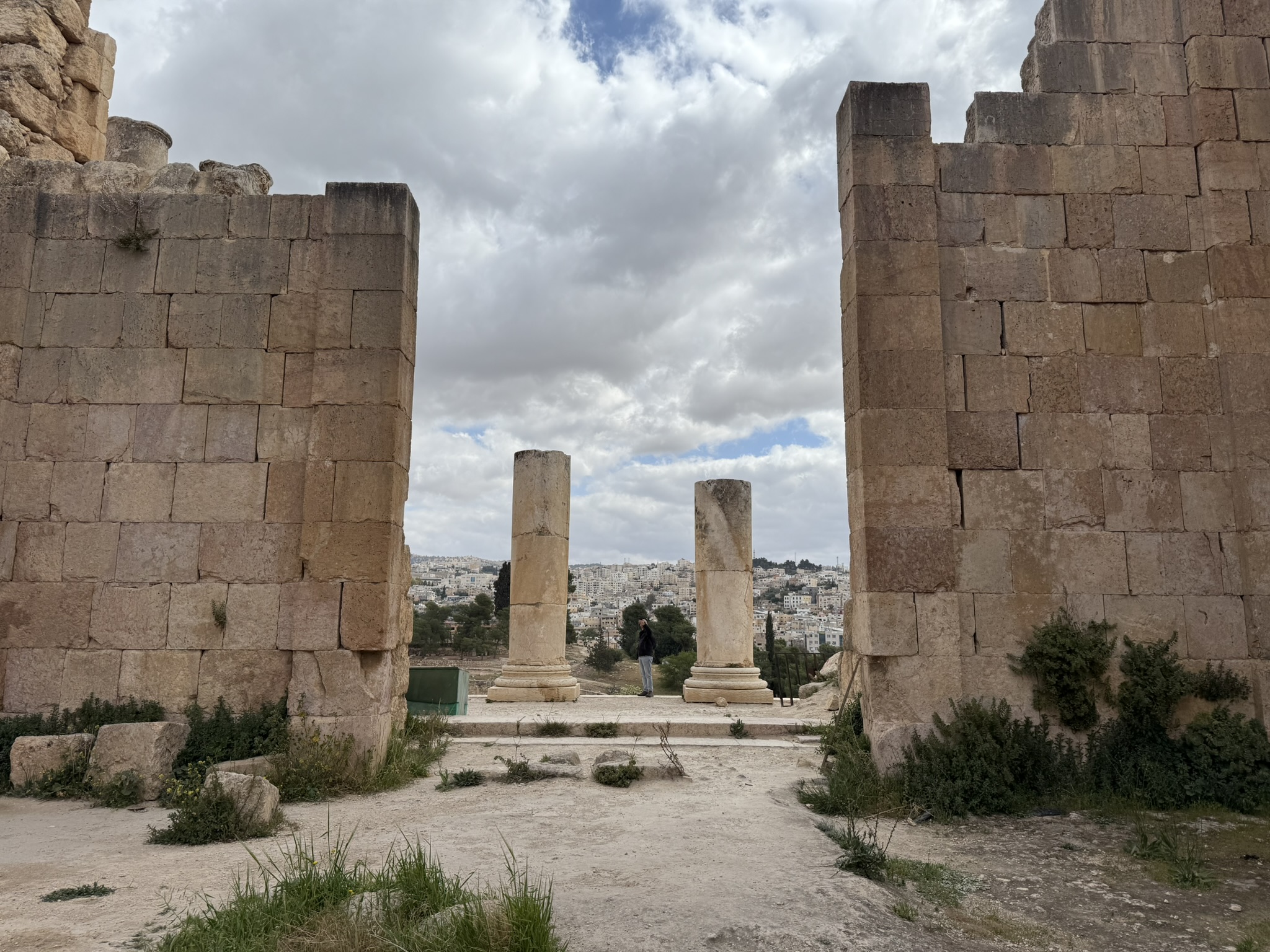
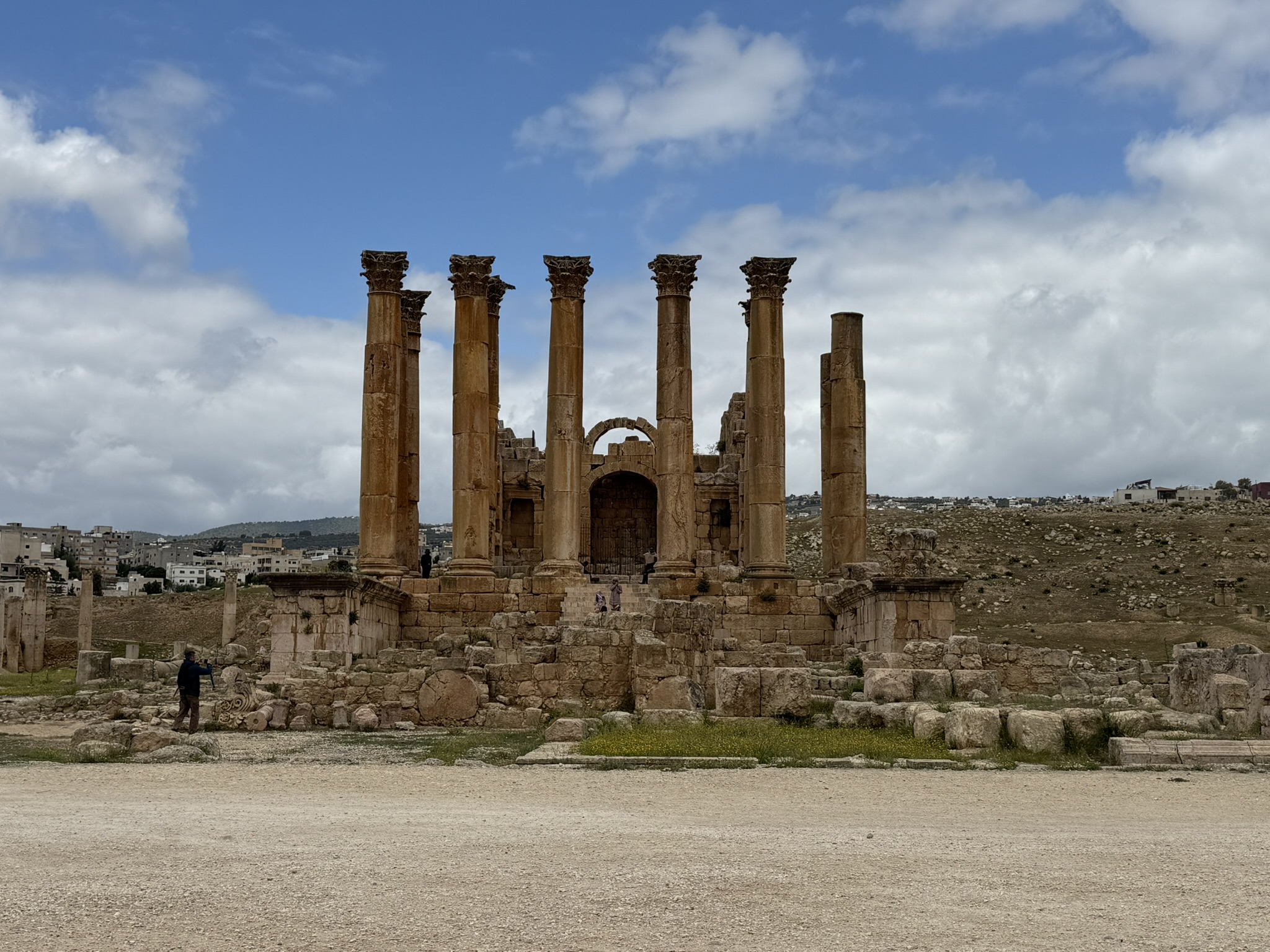
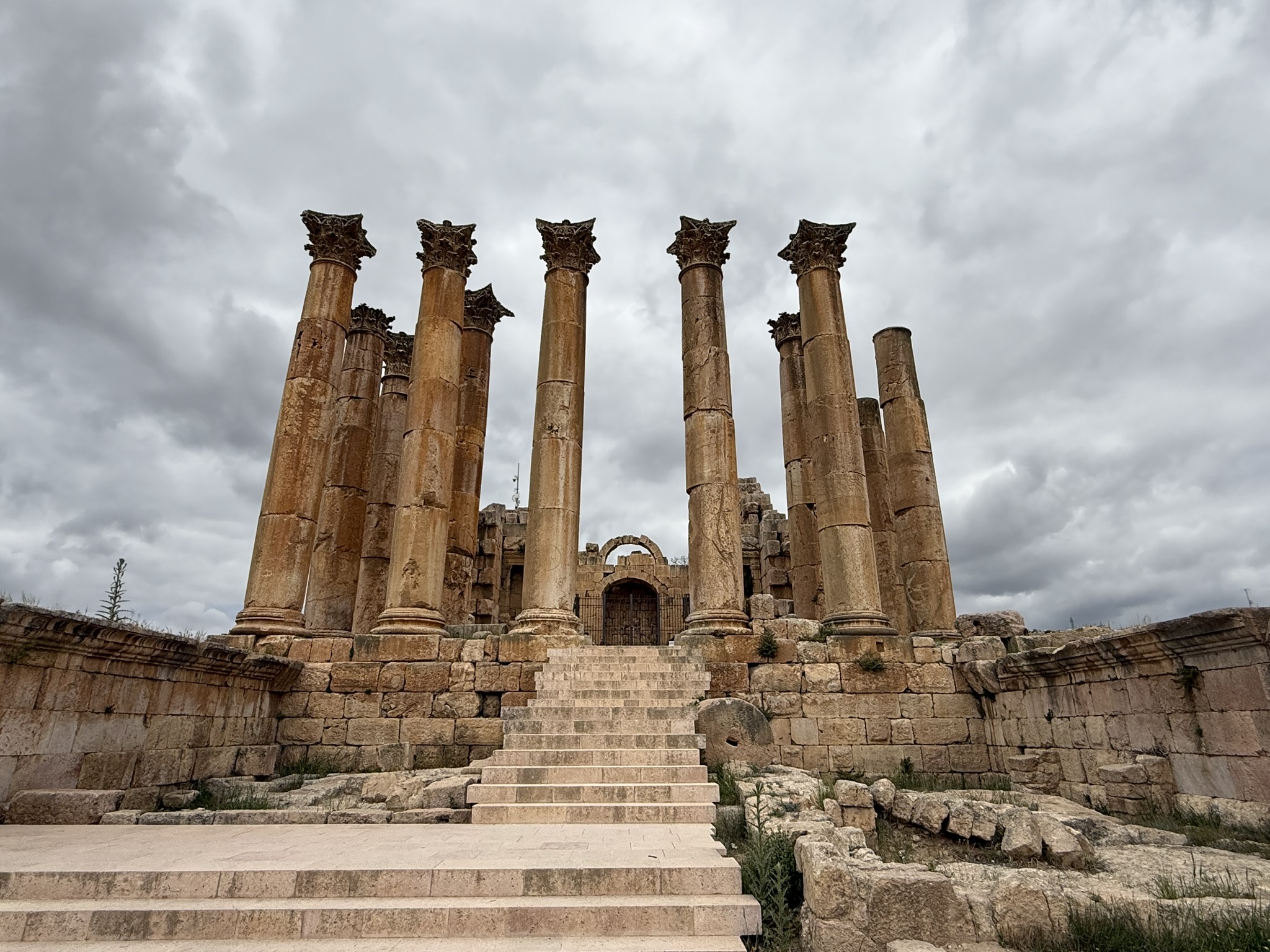
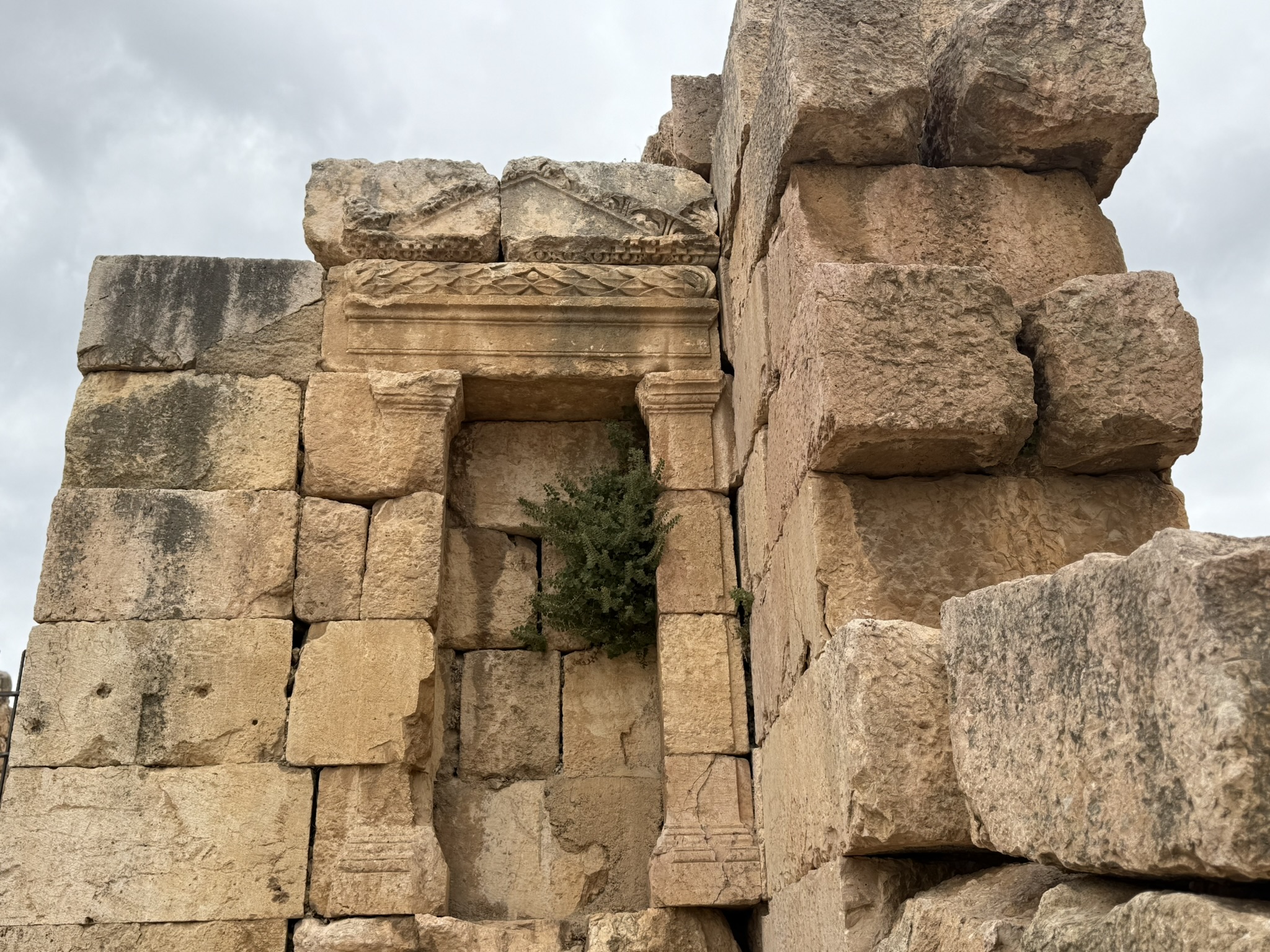
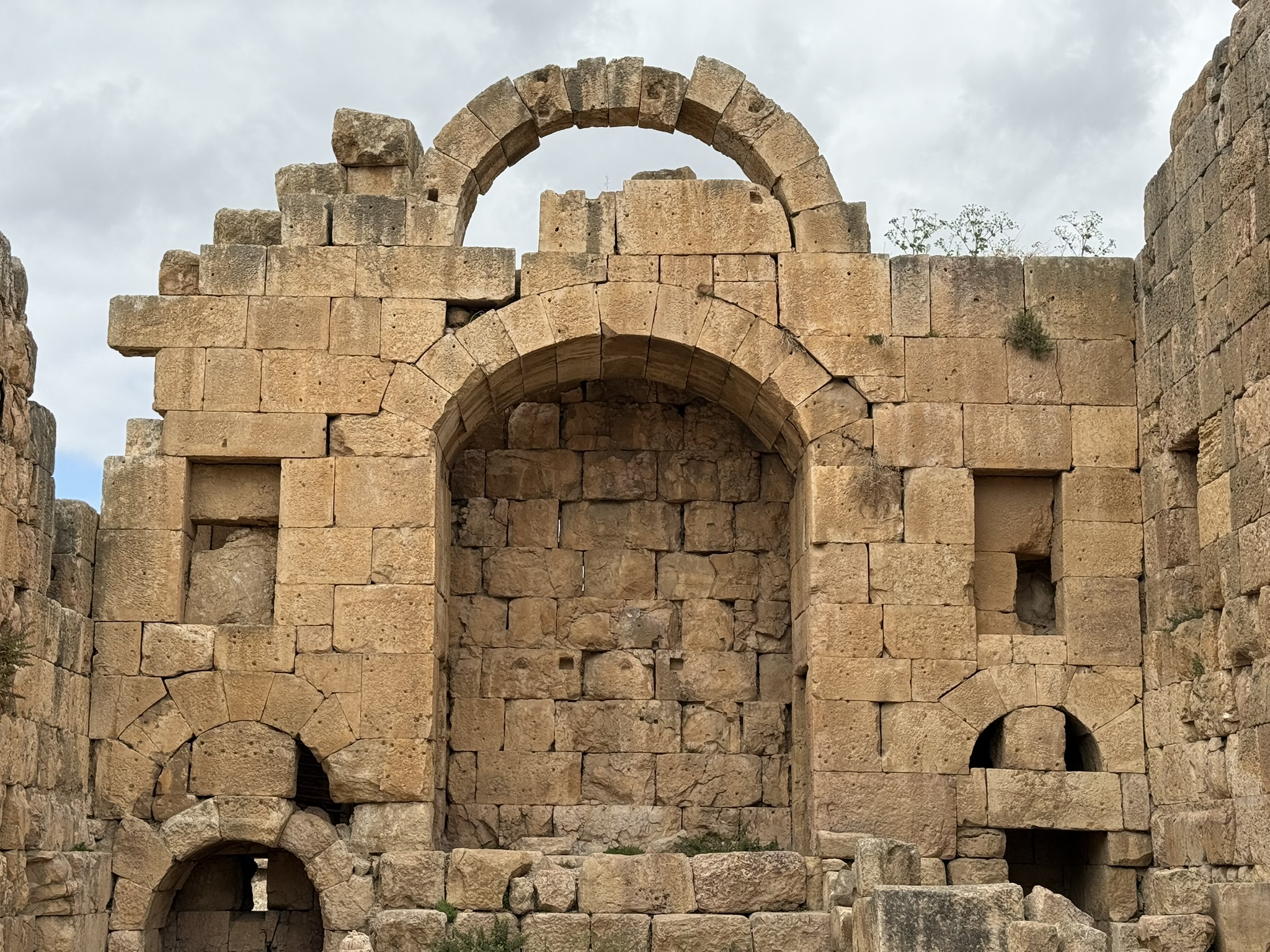
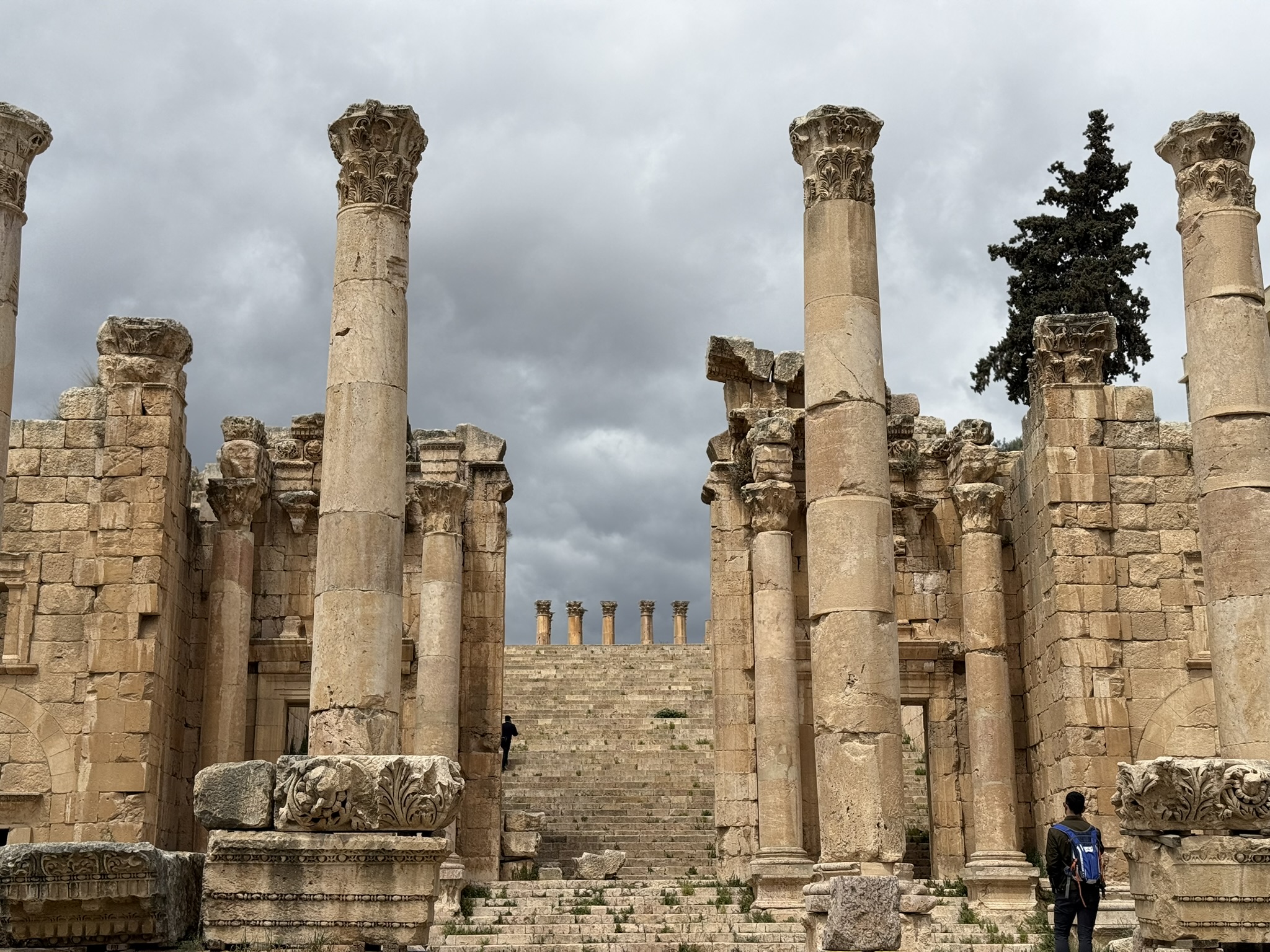
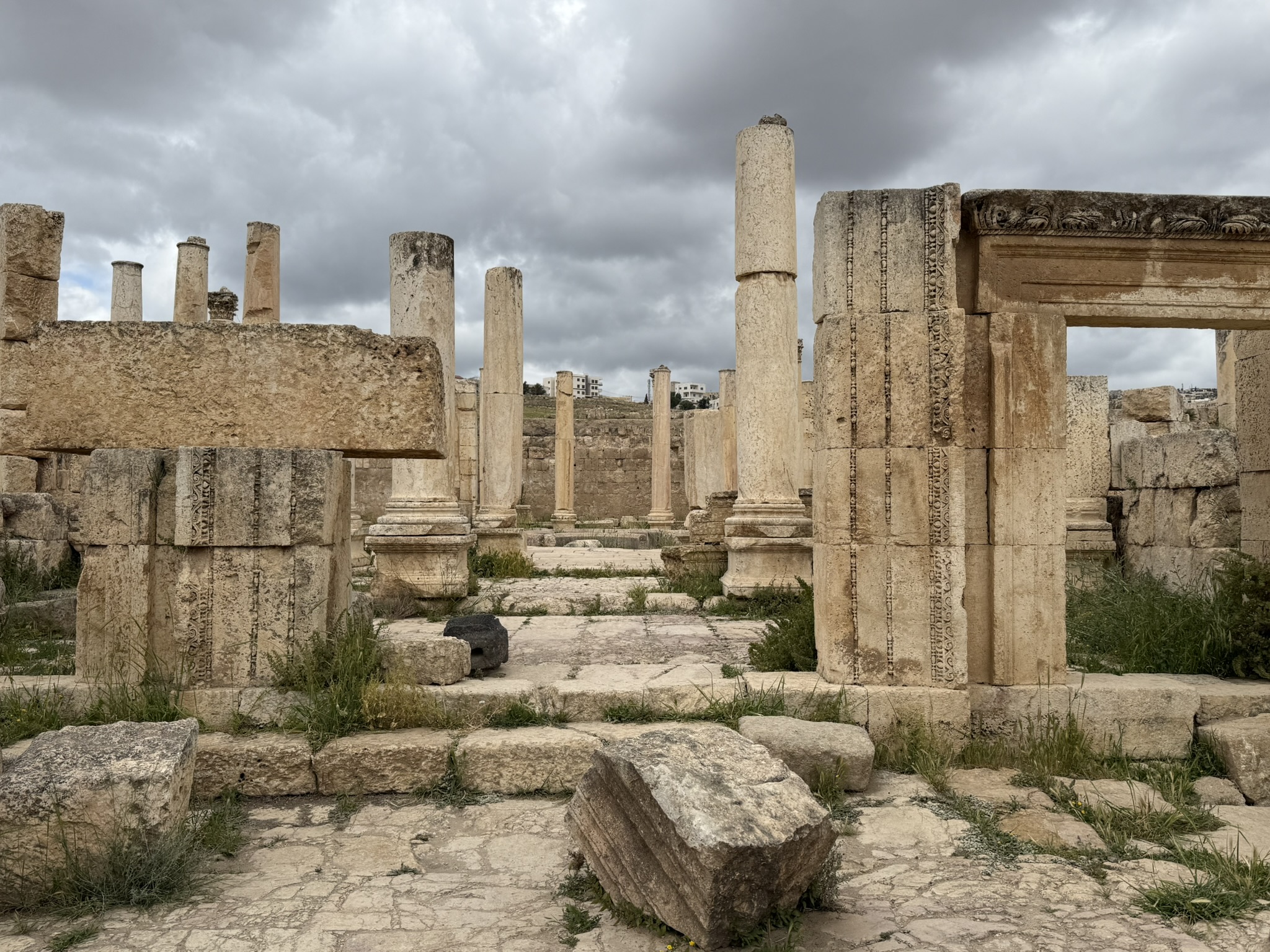
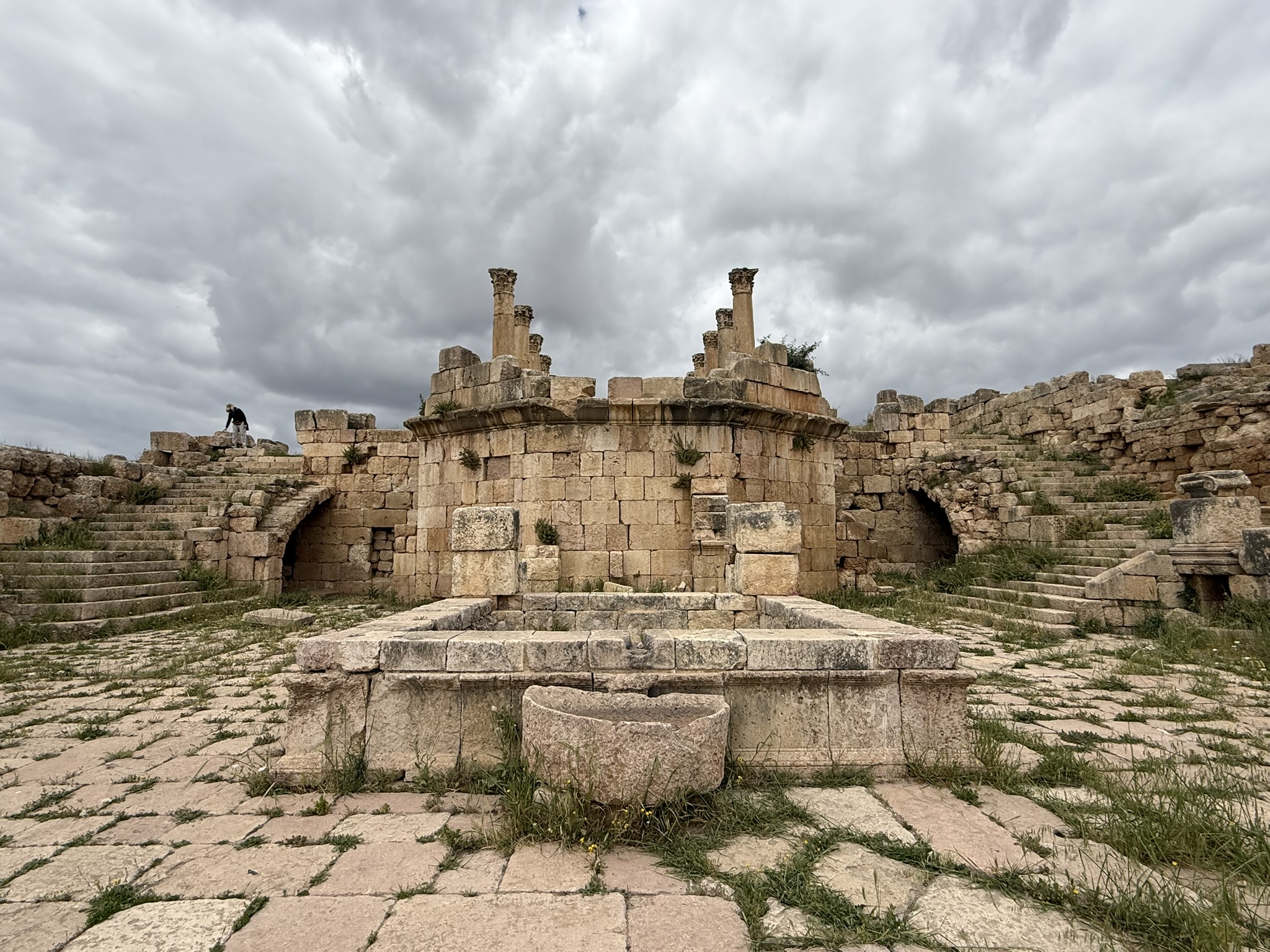
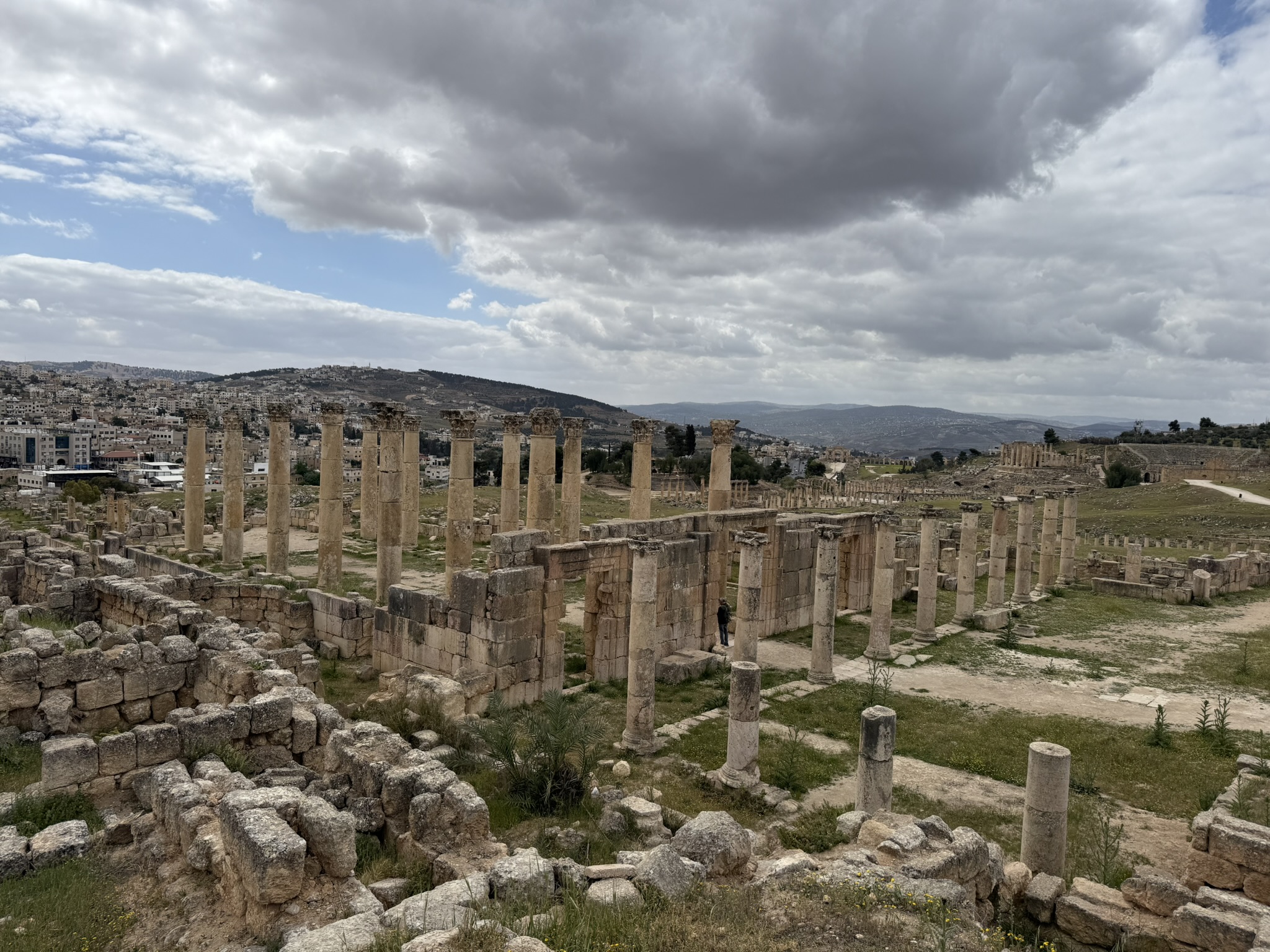
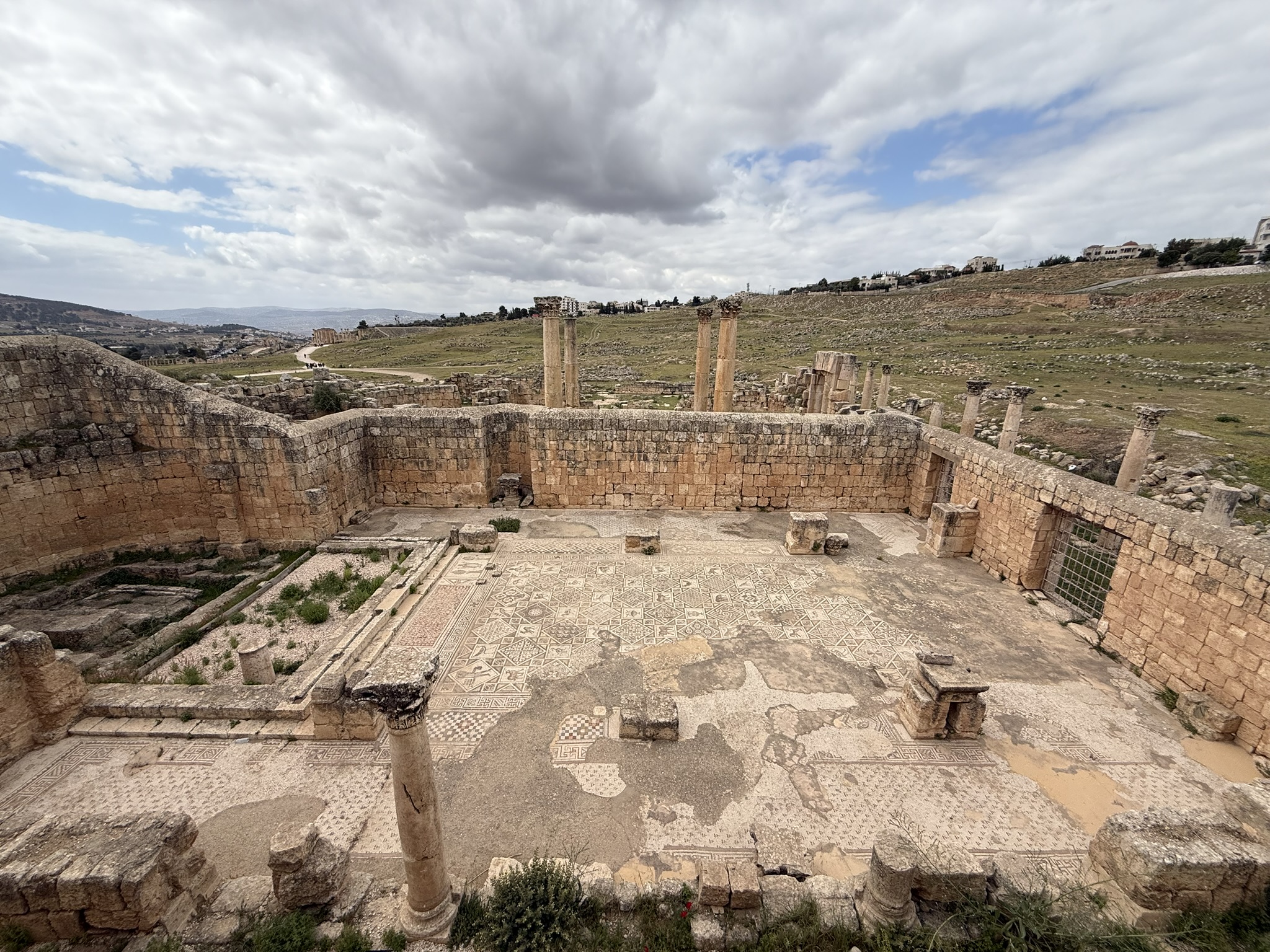
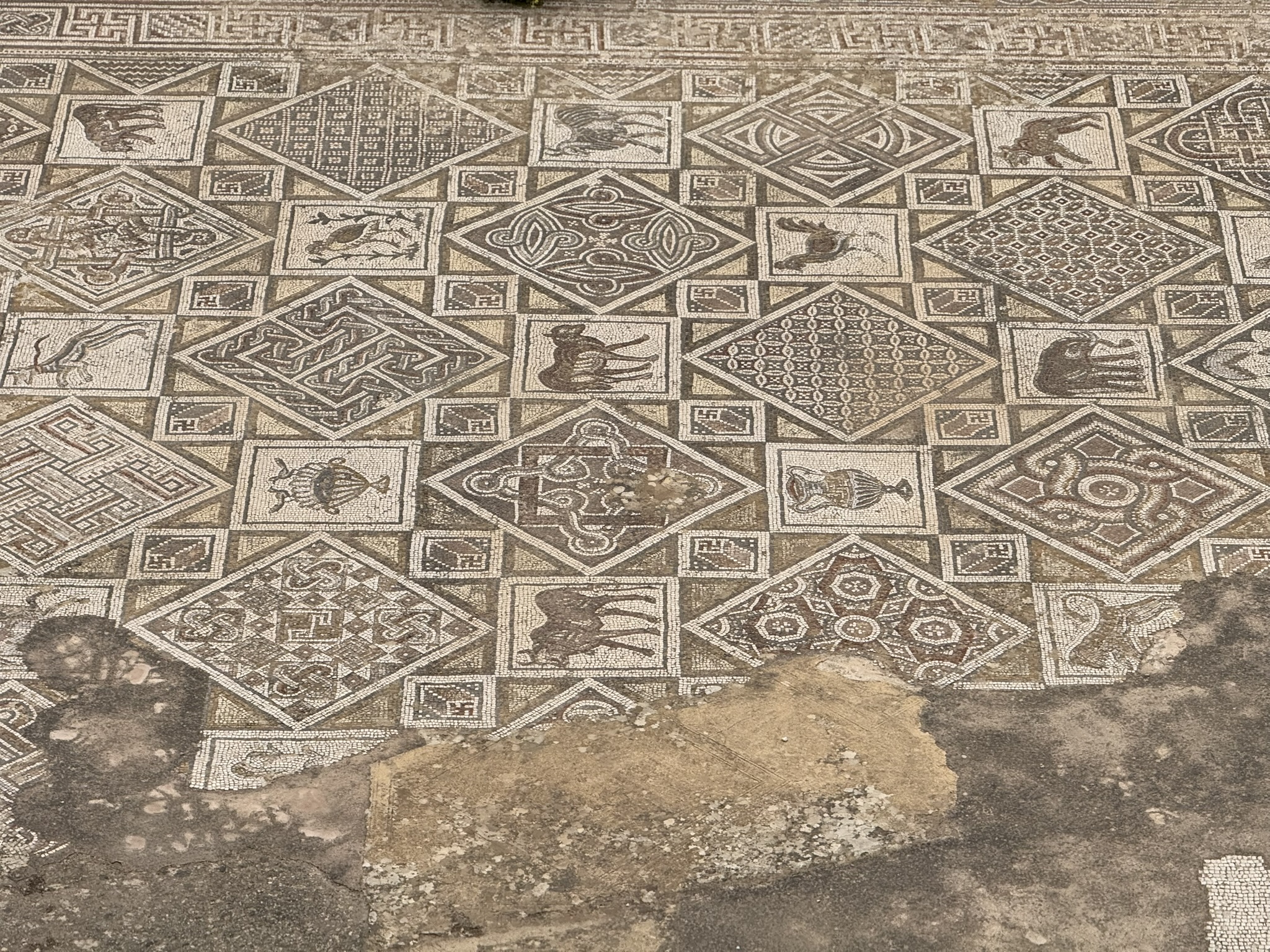
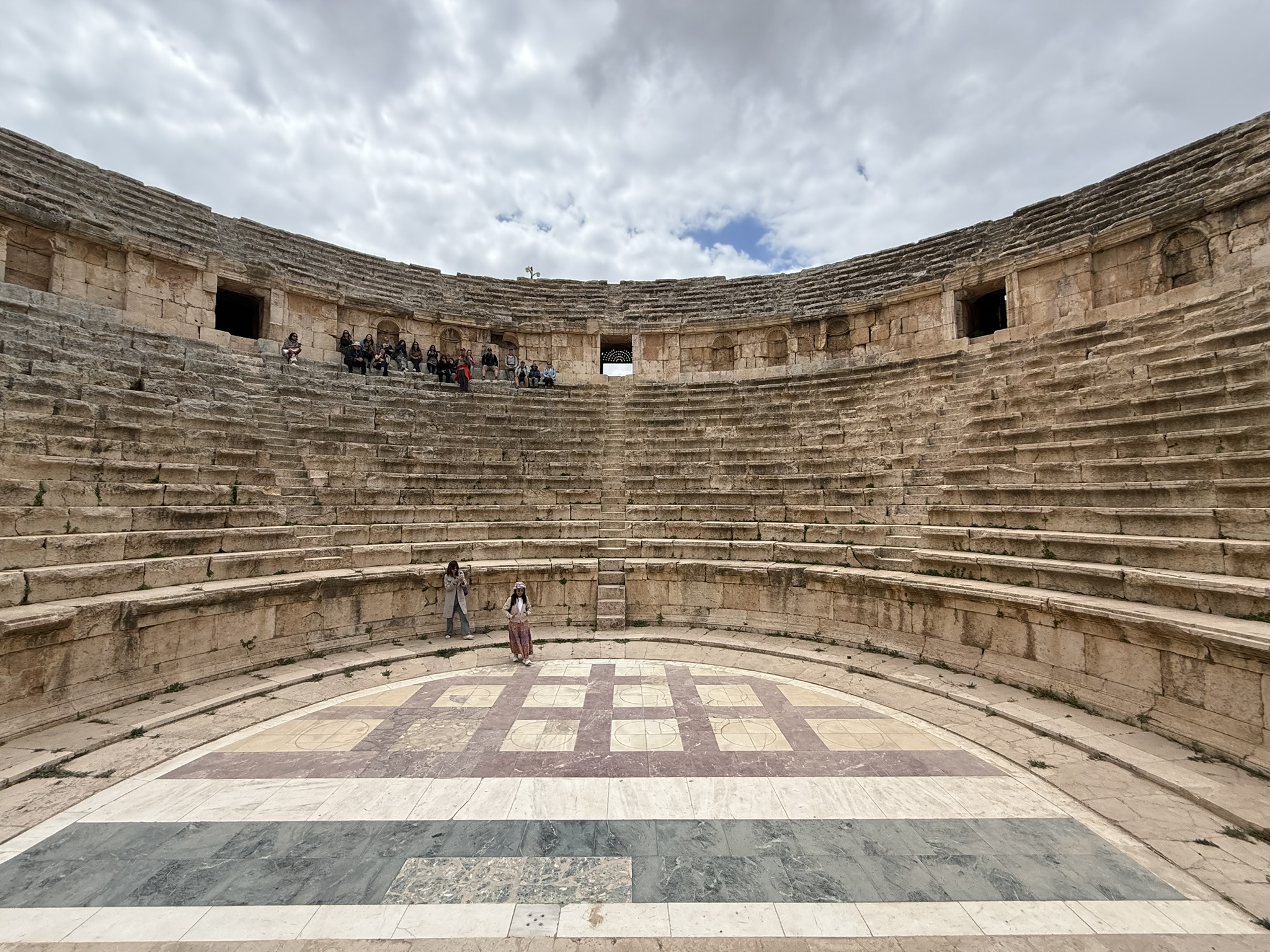
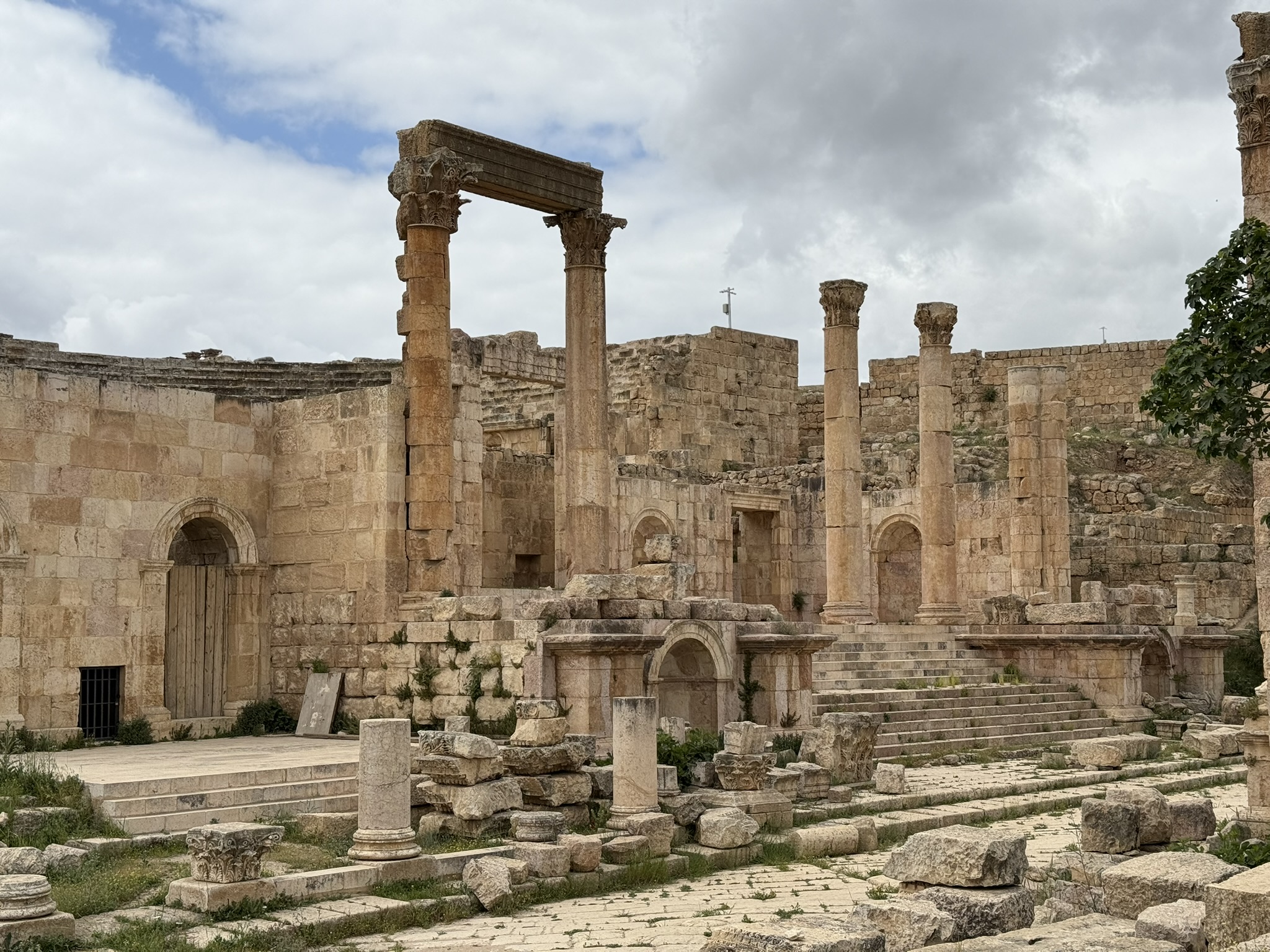
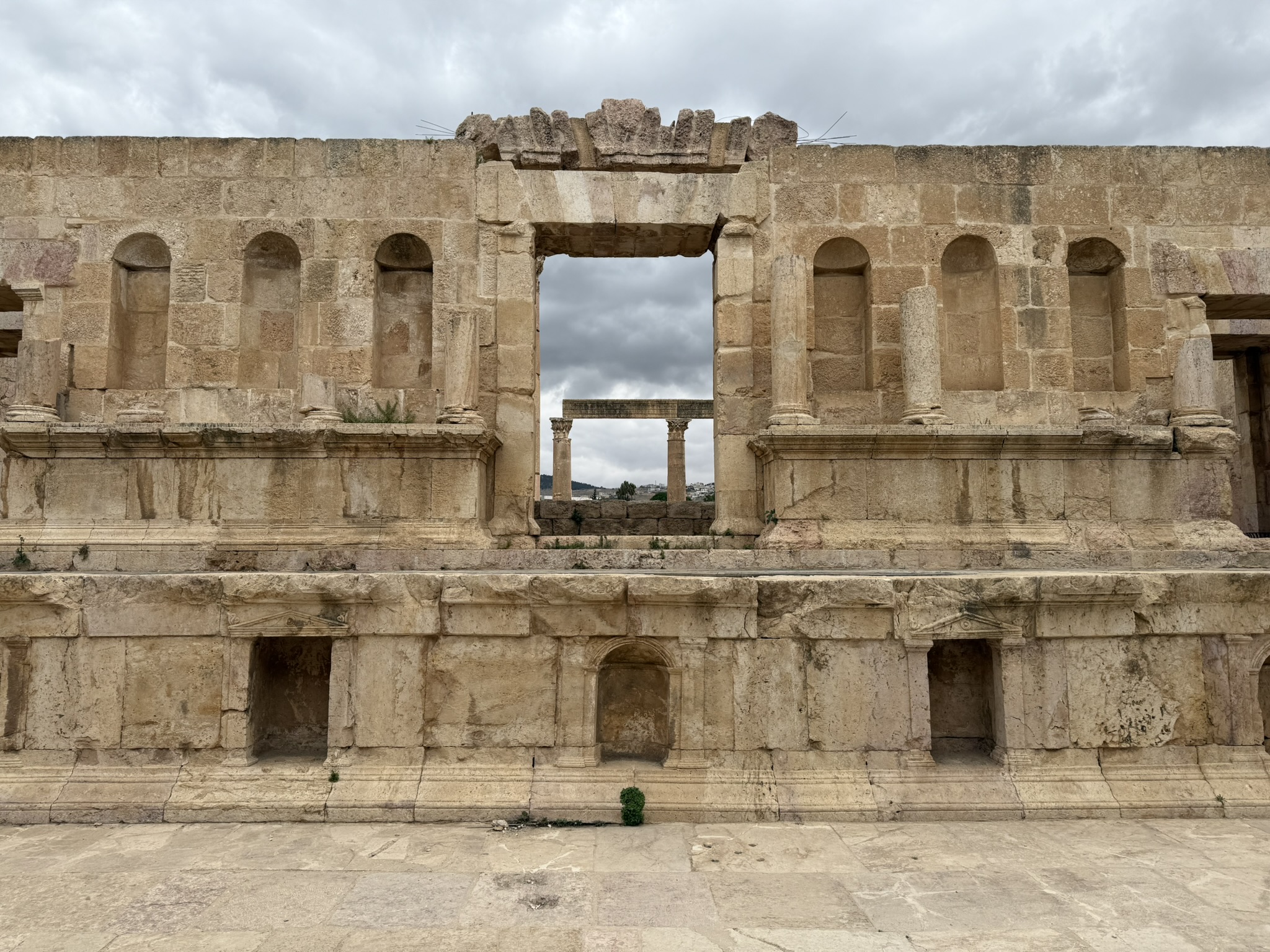
We spent around six hours roaming the site, and though we covered most of it, I felt as though I could have spent a lifetime there!
A Dinner Fit for Royalty
As much as I didn’t want our historical tour to end, we had big plans waiting for us back in Amman. We’d be having dinner with Delia!
Being the most generous soul ever, she picked us up from our hotel and drove us all the way to her parents’ home. Despite her busy schedule and frequent multi-day treks, she made it a point to have dinner with her parents every week. This time, they were kind enough to extend the invitation to Rafael and me. We were given the warmest welcome, and they immediately made us feel at home.
As we sat on their couch having the most interesting conversations – all three of them being incredibly well-read and knowledgeable – I found myself thinking of a line from Grey’s Anatomy: “This is the way the world changes. Good people, raising babies right.” This was clearly the case with Delia and her parents. We talked about politics, philanthropy and the economy for hours. When we finally remembered that we had come there for dinner and not just to bond, her mother led us into the dining room, where the table was overflowing with the most heavenly-smelling food she had prepared for us. It was truly a dinner fit for royalty!
Before it was time to say goodbye, Rafael and I presented Delia with a gift. She had flat-out refused to accept a tip at the end of our trek, so this was literally the least we could do. During our once-in-a-lifetime adventure, Delia and I had talked about diving, and she had mentioned that she wanted to take it to the next level and become a diving professional. Back in Aqaba, Rafael and I figured a diving mask would make a good gift – and we weren’t wrong. She absolutely loved it!
Saying goodbye to Delia and her parents was heart-wrenching, to say the least. Unfortunately, we would also be saying goodbye to Jordan early the following morning – a country that had stolen our hearts and given us far more than we could ever have hoped for. Jordan may have shown us the grandeur of the civilisations that once flourished here, but it was people like Delia and her family who had brought modern Jordan to life. Long after the temples, deserts and ancient cities began to blur together, it would be their warmth and generosity that stayed with us most.