The Dead Sea – Day 1: The Lowest Point on Earth
THE DEAD SEA
Day 1: The Lowest Point on Earth
April 09, 2025
In an attempt to make the most of our time, I figured the best way to reach our next destination while exploring something else along the way would be to book a tour.
When Omar arrived in his shiny black SUV outside our hotel, we were pleasantly surprised to discover that we were the only ones who had booked the tour. This meant he could personalise the itinerary entirely around what we wanted to see and do. We would be travelling to the Dead Sea on a four-hour journey during which we could make as many stops as we wanted. Music to our ears!
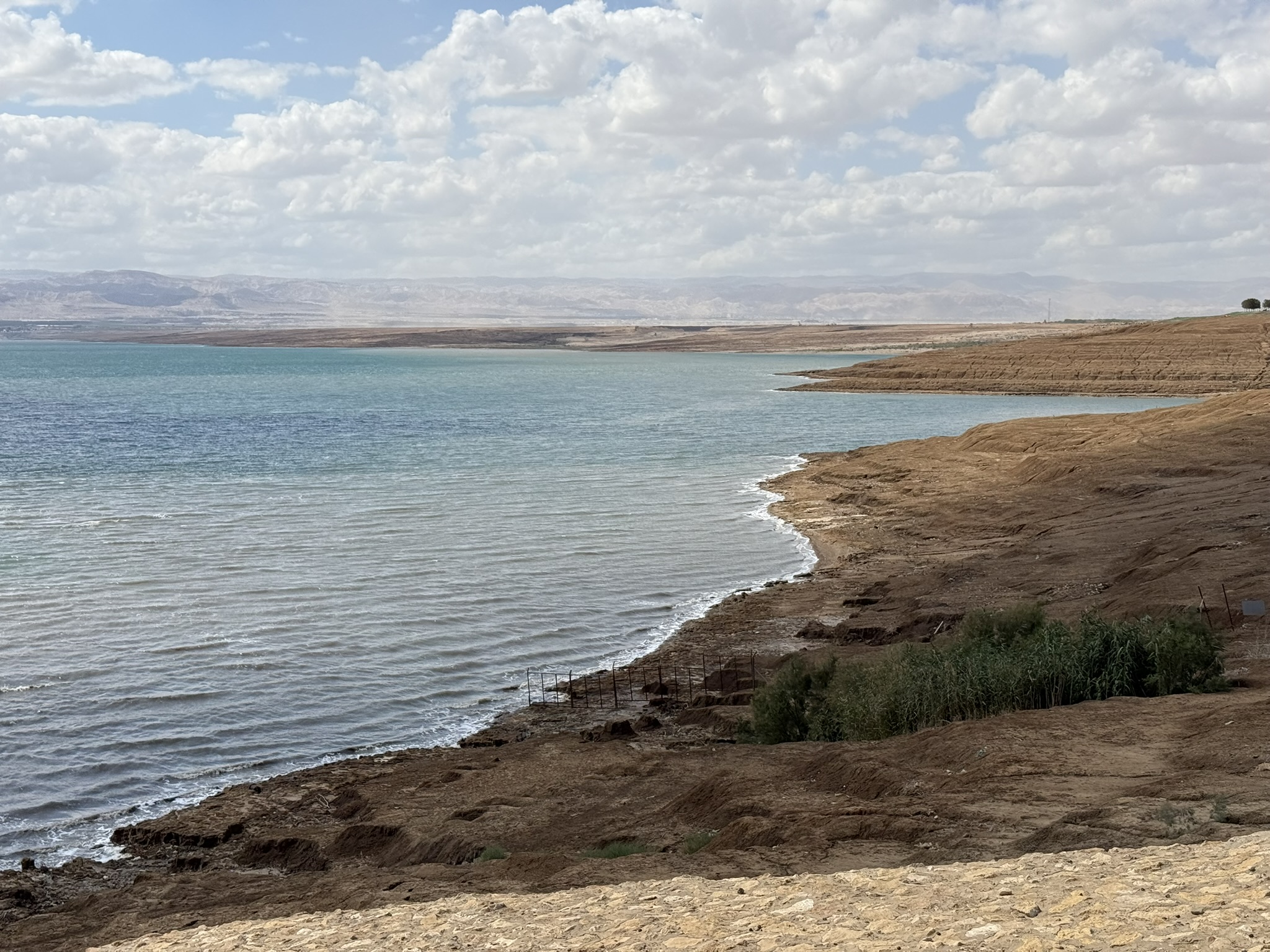
Once we were on the highway, Omar began pointing out this and that, explaining everything as we went. Slowly, the desert gave way to the Dead Sea – an emerald body of water that created the most striking contrast against the orange-brown landscape and rows of green date palms.
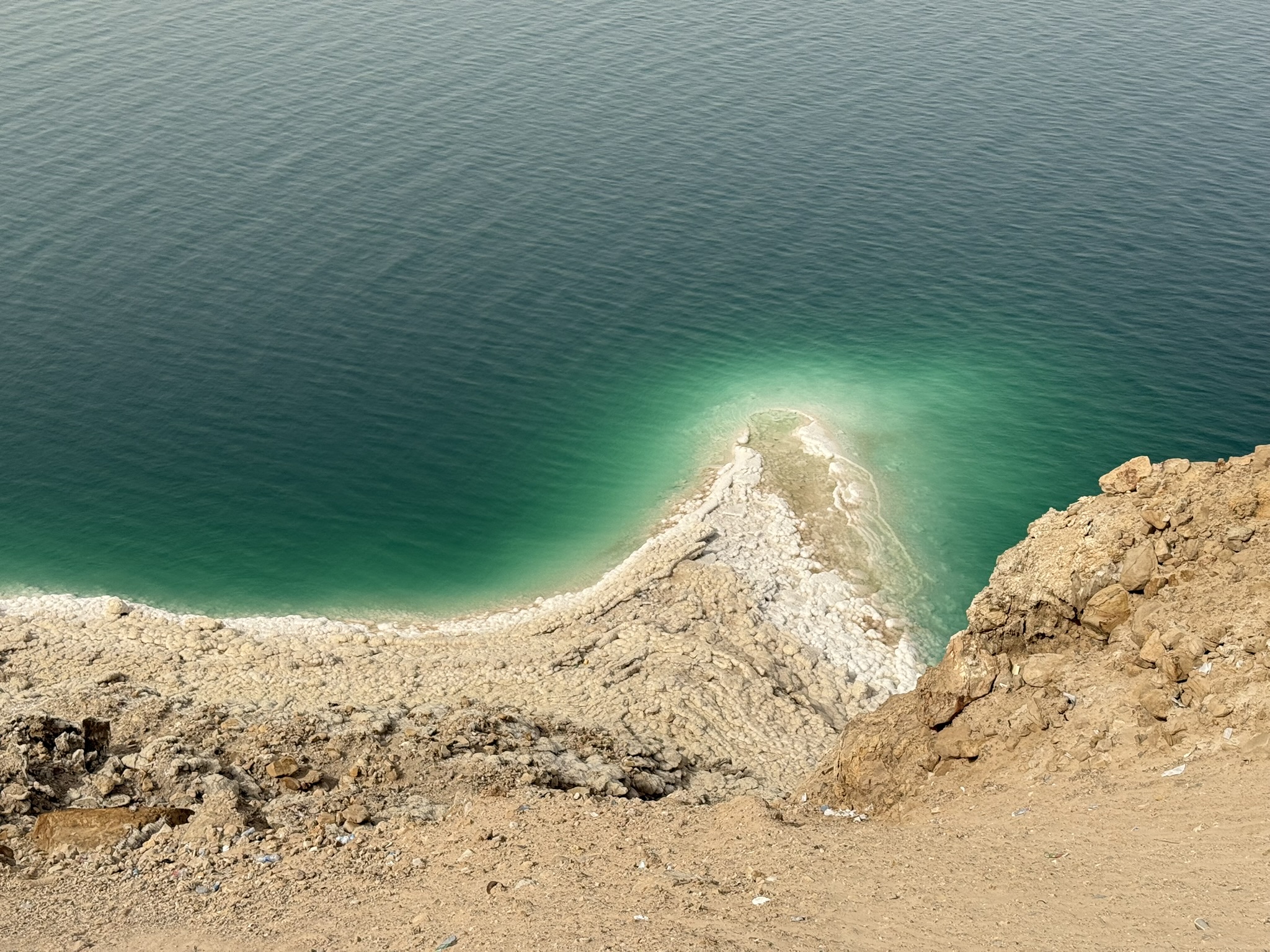
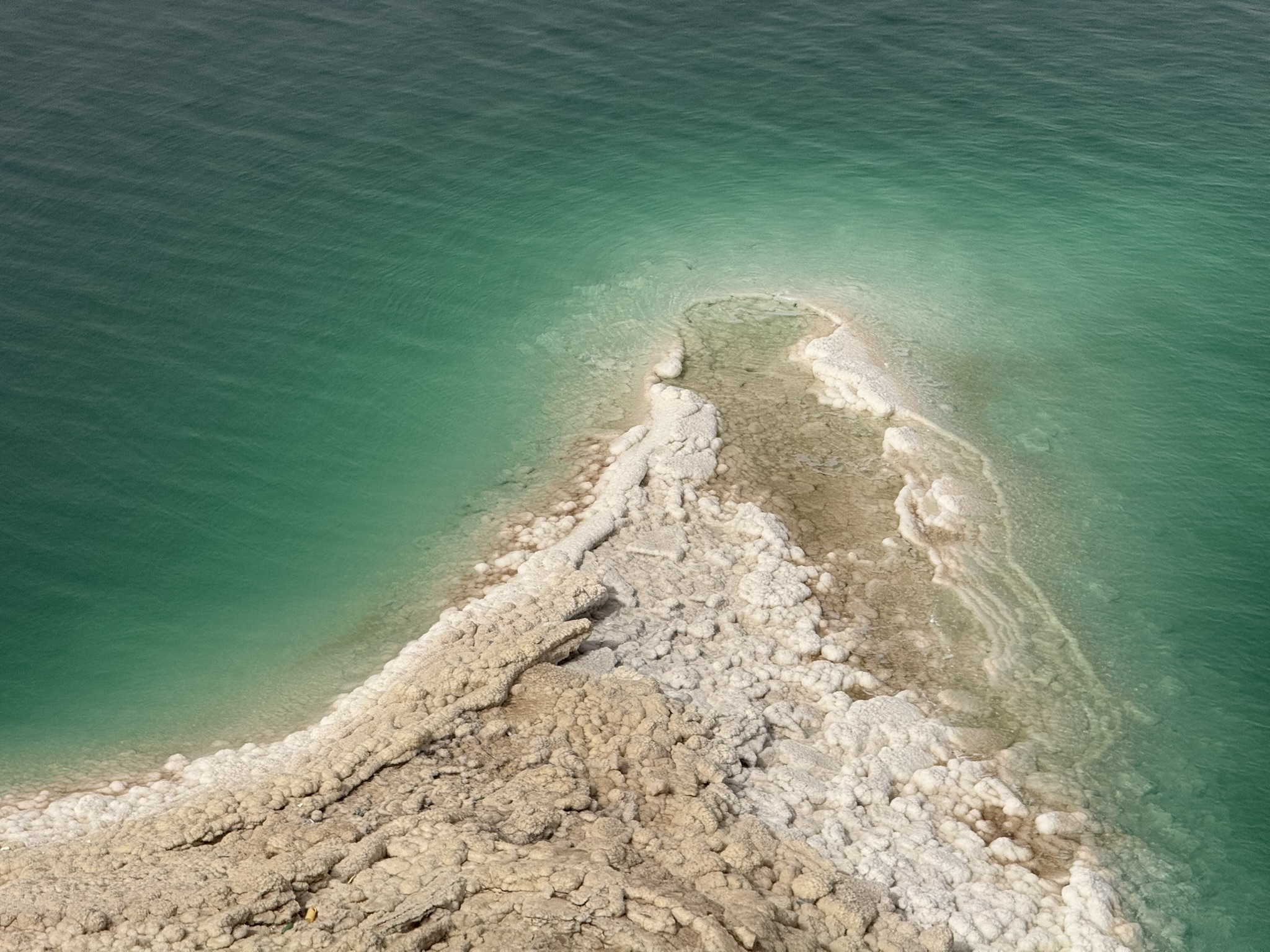
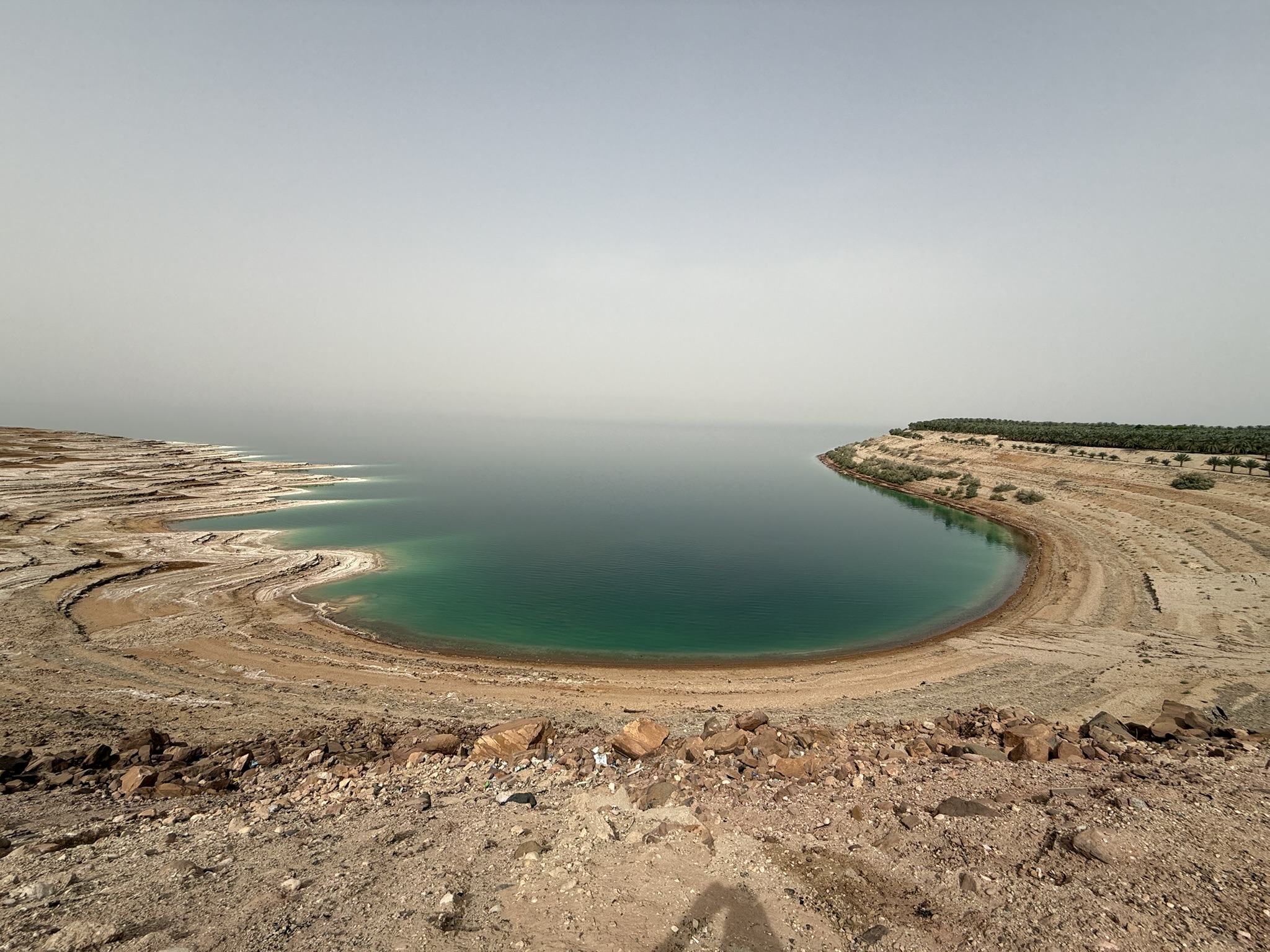
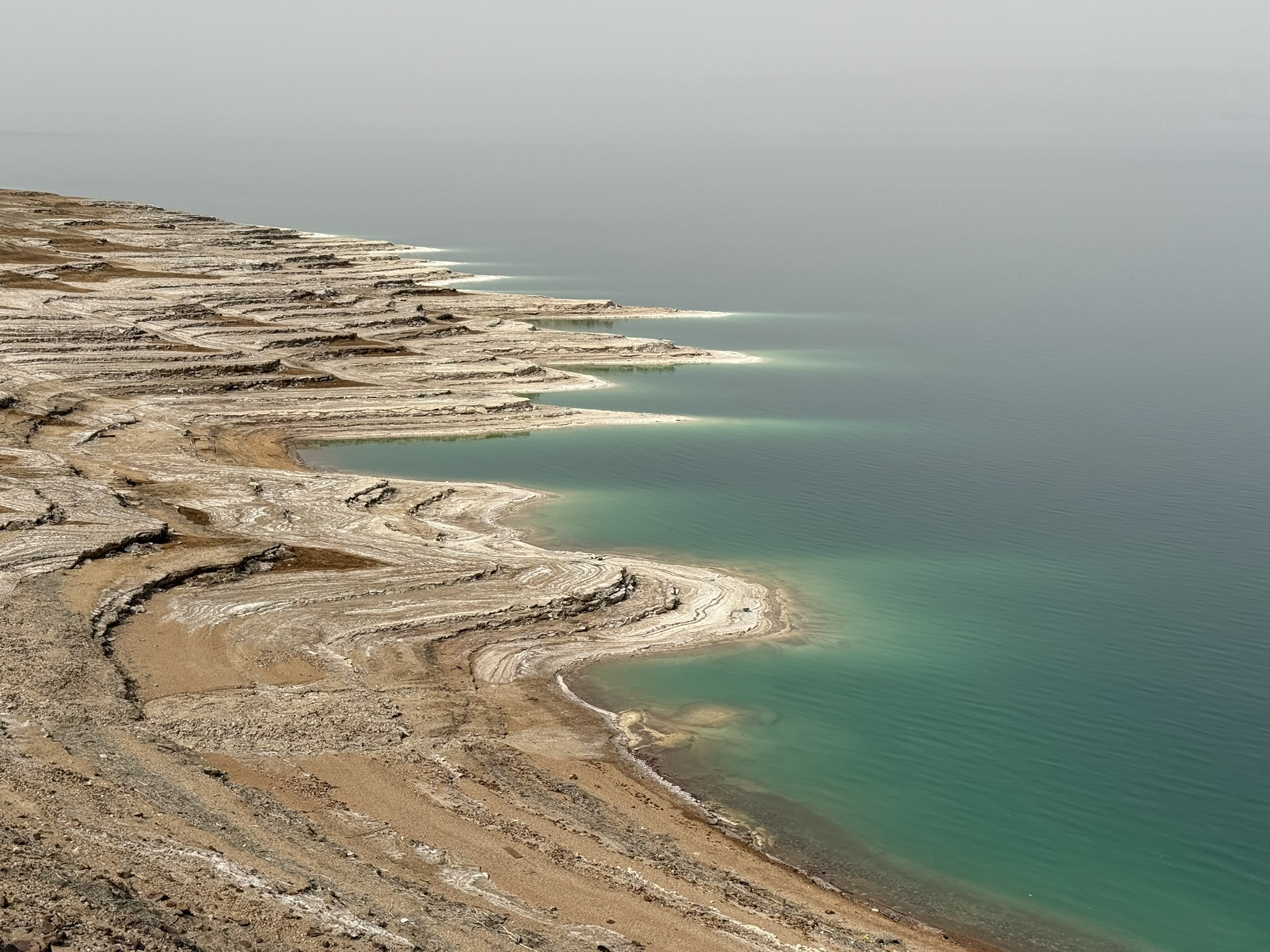
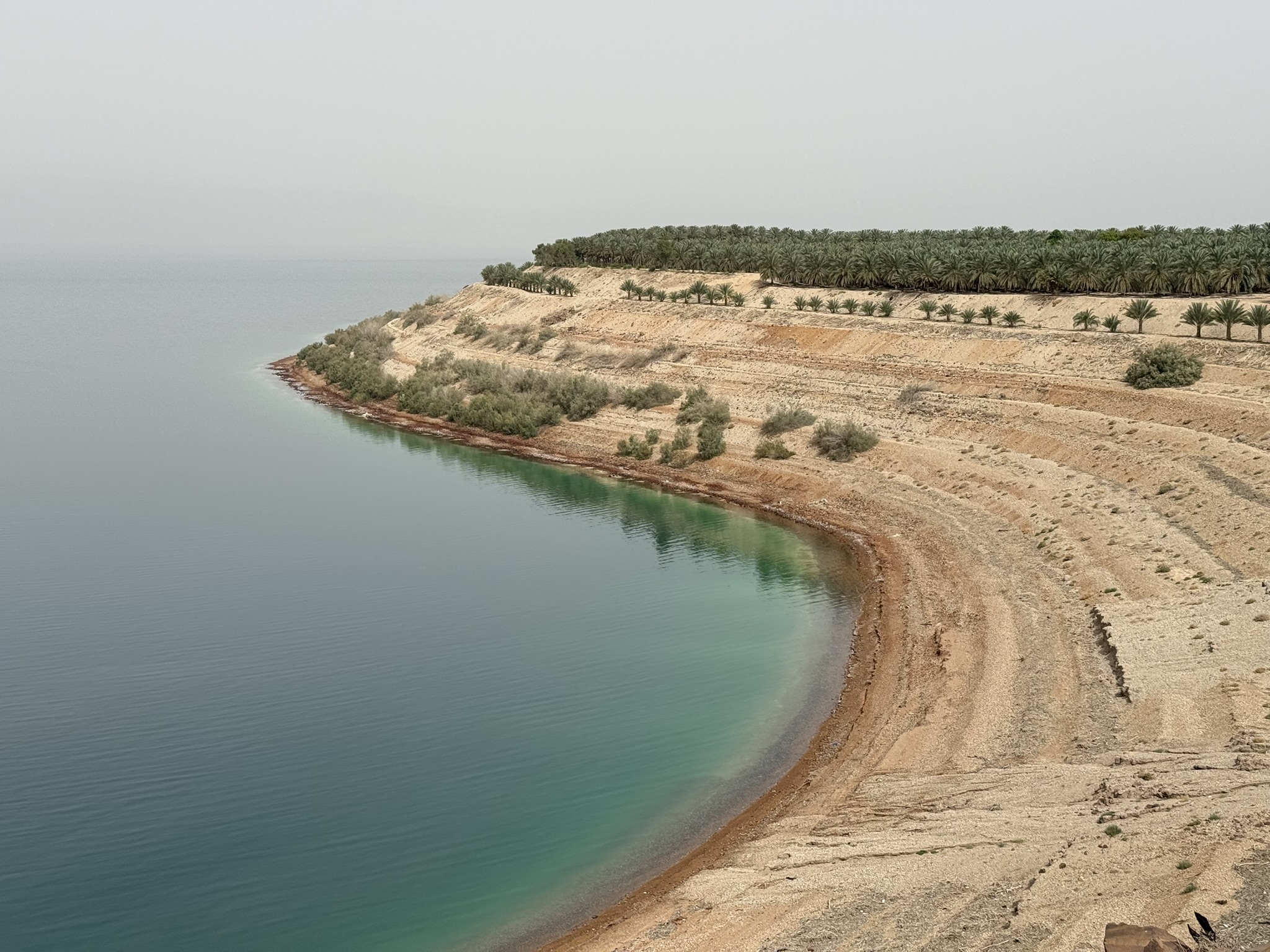
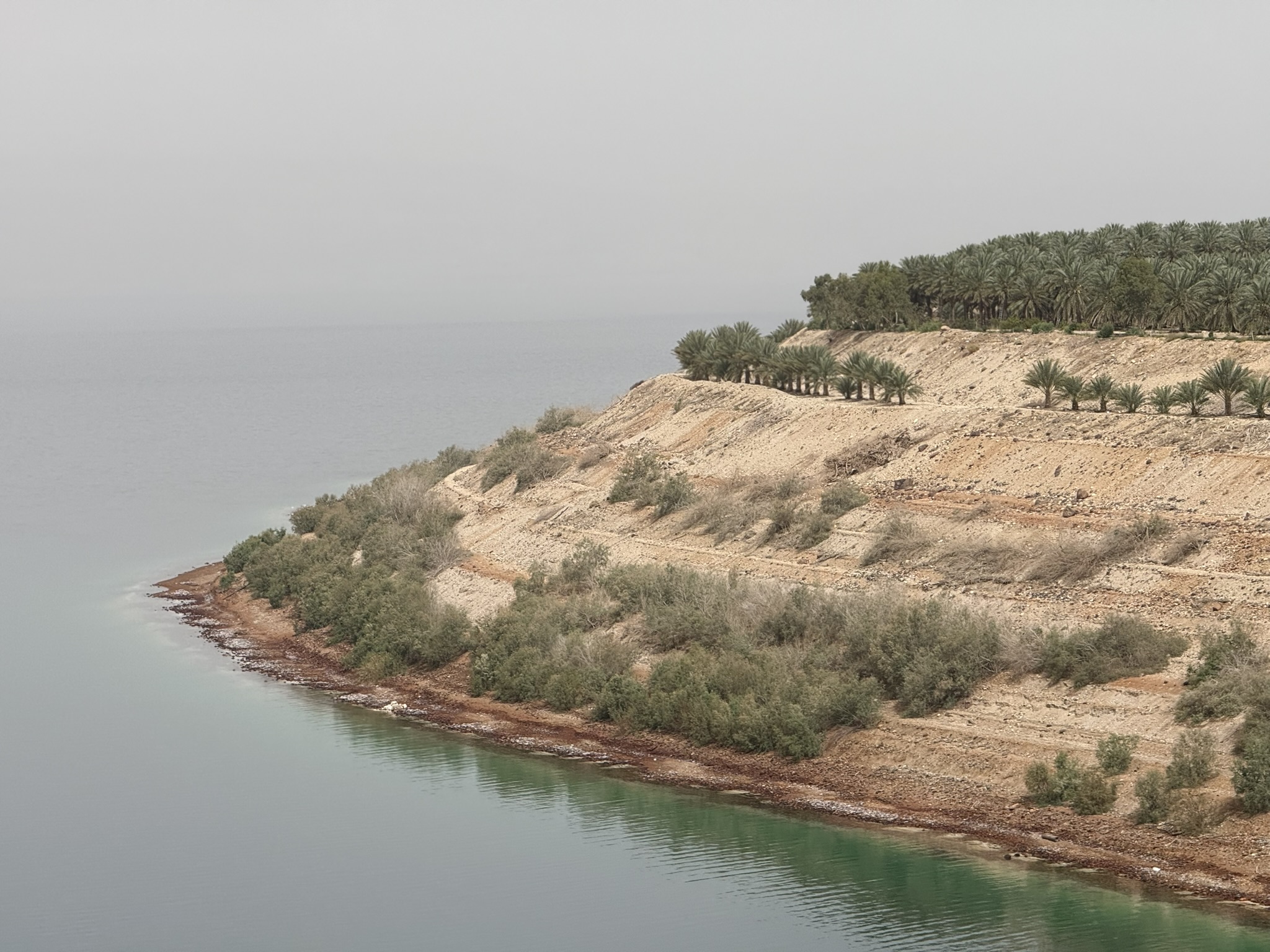
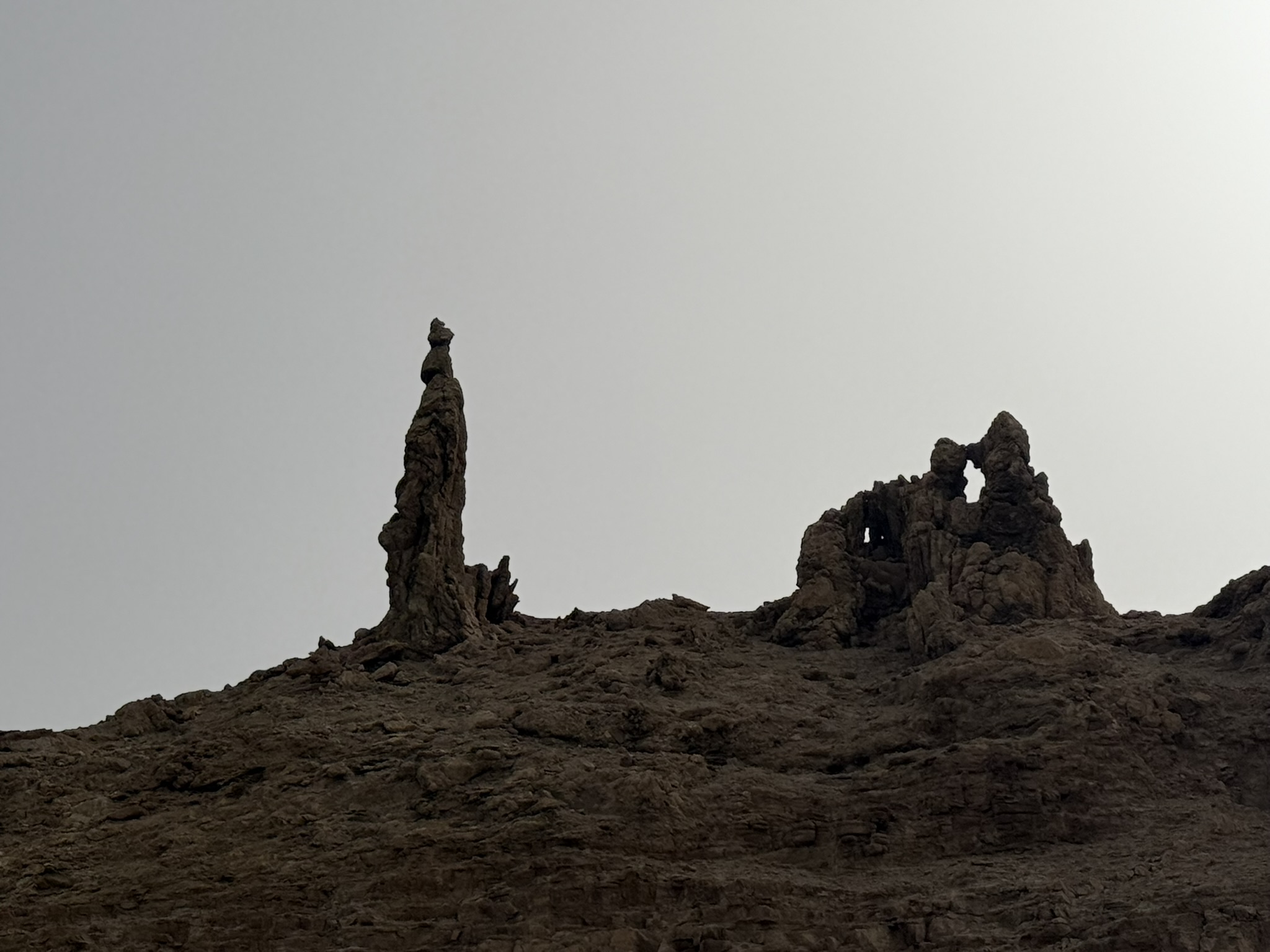
Here, we stopped at a viewpoint called Lot’s Wife Lookout, named after a natural pillar-shaped formation of salt and rock that resembles a woman. Omar explained that its name refers to the biblical story of Lot’s wife, who, according to the Book of Genesis, was turned into a pillar of salt after looking back at the destruction of Sodom and Gomorrah. We made a few more stops along the scenic route, each offering vistas that were simply stunning and out of this world.
Into the Grand Canyon of Jordan
A couple of hours into the journey, we reached one of the highlights of our tour – Wadi Mujib. Often nicknamed the Grand Canyon of Jordan, Wadi Mujib is a dramatic river gorge that cuts through the rugged highlands east of the Dead Sea.
The gorge, Omar explained, forms part of the Mujib Biosphere Reserve – one of the lowest nature reserves on Earth, with elevations descending to more than 400 metres below sea level near the shoreline. Water from the surrounding highlands and tributaries flows through the wadi towards the Dead Sea, supporting a rare freshwater ecosystem in the heart of Jordan’s otherwise arid landscape.
Here, Rafael and I decided to tackle the Siq Trail – a wet canyon trek that passes through flowing water, narrow rock corridors and small waterfalls. While I had done some canyoning in the past, this would be Rafael’s first experience. Donning a life jacket and a smile that stretched from one ear to the other, he looked giddier than ever at the prospect of embarking on another adventure. With that, we ventured into the gorge and began making our way along the trail.
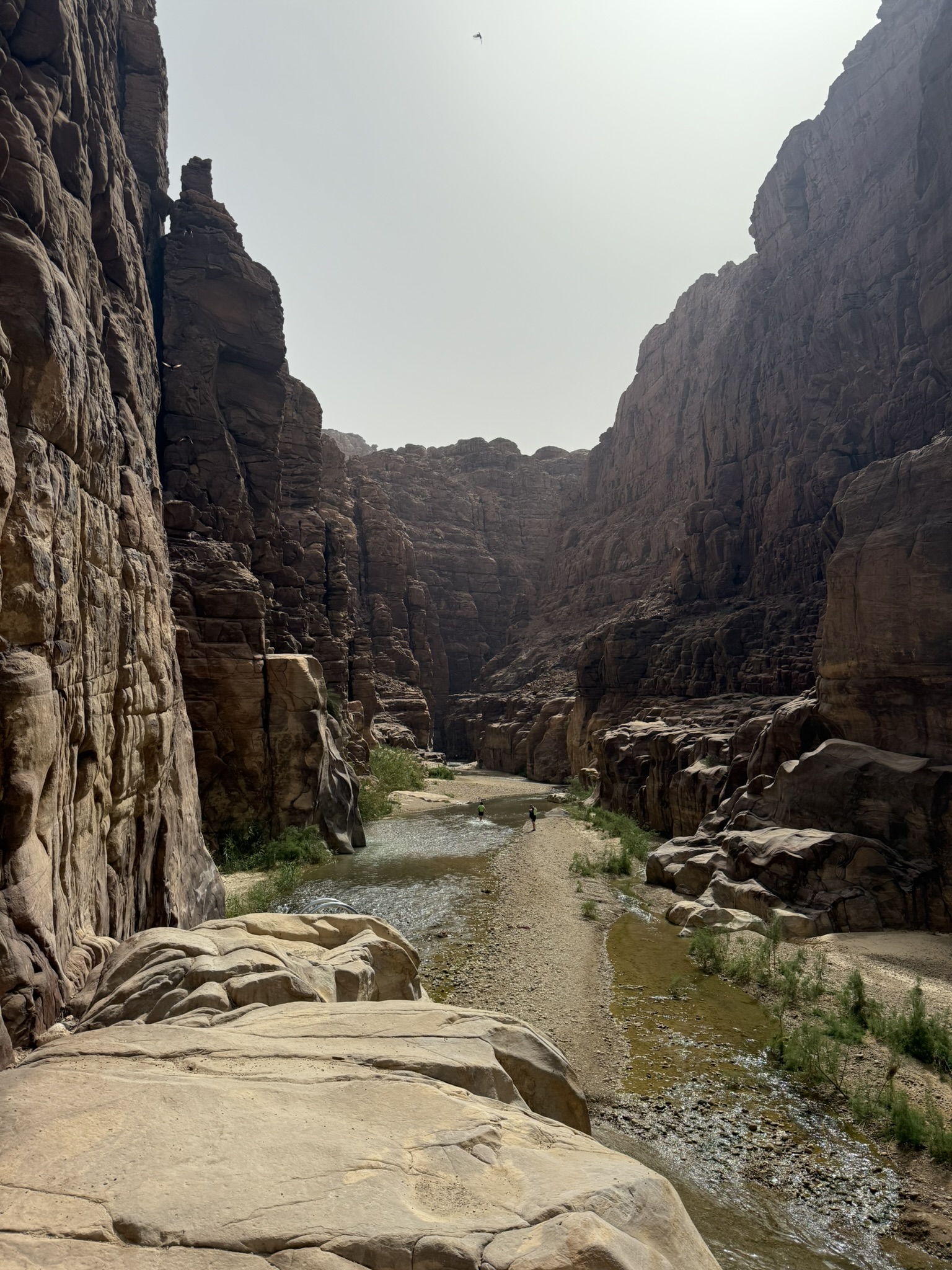
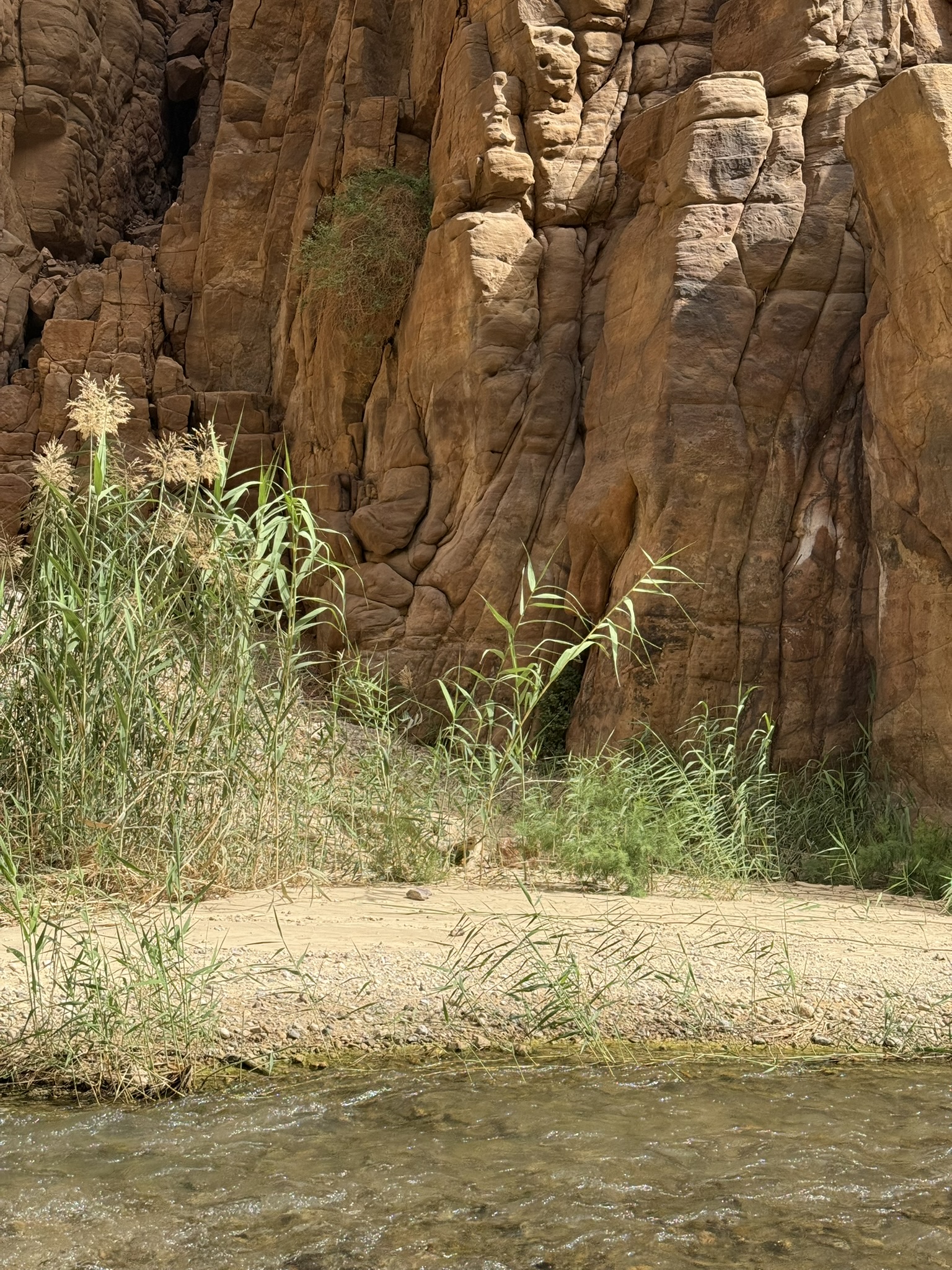
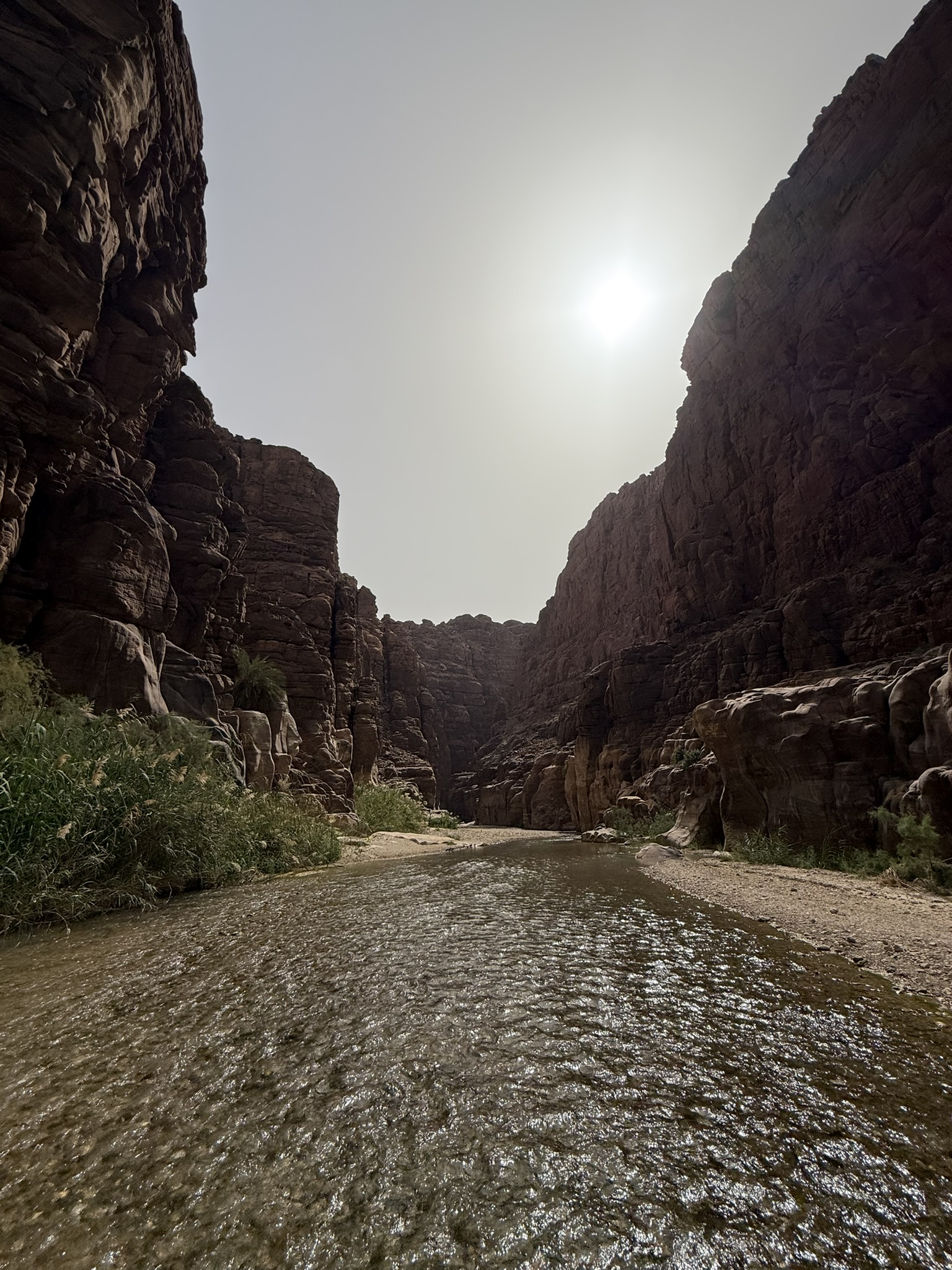
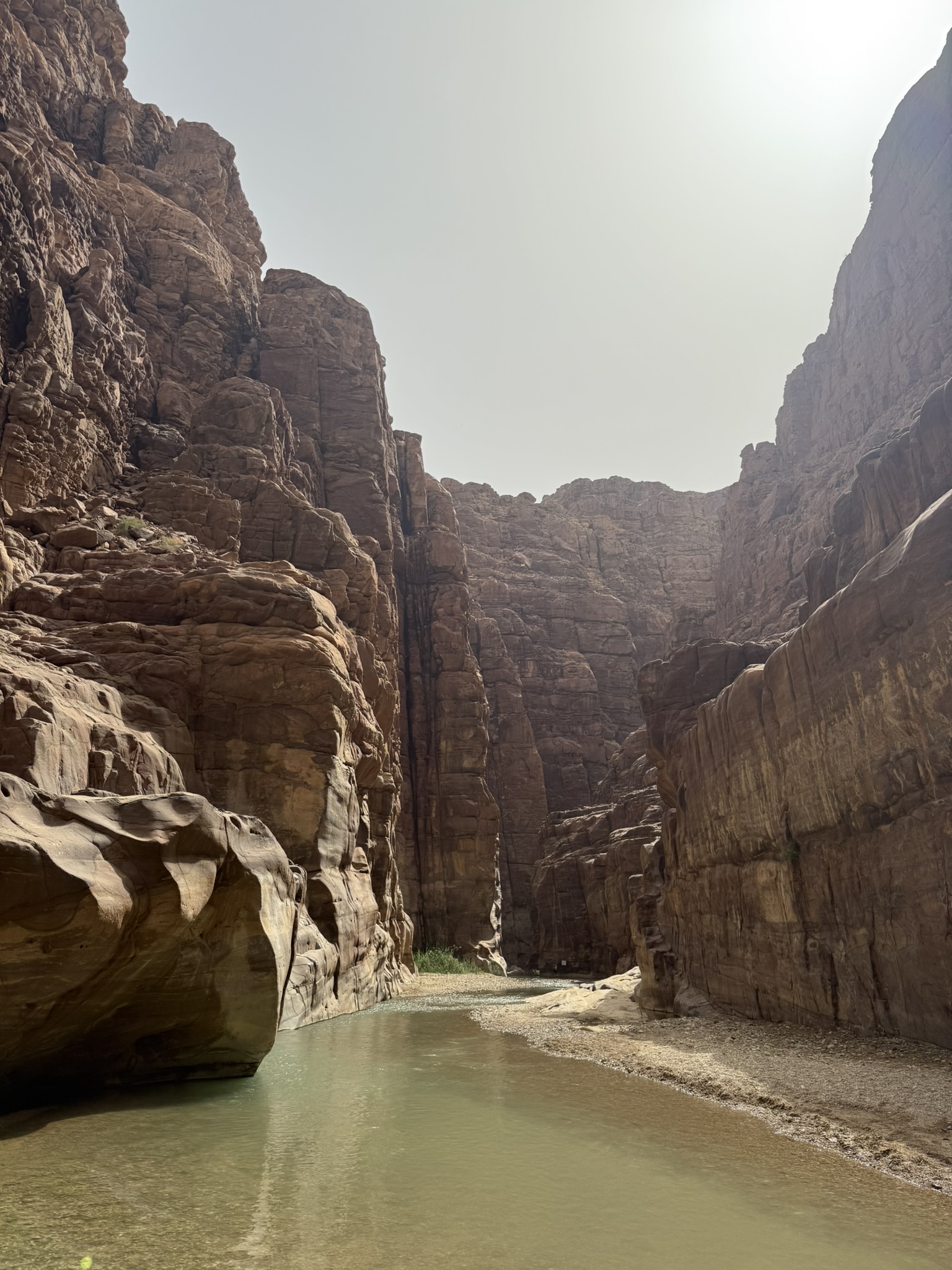
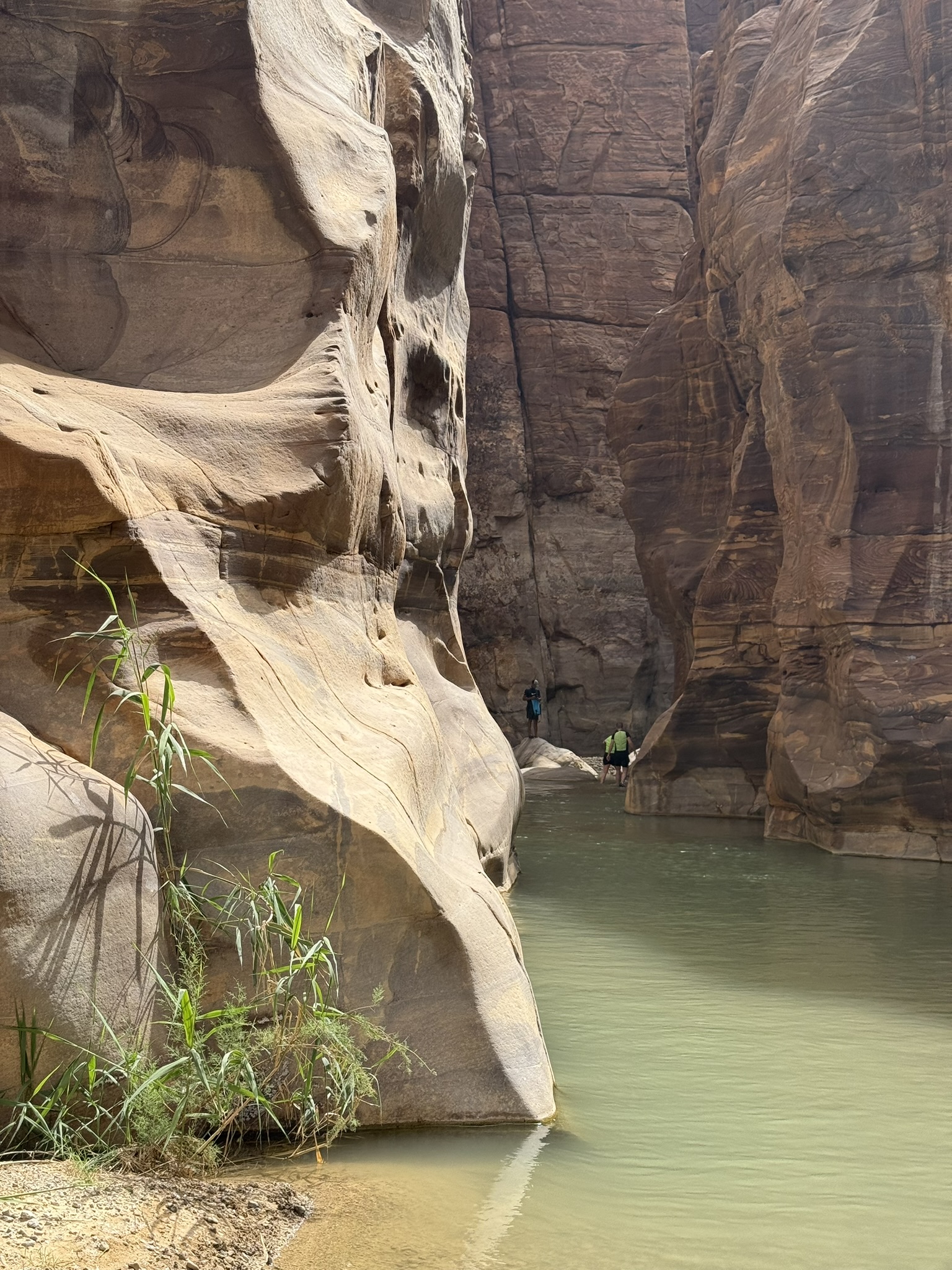
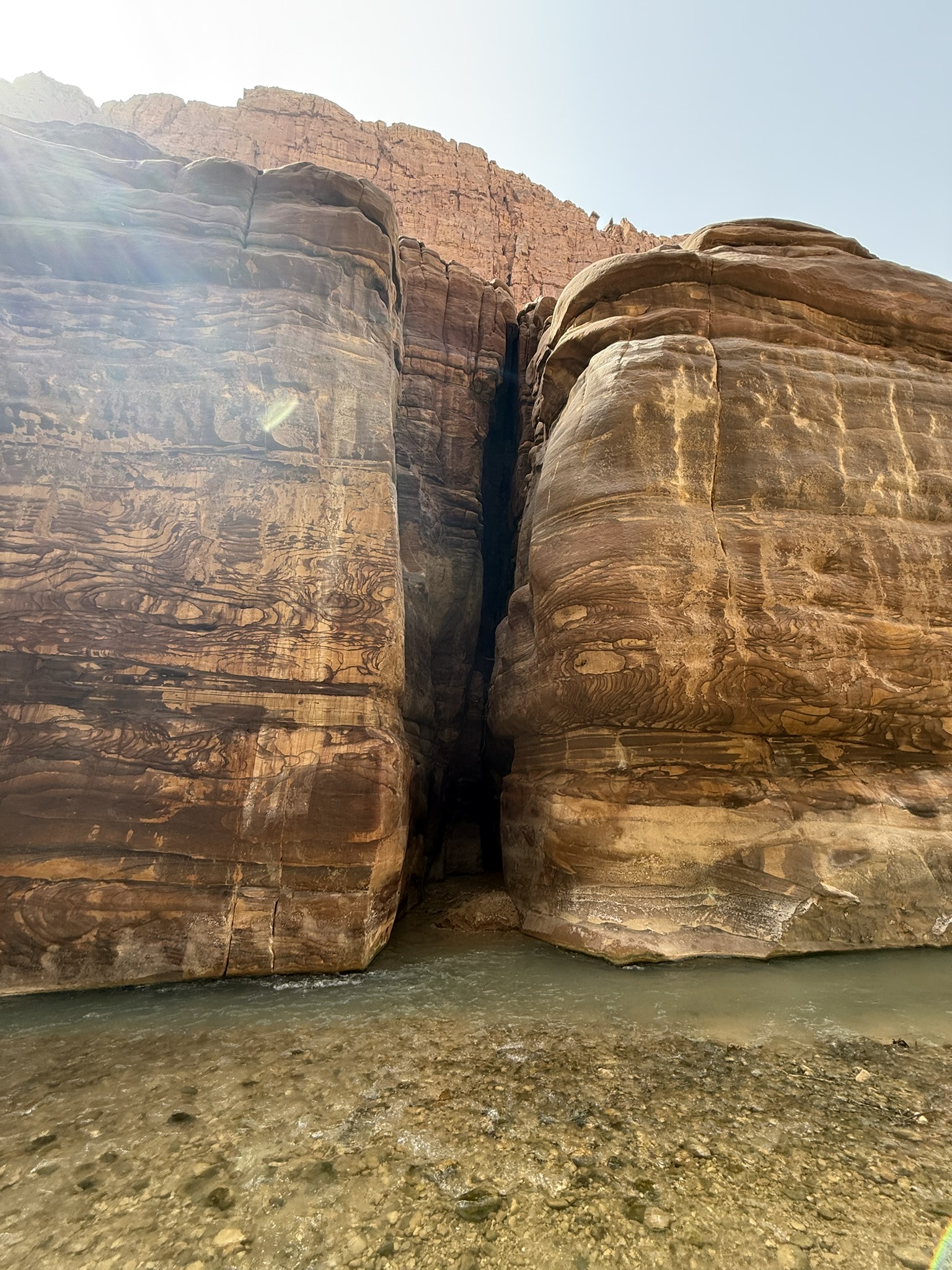
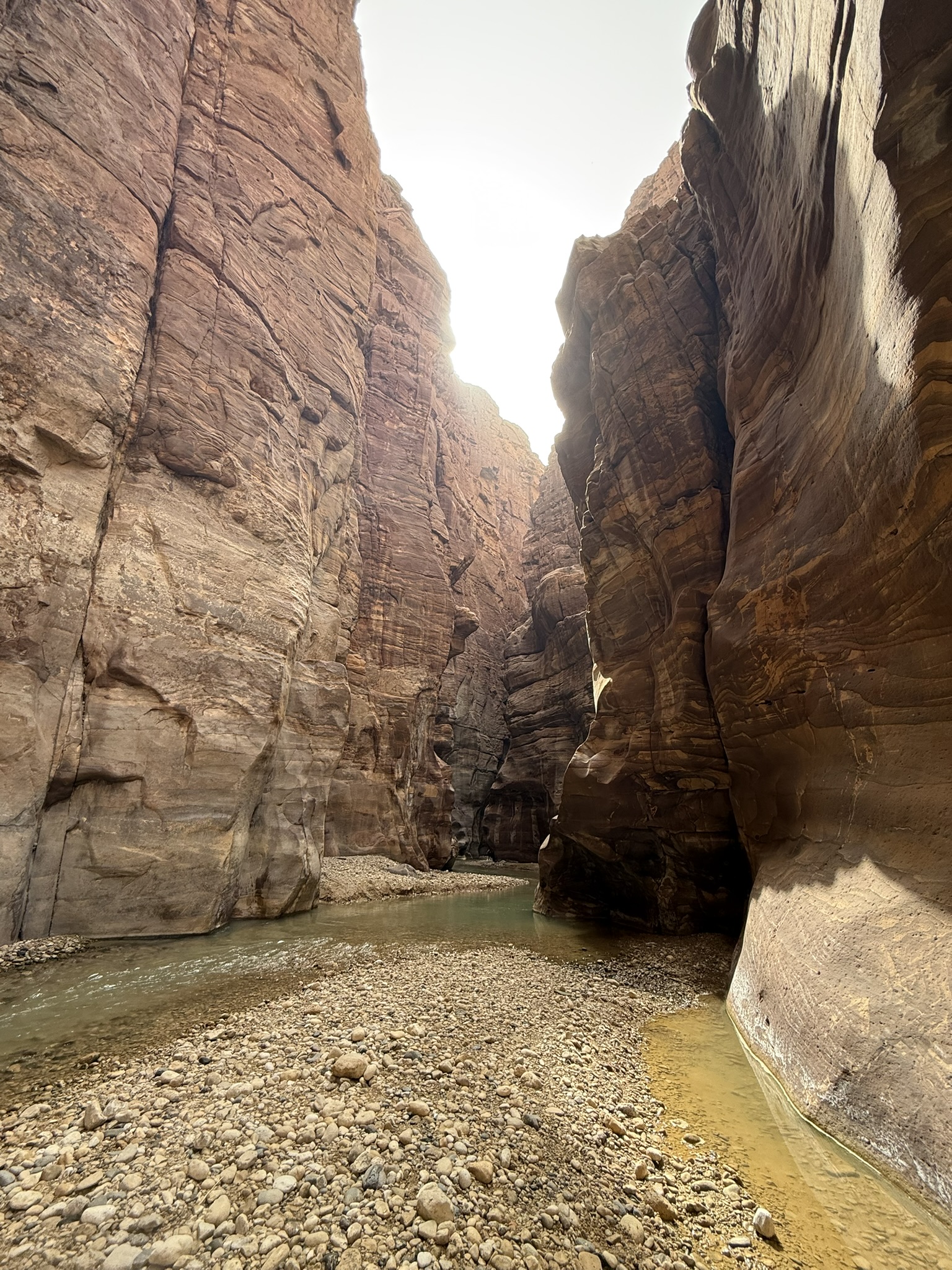
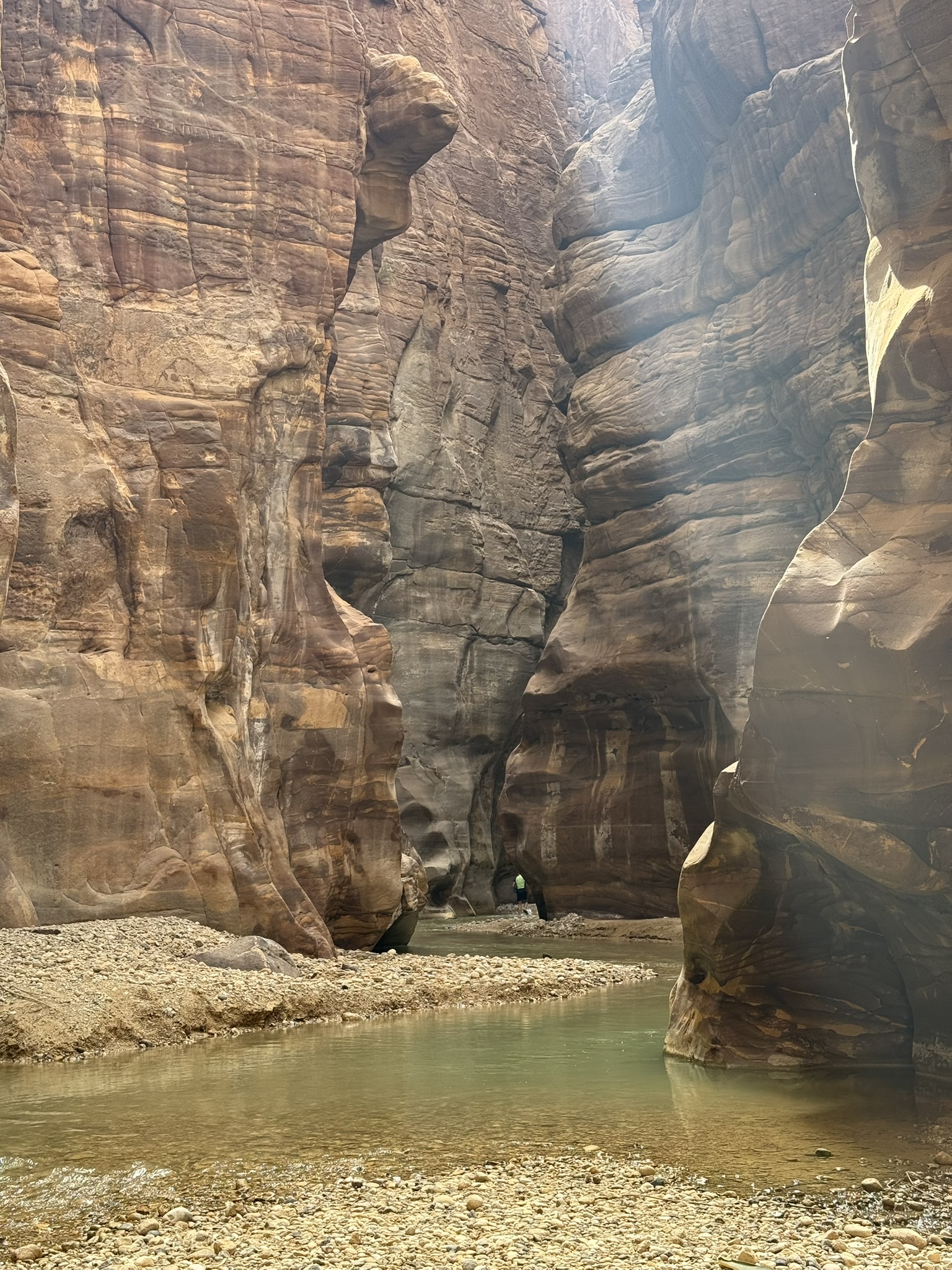
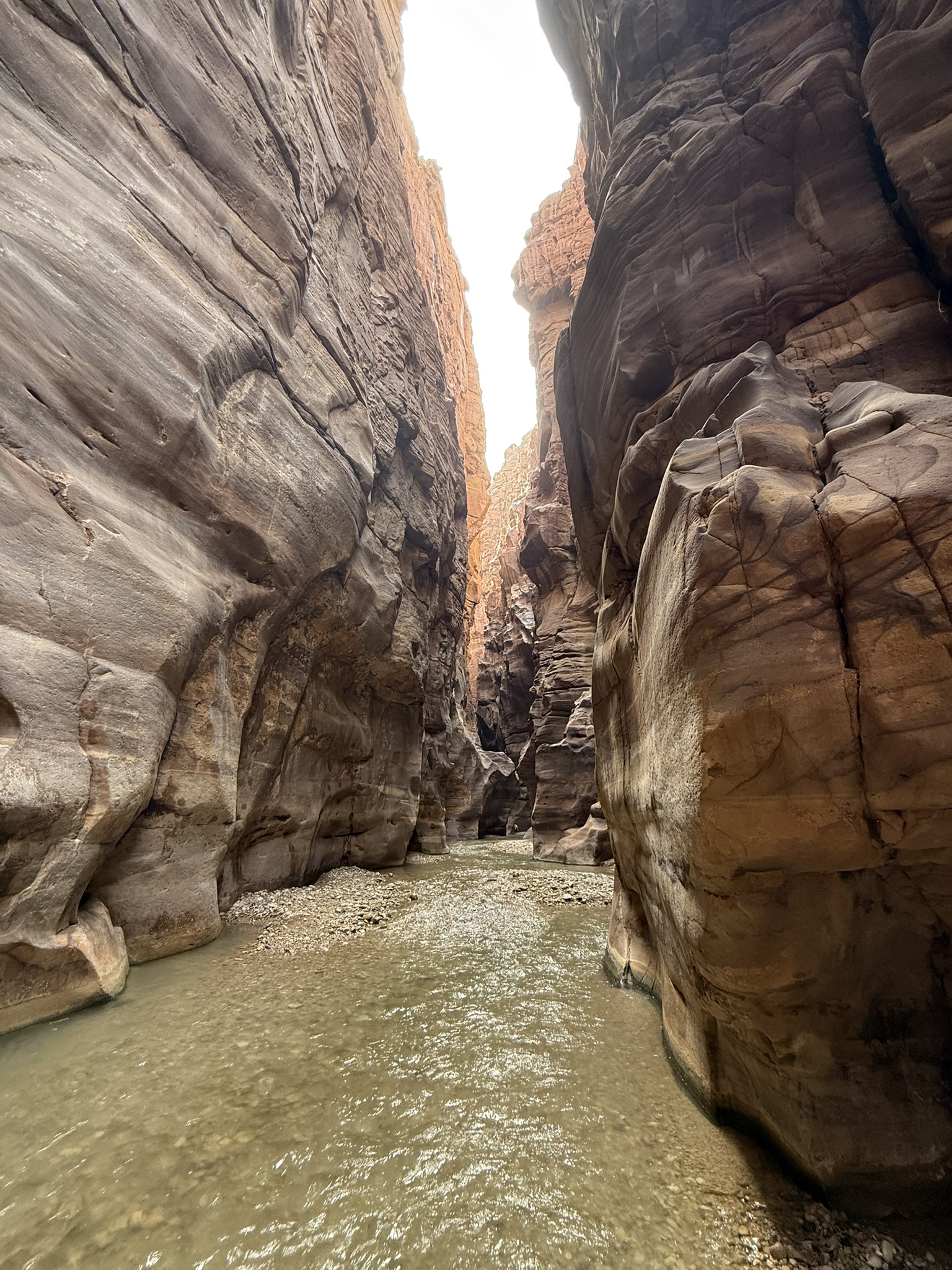
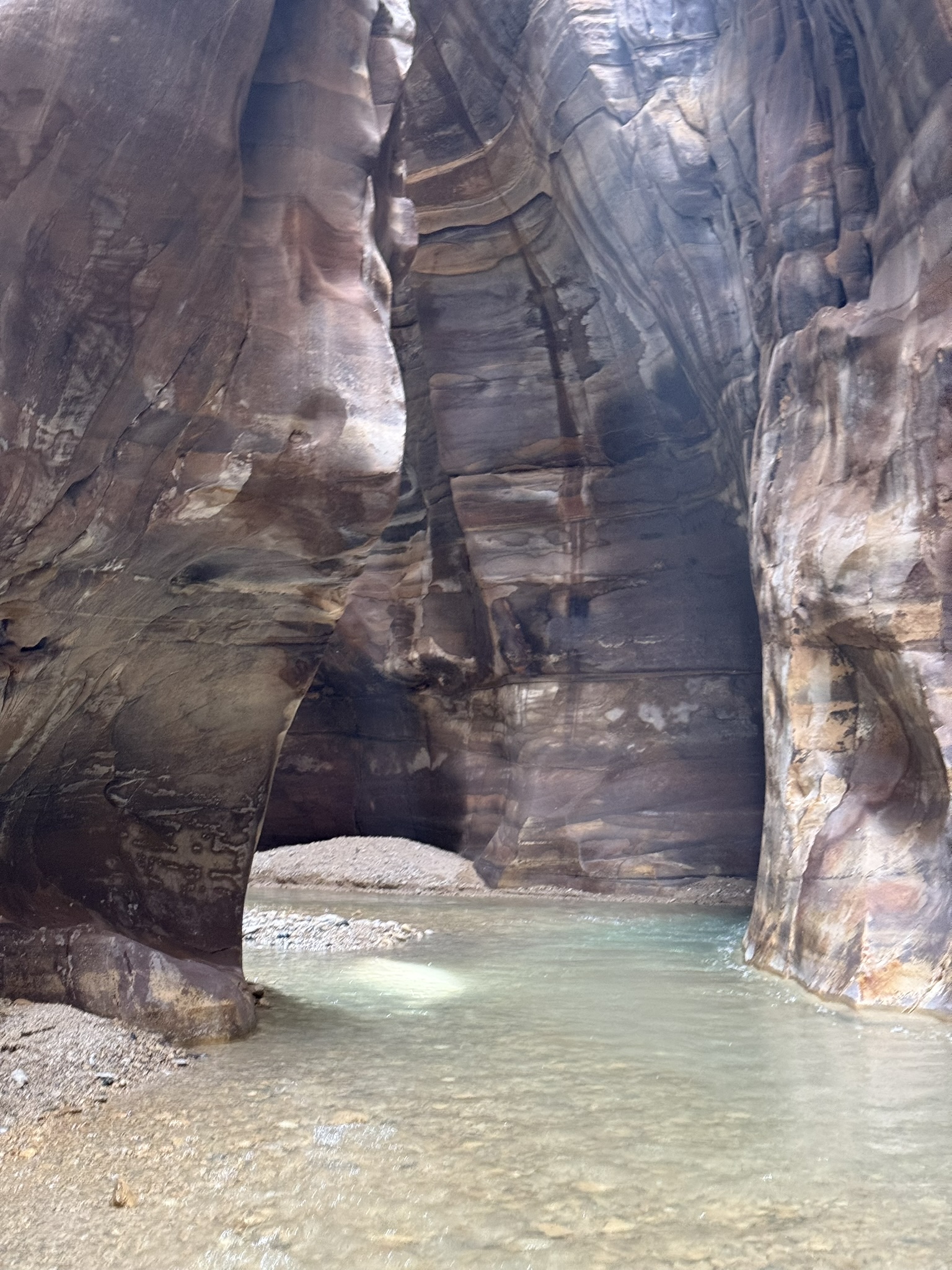
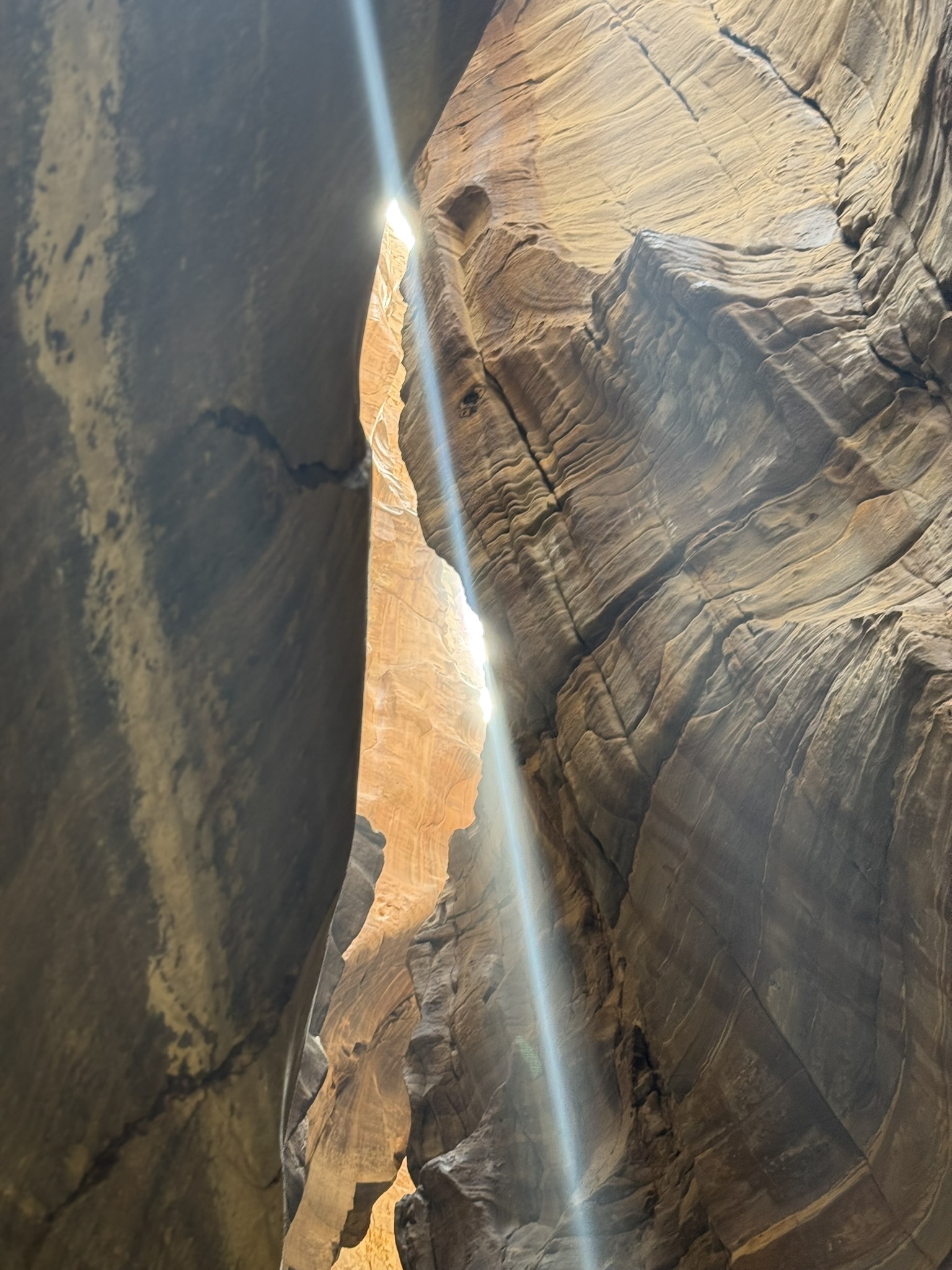
I have to admit that I was enchanted from the very start. The canyon was carved between massive walls layered in orange, brown and every shade in between, while the green water and plants growing along the sides created the most striking contrast. As we waded through the knee-deep water, I couldn’t help but stare up at the enormous canyon walls as sunlight filtered through the narrow opening above. It felt like a hidden oasis where sandstone, water and sky collided. I was simply mesmerised by the whole thing.
While the first part was a walk in the park, allowing us plenty of time to enjoy the scenery, the trail became more challenging the deeper we went. At times, the water grew deep enough that we had to swim to reach the next section. When the current became stronger, we had to cling to ropes and pull ourselves upstream. It was so, so much fun – and so, so rewarding. At the end of the trail, we were greeted by a large waterfall crashing into a deep pool of jade-green water. Also waiting there was the French couple we had kept bumping into ever since our trek from Dana to Petra!
Needless to say, that pool was our hard-earned prize. We must’ve spent at least an hour chilling there, with the little garra fish nibbling at the dead skin on our legs and leaving them feeling and looking like they belonged in a Victoria’s Secret advert.
The Dead Sea
After our adventure, we met up with Omar once again and hopped back into his SUV to continue the tour. Following a few more scenic stops, we finally arrived at our hotel beside the Dead Sea. We rushed to check in before making our way straight down to the water – our final highlight of the day.
The Dead Sea, Omar explained, is one of the most extraordinary places on Earth, famous for its surreal landscape, extreme salinity and long history. Sitting more than 430 metres below sea level, its shores form the lowest exposed land elevation on Earth. It is framed by the mountains of Jordan to the east and the Judean Desert to the west. What looks like a calm blue lake is actually a terminal salt lake with no outlet, meaning that water leaves mainly through evaporation. As it evaporates, the dissolved salts become increasingly concentrated – particularly chlorides of magnesium, sodium, calcium and potassium – making the water around ten times saltier than the ocean. The resulting density makes floating ridiculously easy.
The Dead Sea and its surrounding region also have immense cultural and historical significance. It is referred to several times in the Bible under different names, lies near territories once associated with the ancient kingdoms of Moab and Edom, and is connected through religious tradition with stories such as Sodom, Gomorrah and Lot’s wife. Today, the Jordanian shoreline hosts a string of resorts, beaches, salt formations and viewpoints overlooking the shimmering water.
Sadly, the Dead Sea is also shrinking at an alarming rate, with its level currently dropping by more than a metre each year. This is largely because water from the Jordan River and other tributaries is diverted for human use, compounded by large-scale mineral evaporation projects and the region’s extremely arid climate. As the shoreline retreats, it leaves behind vast stretches of exposed ground and triggers the formation of dangerous sinkholes.
Floating at the Edge of the Earth
After the lecture, we bid Omar farewell and practically ran into the sea. And yes, in case you’re wondering, running into the Dead Sea is not a good idea.
One splash landed straight in my eyes, and I immediately felt like gouging them out. Then some got into my mouth – easily the bitterest, vilest thing I had ever tasted. It took me a while to recover, but when I finally did, I was able to join Rafael at the surface, where he was blissfully and effortlessly floating like a piece of cork. As I let myself go and completely relaxed, I found myself transported back to Laguna Cejar in Chile. Man, that was cool…
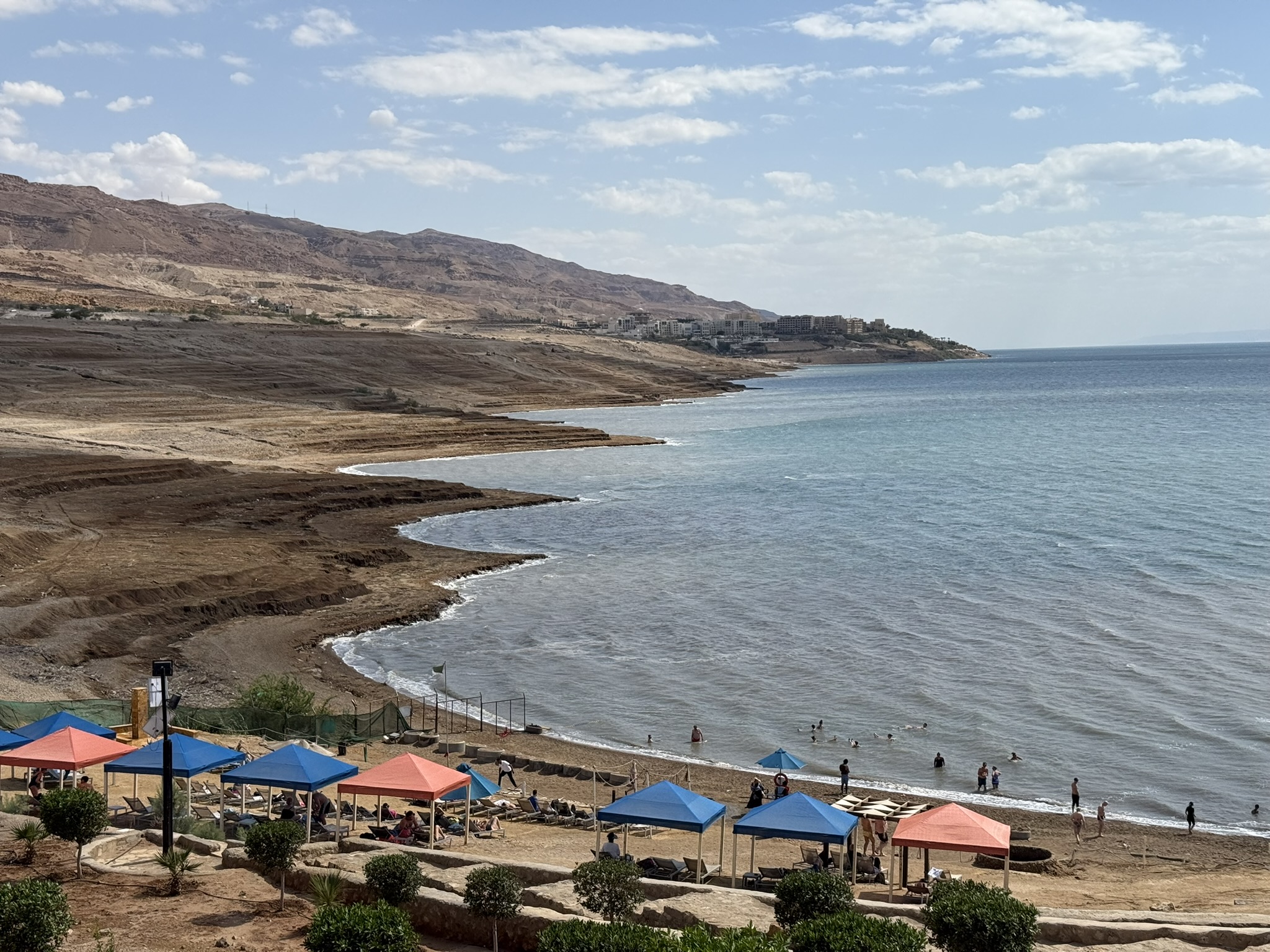
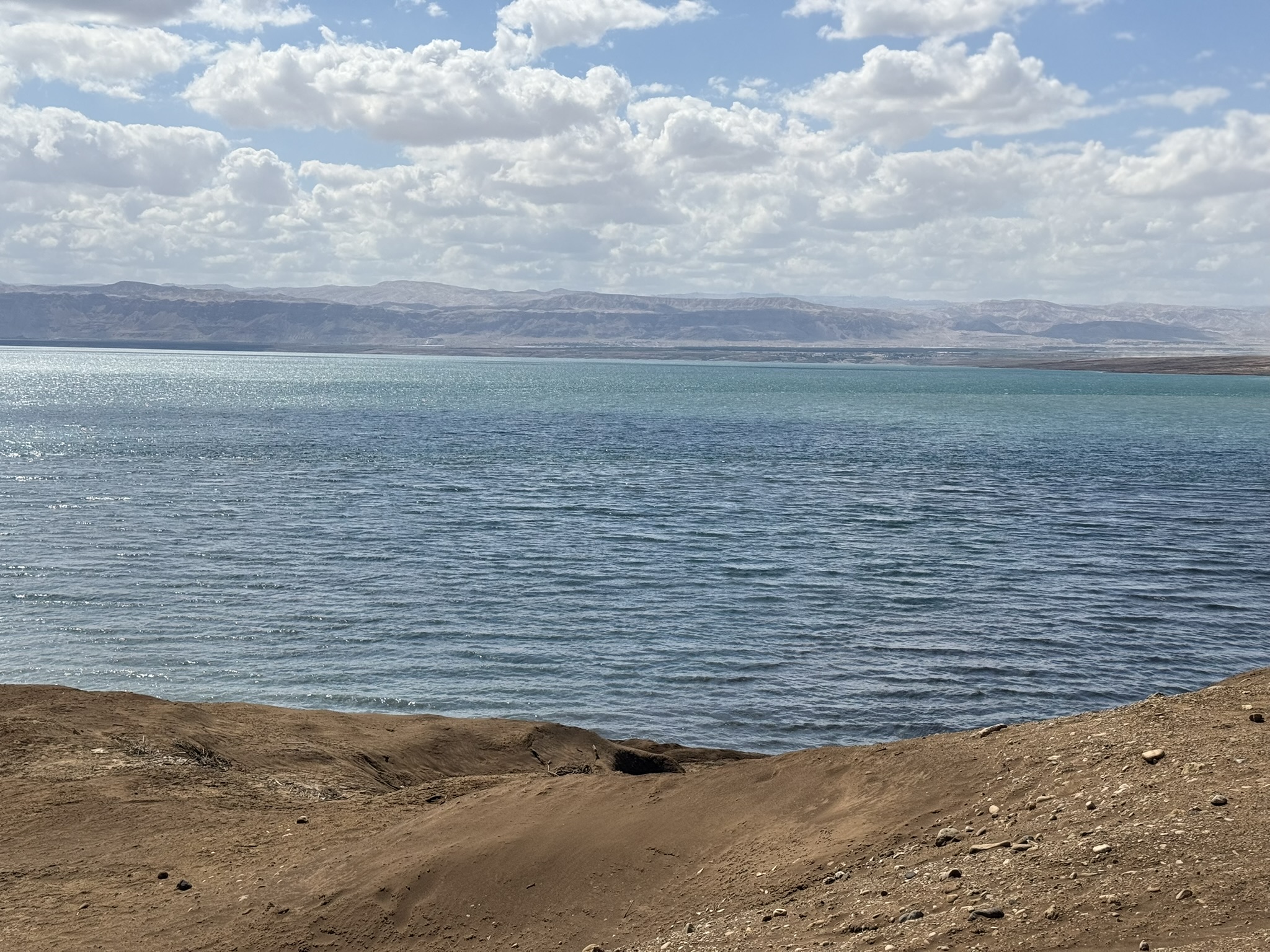
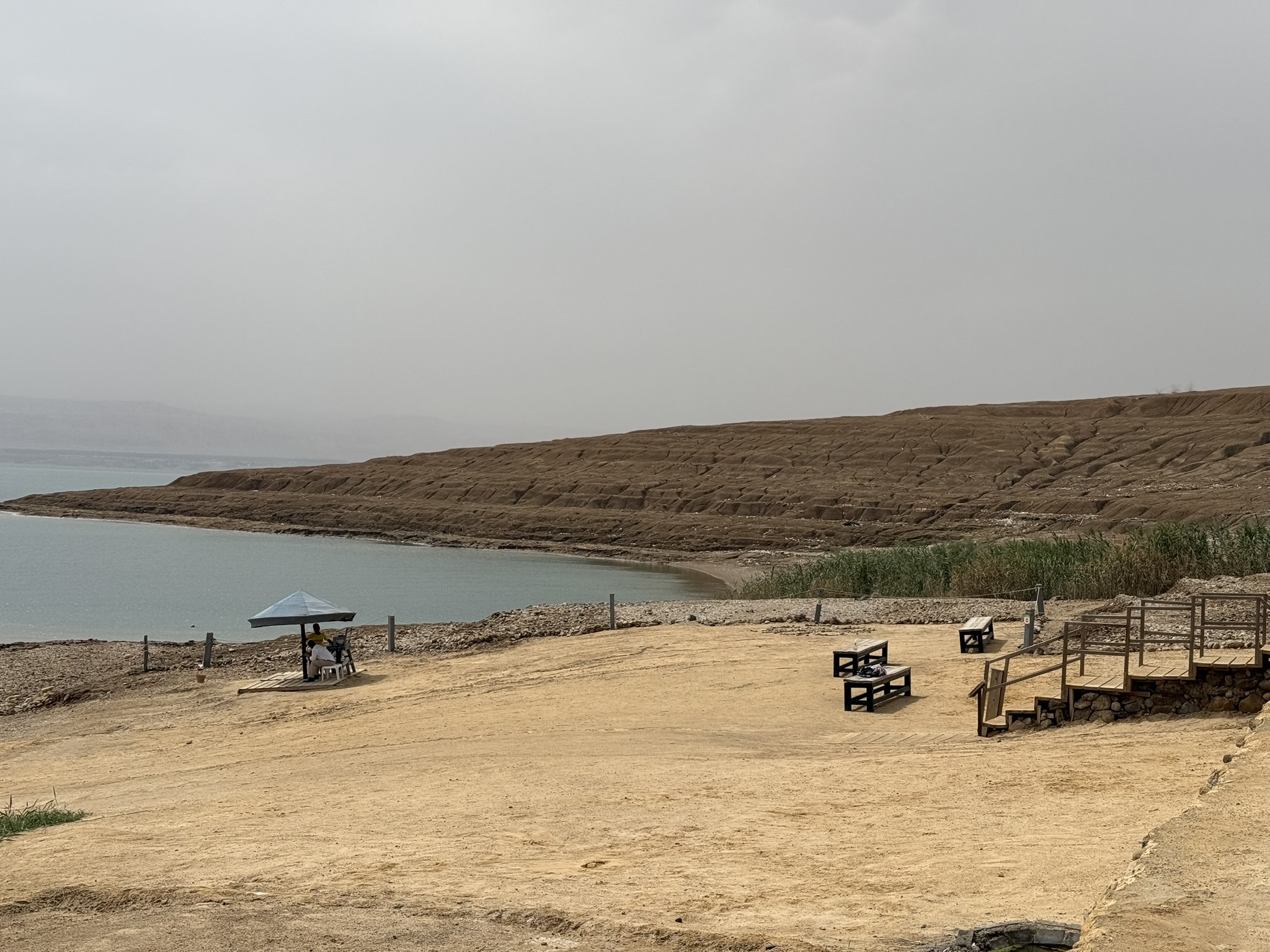

After we had enjoyed our fair share of bobbing around on the surface, we treated ourselves to a full-body mask using the mineral-rich mud from the shore, which is often marketed as a natural treatment for exfoliating and softening the skin. Maybe it was a sham, but honestly, my skin had never felt as soft as it did after I rinsed it off.
It felt so good to simply relax beside the sea and do absolutely nothing. It had been two weeks of constant adventure – this was a much-needed break, to say the least!