Jordan Trail – Day 1: Biblical Beginnings
JORDAN TRAIL
Day 1: Biblical Beginnings
March 30, 2025
PART I
One of the highlights of our trip, and the thing I had been looking forward to most whilst planning it, was a five-day trek from Dana to Petra.
The Jordan Trail is an epic long-distance route that stretches from Um Qais in the north all the way to Aqaba in the south. Covering more than 675 kilometres and passing through 75 towns and villages, the official route involves around 36 days of walking. Passing through landscapes associated with biblical history, Roman ruins and Nabataean sites, it is practically a journey through time. From Mediterranean woodland and jagged mountains to arid deserts and the waters of the Red Sea, the trail crosses a remarkably diverse stretch of land.

Given that I don’t have the luxury of spending some 36 days on holiday, at least not all at once, I had decided to tackle a shorter section of the Jordan Trail. The Dana-to-Petra trek is one of its most celebrated stretches for several reasons. Among them is the huge variety of landscapes and ecosystems packed into a relatively short distance, together with the fact that the trail ends at Petra, one of the New 7 Wonders of the World and a UNESCO World Heritage Site. Our five-day itinerary covered roughly 80 kilometres..
And so, you can imagine my excitement the second I discovered this trek. I don’t ever remember booking something so quickly, and when I asked Rafael whether he wanted to join, he signed up without a moment’s hesitation – despite never having done any trekking before!
Strangers on the Trail
Early that morning, Rafael and I made our way to the meeting point. There, we met Delia, a gorgeous Jordanian woman with the most beautiful, most voluminous curly hair I had ever seen, who introduced herself as our guide.
Soon enough, the rest of the travellers we would be trekking with began to trickle in. First up was John, a Brit on holiday. Then came Hans from Germany and Doug from the Netherlands. Last but not least was Lara from the UK. Quite the eclectic group, I would say. It didn’t take long for us to start bonding. We started off chatting about our previous hiking and trekking experiences. Doug and John had both climbed Acatenango and endured the horror of waking before sunrise to complete the gruelling final ascent to the summit. Meanwhile, Lara and Rafael would be embarking on their first-ever multi-day trek. Exciting!
I had already warned Rafael that, by the end of the trek, we would probably become family. So far, I had been on several multi-day group adventures, and that was always how they had ended. First, there was the Ciudad Perdida family in Colombia, followed by the Machu Picchu family in Peru, the El Mirador family in Guatemala and, finally, the Antarctica family.
Somehow, I had a feeling that this would turn out the same way. Judging by how quickly we broke the ice during the drive to Dana, it didn’t seem as though I was imagining things. In fact, we spent the two-hour journey talking about all kinds of things, including the promotional video for the trek. Quite ironically, it featured an older woman who broke down in tears while describing her experience.
As the others made fun of her and laughed at her expense, I found myself increasingly certain that this would be us by the end of the trip – although perhaps with slightly less sobbing and drama.
The Trailhead
On the way, Delia explained that the biodiversity along the Dana-to-Petra trail would leave us astounded. Given the aridity and relative lack of life that most of us had come to associate with desert landscapes, I can definitely say that we took her claims with a pinch of salt.
That said, the journey there had already given us a glimpse of what to expect, with glorious views over the gorges and canyons below leaving every one of us in awe. I swear I must’ve taken a hundred photos before we even reached the starting point.

Once there, we were introduced to Athallah, our local guide, and Tarrad, his trusty steed – or donkey. They would be accompanying us as far as Little Petra – our final stop on the fourth day. An assortment of snacks, including individual tubs of hummus, which I didn’t even know existed, tomatoes, cucumbers and bread, was laid out for us to pack into lunch bags. And, with that, we were ready to begin our adventure.
PART II
A Biblical Tangent
I mean that the landscapes looked almost exactly like the scenes portrayed in films and documentaries about Jesus. The barren mountains, dusty paths and scattered vegetation felt so familiar that I half-expected a bearded man in flowing robes to appear around the next corner, followed by twelve exhausted-looking disciples.
The thought sent my mind wandering. Contrary to what one might expect while reading about my life, I was born and raised as a Roman Catholic. Growing up, I believed in God and prayed to this metaphysical entity that had been as much a part of my life as anyone I had ever met. I looked forward to going to church every Sunday, prayed every night and even collected holy cards, for Christ’s sake – literally. I was especially fascinated by the stories in the Bible featuring the Devil, which probably should have told everyone something.
During adolescence, however, I kinda distanced myself from it all – partly because being religious wasn’t nearly as cool as drinking alcohol and smoking, but mostly because I had begun questioning existence, morality and everything I had been taught. Little by little, religion lost its importance, and the God who had accompanied me from the very beginning was gradually sidelined. Eventually, I became convinced that God was little more than a human construct: a comforting fantasy invented to explain the inexplicable, encourage people to aspire to virtue and, in the hands of organised religion, accumulate money and power. Day in, day out, I saw prayers go unanswered and people suffer. How could an omnipotent and omnibenevolent God allow that? The whole “God lets us do our own thing” argument just didn’t cut it anymore. And so, God, religion and the metaphysical became things I rarely dwelled on.
Travelling, however, had begun to complicate that certainty. I had witnessed so many surreal landscapes and experienced so many improbable adventures that, every now and then, I found myself looking up towards the sky and feeling grateful to something I couldn’t quite define. I still didn’t believe in the traditional image of God, but dismissing everything as meaningless chance no longer felt entirely satisfying either. Was this overwhelming sense of wonder, perhaps, where the original concept of God had come from? Had our ancestors looked upon landscapes such as this one, felt the same mixture of awe and insignificance, and concluded that something greater than themselves must have been responsible?
I don’t believe in a single entity controlling everything. I don’t picture an old man in the sky moving us around like pieces on a chessboard, intervening when he feels like it and ignoring us when he doesn’t. But whenever I feel so grateful that I can barely contain it, I find myself looking up at the sky and thanking something. I choose to call that something The Universe. Perhaps it is only the physical universe itself: observable, indifferent and governed by natural laws. Yet there is still a sense of magic and spirituality to it that I can appreciate.
So, I suppose The Universe has become my definition of God – not a being that intervenes, rewards or punishes, but everything that exists and everything that made it possible for me to be here experiencing it.
Four Worlds in One Day
So yeah, where was I? Oh yes, Dana. The landscapes looked simply biblical and picturesque, much like those portrayed in films and documentaries about the Old and New Testaments. Although I was no longer a believer, I have to admit that I felt enveloped by a certain warmth and nostalgia.
Much as Delia had explained, the Dana Biosphere Reserve spans four biogeographical zones: Mediterranean, Irano-Turanian, Saharo-Arabian and Sudanian. Its sharp changes in elevation and climate allow a striking variety of habitats to exist within a relatively compact area, making Dana one of the most biologically diverse parts of Jordan. Its dramatic landscapes, she explained, are the product of geological uplift, weathering and erosion acting on layers of limestone, sandstone and other rock over millions of years. Rainfall and flowing water have gradually carved out the reserve’s wadis, ridges and valleys, exposing sedimentary layers that often differ in colour from those above and below them.
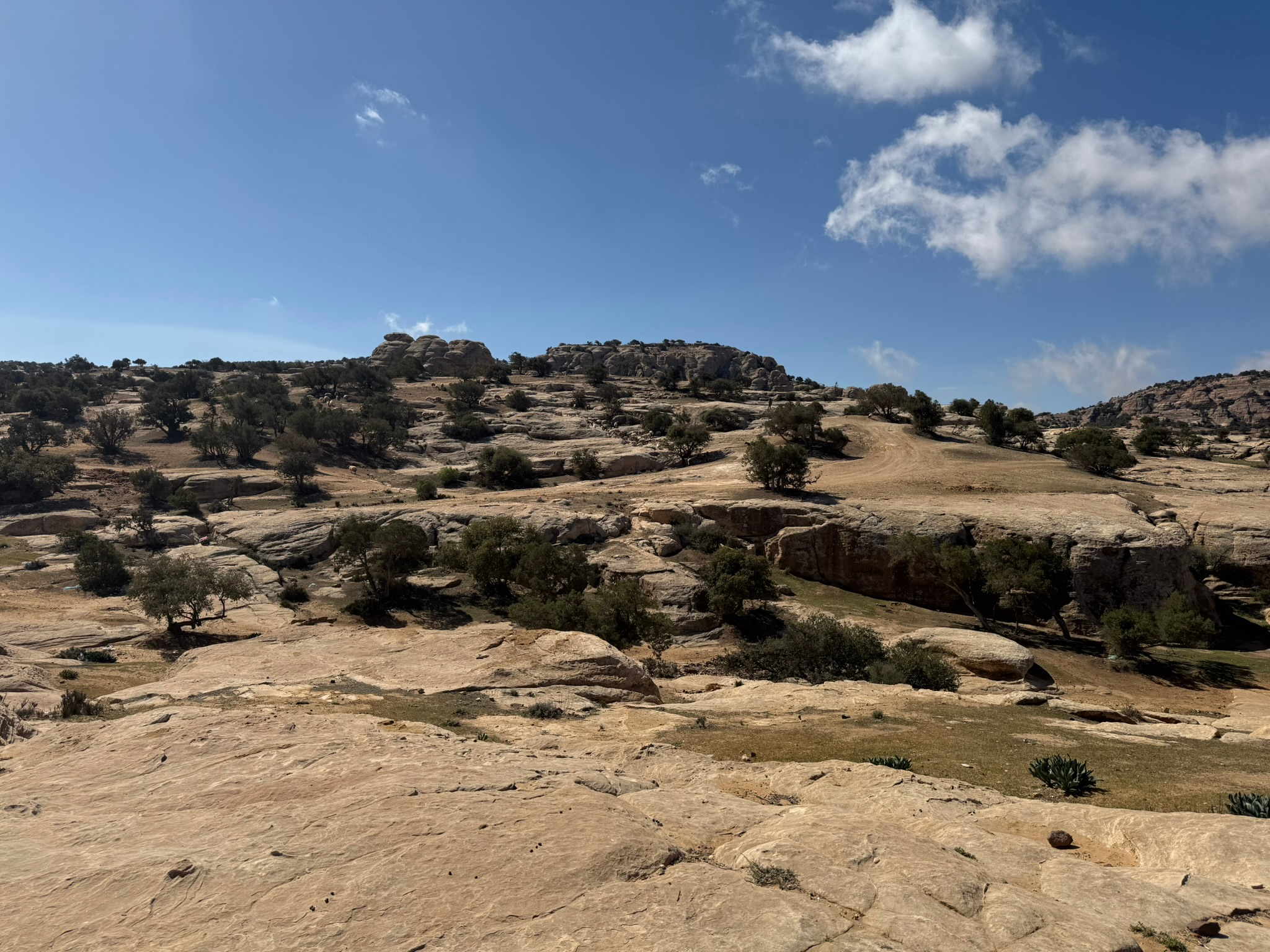
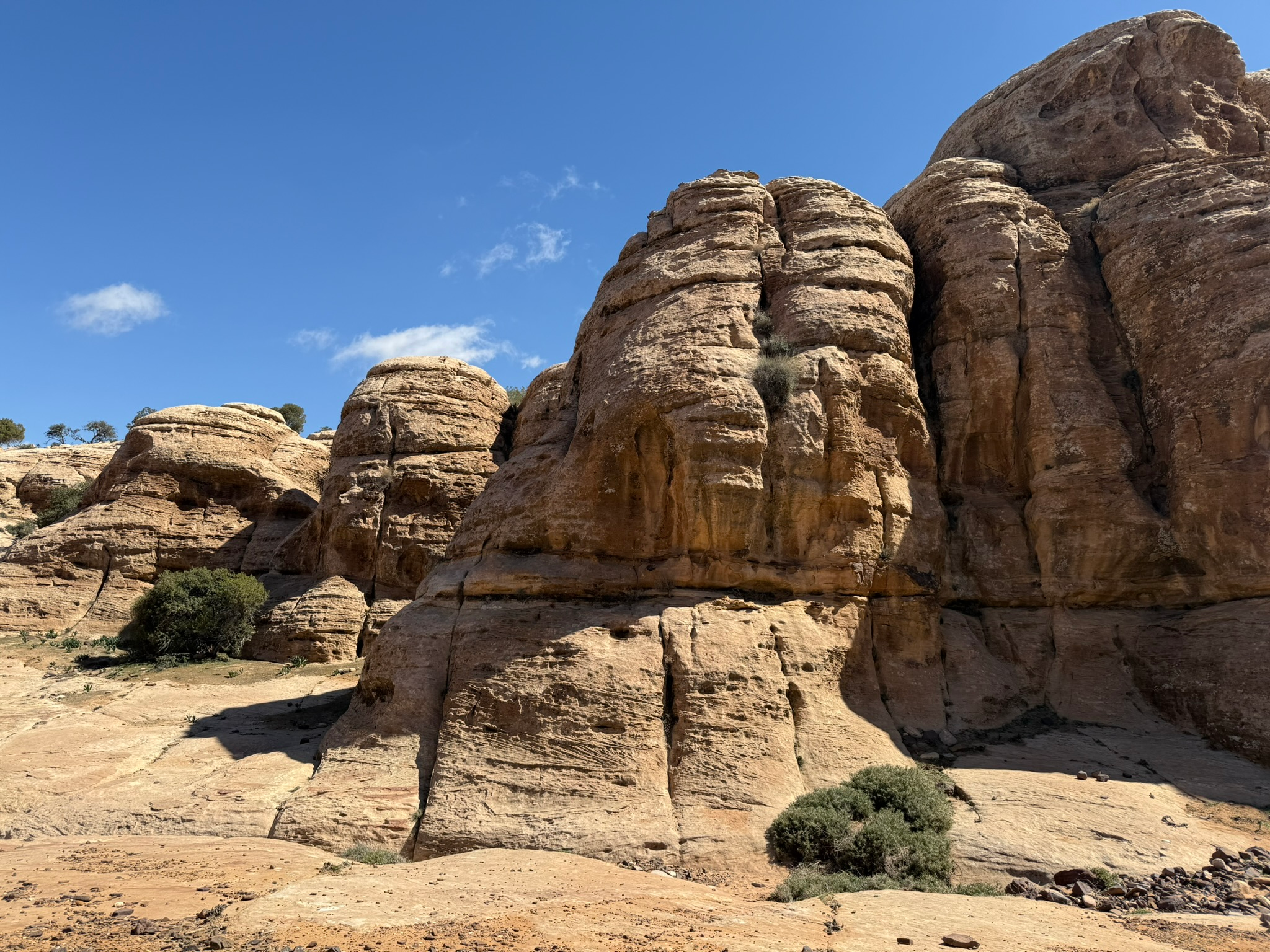
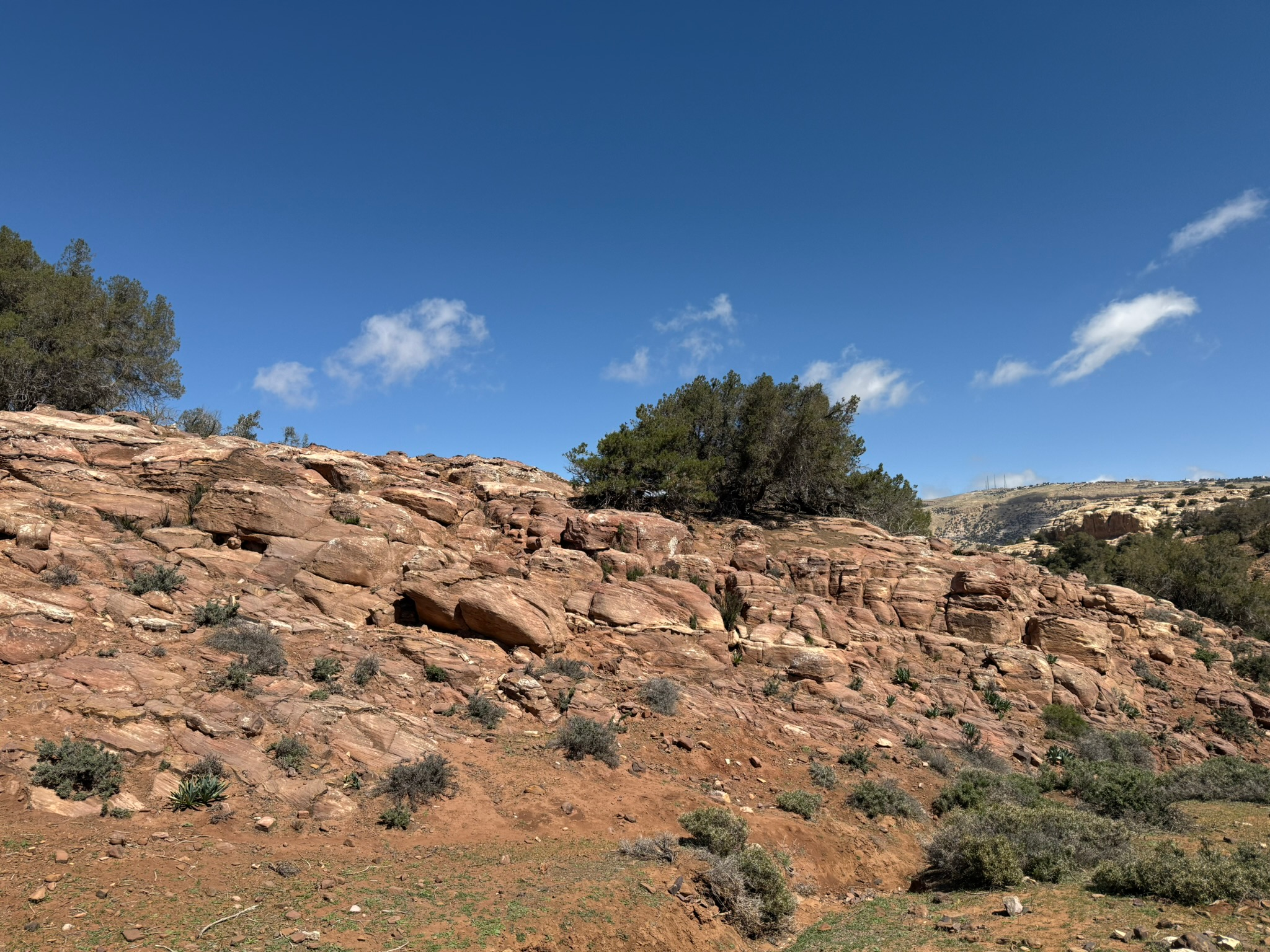
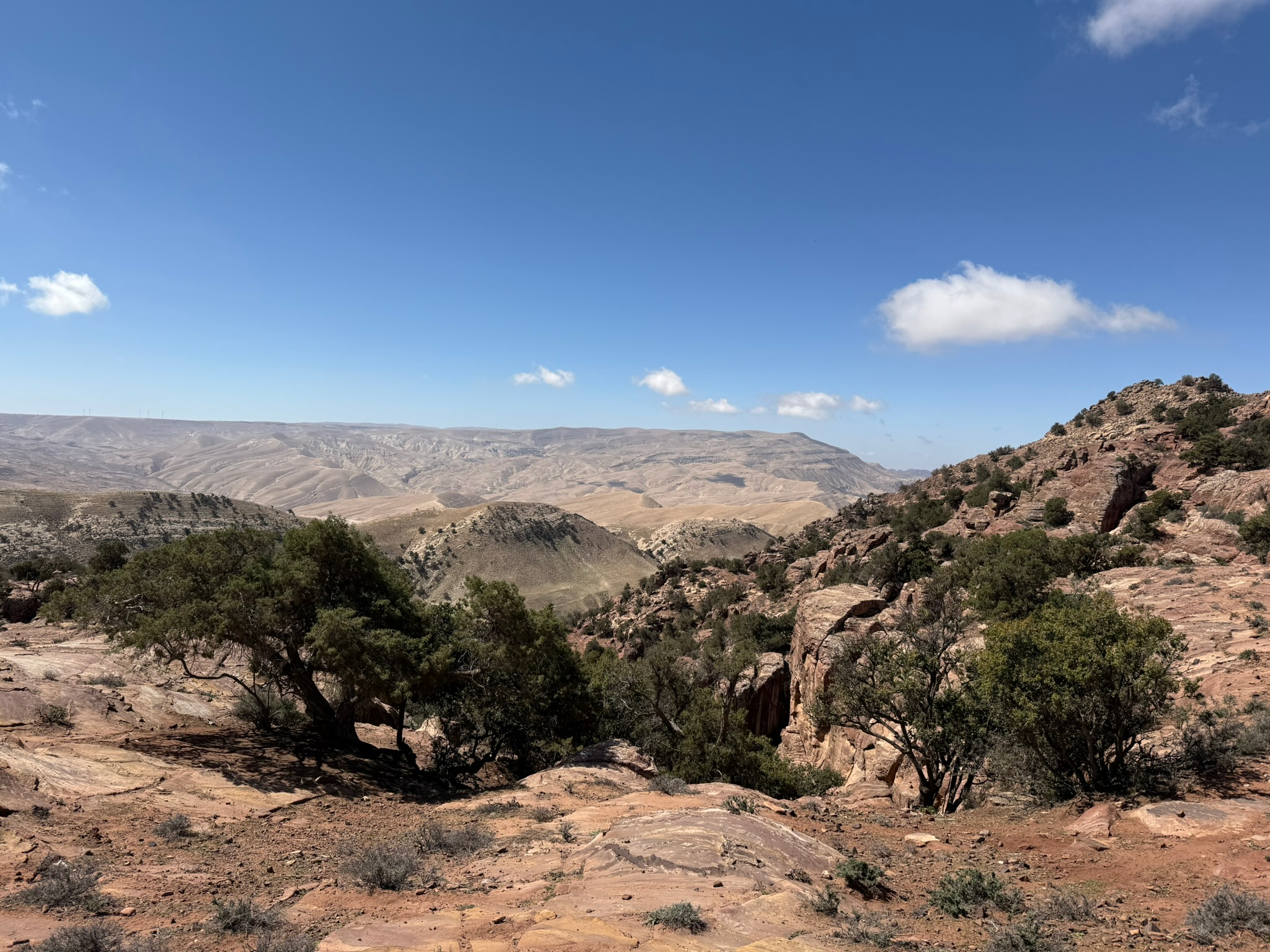
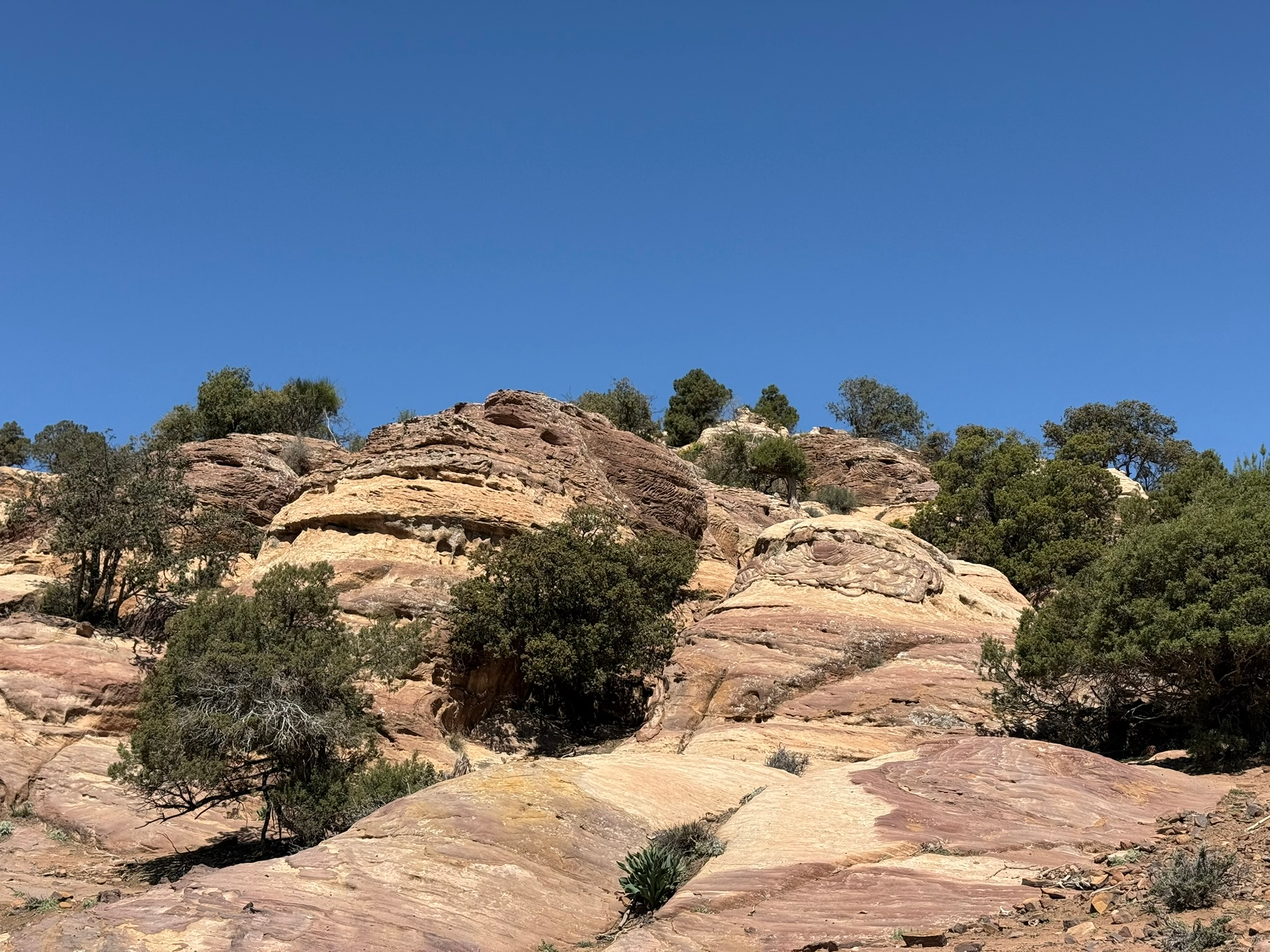
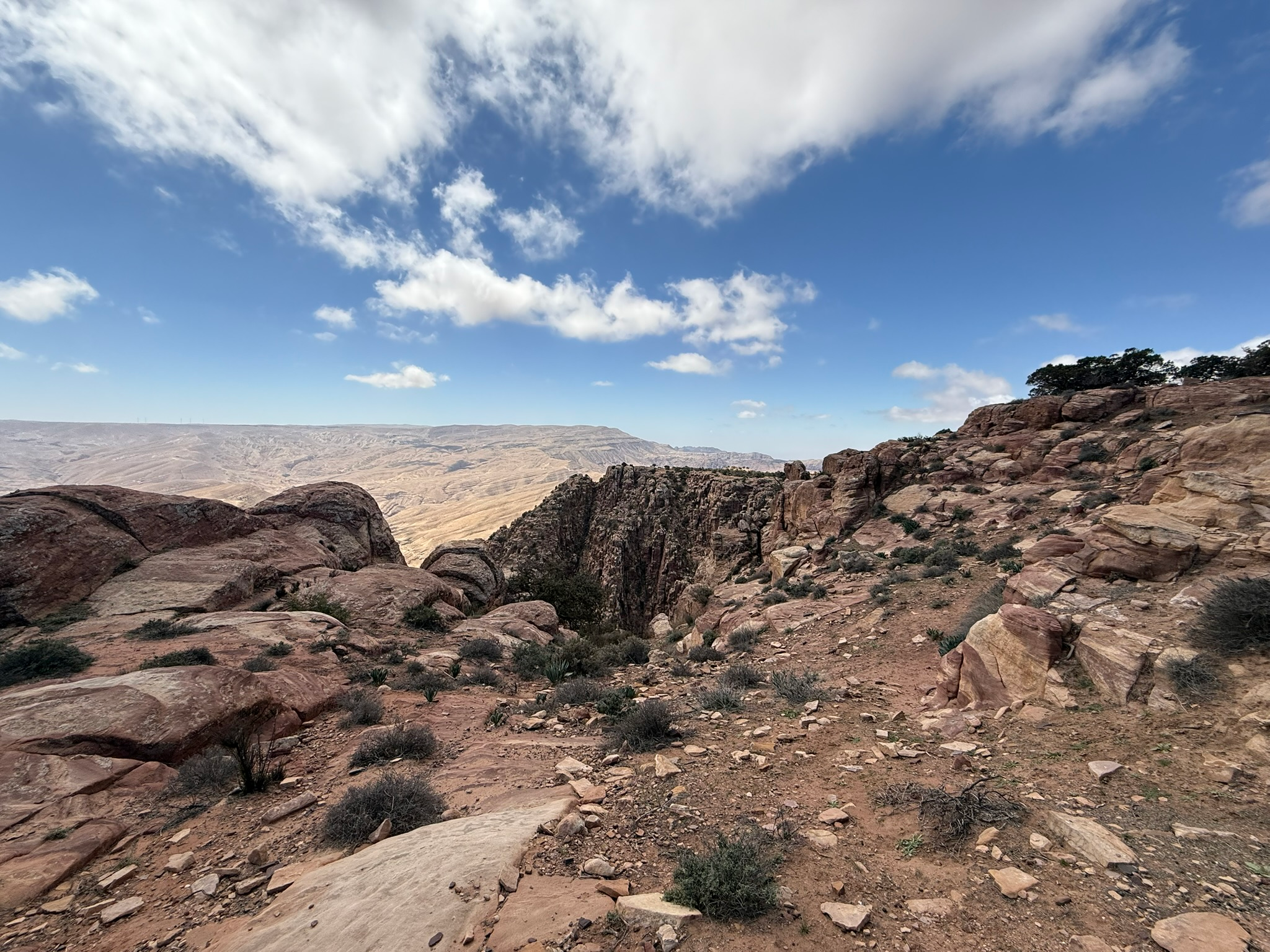
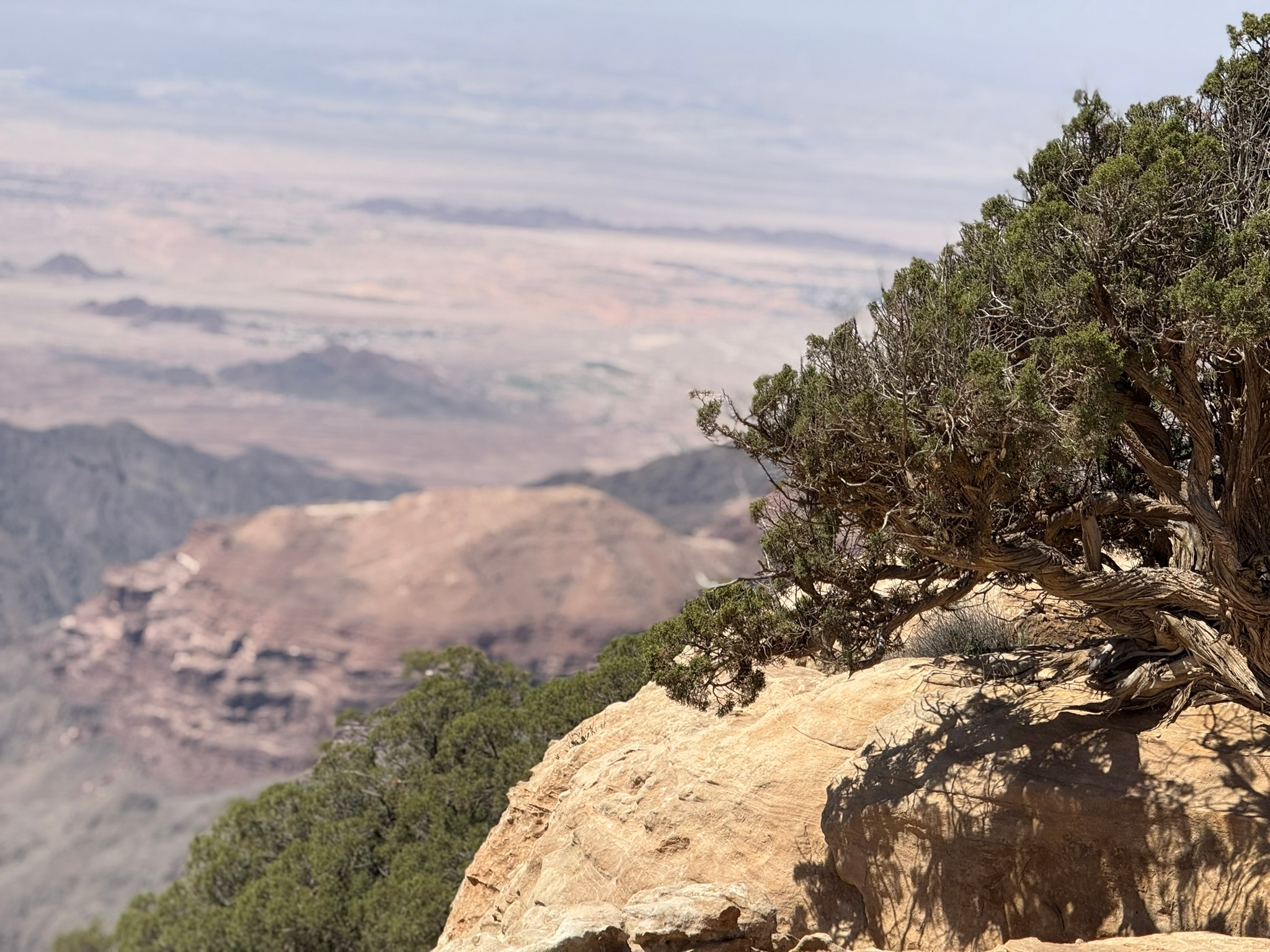
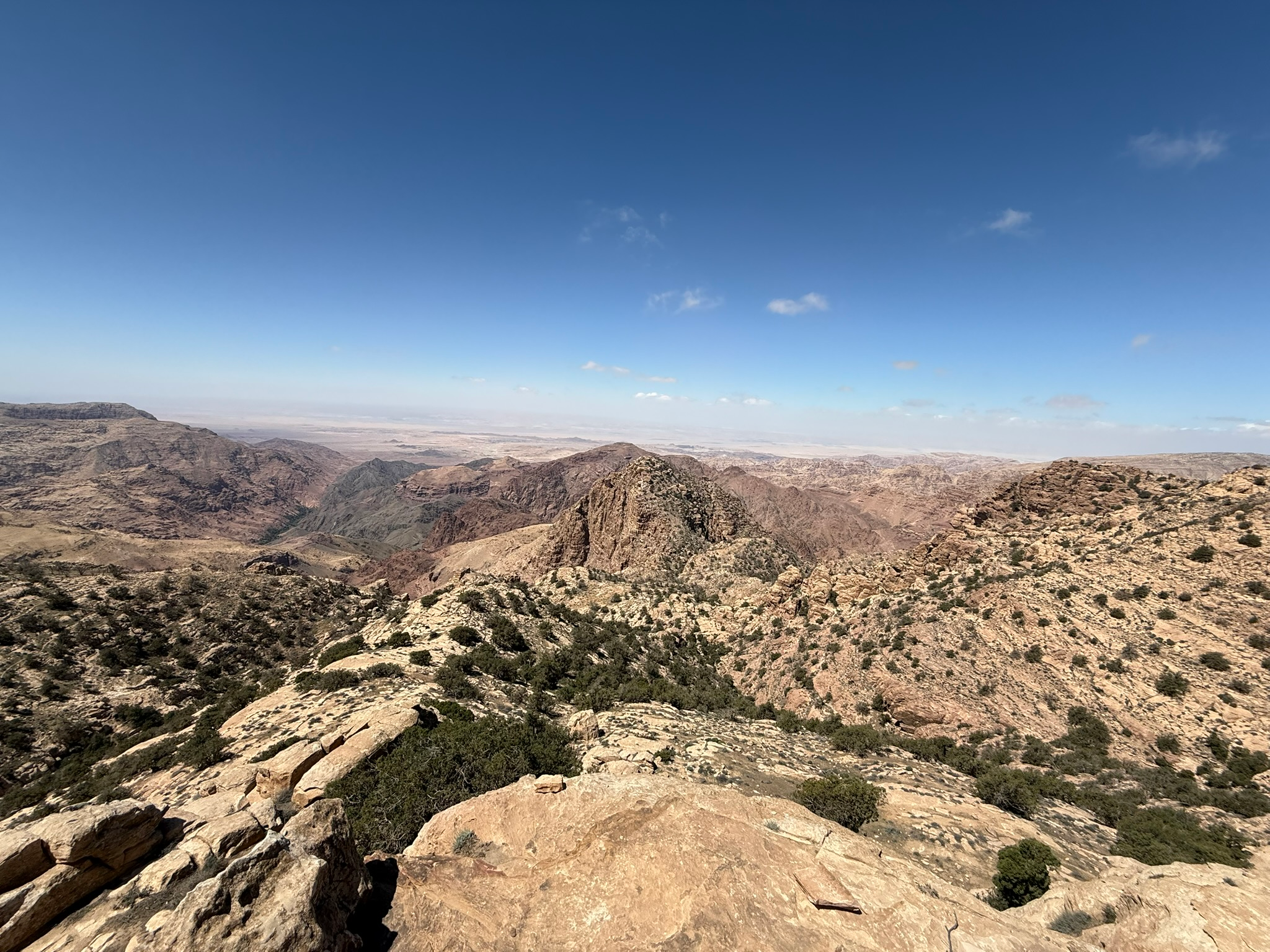
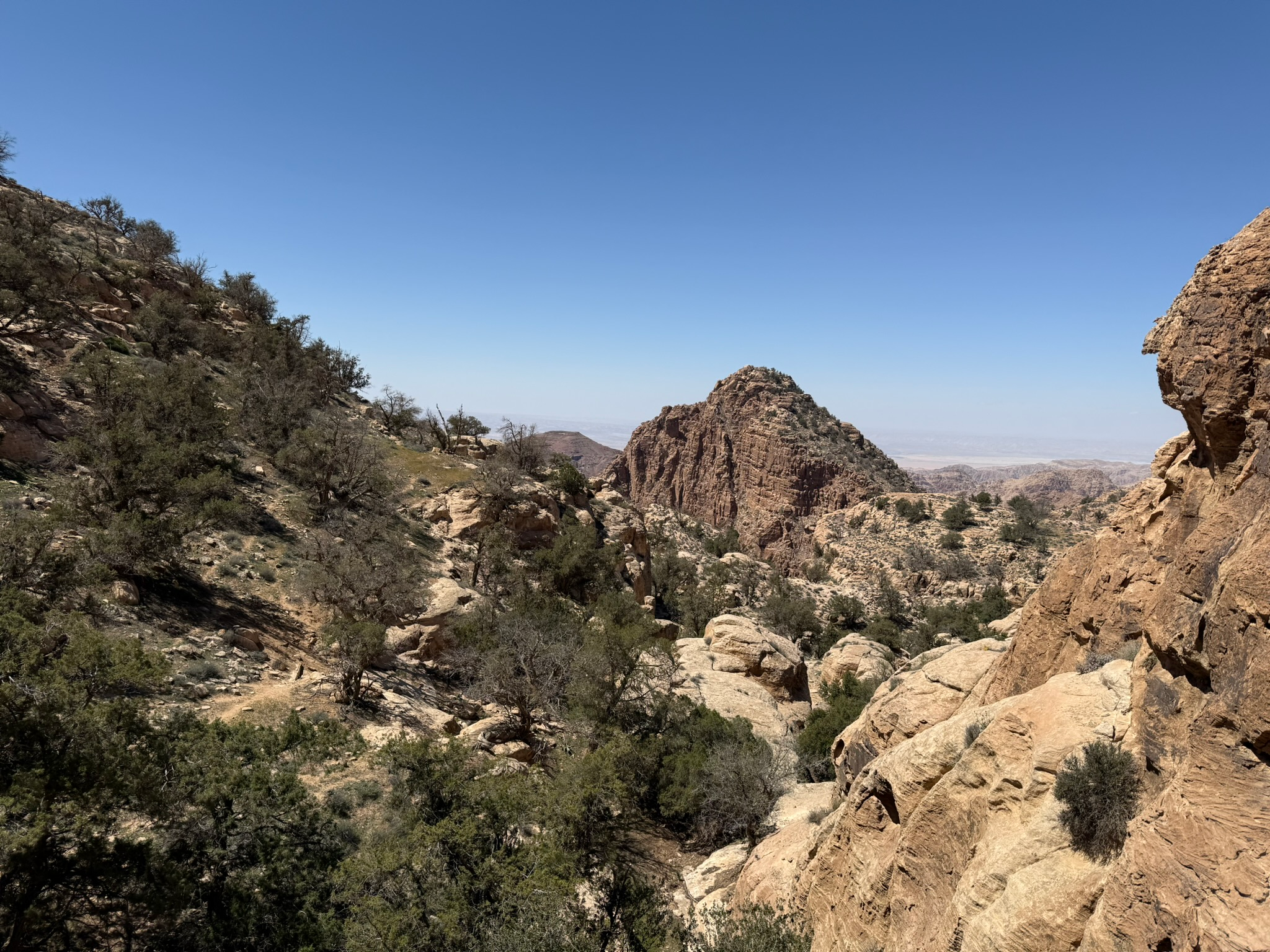
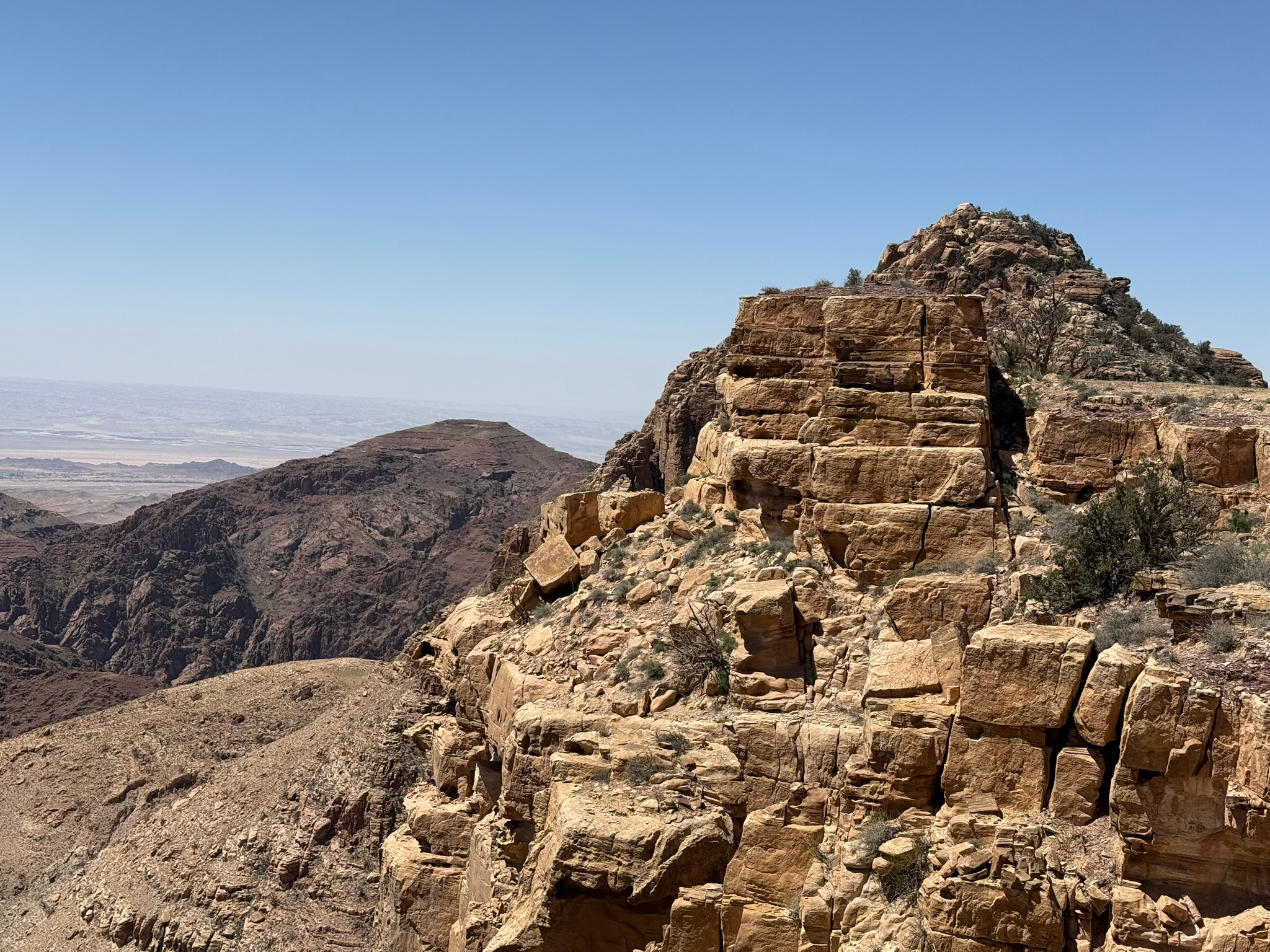
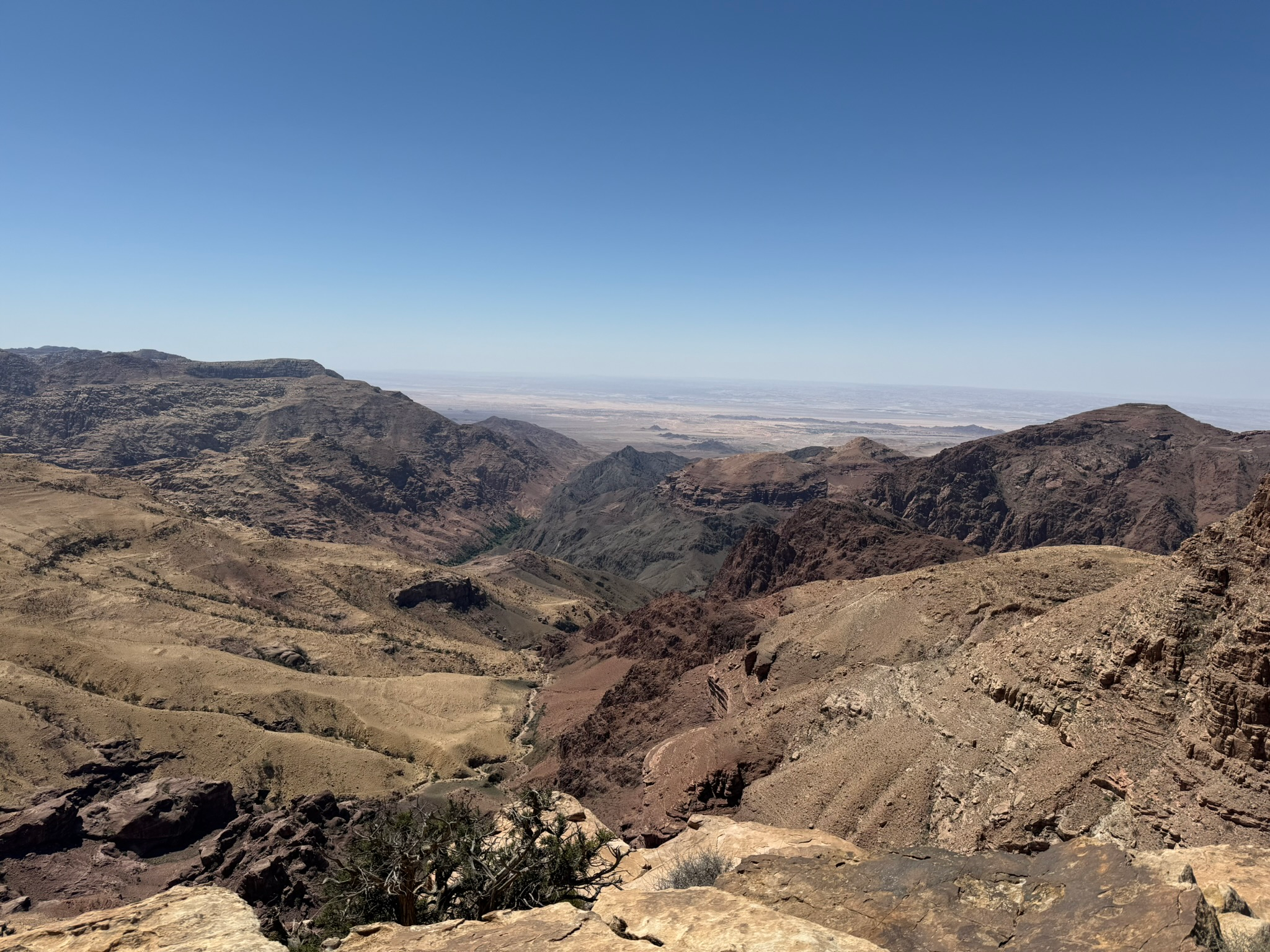
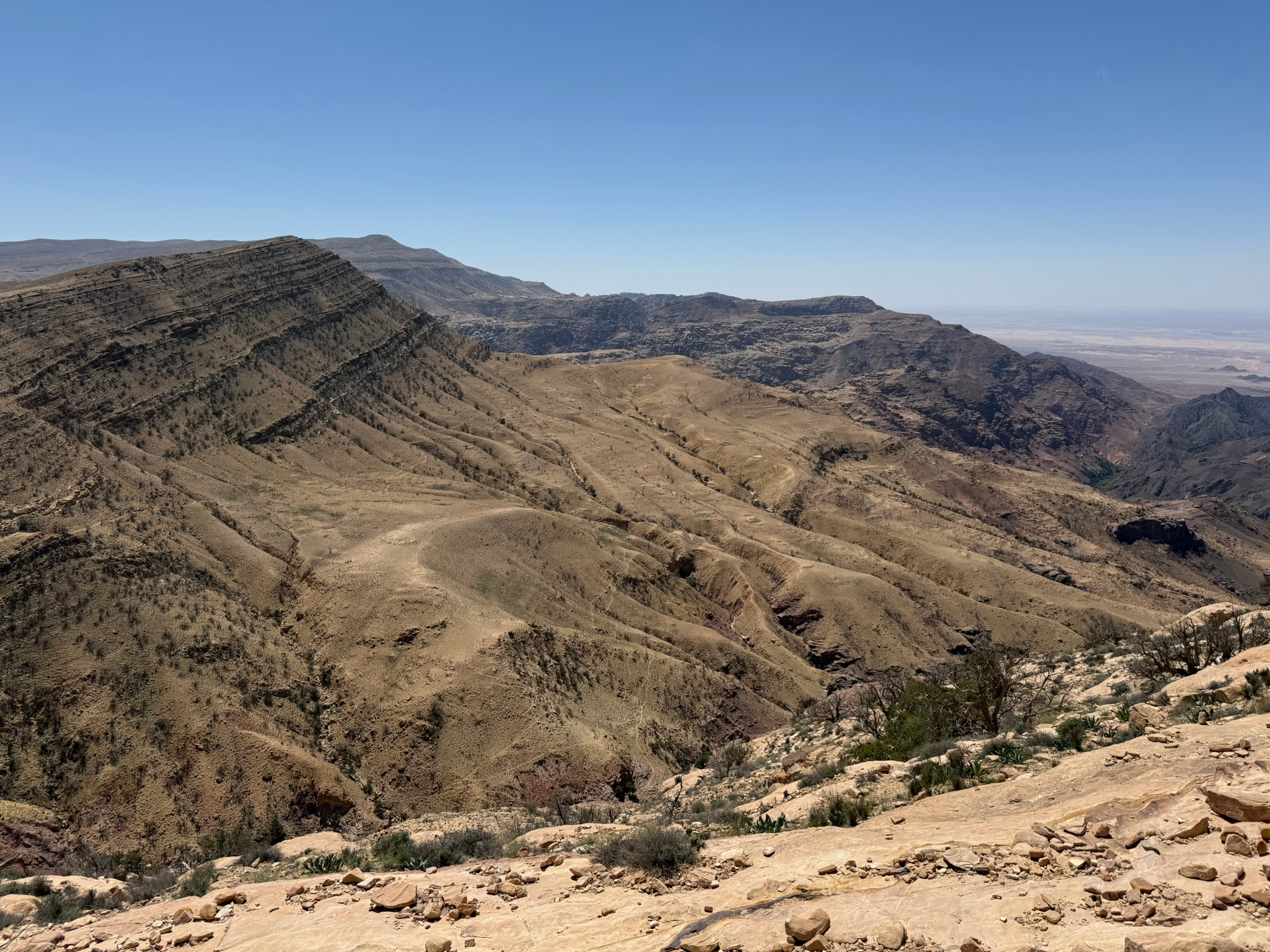
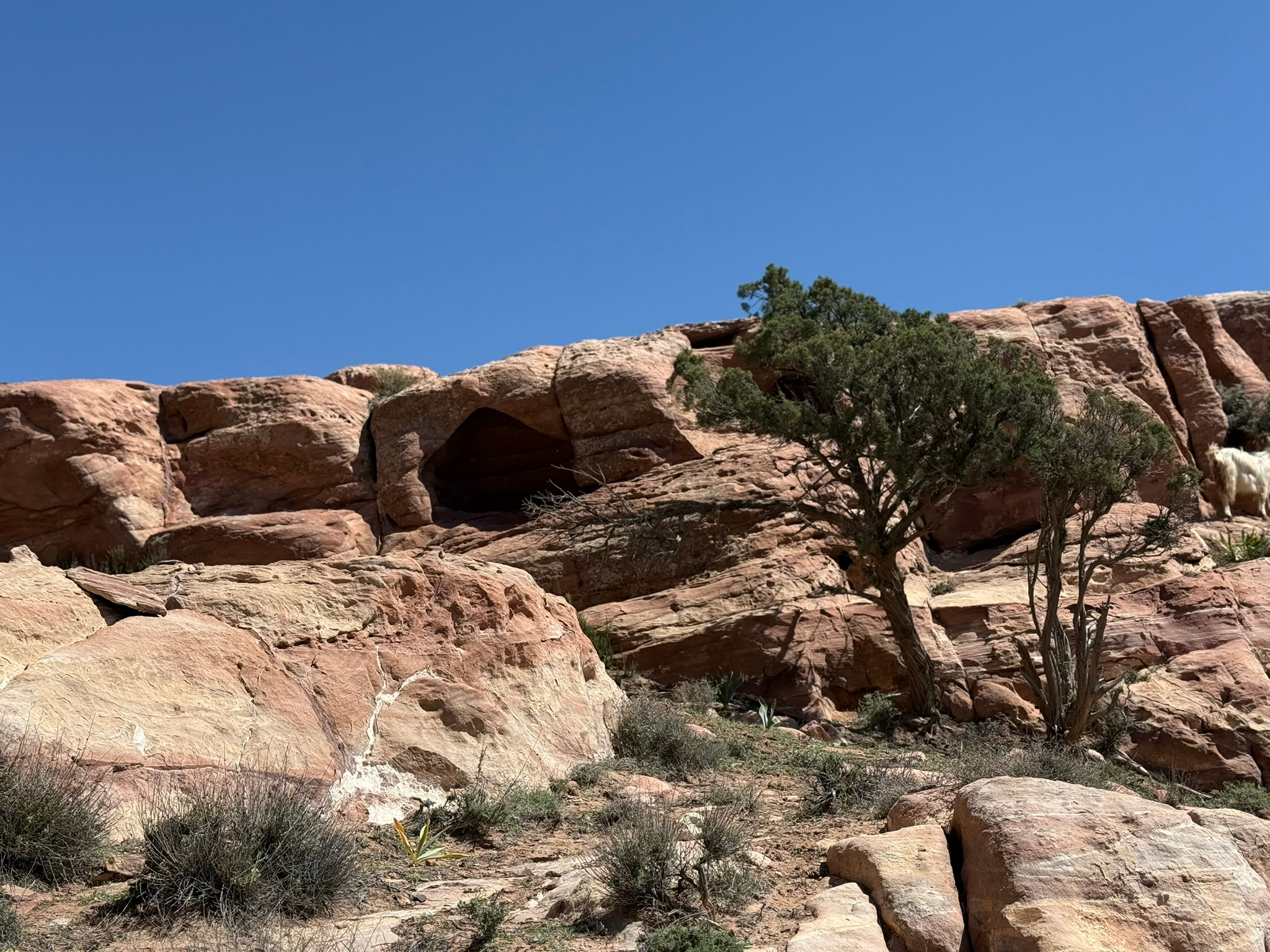
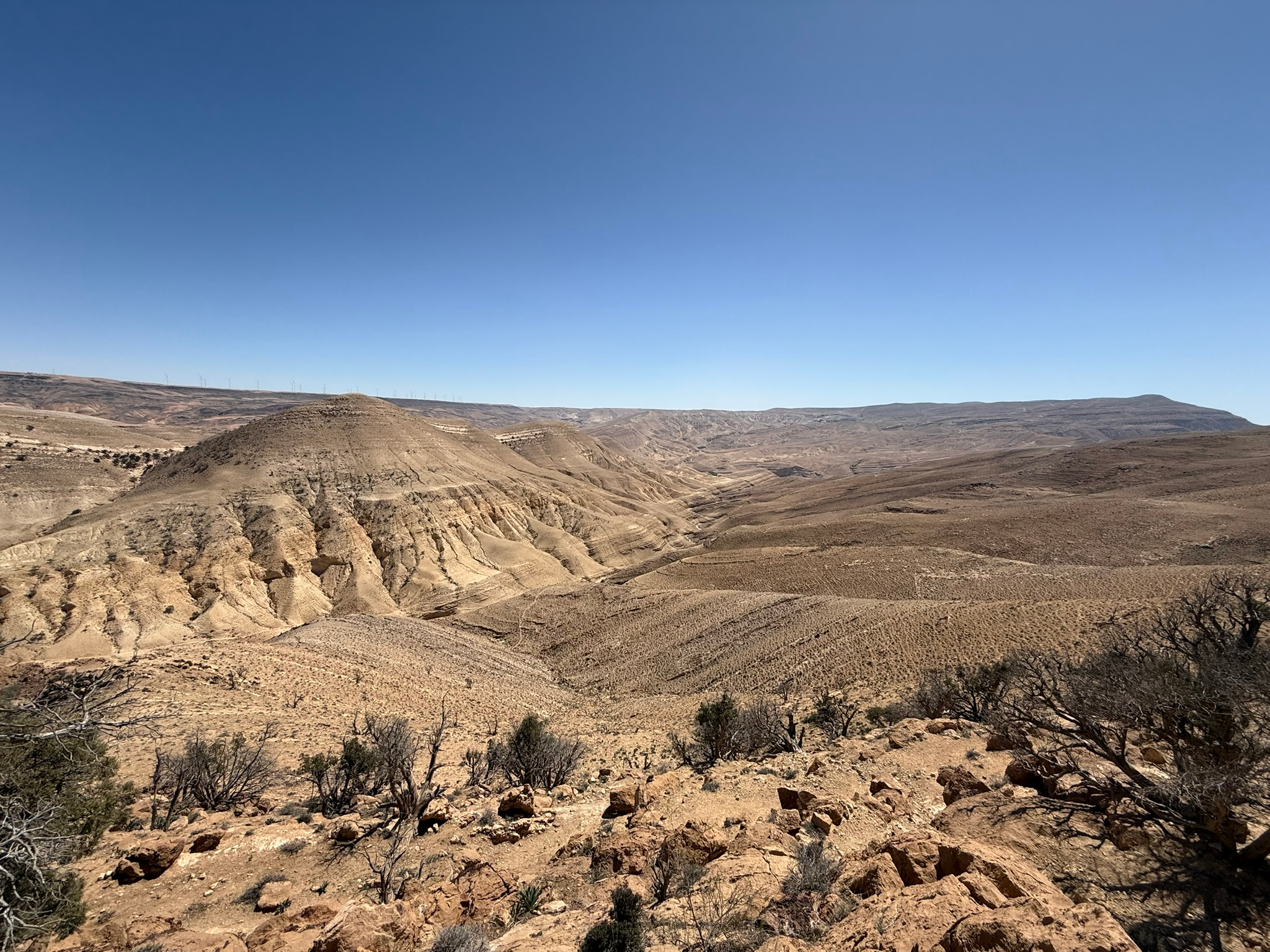
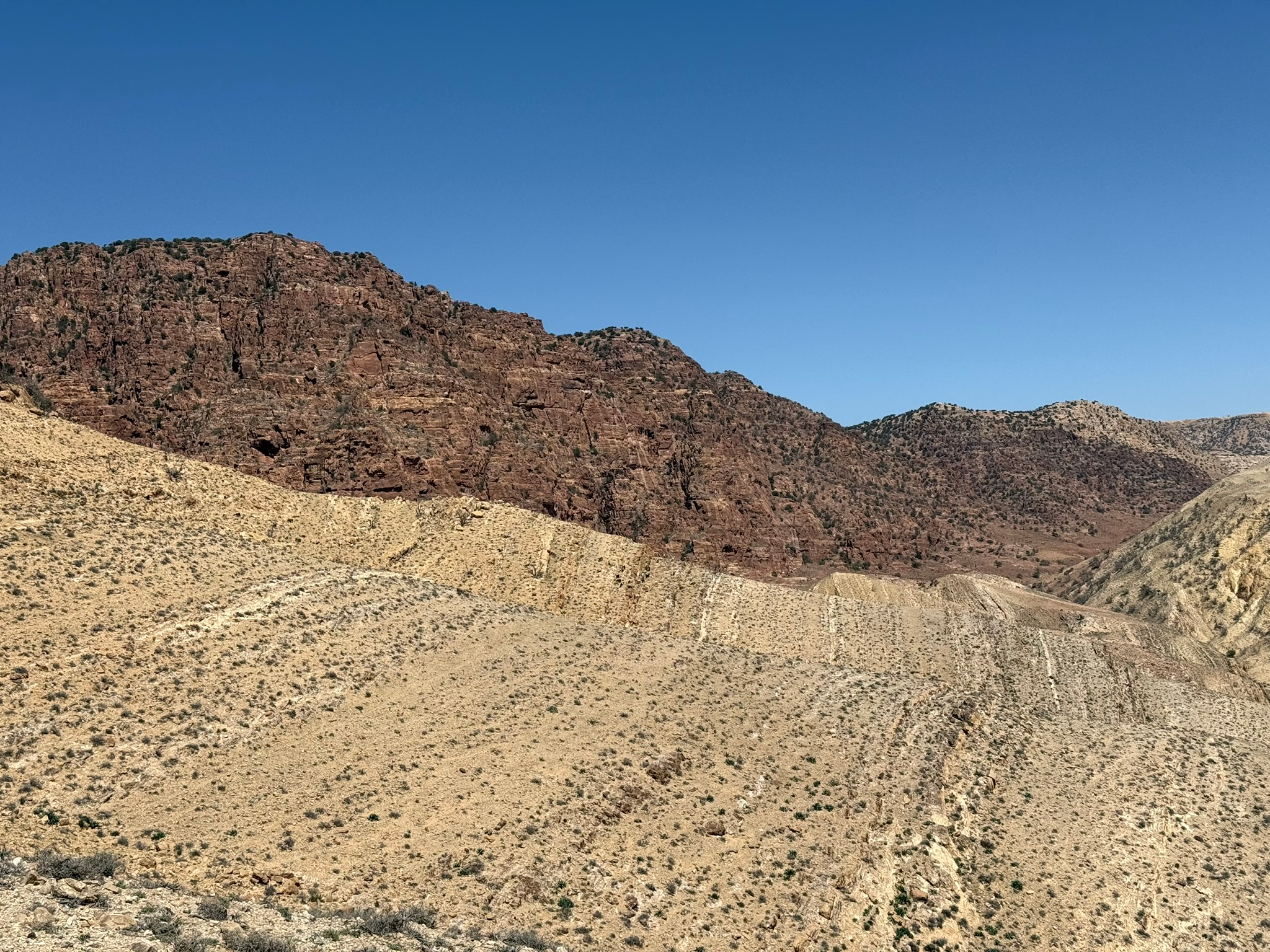
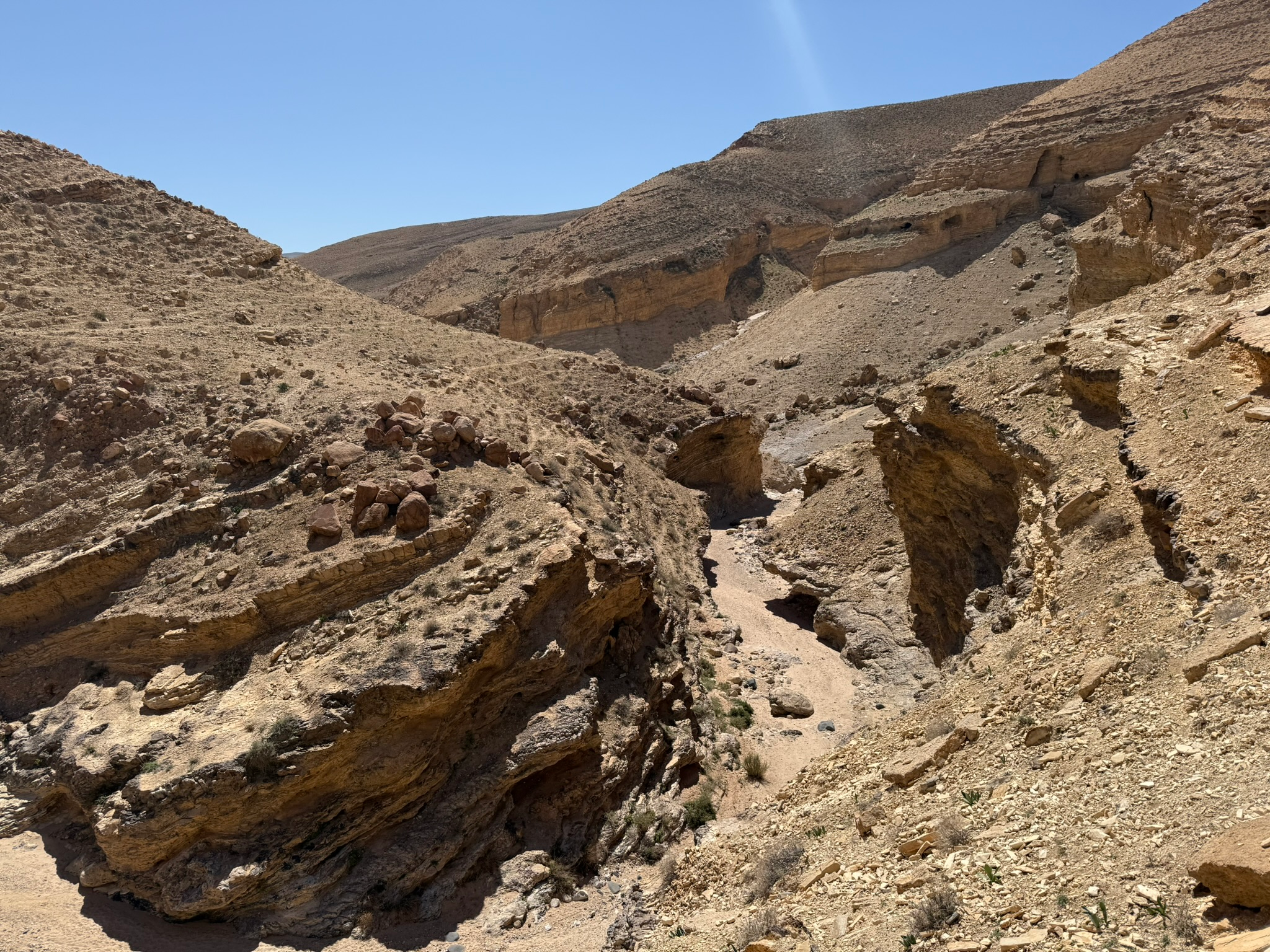
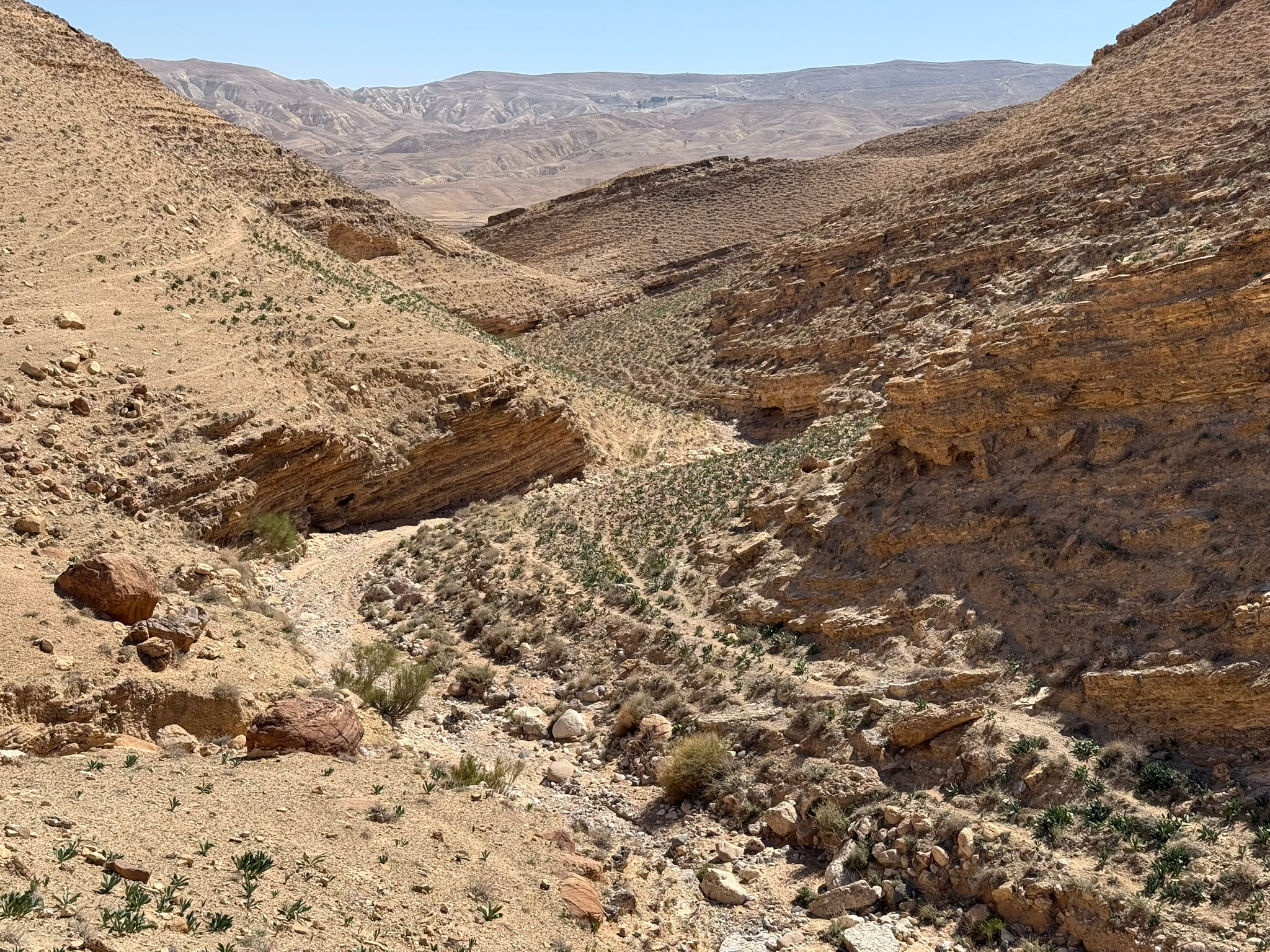
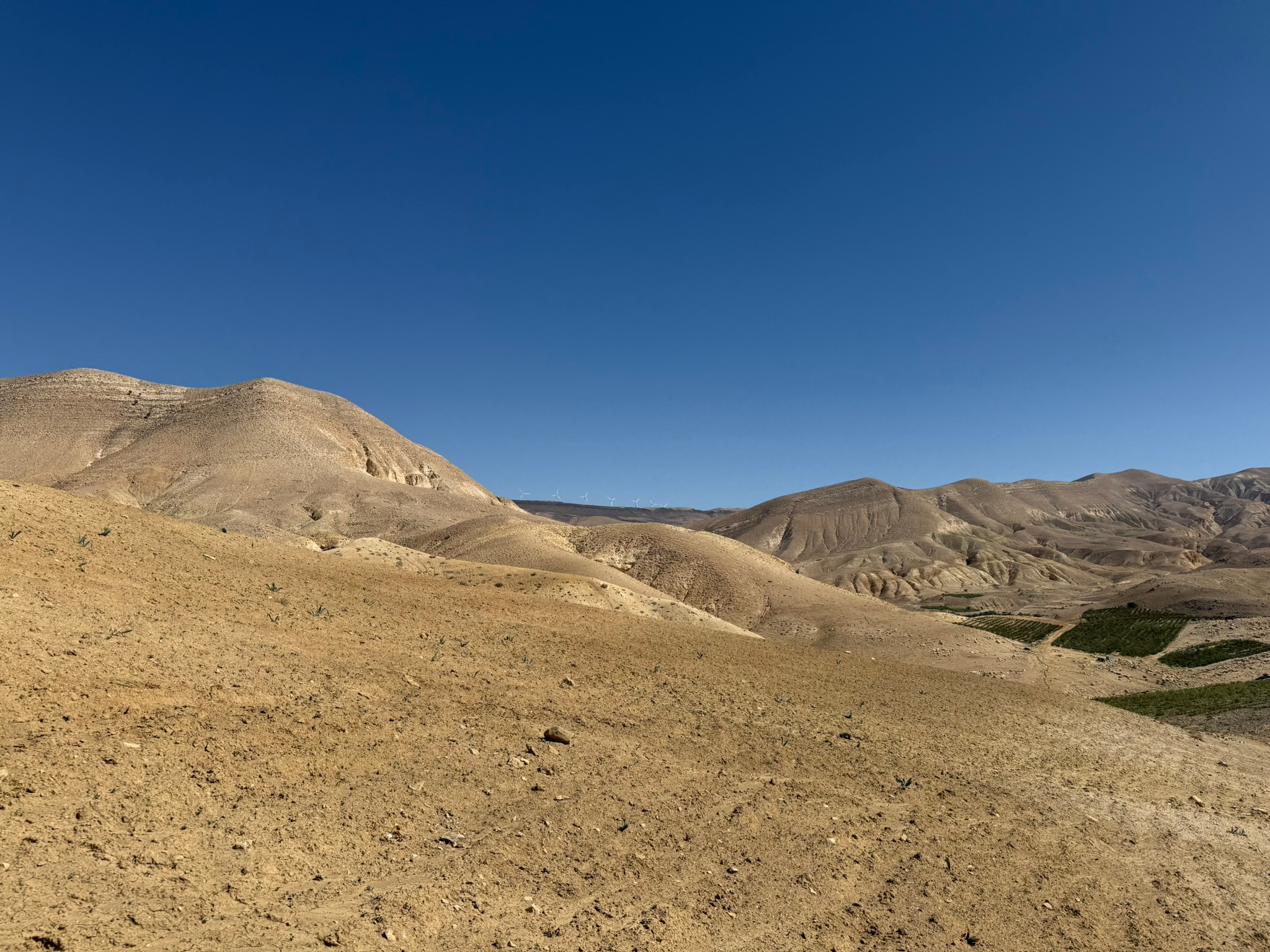
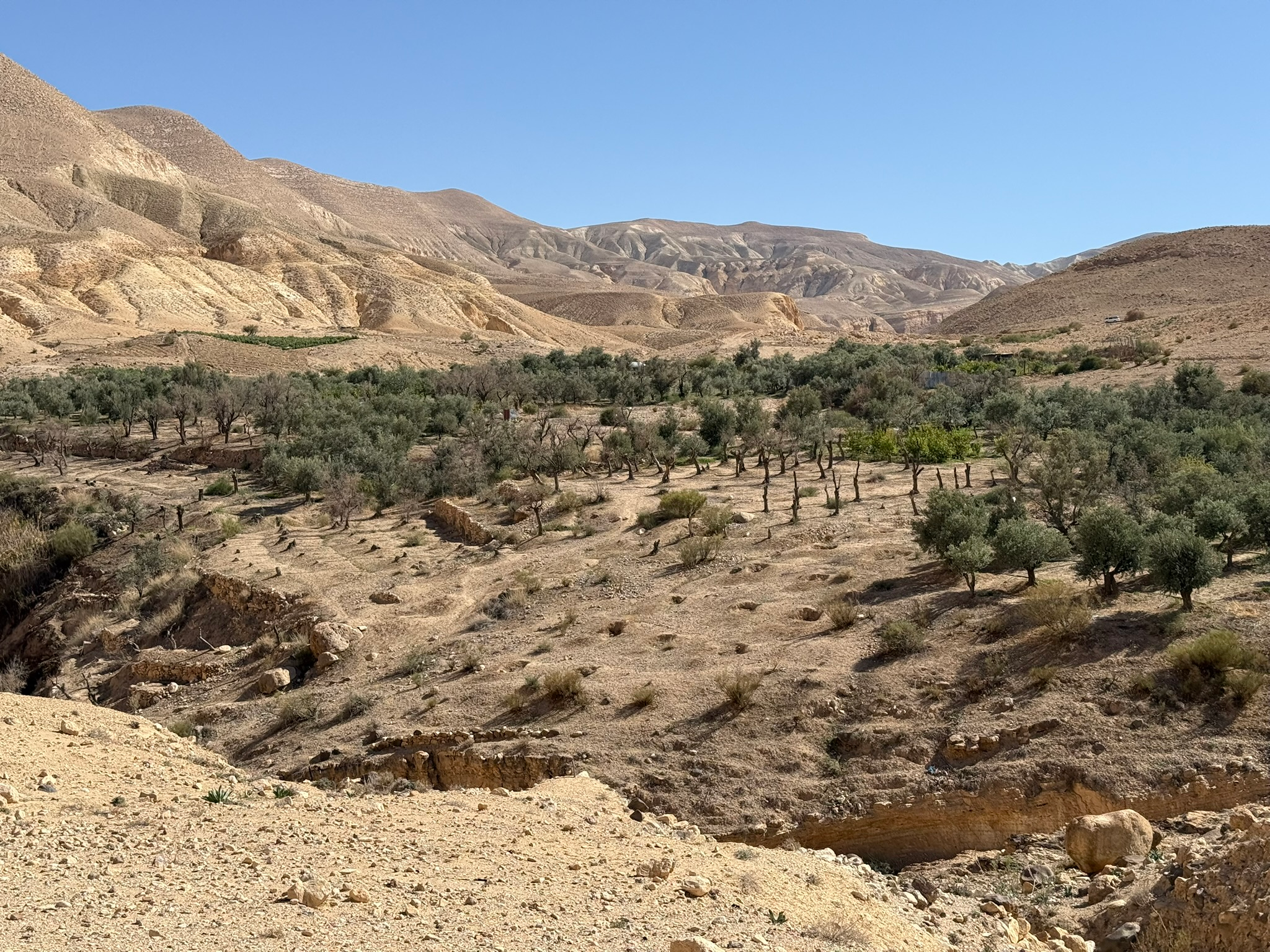
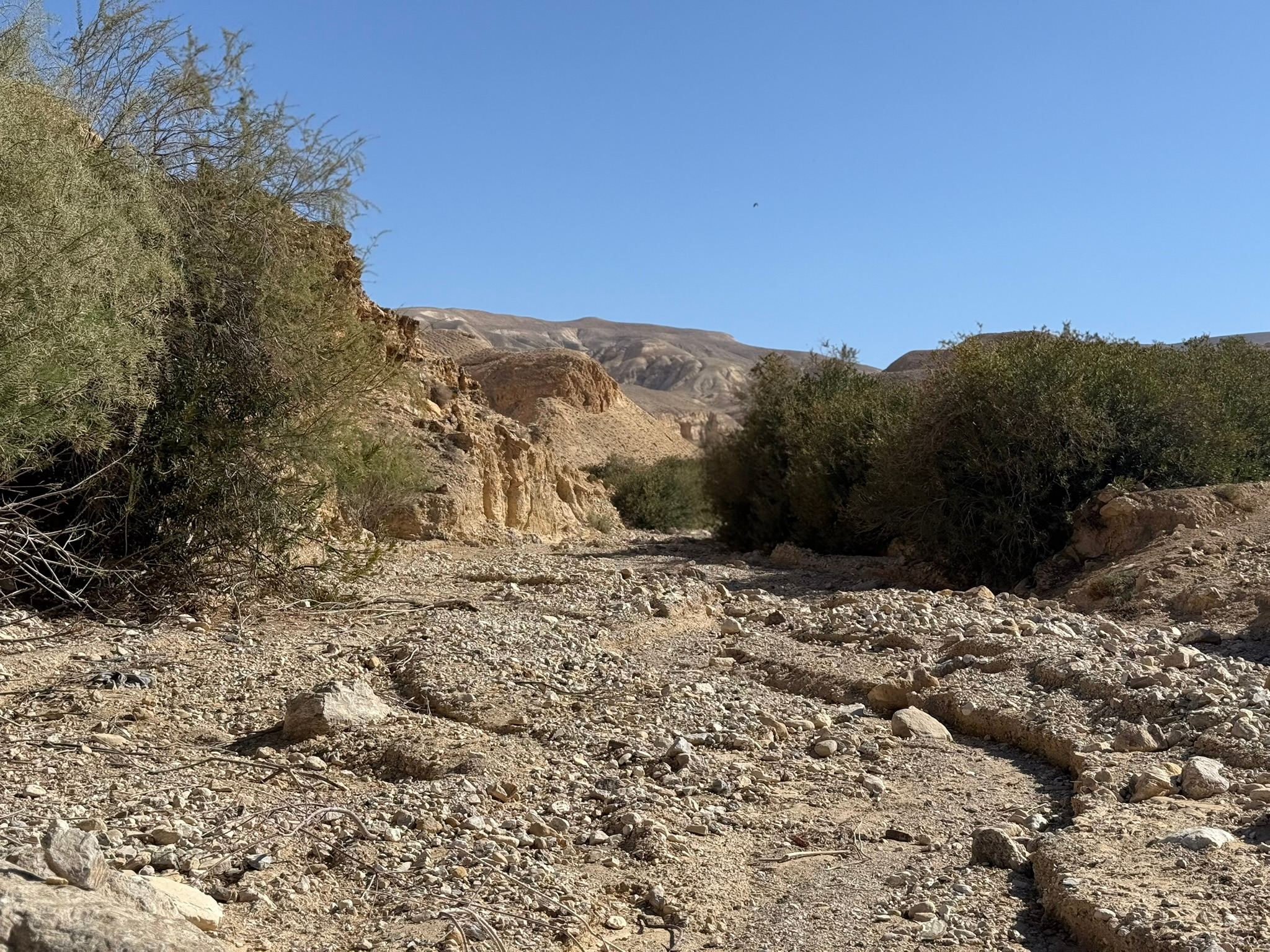
One thing I can say about the trail is that it kept us entertained throughout. The second we became accustomed to one landscape, it would change completely. It literally never got boring!
The first day’s route covered around 15 kilometres and was filled with constant surprises. We began among yellow sandstone, scattered pistachio and acacia trees and ground peppered with sea squill, also known as sea onion. This gradually gave way to reddish rocky outcrops covered in low-lying shrubs, juniper and oak trees.
Next came barren brown trails overlooking deep valleys between the mountains, offering some of the most impressive views of the day. Finally, after descending into a dry riverbed, we emerged into a wide, arid landscape that led us towards a sheltered area at the foot of a mountain.
Betty Boop & Banter
Apart from the geological and botanical wonders, the flora and fauna that we could appreciate all along the trail didn’t disappoint either.
Along the way, we encountered some of Dana’s wildlife, including a tortoise, which Lara named Betty Boop, a caravan of camels, a herd of goats and a flock of sheep, together with their very loud and very annoying shepherd dogs, of course. There were also all kinds of birds, ranging from the gorgeous Palestine sunbird and white-crowned wheatear to several starlings and warblers. We even managed to spot the Sinai rosefinch, Jordan’s national bird. Truly a gorgeous bird! The species is also represented on Jordan’s current one-dinar banknote. Oh and the flora! From clover, sage and rockrose to thyme, magnificent red desert tulips and vibrant pink sunroses, everything was simply stunning!
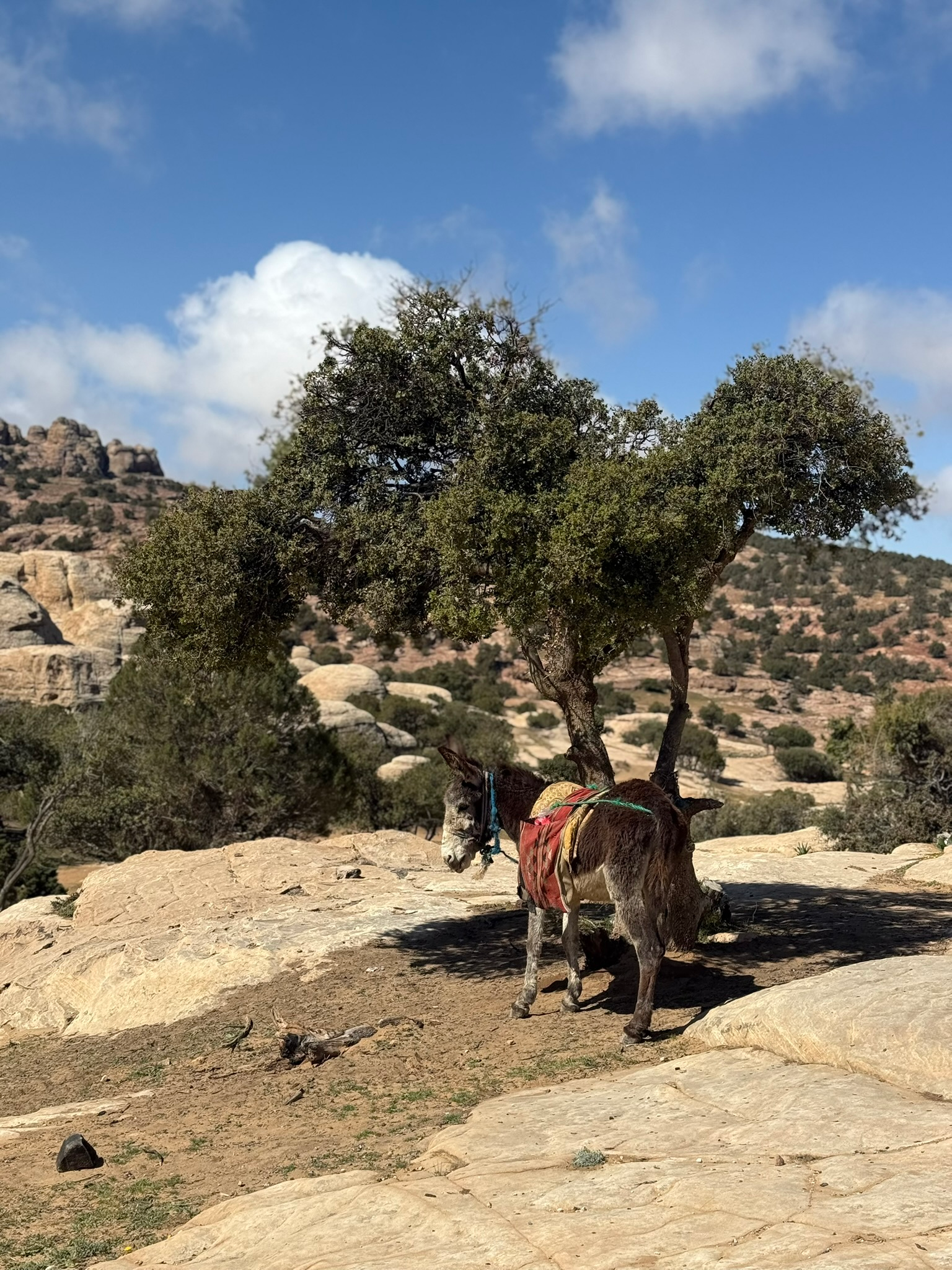
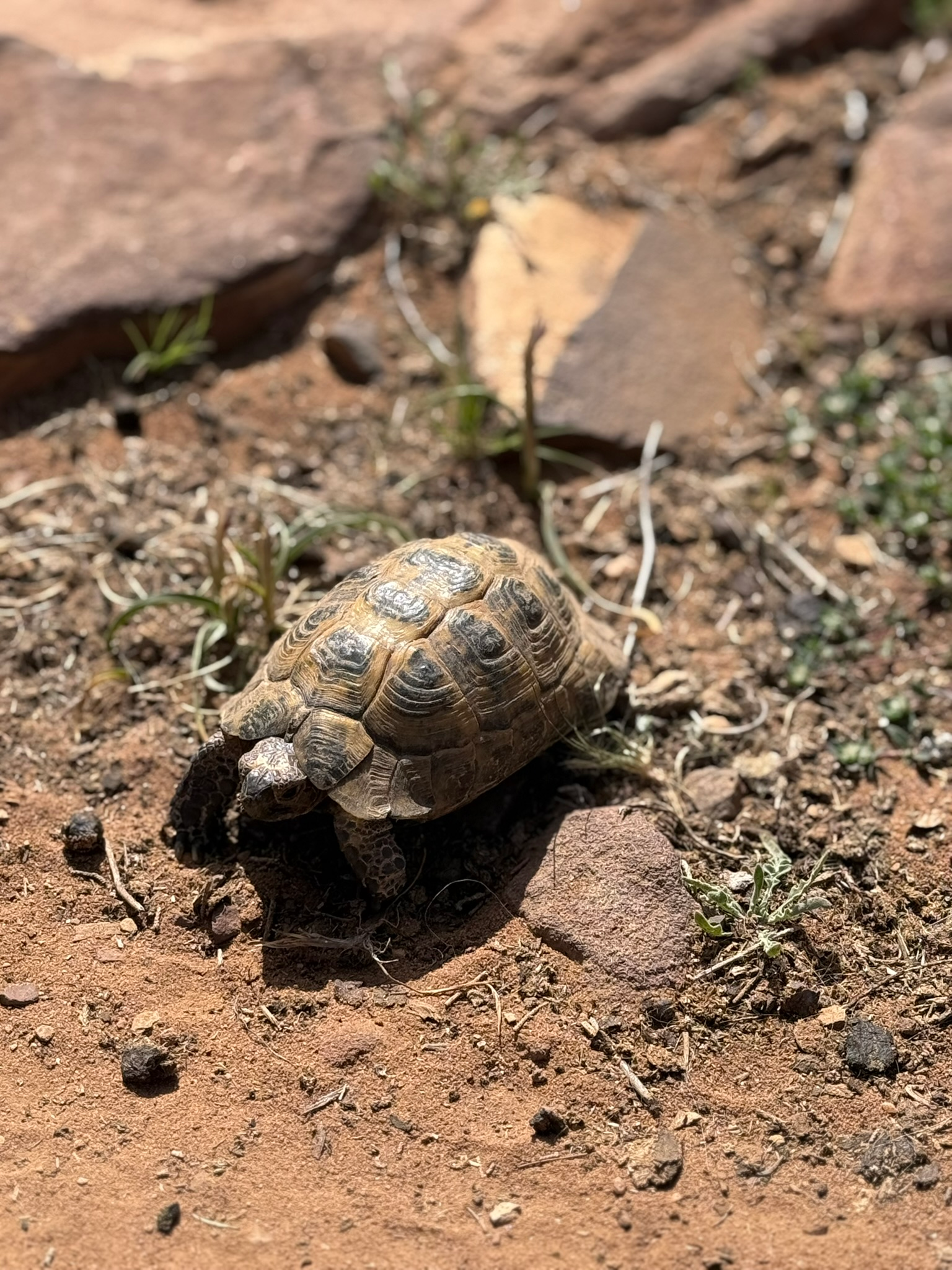
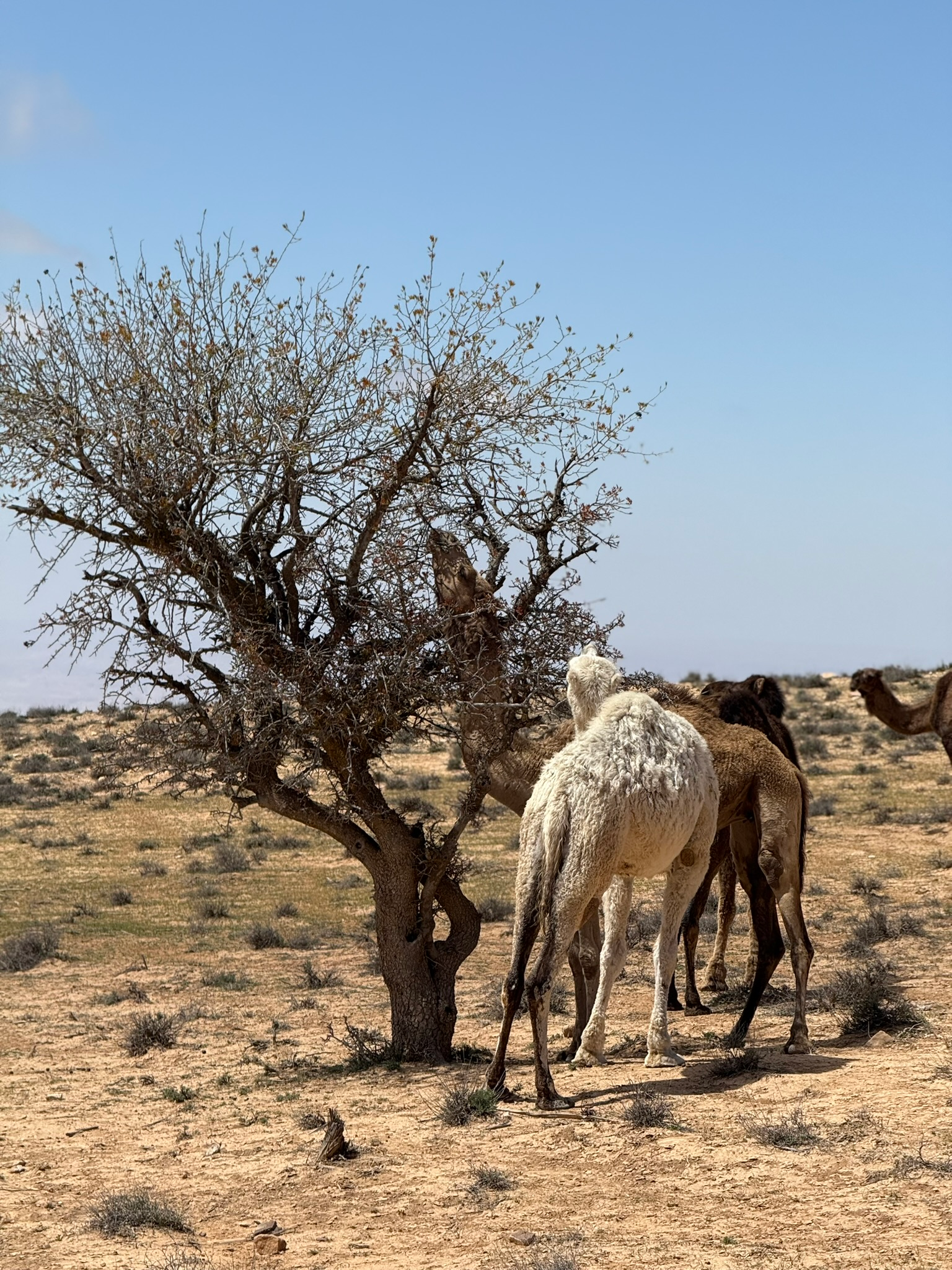
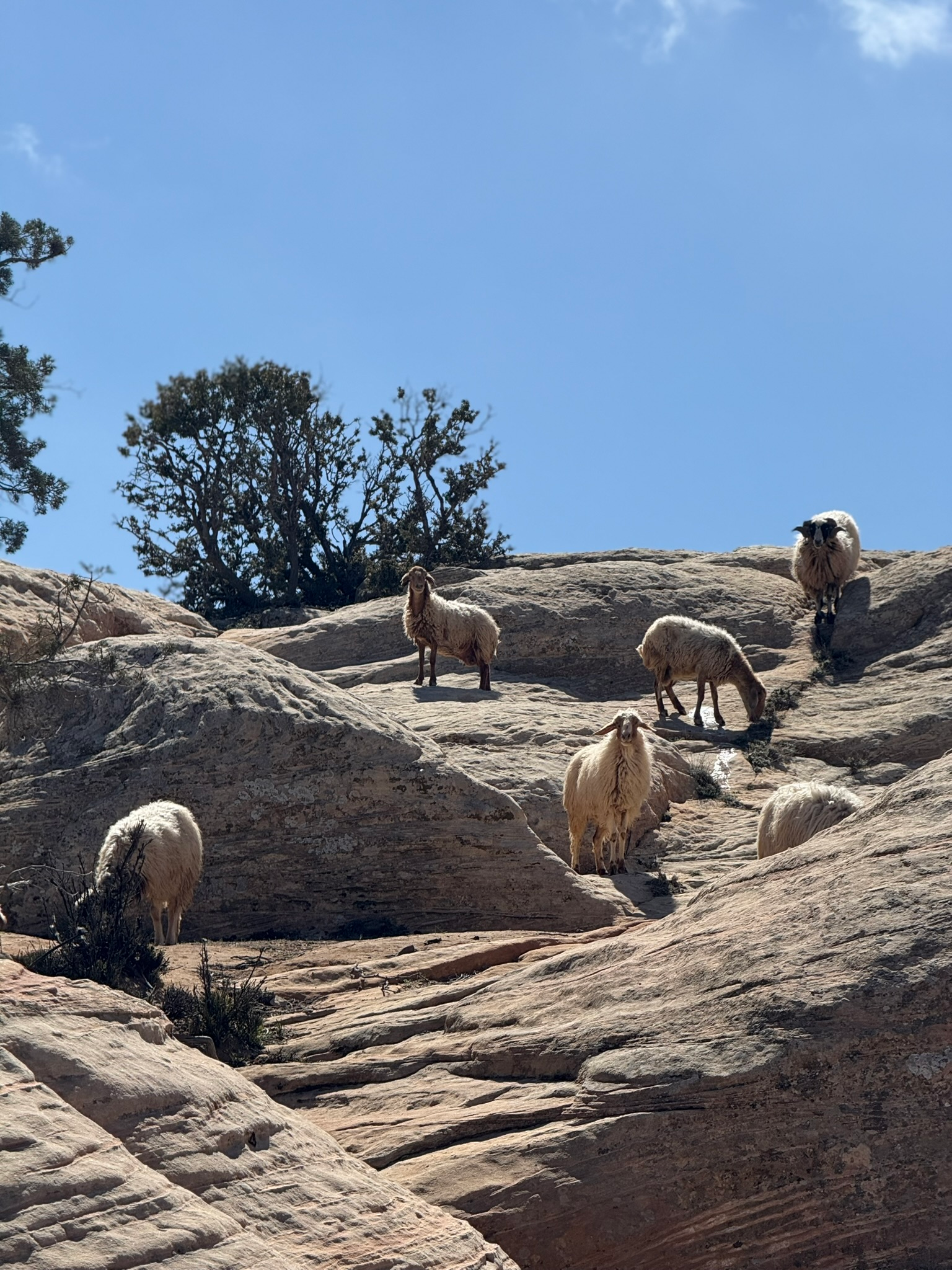
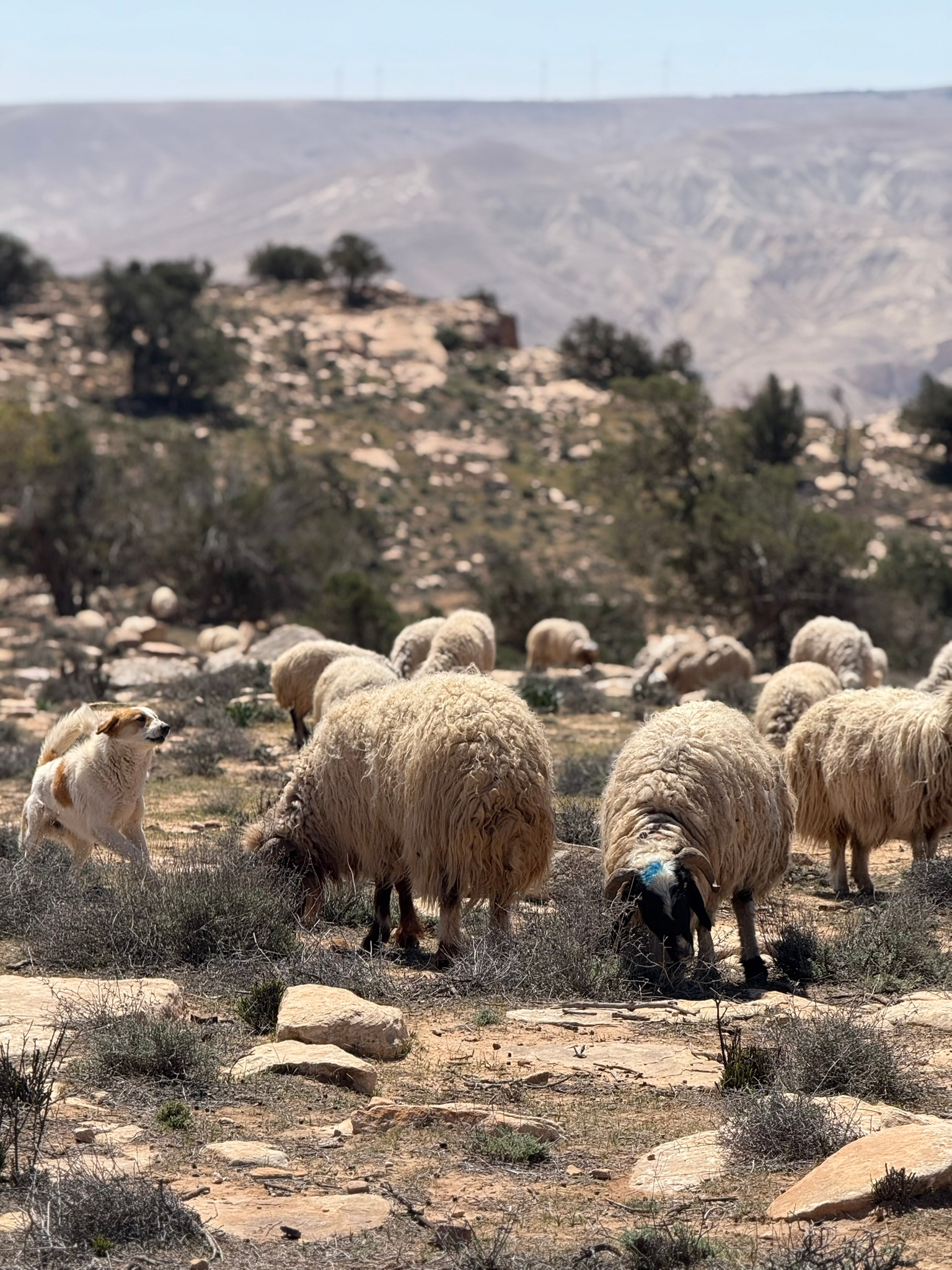
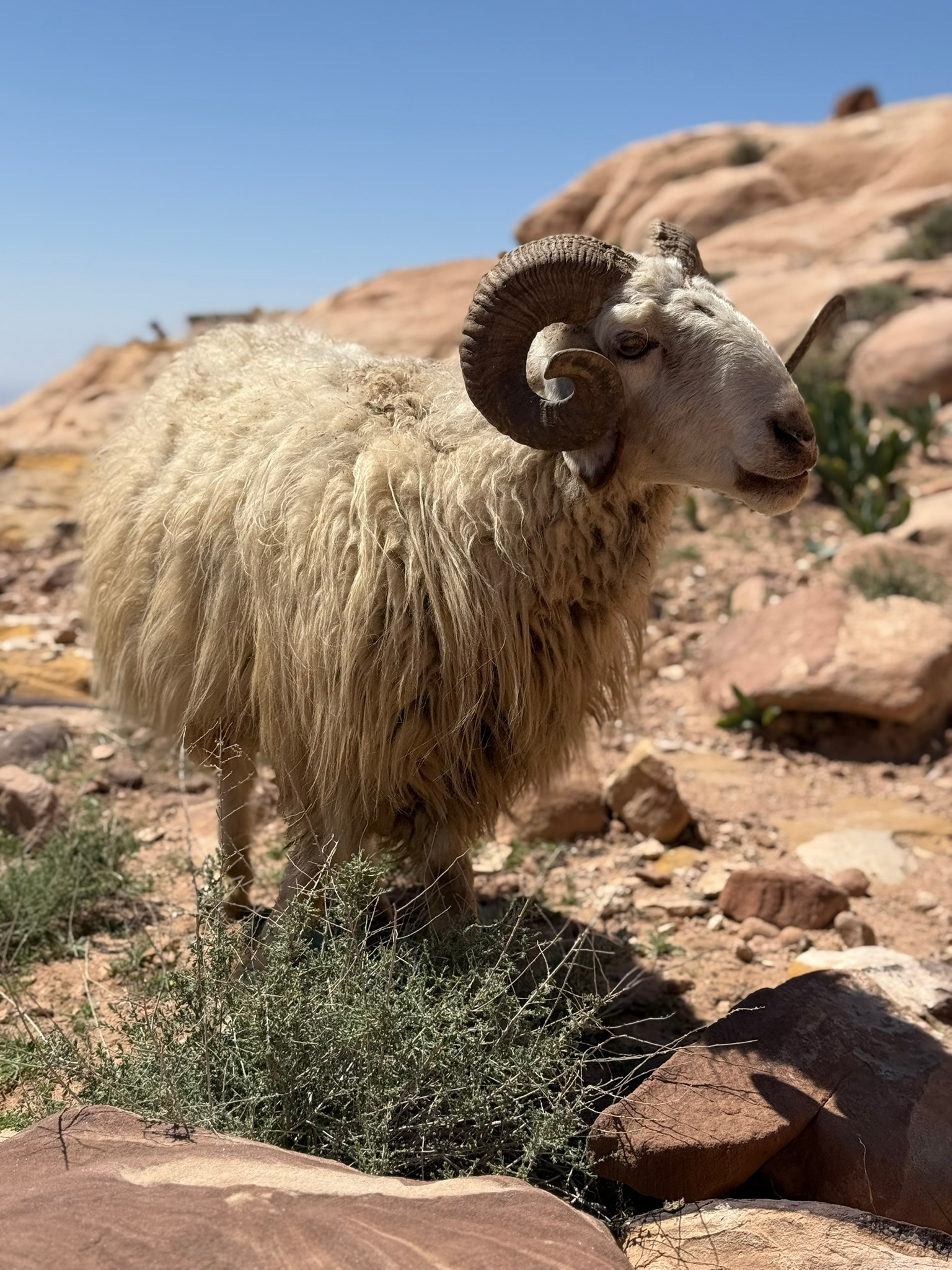
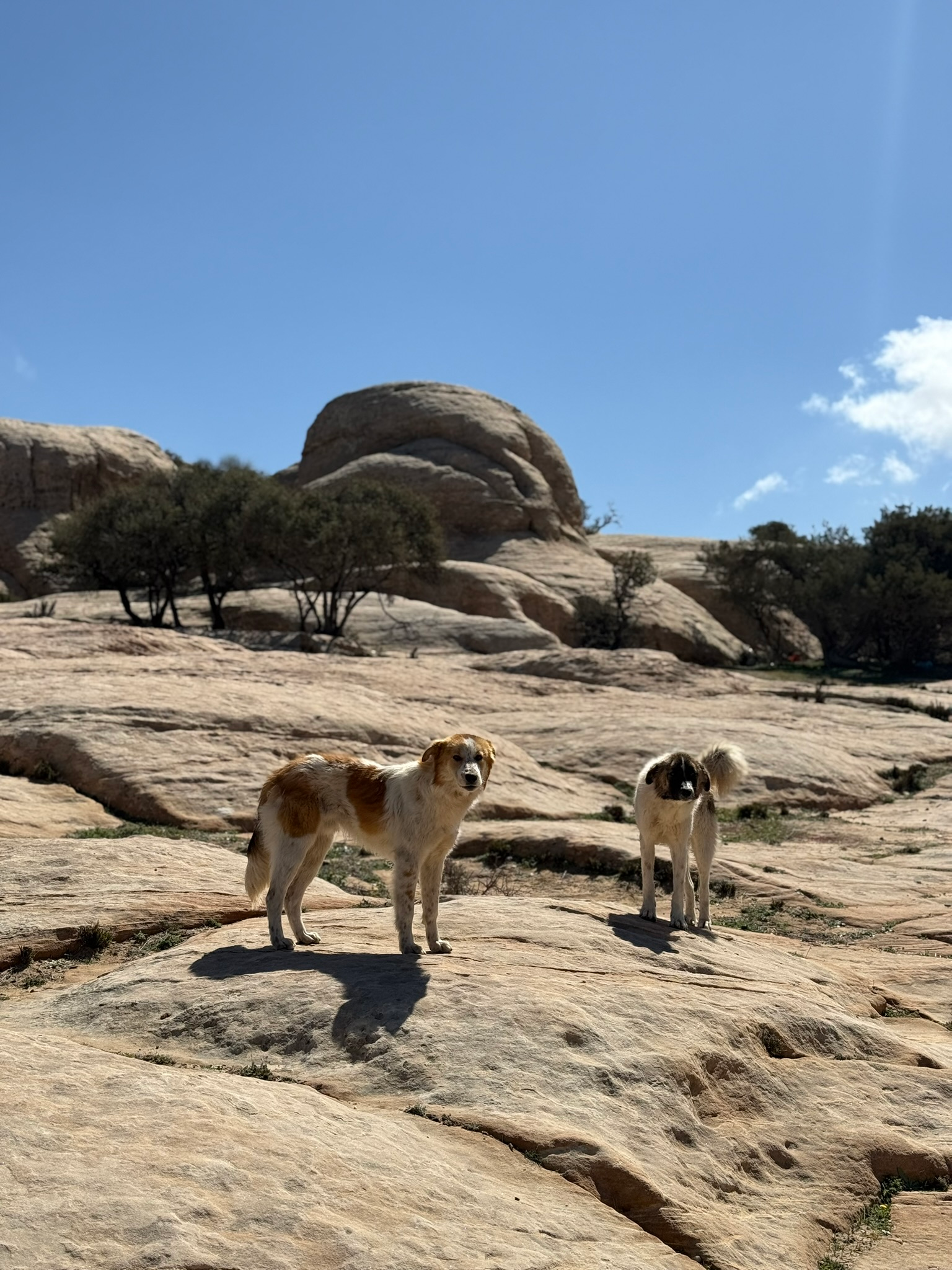
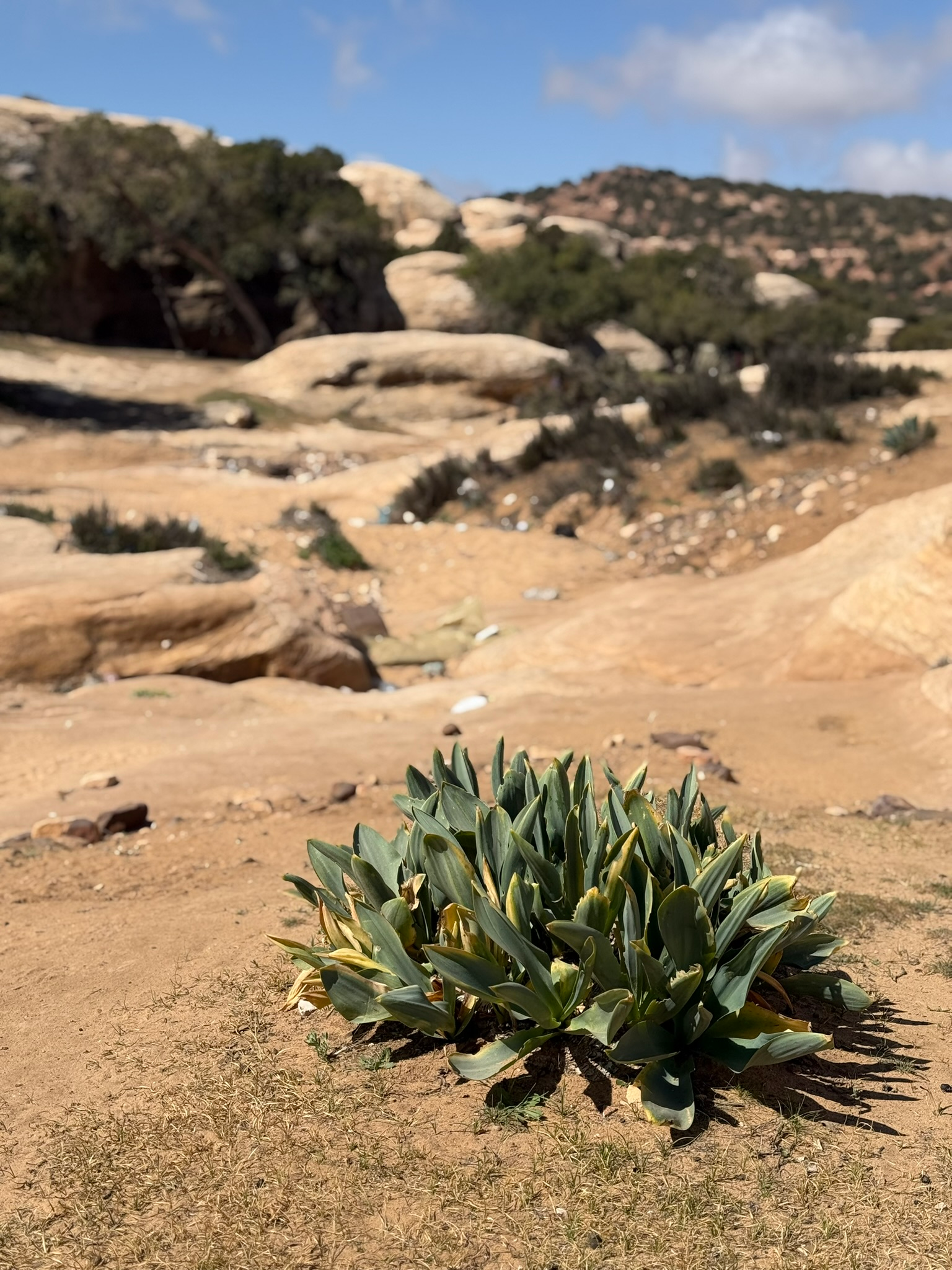
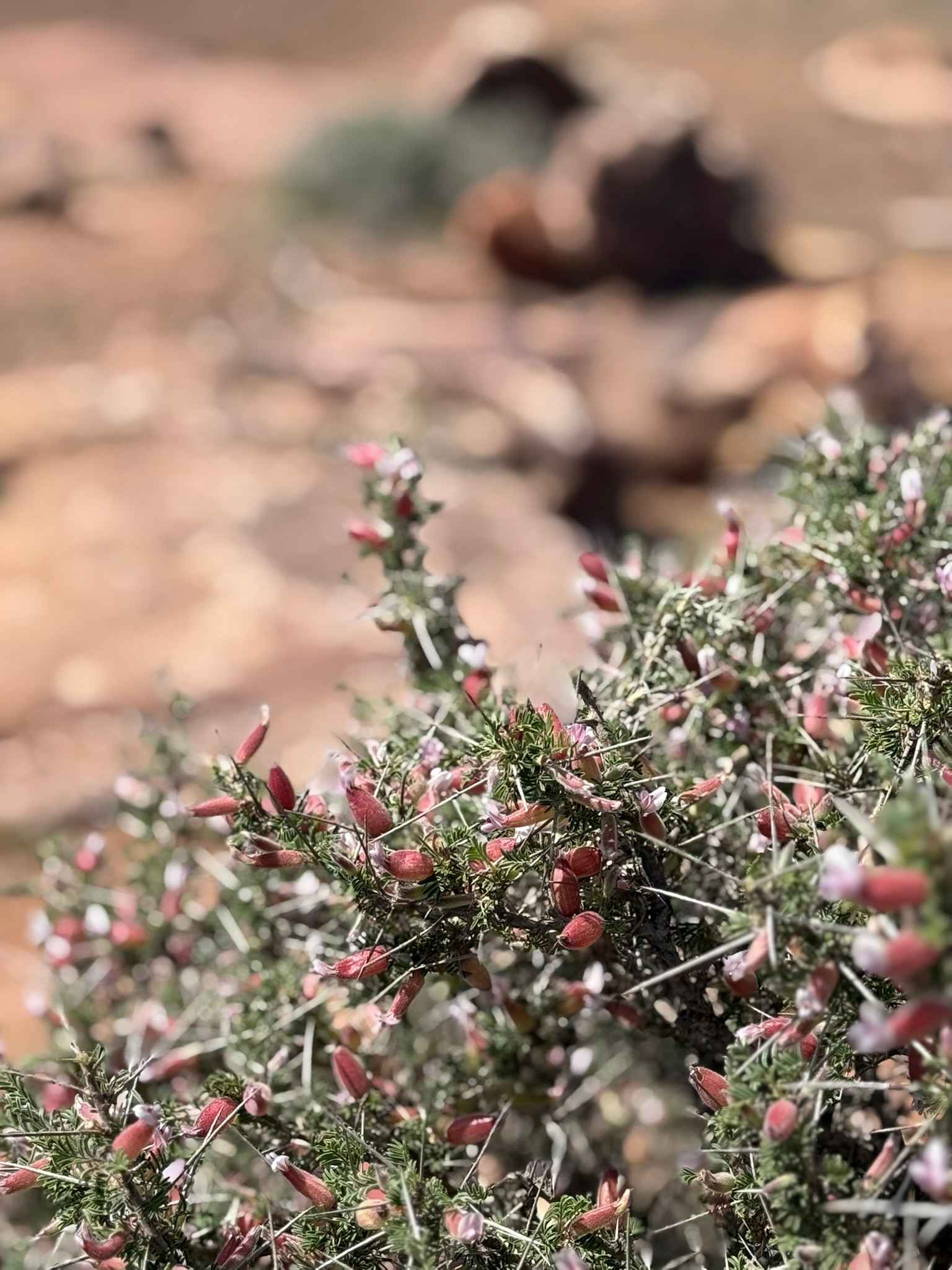
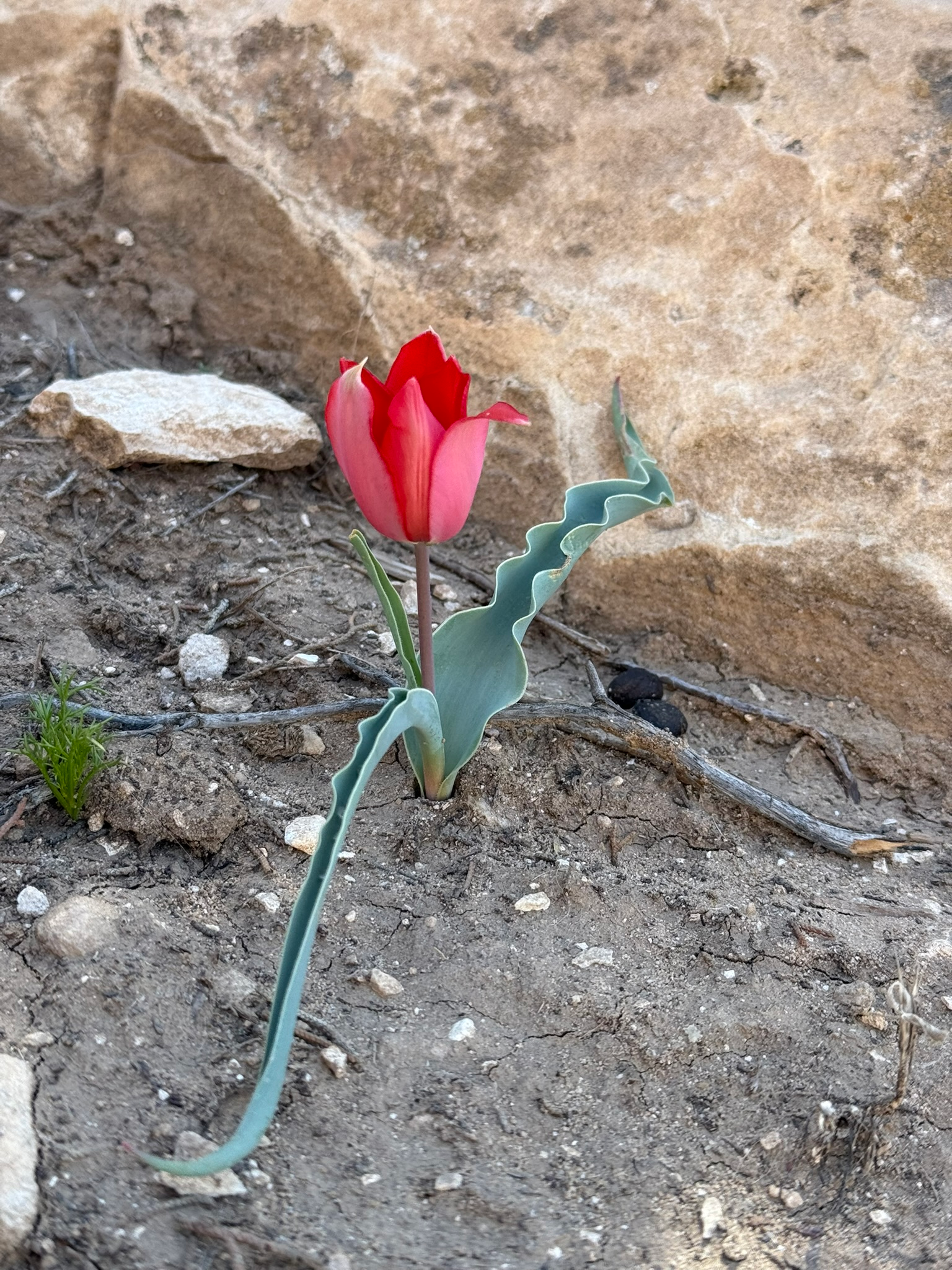
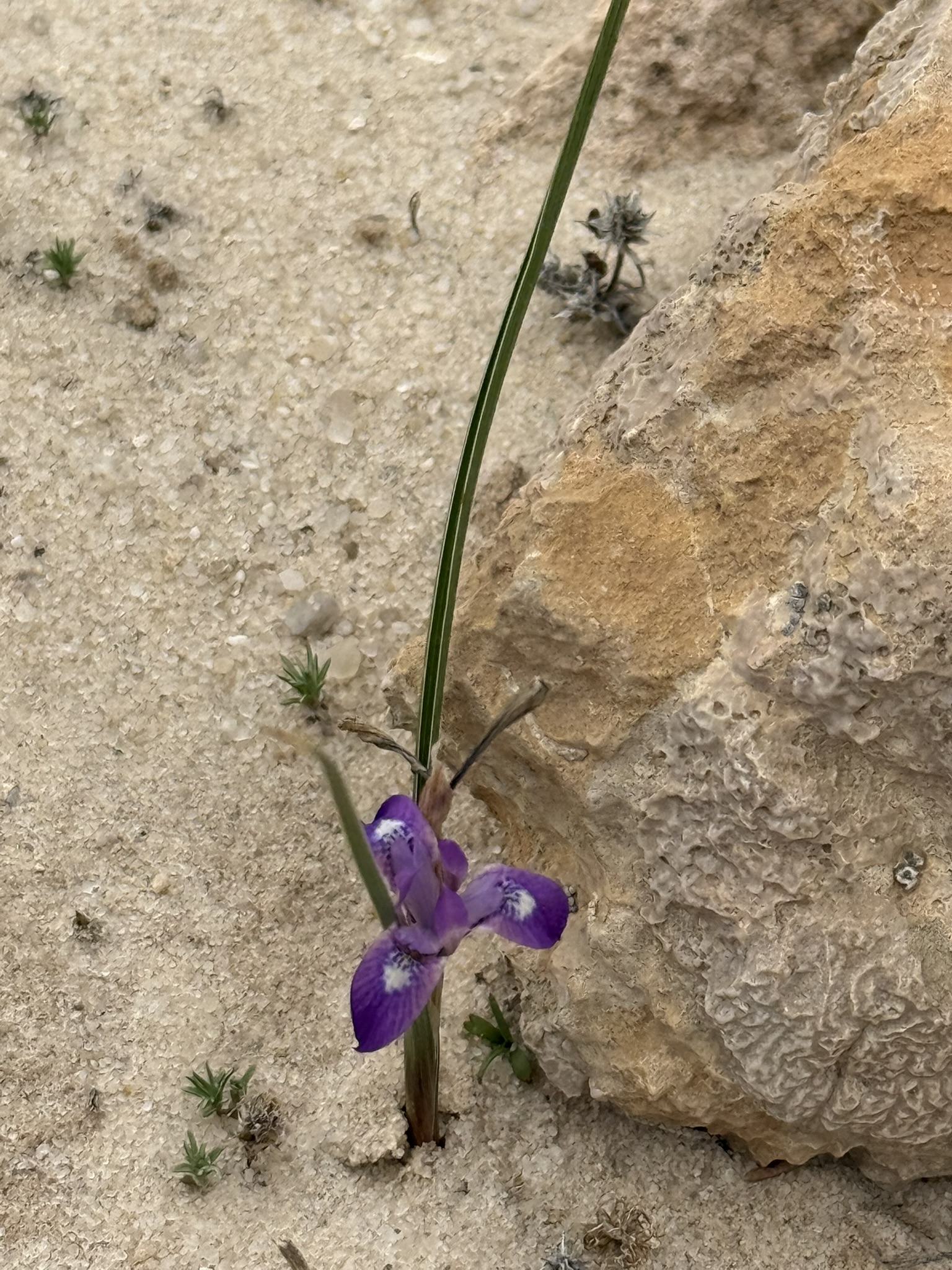
Whenever we found a wonderful vista to feast our eyes upon, which happened every few minutes, we would stop for a quick photoshoot and hydration break. We ate our first lunch at one such viewpoint. Eating a tomato whole had never been something I had considered before. During this trek, however, it would become a staple. So would sitting together in a circle, joking around and recounting tales of all sorts.
Doug told us about a guide he had met in Indonesia who kept asking, ‘Oh, is it?!’ after practically every statement. This, of course, reminded me of my guide Arturo in Costa Rica, who would end every single sentence with, ‘Good to know’, especially when it really wasn’t necessarily good to know. Needless to say, these immediately became our new catchphrases. I don’t ever recall belly-laughing so hard with a group of almost complete strangers, especially right from the very beginning!
Apart from the social aspect, we were all relieved to discover that we could keep up physically. John runs marathons, Lara does trail running, Hans goes hiking every week, Doug has trekked all over the world, Rafael does CrossFit and I do a bit of everything. For Delia , Athallah and Tarrad, meanwhile, this was quite literally their job. Fit though we might have been, I still maintain that my idea of completing the trail on a Segway was a killer one.
PART III
Twenty Questions
Just like that, we arrived at our first campsite on the outskirts of the Khashasha Valley. Once there, we were introduced to Eid, the Bedouin camp manager, and his wife, whose name, for one reason or another, we apparently weren’t allowed to know. She would be our cook throughout the trek.


As soon as we arrived, we were all invited to take a much-deserved seat. We were then offered tea and some ka’ak prepared for Eid al-Fitr, as the camp was celebrating the end of Ramadan. Once we had settled in, we immediately delved into the really deep stuff – finding out what everyone did for a living. We decided to make a game of it, playing a round of Twenty Questions at the end of the day to see whether we could guess what everyone did outside the desert. It turned out that nobody managed to guess anyone else’s job, despite all the effort we had put into picking up clues and hints throughout the hike.
Everyone simply assumed that I was a comedian or an actor hired by the company to make the trek more entertaining, which was honestly quite cute. Simply by looking at Rafael, meanwhile, everyone decided that he was either a stripper or an OnlyFans model. After a round of considerably more than twenty questions, we finally discovered what everyone did. I, for one, tried to convince them that I made my living as a sock puppeteer. Everyone else seemed to have real, honest-to-God jobs.
John was a sporting events organiser, Lara a historic building surveyor, Hans a user experience designer working for BMW and Doug a friggin’ DJ. Rafael was a biologist-radiotherapist-businessman who now worked in a beauty salon doing eyebrows, facials and tattoo removal. Quite the assortment! We also discovered that Delia was a computer scientist and did humanitarian work with children from Syria and Gaza. Right on! Just like that, we arrived at our first campsite on the outskirts of the Khashasha Valley. Once there, we were introduced to Eid, the Bedouin camp manager, and his wife, whose name, for one reason or another, we apparently weren’t allowed to know. She would be our cook throughout the trek.
Cold Showers and Starry Nights
Before sundown, we each chose a tent for the night and prepared ourselves for the infamous bucket shower.
Having used one in El Mirador, I had actually been looking forward to it, especially after an entire day of hiking through a dusty landscape. As it turned out, however, it wasn’t so much a bucket shower as an extremely low-pressure water bag with a hose. You had to squat beneath it if you wanted any of the freezing water to trickle down onto you. I’m pretty sure it could’ve served as an effective torture device, especially since the temperature in the mountains had dropped to around 10°C. So yeah, some of us decided to opt out and settle for the classic baby-wipe shower. And by ‘some of us’, I mean Lara and John, who we continued to shame throughout the rest of the trek.
We then huddled around the campfire that Eid had built and were served a traditional maqluba, whose name translates to ‘upside-down’. The version we ate consisted of chicken, rice and fried vegetables layered inside a pot, which was inverted before serving, hence the name. It was absolutely delicious. So far, I can definitely say that the food in Jordan was living up to its reputation!
And so, with our bellies full, we spent another few hours talking and stargazing before eventually heading to sleep. What a day!