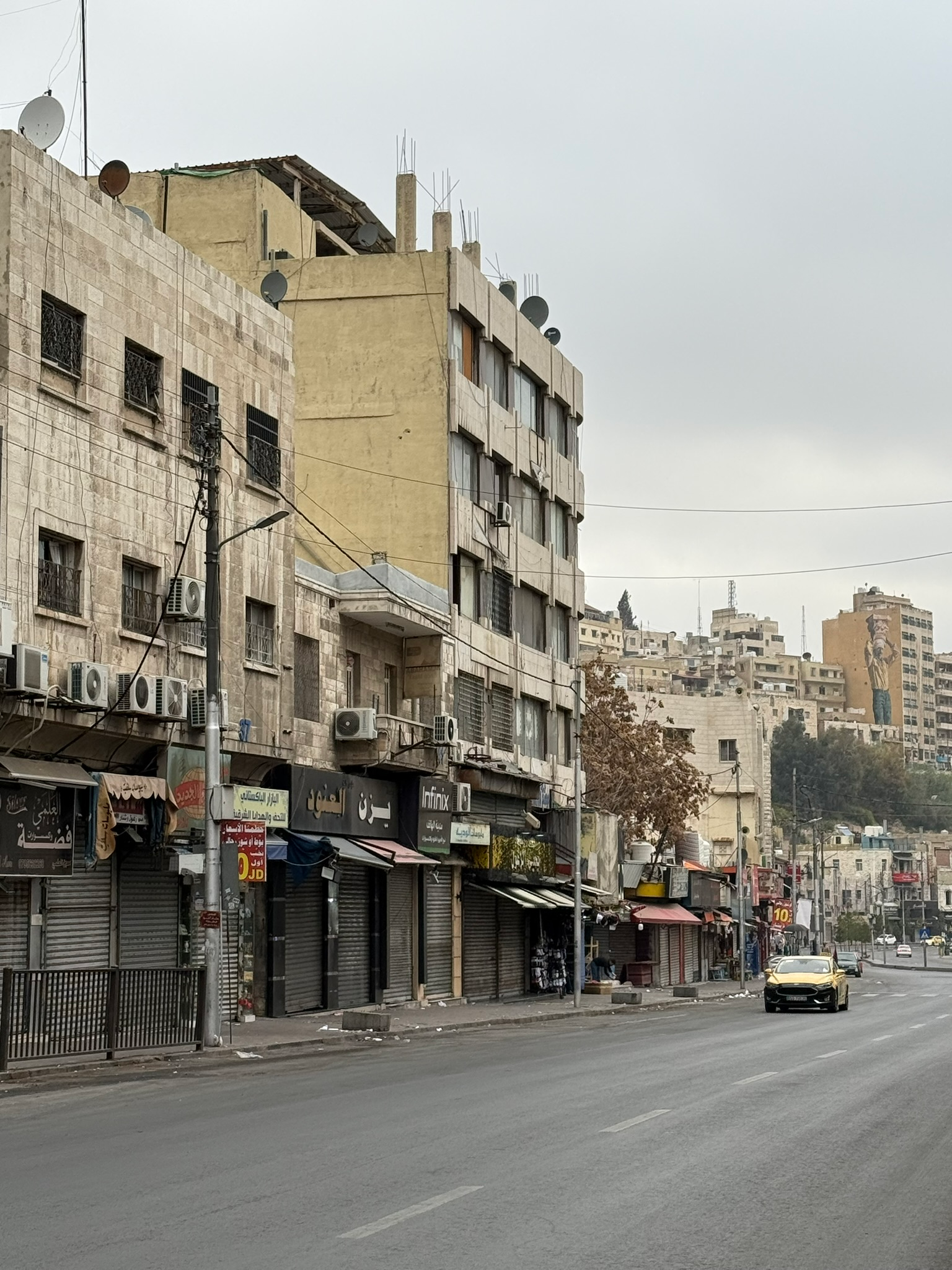
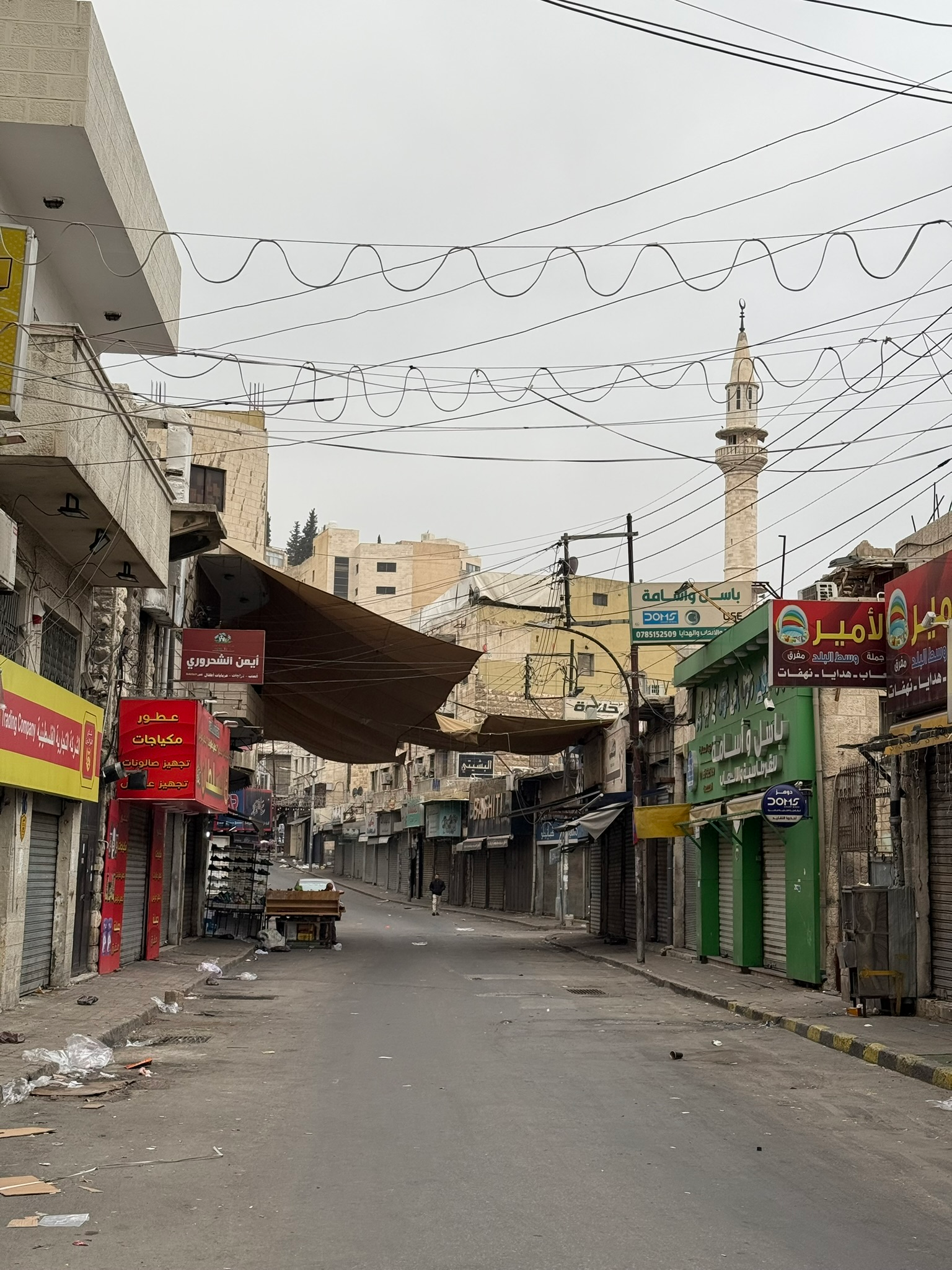
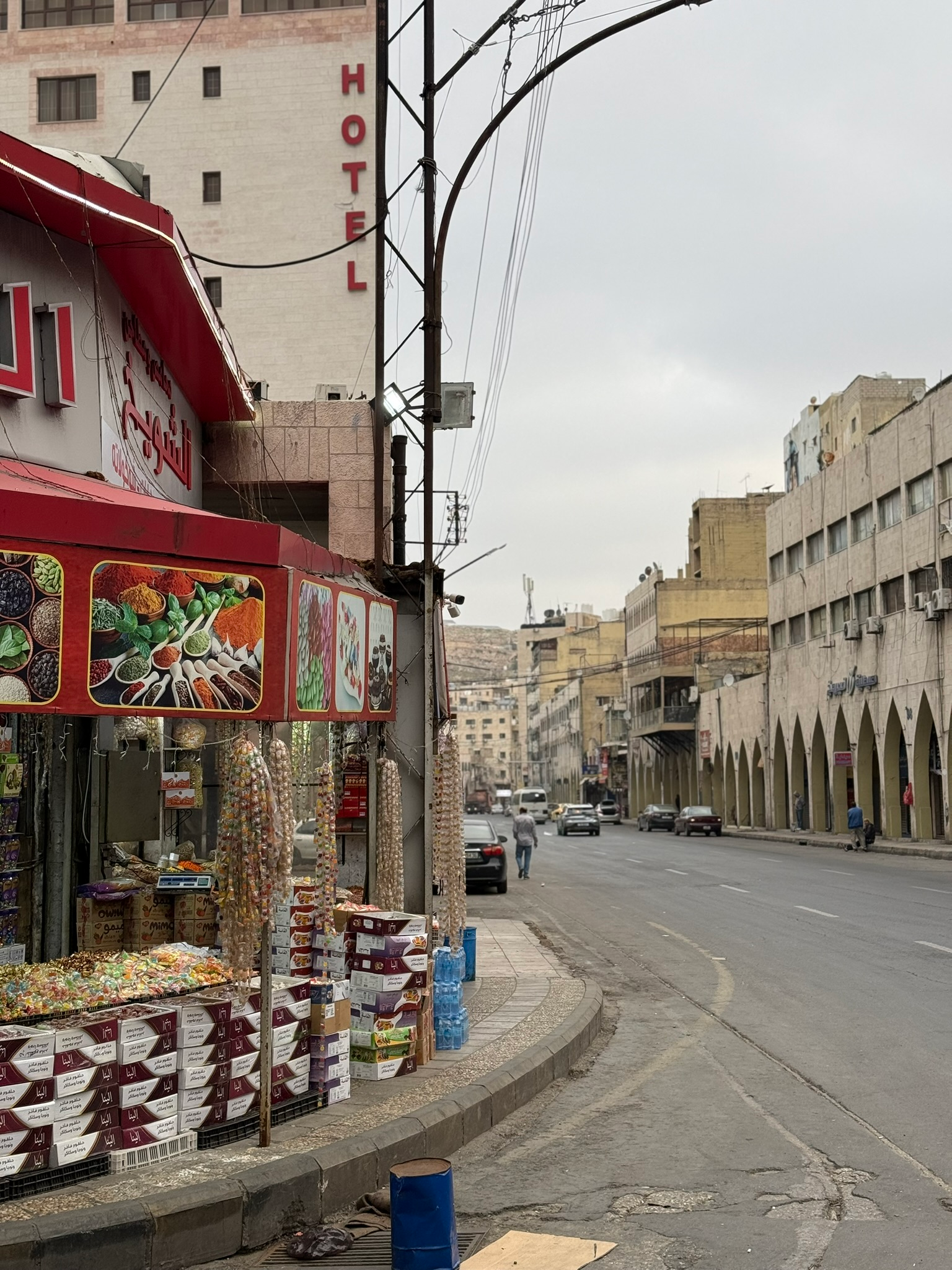
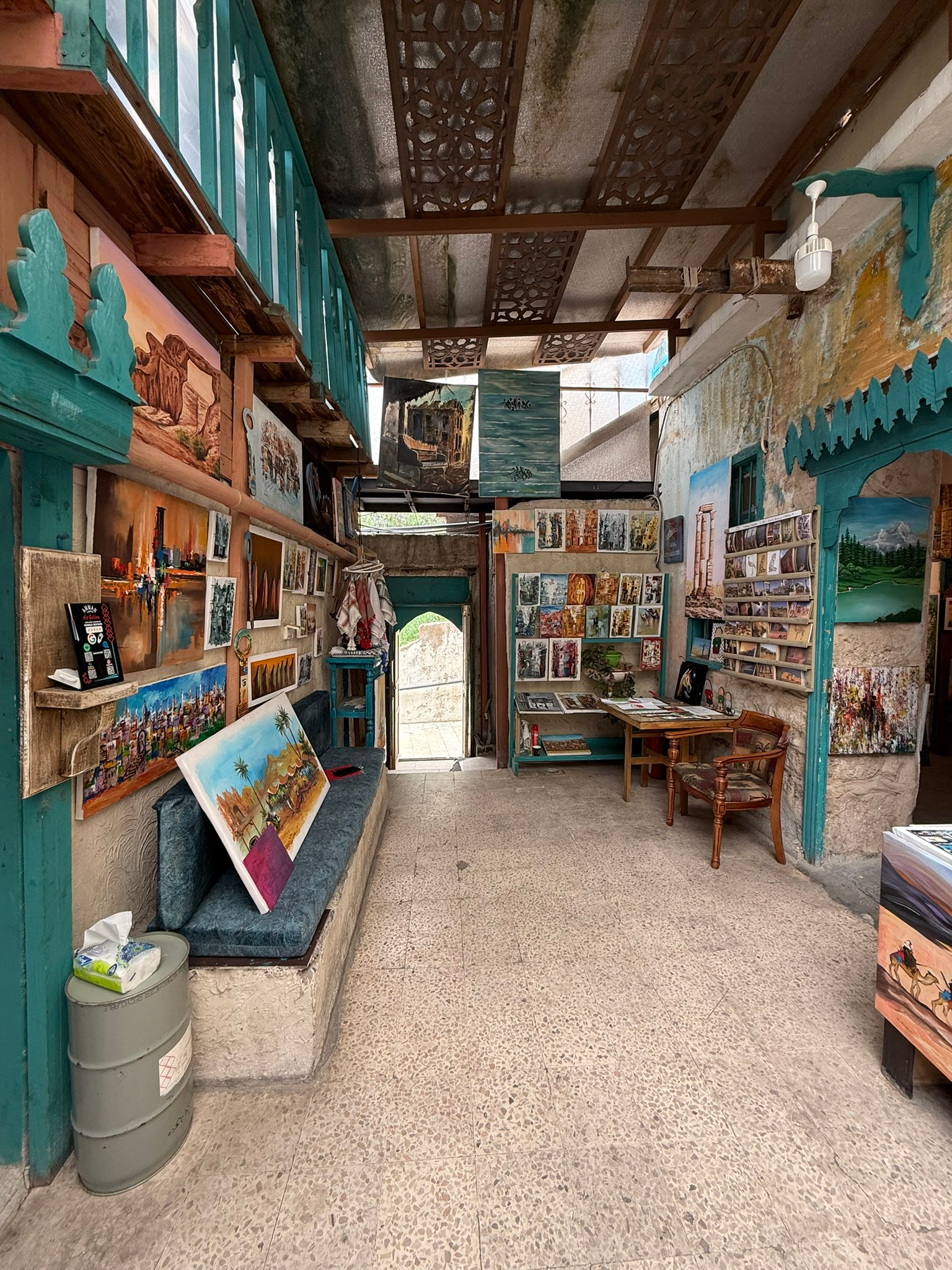
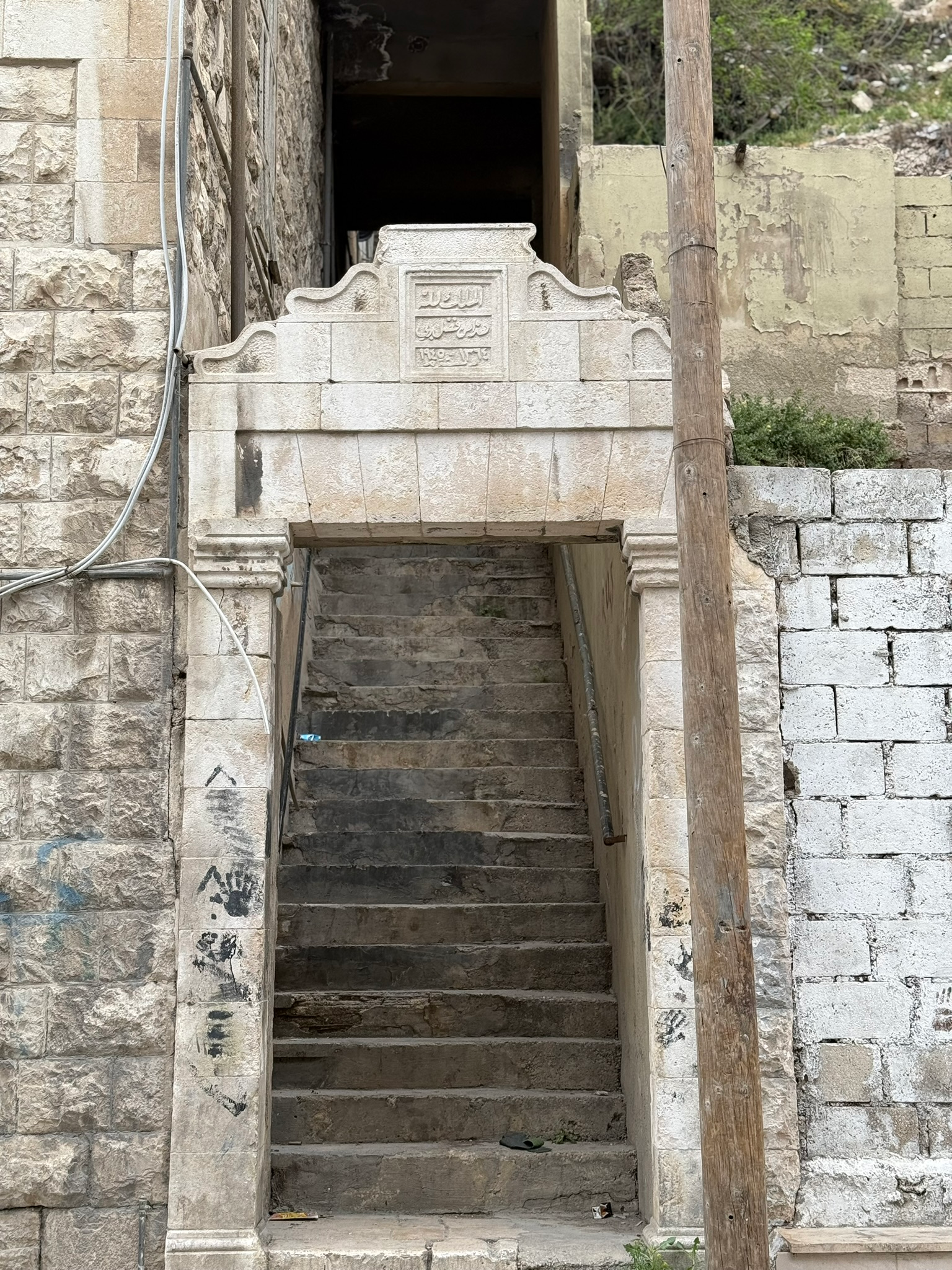
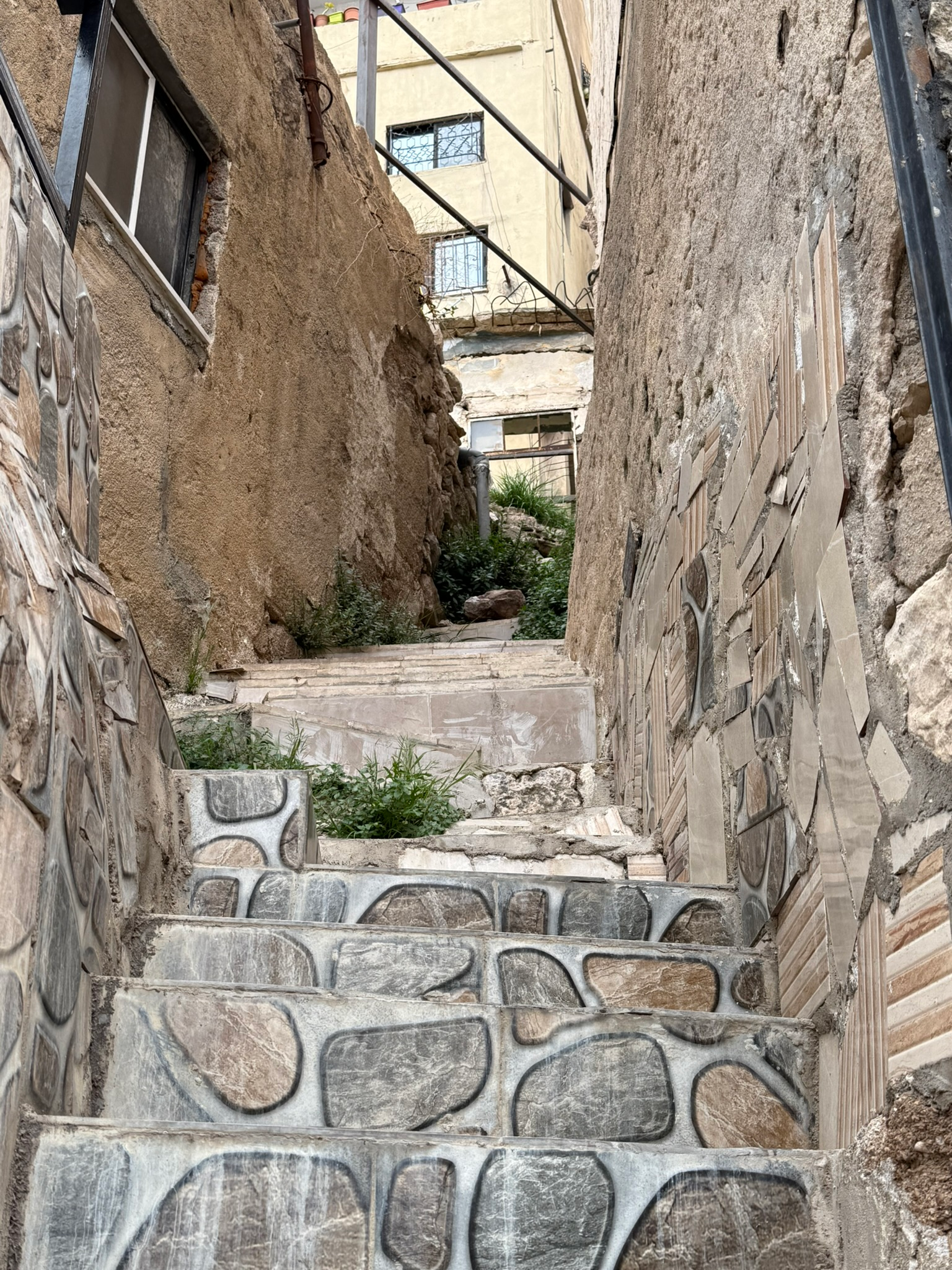
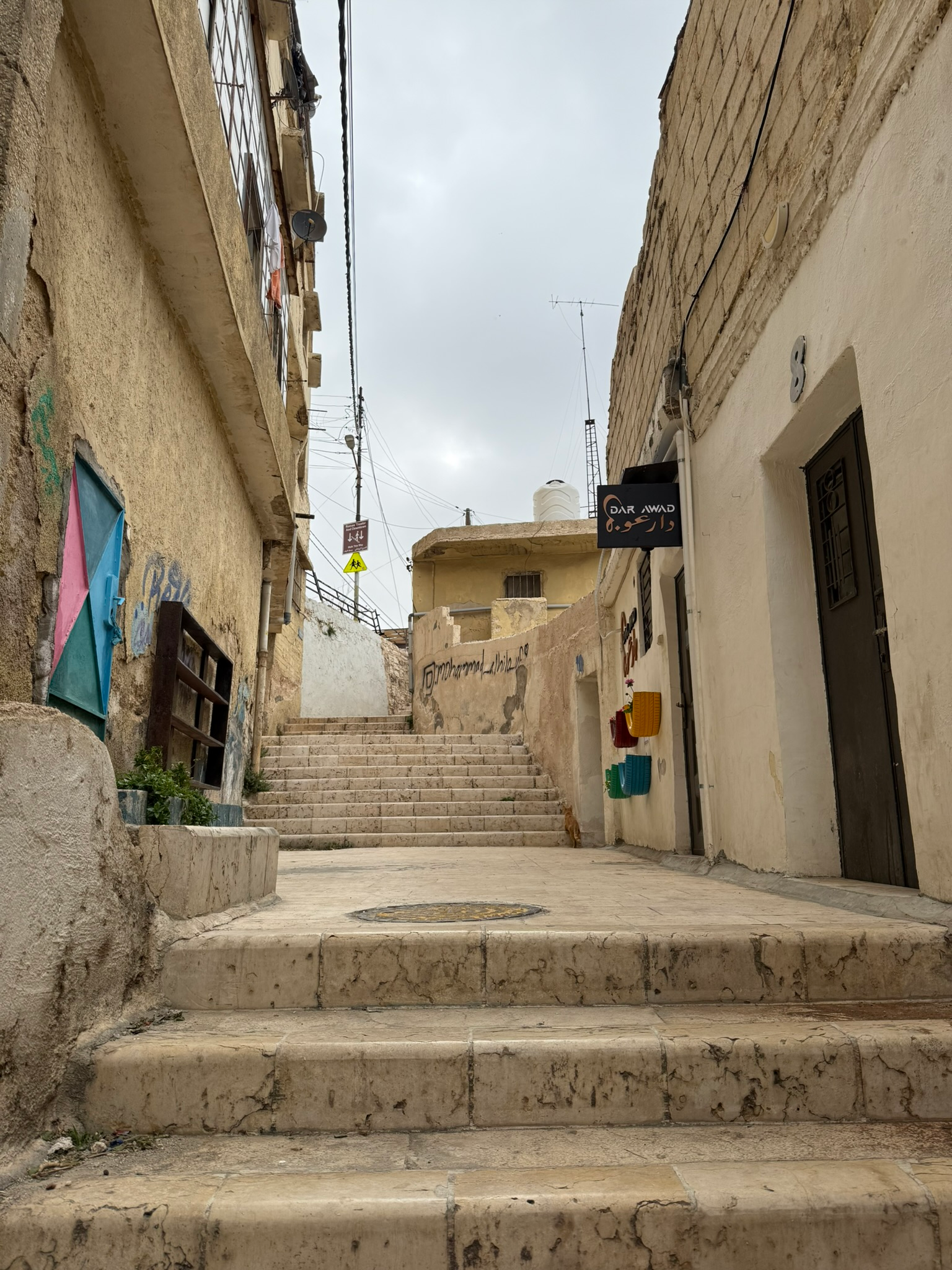
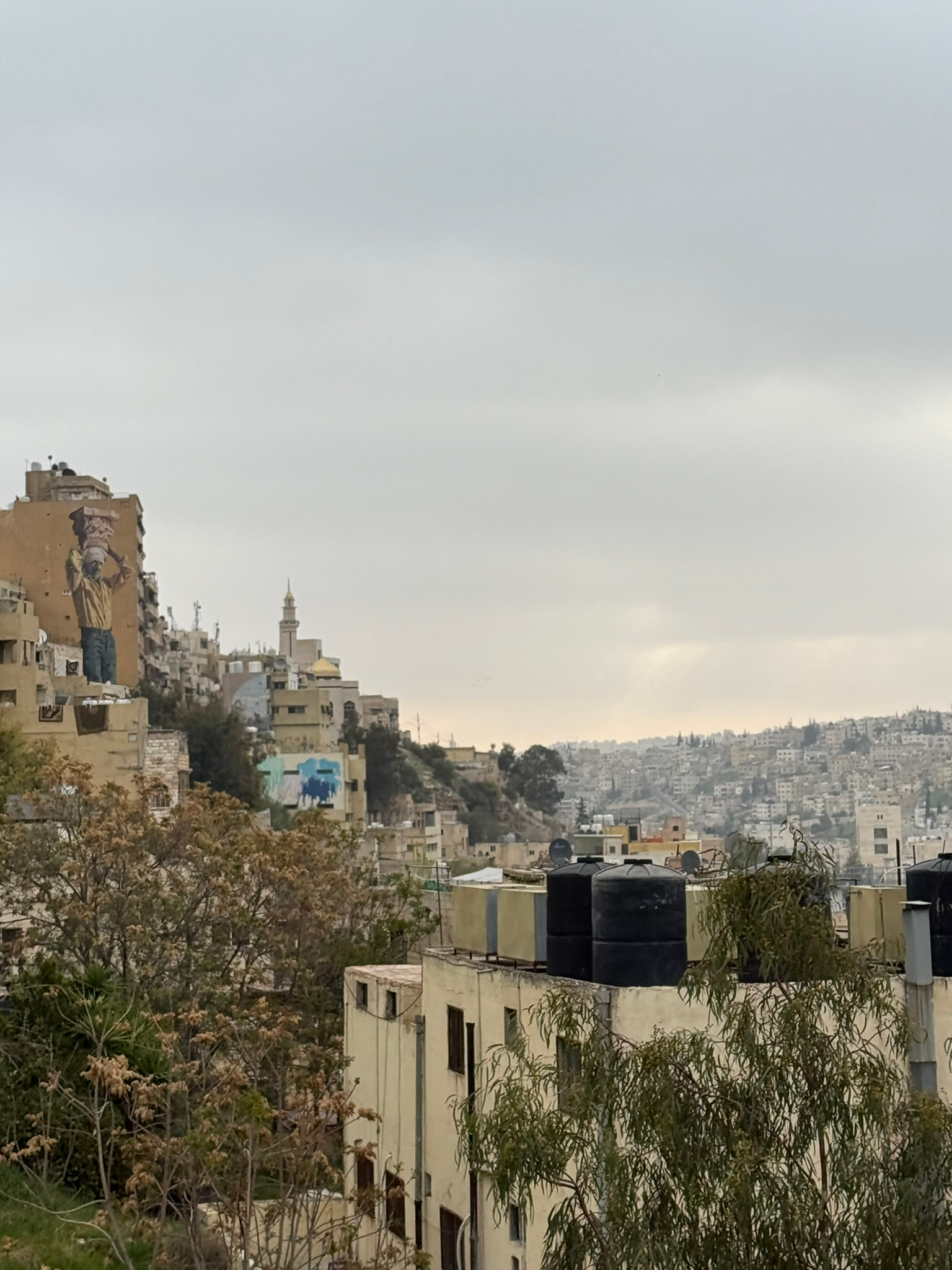
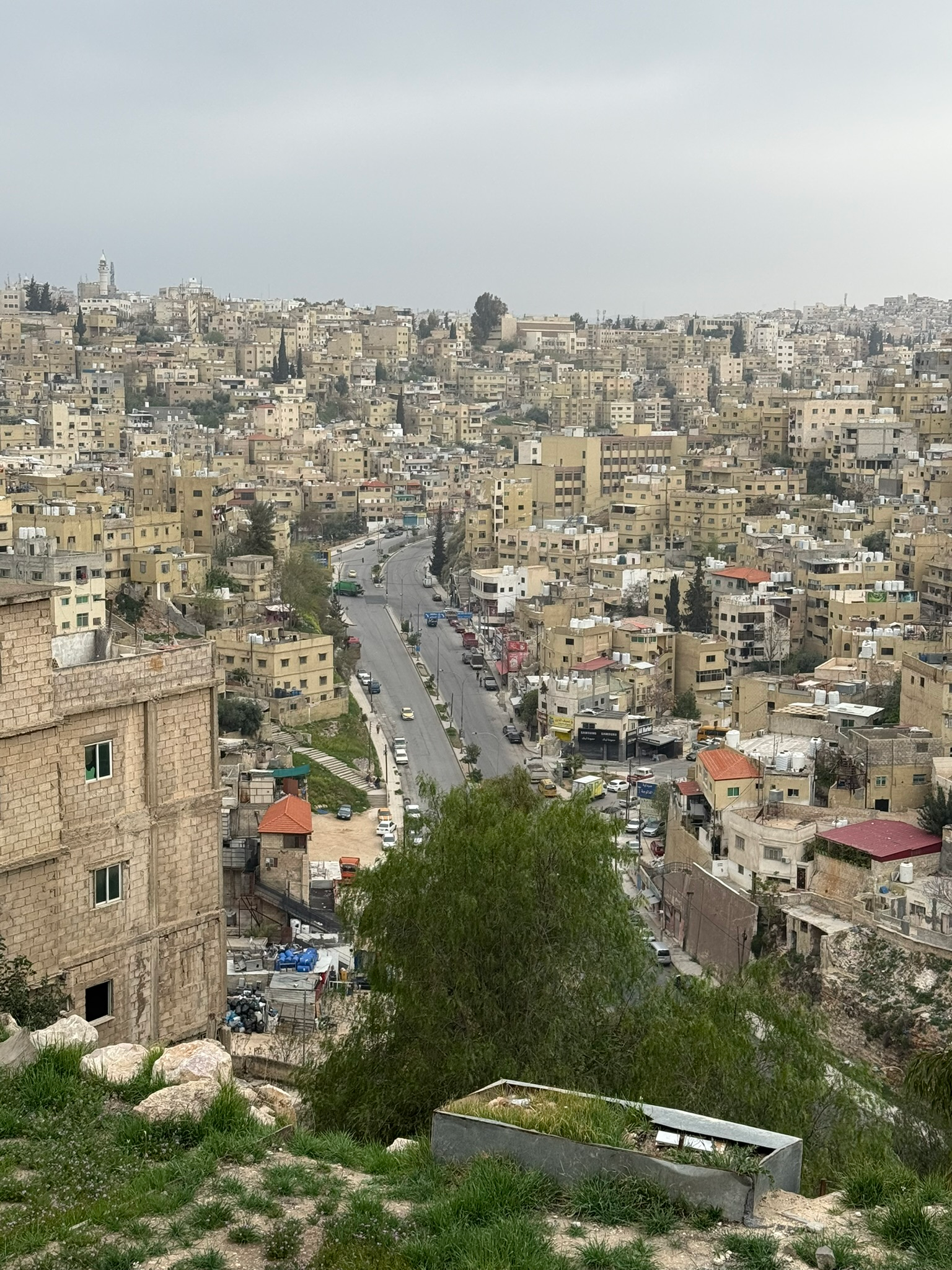
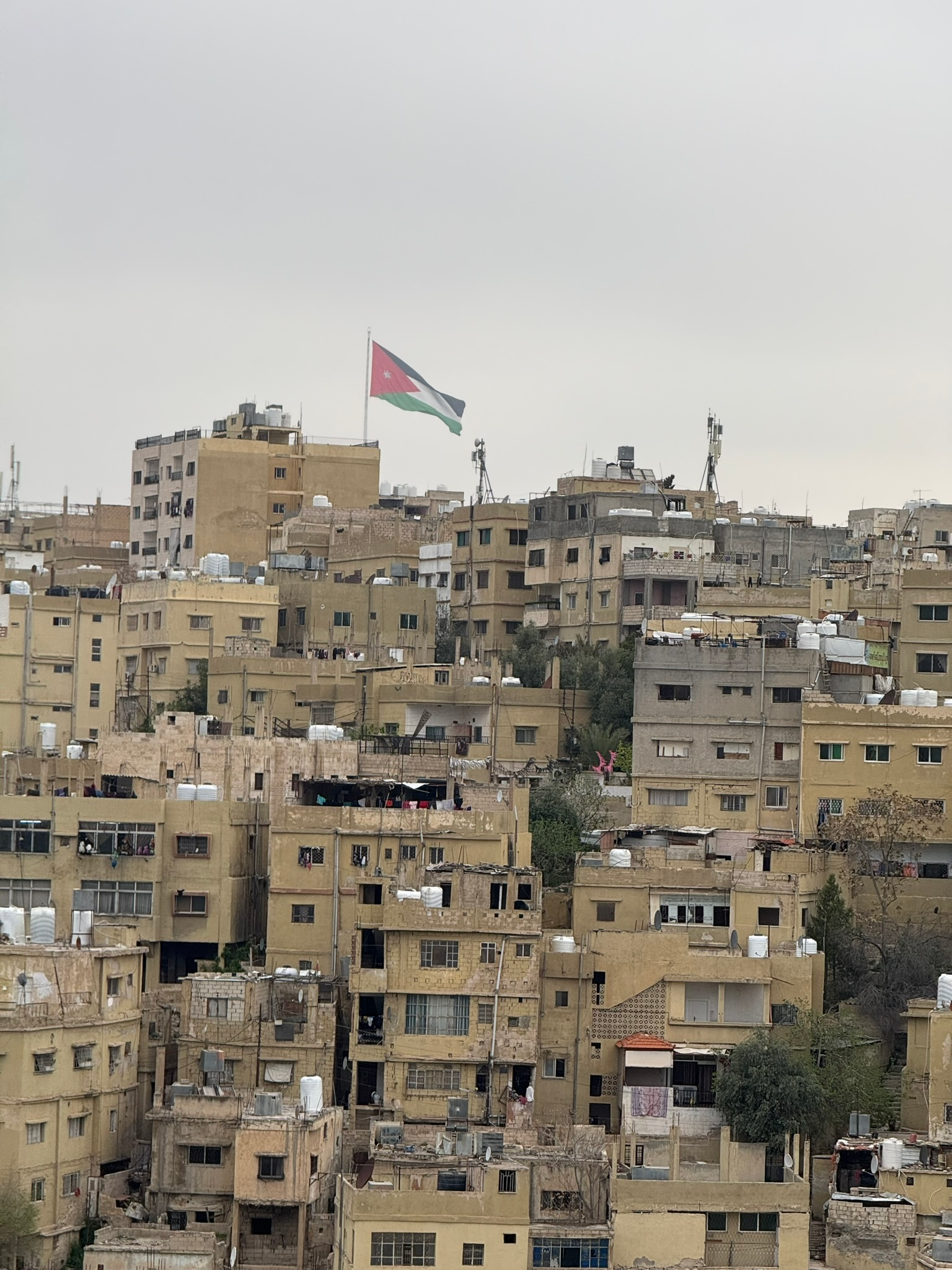
Having travelled quite a bit and experienced many different cities, I can’t say I didn’t feel a touch of culture shock the second we arrived in Downtown Amman. For some reason, I hadn’t quite pictured the city being in such an unruly state. Well, to be fair, I hadn’t pictured it at all.
The streets were littered with rubbish, crowded with people and cluttered with all kinds of stalls. The buildings were old, run-down and derelict. There was noise and chaos and… Man, was it good to be travelling again! As soon as we dropped off our luggage at the hotel, we set ourselves loose in the city, getting lost among its streets and going up and down the many hills of Amman.
A City Beneath the City
While roaming around Amman’s roads was an experience in and of itself, there was something else that was much more to my liking – the city’s history!
The story of Amman stretches back to the Neolithic period. The nearby settlement of ‘Ain Ghazal, now on the outskirts of the modern city, produced a remarkable collection of plaster figures dating to around 6500 BC. They are considered among the earliest known large-scale representations of the human form.
Millennia later, the Ammonites established their capital at Rabbath Ammon, centred around what is now the Amman Citadel. The city subsequently passed through the hands of several regional powers before being renamed Philadelphia during the reign of the Ptolemaic ruler Ptolemy II Philadelphus in the third century BC. Following the Roman conquest of the region in 63 BC, Philadelphia became one of the cities associated with the Decapolis, a group of predominantly Hellenistic cities that flourished under Roman rule.
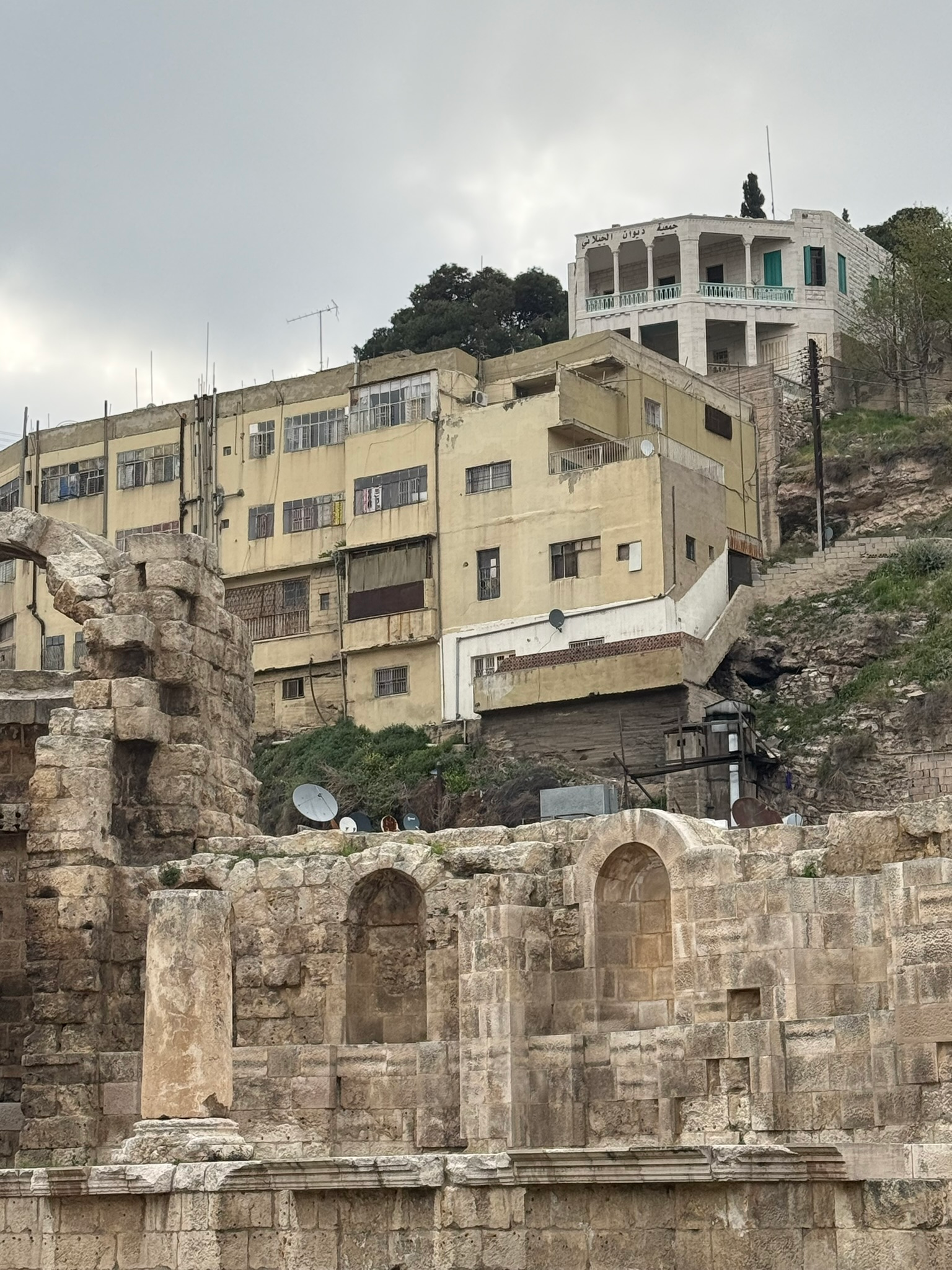
While the city was later governed by various empires and caliphates, ruins from several periods have withstood the test of time. The Amman Citadel, Nymphaeum and Roman Theatre now serve as reminders of ancient Philadelphia and the successive civilisations that shaped modern Amman.
Citadel in the Clouds
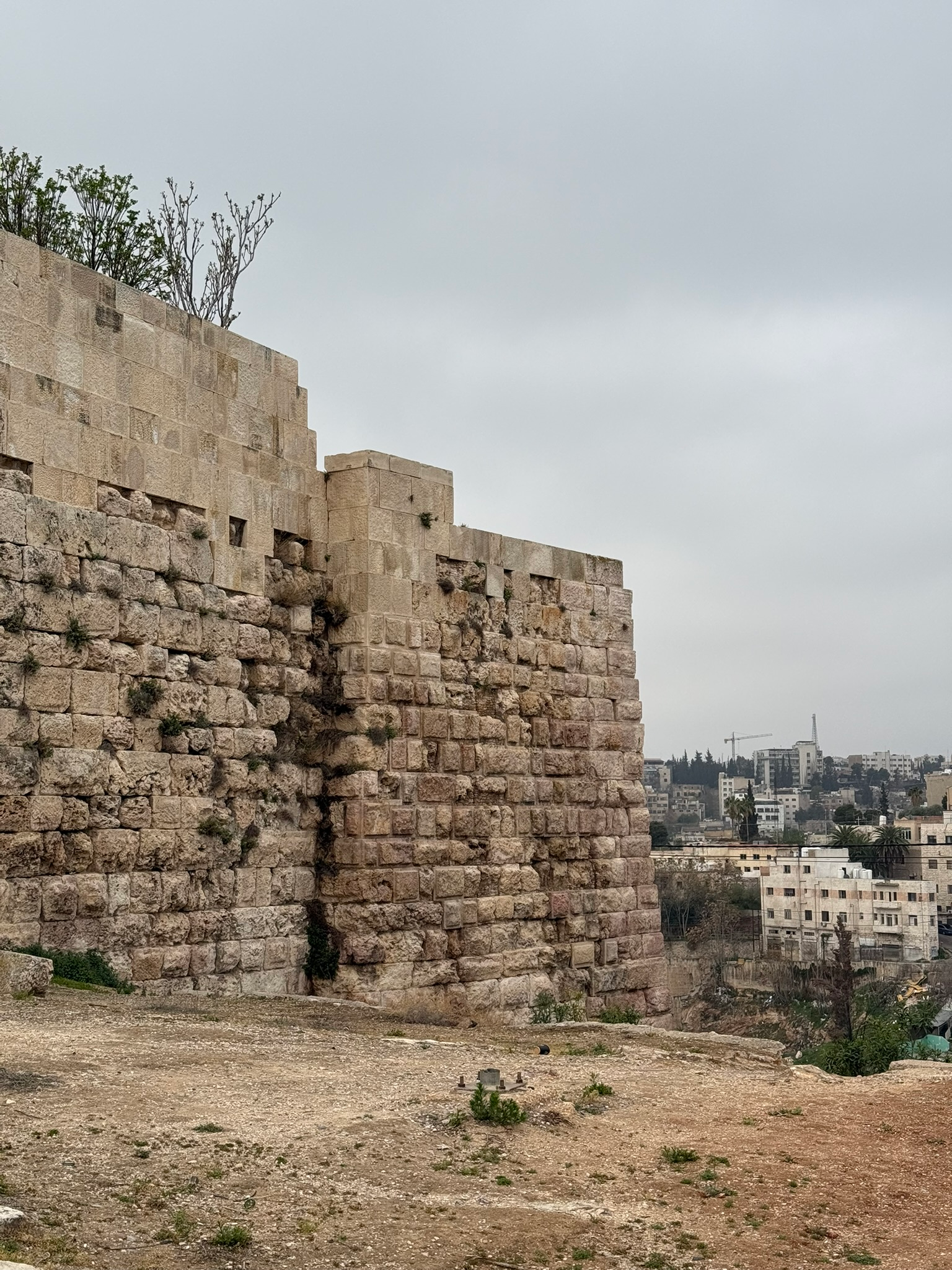
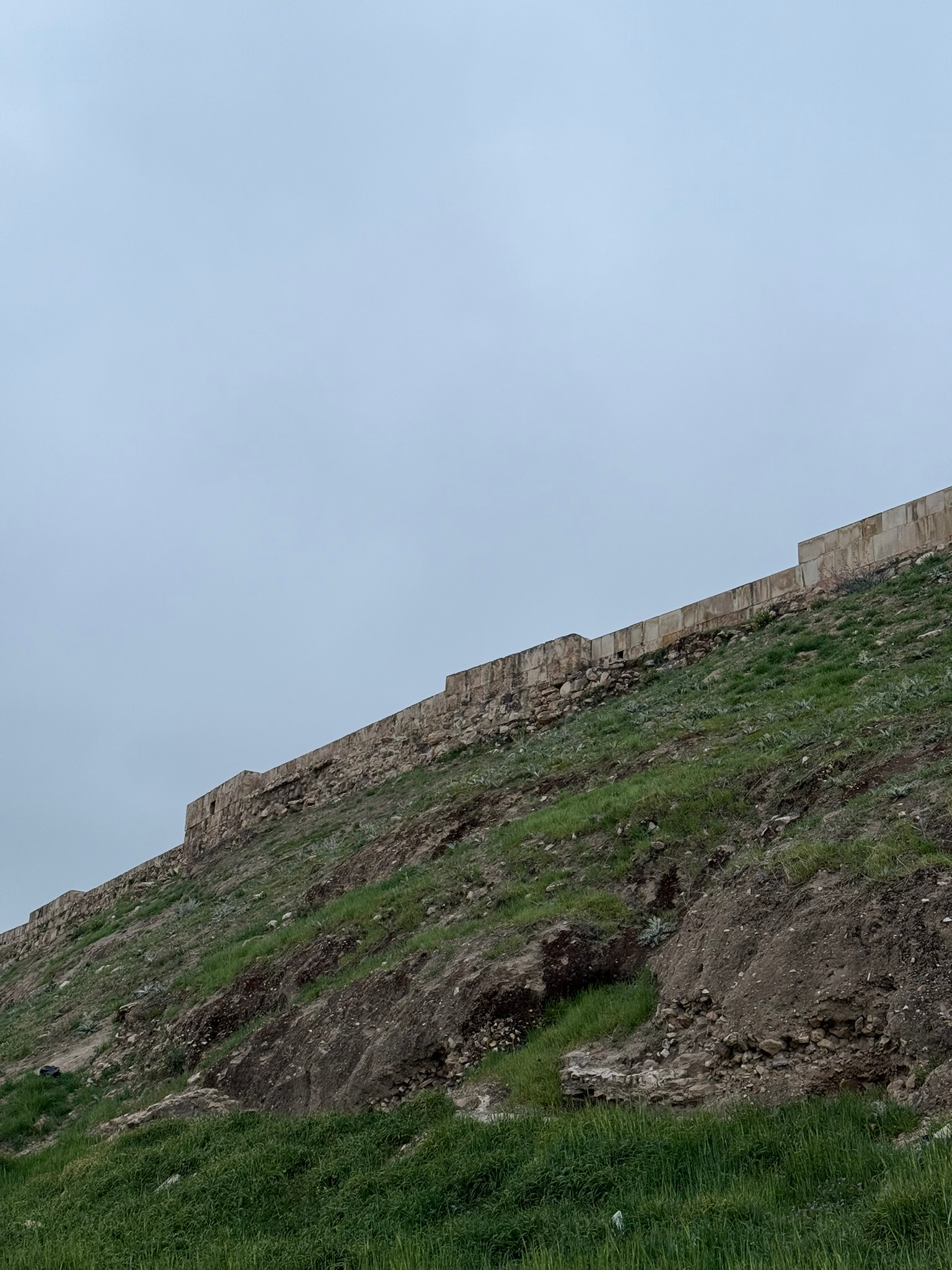
Our first stop would be the Amman Citadel. Under a soft drizzle and grey skies, we made our way up the hill, only to be told that it was still closed. We wandered around for a while longer until we could finally enter.
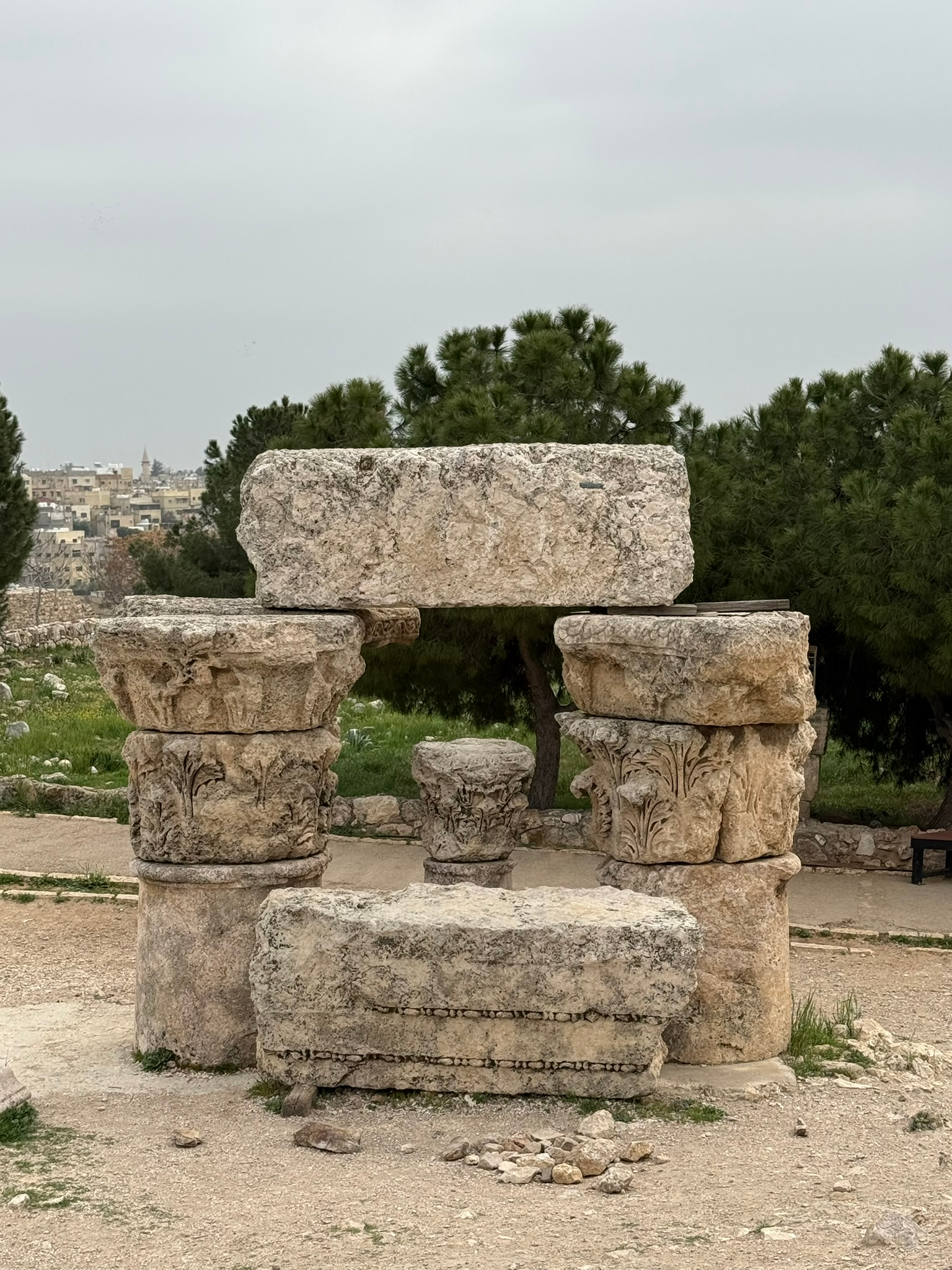
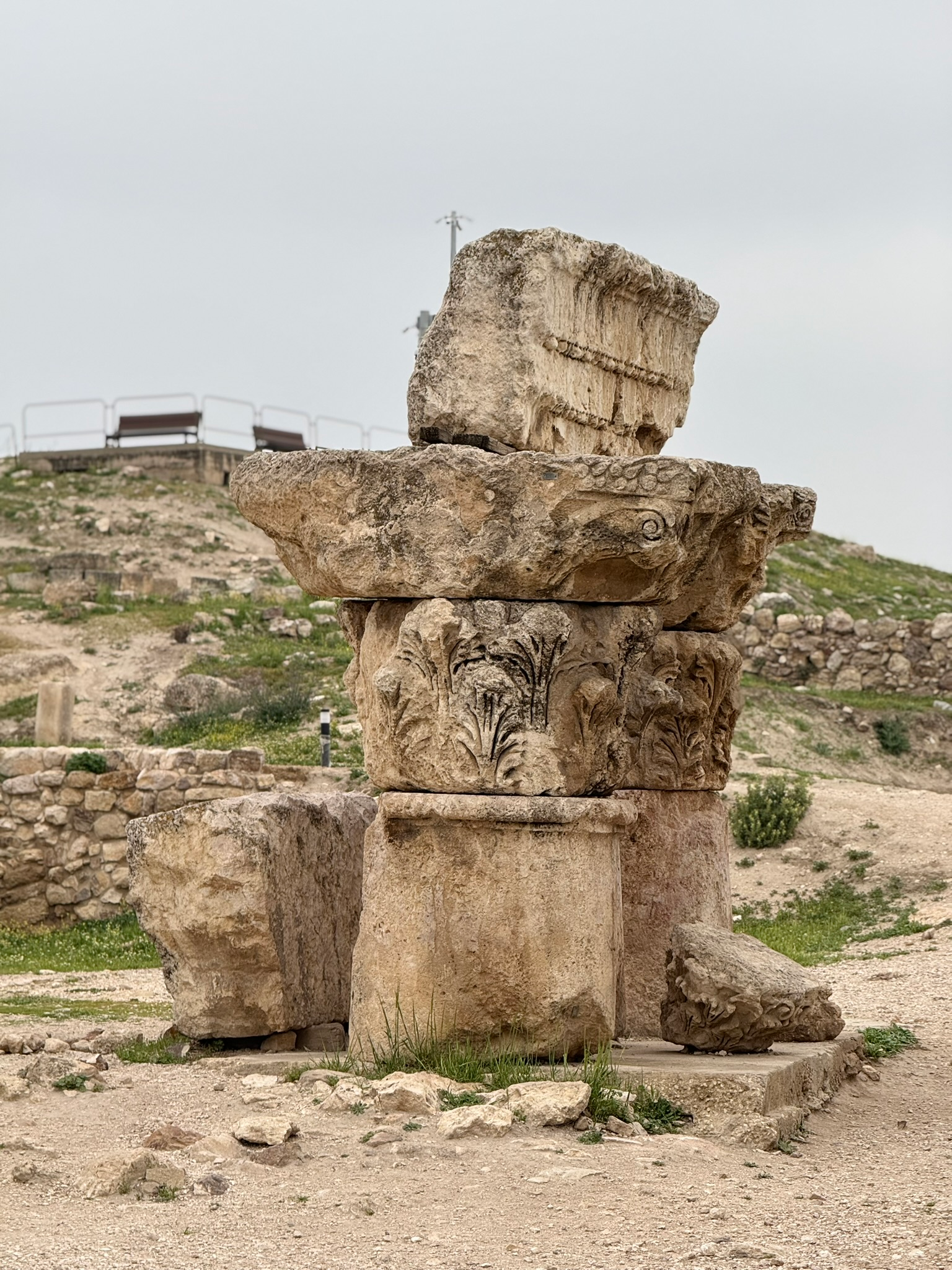
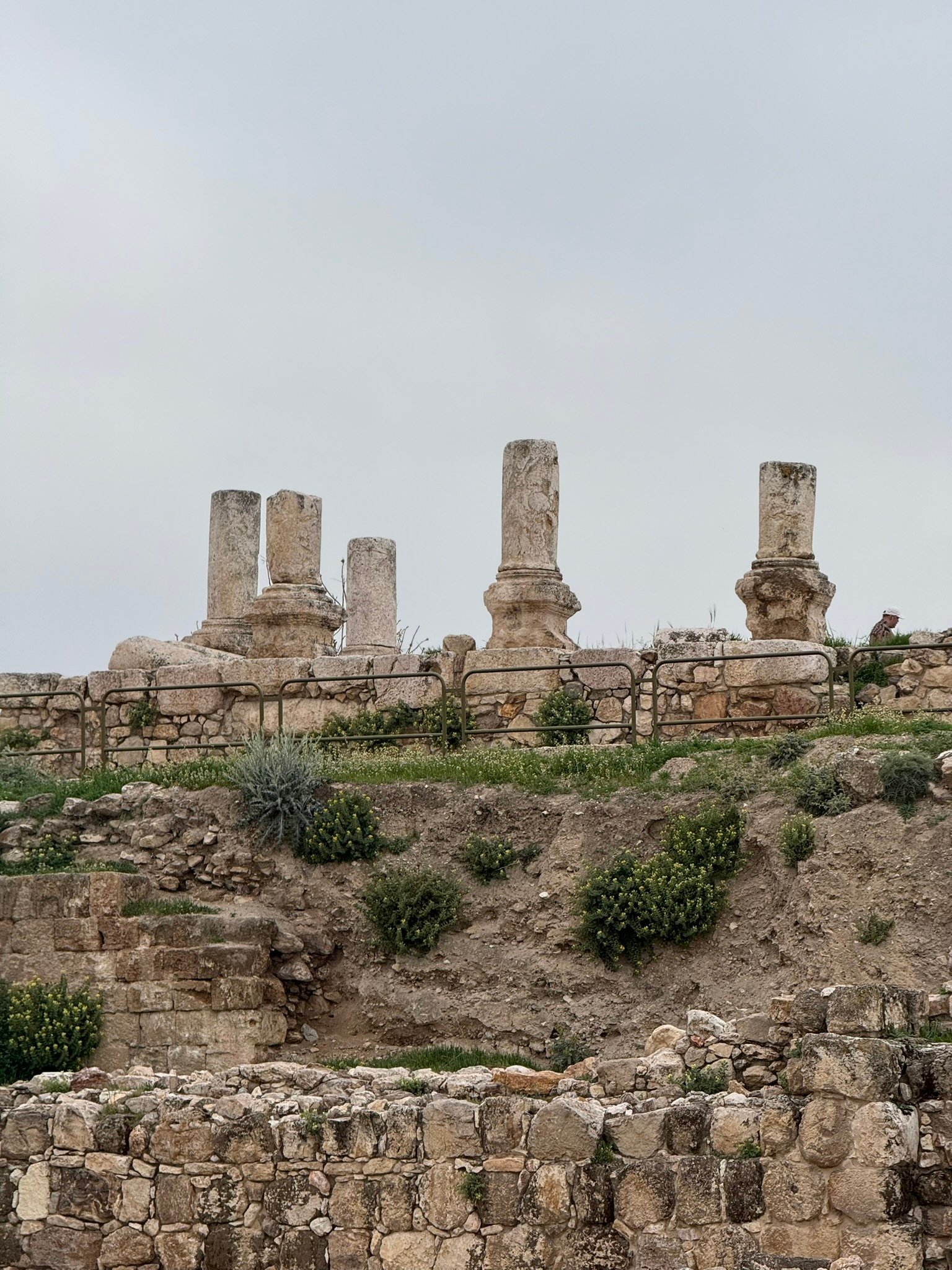
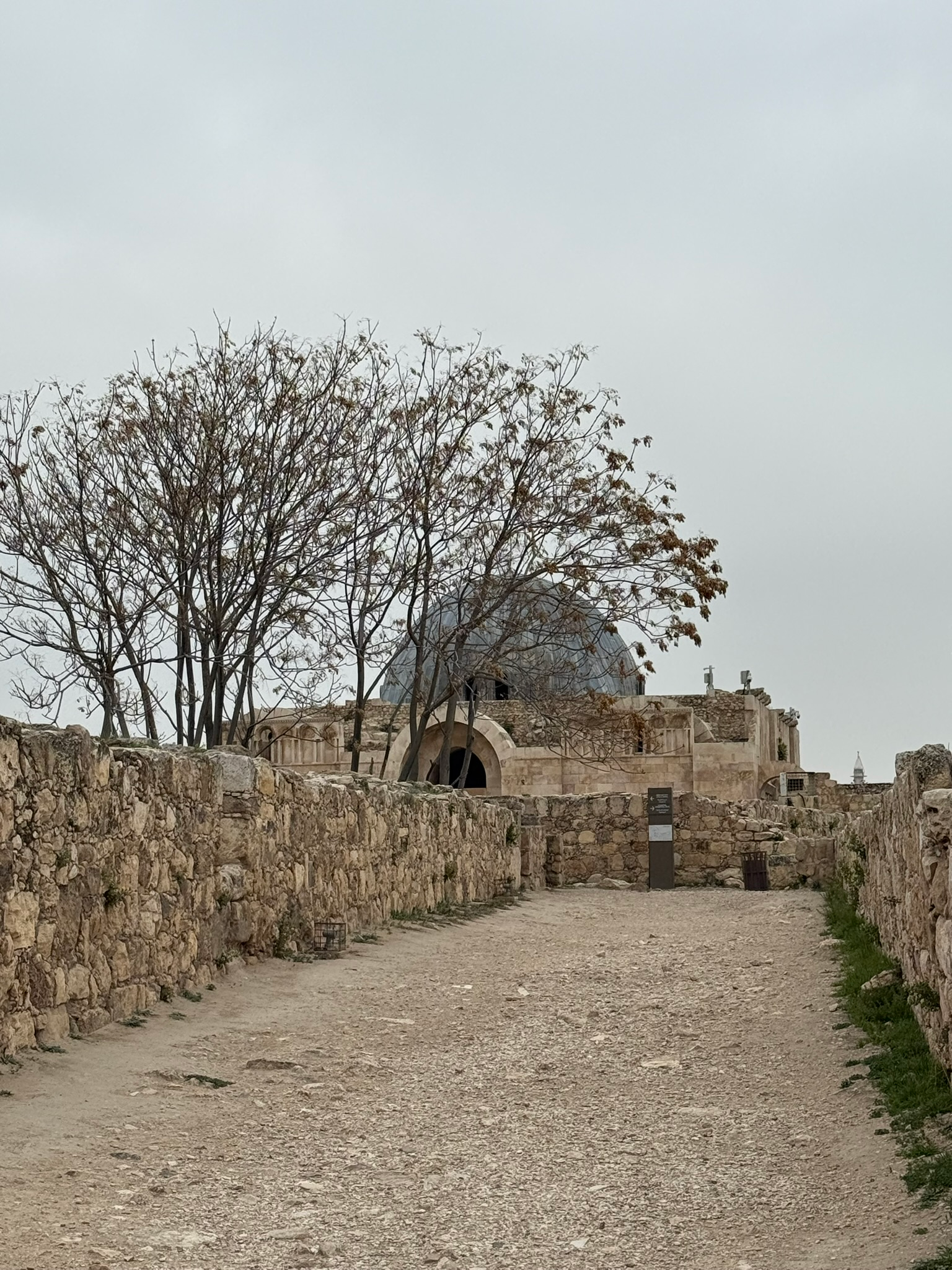
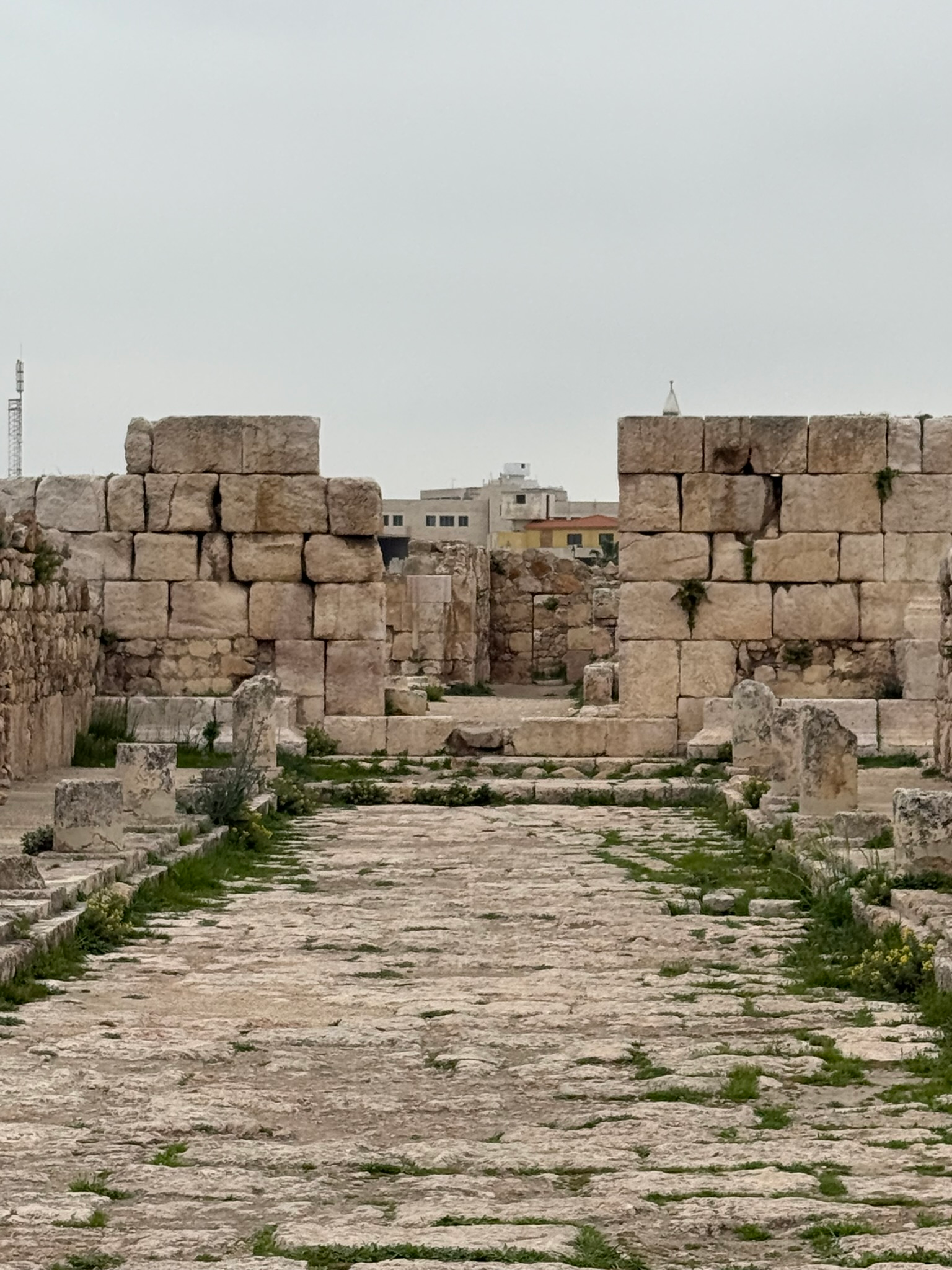
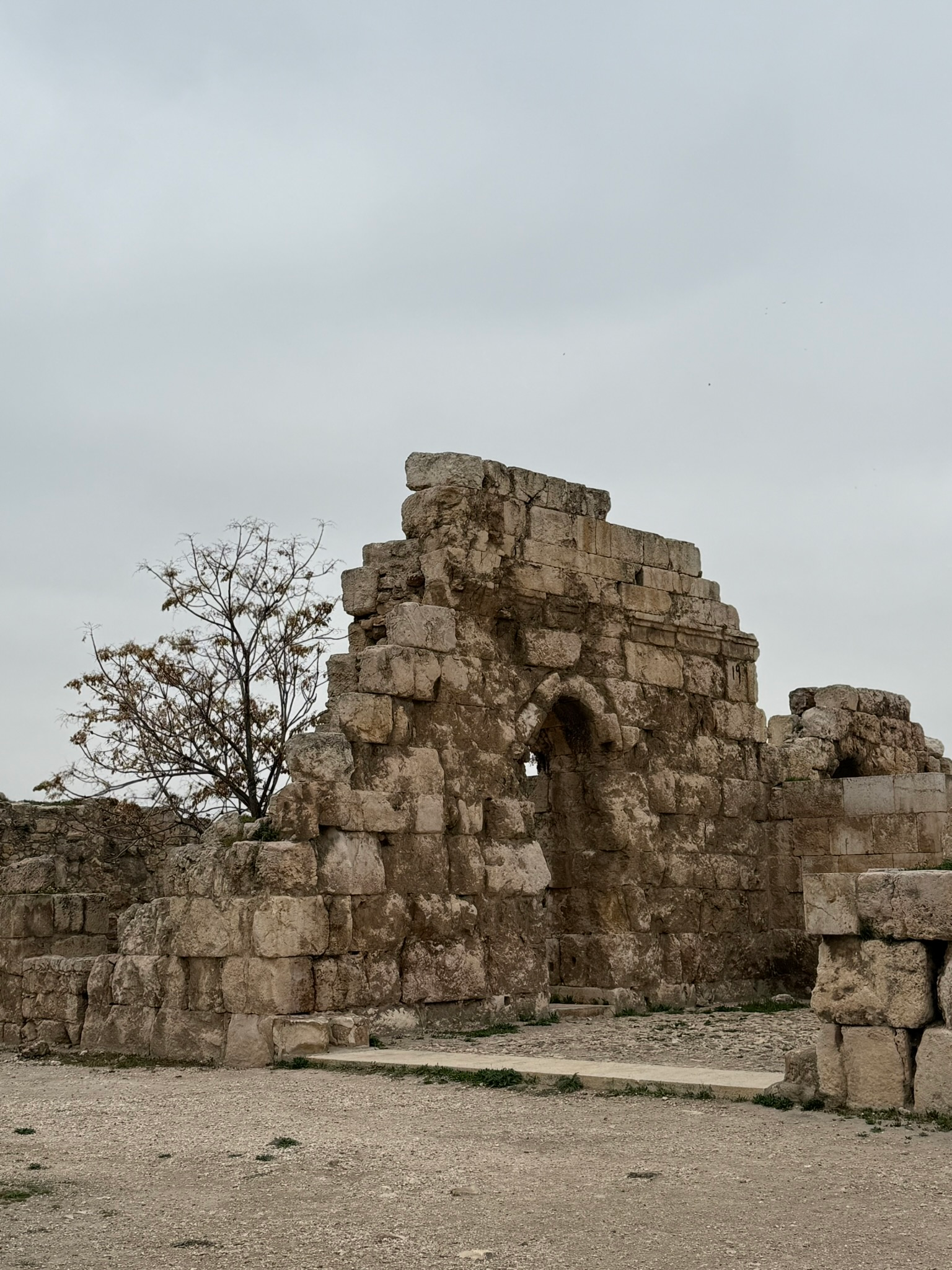
The Amman Citadel sits atop Jabal al-Qal’a, one of the seven hills around which Amman originally developed. Its elevated position provides a commanding view over the city, while archaeological remains reveal that the hill has been occupied by successive civilisations for thousands of years. Roman, Byzantine and early Islamic structures now stand within the same relatively compact area, each offering a glimpse into a different chapter of the city’s history.
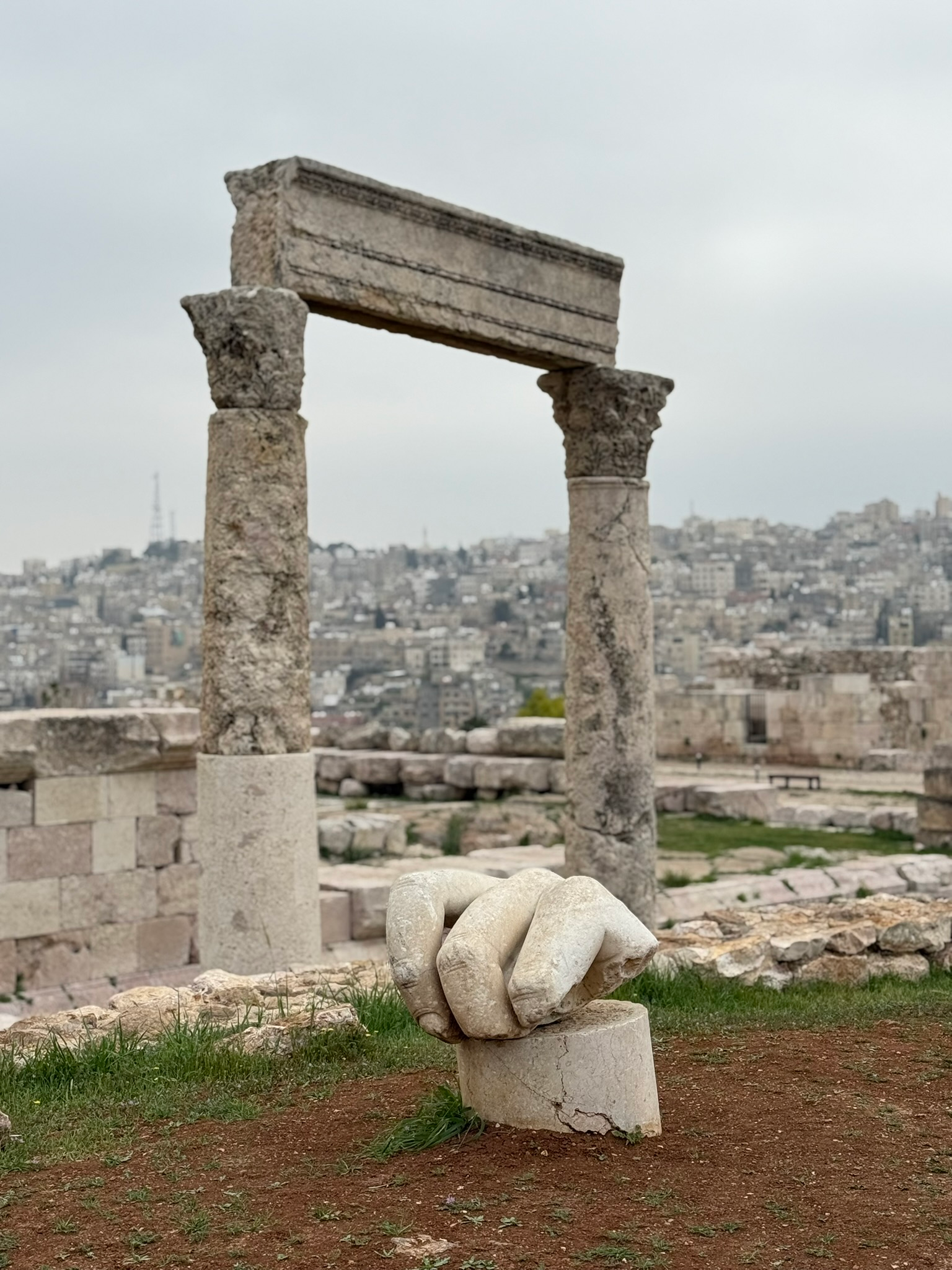
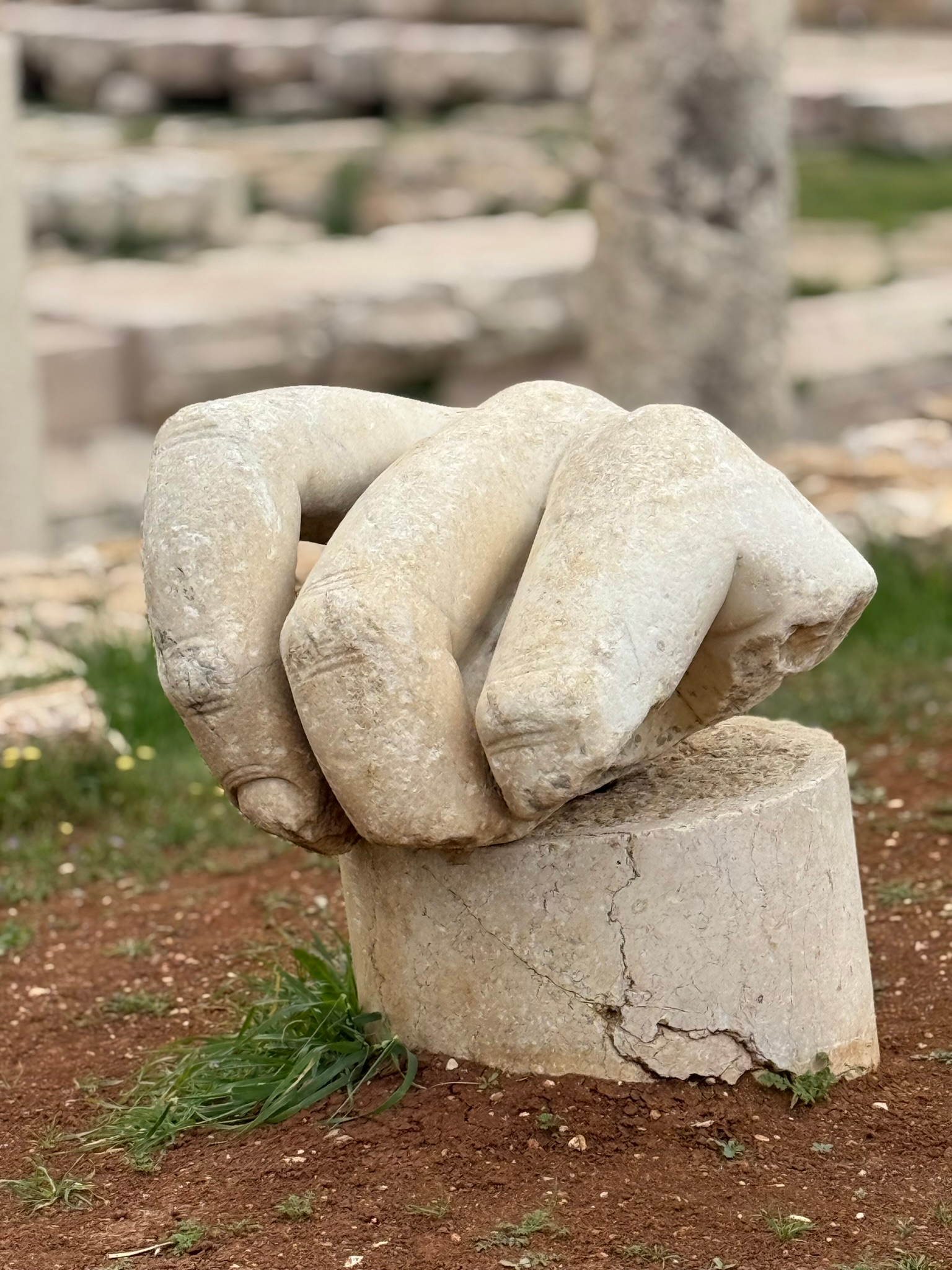
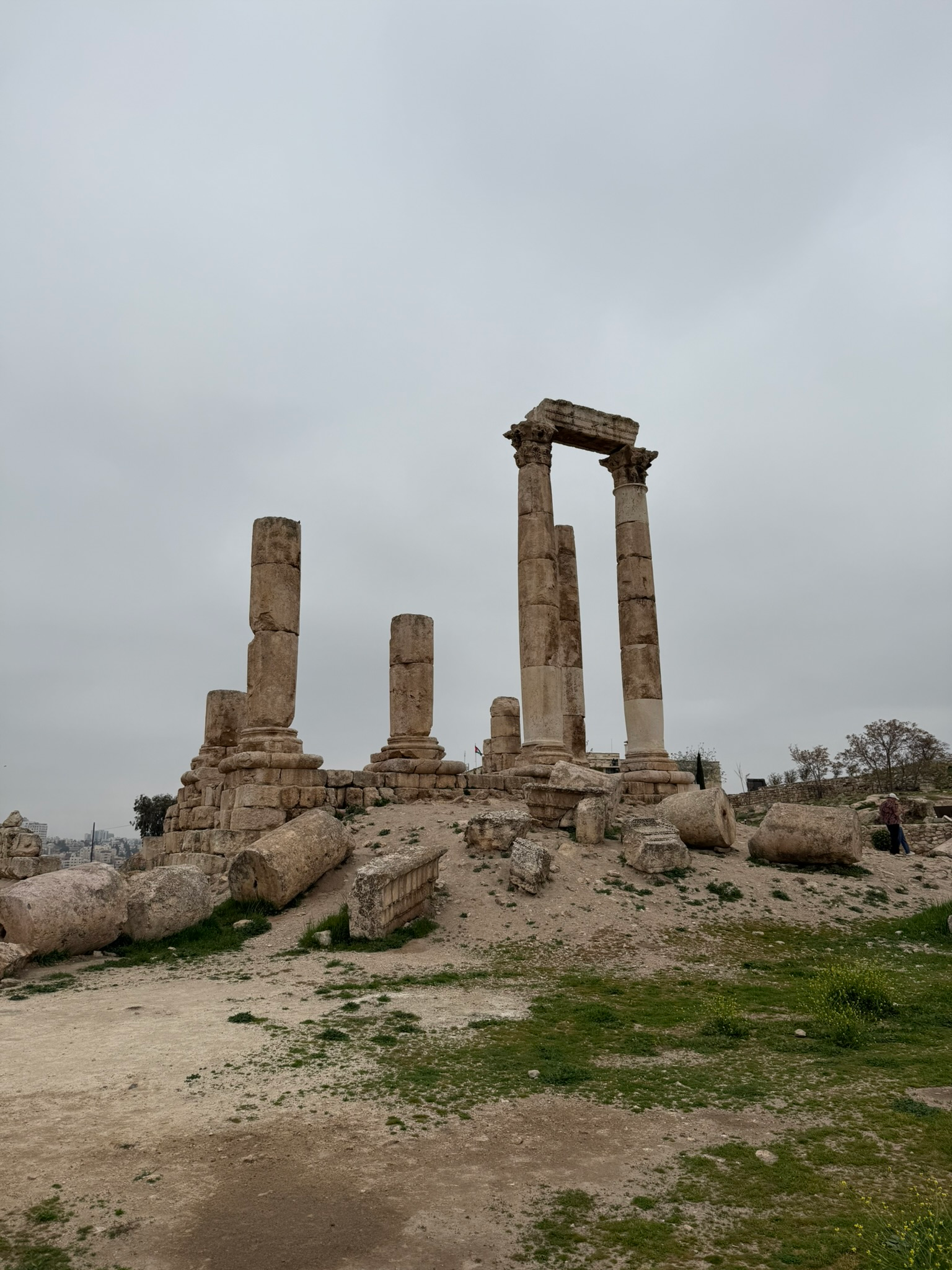
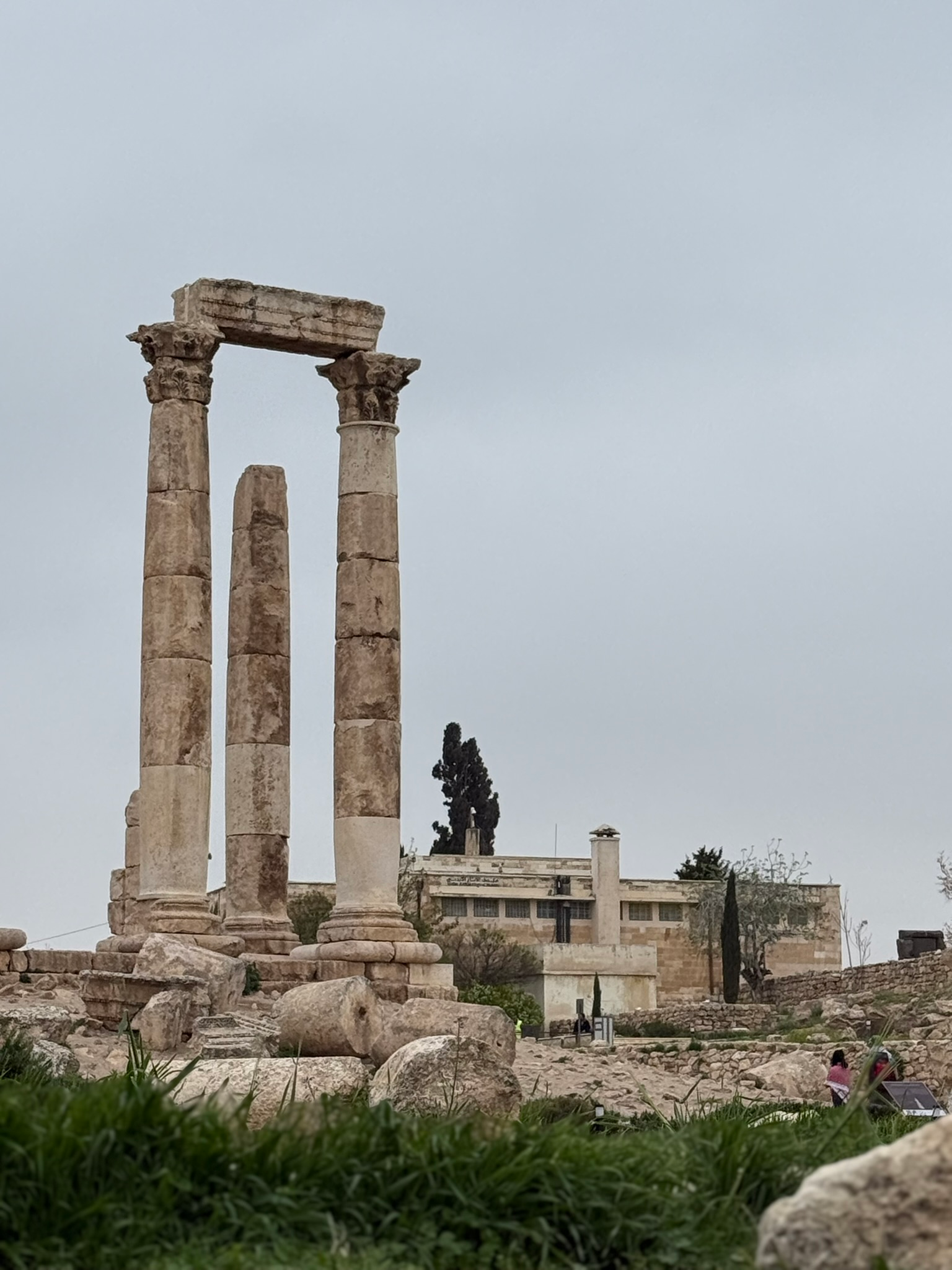
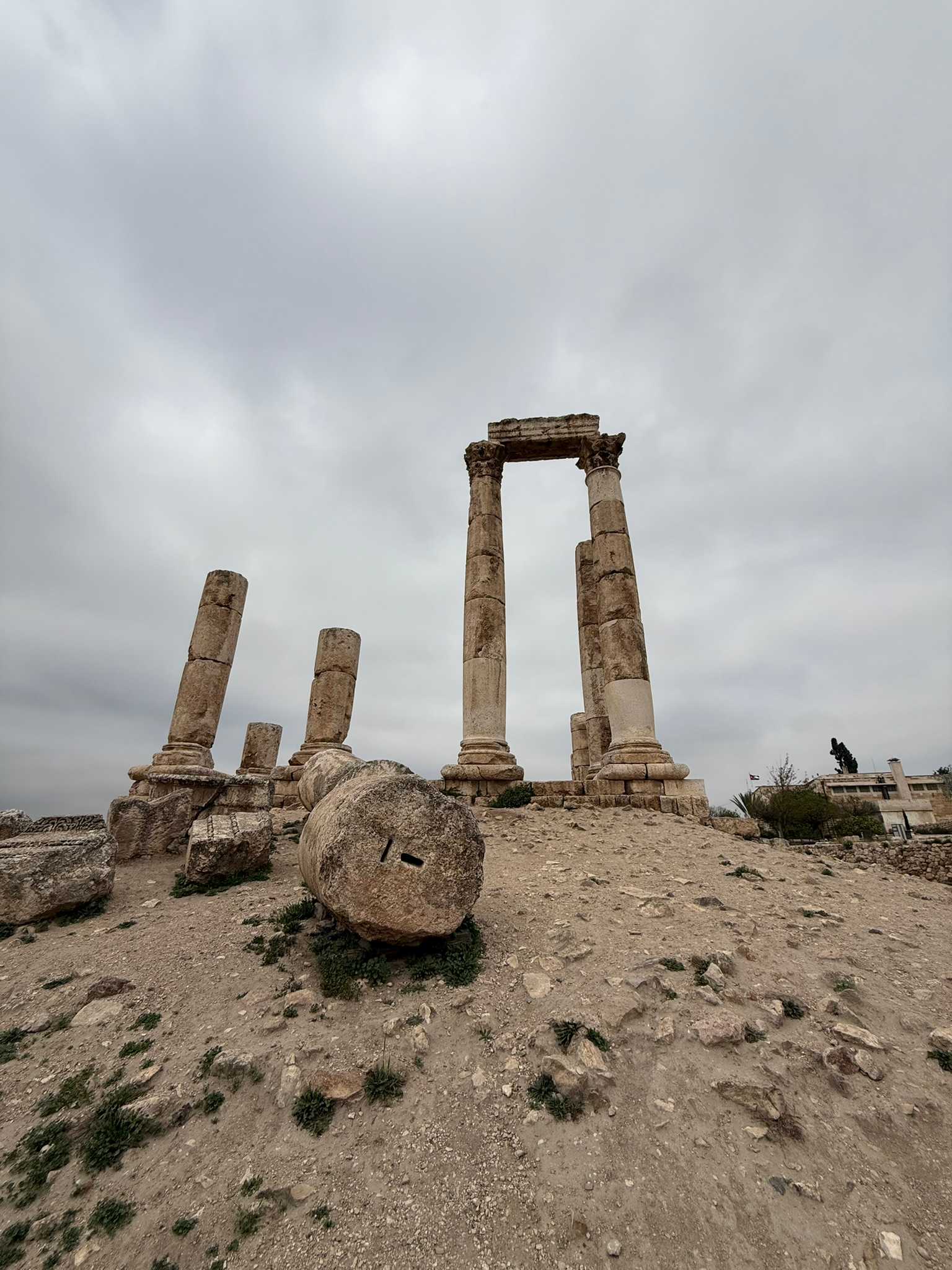
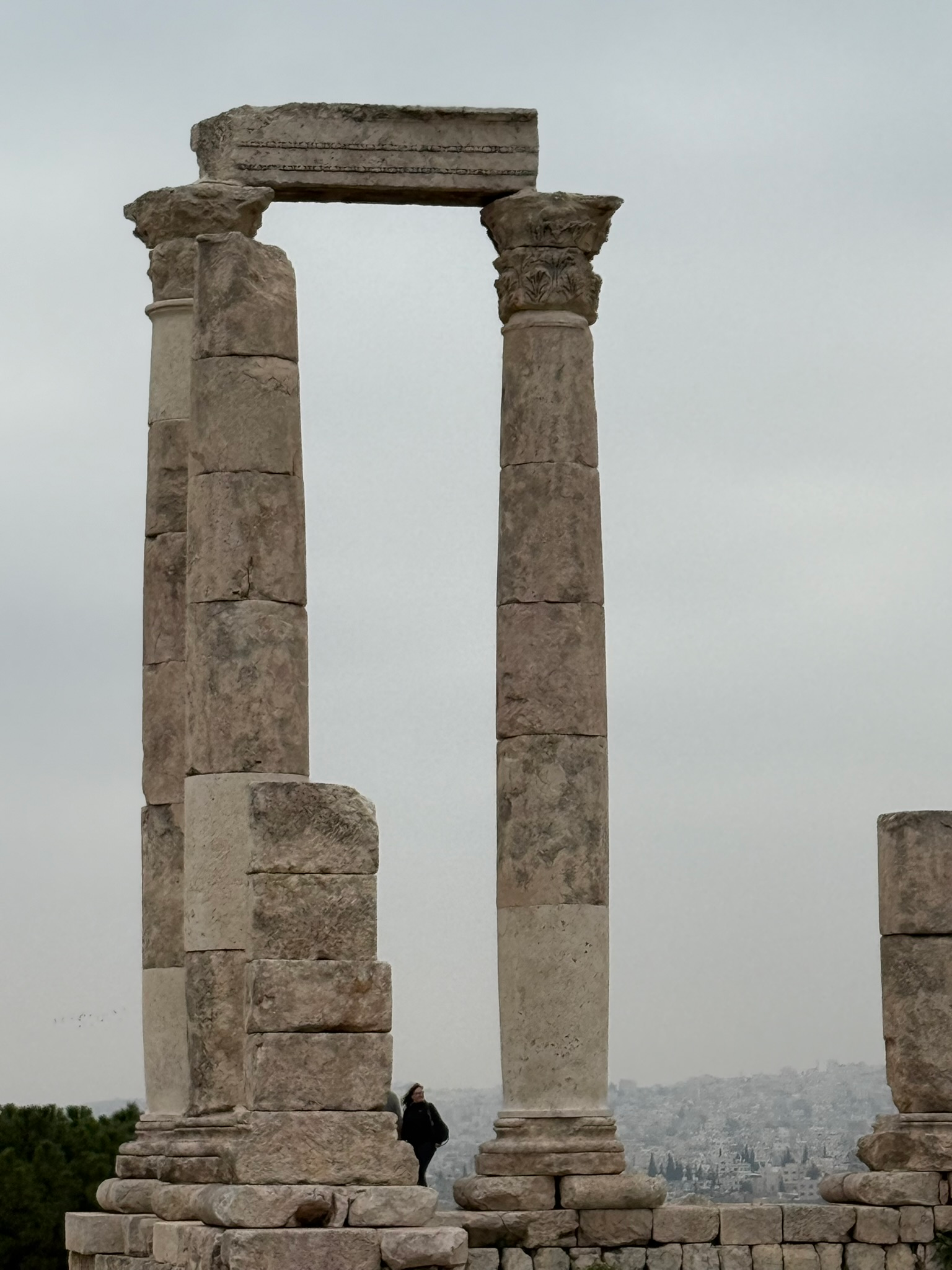
The most striking structure we stumbled upon was the Temple of Hercules, constructed during the Roman period in the second century AD. Only a few massive columns remain standing, but their sheer scale hints at how grand the sanctuary must once have been. Nearby lies an enormous hand-shaped fragment believed to have belonged to a colossal human statue, traditionally identified as Hercules himself. As we stood facing the vast temple ruins, I couldn’t help but wonder how the Citadel must have looked during its golden days!
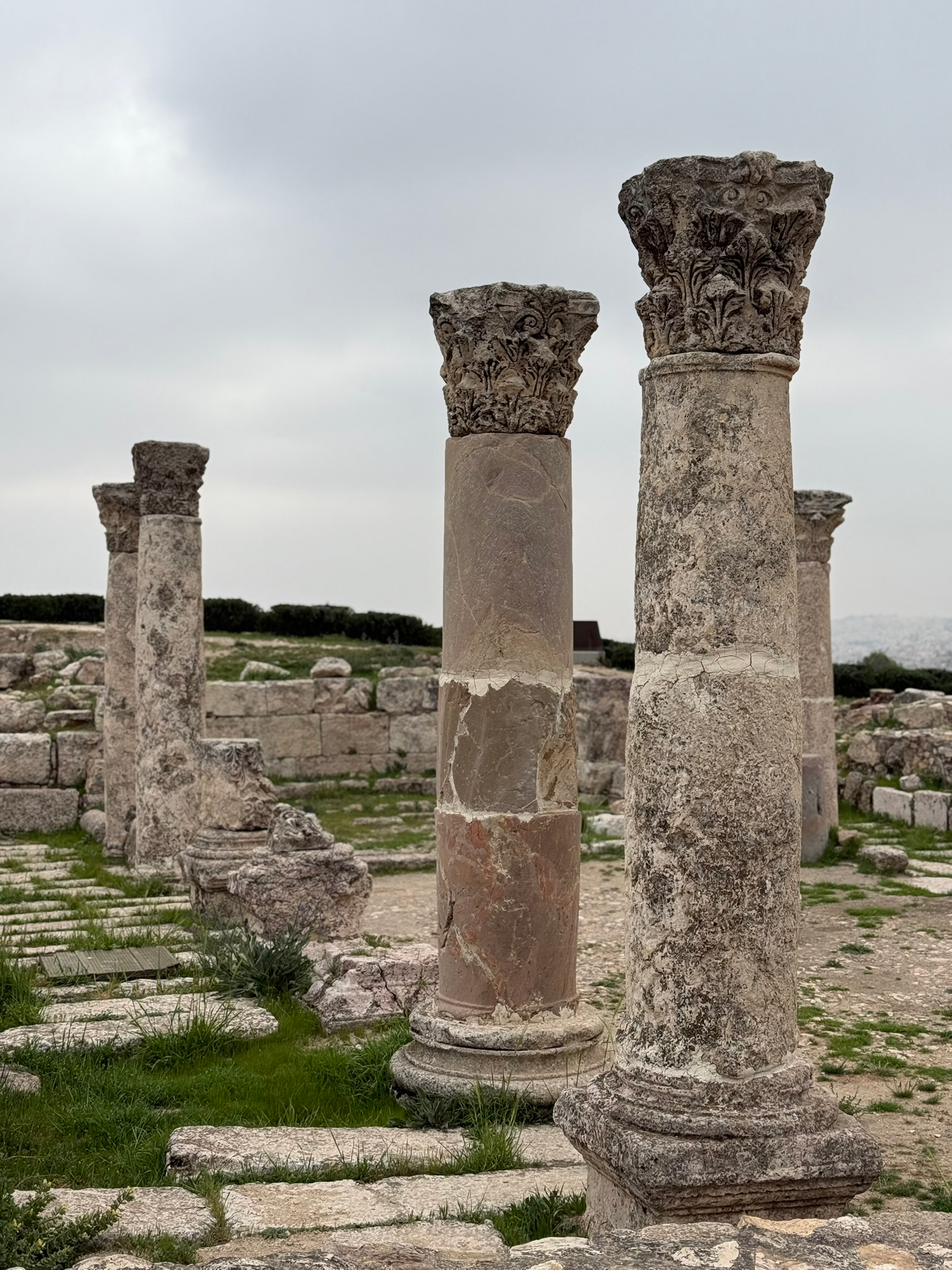
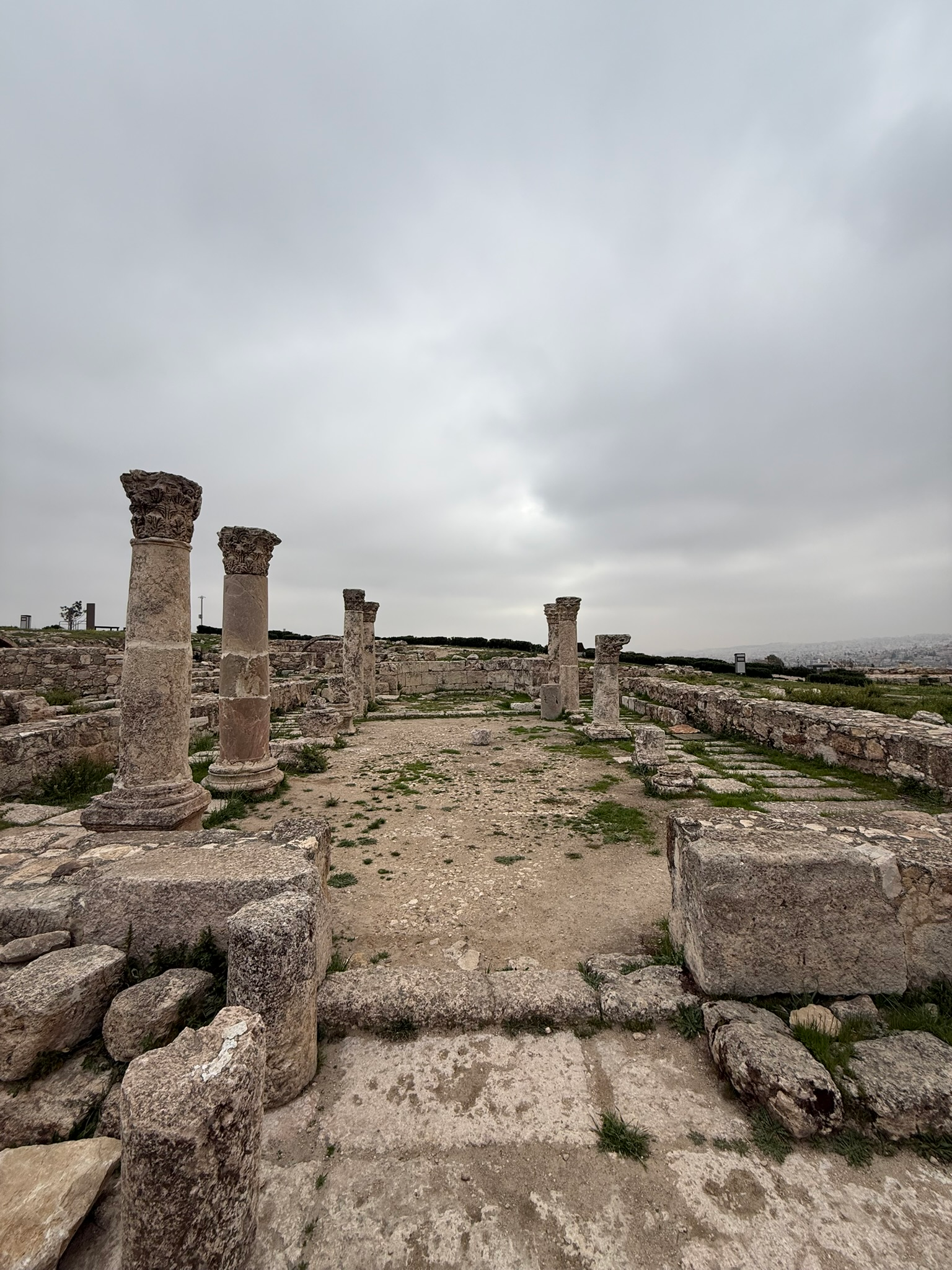
A short walk away from the temple lies the Byzantine Church, dating to around the sixth century, with the outlines of its apse and rows of columns still visible. It’s a quieter space, but one that reflects the period during which Christianity flourished throughout the region.
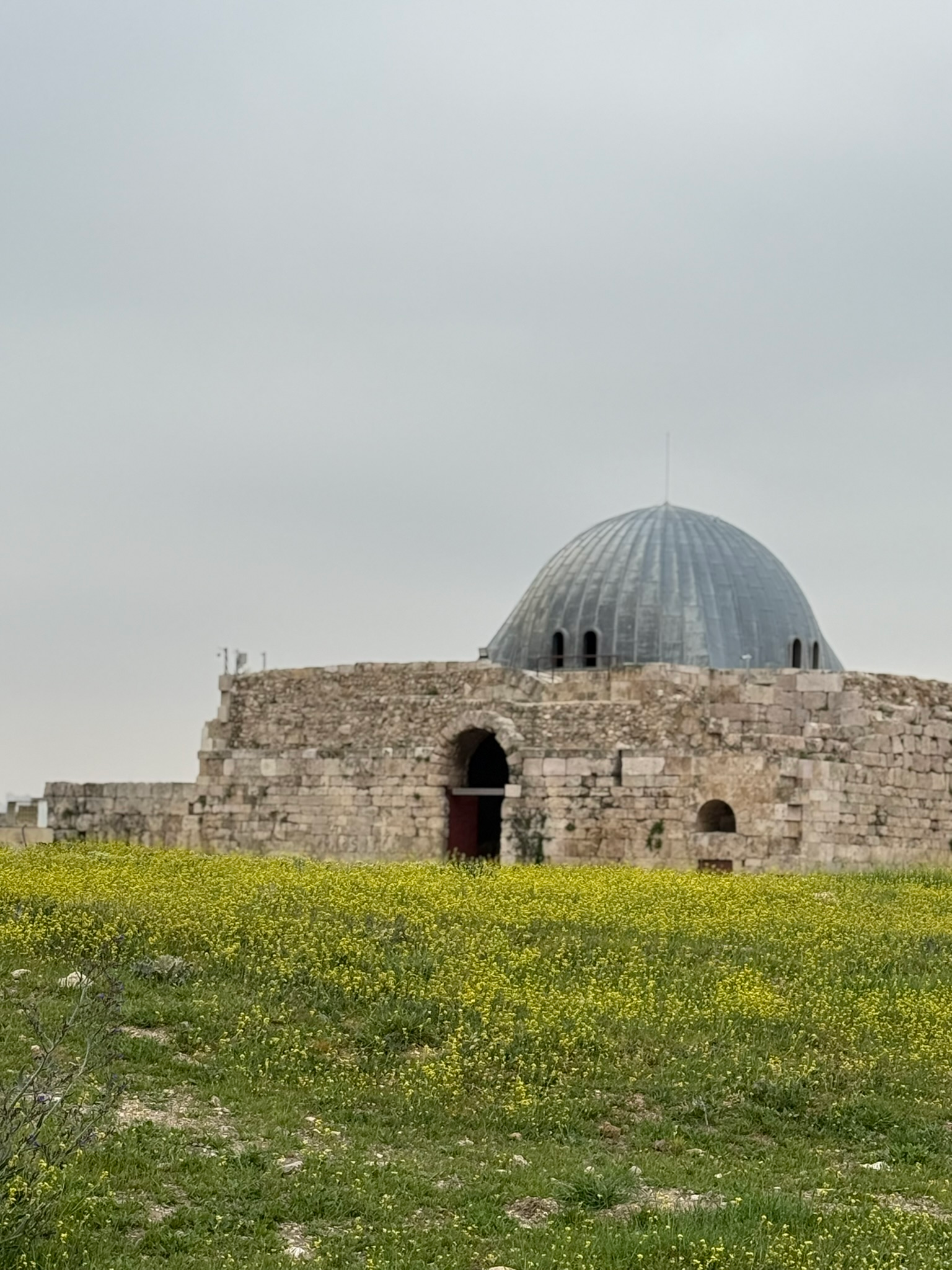
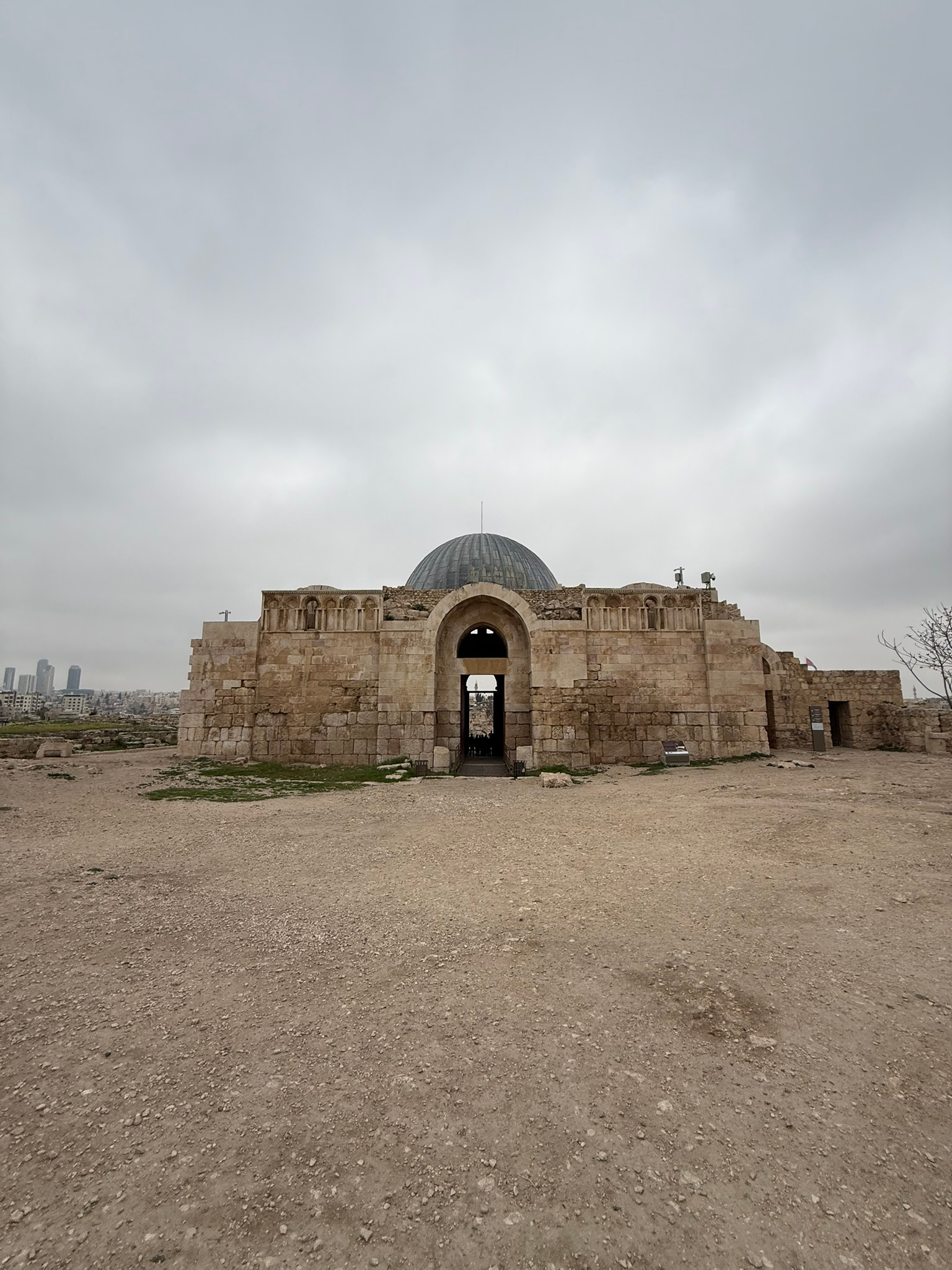
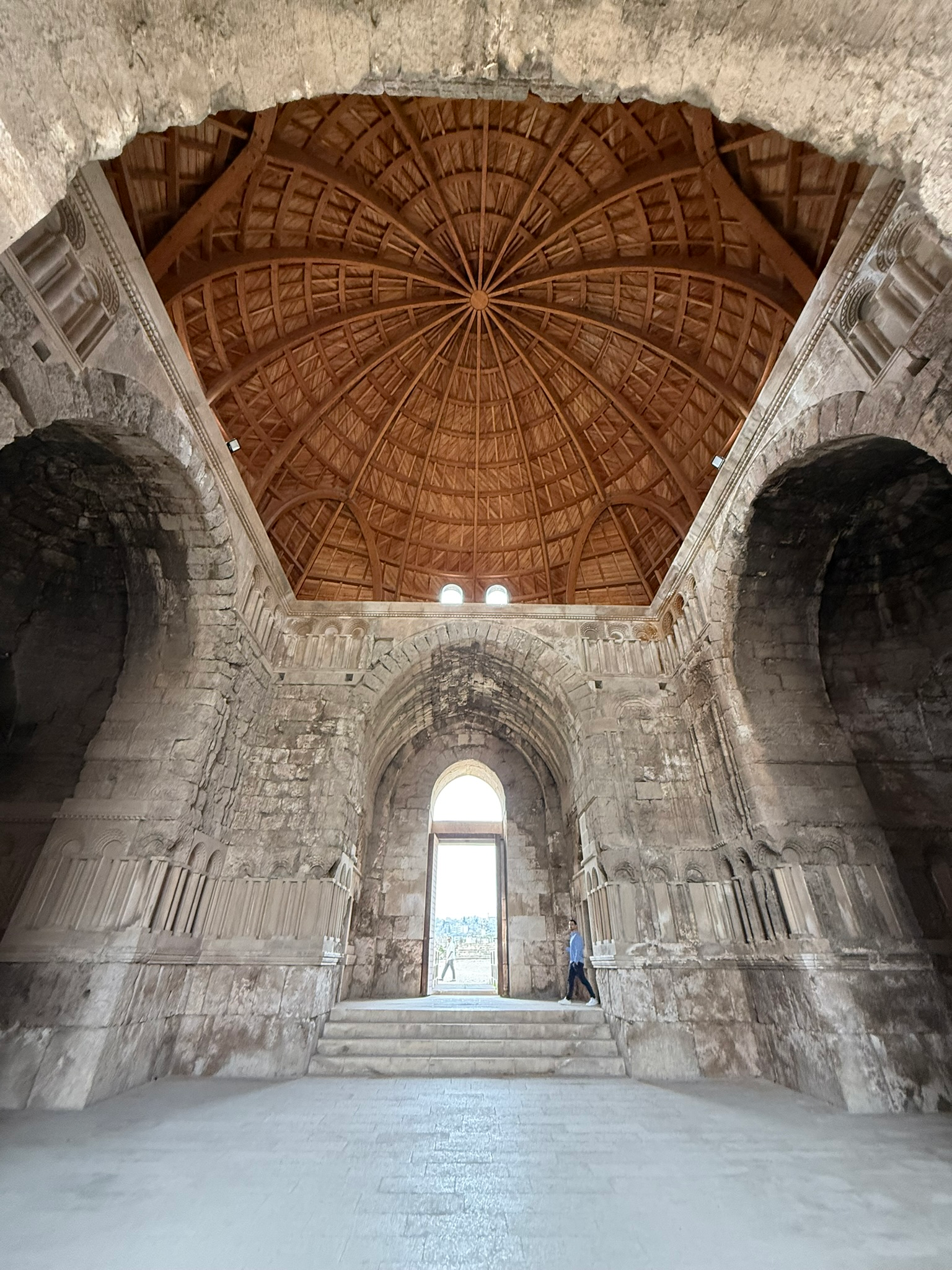
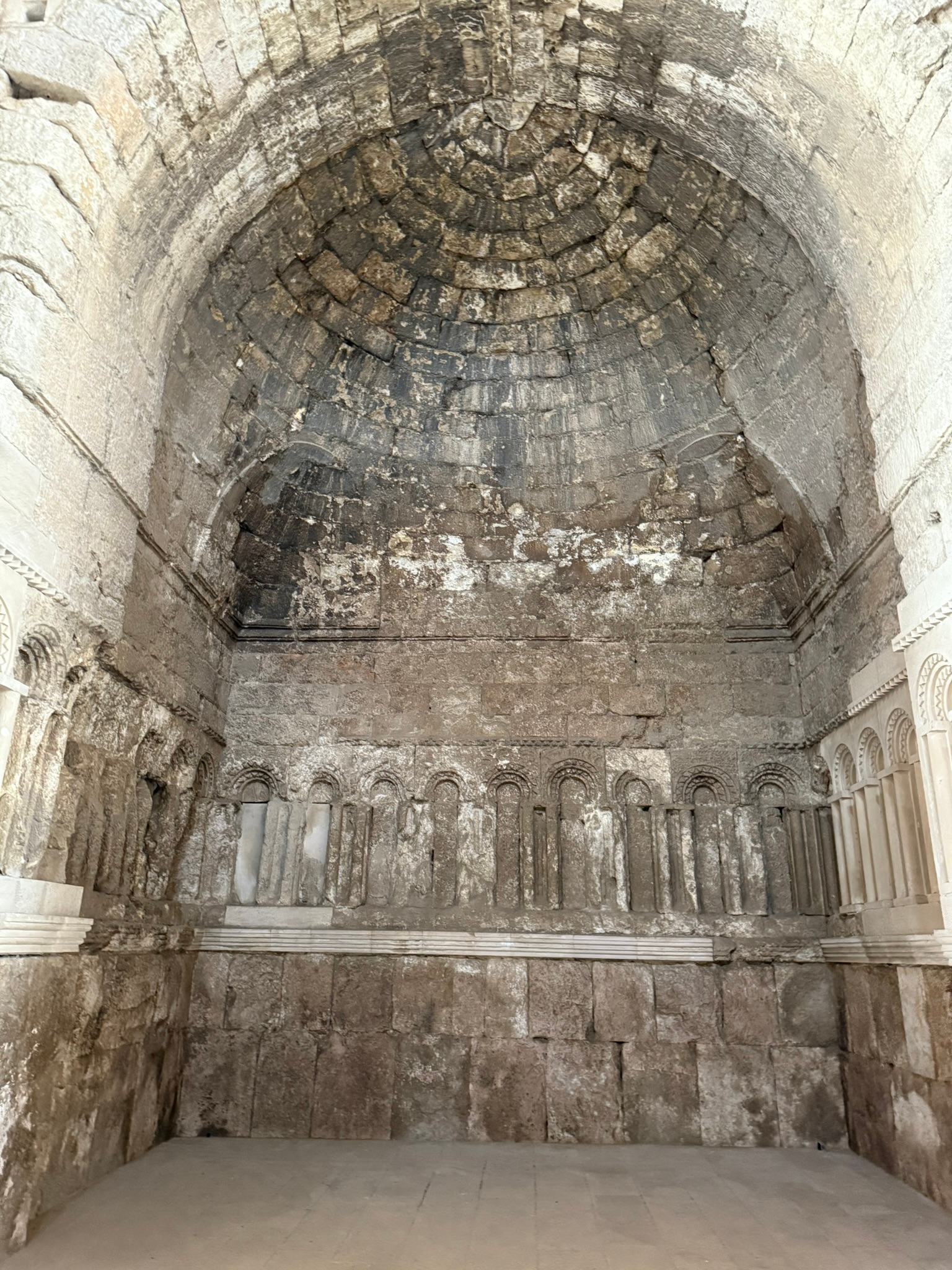
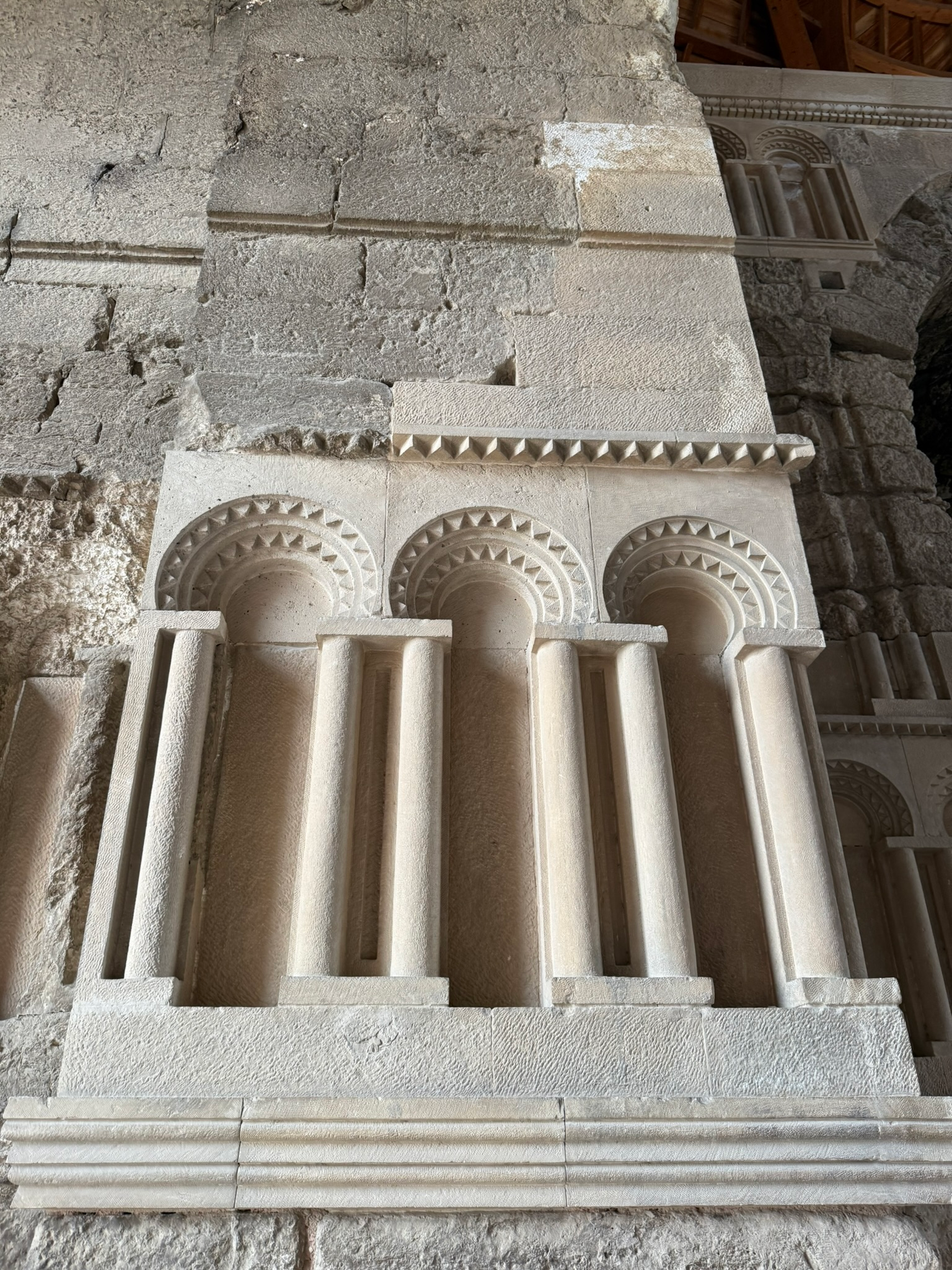
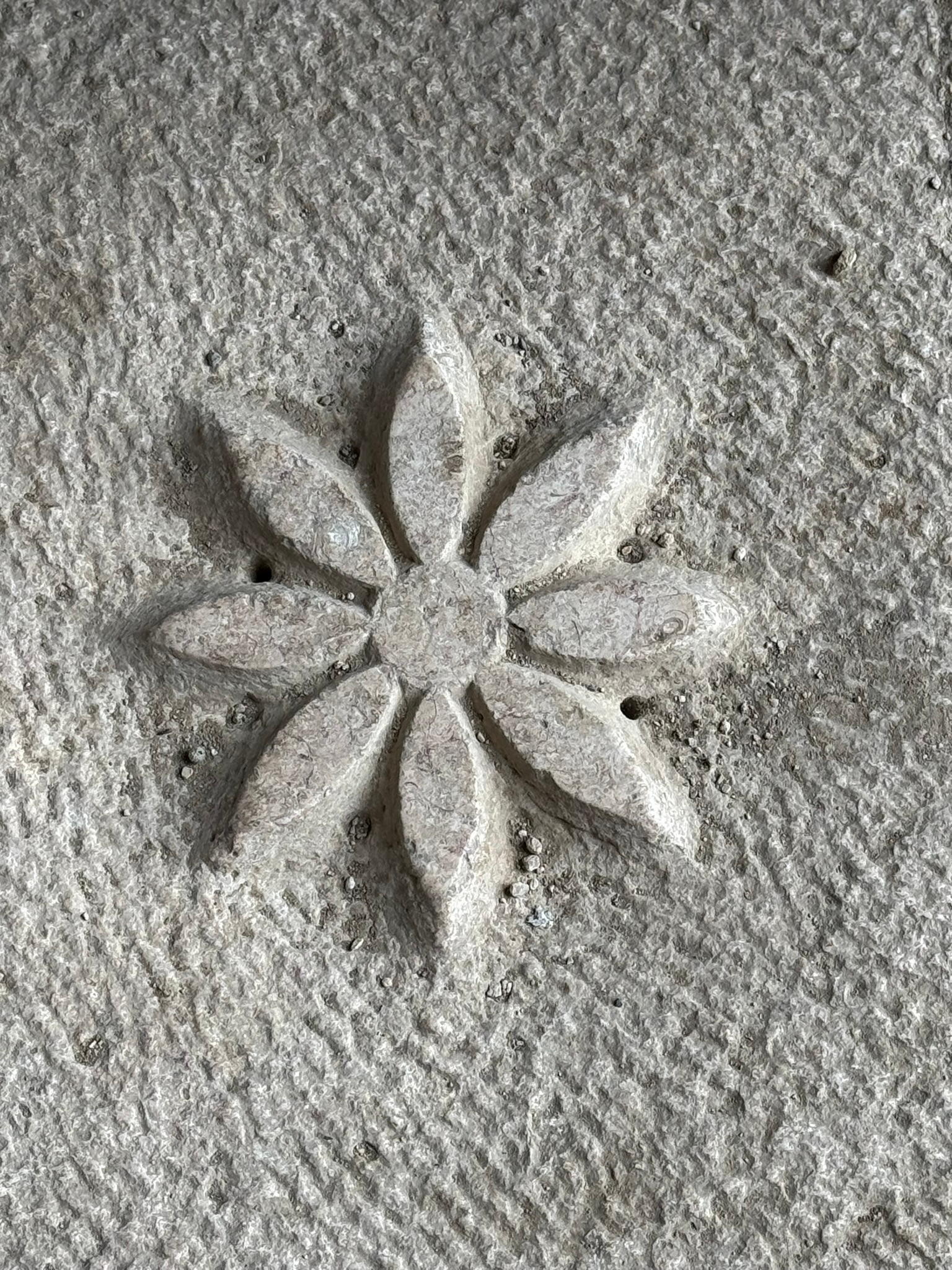
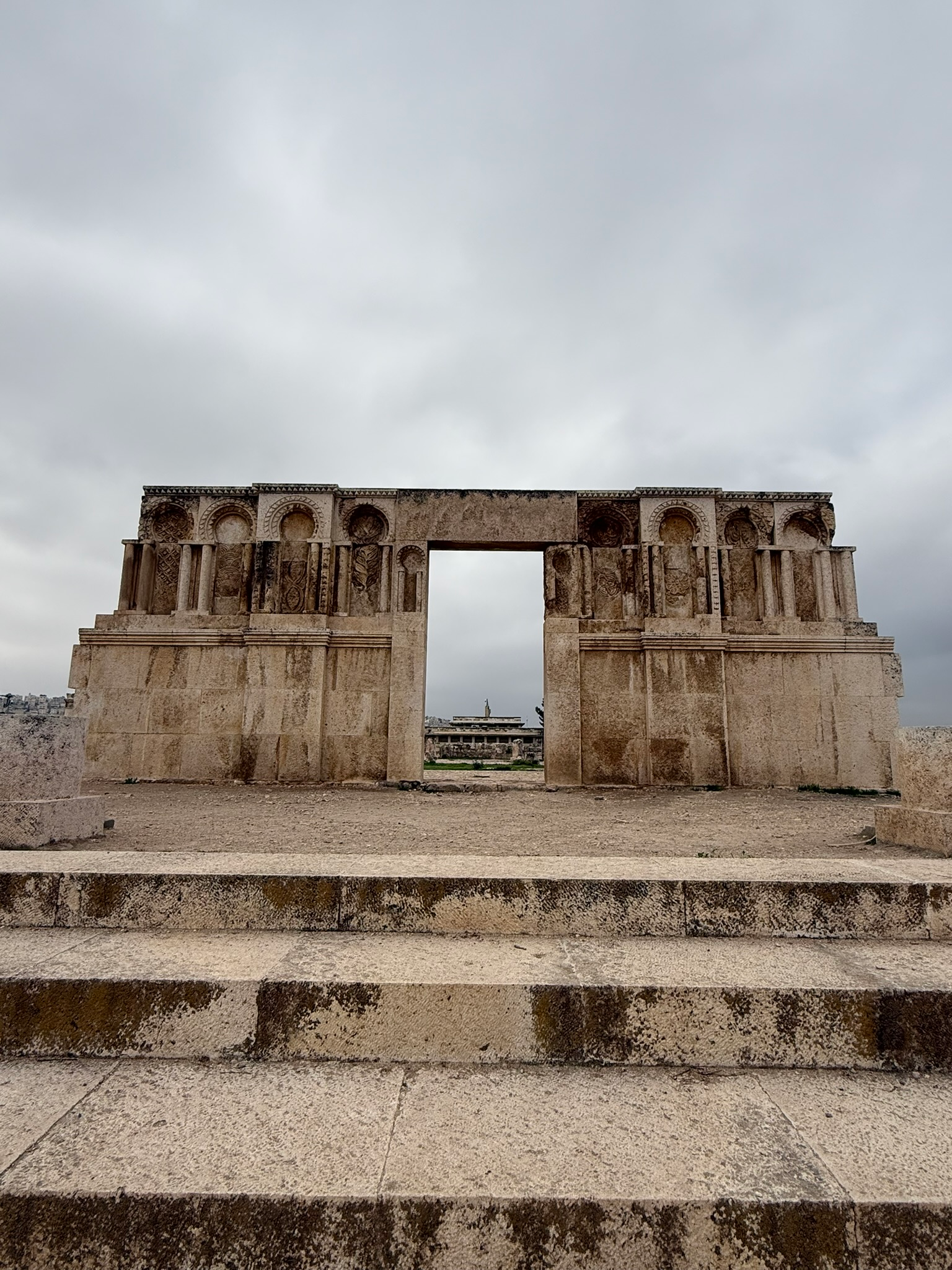
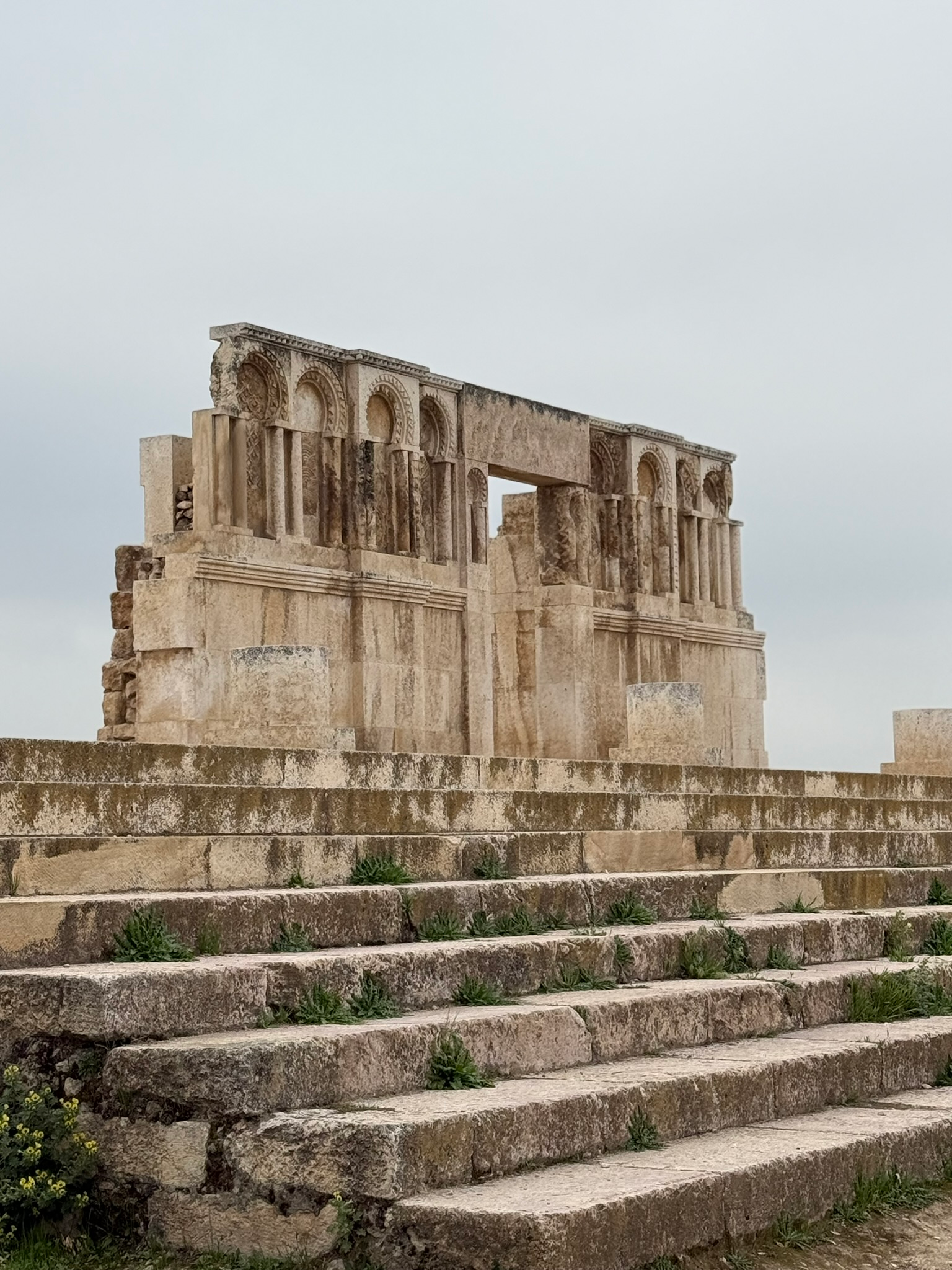
Even more impressive is the Umayyad Palace complex, built on the northern side of the Citadel after AD 720 during the early Islamic period. Its elaborate audience hall is now covered by a reconstructed wooden dome, although the exact form of the original roof remains uncertain. Beyond it lie the remains of a courtyard, residential structures, a mosque, a bath complex and a huge circular cistern that once collected water for the settlement.
Skulls of the Ancestors
After going around the site twice over, we headed to the Jordan Archaeological Museum inside the Citadel. Although much of the country’s most significant collection is now displayed at the newer Jordan Museum, the modest exhibition at the Citadel still offers insight into the people and cultures that inhabited the region.
From skeletal remains and coffins to statues of gods and reconstructions of ancient monuments, the museum offered us a fascinating glimpse into Jordan’s past. Most notable of all – at least for me – was a plastered human skull from the ancient city of Jericho.
During the Pre-Pottery Neolithic period, some communities removed the skulls of their dead before covering and reshaping their faces with plaster. Several examples were discovered beneath the floors of houses in Jericho. Archaeologists have suggested that the practice may have been connected to ancestor veneration, remembrance or community identity, although its exact meaning remains uncertain. Cool, cool.
The Theatre of Philadelphia
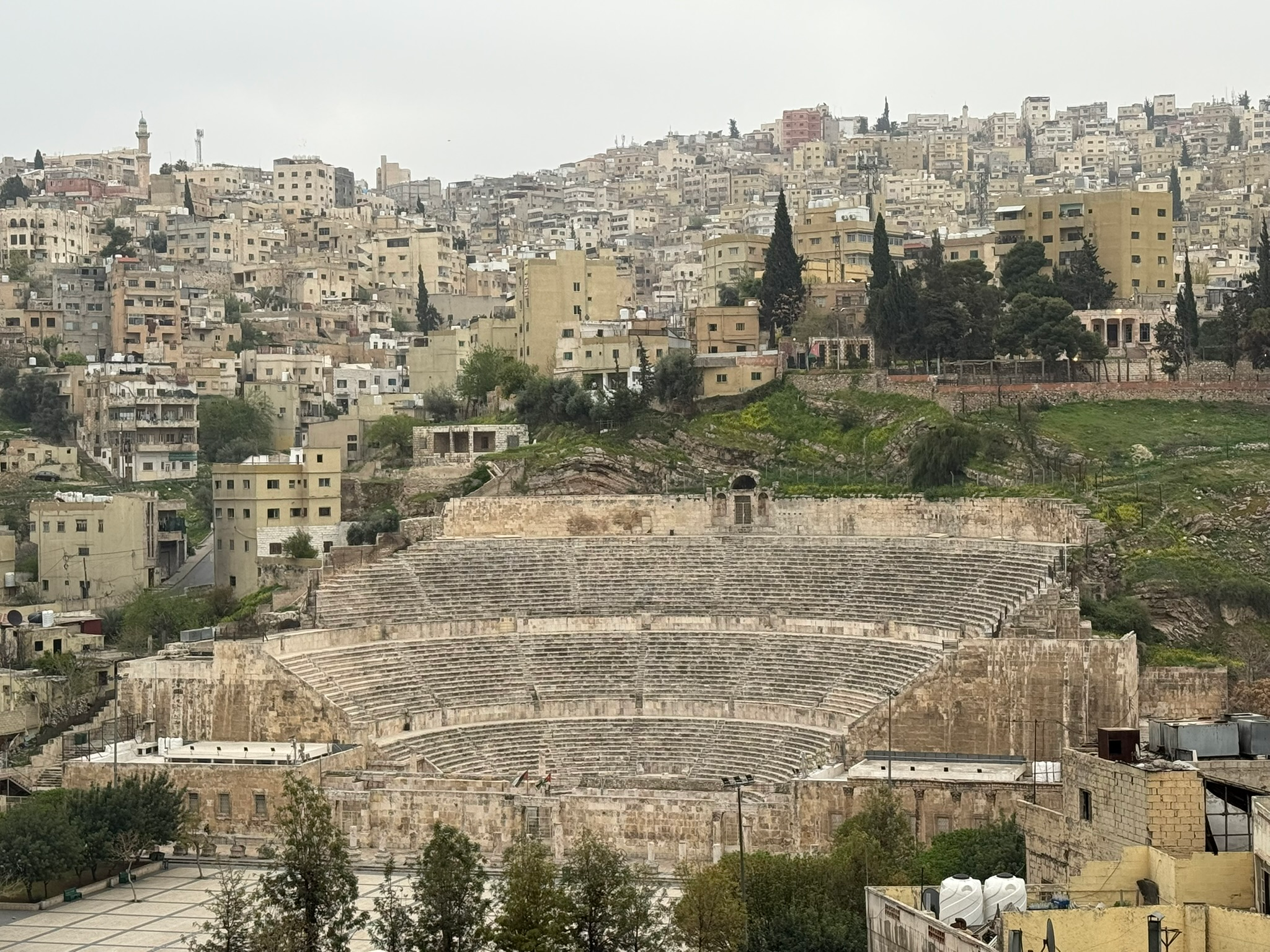
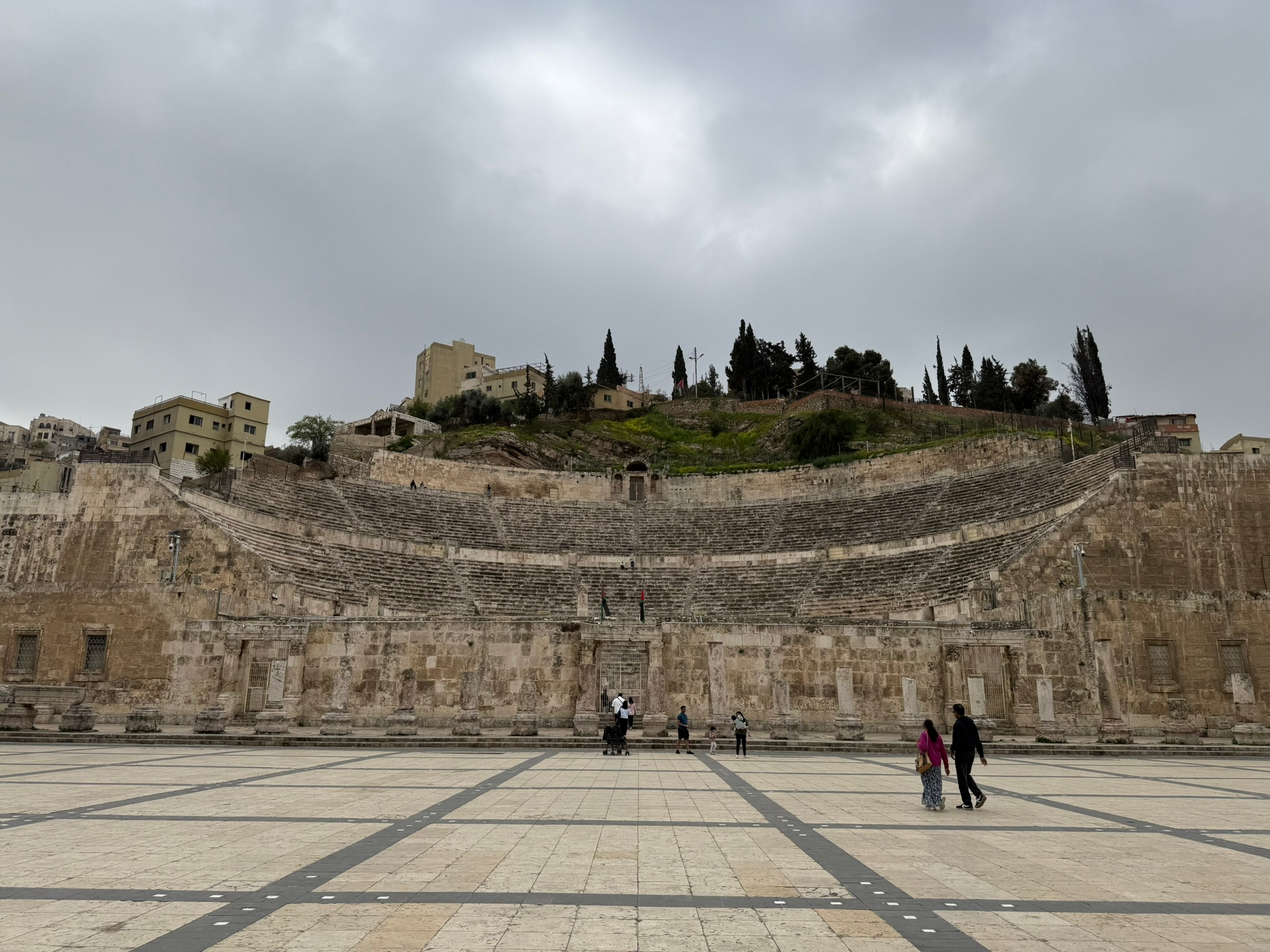
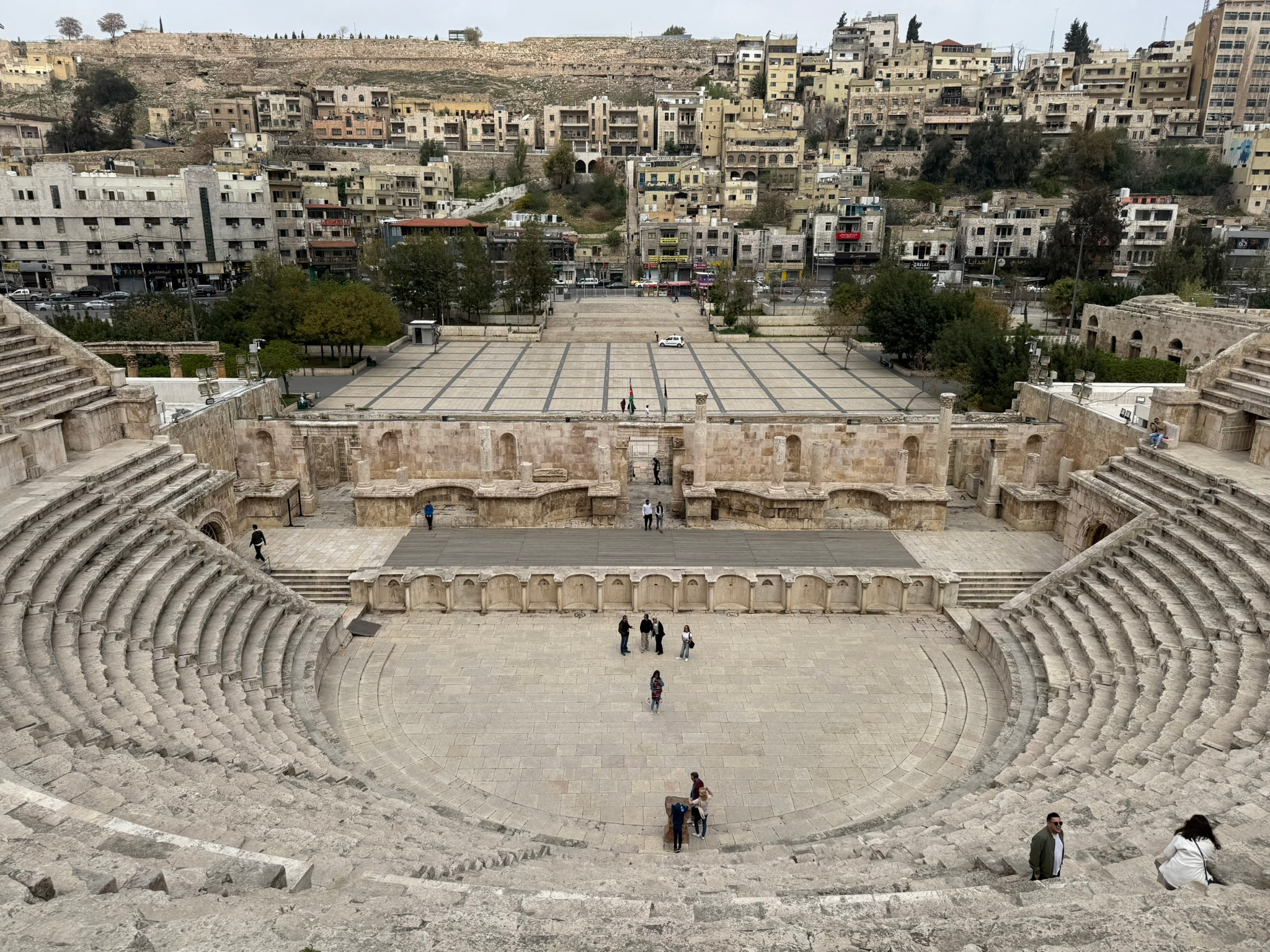
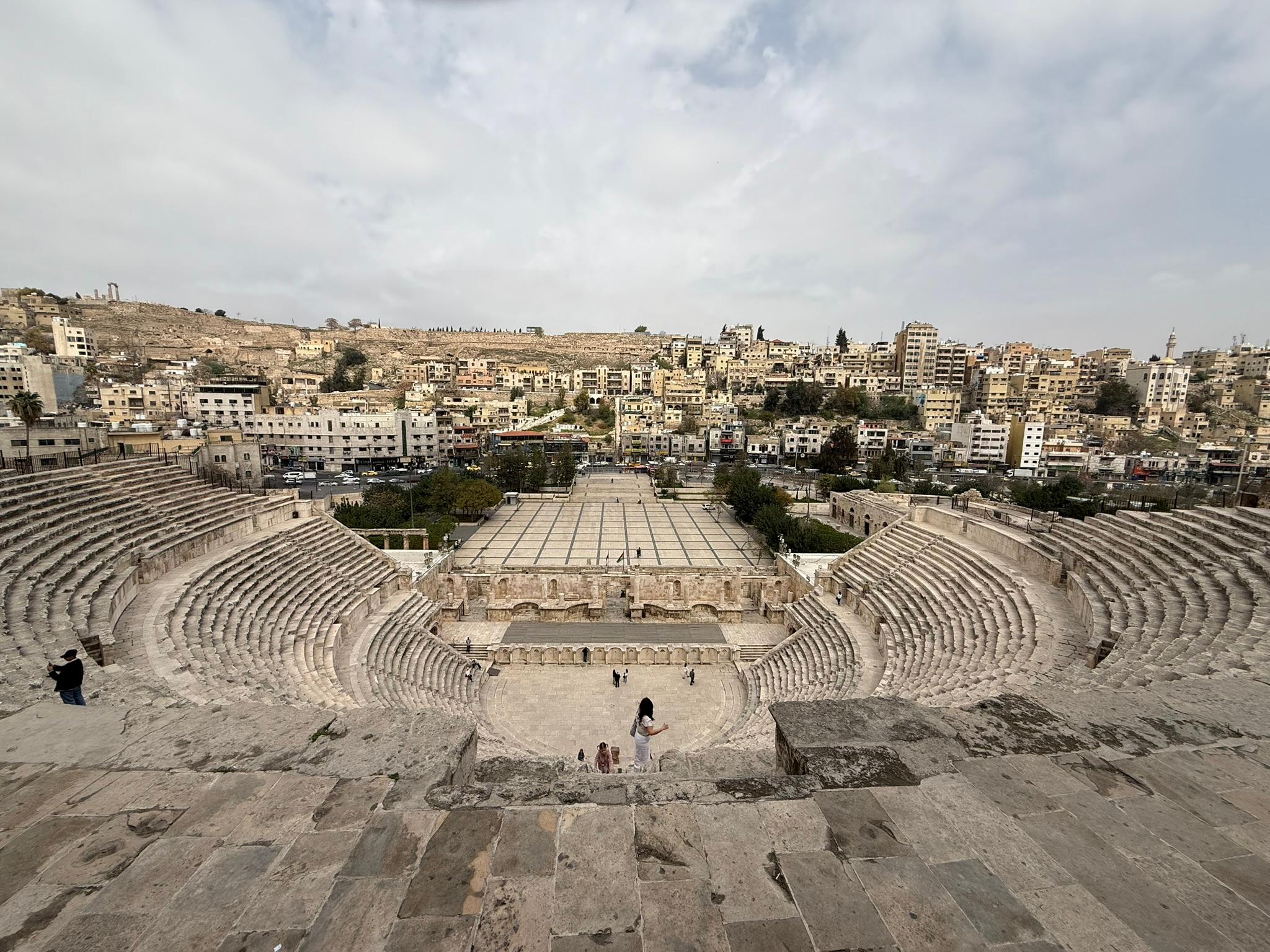
After our tour, we headed down the hill and made our way to the Roman Theatre, one of the city’s most iconic landmarks.
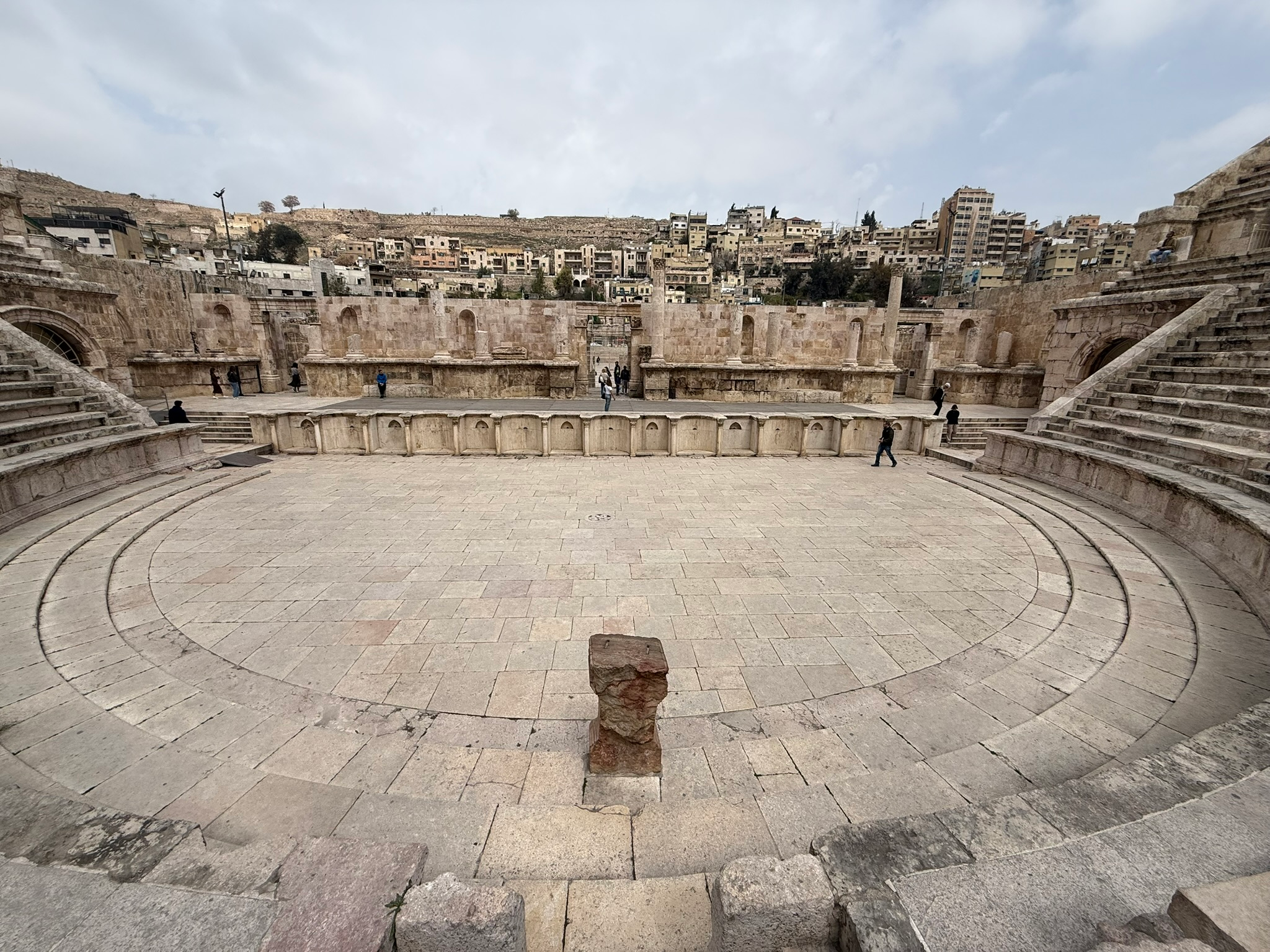
The theatre was built into the northern slope of Jabal al-Joufeh during the second century AD, when Amman was the Roman city of Philadelphia. An inscription associates its construction with the reign of Emperor Antoninus Pius, who ruled between AD 138 and 161. With enough seating for around 6,000 spectators, it remains one of the most impressive Roman structures in Jordan.
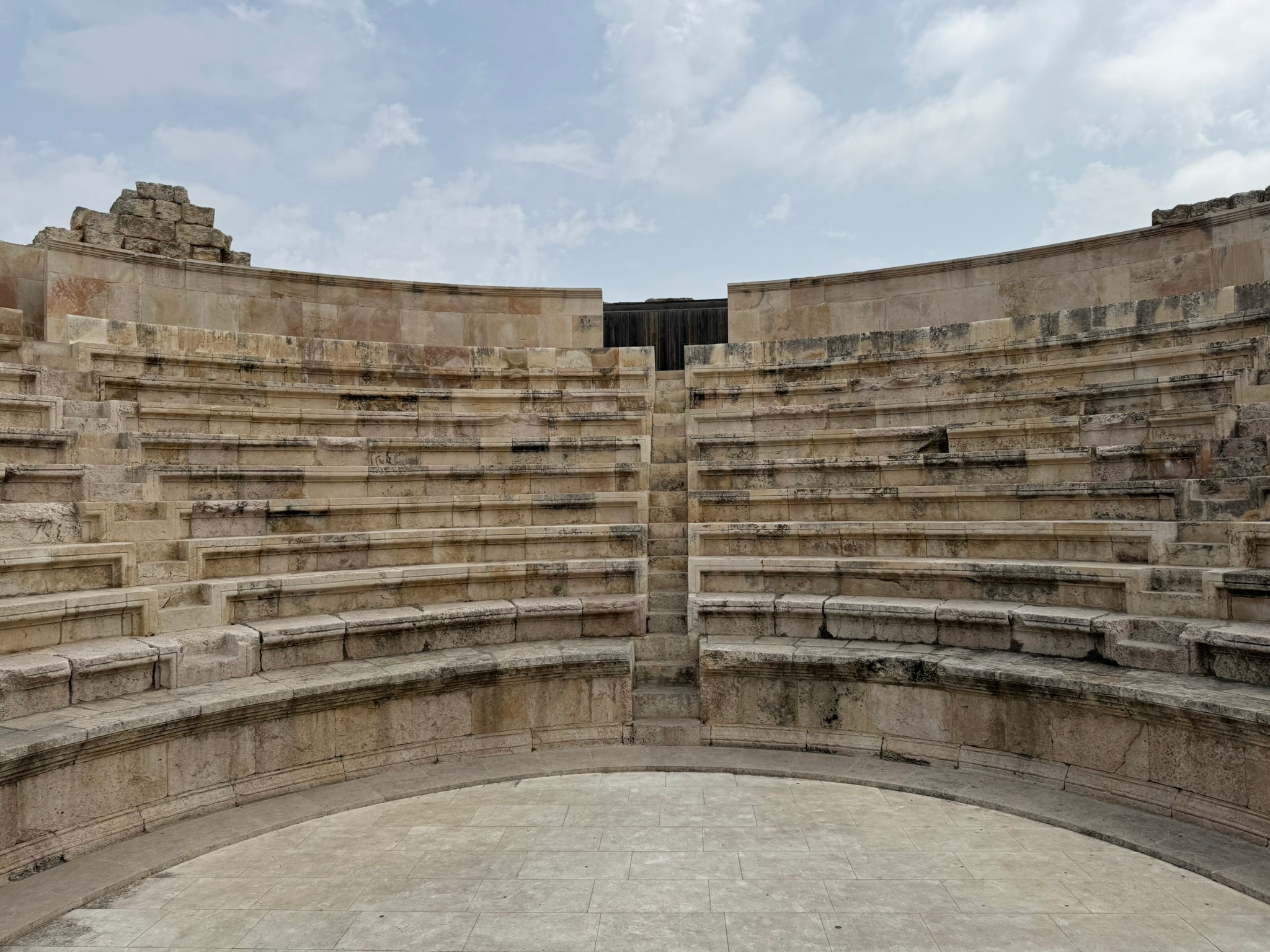
Its steep semicircular rows provide excellent acoustics, allowing voices from the stage to carry remarkably far through the seating area. Like many Roman theatres, the cavea was divided into three horizontal tiers:
Ima cavea: The lowest seats, closest to the stage and generally reserved for members of the elite.
Media cavea: The middle tier, used by the wider public.
Summa cavea: The highest and most distant section, generally associated with lower-status spectators.
Today, the structure is remarkably well preserved following extensive restoration, and it continues to host performances and cultural events.
As we explored the theatre, I found myself transported back to the Panathenaic Stadium in Greece – the scorching heat of Athens and the crisp, fresh air of Amman forming a striking contrast. Man, it was good to be back at an ancient site!
Falafels Worth Fainting For
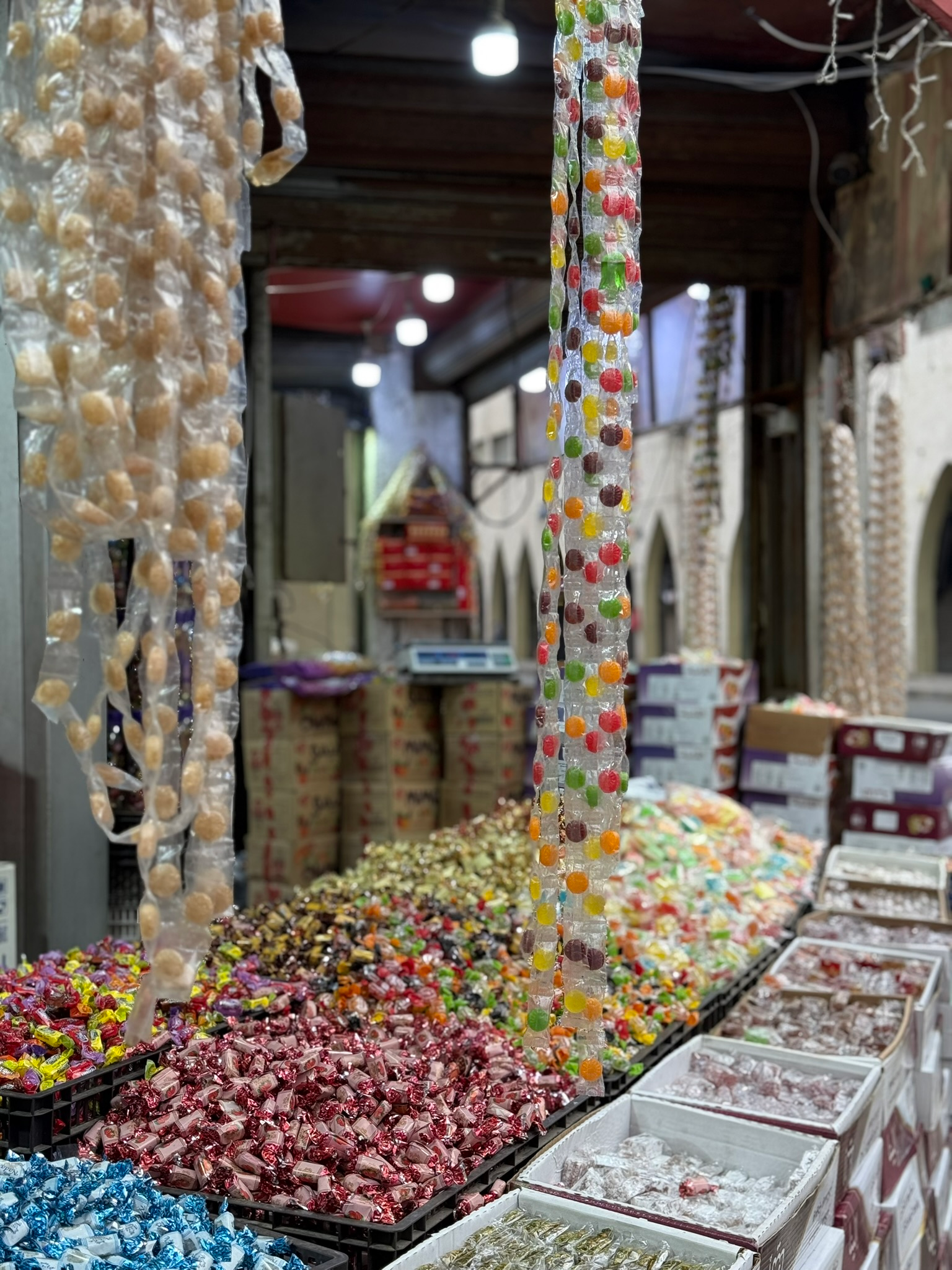
With the rest of the afternoon to ourselves, we tried to visit the Nymphaeum, another important archaeological site which, naturally, happened to be closed. Instead, we spent a few more hours walking around, stumbling from one street market to another while trying all kinds of local foods and delicacies.
At sunset, we made our way to Jabal Amman, one of the city’s oldest established neighbourhoods. Known for its charming mixture of old and new, it features historic villas alongside contemporary cafés, art galleries and boutique shops. We also stumbled upon Rainbow Street – the neighbourhood’s main thoroughfare which is filled with restaurants, shops and nightlife.
While I don’t usually make a habit of advertising restaurants, I simply must publicly acknowledge that the falafel at Al Quds had us nearly fainting with ecstasy. They were so, so good!