The Castellania
Built as the Order's civil courthouse, it became the seat of the Magna Curia Castellania Melitensis in 1543.
In Birgu, one building preserves the public grandeur, private life and judicial machinery of Malta's Roman Inquisition.
Built in the 1530s as the Order of St John's Castellania, the palace became Pietro Dusina's residence and tribunal in 1574 when he arrived as Malta's first Inquisitor and Apostolic Delegate.
Over the next two centuries, reception rooms and private apartments grew above kitchens, the tribunal, interrogation rooms and prison cells.
Its fascination lies in that overlap of diplomacy, domestic life, religion and justice.
From civil courthouse to inquisitorial palace and museum, the building changed with each new role.
Built as the Order's civil courthouse, it became the seat of the Magna Curia Castellania Melitensis in 1543.
After the civil tribunal moved to Valletta, Pietro Dusina arrived as Inquisitor in 1574 and was given the vacant building.
Successive inquisitors expanded the old courthouse into a Roman-style palace balancing public authority with private comfort.
Giovanni Francesco Stoppani commissioned the ceremonial entrance and grand staircase from Baroque architect Romano Carapecchia.
The French abolished the Maltese Inquisition, but the palace survived through later uses.
Many comparable inquisitorial palaces disappeared. Continued use helped preserve Birgu's layered architecture.
After wartime bombing destroyed their convent and church, Birgu's Dominicans used the palace from 1942 to 1960.
Read the palace as three worlds: household, public authority and the judicial spaces of the Holy Office.

The palace grew in stages, with rooms, courts and staircases repeatedly adapted by successive occupants.
Austere judicial rooms therefore sit only steps from elegant reception and domestic spaces.
Historic kitchen photograph: G. Mannaerts · Wikimedia Commons · CC BY-SA 4.0
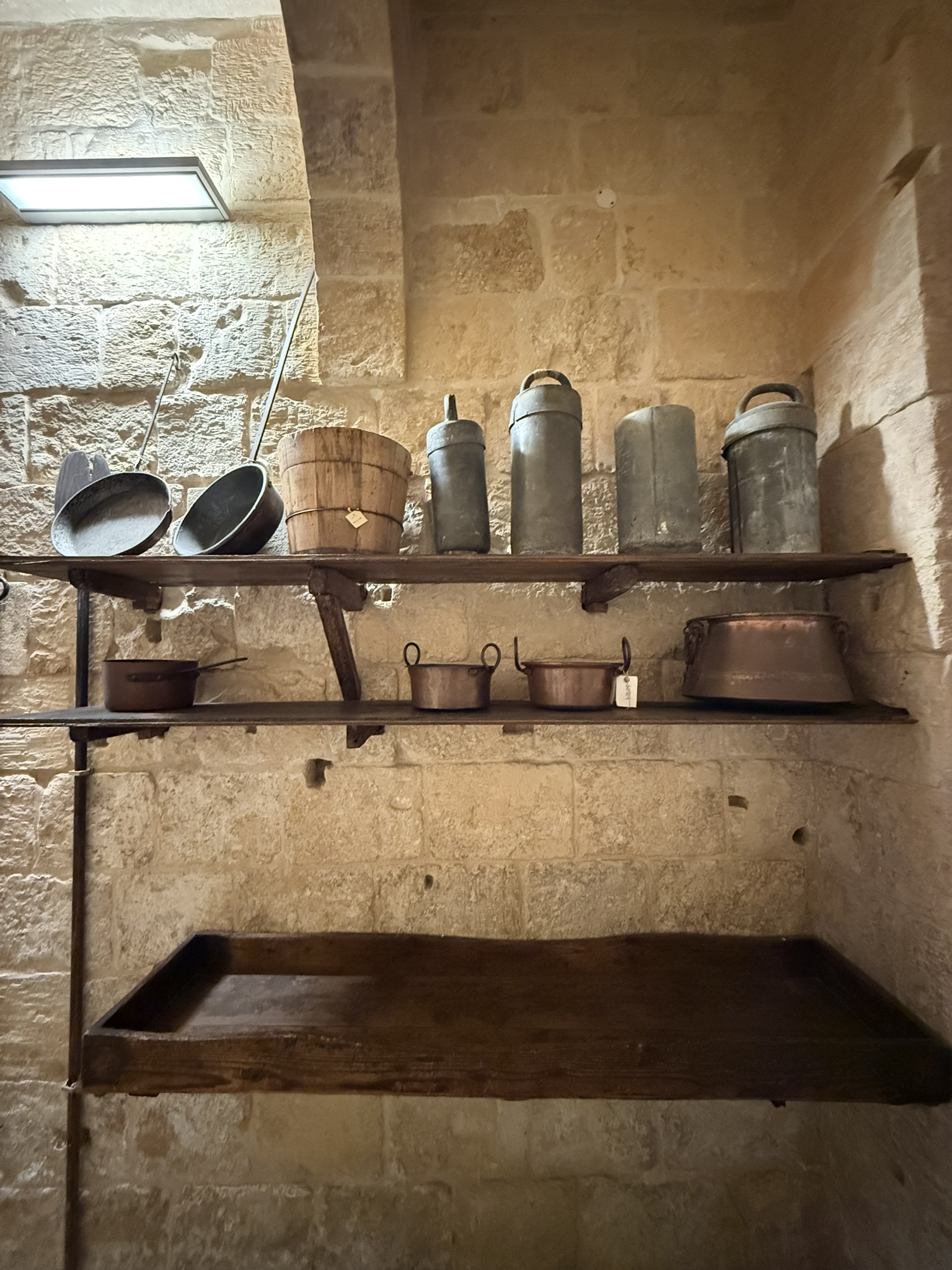
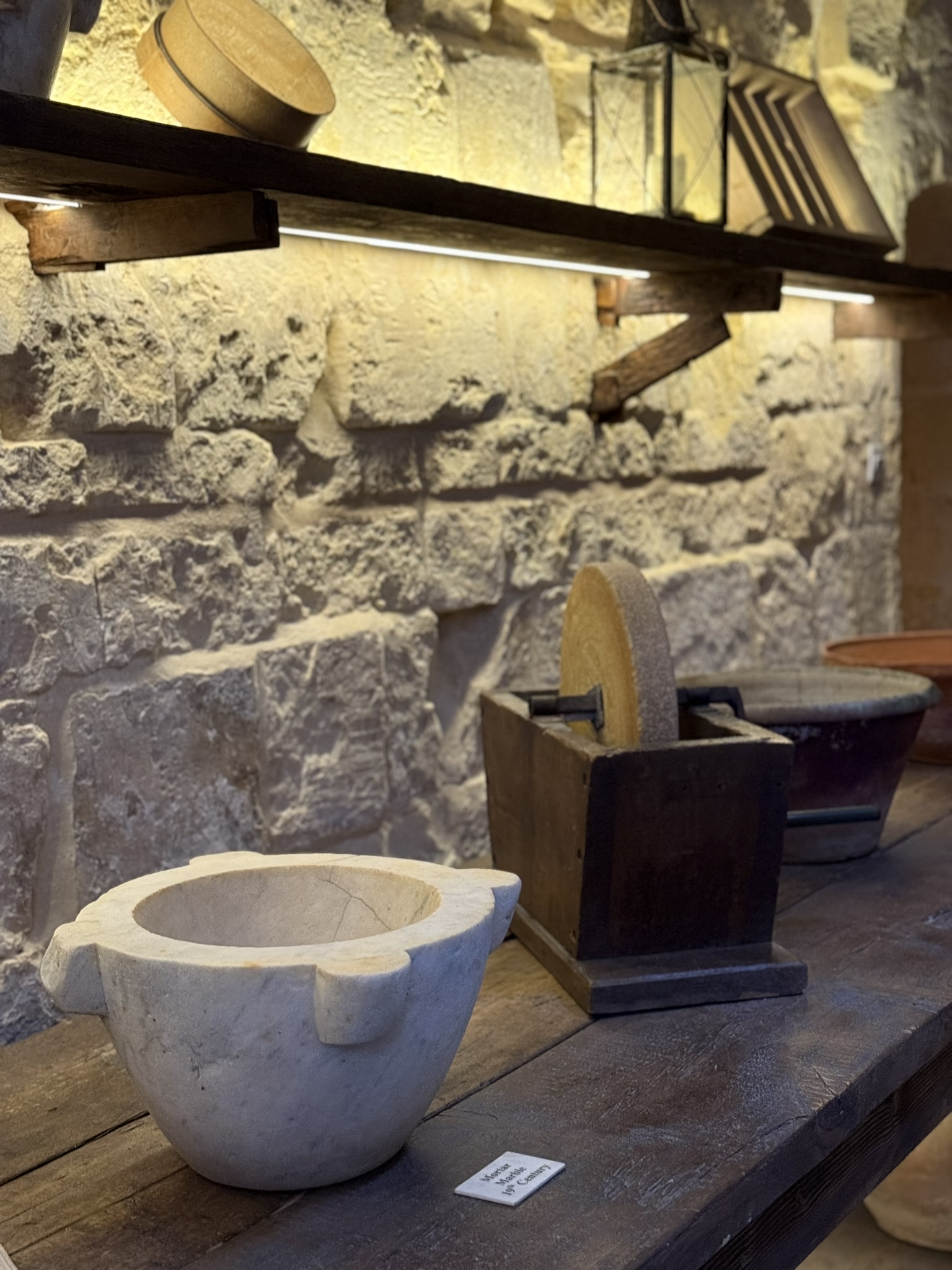
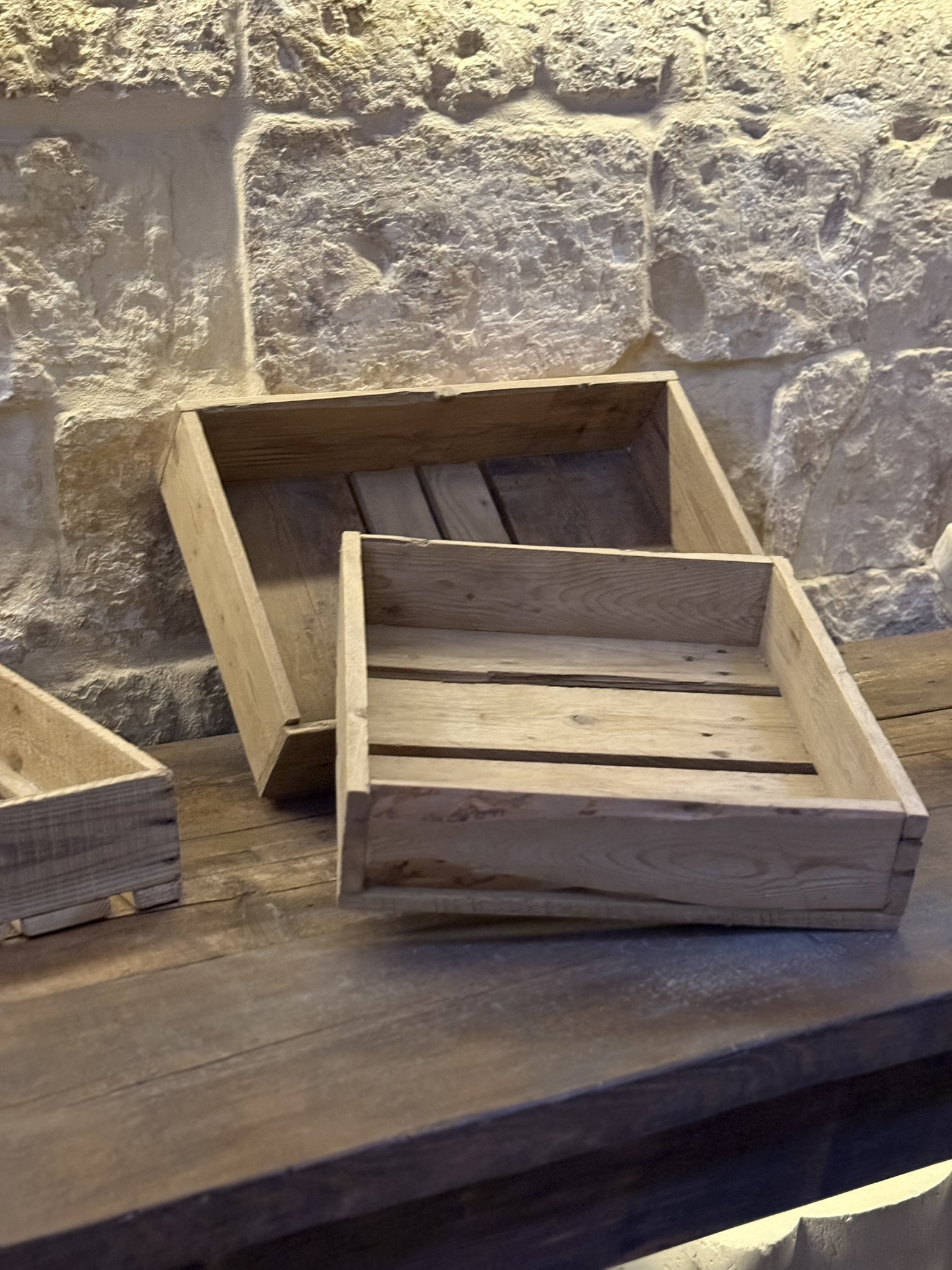
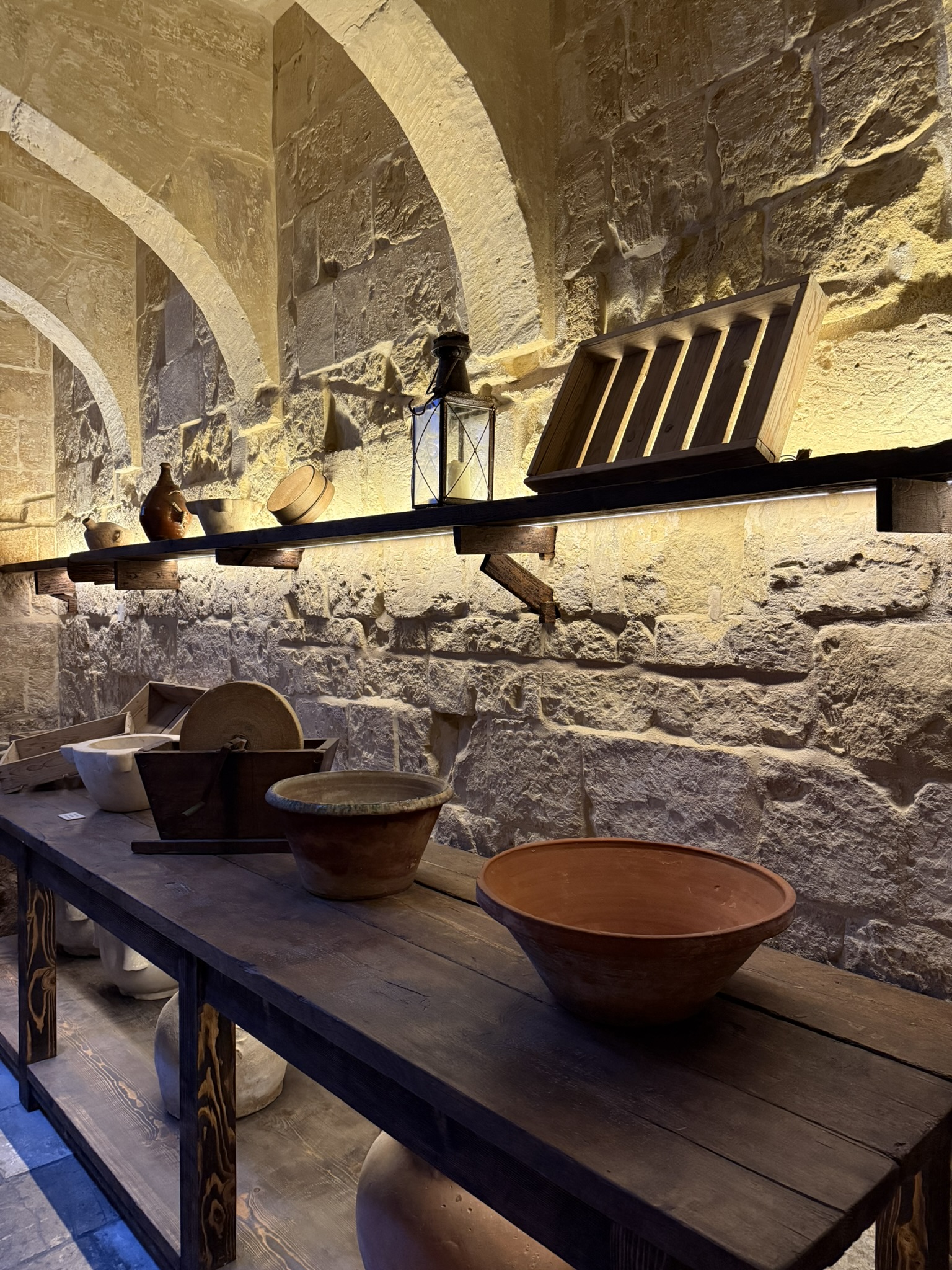
The ground floor reveals the household behind the office, especially its kitchens and service spaces.
Reception rooms and private apartments combined diplomatic ceremony with elite domestic comfort.
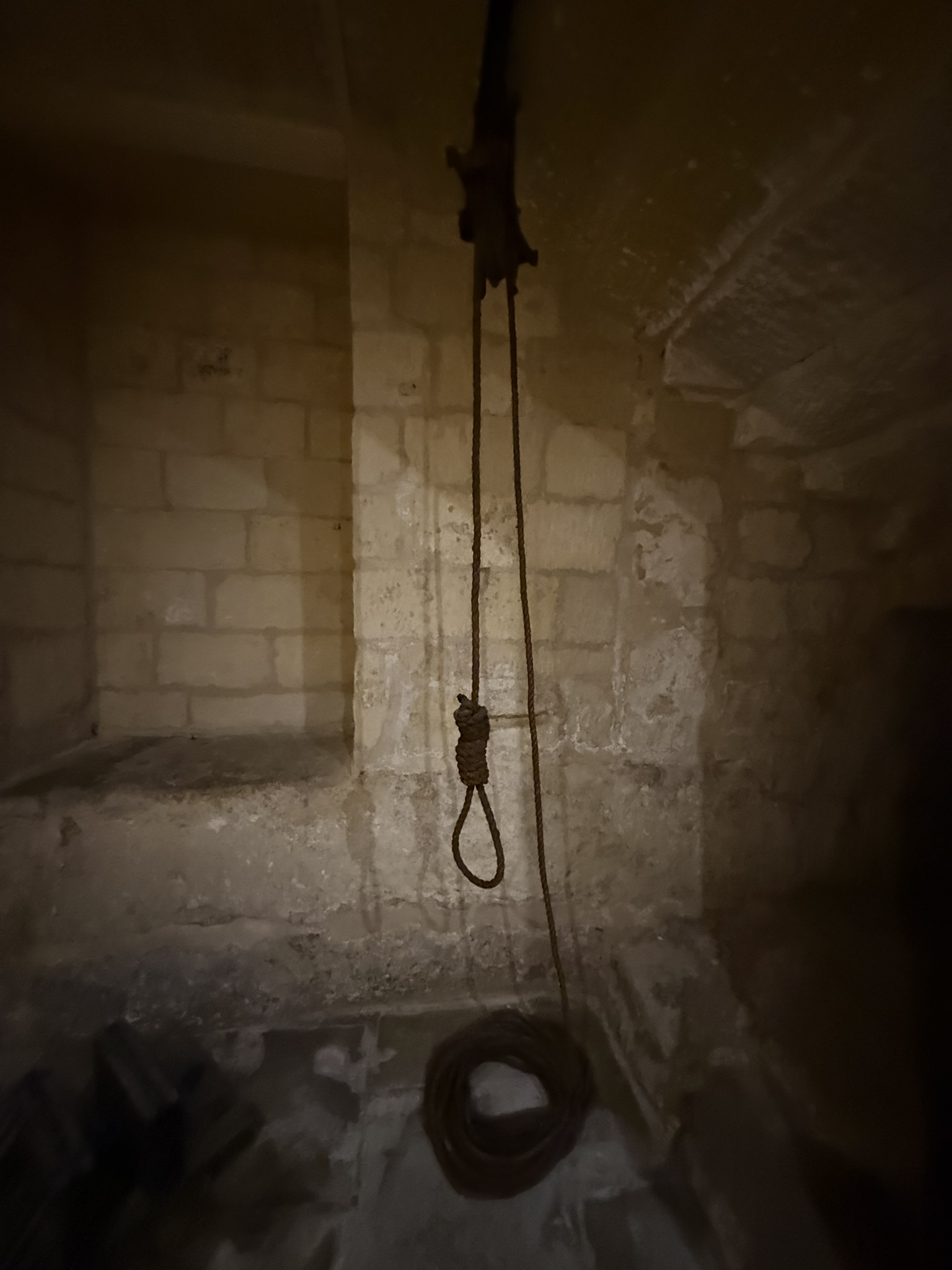
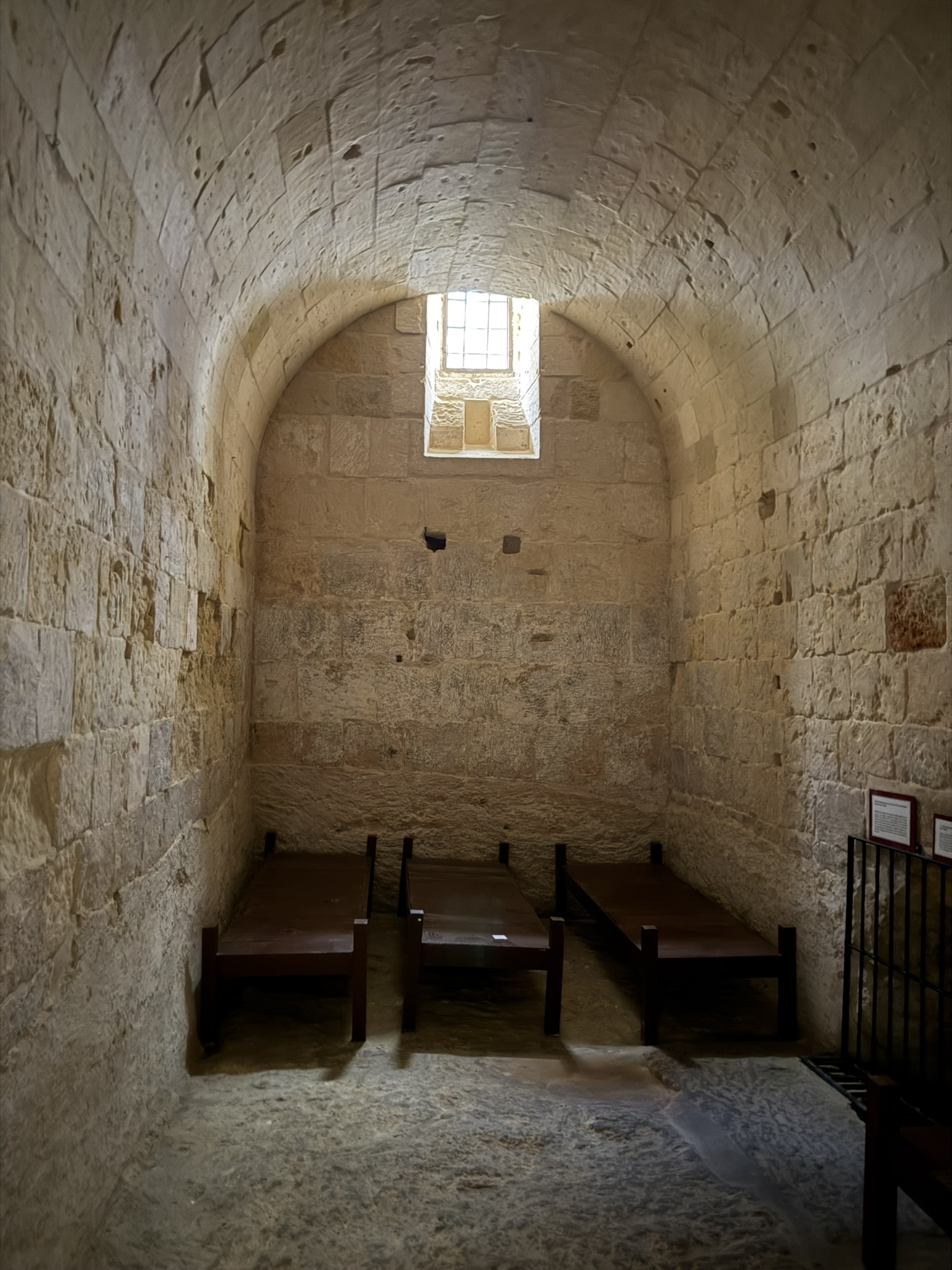
The tribunal, interrogation rooms and prison preserve the judicial machinery of the Holy Office.
Reconstructed from 1700 plans later found in the Vatican archives, it hosted special sittings and kept their trial papers.
The surviving spaces are dramatic, but Malta's Roman Inquisition was not the Spanish Inquisition of popular culture.
The Inquisitor was both judge of the Holy Office and Apostolic Delegate, linking religious regulation with papal diplomacy.
Heritage Malta describes it as generally more lenient than the Spanish model, with greater emphasis on correcting behaviour and religious practice.
Heritage Malta states that torture appeared in fewer than 1% of Maltese cases and was an investigative last resort. There is no documentary or archaeological evidence for the supposed bir tas-skieken, or 'pit of knives'.
The palace is most revealing without sensationalism: a religious court and an elite papal household operated under the same roof.
Its architecture records centuries of changing occupants, tastes and institutional needs.
Allow about 60-90 minutes to explore without rushing.
Meet the household before the judicial spaces take over.
The staircase and upper rooms show authority being staged.
The Cancellaria reveals the bureaucracy behind the tribunal.
The cells form the starkest contrast with the rooms above.
From ceremonial rooms and kitchens to the Cancellaria, tribunal and prison.