Native woodland survives
Small patches of wild Holm Oak survived here as woodland elsewhere in Malta became increasingly fragmented.
Buskett feels almost improbable on an island better known for limestone, garigue and exposed coast.
Set around Wied il-Luq below Verdala Palace, Buskett is Malta's largest forested area. Much of it was planted and shaped by the Knights of St John, while fragments of older native woodland still survive.
Holm oak, pine, cypress, orchards, terraces and riparian trees overlap with paths, water channels and old agricultural spaces, making Buskett both an ecological refuge and a centuries-old cultural landscape.
Buskett is the result of centuries of planting and water management layered over fragments of native woodland.
Small patches of wild Holm Oak survived here as woodland elsewhere in Malta became increasingly fragmented.
Under Grand Master Jean Parisot de Valette, Buskett was developed for hunting and falconry, with planting expanded around the valley.
Grand Master Hugues Loubenx de Verdalle built the palace above Buskett and continued planting the valley slopes.
Orchards, vineyards, farmhouses and irrigation works shaped much of the landscape still visible today.
Protected within Natura 2000, Buskett safeguards rare woodland and riparian habitat and is an important autumn stop for migratory birds.
Buskett is commonly linked to the Italian boschetto, meaning a small wood or grove - fitting for a landscape thickened with trees over centuries.
Buskett is a mosaic of old oak woodland, valley habitat and planted or cultivated slopes. Much of it is planted or semi-natural rather than untouched forest, but centuries of water engineering, agriculture and woodland management have created a cultural landscape that still preserves important habitats.

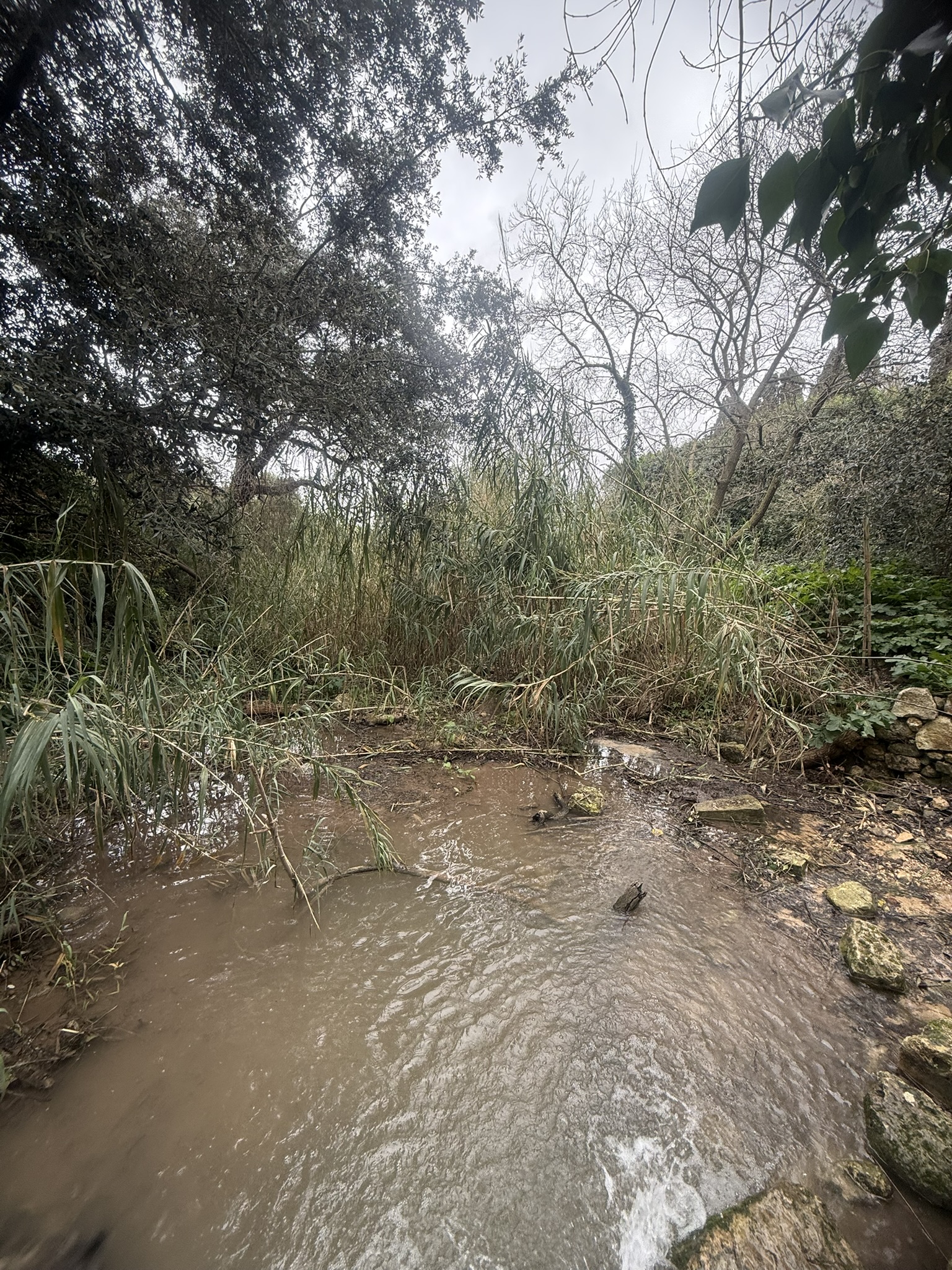
Wied il-Luq cuts through the heart of Buskett. Springs and engineered channels once fed reservoirs, fountains and irrigation, helping orchards and woodland flourish.
The valley still supports Malta's largest remaining population of indigenous White Poplar alongside old Holm Oaks, conifers, fruit trees and seasonal wet habitats.
Tap the map to open it full-screen.
Buskett contains one of Malta's few surviving relict patches of native wild Holm Oak woodland.
The watercourse supports riparian vegetation, including Buskett's important White Poplar population.
Pines, cypresses, fruit trees and terraces reveal how heavily the woodland has been managed and reshaped.
The mix changes with the path and season, but these are some of Buskett's defining plants and habitats.
This sequence loosely follows Ambjent Malta's walking interpretation and works well for a first visit.
The Education Centre and pond are a useful introduction to Buskett.
The old Holm Oaks are among Buskett's most important ecological features.
The valley floor supports Buskett's important White Poplar population.
Climb back through planted woodland and orchards beneath Verdala Palace.
A few views from around the woodland, orchards and picnic areas.




My first time at Buskett was on a school outing, and the memories are still incredibly warm. I remember strolling beneath the trees with my classmates and, more than anything, running around the picnic area without a care in the world.
Long before I understood Buskett as a historic woodland or protected landscape, it was simply somewhere that felt fun, shaded and open. Those early memories are still the first thing that comes to mind whenever I return.
Ambjent Malta's walking routes are useful for visiting, while the ERA Natura 2000 plan gives the wider conservation context.