‘Pond’ or ‘small lake’
Għadira means a small pond or lake, fitting the wetland behind Mellieħa Bay.
Starting from Għadira makes Coral Lagoon the centrepiece of a wider Aħrax paddle through hidden coves and caves.
The route leaves Għadira for Slugs Bay and Għar iċ-Ċomb before reaching Coral Lagoon, where a narrow entrance opens into a vast roofless chamber.
From there, continue to Little Armier and Armier Bay before retracing the coast. Armier makes a natural turnaround, but wind and energy still matter for the return.
The route moves through a mix of Maltese place-names and modern English beach names, each marking a different part of the peninsula.
Għadira means a small pond or lake, fitting the wetland behind Mellieħa Bay.
A modern English name for the tiny cove between Għadira and the outer Aħrax coast.
Għar means cave and ċomb means lead. The reason for the name is unclear.
Coral Lagoon is the modern English name; the Maltese name is Id-Dragunara.
Armier comes from Armiel, the broken plural of ramla - ‘sandy beach’.
Aħrax means ‘rough’ or ‘coarse’, describing the peninsula’s rugged rocky ground.
Follow the eastern edge of Aħrax through Slugs Bay, Għar iċ-Ċomb and Coral Lagoon, then continue west to Little Armier and Armier Bay before retracing the coast.
The outward sequence. From Armier Bay, retrace the same coastal line back to Għadira.
Launch clear of swimmers and follow the coast north. Slugs Bay is a tiny cove tucked between Għadira and the outer Aħrax coast, making it a natural first pause and an early check that conditions are comfortable enough to continue.
Continue beneath the Aħrax cliffs towards Għar iċ-Ċomb. It is less accessible and far less known than Coral Lagoon, which is exactly what makes it feel more like a discovery than a destination. Leave room around the cave mouth for rebound and swell.
Coral Lagoon is the visual climax of the route. A modest sea entrance suddenly opens into a huge turquoise chamber beneath a natural opening in the limestone roof. Enter only if the water at the mouth is calm and controllable.
Do not turn around at the lagoon. Continue around the northern coast to Little Armier, where the route shifts from enclosed cave scenery back to open horizon, shallow water and a more relaxed beach setting.
Little Armier gives way quickly to the broader Armier Bay. Use Armier as the turnaround and take a proper pause here before starting the return along the same coast.
Return past Little Armier, Coral Lagoon, Għar iċ-Ċomb and Slugs Bay. By now the main sights are behind you, so pace the return rather than rushing it; a wind that helped on the outward leg can make this half much harder.
Armier Bay is the turnaround. If conditions deteriorate earlier, turn back before reaching it - every stop is optional, including Coral Lagoon itself.
The shorter Armier-to-Coral-Lagoon paddle is popular for a reason. This version deliberately starts much farther away at Għadira and continues beyond the lagoon to Armier Bay.
Għadira gives the route its full length and progression.
The caves amplify whatever the open sea is doing.
Calm water matters more than the season.
Secure everything before leaving the bay.
From Għadira Bay through Slugs Bay, Għar iċ-Ċomb, Coral Lagoon, Little Armier and Armier Bay.


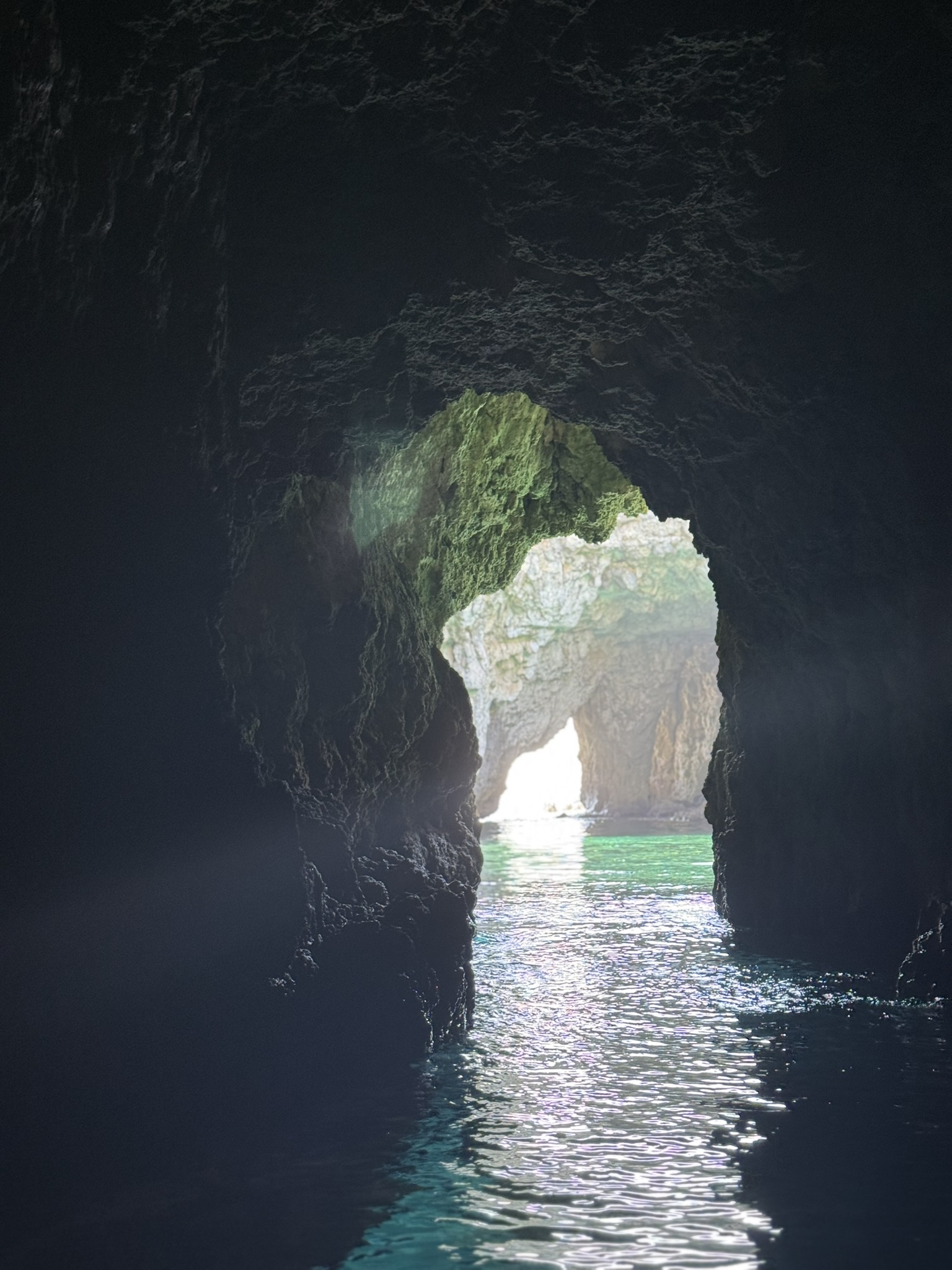


Route-ordered clips from Slugs Bay, the Aħrax coast, Għar iċ-Ċomb and Coral Lagoon.
Coral Lagoon is the obvious headline: its narrow entrance, turquoise water and vast opening above the chamber make it one of Malta’s most dramatic kayak stops.
For me, Għar iċ-Ċomb feels more special because it is less accessible and far less known. Coral Lagoon is a destination; Għar iċ-Ċomb feels like a discovery.
I prefer starting from Għadira rather than Armier. Slugs Bay and Għar iċ-Ċomb build towards the lagoon, while Little Armier and Armier give the outward leg a proper finish before the paddle back.
Supporting references for Slugs Bay, Coral Lagoon and the Aħrax coast.