Jordan Trail – Day 4: Little Petra
JORDAN TRAIL
Day 4: Little Petra
April 02, 2025
PART I
The fourth day had a bittersweet start. We would be saying goodbye to Eid and his wife, with our destination for the day being a Bedouin Camp close to Little Petra. So long, camping in the middle of the desert!
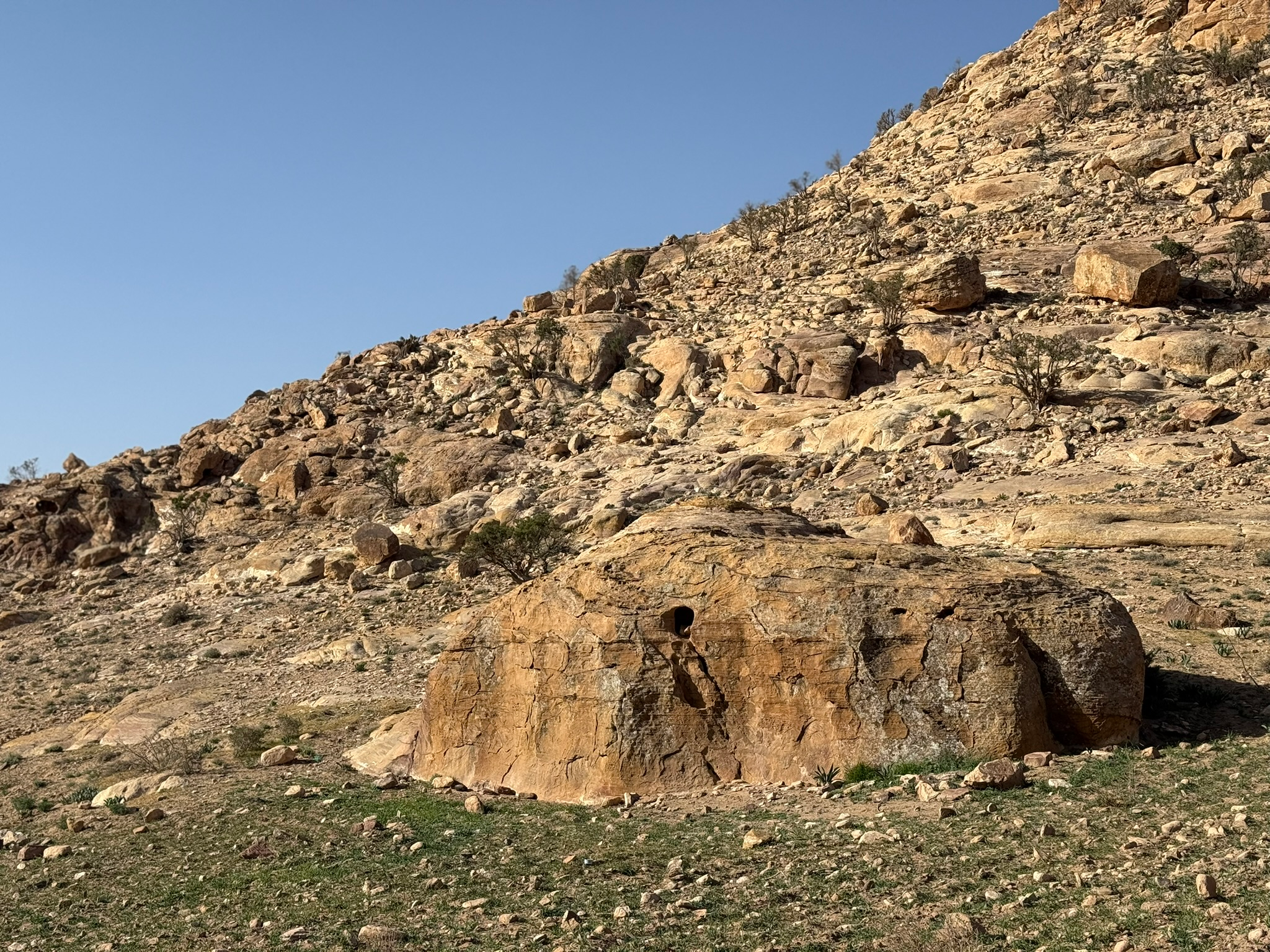
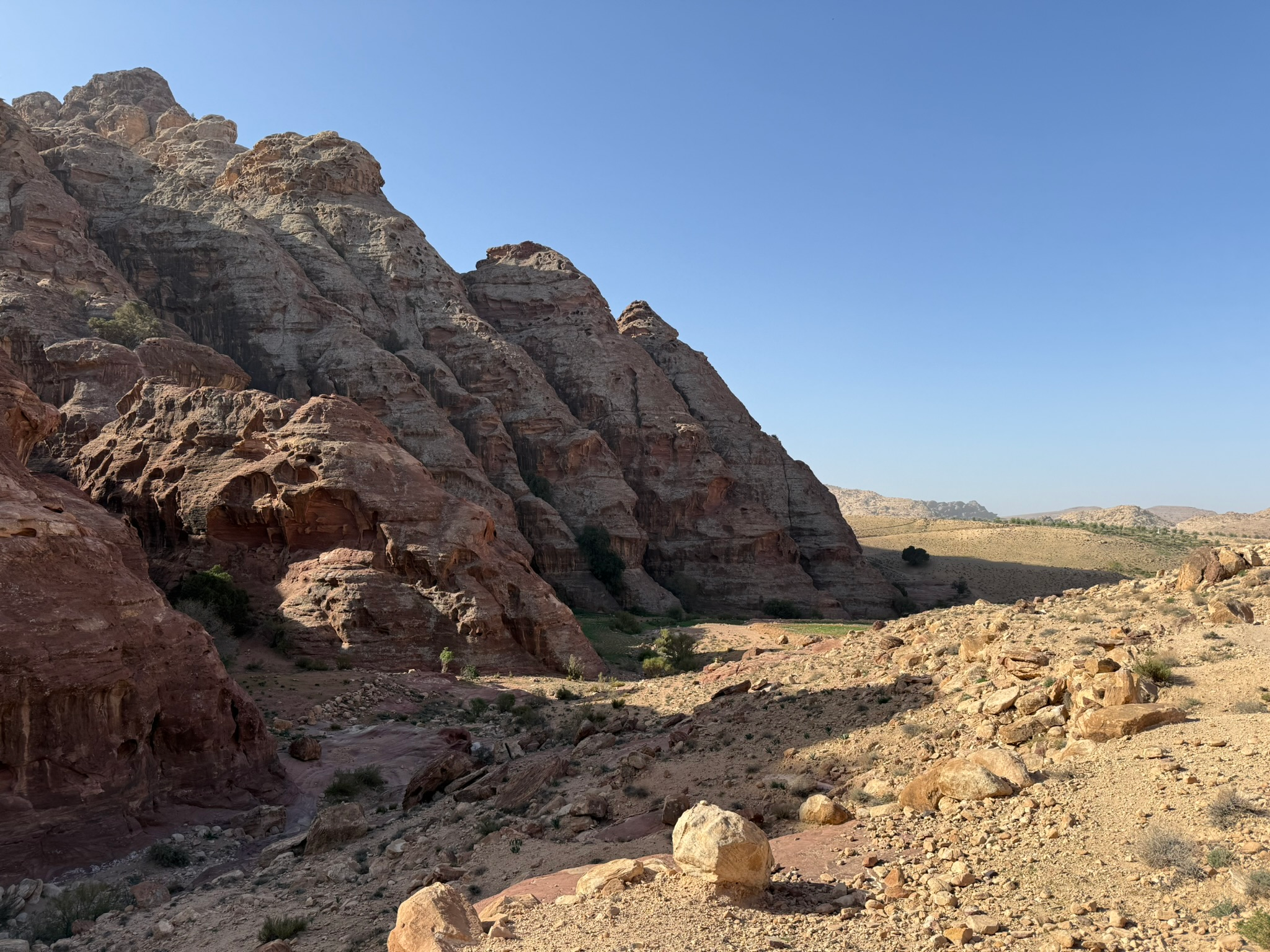
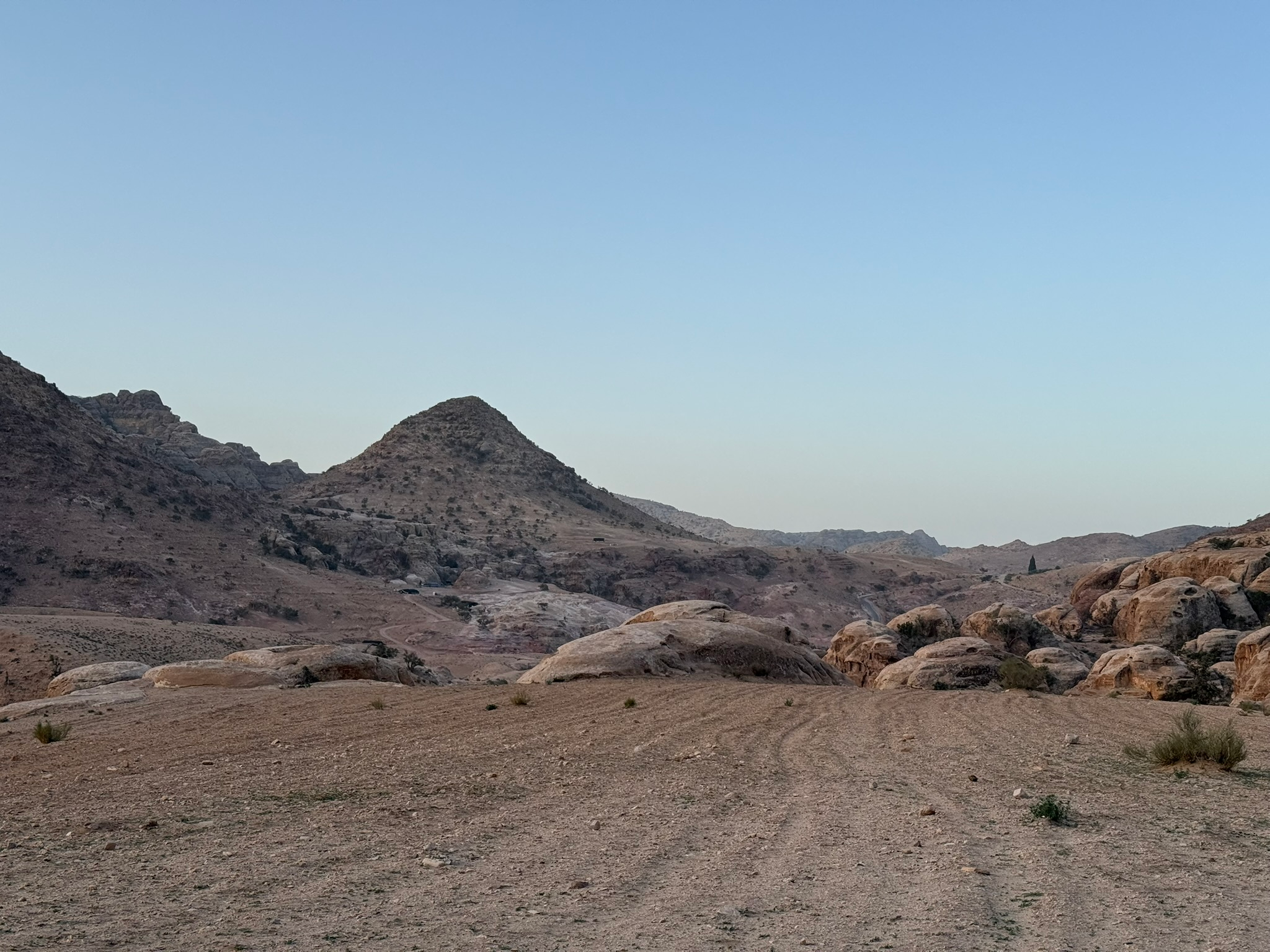
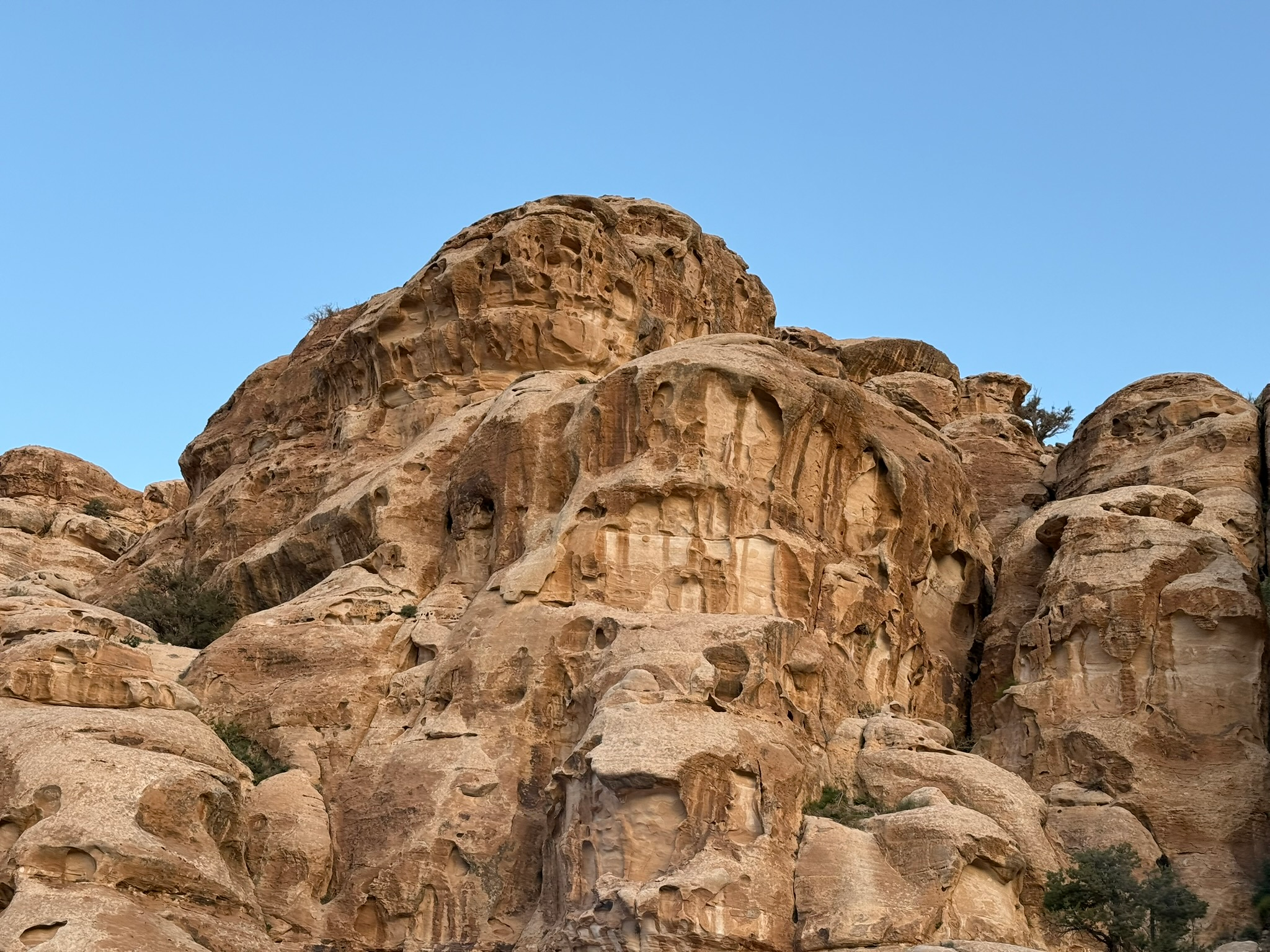
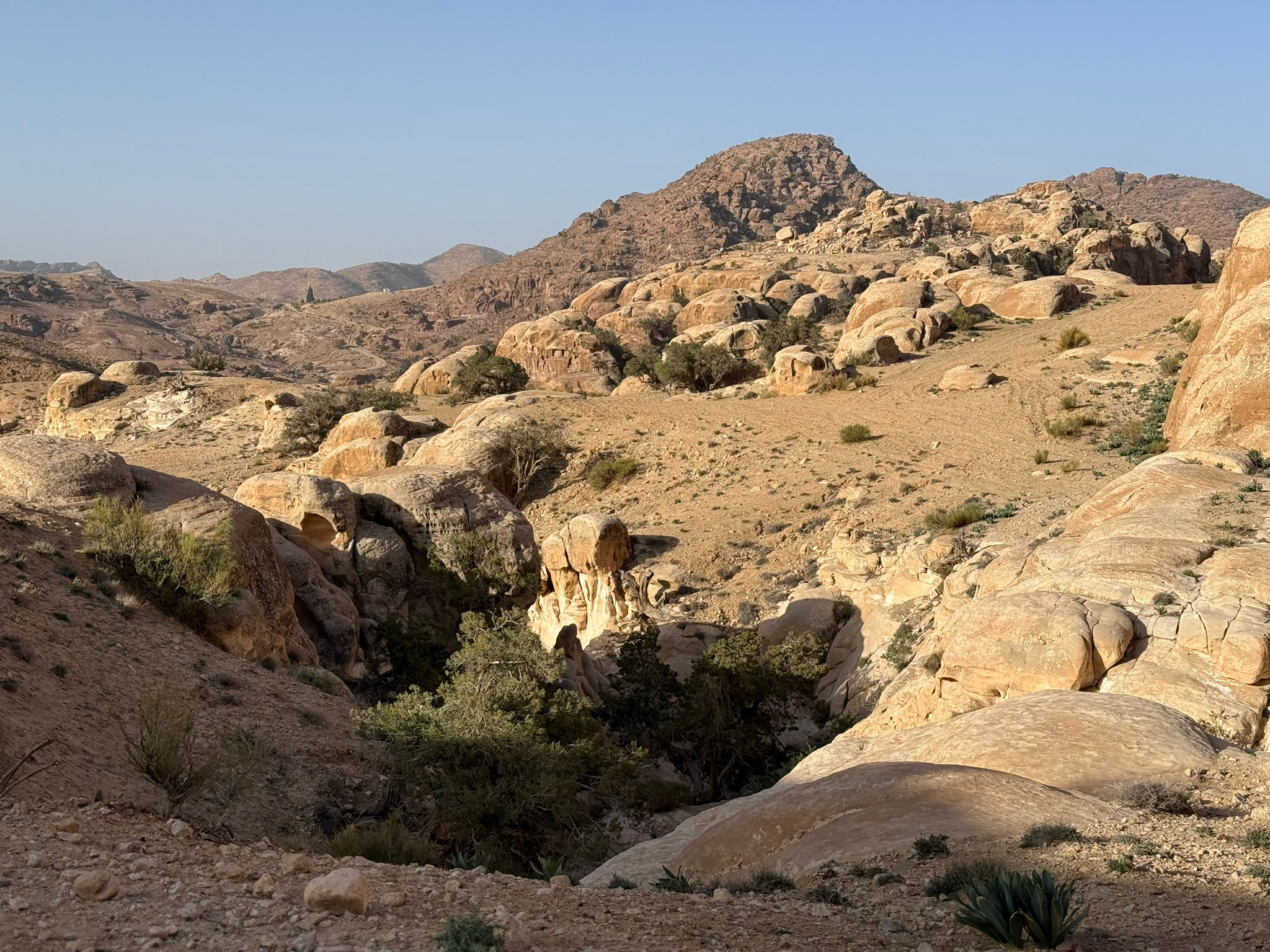
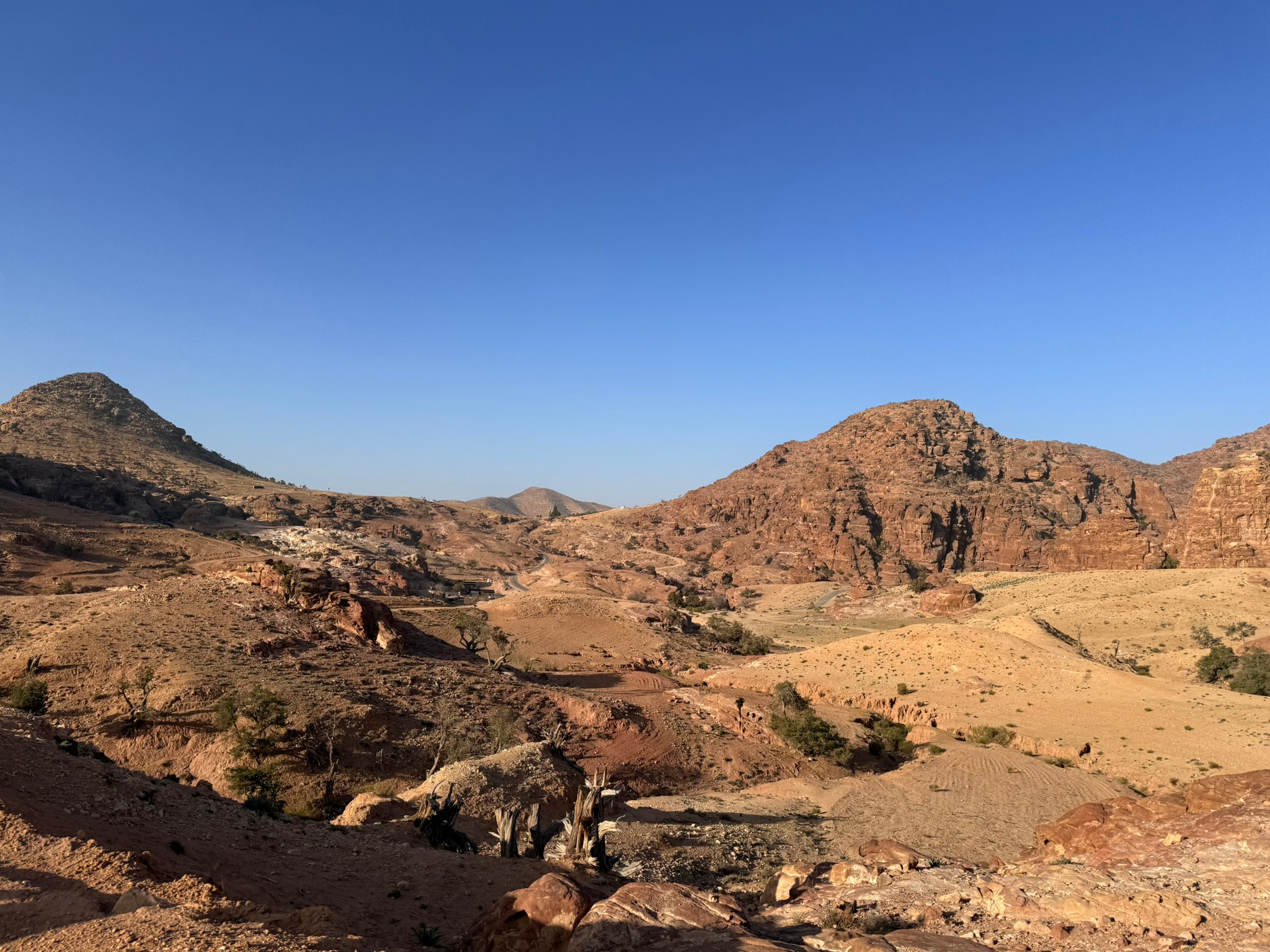
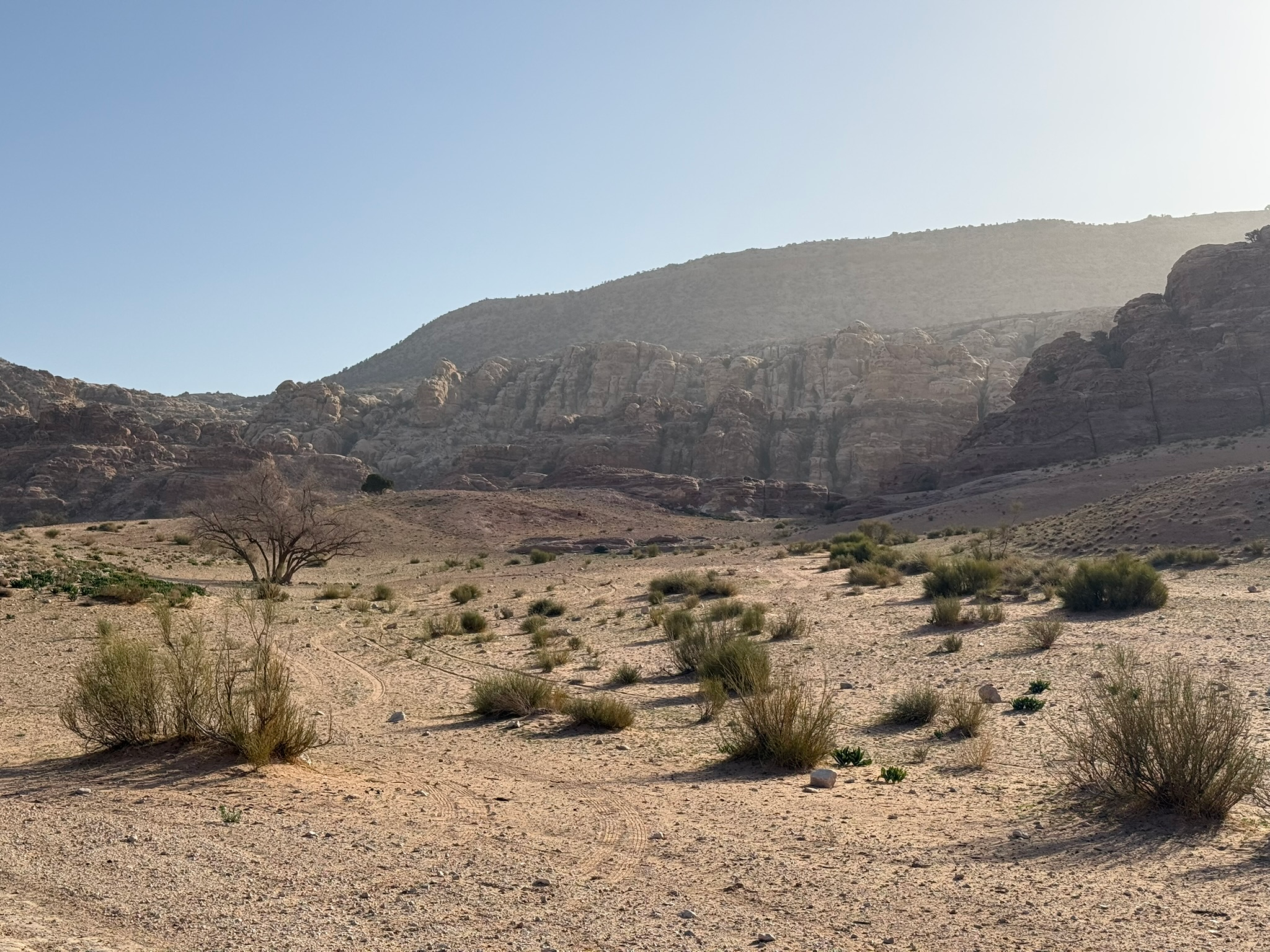
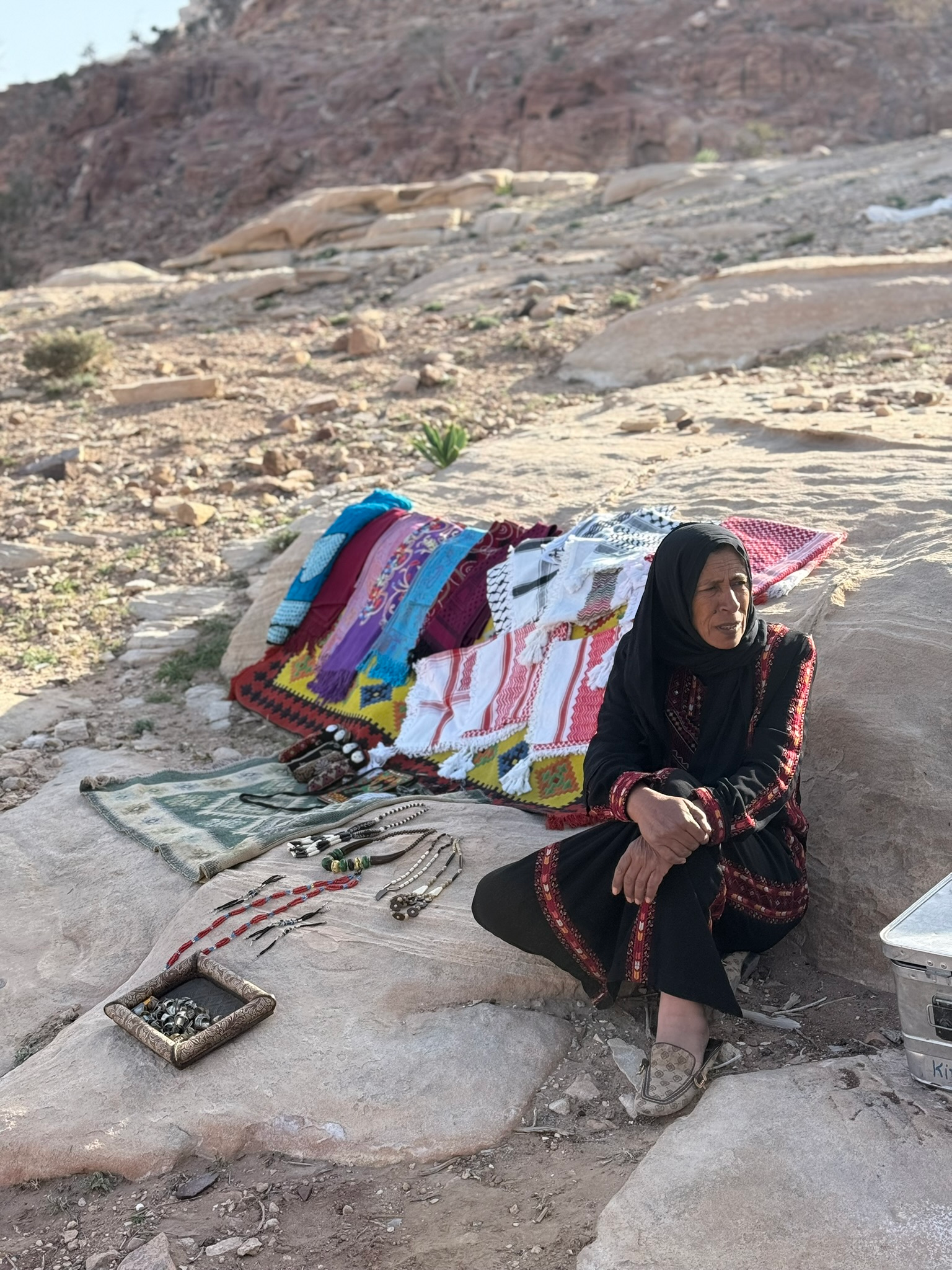
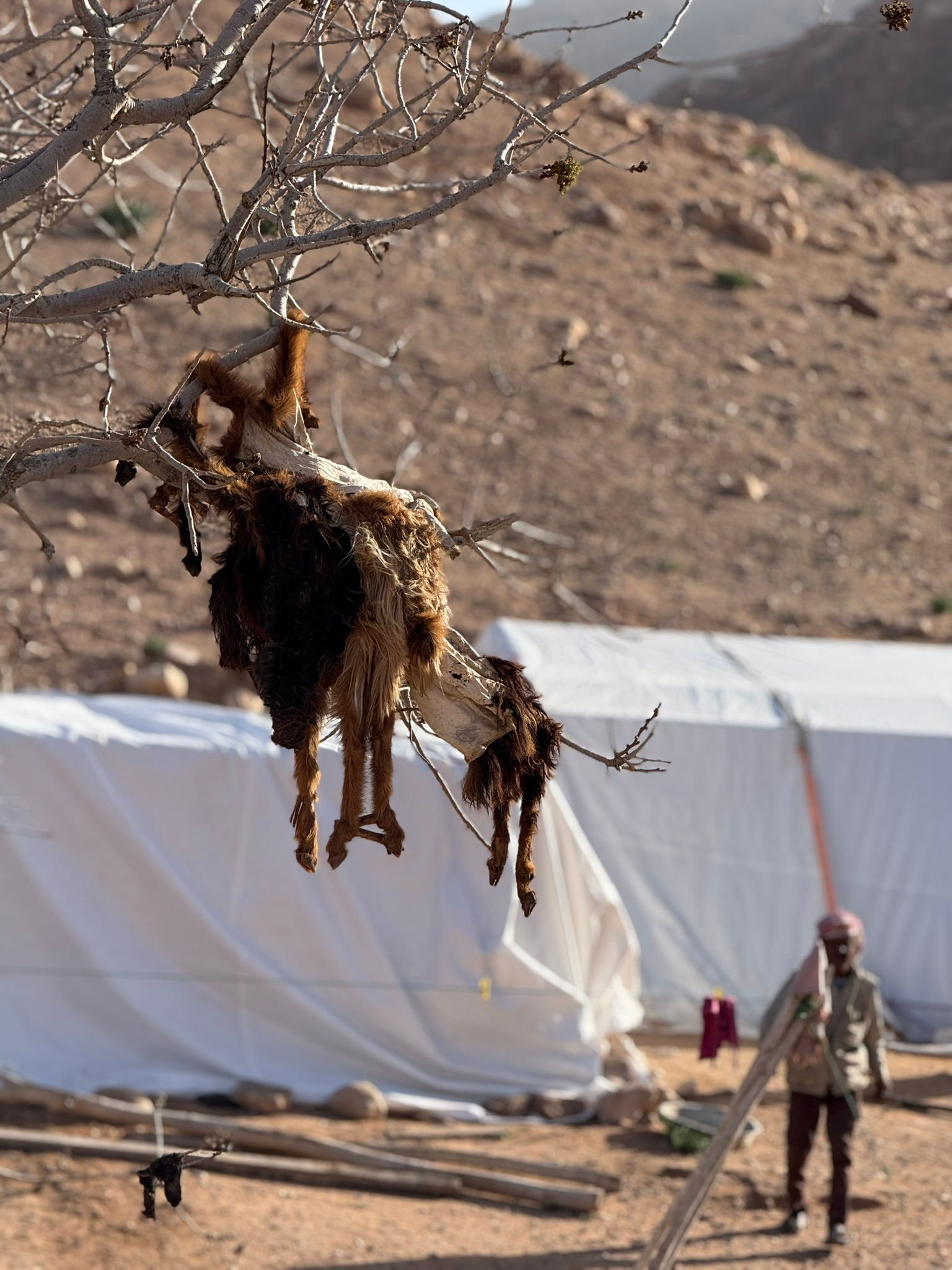
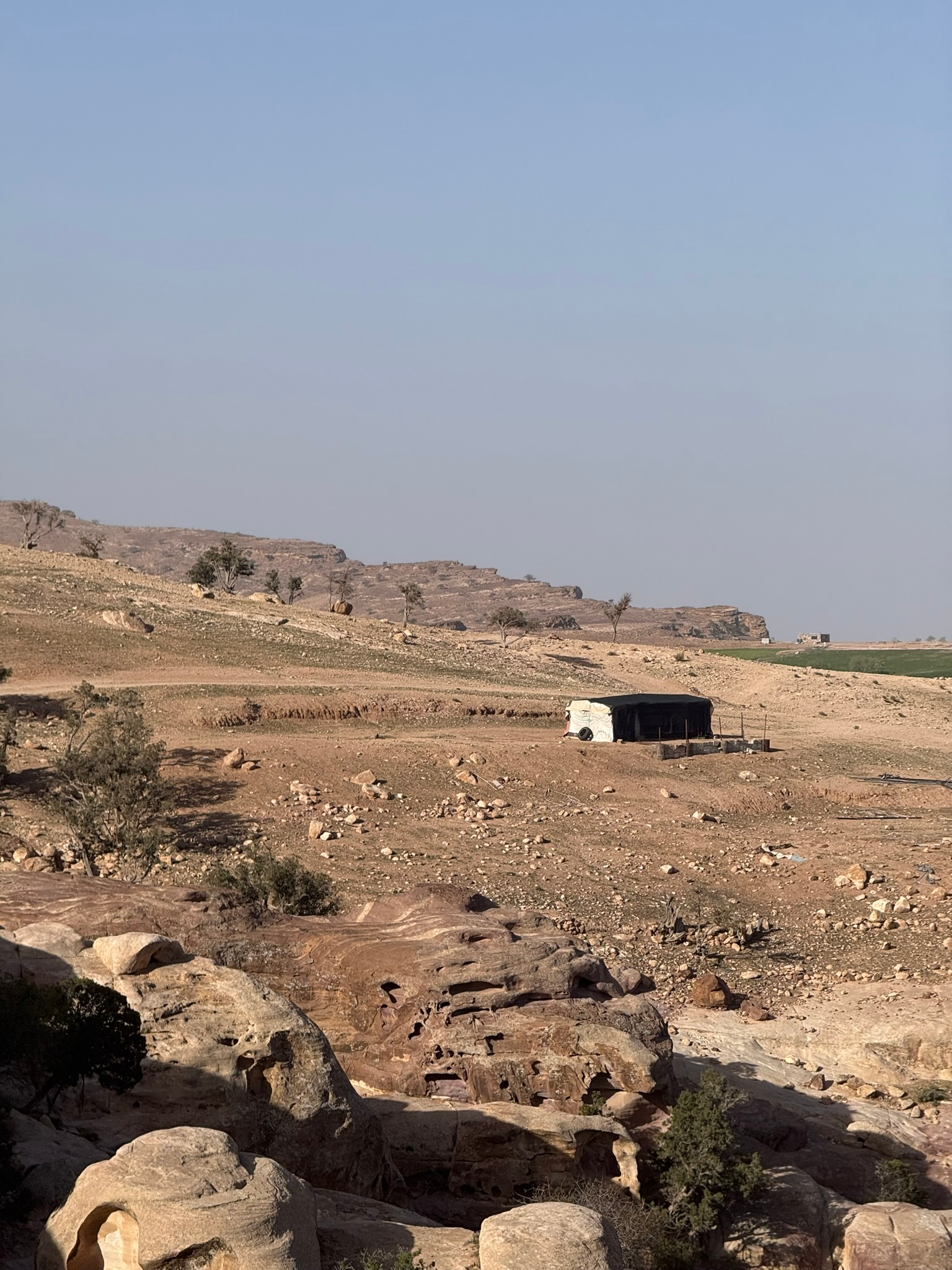
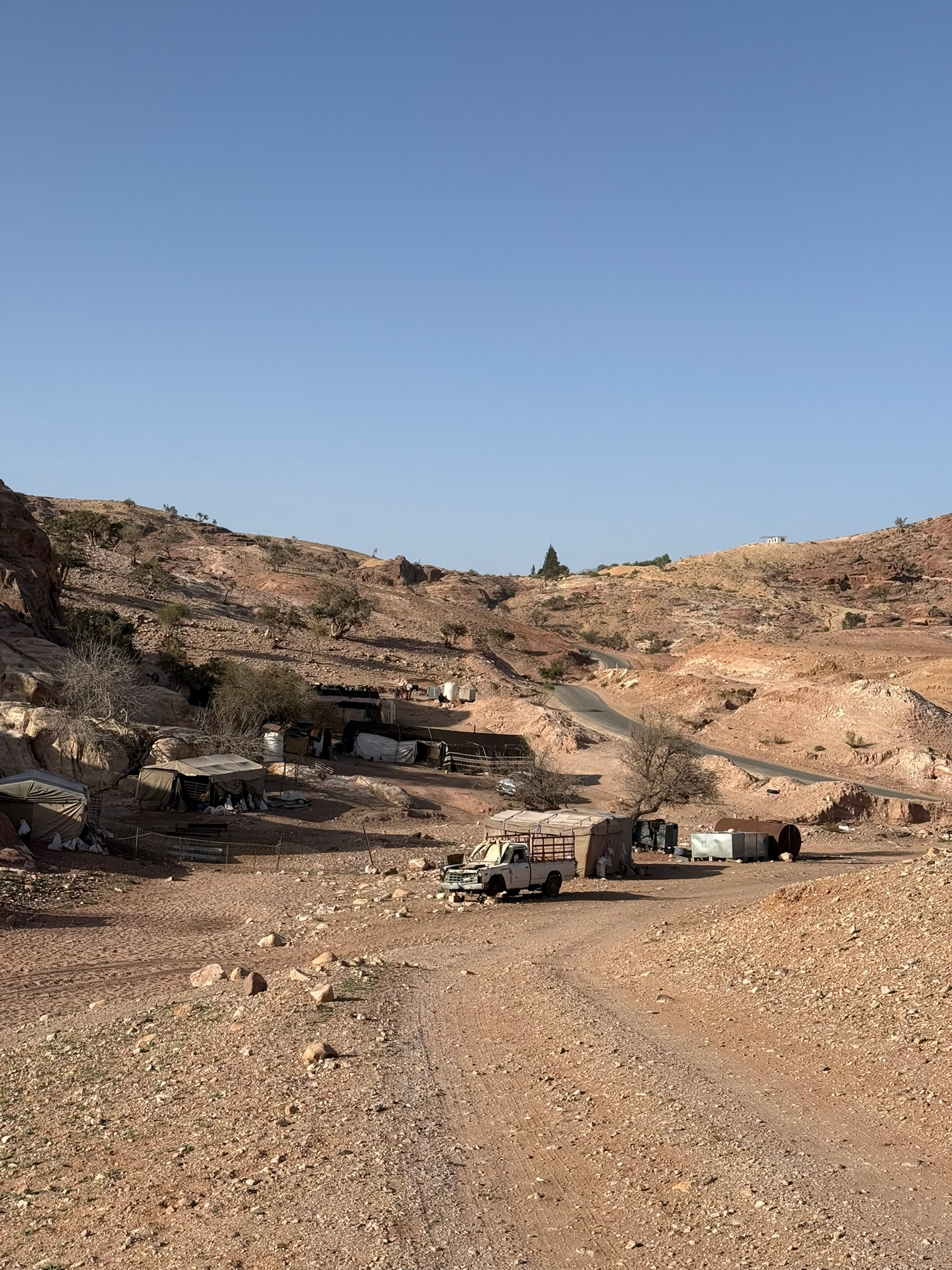
Having eaten breakfast and bid adieu to Eid and his wife, it was time to set off once again, this time towards Little Petra. The road carried us through a stark yet beautiful landscape of rolling desert hills, their pale stone washed in shades of cream, gold and dusty rose beneath the morning sun. Small Bedouin settlements appeared sporadically along the way, little clusters of houses and tents scattered across the otherwise empty terrain, while herds of goats wandered between patches of scrub.
As we continued, the scenery became increasingly rugged. The open plains slowly gave way to jagged sandstone ridges and narrow valleys, with the rock rising around us in strange, weathered formations. Every bend seemed to reveal another vast view of the Jordanian wilderness, stretching out beneath the sky. There was something wonderfully remote about it all, as though we were travelling deeper into a landscape that had remained largely unchanged for centuries.
The Trekking Snob
As we made our way to Little Petra and encountered more signs of civilisation, I found myself lost in thought. We’d be leaving behind the rough wilderness we had grown accustomed to in exchange for the relative comfort of civilisation. I wasn’t entirely sure that was something I wanted – not just yet, at least.
It brought me back to my trek to Machu Picchu.I still remember how strange it had felt to reach Aguas Calientes after four days of trekking. We went from being completely alone in the mountains to suddenly finding ourselves surrounded by hundreds of people who had just arrived by train, blissfully unaware of the trouble we had gone through to get there. Worse still was when we finally reached the ruins of Machu Picchu. There were so, so many tourists. The crowds had made the whole place feel strangely demystified and disappointing.
In contrast, my experiences at Ciudad Perdida in Colombia and El Mirador in Guatemala had been completely different. With the ruins being virtually inaccessible to anyone who couldn’t trek all the way there – unless they could afford a very expensive helicopter ride – the only people around were members of our own small group and the local communities. Crowds had definitely not been an issue in either place. At the risk of sounding like a complete and total jackass, it felt as though the people who had made it there had actually earned it. Not that these places should be exclusive, mind you. I was merely becoming painfully aware that I might be a bit of a trekking snob.
So yeah, the fourth day brought a certain amount of anxiety with it. Every step would take us closer to other people. That meant having to say goodbye to the much-appreciated silence and stillness we had grown so accustomed to in the desert. I would also probably have to wait for people to move out of the way before taking the perfect photograph. Worse still, someone might ask me to take their picture, forcing me to pretend that they were doing such a good job at posing. And let’s not forget about the Americans. Of course there would be Americans!
Okay, lemme stop right there. I was being toxic, wasn’t I? Deep, deep breath. We still had a few more kilometres of wilderness ahead of us!
The Nabateans
Having eaten breakfast and bid adieu to Eid and his wife, it was time to set off once again, this time towards Little Petra.
After the remoteness of the previous day’s hike, we soon began seeing signs of increasing human habitation, mostly Bedouin camps, sheep pens and small agricultural plots. It was also here that we first encountered ancient ruins along the trail, including the remains of wine and olive presses and elements of Nabataean water-management systems.
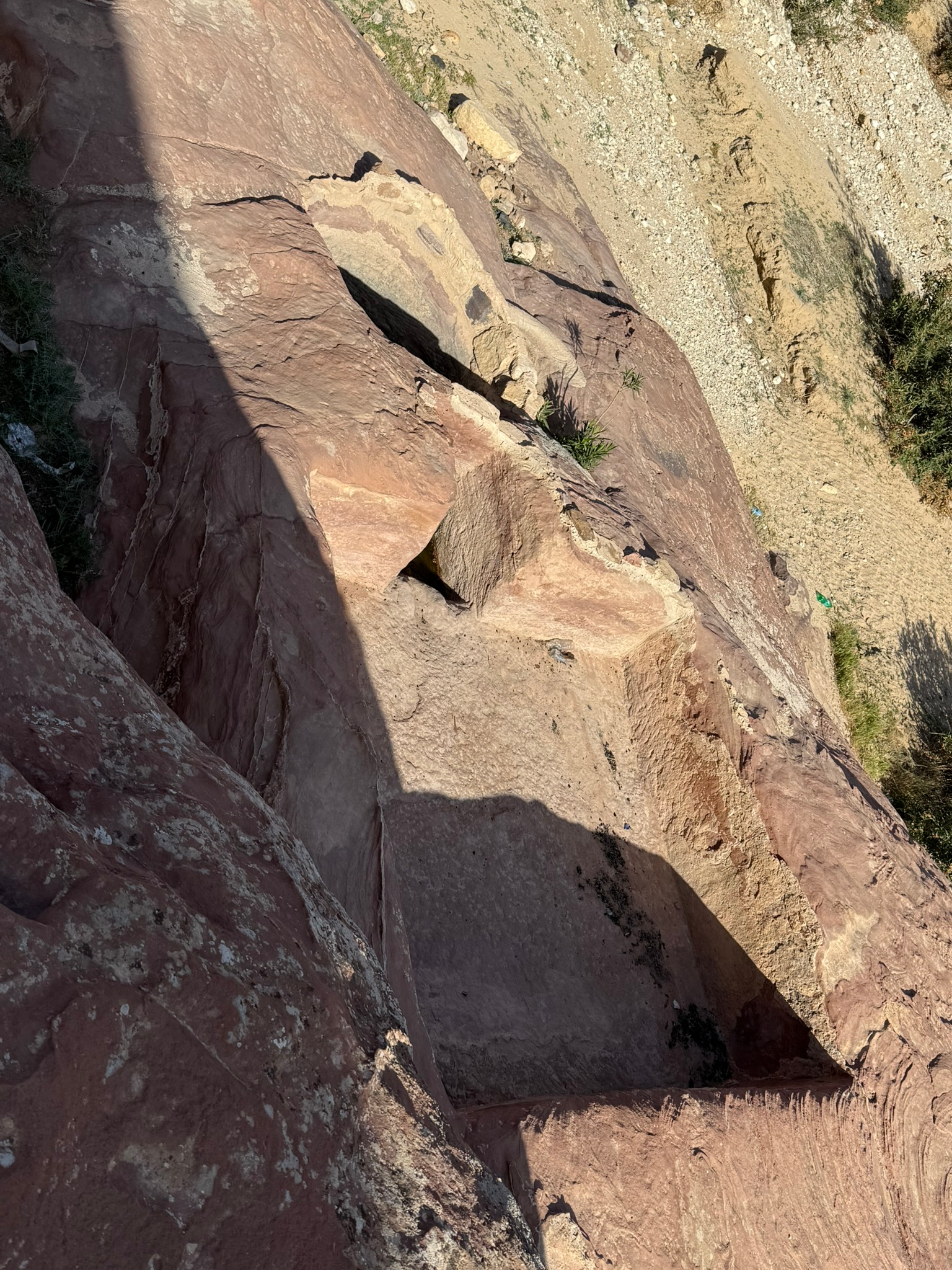
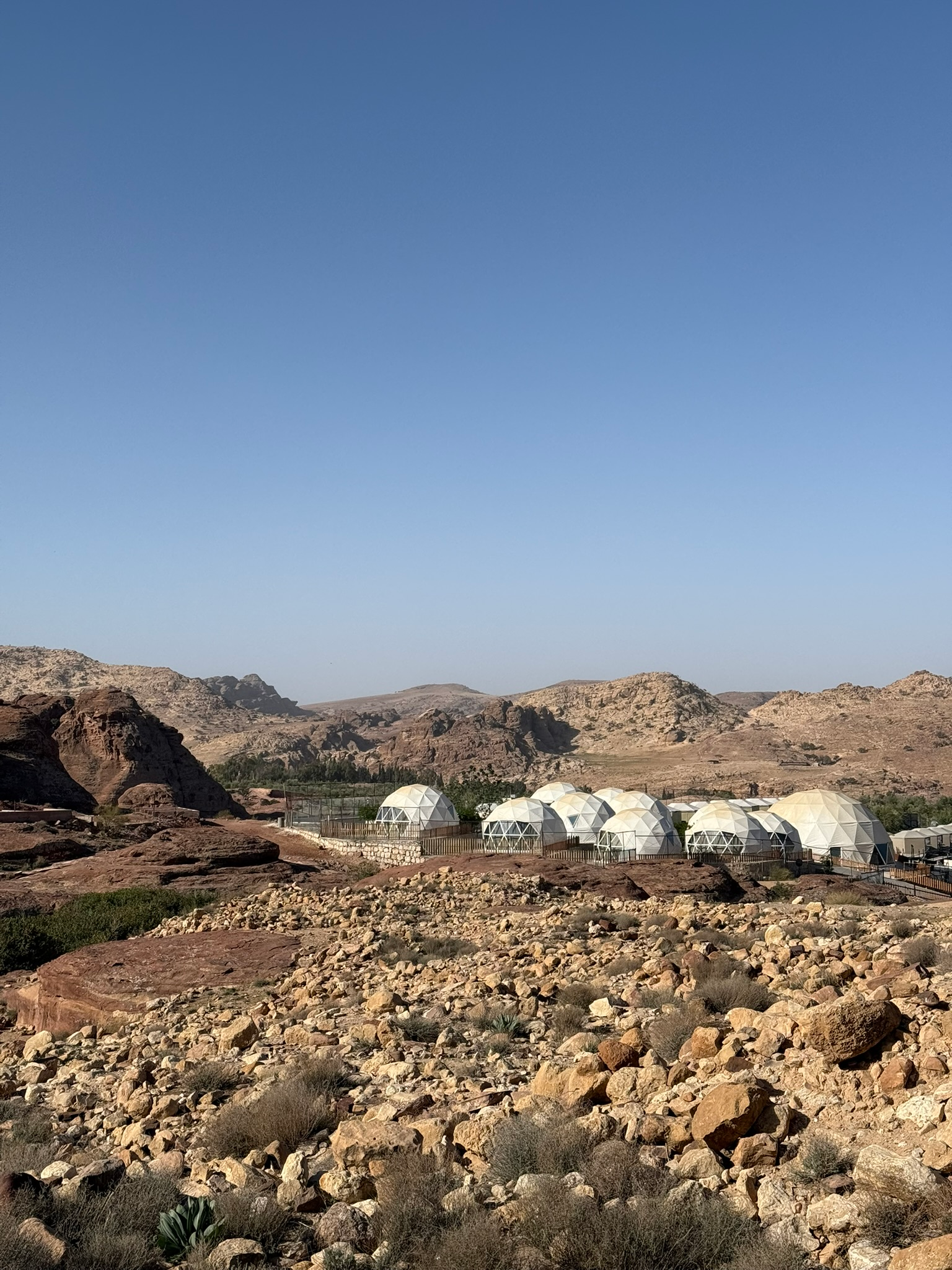
The Nabataeans, Delia explained, were an ancient Arab people who emerged as a major political and commercial power by the fourth century BC. Through their control of important caravan routes transporting incense, spices and other valuable goods from southern Arabia towards the Mediterranean, they accumulated considerable wealth and influence. Petra became the capital of their kingdom and developed into an important centre of trade, religion and culture. Their ability to construct extensive channels, dams, reservoirs and cisterns allowed the city and its surrounding agricultural areas to flourish despite the dry environment.
The Nabataean Kingdom was annexed by the Roman emperor Trajan in AD 106 and incorporated into the new province of Arabia Petraea. Whilst Christianity spread through the region and Greco-Roman customs were taken up by its people, Nabataean culture did not disappear immediately, and, elements of its language, religious practices and architecture continued under Roman rule.
Despite being an ancient civilisation, the Nabataeans possessed remarkable engineering knowledge. They developed extensive channels, dams, cisterns and reservoirs that captured, stored and distributed water through an otherwise arid landscape. The same can’t quite be said about their chronicling skills. The Nabataeans were certainly literate and left thousands of inscriptions, together with a smaller number of surviving legal and administrative documents. What they did not leave behind was a continuous written history telling the story of their civilisation from their own perspective.
As a result, much of what we know about them has been reconstructed from archaeology, inscriptions, coins and accounts written by neighbouring Greek and Roman authors. It was not quite hearsay passed down through generations, but neither did they leave us a neat collection of history books explaining everything.
Goodbye, Beautiful Donkey & Legendary Guide
After the first of many history lessons still to come, we continued until we reached a canyon. The steep trail we would have to scramble across marked the end of Tarrad’s journey with us.
Following one tearful goodbye, we left yet another companion behind. I’m pretty sure I speak for everyone in the group when I say that a small piece of our hearts remained there with that beautiful, beautiful donkey. Oh, Tarrad. Our Tarrad… He had been such a good friend, even though he would occasionally try to consume a finger or two whenever someone handed him an apple core and would spit tomato juice all over us when biting voraciously into one.
But on we went. Having crossed the canyon, we found ourselves saying goodbye to yet another member of the group: Athallah. Quiet though he might have been, he had guided us all the way up to that point. On his final morning, he had done so wearing nothing but a pair of sandals. Earlier that day, Doug had casually observed a dog playing with a shoe, which, as it later transpired, belonged to Athallah. What a legend. Without him, we would probably have become hopelessly lost on multiple occasions. So yeah, goodbye, Tarrad. Goodbye, shoes. And goodbye, Athallah. You would all be sorely missed.
Miserable though we were to find ourselves two companions down, we quickly acquired some new ‘friends’ – a couple who followed us all the way through the canyon because they had become lost while trying to reach Petra. Needless to say, this was not making me look forward to meeting other people again.
PART II
The Faceless Stone Gods
As we approached the entrance to Little Petra, we sat beneath the shade of a large tree and stopped for lunch. Here, we enjoyed our final taste of freedom from the civilised world.
Here, Delia used the opportunity to tell us more about the Nabataeans, specifically their religion and mythology. Turns out, Nabataean religion absorbed influences from several Arabian, Levantine, Egyptian and Greco-Roman traditions. The major gods venerated by them included Dushara, who was revered as the king of gods and was linked to the sun, and Al-Uzza, who was probably seen as the city’s protectress. I’ve found lots and lots of conflicting theories about the rest, including Dushara’s consorts who might have been two other female deities named Manat and Allat, so it’s probably be best to leave it all out.
One thing seemed certain: religion was deeply woven into Nabataean life. Alongside the magnificent façades adorning their tombs and temples, niches containing plain stone slabs and pillars have been discovered throughout Petra and other Nabataean sites. These are known as betyls and represented the presence of a deity without necessarily depicting that god in human form. Some betyls include simplified facial features or eyes, but many are completely plain. Under increasing Hellenistic and Roman influence, Nabataean artists also began portraying some gods in more human-like forms. These anthropomorphic images existed alongside, rather than simply replacing, the older aniconic traditions.
There is also evidence that astronomy and the surrounding landscape influenced the design and orientation of certain Nabataean monuments. Researchers have identified alignments connected with sunrise, sunset and seasonal solar events at several structures in Petra, although the exact religious meanings behind these orientations remain open to interpretation.
The Cold Canyon
After lunch, we descended a narrow and steep flight of steps into a smaller canyon marking the entrance to Little Petra.
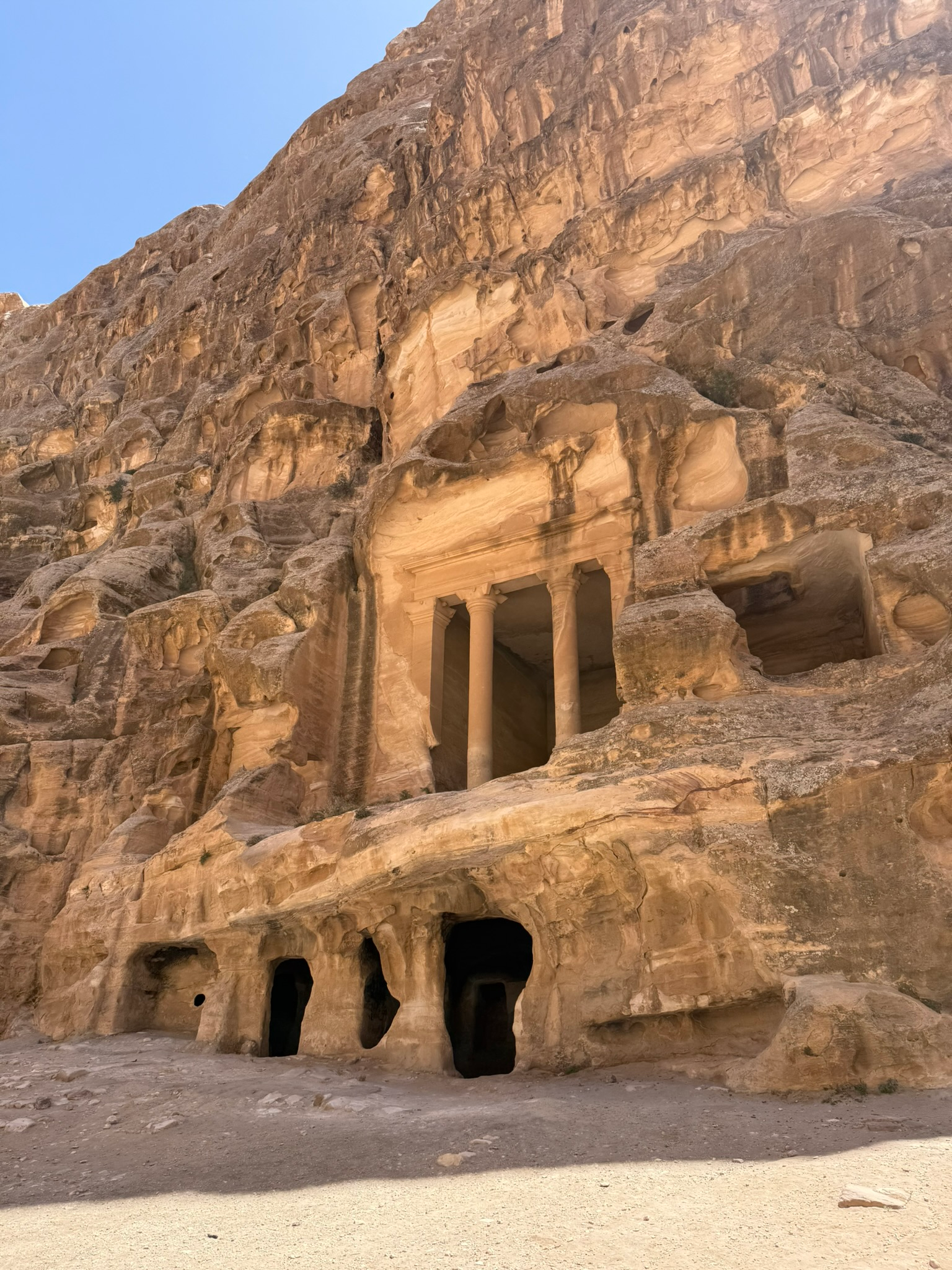
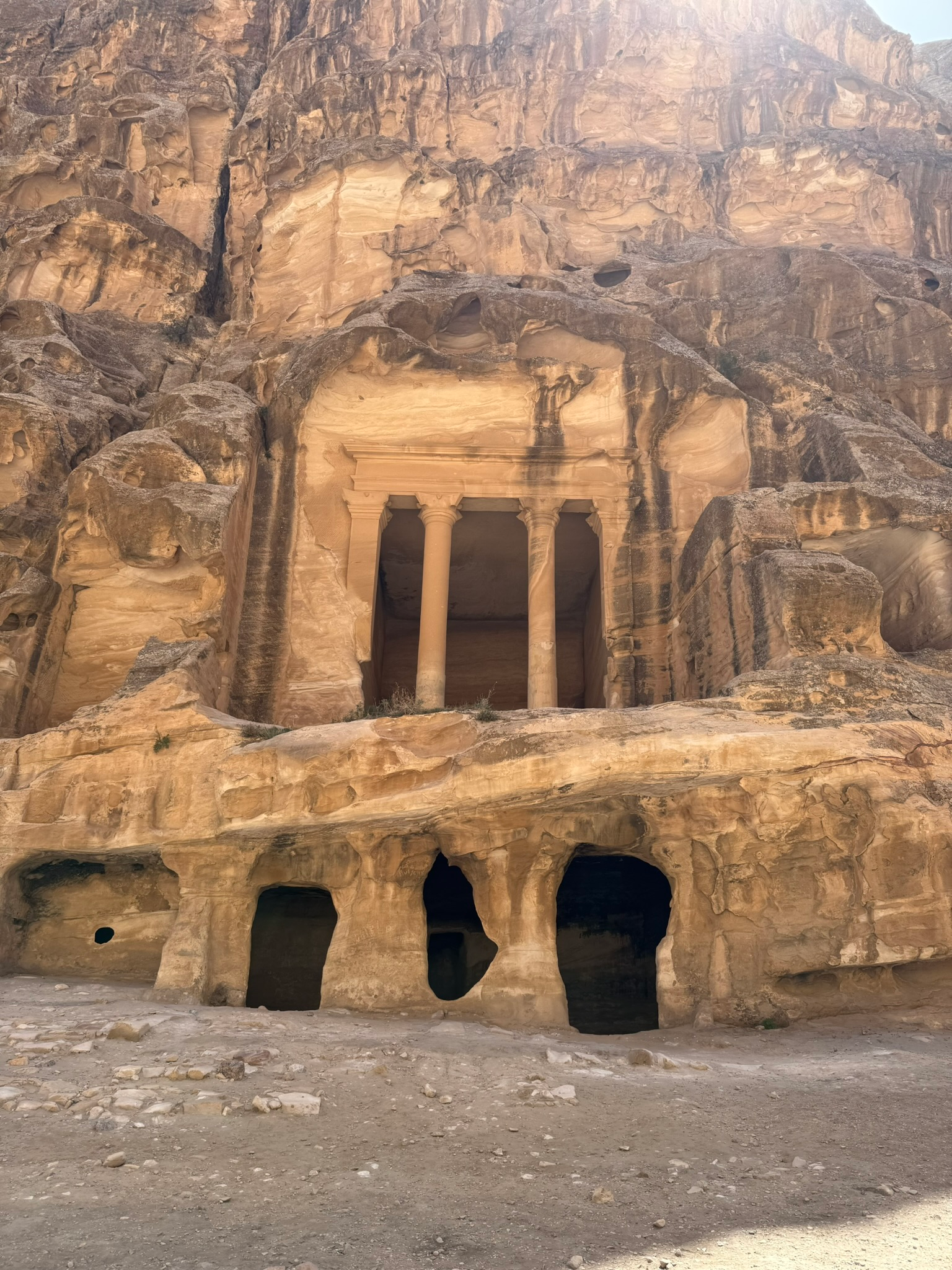
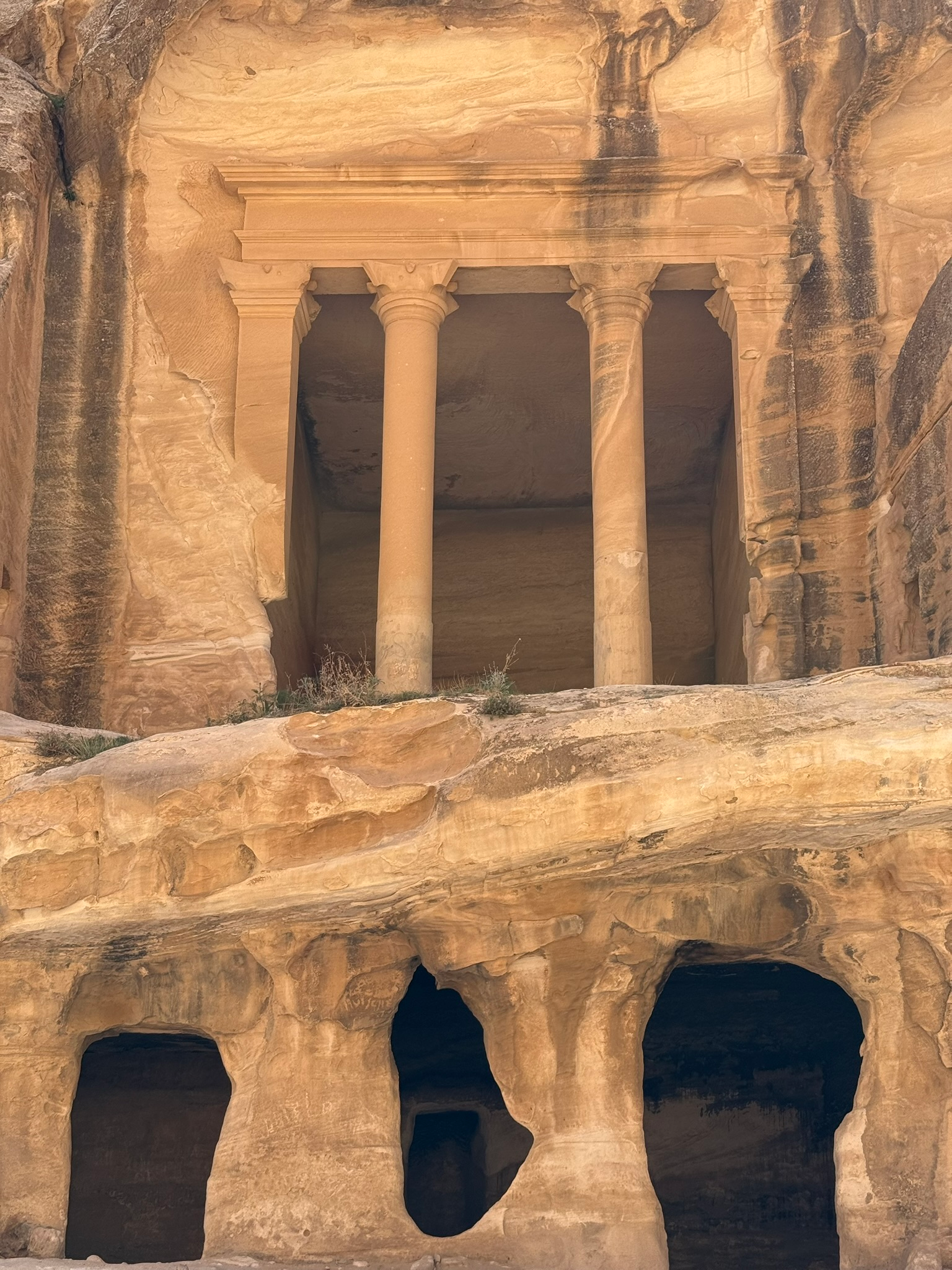
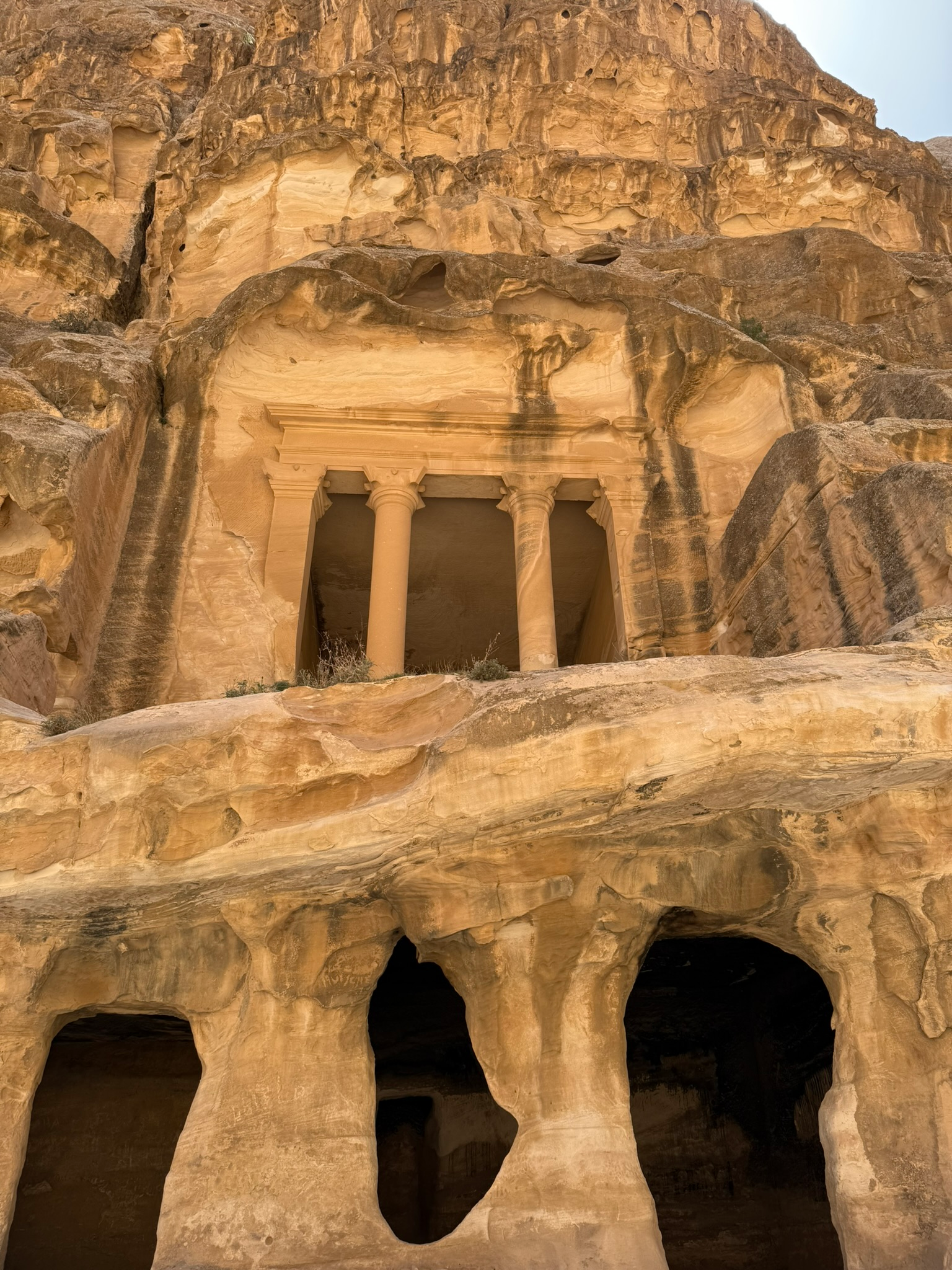
The site is also known as Siq al-Barid, commonly translated as ‘Cold Canyon’, supposedly because its high sandstone walls and narrow passages shelter much of it from direct sunlight. Little Petra is located in Petra’s northern outskirts and served as a stopping place for caravans travelling between southern Arabia and the Mediterranean. Traders could rest, eat, conduct business and replenish their water supplies before continuing towards the main city.

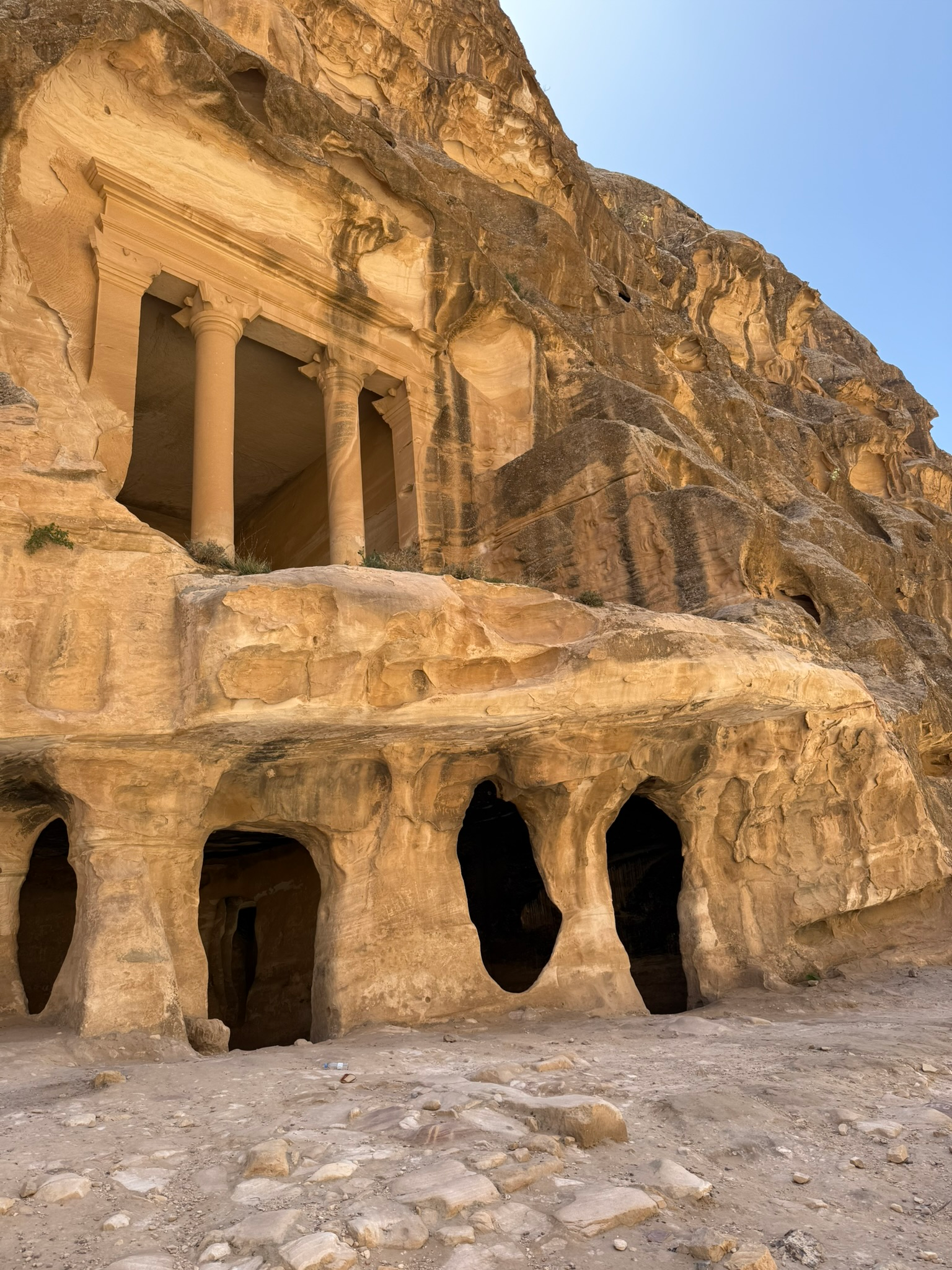
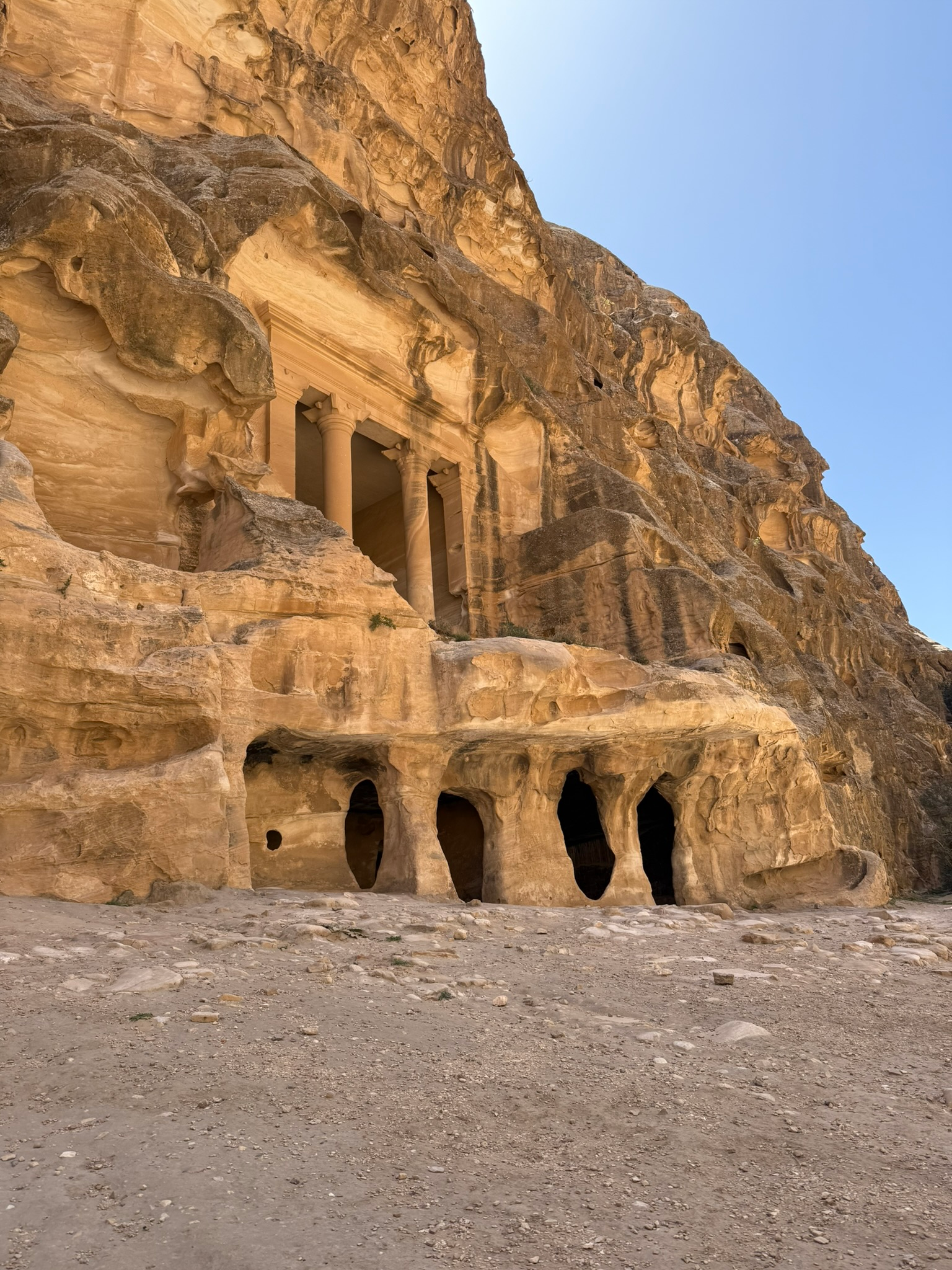
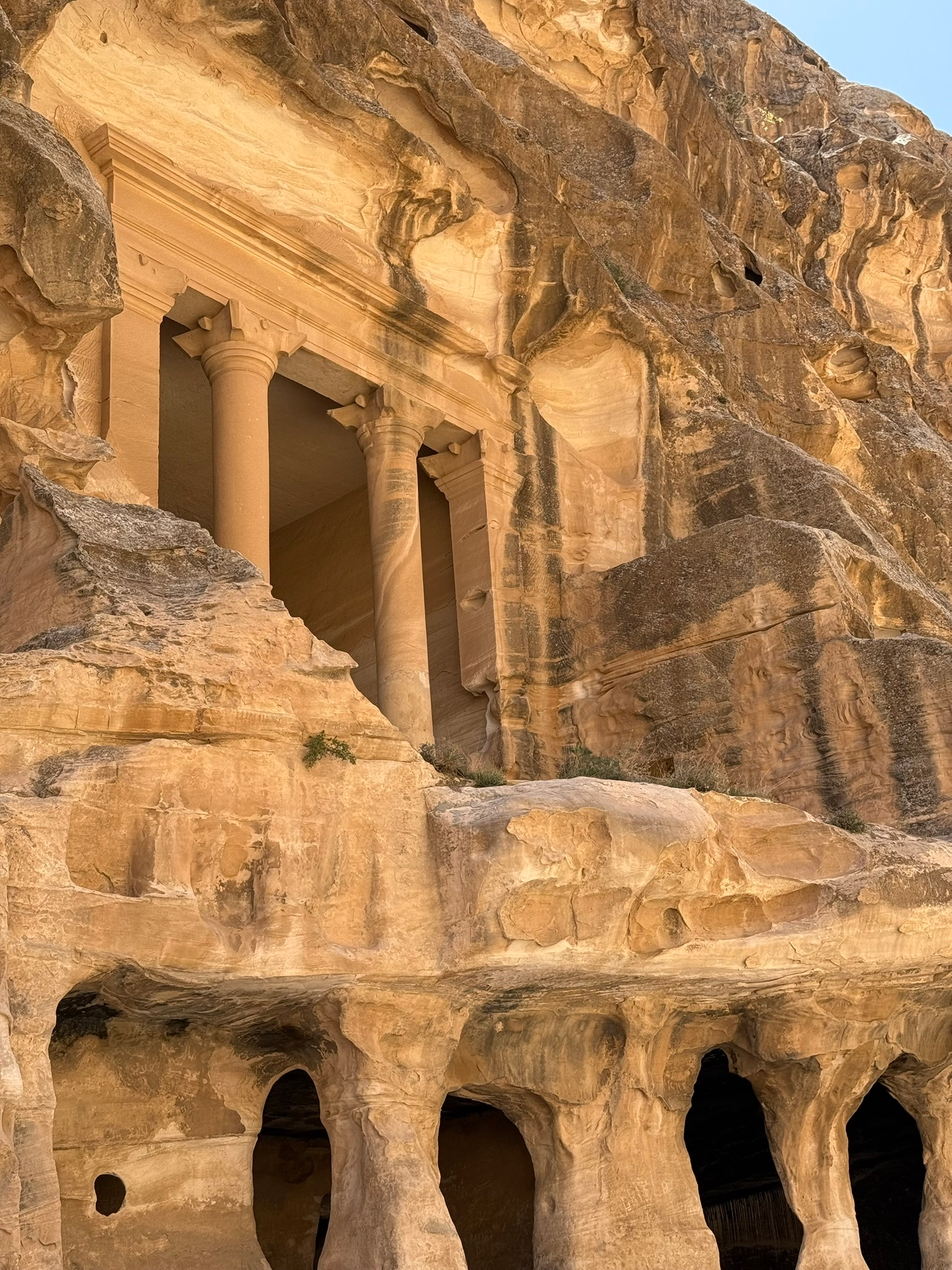
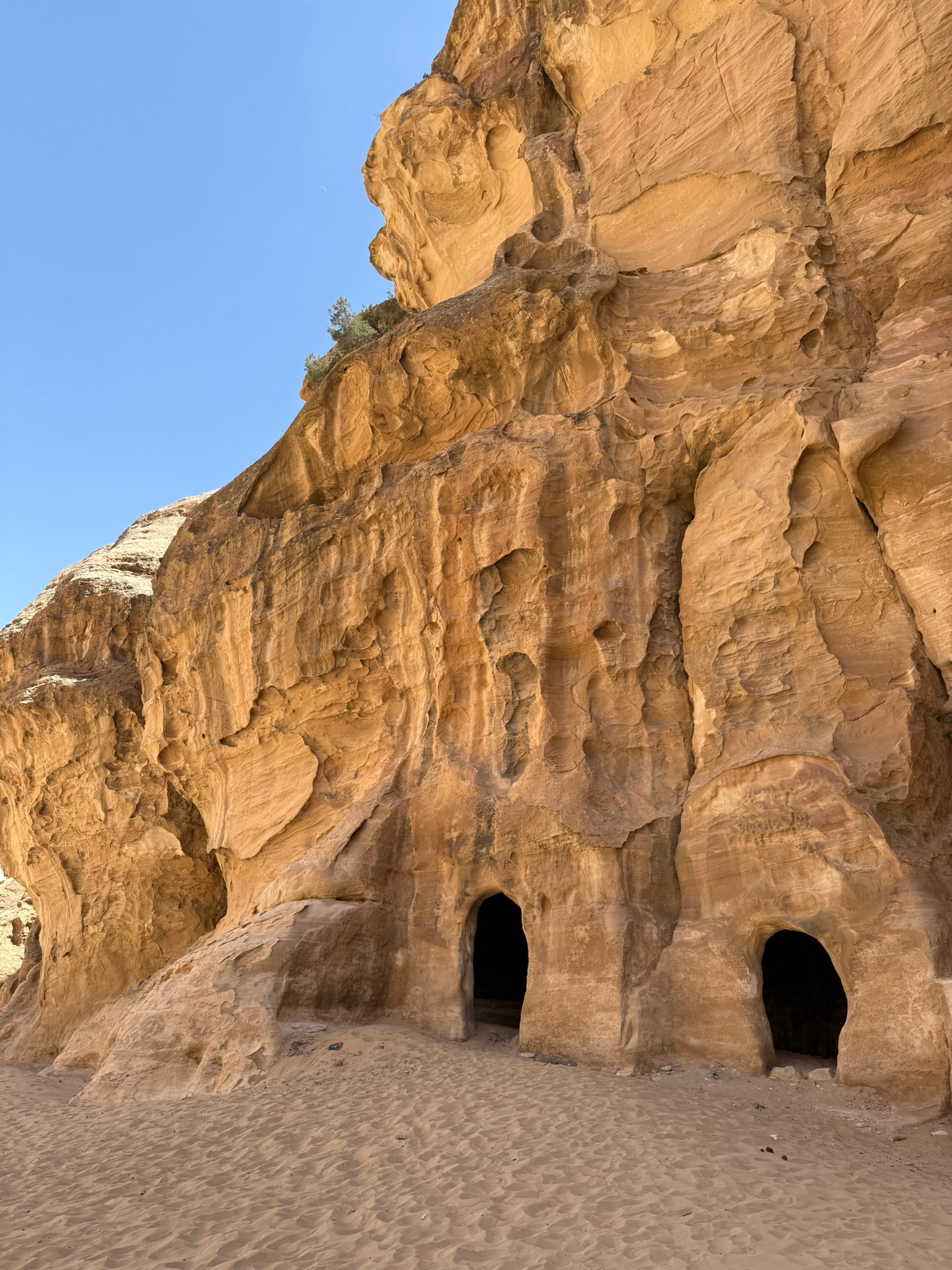
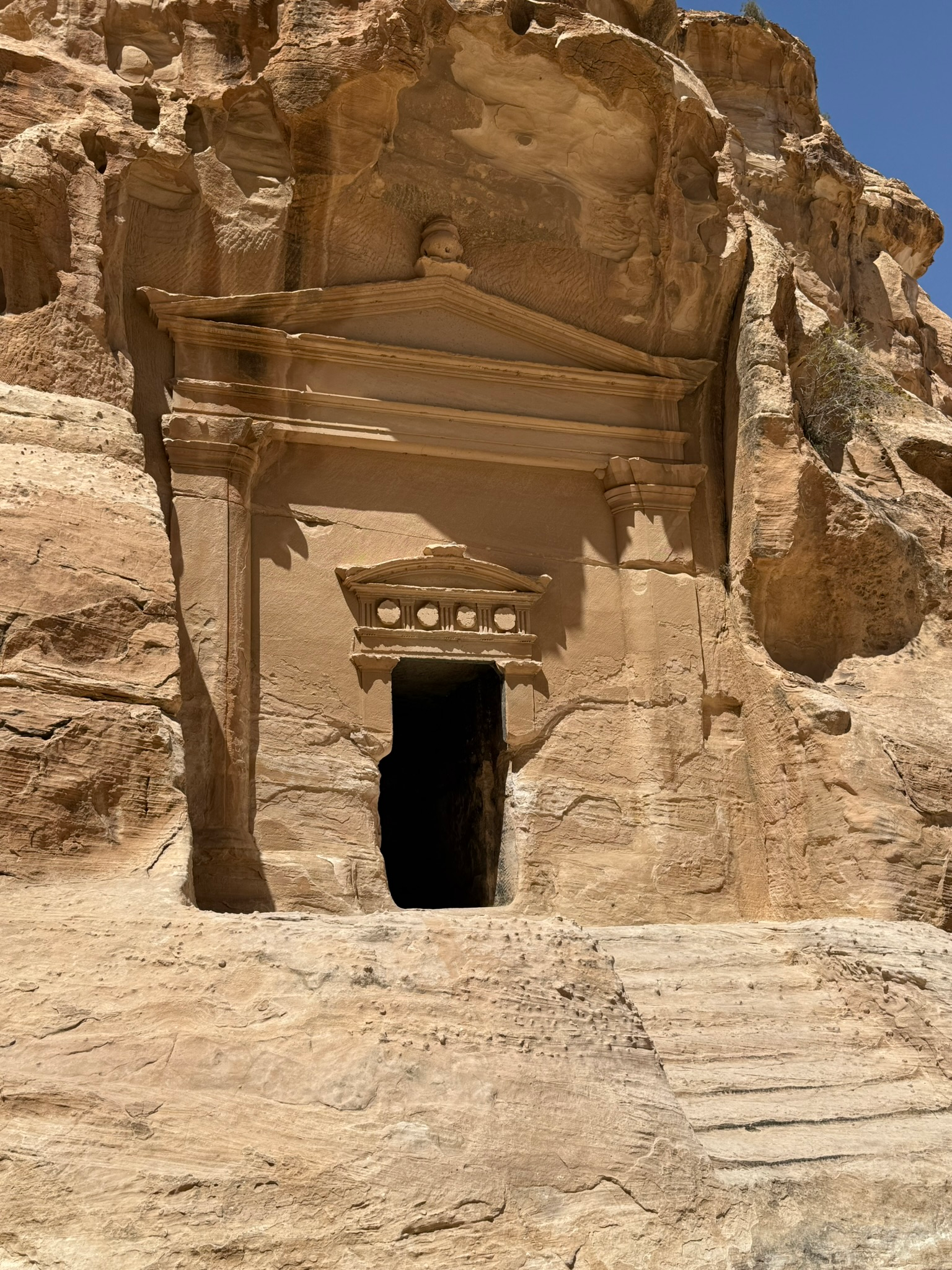
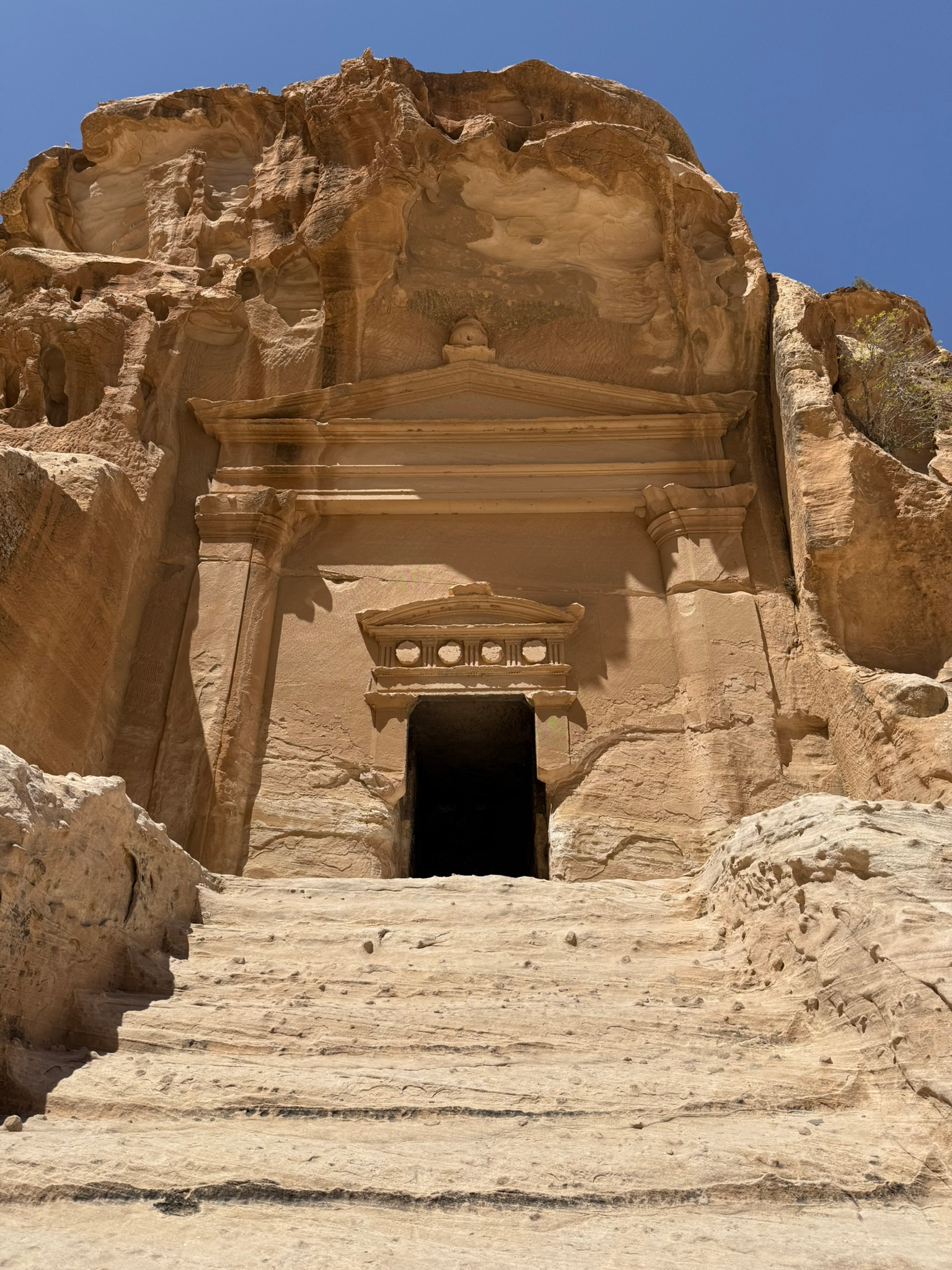
The site consists of a sequence of wider spaces connected by a narrow sandstone passage. Its walls contain rock-cut façades, tombs, chambers and banqueting halls, together with channels, dams and cisterns forming part of the Nabataeans’ sophisticated water-management system.
Two structures stood out in particular. The first was the Painted Biclinium, named after the two raised benches lining its dining chamber. Its ceiling contains the only surviving extensive example of intricate Nabataean wall painting still preserved in place. Dating to approximately the first century AD, the decoration depicts intertwined grapevines, flowers, birds and small winged figures. The imagery has frequently been interpreted as Dionysian, reflecting associations with wine, fertility and feasting, although it does not prove that the room itself was a temple dedicated to Dionysus.
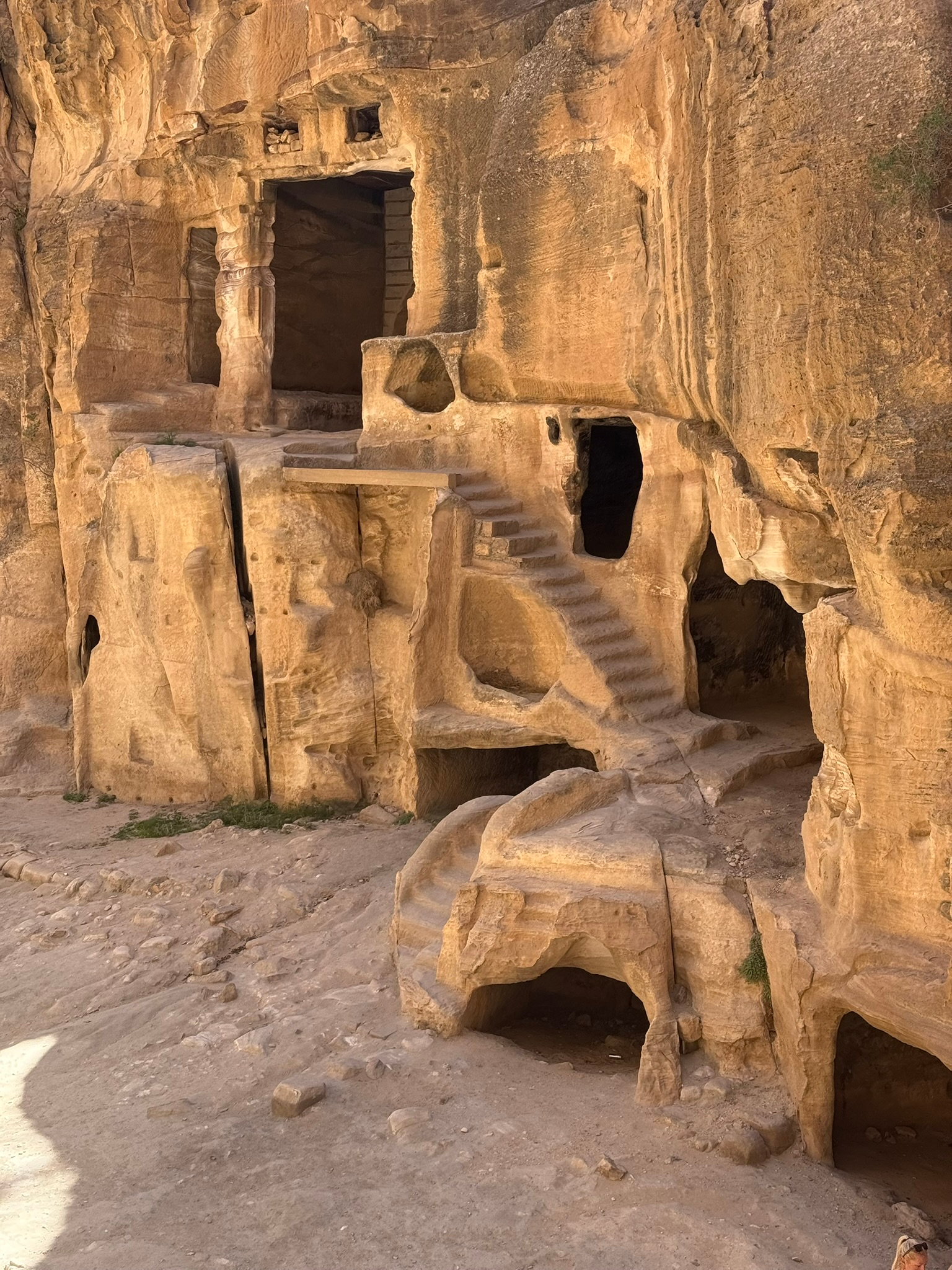
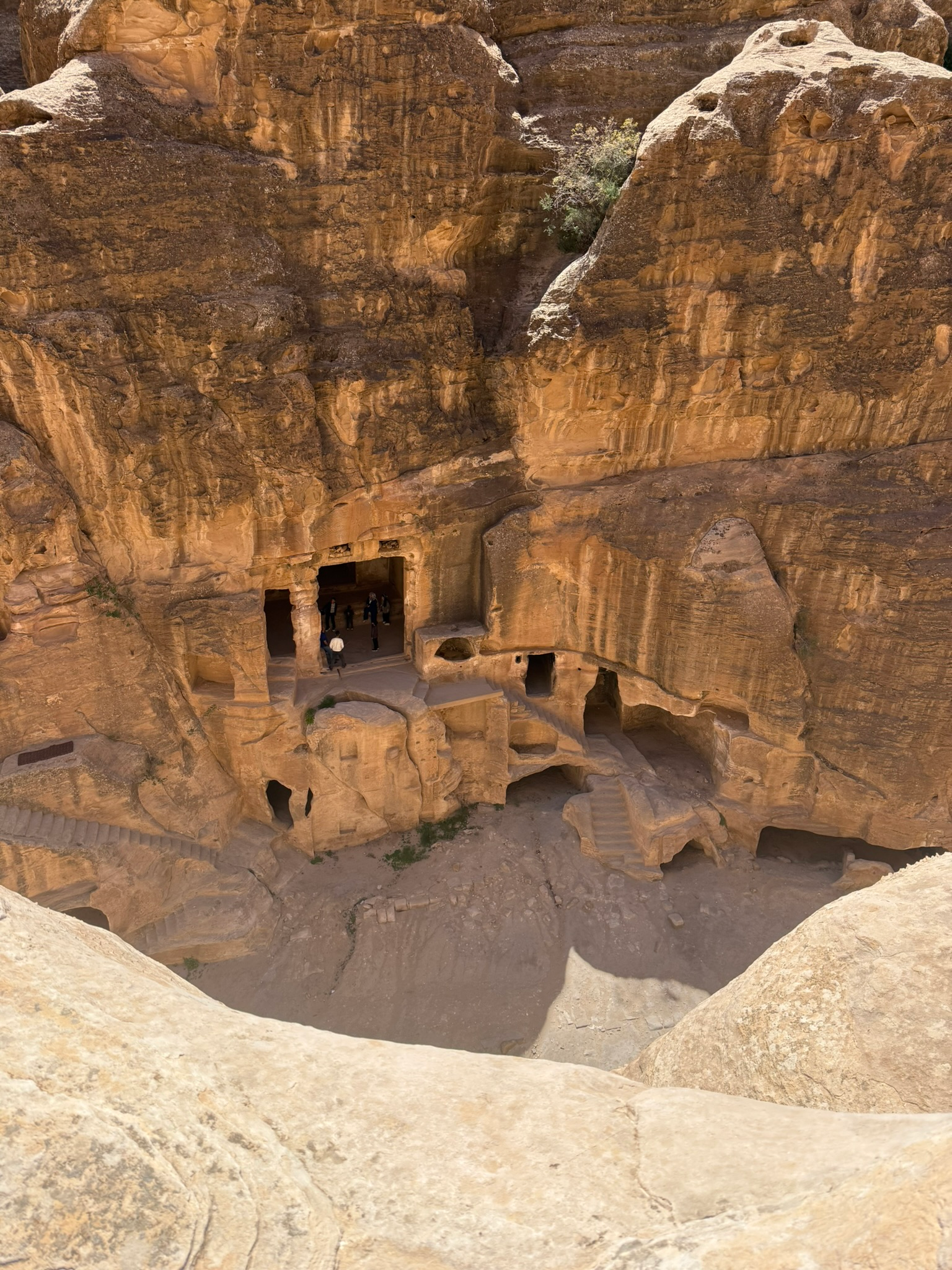
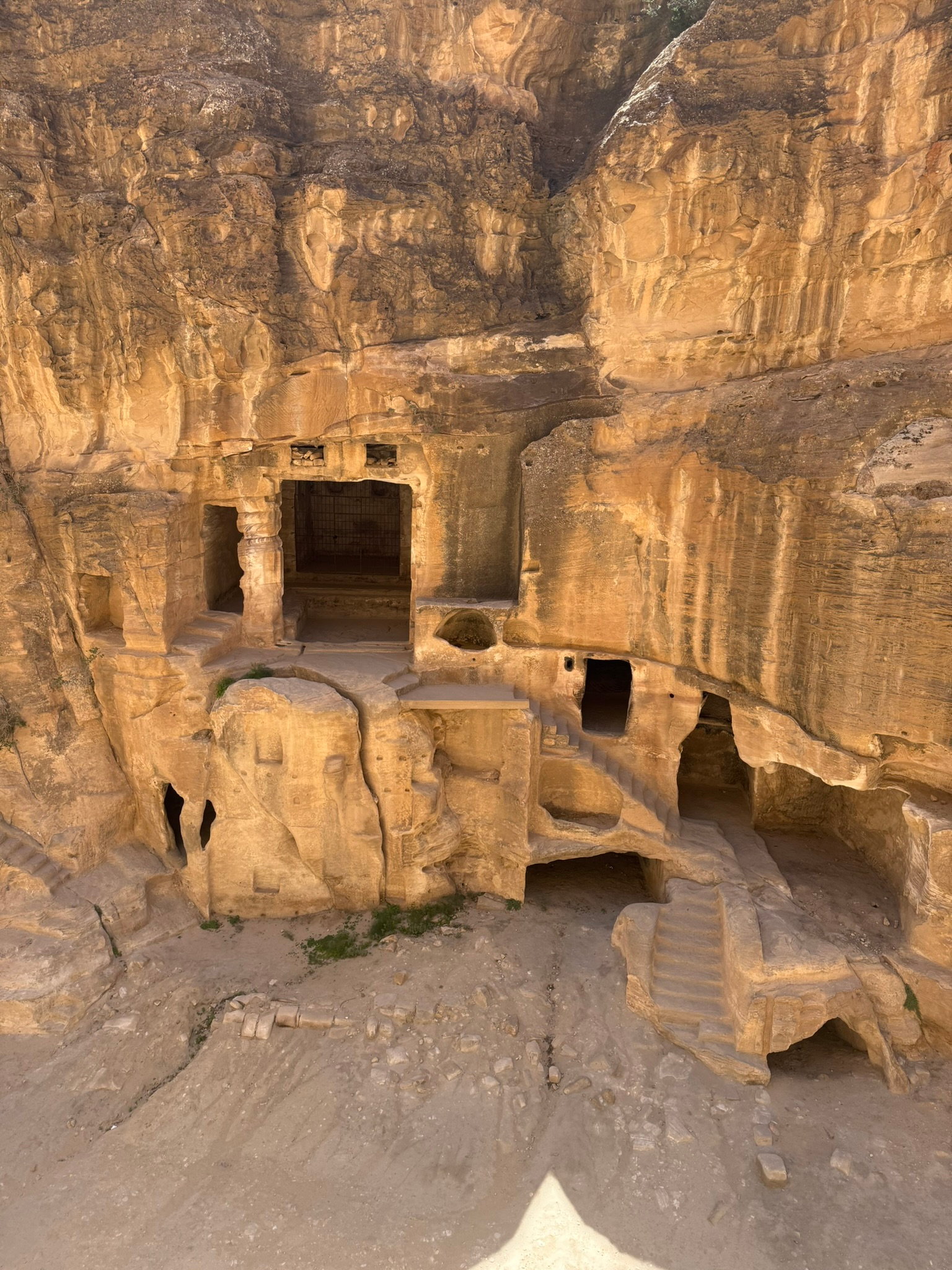
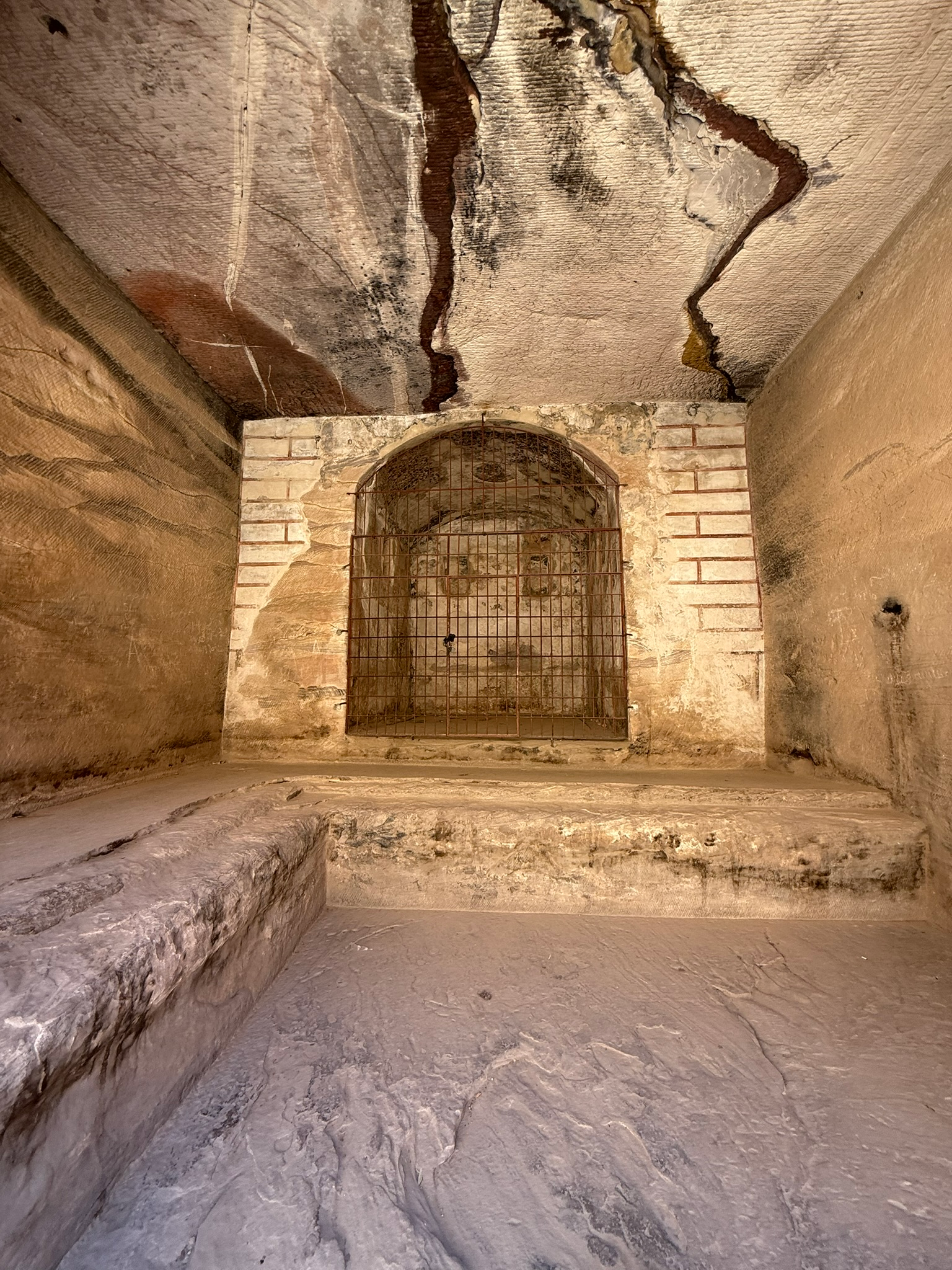
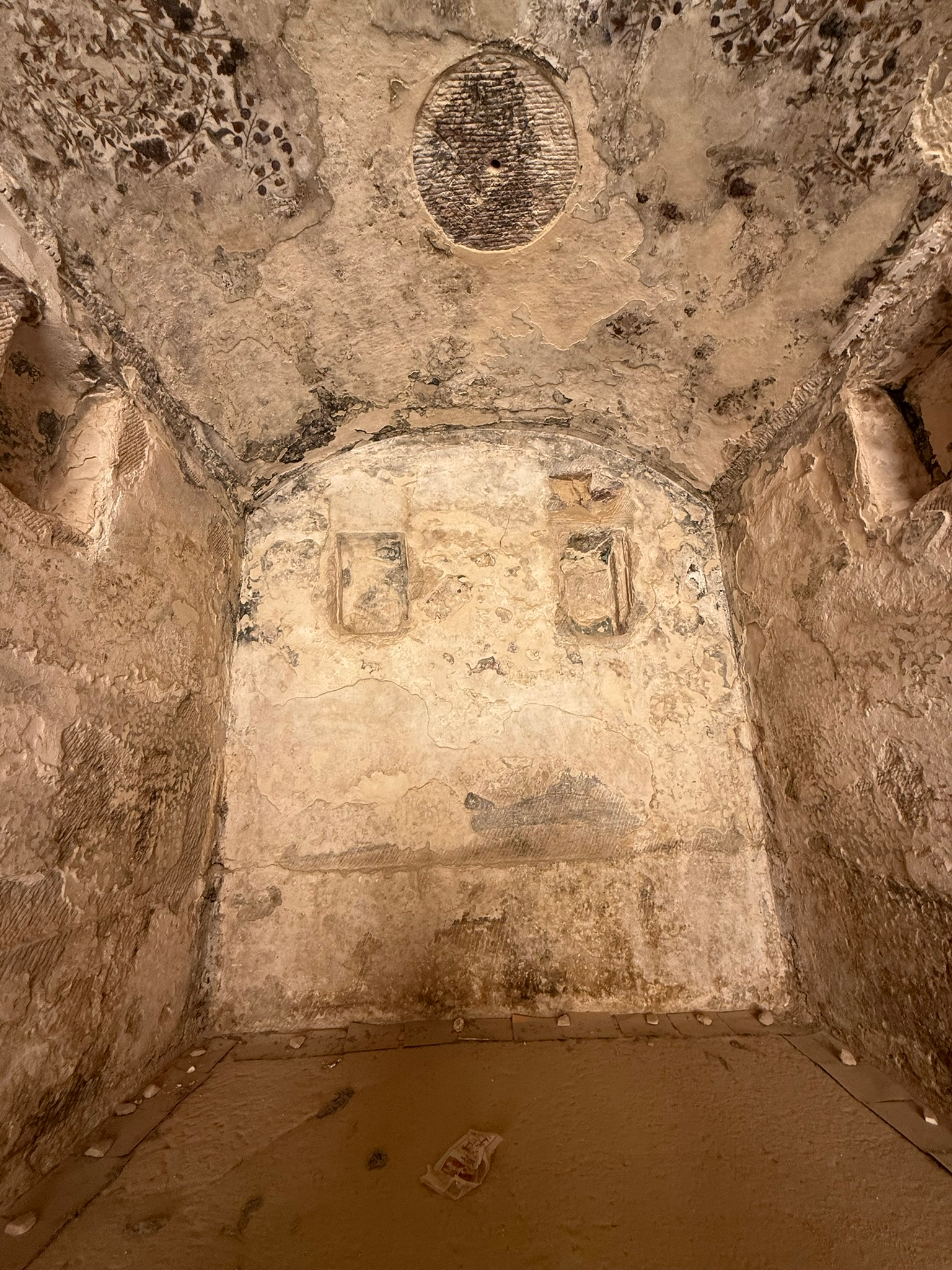
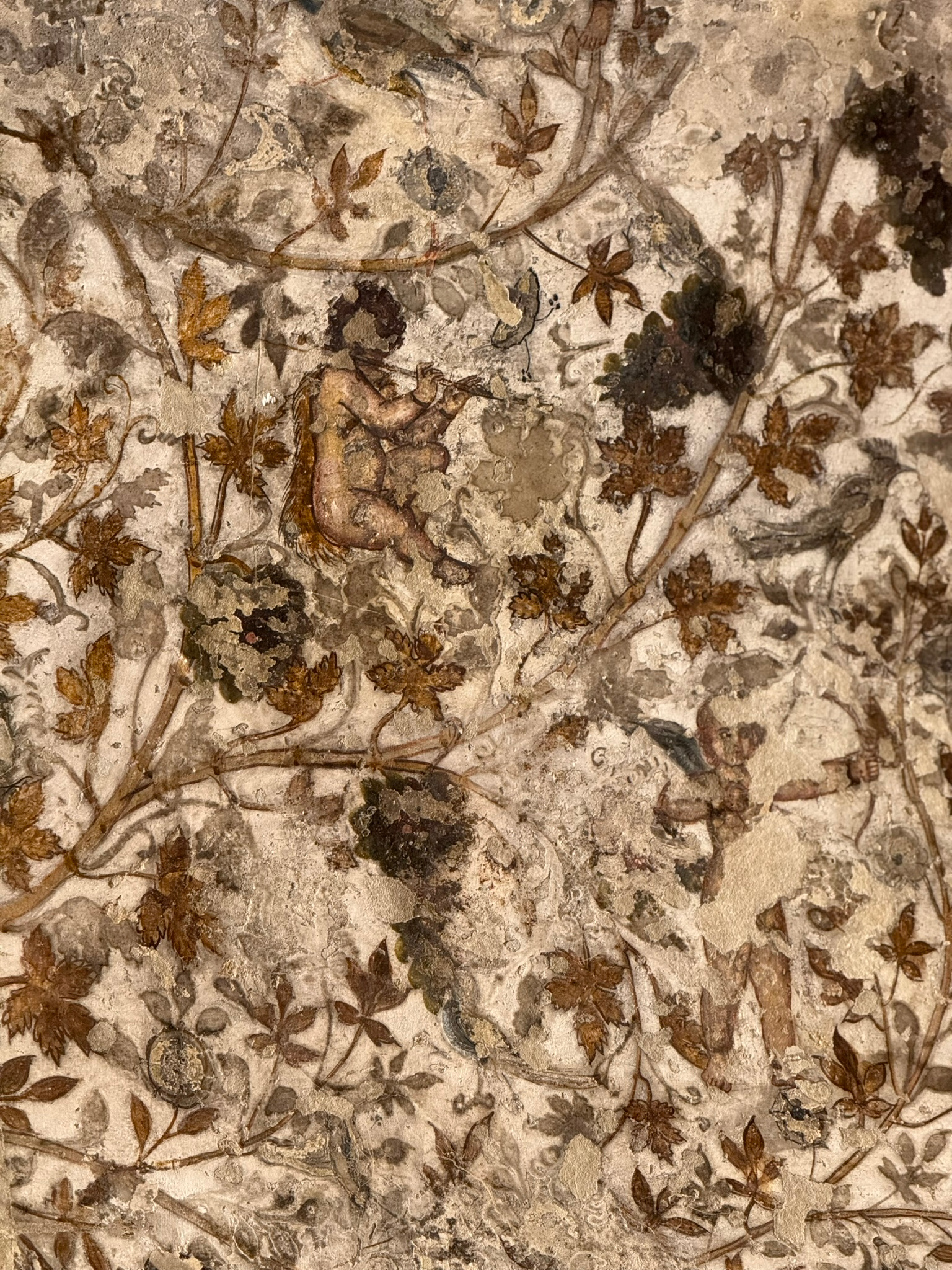
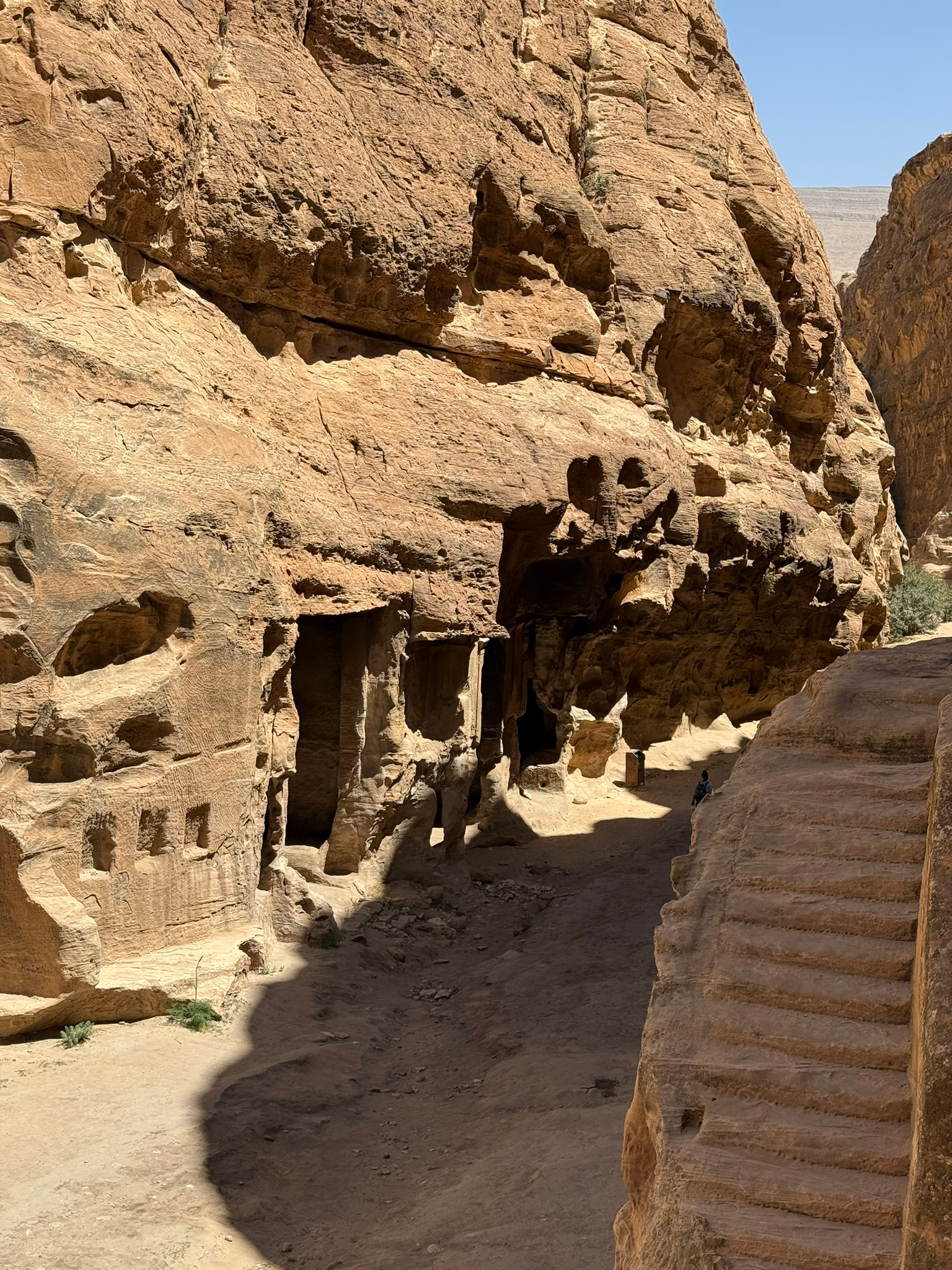
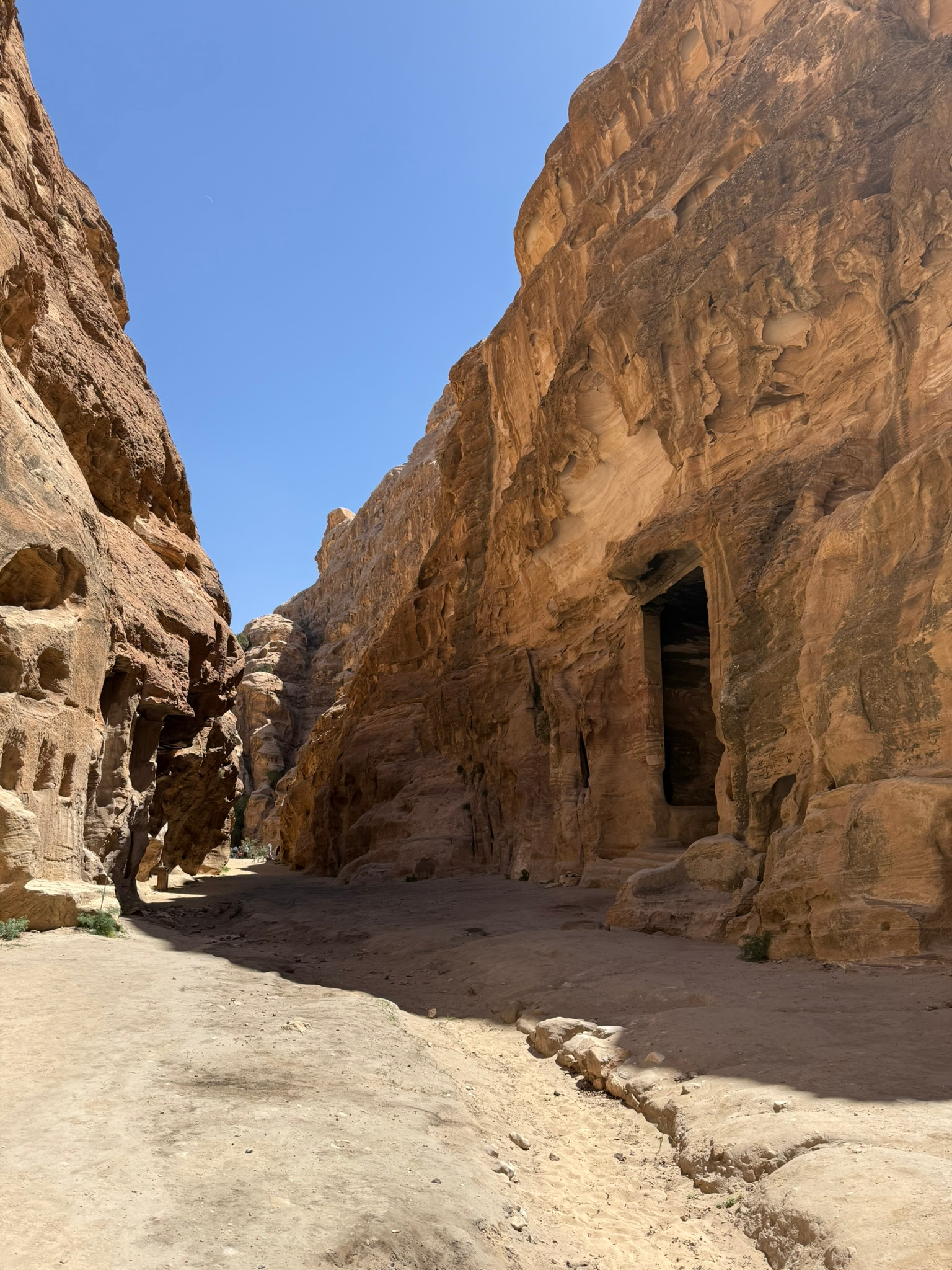
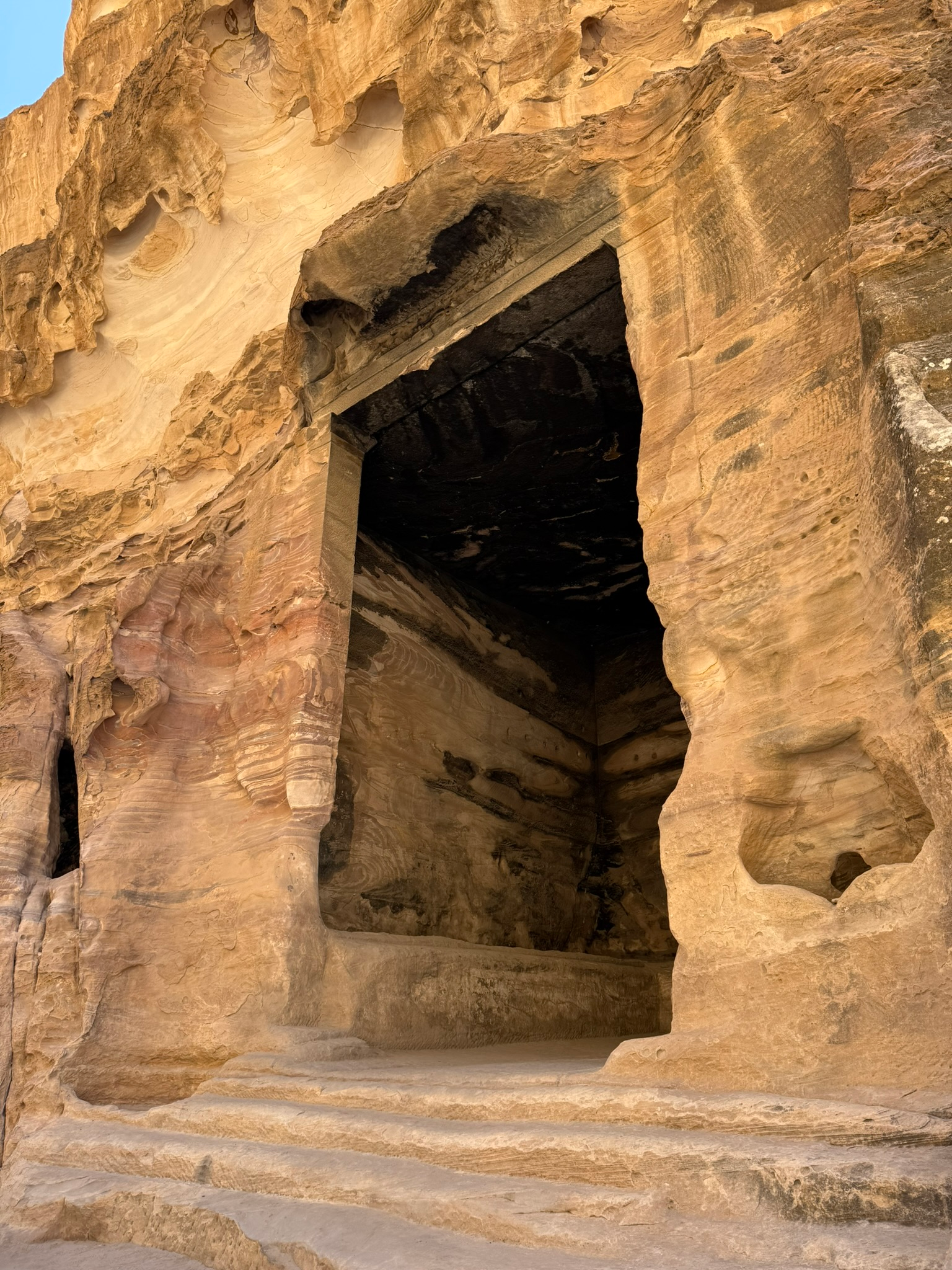
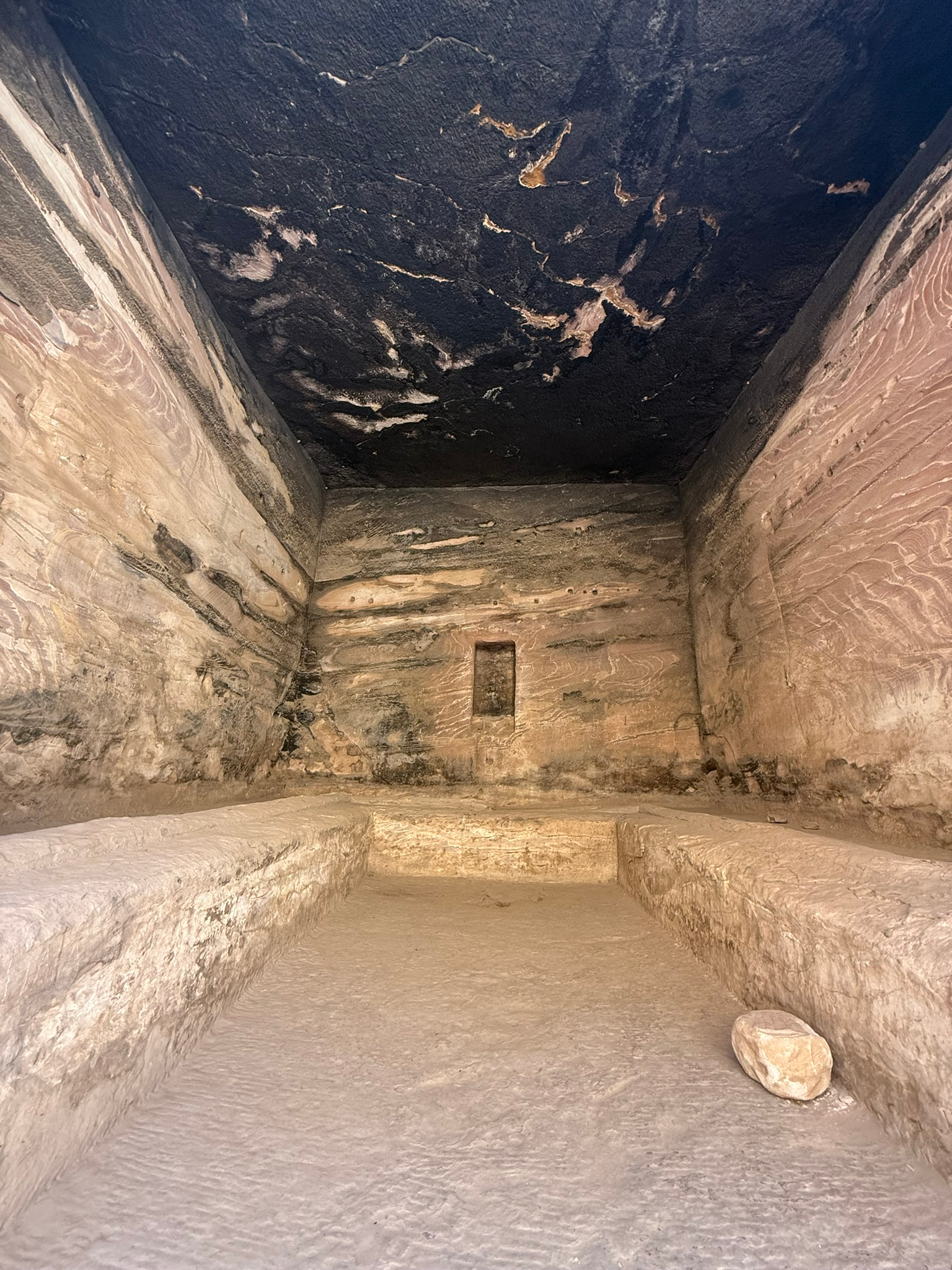
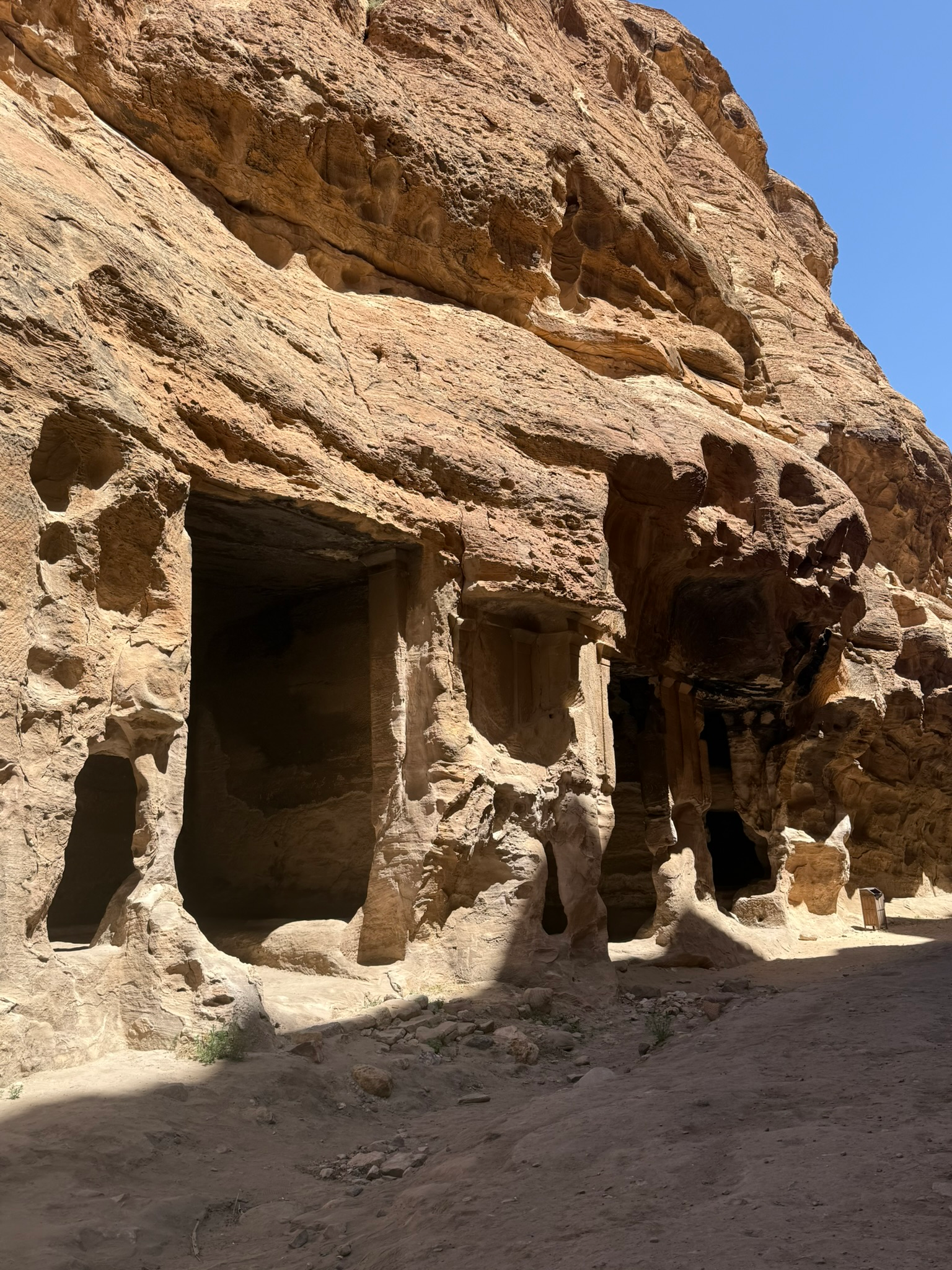
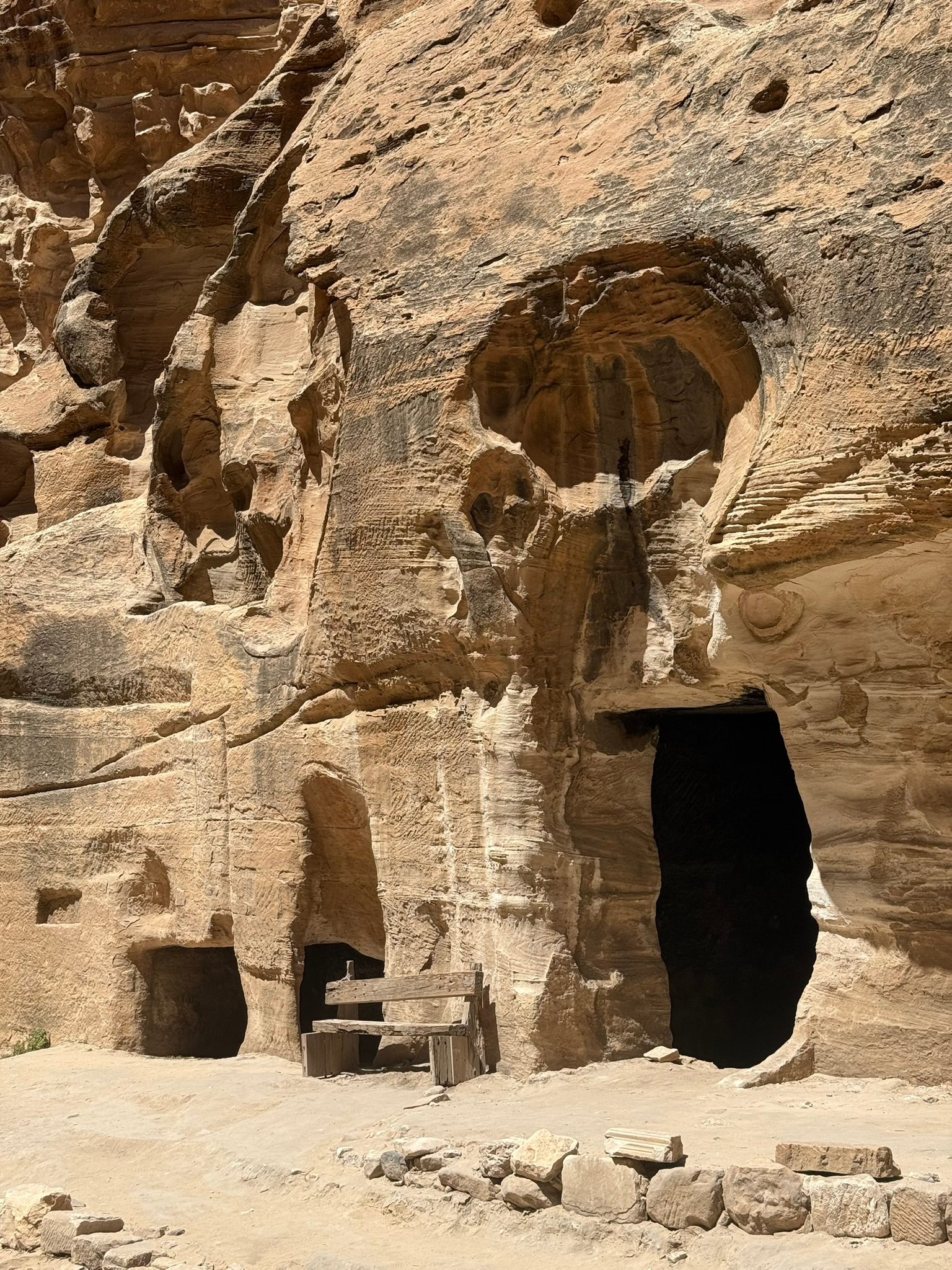
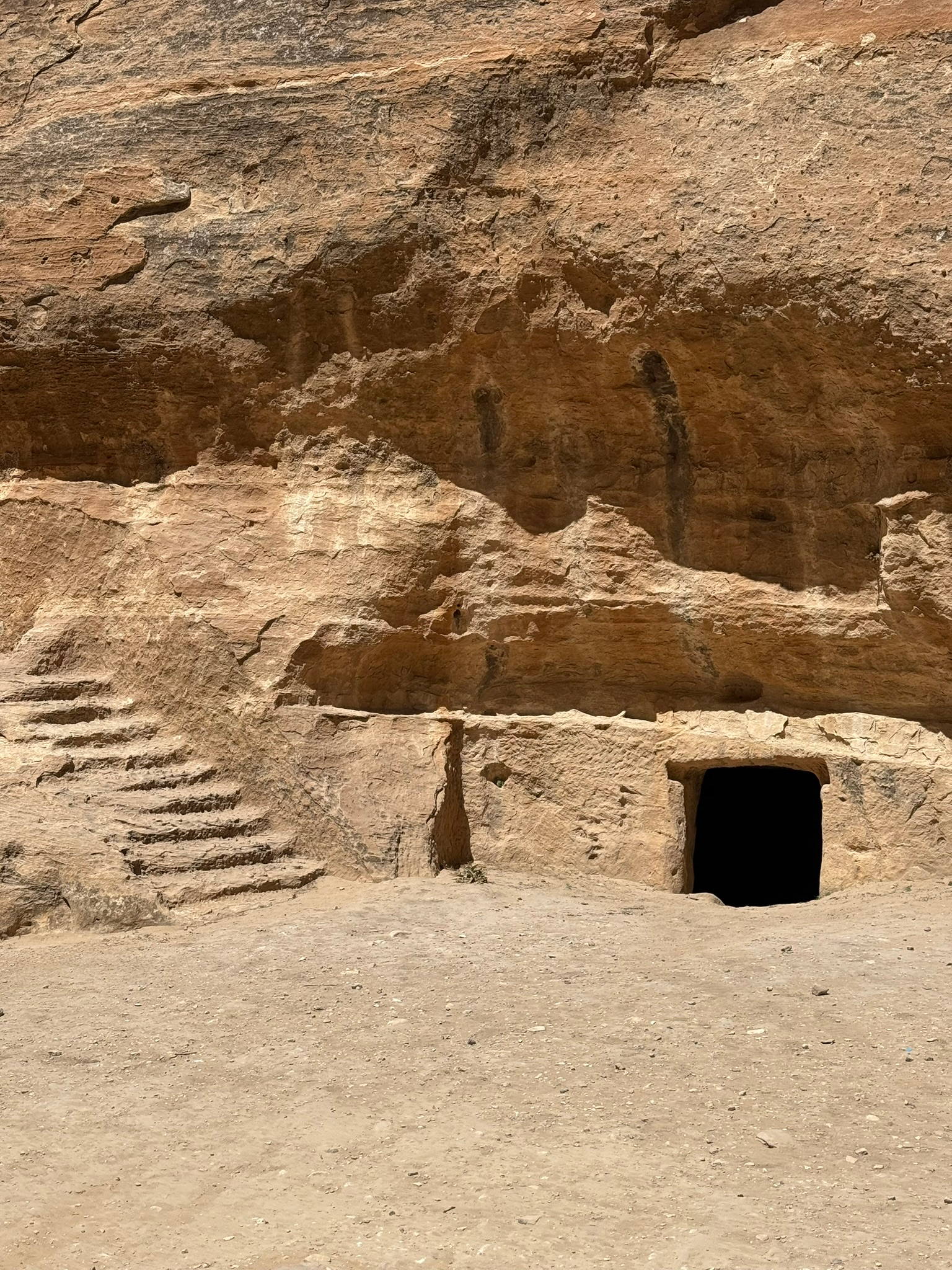
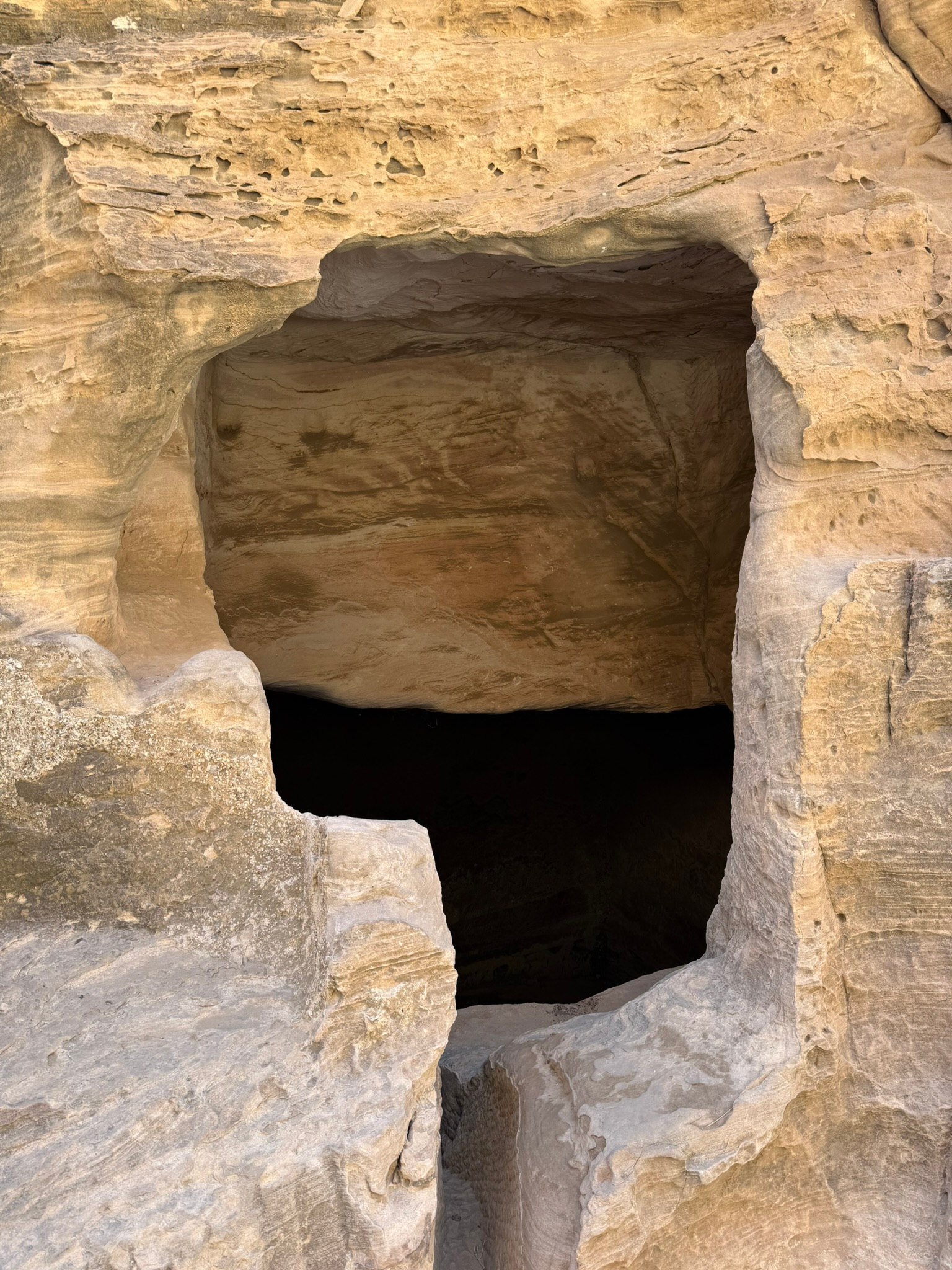
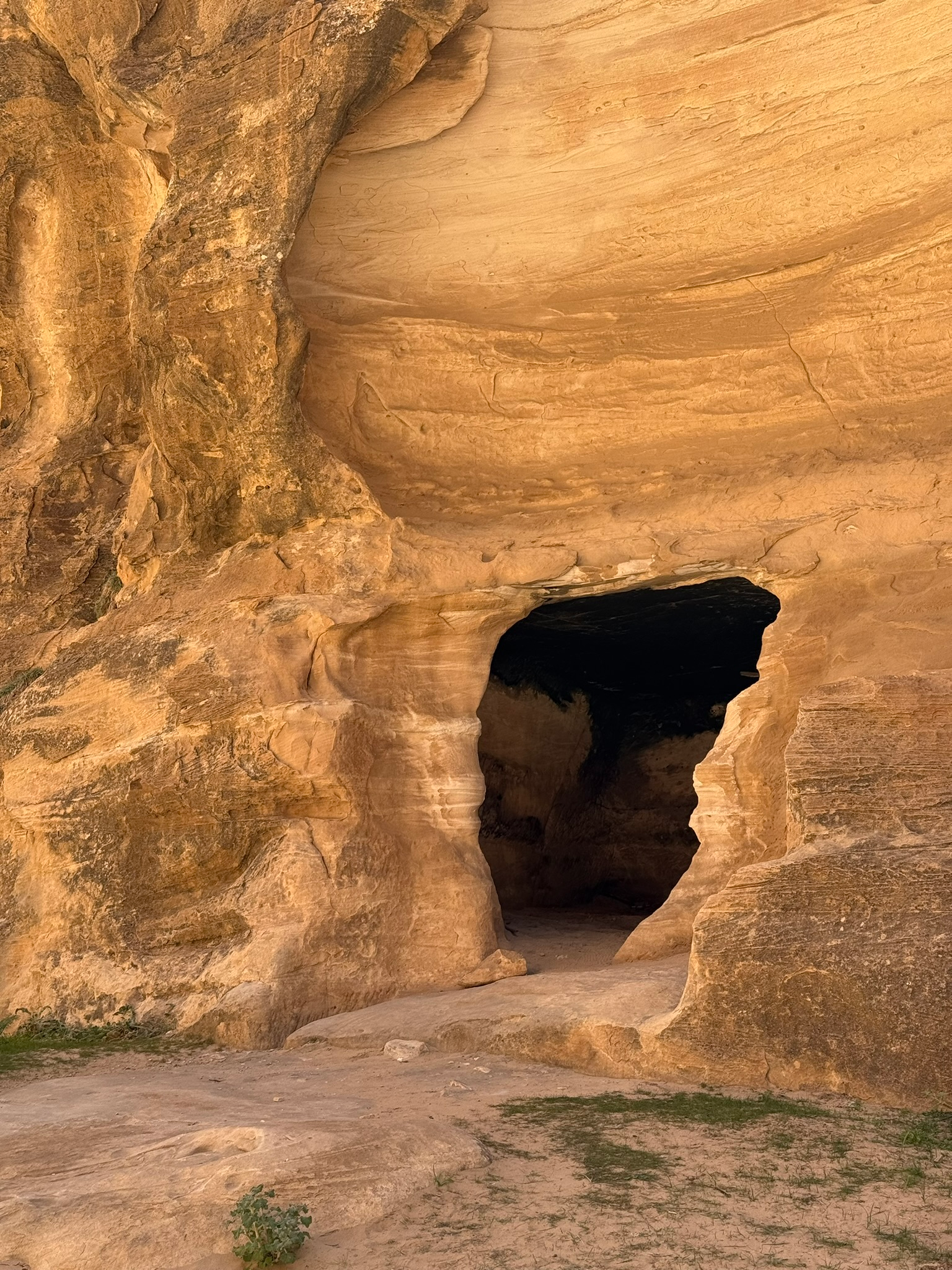
Then there was a larger rock-cut hall commonly referred to as a triclinium, after the three dining couches traditionally arranged around such a room. It may have been used for communal or ritual banqueting, although the precise functions of many chambers at Little Petra remain debated. While the upper area was inaccessible to most of us, Hans had a field day climbing towards the top. The most impressive thing up there, according to him, was the stench of urine.
The Photography Assembly Line
Delia gave us some time to roam around, and we immediately transformed into a group of children set loose in a playground. We climbed all over the accessible parts of the site in search of the most panoramic views possible.
By this point, we had our photo opportunities down to a strict routine. I would choose the best location and have everyone line up one after another while Doug and I took their photographs. A few seconds each, ‘Next!’, and off we would go. Everyone seemed to like the photos I took, but little did they know that my photographic prowess had less to do with personal talent and more to do with the iPhone’s portrait mode, which somehow managed to elevate every picture without much effort.
Once everyone had taken their turn, I would usually have Rafael photograph me. This time, let’s just say that he didn’t do a particularly good job. He completely abandoned the Rule of Thirds and somehow produced a square composition that framed neither the ruins nor the model particularly well. Needless to say, ‘What did I tell you about the squares?’ became yet another of our catchphrases.
PART III
The So-Called Bedouin Camp
After receiving a small preview of what Petra had in store for us the following day, we began making our way towards the ‘Bedouin camp’ we had been promised.
Let’s just say it was less Bedouin camp and more hotel, considering that it offered more amenities than most people would classify as basic – including hot showers. Doug had already selected the deluxe accommodation, which was essentially an honest-to-God hotel room disguised as a Bedouin tent. The rest of us were gonna have to settle for an actual tent. Then someone mentioned that every deluxe room came with an espresso machine. John, Lara, Rafael and I immediately requested an upgrade. Was it an unnecessary expense? Perhaps. Was it a good idea? Hell yeah.
While I’m perfectly happy roughing it and resorting to the occasional baby-wipe shower, I’m also perfectly happy having a proper shower and rinsing away the four separate layers of desert dust and sand that had accumulated on my skin over the previous few days, despite my pathetic attempts at washing. It felt so, so good!


Talia the Yogi
Once we had settled in, we all gathered again. Instead of immediately having the oh-so-promised ice-cold beer we had been fantasising about, I proposed a pre-drinks yoga sesh.
Just then, someone passing by happened to overhear me. Enter Talia. Talia is this British former model turned yogi who had spent time in India trying to find herself. She seemed to embody practically every White Gurl stereotype we had been mocking throughout the trek: ‘live, laugh, love’, dream catchers, leather-bound journals, crystals and a considerable amount of soul-searching. But hey, who were we to turn down a free yoga session led by an actual instructor? And so, another core memory came to be.
Having cleared the lounge area, we sat ourselves down on the dusty, carpeted floor and got ready. First and foremost, as Talia vehemently insisted, we had to put smiles on our faces. ‘Trust me, it makes a difference. I know it doesn’t make sense, but, in a way, it kinda does.’ It was so difficult to keep a straight face. At least we didn’t have to fake the smiles. She then proceeded to chant her yoga school’s mantra, ‘cause it’s always important to remember your roots!’

Having removed the amethyst from the top of her leather-bound journal, she could finally begin the vinyasa sequence she had prepared specifically for us. Some of the highlights, at least for me, were these:
- ‘Let’s start with this pose… Oh, wait. Actually, let’s do this one!’ she went. Some hesitation would have been understandable from a newly qualified instructor, but after every single pose? Sheesh.
- ‘REMEMBER TO SMILE! IT REALLY DOES MAKE A DIFFERENCE!’. ‘Oh, is it?’ John replied, severely testing our urine-retaining capacities.
- ‘I’m sorry, but you’re just kidding yourself if you think you’re doing this pose correctly.’ This was in reference to me performing a passive forward fold, allowing my upper back to curve and relax rather than keeping my spine extended in a more active variation. Kassandra had always taught me to do what felt right for my own body.
- ‘This is a very advanced move, so don’t worry if you wanna settle for a regular bridge pose instead of attempting wheel pose.’ Rafael and I proceeded to perform it rather effortlessly. I could practically feel her blood beginning to boil.
All in all, I’d say that our bodies genuinely needed the stretching. So did our comedic repertoire, which had suddenly undergone a major revamp. I particularly loved Delia’s contribution: ‘We listen, and we don’t judge!’ – a principle we immediately had to reinterpret in light of the new circumstances.
Drunk on Life
The remainder of the evening was another unforgettable one. We started by staring in disbelief at the prospect of spending around €13 on a single bottle of Petra beer. Once we noticed that it contained 8% alcohol, however, the second bottle somehow seemed cheaper. As did the third.
Lara became proper Brit-on-Holiday drunk, with a single sip transporting her straight to Happy Land. Rafael wasn’t far behind, and the two of them came remarkably close to booking a summer trip to Oman together. Instead, I steered the conversation towards completely upending our itinerary and joining the rest of the gang for an additional day before we all went our separate ways. The mere thought of separating had us all becoming glassy-eyed, especially since John would be leaving us the following day.
While everyone sat around chatting, John, Delia and I found our happy place in Zorro, a gorgeously handsome, overly friendly and exquisitely cuddly black cat whom we spent hours showering with unconditional love. By that point, I missed Scout like crazy, and Zorro provided the quick fix I needed to keep myself from going mad.
Tipsy and jolly, we then climbed onto a large rock from which we could watch the sunset. It had been Talia’s suggestion, so it was only fair that she joined us. After all, she had given us a free yoga lesson. She had also been travelling for more than three years and had spent an entire month at the Bedouin camp ‘doing nothing alone’, as she put it rather nonchalantly. I gotta admit, my empathy gland started acting up at that point, and I began warming to her. Maybe, just maybe, she wasn’t all that delulu. Mostly cause she scored a Yahtzee during her first round and guessed almost immediately that I was a doctor.
Doug and I, on the other hand, apparently weren’t quite as spiritually connected to the universe. Having shaken hands on a bet, we lost the game and had to face the consequences. Doug had to buy a round of Petra beer for everyone (costly), I had to climb back down and collect them (costlier). Not a terrific idea while inebriated.

After sunset, which we nearly missed because we had been far too focused on Yahtzee, we headed inside for a buffet dinner and settled into the lounge. We had another couple of drinks and smoked shisha while Talia recounted some of her trauma, despite nobody having asked her to. On that note, I excused myself and headed to bed early. We had a long, long day ahead of us – one that I had been eagerly awaiting ever since I booked the trip.