My first proper day in Bohol finally broke the beach-to-island-hopping-to-diving saga, as finally, I’d be exploring a bit of the land instead.
I’d be going on a day tour around the island, stopping by several tourist attractions along the way. Together with some ten other tourists, including Noah, a German guy who had just started backpacking in Asia, and Elise and Lena, two French girls on holiday, we set off on another adventure.
Our guide, Victorito, was pretty much just a driver, giving us almost no pertinent information about the things we’d see. Plus, he kept calling everyone “sir” and had the most annoying, high-pitched, raspy voice. He kinda reminded me of Kevin way back in El Salvador. But enough spewing venom now.
Animal Welfare?
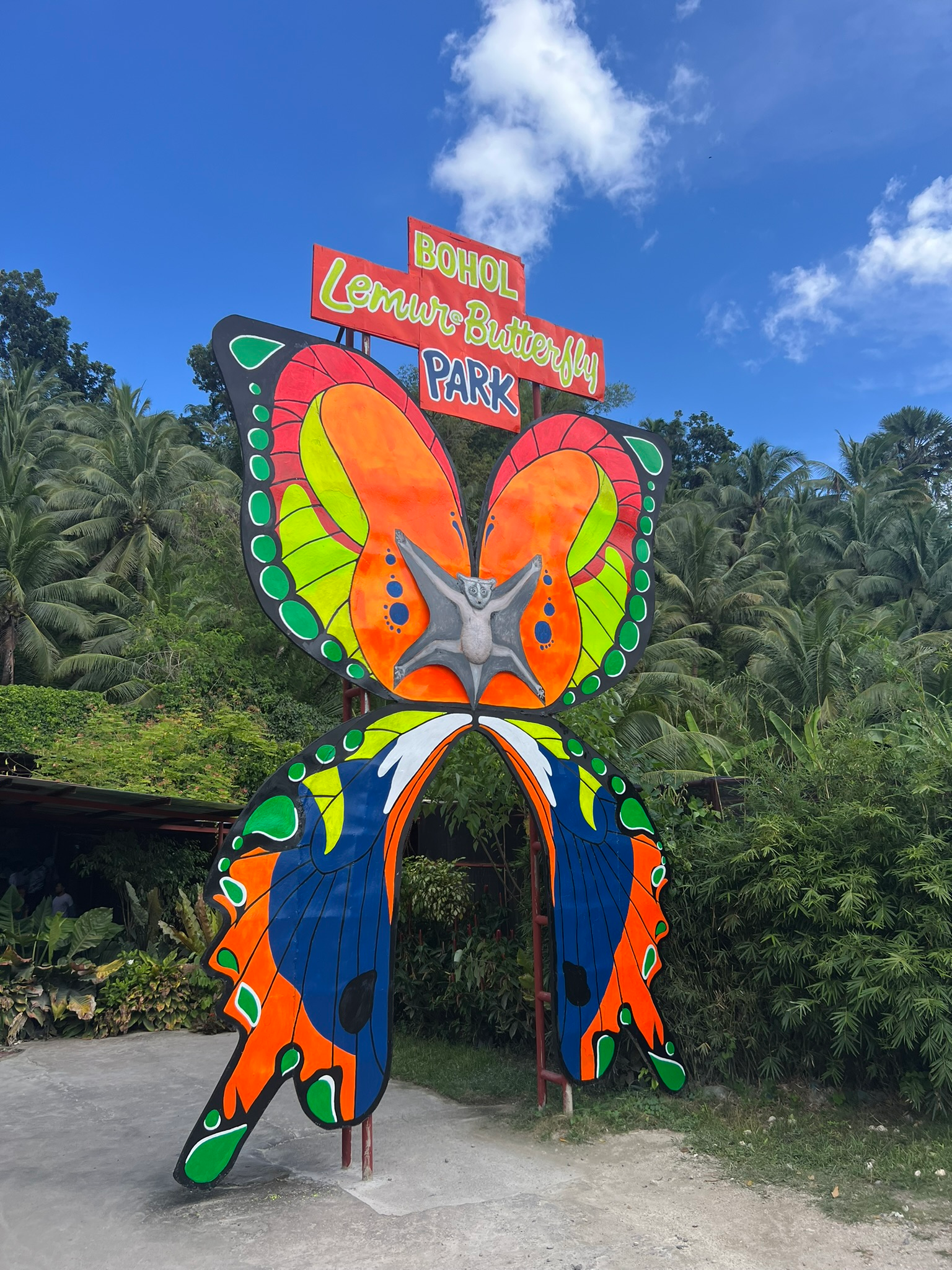
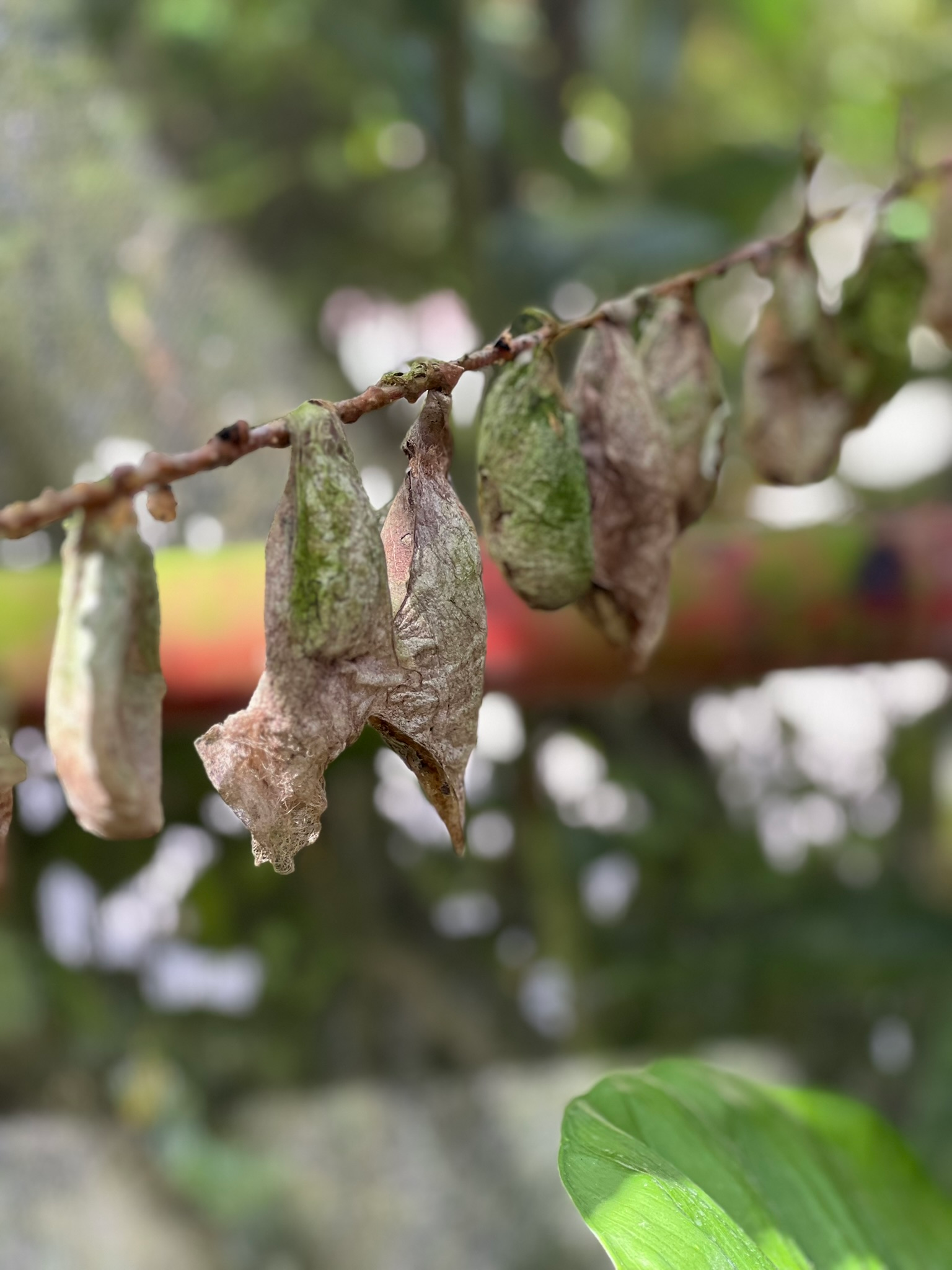
Our first stop was the Bohol Lemur and Butterfly Park. The first room was a vivarium full of plants and orchids, with all kinds of butterflies fluttering about. Here, we were shown the life cycle of butterflies, with various caterpillars, pupae and butterflies used as examples. They also told us that most of these butterflies lived for around three weeks, as evidenced by all the dead ones lying around. It would’ve been fine had the staff not shoved a couple of butterfly carcasses in our hands for us to take photos of.
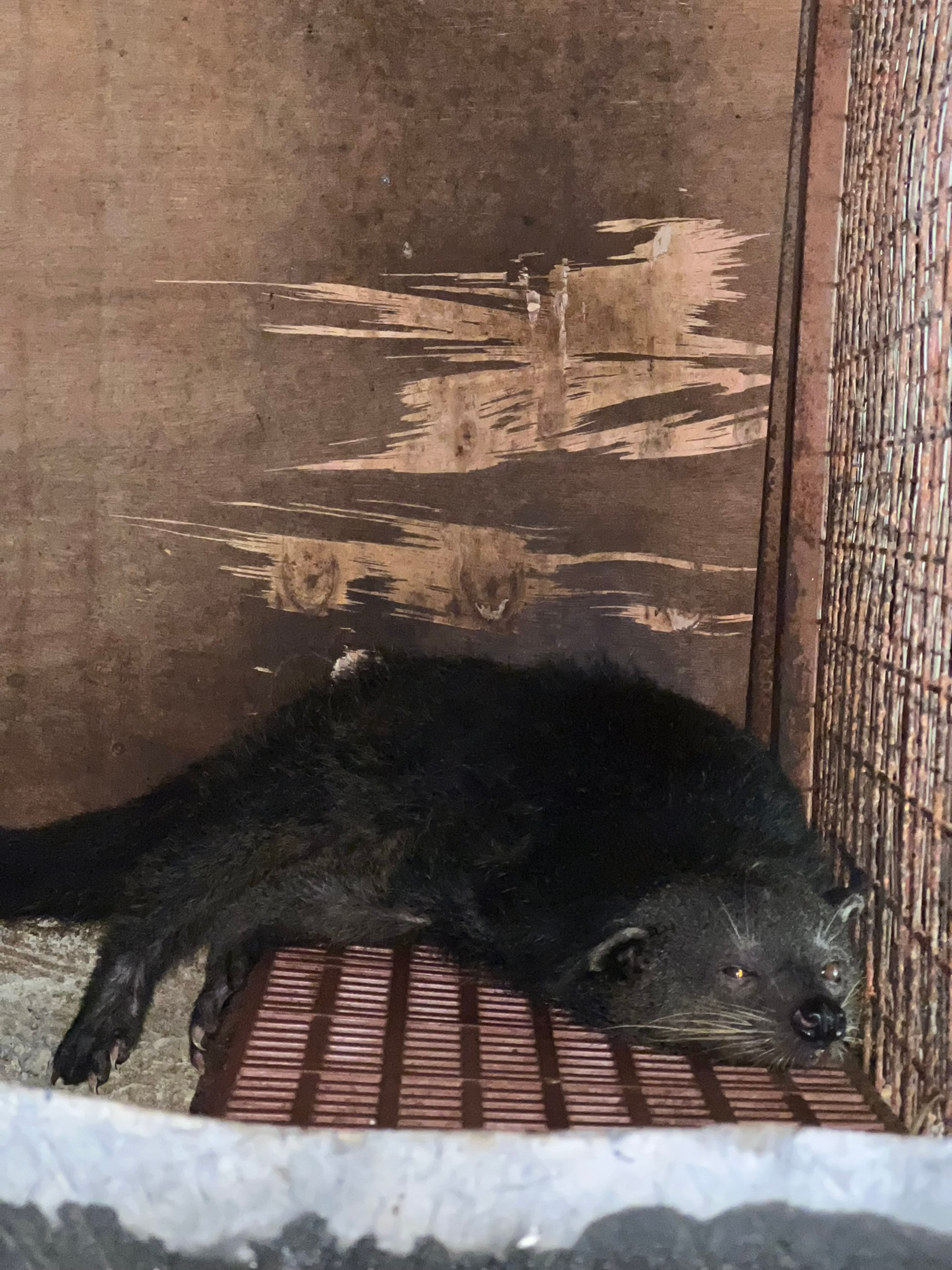
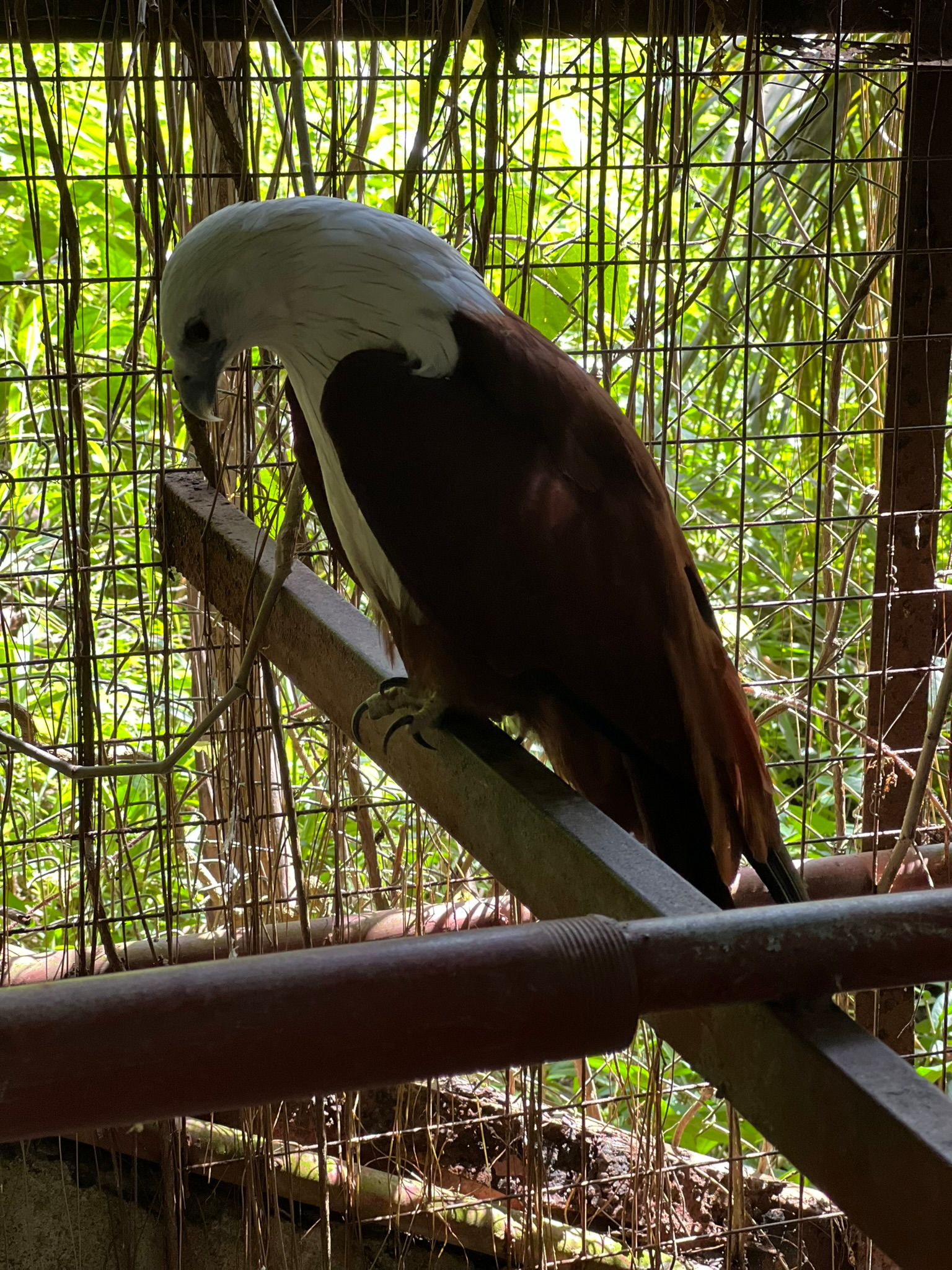
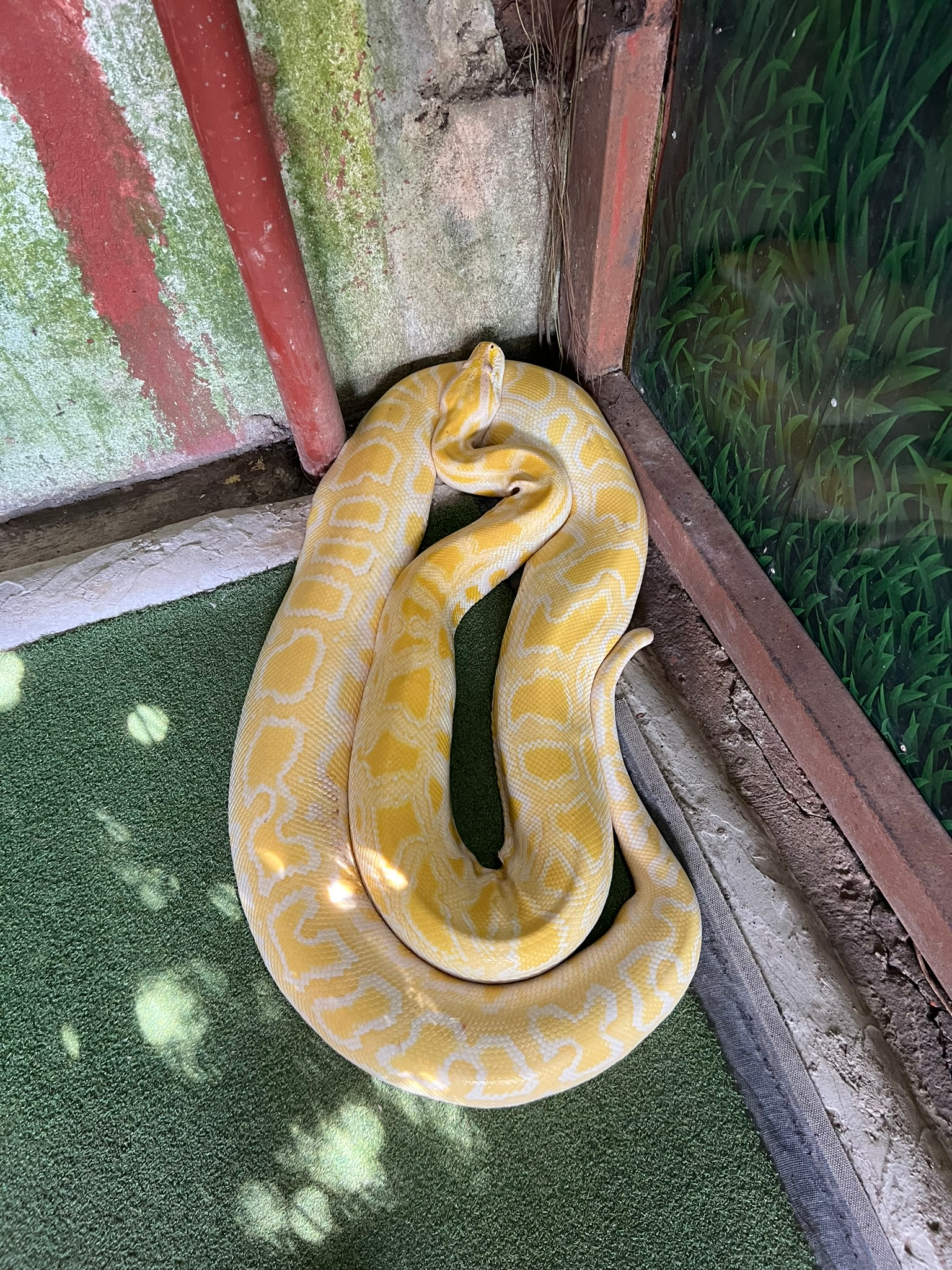
Creepy though that might have been, it was the next part that left us appalled. A falcon tied to a pole so it wouldn’t fly away, a crocodile with just enough space to fit inside a small pond, snakes kept in bare, cramped enclosures and, worst of all, a lemur confined in a tiny cage, its eyes the saddest I have ever seen. I was heartbroken, feeling as helpless as it was humanly possible to feel, given that I could do nothing to help. Nothing, of course, except let other people know what I saw behind the brightly coloured façade of the park.
The worst part was that the staff seemed completely oblivious to the animals’ suffering, encouraging us to take photos with them and handling them in ways that, to me, felt deeply inappropriate. While I am very aware that poverty and unemployment are huge threats to people’s livelihoods, I don’t think animal exploitation as a form of income is justifiable. I usually tend to have no problem visiting genuine animal rehabilitation centres, but this one felt evidently more concerned with display than conservation.
Never have I been to a place so dishevelled and badly taken care of as this one. Though it was included as part of the tour, I would’ve totally skipped it had I known what it would be like beforehand. Such an awful place.
More Unease
You’d think one such experience would suffice, but noooo. The same can pretty much be said about the Tarsier Conservation Area we visited.
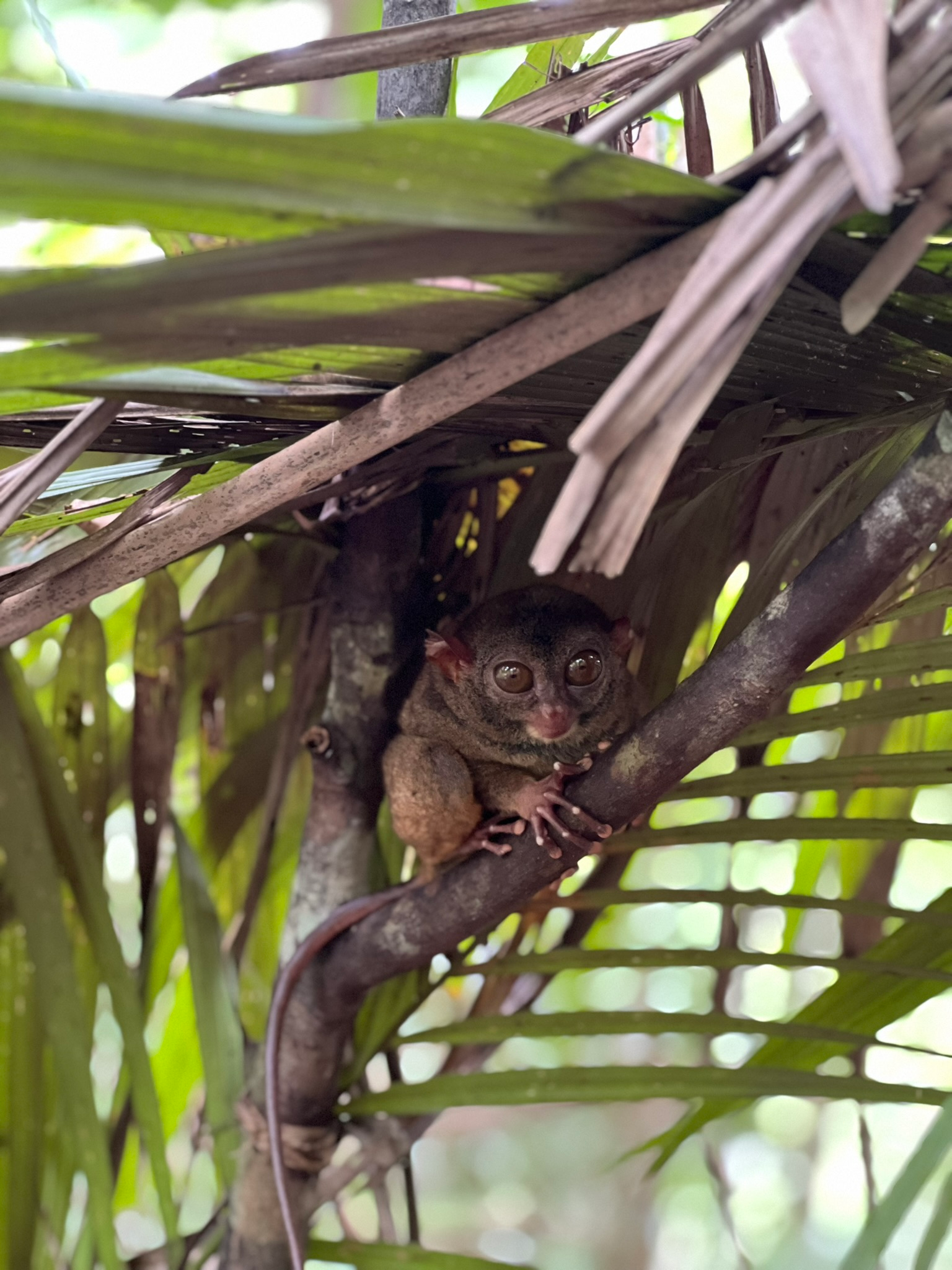
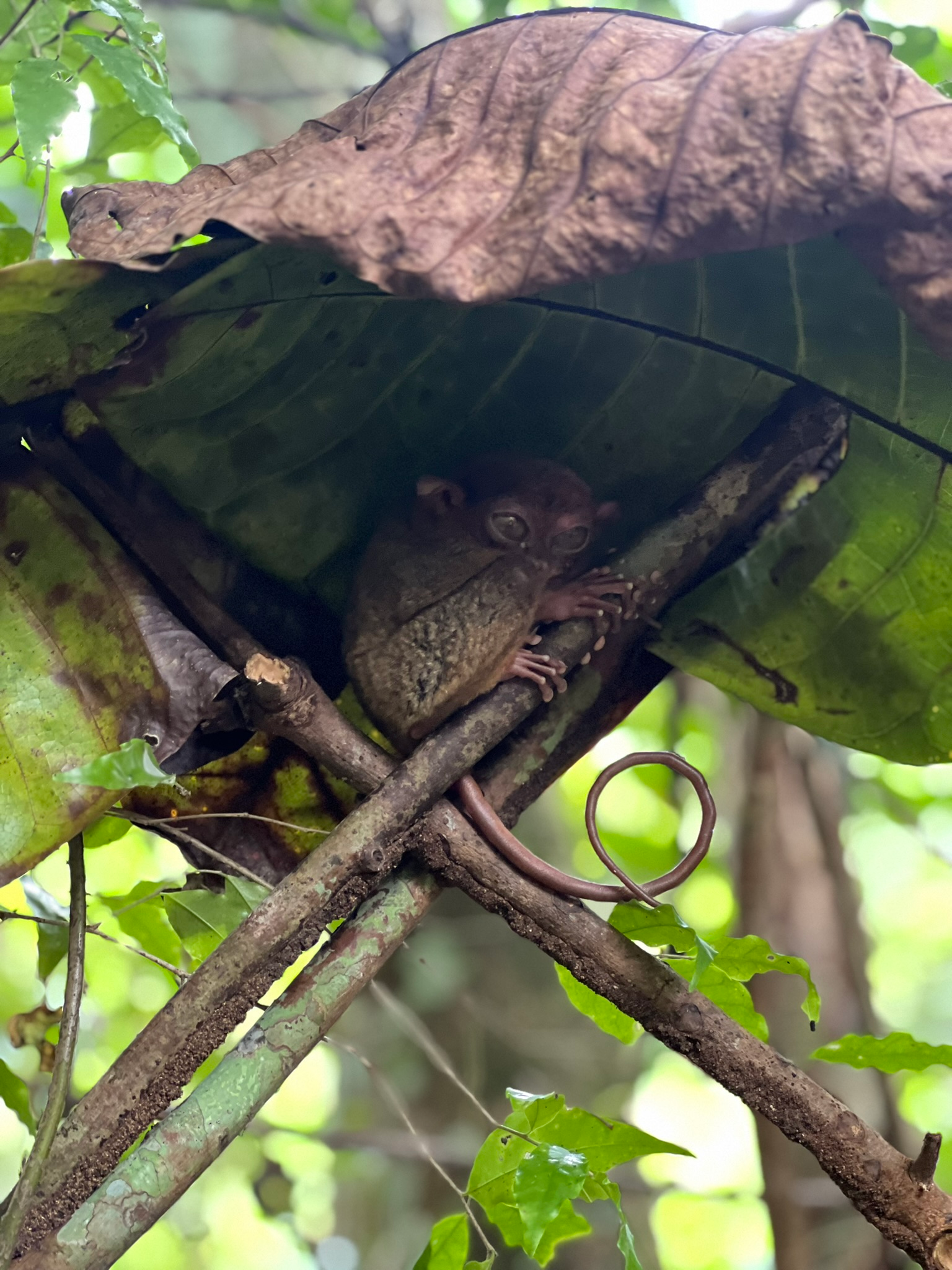
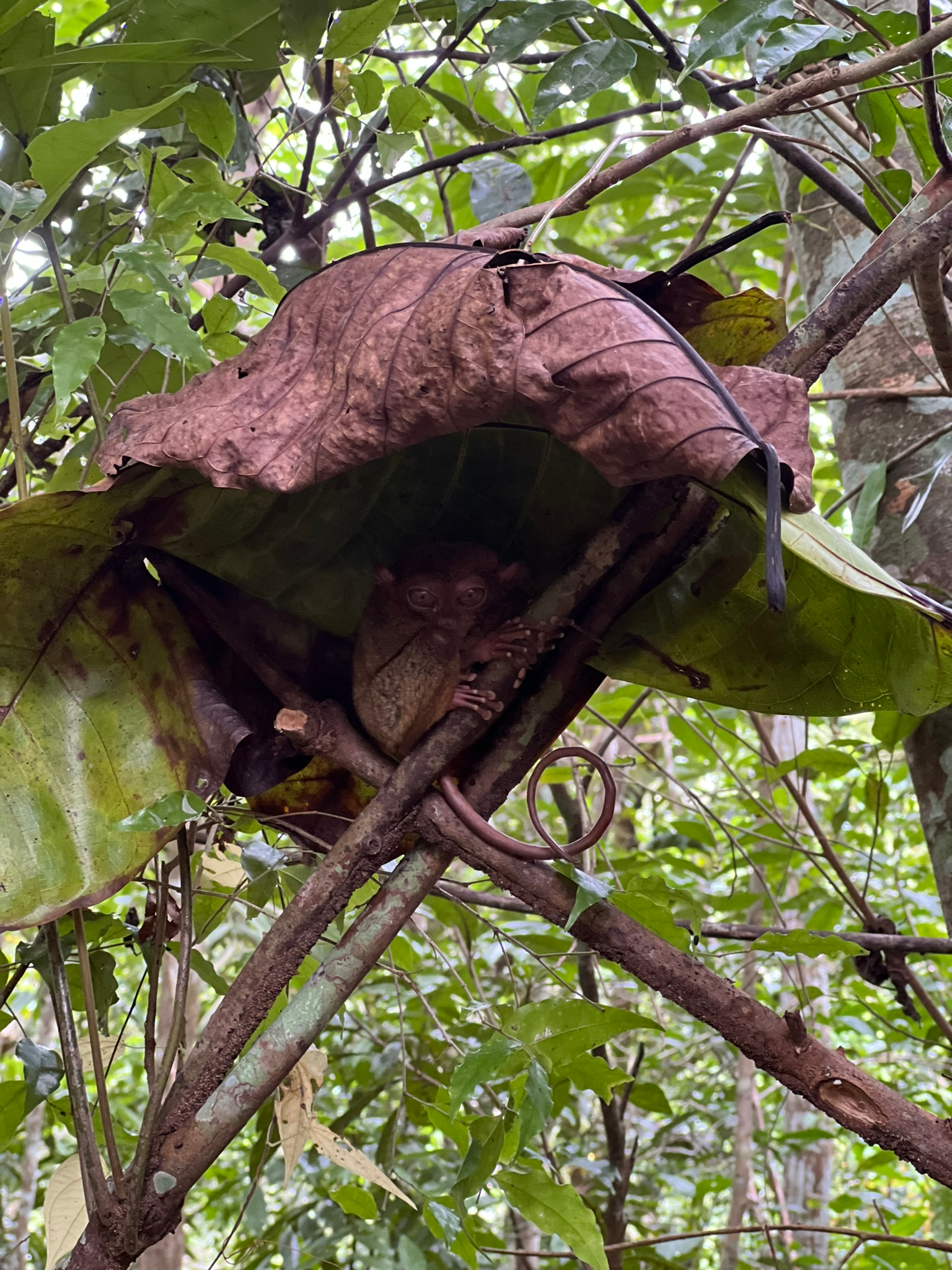
Ever since I was a kid, one of the many animals that had captivated me was the tarsier. Apart from being one of the smallest primates in the world, these bug-eyed creatures have some of the largest eyes relative to body size in the mammalian kingdom, with their humongous eyeballs fixed in their skulls. While that might seem limiting, their necks can rotate dramatically, giving them the range of motion their eyes can’t afford, all the while providing them with excellent nocturnal vision, which they certainly need when they’re up and about in the pitch black.
I would’ve given anything to see one, preferably in the wild. But oh well, beggars can’t be choosers, right? We were shown a promising video talking about these wondrous creatures and explaining how these animals were all rescues and that they were there to be rehabilitated. Then, we were led into this tiny, enclosed jungle with a short trail looping around it.
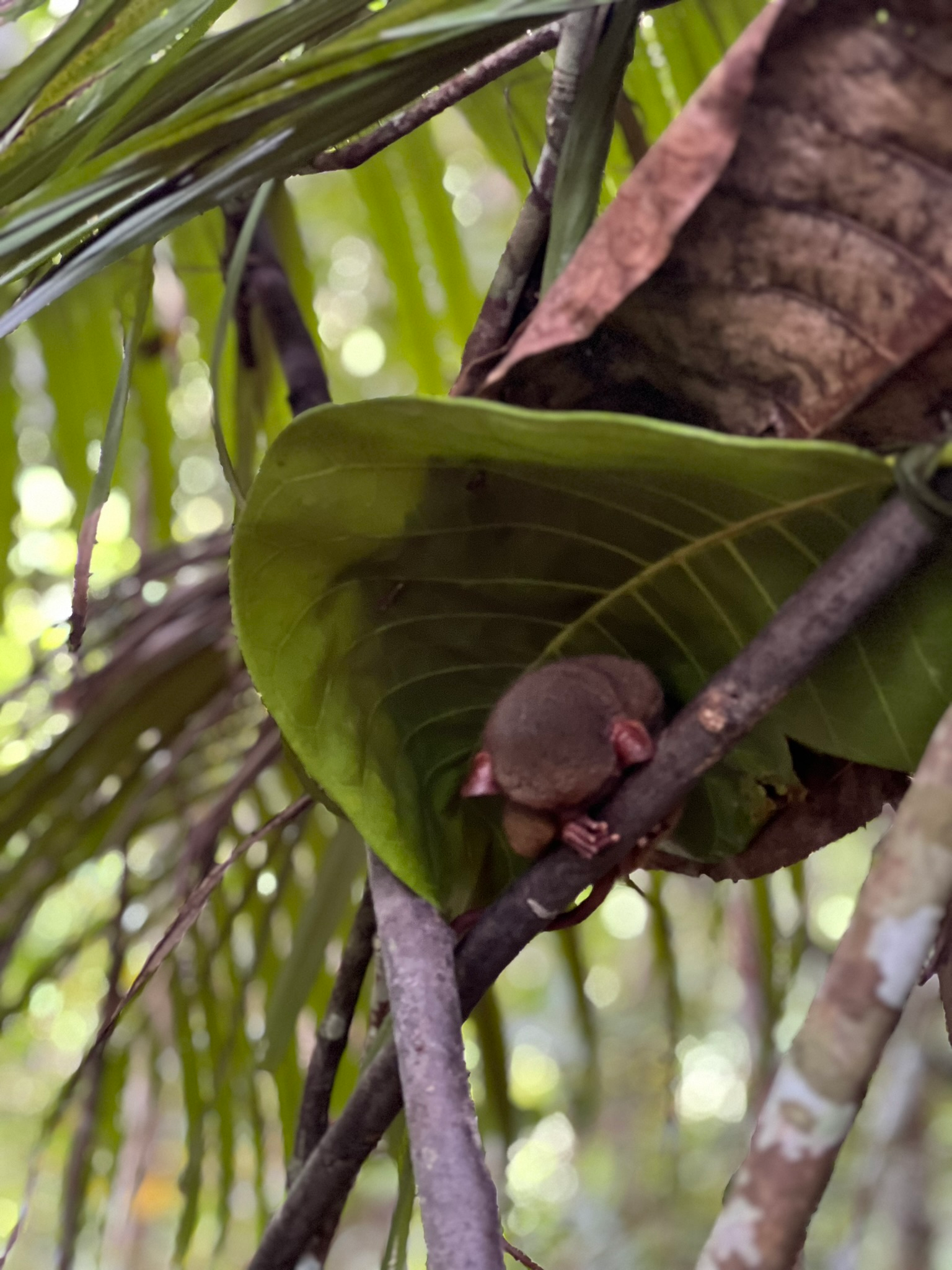
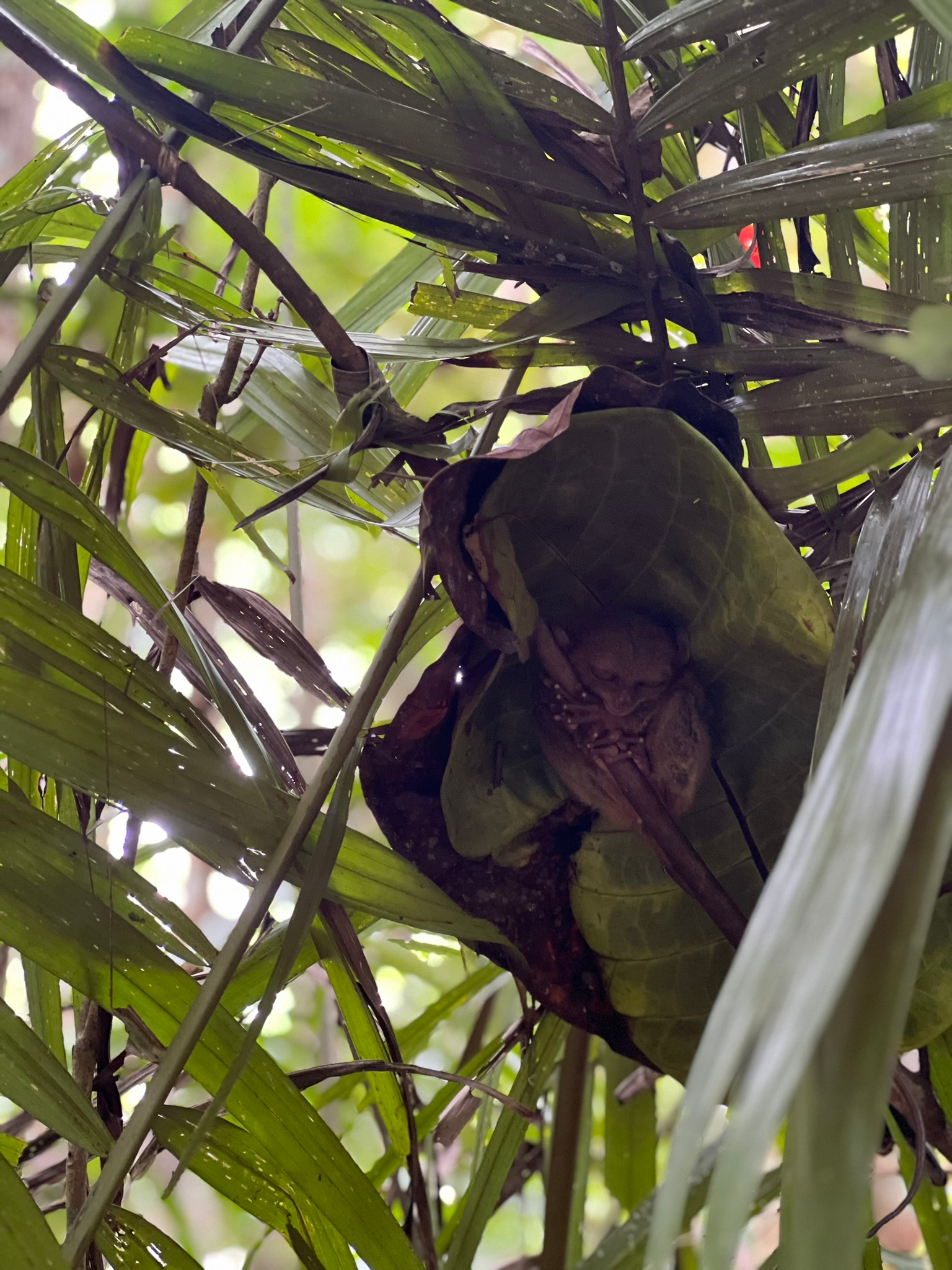
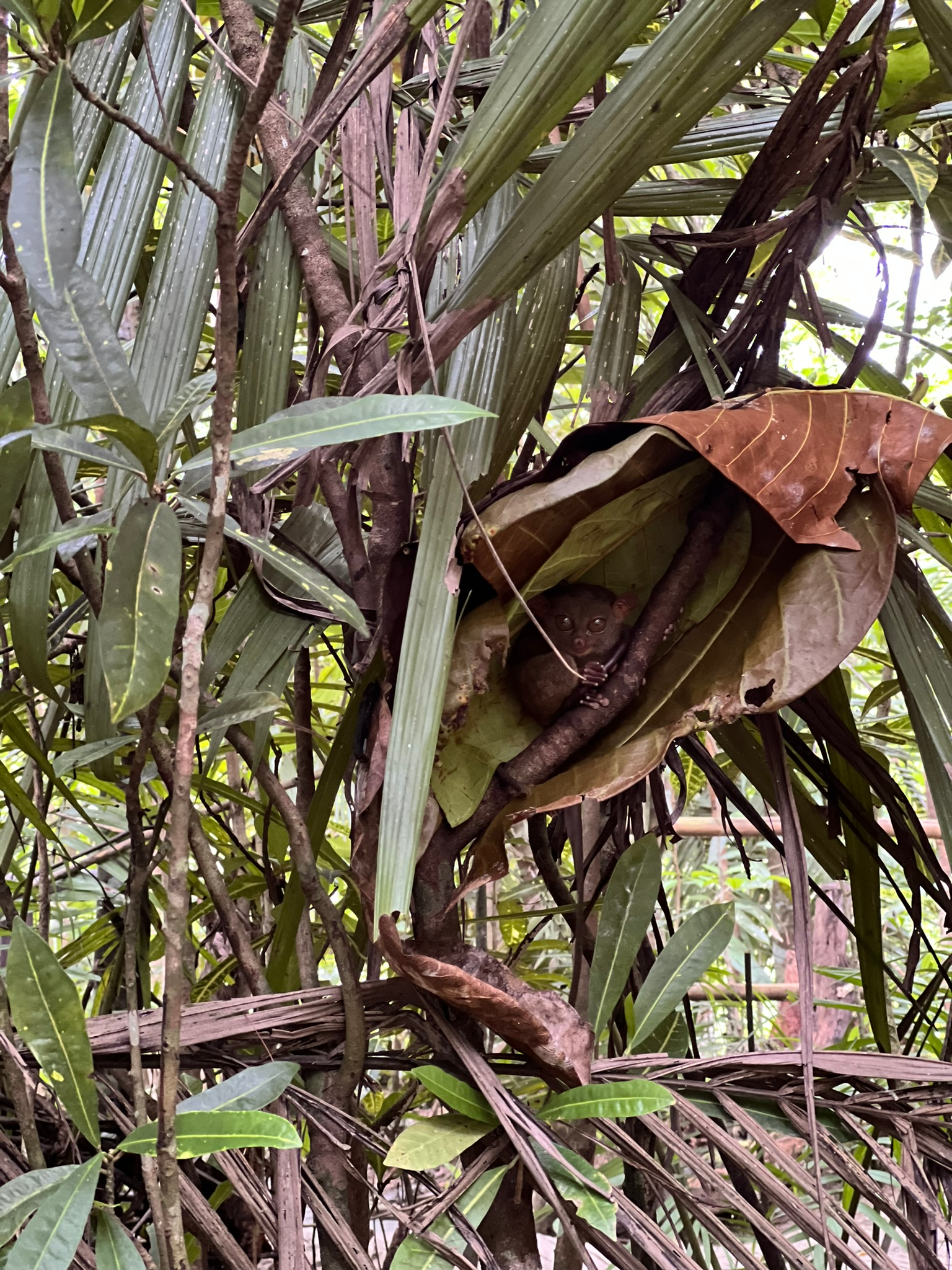
I can’t say I wasn’t elated when I saw the fabled tarsier in front of my face. But then, slowly, I started to realise that perhaps this wasn’t the rehab centre that was quite portrayed in the video.
Overcrowded and noisy doesn’t even begin to describe the scene, with the poor nocturnal primates wide awake in the middle of the day. With each of them found under a makeshift shelter built to show them off as if they were an exhibition, the guides would enthusiastically point the tarsiers out to tourists, encouraging them to pose with them for photos.
PART II
The Not-So-Chocolate Hills
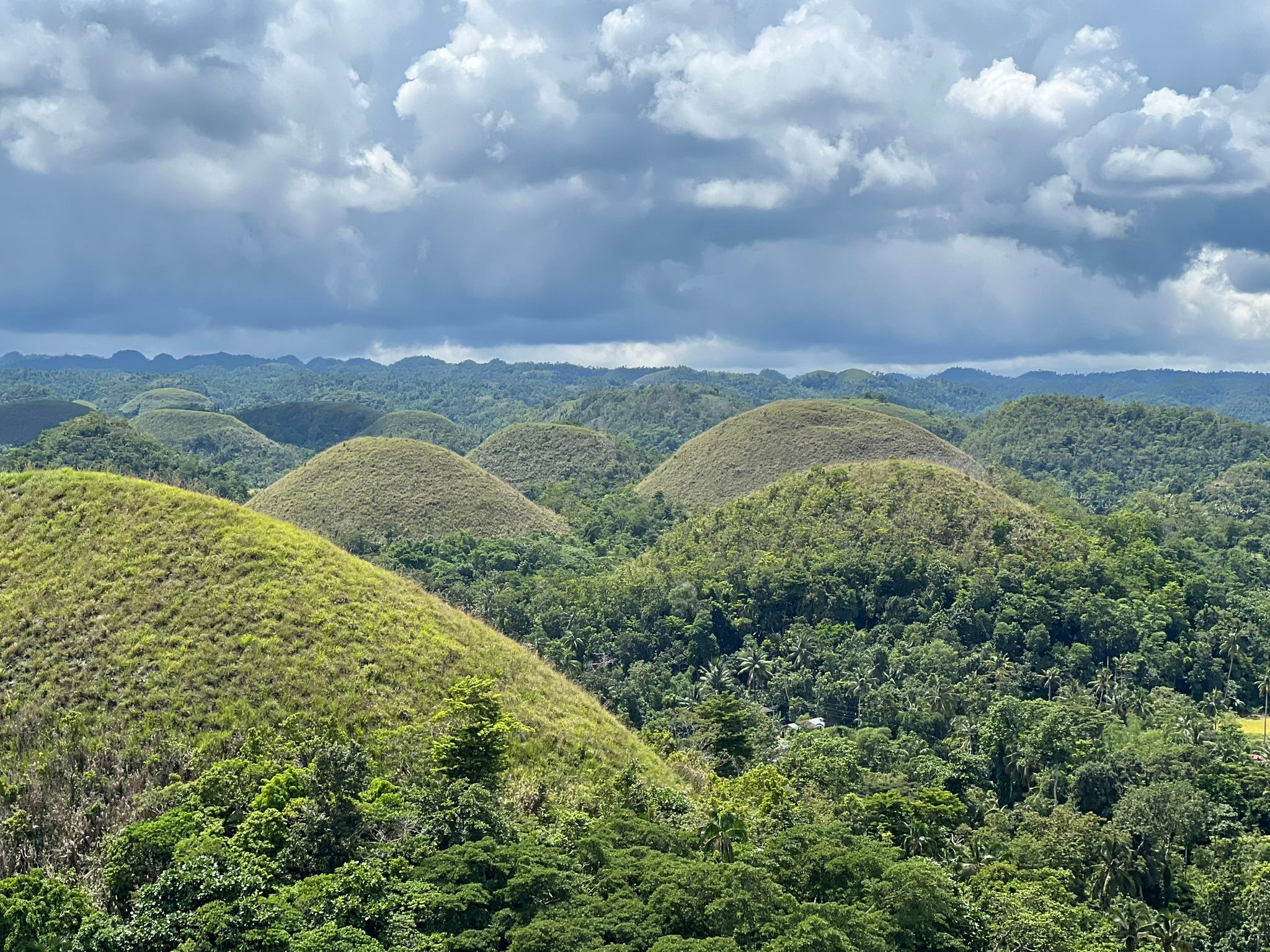
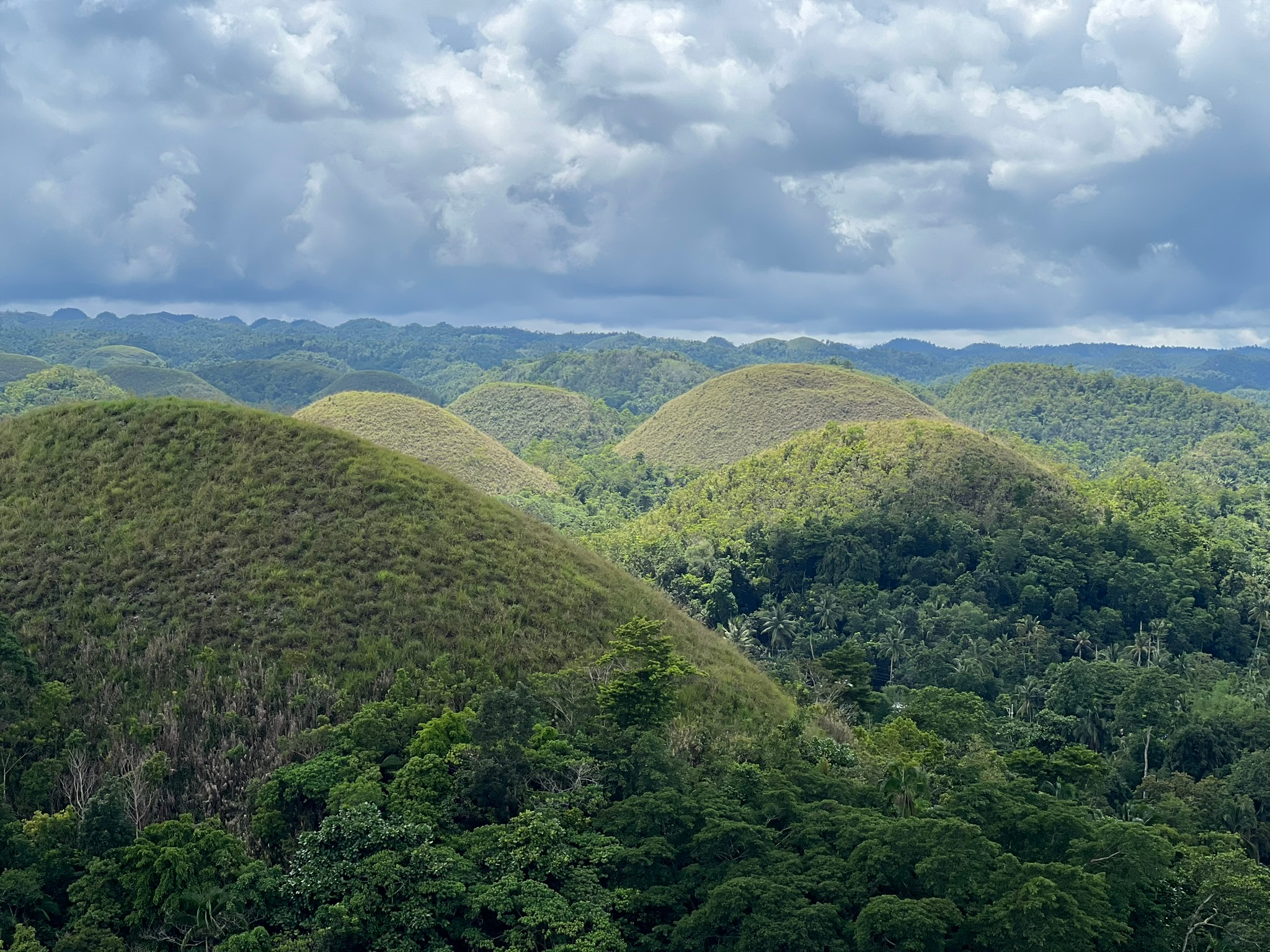
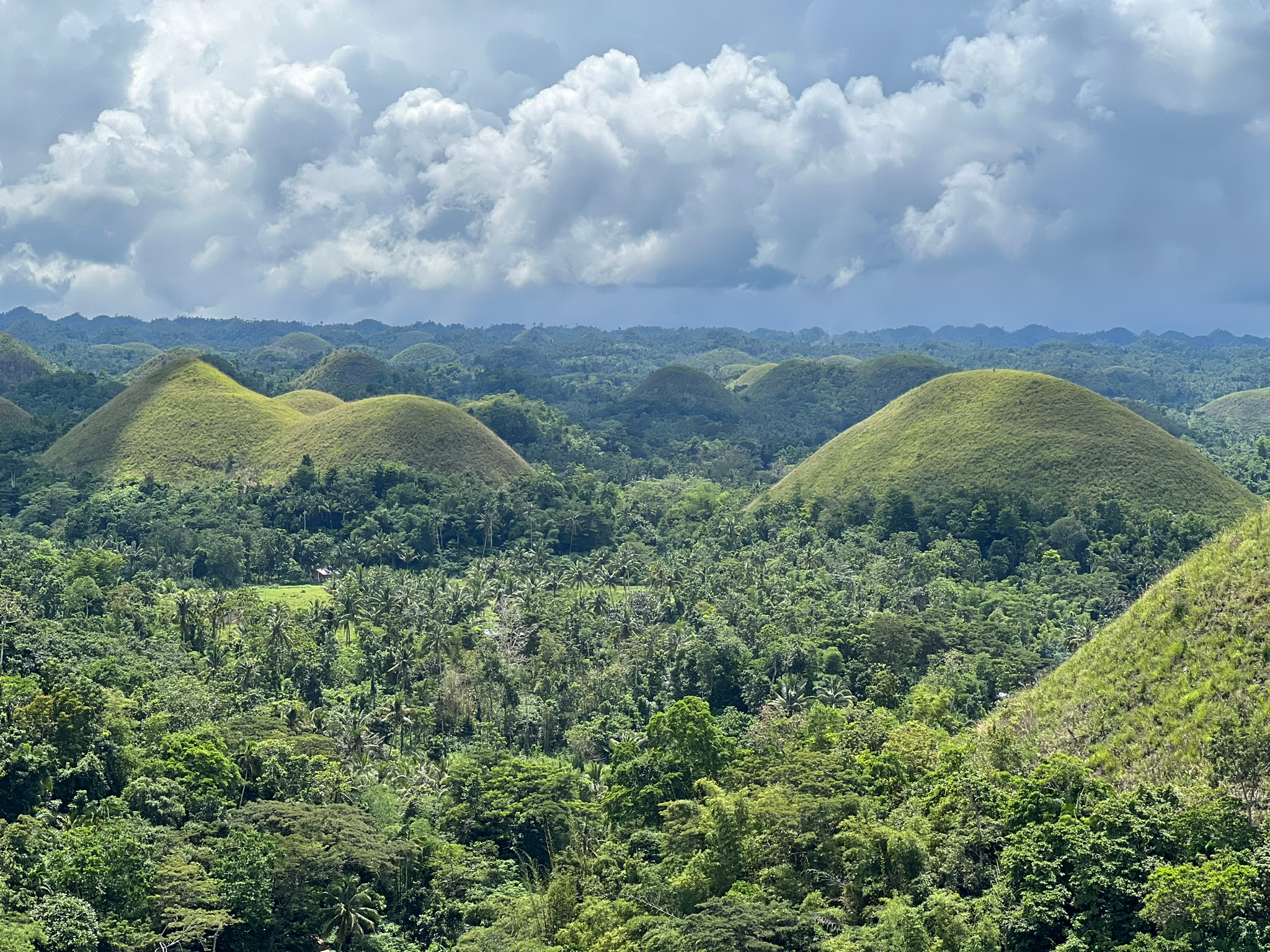
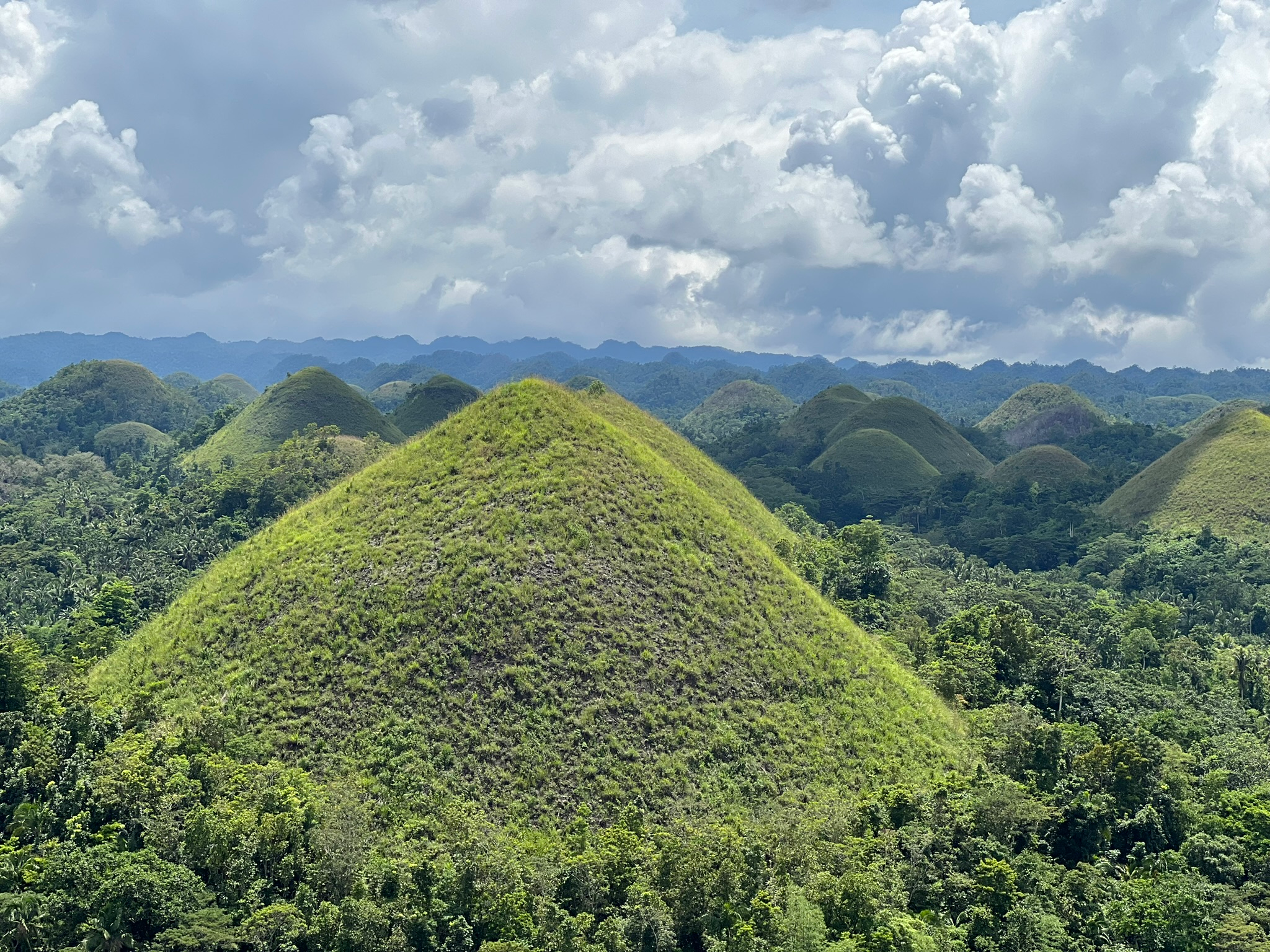
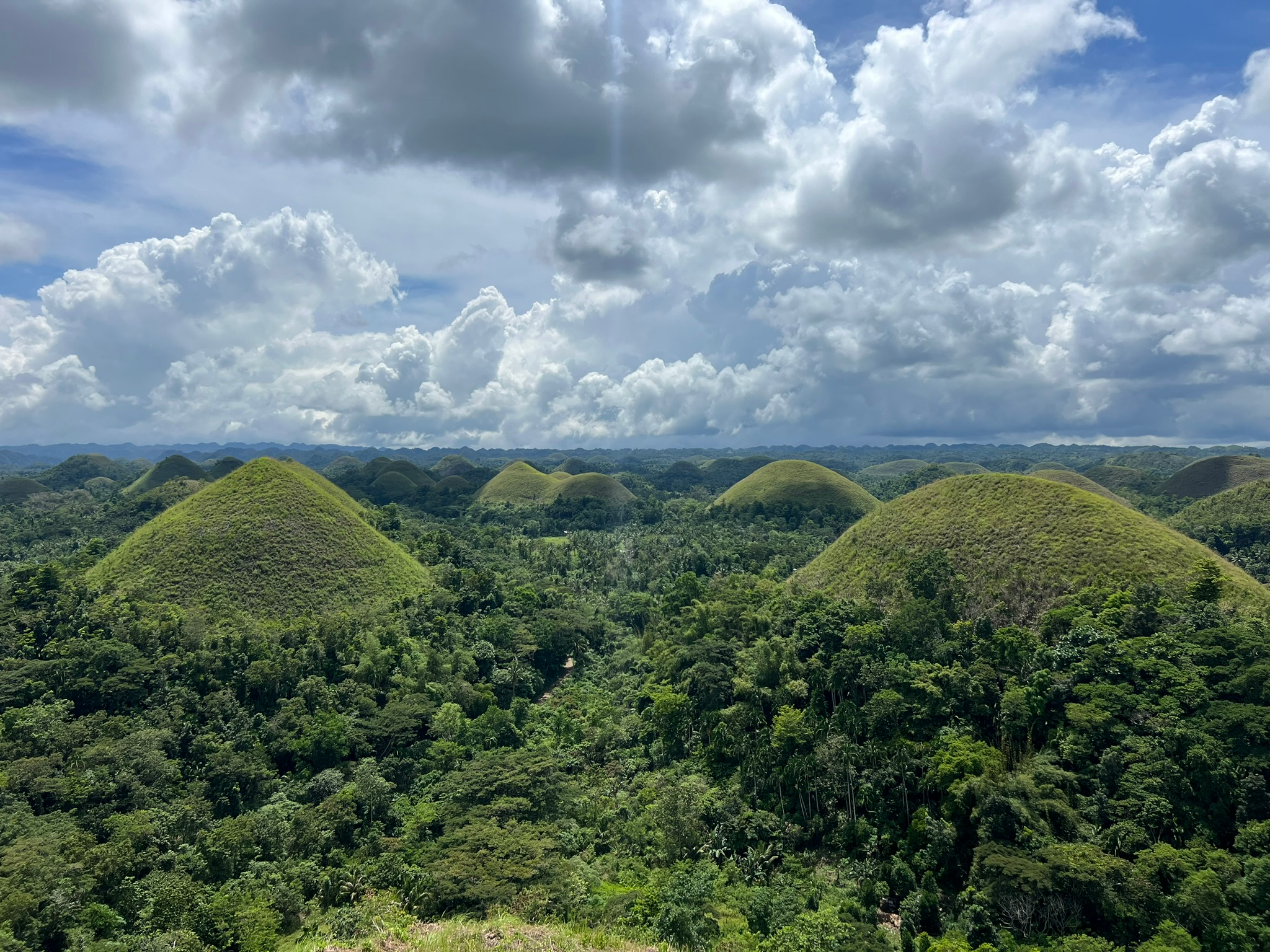
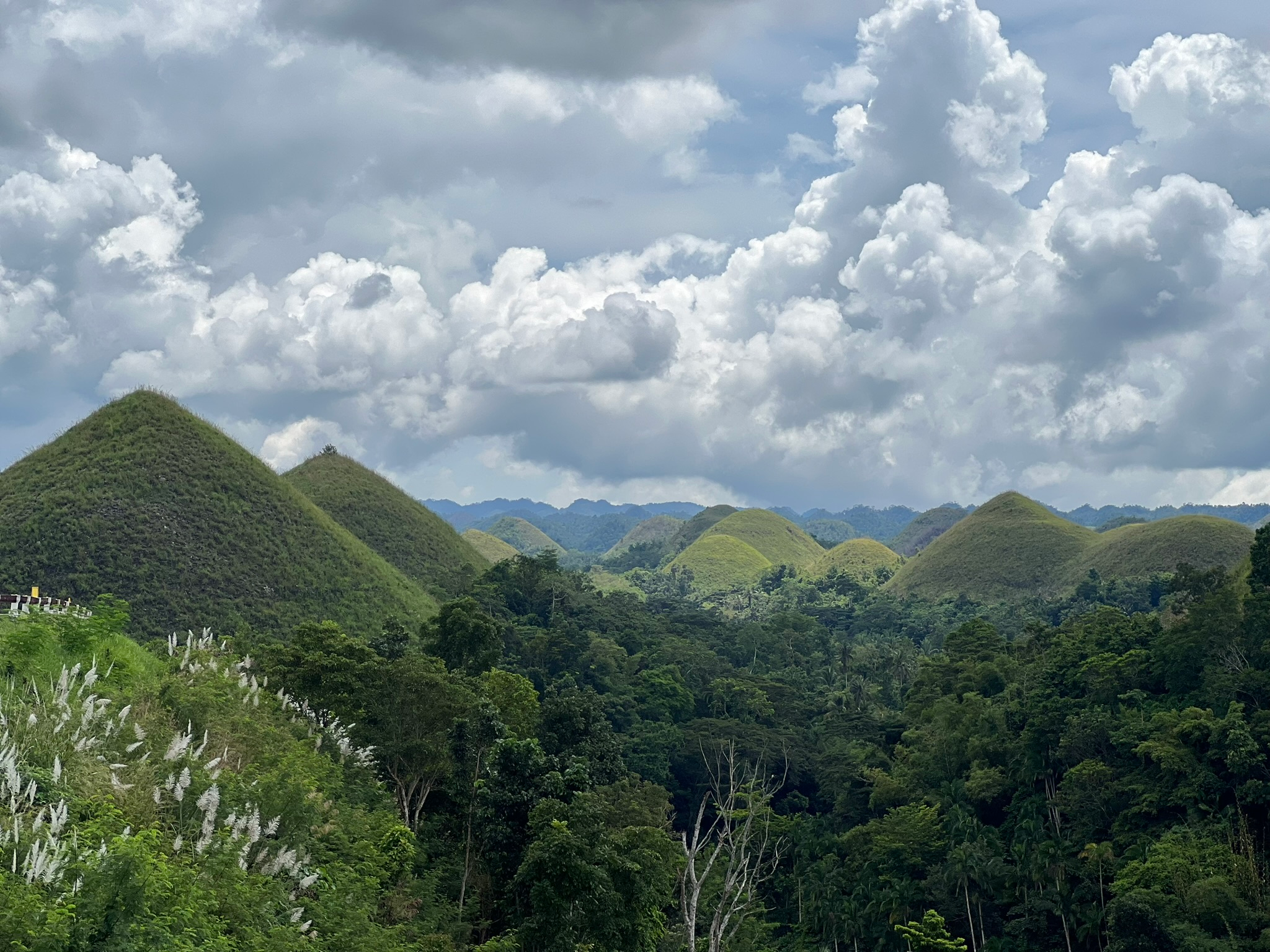
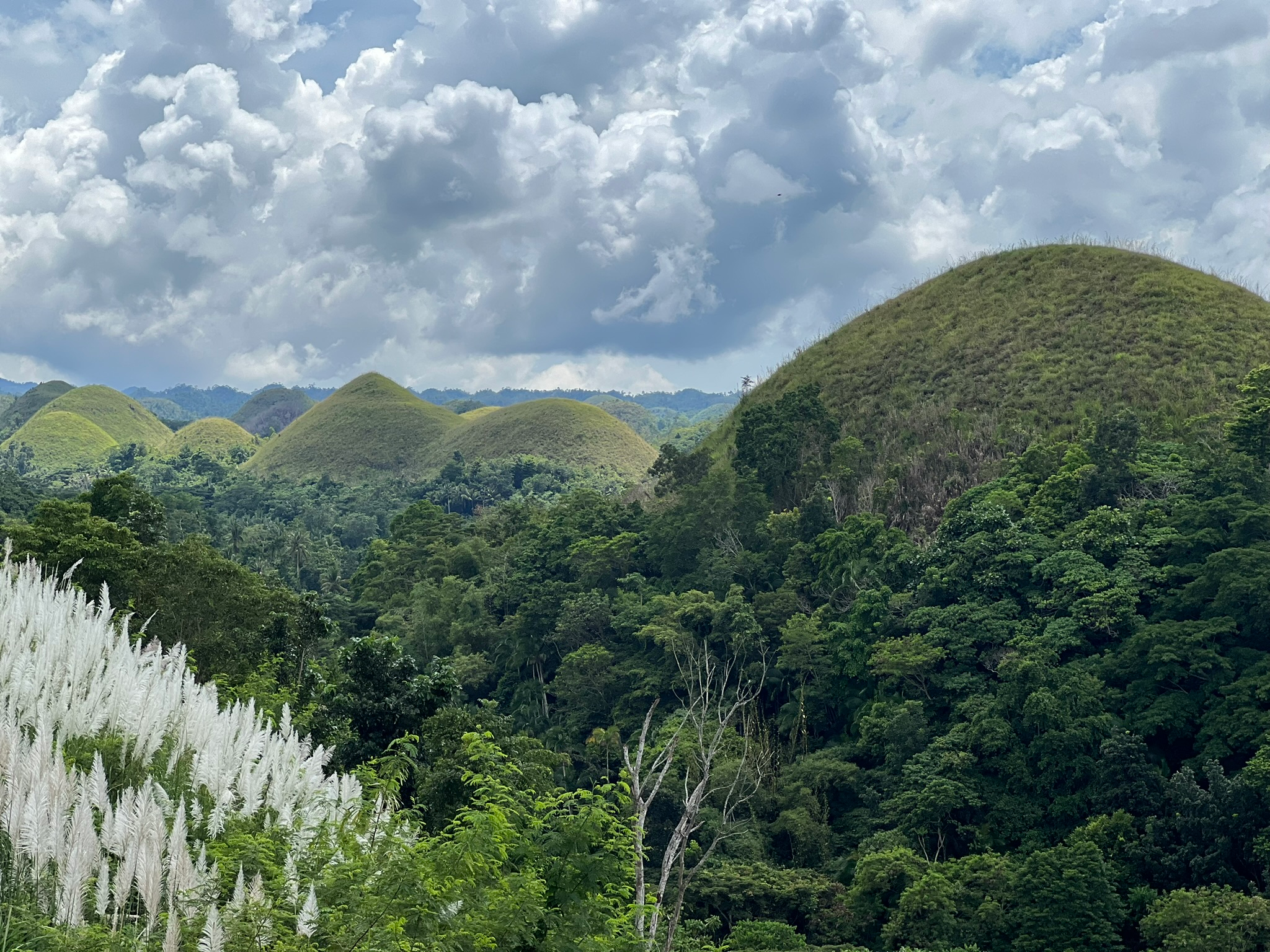
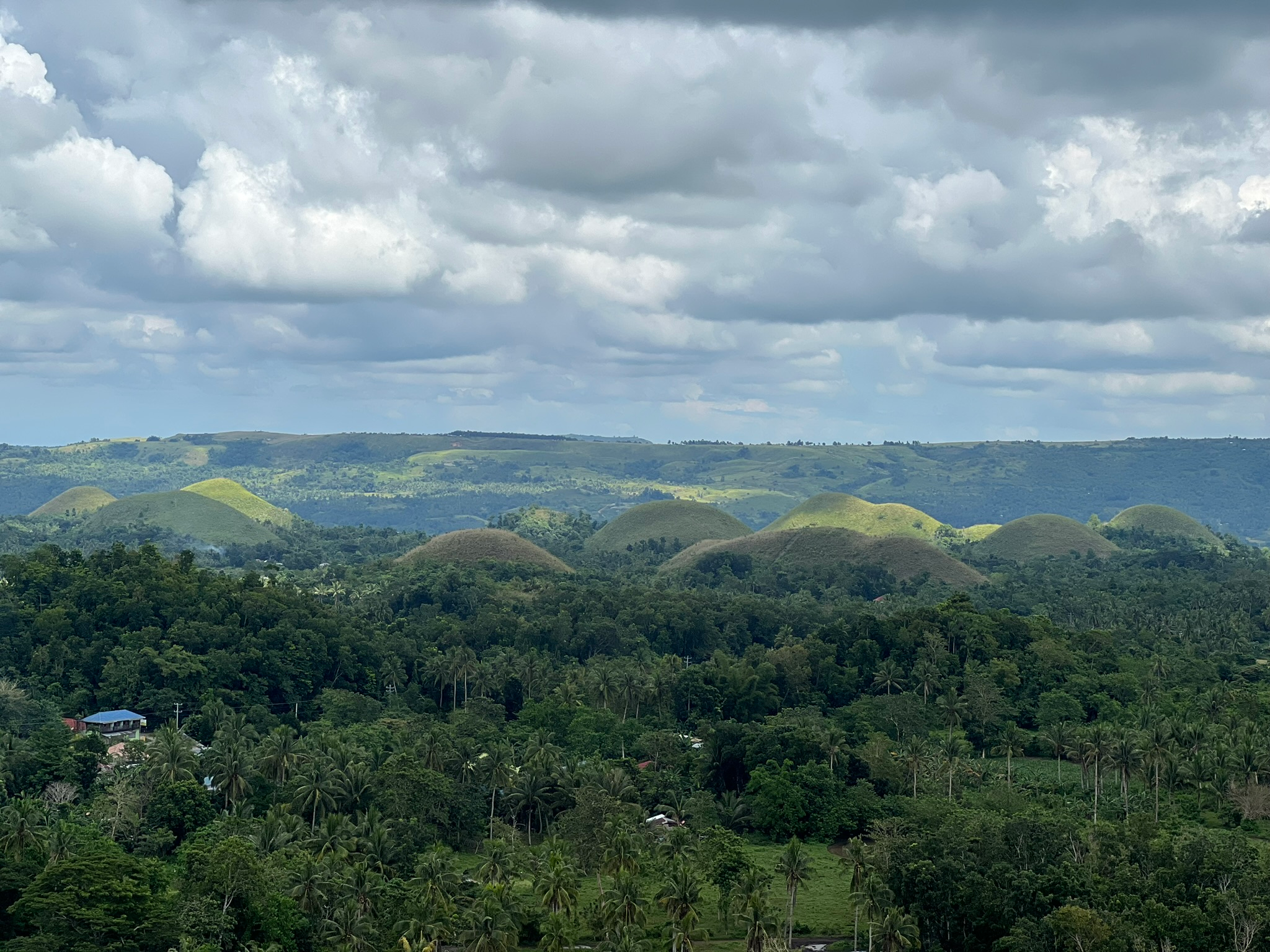
Although these stops left a very sour taste in our mouths, the next destination was one that I had been looking forward to going to for years on end: the Chocolate Hills. The hills, aptly named because of the brown hue they take on during the dry season, draw in tourists from all over the world. I’m just gonna go right ahead and paraphrase what was written on the information board – mostly cause I probably won’t do a better job.
The hills are a vast collection of smooth, uniformly shaped, conical limestone mounds spread across the Bohol landscape. They vary in height, with many rising around 30 to 120 metres, and are thought to have formed from uplifted coral deposits and marine limestone that were slowly sculpted by acidic rainwater, powerful streams and erosion over an immense period of time. Over time, what was once an ancient marine platform became land, fractured and weathered, leaving behind the evenly distributed hills we can observe today.
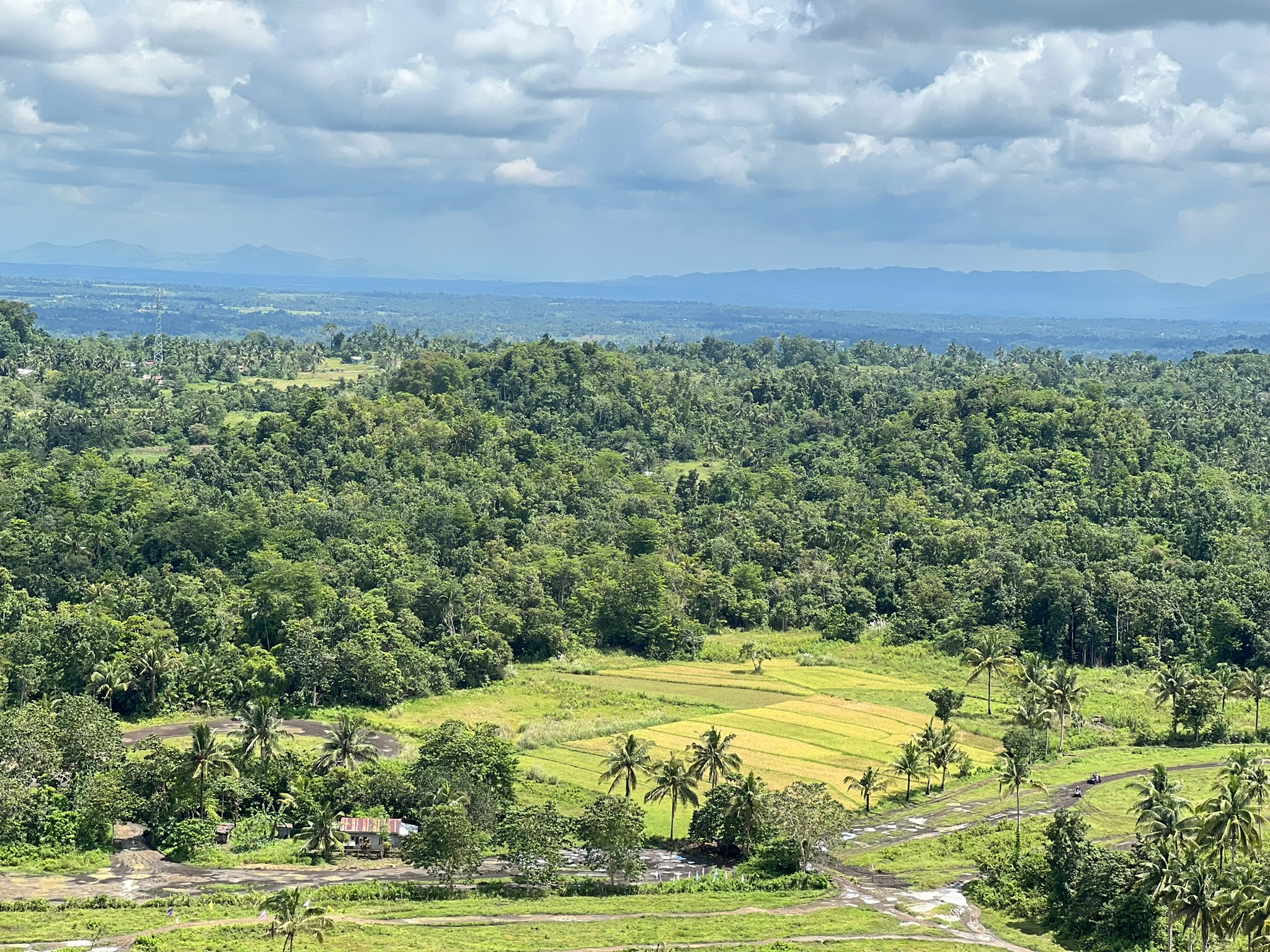
With it still being the end of the rainy season, the hills were carpeted with a lush layer of green, so the chocolatey aspect of them was one I could not really appreciate. That said, knowing a little about how these geological wonders came to be, I was still awestruck by the vista that welcomed me at the top of one such hill. Even though the tour felt a bit like we were on a conveyor belt as we jumped from one stop to the next, I did my best to savour my limited time there. My eyes were practically glued to the view!
Loboc River
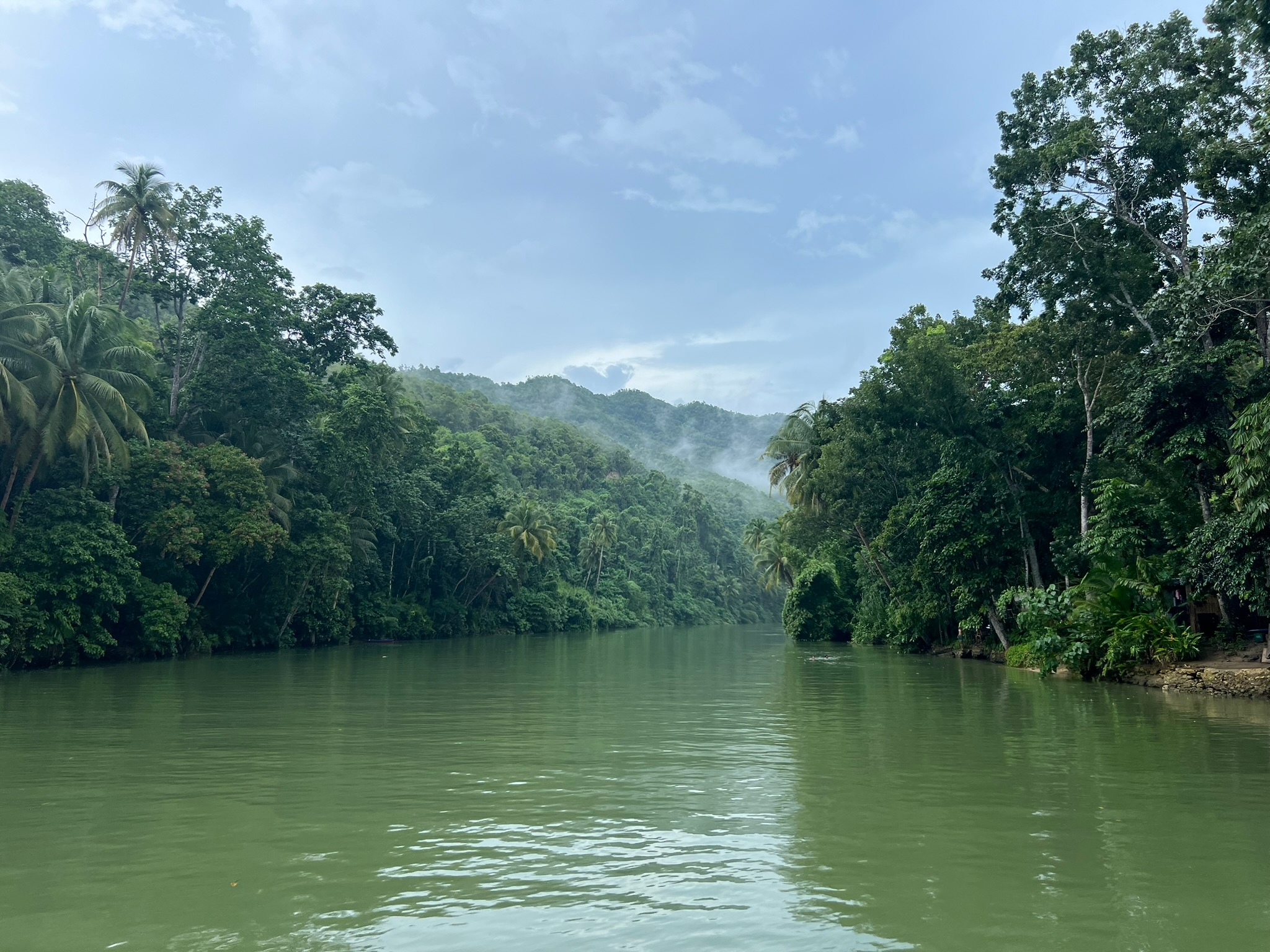
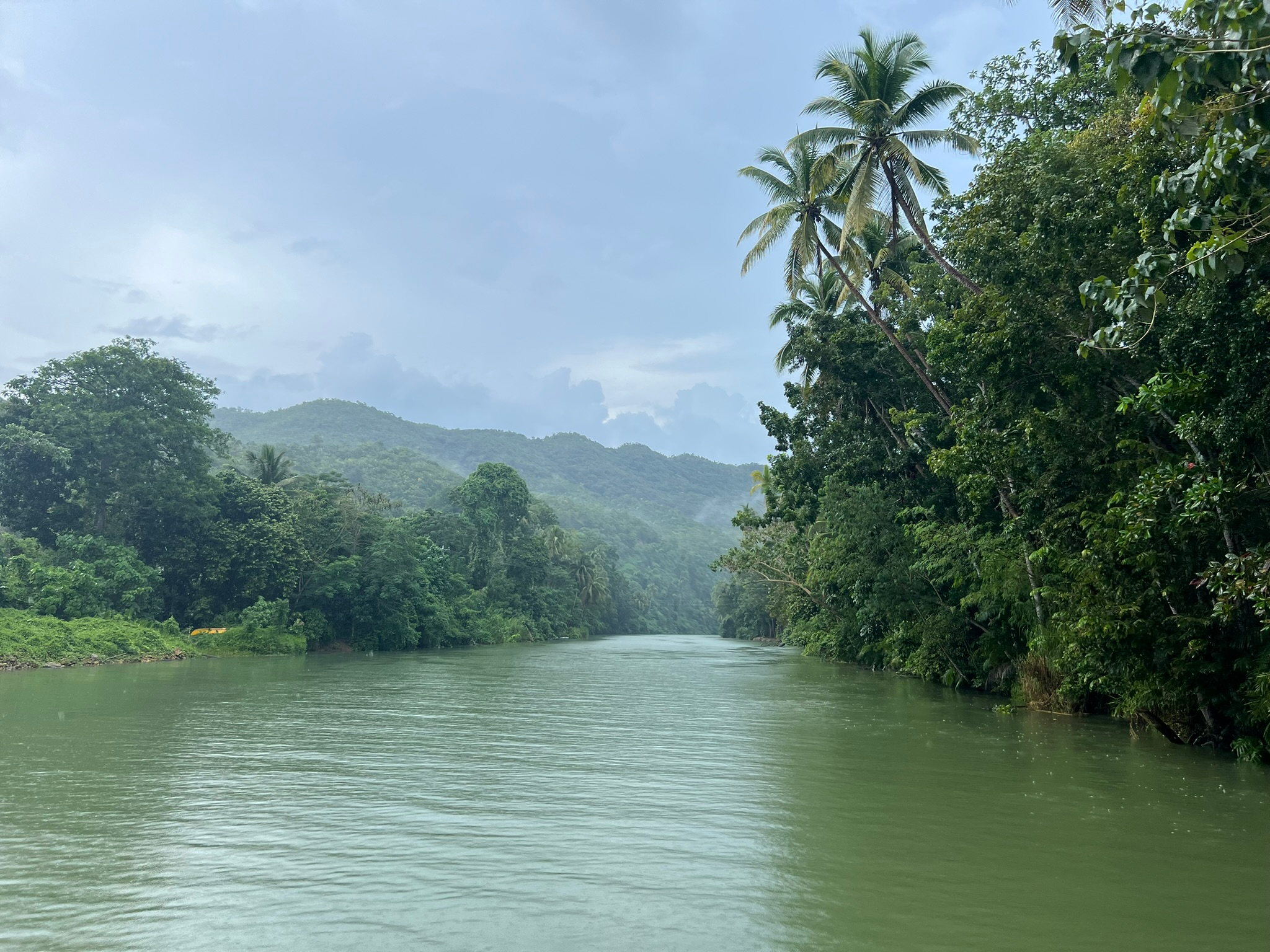
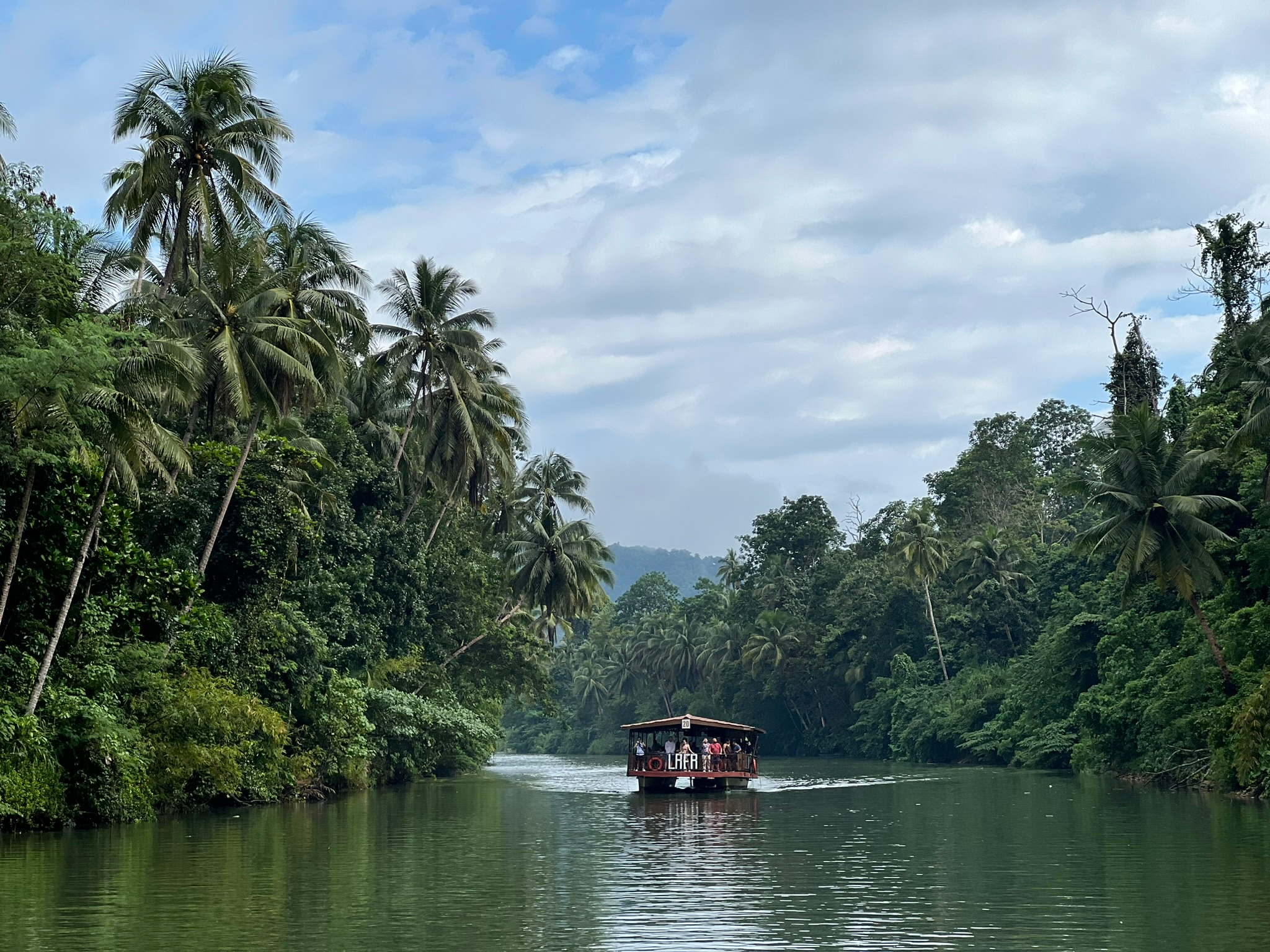
The next stop was yet another highlight of the tour: a river cruise on the Loboc River. According to our guide, the word Loboc is an onomatopoeia, referring to the sound produced when something is crushed using a pestle and mortar – the same word supposedly uttered by a local when asked what he was doing by one of the earliest missionaries.
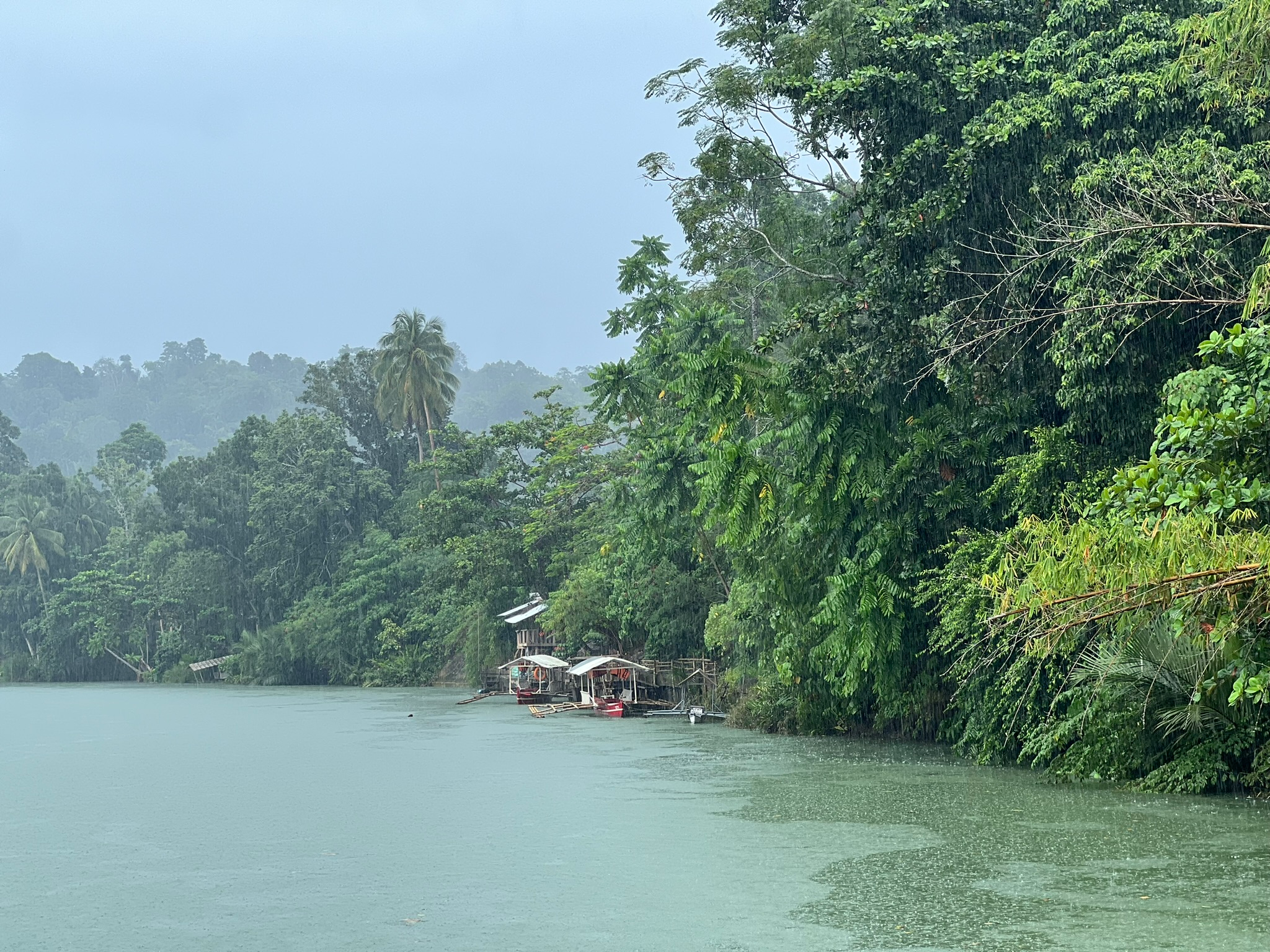
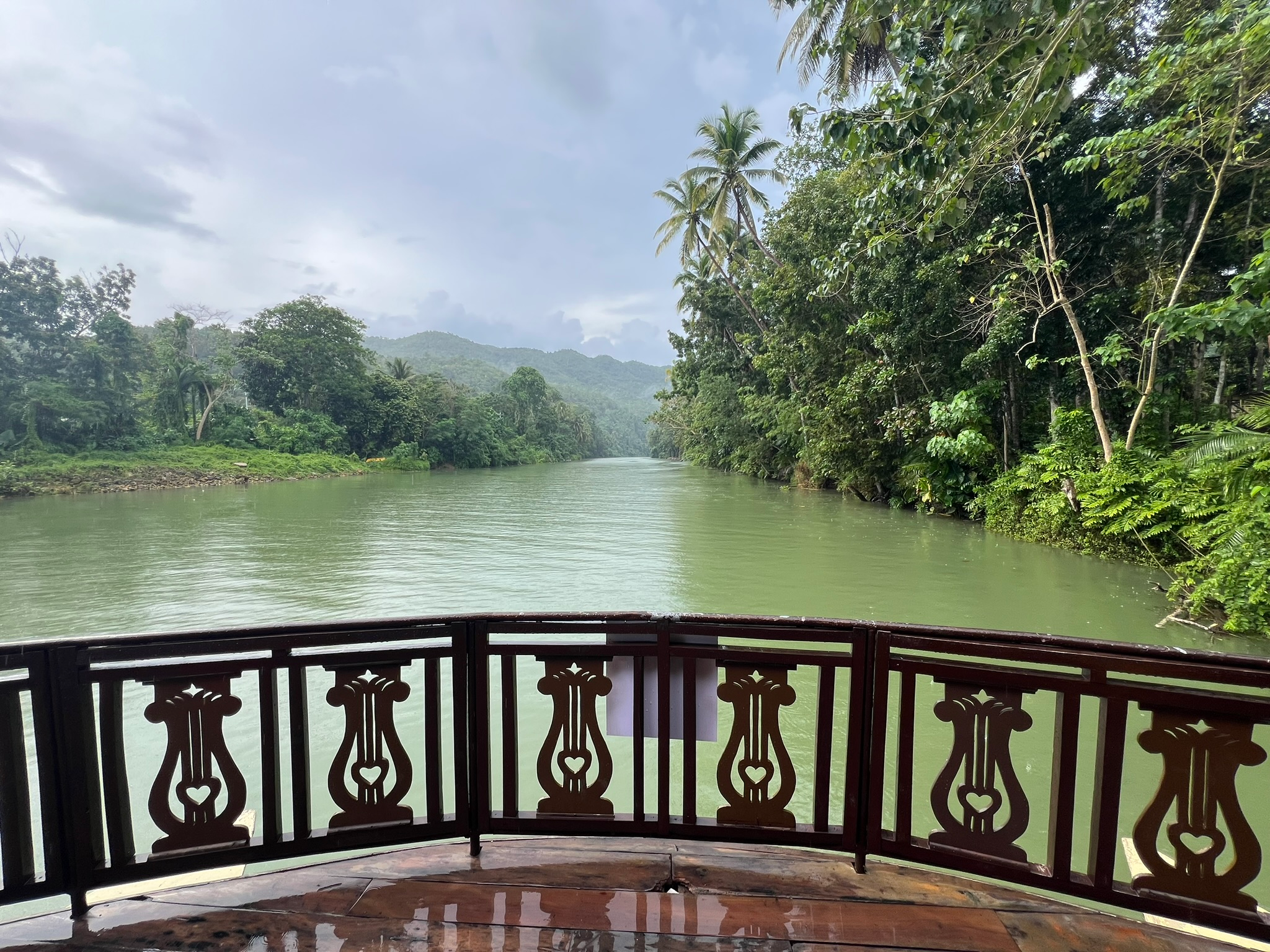
We’d be enjoying the tropical forest aboard a floating restaurant, an old wooden boat that would take us along the palm-fringed riverbanks as we indulged to our hearts’ delight in a variety of traditional and local dishes, all while being serenaded by musicians. It felt like I was back in Xochimilco, Mexico, only I wouldn’t quite call these guys a mariachi band. I gotta admit that I didn’t even glance at my surroundings at first, given how famished I was. I immediately set myself up to cram three plates full of the most delectable food, and only after wolfing down every single particle did I allow myself the pleasure of taking it all in.
As we went further downstream, we got to a hut where singers and dancers dressed in traditional pink baro’t saya-inspired outfits were waiting to give us a show. They performed a couple of dances, most notably the kuradang, a traditional Visayan folk dance often performed during special occasions, and the tinikling, a traditional Philippine folk dance named after the tikling bird, where dancers step over and between bamboo poles manoeuvred by two other people.
This is a title
Upon seeing my mesmerised expression, some of the ladies doing the dance asked me to join. Knowing how clumsy I am, I decided I’d be better off declining their request. That’s one way I could’ve lost a foot or two. And so, I remained a spectator until the time came to move on.
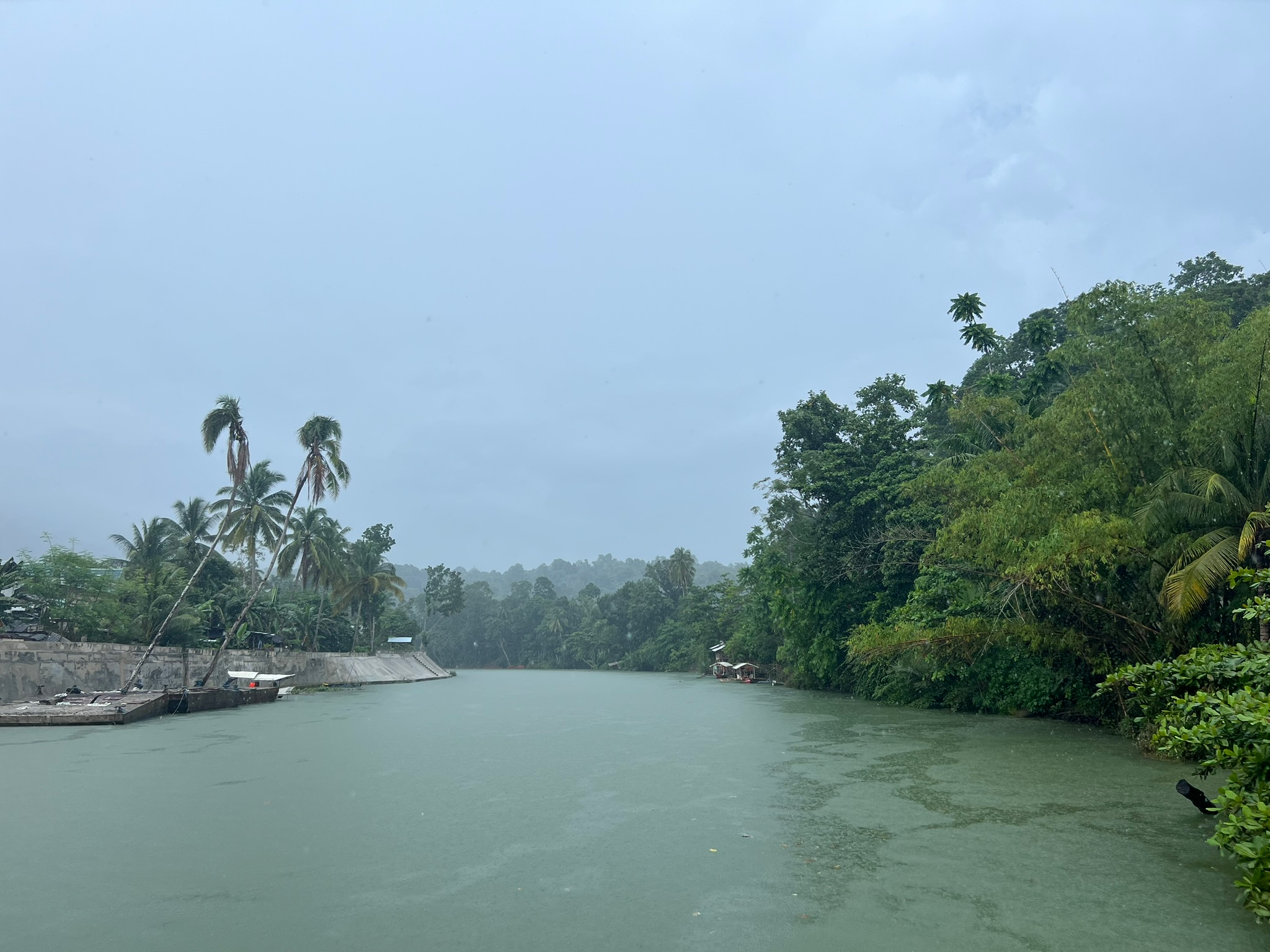
By that point in time, we were rolling down the murky green river in the middle of a tropical downpour. The heavy rainfall and the mist layering itself over the lush jungle enshrouding us on both sides took me right back to my adventures in the Amazon back in Peru. It felt exactly as if I had been transported into the middle of a dense jungle, never mind that we had been cruising down the river for only a few minutes.
More of Bohol
The rest of the tour offered brief and fast-paced stops at different important sites:
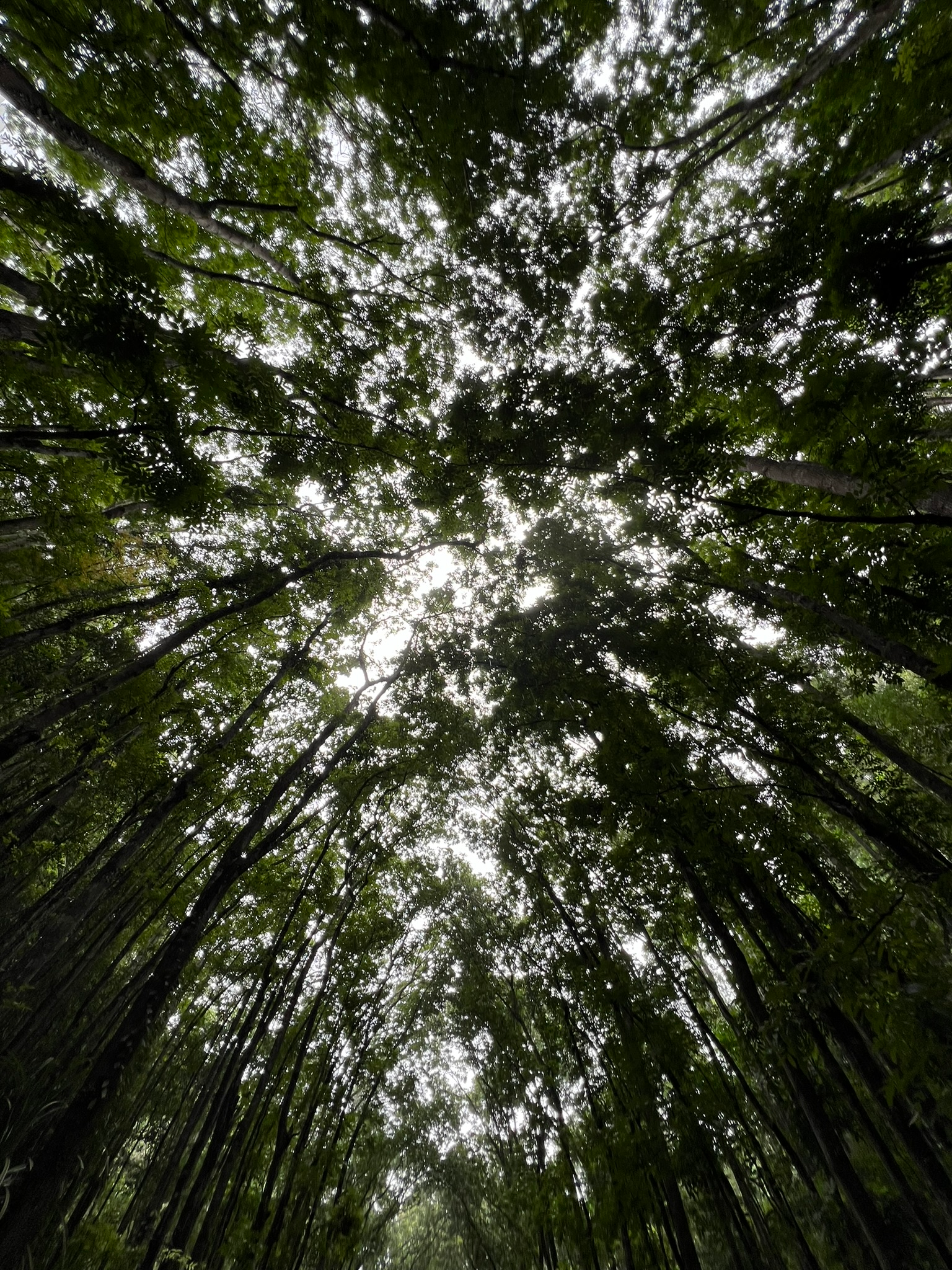
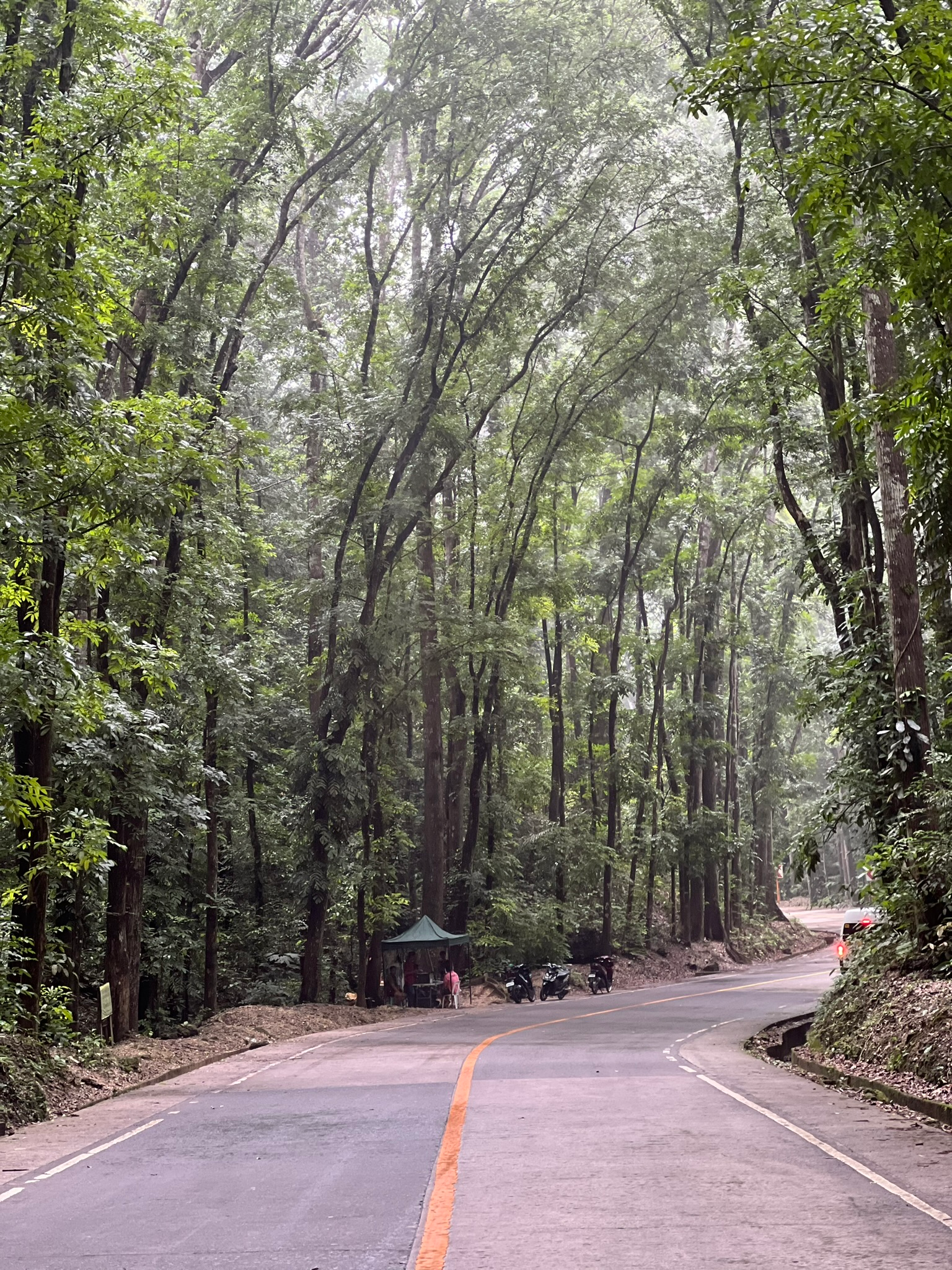
Man-Made Forest: A two-kilometre stretch of dense mahogany trees planted as part of a reforestation project. The forest is famous for its perfectly uniform trees, with straight trunks, evenly spaced canopies and minimal undergrowth, creating an almost surreal tunnel-like effect over the road. While it’s known as one of the most photogenic and serene spots in Bohol, we couldn’t quite appreciate that given the torrential downpour that broke out of the blue.
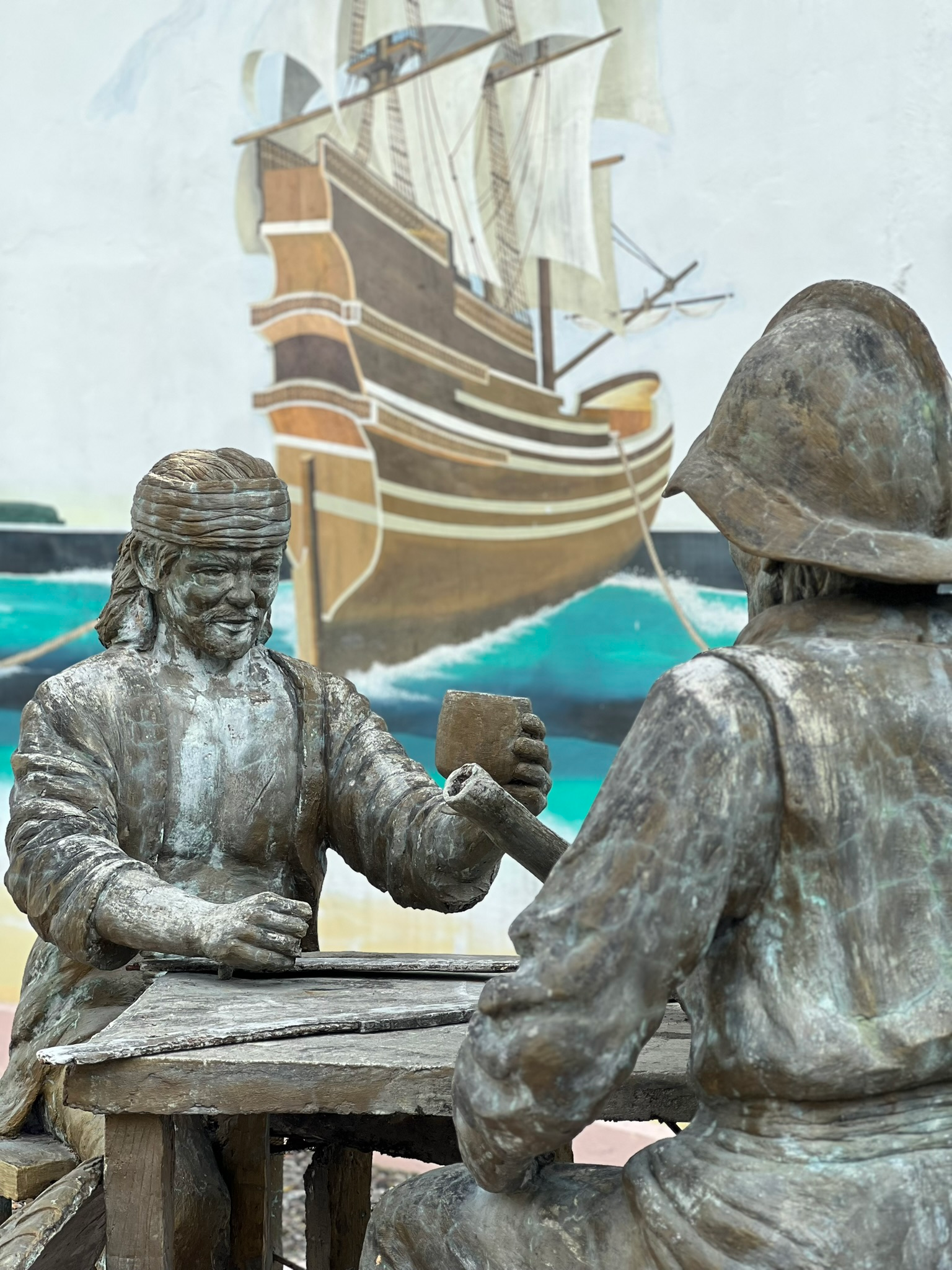
Blood Compact Shrine: Located in Tagbilaran City, which commemorates a historic peace treaty made in 1565 between Spanish explorer Miguel López de Legazpi and Datu Sikatuna, a chieftain of Bohol. To seal their friendship, the two leaders performed a sandugo – a ritual where they cut their arms, mixed their blood with wine and drank it, symbolising trust and alliance. This event is often considered the first treaty of friendship between Filipinos and Spaniards. The modern-day bronze monument overlooks the Bohol Sea and stands as a reminder of diplomacy, unity and respect between different cultures.
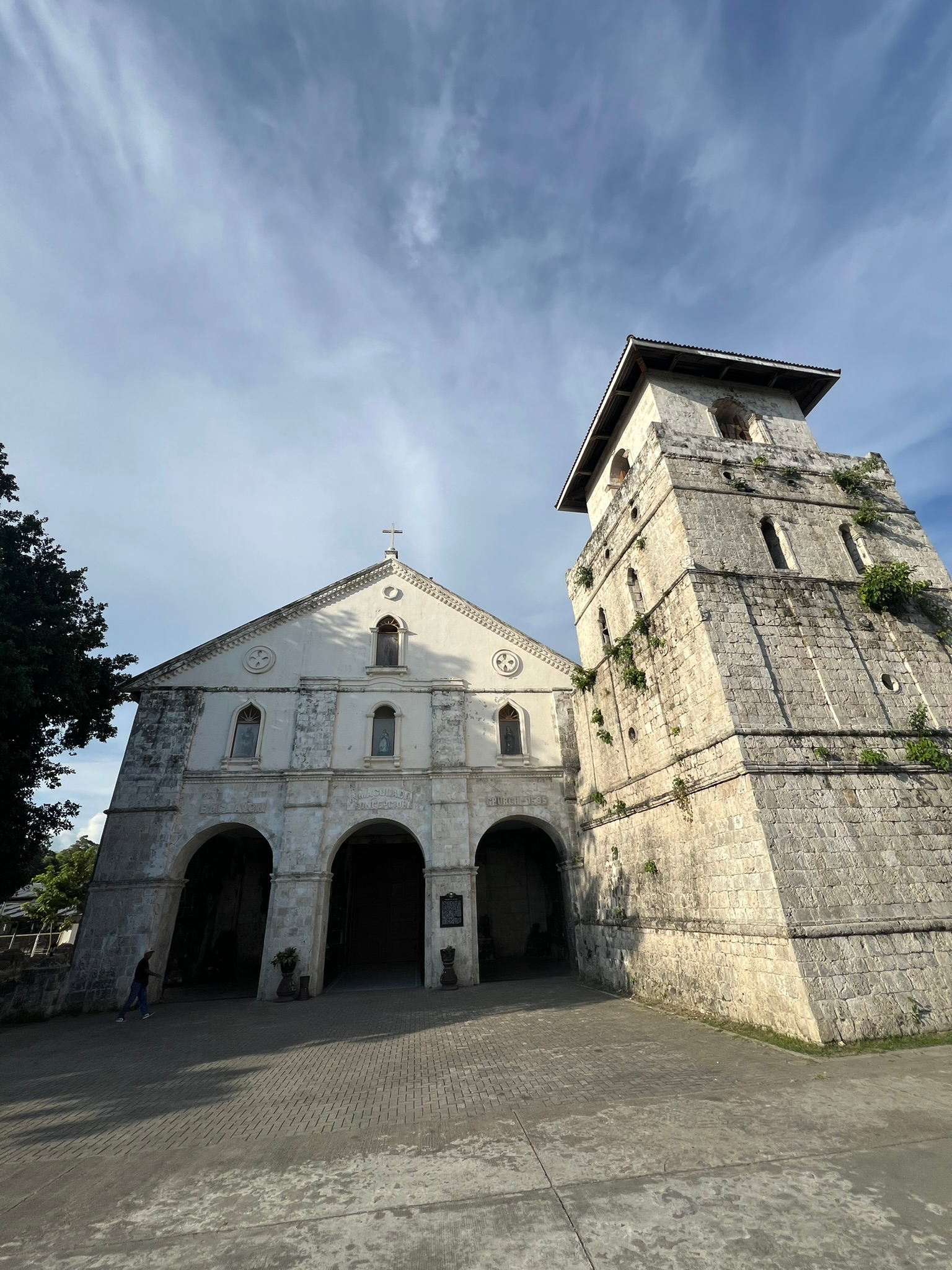
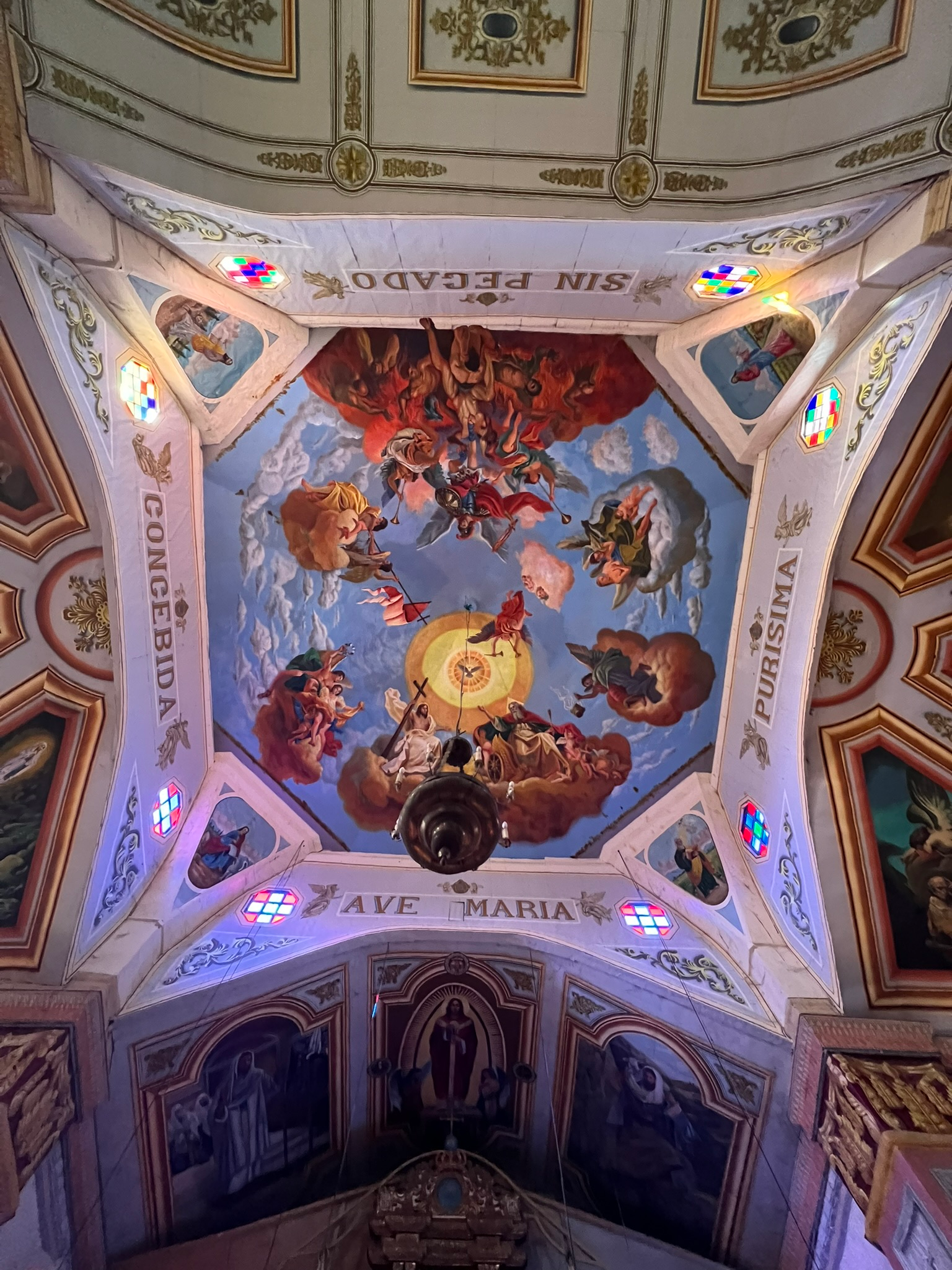
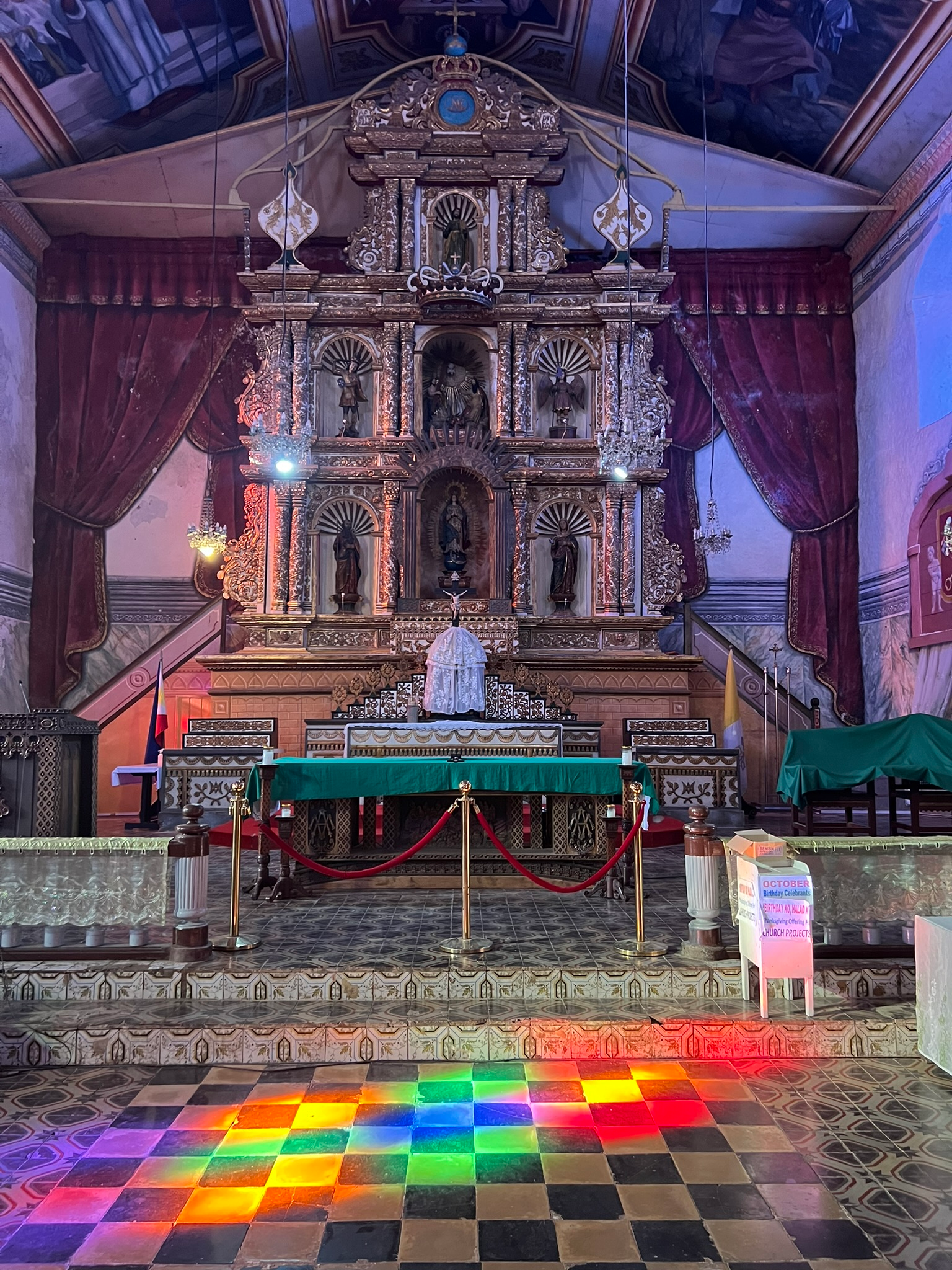
Church of Our Lady of the Immaculate Conception: One of the oldest stone churches in the Philippines, located in Baclayon. The Jesuit mission was founded in 1596, while the present coral-stone church was completed in 1727, using coral stones and mortar traditionally said to have been made with lime and egg whites. Its thick walls, wooden altars and religious artefacts reflect centuries of devotion and craftsmanship. As beautiful as the church was, I gotta say that the highlight here was the refraction of light through the stained-glass windows, painting the interior in a rainbow.