Cairo – Day 1: A Journey Through Ancient Egypt
CAIRO
Day 1: A Journey Through Ancient Egypt
November 17, 2023
PART I
Another day, another flight – this time to Cairo. Needless to say, this was one of the destinations I had been looking forward to the most – especially after spotting some of the pyramids from the plane!
Waiting for us outside the airport was Mohamed, AKA Mo – a local who’d be our guide for the next few days. I took a liking to him from the very start, considering he had the power to easily scare away all the scammers who tried to approach us. Plus, his English was excellent, and we had received glowing reviews from friends who had toured with him. So yeah, finally it felt like we were in good hands!
That said, we had little time for pleasantries as we had a full day ahead of us. And so, off we went.
The Egyptian Museum
We’d be starting our day by visiting the Egyptian Museum. Our journey through Ancient Egypt had thus far taken us through the New and Middle Kingdoms. Now, we’d be revisiting those same periods and delving even further back.
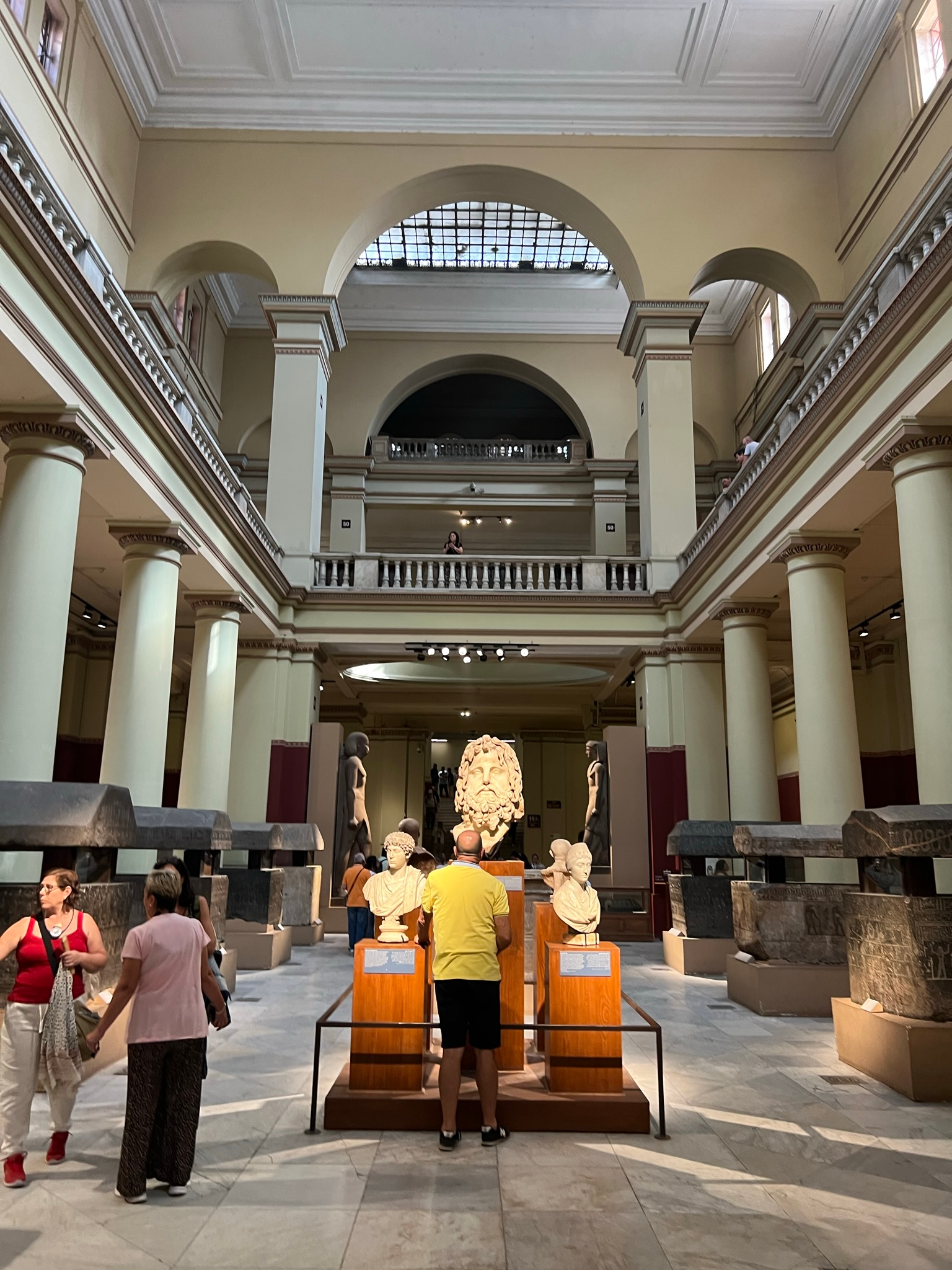
Mo told us that the museum is one of the largest archaeological museums in Africa and contains over 120,000 artefacts from Egypt’s prehistoric era through to the Greco-Roman period. As such, it would be in our best interest to tag along and let him show us the main highlights instead of wandering around aimlessly. I, for one, was happy to do just that, especially since he had already shown himself to be incredibly knowledgeable. In fact, throughout the tour, he not only confirmed what we had already learned but also consolidated and expanded upon it.
The route he chose took us from the earliest period to the latest. The Prehistoric Period, Mo explained, was characterised by the early Egyptians who settled in various parts of the Nile Valley. Over time, Ancient Egypt came to be divided into 42 nomes – territorial divisions falling under two main regions: Upper and Lower Egypt. These terms, he clarified, referred to altitude rather than latitude, with the Nile flowing from the highlands of East Africa in the south towards the Mediterranean Sea in the north. As such, Upper Egypt was located in the south and Lower Egypt in the north.
Narmer, an Egyptian king thought to have unified Upper and Lower Egypt, effectively became the first pharaoh of a unified Egypt. This led to the foundation of the First Dynasty around 3100 BC, with Memphis serving as the capital.
Our first checkpoint was the Narmer Palette – an incredibly important archaeological find depicting scenes associated with the unification of Egypt. Here, Narmer is shown wearing the white crown, known as the Hedjet, traditionally associated with Upper Egypt in one scene, and the red crown, known as the Deshret, associated with Lower Egypt in another. Later rulers wore the Pschent, a double crown combining both. This also incorporated the symbols of the cobra goddess Wadjet of Lower Egypt and the vulture goddess Nekhbet of Upper Egypt.

Ancient Egypt Timeline
The Early Dynastic Period was followed by the Old Kingdom. This era was characterised by prosperity and political stability, with the pharaohs regarded as divine rulers of the land. During this time, major advances were made in technology, art, and architecture.
In fact, under the reign of King Djoser, a new era of monumental construction was established. His vizier, high priest, architect, and all-round genius, Imhotep, is generally credited with designing the Step Pyramid of Djoser – the first large-scale stone monument in Egypt and the earliest Egyptian pyramid. During this period, numerous pyramids were constructed as royal tombs.
In between the major kingdoms came periods of unrest and political fragmentation known as the Intermediate Periods. After the First Intermediate Period came the Middle Kingdom, during which Mentuhotep II reunified Egypt. Egypt flourished once again before a Second Intermediate Period disrupted stability. Eventually, Ahmose I expelled the Hyksos and founded the Eighteenth Dynasty, ushering in the New Kingdom.
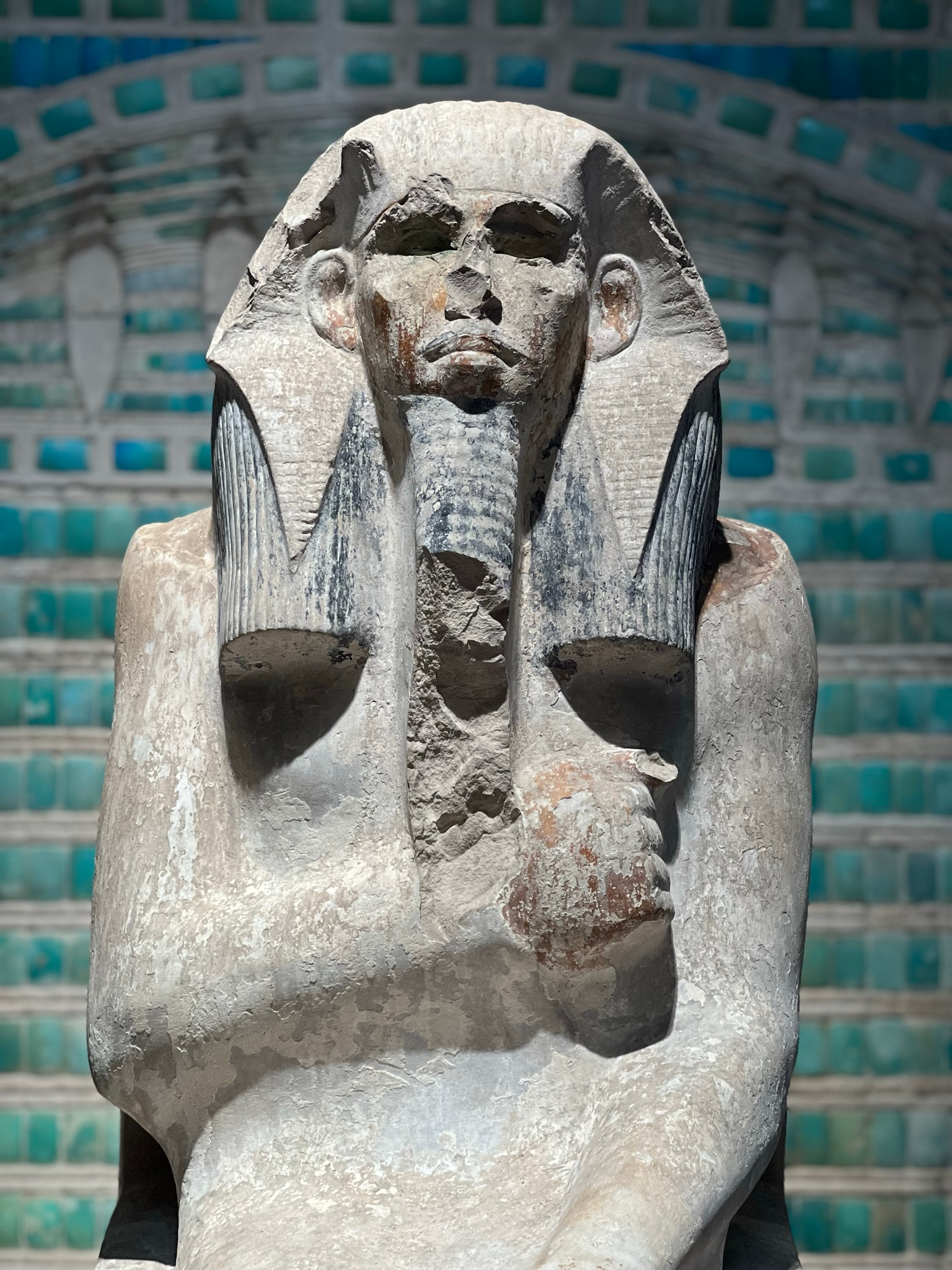
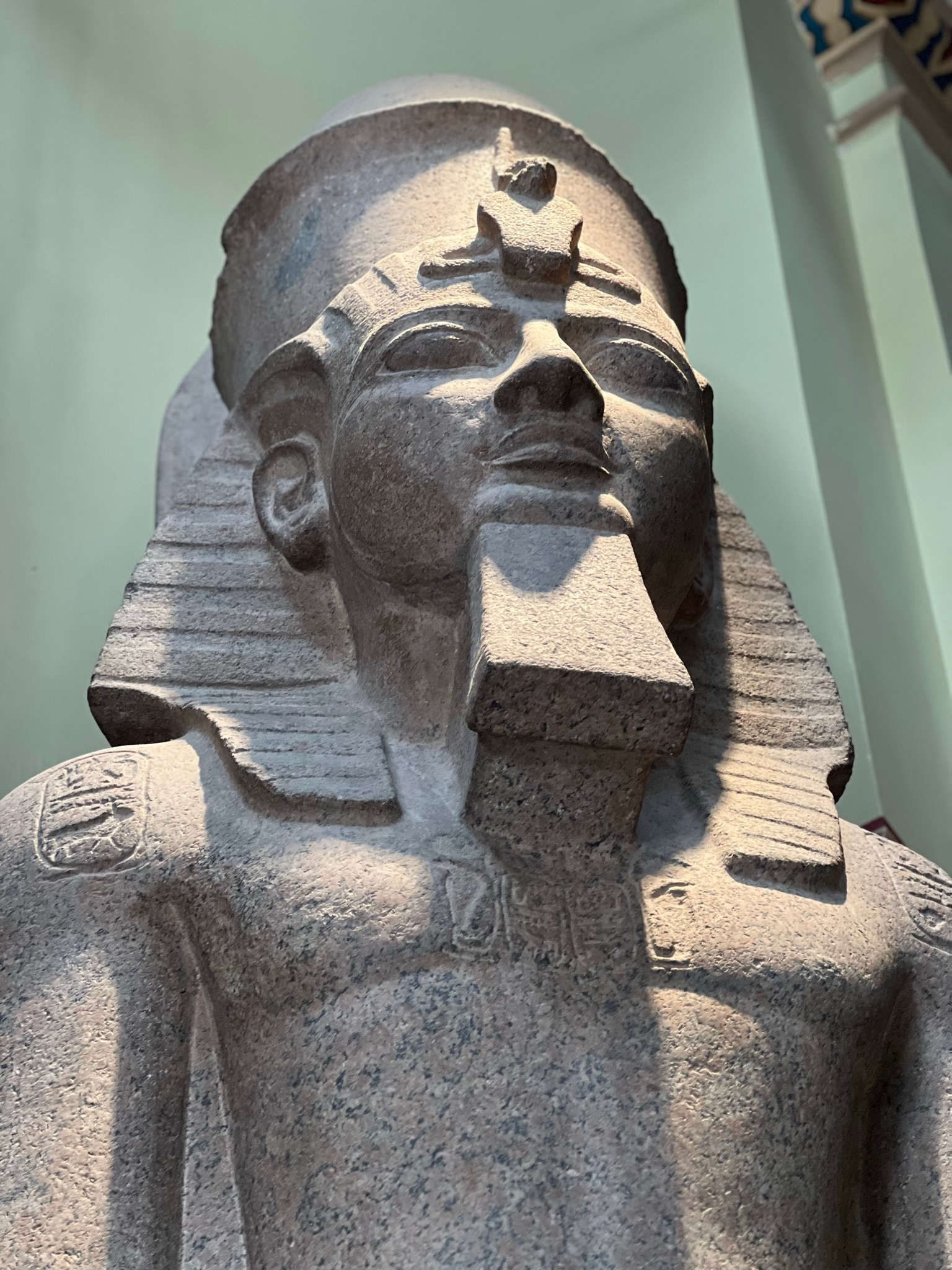
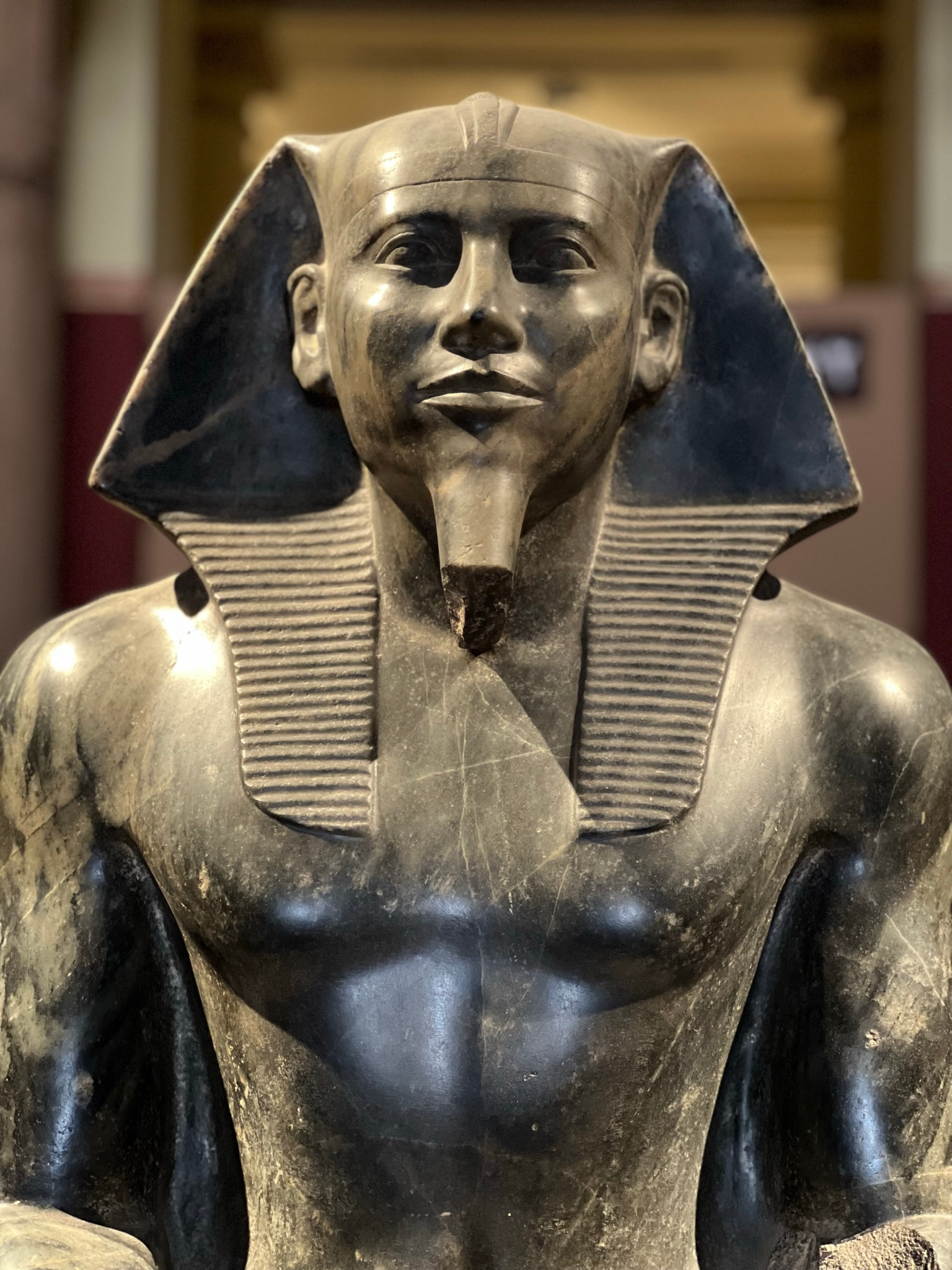
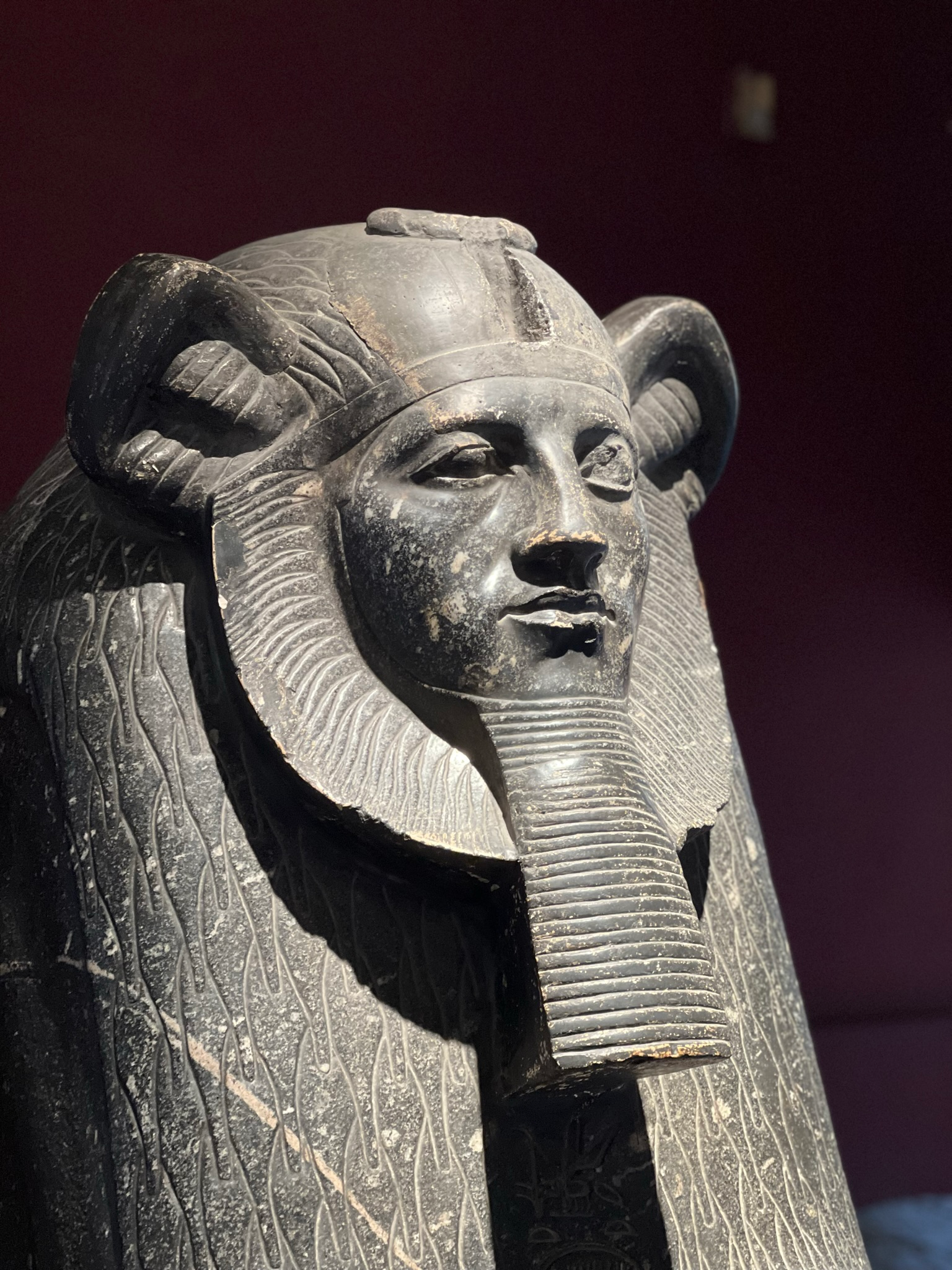
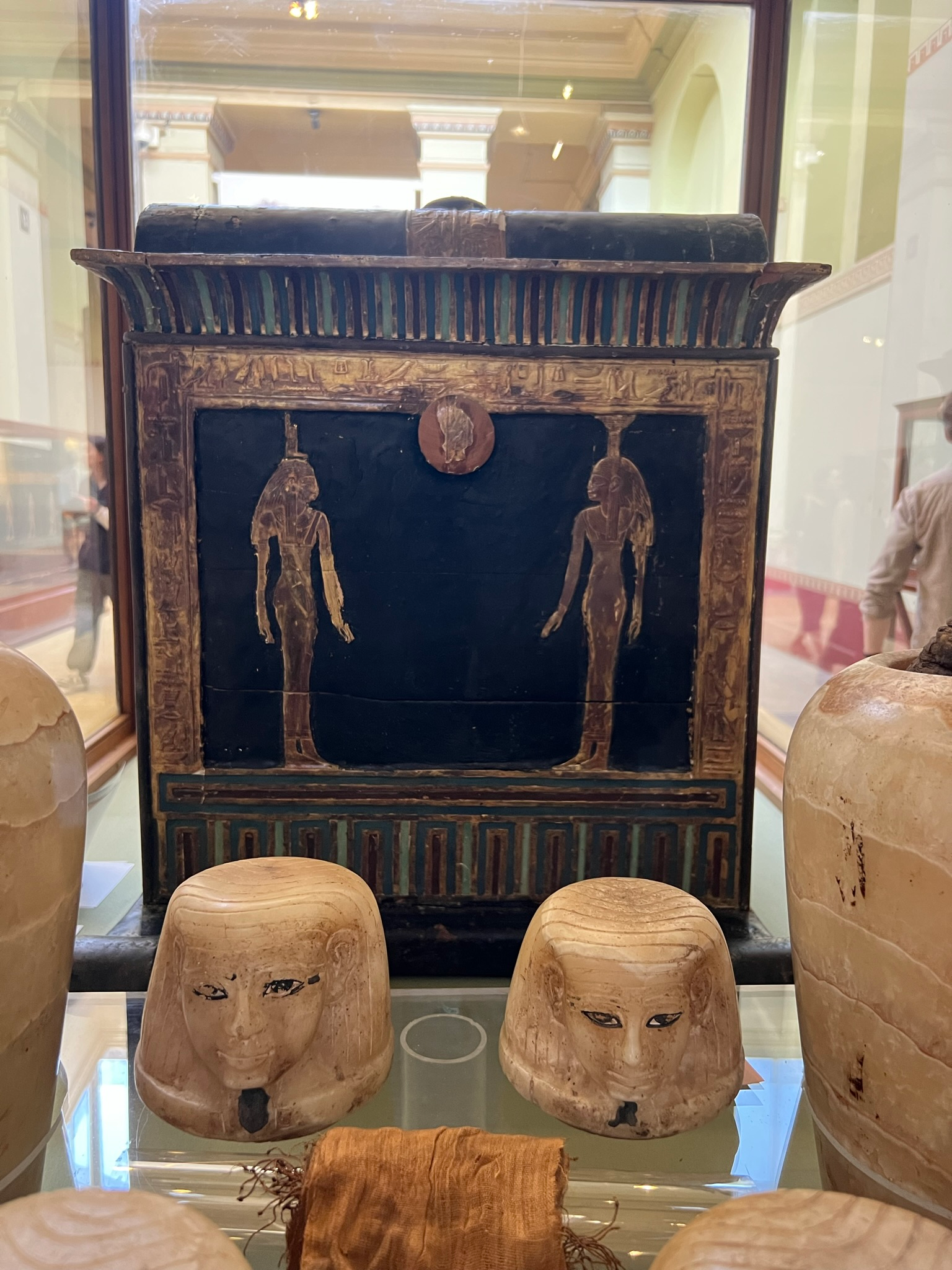
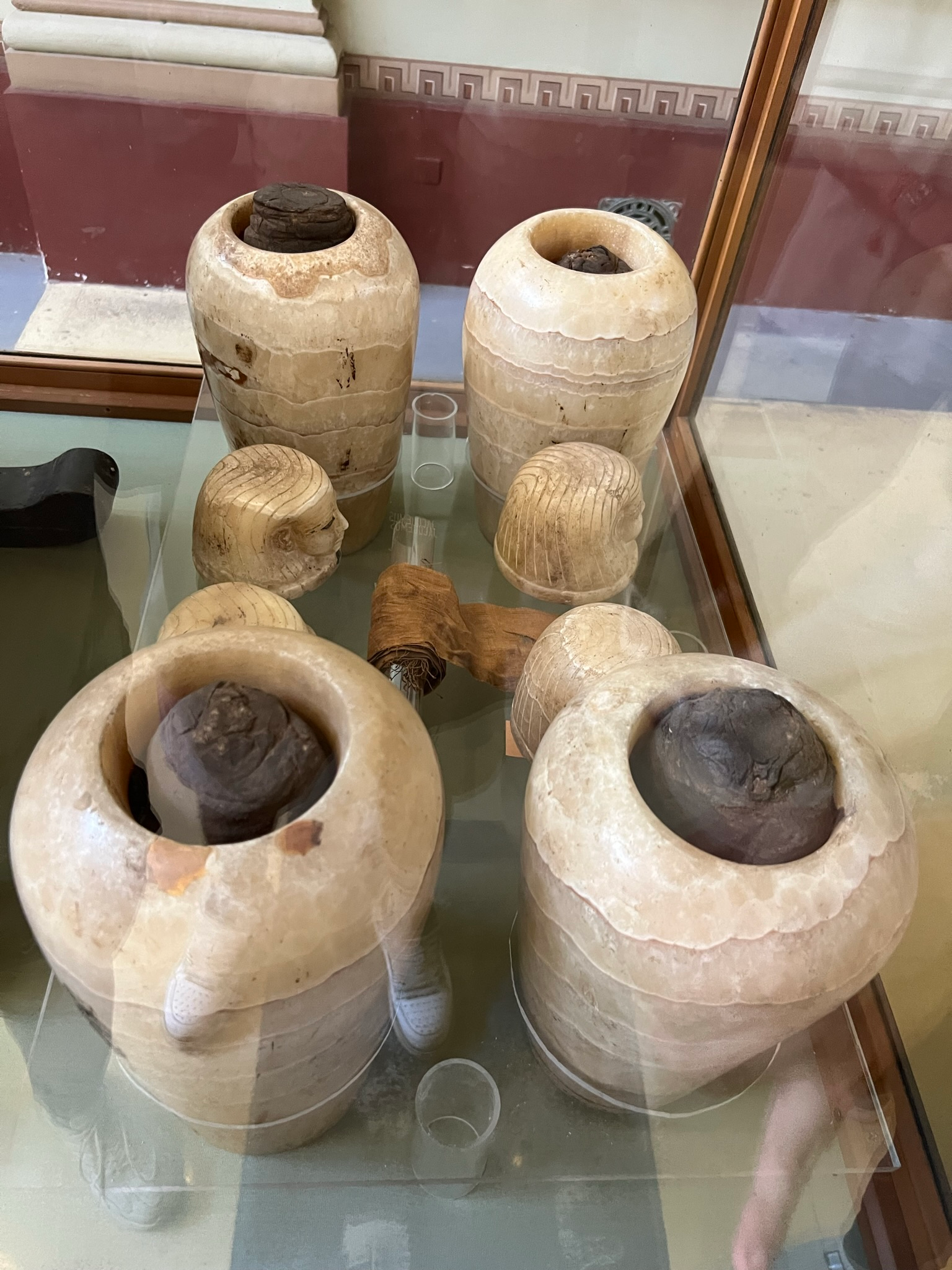
As we continued the tour, it felt as though Mo’s explanations were coming to life, with each period having its own collection. Statues of kings in varying sizes – some life-sized, others miniature – crafted from materials such as granite and diorite. Coffins, paintings, stelae, jewellery, canopic jars, chariots, tools, mummies – so, so many things. Somehow, Mo seemed to know everything about everything.
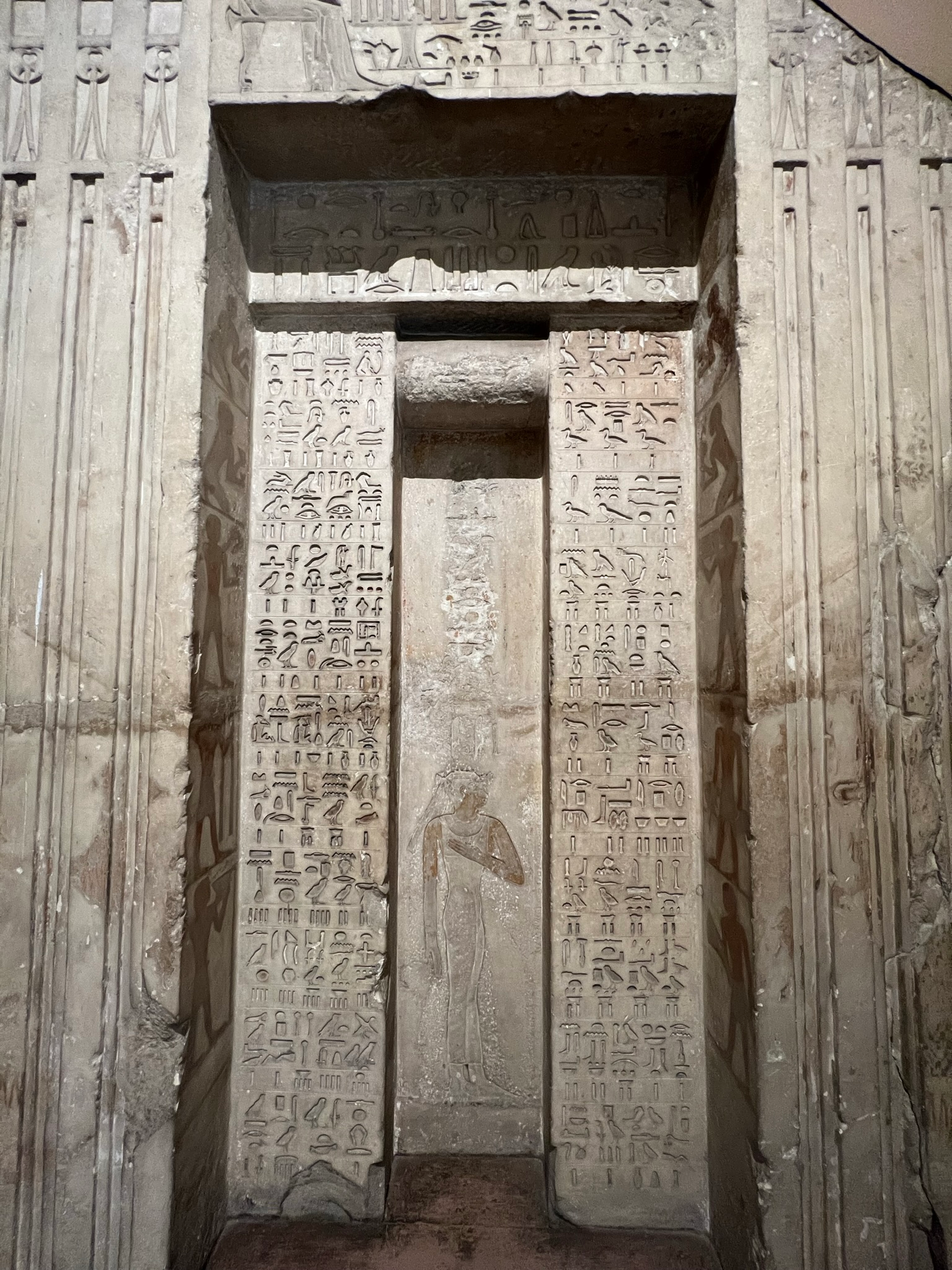
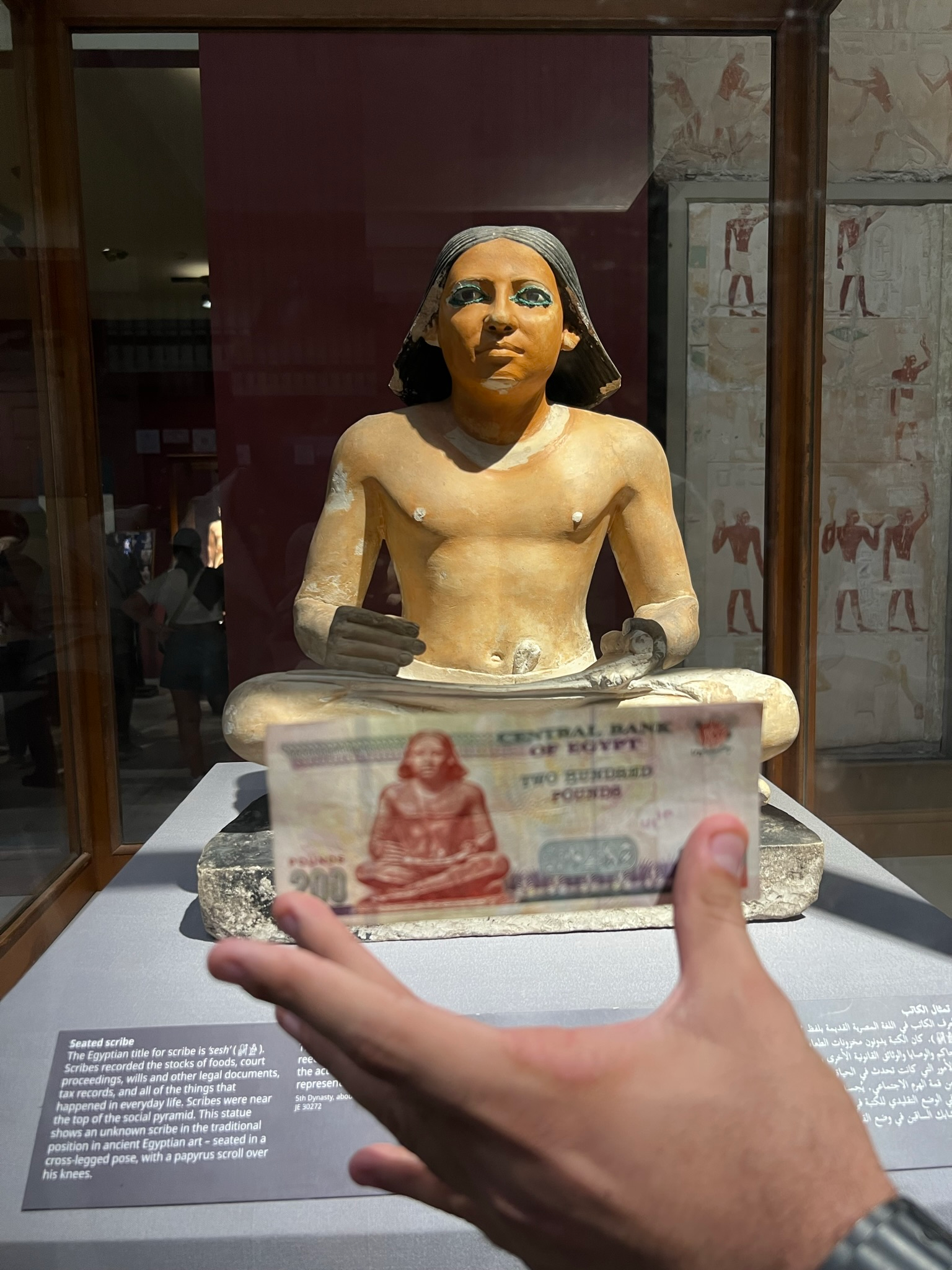
He told us about the false doors built into tombs to allow the spirit of the deceased to pass between worlds, with the person’s name inscribed so they could continue receiving offerings. About the seated scribes, always depicted cross-legged with a scroll on their lap, who occupied a highly respected position in Egyptian society. That the statue of Khasekhemwy, the last ruler of the Second Dynasty, is among the oldest surviving royal stone statues from Ancient Egypt.
He explained how Middle Kingdom art became more realistic and expressive than the idealised artwork of earlier periods, and how beautification was incredibly important, with make-up such as kohl eyeliner believed to offer both cosmetic and protective benefits. He also spoke about the treasures lost to time, tomb robbers, and foreign collections – including the Rosetta Stone in London, the Bust of Nefertiti in Berlin, and countless artefacts housed in museums across Europe.
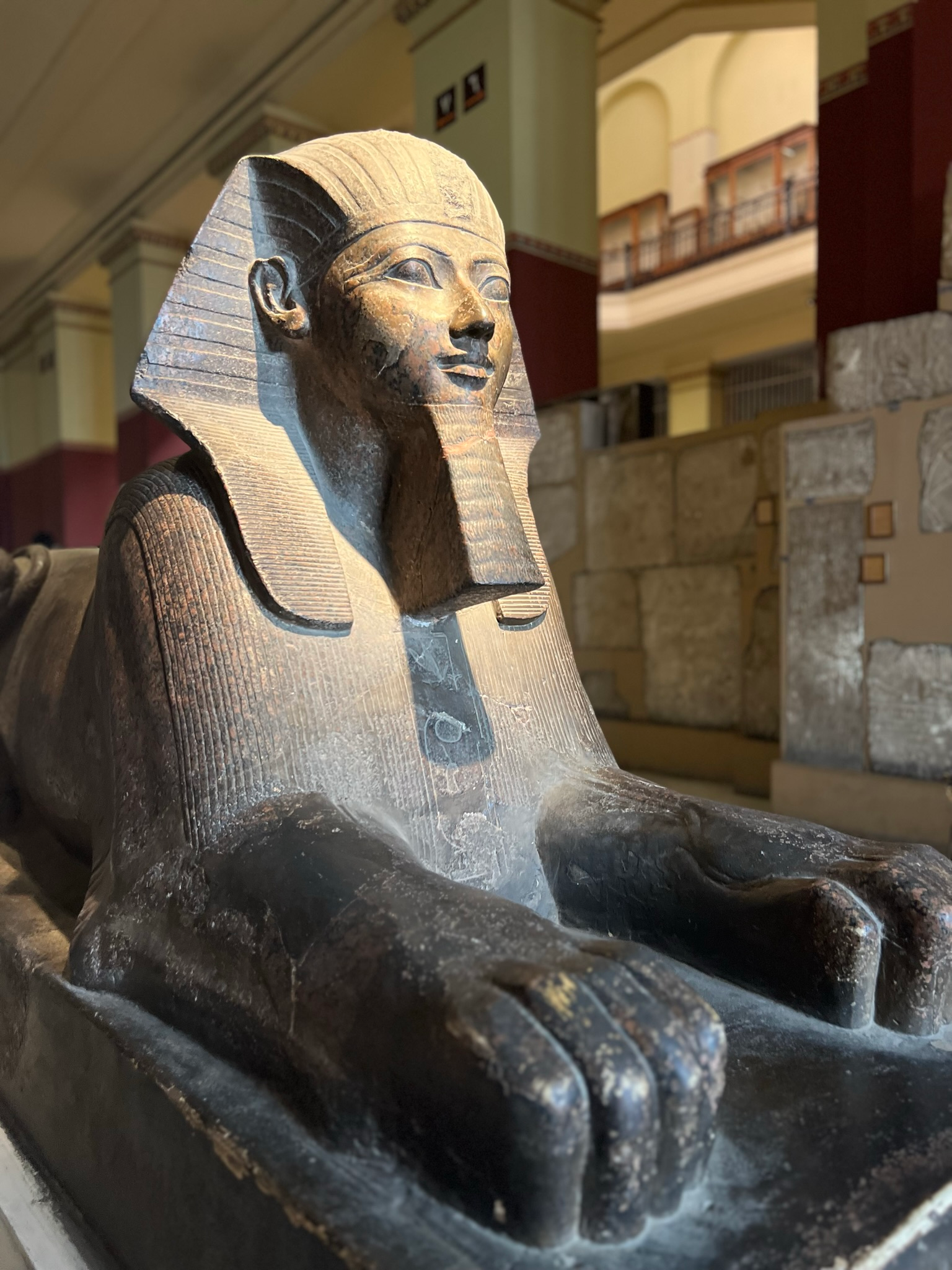
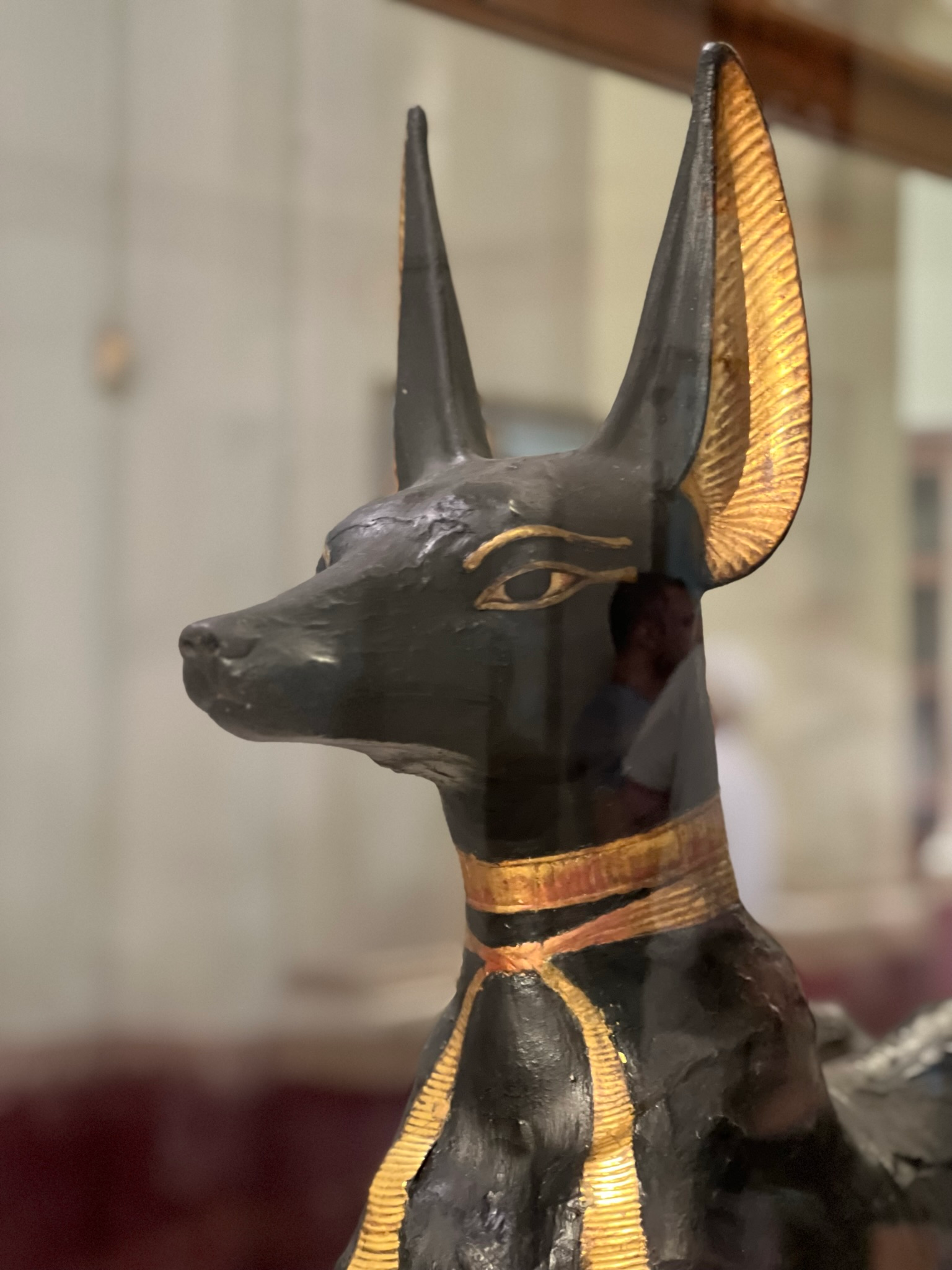
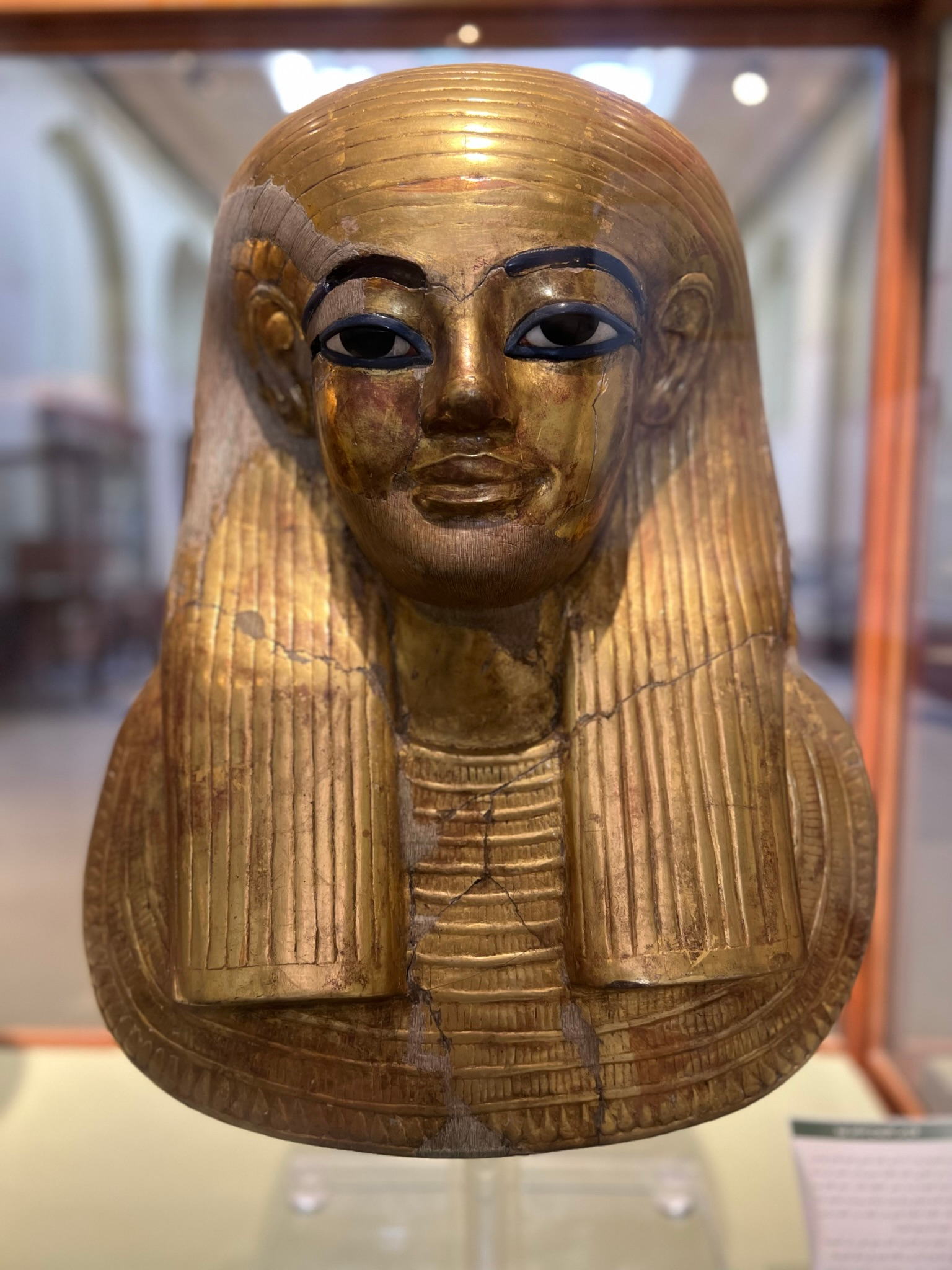
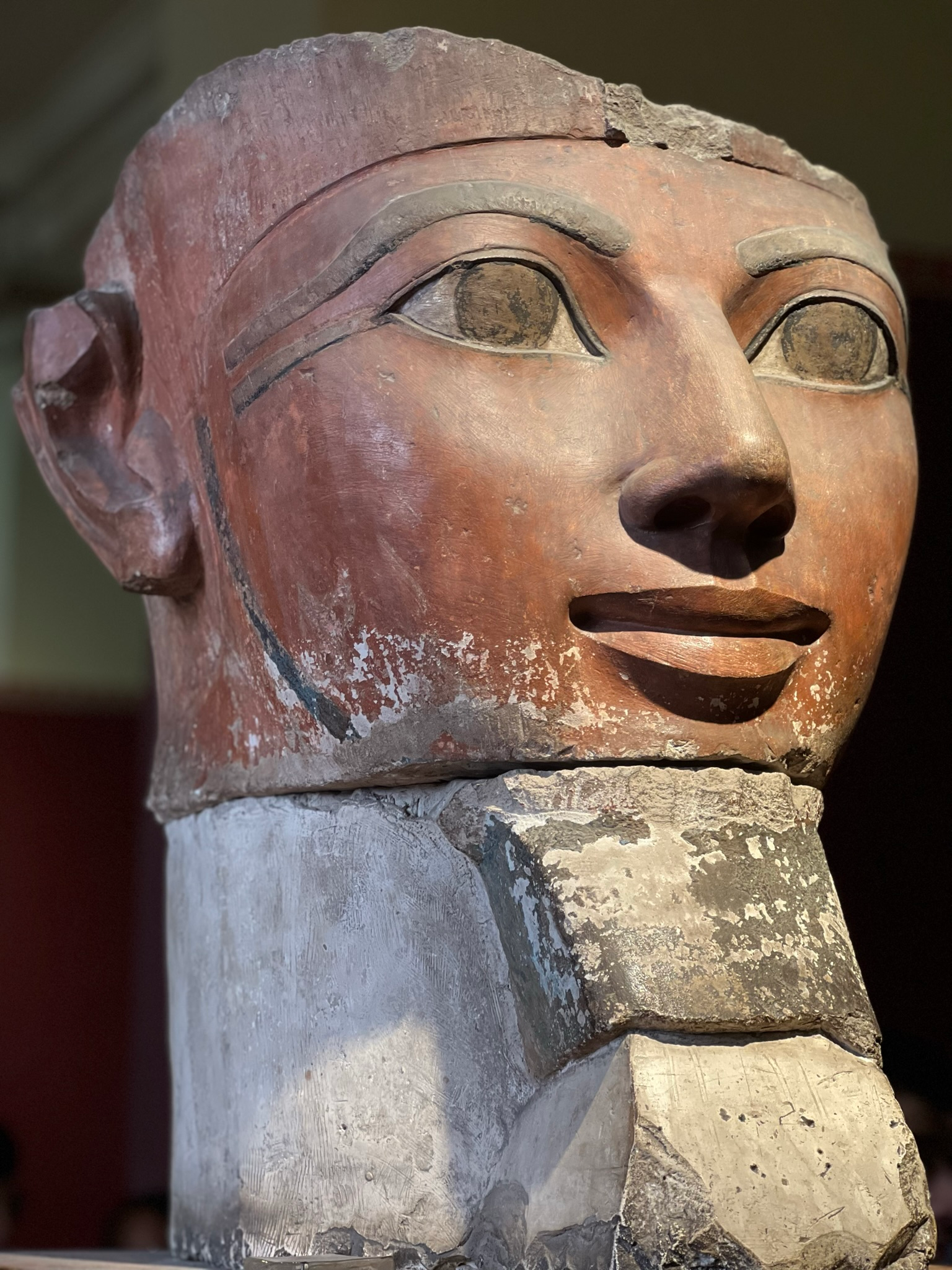
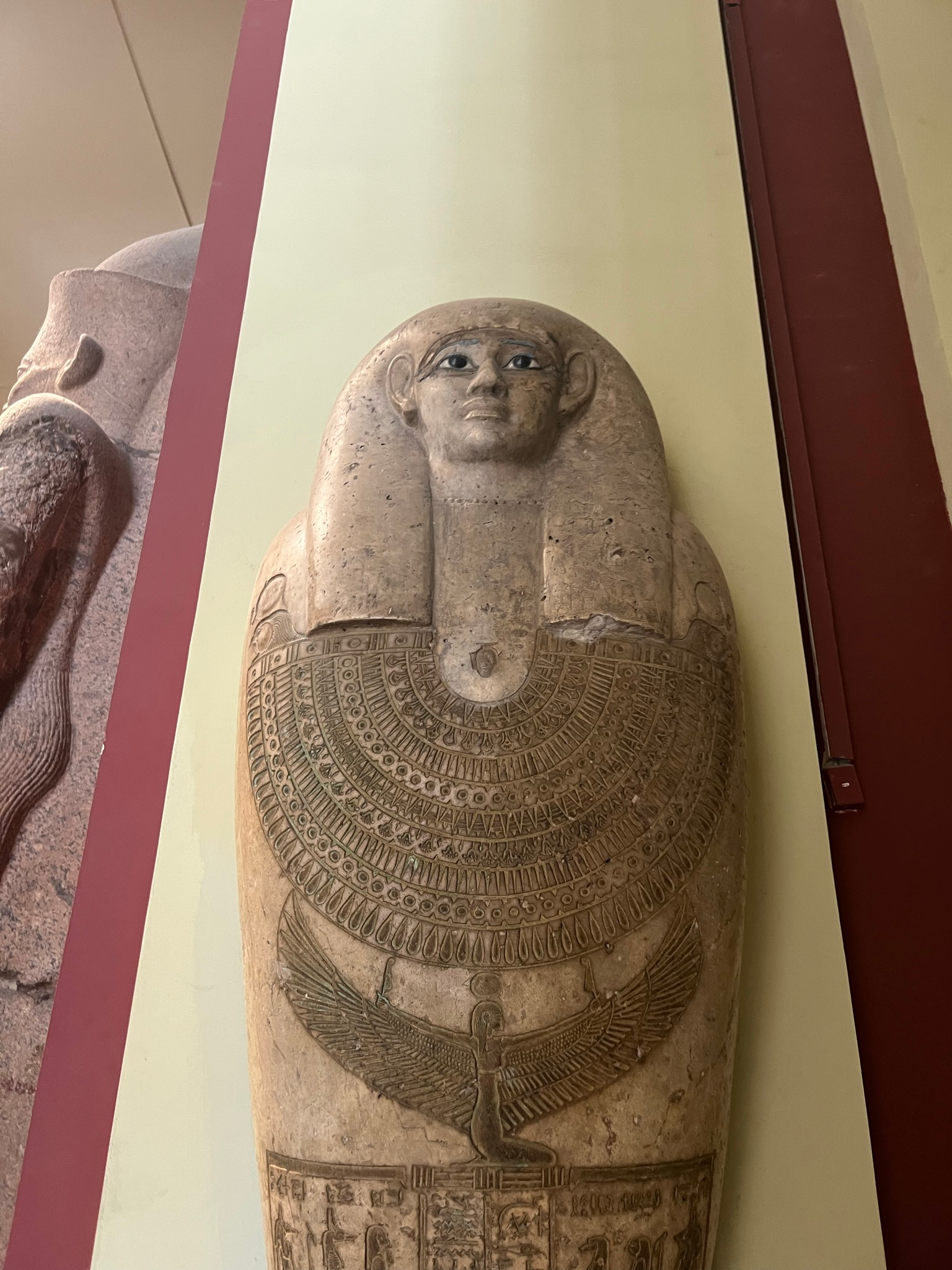
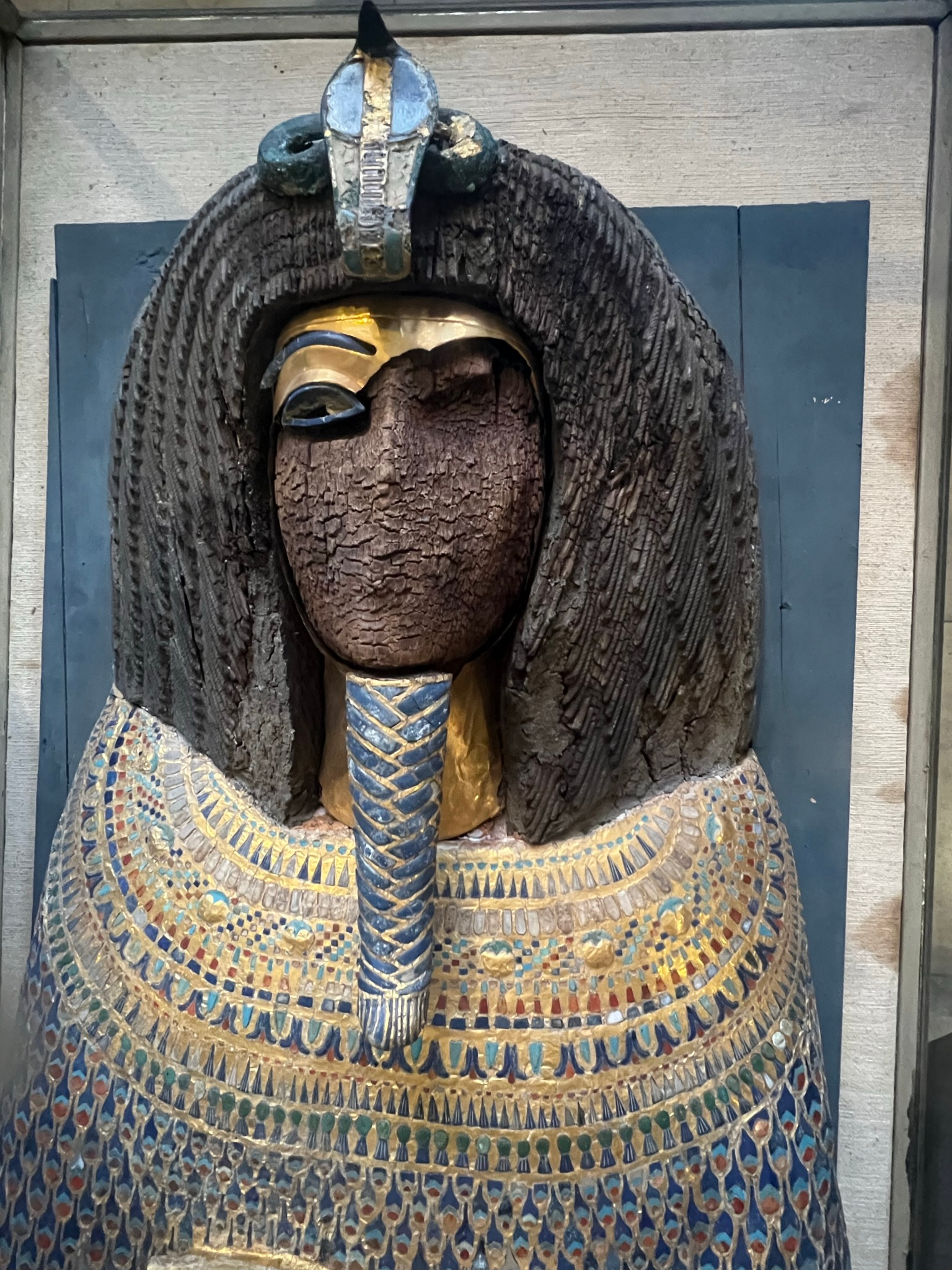
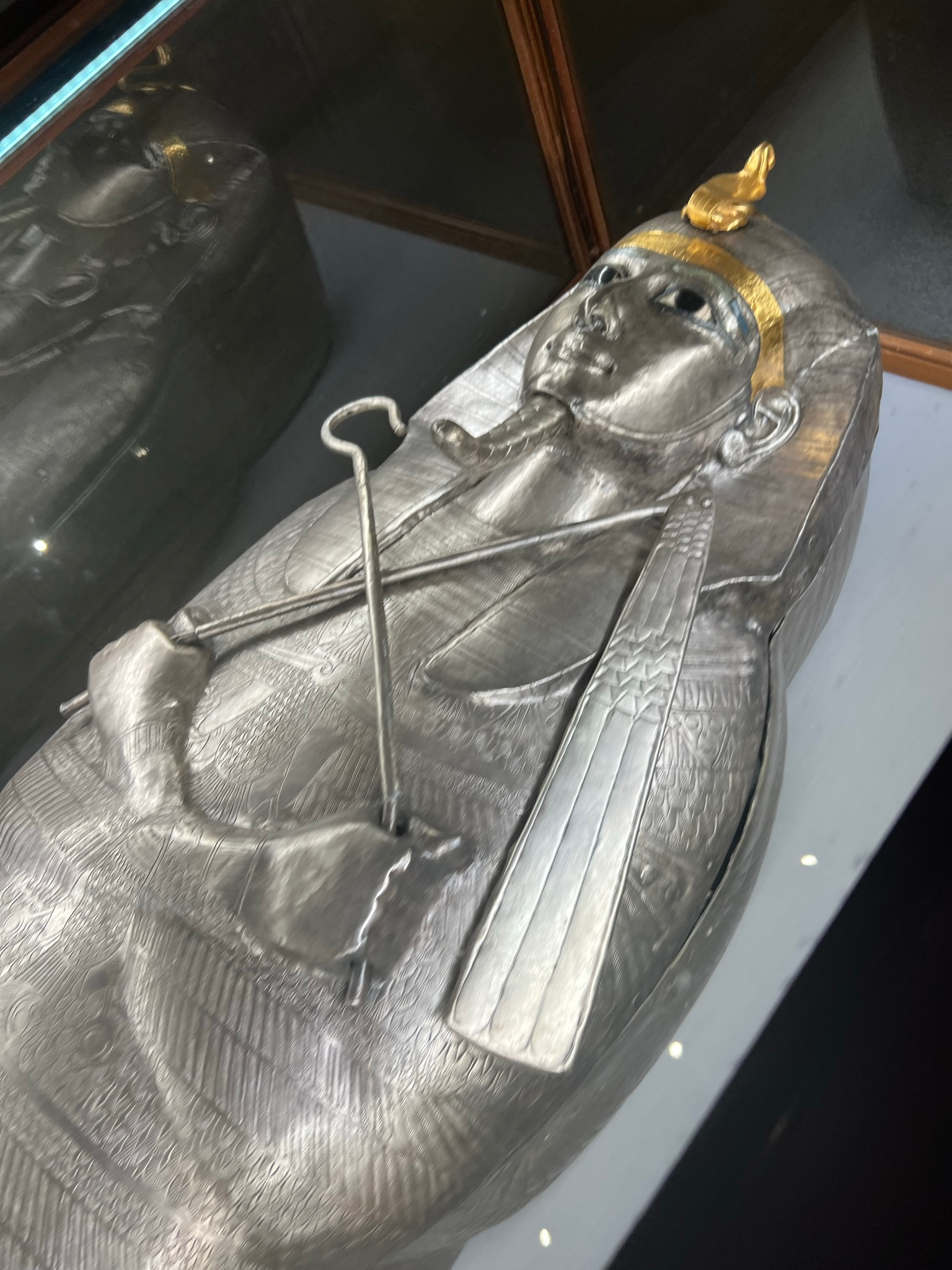
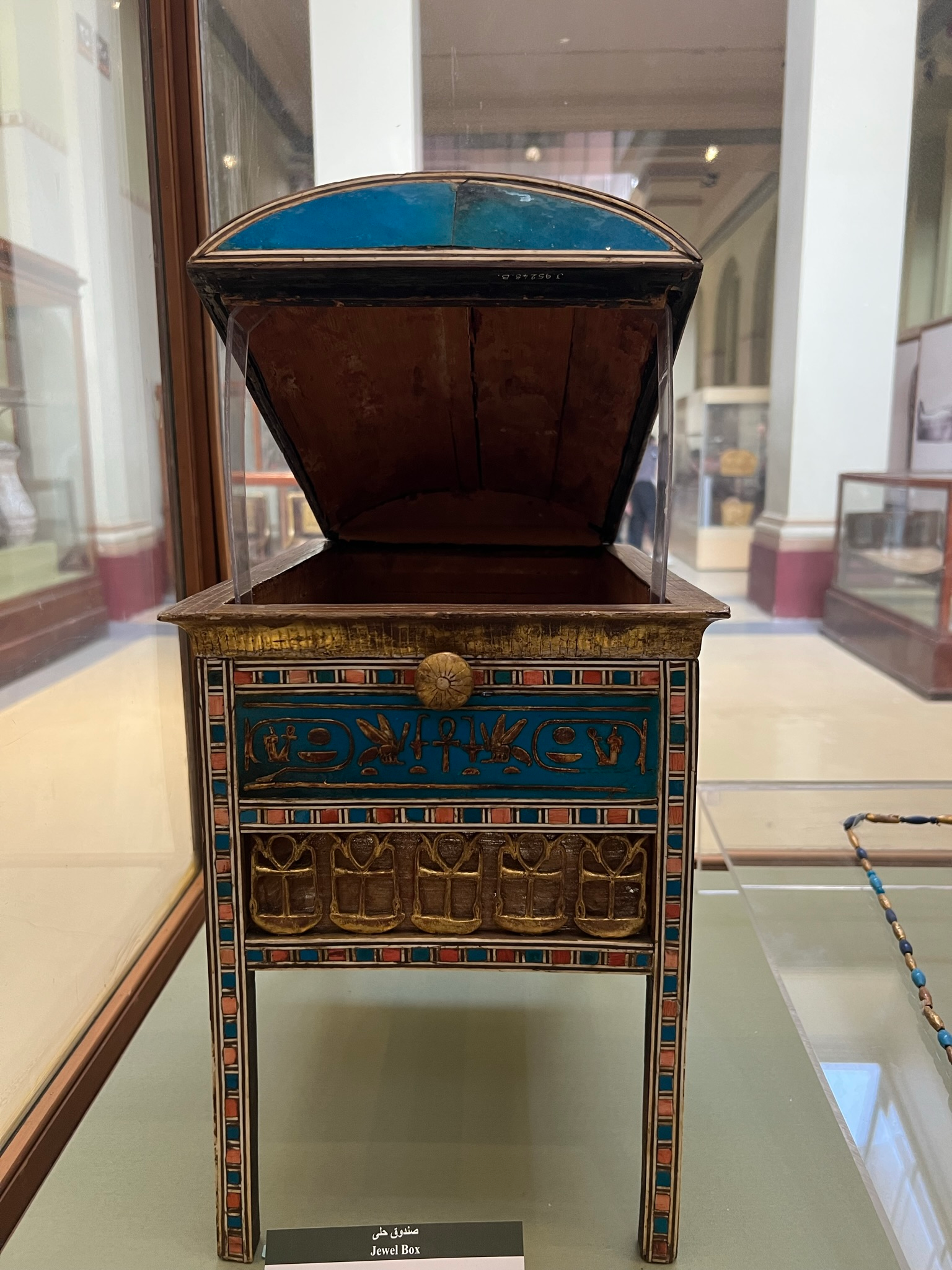
The Golden Age of the Pharaohs
The tour then led us to the New Kingdom – the period during which Ancient Egypt experienced unprecedented wealth and territorial expansion.
During this time, Thebes, now known as Luxor, became the capital and a major religious centre dedicated to the cult of Amun. Monumental complexes such as Karnak Temple and Luxor Temple reflected the central role religion played in Egyptian society. Many of Egypt’s most famous rulers reigned during this period, including Hatshepsut, Thutmose III, Tutankhamun, and Ramesses II.
With Ramesses II being Mo’s favourite (and mine as a kid), he gave us a bit of background on his life. Regarded as one of Egypt’s greatest pharaohs, Ramesses II was remarkable by any standard. He led numerous military campaigns, oversaw extensive construction projects including Pi-Ramesses, Abu Simbel, and the Ramesseum, and ruled for approximately 66 years – one of the longest reigns in Egyptian history.
If that wasn’t enough, he is believed to have had more than 200 wives and fathered more than 100 children. His chief wife, Nefertari, remains one of the most celebrated queens of Ancient Egypt.
Standing Before Tutankhamun
The New Kingdom exhibition was undoubtedly the most impressive. I mean, how could it not be? There, in all its glory, was the museum’s pièce de résistance and arguably the object that symbolises Ancient Egypt for most people – the funerary mask of Tutankhamun.
I could hardly believe my eyes the moment I stood before it. I was utterly mesmerised and in awe, in pure disbelief that such perfection could exist. This was the very object my childhood self had idolised and revered. And there it finally was.

We spent the longest time exploring King Tut’s exhibition. Apart from his mask, we admired the solid-gold coffins in which he was buried, the gilded shrines surrounding them, and the vast riches interred alongside him. After that, we moved on to the final part of the museum, covering the decline of native Egyptian rule.
The Third Intermediate Period was marked by political fragmentation and periods of foreign influence. Later, Egypt was conquered by the Persians. The Late Period eventually gave way to the Hellenistic era following Alexander the Great’s conquest of the Persian Empire. Egypt was subsequently ruled by the Ptolemaic Dynasty for nearly three centuries, with Alexandria serving as the capital. Following the death of Cleopatra VII, Egypt became a province of the Roman Empire until the Arab conquest in the seventh century AD.
PART II
Koshary, Chaos and Cairo's Streets
After feasting on a plate of koshary, Egypt’s national dish which consists of… well, everything – pasta, rice, vermicelli, lentils, chickpeas, tomato sauce, garlic vinegar, and crispy fried onions – we opted for a relaxed walk around Cairo.
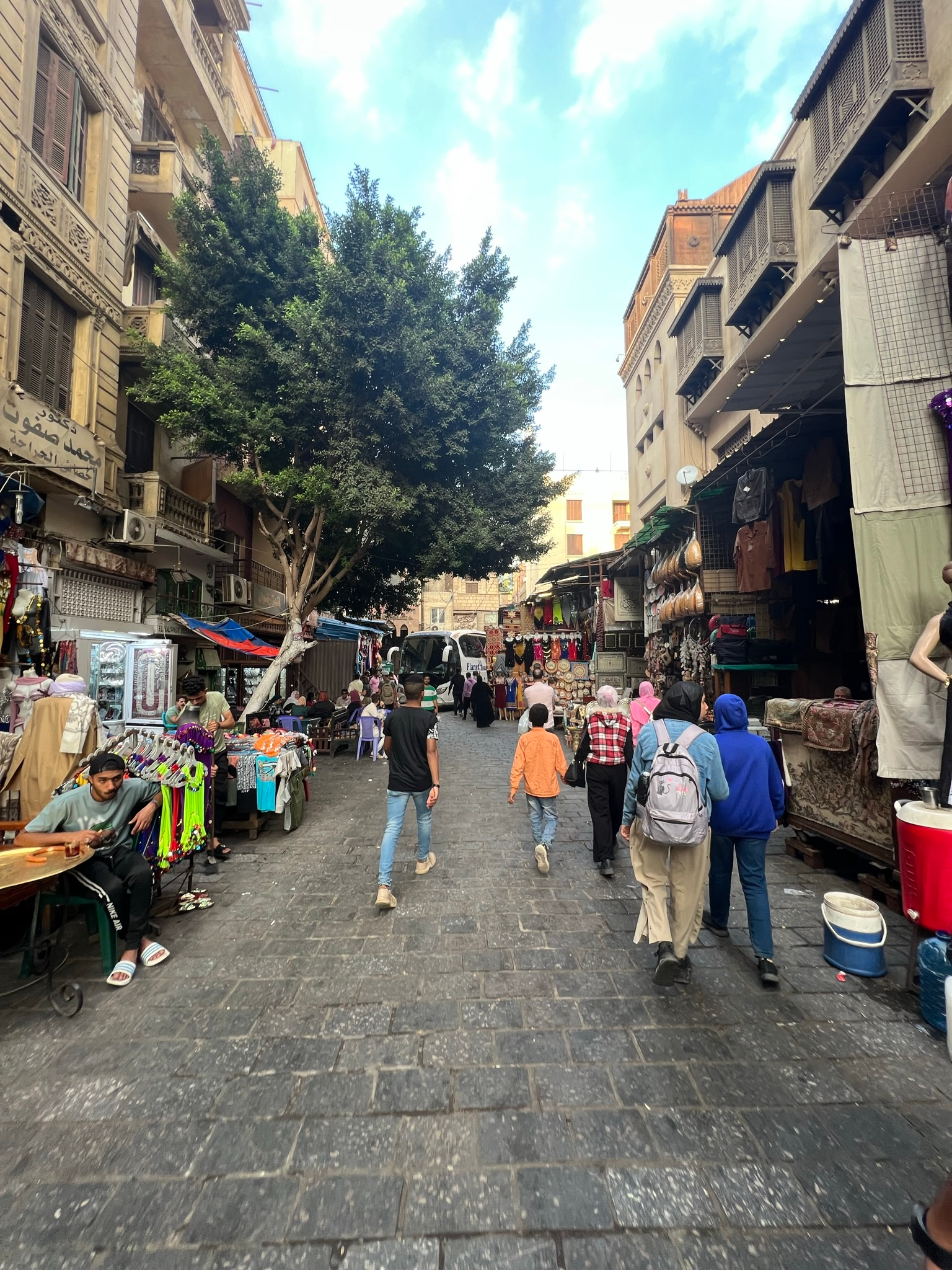
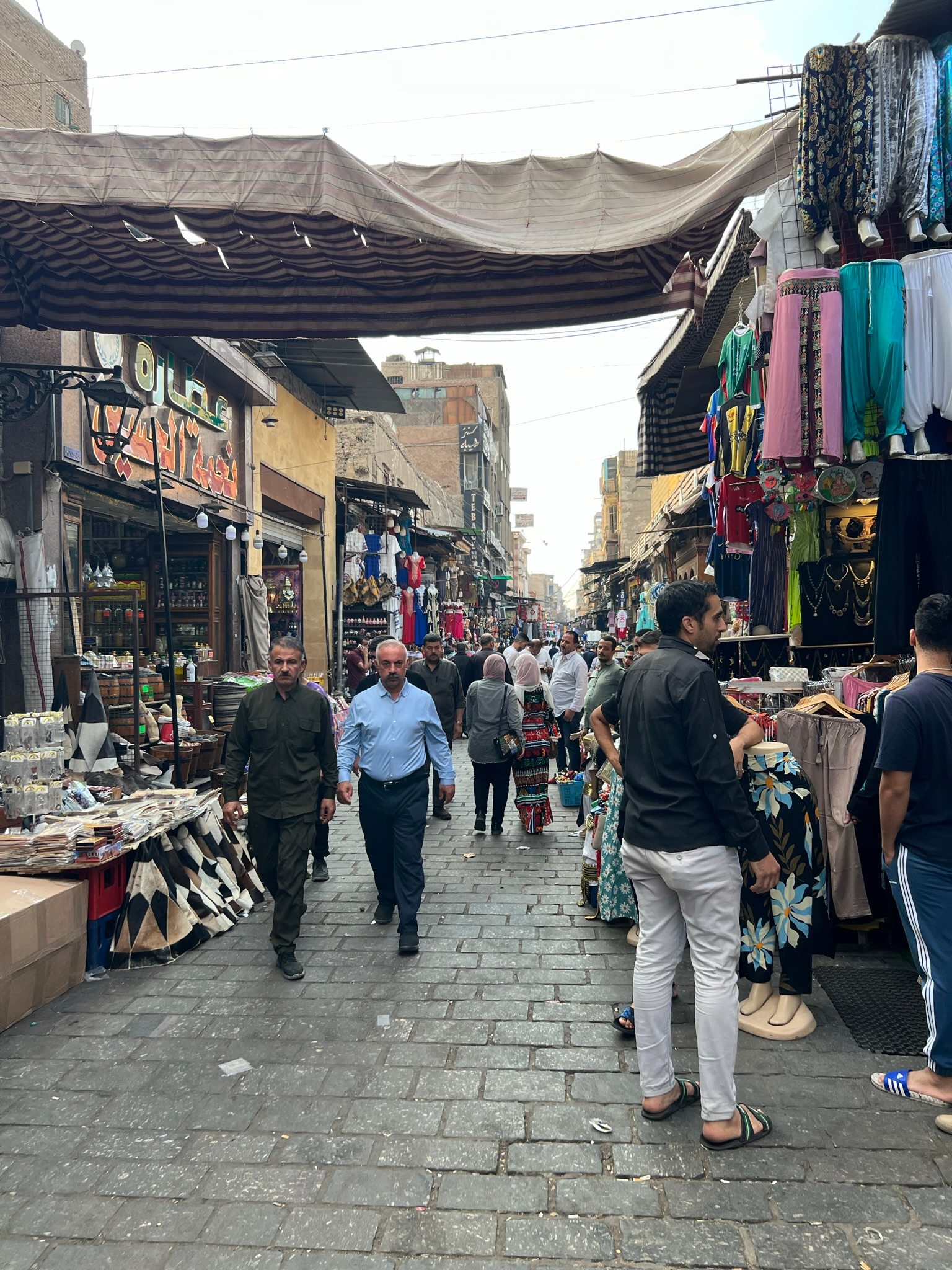
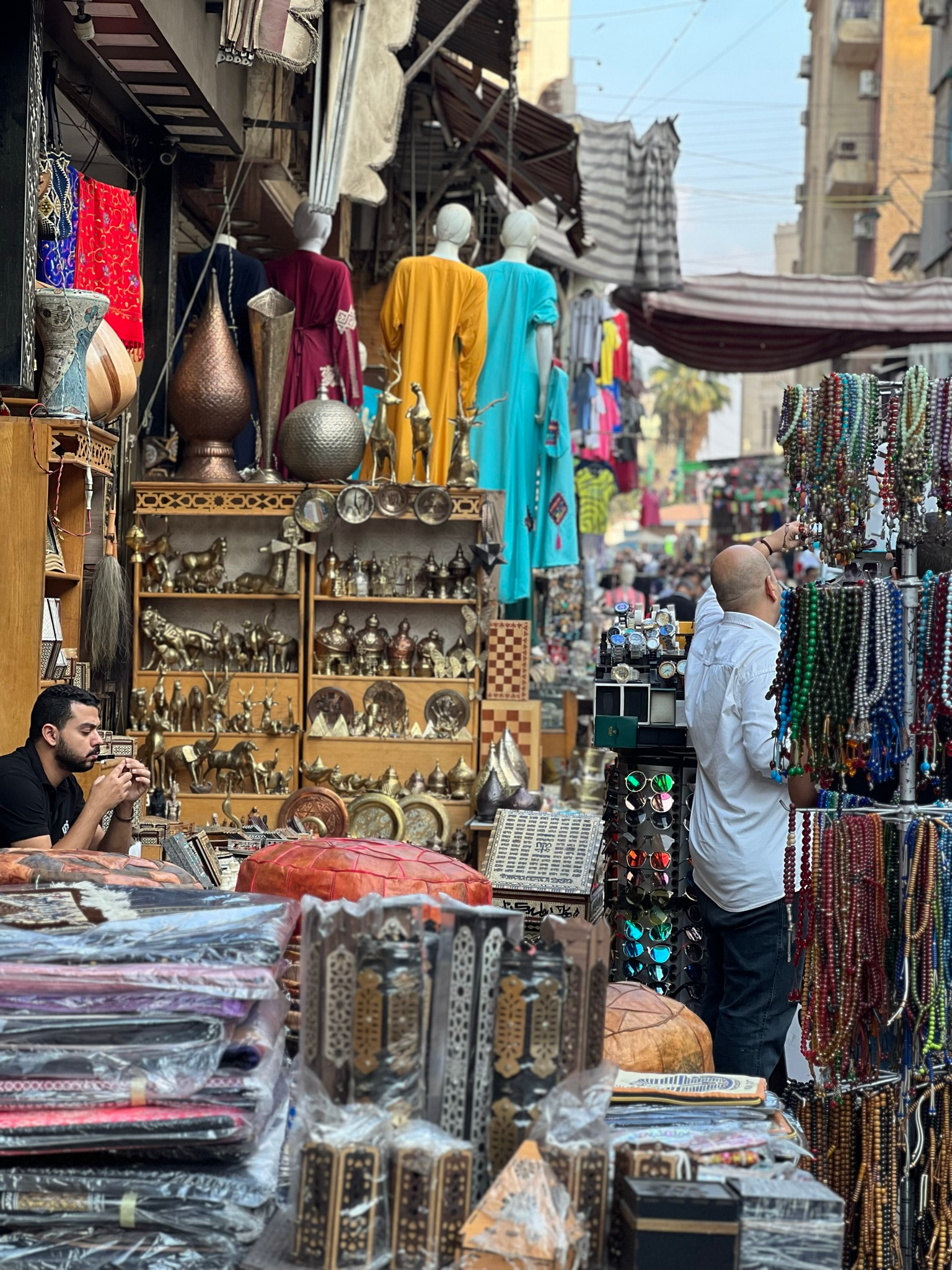
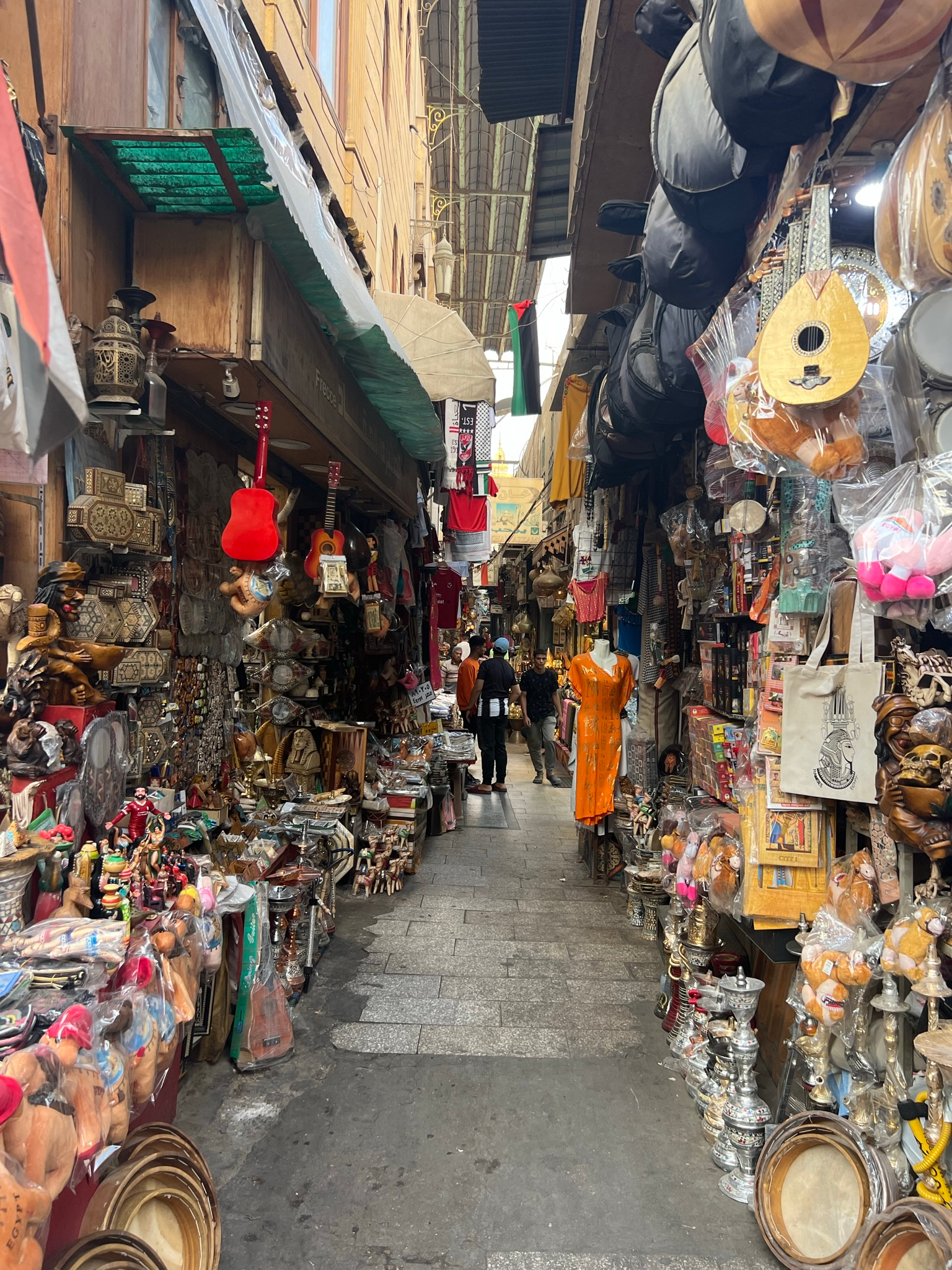
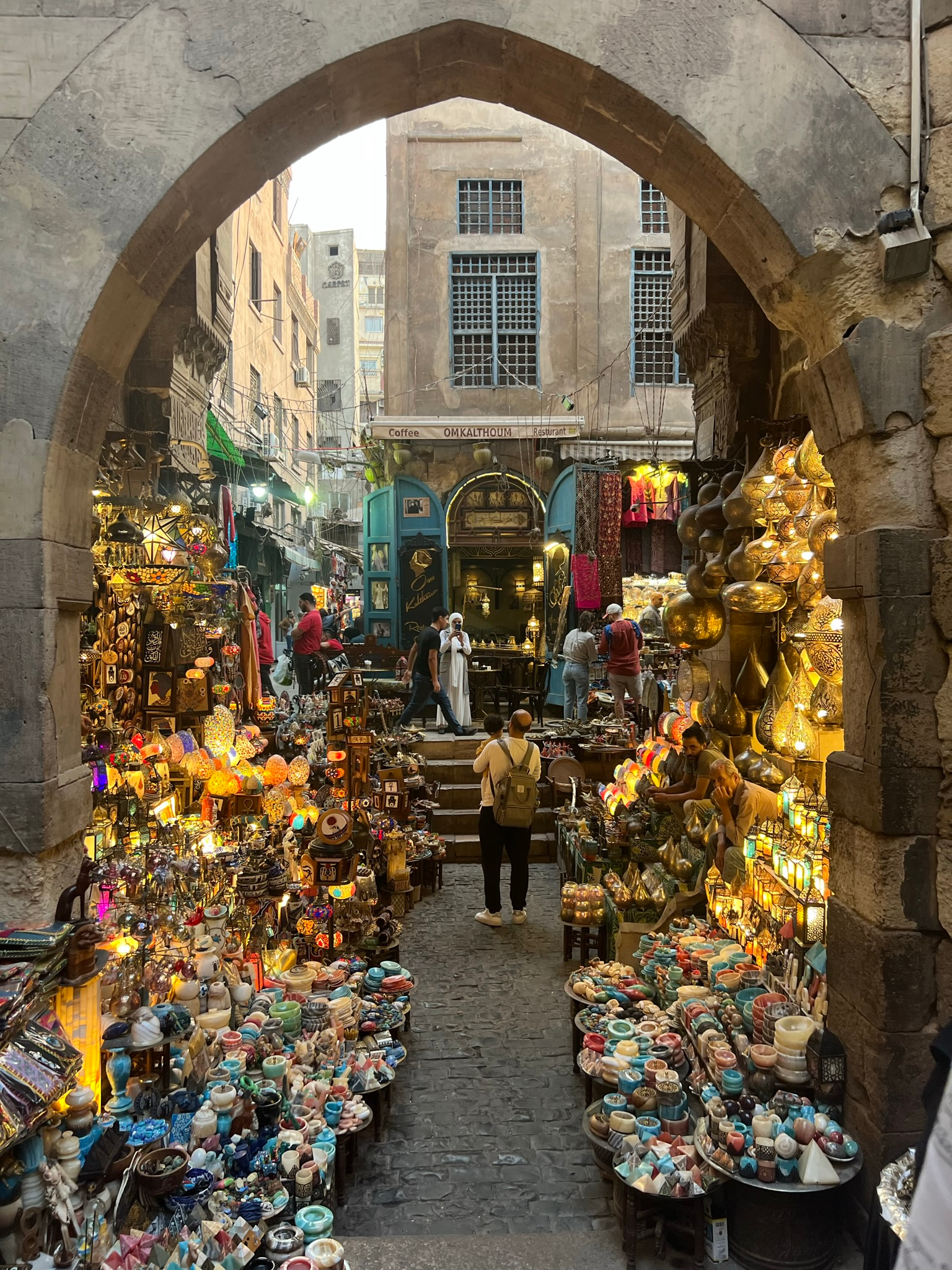
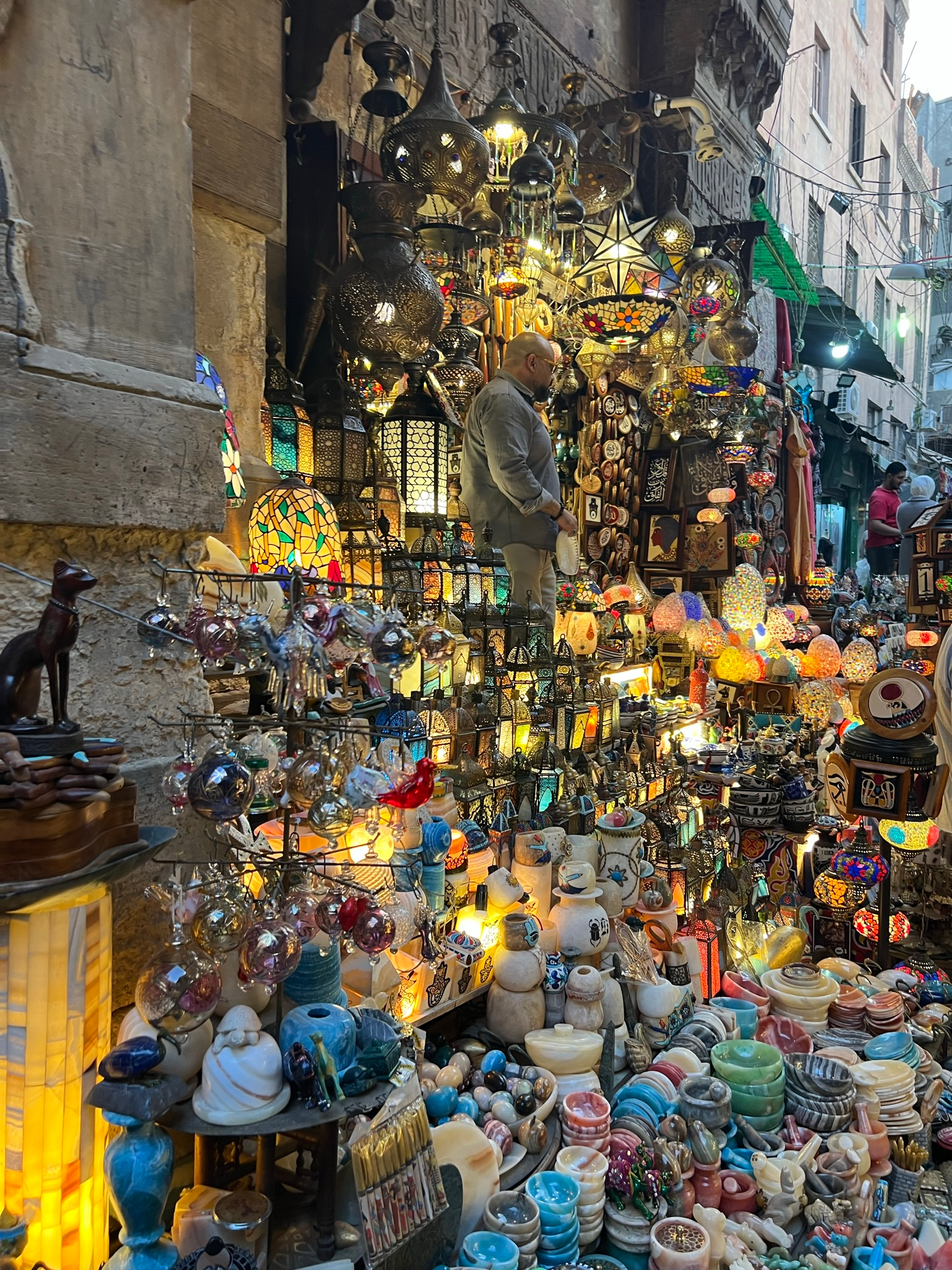
First up was Khan el-Khalili, a historic bazaar where all kinds of traditional crafts and souvenirs are sold. Here, we wandered around, bought our fair share of souvenirs, and were relentlessly pestered by salesmen trying to convince us theirs were better than everyone else’s. Beautiful chaos. Especially around Bab al-Ghuri, an ornate medieval gate near a collection of colourful mosaic lamp shops that made for a truly charming scene. It kinda offset the gory fight that unfolded right in front of us in the souk, but oh well.
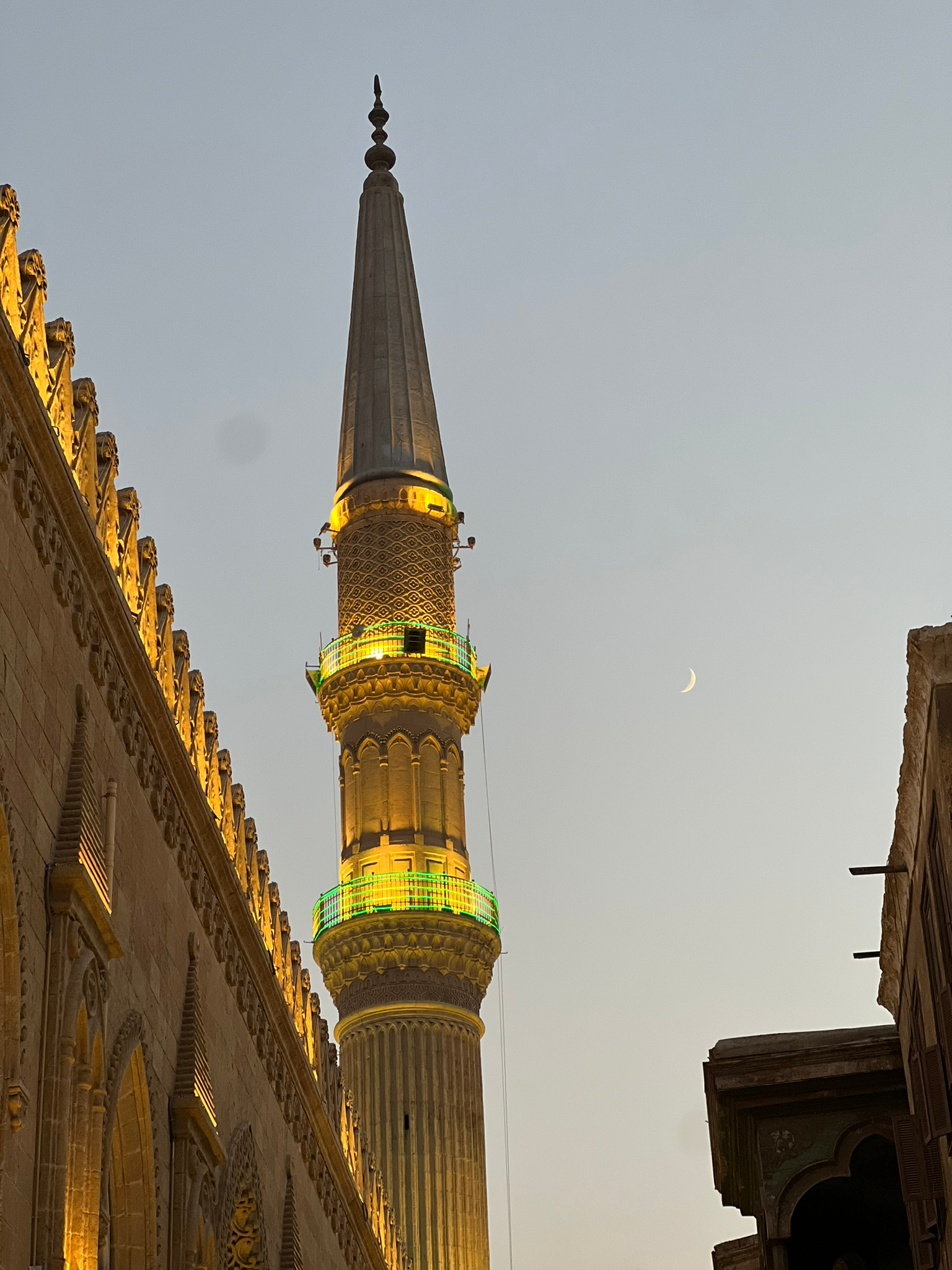
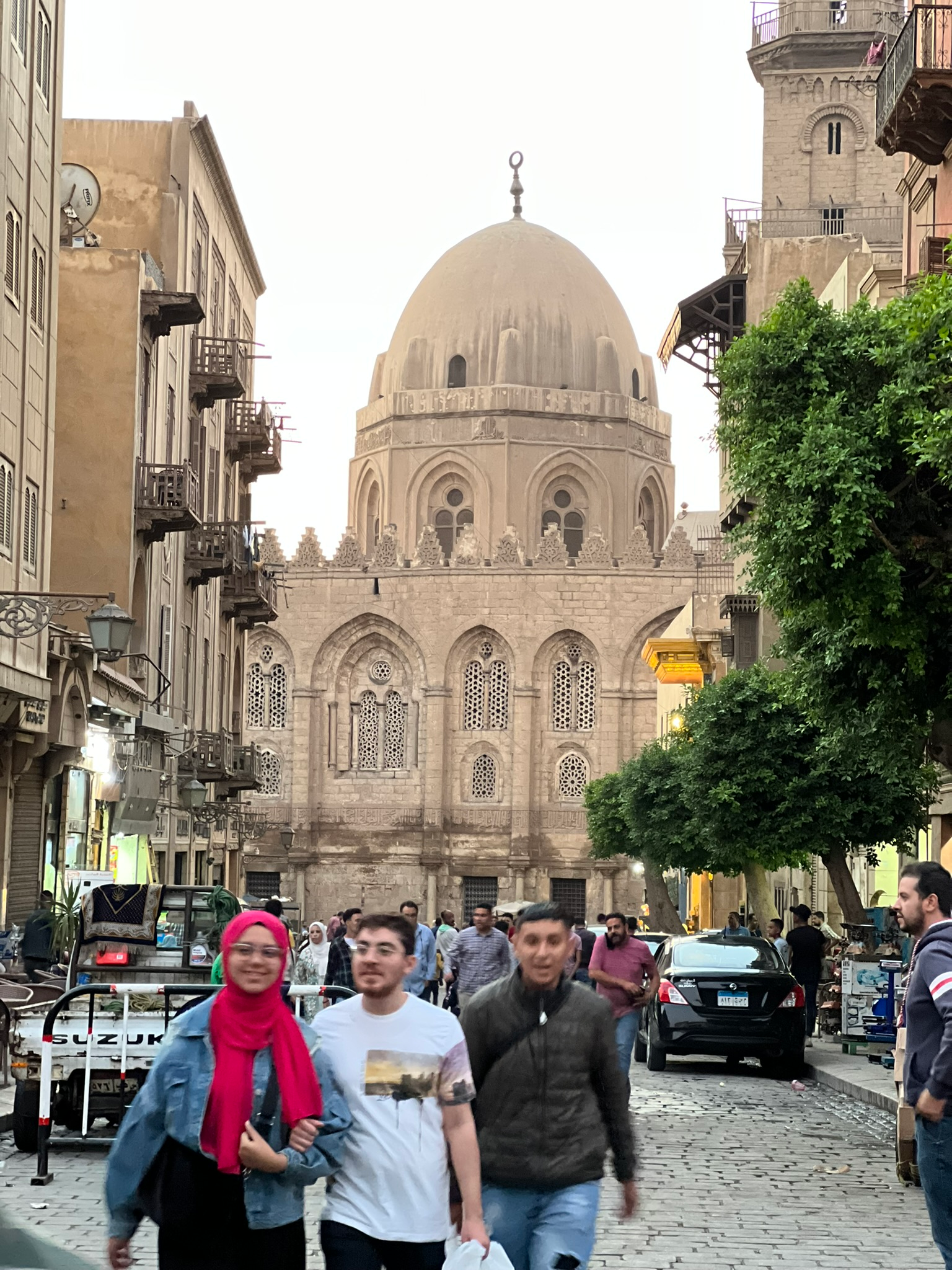
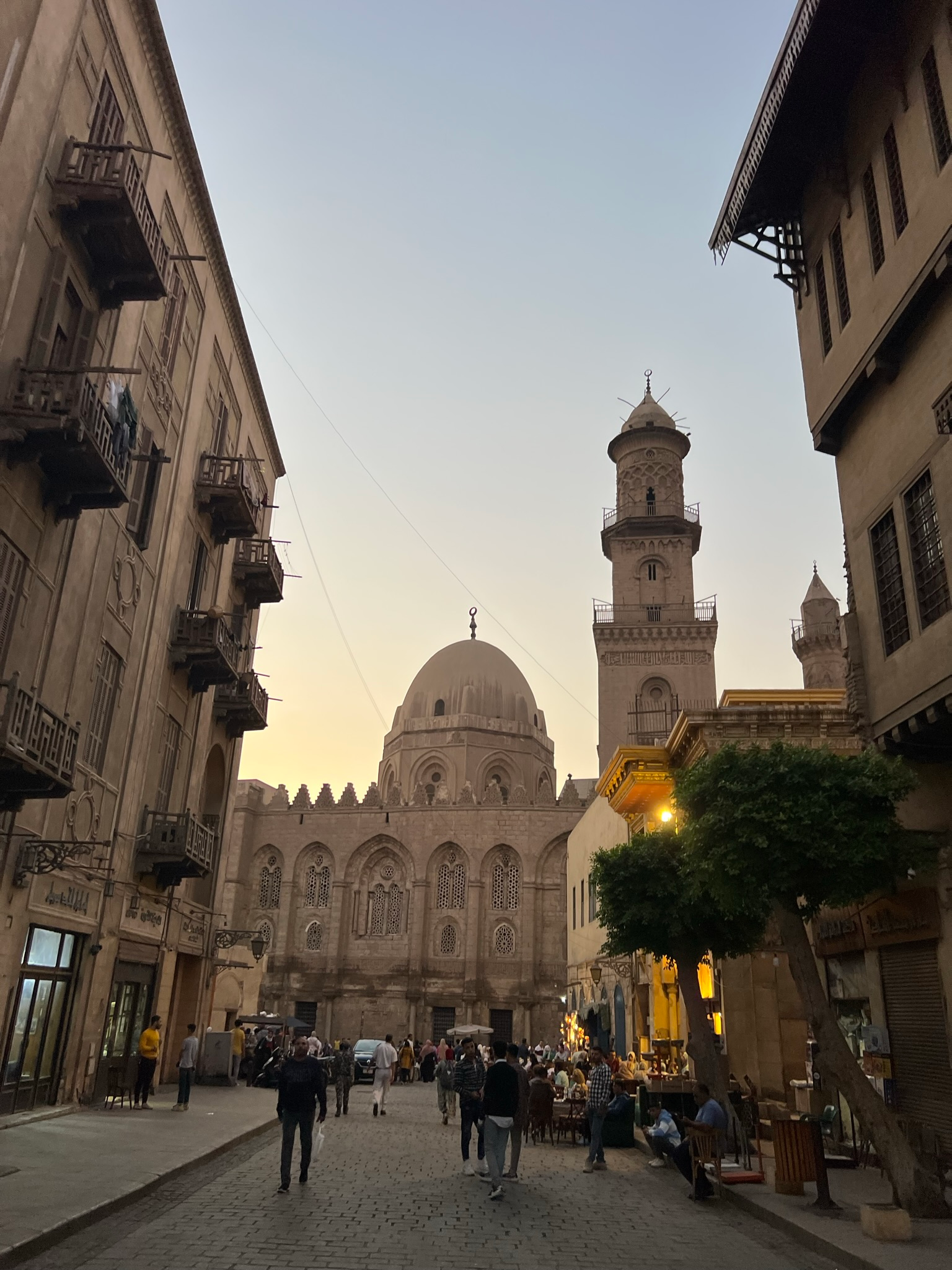
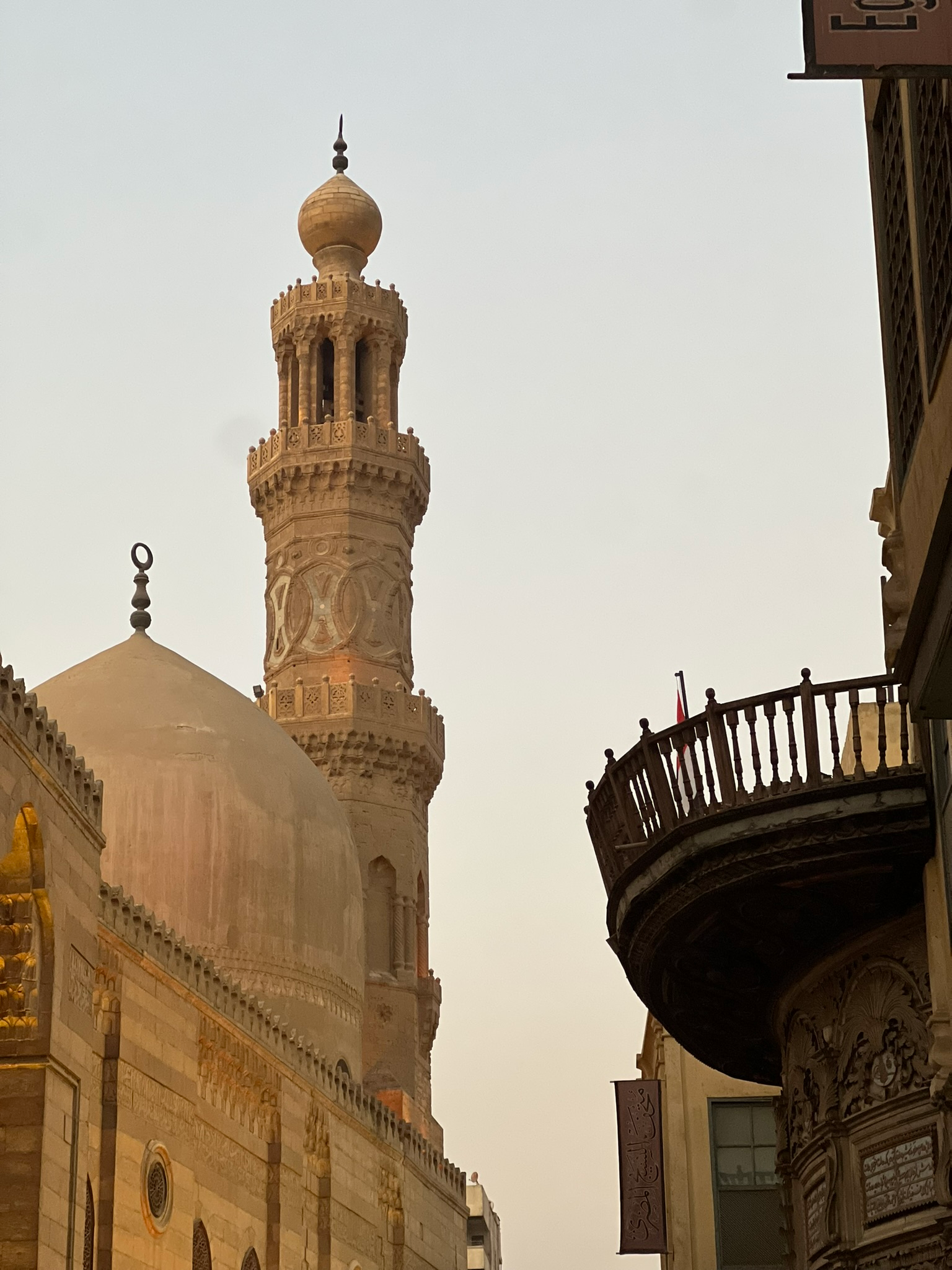
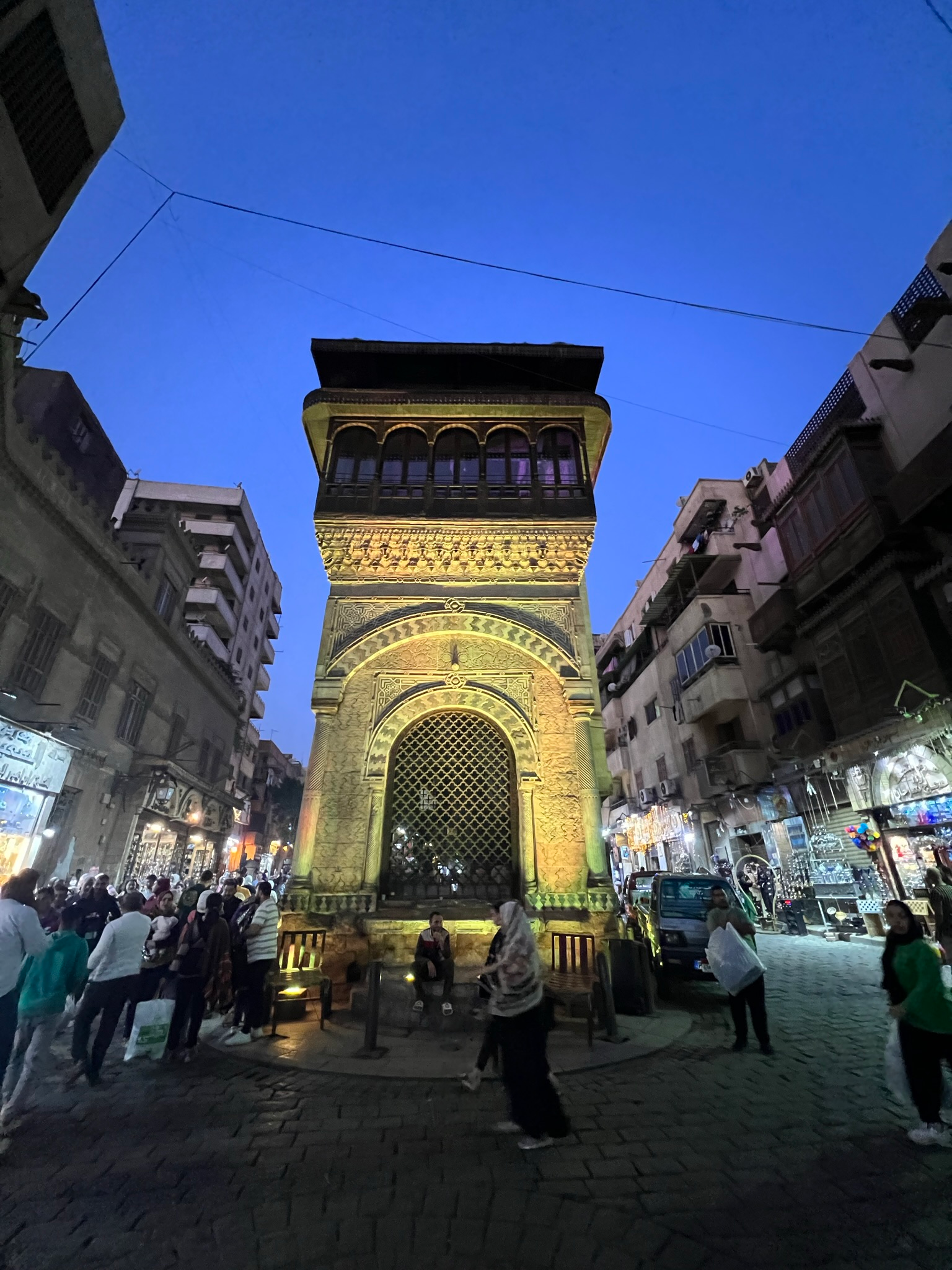
Then we roamed Cairo’s streets, with Mo going out of his way to explain every single thing we weren’t quite accustomed to. Like the sabils – ornate public drinking fountains that played an important role during the Ottoman period, providing free water to travellers and residents alike. Also dotting the streets are minarets – tall towers from which the call to prayer is traditionally announced. Historically, a muezzin would call worshippers from the top of the tower. Nowadays, loudspeakers are generally used instead. The call begins with “Allahu Akbar”, meaning “God is Greatest”.
Islam 101
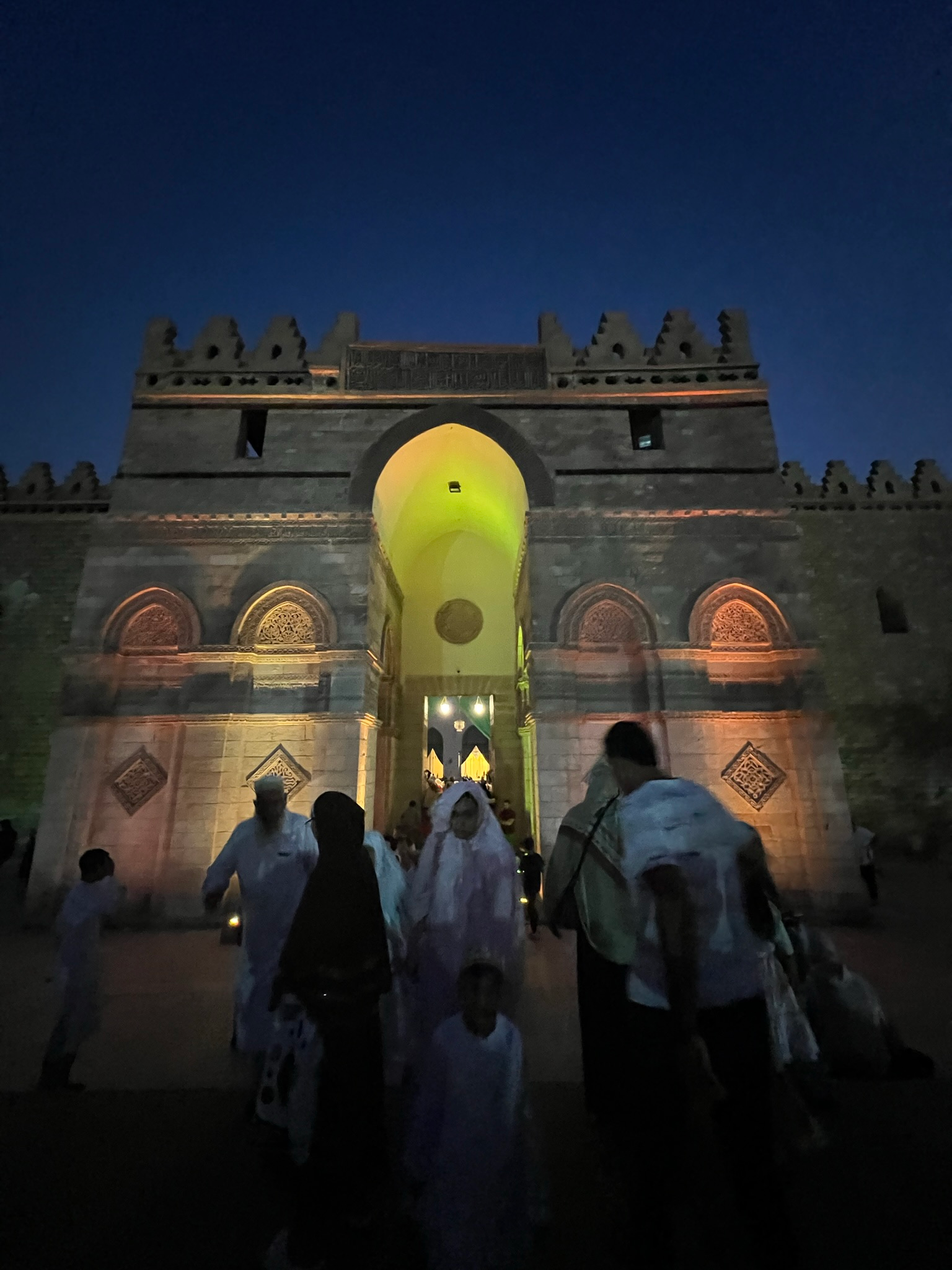
Speaking of prayer, our final highlight of the day was Al-Hakim Mosque, one of the oldest surviving mosques in Cairo.
Before entering, Mo gave us a brief overview of Islam. Founded in the seventh century through the teachings of the Prophet Muhammad, Islam is a monotheistic Abrahamic religion centred on the belief in one God – Allah. Muslims regard Muhammad as the final prophet in a line that includes Abraham, Moses, and Jesus.
The teachings of Muhammad are preserved in the Qur’an, which Muslims believe to be the literal word of God revealed to him. These teachings emphasise submission to God’s will, compassion, justice, charity, and ethical conduct. While these values unite Muslims worldwide, different branches of Islam exist, the largest being Sunni and Shia Islam.
The core acts of worship that form the foundation of Muslim life are known as the Five Pillars of Islam:
-
-
- Shahada (Faith): “There is no god but Allah, and Muhammad is the Messenger of Allah.”
- Salah (Prayer): Five daily prayers performed facing Mecca.
- Zakat (Charity): Giving a portion of one’s wealth to those in need.
- Sawm (Fasting): Fasting during Ramadan from dawn until sunset.
- Hajj (Pilgrimage): A once-in-a-lifetime pilgrimage to Mecca for those able to do it.
-
Exploring the Architecture of Faith
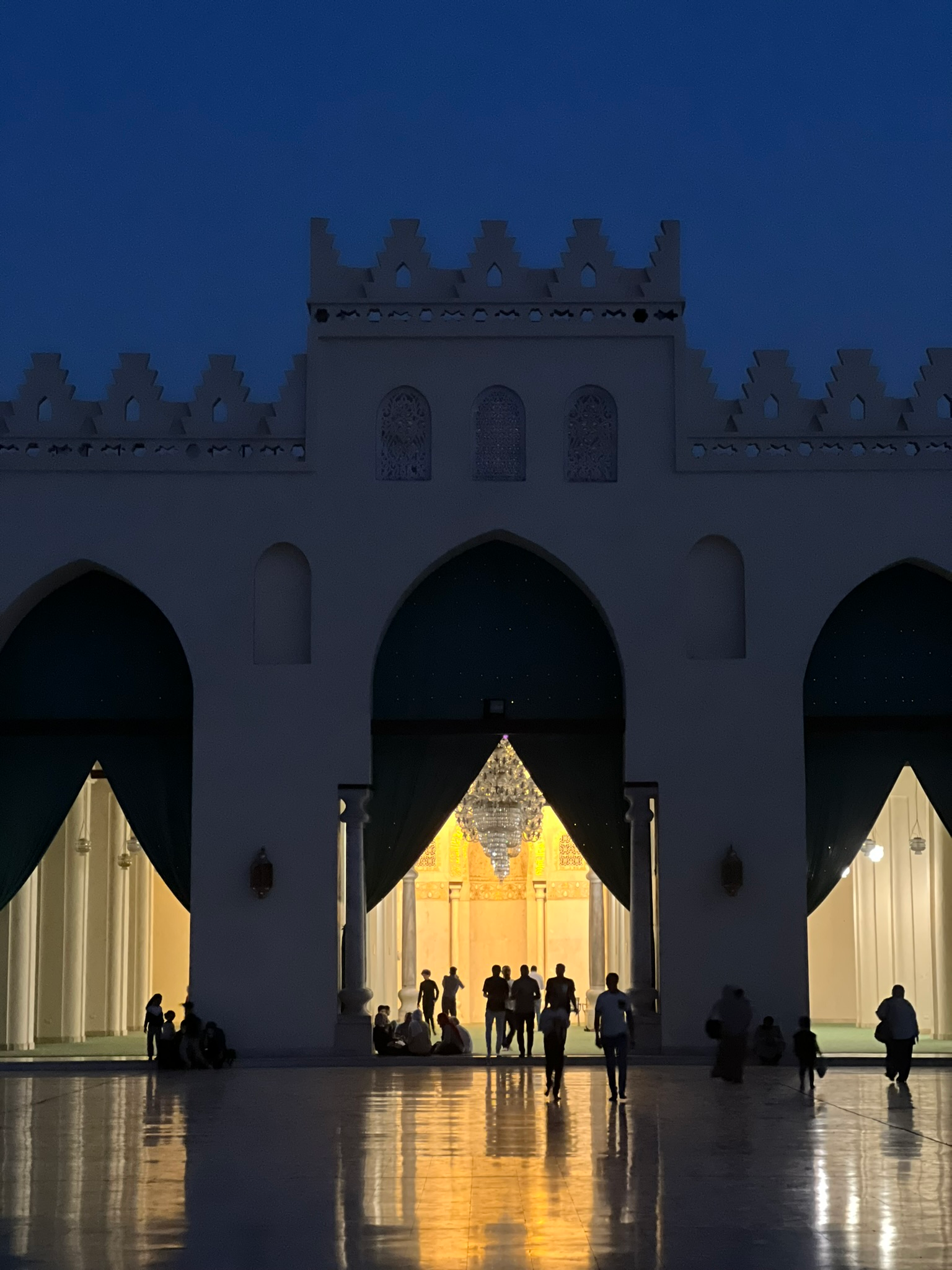
The impressive building features a large rectangular plan with a fortified façade, two distinctive minarets, and a central courtyard containing facilities for ablution, known as wudu.
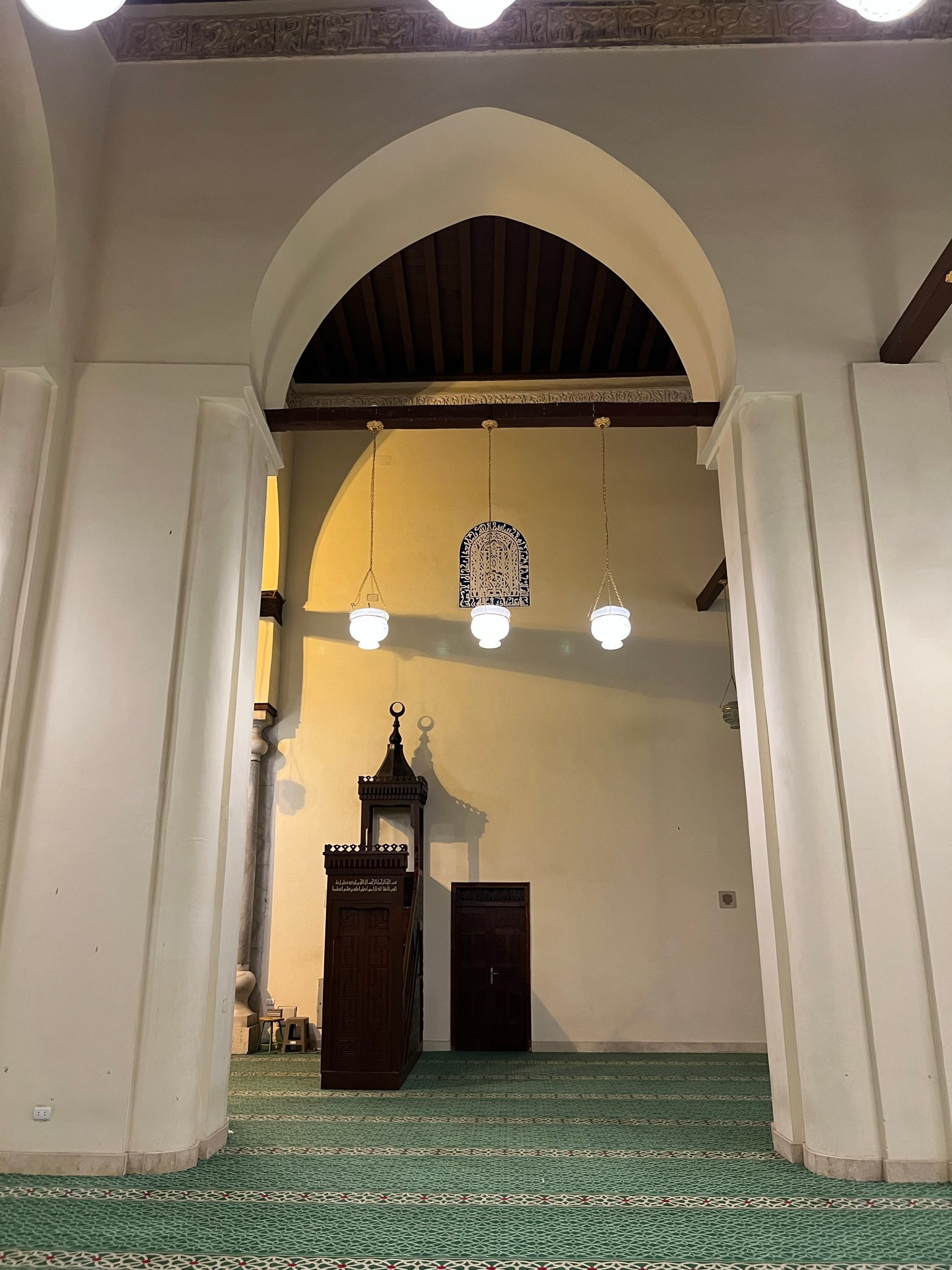
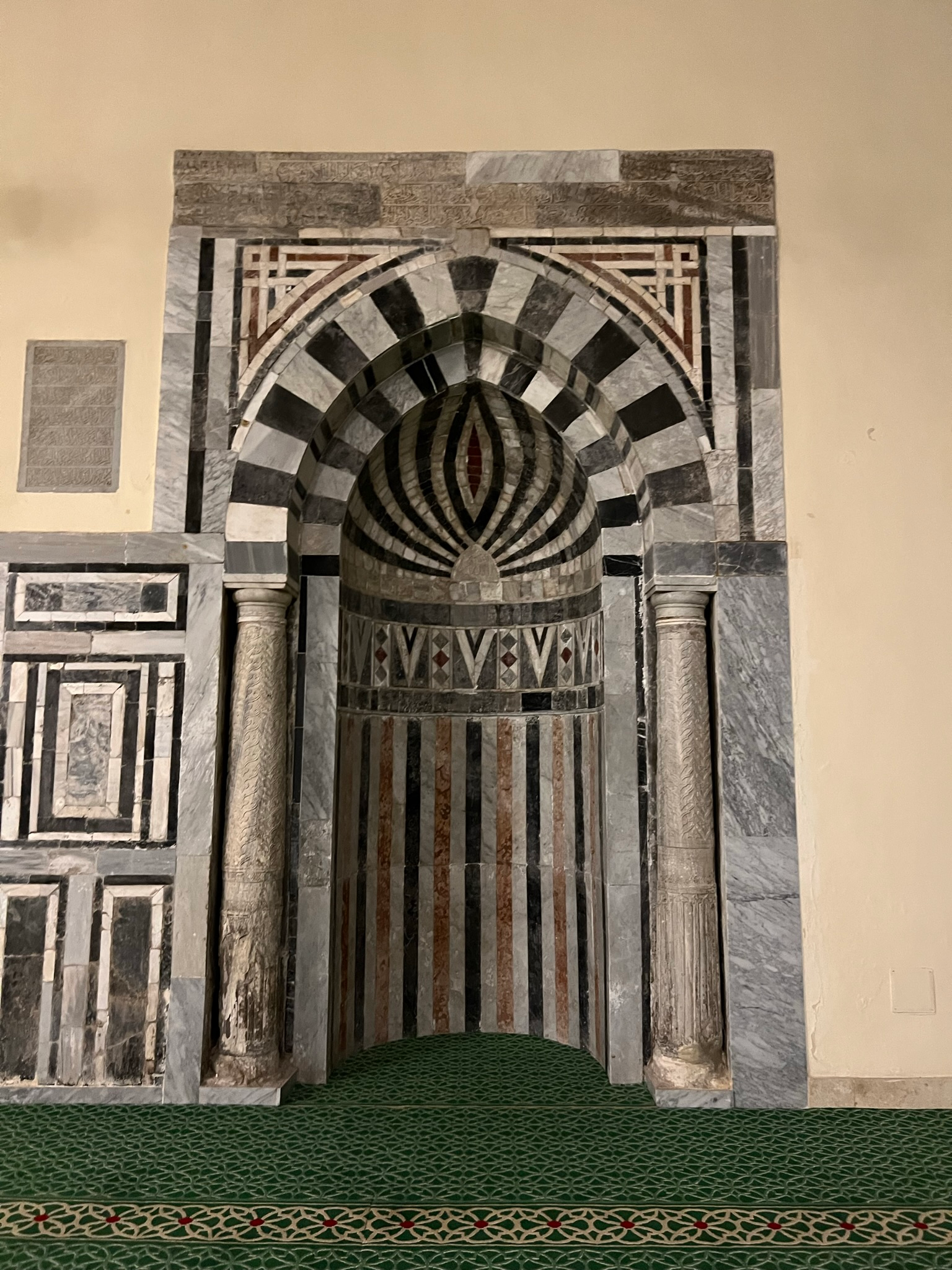
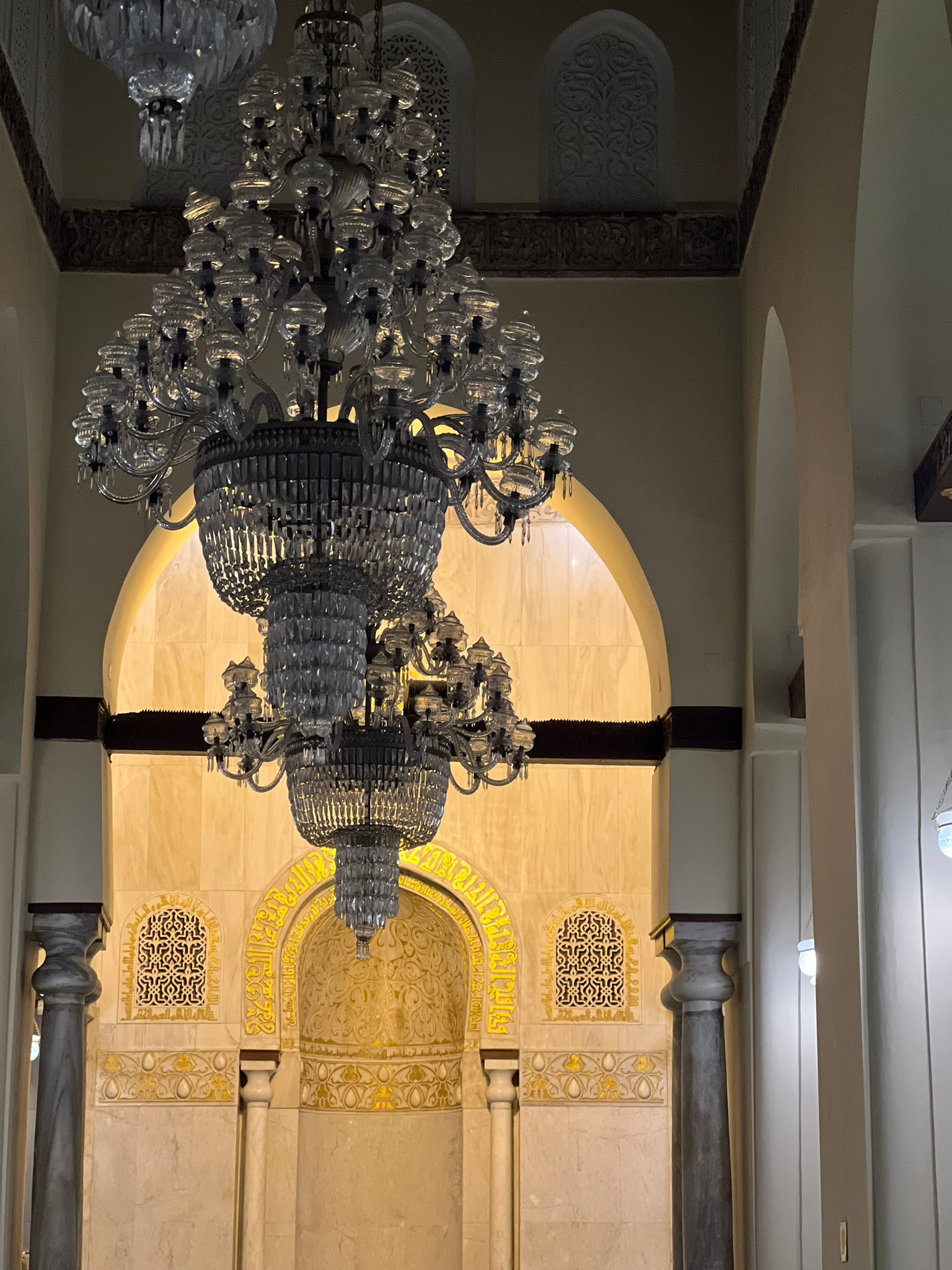
Surrounding the courtyard are arcaded halls known as riwaqs. The most important of these is the qibla hall, which faces the Kaaba in Mecca. Within it lies the mihrab, a niche indicating the direction of prayer. The mosque also contains a minbar, a pulpit from which the imam delivers sermons, particularly during Friday prayers. While the prayer hall is the spiritual heart of the mosque, practices regarding men’s and women’s prayer spaces vary between mosques. At Al-Hakim Mosque, women generally pray in designated areas separate from men.
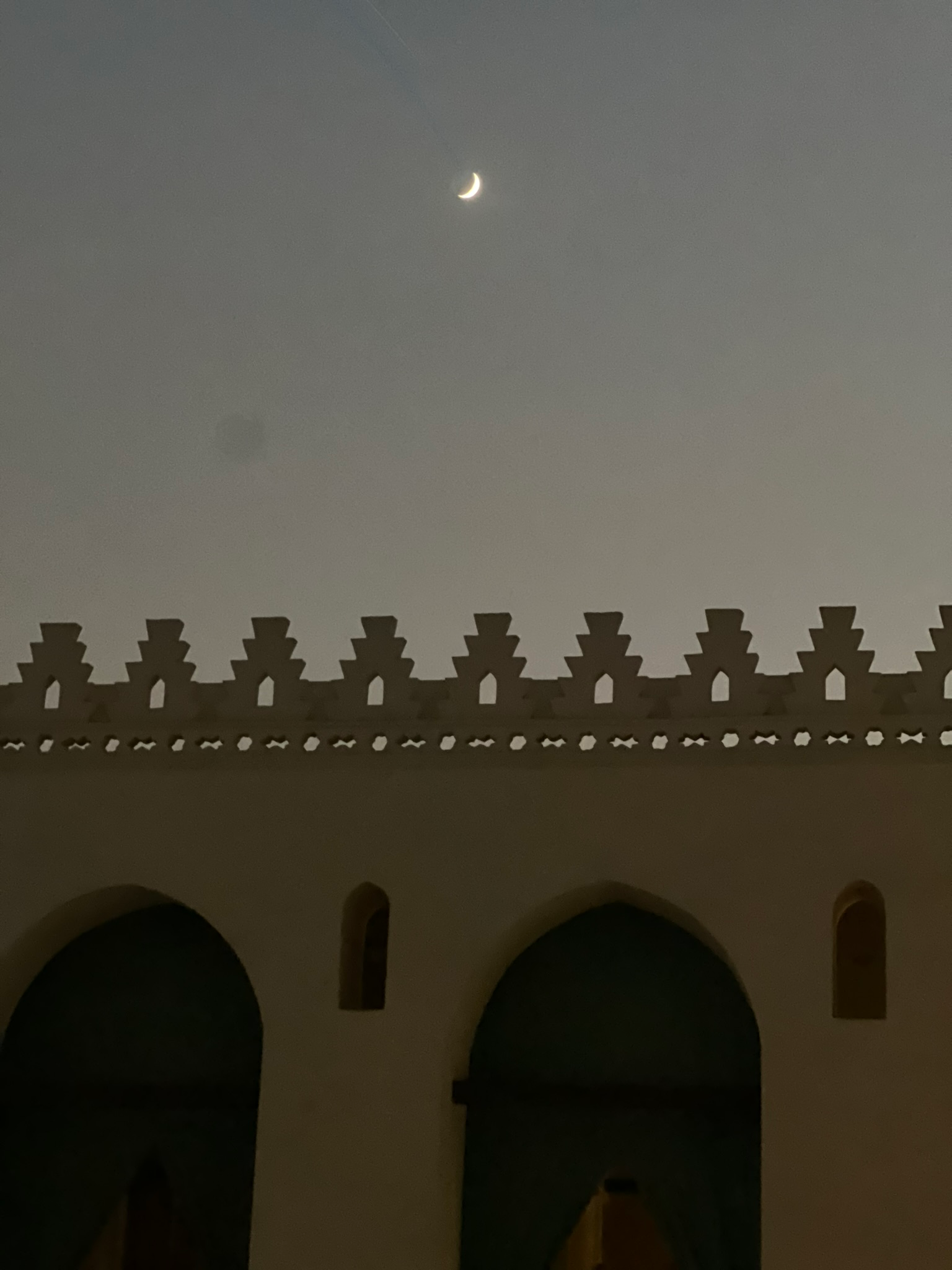
While the interior is richly decorated, there are no images or statues of God. This, Mo explained, is to avoid idolatry and ensure worship is directed solely towards God rather than physical representations. Instead, decoration relies heavily on geometry, calligraphy, and symbolic motifs. One symbol commonly associated with Islam is the star and crescent. However, contrary to popular belief, this is not an official symbol of Islam and originated centuries after the religion itself, becoming widely associated with the Ottoman Empire before spreading more broadly across the Muslim world.
I have to be honest when I say that despite all my years of travelling and despite being friends with many Muslims – including Zara, whom I had known for years – I was ignorant of much of this. Religion might not be my favourite thing in the world, but its history and influence on society have always fascinated me. For some reason, though, it had never occurred to me to properly read up on such an interesting subject. So yeah, thanks, Mo!