Cairo – Day 2: Unearthing the Past
CAIRO
Day 2: Unearthing the Past
November 18, 2023
PART I
Ready for another day of adventures and exploration, we were once again picked up by Mo, who told us to prepare ourselves for what was sure to be another highlight of our trip.
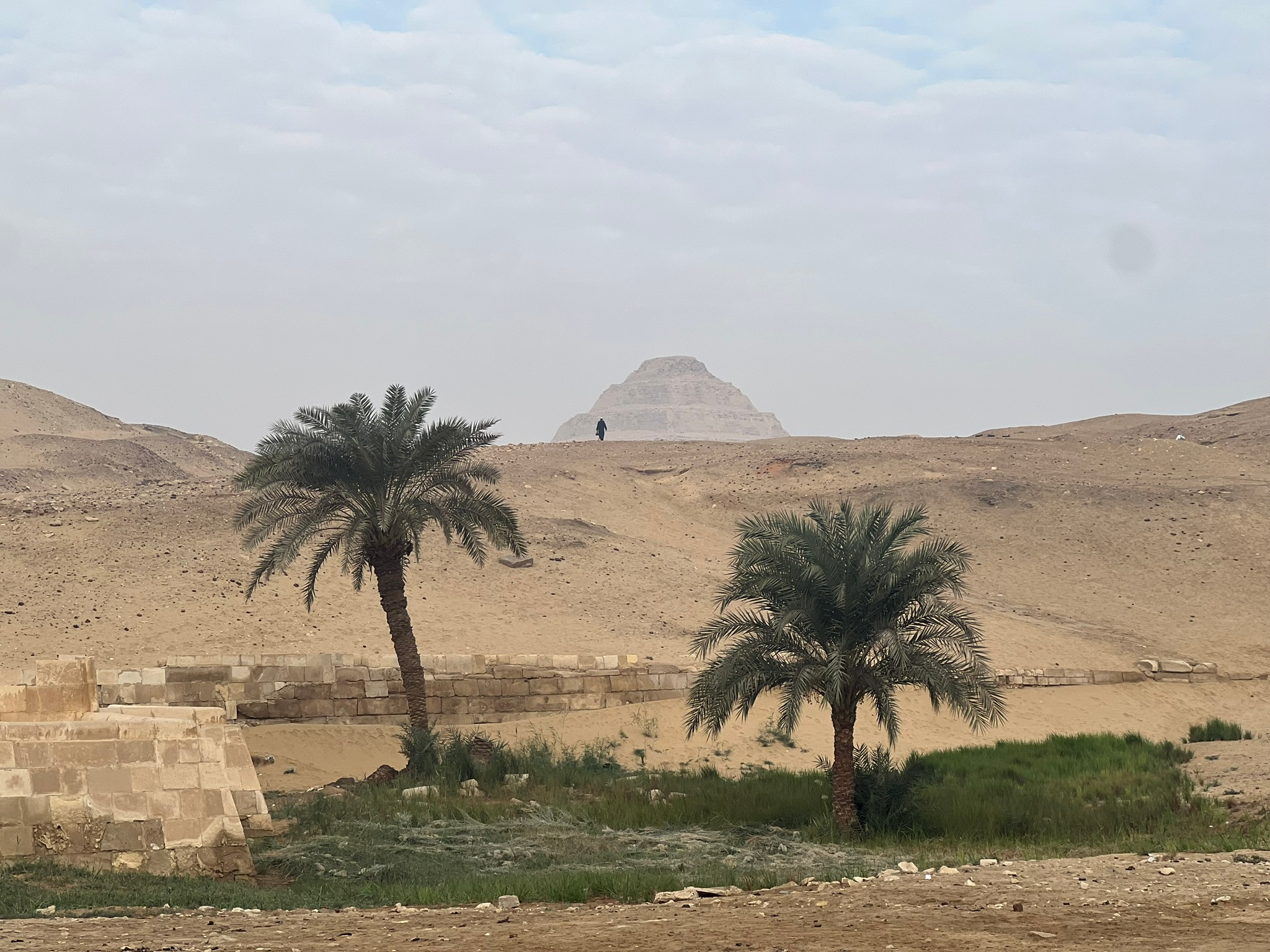
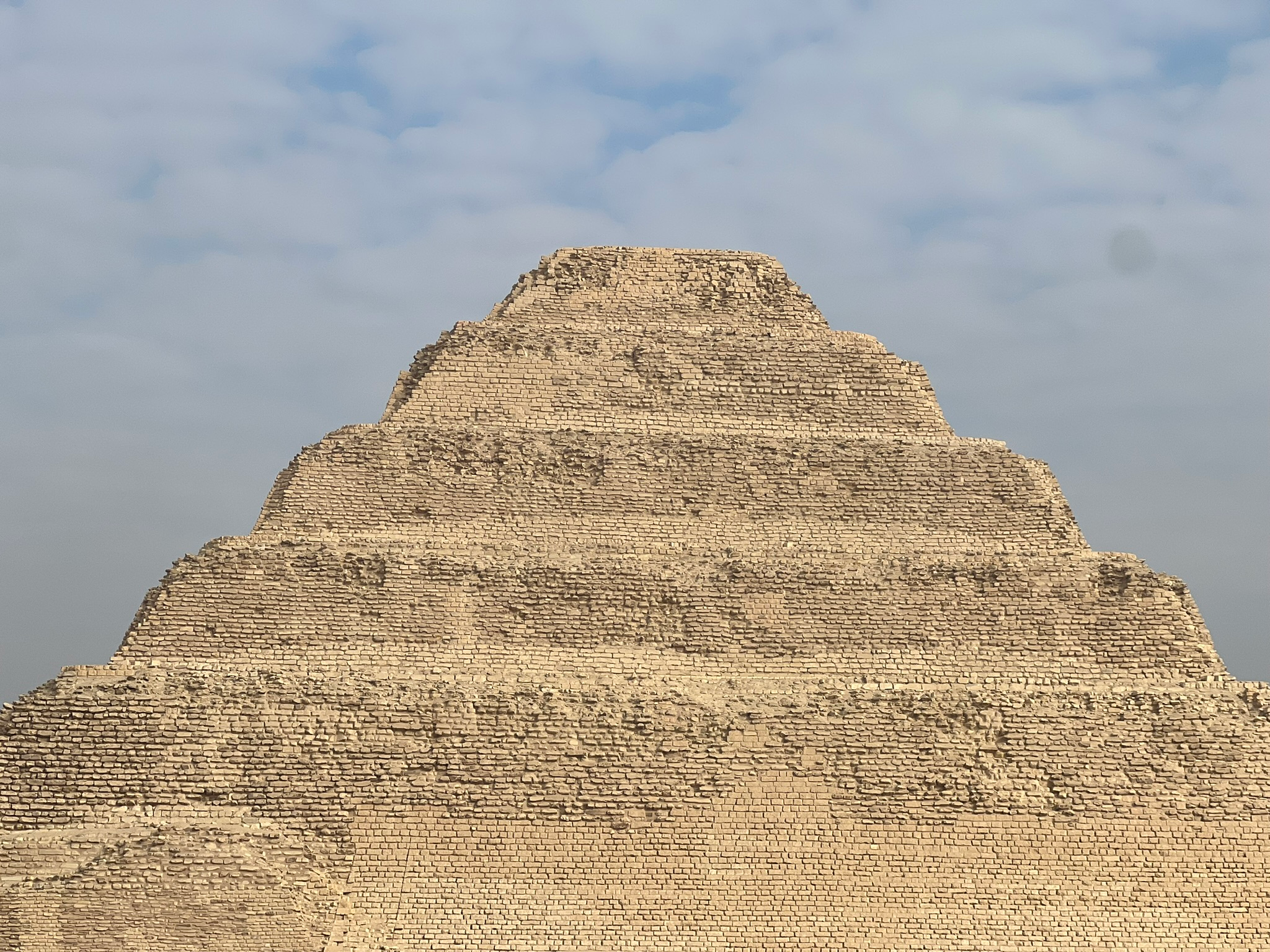
We’d be starting off in Saqqara, a vast necropolis that served as an ancient burial ground for Memphis, Egypt’s first great capital and a major political centre during the Early Dynastic Period and Old Kingdom. Stretching for kilometres along the desert edge, this site is full of tombs, pyramids and funerary complexes dating from Egypt’s earliest dynasties through to the Hellenistic period. It is here that the first pyramid ever built by the ancient Egyptians was constructed – the Step Pyramid, also known as the Pyramid of Djoser.
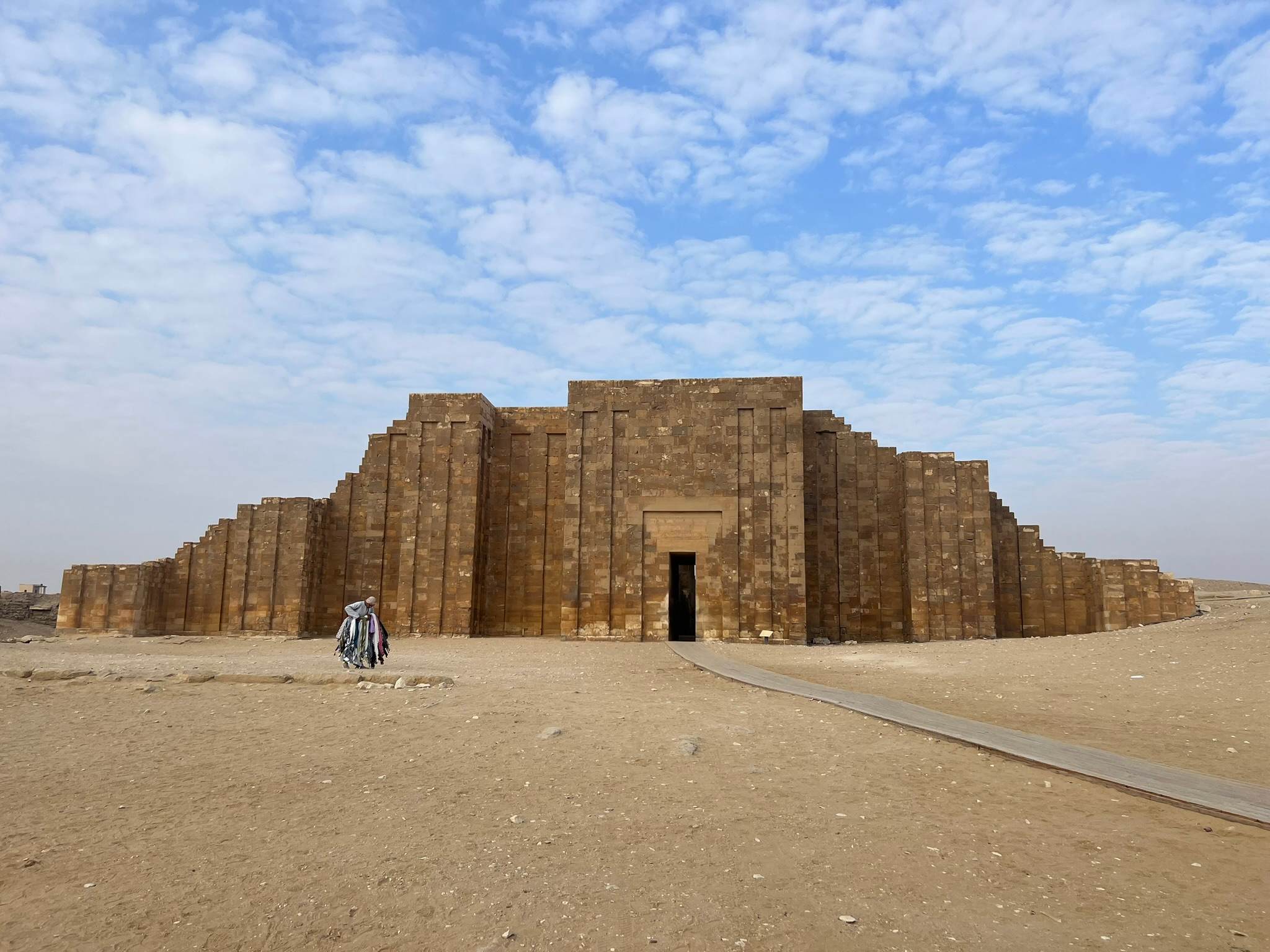
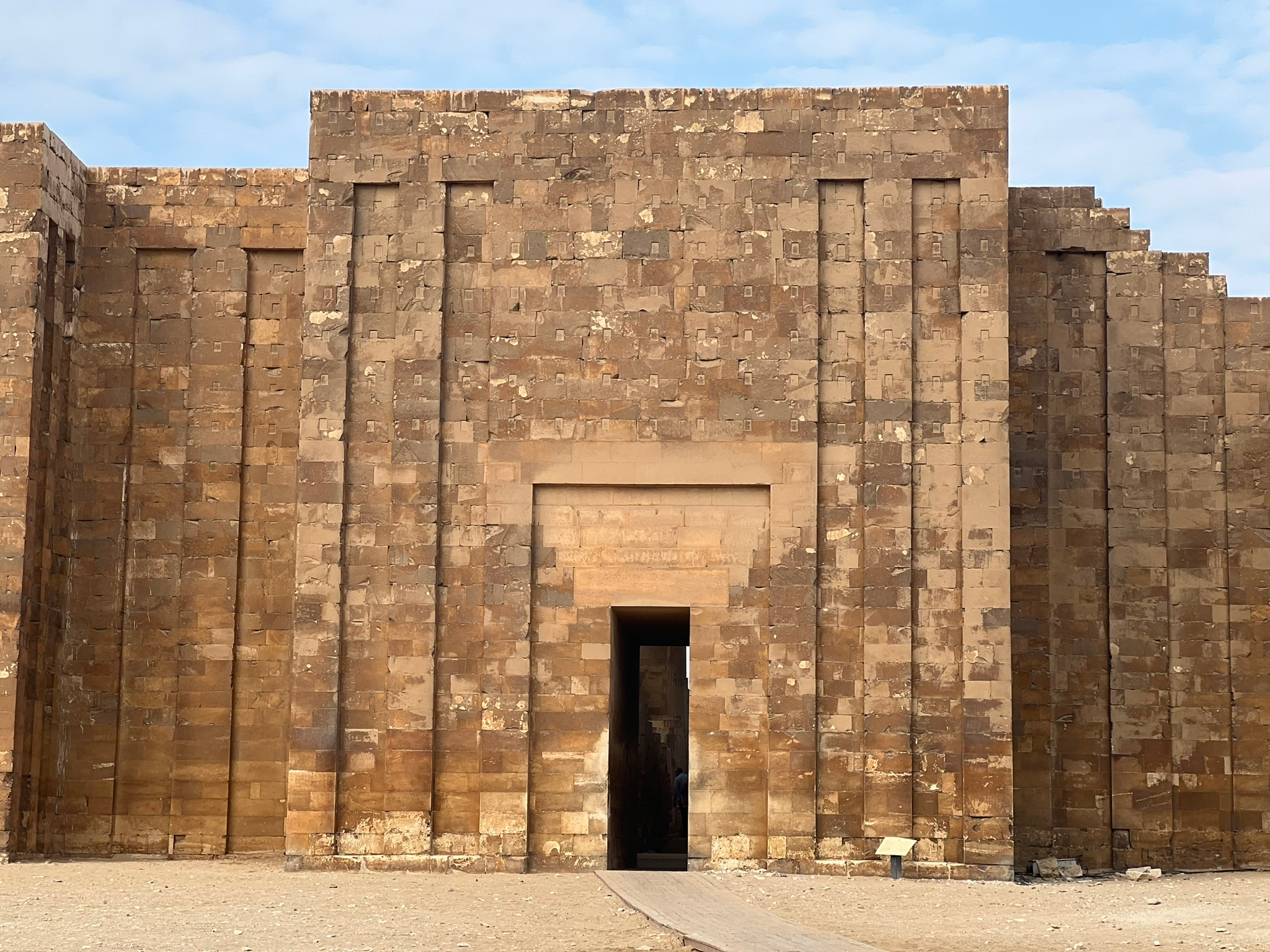
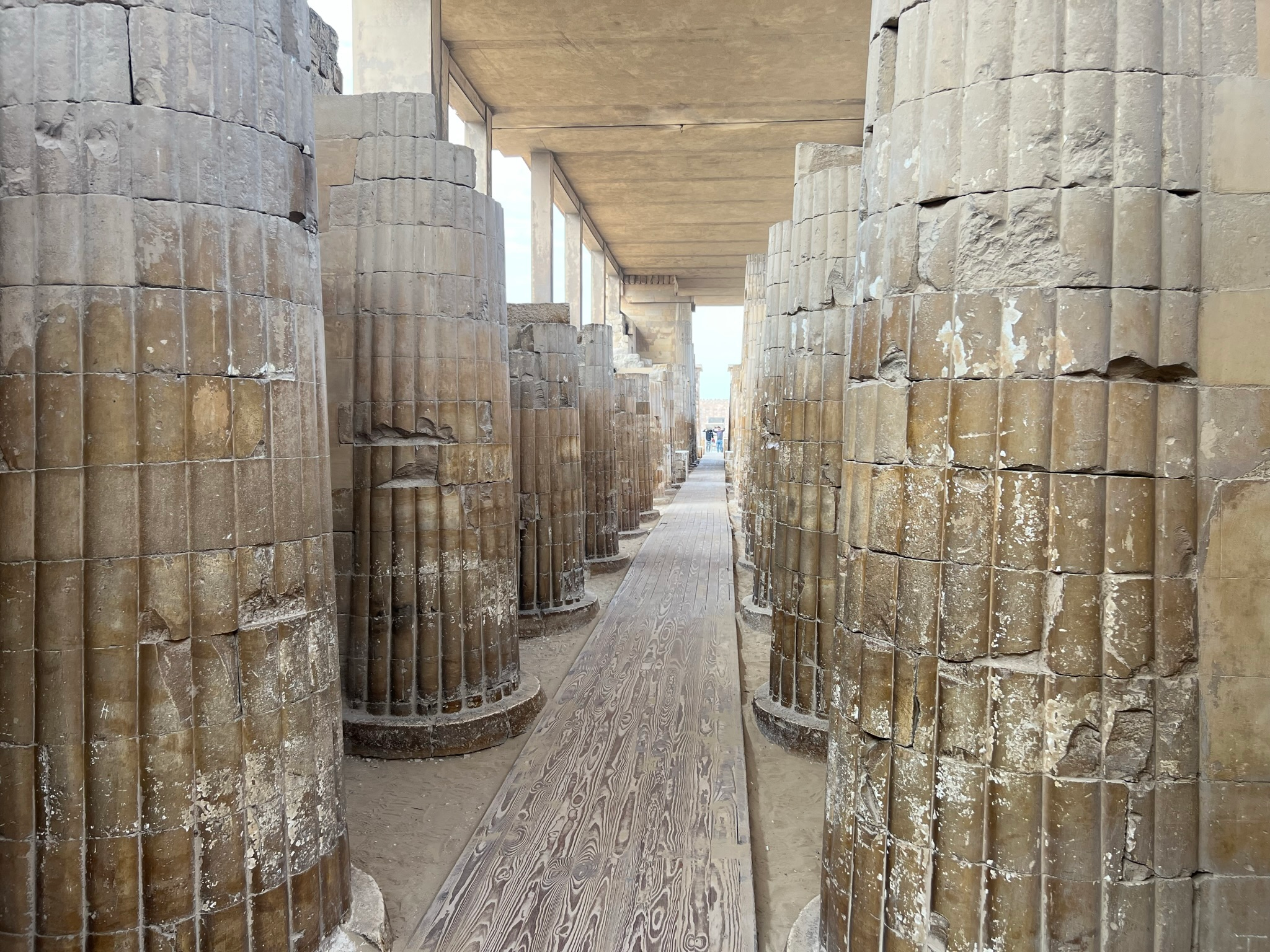
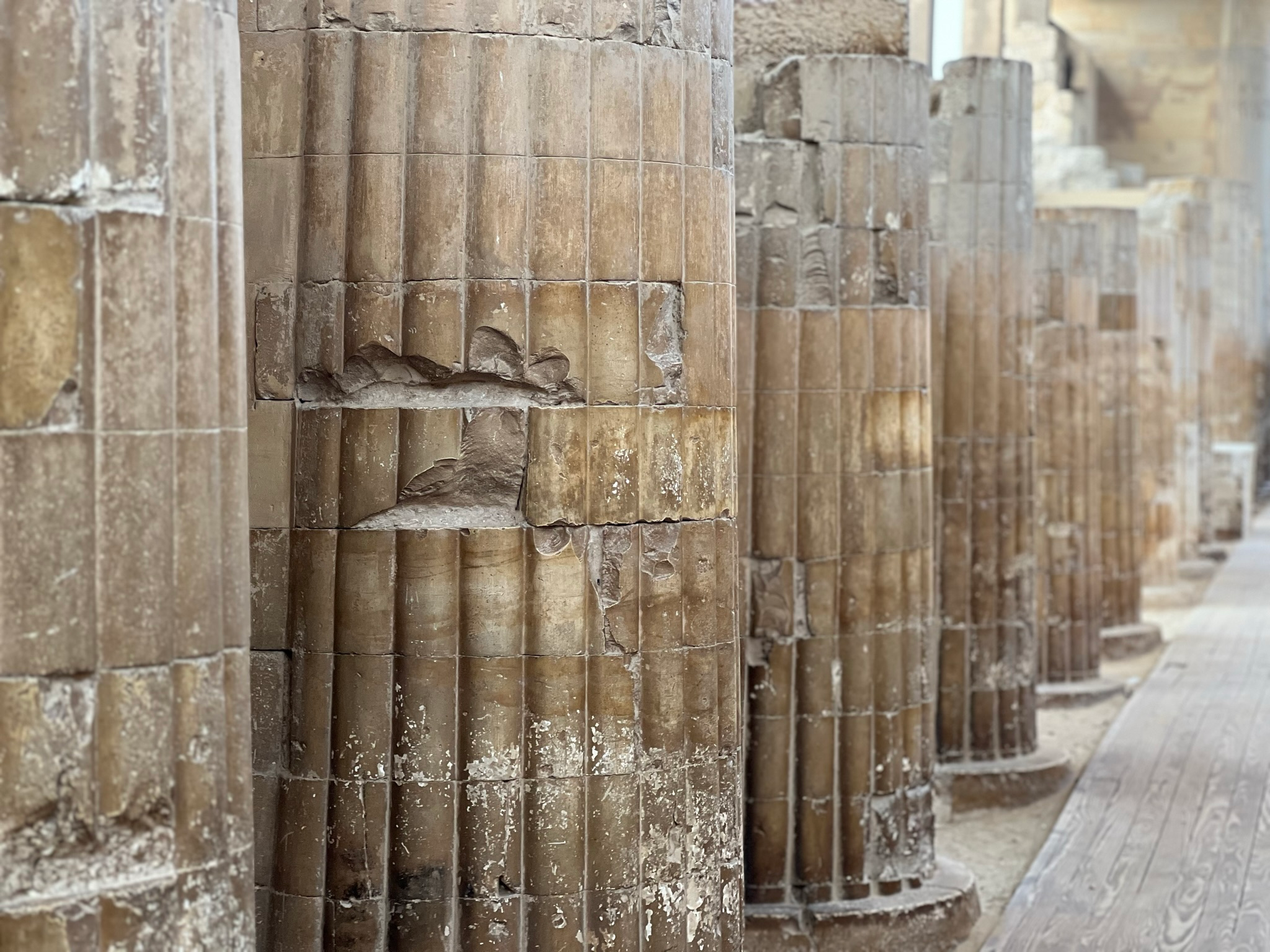
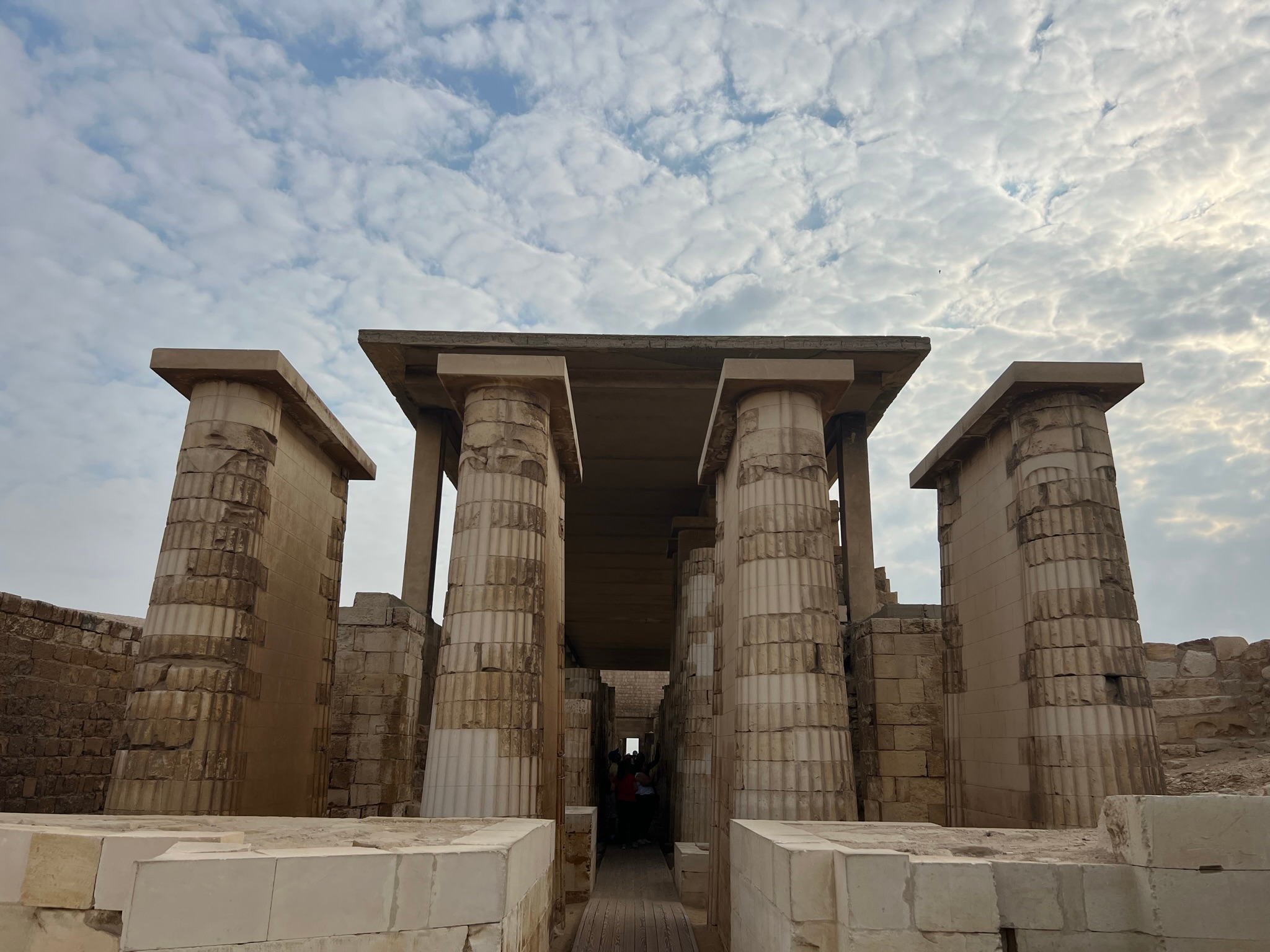
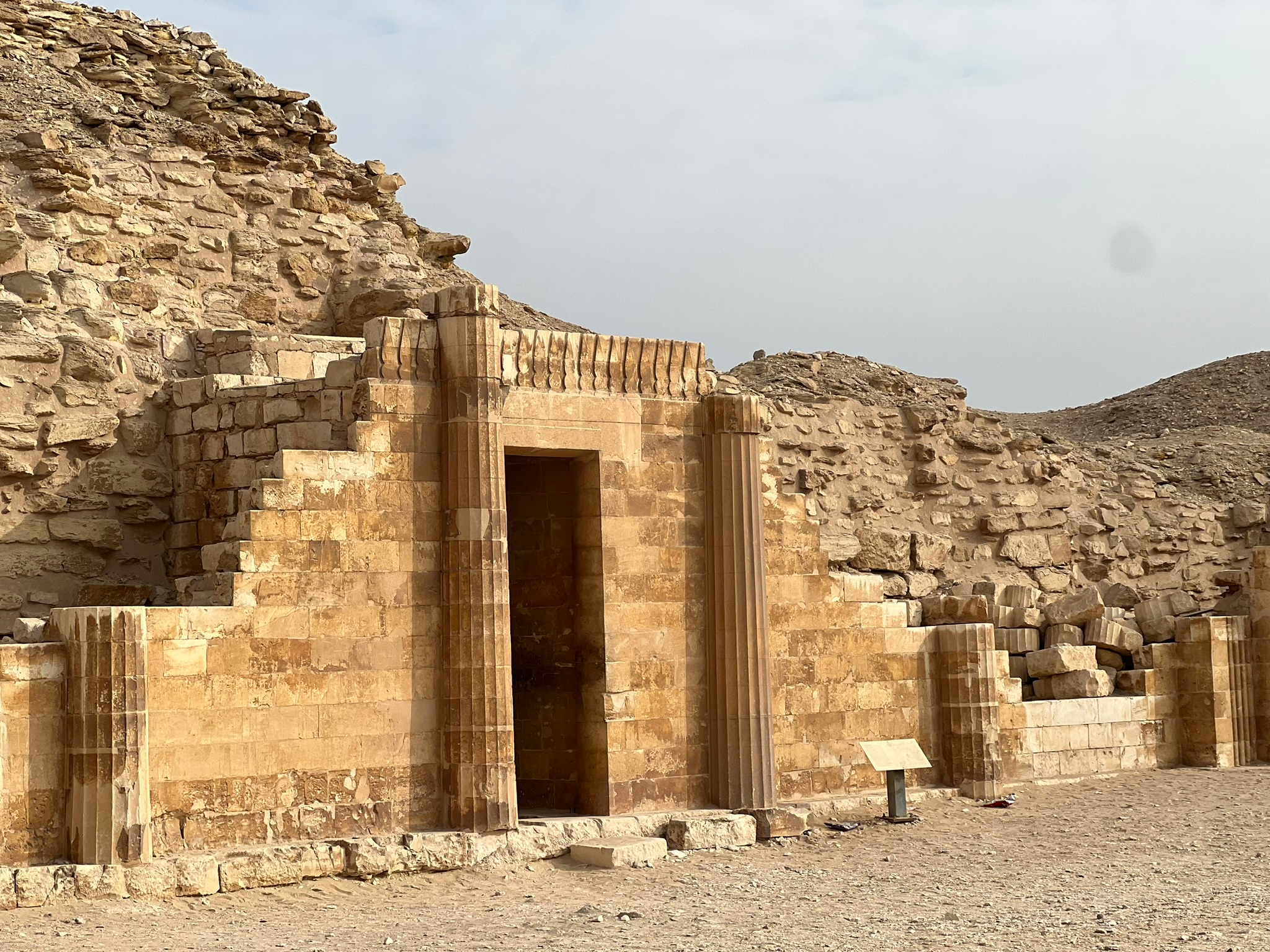
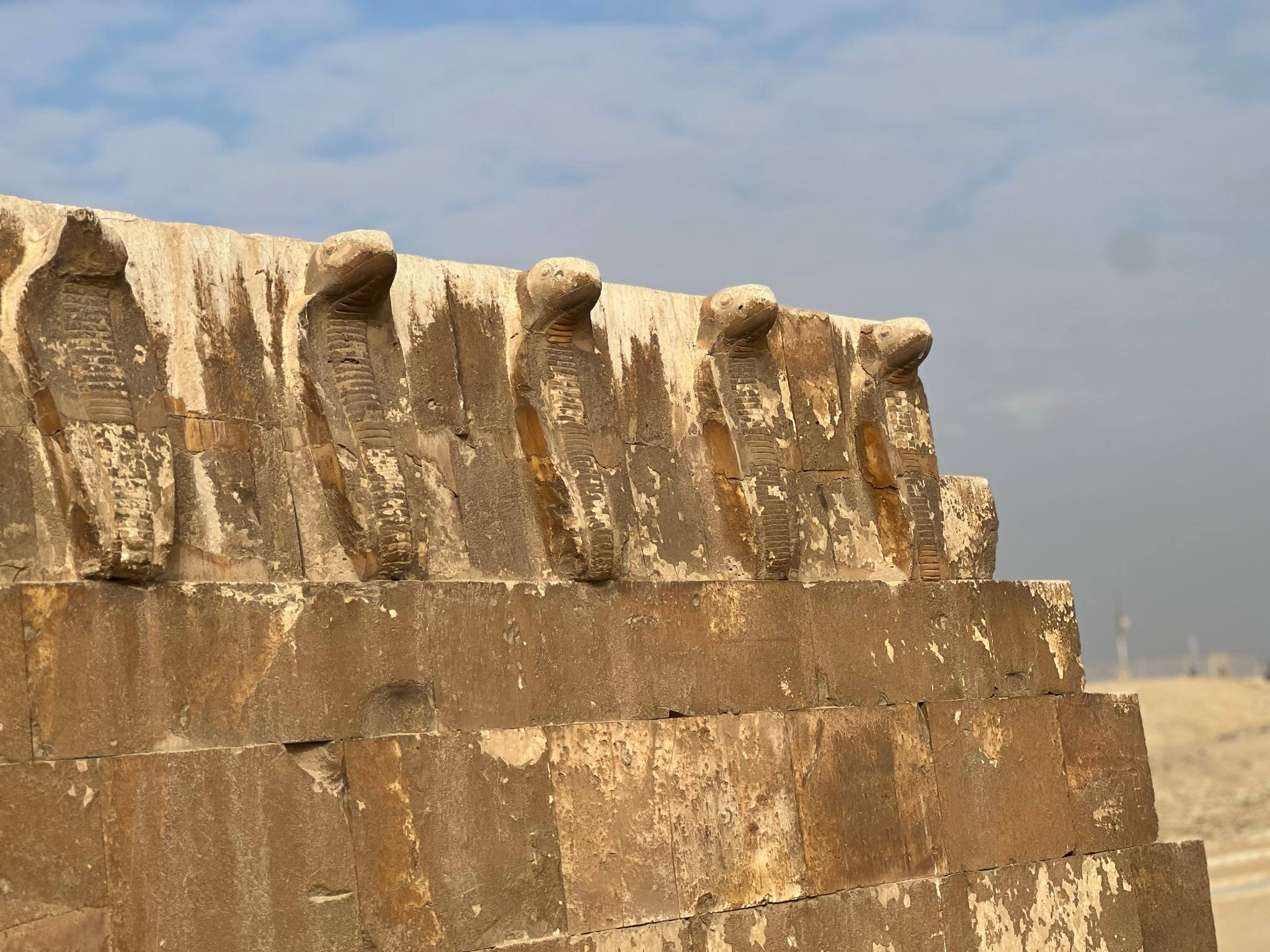
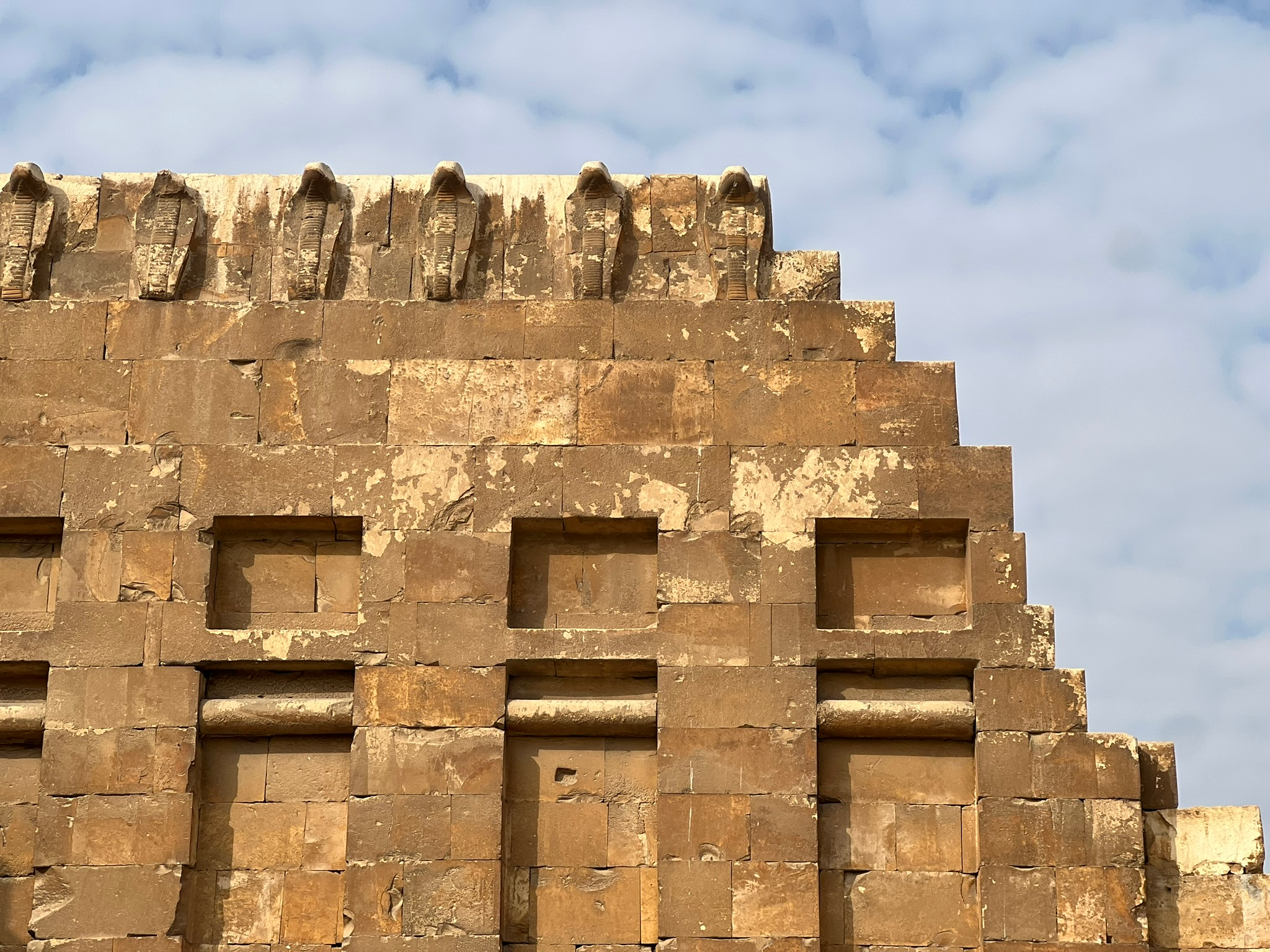
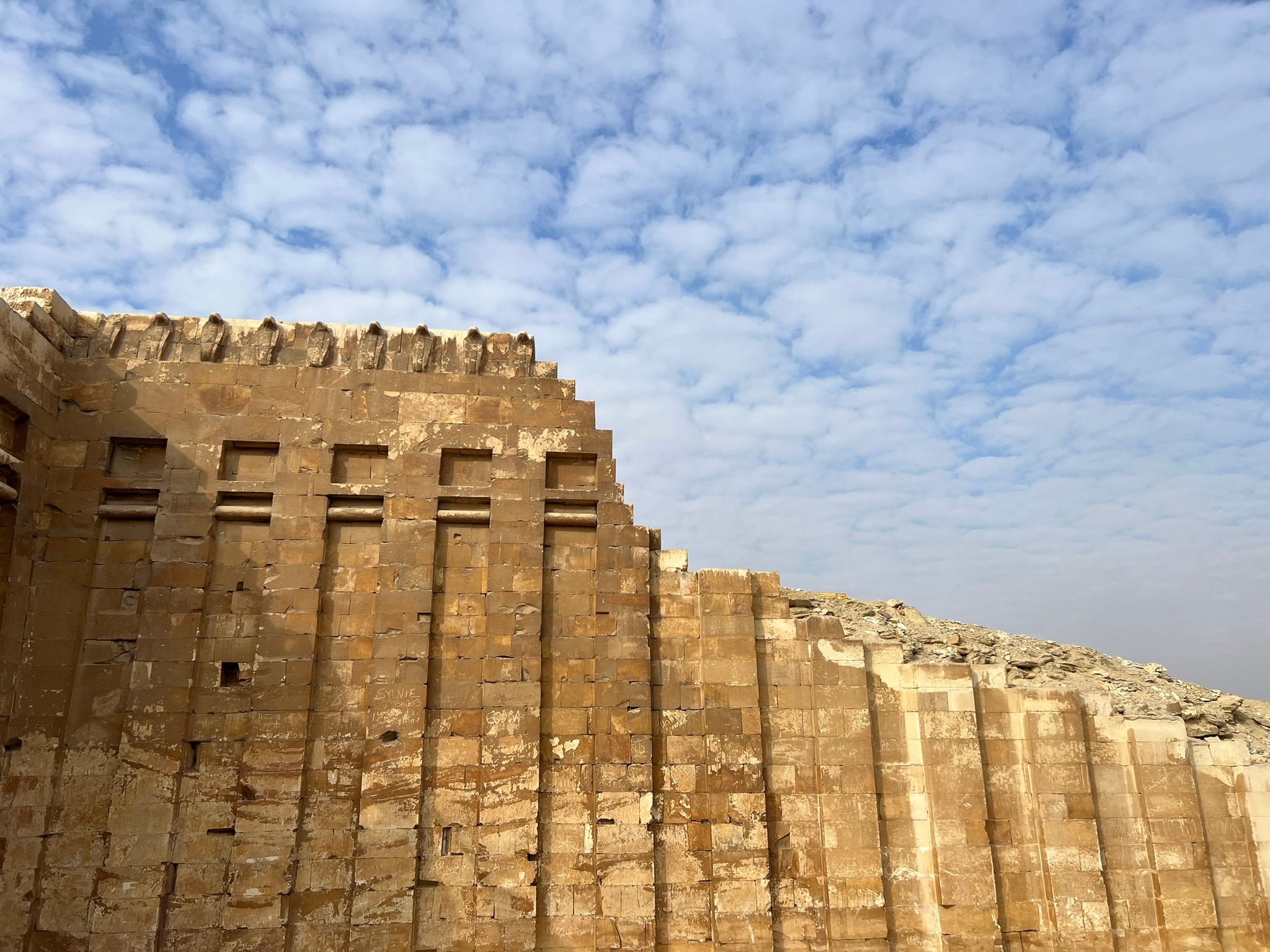
With the complex being so vast and our itinerary chock-full of things to see and do, our time here was very limited, and so Mo took us right to the main highlight – Djoser’s Step Pyramid Complex. Enclosed by an impressive limestone wall around 10 metres high, recessed panels decorate much of its perimeter. This, Mo told us, showed that the site was not built merely as a tomb, but as Djoser’s eternal royal residence after death. To enter the complex, we had to walk through a remarkable entrance flanked by two towers. Inside, the corridor is lined with two rows of twenty engaged columns carved to resemble bundles of reeds. According to Mo, the arrangement and surrounding niches evoked Egypt’s territorial divisions and the power of the unified kingdom.
Where the Pyramid Dream Began
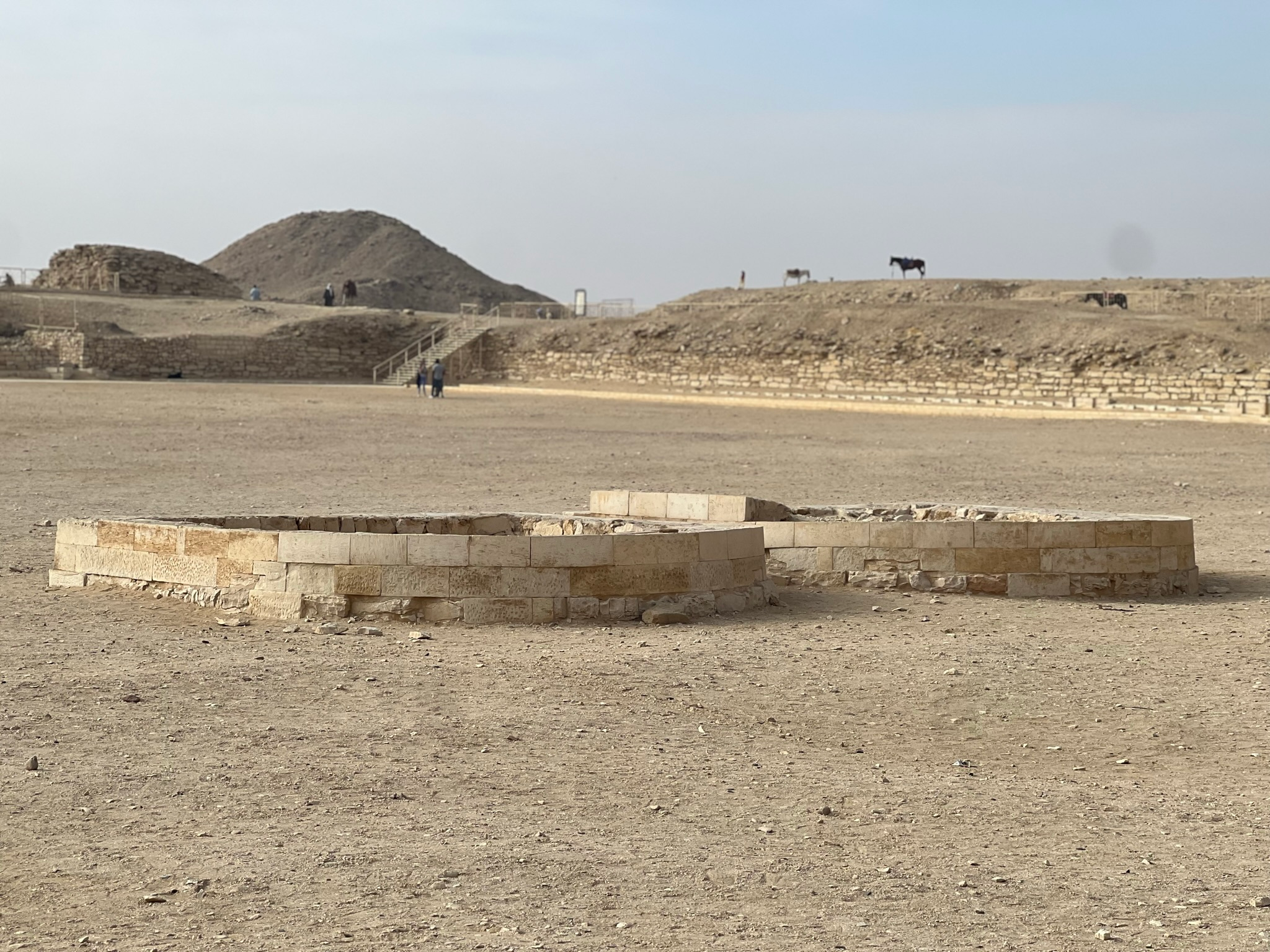
After passing through the gorgeous colonnaded entrance, we arrived at the South Court – a vast expanse serving as the Step Pyramid’s courtyard.
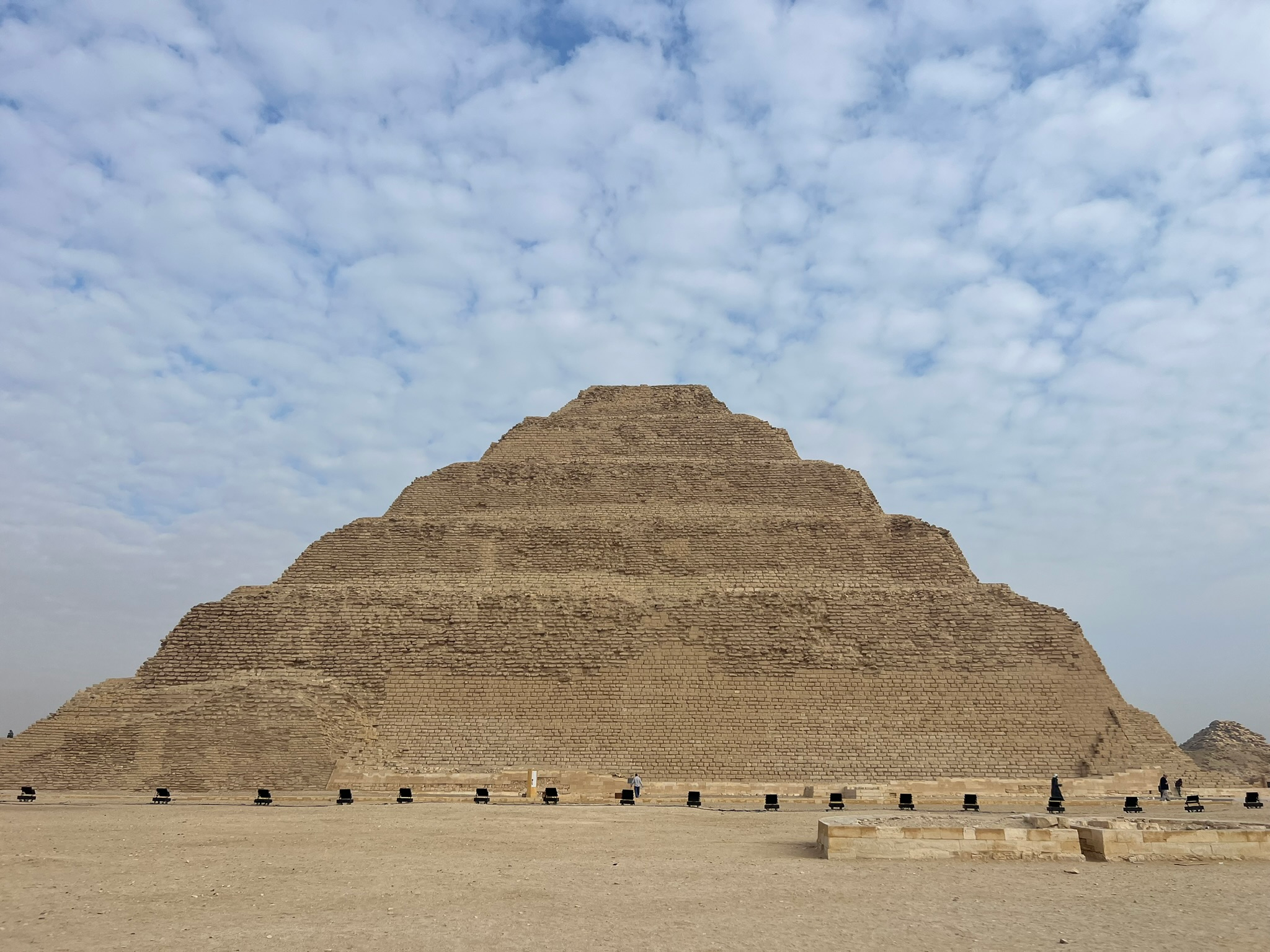
The second we stepped into the court, the pyramid came into view, leaving all of us speechless. This was it. The very same Step Pyramid I had been obsessed with as a kid. This was Kid Marius seeing it for the first time on a documentary. This was Kid Marius opening Encarta and reading about it over and over again. This was Kid Marius playing Death in Sakkara online. This was Kid Marius setting it as his desktop wallpaper. This was Kid Marius wanting to become an Egyptologist. This was… This was Kid Marius coming alive once again.
Tears started flowing uncontrollably as I realised that Kid Marius was still very much alive and thriving. Over time, I’ve come to realise that the older I get, the closer I become to that version of myself I had abandoned for so long. Somehow, the older I grow, the younger I feel. Funny how time works.
Exploring Saqqara
Needless to say, I didn’t have much time to ponder, as Mo led us onwards and continued his explanation.
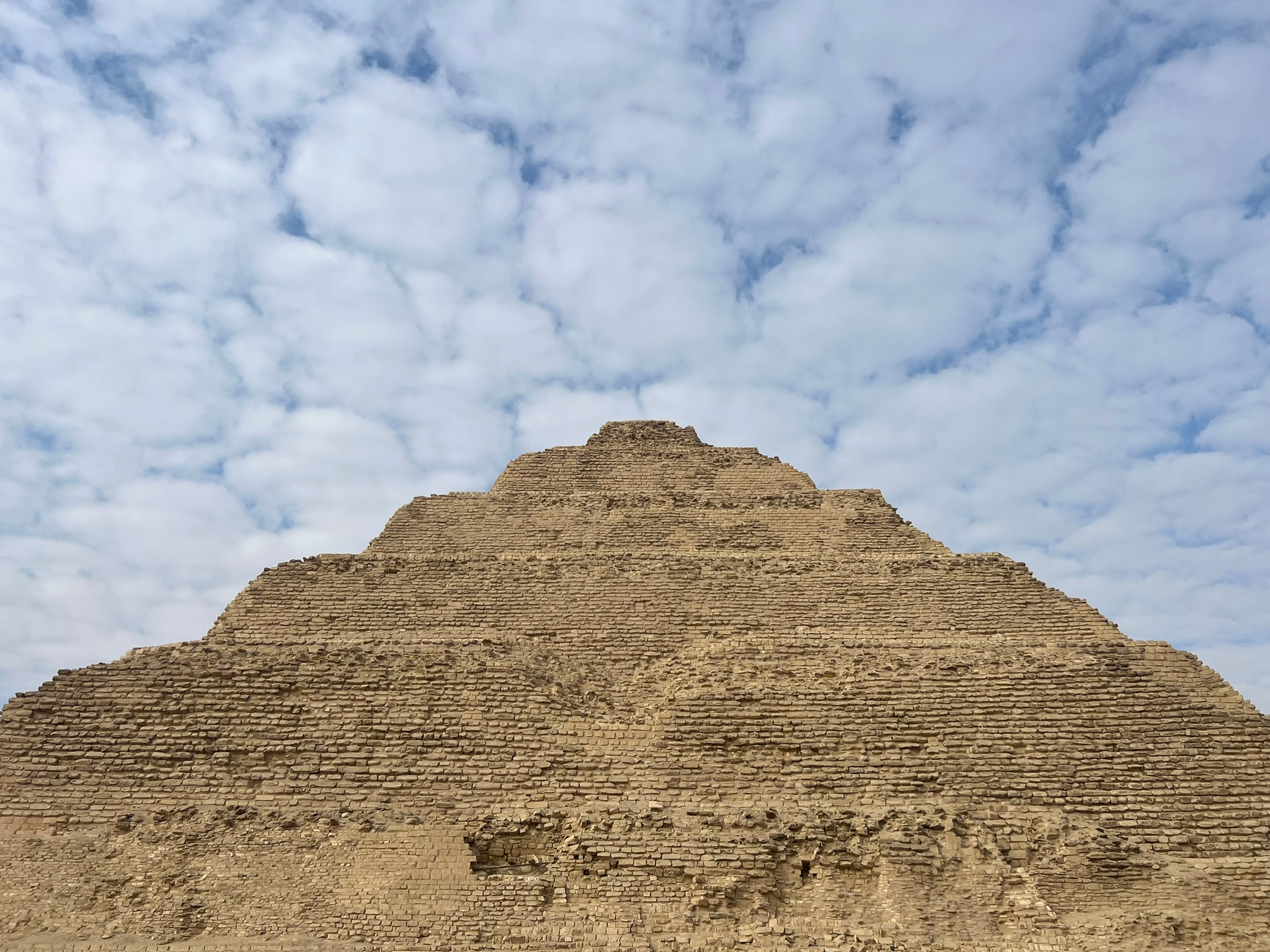
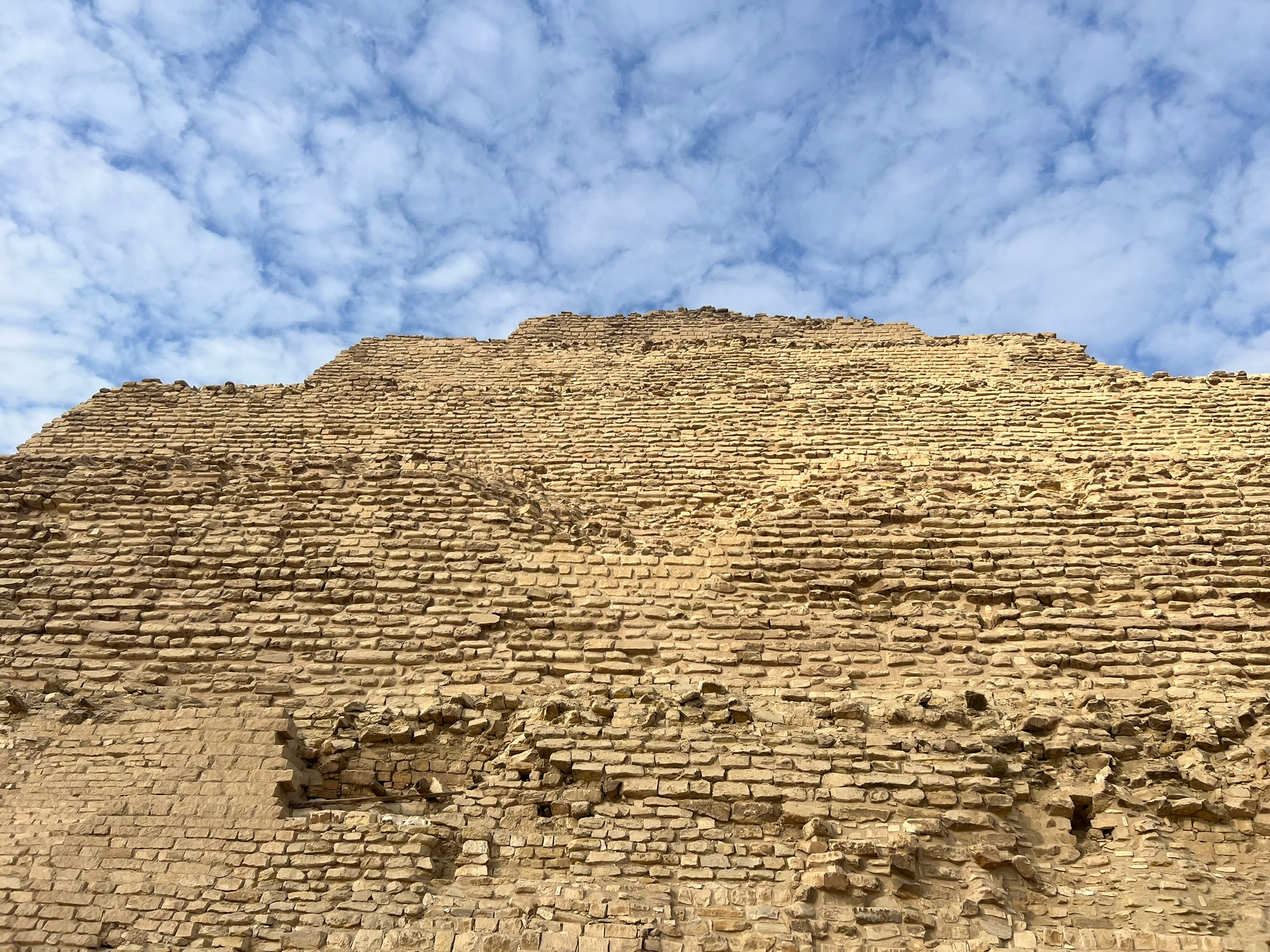
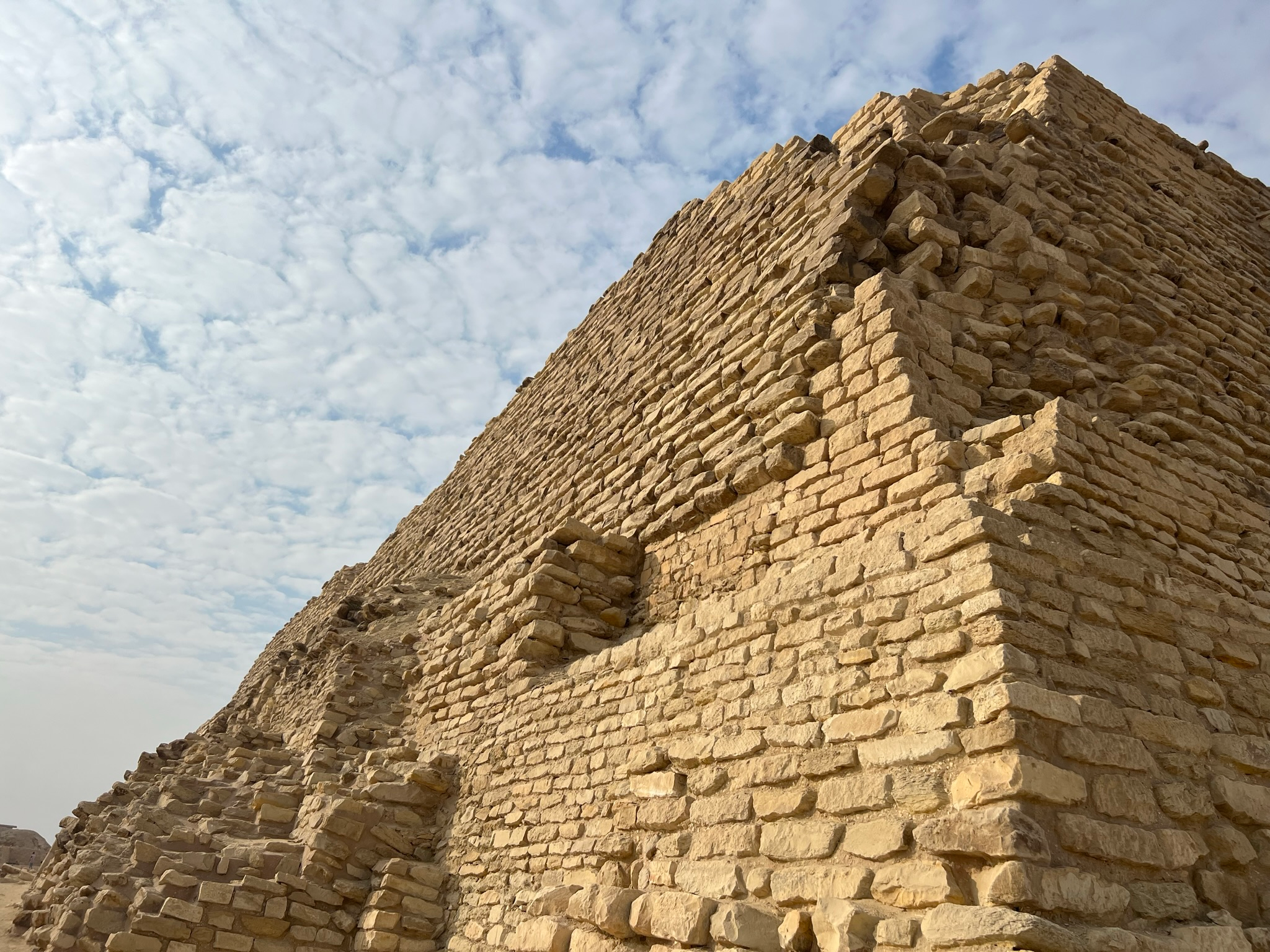
Commissioned by King Djoser and designed under Imhotep’s guidance in the Third Dynasty, the Step Pyramid was built in the 27th century BC and remains one of the most important funerary complexes in Saqqara. Interestingly enough, the initial concept of the tomb was the mastaba – a flat, rectangular structure built over an underground tomb. The design was then expanded in several stages, with layers stacked and enlarged until the six-step pyramid we know today came to be. Measuring around 60 metres in height, with a base of around 12,000 square metres, the pyramid was one of the largest stone structures ever built at the time.

Beneath the pyramid lies a labyrinth of tunnelled chambers and shafts stretching nearly 6 kilometres. The burial chamber lies at the bottom of a shaft in the centre of the pyramid, at a depth of around 28 metres. Although the pyramid has been extensively looted over the years, more than 40,000 carved stone vessels were discovered in its subterranean galleries, with some made from materials such as granite, alabaster, schist and slate.
In the chambers beneath the pyramid and in the South Tomb, reliefs of King Djoser celebrating the Heb-Sed festival can also be found. This, Mo told us, was an ancient Egyptian ritual traditionally associated with a pharaoh’s 30th year on the throne, celebrating the renewal of his power and continued rule. There are different interpretations regarding what went on during this ritual, but one of the best-known elements involved the king performing a ceremonial run to prove he was still fit to rule.
While the complex served an important function in life, it is also thought that the Step Pyramid symbolised a giant stairway which the king would climb after resurrection in order to join the sun god Ra in the sky.
Roaming Around the Complex
After attempting to memorise every single detail of the pyramid, we then walked around the enclosure and explored other structures within it.
These included the Heb-Sed Court, where the king’s rejuvenation rituals were symbolically recreated; the Mortuary Temple, where daily rituals for the dead would be held; and, most interestingly, the South Tomb, which may have served as a symbolic second tomb for Djoser. One theory suggests it may have housed items linked to the king’s internal organs or funerary equipment, as its burial vault was too small to fit an entire body.
The complex of Saqqara, Mo told us, was also known for its animal cults, especially in the Late Period. Ancient Egyptians believed that certain animals were sacred manifestations of the gods, as in the case of cats associated with Bastet, ibises with Thoth, falcons with Horus, jackals with Anubis, crocodiles with Sobek and bulls with Ptah. Some of these animals were bred, ritually killed, mummified and buried in vast catacombs to serve as offerings to the gods.
The Serapeum, an underground complex in Saqqara, is a burial place for the sacred Apis bulls of Memphis. These bulls were revered as living manifestations of Ptah, the great creator god of Memphis, and were mummified and placed in enormous stone sarcophagi after death. Khaemwaset, the fourth recorded son of Ramesses II and a High Priest of Ptah, was closely associated with the Serapeum and the restoration of older monuments. Interestingly enough, he is often regarded as one of the first known Egyptologists, having restored and labelled several ancient monuments during his lifetime.
The Pyramid Texts
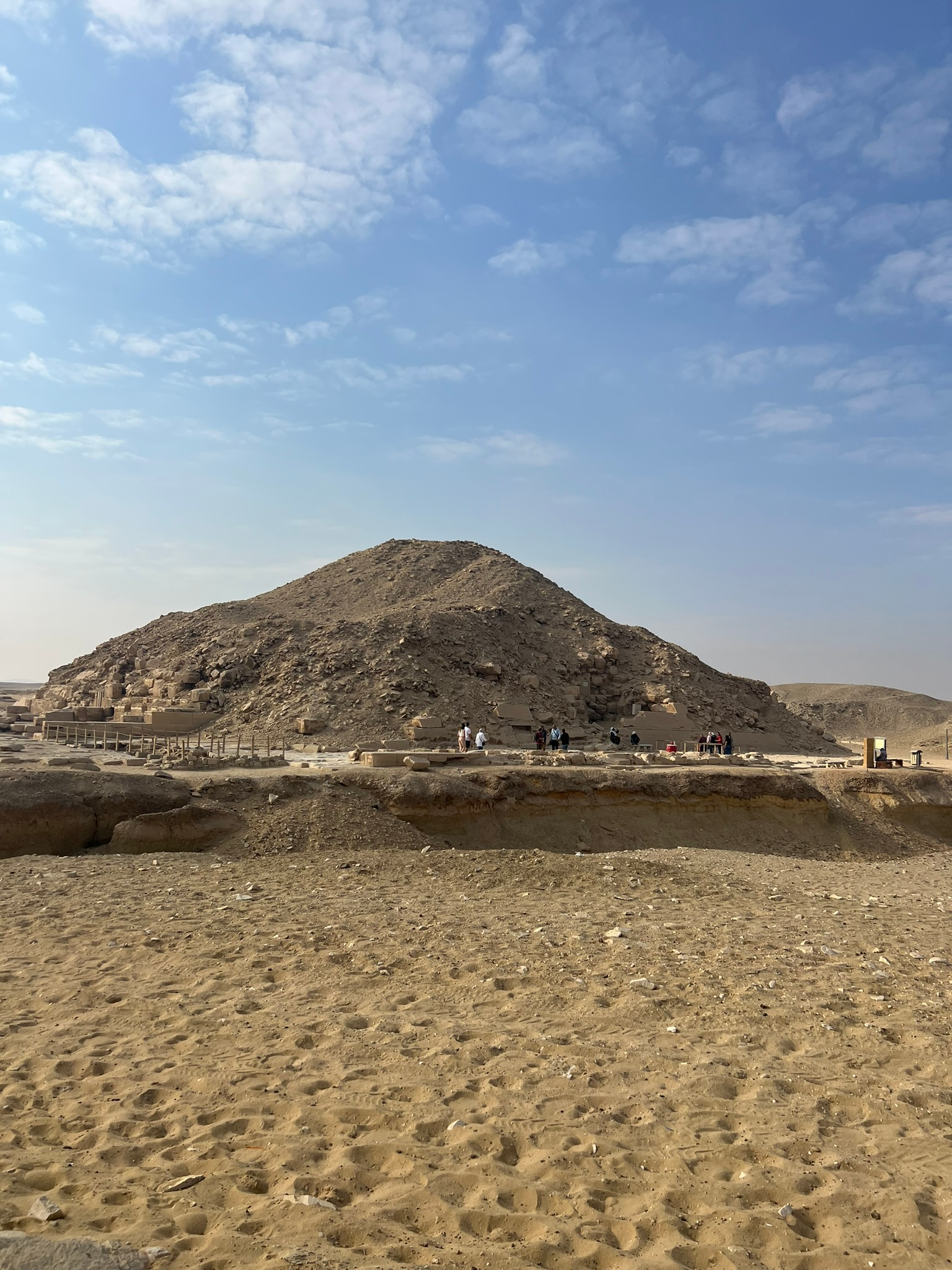
Having gone around the complex, we then headed to yet another highlight in Saqqara – the Pyramid of Unas.
Built as a burial site for the ninth and last king of the Fifth Dynasty, this small, smooth-sided pyramid is unimpressive at first – if you tend to judge a book by its cover. While the idea of going inside the pyramid was intriguing to say the least, it was the pyramid’s interior that left us all in awe. After crawling through a puny entrance and squat-walking down a sloping corridor that led inside the pyramid’s substructure, we found ourselves in an antechamber connected to the burial chamber. Here, inside the innards of such an unassuming structure, are the legendary Pyramid Texts – the oldest surviving body of ancient Egyptian religious and funerary writings, dating all the way back to the Old Kingdom.
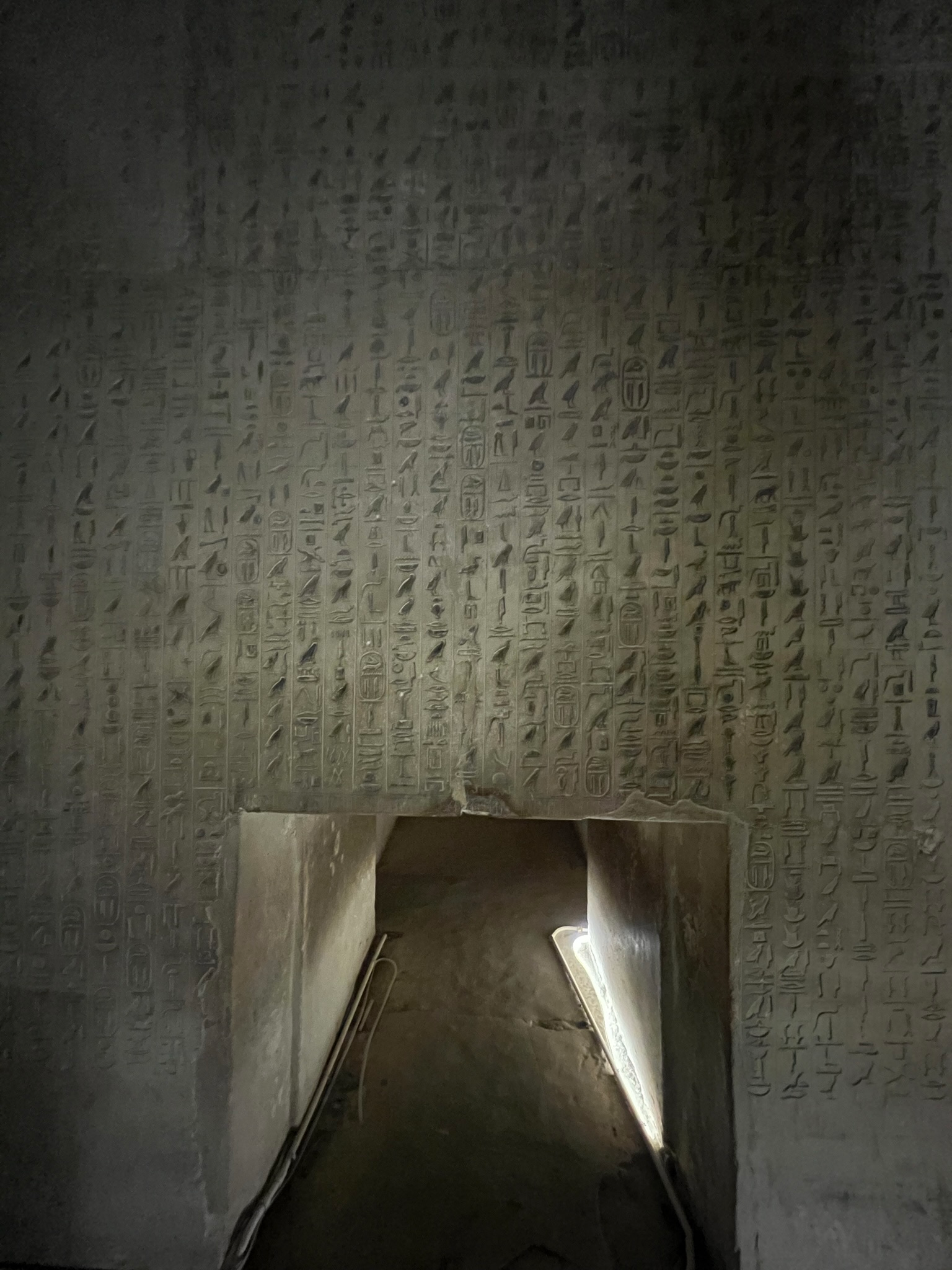
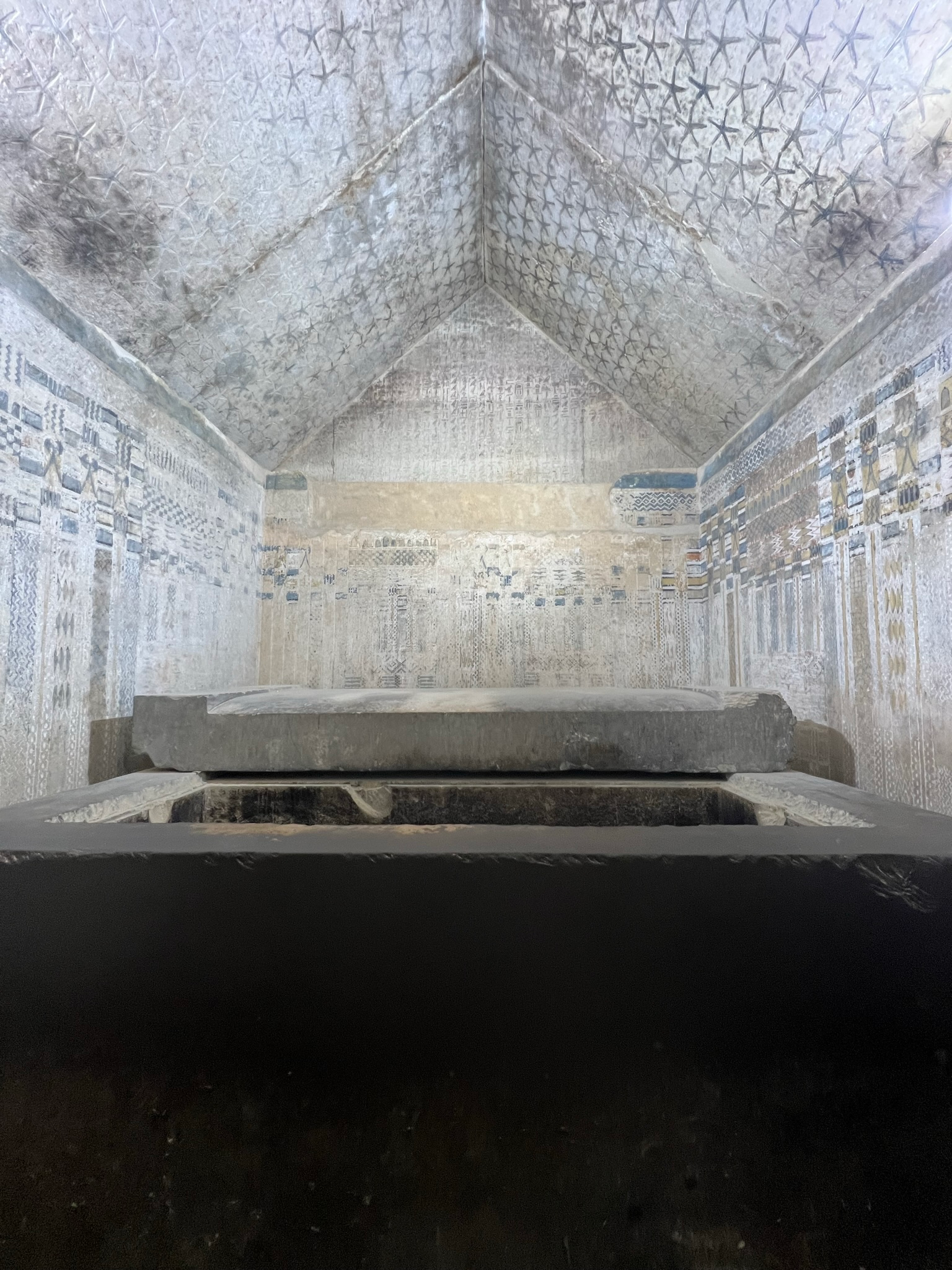
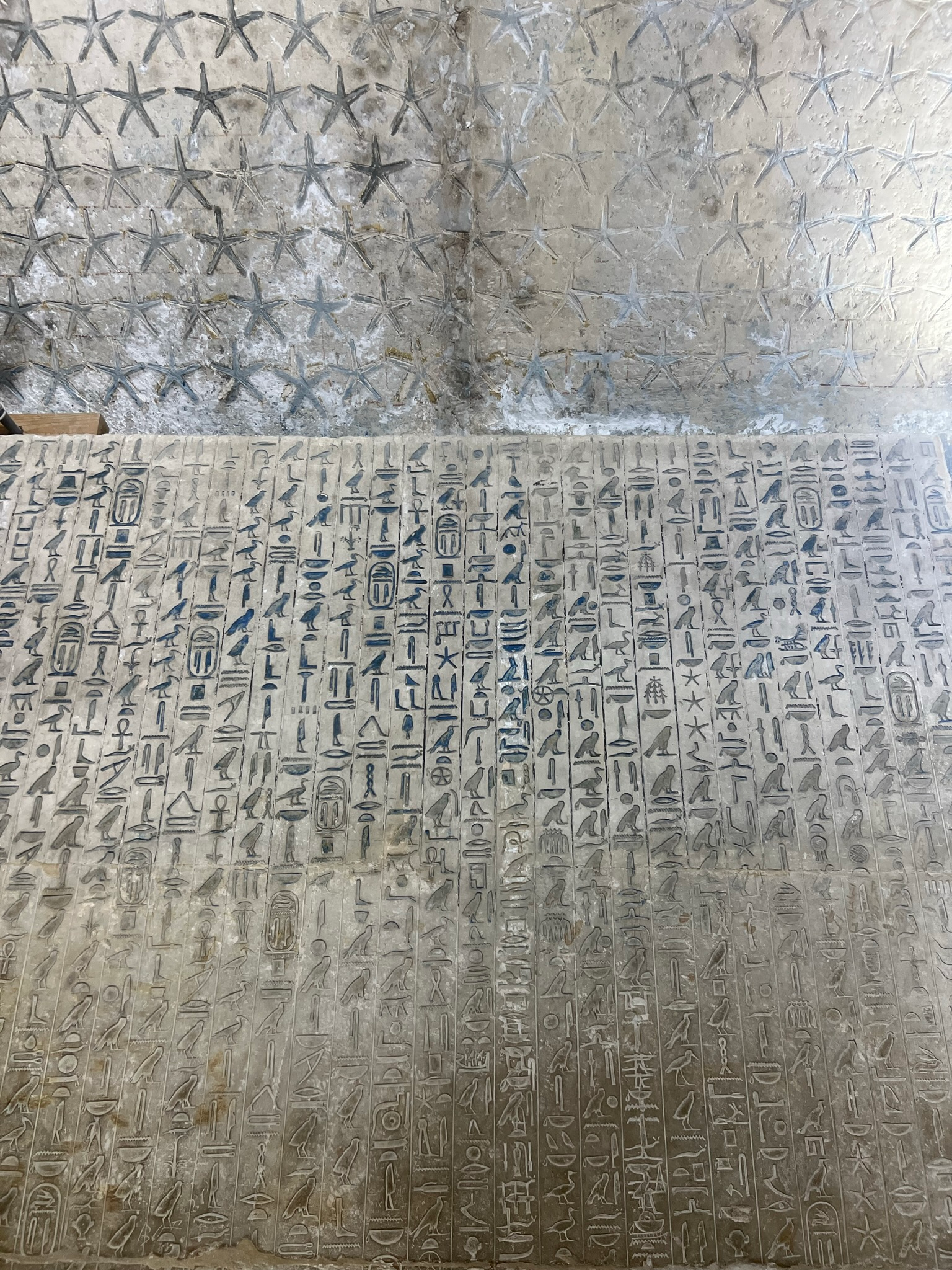
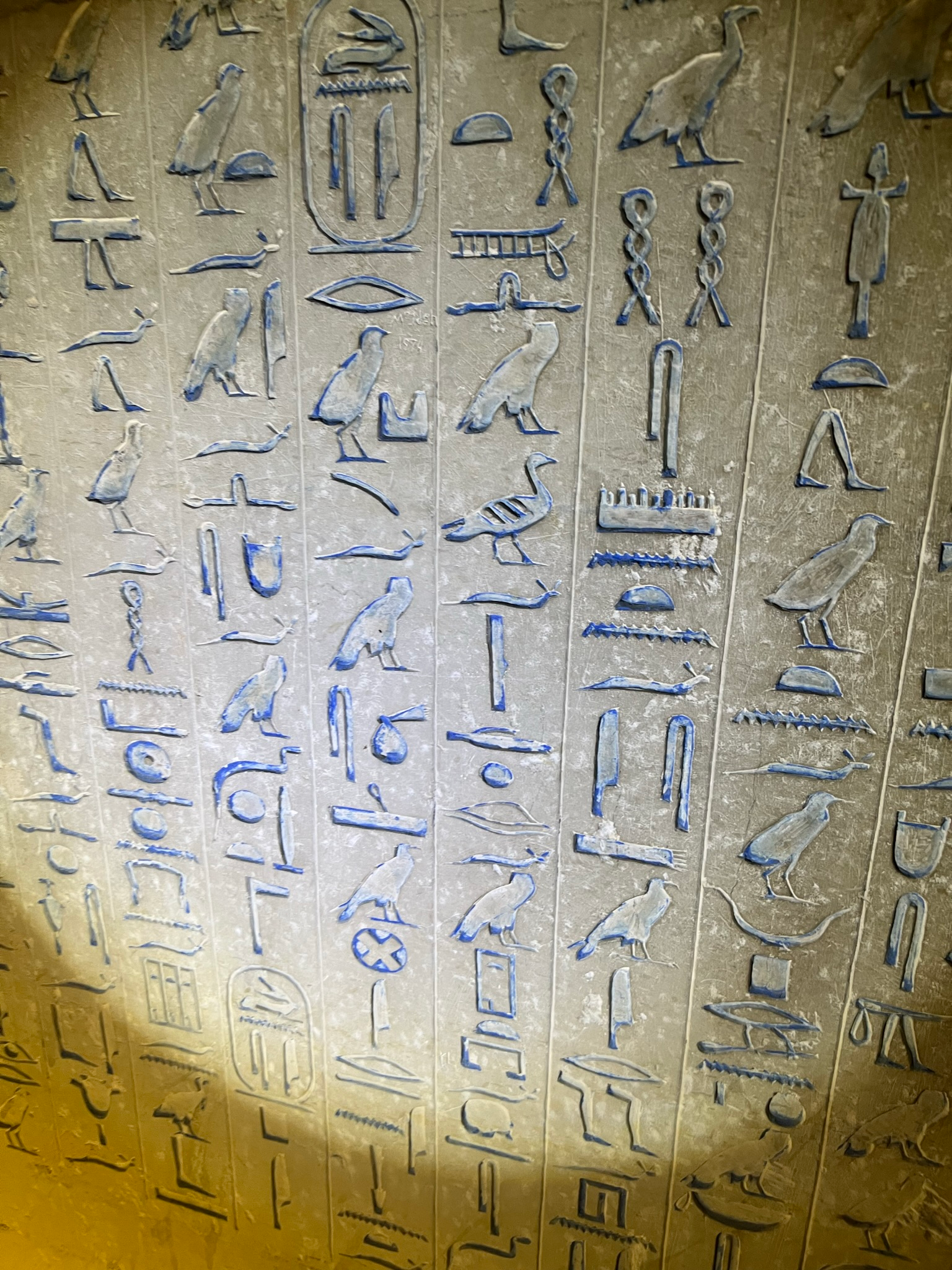
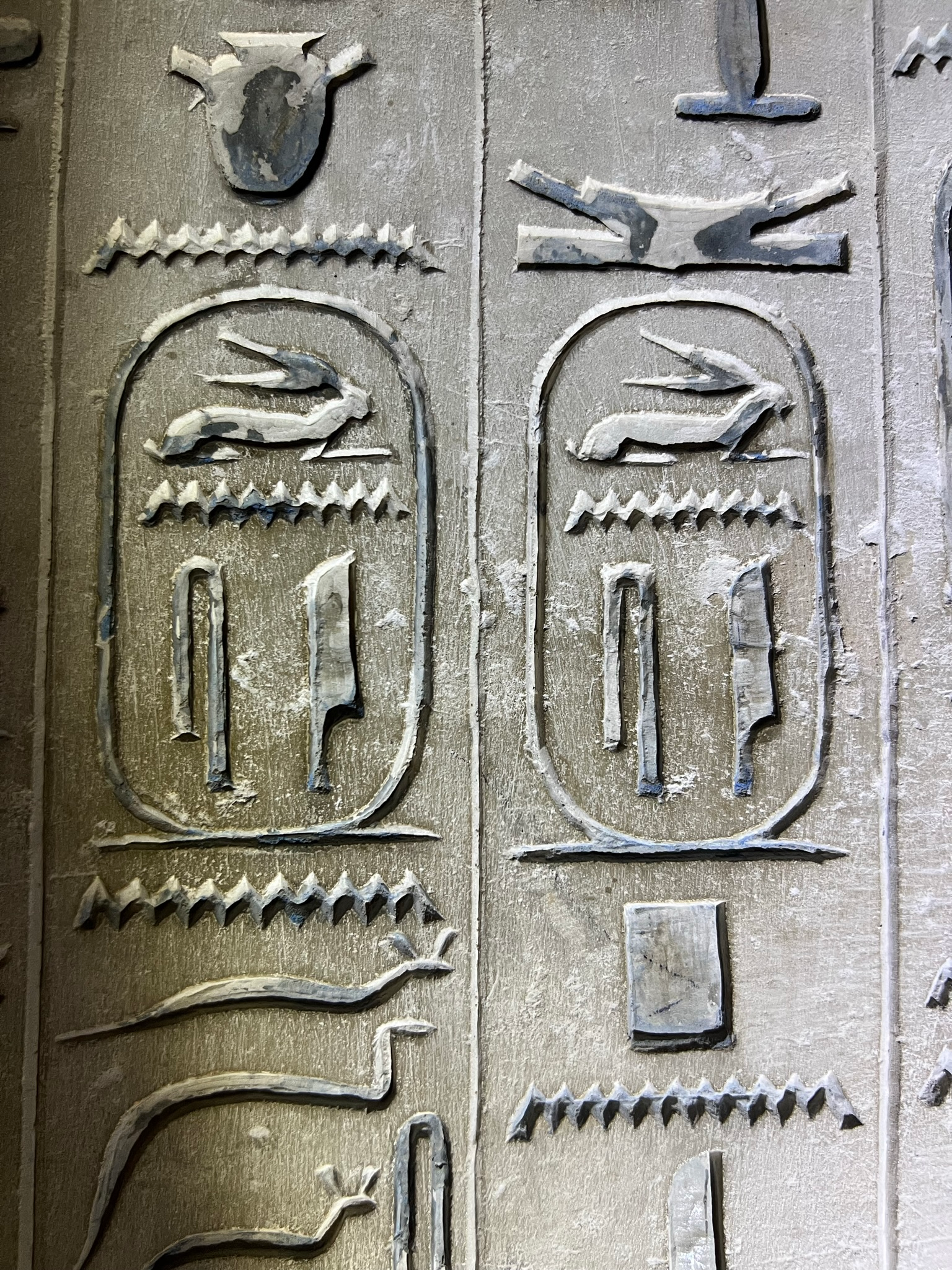
As with later funerary writings like the Book of the Dead, these texts are spells intended to protect the deceased and help guide them through the afterlife. Here, Mo took the opportunity to expand on what we had previously learned back in the Valley of the Kings. Turns out, the Ancient Egyptians believed the self was made up of several elements, though Mo focused on three of the most important:
-
-
- Body: The physical body. It had to be preserved through mummification because it acted as the permanent earthly anchor for the dead person. Without a preserved body, the other spiritual parts could struggle to survive or return properly.
-
-
-
- Ka: The life force or vital essence. It was something given at birth and continued after death. The ka needed food, drink and offerings, which is why tombs had offering tables, false doors, statues and scenes of food. In simple terms, the ka was the part that needed to be sustained.
-
-
-
- Ba: The mobile personality or individual spirit. It was often shown as a bird with a human head. The ba could leave the tomb, move between the world of the living and the dead, and travel through the Duat. At night, it was meant to reunite with the body or ka.
-
Through the right rituals and transformation, they could become the akh – the effective, transfigured being that would go on to live an eternal life among the gods. If this transformation failed, the deceased risked becoming restless or trapped in the afterlife.
Though these may be nothing more than fairy tales and made-up stories, I gotta say that standing there inside the burial chamber, surrounded by all these symbols and hieroglyphs, felt pretty damn magical to me.
PART II
The Bent Pyramid
Next up was the necropolis of Dahshur, home to several pyramids built during the Old and Middle Kingdoms, including five major surviving ones. This funerary landscape is one of Egypt’s most significant archaeological treasures, giving us a glimpse into the transition from step pyramids to the smooth-sided ones we are all accustomed to seeing.
Apart from looking sleeker, Mo explained, the change also represented the evolution of Egyptian mythology and royal symbolism. While step pyramids were often interpreted as stairways to heaven, smooth-sided pyramids are also thought to symbolise the primordial mound of creation, the Benben, from which Atum came into existence. Even though the pyramids may look different on the outside, they still feature internal passages, hidden vaults and burial chambers where kings and their families were laid to rest.
The first and best example of an attempted smooth-sided pyramid is the Bent Pyramid. Constructed under the rule of King Sneferu during the Fourth Dynasty, this pyramid owes its name to the crooked appearance of the structure, with the top part built at a different angle from the base. While many theories exist, it is commonly thought that during construction, the builders noticed structural instability and adjusted the inclination. Now, I don’t know about you, but the fact that it still stands after more than four millennia means they must’ve done something right.

This pyramid is not only known for its imperfection, but also for a couple more reasons. For one, it preserves much of its original limestone casing. Also, according to Mo, it is the hardest pyramid to access.
That is something I can attest to. Zara, Rohan and Joshin decided to sit this one out right from the very start. Meanwhile, Akash and I decided to brave the pyramid’s challenge. I, for one, could hardly contain my excitement – I felt exactly like a tomb raider. After going around the entire thing, I discovered that there are two entrances, one on the north and one on the west. We were shown to the one on the north, and lemme tell ya, it wasn’t exactly pleasant.
Hidden behind the metal door was this very looong, very narrow, very low, very steep corridor that kept on going ad infinitum. What started off as a wooden stairway later became more akin to a ladder, with both of us having to turn around and grip onto the steps. As if that didn’t make it hard enough, every time we encountered someone coming out of the pyramid, we’d have to flatten ourselves against the walls in order to let them pass. No wonder Akash gave up halfway. I, on the other hand, had been dreaming of this moment since I was a kid. Also… FOMO.
Tomb Raider Mode Activated
The stairway led to an underground antechamber filled with debris, buckets and wooden planks – kinda like being stuck inside a construction site. A ladder then took me to a chamber with a corbelled roof.
It might not be architecturally correct, but it felt as if I were in the heart of the pyramid. There was just something… almost sacred about it. Despite the dozens of bats and the musty smell of their pee, it was practically a spiritual experience. Especially being alone. An entire pyramid, all to myself. History right at my very feet. I felt so damn powerful. I could just see myself being buried in a place like that.
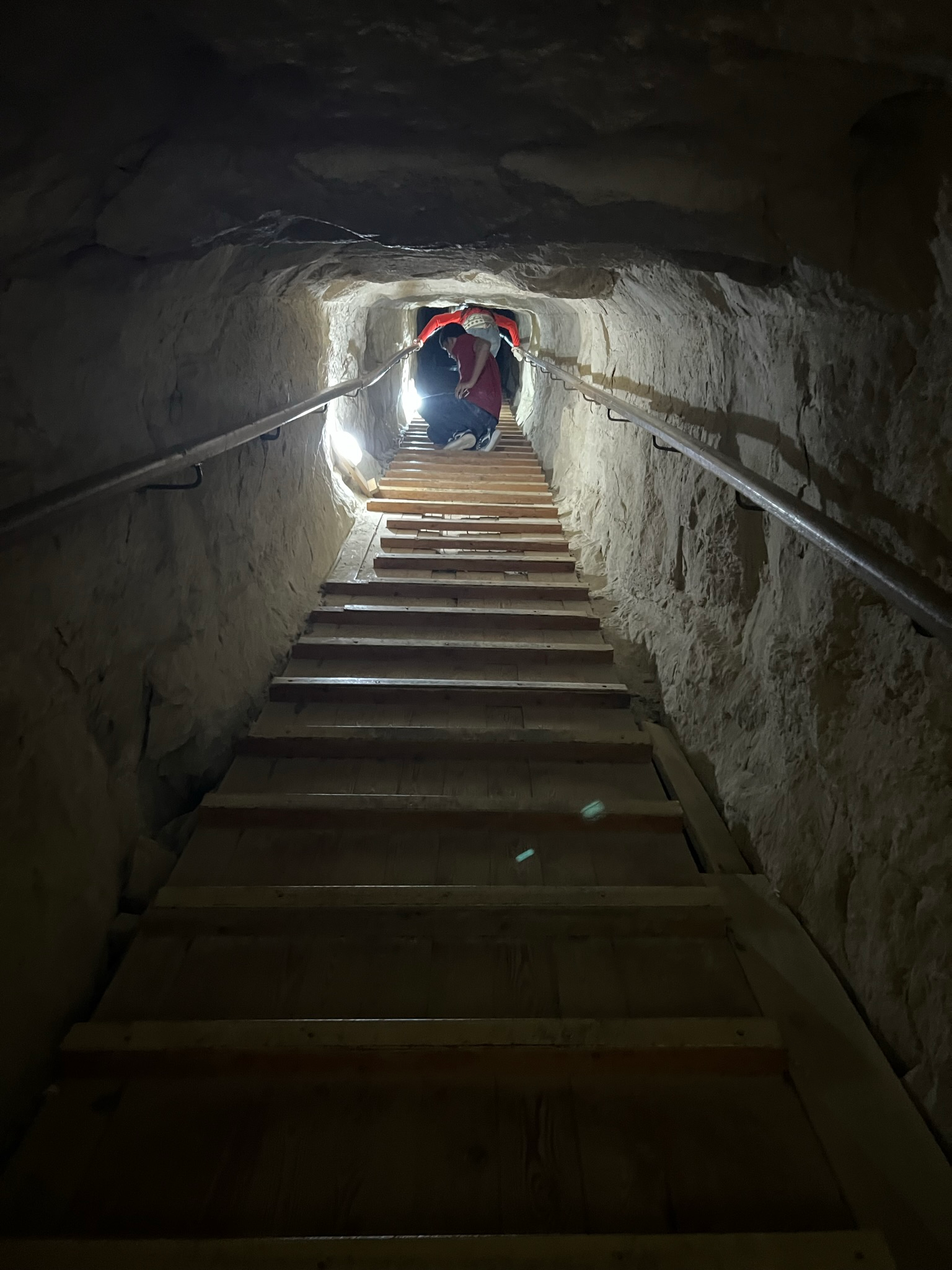
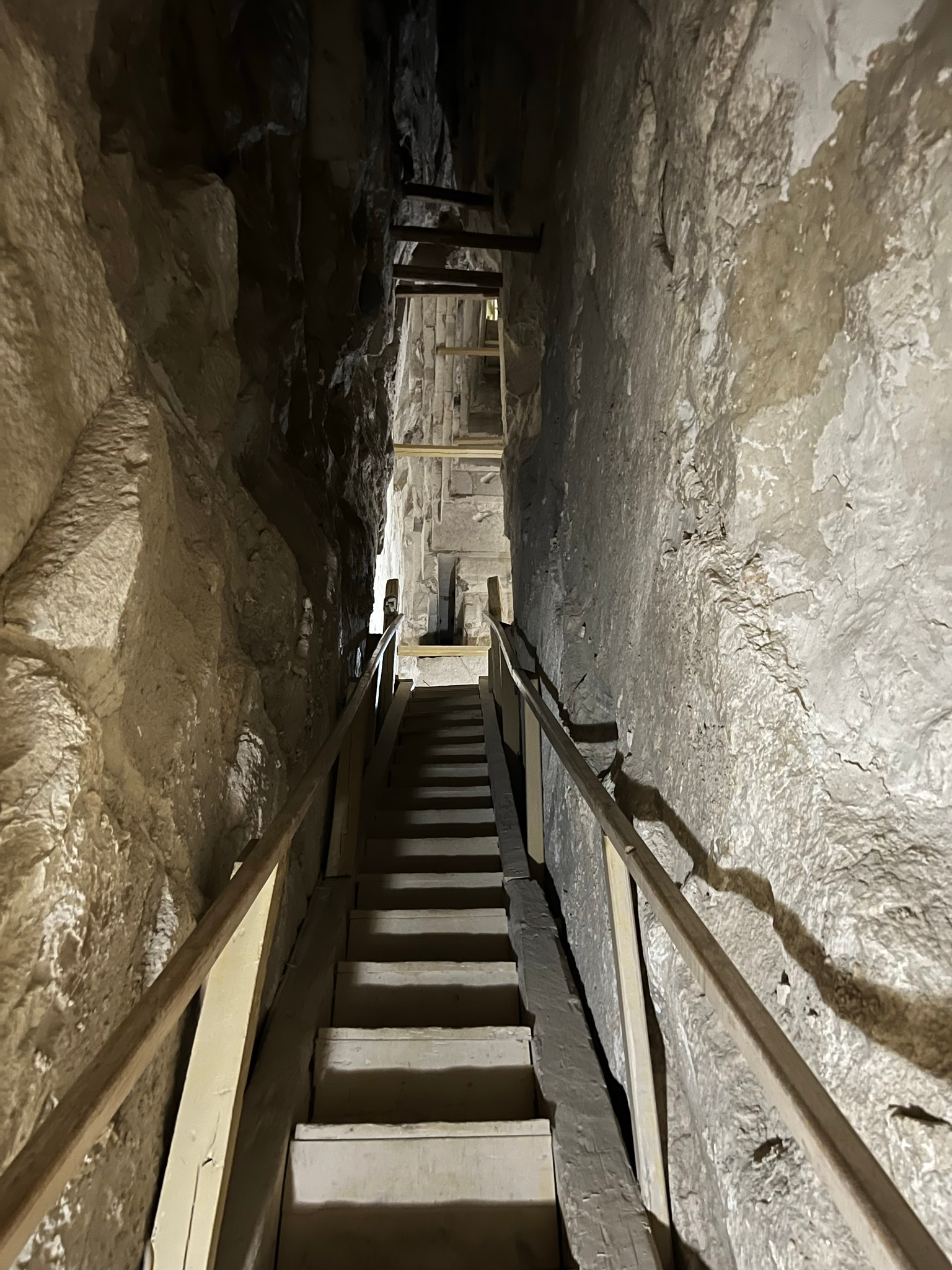
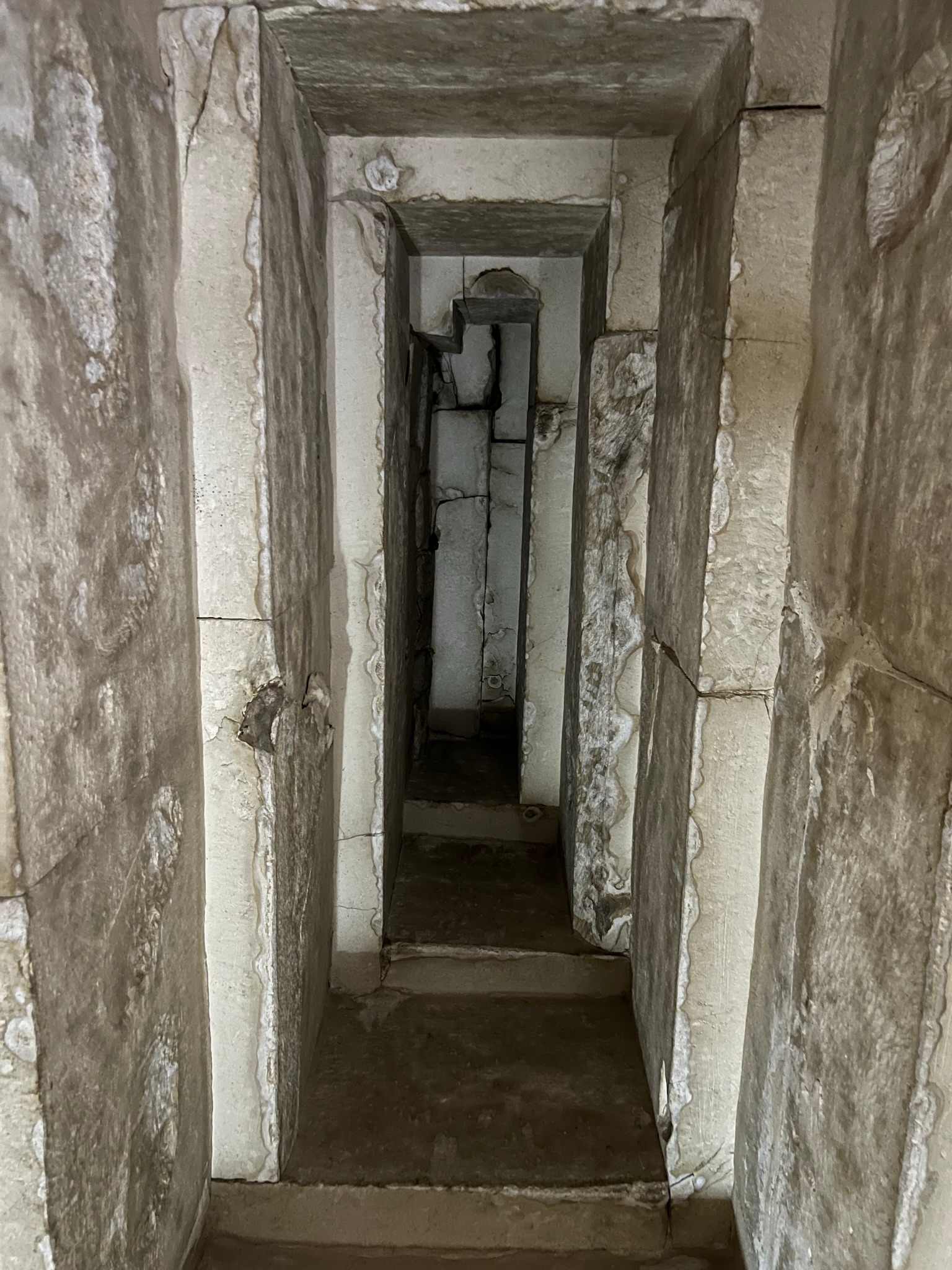
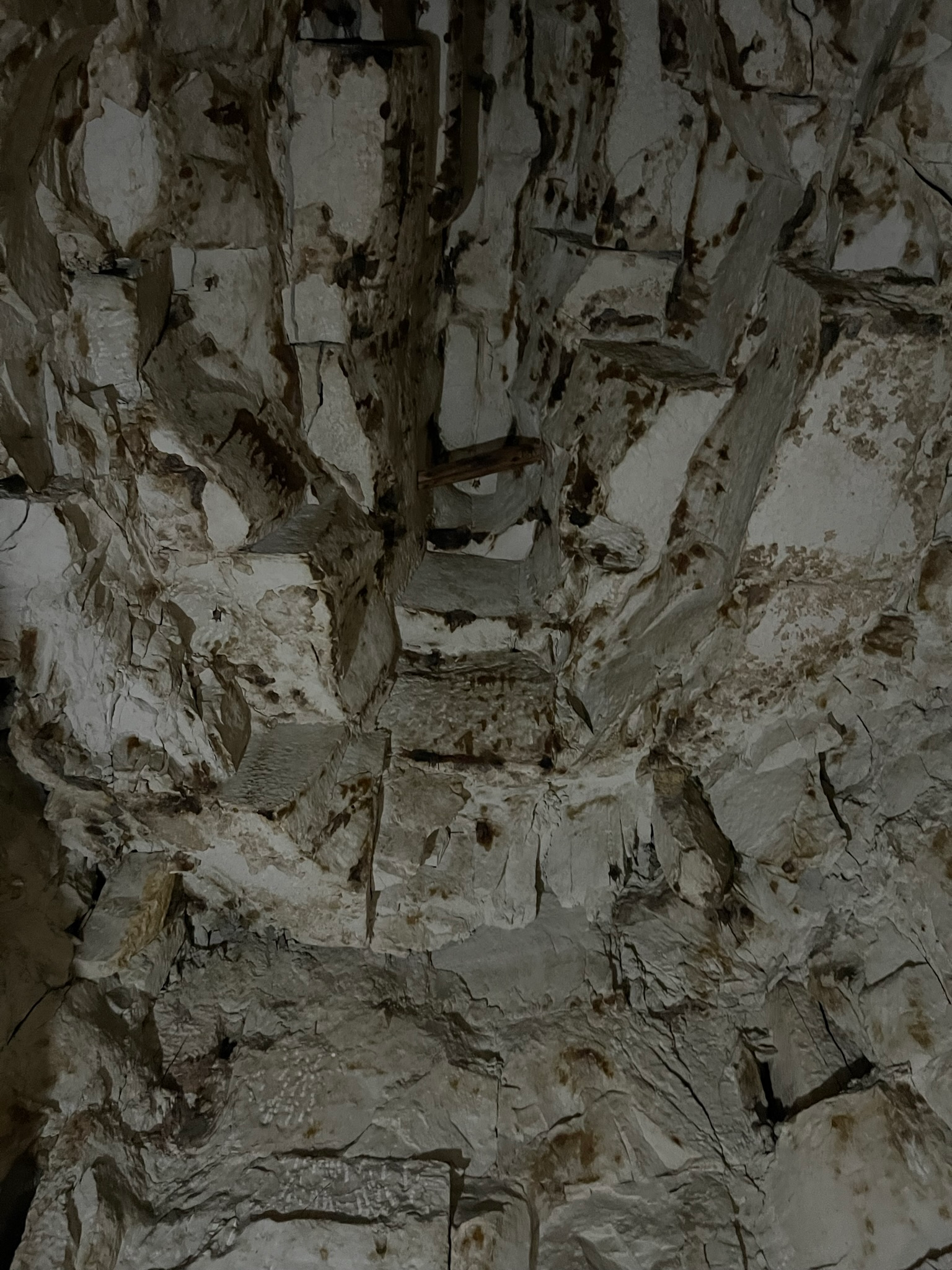
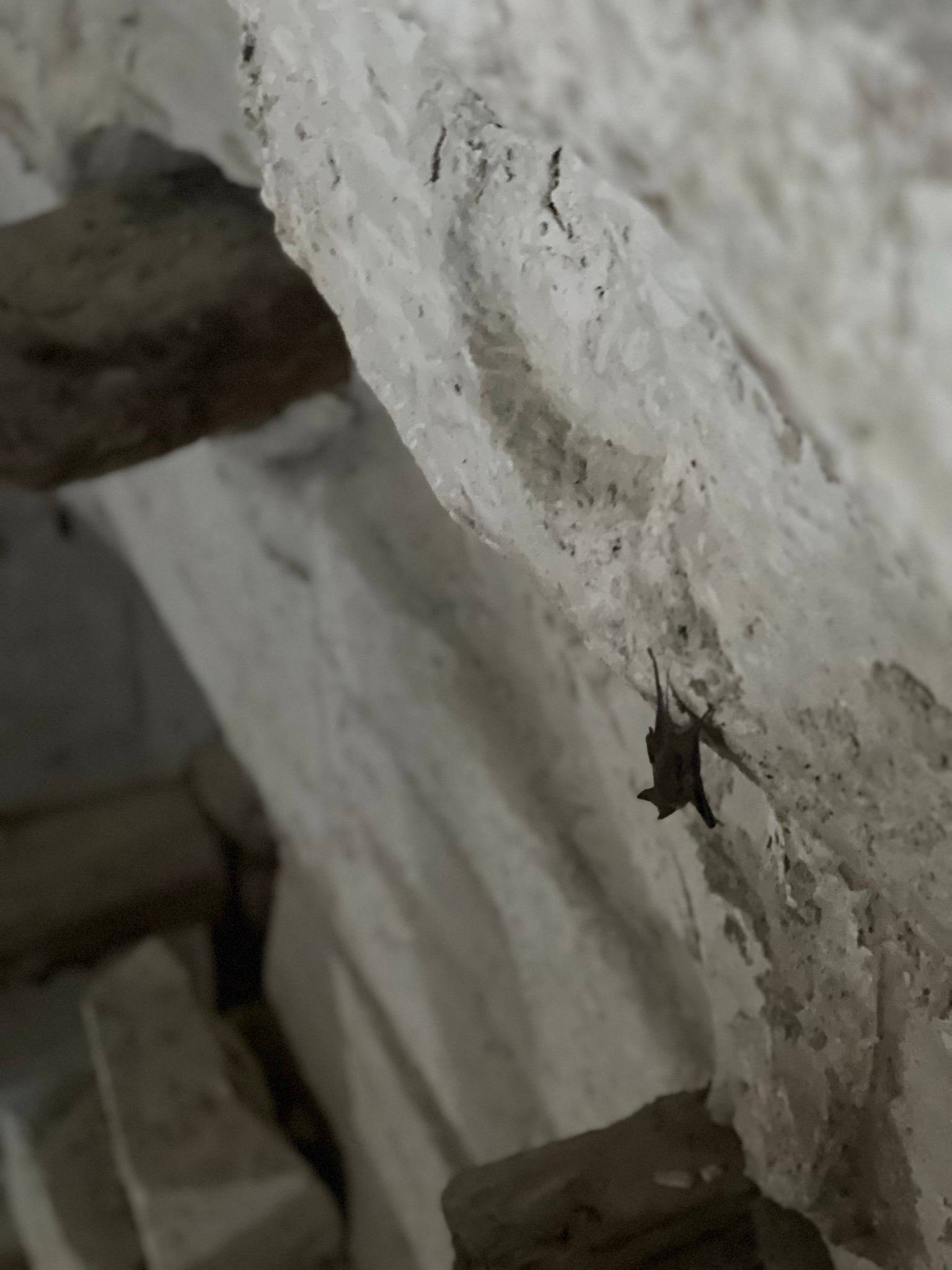
Once my main character moment was over, I slowly made my way out of the pyramid again, my knees refusing to add further protagonist energy to my inner soliloquy. I swear, I could hardly stop them from buckling the second I got out. Luckily, we’d only be observing the rest of the pyramids in Dahshur from the outside.
And the other pyramids? Wow. Just wow. Especially the Red Pyramid – named after the reddish tint of its exposed limestone – which also happens to be the first successfully completed true smooth-sided pyramid. Also built by King Sneferu, it is often thought to have been his burial place. Then there was the Black Pyramid – or what’s left of it. The once imposing megastructure is now little more than a dark, decaying mound of rubble, owing to the fact that its core was built largely out of mudbrick and clay. Still cool. Very cool.


Memphis - Ghosts of Egypt’s First Capital
Before calling it a day, we had one more stop to make – the glorious city of Memphis. Located just south of Cairo, near the apex of the Nile Delta, the city is traditionally said to have been founded by Menes, often identified with Narmer, around 3100 BC. It served as the first capital of unified Ancient Egypt. Owing to its strategic position between Upper and Lower Egypt, it was the political, religious and economic hub of the country for centuries, especially during the Early Dynastic and Old Kingdom periods.
The city of Memphis boasted a large number of workshops and factories that produced and distributed merchandise throughout the kingdom, as well as palaces and administrative offices that were critical for managing the complex bureaucracy that supported the pharaoh and the state. The city also played a key religious role. Believed to be under the protection of Ptah, the great creator and craftsman god, Memphis housed his grand temple, which was considered one of the most important sacred centres in ancient Egypt. In addition, the Memphite Necropolis, where royals and elites were buried, remains to this day one of Ancient Egypt’s most important historical treasures. Also known as the Pyramid Fields, the necropolis is a series of funerary complexes stretching across the Western Desert plateau. Among these are the complexes of Saqqara, Dahshur, Abusir and, last but not least, Giza.
Despite its rich history, the ruins of the once-prosperous capital are scant. That said, the city gave no impression of being a desolate wasteland, with thousands of date palms and all kinds of birds, including storks and herons, surrounding the Nile riverbank and nearby fields. Our visit here was short and sweet, with a quick tour of the Memphis Open-Air Museum giving us a taste of what the city once offered. Among the large number of columns, sarcophagi, vessels and stelae, a few things stood out more than the rest, like the huge Alabaster Sphinx and the even huger 10-metre colossus of Ramesses II. Truly marvellous works of art.
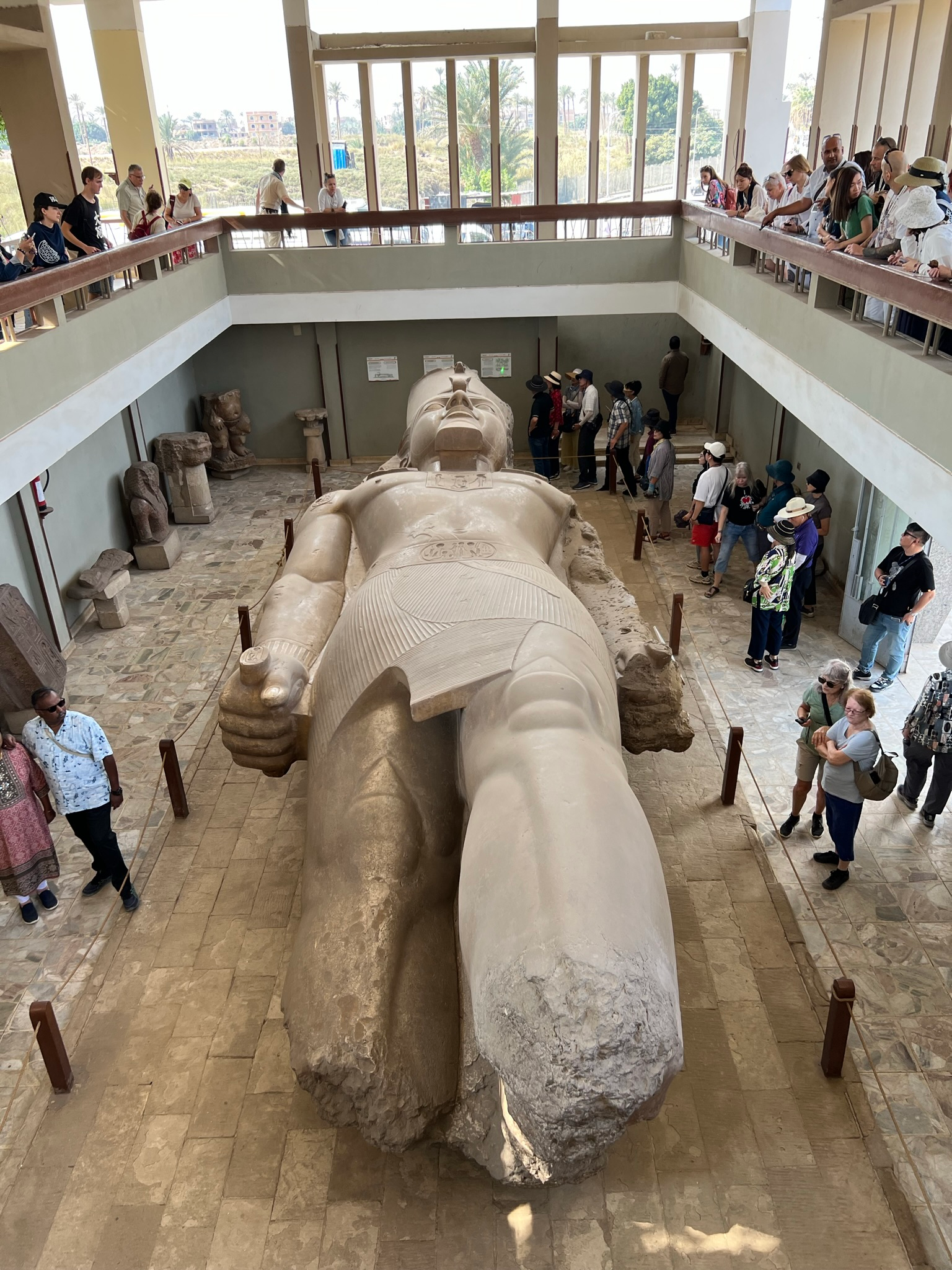
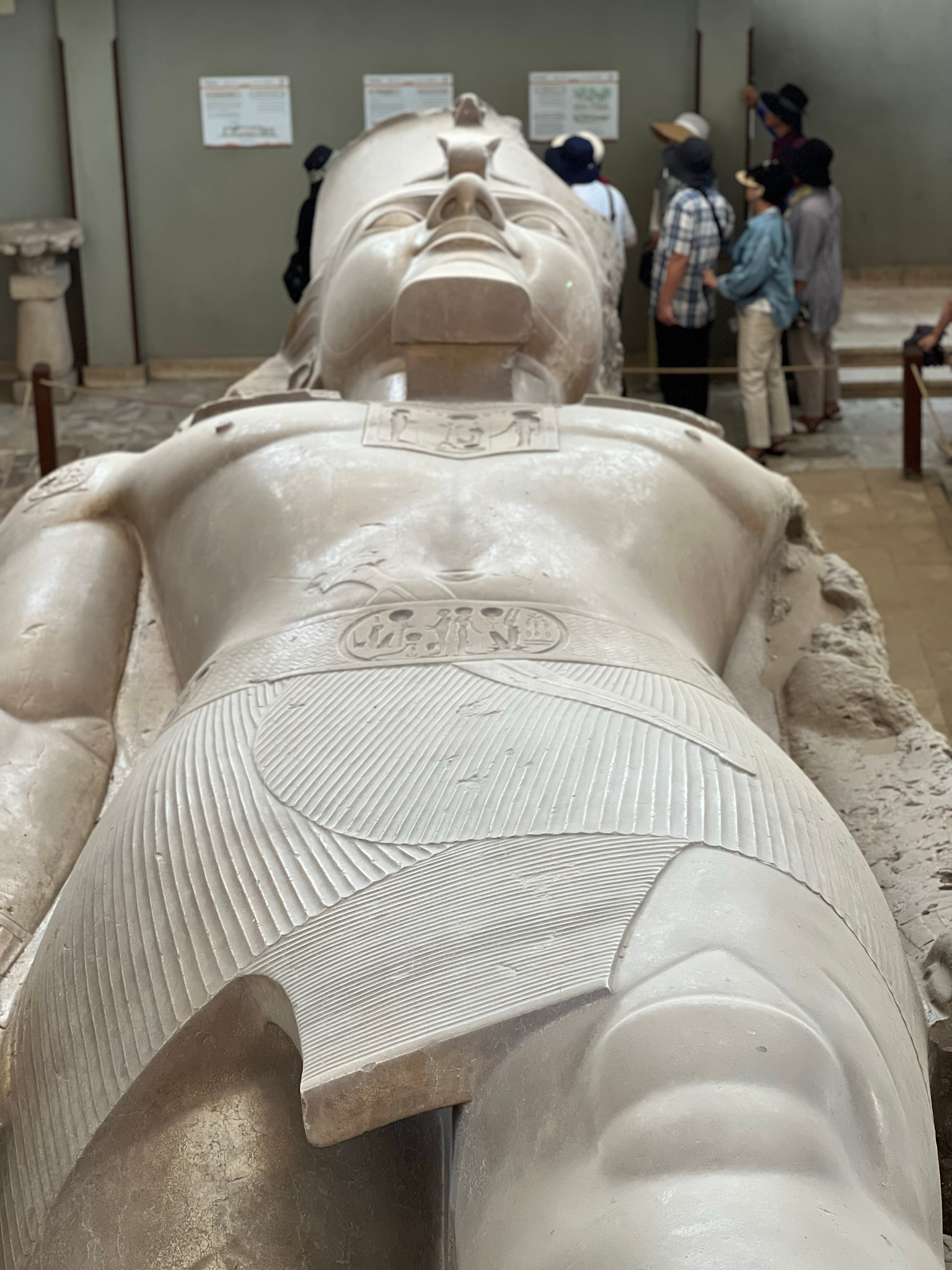
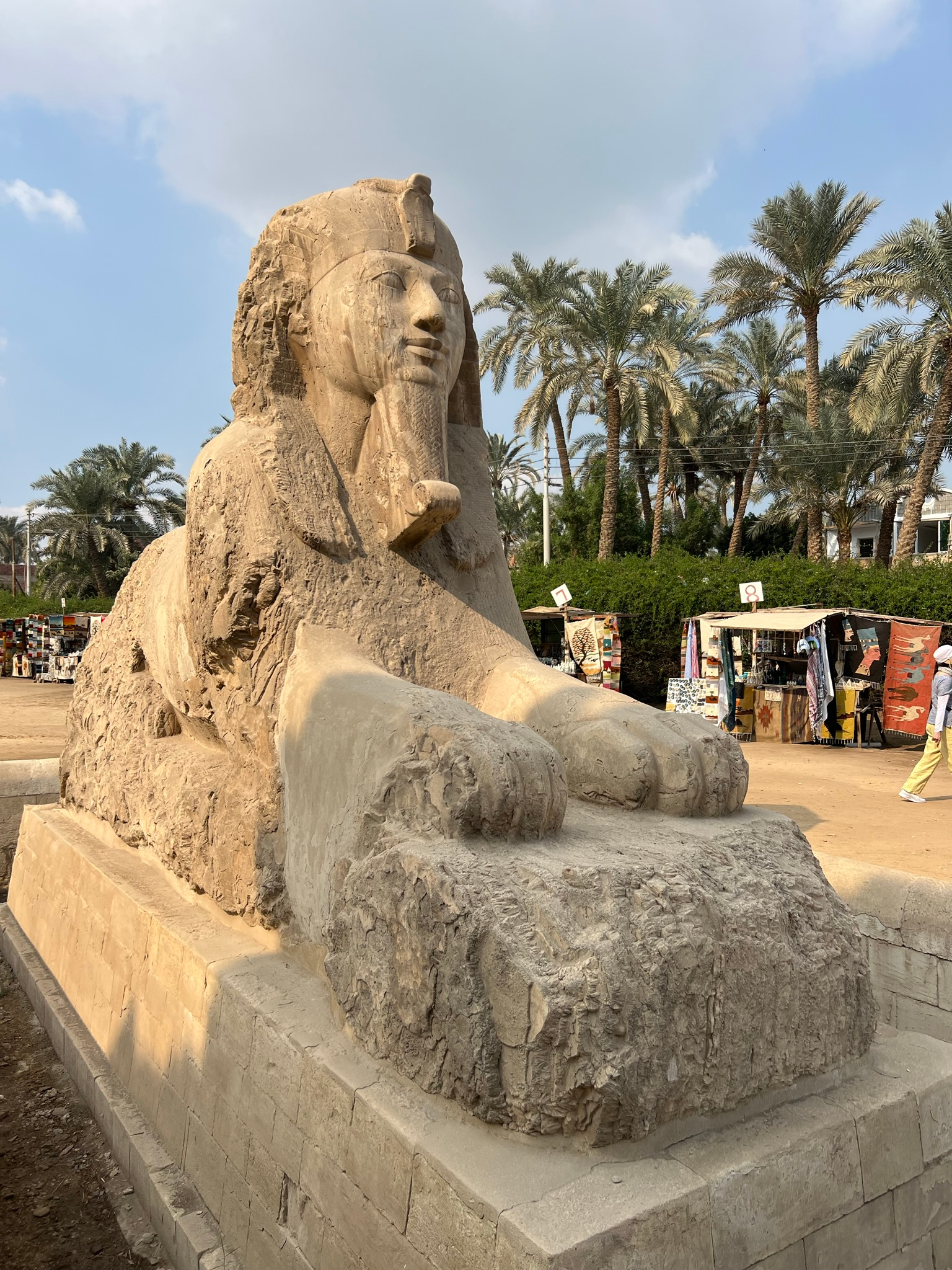
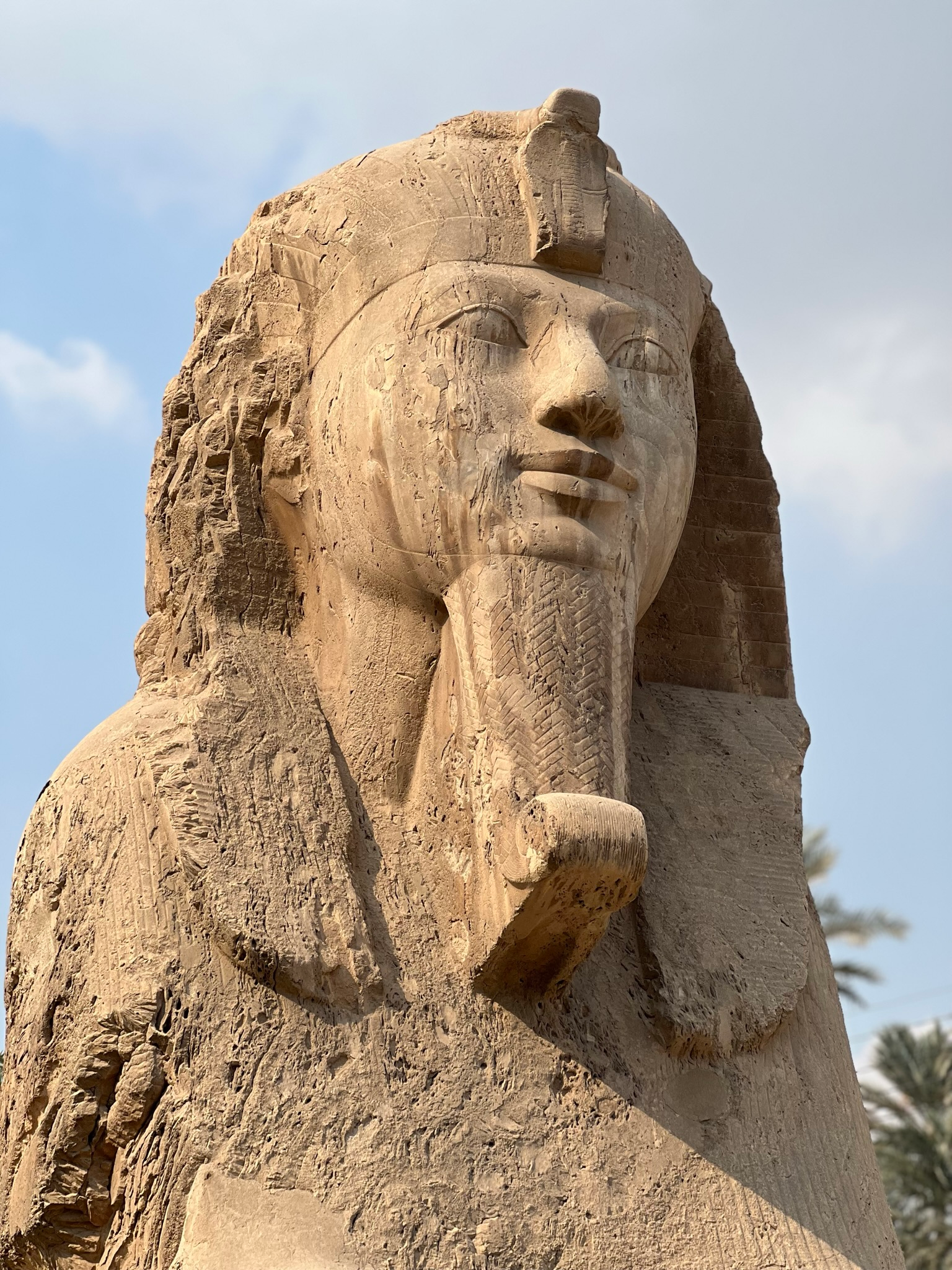
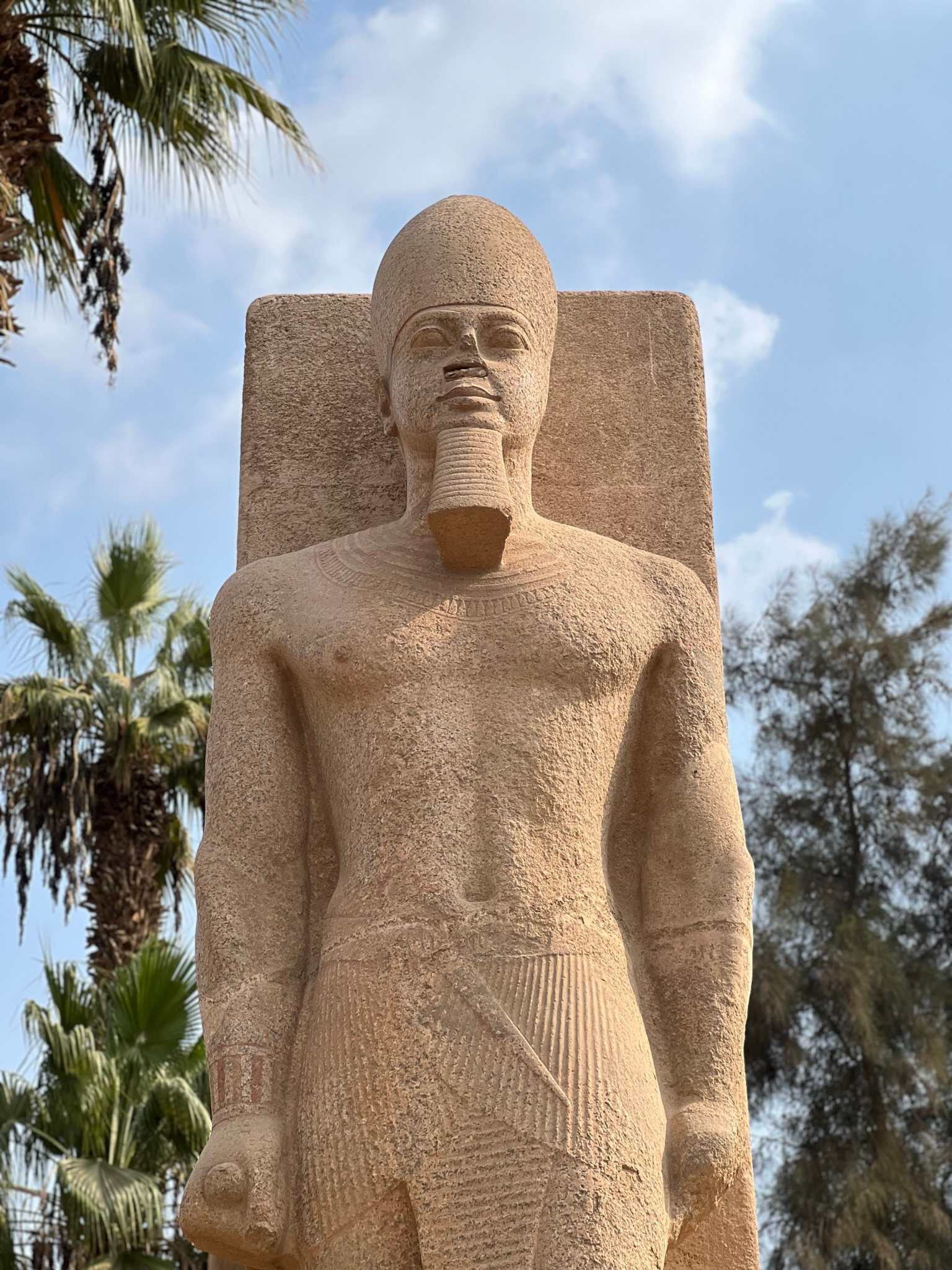
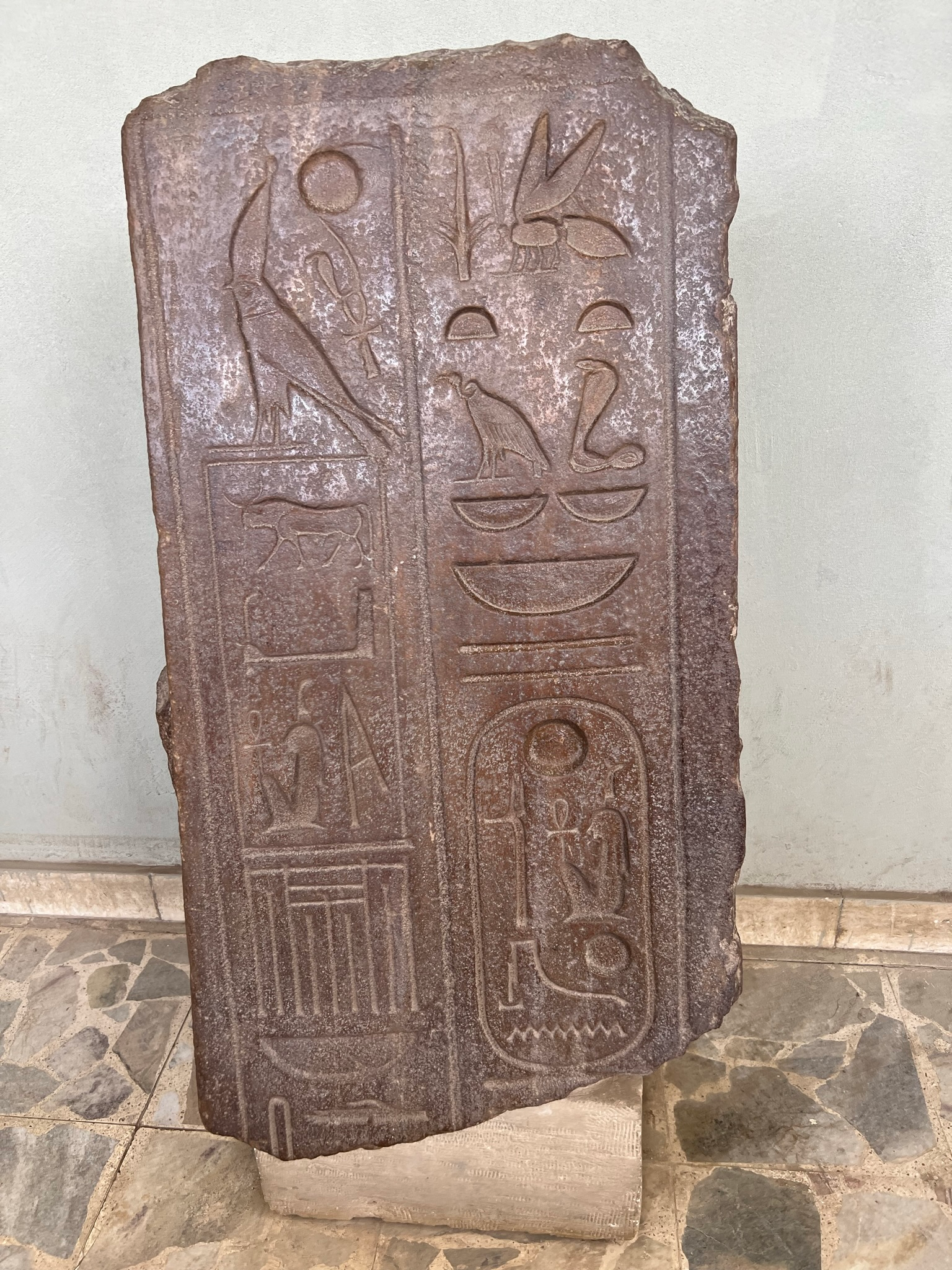
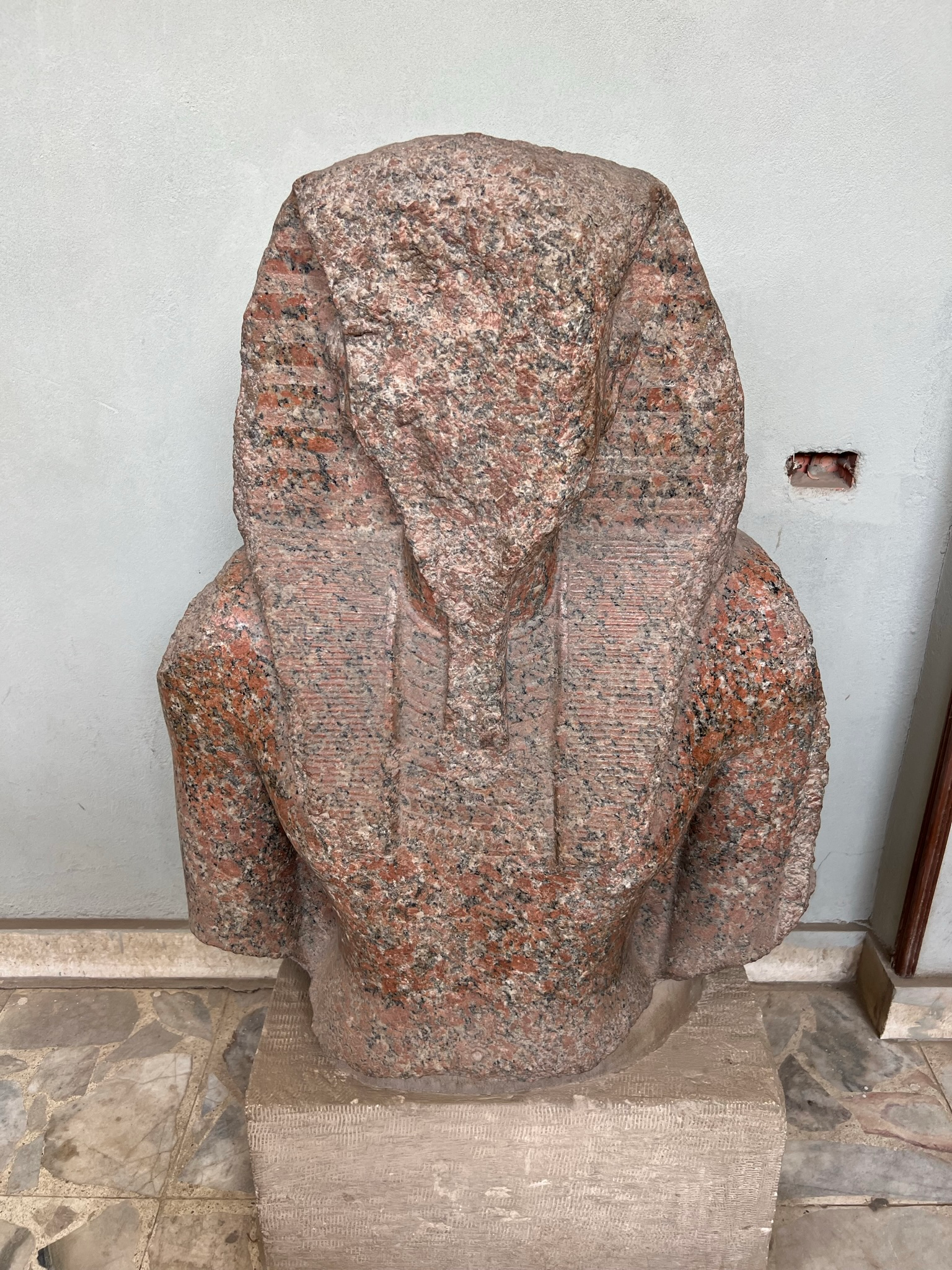
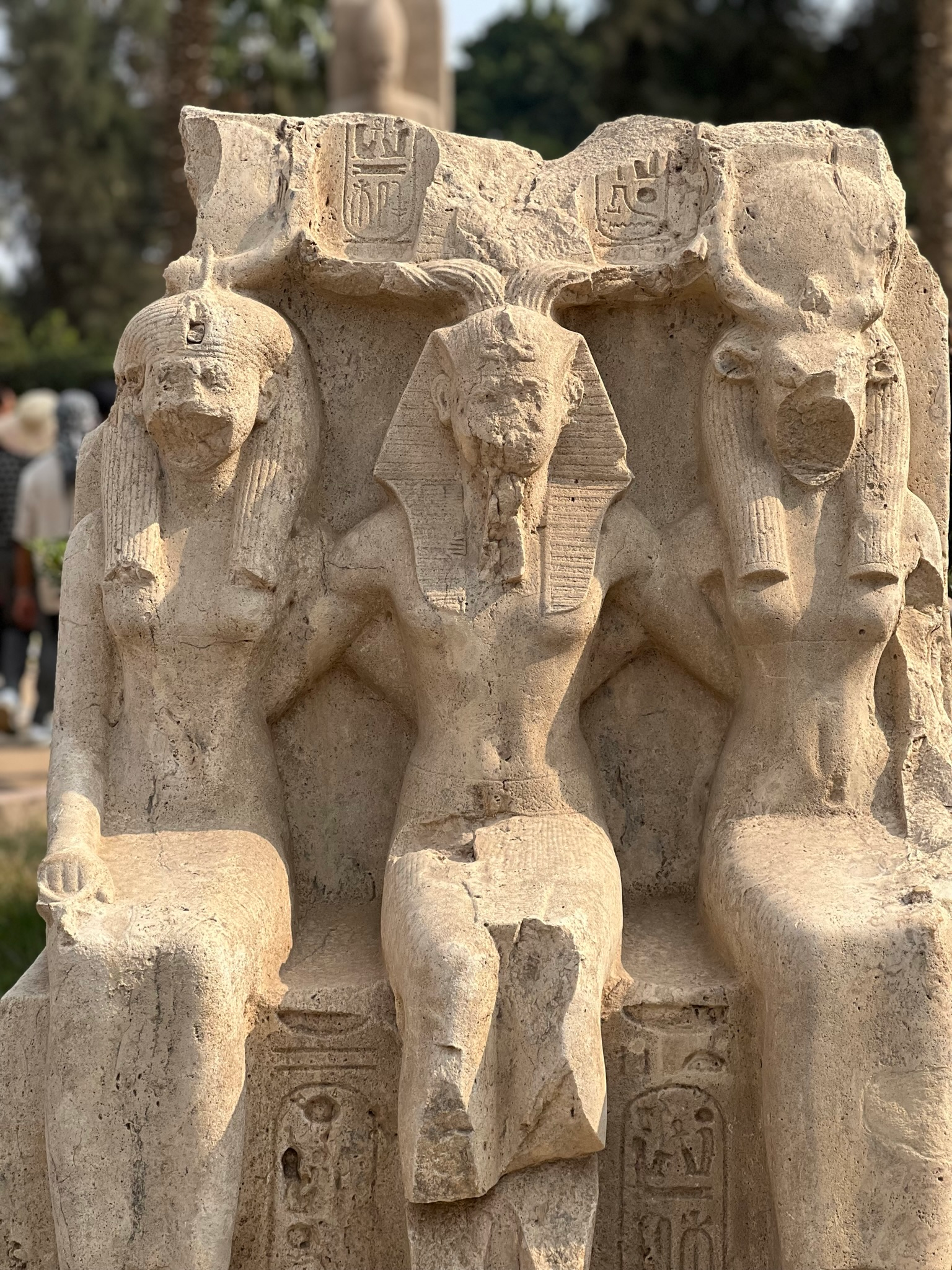
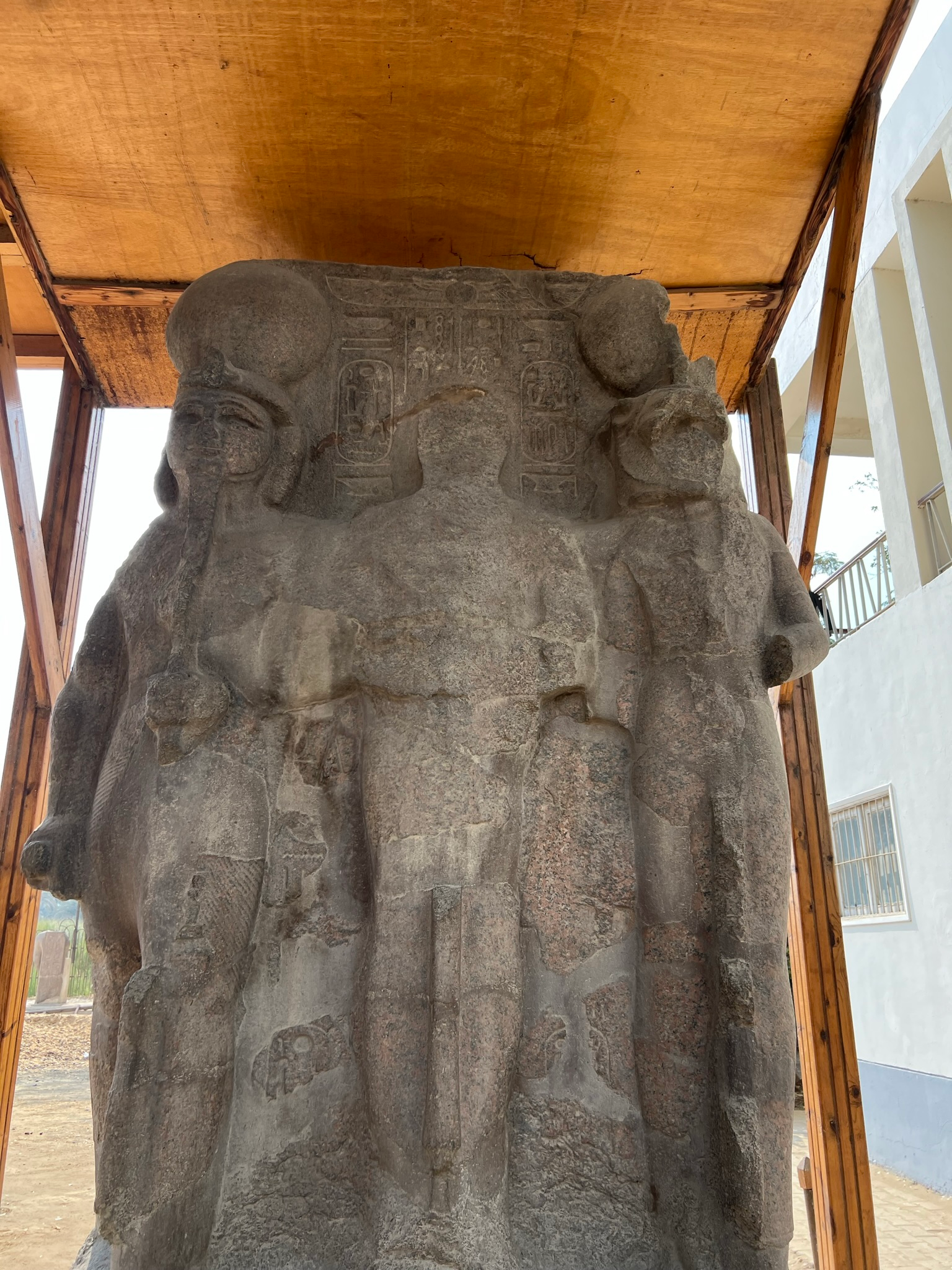
As we wandered through the site, it felt as though the history of Ancient Egypt were coming alive. Though I would never be able to experience it in its days of glory, this was the closest thing I could do – and it still felt pretty damn good.