Luxor – Day 2: City of the Gods
LUXOR
Day 2: City of the Gods
November 16, 2023
PART I
Ready for another day of archaeological adventures, we set off early in the morning to a different site. This time round, we insisted on a place of our choosing for breakfast, and lemme just say, we were much happier for it. Then, we proceeded to our first stop for the day, the Mortuary Temple of Hatshepsut.
Queen Hatshepsut of the Eighteenth Dynasty was married to her half-brother Thutmose II and then assumed the position of pharaoh after he died, becoming one of the few and most prominent female pharaohs in the history of Egypt. She claimed divine legitimacy by presenting herself as the daughter of Amun. In a patriarchal society, she was often depicted in masculine form, wearing the traditional regalia of a pharaoh, while still subtly retaining feminine identity markers in some representations. This visual strategy reinforced her role as both ruler and symbolic “father” of Egypt.
At the time, she was widely associated with prosperity and stability. Her reign is marked by extensive building projects, including her mortuary temple at Deir el-Bahari and contributions to the Karnak Temple complex. However, after her death, her stepson Thutmose III attempted to erase her from historical record by defacing or reattributing many of her monuments and inscriptions. Modern scholarship suggests this may have been driven more by political consolidation than purely personal animosity, though the effect was still a form of historical suppression.
The Mortuary Temple of Hatshepsut
So yeah, the Temple of Hatshepsut. Prior to entering the majestic mortuary complex, one is welcomed by a passageway lined with street vendors selling all kinds of stuff, from rugs and scarves to souvenirs and lamps. While most knew little to no English when asked about the site, some were suddenly fluent in English, Spanish, and Italian when it came to selling. Having fought our way through the crowd, we could finally lay our eyes on the temple.
The temple is located in Deir el-Bahari, a complex of temples and tombs on the west bank of the Nile at Thebes (modern-day Luxor). In essence, it consists of three massive terraces stacked one above the other, each featuring different porticoes and shrines dedicated to various deities, most notably Amun-Ra, the chief deity of the New Kingdom associated with the sun and creation. According to Ahmed, ordinary civilians were once restricted to the first terrace, nobles to the second, and only the royal court and high priests to the upper level. However, there is limited archaeological evidence to confirm this strict social zoning. Another interesting feature is that the mortuary temple lies between the Valley of the Kings and the Valley of the Queens, reinforcing its symbolic centrality in Theban mortuary geography.
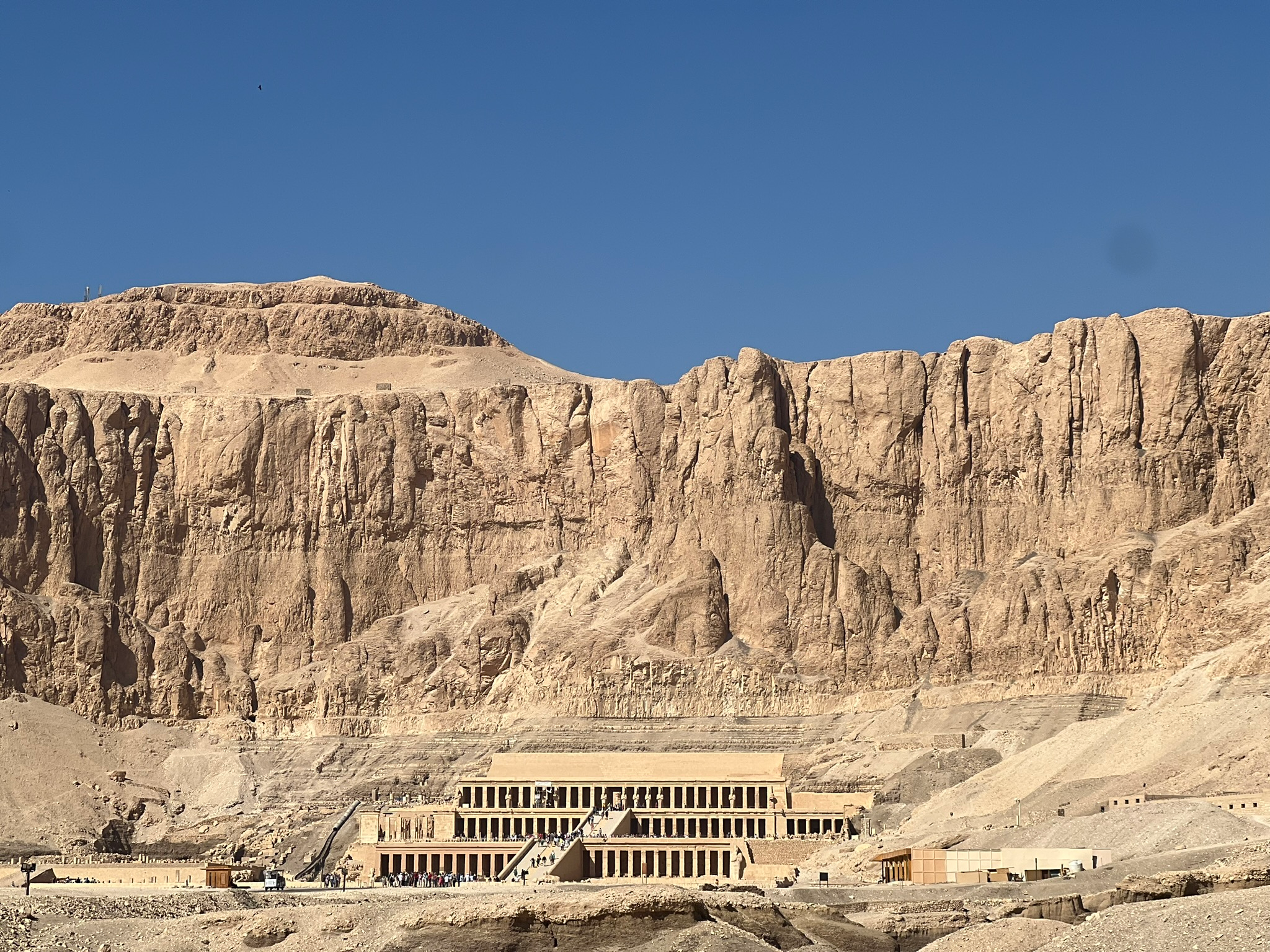
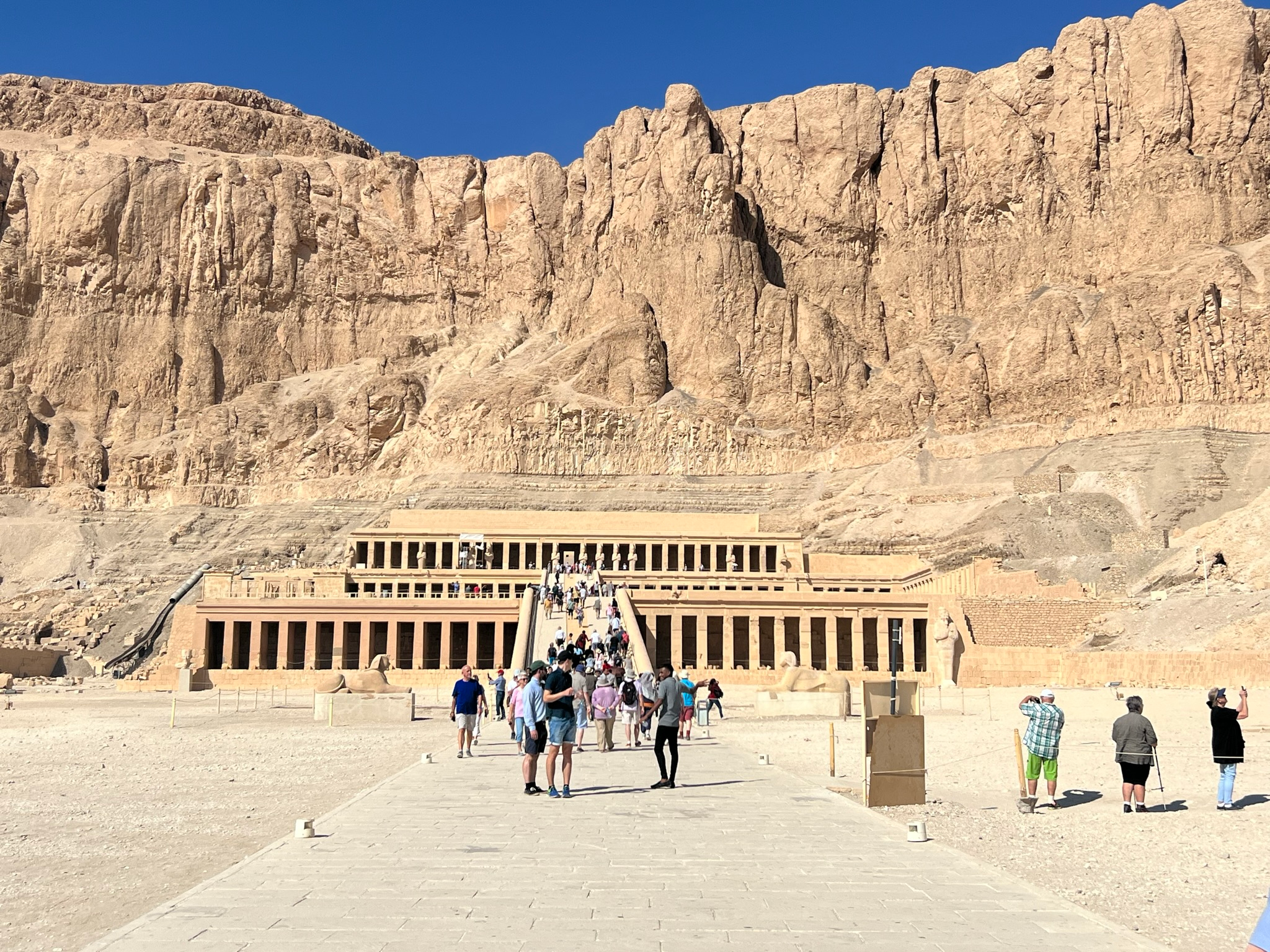
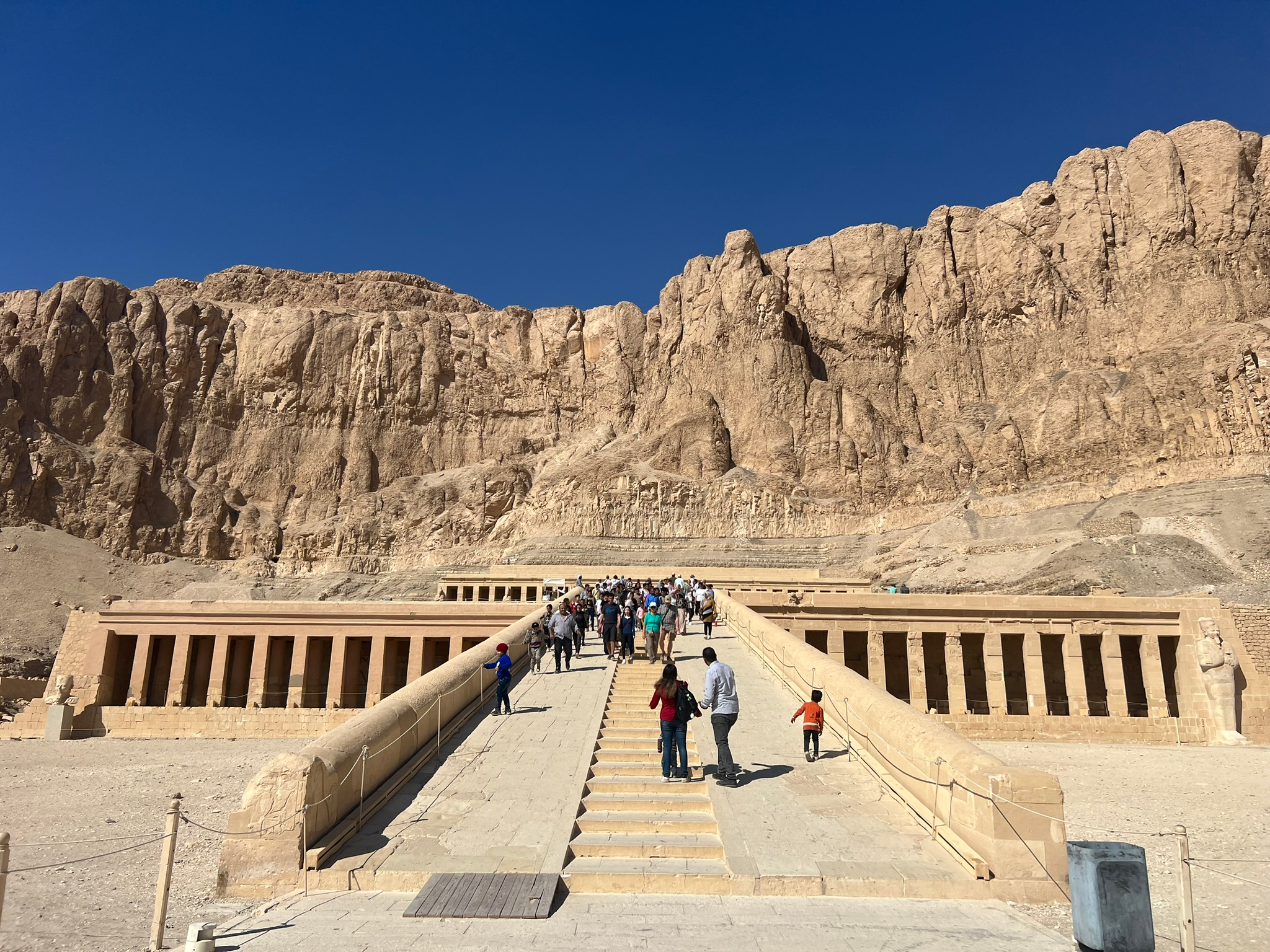
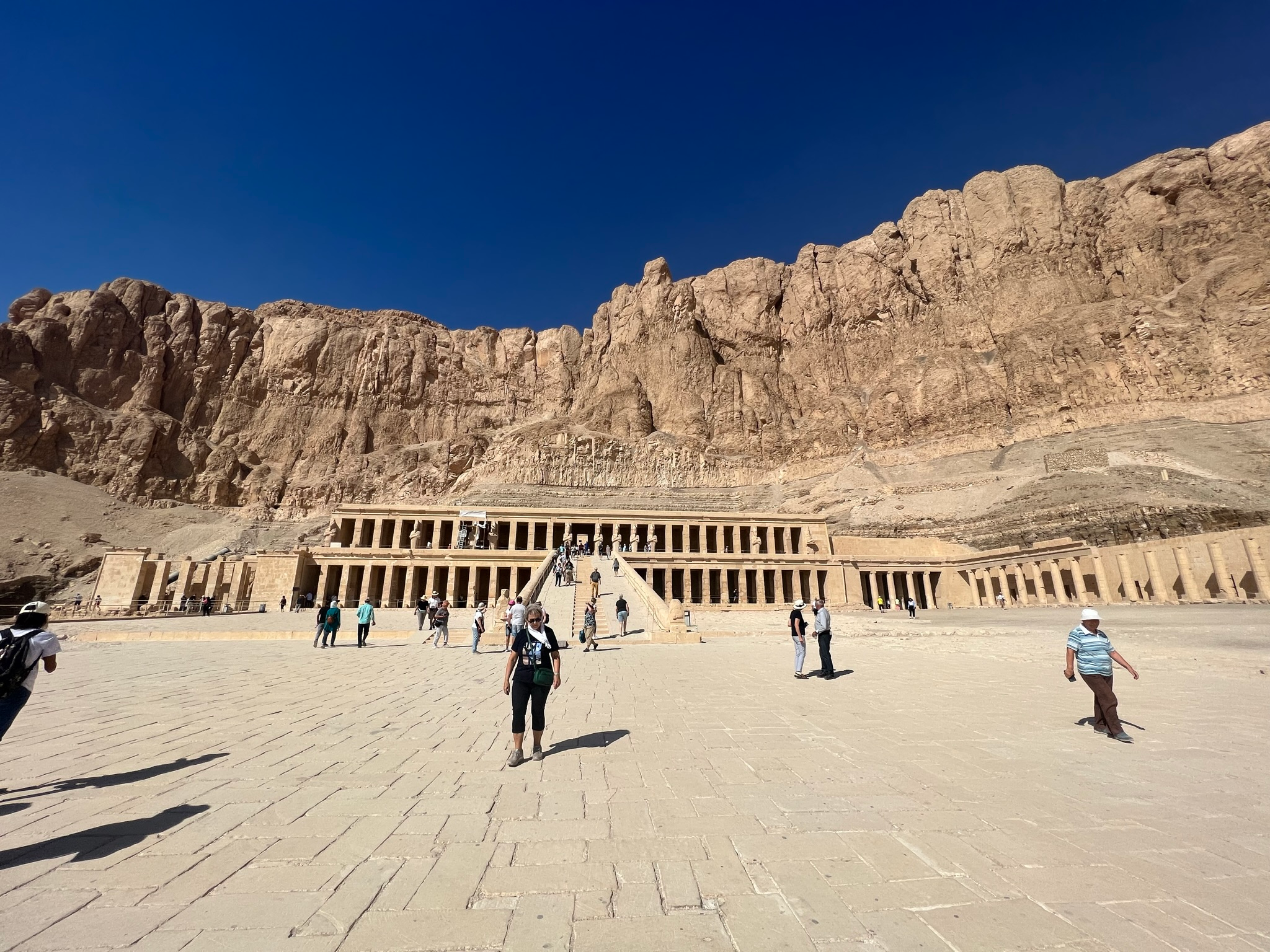
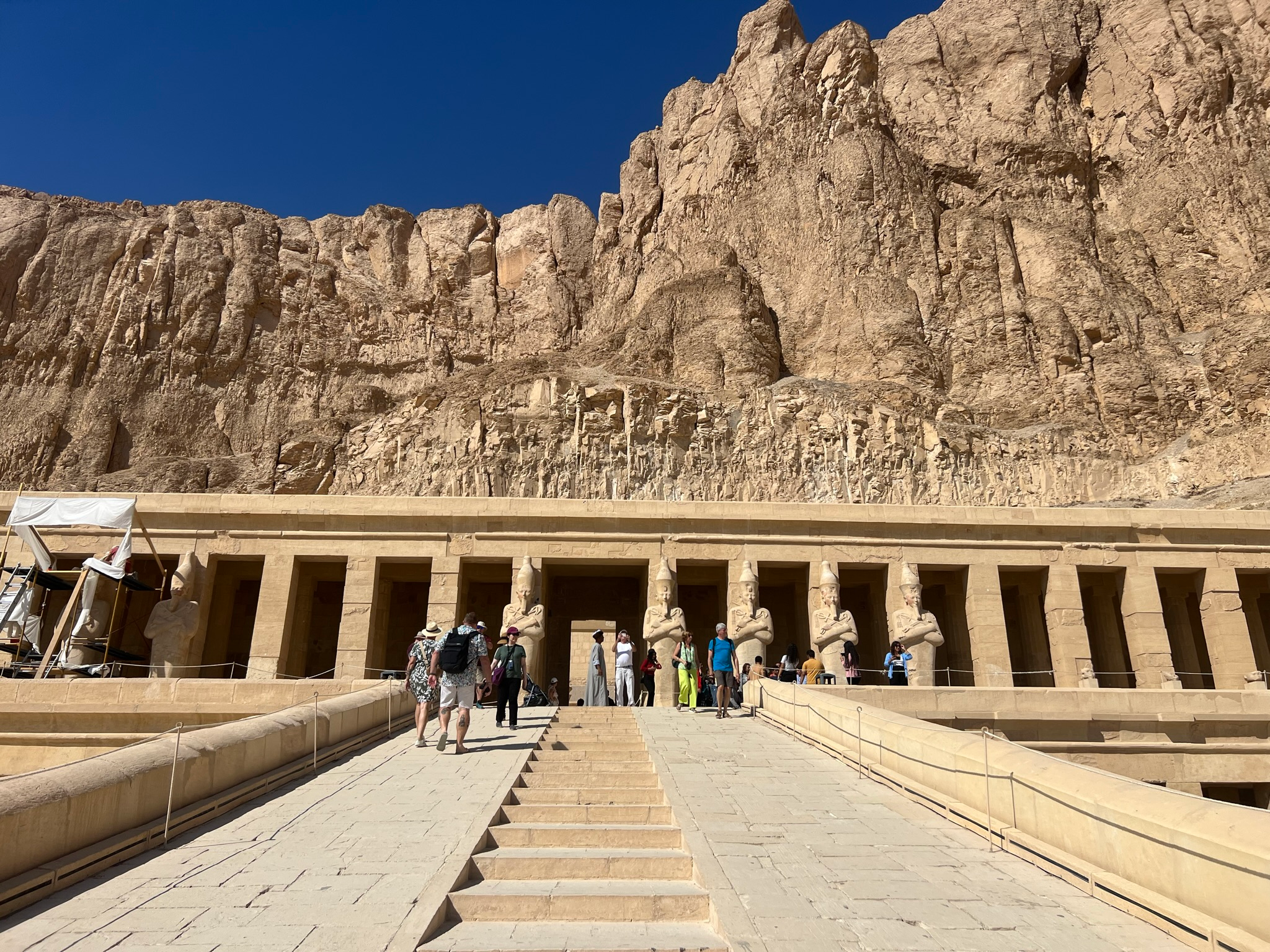
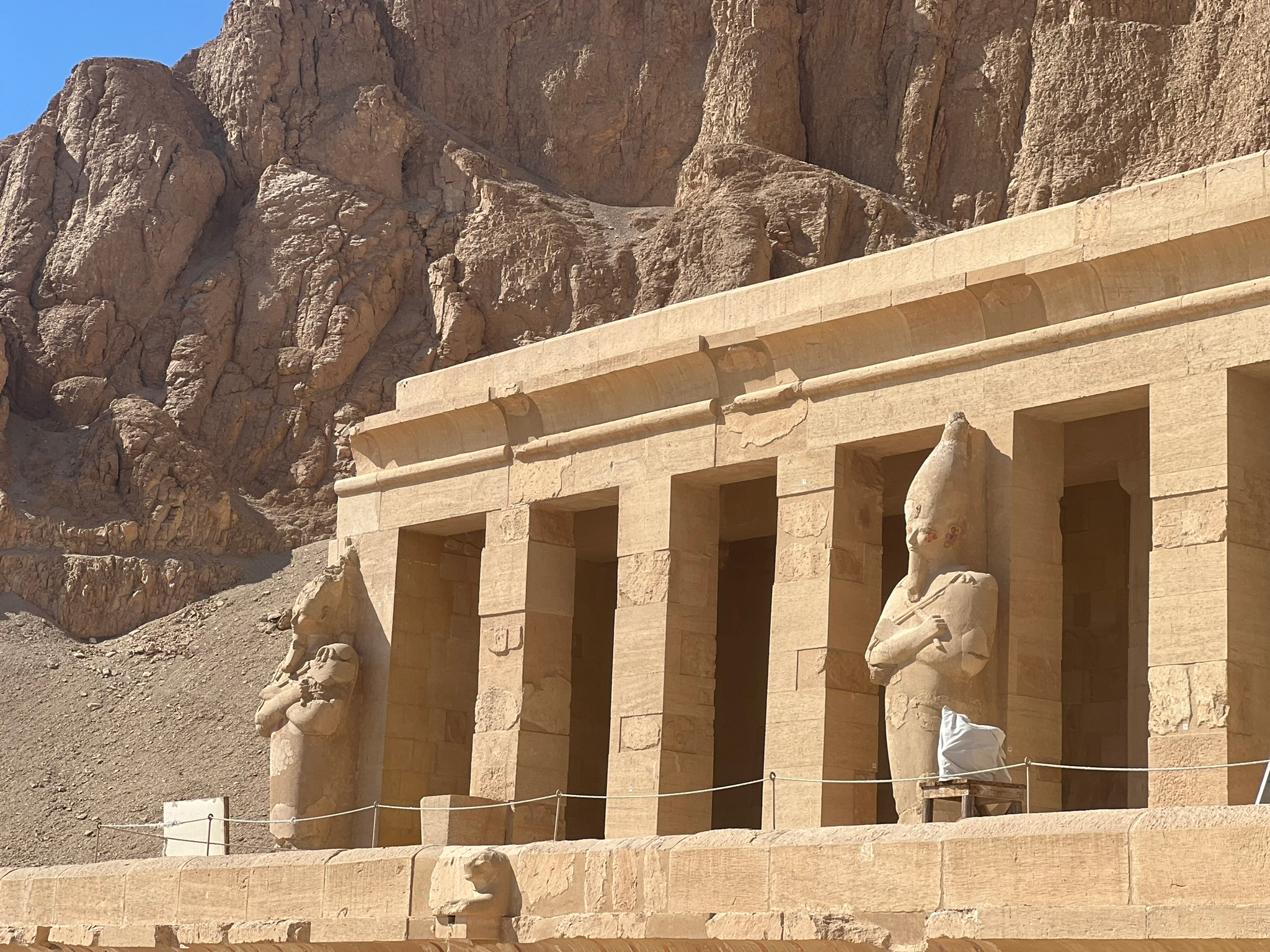
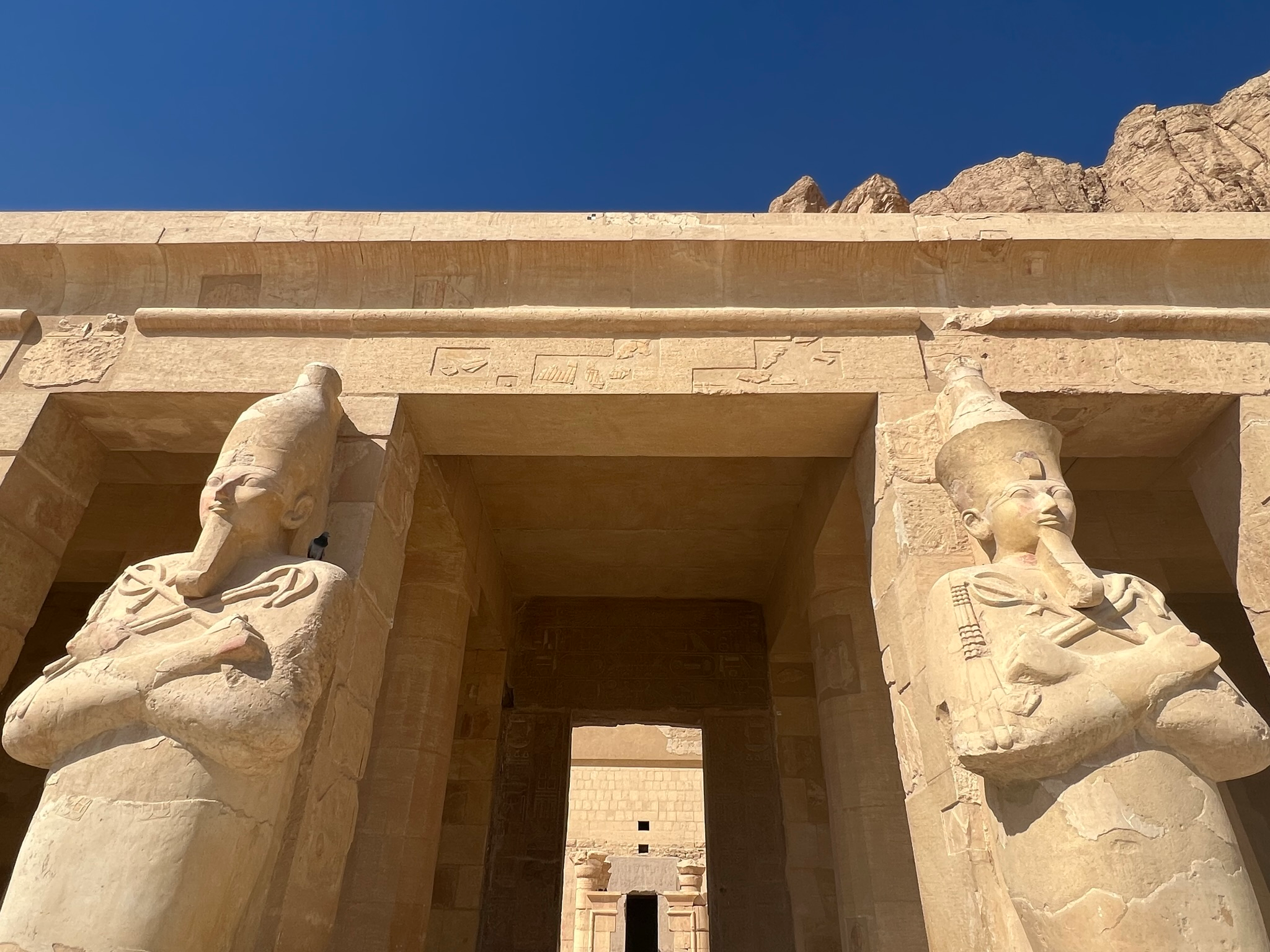
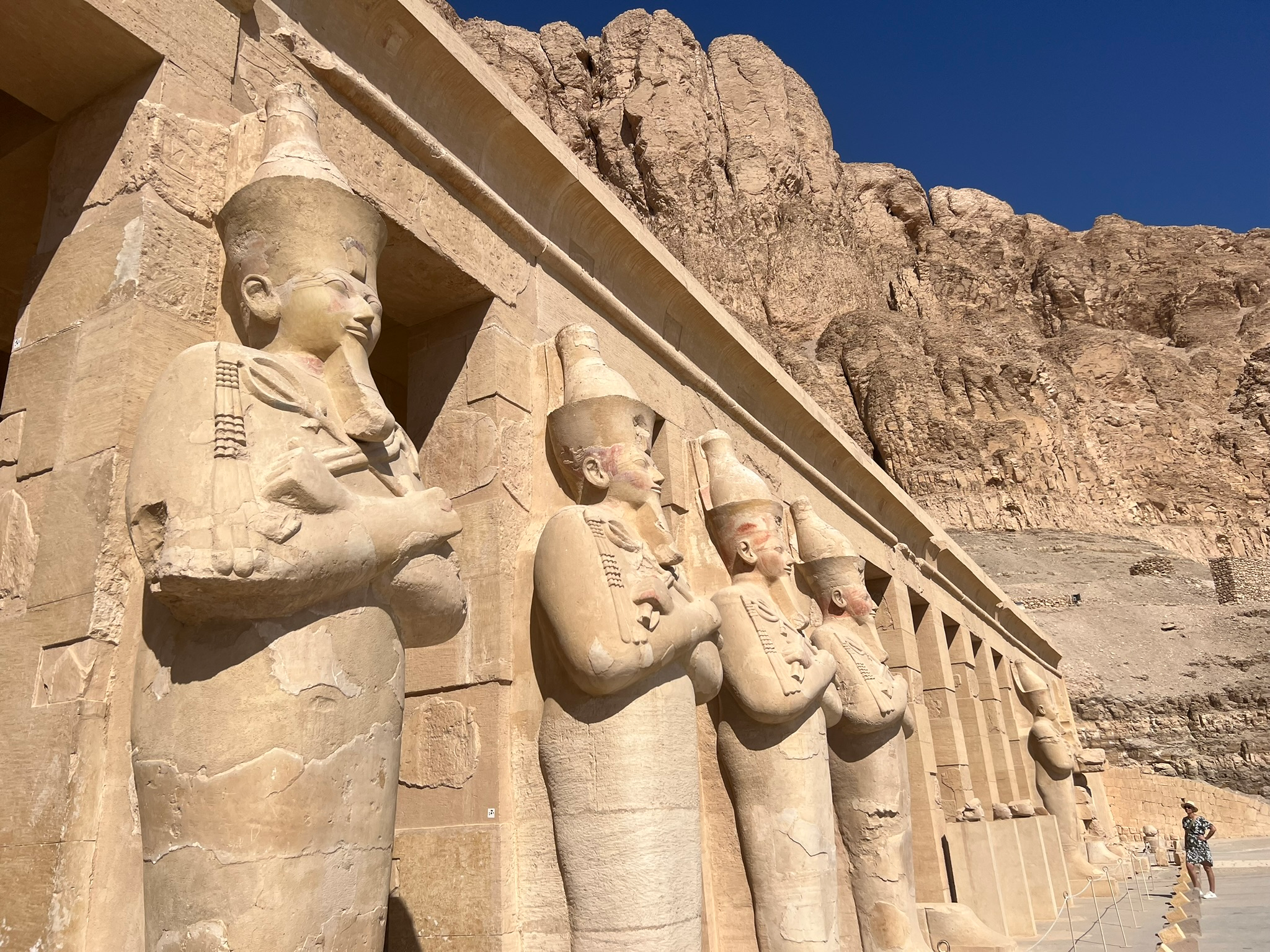
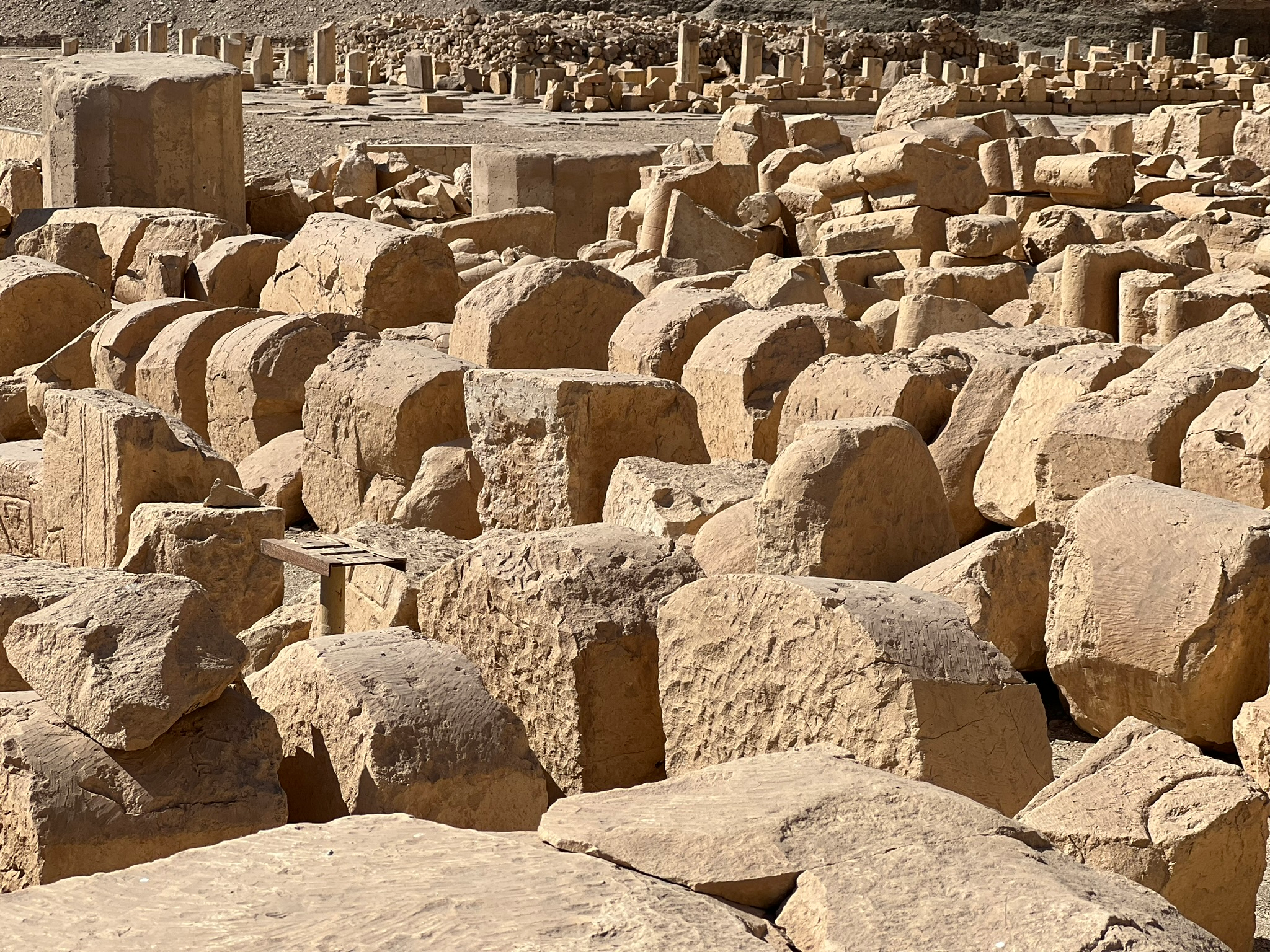
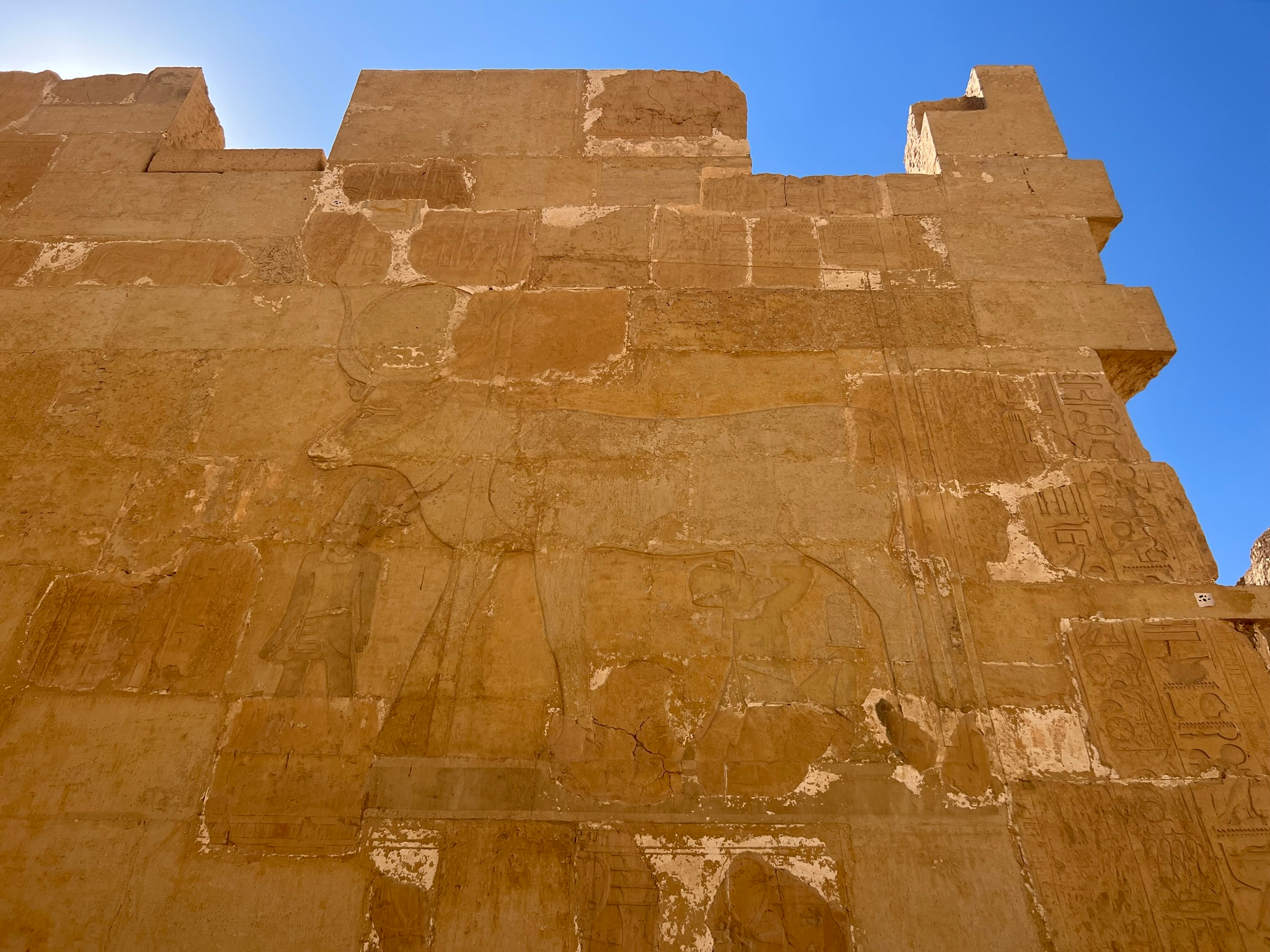
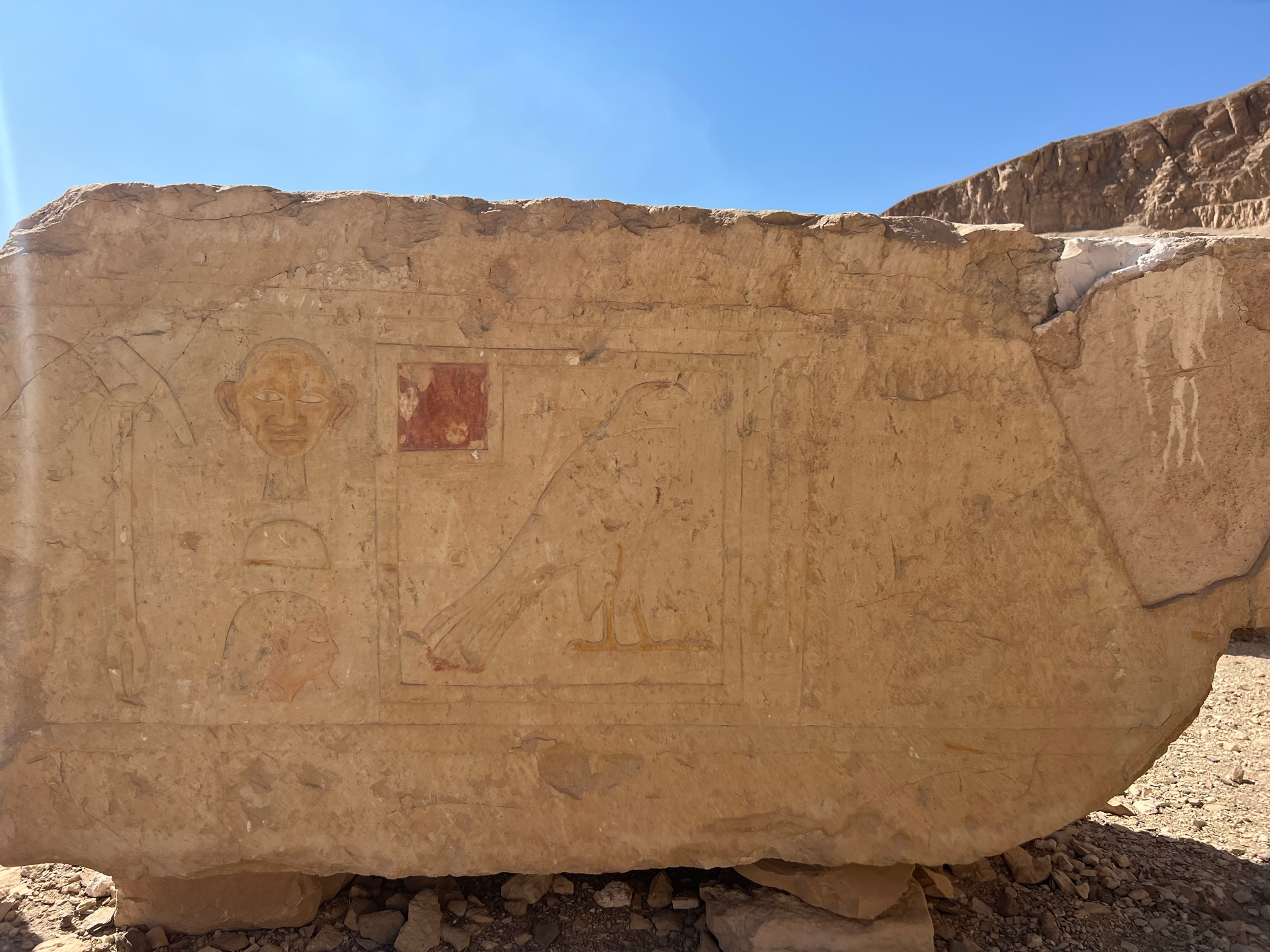
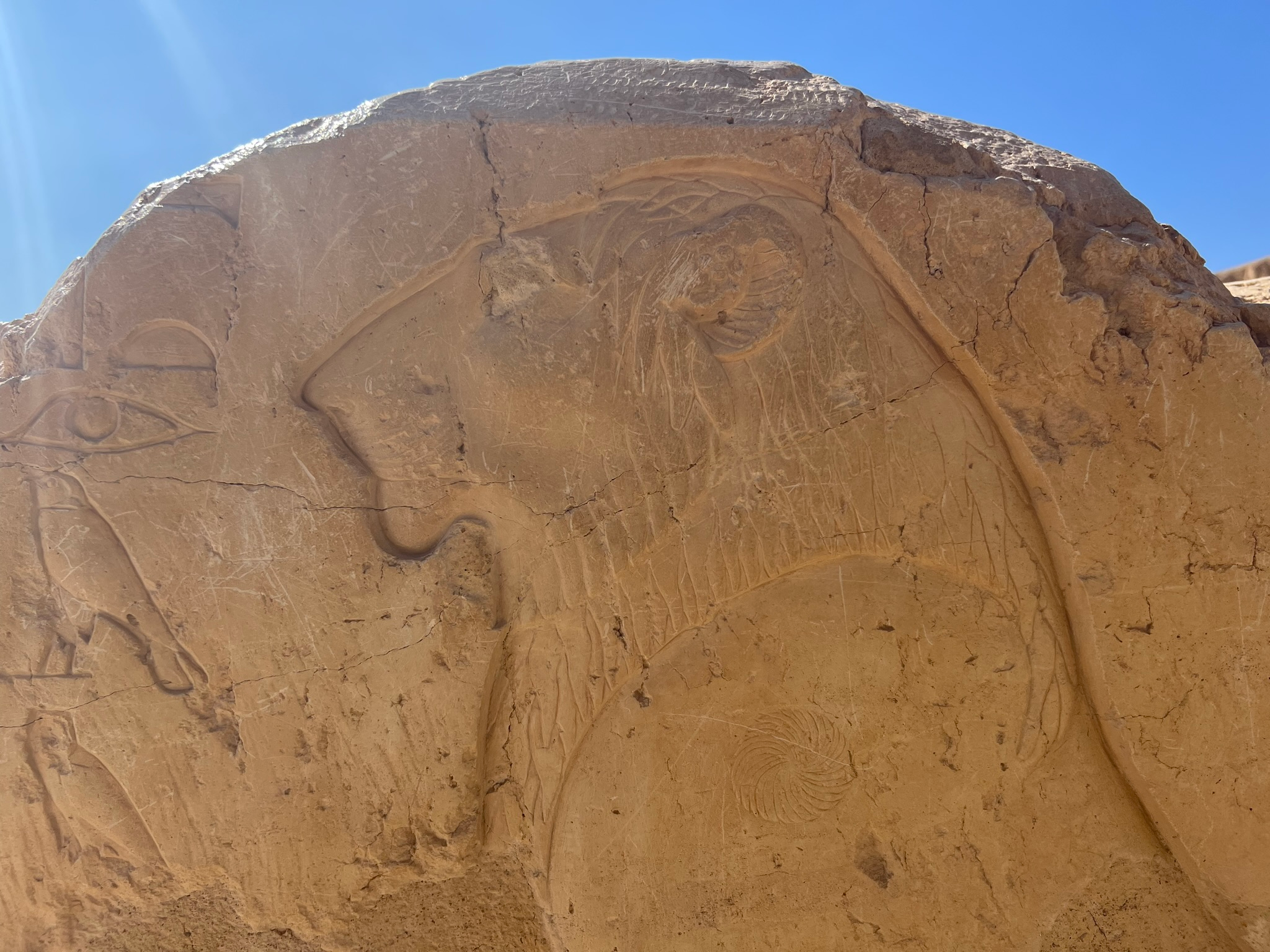
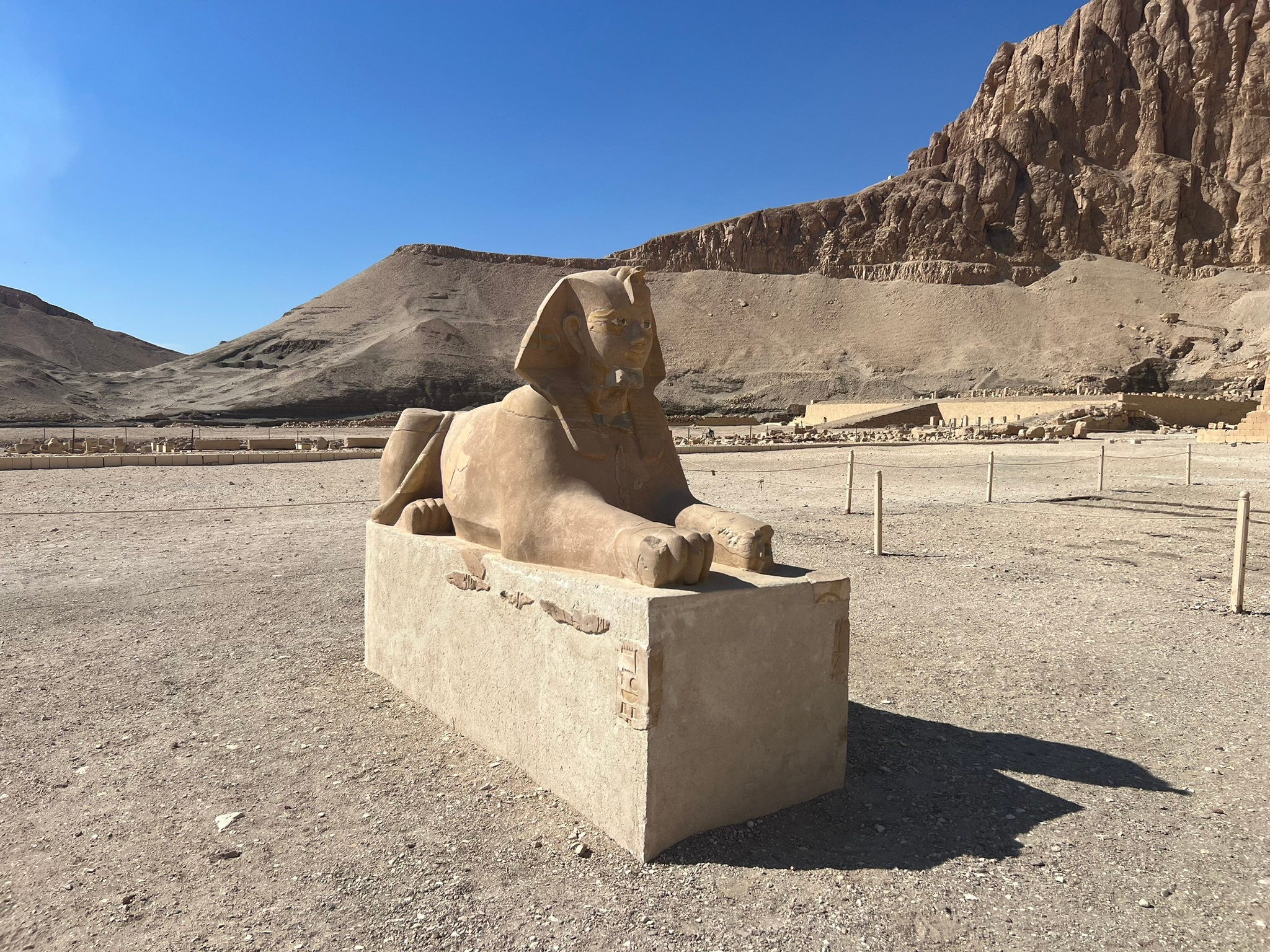
As we walked onto the lower terrace, we noticed two T-shaped recesses in the floor. According to our guide, these were once filled with water for ritual cleansing before entering the temple, though other interpretations suggest they may have held trees and flowers. Given that I’m not a historian and that I have trust issues, I’ll mention both.
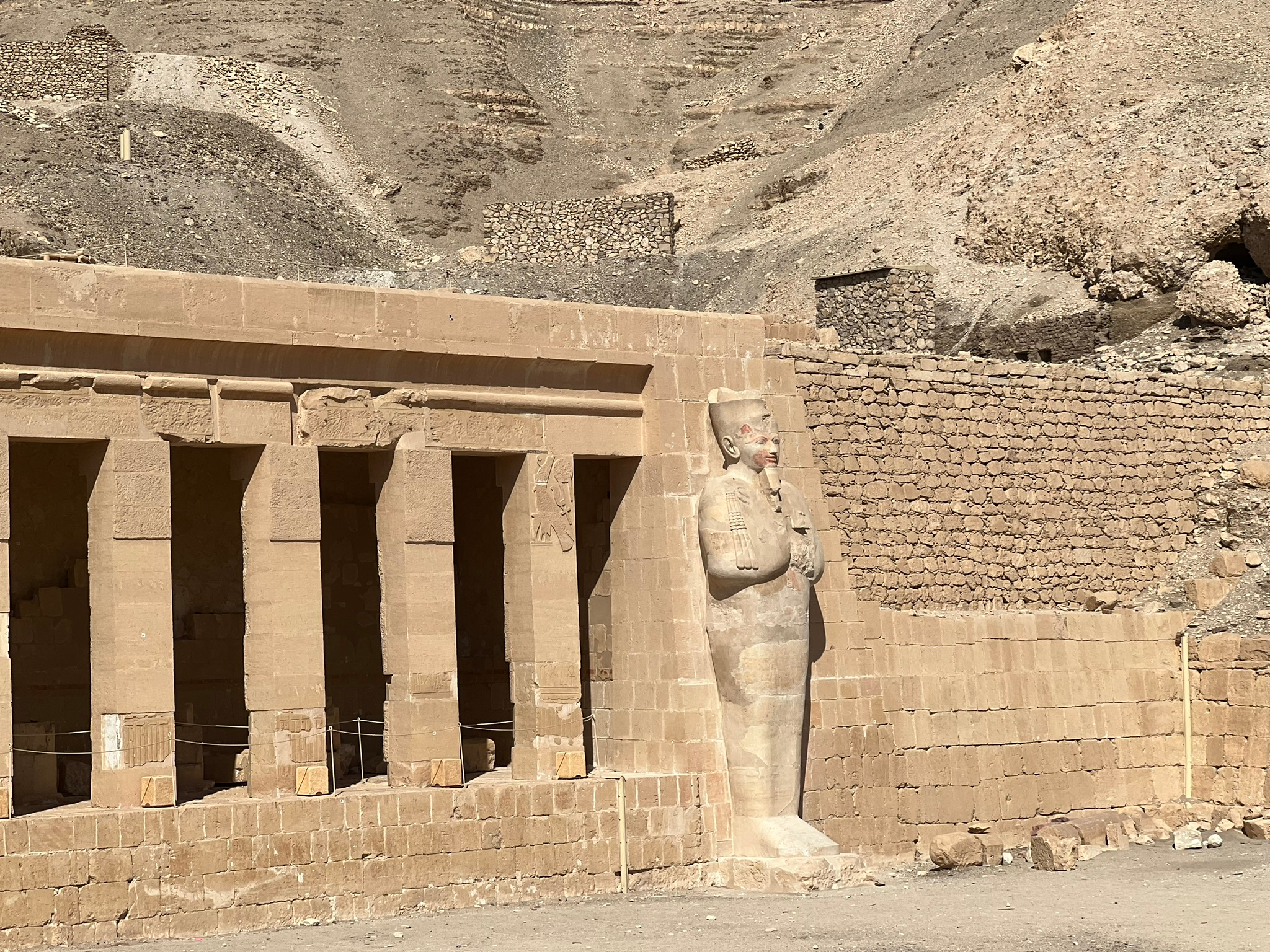
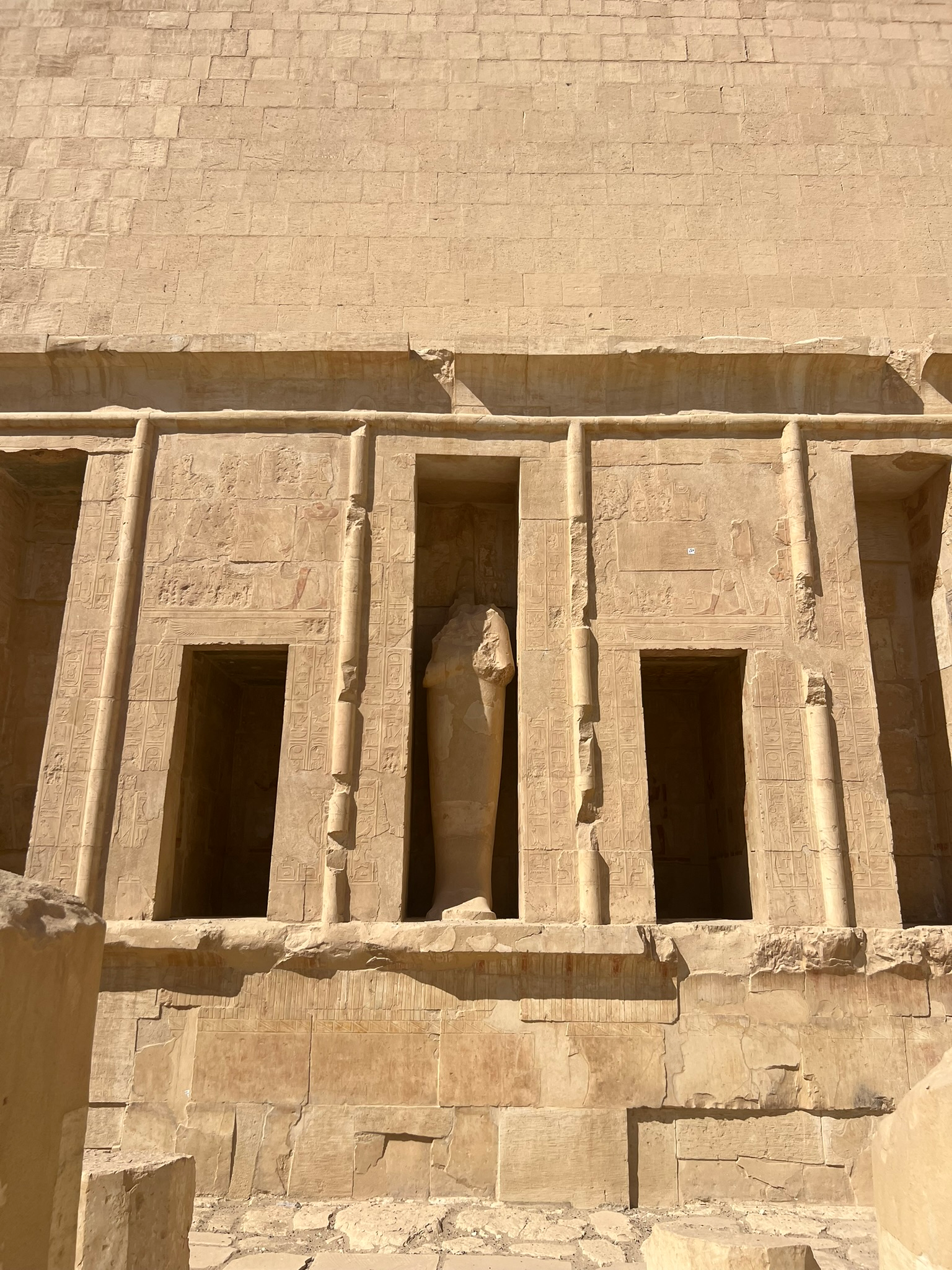
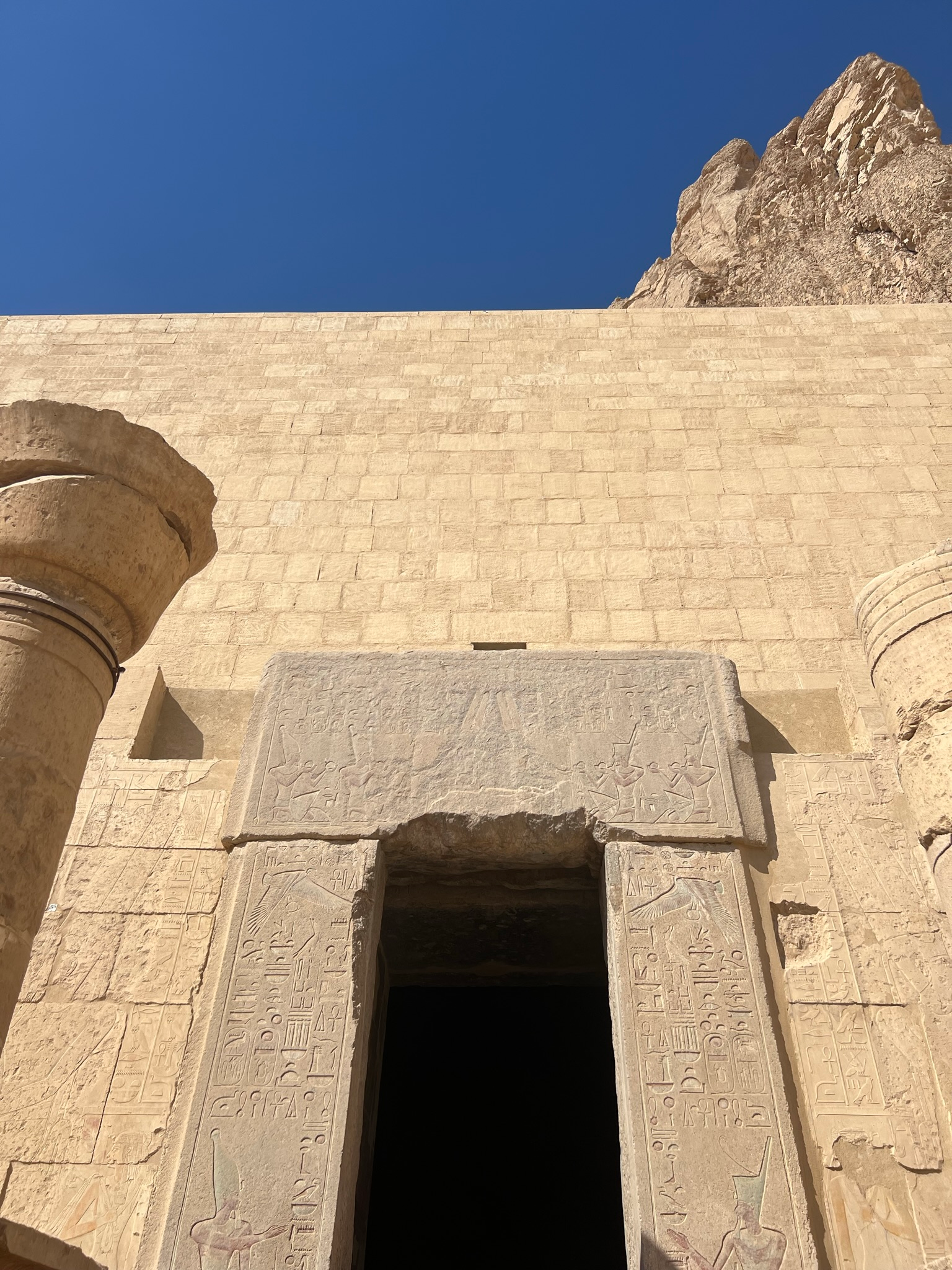
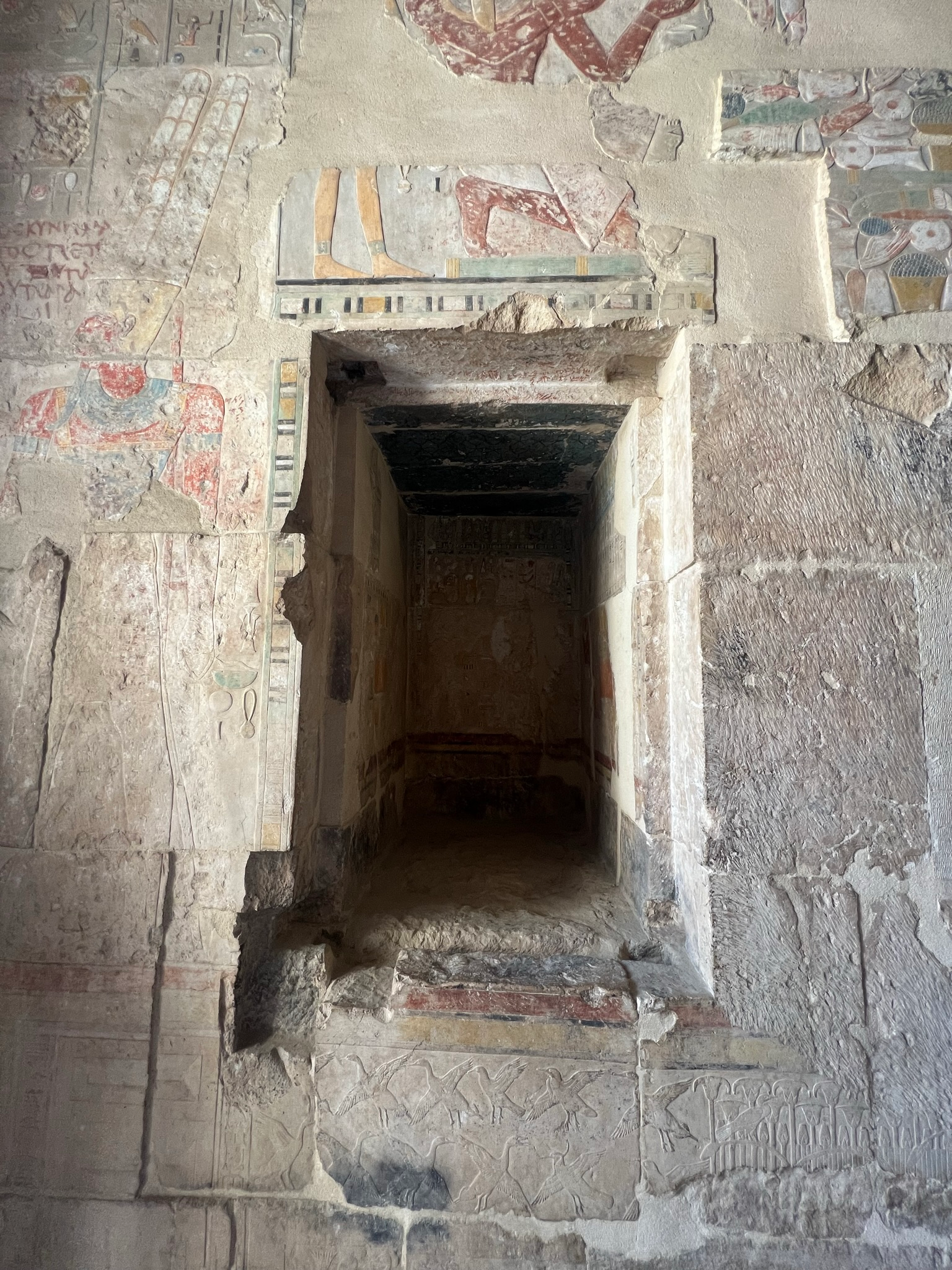
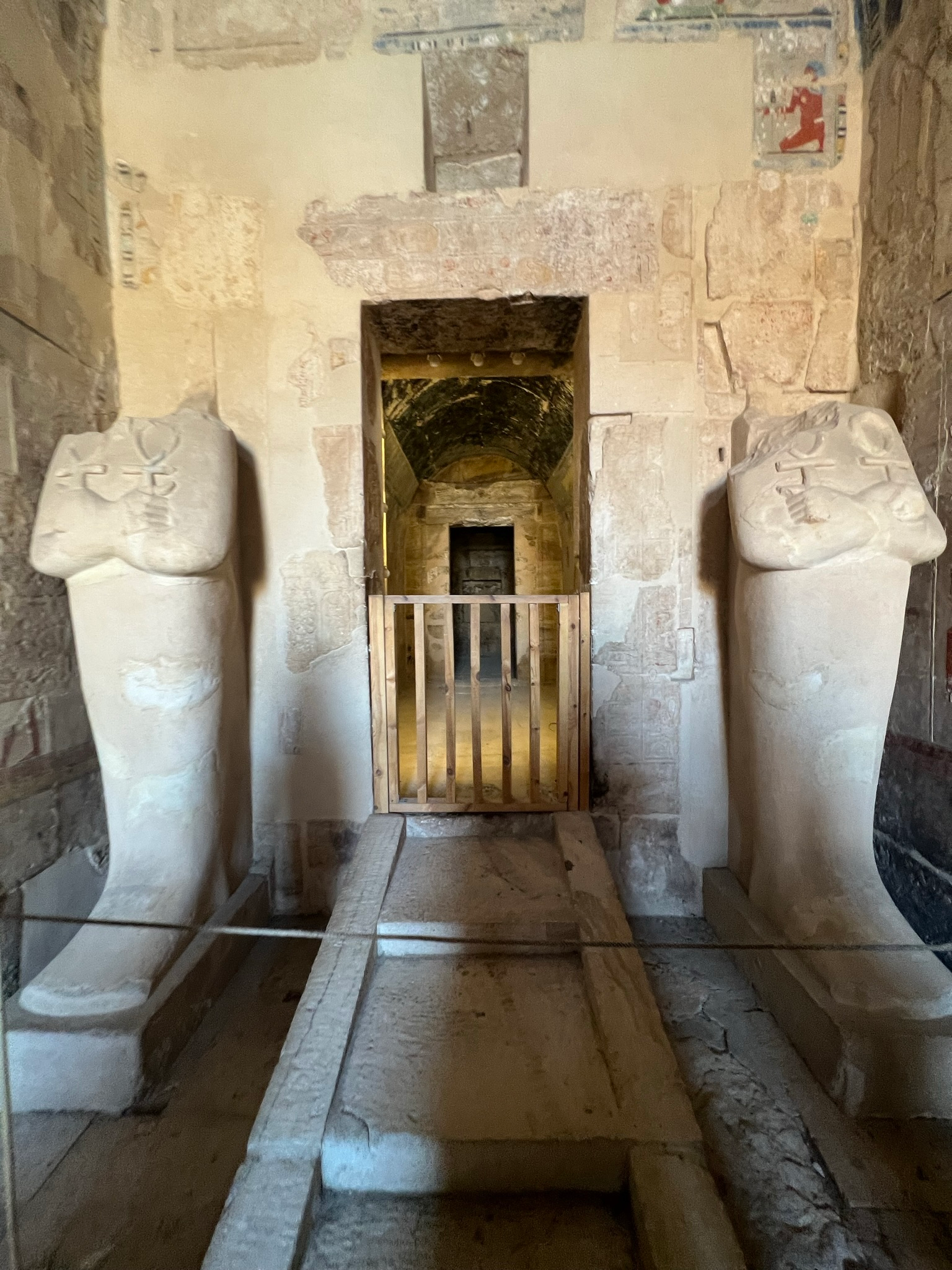
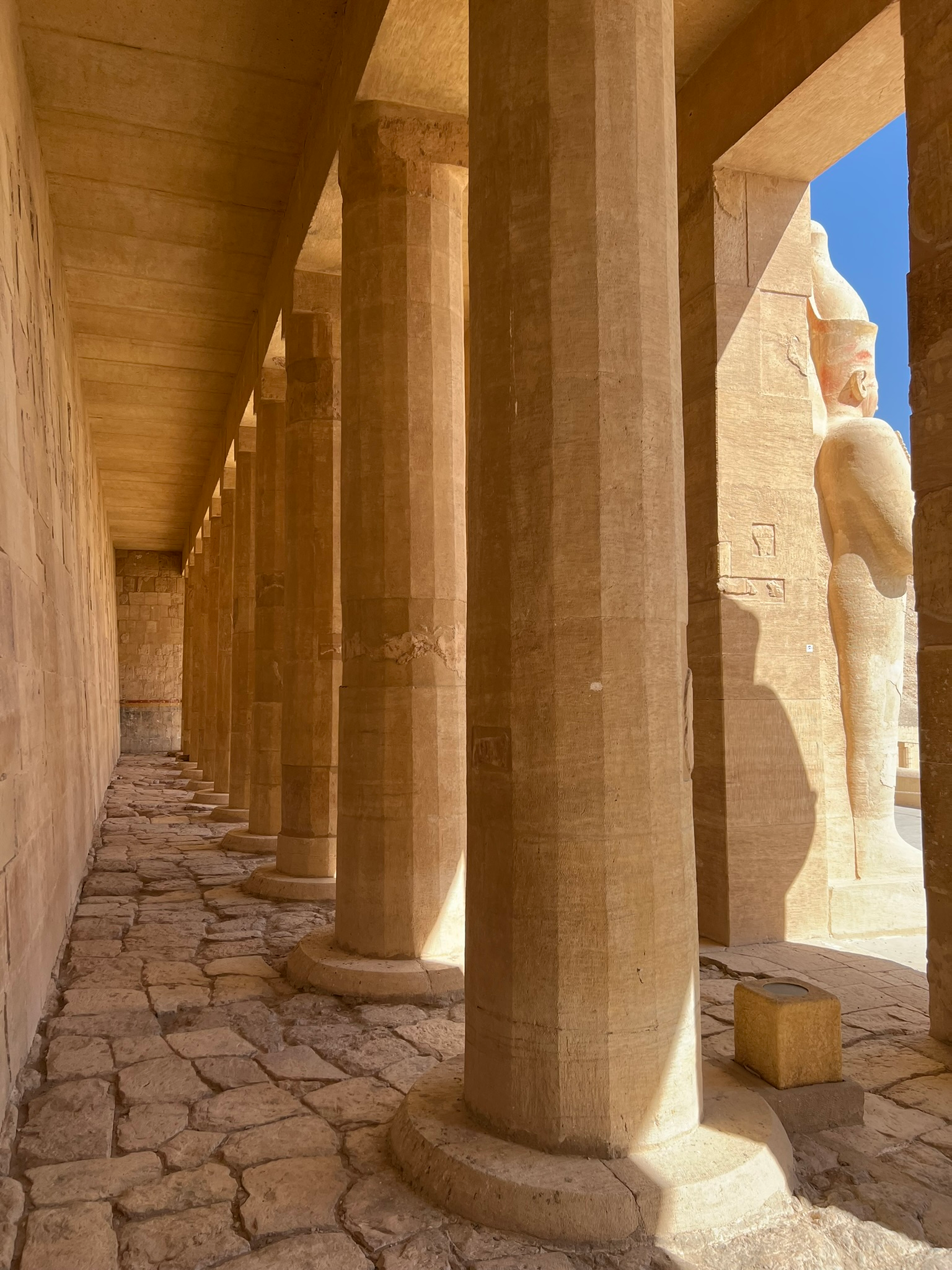
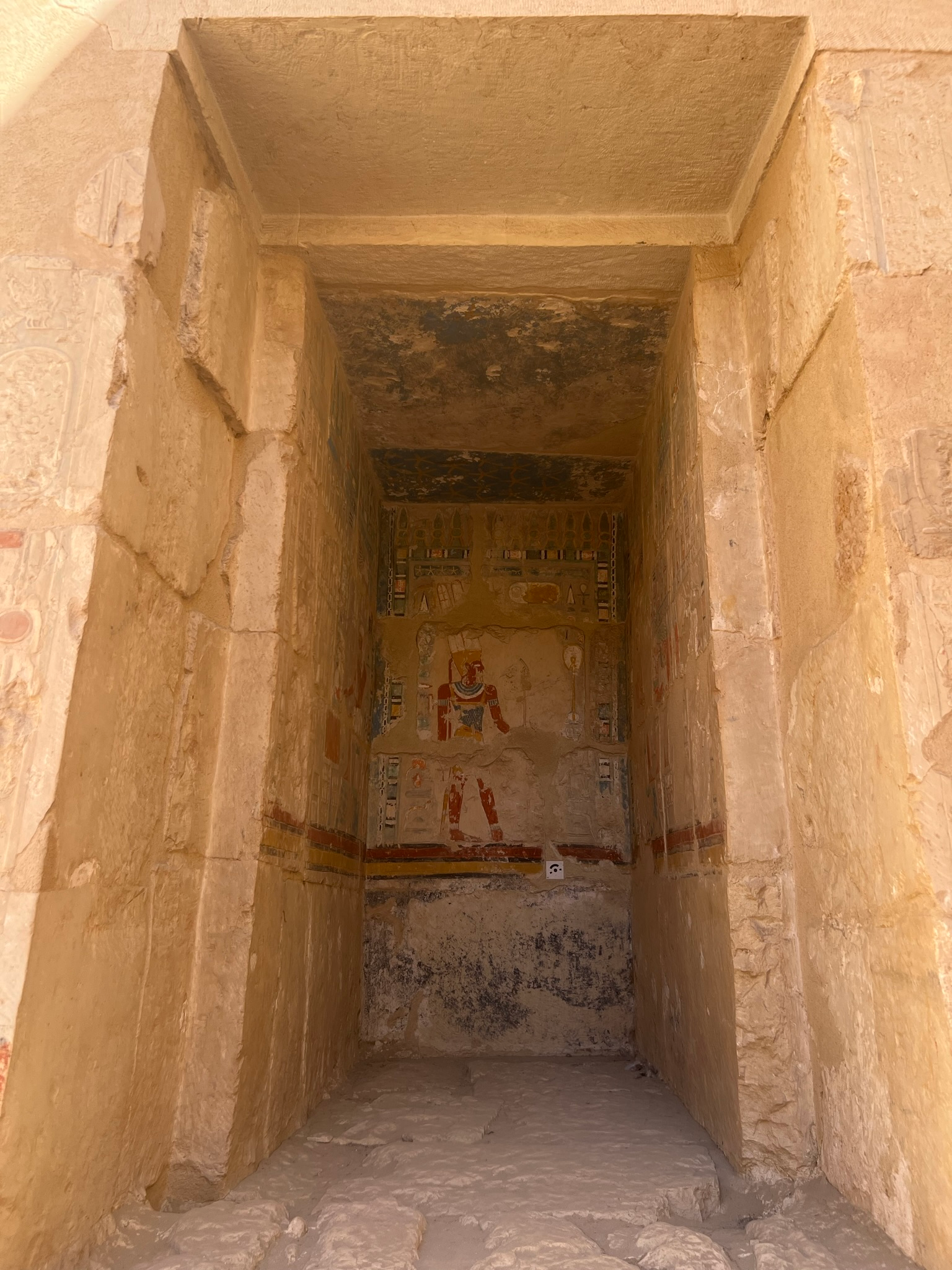
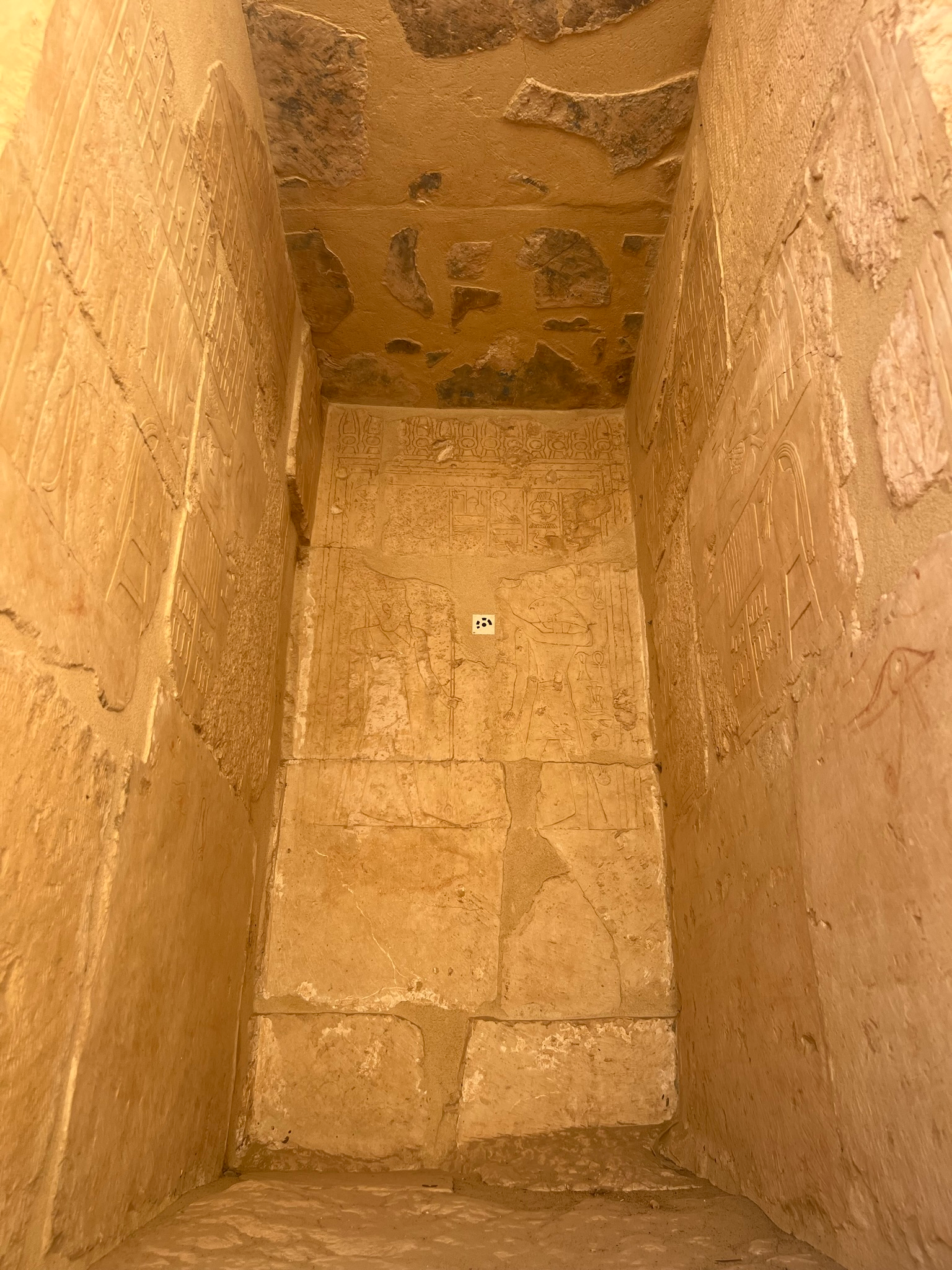
The porticoes on either side contain 22 columns each, decorated with reliefs. A central ramp leading to the middle terrace is flanked by sphinxes. This terrace features further reliefs depicting the divine birth of Hatshepsut and expedition scenes, as well as shrines dedicated to Hathor, the sky goddess, and Anubis, the god of embalming and the underworld. The upper terrace contains Osiride statues of Hatshepsut and leads to the inner courtyard, where scenes depict her coronation. This area connects to the Solar Cult Court and the Mortuary Cult Complex, ending in a sanctuary dedicated to Amun-Ra composed of three chambers.
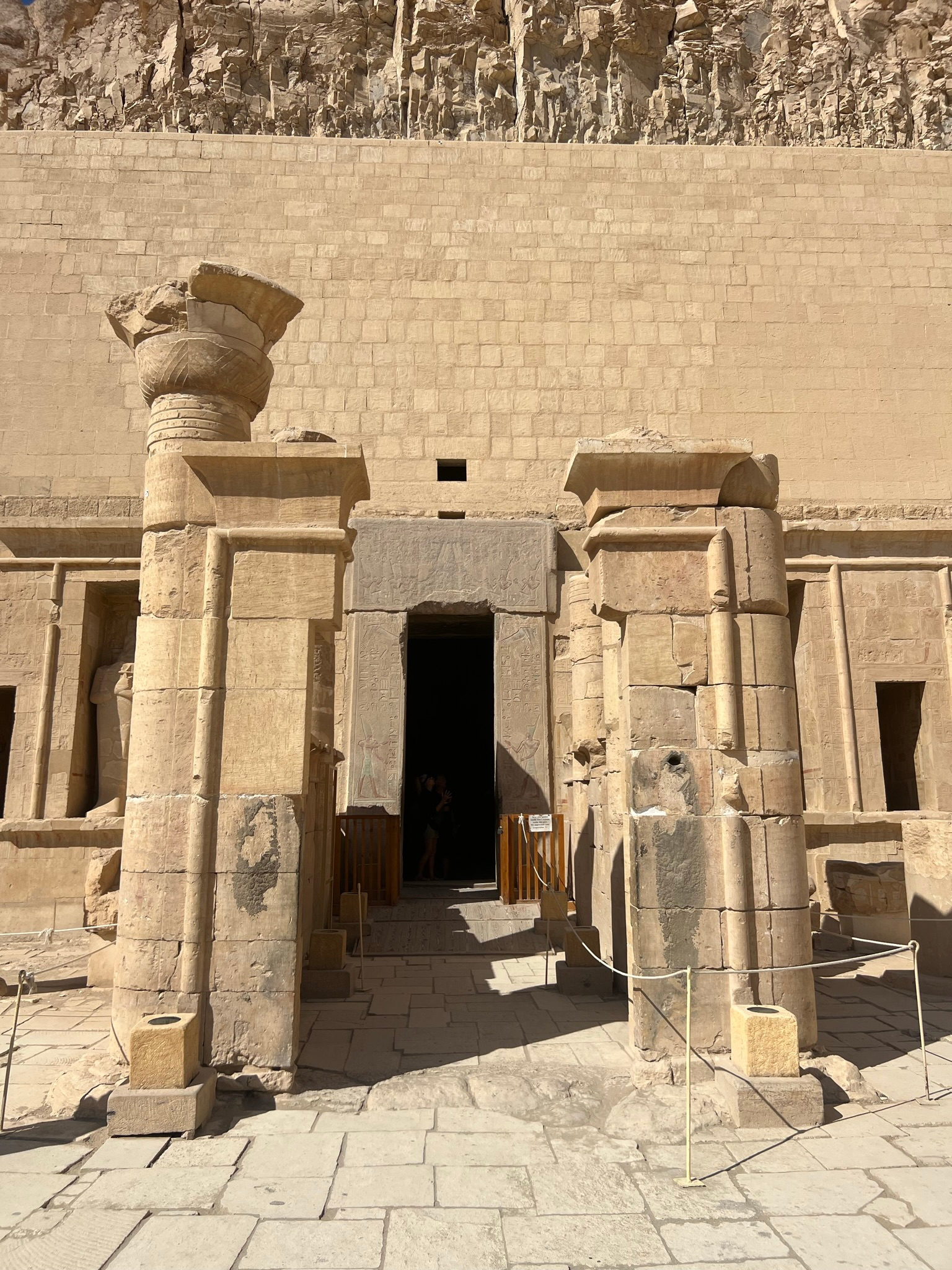
From Hieroglyphs to the Rosetta Stone
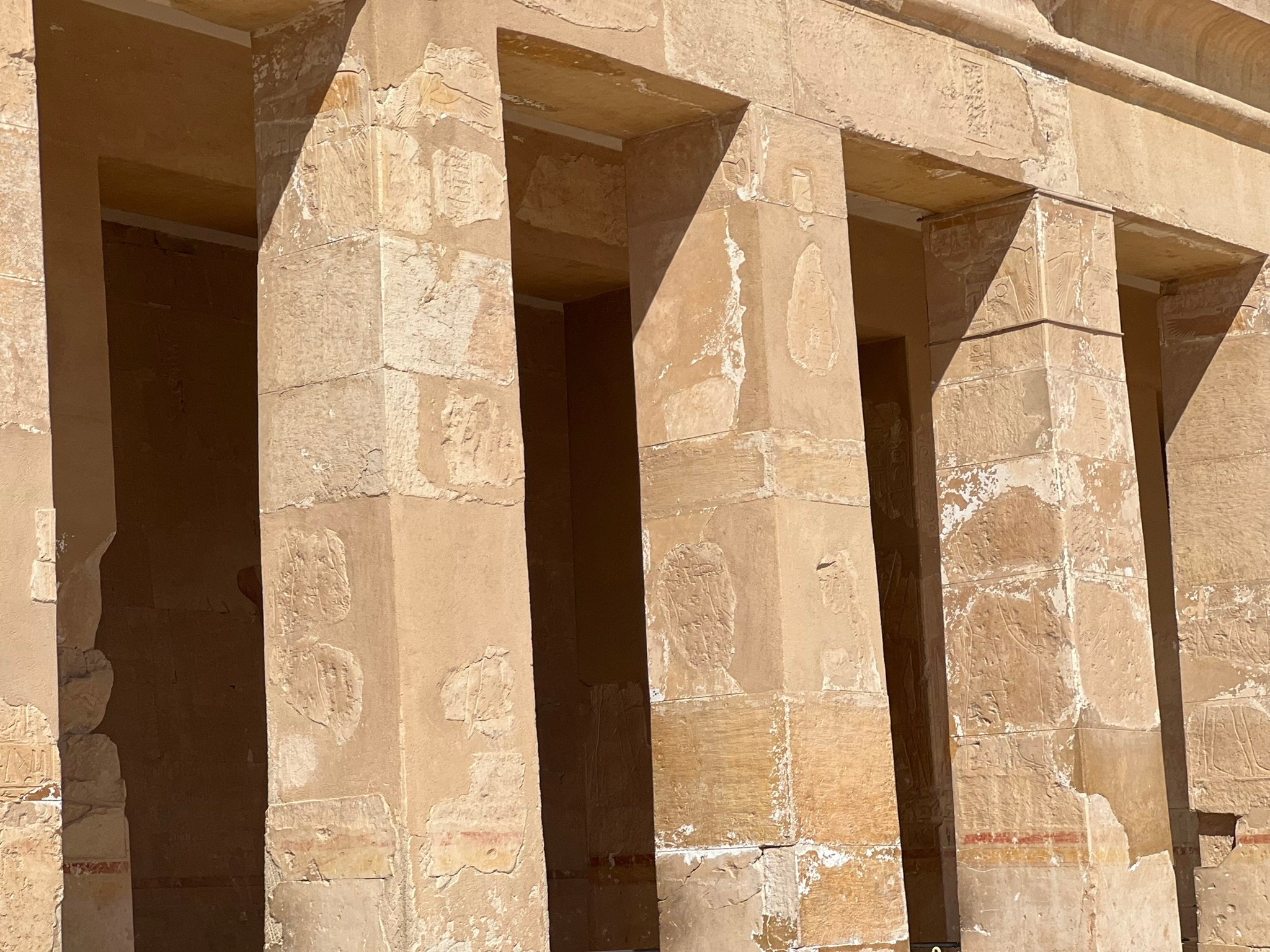
The walls of the interior chamber, including other structures across the entire complex, are covered in hieroglyphics. The term “hieroglyph” comes from the Greek “hieros glyphein”, meaning “sacred carving” or “words of the gods”.
The advanced writing system was developed around 2800 BC, although earlier forms existed as far back as 3200 BC. It included hundreds of symbols (often estimated at around 700 in common use, though the full system is larger and more complex), with characters representing objects, sounds, or abstract ideas. Since most commoners did not read or write, this system was primarily used by scribes and priests for religious inscriptions, temple records, and royal monuments. However, it also played an important administrative role in ancient Egyptian society.
Over time, the meaning of these symbols was lost, and it wasn’t until 1799, when the Rosetta Stone was discovered by French soldiers during Napoleon’s campaign in Egypt, that the writing system began to be understood again. The stela, now housed in the British Museum, records a priestly decree concerning King Ptolemy V of Egypt and contains the same text written in Egyptian hieroglyphics, Demotic script, and Ancient Greek, allowing scholars to finally unlock the system. Full decipherment was completed later by Jean-François Champollion in 1822.
Interestingly, hieroglyphs do not record vowels in the way modern alphabets do – instead, they primarily represent consonantal structures, which are reconstructed when spoken aloud. They can also be read in different directions depending on the way the figures face, adding another layer of visual logic to the writing system.
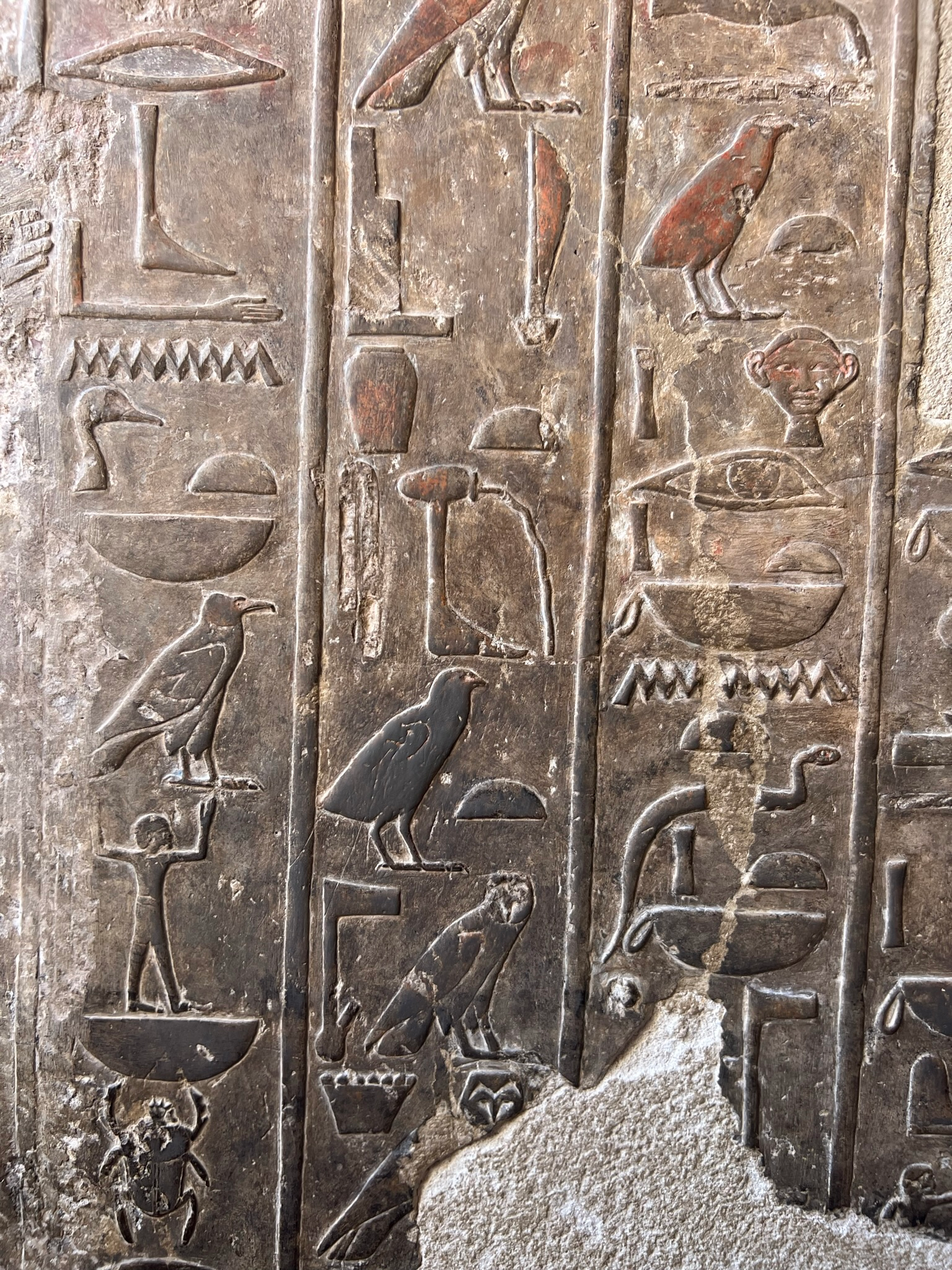
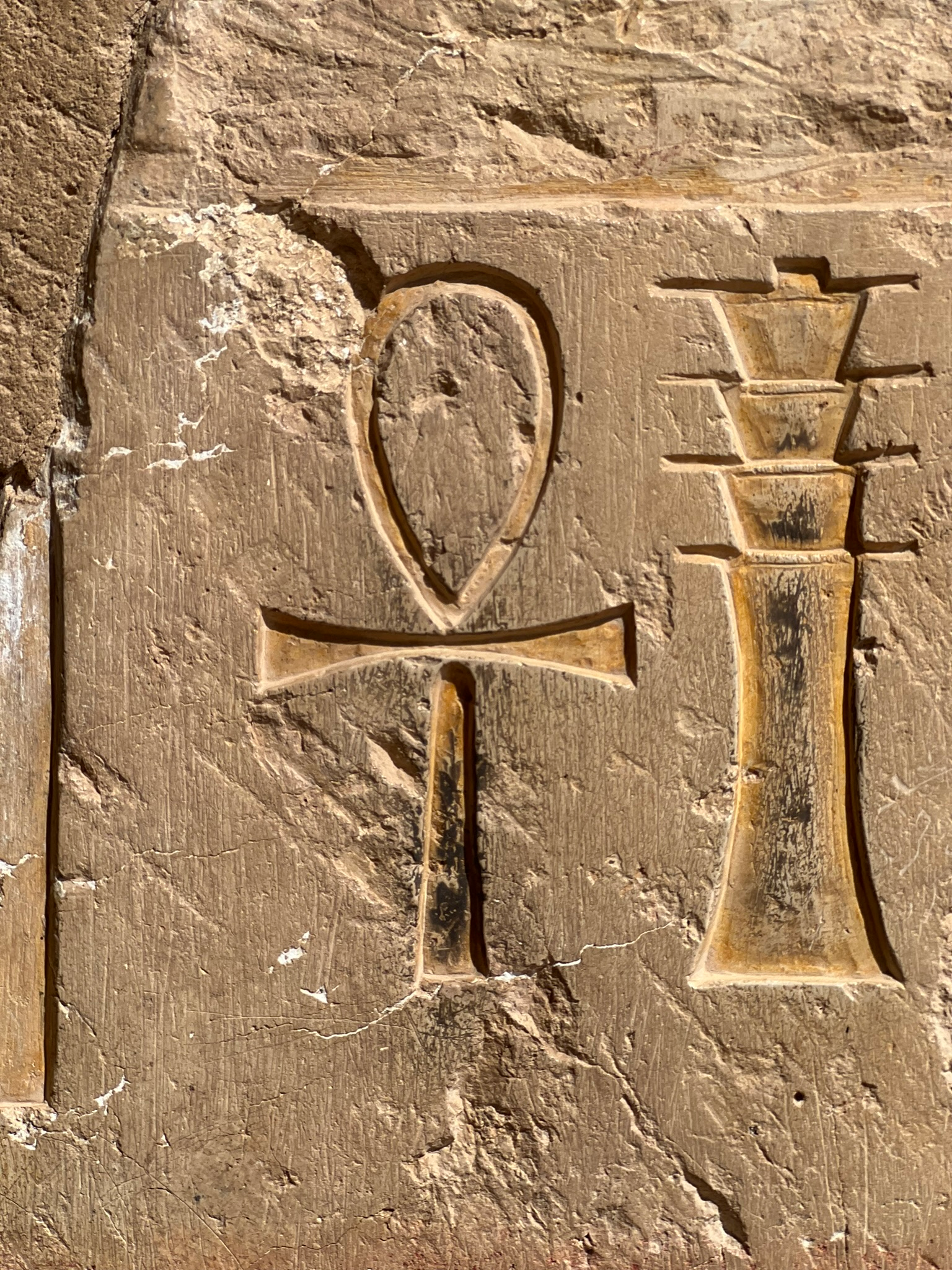
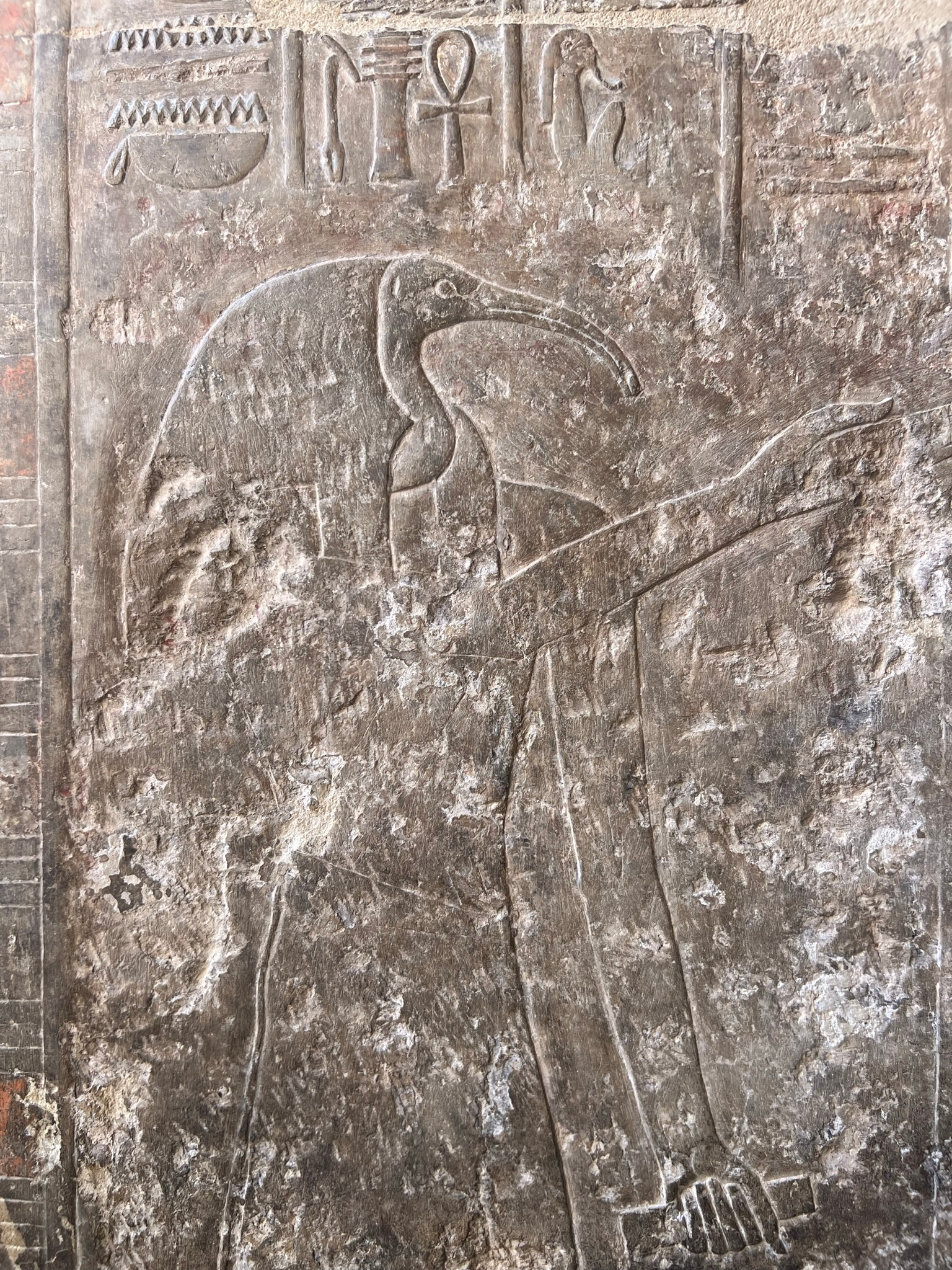
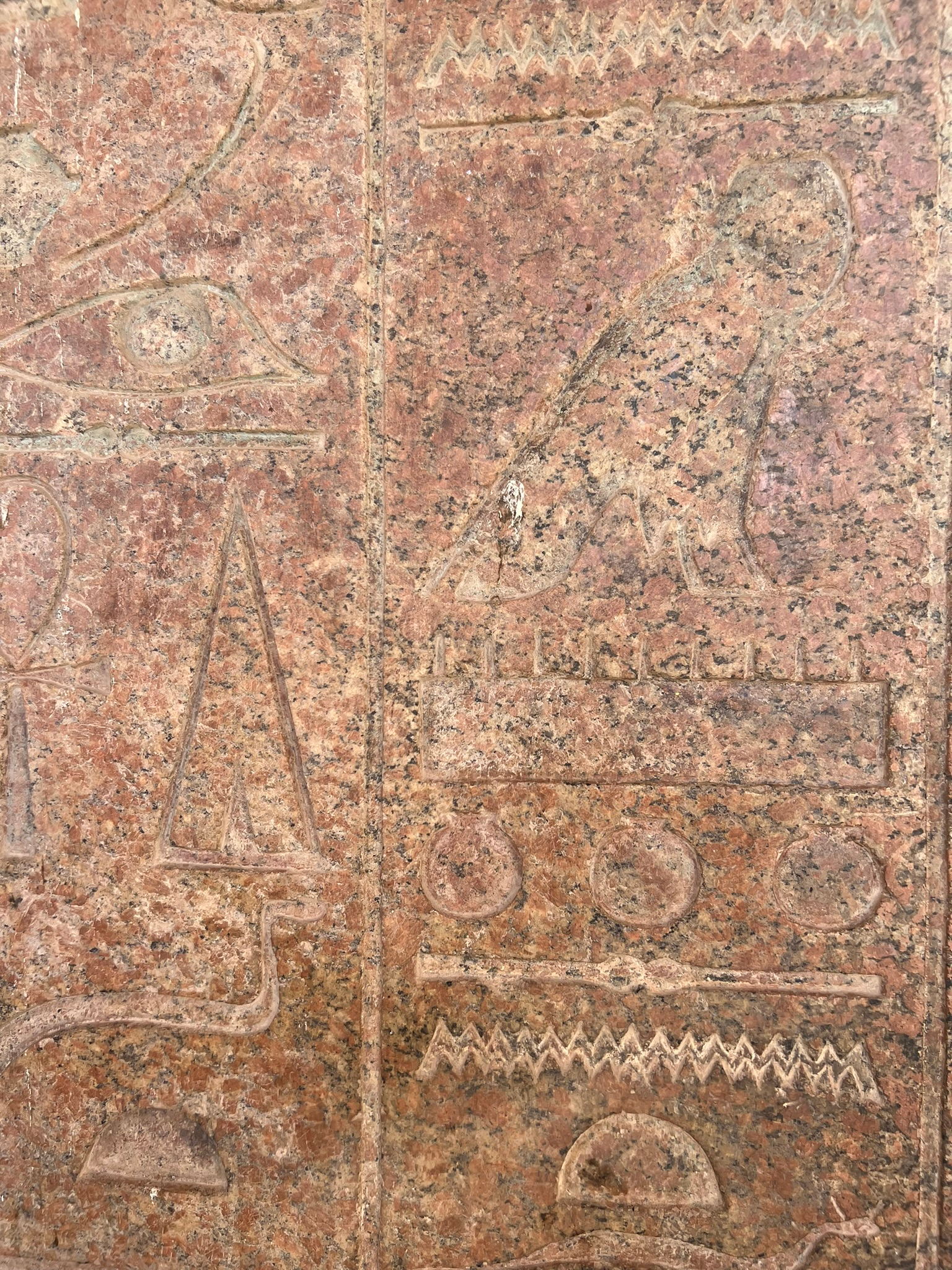
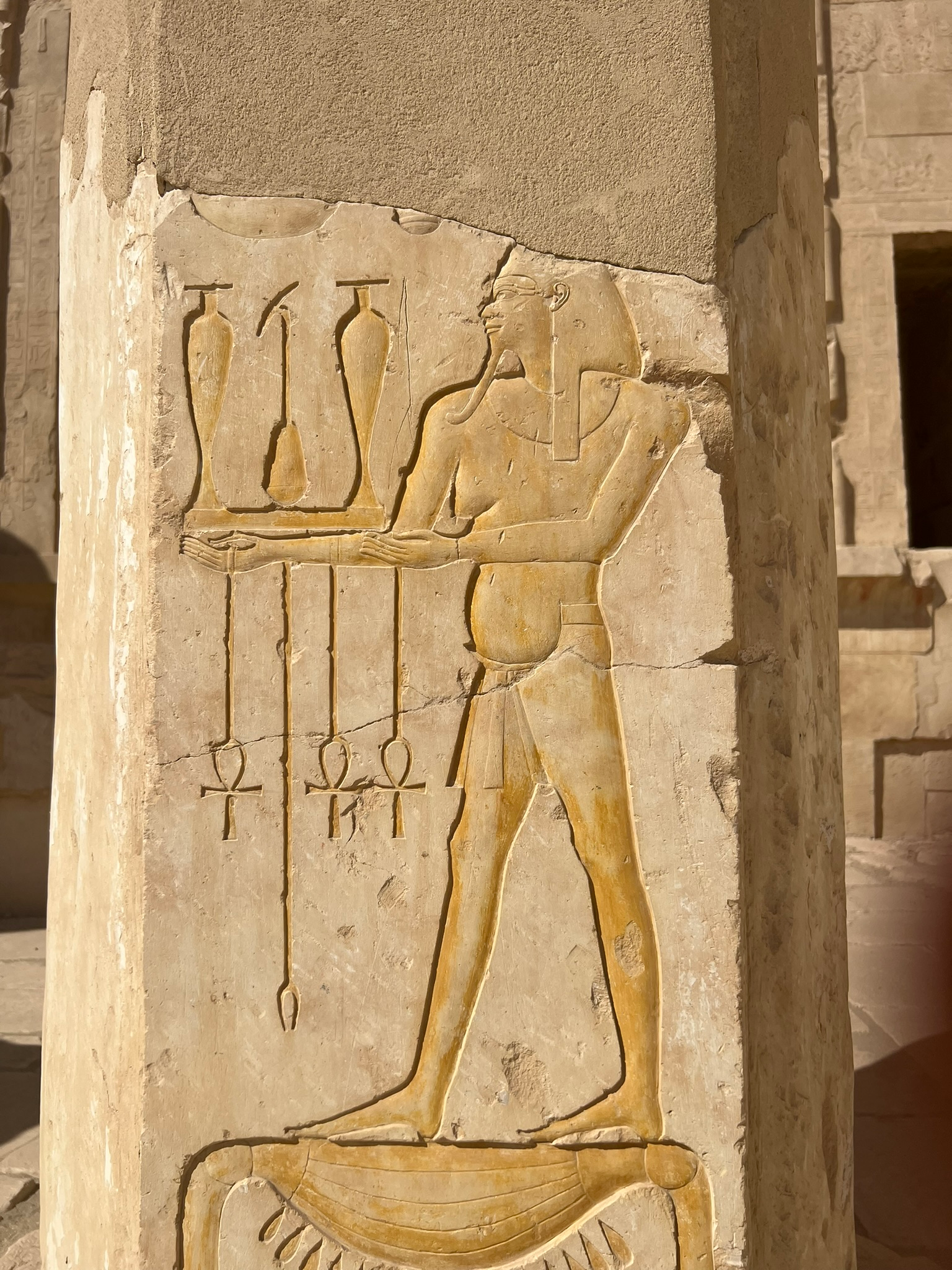
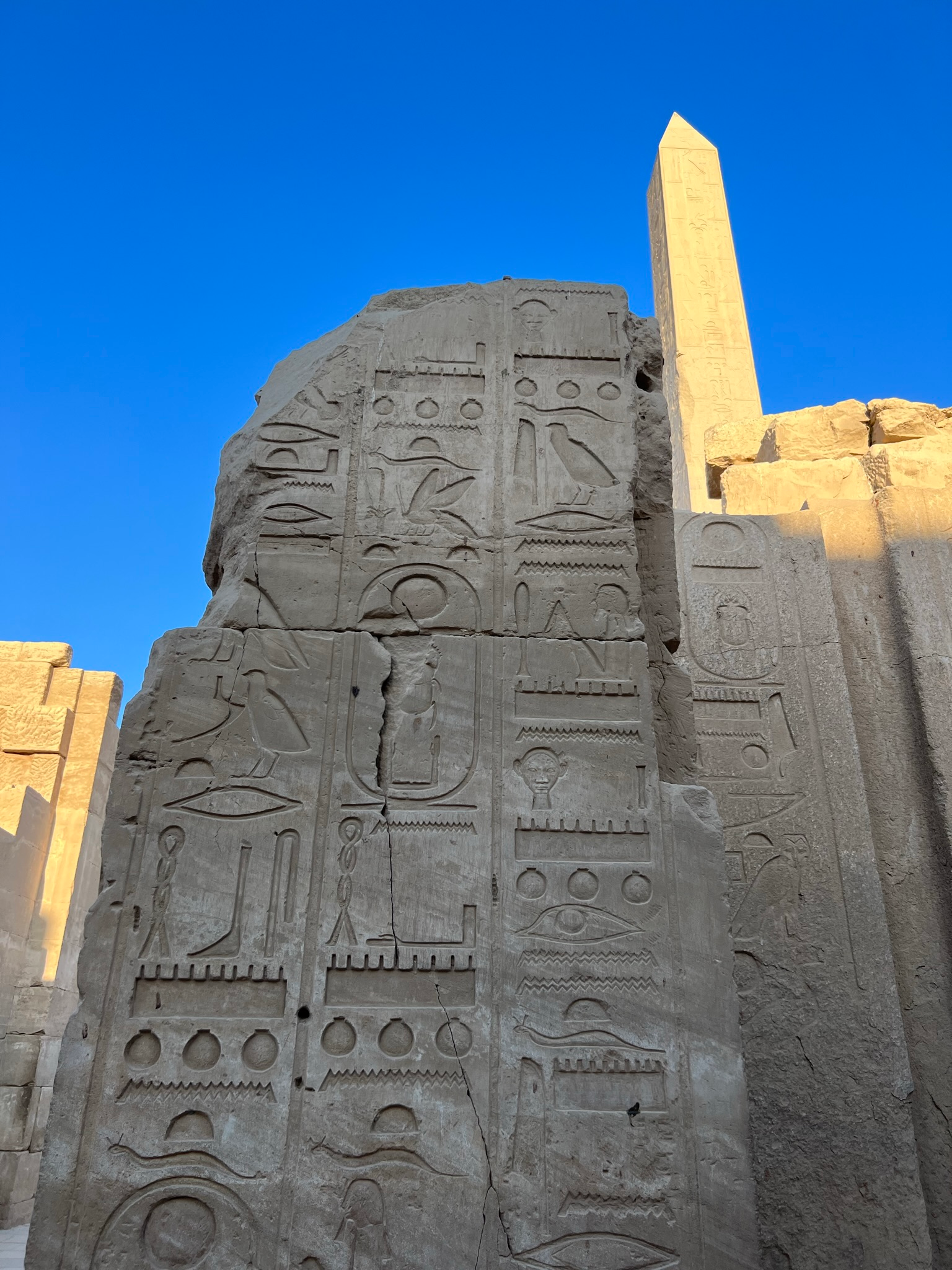
Needless to say, when described like this, there is little to no flair and charm conveyed through words alone with regards to the architecture and artistic style of the temple. I think, in such circumstances, words do no justice to bring out the magnificence of such places. Not to mention, here is where I got to see things I had been learning about since I was a kid, like hieroglyphs adorning the structures and depicting all kinds of narratives, cartouches representing different pharaohs and their dynasties, and depictions of pharaohs and deities that once reigned supreme in Ancient Egypt.
I remember obsessively drawing the Eye of Horus (a symbol representing protection, healing, and royal power) and the Ankh (a symbol associated with life itself) all over the place when I was still in my Egyptology phase – this just felt like a hundred clones of younger me had been set loose and allowed to scribble away to their hearts’ content.
PART II
Entering Karnak - Gateway to the Gods
Next up was lunch, and then came the second part of the day. Much like the previous day, we started on the west bank of the Nile and then headed to the east bank to explore another highlight – the Karnak Temple Complex.
The Temple of Karnak is the largest religious complex ever constructed in Ancient Egypt, spanning over 200 acres. Construction began in the Middle Kingdom and continued into the Greco-Roman period, over roughly 2,000 years. While most surviving structures date to the New Kingdom, later rulers kept expanding and modifying the site. The complex consists of four main precincts: the Precinct of Amun-Ra, the Precinct of Mut, the Precinct of Montu, and the Temple of Amenhotep IV (Akhenaten). However, only the Precinct of Amun-Ra is fully open to the public today, and it is also the largest and most architecturally impressive section. Unlike the nearby Temple of Luxor, Karnak was primarily a vast religious centre dedicated to the Theban Triad, though it also functioned as a powerful political and ceremonial hub where festivals, coronations, and royal rituals took place.
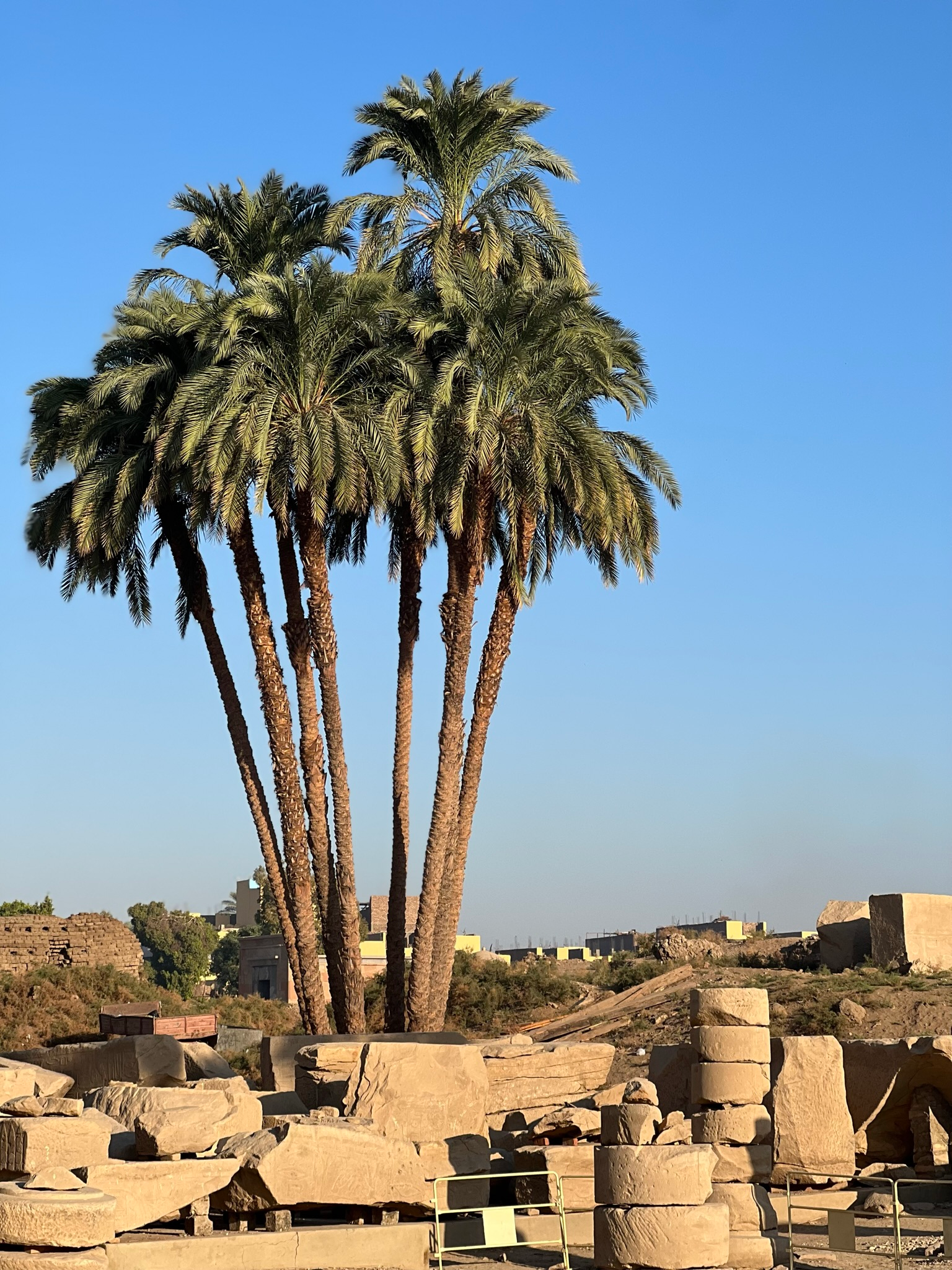
The entrance to the temple is impressive to say the least, with what was once a quay now resembling a moat guarding the complex. This, our guide explained, was originally connected to the Nile, allowing boats carrying construction materials and ceremonial statues to dock directly at the temple. A corridor of sphinxes leads from the quay to the first pylon – a massive gateway opening into the Great Court, an open-air space filled with chapels and colossal statues. This then leads to a second pylon and onwards to the pièce de résistance of the entire complex, the Great Hypostyle Hall. While the site thus far had left each and every one of us in awe, this part of the site left us bereft of any words.
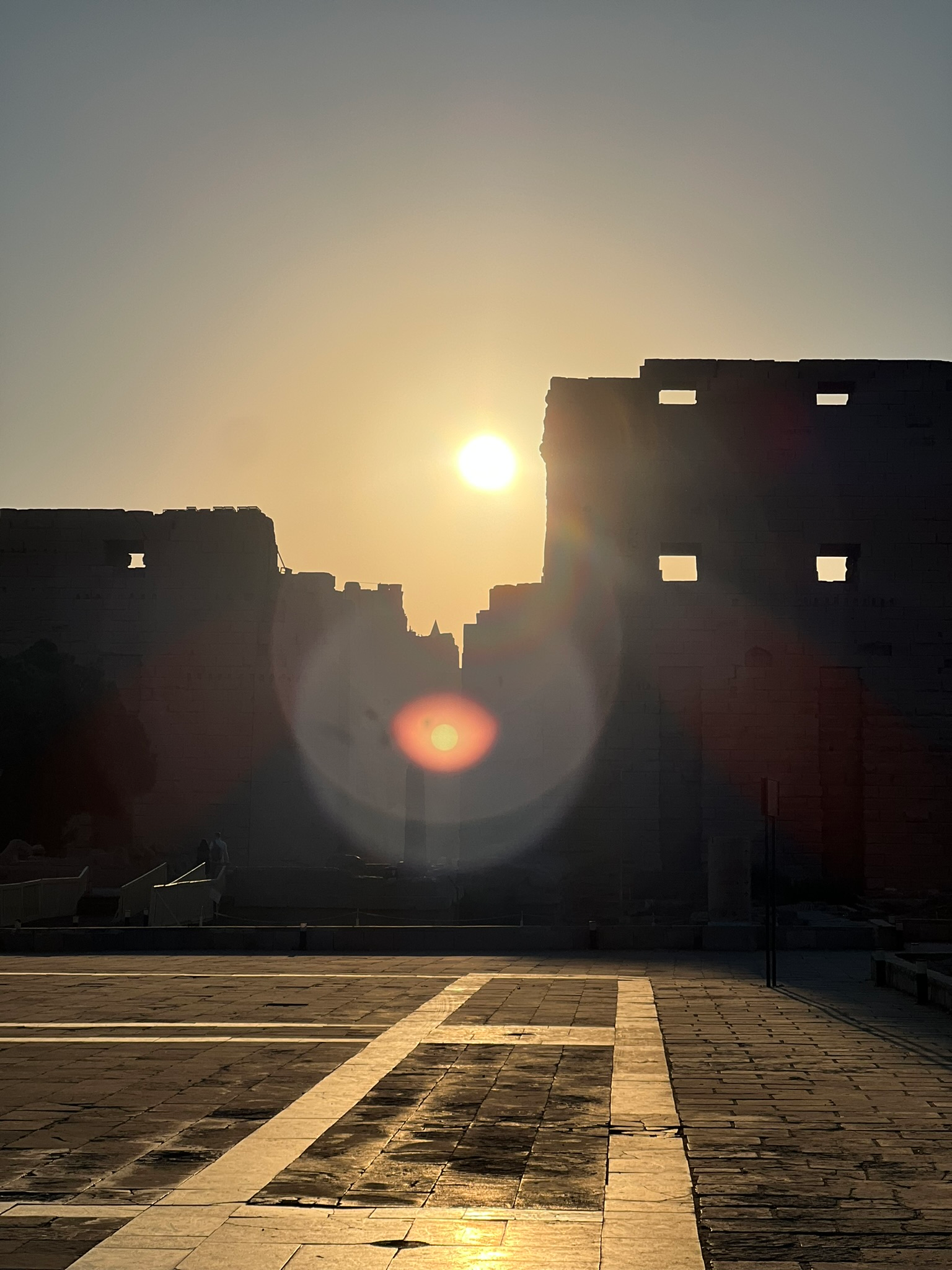
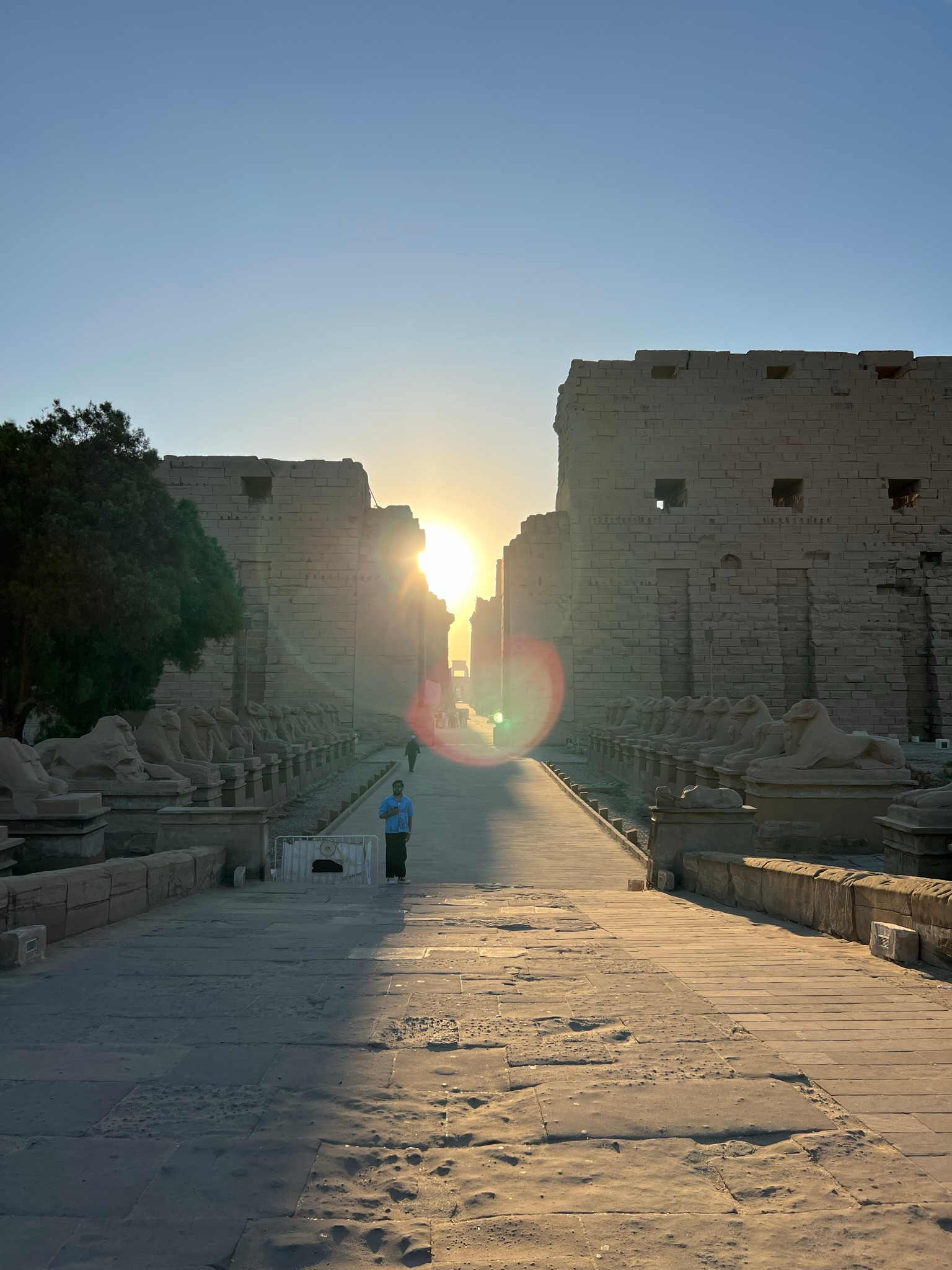
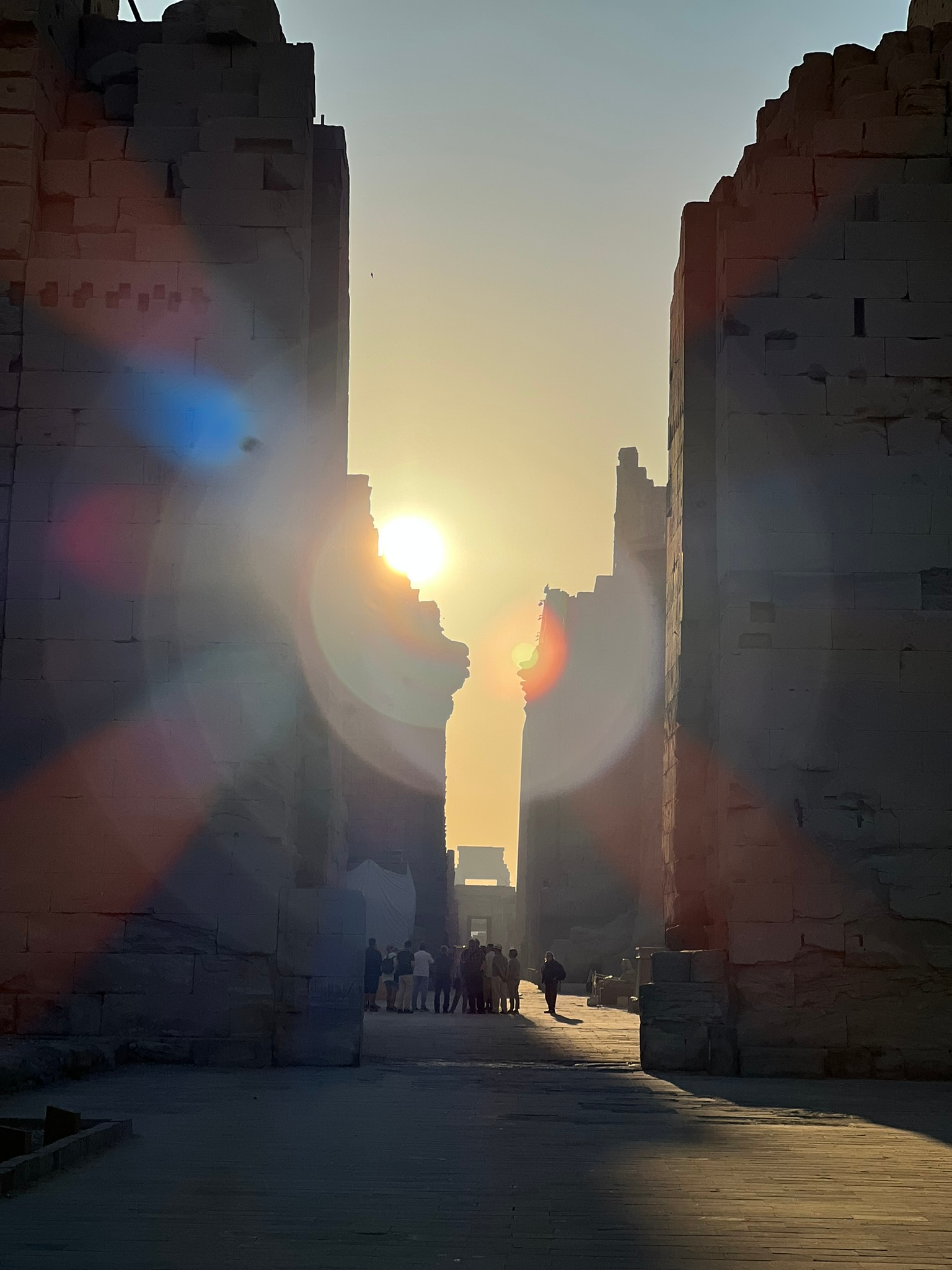
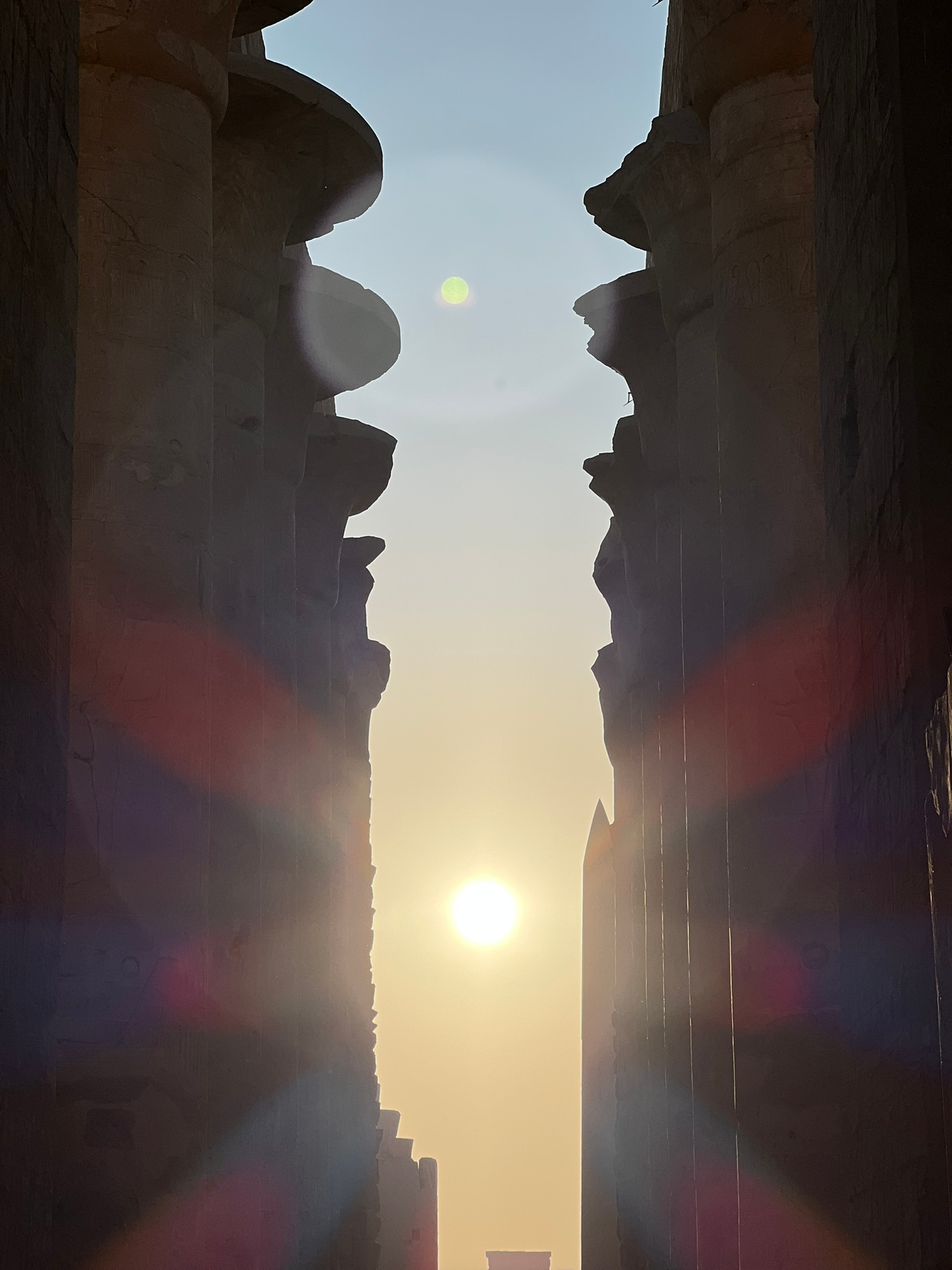
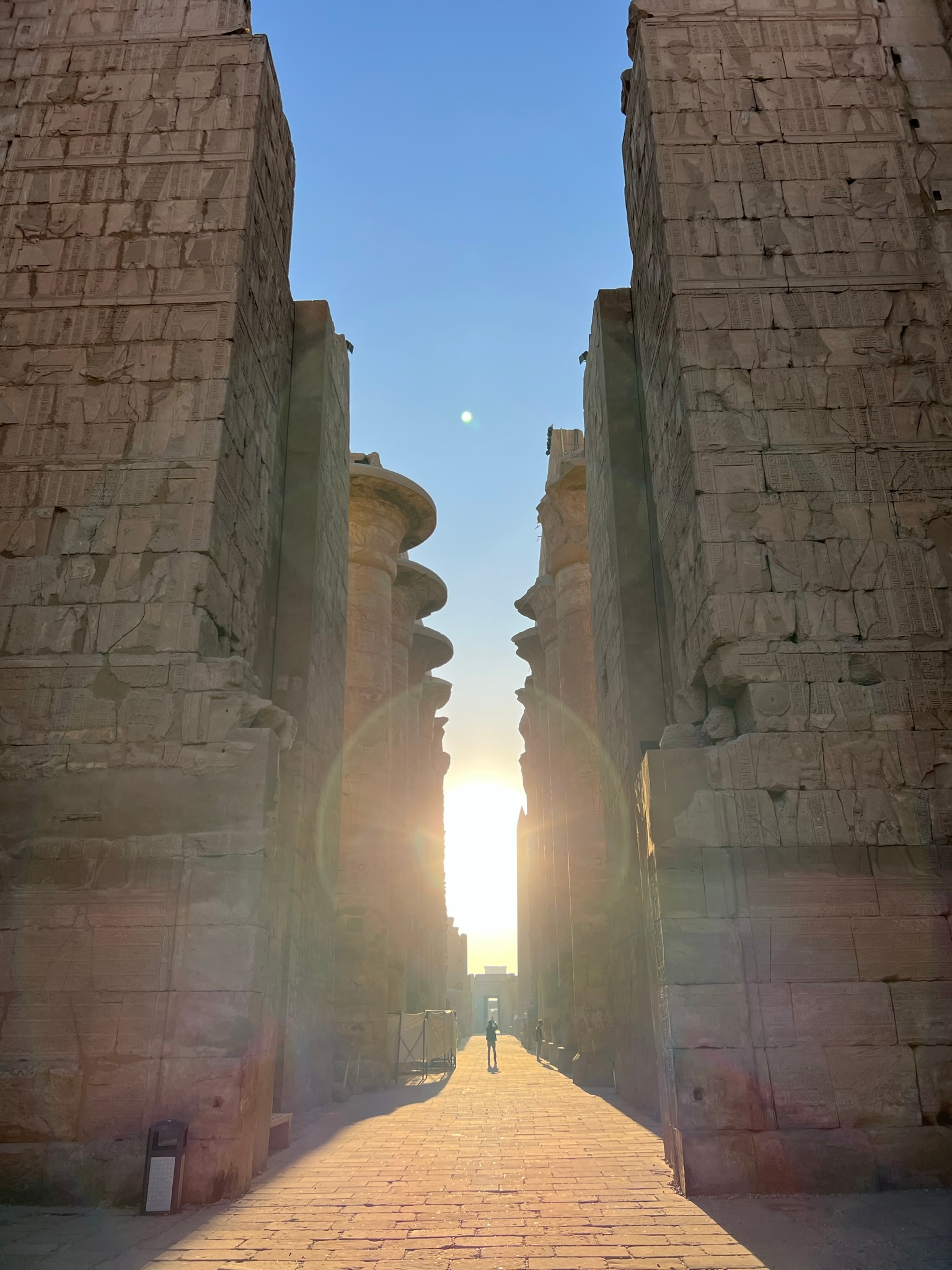
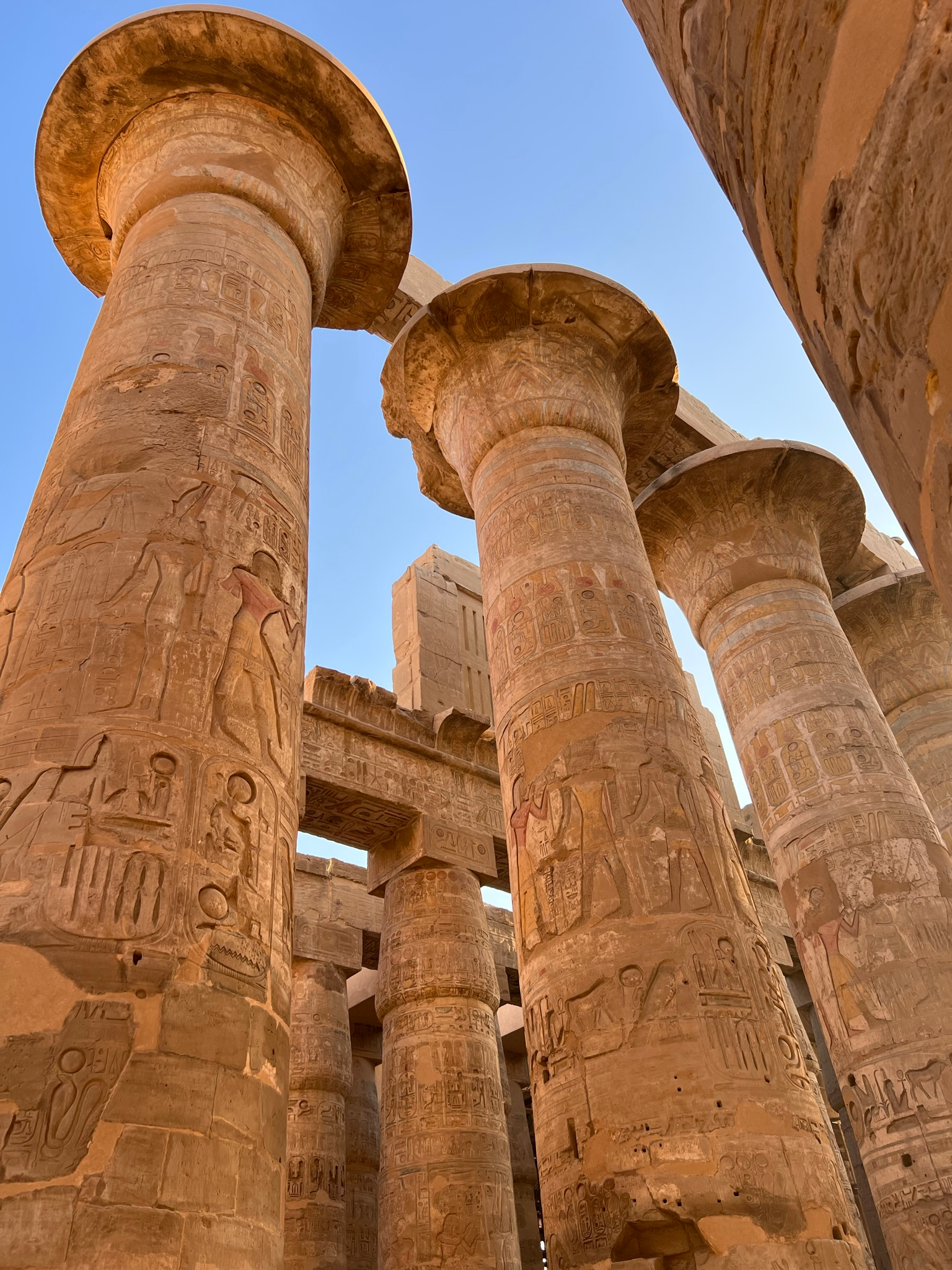
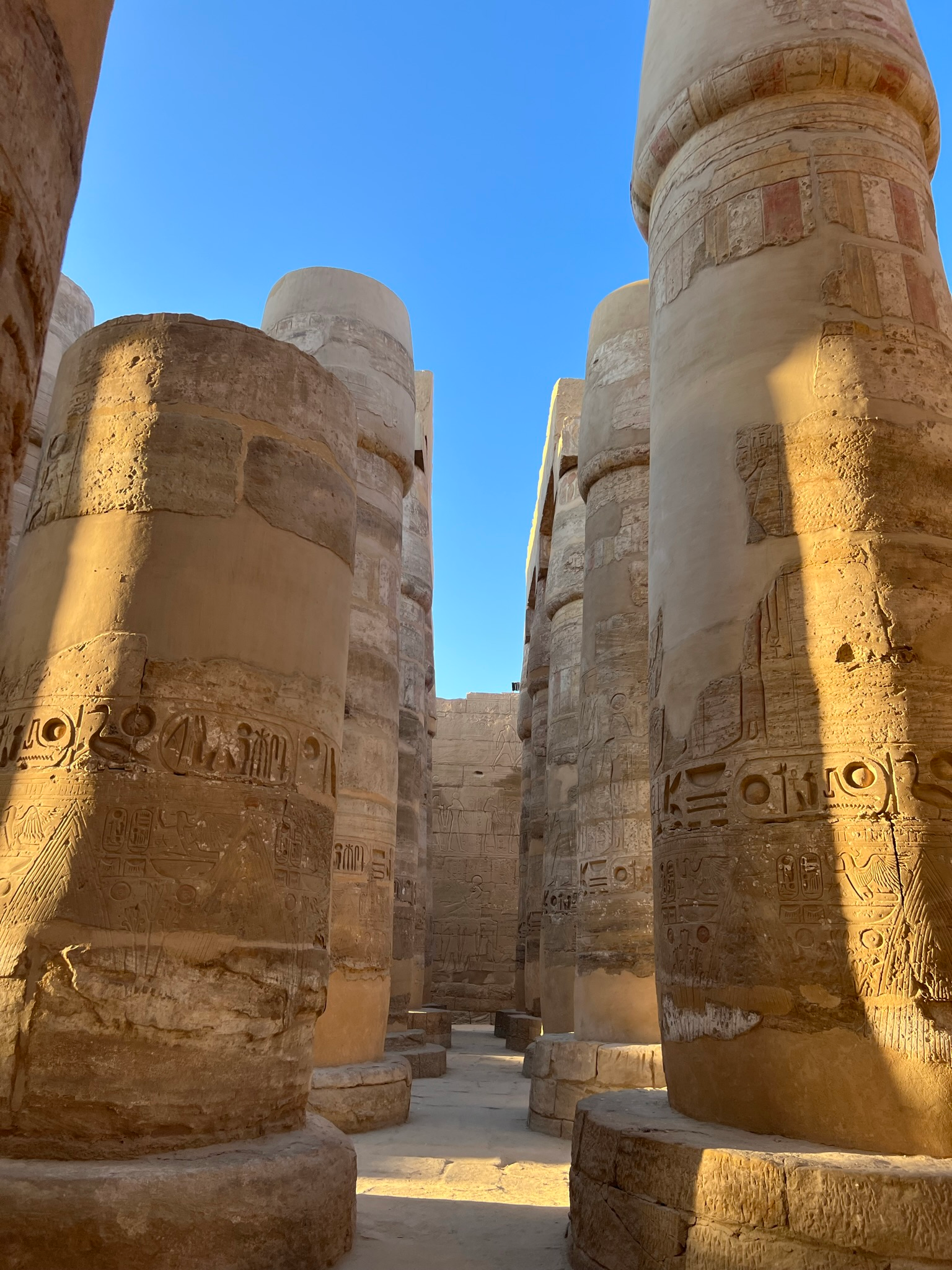
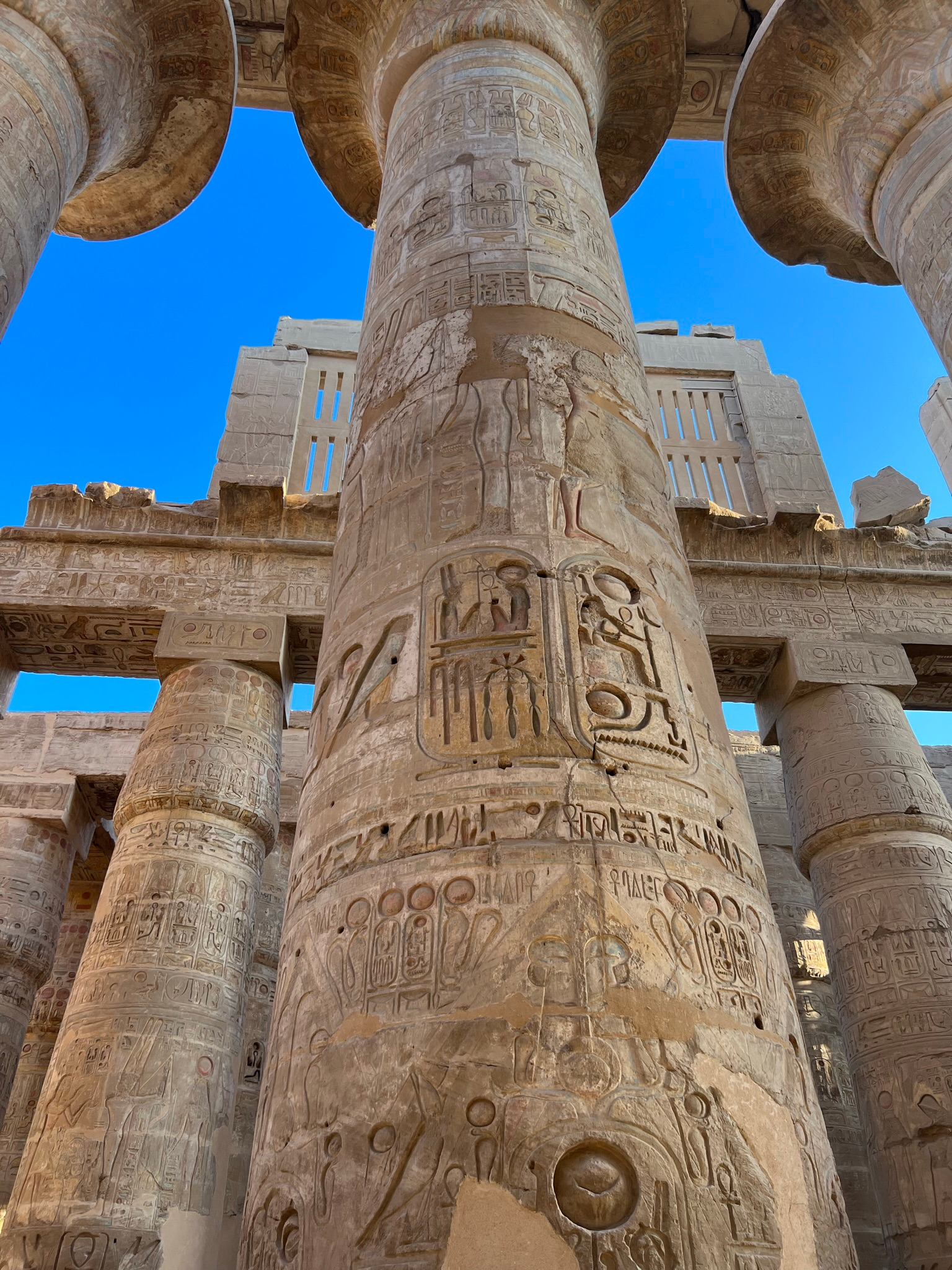
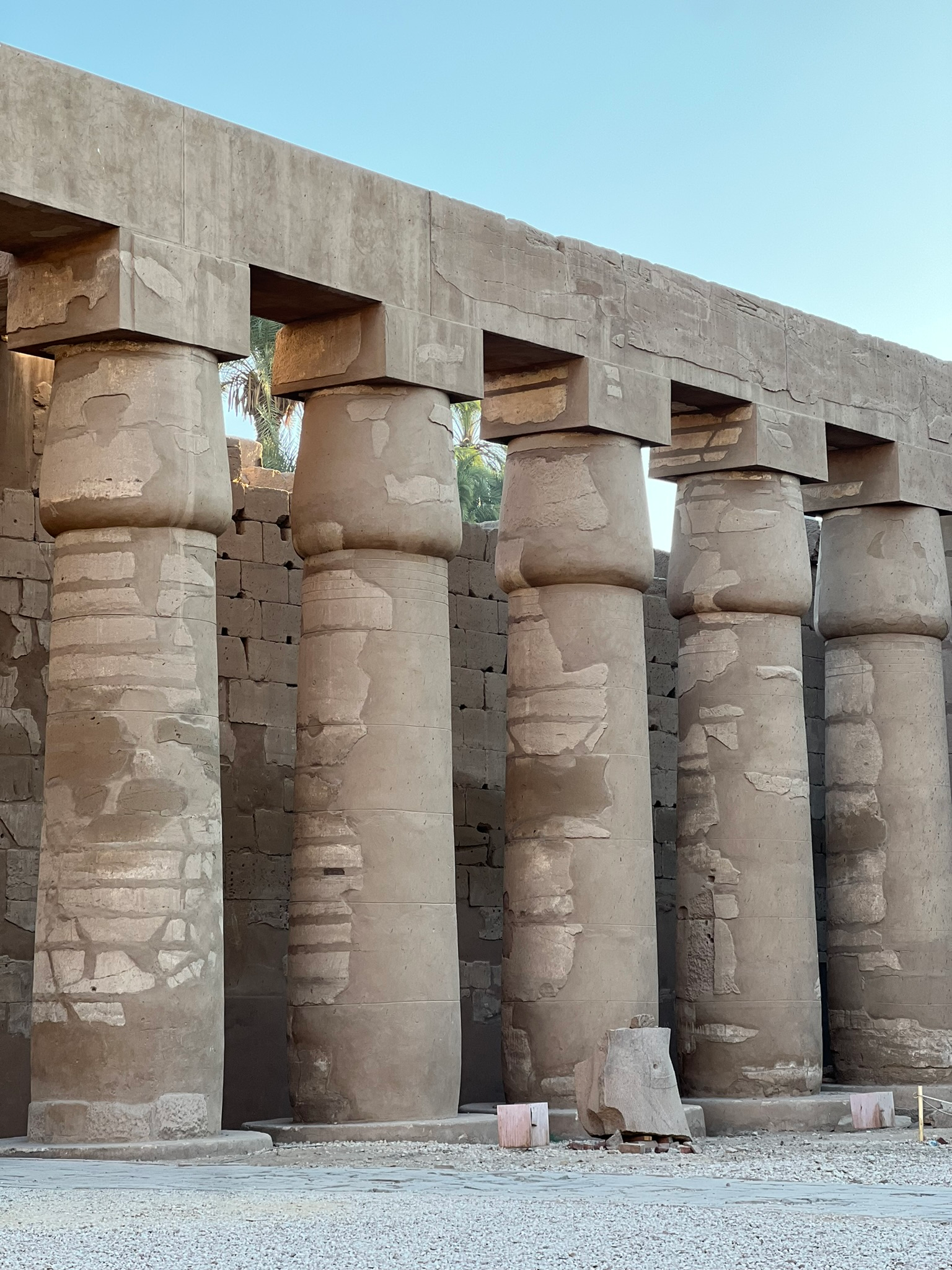
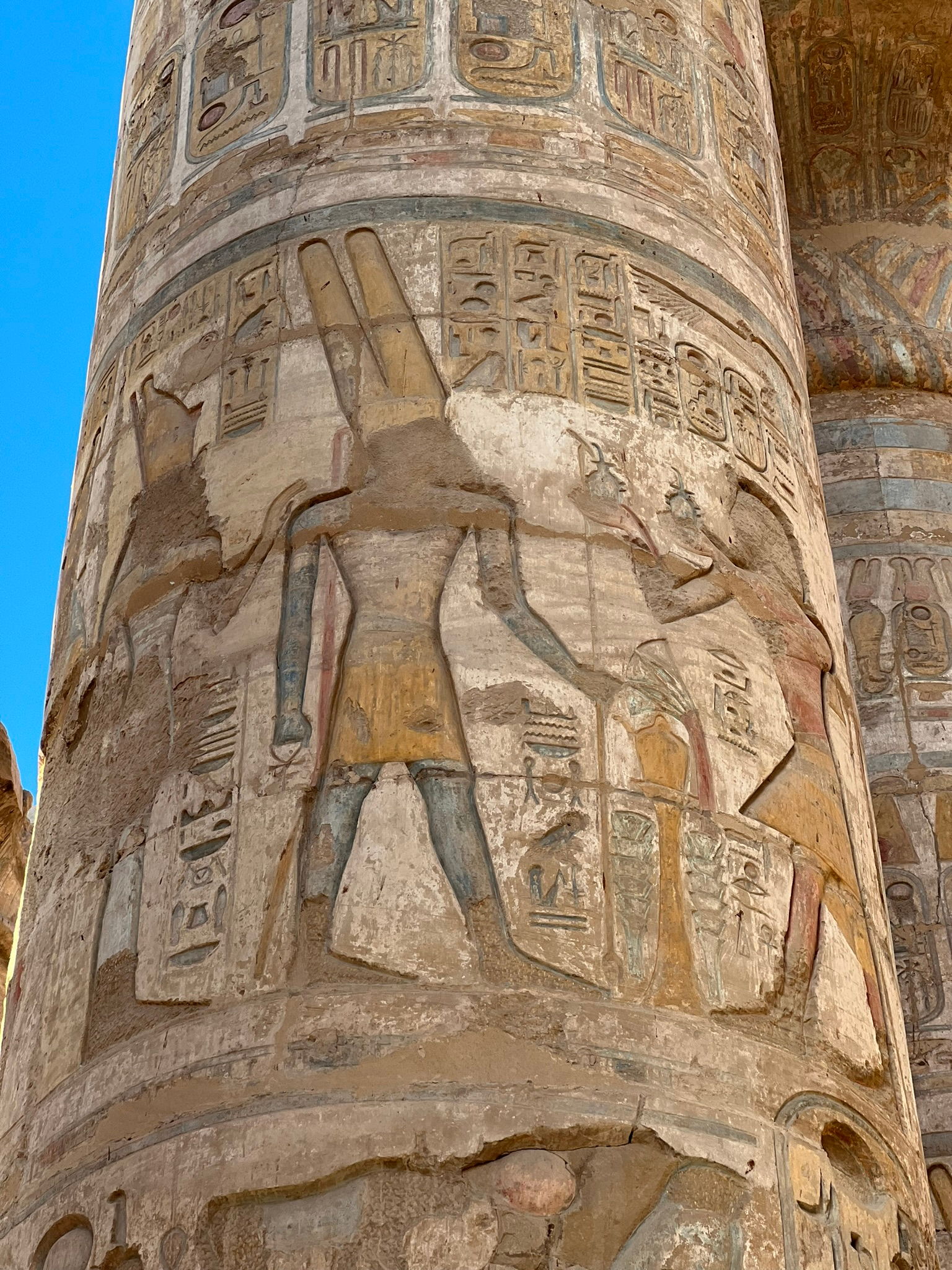
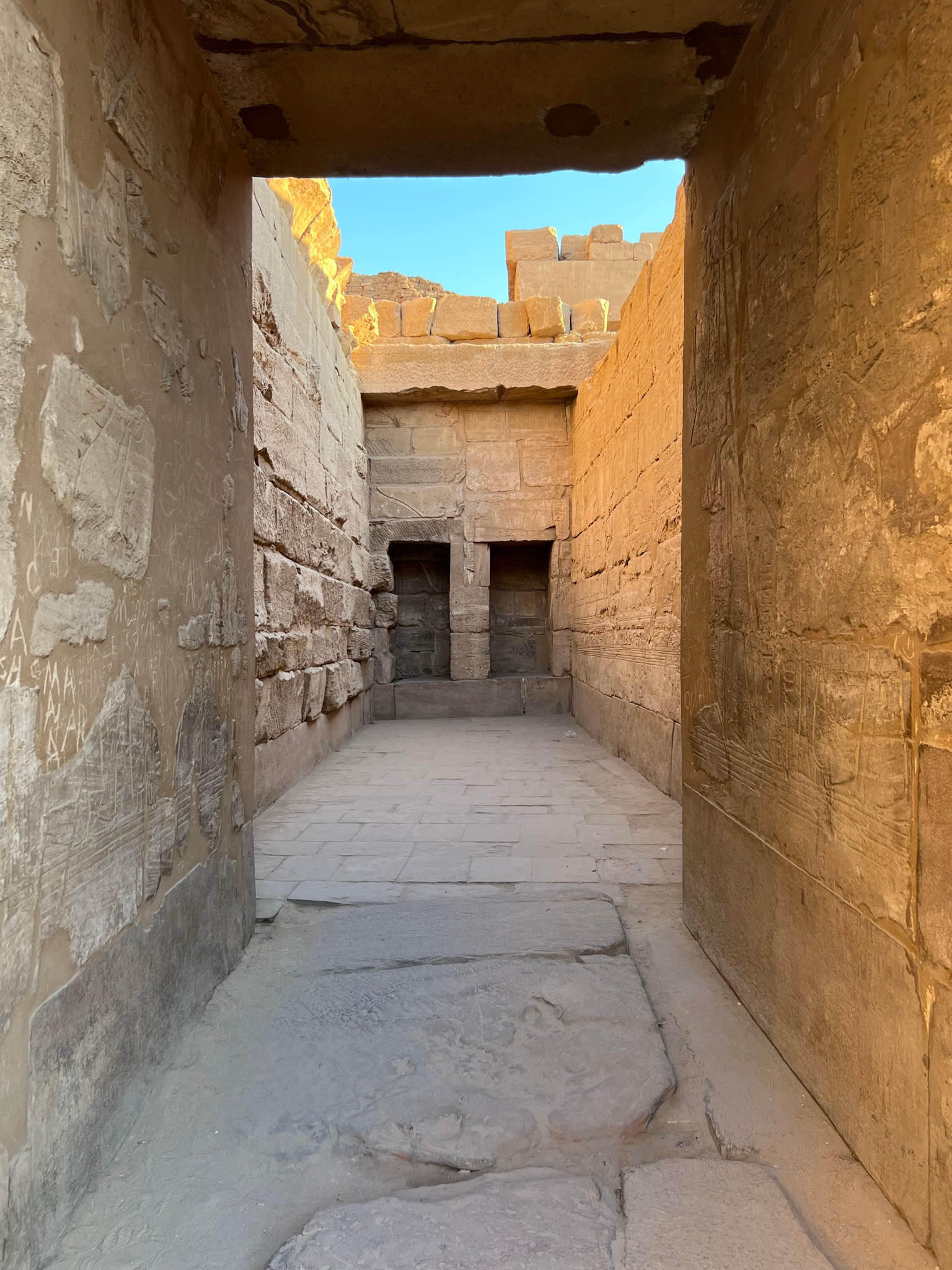
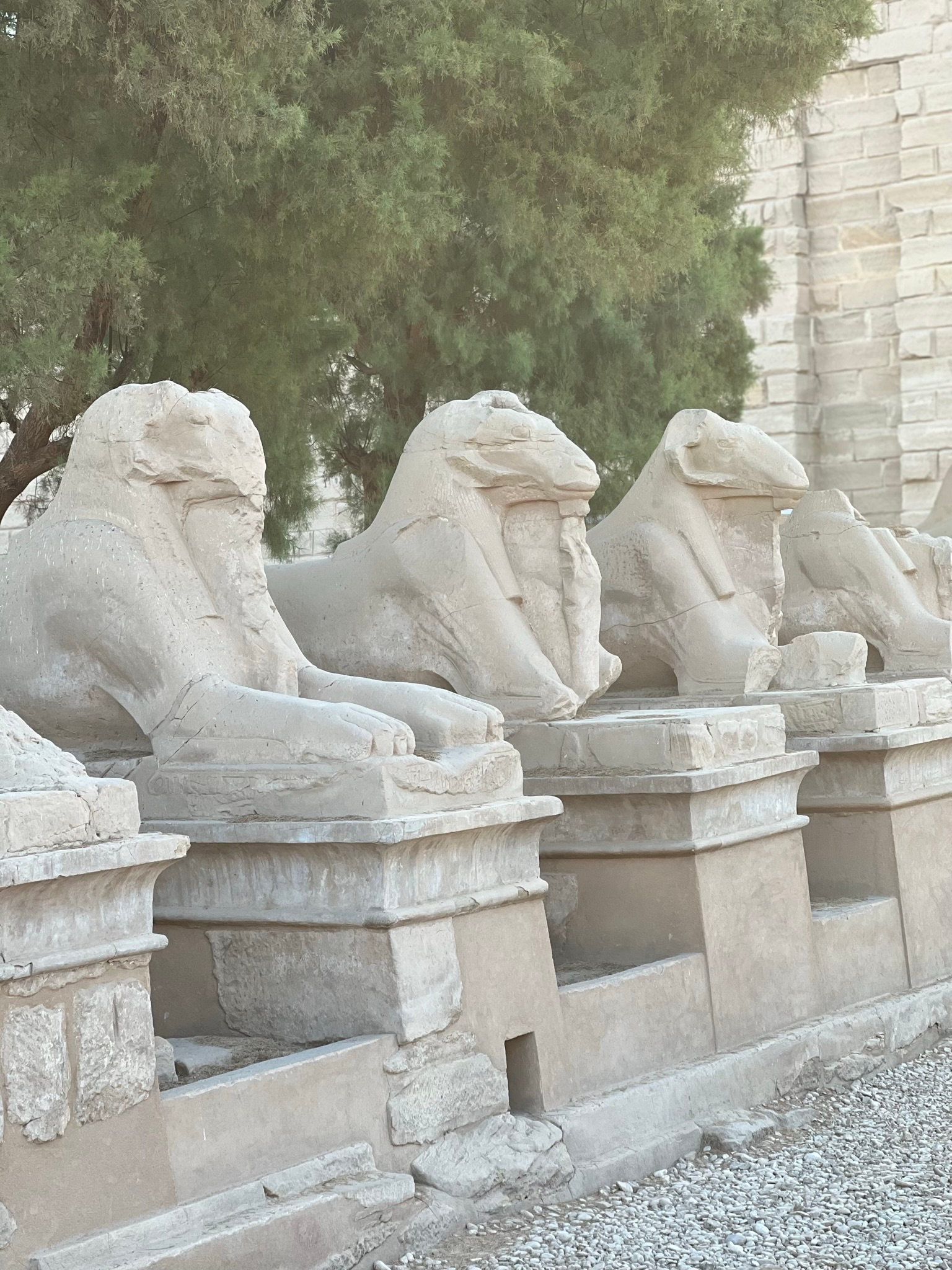
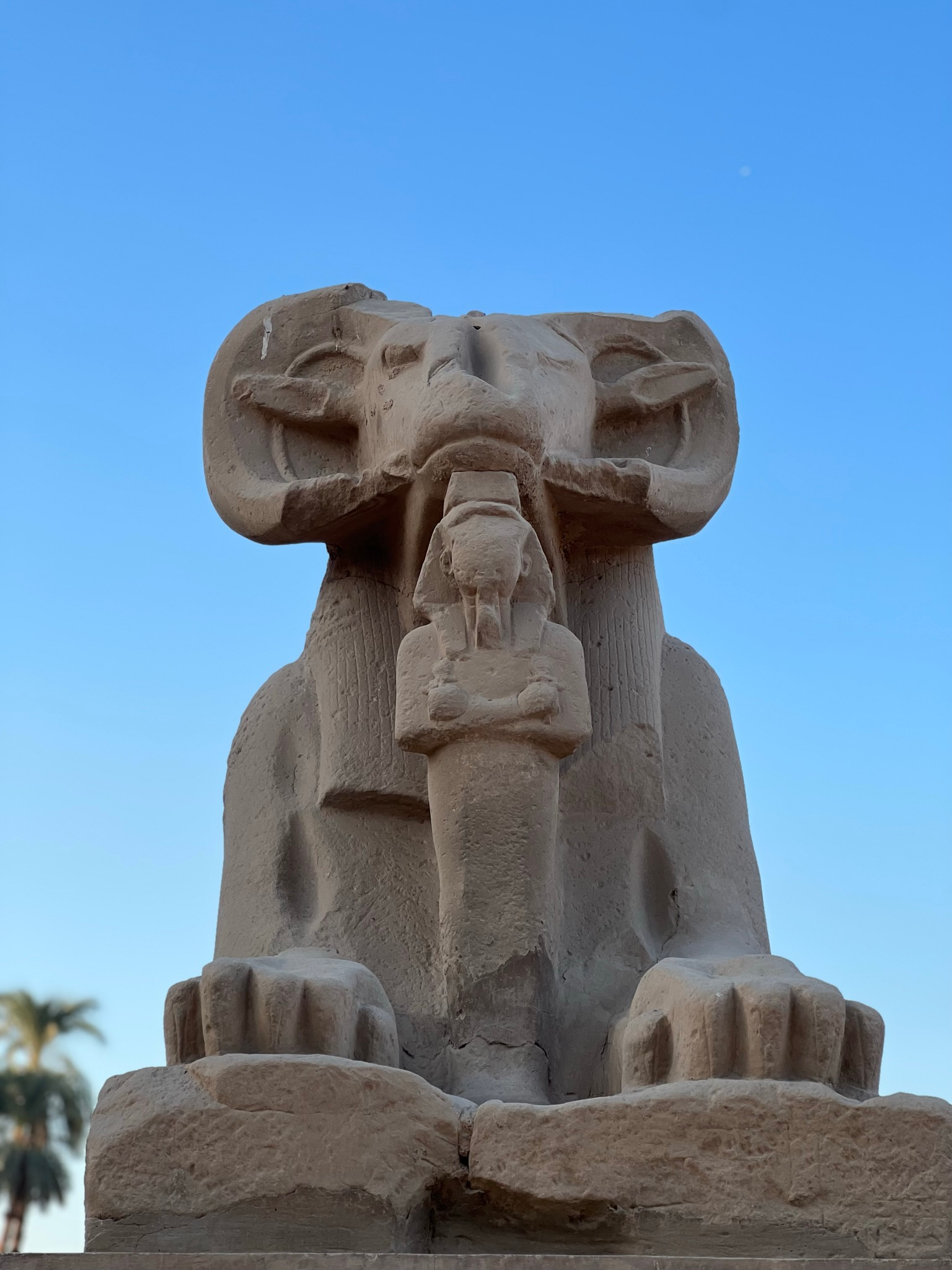
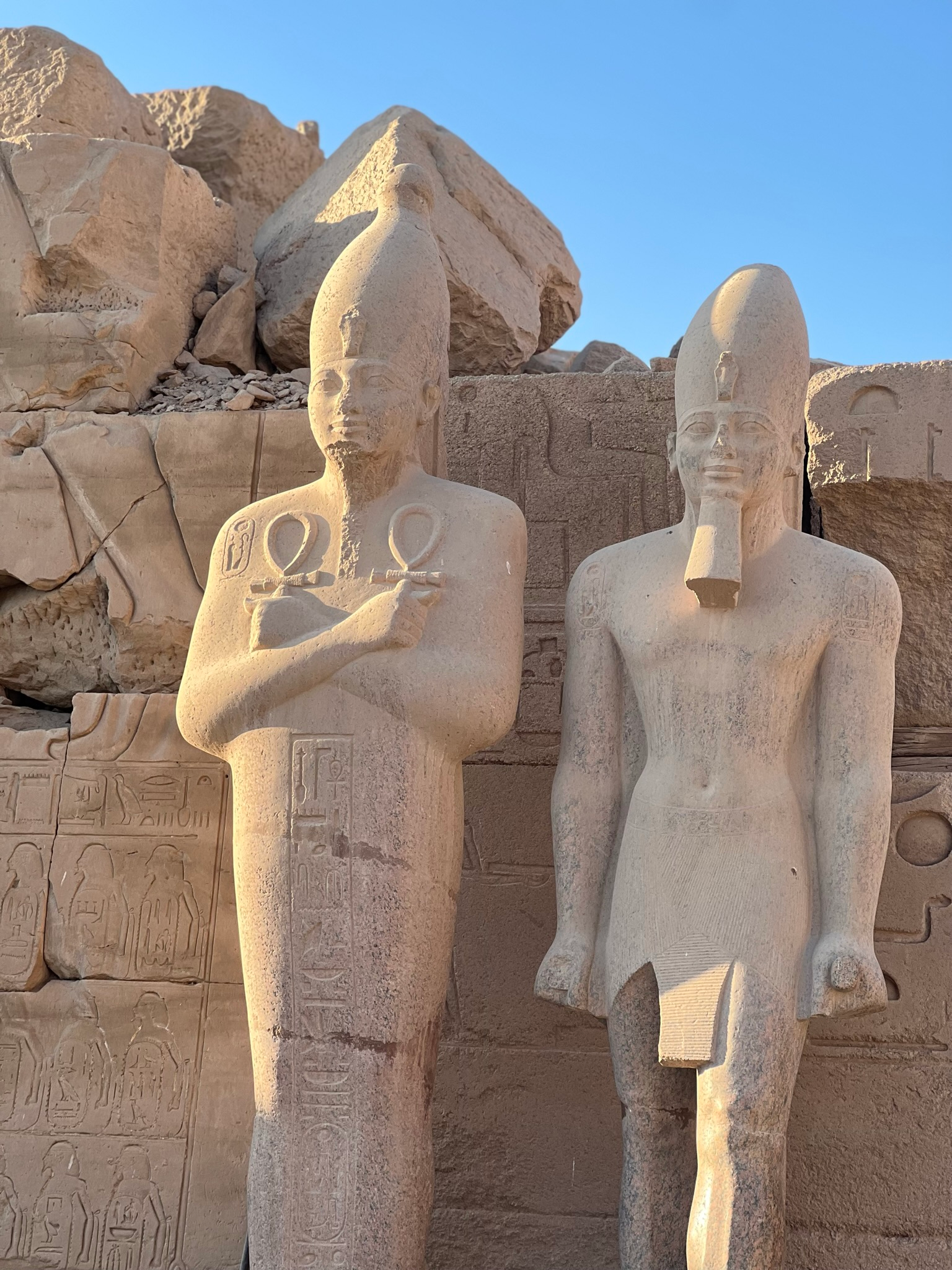
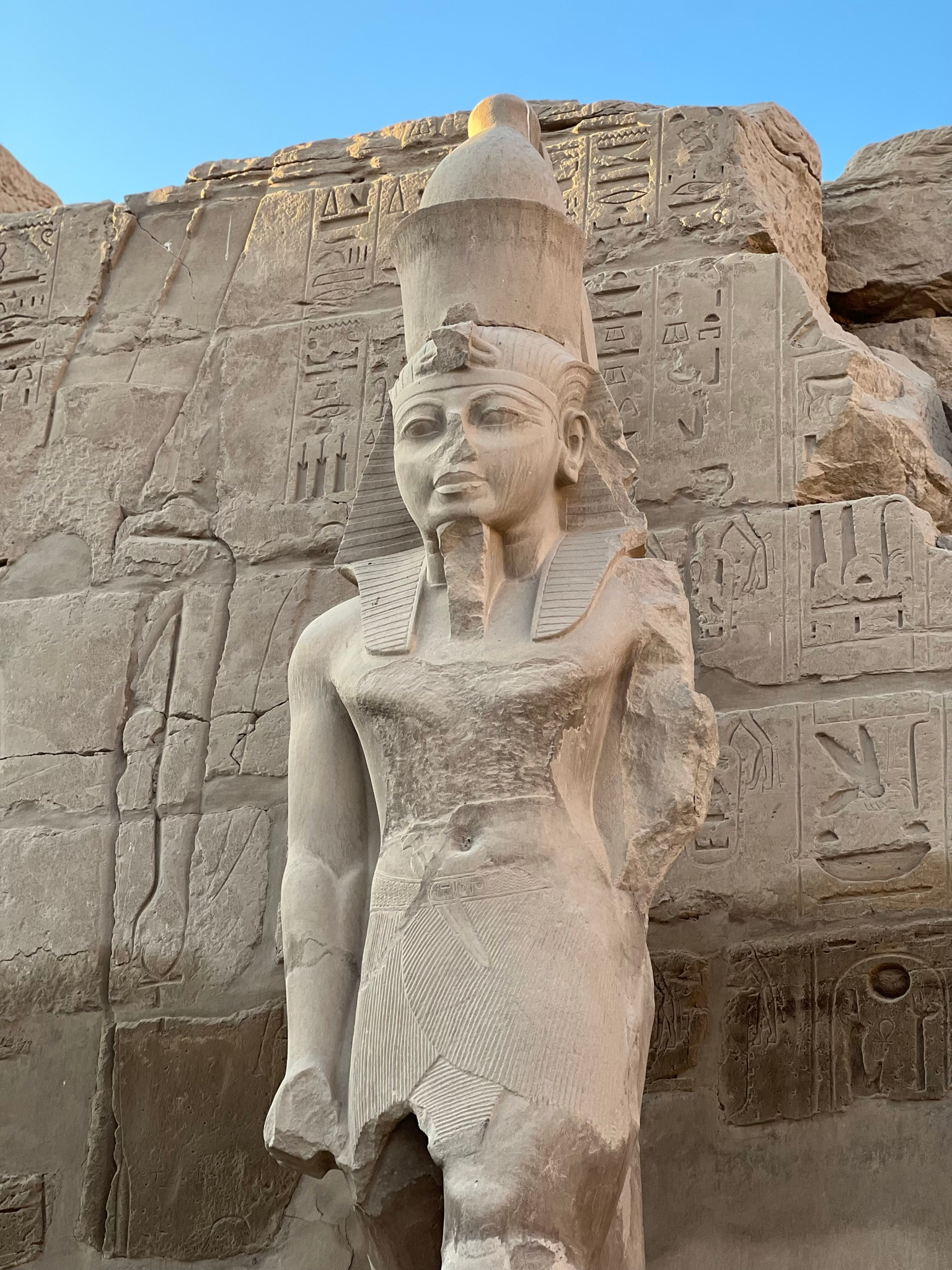
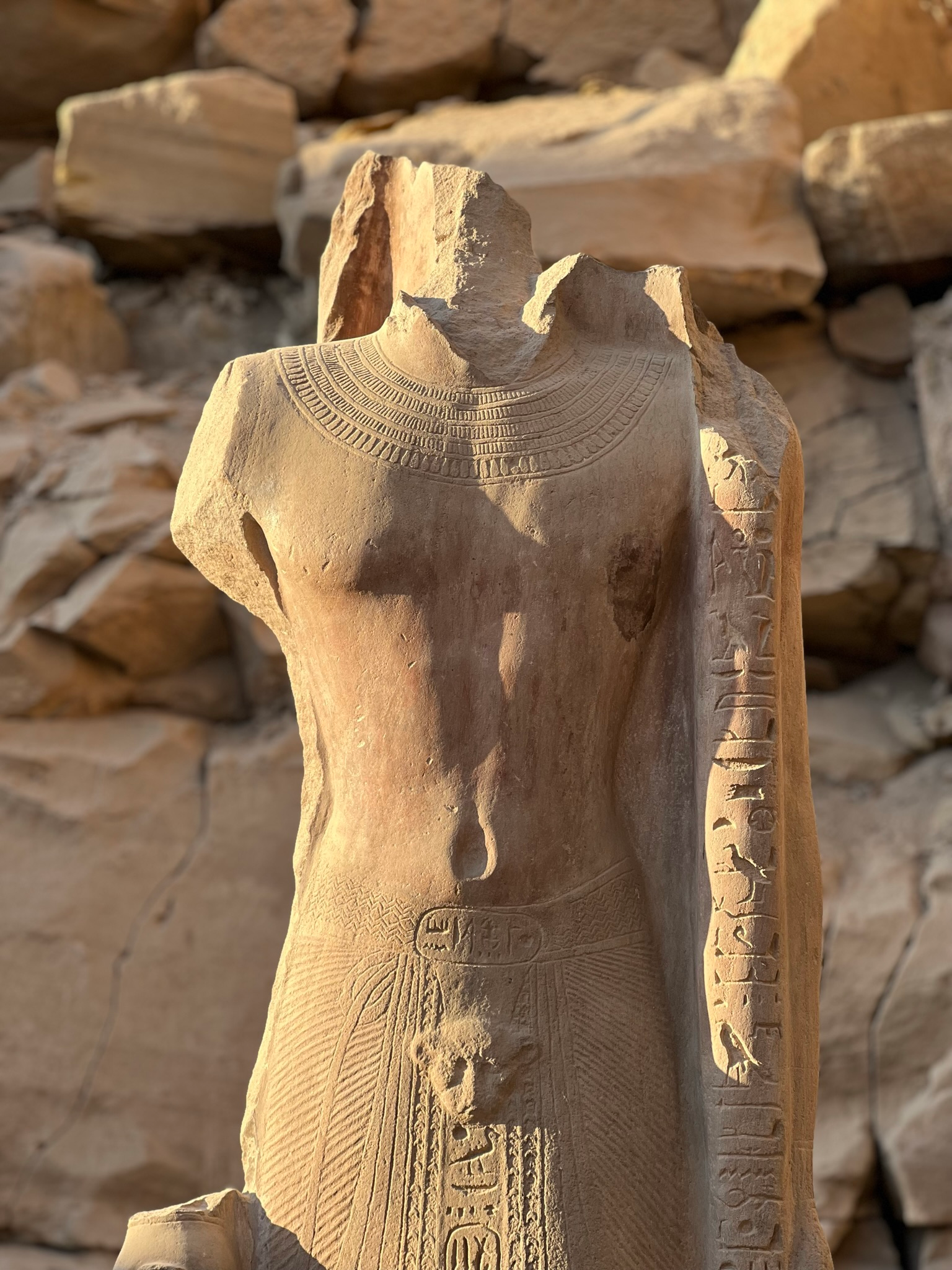
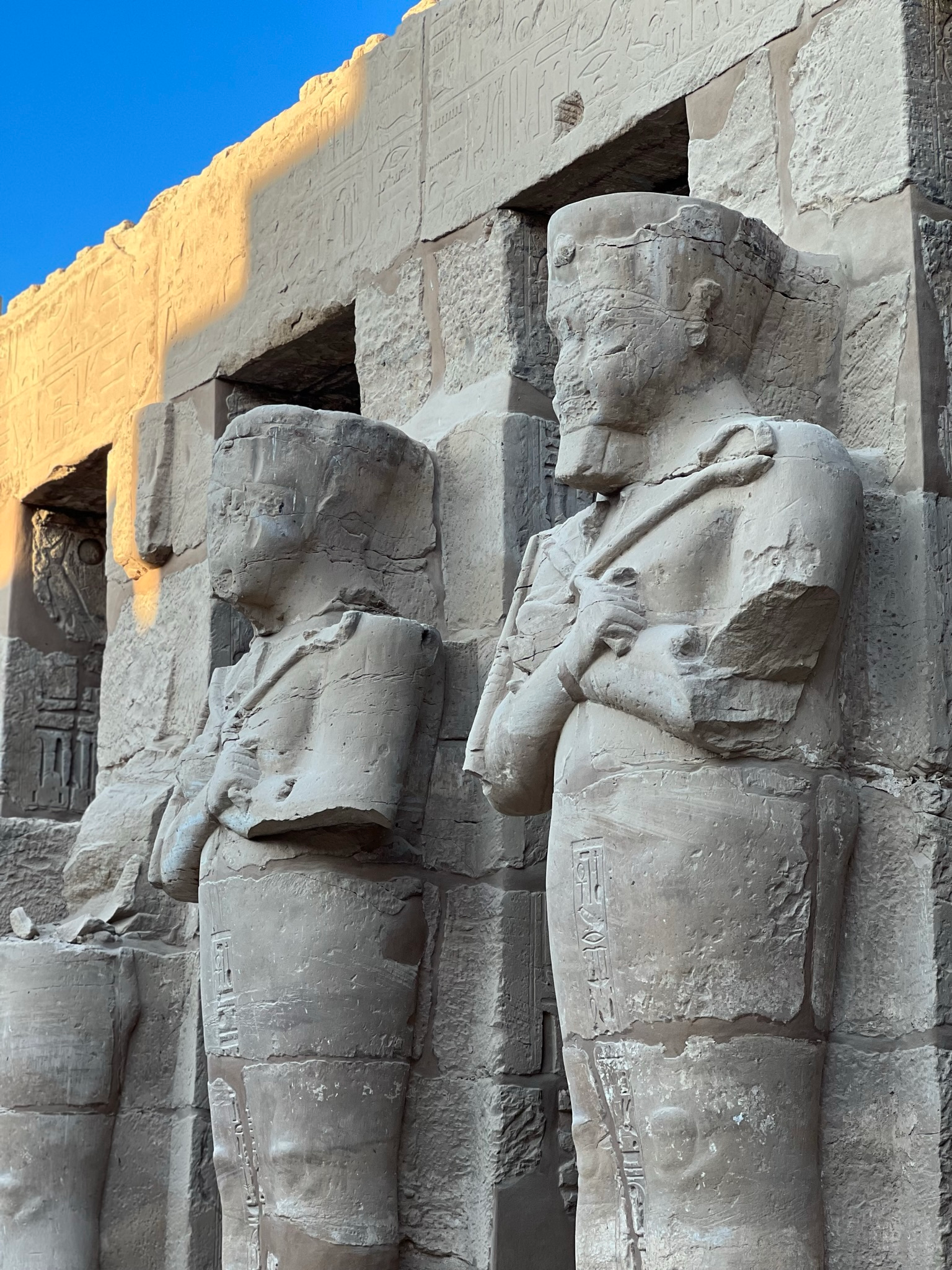
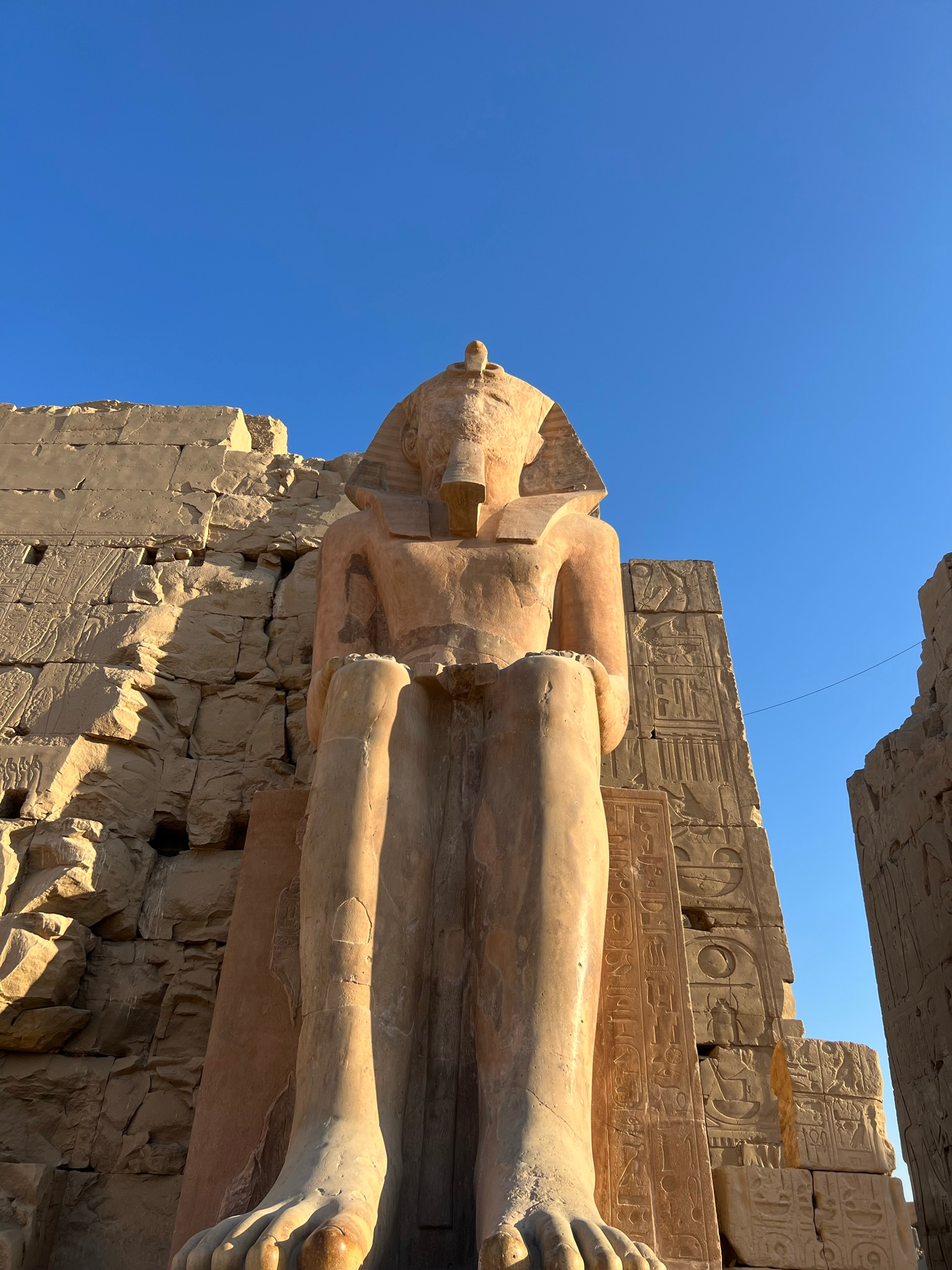
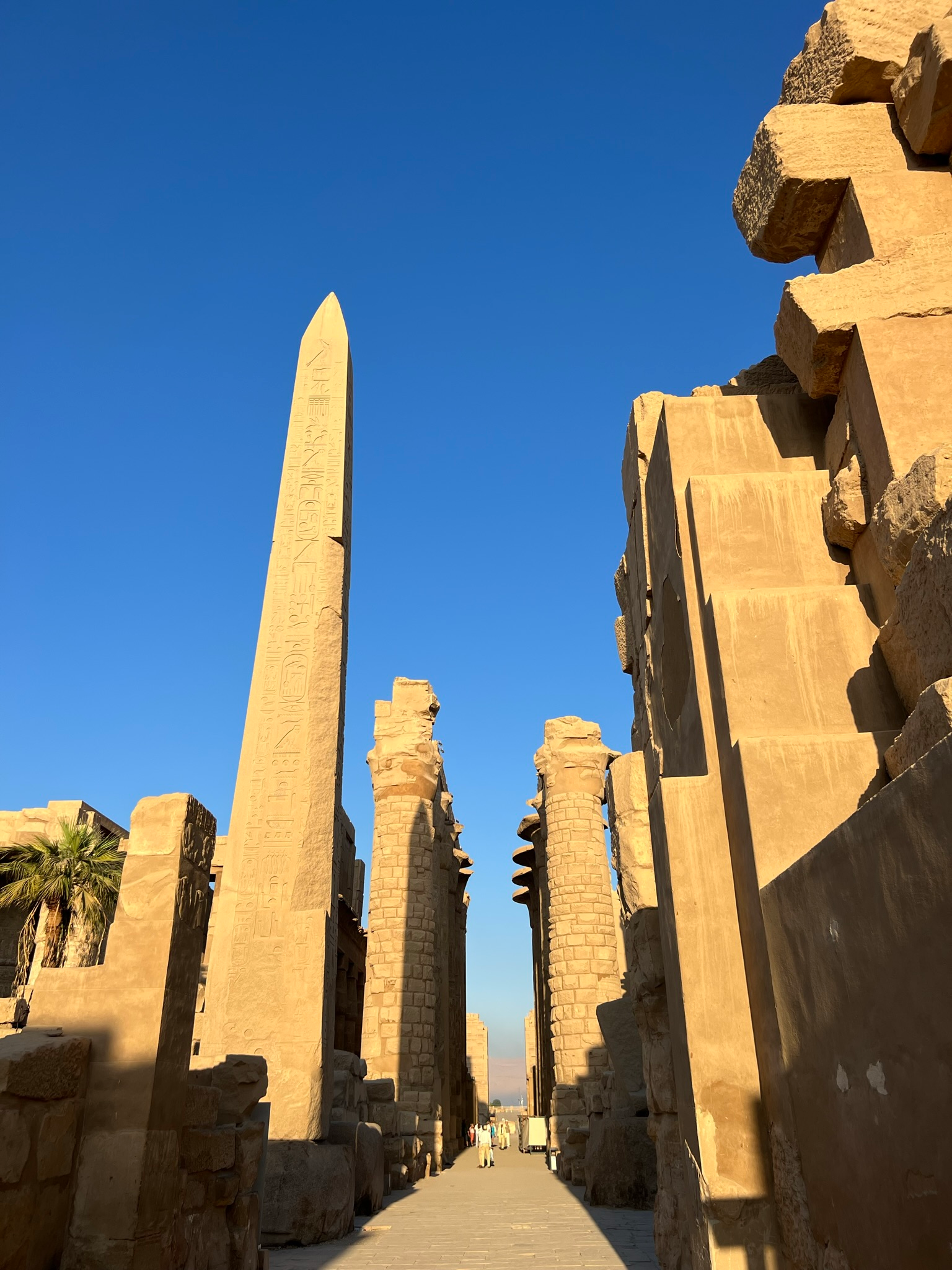
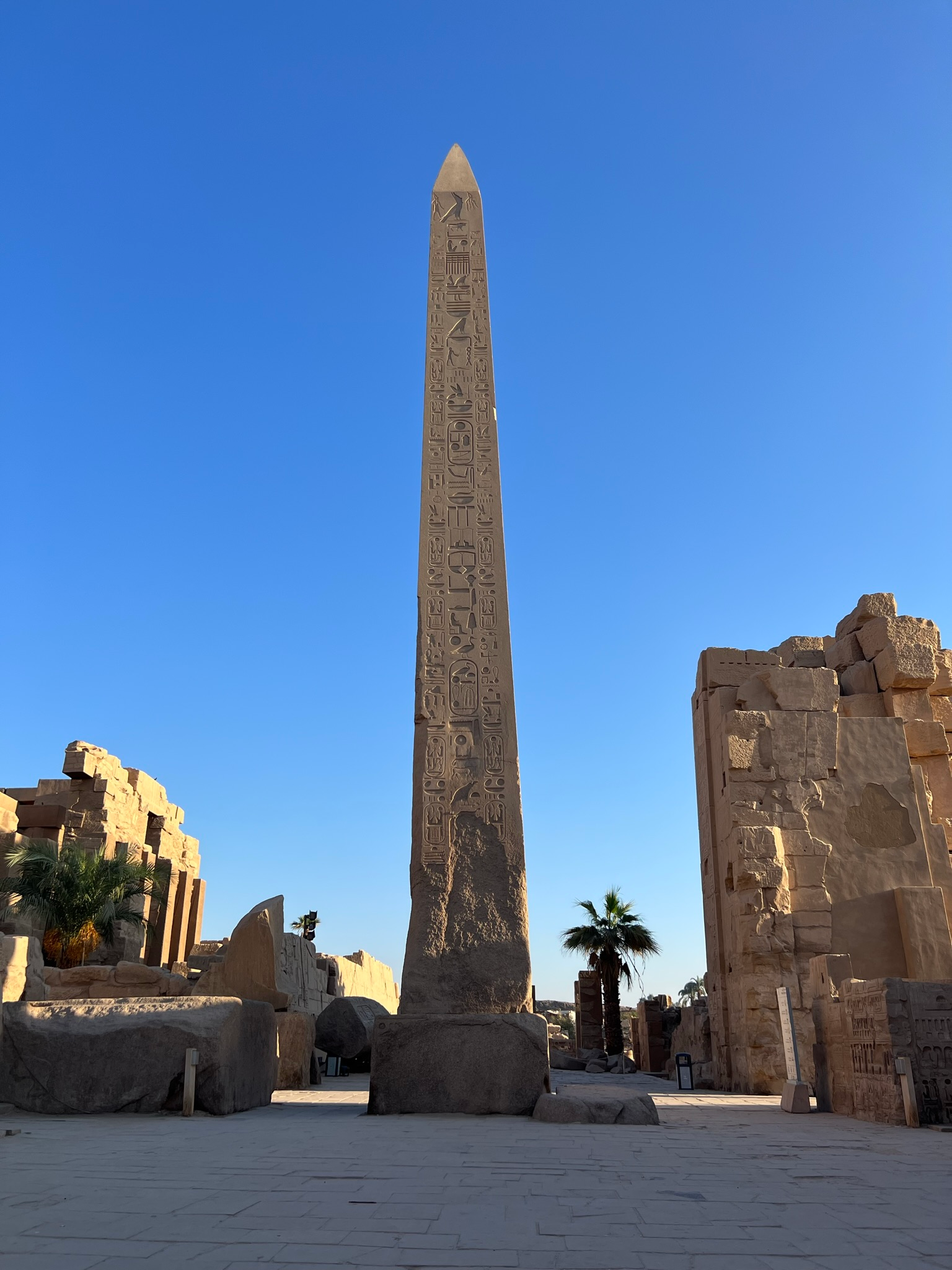
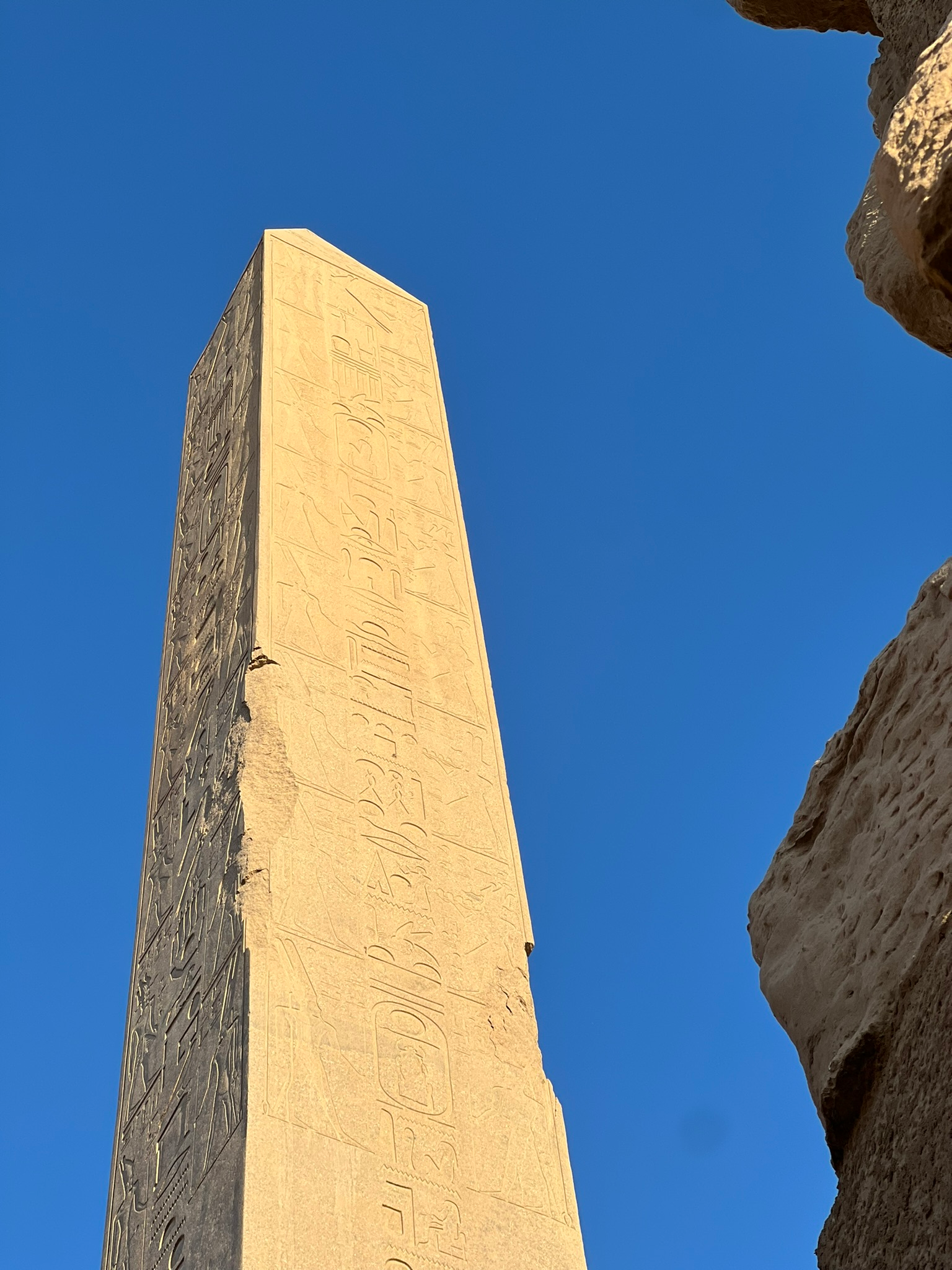
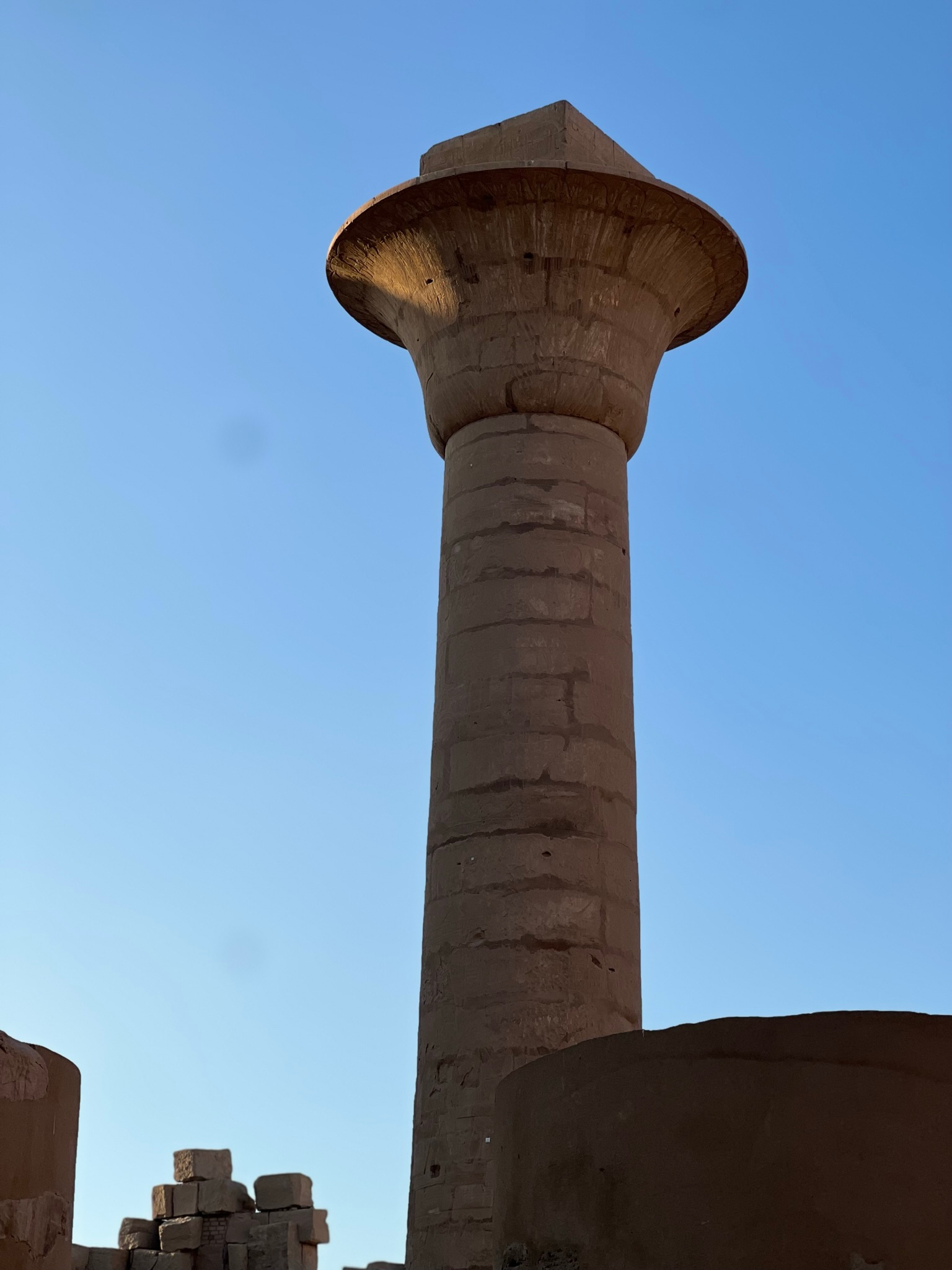
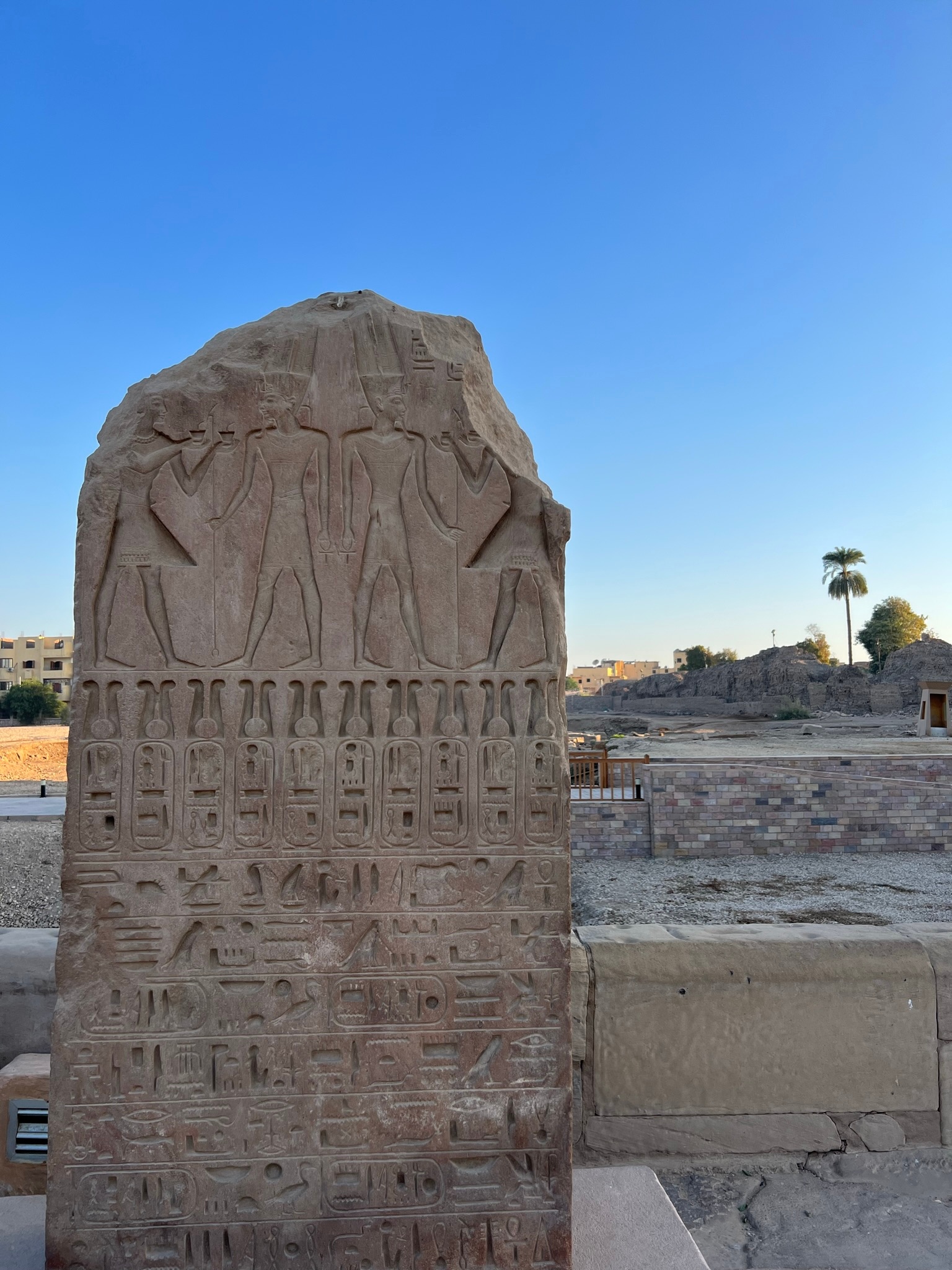
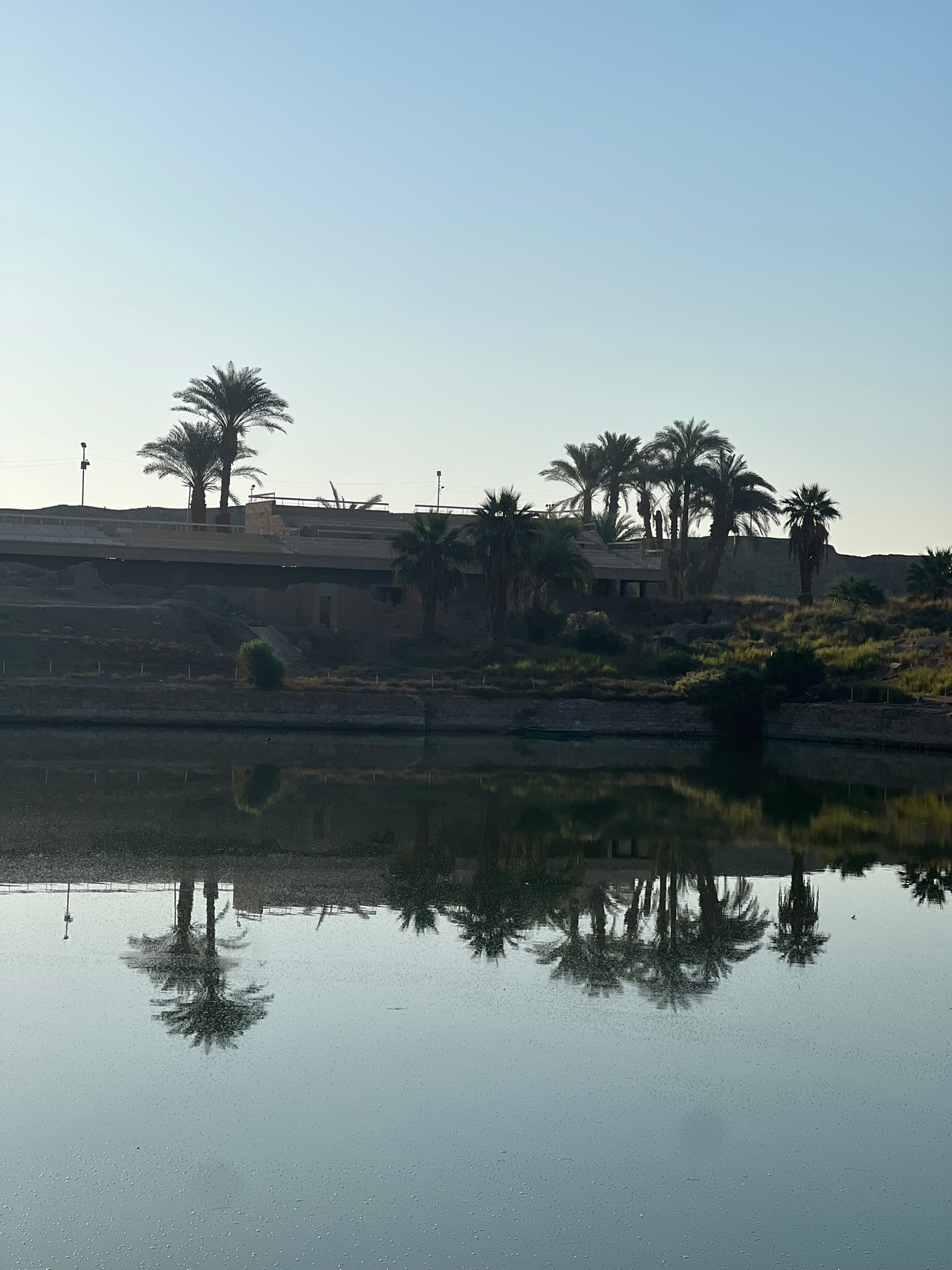
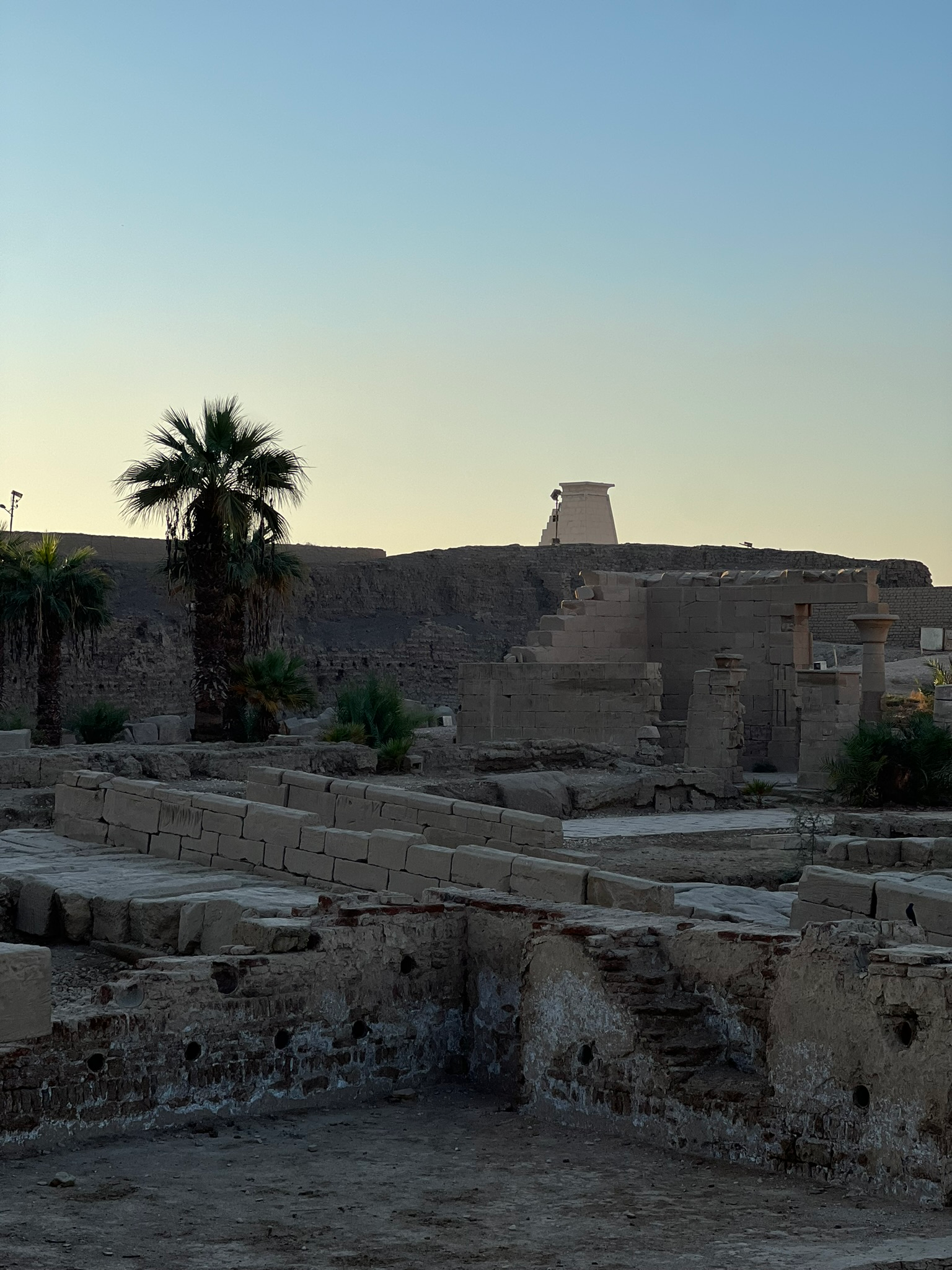
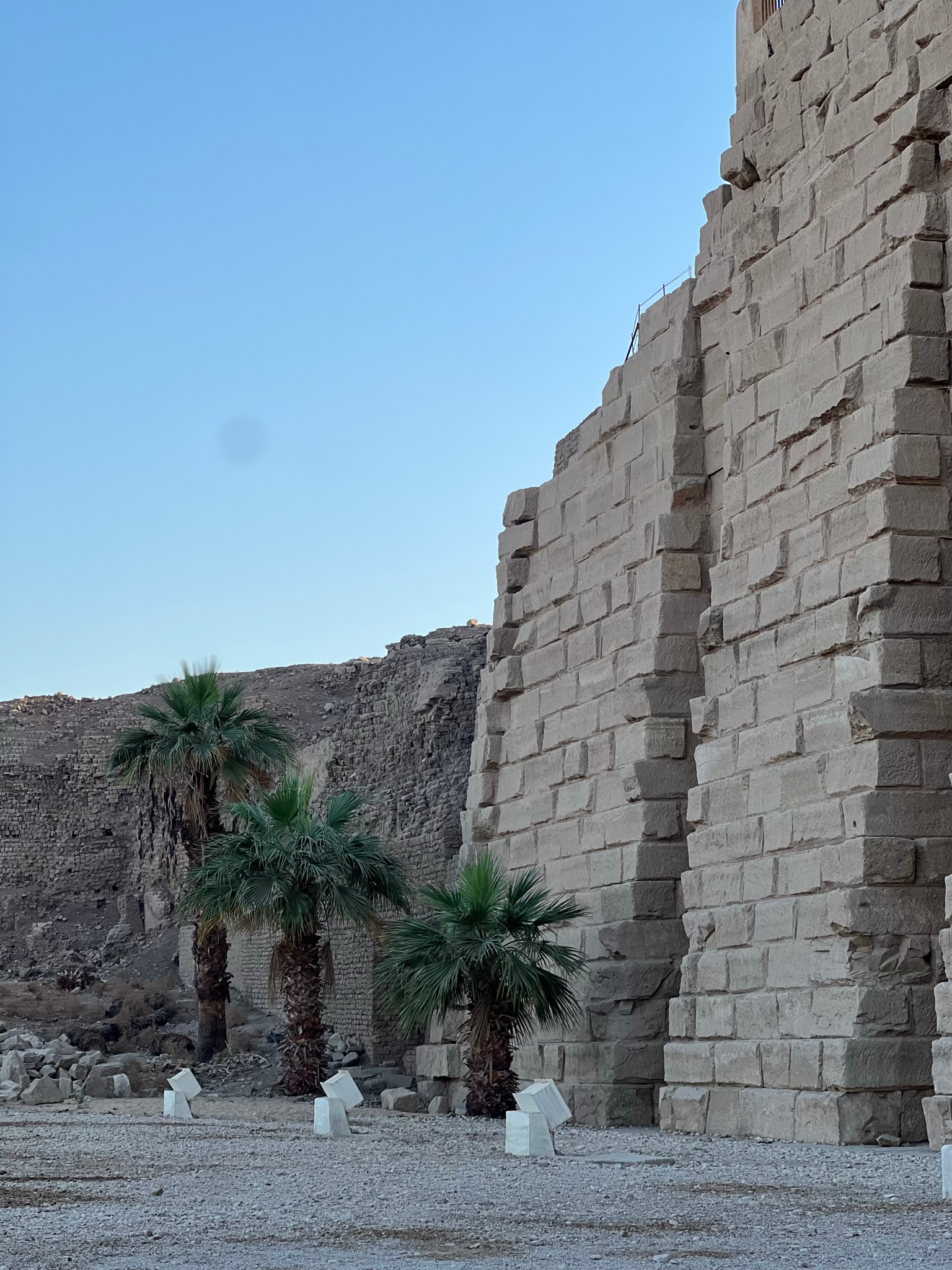
The hall, once fully roofed, contains 134 massive columns arranged in 16 rows, with some rising over 20 metres high. Our guide explained that the columns represent papyrus stalks emerging from the primordial swamp of Nun. From this cosmic waterscape, a mound called Benben emerged, from which the creator god Atum was born. Each column is richly decorated with inscriptions and reliefs depicting religious rituals, military campaigns, and royal achievements, creating one of the most visually dense historical records in the ancient world. Construction was initiated under Seti I and completed by his son Ramesses II, with later pharaohs adding their own inscriptions to assert legitimacy and legacy.
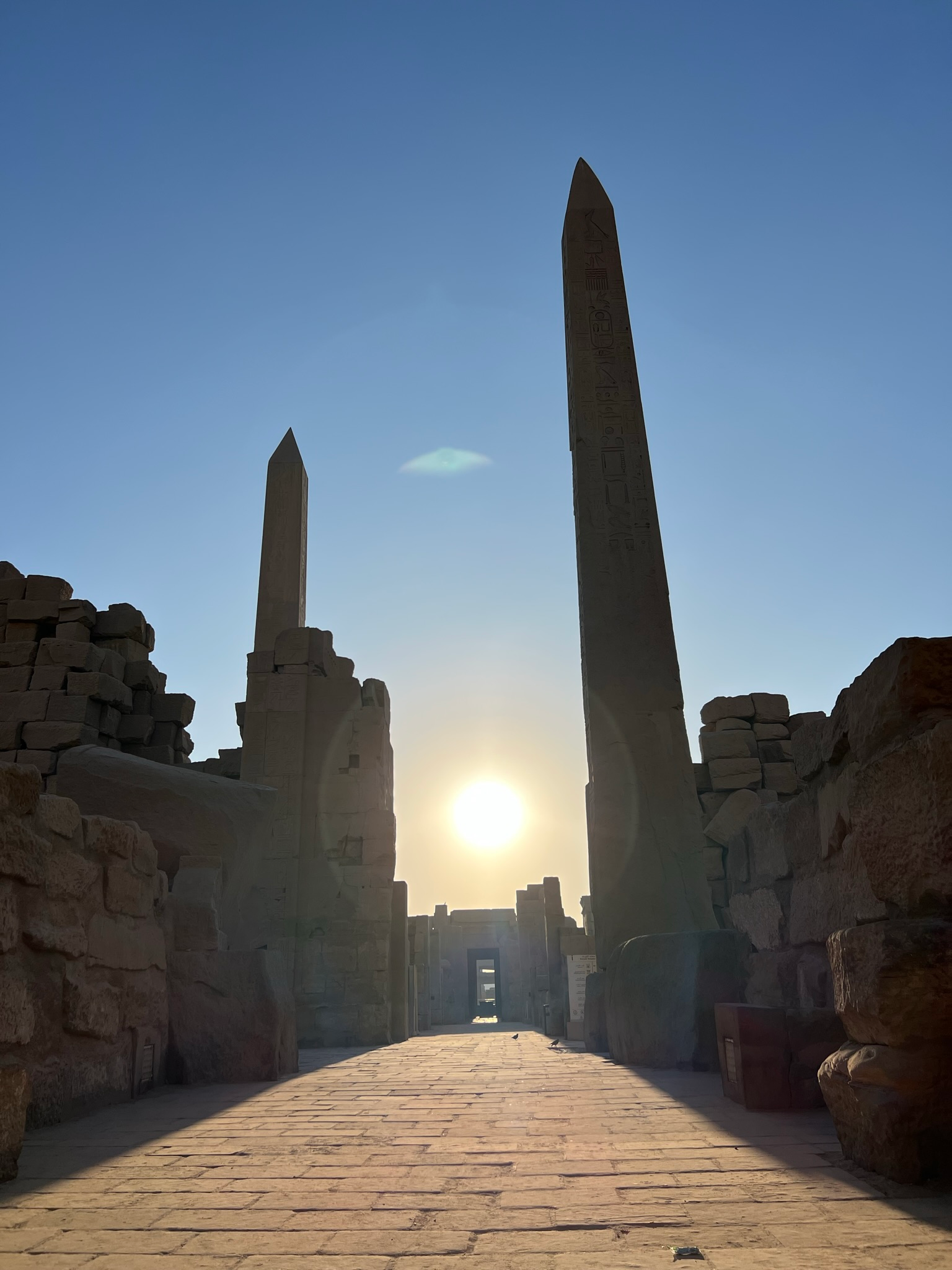
Between the third and fourth pylons lies a courtyard containing obelisks, monumental stone pillars dedicated to the gods, including those of Thutmose I and Hatshepsut. Further inside is the Sanctuary of Amun-Ra, the innermost and most sacred area of the complex, which once housed the cult statue of the deity. Other key features include the Sacred Lake, used by priests for ritual purification, and the Hall of Records, where royal tributes and achievements were historically documented.
Moving On
After roaming the site to our hearts’ content, we made our way back to the apartment for a much-deserved relaxed evening. I have to admit that even though we had covered a lot in just two days, there was still so much left unseen – like the Valley of the Queens, where the legendary Nefertari, wife of Ramesses II, was buried, and the remote temples of Abu Simbel far to the south in Aswan.
Even though I usually try to tick off all the highlights in one go, leaving so much unexplored felt like the perfect excuse to come back another time.