Early farming settlement
The deepest deposits belong to the early Neolithic Għar Dalam tradition, when farming communities were already established in Malta.
A modest prehistoric site that transformed what archaeologists knew about Malta - preserving village life, pottery traditions and temple building in one compact landscape.
Skorba is easy to underestimate. Its surviving stones are modest, but the archaeology beneath them helped reconstruct Malta's story before monumental temple building.
The Skorba Prehistoric Site lies on the edge of Żebbiegħ near Mġarr. David H. Trump's excavations in the early 1960s used more systematic methods than many earlier Maltese digs, recovering evidence often missed elsewhere.
The result was a rare sequence linking Neolithic settlement with later monumental architecture: stone-and-mudbrick huts, paved areas, pottery, animal bone, figurine fragments and two megalithic structures from different phases.
Several archaeological phases overlap at Skorba, making the site crucial to Malta's prehistoric chronology.
The deepest deposits belong to the early Neolithic Għar Dalam tradition, when farming communities were already established in Malta.
A distinctive grey burnished pottery tradition became important enough for the phase to take Skorba's name.
Pottery developed a vivid red slip, sometimes with restrained incised loops, curves and geometric motifs.
One megalithic structure belongs to the Ġgantija phase, linking Skorba to Malta's wider temple-building tradition.
A later Tarxien-phase structure shows that the site retained significance across successive generations.
Systematic excavation revealed the temples, underlying huts and long pottery sequence, filling gaps left by older Maltese digs.
Skorba was added to UNESCO's serial property Megalithic Temples of Malta, alongside the other major prehistoric temple complexes.
At Skorba, sequence matters more than any single wall: domestic buildings came first, pottery changed through time, and monumental structures appeared later.
This is not simply a ruined temple but a compact landscape where homes, yards and later megalithic construction overlap.

The best-preserved megaliths belong to later phases, but excavation beneath them revealed earlier village structures.
Two small oval stone-and-mudbrick structures stood beside a paved yard-like area, with pottery, animal bone and stylised figurine fragments recovered nearby.
Oval domestic structures with irregular rock floors offer a rare glimpse of life before Malta's great stone temples.
The ceramic sequence became a chronological marker across Malta: Grey Skorba is mostly burnished and undecorated, while Red Skorba carries its distinctive red slip and more incised decoration.
The older megalithic structure links Skorba to the Temple Period, when elaborate free-standing monuments were rising across Malta and Gozo.
A second, later megalithic structure shows continued or renewed use, giving Skorba a long architectural sequence rather than one construction date.
Skorba's importance lies in context: finds came from identifiable layers and structures, linking pottery, architecture and daily activity to successive periods.
Huts, paved spaces, food remains and pottery reveal settlement, cooking, craft and daily routines beside the later ceremonial landscape.
They preserve the communities from which Malta's temple-building tradition eventually emerged.
Changes in Grey and Red Skorba pottery helped archaeologists recognise chronological phases at other Maltese sites.
The phase names themselves preserve Skorba's role in shaping the modern chronology of Malta's Neolithic.
Skorba is compact, but it makes more sense if you deliberately separate the village layers from the later temple architecture.
Its rural setting makes it easier to imagine a farming community occupying this landscape thousands of years ago.
The low domestic remains are among the site's most important features.
Compare the temple remains with the earlier domestic architecture.
Leave with a sequence in mind rather than a list of ruins.
My photographs move from the surviving limestone uprights through the South Temple to the domestic remains. Tap any image to open it full-screen.
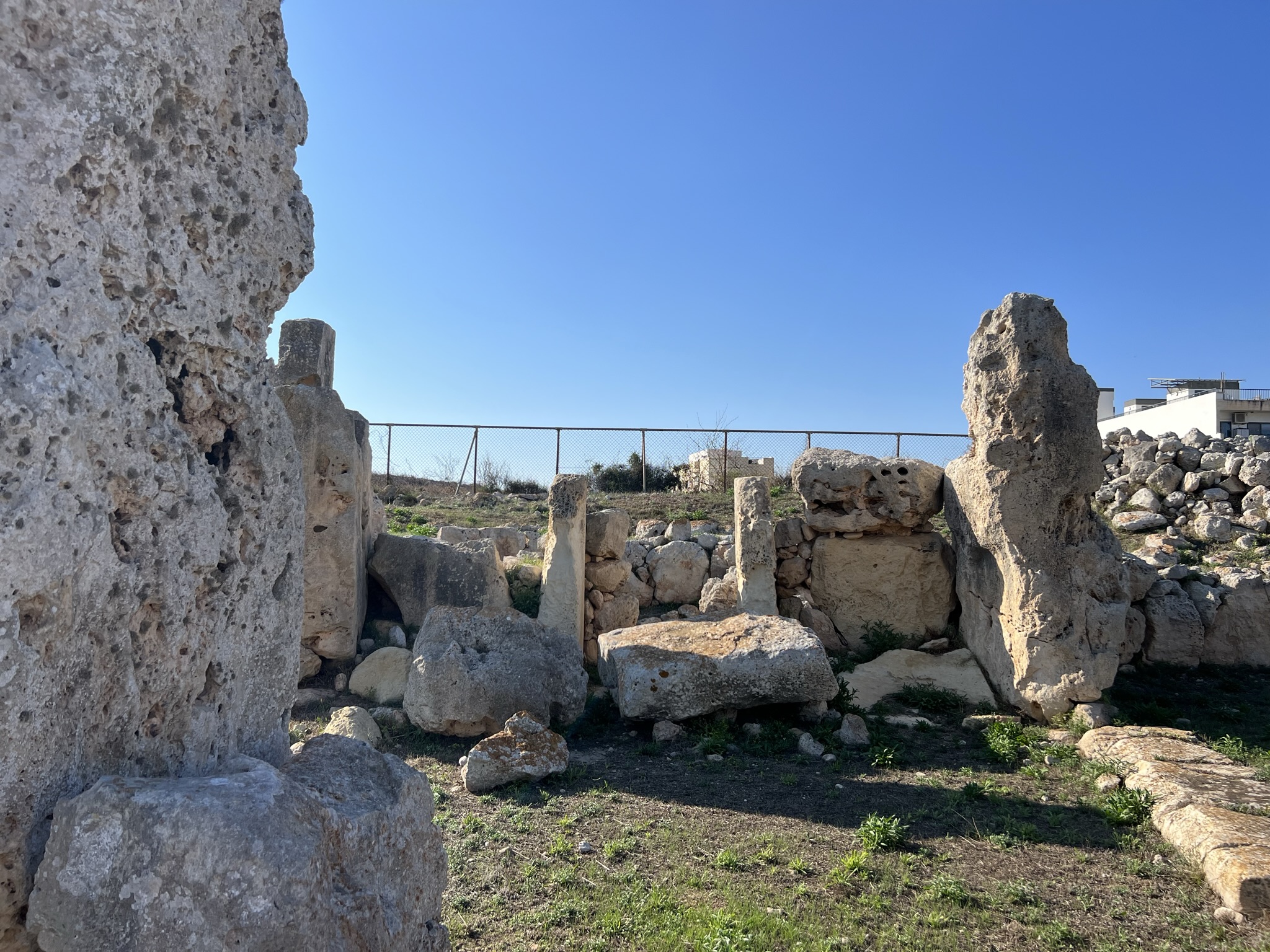
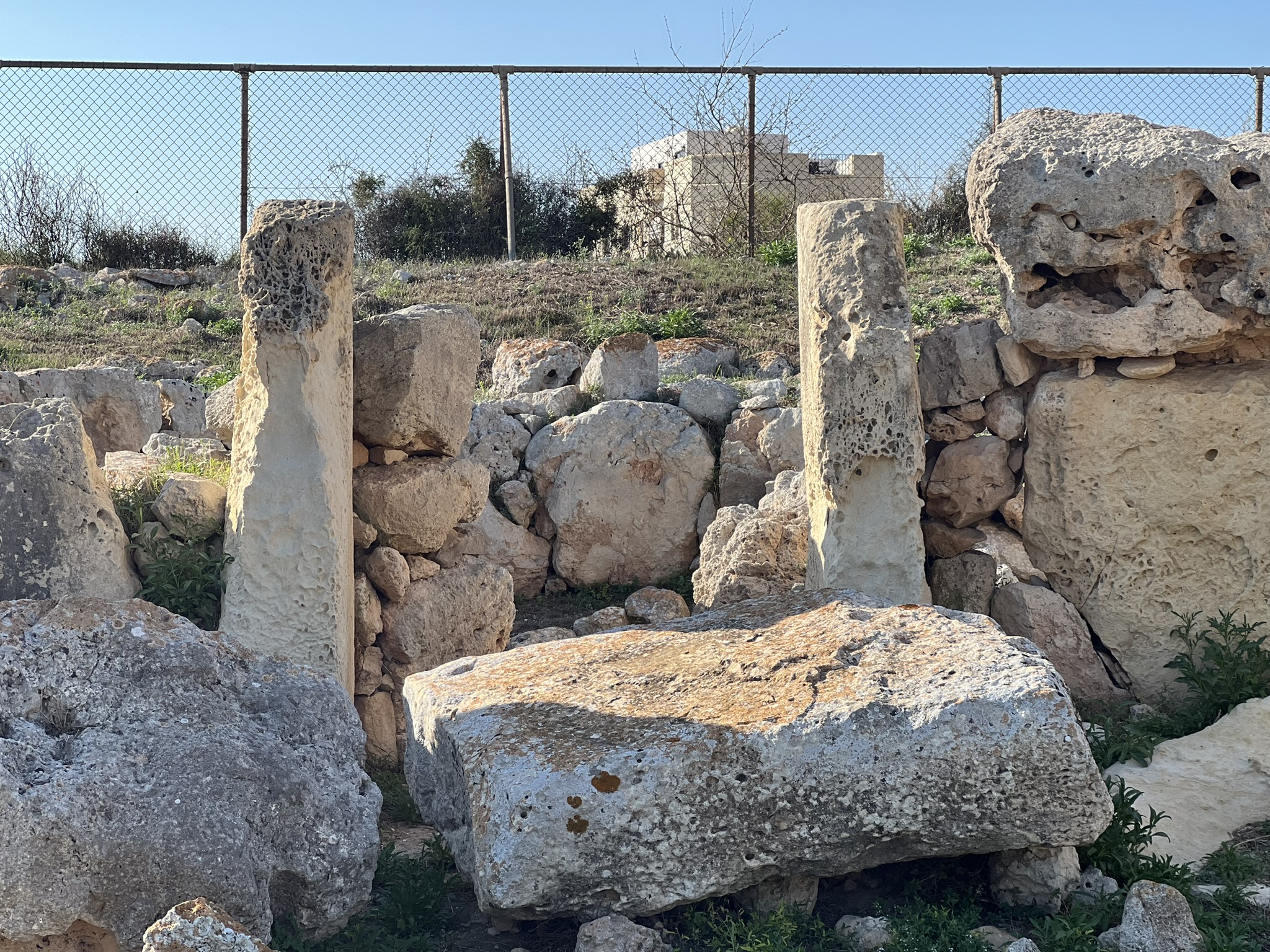


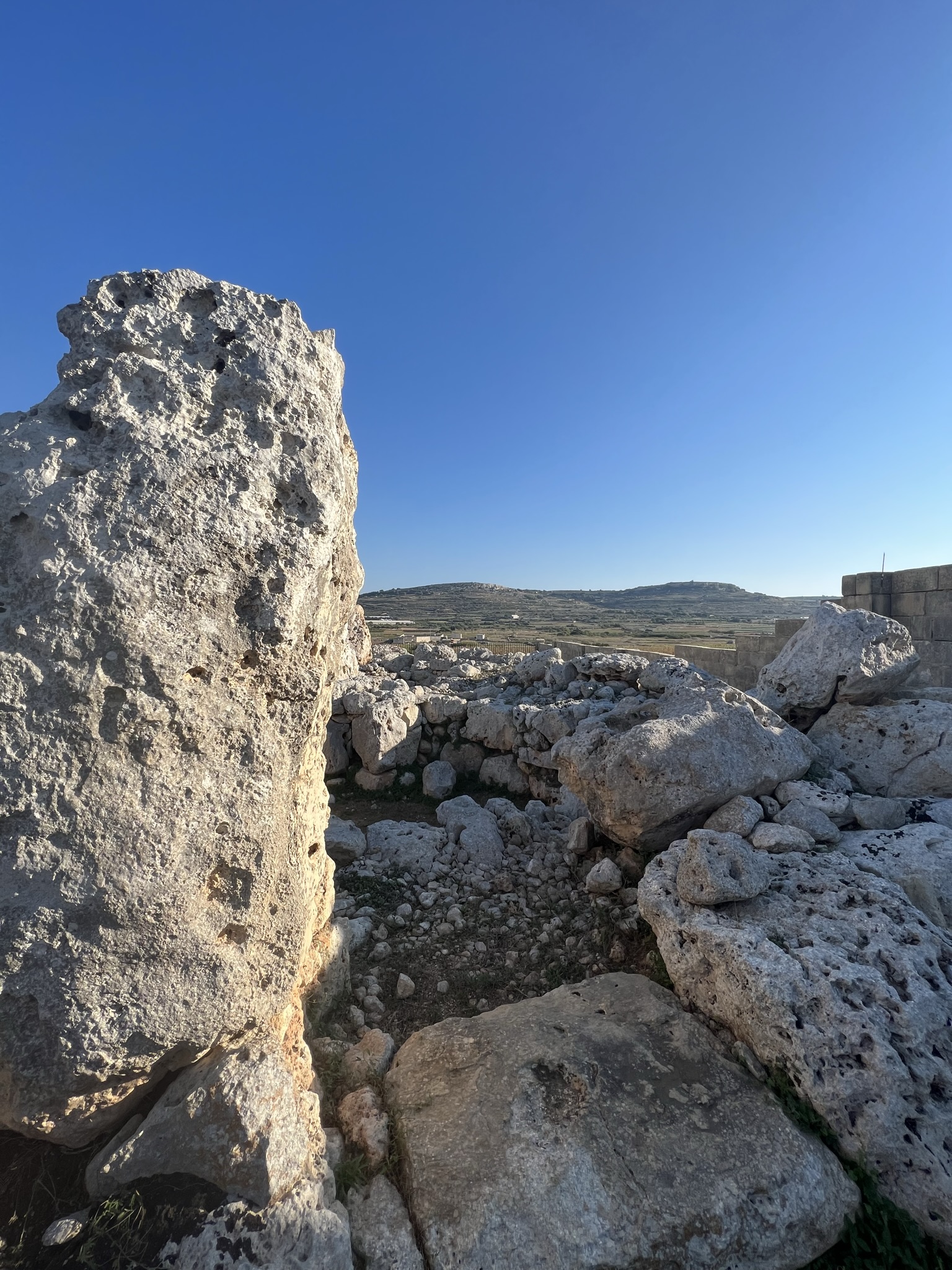
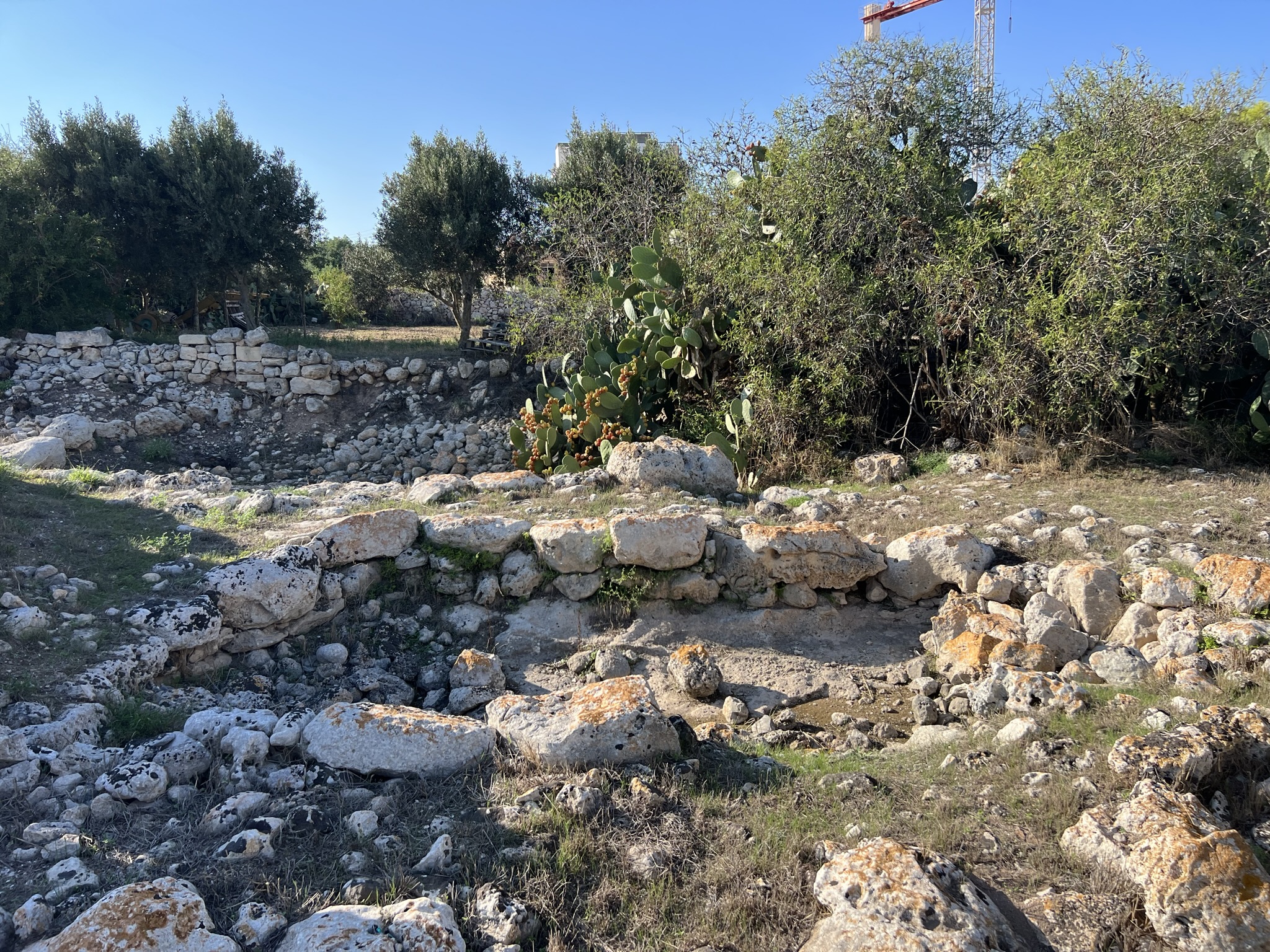
Skorba rewards close attention. Look down as much as up: floors, wall lines, masonry changes and the spaces between monuments carry much of the story.
Low survival does not mean low importance. Skorba's value lies largely in excavated layers and associations.
Some early structures combined stone foundations with mudbrick, so today's ruins preserve only part of the original buildings.
Grey and Red Skorba are archaeological phases, not simply colours, helping organise changes in Neolithic material culture.
Nearby Ta' Ħaġrat gives a stronger sense of temple architecture, while Skorba reveals the longer settlement sequence behind it.
Heritage Malta covers the huts, excavation history and megalithic structures; UNESCO gives the World Heritage context, while MaltaPot explains the importance of Grey and Red Skorba pottery.