Tena – Day 2: The Spirit Vine
TENA
Day 2: The Spirit Vine
October 16, 2025
PART I
Let’s just say the start of the day was somewhat tragic. Having decided to take part in another ayahuasca ceremony, Brian made sure I’d have nothing but fruit for breakfast and lunch. That might have been slightly dramatic, but my hunger had me acting as if my stomach lining were about to digest itself.
Having had such a good experience back in Iquitos, it didn’t take much for me to decide to do it again. Dorijan would also be joining, having spent three days eating nothing but fruit and avoiding the whole ‘Sex, Drugs and Rock ’n’ Roll’ lifestyle. I, on the other hand, was just gonna wing it, much like I had done the first time. In fact, I tried not to think too much about it and proceeded with my day as normal.
Laguna Kawana
It wasn’t too hard to stay distracted. First up was a tour of Laguna Kawana Nature Reserve. After a short drive back to Monkey Beach, we hopped into a canoe and crossed to the opposite riverbank before taking a tuk-tuk to the reserve.
Barely a second after arriving, we spotted two animals I’d never seen before: a saki monkey feeding on leaves at the top of a tree and a paiche, one of the largest freshwater fish in the world. The latter had me in awe. Its enormous body must have been close to three metres long, with reddish-orange markings towards the rear. We watched incredulously as it gulped down an entire orange that Brian threw into the water. I would’ve loved to go for a dive there, although the accompanying piranhas made that feel like a rather questionable idea.
After such a great start, we climbed into another canoe for our tour of the lagoon. Armed with my trusty binos, I did my best to spot as many animals as possible. From greater anis and oropendolas to a toucan, an egret, a sunbittern and a kingfisher, we saw all kinds of birds. The MVP for me was the hoatzin, another first in my books. With its chestnut-brown plumage, spiky rufous crest, bare blue face and intense red eyes, it looked absolutely prehistoric. Despite its majestic appearance, the bird is also known as the ‘stinkbird’ because it ferments leaves in its digestive system, producing a distinctly manure-like odour.
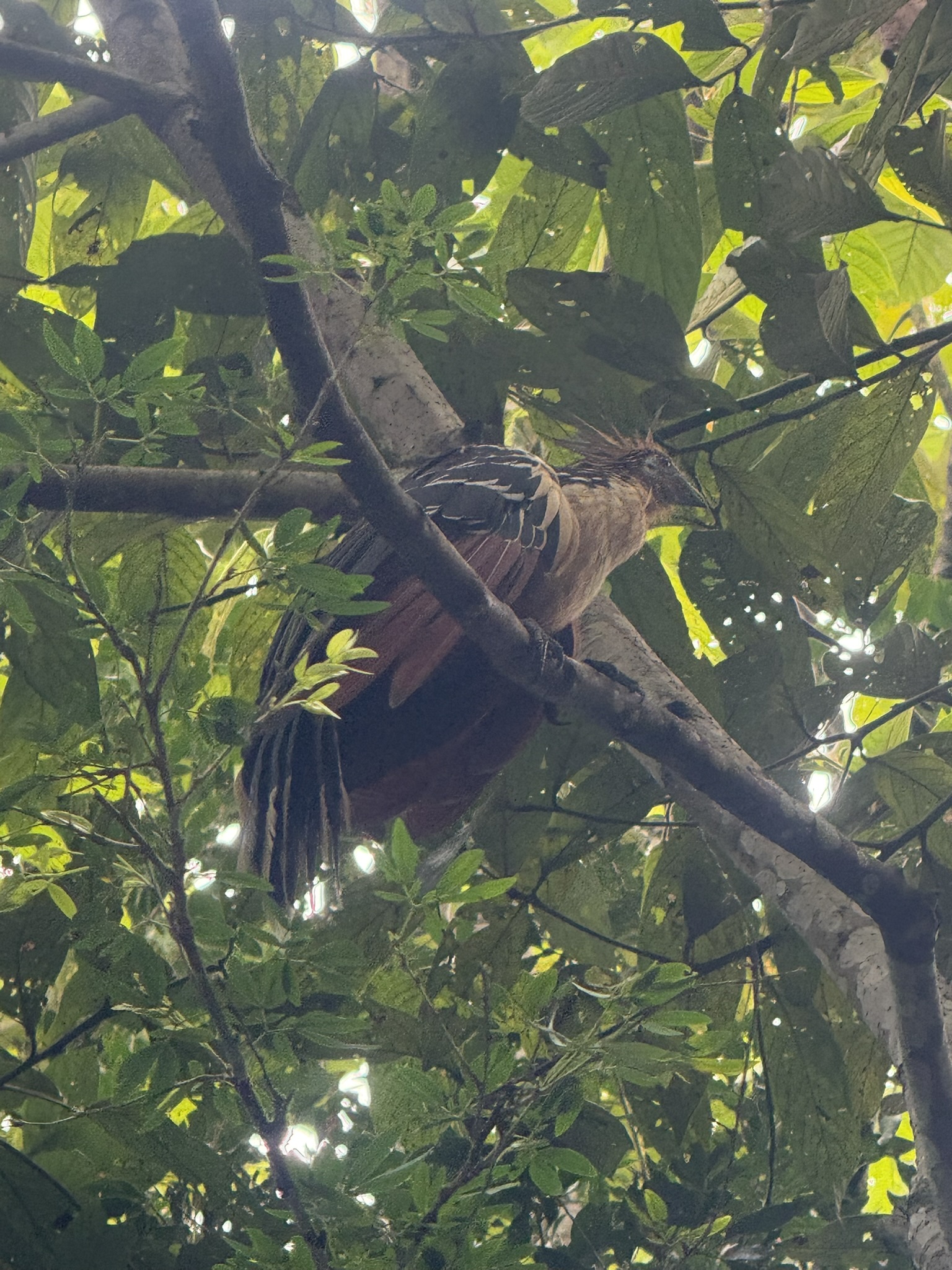
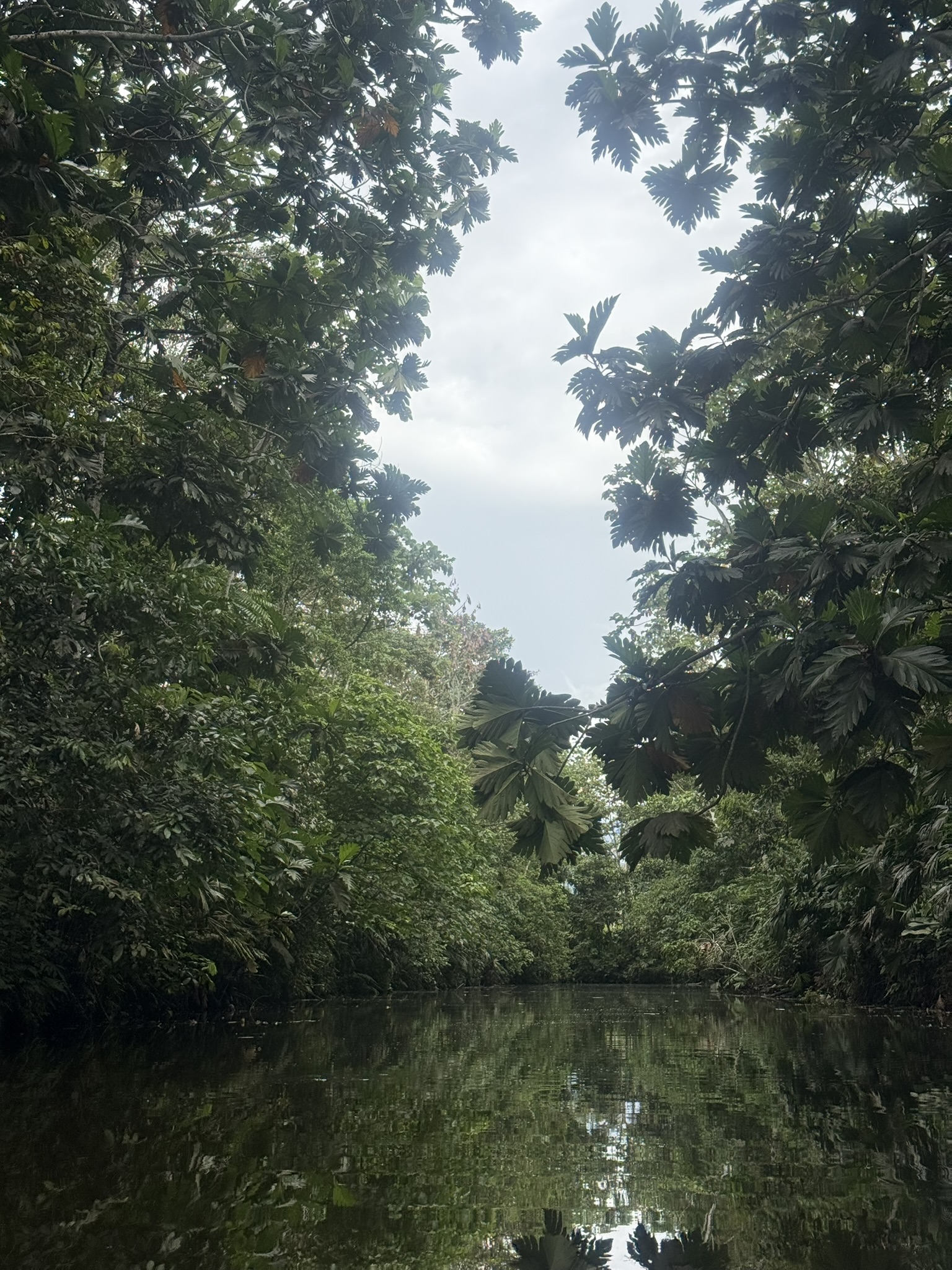
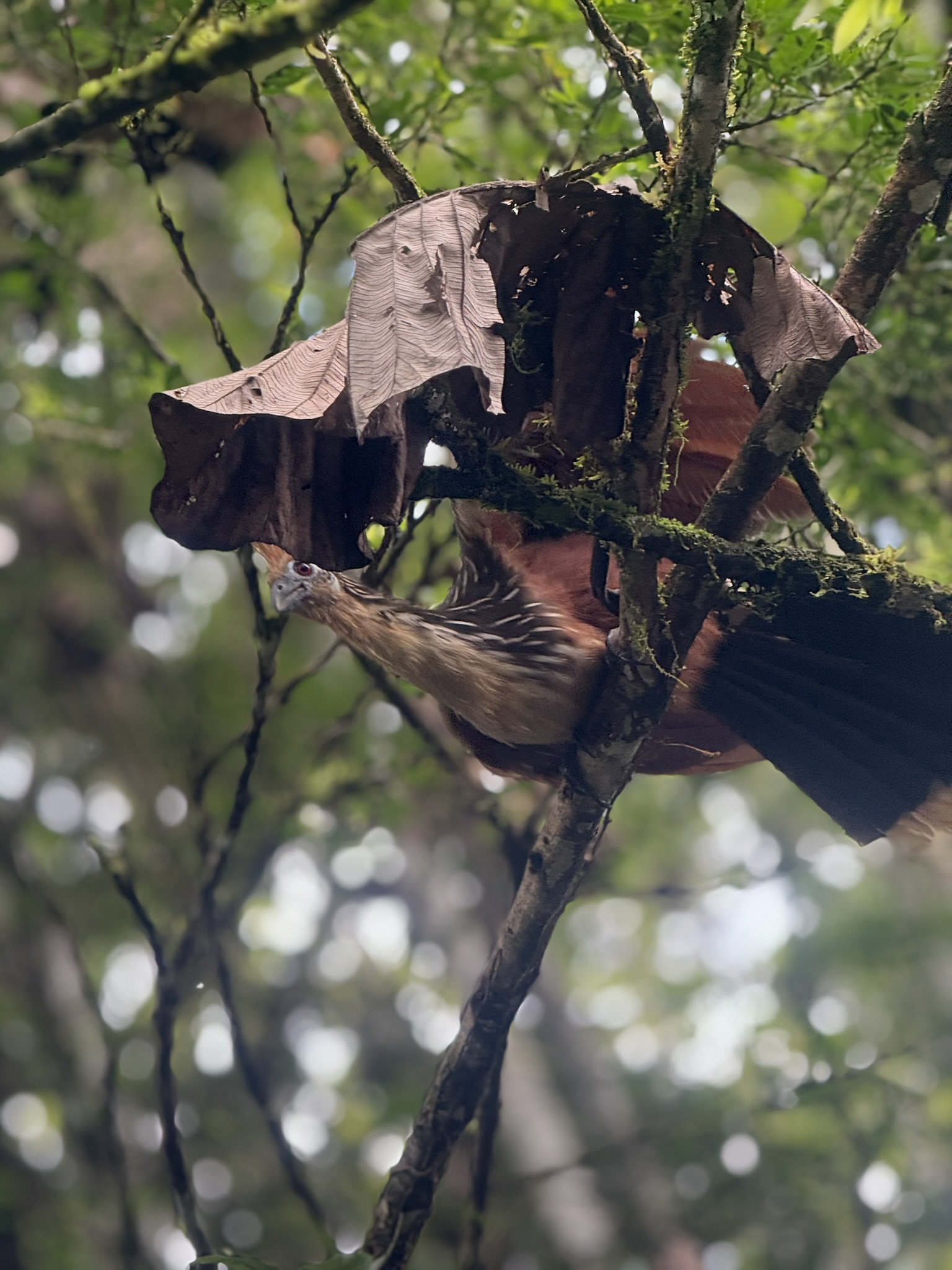
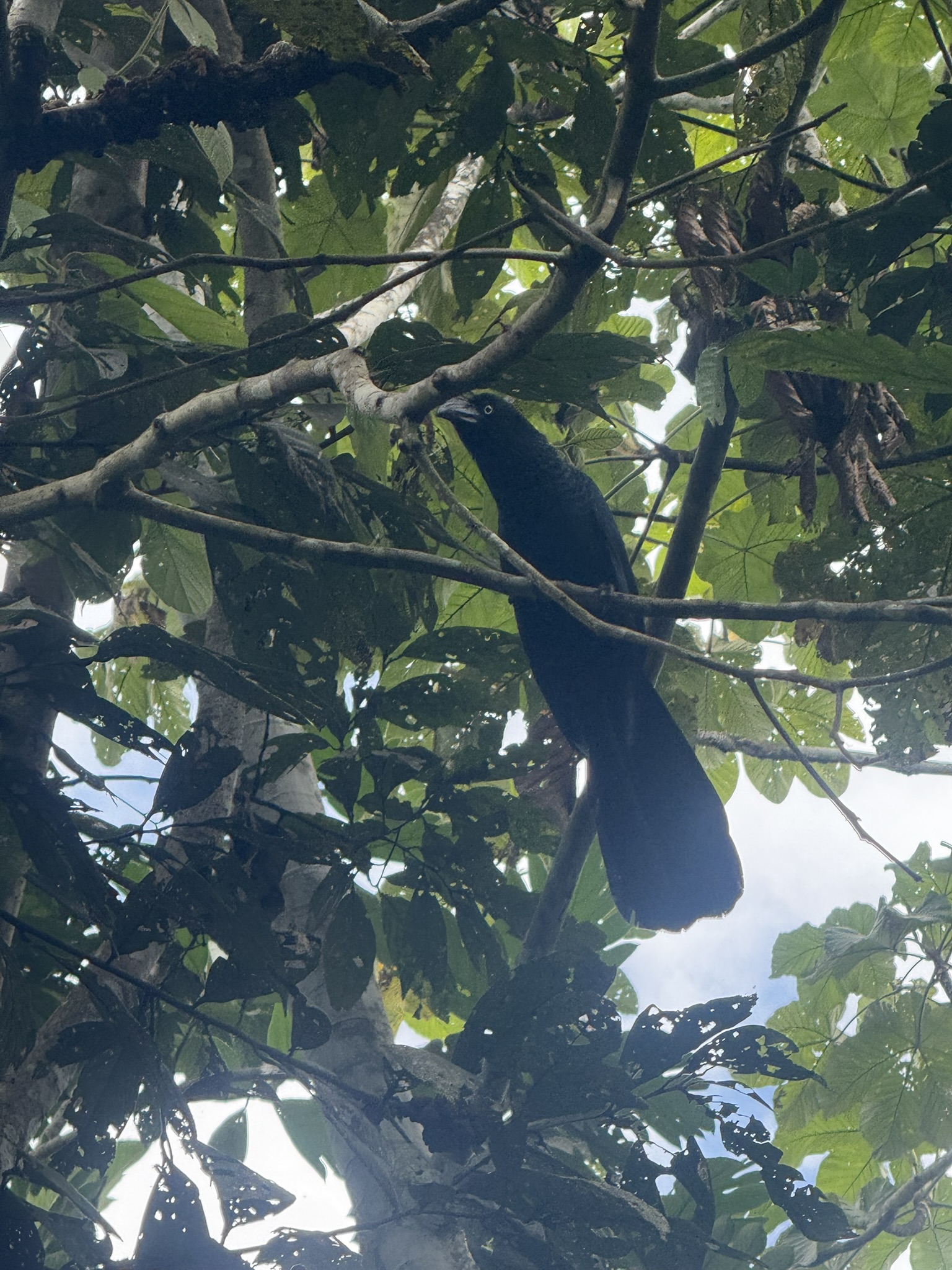
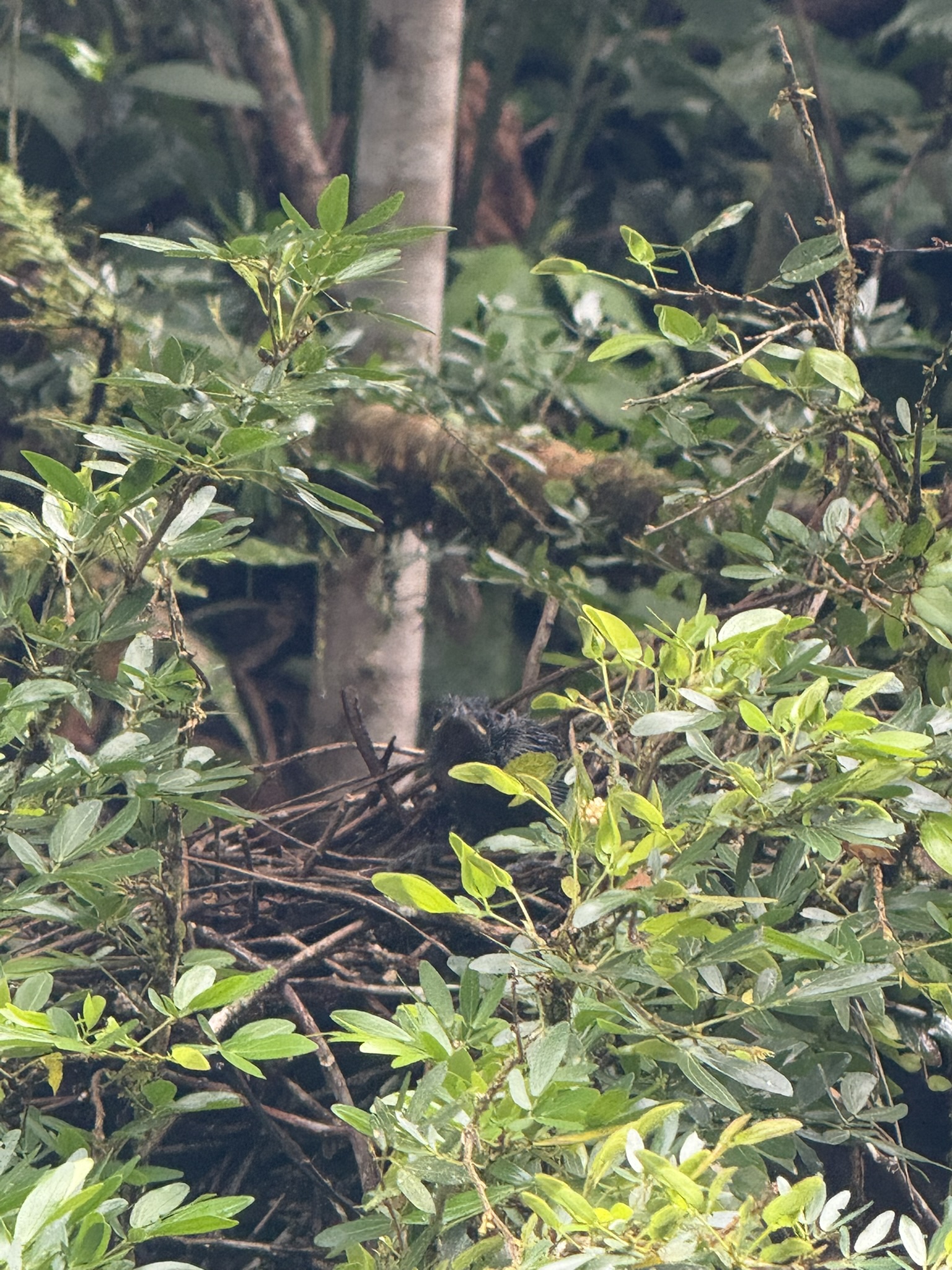

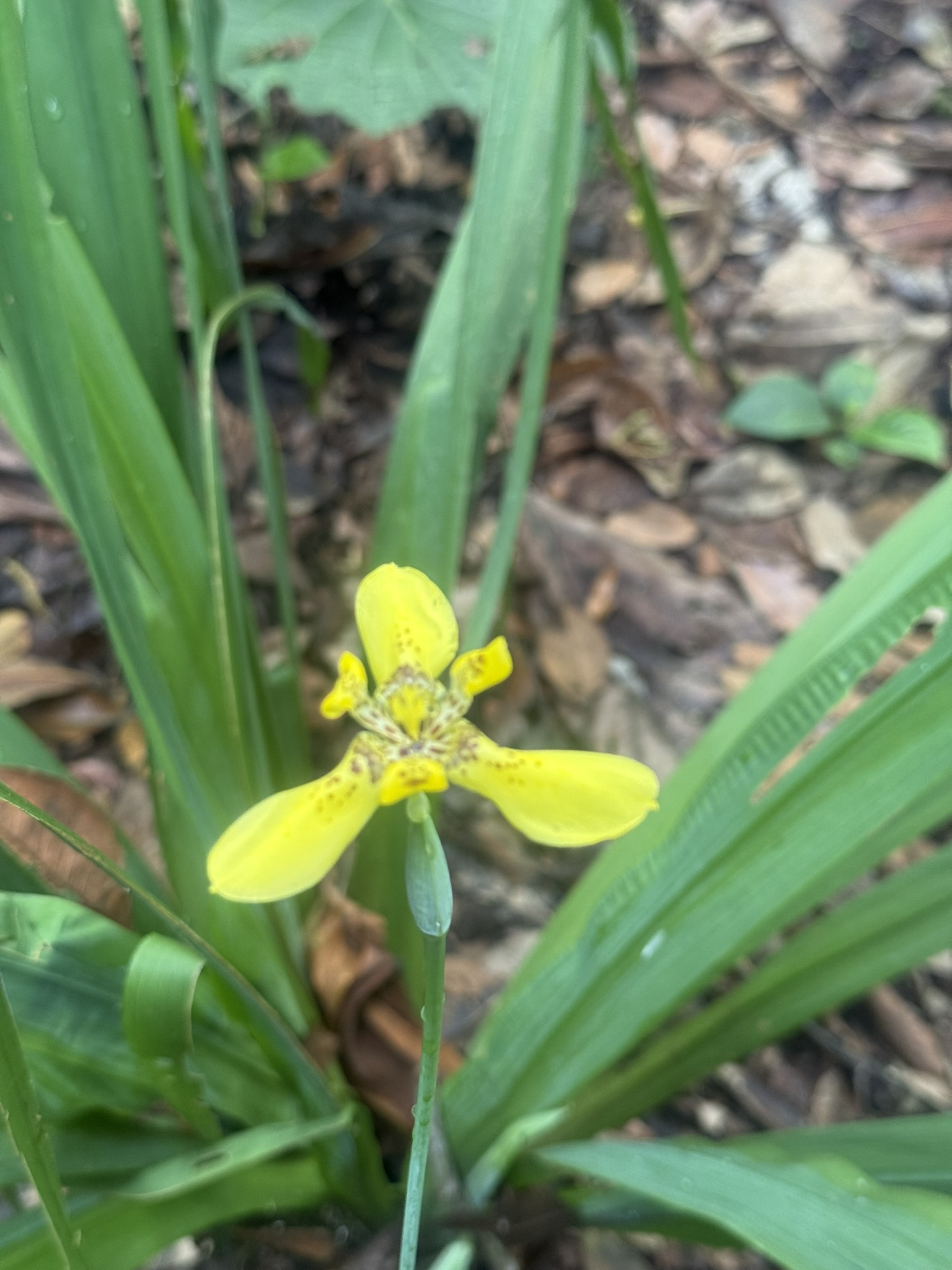
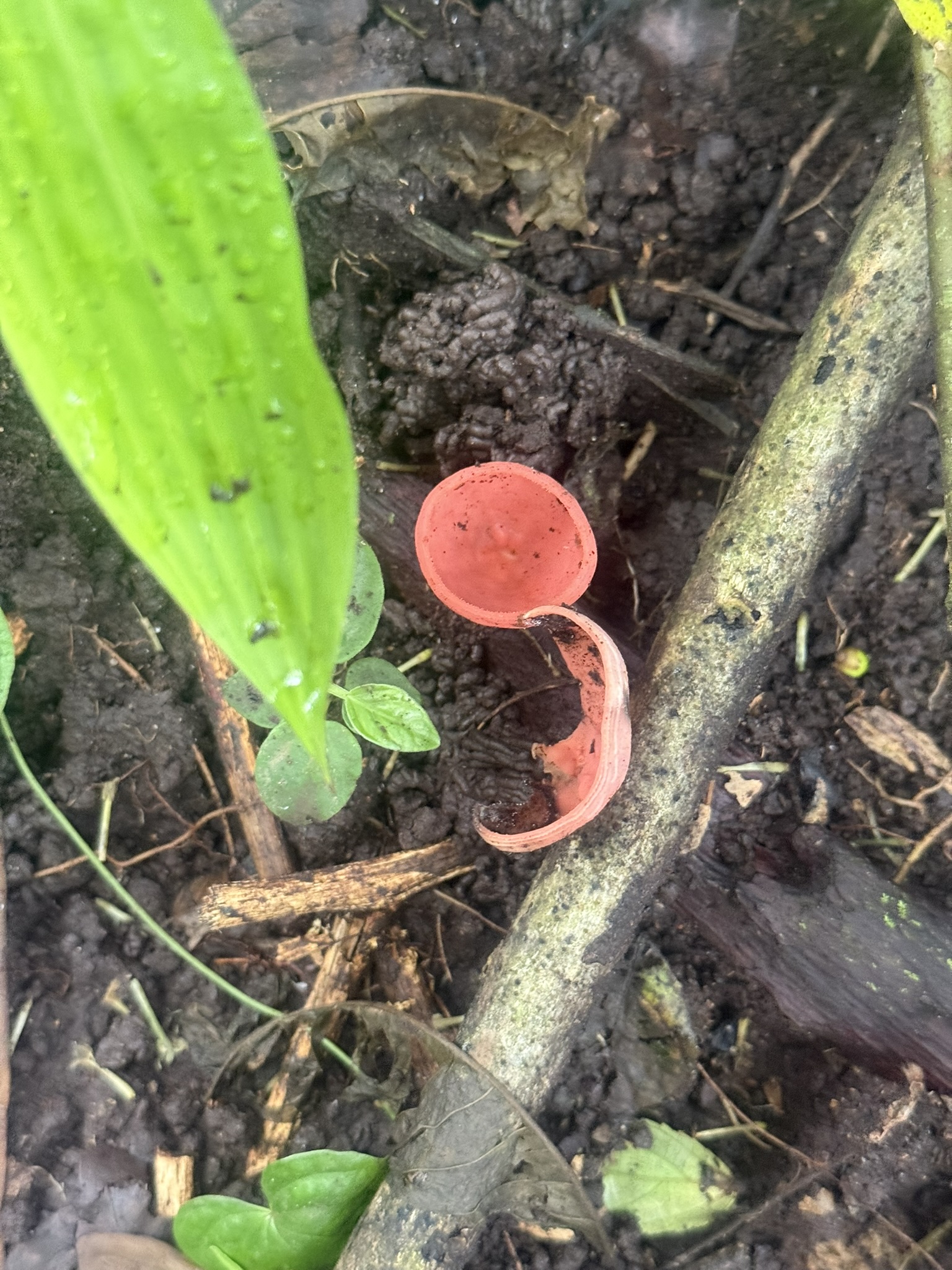
After the canoe tour, we headed deeper into the jungle for a short walk. Here, we saw spider monkeys, capuchins and tiny monkeys that Brian called ‘pocket monkeys’, although none approached us to eat the bananas we had been handed. In hindsight, that was probably for the best. Feeding wild primates can alter their behaviour and encourage them to become dependent on tourists, so I was perfectly content admiring them from a distance.
PART II
The Women of Shiripuno
The next part of our tour took us to into the depths of the jungle to the village of Shiripuno – a small Indigenous Kichwa community of roughly 200 people.
Brian told us that 24 women were currently involved in leading the community’s tourism work, with the initiative being organised through Amukishmi – the Association of Kichwa Women of Shiripuno-Misahuallí, which was formally established in 2005. The project aimed to give women a stronger and more equal role within the community, with residents contributing through communal farming, gold panning, logistics, guiding, craftwork and, more recently, tourism.
The tourism project had been nearly two decades in the making, with the community trying to create opportunities for its younger members while keeping Kichwa traditions alive. Many young adults leave to study or work in larger cities, which can gradually contribute to the loss of language, knowledge and cultural practices. By generating employment within Shiripuno, the women hoped that more young people would eventually choose to return.
As soon as we entered a large open-air hall used for community gatherings and celebrations, we were introduced to Soledad, one of the women involved in the project. She welcomed us with a warm ‘Alli puncha!’, meaning ‘good morning’ or ‘good day’ and then proceeded to draw symbols on our faces with a red plant pigment before handing each of us a calabash cup filled with guayusa, a caffeinated Amazonian tea sometimes nicknamed the ‘Amazonian Red Bull’.
Then, were each handed a handwoven headband made from local plant fibres. This prompted a quick explanation of Ecuador’s famous ‘Panama hat’, which is traditionally woven from toquilla straw. Its misleading international name was reinforced after Theodore Roosevelt was photographed wearing one during his 1906 visit to the Panama Canal. So yeah, maybe it should’ve been the Ecuador Hat after all!
Chicha and Dancing
After that, Soledad did her best to share some of the most well-known Kichwa traditions – including the importance of chicha to their local community.
She spoke in Kichwa while Brian translated as she went over the entire process of making chicha. She told us that yuca, or cassava, grown in the community’s gardens was boiled and mashed using a wooden tool. She sat down and showed us every step, gradually working the cassava into a smooth paste. She then grated a sweet potato against a pambil palm root and mixed it into the cassava, adding sweetness and helping to provide sugars for fermentation.
She wrapped the mixture in a banana leaf, kinda like a tamal, and explained that it would be stored for around 24 hours before the next stage. After that, the paste would be mixed with water and could either be drunk immediately or left to ferment, with its alcohol content increasing as fermentation progressed. According to Soledad, the alcoholic version had been prohibited within the community because drinking had sometimes resulted in men becoming aggressive and abusive. Good call.
She also explained that an older preparation method involved chewing portions of the cooked cassava before returning them to the mixture. Salivary enzymes begin breaking down the starch into simpler sugars, while bacteria from the mouth can become part of the microbial community involved in fermentation. According to Soledad, the community stopped using this method during the COVID-19 pandemic to reduce the risk of transmission. She said Shiripuno had no recorded cases and that the period of isolation had given residents more time together, which some people saw as an opportunity to strengthen community life and cultural traditions. Once the demonstration was over, she handed each of us a cup of chicha. Much like when I’d tried it in Peru, I can’t say I was a fan.
The next part of the tour involved Soledad giving the men wooden spears while Arlynn, the only woman in our group, was handed a cup. We were then taught a simple dance move – so simple that even I could manage it: step forward, lunge with the spear, step back, rinse and repeat, with the occasional full turn. Arlynn’s role was considerably more complicated, but she was a natural.
Once we were ready, Soledad and two other women appeared in traditional outfits, including one described as pre-Columbian in style, featuring a grass skirt and a top made from calabash shells. Another woman sang and played a drum as they began the dance. Eventually, we were invited to join in, with everyone doing whatever felt right. It was such good fun!
The Fight to Stay
Afterwards, Soledad thanked us for supporting the community and, naturally, led us into the souvenir shop, where locally made artisanal products were on sale. I usually have my qualms about tourist traps, this certainly didn’t feel like one – in fact, it actually felt like I was supporting the community with my spendthrift tendencies!
Here, I also had a brief one-on-one conversation with Soledad. She told me that she had married at 24 and had four children. When her husband became abusive, she took matters into her own hands and became one of the women leading the community’s tourism work, something that had become more possible because many of the men left for long periods in search of employment. Now, she was doing her best to keep the community together through the project Brian had told us about. Her 20-year-old daughter was studying away from Shiripuno, hoping to return with the skills needed to support and promote the community. Fortunately, Soledad believed their efforts were beginning to work, with some families who had previously moved away now returning to live in the Amazon.
Being somewhat familiar with cultural loss, given how quickly Maltese traditions and even the language seem to be disappearing, I connected with her impassioned words in more ways than one. I truly wished her the best and hoped all her work would bear fruit. And, speaking of fruit, that was all Dorijan and I were served for lunch because we were supposedly preparing our bodies for the ayahuasca ceremony. It was painful eating a bowl of papaya, my least favourite fruit, while watching everyone else gulp down mouthfuls of rice and beef. Seeing them leave food behind was almost too much to bear.
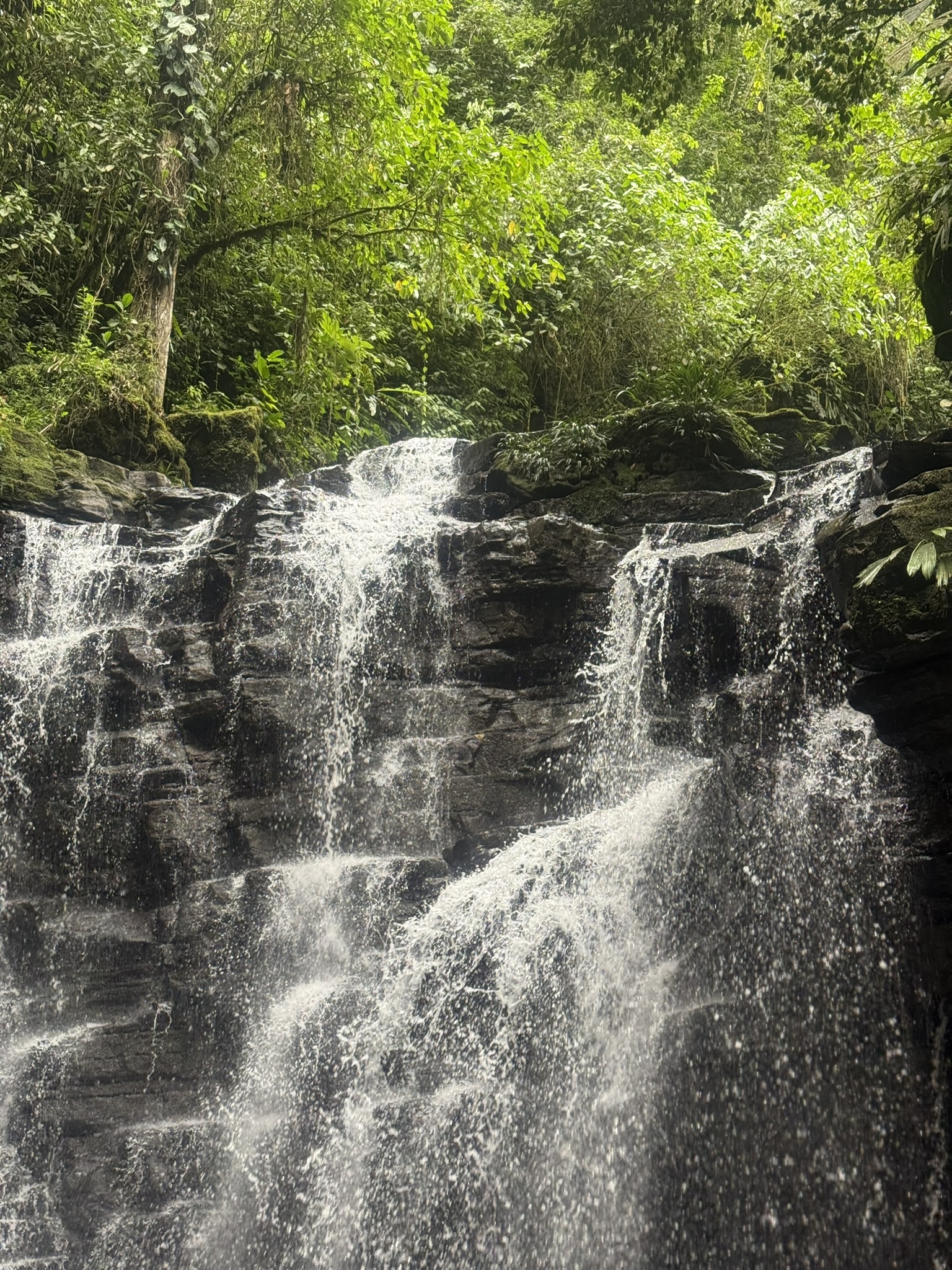
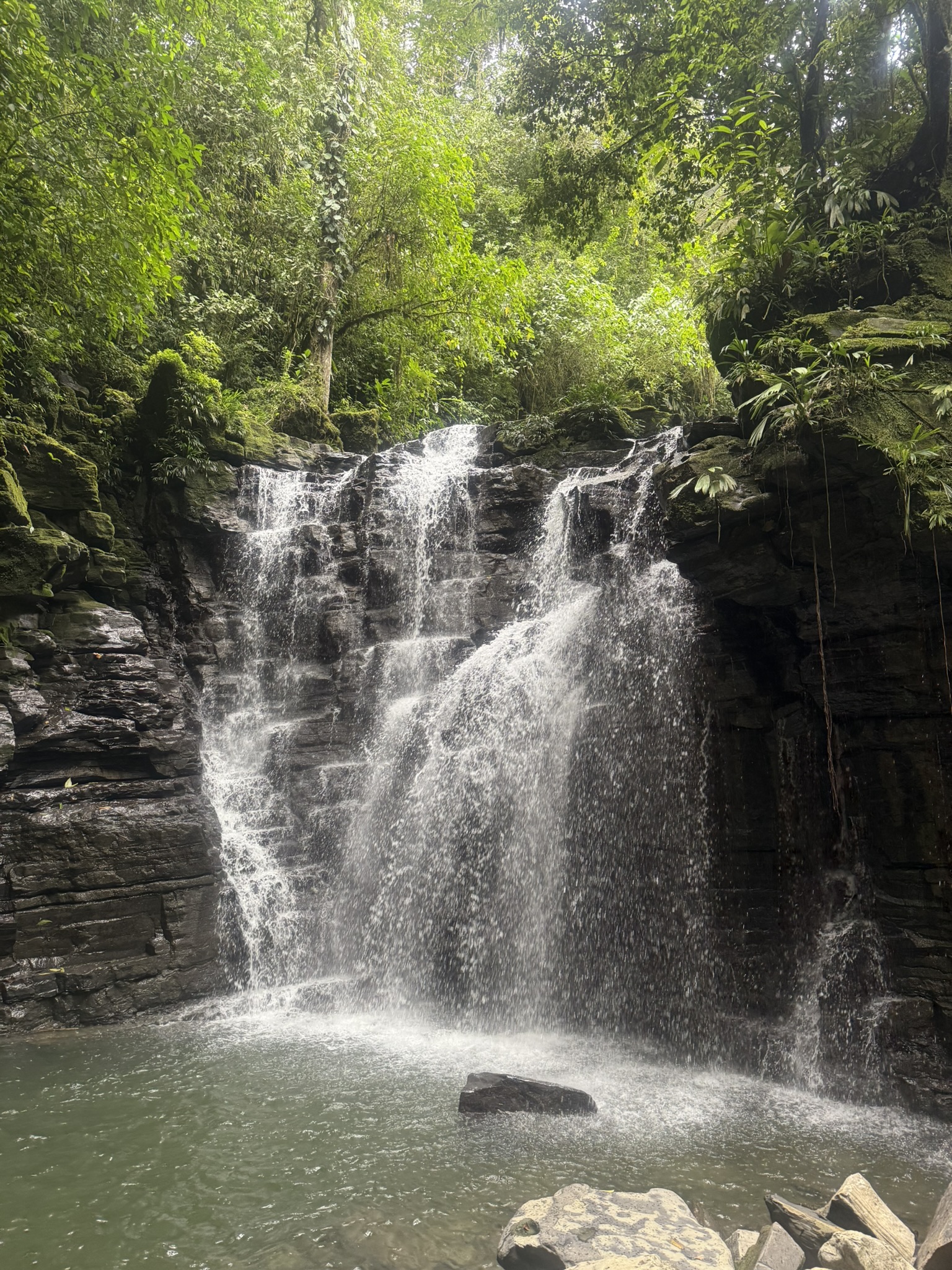
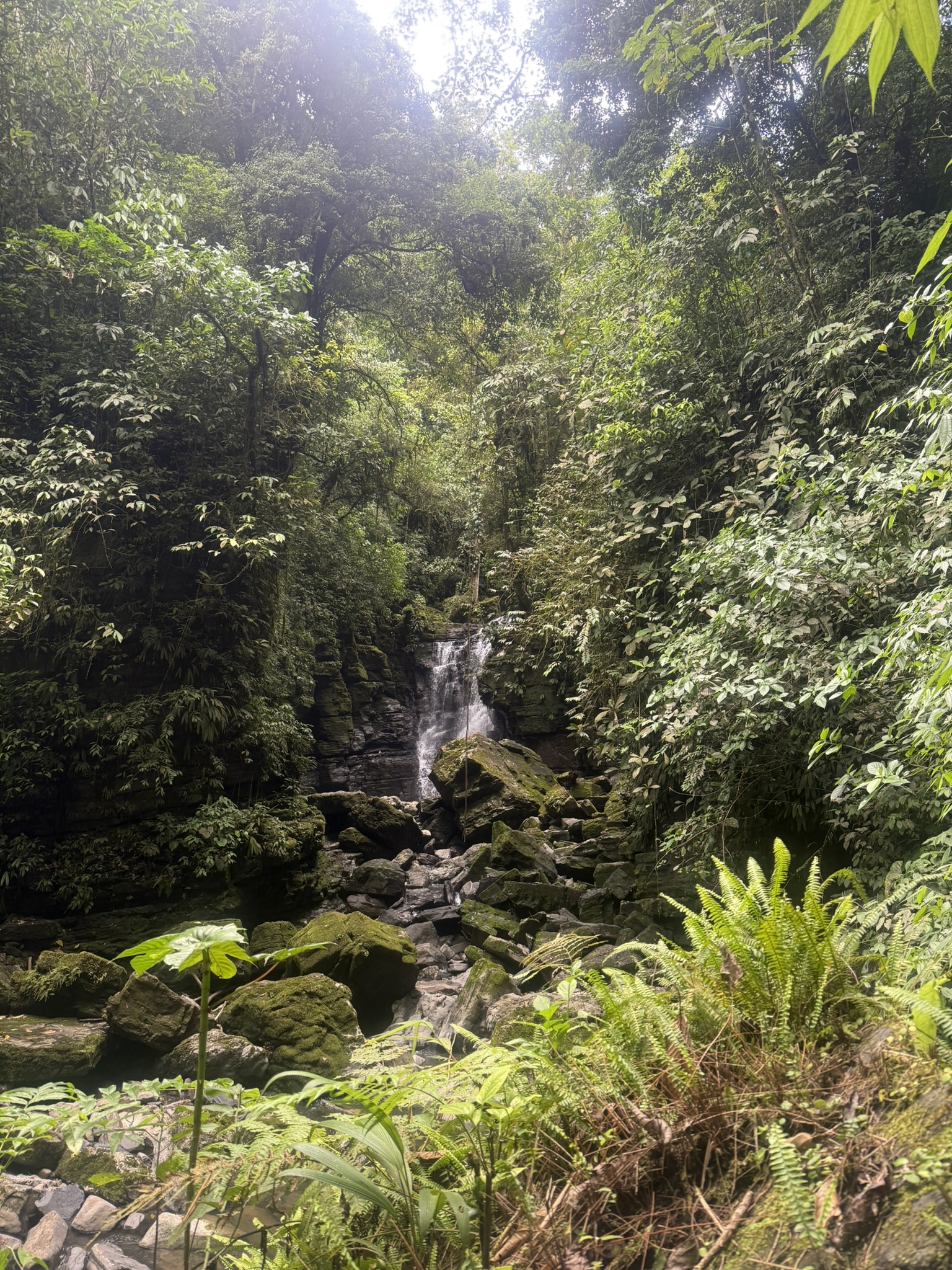
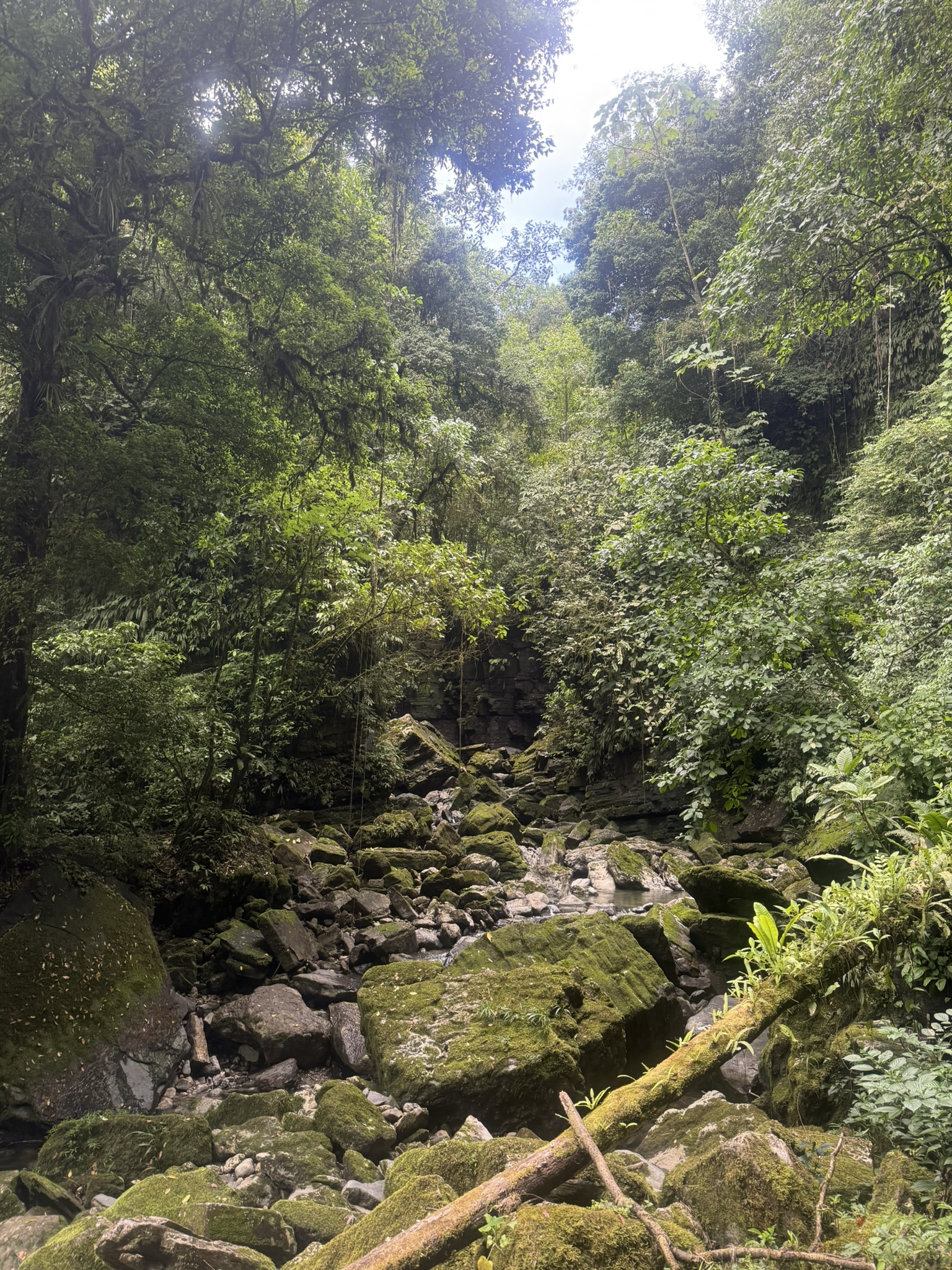
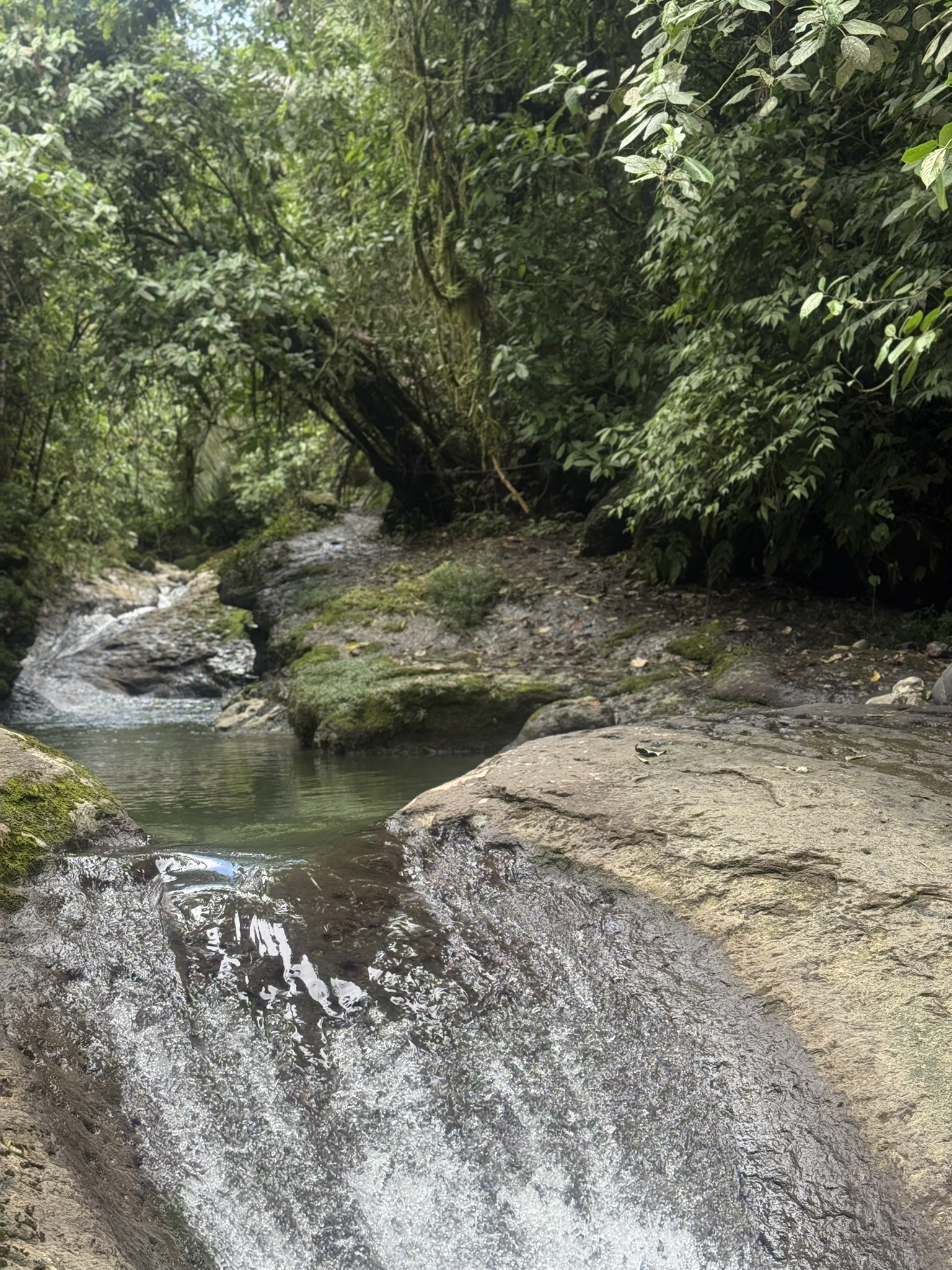
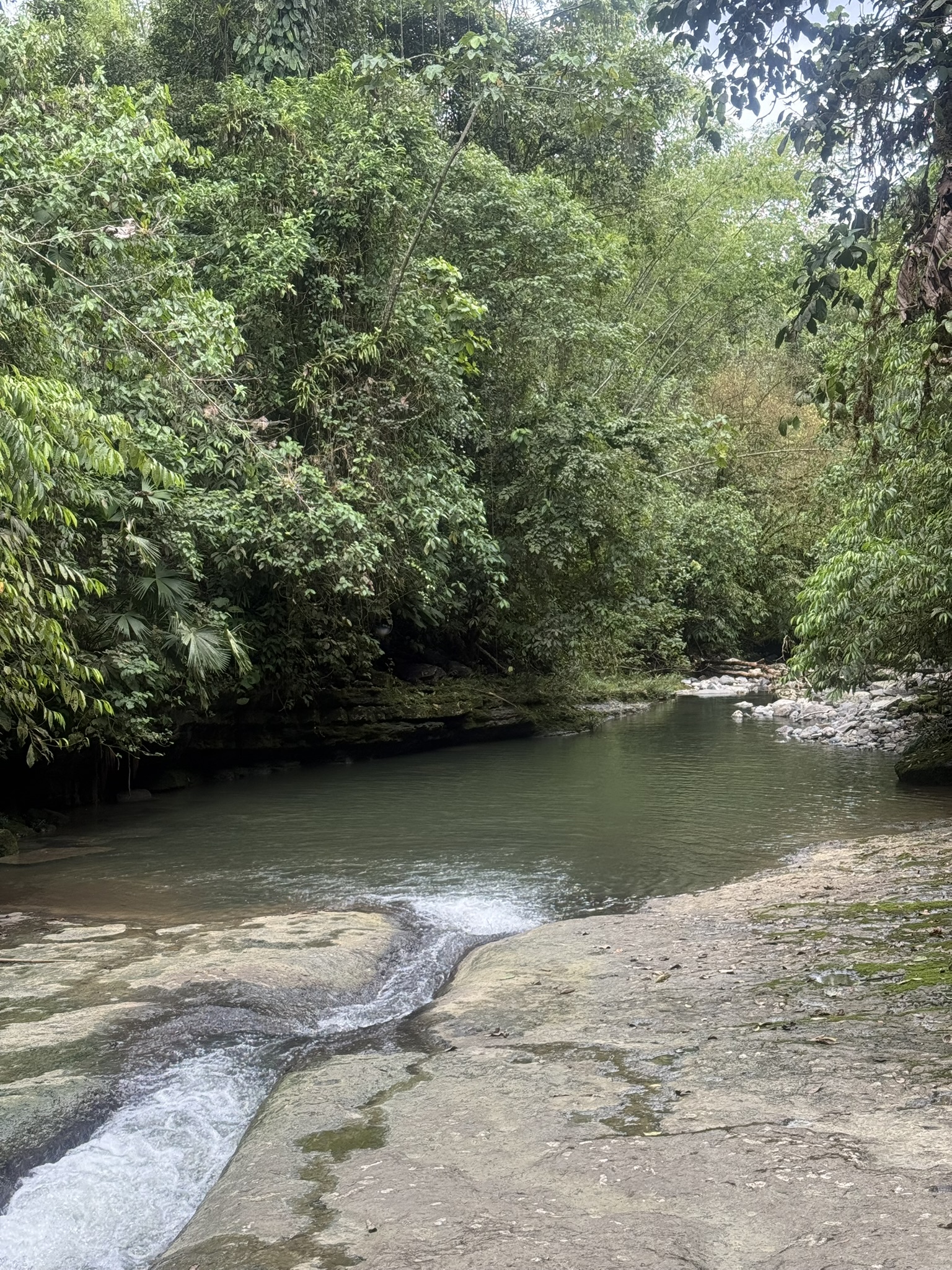
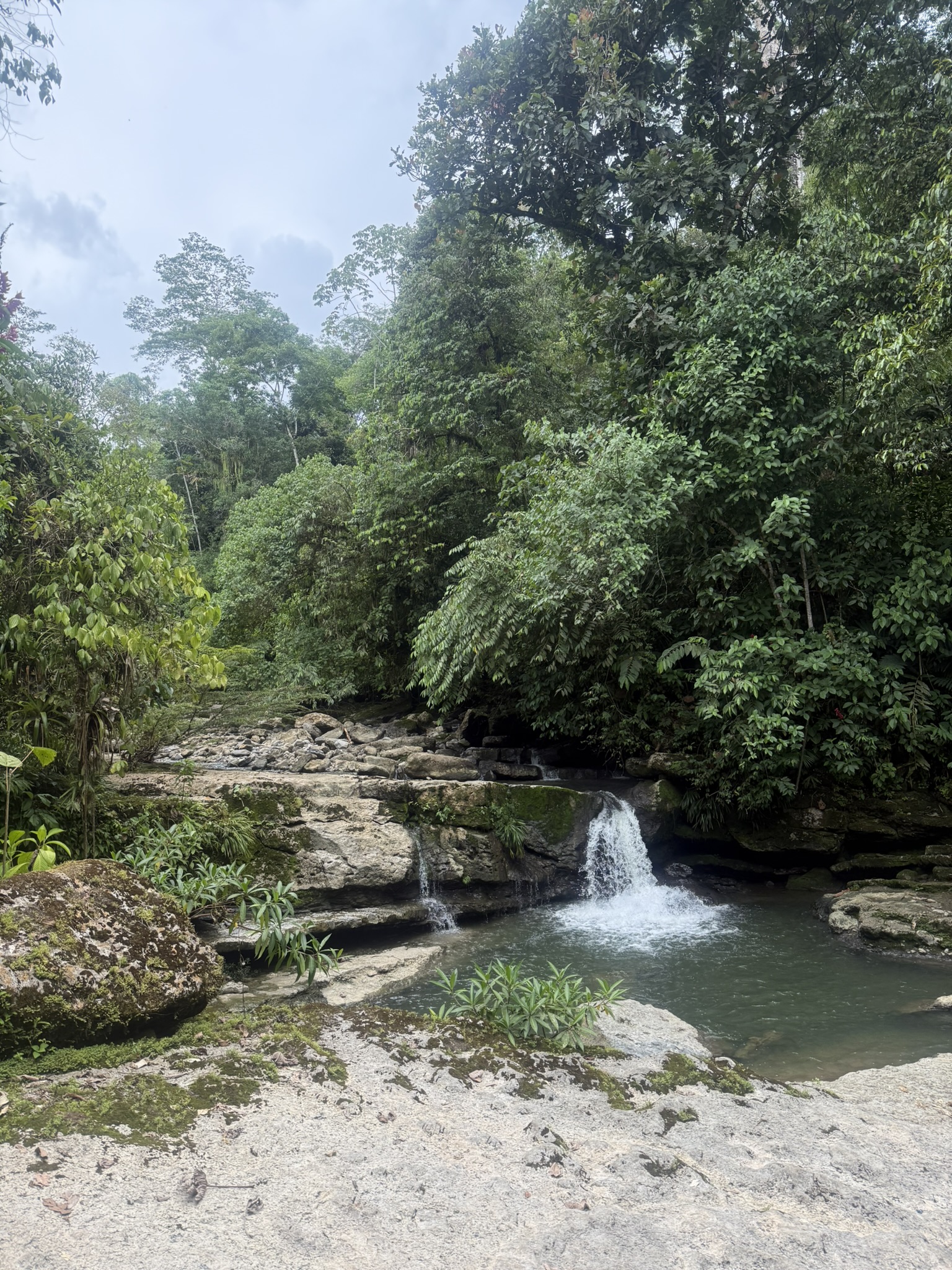
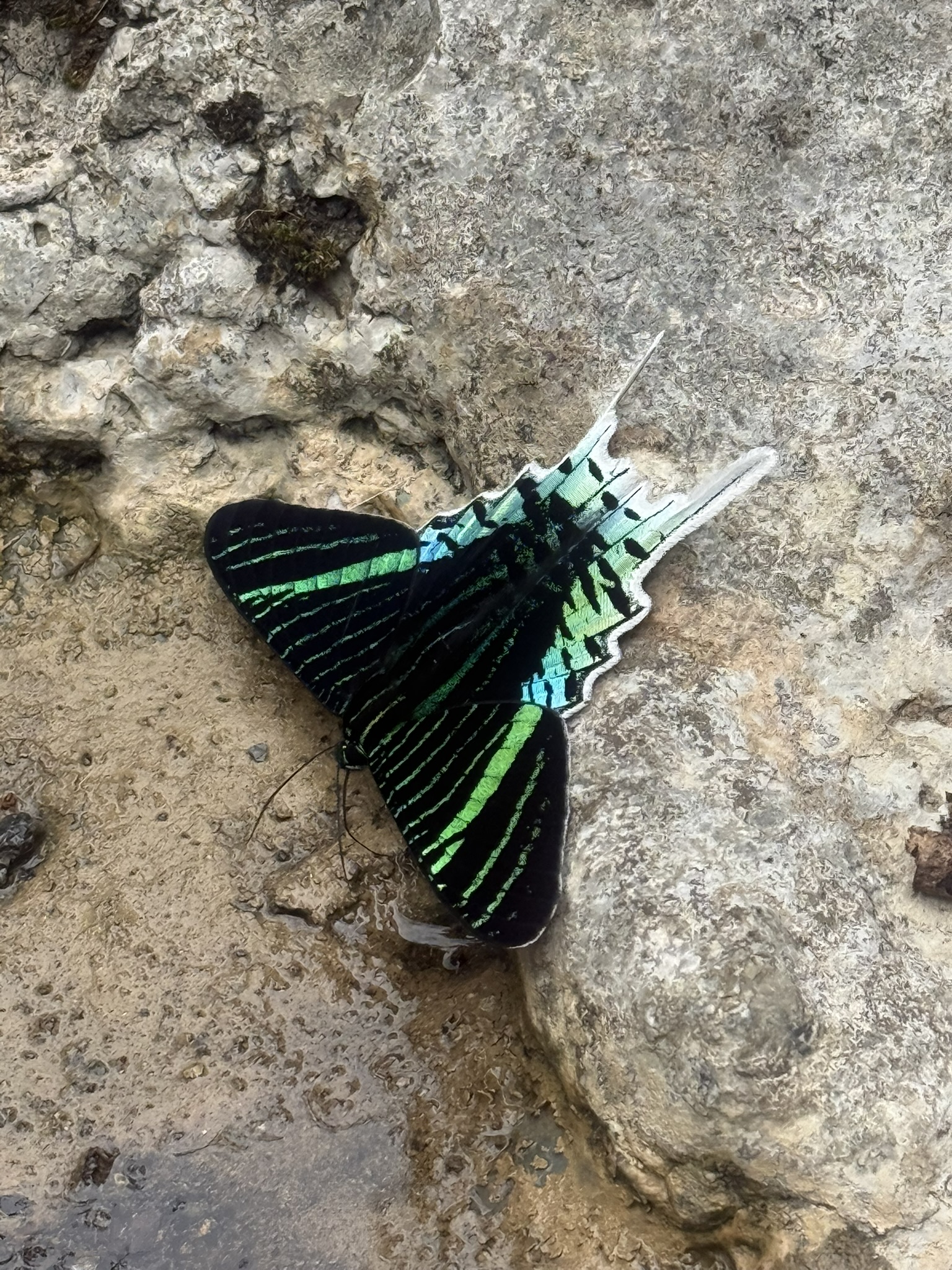
To be fair, my hunger was quickly forgotten when we left for our next stop: Cascada Las Golondrinas. It reminded me of the waterfall I’d visited in Cotopaxi National Park, only this one felt rawer and much wilder, hidden deep within the jungle. Taking a dip in the plunge pool was incredible, but it was a green-banded Urania moth that stole the show. It was genuinely one of the most beautiful creatures I’d ever seen.
PART III
Into the Ceremony
With the day’s other adventures mostly over, there was one final experience ahead of us: the ayahuasca ceremony.
The term ‘ayahuasca’ is the Spanish spelling of the Quechuan word ayawaska. Aya can mean ‘spirit’, ‘soul’ or ‘the dead’, while waska means ‘rope’ or ‘vine’ – with a literal translation being ‘vine of the spirits’. The brew has a long and varied ceremonial and healing history among several Indigenous peoples across parts of the Amazon and Andes, although its precise origins, practices and meanings differ between traditions. In some contexts, it is understood as a plant teacher or as a means of connecting with the spiritual and natural worlds.
Much like when I’d taken it in Peru, I had undergone little preparation and hadn’t thought much about the ceremony until the time came. During my first experience, I remember still struggling with the loss of my father. Now, some six years later, I felt at peace with it. Come to think of it, I felt at peace in general. I had just passed my exams and was on my way to becoming a Higher Specialist Trainee. Both my personal and professional lives were stable, and I felt fulfilled. With regard to the ceremony, I didn’t have any expectations as such. I was already where I wanted to be. With an open mind, I just went for it, expecting the unexpected and remaining open to whatever the brew and the jungle might show me.
Shortly before sundown, Dorijan and I met Leonardo Aguinda, a 56-year-old Amazonian healer who told us he had more than 23 years of experience conducting ceremonies. His wife would also be joining us. He asked a few basic questions about our lives and what we expected from the experience. I told him that I simply wanted to connect with nature. He then explained the procedure. Before the ceremony, he would perform a cleansing ritual using medicinal plants, tobacco and ceremonial songs known in some Amazonian traditions as ícaros.
So It Begins
After the sun had set and the rain started pouring, we were led to a lodge near the enormous ceiba tree we had seen the previous day. We sat on a bench beside a fire prepared by Leonardo and his wife, who would remain with us throughout the ceremony. In the pitch darkness, surrounded by the sounds of the jungle and the falling rain, I already felt at peace.
Leonardo approached us and dripped a tobacco-based liquid into our palms, instructing us to sniff it. I gotta admit, it burned and stung like a mother, but once the sensation subsided, my airways felt clearer than ever. He then began chanting, occasionally punctuating the songs with whistles and forceful breaths, before handing us the ayahuasca brew. Remembering how vile it had tasted the first time, I braced myself.
I swallowed everything without so much as flinching. Then I waited. And waited. And waited some more. Around 20 minutes passed before I started thinking it wasn’t going to work. Perhaps I should’ve prepared a little more. Meanwhile, Dorijan had already become nauseated and vomited. I only felt slightly spaced out. Then, from the darkness, came occasional visions of animals and plants. They appeared like static photographs but in ultra-high definition. I’m talking about a resolution you couldn’t even imagine!
The visions came and went, lasting only a few seconds each time. When Leonardo asked if I wanted another cup, I didn’t object, mostly because I wanted to get my money’s worth. At the time, it felt like the best decision ever.
Connected to the Jungle
Shortly after the second cup, my head started spinning and I felt as though I was gonna pass out. I made it to the exit and vomited before quickly settling back onto my seat.
That was when everything truly started. I saw a pink flower bud slowly opening, giving rise to geometric figures that spun and changed colour. They were colours I couldn’t imagine seeing in ordinary life. The figures eventually converged into a single being, one that my mind identified as Pachamama. She looked stern and serious rather than warm or gentle. Even so, I sensed that she was benevolent, and I felt neither alarm nor danger.

Then came the limpieza, or cleansing. Leonardo approached me while shaking his chakapa, a ceremonial bundle of Pariana leaves, and chanting ícaros – punctuated by him occasionally blowing and spitting these minty-smelling herbs he had been chewing all over me. Under normal circumstances, I might have been disgusted. I might even have squealed or kicked him. At that moment, however, it felt like a loving gesture. Then came the really weird part. He placed his lips against the top of my head and began sucking and making gulping noises, as though he were drawing out negative energy right out of my forehead – or at least that was how I interpreted it. He then placed his lips against my head again and blew air over me, as though replacing that negativity with something good.
It may sound strange, and I knew full well that I was under the influence of a powerful psychedelic, but I genuinely felt an immense sense of love and warmth. So much so that I felt sad that I’d rarely experienced anything quite like it before. Like I was always there to absorb everyone else’s pain, yet there was hardly anyone around to take away mine. I put on a brave face most of the time, especially during difficult periods, and I usually dealt with my pain on my own. What I felt wasn’t exactly loneliness. It was fortitude. Even if I was alone in this world, I still had the entire world around me. I felt the power of the earth and the jungle coursing through my body, as though my feet had grown roots and connected with the ground beneath them. Once again, I felt at one with the jungle and with the planet itself.
All the while, the visions intensified. During the cleansing ritual, I saw what looked like a white niche or altar, adorned with Amazonian figures that moved around it. I saw jaguars, snakes, crocodiles, toucans, monkeys, shamans and warriors dressed in every imaginable colour – with the great Pachamama standing above all.

When the ritual ended, I was left with an incredible sense of clarity, gradually piecing together everything I had experienced. The darkness became ordinary darkness again, and I slowly returned to my senses. I asked Leonardo for permission to use my phone so I could document what had happened.
Once we had come to and finished the ceremony, Brian arrived and escorted Dorijan and me back to our rooms. The walk back felt strangely unusual. I was exhausted and somewhat cold, I was trudging through mud as the rain pelted us from above. Under normal circumstances, I would’ve been miserable. But now? I felt more alive than ever.