Cotopaxi – Day 1: Rain, Rest and Revelations
COTOPAXI
Day 1: Rain, Rest & Revelations
October 11, 2025
PART I
Up next, I’d be heading to Cotopaxi National Park for a few days of trekking. As much as I love trekking, I was also kinda dreading it.
First, I had done a lot of trekking over the previous year, and I felt as though I wanted a bit of a break from it. Second, my knee injury from Pico de Aneto back in Spain was still giving me issues. Third, I had started smoking again so my stamina wasn’t the best. And fourth, the weather was still quite sucky at best. Knowing I was about to visit a literal trekking paradise while I still didn’t feel excited about it seemed a bit sacrilegious, to say the least. When had I become so ungrateful and jaded, huh?
But come rain or shine, hooray or whine, I was up for the adventure. After getting all packed up, I made my way to the pick-up point, where a shuttle would take me and a dozen other backpackers into the Cotopaxi region. The two-hour bumpy ride was offset by gorgeous views of the valleys and hills along the way. It felt so good to be out on the open road again. Great music, a great book, great views and great expectations – the perfect combo.

Cotopaxi's Secret Garden
The shuttle took us straight to Secret Garden Cotopaxi, a hostel in the highlands near the national park – a vast Andean wilderness featuring high-altitude páramo, volcanic plains and glacial landscapes that are dominated by the near-perfect cone of Cotopaxi volcano.
Needless to say, the national park is hyped up as one of Ecuador’s most iconic protected areas, offering dramatic hiking, wildlife and sweeping views beneath one of the world’s highest active volcanoes. And, if the area is heaven on earth, the same could be said about the hostel I’d be staying in – a literal garden teeming with life. Hummingbirds and sparrows fluttering about, llamas and cows grazing on the grass, and dogs chasing one another while having their own fun.


Once we were all seated around the table, we were given a brief explanation of the activities we could do. It didn’t take long for the plans I had made to begin falling apart. It turned out that visiting Limpiopungo Lagoon, which I really wanted to do that afternoon, would be logistically impossible. On my second day, I wanted to climb Pasochoa Volcano, but the guides advised against doing it so soon because I still needed time to acclimatise.
My main goal, however, had been to summit Cotopaxi Volcano on the third and fourth days. I wanted to do it for a couple of reasons: to climb across the glacier and reach the top of the volcano, which promised stunning views across the entire national park, and to prove to myself that I could do it. That plan fell apart as well. First, those who had just returned said they were miserable, with the weather having been crappy throughout and the views completely clouded. Second, the tour itself would cost well over $300.
I would normally have suffered from some really bad FOMO, especially since I had planned everything so carefully. Instead, I found myself strangely at peace with the idea that, even if I didn’t partake in any activity, I could still hang out at this lovely place and chill. I could really do with some rest and peace of mind!
Into the Cloud Forest
After the briefing, we were served lunch and shown to our rooms. I would be sharing a 12-bed dorm with some fellow backpackers, most of whom were Australians travelling together. Loud and boisterous though they might have been, they were also good company.
With the rain pouring down, I kinda wanted to stay inside and wallow in self-pity. This trip was not going according to plan – at all. Maybe I should have gone elsewhere or timed it a bit better. But I have to admit that the Aussies’ excitement was infectious, not to mention that the rain was no deterrent to them. I guess it’s thanks to them that I unglued myself from the couch and decided to join in on a hike to a nearby waterfall – rain and set plans be damned!
We began the walk from the hostel itself, following a narrow trail through the overgrown cloud forest until we reached a large stretch of open páramo grassland. That, in turn, led to another path through the forest. The trail was muddy as hell, taking me back to my trek through El Mirador in Guatemala. This time round, however, we had been given gumboots, which I was nearly ready to kiss, knowing Blister 2.0 wouldn’t have to endure the same ordeal as its predecessor.
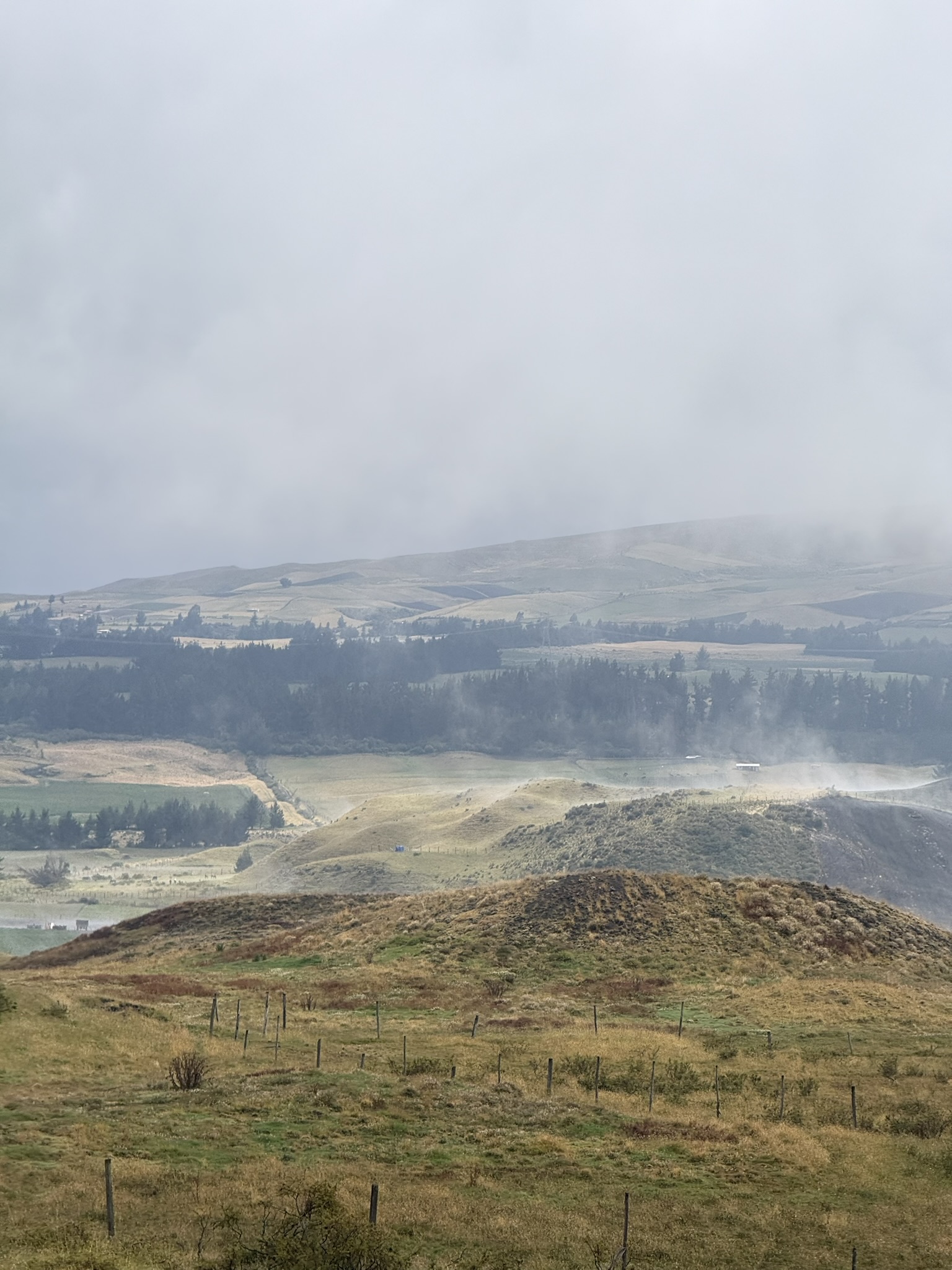
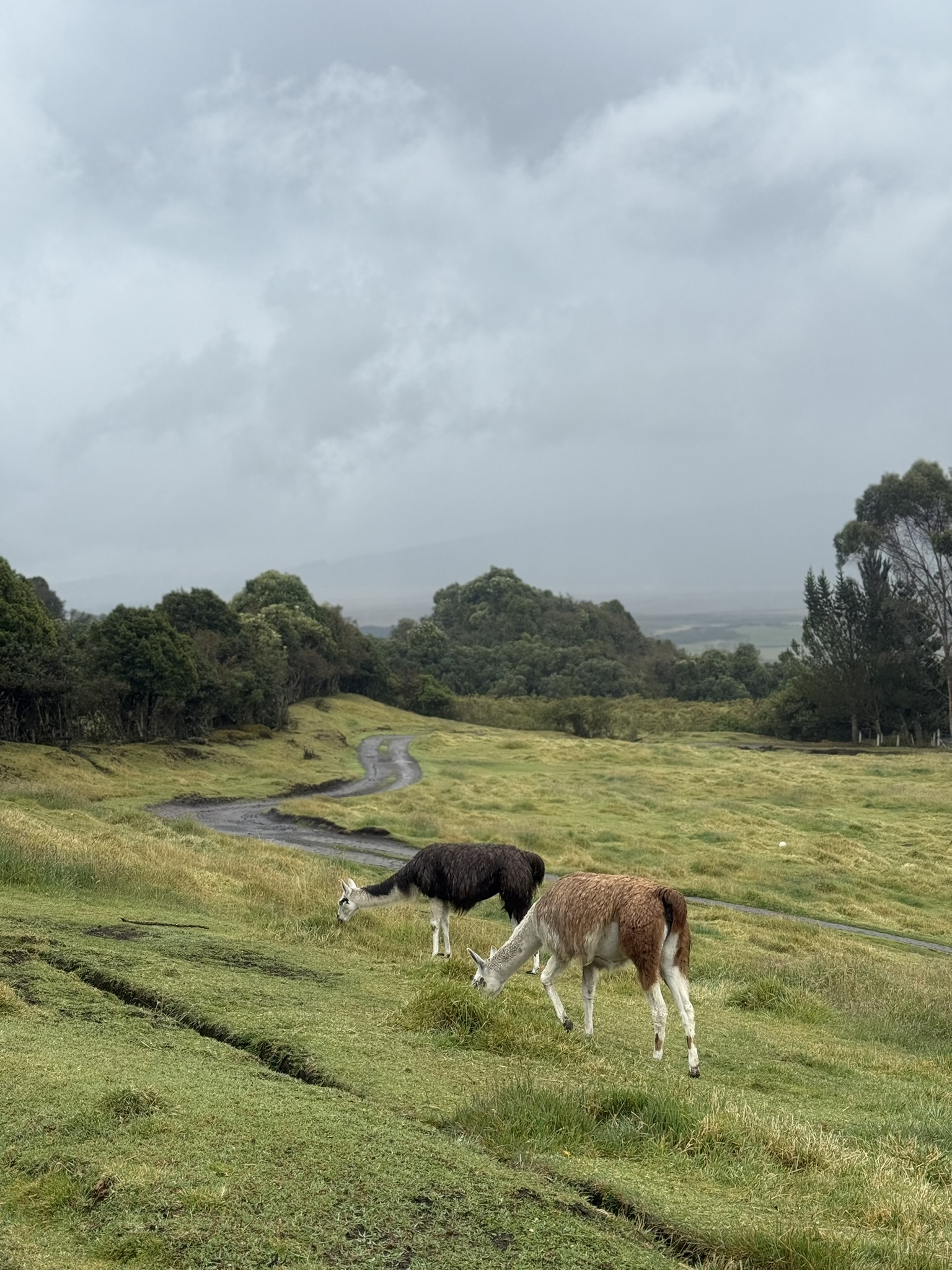
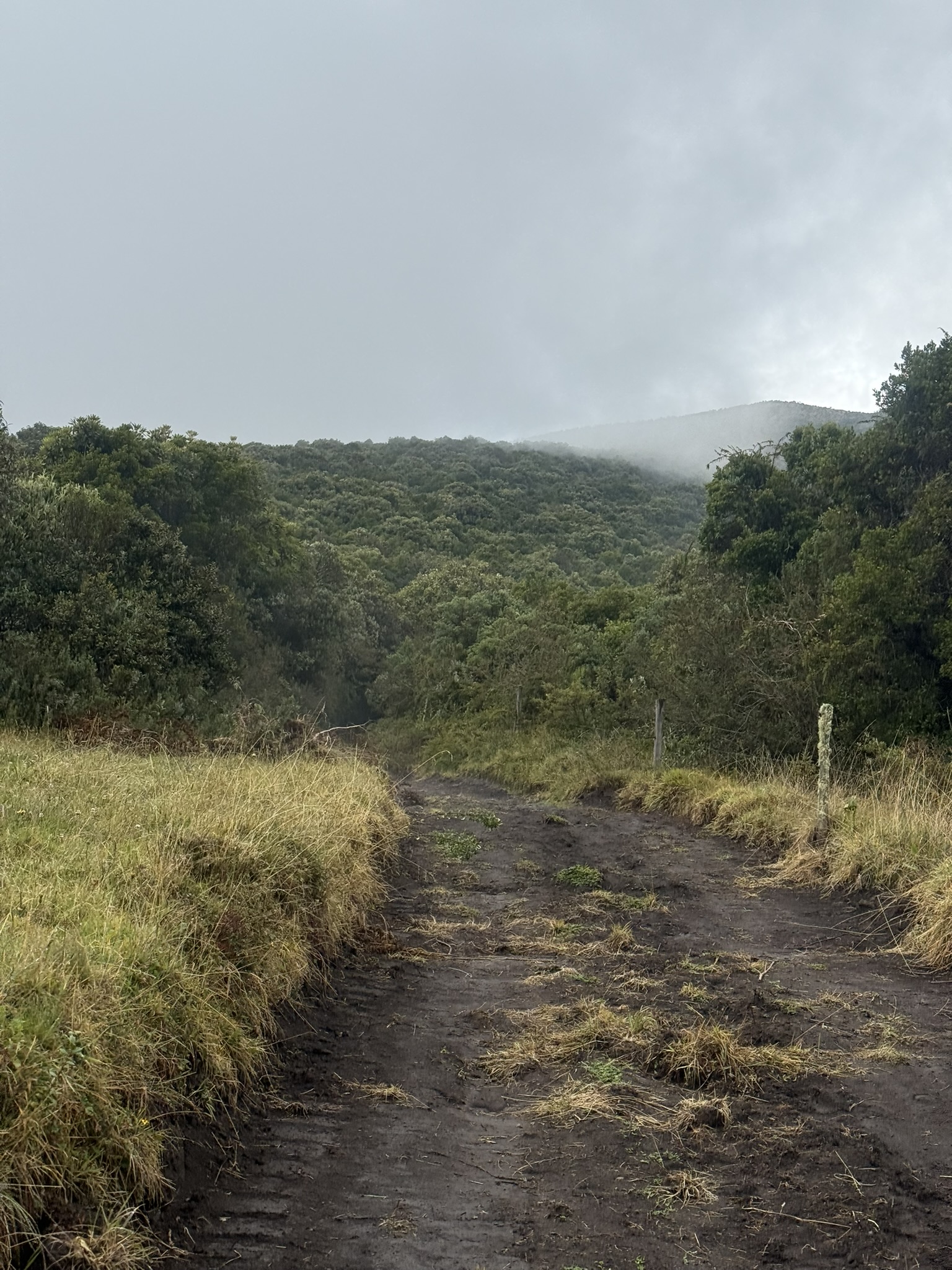
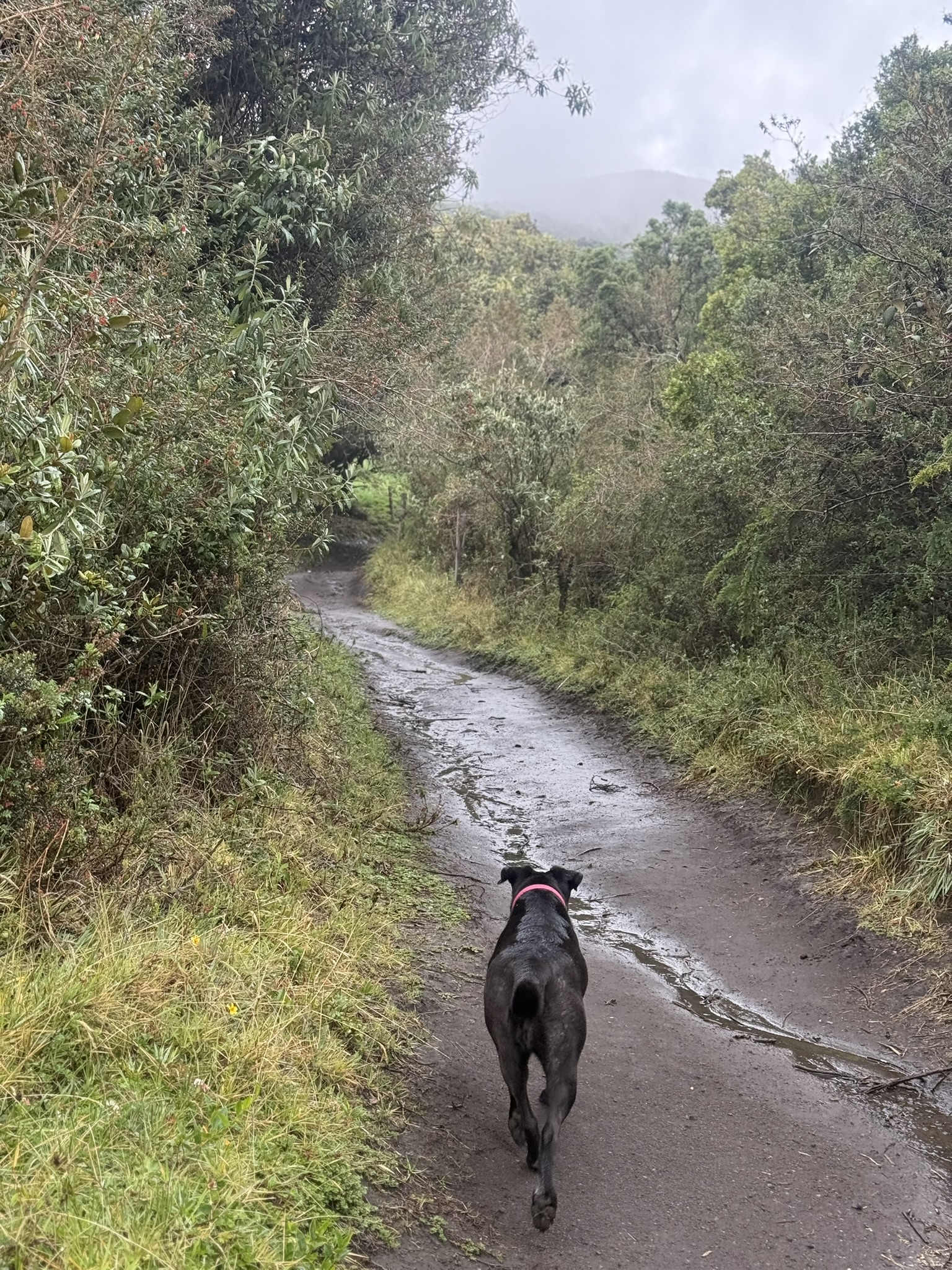
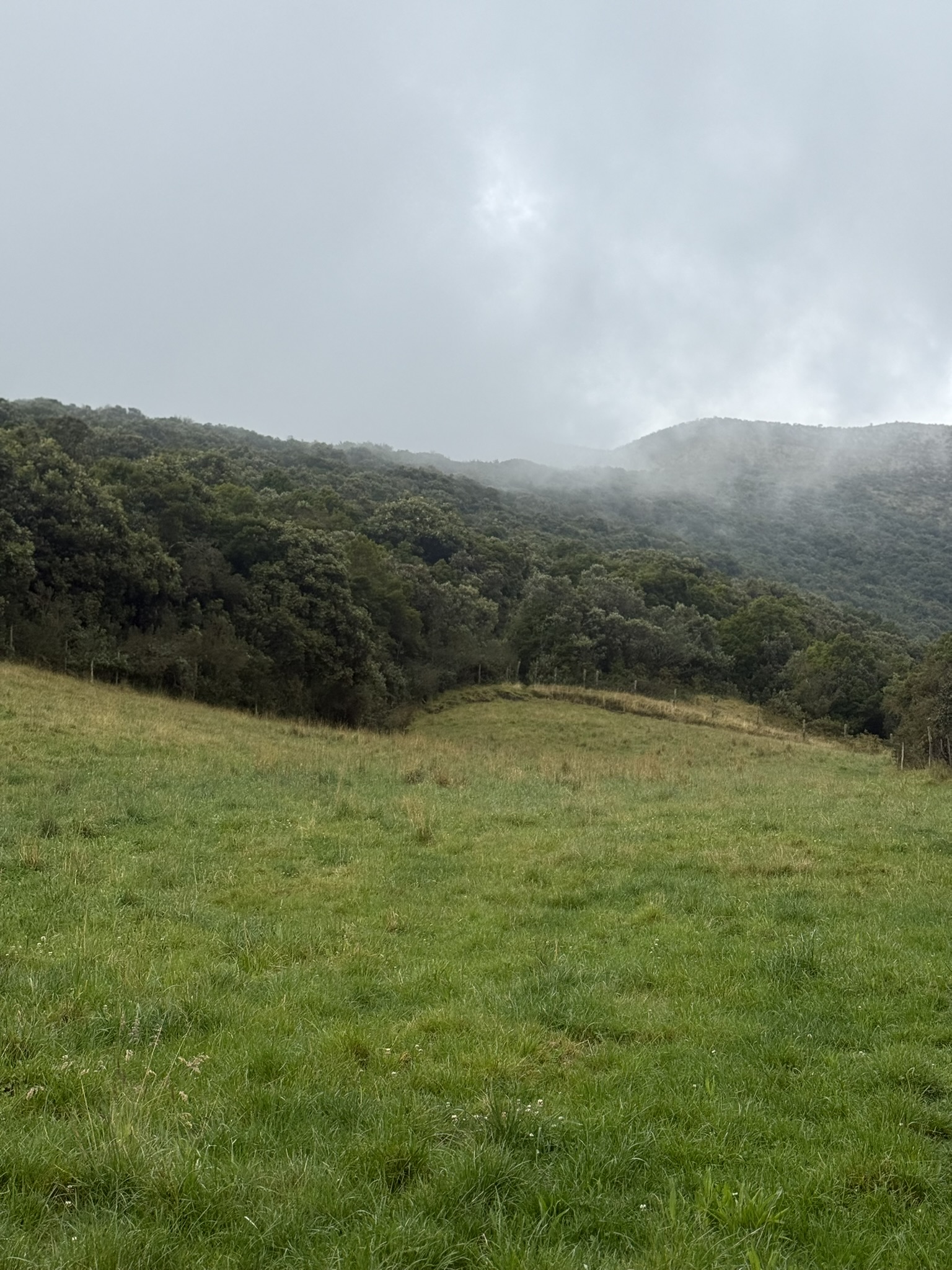
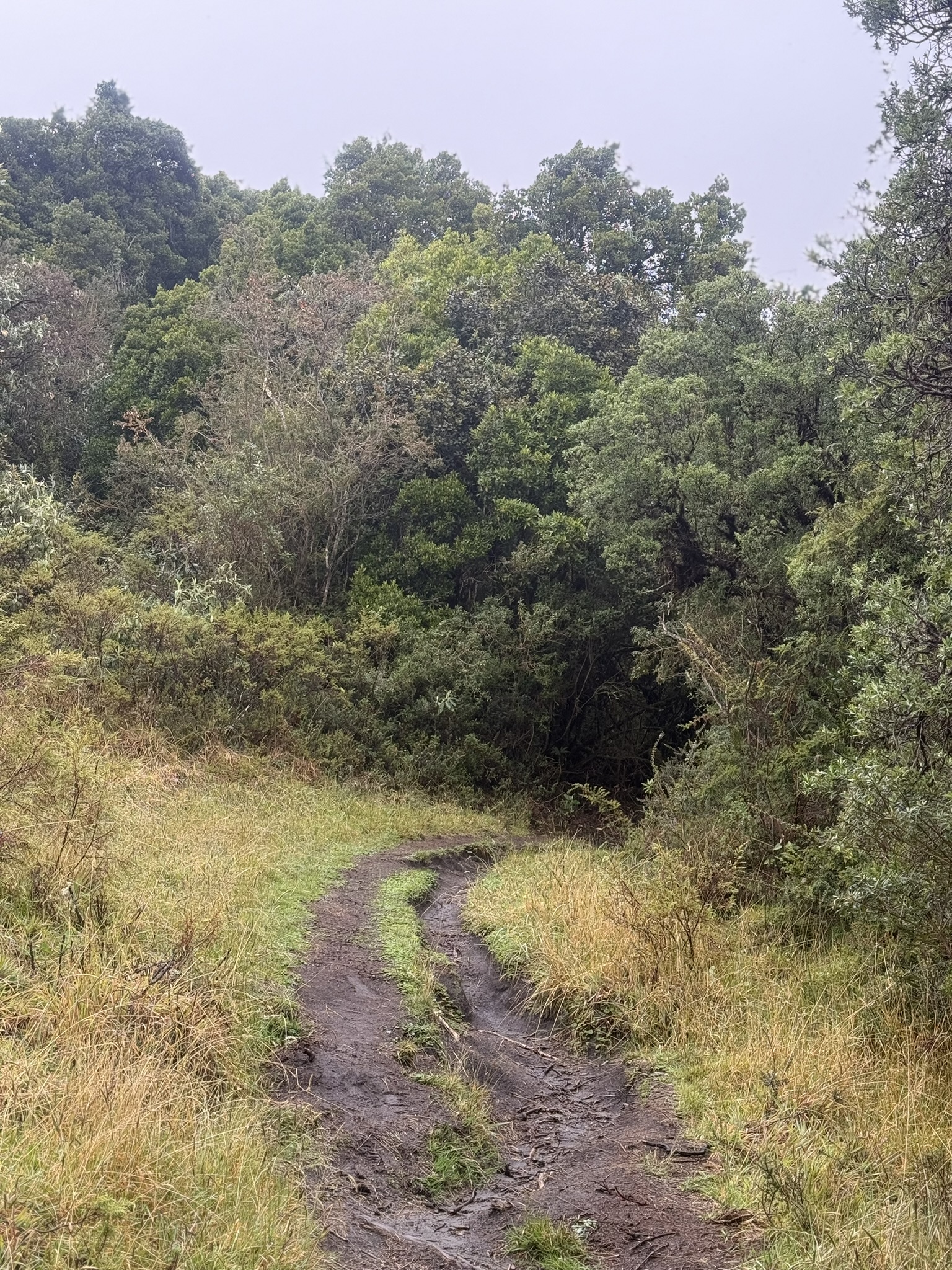
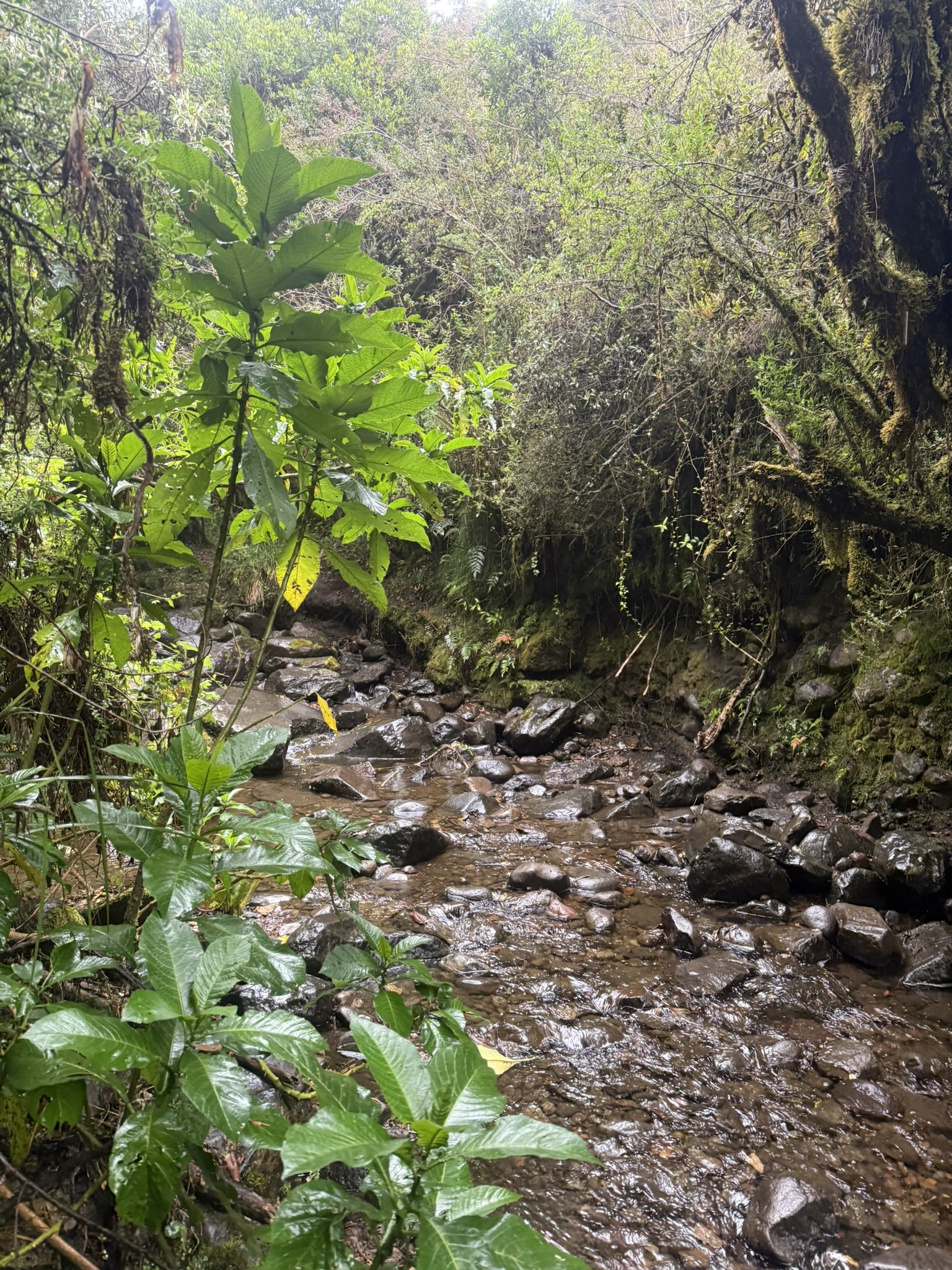
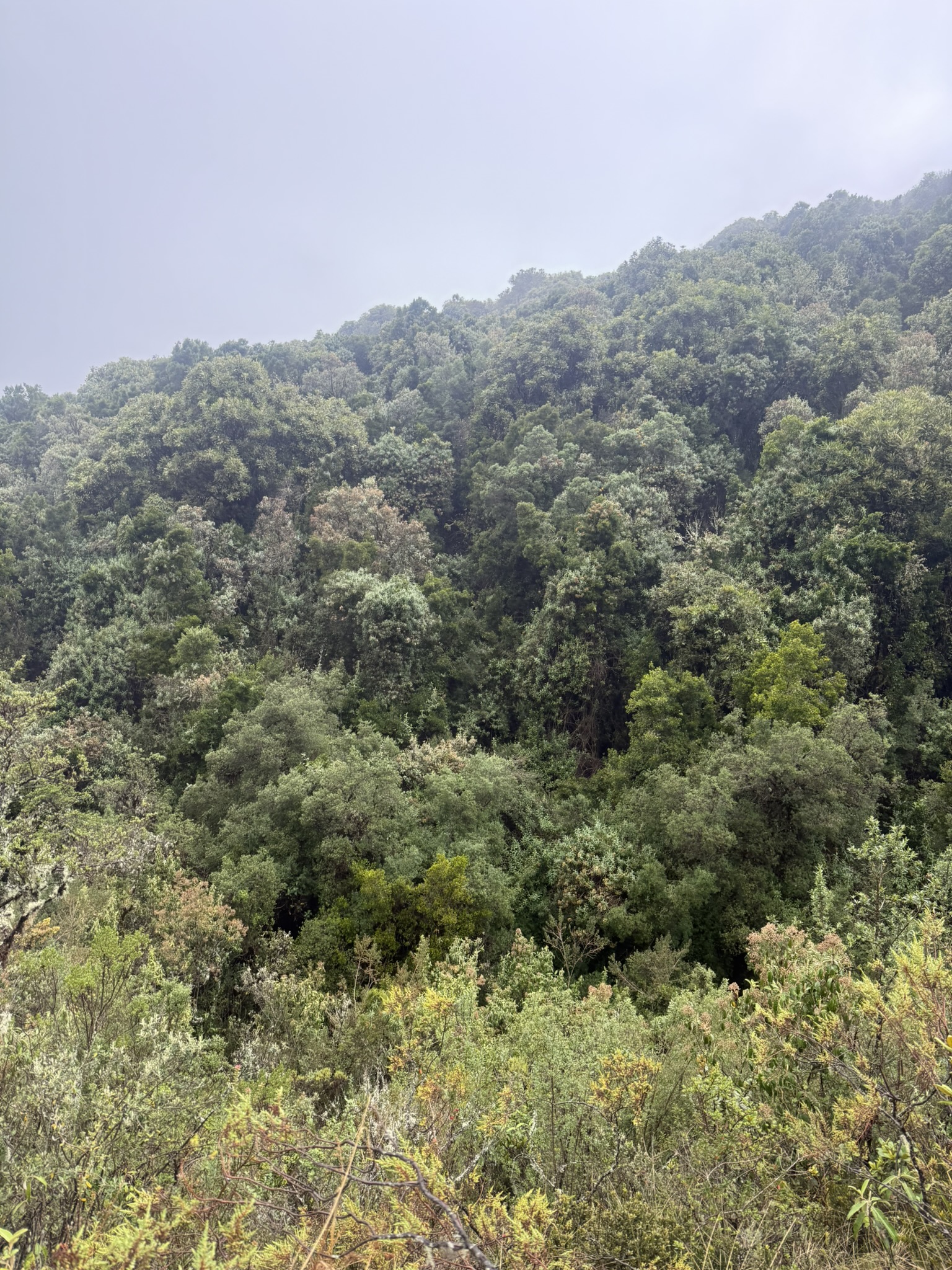
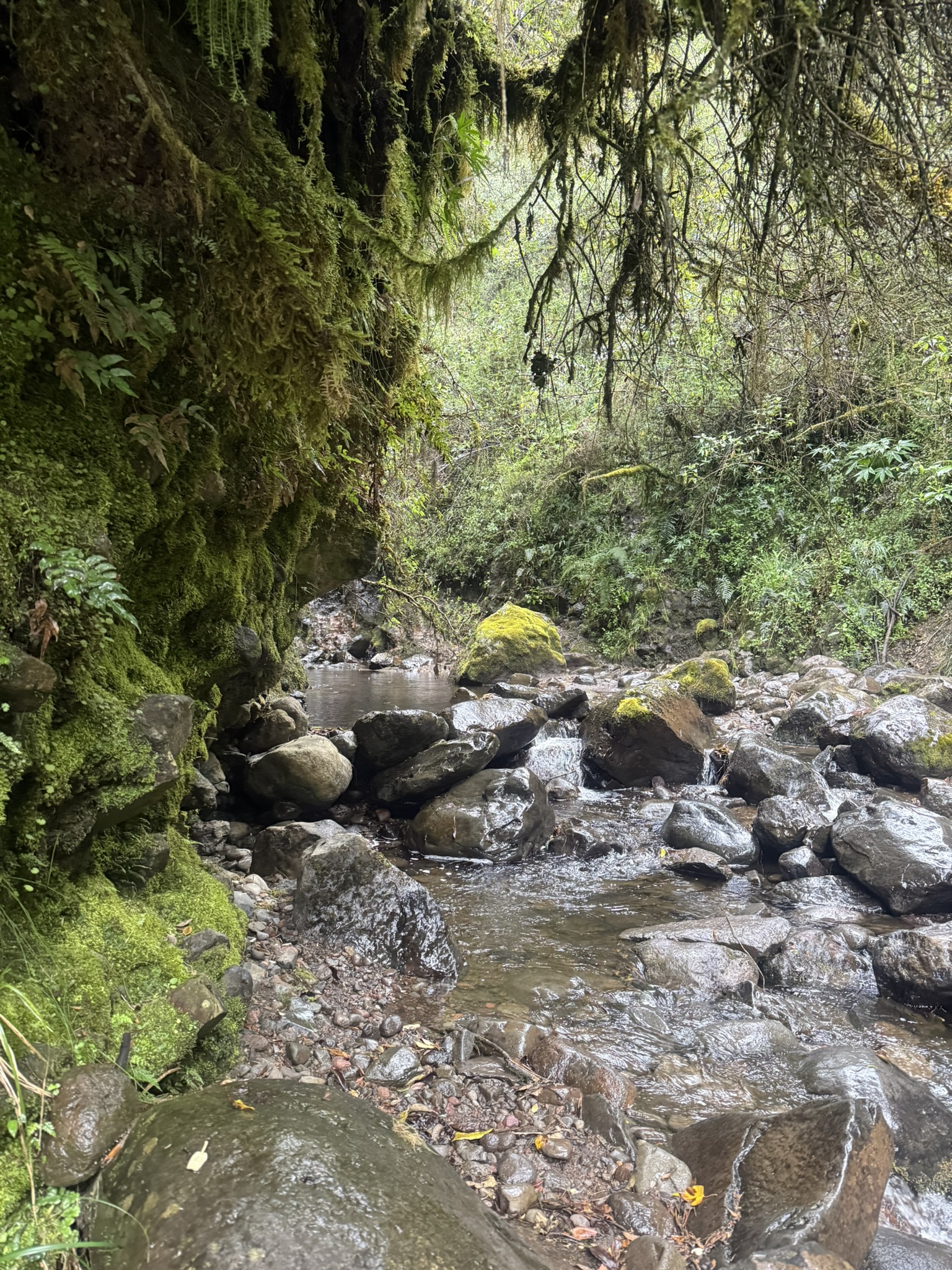
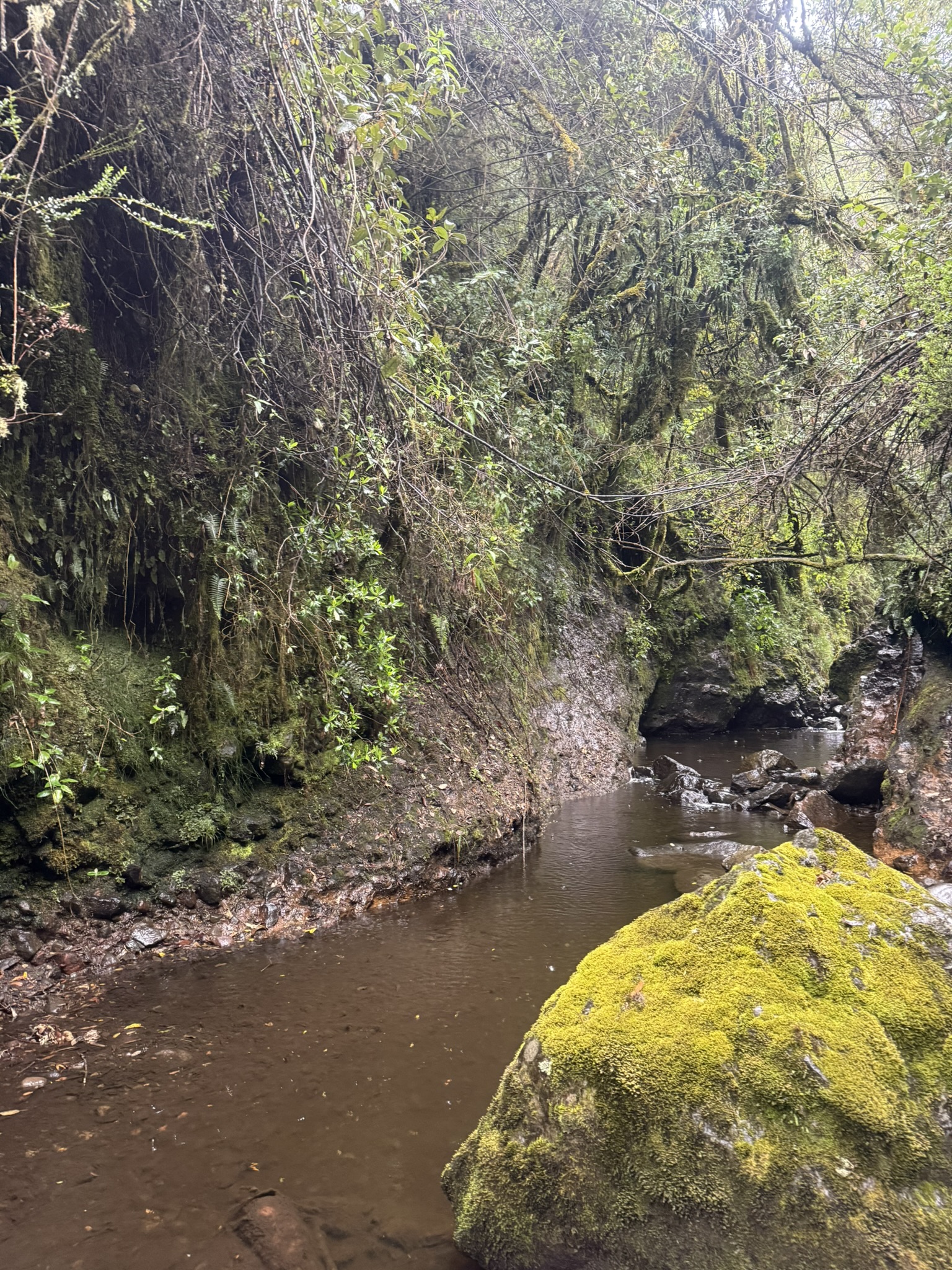
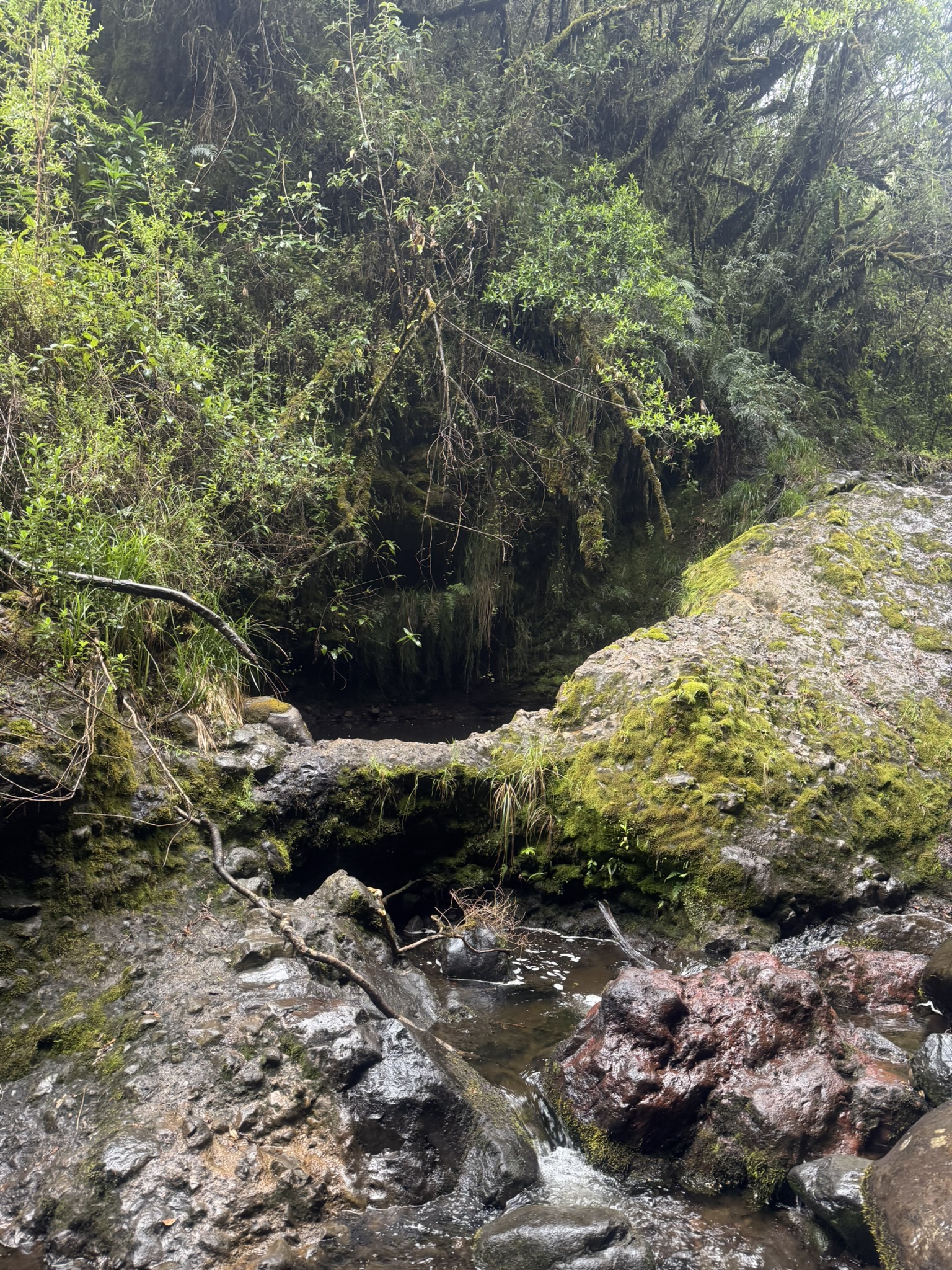
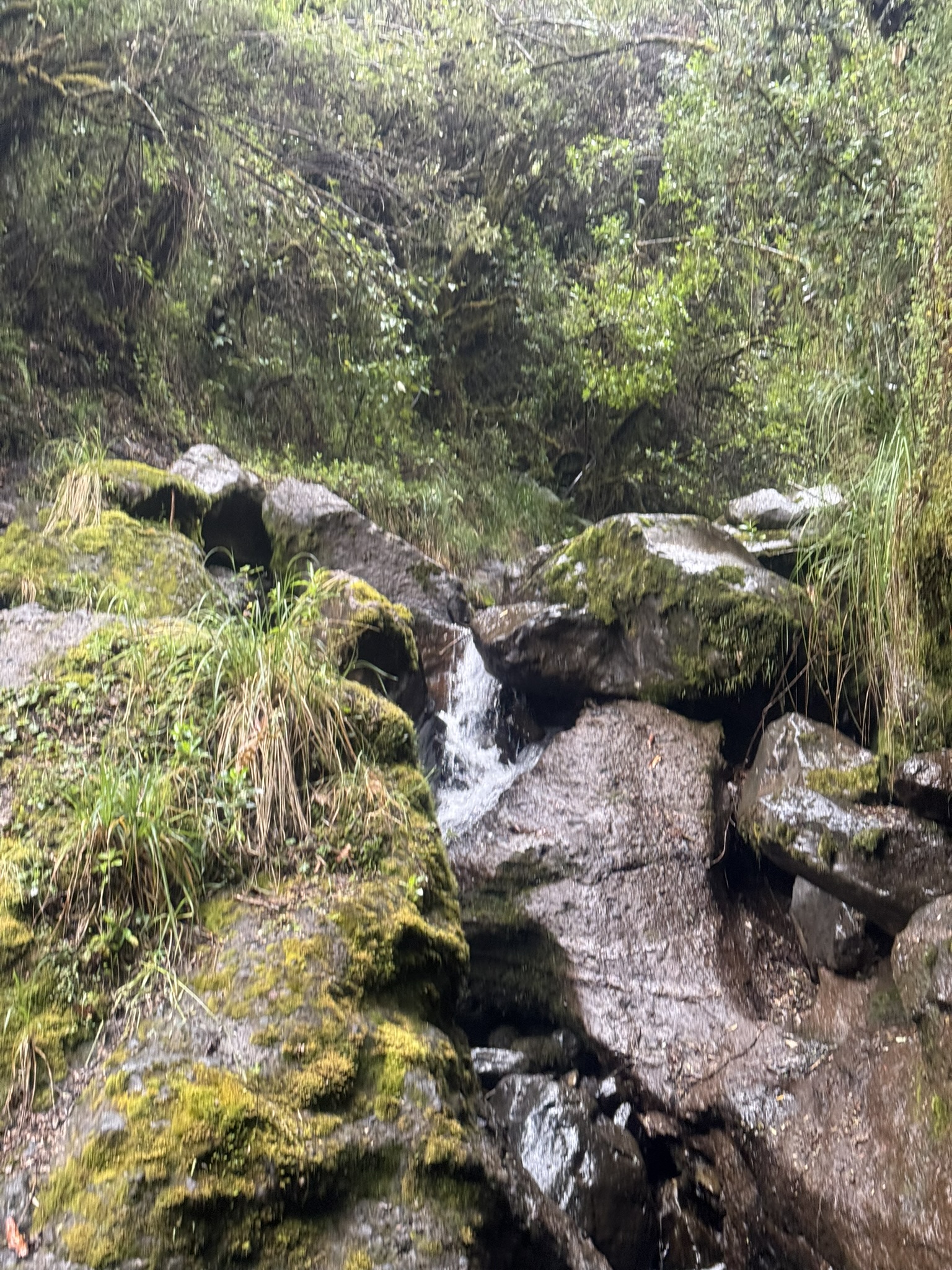
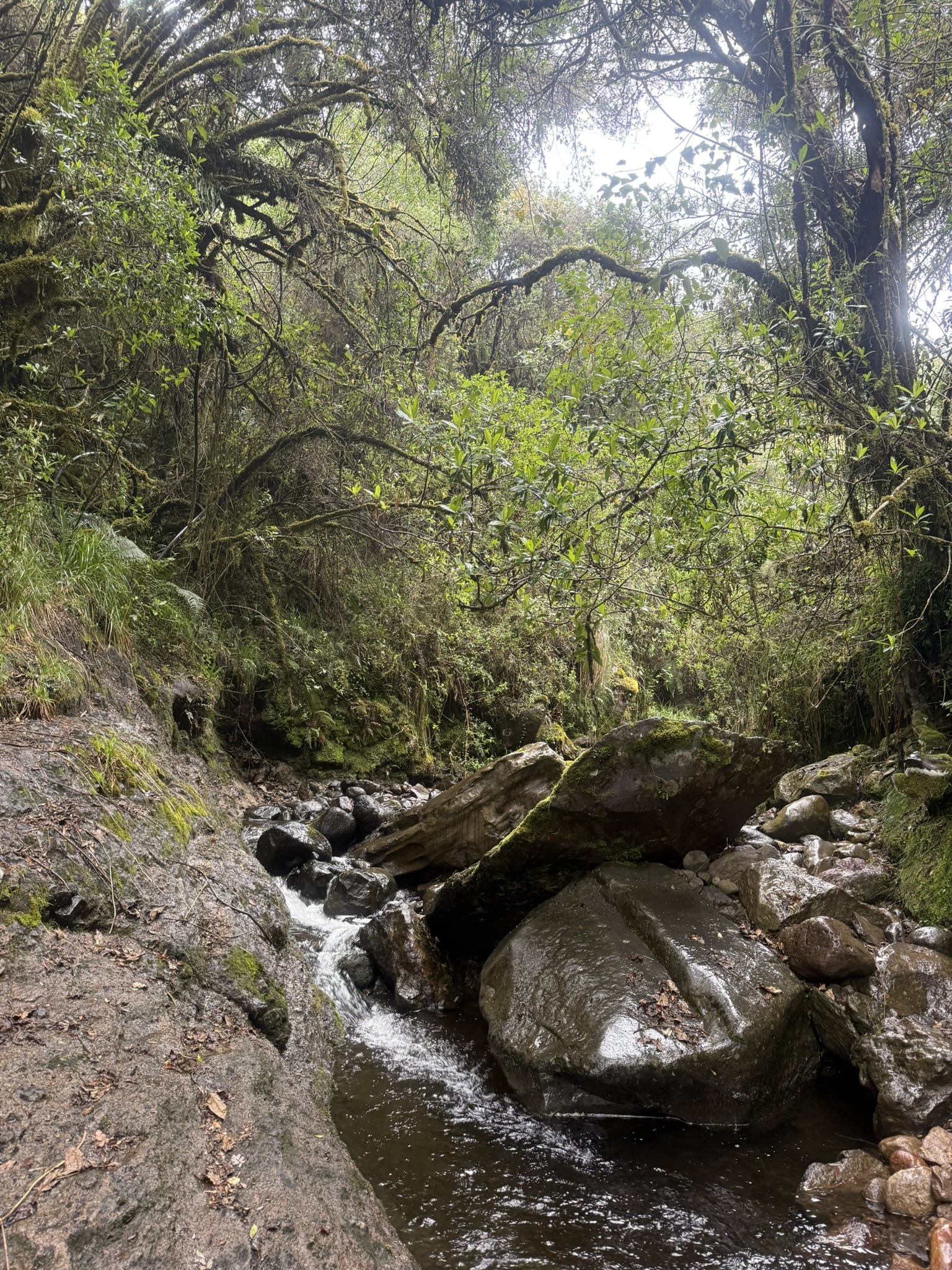
Apart from the strange ticking noise made by frogs that eluded us, we didn’t get to see much wildlife, though the incredible flora dominating the landscape more than made up for it. From enormous lichen-covered trees to flowers of every kind, it was practically a feast for the botanist in me.
We trudged through the mud, stepped over moss-covered rocks, waded through streams and climbed along narrow ledges. In less than an hour, we arrived at the promised waterfall. Already drenched by the rain, I figured that a quick dip in the 5°C waterfall pool couldn’t do much harm. Throwing caution to the wind, I was the first one to jump in – much like I had done back at the Blue Eye in Theth. As cold as it was, this time round I didn’t feel as though I couldn’t breathe.
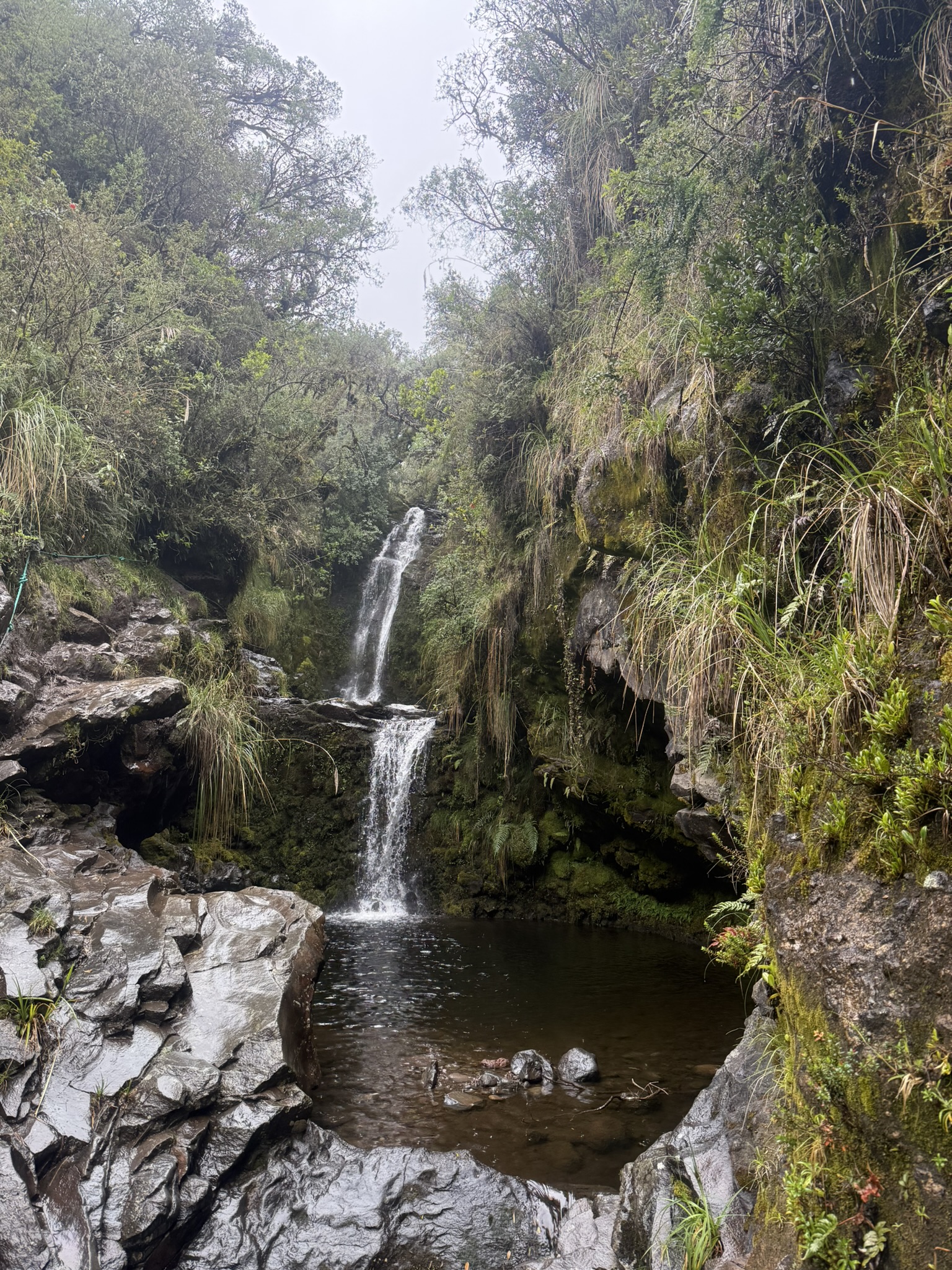
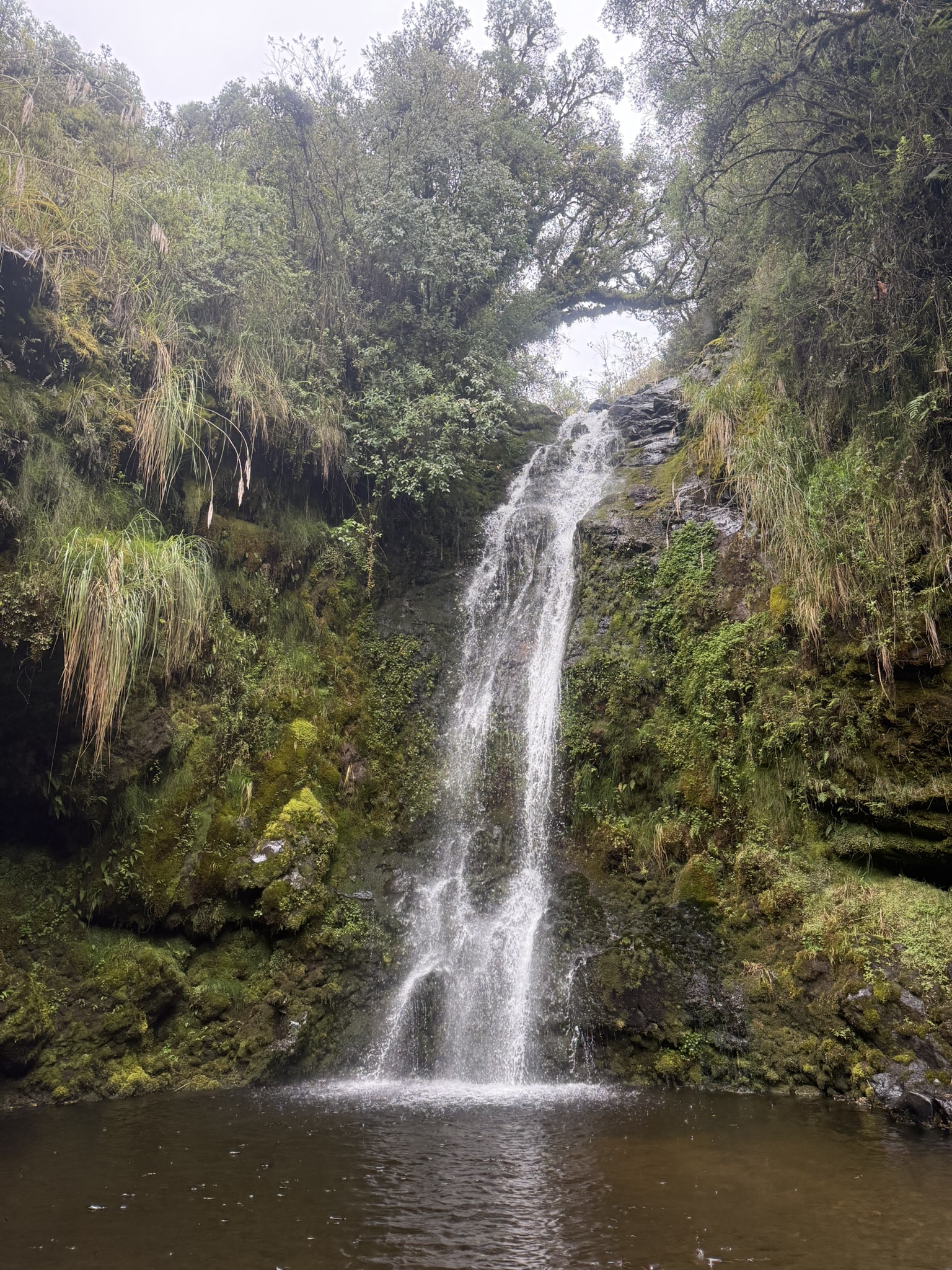
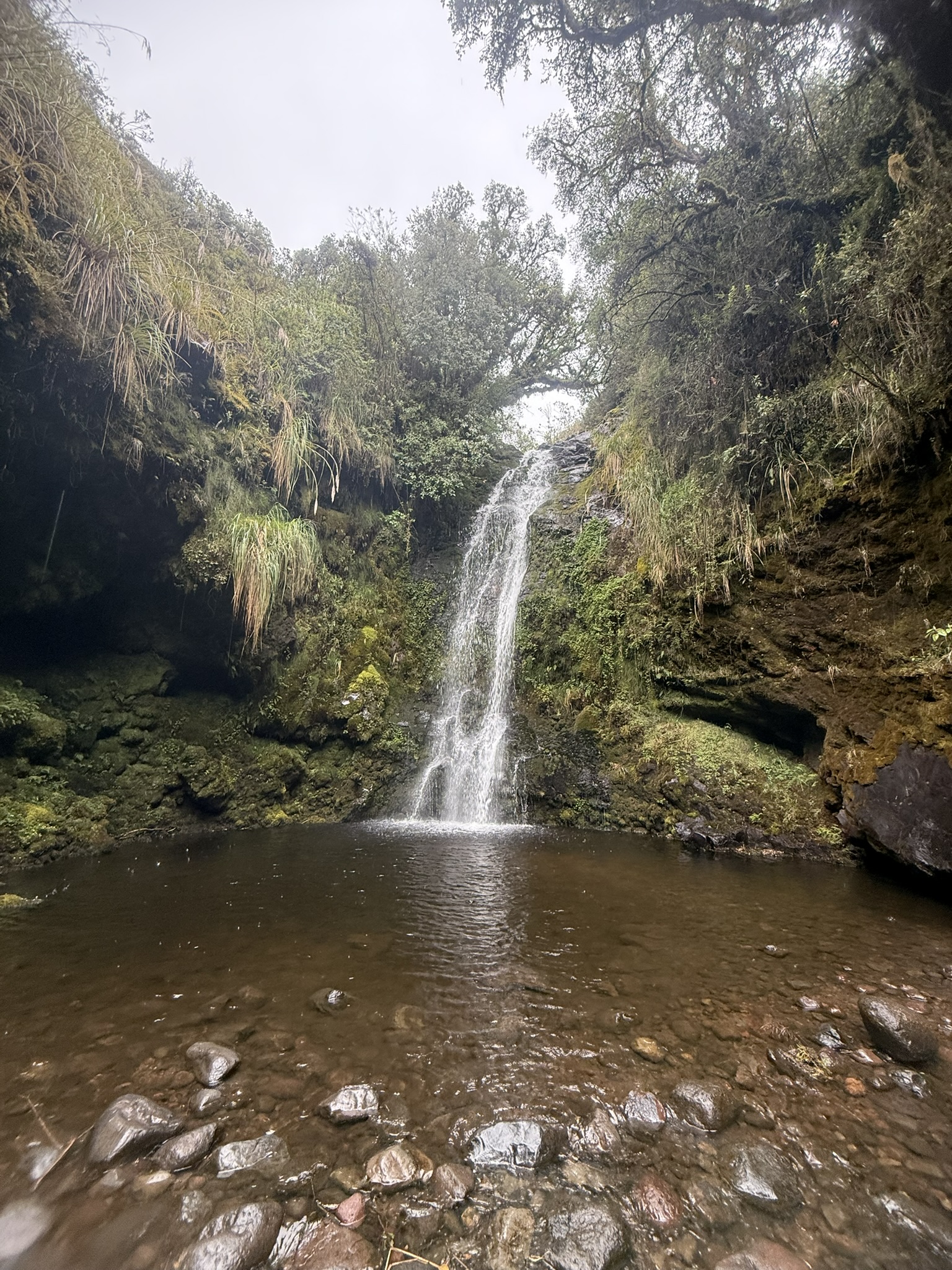
As a few others joined me, I simply lay in the water and enjoyed the freezing sensation numbing my entire body. I might have been doing something similar to what I had done only months earlier, but I felt more alive than ever.
Unfortunately, the midges were even more alive than I was. They swarmed us the second we climbed out of the water. I swear, there must have been thousands of them, each one eating us alive. I felt, and probably looked, as though I were being demonically possessed as I scratched and slapped myself all over, cursing the entire time. Between all the mud and the bloodthirsty insects, it was exactly like being back at El Mirador!
PART II
The White Gurl Reappears
As pleasant as the walk back was, I had only one thing on my mind – a hot shower. The second we arrived, I practically ran to the bathroom and did just that. It was so, so good for the body, not to mention the soul.
Afterwards, I retreated to the comfort of my top bunk and journalled for a while. Then, knowing that the hostel had a yoga studio, I couldn’t help but give in to the temptation to practise. Having been so busy with life over the previous months, it had been ages since I had last done yoga. This was the perfect time and place, with my body needing a good stretch and my mind needing a bit of a break. There could hardly have been a better setting, with views of the valley and volcanoes as a backdrop. Together with Liv, a cool Australian girl, I completed a 45-minute session that pretty much reactivated my entire system. I had been feeling so out of shape and out of touch with myself, and this was exactly what I needed.

After that, I went into the lounge and continued reading Matt Haig’s The Midnight Library, an incredible book that had me hooked right from the start. And damn, I had missed this: sitting down with a good book and disappearing into it for a couple of hours instead of the rushed twenty-minute session while parked in my car waiting to go to work! There was something wonderfully simple about sitting there with nowhere else I needed to be, turning page after page simply because I wanted to know what happened next and not cause I wanted to reach my quota for the day.
In fact, the whole afternoon felt a little like finding myself again. Journalling, yoga, reading – none of it had been planned, squeezed into a timetable or done because I had decided it was something I should be doing. I was doing these things just cause I felt like doing them. And perhaps that was what I had been missing most. I’d spend so much of my life following schedules, deadlines and plans that I’d sometimes forget to actually listen to my body and mind and ask what they need in that particular moment. Here, for once, I was doing exactly that. And it felt so, so good.
Therapy and Unexpected Company
After a couple of hours reading, I sat down next to Jay, a British chick who also happened to be reading. With my curiosity getting the better of me, I enquired about her book.
It was Abigail Shrier’s Bad Therapy, which argues that excessive therapeutic intervention, particularly among young people, can sometimes cause more harm than good. Having been to therapy herself for alcohol addiction and having now reached a good place in her life, Jay felt that the book went against practically everything she believed in. What followed was a two-hour conversation with Jay and Drew, a Canadian girl who happened to be nearby, about the pros and cons of therapy, mental health, suicidality and healthcare. When Jay asked about my book, I told her that it explored many of the same themes as our conversation. When we asked Drew about hers, it turned out to be just as morose. Serendipity, huh?
She then explained that part of the reason she had fallen into such harmful habits was that she had spent years under immense pressure and carrying the weight of past trauma. Eventually, she had learnt to make peace with being mediocre – not as a form of giving up, but as a way of recognising that the price of constantly striving for excellence can sometimes be too high. I couldn’t have agreed more. My own transition from surgery to emergency medicine had taught me something similar: ambition means very little if achieving it requires sacrificing everything else that makes life worth living. Besides, I always joke that I’m the most average person I’ve ever known, and I’ve gradually realised there is something quite freeing about being okay with that.
Our conversation felt pretty much like a mental health retreat. Jay told me all about her struggles and, although she now felt ready to ‘graduate’ from therapy, she believed her therapist wanted her to continue, something she suspected might partly be for financial reasons. I told her that I had learnt about the concept of harm reduction throughout my medical practice – the idea that improving someone’s wellbeing does not always mean eliminating a behaviour, problem or coping mechanism altogether. Sometimes the more realistic goal is simply to make things safer, healthier or less damaging while accepting where that person is at that particular moment. For example, I think that helping someone cut down their alcohol intake is much more realistic than demanding immediate abstinence. Progress does not always have to look like perfection!
I thought the same principle could apply to mental health. Therapy did not necessarily have to be something she either needed forever or had to abandon completely. Perhaps graduating from regular sessions could simply mean changing the relationship she had with it – spacing appointments out, checking in when life became difficult, or knowing that the door was still there if she ever needed to walk through it again. Sometimes getting better is not about reaching a point where you never struggle again, but about knowing yourself well enough to recognise when you are struggling, having healthier ways of dealing with it, and knowing when to ask for help. At least that’s my measly two cents.
Our discussion continued over dinner. Once we had moved on from the heavier topics, Jay told me that she was a physicist working at CERN near Geneva. Drew was currently studying to become a psychotherapist. Meanwhile, another girl joined us at the table. It turned out that Laura was also an emergency physician. Needless to say, our conversation quickly delved into medicine and healthcare – as it always does when there’s more than one healthcare professional in the room. Fun!
It had been a long time since I’d had such an incredible conversation with such well-versed people. This is what I love about travelling. As averse as I once was to company, travelling has taught me that meeting people is also part of the point, not just exploring new places. And these people? Wow.