Land of the Gods

III.II.II
LAND OF THE GODS
I might be in love with travelling, but if there’s one thing I hate, it’s long-haul flights. Seriously, hate them with a passion. My nose alternates between being as dry as a fistful of Martian soil and bleeding like a stuck pig, my joints and muscles age by fifty years, and my hypothalamus suddenly decides to give up on me and I forget what it means to be able to sleep. Just awful!
But hey, at least the promise of foreign land kinda makes up for such torture. And so, after another lengthy flight, we eventually got to the golden land that is Nepal. And then went back. Turns out there was a dog on the landing strip and we had to circle around the airport till it was chased away by the marshals.

After a second take, there we finally were, in all of Kathmandu’s glory. But it wasn’t glory waiting outside the airport door. It was the monsoon season’s very own guest of honour: a torrential downpour that left us all soaked to the bone. We got into a cab and nothing made sense anymore. We looked at each other in disbelief as the worn-down jeep made its way through a flurry of cars that seemed to defy the rules of physics. We were suddenly in Need for Speed – only slower and more unreal, if that’s possible. With the concept of lanes apparently inexistent, everyone drove as they saw fit, with motorbikes squeezing through whatever sliver of space they could find. Crazy.
Crazier still were the pedestrians who flitted through the chaos much like a waiter in an overcrowded restaurant. But that’s not the end of it. Oh no. I won’t fail to mention the cows in the middle of the friggin’ road. You know the expression ‘holy cow’? It’s not just an expression in Nepal. Not only are cows Nepal’s national animal, but they’re also revered and considered sacred by Hindus – believed to inspire gentleness and a connection with nature. Maybe so, but gentleness and a connection with nature wasn’t what they evoked in me under said circumstances.
And so, drifting between cows and humans alike, we arrived at our residence – still holding on to our seats for dear life.
We were rushed to a brightly lit hall with a pagoda-like roof where the rest of the volunteers had been patiently waiting for us, gathered on a red-carpeted floor around two low-lying tables. By now we had been awake for at least twenty-four hours, we stank of travelling, and we looked like the ensemble of The Walking Dead, so you can imagine our fashionable entrance. We sat down next to them and, speaking for myself, I dozed through the entire orientation speech. I have no recollection of what was said or what we were instructed to do.
What I do remember, though, was the attendant who masterfully poured us water into tiny golden goblets. It was like magic how he transferred the potentially contaminated liquid into the cups from half a metre away without spilling a single drop. “What now?” we whispered in a delirious panic. “What about the bacteria? My god, should we sneak in a water-treating tablet? What if they notice?”. Despite all our reservations, we were too tired to do anything about it. The others seemed unfazed by the impending catastrophe, so we threw caution to the wind and drank. Then we got up to go somewhere they told us we’d be going. Where exactly, I had no idea, and frankly, my neurons were too exhausted to ask.
The second we got on the bus, I was wide awake. It finally sank in. I was in Kathmandu. The City of Temples. The City of Glory. The Switzerland of Asia. Dirty, littered and polluted. Buildings of every colour and size. Untidy tangles of wires hanging like urban vines from electricity poles. Chaotic, messy, ugly. Even so, a sight to behold. It was like stepping into another world. One that felt supremely more beautiful, more real, because of its chaos. Teeming with activity, the entire city buzzing with life and colour.
A bumpy and abrupt stop snapped me out of the trance. Our first destination was Swayambhunath, otherwise known as the Monkey Temple. Overlooking the entire city, the temple sits atop a hill in the Kathmandu Valley.
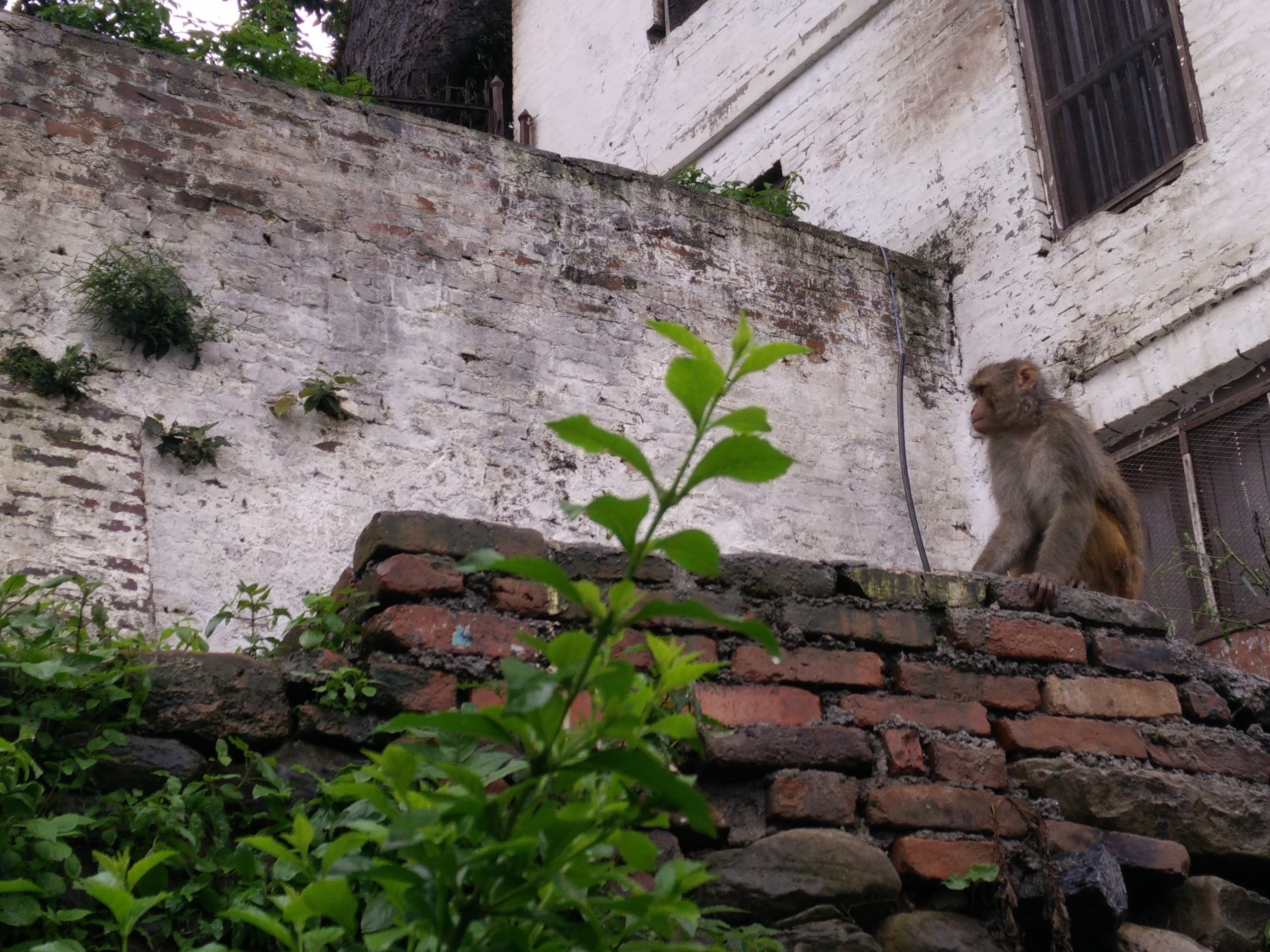
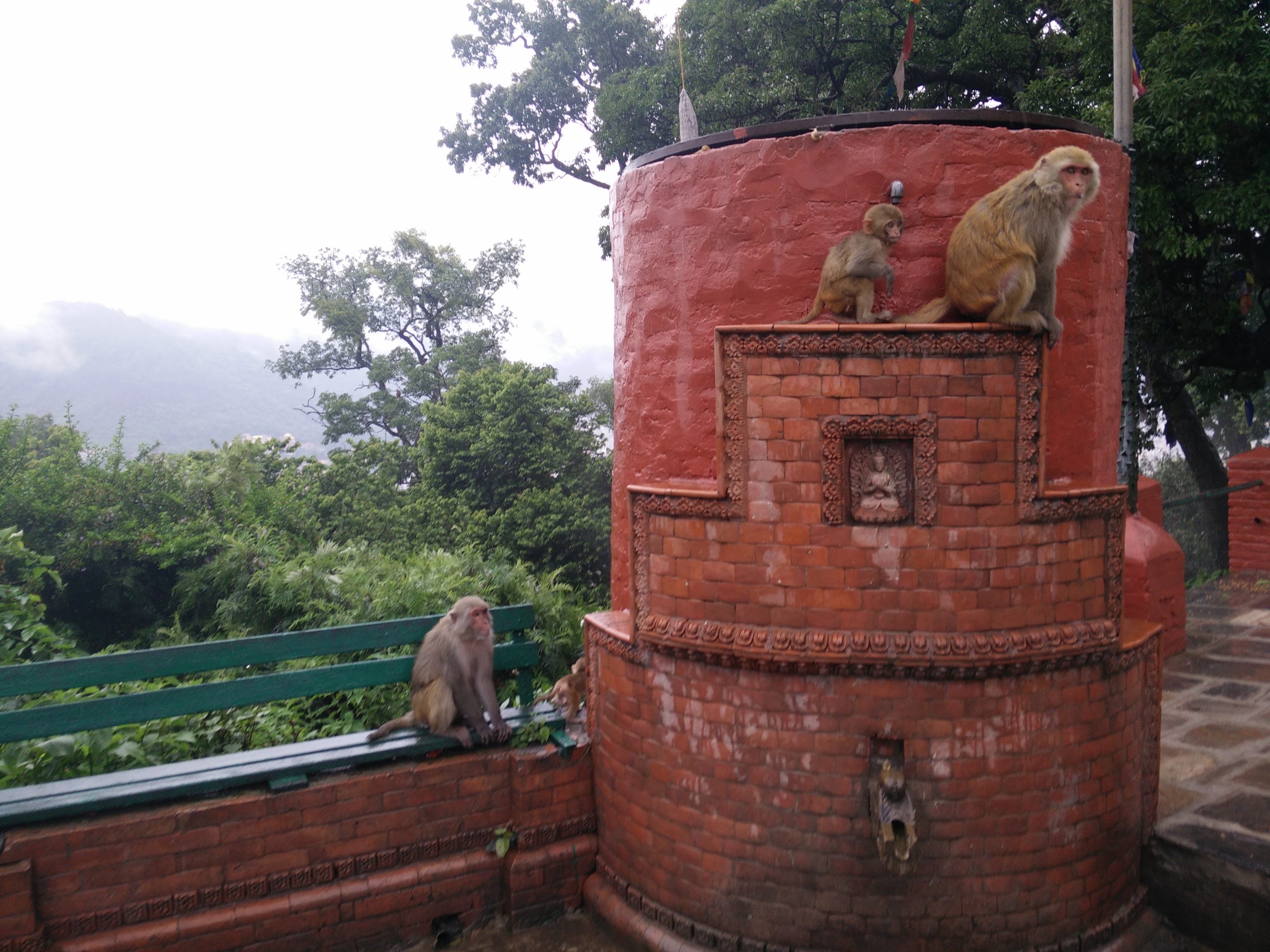
This ancient religious haven is believed to date back over 1,500 years and is revered by Buddhists and Hindus alike. Aptly named, hundreds of monkeys roam the temple – believed to be holy after having arisen from the lice of Manjushree, the bodhisattva who, according to legend, drained the valley to create Kathmandu. Cool, cool. As is customary in such places, we started circumambulating the temple in a clockwise fashion, accompanied by our new furry friends.
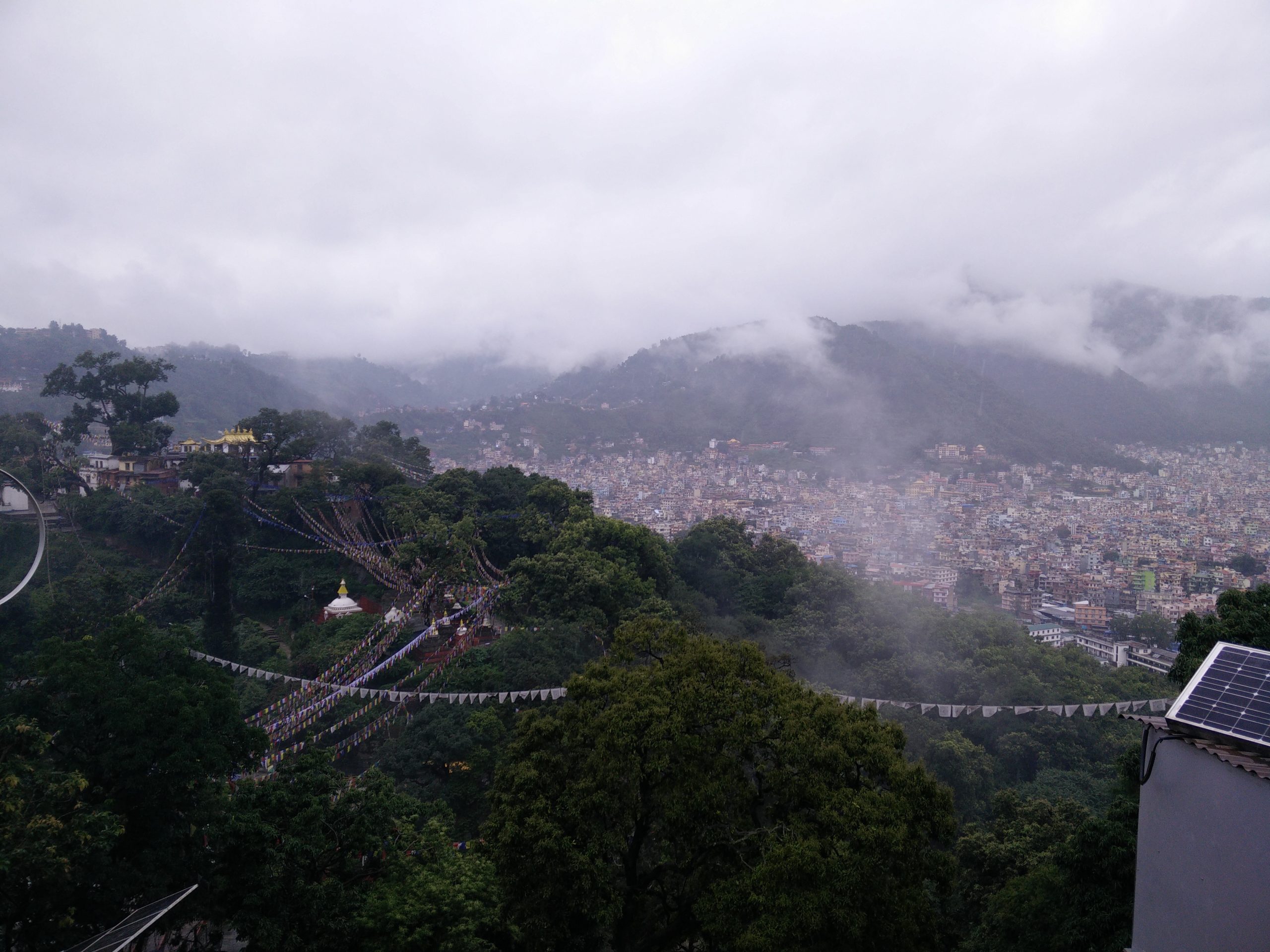
Surrounded by the overgrown, jungle-like valley, the terraces are littered with inscribed stones, metal prayer wheels, altars and shrines – all ornate in gold or natural pigments. Strung along the passageways are prayer flags: green, yellow, red, blue and white pieces of cloth with Sutras written over them as blessings. Breathless and sweaty, we reached the stupa: a white dome with a golden spire featuring Buddha eyes on all four sides, gazing over the four directions. Then came the viewpoint, where the entire city sprawled beneath us. And lemme tell ya, the word incredible just doesn’t cut it. The Kathmandu Valley in all its splendour. The stark contrast of grey rainy sky, misty hills, the green valley and the kaleidoscope of city colours. Simply breathtaking!
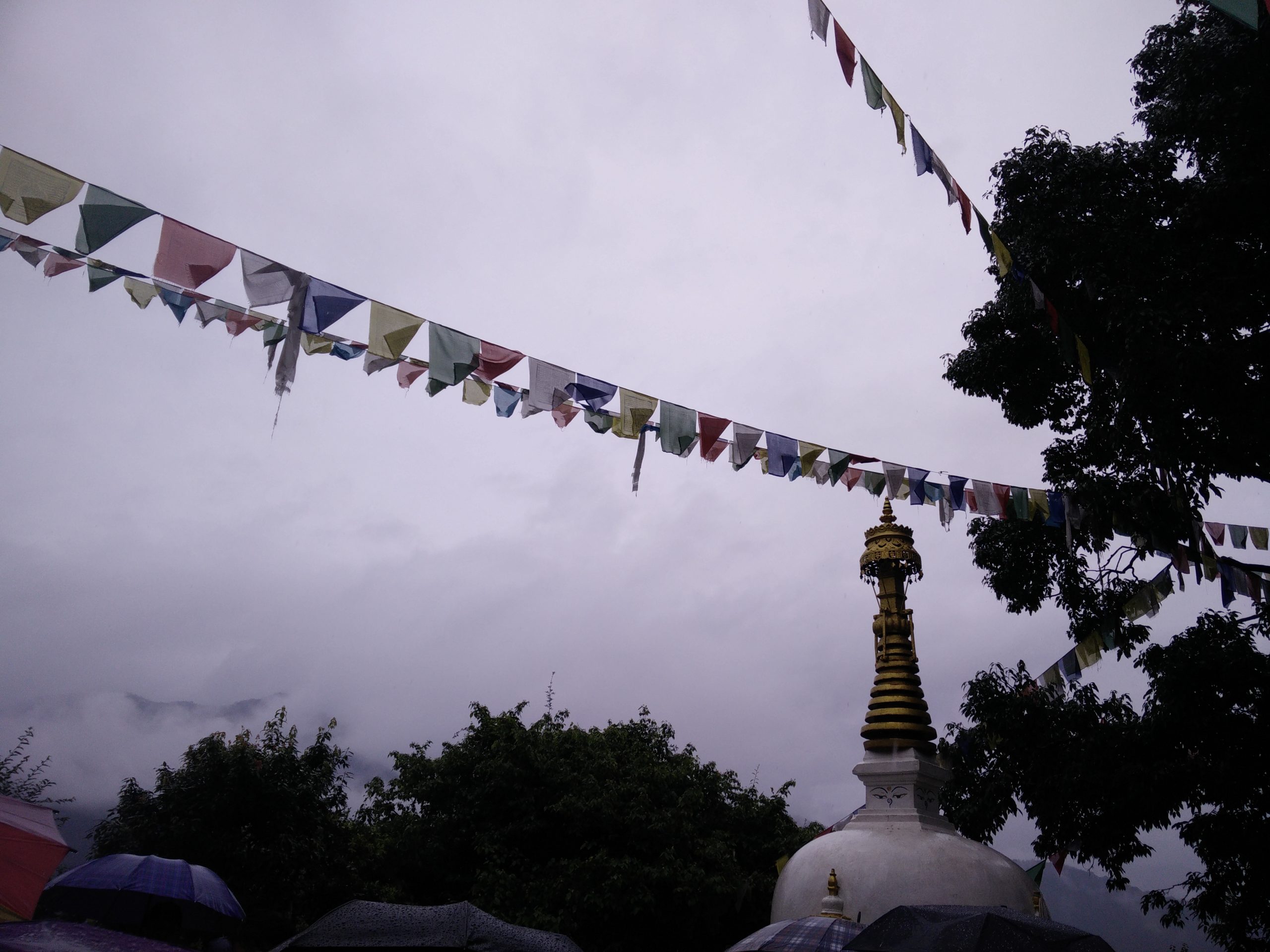
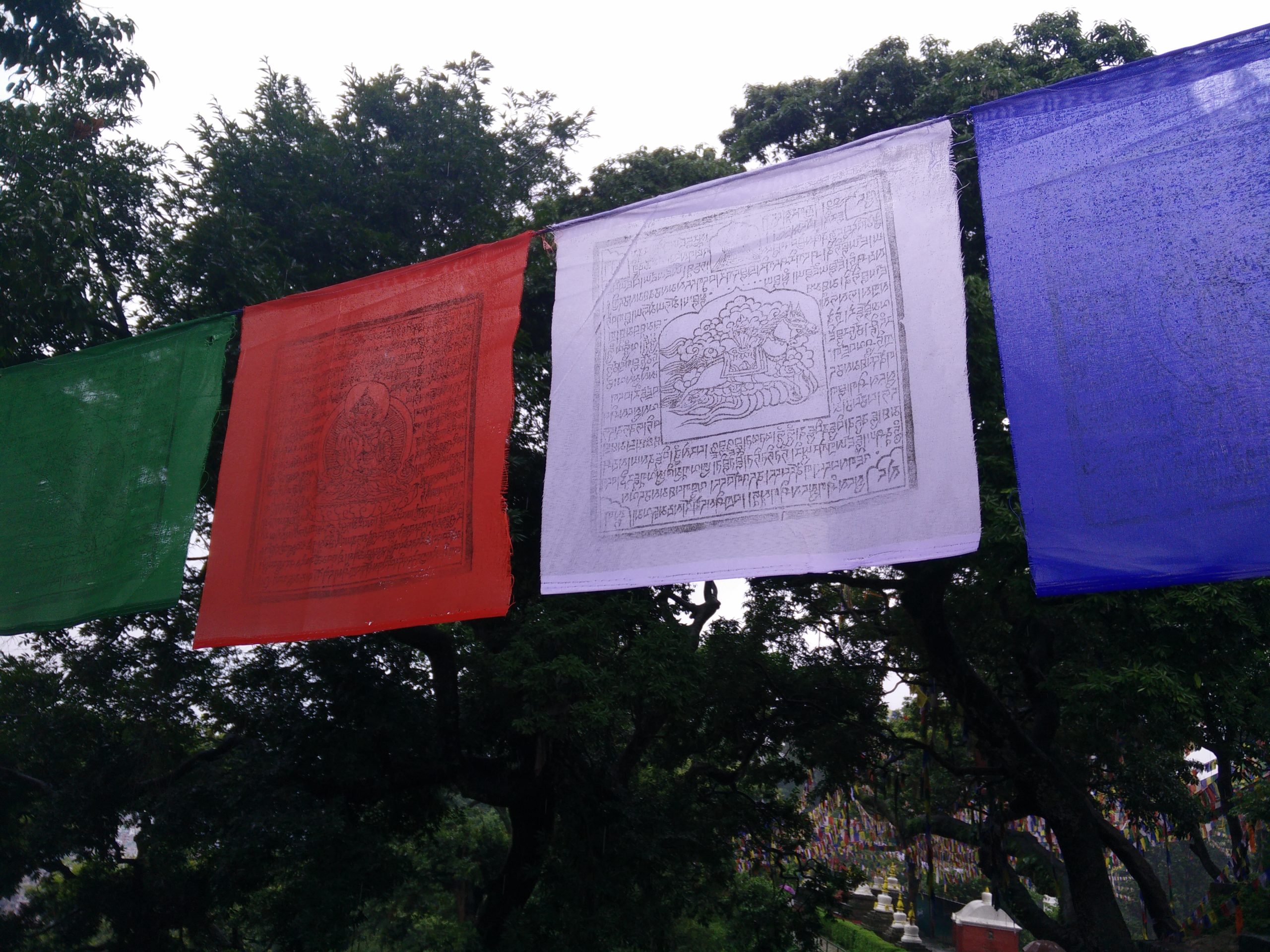
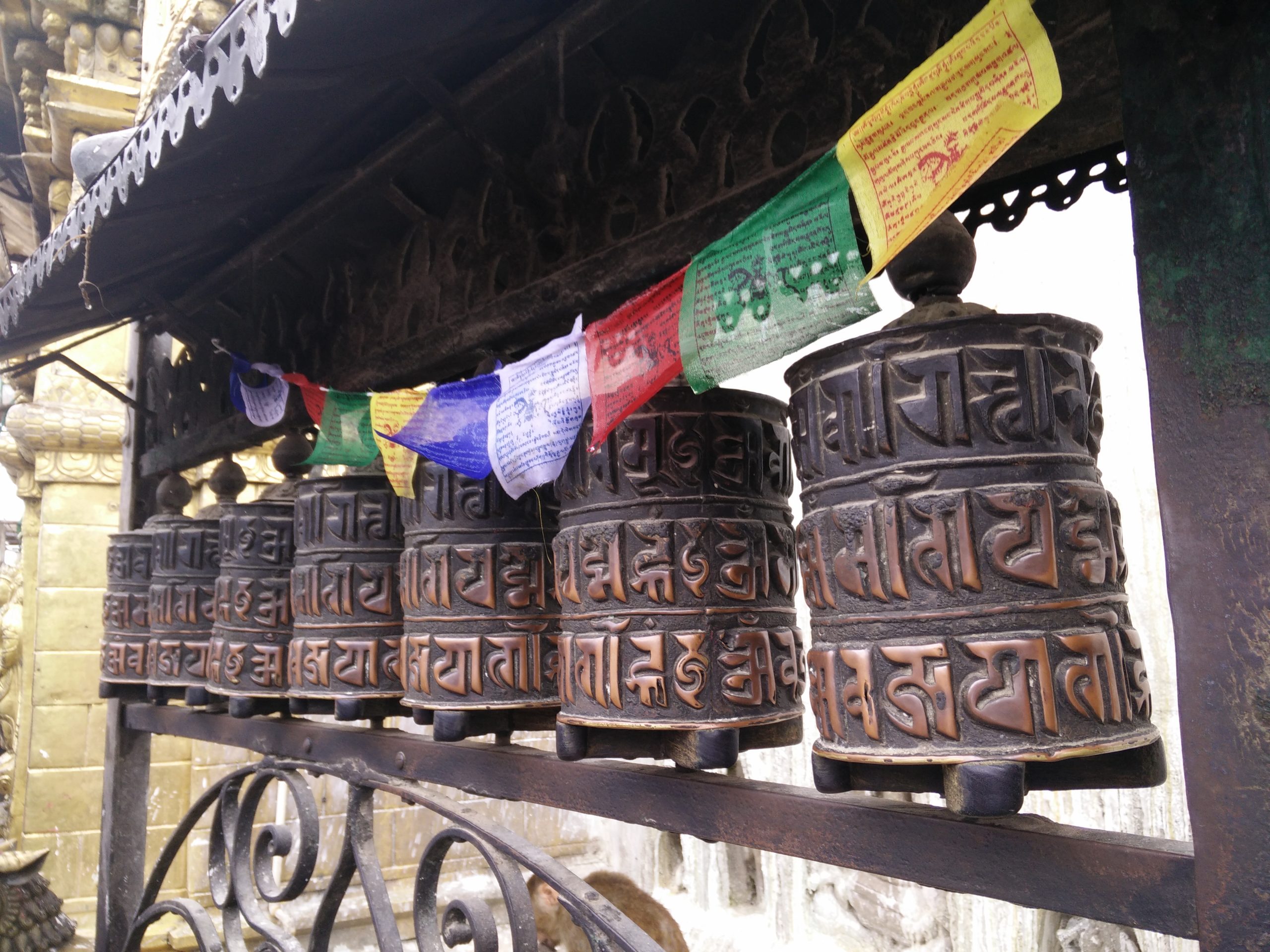
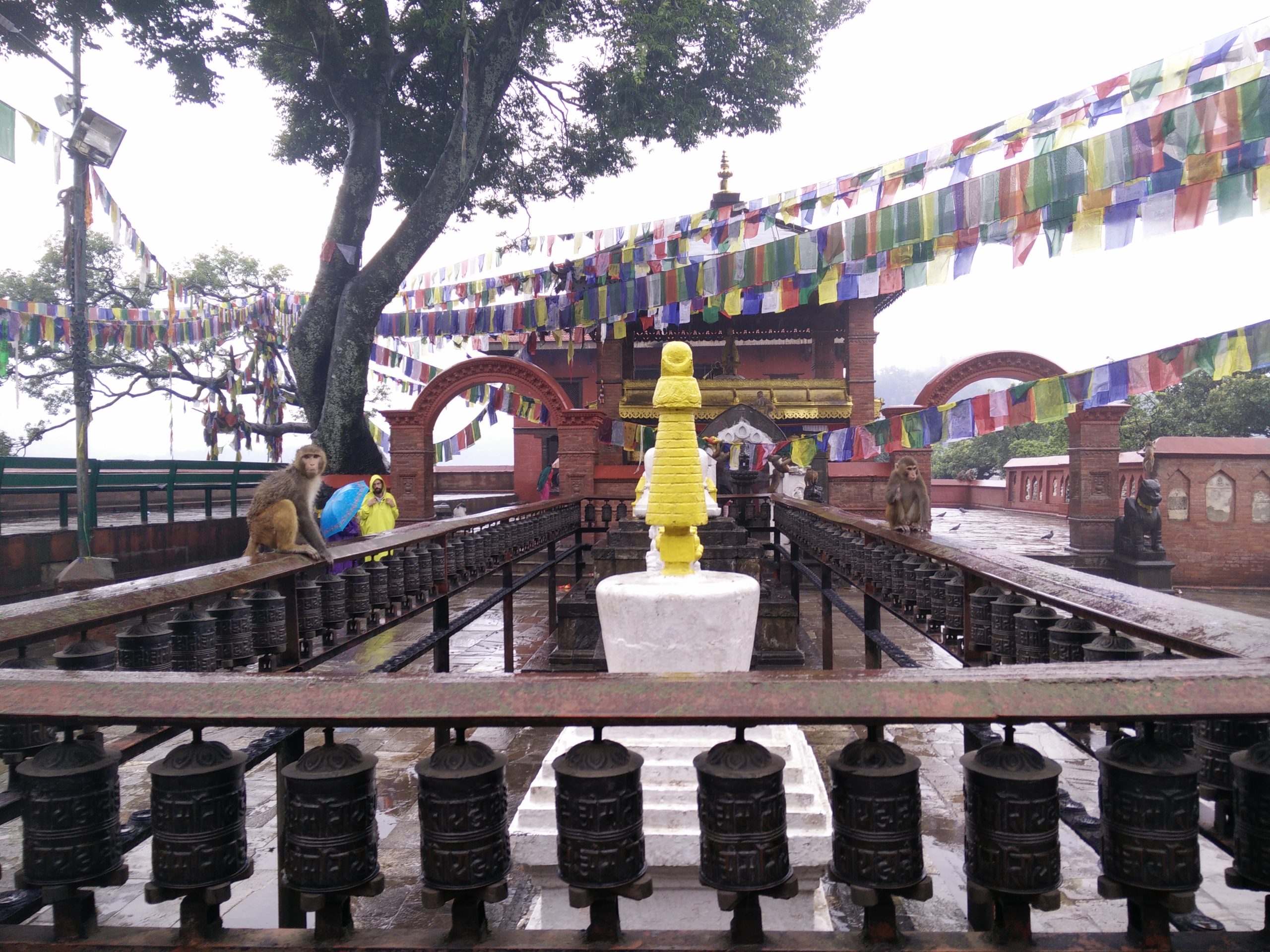
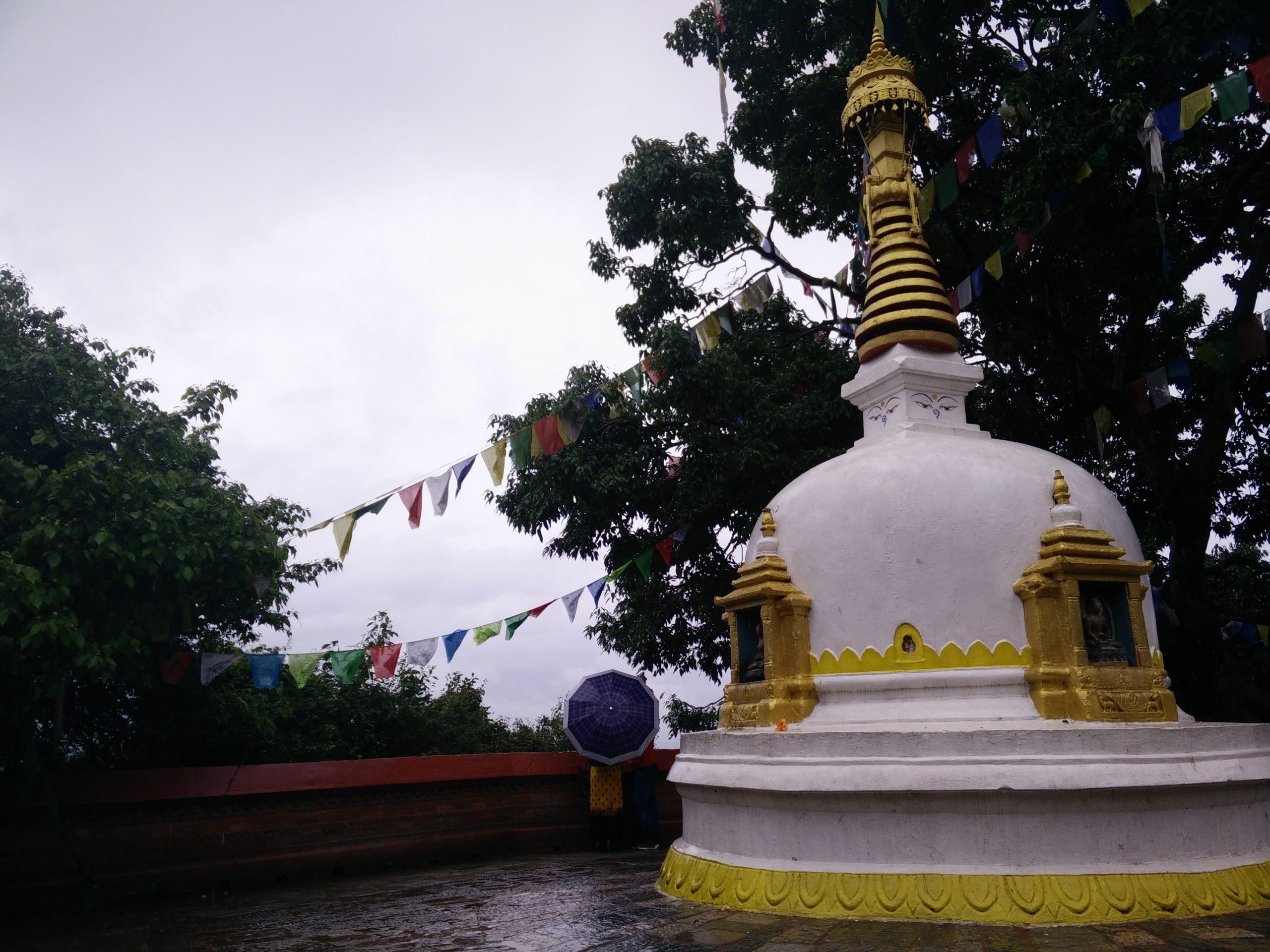
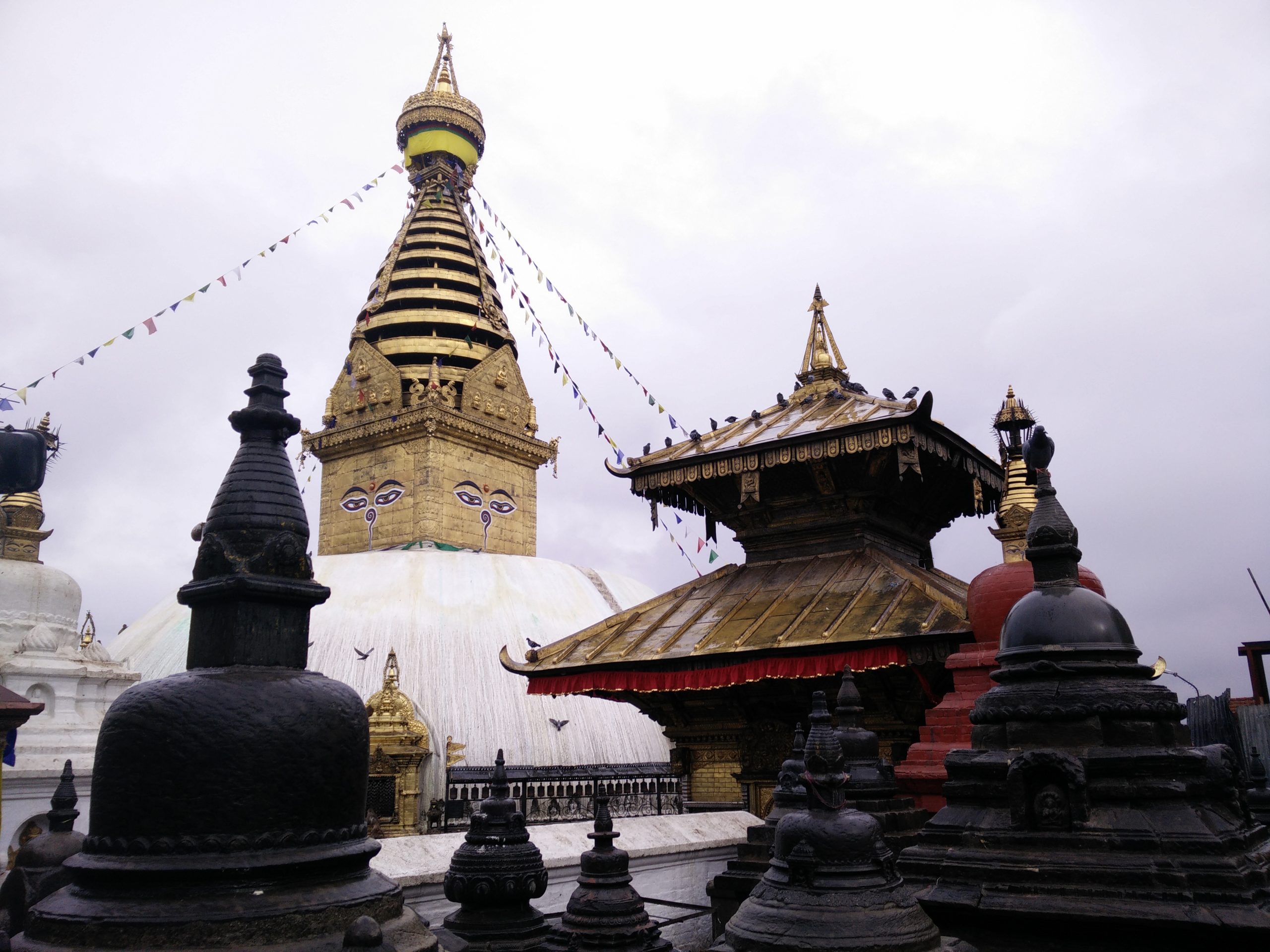
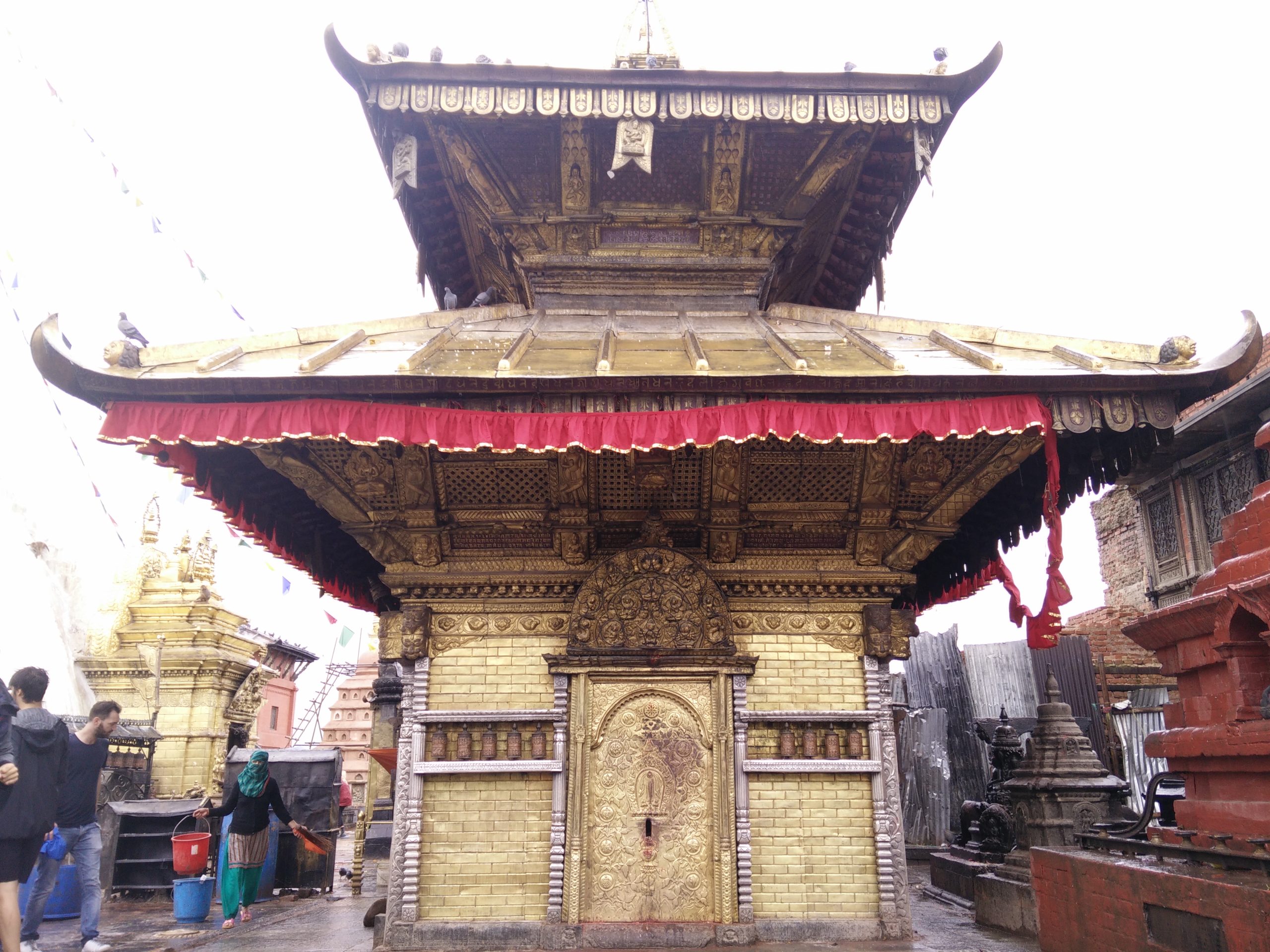
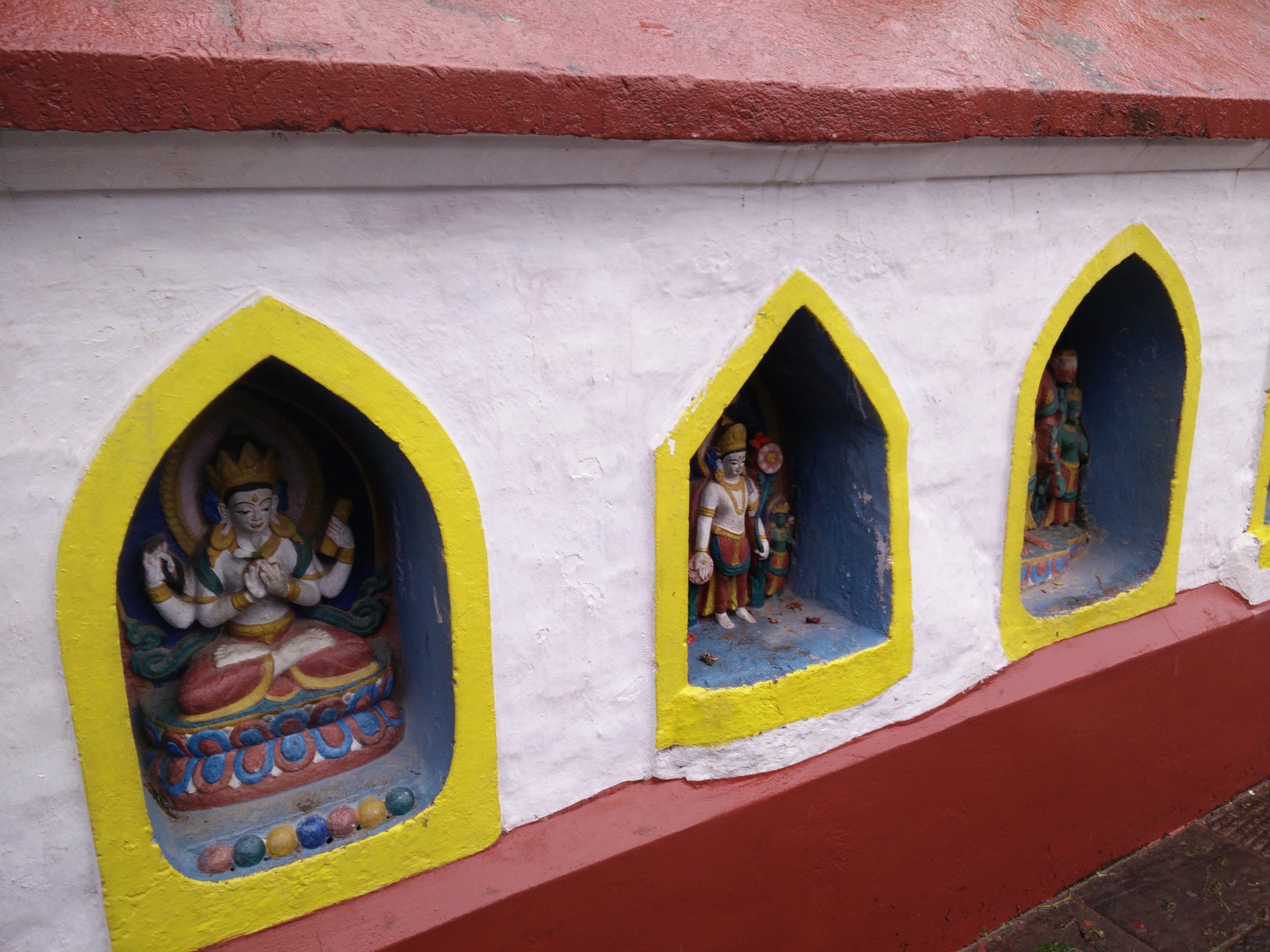
Heading down, I have to admit I felt somewhat demystified. There were more stalls than I could count, selling all kinds of magical-looking trinkets and jewellery, merchants shouting and harassing anyone who walked by. Time and time again we had to tell them to back off and let us be. I was literally on the verge of pulling a Cleansing of the Temples myself. Look at me going all biblical on you.

Drained and famished, stinky and disgusting, we made our way back to the residence. There awaited us a reception unlike anything I had ever experienced. We were welcomed by the warmest namaste and a sindoor, or vermillion: a red dot on the forehead that symbolises good luck and celebration.
We were led into the same hall as before where a banquet was being laid out. Here, we were served momos, traditional Nepali dumpling; popcorn, a traditional Western snack (you’ve probably never heard of this one); and last but not least, dal bhat, rice with lentil soup and tarkari (vegetables cooked in spices). We had seconds and thirds and fourths. It was simply mouth-watering – an explosion of flavours that created a feast in our mouths.
With traditional Nepali music and dancing in the background, we ate and drank to our hearts’ content. Food devoured and ready for rest, the music stopped, and the dancers bolted. A musician approached with his sarangi, a Nepali bowed string instrument, looking to sell it. Of course I absolutely had to have it, and that’s how I got (the first) one. And with that, our first day in the magical land of Nepal was over.