Cairo – Day 3: The Pyramids of Giza
CAIRO
Day 3: The Pyramids of Giza
November 19, 2023
Our third and final day in Cairo – and in Egypt, for that matter – was perhaps the one we had all been looking forward to the most.
Oh man… I’m getting emotional just thinking about writing this section. Everything thus far – except for the scamming, of course – had been incredible, in the sense that I could hardly believe it was real. The temples and tombs we had visited over the previous few days had reignited something within me that had lain dormant for years. Like an archaeologist brushing sand from forgotten relics, I found myself tracing the contours of a self I thought I’d lost, slowly reconnecting with a past I believed was long forgotten. And now… what awaited me was the grand climax, the very same site that had captivated me as a kid and made me want to become an Egyptologist – the Pyramids of Giza.
So far, we had only seen the Pyramids of Giza from the plane and from a distance back in Cairo. They looked huge even from afar, but lemme just say, when you’re up close to them, they’re absolutely massive. Like, seriously massive. Having finally arrived at the much-anticipated site, I could hardly contain my emotions. The word “overwhelmed” doesn’t even begin to cover it. I was stunned, bereft of any sign of life. I couldn’t speak, I couldn’t blink, I couldn’t breathe. Time just stood still as I too stood there, facing the great Pyramids of Giza.
It took me a lifetime to get there. It took me falling in love with Egypt as a kid, and then falling out of love as I grew older and redirected my passion to other things. It took a spontaneous trip with a group of friends who thought it would make for a nice getaway. It took a couple of day tours catered to regular, run-of-the-mill tourists for me to understand the gravity of what I had done. I had abandoned the very first thing I had ever loved. I had let it all go to waste. And now, I was there. That’s what it took for me to be there – the place where I was always meant to be.
Somehow, some way, I still managed to get to that place. I might not be an Egyptologist, but hey, I’m still doing all right. And, most importantly, I can still appreciate history – even if it’s just as a hobby!
Baffled by Ingeniousness
So… the pyramids. The Giza pyramids are not only the most iconic monuments in all of Egypt – and possibly the entire world – but the Great Pyramid of Khufu is also the oldest of the Seven Wonders of the Ancient World and the only one still standing.
Before exploring the site, Mo gave us a lecture on the pyramids. Located at the northern edge of the Memphite Necropolis, west of the Nile and just outside modern Cairo, the site was built during the Fourth Dynasty of the Old Kingdom, around 2600 to 2500 BC. Much like other pyramid complexes in Ancient Egypt, the pyramids served as royal tombs for pharaohs and their families, demonstrated their status and power, symbolised divine kingship, and acted as cosmic resurrection monuments designed to facilitate the pharaoh’s journey into the afterlife.
Their construction, despite extensive archaeological research, is still shrouded in mystery. While several theories have been proposed that answer some of the questions raised throughout the process, one thing’s for sure – their construction remains one of the most remarkable feats of engineering in human history. The same certainty can’t be applied to theories that, although debunked, are still widely believed. Like the idea that the pyramids were built by slaves. Turns out, the workforce consisted largely of well-fed, well-organised and highly skilled labourers who knew exactly what they were doing. Some estimates suggest that tens of thousands of workers may have been involved, many of them likely seasonal labourers – possibly farmers who contributed during the Nile’s annual flooding, when fields were underwater and agricultural work was limited.
Another phoney theory? The one that claims humankind could never have built such impressive structures and that it simply had to have been done by aliens. Well, humans are kinda known for being innovative. In fact, that’s exactly how they managed to build the pyramids. With the average limestone block used to construct the Great Pyramid often estimated to weigh around 2.5 tons, they certainly had to be. Most of the core blocks were made from local limestone quarried around the Giza Plateau, while the fine white casing stones came from Tura, south of modern Cairo. Some of the heavier granite blocks used in the interior chambers came from Aswan, more than 800 kilometres to the south.
How did they manage to transport them? Well… work smart, not hard. The annual inundation of the Nile, apart from boosting the construction workforce, also helped create a watery transport network of canals, harbour basins and river routes, allowing stone blocks to be shipped by barge. The discovery of ancient harbour structures and records of limestone transport from Tura to Giza supports this theory. Once close to the site, the stones would then be loaded onto sledges and dragged across the desert by teams of workers, possibly with the help of animals. Water was poured onto the sand in front of the sledges to reduce friction, making them easier to pull. Genius! At the base, various ramp systems may then have been used to build successive layers, though the exact method is still debated.
The entire process would have taken many years, and once finished, these pyramids would have looked nothing like the weathered structures we see today. They were once covered in smooth, white limestone casing, with a small pyramidal capstone at the top called a pyramidion, symbolically linked to the primordial mound of creation. While we are used to seeing weathered, eroded and heavily looted stone structures, the pyramids were once dazzling, awe-inspiring monuments designed to reflect divine power and cosmic order – especially given their precise alignment with the cardinal points and their wider celestial symbolism.

Khufu, Khafre, Menkaure and the Sphinx
After giving us a brief overview of the construction of the pyramids, Mo then continued describing the site we were about to explore.
The Giza Pyramid Complex consists of three main pyramids, along with their satellite structures known as Queens’ Pyramids, funerary temples and causeways, as well as the Great Sphinx and other cemeteries and tombs. The most important structures include:
-
-
- Khufu’s Complex: Thought to have been enclosed by a wall which is now largely buried beneath the desert, the complex features a causeway that led from a valley temple to a mortuary temple, which in turn connects to the Great Pyramid of Khufu – the largest of the three and the only surviving Wonder of the Ancient World. King Khufu built on the legacy of his father, Sneferu, successfully perfecting the construction of true pyramids. Originally standing at around 146 metres, this pyramid was built using an estimated 2.3 million stone blocks, with a shiny and reflective white limestone casing that once covered the whole structure. The labyrinthine interior contains several passages and chambers, including the King’s Chamber, where a red granite sarcophagus can still be seen. Also of note, the complex contains three queens’ pyramids, where women of Khufu’s royal family were buried, as well as several boat pits. Two large dismantled boats were discovered on the south side of the pyramid, and these are often interpreted as ritual vessels connected with the king’s journey through the afterlife alongside the sun god Ra.
-
-
-
- Khafre’s Complex: This funerary complex includes the Sphinx Temple, the Valley Temple and the Great Sphinx, with a causeway connecting them to a mortuary temple at the base of the Pyramid of Khafre. While this pyramid is slightly smaller than the pyramid belonging to his father, Khufu, it appears larger due to its more elevated location and steeper inclination. This pyramid still features some of its original limestone casing near the top and previously had granite casing around its lower courses.
-
-
-
- Menkaure’s Complex: The smallest of the trio, featuring the same overall layout. Menkaure, likely Khafre’s son, is famous for his many different statue triads, which show him standing alongside the sky goddess Hathor and various regional deities. His pyramid originally stood at around 65 metres in height and once had granite casing around its lower section, though much of its outer casing is now gone.
-
-
-
- The Great Sphinx of Giza: Thought by many scholars to represent the pharaoh Khafre, this huge limestone sphinx is found within his wider complex. It measures around 73 metres in length and 20 metres in height and was carved directly out of the limestone bedrock. Apart from being one of the largest monolithic statues in the world, it is also the oldest known monumental sculpture in Egypt. Much like other sphinxes, the lion’s body represents strength and kingship, while the human head symbolises intelligence and divine authority. Up to this day, no one knows what happened to his nose.
-
-
-
- Cemeteries: Apart from members of the royal family, nobles and high priests, tombs belonging to the labourers involved in the construction of the pyramids have also been found. This goes to show that they were valued workers and were honoured by being buried so close to the pharaohs.
-

A Beautiful Dream
Needless to say, the second we were discharged from Mo’s lecture, we practically ran off trying to explore as much as we could. We had plenty of time to walk around the Great Pyramid of Khufu and climb part of its exterior up to the main entrance. At Mo’s suggestion, we decided not to enter the pyramid, given that there were so many tourists and that we had a lot to see. Instead, we simply enjoyed touring the complex.
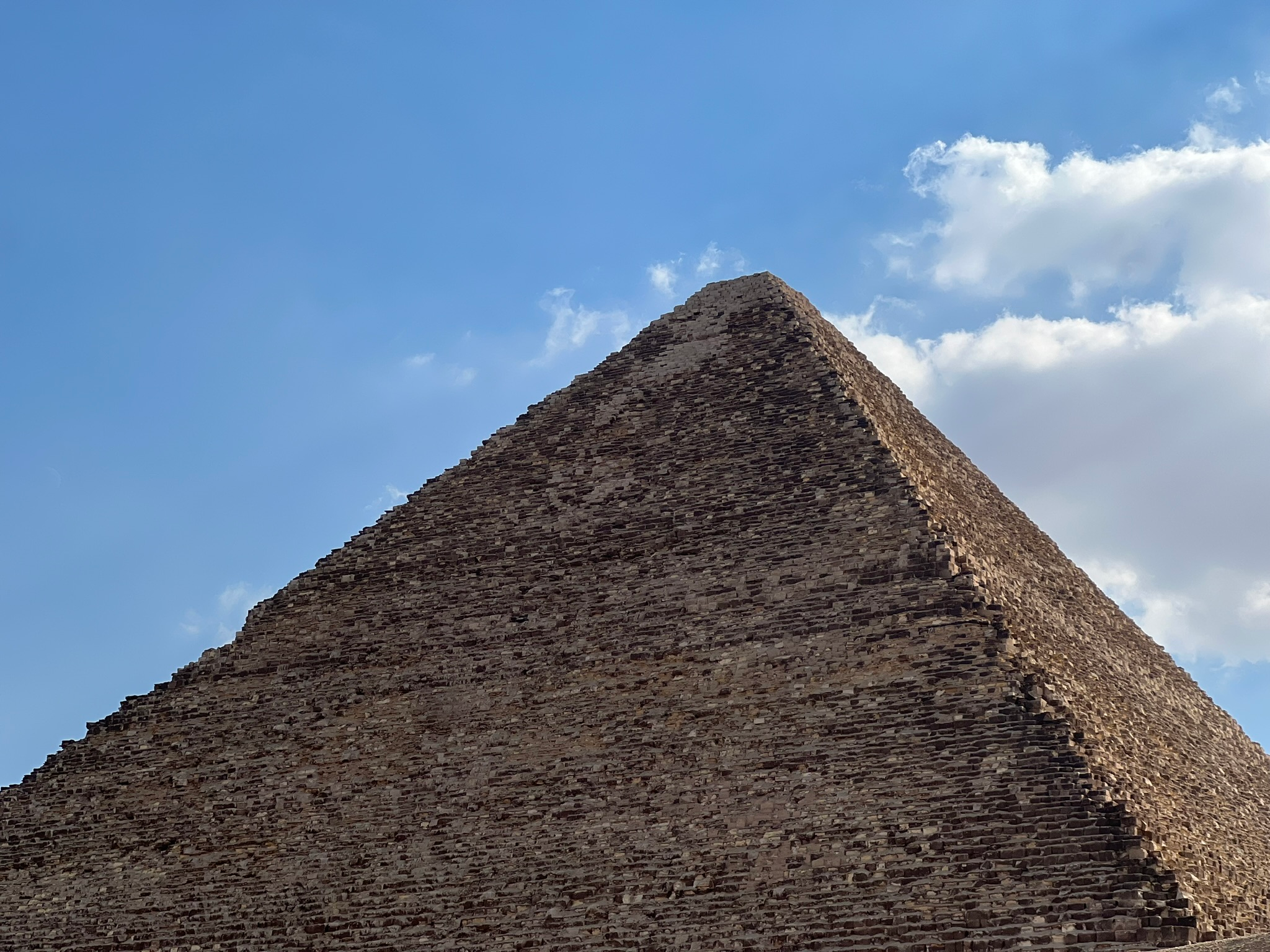
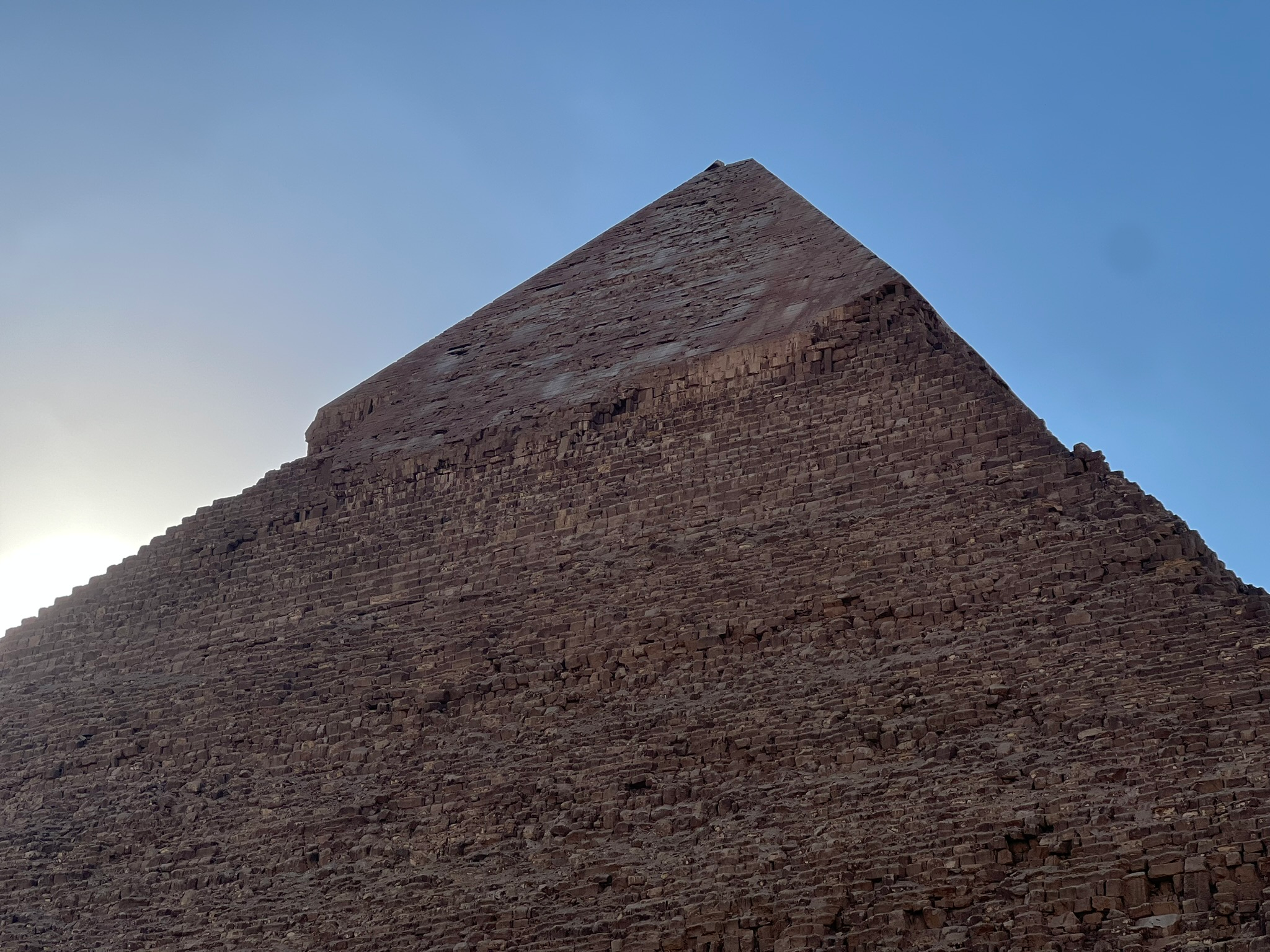
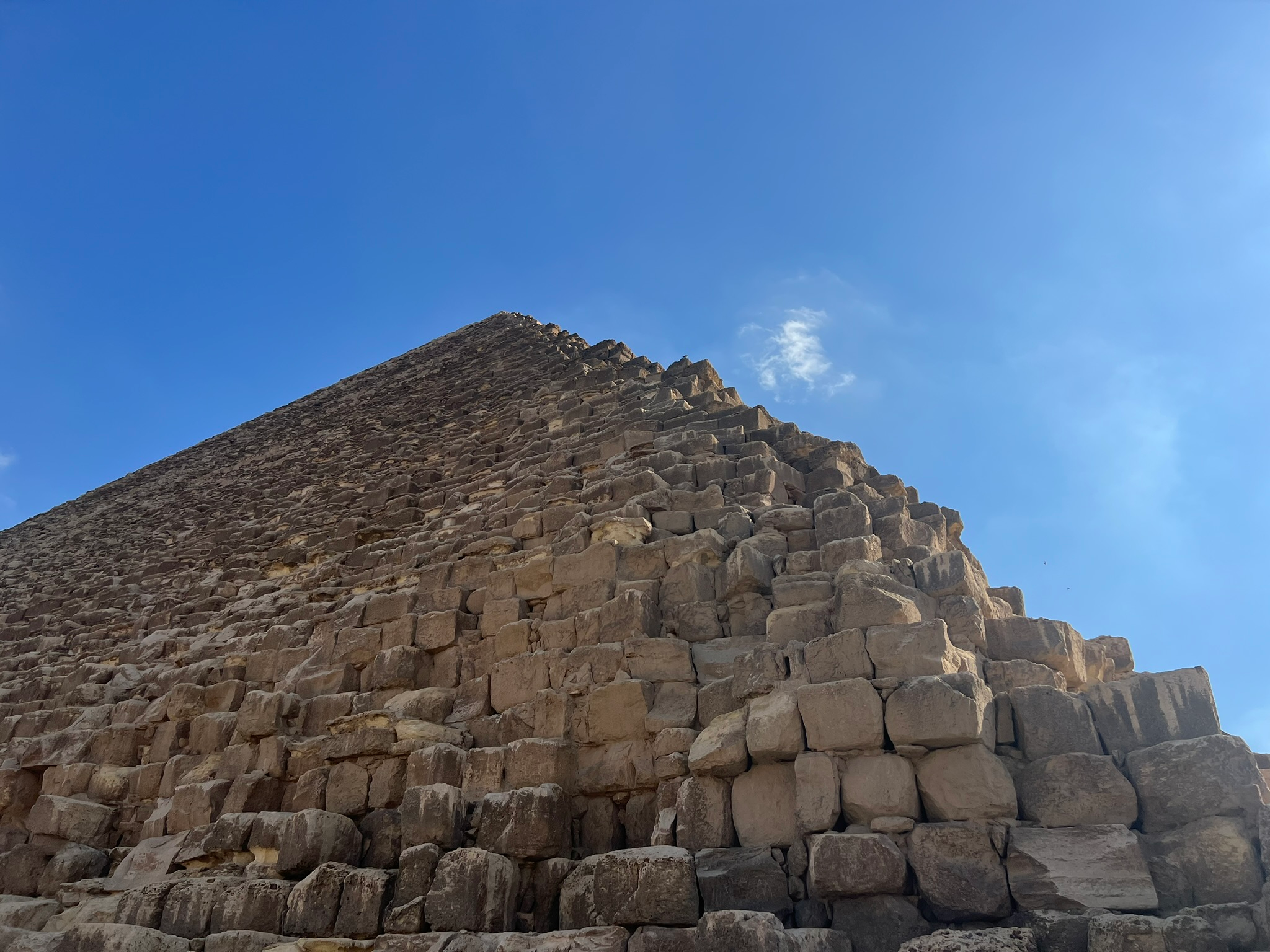
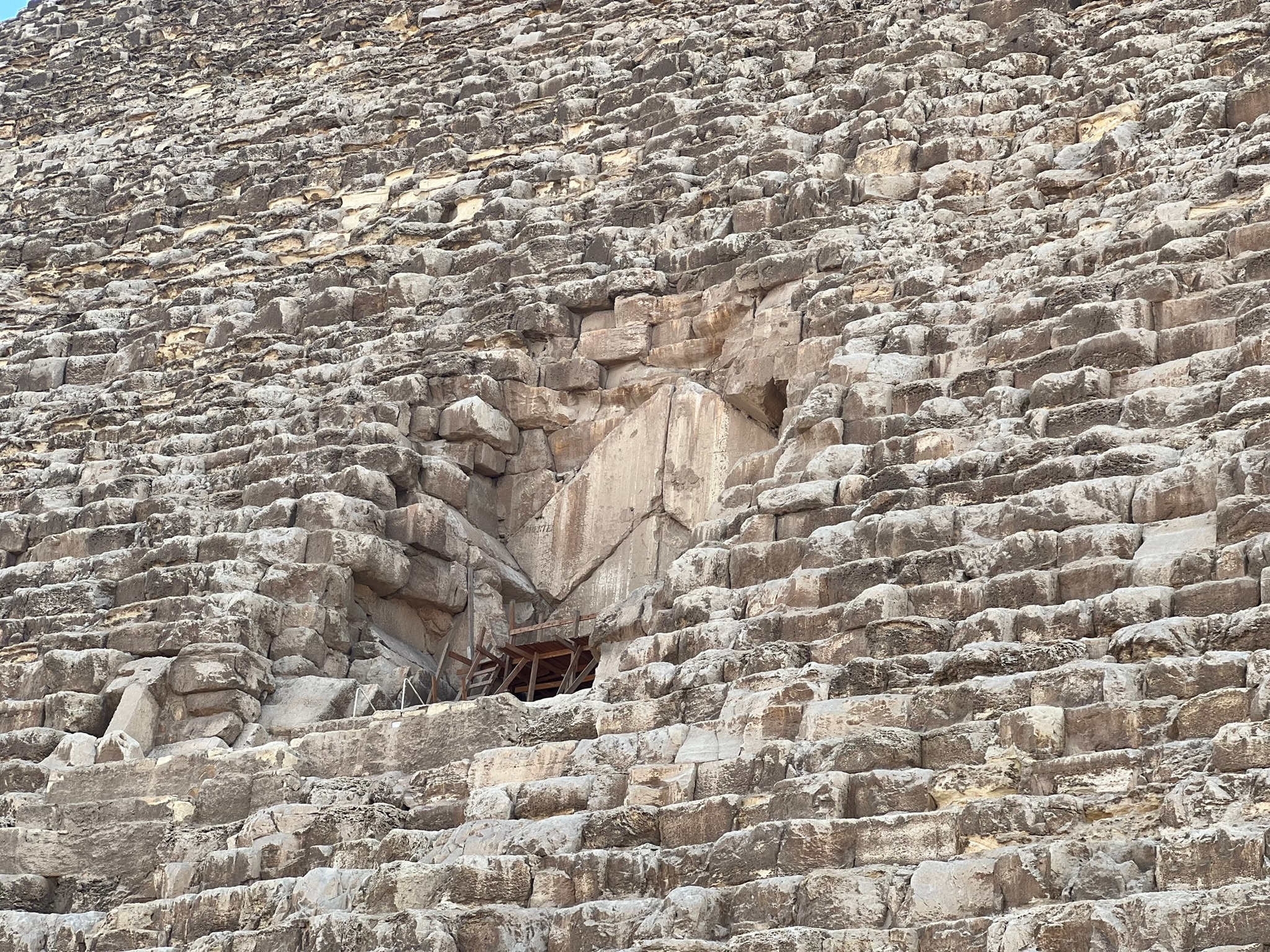
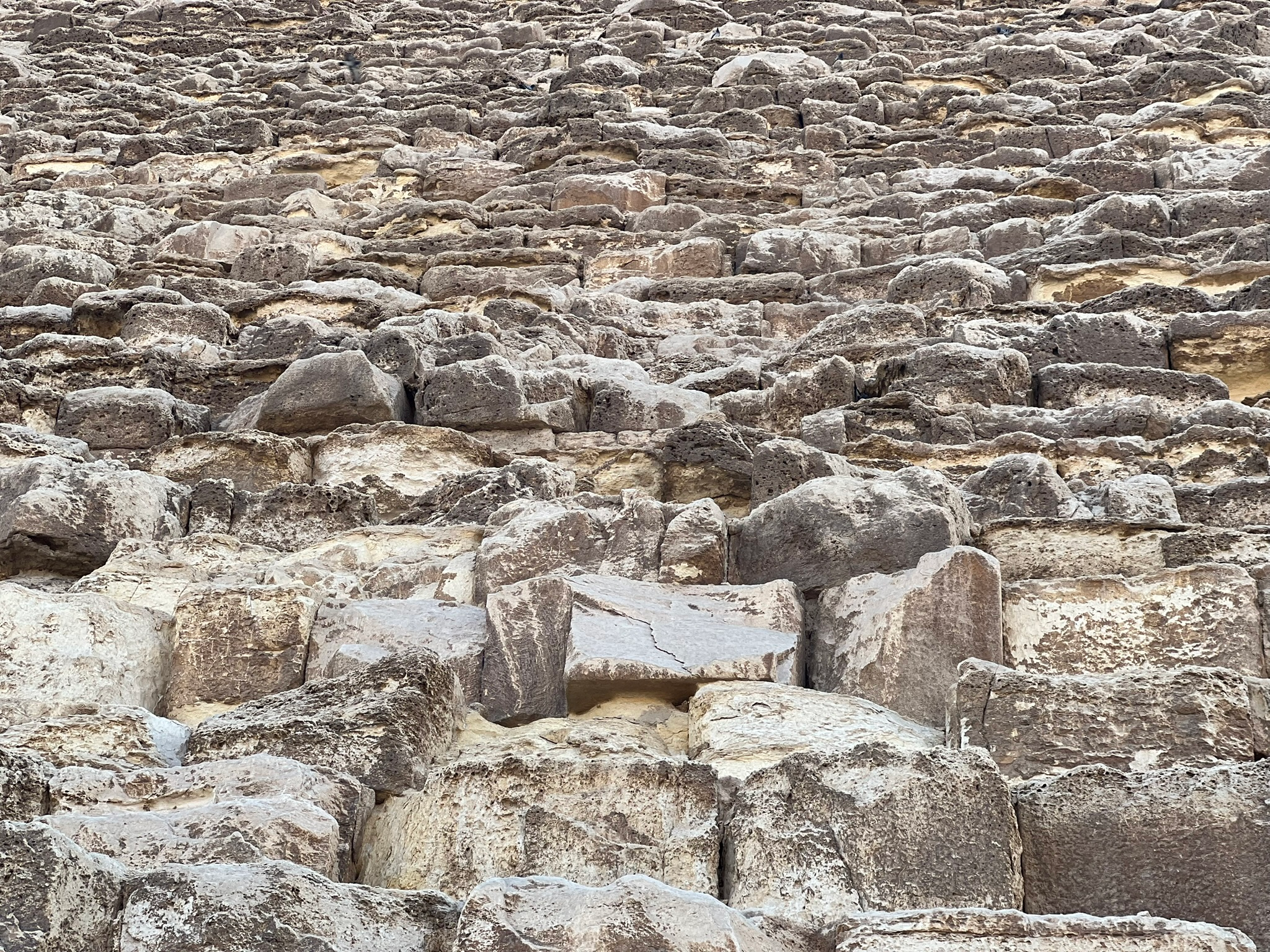
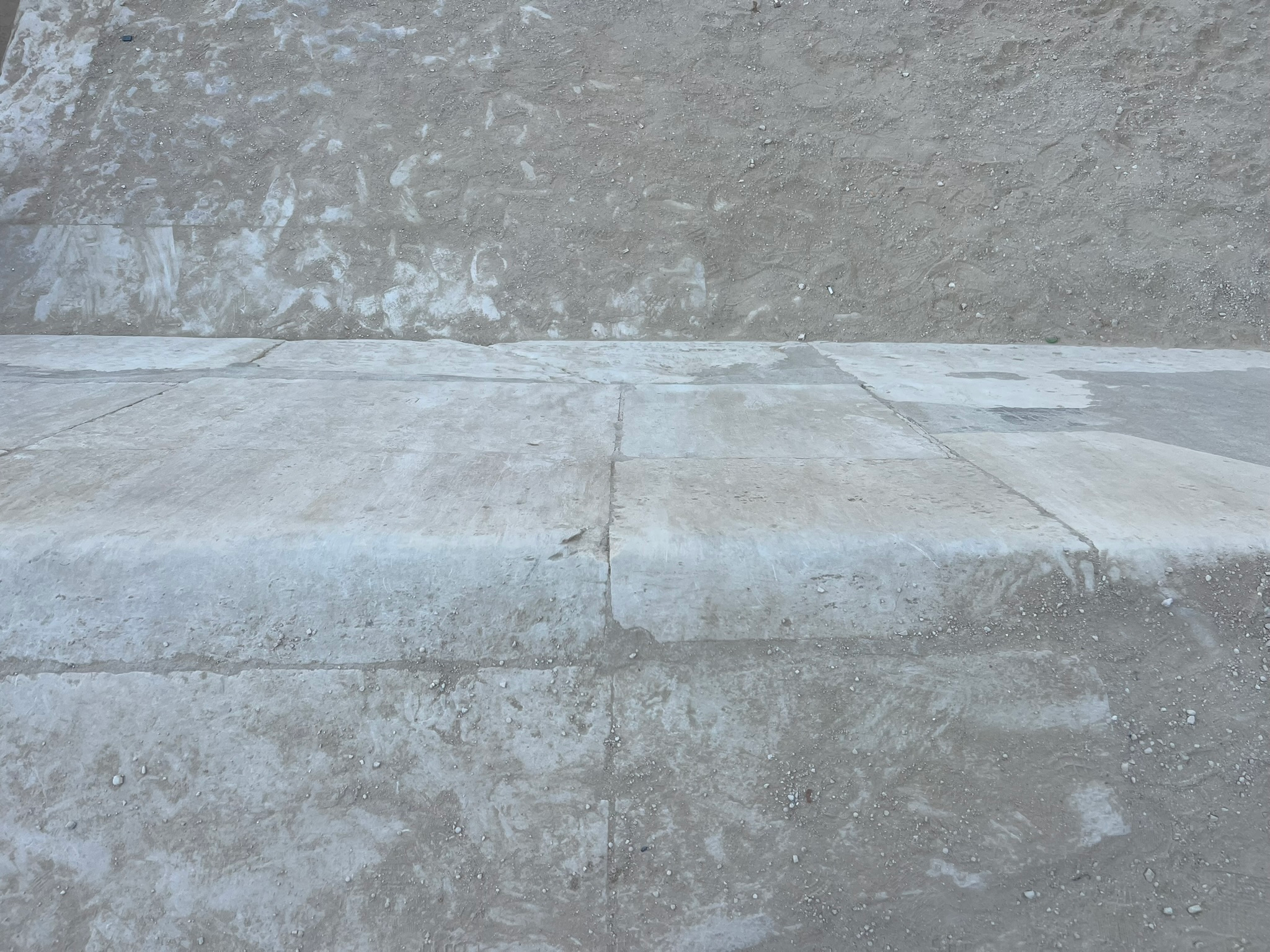
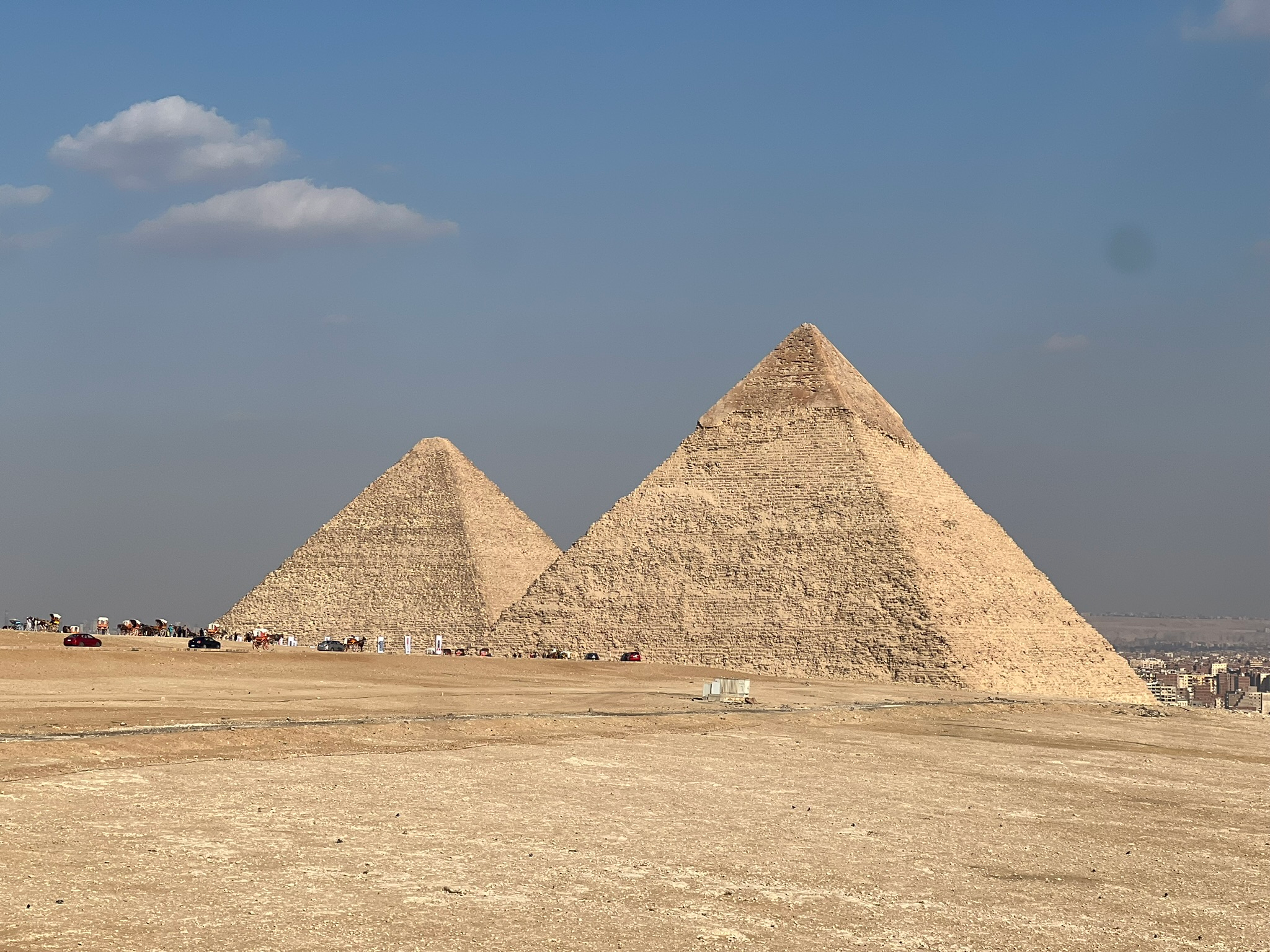
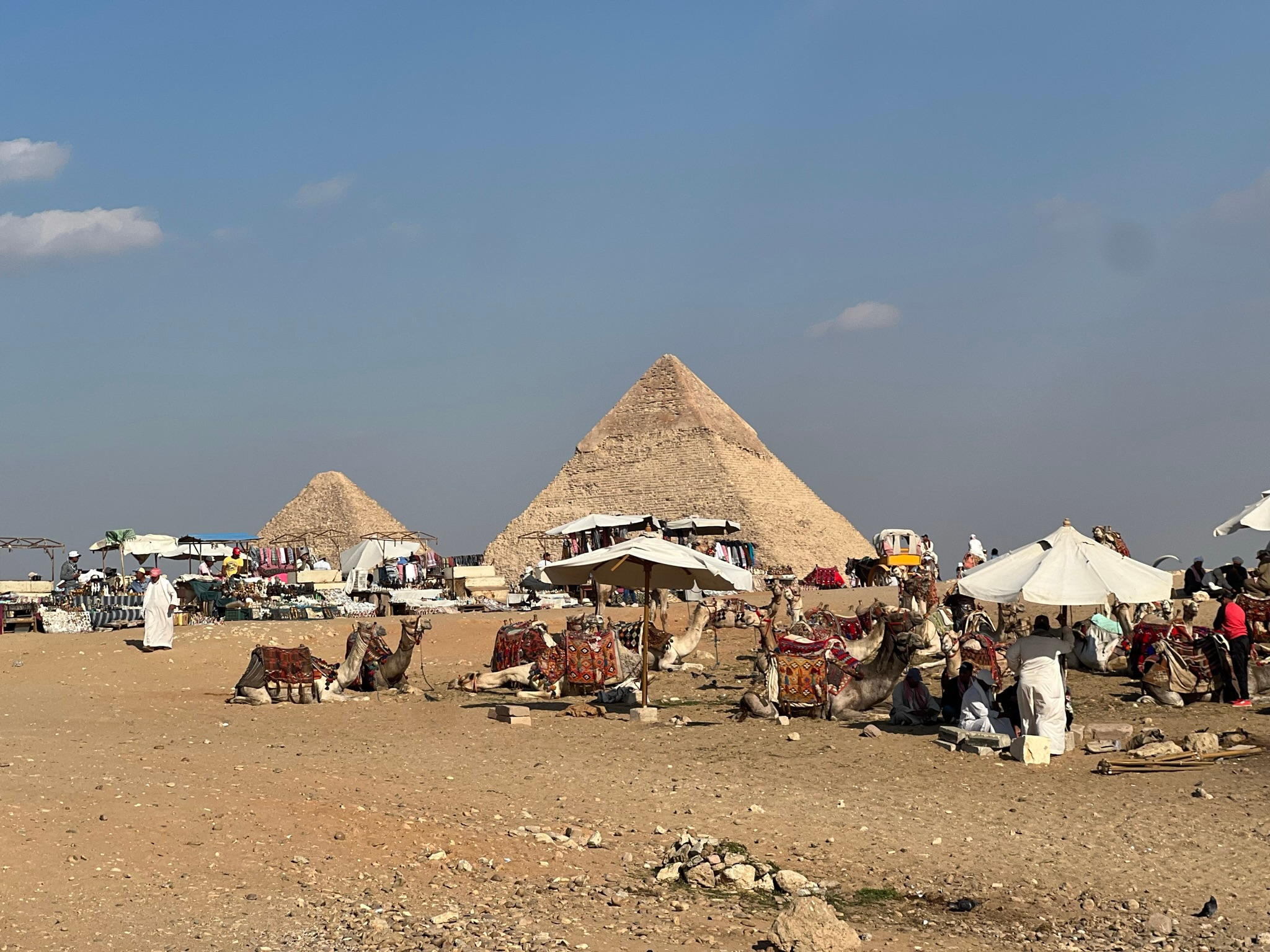
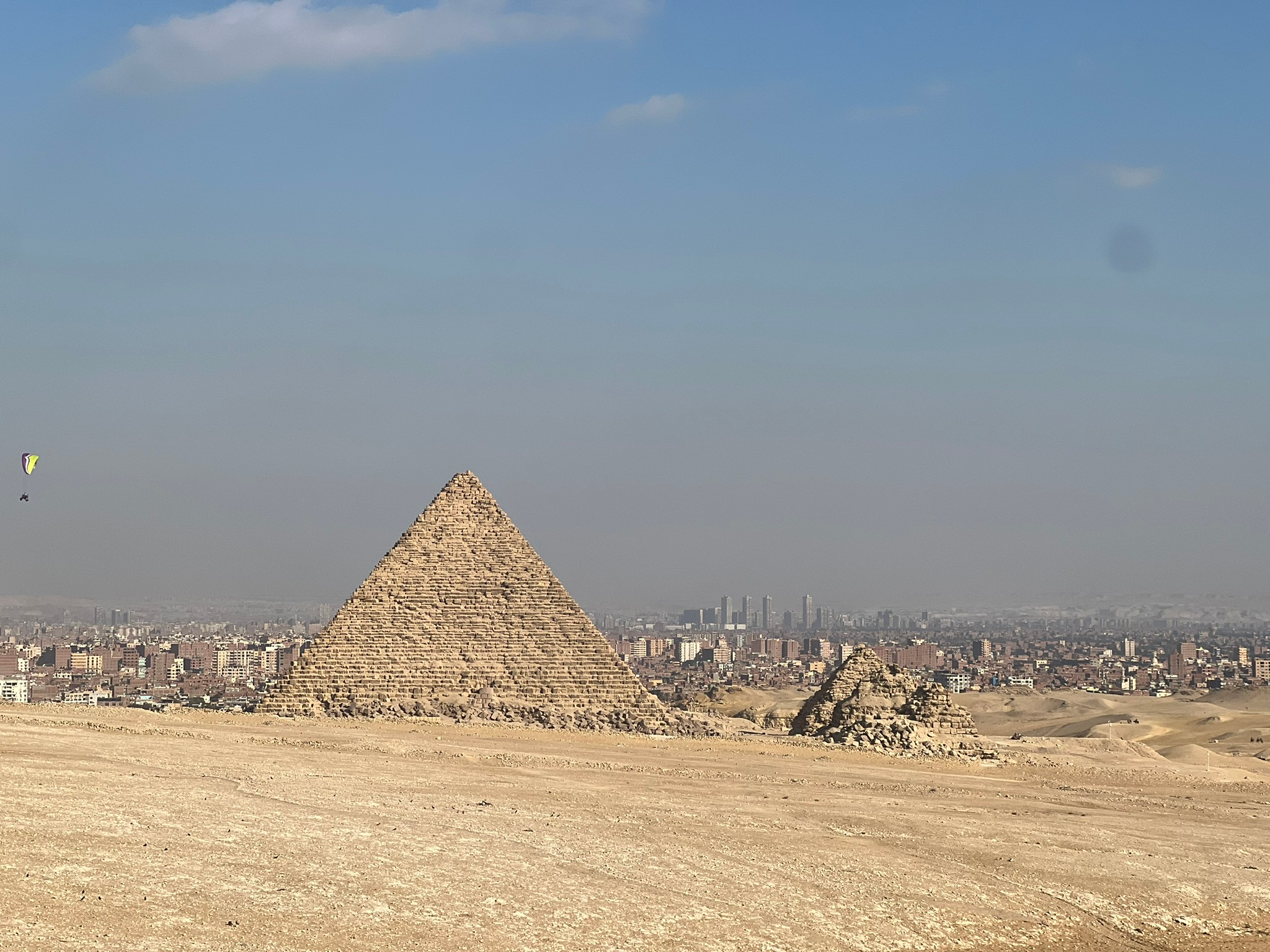
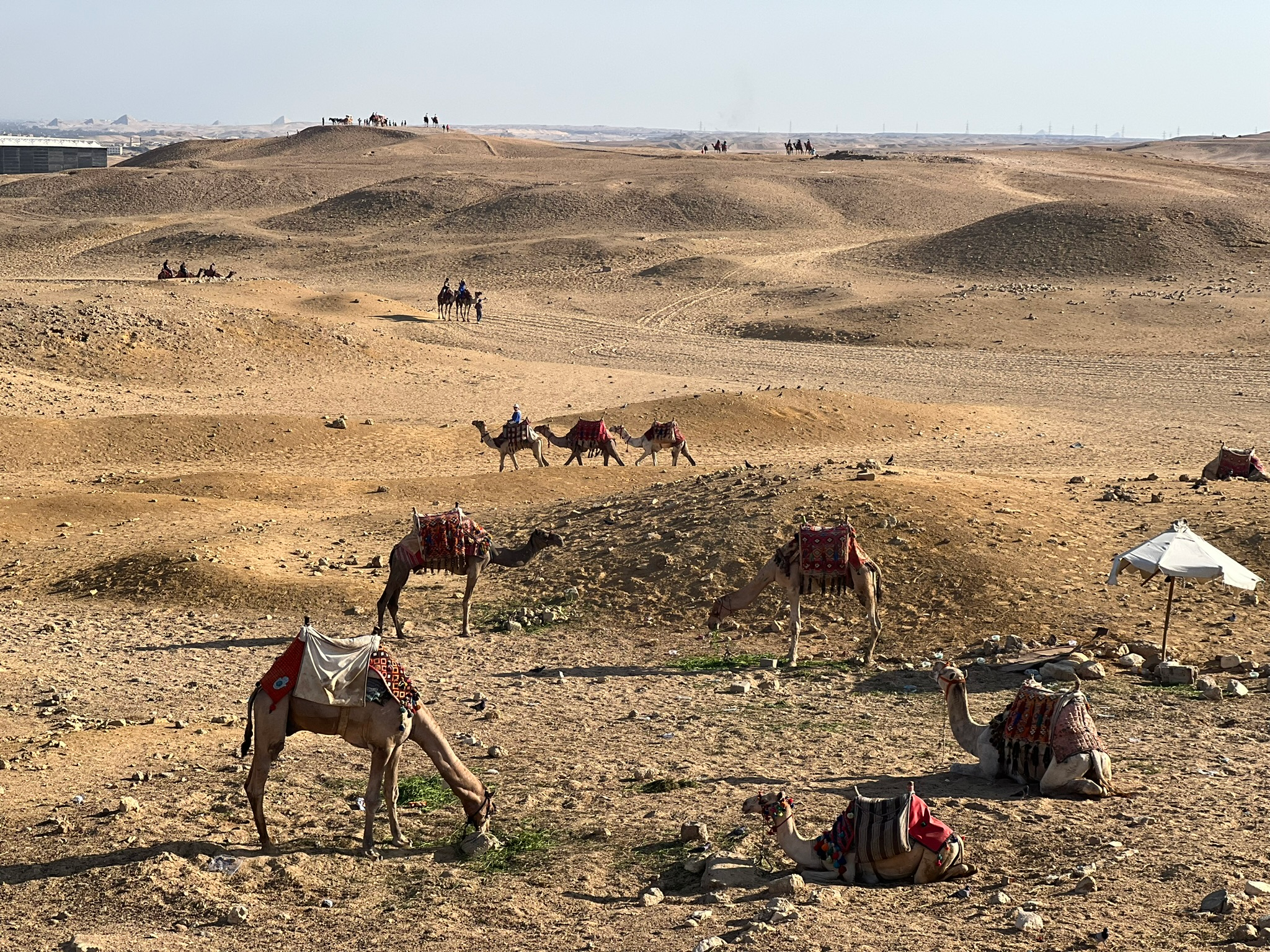
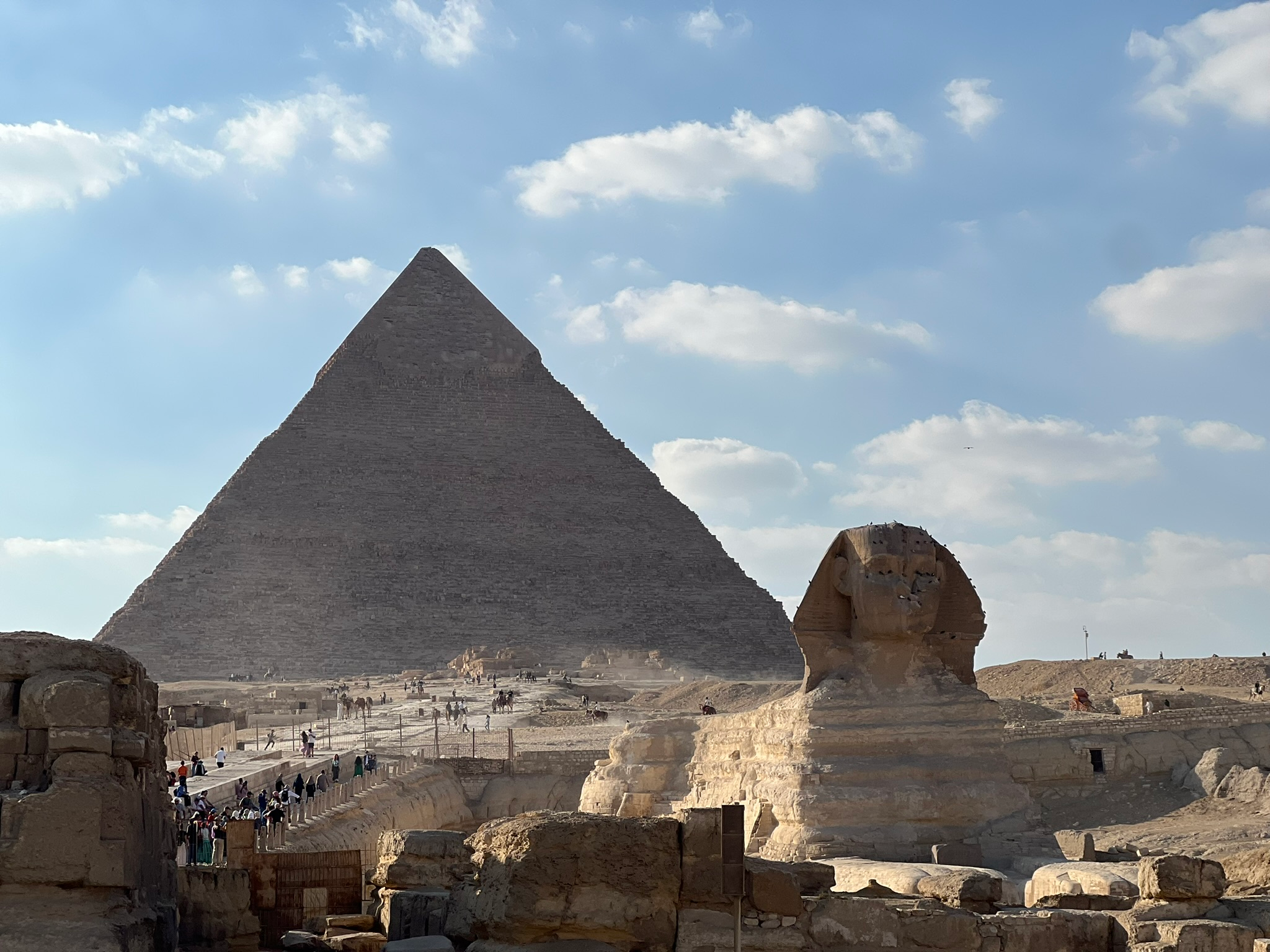
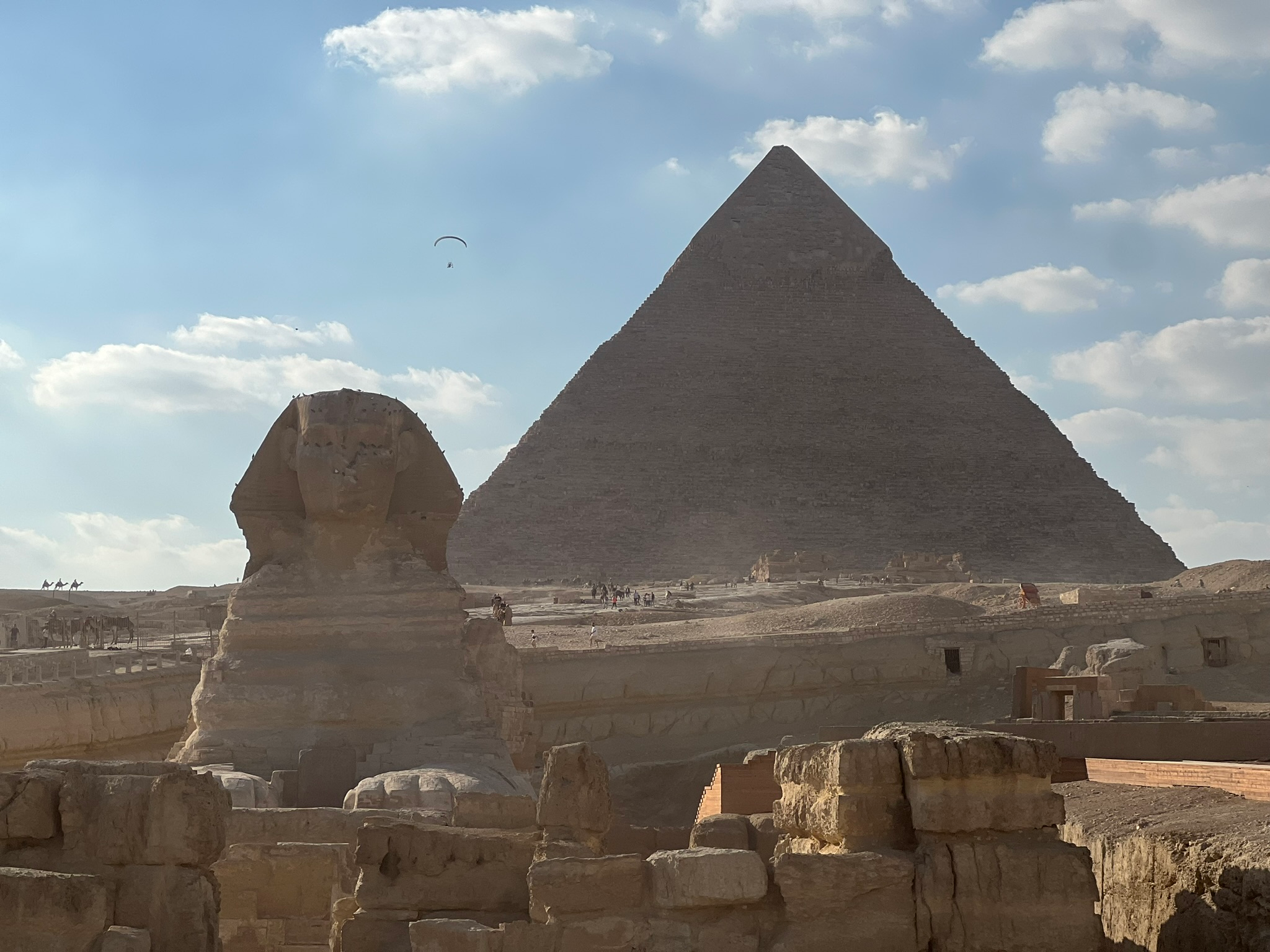
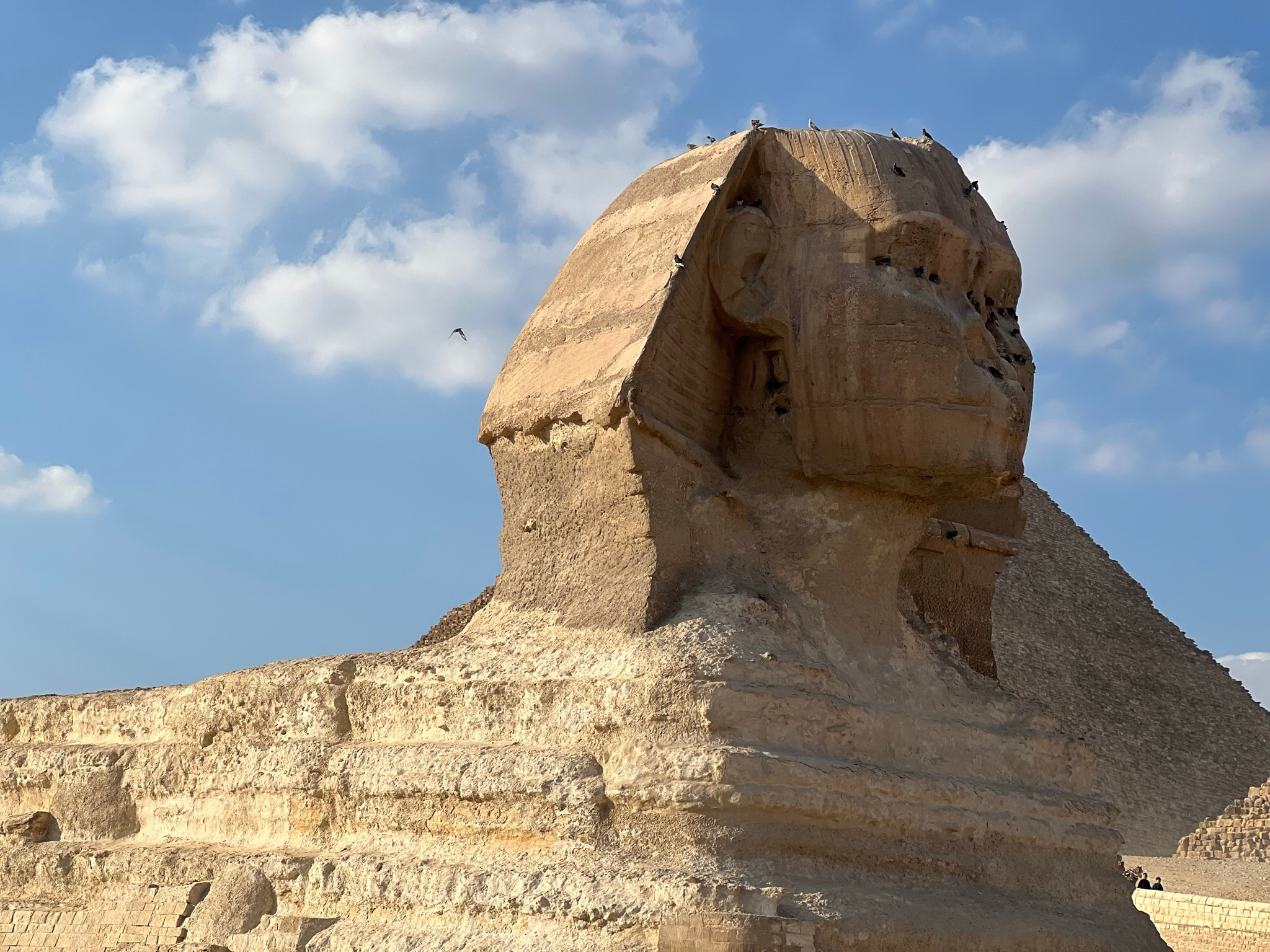
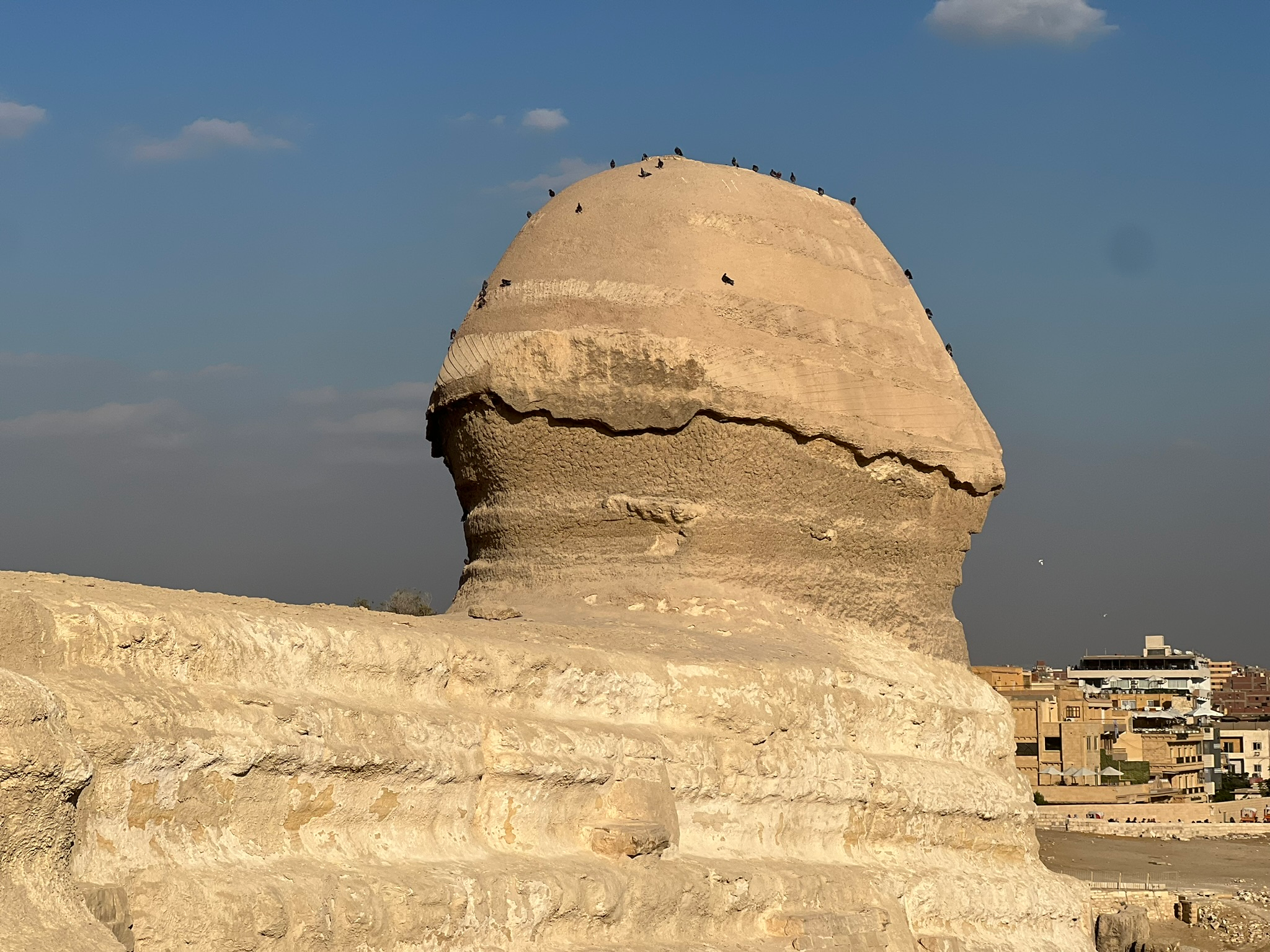
While roaming around, I gotta say it felt like I was living in a dream. The pyramids, the Sphinx, the funerary temples… it all felt too absurd to be real. And, much like with any other beautiful dream, I wanted to stay there. I really did not want to wake up. But, unfortunately, life is life and I had to. As much as it killed me having to leave everything behind, I knew I’d be back soon. I just knew it.