Komodo National Park – Day 3: The Underwater Forest
KOMODO NATIONAL PARK
Day 3: The Underwater Forest
May 17, 2023
PART I
As glamorous as the previous day had been, I had still studied myself to sleep, waking up feeling like the shell of what I once was. Luckily enough, the freezing cold temperatures of the sea helped with that.
Our first dive was at the Three Sisters – three rocky outcrops standing next to each other. Apart from the chilly water that had me shivering non-stop, it was also the strong currents here that turned the dive into a challenging one. Whilst the big blue held many things of interest, including sharks and stingrays, it was the many nudibranchs covering the walls of the Sisters that stole the show, with phyllids and dorids of all hues and shapes dominating the area. Of course, taking my time to admire them wasn’t as easy as it sounds, having to swim against the current or drifting along with it in the meanwhile.
Here, we also came across a few magnificent anemones, their squishy purple columns with tentacle-laden floral cups being home to many anemonefish. Whilst the tentacles are venomous, they are usually innocuous to humans, resulting only in a sticky sensation when touched. Whilst I usually take on the passive interaction approach, I couldn’t help but get a good feel of the outer column – the soft and smooth exterior of it feeling pretty much like satin. I did feel a bit guilty about it once the anemone closed in on itself though. Leave bubbles, no troubles!
We did the safety stop atop the largest of the Sisters. Here, a couple of blue tangs chased each other over the coral, with blue tuxedo urchins dotting its surface.
Padar Kecil
With us only having three dives that day, I decided I owed myself a break from studying during the surface interval. Instead, I joined the gang on the deck in a game of Qwixx, with Nina and I dominating the scene.
Then it was time for our second dive – this time at Padar Kecil; a coral reef surrounding an island. In hindsight, I can definitely say that this was one of the most enjoyable dives thus far. As we descended along the coral wall, we spotted a yellow boxfish and the tiniest juvenile harlequin sweetlips, with its minute orange and white body fluttering about like a rattle. Then we headed to the sandy bottom. Perched peacefully under a rock was a nurse shark – the first I’d seen since my dives back in Panama.
We swam outward, getting to the remains of a small wreck that had been split in half. Below its bow was a huge whiptail stingray (which Anurag scared off after he was done taking his shots), with the hull being covered with black long-spine sea urchins – their yellow mouths with a black pinpoint staring ominously much like traps in The Legend of Zelda. After exploring the wreck, we then headed back to the sandy area, scouring every grain for something that might lie hidden. Here, I came across a lionfish and a scorpionfish having an intense staring contest, with the former flaring its fins and the latter opening its mouth threateningly. In not wanting to annoy the two venomous beasts who could have potentially teamed up against a common enemy, I gave them their privacy and joined the others by a rock that seemed to be piquing their interest.
After much time spent trying to see what they were looking at, the perfectly camouflaged silhouette of a grey-brown giant frogfish barely standing out came into my view. There’s much hype amongst divers with regards to these fish, and after seeing one, I honestly get why. Whilst they are butt-ugly, these members of the anglerfish family have developed several anatomical adaptations to mimic their surroundings. While those that are found near rocks or sand tend to have duller and darker colours, those found around coral typically sport bright and colourful bodies. They also prefer to lie still, using their pectoral and pelvic fins to walk along the seafloor to move about – swimming not being their forte. Also, on their heads, these creatures have a lure which they move in a similar fashion to the creature they want to prey upon. Intrigued, their meal approaches the beast, at which point they open their mouths up to twelve times their normal size, thereby sucking their victims whole. Friggin’ awesome!
Also, during this dive I tried my best to keep my distance from everyone else. I gotta say it was quite the game-changer, with Anurag’s antics now taking place far, far away from me.
PART II
Toman Rahasia
A quick lunch, another study session, and it was already time for our third and final dive of the day. We’d be going to Toman Rahasia, a coral wall situated along Padar Island that looks nothing less than underwater forest.
I can’t quite say it was the best dive given that the visibility was poor and the currents were strong, but I do have to admit that the small creatures we saw made up for it. Apart from the variety of tube worms which made the wall look like a feathery carpet had been placed all over it, we got to spot a number of nudibranchs, amongst which were my two favourites thus far: Tambja morosa and Hypselodoris bullockii.
At the end, we came across a huge anemone. It must have been some two metres in length, its fronds like an underwater forest swaying with the current. Oh, and a cowfish swimming next to it! I hadn’t seen one of those since Central America!
Radiology and Rupiah Views
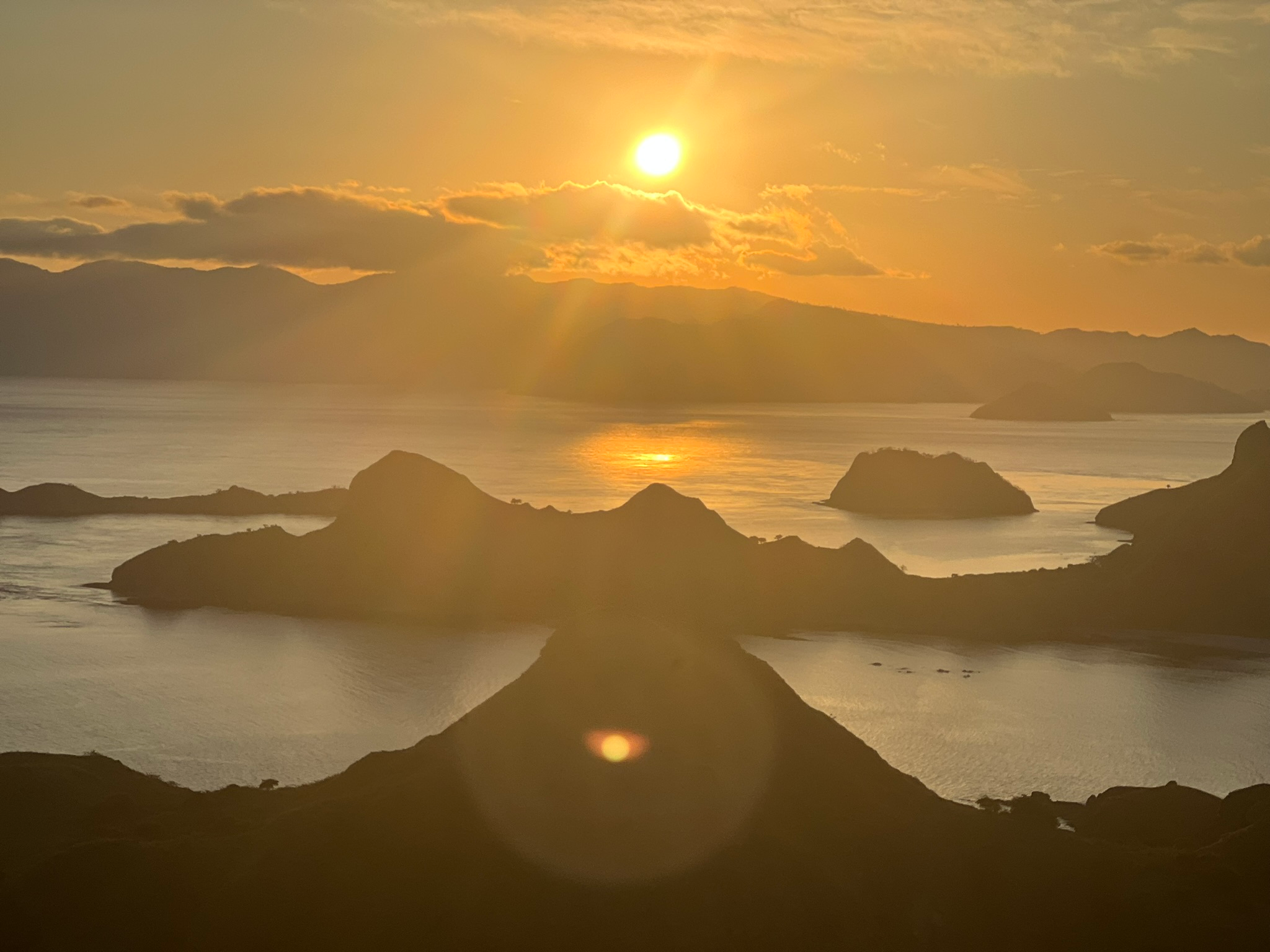
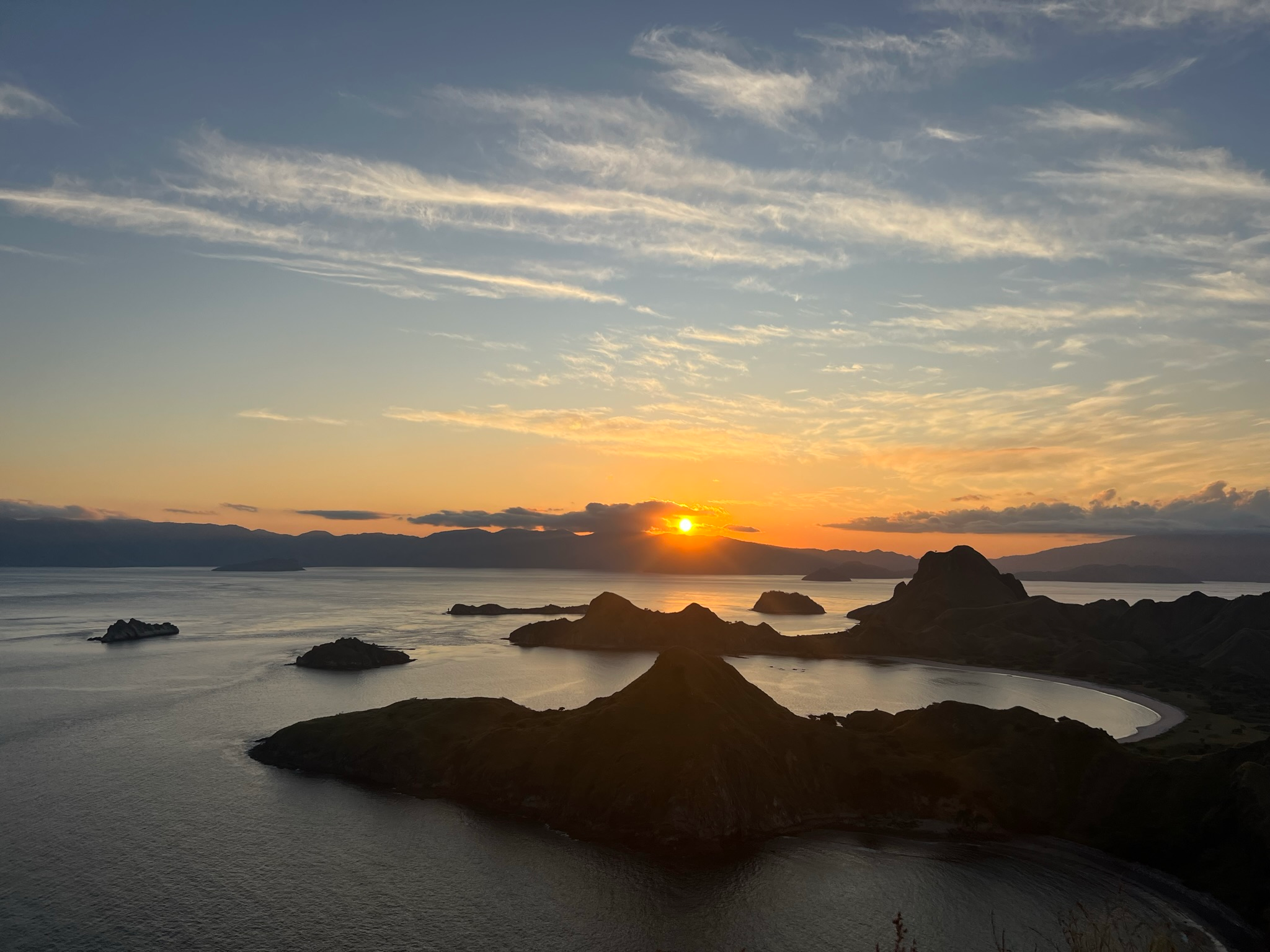
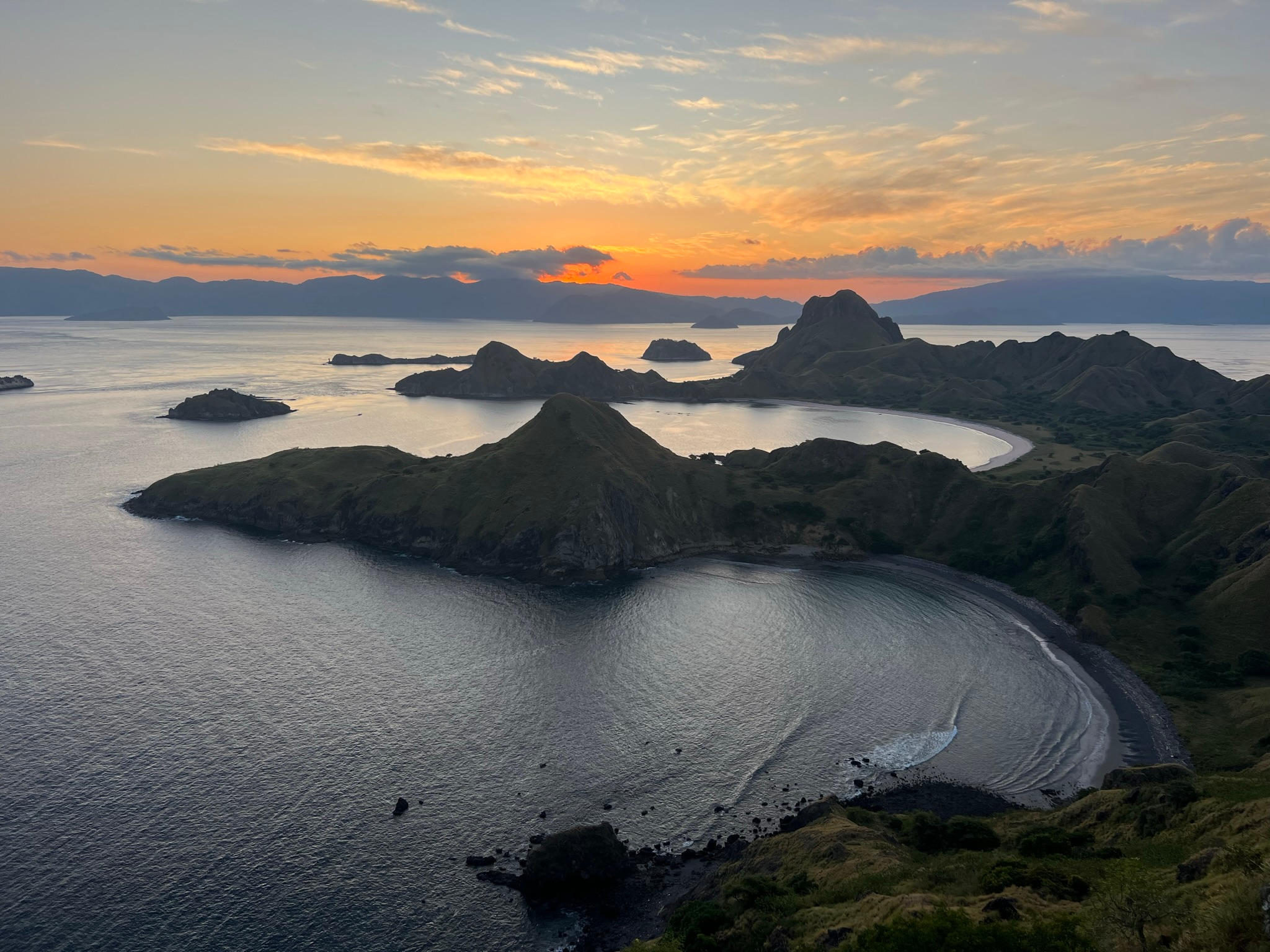
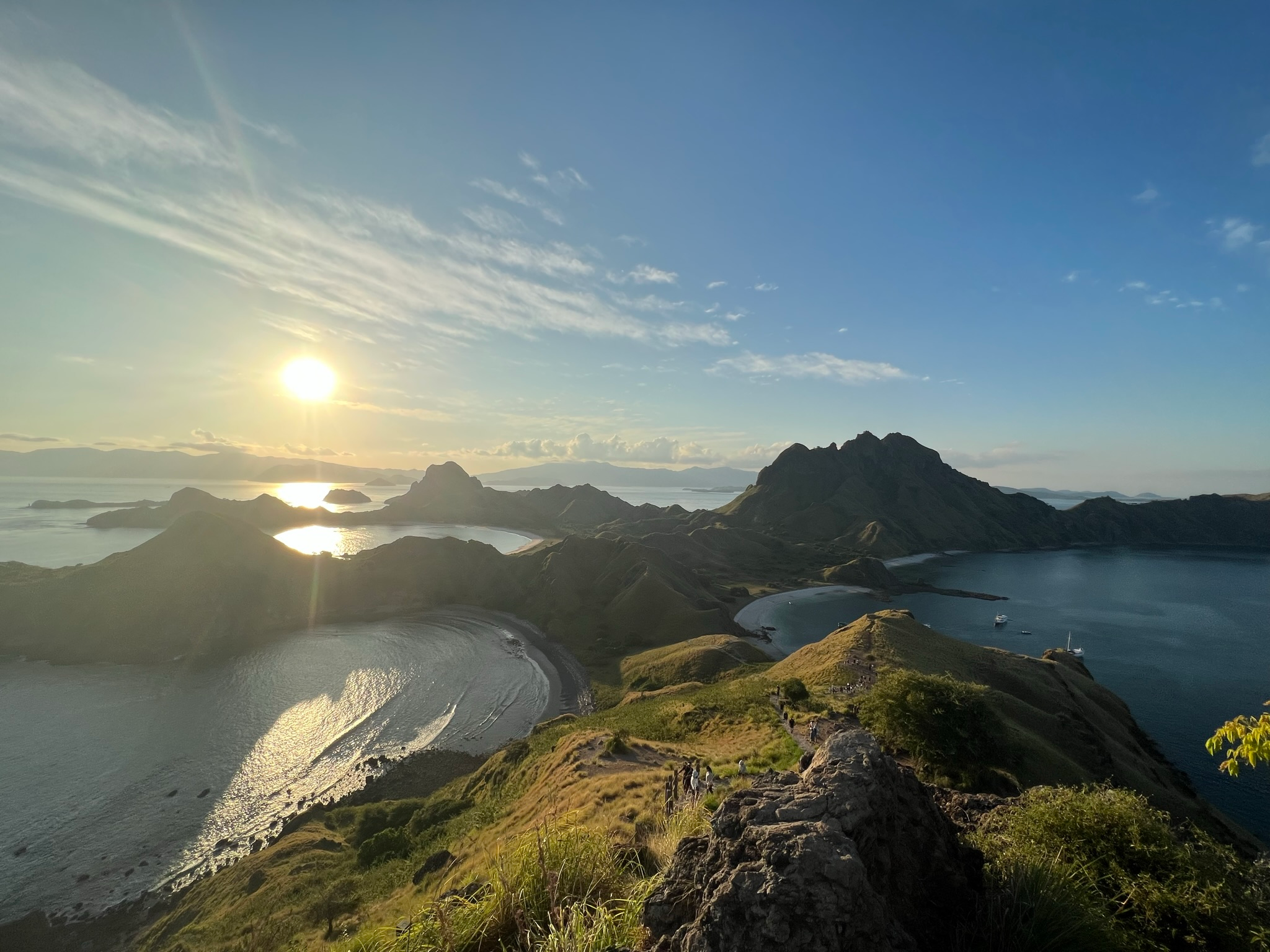
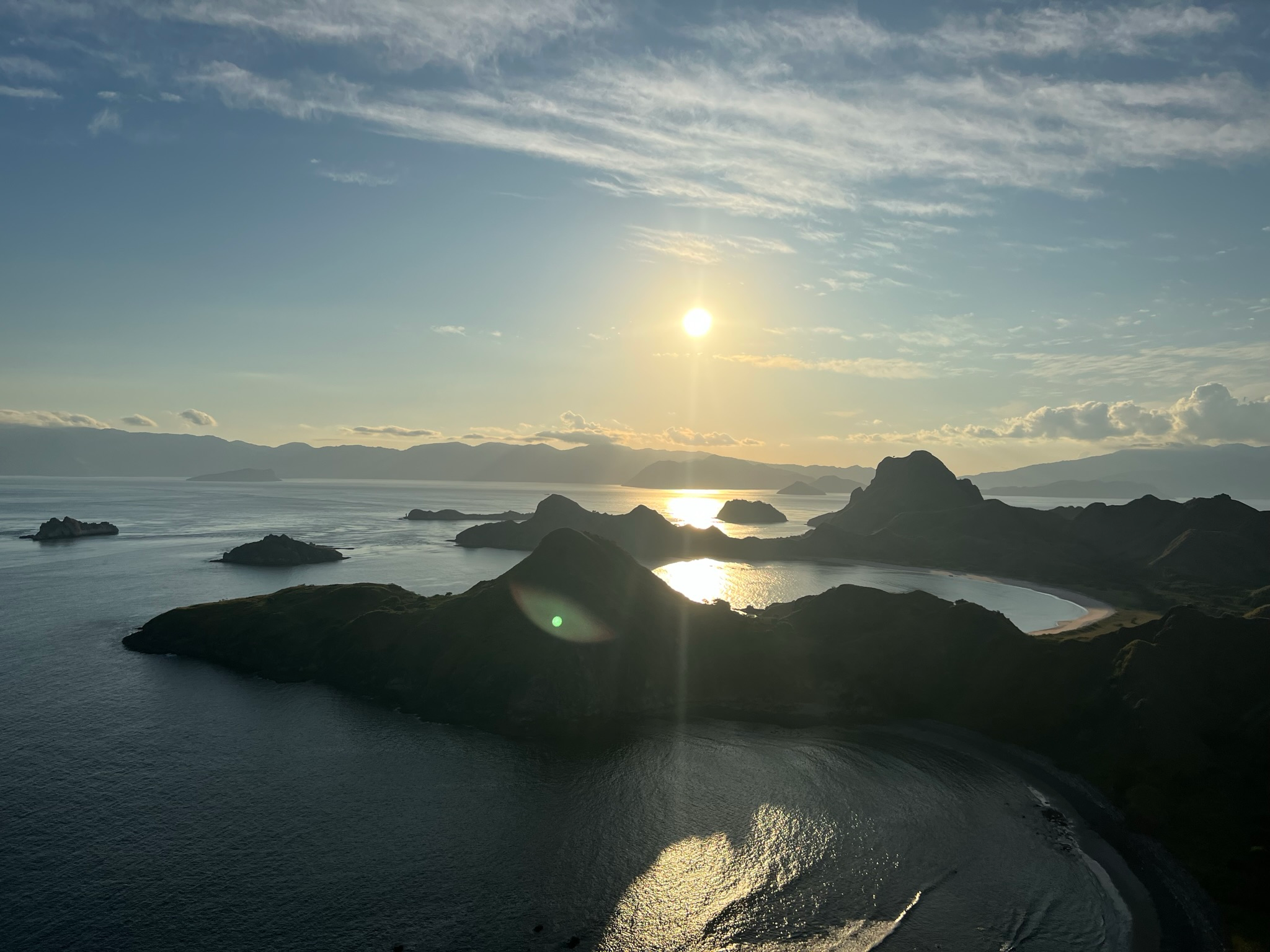
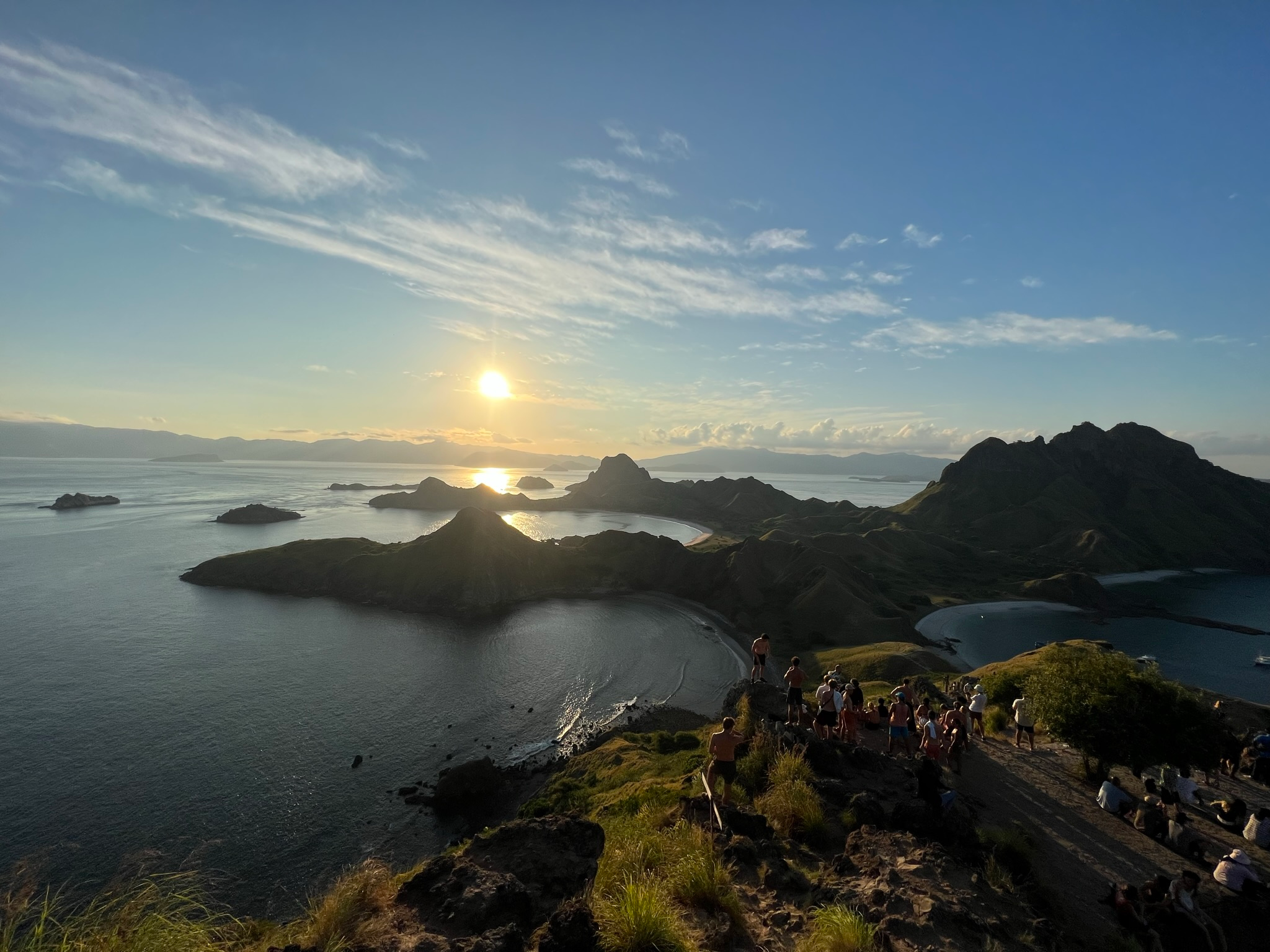
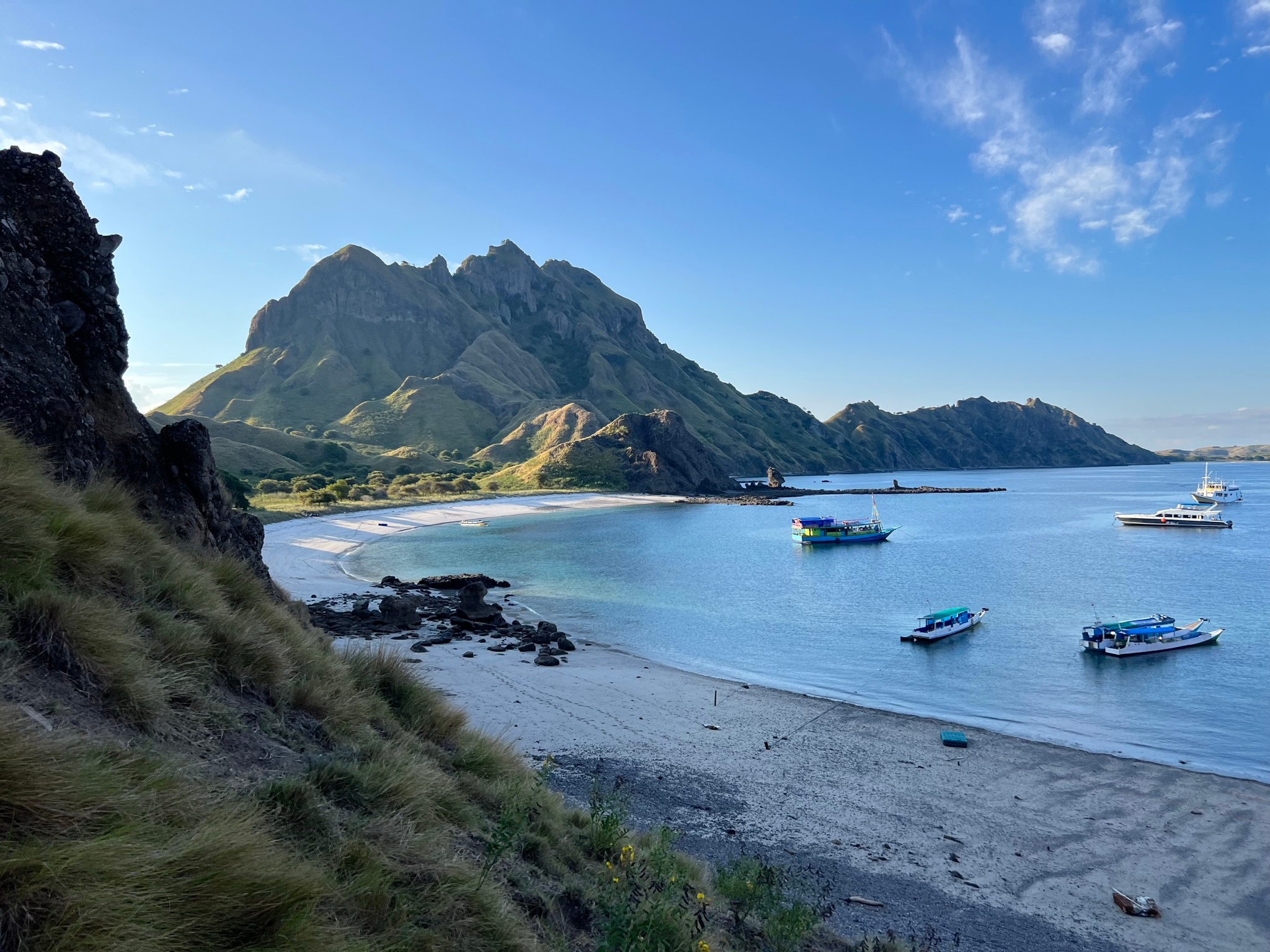
And that was all the diving we’d have for the day. Next up would be a trek on Padar Island! Located between the islands of Komodo on the west and Rinca on the east, Padar, as Darmin explained, is characterised by volcanic mountains and bays in between each of them, with bushes and grasslands covering it. Much like Piaynemo Island, this one features on the Indonesian Rupiah banknotes, given the spectacular view at the top.
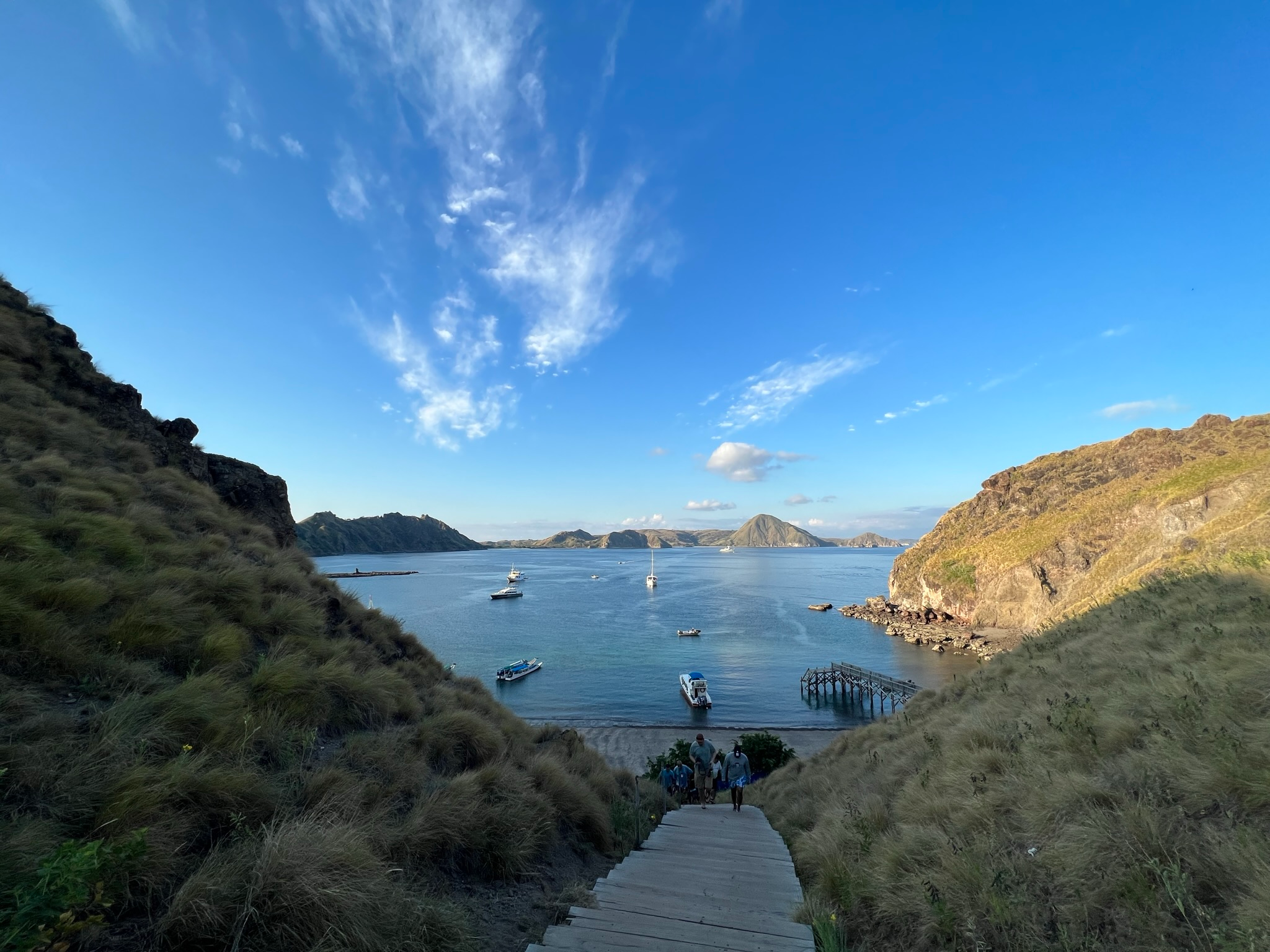
It’d be just Anurag, Casey, Melinda, Nina, and Daniel joining the trip, with the Chinese gang opting to stay on the ship relaxing. After stepping ashore, the first thing to catch our eyes was a deer rummaging through a heap of trash on the beach – a Javan rusa. With us not having a lot of time on our hands, we were then rushed onwards by the park ranger who pointed us towards the trail – a cobblestone path running up the hills. I gotta admit that it was pretty exhausting, especially under the scorching Indonesian sun. Considering I had been running up and down the Patagonian mountains up until a few months before, I was pretty disappointed at my panting and heaving over the relatively mild inclines we were faced with. With Casey being an experienced hiker himself, it was reassuring seeing him stop a couple of times. I for one took the opportunity to take some shots and take in the beautiful scenery in front of me.
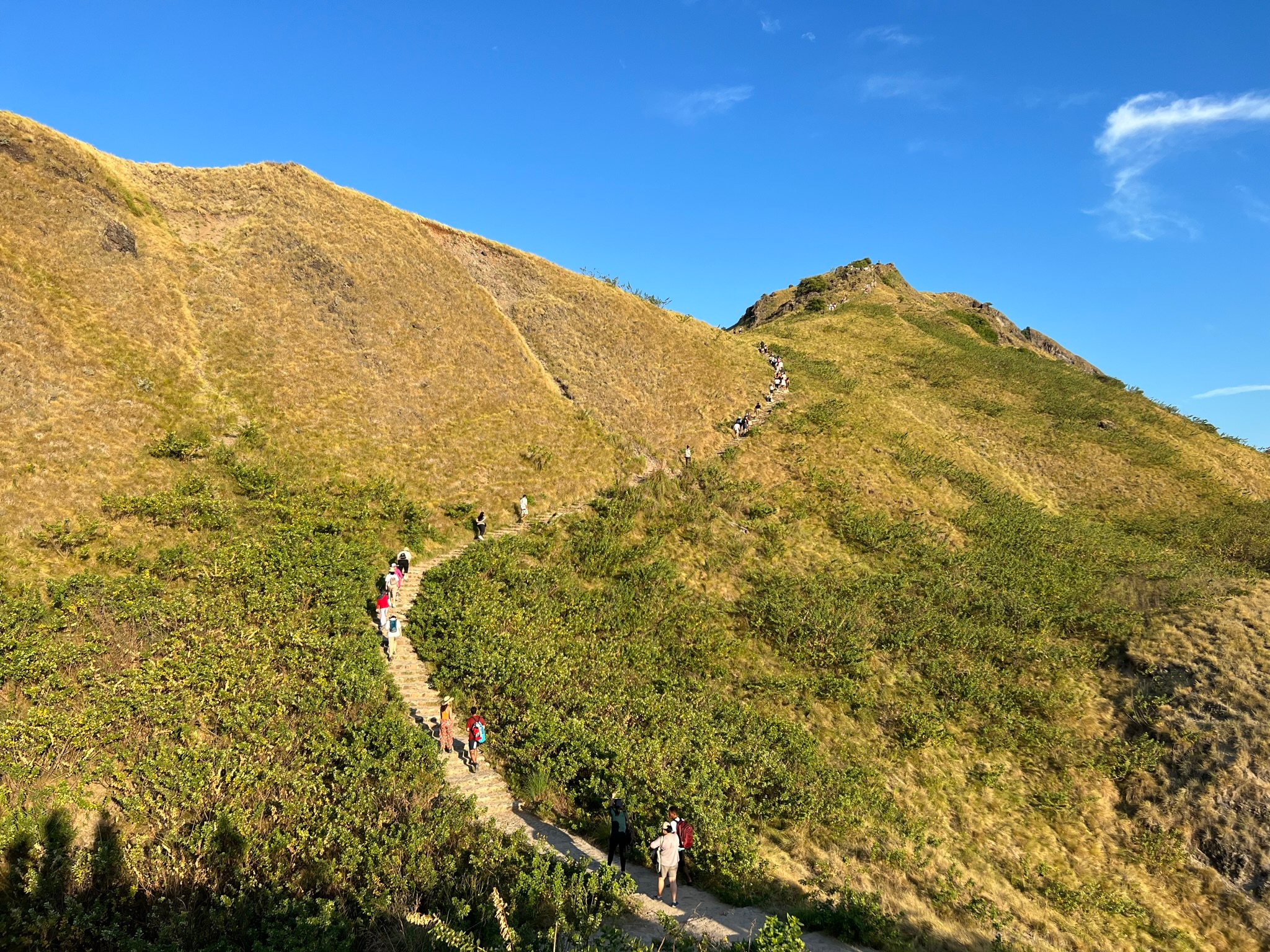
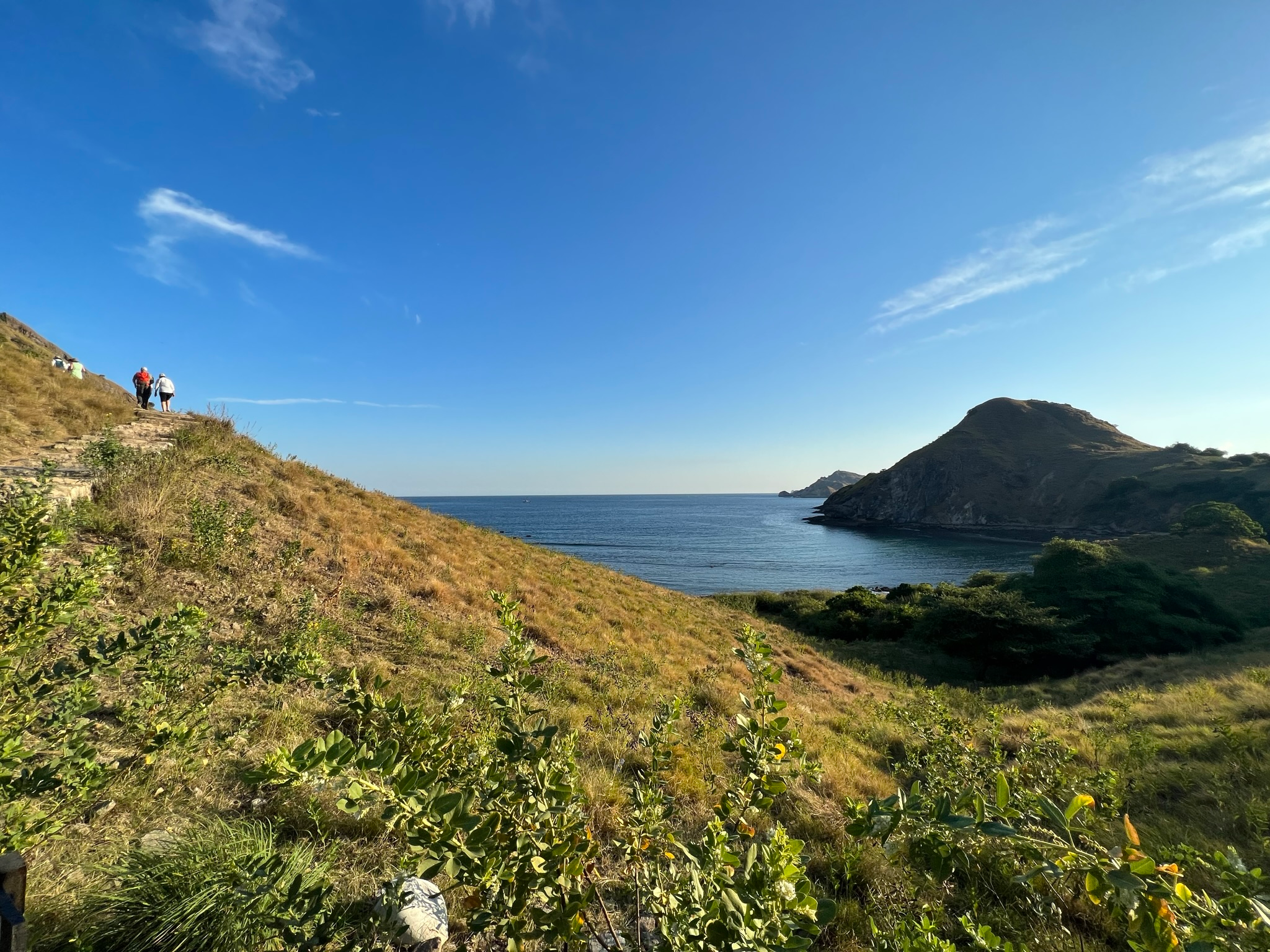
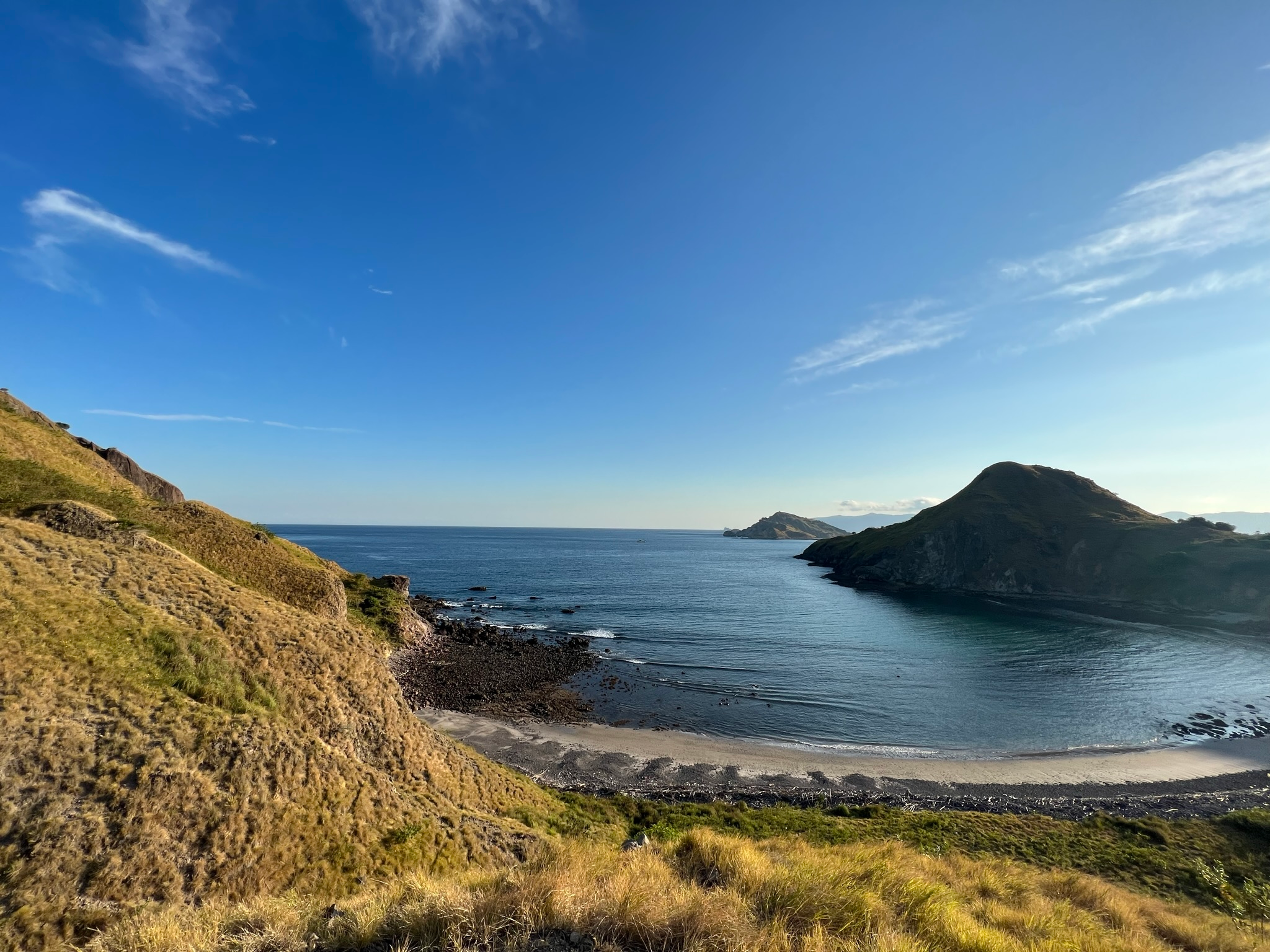
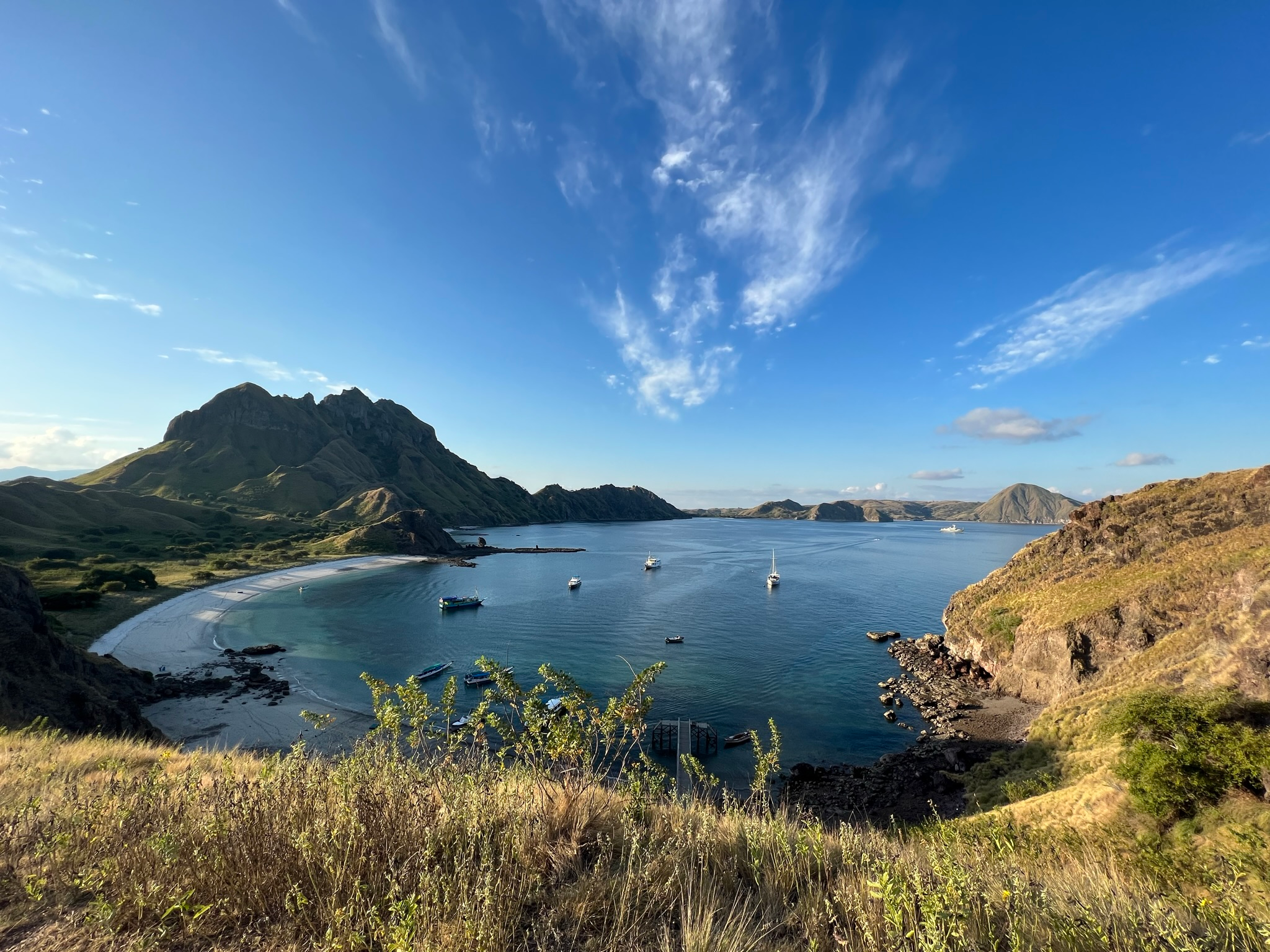
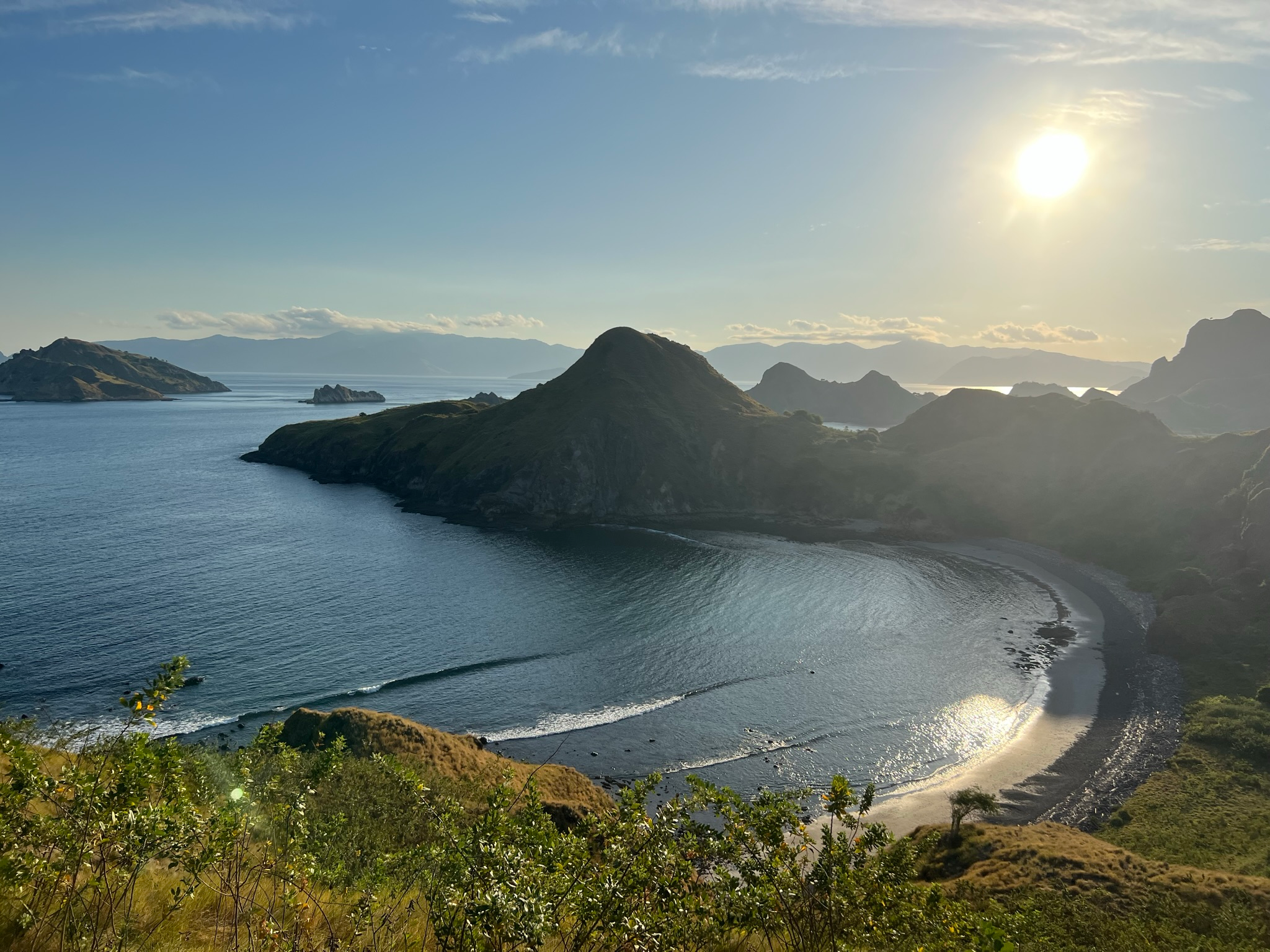
Onwards we climbed, until we finally got to the highest point, the hilly, shrub-covered island lying below us. Here, we took a much-needed break and enjoyed a couple of beers and each other’s company and that of another hundred tourists. By that point, it felt like we had known each other for years, talking about anything and everything. With Casey being a radiologist, we found ourselves discussing medicine without wanting to, probably to the annoyance of the rest as they were more concerned with the natural beauty that surrounded us.
And they weren’t really in the wrong, considering the glorious view of the sun setting over the fluke-shaped landmass beneath us – the dull green now veiled by the soft, golden light.