Bocas del Toro – Day 3: The Legend of Polo
BOCAS DEL TORO
Day 3: The Legend of Polo
February 08, 2023
PART I
I’d grown so used to a routine of daily adventures, incredible vistas and wildlife that, once again, I couldn’t even begin to imagine what it’d feel like to go back home. Revelling in the few months of complete freedom I had left, I swore to make every second count.
To that end, I had four dives waiting for me. And so, bright and early I made my way to the Panama Dive School on Carenero Island. Here, I was introduced to Cach, a British (hot as hell) divemaster who’d be leading all four of my dives. It had only been a few weeks since my last dive, but it might as well have been years. I longed to be underwater again. Weirdly enough, it started to feel as if I could breathe better and easier below the surface.

First Dives in Bocas
All geared up, we got onto the boat and headed to our first dive site, Casa Verde. The reef here was quite unlike those I’d grown used to back in Utila, with coral-covered rocks scattered over an otherwise sandy bottom. The sea life though? Truly incredible.
From the usual suspects I’d grown familiar with – triggerfish, parrotfish, trunkfish, cowfish, butterflyfish and angelfish – to rarer sightings like a red juvenile hogfish, a massive scrawled filefish, and a nurse shark lying motionless on the sand. Add to that countless brittle stars, sea cucumbers and sea urchins and it was truly an amazing dive. Not to mention all the lionfish – with Cach and I mutually regretting having forgotten the Hawaiian slings.
It would’ve been a perfect dive had it not been for another diver’s buoyancy issues. Now fully confident in my trim and buoyancy, I can’t say I didn’t silently judge, and shed a tear or two, when I saw him clipping a beautiful barrel coral with his fin, snapping part of it clean off. I flinched hard.
The next site was Pandora, aptly named given the sheer variety of marine life found here, as well as the Godewind, a ship deliberately sunk and now home to thousands of fish, draped in coral and algae alike.
While the wreck once looked like something out of a pirate film, its two masts have since collapsed, admittedly stripping it of some of its mystique. The journey towards it was entertaining in its own right, with vibrant coral formations and a parade of creatures along the way – lobsters, fireworms, spotted drumfish, moray eels, southern stingrays, and even a couple of bearded toadfish.
Unfortunately, the resident octopus Cach usually finds by locating a clamshell graveyard outside its den had decided to run errands during our dive. When we finally reached the Godewind, I couldn’t help but think of the Halliburton wreck back in Utila – though this one was smaller and completely inaccessible.
New Lessons in Diving
These dives were enlightening in more ways than one. For the first time since I had finished my divemaster training programme in Utila, I was forced to reevaluate everything I knew about diving.
Mostly cause I discovered that my cold tolerance at 27°C is, frankly, pathetic – I was shivering uncontrollably by the end. Also cause I peed in my wetsuit for the first time, Noah’s anti-peeing-in-wetsuits sermon echoing loudly in my head. While it spared me an impending bladder catastrophe and briefly warmed me up, the smell of urine the moment I got back on the boat made me wanna retch and disappear into a hole out of sheer shame. It took three laundry cycles to rid my swimming trunks of the stench.

There was also the fact that dives here are expected to last around sixty minutes, compared to the forty-five-minute dives I was used to in Utila – using the same air volumes, mind you. I was a bit nervous about stretching my air that far, but by the end of both dives, I realised my breath control had improved massively, finishing with more than a third of my tank still in reserve.
Oh, and Cach knowing I was a divemaster didn’t help either. He casually informed the rest of the boat that they should relax if anything went wrong, seeing as they’d be diving with two diving professionals. Talk about pressure.
PART II
Adventure on Bastimentos
After the dives, I found myself on yet another boat, this time heading to Isla Bastimentos, barely five minutes away. I was dropped off at Red Frog Beach. A short hike through tropical forest later, and I found myself on yet another pristine stretch of sand.
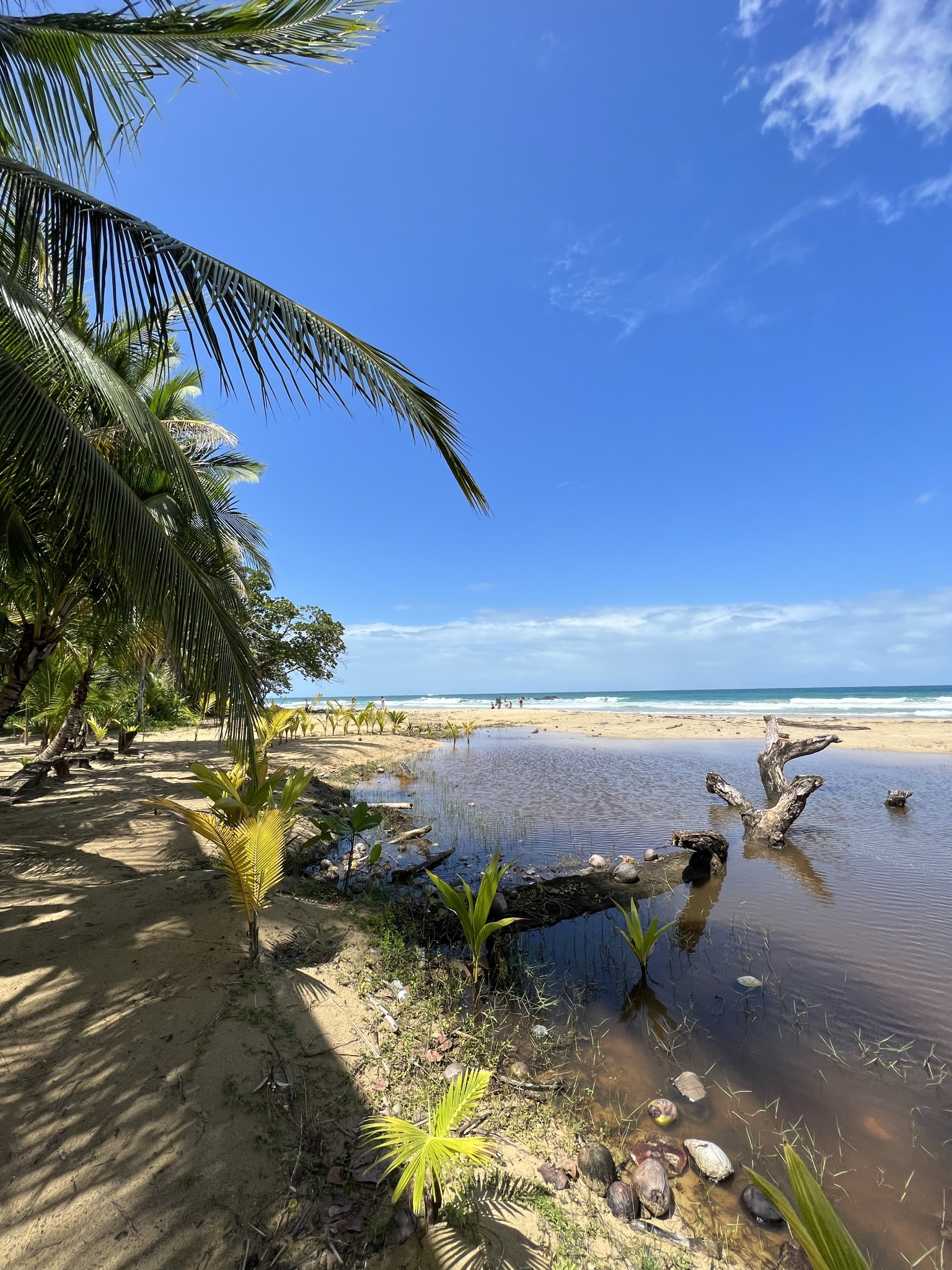
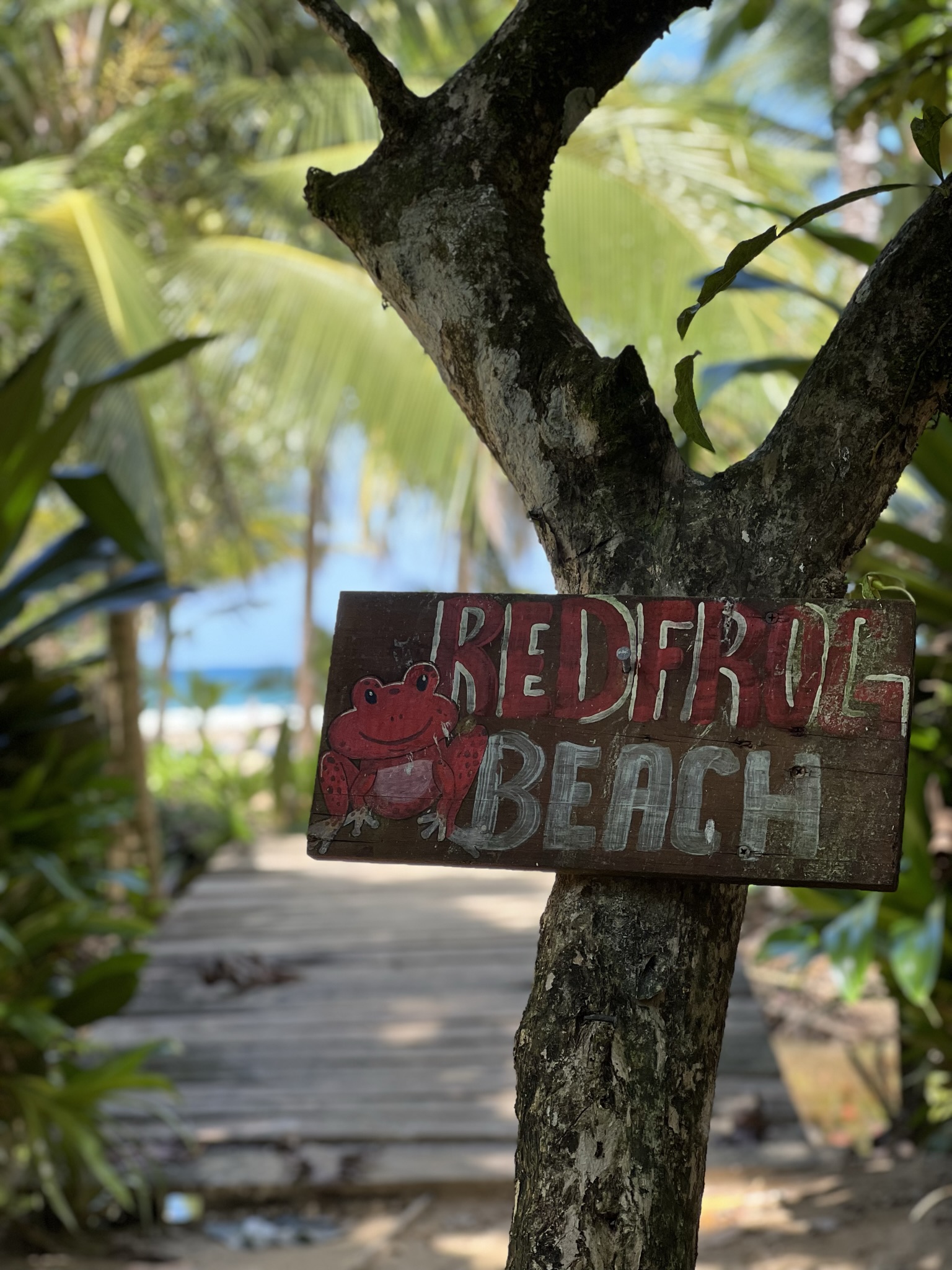
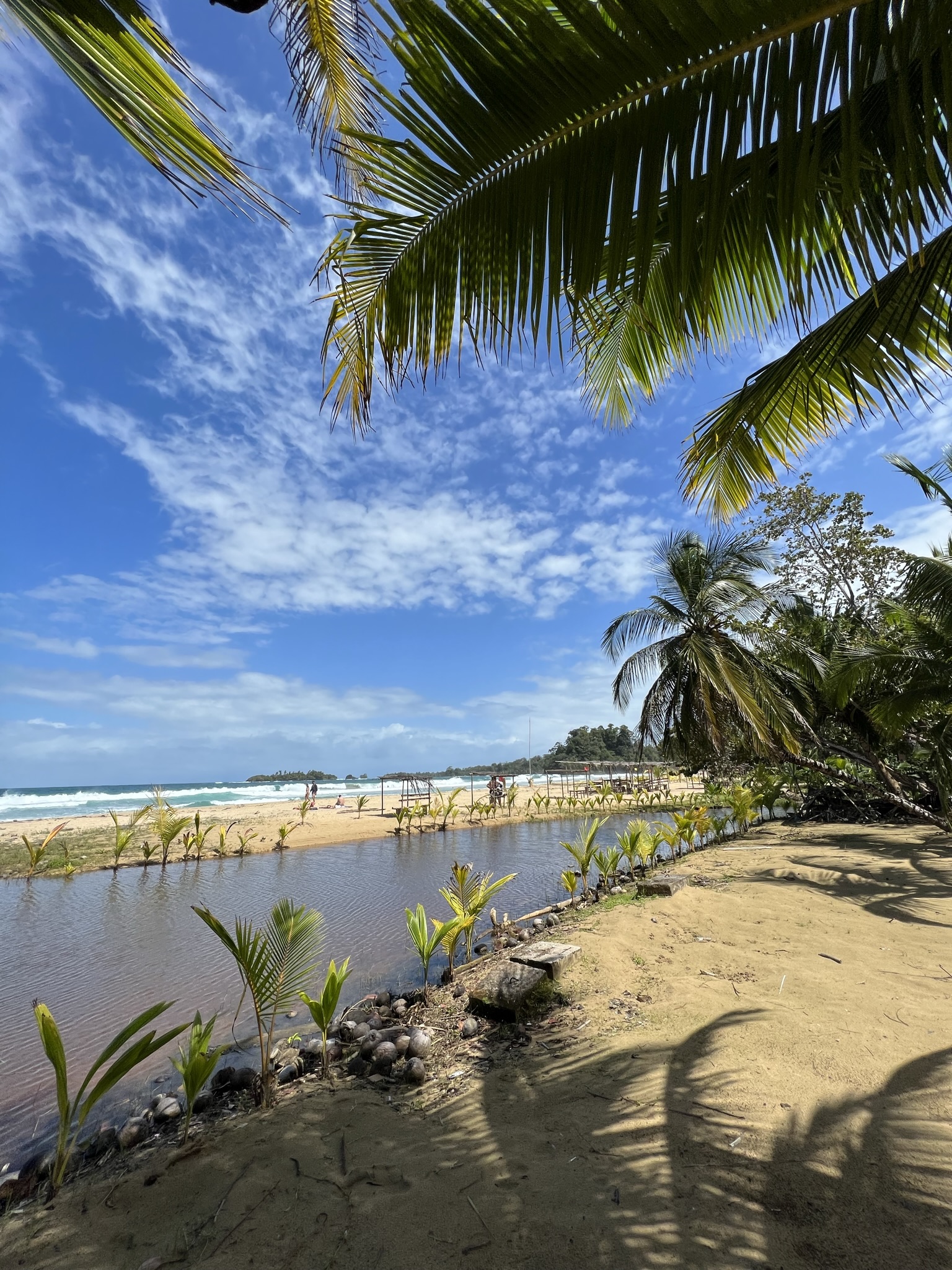
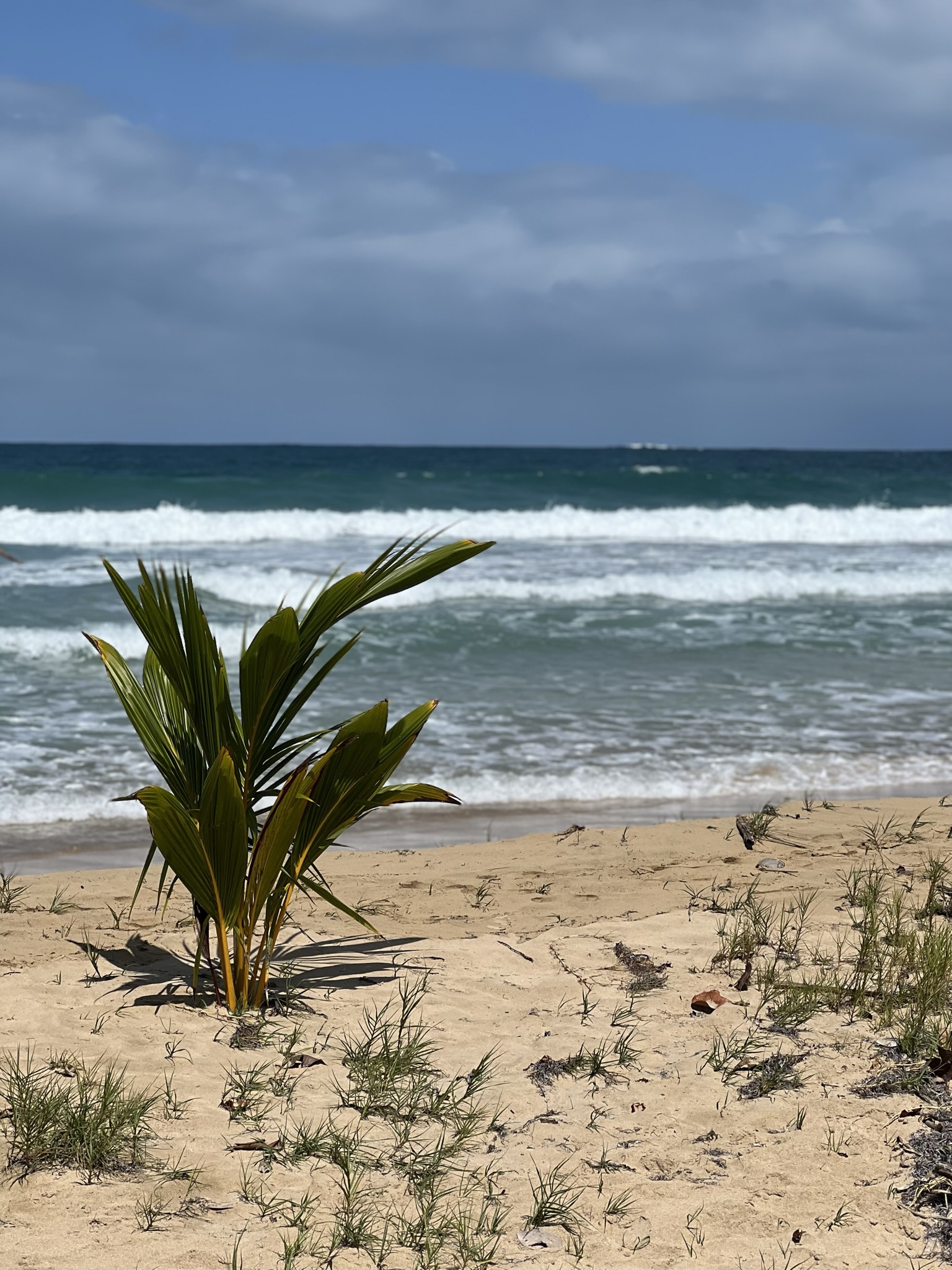
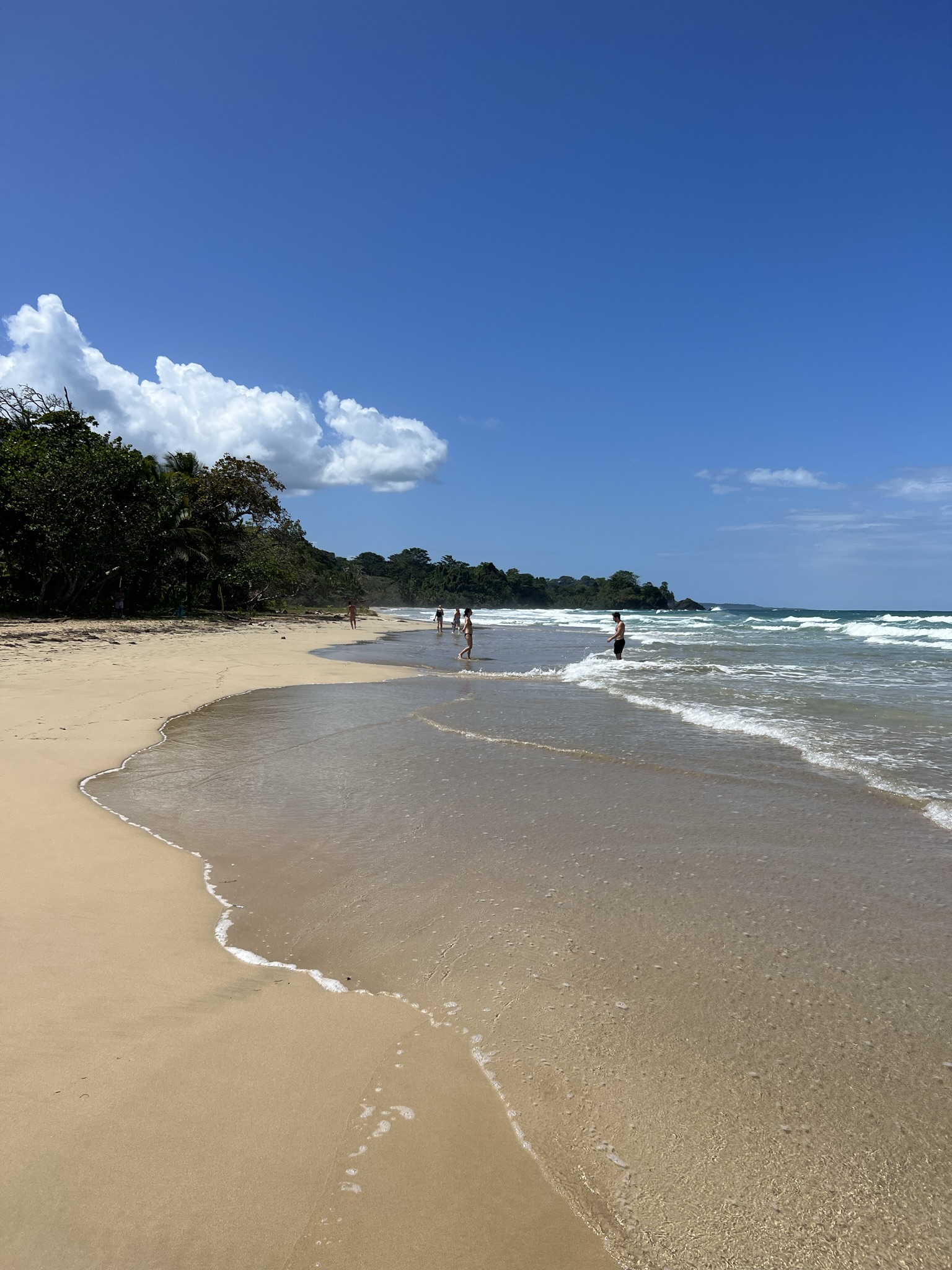
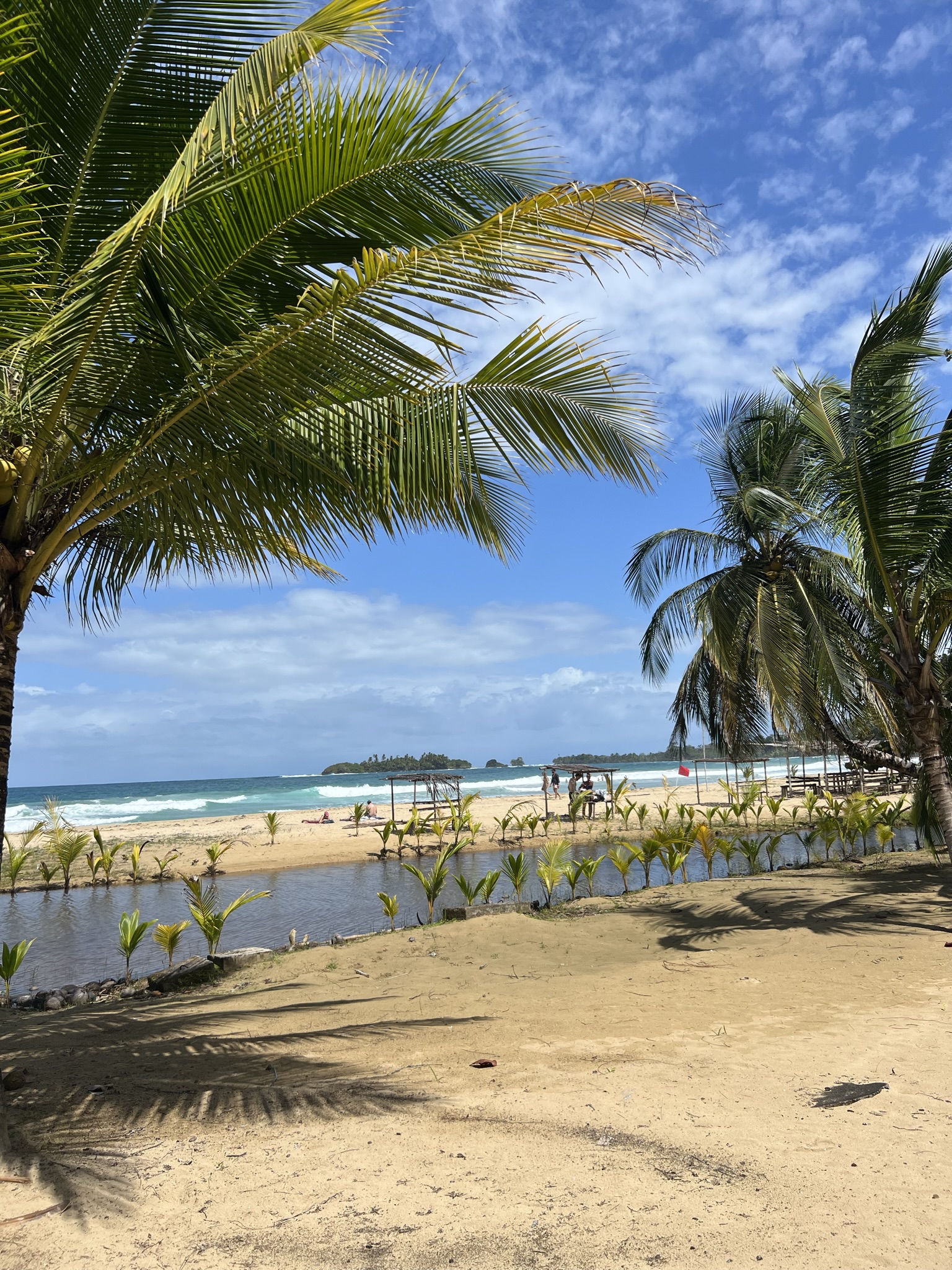
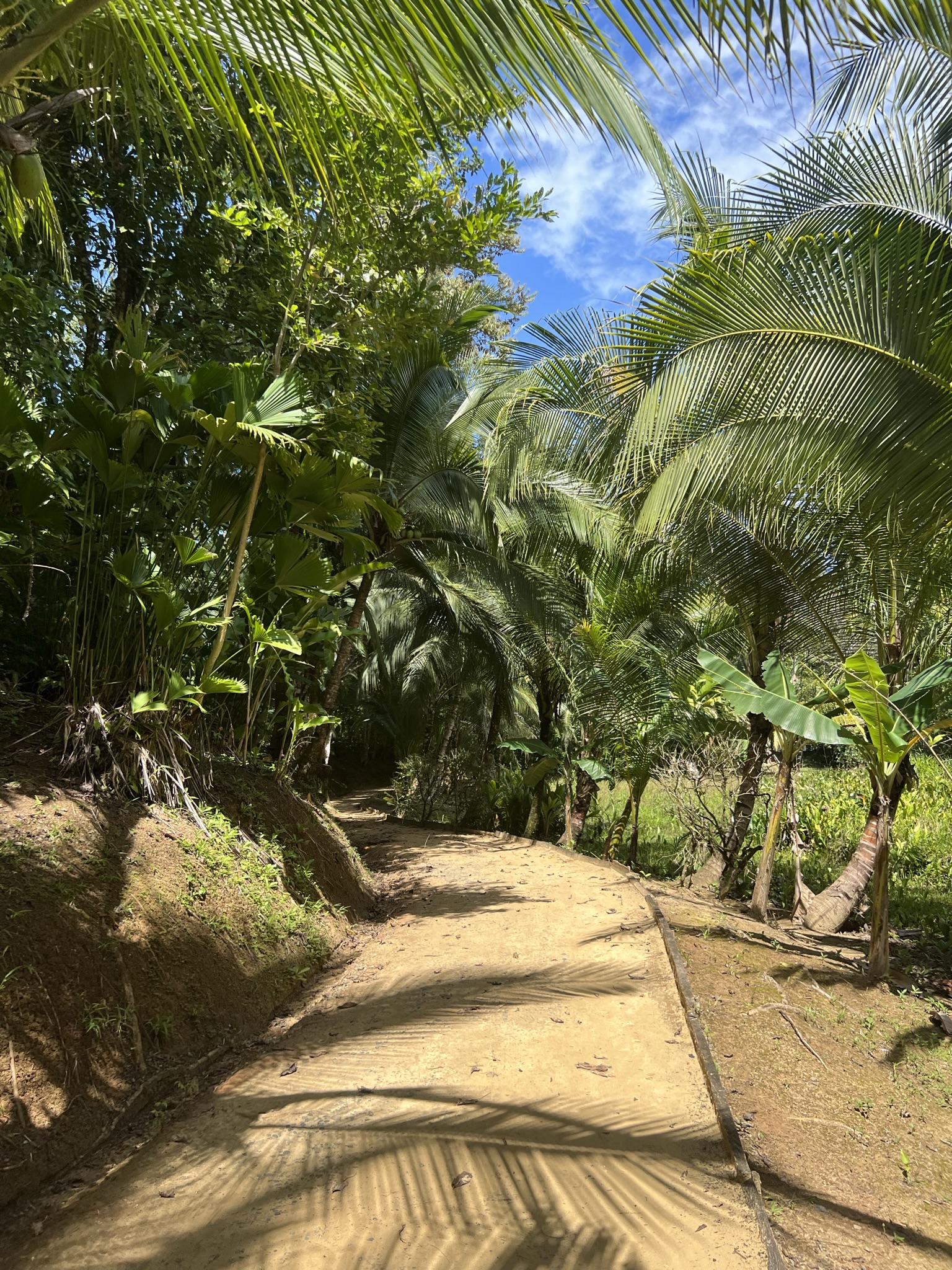
But this wasn’t my destination. Ever since I’d started planning this trip, I’d heard about a beach named after its one and only inhabitant, Polo. I asked a Spanish couple for directions, who promptly advised me to avoid the hassle altogether and stay at Red Frog, claiming the hike wasn’t anything special and that Polo’s Beach wasn’t really a beach at all. Hard-headed as ever, and with plenty of time on my hands, I ignored them and set off.
I had two choices – a longer forest route promising wildlife sightings like sloths, monkeys and frogs, or a shorter but trickier coastal route. I chose the latter. And to this day, I can safely say it was one of the best decisions of my life.
A Perfect Journey
Walking along the sandy, palm-lined coast, I couldn’t help but think of Lana Del Rey’s lyrics in 13 Beaches: “It took thirteen beaches to find one empty, but finally it’s mine…” I’d visited far more than thirteen beaches on this trip, but this was the first time I had an entire beach completely to myself. Alone. Truly alone.
Everywhere I looked, there was nothing to suggest human presence. No people. No construction. No signs, trash, noise, or problems. Just blue sky, sapphire-coloured water, white sand, and green palm and almond trees. Hidden coves untouched by the usual scars of humanity. It felt surreal, almost dreamlike, to be somewhere so beautiful and so empty. For over an hour, I wandered the coast uninterrupted, a privilege I’d never experienced before. The familiar sense of freedom was there, only now it felt heavier, deeper, almost overwhelming. No wonder Polo had claimed this place. No friggin’ wonder.
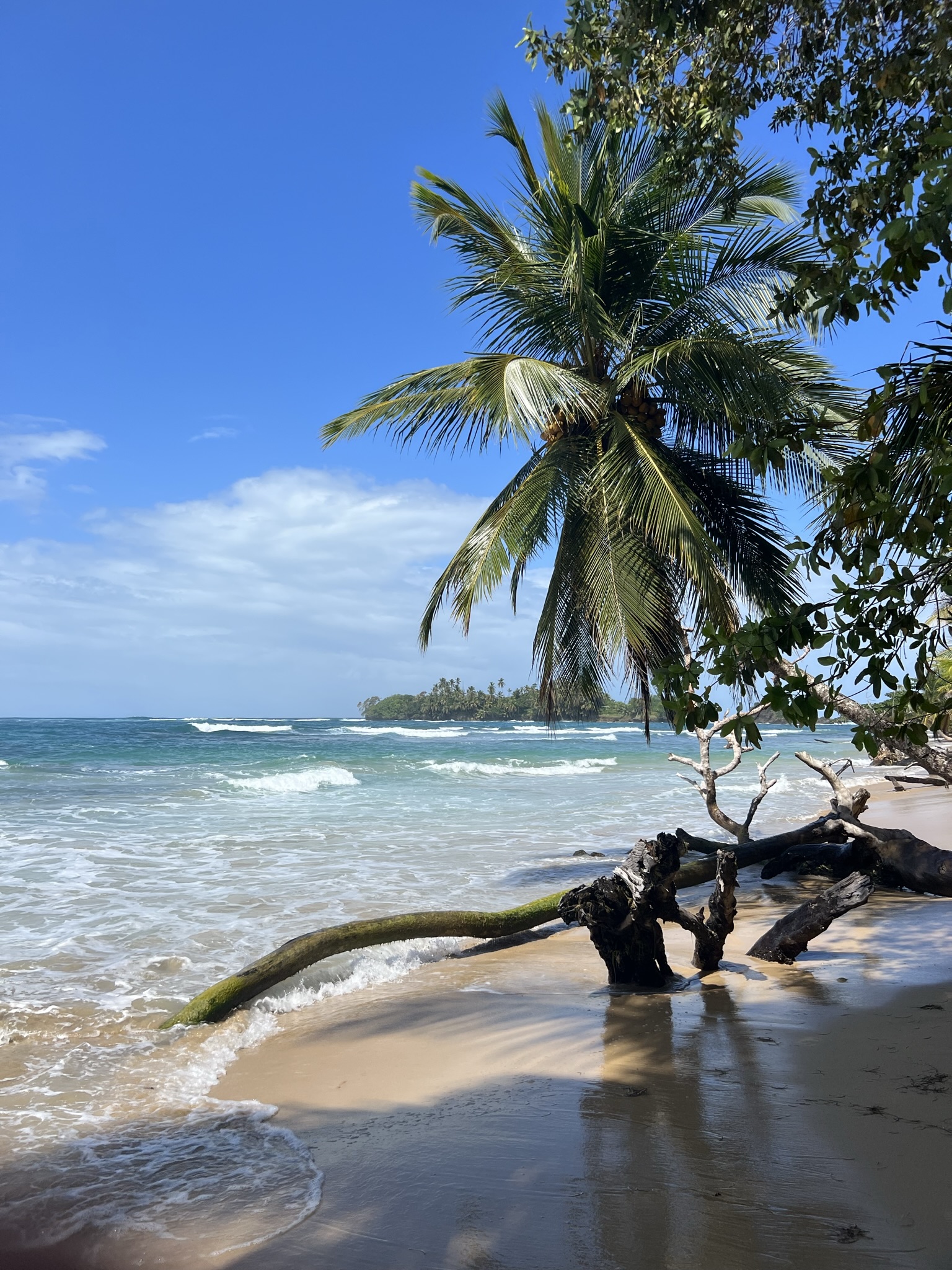
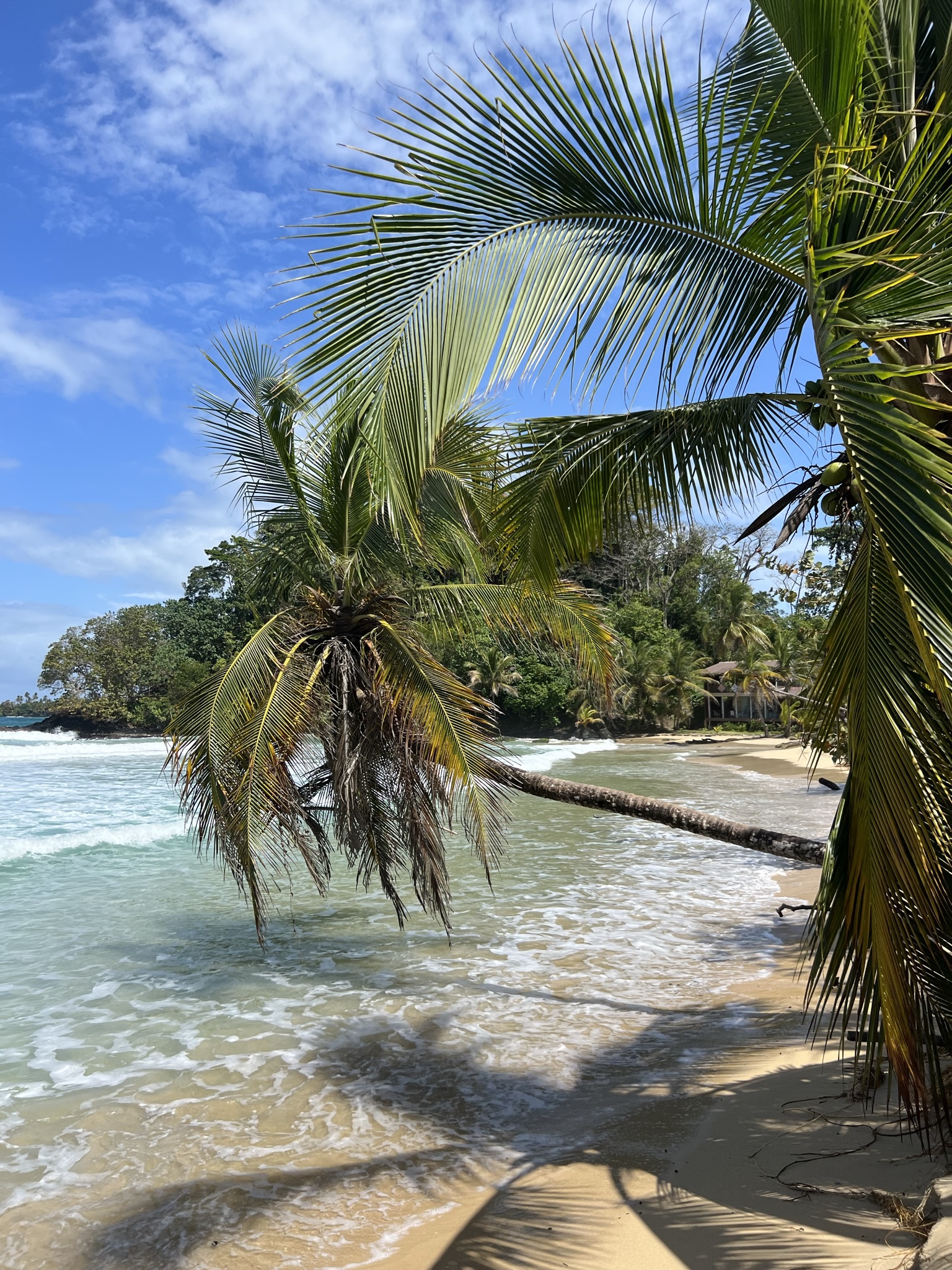
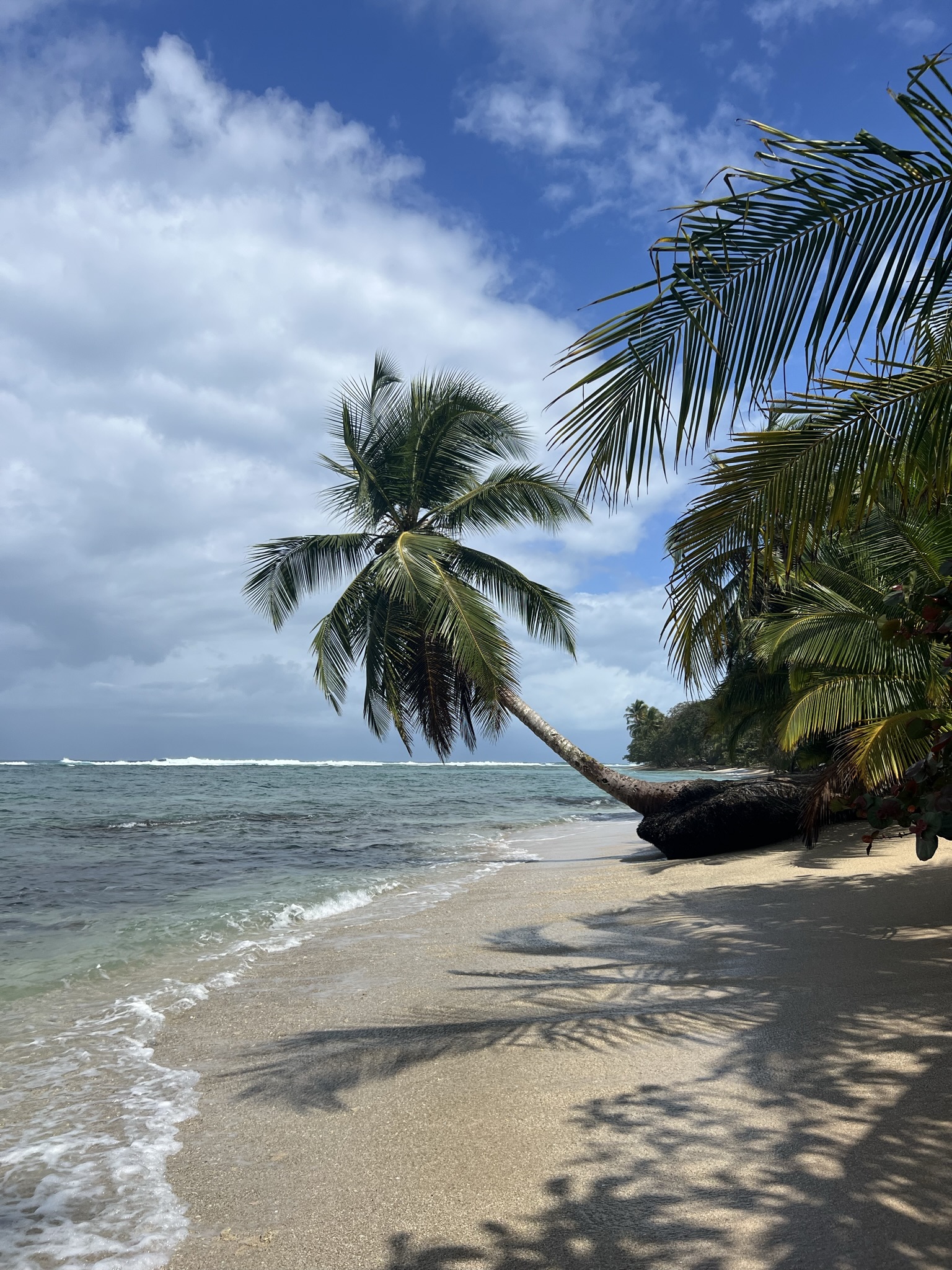
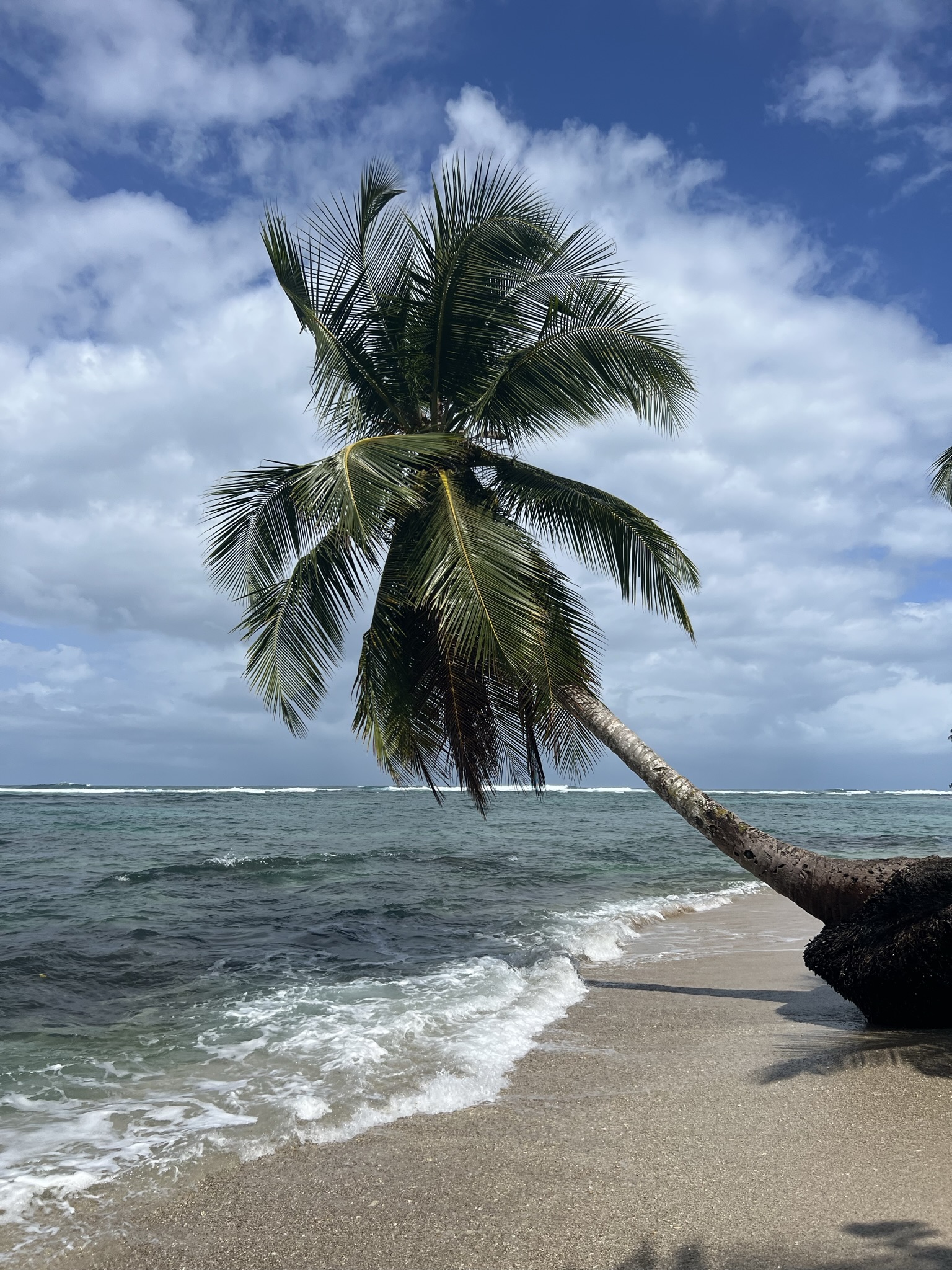
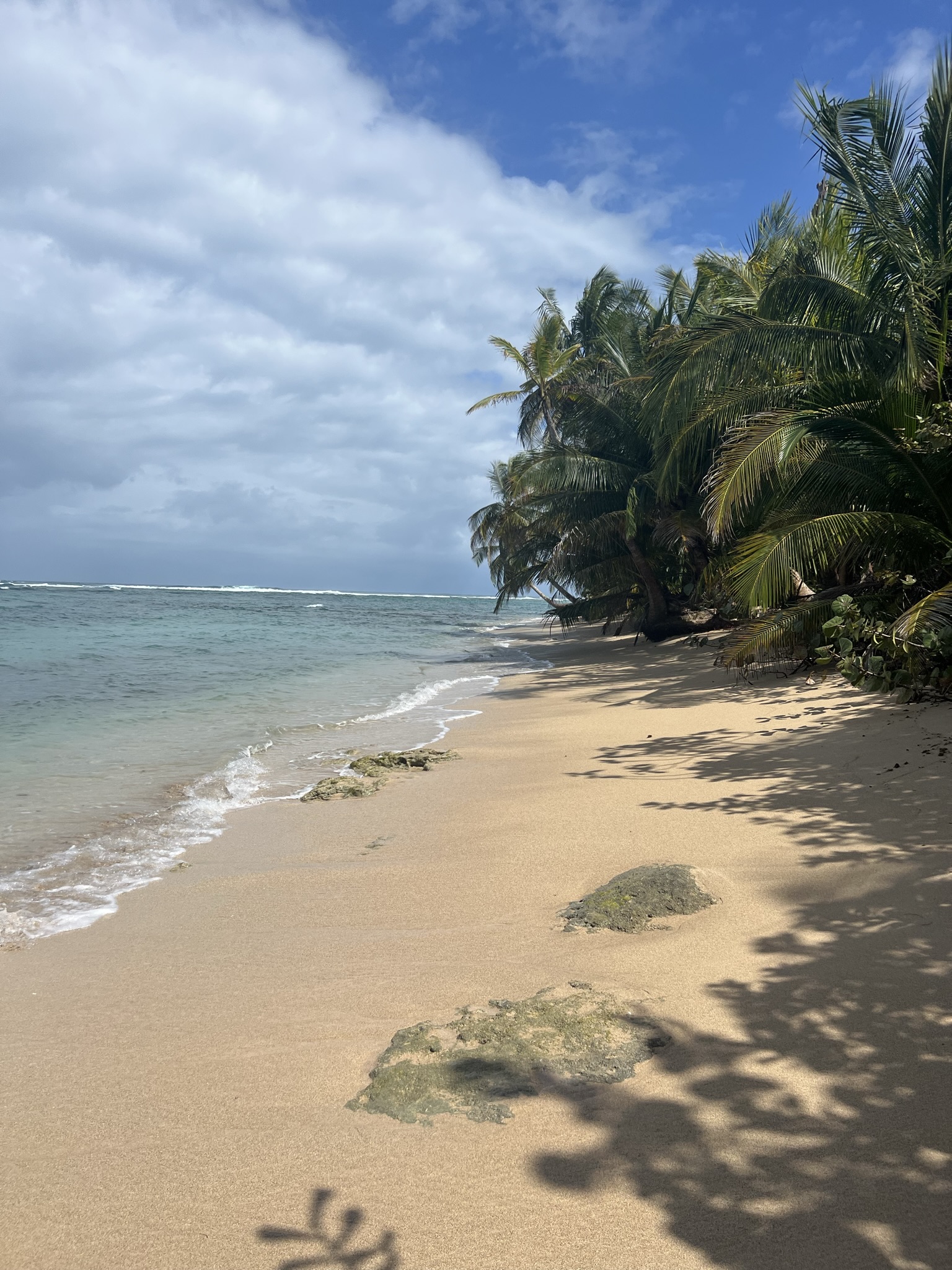
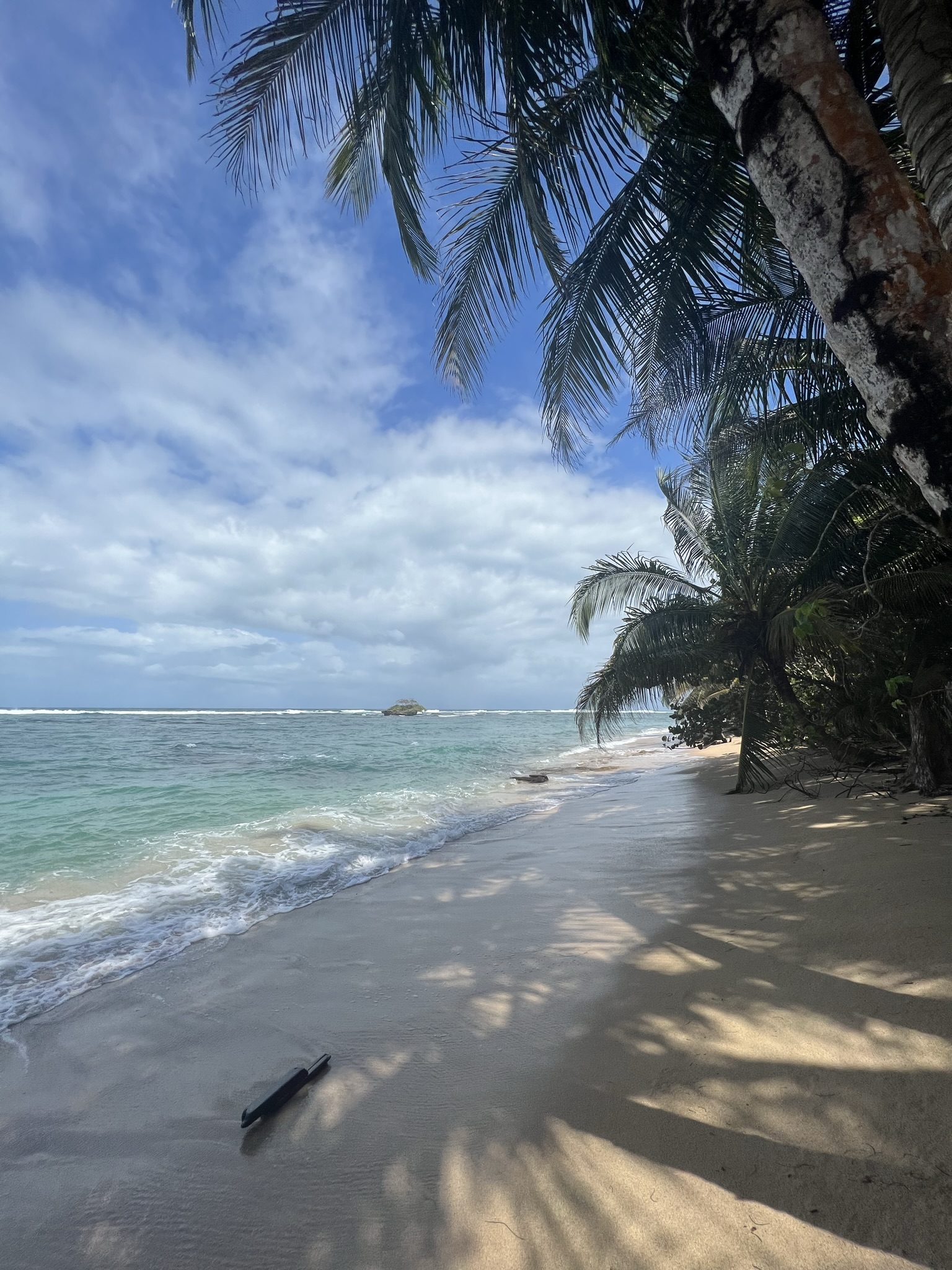
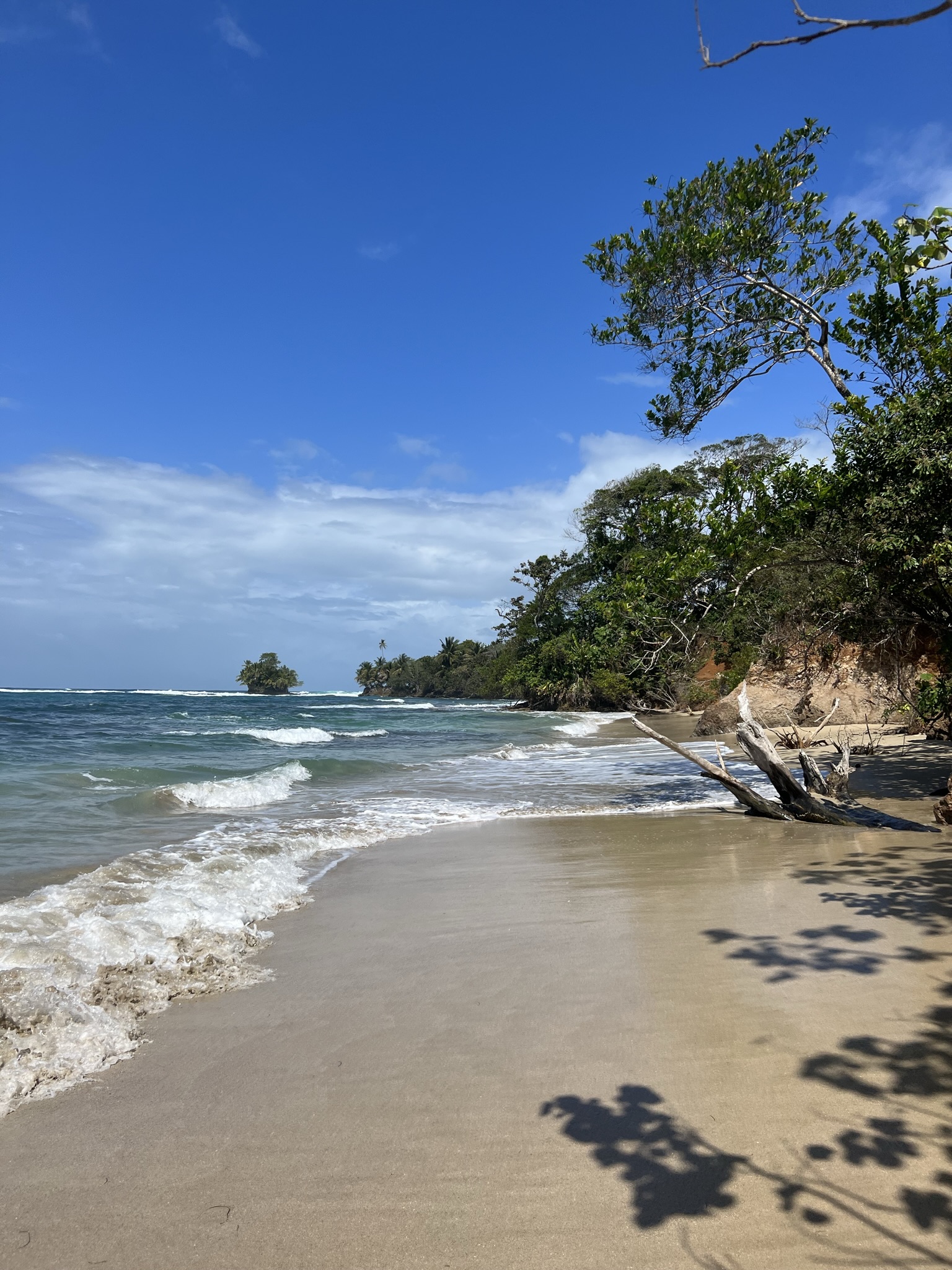
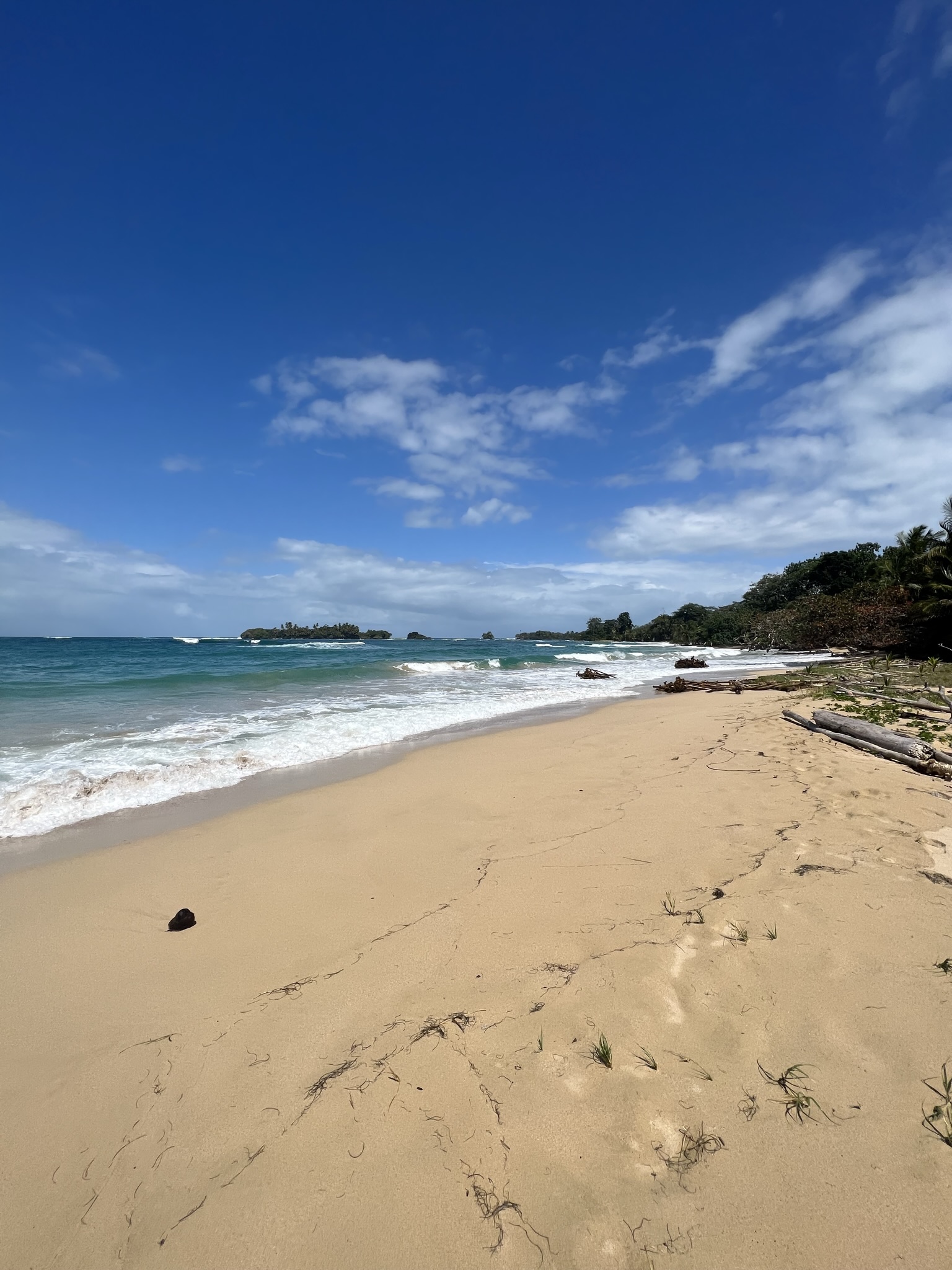
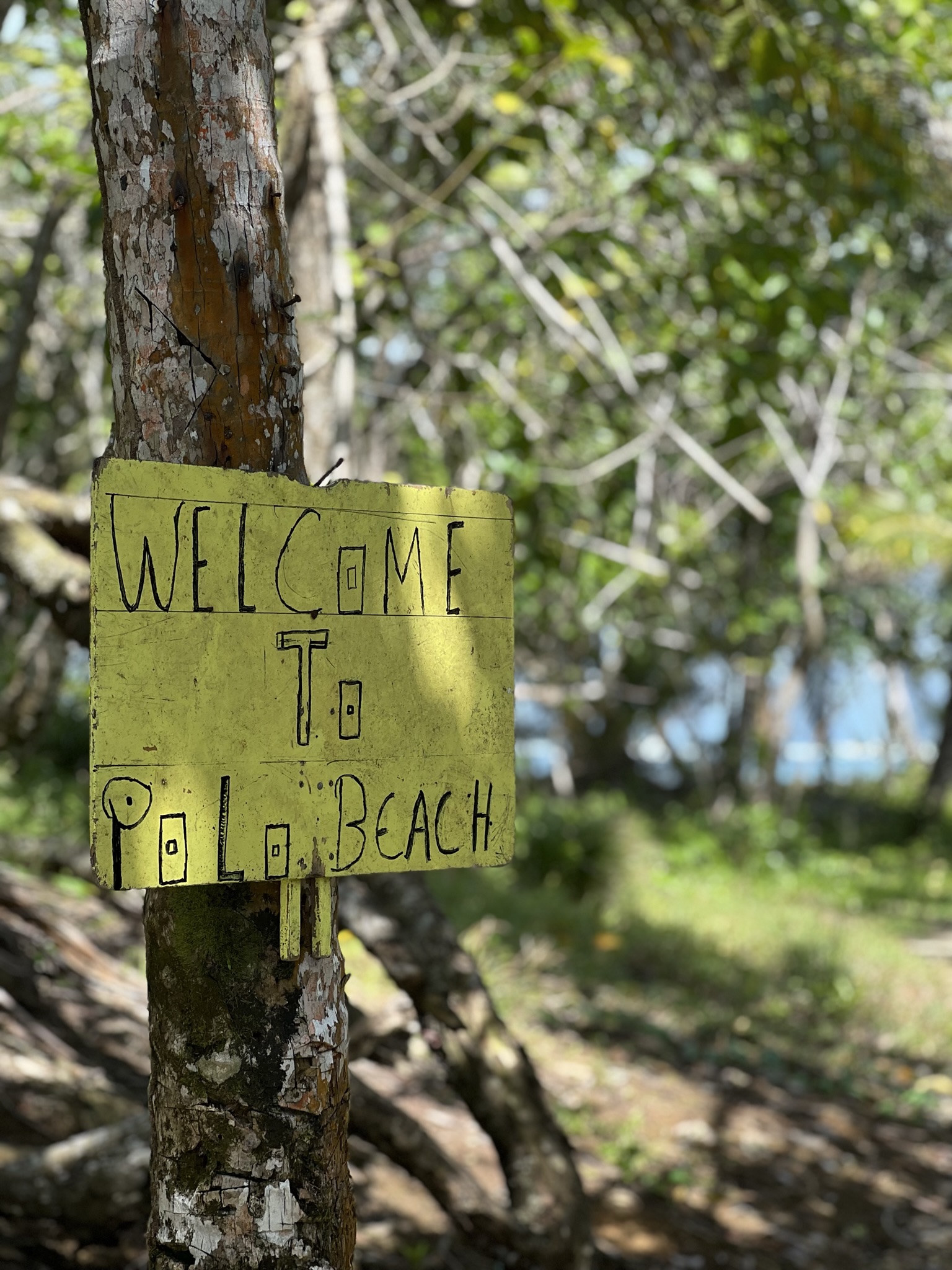
The coastal hike felt like a real-life The Legend of Zelda obstacle course. Angry waves threatened to fling me into the trees, forcing me to ditch my flip-flops and time my sprints between sets. Then came roots and fallen trunks, whose configuration on the sand I had to memorise in order to avoid them once submerged. After that, the rocky beach level – sharp, unforgiving stones that were a nightmare to navigate on. Luckily, growing up on similar beaches had trained me well. And finally, the infamous Driftwood Level, where logs surged towards shore with the waves, each misstep risking bruises or a full wipe-out. I’m pretty sure I lost my first heart there.
And all the while, I was still alone, surrounded by the most beautiful beaches I’d ever seen. It was one of the best moments of my life.
Enter Polo: The Legend
When I finally reached a sun-bleached wooden sign nailed to a coconut tree reading “Polo Beach”, I started shouting his name. In my head, it made perfect sense – he’d hear me, shout back “Marco!”, and we’d meet halfway. Fate, obviously. But life isn’t a movie.
Instead, I arrived at a dilapidated shack where an old man sat beside a pile of coconuts. I knew instantly I’d found my wild goose. After eight months of dreaming about this moment, I walked right up and confirmed it. It was Polo. In the flesh.

After introducing myself and explaining my quest, I unleashed my inner journalist and started firing questions. The 82-year-old, weather-beaten, cataract-ridden relic was born on Isla Colón and moved to Isla Bastimentos at seventeen, leaving behind family and friends to live in complete seclusion – at least until locals and tourists discovered his hideaway. Today, his dream of solitude has been somewhat shattered by the steady stream of visitors drawn to his beach and his Coco Locos. Still, he admitted he enjoys occasional company and continues to live largely as he intended.
Living off fish and lobster, he spends his earnings on Abuelo rum and weed, passing his days by his hut, reminiscing about quieter times and soaking in paradise. Unbothered by civilisation or the weather’s mood swings, he plans to live out the rest of his life right there. That said, even a hermit isn’t immune to bureaucracy. For nearly eighteen years, authorities from Red Frog fought to appropriate his land. Eventually, recognising him as something of a local institution, the conflict ended amicably when Polo sold part of his land for a hefty sum.
As he feasted on a freshly caught lobster, he offered me some. Having just eaten, I declined but gladly accepted a Coco Loco and a few puffs of weed. He had no idea where Malta was when I told him where I was from, which officially made me his first Maltese acquaintance.

Our chat was cut short when Al-Said and Farhat, two locals working on Bastimentos maintaining the trails, stopped by to visit Polo, as they often did. The warmth with which they spoke to him made it obvious how cherished he was.
They insisted on me taking a photo with him and urged me to spread the word about the so-called King of Panama, clearly hoping to boost Coco Loco sales – profits Polo happily shares. Their long-term dream, they joked, was to have Polo’s face printed on the Abuelo rum label. Polo soon excused himself to the toilet, never to be seen again, leaving me chatting with the two men about simple living and the everyday struggles locals face.
Freedom Comes at a Cost
On my way back, I stopped repeatedly to swim and take it all in. Every bend in the coastline hid another perfect cove – some framed by almond trees with green and red leaves, others by arching palms, all untouched and immaculate.
Once again, I found myself reflecting on my life – my present and my future. There’s something about tropical beaches that invites honesty. Building on the epiphanies of my previous beach reflection at Puerto Viejo, I realised something new. Freedom comes at a cost. I could be free whenever I wanted, but that would mean abandoning my goal of becoming a surgeon. As much as I love medicine, my time would never truly be my own, and complete freedom suddenly felt unrealistic. Finding one passion had been the best thing that ever happened to me. Finding a second felt like the worst. If I wanted to pursue surgery, I’d have to sacrifice something, maybe even sideline my present to invest in my future. And at the time, that felt worth it. Medicine over freedom. Excellence over happiness.
That realisation was bittersweet. Having tasted freedom, I couldn’t help but wonder what returning to medicine would feel like. Once again, I’d be bound to hospital life, days blurring into one another, routine replacing adventure. Until that point in time, dedicating myself to this goal had been unquestioned. It was my purpose. Nothing else mattered. But now? Now I was beginning to wonder if there was more to life than medicine.
Just like that, a seed was planted. For the time being, I looked forward to a future where fulfilment and freedom might coexist. I knew it would take time, effort and sacrifice. And I was willing to make them. Happiness wasn’t my priority. Being extraordinary was.