Bocas del Toro – Day 2: Starfish, Birds, and Beaches
BOCAS DEL TORO
Day 2: Starfish, Birds & Beaches
February 07, 2023
The next morning, this random guy I met on the street called Orlando hooked me up with a tour of Isla Colón at a “discounted” price – which turned out to be the exact same price advertised by every tour agency on the island.
We’d be going on a beach-hopping tour around the archipelago. While pouring rain isn’t exactly ideal beach weather, I’d grown used to it way back in Mexico, though I can’t say I wasn’t irked by the universe’s insistence on making my life harder. Add to that the family of six with two crying kids, and it wasn’t shaping up to be the best experience ever.
Thunder, Squeals and No-Shows
Braving a tropical downpour, metre-high waves and the squeals of terror of a curly-haired, doe-eyed Shirley Temple lookalike, we made it to our first stop, Playa Boca del Drago.
By the time we got there, the weather finally began to favour us and the sky made a half-hearted attempt at clearing, turning the water from dull grey to turquoise. We spent around thirty minutes on the beach, which, honestly, felt more than enough. Apart from a solitary almond tree lending the white sand a slightly surreal quality, I can’t say I was particularly impressed, especially with the screaming children sabotaging any chance of peace or clarity.
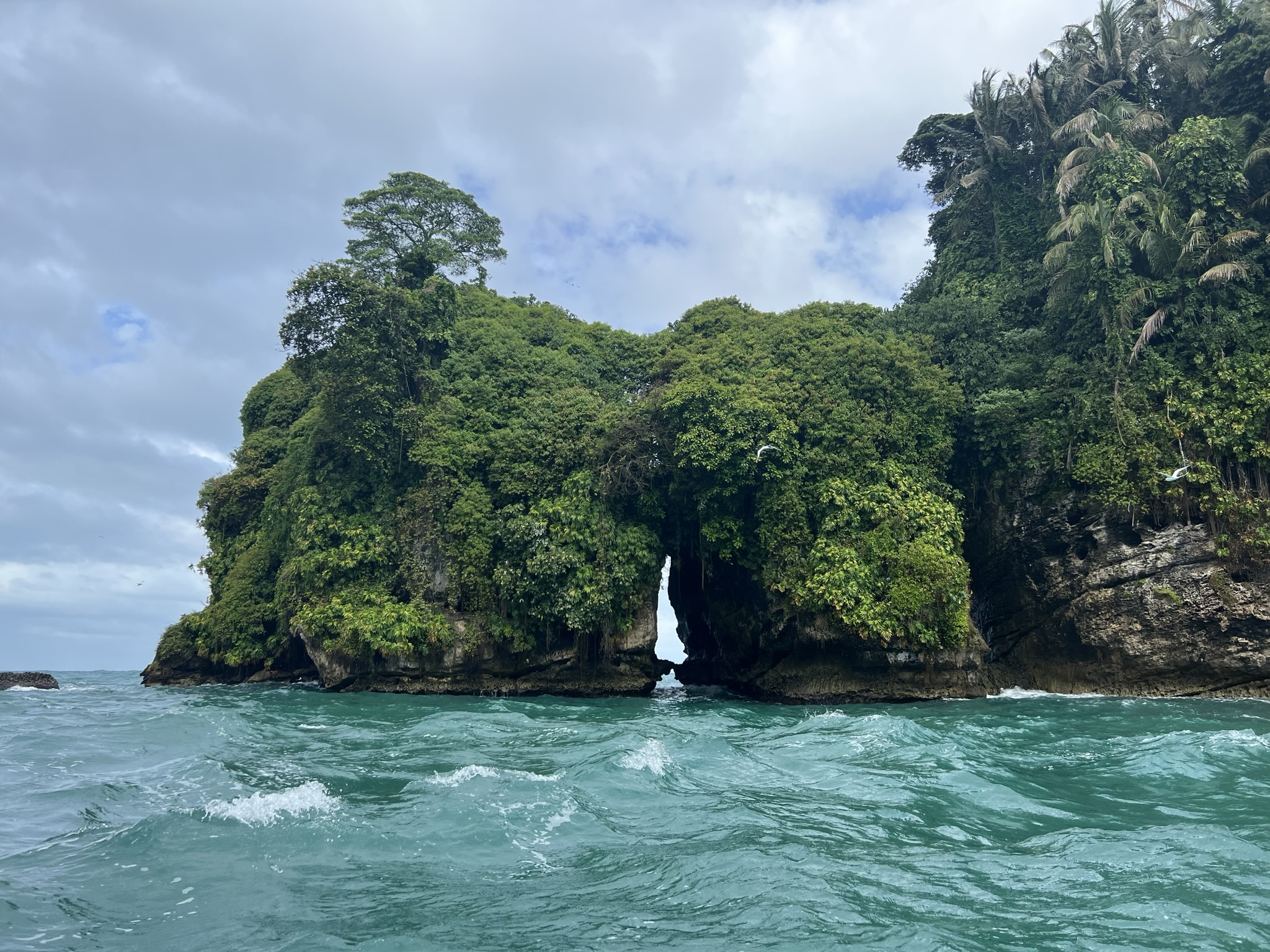
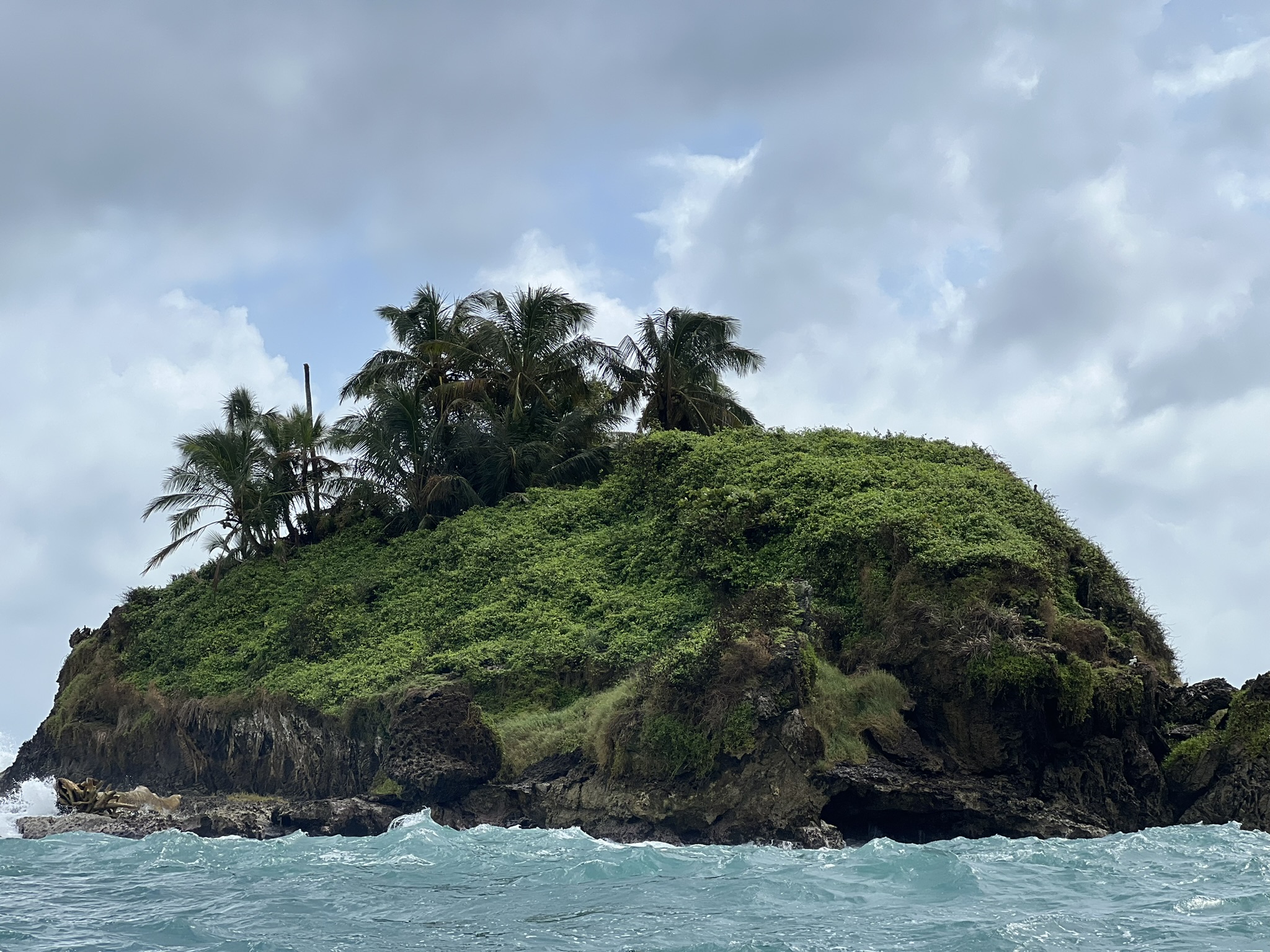
Our next stop was at Isla Pájaros. Aptly named, circling the island were so many birds that the sky felt permanently in motion – frigatebirds, gulls, terns and pelicans everywhere. Here, Orlando encouraged us to look out for the fabled red-billed tropicbird – a white bird with dramatic black eye-liner and tail streamers twice the length of its body. Try as we might, we didn’t manage to spot it, and so, after a few minutes of admiring the view, we pushed on.
A Starry Beach
Then came Playa Estrellas, named after the hundreds of starfish scattered across its shallow waters. And let me tell ya, it’s not a lie. Even from the boat, we could see orange smudges beneath the surface, leaving everyone slightly bewildered. I lost track of how long I spent wading through the clear shallows, trying to spot as many red cushion sea stars as possible.
Having learned my lesson back in Playa Bonita in Mexico, I refrained from touching them and, on more than one occasion, delivered preachy little sermons to both kids and adults who lifted the helpless creatures out of the water. Beyond making the beach a thousand times more Instagrammable, sea stars play an important role in maintaining ecological balance by grazing on algae and microorganisms, helping keep the seabed sandy. And, not to be overlooked, their spicules also litter the seafloor and hurt like a mother if you step on them. Rubbing sand over the affected area, thankfully, helps.
Beyond the star-shaped beauties, the shallows here are teeming with life. Even without goggles, I spotted a school of needlefish skimming the surface and a giant crab trapped inside one of the locals’ fishing traps.
Balboas, Octopus and Big Conversations
I had a few Balboas and some of the best-tasting octopus my tongue has ever encountered, joined by Erika and Mariena, two women from Costa Rica, and Adela, a local.
They were all holidaying with their families, and we spent a few hours chatting about everything under the sun. As always, I ended up giving my standard Malta speech, introducing them to yet another country they now “absolutely have to visit”. At this rate, I figured I’d be leading daily tours for people I met on this trip if they actually would go through with it. I honestly hope most of them are the flaky, commitment-phobic type, cause otherwise I have no idea how I’d manage.
After we indulged in food and drink alike, our conversation segued into a spirited discussion about the conquistador-like attitude of some European entrepreneurs who arrive in Latin America expecting to turn a profit off Latinos. Now, Erika said, they don’t come with armour and swords, but with capital, business plans and a sense of quiet entitlement. They see cheap land, cheap labour and untapped potential, often without stopping to ask who already lives there, who benefits, and who ends up paying the price. Local culture becomes a commodity, traditions get repackaged for foreign consumption, and profit is extracted while responsibility somehow remains optional. It’s not everyone, of course, but the pattern repeats often enough to be uncomfortable: opportunity for outsiders, rising costs for locals, and a narrative that frames it all as development rather than displacement. Listening to it from Latin Americans themselves, it became clear that colonialism didn’t disappear here – it just changed clothes.
And just like that, our time was up and we had to head back to Bocas. All in all, it was a really pleasant day. I don’t think a day by the beach can ever be anything but that. I figured if I were to open a practice somewhere along the Caribbean coast, I’d be the happiest man on earth.