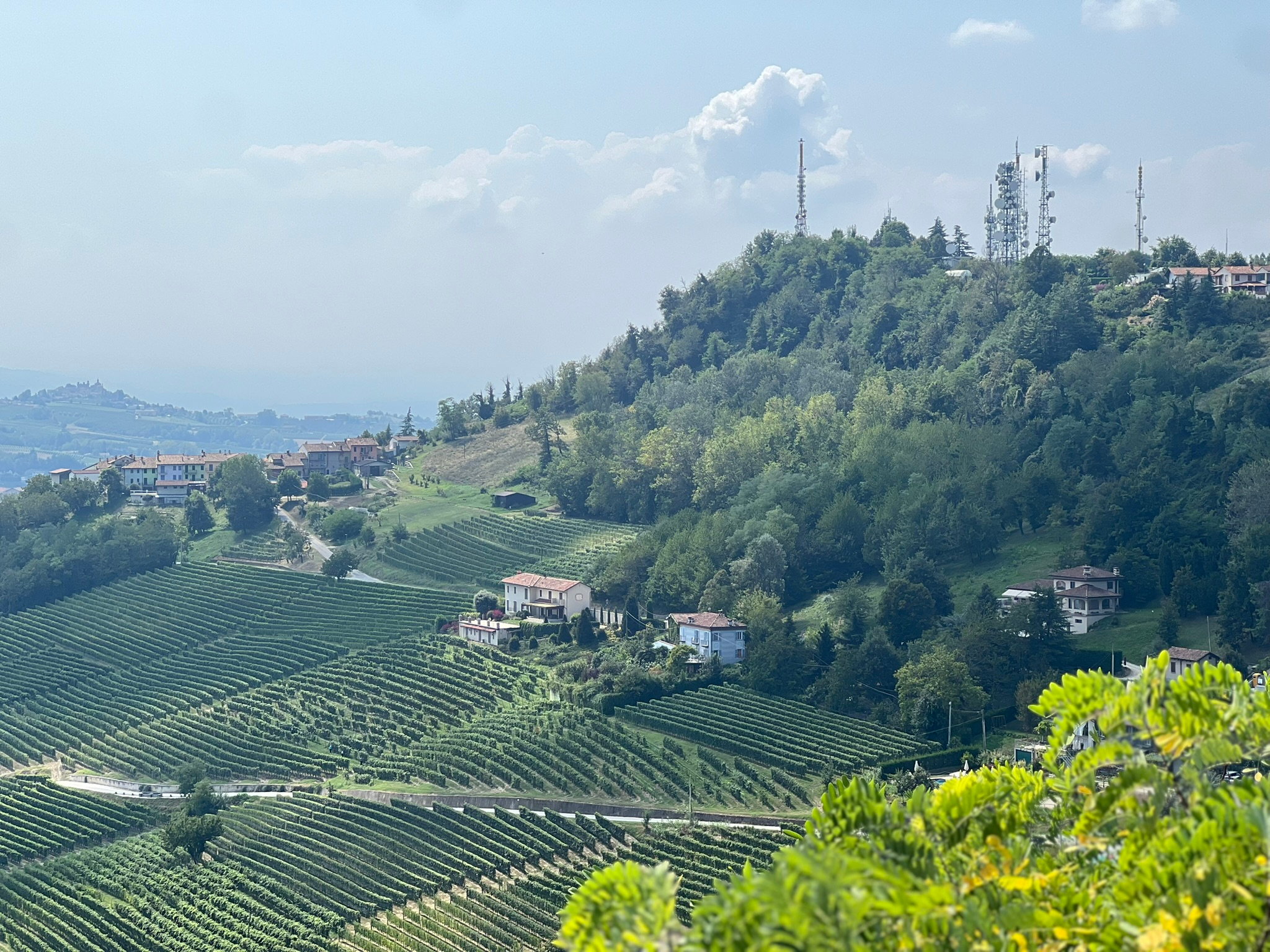
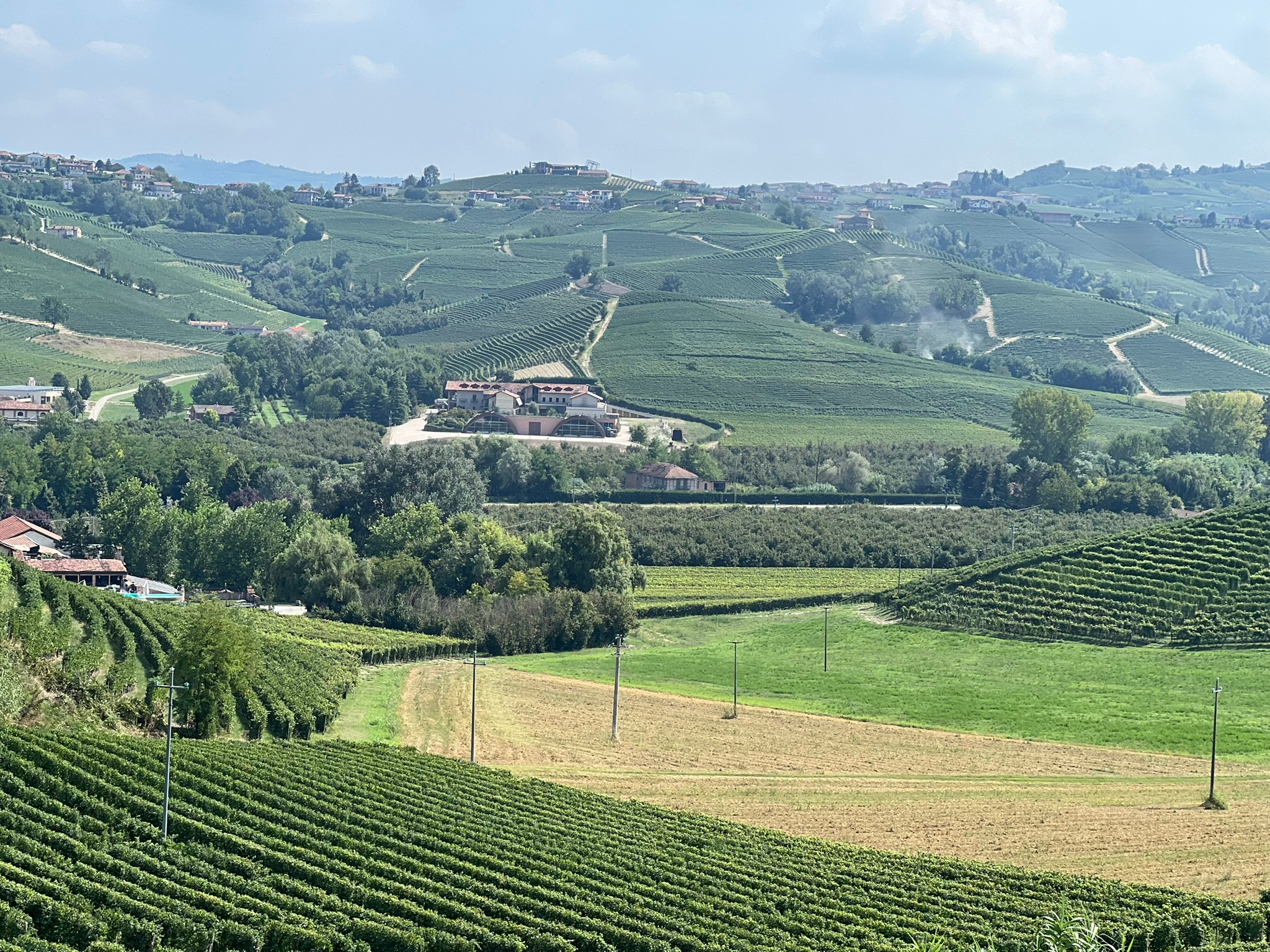
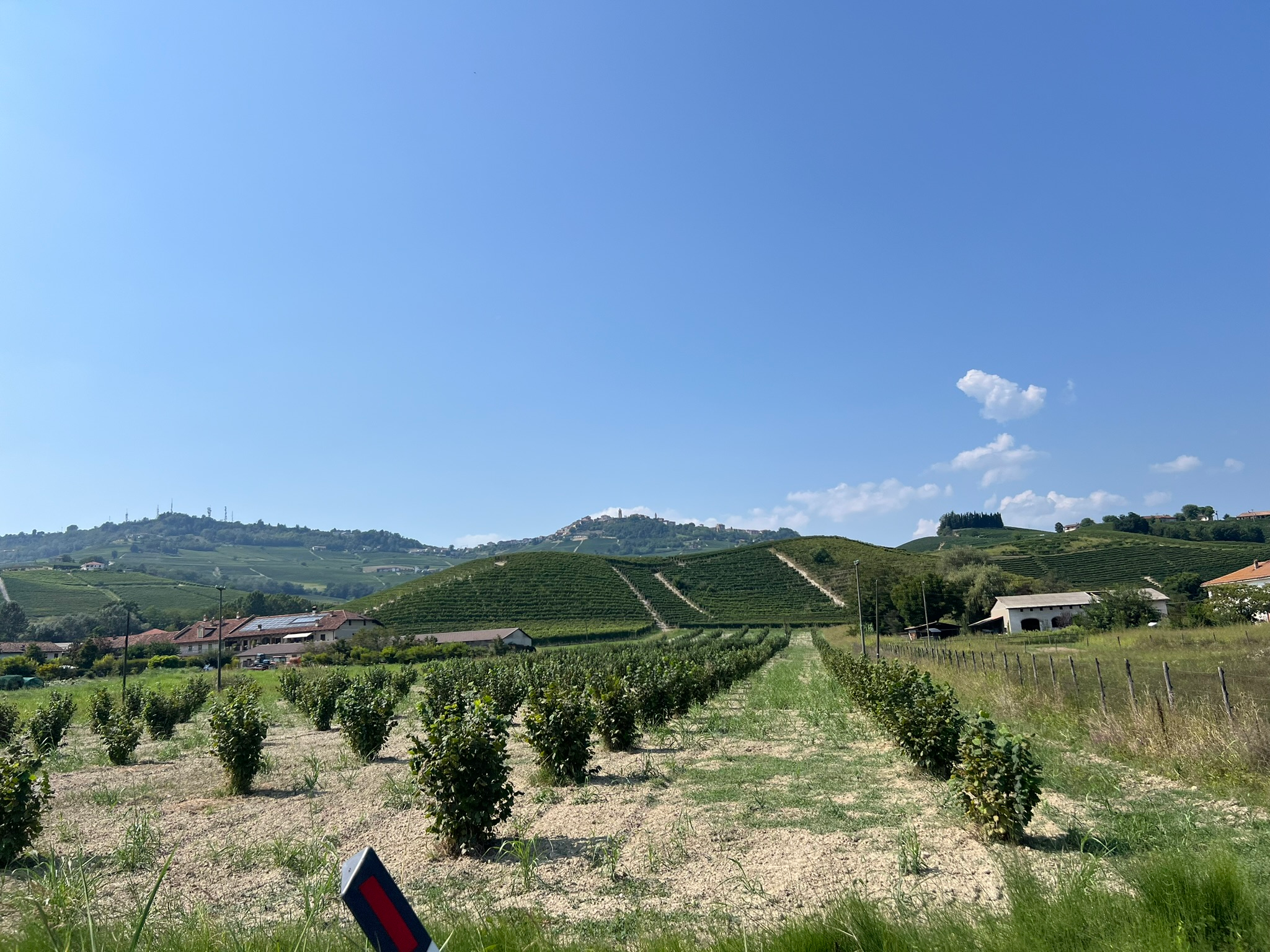
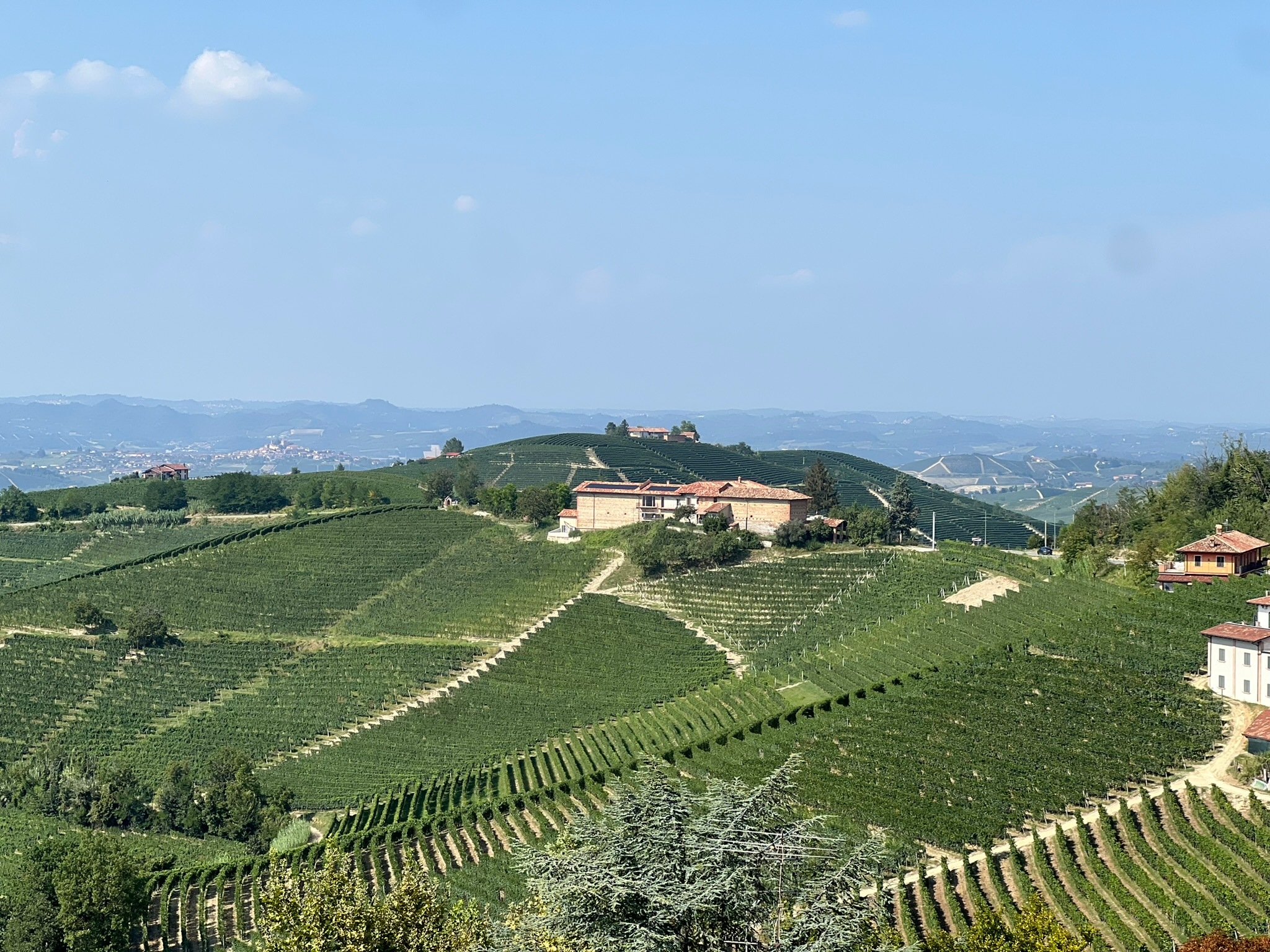
With one last day left for us to enjoy Piedmont, we decided to explore the Langhe, a hilly region south and east of the Tanaro River, stretching towards the Ligurian Apennines.
After five days of trekking, refuges, mountain passes, ibexes and questionable amounts of polenta, the idea of spending a day driving through vineyard-covered hills felt almost too civilised. No boots digging into my feet. No wet clothes hanging off my bag. No storm clouds chasing us down a mountain. Just wine, food, villages and views. Honestly, I could have gotten used to these kinds of recovery days.
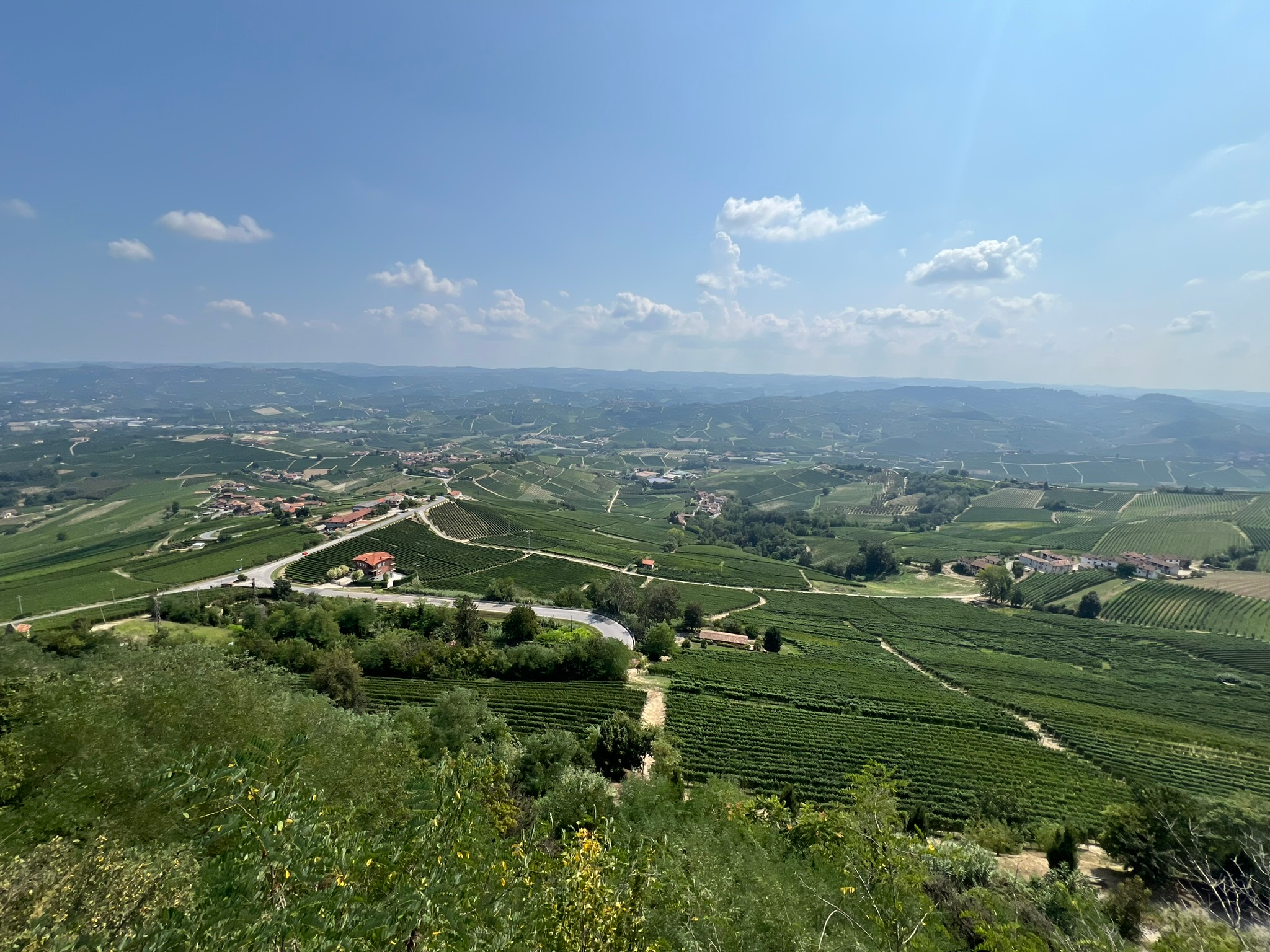
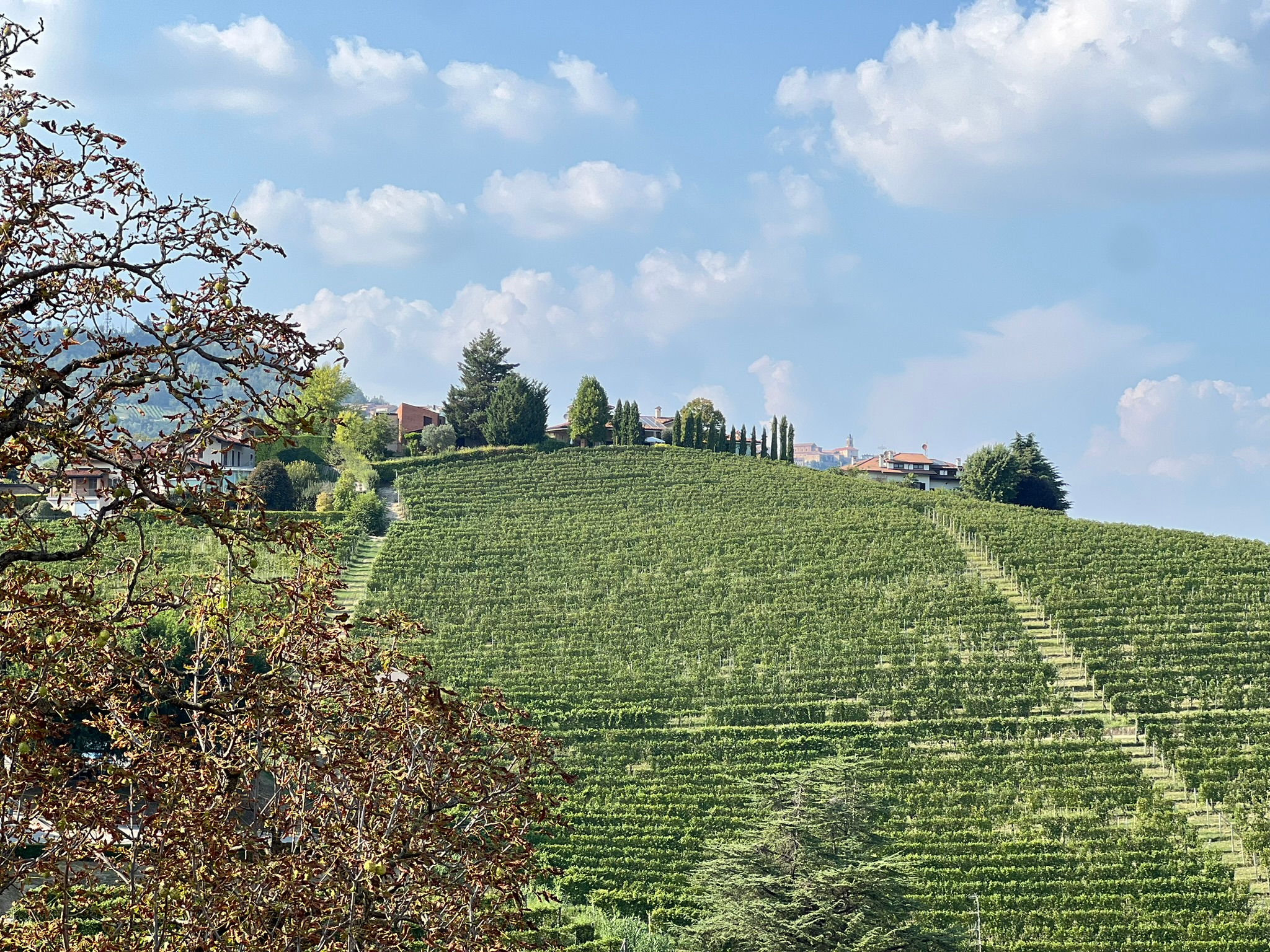
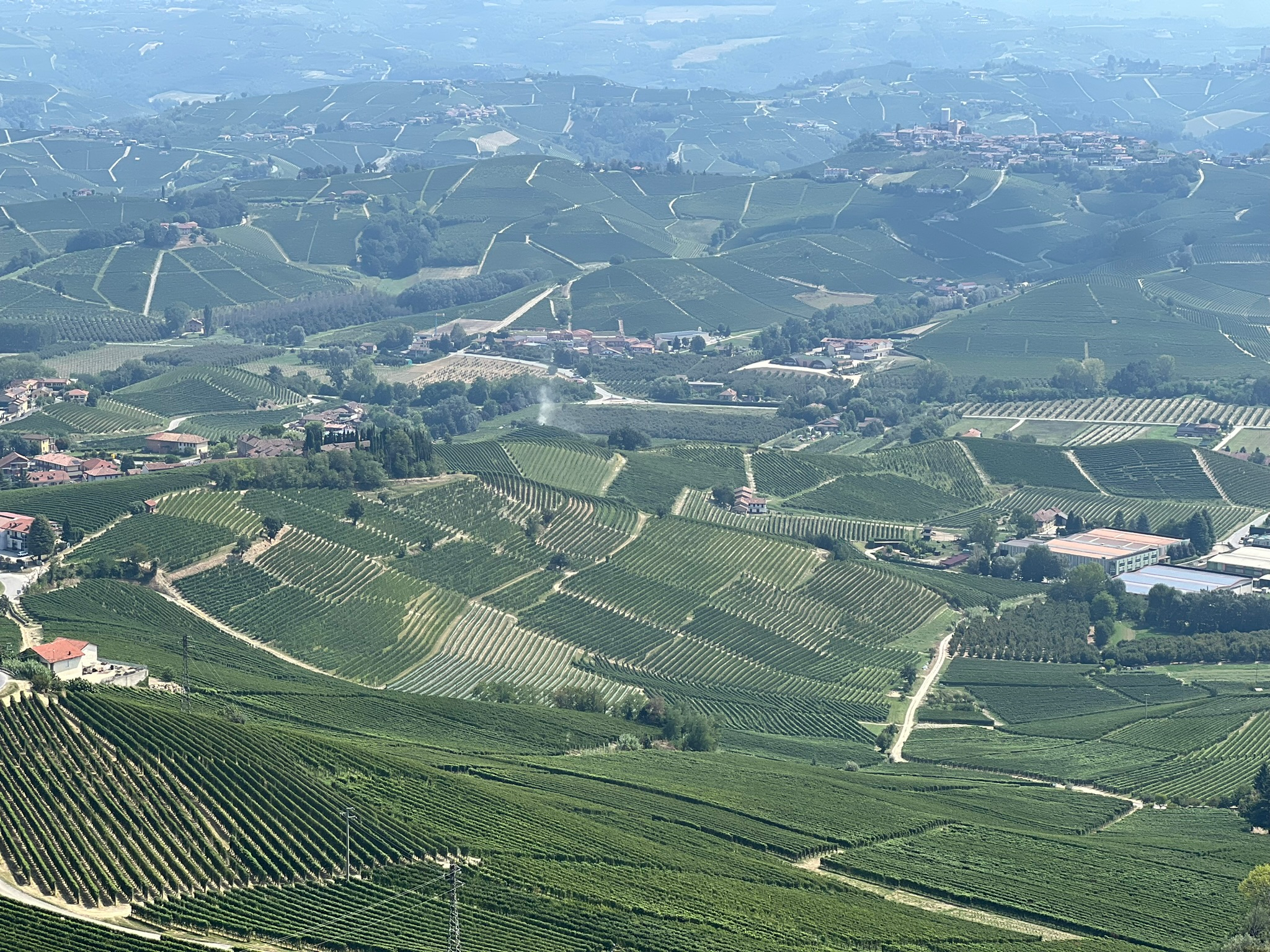
The Langhe, Alessia explained, is renowned for a number of things, including some of Italy’s most prestigious wines, local produce such as Robiola cheese, and its cuisine, with white truffle being one of the region’s most prized delicacies. Not to mention, the views were to die for, with rolling vineyards, cypress-dotted ridges and medieval hilltop villages making for the most stunning of landscapes. And to that, I can definitely bear witness.
Villages on the Hills
We spent the entire day driving from one village to another. I, for one, was over the moon that Alessia was doing all the driving. Being a passenger princess, I could just lay back and enjoy all the views.
While village each was different, all of them shared similar features, like the fact that they were perched on hilltops and centred around a main square with a church and a bell tower. The streets were narrow and cobblestoned, the buildings old and rustic, and the atmosphere tranquil and timeless. Not to mention, some of them also had medieval castles, elegant porticoes and gorgeous archways.
Alessia, of course, had something to say about every single place. A childhood memory here, a family story there, a comment about how this village was “too touristy” or that one was “more authentic”. I, meanwhile, nodded along like the culturally enlightened traveller I pretend to be, while mostly thinking about wine and food.
In just one day, we managed to visit five of these villages, with each one having something special:
Cherasco: Boasting a preserved medieval layout, Cherasco was a pleasure to wander through. We strolled along its arcaded streets, past beautiful archways, quiet gardens and quaint churches, including the impressive Santuario della Madonna del Popolo. It was the kind of place where everything seemed to move at half-speed. People chatted in doorways, old men sat outside cafés, and the whole town had that slow, unbothered rhythm that made me wonder whether everyone else had figured life out and I was the only idiot rushing through it.
La Morra: A walk around La Morra’s village centre led us past Baroque churches and all kinds of wine shops. As gorgeous as the village centre was, the highlight here was by far the Belvedere viewpoint, a panoramic terrace offering sweeping views over the Langhe hills, a patchwork of vineyards with the Alps in the distance. After days of being inside those mountains, seeing them from afar felt strange. They were no longer the huge, all-consuming walls of rock we had been walking through. Now they were just there in the background – calm and blue and almost unreal.
Barolo: This was probably my favourite. Apart from its majestic Castello Falletti, a huge medieval fortress, and its gorgeous village layout, it is also where one of the world’s most prestigious red wines originated: Barolo DOCG, made exclusively from Nebbiolo grapes and often called the “King of Wines” or the “Wine of Kings”. Nearby is also the Barolo Chapel, an iconic modern-art building with the most colourful of façades, providing a splash of colour against the otherwise traditional landscape.
Serralunga d’Alba: What I loved about this village was how remote it felt compared to the others. In fact, it was much less crowded than the rest. Here, we wandered through its streets and climbed the hill to Serralunga Castle. Though it was closed to visitors, we were lucky enough to meet the kindest maintenance worker, who let us into the courtyard and gardens and gave us a few minutes to explore.
Bra: Despite its Baroque architecture, Bra felt livelier and more contemporary than the rest, with a mix of cafés, shops and restaurants dotting its centre. Here, we hiked up Monteguglielmo Hill – not exactly a great idea after five days of trekking – in order to see the Zizzola, an octagonal villa that was originally built as a summer retreat and now serves as a museum and symbol of the city. By this point, my legs were practically spaghetti. Unfortunately, it was closed by the time we got there, although the sunset we got to see from up the hill was definitely worth the hike.
Wine, Food and a Final Pizza
At each stop, we made it a point to have a glass of wine and some traditional snacks. By the time we sat down for lunch, the villages had started to blur into one another, all stone, bells, wine and incredible views.
For lunch, we had a degustation menu at a fancy fine-dining restaurant, where we got to try some traditional Piedmontese dishes, including Bra sausage, tajarin with lamb ragù and braised veal roast, all paired with some of the best wine I’d ever had. It felt like the perfect opposite of the trek. There, we had earned every meal by dragging ourselves over mountain passes. Here, we sat down, lifted a glass and just let it flow. For dinner, we went down the cliché route and ordered pizza. But hey, it was gonna be our last meal in Italy.
All in all, I’d say it was the perfect way to finish our trip in Piedmont. The drives along the vineyards were relaxing, to say the least, and, after a five-day trek, it was everything we could’ve hoped for – and then some!