Antarctic Peninsula – Day 2: Frozen Wilderness
ANTARCTIC PENINSULA
Day 2: Frozen Wilderness
March 08, 2023
PART I
I can’t say I was much of a fan of Dan – my roomie. Between him asking me to introduce him to my new friends (what is this, high school?), repeatedly not Drake-proofing the room, and spending an absurd amount of time in our bathroom, I was positively annoyed by him. That said, thanks to him, I ended up using the communal loo in the lobby, which gave me a splendid panoramic view of glaciers and icebergs, with the occasional whale sighting, all while another kind of nature was calling.
I wasn’t the only moody one. George, who by now was building a reputation as the ship’s resident drunkard (after forty years of service, I guess he deserved it?), was absolutely livid at a Swiss lady who’d just told him it was too windy for her liking and that she’d be skipping the morning landing. He went on and on about rich people being spoiled, and that you shouldn’t come to Antarctica if you just want to enjoy a cruise. I couldn’t quite blame him, but honestly, I couldn’t care less. I cared about my experience.
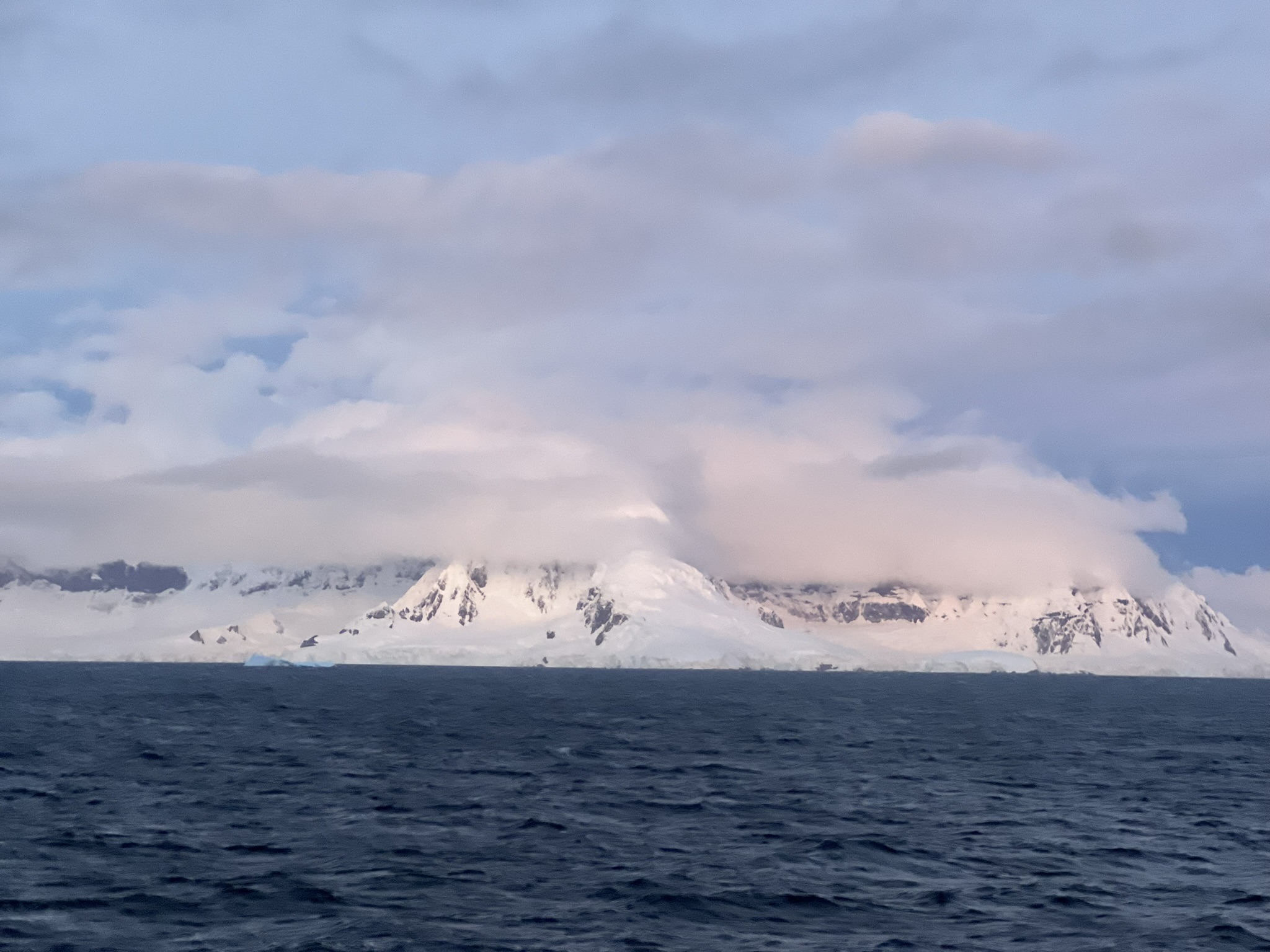
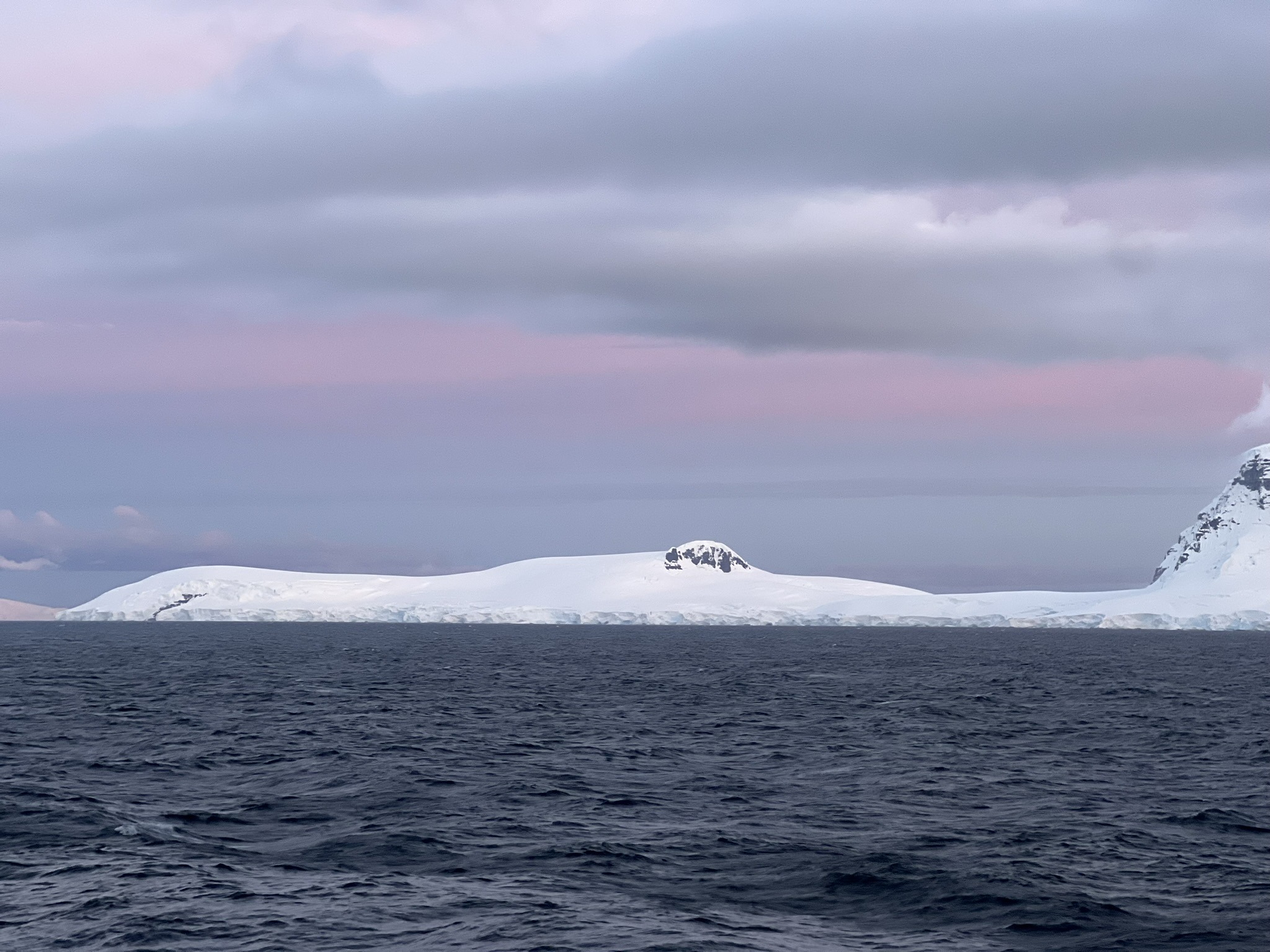
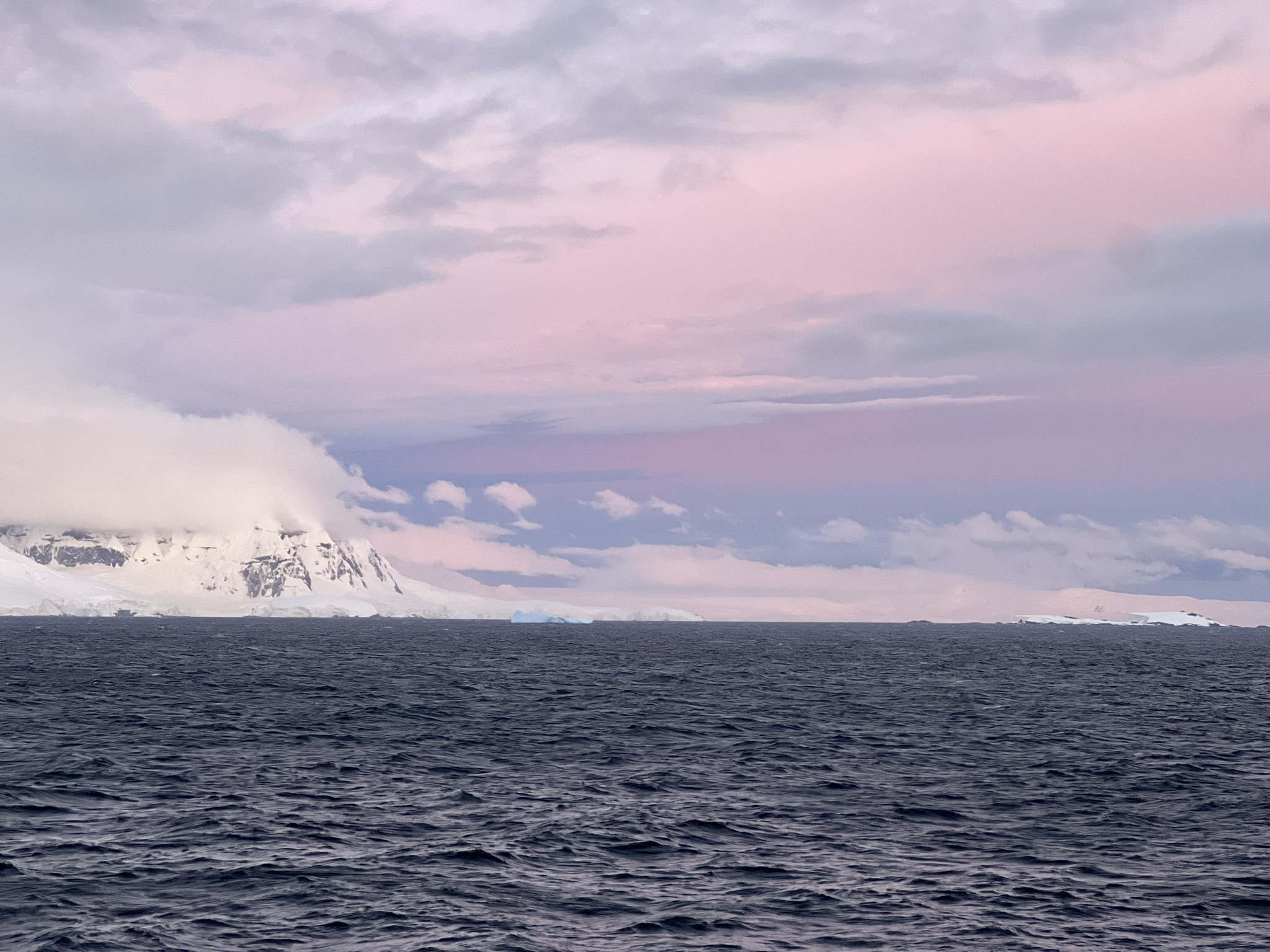
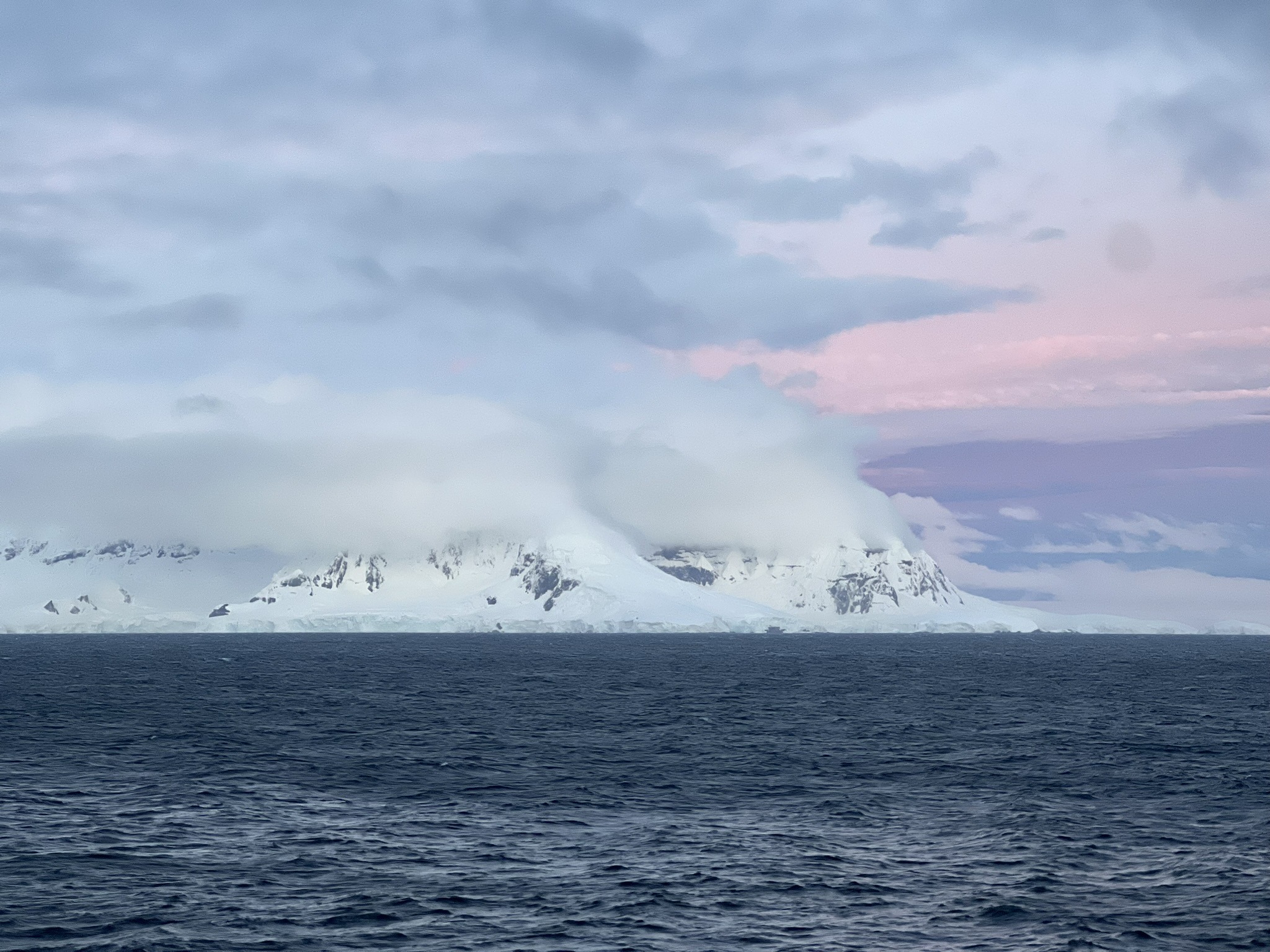
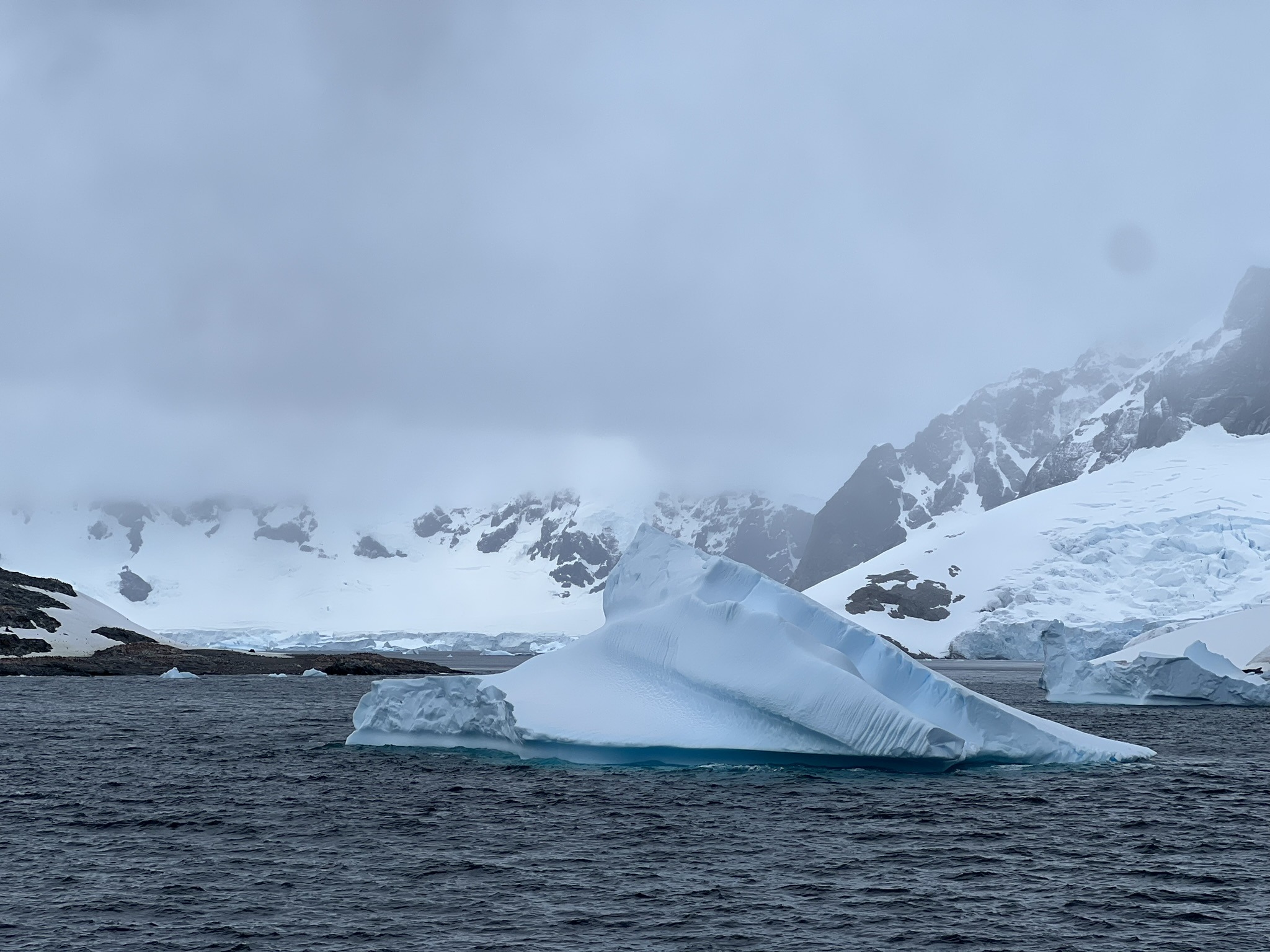
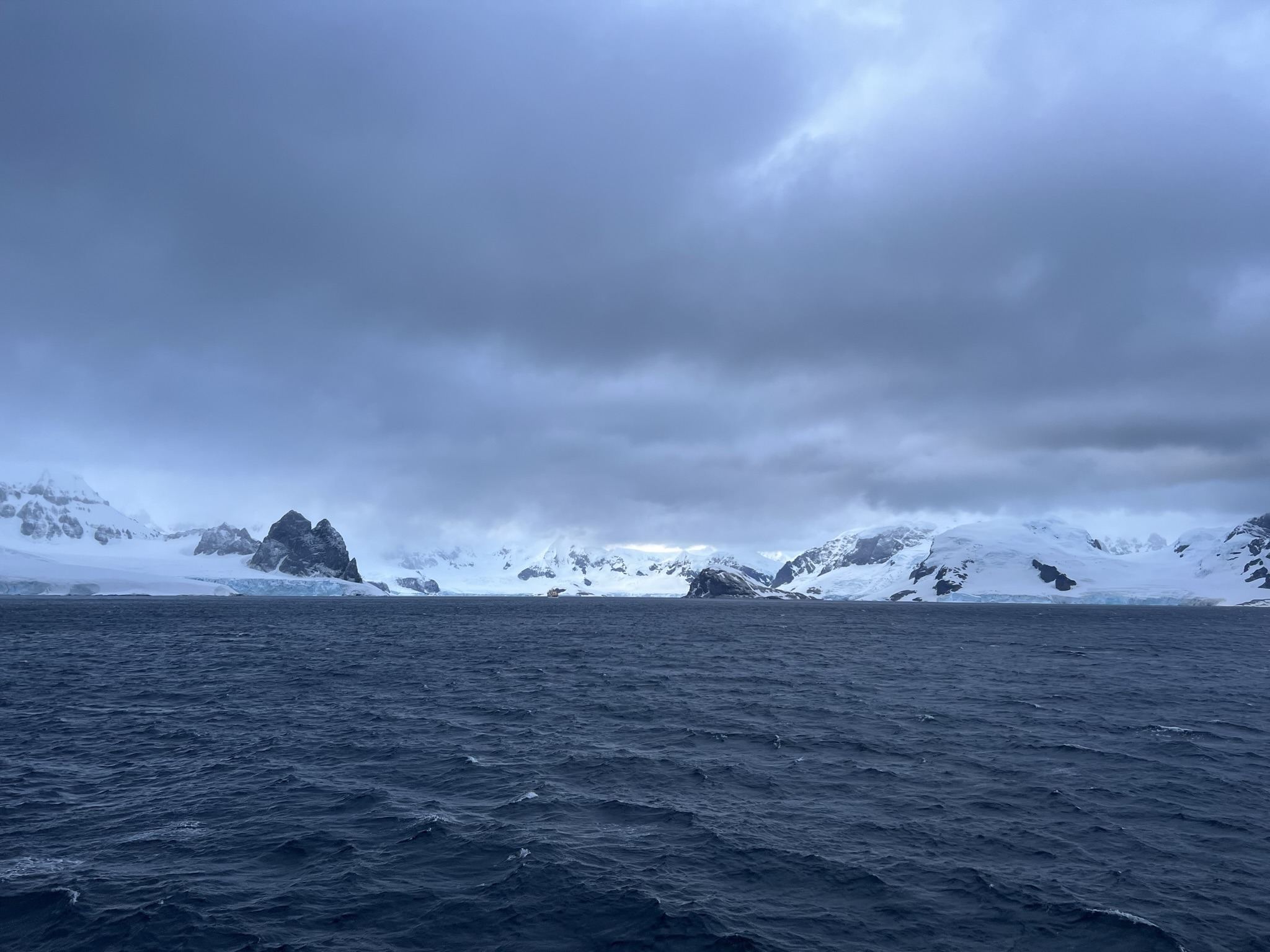
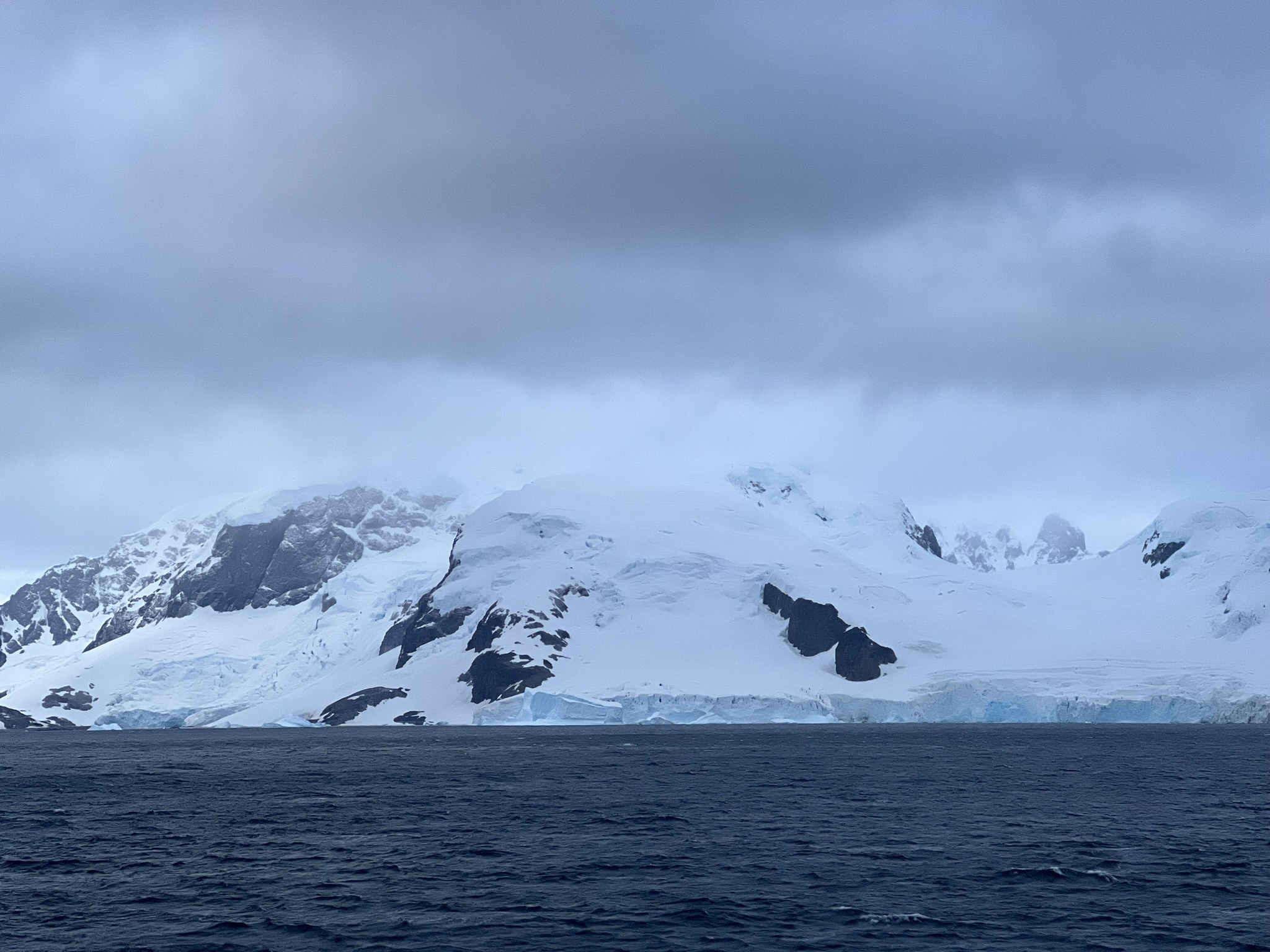
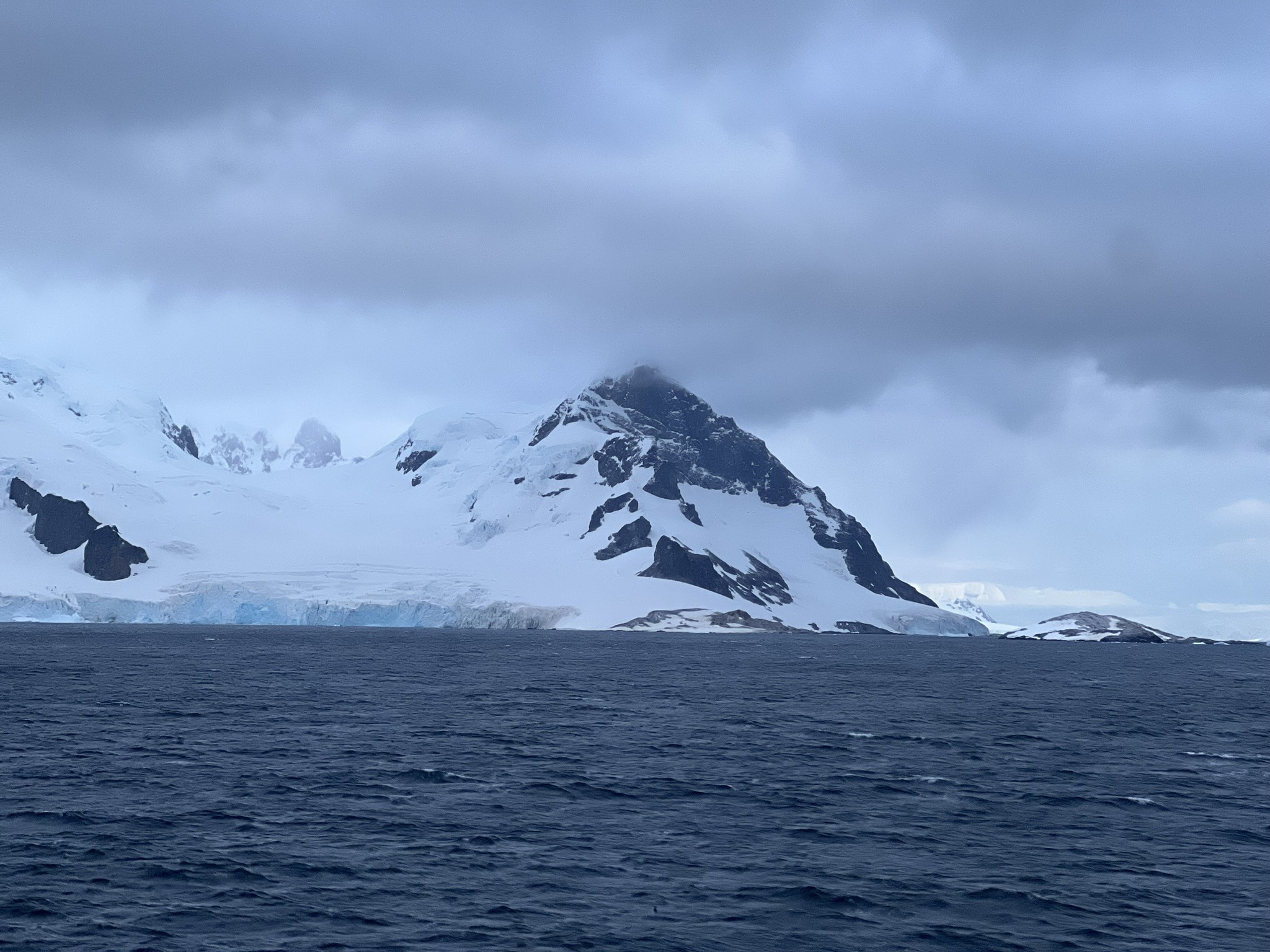
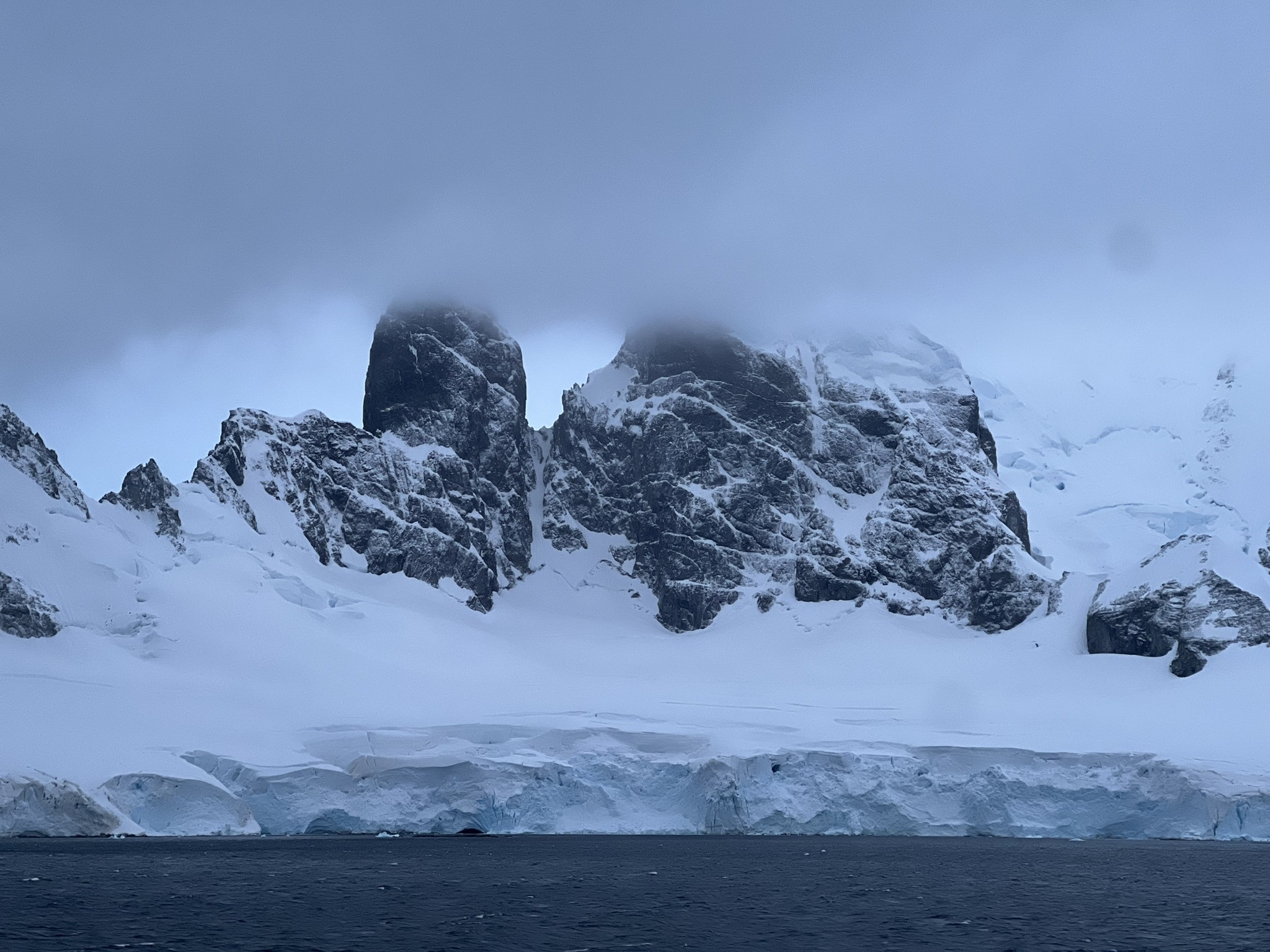
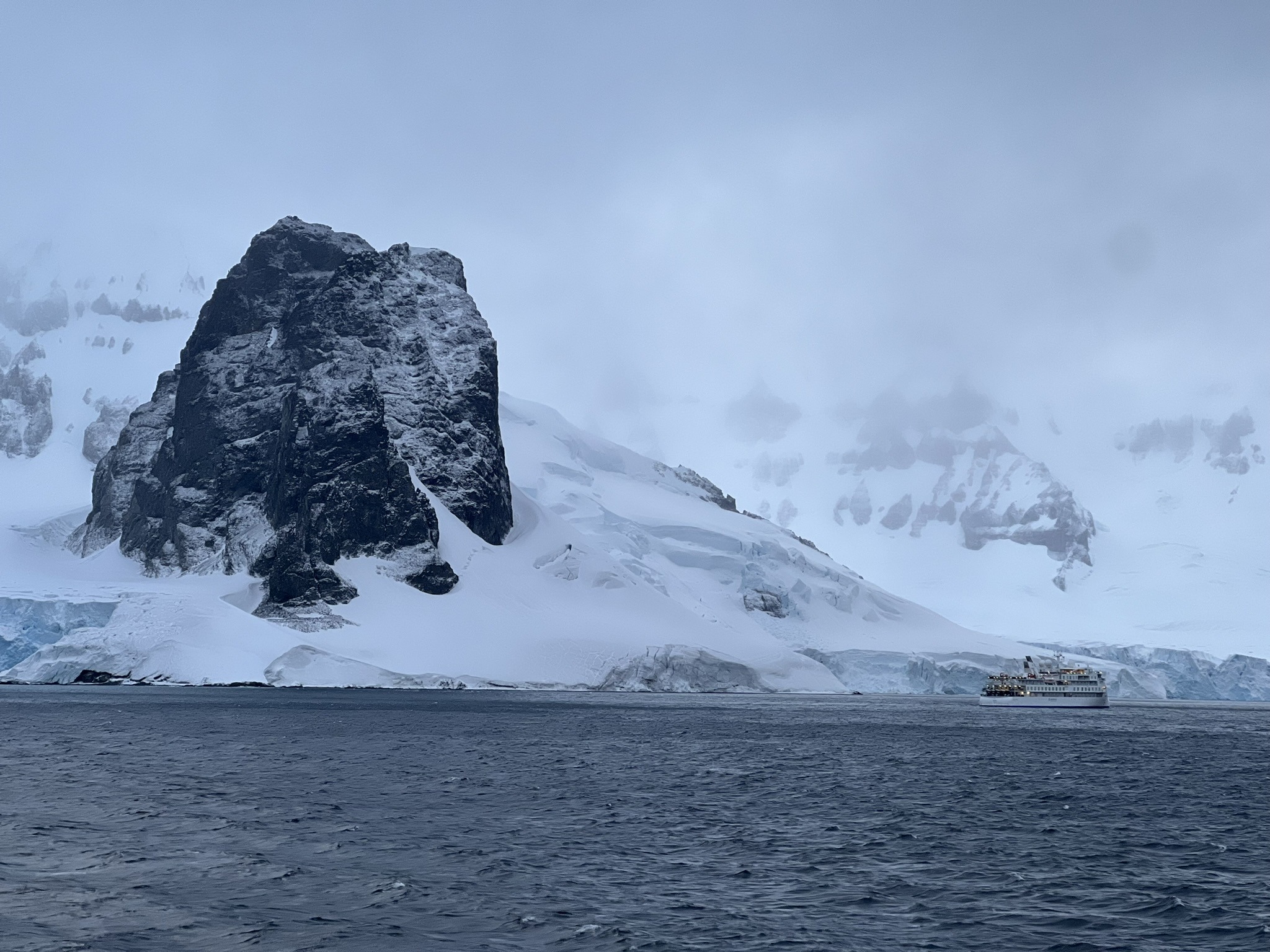
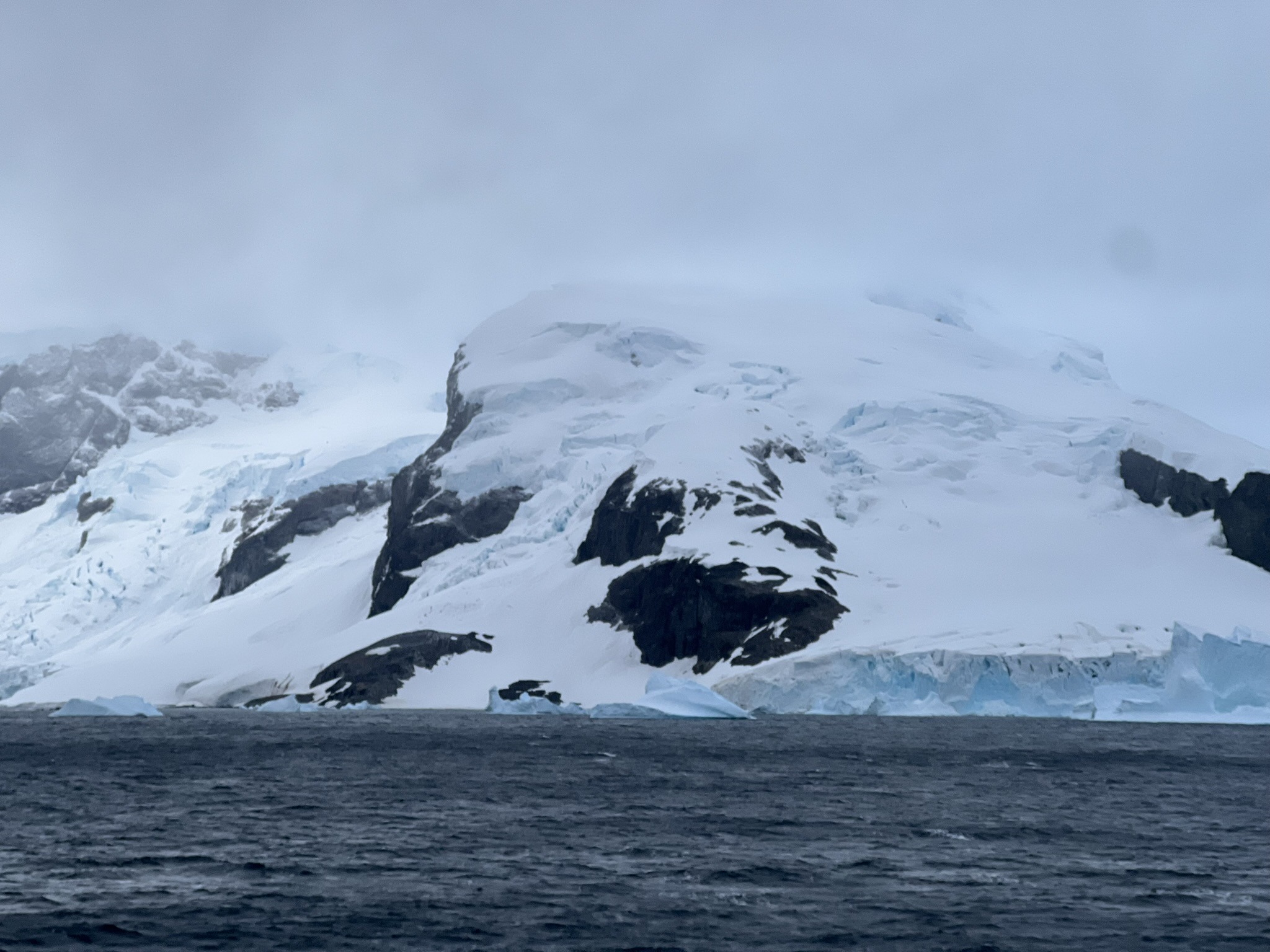
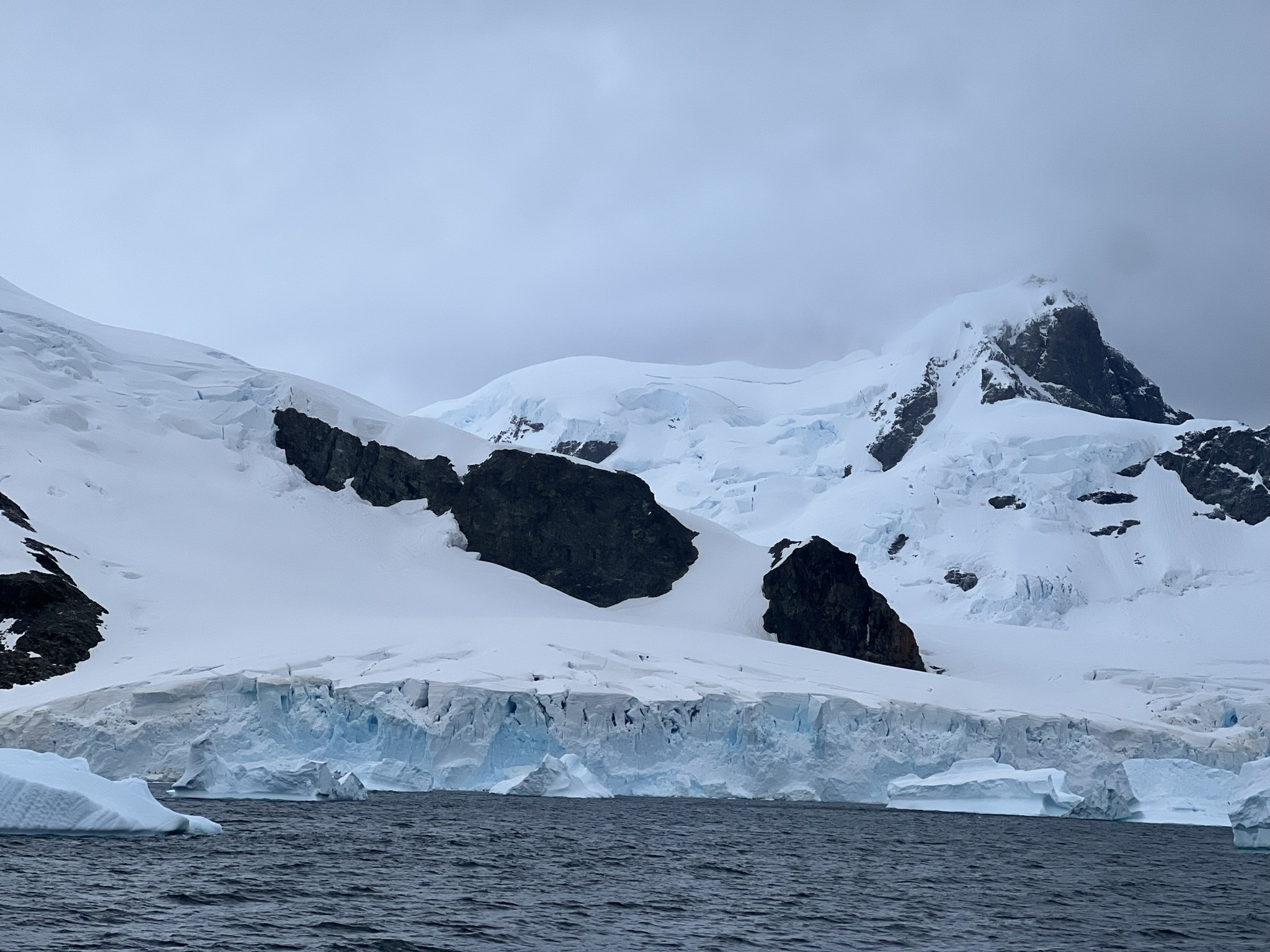
Having woken up at an unruly hour to watch sunrise from the bow, the unreal views that had accompanied us since the previous day somehow levelled up again, with a soft purple-pink light washing over snow-capped mountains and glaciers, the sort of thing you’d only expect to see in heaven. Oh, and the humpbacks. So, so many humpbacks. I must’ve seen at least ten of them feeding right in front of my eyes, just metres from the ship.
This was privilege. Time and time again on this trip I’d look up at the sky, feeling this overwhelming sense of gratitude and appreciating the privilege of being in these places, but this? This was something else. This felt like something I didn’t even deserve to see. And yet, at the same time, it felt like something everyone should experience at least once in their life.
Cuverville Island
During the night, we’d sailed through the Bransfield Strait and into the Gerlache Strait area, deep in the Antarctic Peninsula region. As the ship anchored and we demolished breakfast, the other three groups were called before ours, the anticipation building by the second. But finally, it was our turn.
Rushing to the mudroom, gearing up, disinfecting our boots, swiping our cards, and just like that, Team Albatross was ready for another adventure. With Antarctica being moody – dark, ominous skies, fleeting patches of sunlight, and blustery winds – getting off the gangway and onto the Zodiac wasn’t quite as pleasant as you might assume. Still, it was all routine by now. Hold the assistants’ wrists, sit, slide, and brace yourself for rough choppy waves and freezing spray.
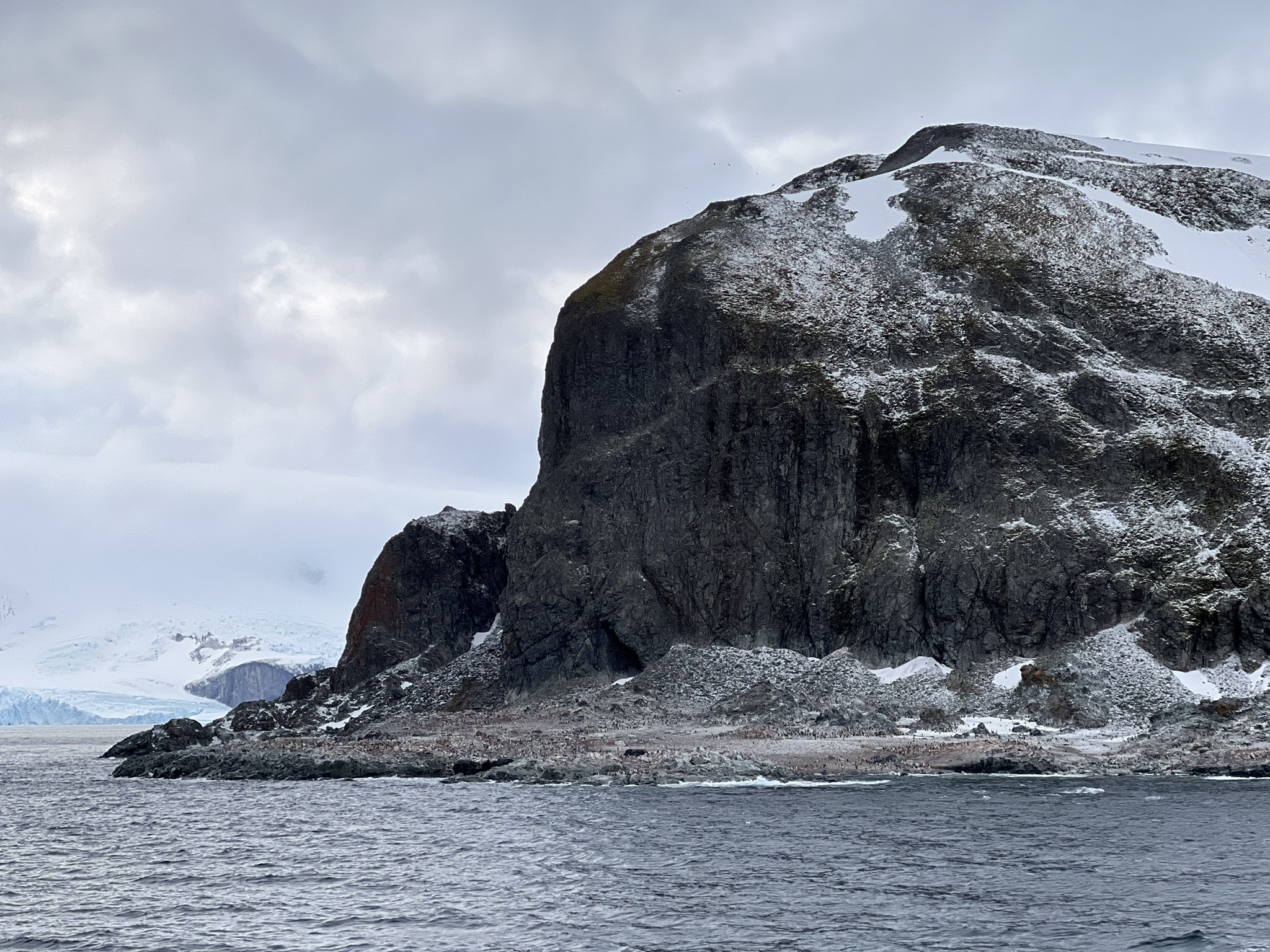
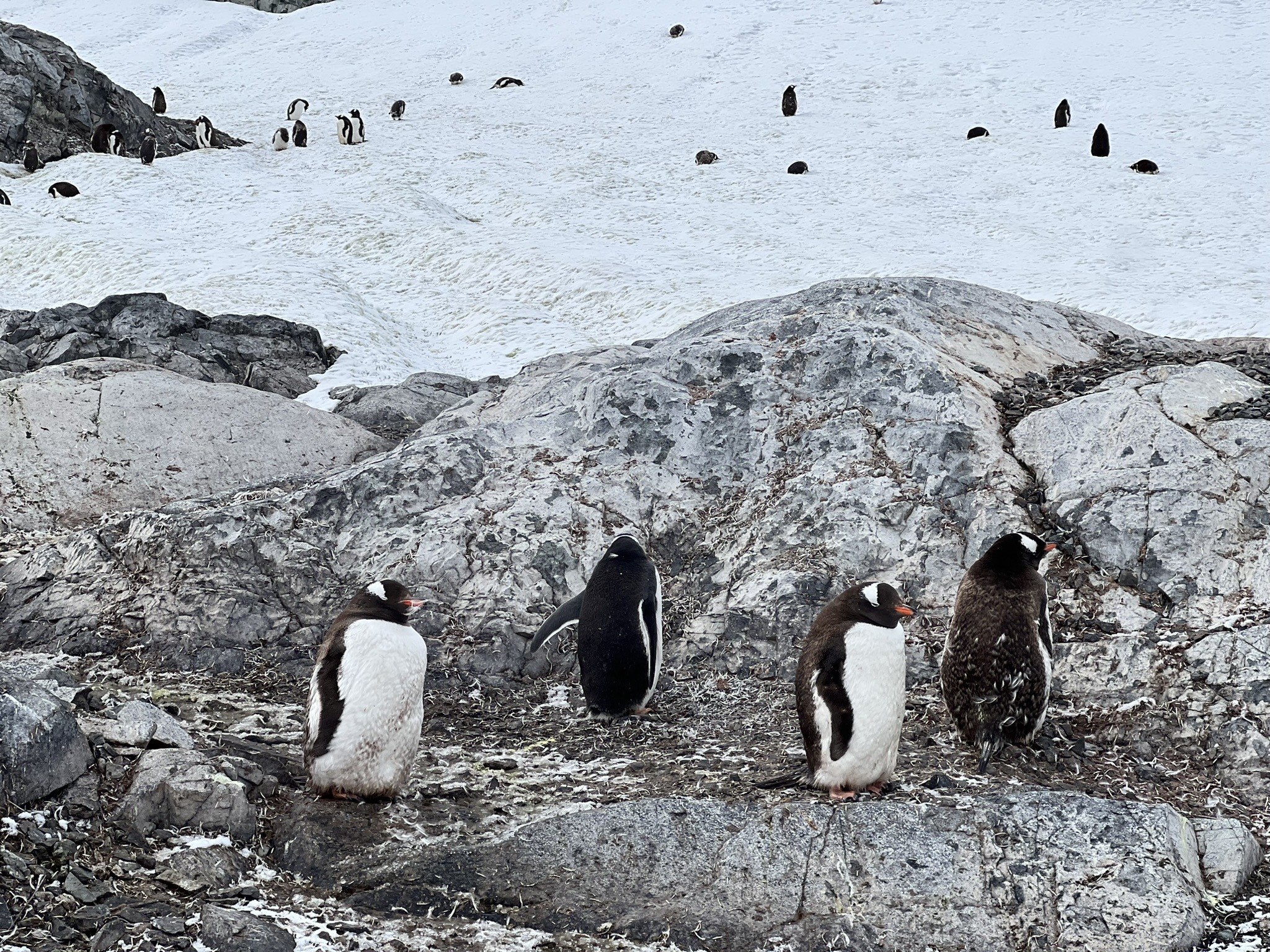
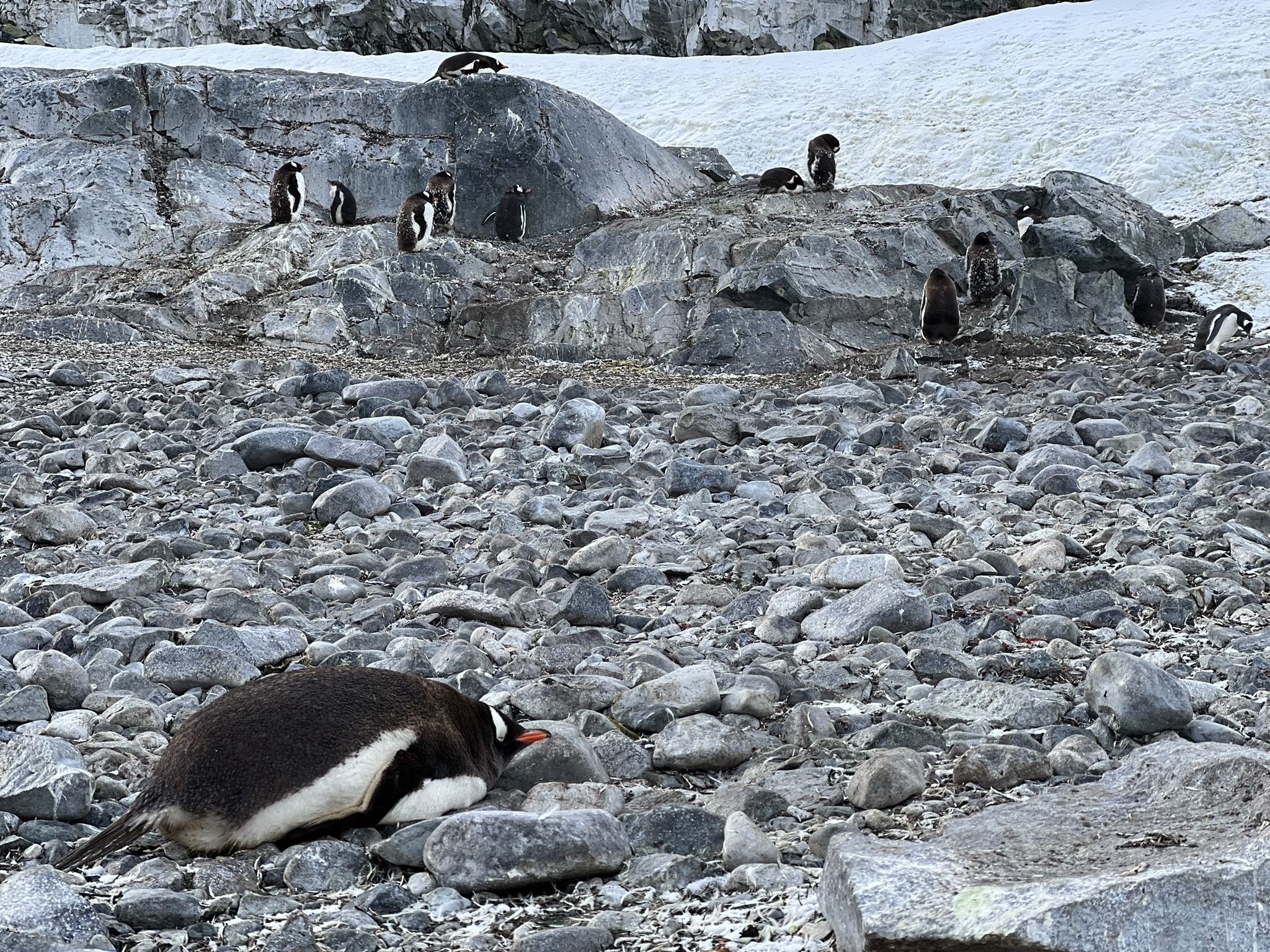
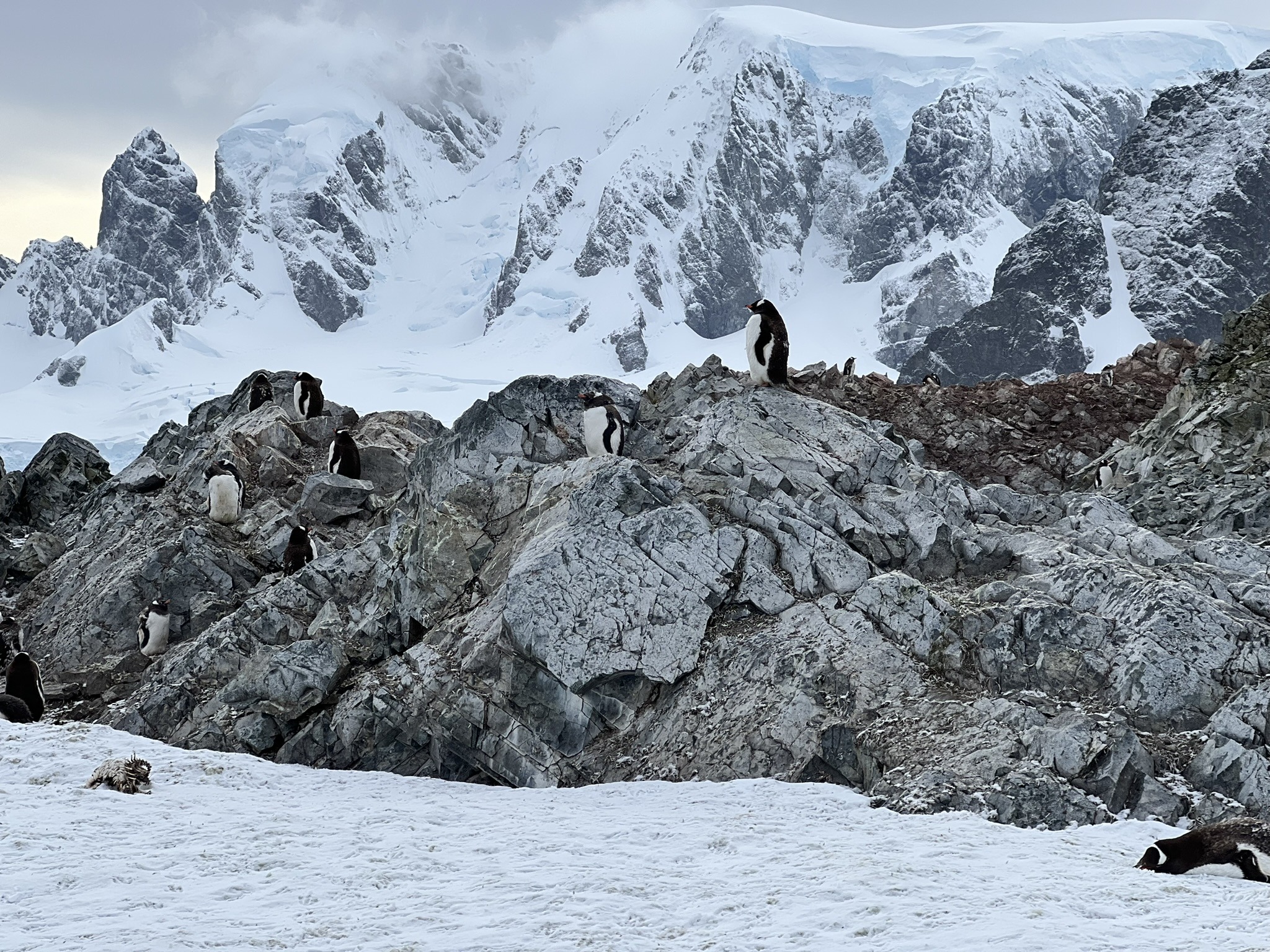
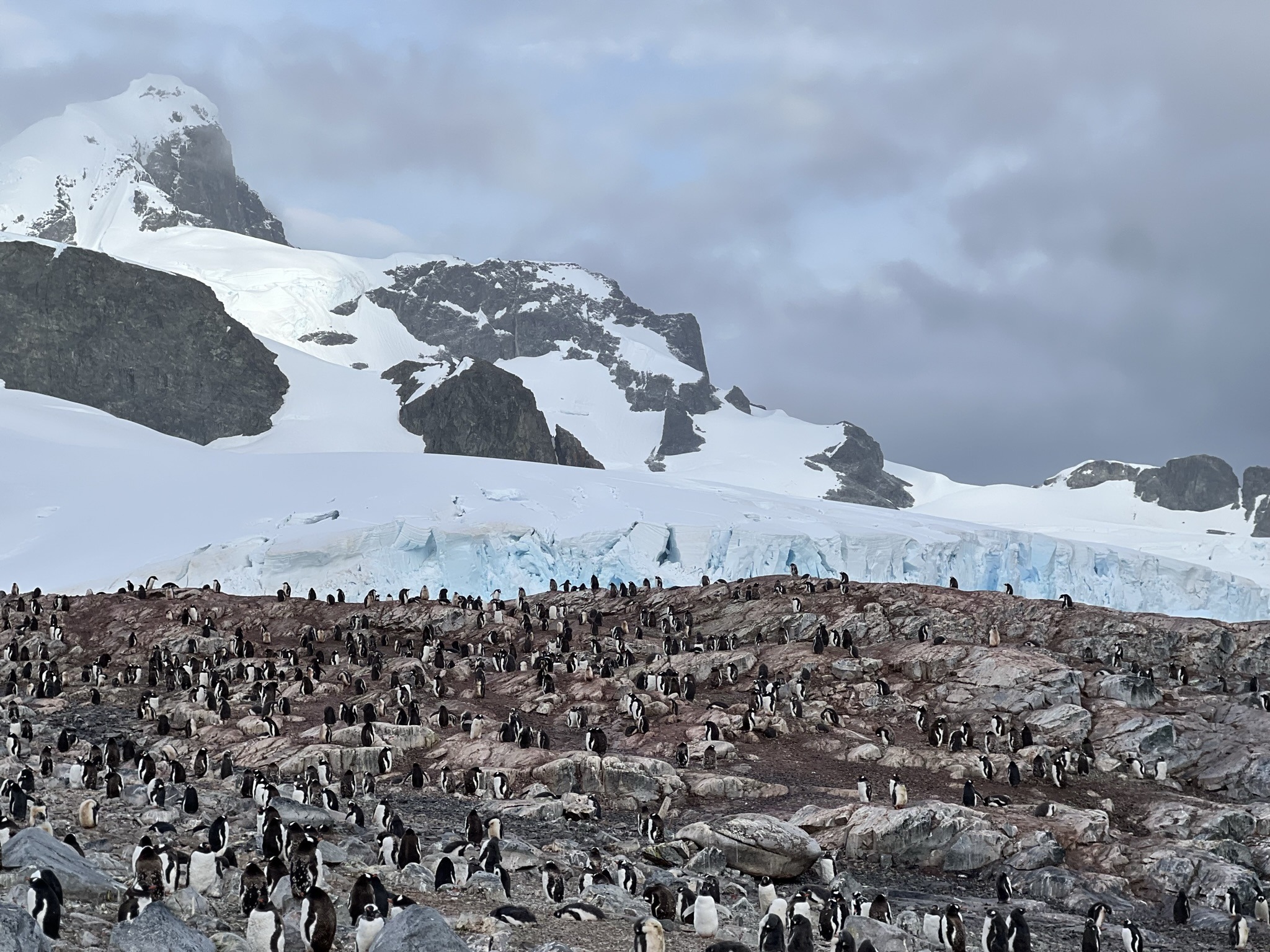
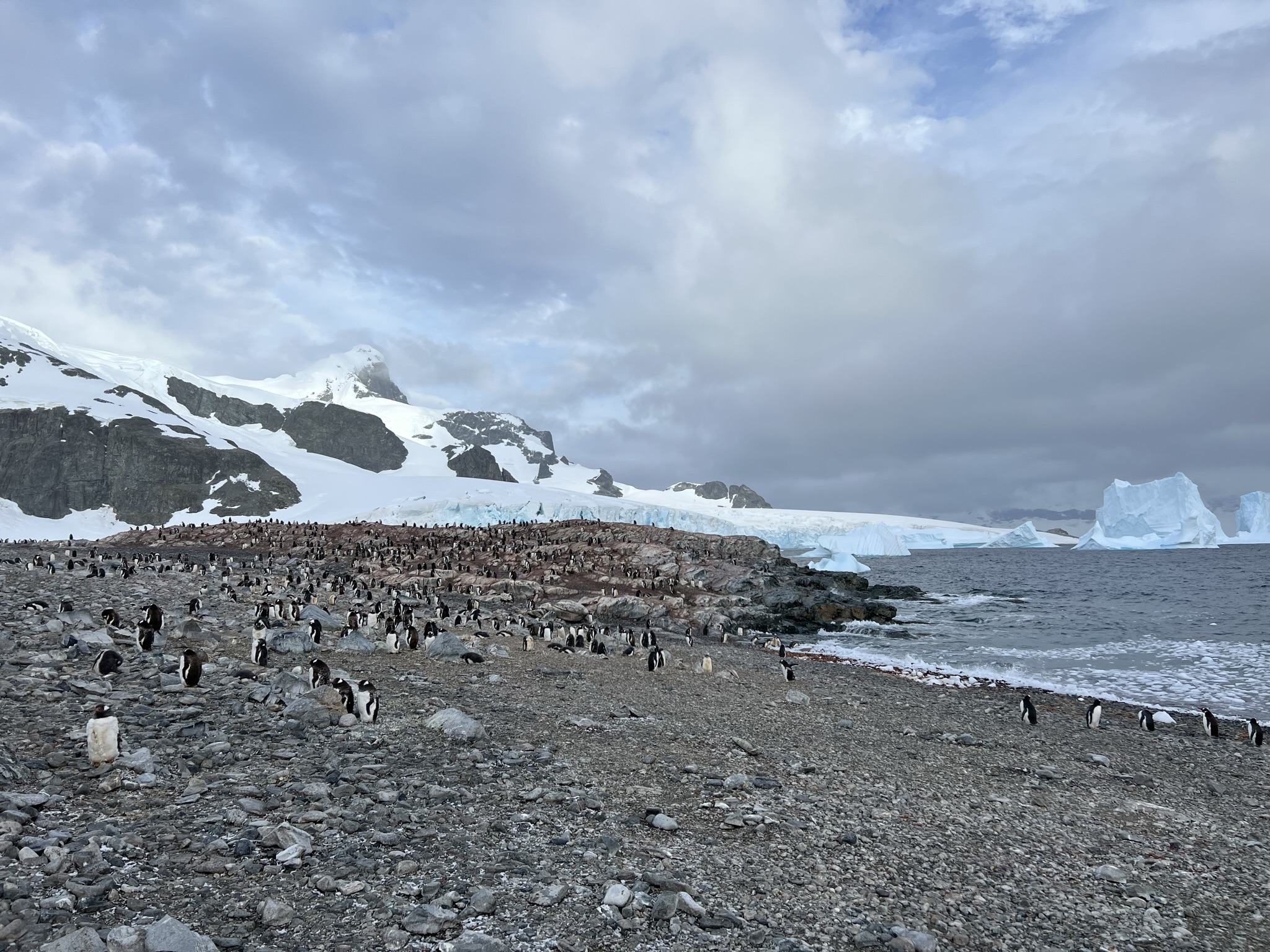
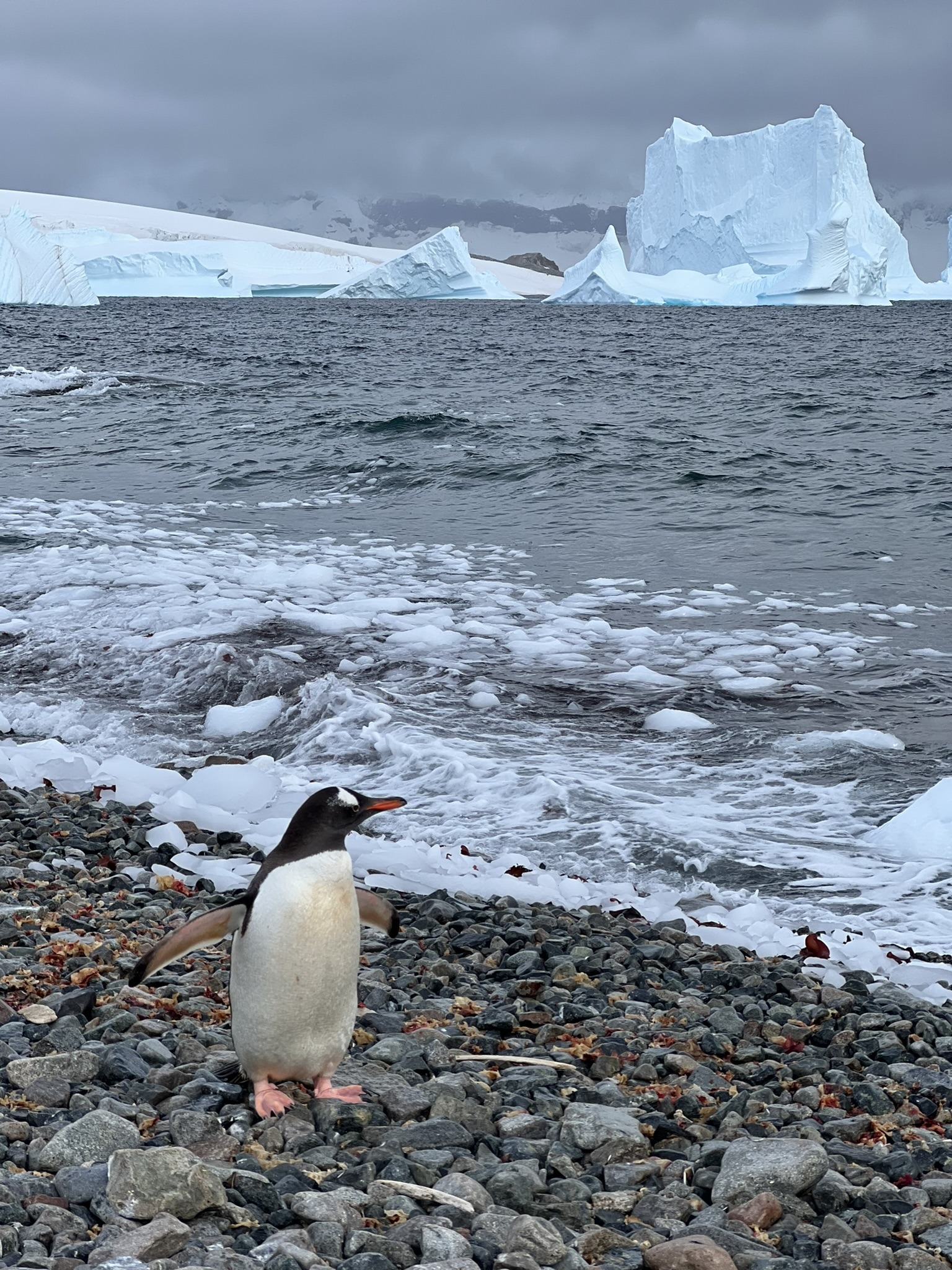
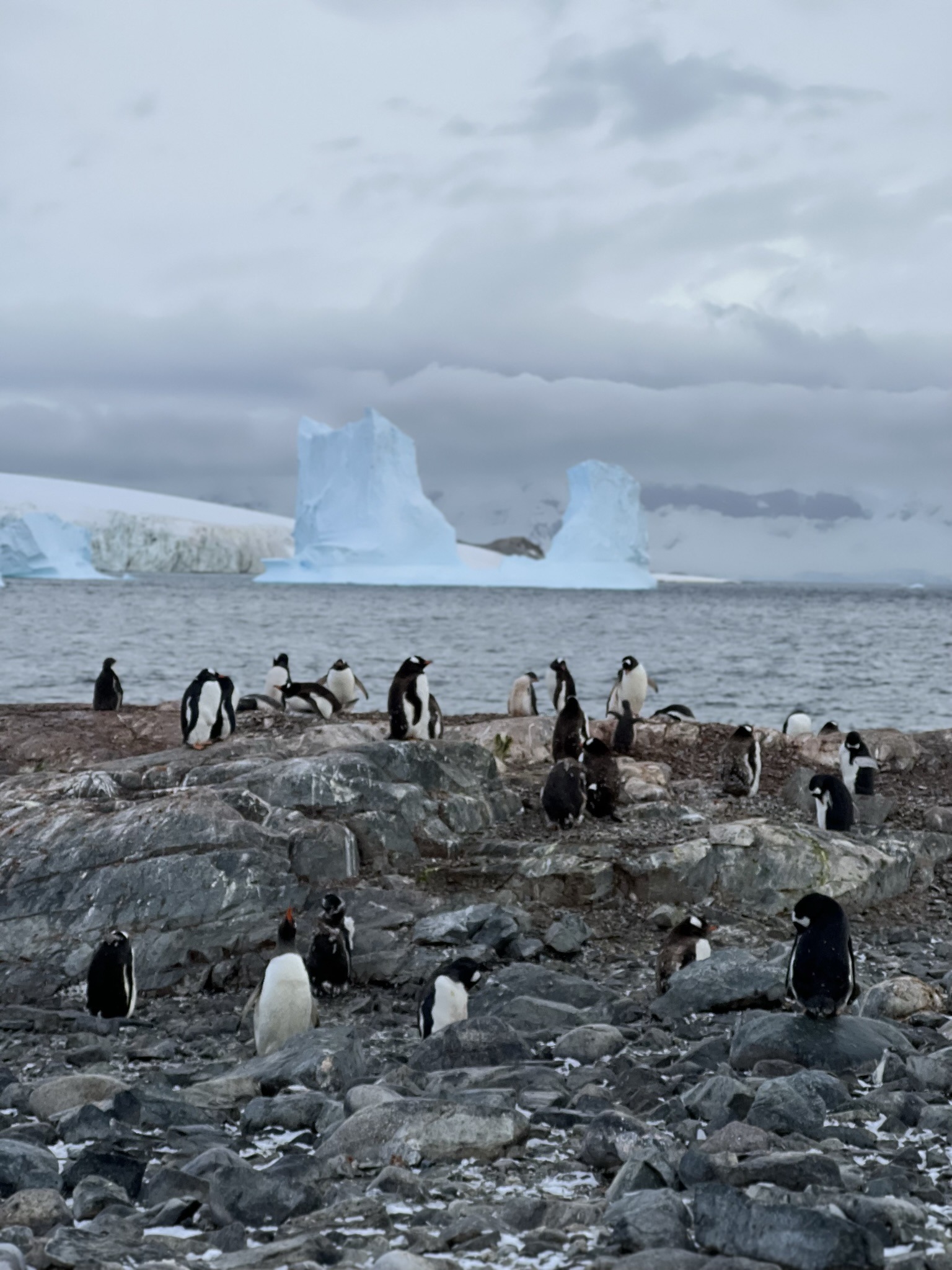
Our first expedition of the day was Cuverville Island, which lies in the Errera Channel, between Rongé Island and the Arctowski Peninsula. The island was discovered during the Belgica expedition (1897-99) led by Adrien de Gerlache and was named after a vice-admiral in the French Navy. It’s a small, steep-sided rocky island with cliffs rising to around 200 metres and patches of moss and lichen in sheltered areas. The island, Jonathan explained, is famous for its gentoo penguins, hosting one of the largest breeding colonies on the Antarctic Peninsula – estimates vary by year but are commonly given as over 4,000 breeding pairs – alongside birds like southern giant petrels, kelp gulls, Antarctic terns, snowy sheathbills, and south polar skuas.
Gentoo Culture
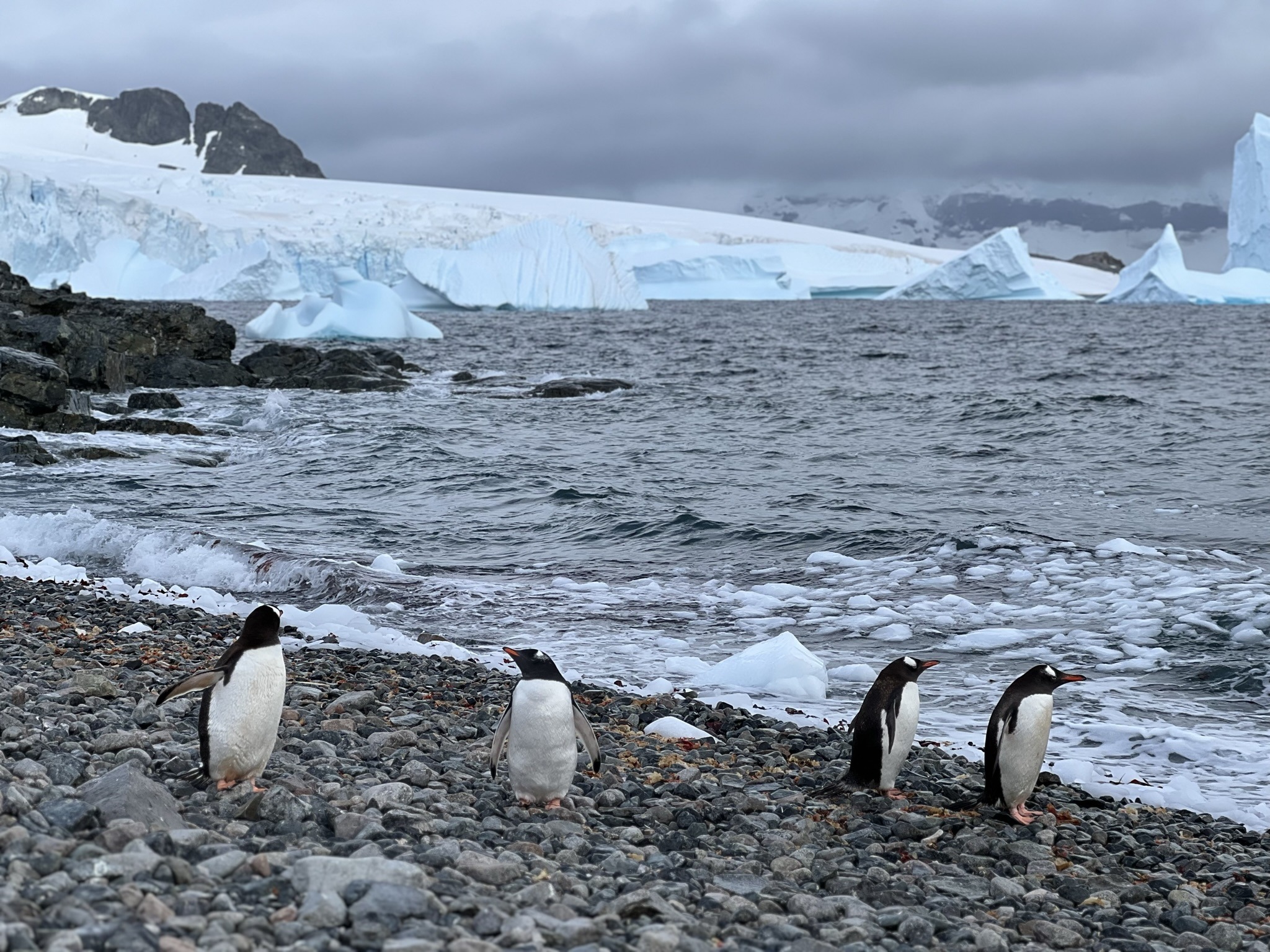
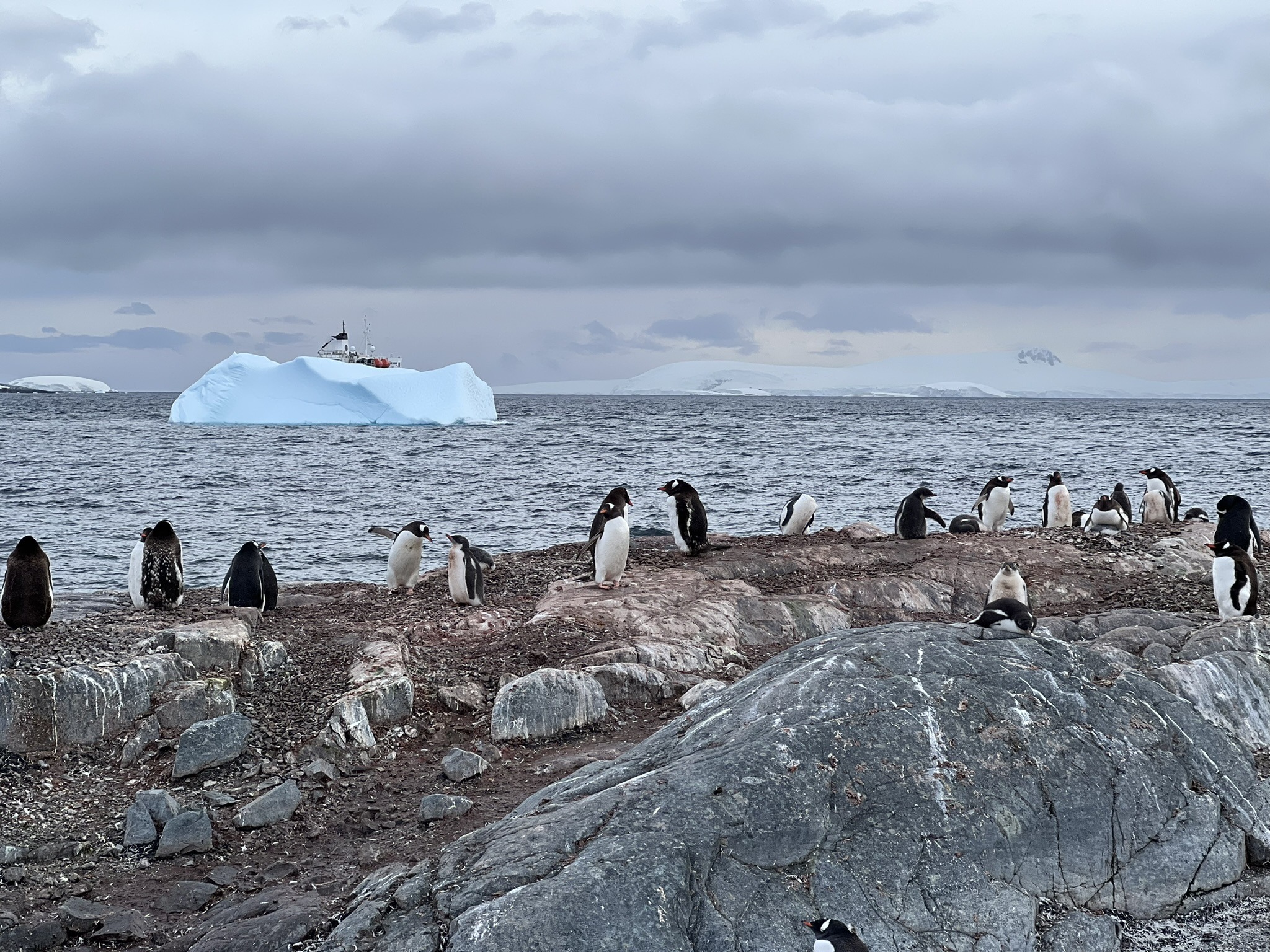
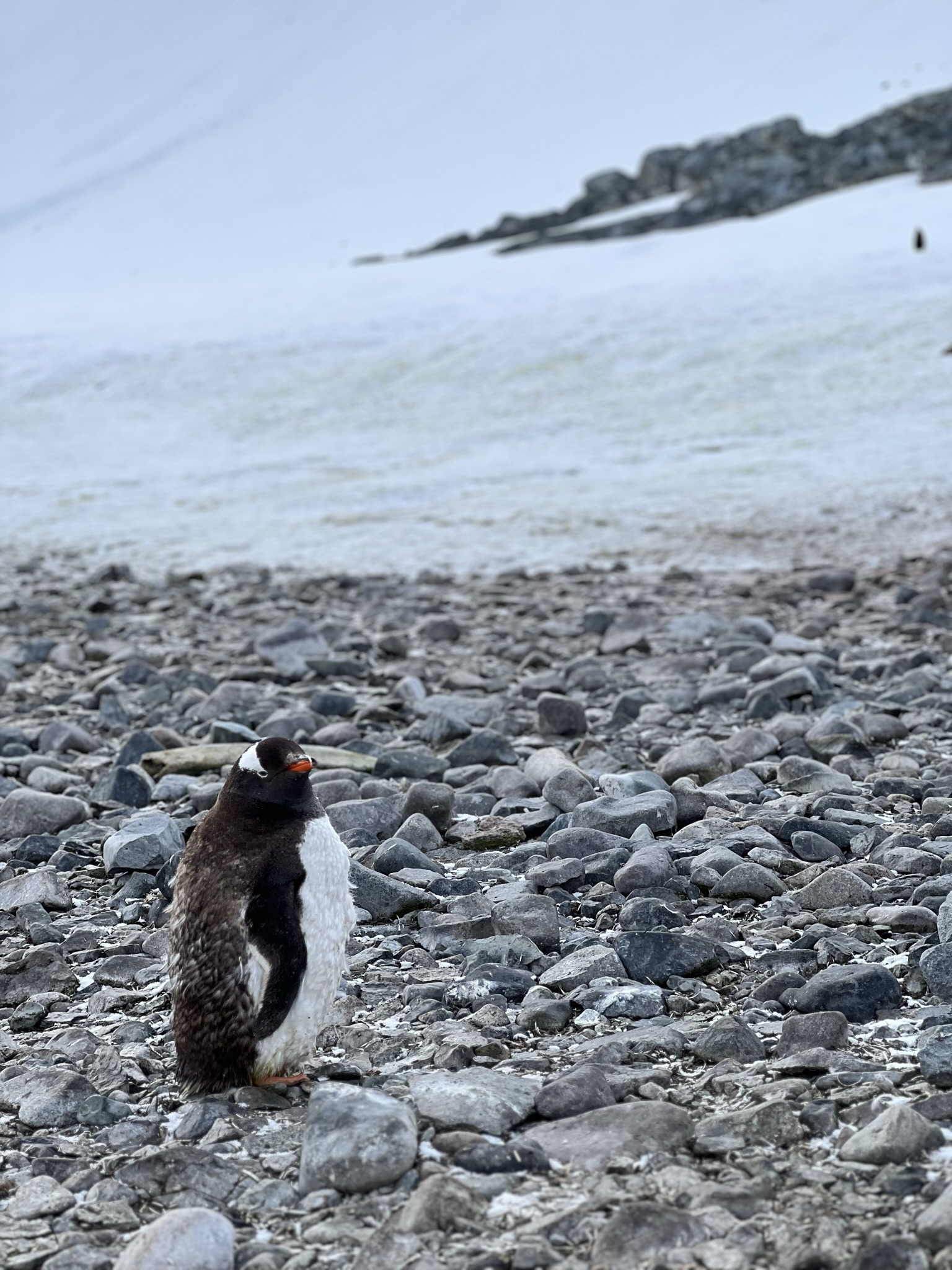
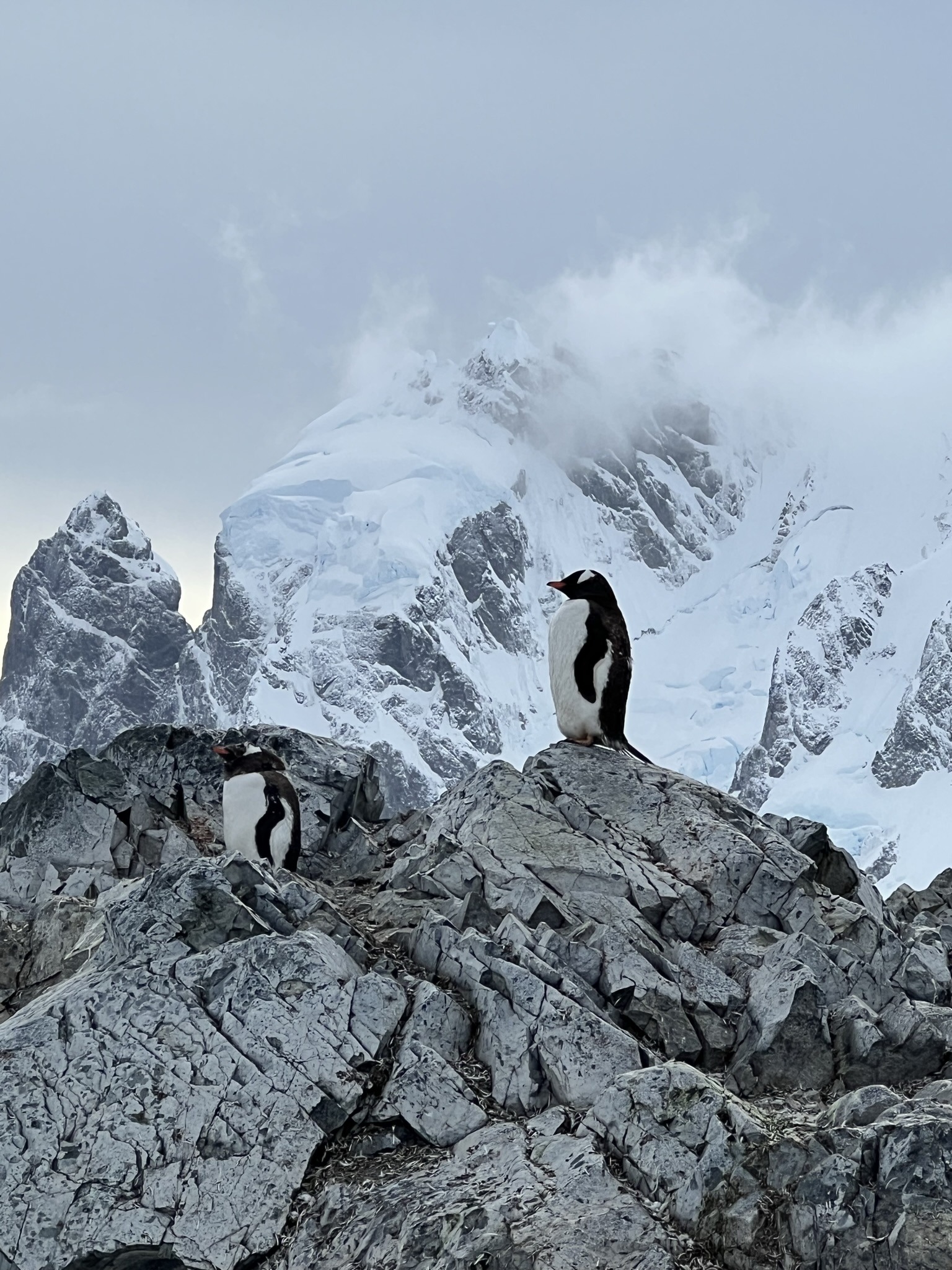
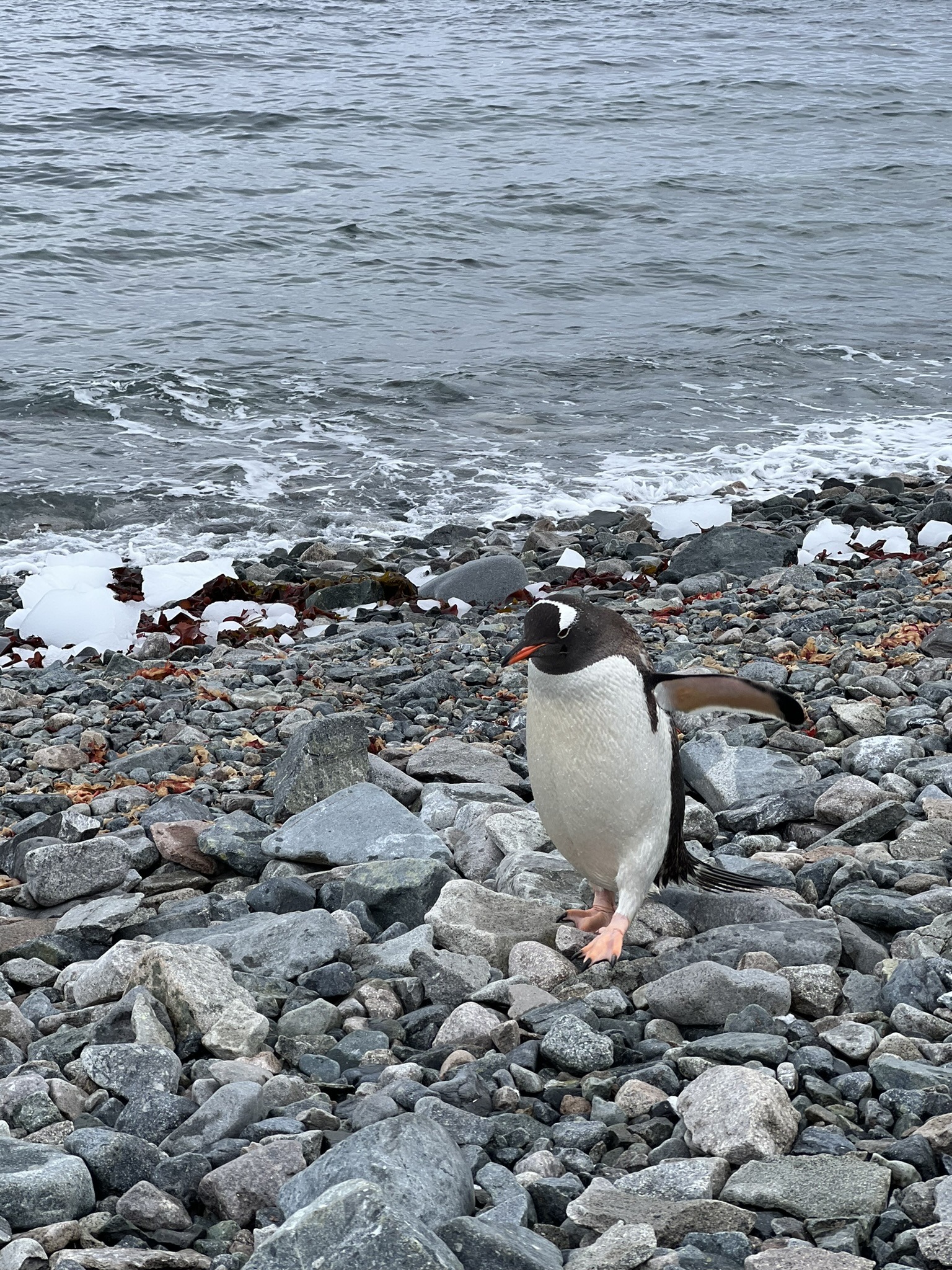
The second landing felt as dreamlike as the first. As soon as we bumped ashore, we were met by a colony of gentoos. Most stood around doing absolutely nothing, but one was busy trying to find pebbles for its mate. It would waddle a few metres, spot a good one, pick it up in its beak, then waddle back and drop it at its partner’s feet like a tiny, tuxedoed romantic. So damn precious!
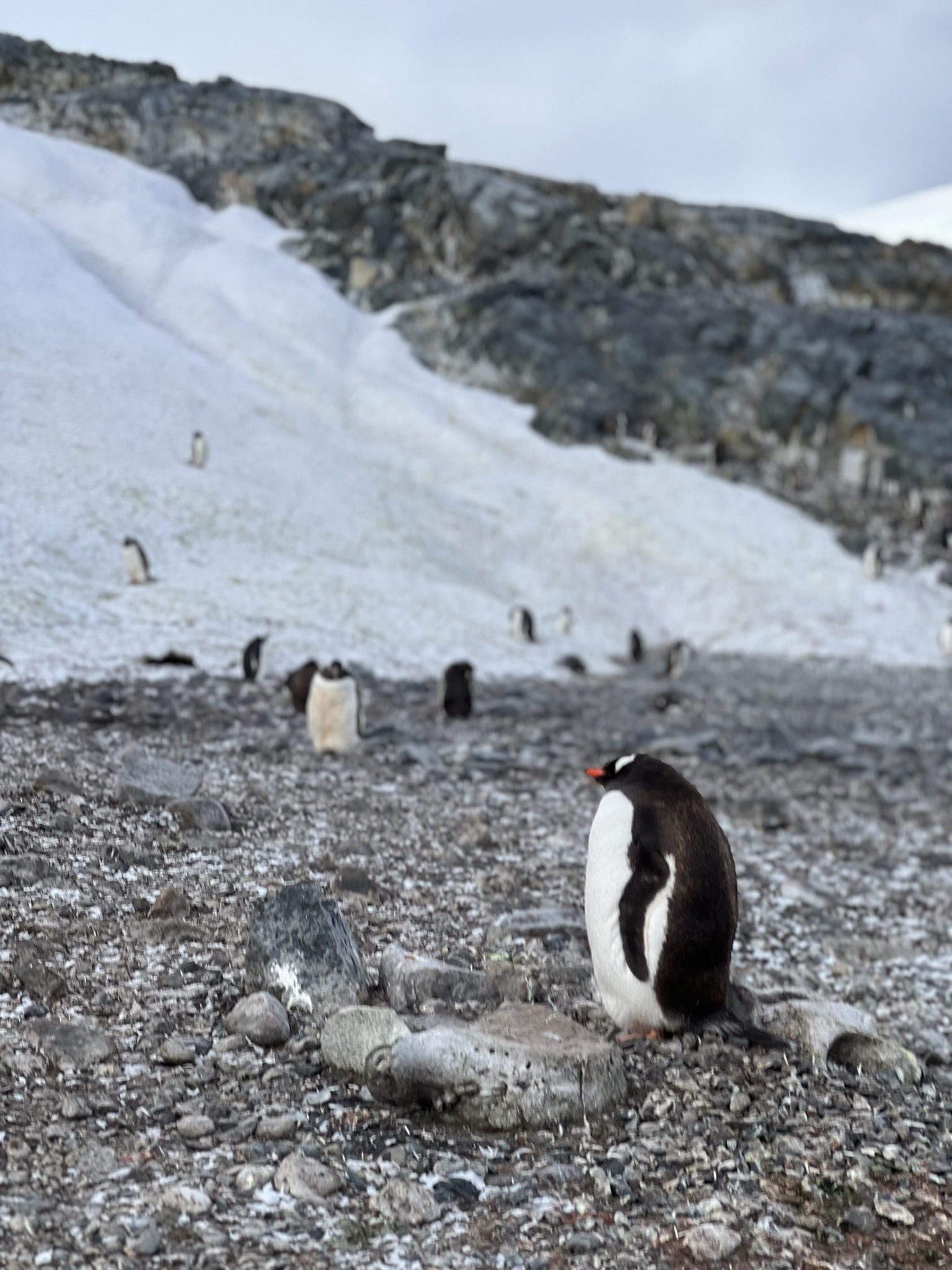
Heidi had warned us not to take pebbles from the beach as keepsakes, partly because they’re a limited resource for nesting penguins and they struggle to find the good ones. Here we also saw penguins lying flat on their bellies when they were exhausted, and others sleeping upright with their necks hanging down, conserving energy and heat. With it being late summer, many were either moulting or had just finished – an energy-sapping process that leaves them spending a lot of time resting. So. Damn. Cute.
Since the trail was short, we didn’t do much “exploring” – we mostly observed. We watched gentoos eating snow for hydration when they couldn’t be bothered going to sea. Adults nipped off loose feathers after moulting. Parents regurgitated krill into chicks’ mouths, the chicks kickstarting the whole thing by shoving their beaks into a parent’s mouth and triggering the feeding reflex.
And then there was the chase. Man, I love the chase. The chase is when adults start coaxing fledglings towards the sea. It’s basically adults sprinting around while shaggy, ruffled chicks wobble after them like overexcited toddlers. My favourite was the adult that ran straight to the water and the chick followed, launching into what was probably its first swim, according to Heidi. That chick, at least, had a better shot at surviving the coming winter.
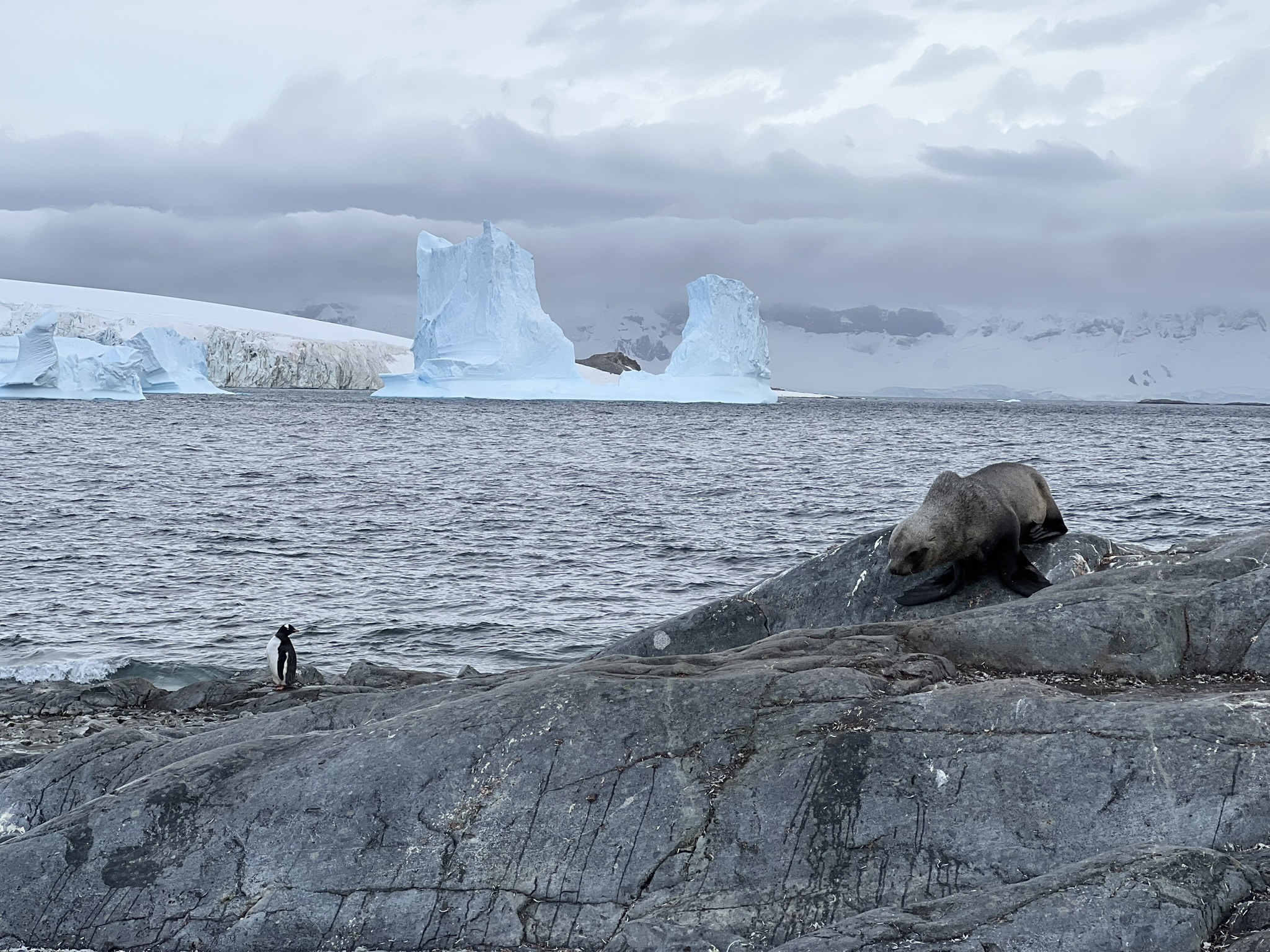
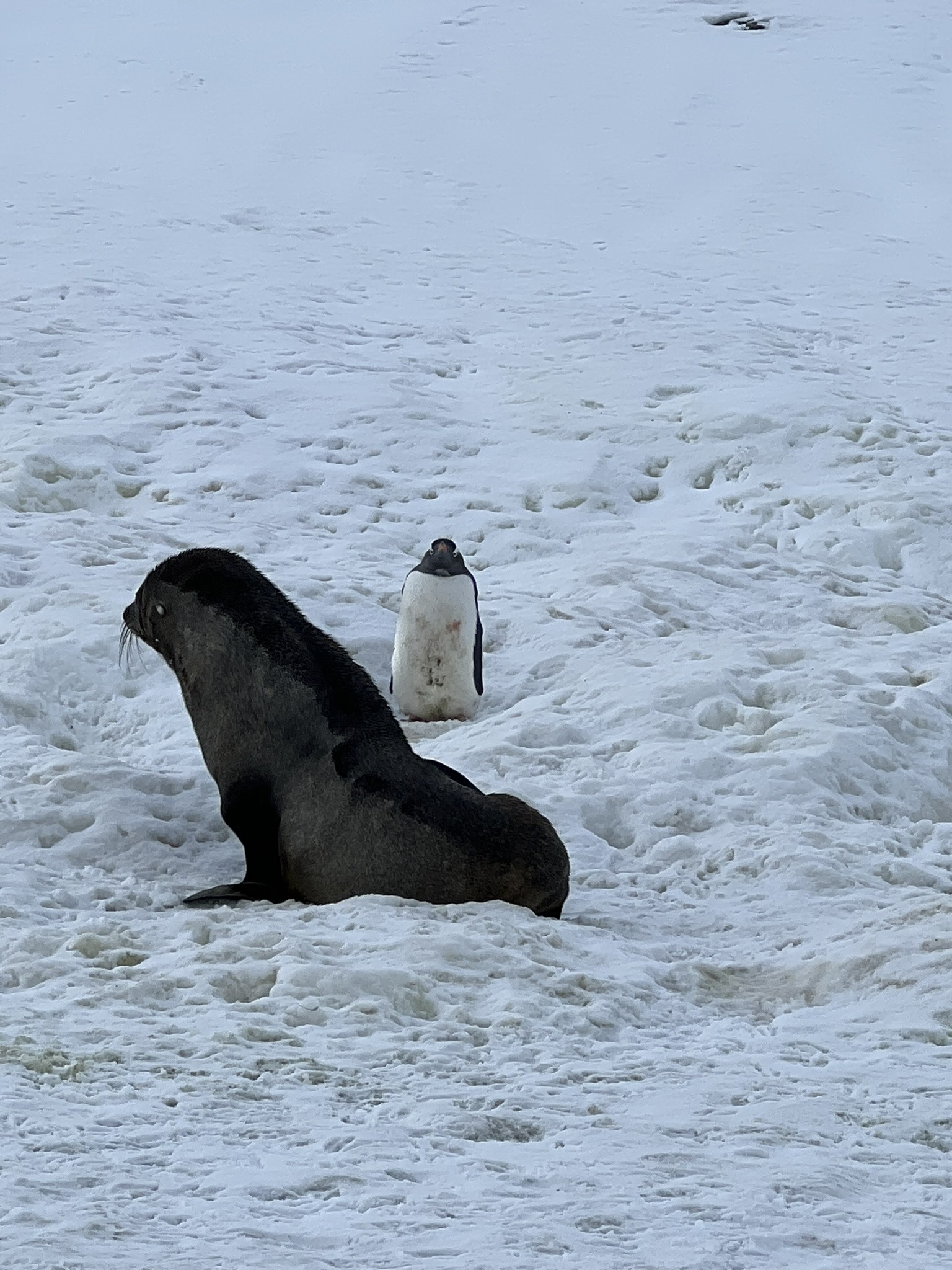
Fascinating though they might be, they’re also a funny bunch. Like when this one penguin’s constant screeching woke a seal up, prompting it to galumph towards the penguin, wailing and whining until it ran away, allowing the seal to flop right back to sleep. If that ain’t a mood, I don’t know what is.
In between watching these incredible scenes unfold and ogling at the fantastic landscapes and vistas, these expeditions flew by. It’s funny how we were stuck on a frozen piece of land yet feeling cold was the last thing on my mind. Hell, I barely even minded the putrid smell of guano that surrounded us!
One More Surprise
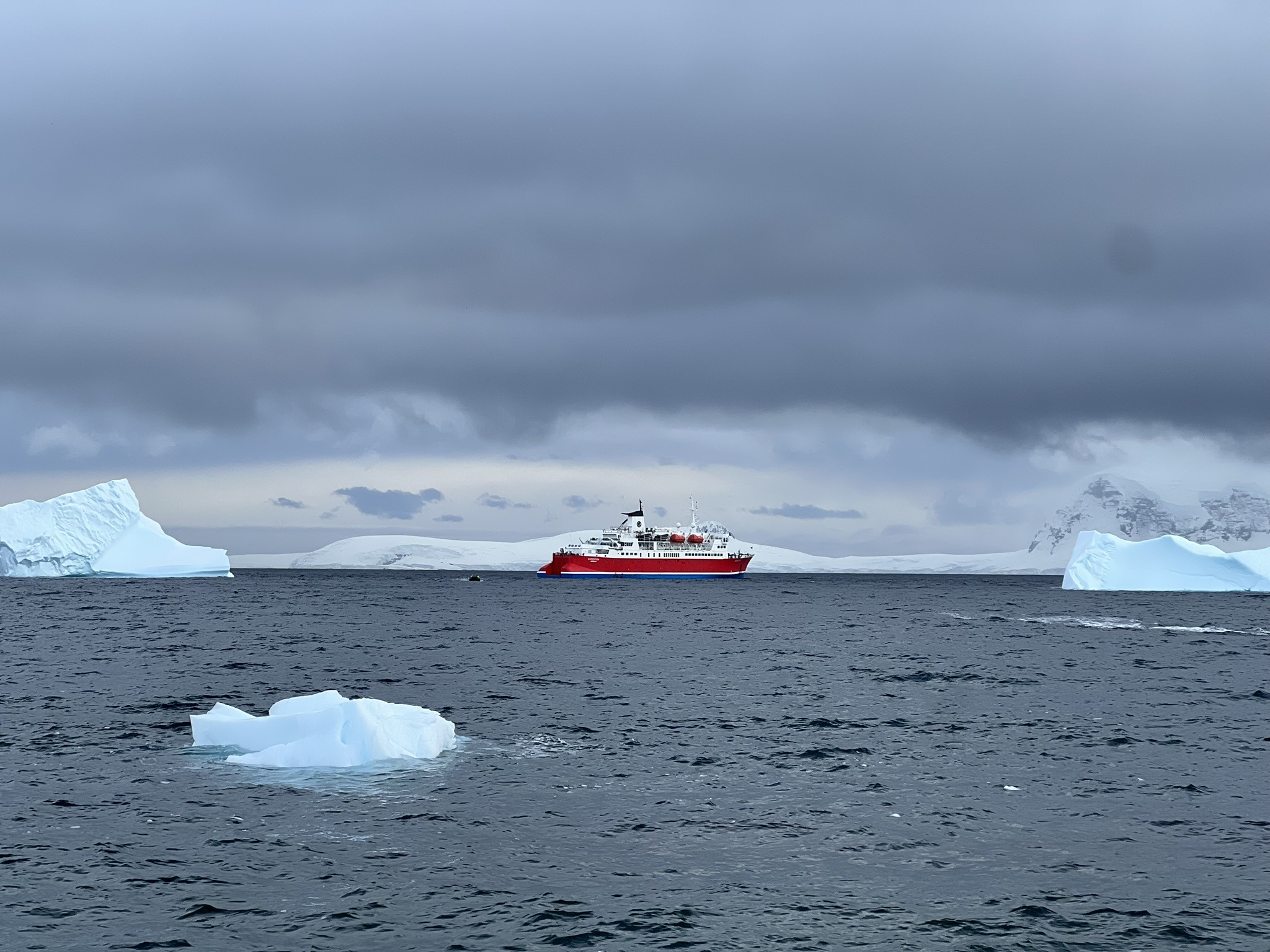
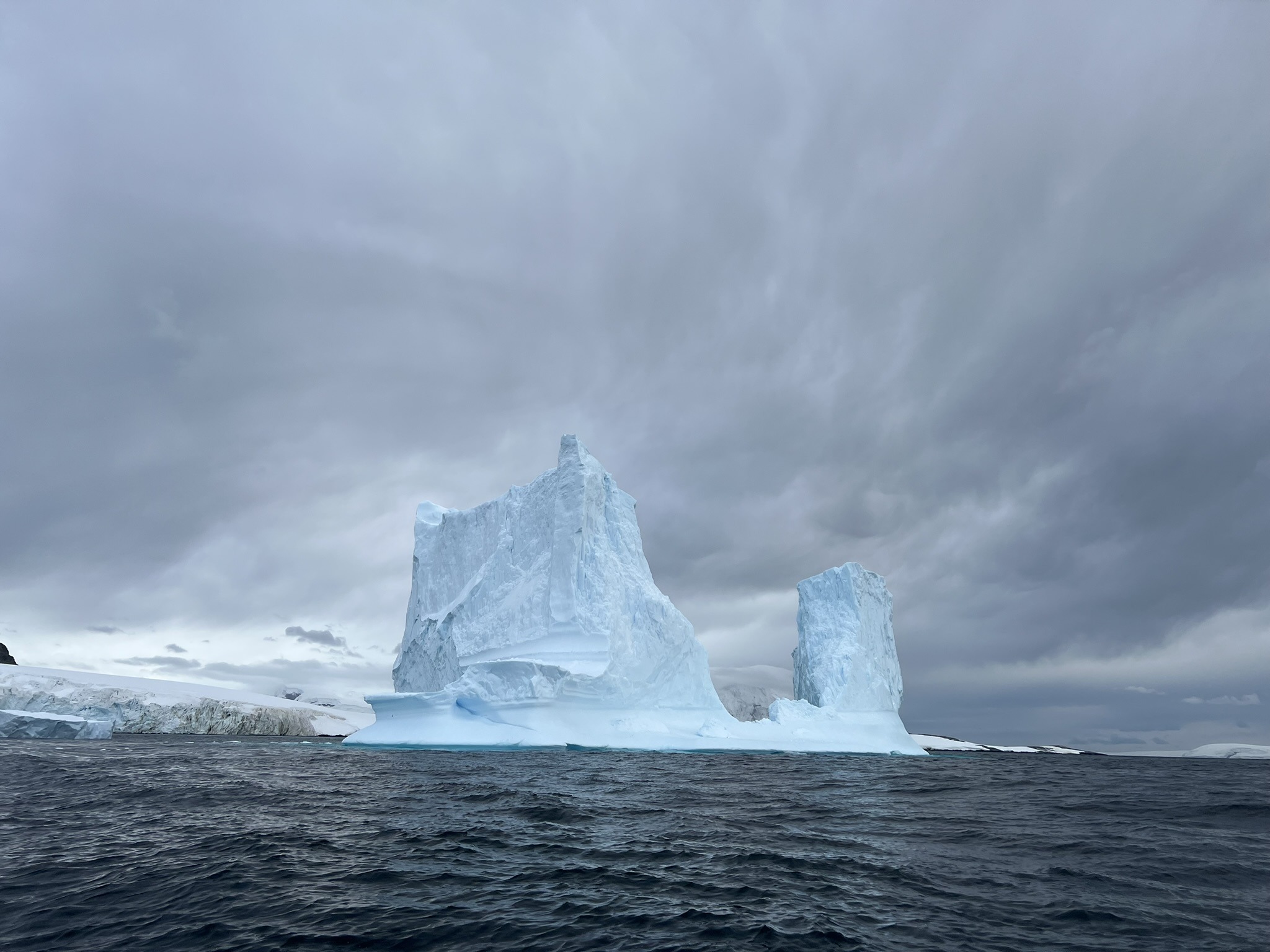
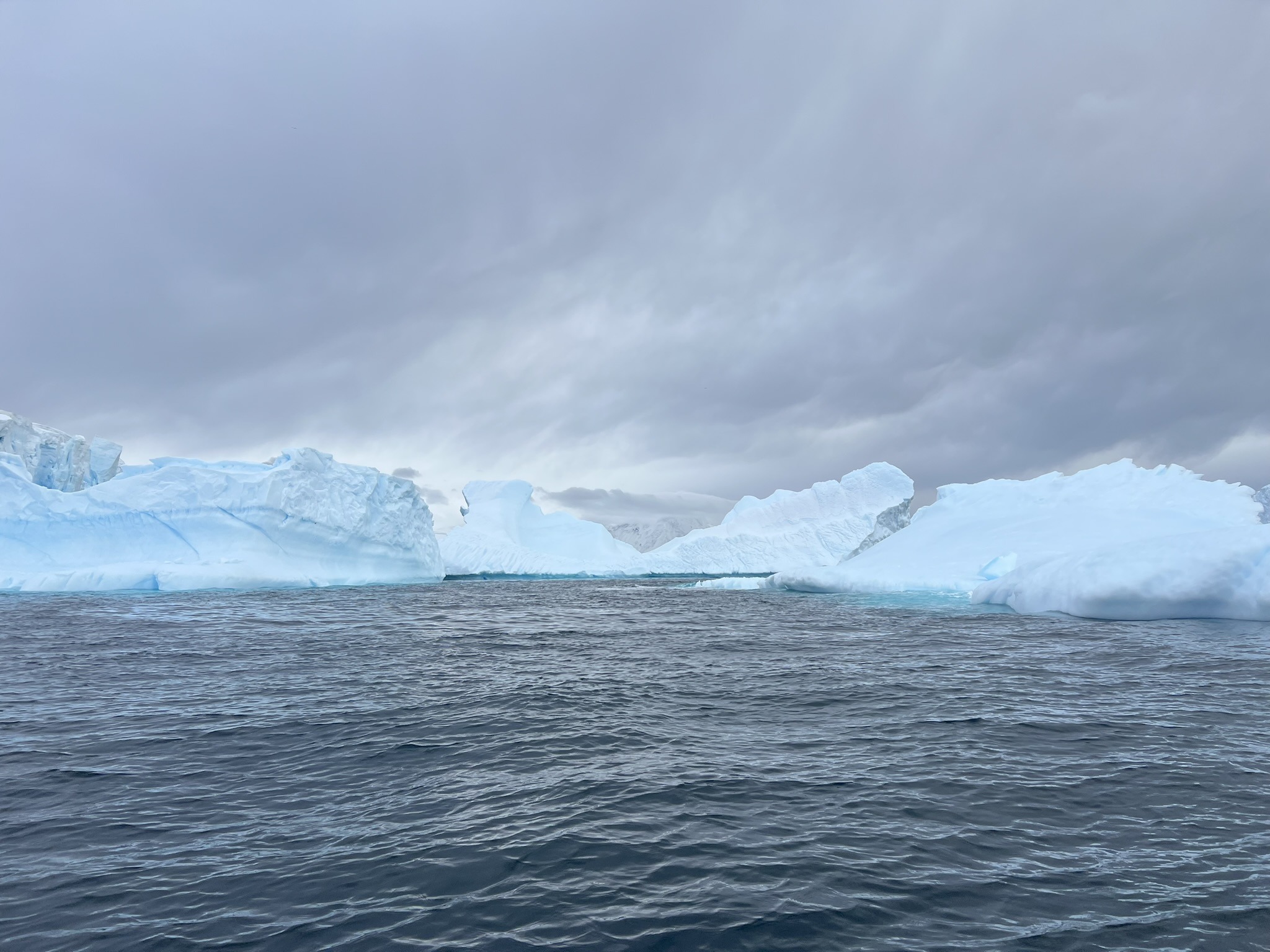
On the way back to the ship, we got a bonus sightseeing lap by Zodiac, manoeuvring through a sea of brash ice, an experience unlike anything else. Colossal, brilliant-blue icebergs dotted the water near the ship, their patterns, colours, and shapes all unique, especially that castle-shaped one that looked too perfect to be real.
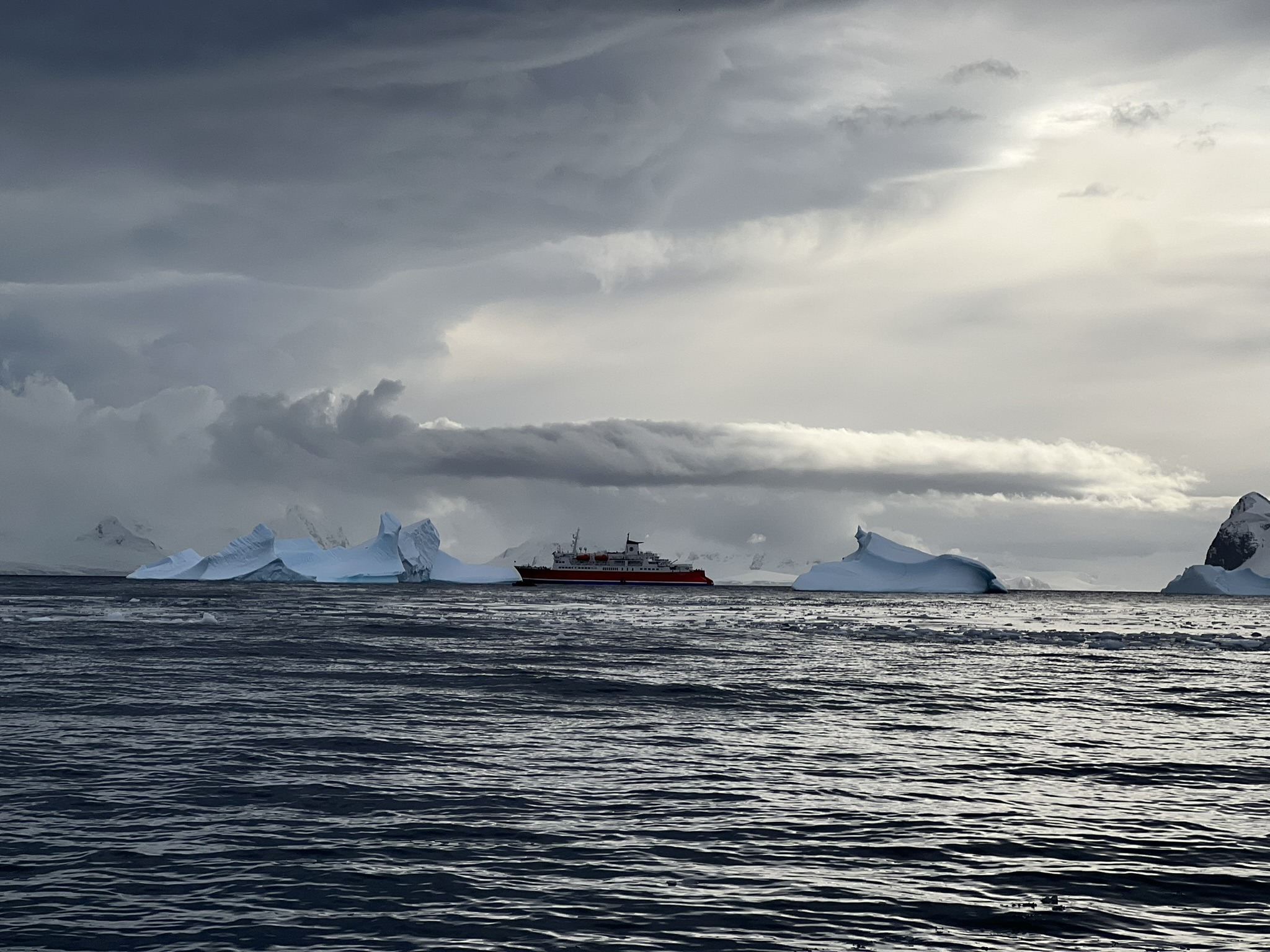
To cap it off, we found another magnificent beast – one of the South’s top predators – a leopard seal. I couldn’t believe my eyes or my luck. It lay flat and motionless on a small iceberg, watching us as we approached, its face smeared with blood, probably from a gentoo taken nearby. Favourite find so far, no contest. I’d wanted to see one of these gorgeous animals since I was a kid.

PART II
Sailing the Errera Channel
As I binged on the usual triple portions of every course, our captain wove the ship through the Errera Channel. The second I finished lunch, I made a beeline for the bow – Jonathan had promised this would be one of the highlights of the trip.
With Rongé Island on one side and the Antarctic Peninsula on the other, the views were ridiculous and left every single one of us breathless. We slipped past massive icebergs, sometimes with only a few metres to spare, and I couldn’t help wondering whether we’d end up in a Titanic sequel, though the sheer number of ships that run these routes did calm me down a bit. Either way, the scenery didn’t leave much room for panic.
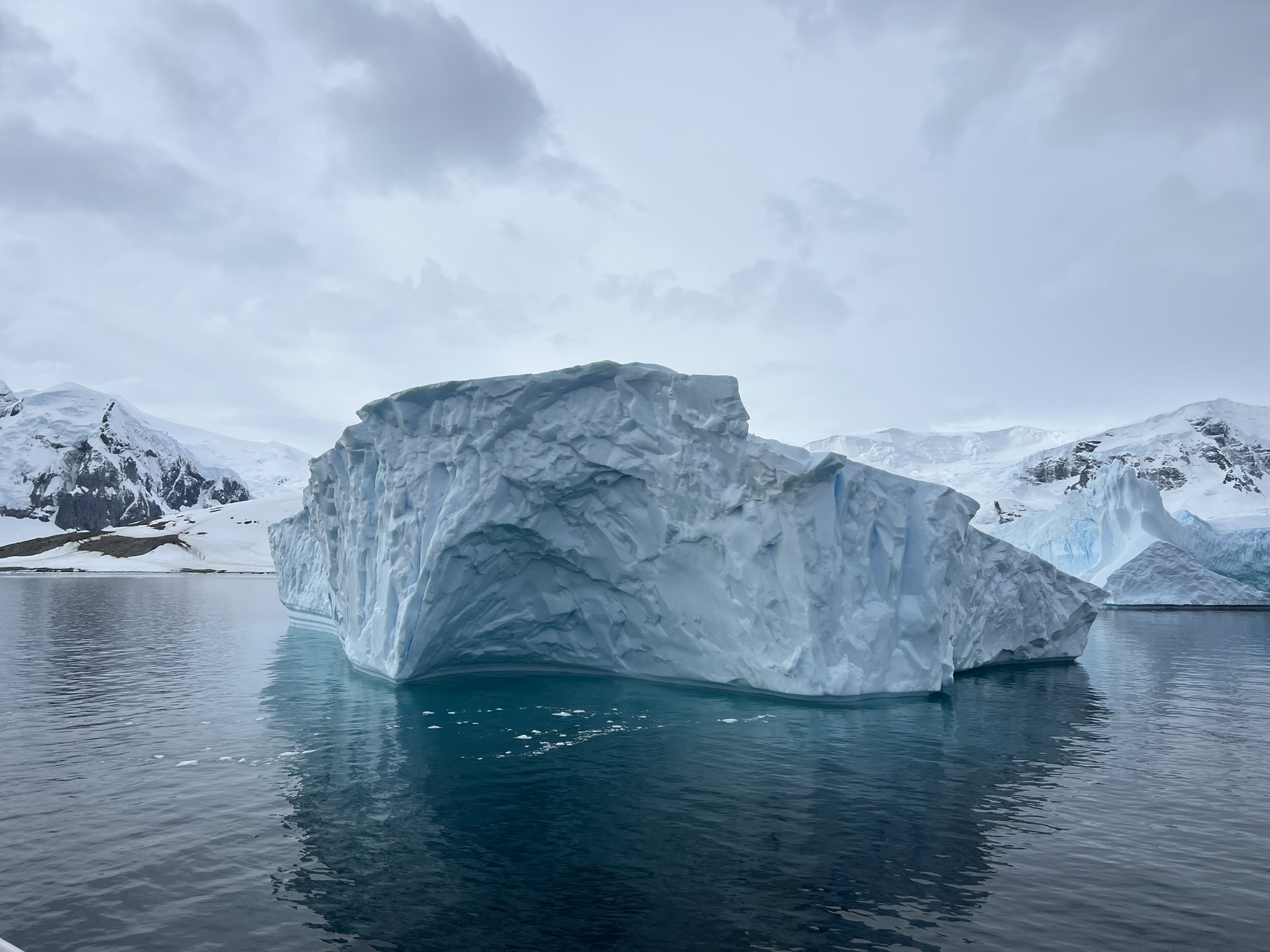
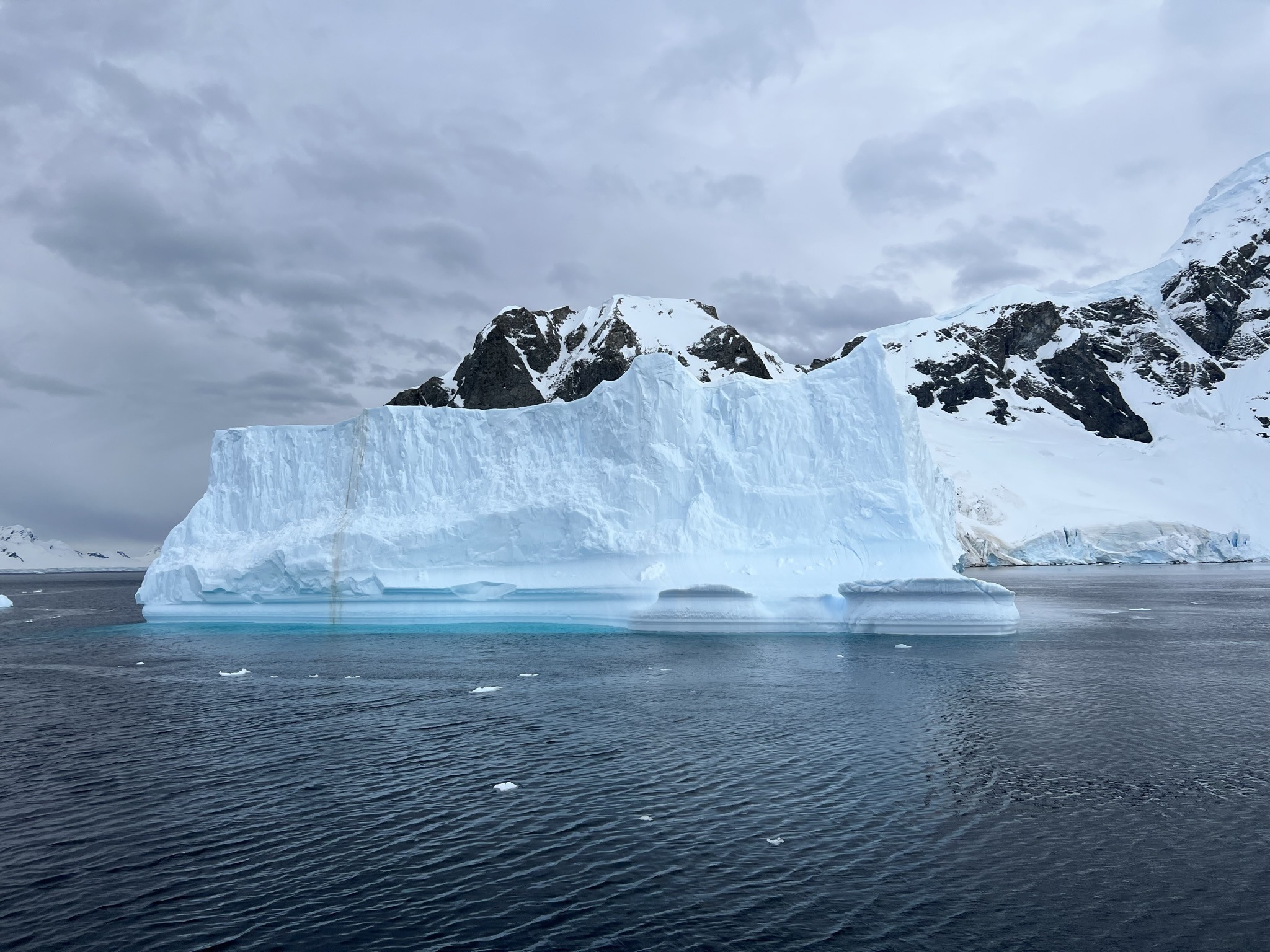
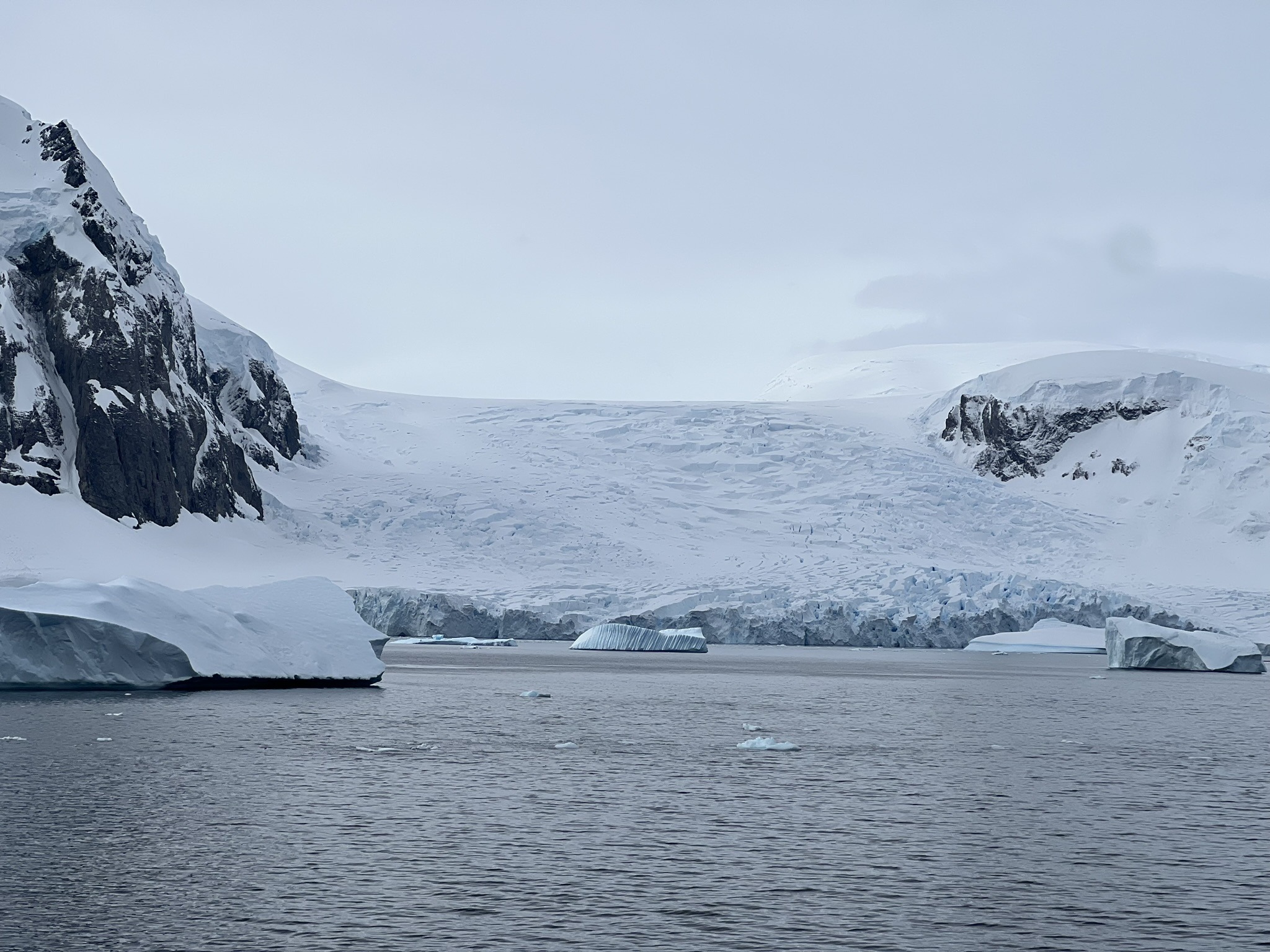
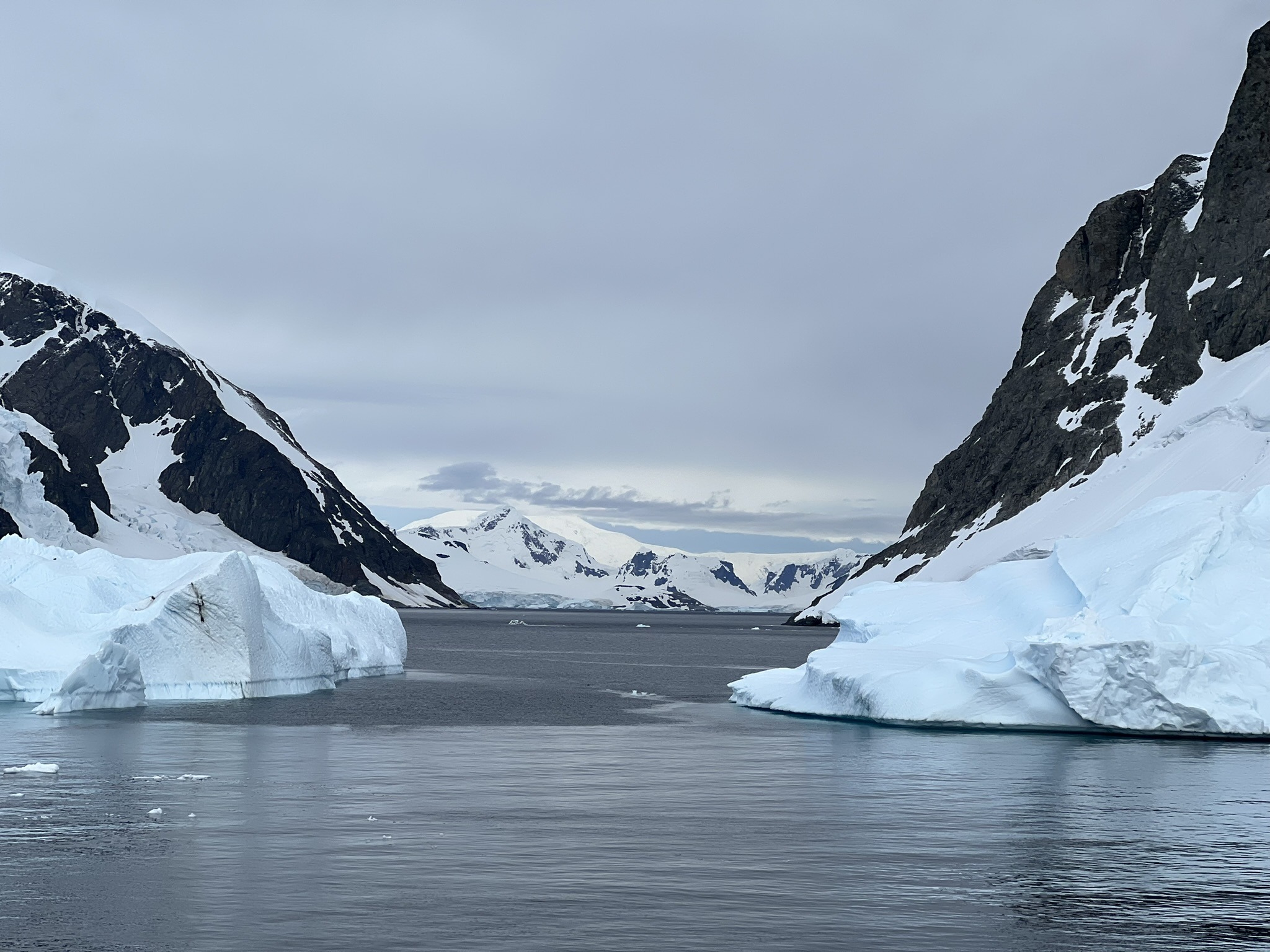
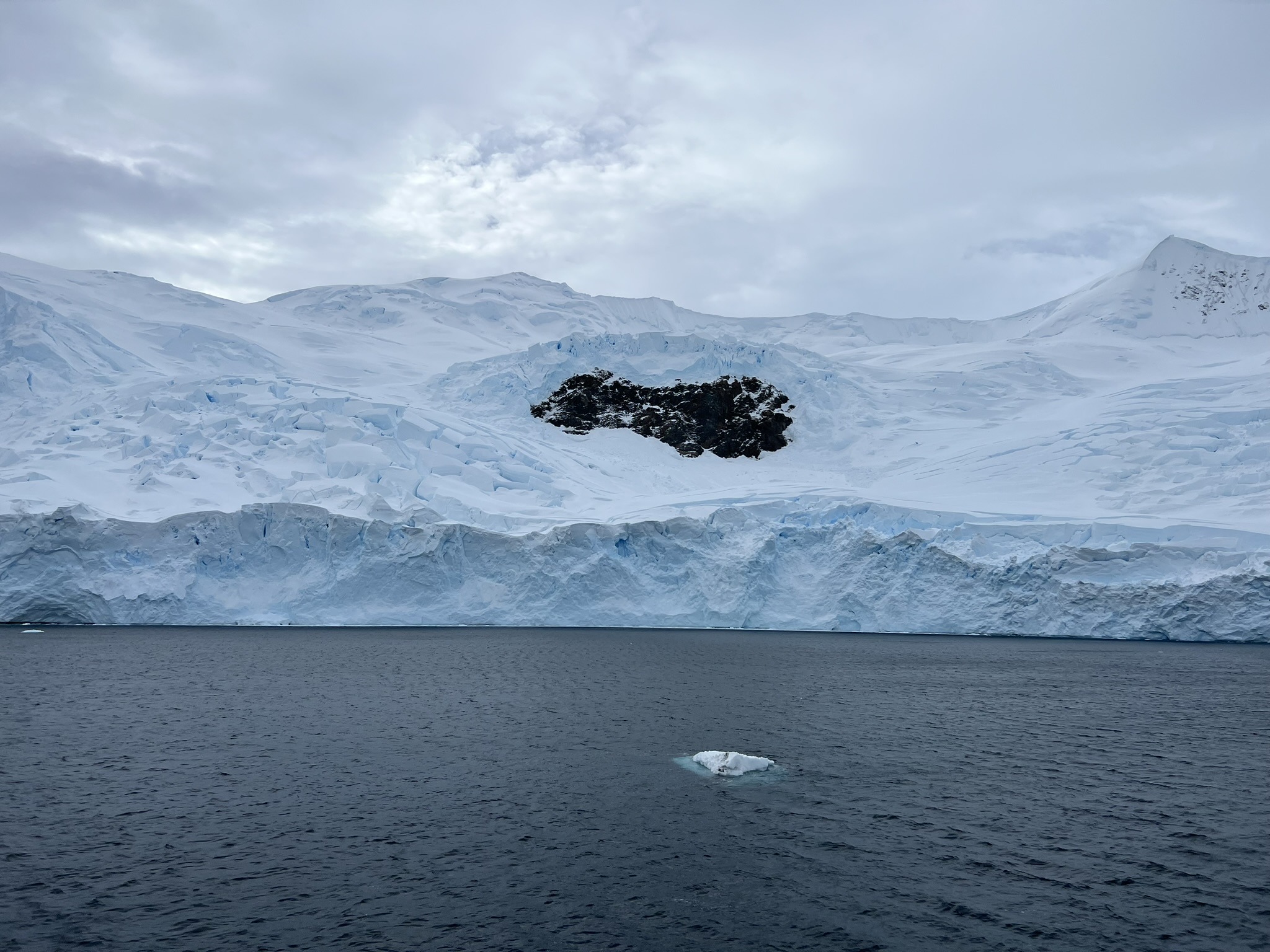
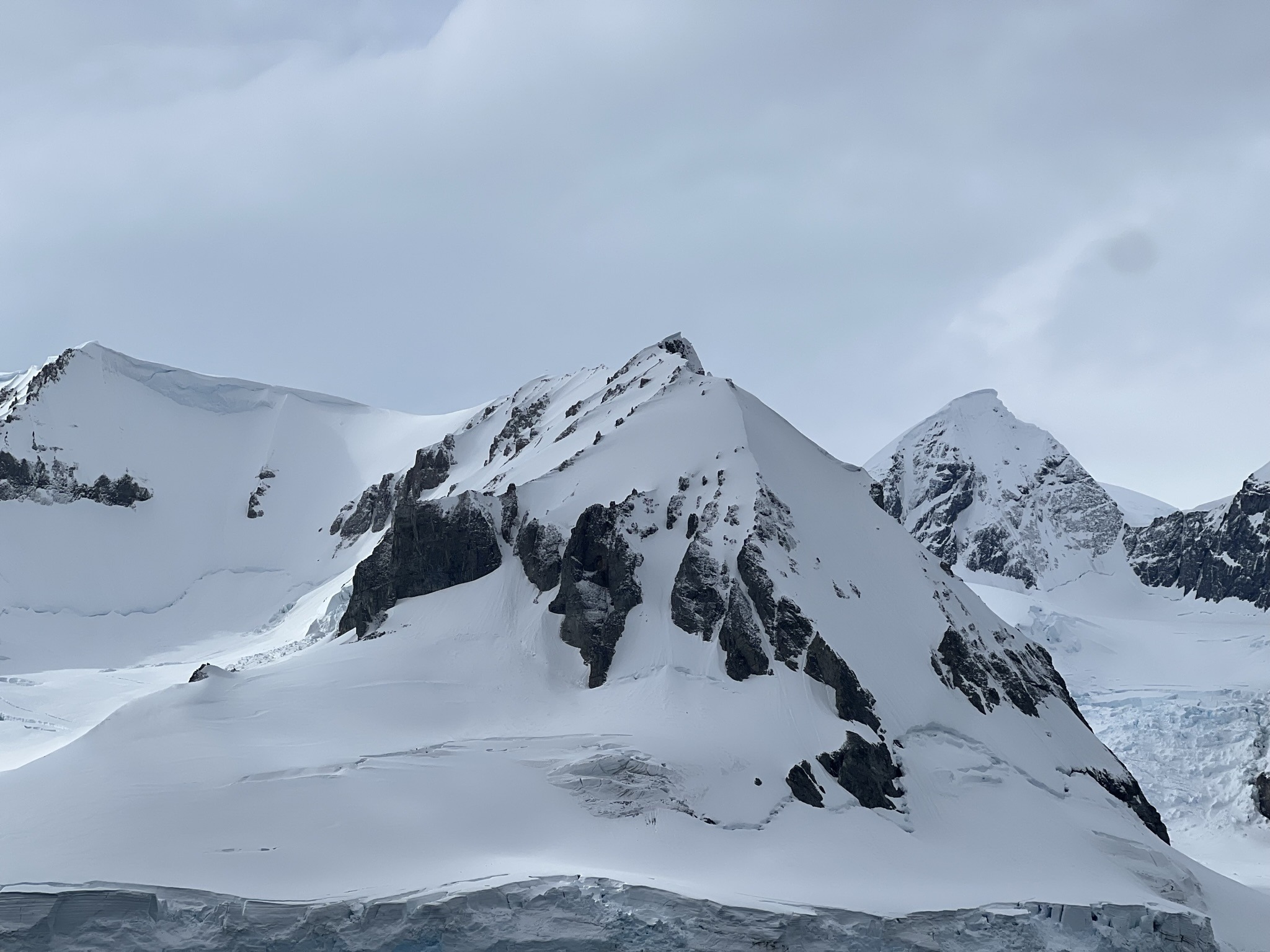
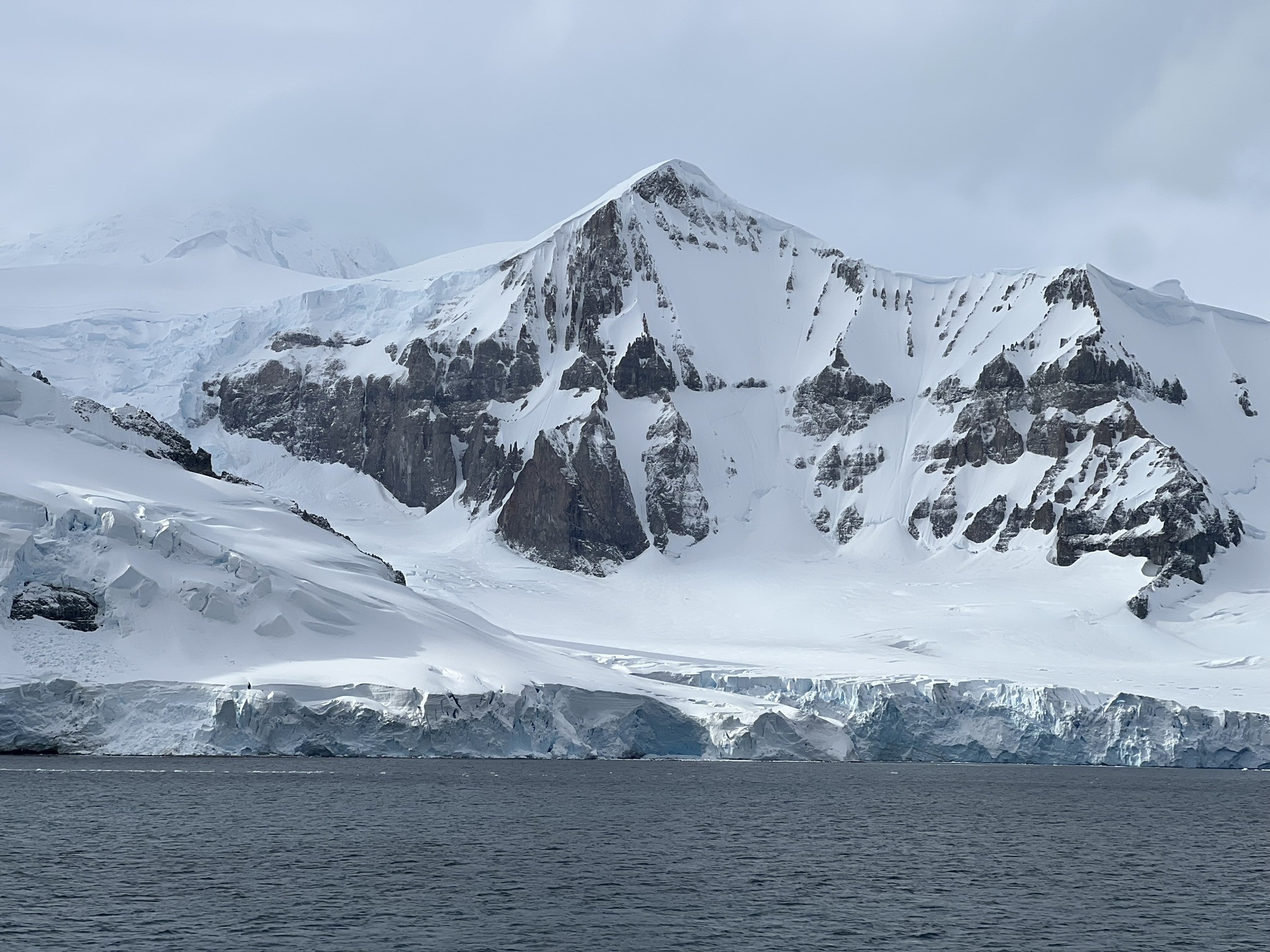
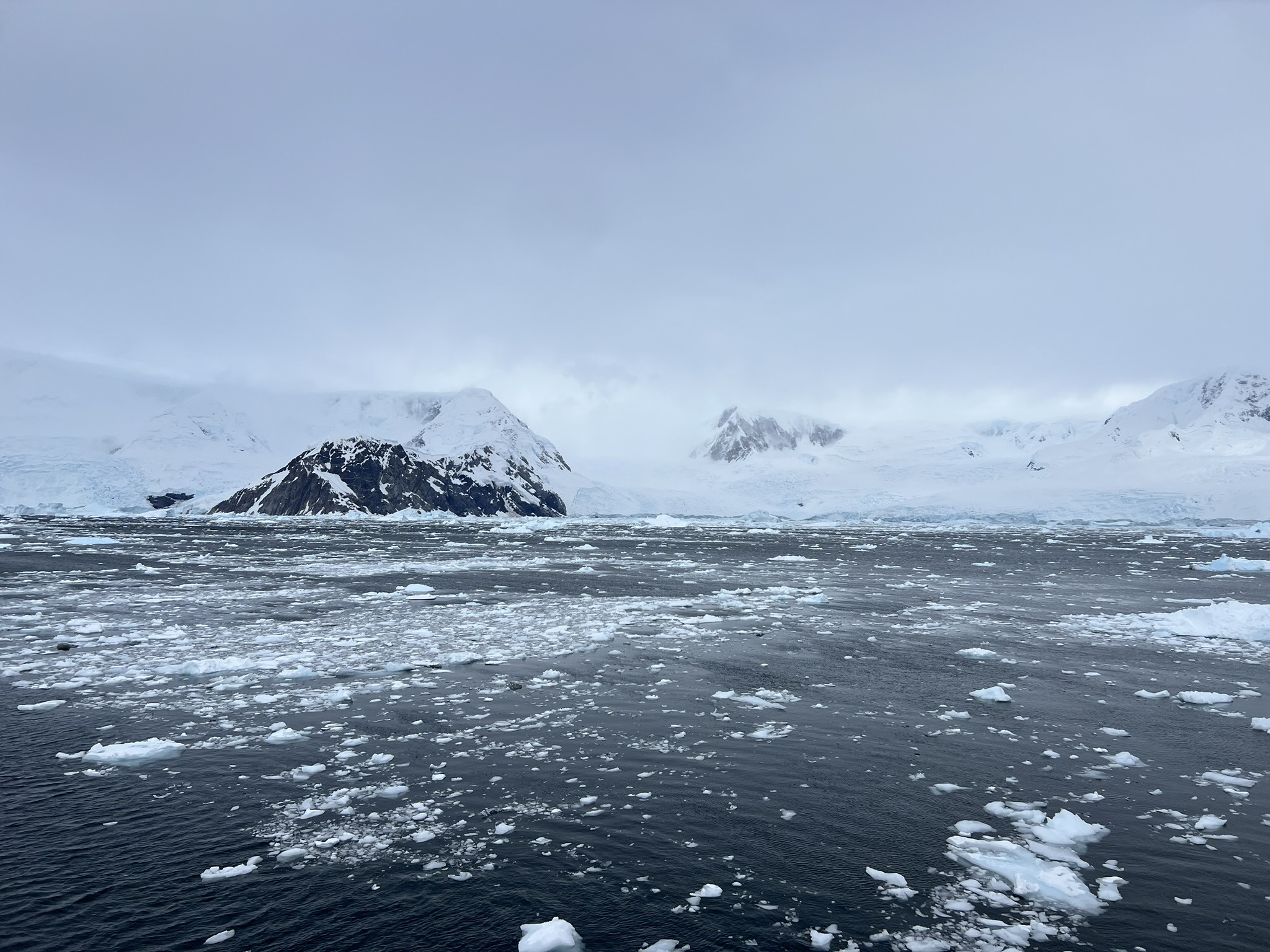
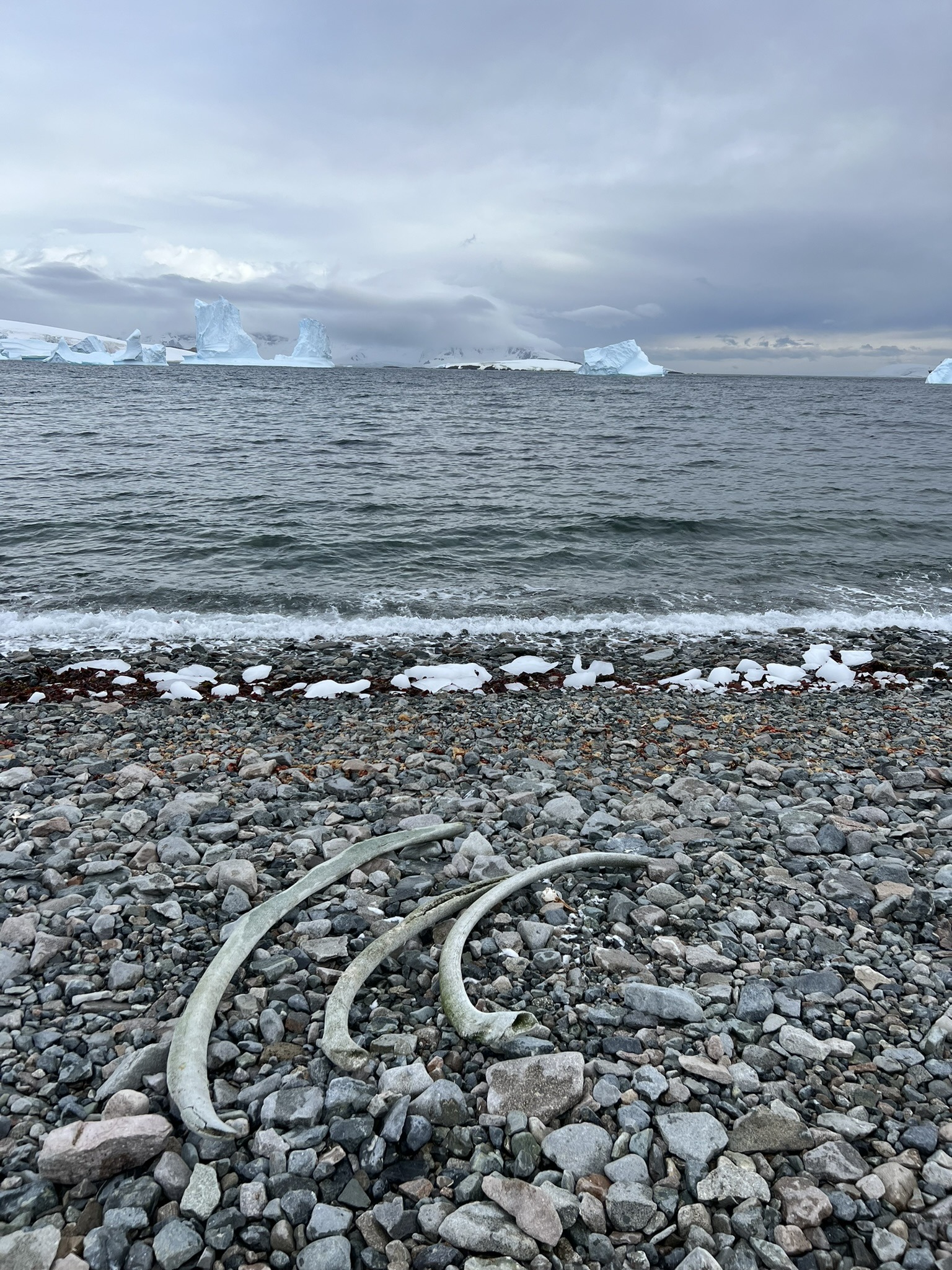
There was one grounded iceberg easily the size of our ship, a huge chunk of glacial ice with a hollowed front like an icy cavern, its pale-blue crest turning cyan below the surface. Another had parallel ridges that made it look like a whale’s baleen.
As the ship ploughed through dense brash ice, the rumbling was slightly disconcerting. Around us, glaciers and mountains boxed in the channel, while humpbacks surfaced again and again, popping up like they were part of the itinerary. I honestly have no idea how to describe scenes like that. Grey sea flecked with baby-blue ice, stracciatella mountains, light-blue glaciers slashed with deep-blue crevasses. No words, and definitely no photos, can do it justice.
Neko Harbour
Between landings and ship excursions, I still couldn’t quite believe my luck. I know it sounds repetitive, but it all felt unreal. There’s no other way of putting it.
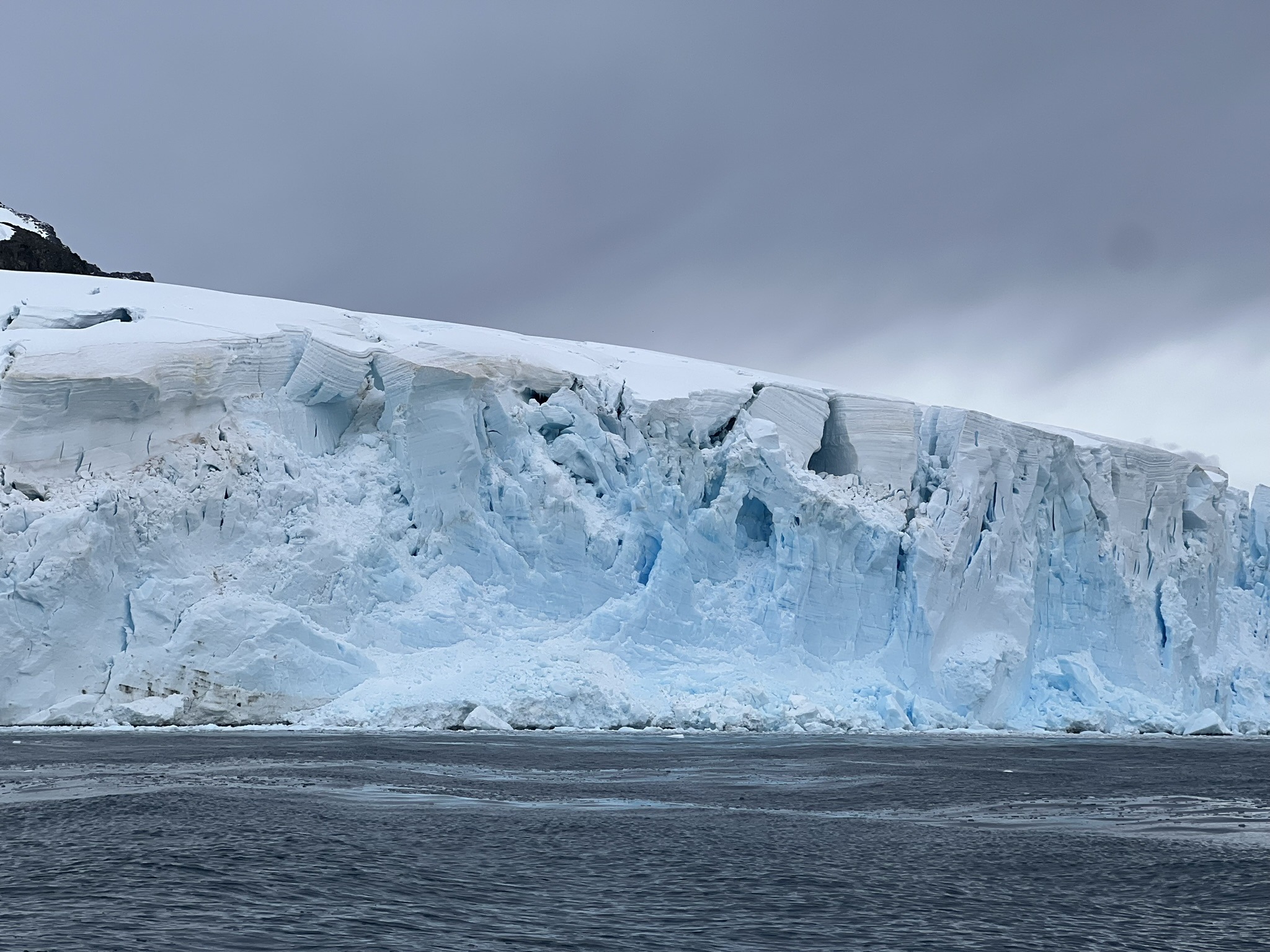
And to add to the day’s adventures, we still had one more landing – Neko Harbour. This slice of heaven sits on the eastern shore of Andvord Bay, about 11 kilometres south of the Errera Channel. It was charted during the Belgica expedition (1897-99), and its name is associated with the Norwegian whaling factory ship Neko, which operated in the region in the early 1900s. Neko Harbour is known for its gentoo colony (often cited as several hundred breeding pairs, sometimes more depending on season) and for the remains or foundations of an Argentine refuge hut, as well as the chance of spotting Weddell seals hauled out on the beach.
Humpbacks, Weddells, and then Albatross. By now, getting into the Zodiac felt routine. The anticipation beforehand, though? Never routine. This time we got an extra warning. With glaciers calving directly into the bay, a significant icefall could cause dangerous waves. That meant the second we landed, we had to hike up the hill without hesitation – no dawdling, no photoshoots – unless we fancied becoming part of Antarctica permanently.
And that’s what we did, except for Clara, who sensibly stayed above the splash zone but refused to tackle the hill because it was basically an ice rink. And honestly, I don’t blame her. Gumboots are great until you’re on hard ice, where they don’t hold a candle to crampon-ready hiking boots. I waddled like the very penguins I’d been mocking, one foot sliding sideways with every step. It was gruelling, not gonna lie.
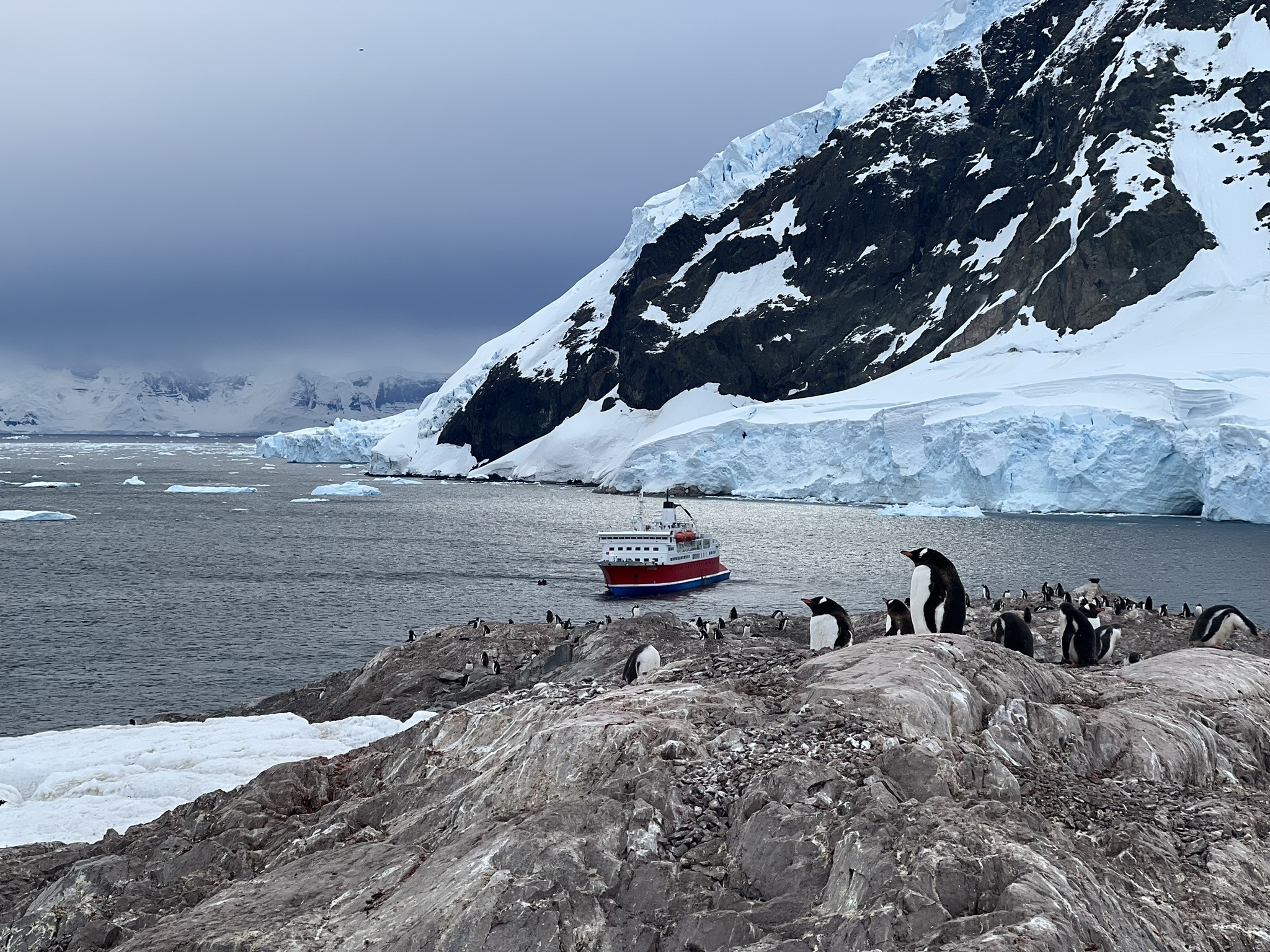
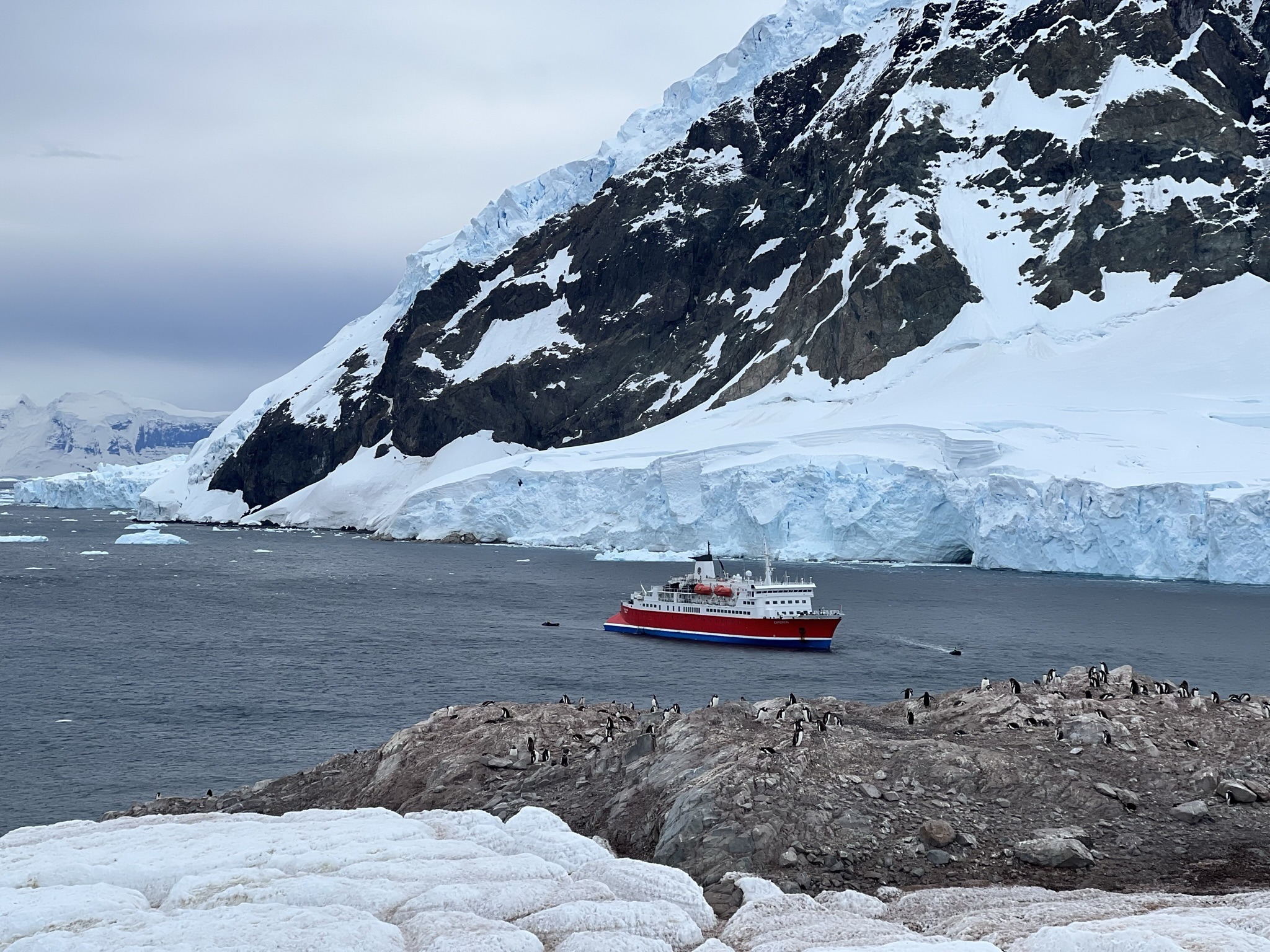
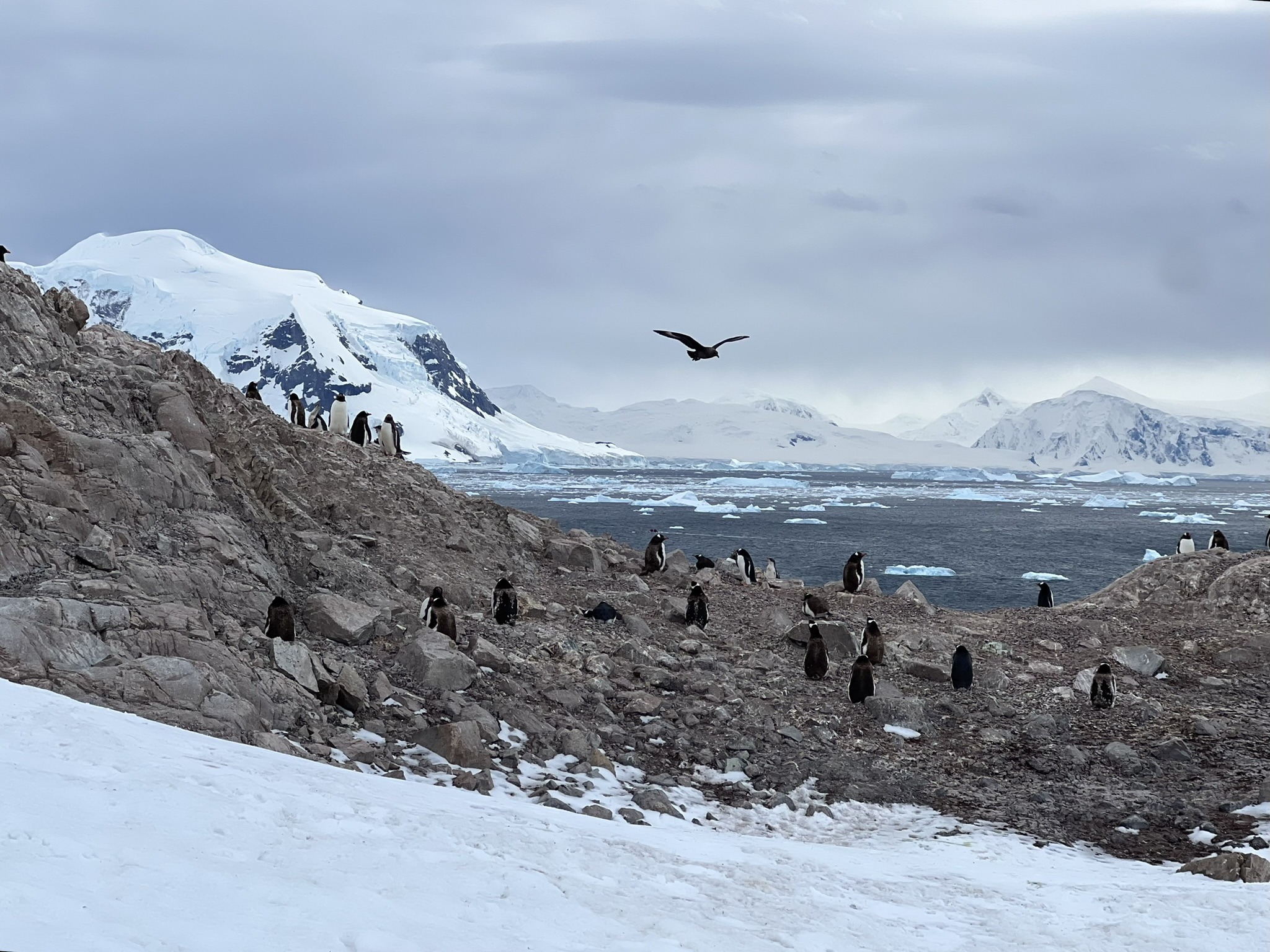
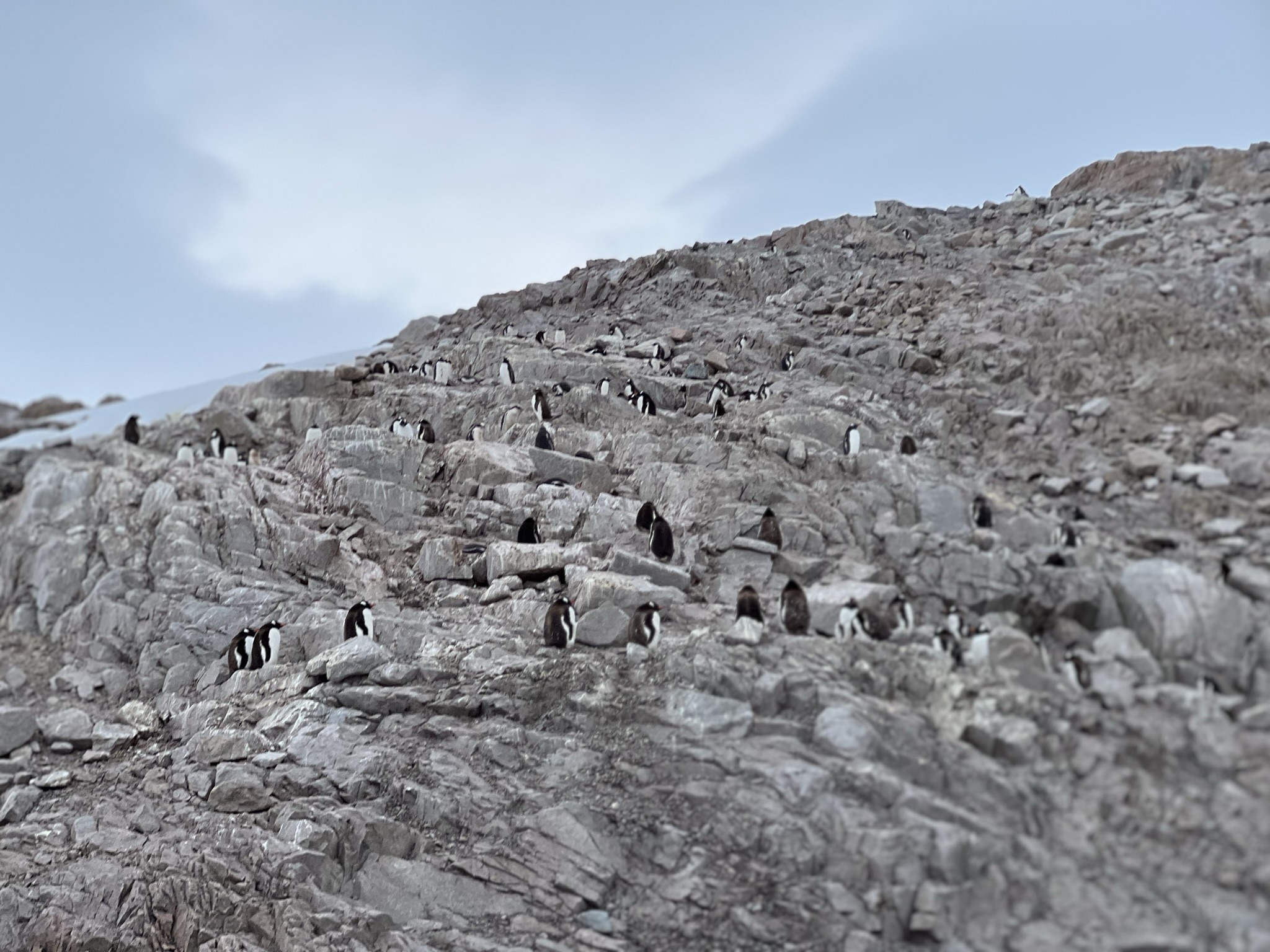
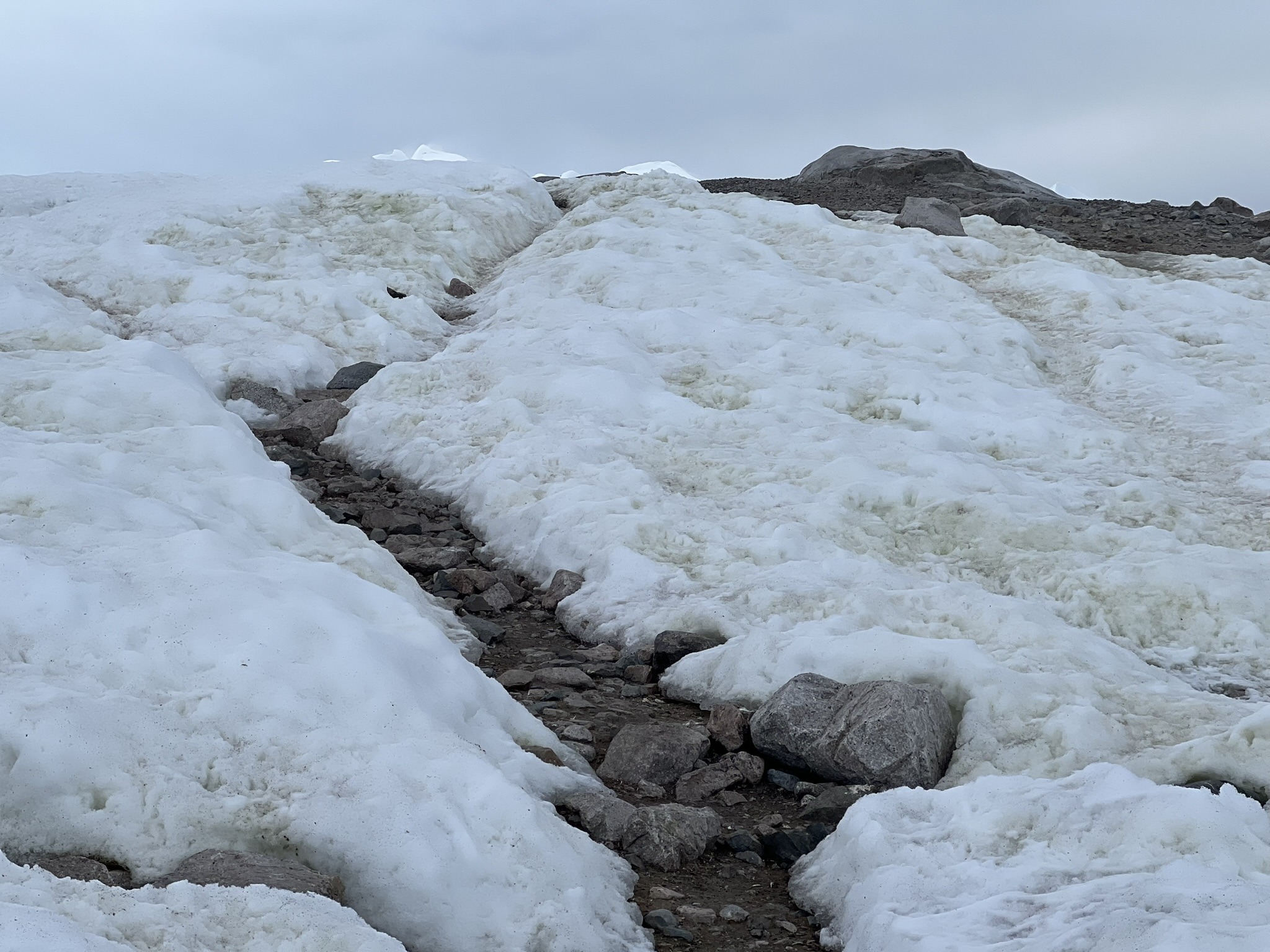
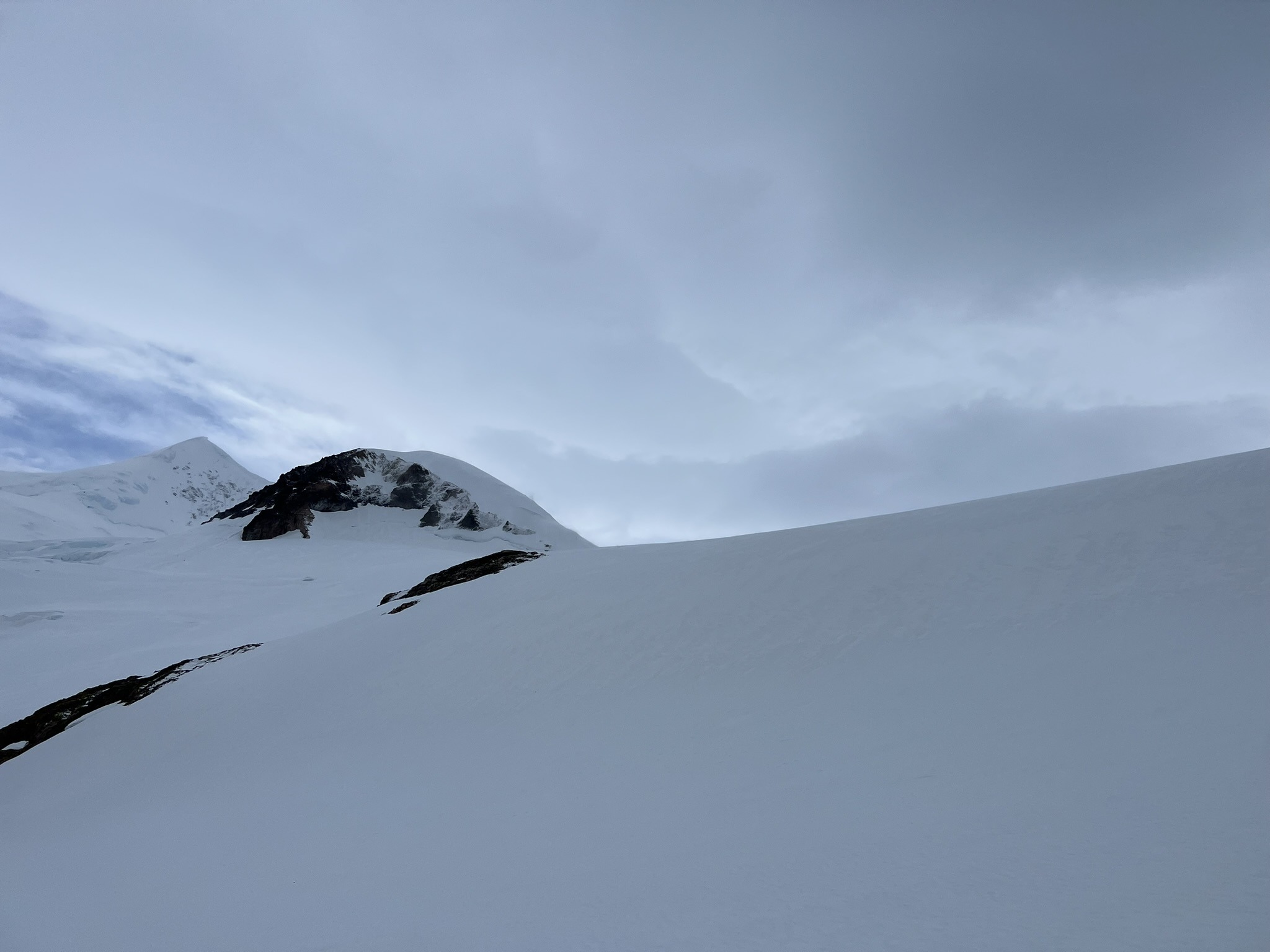
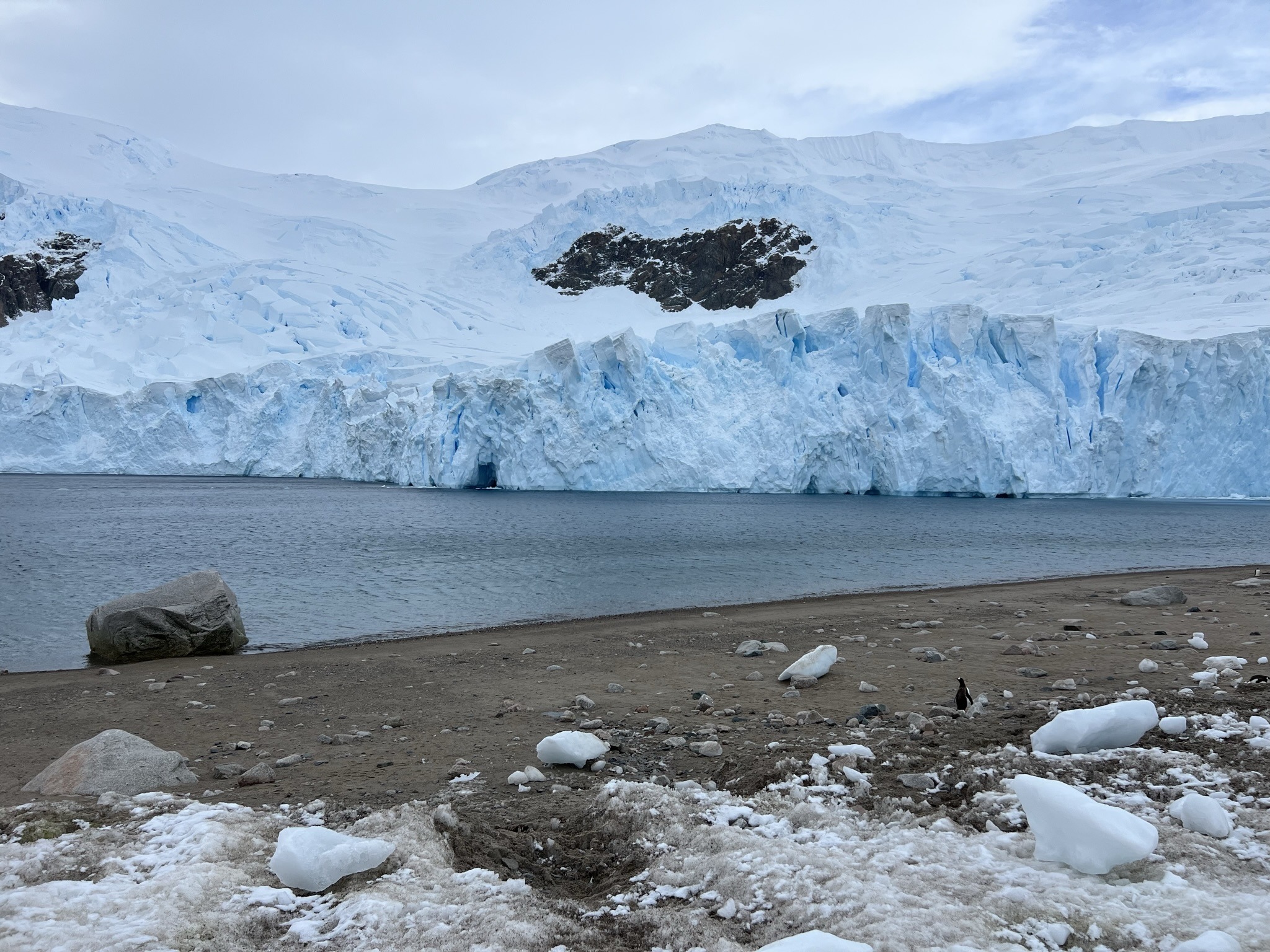
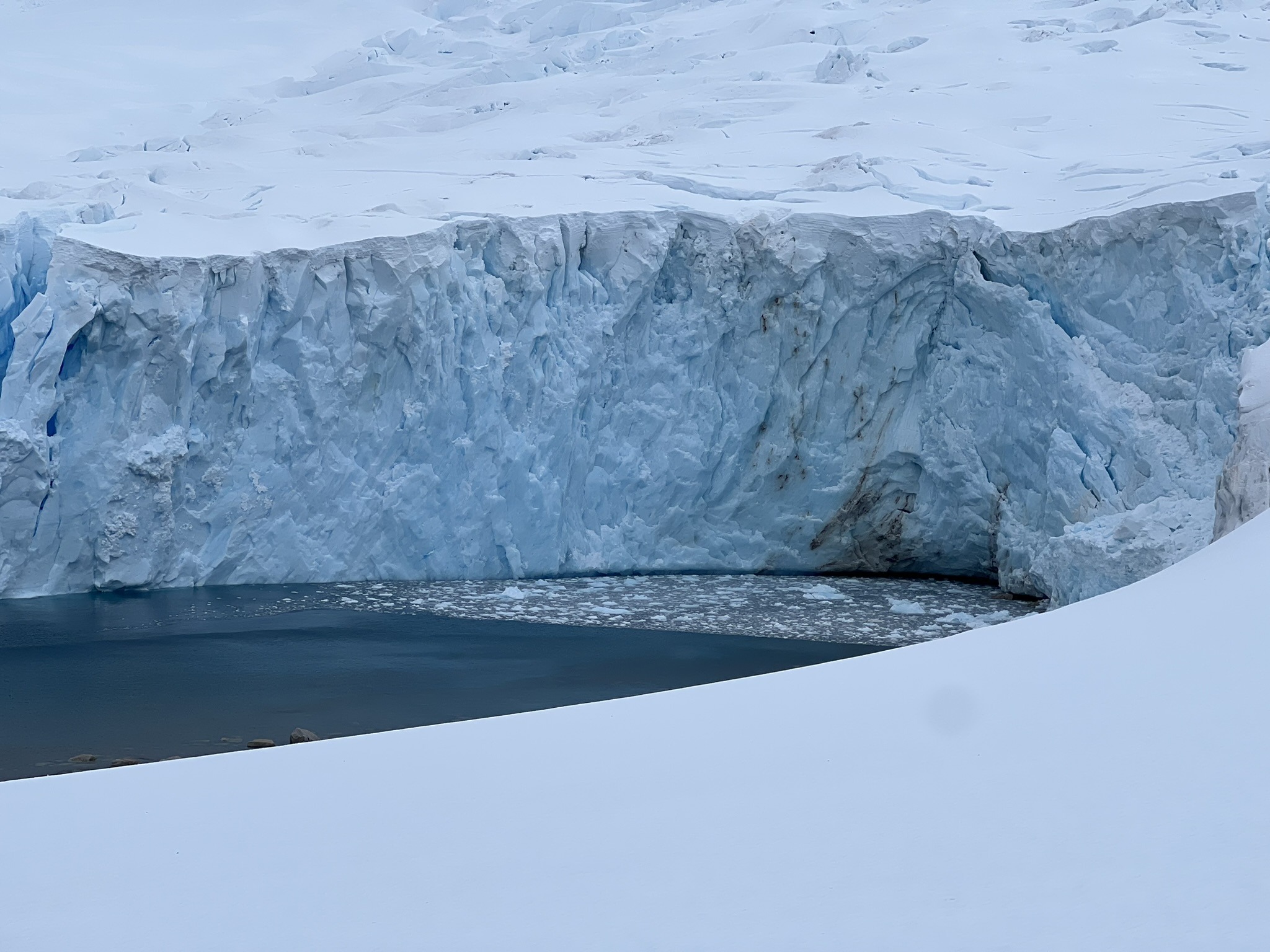
After five minutes that felt like an eternity, we reached the top. Behind us was a wall of snow, its white blending into the clouds above, broken only by a small patch of bare black rock. To our right lay the sea and a jagged glacial front, with brash ice forming a gradient between grey water and blue glacier. The left-hand trail was closed, completely iced out. But that didn’t matter, because right in front of us was a wide expanse of bare grey rock hosting a gentoo colony, connected to the sea by snow-covered penguin highways, with birds scrambling up and down like commuters on a mission.
A Tragedy Waiting to Happen
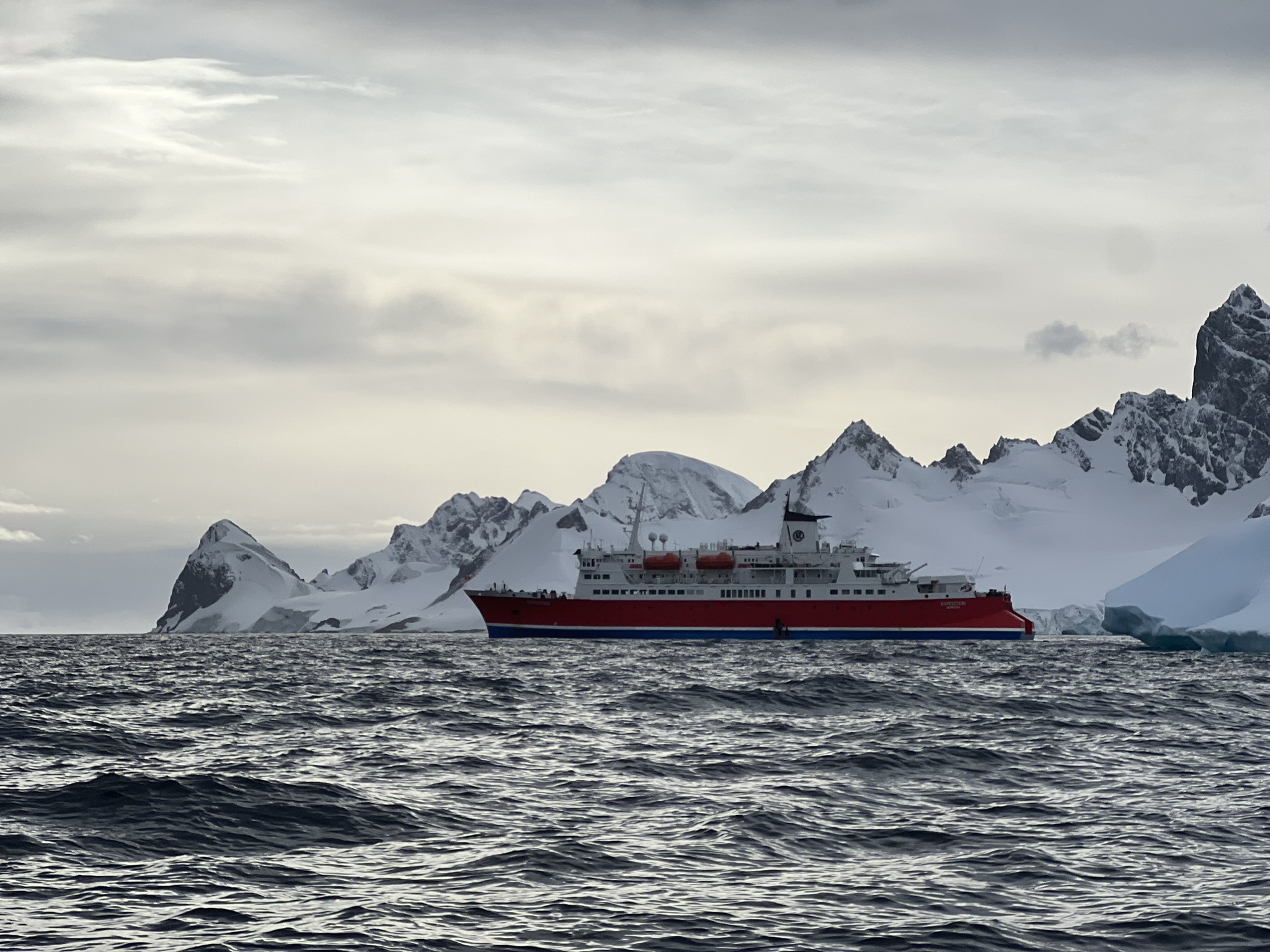
From up there I could see our Little Red Ship nestled between glacier, sea, and penguins – ridiculous. This was my favourite place so far, which is something I seemed to be saying after every landing. I mean, can anyone blame me? Everything down there is breathtaking.
As we stood watching, we got a glimpse of nature’s darker side. A brown skua hovered over the colony, searching for an opening. By late summer, egg theft becomes less of a guaranteed win, but chicks and fledglings are still very much on the menu. As the adult penguins were busy warding their predator off with their cries and wing flapping, another skua made an appearance, circling over them to see if its partner’s sleight of hand was working. This time round, Team Penguin held the line as the adults were quick on their feet and managed to protect their chicks successfully.
The same can’t quite be said about the egg we found at the trailhead. This, Heidi explained, was definitely a homicide scene. The central, circular hole in the eggshell meant it had been pecked open – probably by a skua. Had it been a normal hatching, the eggshell would have otherwise cracked in two.
We had plenty of time to take it all in, then headed back to the Zodiac. By that time, the sea had calmed to bathwater levels, and we made a new friend – a small humpback that approached the Zodiac and put on a show, breaching and rolling on its side to flash its pectoral fin. Being only a couple of metres away, I could finally appreciate the fine details of its anatomy. Again – pure privilege.
Hurricane-Force Drama
As we sailed back into the Gerlache Strait area for the next day’s adventure, evening light and swirling clouds painted the mountains in shifting tones, capping off an unforgettable day.
During the briefing, Jonathan again referenced the approaching storm, saying it had grown to an enormous size with a central pressure around 944 millibars. He described the winds as hurricane-force, which absolutely panicked some passengers as they feared for their lives. I, for one, was worried about one thing: missing a landing.
The staff had organised another activity, this time a game of “How big is it?”, comparing the sizes of various Antarctic animals and objects. I, however, retreated to my chambers after dinner to try to make sense of everything by writing. Spoiler alert – it still made no sense. It all felt too implausible, like I was going to wake up and find out the whole thing had been a fever dream.
Day four:
- Morning:
- Weather:
- Sunny and cloudy
- Wind: NE 17-21kts
- Wave: NE 1m
- Temperature: 2°C
- Weather:
- Position: 64°41’S 62°38’W
- Afternoon:
- Weather:
- Overcast and rainy
- Wind: NE 11-16kts
- Wave: SE 0.1m
- Temperature: 4°C
- Weather:
- Position: 64°50’S 62°33’W
- Position: 64°50’S 62°33’W
- Animals seen:
- Gentoo penguins
- Southern fulmar
- Southern giant petrel
- Snow petrel
- Wilson’s storm petrel
- Brown skua
- Antarctic blue-eyed shag
- Antarctic tern
- Kelp gull
- Antarctic fur seal
- Leopard seal
- Crabeater seal*
- Weddell seal*
- Humpback whale
* Ones I didn’t get to see myself.