The second day, according to Alessia’s grandpa, would probably be the most demanding, assuming we set out to do everything he had planned for us. And, with neither of us being a quitter, we were definitely gonna do all of that, and then some.
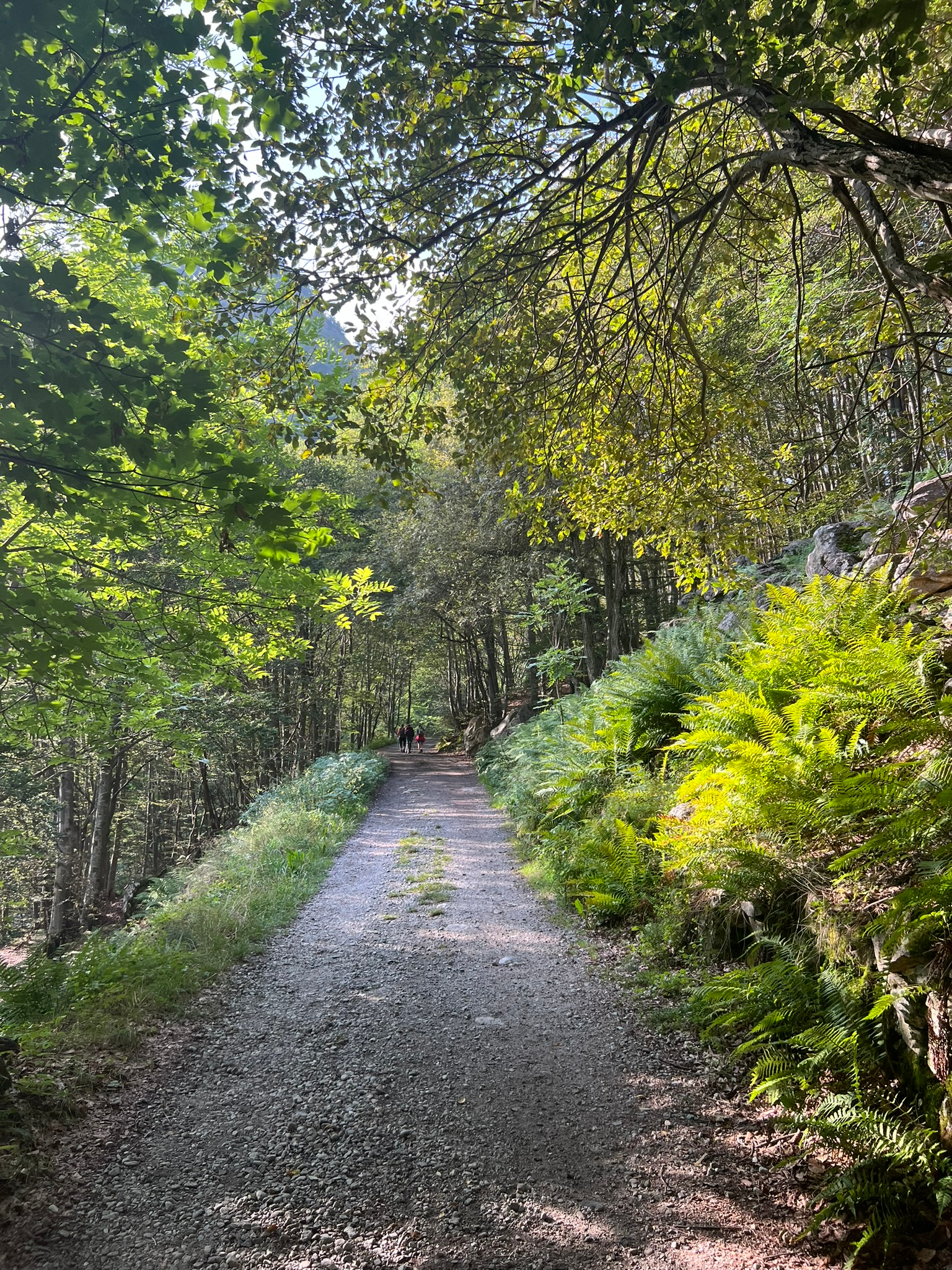
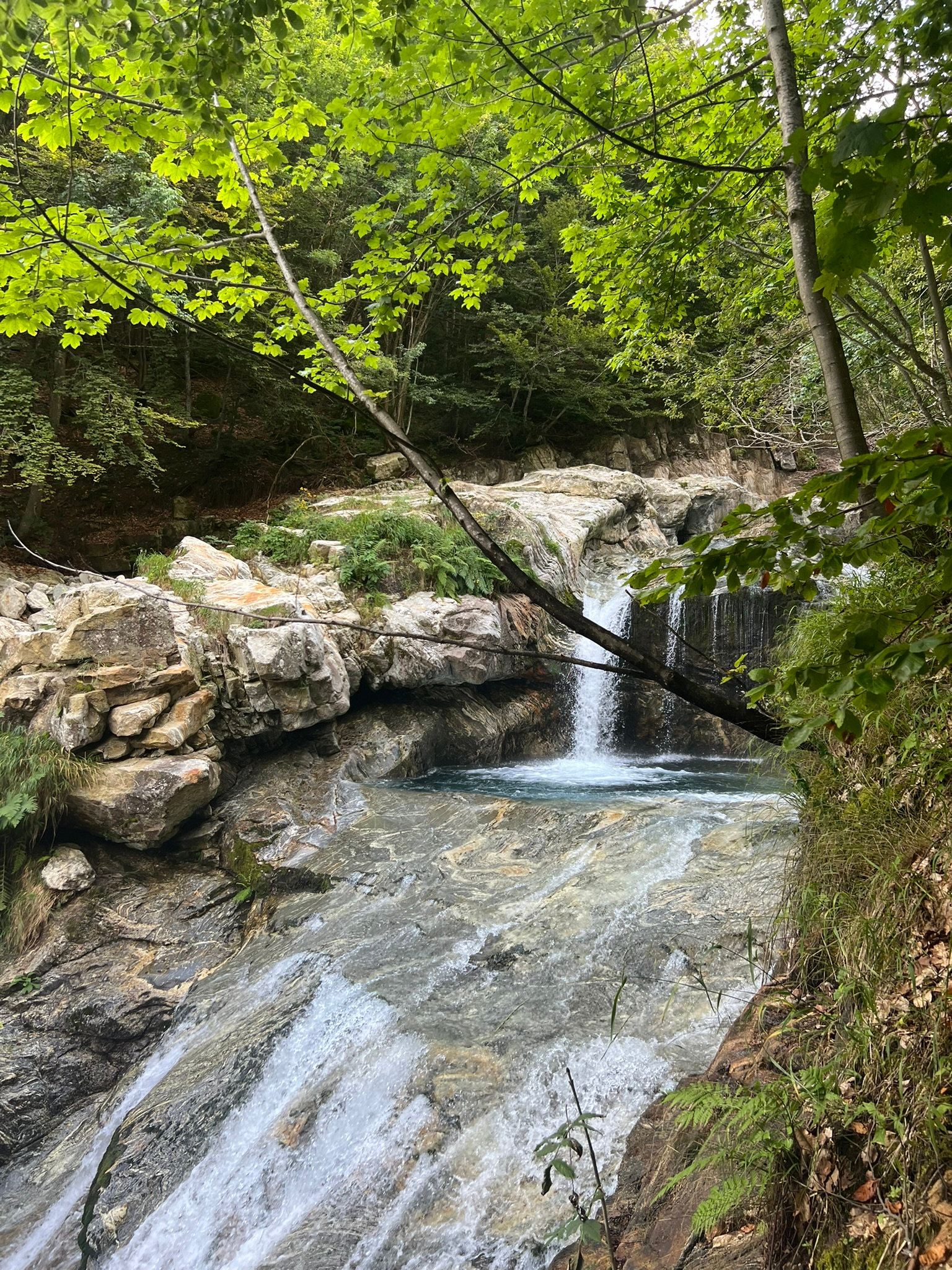
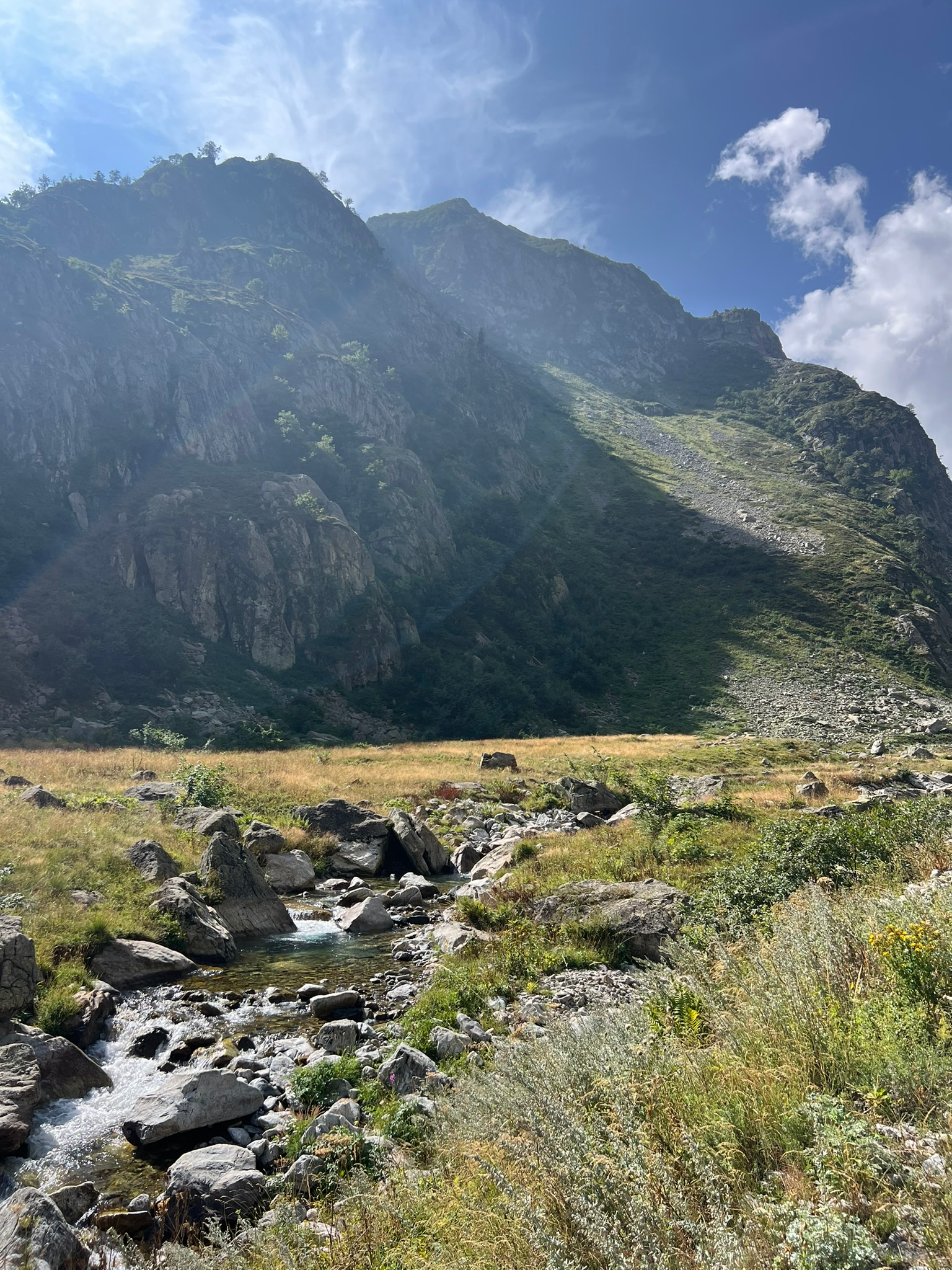
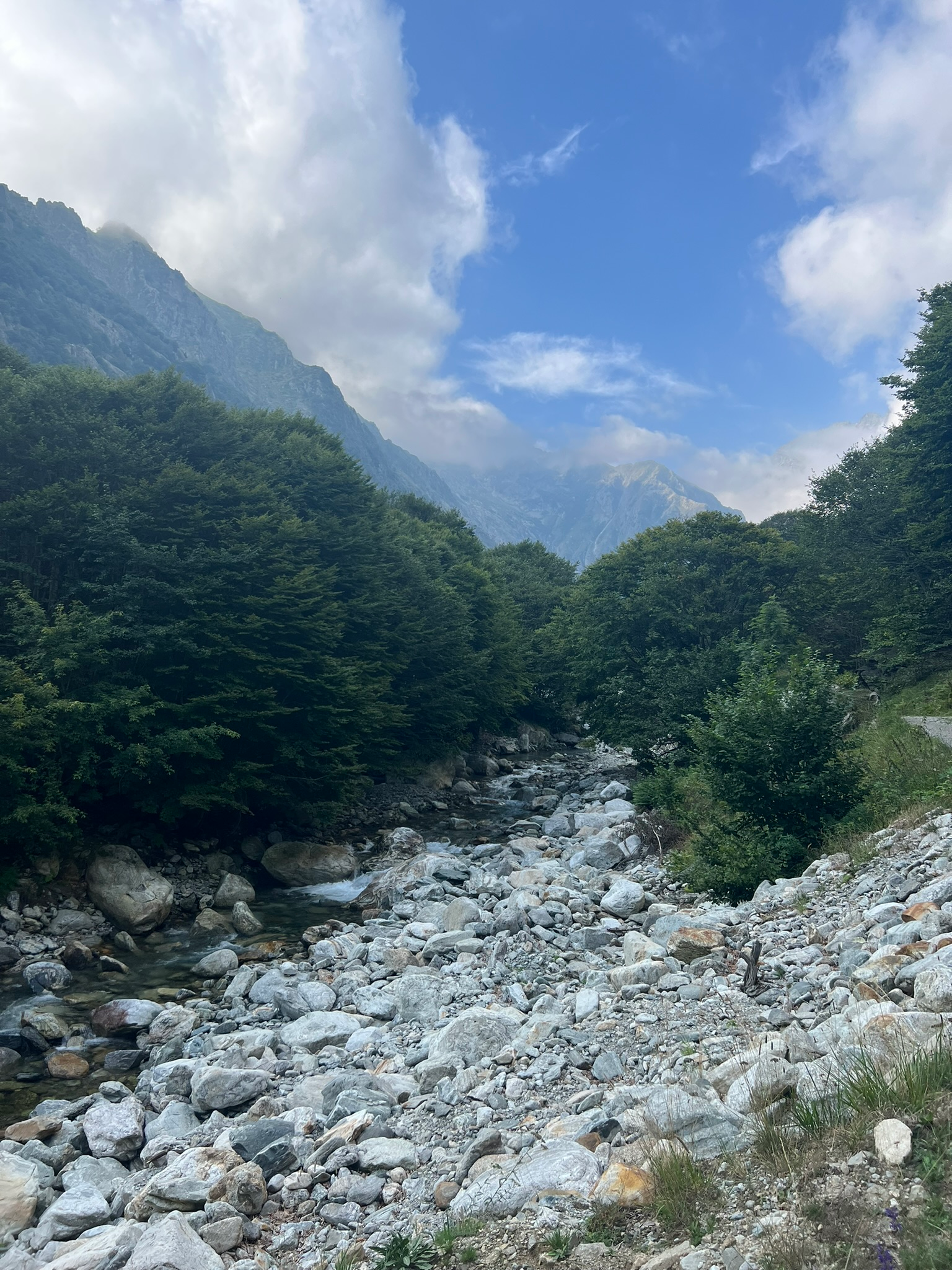
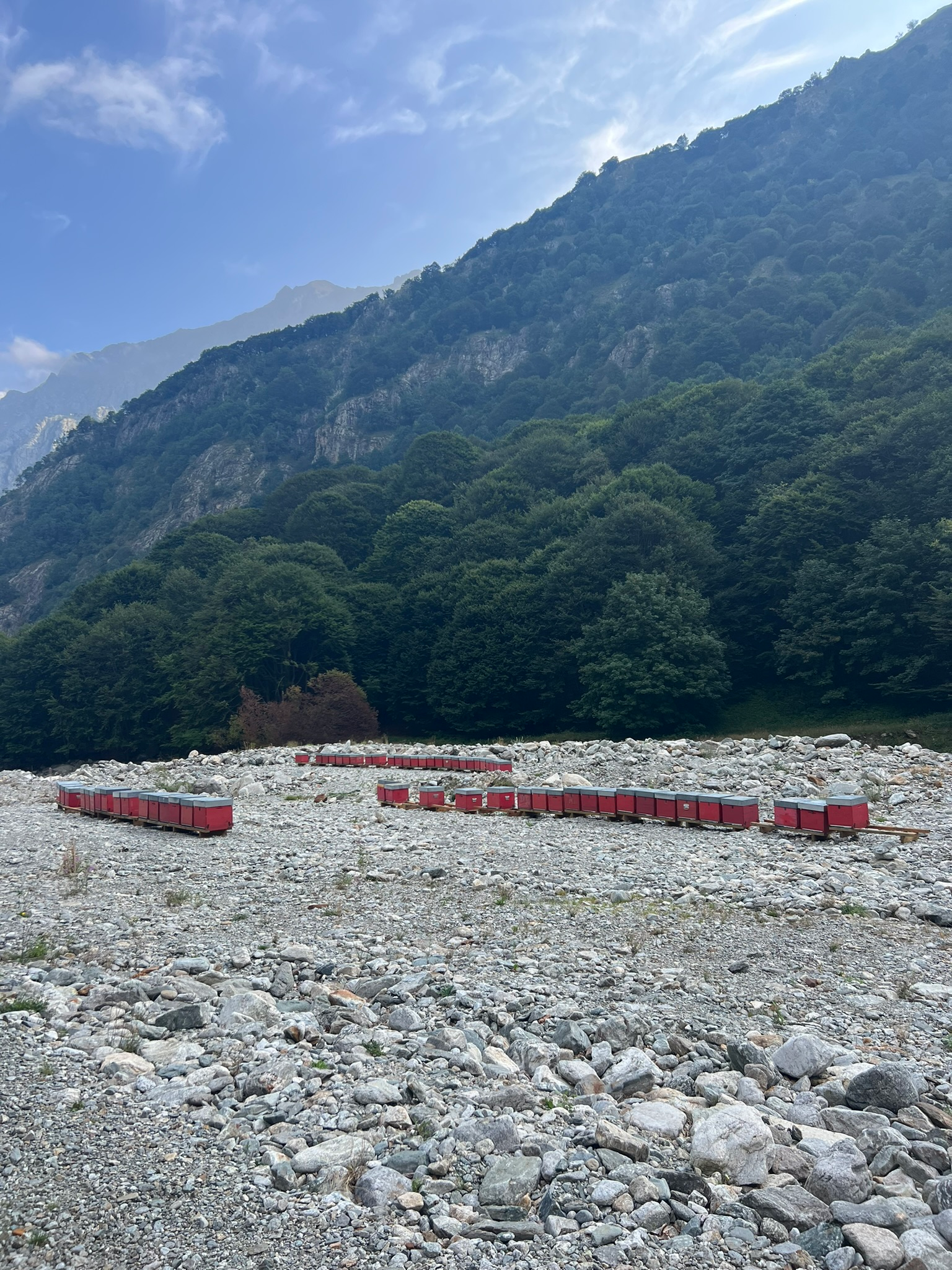
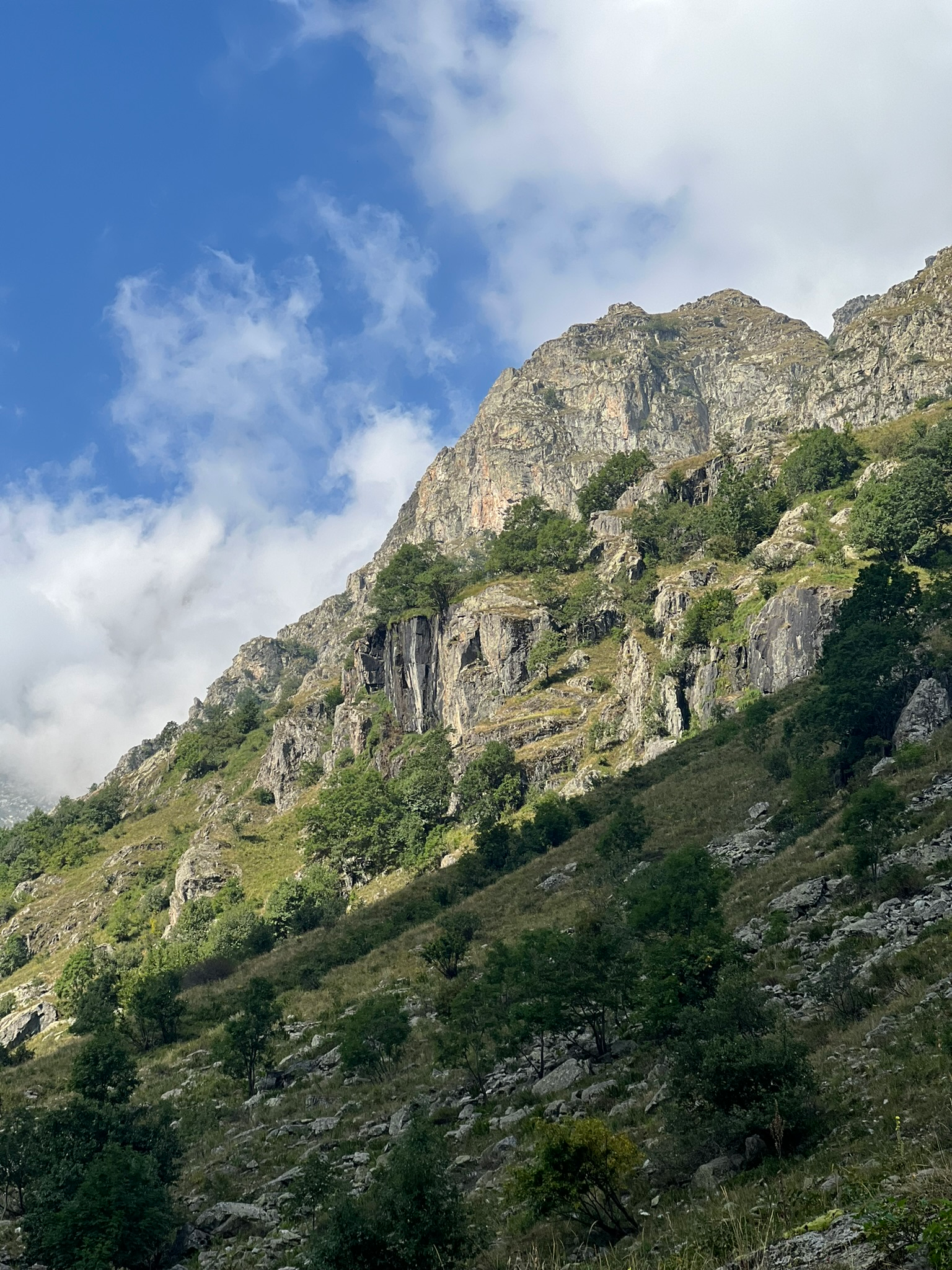
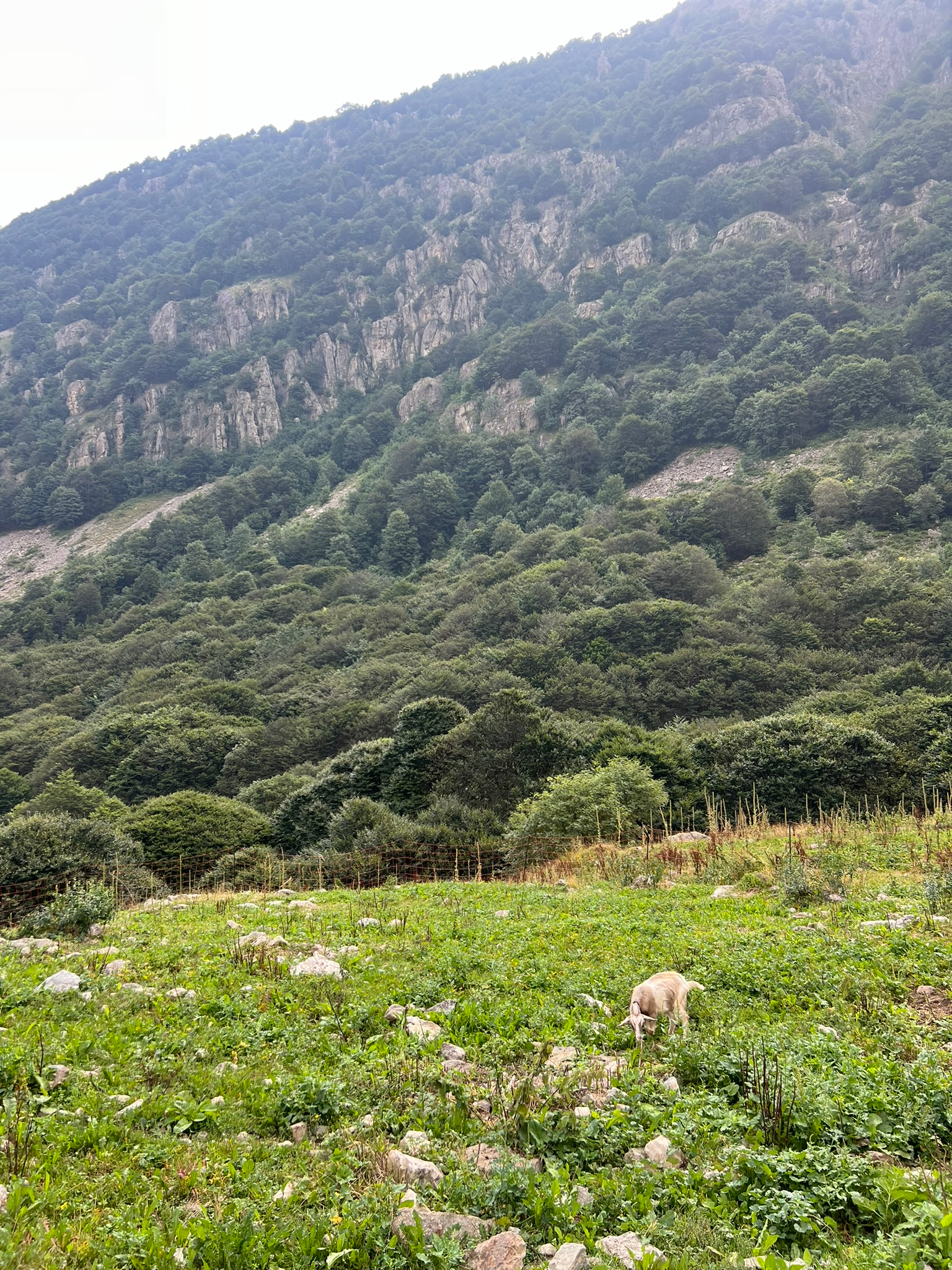
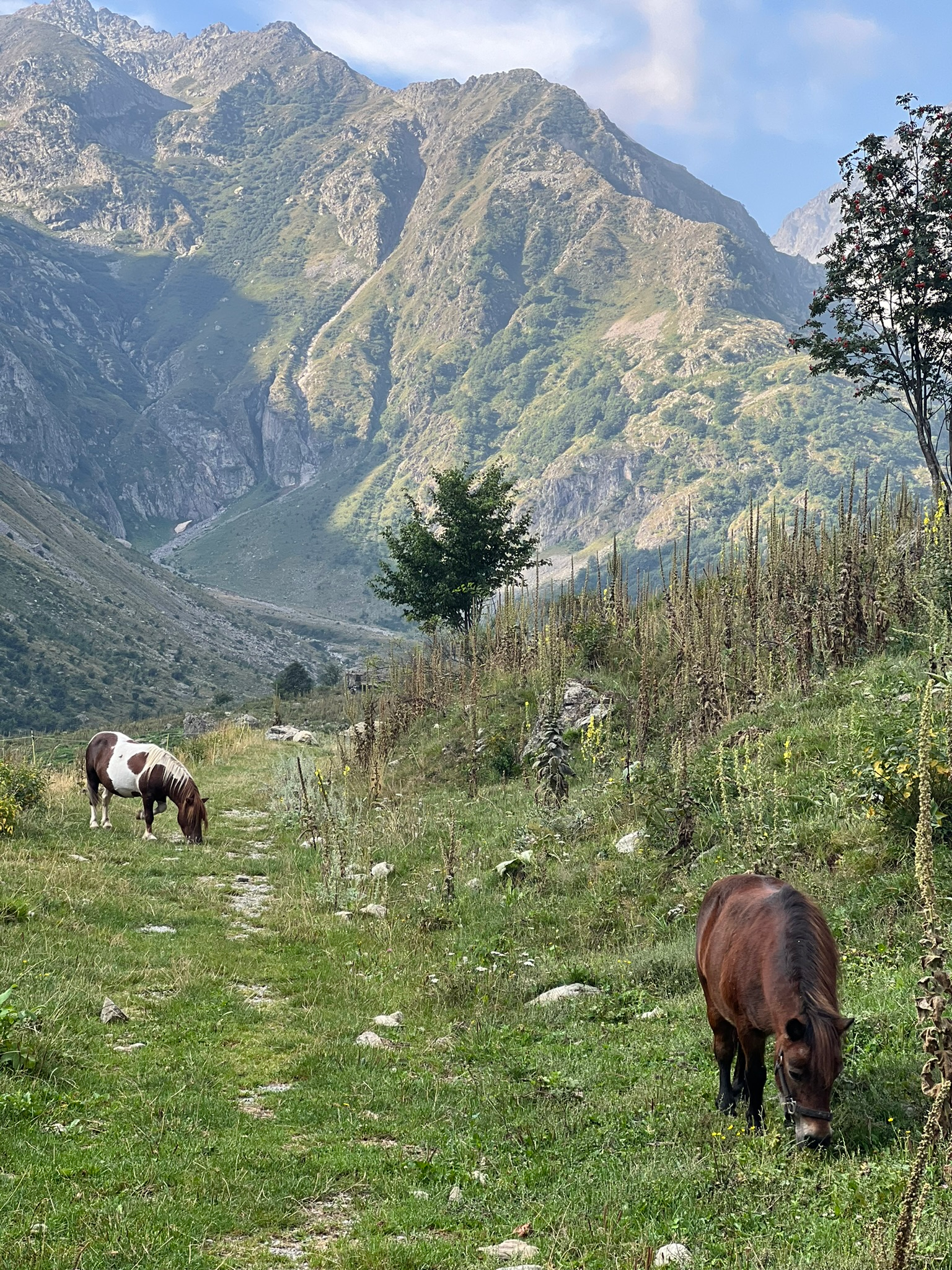
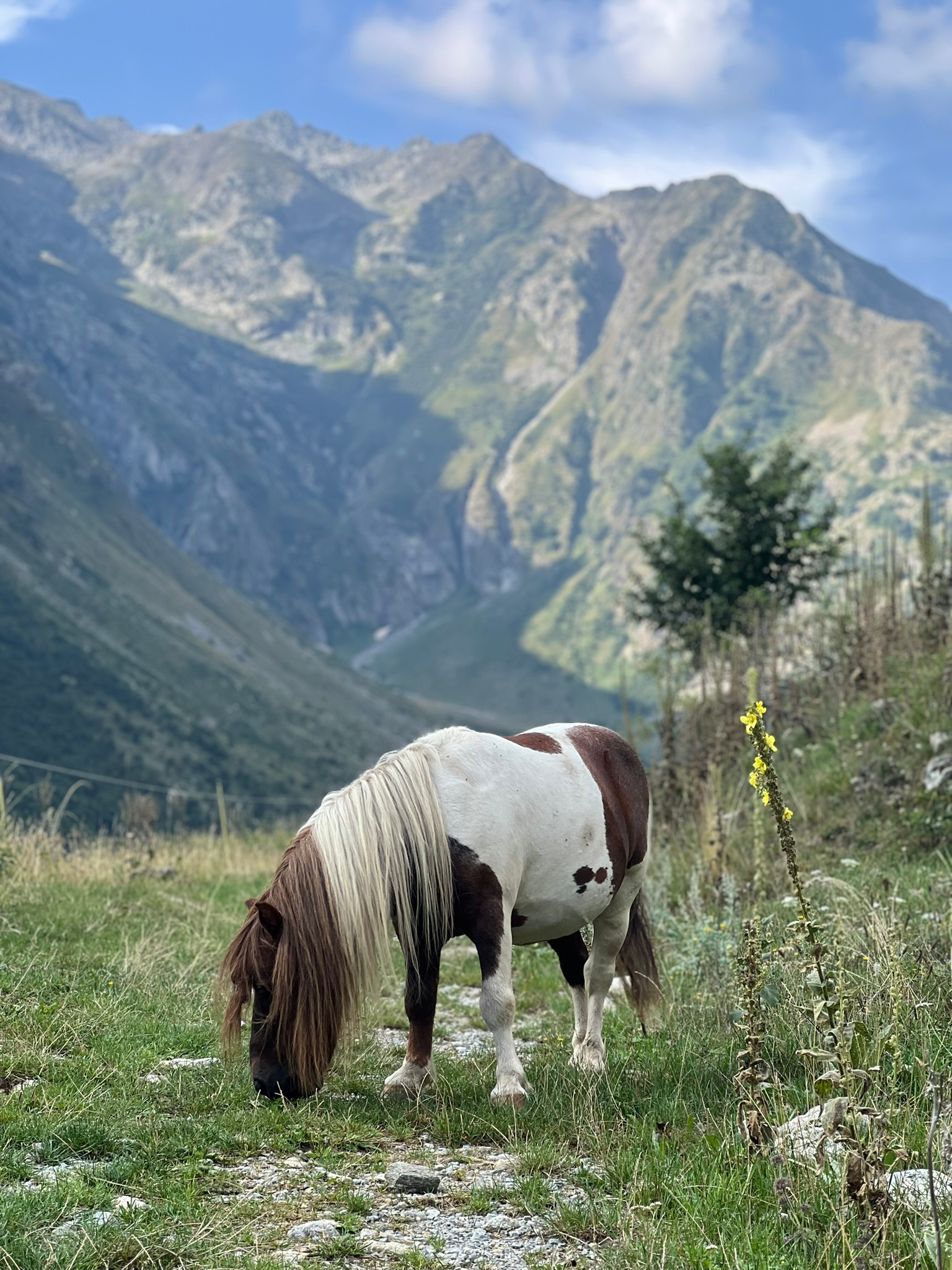
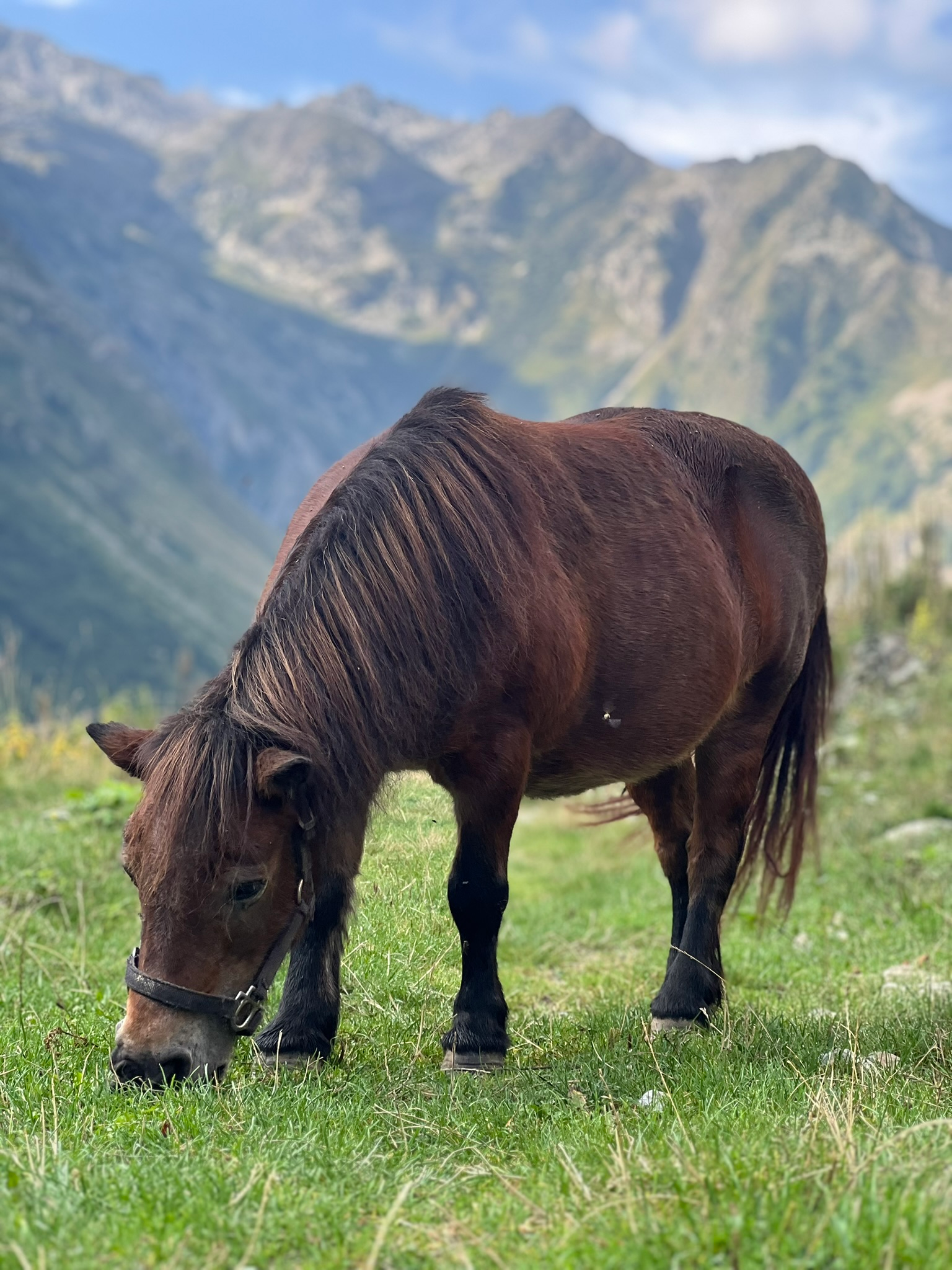
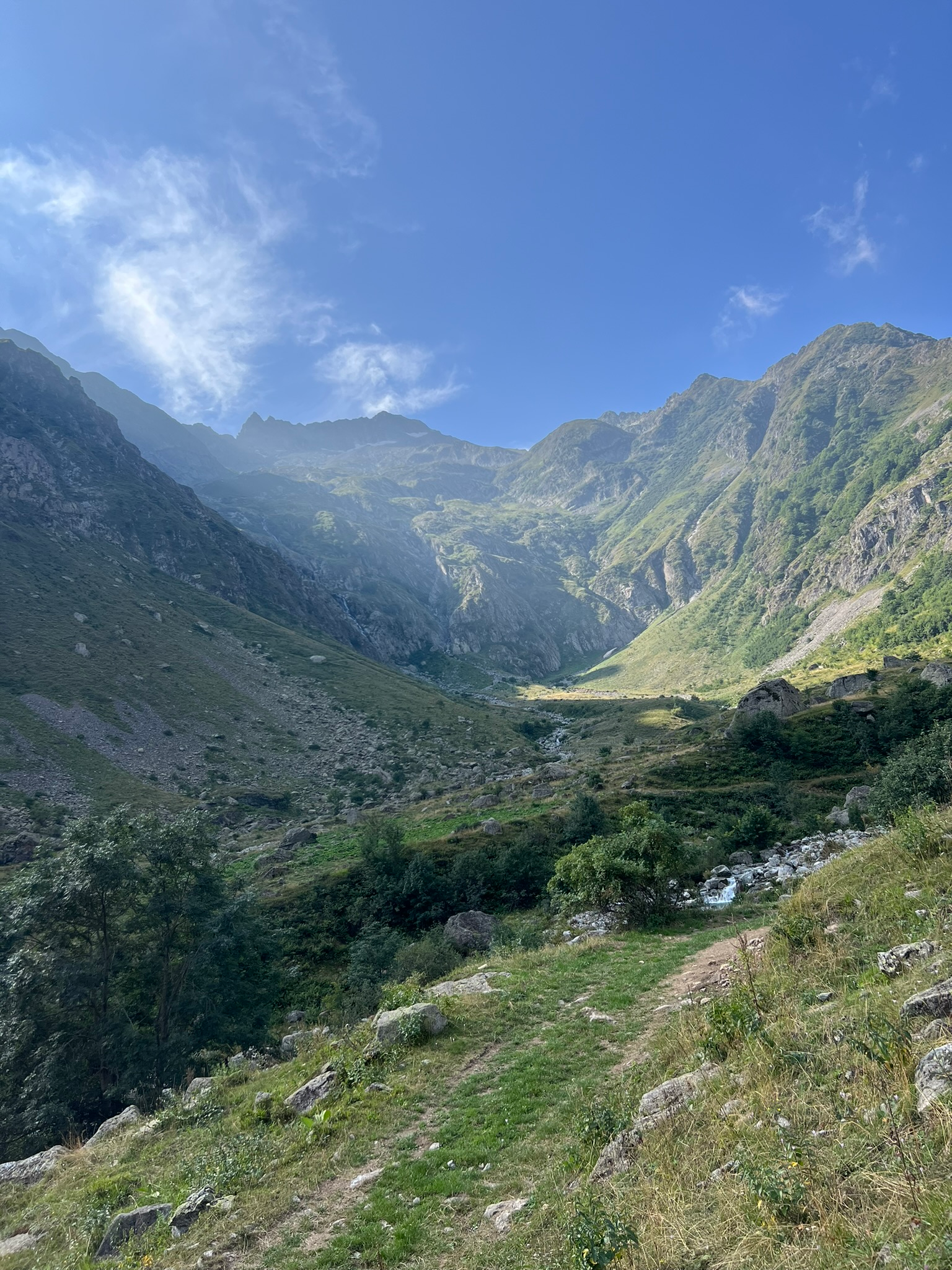
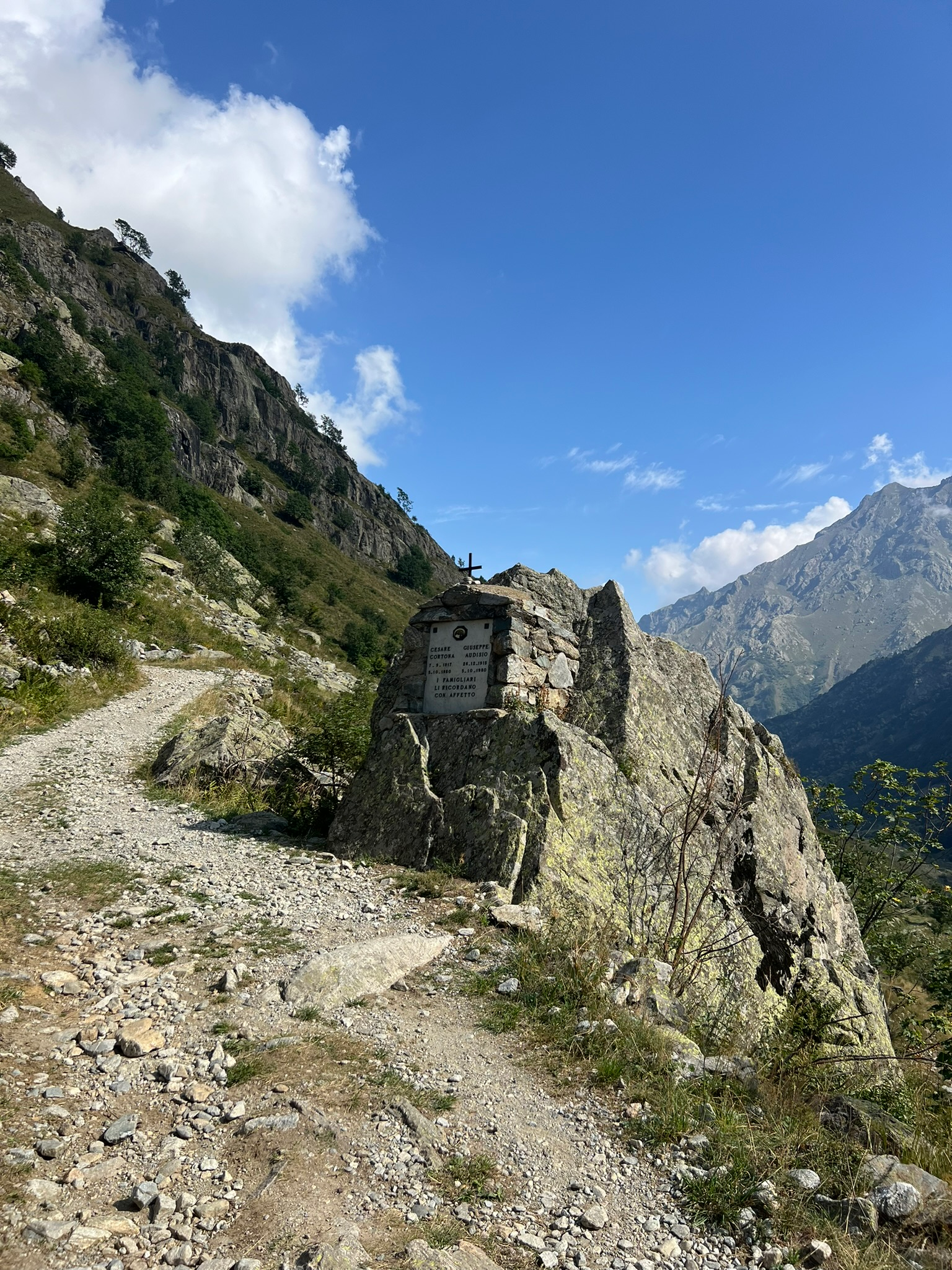
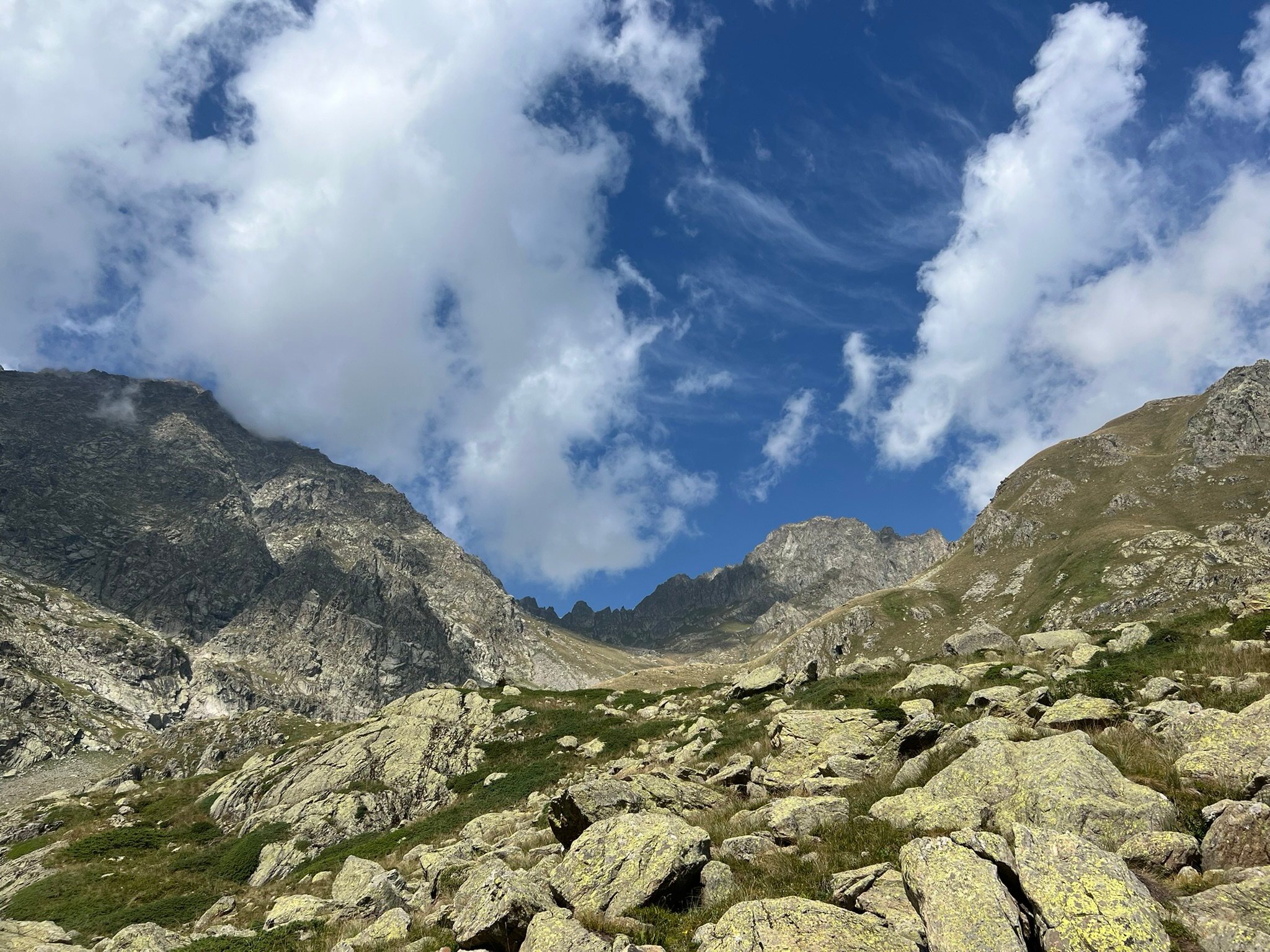
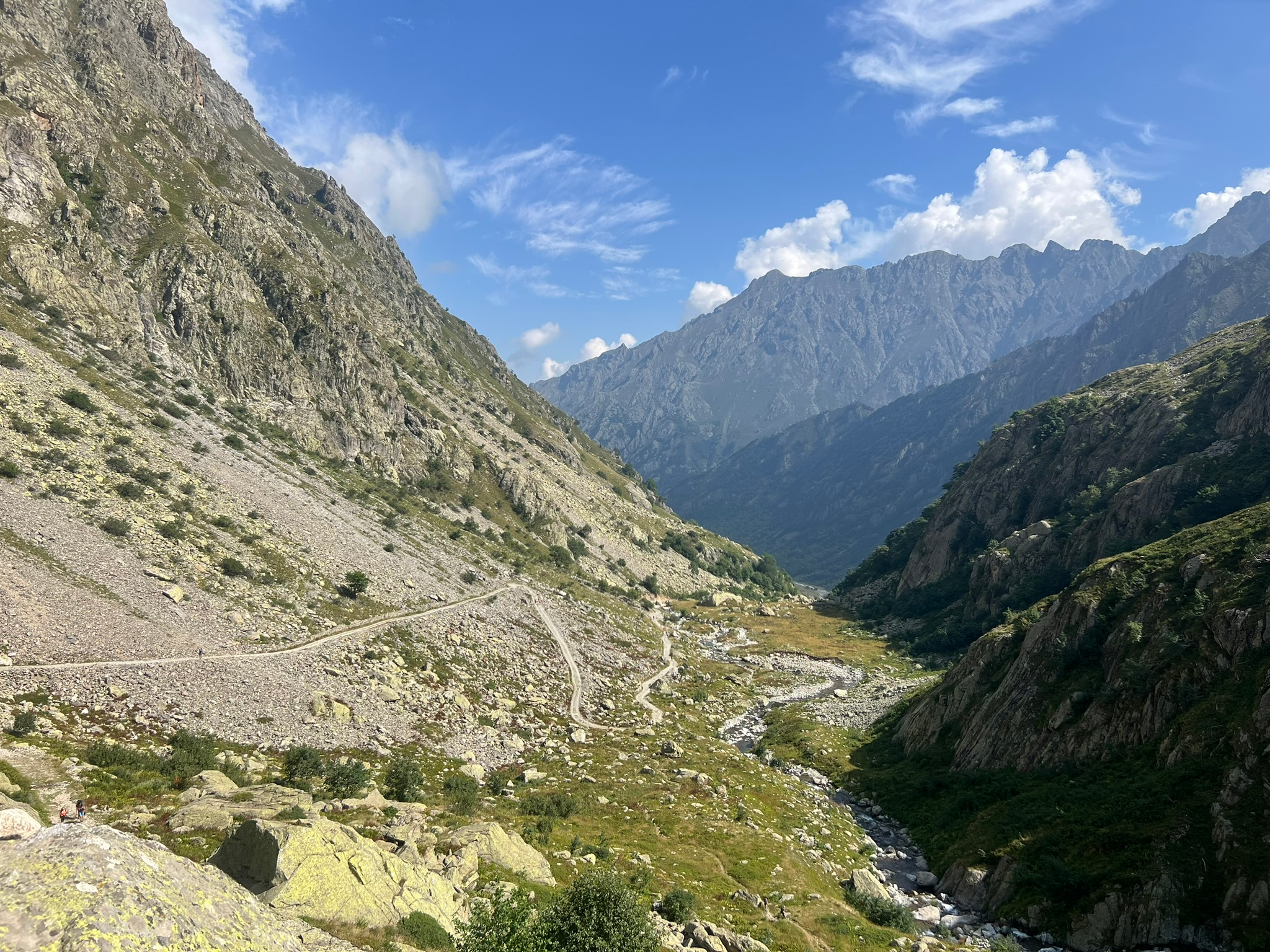
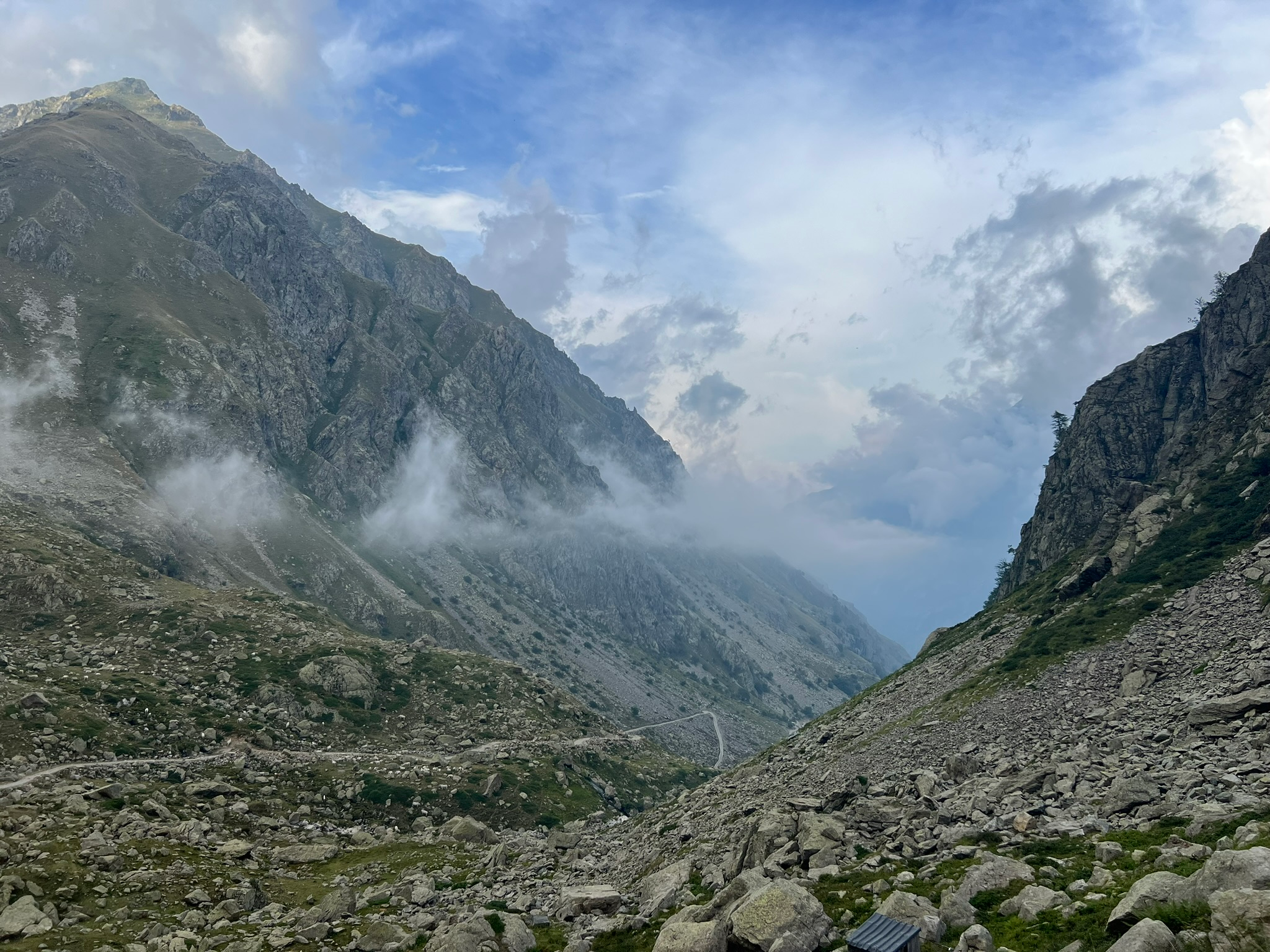
Bright and early, we set off on the second part of the adventure, with a steady ascent taking us from the larch forest into open alpine meadows and rockier terrain over the course of around 12 kilometres. From tiny waterfalls to impressive rock formations, it was truly a wonderful trail. Plus, every single turn had stunning, yet completely different, scenic views to offer. On our way, we also encountered a few apiaries where honey is produced, as well as herds of goats and ponies that belonged to the locals.
We had our break at the Vallone del Gesso della Barra, a valley with panoramic viewpoints that left us breathless. Perched on a flat rock above a stream, we enjoyed the crisp, quiet air as we munched on our apples, did some more seated yoga and attempted to spot some animals.
So far, most of the wildlife I had been practically promised had eluded me. Of ibex and chamois poop, I had seen plenty, though not the creatures themselves. At least I did manage to spot the butt of a marmot as it ran away from us the second we came too close. And, while sitting down enjoying our break, we also spotted a couple of cool birds, including an alpine chough.
Polenta at Soria-Ellena
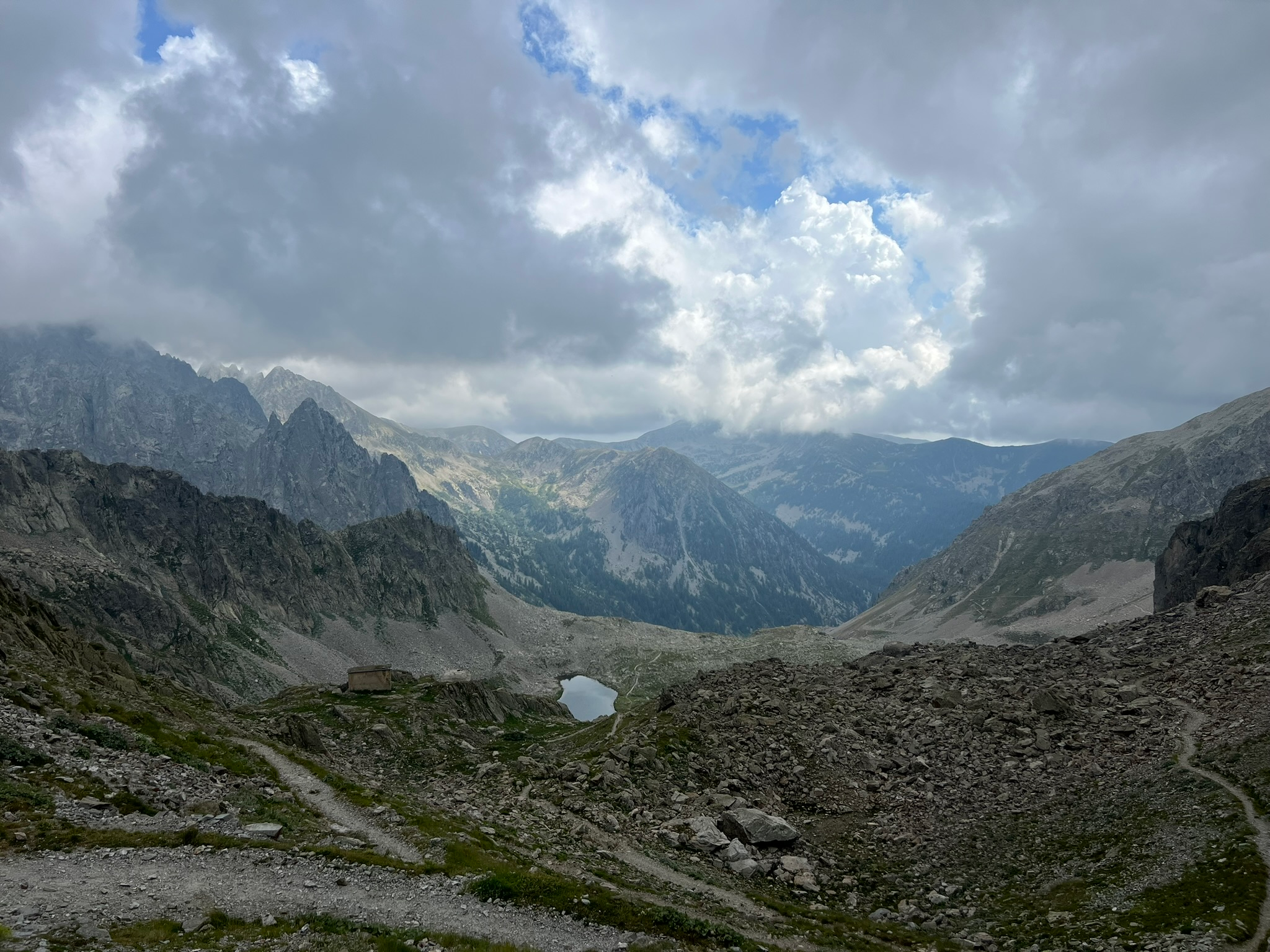
After our break, we made our way down to the Piano del Praiet, a wide, grassy plain surrounded by steep alpine slopes and rocky ridges. It’s a glacial valley floor that flattens out, creating a natural plateau with impressive views of the surrounding peaks.
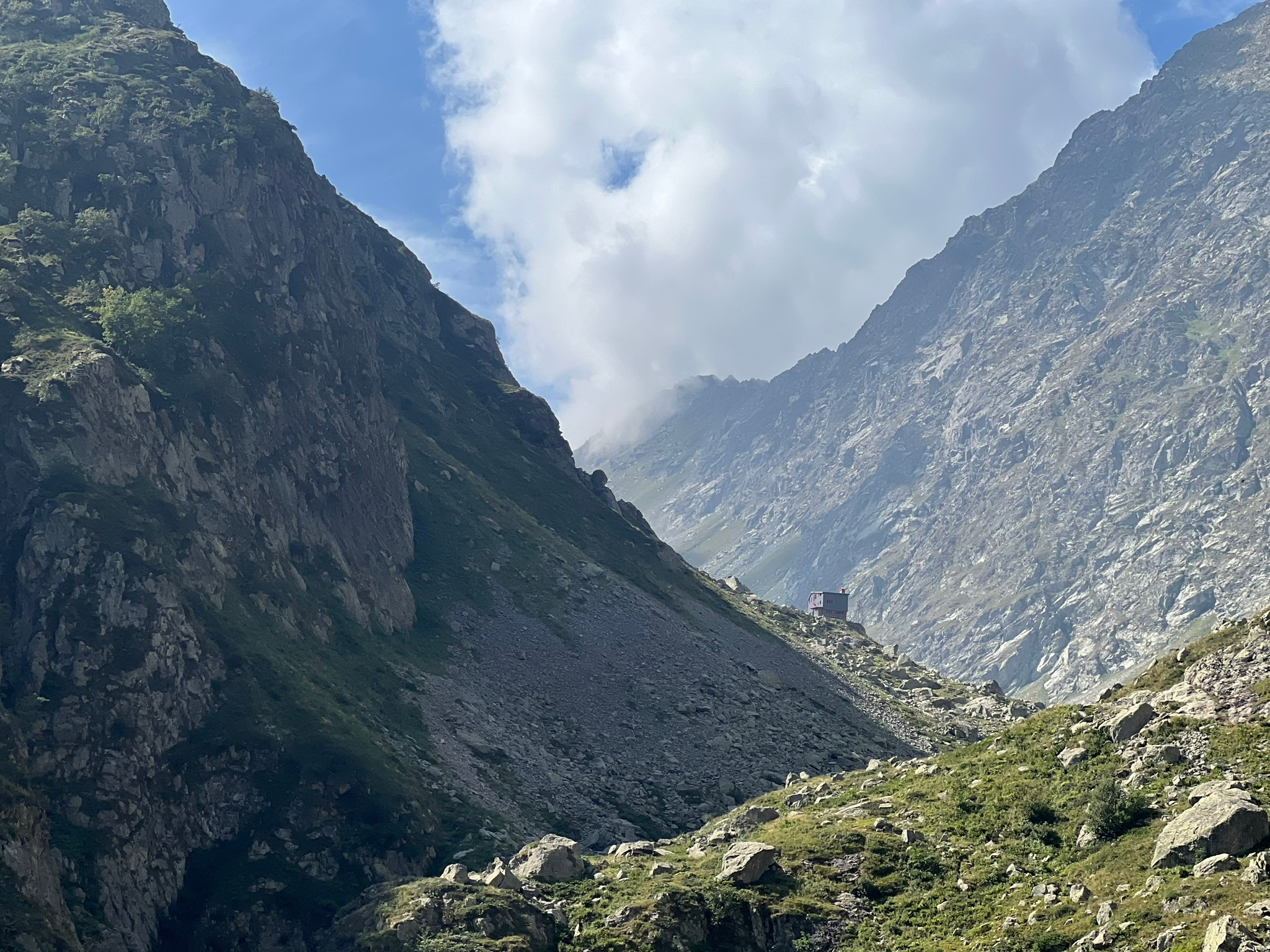
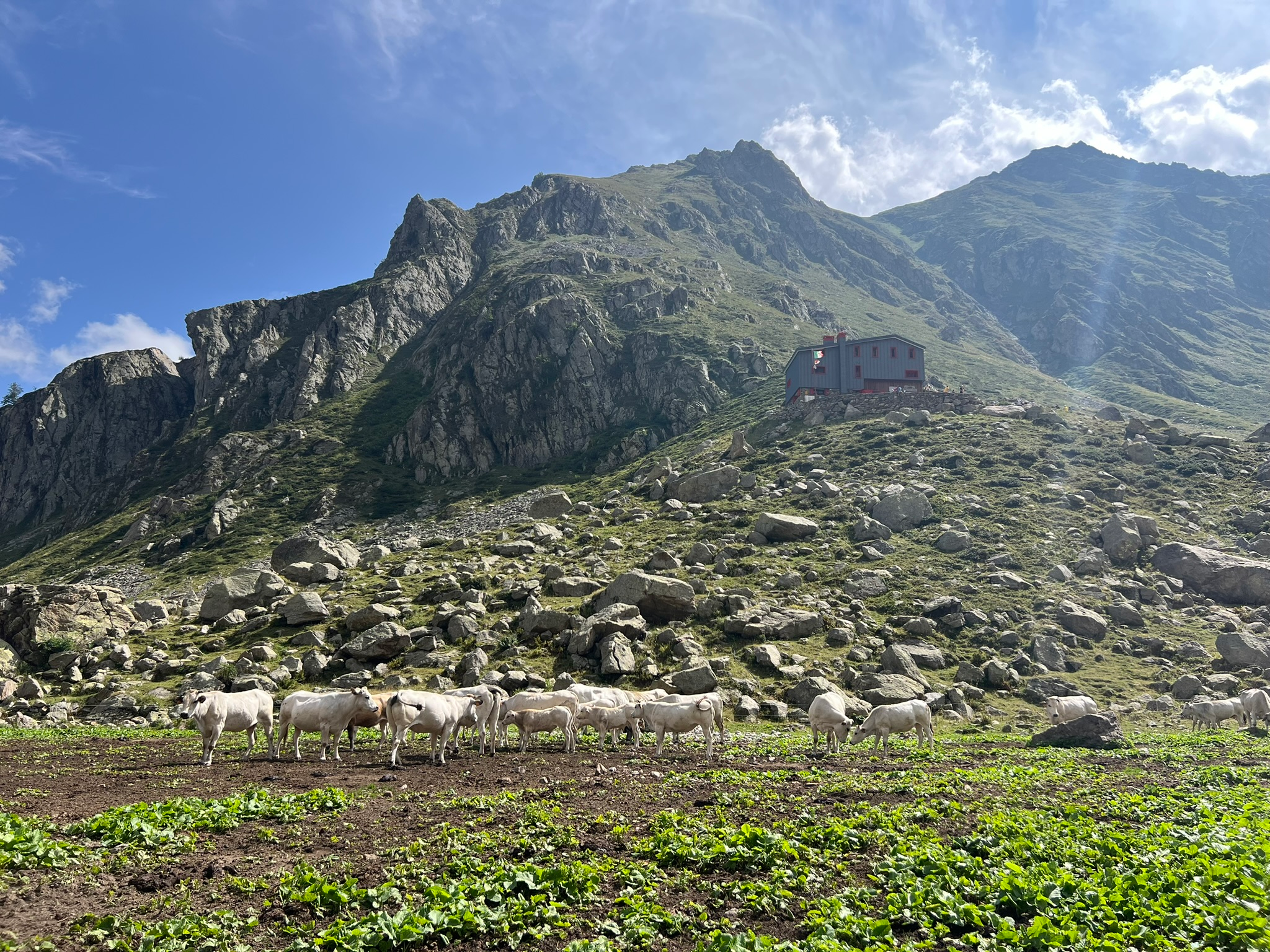
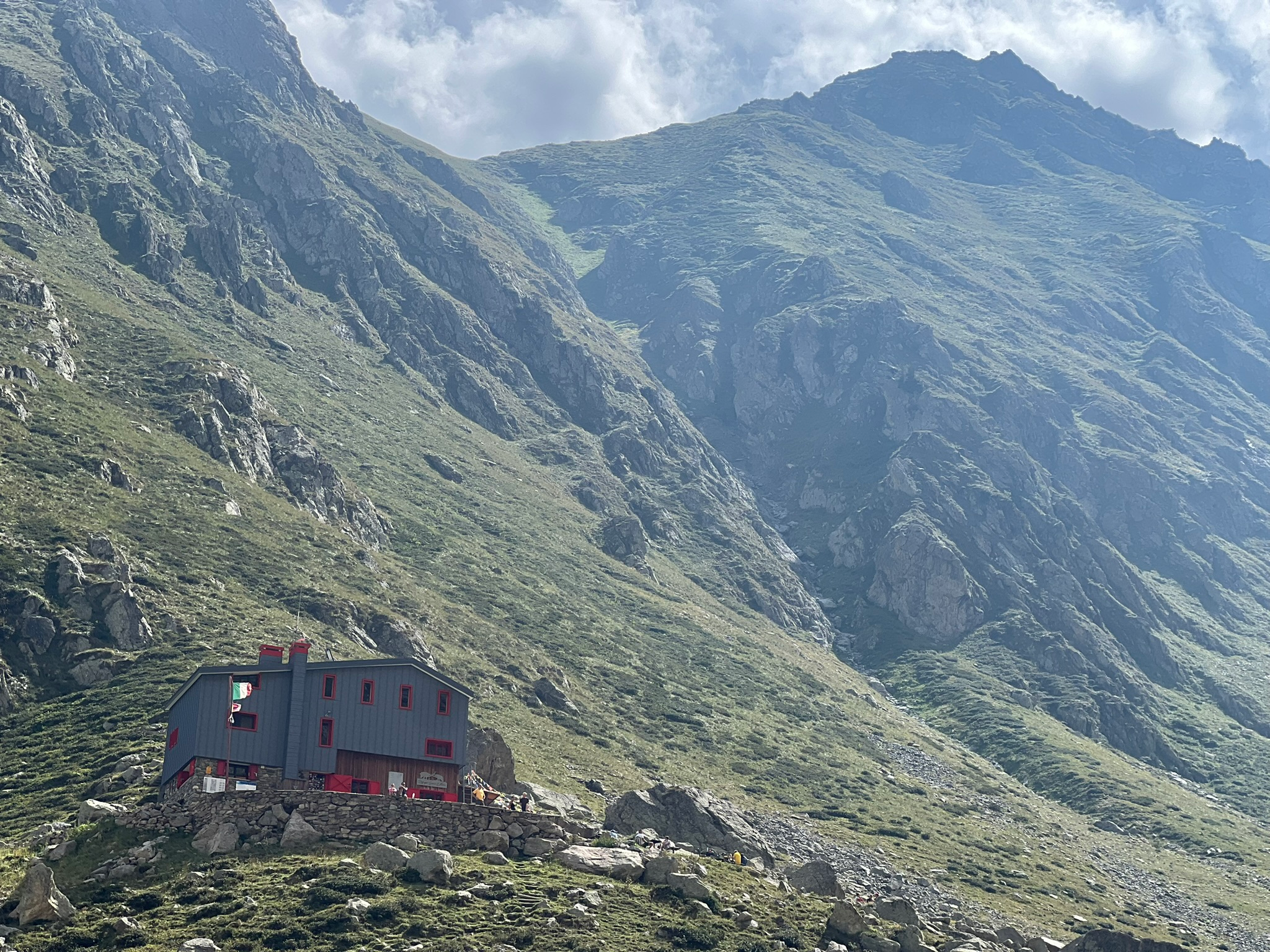
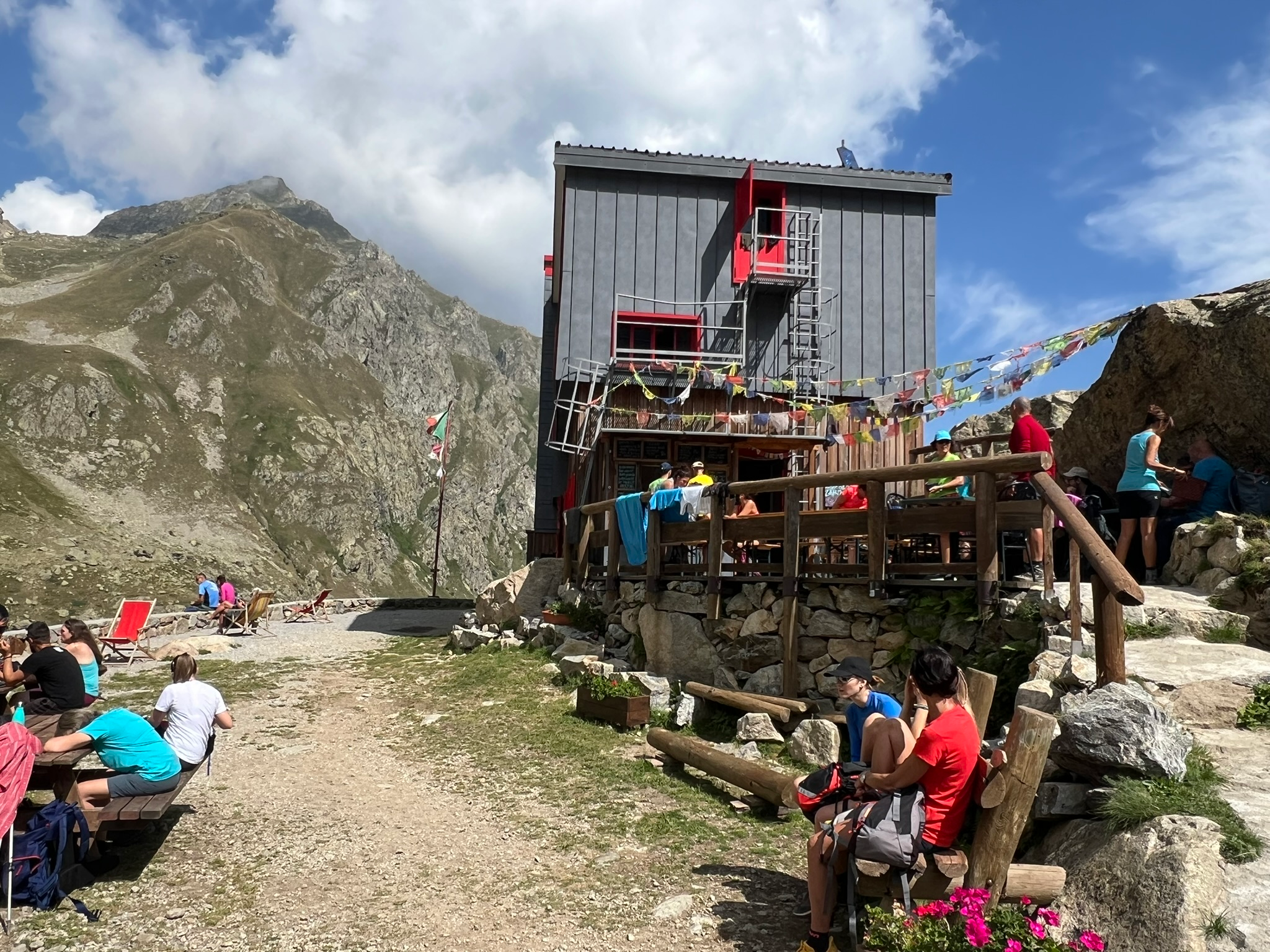
Accompanied by herds of cows as they fed on the grass, we had one final ascent before reaching our next lodging site, Rifugio Soria-Ellena. Located high above the Praiet plain, the grey and red refuge stands out against the grey and green mountains. While it’s not the sightliest of buildings, it was definitely a sight for sore eyes given how hungry we both were.
In fact, the second we got there, we each ordered a charcuterie board and a huge dish of polenta, a “peasant staple” that consists of boiled cornmeal made from yellow maize. It can be served soft and creamy, kinda like mashed potatoes, or allowed to set and solidify into a loaf. This is then served with a number of sauces or sides. Ours came with beef ragù, cheese fondue and a red sauce with sausages. It was so, so good. We also had a couple of beers, because there’s nothing better than a cold beer after a long trek!
PART II
The Second Half of the Day
We still had plenty left on our itinerary. After lunch, we left our belongings in the dorm and headed out again for the second part of our day.
We’d be going to Colle di Finestra, also known as Col de Fenestre on the French side, a mountain pass located at around 2,474 metres in elevation, on the border between France and Italy. The trail took us back down to the prairie and, after much searching, we finally found the path that would lead us to our destination. From there, we walked along a well-maintained mule track featuring a series of switchbacks and traverses. Feeling bloated and groggy after the polenta overdose, the steep ascent was especially tough for me.
That said, I can’t say I was demoralised for long. Finally, in the distance, Alessia managed to spot a chamois. And then another. And another. It was an entire friggin’ herd! Pretty soon, there were chamois at every single turn, munching away at the vegetation between the rocks. Then, when we got to a lingering patch of snow and ice, we saw one of the most extraordinary things we had ever seen: a chamois suckling its calf, right in front of us.
As mystified as I was, my reaction kinda paled in comparison to Alessia’s, who was practically sobbing once she saw the whole thing unfold, exclaiming how lucky we both were and what an absolute privilege it was to have been allowed to share such an intimate moment with such pure creatures. I, for one, thought it was just happenstance, albeit a special moment I’ll cherish for the rest of my life. Needless to say, all the chamois we saw after those two were kinda unimpressive.
Barracks, Borders and History
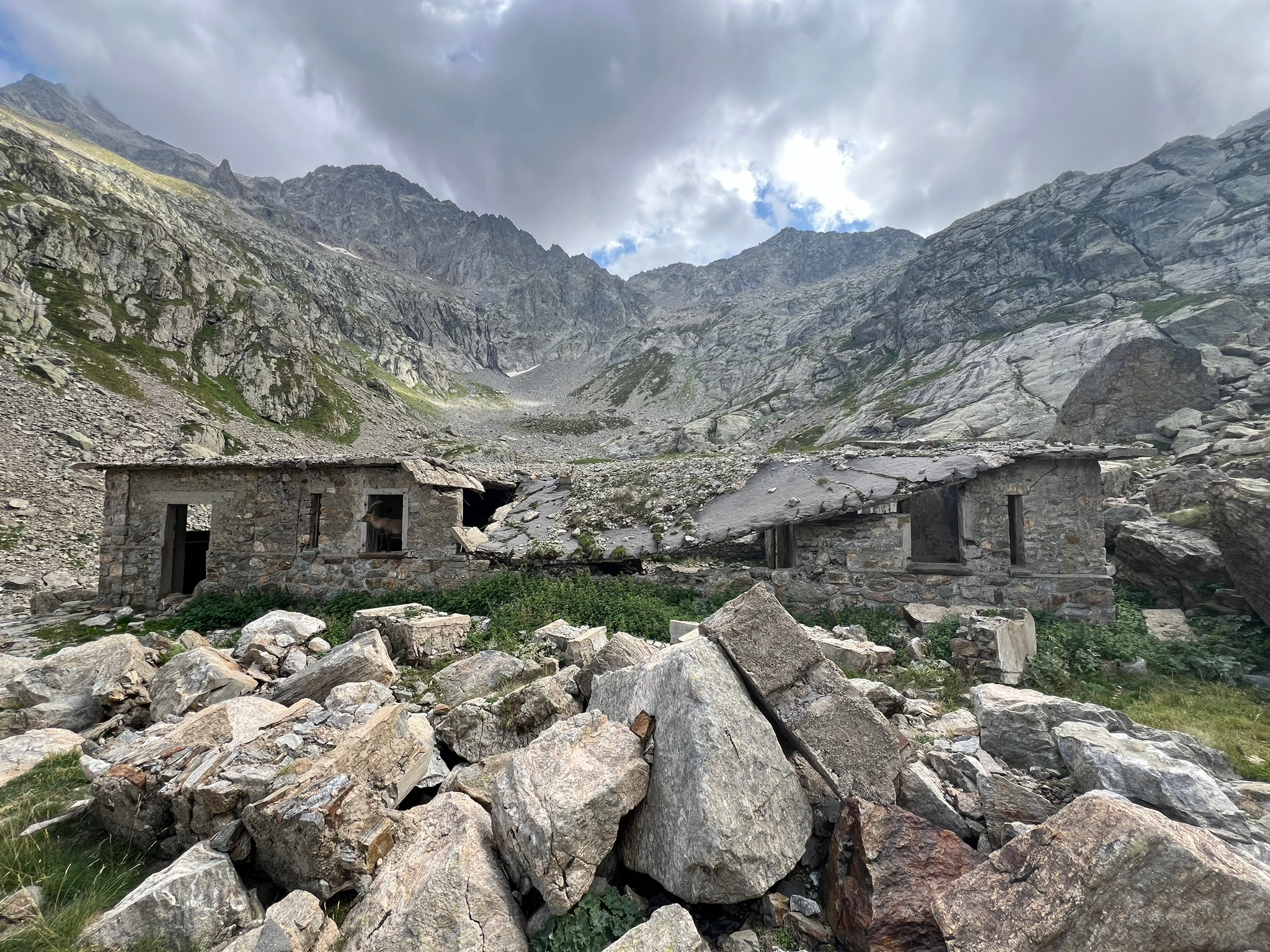
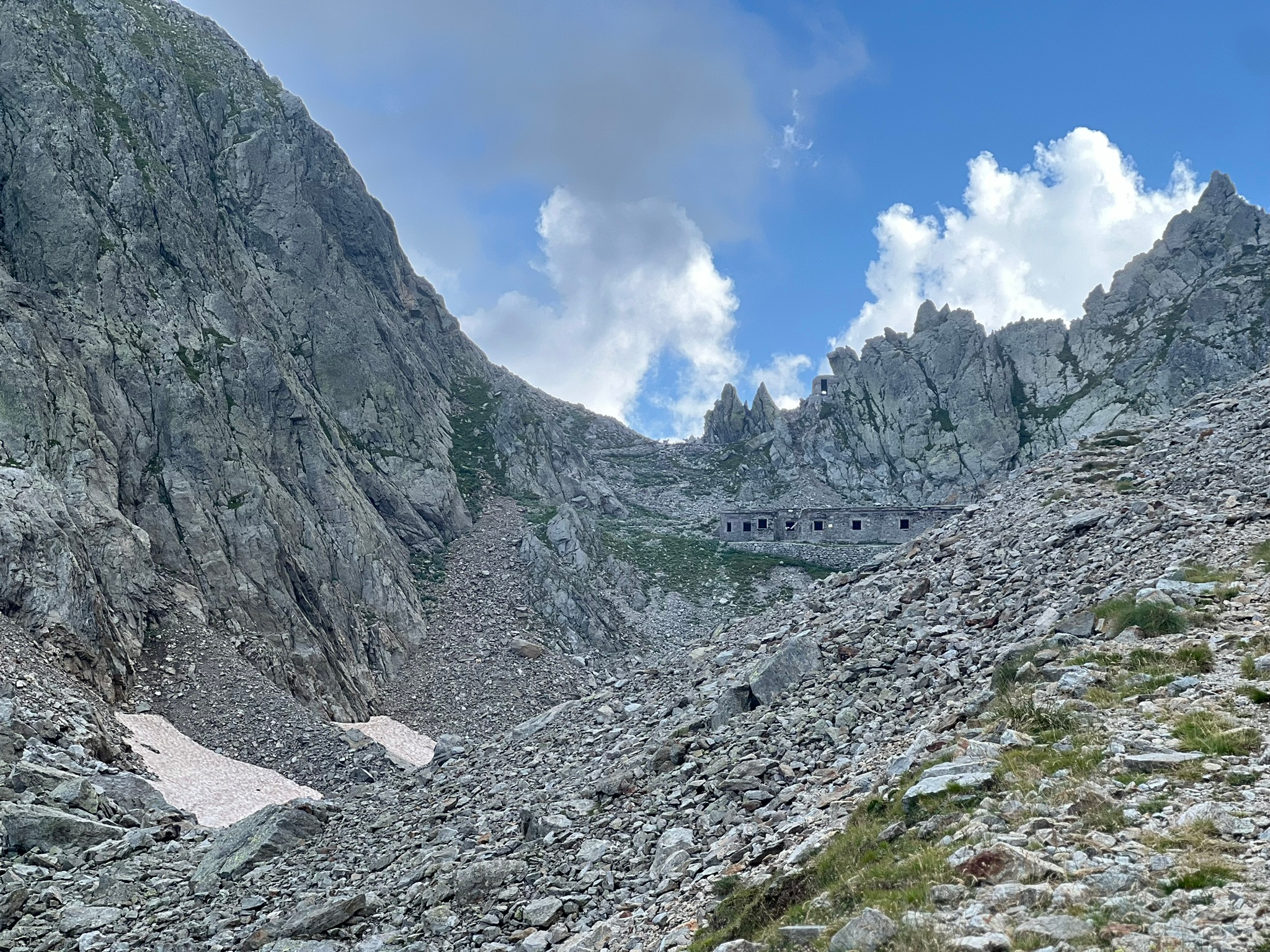
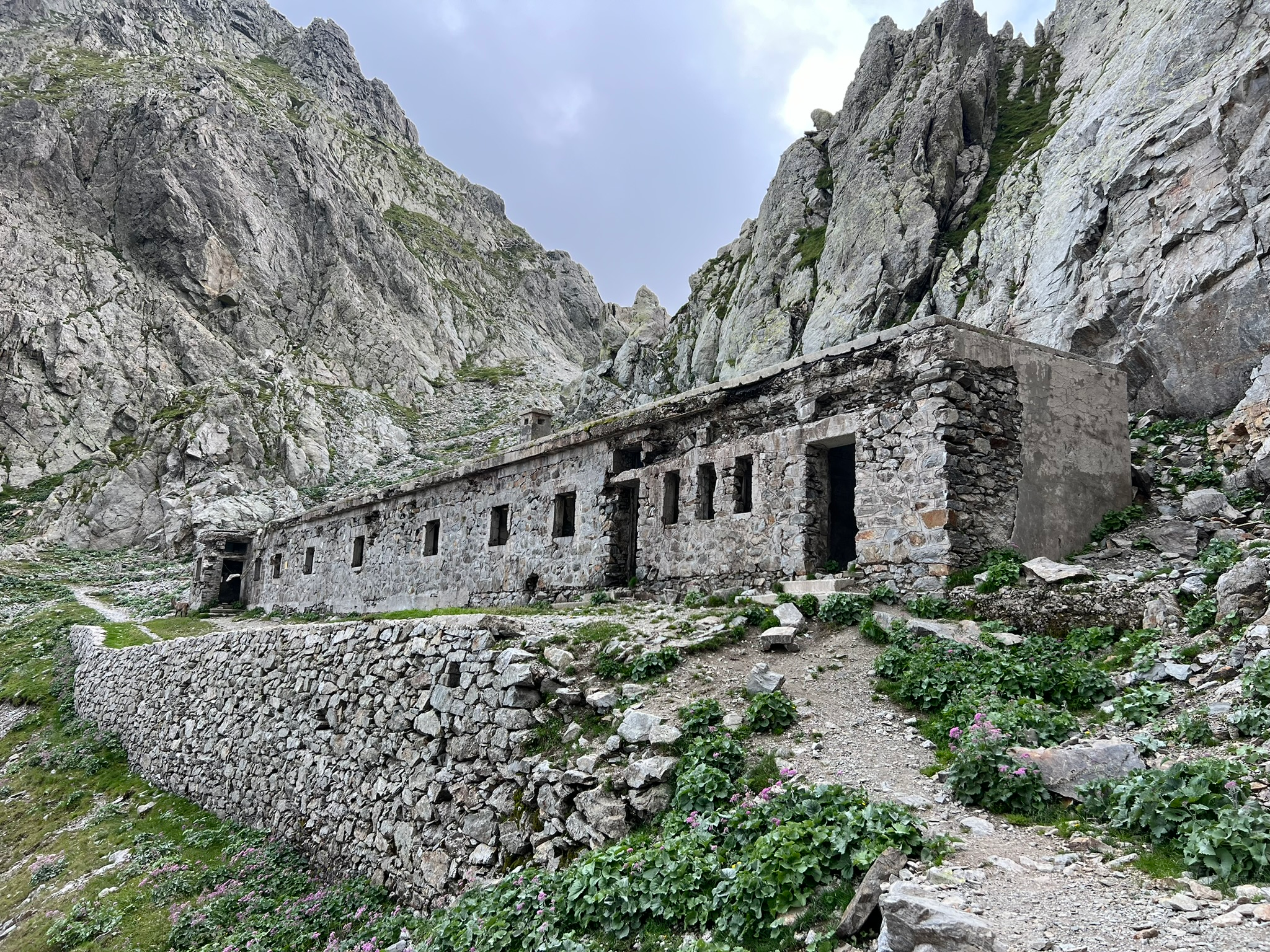
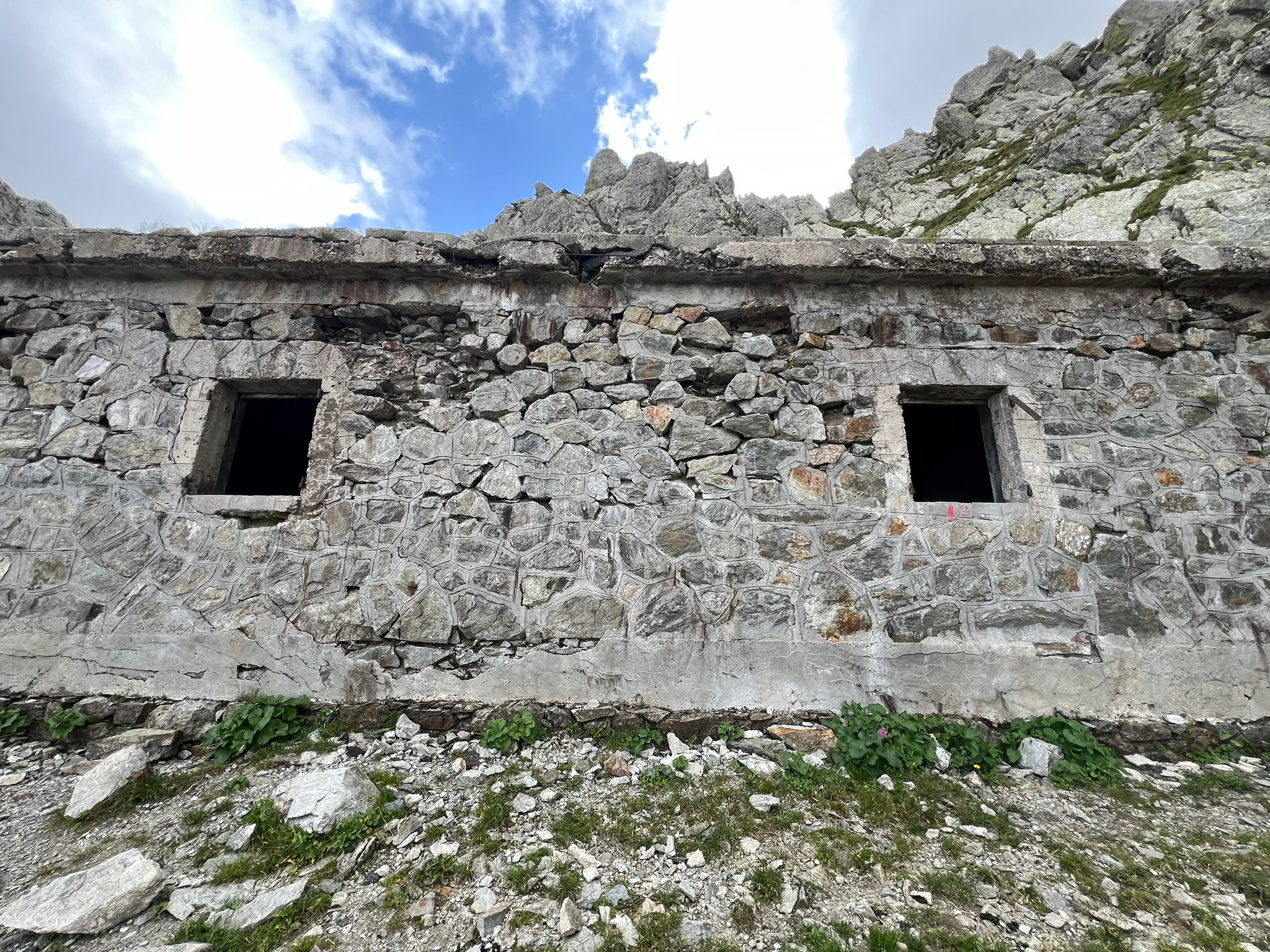
After a short while, we got to a stone barracks. These, Alessia’s grandpa had explained, were remnants of military fortifications used to defend the pass.
It turns out the pass has been used for centuries by shepherds moving livestock between summer and winter pastures, by traders carrying goods between Piedmont and the French side, and by pilgrims visiting the sanctuary of Madone de Fenestre. Later on, given its strategic position on the Italy-France border, it also became an important area for military defence.
For this reason, the Vallo Alpino, or Alpine Wall, was built under Benito Mussolini in the 1930s and early 1940s. It consisted of bunkers, barracks, observation posts, tunnels and artillery positions, carefully camouflaged and integrated into the alpine terrain. Despite the massive investment, the Alpine Wall saw limited combat.
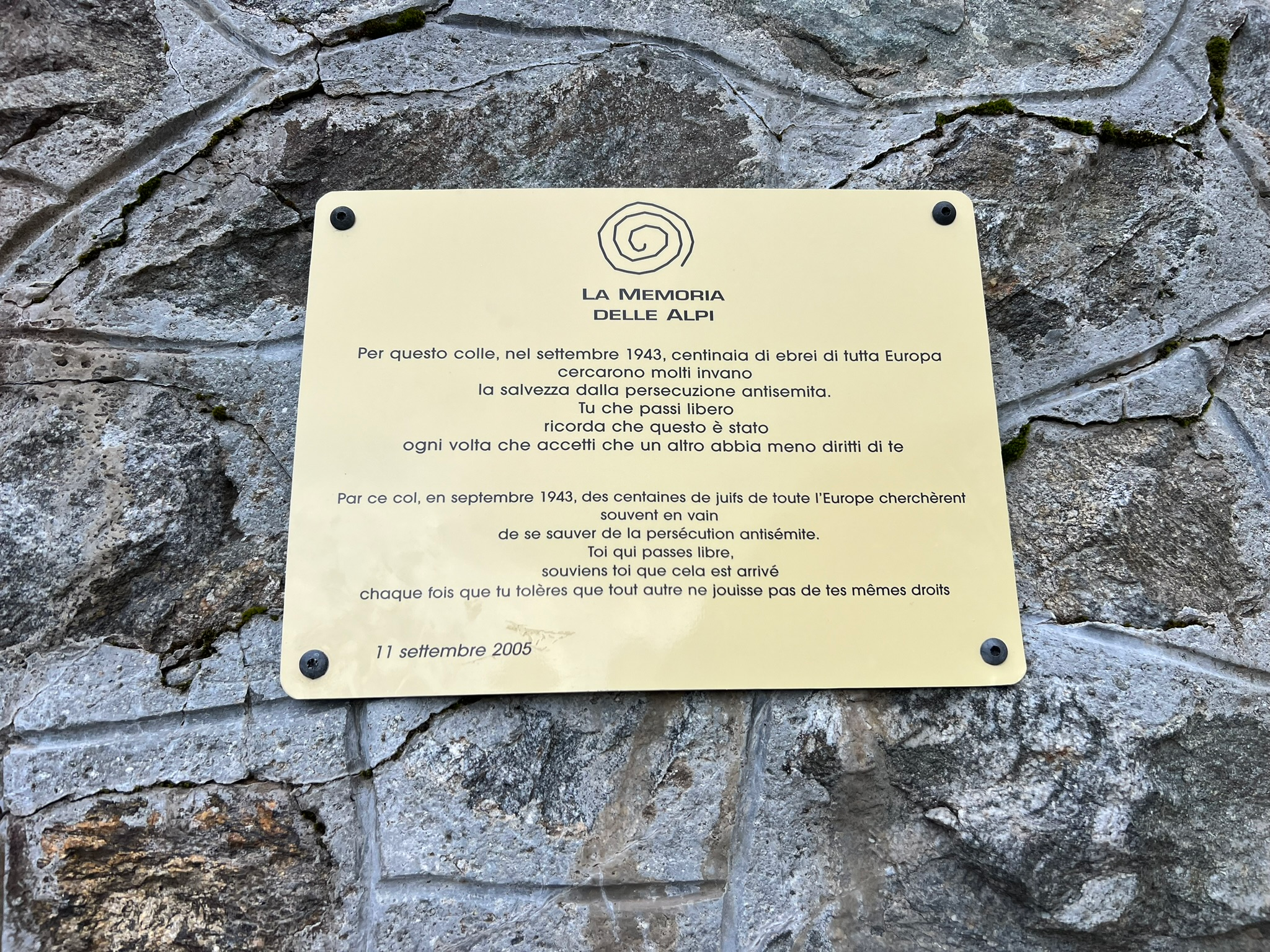
The history of that border is also tied to escape. During the Italian occupation of south-eastern France, from late 1942 to 1943, the area became a temporary refuge for many Jews fleeing Nazi and Vichy persecution. Then, after the Italian armistice in September 1943 and the arrival of German forces, many Jewish refugees fled from Saint-Martin-Vésubie across Alpine passes such as Col de Fenestre and Col de Cerise into Piedmont. Some managed to escape. Others were later captured and deported.
Another Majestic Encounter
While the historical aspect of the barracks was not lost on me, I could hardly focus on it. Because there, in flesh and blood, was a friggin’ alpine ibex.
As it stood unmoving in the middle of a barrack window, it looked me squarely in the eyes, its two large horns a sensible warning not to approach. Though I did not, I couldn’t take my eyes off it either, as we were both caught in an intense staring competition. The last time that had happened with another animal was with a sharpnose puffer back in Utila, Honduras, while I was narc’d as hell during a dive.
Up at the barracks, more ibexes awaited us – having to wait for them to cross the trail in order to continue. Never thought I’d experience ibex traffic, but hey, it’s quite the experience!
Colle di Finestra Pass
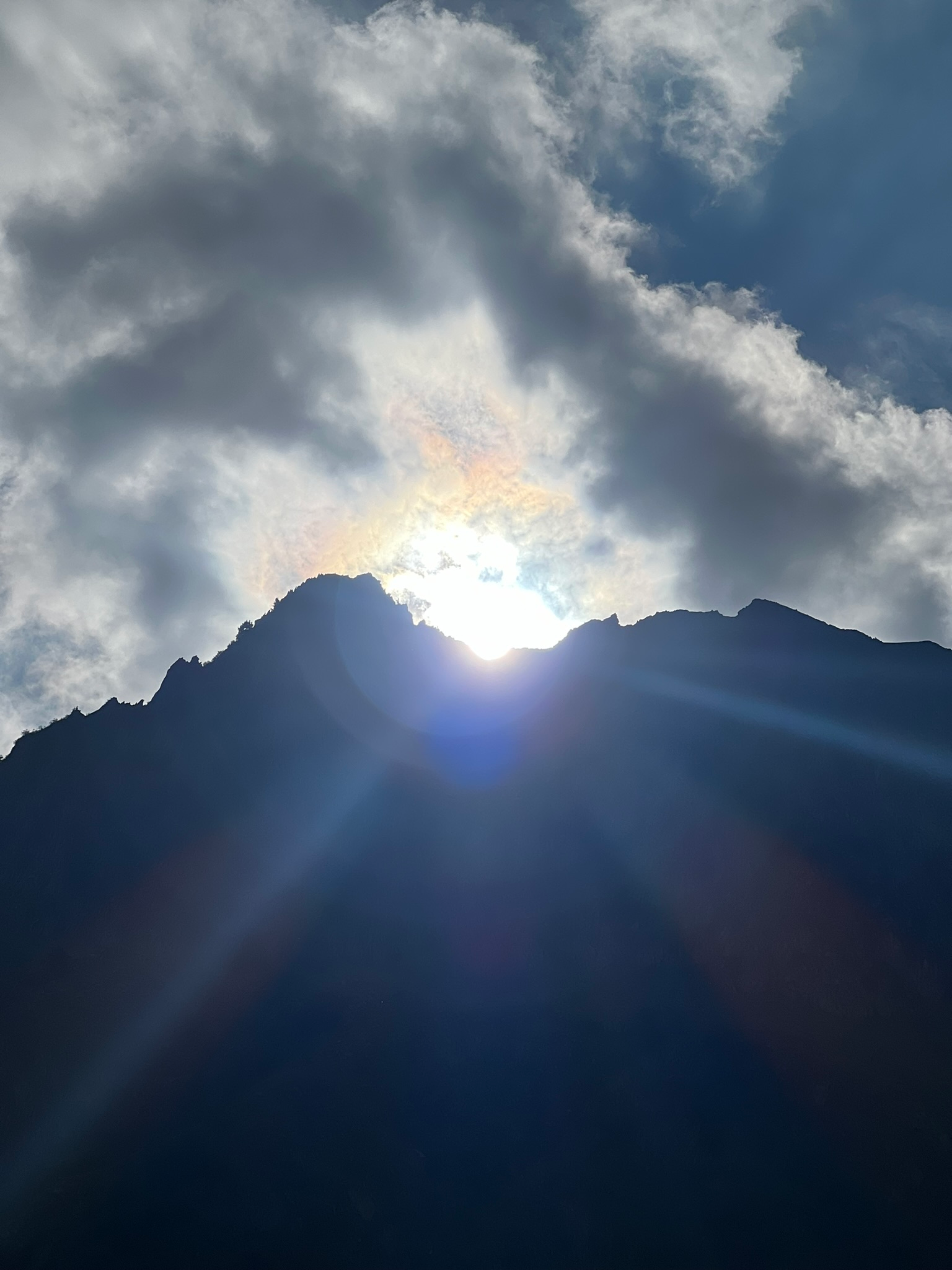
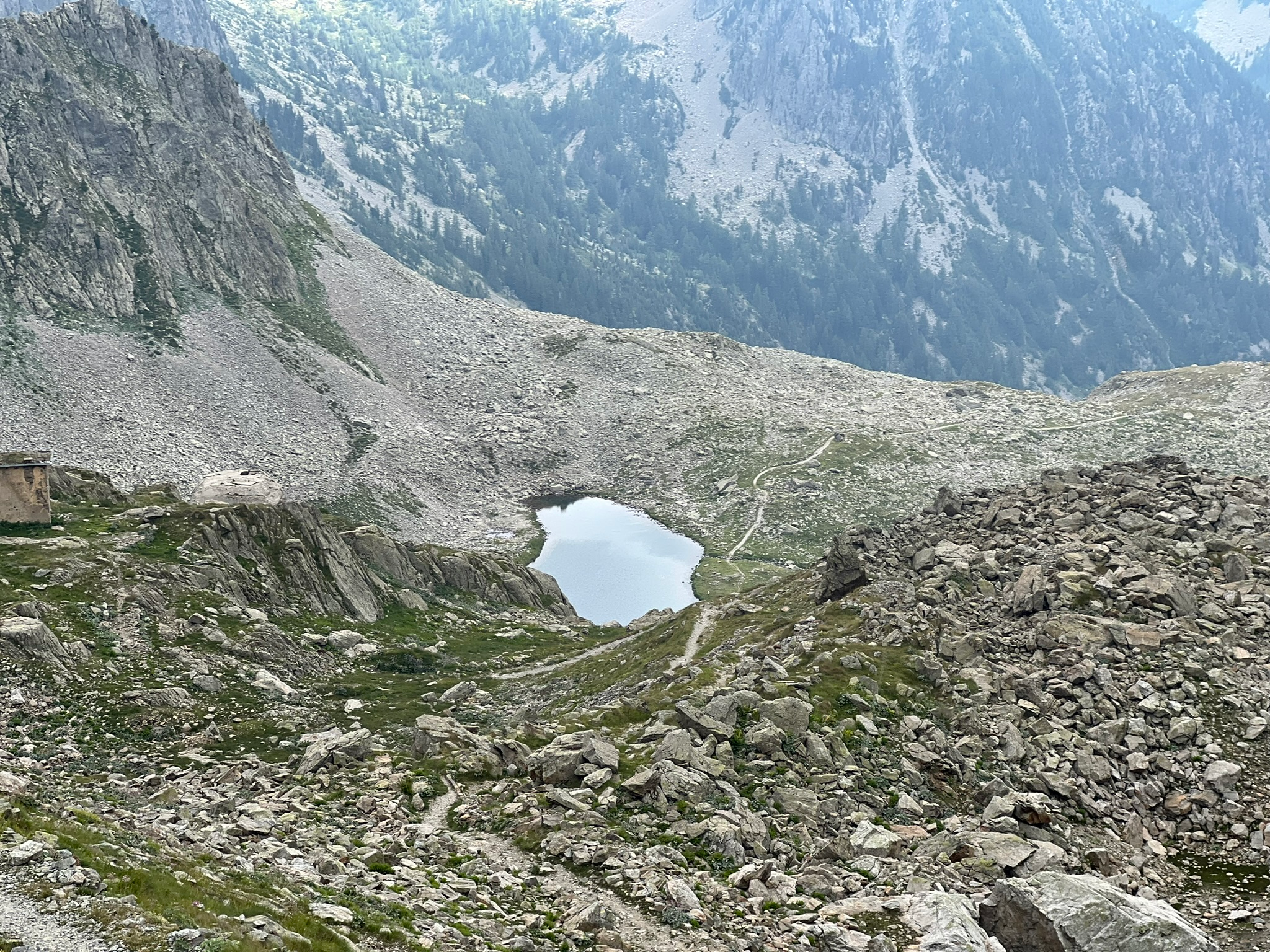
After the sky turned an ominous grey, heralding a possible storm, we decided to get a move on. We could see the splendid Lago del Praiet in the distance, but, given the impending meteorological cataclysm, we decided to skip it and head to our checkpoint.
The final stretch involved a traverse over scree that led to another barracks, this one full of ibexes. As though aware of our goal, they all stood aside, some entering the barracks, allowing us to proceed to the pass. And the pass? Simply phenomenal.
On one side stood France, with the impressive Vésubie Valley and Lac de Fenestre at its base. On the other stood Italy, with the equally majestic Gesso Valley at our feet.
A short hike down from the pass into France would have taken us to the Sanctuaire de la Madone de Fenestre, a pilgrimage site with roots stretching back centuries. Legend has it that the Virgin appeared through a natural window-shaped opening in the Cayre de la Madone, the rock behind the sanctuary, giving Fenestre its name.
The Alpha Appears
We would have loved to trek down to the lake, but, given that it had started raining and that we didn’t wanna end up caught in the middle of nowhere, we thought it best to start our descent back to the refuge.
The alpha ibex had other plans in mind, though. With the two most menacing, most gigantic horns and the most threatening of poses, it stood right in the middle of the trail, blocking our passage. It remained there, showing no signs of moving. For the first time since we started the trek, I figured the trekking poles could come in handy. I took them out and inched my way forward, tapping them in front of me with every step. Somehow, that seemed to work, as it slowly moved aside, finally allowing us to go on.
Coming back to the lodge, now shrouded in clouds, we could finally take a well-deserved break. Famished, we sat down for dinner, with our excitement dwindling the second we were served the food. It was polenta. Again.
If there’s one thing about me, it’s that I eat anything and everything, except for coriander, but I deplore having to eat the same thing twice in a row. At least we did get to try something different for dessert: zuccherini alcolici, which are basically aromatic sugar cubes soaked in alcohol. Vile, but somehow addictive.