Antarctic Peninsula – Day 1: The Icy Continent
ANTARCTIC PENINSULA
Day 1: The Icy Continent
March 07, 2023
PART I
Waking up to a stable, non-swaying ship felt weird after having grown accustomed to the Drake. Overnight, we’d made good speed, pushing from the expected 12 knots to an impressive 13.7, so much so that we wouldn’t have time for lectures. Instead, as Jonathan explained, we’d be moving our schedule forward by an entire day. Go captain!
For the first time since departure, the bow was opened for access, as conditions had finally improved. We practically ran up the moment the announcement was made and stood there for ages, soaking in the blue-grey sea, the heavy sky, and the endless albatrosses and petrels gliding past while rain and freezing gusts pelted us relentlessly. Then, faintly at first, something appeared on the horizon. After two days surrounded by nothing but seemingly endless ocean, we finally got to shout “Land ho!” as the South Shetland Islands emerged through the mist, their rocky slopes draped in pristine white snow.
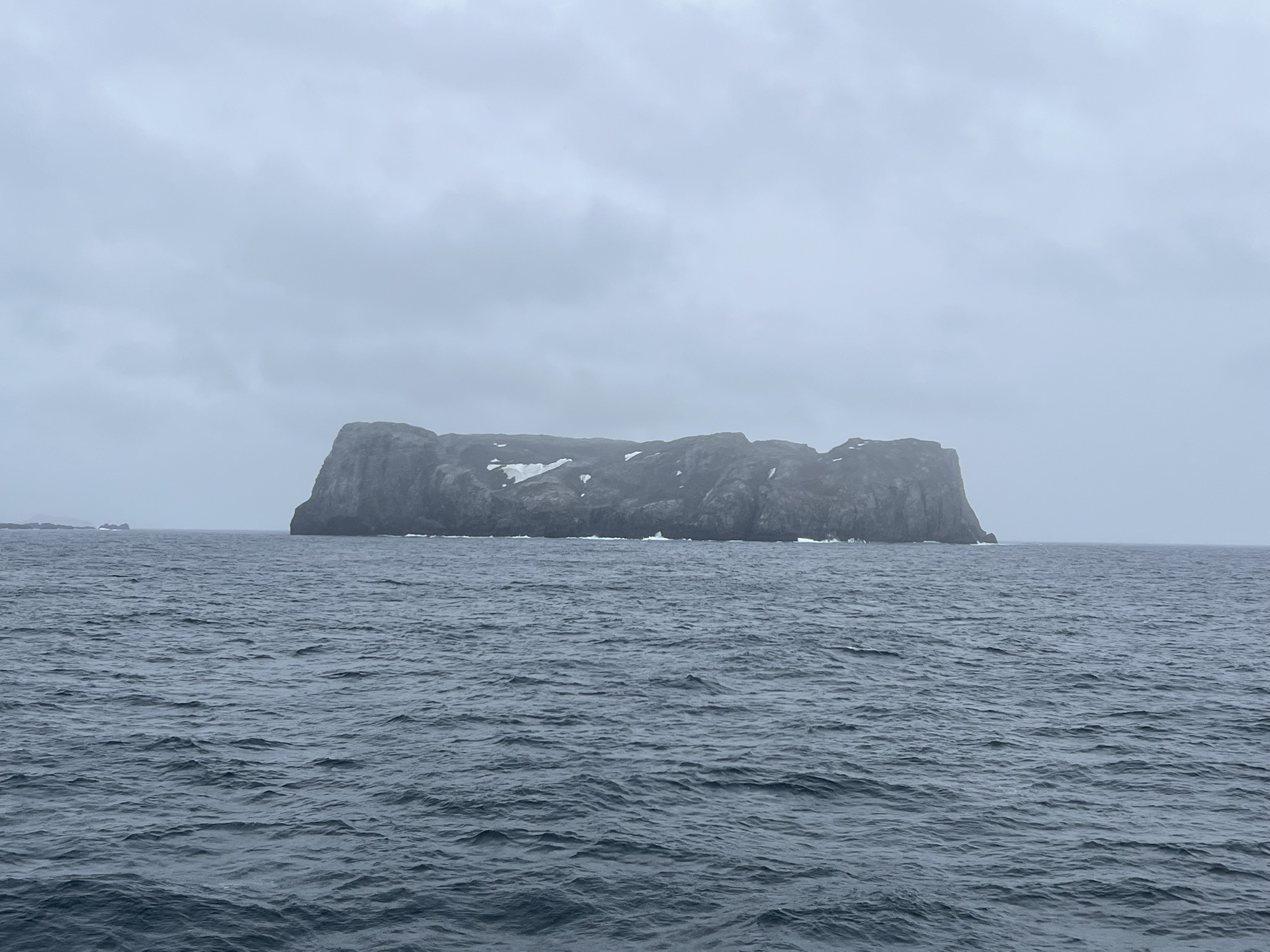
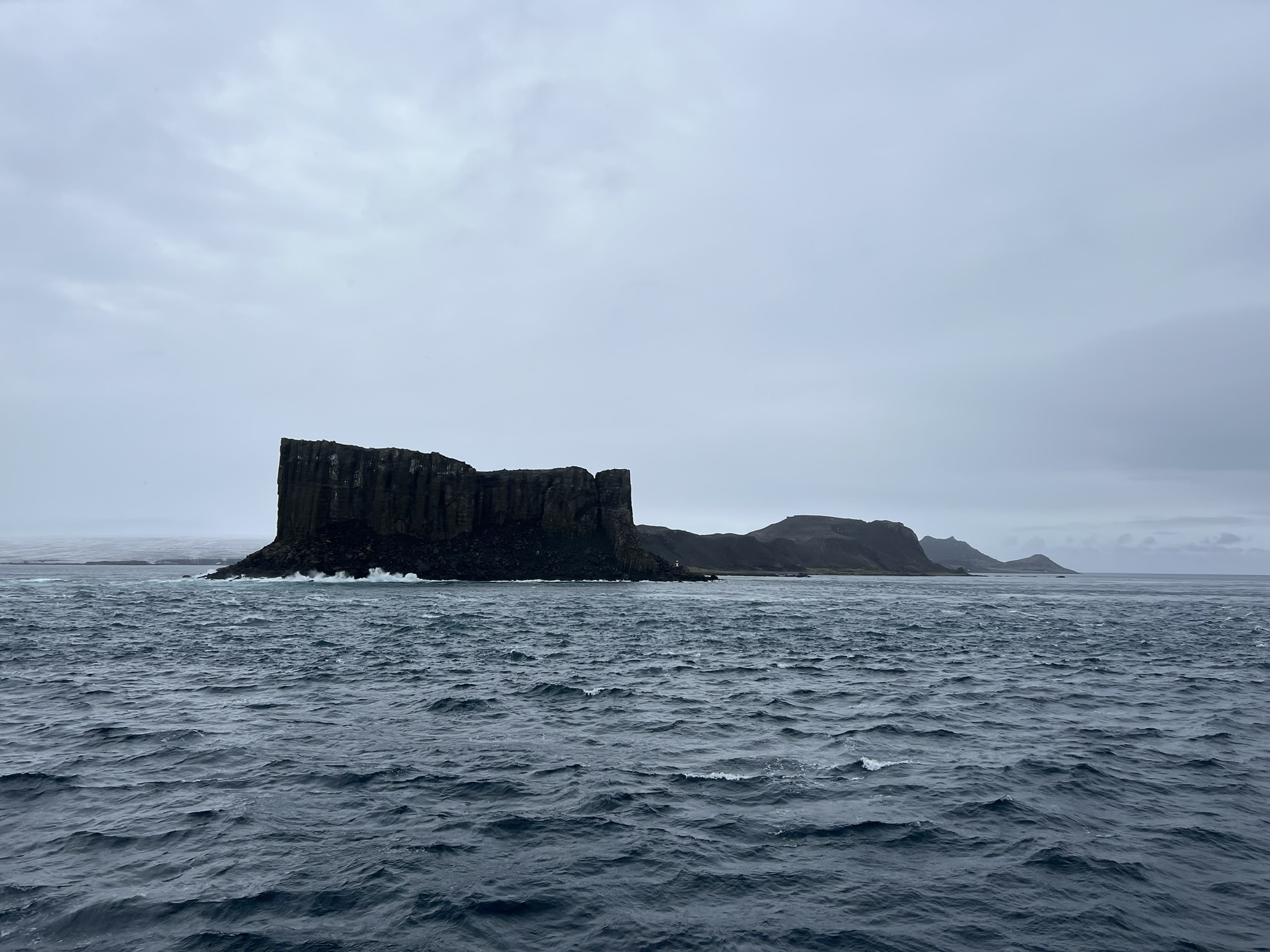
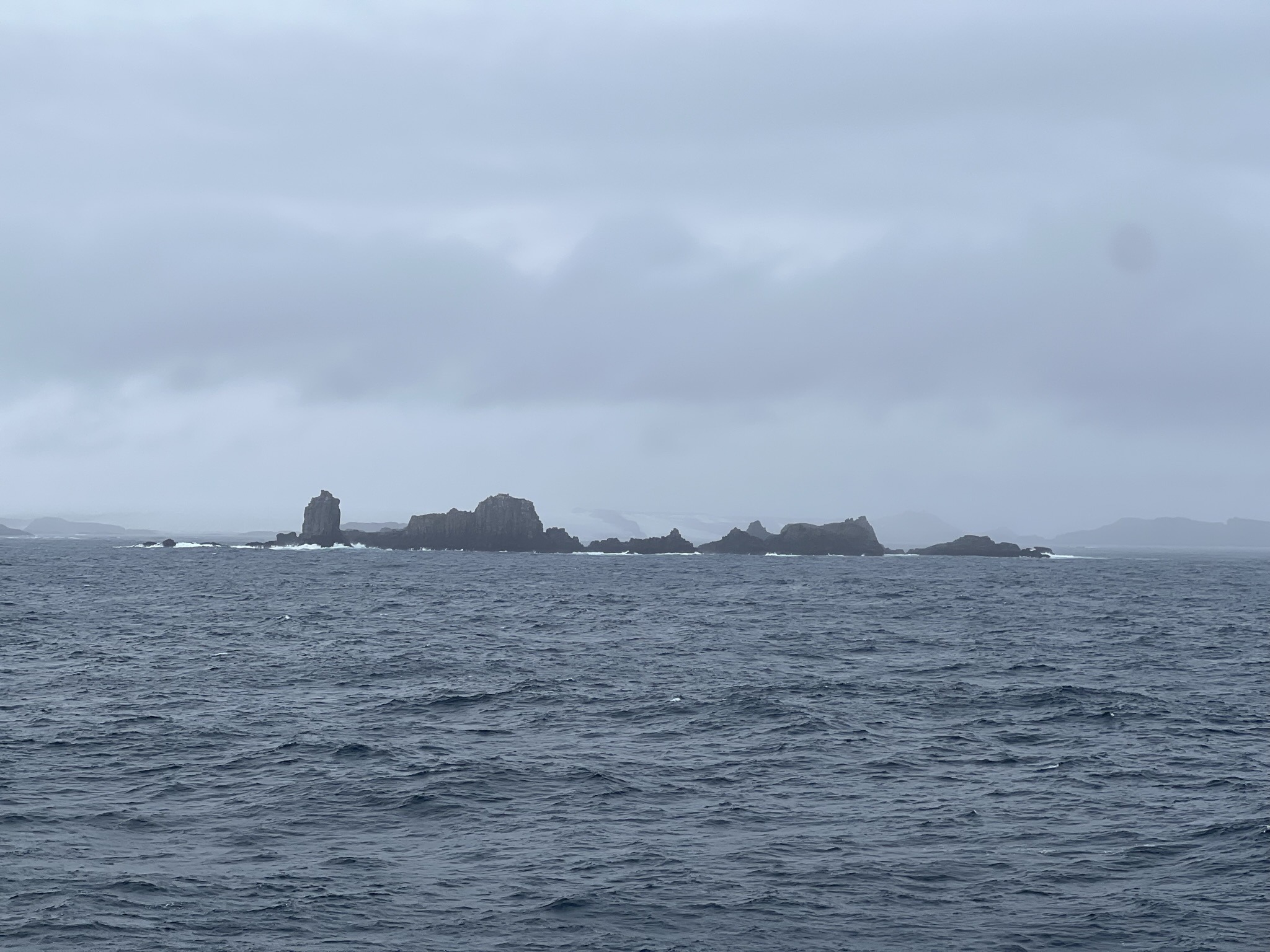
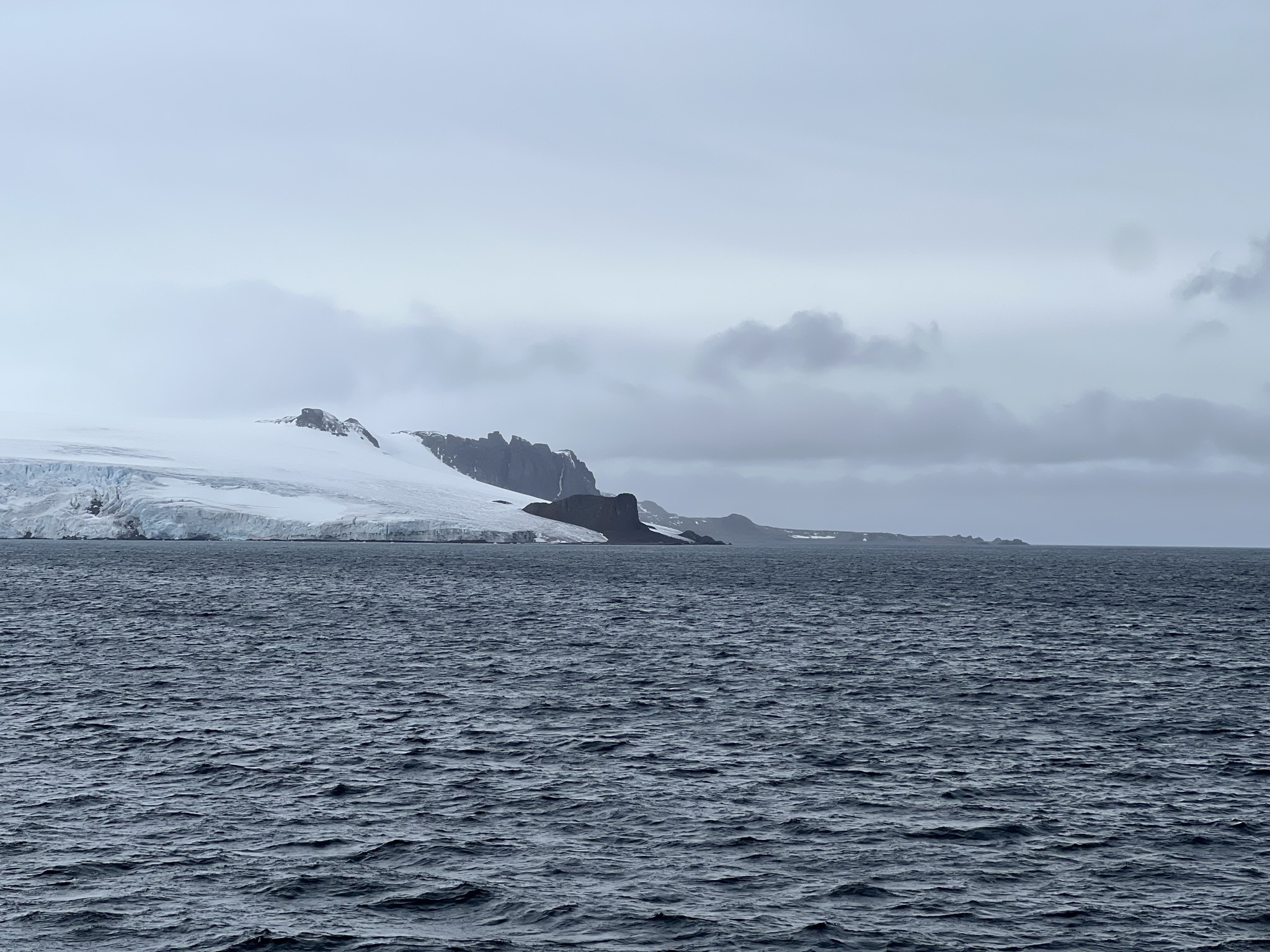
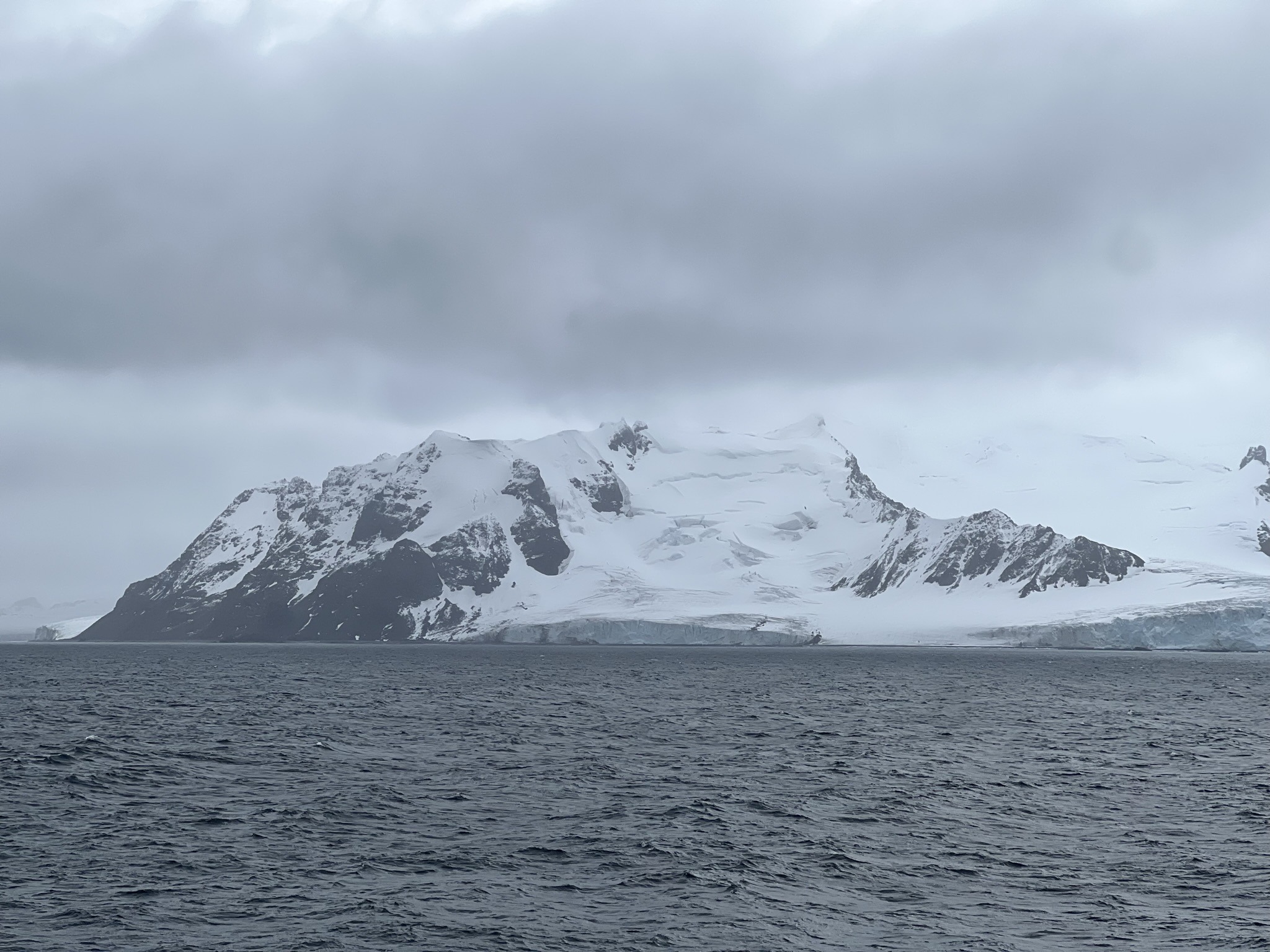
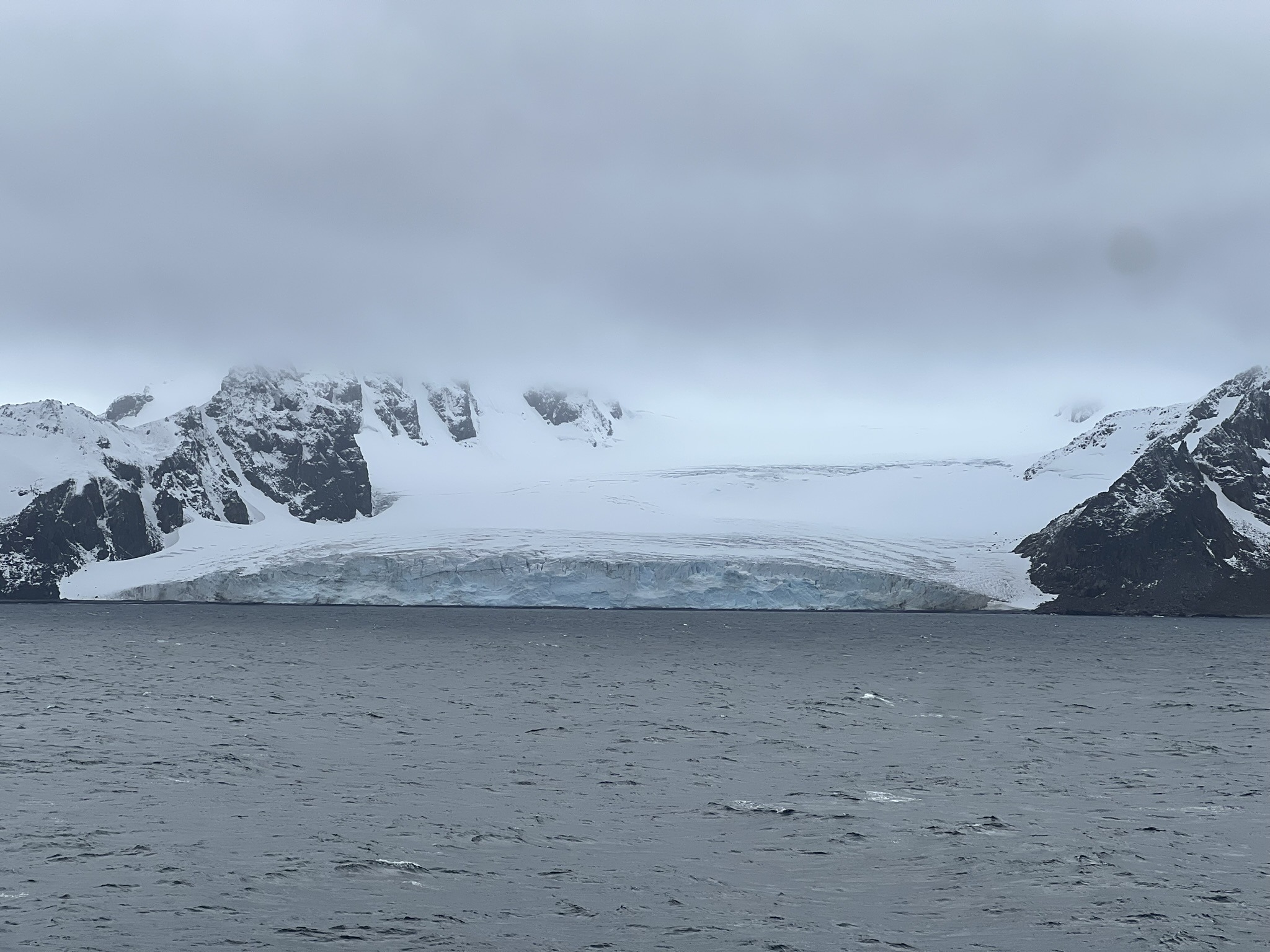
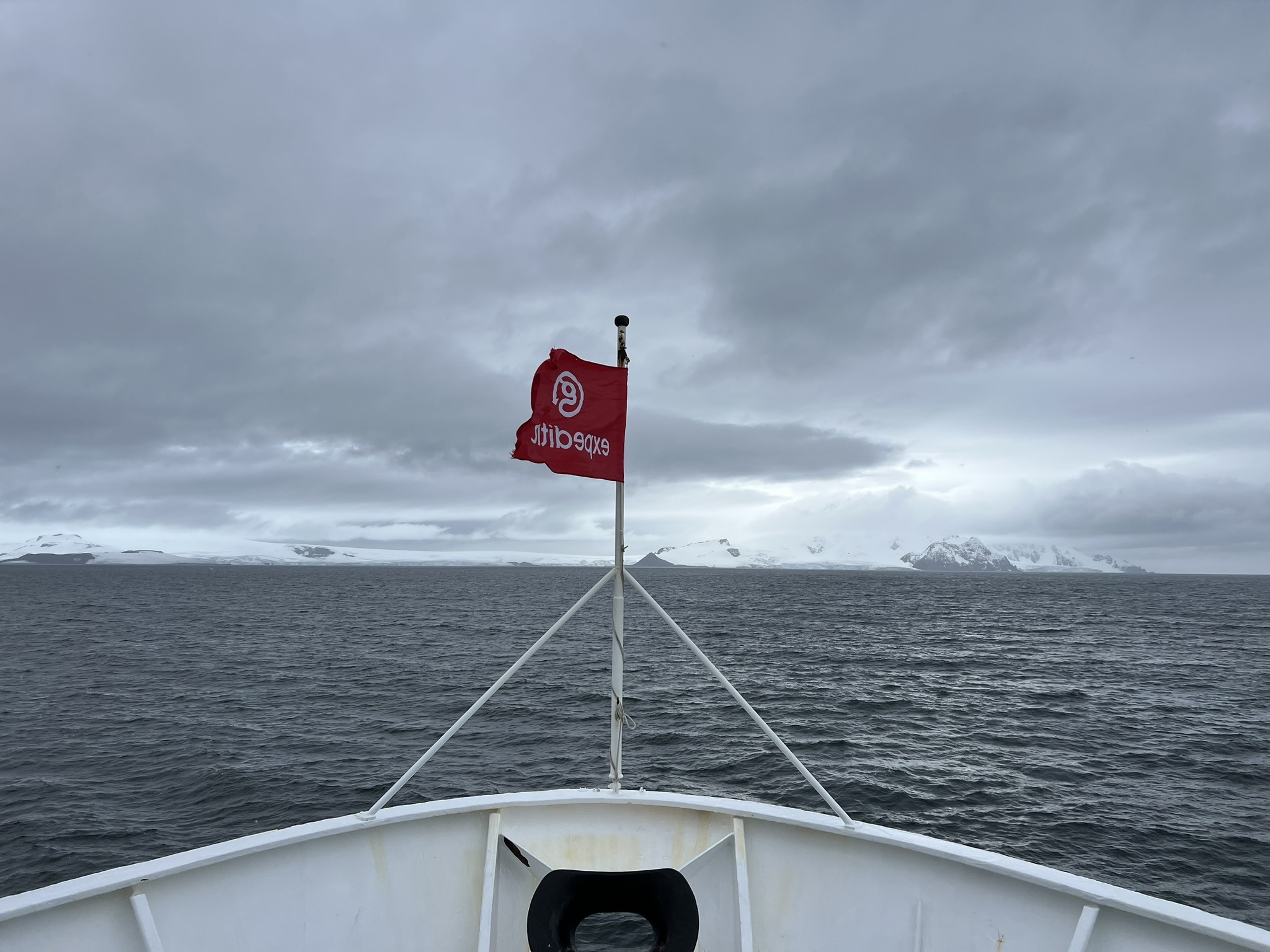
Land Ho!
The archipelago, Jonathan explained, is made up of eleven major islands and numerous smaller ones, covers roughly 3,687 square kilometres, with 80 to 90 percent permanently glaciated. It lies about 940 kilometres south of the Falkland Islands and approximately 93 kilometres northwest of the Antarctic Peninsula, with its highest point being Mount Irving on Clarence Island at around 2,300 metres above sea level.
As if that sight alone weren’t enough, our arrival was accompanied by a raft of penguins porpoising through the swell. The black torpedoes slicing in and out of the water were repeatedly mistaken for dolphins until we got close enough to spot their tiny orange beaks as they zipped past at incredible speed. Like Heidi had told us during one of her lectures, penguins can dive to depths of over 180 metres and reach speeds of up to 35 kilometres per hour, making them the fastest swimming birds in the world. Truly impressive beings!
I could hardly believe my eyes, or the fact that we had actually made it. As the ship passed through the aptly named English Channel, flanked by glaciers and towering basalt columns, it all felt just as unreal as the day I’d boarded the G-Expedition.
The ship began anchoring, and a scouting crew was sent out on a Zodiac, an expedition-grade inflatable that performs well in rough seas and can push through thin ice, to find a safe landing site and mark out the trail. They also ran a rescue drill, which went to show just how thorough and professional the operation was.
Pre-Expedition Briefing
After breakfast, we all met in the Expedition Lounge for a pre-expedition briefing. Here, we were told that before setting foot on the continent, we’d have to go through the guidelines laid out by the International Association of Antarctic Tour Operators (IAATO).
With Antarctica having no native inhabitants, several countries – including Argentina, Australia, the UK and the US – have laid territorial claims and established research stations. Without a single governing authority, the Antarctic Treaty was signed by twelve countries in 1959, with fifty-six parties at the time of writing, ensuring that all land south of sixty degrees latitude remains dedicated to peaceful use and that territorial claims are effectively frozen. IAATO was later established to advocate and promote safe, environmentally responsible private-sector travel to Antarctica.
The presentation was essentially another lecture on how to operate safely and with minimal impact on this fragile environment and its wildlife, and how to engage, or rather not engage, with it. Jonathan emphasised the seriousness of avian influenza and the importance of not acting as vectors that could introduce or spread disease in Antarctica.
It was here that I found myself eye-rolling and face-palming at some of the questions asked by my fellow expeditioners. Hillary, the goodie two shoes, asked whether it was acceptable to pick up trash in order to earn brownie points. Josh wondered how best to keep his phone warm. Craig asked if he could hand a pebble to the penguins. As much as I despised these few, I was already warming up to most of the group. Despite differences in age, nationality, or anything else, it does take a certain kind of like-mindedness to end up on an Antarctic expedition.
Mudroom Prep
After another lunch that felt more like a royal banquet, we heard the long-awaited announcement with a level of anticipation I don’t think I’d ever felt before.
They split us into four groups, Humpbacks, Adélie, Weddell, and last but not least, Albatross, the one I was assigned to along with the rest of the gang. Then it was time to bring our outer layers to the mudroom, the place where all the magic happens before disembarkation. Here, our gear was vacuumed as a biosecurity measure to ensure we wouldn’t introduce any foreign material to the continent. Declared seed-free, we were then issued our gumboots. Just like that, we were ready.

As fate would have it, Albatross was first to go, sparing me the agony of waiting. I rushed to the mudroom to gear up, pulling on my trusty Roja with a safety jacket over it, followed by gumboots and waterproof trousers. Yes. Waterproof trousers. I’d bought the wretched things some seven years earlier ‘just in case’, and finally, that case had arrived. I’d always sworn they’d be a last resort, the oversized monstrosities being a fashion crime in their own right. Here, they weren’t just useful, they were mandatory. In hindsight, I fully agree. Beauty is pain, but Antarctic cold is something else.
We were then instructed to step through a disinfectant bath, swipe our cards so the crew could track who had landed and returned, and wait for the Zodiac. One by one, we descended the gangway, assisted on either side, before sitting down and sliding into our seats, a manoeuvre we’d all soon become adept at, except for Steph, who enjoyed an untimely dip in Antarctic waters. Despite being thoroughly waterproofed, none of us could claim to be dry by the end of the ride.
For me, the cold barely registered at that point. As the ship shrank behind us and we approached land, the overcast sky, softly falling snow, and calm water created an eerie atmosphere. This felt like a real expedition now. It felt as if we were not just tourists, but also explorers.
PART II
Half Moon Island
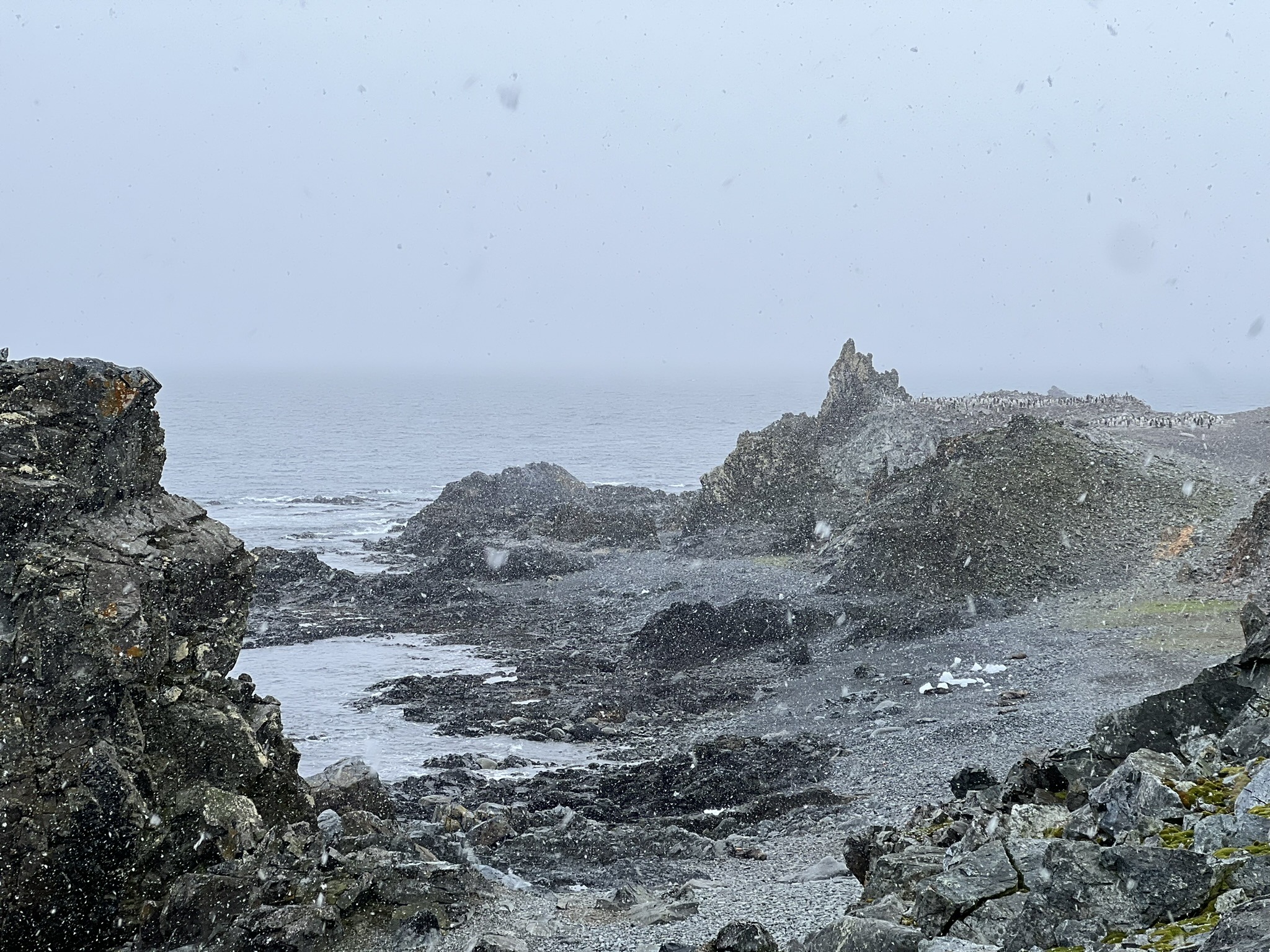
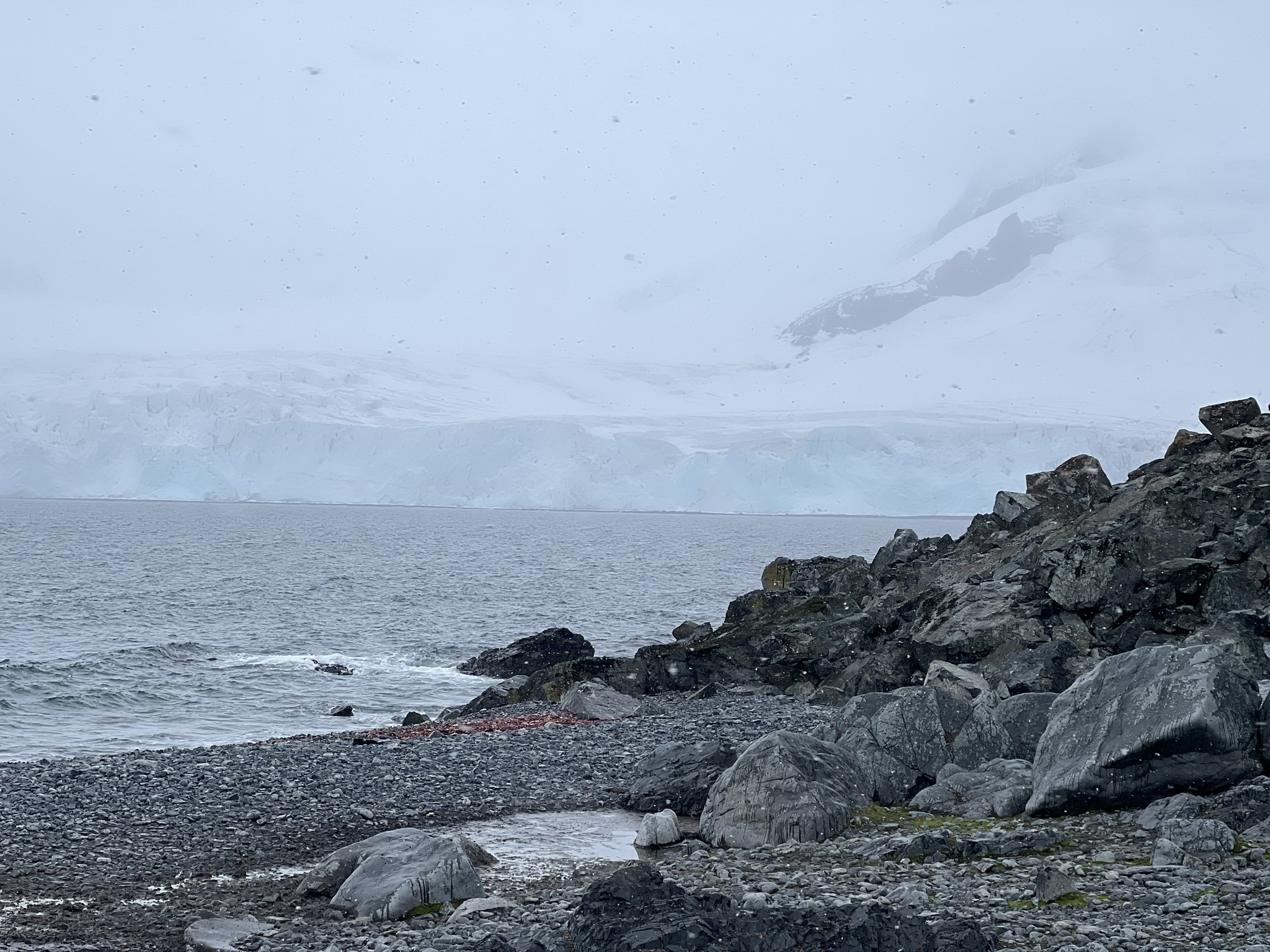
Our first landing was at Half Moon Island, named for its crescent shape. With kelp-strewn black beaches and a light dusting of snow over jagged rock formations, it was an extraordinary sight.
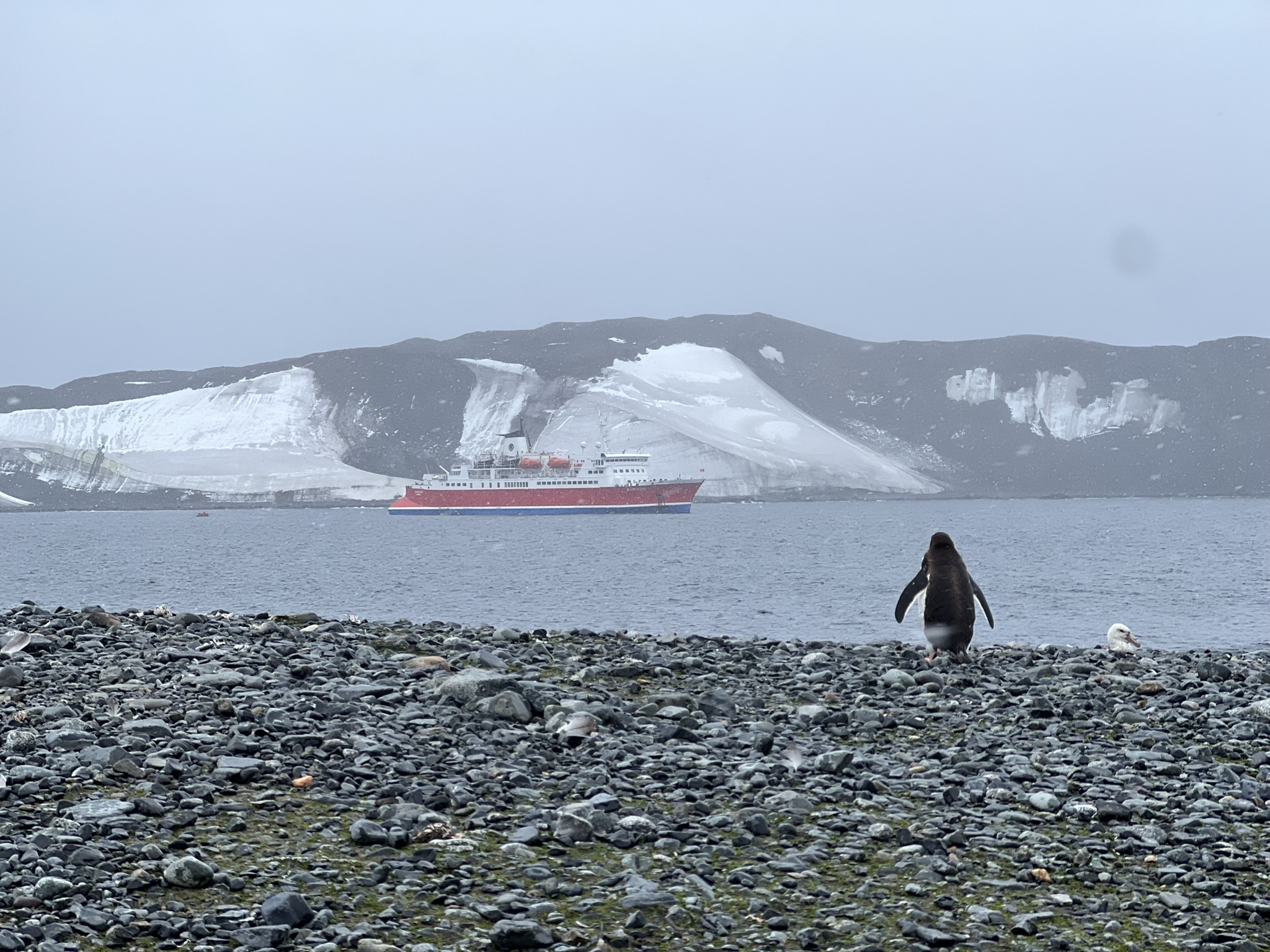
But it wasn’t the landscape that caught my attention first. A few metres away, a gentoo penguin waddled towards an Antarctic fur seal. I nearly swooned. Avalanche, tsunami, spontaneous combustion, I could’ve died happy right then. I’d never quite understood the hype around penguins. Sure, I loved Pingu as a kid, but that was about it. Now, I was the one overhyping them, pointing frantically and squealing with joy. Penguins!
I’d imagined my first step onto Antarctica countless times. I’d savour it, take a photo, maybe even cast my footprint. I’d look into a mockumentary camera and declare, “one small step for mankind, a big one for Marius!” In a perfect Instagram vs reality moment, I promptly forgot all of that and jumped off the Zodiac without ceremony. I cautiously approached the two animals I’d most wanted to see, apart from orcas, staying well beyond the five-metre limit.
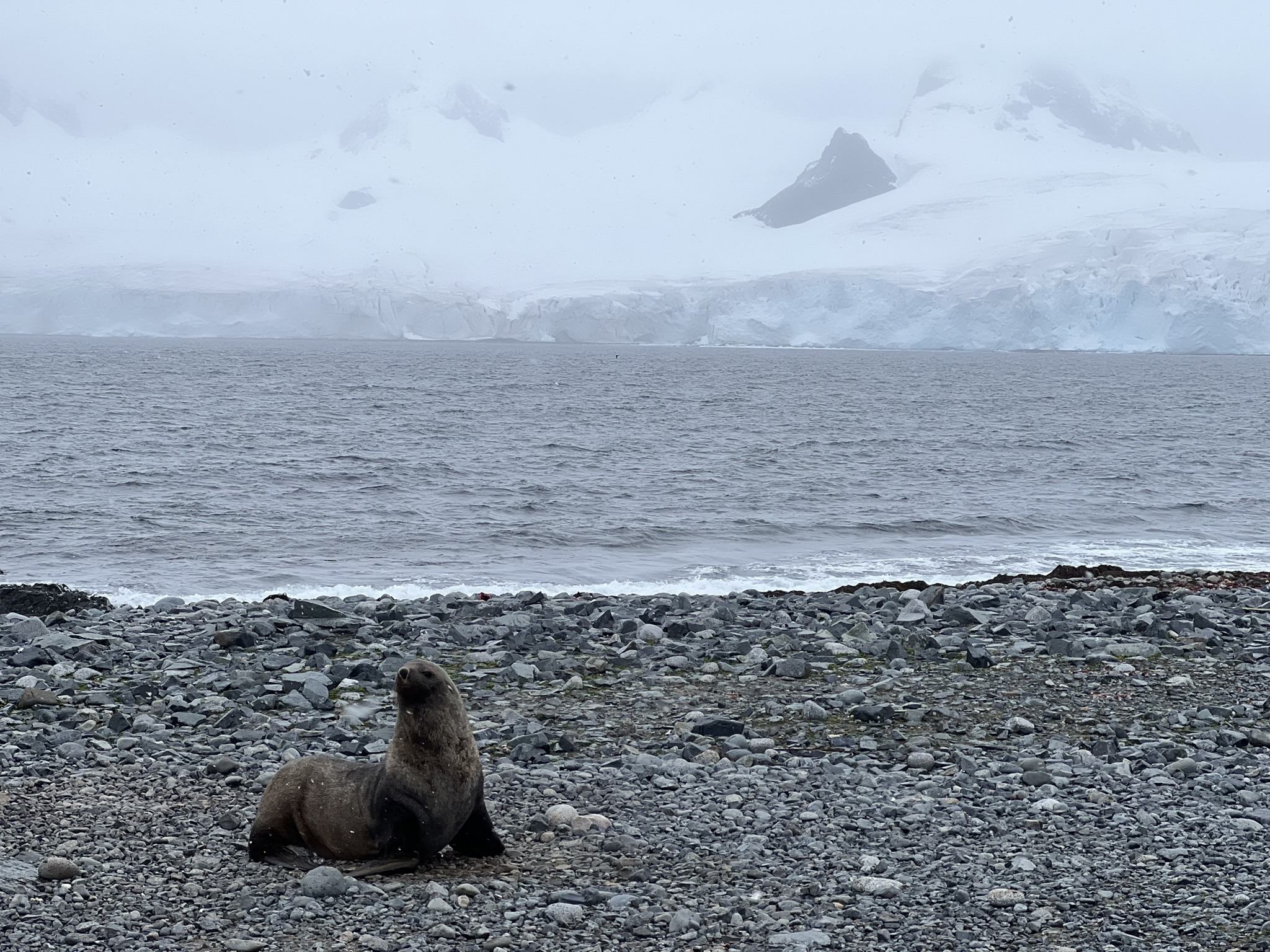
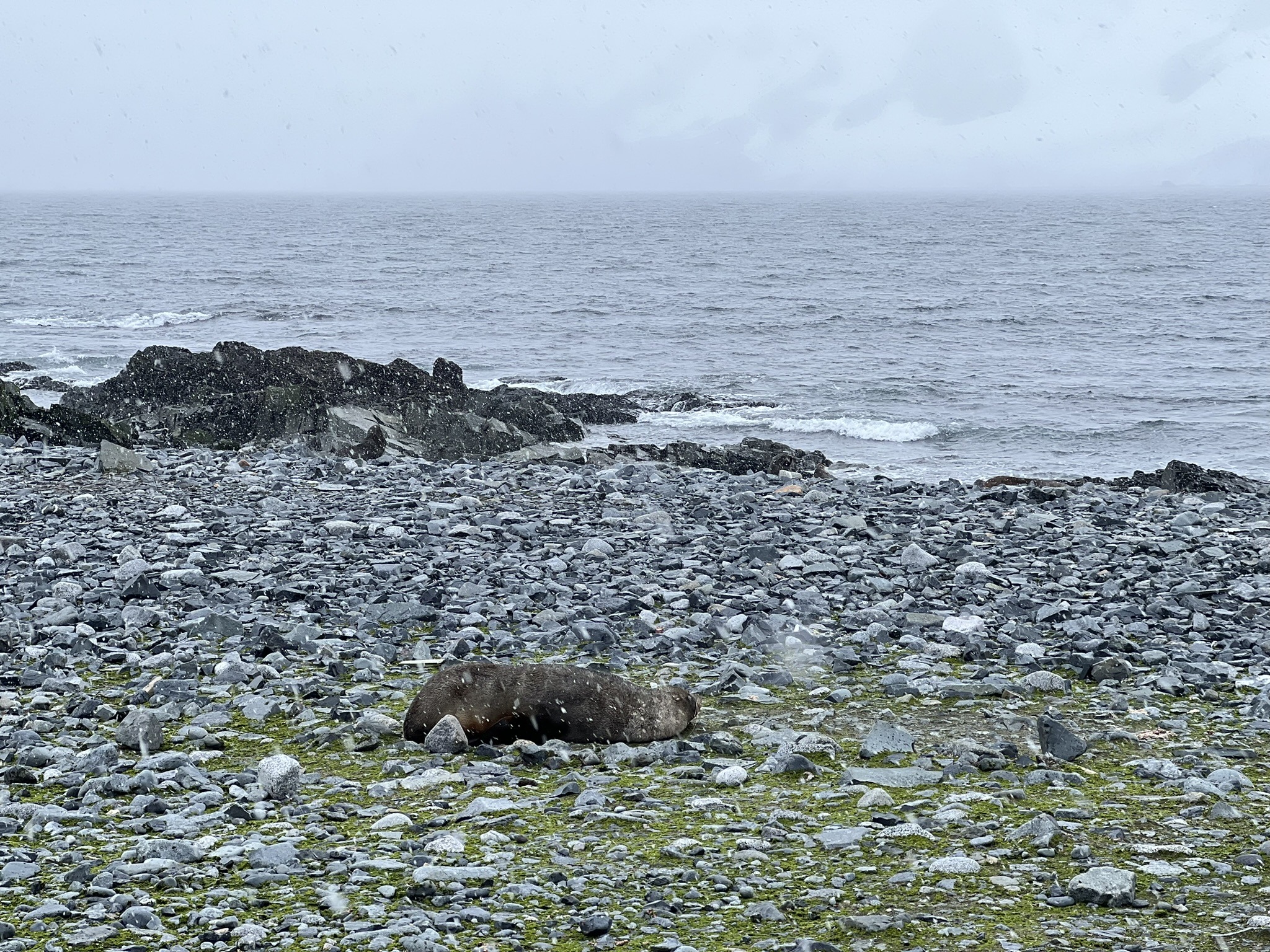
As the black-and-white, orange-beaked gentoo went about its business, two seemingly innocuous rocks in the background came to life, revealing themselves as fur seals perfectly camouflaged among the pebbles. With puppy-dog eyes, pointy snouts, long whiskers, and tiny ears, it took every ounce of self-control not to run over and hug them. It wouldn’t have ended well, especially given their tendency to bite, but I’d have gladly accepted the consequences. As I stood there admiring them, another penguin waddled past, this time a chinstrap. Less than two minutes in, and I’d already seen two of the three penguin species found on the Antarctic Peninsula.
Once again, we were reminded not to block penguin highways. Heidi explained that if obstructed, penguins stop and forget what they were doing, whether heading down to the sea to bathe and feed on krill or heading back up to feed their chicks.
After spending a long time simply watching them, my attention shifted to the landscape around me. A black beach scattered with red kelp, white ice chunks, and patches of green moss and lichen unlike anything I’d ever seen, now enhanced by steadily falling snow. In the distance lay the remains of a moss-covered whaling-era water boat, a sobering reminder of the time when profit left a far heavier mark on Antarctic wildlife.
Into the Antarctic Wilderness
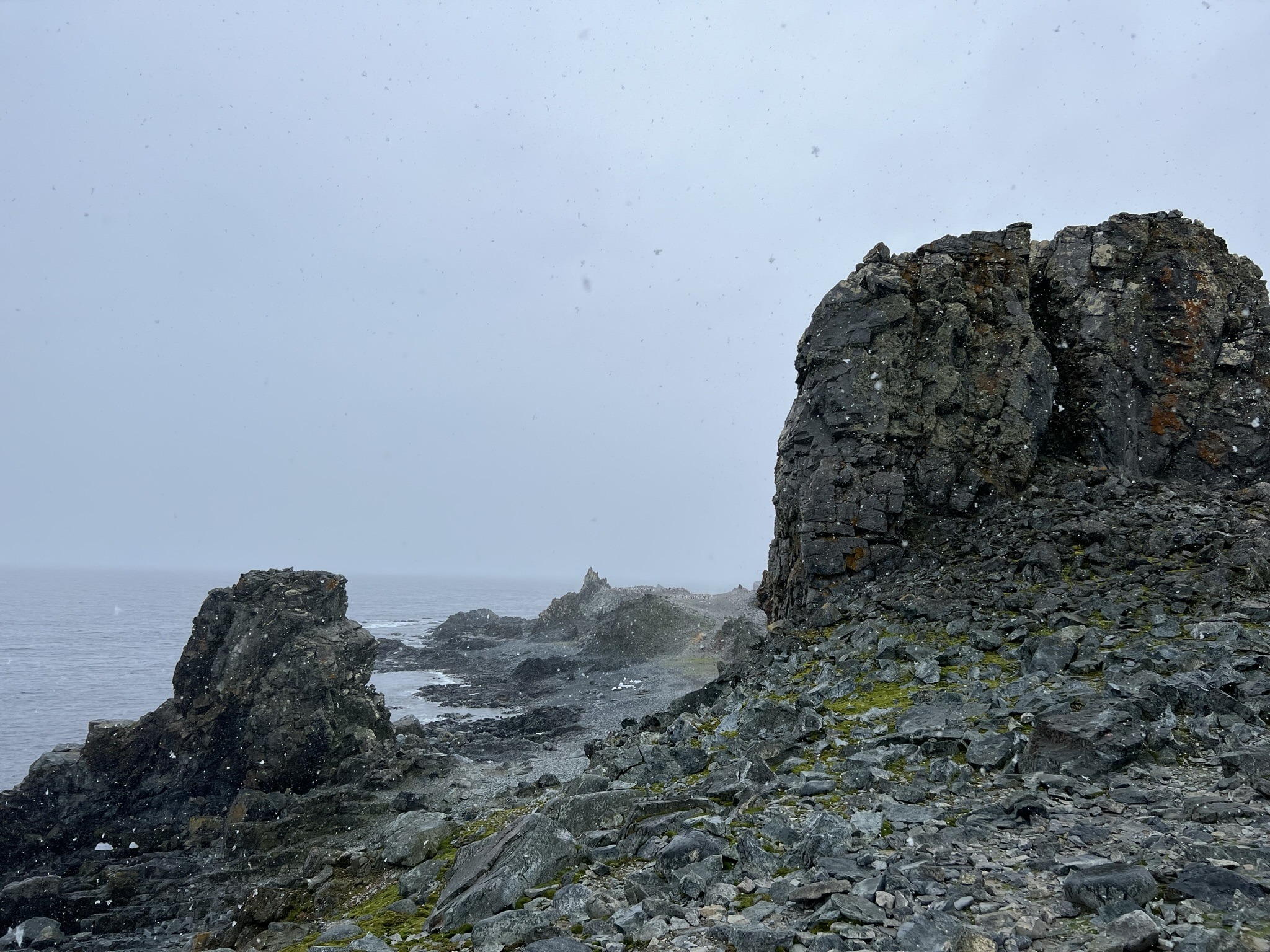
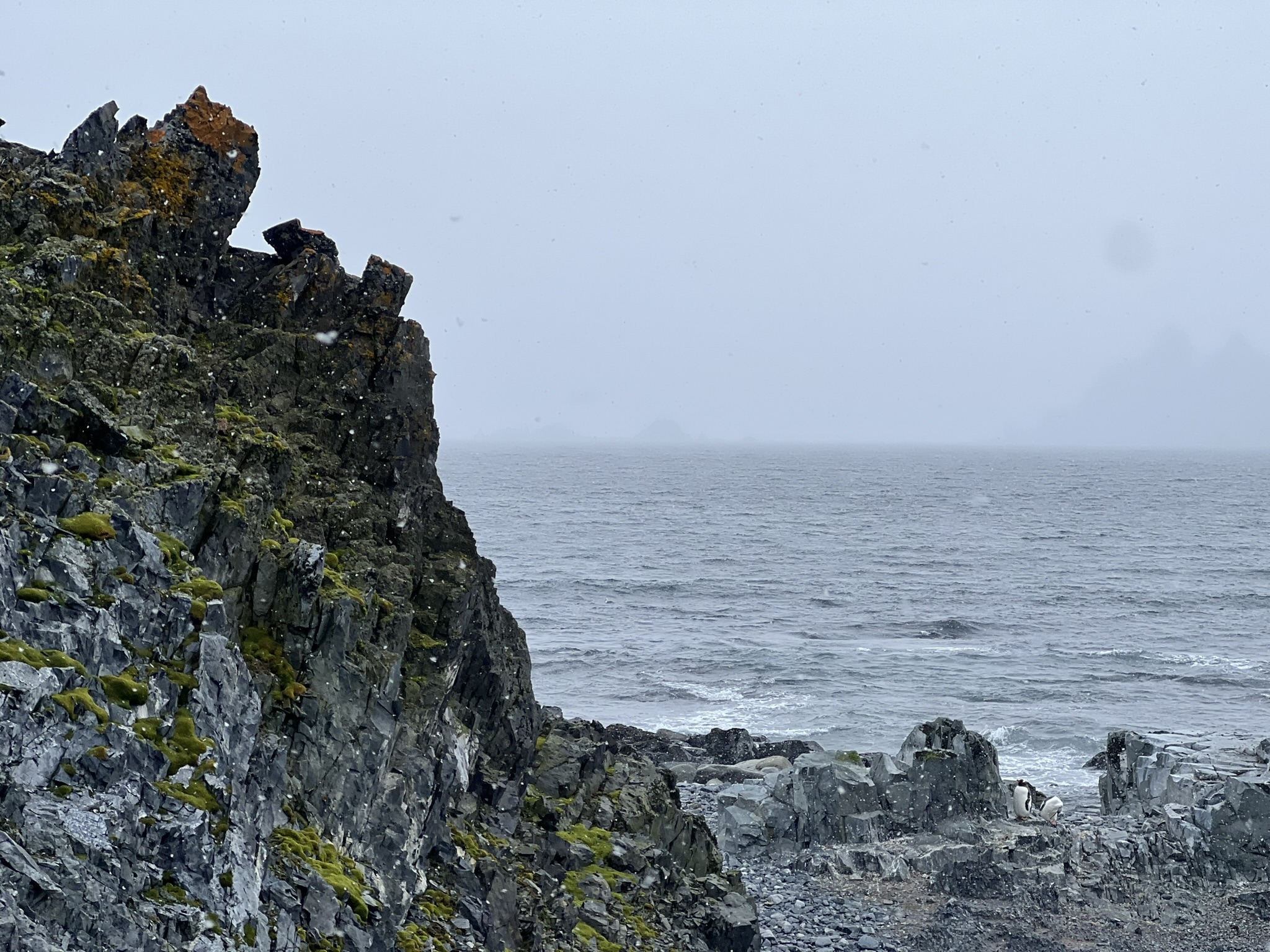
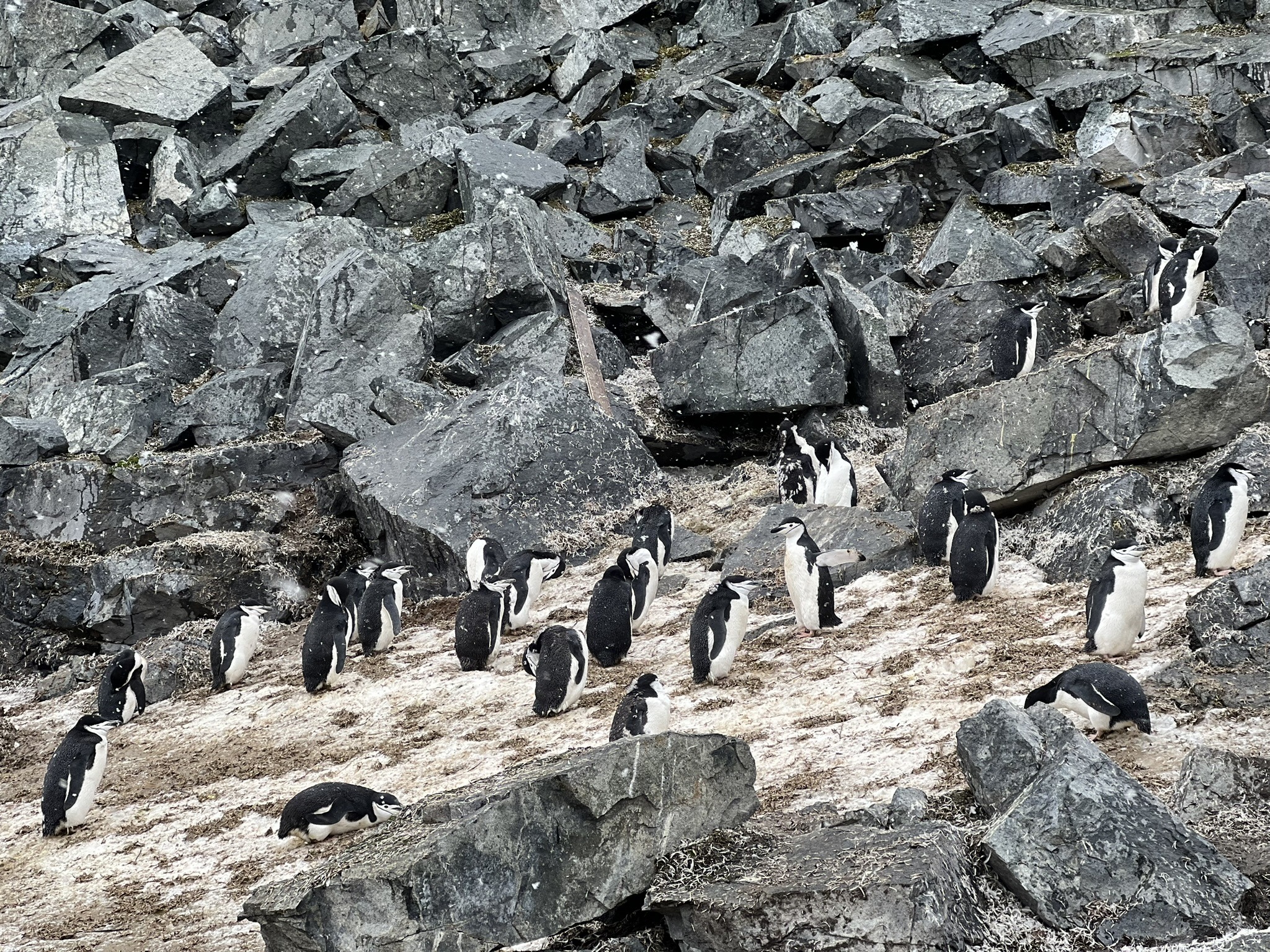
The trail leading to the island’s isthmus was bordered by jagged piles of black rock. What looked harsh and unforgiving to us was clearly a playground for chinstraps, who shuffled, jumped, slid, and tumbled off the rocks in a tragically hilarious display. I have no idea how they manage to fall several metres, pop back up, and continue on like nothing happened. As Heidi had mentioned during a lecture, these birds are built for swimming, not walking. That said, I fared no better on the slick terrain as I clambered up the hill myself.
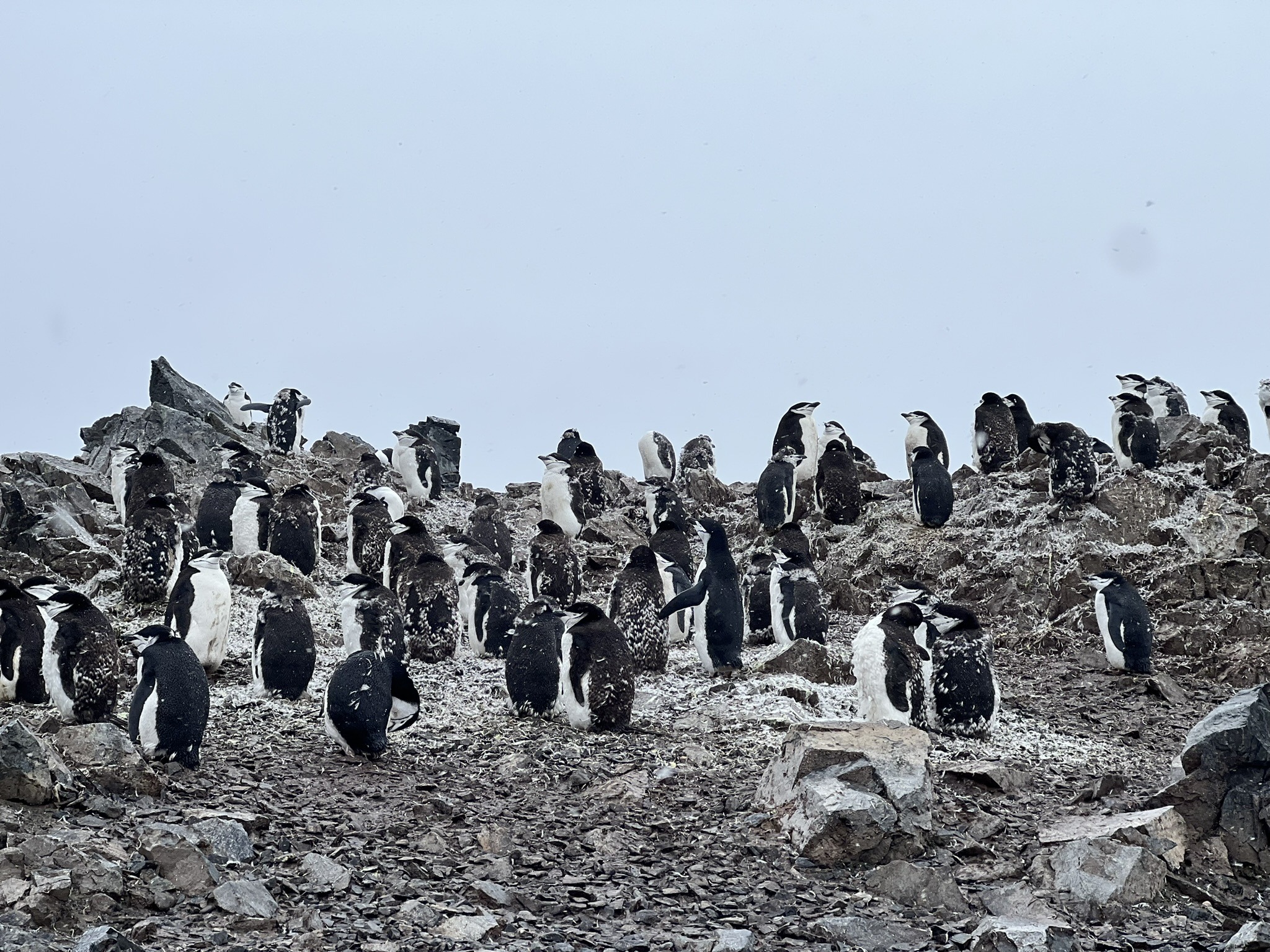
Further on, I reached a bare rocky patch hosting a dense chinstrap colony. The ground, stained pink, bore witness to their krill-heavy diet, the pigment from the crustaceans passing through into their guano. Adults were moulting into fresh plumage ahead of winter, while newly fledged chicks milled about, staring curiously at the red-clad, penguin-like creatures surrounding them. Sadly, many wouldn’t survive, needing more time to grow before their parents abandoned the island to head back out to sea. Grim, but as we were quickly learning, Antarctica operates on nature over nurture. That lesson hits hard when you encounter severed penguin heads, whale ribs, or dismembered seal carcasses along the way.
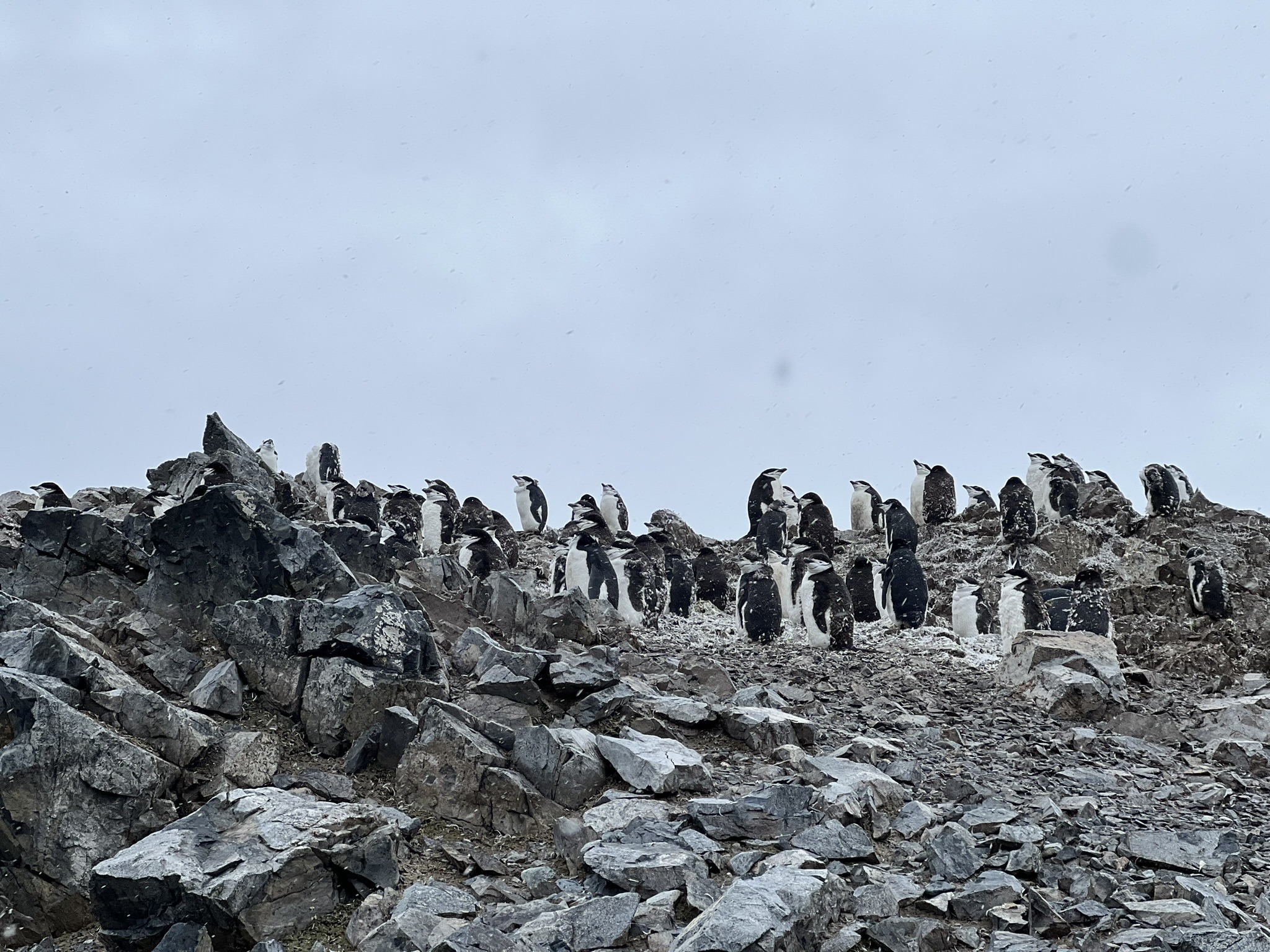
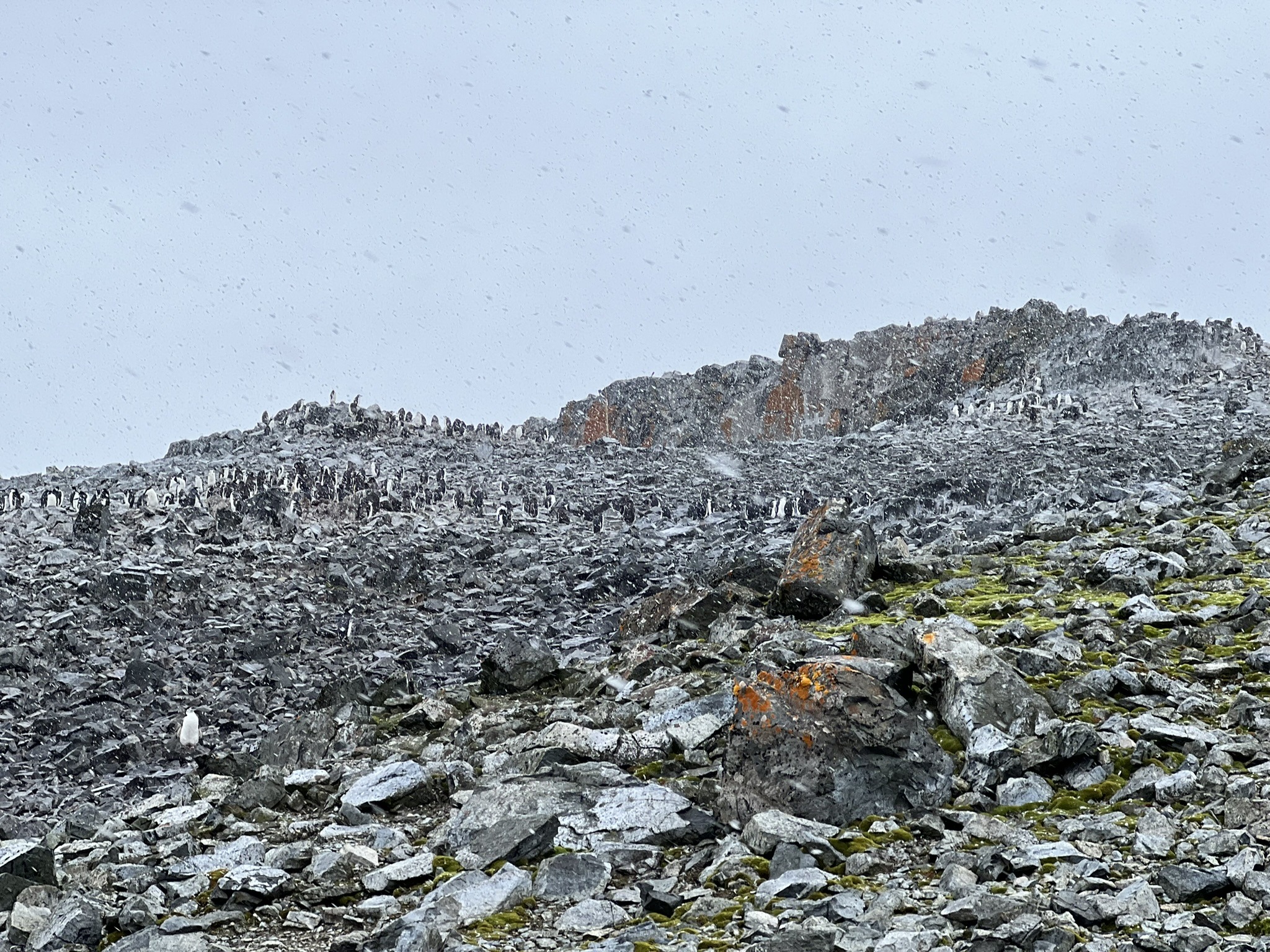
We continued on, encountering more gentoos and fur seals, each one halting my progress as my thumb grew sore from relentless photography. Everything felt unreal, and I needed proof, despite knowing photos could never do the place justice. Penguins and seals are ridiculously photogenic, always finding the perfect spot, striking a pose, and then doing something so absurd you’re forced to take ten more photos. Like the two seals that began playfully biting each other before escalating into a friendly joust. Even while respecting the distance, I managed to annoy one, lying down to get a better angle, only to be charged by a growling seal who made his displeasure very clear.
We also spotted brown skuas patrolling overhead and southern giant petrels perched on rocks. Nearby penguin carcasses were likely their work, not the young male seals. Several of us were inspected, one by one, by curious gentoo penguins.
Adventure Aboard the Zodiac
Somewhere along the way, I lost all sense of time and found myself being gently herded back to the Zodiac, still dazed by what I’d just experienced.
But the adventure wasn’t quite over. Matt, our Zodiac driver, took us around the island’s coastline and out into open water, weaving between tiny baby-blue icebergs bobbing at the surface. I couldn’t take my eyes off them. That colour didn’t seem real. Matt explained that ice that breaks off glaciers or ice shelves often appears white due to trapped air and snow cover, but dense, uncontaminated ice absorbs longer wavelengths of light, leaving blue light to scatter back. Ice containing algae or iron-rich sediments can appear green, yellow, or streaked with multiple colours. Matt passed around a chunk of ice, formed over thousands of years, likely the oldest water any of us had ever touched, or in my case, eaten.
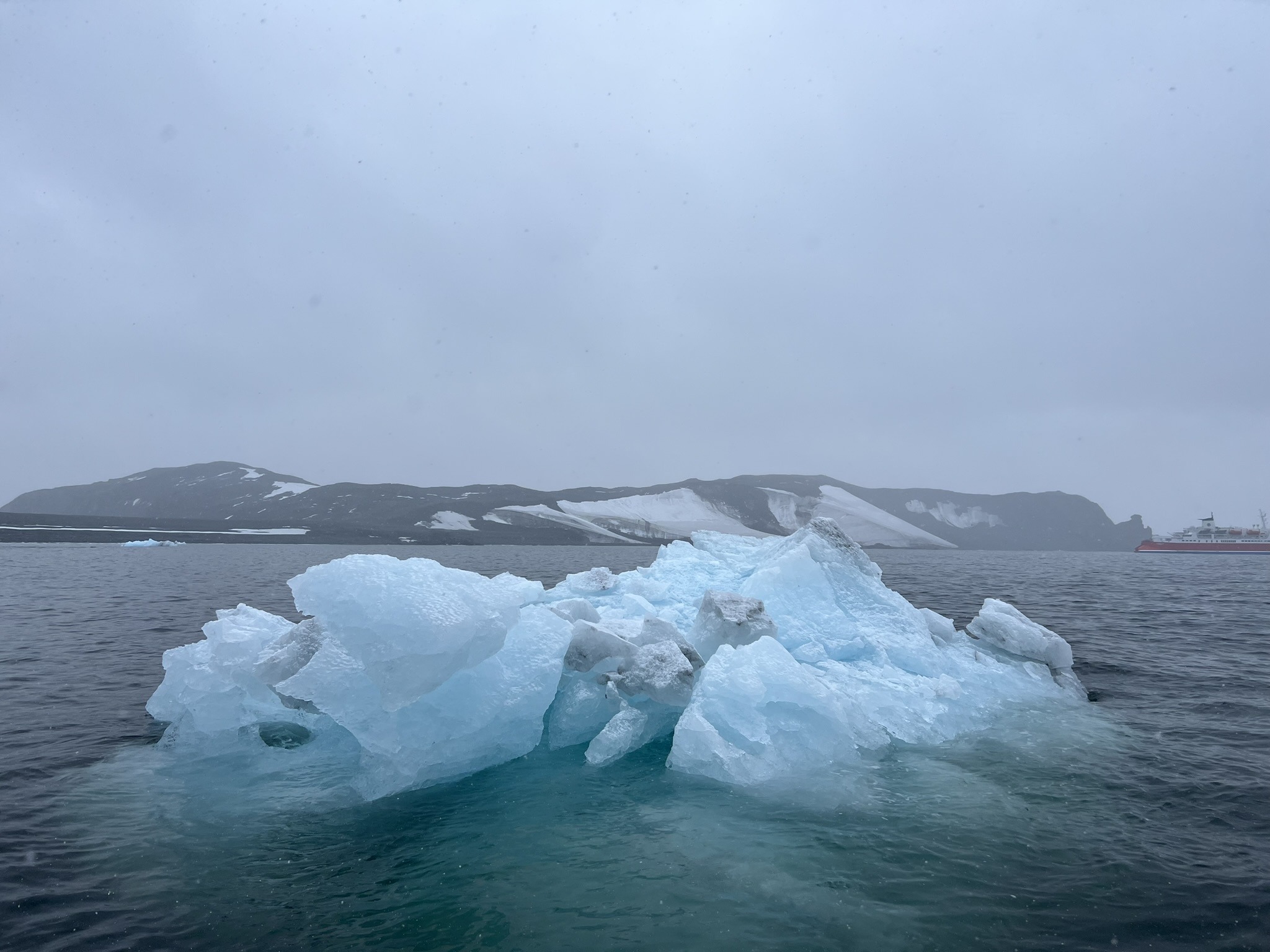
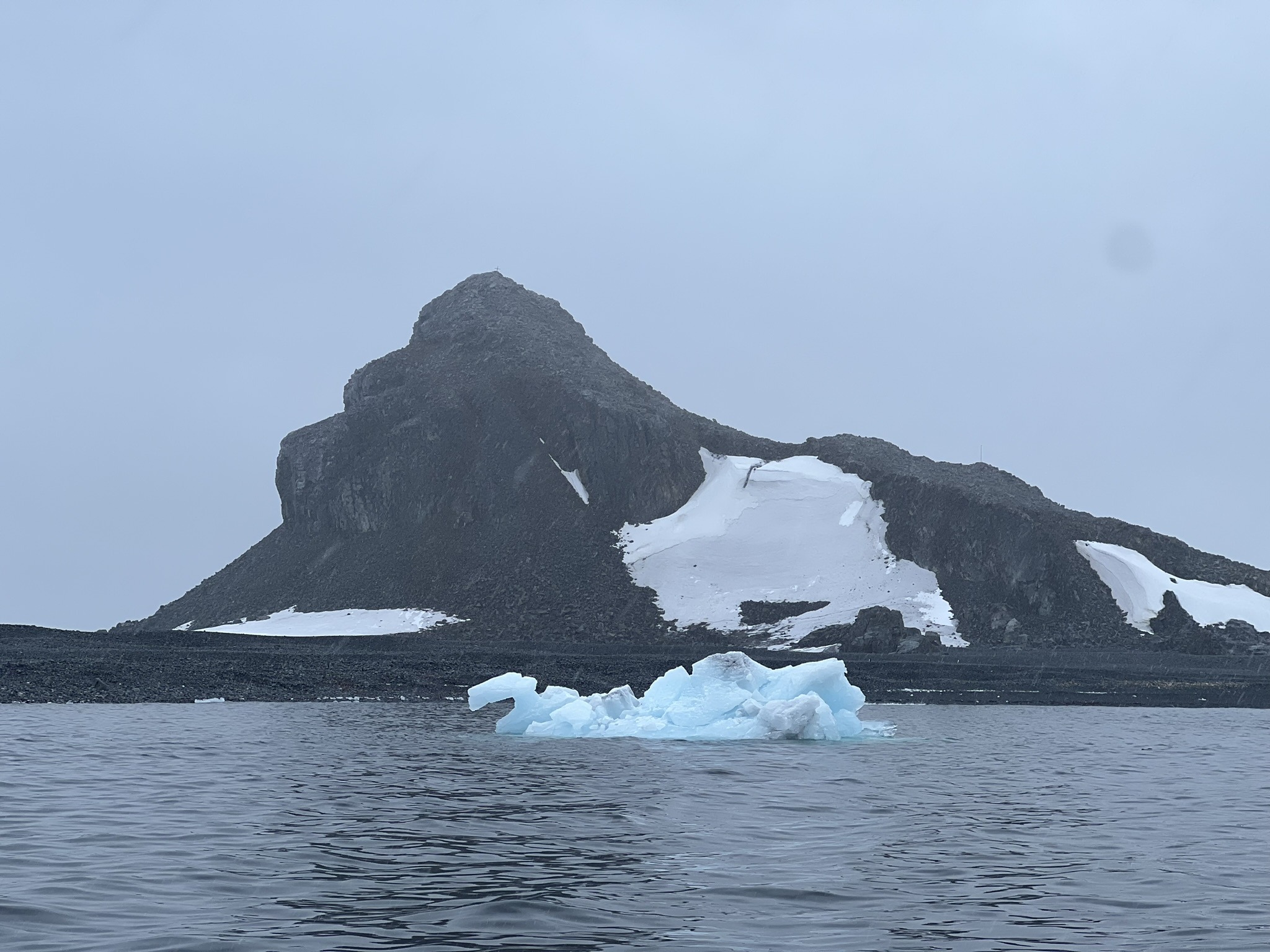
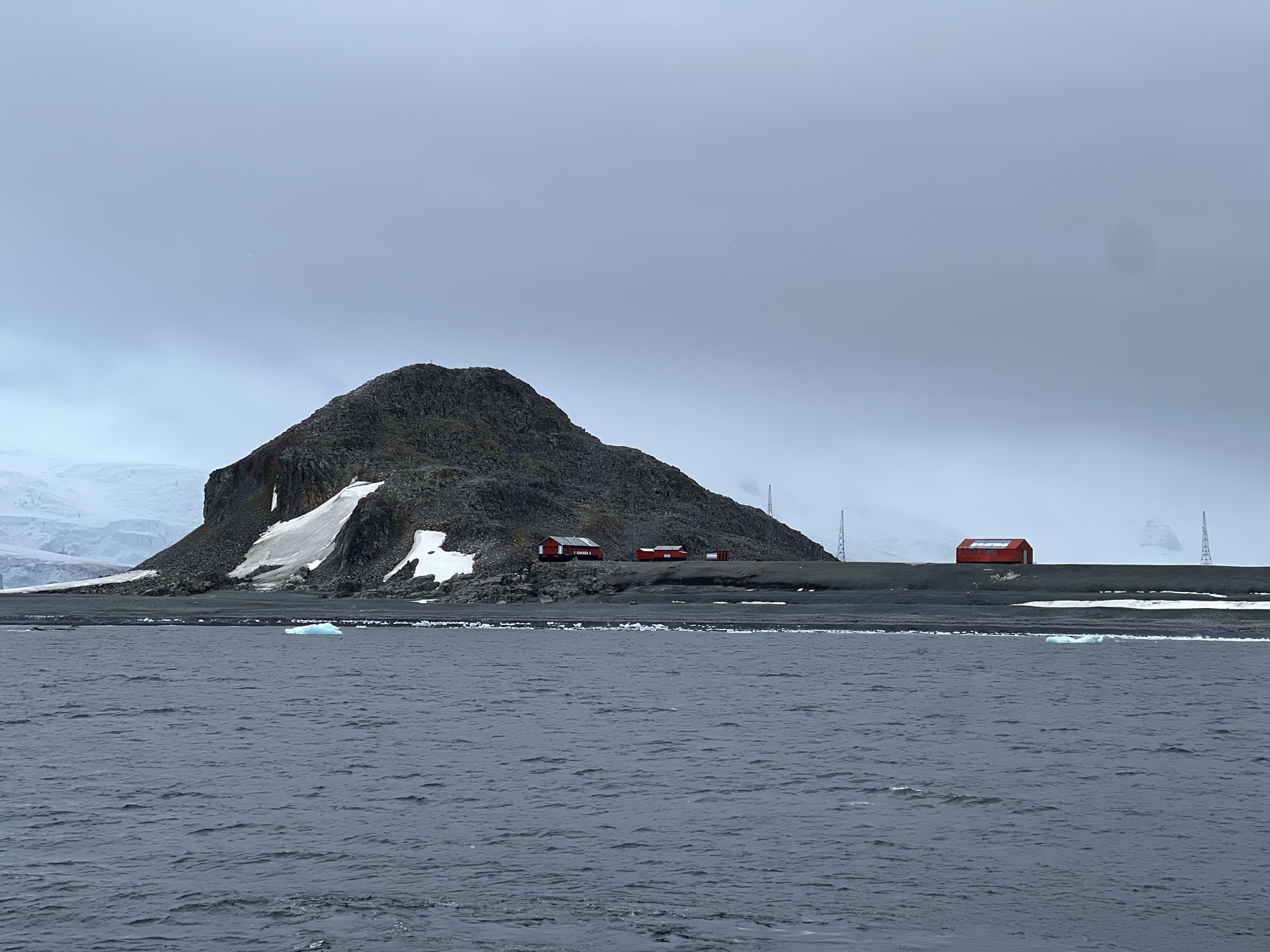
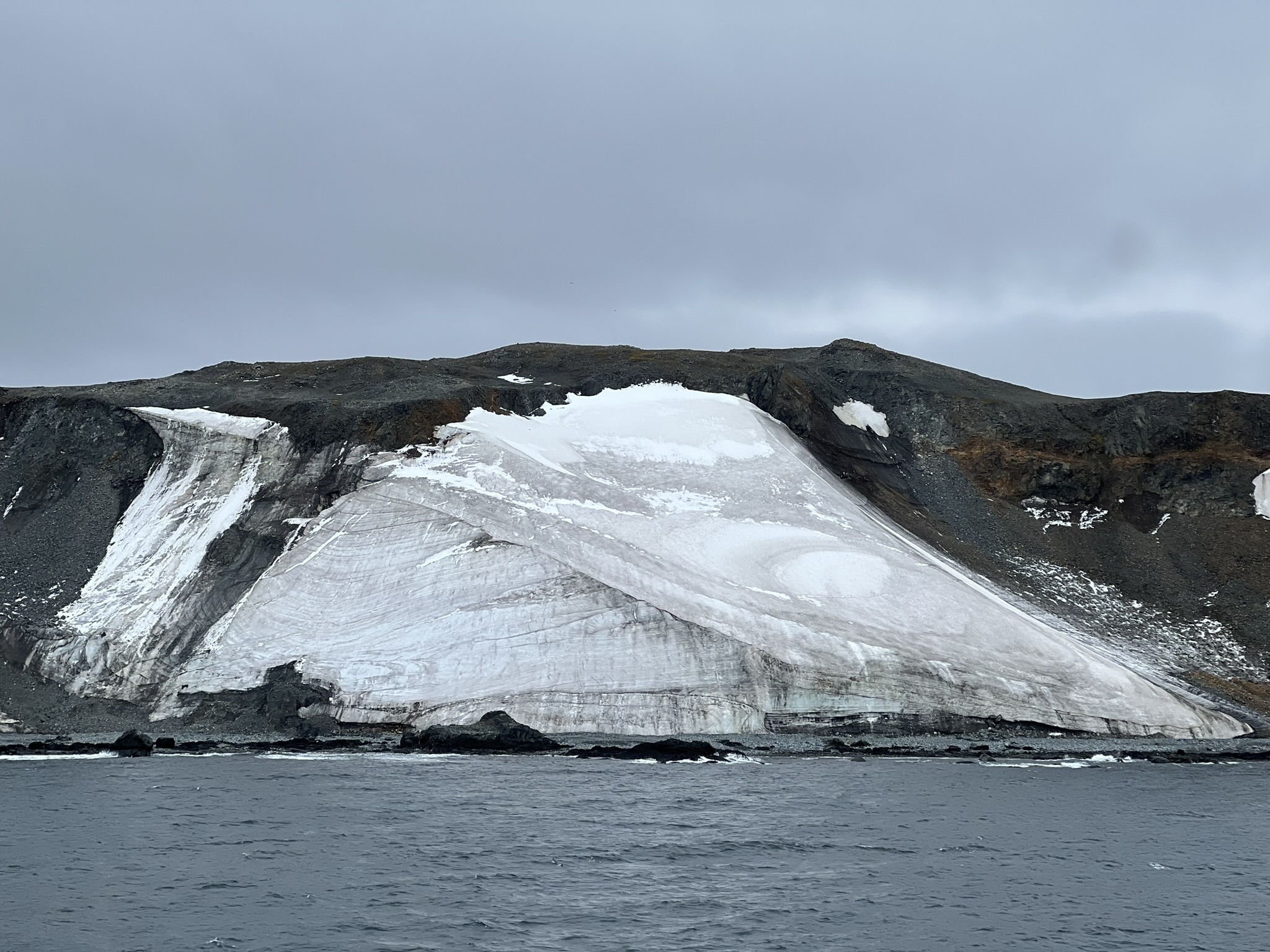
He then pointed out a building on the island visible from the water, Argentina’s Cámara Base, a seasonal research station focused on meteorology, oceanography, and geophysics. He explained that Argentina operates thirteen research facilities across Antarctica.
And that was the end of our first adventure. Back on board, we scrambled up the gangway and thoroughly scrubbed every trace of dirt and guano from our boots before stepping into disinfectant baths, a routine that quickly became second nature. Anyone who skipped a step received a public call-out, with one unfortunate soul blaming her spectacular lack of glasses for the oversight.
Storms, Songs and Wine
Back in the smoking area with Nico and George, we sat in disbelief at what we’d just experienced, both of them celebrating the completion of their seventh and final continent.
I, on the other hand, was quietly pleased to have ticked off my fifth, with Australia and Africa still firmly in terra incognita territory. Standing next to them, I felt like a fraud, having visited the most inaccessible continent before managing one that’s practically a stone’s throw from Malta. But as I gazed out at the snow-covered mountains and glaciers, I brushed those thoughts aside and let myself revel in the magic of Antarctica.
We wrapped up the day with the usual briefing, recapping highlights and looking ahead. Once again, Jonathan warned us about the approaching storm, forecasting hurricane-force winds and assuring us the captain would seek the most sheltered bay possible. That genuinely alarmed me, not for safety reasons, but because bad weather might mean cancelled landings. I couldn’t even bear the thought!
After yet another massive dinner, we headed to the Polar Bar where Melanie, the ship’s resident musician, provided live entertainment. While her voice was akin to that of an angel, what won over was her rendition of Yellow Submarine by The Beatles, reworked as The Little Red Ship – a song that recounts her voyages aboard the G-Expedition.
As usual, I retired to my chambers, a phrase that quickly became a running joke, and finally got some much-needed rest. In the grand scheme of things, we hadn’t done much, but the meetings, food marathons, constant balancing, temperature swings, and landings took their toll.
Day three:
- Morning:
- Weather:
- Overcast and rainy
- Wind: NE 11-16kts
- Wave: SE 0.4m
- Temperature: 3°C
- Weather:
- Position: 62°25’S 59°38’W
- Afternoon:
- Weather:
- Overcast and rainy
- Wind: NE 11-16kts
- Wave: SE 0.1m
- Temperature: 4°C
- Weather:
- Position: 62°36’S 59°55’W
- Animals seen:
- Gentoo penguins
- Chinstrap penguins
- Southern giant petrel
- Cape petrel
- Wilson’s storm petrel
- Brown skua
- Antarctic blue-eyed shag
- Antarctic tern
- Pale-faced sheathbill
- Antarctic fur seal
- Weddell seal*
* Ones I didn’t get to see myself.
Stay wild,
Marius
Post-Scriptum
Nico won a contest where we had to guess the collective nouns for penguins in and out of the water. I went with the sensible colony and slip, which I shamelessly copied from someone else. He went with pengu-in and pengu-out. I hadn’t had a drop of alcohol all trip, apart from the captain’s bubbly, but now we had a bottle of red to share!