Tulum – Day 1: Cliffside Ruins
TULUM
Day 1: Cliffside Ruins
September 05, 2022
Unfortunately, my limo streak was at an end. It was back to buses for me. And so, after a couple of hours on the road, I arrived at my next destination – Tulum. Once again, I knew my time here would be too short to actually do everything, so I had to prioritise. I stayed in the residential area and skipped the resort zone which, in all honesty, I wasn’t that excited about. I felt pretty much done with that scene after my visit to Cancún.
I arrived in Tulum early in the morning, right in the middle of its daily downpour. By now I was used to walking through rain or shine, but this time, having all my belongings (including my large bag) soaking wet was a first. I ran to my hotel and unpacked every single thing to dry it off under the magic touch of the AC’s dry mode. By then, I had a certain confidence that everything would be dry by the time I got back. Just a few weeks earlier, I would’ve fallen into an abyss of desperation, not knowing how I’d survive eight months with damp, mouldy clothes. Now I knew better.
As I set off on my one-hour walk toward the ruins of Tulum, the universe decided to repay me with yet another storm. My umbrella held out for all of five seconds before it shattered into pieces – which, I’m assuming, are still running amok somewhere in the streets. I was walking in knee-deep muddy rainwater, soaked to the bone and unable to see past a metre in front of me. Cars kept passing by at full speed, splashing me with one tsunami after the other. Be that as it may, I had my dry bag and swimming trunks on – I was impervious to Chaac’s fury. And so I trudged on, knowing the ruins would be worth the suffering.
Ruins of Tulum
The Ruins of Tulum were among those I wanted to visit the most. For the first time ever, I’d be wandering a site without a guide, unsure whether the money saved would be worth it. Luckily enough, most artefacts and structures were well-labelled, and when that wasn’t enough, I’d supplement using my best friend (Google) and by asking a couple of random guides a question here and there – much to their annoyance.
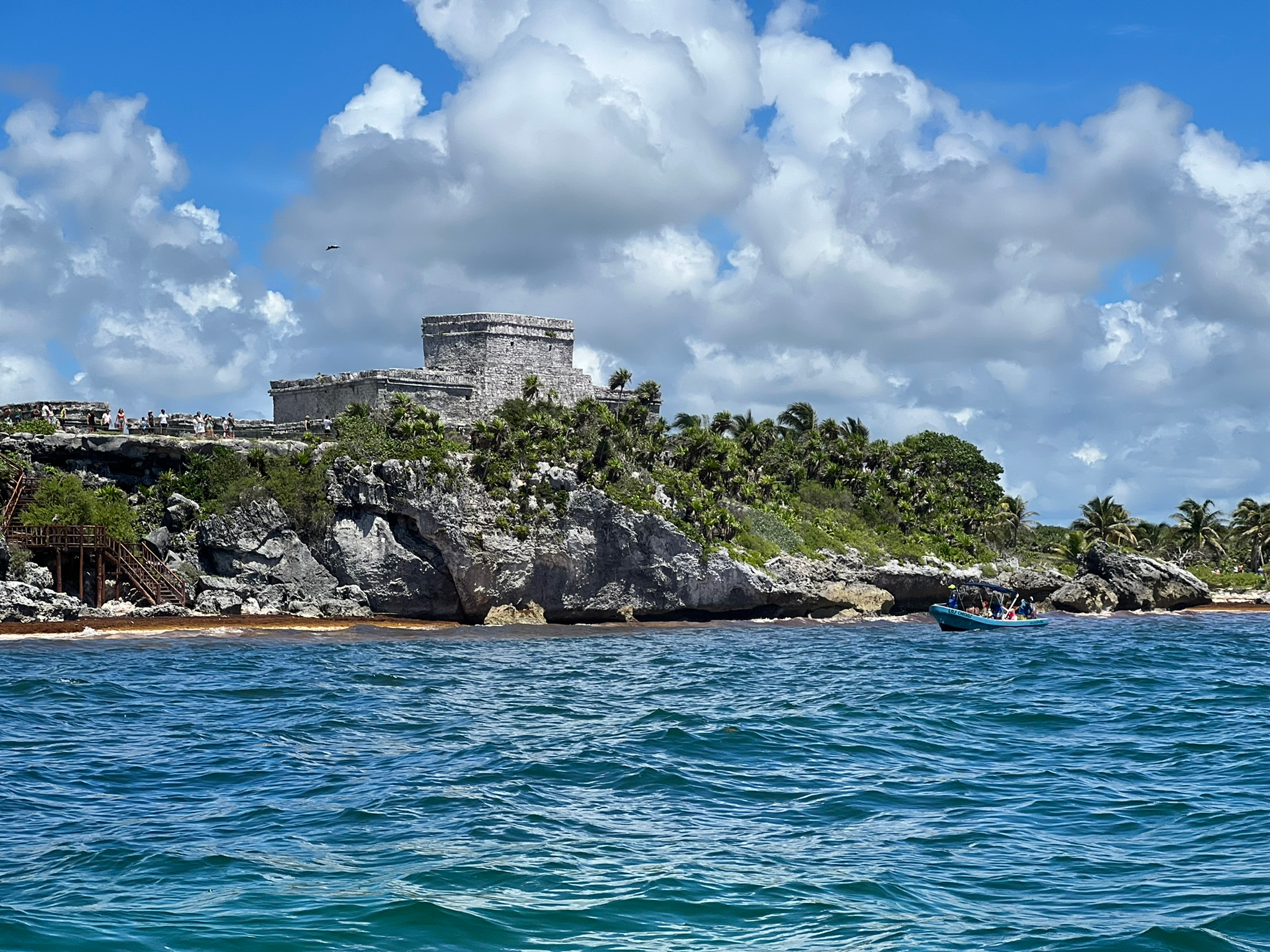
Tulum, according to various sources, was originally named Zama, a Mayan word meaning “dawn,” as the city faces east, where the sun rises. It’s built on the edge of a cliff overlooking the Caribbean Sea and is enclosed by four-metre-high walls on all sides—except the one facing the sea. The coastal city functioned as an important port and convergence point for numerous mercantile routes extending to other centres such as Cobá, a nearby city. It was one of the last cities built by the Maya, around 1200 AD – a contemporary of both Chichén Itzá and Mayapán. With the latter’s decline, Tulum’s prominence was consolidated, lasting until the Spanish Conquest. The site features a specific architectural style called East Coast Style, influenced by the Maya of Chichén Itzá, and includes various depictions of Ah Muzen Cab, the Diving or Descending God, who is believed to be associated with Venus.

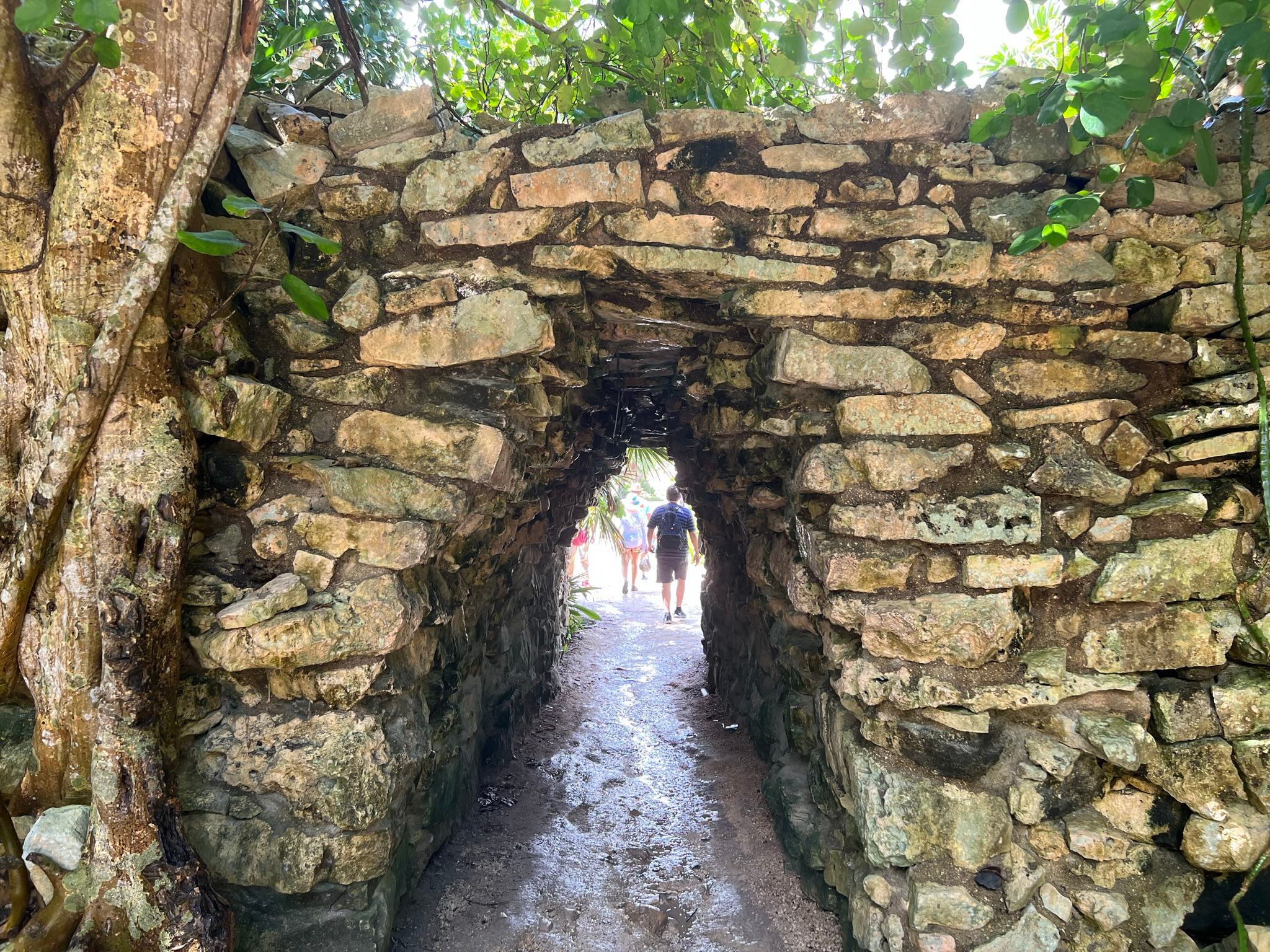
From the entrance point, I delved into the depths of the jungle, admiring the walls along the way, with a series of gates and watchtowers spaced at regular intervals. A triangular-shaped archway leads into the Interior Precinct – the walled area that houses most of the site’s main structures. Having decided I wanted to leave the main attraction for last, I continued onwards, passing a second gate right by the cliffside.
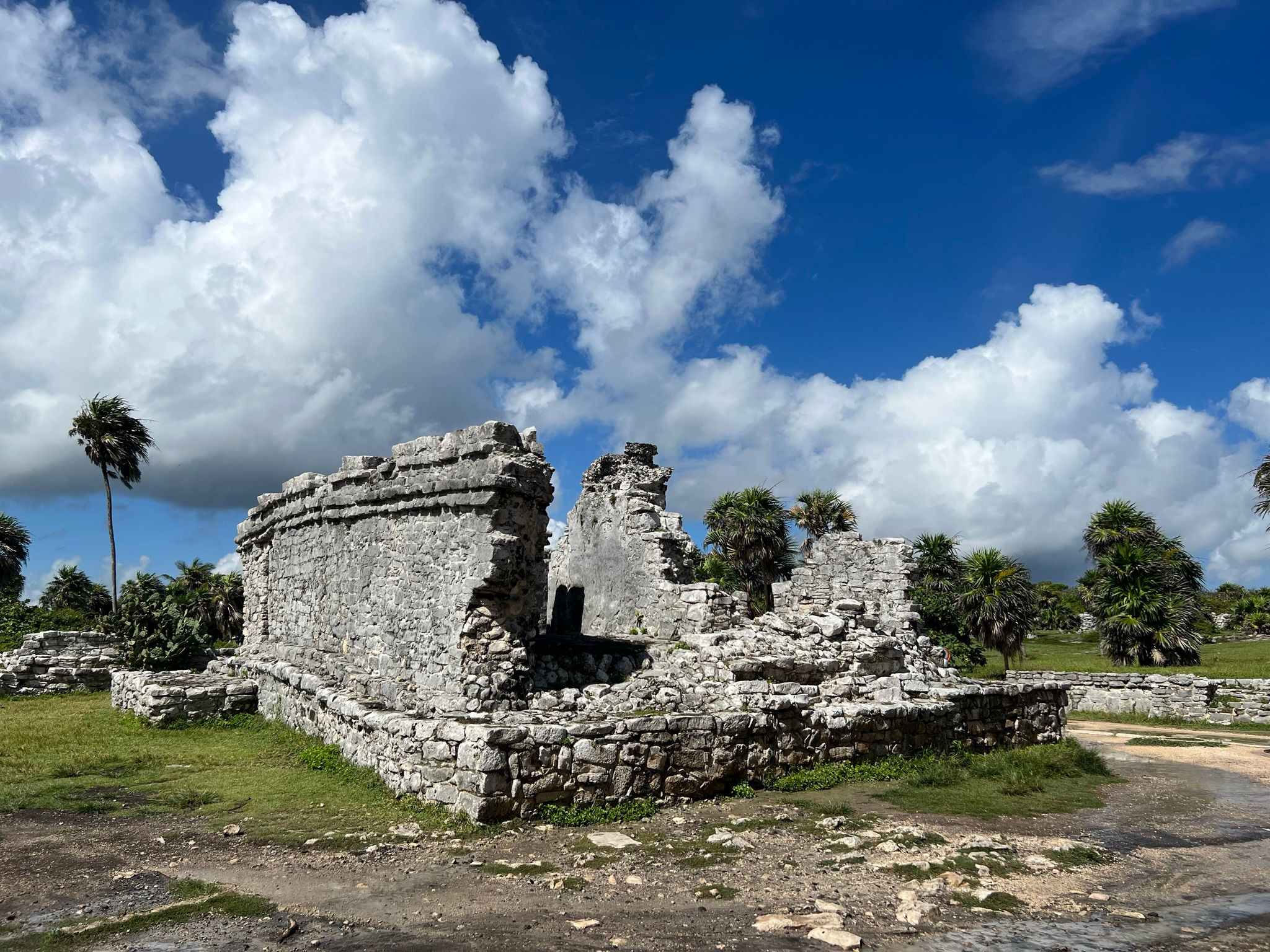
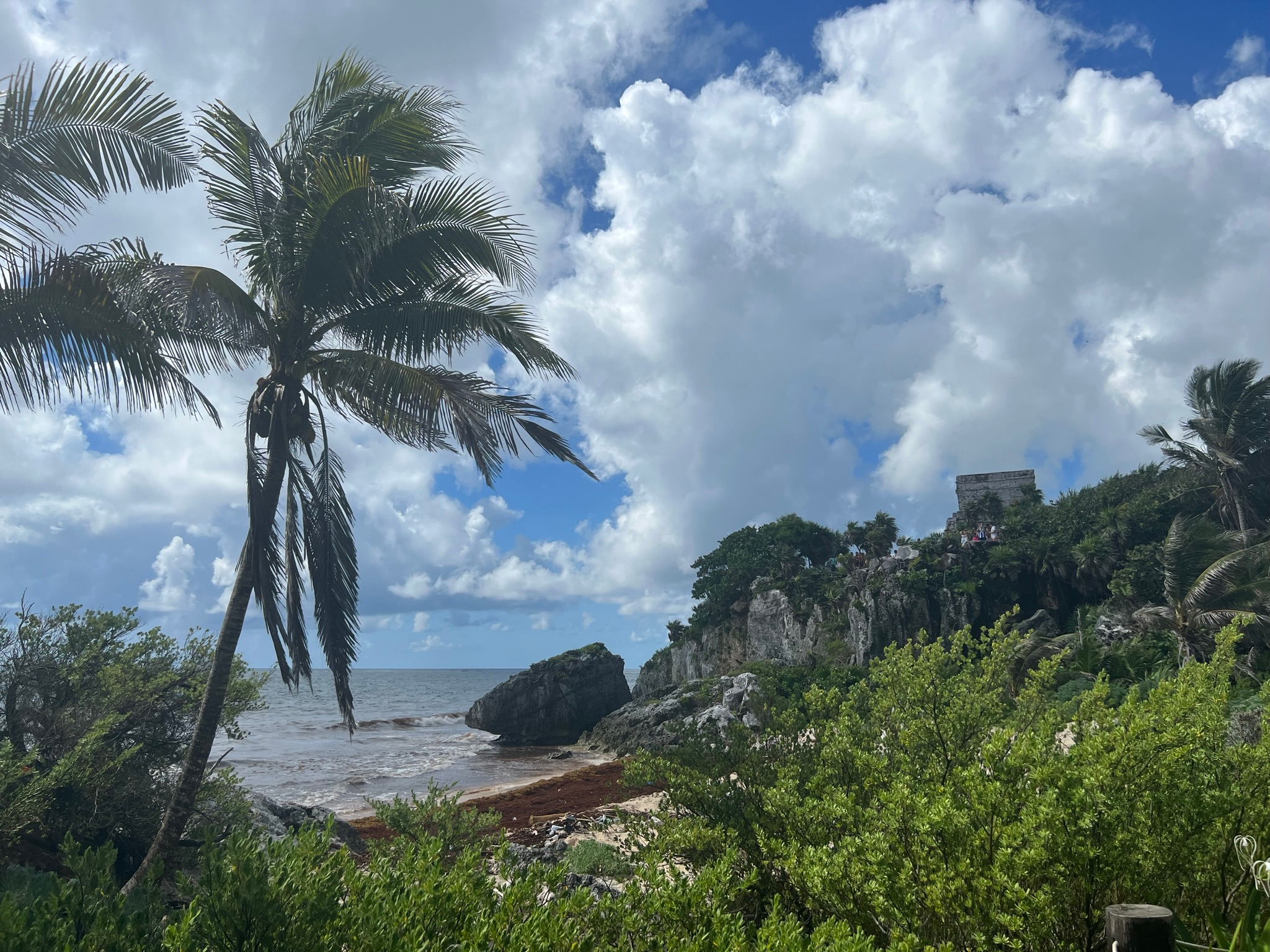
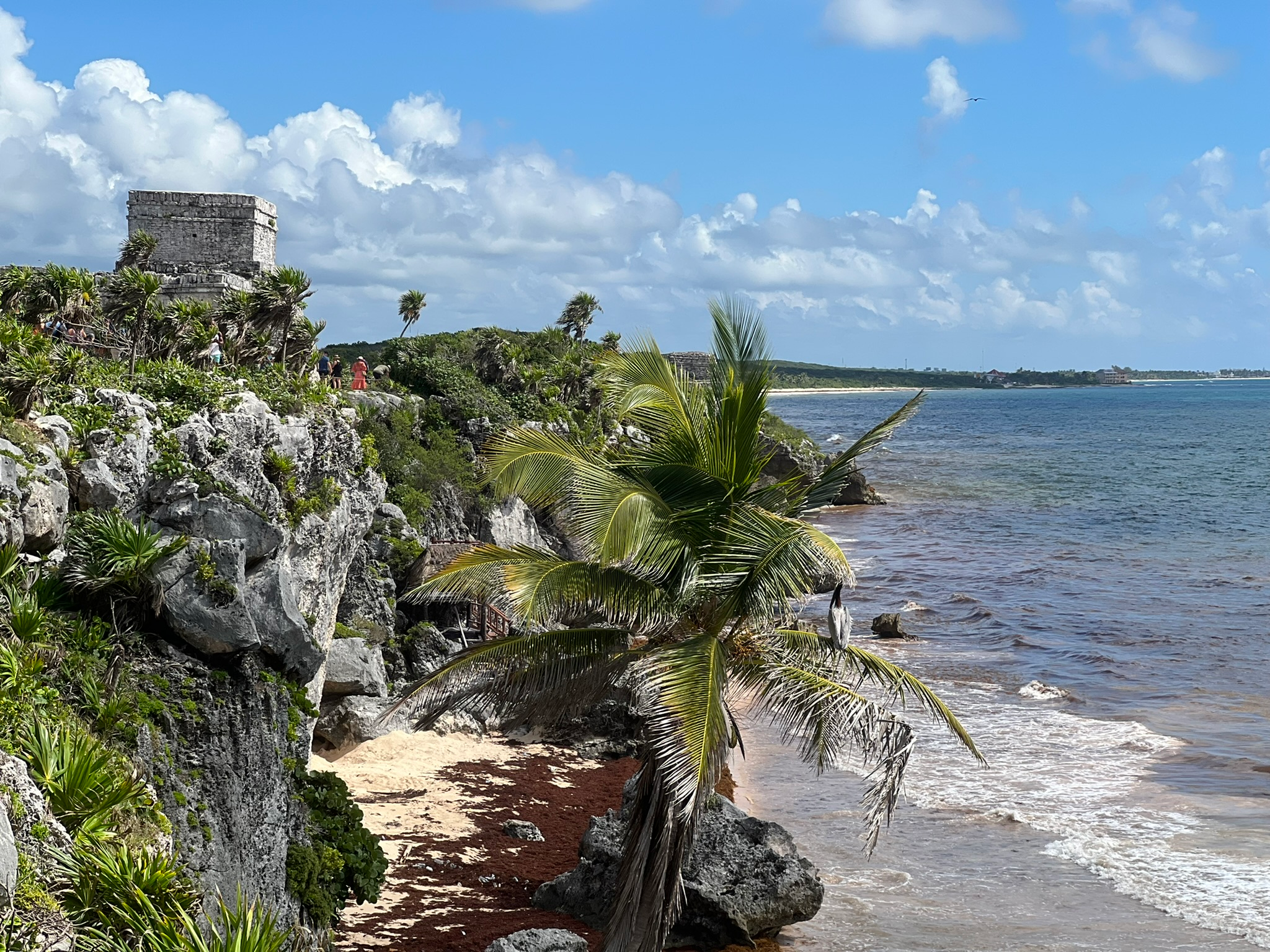
Upon entering the main area, I was dumbstruck. It was unlike anything I’d seen thus far. The stark contrast between the white and grey ruins, the green of the grass and trees blanketing the site, and the deep blue of the sea beyond was simply mesmerising. Palm trees in the middle of an archaeological site – crazy! By the time I started roaming around, the rain had cleared, and the sweltering heat had set in, with a much-welcome sea breeze drying me off and cooling me down at the same time. Kinda like being blow-dried by the gods.
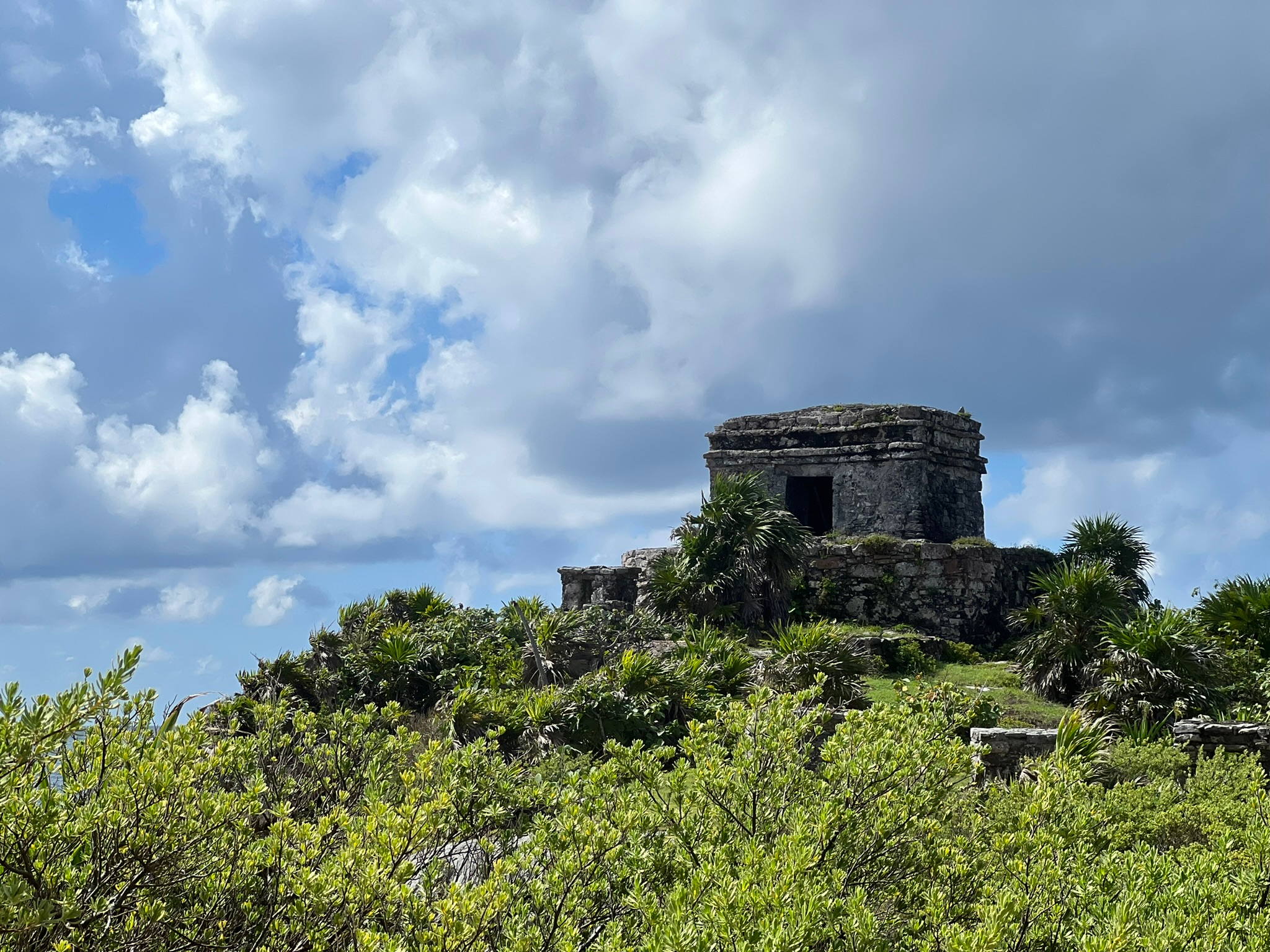
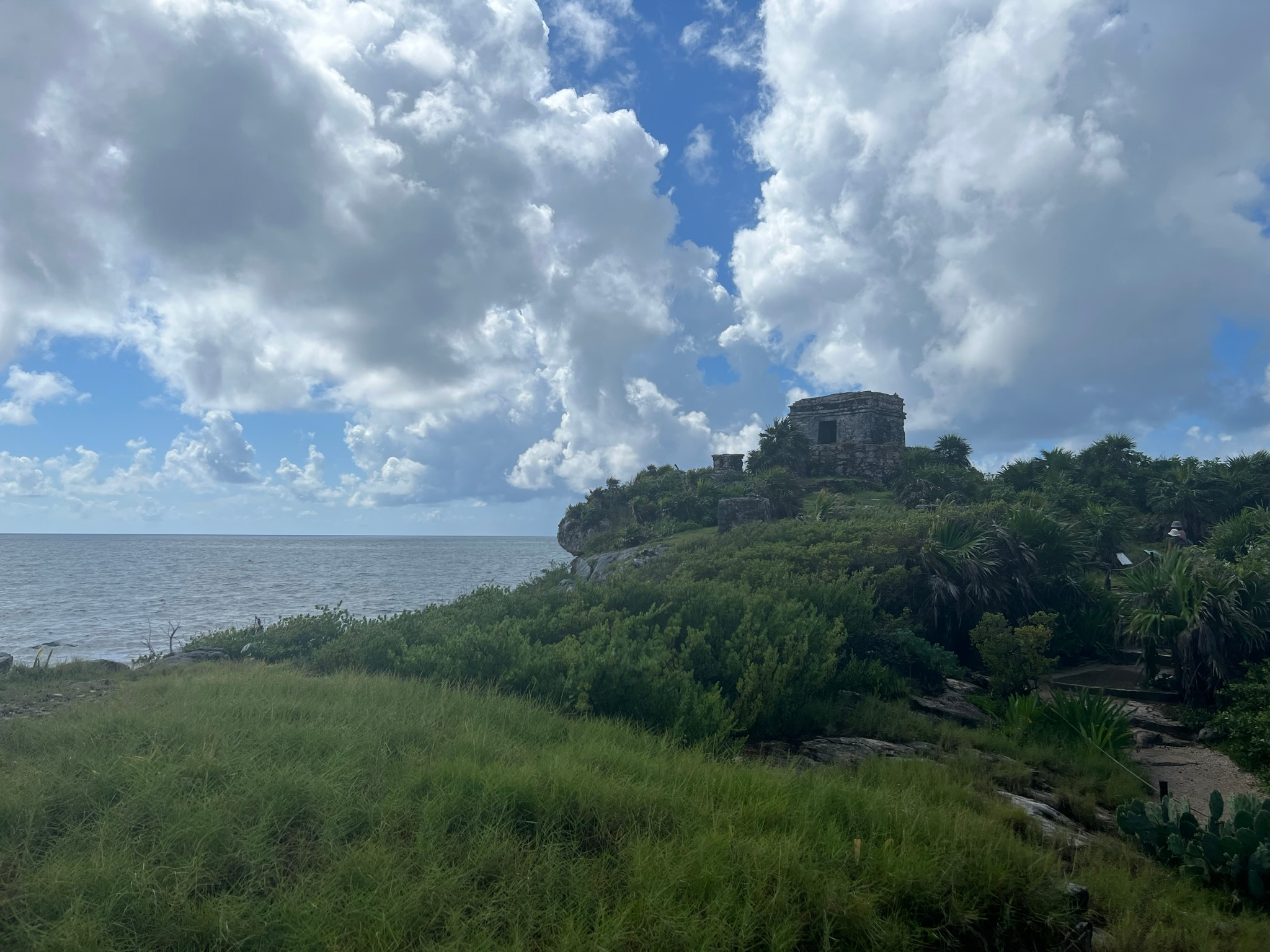
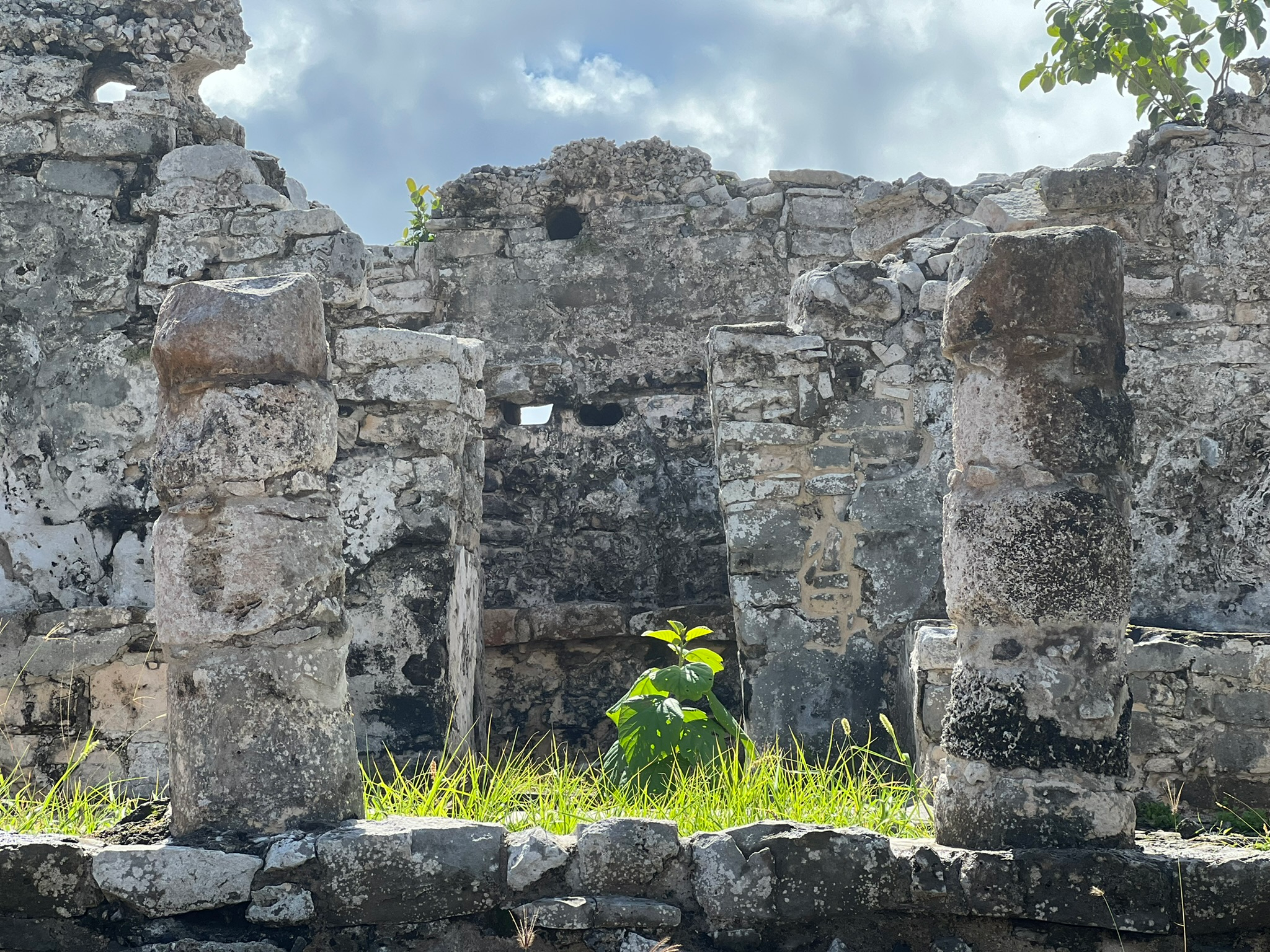
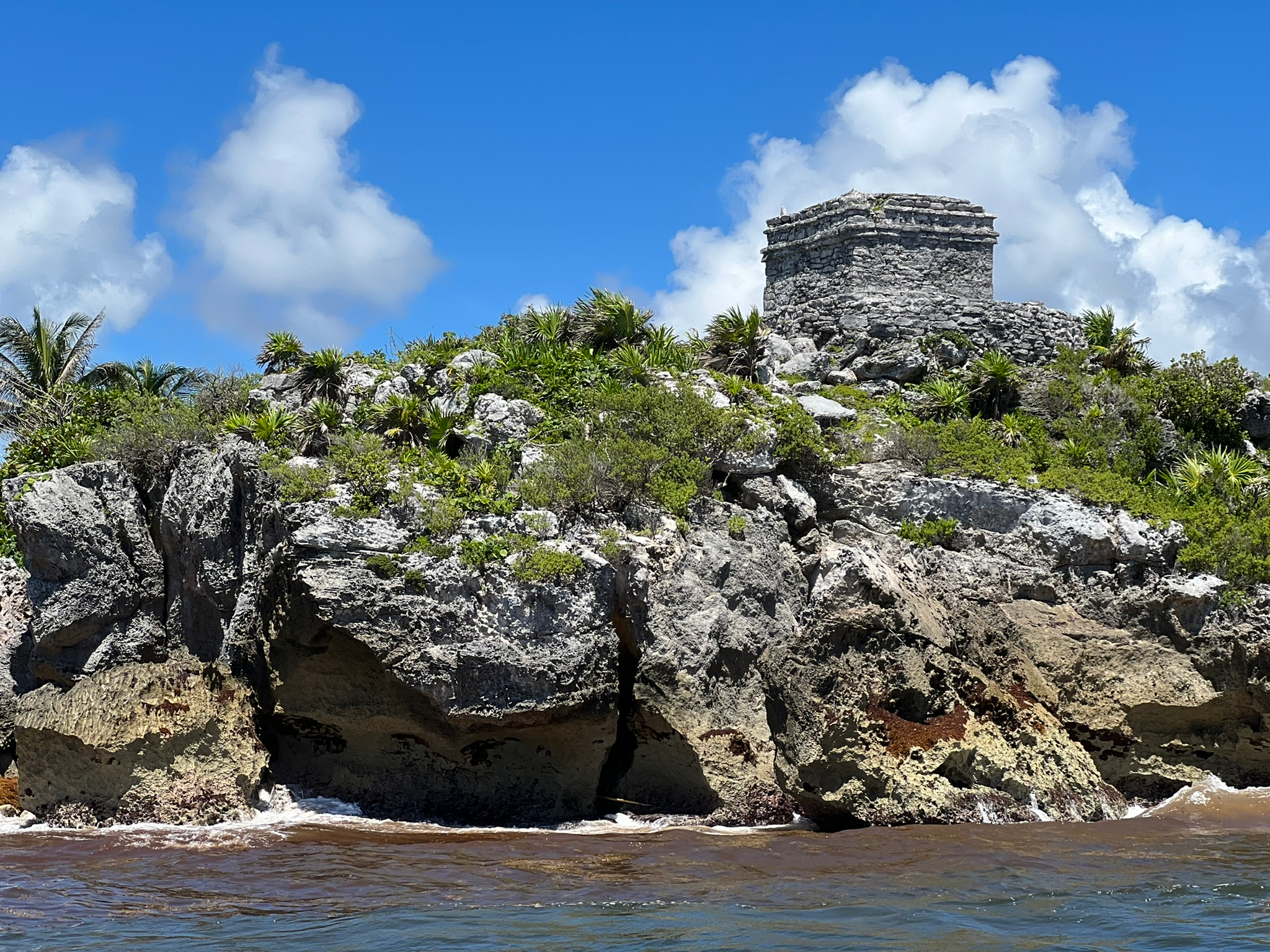
From the north-eastern entrance, the first visible structure is the three-chambered House of the Cenote – so called because it was built over a natural cenote. A few steps later, I found myself frozen, my eyes welling up. In the distance, much to my surprise, was a very familiar sight – one I’d been seeing since I first started researching my trip to Mexico. Standing solitarily and mightily atop a hill, jutting out of the cliffside, was the Temple of the Wind God: a small temple with a single door, rounded corners (often associated with Kukulkan), and a lone altar once used for religious offerings. The very definition of picturesque – a view I hadn’t expected to see so soon, hence my original detour!
Deeper Into the City
Somehow, I managed to tear my eyes away from the magnificent vista and continue my exploration. Being on my own, it really did feel like actual exploration. Tagging along with a guide has its advantages, sure, but having the freedom to roam wherever you want, for as long as you want, is something I quickly learned to appreciate. I mean, yes – I had to constantly look things up, but I had all the time in the world to do just that!
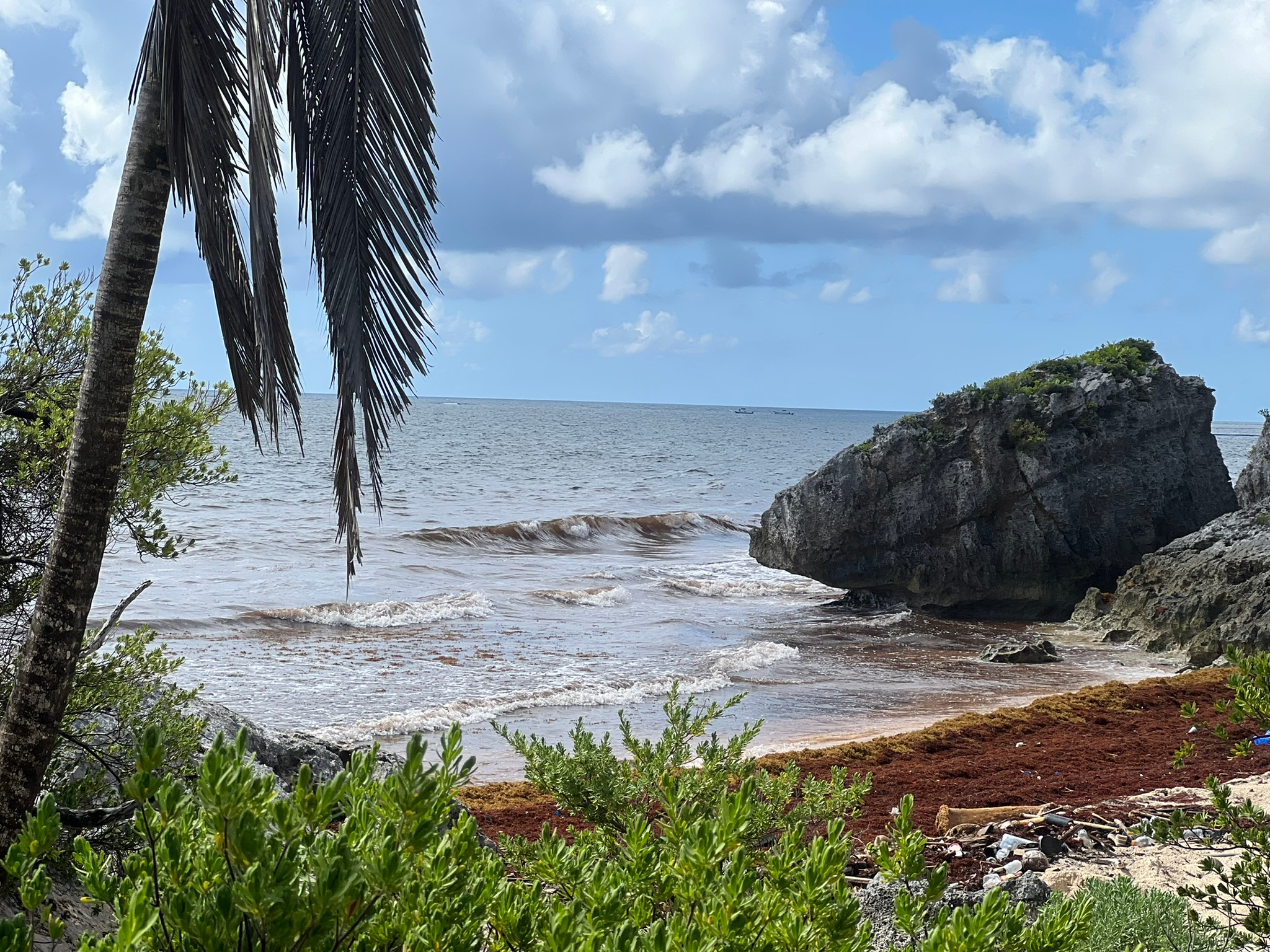
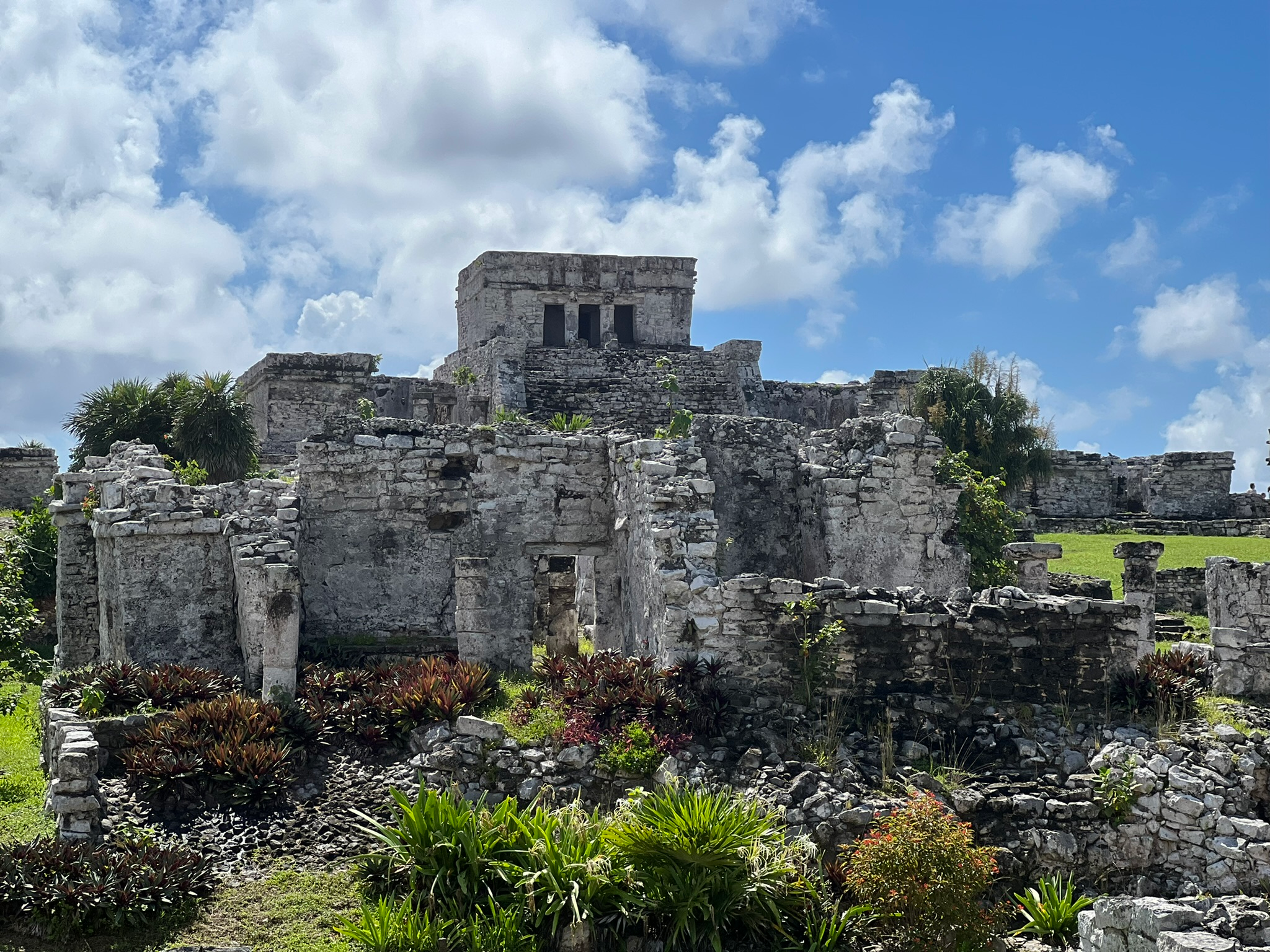
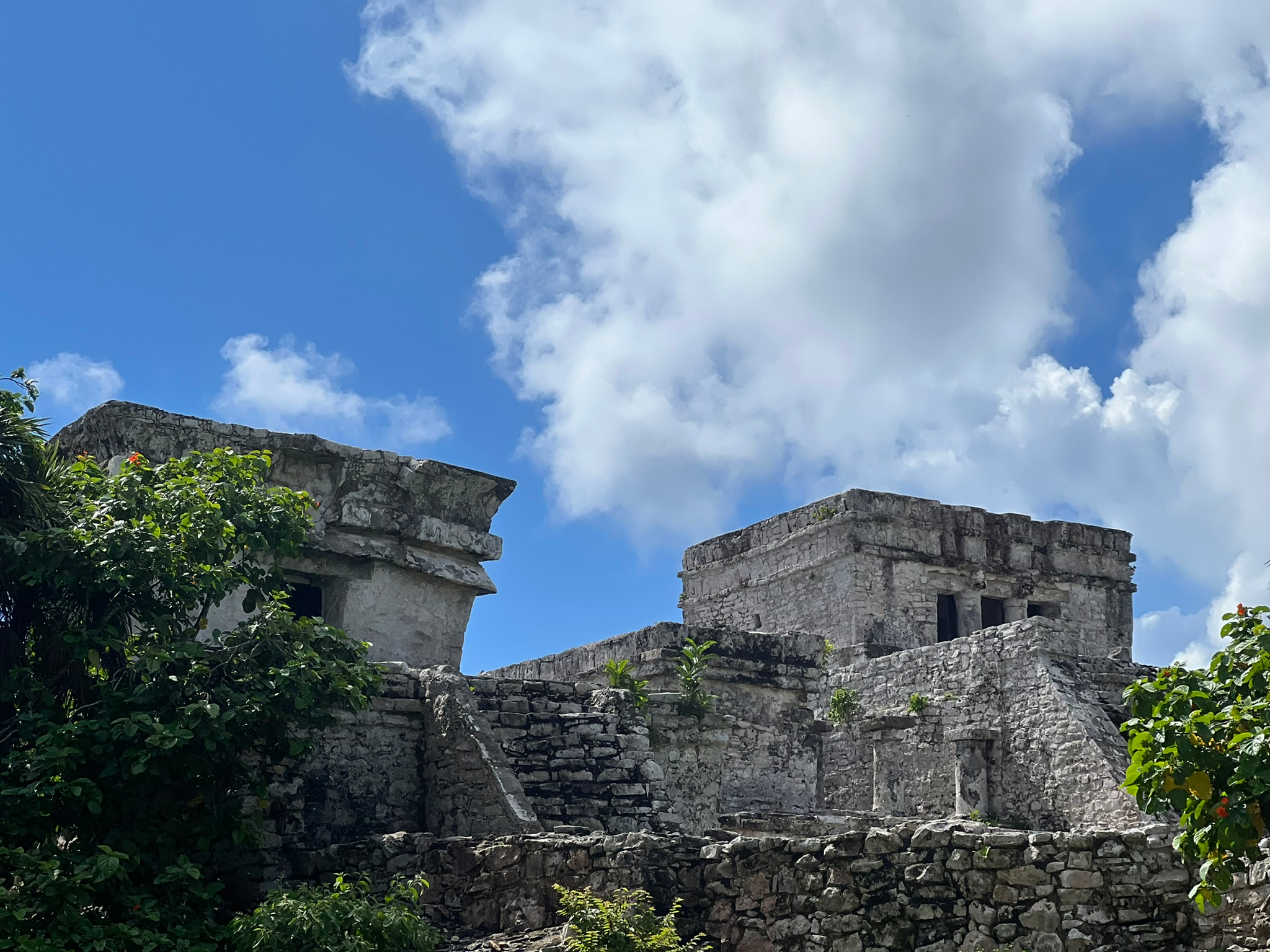
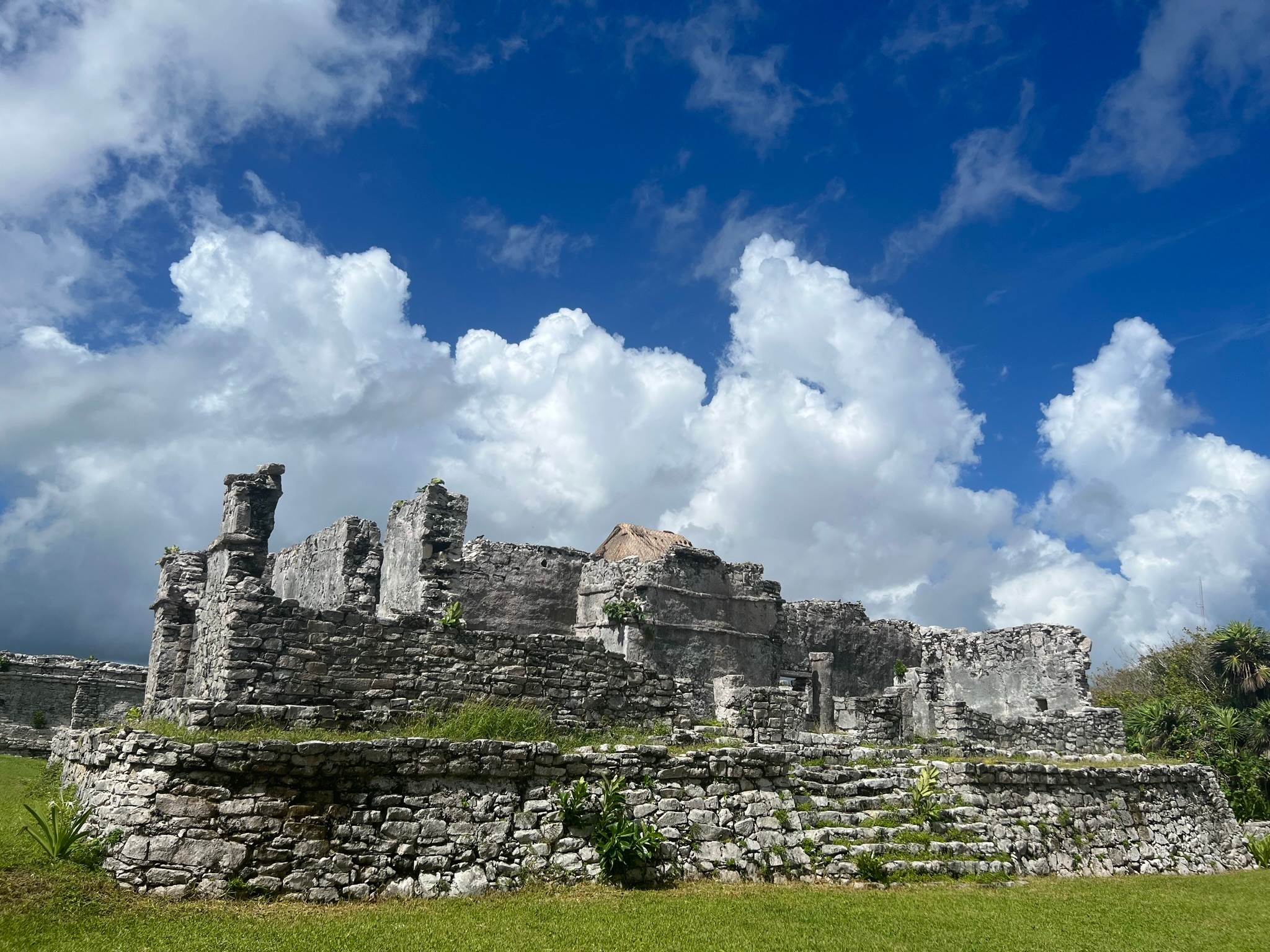
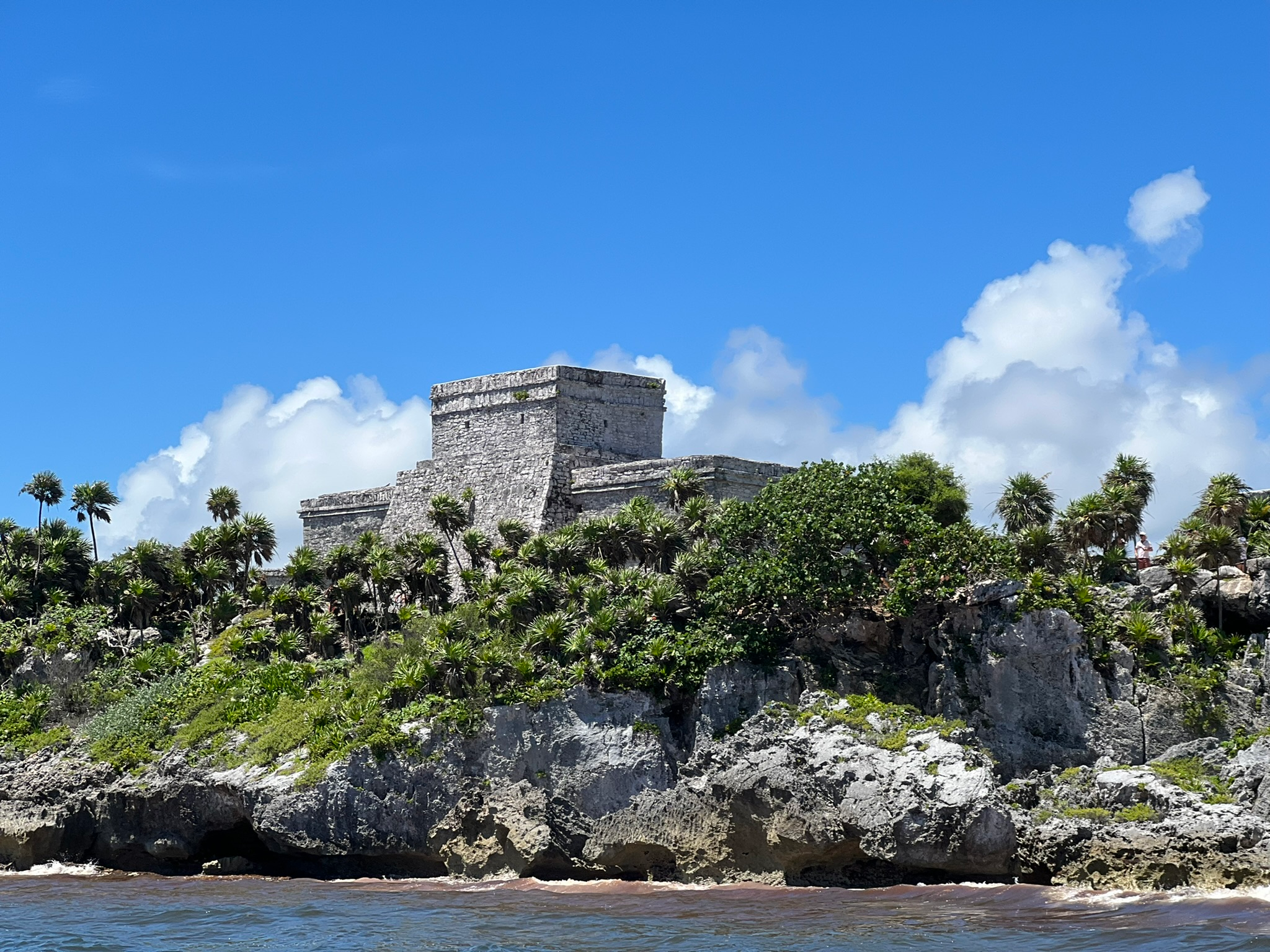
From there, I wandered on until I stumbled upon a white sandy beach – usually open to the public for swimming, but currently closed due to turtle hatching season. Further south lay the Kukulkan Group: a rectangular complex with a small central courtyard featuring a platform used for rituals and dancing, and three important temples on the eastern side facing the sea. To the northeast is the Temple of the Diving God, home to a stucco figure of the deity—an upside-down figure with splayed legs pointing upwards. The southernmost is the Temple of the Initial Series, which includes yet another stucco relief. Most significant of the three – and arguably the entire archaeological site – is El Castillo: the largest and most imposing structure here. It’s a three-tiered pyramid with a wide central staircase leading to a temple at the summit, containing two rooms and a depiction of, yes, you guessed it – the Diving God – adorning its façade.
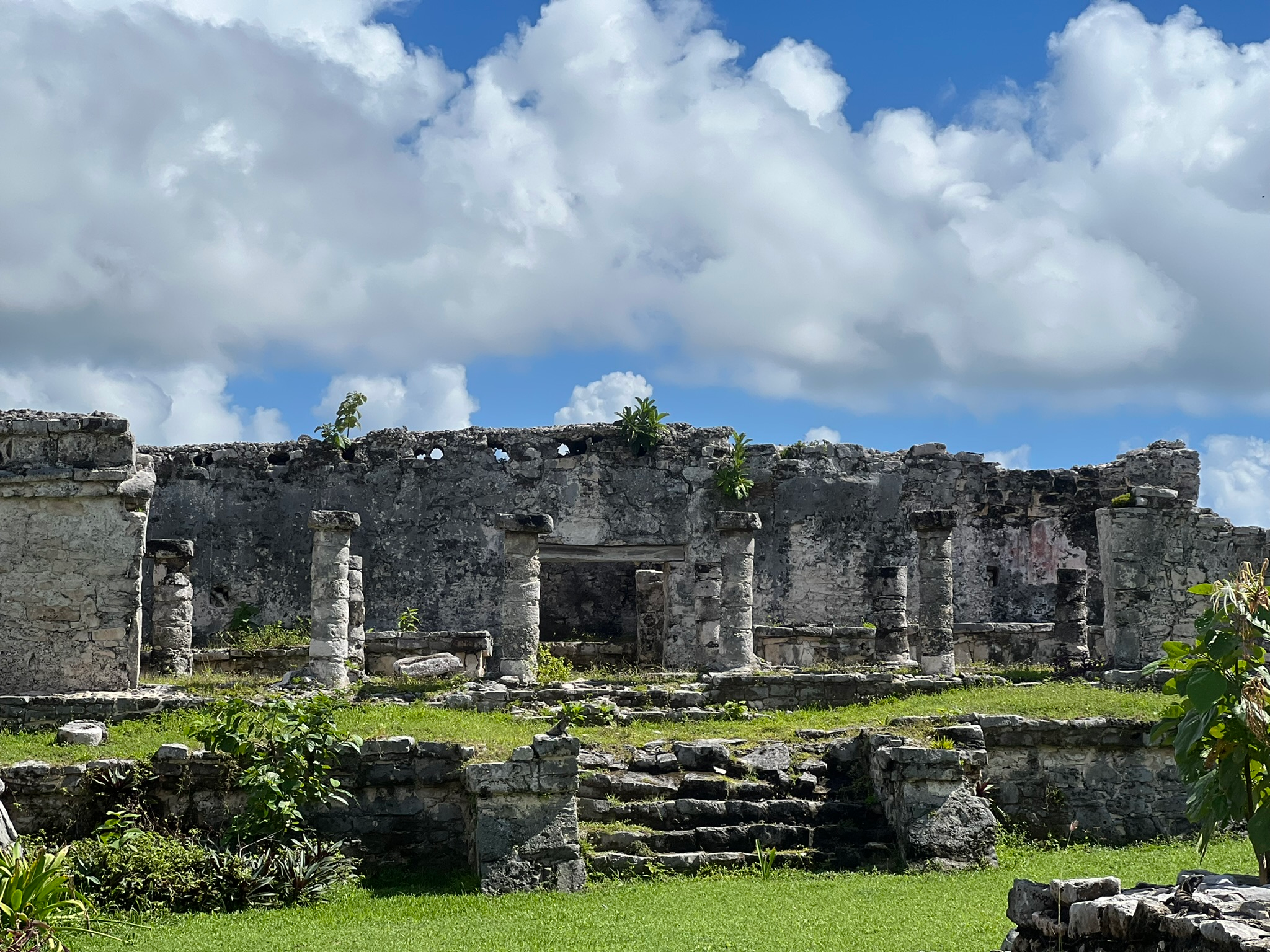
Facing this large complex is another elevated area with three more structures. Starting from the northernmost, there’s the Palace of Halach Uinic which, quite predictably by this point, also features a stucco figure of the Diving God. Then there’s the House of the Columns, made up of two long rooms and four columns at its entrance. Most notable of the three, however, is the Temple of the Frescoes. This two-storey structure has a single-chambered temple on its upper level, once used as an astronomical observatory. Its façade? Yep – friggin’ etched stone depiction of the Diving God.
Scattered across the site are numerous other structures with – you guessed it – numerous other depictions of the Diving God. I’ll spare you the blow-by-blow, but just in case it isn’t clear by now… the Diving God was kind of a big deal around here.
Playa Santa Fe
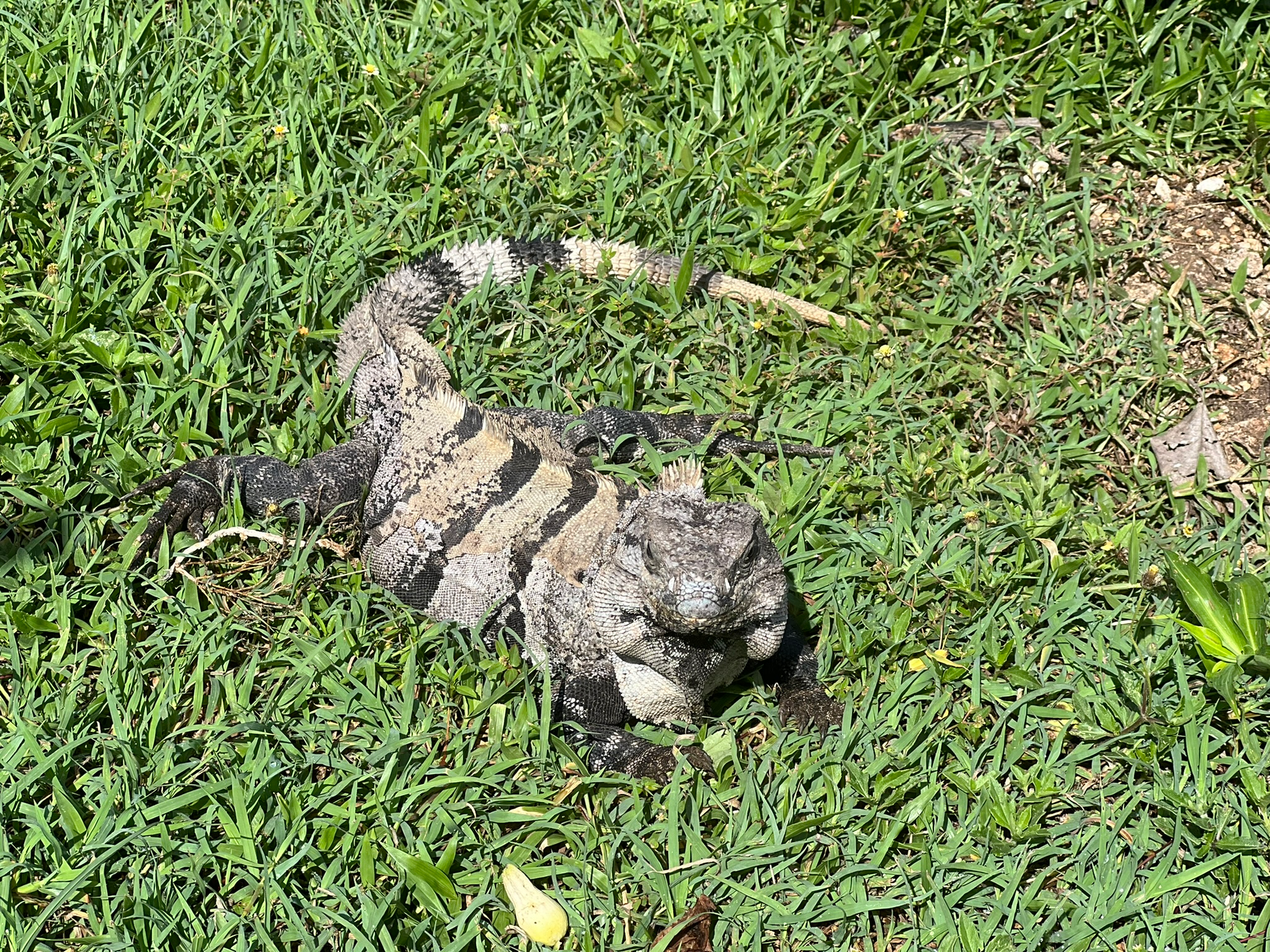
After leisurely exploring the site, chasing orange male iguanas and their green female counterparts, and wondering how brain coral fossils ended up so high above sea level, I made my way out and walked to Playa Santa Fe. There, I was practically dragged onto a boat ride by an overly enthusiastic bar owner who needed one more person to complete a group. I wasn’t about to start saying no to more adventures at that point, now was I?
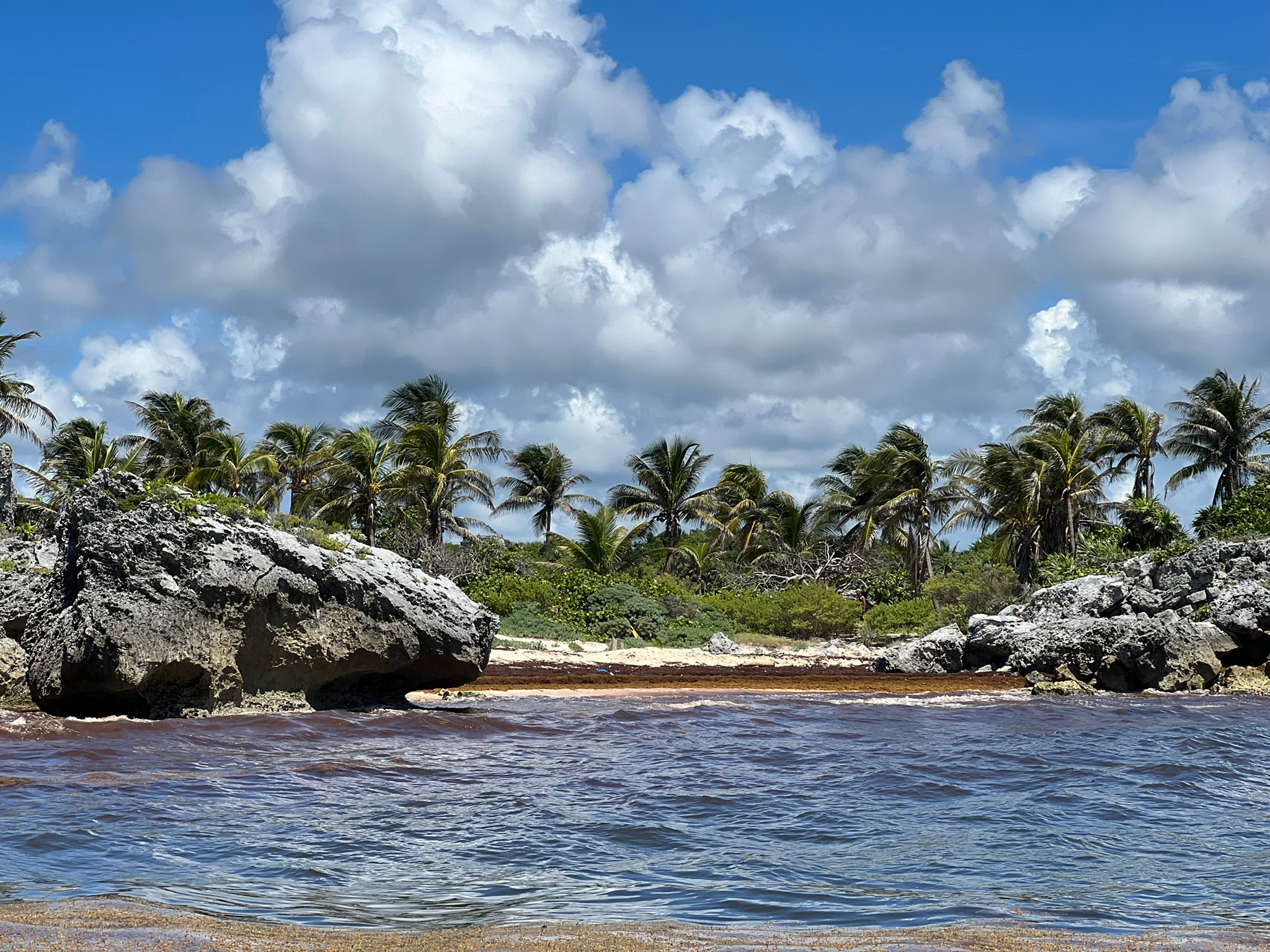
The boat took us directly in front of El Castillo and the Temple of the Wind God – a view best admired from the beach just below the ruins. After taking it all in, the captain steered us to a snorkelling spot about five minutes away. All goggled and finned up, I dove into the sea, clueless about the spectacle that awaited me below. Having baited the fish with… well, other fish, the waters were soon teeming with marine life. Blue-headed wrasses, blue tangs, grey snappers, glassy sweepers – and then, to our astonishment, southern stingrays!
I had seen them during the submarine tour a few days earlier, but never in a million years did I think I’d be swimming alongside them. Aptly named, these mud-brown, diamond-shaped creatures have tails longer than their bodies, tipped with sharp venomous barbs they use for defence – especially against hammerhead sharks, their most common predator. A couple of hawksbill sea turtles even joined in, and we floated in silent awe. A literal sea of fish, turtles, and stingrays surrounded us. Pure bliss and wonder!
Stay wild,
Marius
Post Scriptum
A few years down the line, I now read the last part almost with a sense of disgust. Back then, I had no idea how harmful fish feeding can be to the environment. Beyond disrupting the natural behaviour and health of marine life, it interferes with the delicate balance of the ecological food web and damages the surrounding ecosystem. While to the unsuspecting tourist (much like I was at the time) it’s a dazzling spectacle of life and colour, in reality it’s nothing more than a manufactured illusion, often at the cost of long-term harm.