Cancún – Day 3: Wonders of Chichén Itzá
CANCÚN
Day 3: Wonders of Chichén Itzá
August 29, 2022
As much as I seemed to dislike the city, it did have some redeeming features – mainly its proximity to the old Mayan ruins; a stark contrast between the overly modernised city and the remains of a once-powerful civilisation. And now, I’d be embarking on yet another archaeological day tour.
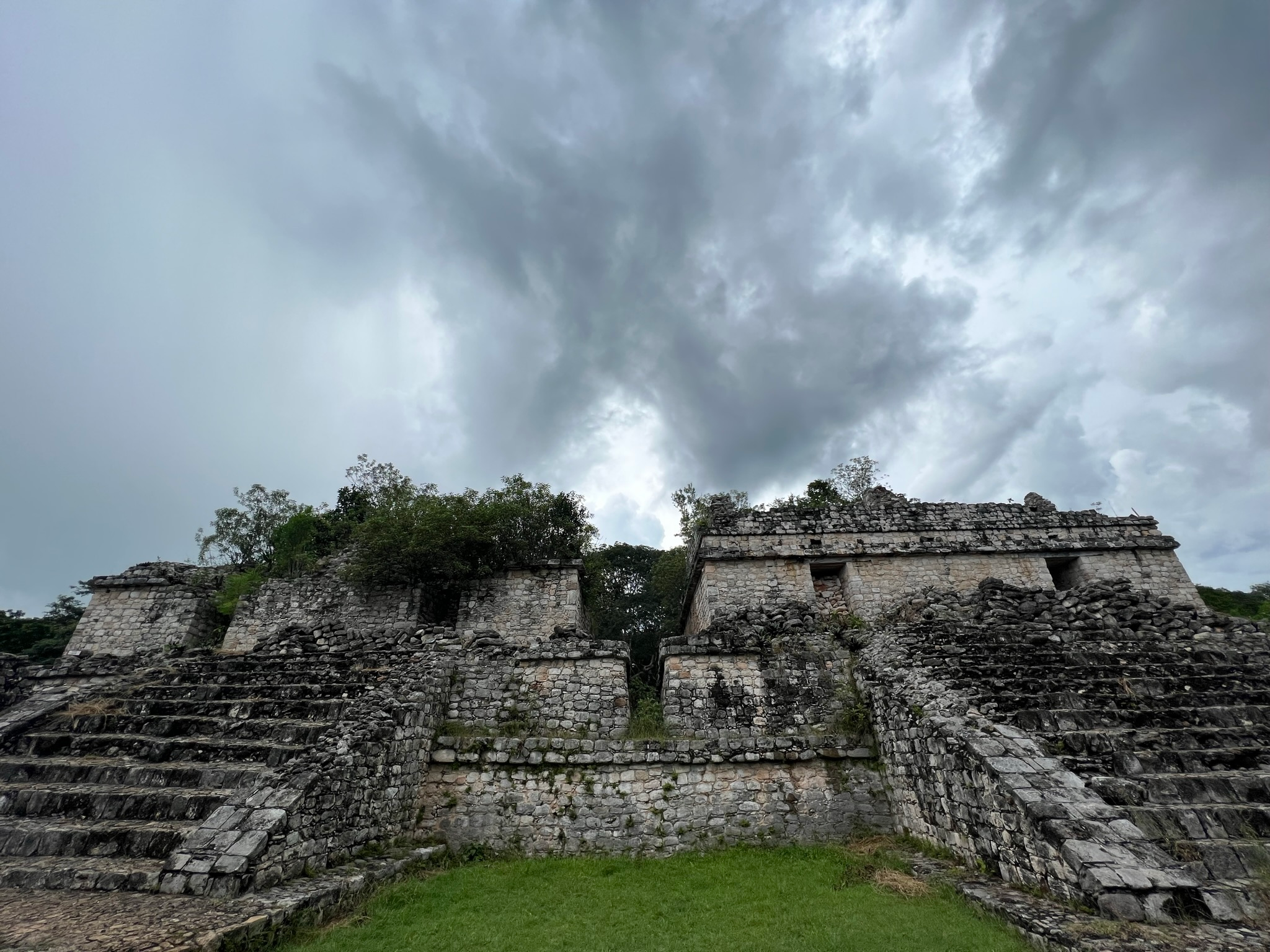
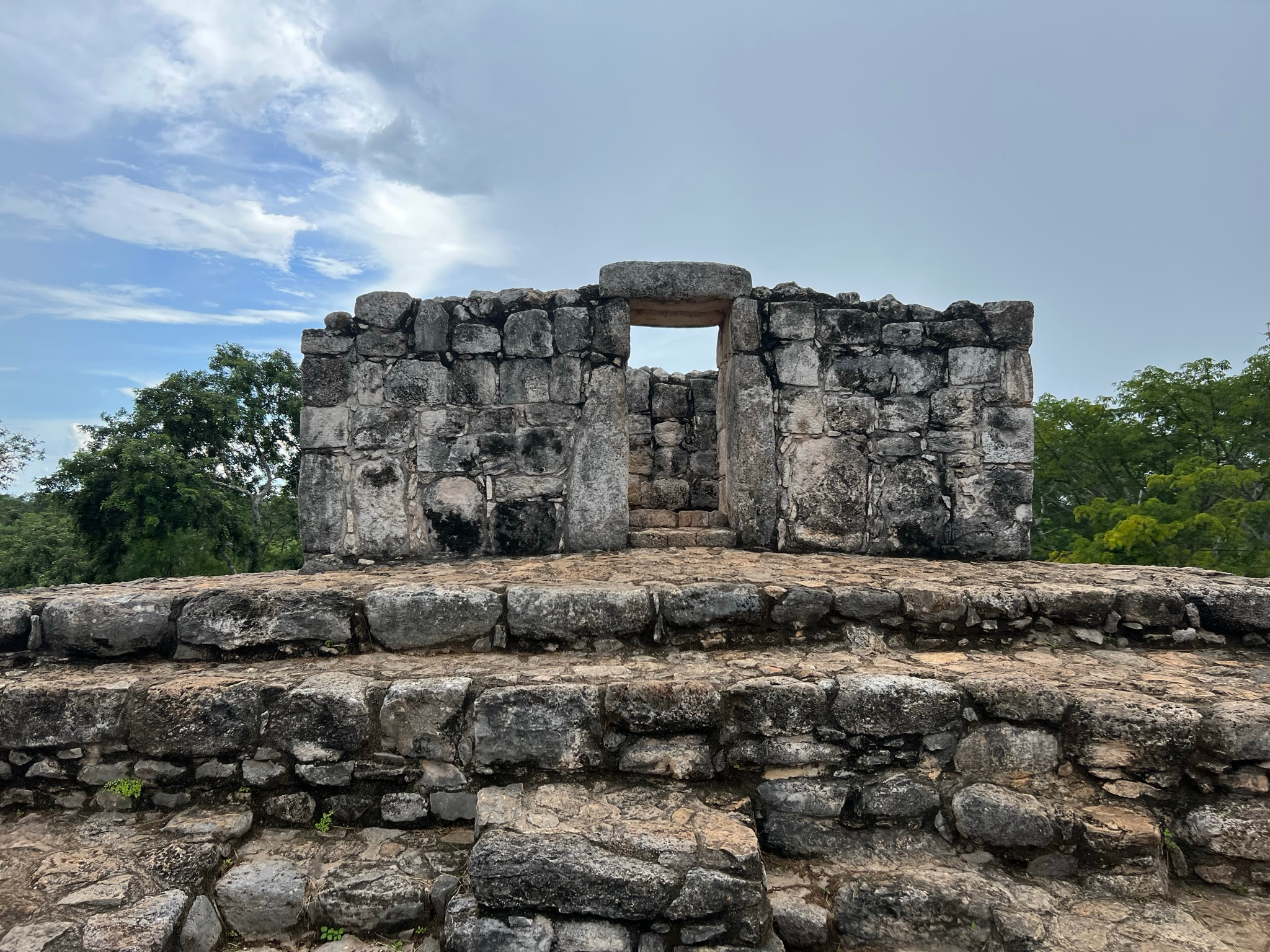
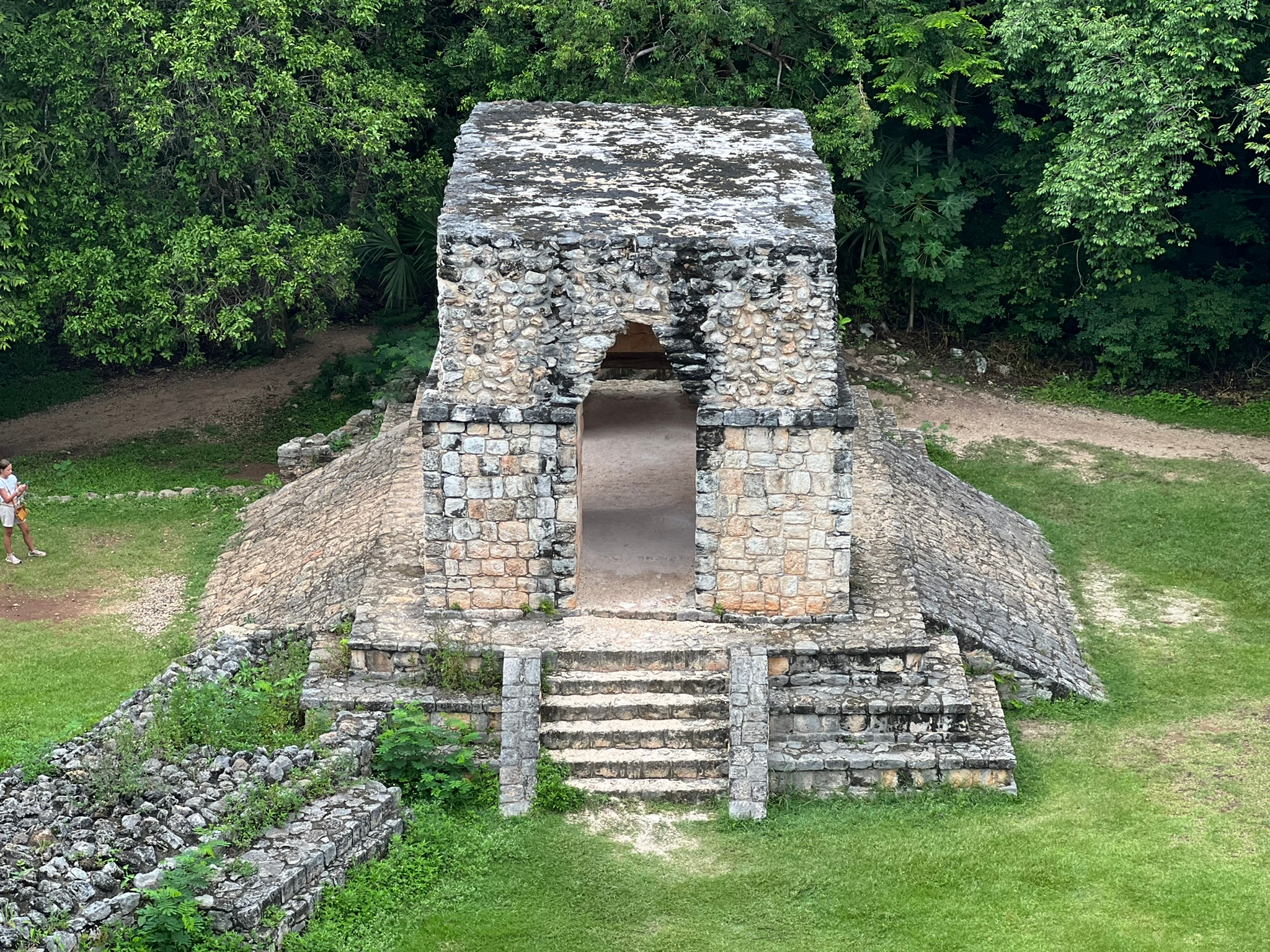
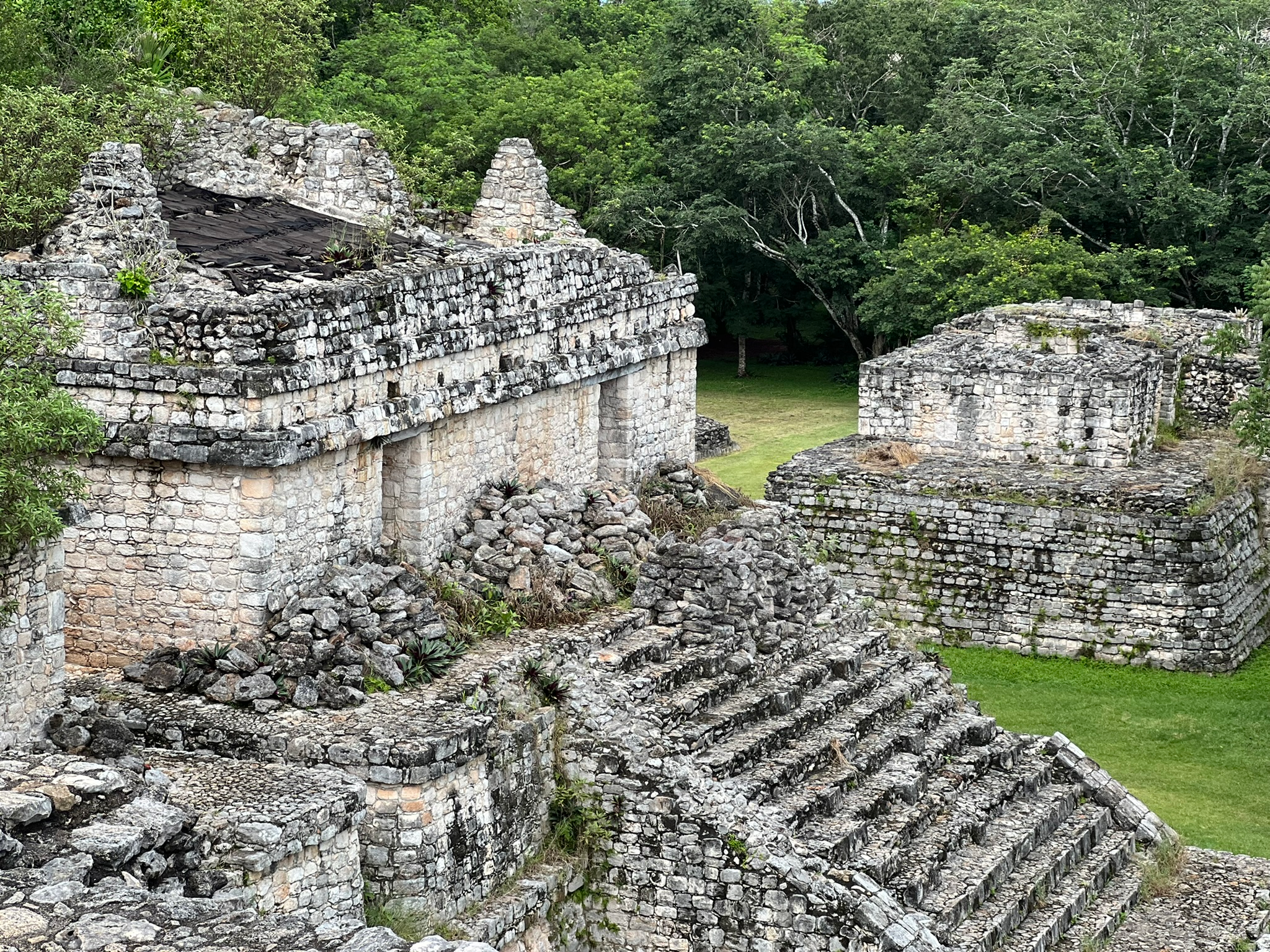
First up were the ruins of Ek’ Balam – the Black Jaguar. Built during the Pre-Classic period, its first known ruler was Ukit Kan Le’k Tok’, whose name means Father of the Four Flint Foreheads. Under his rule, the kingdom experienced much advancement, especially in terms of architecture. In fact, the most impressive buildings found here were either built by him or dedicated to him.

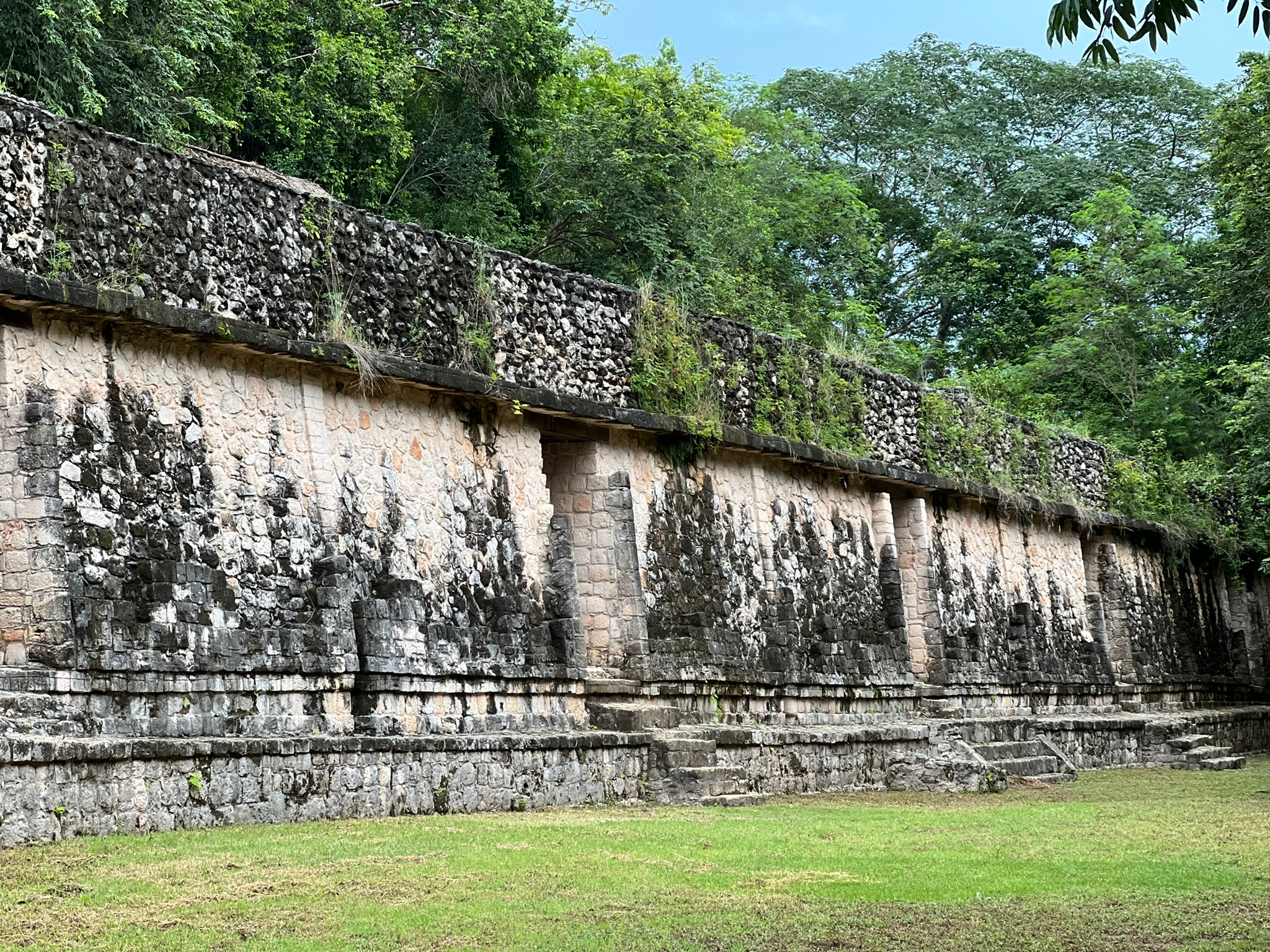
The city of Ek’ Balam is enclosed within a wall that protects the inner area. Of note is the Palacio Oval in the South Plaza – a rounded, multi-tiered structure atop a rectangular platform. But the star of the show is none other than the Acropolis, found in the North Plaza. This thirty-metre-high structure is made up of different layers built by subsequent rulers, containing multiple rooms, courtyards, and temples, which can be accessed through various staircases and passageways.
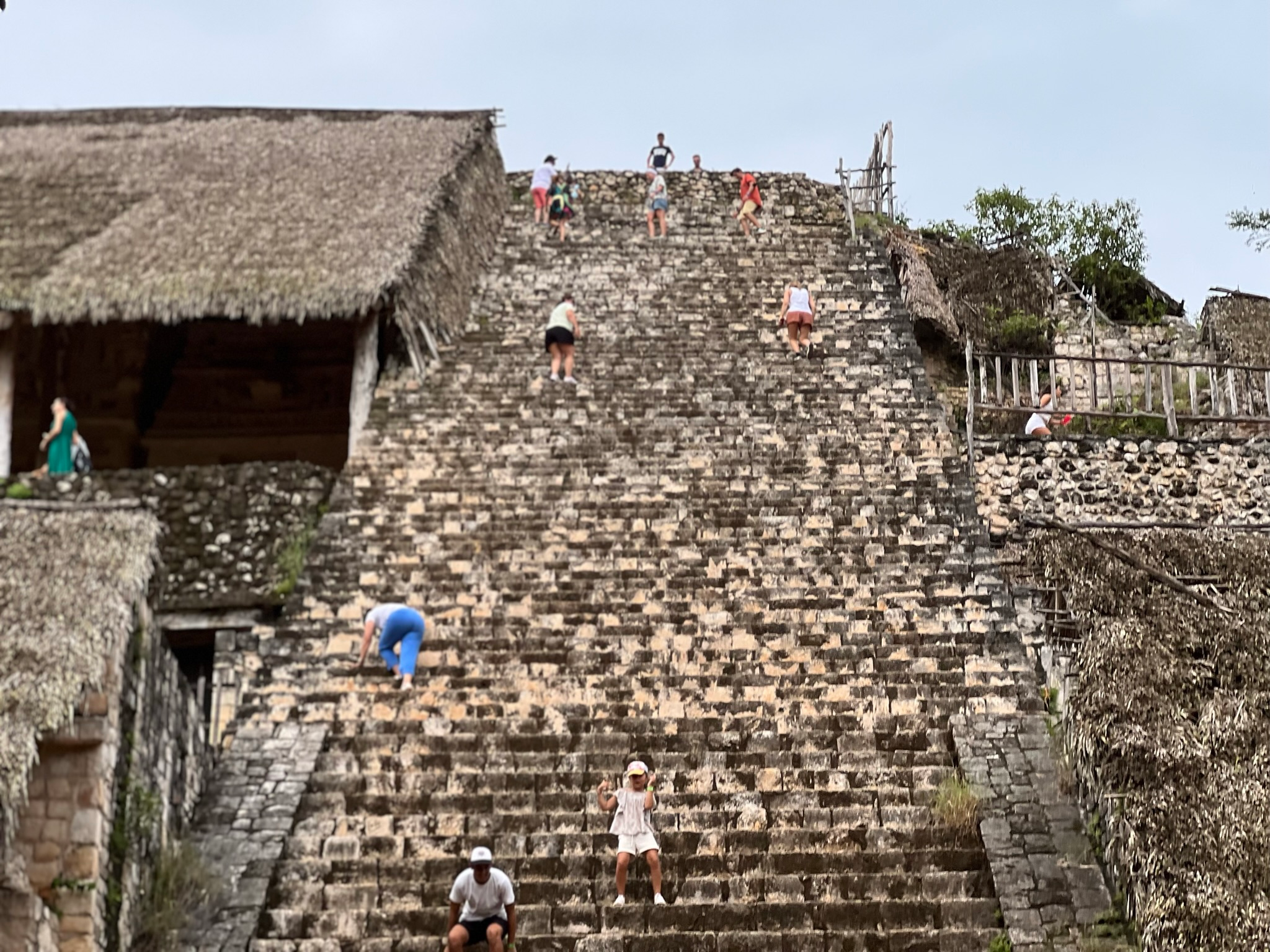
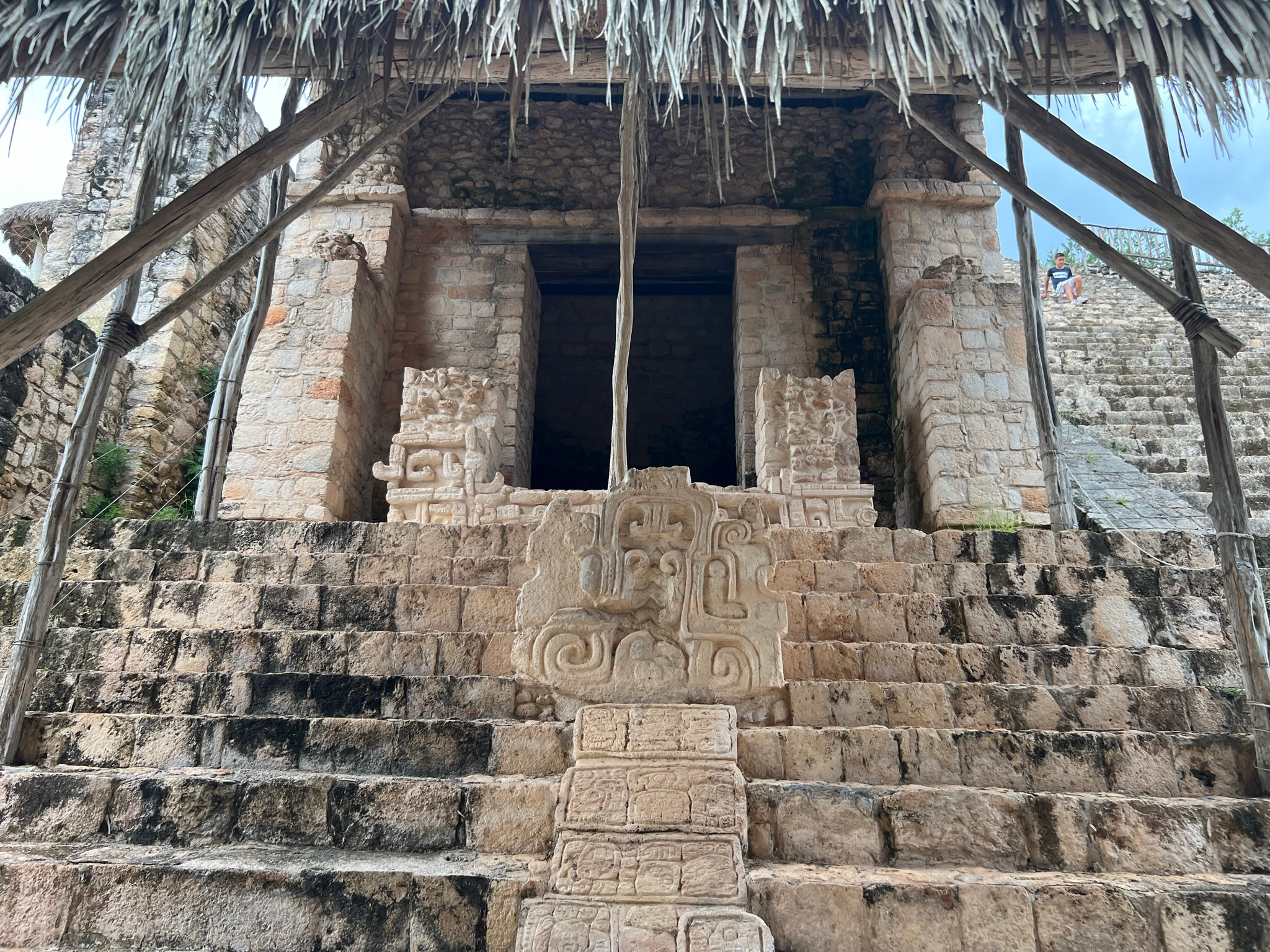
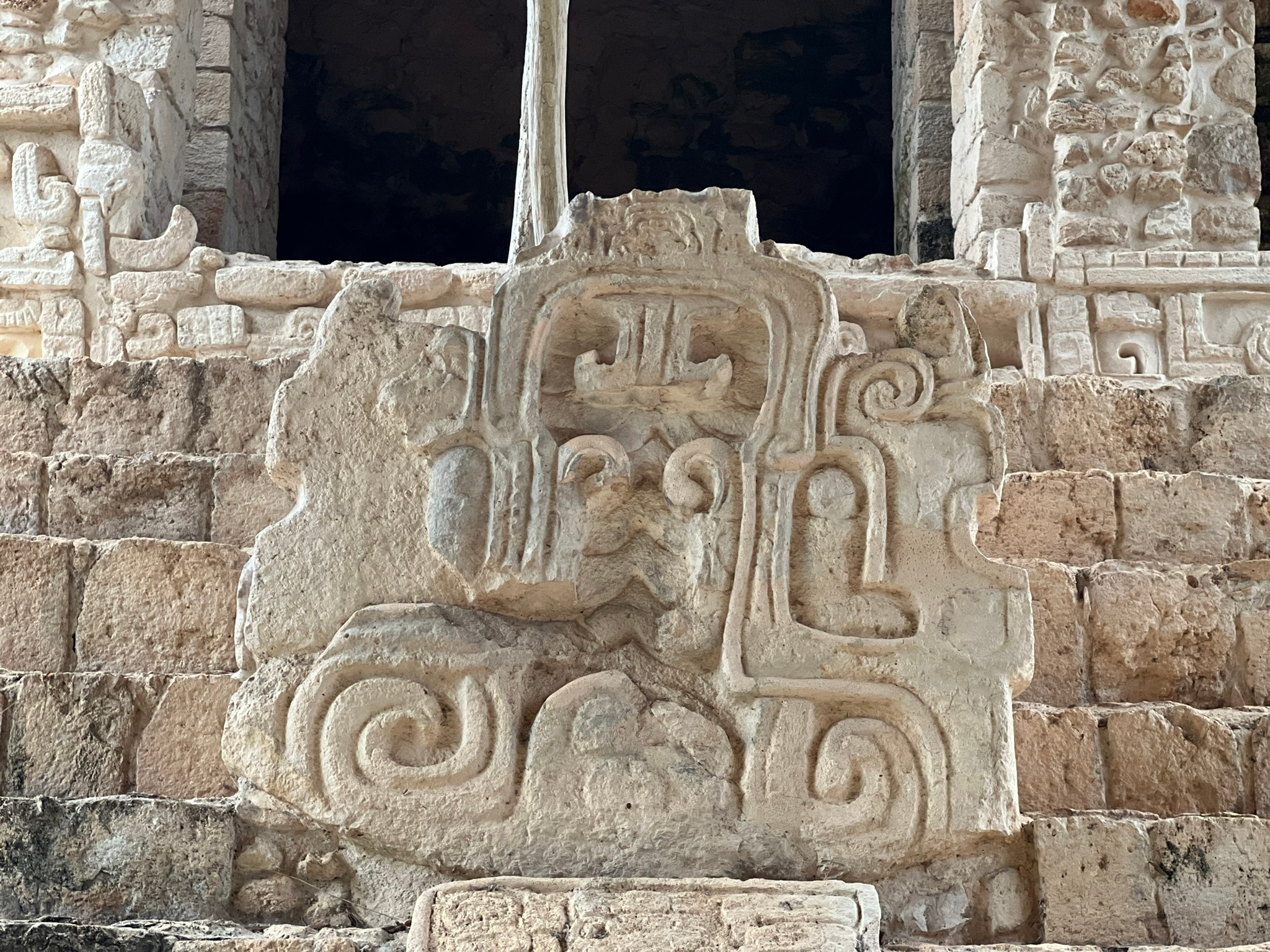
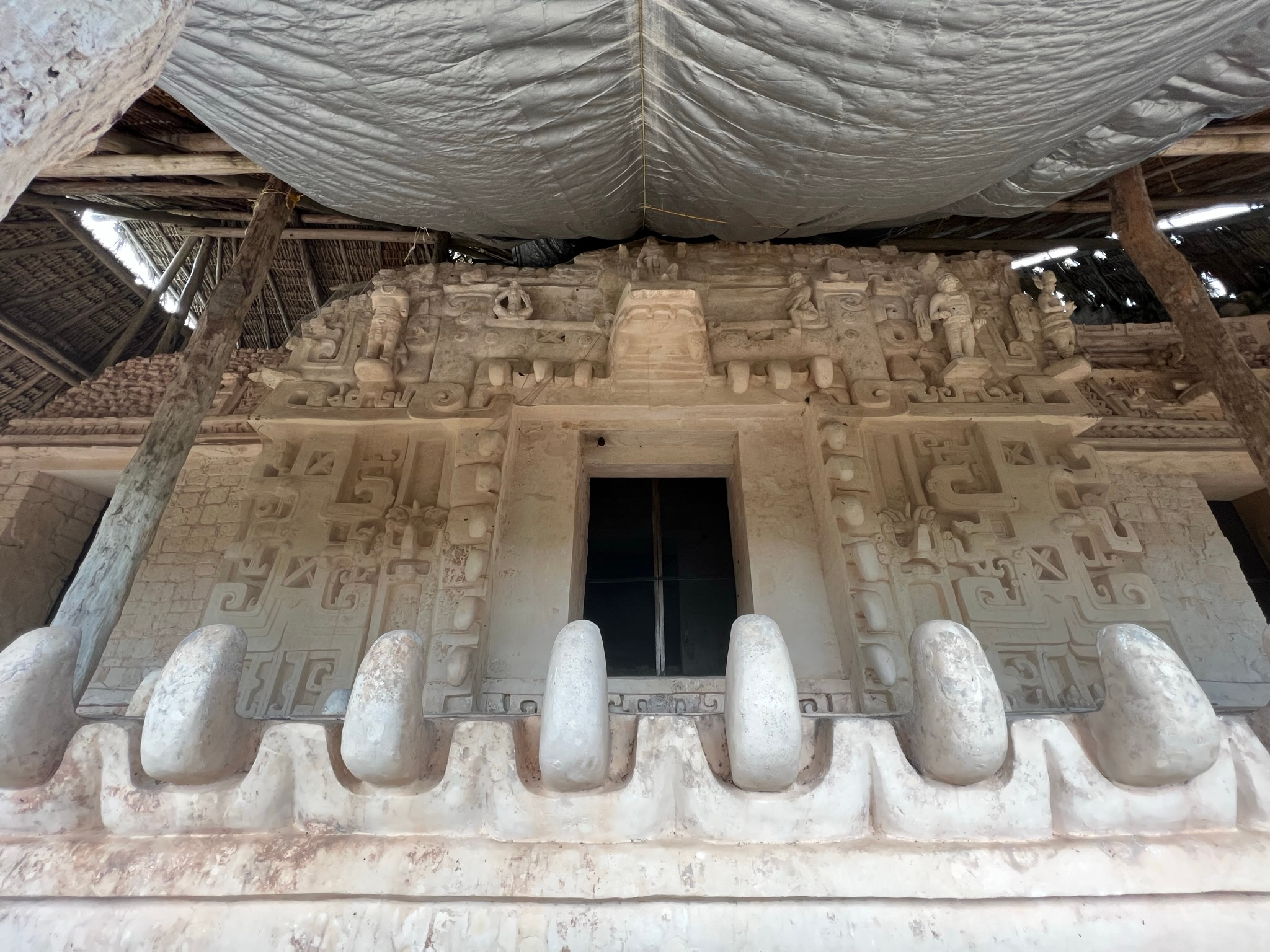
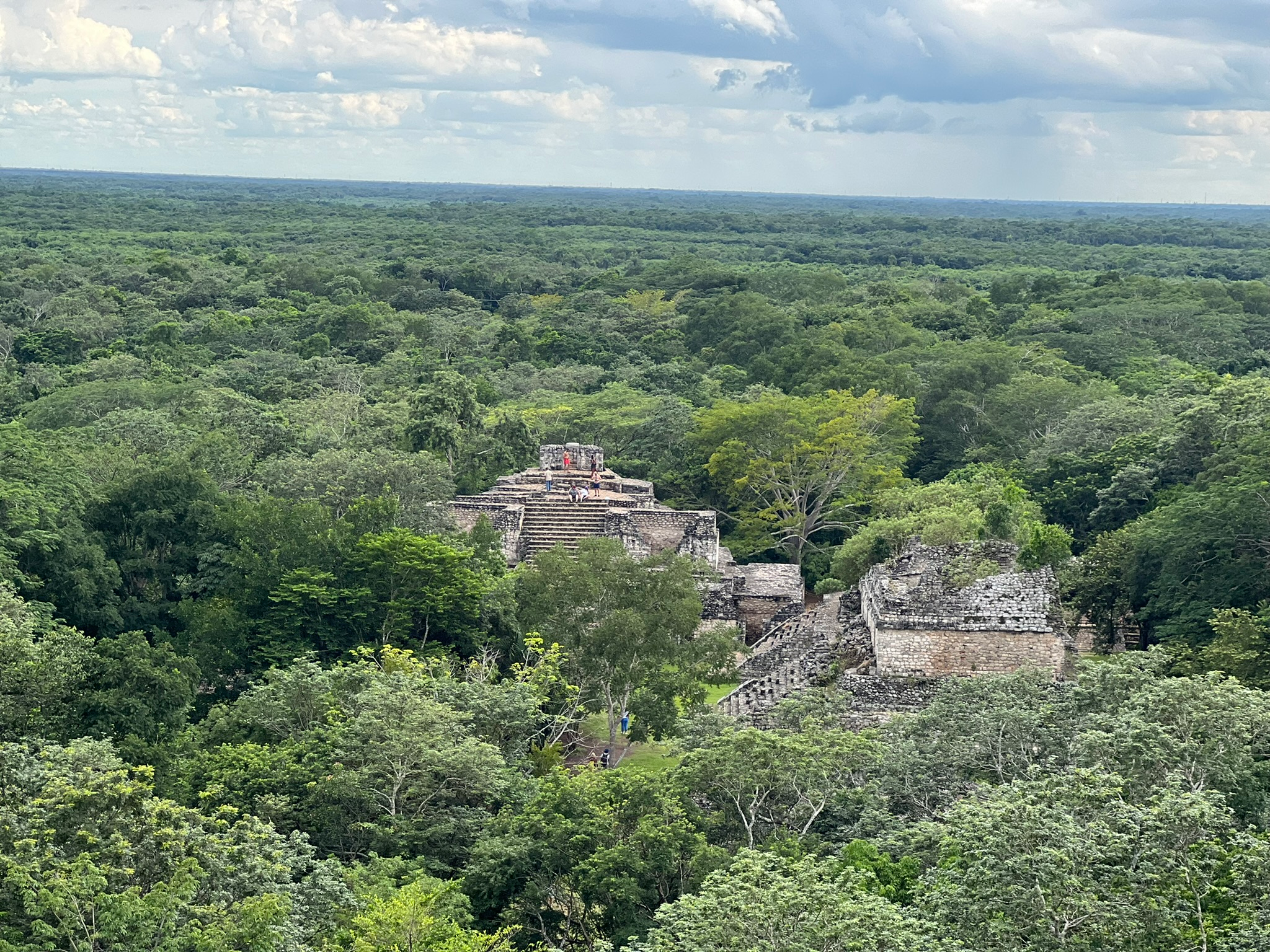
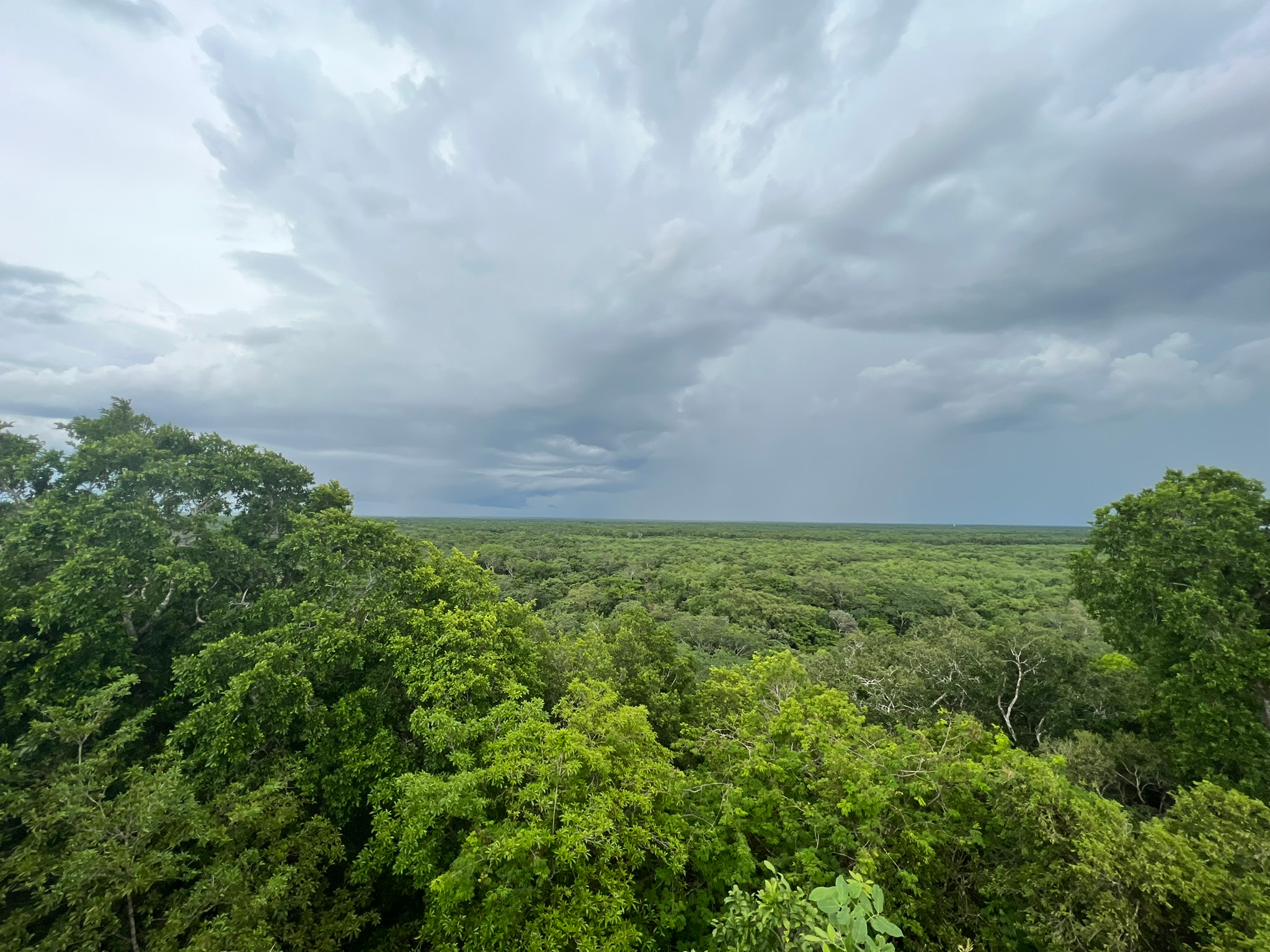
A large central staircase leads to different levels, with the fourth one featuring an unparalleled and impressive white stucco façade showing the open, fanged mouth of the Earth god. This leads to an inner chamber called the White House of Reading, where one of Ek’ Balam’s rulers was buried. The same staircase leads to the summit of the palace, offering an incredible 360-degree view of the site and the surrounding jungle – a green carpet that stretches as far as the eye can see, with dark, thunderous clouds in the distance making for a stupendous vista. As if that weren’t enough, upon closer inspection, one can see various mounds littering the site – other temples and pyramids that, to this day, remain unearthed.
Chichén Itzá
Then, of course, came the pièce de résistance, the crème de la crème, the wonder of wonders – the ruins of Chichén Itzá. It would be the third of the New Seven Wonders of the World I’d be crossing off my list – the first two being the Colosseum and Machu Picchu!
Truth be told, I wasn’t that hyped about it. While the latter two are truly impressive architectural feats, I can’t say I felt much awe or wonder while exploring their ruins. And the reason for that is quite simple: they’re too overcrowded. The multitude of tourists zipping from one place to another at any one time just ruins it for me.
When I’m visiting ruins, I try to close my eyes, appreciate the quiet, and imagine what life must have been like back in their golden days. Try doing that next to a kid who’s inconsolably screaming their lungs out because their ice cream just fell on the ground – or while trying to dodge the barrage of selfie sticks all seemingly aimed at your head by people pouting on the other end.
Don’t get me wrong, though – I still appreciate these places for all they’re worth. But I gotta say, I’ve now resigned myself to not feeling anything special in such places. I’ve given up on trying to feel connected, spiritual, or whatever. I just enjoy the architectural masterpiece and that’s it. And so, my expectations for Chichén Itzá were grand, but realistic at the same time.

The name Chichén Itzá means “at the mouth of the well of the Itzá”, and it was one of the most – if not the most – important Mayan cities of the Yucatán state during the Classic period. Evidence suggests the city was founded as early as 800 BC, rose to power around 600 AD, and housed approximately 60,000 to 80,000 Mayans. To this day, its decline remains shrouded in mystery, with some suggesting the city lost its political power somewhere between the 11th and 13th centuries. However, when the Spanish conquistadors arrived, they found a still-thriving population – albeit smaller and less influential. The Mayans living there at the time resisted Francisco de Montejo’s attempts to conquer the city for nearly ten years before eventually falling to his forces, aided by Mayans from surrounding cities.
Together with a group of some six uninterested Americans and a guide who only seemed to offer the bare minimum of information, we made our way into the archaeological site. The guide (whose name I actually forgot given how disinterested he was) gave us a brief description of the site and a few Mayan traditions. I felt a mixture of pride and disappointment the moment I realised I wasn’t gonna learn much more than I already knew from him. I mean, sure, he’d probably tell us about the specific buildings (I hoped) and the rituals performed in those places, but that was just about it.
In a way, I got it. Most tourists coming here didn’t really care about the history. They just wanted to check it off their lists, take a couple of selfies, and move on. At least that’s the impression I had – one that was constantly reinforced by the people in my group. I don’t mean to sound like I’m on a high horse – I used to be that tourist, after all. To add to the disenchantment of it all, the path to the first area we’d be exploring felt more like a crowded street in London or Times Square, with hundreds of stalls on either side selling everything from Chichén Itzá souvenirs to Dragon Ball and One Piece paraphernalia. I felt this close to putting on a long brown wig and some white robes and pulling a Cleansing of the Temples on the multitude of vendors lining the entrance to the sacred site. And no, this isn’t the first time I made this reference.
The Site
The site, he told us, spans around five square kilometres and was built on an artificially elevated area. Most buildings are grouped into complexes that were once separated from each other by walls, with multiple sacbeob connecting them. Of note, he mentioned three complexes we’d be visiting – starting from the Osario Group at the centre, then heading further south to the Central Group, and finally northward to the Great North Platform, the most important of all. Throughout the site, we’d also be able to observe various architectural styles such as Puuc and Chenes, used by different ethnic groups of Mayans – a reflection of migration and conquest from different cities.

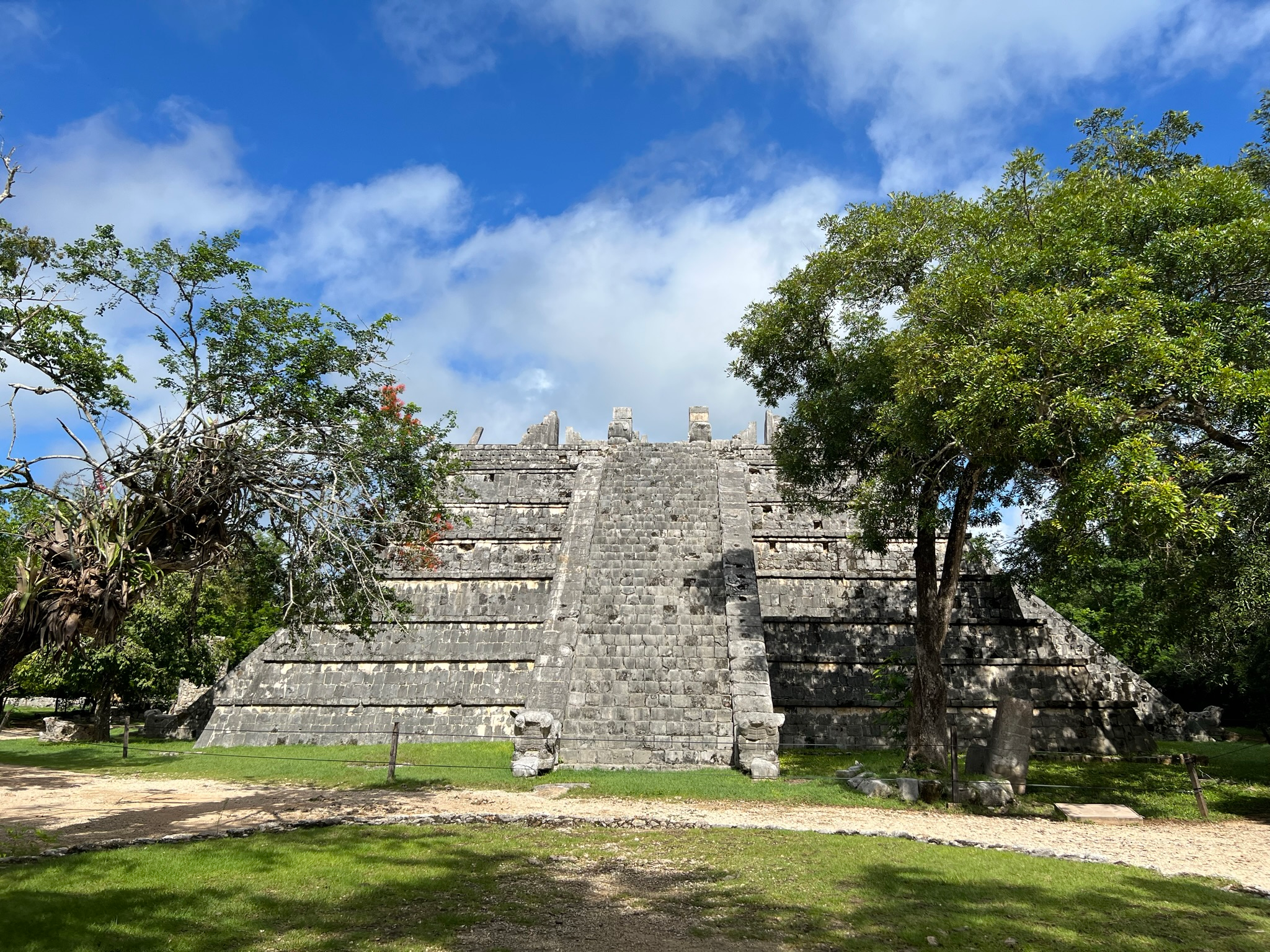
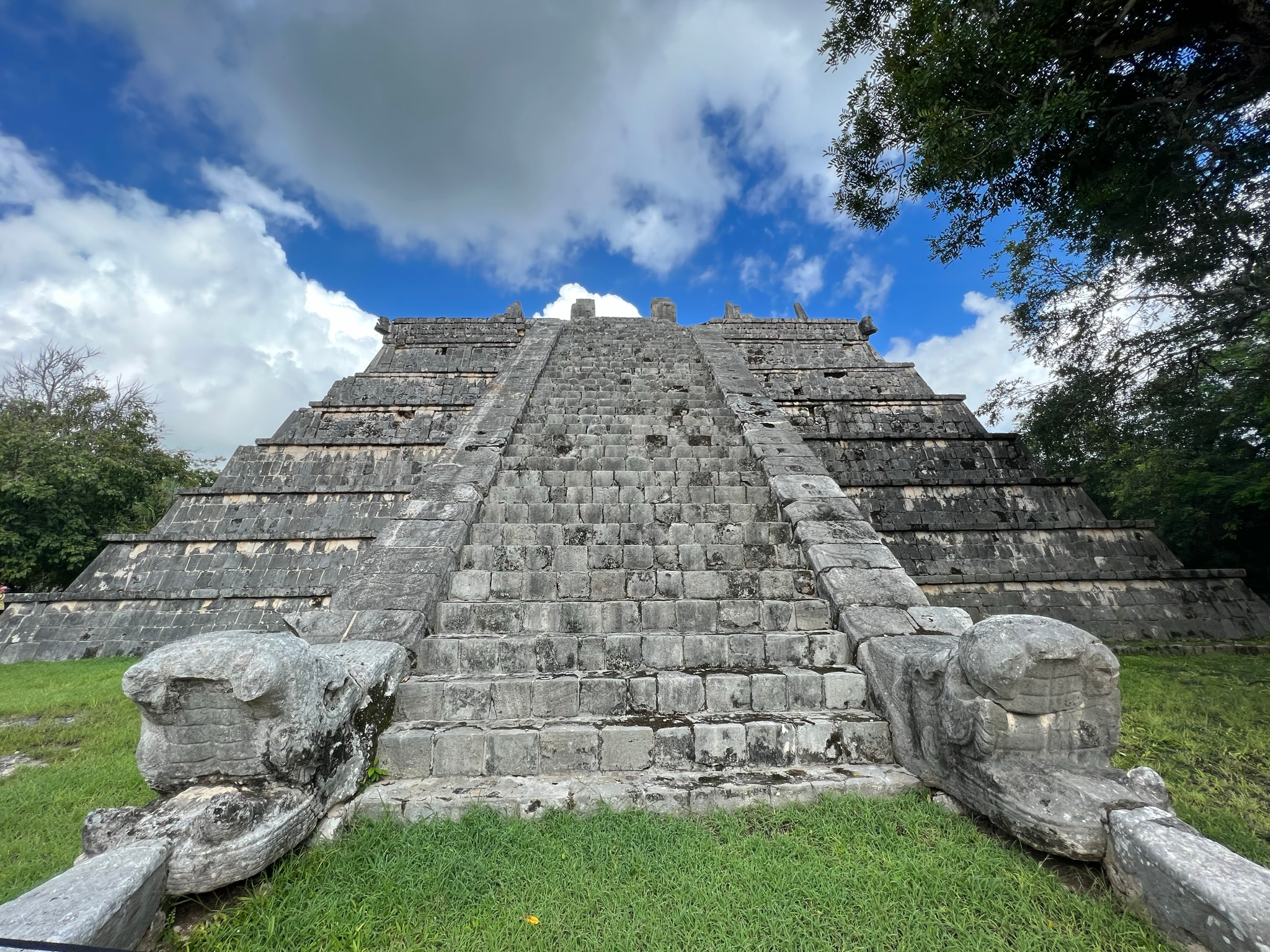
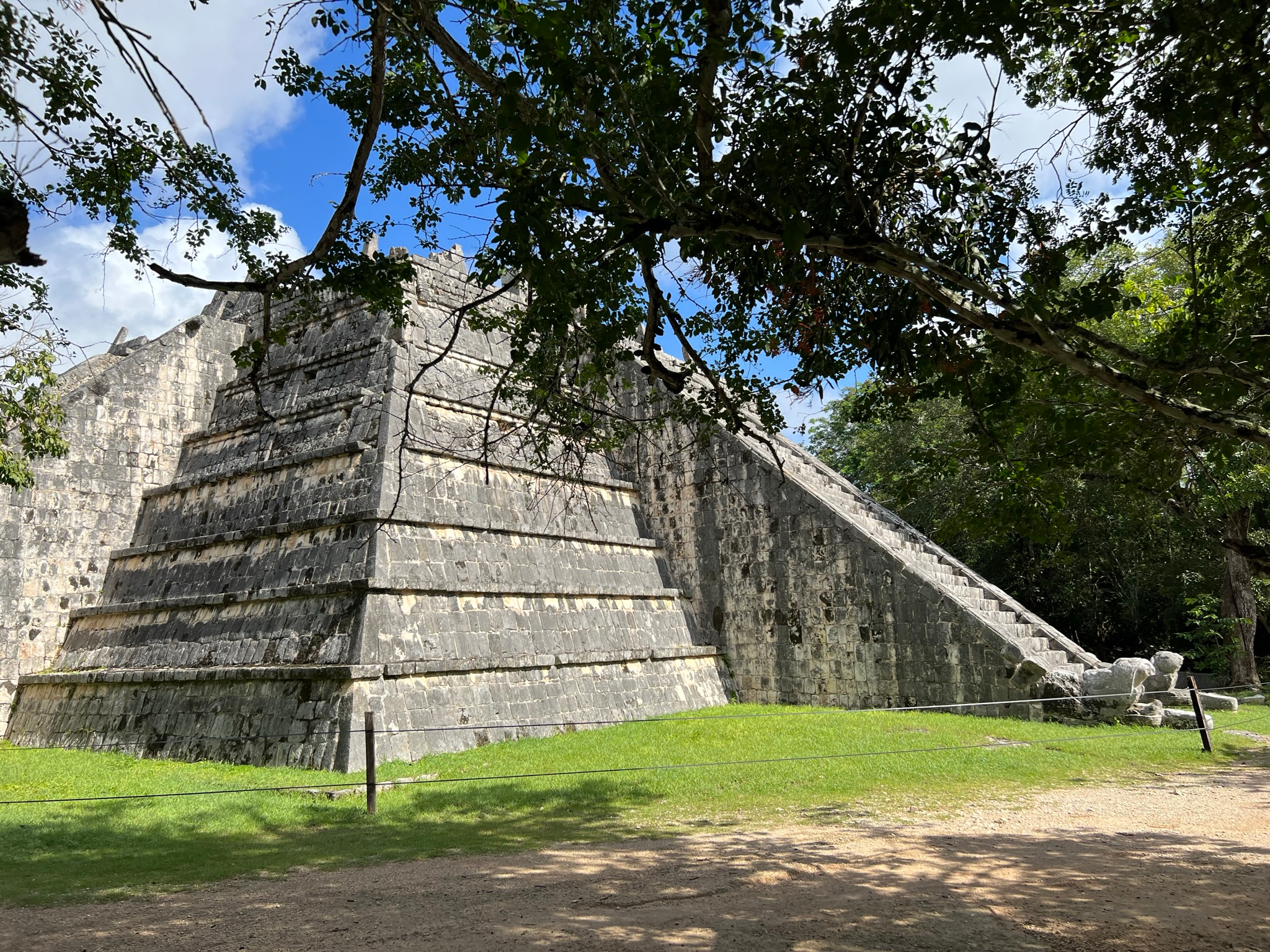
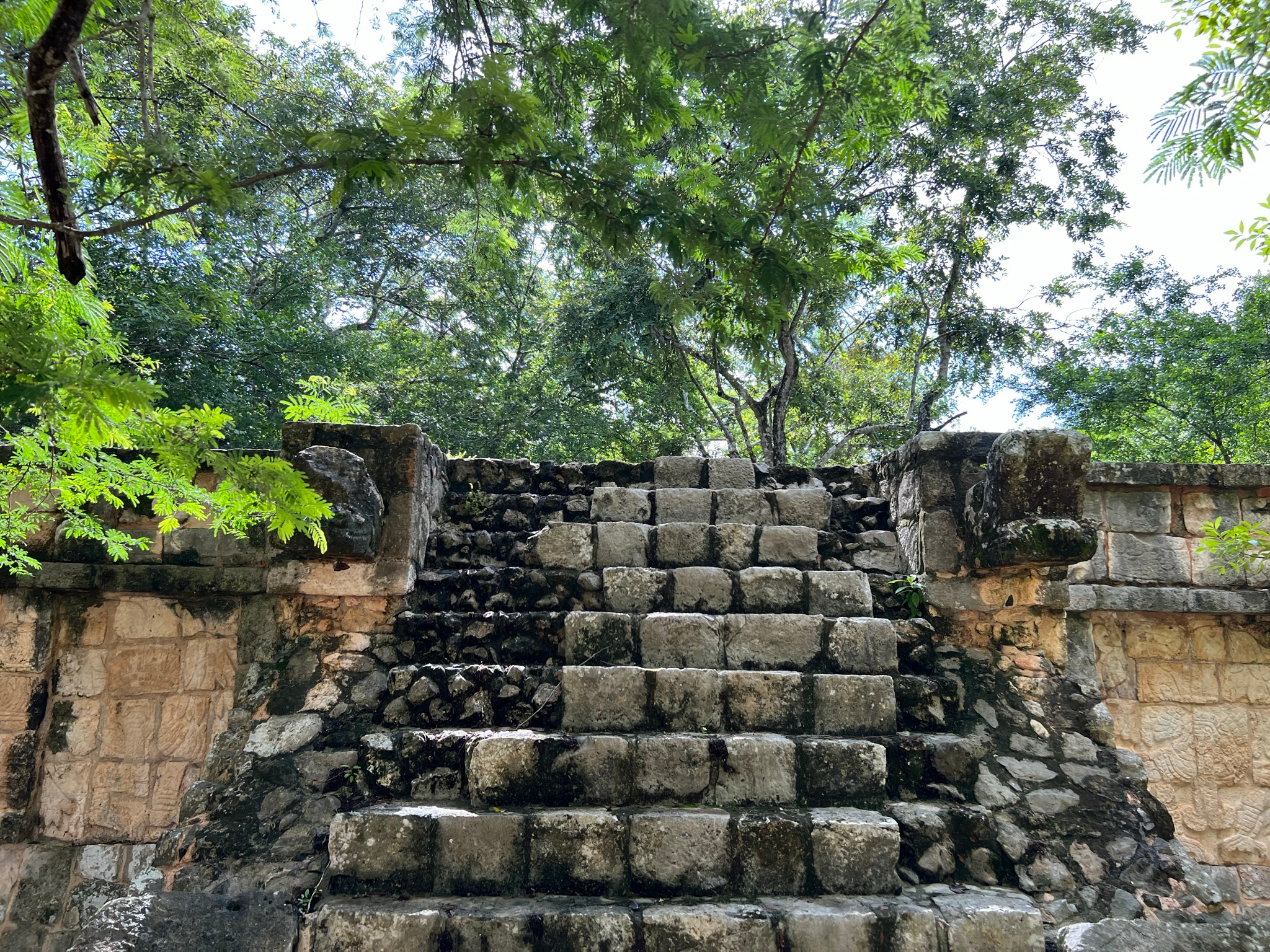
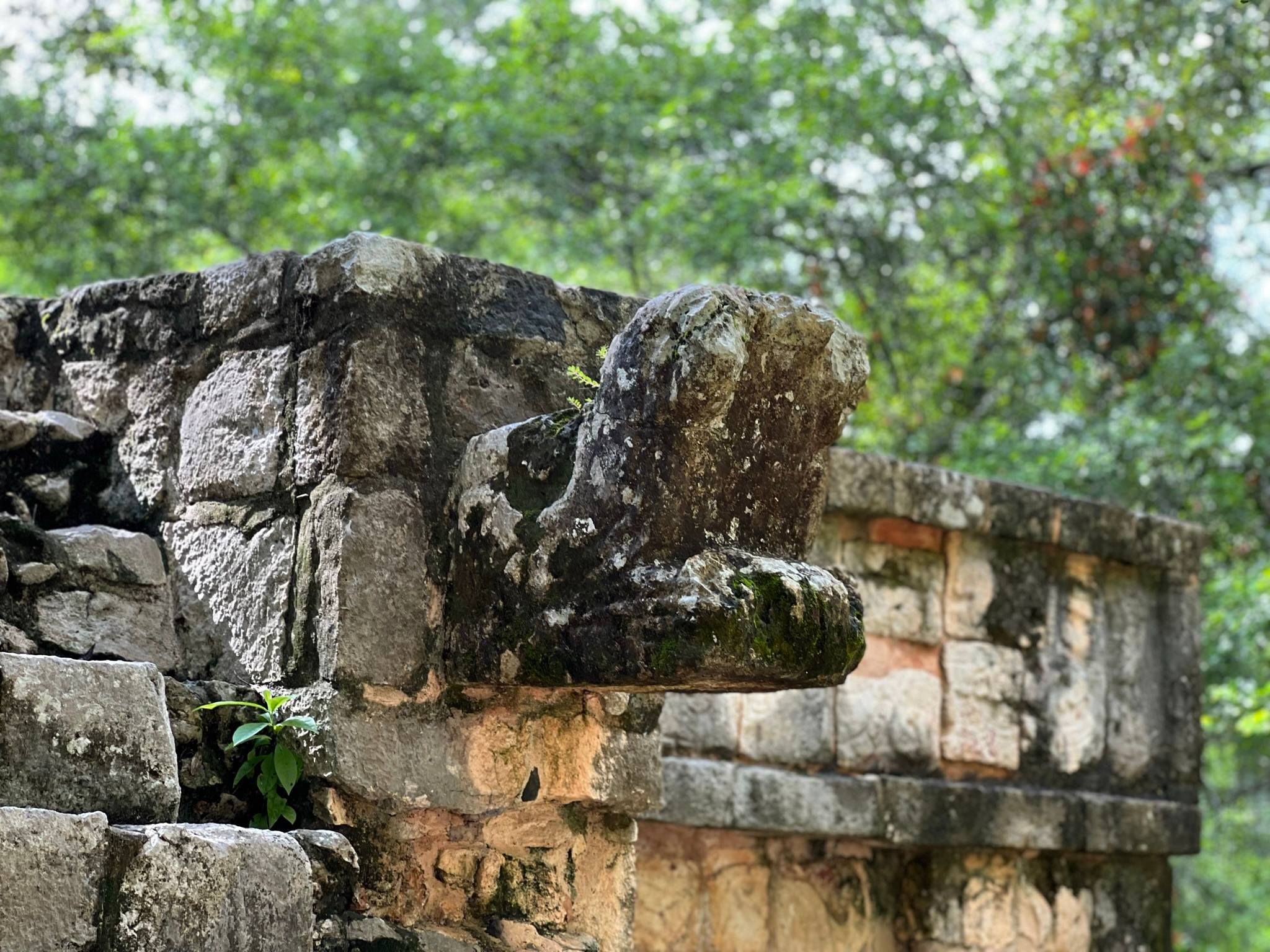
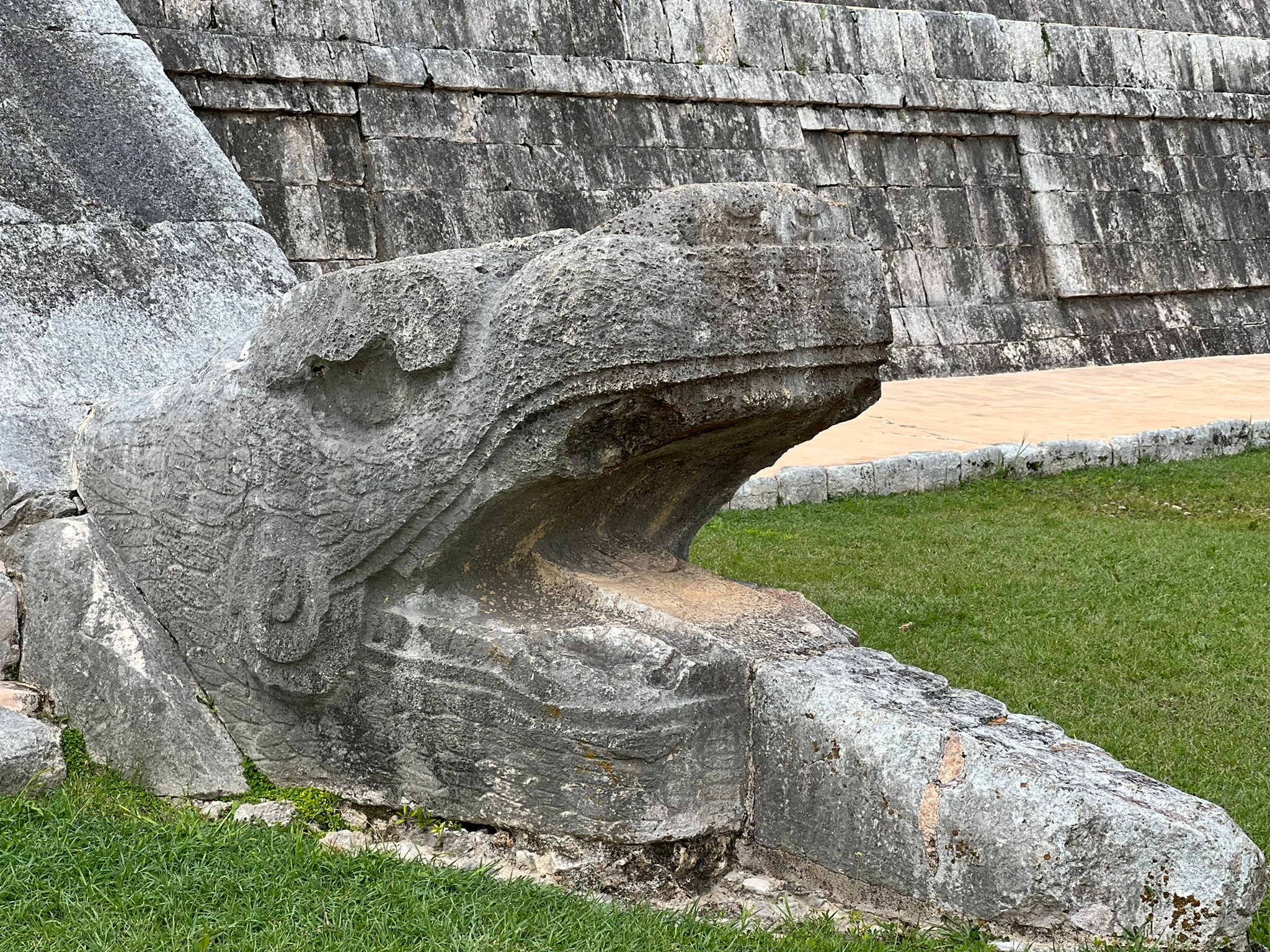
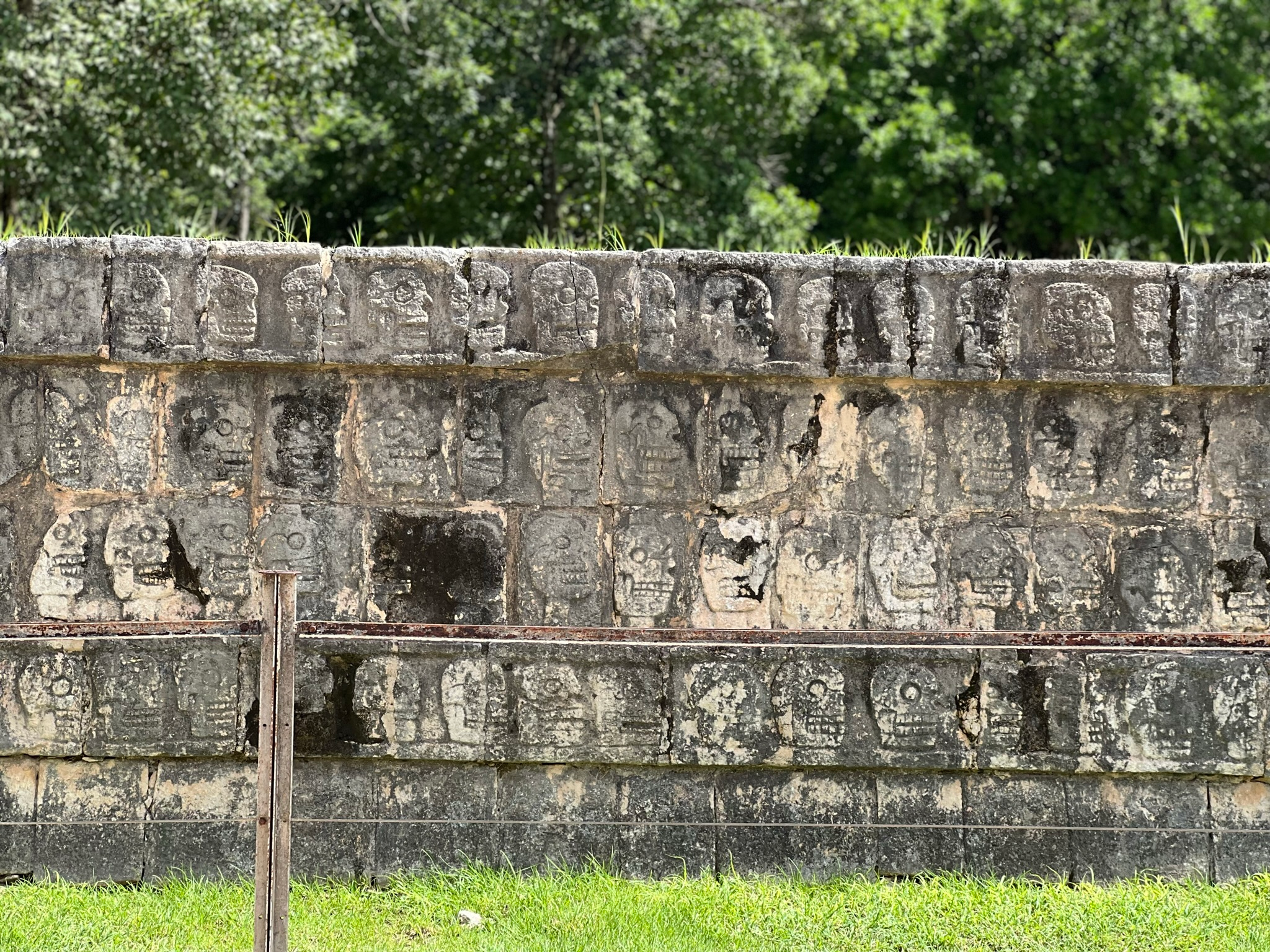
And with that, we started our trail. Once we got to the Osario complex, we couldn’t help but notice a big, four-sided stepped pyramid – the Pyramid of the High Priest. A central staircase, with two serpent balustrades flanking its sides, leads to the summit where a temple can be found, featuring four columns. This, the guide told us, is connected to a cave where seven tombs were found, containing human remains and jade necklaces. Facing this pyramid are three structures, a round platform which was presumably used for some kind of rituals, a larger platform called the Venus Platform, and, the Platform of the Tombs; a square platform with no stairs leading to it where two tombs were found. Connected to the Osario complex by another sacbe is the Temple of Xtoloc which is found next to a cenote going by the same name.
And with that, we started our trail. Once we got to the Osario Complex, we couldn’t help but notice a large, four-sided stepped pyramid – the Pyramid of the High Priest. A central staircase, flanked by two serpent balustrades, leads to the summit where a temple can be found, featuring four columns. This, the guide told us, is connected to a cave where seven tombs were discovered, containing human remains and jade necklaces.
Facing this pyramid are three structures: a round platform, which was presumably used for some kind of rituals; a larger platform called the Venus Platform; and the Platform of the Tombs – a square platform with no stairs leading to it, where two tombs were found. Connected to the Osario Complex by another sacbe is the Temple of Xtoloc, located next to a cenote by the same name.
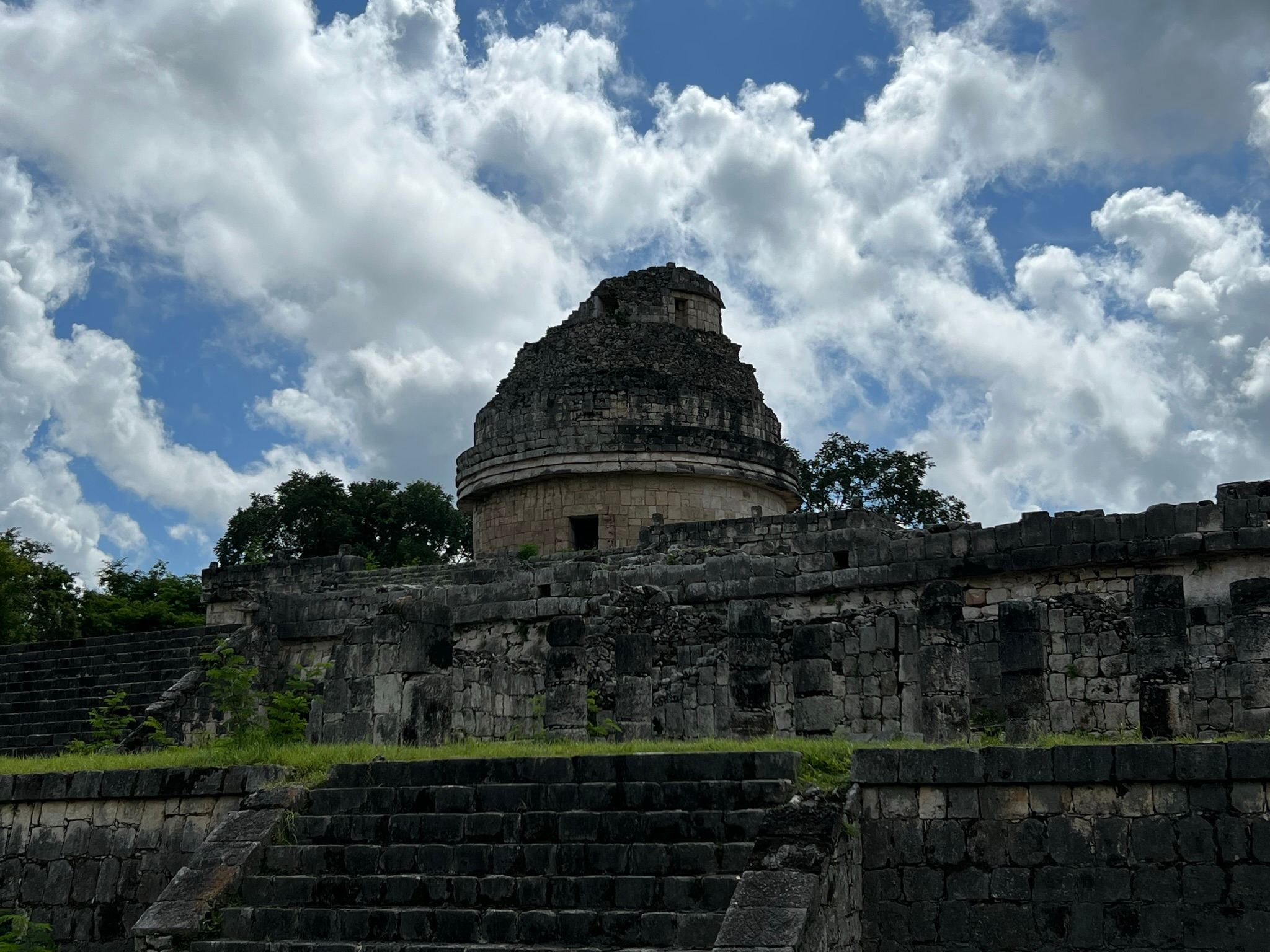
From there, we headed to the Central Group, where a number of structures can be found. Of note is El Caracol, which means “snail.” Set on a giant two-tiered platform that’s around 43 metres tall, El Caracol has a unique round design that sits atop a square base, with a spiral staircase once connecting to the second storey. This building is believed to have been used as an astronomical observatory, with doors and windows aligned at an angle of 27.5 degrees, complementing the paths of Venus, the big star, and Mars, the red star. The Mayans would use this information to plan invasions and wars with rival cities. Inside this building was found the Caracol Disc – a round stone depicting the Feathered Serpent at the top and Xolotl, the god of fire and lightning, at the bottom.
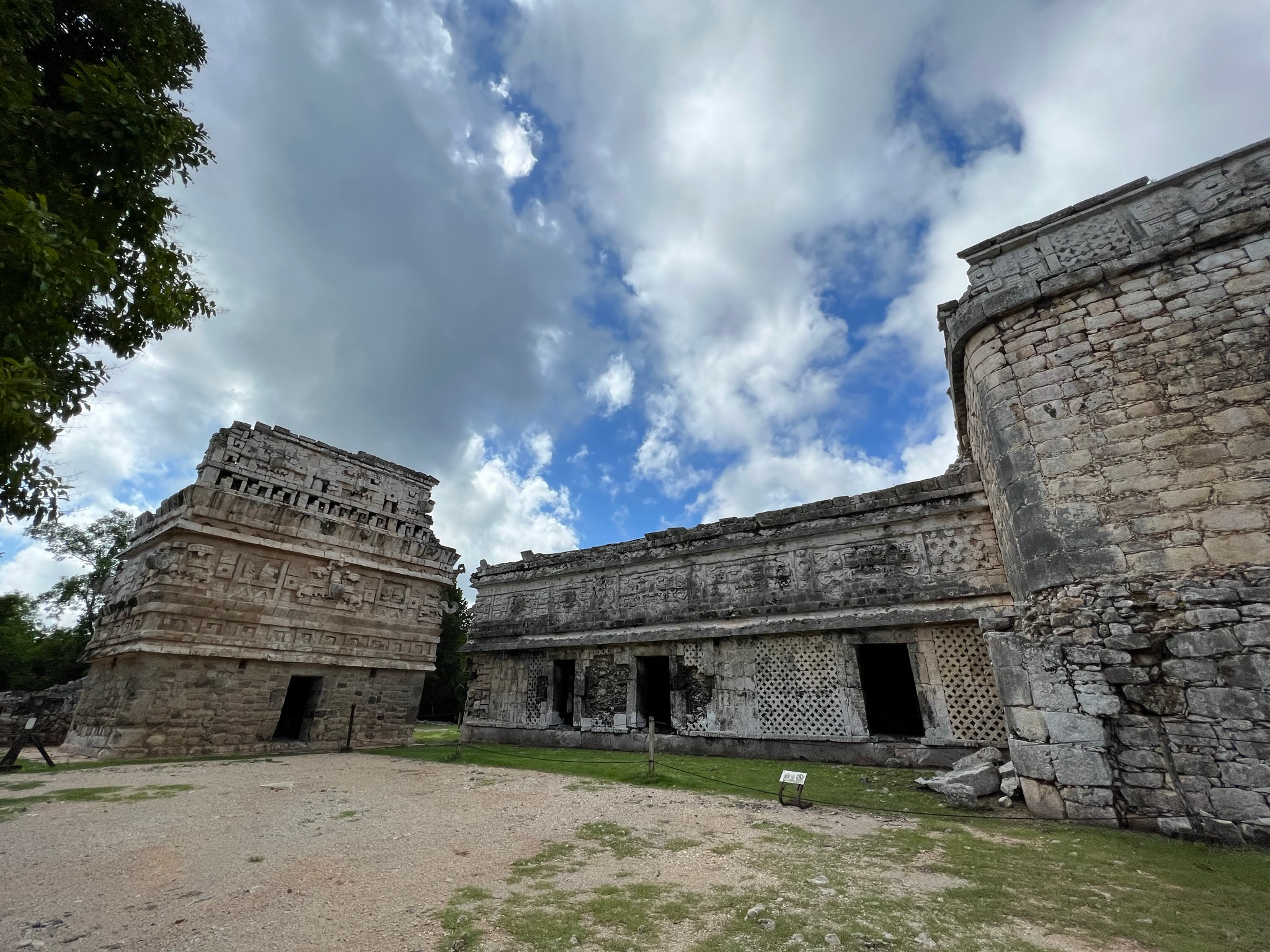
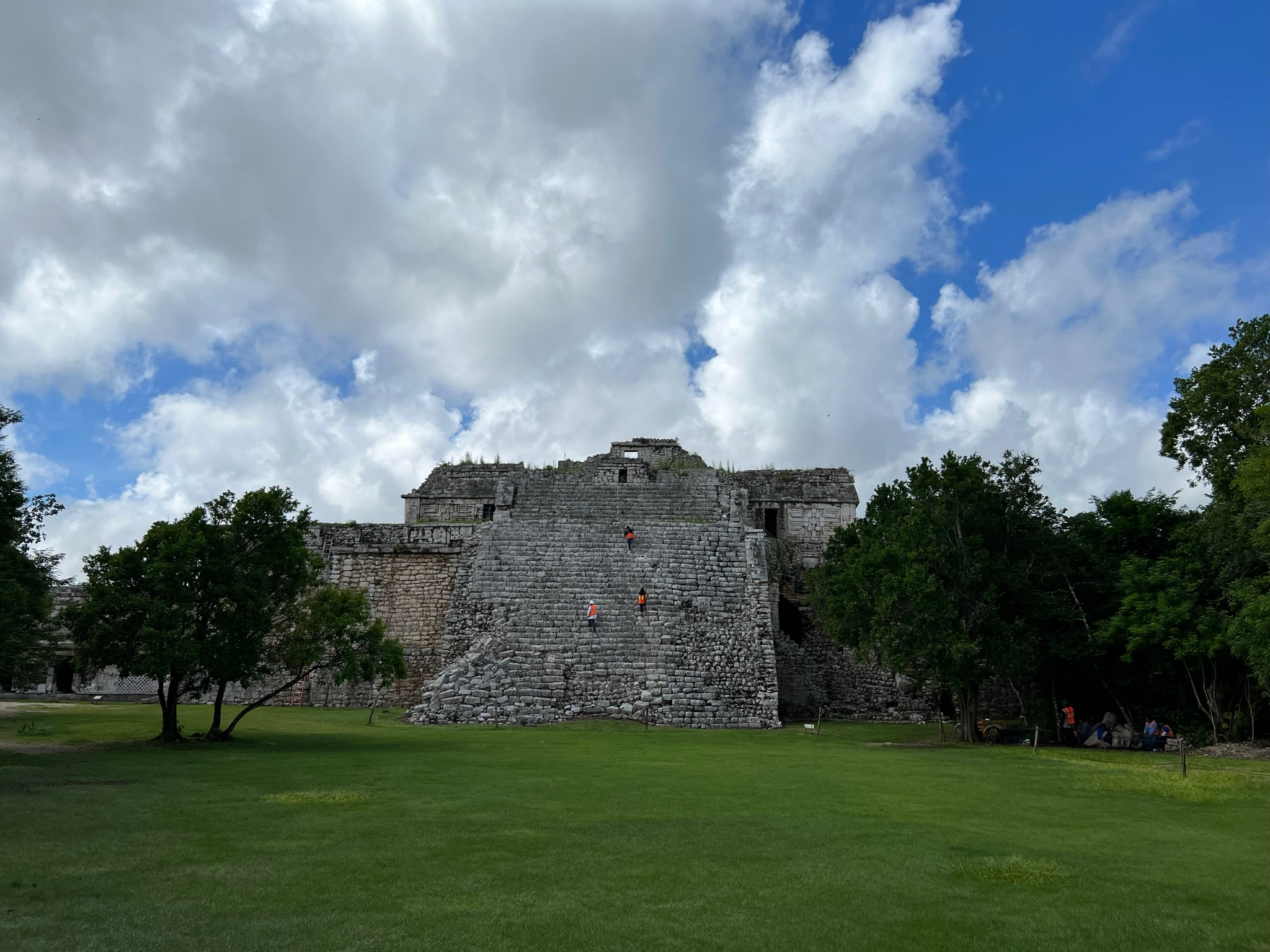
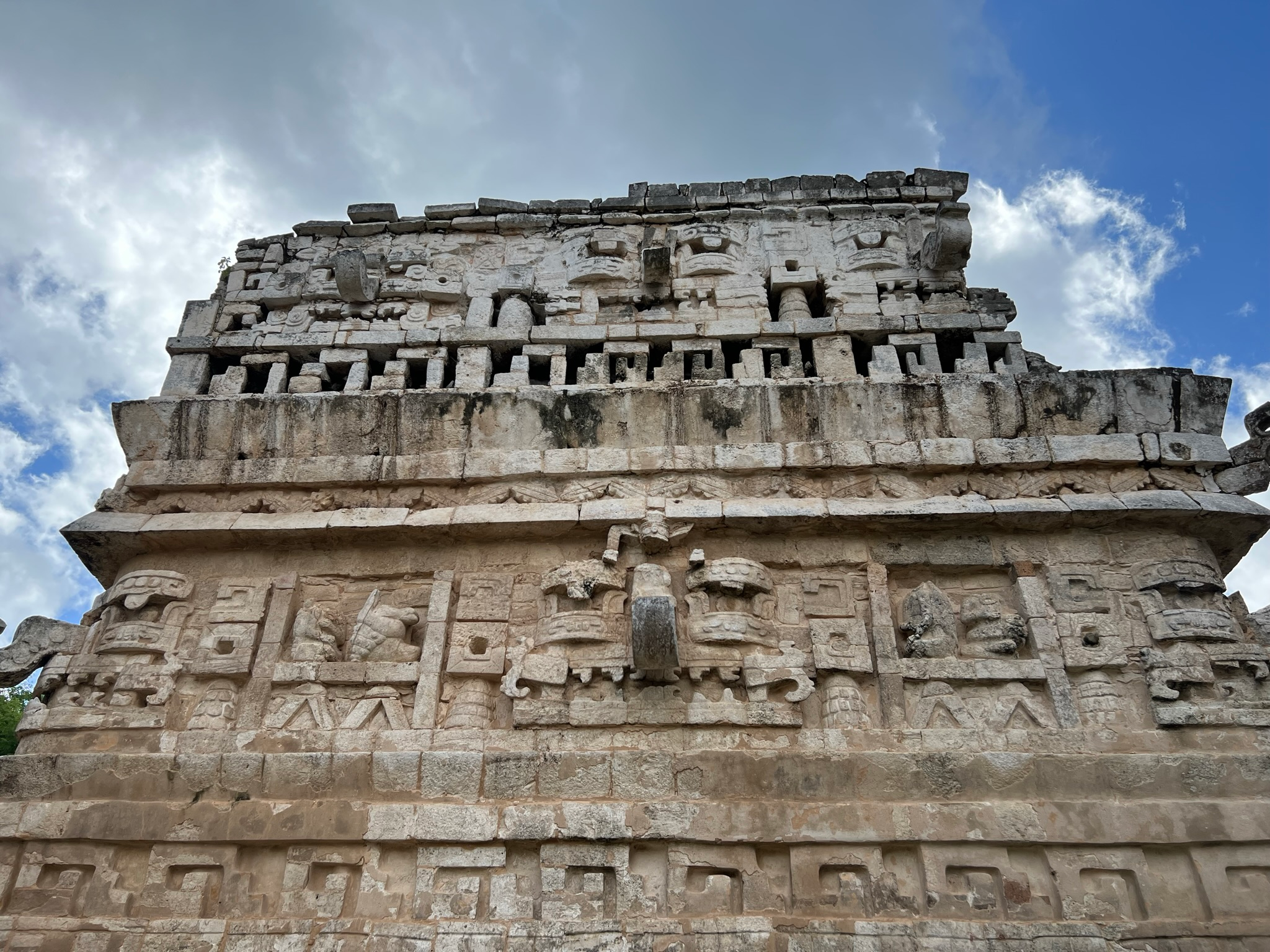
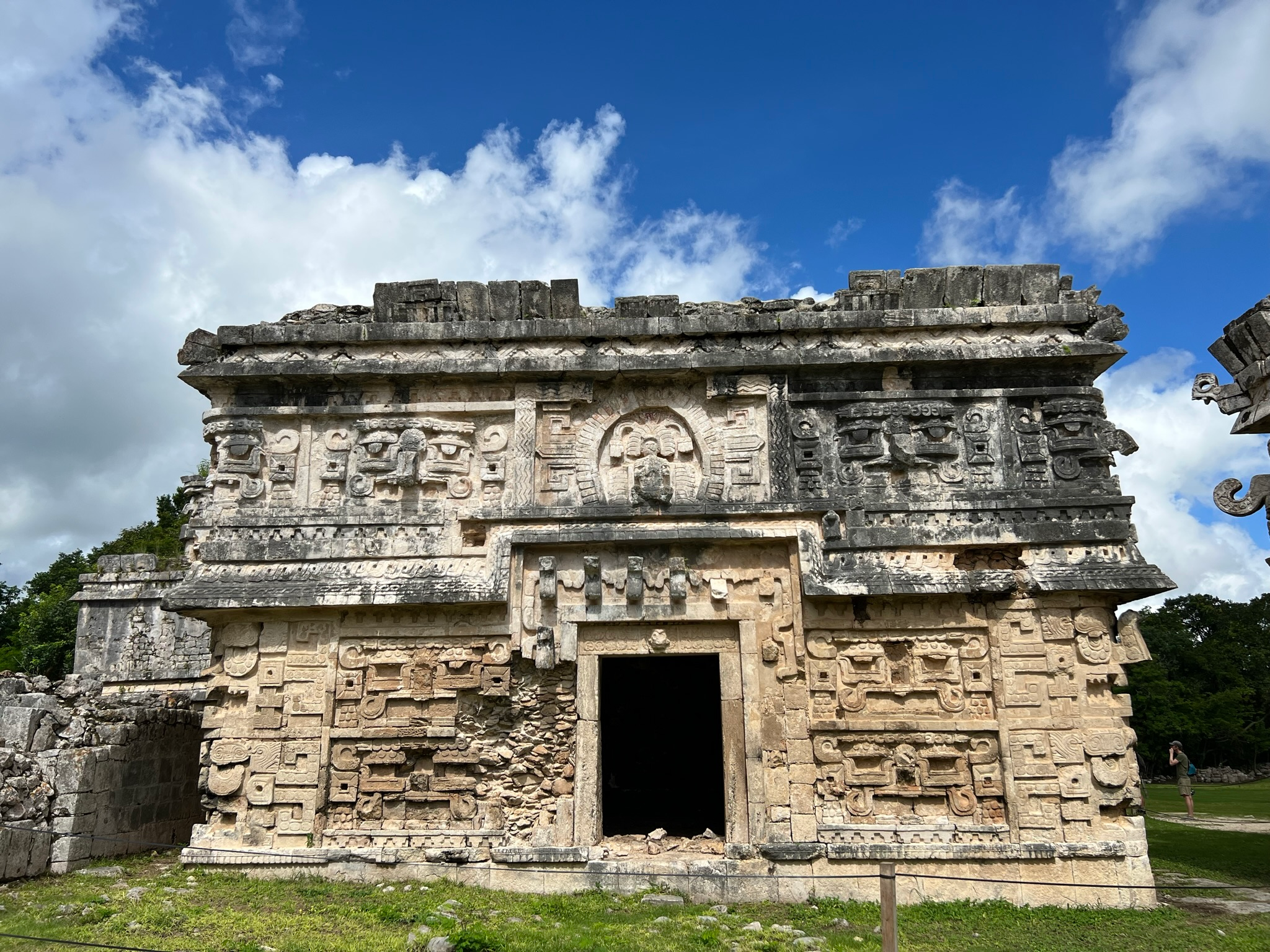
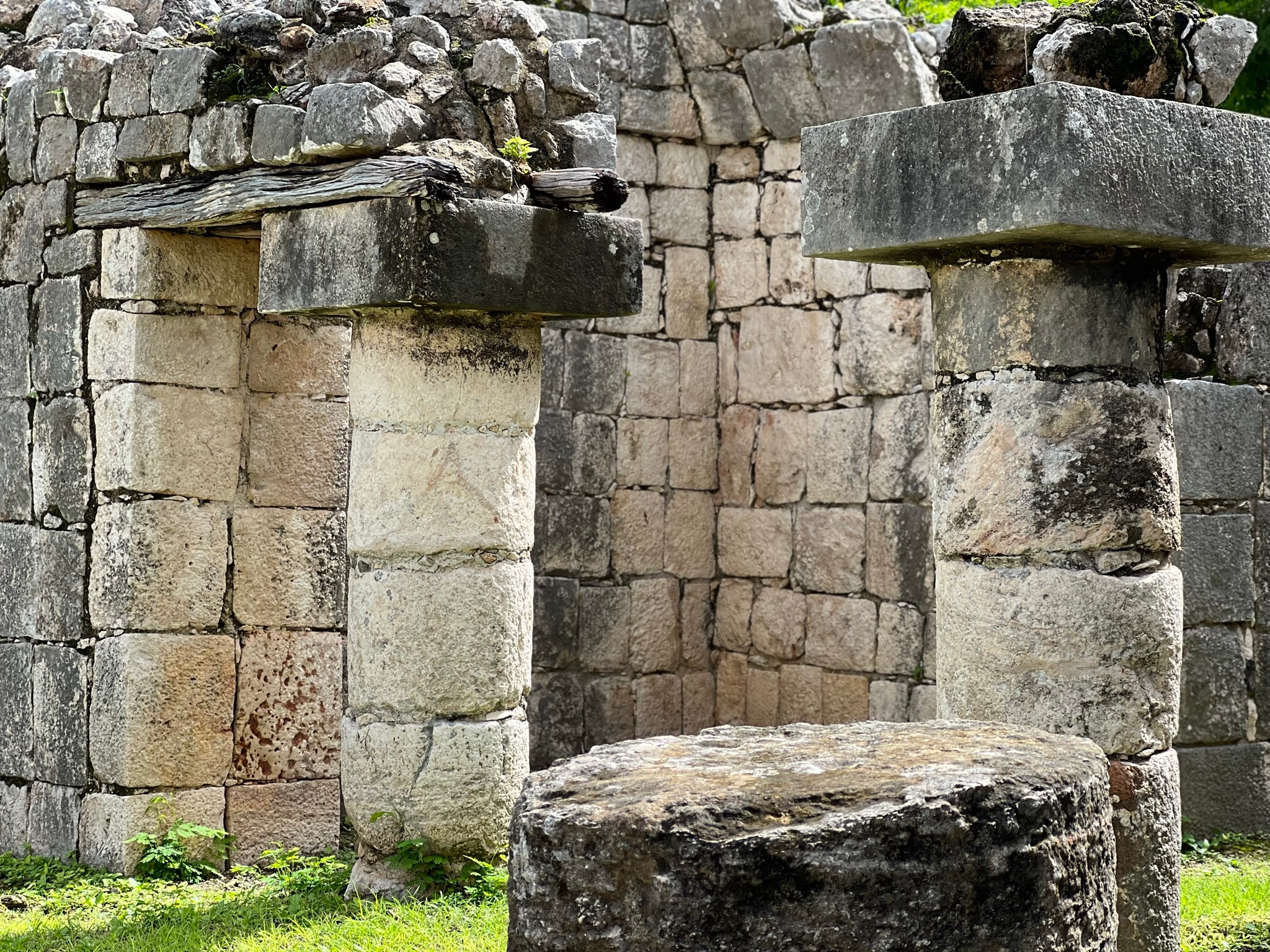
Further south is yet another notable structure: the building of Las Monjas, which translates to “The Nuns.” This is a massive building with a temple at the top. Here, the Puuc style is very evident, with numerous masks of Chaac and glyphic inscriptions adorning some of the walls, several of which refer to a ruler called K’ak’ U Pakal. On its side is a tiny yet impressive structure called La Iglesia – the Church. This is a simple, single-chambered building with an extremely complex and detailed exterior. The mosaics show spirals, serpents, and Chaac masks covering the entire structure.
El Castillo
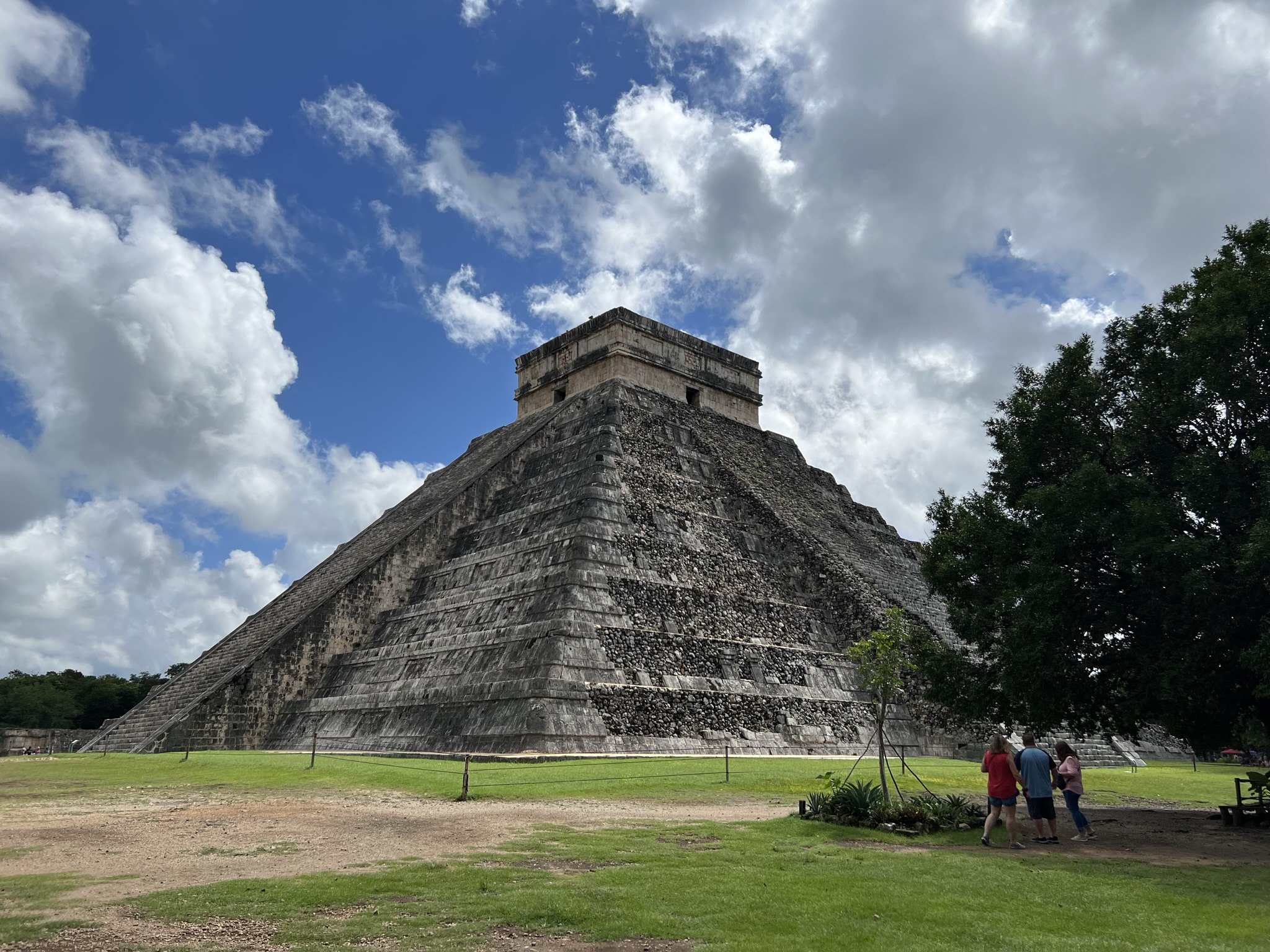
After exploring the area thoroughly and leaving no stone unturned, we walked all the way to the entrance, where the Great North Platform stands. Without making any effort whatsoever, the pyramid that comes into view when you look out over the clearing is one familiar to most. But seeing it in pictures or hearing about its glory fails to do this Wonder of the World any justice.
Whilst I can say that my previous statement about not feeling connected or spiritually inspired still held true (on account of there being thousands of tourists surrounding the pyramid), I can’t say I wasn’t left in awe or amazed by the majestic structure. After having visited so many ruins, I felt as if this one stood out as genuinely the best of them all. It’s not the largest, nor the oldest, though it is definitely very well-preserved and intricately designed. Also, admittedly, the fact that it’s a world-renowned Wonder – which we’ve all seen on TV, in magazines, on the internet, and God only knows where else since we were kids – definitely takes it up a notch.
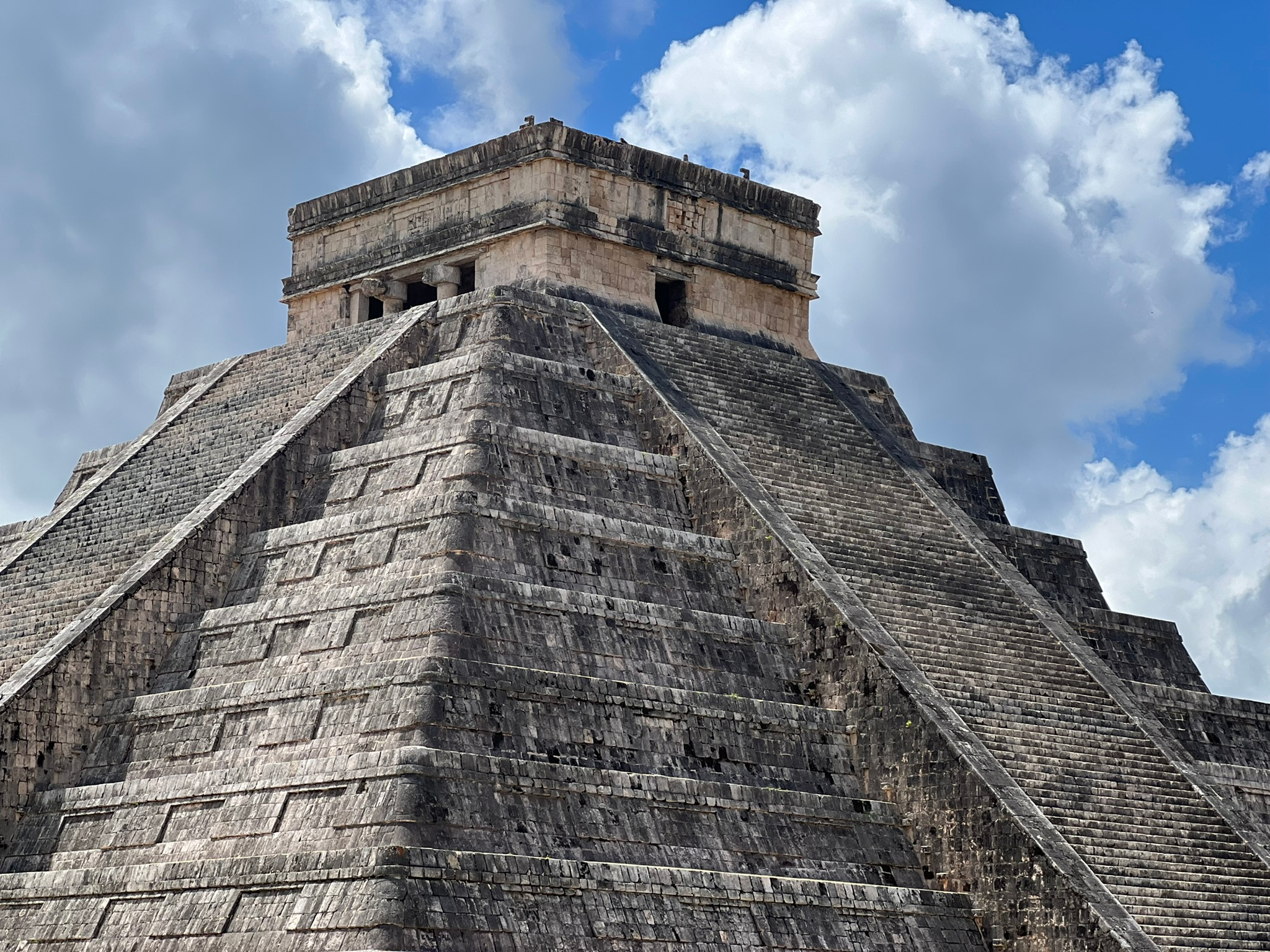
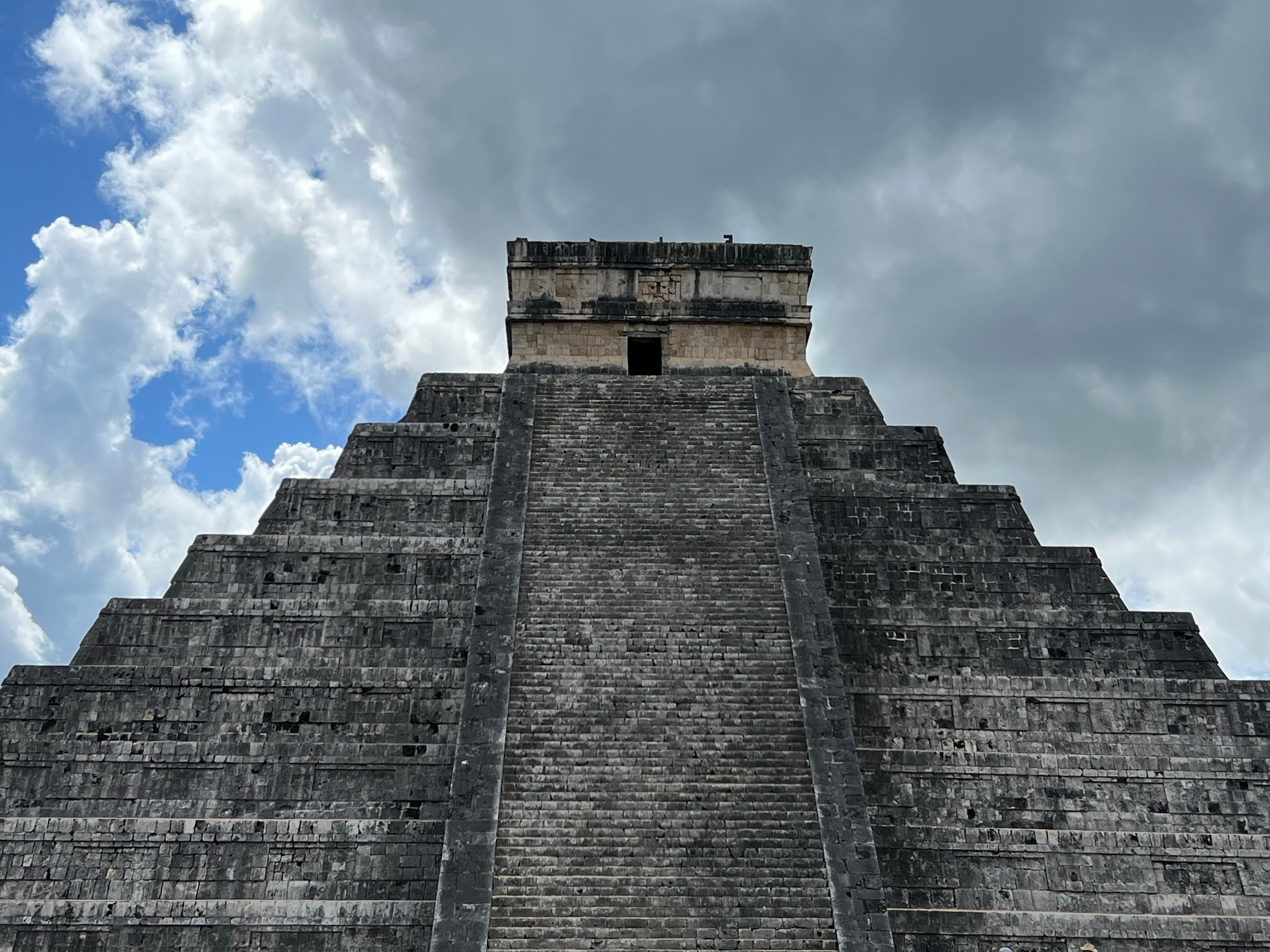
The Temple of Kukulkan, or as it is otherwise known, El Castillo, is essentially a larger version of the Pyramid of the High Priest. Standing tall at 26 metres, it is a four-sided stepped pyramid consisting of nine square terraces and a temple at its summit. Here, a Chac Mool statue with mother-of-pearl detailing was found – a reclined figure supported on its elbows, butt and feet, with its head facing forward. On its belly was a bowl-shaped container where sacrificial offerings to the gods would be placed. In a separate, adjacent room, a statue of a red jaguar – adorned with cinnabar, jadeite, and mollusc shells – along with two sets of human remains were found. Apart from this, an artificial tunnel connects to an older, smaller pyramid over which El Castillo was built, with a third pyramid discovered even deeper inside. This, the guide told us, was found after several attempts at excavation and is a common feature of most Mayan pyramids.
As if that weren’t enough, the entire complex is built over a cenote, with some suggesting this was purposely done given the importance of cenotes to the Mayans. To this day, it is theorised that there might be a tunnel leading straight to the cenote; however, none have been found as of yet. Another cool cenote fact? The pyramid is aligned with four other cenotes, further consolidating its position as an axis mundi.
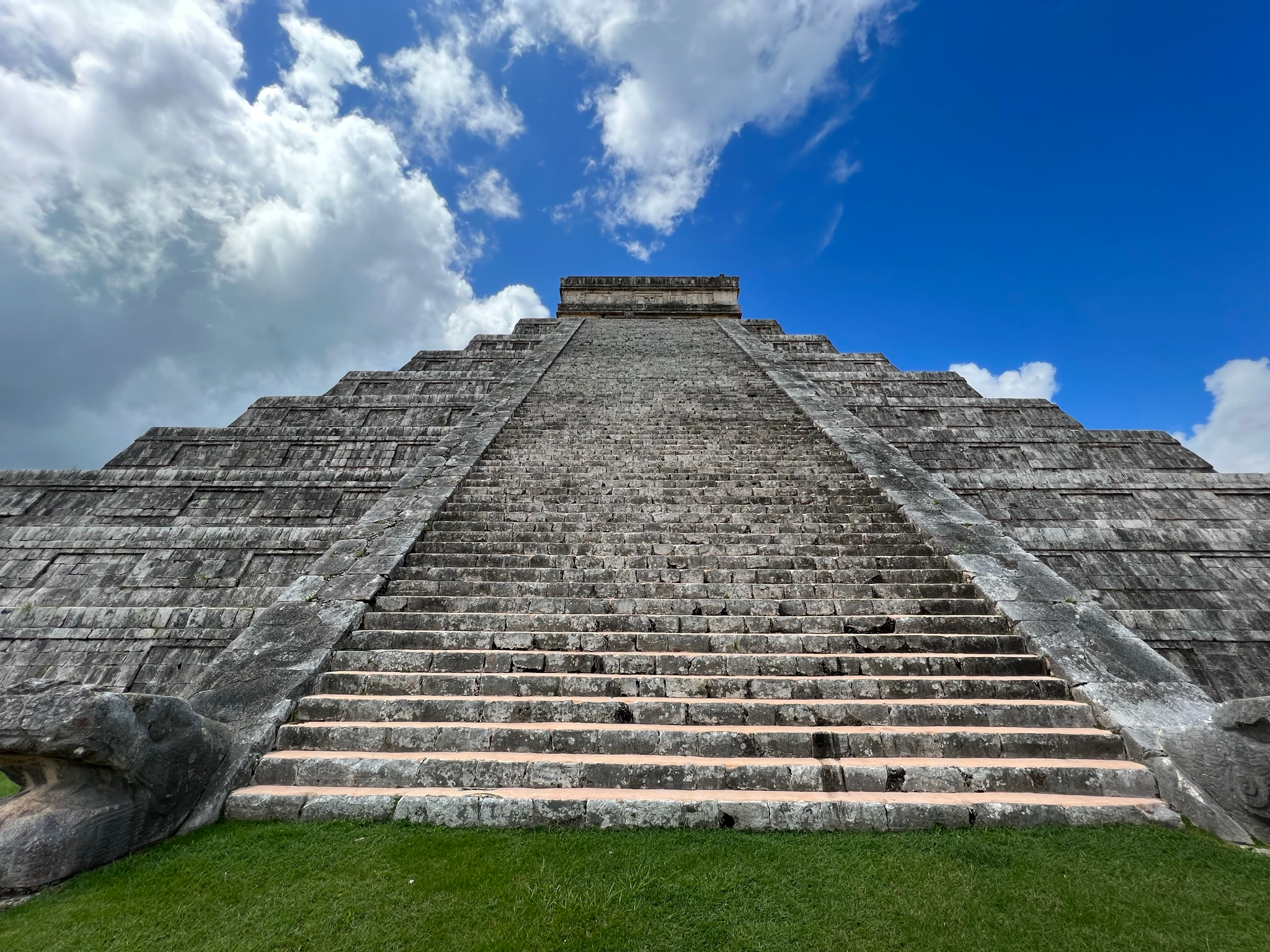
To add to the list of cool facts about this pyramid, some also refer to it as the World’s Largest Calendar. Each of its sides has 91 steps which, when multiplied by four, gives a round and crisp 364. Add to this the temple at the top andv – voilà! – you have the total number of days in one year, or, as the Mayans call it, the haab. Each side, in turn, has 26 sunken panels and 26 raised ones, totalling – yep, you guessed it – 52; the number of weeks in a year!
Okay, one final cool fact, I promise. While every side of the pyramid has its own staircase, the one on the north-eastern face is larger, with serpent balustrades on either side. During the equinoxes, the guide told us, a series of triangular-shaped shadows is cast on the western balustrade, forming the shape of a serpent climbing down the pyramid – a representation of Kukulkan, the Feathered Serpent.
More of the City
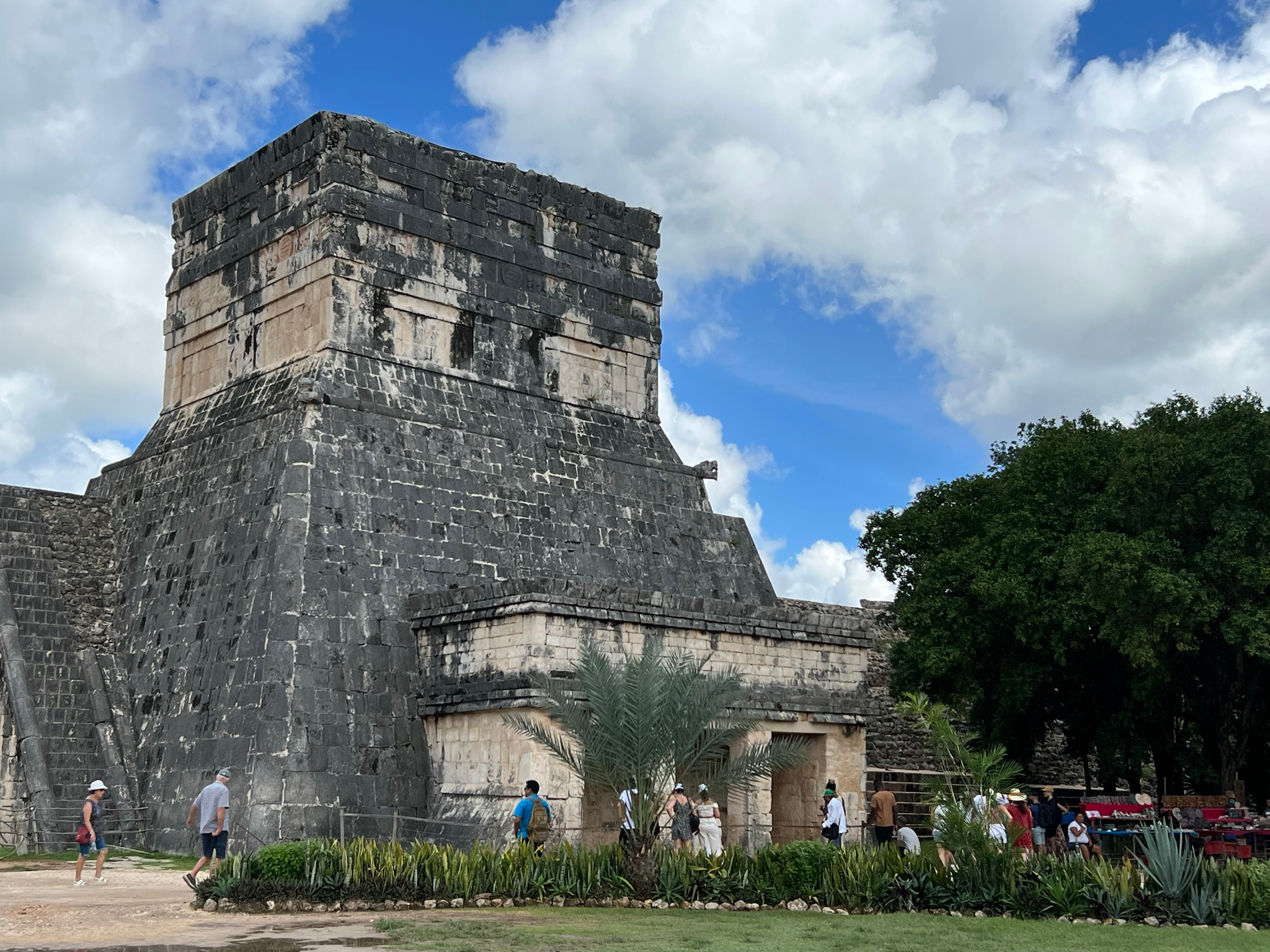
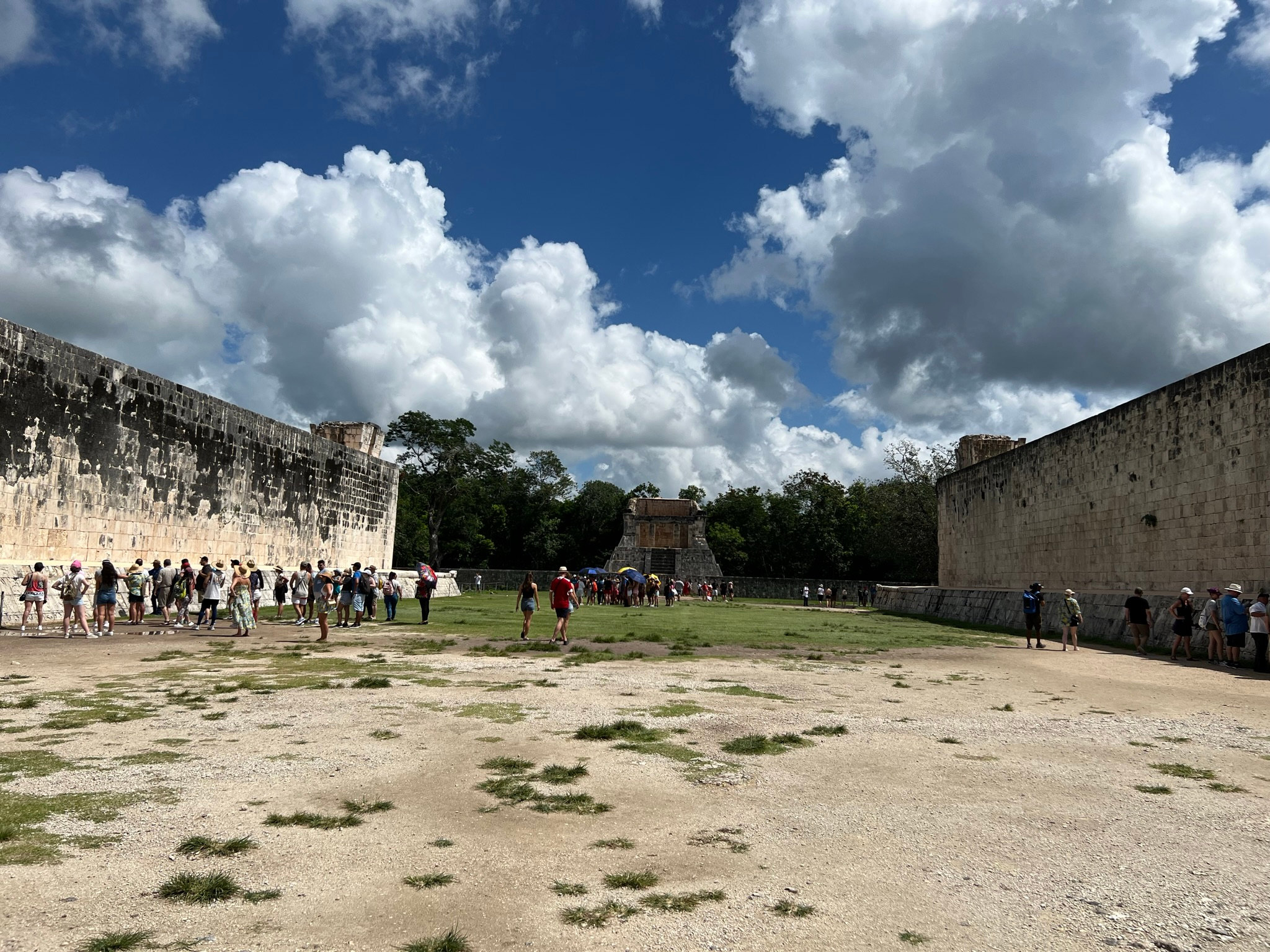
After spending some time admiring this glorious piece of art – and getting a headache from all the people clapping in order to emulate the sound of a quetzal bird (this phenomenon, according to scientific literature, is not accidental) – we then walked to the pelote court: the largest I had ever seen.
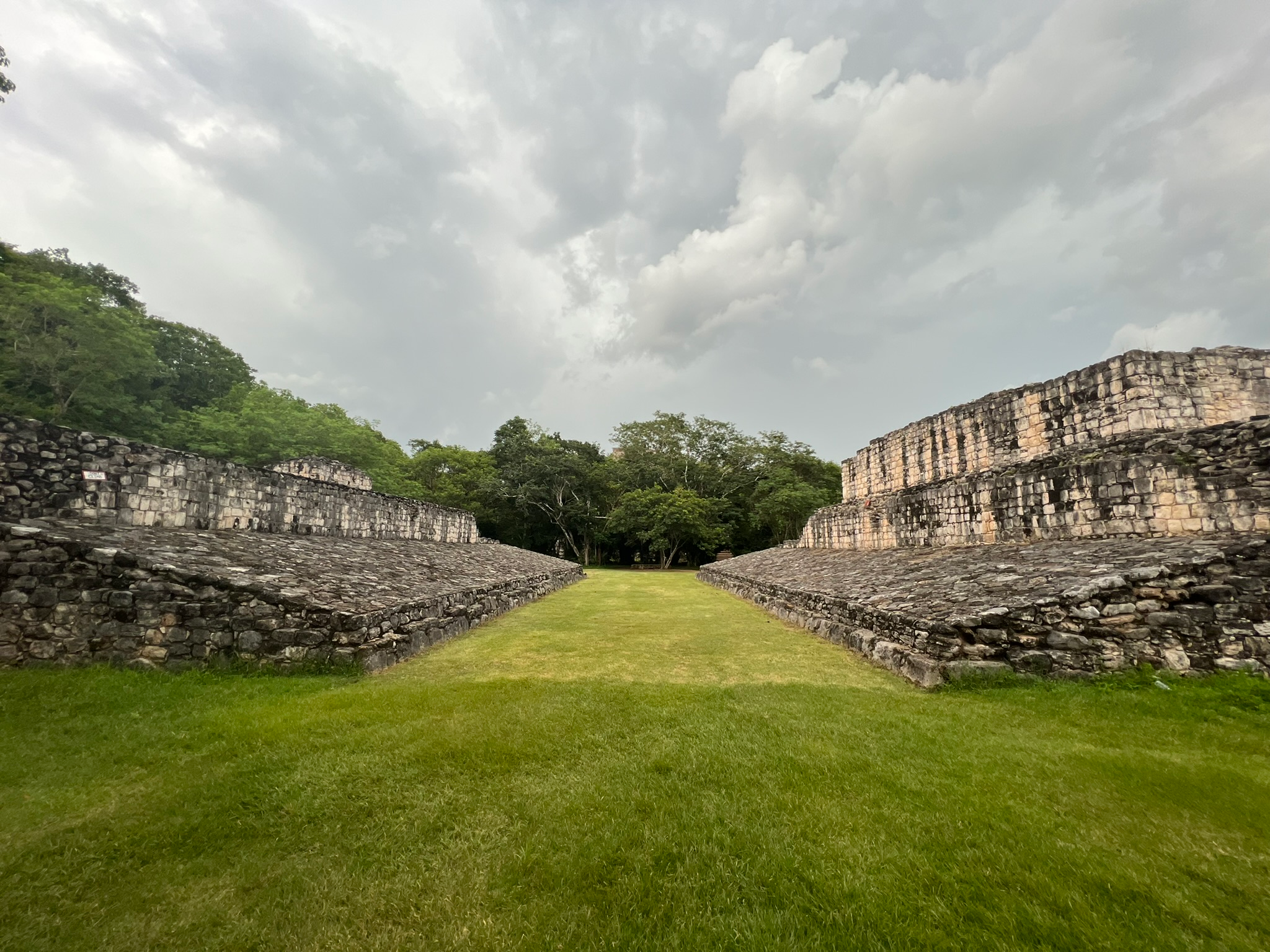
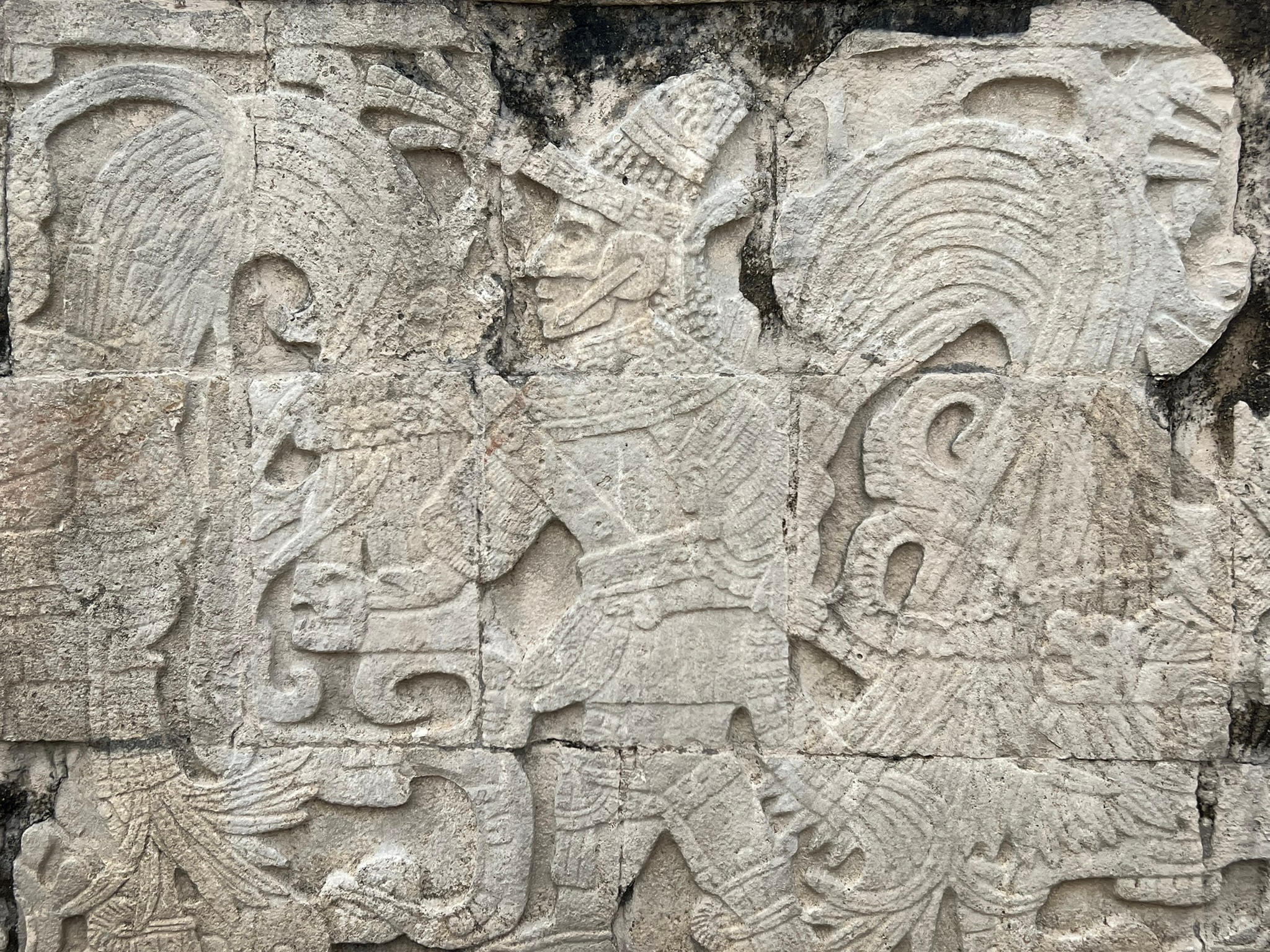
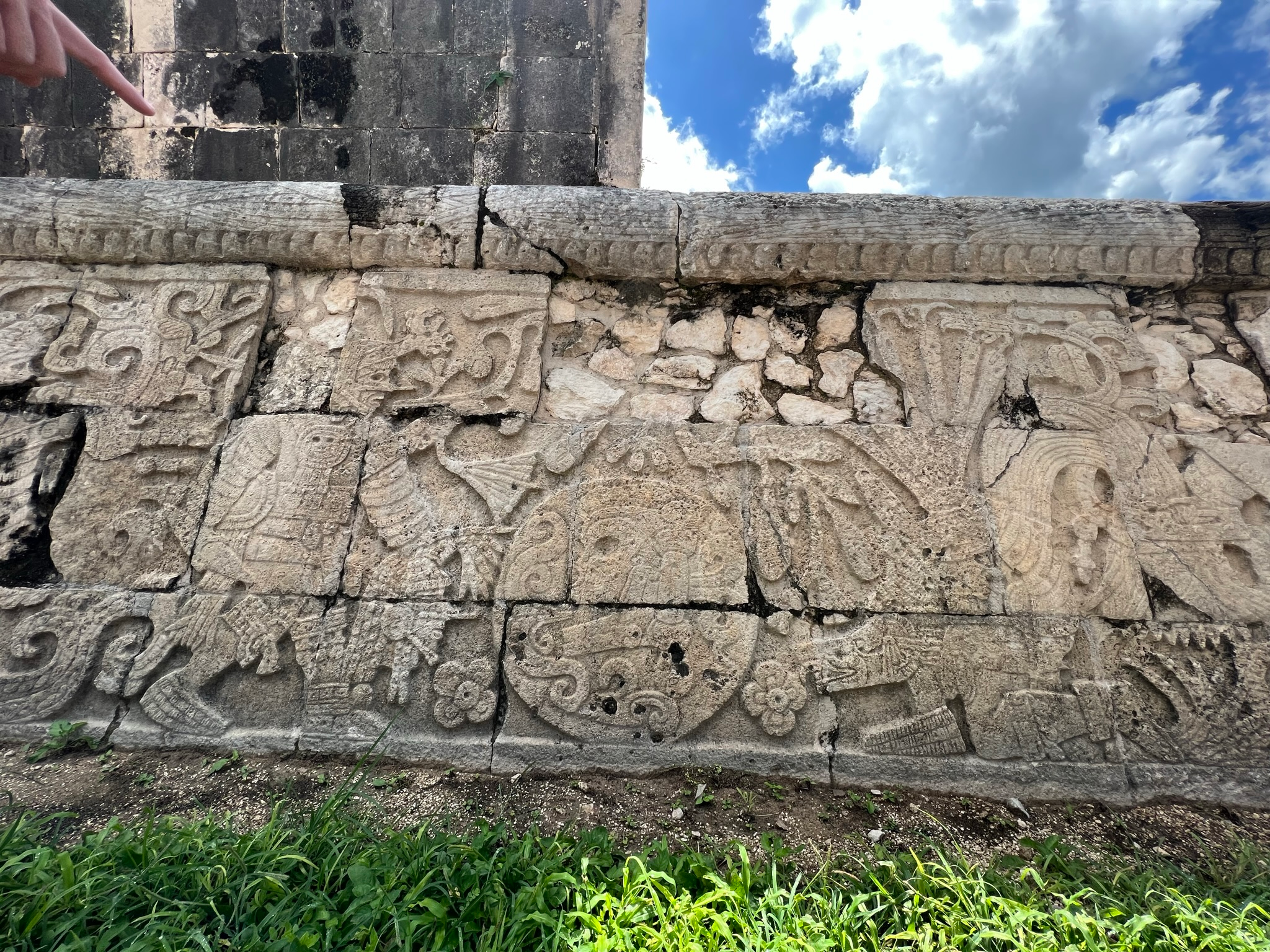
Being the biggest of the thirteen pelote courts on the entire site, this one was only used on special occasions, with priests as the sole spectators, standing in either the North or South temples on its sides. The magnificent Great Ballcourt is flanked by walls that still have the original rings carved with feathered serpents and decorated with a series of stone blocks depicting team members – one of whom is being decapitated. This would usually represent the winner, whose head, according to the guide, would be taken by the loser to the nearby Skull Platform as a sacrifice to the gods. Alternatively, he added, sometimes the winners would be taken for a temazcal ritual – a sweat lodge used to heal and purify their souls – before being beheaded or having their heart ripped out of their chest. Cool, cool.
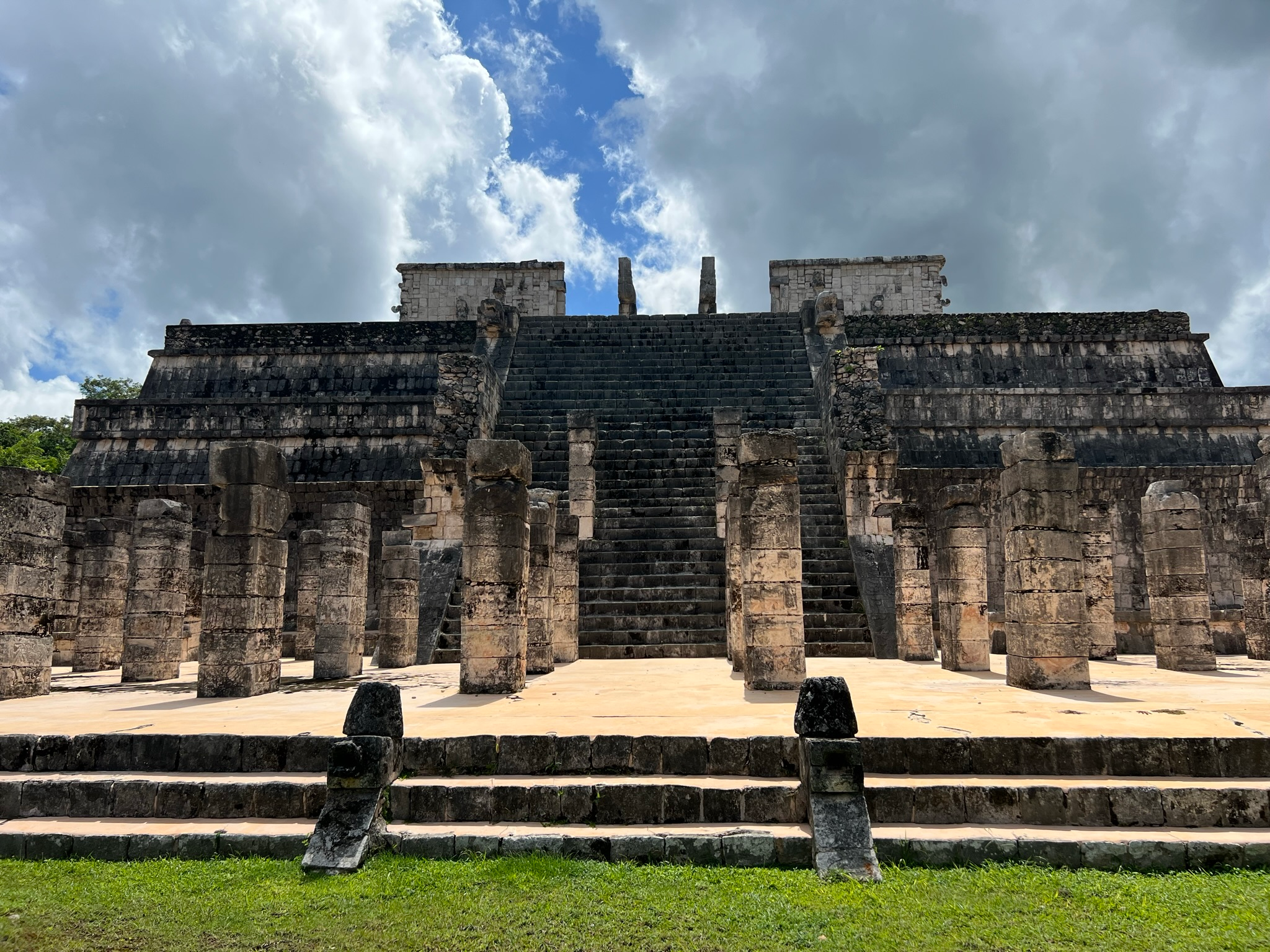
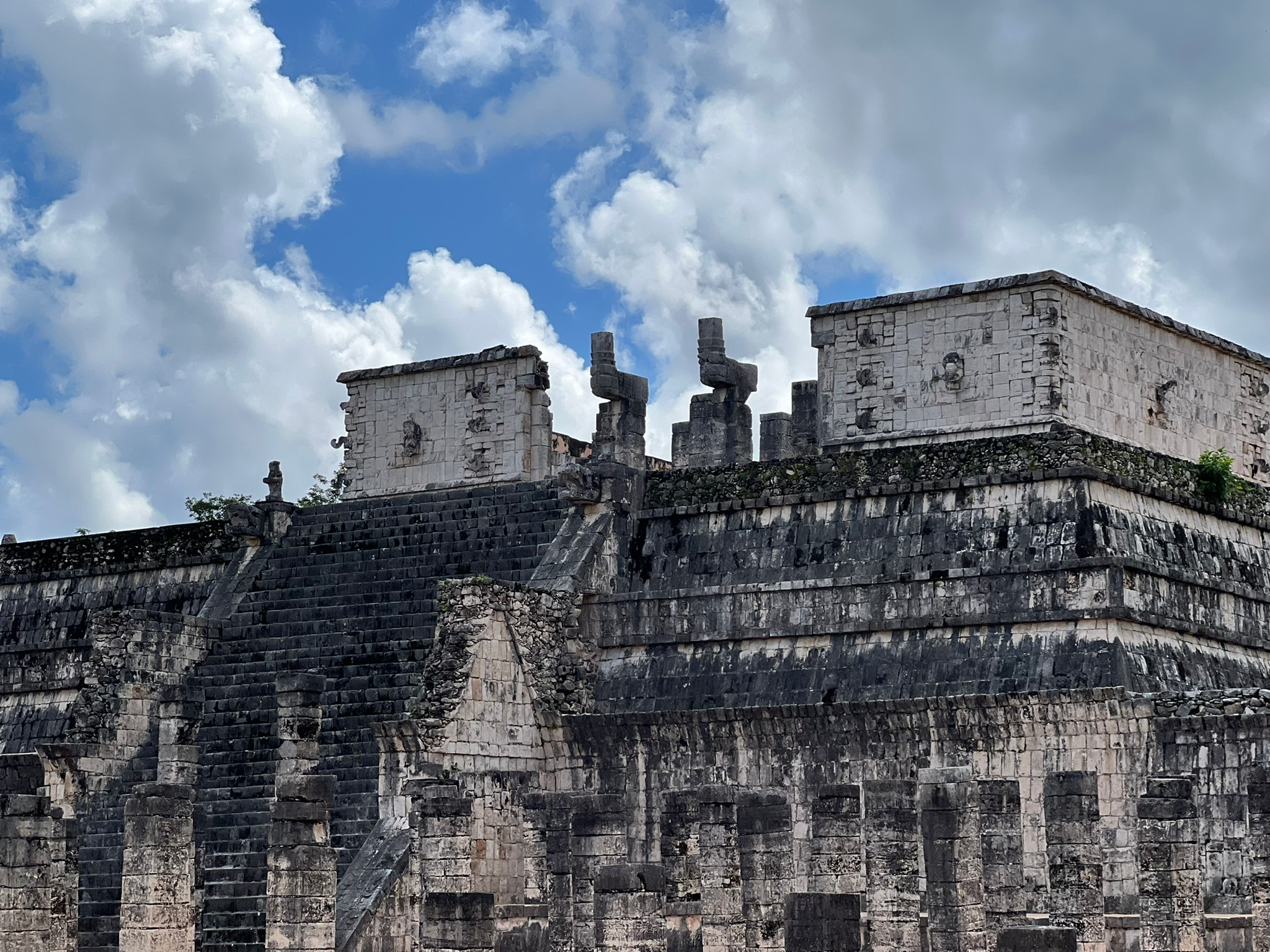
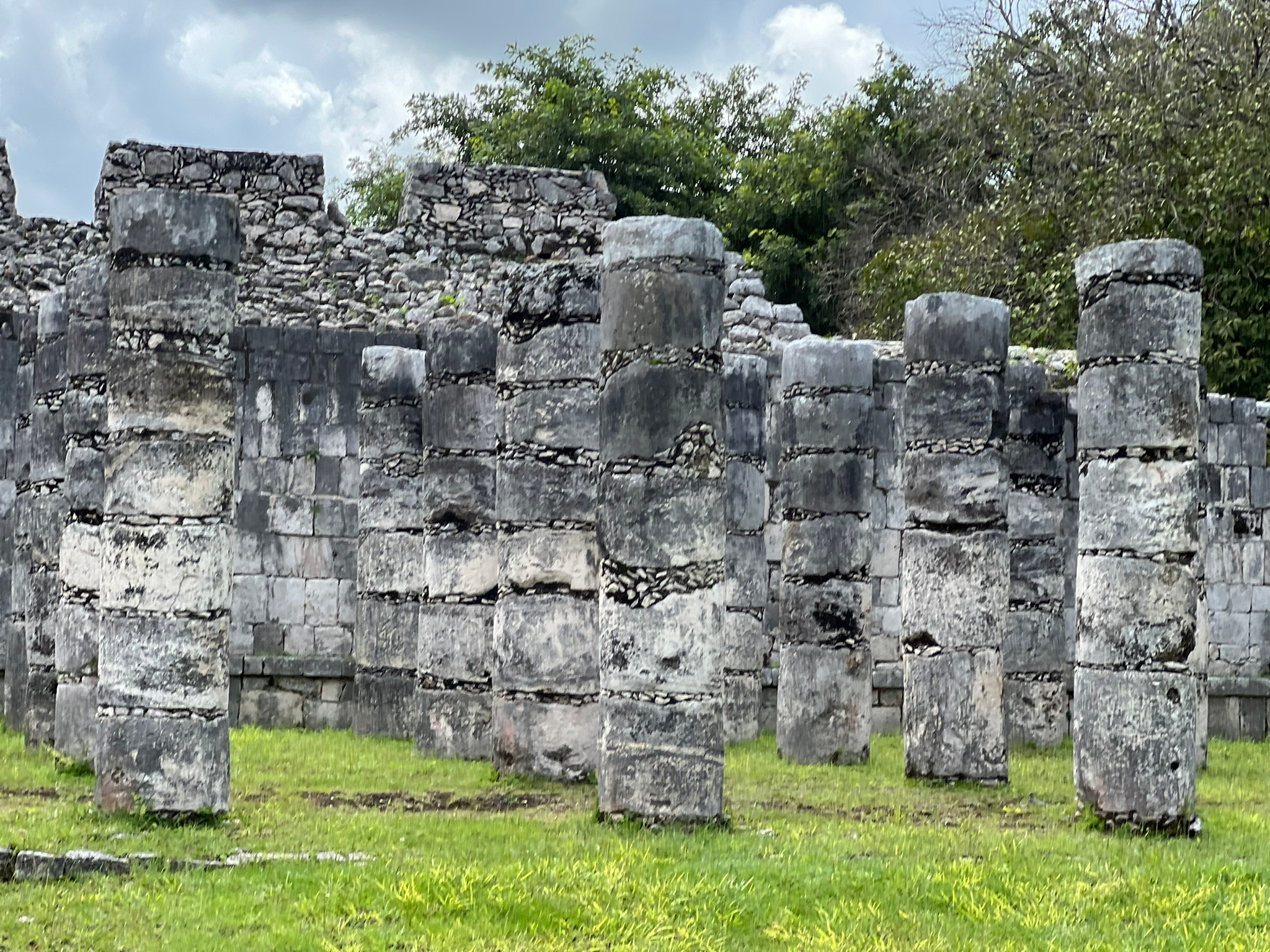
Then there was the Temple of the Warriors: a pyramid surrounded by columns featuring soldiers; the Plaza of a Thousand Columns – which, I think, you can figure out for yourself – and tens of other structures I could go on and on about.
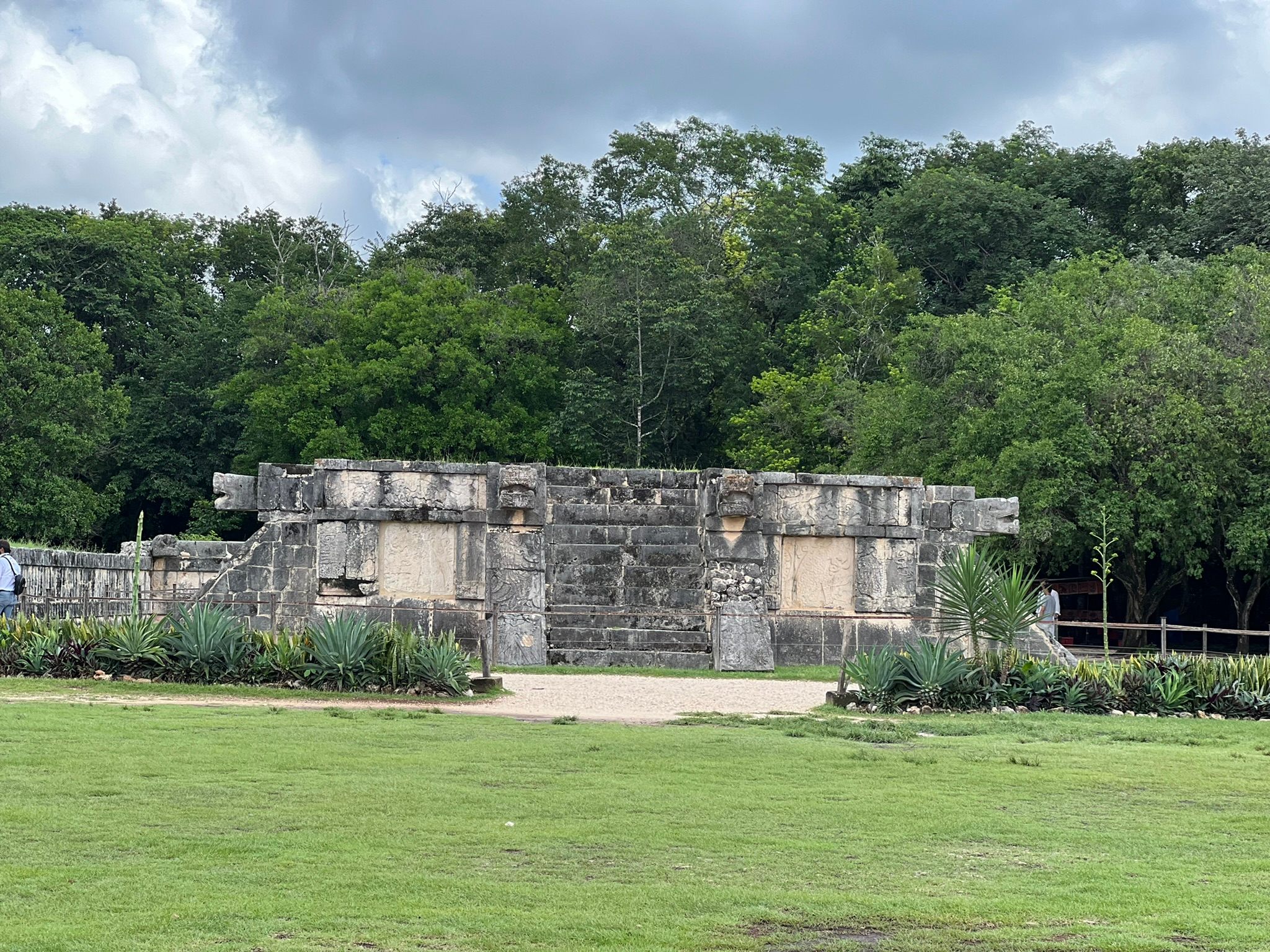

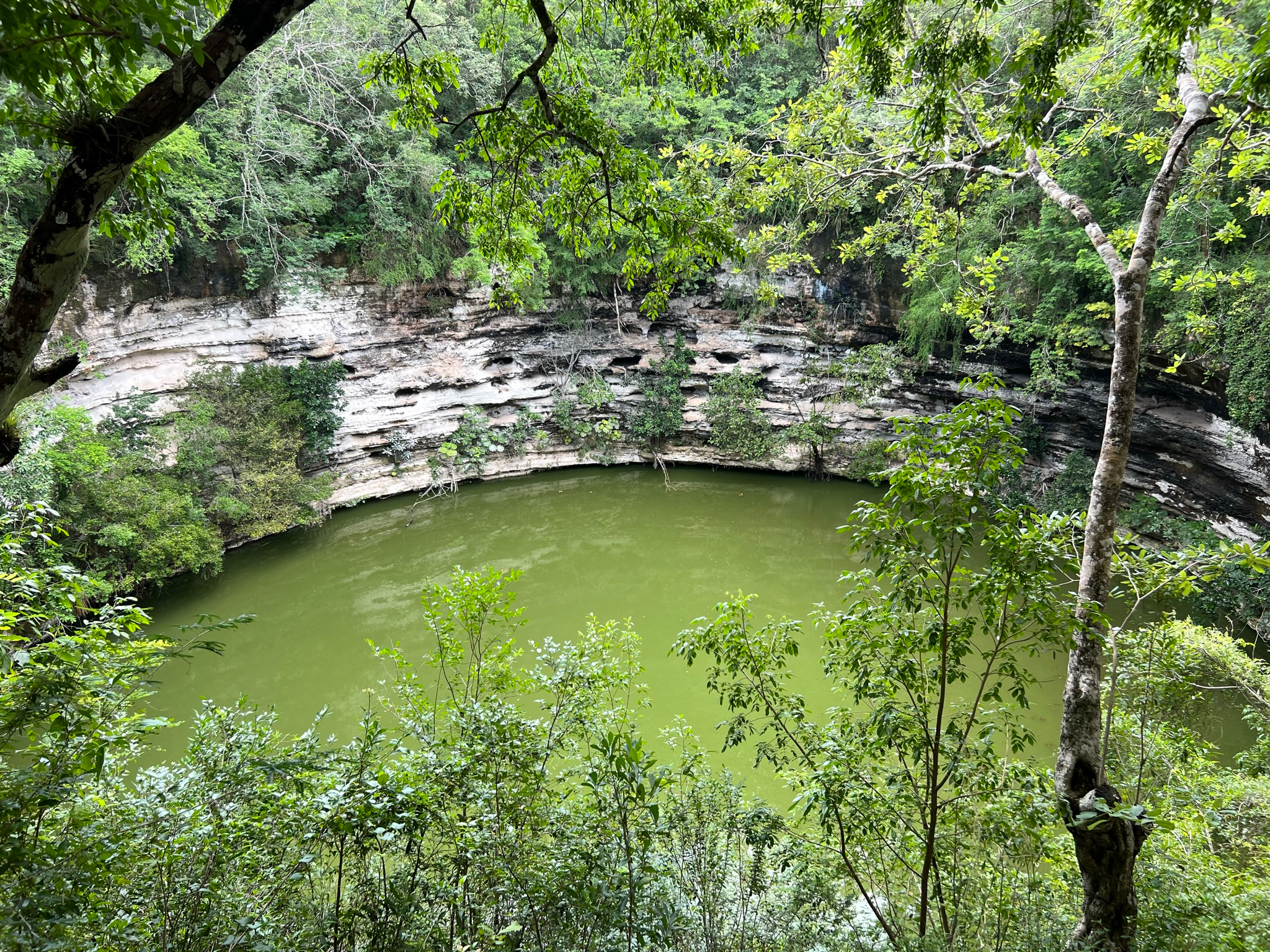
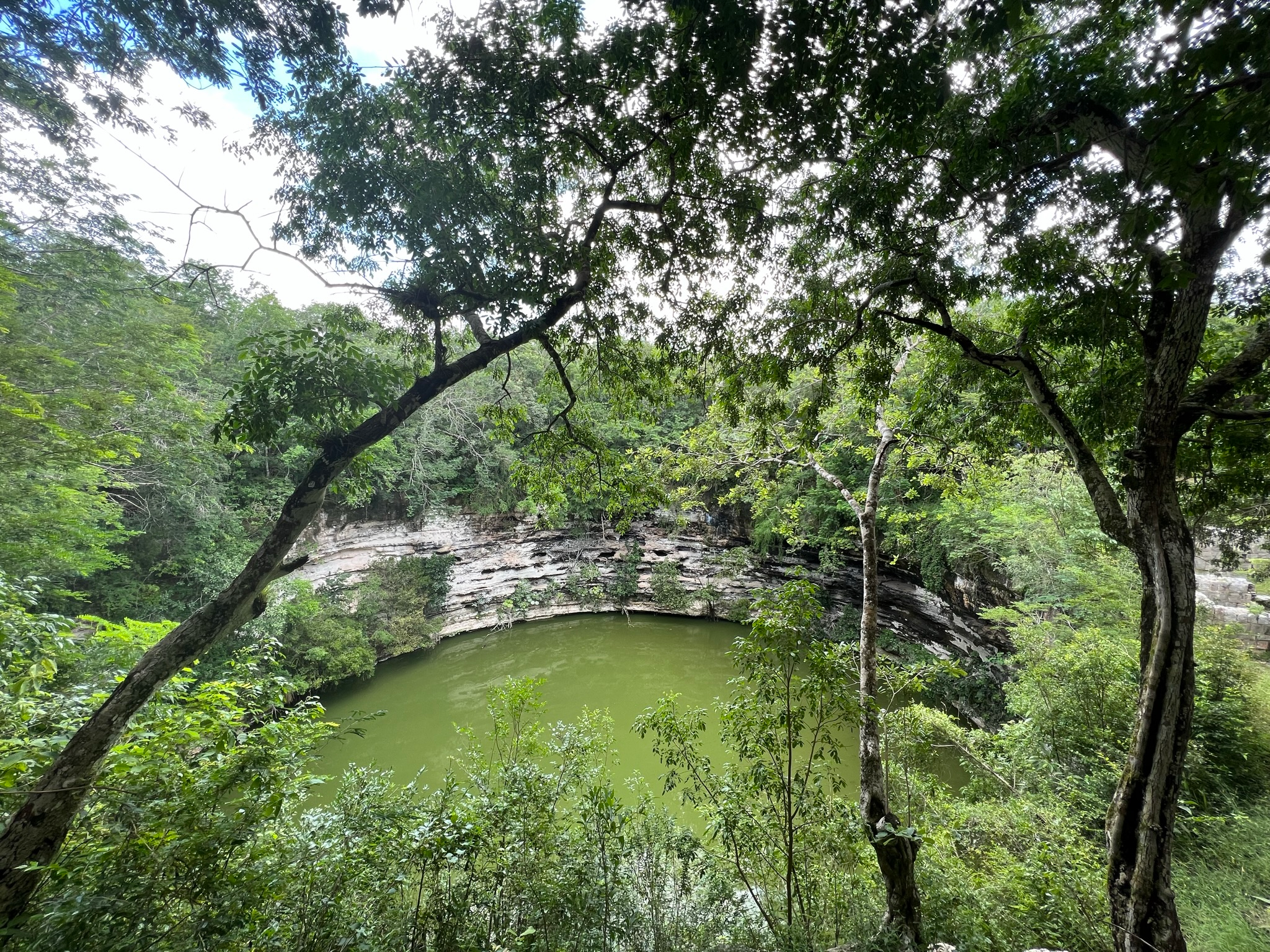
From the larger Platform of Venus in the Great North Plaza, a sacbe leads to the Sacred Well – a vast cenote also known as the Well of Sacrifice. It’s truly an incredible sight to behold: a giant sinkhole filled with murky green water, sheer limestone cliffs rising around it, and dense jungle encroaching from all sides. According to the guide, this was a sacred site visited by thousands of Mayan pilgrims each year, where sacrificial rituals were performed to appease the rain god Chaac during times of drought.
In fact, from the cenote’s depths – some thirty metres down – all sorts of artefacts have been recovered, from gold and jade to obsidian and copper… oh, and the skeletons of men and children! Staring into the abyss before me, I could almost picture the El Dorado-like scenes that once unfolded here.
I can say whatever I want about it not being the most mystical experience, but truth be told, the site genuinely deserves its title as a Wonder of the World. There’s no way around it. Fully satisfied and fulfilled, we had just one last stop to make.
Cenote Hubiku – an underground pool of pure, turquoise water, with a small opening in the cave’s roof that lets in shafts of sunlight and dangling tree roots – was the perfect finale. Swimming in that cool, crystalline water alongside hundreds of curious catfish was, without a doubt, the best possible way to end the day.