Bariloche – Day 5: The Enchanted Forest
BARILOCHE
Day 5: The Enchanted Forest
March 19, 2023
Fortunately, I woke up feeling perfectly fine. I’d be embarking on another long day of guided hikes around the town, now wishing I had just gone on an independent trek on my own!
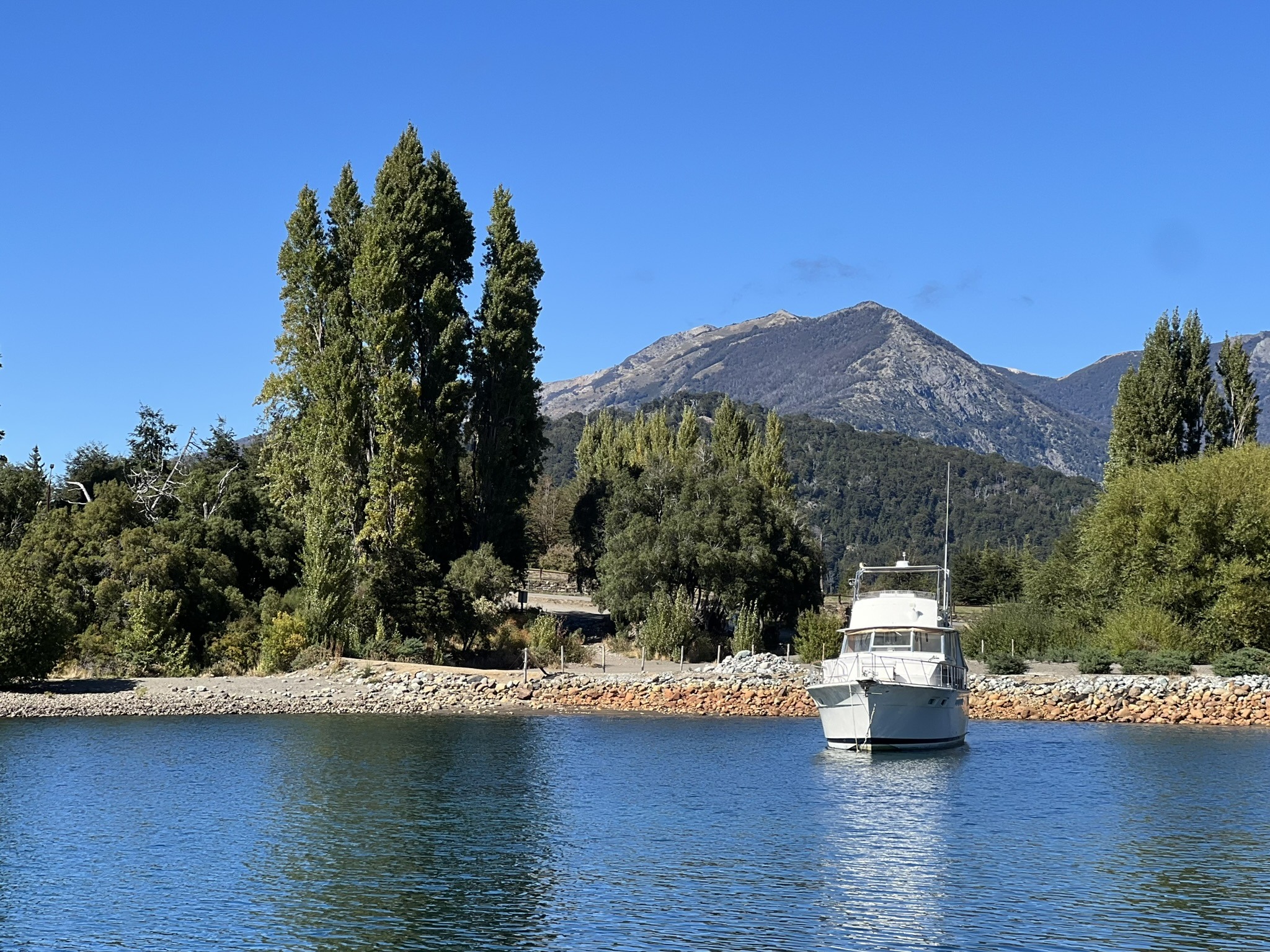
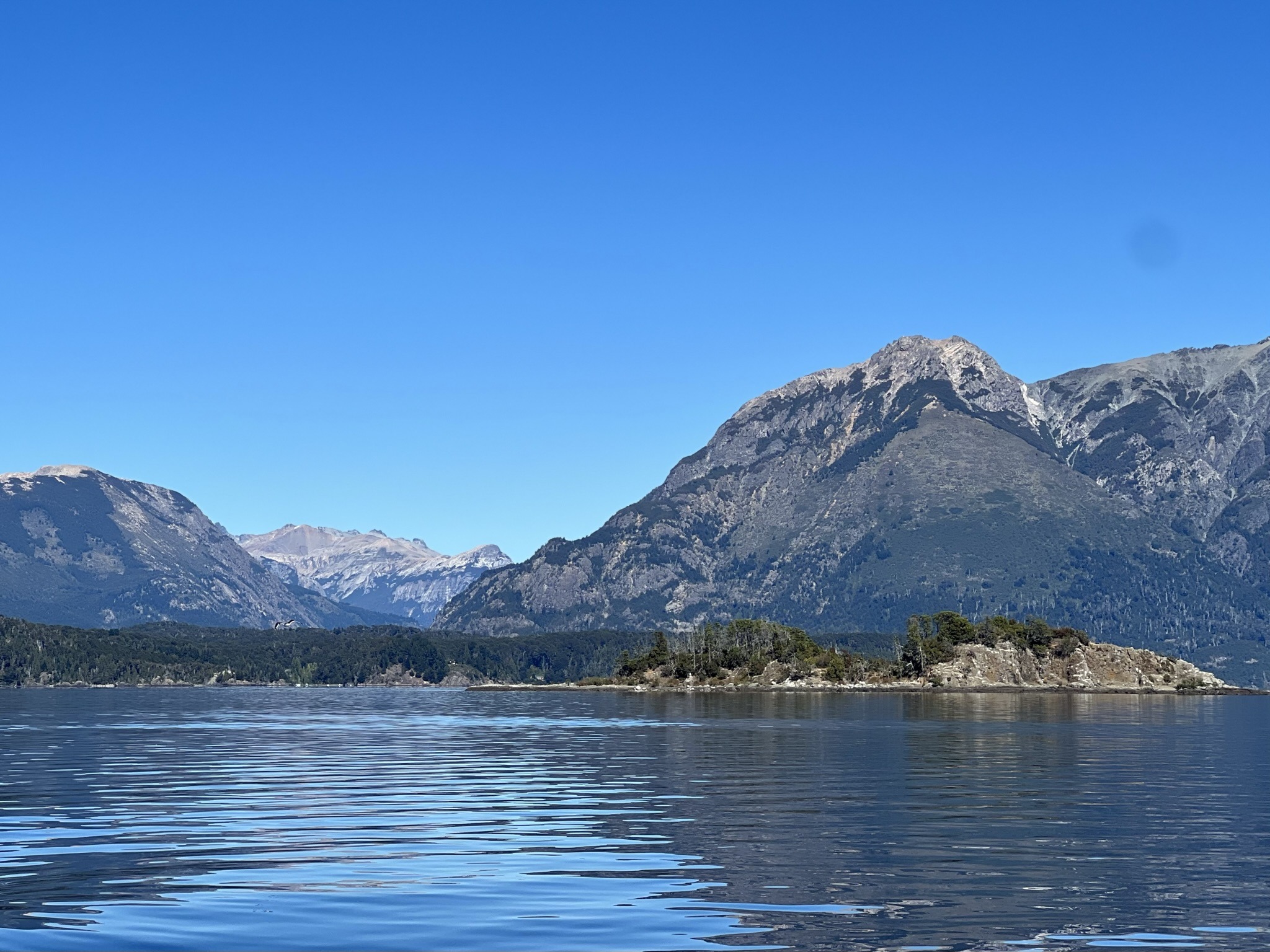
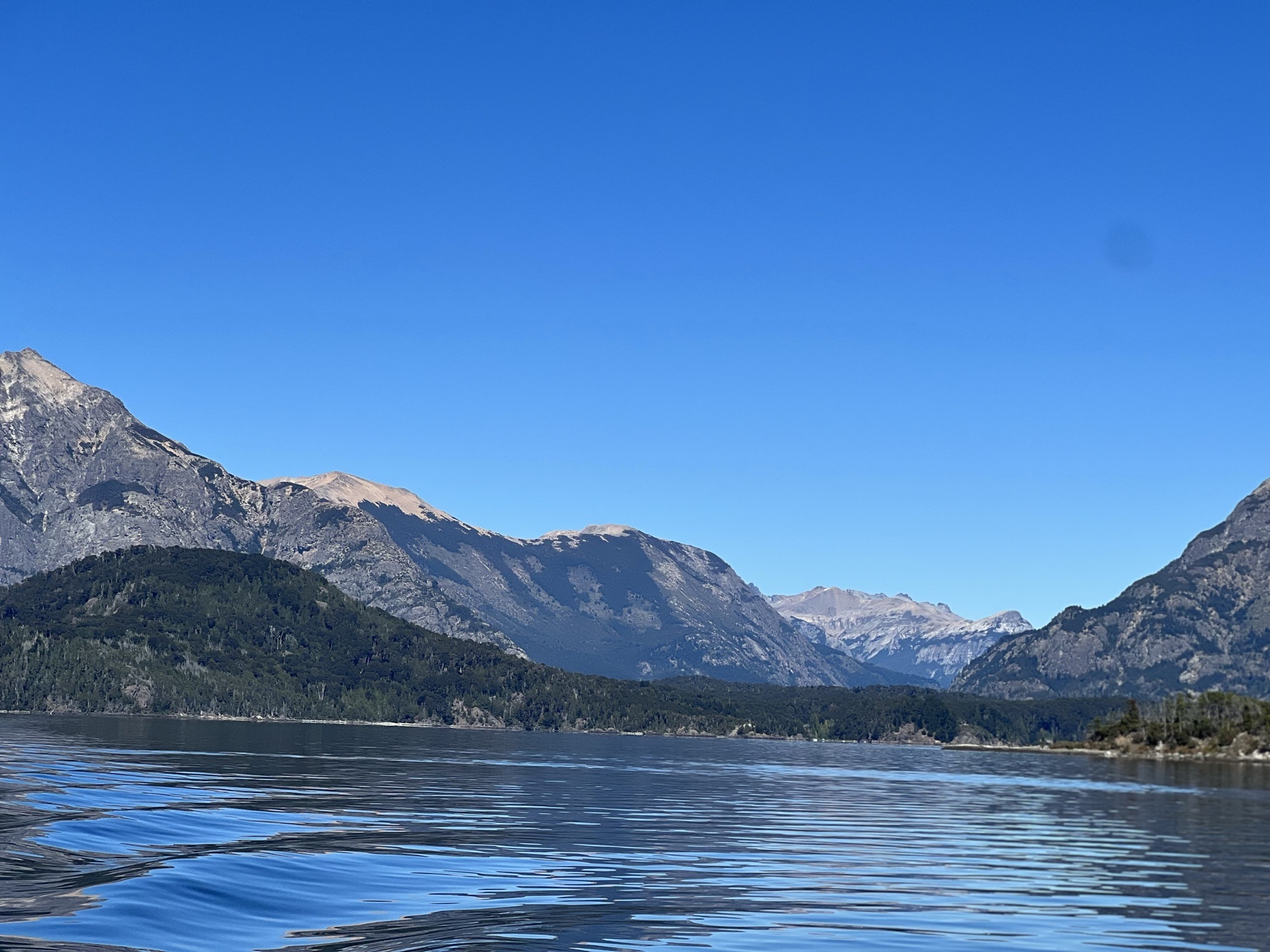
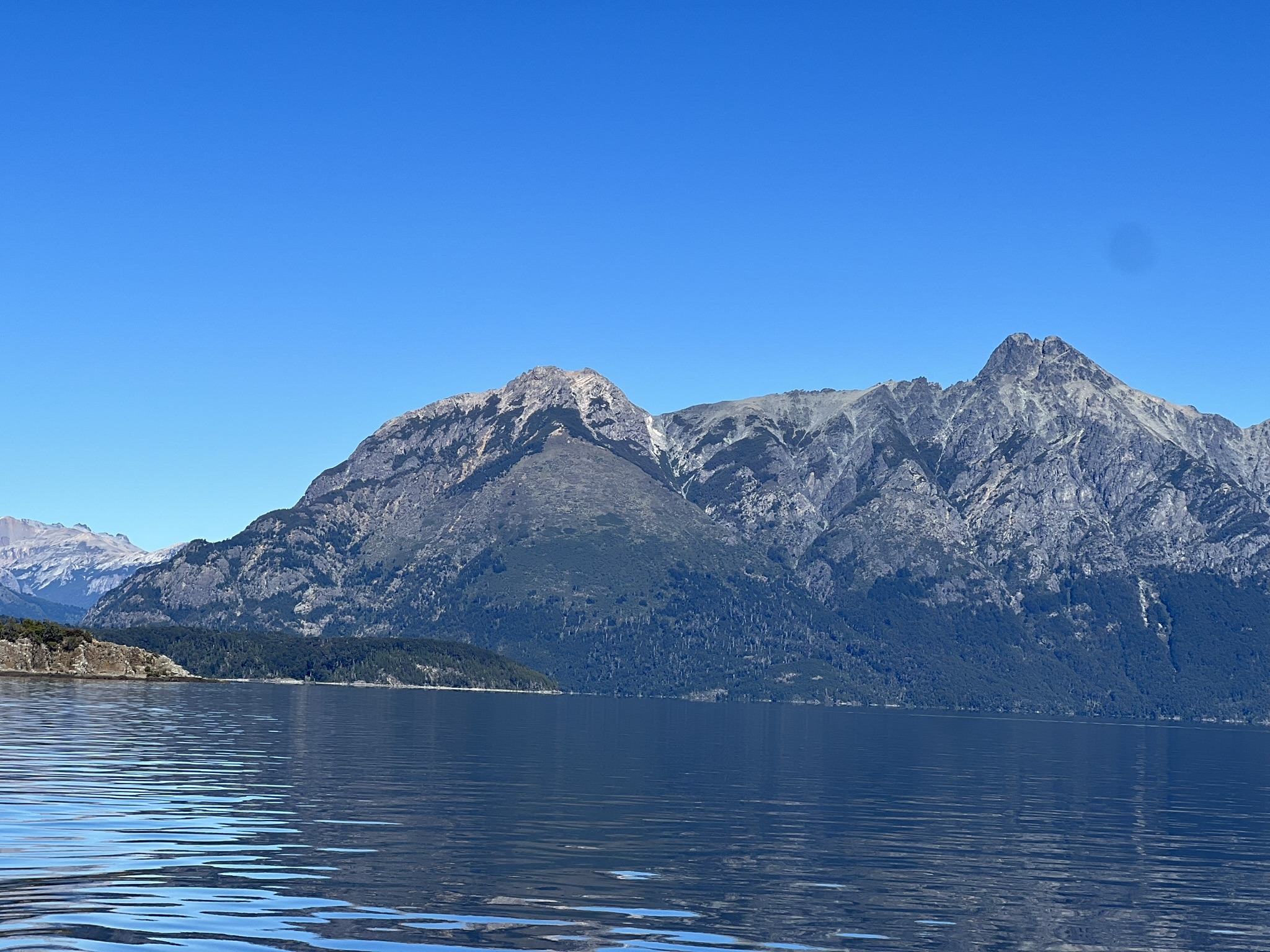
But alas, I found myself on yet another bus that took us straight to where I’d left things off the day before – Puerto Pañuelo. We got on a catamaran and, just like that, after hearing about it so much and seeing it from every possible angle, I was on Lake Nahuel Huapi.
During the scenic boat ride, we were accompanied by seagulls and Melina’s voice as she told us all about what we were going to see on the long day ahead. I have to say I took an immediate liking to her, as, in her most condescending tone, she told us that since tourists are almost always absent-minded, we were guaranteed to get lost if we didn’t heed each and every instruction. I appreciated her candidness, especially after going on so many tours with complete and total idiots.
On our way to the first stop, we could see snow-capped peaks, with one standing out in particular – Cerro Tronador, an extinct stratovolcano on the Argentina-Chile border with multiple glaciers. From the lake, we could also make out a face-like silhouette locals call the Perfil del Indio Dormido – yet another one to add to my list of Sleeping Indians.
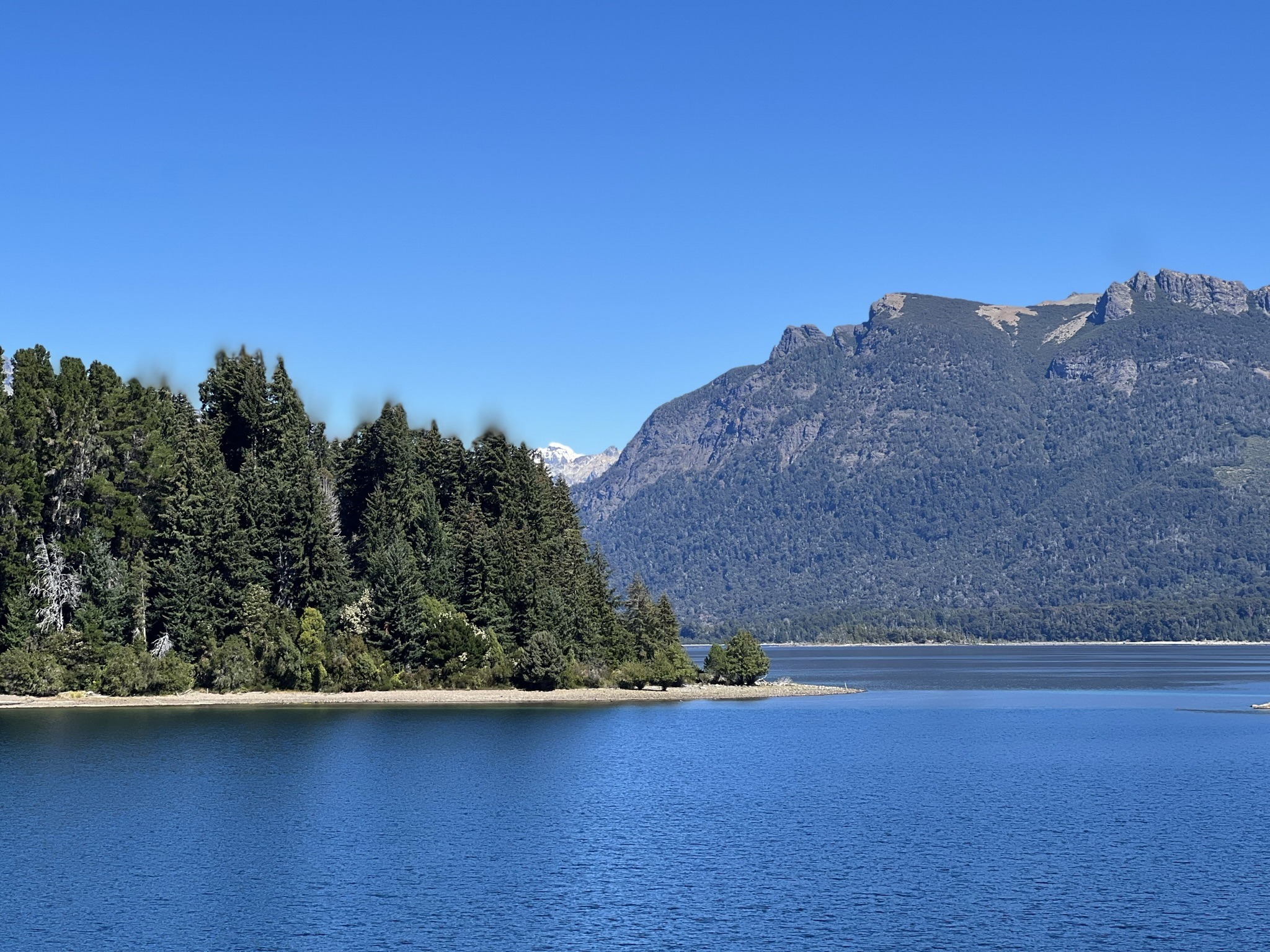
Isla Victoria and its History
Once we got to Bahía Anchorena on Isla Victoria, we were split into three groups – those who wanted to just chill, those who wanted to go on a short hike, and those who wanted to ‘brave’ the four-kilometre walk. Melina emphasised that only those in their prime physical state should come along, as she heaved and panted while climbing the least inclined of all uphills.
I do have to give it to her – she never stopped talking for a single second all the way though. She told us that the island was previously inhabited by the Puelche and Poya peoples but was later found uninhabited after the Argentine military campaign known as the Conquest of the Desert. The roughly 31-square-kilometre island, previously called Isla Nahuel Huapi, was later renamed Isla Victoria, linked to Benjamín Victorica – a minister of war.
One of the first wealthy tourists to visit, Aarón Anchorena, apparently fell in love with the island’s flora and fauna and tried his best to buy it from the Argentine government. Despite his efforts, he obtained a lifelong usufruct, which was used to kick off projects including a plant nursery and the introduction of exotic species of plants and animals. He brought in various animals including deer and pheasants, though his attempt to introduce bears was a failure.

Before his arrival, getting to this region from Buenos Aires was no easy feat, often requiring long, gruelling travel in the harsh and unforgiving Patagonian wilderness. With time, transport links improved and Bariloche and Isla Victoria became more accessible. After conflicts and criticism, Anchorena renounced the usufruct and the Ministry of Agriculture took over, expanding on what had already been started. In the 1920s, the island’s nursery work was formalised and expanded under state management, with Pablo Gross heavily involved in developing the arboretum and forestry plantings.
Melina also told us that the island took a hit from fires and deforestation, and that ongoing projects have tried to keep up with maintenance and tourism pressures ever since. According to her, seeds and saplings from all over the world were donated by none other than President Theodore Roosevelt himself at one point. Nowadays, the nursery and arboretum remain a big part of the island’s identity – with it being renowned for having species from all over the world. In fact, she added that if any country is ever in need of tree seeds, Argentina’s seed bank is up for the challenge!
A Stroll Through an Enchanted Forest
As we walked into the forest with her narrating the island’s history, we came to a clearing where the plant nursery could be appreciated. She told us that, among the wide variety of trees, many are gymnosperms – non-flowering plants – unlike angiosperms. Words I hadn’t heard since my biology A-level days.
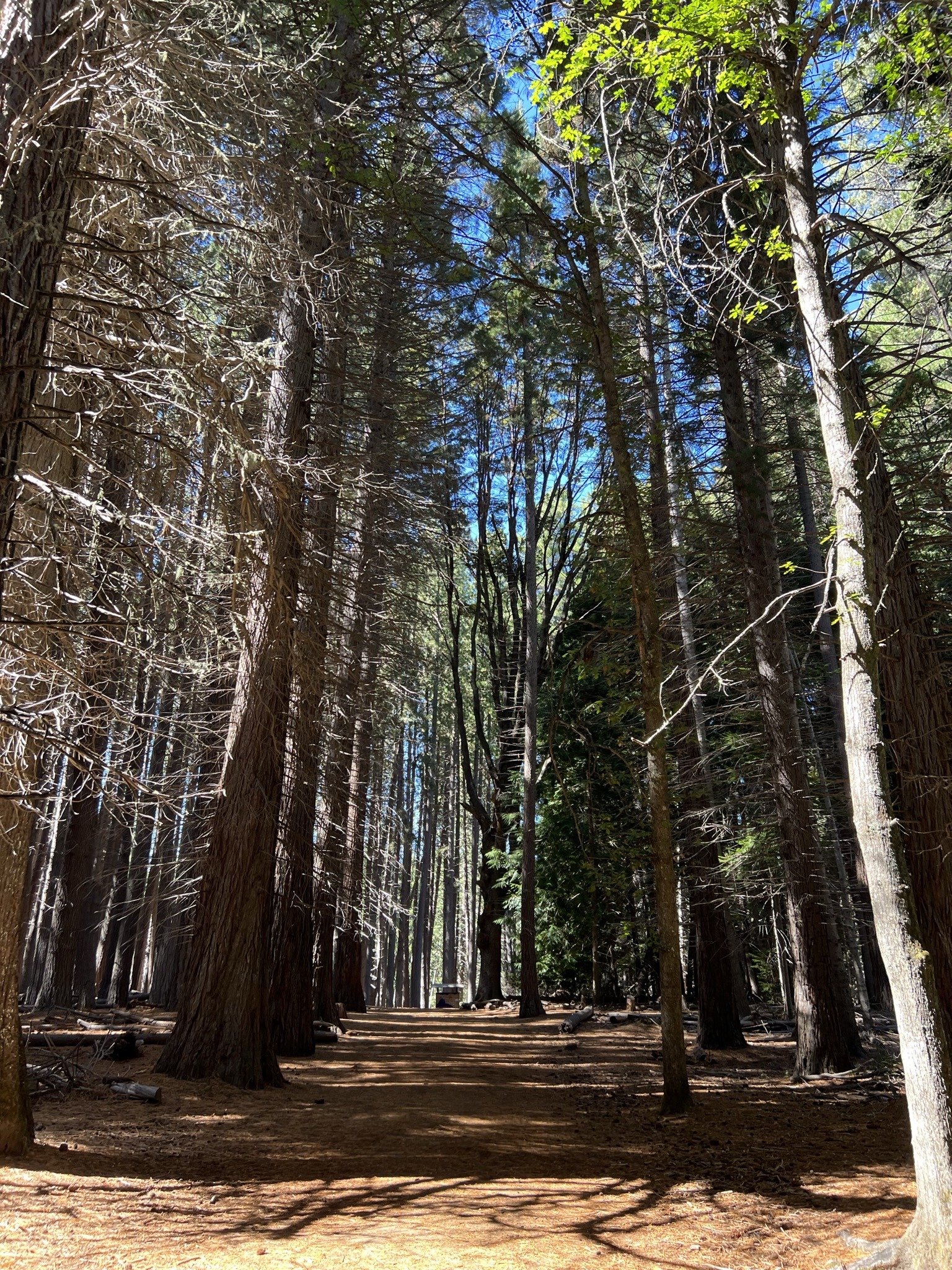
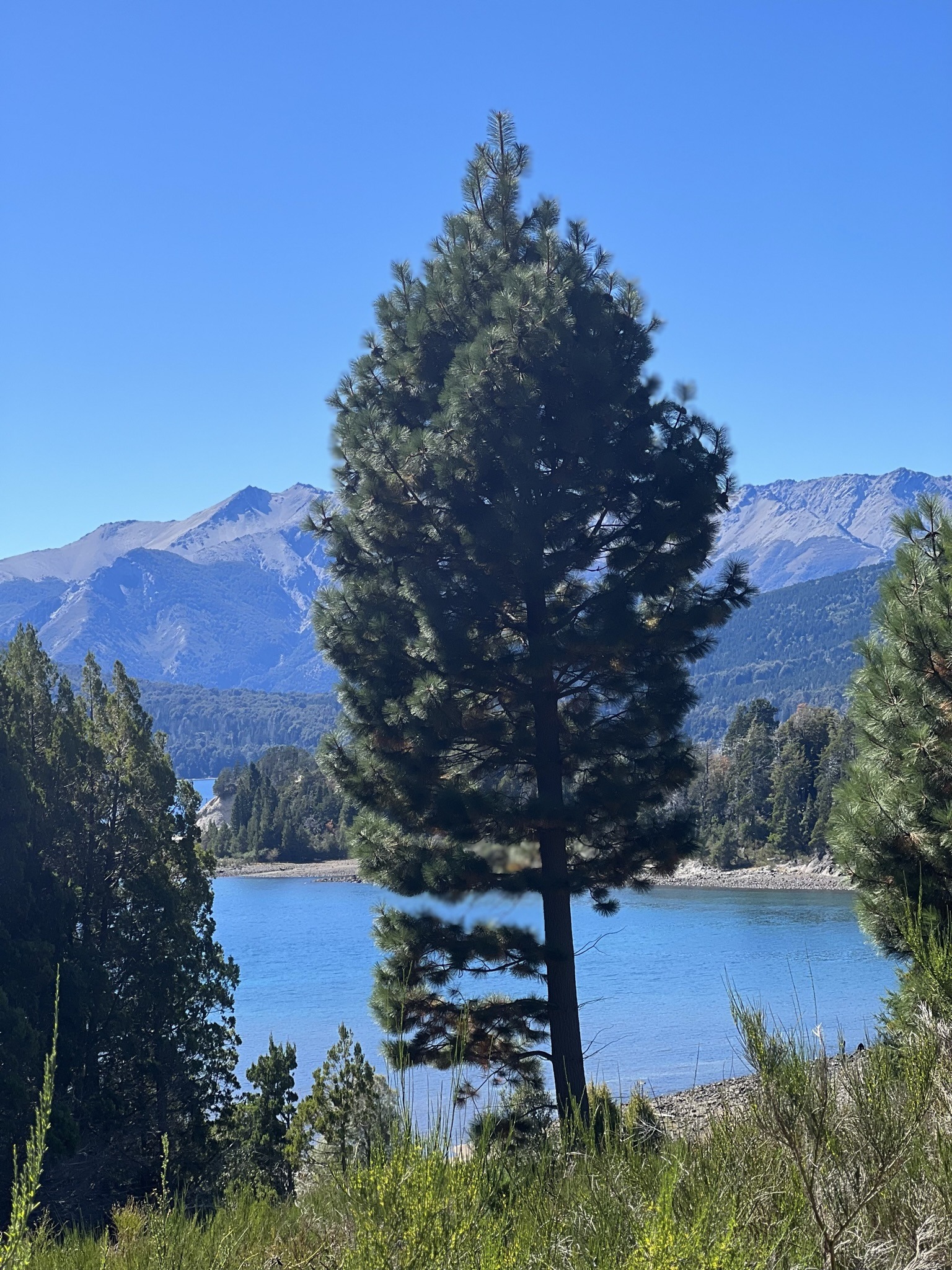
Among these were sequoias. Unlike many Patagonian natives, some sequoia species are fast-growing evergreens with massive trunks, and the tallest of their broader family can exceed 100 metres in height. They are also very long-lived, with the oldest one being found in Yellowstone, US. The Alerce Milenario – a Chilean Patagonian cypress which is a close relative of the sequoias, is, in turn, estimated to have been alive for 5484 years, making it the oldest living tree in the entire world. That said, the figure isn’t exactly official, and the best-known confirmed ages are still held by bristlecone pines in the US, which are a little under 5,000 years old.
On we went, Melina telling us all about the fauna. Here, she said, four types of deer can be encountered: the pudú (one of the smallest deer in the world), red deer and fallow deer (introduced for hunting), and the native south Andean deer or huemul, which is endangered. Estimates commonly put the total huemul population at fewer than about 1,500 across Chile and Argentina, and dogs are frequently cited as a major threat. As grim as this might sound, Melina told us that in 2023, thanks to some French NGO, the first south Andean deer was born in captivity – meaning that their number could potentially be restored if conservation efforts go on.
As we walked on, I found myself interrupting Melina and shushing the loud Americans behind me. Right in front of us, maybe twenty metres ahead, was an imperial pheasant. As we inched forward trying to get a better look at the beautiful black-and-white bird, some random guy’s mate’s thermal flask fell and scared the poor thing off. So much for Americans being responsible for all the world’s evils, huh?
Puerto Anything-But-Gross
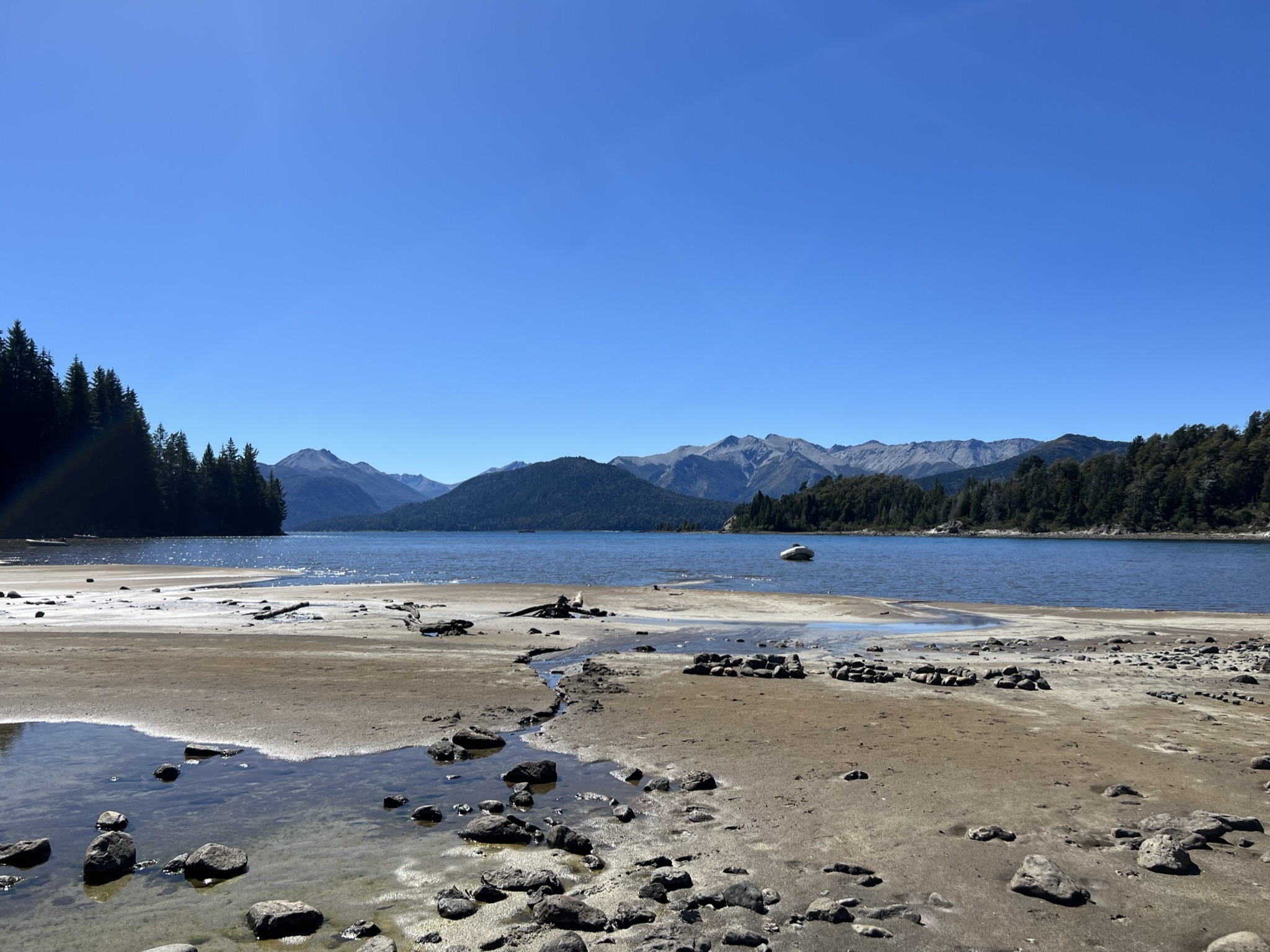
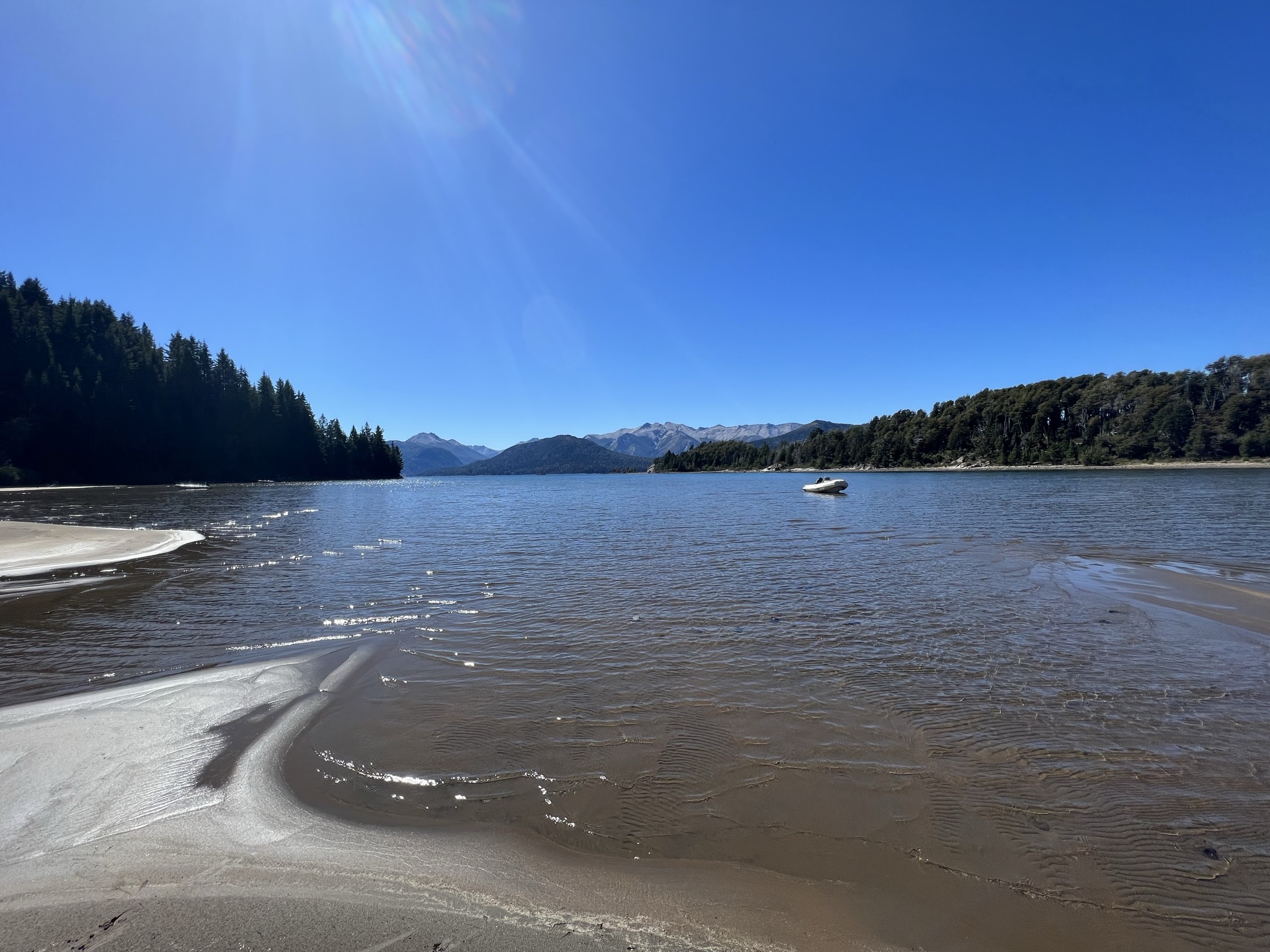
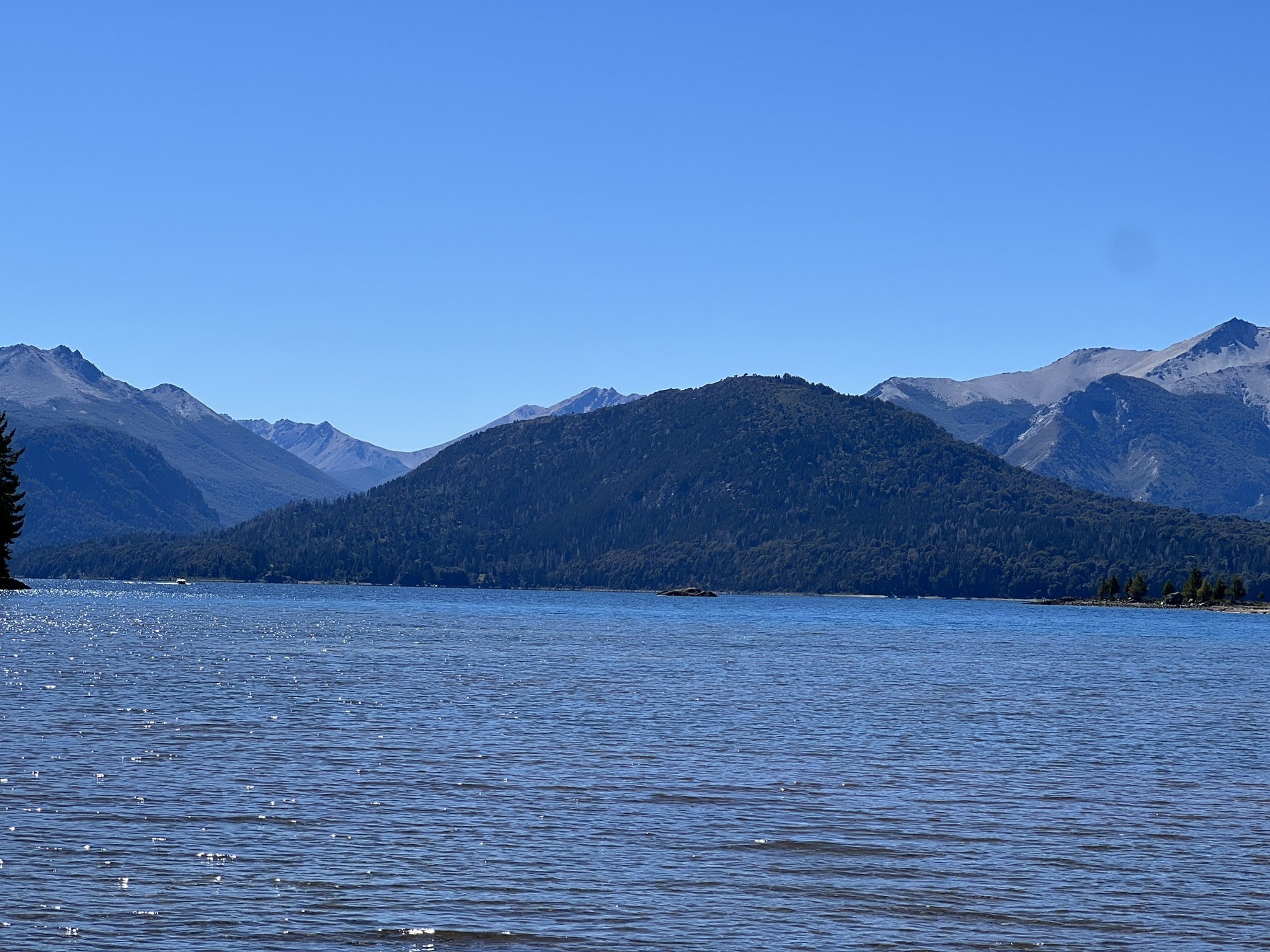
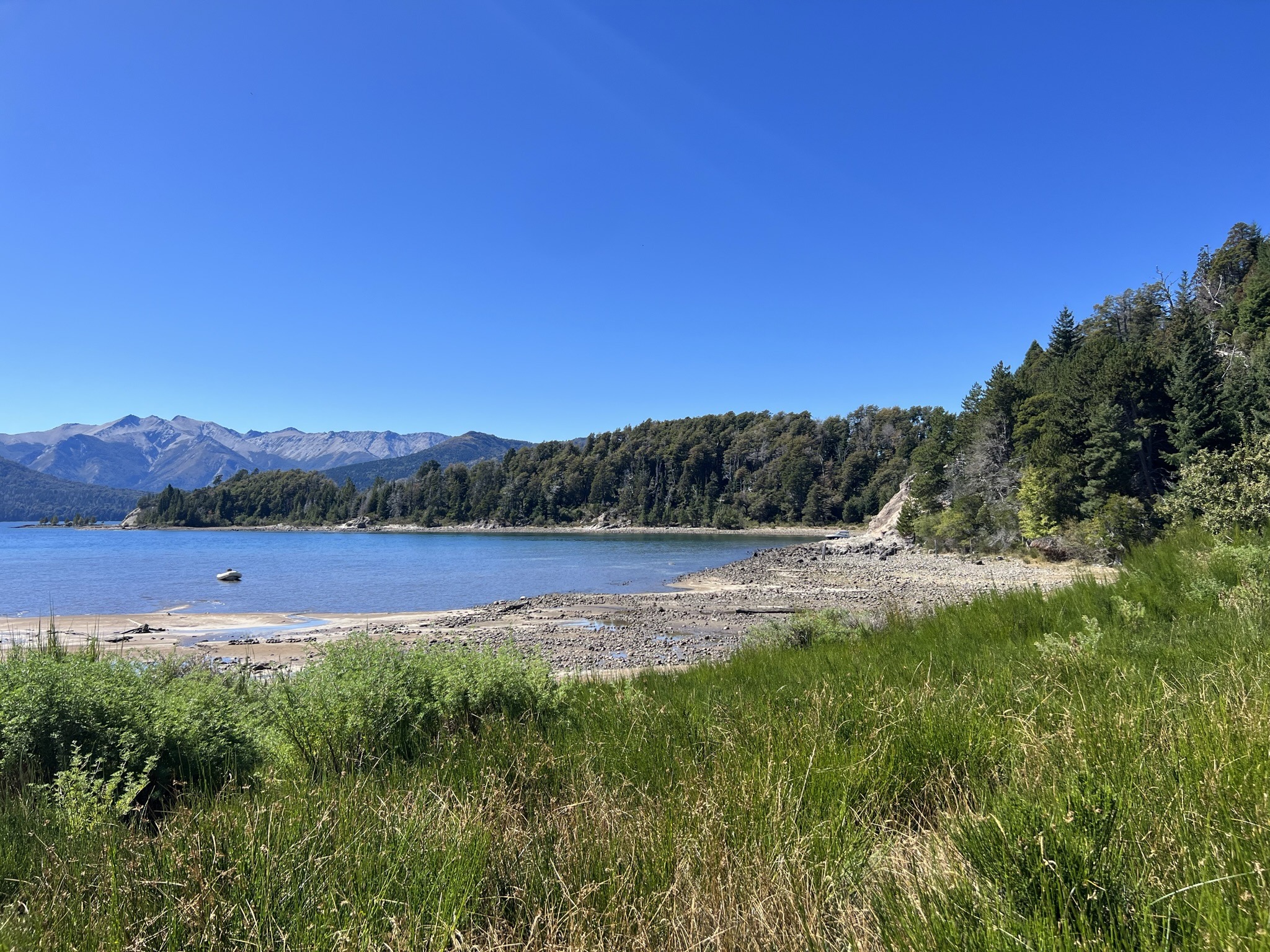
We didn’t have much time to brood over the incident though, because soon enough we found ourselves at Puerto Gross – a brown sandy beach with muddy green waters, surrounded by forest on every side – kinda reminiscent of those pristine beaches I stumbled upon in Tierra del Fuego National Park back in Ushuaia.
As the rest of the group took off their shoes and waded into the knee-deep, ice-cold water, I decided to distance myself a bit, choosing peace and quiet over fun and laughter as I enjoyed the apricity – the very same warmth and fresh air that grace us for just two weeks a year back in Malta. Or at least that was my intention – as soon as I took out my milanesa sandwich, the pesky German yellowjacket wasps Melina had warned us about started swarming around me, and my idea of ending my starvation was gone with the wind. As fascinated as I am by wasps (Beedrill and Vespiquen for the win!), lunchtime isn’t quite the occasion for me to fawn over them.
The Experimental Forest
After the break, we resumed the circuit. As soon as we set foot in the forest again, the uniform foliage we’d grown used to suddenly became bizarre and chaotic – a mix of different shapes and sizes, colours and hues.
This, Melina explained, was the Experimental Forest, an area where trees from all over the world have been planted. It felt kinda crazy seeing Asian hinoki cypresses, European English oaks, African yellowwoods, North American sequoias, South American southern beeches, and Australian red ironbarks all in one place. Kinda wanted to see some Antarctic hair grass or pearlwort in the mix.

But among all these trees, only one really stood out to me – the monkey puzzle tree, AKA the dinosaur tree, which is often described as a living fossil. Being one of the hardiest conifers (and trees, for that matter) on the planet, this marvellous piece of biological engineering has been here since the days of dinosaurs, surviving that which they, along with thousands of other species along the years, couldn’t. That said, monkey puzzles trees are currently endangered species, with their populations being dwindled by deforestation, fires and even grazing. These wondrous beings can grow up to forty metres in height, with their branches being covered in thousands of thick, point, scale-like leaves. Their seeds, which are similar to pine nuts albeit bigger, are also edible, being harvested by many natives in the region for food.
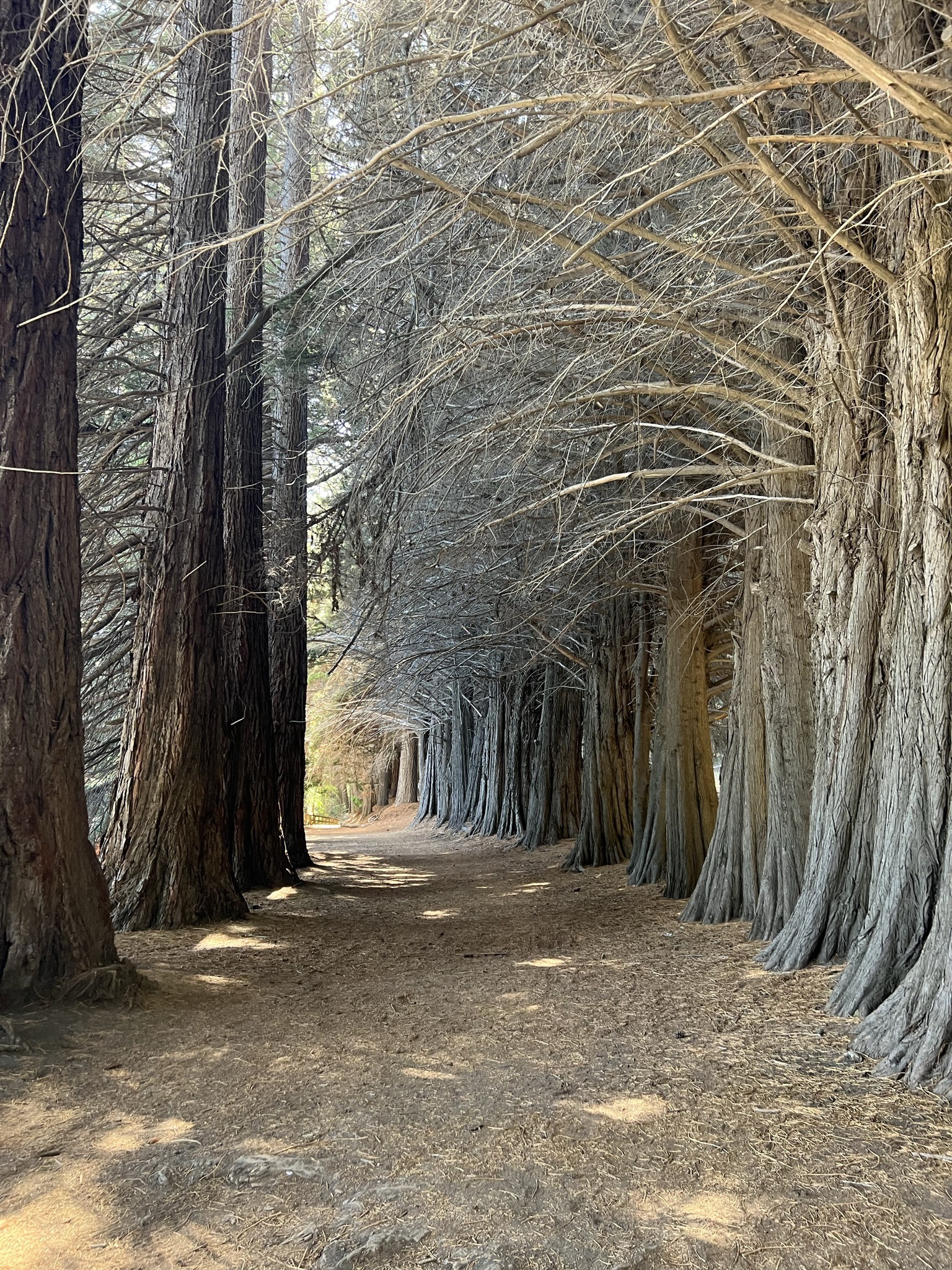
Still in awe, we then moved into an area Melina described as being similar to a “typical Australian forest” – whatever that may be. Here, hundreds of eucalyptus trees stood together, with a few orange-barked arrayanes scattered about – the Chilean myrtle. It did feel like we’d stepped into a completely new forest, to be fair.
Along the path we also stumbled upon more colihue bamboo shoots. As she repeated what César had told usthe day before, she added that invasive species were once kept in check by huge rat populations on the island, which boomed during colihue seeding events – a phenomenon often referred to locally as ratada. At that point, some 100 to 1000 rats per hectare could be found, all of them obese and diabetic from overfeeding, and, once all the bamboo would be devoured and they’d have nothing else to eat, they’d resort to cannibalism – having become so accustomed to such a life of plenty. After a volcanic eruption in 2011 that completely decimated their population, the ratada is no more and colihue tree are free to grow as they please.
Los Arrayanes National Park
All lost in conversation, we somehow found ourselves back at the port. Here we got on the boat again, heading north towards the Arrayanes Forest in Los Arrayanes National Park.
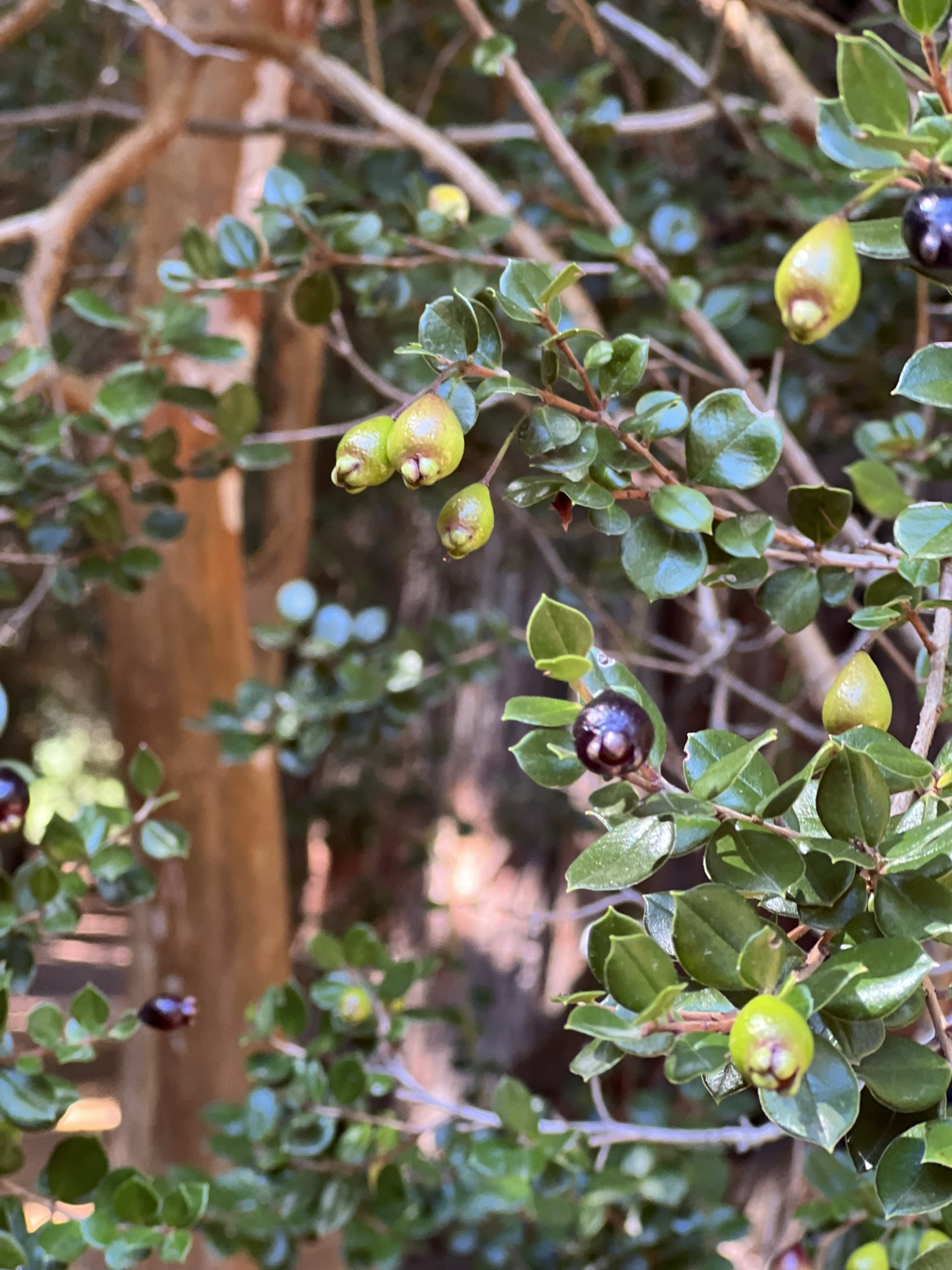
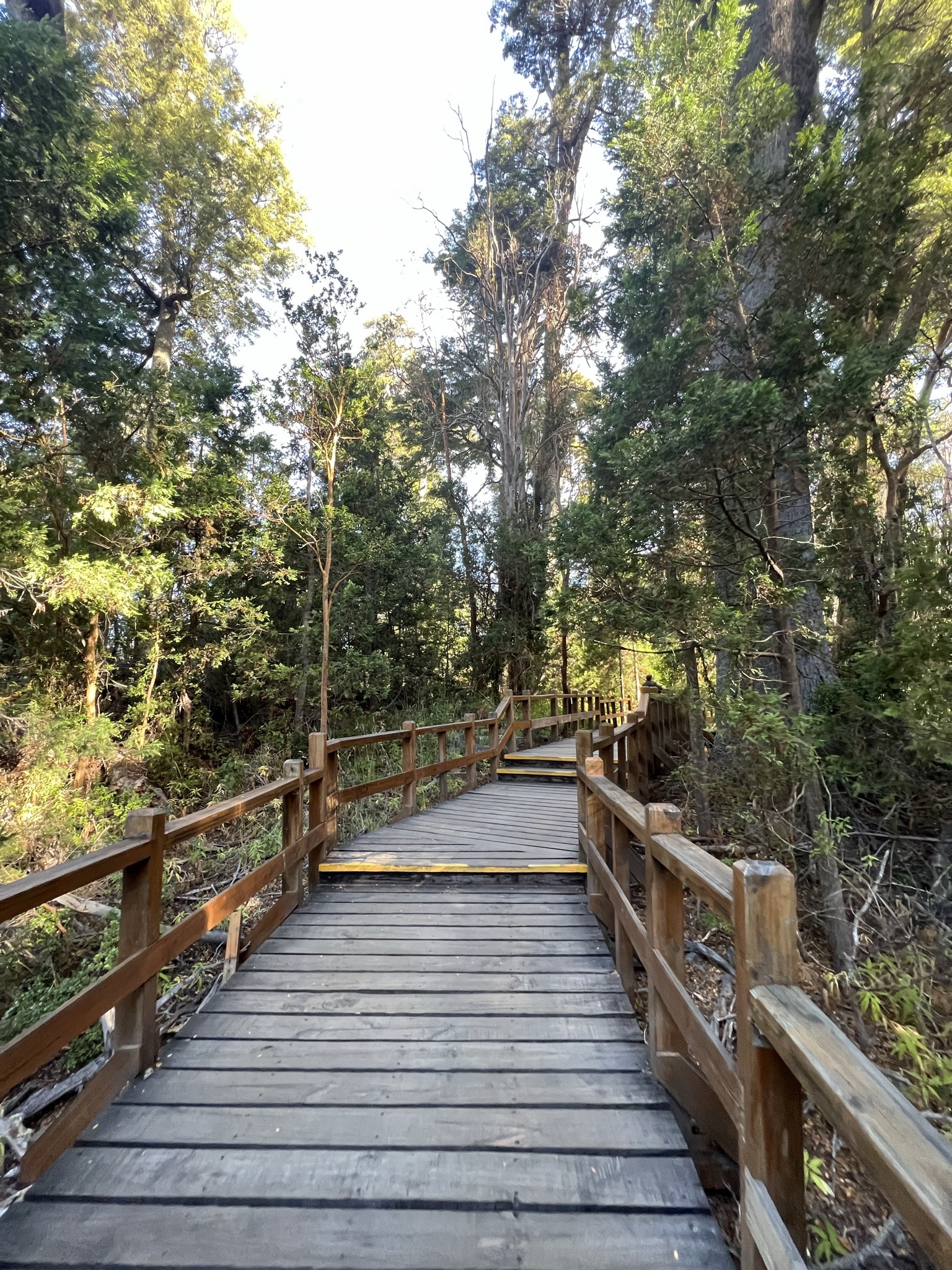
Accompanied by cormorants and seagulls, we landed at our next destination and each of us went our own way on the short circuit around the park. The long catwalk loops through a Chilean myrtle forest, the orange bark giving it an ethereal charm – especially when rays of light slip through the canopy as leaves sway on their way down.
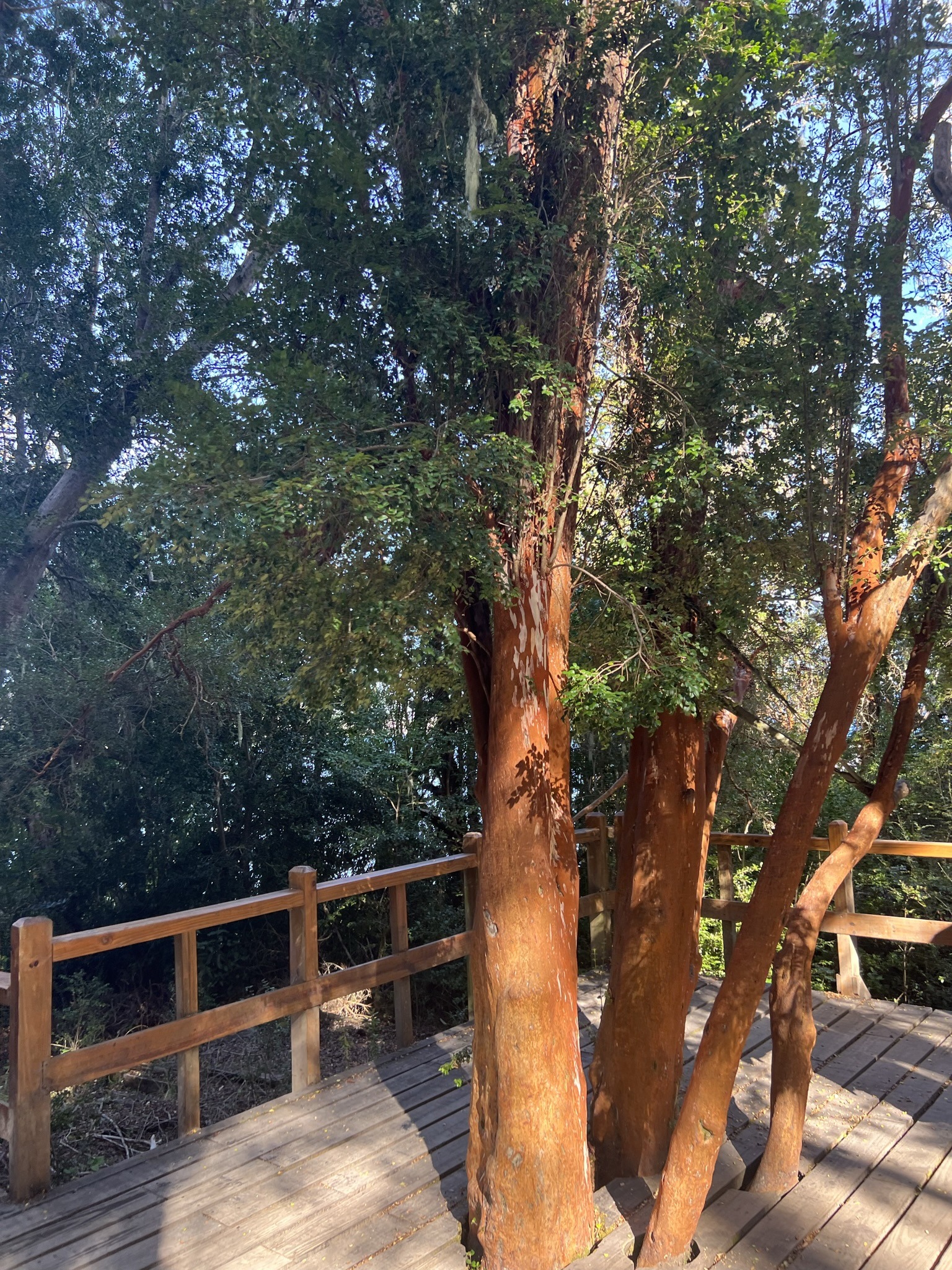
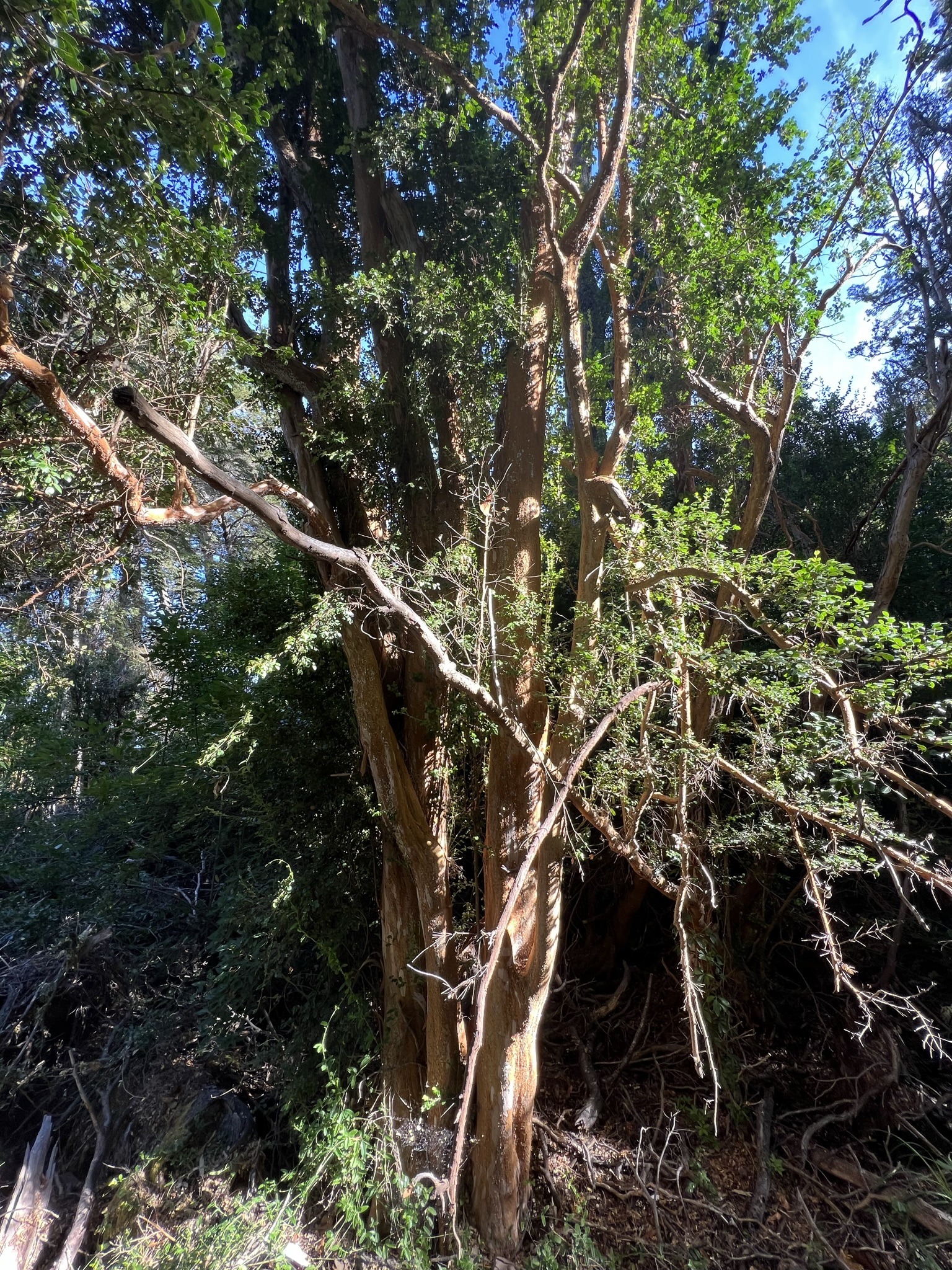
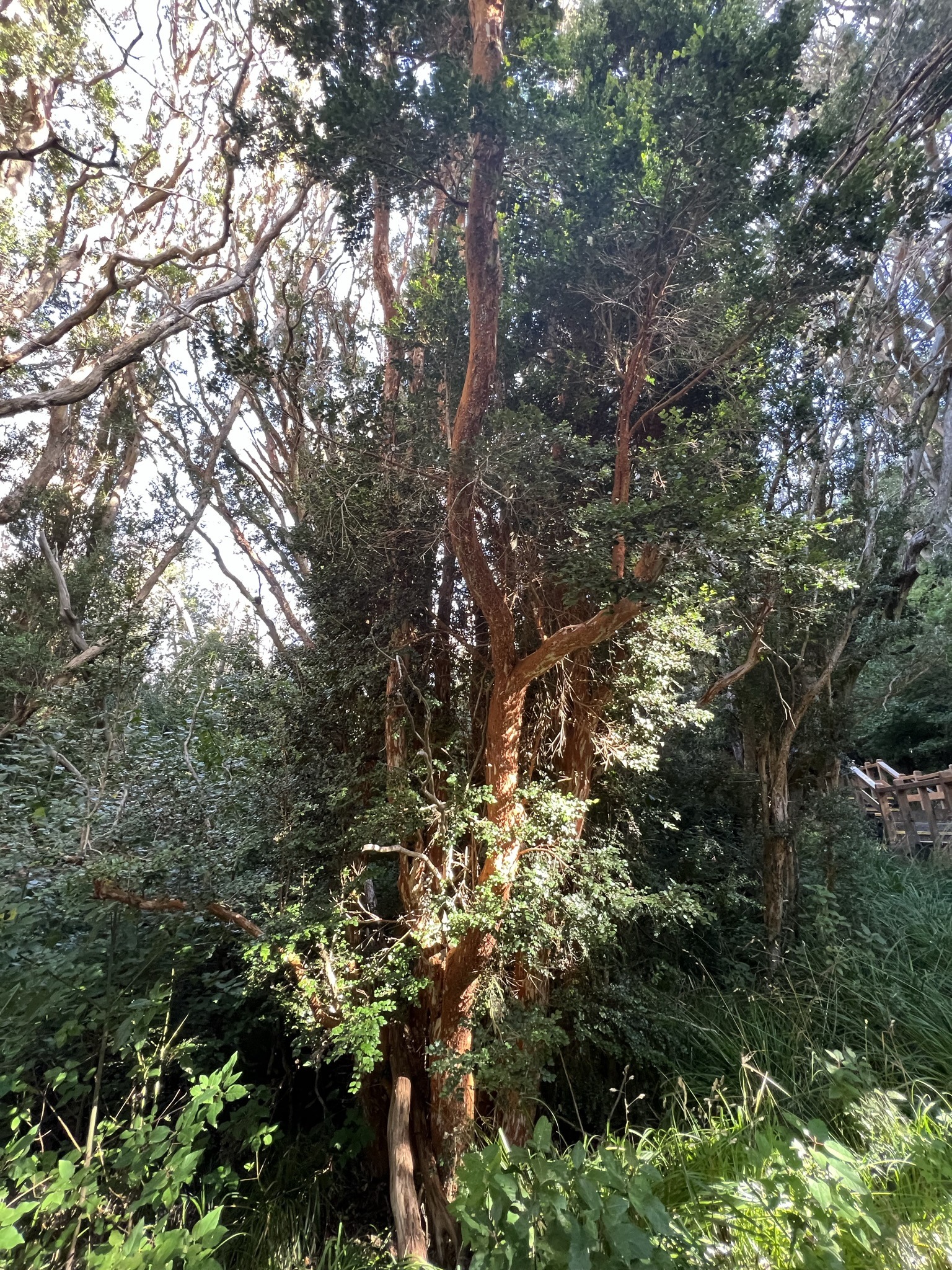
These trees, native to the central Andes in Argentina and Chile, are slow-growing evergreens that commonly reach about 10 to 15 metres and can live for centuries, with some protected individuals reported to be over 600 years old. Their smooth orange-brown bark peels to reveal a paler colour underneath, and they bear small oval leaves, white flowers, and dark berries. They’ve also been used in traditional contexts for medicinal purposes, with some evidence suggesting antimicrobial properties.
After the short walk, I hung around yet another beach by the port, finally managing to get my fangs on the sandwich I’d been saving all day long. Once the boat arrived, I was honestly happy to be on the way back, given I still had a long, long day ahead of me.

Bariloche Town Centre
With my flight to the next destination in a couple of hours, I realised, in all my haste, that I hadn’t even visited the town centre – a crime in and of itself.
The second the bus dropped me off at my hostel, I practically ran all the way there, giving myself a few minutes to just stand and admire the unique charm of the alpine architecture. The mix of stone and wood truly gives the town a rustic vibe, with a clocktower and a statue of General Julio Roca on horseback as highlights, along with Lake Nahuel Huapi directly in front of it.
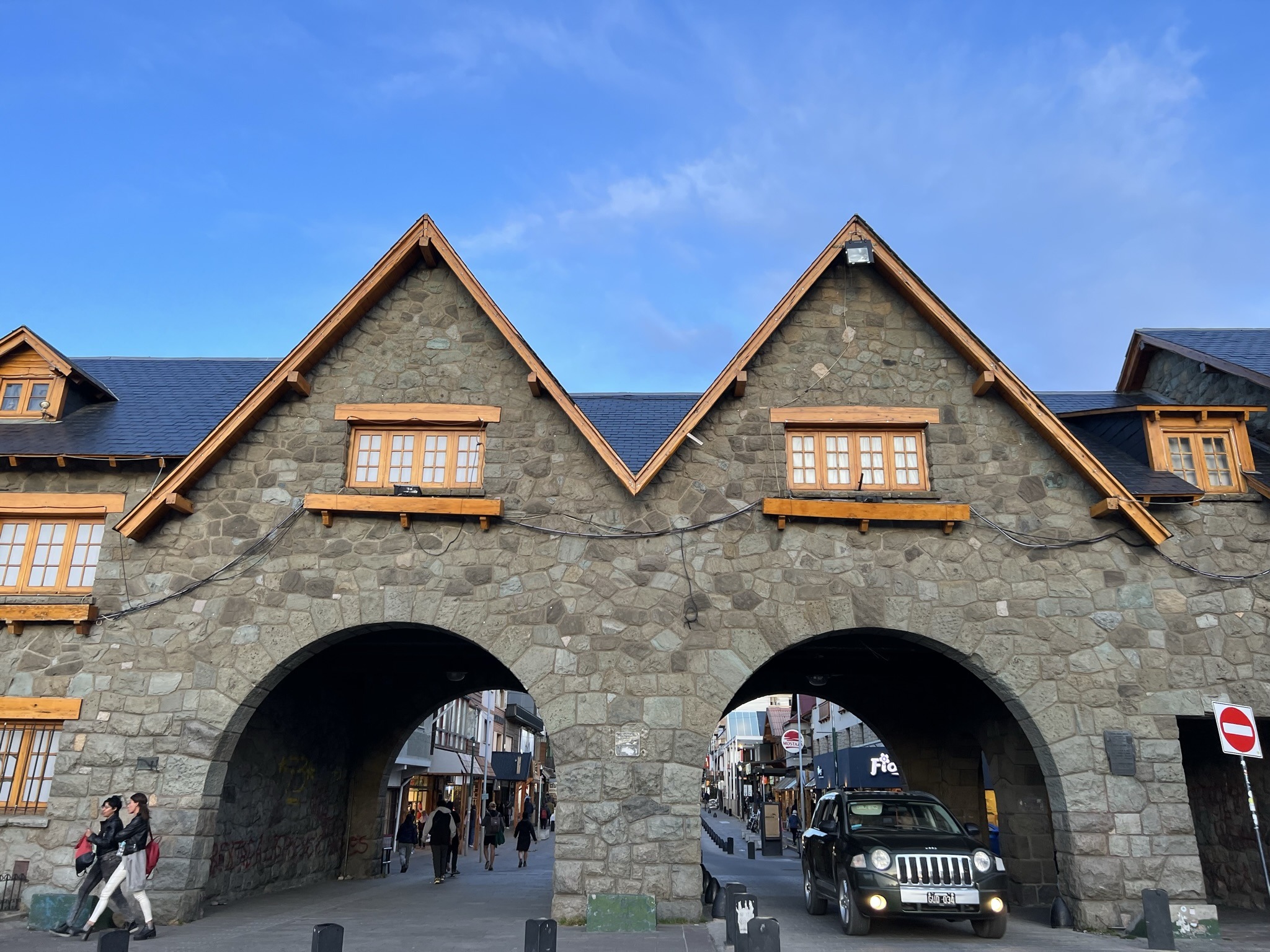
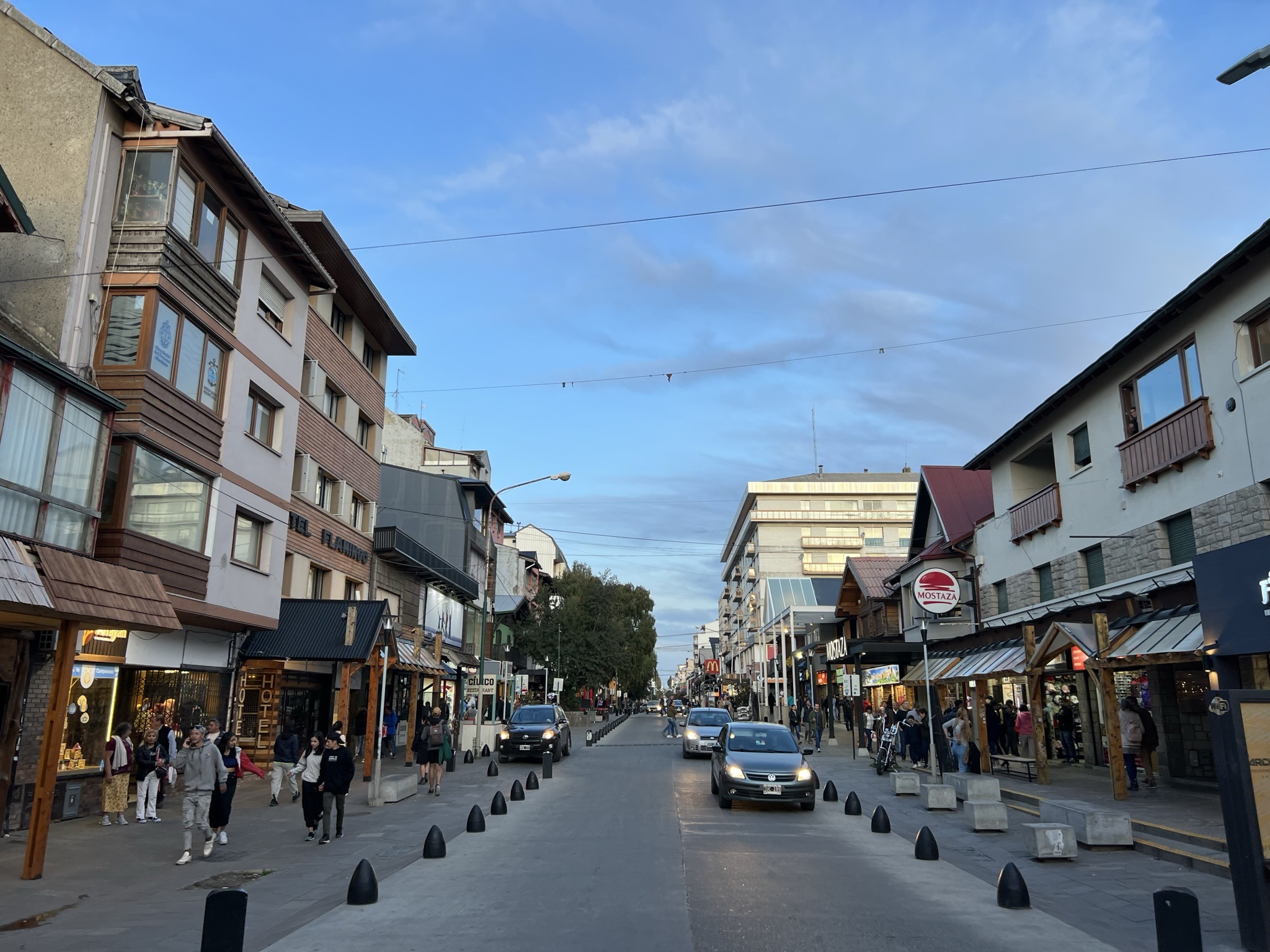
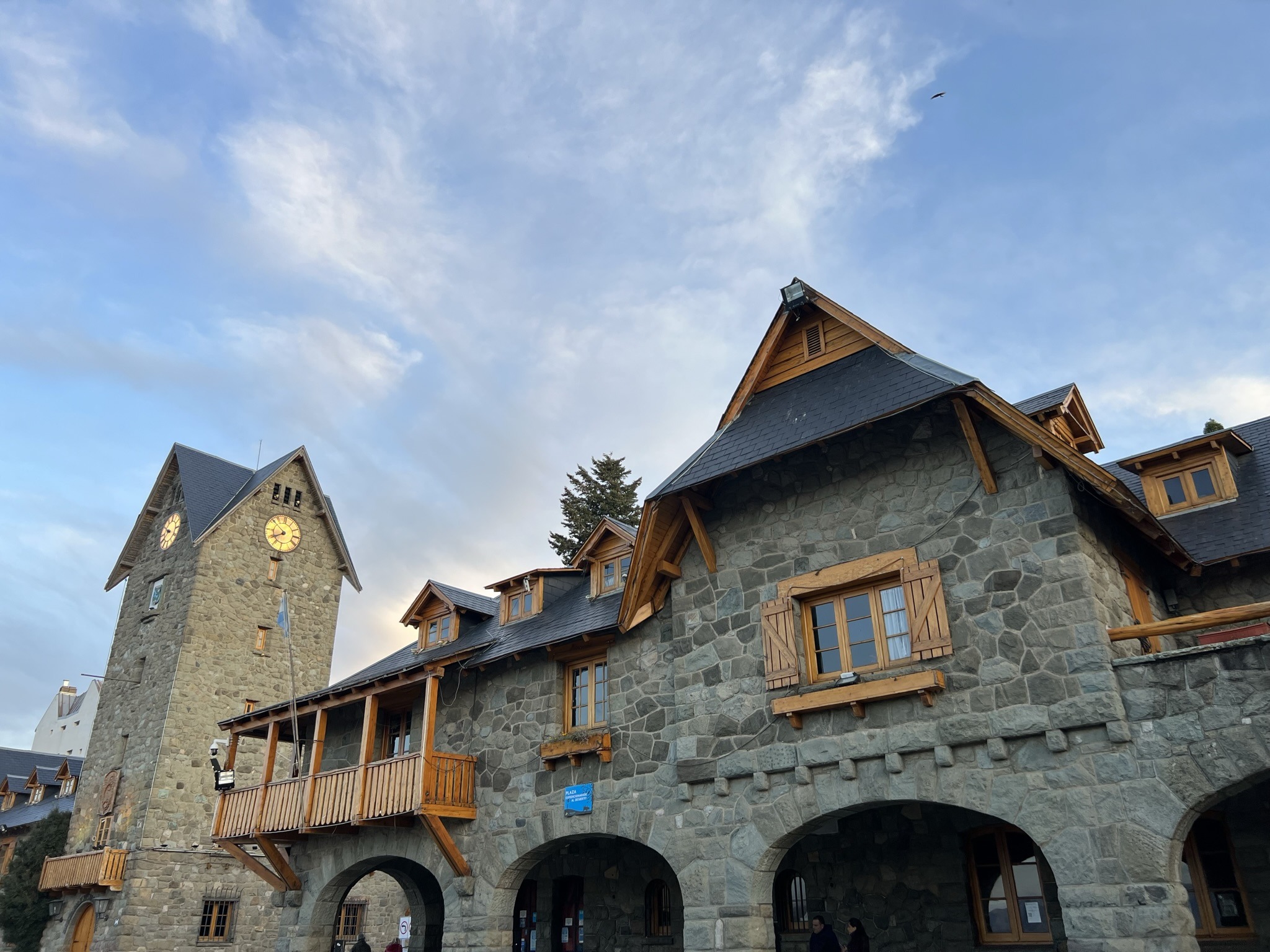
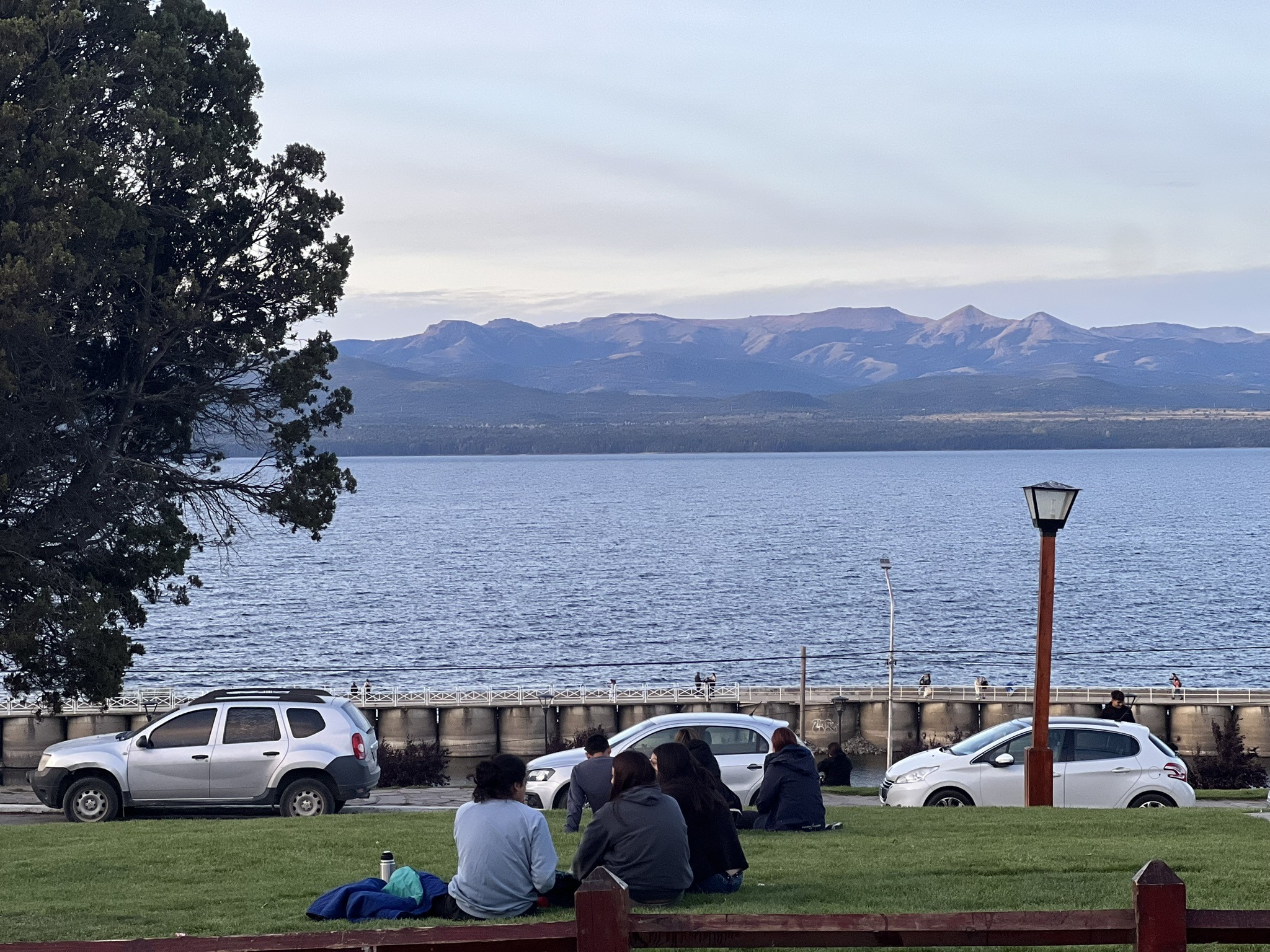
As much as I wanted to hang out, I couldn’t, given the time crunch I’d landed myself in. In fact, Mr Jackass’ words now stung after spending an entire day and a whole afternoon in my hostel doing nothing but writing and watching series. I was sick, granted, but I could’ve just as easily popped by the town centre for an hour or so. Instead, I had to rush through it and pretend as if I’d actually experienced it.
I didn’t have much time to ruminate on that either, because pretty soon I found myself running back to my hostel to pack my stuff and get ready for my flight.