San José – Day 2: Coffee, Craters, and Cascades
SAN JOSÉ
Day 2: Coffee, Craters & Cascades
January 31, 2023
This day was gonna be a long one. Together with Arturo, a local guide, and an American family of three, I’d be visiting a couple of highlights around San José – trying to make the most of the little time I had in the area.
Mike, a hot-sauce company owner who made sure to introduce me to his brand the second he opened his mouth, was accompanied by Kate, a tiny woman who could’ve been anywhere between thirteen and forty years old. She later told me she was Saviour’s mother, who, at the age of ten, already stands as tall as she does. They both wore tees with their company logos, their son promoting the business with as much fervour as a politician during election week. The kid proudly claimed that his dad’s company has reached twenty-two states in the US and has now gone international, with four countries currently importing their hot sauce, thanks to some pretty weird flavour blends.
Confused though I was by this seemingly brainwashed kid, I can’t say he didn’t win me over. He kept playing peek-a-boo with me using his sloth plushie and he asked me all about my adventures so far – his eyes as wide as a plate as I went on.

Coffee 101
Our first stop was a coffee farm, where I’d be roped into yet another coffee tour. I swear, by this point, I was convinced I could plant, grow, harvest, and process my own coffee. I’d been dragged on so many coffee and chocolate tours that even the mere mention of one now triggers me. I drink about twenty cups of coffee a day and Lorelai Gilmore is my idol, but I gotta admit, I like its taste more than I like its history.
That said, this tour turned out to be surprisingly different. Arturo explained several things I’d never heard before, always finishing his sentences with “Good to know!” even after stating the most inconsequential facts. Some things rang a bell, but others were completely new to me. That’s when I started taking notes midway through the tour.
He kicked things off with a brief history of coffee, explaining that Yemenis first encountered coffee beans in Ethiopia in the fifteenth century before cultivating them in Yemen and learning how to roast and brew them. How exactly this came about remains unclear, though a popular myth claims that farmers noticed their goats becoming hyperactive after eating the beans and decided to chase the same high. He then walked us through the plantation, explaining that there are three primary types of coffee beans:
Arabica: Derived from the Coffea arabica plant. It is the most common worldwide due to its sweet, smooth, and less acidic profile. It grows at high altitudes with plenty of rainfall. This is the only type grown in Costa Rica, where altitude, a balance between rainy and dry seasons, and nutrient-rich volcanic soil create optimal conditions.
Robusta: Derived from the Coffea canephora plant. It has a stronger, harsher flavour and higher caffeine content, which acts as a natural insect repellent, making it more resilient. It’s often mixed with Arabica as a filler in darker roasts.
Liberica: Derived from the Coffea liberica plant. It has a fruitier, woodier taste but grows only in very specific climates, making production relatively scarce.

When planted, a coffee seed produces a straight shoot called a “soldier” after about a week, with cotyledons forming cup-like structures before leaves appear roughly three months later. Flowers bloom after three to four years, at which point the plant can start bearing fruit, with the coffee cherries turning from green to red when ripe. The coffee fruit consists of several layers: the outer skin, the pulp, and the parchment, all surrounding the endosperm, which is the actual bean. This is further covered by a thin silver skin. Typically, a coffee cherry contains two beans, but a variety known as peaberry contains only one and is often considered higher quality.

Although coffee plants can live up to twenty-five years, yields and quality decline over time, making older plants less commercially viable. To protect crops and improve quality, farmers use companion planting. Banana trees attract pollinators, rainbow eucalyptus trees help regulate humidity, and coral trees fix nitrogen in the soil. The discarded pulp can also be mixed with chicken manure to create fertiliser and help control nematodes, parasitic worms that damage roots. Having said that, the caffeine inside the beans also acts as a toxin against herbivores and may help deter pests while attracting pollinators such as honeybees.
At this plantation, beans are hand-picked between December and January and placed in baskets holding up to twelve kilograms, then sorted by quality. Pickers earn around $3 per basket, with skilled workers making up to $60 a day, which is considered a decent wage locally. Beans are then placed in a wet mill, where water separates quality beans, which sink, from inferior ones, which float. After pulping and fermentation, the beans are washed and sun-dried for at least a week, or mechanically dried if speed is prioritised over quality. At this stage, about 95% of Costa Rican coffee is exported. Medium-quality beans are sold locally, while lower-quality beans are often blended for other products. Some producers leave parts of the pulp intact to create honey coffee, a sweeter brew.
Arturo finished by explaining roasting. Beans roast at around 200°C, and the longer they’re roasted, the darker they become, with bolder flavours, less caffeine, and fewer sugars due to caramelisation and breakdown.
Poás National Park
After the short but very informative tour, we still had plenty left to see. In particular, we’d be heading to Poás Volcano – the tenth volcano I’d be visiting.
This, Arturo told us, is one of the most active volcanoes in Costa Rica, a stratovolcano standing 2,697 metres high with two massive craters at its summit and roughly 7,000 hectares of surrounding cloud forest, thanks to its altitude. Named after the gorse plant, which grows abundantly in the region and is locally known as the poás plant, the national park is also home to a wide variety of plant and animal species.
Access to the volcano is, to this day, limited due to its recent eruptive history. In 2017, a phreatic eruption (one caused by the explosive interaction of groundwater with magma, producing steam, ash and rock) led to the evacuation of the entire area and the park’s indefinite closure. After it reopened, another eruption occurred in 2019, when a column of ash and rock rose several kilometres from one of the craters. That said, access to the volcano is still surprisingly easy. Maybe not quite as effortless as getting to Masaya’s Nindirí crater, where the car park practically kisses the rim, but not far off either. Here, the car park sits about five hundred metres from the crater.

The trail leading to the main crater is thick with foliage and dense vegetation, with poor man’s umbrella plants dominating the landscape the closer one gets to the summit. At Arturo’s insistence, I rushed ahead without spending too much time admiring the flora and fauna, as trade winds from the Caribbean coast can roll in clouds at any moment, making the weather wildly unpredictable. I even ignored a small crowd standing off to the side, debating whether the rattling sound of a leaky faucet hidden in the foliage might actually be a snake lying in wait.
Two Craters, Two Worlds
And so, I sped to the crater. Once there, I was once again struck with awe the second I laid eyes on the view below. It reminded me strongly of the Santa Ana Volcano crater – a vast rim of layered volcanic rock cradling a large turquoise pool. So majestic. So powerful. I stood there speechless, overwhelmed by the sheer force of nature.
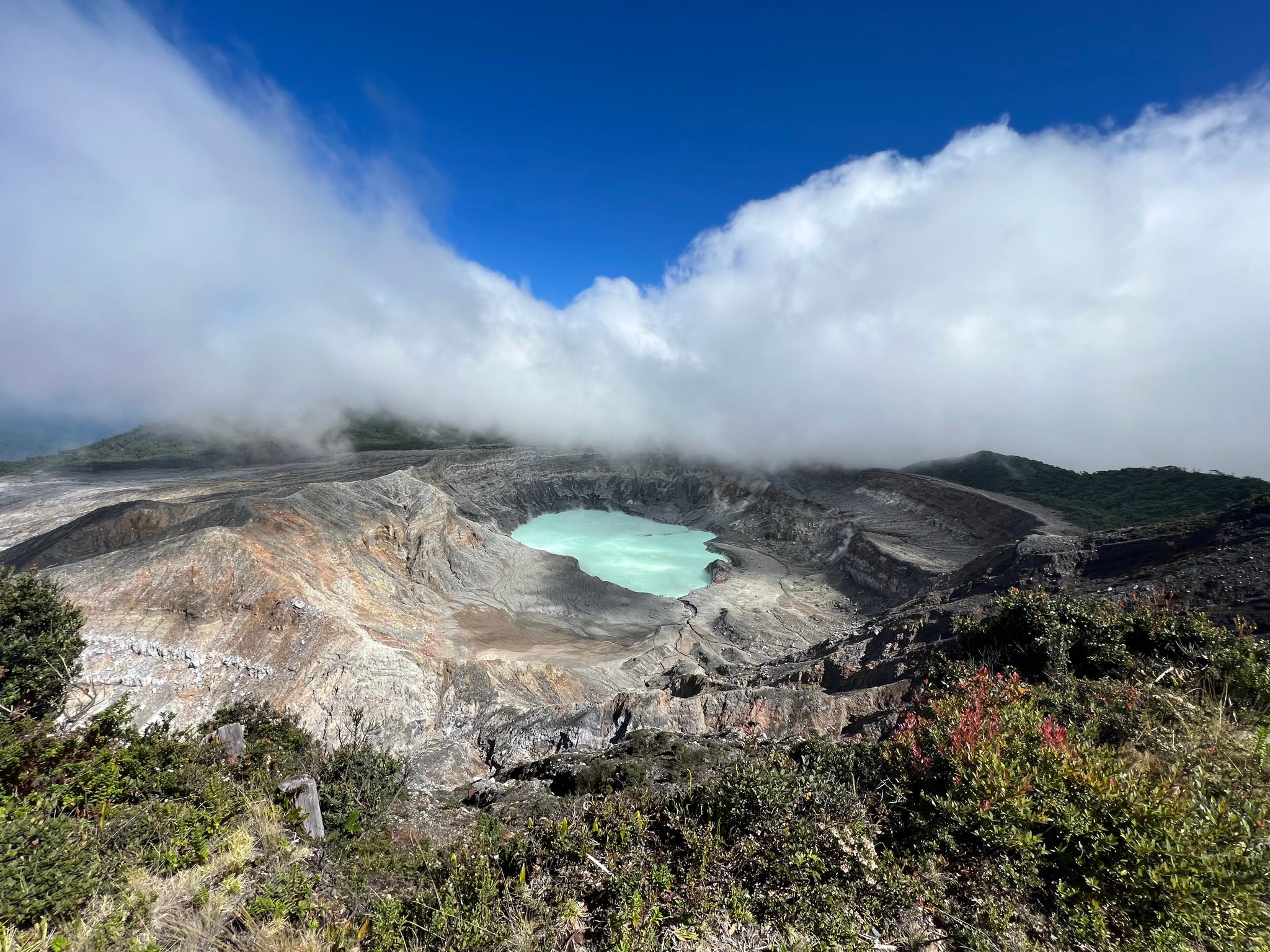
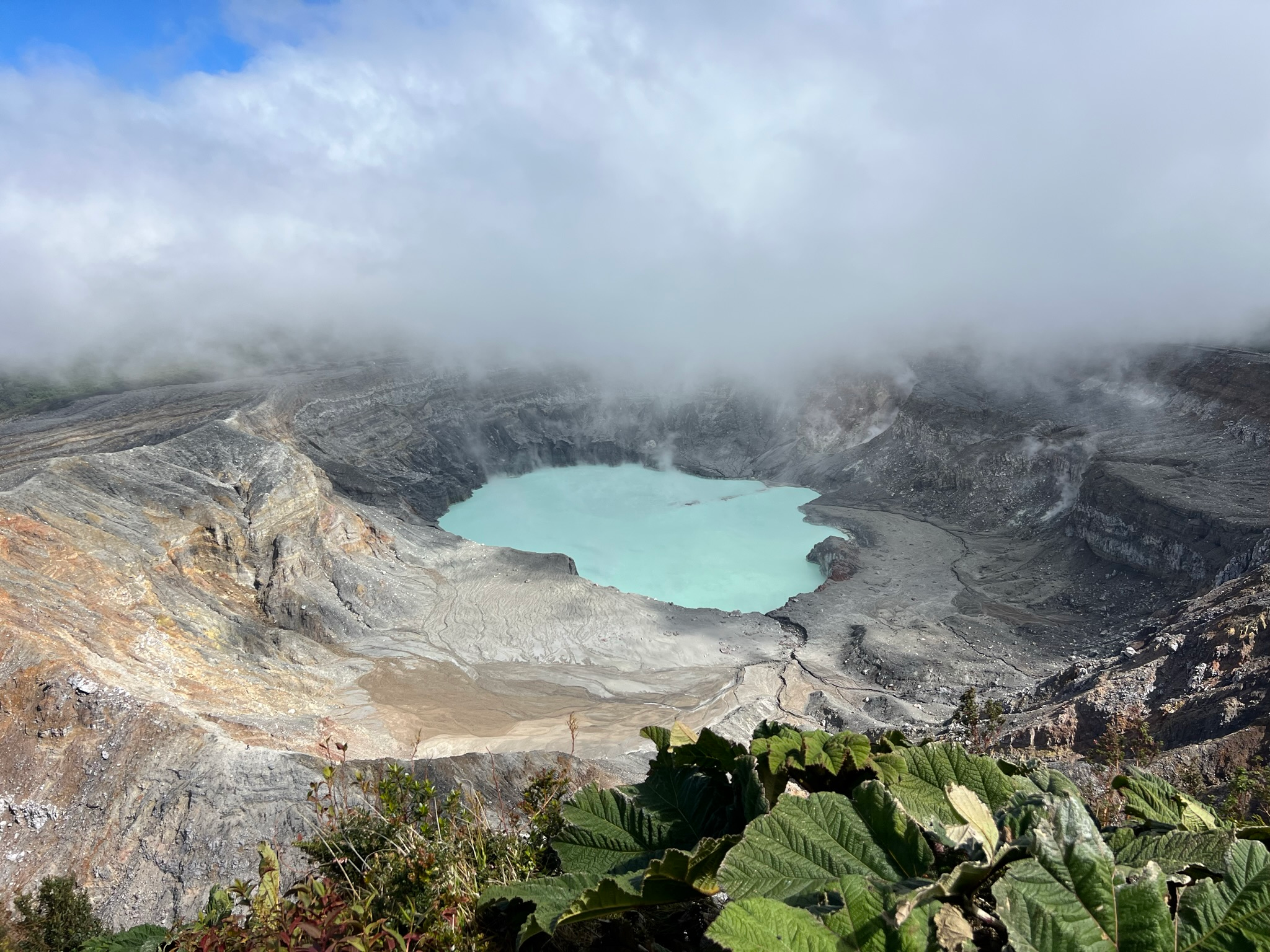
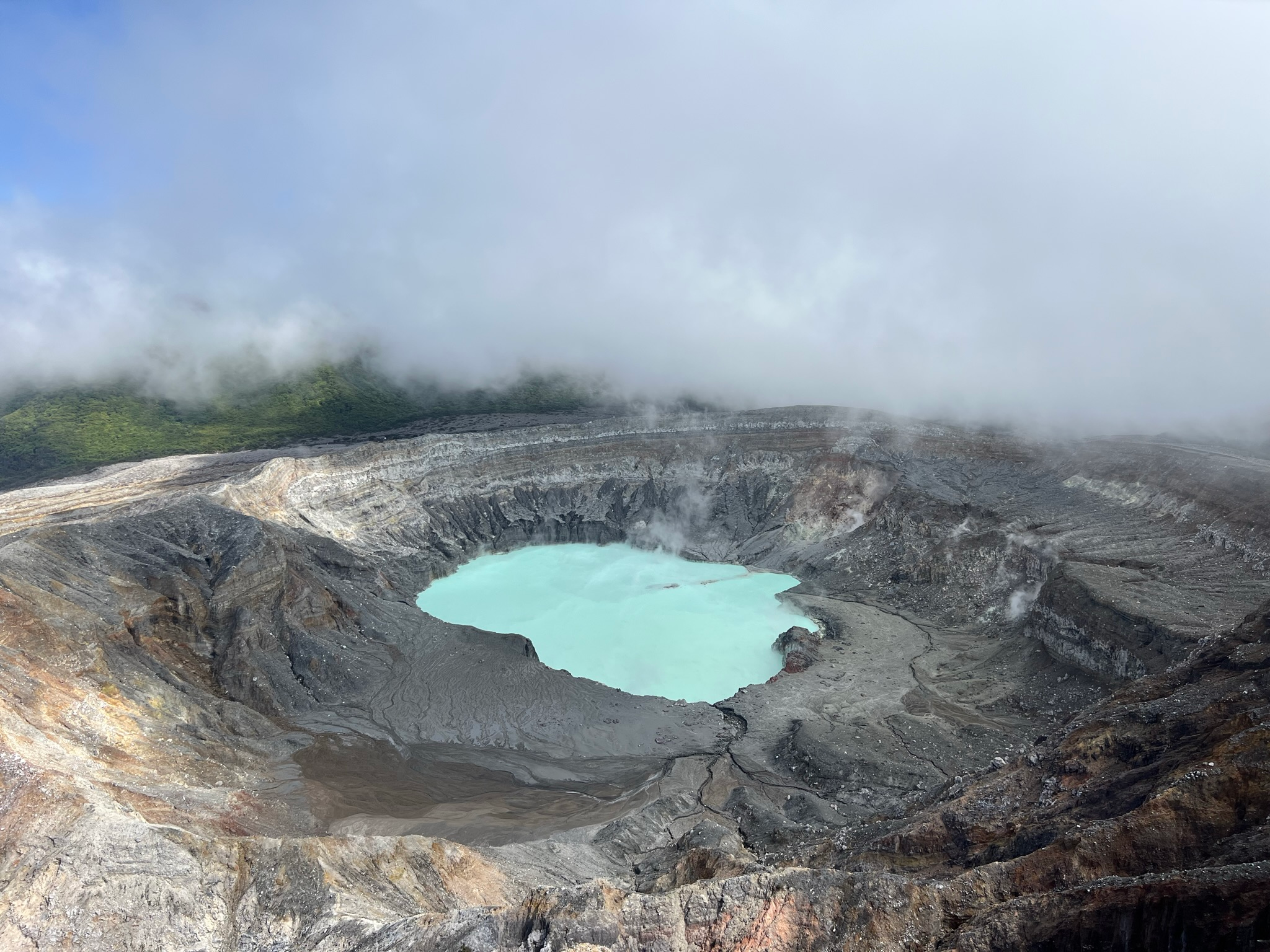
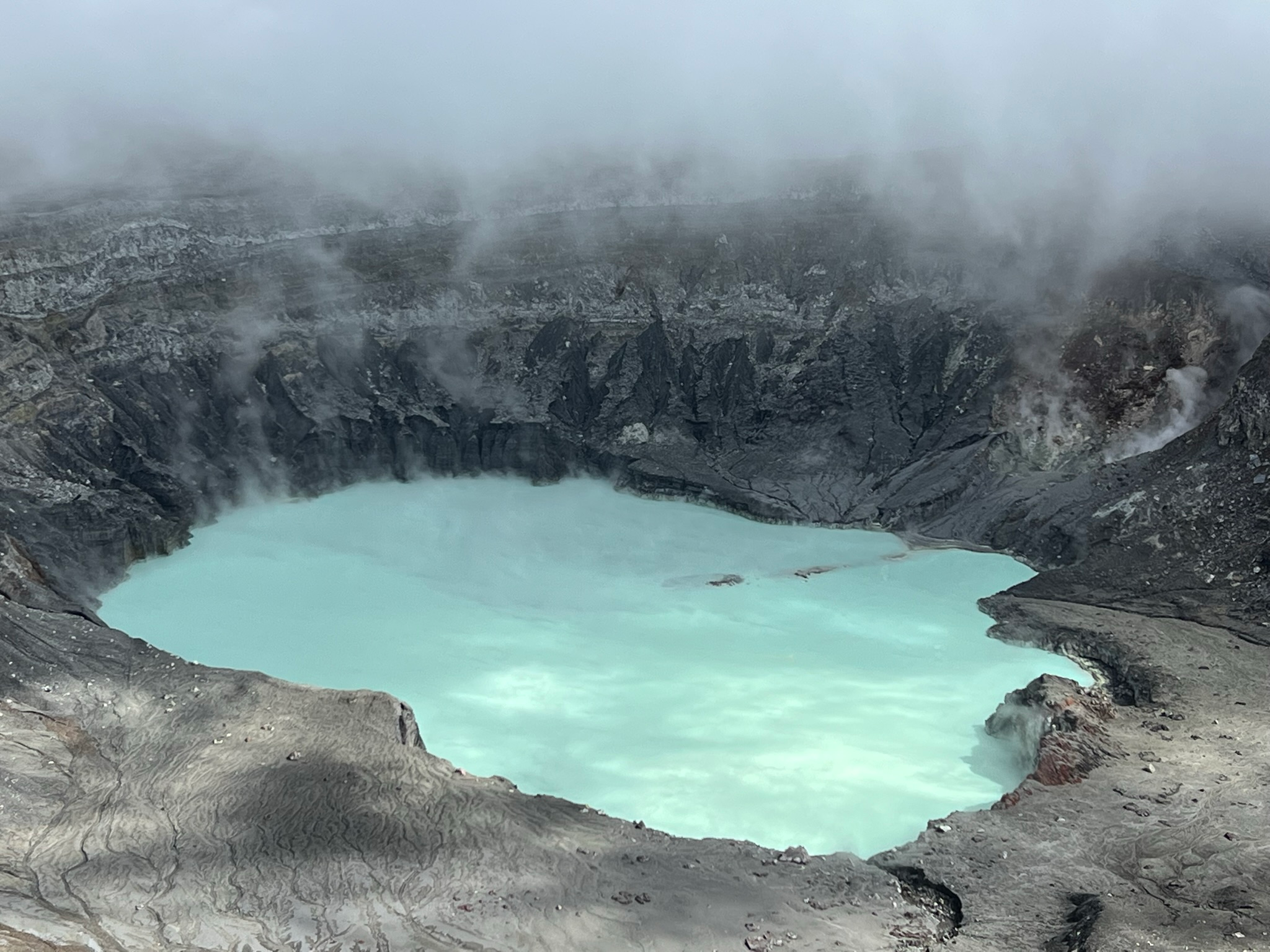
The crater itself measures about 1.5 kilometres in diameter, and at its heart lies the mesmerising Laguna Caliente, roughly 300 metres wide and 30 metres deep. It’s one of the world’s hottest and most acidic lakes, with temperatures reaching around 70 degrees Celsius and a pH as low as 0.9, its bottom virtually composed of liquid sulphur. Absolutely insane. Fumaroles around the crater vent sulphur-rich gases from below the volcano’s surface, lending the whole scene a spectral, almost otherworldly quality. Add to this the fact that only specialised bacteria can survive in such extreme conditions, and it’s impossible not to feel humbled by this natural wonder.
At the viewpoint, I was impressed by the level of safety measures in place. In addition to shelters designed for emergency protection during eruptions, there are volcanic gas monitors that continuously track gas composition and concentration. If levels of irritant gases rise high enough to pose a risk of respiratory harm – even in healthy individuals – safety measures such as evacuations can be promptly initiated.
After spending some time soaking in the panorama, I made my way to the southern crater – an inactive one that, much like its sibling, contains a lake at its base. This time, though, the water is cold, emerald green, and surrounded by lush cloud forest. Laguna Botos, in stark contrast to Laguna Caliente, is home to around 23 species of planktonic algae, with its surroundings providing refuge for thousands of plant and animal species. Similar in size and depth to the main crater, it hasn’t erupted since around 7500 BC.
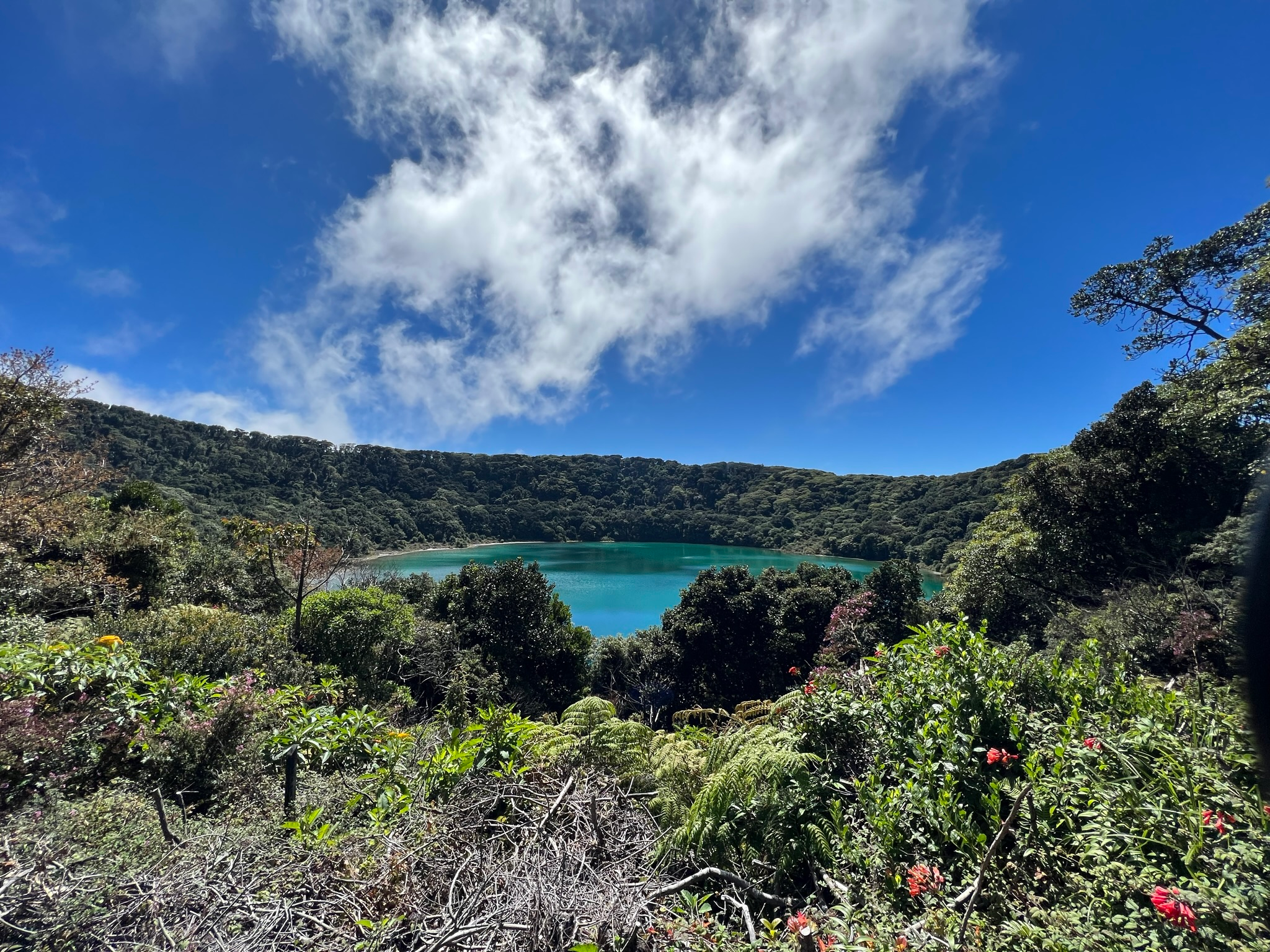
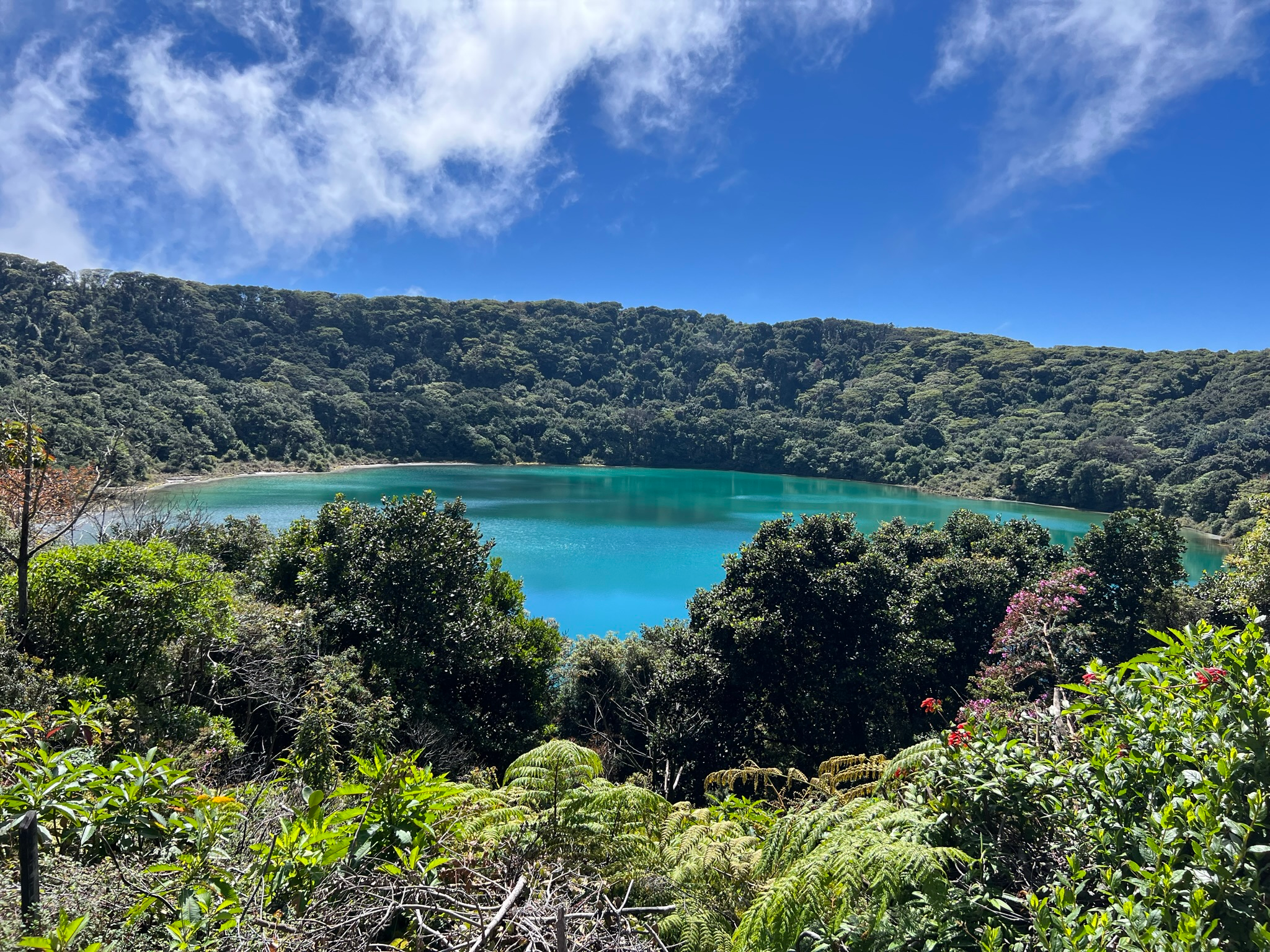
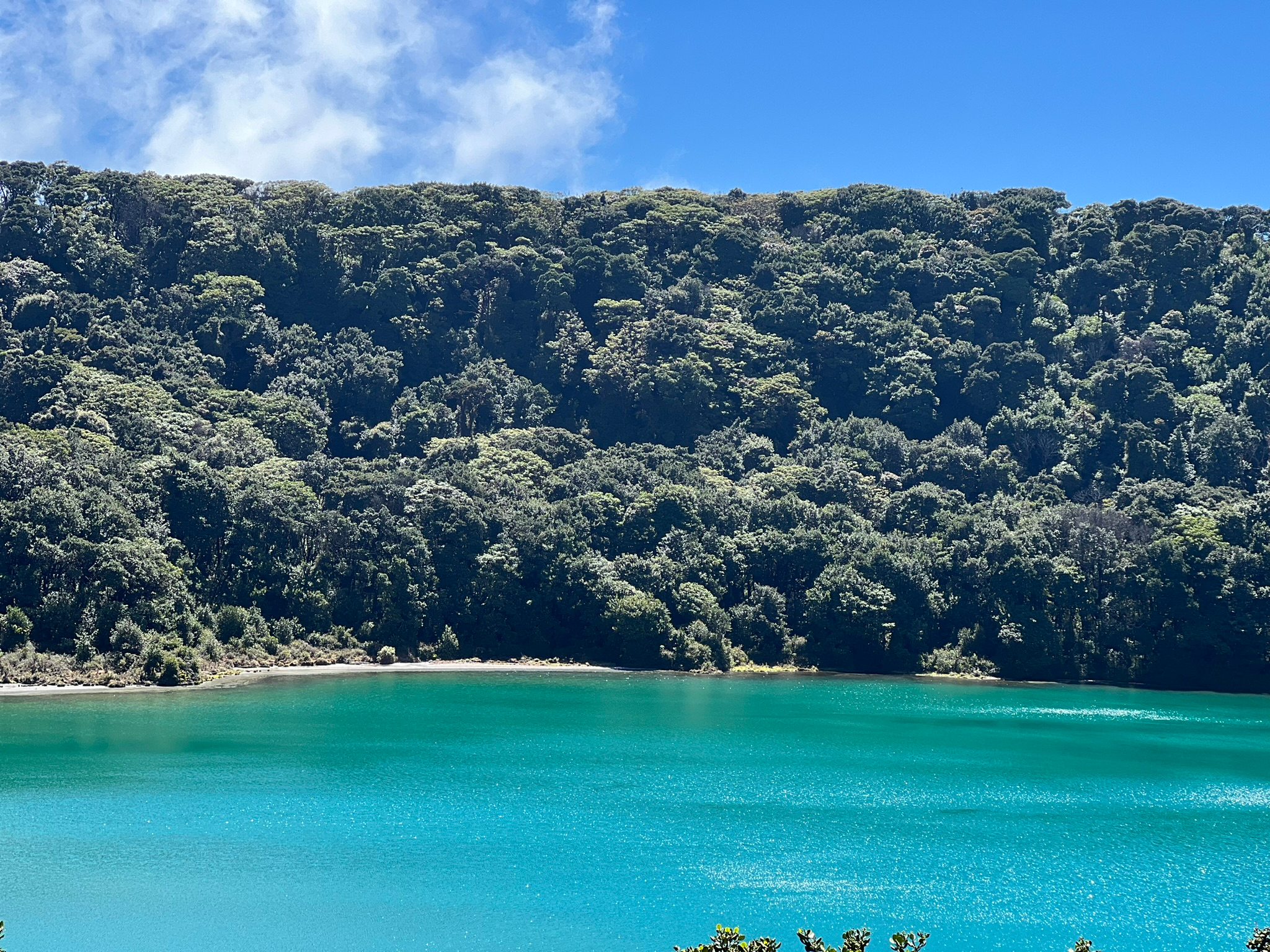
Looking at it, I couldn’t help but think of Laguna de Guatavita in Colombia, which I’d visited over seven years earlier. I wonder if this one, too, has legends of treasure and riches being cast into its depths as part of ancient rituals. Who knows?
Animals, Buffets, and Waterfalls
After that, we had one final stop left. Of course, before getting there, we were funnelled into a tourist trap – a brief visit to a shop offering tiny tasters of the richest strawberries I’ve ever eaten, a shot of Cacique guaro (a sugarcane-based liquor), and a bite of mouth-watering heart of palm cheese. Moments like these are when I proudly label myself a backpacker, using both my budget and my inability to carry extra weight as excuses to indulge in free samples while politely declining their pleas to buy anything.
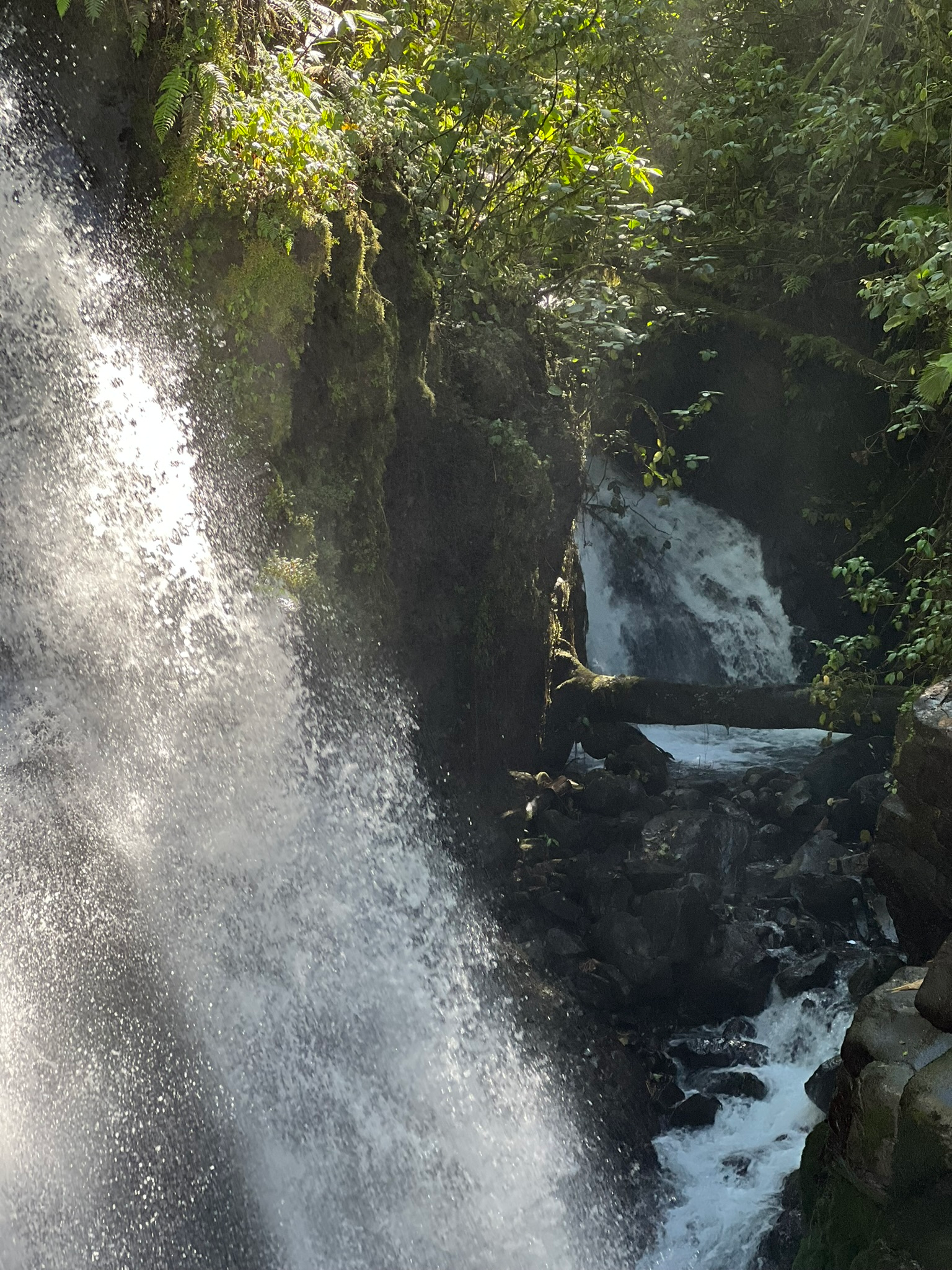
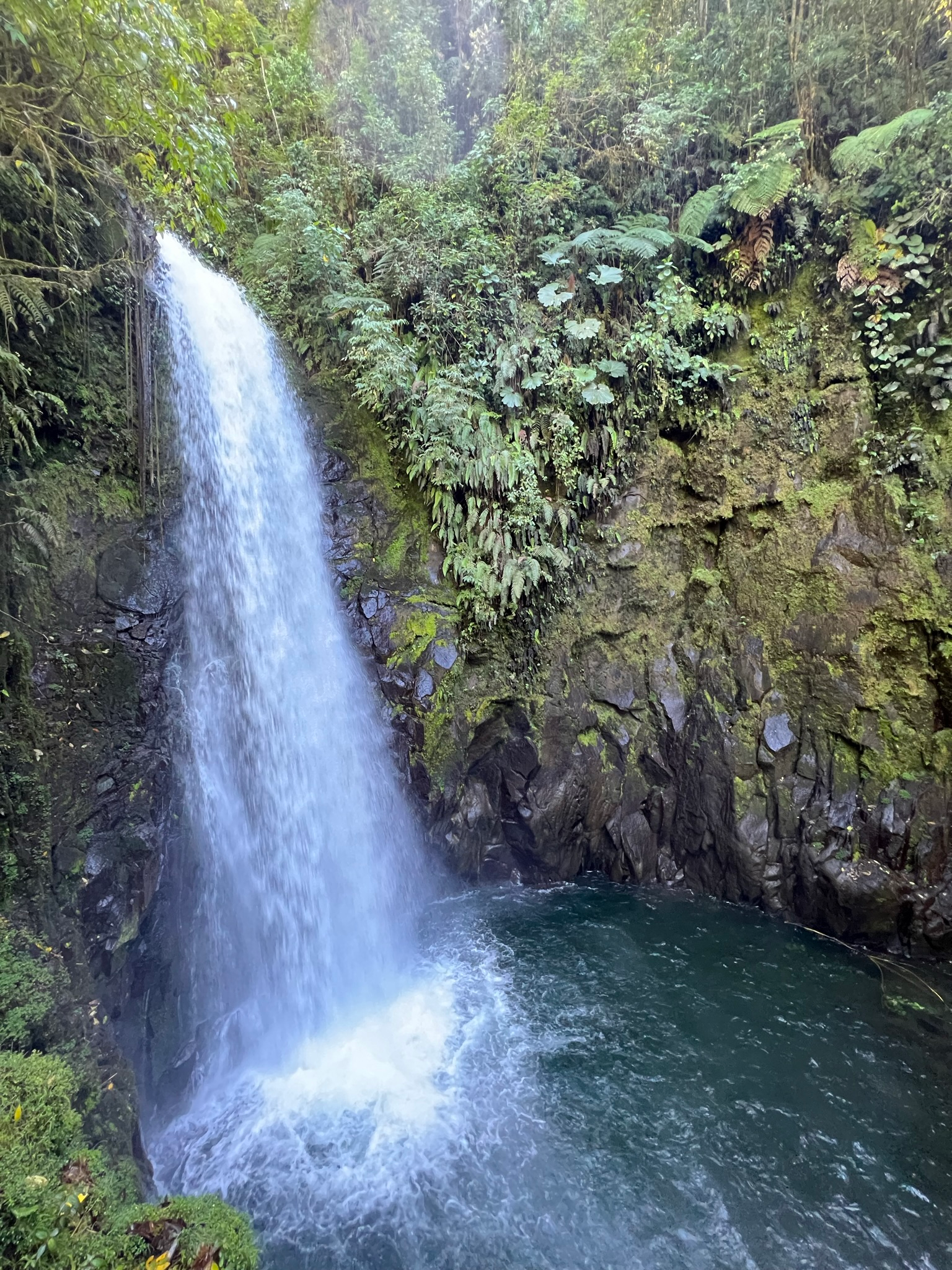
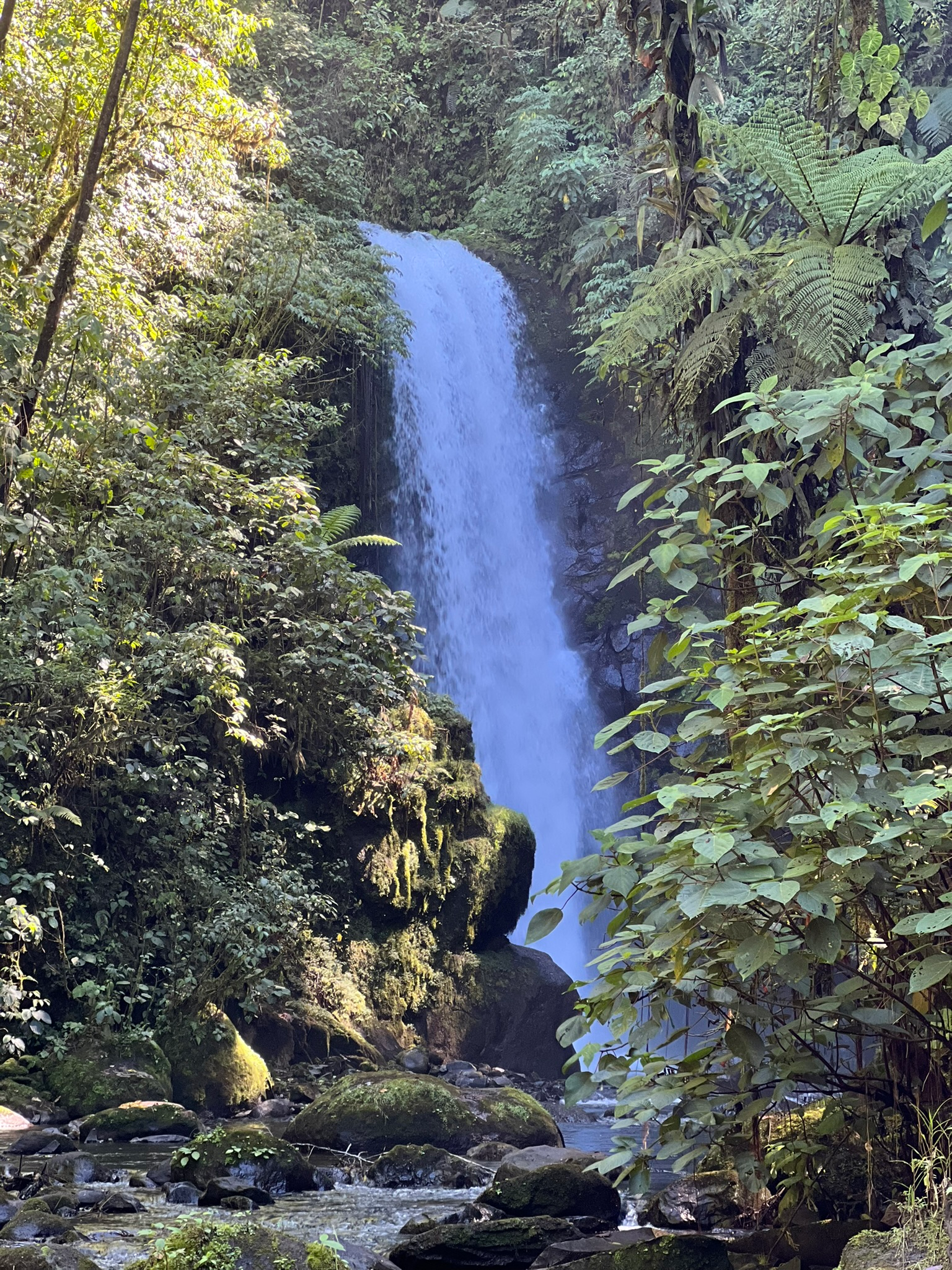
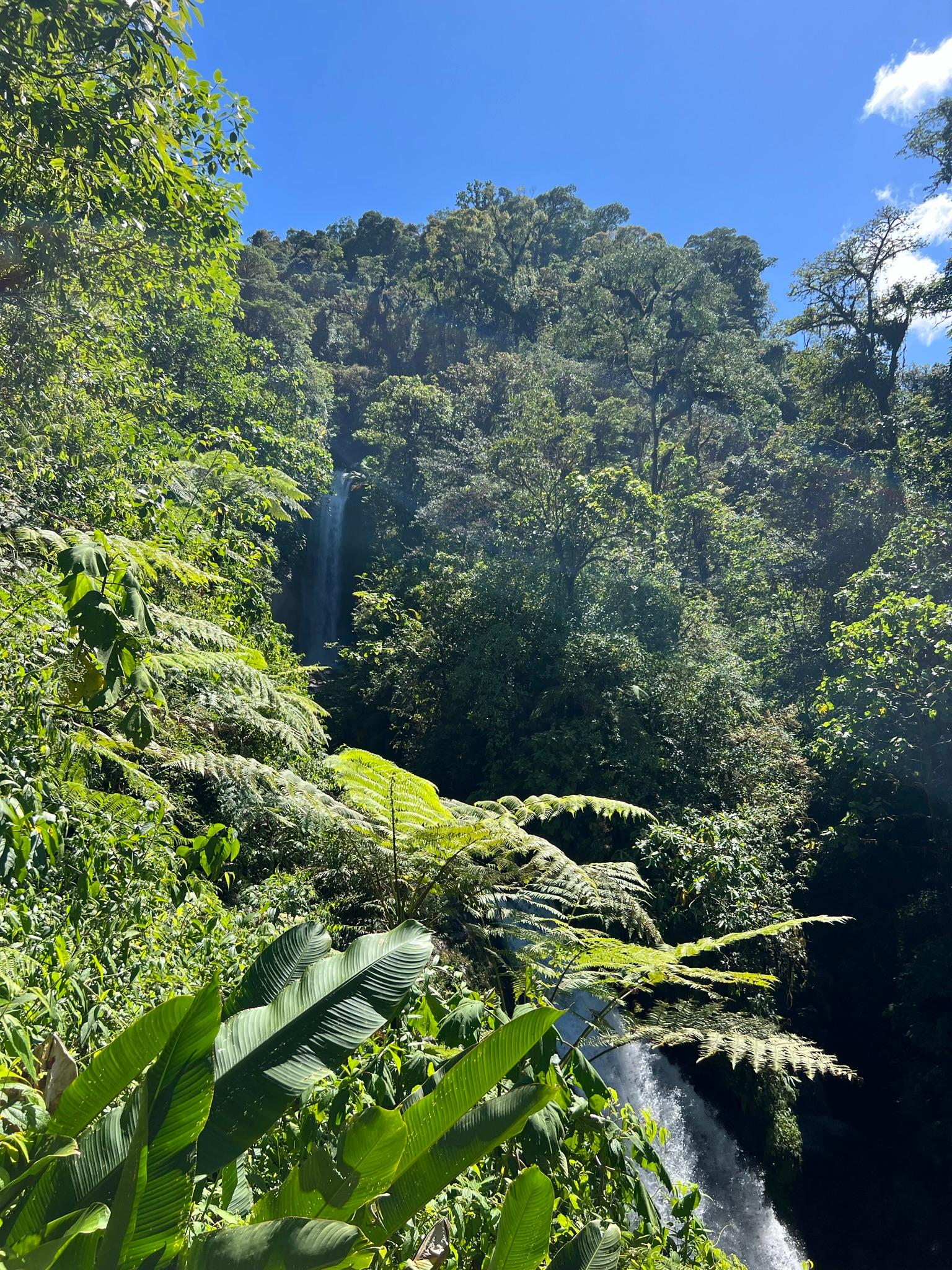
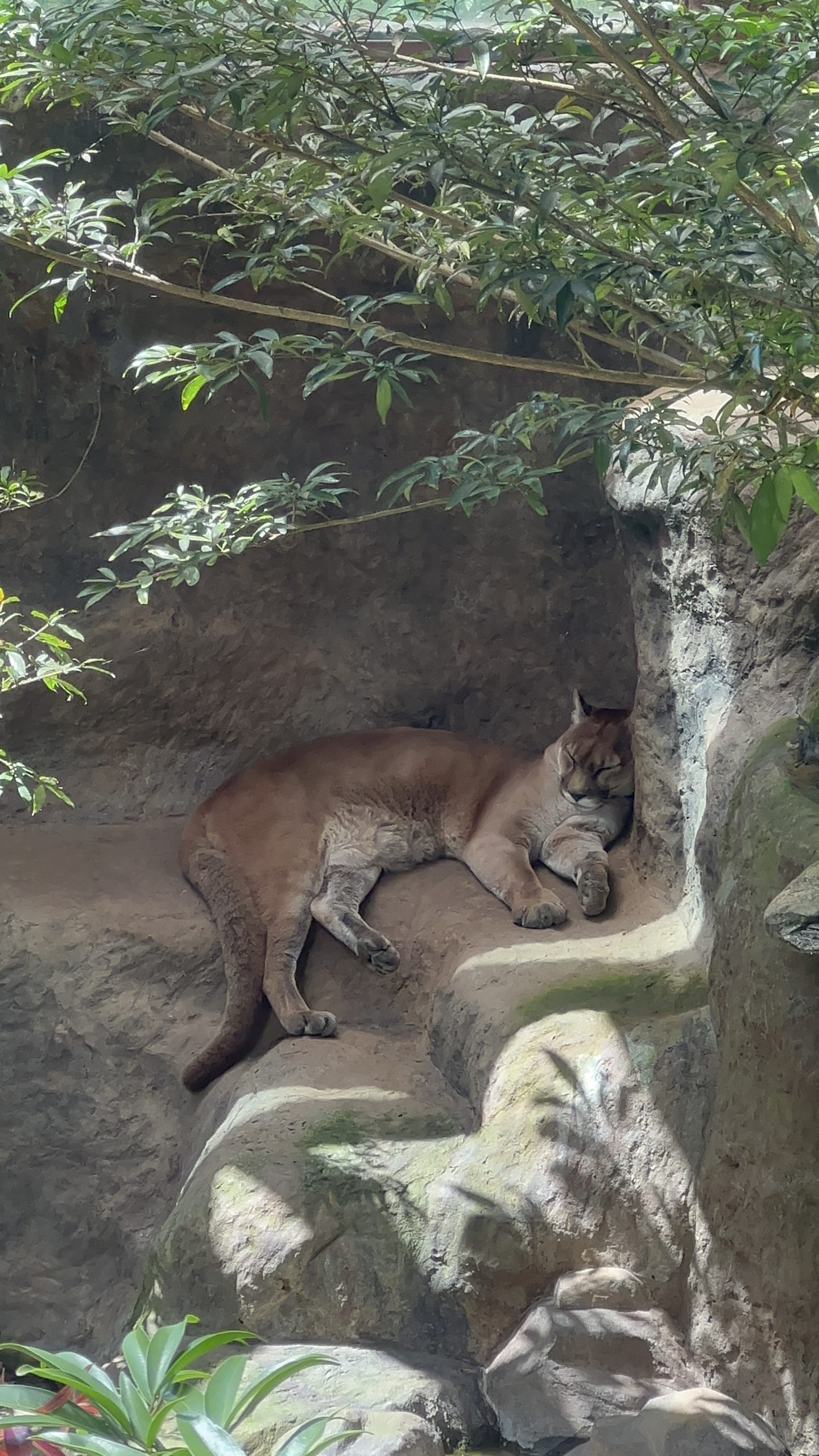
Our final stop of the day was La Paz Waterfall Gardens Nature Park, one of Costa Rica’s most popular ecological attractions, featuring the country’s largest animal sanctuary alongside a trail of five waterfalls. We began with the sanctuary, where signs everywhere stressed that the animals were not taken from the wild but were placed there by the Costa Rican Wildlife Ministry. Most had been illegally kept as pets or were otherwise unable to be released back into their natural habitats.
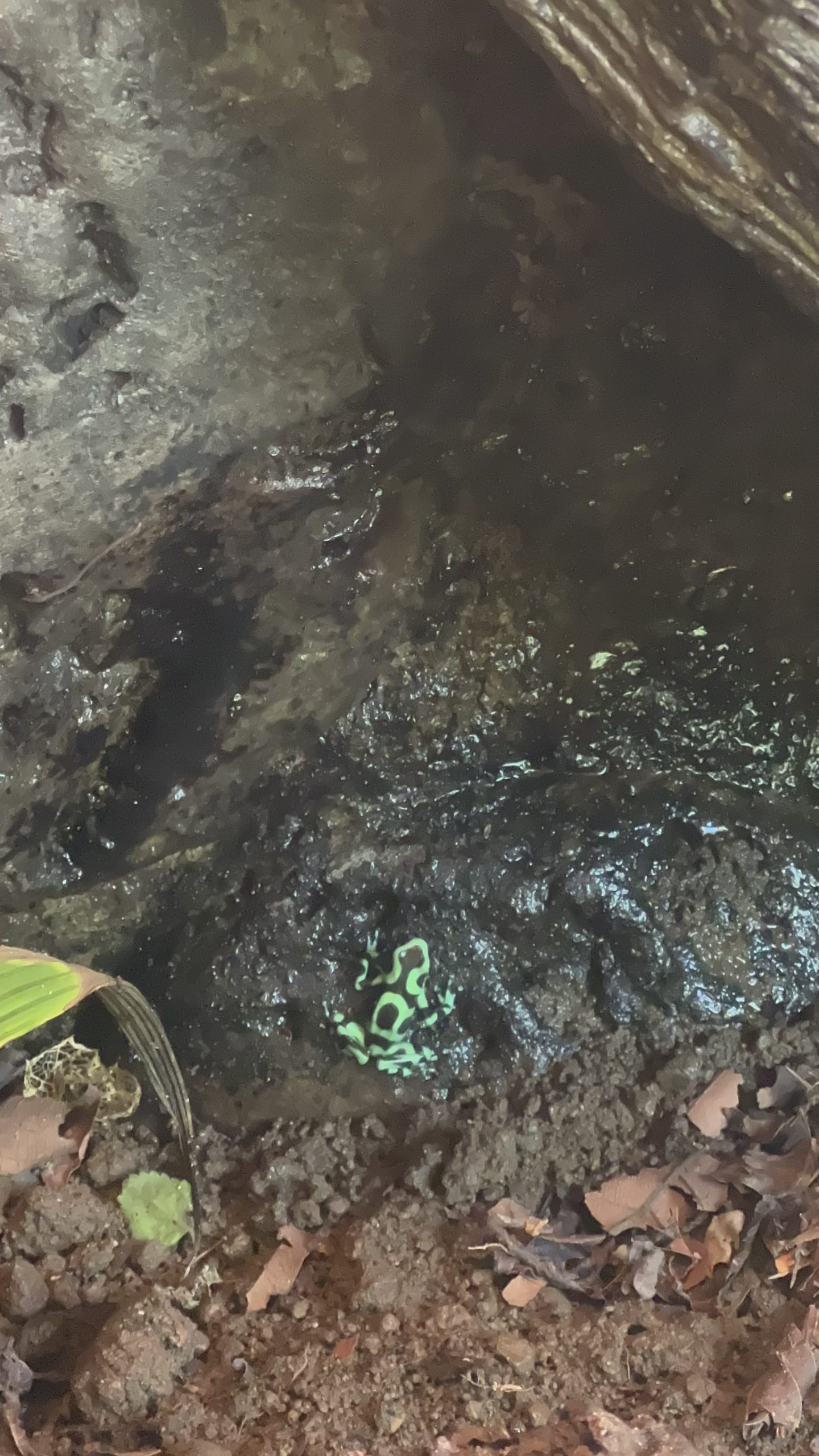
We passed through several sections, each showcasing incredible species. I came across animals I’d never seen before, including crested caracaras, black-bellied whistling ducks, and black-and-white owls in the aviary; side-striped palm pit vipers and green and brown vine snakes in the herpetarium; and blue jeans and green-and-black poison dart frogs, kinkajous, and ocelots in their respective enclosures. I also got to see a few jaguars up close – my dream of spotting them roaming freely in the wild still burning just as fiercely.
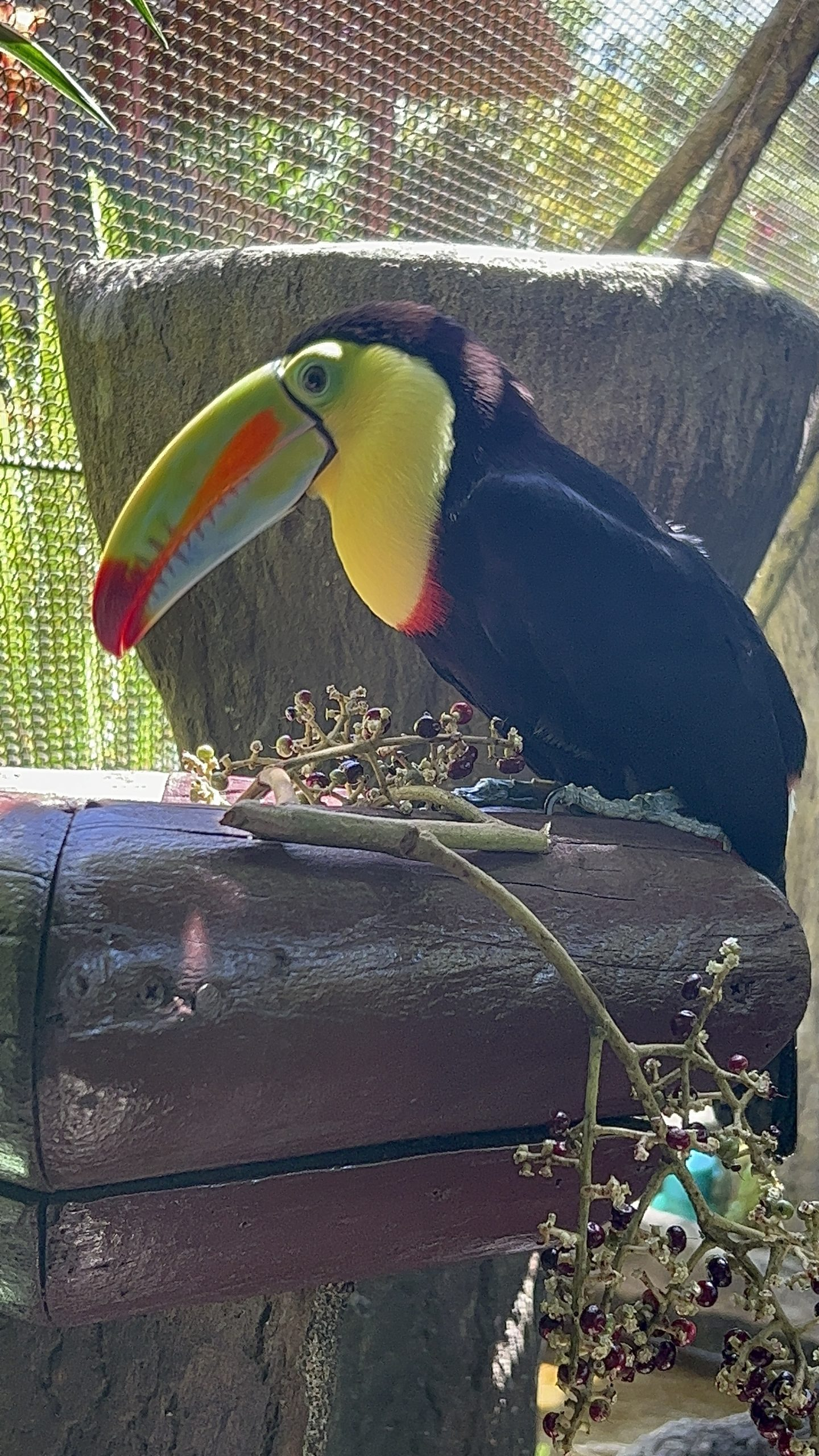
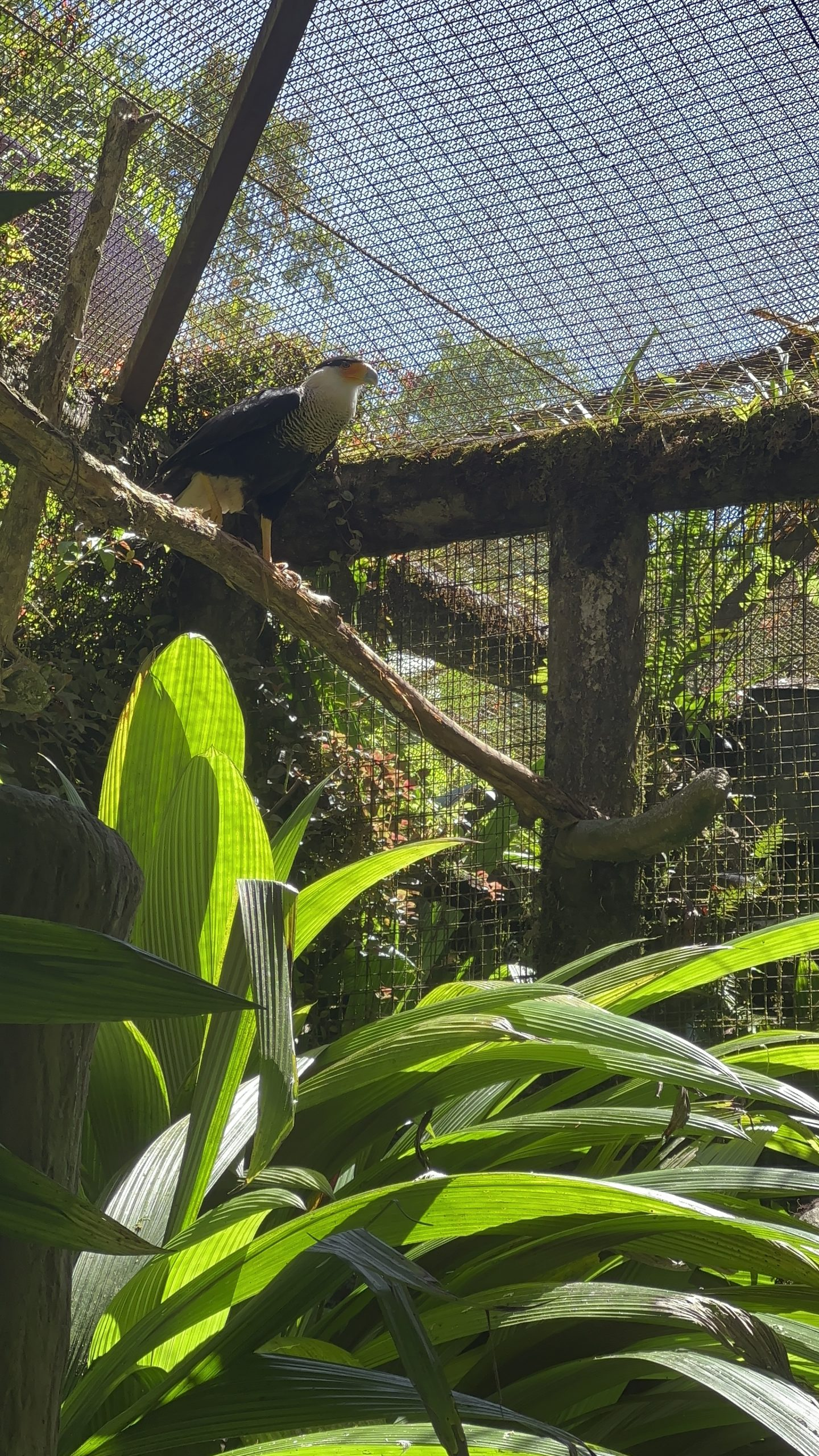
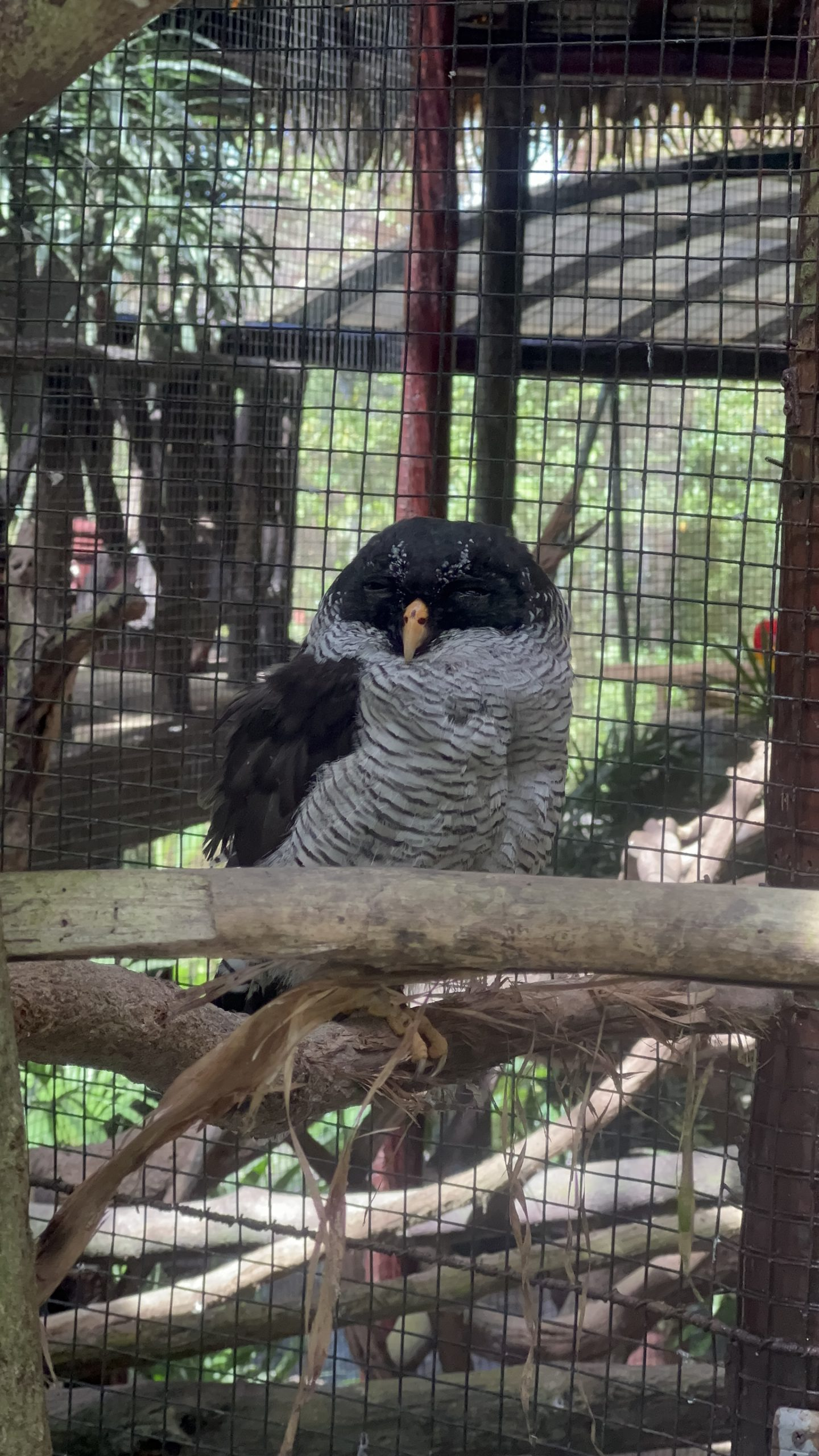
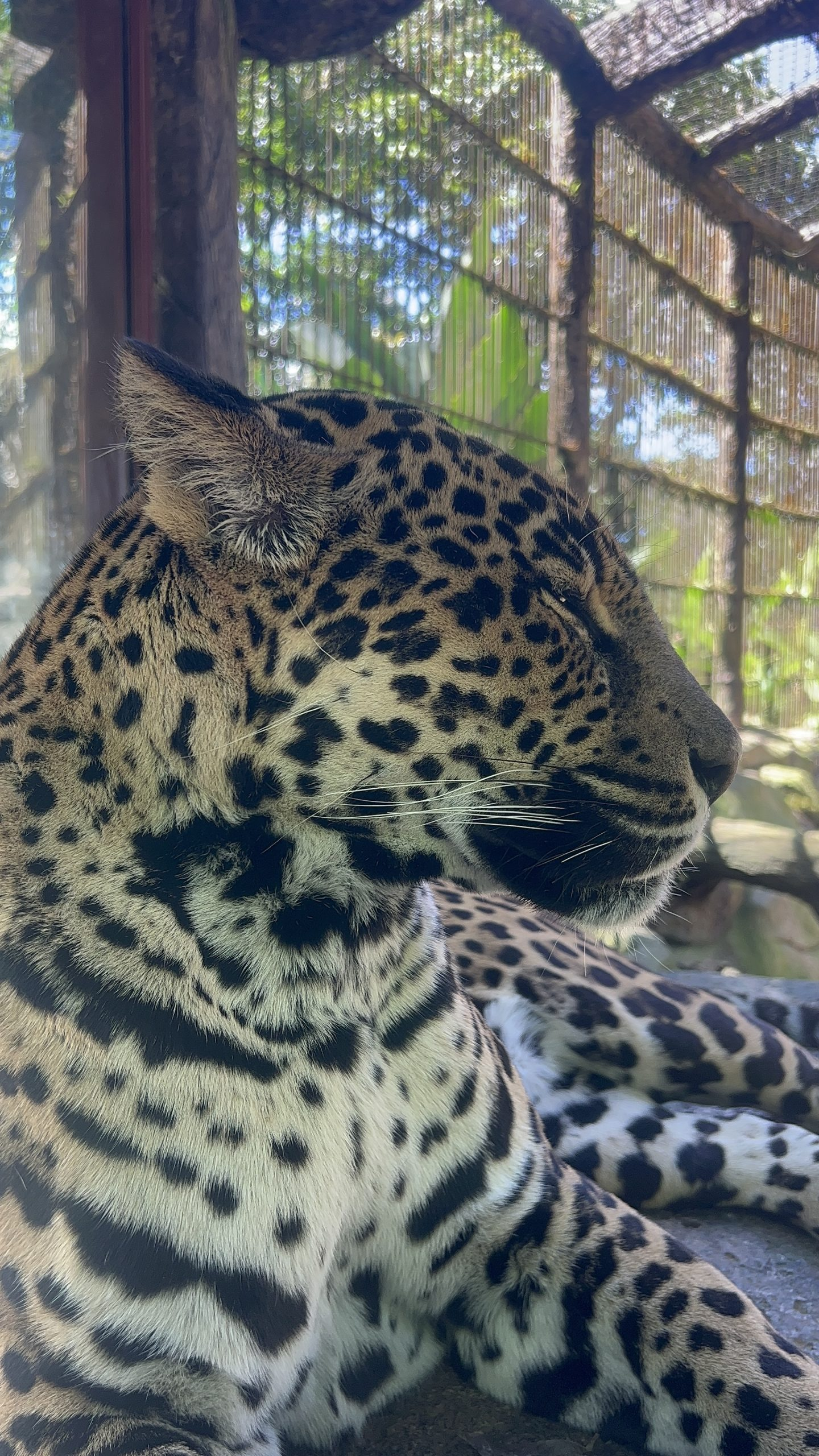
After the sanctuary circuit, we headed to the restaurant, where everyone – without singling out any particular nationality – piled their plates high at the buffet, only to leave half of it uneaten. If there’s one thing that really gets under my skin, it’s food waste. Having grown up with Sanji drilling into my head that wasting food is unforgivable, I still hold onto that principle fiercely. Take as much as you want, but make sure you eat it. Or else. Grr. And honestly, I still can’t understand how anyone could leave arroz con leche unfinished. I wish I’d had brought along some Tupperware with me. It was that good!
Anyway. After our indulgent meal, we continued on to the waterfall trail. It felt a bit like being on a conveyor belt, moving up and down stairs and across bridges from one waterfall to the next – all undeniably beautiful, yet somehow oddly underwhelming. We spotted a few insects and birds along the way, but overall, the sanctuary portion of the visit was by far the highlight.