Manuel Antonio – Day 2: Sloths, Monkeys & Snakes
MANUEL ANTONIO
Day 2: Sloths, Monkeys & Snakes
January 26, 2023
The following morning, Amelia, Steph, Chris, and I woke up early to be joined by Jason, a guy from the States whom Amelia had met along the way. He’d been driving a rental and had given her a lift all the way from Monteverde, and now he was giving us a lift to the national park.
Manuel Antonio National Park is the smallest national park in Costa Rica, but don’t let that fool you – it’s regularly ranked among the most beautiful national parks in the world, boasting pristine beaches and lush jungle trails. As soon as we got there, the park rangers emphasised that we shouldn’t bring any food inside – partly because feeding wild animals is harmful to them (either cause they have specialised diets or cause they become dependent on humans), but mostly cause some of the monkeys tend to get aggressive when they see anything edible. Cool, cool.
We’d be visiting the park without a guide, as the rest of the group wanted to save some money, much to my silent disapproval. Determined to see as much wildlife as possible, I made sure to impart my tried-and-tested knowledge on how to spot animals. Walk behind a guided tour group – subtly though, you don’t wanna look suspicious – and whenever they stop, you stop too. Sounds complicated, I know, but leeching off other tours had become something of a specialty for me on this trip.

Of Monkeys and Sloths
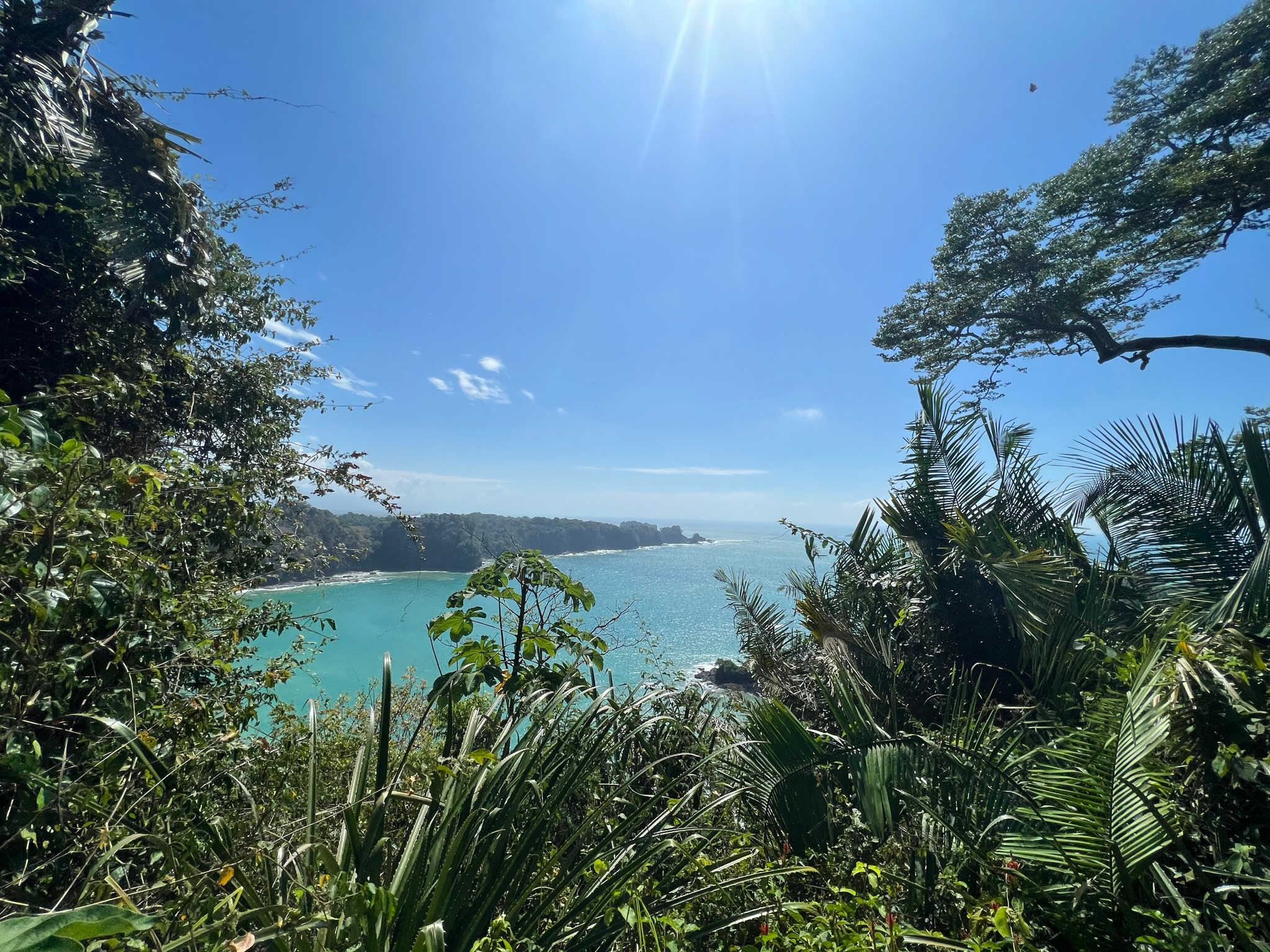
With that, we set off. A long wooden boardwalk carried us deep into thick tropical foliage, running above heliconia plants as hummingbirds and butterflies swarmed around them, while the buttress roots of towering trees housed all kinds of insects and spiders. From small waterfalls to tiny ponds and creeks, the forest kept us in awe throughout, with occasional sightings of agoutis and coatis.
Having already seen plenty of howler, spider, and capuchin monkeys, I felt oddly unimpressed every time we stumbled upon groups going wild over them, necks hyperextended in anticipation of something new. Still, unperturbed by repeated false alarms, I kept going – the anticipation building up given that I was yet to lay eyes on the fourth species of monkey found in Costa Rica: the tiny squirrel monkey. Lo and behold, we managed to spot one all by ourselves – though I didn’t manage to snap a single photo!
Oh, and sloths. I’d seen them before and, for the life of me, I still couldn’t quite understand the hype. I mean, they’ve been around for roughly sixty million years, yet somehow everyone only started losing their minds over them fairly recently.
That said, I gotta admit, they are pretty cool. Of the six sloth species in existence, only two are found in Costa Rica – the two-toed sloths, which are larger and typically brown, and the three-toed sloths, which are smaller, greyer, and can be sexed by the males’ distinctive patch of brighter fur on their backs, known as the speculum. These mostly solitary creatures feed primarily on foliage, with Cecropia leaves being their food of choice. Since these leaves are low in calories and protein, sloths have to eat constantly. Combined with their incredibly slow digestion – aided by a four-chambered stomach – this explains why they spend up to 80% of their lives hanging from trees.
Once a week, they descend to the ground to defecate, losing up to a third of their body weight in the process, before climbing a different tree, as the smell of their droppings attracts predators. Turns out, there’s method to the madness. Sloths do this to allow moths living in their fur to lay eggs in the faeces. Once hatched, the moths feed, mature, and return to the canopy, eventually finding a new sloth to call home. This commensal relationship benefits both parties: the moths produce nitrogen, which promotes the growth of algae on the sloth’s fur, providing extra nutrients when the sloth grooms, while also offering camouflage from predators like eagles, big cats, and snakes.
Oh, and one last fun fact – Cecropia leaves have mild sedative properties, meaning sloths are basically mildly doped up most of the time. So yeah, I get it now. Sloths are awesome.

Face to Face with a Fer-de-Lance
Onwards we went, covering most of the park’s trails. From bare-throated tiger herons darting between branches to red-eyed tree frogs tucked inside rolled banana leaves, from capuchins munching on the sweet seeds of viscoya palms to red land crabs scuttling out of their burrows, from helmeted basilisks perfectly camouflaged among leaves and twigs to iguanas doing a surprisingly good job of the same – Manuel Antonio did not disappoint.
And speaking for myself, I nearly lost it when we came across a fer-de-lance snake – a dark brown pit viper with black zigzag markings, notorious for its size (up to two metres), massive fangs, and highly potent venom. As Johnny had told me back in La Fortuna, this is considered the most dangerous snake in Costa Rica. These evil beauties can lay dozens of eggs per reproductive cycle, sometimes close to a hundred, although their populations are kept in check by predators that eat both the eggs and the snakes themselves.
Despite generally avoiding humans, it has a notoriously bad temperament and is responsible for the majority of snakebites in both Costa Rica and parts of Central America. And there I was, phone and hand less than a foot away, trying to get the perfect shot. Quite the daredevil, aren’t I?
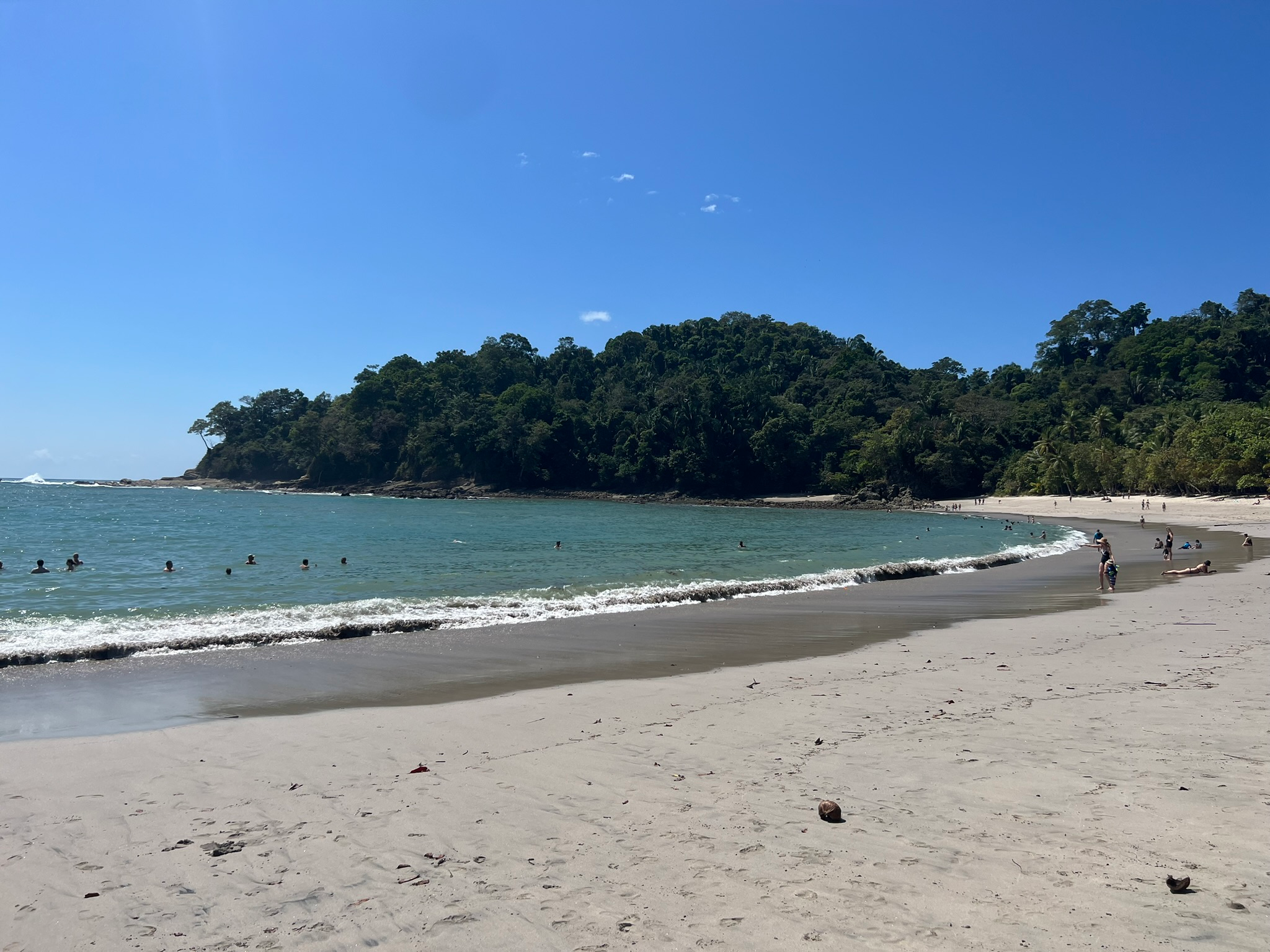
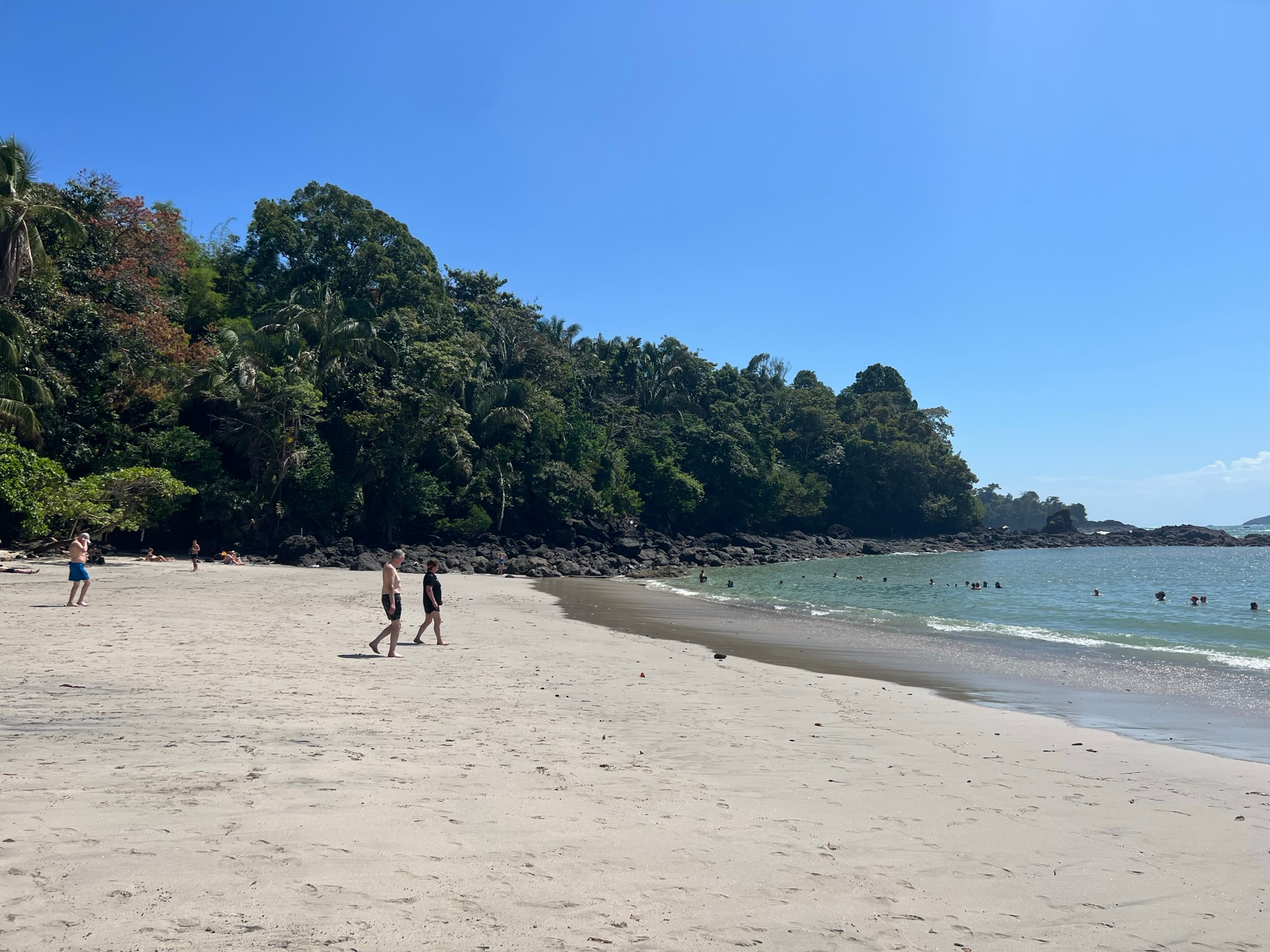
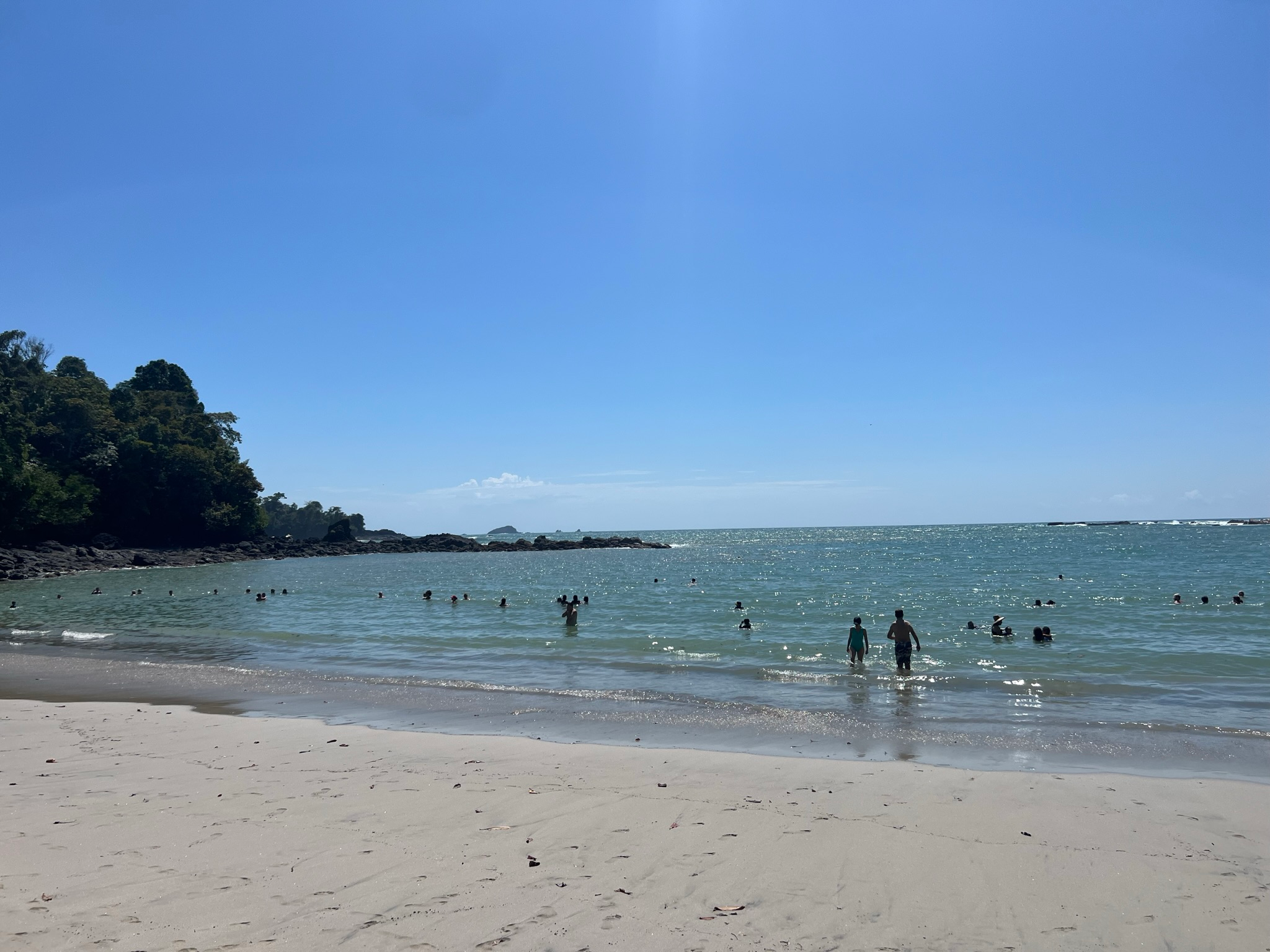
Fully satisfied, we eventually made our way to the main beach. There we spent the rest of the morning enjoying the turquoise waters, enclosed by a white sandy bay seamlessly merging into dense forest. Safe to say, we looked like beets by the end, our skin radiating about as much heat as Betelgeuse – at the very least.
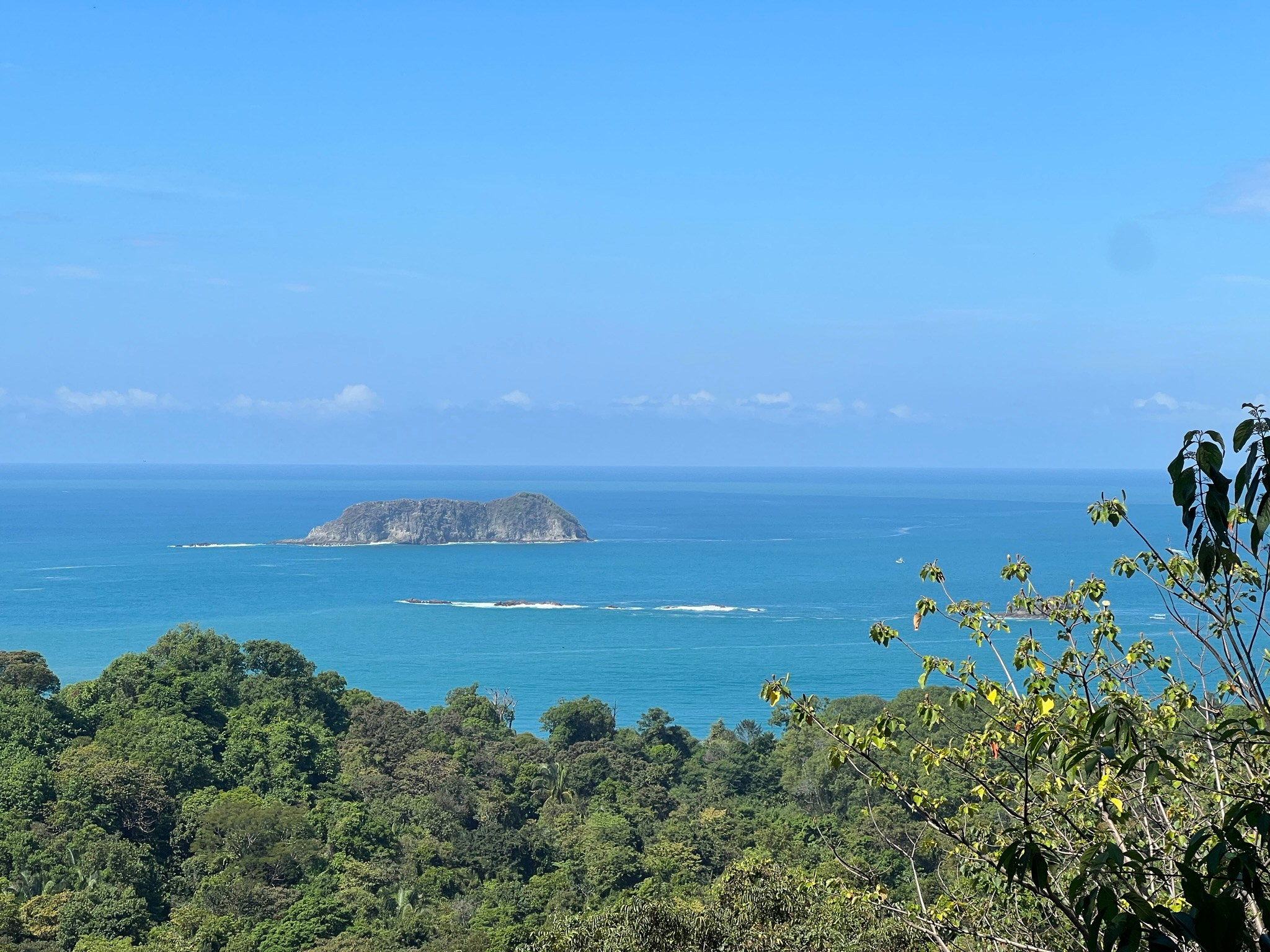
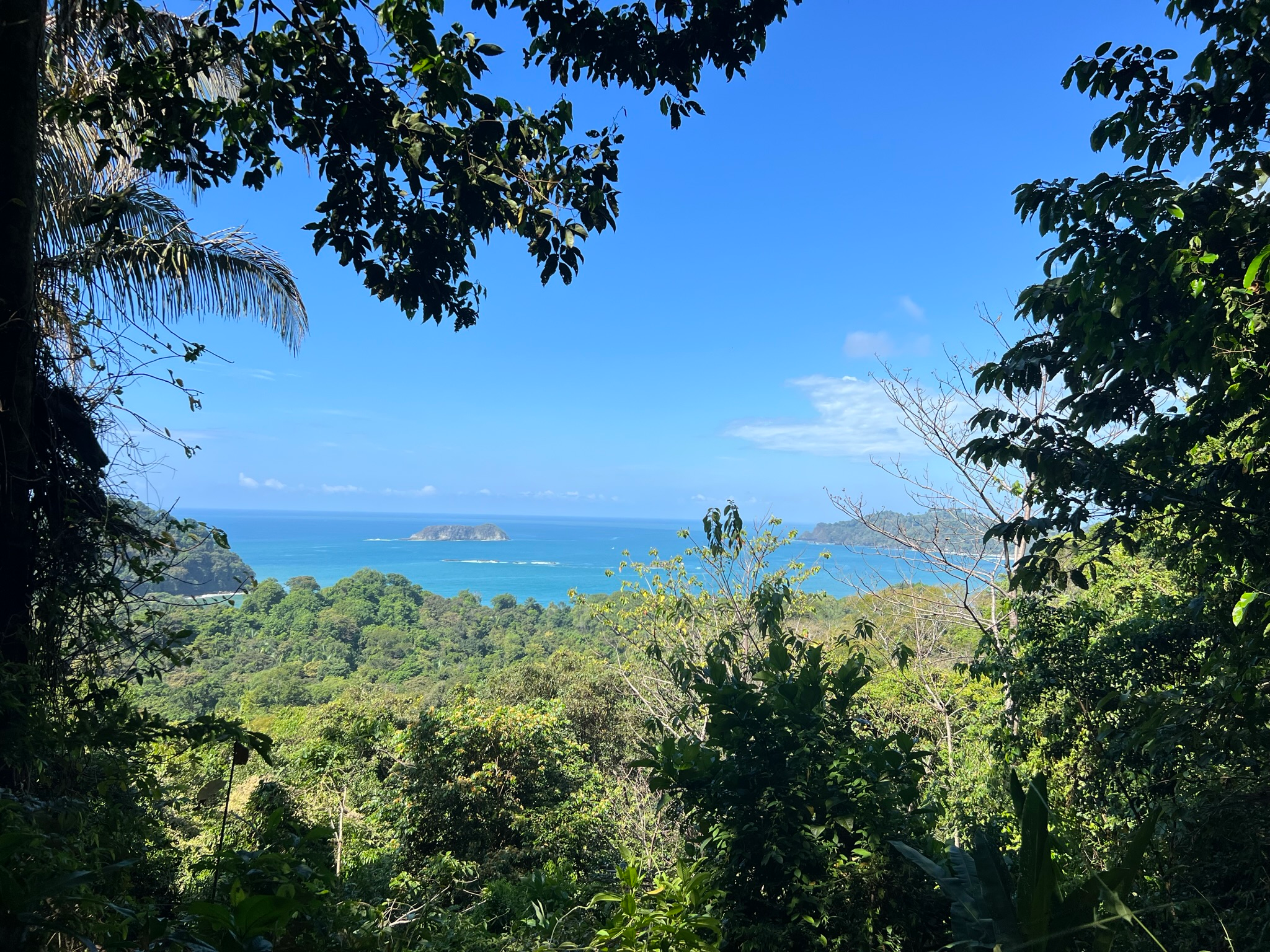
One Last Dive?
The rest of the day, however, was defined by disappointment and mild despair for Amelia and me. As soon as we got back to the hostel, the receptionist informed us that the dive scheduled for the following morning had been cancelled due to poor visibility.
This was likely going to be our last dive together before parting ways, so we were pretty set on making it happen. We simply had to. It would’ve been Amelia’s first dive in the Pacific, despite her having dived since the age of ten and travelled to over fifty countries. And so, we ventured forth into the city and scoured all the dive shops. Try as we might, we couldn’t find a single operator in Quepos running dives the next morning. Our next idea was splurging a bit and diving in Isla del Caño – one of the best dive sites in Costa Rica and, unsurprisingly, one of the most expensive. No luck there either, with every operator fully booked thanks to high season.

Our final Hail Mary was Jacó. While diving there isn’t exactly world-class, at least we’d get underwater. Amelia would get a taste of the Pacific, and hopefully we’d still see something interesting. Or at least that’s what the guy at the dive shop promised us – sounding absolutely thrilled at the mere idea of finally having customers.