Santa Ana – Day 4: Ilamatepeq & Coatepeque
SANTA ANA
Day 4: Ilamatepeq & Coatepeque
October 24, 2022
Third full-day tour and I was ready for it – and, more importantly, I was ready for Kevin. Andreas would be joining this time round, meaning that as bad as it could get, at least I’d have someone to complain with/to.
This day had a lot in store for us – the Santa Ana Volcano and Lake Coatepeque. Our driver for the day would be Alex, who, in hindsight, kinda made me miss Kevin. Alex, fixed with a Cheshire cat smile, had the uncanny ability to speak through his teeth – something he made full use of considering he didn’t shut the hell up for a single friggin’ second throughout the entire day. When he wasn’t talking incessantly about random gibberish no one gave a crap about, he’d be singing along to his radio music in the loudest falsetto one can muster only after years of practice – something I’m sure he’d been doing since he started his career as a taxi driver.
For all his faults, I can’t say he didn’t try to make us feel included, especially after putting on Italian music when I told him Malta’s close to Italy. I told him over and over that Malta is its own entity and not part of Italy, only that seemed to further ingrain in his head the idea that we only listen to Italian songs – my Katy Perry playlist begging to differ. Oh, and I almost forgot the fact that he’s a manic, honking-happy, cantankerous driver who’d probably end up in jail after driving one hour in Europe.

Ilamatepeq: The Sacred Volcano of the Nahuatl
One long, looong ride and a headache later, we finally got to the trailhead leading up to Santa Ana volcano. There, we were introduced to Miguel – a local Nahuatl guide who’d been doing this job since he was a kid and who expected to be paid 666% more than the originally stipulated price (that’s an actual calculation – I’m not kidding).
After a few mean side-eyes to Alex, we gave in and started the hike with Miguel. After the infernal trek up Acatenango, I was already dreading the whole thing. But lost in conversation about El Salvador and the indigenous people’s traditions, I found the walk surprisingly easy. Not to mention, we were constantly accompanied by the most gorgeous of views.
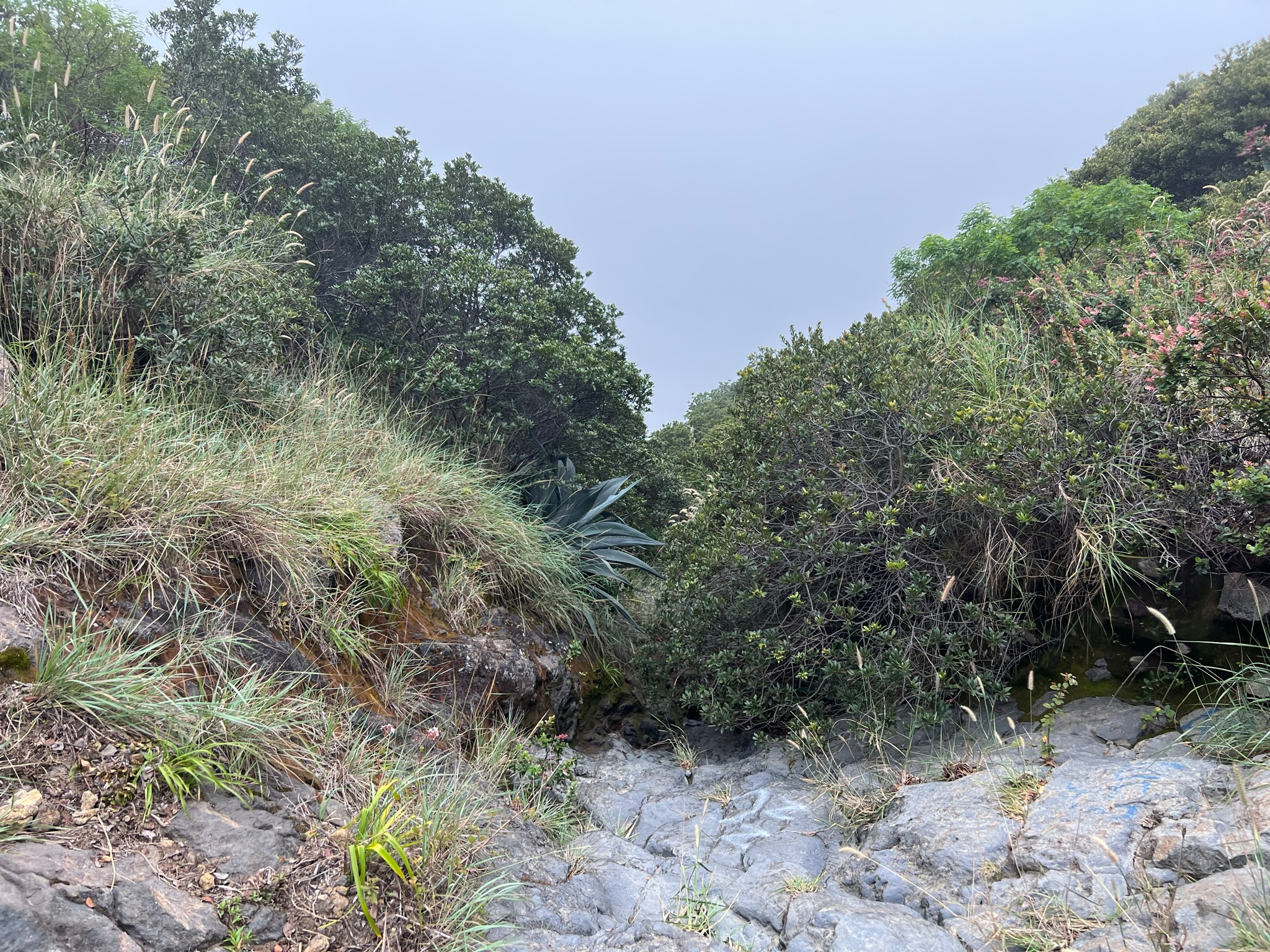
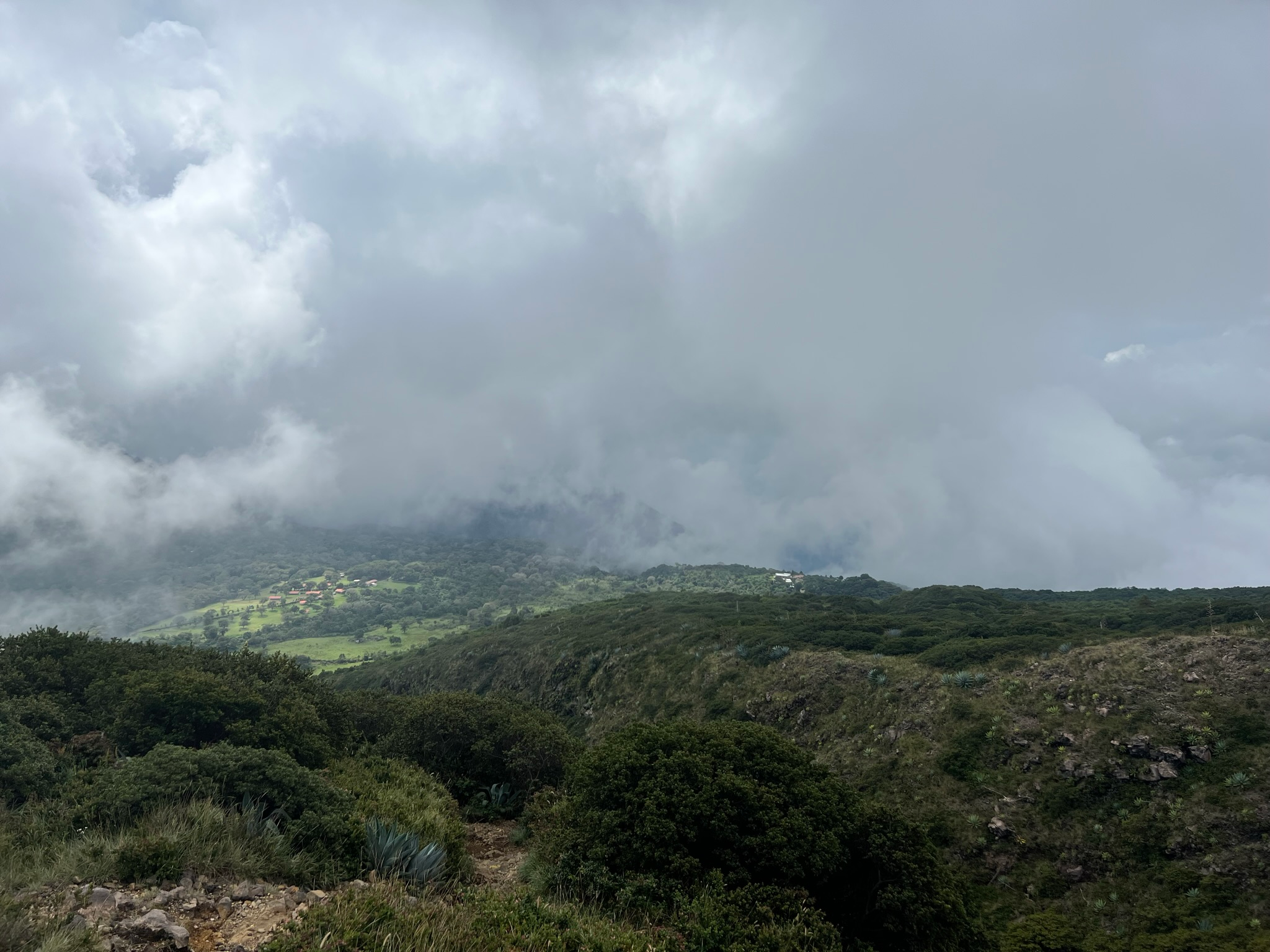
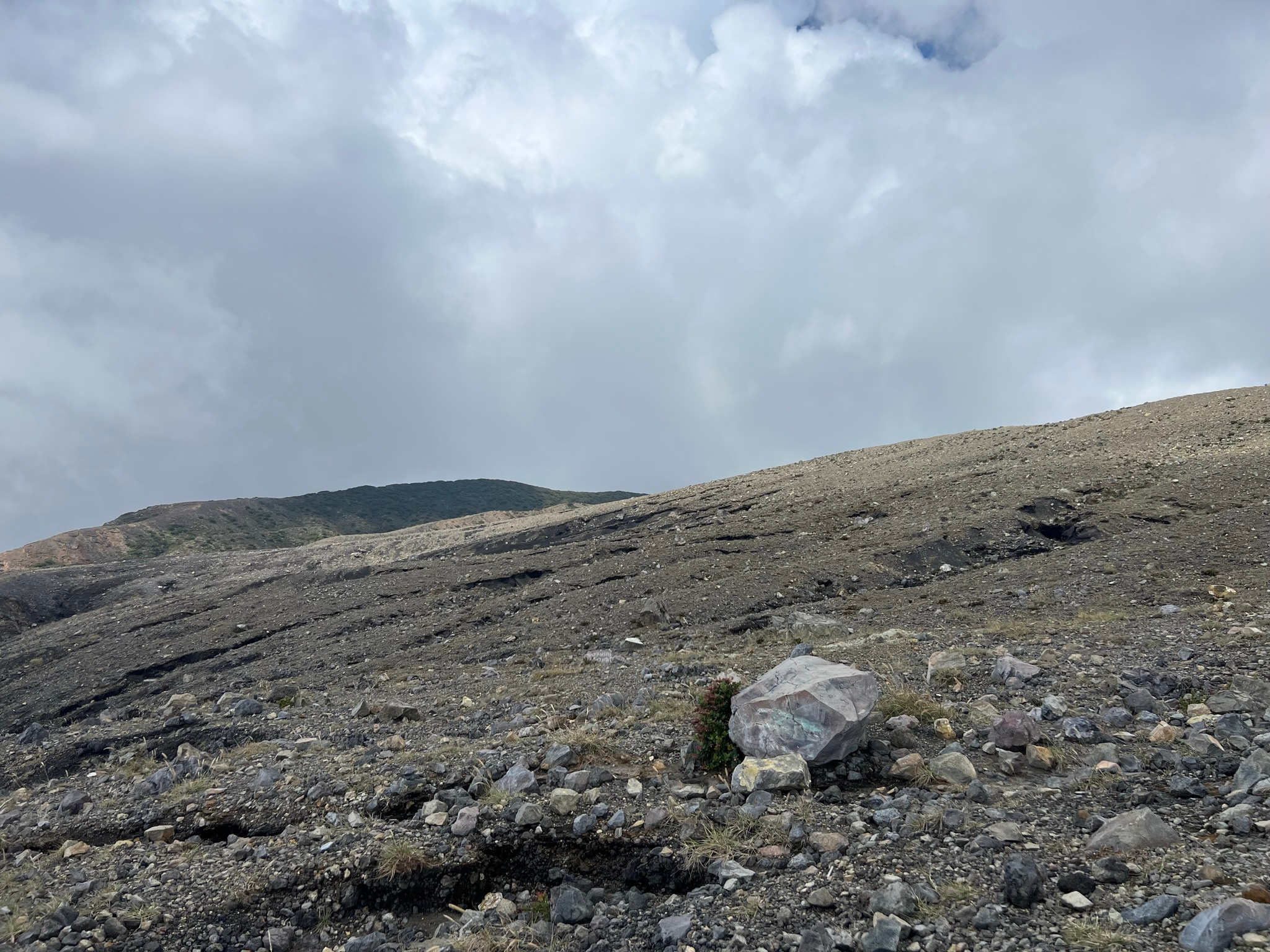
Miguel told us anything and everything. He started off by talking about the Nahuatl people – an indigenous group of Mesoamerica whose ancestors were part of the powerful Aztec civilisation. They primarily live in central Mexico and parts of Central America, including El Salvador, where they are sometimes referred to as Pipil. He told us that their language is filled with onomatopoeias, reflecting how important the natural world is to their culture. In addition, being such a strong, proud and resilient population, they celebrate the Day of Resistance instead of the Day of Conquest, as is common in El Salvador.
He then moved on to a lesson in geography. El Salvador, he went on, is referred to as País de las Hamacas – the Country of Hammocks – due to its seismic, volcanic and geothermal activity. With 170 volcanoes, the country forms part of the Pacific Ring of Fire. The Santa Ana Volcano, one of the biggest in the country, is also called Ilamatepeq (or Llamatepec), meaning “The Wise Woman” – a reference to female figures who visited the volcano for cleansing rituals during pregnancy and after childbirth. Before temples and pyramids, Miguel told us, volcanoes were the original sacred sites of the Mayans. The volcano we were climbing – and three others in the surrounding region – were created by a super eruption, much like the ones that formed Lake Atitlán.
As part of the cleansing ritual, he explained that the first section was the steepest and most difficult part to climb, serving as a natural temazcal – the Mayan sweat lodge. In fact, they used to refer to this area as “The Passage of the Sperm” – an analogy to the sperm’s difficult journey to the uterus. After a Nahuatl prayer, we pushed up the incline, allegedly purging ourselves of negative energy… although I can’t say my cursing at the time fit the spiritual vibe. As we climbed, Miguel told us the volcano symbolised a vision held by Nahuatl peoples – that people of all backgrounds would one day gather at this sacred place. Today, thanks to tourism, that prophecy is coming true.
Cardinal Directions and Cosmic Design
On the way up, we passed four viewpoints, each aligned with a cardinal direction and layered with cosmological symbolism:
North: The first viewpoint, used to welcome foreigners and locals alike. Used for rituals and represents Father Sky. It is associated with air – an element that is essential for life. The colour of north is white and is also linked to the jaguar.
South: Represents Mother Earth and is referred to as the birthplace of water – an element that makes up most of our bodies. Just as wind arises from the north, it also blows to the south, and is as such one of the most important cardinal directions. The colour of south is yellow and it is also associated with wisdom.
West: Represents Grandmother Moon and is associated with darkness as the Mayans believed that the dark is just as important as light. The colour of west is black and it is also linked to death, which to them, was a continuation of life. Here one can find a small altar where a fire is lit during special ceremonies – usually four times a year during solstices and equinoxes.
East: Represents Father Sun and is associated with the sun – the direction from where it rises. The colour of east is red and this is linked with strength, blood, and happiness.

We also learned about The Dance of the Sun – an elite Mayan ritual in which participants pierced their nipples with agave thorns and eagle claws to draw blood for the gods. Then, they’d stand beneath the blazing sun with nothing but honey and water, often for up to four days. If they survived, they’d be granted a tattoo marking their elevated status.
Barefoot Prophets and Boiling Craters
The summit revealed one of the most surreal sights I’d ever seen. The black horizon of the volcanic soil suddenly gave way to the volcano’s crater – a circular pool of turquoise, rimmed with black, red and brown volcanic soil. Sulphurous vapour danced above the lake’s surface, eagles cooed from their nests, and a lone white-tailed hawk glided overhead. The silence was deep, reverent. Sacred.
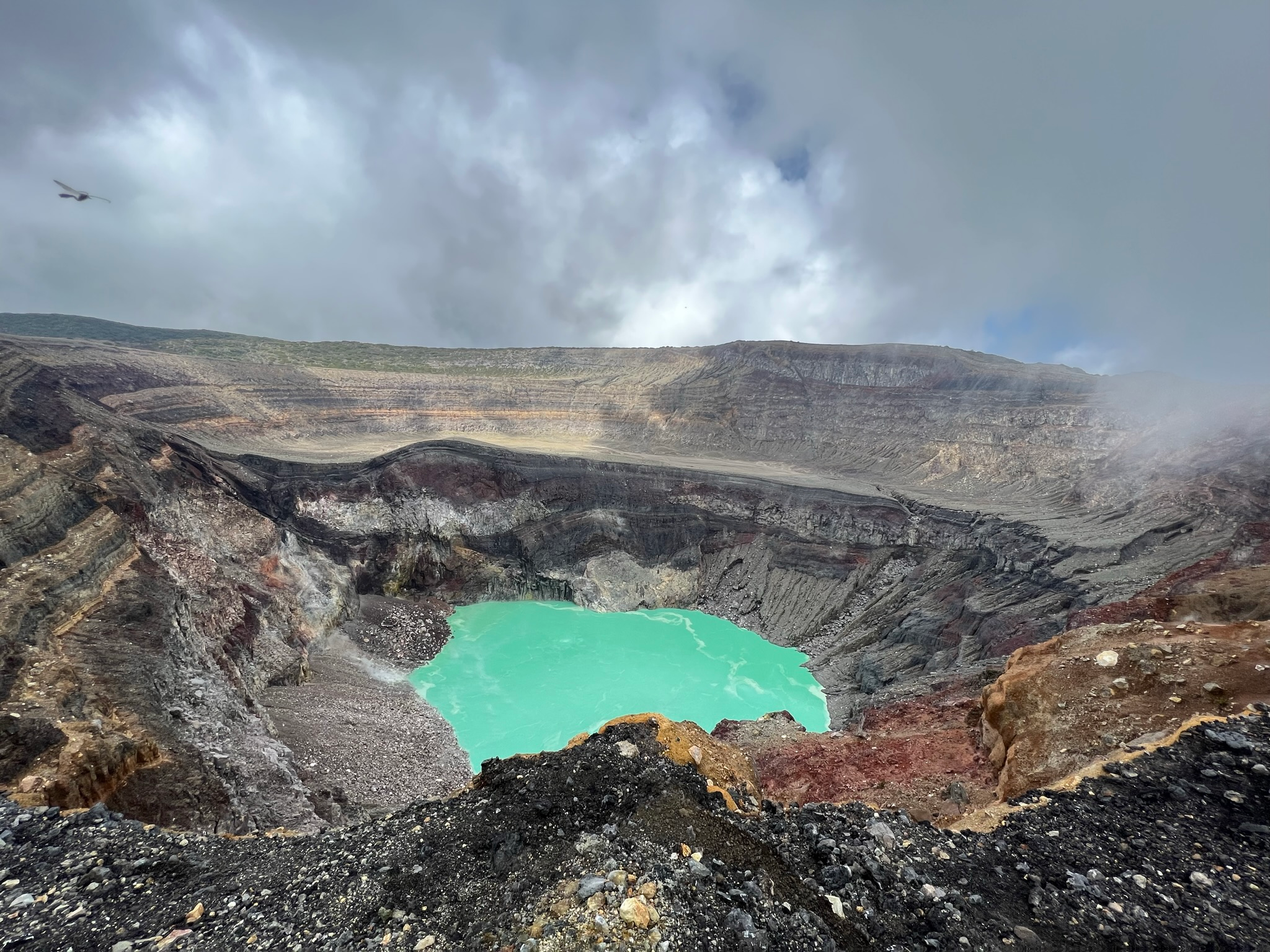
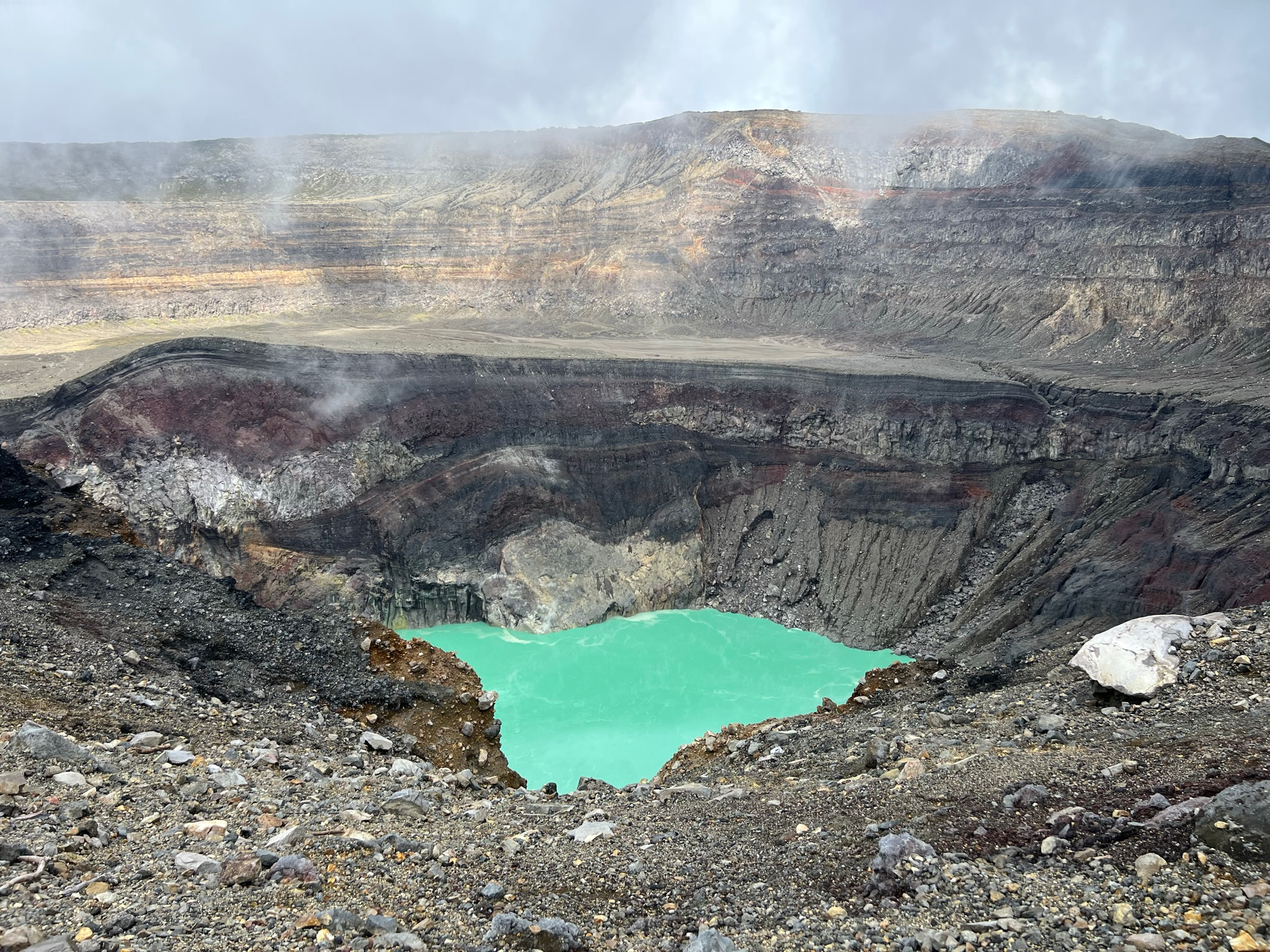
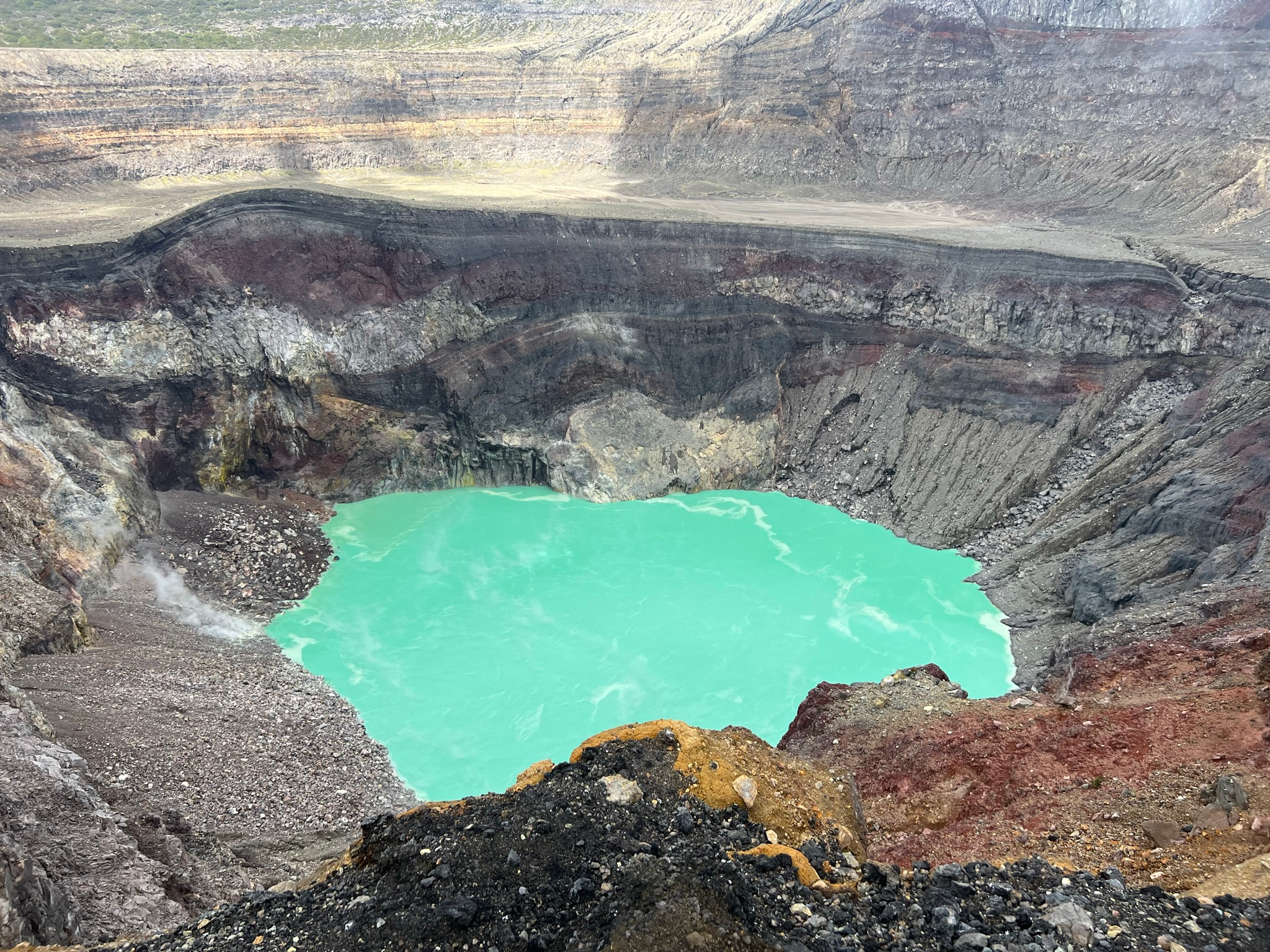
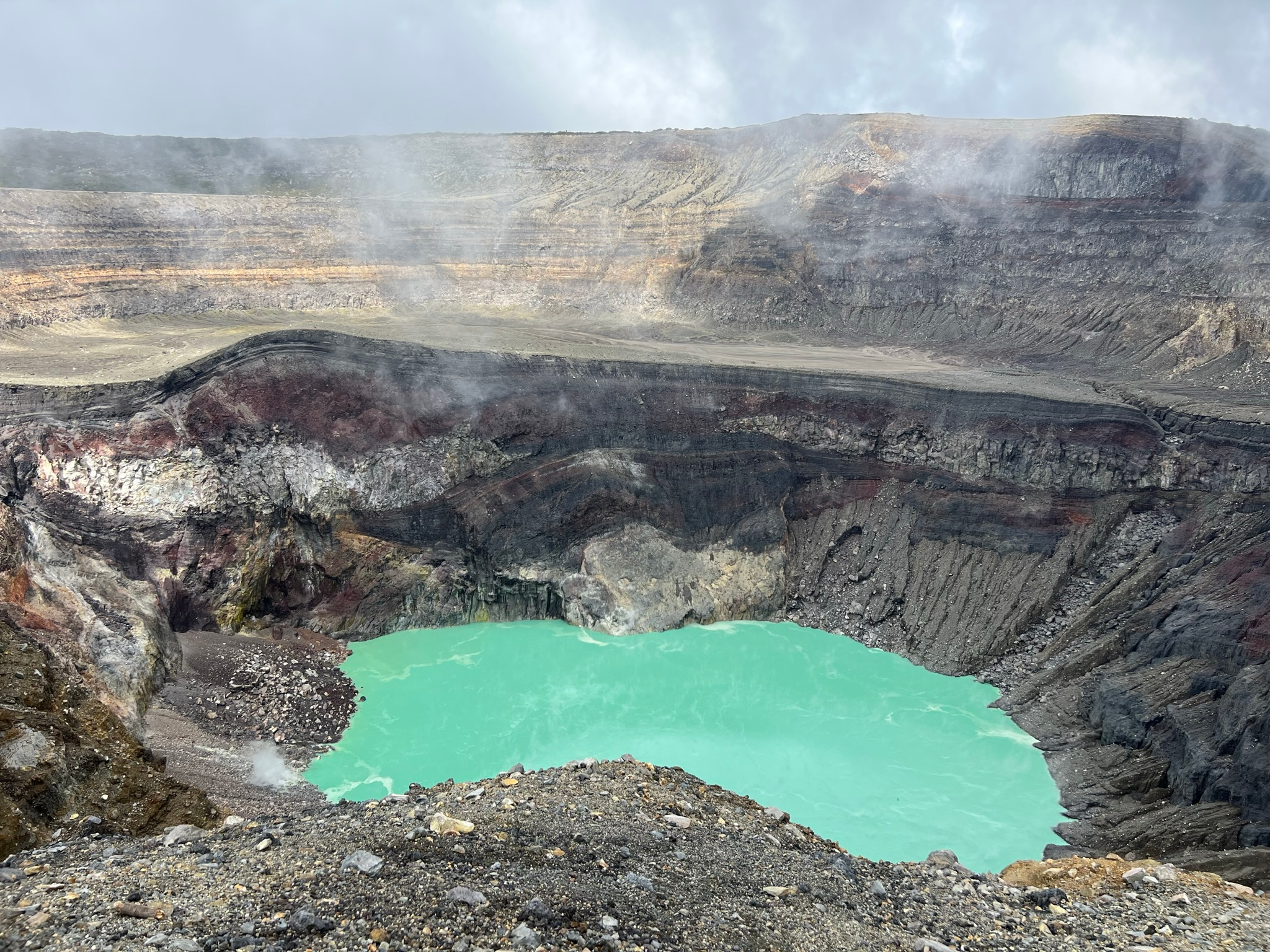
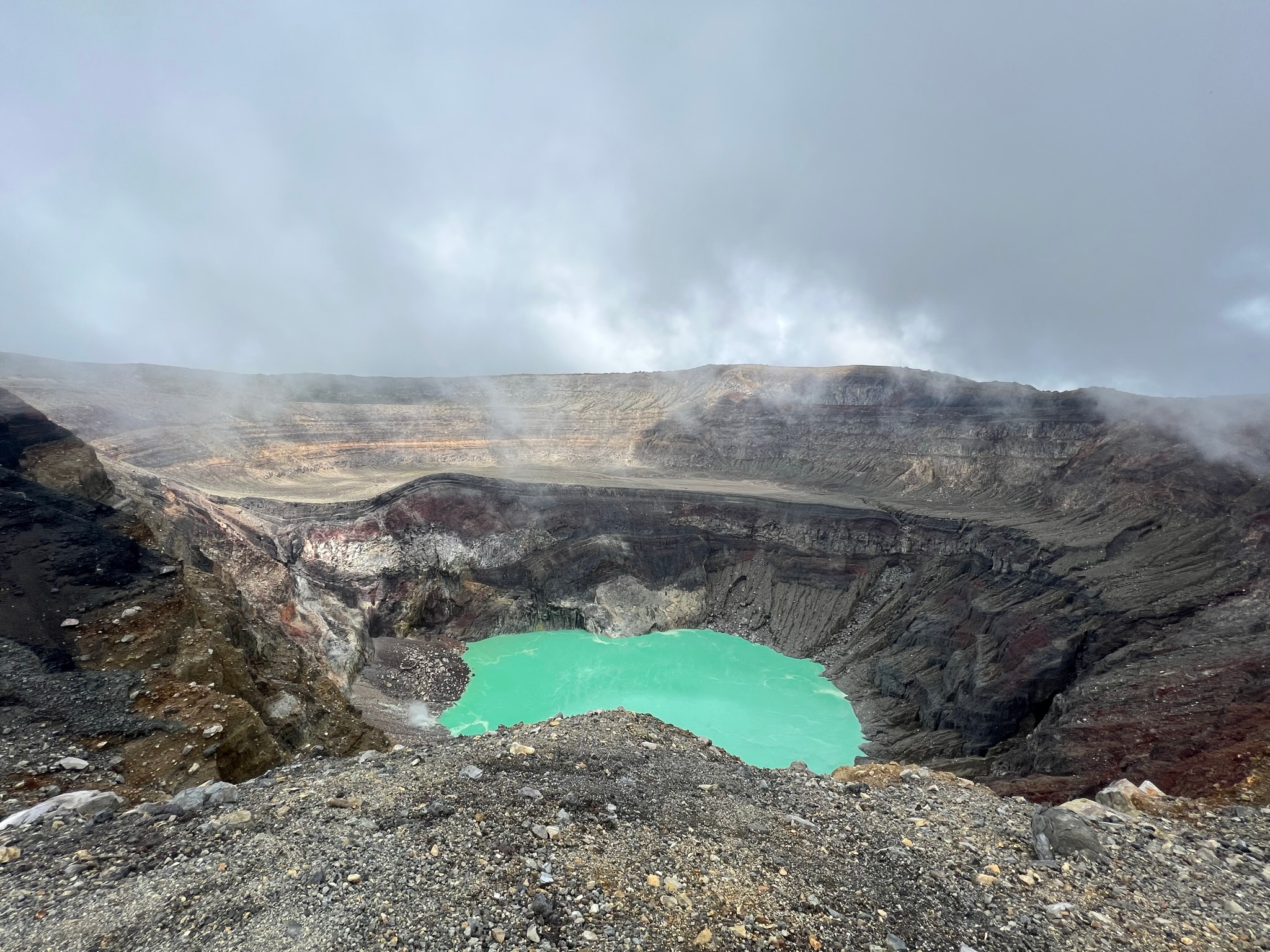
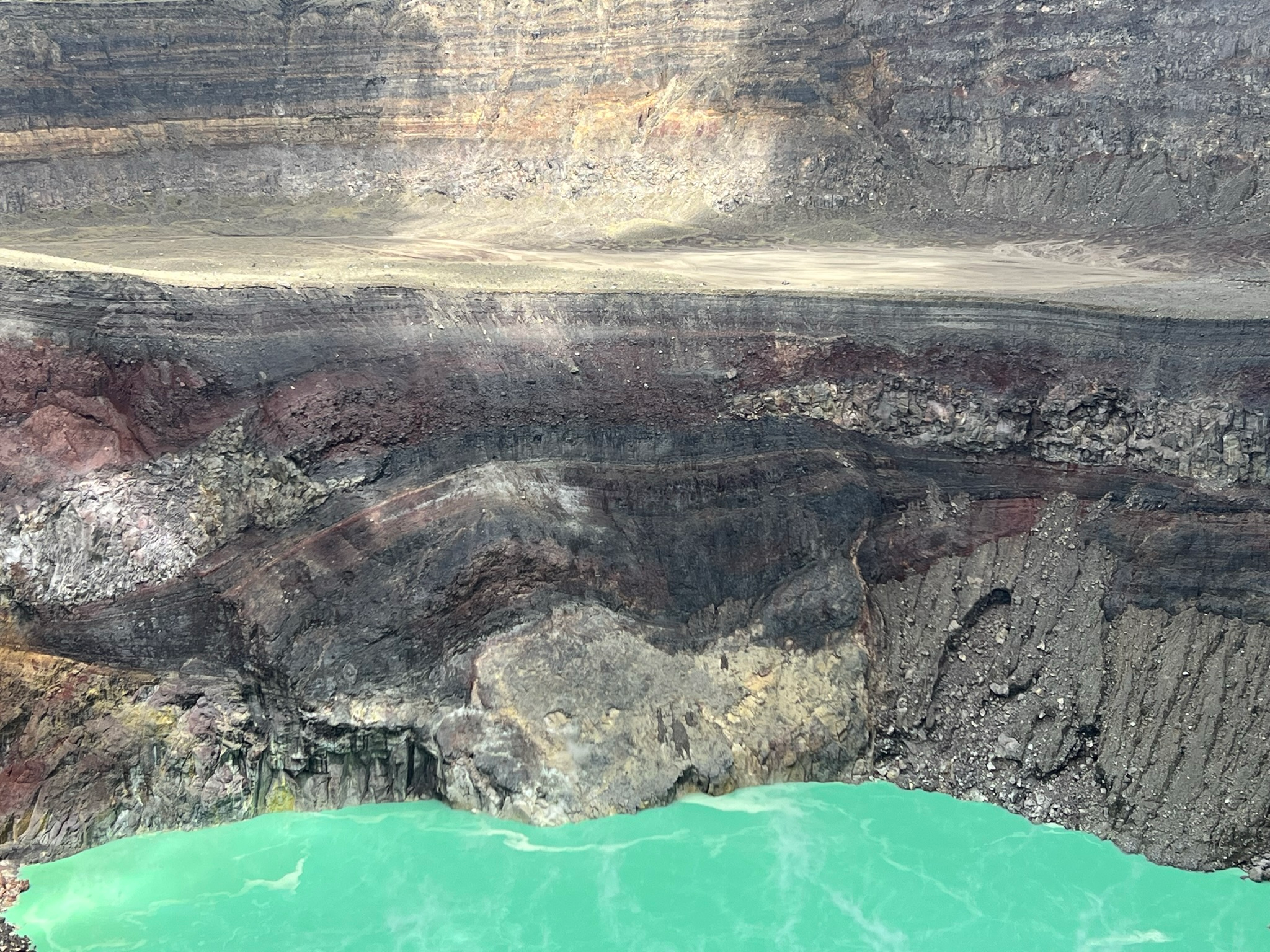
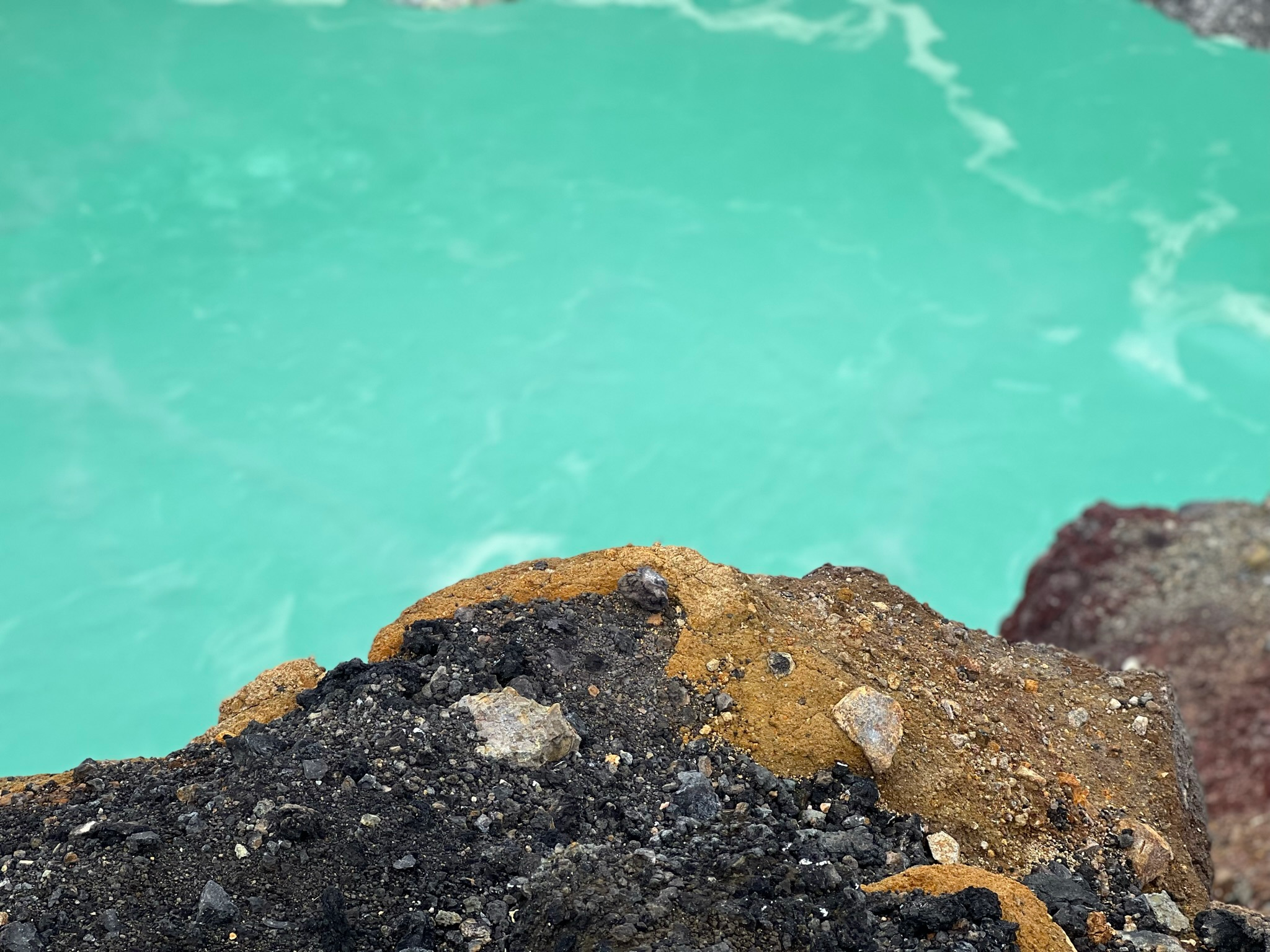
Scenes like these would always leave me wondering how on earth something like this could arise naturally without man having had anything to do with it. It was right at the height of my spiritual enlightenment that she came – a self-proclaimed spiritual from the Dominican Republic graced our presence.
She made it a point to explain to us that her way of appreciating this view is the way to do it. She had walked all the way up barefoot – something one simply must do in order to feel connected with the ground beneath our feet. Once at the summit, she proceeded to lie face down on the ground near the edge, almost rolling down into the crater much to her guide’s frustration and probable relief. After the incident, she told us that if she were to die that way, she’d have no qualms with it – given that she’d be part of a sacred site forever and impermeably. I’m just assuming here, but I don’t think her guide had had an opportunity to tell her that before she’d boil to death, she’d probably melt away given the highly acidic environment of the water inside the crater. It was then time for her final ceremony, one involving Tibetan Tingsha meditation bells. Whilst their sound was quite soothing, I think they would’ve sounded better up her – Woah, okay, okay.
Much like in San Marco, I found myself asking myself whether I was being a toxic cynic myself or whether I had an inkling of reason to my logic. Do these shenanigans actually add anything to such experiences? Some people do it for the attention, some because they truly believe in these practices. I guess the answer is quite simple – to each their own, to live and let live. And, when all is said and done, the most important thing is that I get to enjoy such things. Whether these rituals can actually enhance my experience is something I might have to try one day.
The Mirror of the Volcano
After the descent, Andreas and I found Alex on a bench, surrounded by a flock of blue Yucatán jays – or Charras – flashing their electric colours like feathery ornaments.
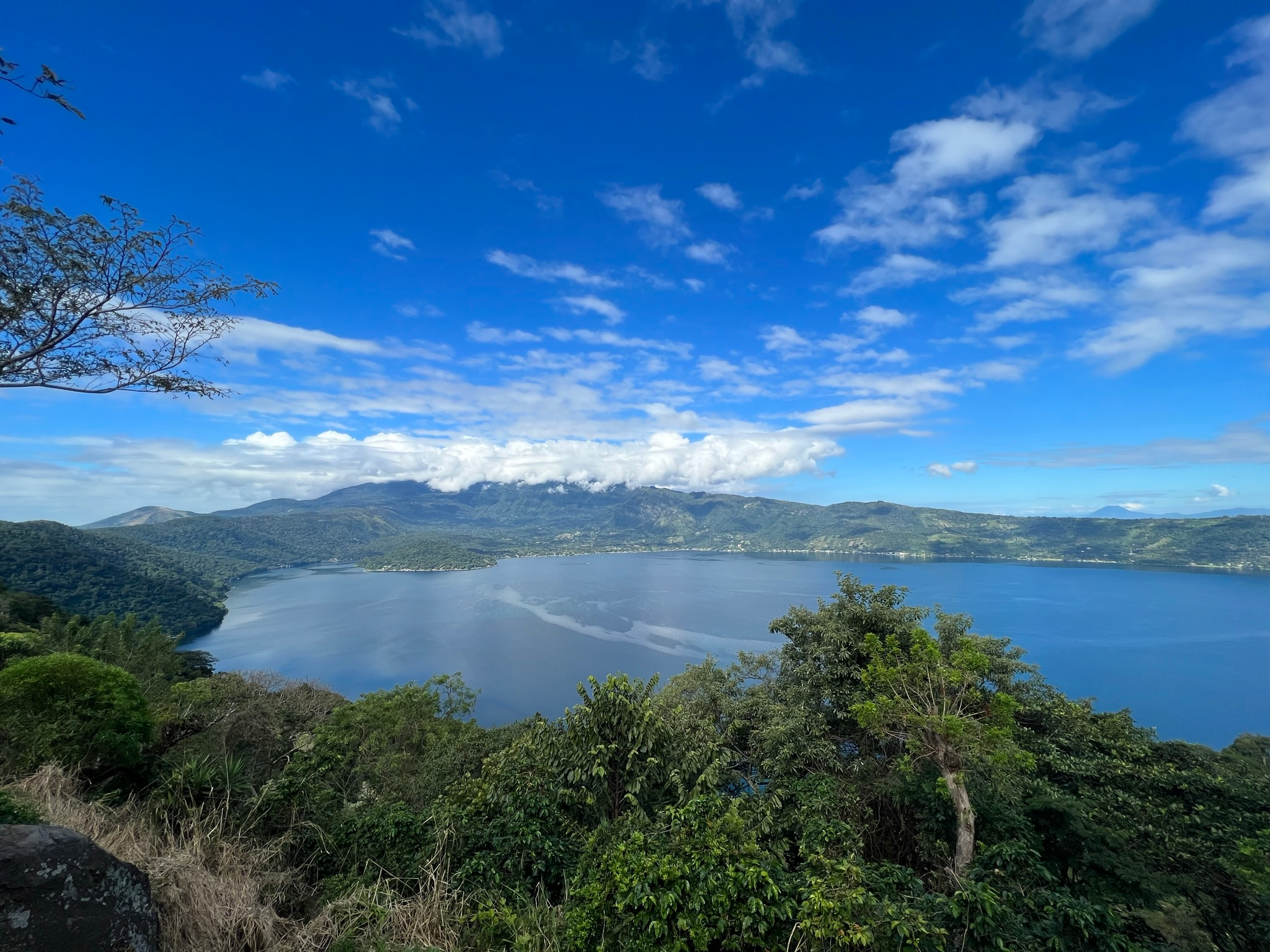
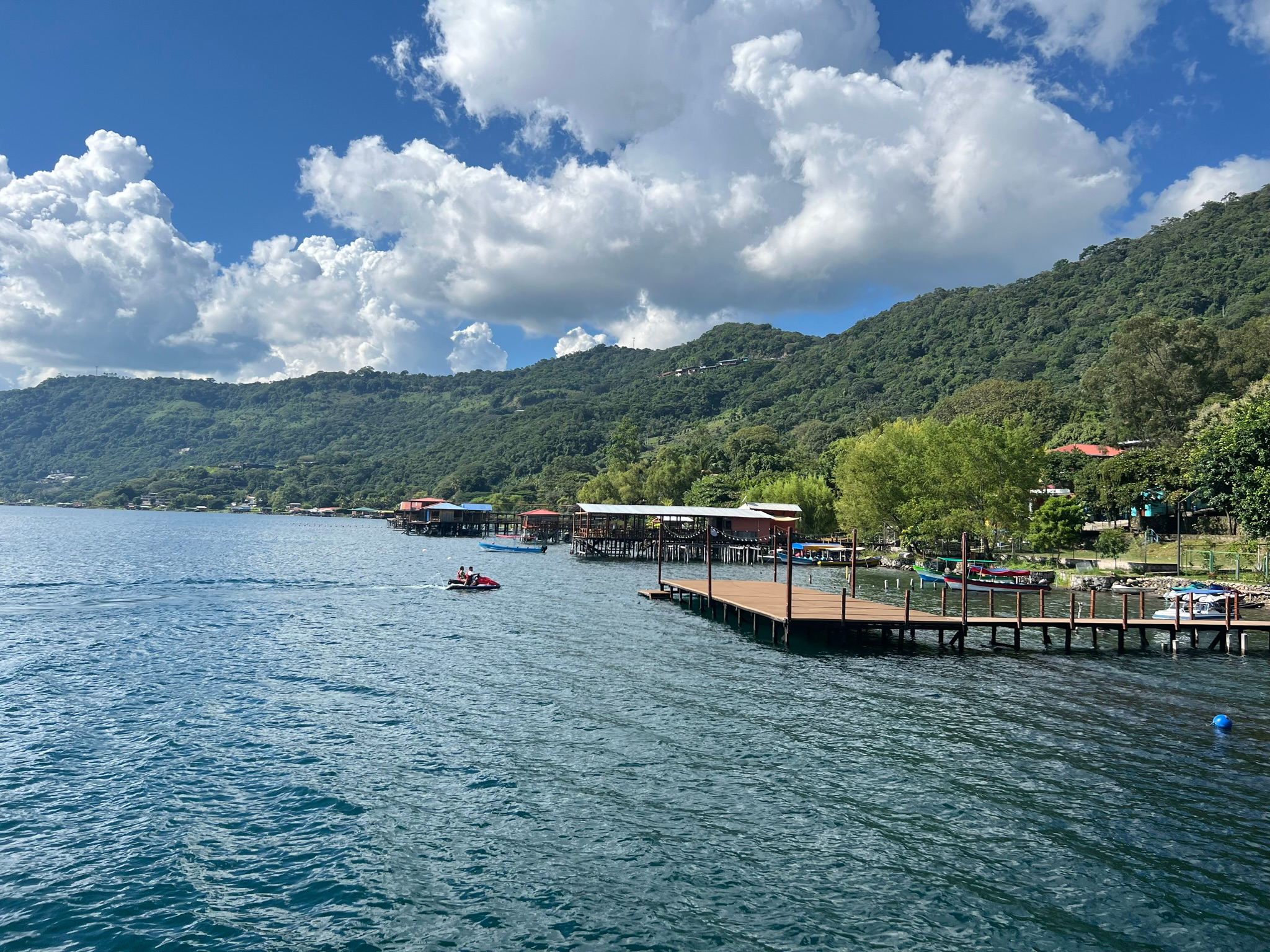
Next up: Lake Coatepeque. Meaning “Mountain of the Serpent”, this name likely refers to the area’s volcanic origin and the sacred symbolism of snakes in Mesoamerican cultures, where they often represented fertility, transformation, and the underworld. Like Lake Atitlán in Guatemala, this lake is volcanic in origin with many towns along its margins making it one of the most popular attractions in the country.
We didn’t stay long and we couldn’t even swim – no one told us to bring our swimsuits – but we had just enough time to enjoy a cold beer on the shore, gazing out at one of the prettiest lakes I’d seen so far. Then it was back to Santa Ana, heart full, head spinning.