El Calafate – Day 2: The Big Ice
EL CALAFATE
Day 2: The Big Ice
March 25, 2023
PART I
In the pitch-black darkness of the pre-dawn hours, when no one should so much as be moving, I was shaken awake – this time by my alarm. It was time. Jennie, way back in Costa Rica, had told me I simply had to do this one particular thing once I’d be in Argentinian Patagonia. Having come to understand, and even share, her love for this region, I was more excited than ever to be doing this, especially after Antarctica.
“What’s this?”, most of you must not be asking. Given that I’m probably on my own here, I might as well drag it out and build the suspense a bit – for when I’m too old to actually remember the things I’ve done. With the minibus pulling up in front of my hostel, I was ready for yet another adventure that was surely gonna leave its mark on my adrenaline-junkie heart.
We started on our way to the national park, the curtains of darkness slowly parting to reveal a canvas painted in every imaginable shade of red, orange, and yellow over the idyllic hills, which were just beginning to show their dull green colour. It looked exactly like an oil painting you’d expect to see in a fine art museum. Truly one of the most beautiful sunrises I’ve ever witnessed.

Los Glaciares National Park
As pleasant as that was, the sunrise wasn’t really what I was after. It was the Big Ice Trek on the Perito Moreno Glacier. Along the way, our guide Isabella brief us on what was to come and gave us a bit of background on the Perito Moreno Glacier.
Located in Los Glaciares National Park – the largest national park in Argentina and the second most visited after Iguazú Falls – the Perito Moreno Glacier is a testament to Patagonia’s raw wilderness. This was evidenced by the dry, arid steppe that quickly transitioned into Magellanic subpolar forest as we drove on – the rise in humidity and precipitation resulting in such a dramatic change in landscape over less than eighty kilometres from El Calafate.
Within this single park lie Lago Argentino in the south – the largest lake in Argentina, with an area of almost 1,500 square kilometres – and Lago Viedma in the north, both fed by glaciers that cover roughly 30% of the region. Lago Argentino has several arms stretching westward into the mountains, where outlet glaciers flow into it, calving icebergs that then drift eastwards into the main body of the lake. Some of these icebergs, Isabella went on, grow so large they can even hinder navigation.

Part of the Southern Patagonian Ice Field shared between Chile and Argentina – the second-largest ice mass in the world after Antarctica – the park contains 48 major glaciers, thirteen of which flow towards the Pacific. While we’re currently in the Quaternary glaciation, which began around 2.58 million years ago and is still ongoing, the mountain building and early glacial shaping of this region started earlier, during the Tertiary.
Situated below fifty degrees south latitude, the prevailing winds circulate from west to east, carrying moisture from the Pacific. As these air masses rise over the Andes and the Chilean fjords, they drop heavy precipitation, nourishing the forests and depositing vast amounts of snow at higher elevations. Between six and twelve metres of snow accumulate annually at the summits, compressing older layers, increasing density, and gradually forming glacial ice over roughly ten years. This slow movement of ice then erodes the bedrock beneath it, carving out valleys and shaping the dramatic landscapes below.
The Perito Moreno Glacier
As we got closer to the Perito Moreno Glacier – the third largest in the park after Viedma and Upsala, with an area of about 250 square kilometres – we began spotting icebergs drifting across Lago Argentino. And icebergs? Always a welcome sight to a newly converted iceberg aficionado like me.
Trying to take notes from what Isabella was yelling into her mic while not staring at the views was, honestly, a chore in itself. She explained that the Perito Moreno Glacier, named after the explorer Francisco Pascasio Moreno, who studied Patagonia in the nineteenth century and played a key role in defining Argentina’s borders with Chile, is shaped like a bird. It has two lateral “wings” in contact with the turquoise Lago de los Témpanos on one side and the muddy green Brazo Sur on the other.
The first part of the tour took us to a catwalk facing the glacier’s central section – the “beak”. I practically ran to the viewpoint, and there, right in front of my very eyes, was the beast I’d heard so much about – the very thing I’d be climbing in a few hours. A massive, jagged wall of arctic-blue ice, its serrated edges threatening to calve at any moment, brown fracture lines spreading like veins across the surface.
Turns out, the “beak” we could see is made up of around 75 metres of ice above water, with another 100 metres submerged below lake level. The total ice thickness in this central zone reaches roughly 700 metres. This, we were told, formed part of the ablation zone, which makes up about 40% of the glacier and represents the area where ice loss exceeds accumulation, in contrast to the accumulation zone higher up near the peaks. And, with luck and good weather on our side, we could appreciate the accumulation zone too – a wall of pale blue almost hidden between the darker blue of the sky above and the equally shaded water below – the sun still climbing its way up.
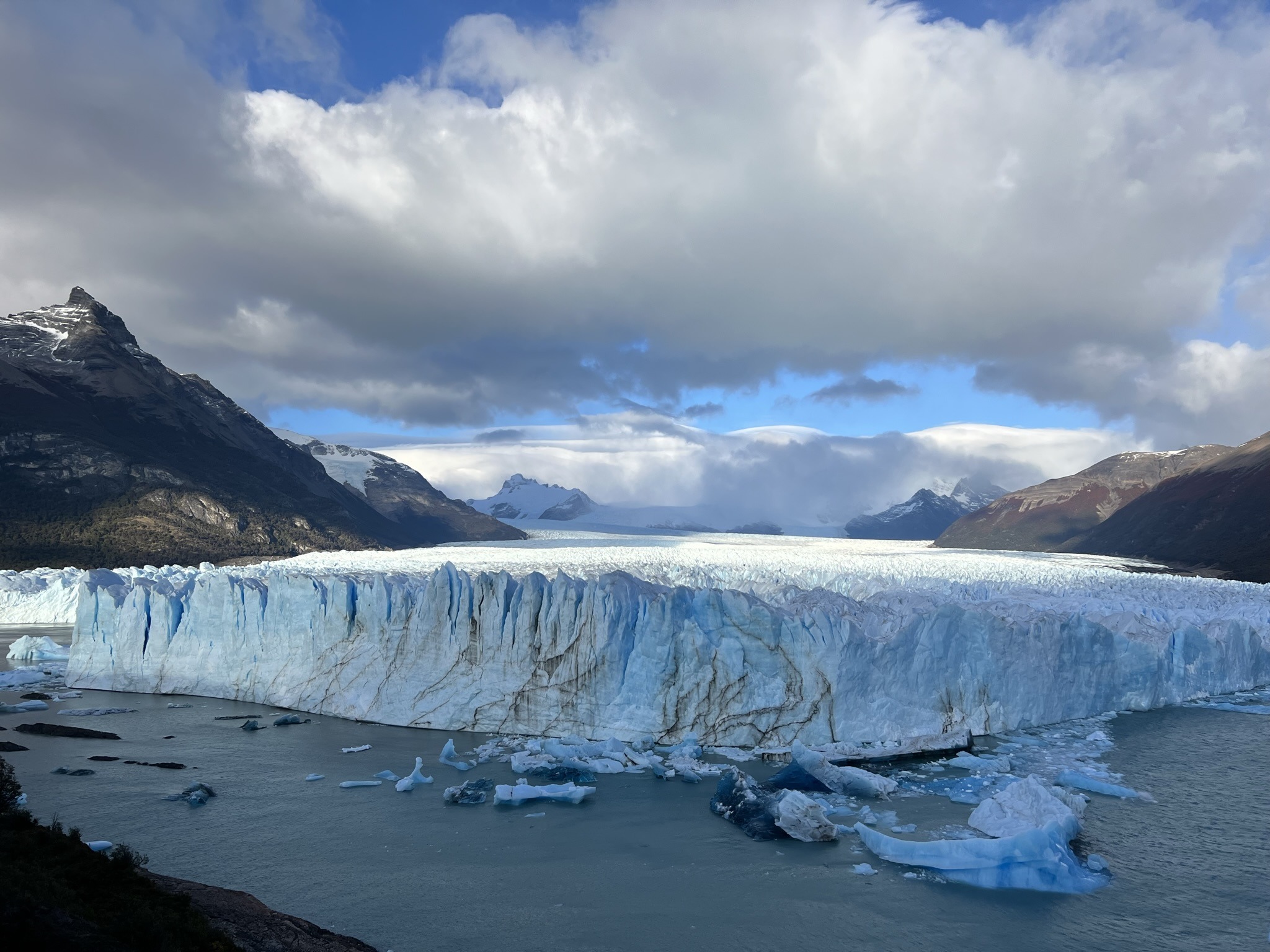
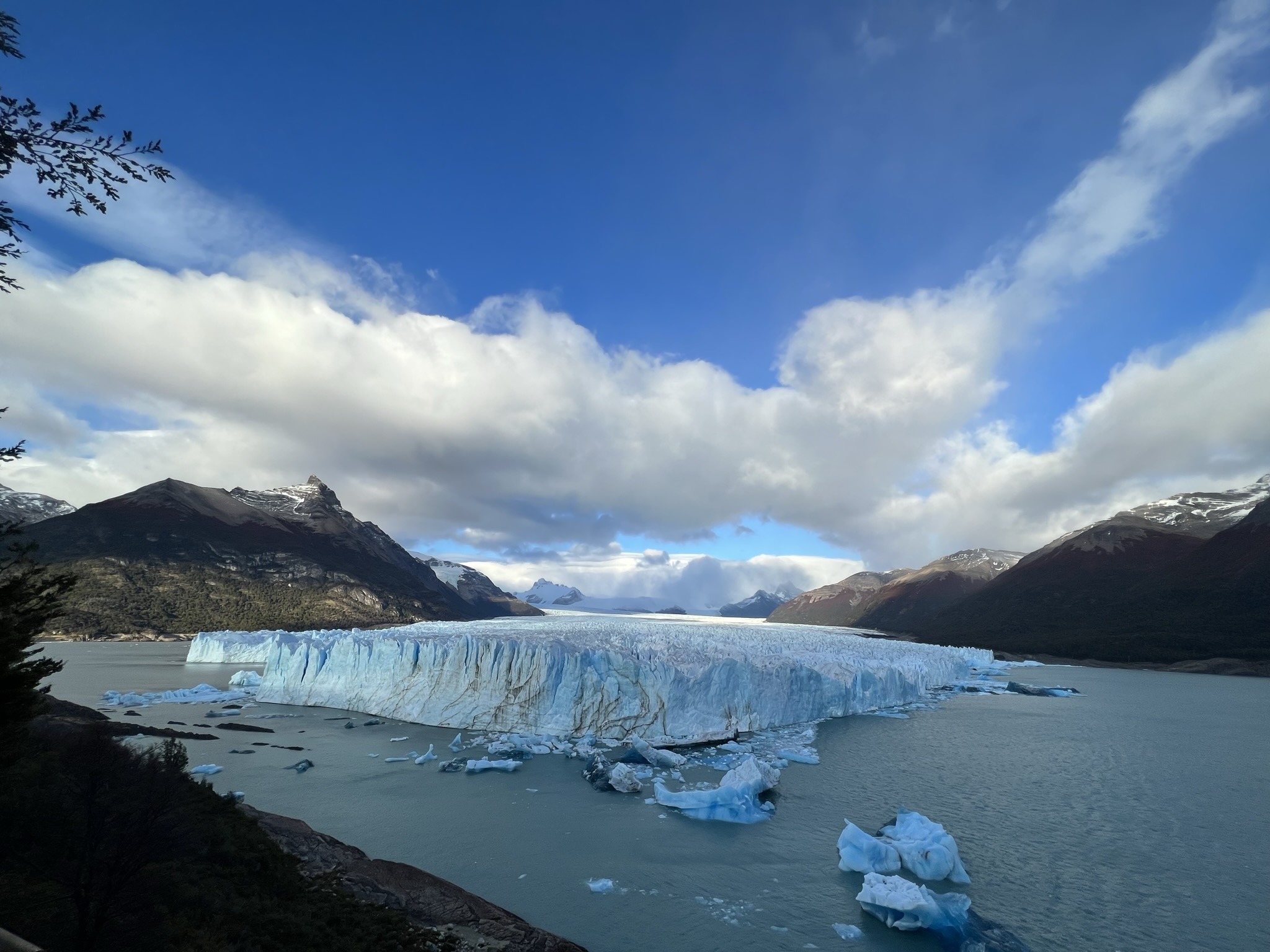
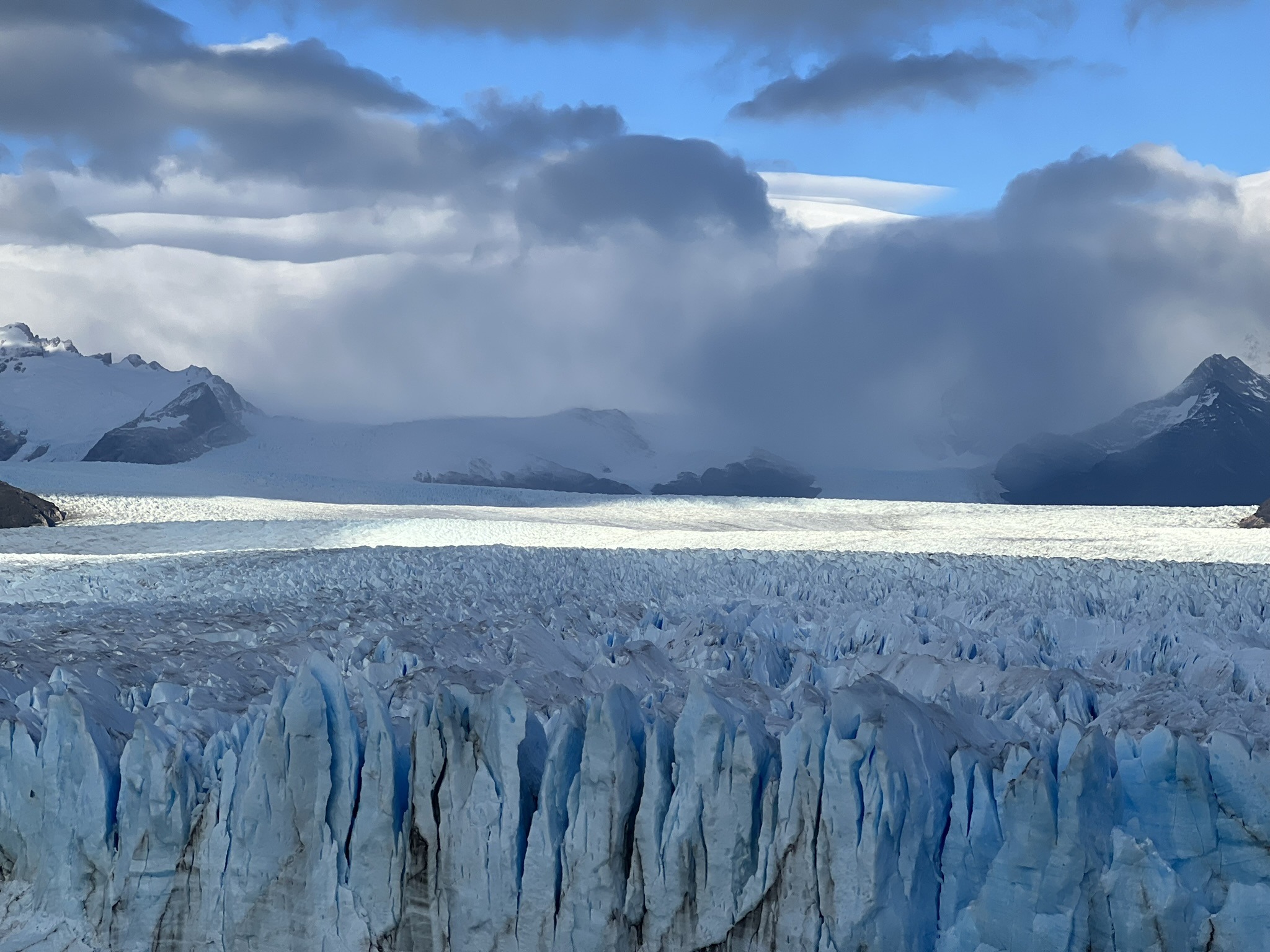
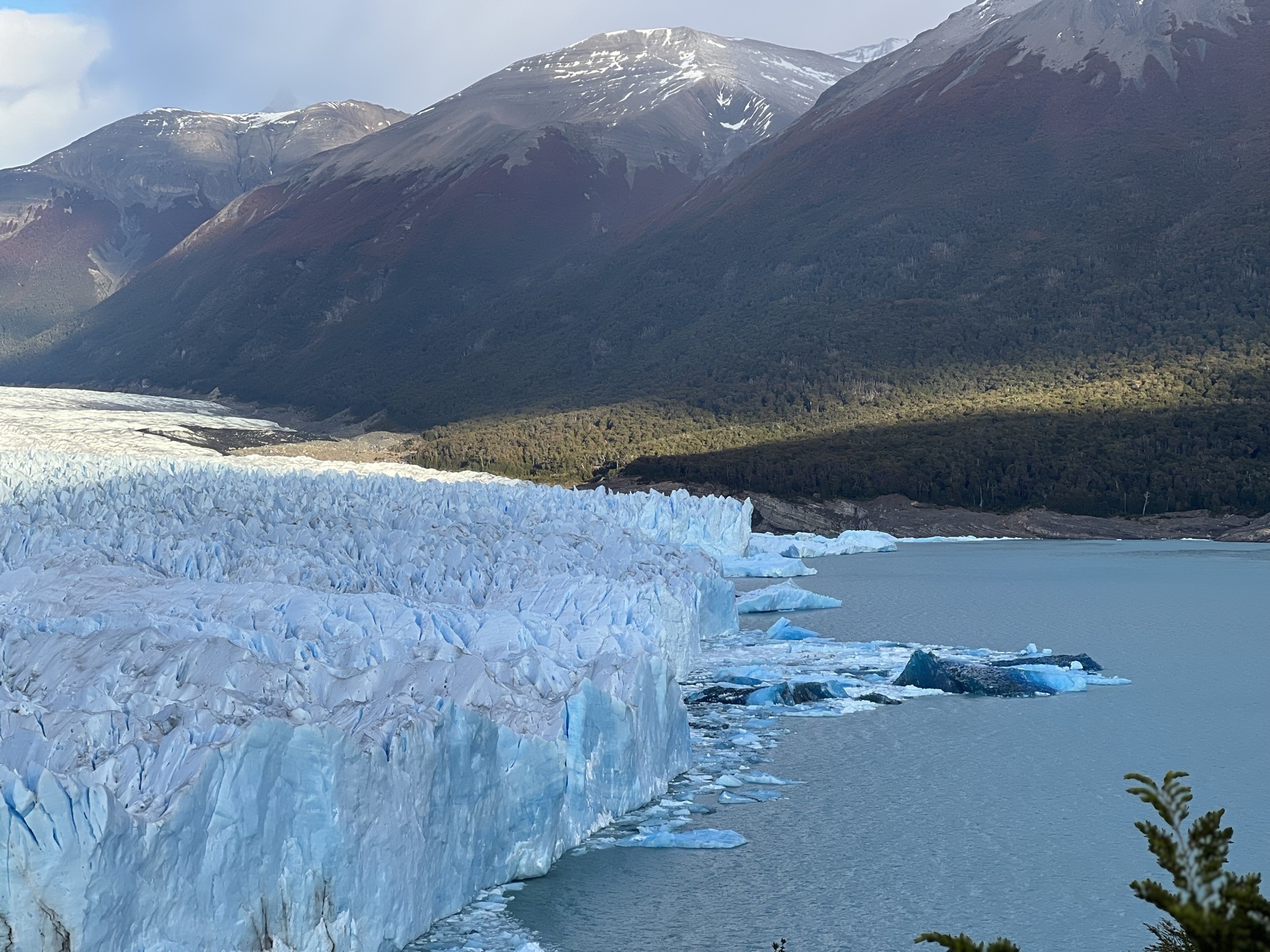
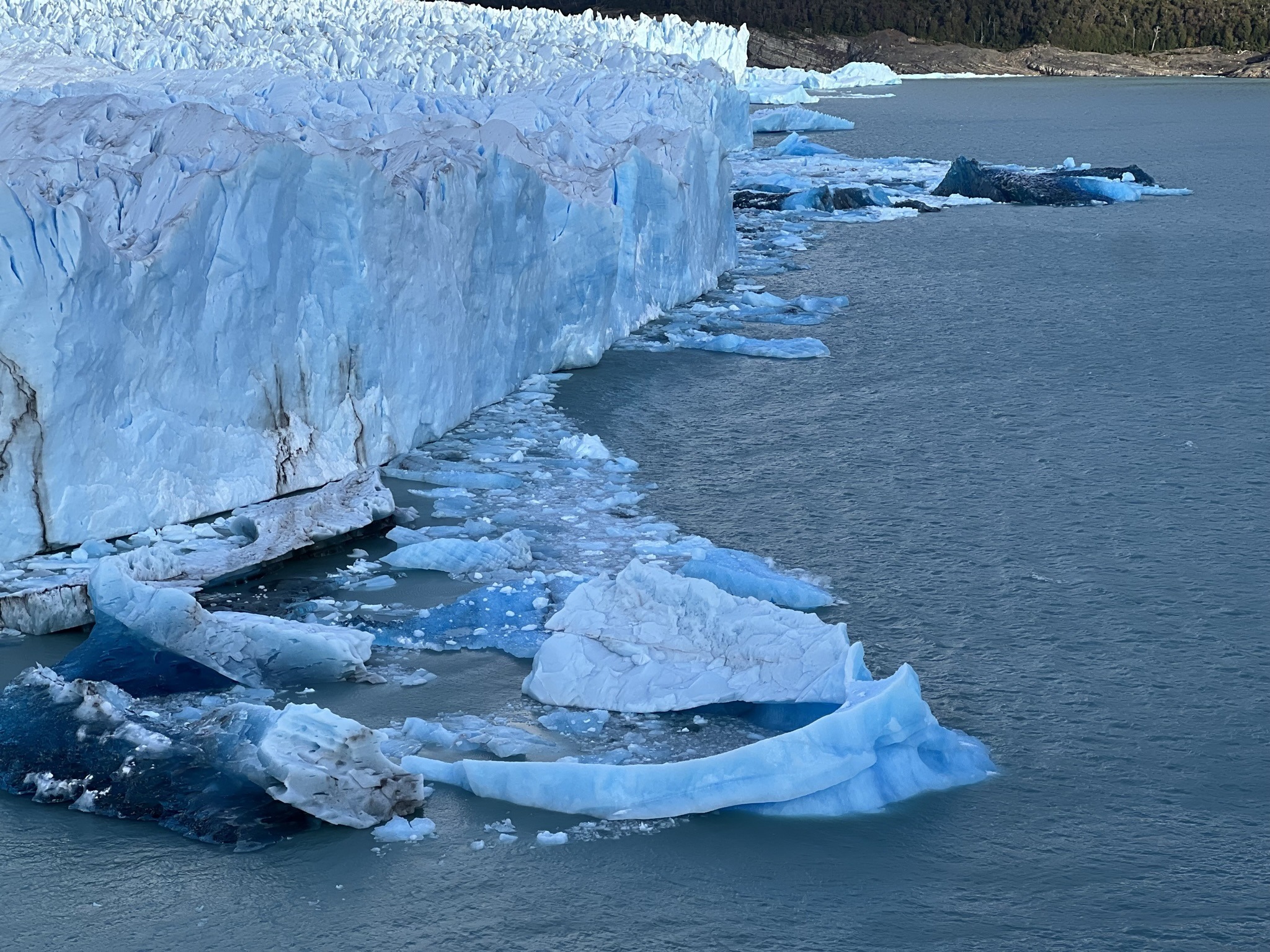
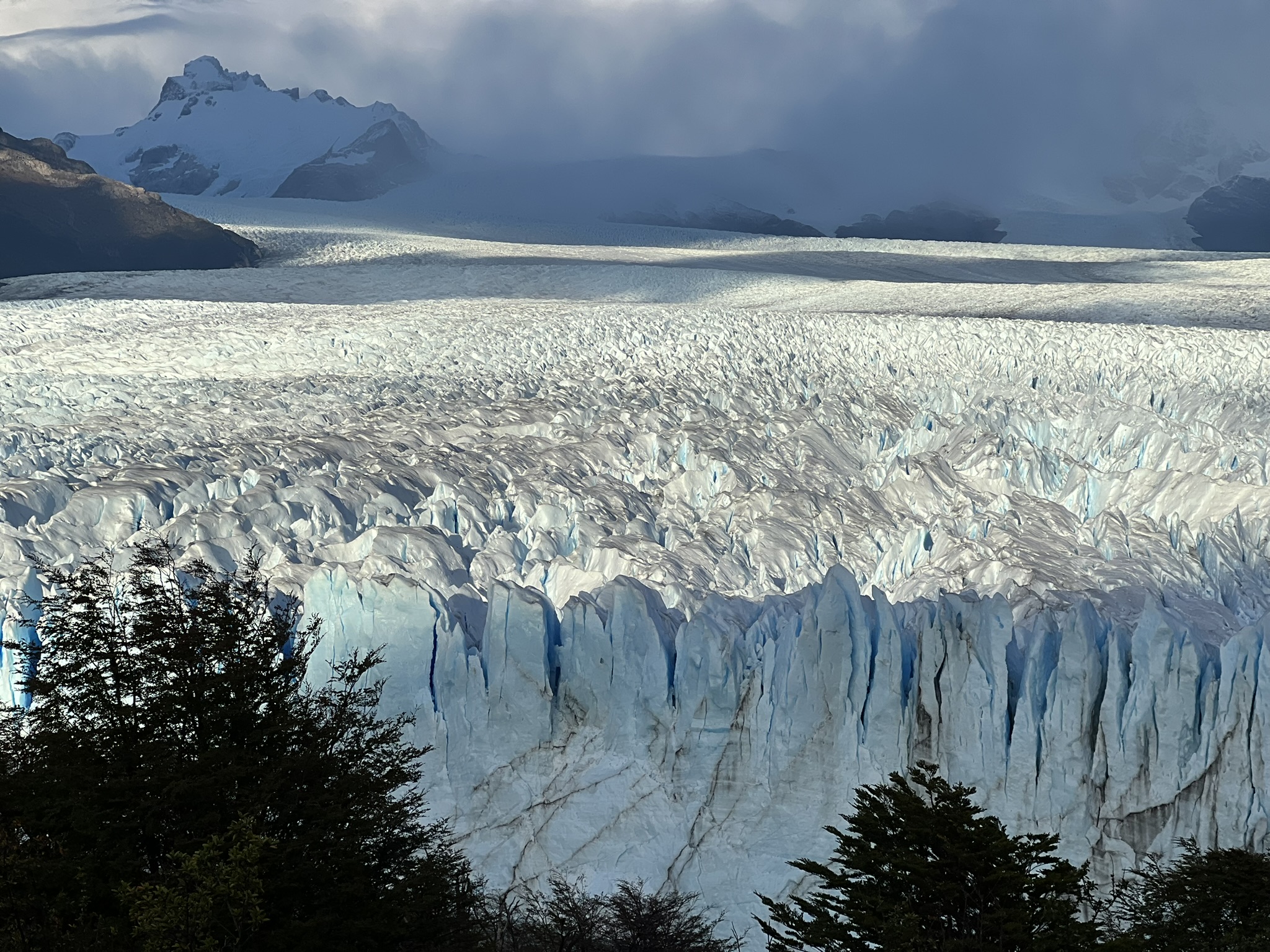
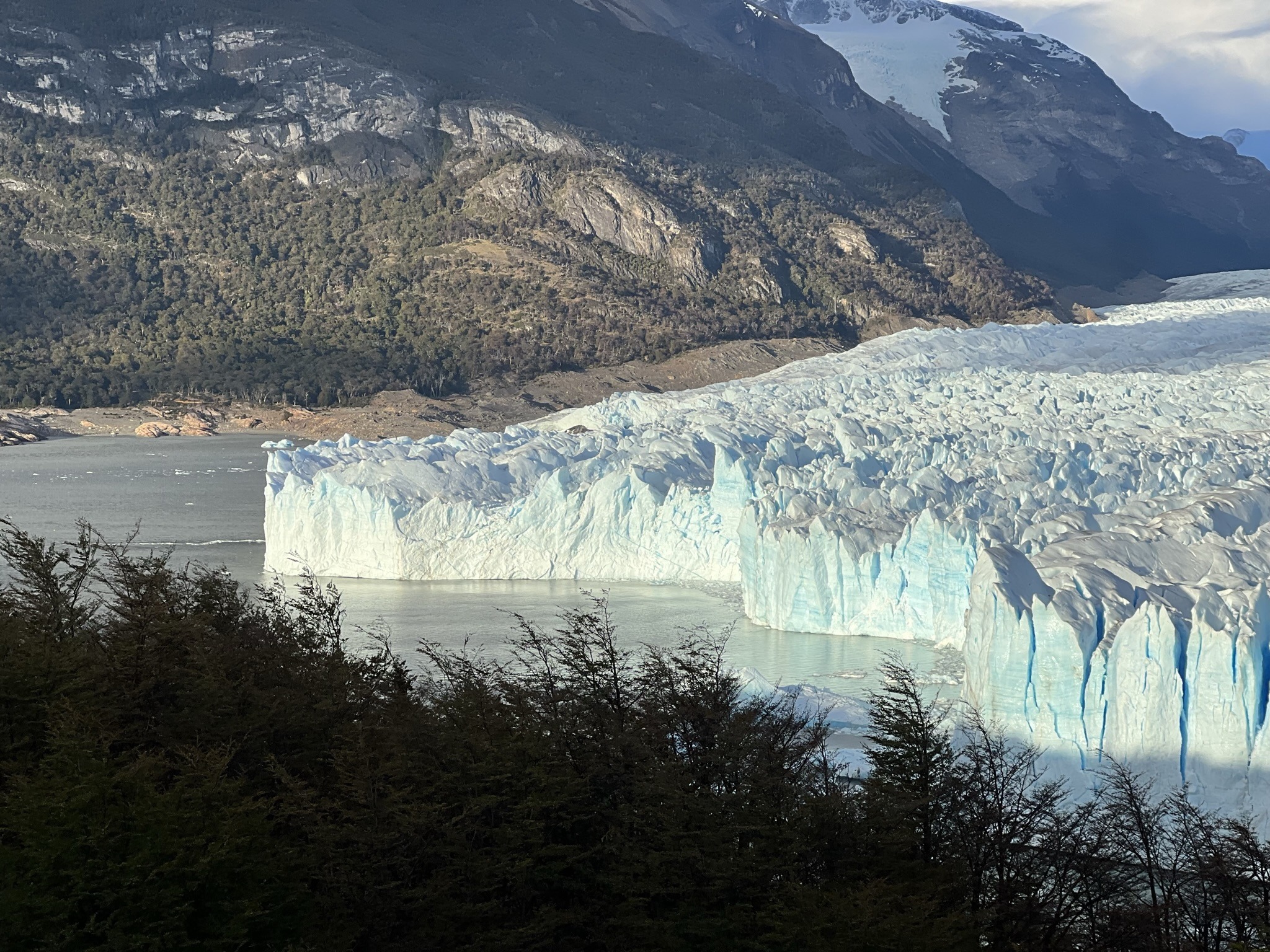
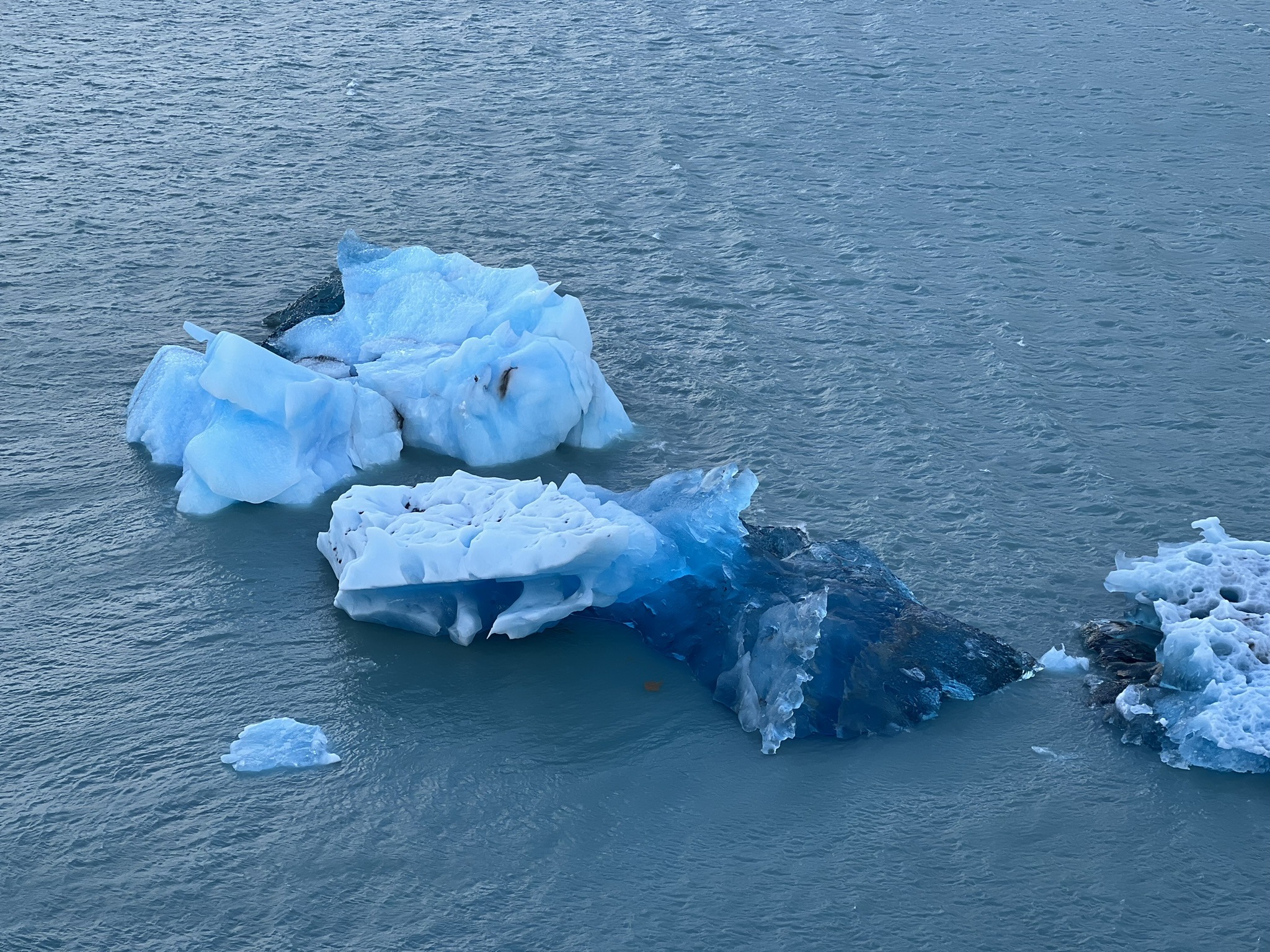
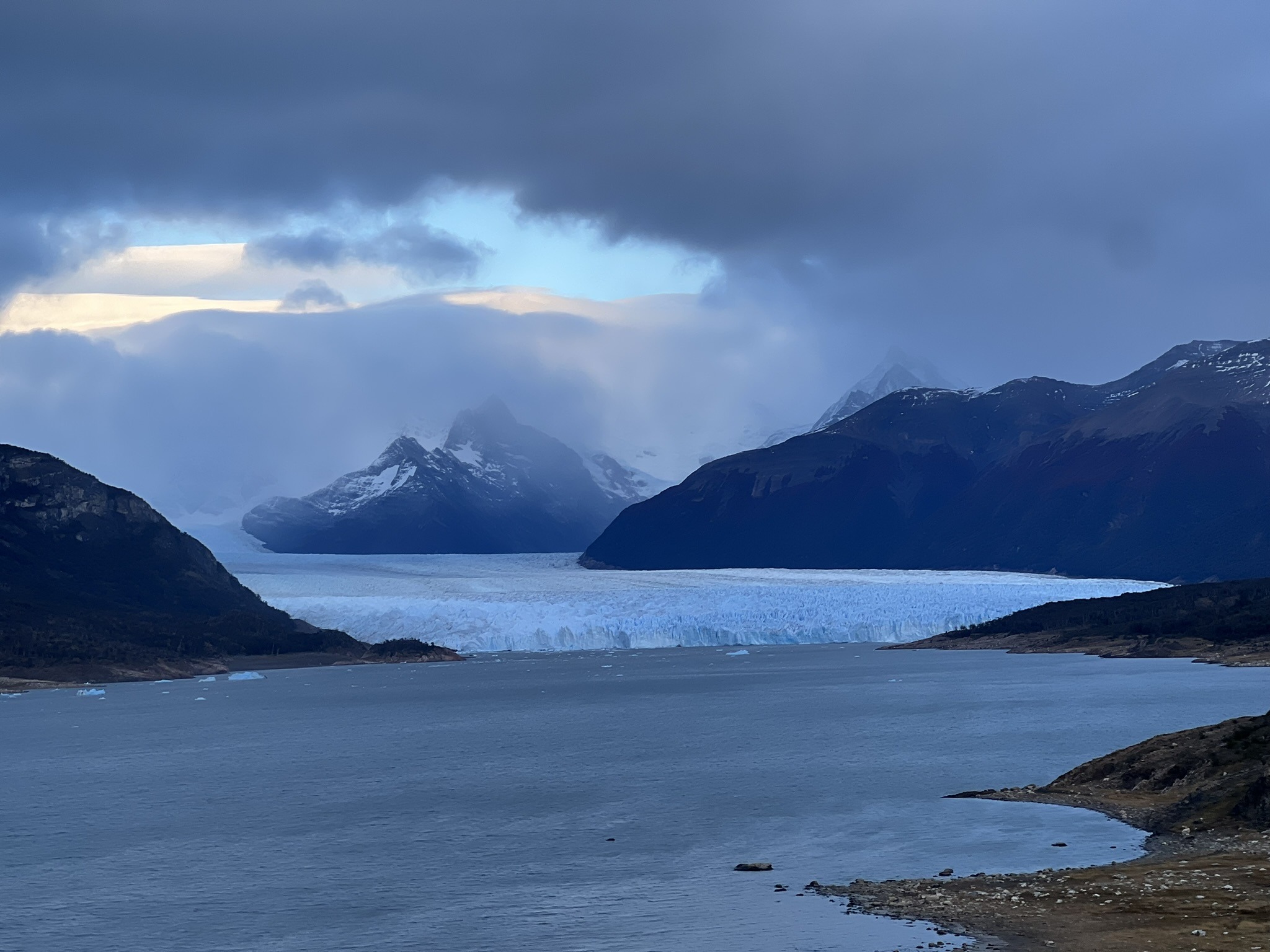
So imposing. So majestic. I honestly struggle to put it into words. While I’d grown used to Antarctic glaciers completely surrounding our little red ship, seeing one in isolation, framed by forested mountainsides, was something else entirely.
A Living and Breathing Glacier
At the car park, we gathered near the entrance as Isabella continued her explanation. One of the many things that make the Perito Moreno Glacier unique is that, due to heavy snowfall in its accumulation zone, it has remained in a state of near equilibrium for over a century rather than retreating significantly. That doesn’t mean it’s static though. Far from it. The entire glacier is constantly flowing, advancing, and fracturing, moving up to two metres per day in summer. Friggin nature.
As snow accumulation increases pressure, the glacier slowly advances towards the lake and occasionally blocks the channel between Brazo Rico and Canal de los Témpanos, effectively forming an ice dam. Water then builds up on the Brazo Rico side until buoyancy and pressure allow a subglacial tunnel to form. As water begins to drain, the tunnel enlarges, erosion accelerates, and eventually the ice arch collapses in a dramatic rupture event, releasing vast amounts of water and triggering intense calving. Once the channels reconnect, water levels stabilise again. If that ain’t mind-blowing, I don’t know what is. Ice-blowing, maybe.
Isabella finished by telling us we almost certainly wouldn’t witness such a rupture, as they’re rare and unpredictable, with the last major one occurring in 2018 during the night. Given that most glaciers worldwide are inaccessible or require multi-day expeditions or absurdly expensive helicopter flights, the fact that we could simply drive up to one felt borderline insane.
PART II
Where the Real Adventure Starts
After taking our time admiring the glacier from every angle the wooden walkways allowed, we were ushered back to the minibus to begin the real adventure.
We drove seven kilometres back along the same road and reached the port, where a boat awaited us. We crossed the murky green waters of Brazo Rico to reach the mountainside flanking the glacier. Cruising through iceberg-dotted water towards the looming ice wall felt eerily like being back on a Zodiac in Antarctica.
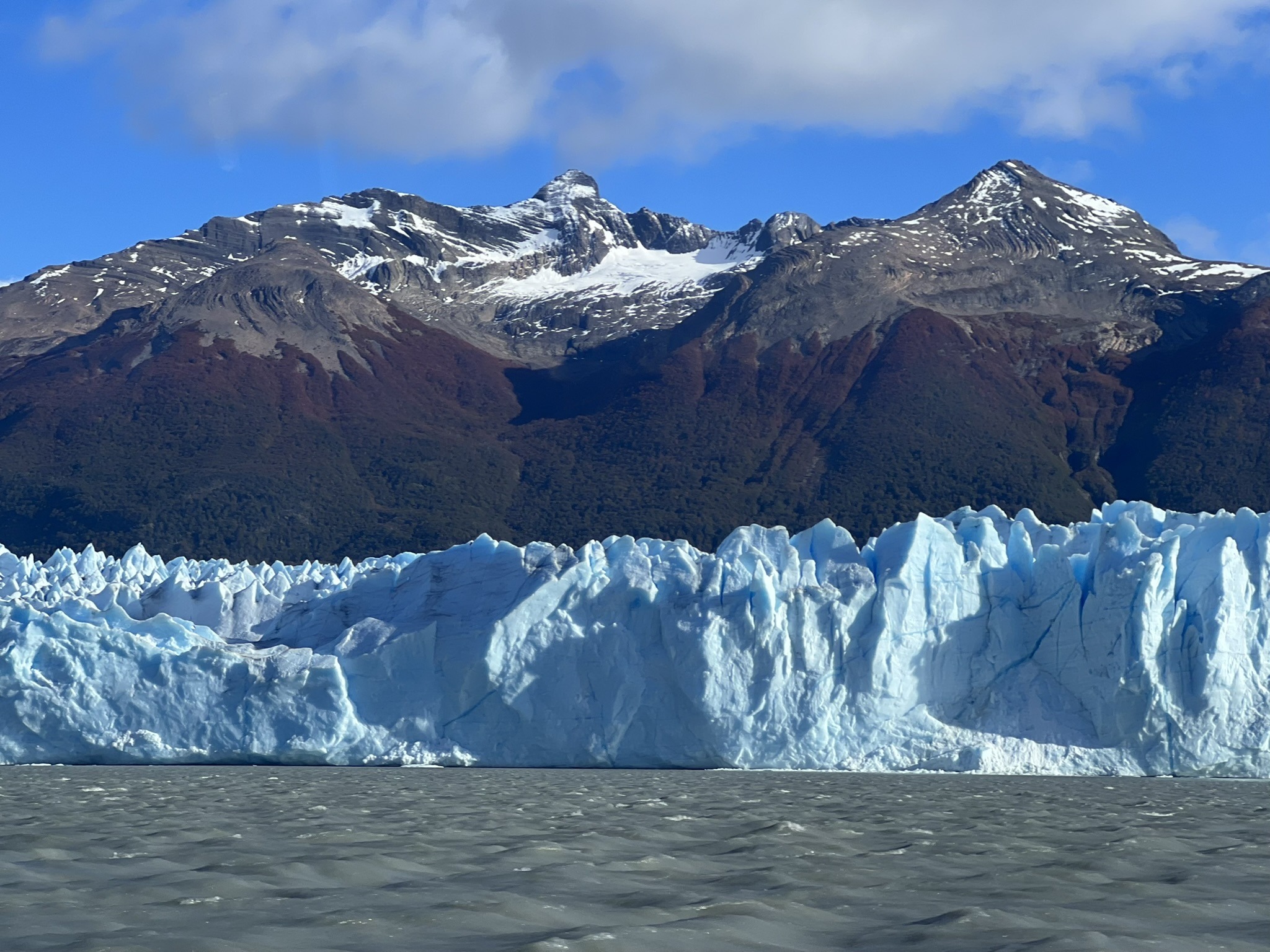
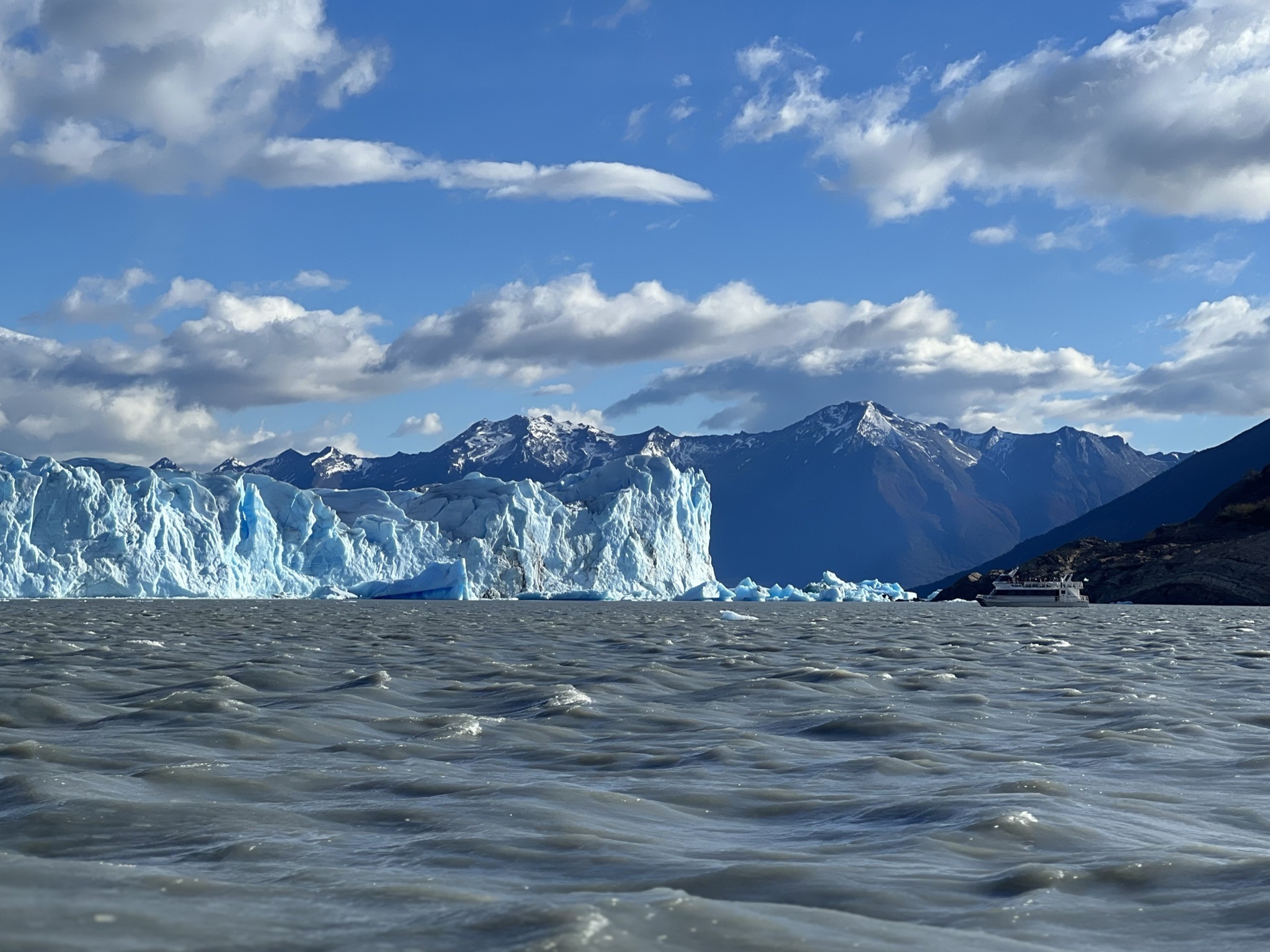
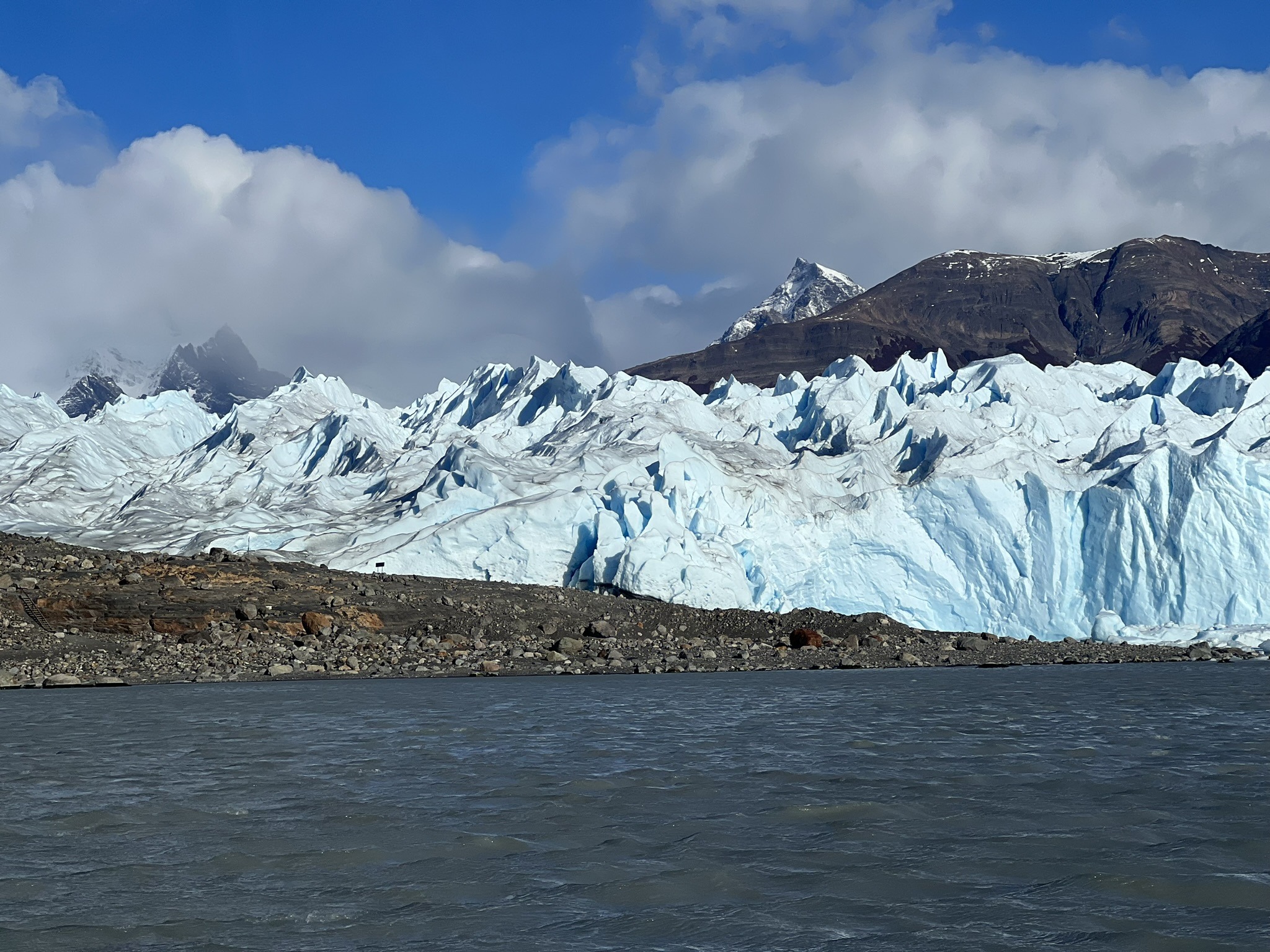
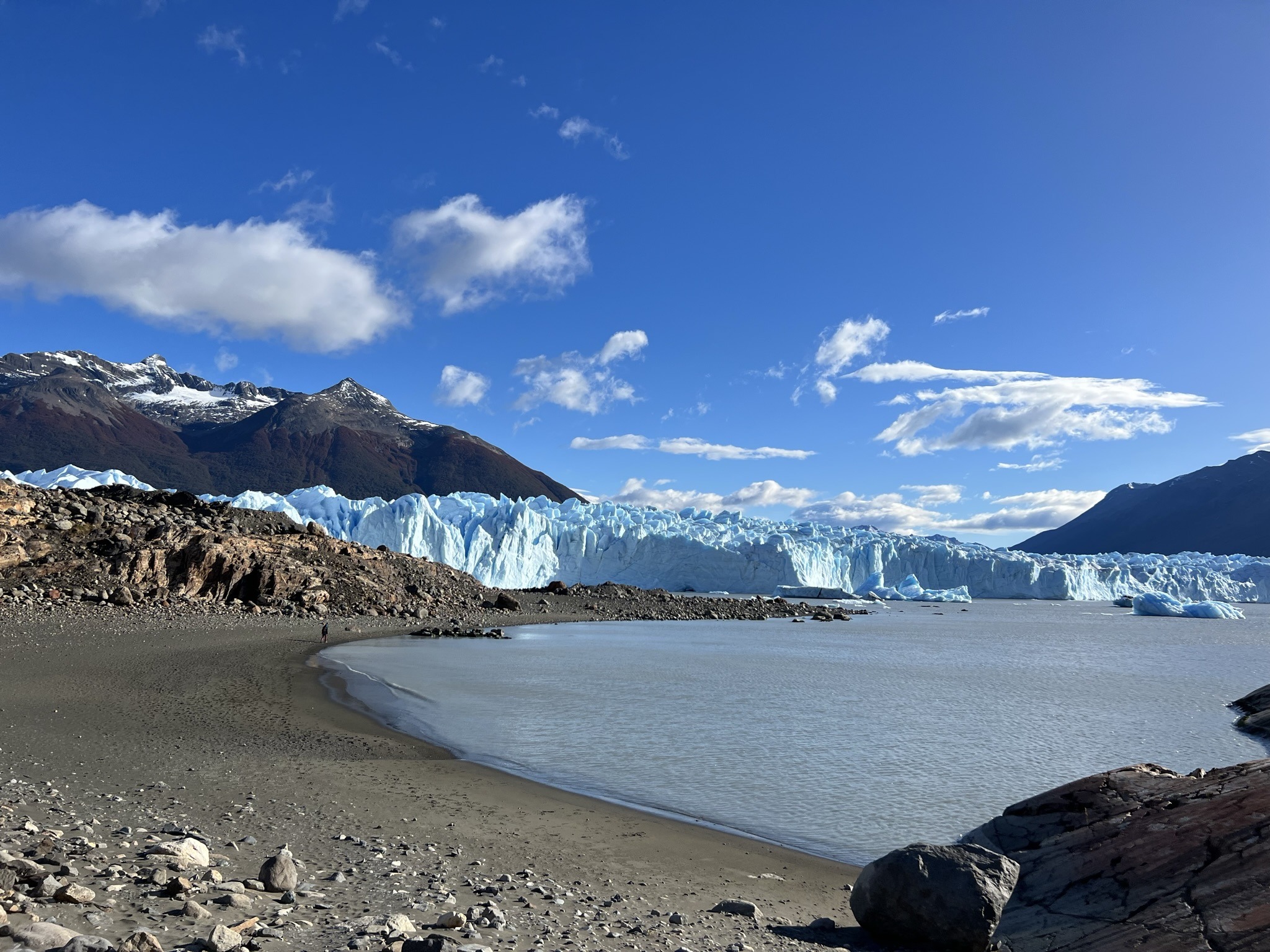
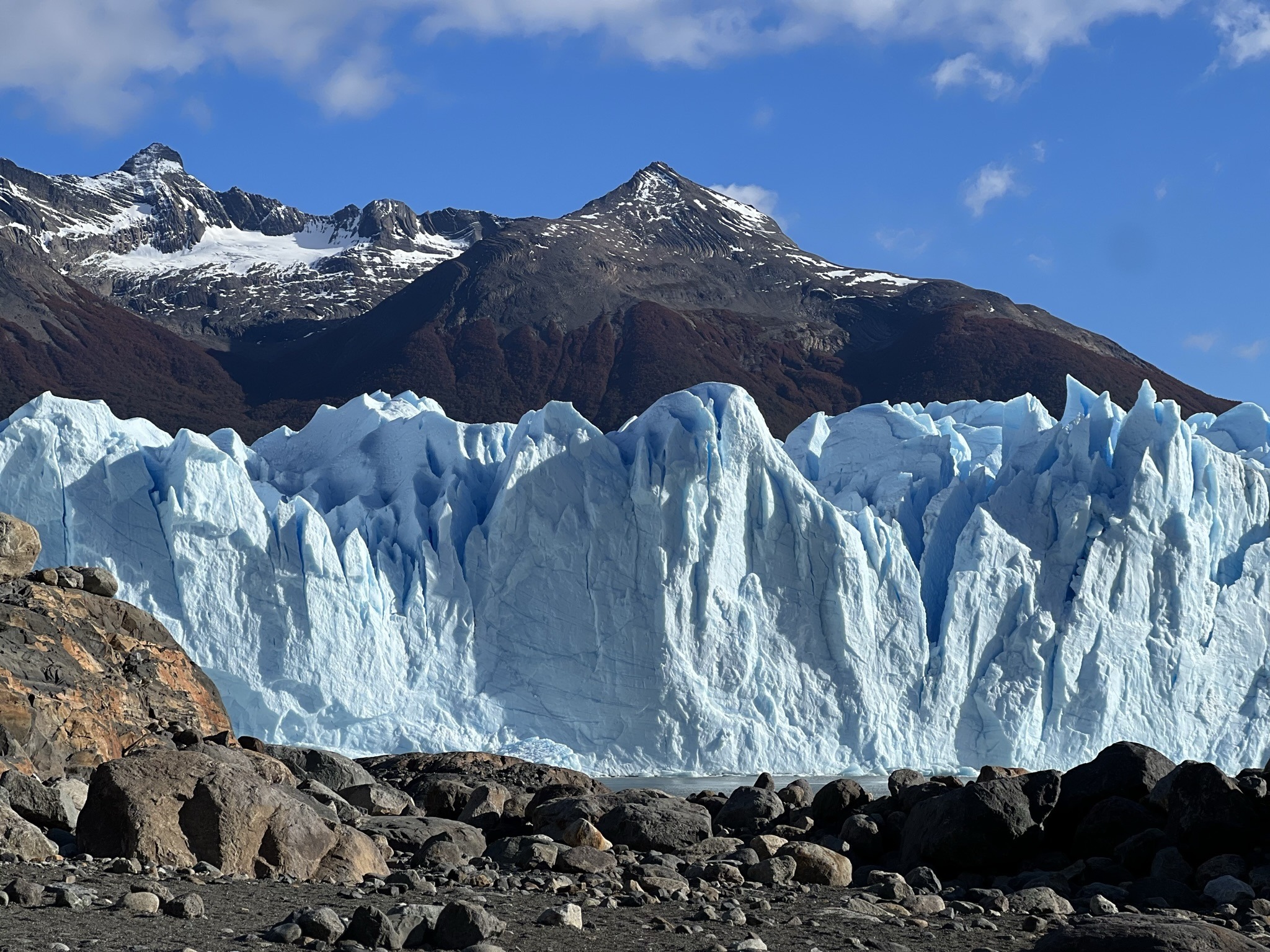
On the far side, we disembarked onto a black sandy bay and were divided into three groups. After listening to the Americans obsess over REM cycles, HRVs, and their latest state-of-the-art trekking poles, I opted to join the local Spanish-speaking group led by Guillermo – my Spanish now good enough to follow effortlessly.
With the Big Ice Trek marketed for people in excellent physical condition, I started questioning my choice the moment we stood watching the other groups disappear ahead of us. With us we had a morbidly obese guy, a woman whose shoes fell apart, and a girl complaining after ten steps – and lemme just say, they didn’t exactly inspire confidence.
That said, Guillermo knew his stuff and made the walk genuinely enjoyable. And any doubt vanished about a hundred metres from the bay, when we reached a viewpoint facing the glacier and watched a huge chunk of ice calve right before our eyes. A phenomenal sight – familiar from Antarctica, yet still utterly breath-stealing. I honestly wonder if anyone could ever become desensitised to that.
Journey to the Glacier
We continued to a makeshift camp, where staff fitted us with helmets, harnesses, and two bungees to be used in exposed sections prone to high winds. Fully geared up, we hiked parallel to the glacier, the trail steepening as it climbed towards the forest. Here, we clipped our bungees onto fixed cables along narrow ledges – a process I initially thought unnecessary, given the lack of wind at the time.
Up, up, and up we went, even crossing a waterfall to reach our next viewpoint. Framed perfectly between dense forest branches above and rust-brown rock below stood the luminous blue glacier, looking almost unreal. Such a bizarre, beautiful contrast.

The trail then descended, and we were each handed a pair of crampons. Despite their unfortunate name – a disconcerting mash-up of crusty and tampons – they felt like keys to a new dimension. I’d never worn them before, and just holding them felt momentous.
With our new spiky companions strapped on, we descended towards the glacier’s base, the run down the loose rubble reminding me of our downhill slide over Acatenango. Ironically, this was the windiest section, yet the one without cables. Oh well, no harm, no foul.
The Long-Awaited Big Ice Trek!
Standing at the edge of the ice, adrenaline surged as we stepped onto the frozen surface. “One small step for mankind, one big one for Marius,” my brain announced – much like when I had first stepped on Antarctic territory.
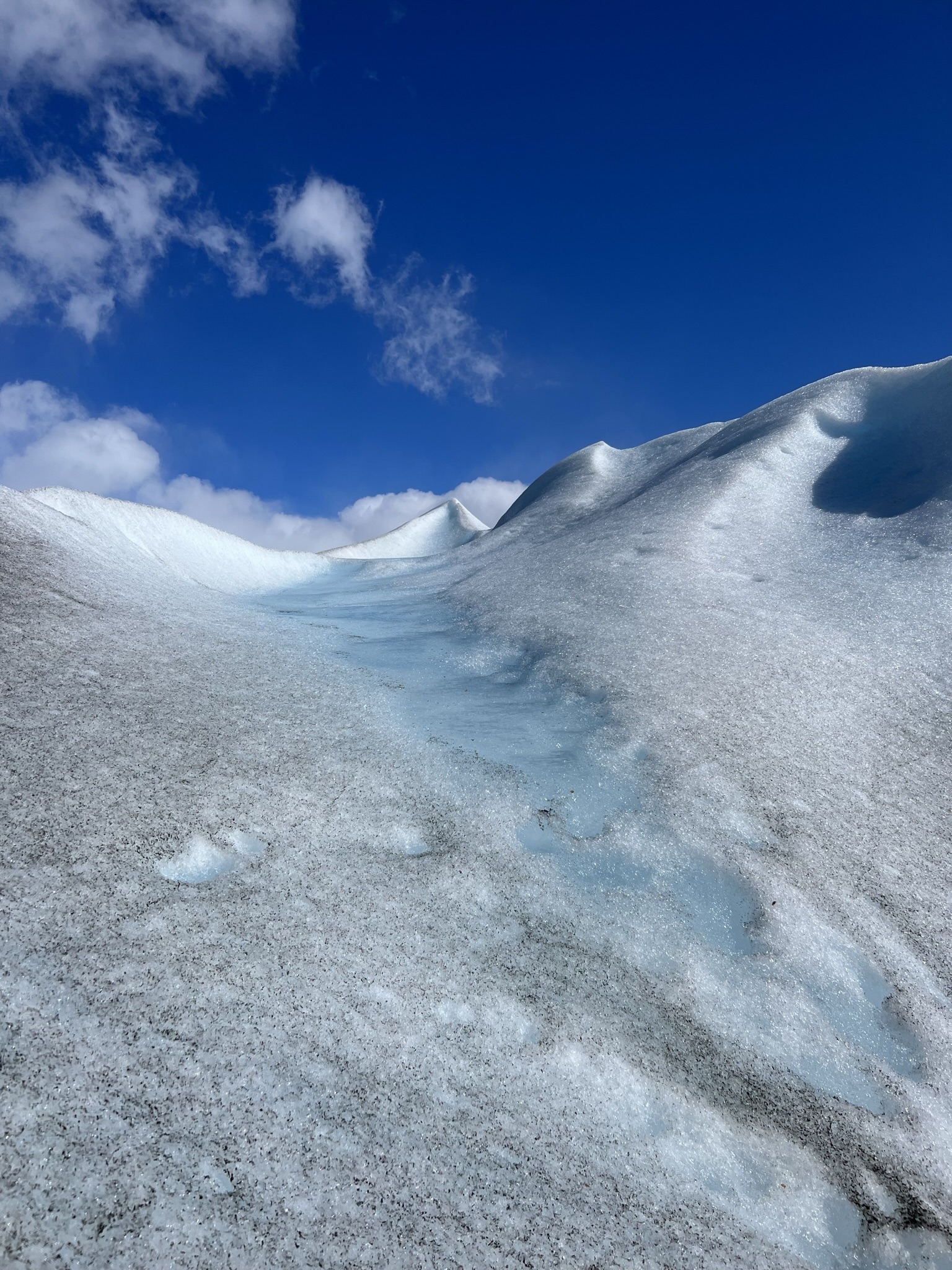
My enthusiasm lasted for just about a hot second. It didn’t take long for me to realise that walking on ice with crampons feels a lot like stepping on giant lumps of chewing gum. Every footlift required ten times the effort. Still, the sheer novelty of walking on ice was distraction enough. The glacier stretched before us like a frozen desert, powder-blue dunes rolling into the distance.
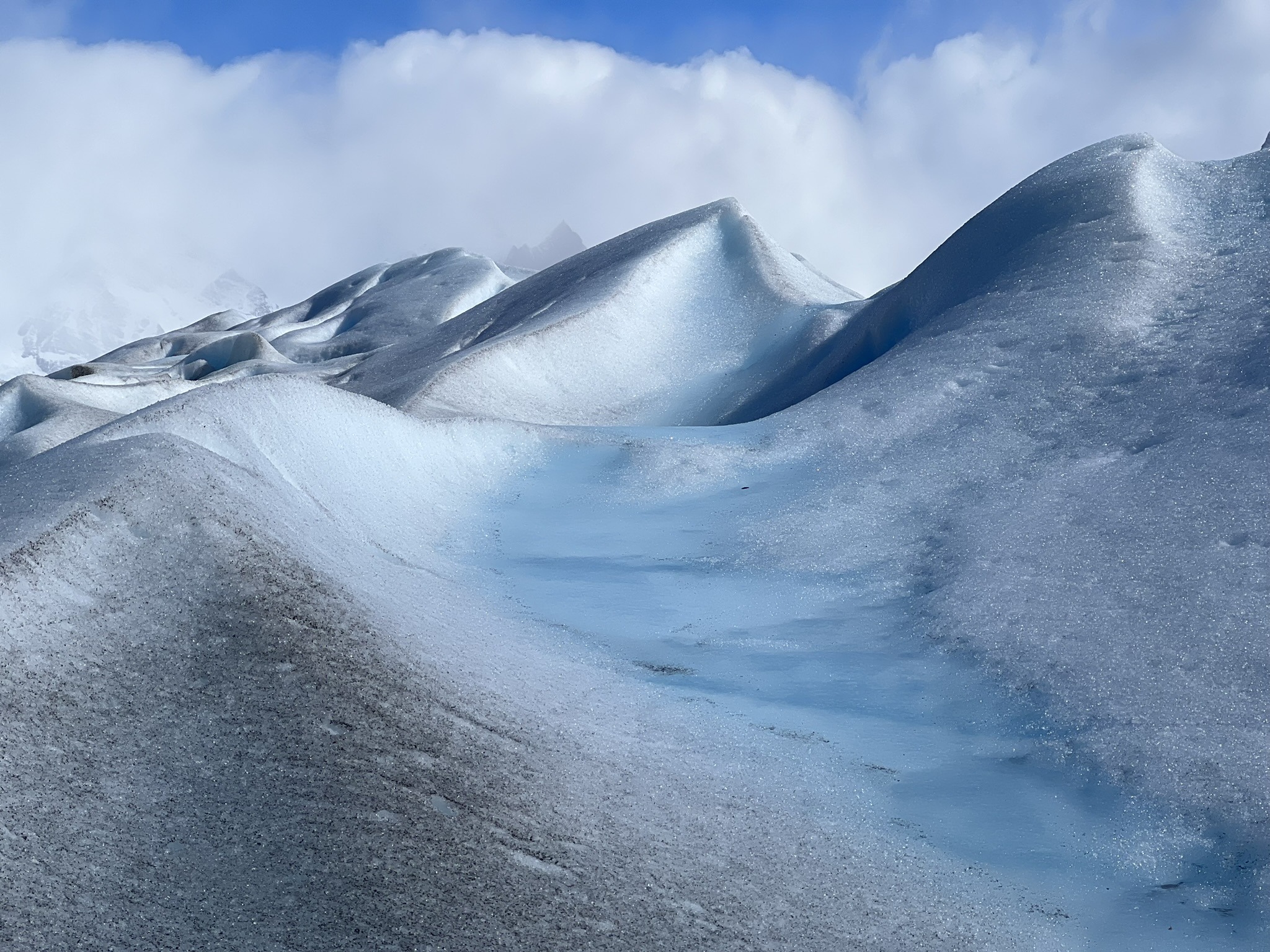
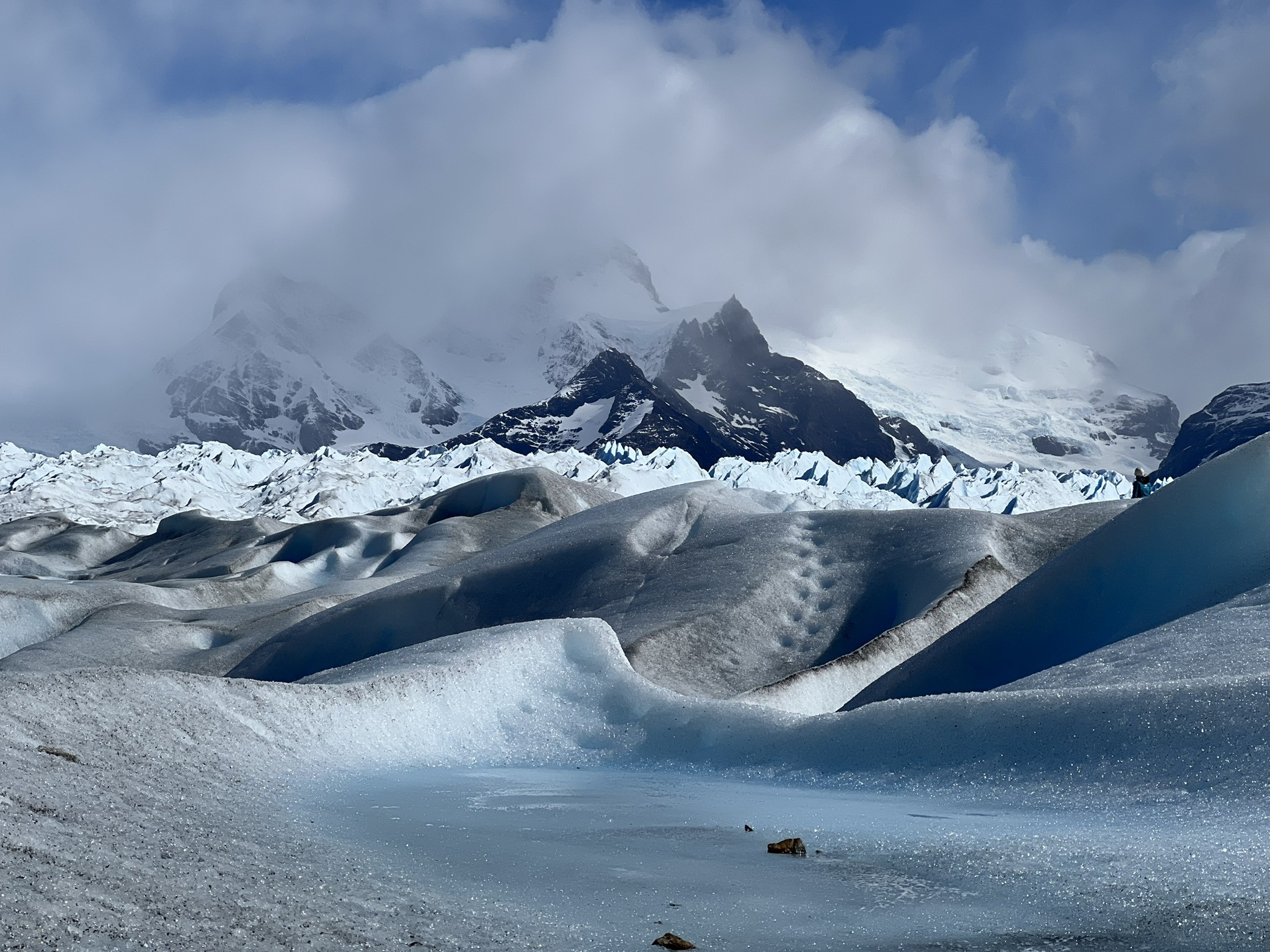
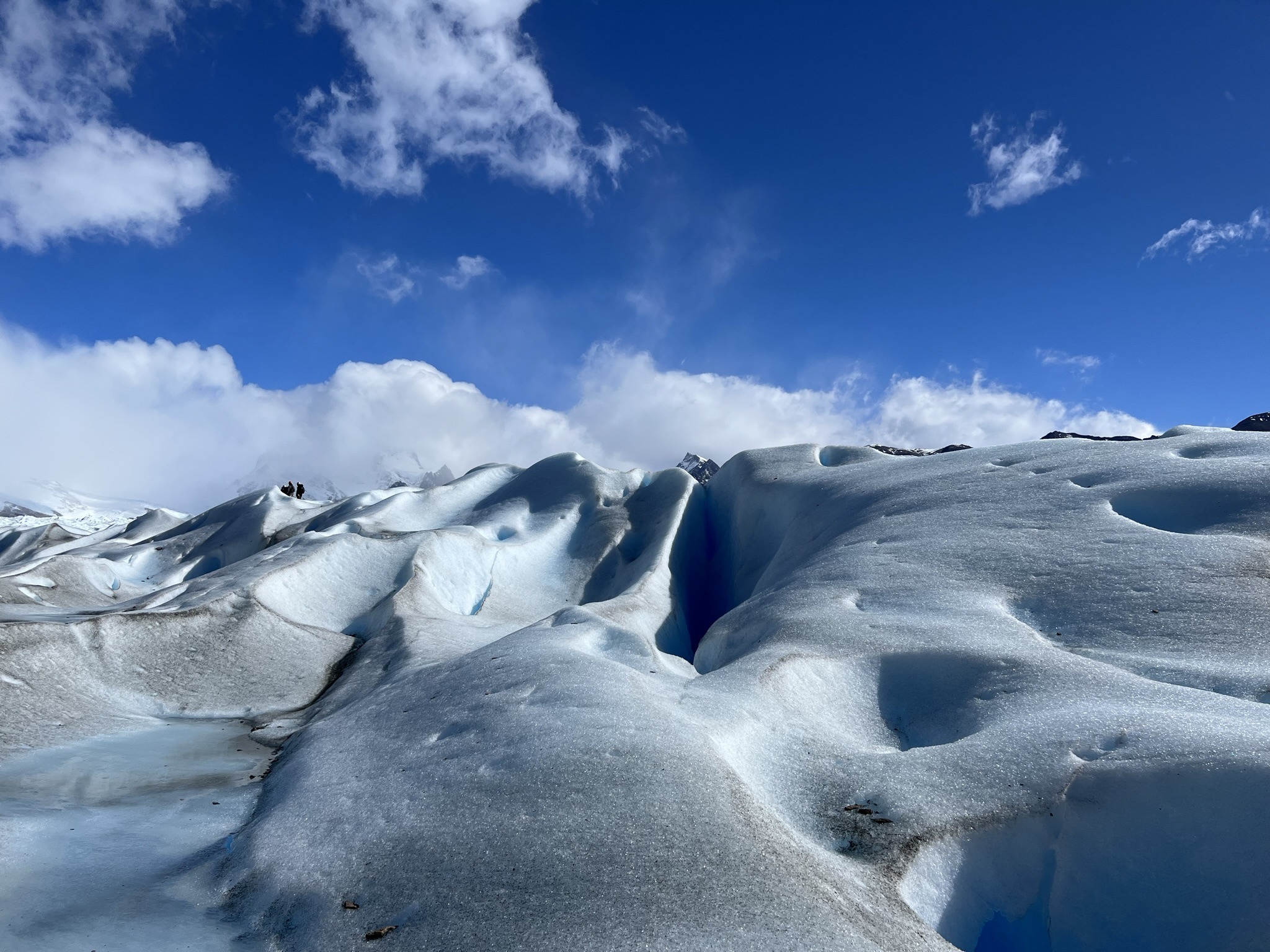
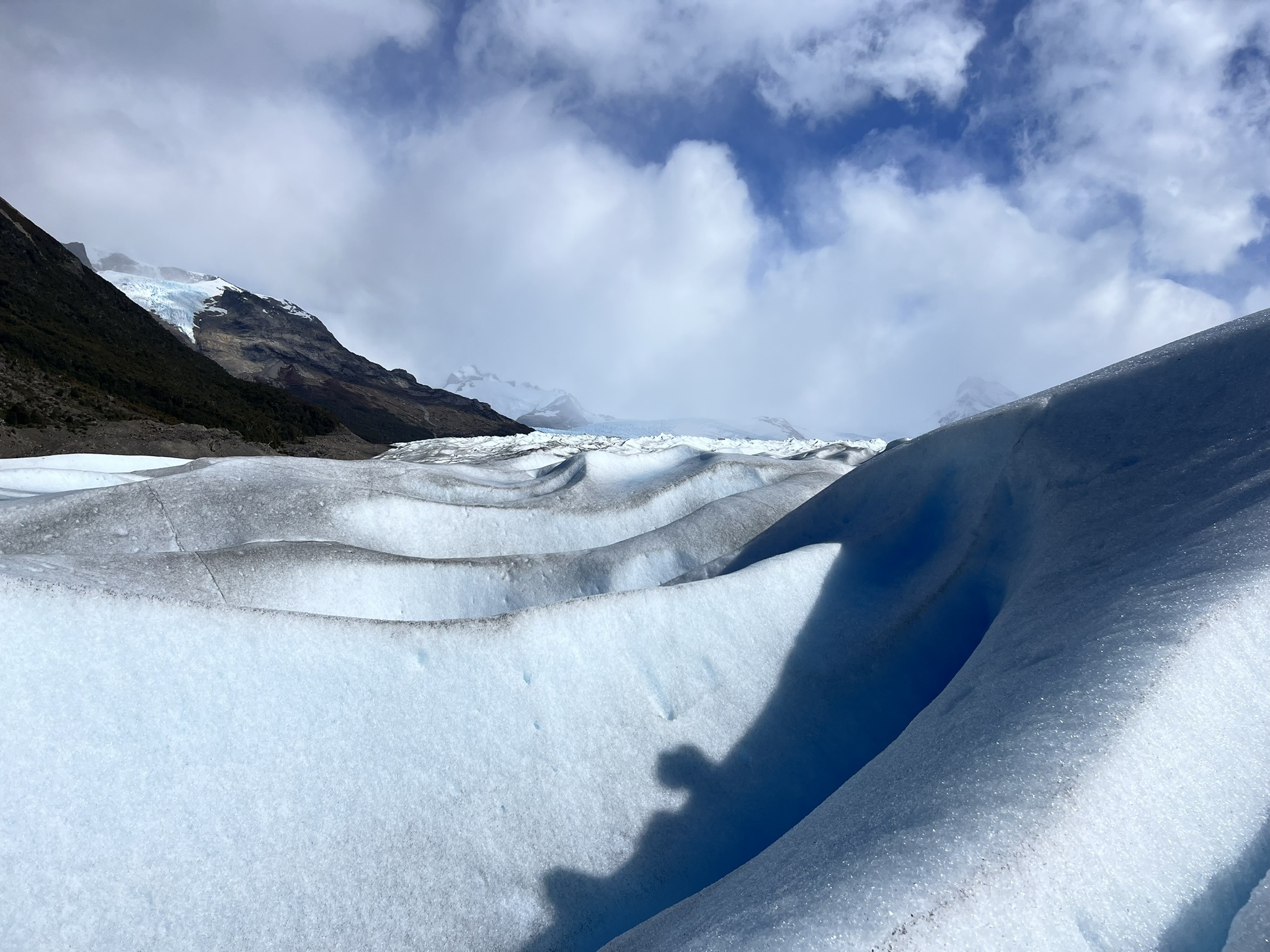
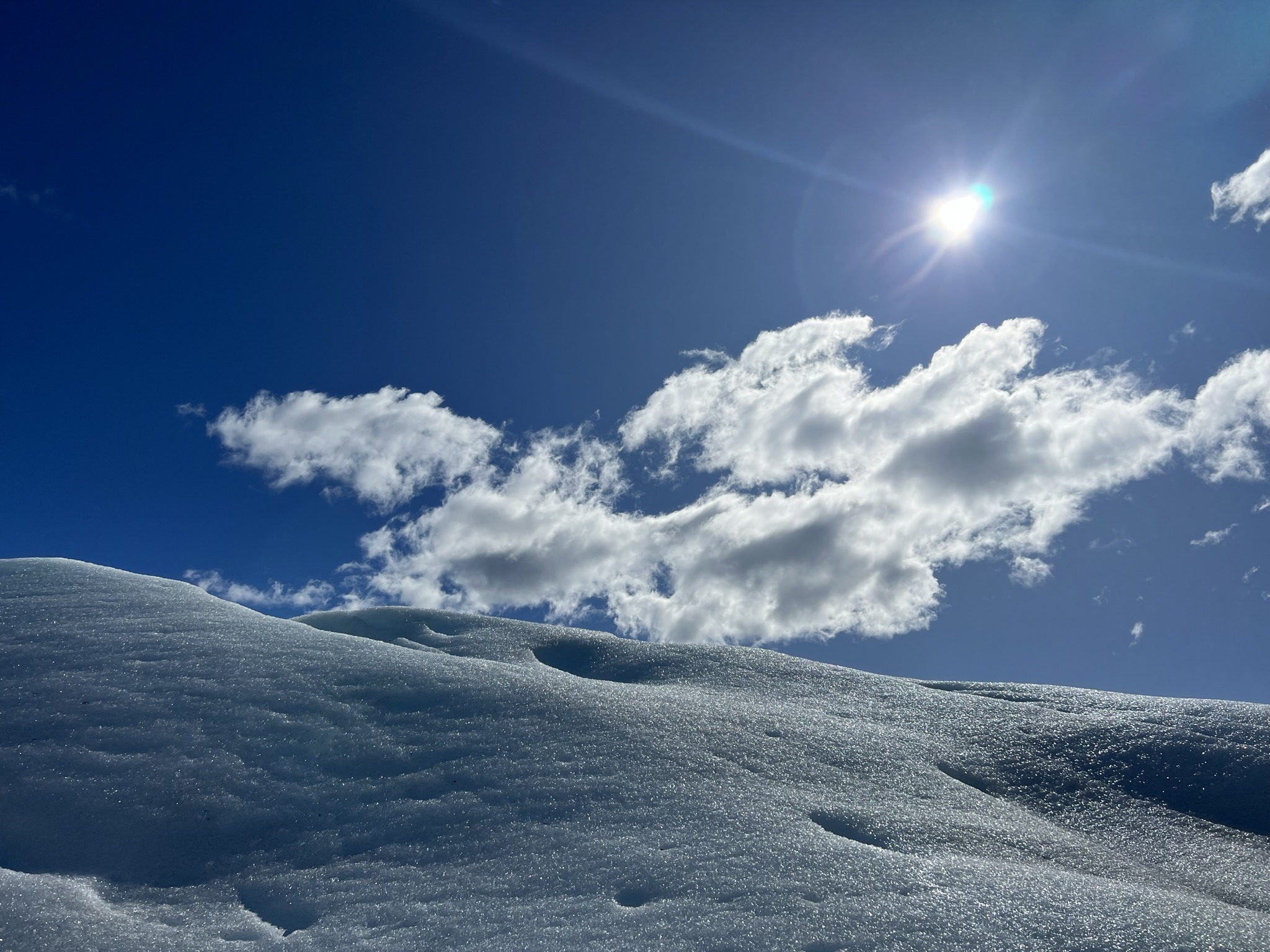
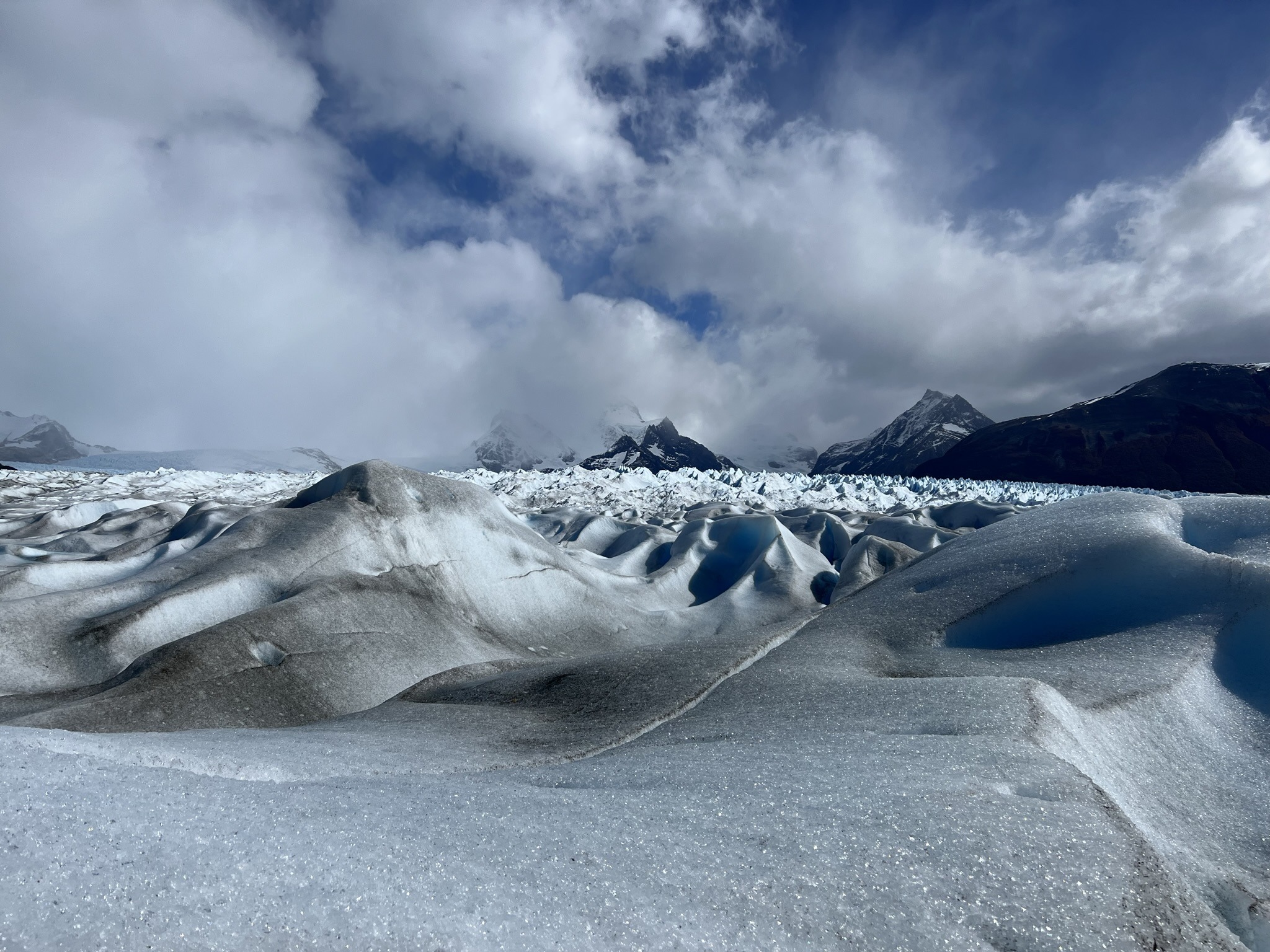
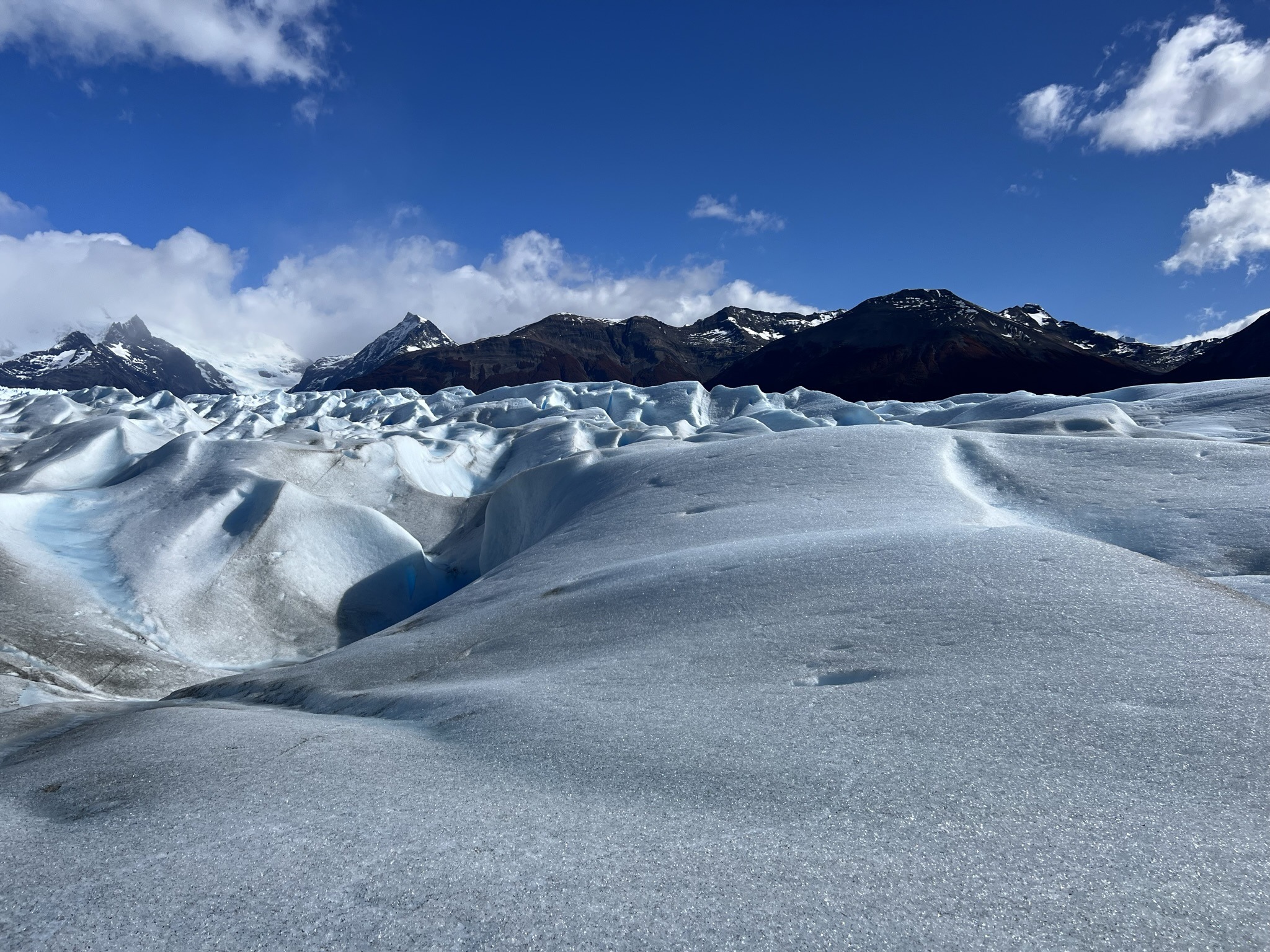
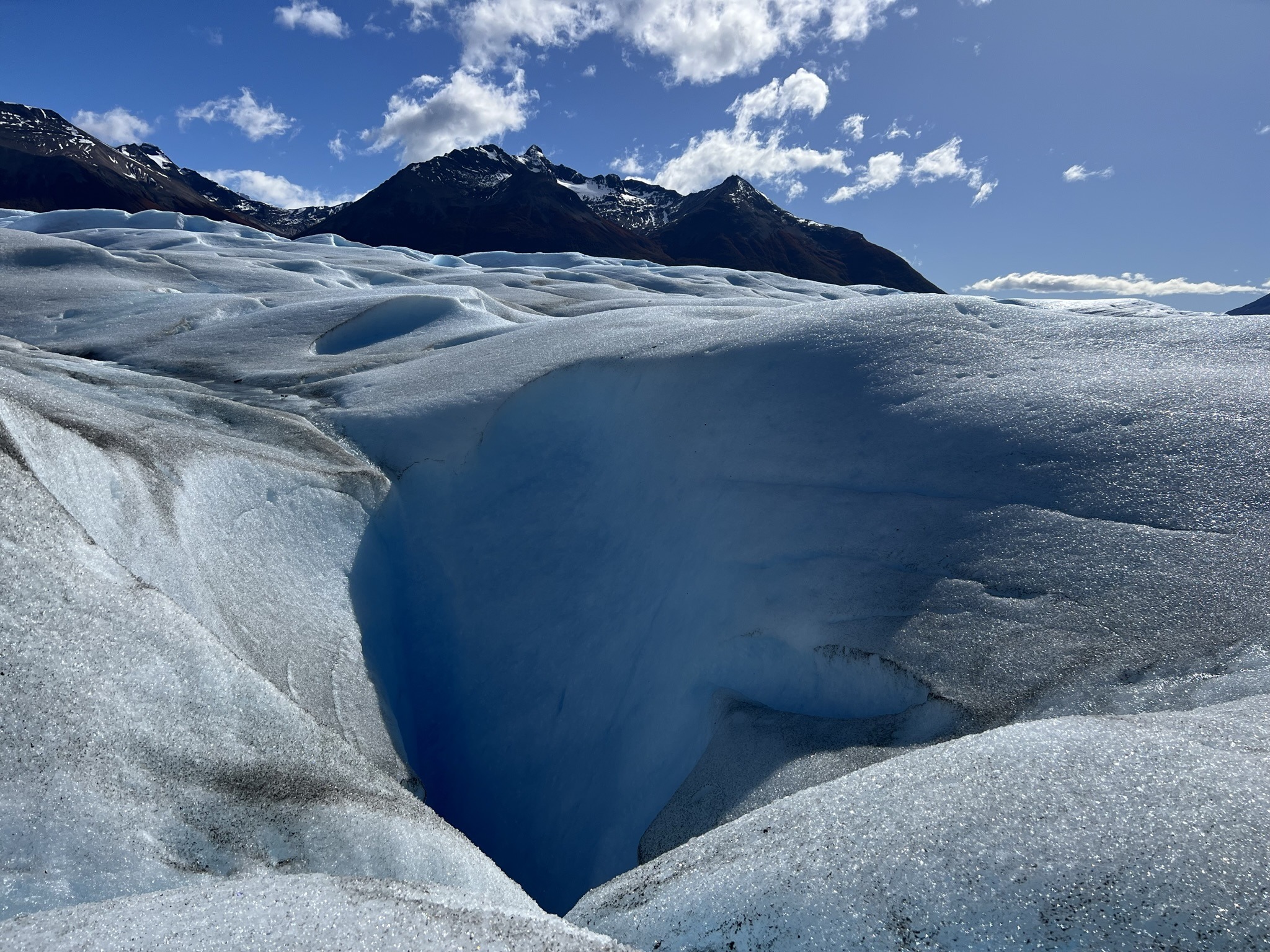
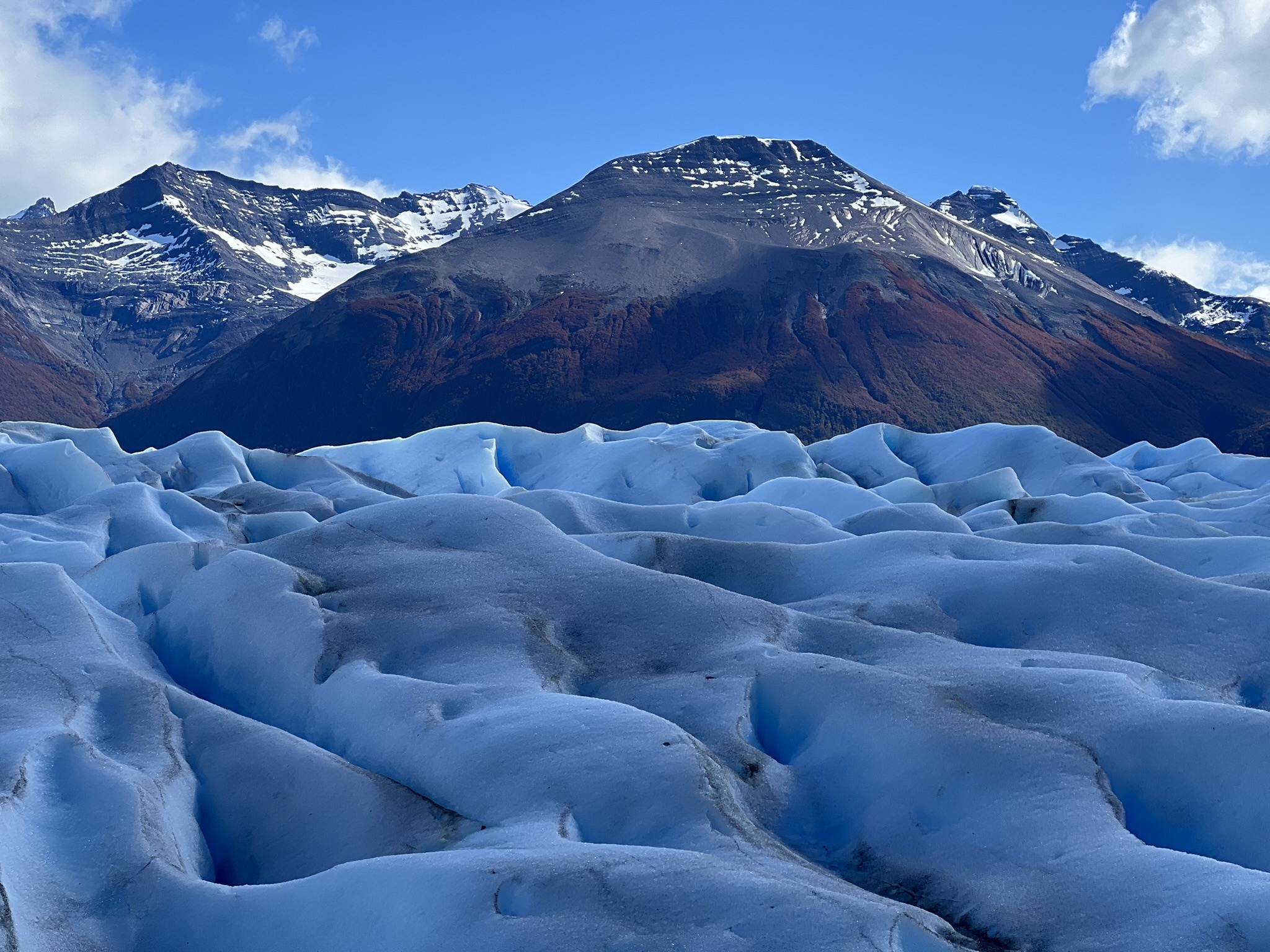
Walking over the frozen desert with its powder-blue dunes, I felt infinite. All I could see before me was a sea of white, light blue, and every shade in between. What I thought would look similar to what I had seen in Antarctica was nothing of the sort. This was nothing like the homogeneous white of the Antarctic slopes – broken only by black bare rocks, green moss, and red penguin guano. I mean yeah, sure, these landscapes would predominate over the Antarctic continent, but we didn’t get anywhere close to them on our expedition. In fact, I have to admit I felt a bit cheated at that point. Imagine an ice trek in the middle of Antarctica. That would have been so sick!
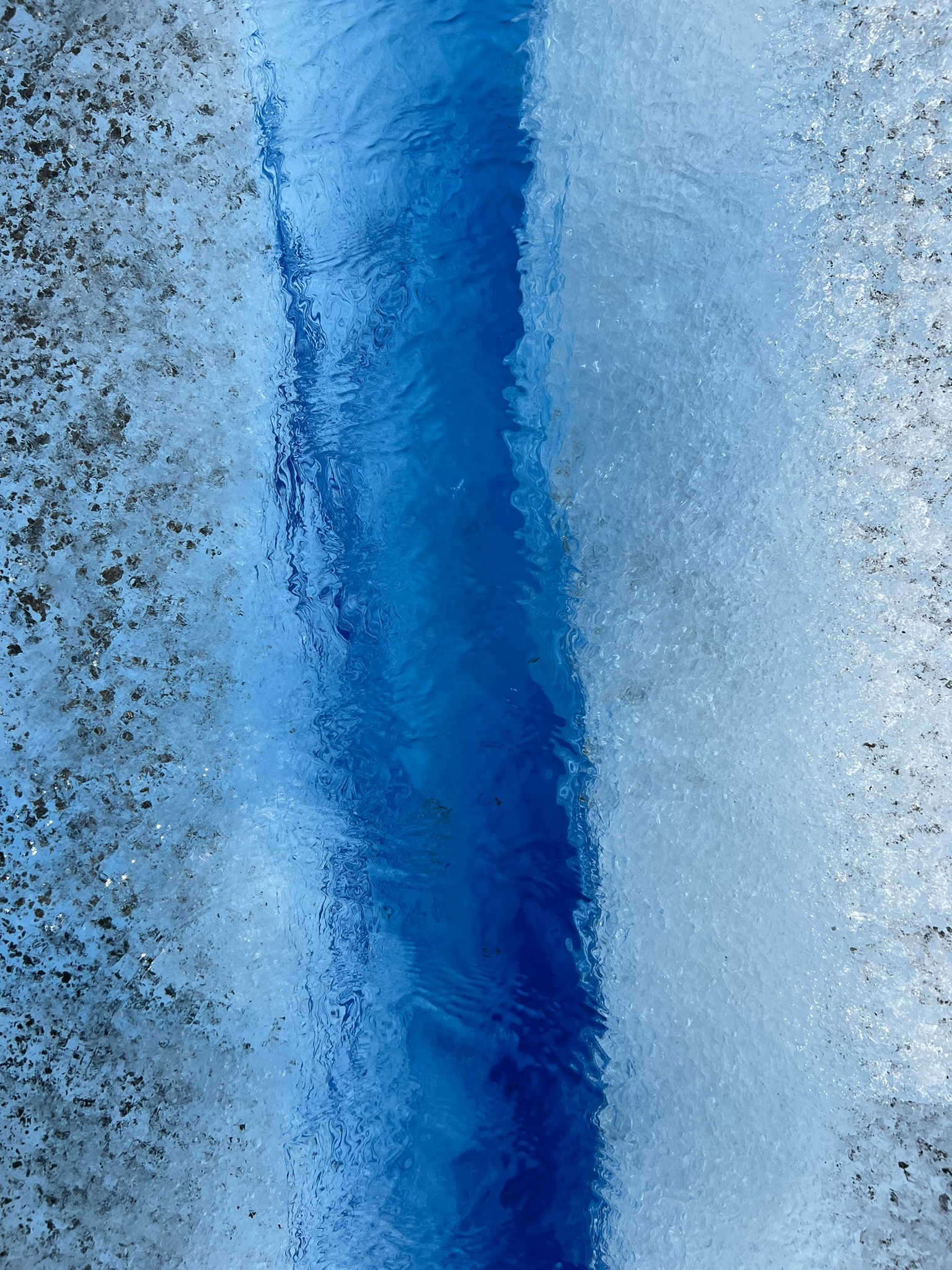
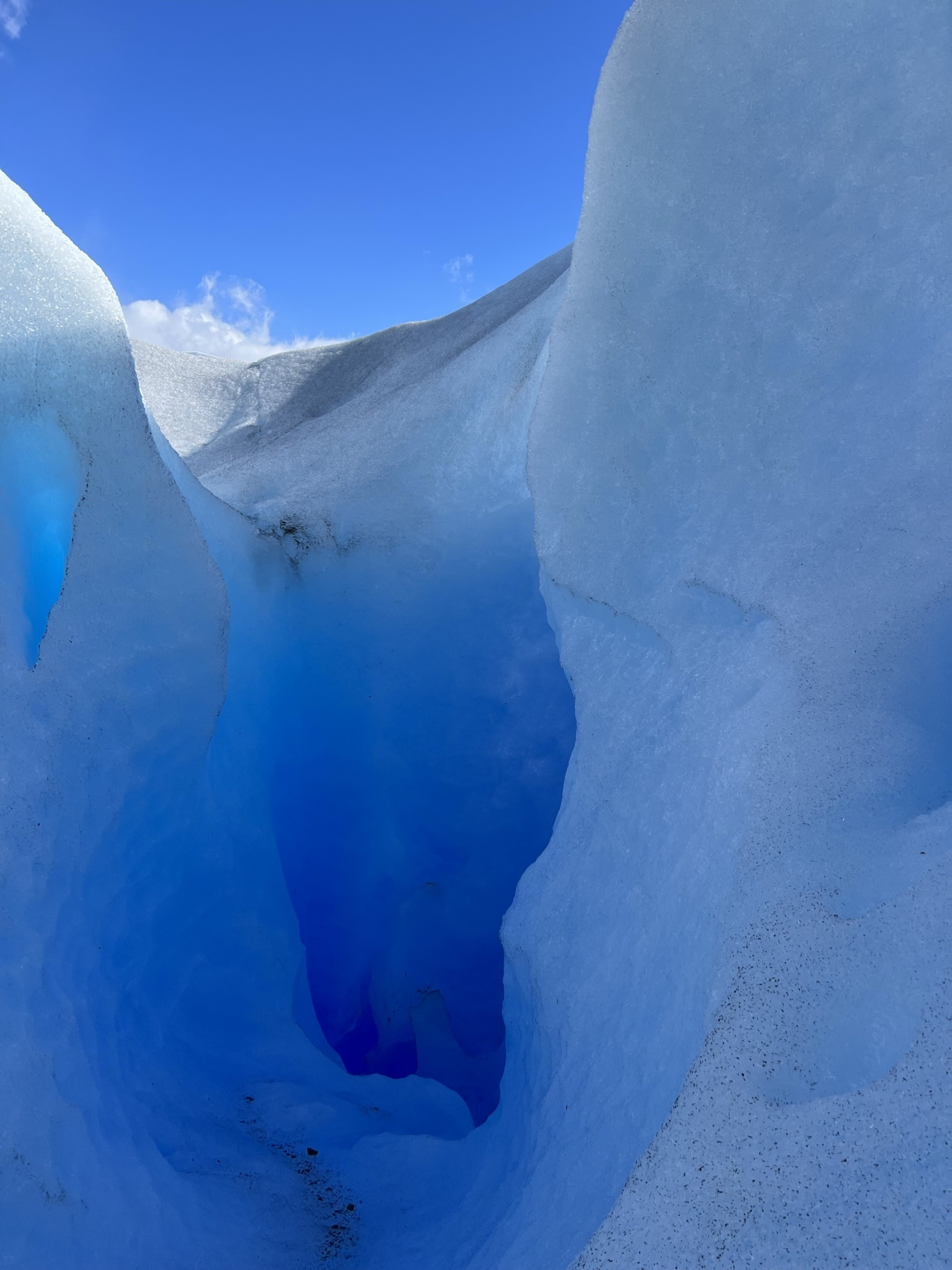
With my curiosity and awe getting the better of me, I was that kind of tourist – the one who had to be told over and over by the guide to stay on the trail and not wander off. We’d be trekking within the marked safe zone, an area free of fresh snow that might conceal crevasses – meaning the risks of injury or death weren’t that high. But hear me out for a sec. When you see cobalt-blue recesses folding into themselves, cerulean hollows, lapis streams flowing beneath translucent ice – how could anyone stand by and not wander off? I sure as hell did.
Glacial Wonders
Every single detail seemed completely and utterly fascinating. I couldn’t help but gasp in astonishment at surreally beautiful sights that met our eyes. Out of all the things I’d seen in my entire life, I think this one ranked the highest. I honestly don’t know how to explain it, but I felt like this was my element.
My interest in water, ice, hail, snow, icebergs, glaciers – it was all here, in this one place. Not only did I feel immeasurably lucky, grateful, and privileged, as I always do, I also felt like I’d found something I’d longed for all my life – a missing piece of sorts. This was my environment. I felt reinvigorated, fresh, energetic, full of life. Might’ve been the frigid gusts of wind, true, but it was also something on a spiritual level.
We kept trekking across the ice field, every shape and structure leaving me awestruck. Guillermo told us how the features in front of us formed – how the dune-like icy slopes take their shape from the wind, and how seracs and fracture lines develop as a direct result of the moving ice. The latter, he added, can collapse over time, forming crevasses that are sometimes as deep as thirty metres. As a general rule, the darker the colour of the water running through them, the deeper they are.
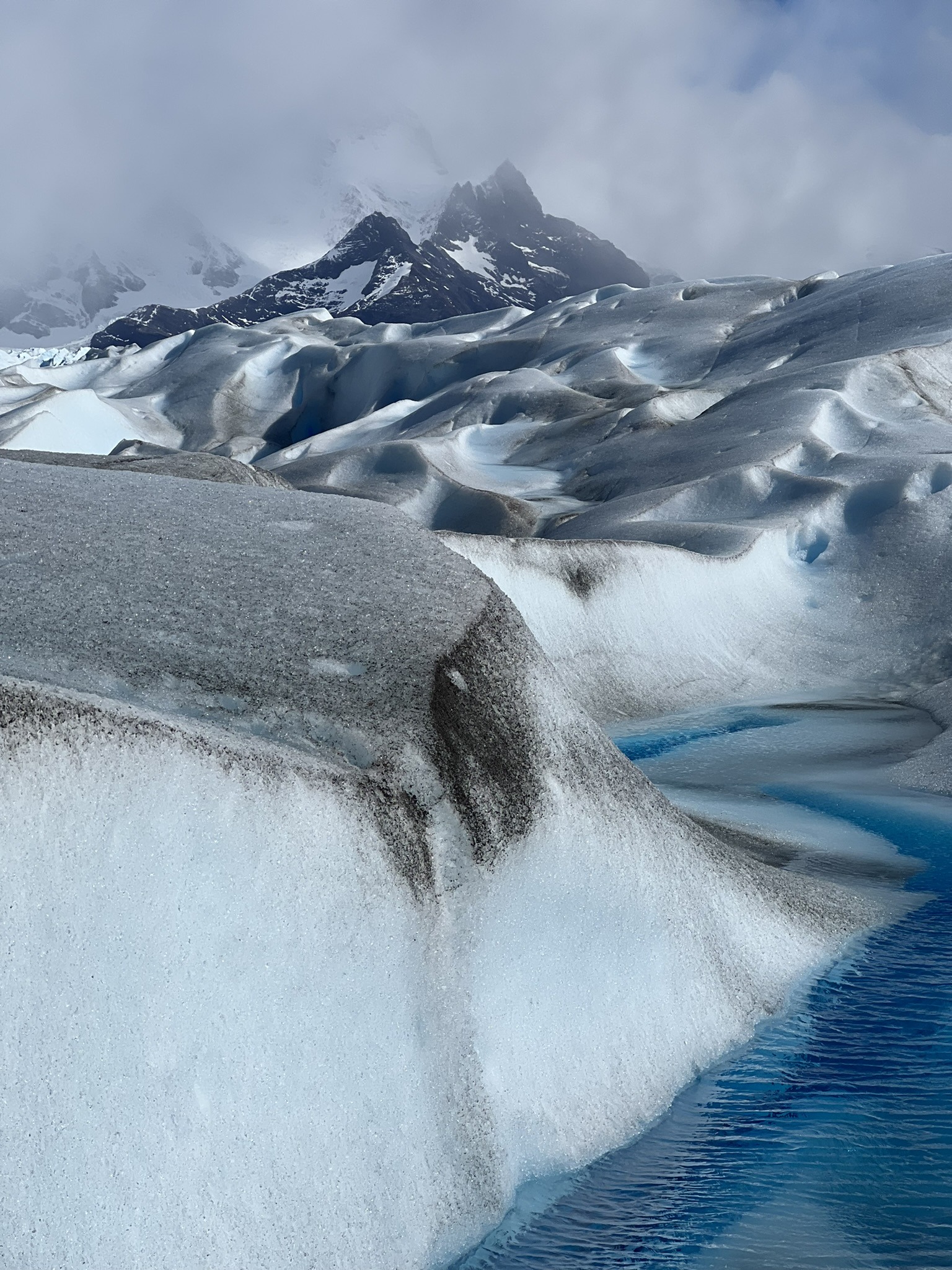
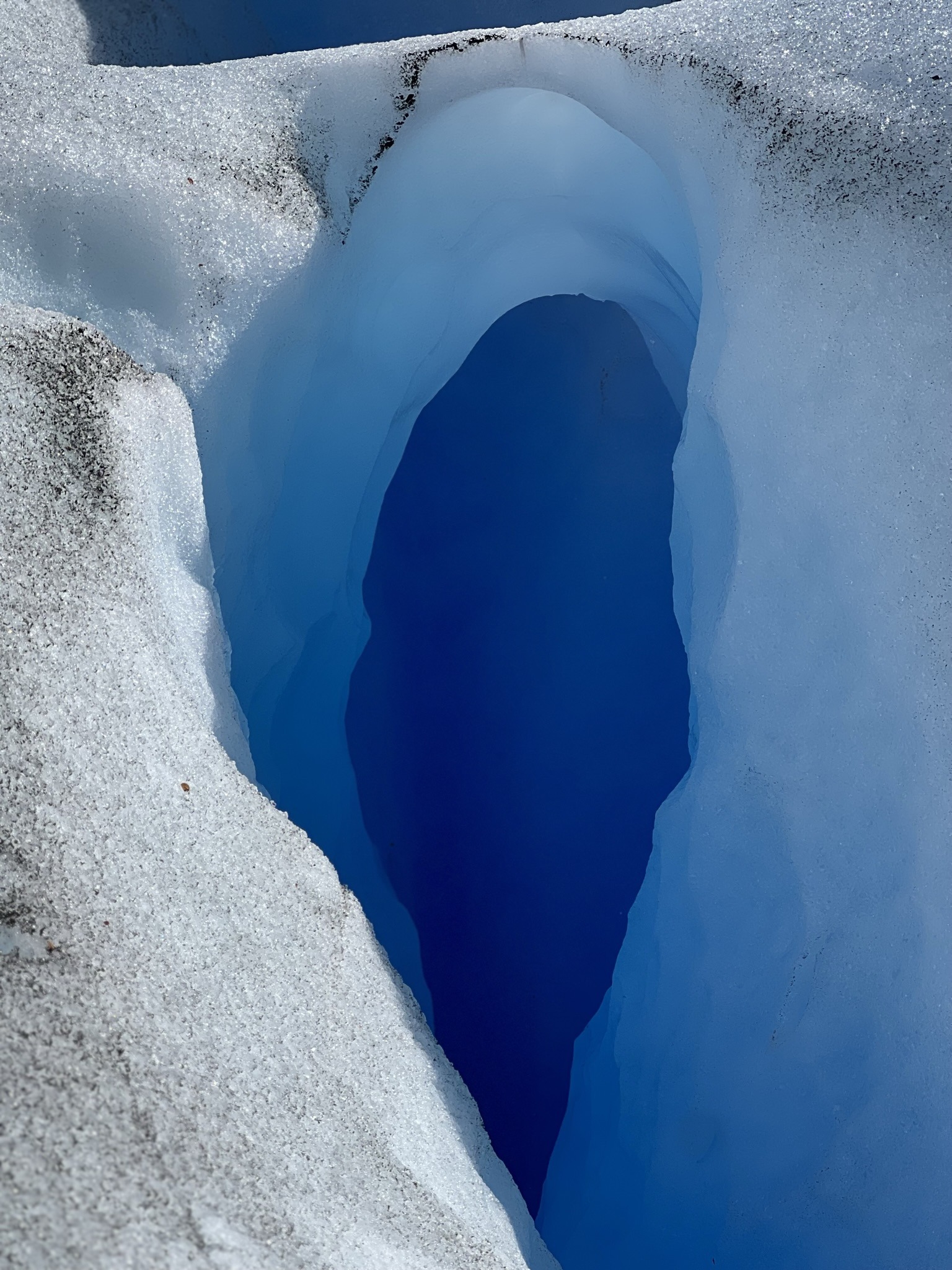
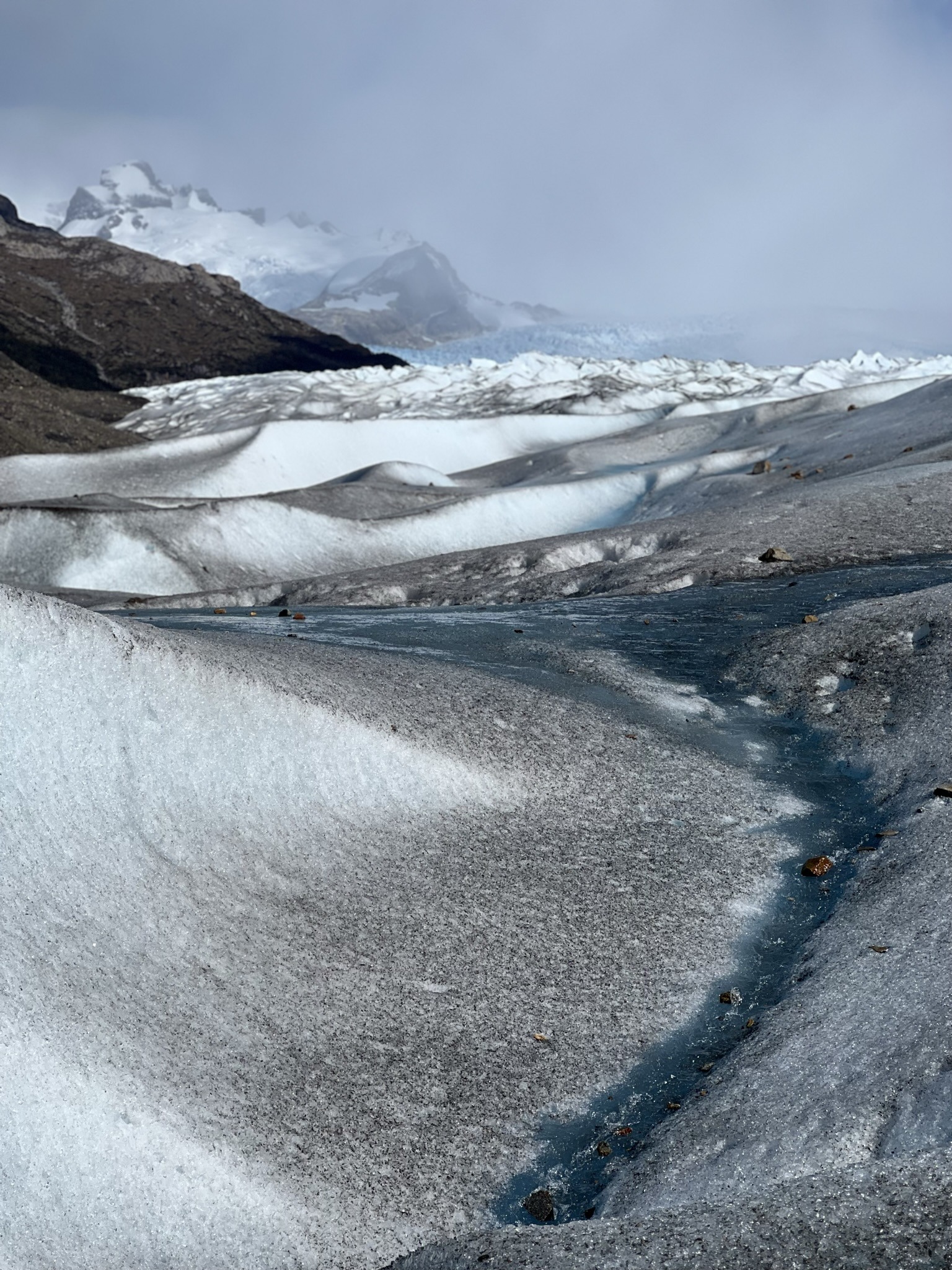
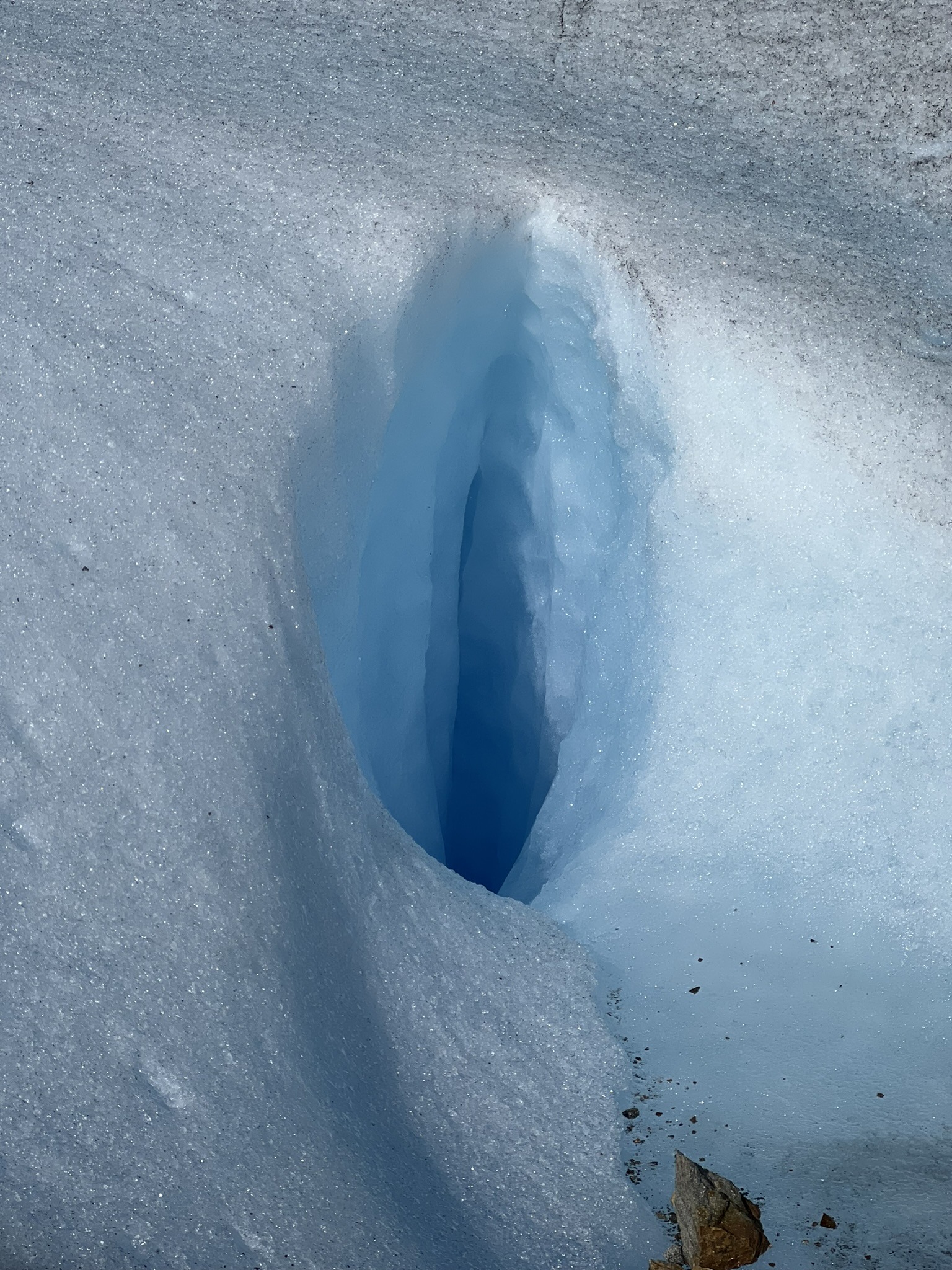
When we reached a spot sheltered from the wind, we all sat down and started feasting on our lunches – steak sandwiches for most, Doritos for me. I should’ve thought more about what I’d want to eat in a place like this when I went shopping the day before, but oh well. At least I can’t complain about the accompanying beverage – pure water from a glacial stream. It genuinely tasted like purified bottled water.
As we relaxed, Guillermo explained more about our surroundings. In the distance was the peak of the 3,000-metre-high Cerro Pietrobelli, where the Perito Moreno Glacier starts to form. In the past, he continued, the glacier was joined with two others found a few kilometres north – Ameghino and Mayo.
A Friggin' Ice Cave
After lunch, we headed further into the ice field, where something “nice” was allegedly waiting for us. What the guides described as nice was, to me, downright hallucinatory – in the sense that I wasn’t sure such a thing could even exist.
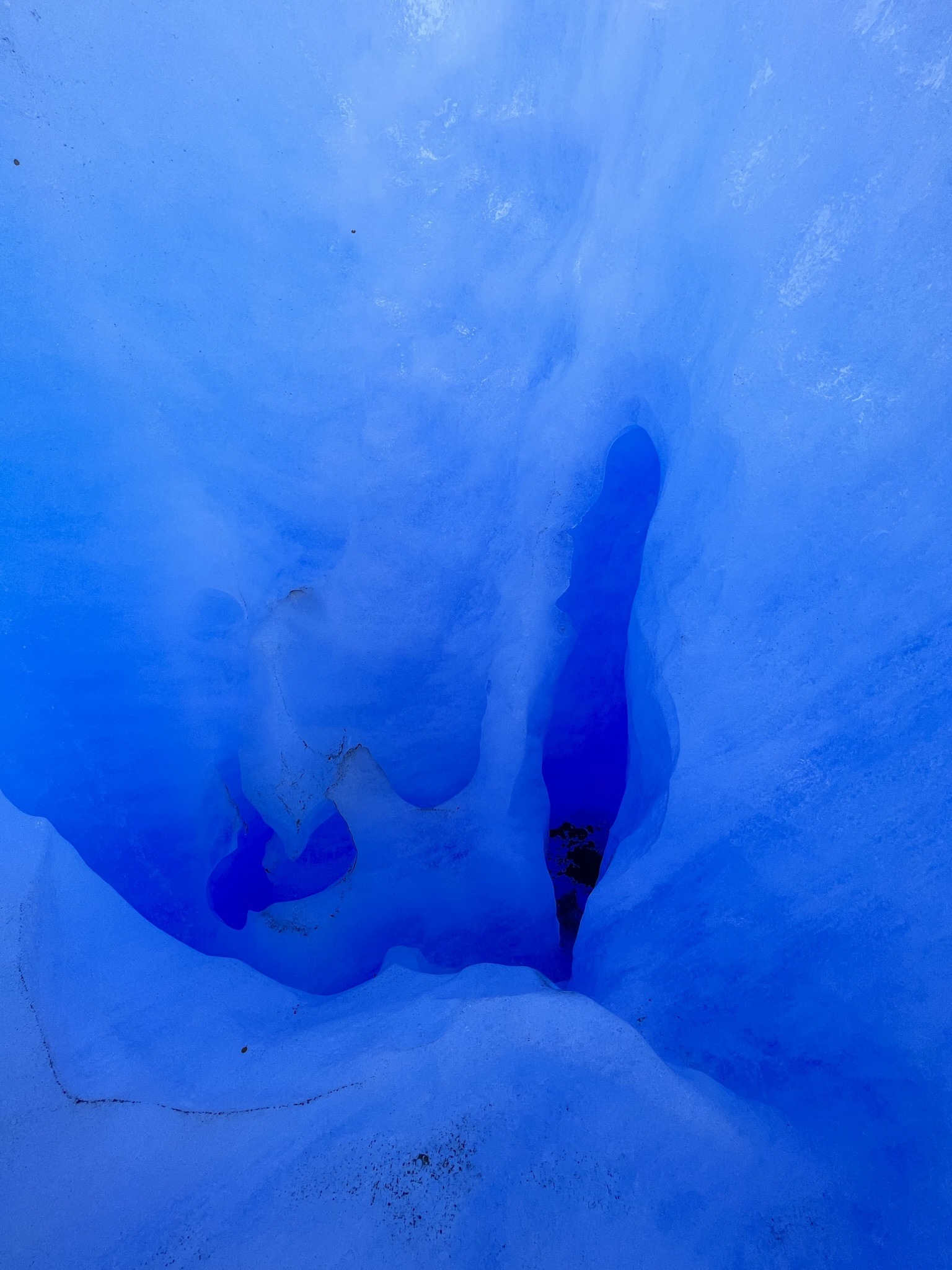
Right in front of us stood an icy blue hill with a perfectly round entrance at its base, the pale blues on the exterior forming a mesmerising gradient into royal blue at its core. It was a friggin’ ice cave. As we stood there with our jaws on the floor, the staff were busy hooking cables to the sides of the gorge in front of it and cutting makeshift stairs with their ice axes. I begged Guillermo to let me use one, and after enough pleading, he helped me start my journey towards becoming a skilful ice-axe maniac.
Once everything was ready, we each took a turn climbing down to reach the mouth of the cave. This is where the bungees came in handy – I don’t know how else we could’ve gotten there, slipping along thin ledges of solid ice that even the crampons struggled to grip. It was as thrilling as it was terrifying, honestly. But was it worth it? Hell to the yes!
When we finally reached the entrance, it felt like stepping into a blue room, the little light that made it inside illuminating everything in a neon glow that looked otherworldly. Deeper in, we had to scramble over the side of a crevasse, with a stream of water running through it, fed by a pool of crystalline sapphire water in its deepest recess, reflecting light from a tiny window above. It felt like I was in H2O: Just Add Water’s hollow cove below the volcano – only the walls were made of ethereal blue ice and the moonlight was the little sunlight that managed to seep through. So surreal.
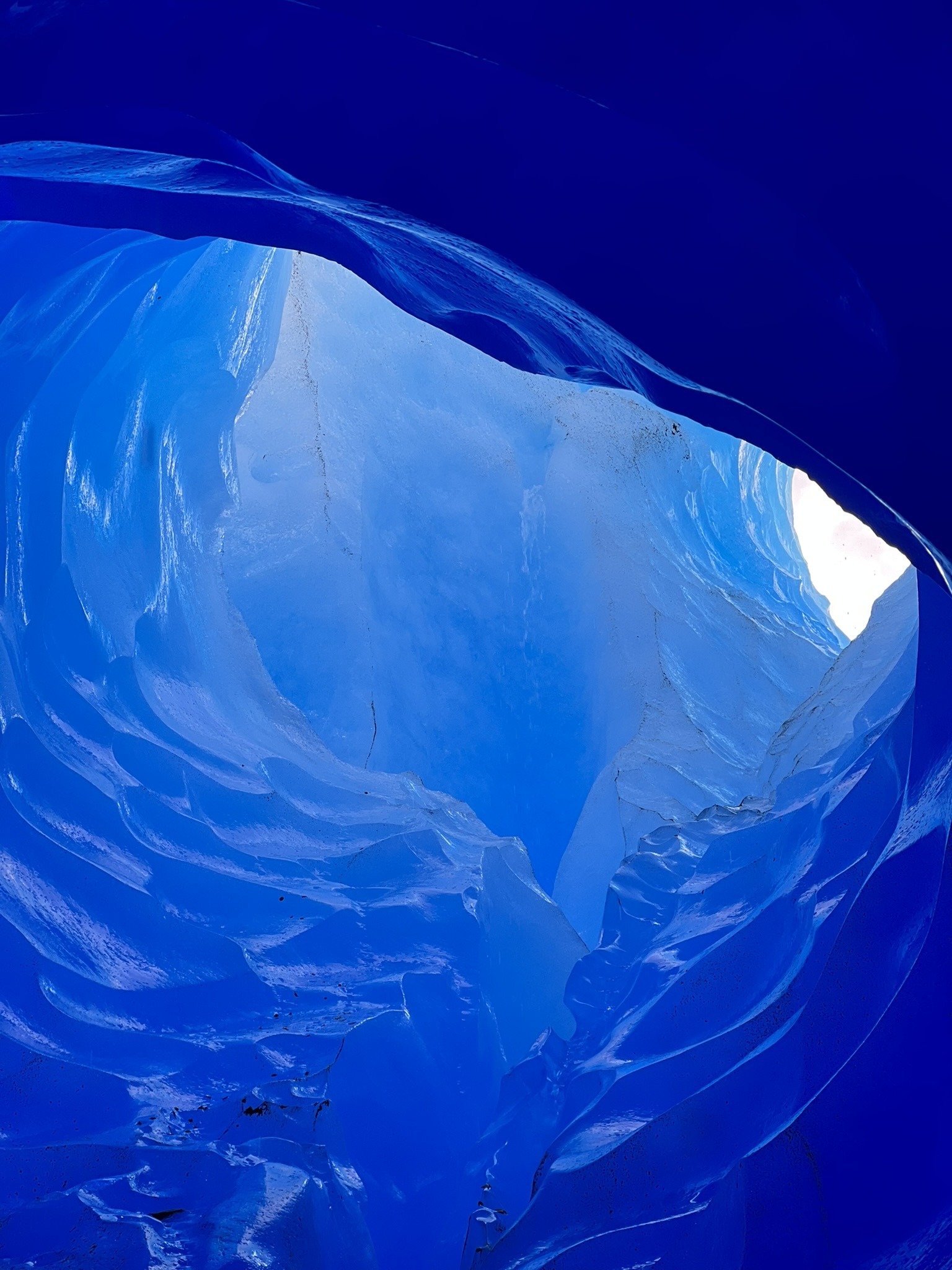
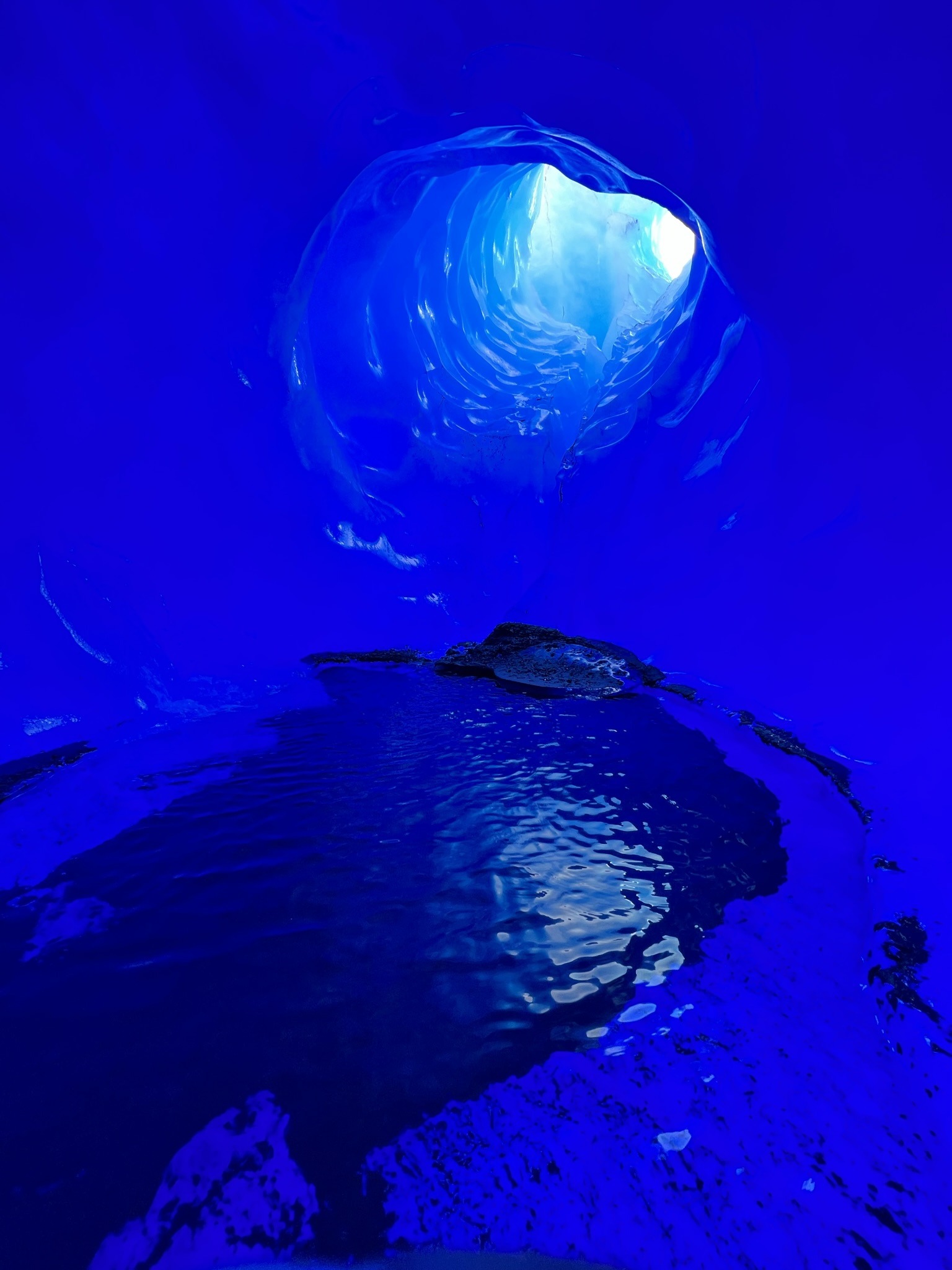
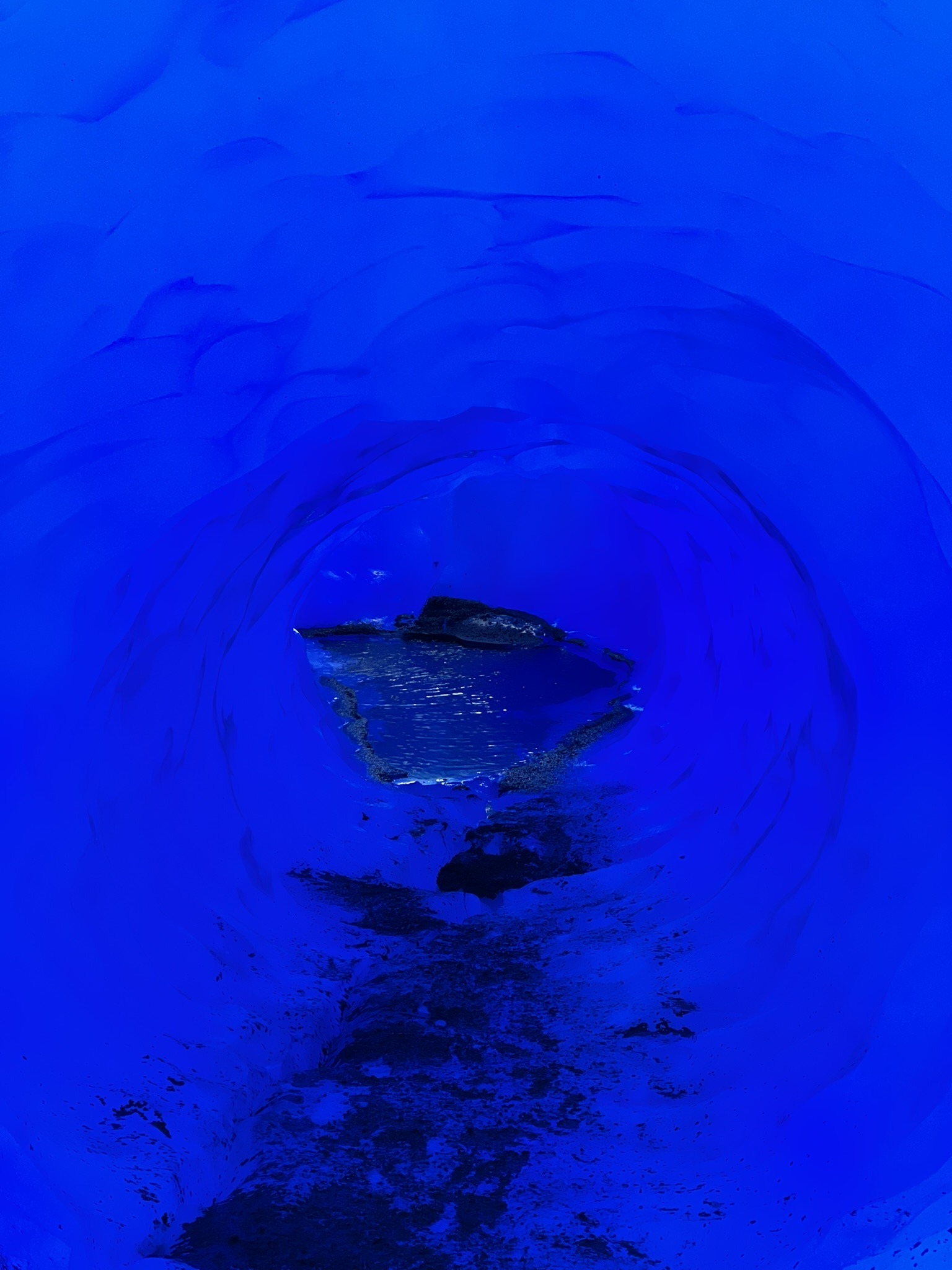
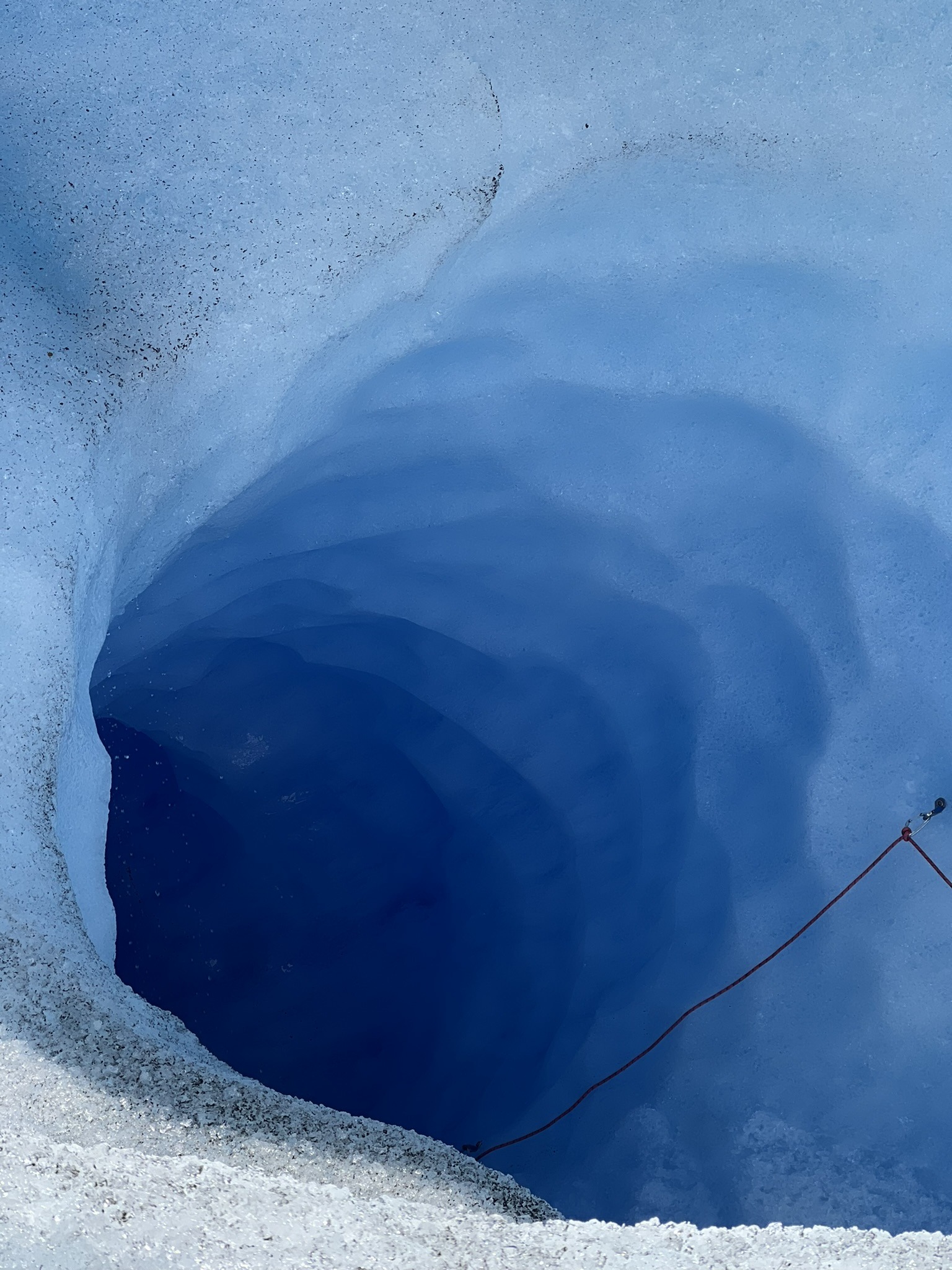
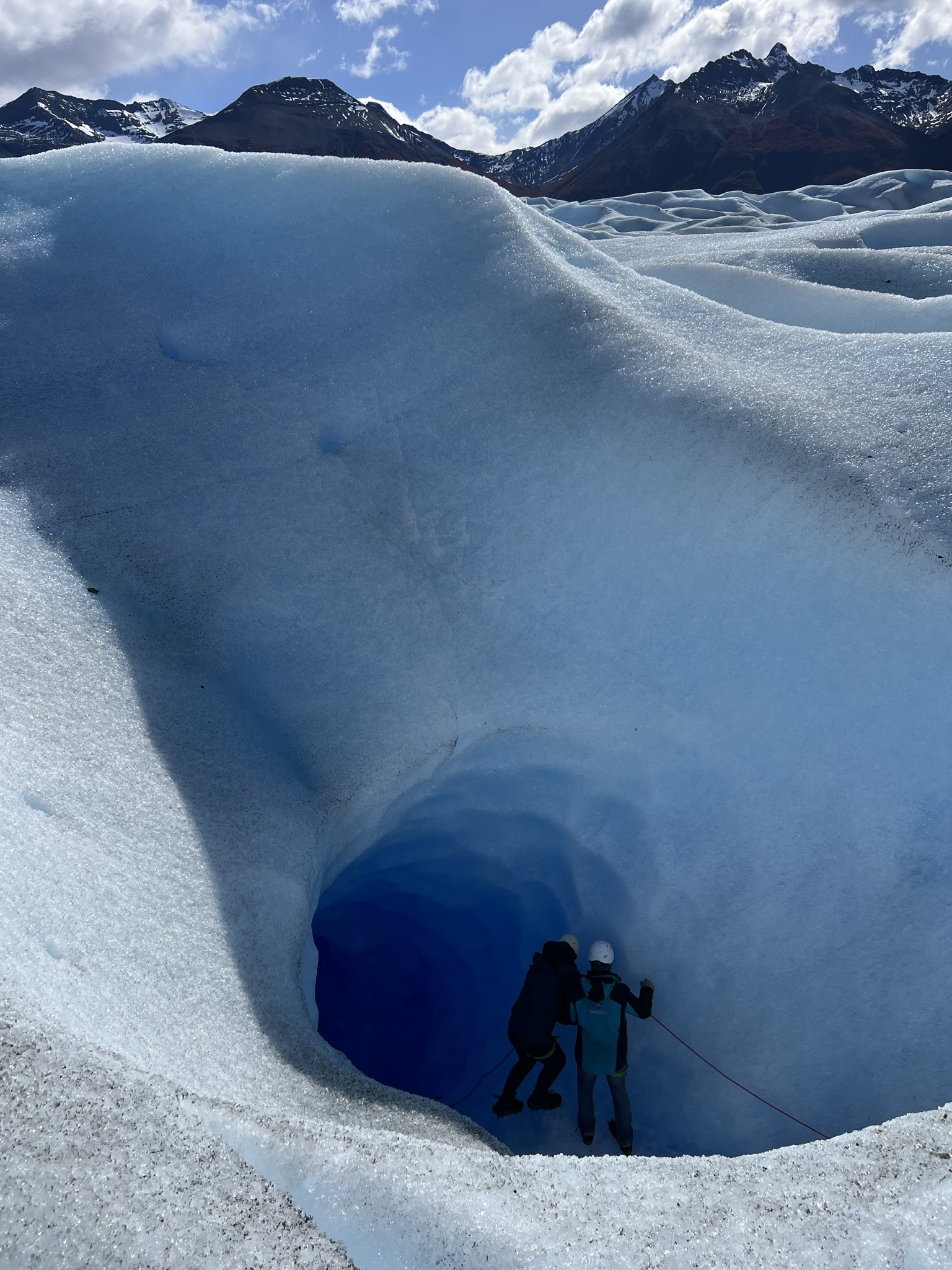
After the locura of entering this magical place, as the locals themselves put it, we trekked across the ice field a bit more, every single view holding us enraptured. When it was finally time to turn back, I couldn’t help telling Guillermo he has the coolest job ever, and that it must be amazing doing something like this day in, day out. I don’t think anyone could ever get bored of this. Not to mention, the guides here have to study glaciology and keep themselves updated on research being done on these ecosystems. How friggin’ cool is that?!
Once back on the boat, we were each given a glass of Scotch on the rocks – the rock being a piece of glacial ice. I have to admit I was positively drunk after the scantiest of breakfasts and a bag of Doritos for lunch. In fact, the ride back to town felt very reminiscent of being dragged home after a wild night of partying back in the days.