Antarctic Peninsula – Day 5: The Final Footfall
ANTARCTIC PENINSULA
Day 5: The Final Footfall
March 11, 2023
PART I
With Jonathan warning us there was a good chance we might miss our last possible landing because of the storm’s intensity, most of us woke up feeling a bit disheartened. After our cruise in Wilhelmina Bay, we’d started heading north again towards the South Shetland Islands. But during breakfast we got the long-awaited PA announcement, summoning us one last time to the mudroom.
Most passengers wanted Deception Island – the flooded caldera of an active volcano and a former hub of whaling activity – but the crew explained that conditions there can be brutal at the best of times, and with this storm brewing it’d be even worse, especially when attempting the narrow entrance through Neptune’s Bellows.
Instead, they took us to President Head, a headland forming the eastern extremity of Snow Island in the South Shetlands. It extends about 2.6 kilometres east-northeast and rises to 107 metres at St Sofroniy Knoll. The adjacent ice-free area is roughly 303 hectares and includes Calliope Beach to the north and Oeagrus Beach to the south. The name comes from a rock formation said to resemble a man’s head in profile – a little Mount Rushmore-ish, if you squint.
A Fascinating, Ugly Creature
This landing was simply wild, in the truest, most real sense. As we neared the shore, we were told to move up from the beach as quickly as possible because a herd of seals was close to the landing site.
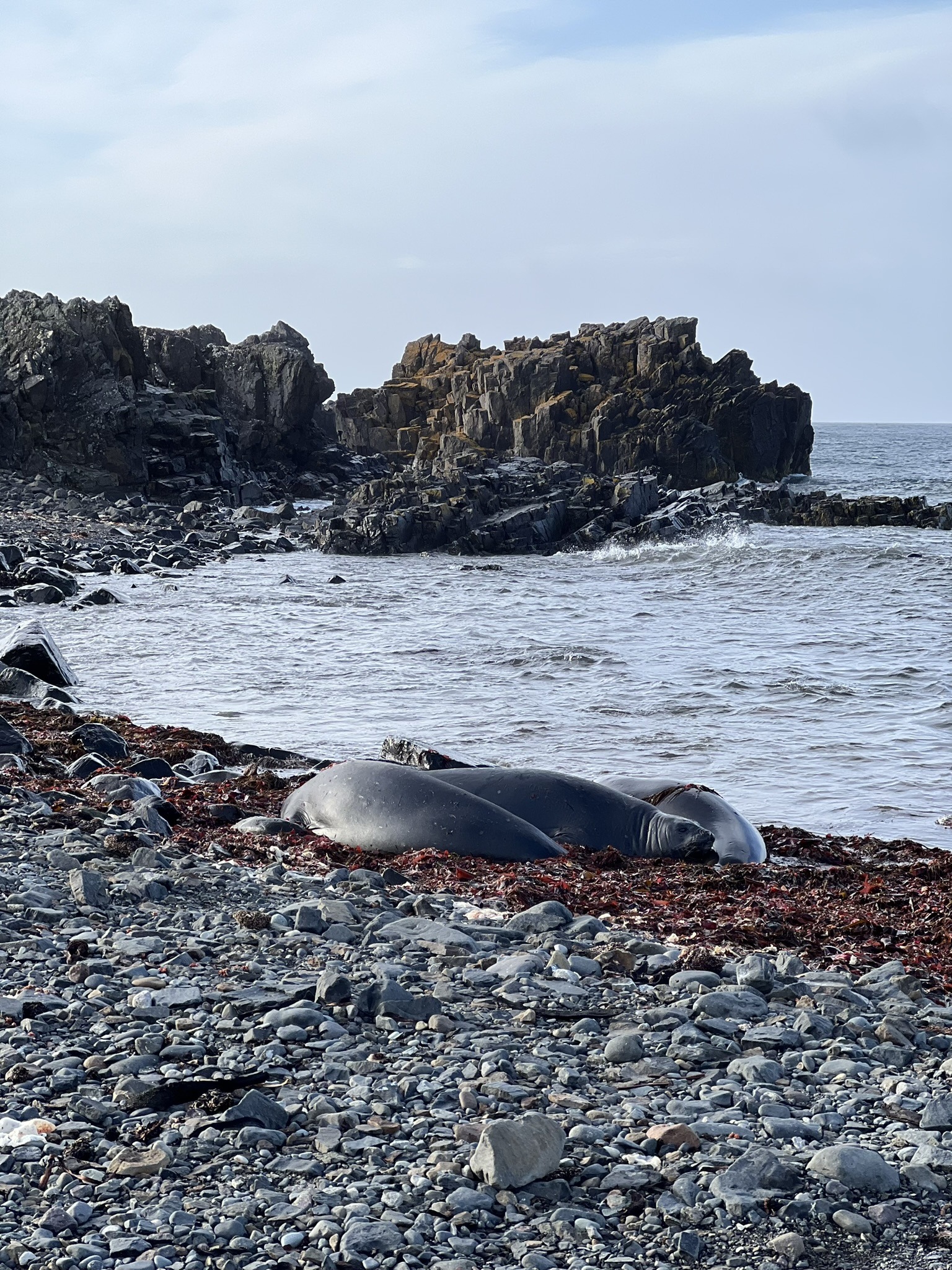
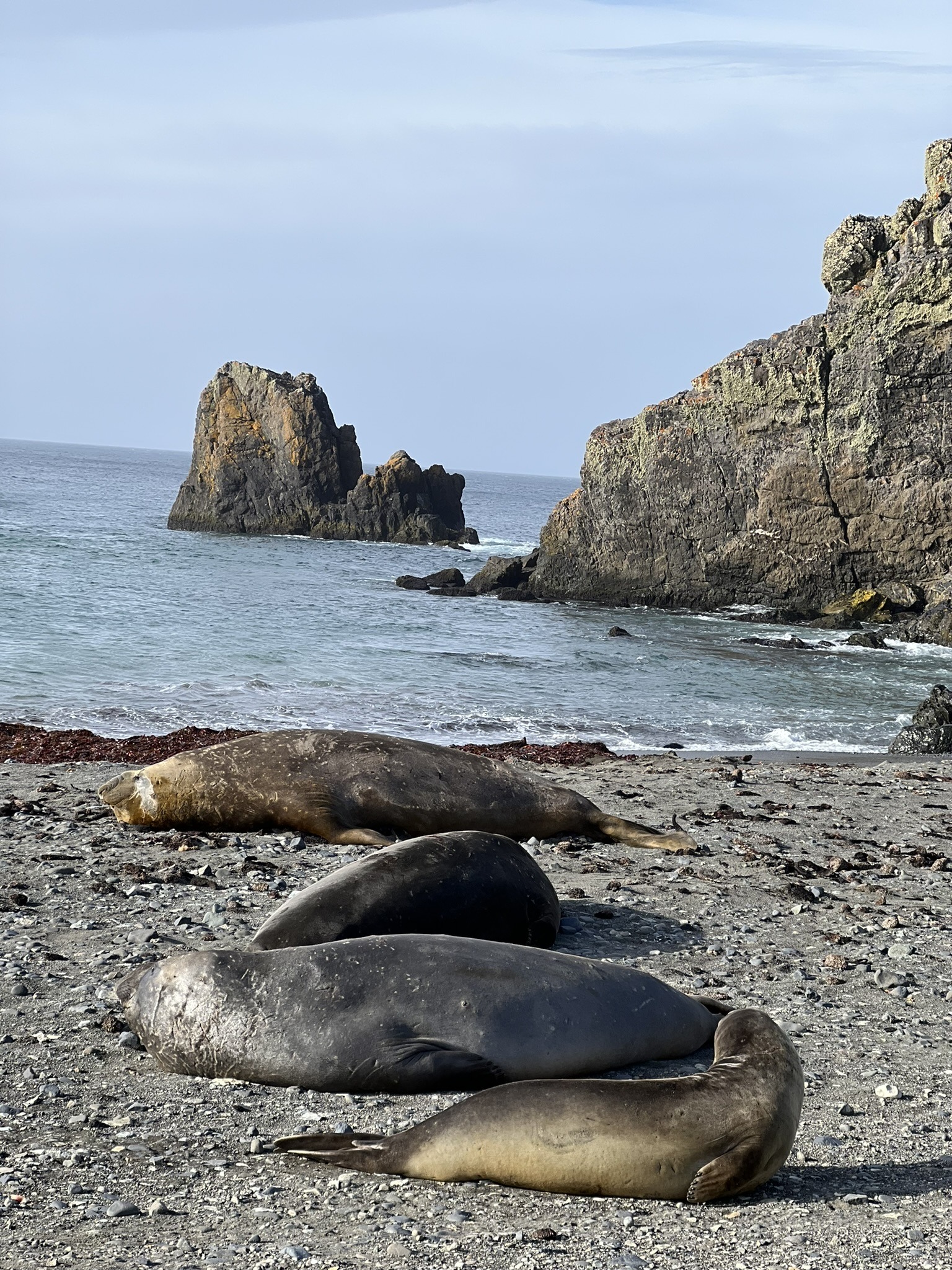
What kind of seals? Glorious, glorious elephant seals. The ones near us were relatively small and cute – except for one bull sprawled on the beach – a massive, grey-and-brown blob of fat, with that ridiculous nose flopping over his face like an anatomical joke that makes him look like Squidward. When the bull yawned, a huge pink mouth opened up, teeth visible, giving him the vibe of a malformed hippo.
Fascinating, yes. Cute? Absolutely not. I couldn’t help blurting out that male elephant seals are ugly, at which point a classic American tourist insisted I was wrong and that they were “marvellous creatures”, as she basked in her own self-righteousness. That didn’t last long. John, the marine biologist, snuck up behind us and confirmed my very mature scientific conclusion – that yes, they are, in fact, ugly. I wish I’d taken a photo of Miss Karen in that moment, her face twisting into a cocktail of anger, shame, and disappointment. Man, I love being petty.
Up ahead, we stumbled upon an elephant seal wallow – a muddy pit where large groups of elephant seals gather, especially during their annual molt in order to alleviate itchy skin and regulate body temperature by covering themselves in wet sand or mud. Though made up of a revolting mix of mud, bodily fluids and shed skin, seeing the wallow in person, from a safe distance and upwind, it looked like a relaxing mud spa. A bunch of seals piled together, sleeping, groaning, steaming gently, occasionally biting someone nearby just to start a small riot, then going right back to sleep.
At one point I noticed a seal lying with its head down in the mud for ages. John told me that was perfectly normal, given how capable elephant seals are at long breath-hold dives. The exact dive duration varies by species and situation, but some sources claim they can even manage to go breathless for up to an hour! As if that’s not impressive enough, elephant seals go through a dramatic moult as well. When we came across a piece of skin lying on the ground, John passed it onto us. I was surprised it didn’t smell much at all. The pelt was about half a centimetre thick and weirdly soft, almost velvet-like.
Antarctic Flora
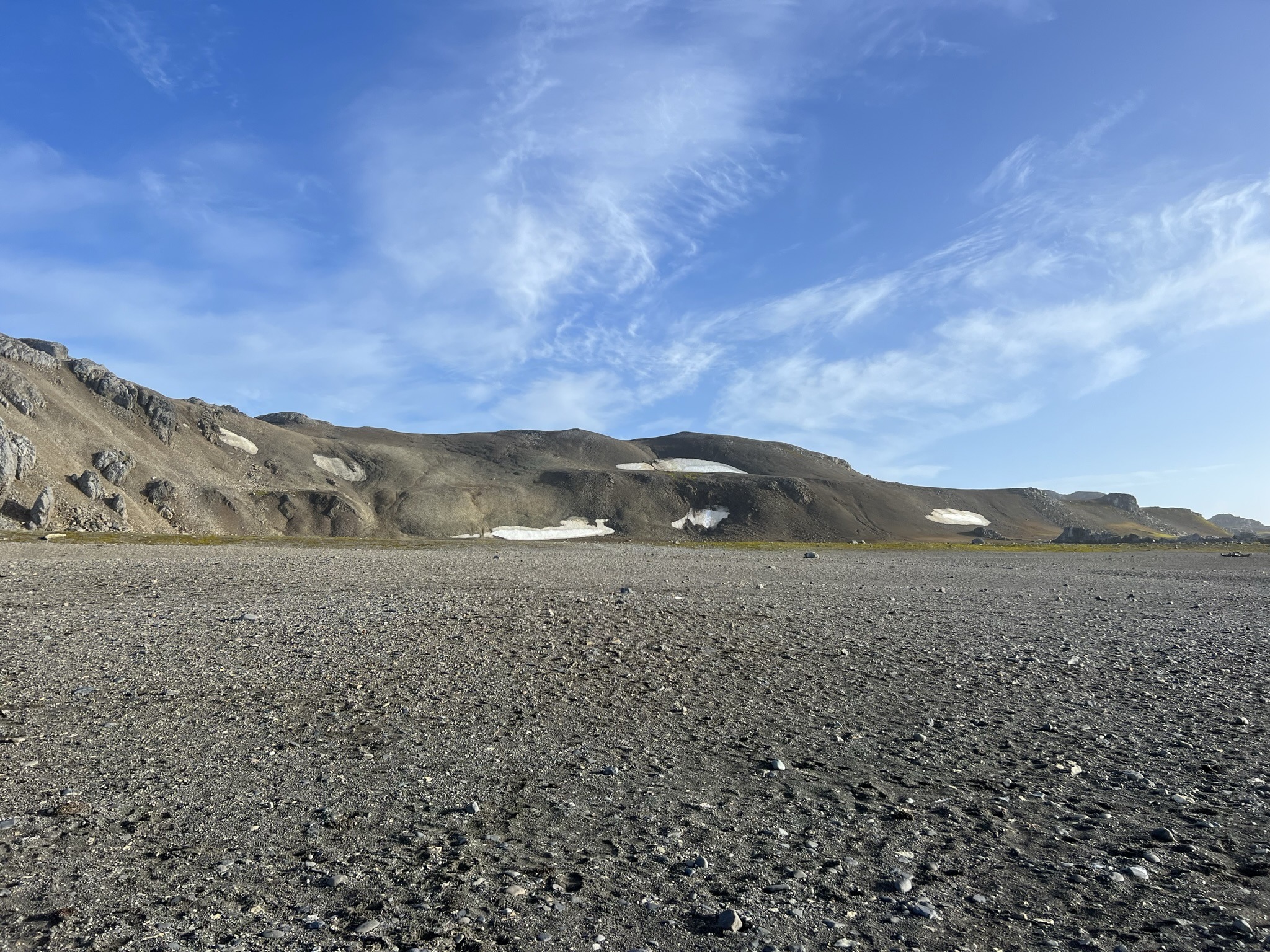
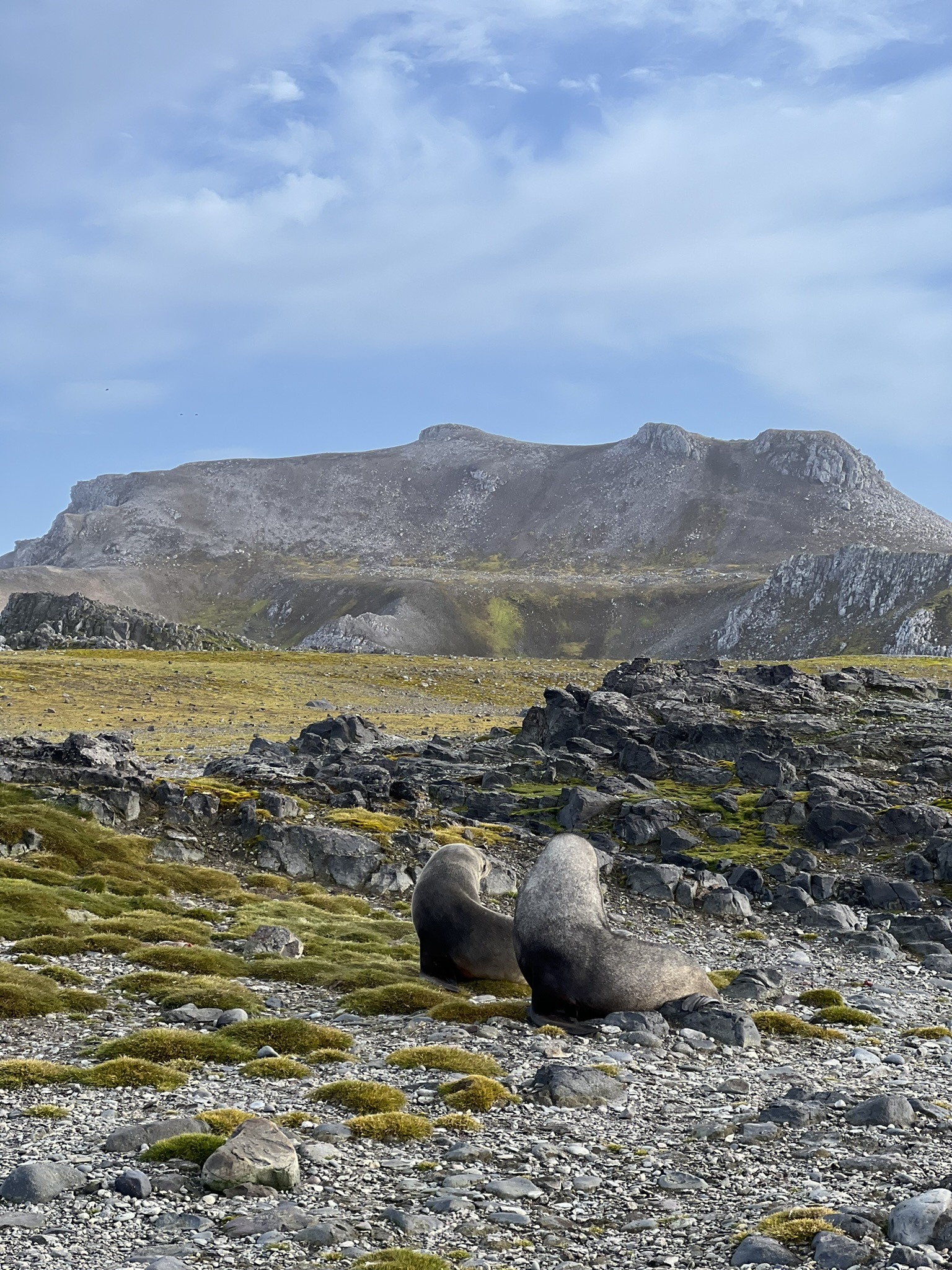
Walking inland, I couldn’t miss how different this place felt compared with the islands we’d visited earlier. The ground was mostly bare and grey, with pockets of green moss, lichen-covered rocks, and scattered whale ribs and vertebrae. Jagged hills sat in the distance, with a few ice patches tucked into their recesses.
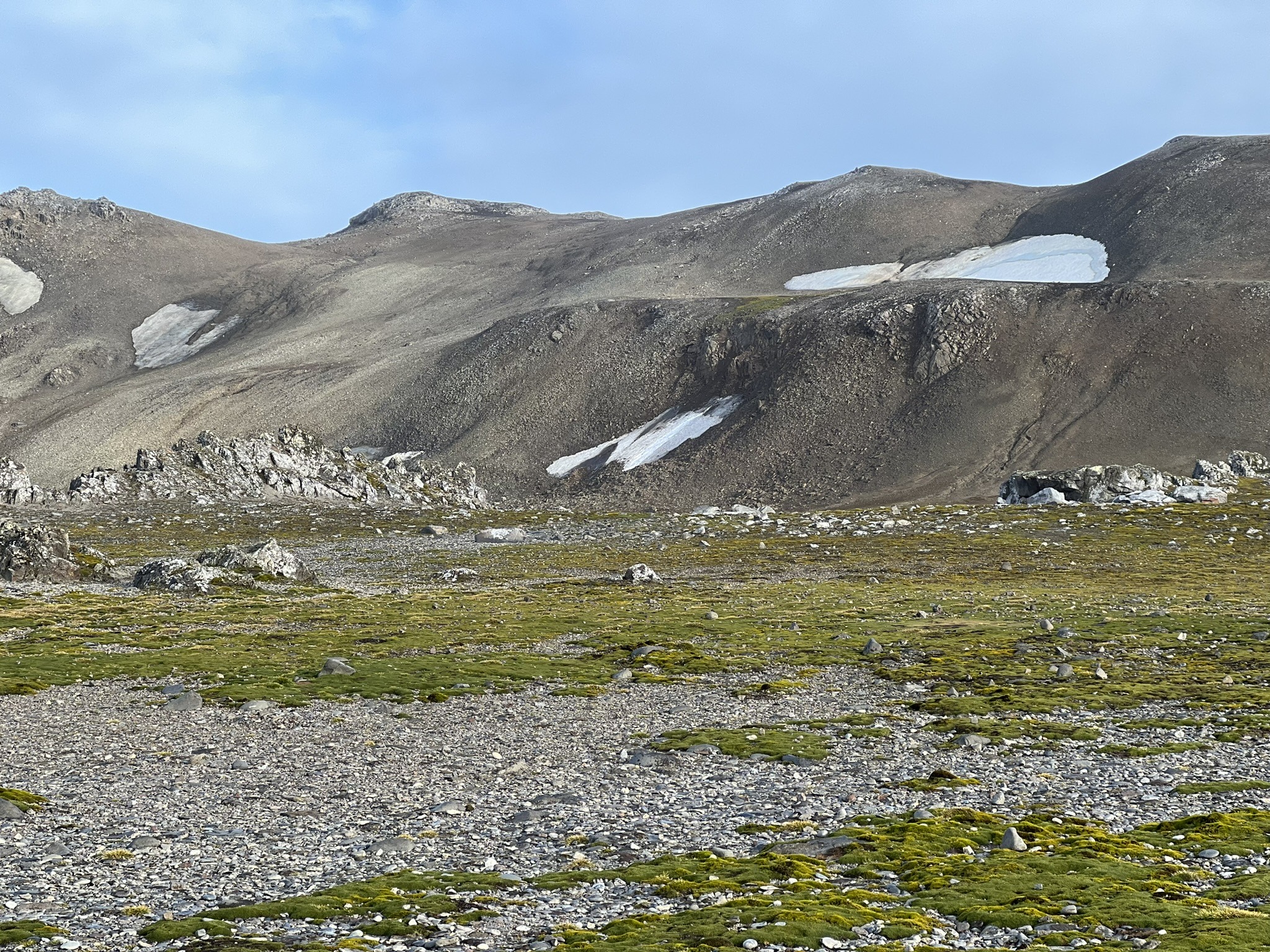
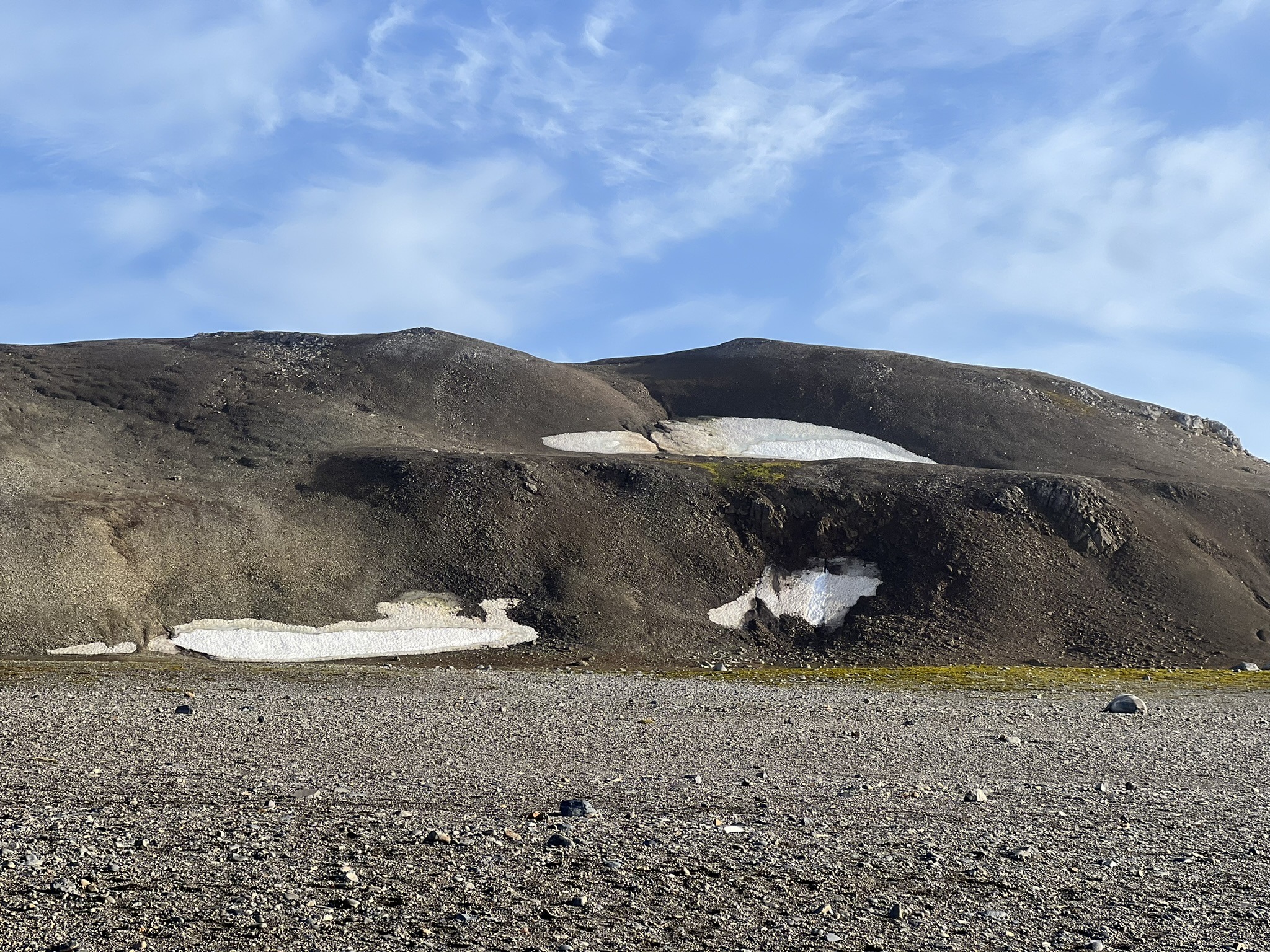
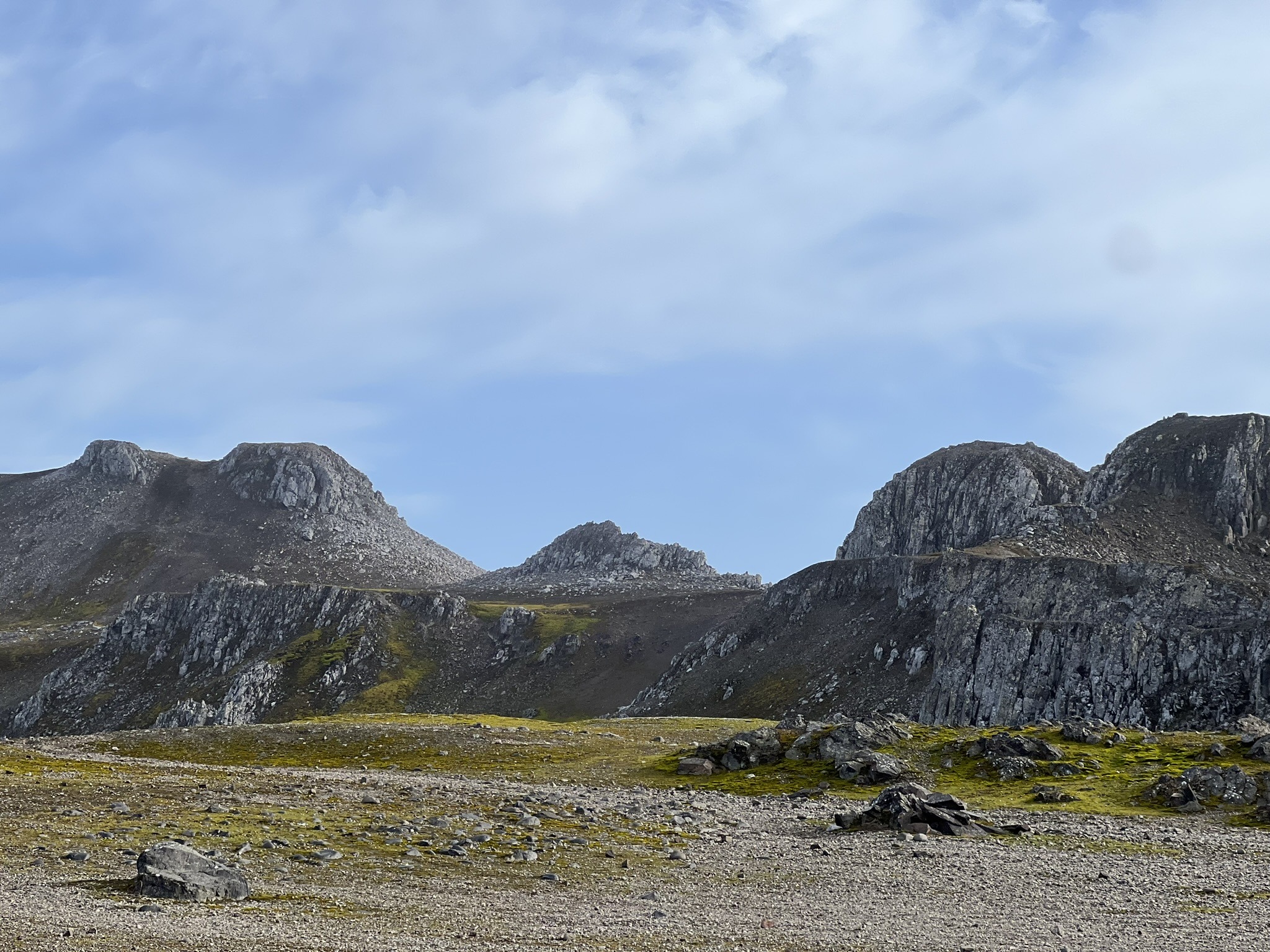
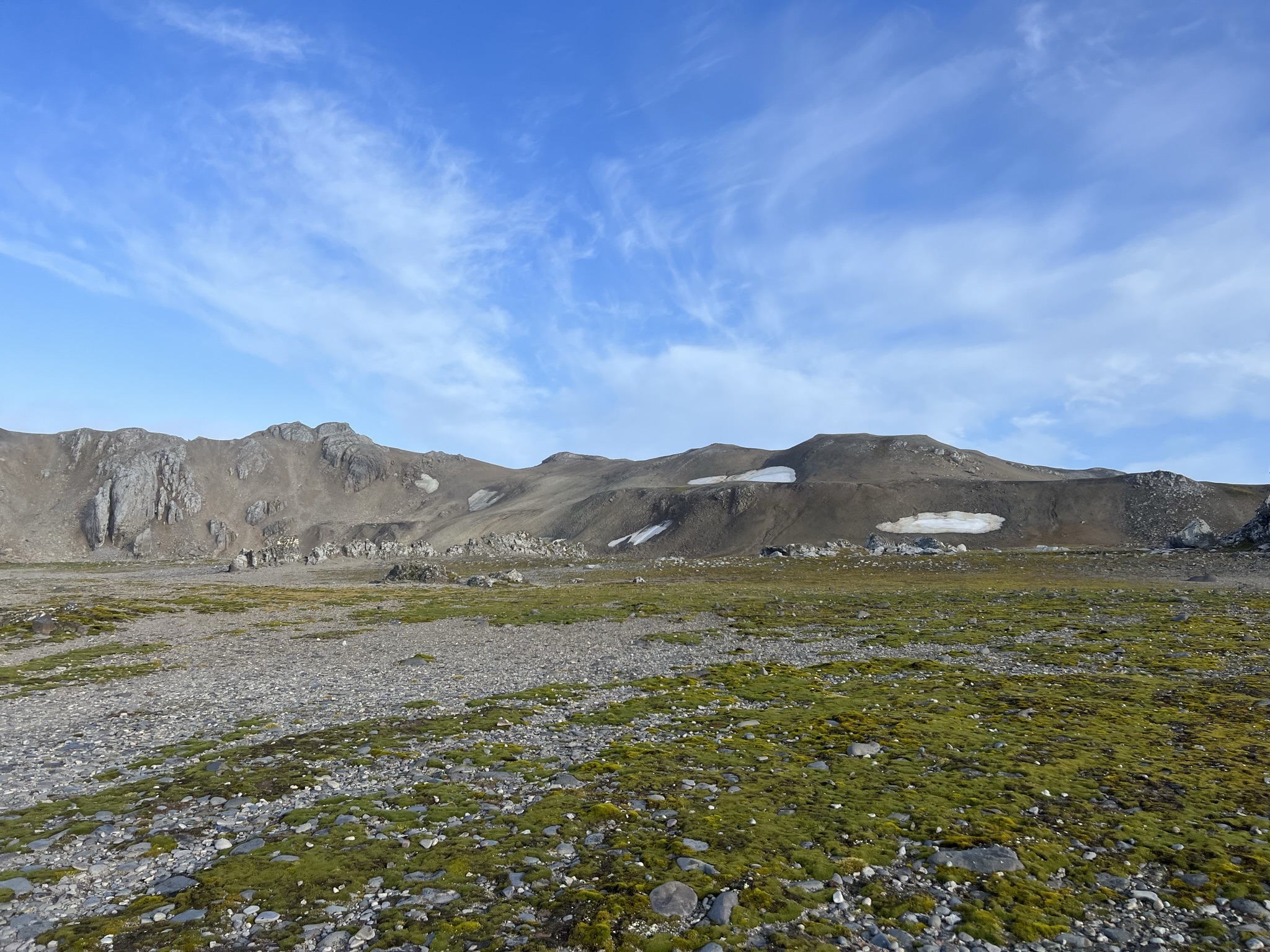
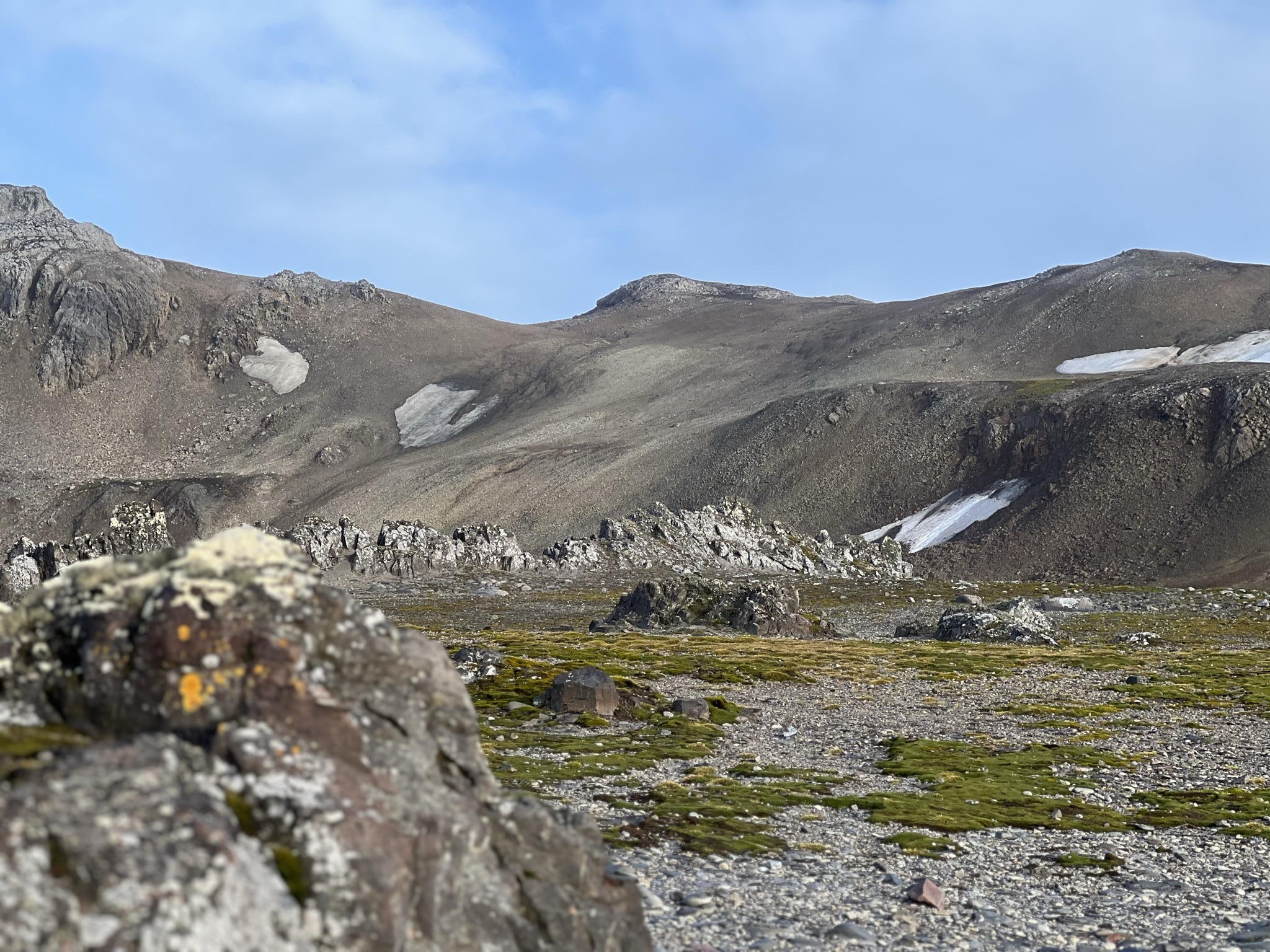
We were also lucky enough to see Antarctic hair grass and Antarctic pearlwort – the only two native flowering plants found in Antarctica. John joked that just knowing their names meant we could basically call ourselves Antarctic botanists and no one could argue against it. He did add, though, that if we were serious, we’d have hundreds of species of lichens, mosses, liverworts and algae to contend with.
When we spotted the two plants growing close together, John was practically in heaven. The moss around them, he explained, can hold many times its weight in water, which helps buffer the plants through harsher conditions. He went on to explain that as the climate warms and ice-free ground expands, these two flowering plants have been spreading faster in some areas, with research documenting accelerated expansion in recent decades in parts of the Antarctic region. Antarctic hair grass has also been recorded as the southernmost flowering plant.

As if that weren’t enough, we came across a few scattered orange mushrooms. Later, during the briefing, John said he’d identified them as a Galerina species. Some Galerina are deadly because they can contain amatoxins, and there’s published research on amatoxin-producing Galerina in Antarctica. The rest – the exact species ID, and how it arrived – is harder to confirm from public sources, so I’d frame that part as John’s hypothesis rather than a settled fact. Still, it felt pretty cool to witness the “science happening” side of an expedition in real time.

One Final Round
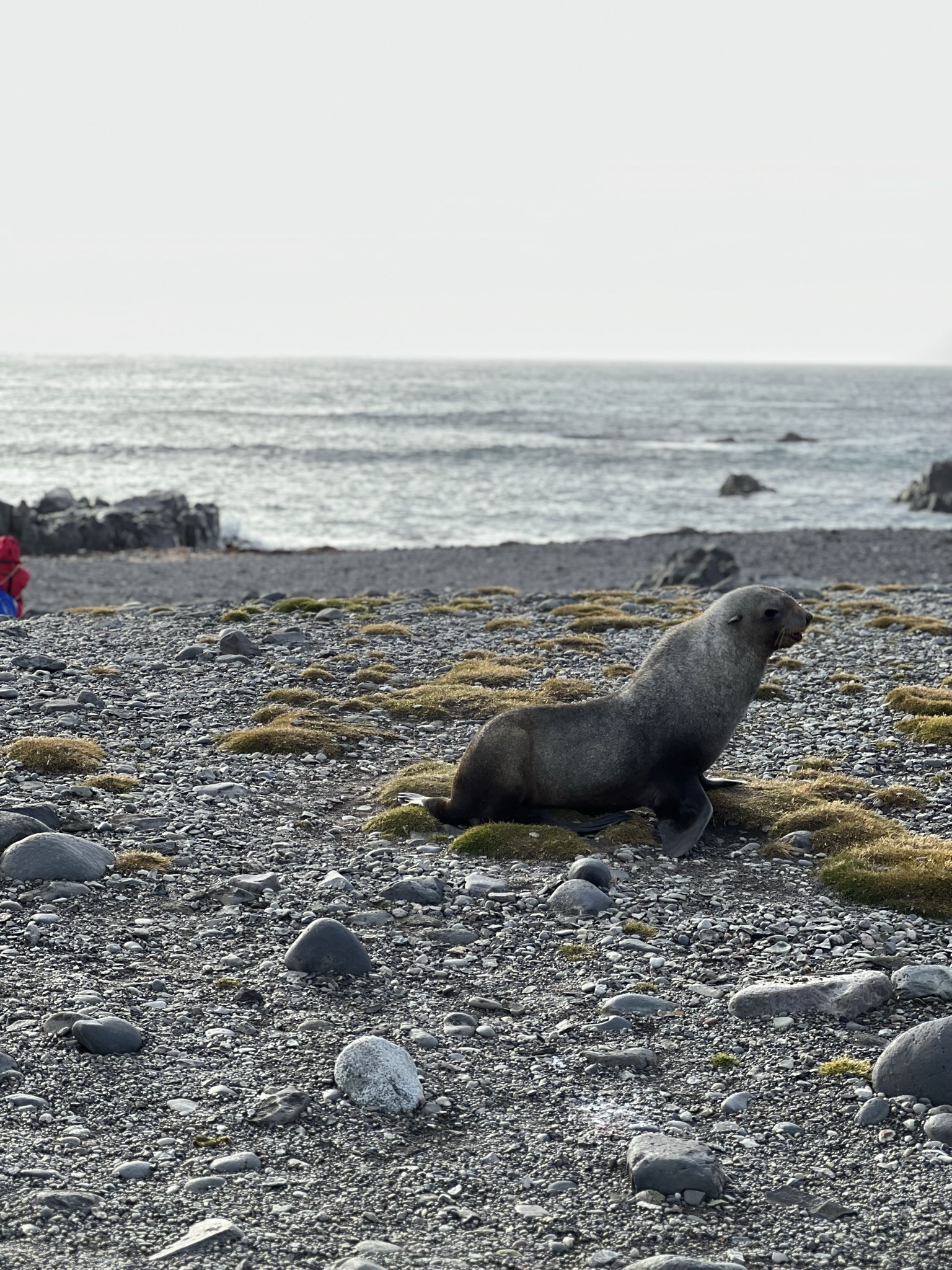
With that, I continued around the island, stumbling on more fur seals and elephant seals. At one point I nearly walked into one because it was so well camouflaged. Luckily, they seemed unbothered as long as we kept our distance and didn’t crowd them.
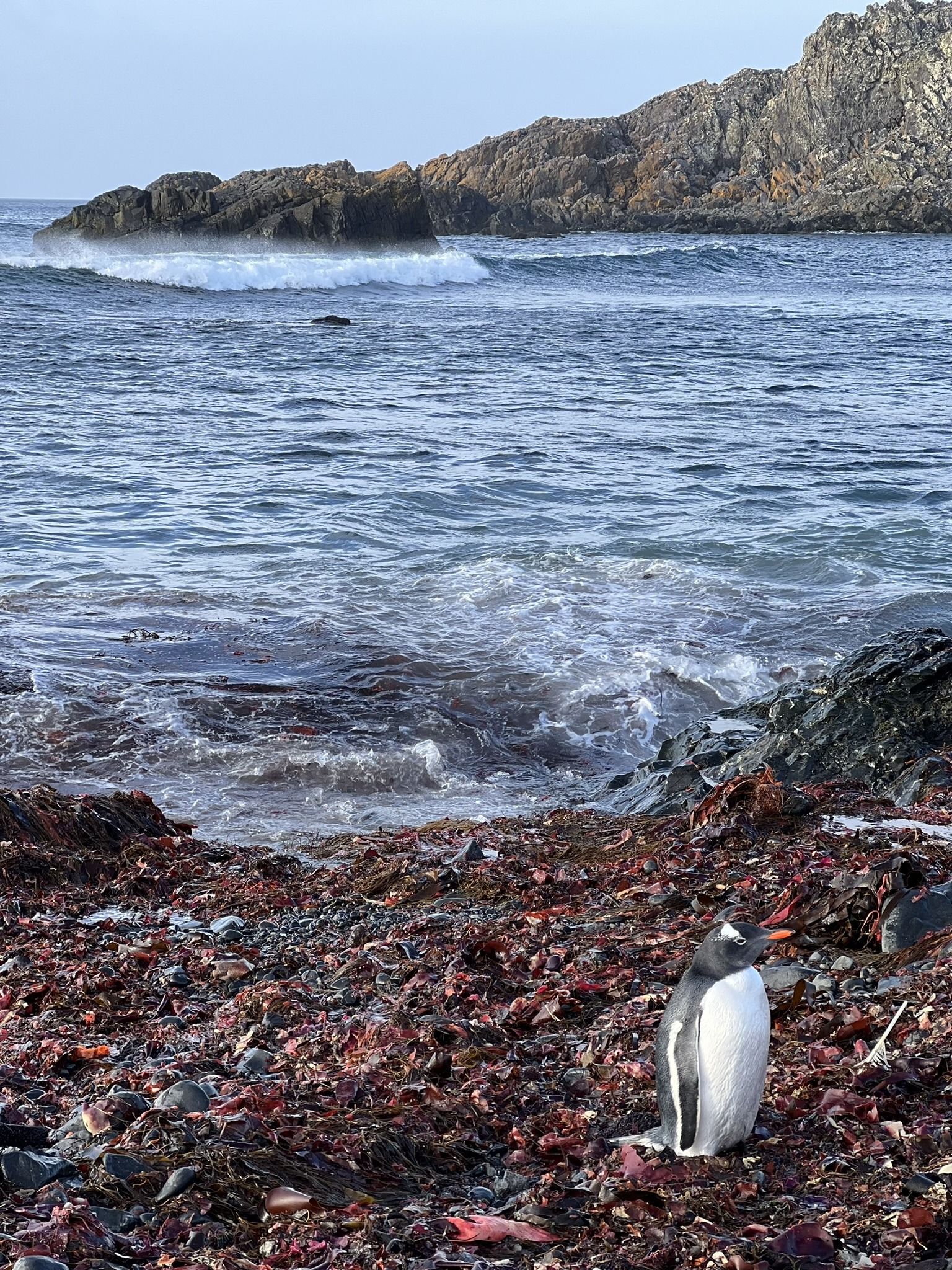
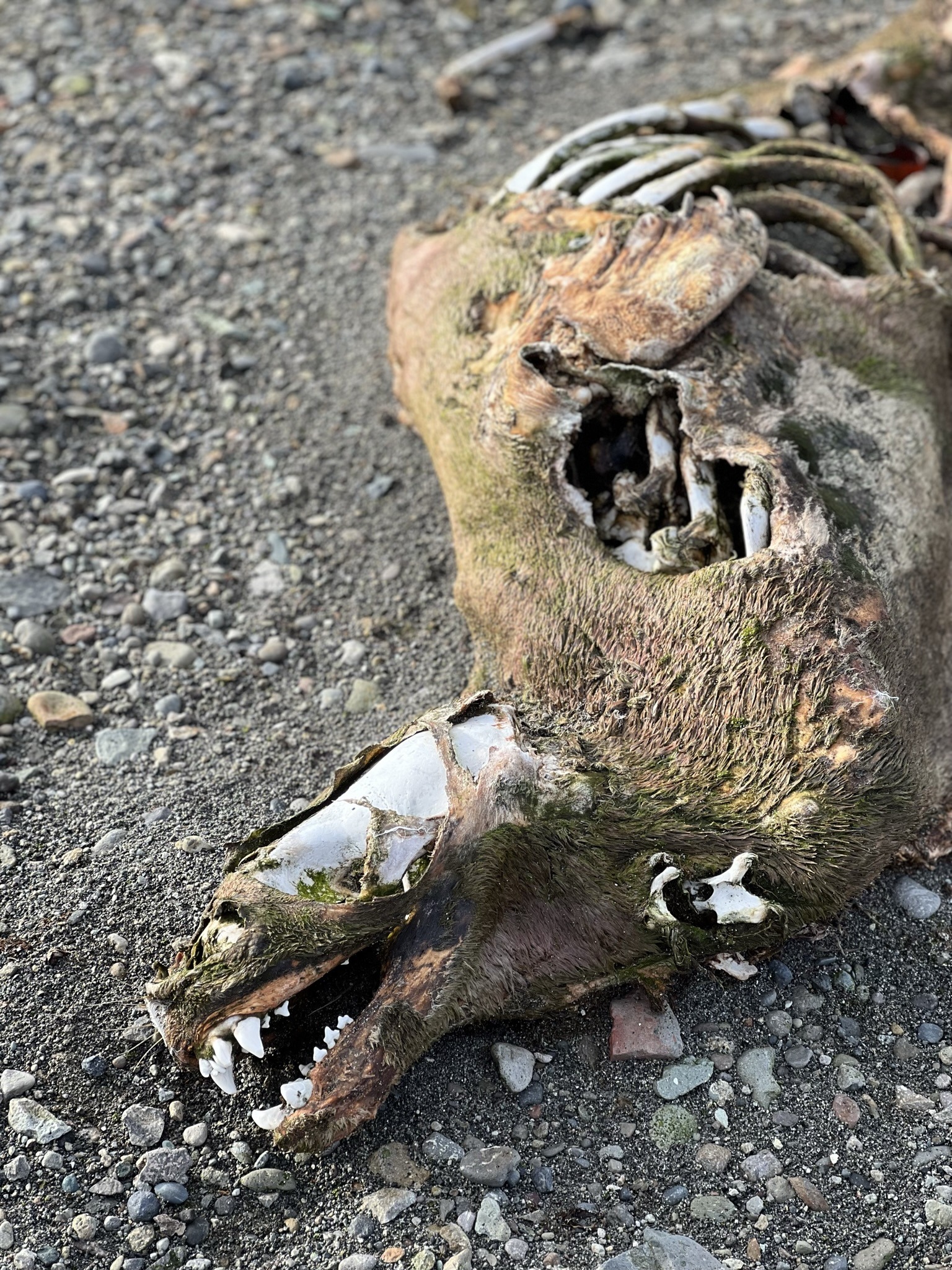
As elated as I was, I wanted more wildlife. On the red-kelp-strewn, black-pebbled beach, a solitary gentoo stood like it owned the place. Thinking it might be my last gentoo sighting, I spent a few minutes just watching, appreciating everything I’d learned about these strange, impressive little creatures. Nearby, a couple of fur seals lounged on the beach while others swam just offshore, playfully biting each other. The universe didn’t let me be dramatic for long. A few minutes later, I stumbled upon more fur seals on a mossy stretch. I’ll never forget the pair that were jousting and biting until one suddenly sat down, yawned, rubbed its eyes with a hind flipper, and passed out. So damn cute. Less cute was the fur seal carcass nearby. John told us it could take a long time for it to decompose in the cold.
Further on, we found a neat pile of limpet shells. Heidi explained these can be “middens”, associated with kelp gull feeding, where shells can end up piled together after gulls feed and regurgitate remains. If Monica from Friends were a bird, I guess we now know which one she’d be.
PART II
One Last Boarding
Much like my first step onto the continent, my last was unceremonious, with the storm now looming nearby and everyone moving faster than usual. Our captain hedged his bets on an early departure to get a head start on the weather before re-entering the Drake Passage.
Back on board, alone in the smoking area, trying to squeeze in one last whale sighting, I couldn’t quite process that it was over. No more mudroom. No more Zodiacs. No more landings. And worst of all, no more penguins and seals. Instead of trying to get myself to believe it, I decided I wouldn’t even need to. You see, ever since day one – nay, ever since before I booked the damned cruise – the whole expedition was advertised as a once in a lifetime thing. But allow me… Who the hell says so? Why must it be a once in a lifetime thing? Why can’t I ever do this again? In fact, the only way I see myself not returning here someday would be if something that’s out of my control were to happen. As I finished my last drag, I promised to myself I’d come back one day.

After that little epiphany, we all headed to the dining room for yet another over-the-top lunch – probably one of the last few before the Drake Shake returned. Stuffed and borderline explosive, we moved to the Expedition Lounge for more lectures, followed by the recap and briefing. People asked questions about everything we’d seen, and the mood shifted into that early, uncomfortable stage of realising it was coming to a close.
Jonathan also reminded us how lucky we’d been, saying we’d managed to complete 100% of the planned landings so far. On most trips, he said, they aim for at least 50%, and occasionally they might get none. Whether or not those exact percentages hold across all operators and seasons, the point landed – we’d had an unusually successful run. That said, there was still a chance we’d reach Ushuaia later than planned if the storm intensified over the next few days. Josh, naturally, felt the need to correct Jonathan, insisting the winds would push us in faster.
Party on the Little Red Ship
With the swell building, the bow was closed again, and plenty of people skipped dinner. I was completely fine. I’ll even admit I went for a fifth round at dinner, because I was still trying to get my money’s worth.
Afterwards, John ran a game of Antarctic Bluff, now dressed in a white jacket and a feather boa. It was basically a twisted Two Truths and a Lie, with Keith, James and Matt each offering definitions of technical terms, only one of which was correct. The words were:
Degombling: Removing accreted snow from your clothing or body before entering a building.
Klatch: An informal polar social gathering where coffee is served, supposedly a key term on research stations.
Doomix: A fuel mixture used to power Ski-Doo snowmobiles.
Dongler: A strap tied around something to stop it falling off, especially useful on sleds.
Dork: Apparently a whale penis. Urban Dictionary also claims a whale vagina is called a “San Diego”. Go figure.
We didn’t win, but I can’t say I didn’t gain anything. I now know how to use degombling in a sentence, and I’ve learned the full power of the word dork. After our klatch, we headed to the Polar Bar where Melanie performed again, this time with Jasper, a guy from the UK who joined her as a singer. By the end, we were swaying and a little bit teary-eyed. As always, it was a good, good day.
Day seven:
- Weather:
- Sunny
- Wind: NW 22-27kts
- Wave: NW 1m
- Temperature: 4°C
- Weather:
- Position: 62°44’S 61°12’W
- Animals seen:
- Gentoo penguins
- Southern giant petrel
- Prion sp.
- Wilson’s storm petrel
- Brown skua
- Kelp gull
- Antarctic fur seal
- Southern elephant seal
* Ones I didn’t get to see myself.