La Fortuna – Day 3: Wildlife Wonders
LA FORTUNA
Day 3: Wildlife Wonders
January 18, 2023
PART I
Physically and mentally drained after all the border hassle, the long day of travelling, and the river adventure, I decided to take it easy for a day and then changed my mind and booked a full-day tour around La Fortuna.
Having gotten used to doing things my own way, booking tours and just going along with it felt very reminiscent of my time in Mexico. We’d go to one place, then make a quick stop at a gift shop, then a second place, then lunch at an expensive restaurant, then a third place, and the day would just roll on like that. Now, fully invested in the mochilero lifestyle, I can’t say this was a welcome change, but I did appreciate not having to plan everything down to the last dot.
Luckily enough, Johnny, our guide for the day, kinda outdid himself and had me rise above my newfound superiority complex. Together with Jennie, a Chilean who shared my same spirit. Being a wildlife and nature enthusiast and having never been to a rainforest before, I could tell she would share my excitement at being able to roam around the dense jungle. We immediately hit it off as she told me all about her treks in Patagonia, my eyes glistening as she spoke.

La Fortuna Waterfall
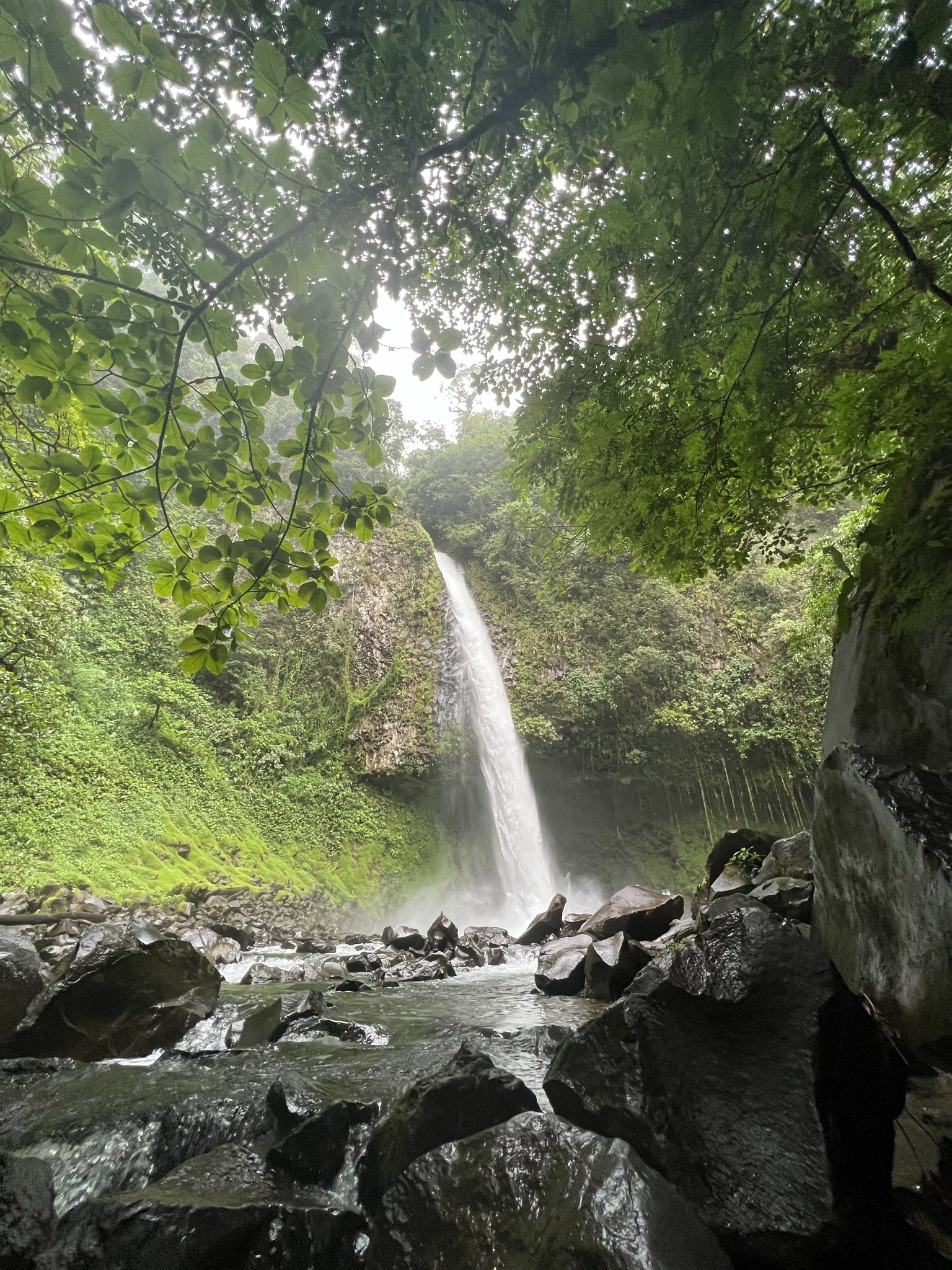
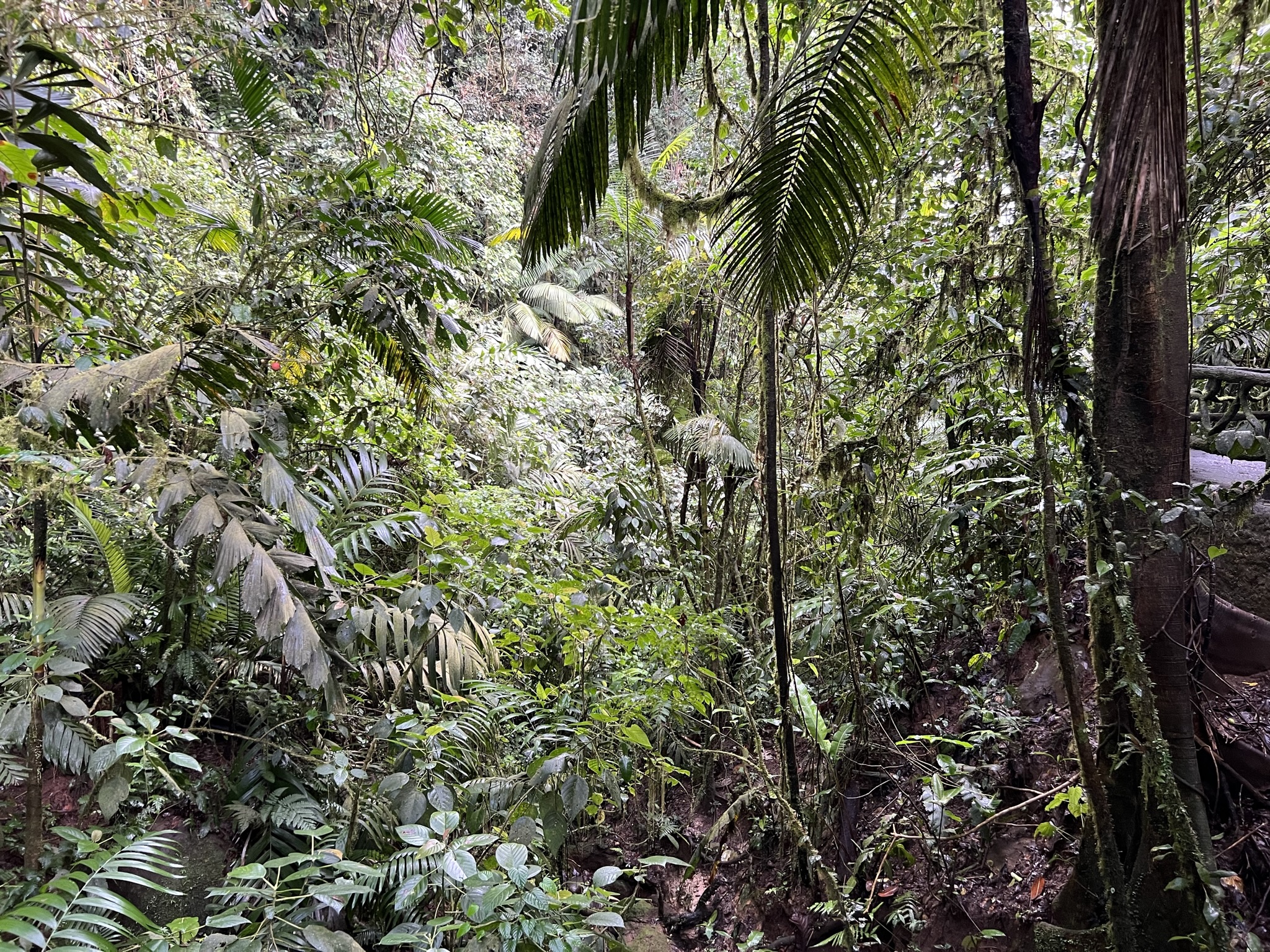
Our first stop was La Fortuna Waterfall. Some five hundred steps down, all the while surrounded by rainforest, and there we were – the glorious waterfall right in front of us.
This, Johnny told us, is fed by a river of the same name, dropping around 75 metres with a flow force of roughly two tonnes per second. For this reason, before giving us the go-ahead to swim in the natural pool beneath the waterfall, he told us not to climb rocks and that, under absolutely no circumstances, anyone should venture too close to it. I, for one, decided to pass up on the swim. I just couldn’t be bothered to dry myself and change – that’s it. Instead, I stood in awe, hiking along the trail that loops around the base of the waterfall, admiring it from every possible angle. By this point, I had visited dozens of waterfalls, but this one was probably my favourite.
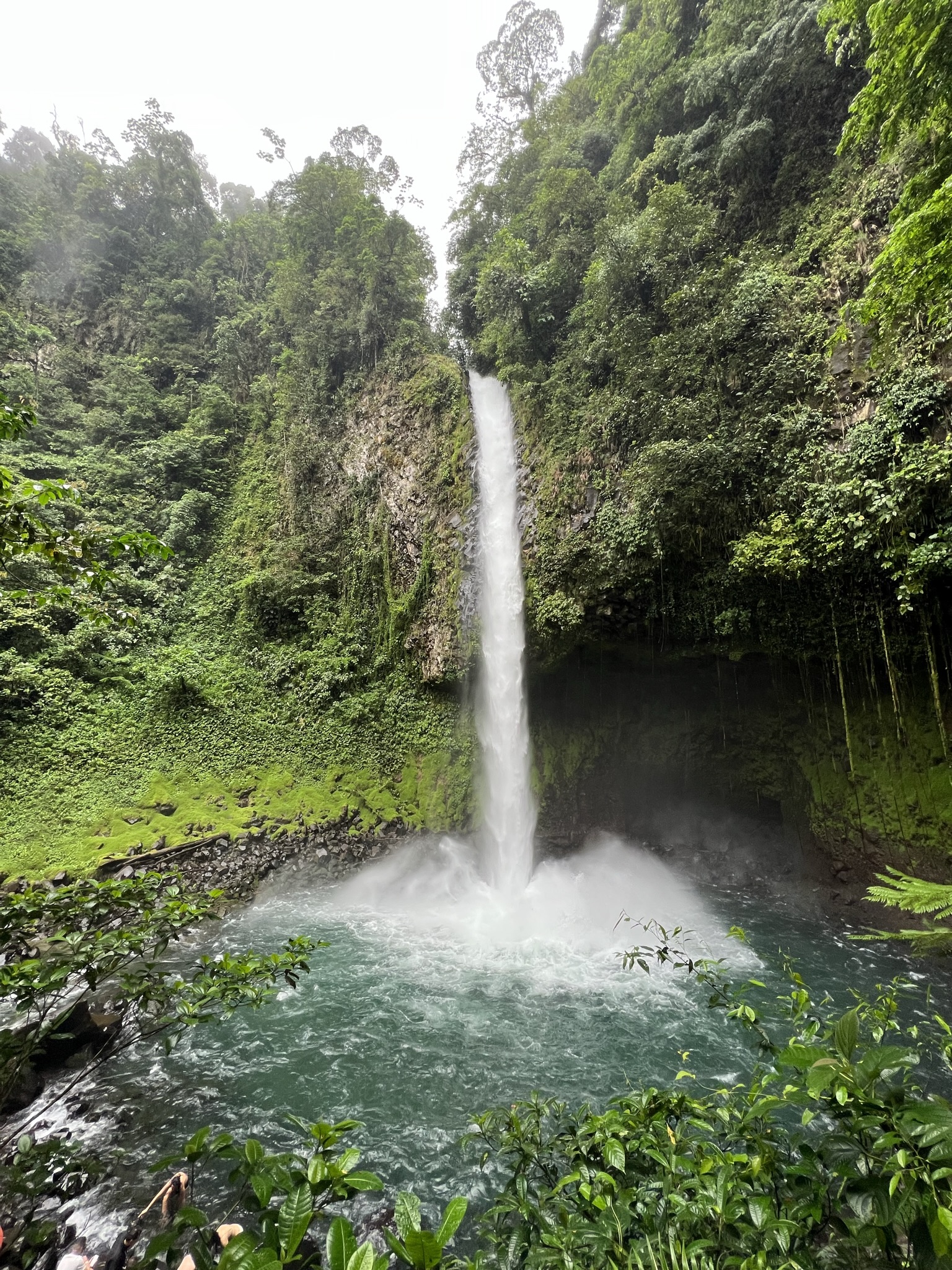
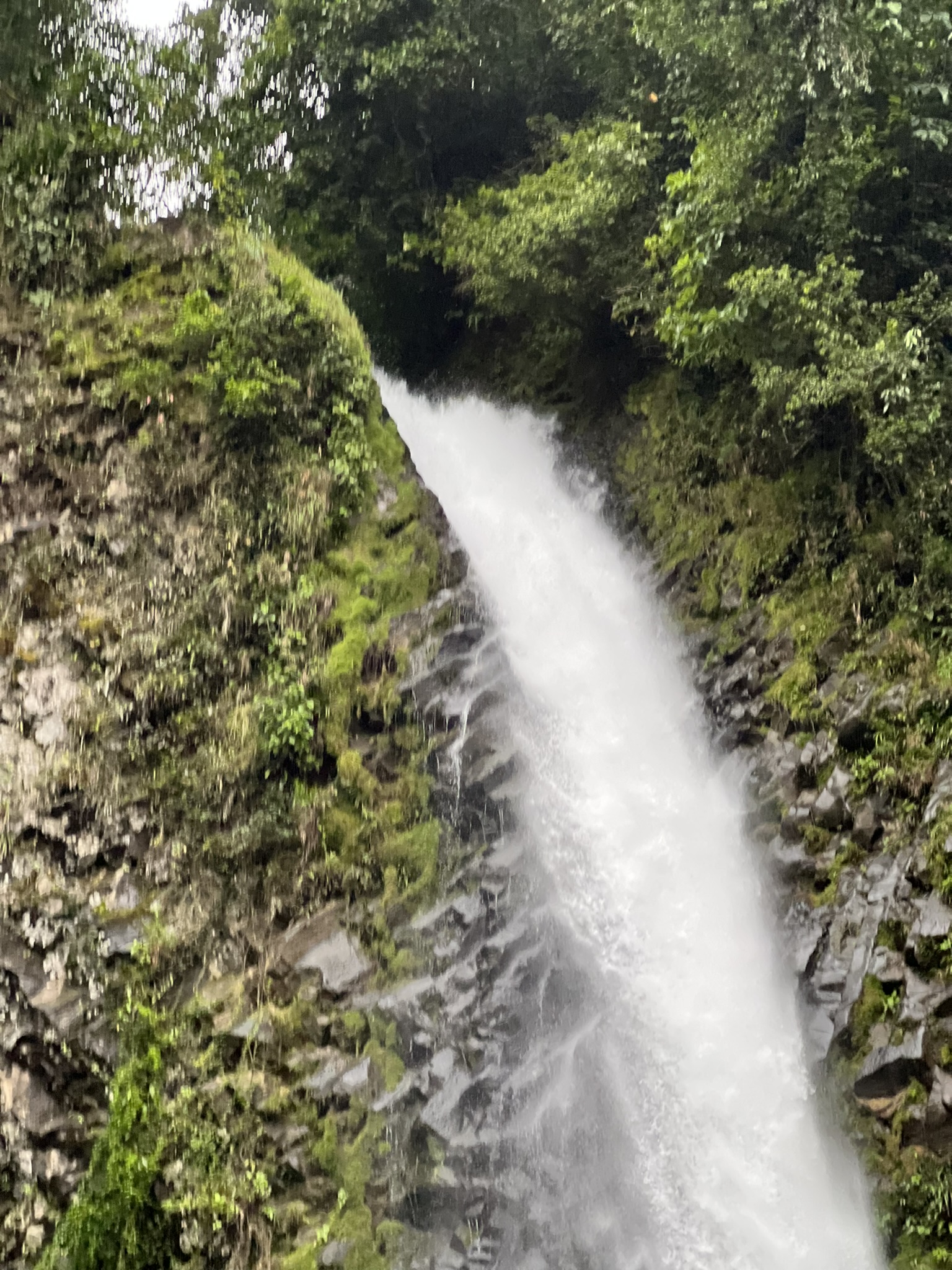
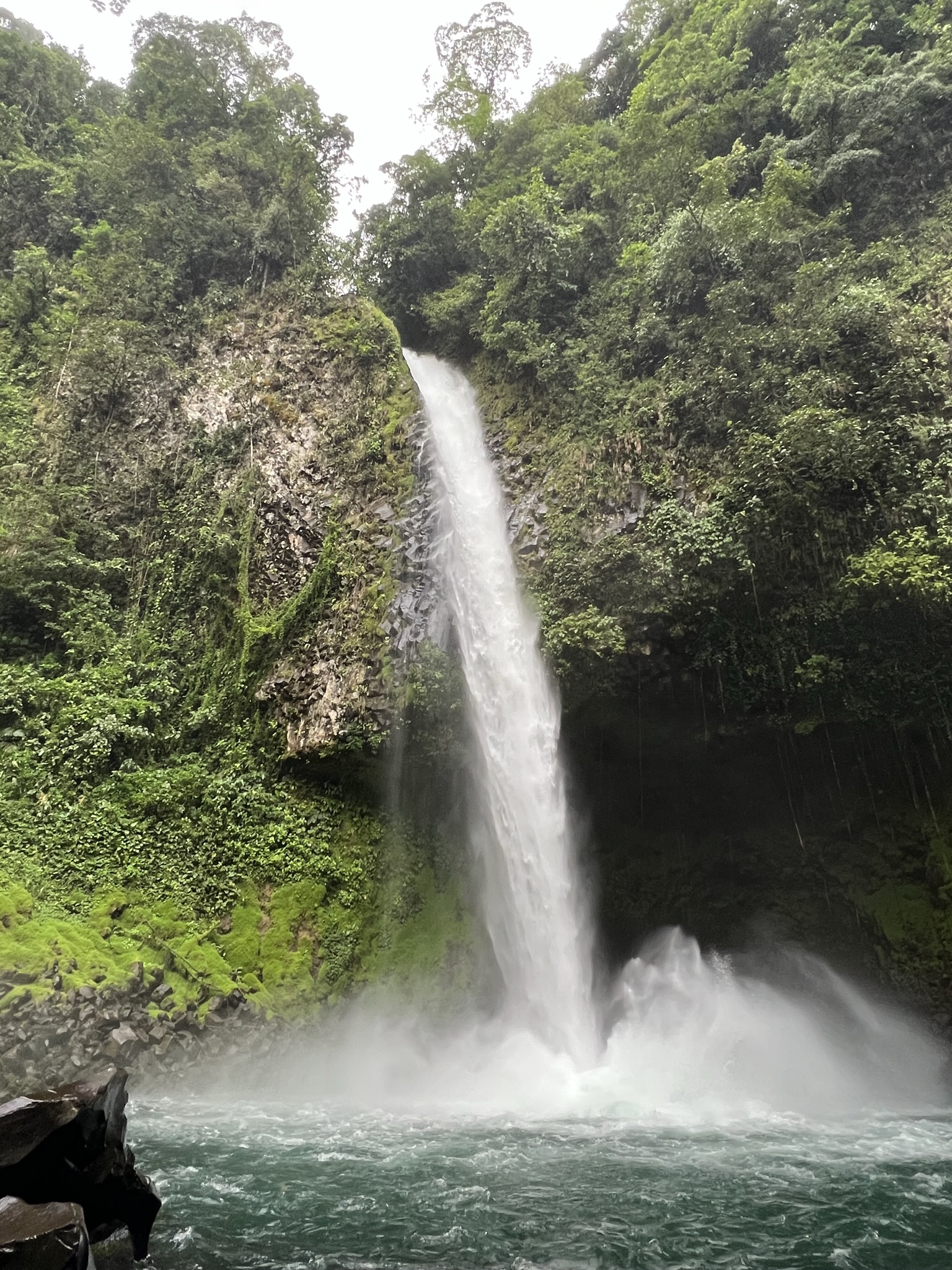
As I was busy trying to get the perfect Boomerang to entertain my followers back home, my attention was drawn by someone shouting near the waterfall. Two guys were swimming as fast as they could towards its centre, the current pushing them away and rendering all their efforts futile. One of them then thought he could outsmart nature by climbing onto a rock and diving headfirst into the plunge pool, promptly slipping and splaying his forehead wide open. Doesn’t take a genius to figure out his nationality. Luckily there happened to be another doctor and a lifeguard and they took care of the American Idiot (just in case it wasn’t clear).
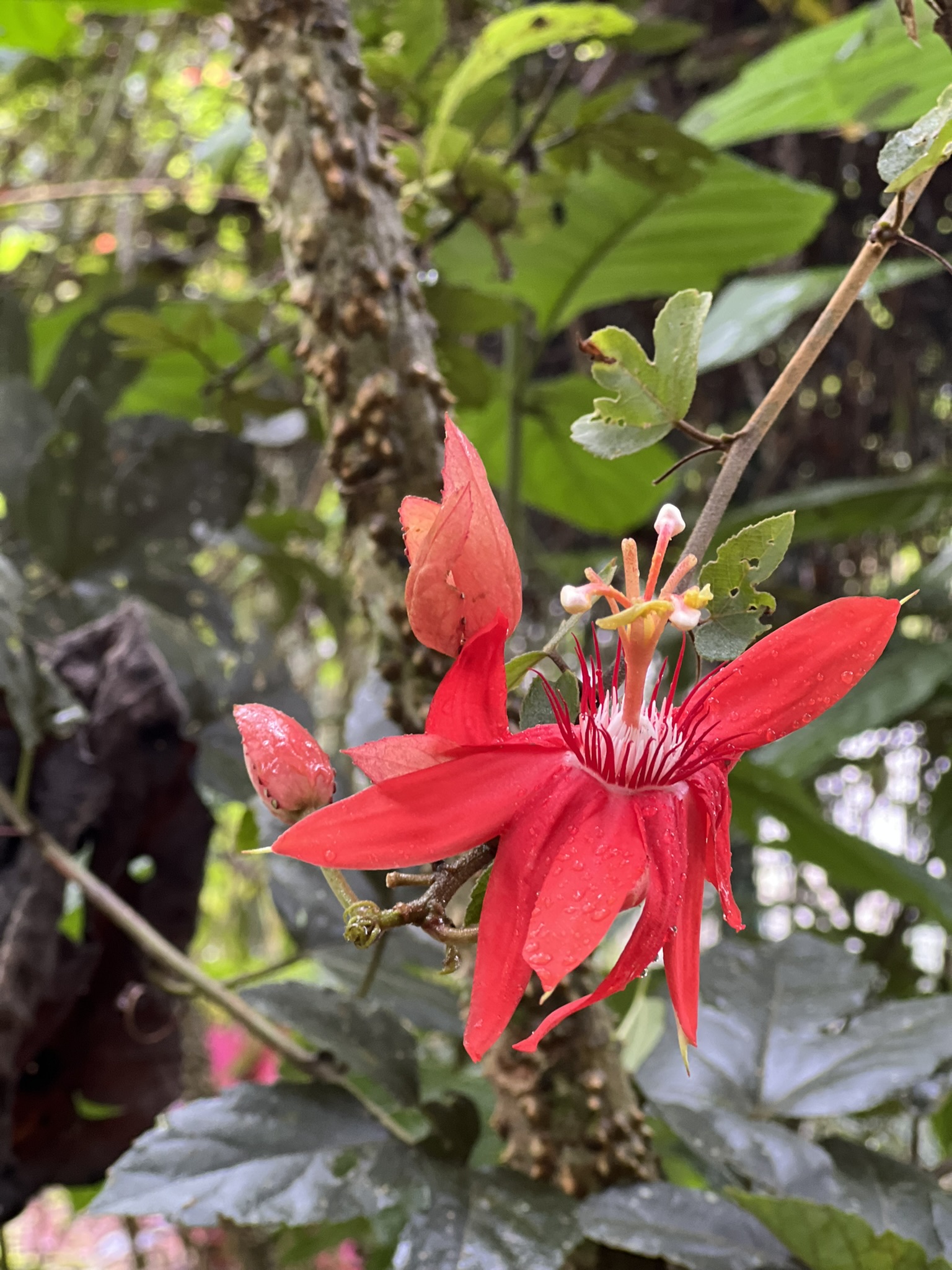
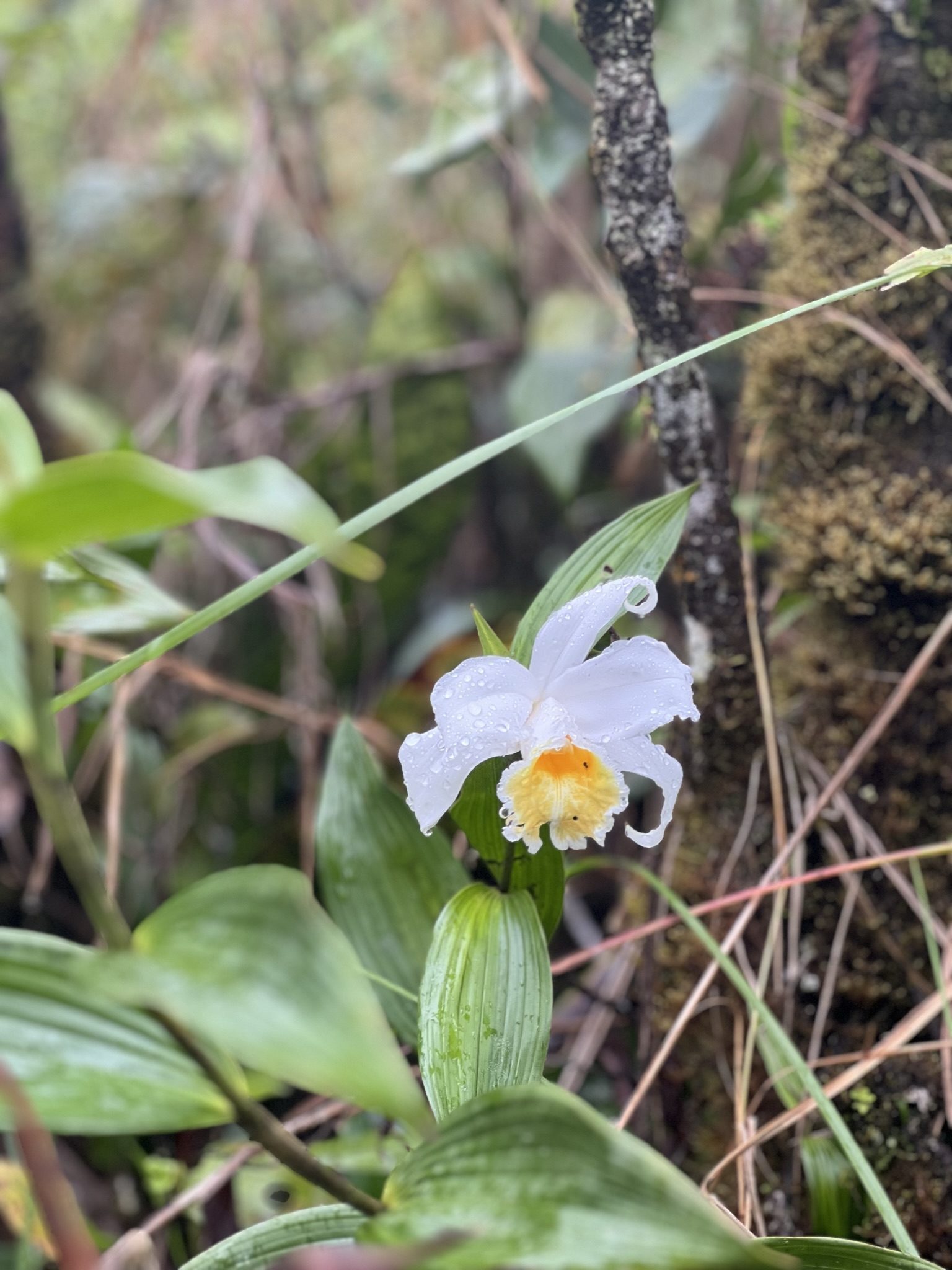
Meanwhile, I gazed at toucans as they flew from one tree to another above my head and stared at the huge moss and orchid-covered trees surrounding the azure pool. From the giant crabwood (Carapa guianensis) and palmilera (Iriartea deltoidea) trees, which are pollinated by bees and dispersed by local fauna including monkeys, spotted pacas, and agoutis, to the tree ferns (Cyatheales spp.) and gum trees (Sapium glandulosum), which are pollinated and dispersed by wind, it didn’t take long for me to understand what all the hype about Costa Rican nature is about.
Biology Class: Lakeside Edition
Finally having made it up the stairs, we started on our way to the second stop: Volcán Arenal. We’d be hiking to its base, discovering all sorts of wildlife along the way, according to Johnny.
We started the hike along the banks of Arenal Lake, an 85-square-kilometre artificial lake formed in the late 1970s following the construction of the Sangregado Dam to provide hydroelectric power. The dam expanded the lake to nearly three times its original size, flooding the towns of Arenal and Tronadora, which were abandoned and later relocated – their ruins now submerged beneath the lake. While this might seem like a catastrophic waste (albeit a very cool diving spot), the dam produces roughly 12–15% of Costa Rica’s electricity, contributing to a national grid that runs almost entirely on renewable energy.

Another cool fact? The depth and flow of the Balsa River, which is famous for rafting, are partially regulated by dam-controlled water release, allowing for both power generation and rafting conditions throughout the day. The lake is also renowned for fishing, with rainbow bass and guapote (a large cichlid) being the main catch, for windsurfing thanks to its warm waters and strong winds, and for kayaking, boat tours, hiking, and pretty much anything else a lake could be good for.
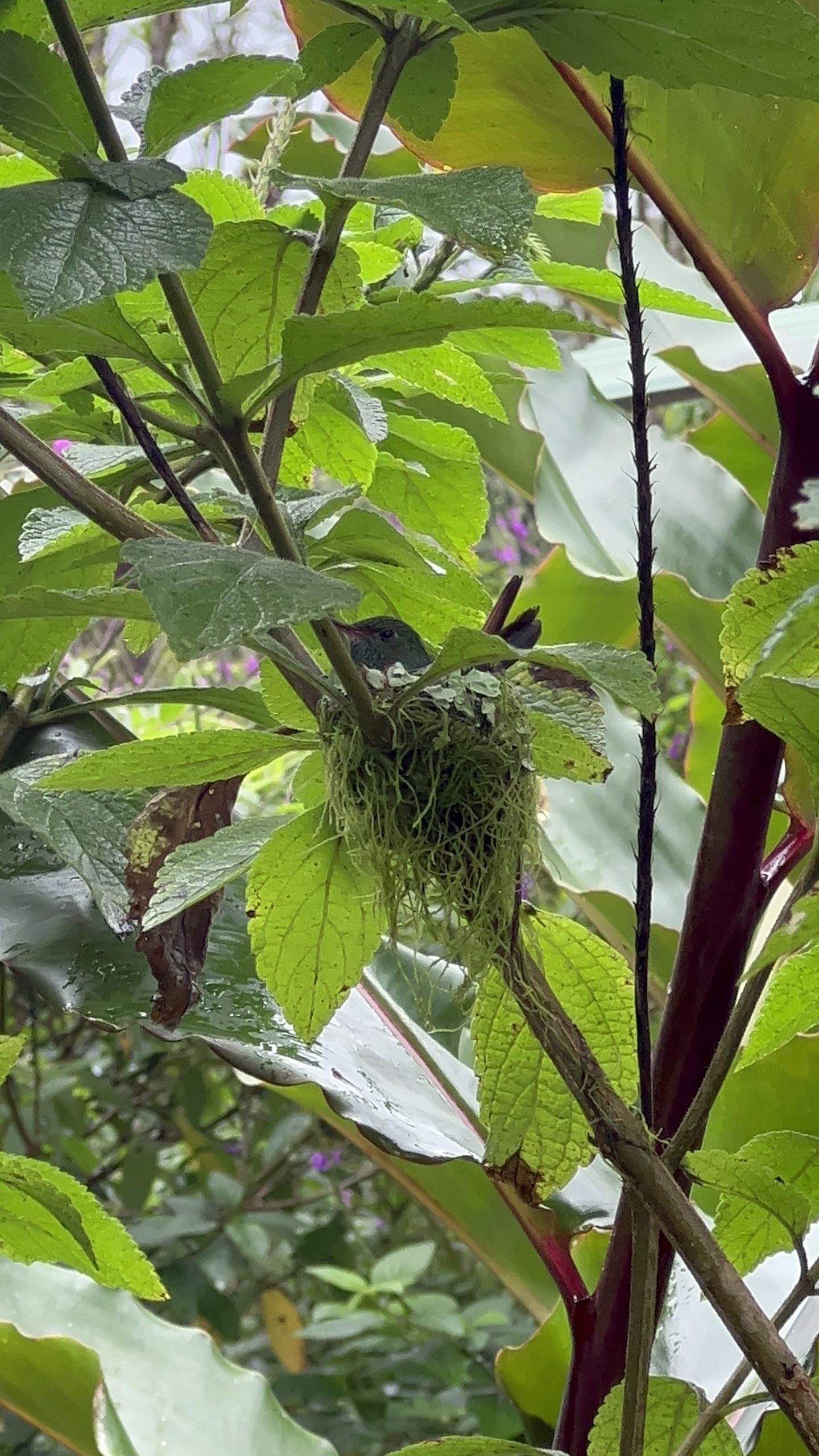
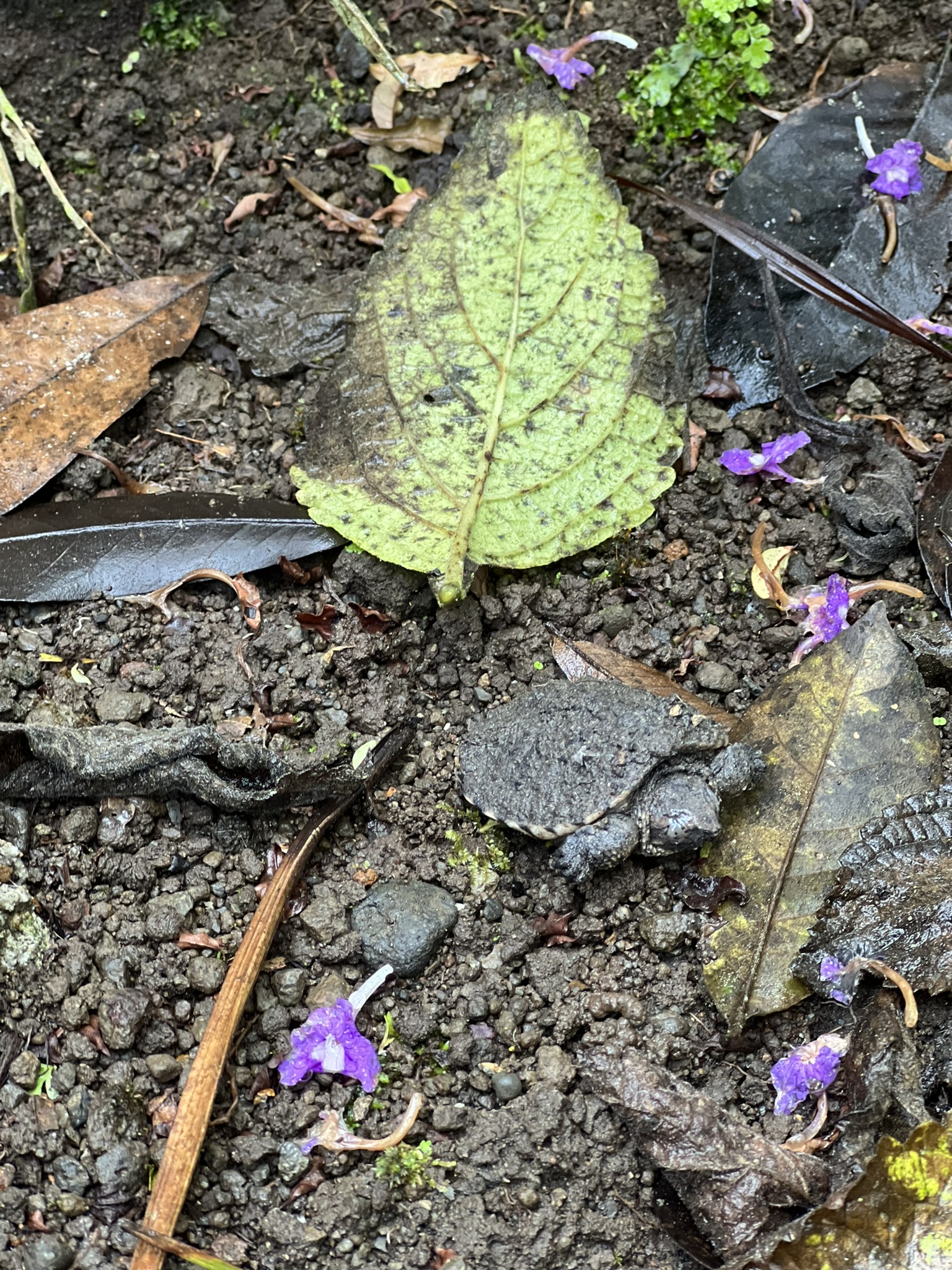
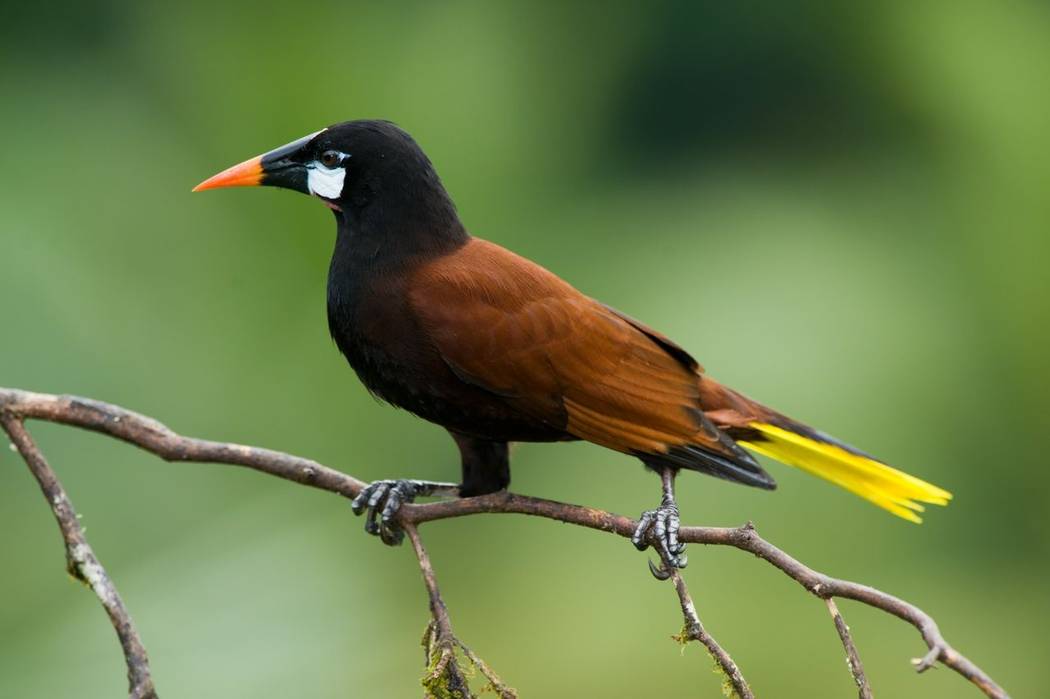
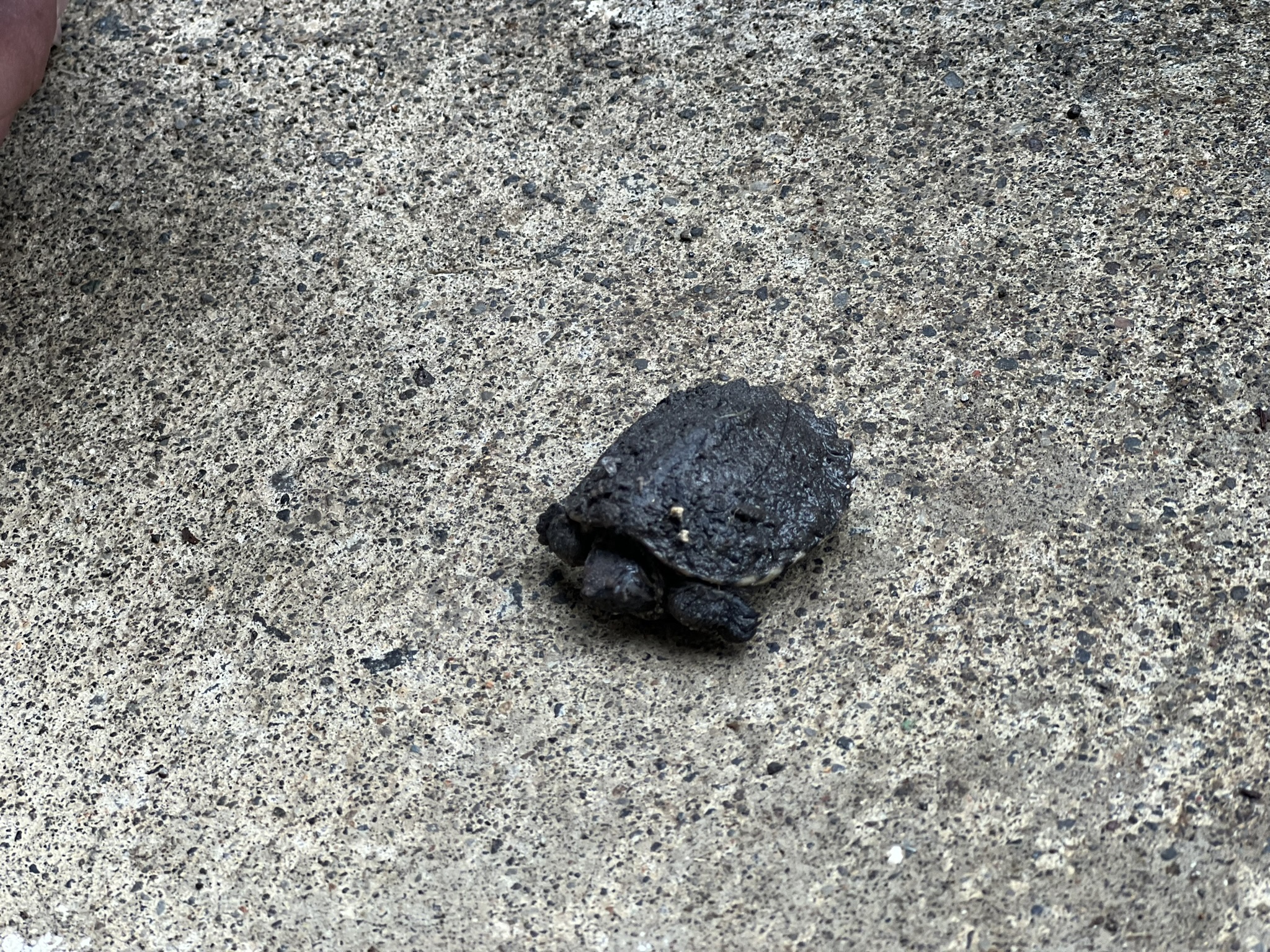
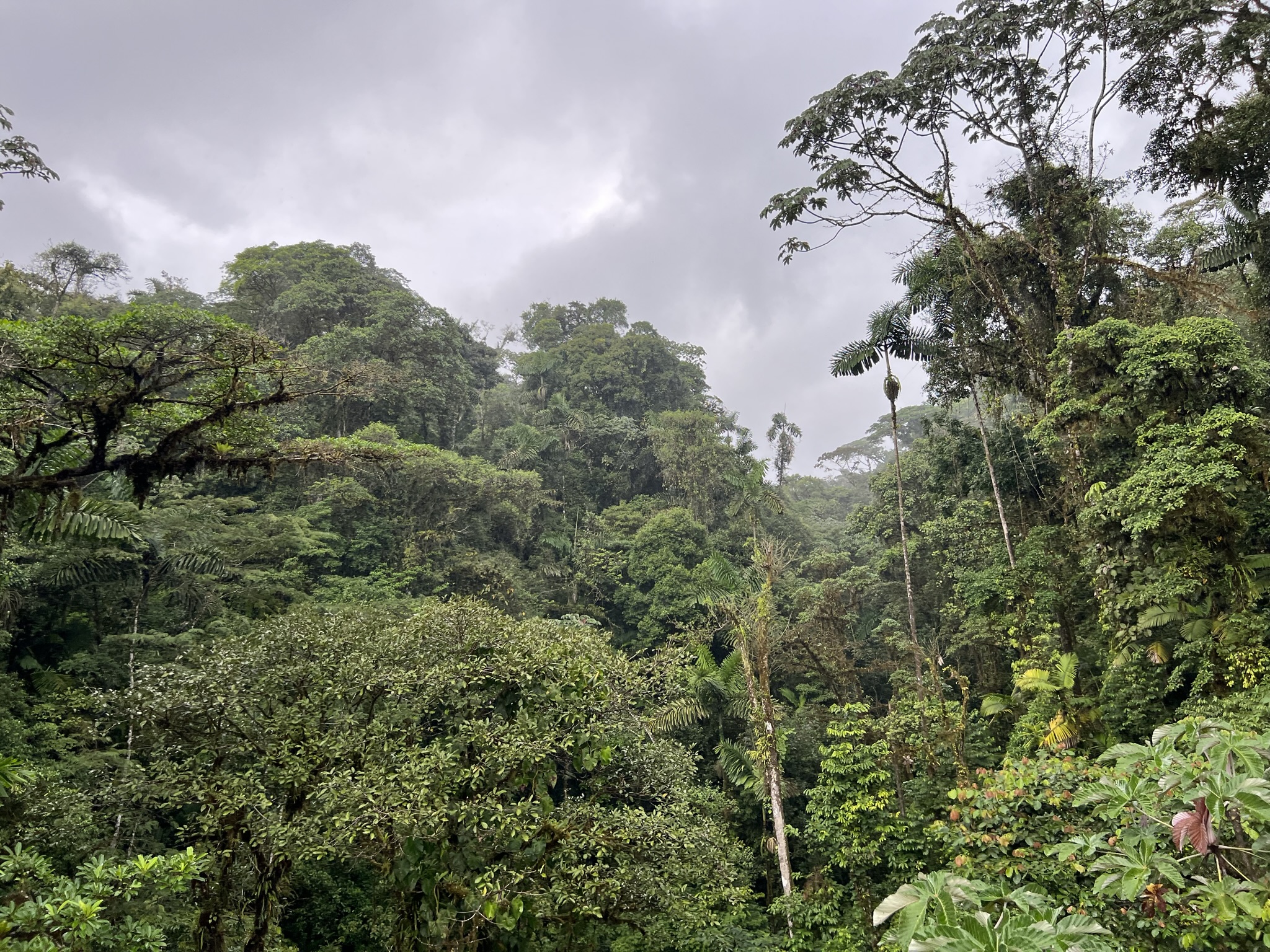
With the base of Arenal Volcano and the lake in front of us, we set out on yet another adventure through the primary forest covering the volcano’s lower slopes – a landscape dominated by trees of mythical proportions and enormous buttress roots. Here, we got to feast our eyes on all kinds of wildlife, from the gorgeous rufous-tailed hummingbird (which resorts to eating insects when nectar is scarce), the rufous-tailed jacamar (often mistaken for the former), and a baby alligator snapping turtle, to ground anole lizards (sometimes preyed upon by mantids and katydids) and the Montezuma oropendola, a striking bird with a yellow tail and a hauntingly magical call. Oh, and let’s not forget the great curassow that happened to be traipsing right in front of us before Jennie chased it down in all her excitement – tsk, tsk.
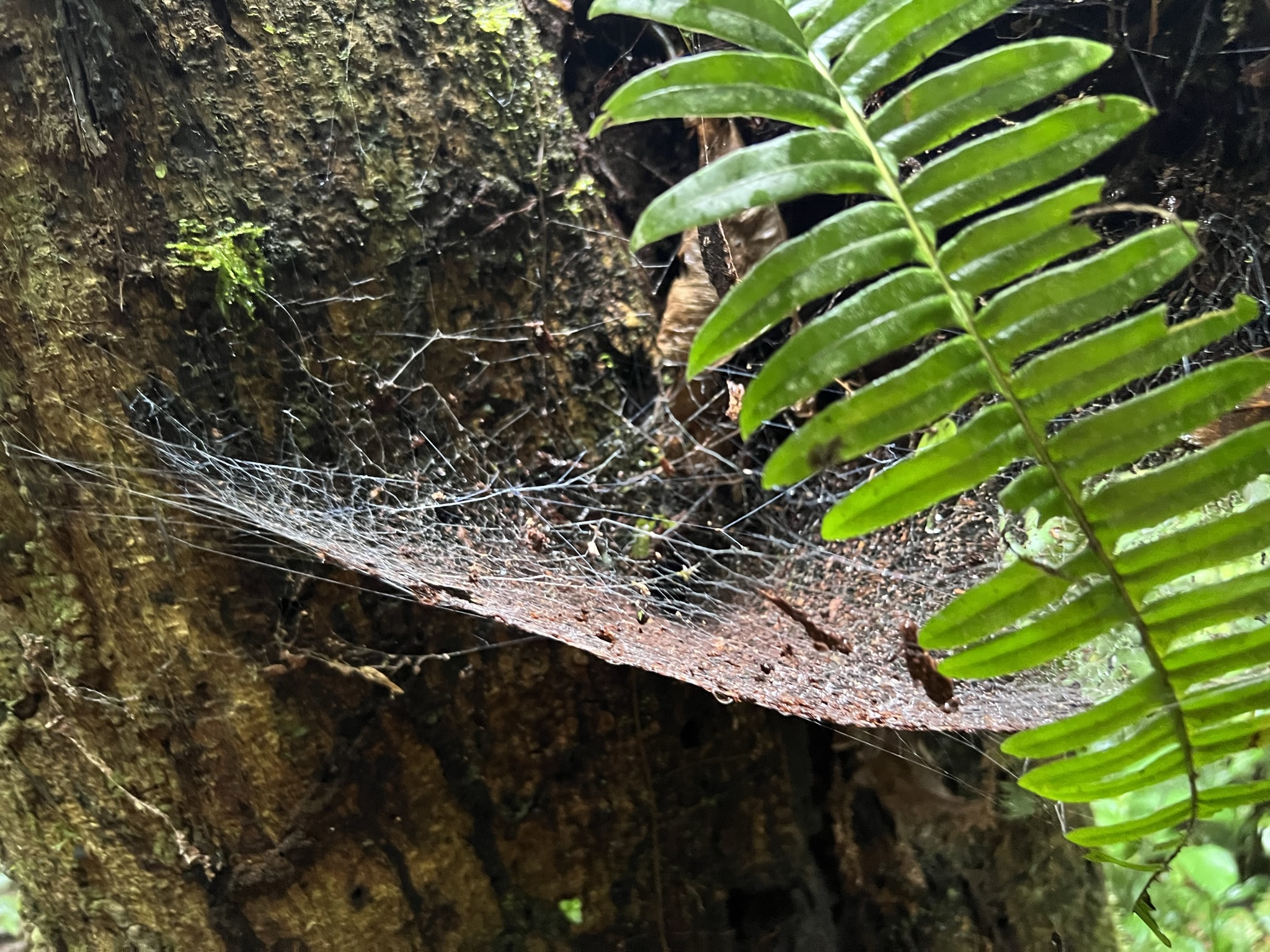
My favourite by far was the anhinga, or snakebird, so named because its long neck resembles a snake when swimming. It’s often seen perched with its wings splayed open, since it lacks the oil glands that make feathers waterproof. Apart from birds, we also spotted aquatic life such as wolf cichlids (guapote), tarpon, and tilapia.

Apart from animals, Johnny also made it a point to talk about plants and herbs. These included the limoncillo tree, whose leaves can be used as a decongestant thanks to their earthy, minty smell; the cuculmeca vine, whose roots can be boiled and used in traditional remedies for anaemia; and bromeliads, which can be found on almost every other tree. Their leaf rosettes collect rainwater, creating miniature pools that provide drinking water for animals and breeding grounds for others, such as the blue jeans frog.
It felt like the most interactive biology lesson I had ever attended – and I loved every single second of it. In fact, I barely noticed when we reached the end of the trail. It was a three-kilometre walk with gradual elevation, and we barely broke a sweat, stopping every few minutes for yet another lecture on the volcano’s many virtues.
Arenal Volcano
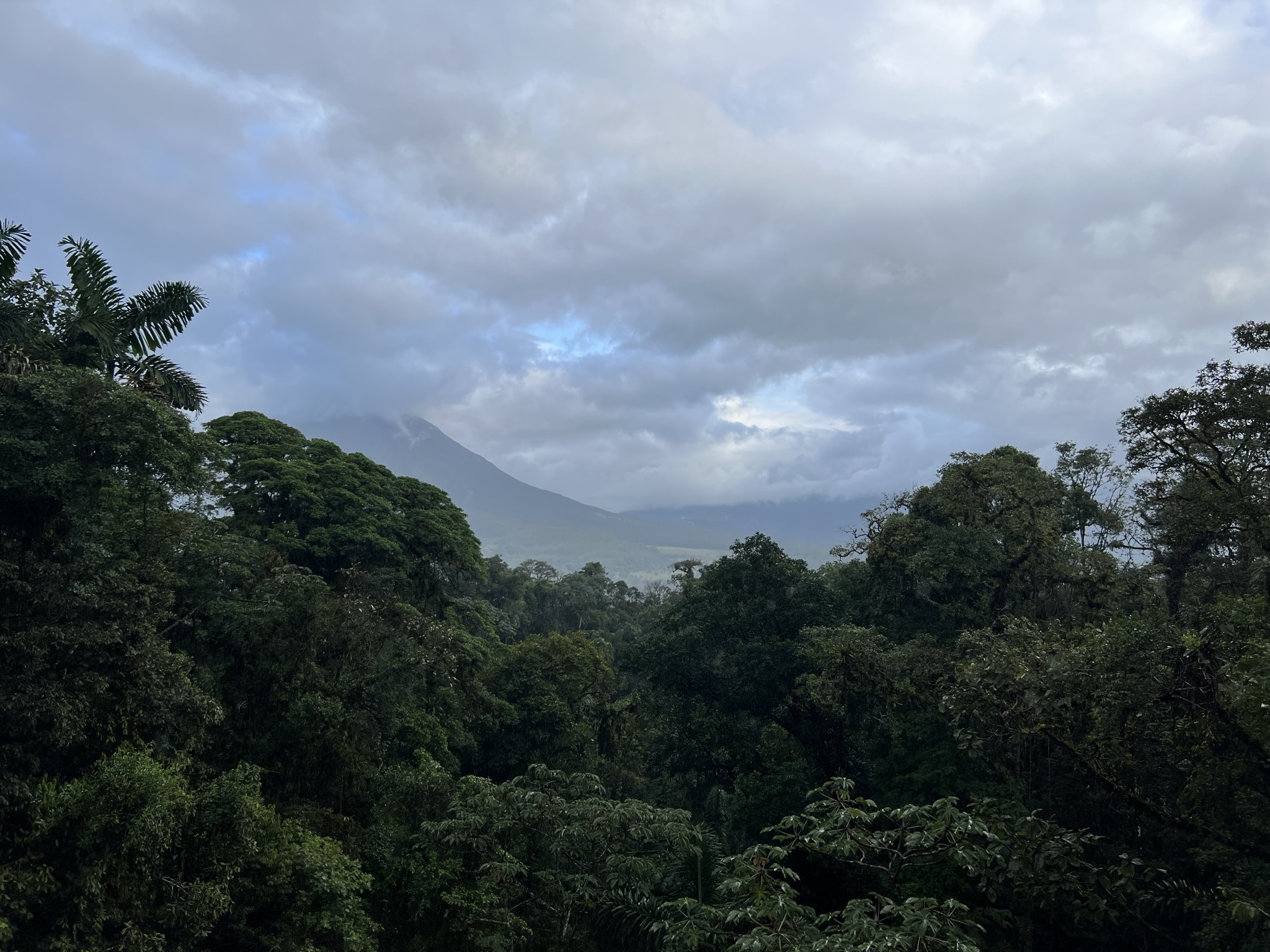
Once at the top – and by top, I mean the very base of the volcano, given that climbing further is illegal – we took some time to admire the cloud-shrouded summit. Taking advantage of our stillness, Johnny went on to explain more about Arenal and volcanoes in general. It felt very much like a geography lesson, leaving me mildly ashamed for having forgotten such seemingly basic things we’d learned back in elementary school.
He started off by telling us that the Arenal volcano is a conical stratovolcano measuring around 1,633 metres in height. It is relatively young and had been dormant for hundreds of years, until an eruption in 1968 destroyed the nearby towns of Pueblo Nuevo, Tobacón, and San Luís, and gave rise to three additional craters. The town of El Borio was allegedly renamed La Fortuna because it escaped unscathed – a metropolitan legend which Johnny debunked, explaining that the name change predated the eruption and referred instead to the land’s fertile potential. Volcanic activity continued until 2010, at which point Arenal stopped erupting and became dormant again. While occasional gas emissions and thermal activity persist, there is no longer visible lava flow, leaving Costa Rica with six other active volcanoes.
As we munched away on some snacks, he went on to explain how volcanoes form. The Earth’s lithosphere is made up of tectonic plates in constant motion due to convection within the semi-viscous mantle beneath the crust, combined with gravitational forces. Depending on how these plates interact, different geological features form:
- Divergent boundaries: Occur when two plates move away from each other.
- Mid-ocean ridges: Form when two oceanic plates diverge, allowing mantle material to rise, melt due to reduced pressure, and then cool create new oceanic crust.
- Continental rifting: Occurs when a continent splits, forming rift valleys that may eventually flood and become new ocean basins.
- Convergent boundaries: Occur when two plates collide.
- Subduction zones: Form when one plate slides beneath another, releasing volatile gases that lower the melting point of mantle rock and generate magma, leading to volcanism.
- Continental collisions: Result in mountain building rather than volcanism.
- Transform boundaries: Occur when two plates slide past each other without creating or destroying crust, often producing powerful earthquakes.
He added that over 80% of the Earth’s surface is volcanic in origin, with volcanoes being a major source of raw materials, including many metals used in everyday life. Volcanic ash also breaks down into fertile, nutrient-rich soil over time, making it ideal for agriculture. Of the roughly 1,900 active volcanoes on Earth, most are found along the Pacific Ring of Fire. Some volcanic record-breakers include:
- Largest: Mauna Loa, Hawaii (4,160 metres)
- Highest: Ojos del Salado, Chile (6,893 metres)
- Deadliest: Mount Tambora, Indonesia (approximately 92,000 deaths)
- Youngest: Parícutin, Mexico (formed in 1943)
- Oldest active: Mount Etna, Italy (around 500,000 years old)
- Country with the most volcanoes: United States (over 160)
And, of course, you can’t talk about volcanoes without mentioning lava. At this point Johnny told us that there are different lava morphologies:
- ʻAʻā: Rough, blocky basaltic lava with sharp clinkers, flowing at temperatures up to about 1,150°C.
- Pāhoehoe: Smooth, ropey basaltic lava that flows easily and can transform into ʻAʻā as it cools, reaching temperatures of up to 1,200°C.
- Block lava: Similar to ʻAʻā but slower-moving, forming angular blocks.
- Pillow lava: Lava that erupts underwater, forming bulbous, pillow-shaped structures as it rapidly cools.

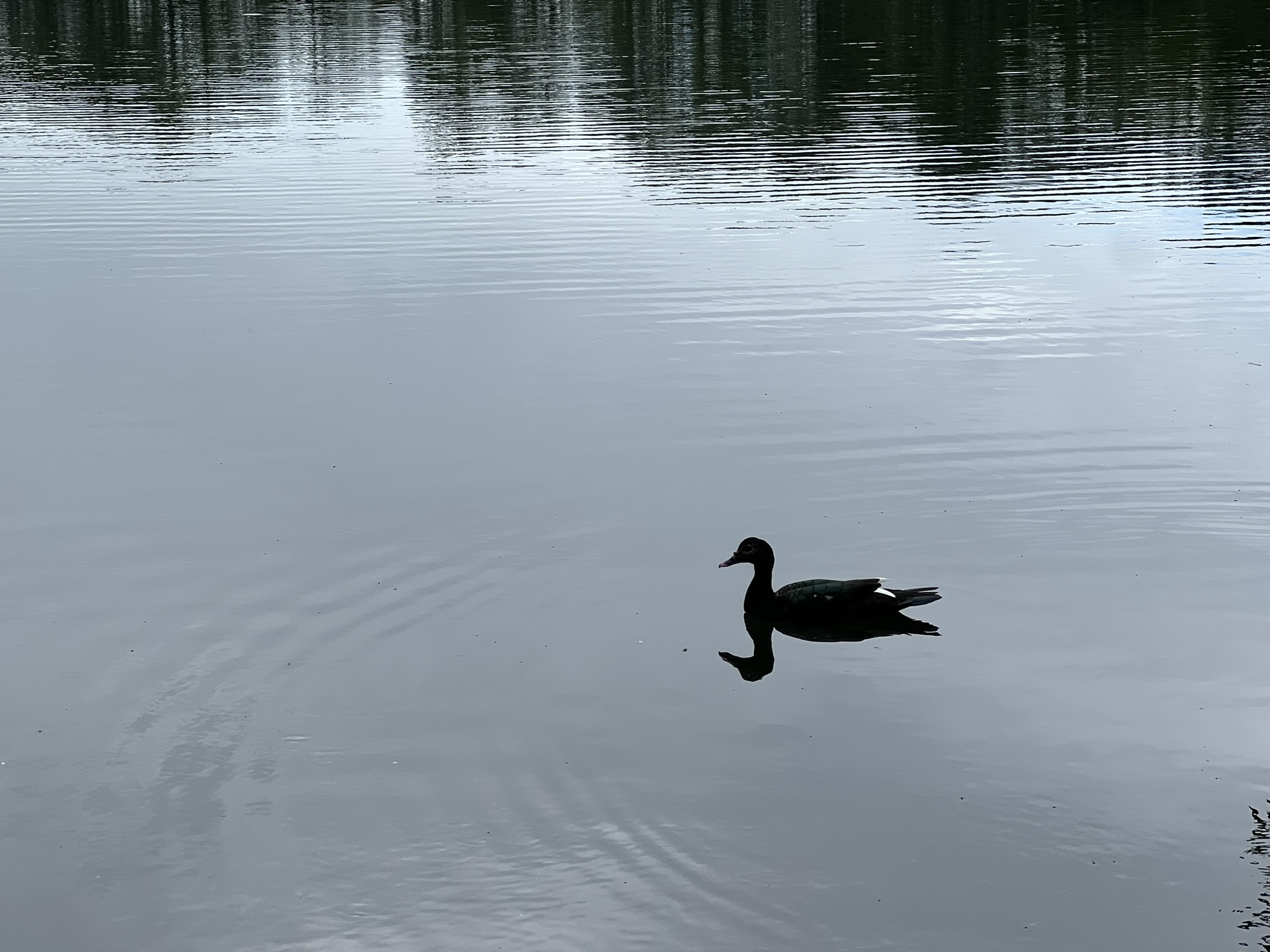
After the information overload, we were ready to head back down. While most of the group descended the same way, we took an alternative route around the lake, giving us the chance to appreciate even more flora and fauna, including Muscovy ducks, crimson-collared and scarlet-rumped tanagers, and house wrens.
PART II
Hanging Bridges of Mistico
By this point, I felt overwhelmed – both by how much I’d seen in such little time and by the sheer volume of information my brain had to process. Add to that the emotional side of things – the deep gratitude I felt at being able to witness so many plants and animals – and it was a lot.
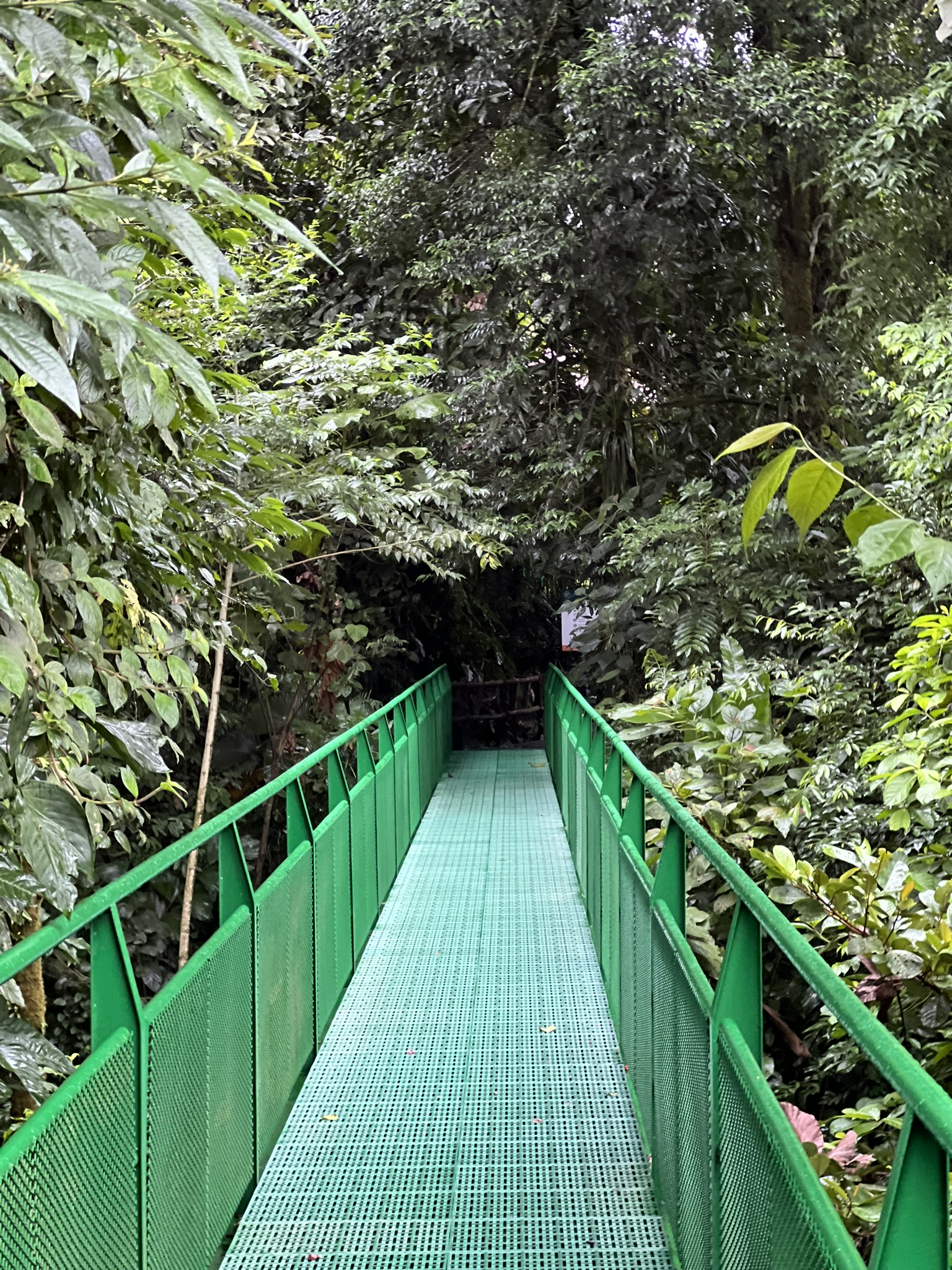
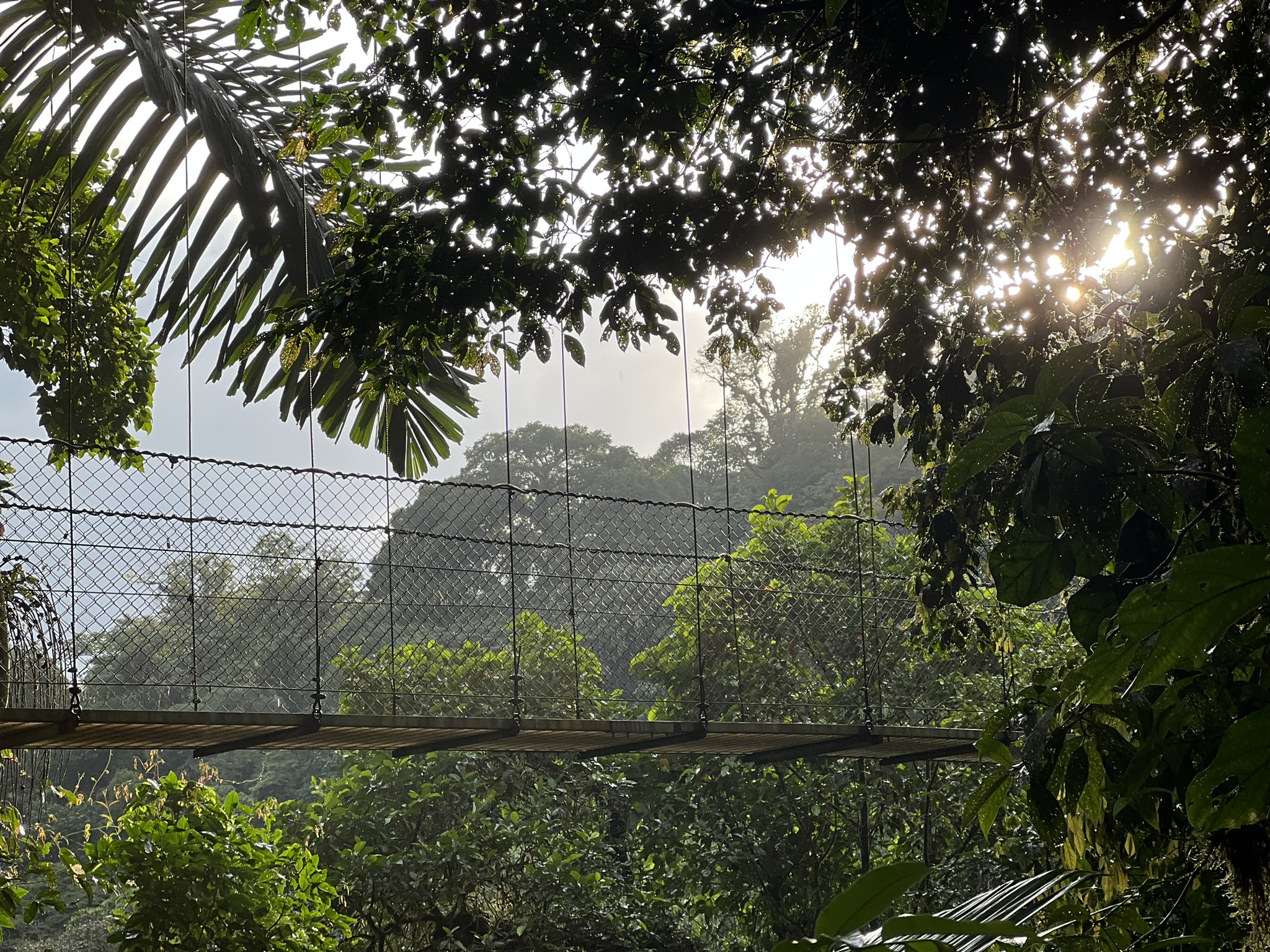
I barely had time to compose myself. After a quick lunch stop where we wolfed down traditional casados (rice, beans, protein, and vegetables), handed to us with the usual warm smile and “¡Con gusto!” one comes to expect in Costa Rica, we made our way to the Mistico Arenal Hanging Bridges Park. Here, we embarked on a three-kilometre trail featuring around fifteen bridges, six of which are long suspension bridges offering stupendous views of the jungle below and Arenal Volcano looming ahead. As the bridges swayed and the people in front of me rocked with them, I found myself balancing effortlessly – weeks aboard the Miss Tamara as it braved the rough seas of Utila having apparently paid off.
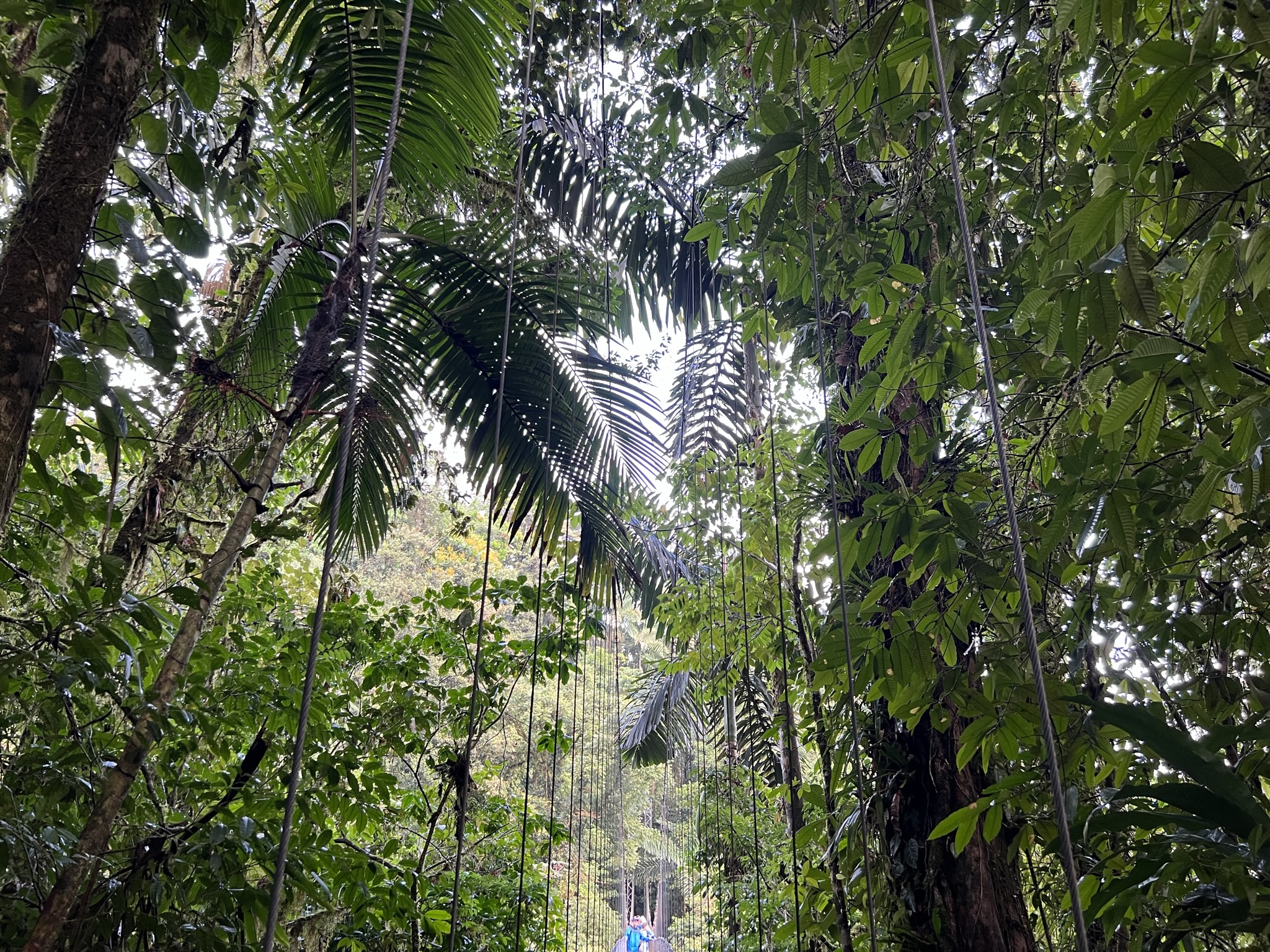
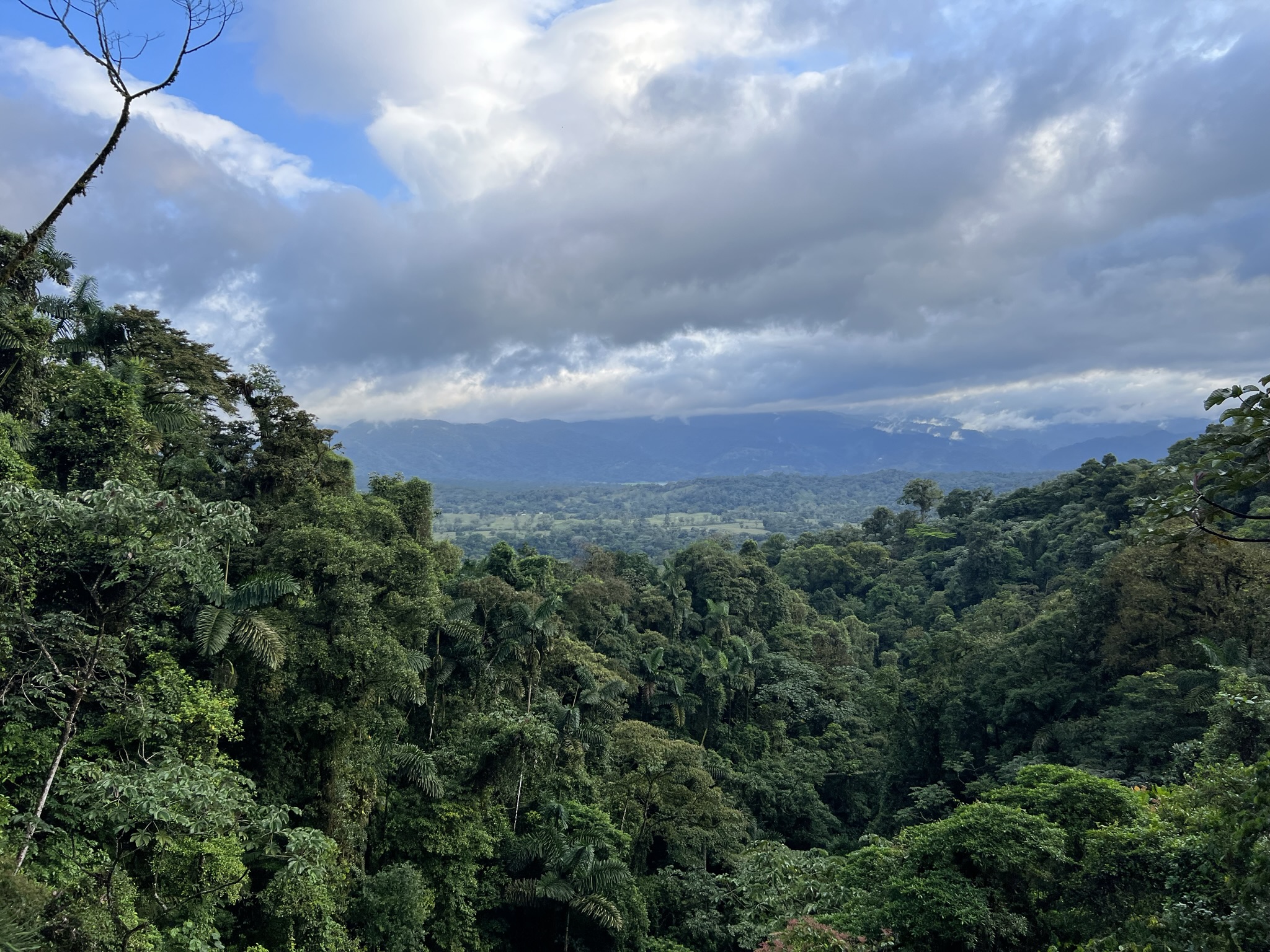
But honestly, the views were the last thing on my mind. All I wanted was more animals, more plants, and more wildlife. And on that front, it absolutely delivered, especially with Johnny pointing out everything we encountered. From walking palms to balsa trees, from aguacatillos with their avocado-like fruit, to the towering ceiba I hadn’t seen in so long. Then there was the two-hundred-year-old fig tree, with Ficus species making up a huge proportion of the forest’s keystone trees, and the acacia tree, which provides shelter and protein-rich sap for ants and certain vegetarian spiders that, in return, protect it. He also showed us medicinal plants, including the monkey ladder vine, traditionally used for hangovers and kidney stones.
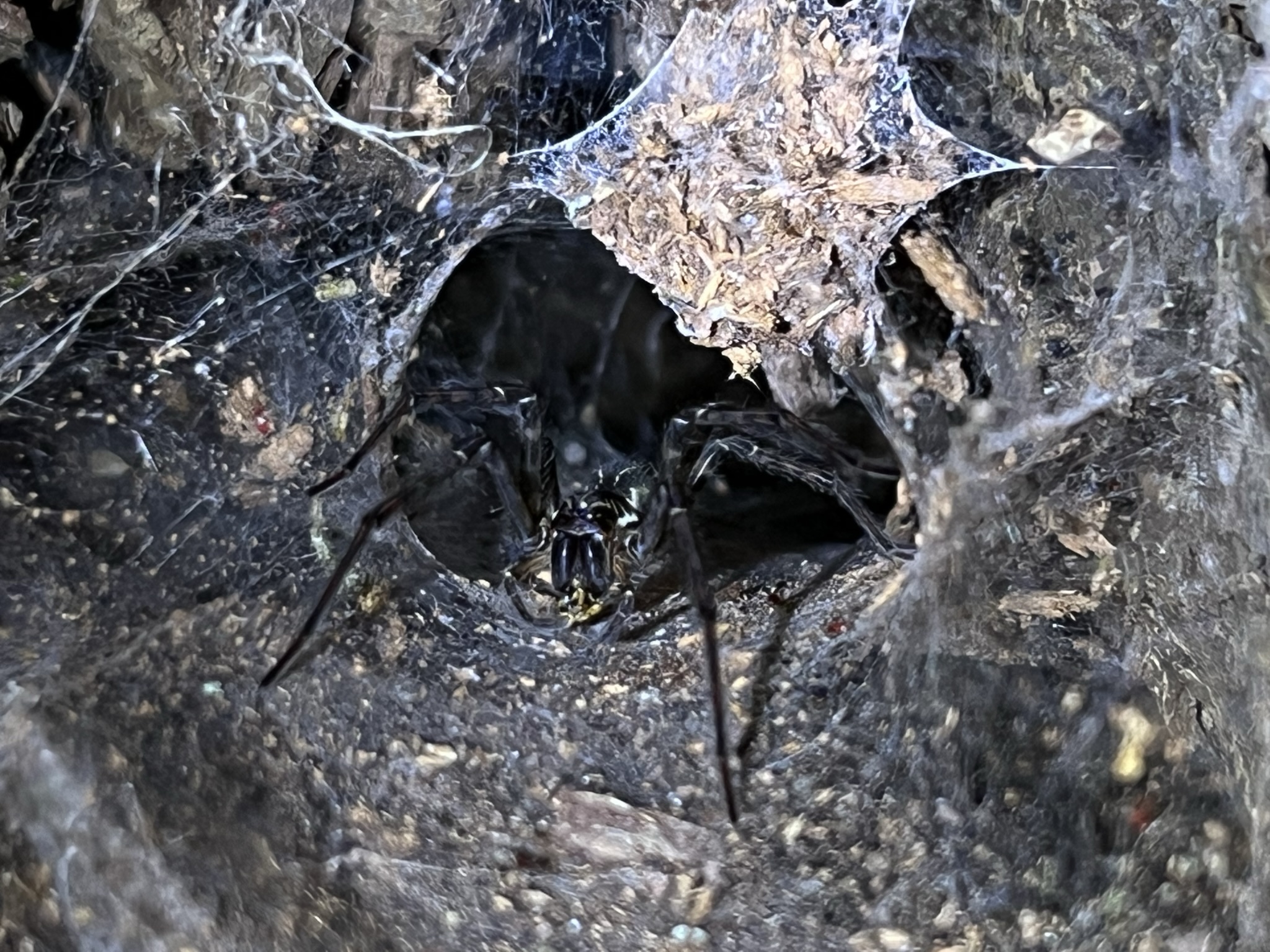
And the animals? We spotted the rare, venomous yellow eyelash viper, named for its superciliary scales and growing to about 50 centimetres in length, as well as the even rarer purple-crowned fairy hummingbird, with its metallic violet crown, emerald-green upperparts, white underparts, and black-and-white tail. Add summer tanagers, fruit bats, wolf spiders, and just about everything else you can imagine – except the blue jeans frog, whose call we could hear but whose presence eluded us. Cool fact about these frogs? Males can produce calls lasting up to two minutes, often amplifying the sound using rolled leaves during mating rituals. Even cooler, they feed on ants containing alkaloid toxins and sequester these compounds in their skin as a defence mechanism. While the toxins can be lethal to many predators, they are generally harmless to humans unless they enter the bloodstream. Ironically, the frogs themselves are highly sensitive to temperature changes and handling.
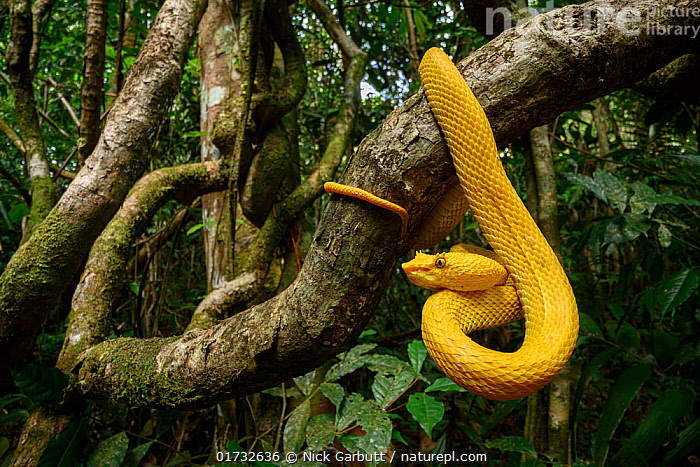

Many of the bridges are named after nearby plants or animals. While I didn’t get to see the terciopelo snake or the tolomuco (the omnivorous tayra), I wasn’t disappointed. One thing this trip has taught me is that for everything you wanna see but don’t, you’ll discover several things you never even knew existed. Still, I remained irrationally bitter about not spotting a jaguar or a quetzal. Grr.
Lukewarm Springs and Perfect Endings
And finally, our last stop – the Tobacón hot springs. Honestly, it was the last thing I felt like doing, partly because I was exhausted, but mostly cause it was raining. Also, they weren’t exactly hot. Lukewarm springs might be a better name.
Still, it turned out to be good fun, and as much as I complained, the warmish water was surprisingly reinvigorating. You know what else was reinvigorating? Randomly stumbling upon the red-eyed tree frog – arguably one of Costa Rica’s most iconic animals, alongside the toucan and the sloth. This non-venomous, arboreal beauty sports a bright apple-green body, blue-and-yellow striped flanks, vivid orange feet, and, in case the name doesn’t give it away, blood-red eyes with a narrow black slit. ¡Muy pichudo!

Drained and famished, we arrived back at La Fortuna late at night. I had dinner with Jennie – by now no longer an acquaintance but a friend. Then I bid her farewell, promising to keep in touch, before making my way back to the hostel. Between the rain-soaked jungle, the lectures disguised as hikes, and the quiet moments of awe I didn’t even know I needed, my stay in La Fortuna was somewhat of reset.