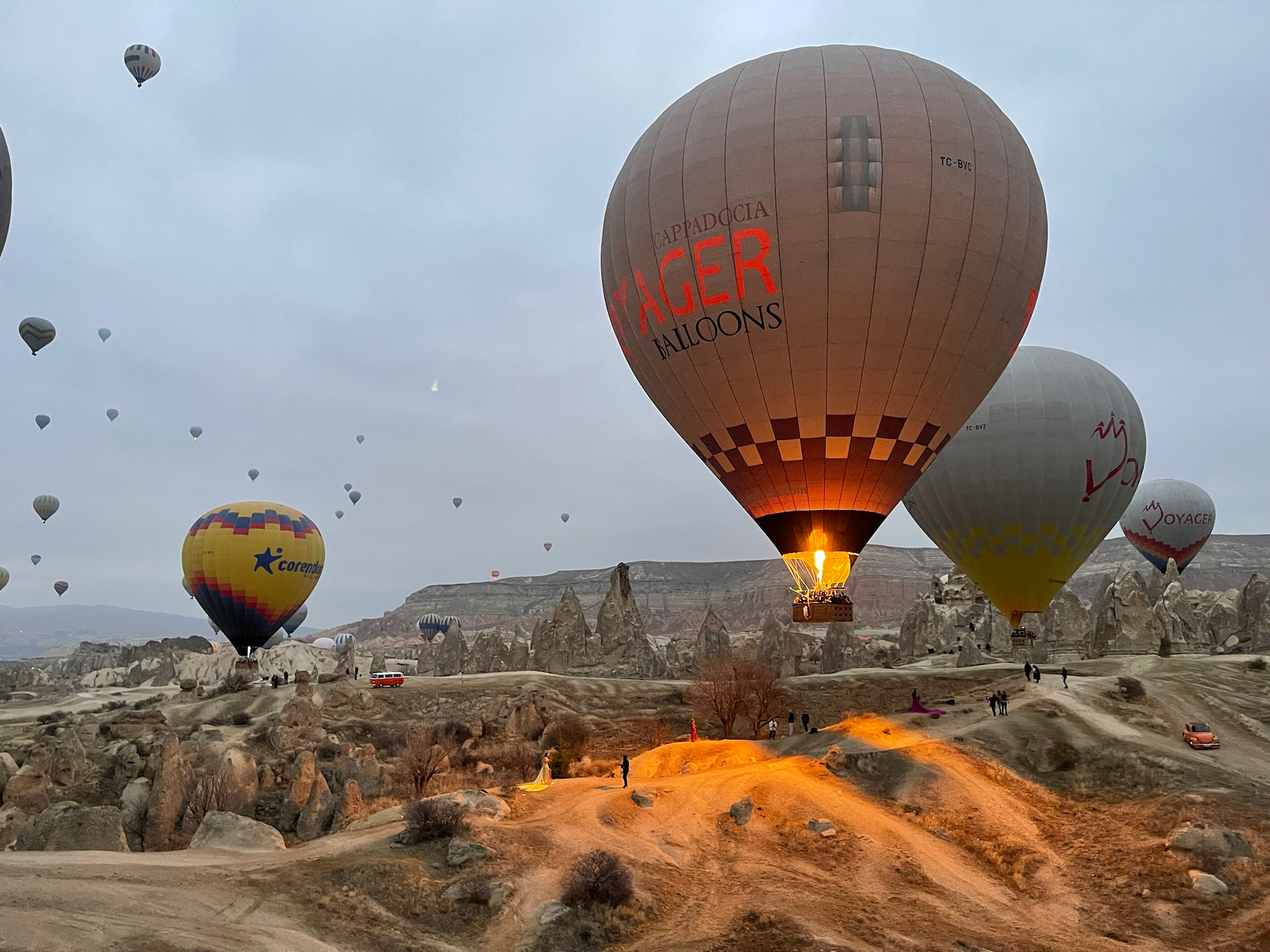
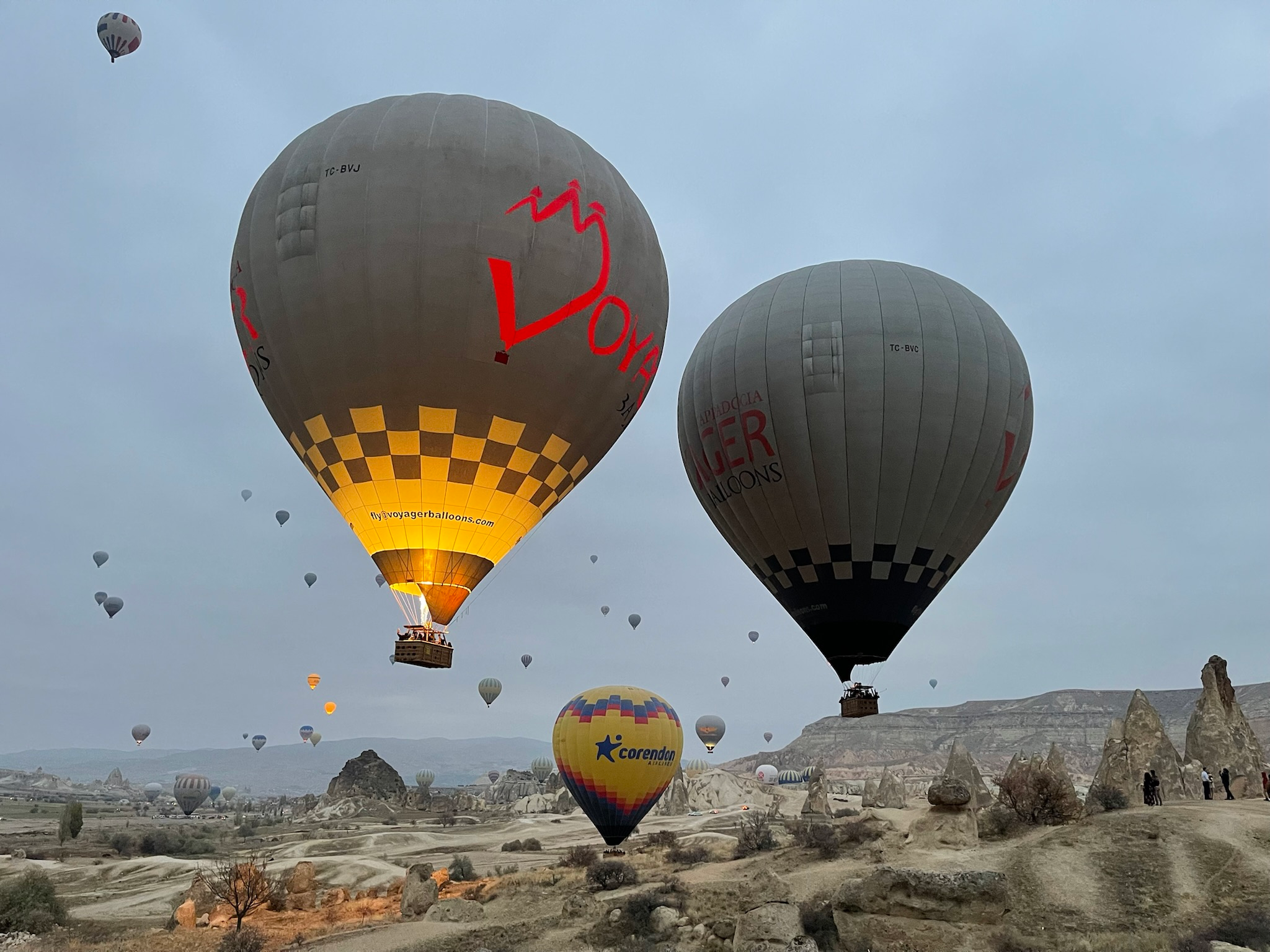
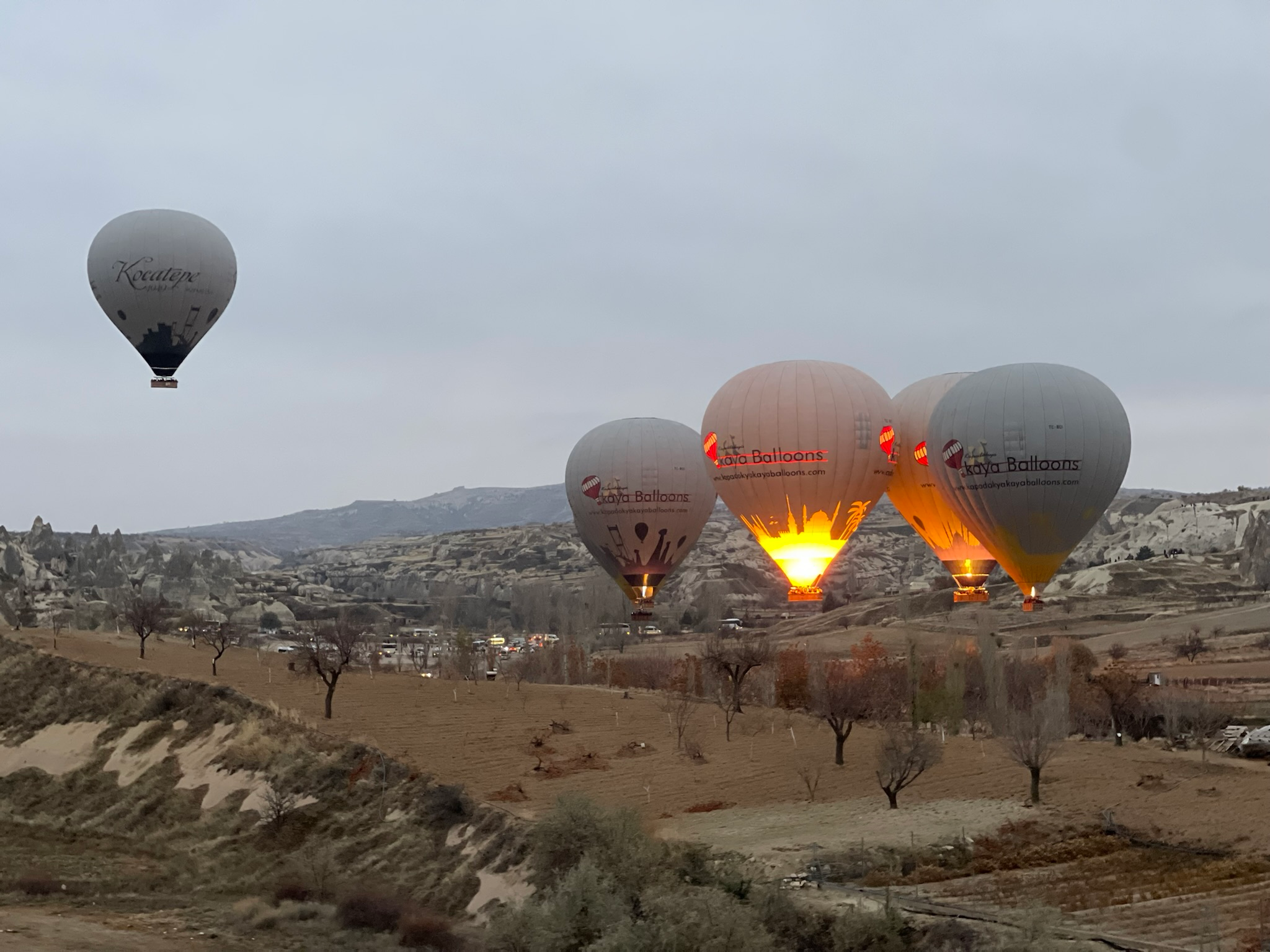
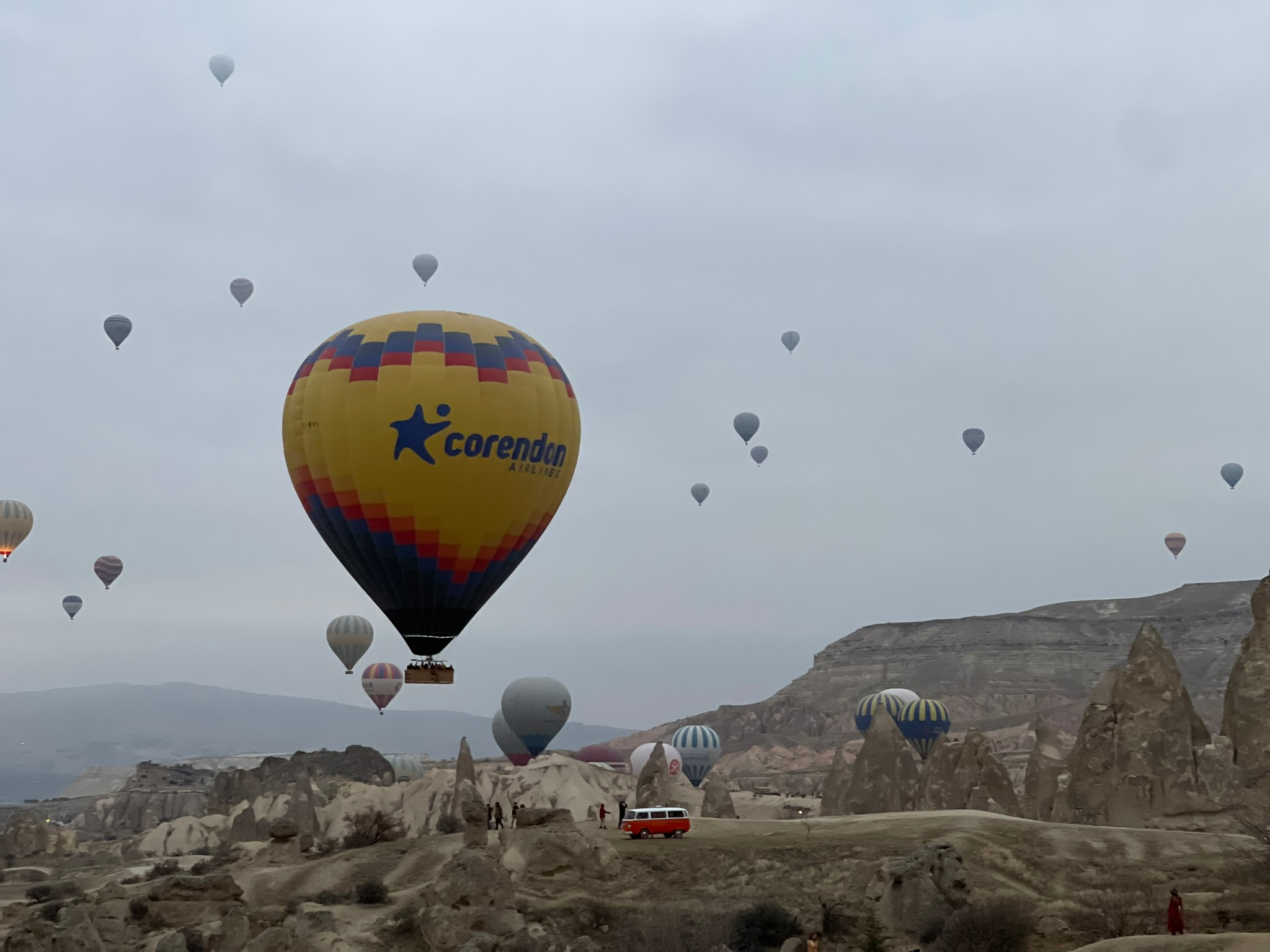
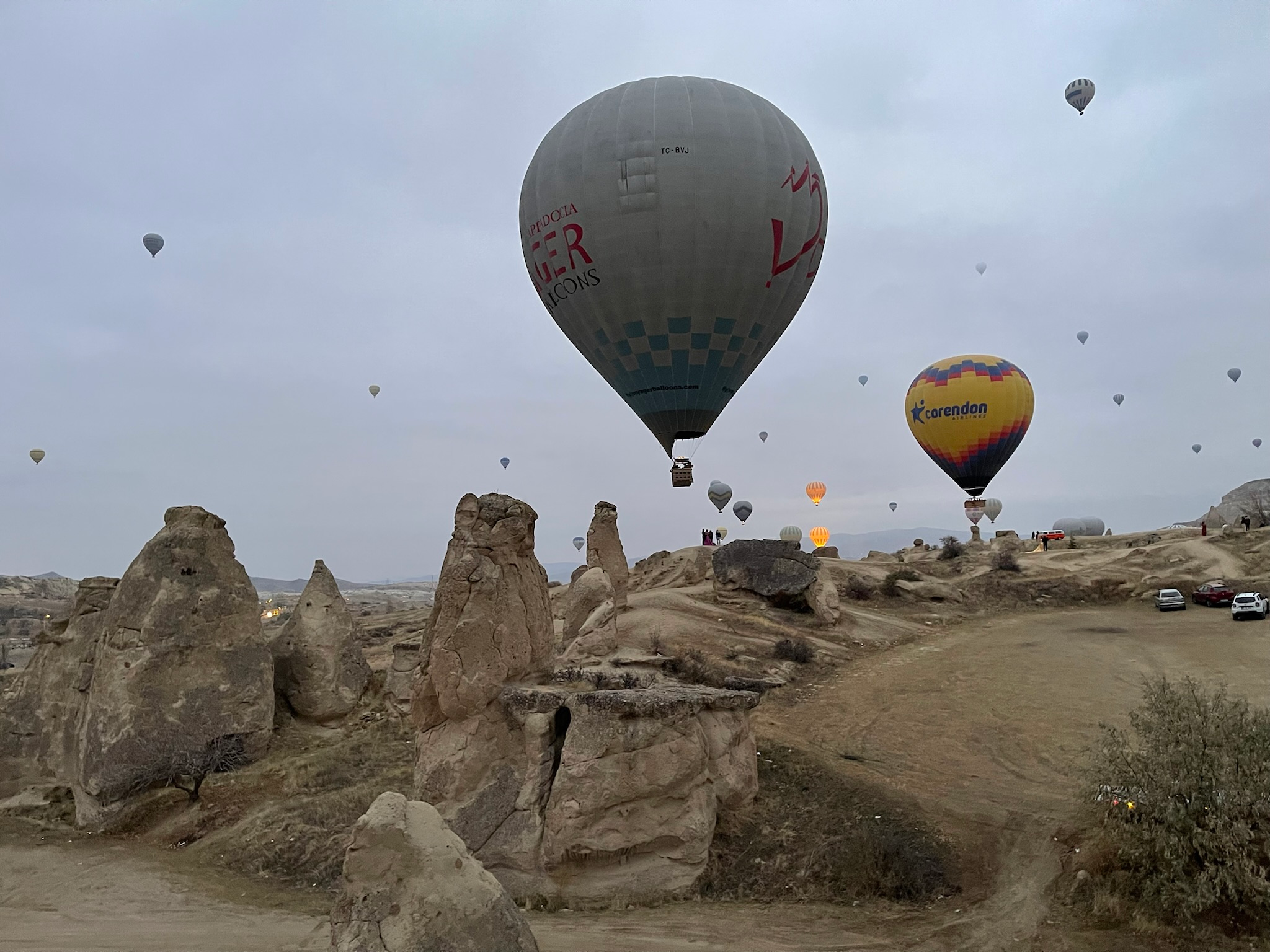
Despite having to wake up at an unruly hour, what awaited us was worth the suffering. Spoiler alert: Akash had delivered on his promise.
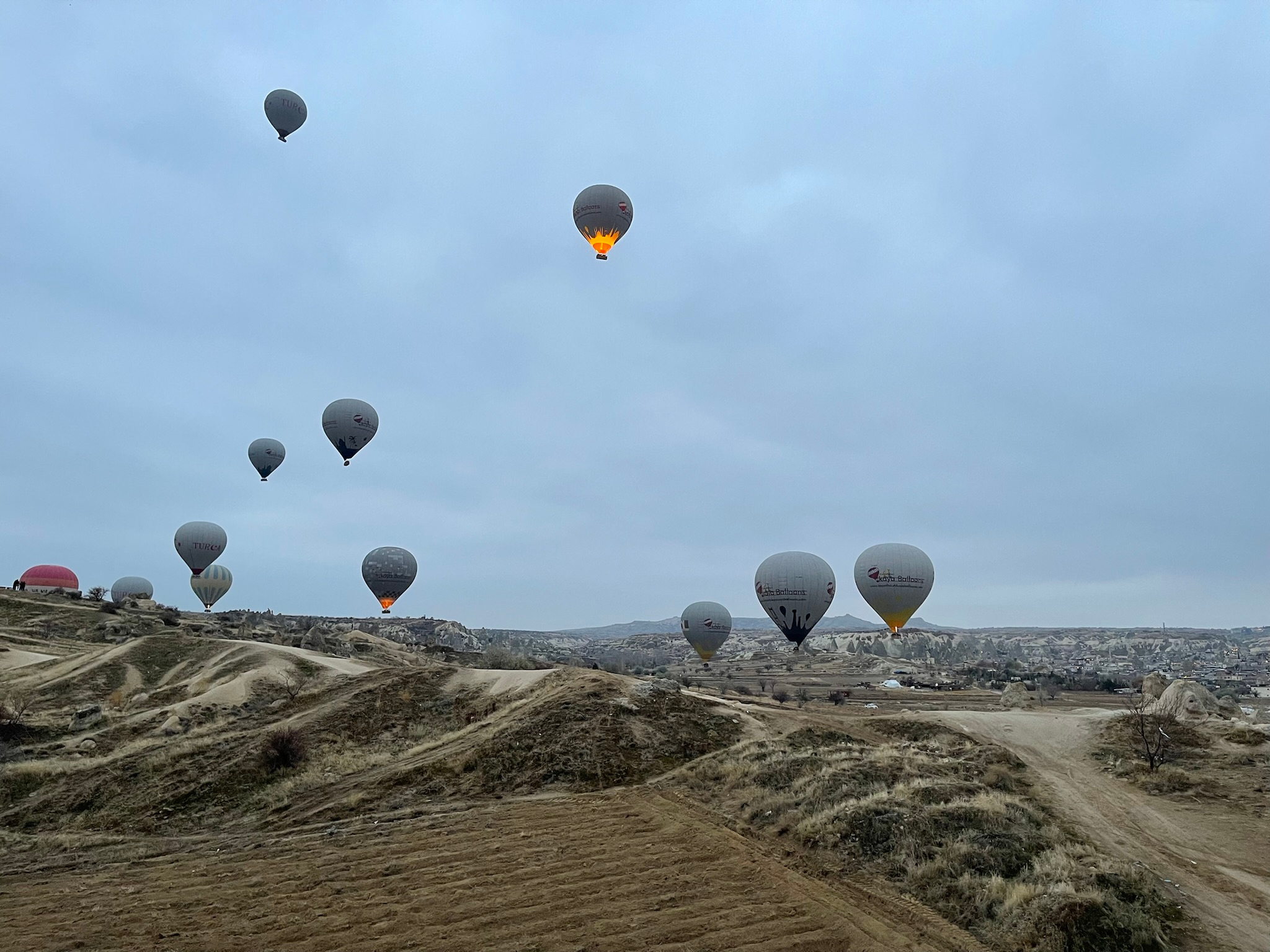
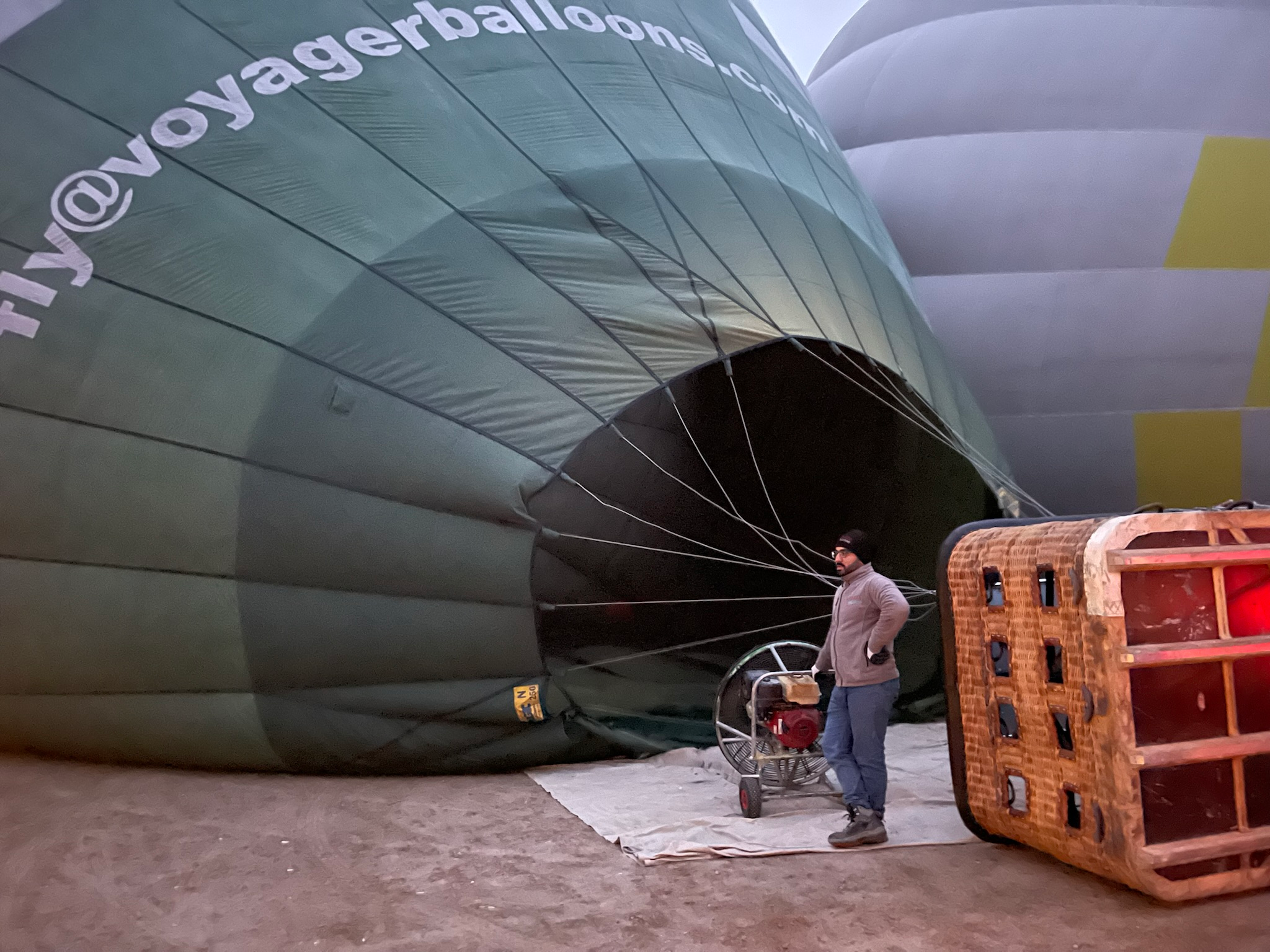
We’d be doing the most touristic, perhaps most cliché thing anyone could ever do in Cappadocia – a friggin’ hot air balloon ride! Needless to say, this was a first for me, as it was for the rest of the gang. I could hardly keep it together the second we arrived at the launch site – with dozens of balloons being inflated right in front of our eyes. Lifeless sheets of fabric snapping and twisting as the burners roared, eventually coming alive to form full balloons.
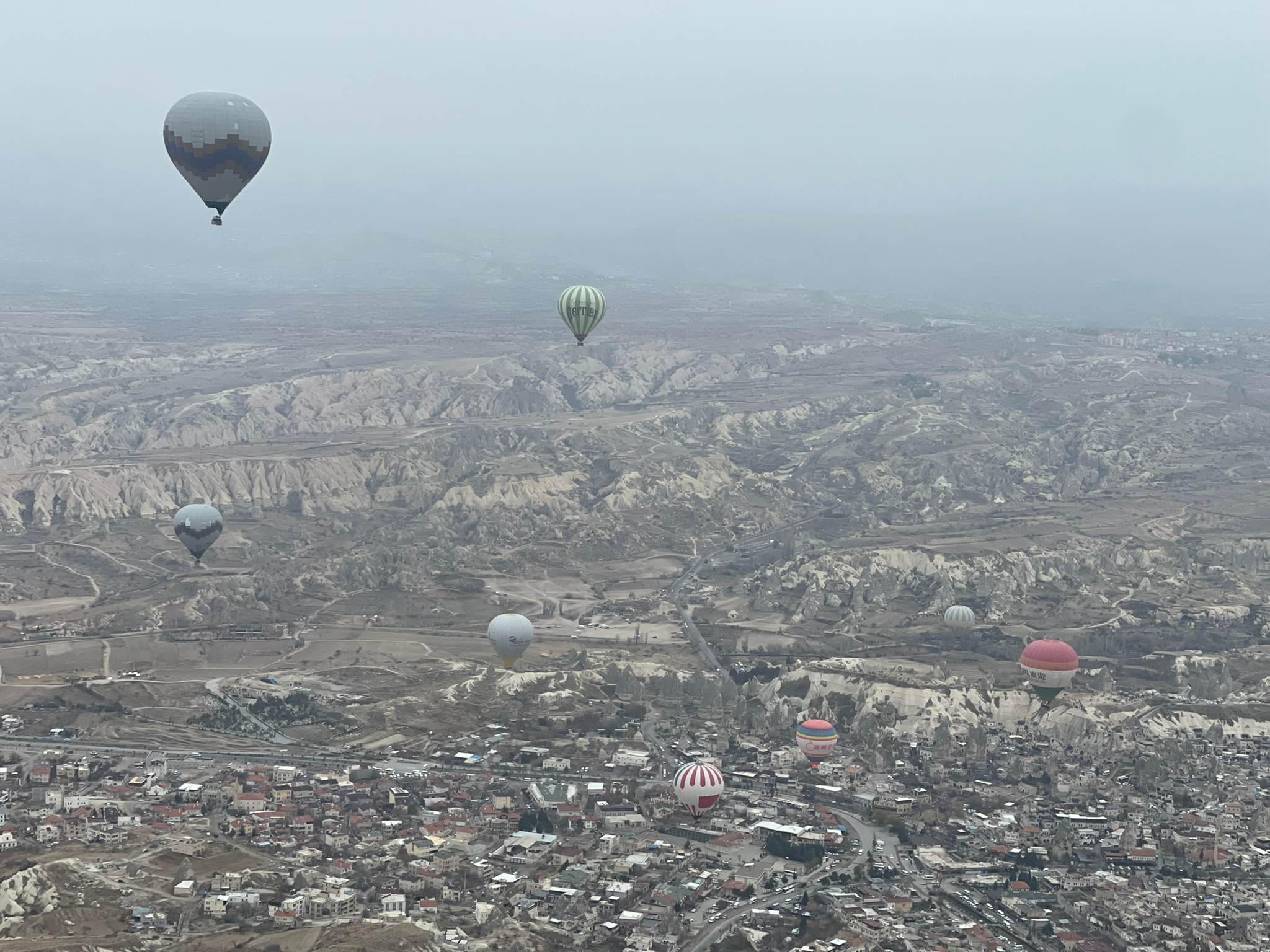
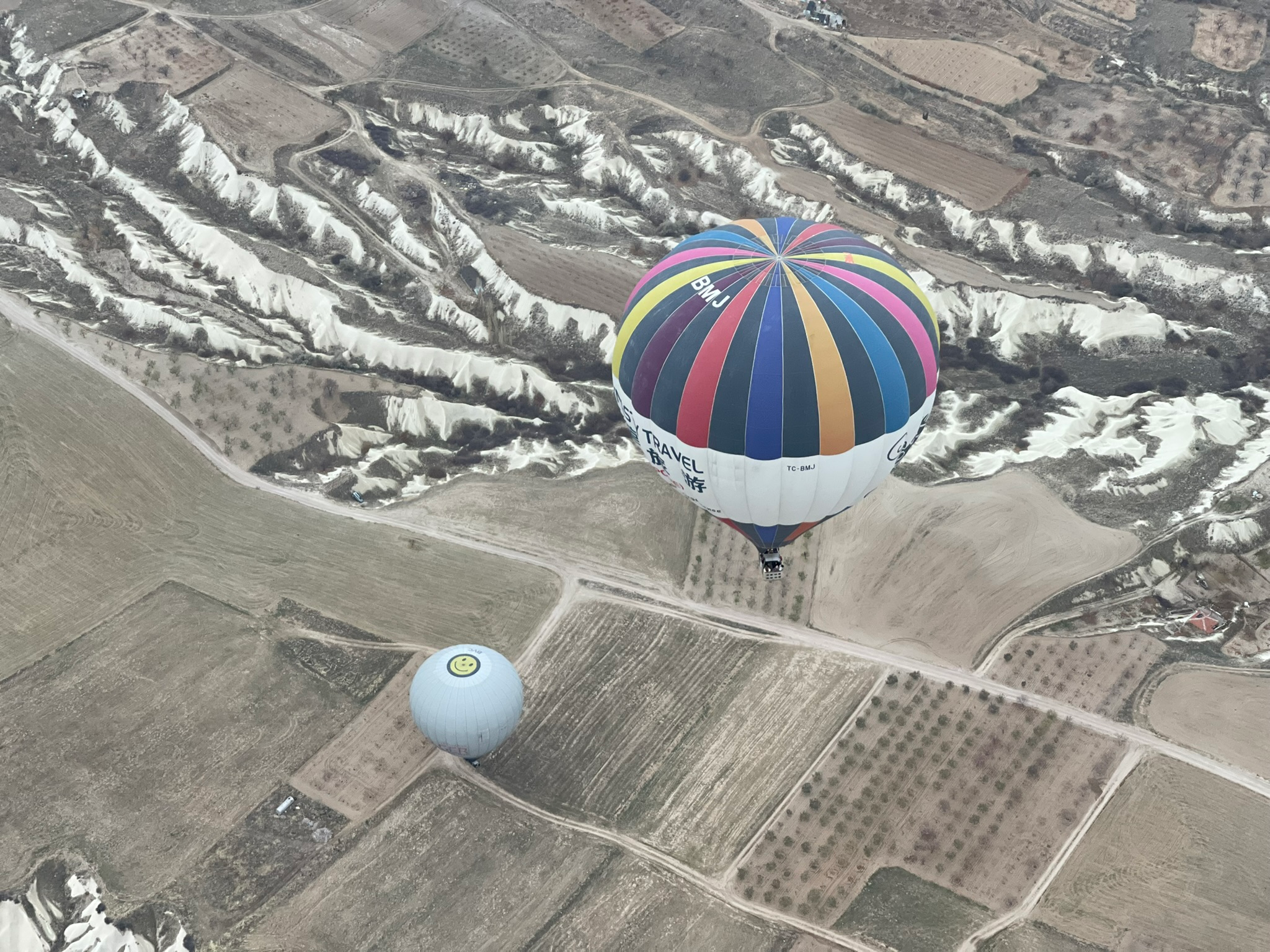
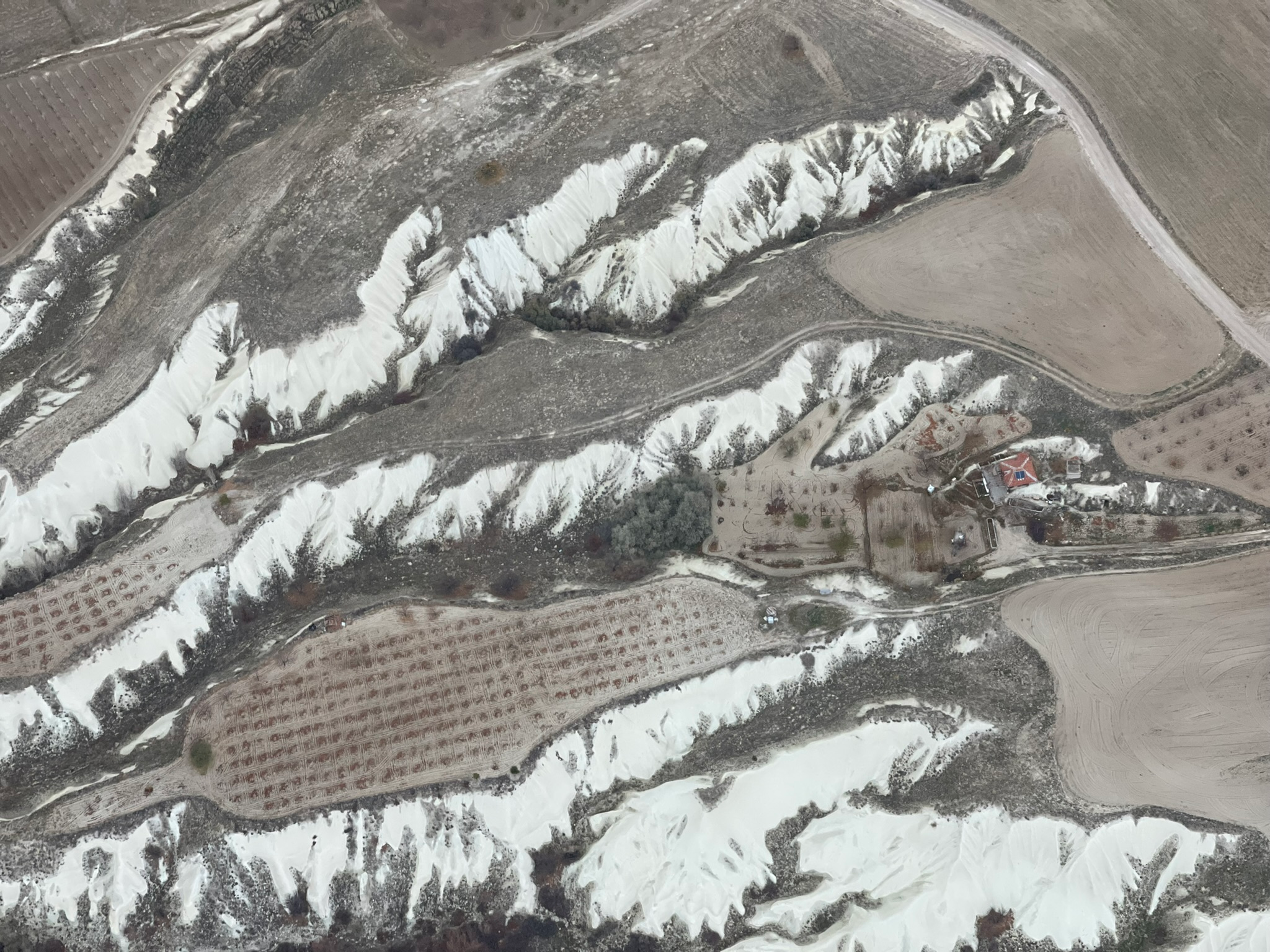
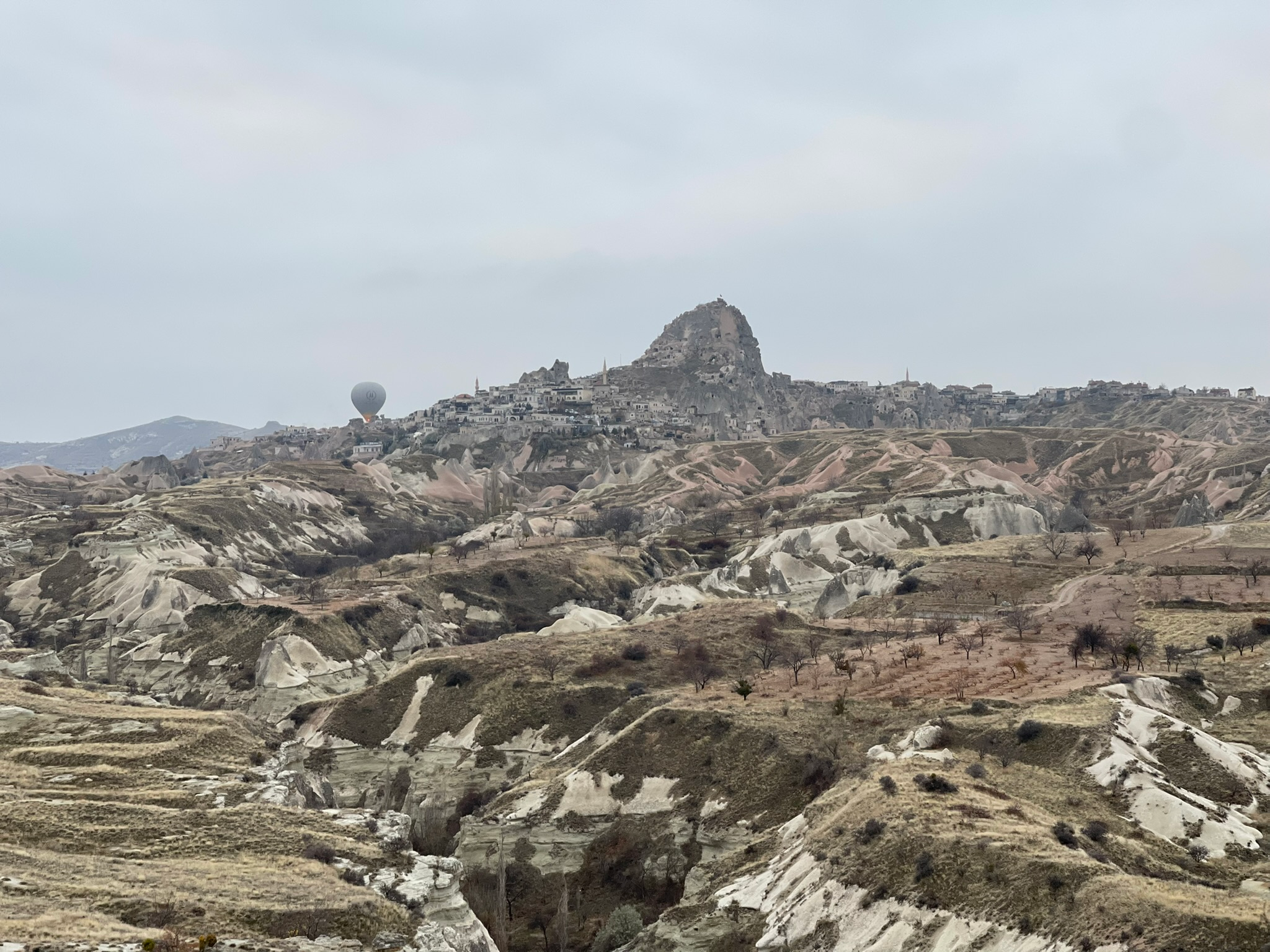
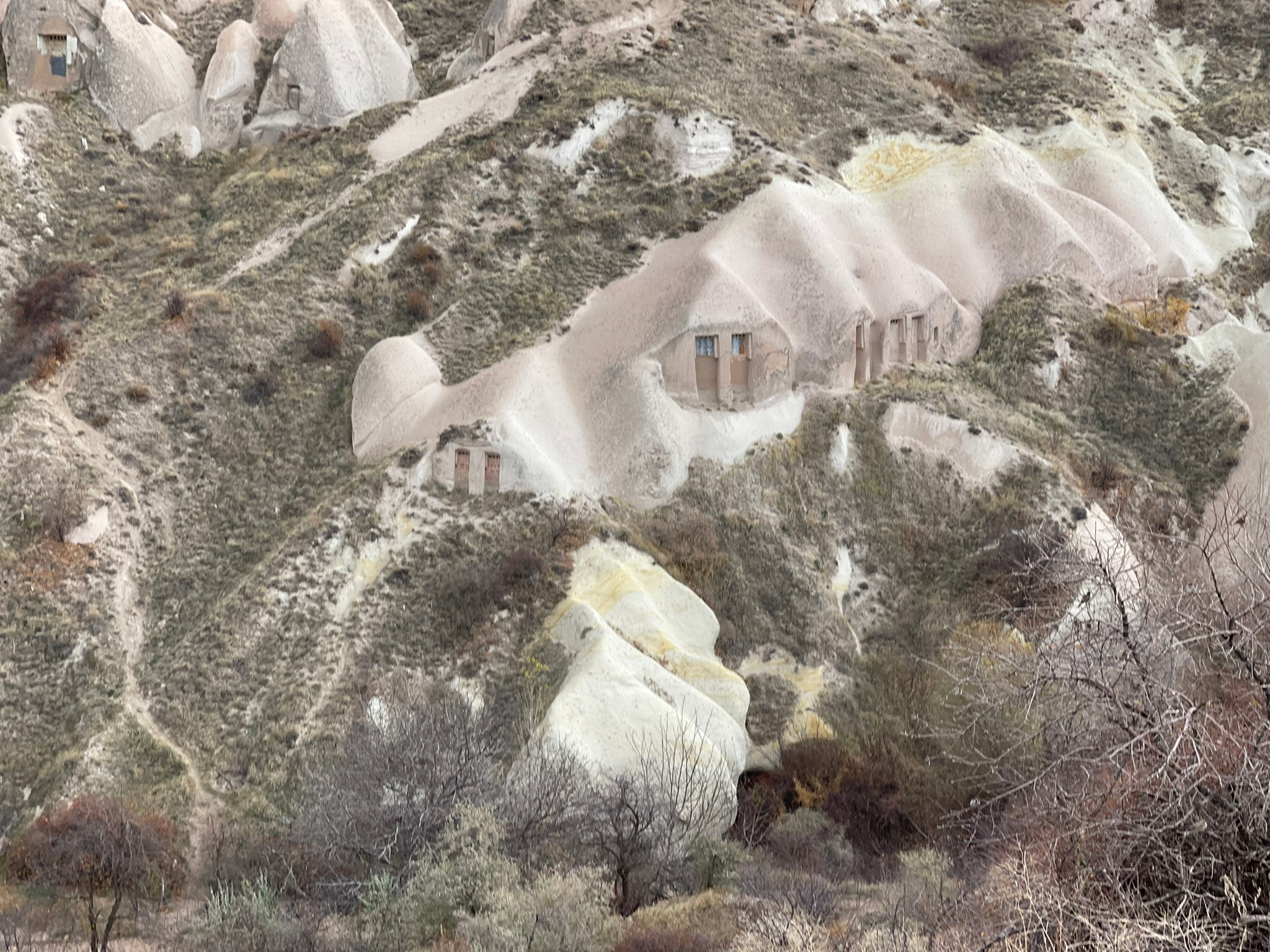
From below, we could see the entire valley lighting up – the balloons glowing bright like lanterns as the sun slowly began to rise. Then, once in the basket, the lift-off was so gentle we barely even noticed, and just like that, we were floating in the sky. While the experience itself was nothing short of exhilarating, it was the landscape that was slowly revealed to us as the sun rose that took our breaths away. Ridged valleys, fairy chimneys, cave houses, and dusty footpaths, all washed in soft gold and pink light – the silence broken only by the occasional burst of flame from the burner.
We were speechless most of the time. We drifted, turned, dipped, and rose, occasionally even bumping into nearby balloons. When it came time to land, it was kinda fun – a controlled bump back onto the earth. The ground was covered in brittle, dry grass, with a few leafless trees standing nearby – their dark, twisted branches reaching into a pale, overcast sky. The contrast between the yellow of Cappadocia’s soft, chalky hills rolling gently across the landscape, the grey sky, and the colourful balloons floating above made for an atmosphere that was both serene and surreal.
Here, we had the traditional post-flight toast over a glass of champagne – the perfect way to end such a spectacular experience.
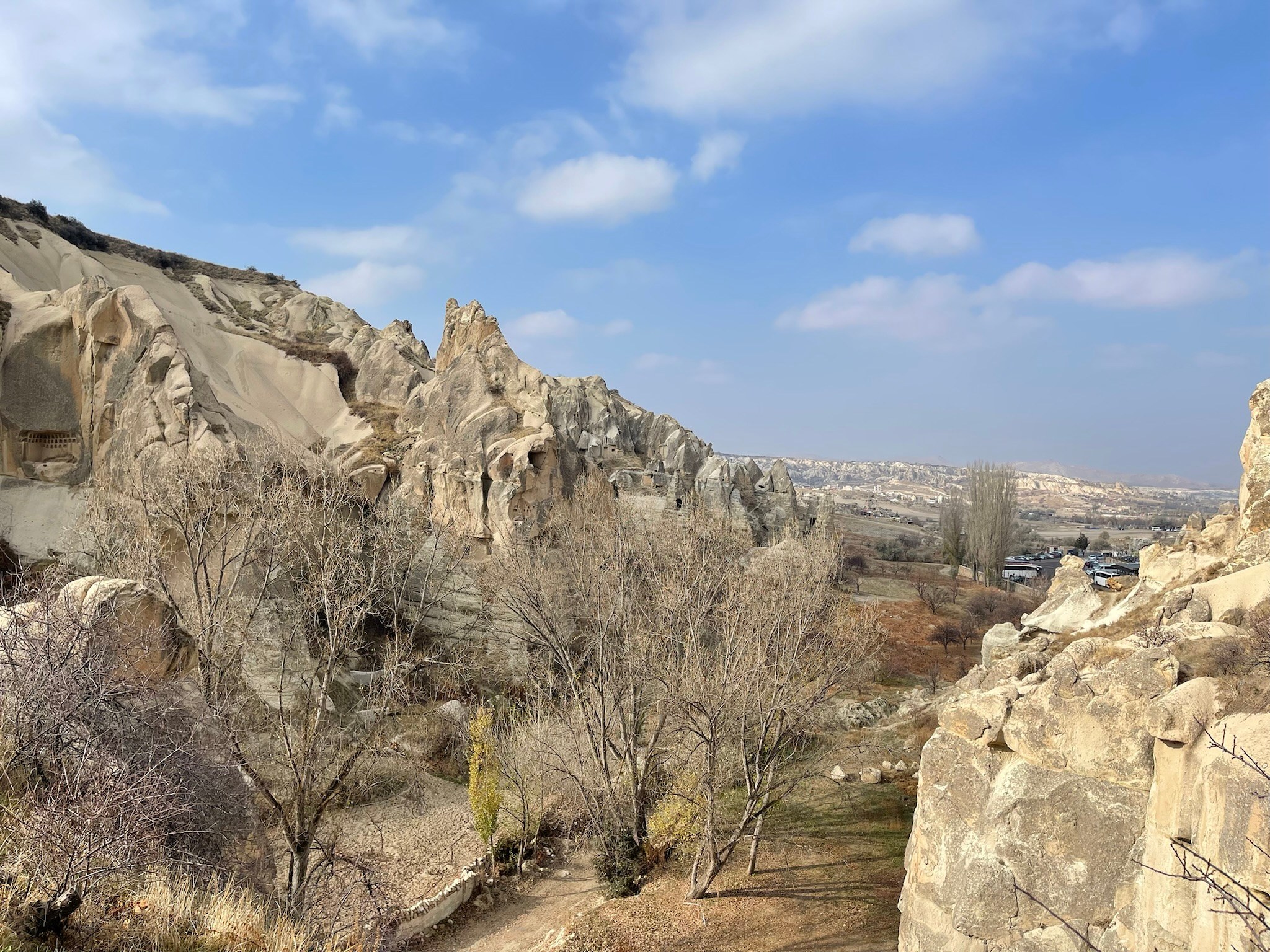
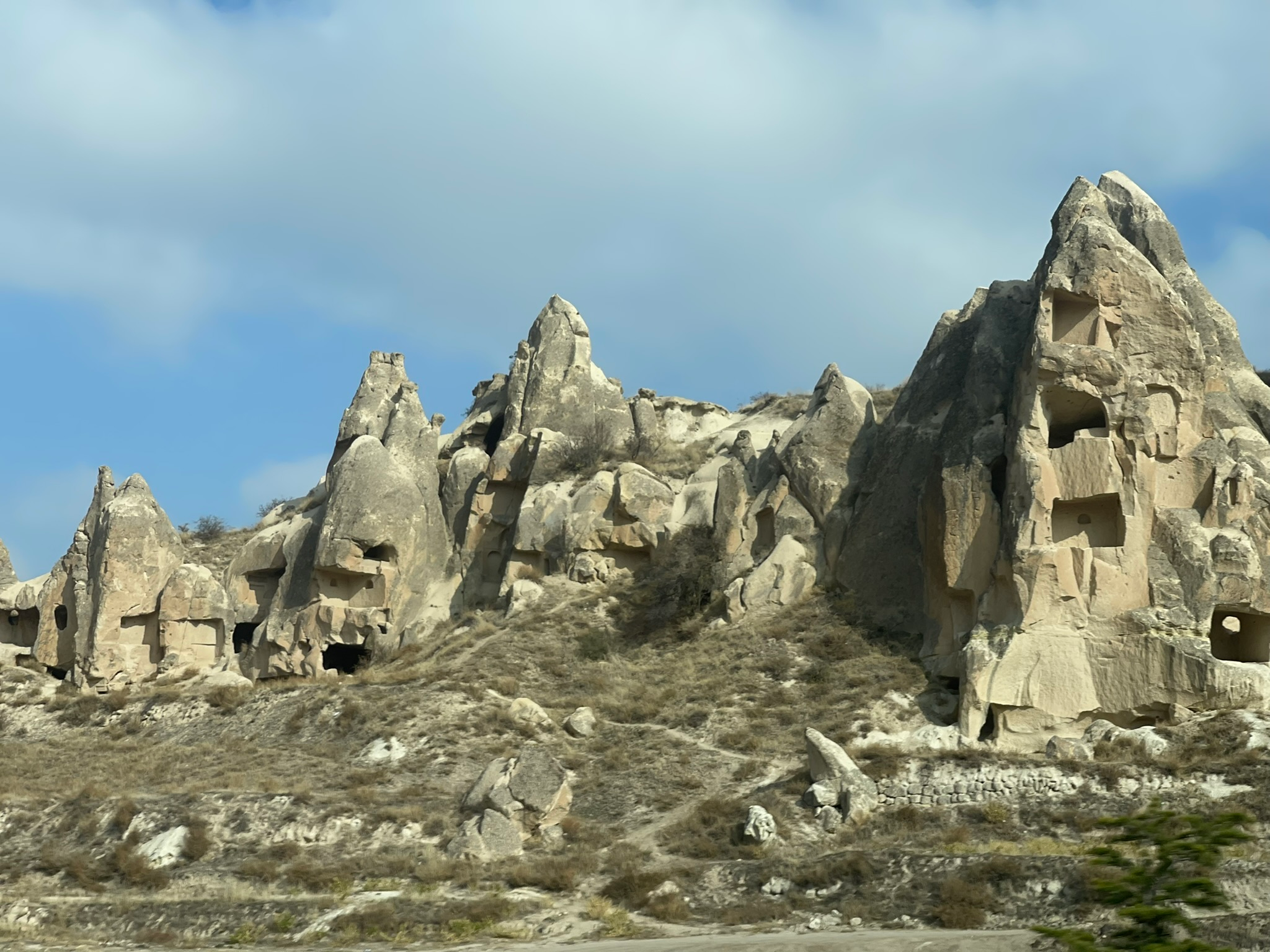
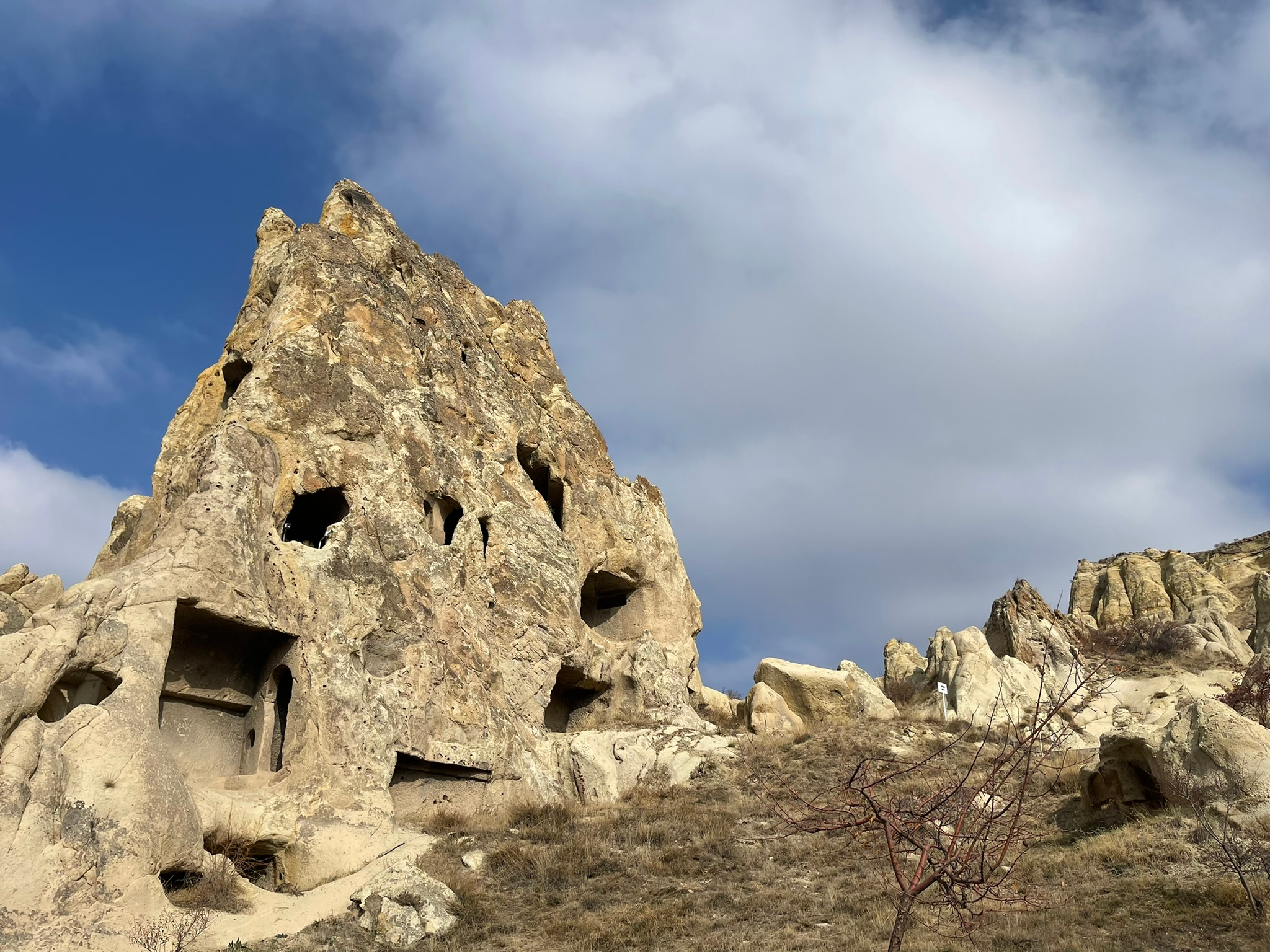
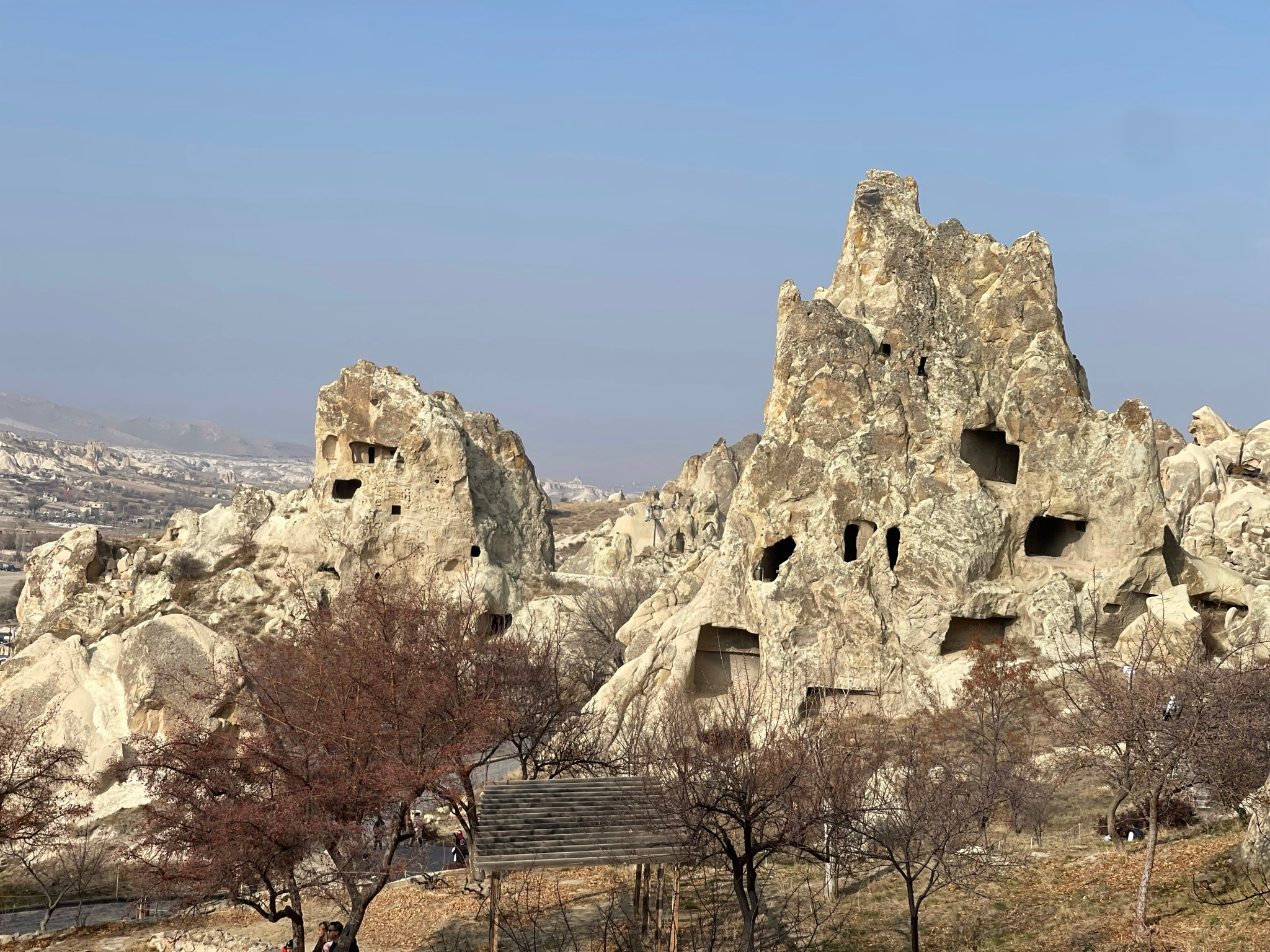
Following this, we had yet another tour planned. We’d be visiting the Göreme Open Air Museum – the spiritual heart of Cappadocia and a UNESCO World Heritage Site that preserves one of the best surviving clusters of Byzantine rock-cut monasteries.
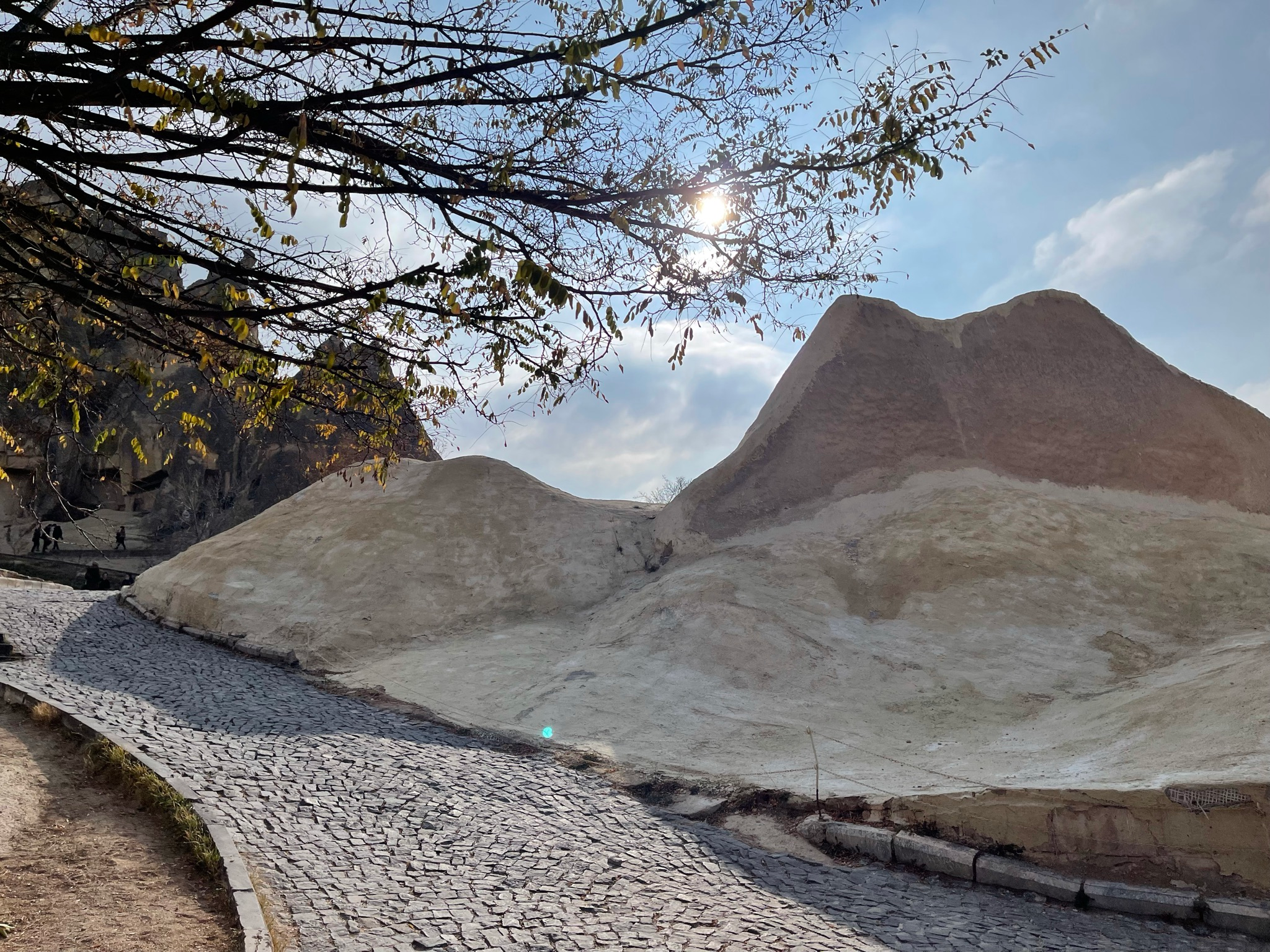
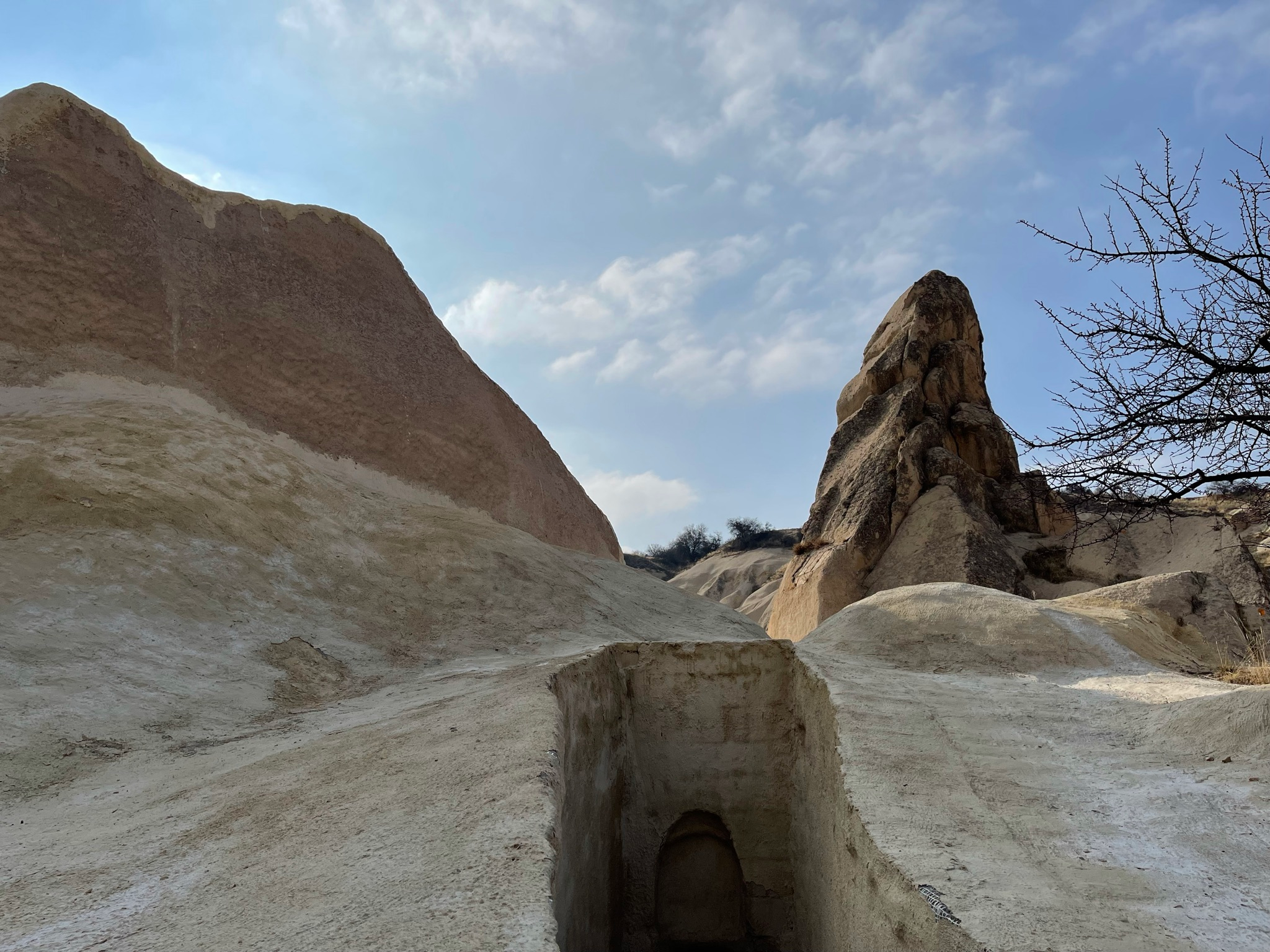
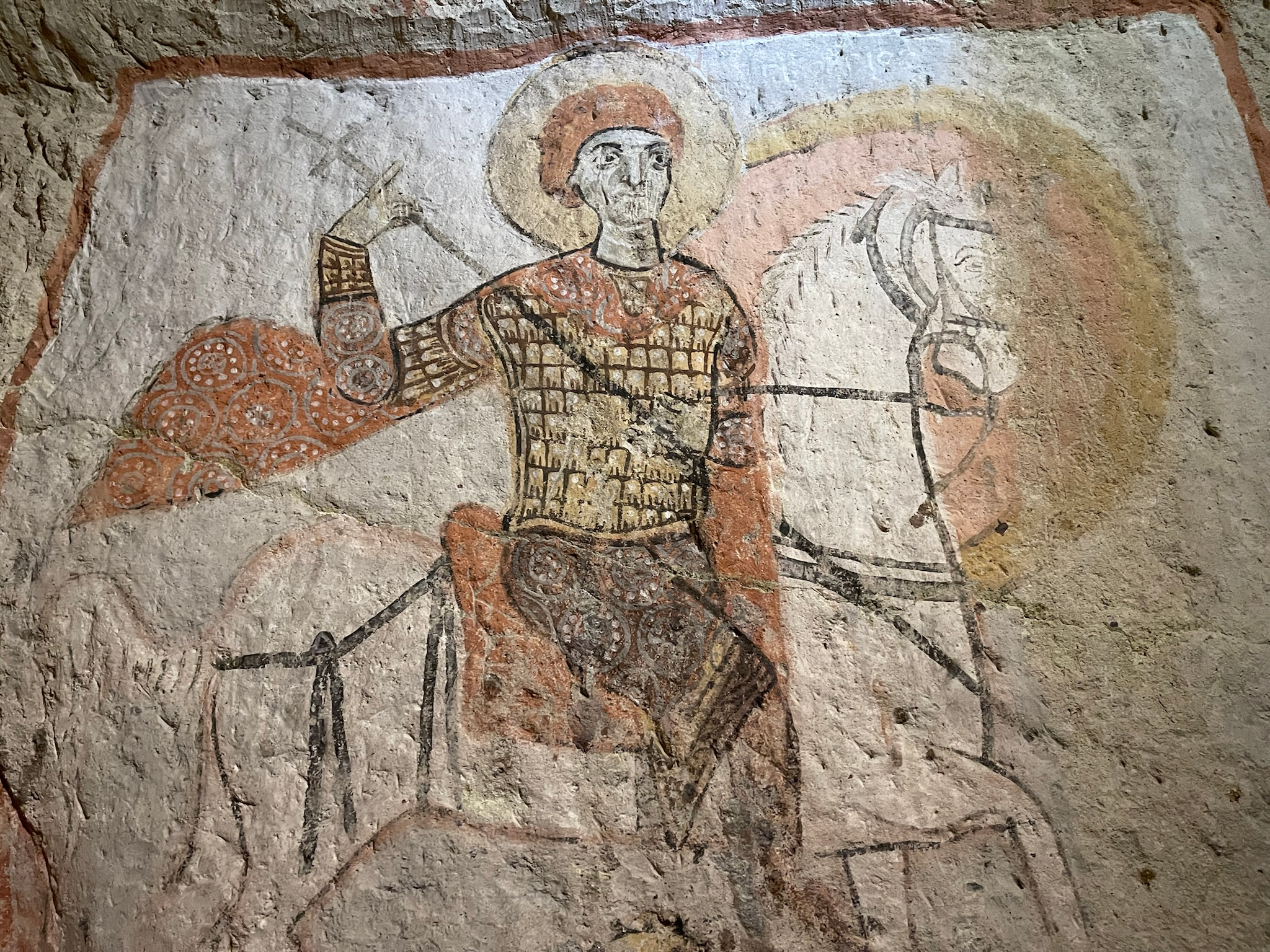
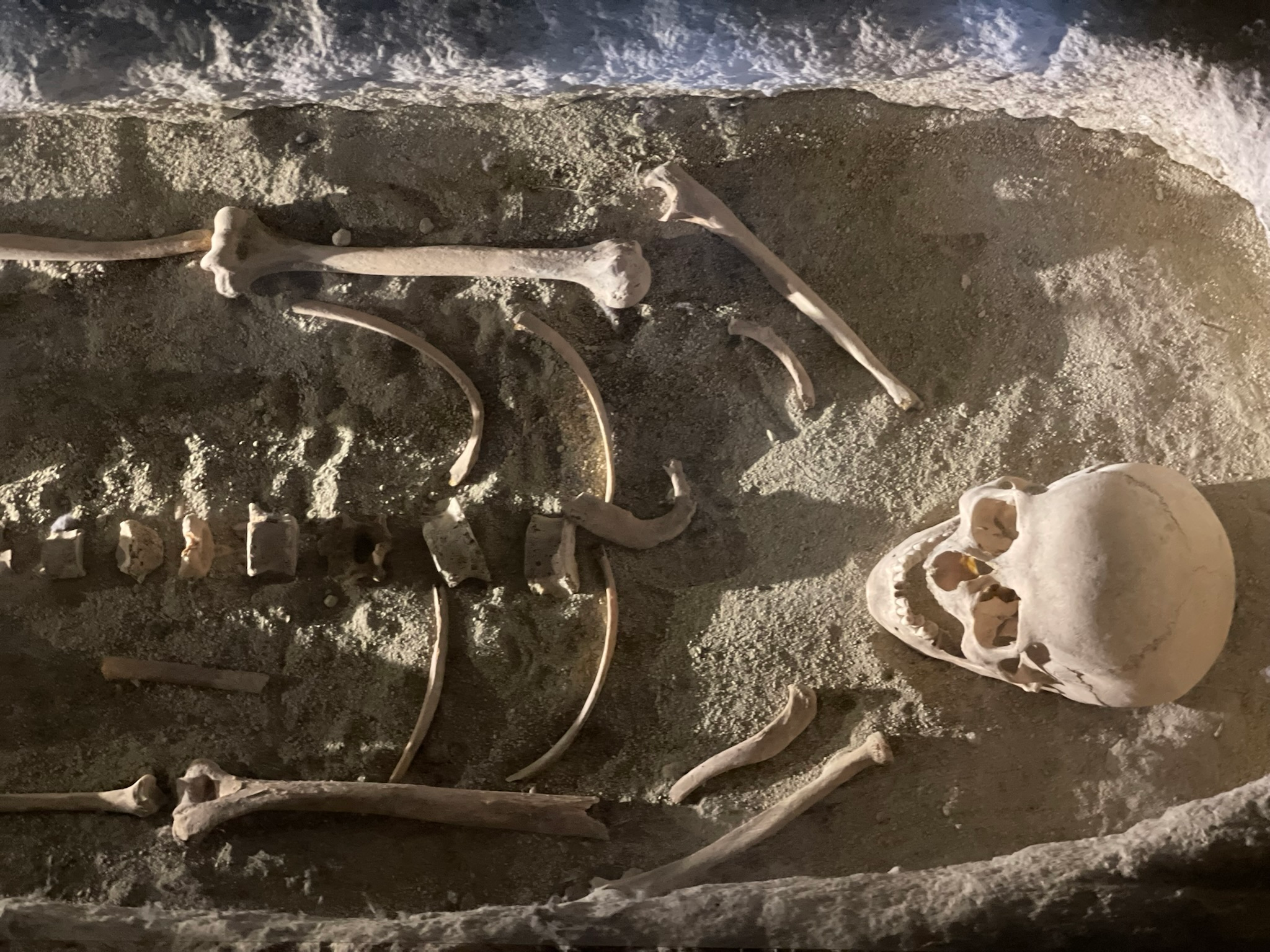
Once at the site, we joined a guided tour. Walking through the complex felt like stepping into a hidden stone city, where faith, art, and daily life are quite literally carved into the landscape. Our guide explained that from around the 10th century onwards, monks carved churches, refectories, living quarters, and burial spaces directly into the soft tuff, creating a self-contained religious community hidden within the valleys. Beyond the art, the site offers insight into monastic life – stone tables where monks ate in silence, narrow corridors worn smooth by centuries of use, and chapels positioned to catch just enough light for worship.
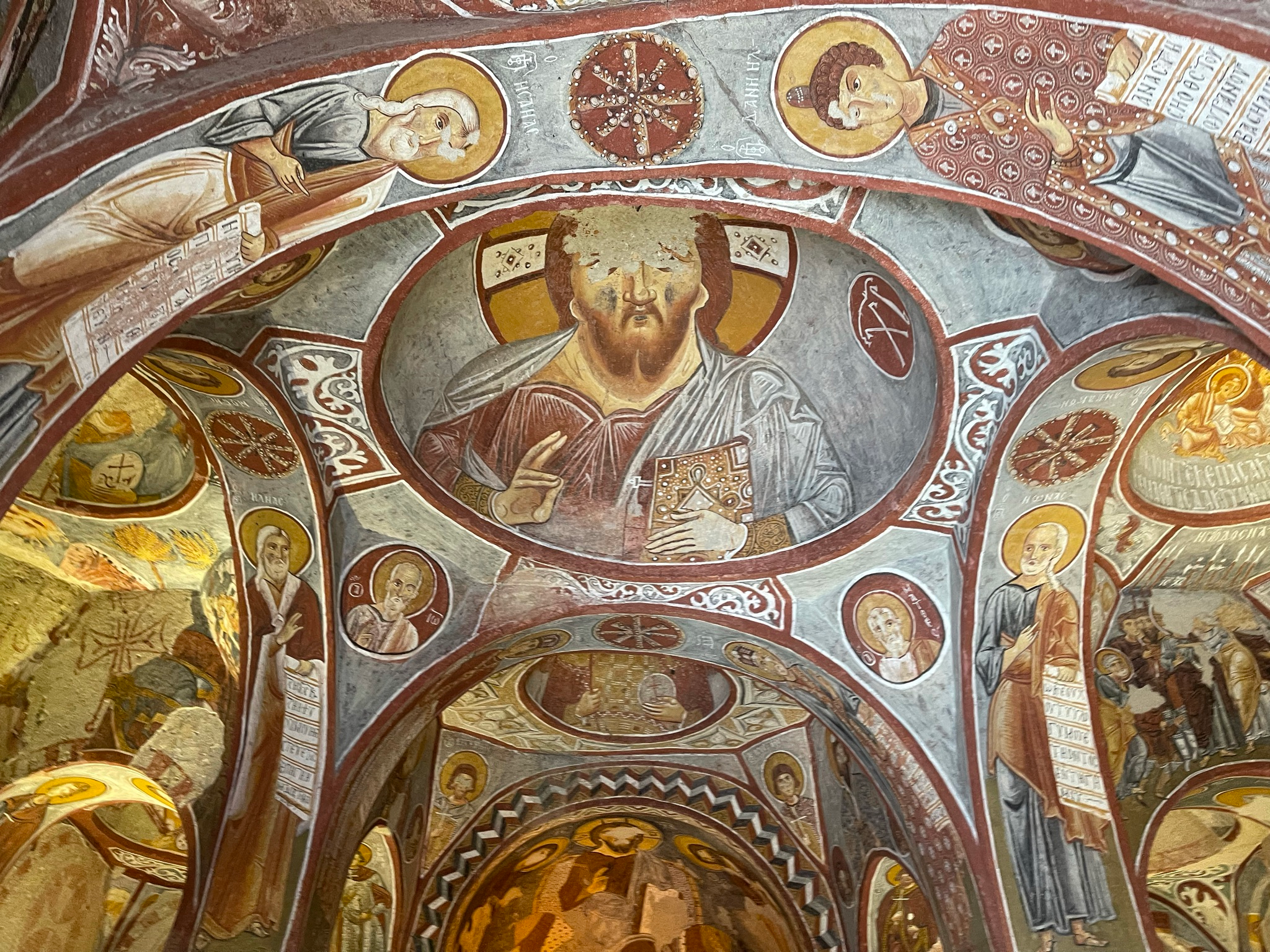
The highlight of the site is arguably the Dark Church, where minimal light exposure helped preserve exceptionally vivid frescoes depicting Christ, saints, and biblical scenes. Other key structures include Tokalı Church, the largest in the complex, as well as the Apple and Snake Churches, each decorated with symbolic imagery reflecting early Christian theology.
As we roamed around the open-air museum, it became glaringly obvious that this was not a single monument, but rather a lived-in landscape, where religion, geology, and survival merge into something quietly extraordinary.