With my next tour starting at 4:30 AM, I had just four hours of sleep to offset some 42 hours of wakefulness. This time round, I’d be going to the El Tatio geysers – a geothermal field found at around 4,300 metres of altitude. Once again, my guide would be the incredible Camila, and after an hour and a half on the road, we found ourselves in yet another astounding landscape.
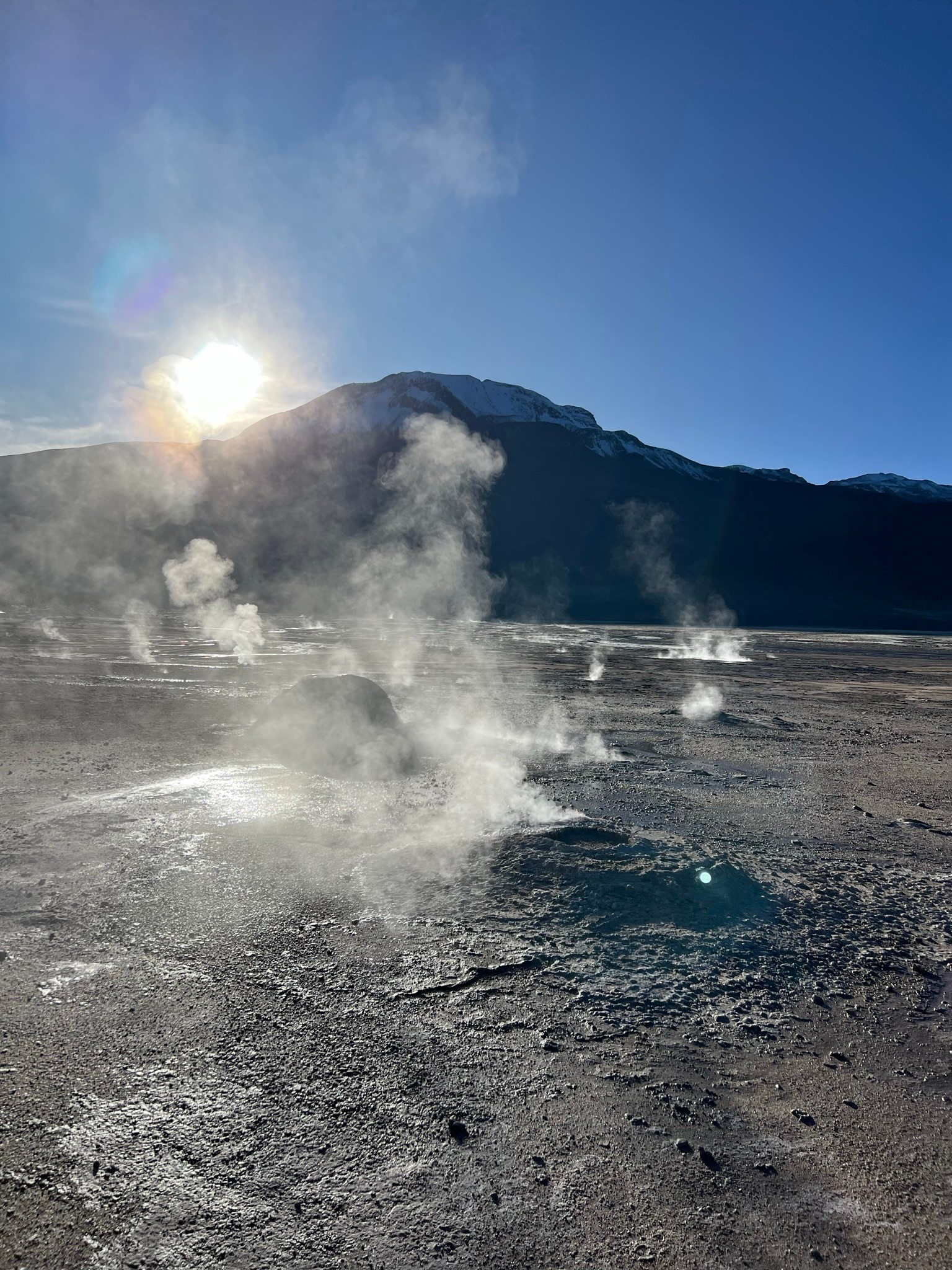
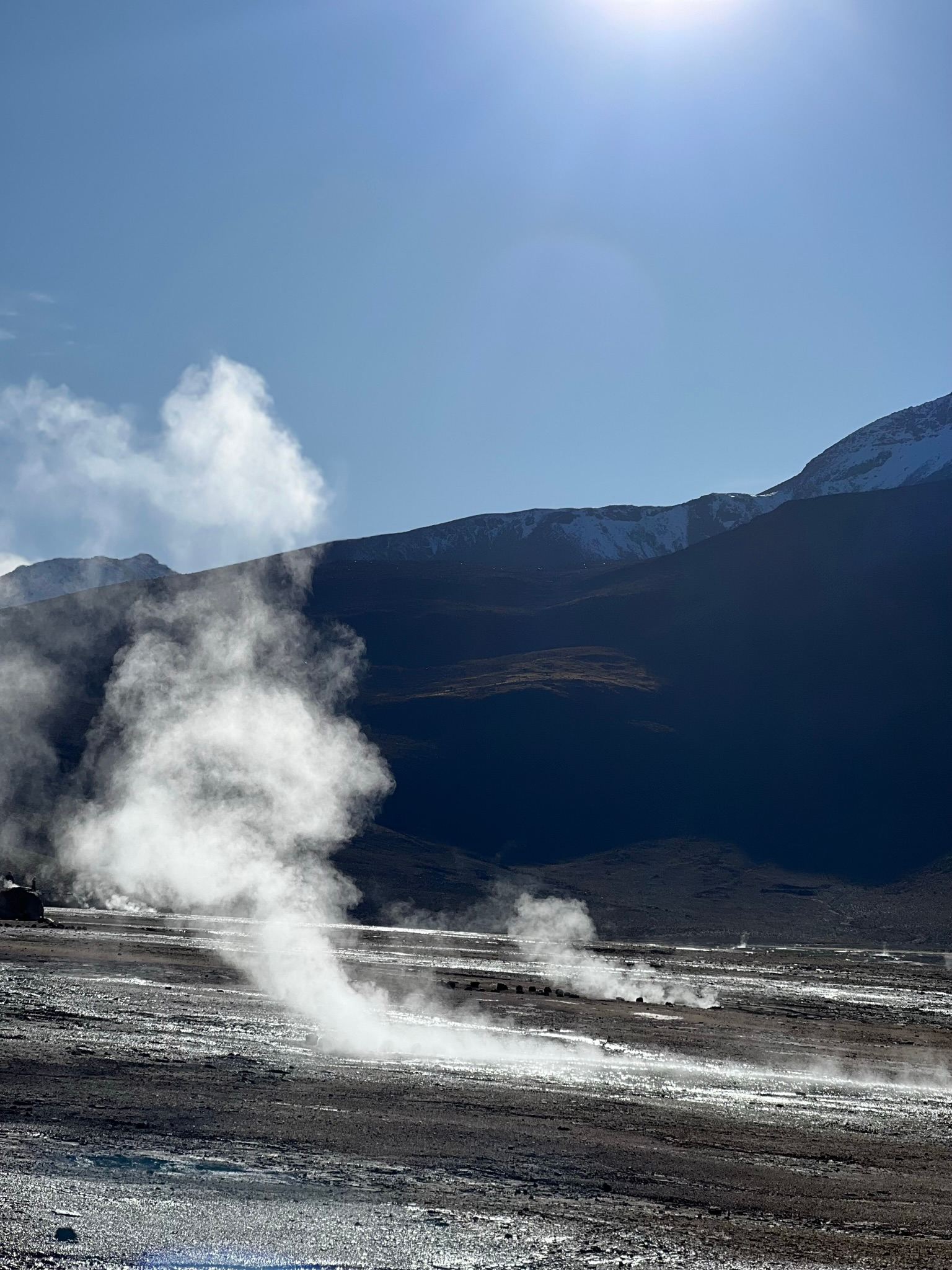
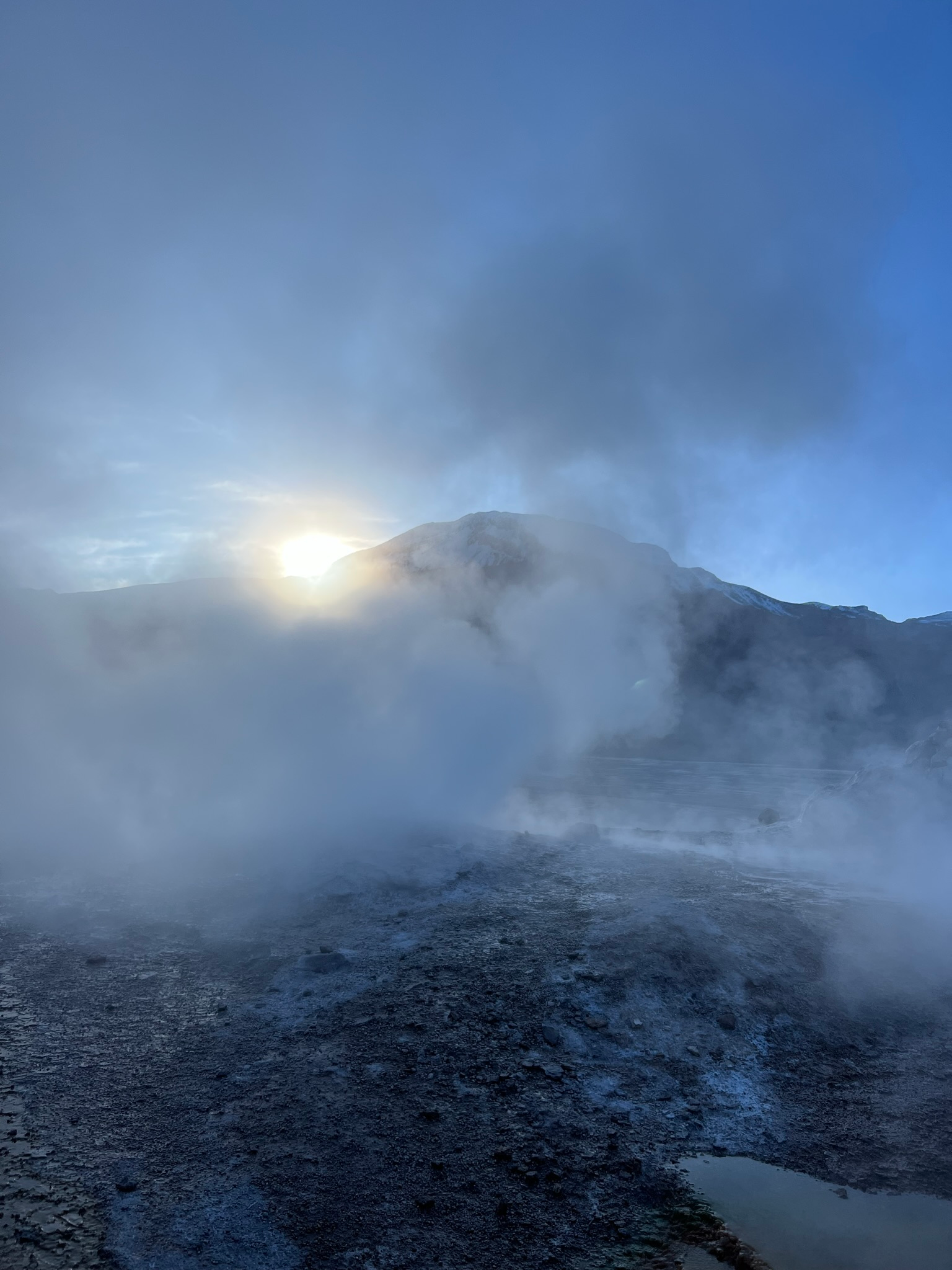
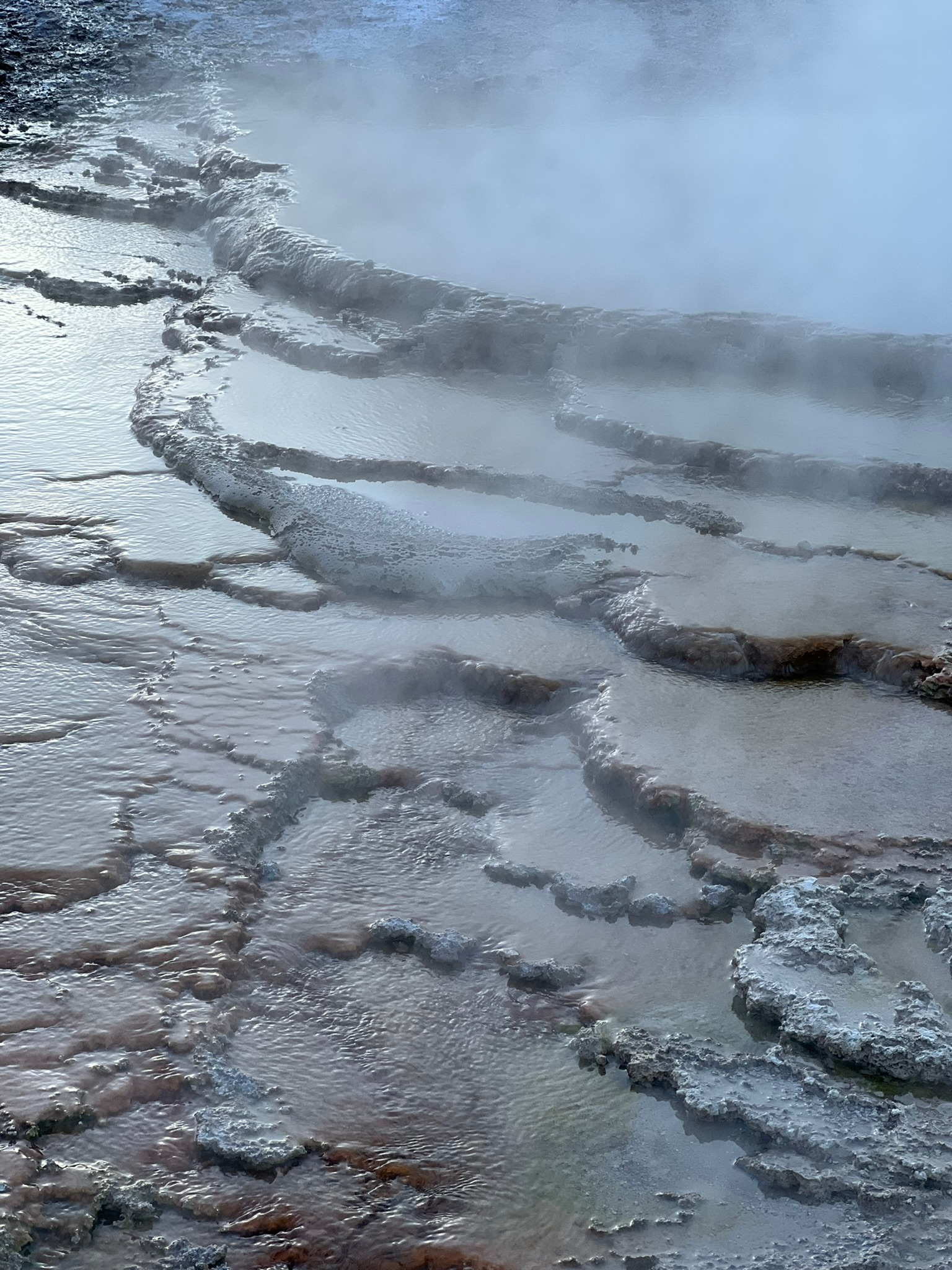
As I was still on the bus, I could hardly believe the scene that was coming into view. An arid, jagged sinter land of black and grey sand and rocks with hills and icy mountains in the backdrop, the plumes of steam and smoke rising up in between the already spectacular landscape. It felt as if we had been transported into a different world.
The reason why we had come here so early, Camila emphasised, was that the fumarole gases are better seen early in the morning, given that the cold morning air aids the condensation of the steam.
The Great Geyser
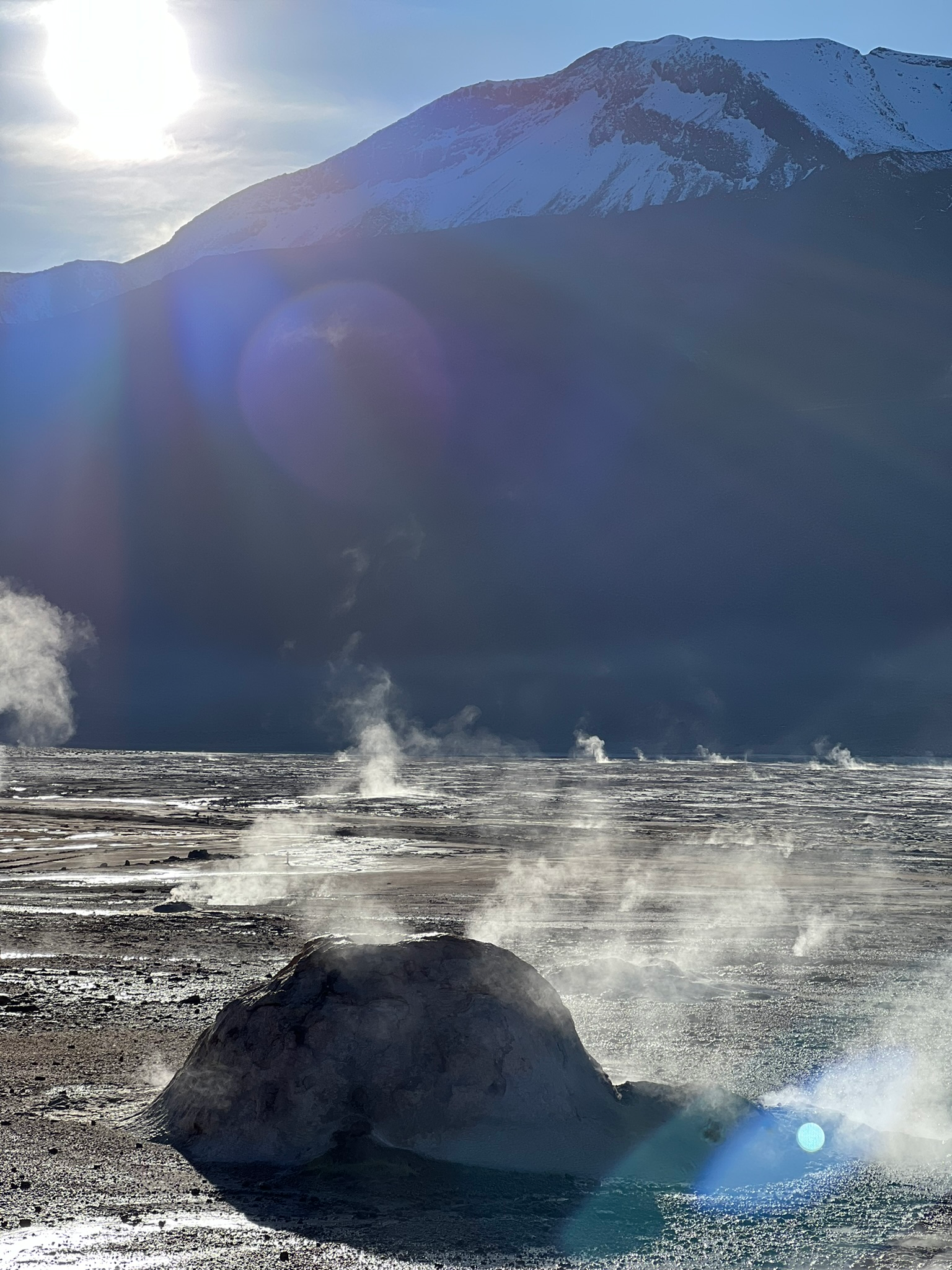
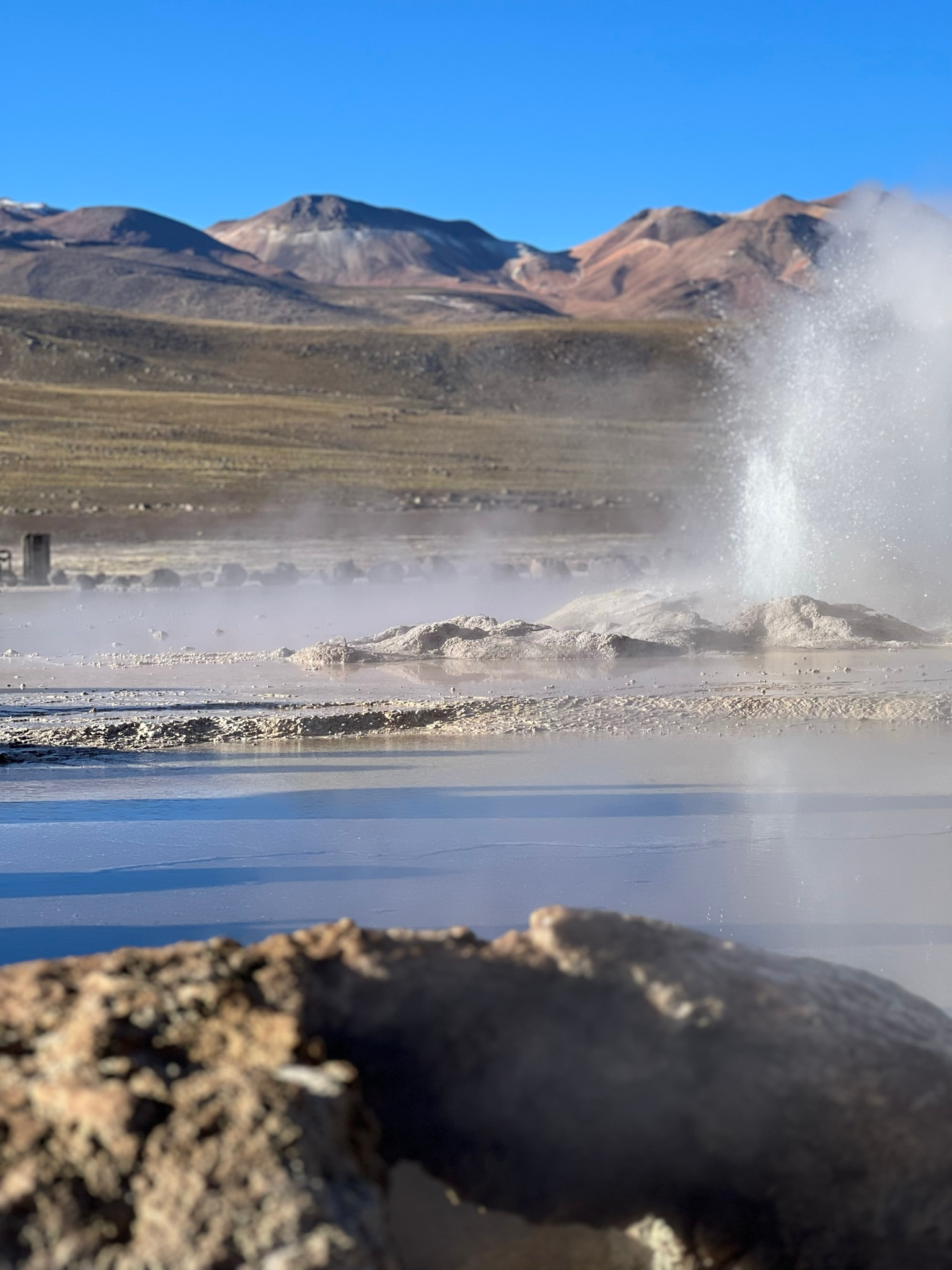
After getting off and walking to the actual site, it only seemed to get more surreal. As I walked in between the clouds of gases and steam released by the fumaroles and geyser cones, I couldn’t help but feel like Beyonce walking out on stage through a smoke machine’s dramatic emissions – the light of the sun refracted woozily through the evaporated water much like a spotlight shining in her eyes.
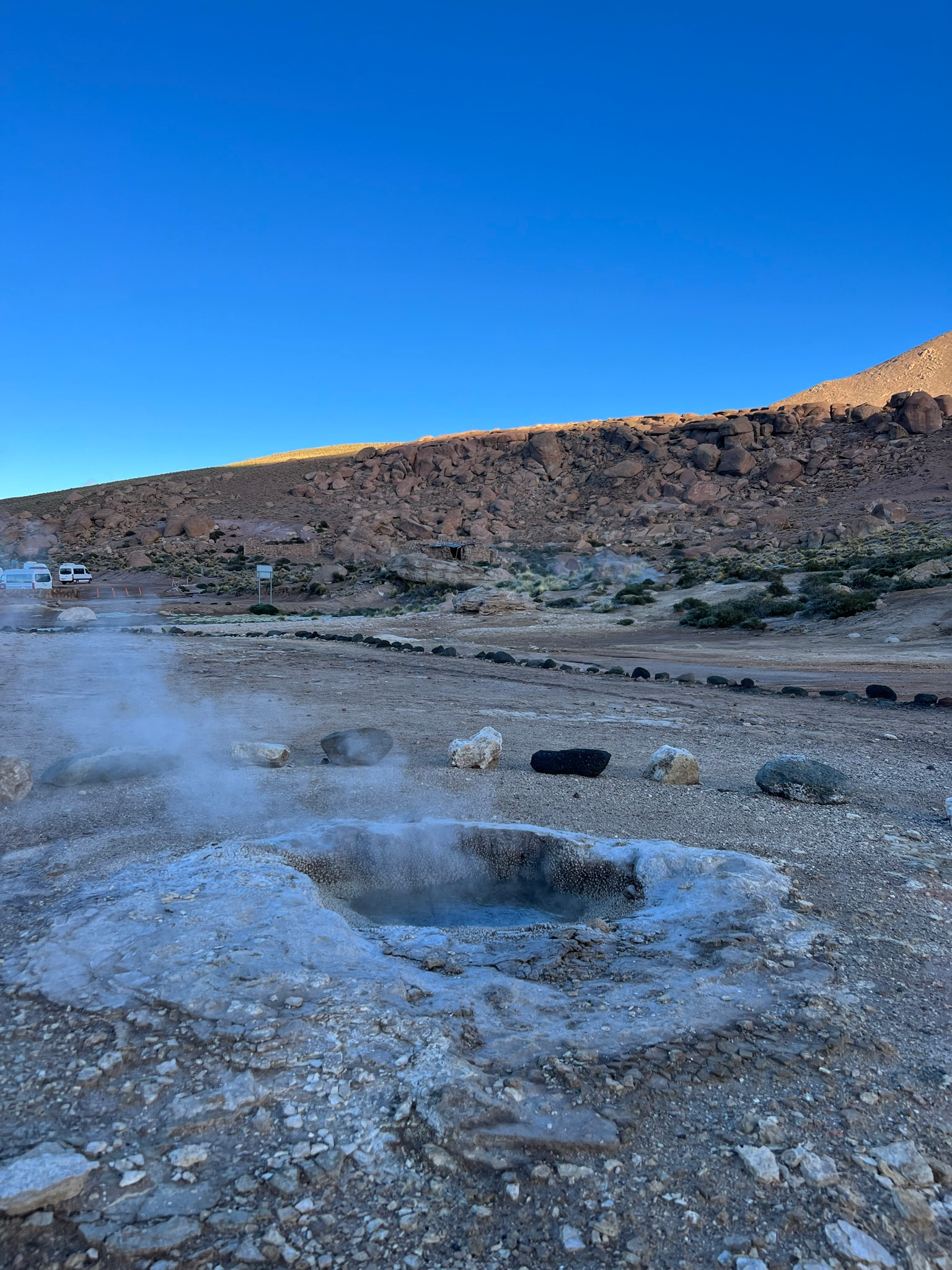
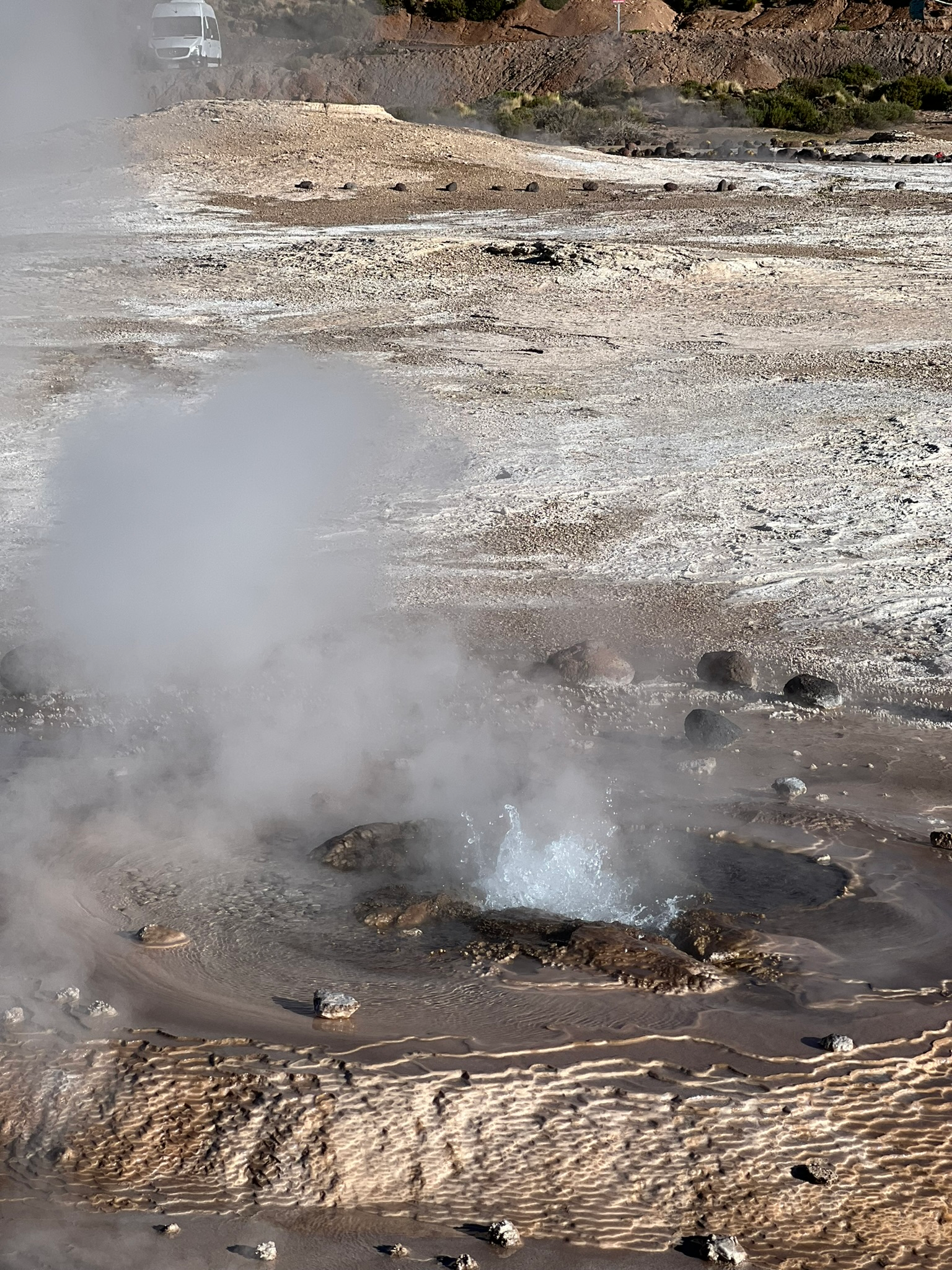
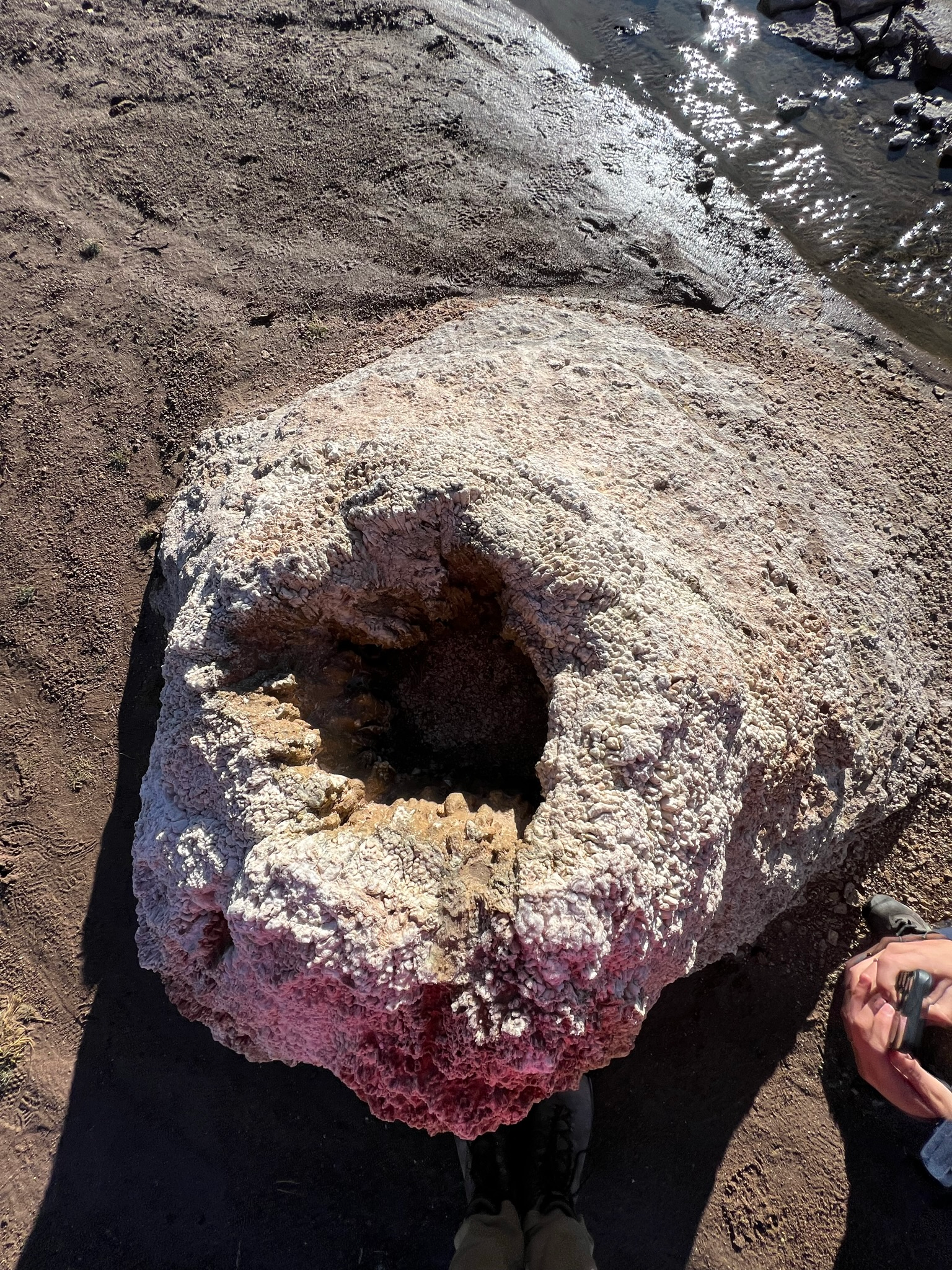
El Tatio, Camila explained, is a geothermal field – the largest in the Southern Hemisphere and the third in the world after Yellowstone in the US and the Valley of Geysers in Russia. Boasting a number of geysers, mud volcanoes, steam vents and hot springs, the area receives heat from the magma chambers of nearby stratovolcanoes in the Central Volcanic Zone. As water heats up in geyser chambers, pressure starts to rise, causing fractures and fissures to form in the ground. Once water boils, steam made up of water, carbon dioxide and hydrogen sulfide is formed. This may be slowly released or, when conditions are just right, a superheated column of steam and water blasts through, resulting in a burst of activity that lasts a few minutes.
Extremophiles and Martian Dreams
As we made our way around the geysers, staring in amazement at the sizzling cones as they spouted steam, we couldn’t help but notice the green and orange colouration of some of the pools.
These, Camila told us, were a mix of algae, diatoms and cyanobacteria – extremophiles that have adapted to this harsh environment. Given their ability to convert carbon dioxide to oxygen through photosynthesis while withstanding boiling, arsenic-rich water, Camila added that importing these microbes to Mars as part of a terraforming project could very well be a first step to turning an inhospitable land into one we can eventually live on.
In the distance we could also see some unused machinery. This, we were told, was a perforator drill used for geothermal energy harvesting. This area was once a geothermal powerplant until a major incident where a well blew up, creating a giant steam column that threatened the field’s integrity. Now, it is a protected site and a major source of revenue through tourism.
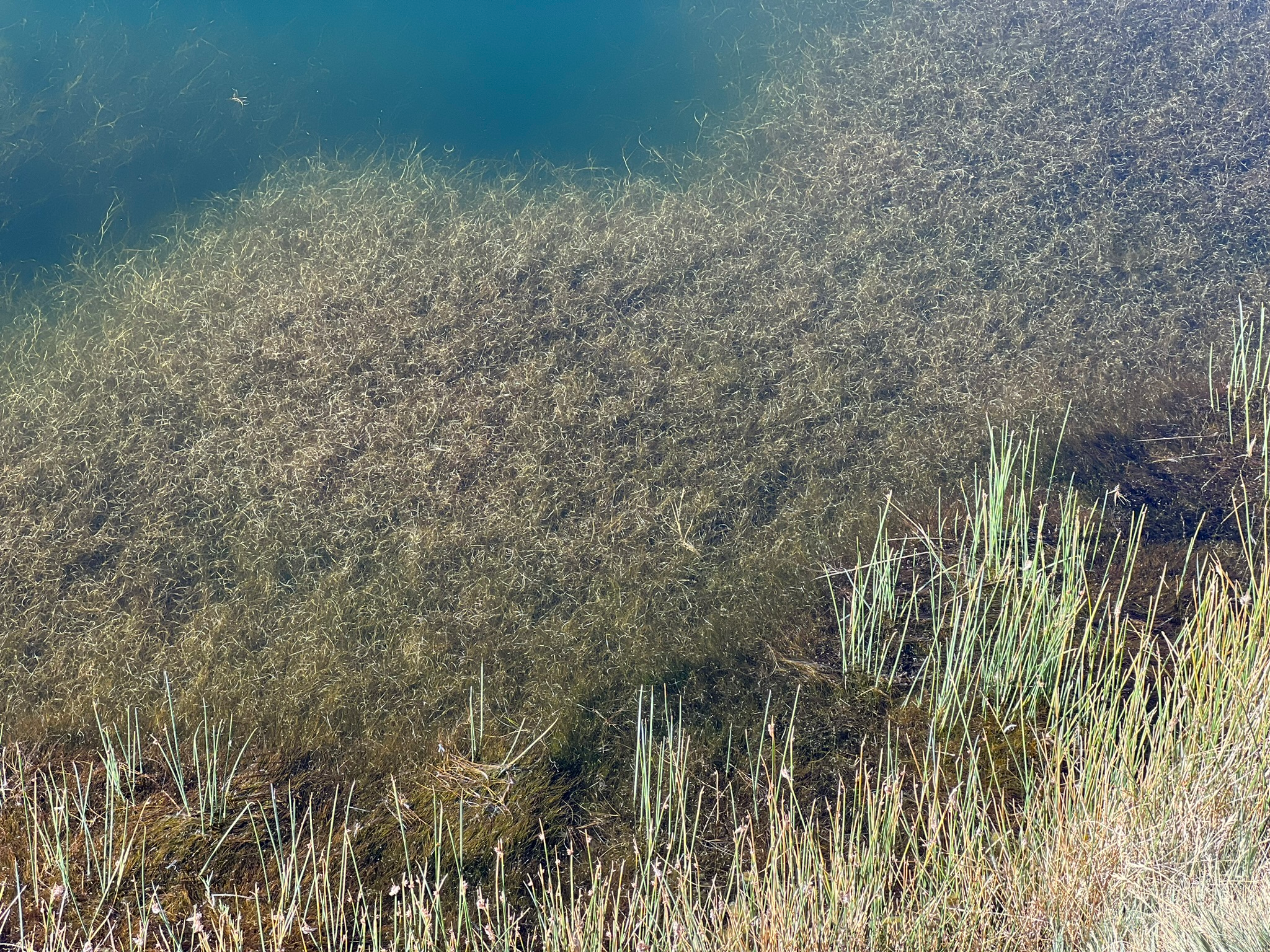
As we started on our way back, we found another picture-perfect picnic spot. Right in front of us was a large stretch of marshlands – quite the opposite of what you’d expect in the driest place on the planet. Here, we could see Puna teal ducks and vicuñas as they idly grazed about. Just like a postcard.
PART II
The Atacama Salt Flat
And finally, I had one final tour left. By this time, I had crammed so much in with such little sleep that it felt like I was just checking things off a long, unending list. I’m not gonna lie – I was a bit glad it’d be my last activity for the time being.
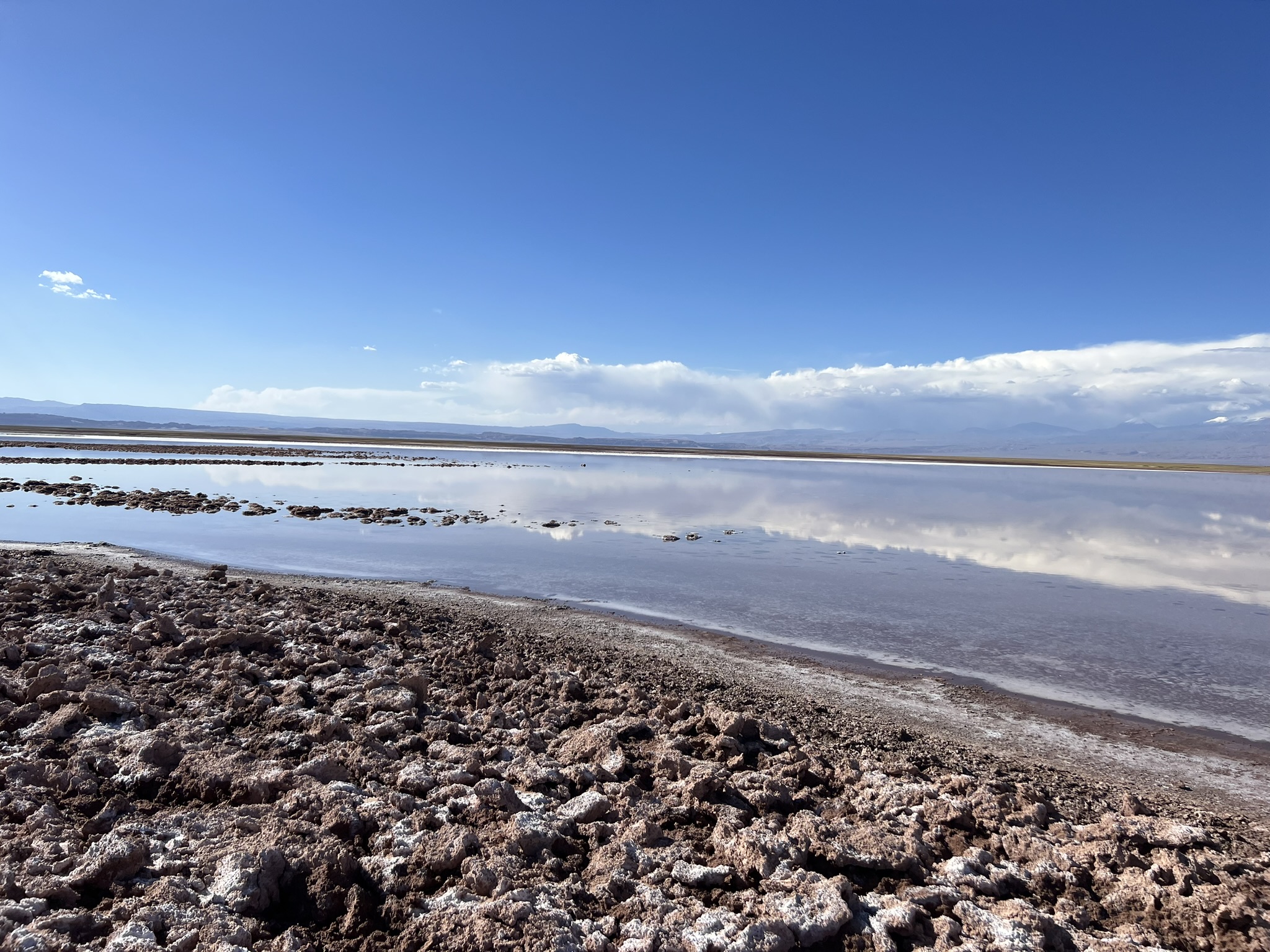
My final stop would be a short tour around some lakes in the Salar de Atacama; the largest salt flat in all of Chile. The 3,000 square kilometre bed of salt is located between the Andes to the east and the Cordillera de Domeyko to the west. The salt flat is the lowest drainage sink in an endorheic basin – a land-locked area with no drainage or outflow system. As water evaporates, a high concentration of minerals is left behind, which acts to erode the rock and form a salt flat. The salt here is particularly rich in lithium, which Camila told us is harvested in great quantities for lithium batteries. As the group was reminded we wouldn’t be venturing deep enough to see the entirely salt-covered area, most were disappointed. I, for one, didn’t mind. I didn’t want to spoil the Uyuni salt flat in Bolivia (even though I had no plans to visit yet), and I was too tired to actually make the most of it.
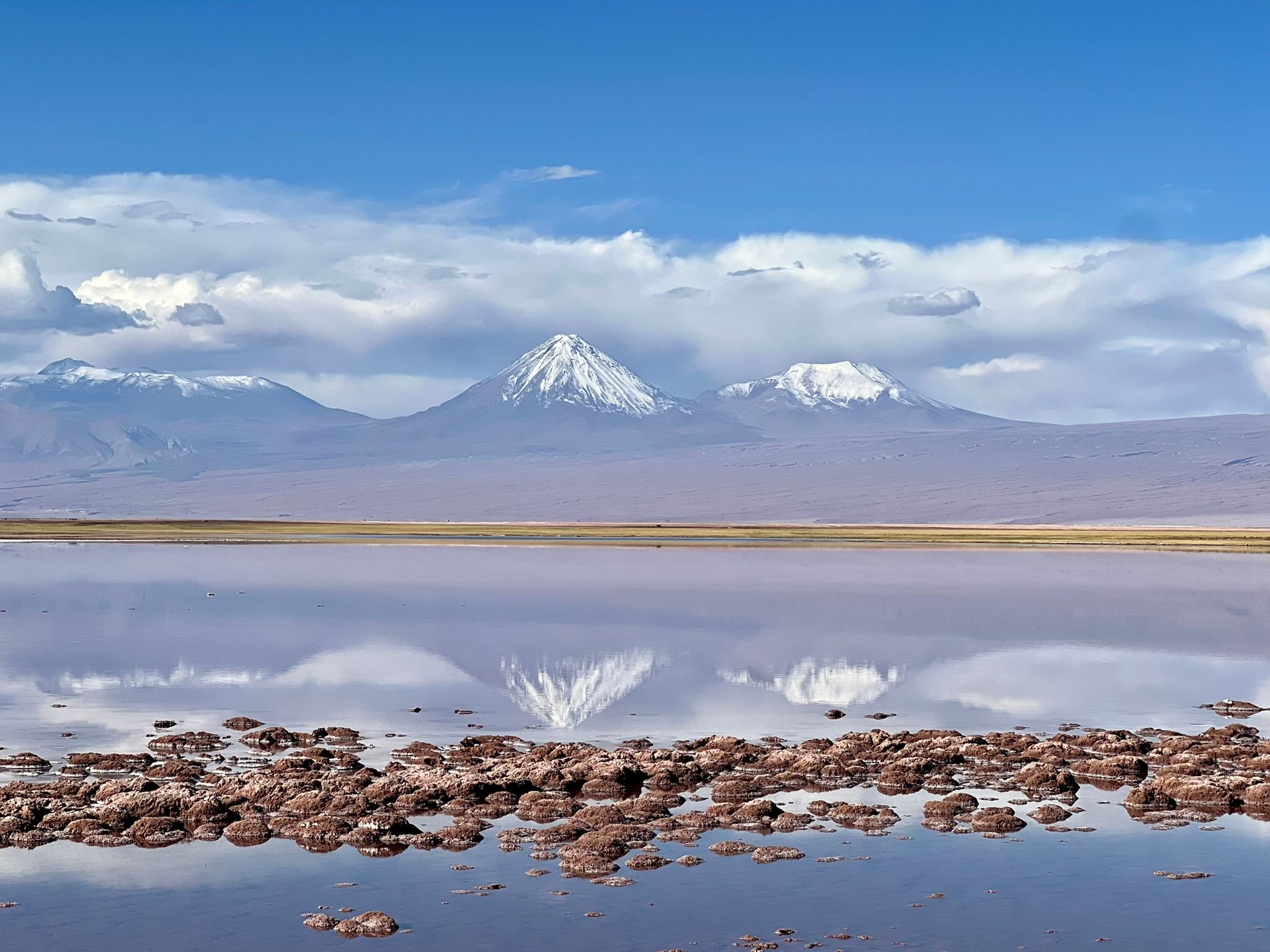
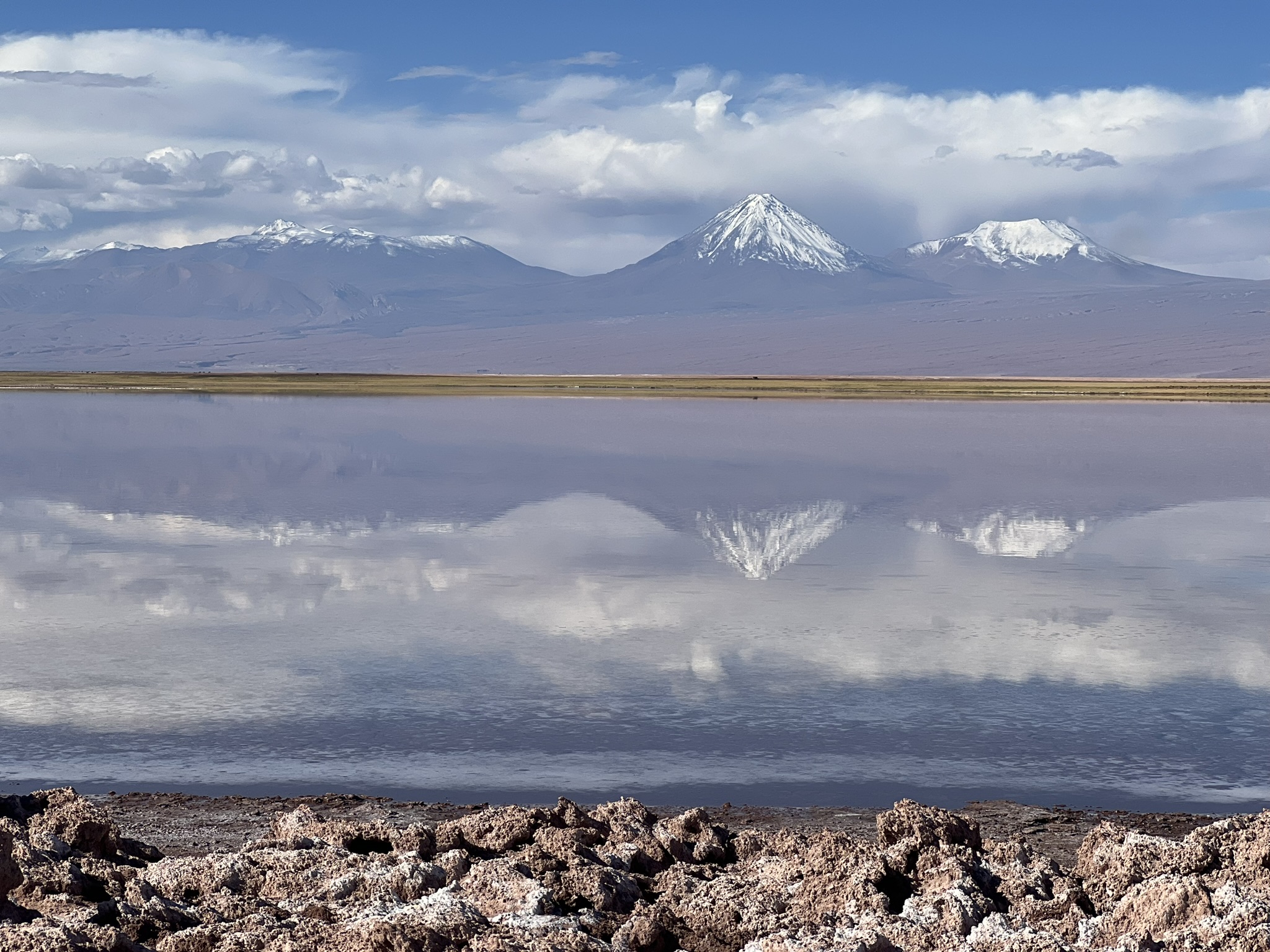
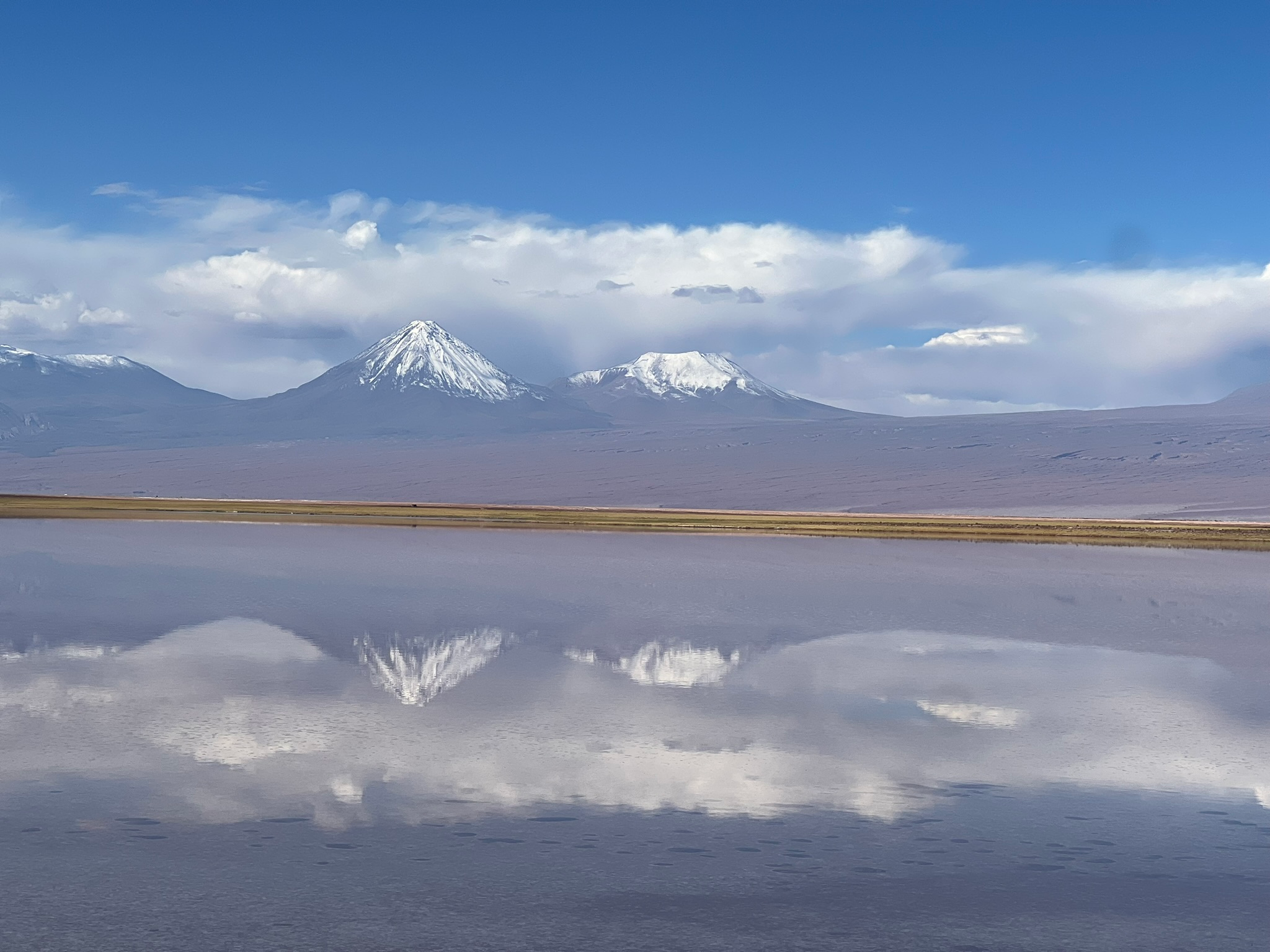
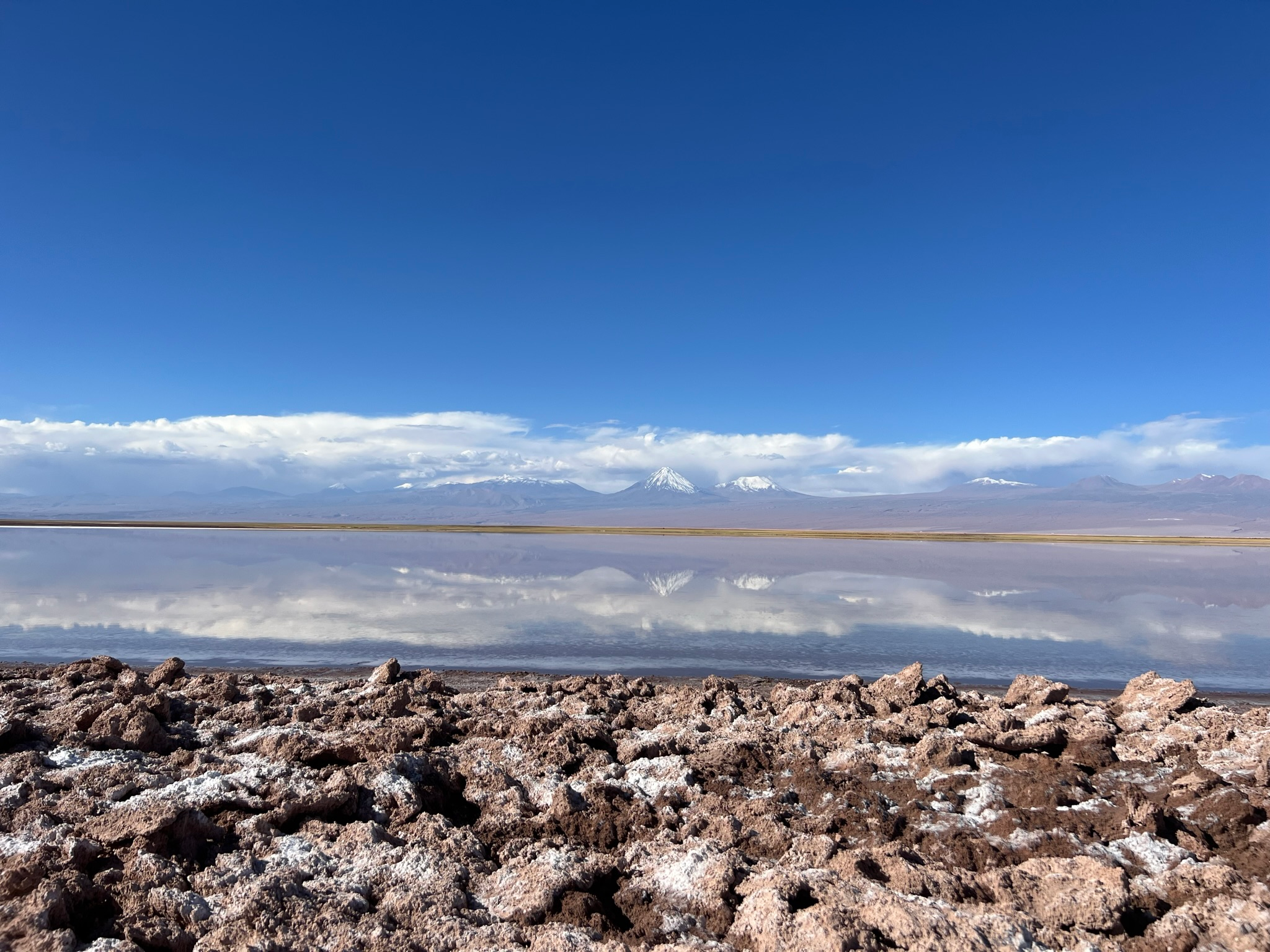
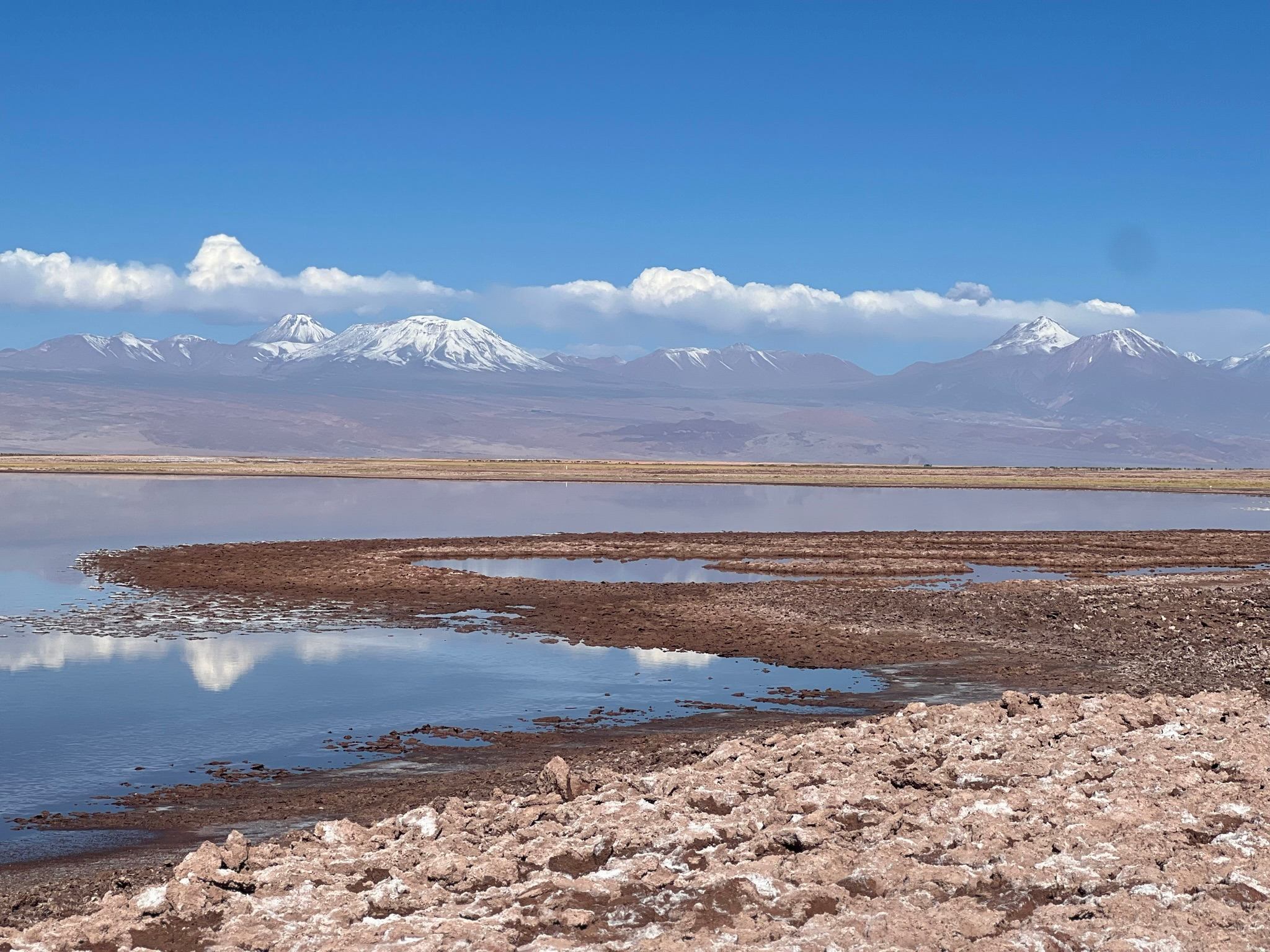
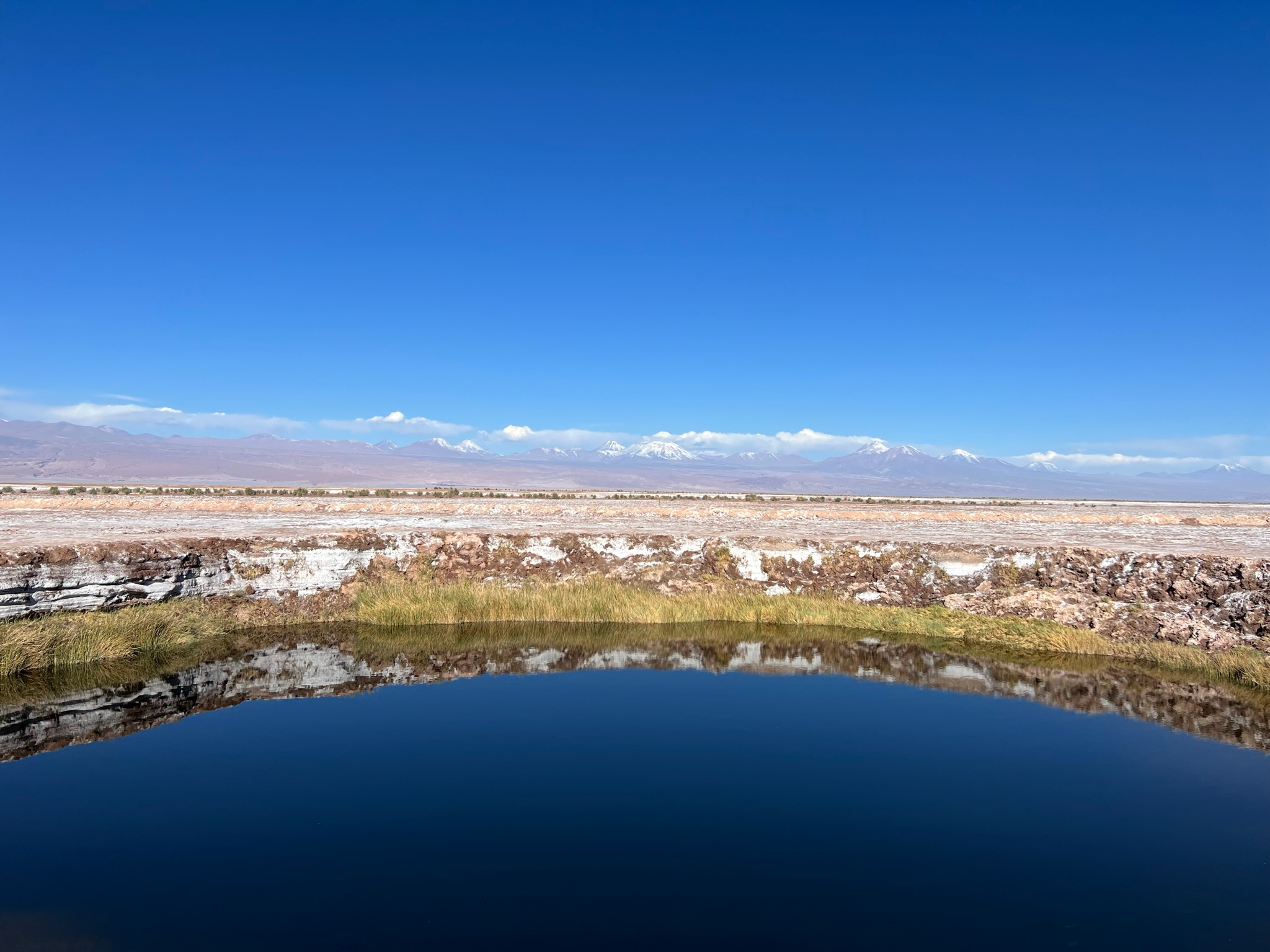
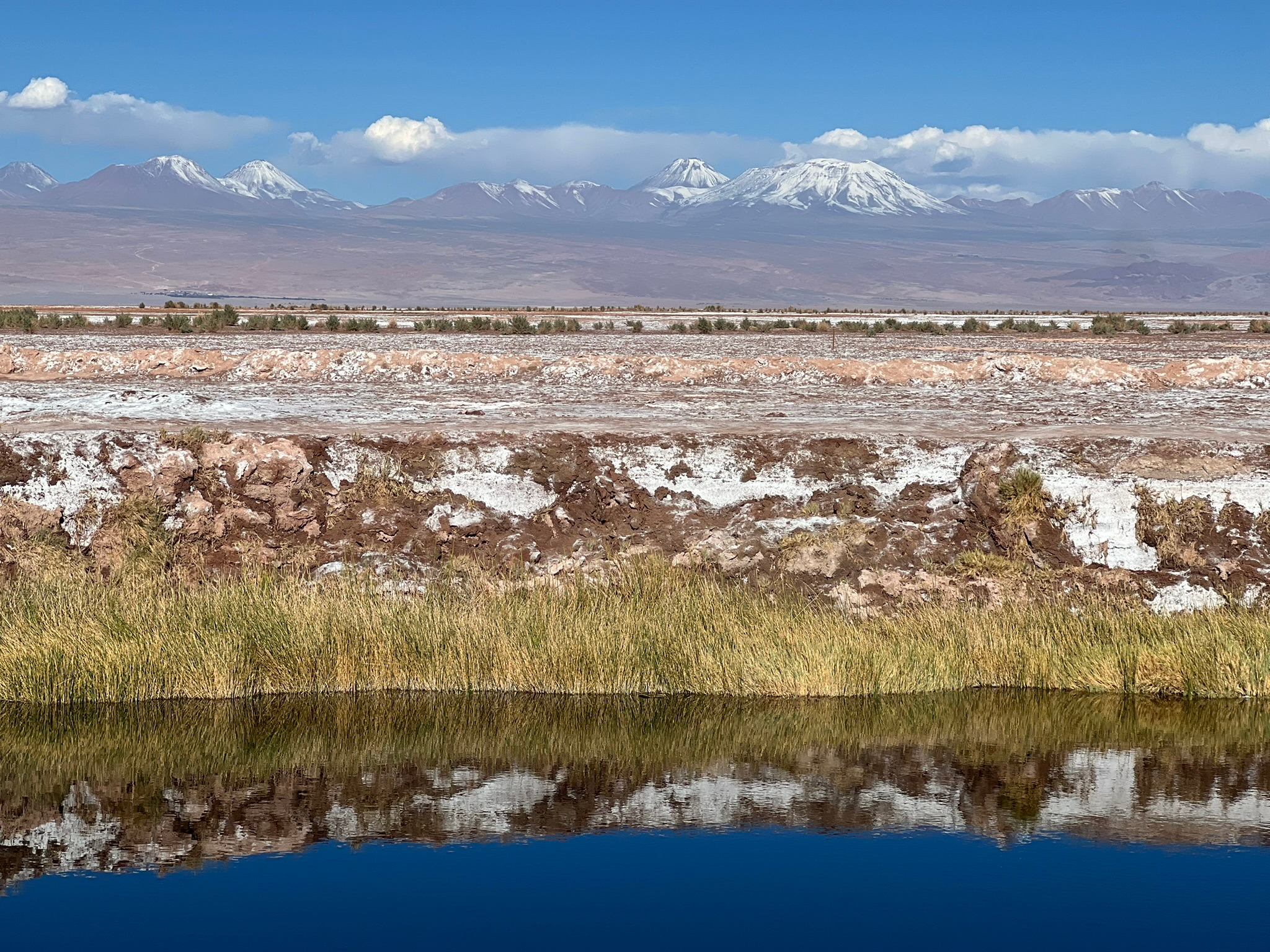
With that, we started our way towards Laguna Tebinquiche – a pool of water born from thawed snows and rains. It was the thin layer of water perfectly mirroring the mountain range that stole my attention. Not one ripple was to be seen. I’m telling ya, the reflection was so perfect I nearly thought upside-down mountains were a thing for a sec there.
Here, Camila shared a local Atacameño legend tied to the volcanoes rising before us. To them, the volcanoes were powerful, ancient warriors, in contrast to the delicate and beautiful mountain maidens. Láscar’s sons, Licancabur and Juriques – two brave and valiant volcanoes – were locked in a bitter rivalry over Quimal, the most beautiful maiden in the entire desert. When Quimal confessed her love for Licancabur, his brother challenged him to a duel, one that cost Juriques his head – hence his flat summit and nickname, the Beheaded One. To add to the drama, Quimal was exiled to the opposite side of the salt flat by Láscar for having caused all this chaos. Though her existence may seem sad and lonely, during every solstice the shadow of her beloved Licancabur stretches across the valley to embrace her. If this ain’t cute, I don’t know what is.
Floating in Liquid Arsenic
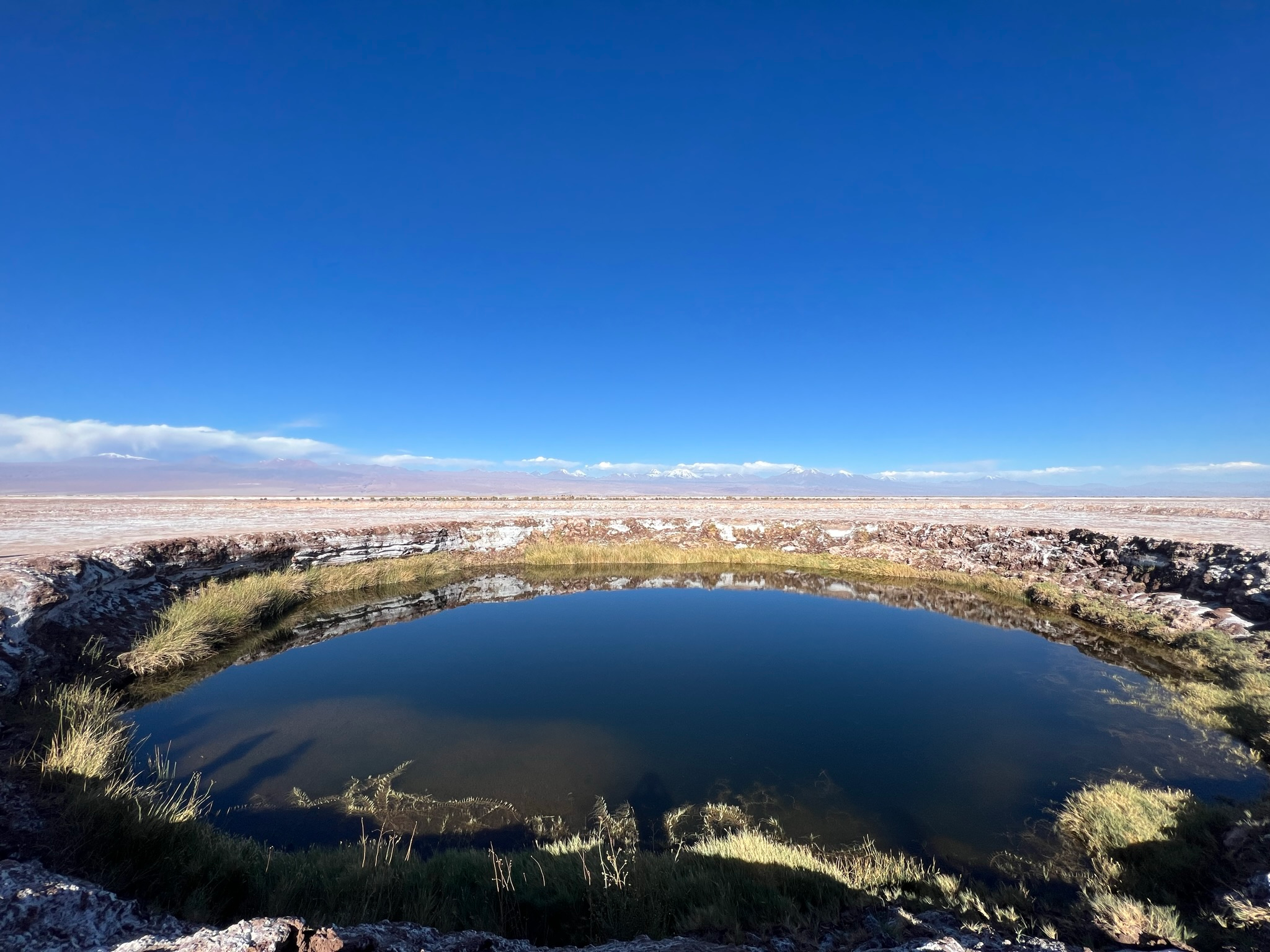
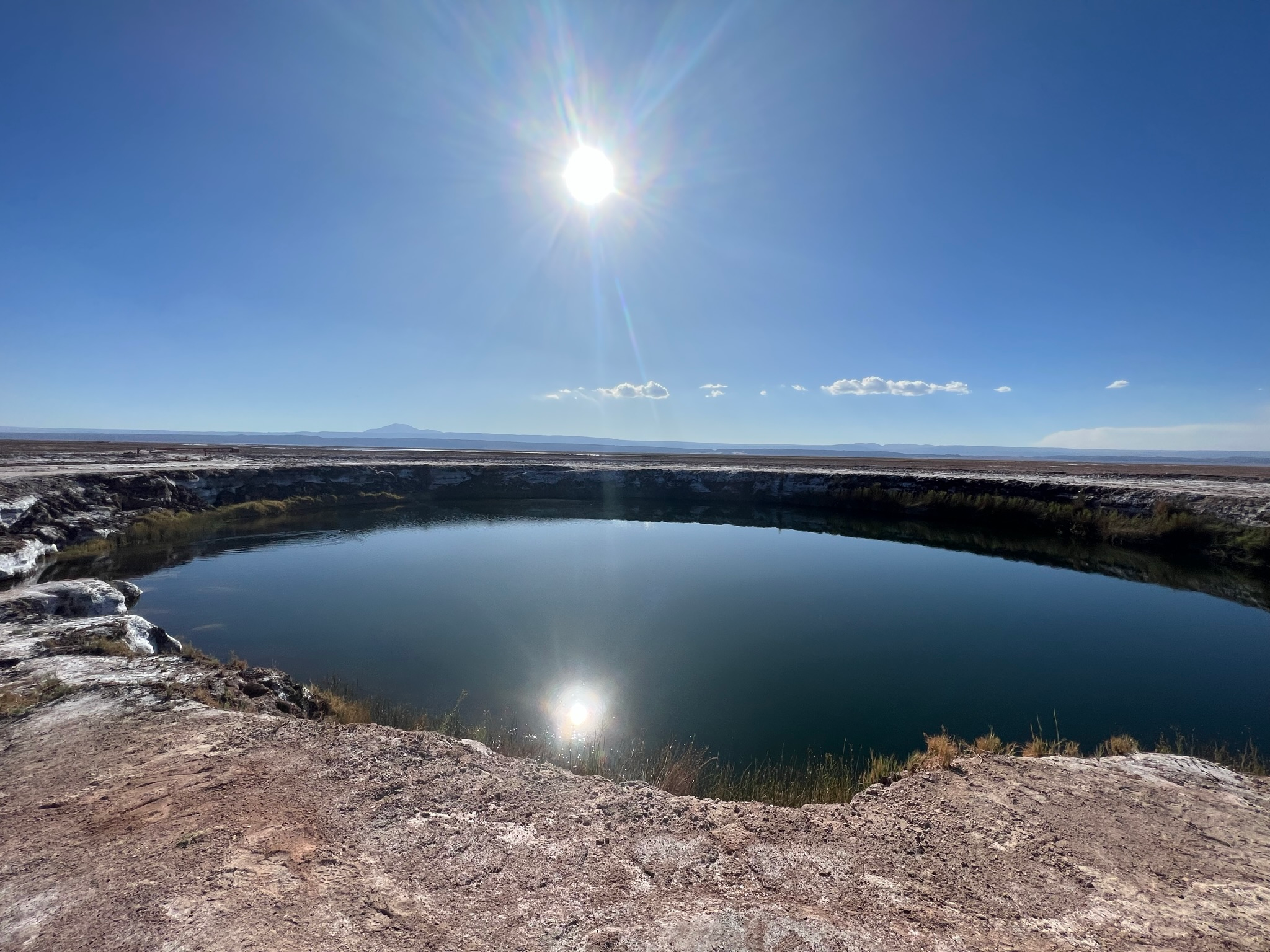
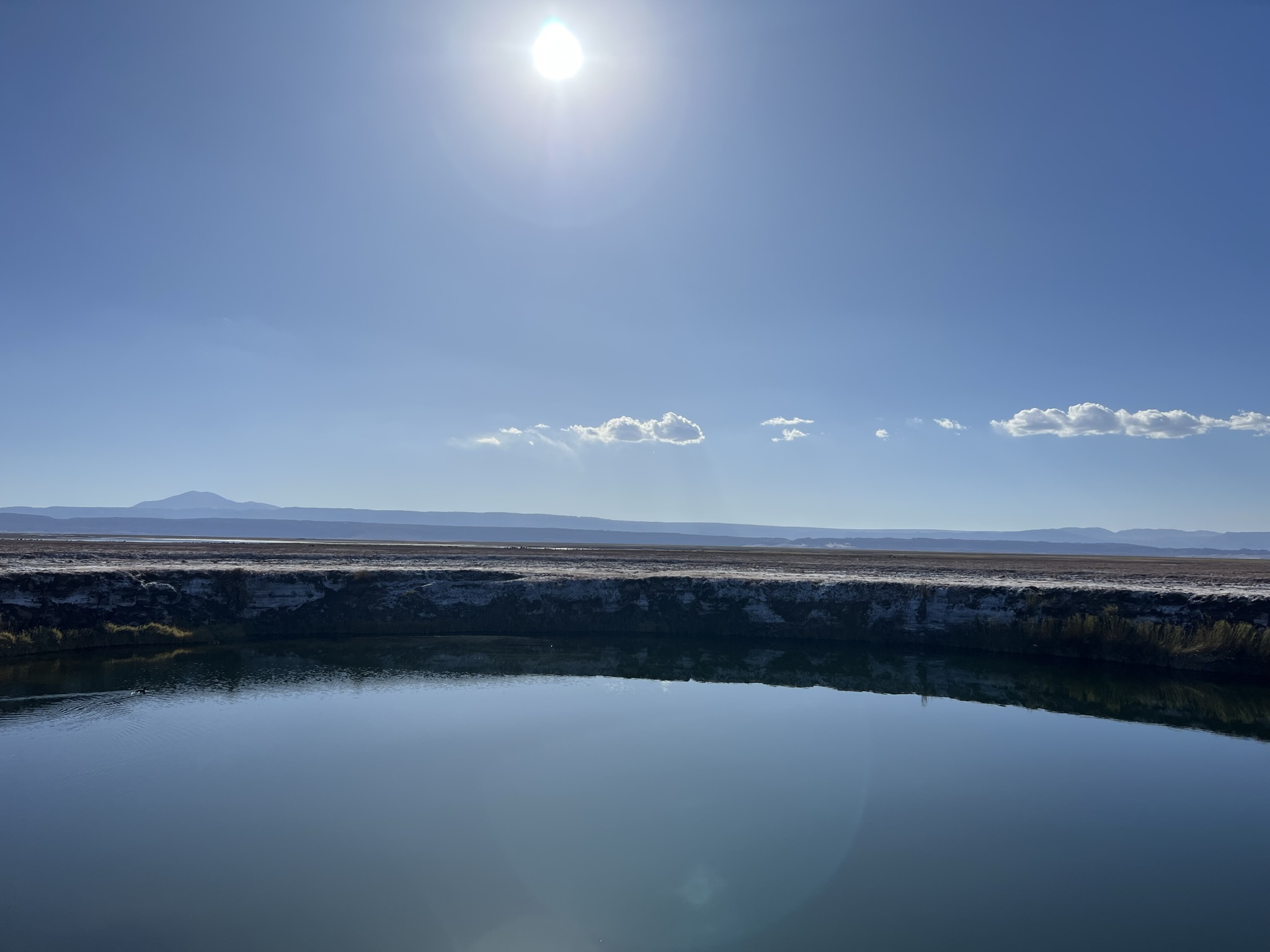
Next up was Ojos del Salar – two perfectly round freshwater wells that look like the eyes of the salt flat. Once again, I found myself wondering how on earth these things come to be without some sort of grand design. Simply insane!
We then made our way to Laguna Cejar, the lagoon we had been promised a swim in. Its emerald waters provide a refuge for local flora and fauna, including three dominant plant species, two species of lizards and nine species of birds. In the distance, we even managed to spot four flamingos. While swimming here was no longer permitted – or even approaching the lagoon, for that matter – due to conservation efforts, we instead headed to nearby Laguna Piedra. Much like Cejar, it is notable for its high salinity, with salt concentrations of around 20 percent, making it roughly six times saltier than the sea.
All suited up in my swimming trunks, I was the first to get into the lagoon, unable to withstand the scorching sun any longer. By “get in”, I don’t really mean jump. Given the high salt content and irritative properties of the water, we were warned to enter slowly to avoid splashing it into our eyes. And so, step by step, I eased myself in until I found myself floating effortlessly on the surface. It felt so, so weird. Kinda like wearing a life vest or a BCD without the actual thing strapped to your body. I’d try to stand upright only to find my legs popping back up automatically. I could only imagine how much extra weight I’d need to actually sink. And no – no one has ever dived in this lake, just in case you were wondering.
After about thirty minutes, we were practically evacuated from the water as park rangers rushed us out. Any longer, they explained, and our skin would likely start reacting to the salt – not to mention that the arsenic-rich waters aren’t exactly safe either. Once out, the brisk desert air dried us off in minutes, leaving behind a thick, chalky layer of salt clinging to every inch of exposed skin.
A quick shower and a short ride later, I was once again staring at a familiar scene – the sun sinking over the desert as we enjoyed one final platter and a pisco sour. This would be my last cool destination of the trip. As much as I would have loved a proper rest instead of being there, I did my best to take it all in, to really feel it, to acknowledge just how grateful I was. As the sun dipped below the horizon, so too did my adventures across Latin America.