Bariloche – Day 4: Lakes and Legends
BARILOCHE
Day 4: Lakes and Legends
March 18, 2023
Having heard about the Circuito Chico trail that goes around some of the most beautiful lakes around Bariloche, I felt pretty hyped about more hiking. Turns out the best way to do this is by biking – a skill I hadn’t quite learned as of yet, much to my shame. With the route not making for the nicest of walks, I found myself on a tour bus once again.
Though I felt as if I’d outgrown bus tours by that point in time, I have to admit that it was quite nice to be sitting on a comfortable bus without having to do any planning and walking – especially with my post-Antarctica hangover still acting up. Plus, with César explaining everything, it would also be an educative activity – not just being dropped off from one place to the other.
He started off by telling us that Bariloche is surrounded by six lakes and that we’d be visiting two of them: Lago Nahuel Huapi and Lago Moreno – with the former being the most important in the region.
Bariloche From the Bus Seat
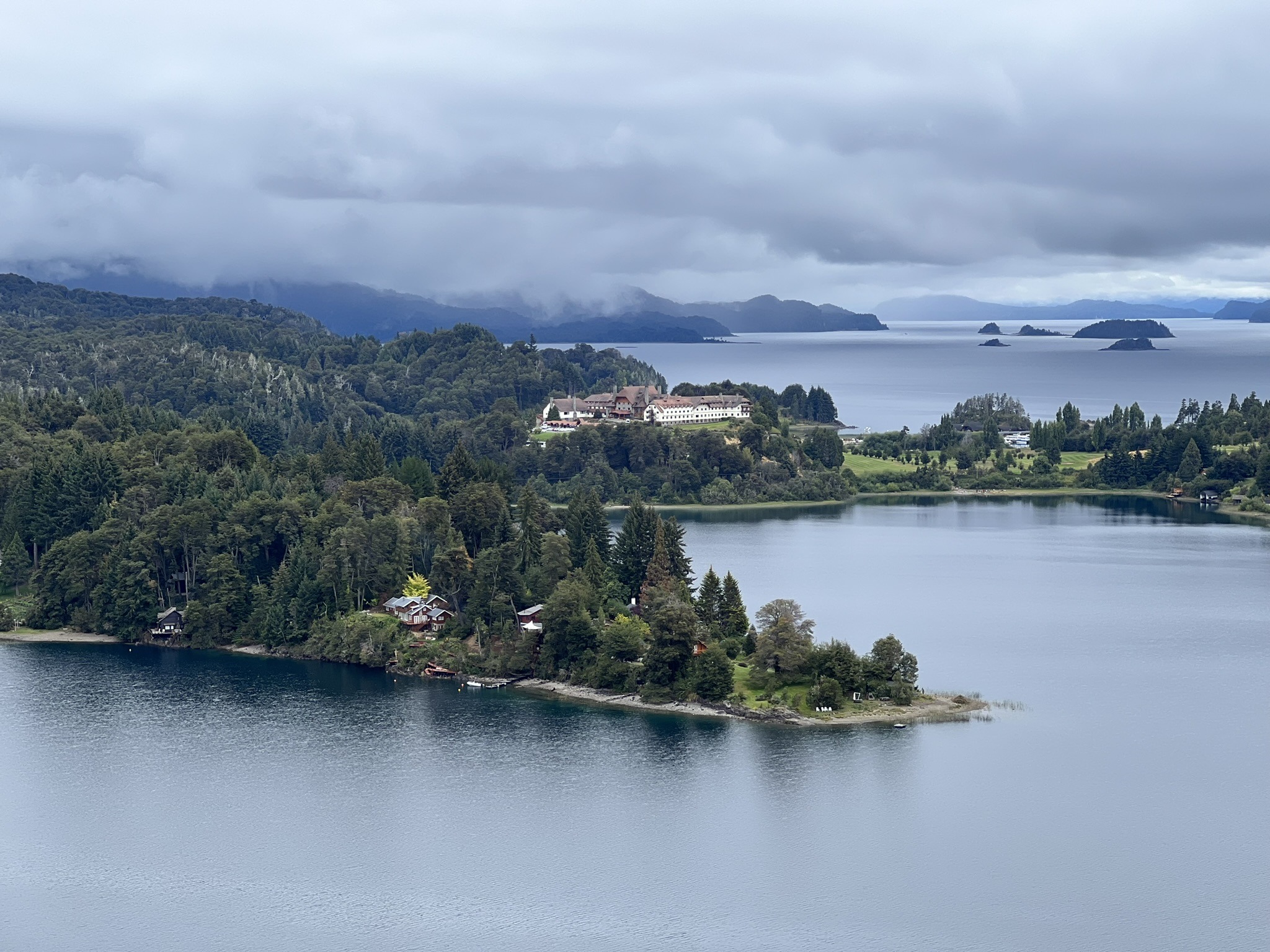
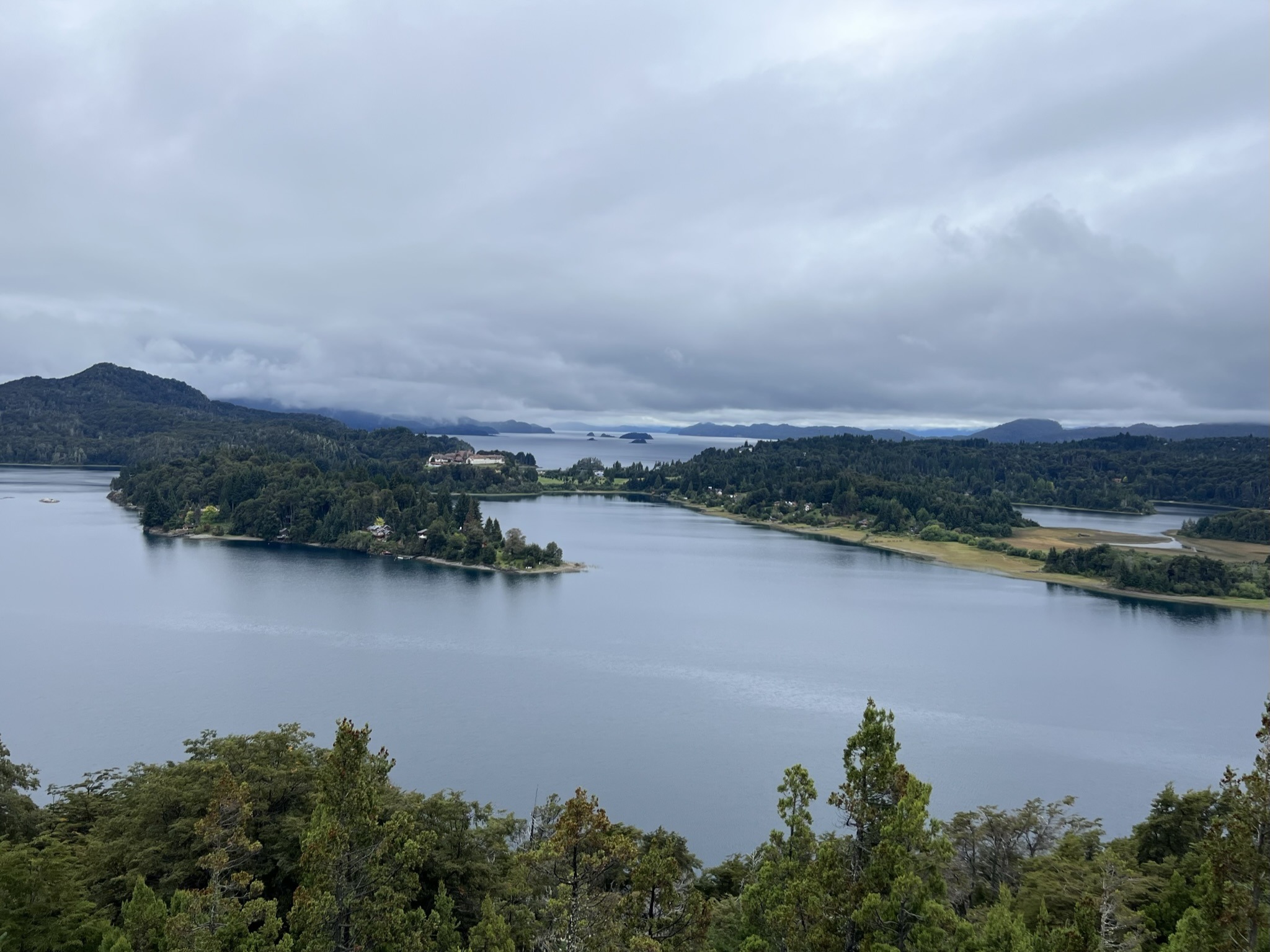
With that, we started off on the tour. As we drove on, César explained that Lake Nahuel Huapi is one of the largest lakes in Patagonia, with a surface area of roughly 530 square kilometres and a maximum depth of about 464 metres, featuring seven branches as well as several islands and peninsulas.
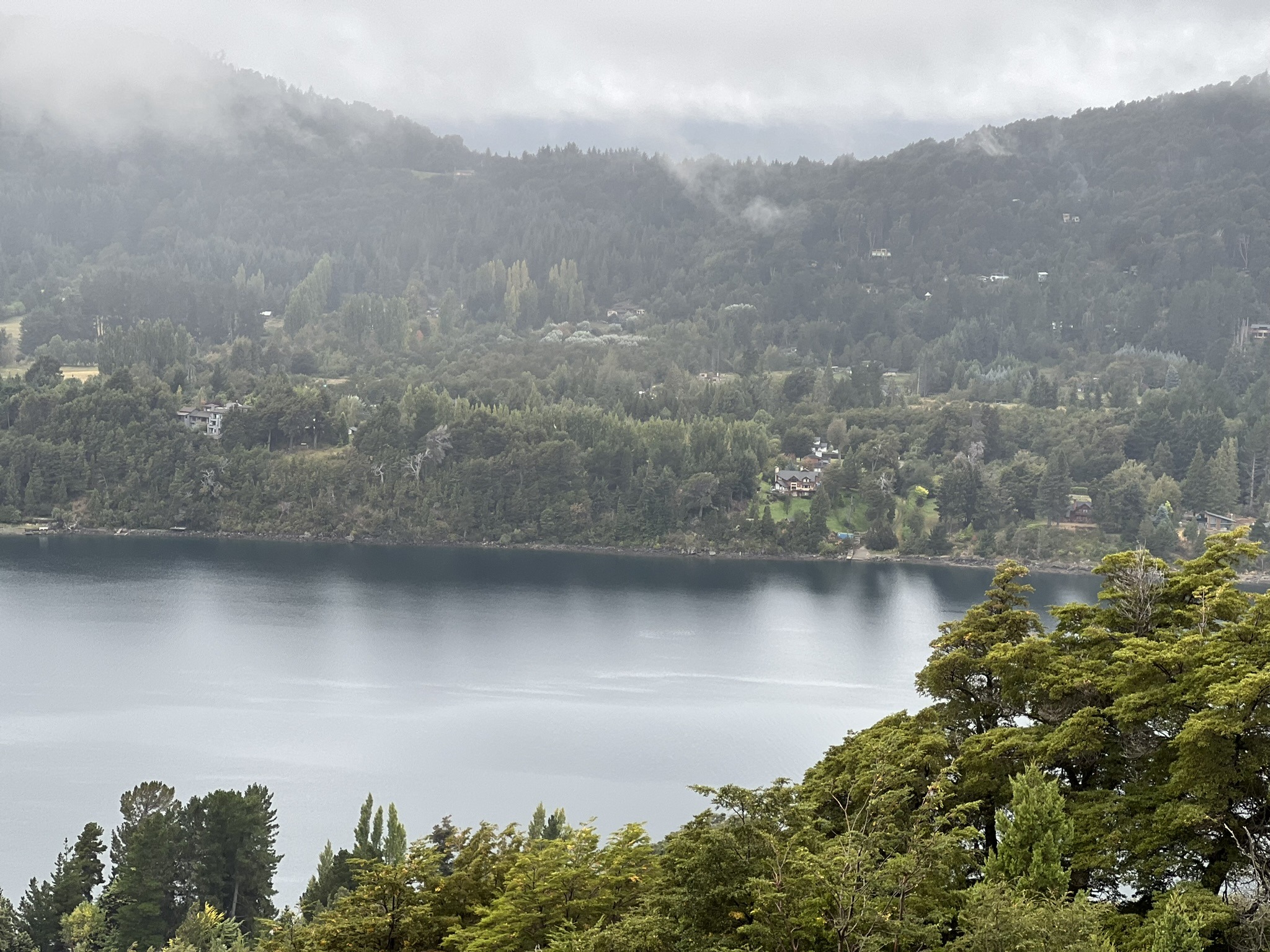
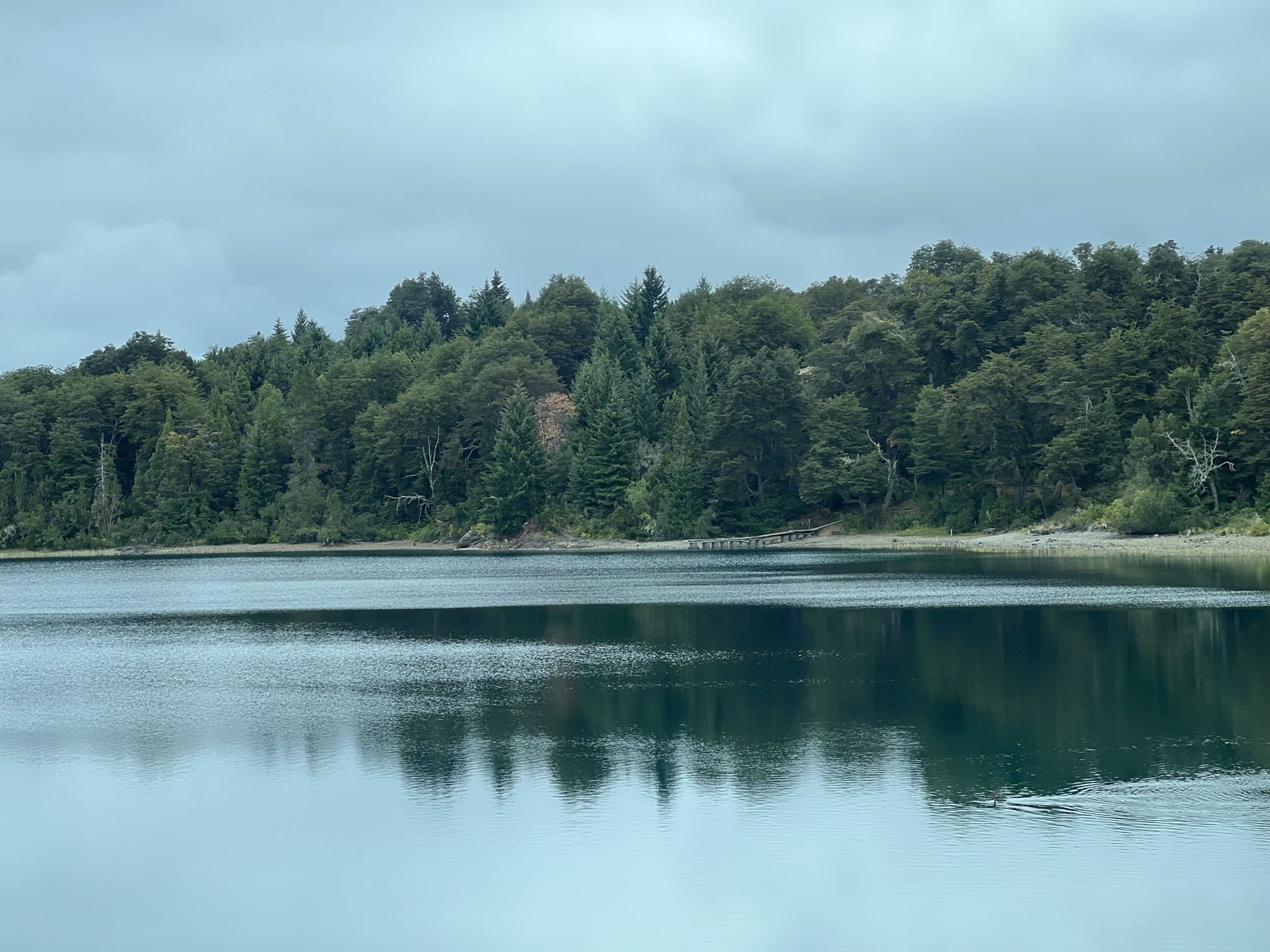
Once the lake came into view, he went on to tell us that the landscape here was shaped by glacial erosion, with the glacier that formed this particular lake having been one of the biggest in the region, composed of some 300 to 400 metres of ice. With a backdrop of snow-capped extinct volcanoes and seemingly untouched, raw forests, the glacial lake is truly a sight to behold, its waters a rhapsody of midnight blues.
The name, he continued, comes from the natives’ Mapuche language and means “Island of the Tigers”, referring to the valour of its people as they sailed the rough waters of the lake in simple canoes made from hollowed-out tree trunks, with waves sometimes reaching up to two metres in height.
The lake, being equally important for transport as it is for tourism, is of great economic value to the town of Bariloche, the word meaning “people from behind the mountain”, referring to the town’s hidden location in the Andes. Being so close to Chile, the area around the lake was heavily influenced by events in the neighbouring country, with indigenous tribes living on the Argentinian side being displaced by Mapuche settlers from Chile during the Spanish Conquest. After several slave-hunting expeditions and other missions by the Spaniards, followed later by the Argentine military campaign known as the Conquest of the Desert, only a few indigenous families remained.
Lakes, Legends, and Little Switzerland
The lake’s history goes far beyond the age of the indigenous population. In fact, César told us that the area rose to prominence in modern times.
As the region grew in popularity, German and Swiss settlers began lucrative leather industries here and set up various trade businesses. By this point, trade routes were mostly dominated by the Chileans. A boundary arbitration was later set up with the help of Carlos Wiederhold, after whom the city now takes its name, improving trade relations between the two countries and allowing both to benefit. Argentinians exported crops and meat, amongst other goods, and imported glass and wood from Chile, using them to build the Alpine town later referred to as Little Switzerland.
With the advent of the Second World War, Chile and Argentina found themselves in crisis, with food shortages becoming increasingly common. As such, the production of chocolate and beer became paramount to the region’s survival and growth. One of the oldest microbreweries here also shares my name. Isn’t that cool? And speaking of ties with Germany and the war, César also mentioned a conspiracy theory that’s quite popular here in Bariloche.
According to some unconfirmed sources, Hitler didn’t actually commit suicide but instead sought refuge in this town, allegedly provided shelter by fellow Nazis. He went on to say that Hitler might have lived a happy, unproblematic life until around the age of seventy after the war. Imagine if that were true. Doubt anyone would ever bring up the word karma again if that were the case.
More Other-Worldly Views
After some seventeen kilometres from the city, we reached our first stop – Cerro Campanario. Here, we got off the bus and straight onto a chairlift that took us up the 1,050-metre-high hill, offering a 360-degree view of the mountains and lakes below – one of National Geographic’s seven best views of the world, at least prior to the dawn of social media.
Though cloudy, it truly was one of the most magnificent vistas I have ever laid my eyes upon. Lago Nahuel Huapi and Lago Moreno’s deep blues nestled between the celadon greens of the surrounding hills and peaks, with the clover-shaped Laguna Trébol and Isla Victoria visible in the distance. Next to the former, we were told, lies a cave where human remains dating back some 10,600 years were found, alongside the bones of a giant mylodon, an extinct ground sloth, with evidence of human occupation including burn marks and tools.
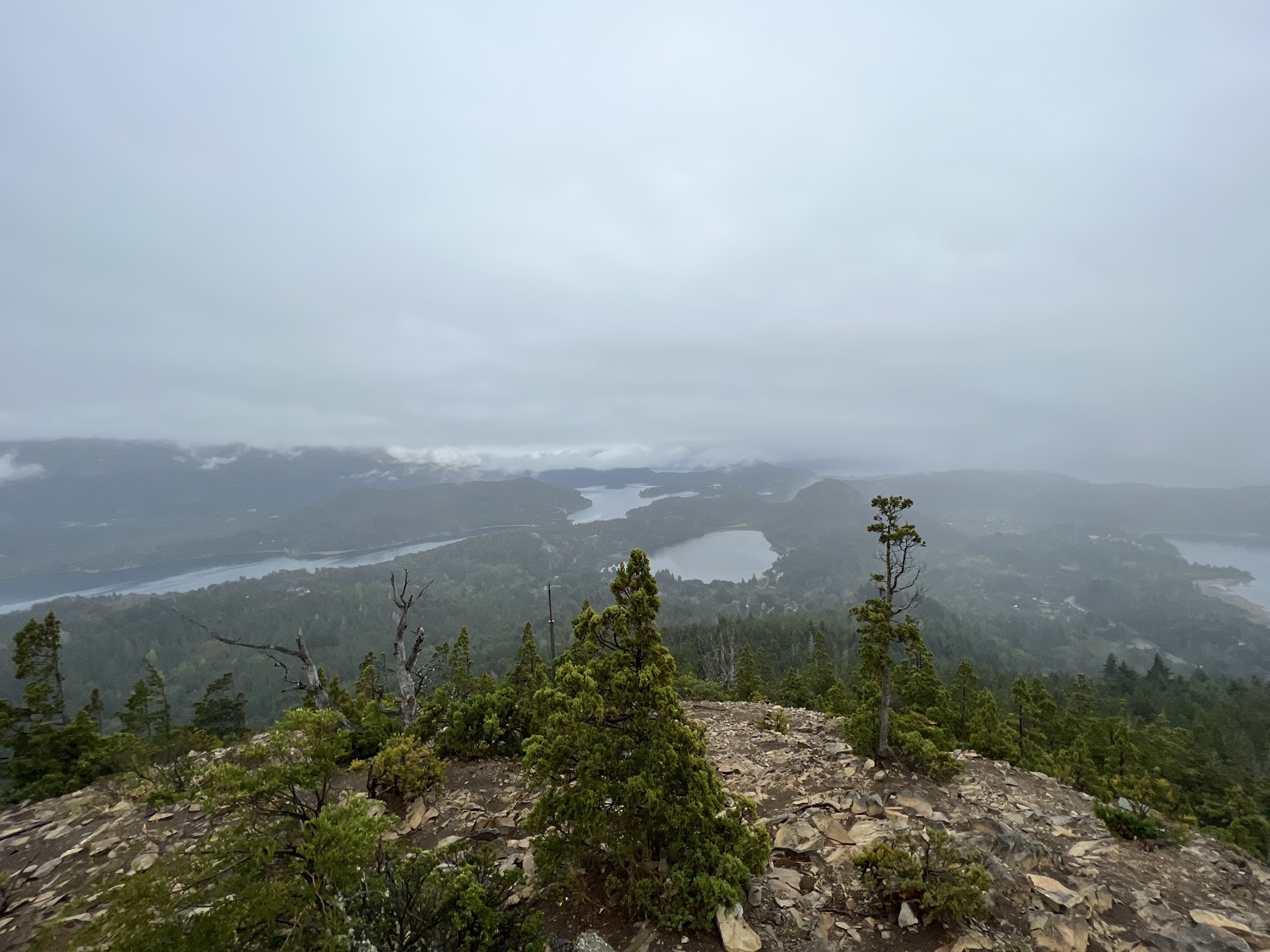
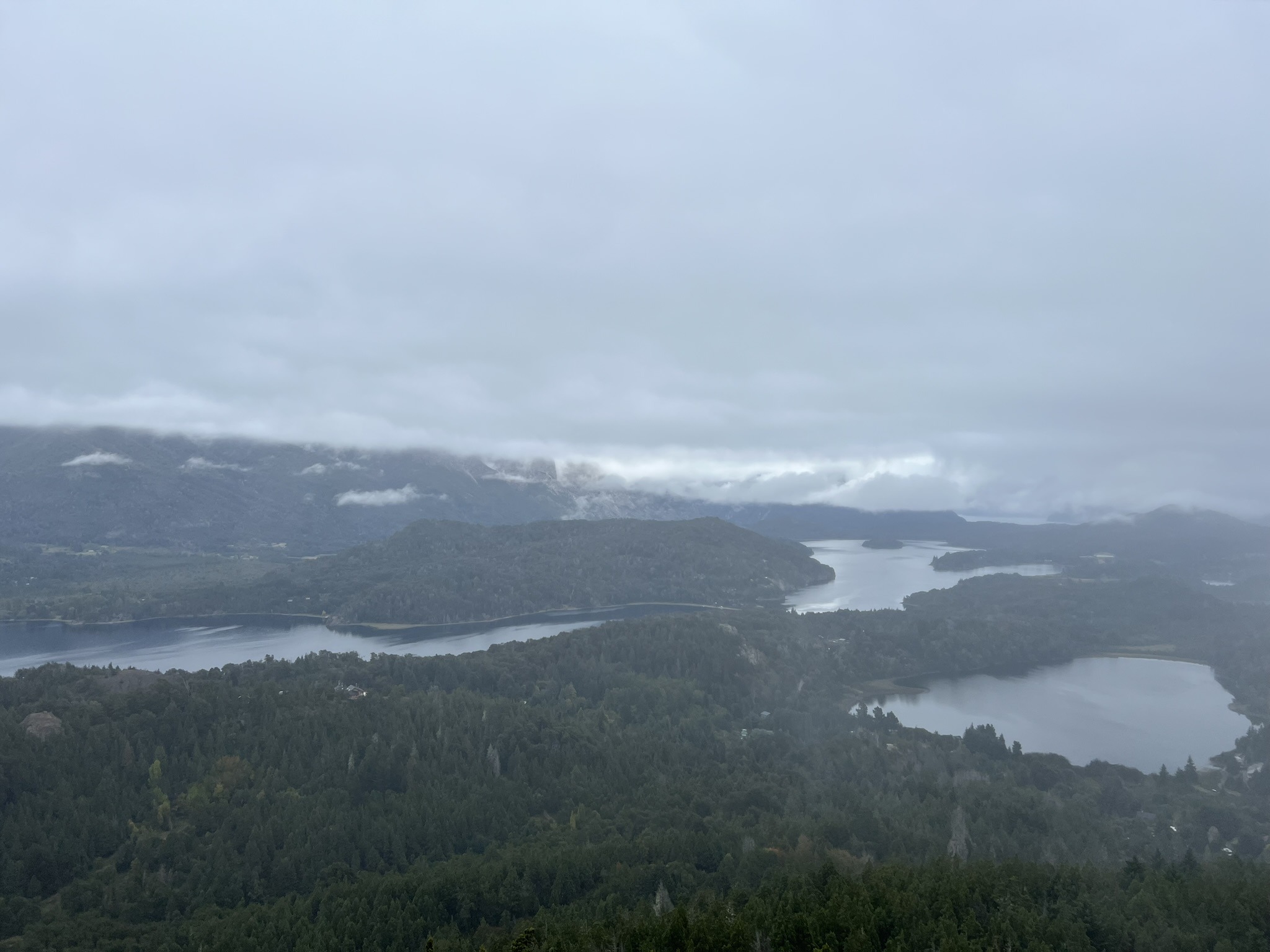
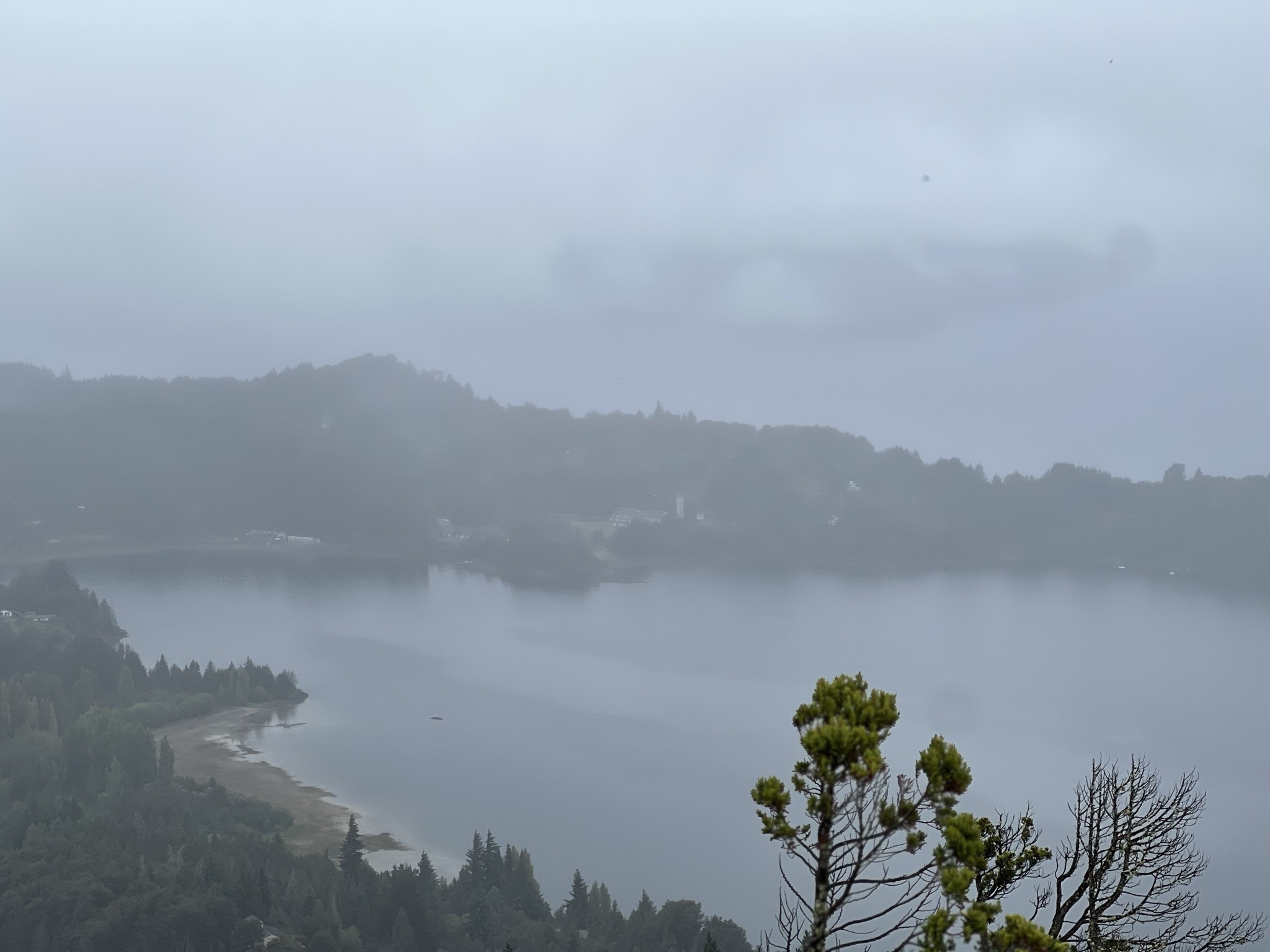
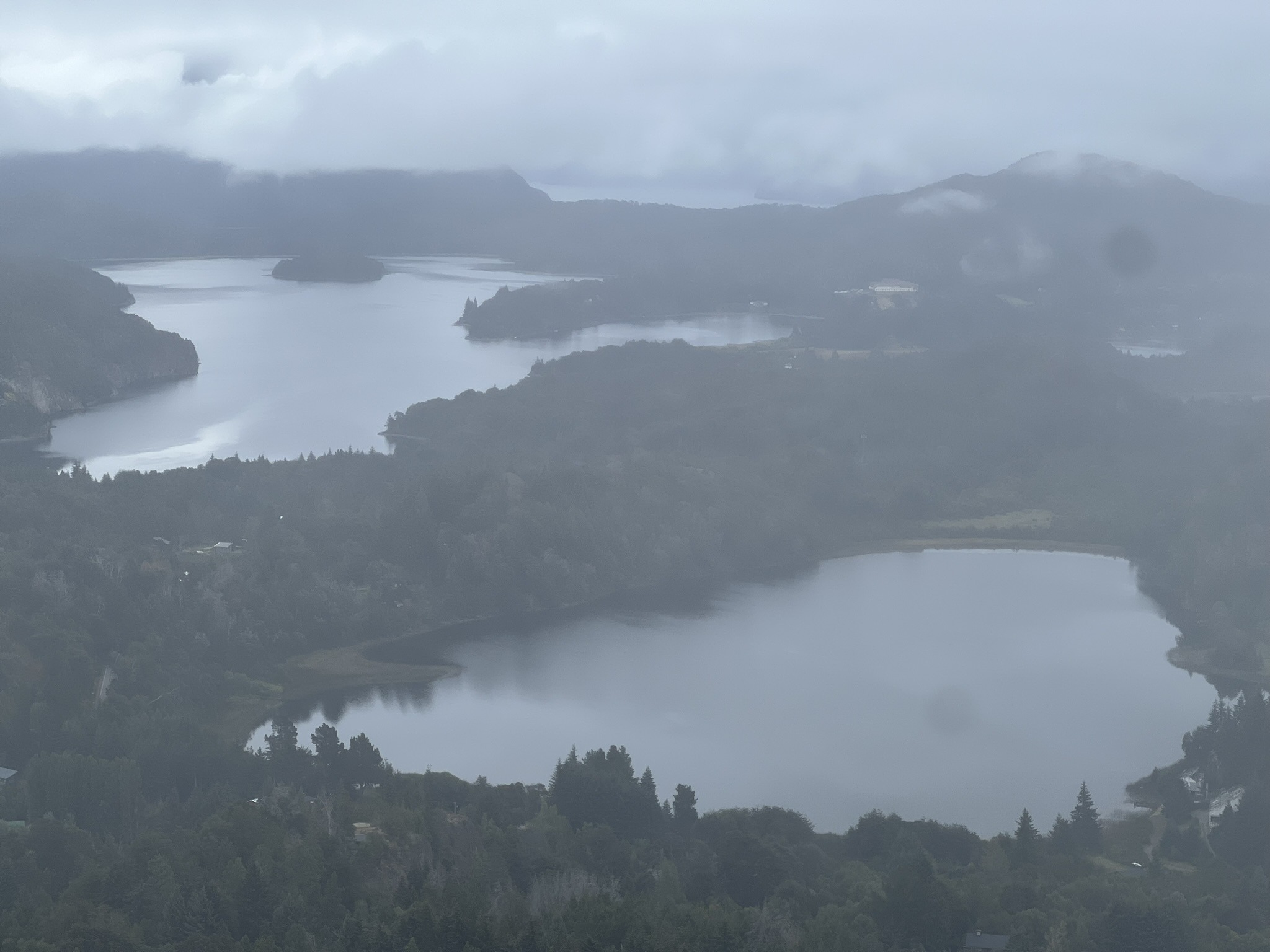
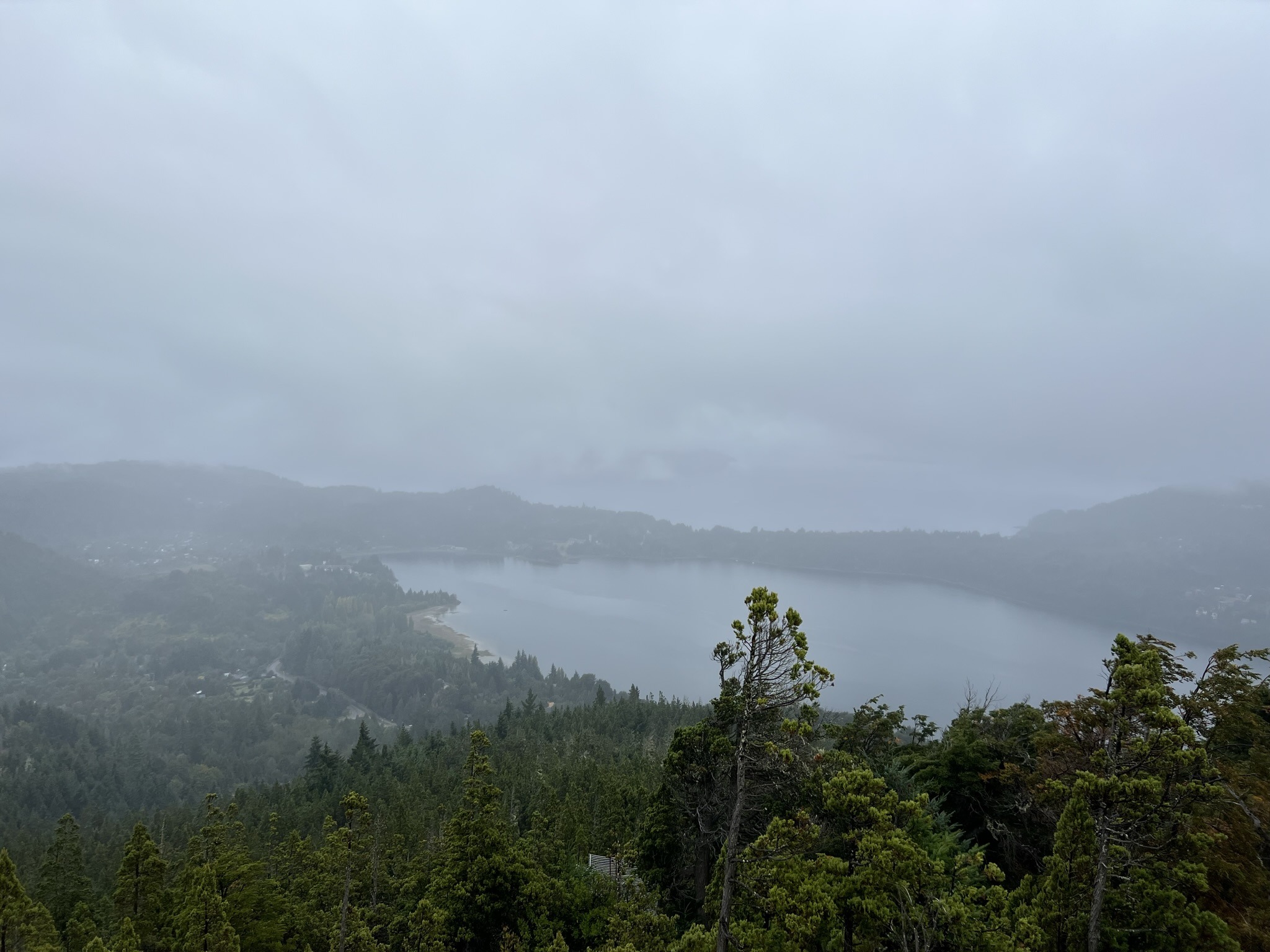
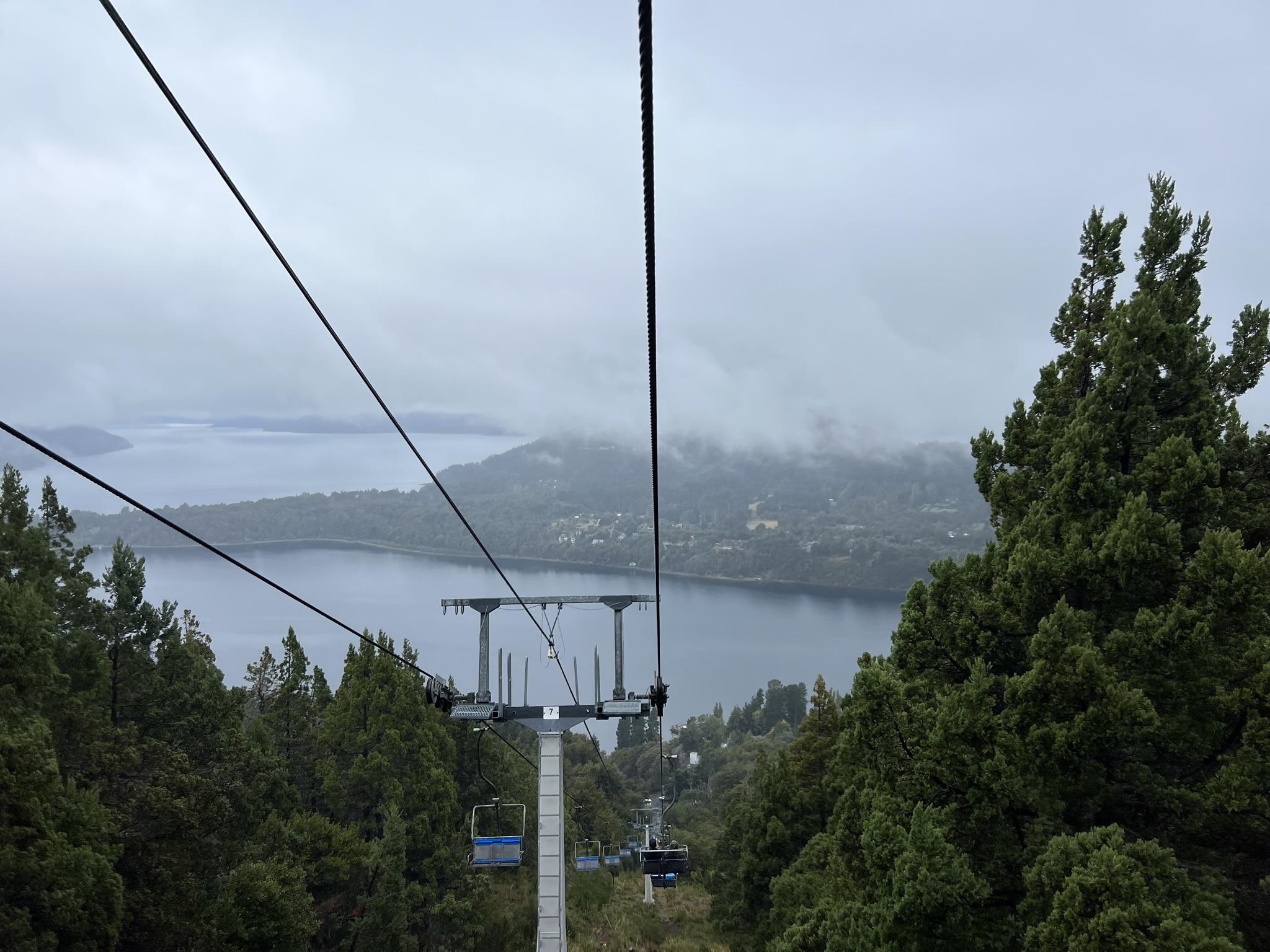
After that, we carried on, stopping briefly at a couple of viewpoints to take in the scenery, with every European tourist comparing it to Switzerland, the region living up to its reputation. As we ventured further south, the route turned greener, with lichen-covered pine and cypress trees dominating the forests. This, César explained, was due to an increase in altitude, humidity, and precipitation, with a gradient difference of around 1,500 millimetres of rainfall per year over just 25 kilometres from the town centre.
Of Foxes, Fungi, and Foxy Theories
As we entered Llao Llao Municipal Park at the westernmost edge of the region, we began seeing fewer buildings and more trees, with many endemic plants found here. Among the many stops we made was one beside a stream connecting Lago Moreno and Lago Nahuel Huapi, a popular spot for locals to fish or simply hang out.
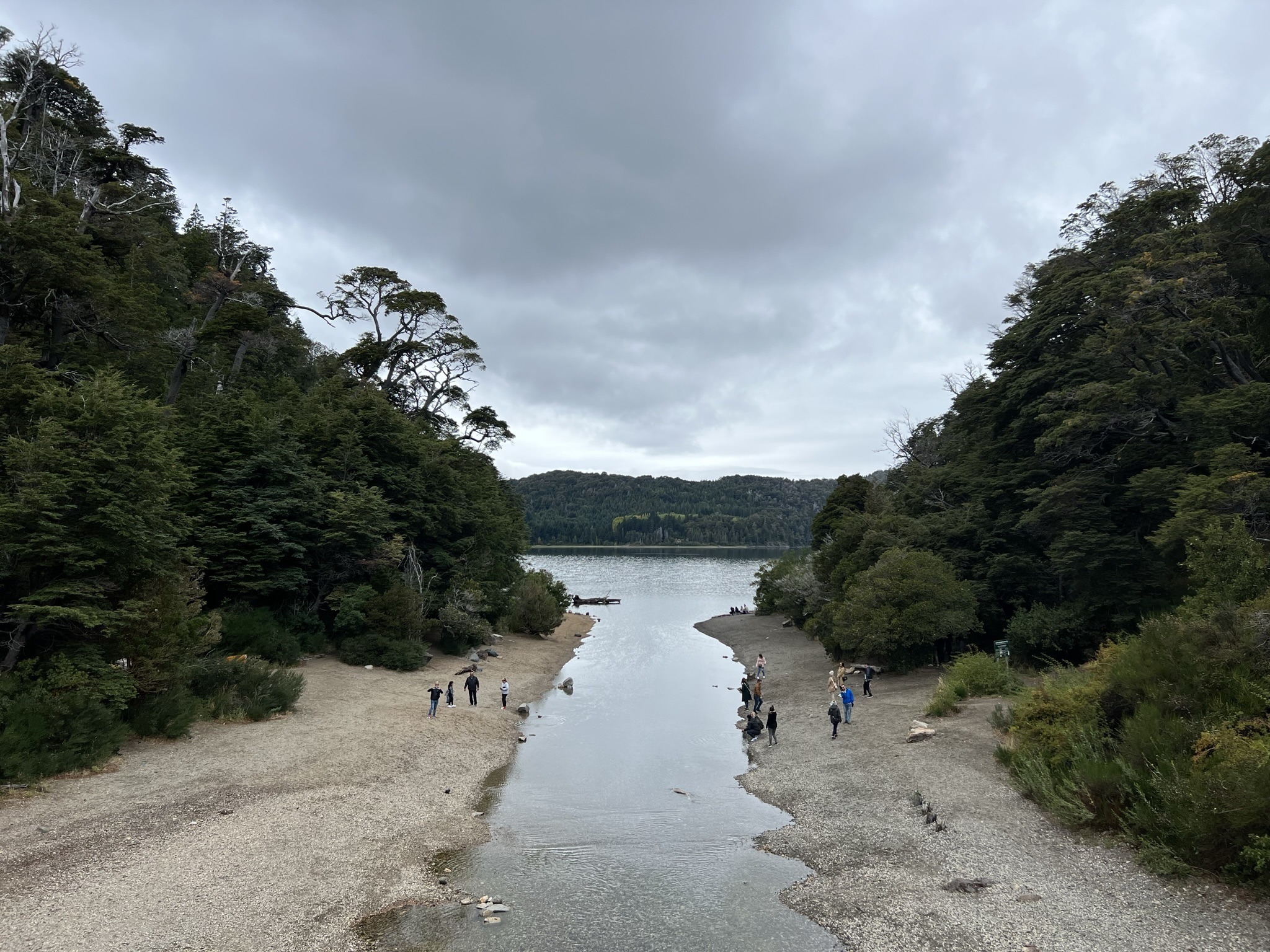
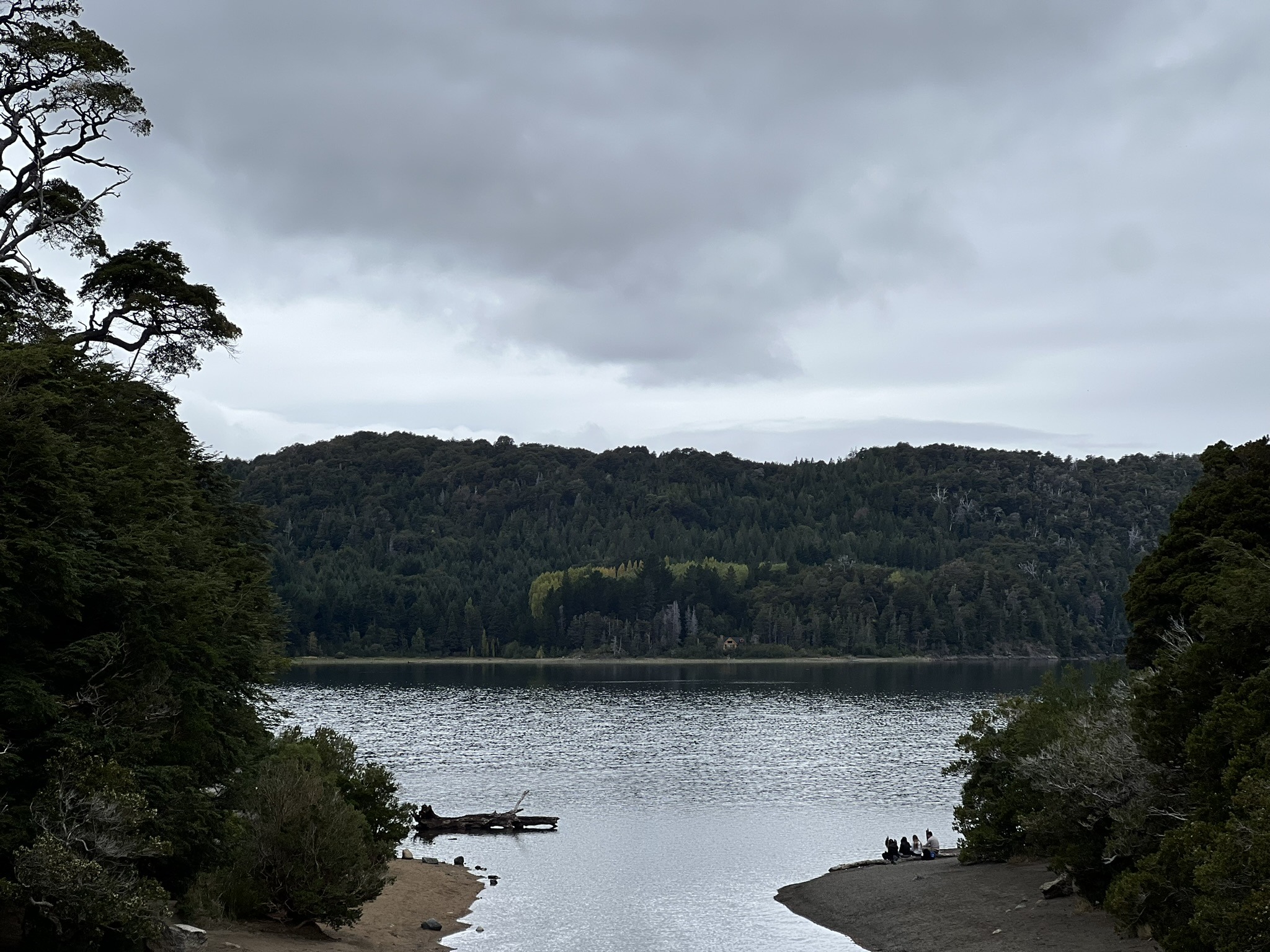
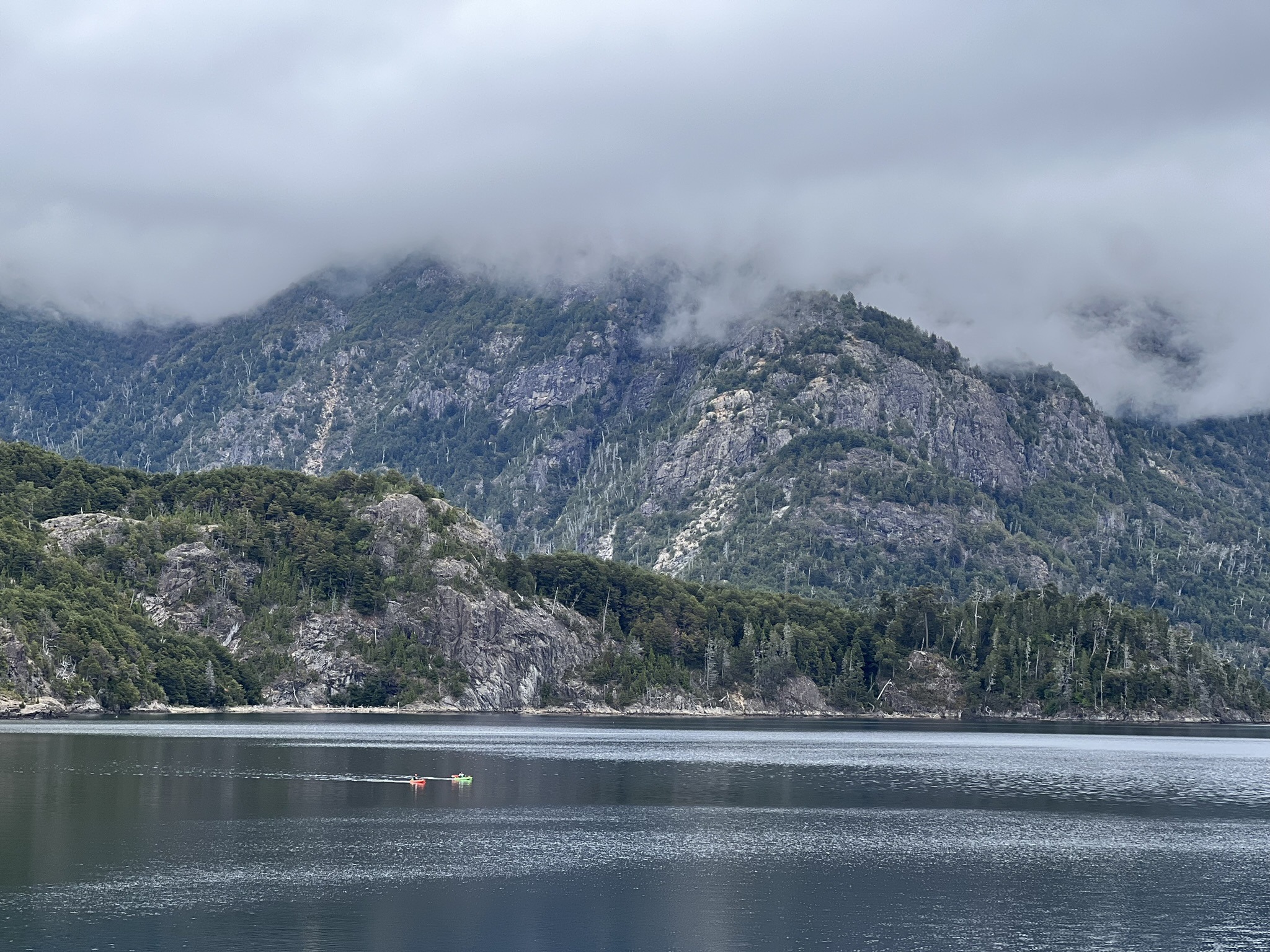
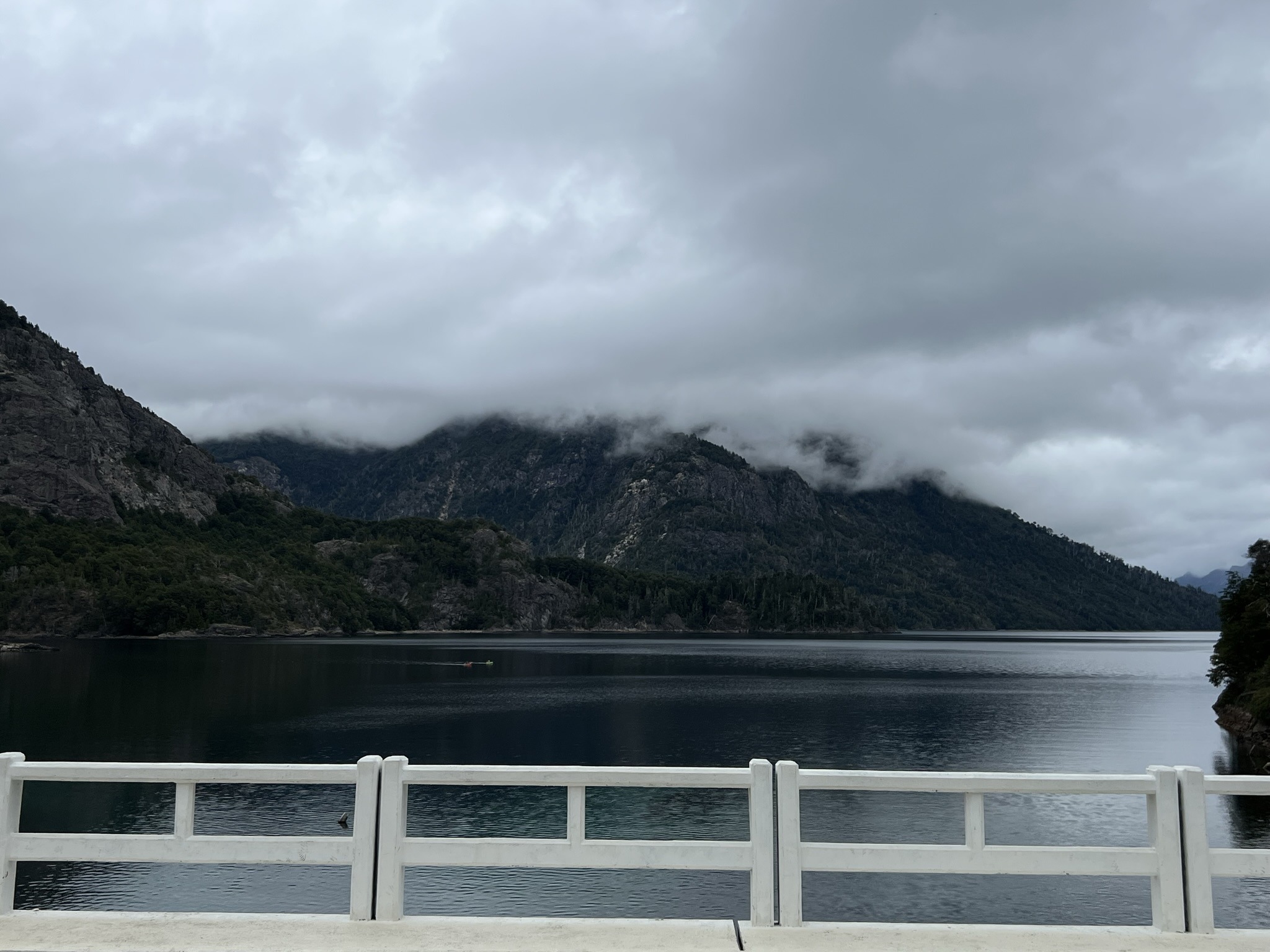
Another stop was at Bahía López, with Cerro López rising right in front of us. Here, César took the time to explain some of the Patagonian flora we were likely to encounter. Amongst these were:
Llao llao: An edible mushroom also known as pan de Indio (Indian bread), one I had seen many times during my treks in Patagonia. This parasitic fungus tends to grow on the bark of Nothofagus trees such as the lenga, using sap ducts to feed from its host. The trees, in turn, form a gall to protect themselves, engulfing the fungus, which often manages to break through, forming a yellow-orange bud that can be picked and eaten. The word llao means sweet, referring to its flavour, making it ideal for desserts.
Mayten trees: A slow-growing, large evergreen tree with elliptical, serrated green leaves. This tree is hemiparasitised by the red-flowered quintral plant, which produces berries eaten by the colocolo opossum, a nocturnal, arboreal marsupial growing up to 13 centimetres and small enough to fit in the palm of your hand – so, so cute. The monkey-like creature, with its huge eyes and long prehensile tail, eats the berries and disperses the seeds, forming a symbiotic relationship between all three. The opossum is also known to enter such deep hibernation that when mayten trees are cut down with animals still in their canopies, the creatures can later be relocated to another tree without even waking up.
Colihue trees: An evergreen bamboo native to South America that is frost-tolerant. Growing up to eight metres tall, its stalk is strong and flexible, and the plant forms dense clumps. After flowering, a process that may occur every 50 to 75 years, the plant releases its seeds and dies. How many seeds? Around 3,000 per square metre. Very, very invasive.
Tourist Traps and Tired Bodies
More viewpoints and stunning vistas followed, the last being at Capilla San Eduardo, an 83-year-old wooden church perched atop a small hill overlooking the Llao Llao Hotel and Puerto Pañuelo – one of the oldest ports allowing transport to and from Chile.
Whilst I couldn’t give less of a crap about the five-star hotel César described in far too much detail, I did appreciate its history. Built in the 1930s, the hotel is a testament to the region’s dependence on tourism, which grew rapidly once the railway began bringing wealthy visitors from Europe and North America. They came to fish, kayak, ski, and hike, with even a few US presidents among them.

Of course, as is customary on bus tours, we then stopped at a rosehip product shop, a tourist trap through and through. As the Americans indulged in their capitalistic endeavours, seeking new lives promised by teas and soaps made from the wondrous oils of one perfect plant, I enjoyed a cigarette on my high horse – my backpacker budget preventing me to indulge in any of my wants.
After lunch, I headed back to my hostel to rest my still-weary body, Mr Jackass pointing out that I should rest when I’m old and invest my time and money wisely instead of spending my days in bed. With nothing to prove, I simply turned around and gave him my back. I can’t say I wasn’t irked or tempted to throw him a punch though.