Ushuaia – Day 2: The Silence of the South
USHUAIA
Day 2: The Silence of the South
March 02, 2023
PART I
Breakfast here was rudimentary at best – bread and a selection of jams and spreads. As frugal as that might seem, the dulce de leche more than made up for the lack of variety. I swear I could eat bucketfuls of the caramel-like, buttery goodness.
After pigging out and nearly emptying an entire jar of it, I found Alonso waiting for me right in front of my warm, cosy hostel. At his suggestion, we met up super early to beat the staff to Tierra del Fuego National Park – Ushuaia’s main attraction. That way, I’d be able to go in for free and meet fewer people. I genuinely loved the guy. That said, my crush on him suddenly vanished the second he told me the price to get to the park – almost twice as much as the entry fee would have cost me. As defeated as I felt, I didn’t have it in me to send him away and, I reasoned, it would still be good value considering the adventure that was waiting for me and everything I’d heard about the park.

Tierra del Fuego National Park
As Alonso drove towards the park, he described the park and its history in infinitesimal detail. He told me that the Tierra del Fuego National Park is located on the Argentine side of the main island of the archipelago and encompasses Patagonian forest and the southern Andes, with landscapes featuring everything from waterfalls and bogs to glaciers and lakes.
The forests here, much like the rest of the Andean–Patagonian forests, are dominated by lenga trees – slow-growing deciduous trees with small, elliptical, toothed leaves that turn from dark green to bright red in autumn – and coihue trees, which are larger evergreens with flat, horizontal branches and thick, leathery green leaves. As part of the Subantarctic Forest, the area is renowned for its diversity of flora and fauna, although many alien species have been introduced from North America and Europe.
Around 6,500 years ago, the people of Onashaga, otherwise known as the Beagle Channel, inhabited these coasts, descending from native groups that had migrated southwards from the northern parts of Tierra del Fuego. Whilst they called themselves the Yámana, Europeans came to know them as Fuegians or Yaghans. These southernmost Indigenous peoples lived in small, rounded huts built out of criss-crossed lenga branches and seashells, which sheltered them from the elements.

Here, they carried out their daily activities and survived by hunting, foraging, and fishing, using canoes made from coihue bark to move from one dwelling to another. Given the harsh conditions of their environment, the Yaghans developed several adaptations to withstand the cold, unforgiving Patagonian climate – including squatting to preserve body heat, maintaining a higher metabolic rate to increase body temperature, and covering their skin with seal blubber to insulate and waterproof their bodies.
They constantly consumed shellfish, discarding the shells around their huts and giving rise over time to mounds known as shell middens. Apart from shellfish, their main food sources included berries and plants, coastal fish, birds, guanacos (a camelid closely related to the llama), as well as southern fur seals and sea lions, whose fat was a major source of nutrients. Weapons used for hunting and fishing were made from materials such as stone or the bones of marine animals and birds, which were also fashioned into tools to cut flesh, soften leather, obtain tree bark, and create personal adornments. These included bows and arrows to hunt birds, traps to catch king crabs, and harpoons to catch fish.
Whilst first contact with Europeans occurred in the early 16th century, it wasn’t until 1828, when Captain Robert FitzRoy arrived aboard HMS Beagle – after which the channel was named – that the community rose to wider prominence. At the time, he took four Yámana individuals back to England, one of whom died, while the other three became something of a spectacle, drawing huge crowds who ogled at them much like animals in a zoo. Charles Darwin was particularly struck by their way of life, infamously describing them as the most primitive and savage people he had ever encountered. This attitude contributed to many members of the community being captured, either for forced labour or for display in circuses. In addition to the introduction of infectious diseases, the Yaghans also suffered immense disruption to their way of life as their lands were flooded by sealers and whalers throughout the 19th century.
Despite cultural upheaval and catastrophic population loss following contact with Europeans, the Yámana people persist today, particularly among communities in southern Chile, with an estimated 1,500 individuals identifying as Yámana. Smaller numbers are also found in Argentina.
The Post Office at the End of the World
Apart from the stunning views I expected to come across, I was mostly excited for another reason. Of all the treks I’ve done in my life, Ushuaia would mark the start of solo trekking for me. By this point in time I’d done plenty of hikes on my own, but none that were challenging or requiring certain expertise.
Looking back on the Lost City trek in Colombia, the Salkantay trek in Peru, and the El Mirador trek in Guatemala, I can safely say they were among the greatest highlights of my life. Would they have been better or worse experiences had I done them alone? I know that’s not even an option for some of them – but still, would an unguided solo trek be better than a guided tour with other people? That’s exactly what I was about to find out. And regardless of the answer, I’d just have to deal with it.
At Alonso’s suggestion, I was dropped off a few kilometres past the unmanned (and therefore free) entrance, at the Post Office at the End of the World – a small shack perched atop a short pier made from corrugated metal and wood, entirely covered in stamps and stickers. As it turns out, the place is owned by a postman who lives on an island called Redonda, some two kilometres away, which he refers to as an independent republic of which he is the self-proclaimed prime minister. Unfortunately, it was too early in the day to make his acquaintance and, more importantly, to get the unofficial passport stamp.

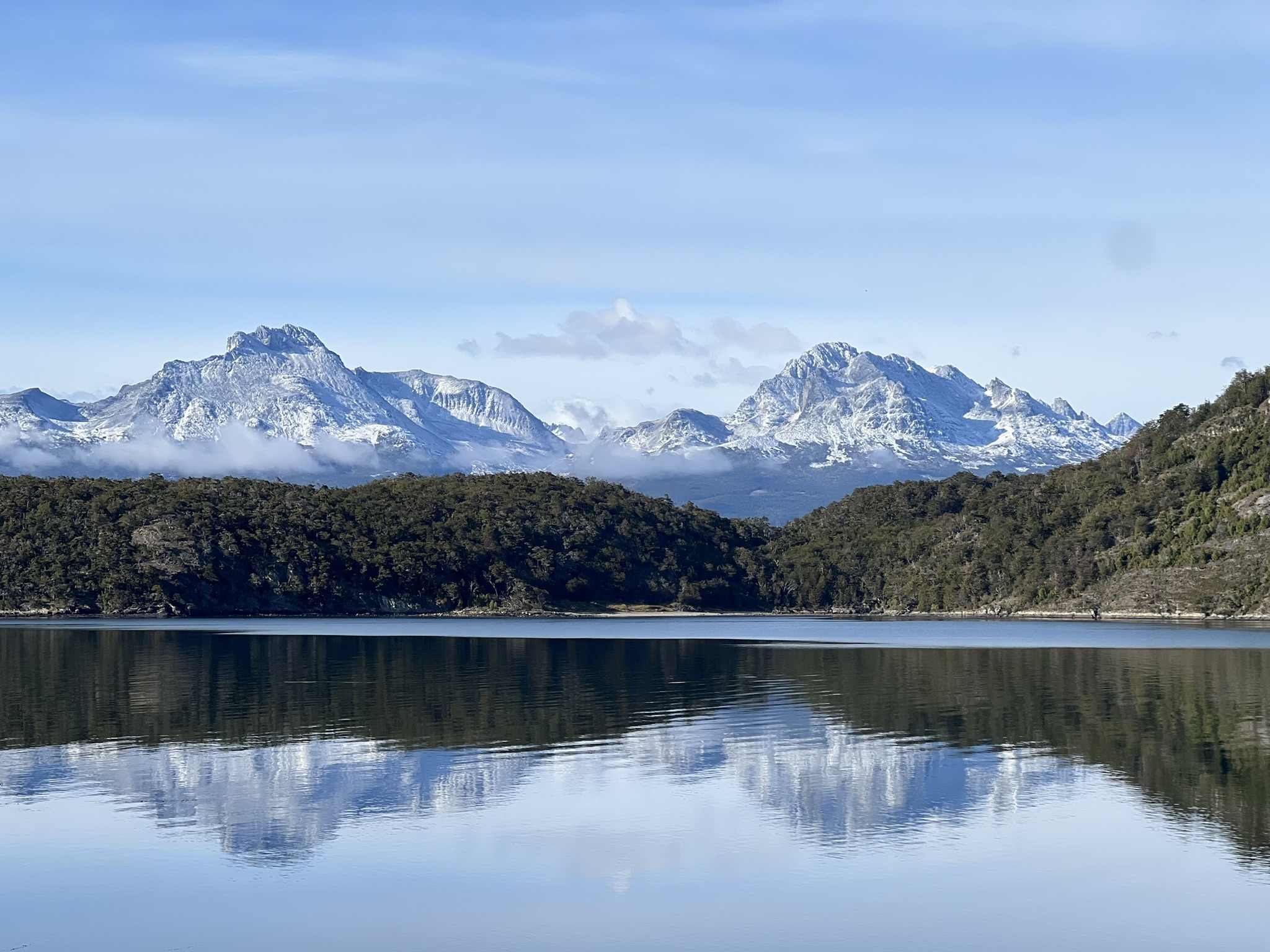
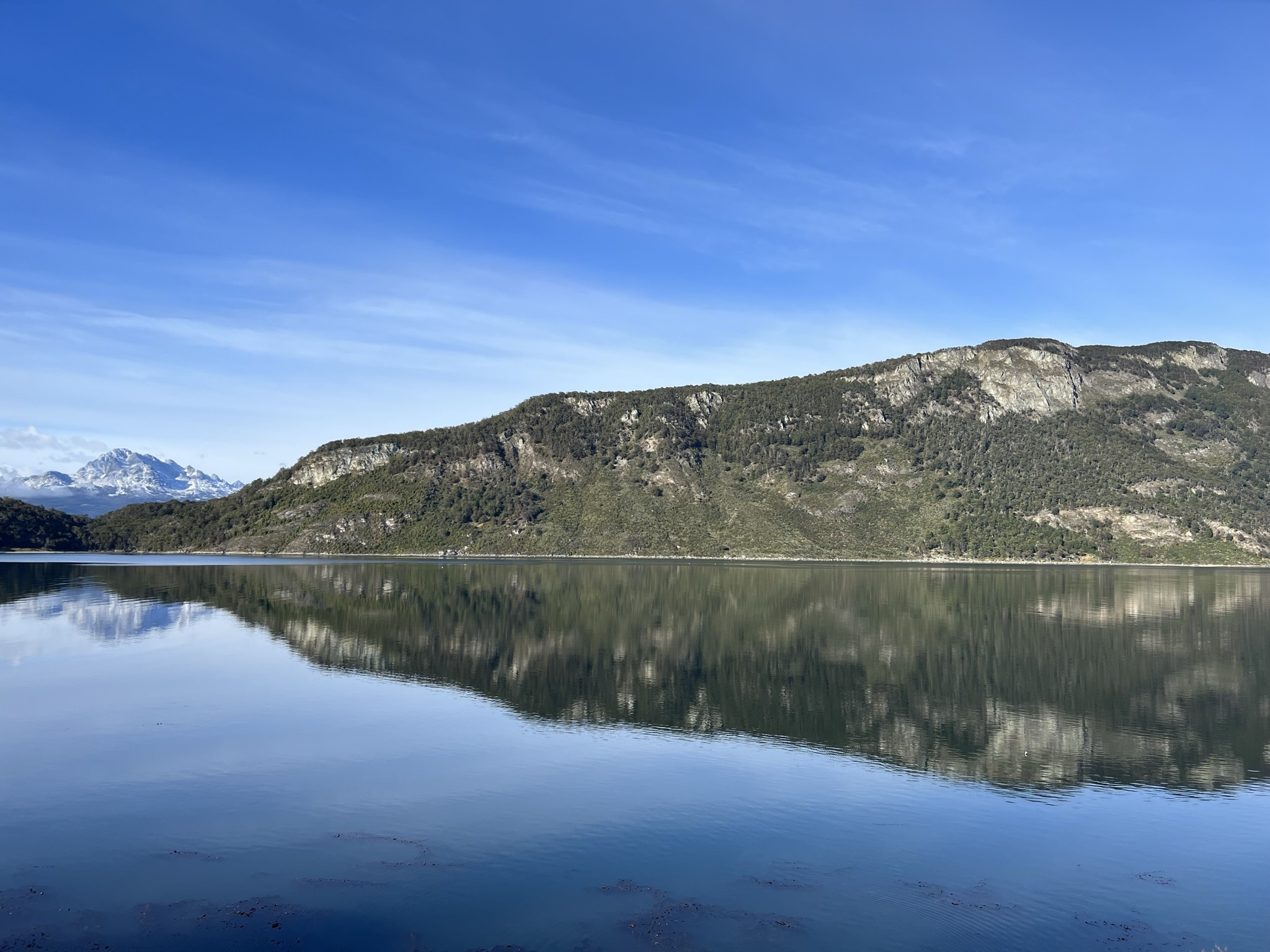
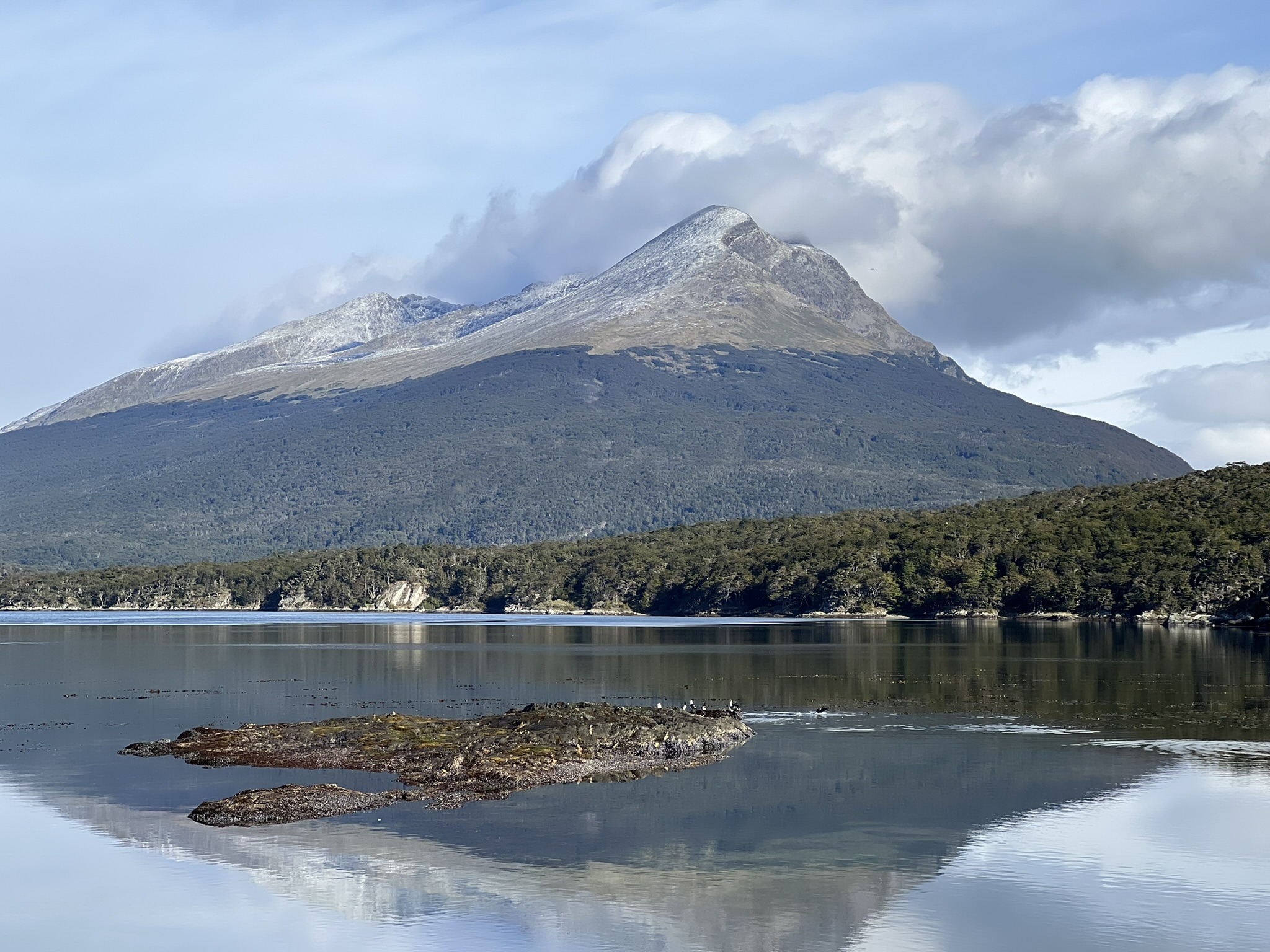
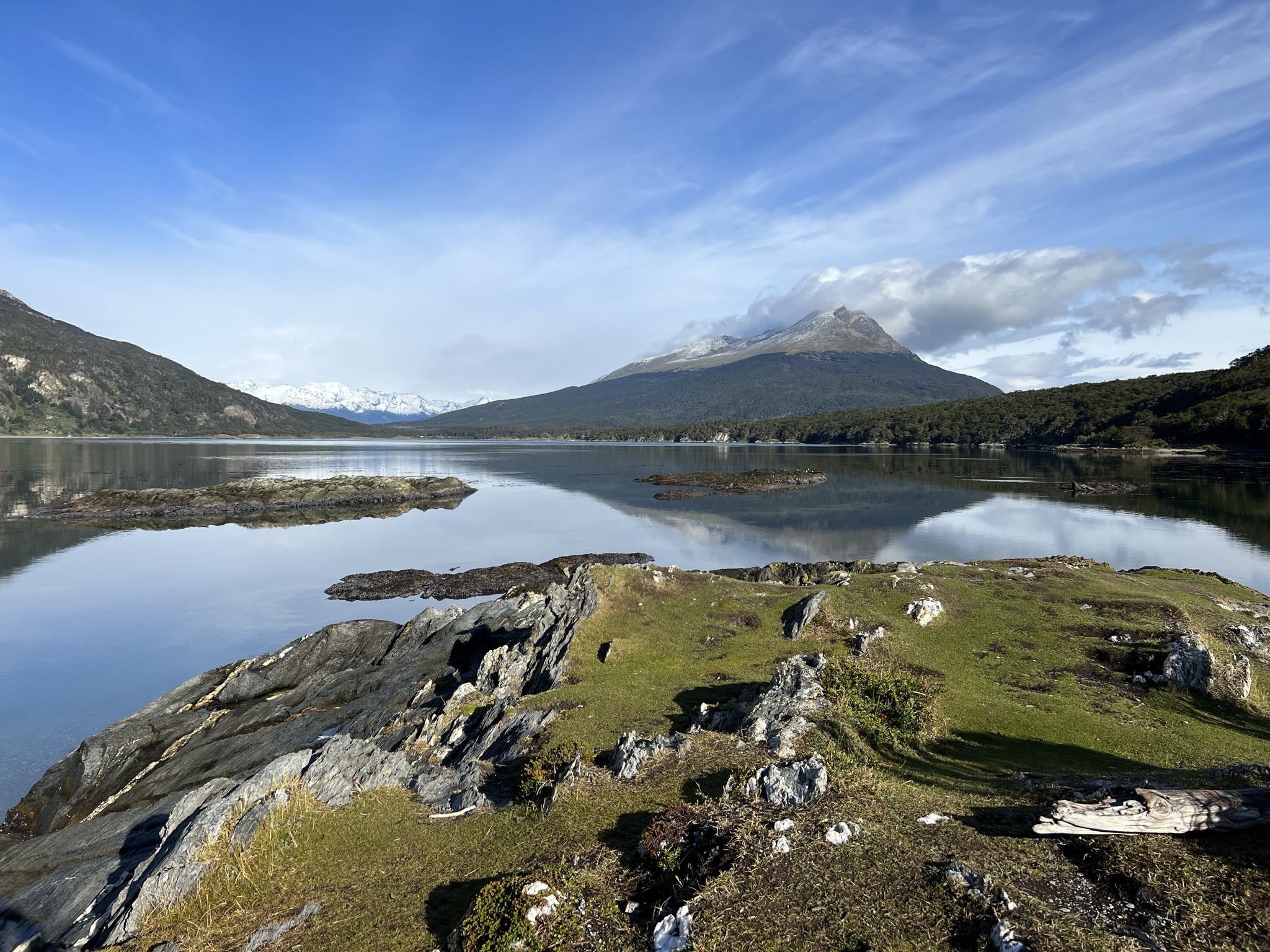
As picturesque as the stamp-covered lodge was, with a lake, forest, and icy peaks in the background, there was something else about the place that felt eerily magical as I stood there completely alone. There was pure, absolute silence. Loud, deafening silence. The water, as if too wary to disturb the peace, made no splashes or sounds. The wind was at a complete standstill, as though it dared not disturb the serenity. No flapping wings, no squawks or cries, nothing of the sort. The icy air felt as if it had frozen everything, including time. It was pure, dead silence – broken only by my occasional breathing.
I don’t recall ever having been anywhere that silent. And somehow, against all odds, it felt intentional. Water, wind, and animals were all present, yet it was as if they had conspired to preserve the calm. And I was there to witness it all. To take it in without a single distraction. Without a single note, hum, or chirp. Nothing. Just the sound of silence.
The Sound of Nature
I’d agreed with Alonso that he’d pick me up later that afternoon, giving me ample time to roam about and tackle as many trails as I could.
Wanting to make the most of it and now spurred on by the presence of other hikers who had finally dragged themselves out of bed, I broke away from the stillness and set off along the Senda Costera – an eight-kilometre coastal trail through the national park. Following the yellow signposts, I walked almost entirely on my own, as sweeping coastal vistas repeatedly took my breath away. Whilst I found myself comparing the views to those of the Scottish Highlands, there was something about this place that felt uniquely untouched.
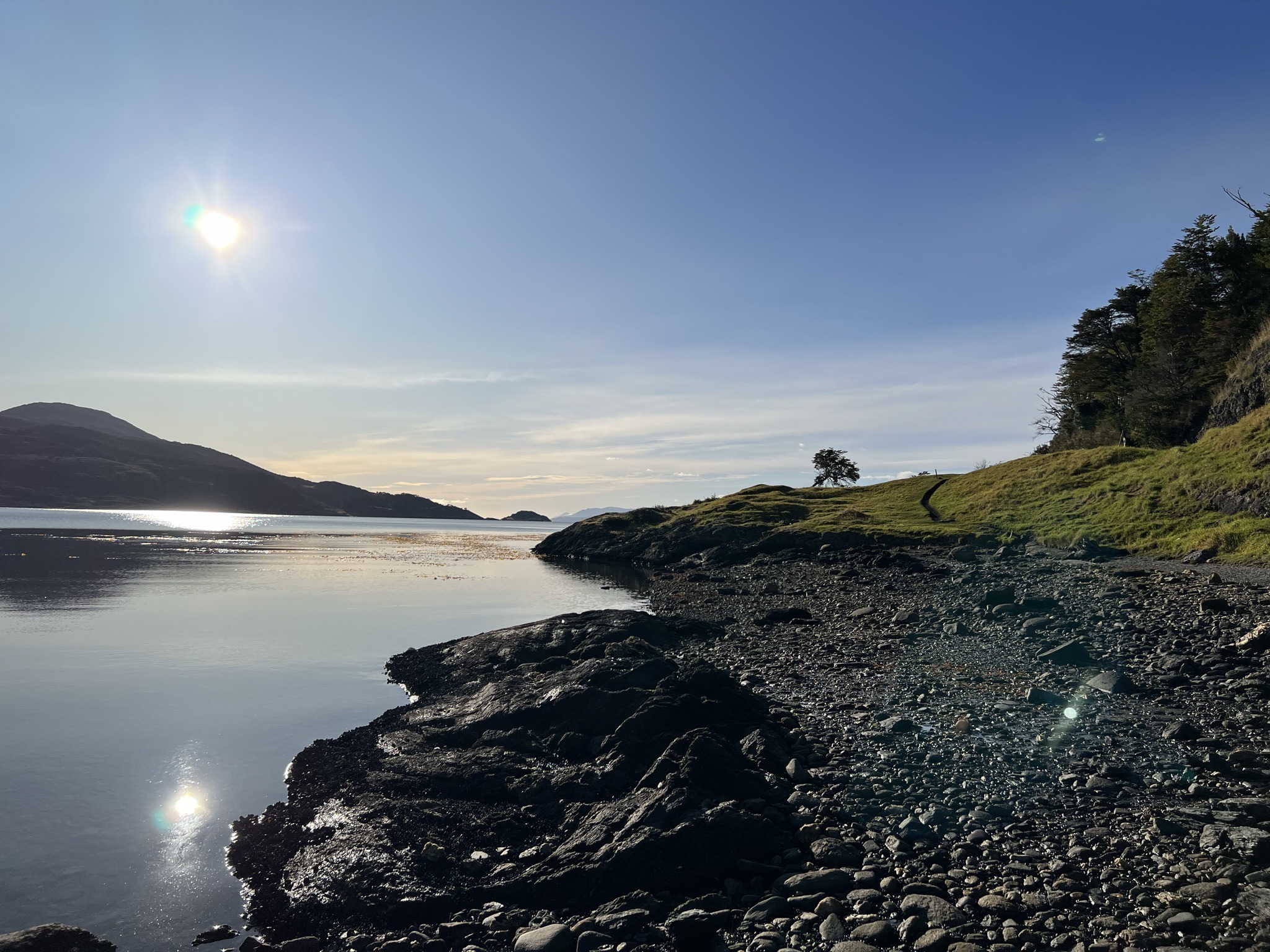
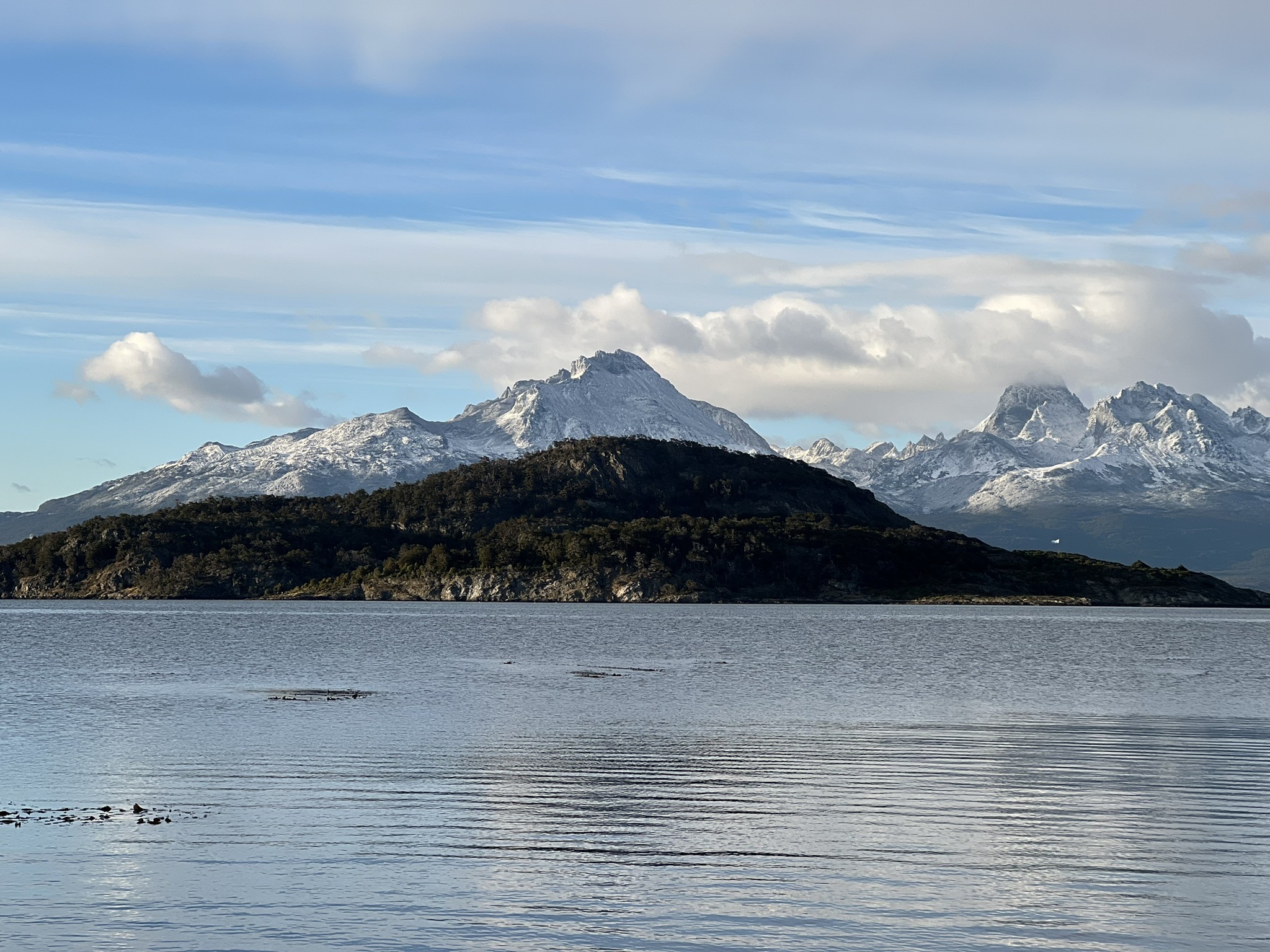
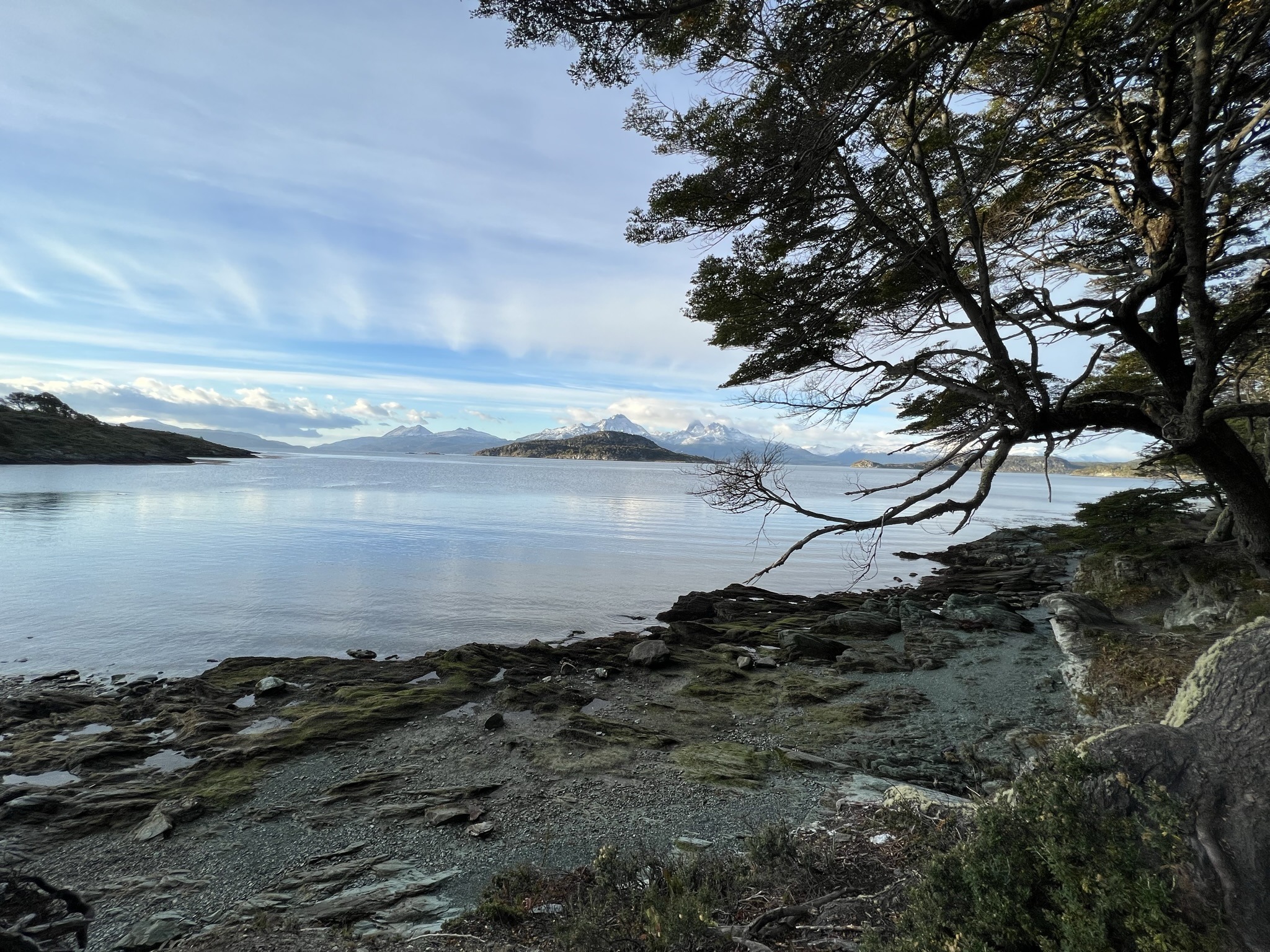
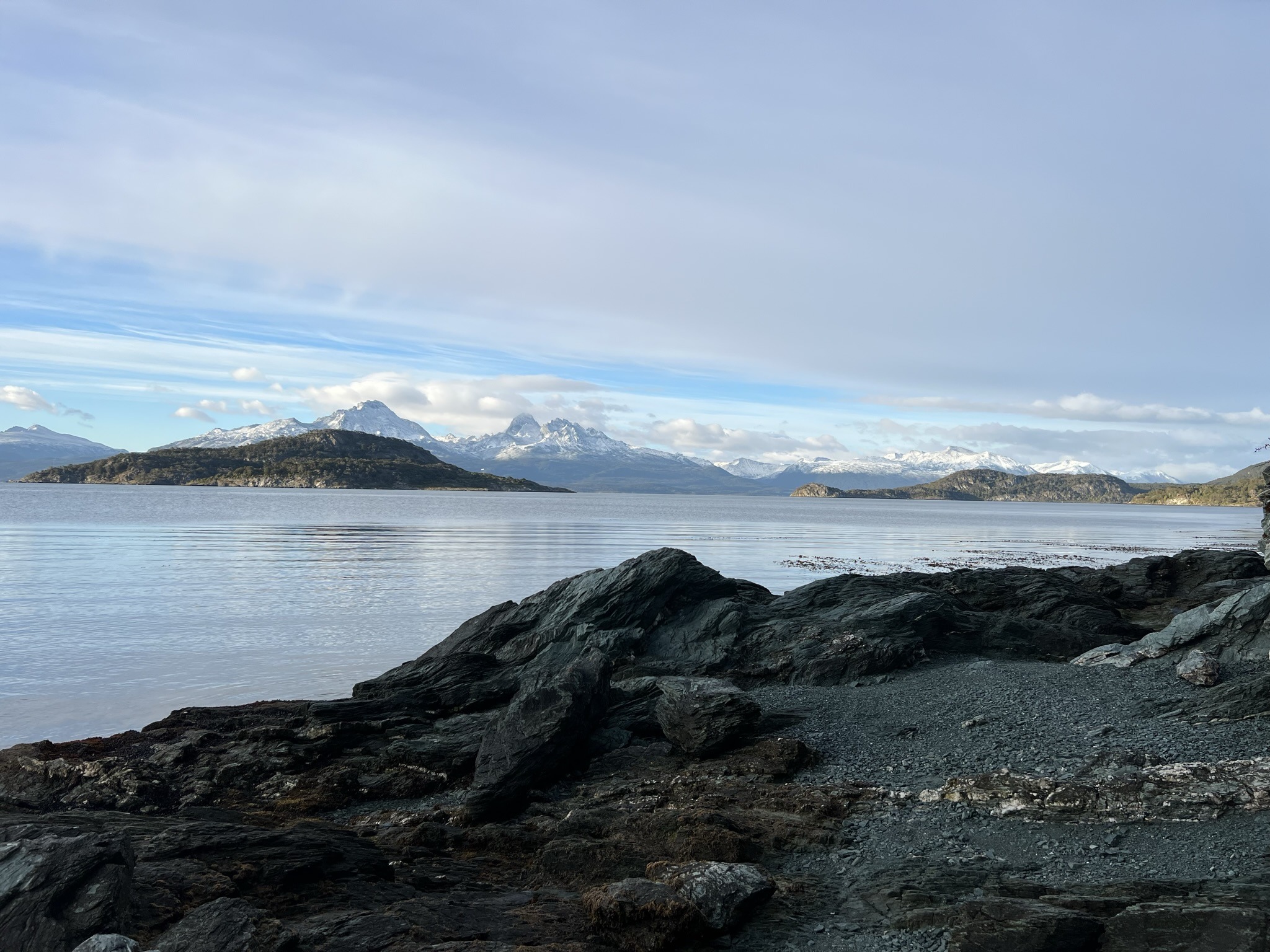
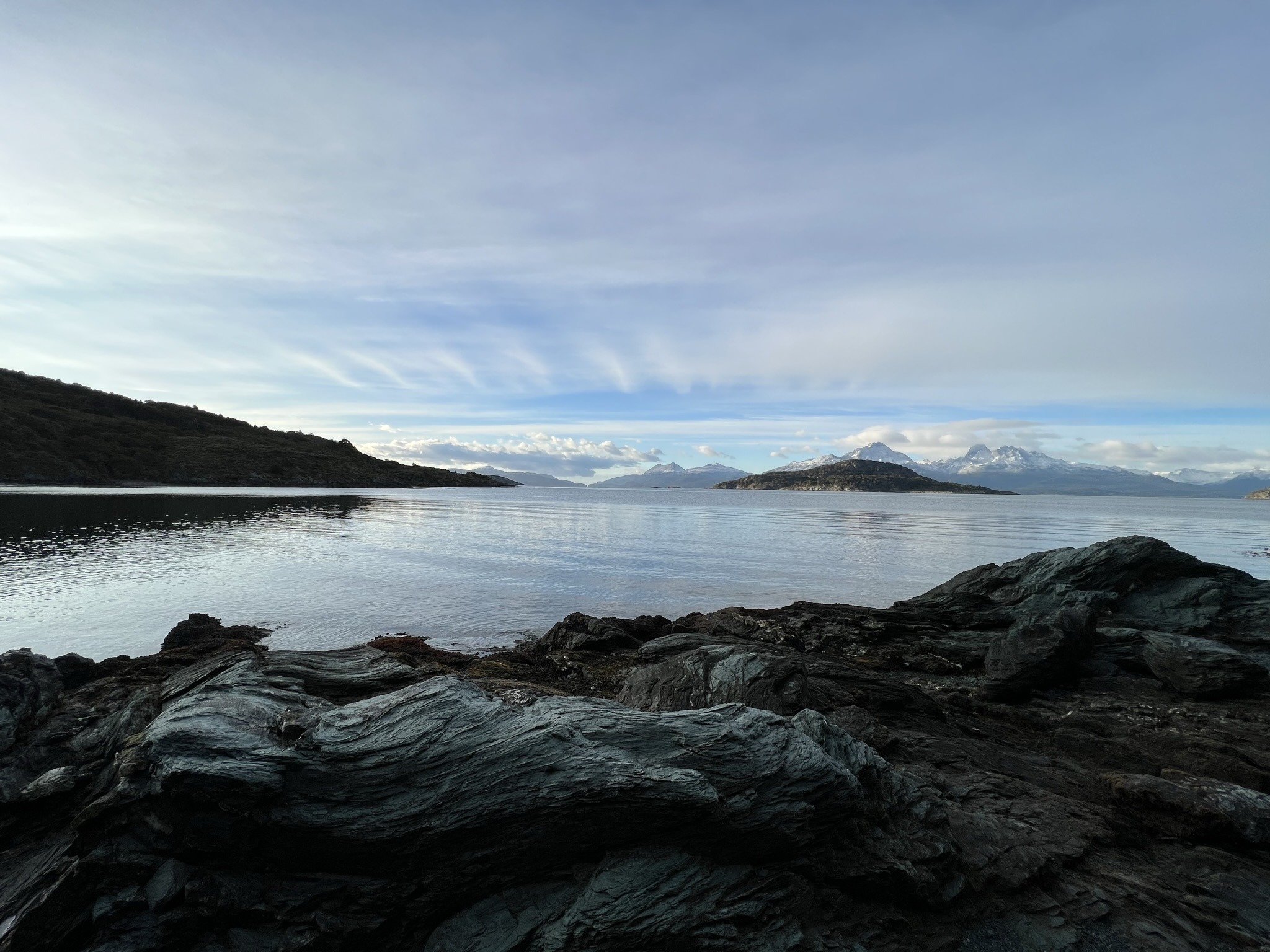
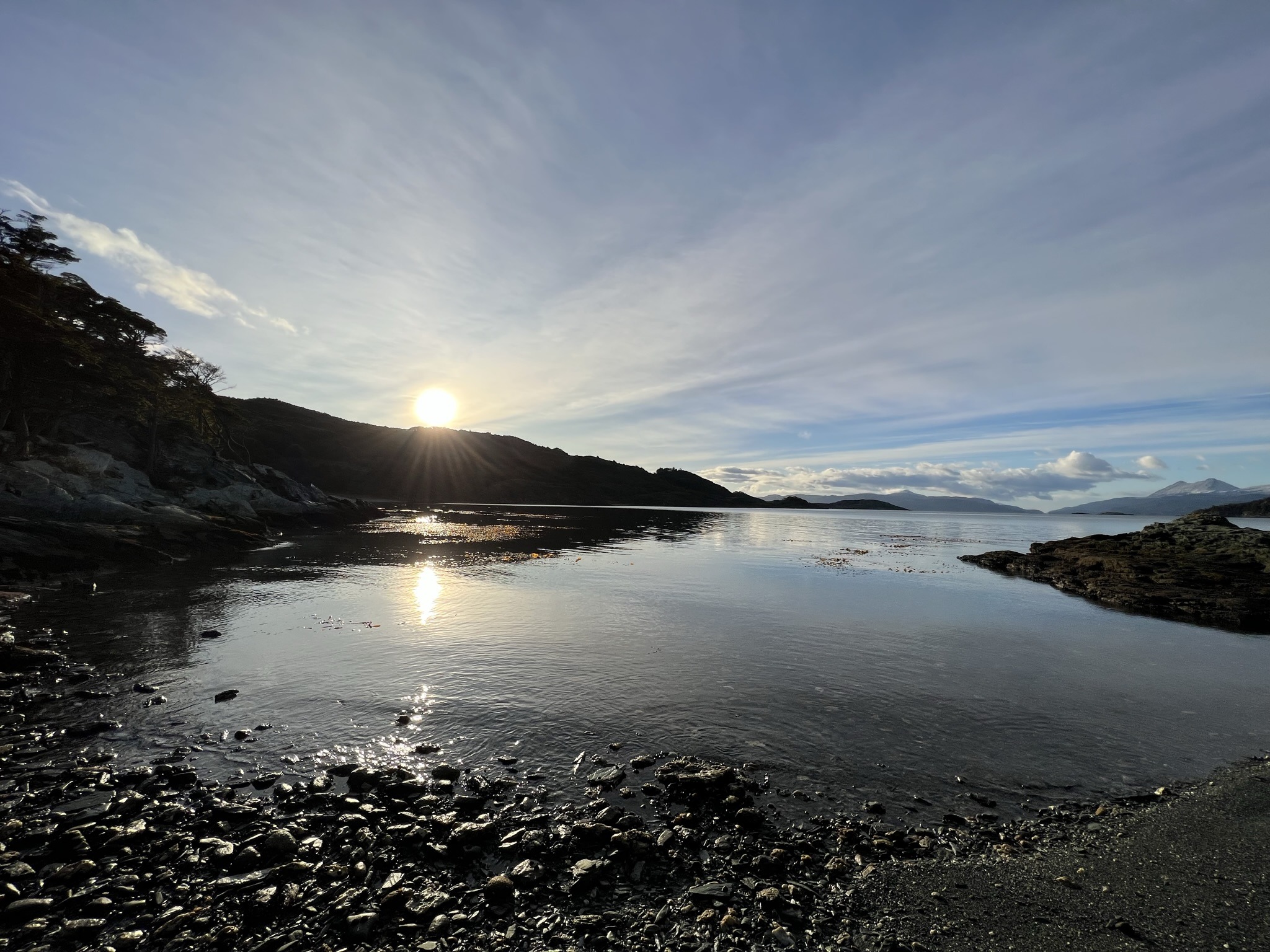
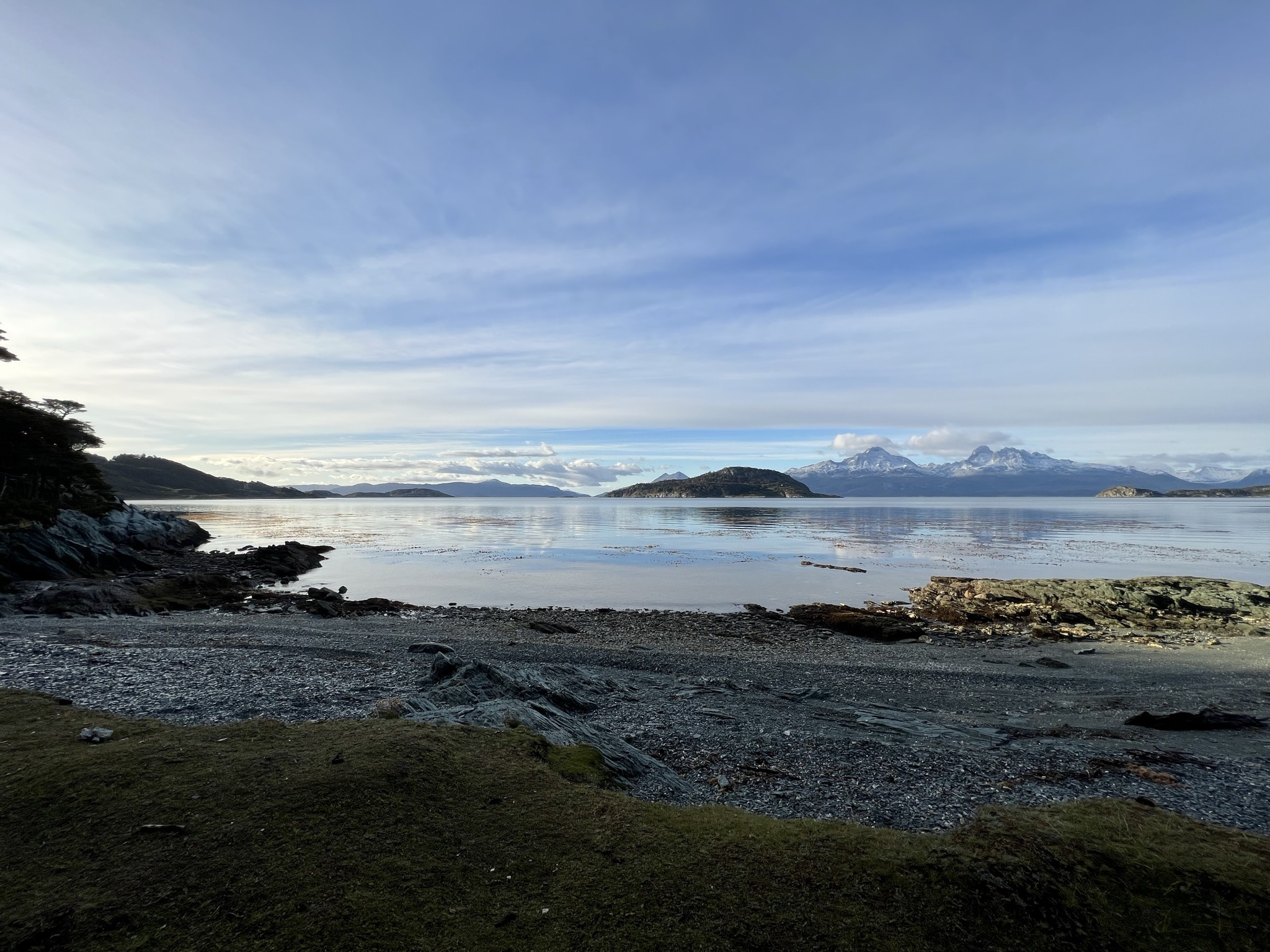
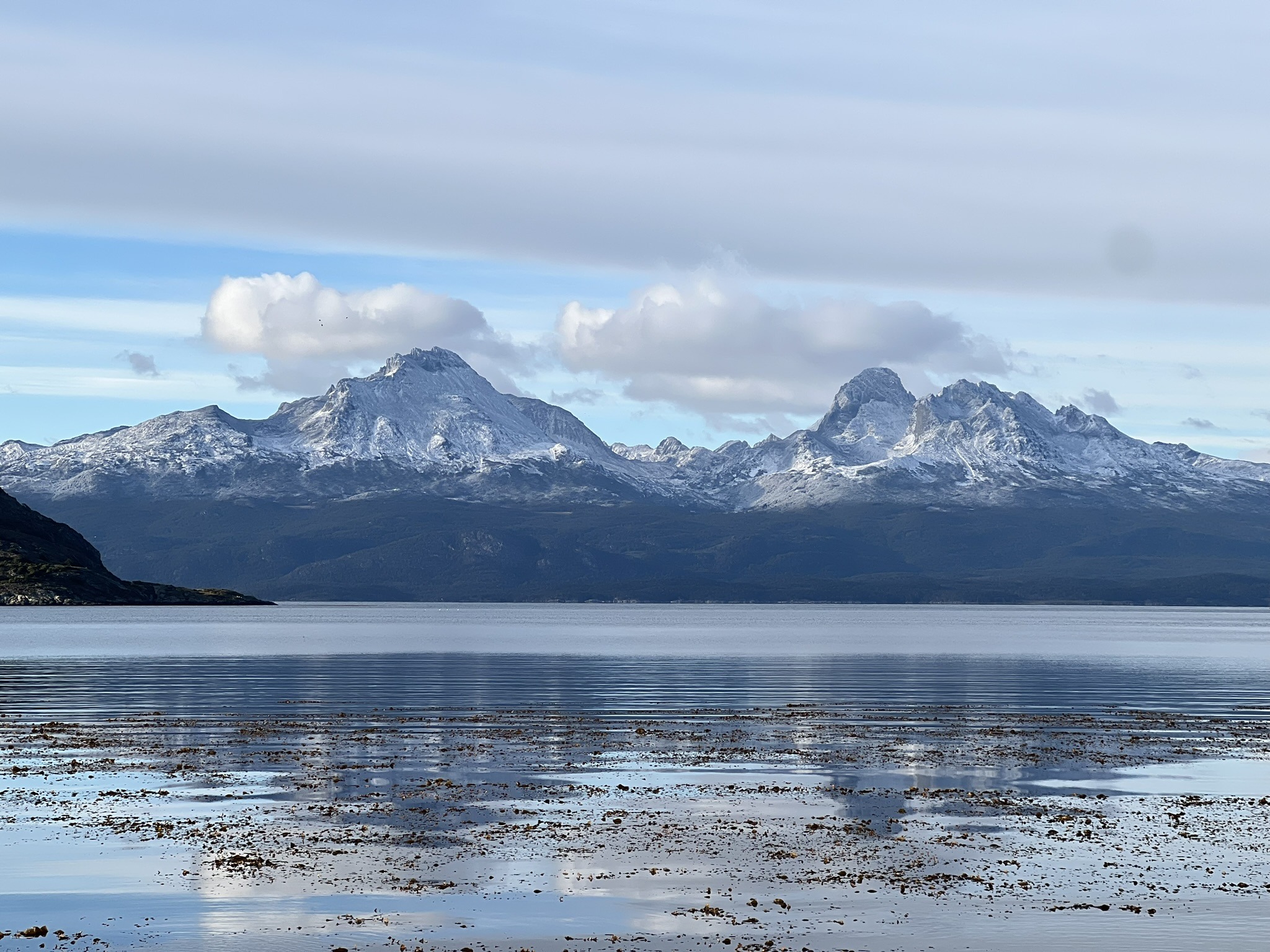
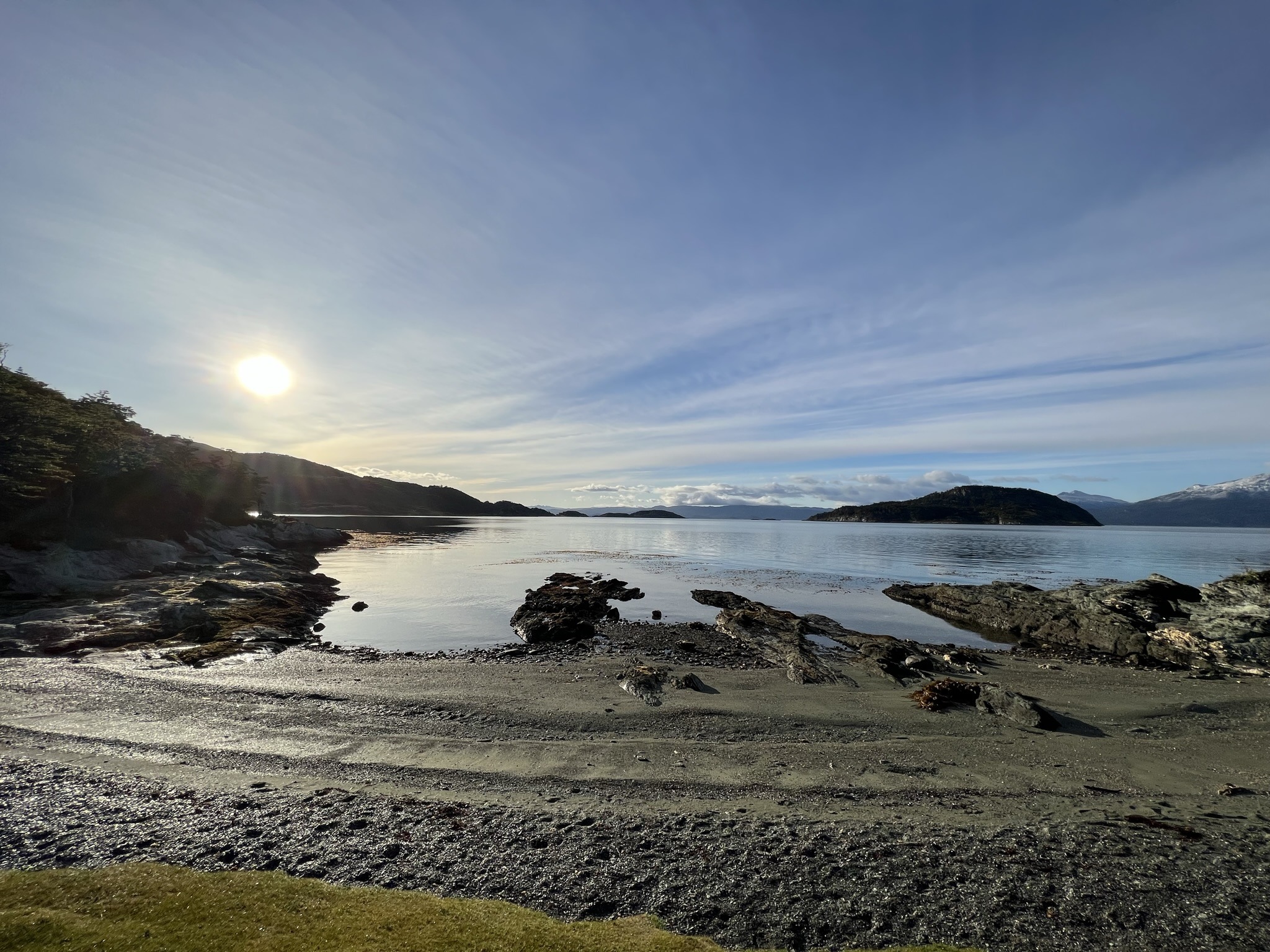
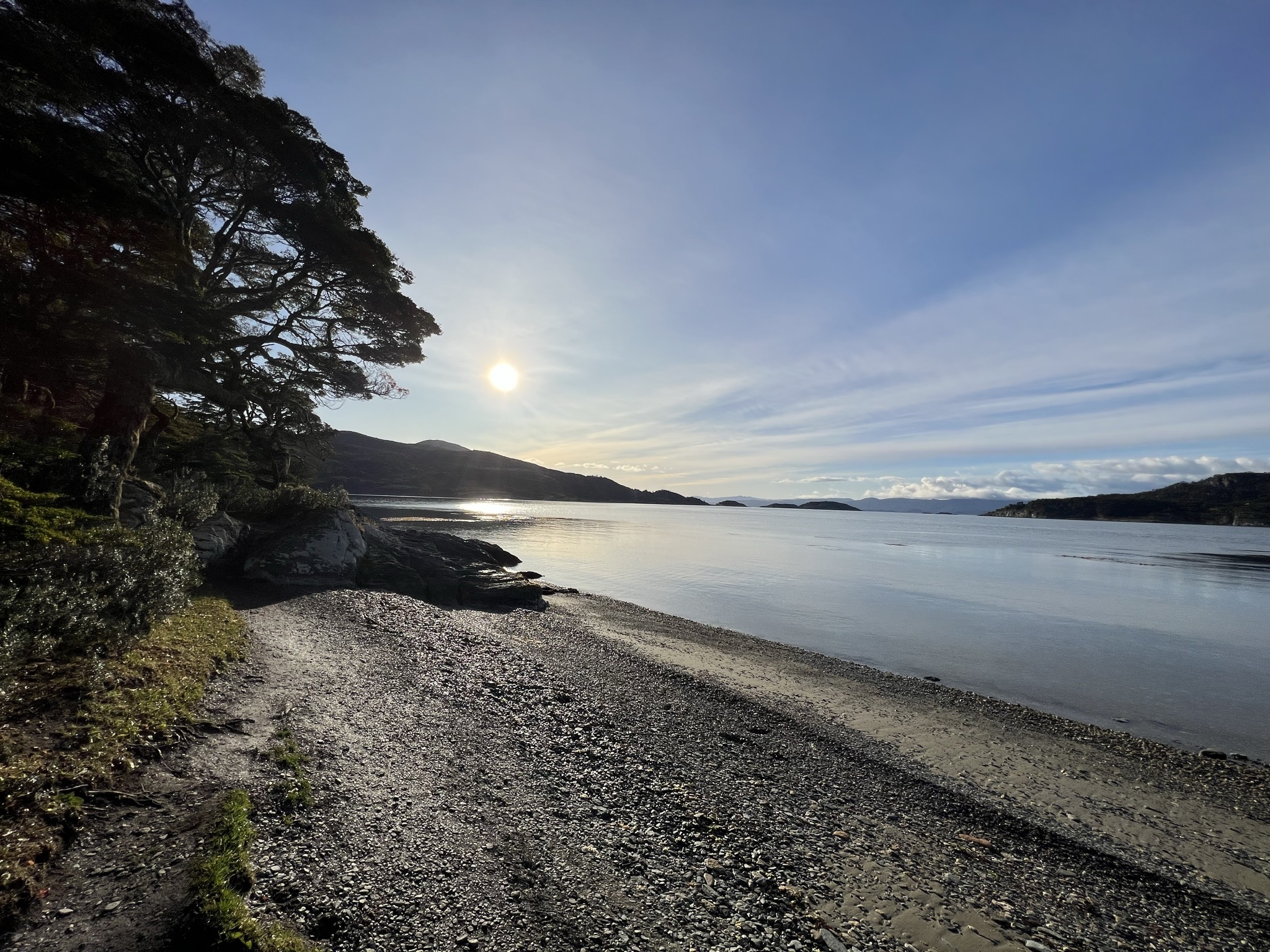
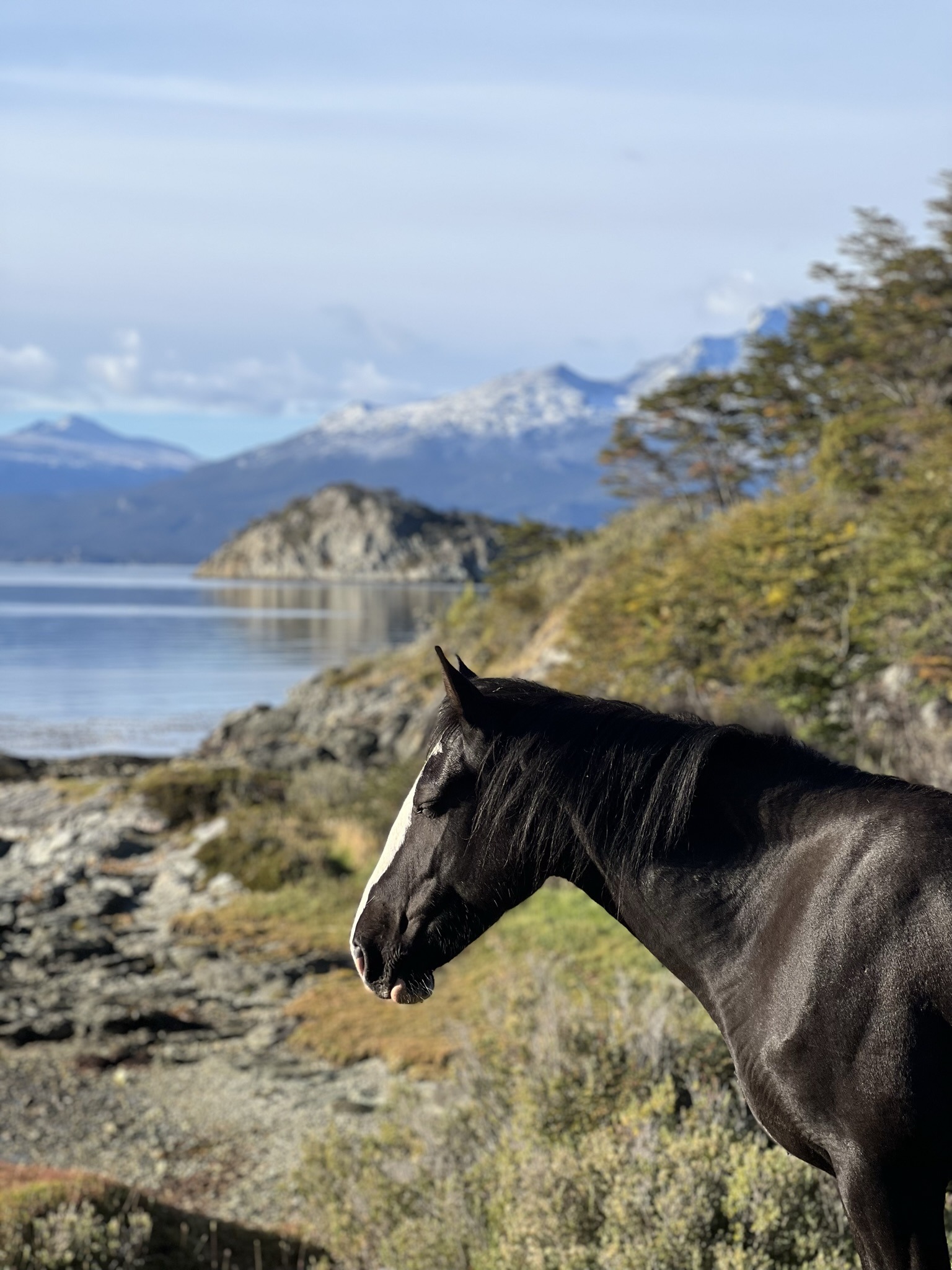
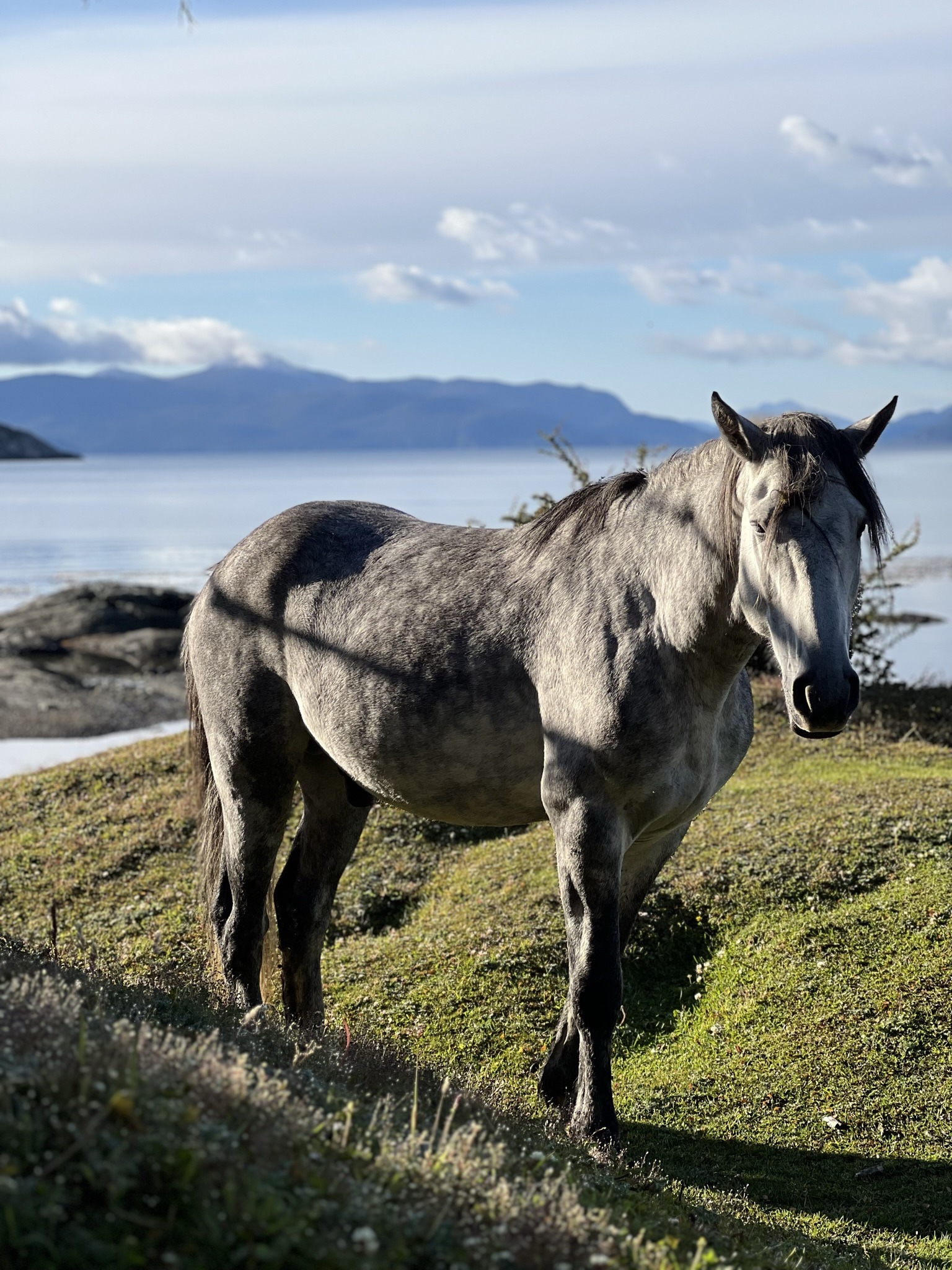
As I made my way across beaches and through forests, frantically searching for a deer – one of the few animals I’d always wanted to see in the wild but hadn’t yet managed to – I was reminded of something I tell myself over and over: in nature, you plan to see one thing and end up stumbling upon something else entirely. There, right in the middle of the trail, stood a majestic white wild horse. I can’t say I wasn’t startled when it suddenly neighed loudly, as I’d been laser-focused on the forest, trying to catch a glimpse of elusive animals I wasn’t even sure lived there.
Perhaps recklessly, I followed the horse off the trail – despite having promised myself I wouldn’t wander off, given that I was alone and had no mobile signal – which led me to an entire herd of the gentle beings grazing and resting on a patch of grass overlooking a beach. It was truly a sight to behold. I’d never seen wild horses before, and stumbling upon them like that felt utterly surreal. Standing there, keeping my distance but observing them voraciously, felt like an honour – so much so that I actually felt the need to thank them for allowing me into their presence.
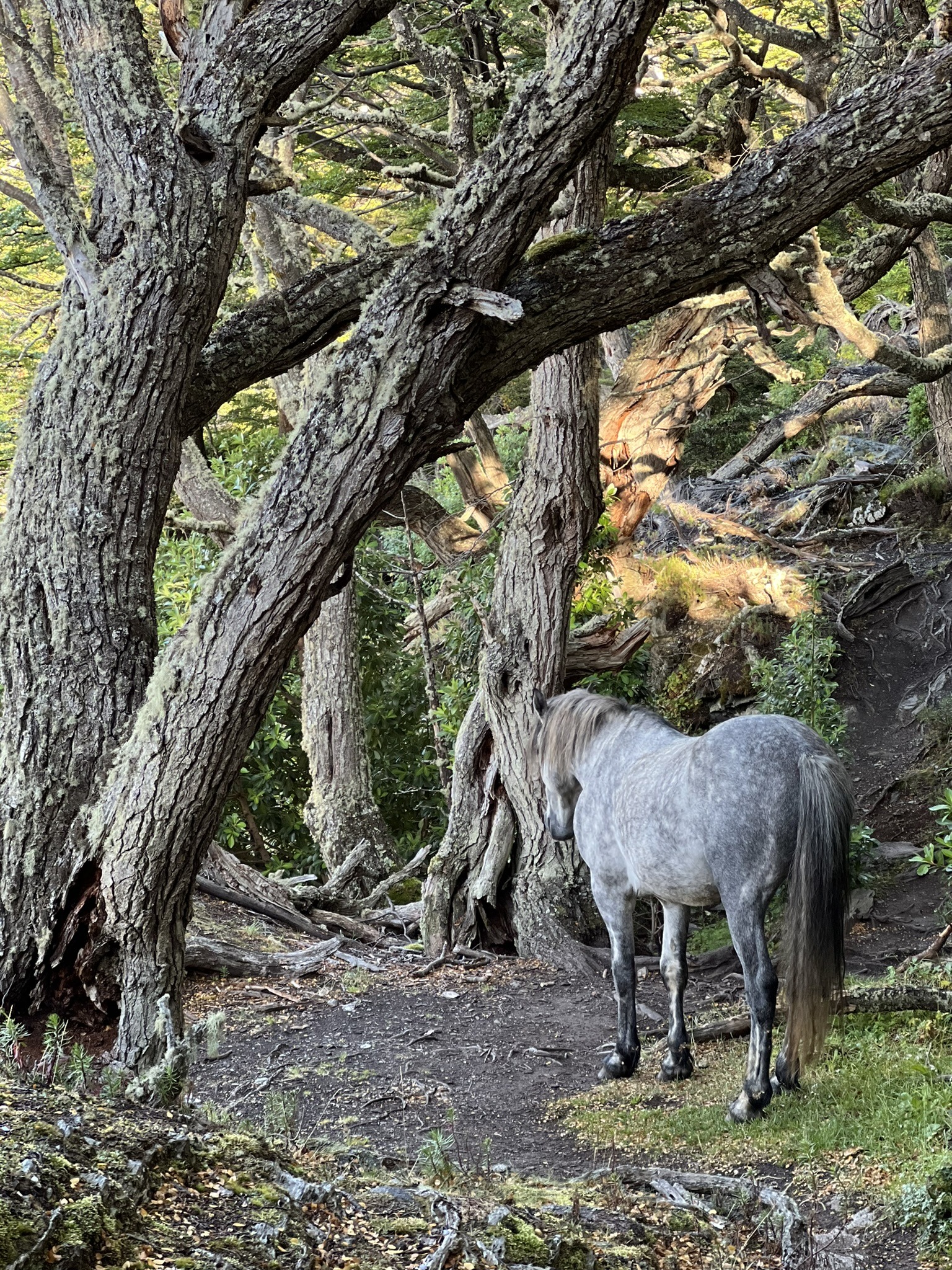
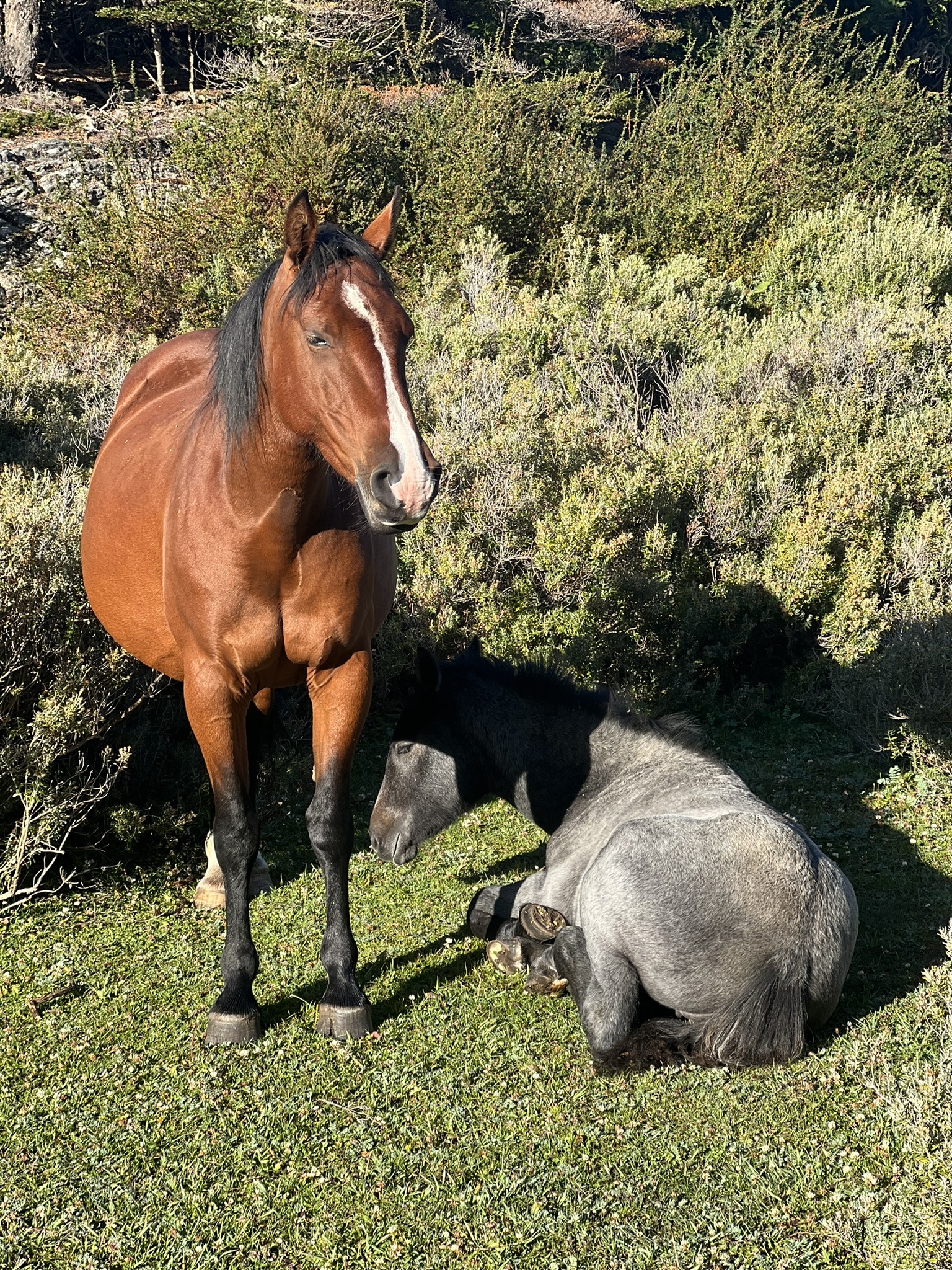
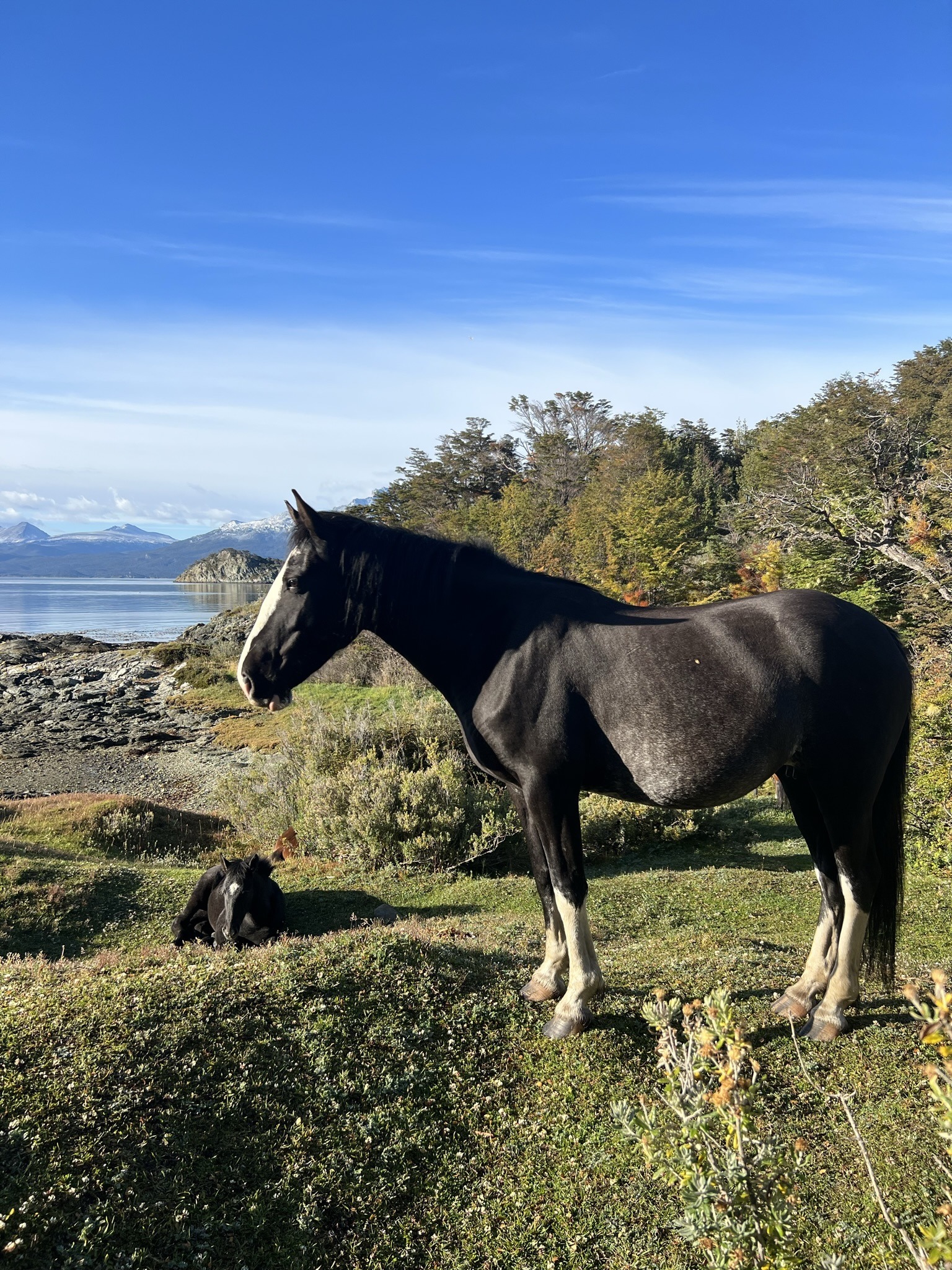
Then, as if all the cool species were clustered into their own designated zones, the trail led deeper into the forest, where a constant knocking sound echoed through the trees. Sure enough, a flash of red appeared through the branches – a Magellanic woodpecker. Then another. And another. Until I realised I was surrounded by them. With their scarlet heads, jet-black bodies, and white-tipped wings, they were an incredible find. Whenever I got too close, despite them being high above me, they’d cry out – likely warning the others of my approach. Once again, I found myself lingering, simply staring at the birds and trying to absorb the moment.
In fact, I don’t ever recall taking so many breaks during a hike just to soak in the scenery. I’d come across pristine pebbled beaches covered in limpets, clams, and kelp, with mountains rising dramatically behind them. I’d find a decent rock to sit on, snack on something, smoke a cigarette, and lie there listening to more silence. As the sun climbed higher, the forest and sea slowly came alive, with the occasional rush of wind, splash of a wave, or cry of a bird gently punctuating the stillness – the sound of nature.
PART II
Matters of Consequence
As I sat there doing absolutely nothing, I reflected on the morning’s encounters. While stumbling upon a herd of horses and a flock of woodpeckers may have been pure chance, it felt like the universe was quietly reinforcing a few lessons I’d already started to appreciate on this trip.
To let go of expectations. To ease up on myself. To stop applying so much pressure. I’m hard on myself, always five steps ahead – that’s how I get things done, and it works. But sometimes, in being so focused on the destination, I miss what’s right in front of me. The trick, I suppose, is learning to do both: plan for the future while fully inhabiting the present. And ironically, even though this wasn’t my expectation, this trip has been all about that. I’d learned to unwind. To relax. And considering how high-strung and by-the-dot I’d always been, that felt like a real achievement. The fact that I could now appreciate lying on a hammock or sitting by the beach doing nothing is something Old Me would’ve dismissed as a waste of time – something that’s not ‘a matter of consequence’, as The Little Prince would put it.

I guess that’s yet another thing I have Utila to thank for – the ability to simply be. To feel comfortable doing nothing. Not wanting or needing anything else. For someone like me, that sounds borderline insane. Hell, I used to be scared of this, always striving to be as productive possible. I guess that’s when I started to wonder whether that’s something that’s something we’re conditioned to. Is this something society drills into our brains for the sake of the greater good? Is it an evolutionary trait masquerading as virtue? Whatever it is, having learned the value of switching off and embracing peace, even briefly, I’m convinced there’s more to life than plans, expectations, and work. That said, I still needed to find a middle ground – or at least learn how to switch between modes at will. I guess, what I’m trying to get at, is that I am – but sometimes, I just want to be.
Of Peace and Stunning Vistas
As much as I still had to learn in terms of growth and self-discovery, I also had plenty of ground left to cover – or, as I’d decided by then, as much as I felt like walking. The remainder of the trails were easy to follow, though slippery roots offered frequent opportunities for an untimely demise. Aside from that, it was a smooth ride, and after a couple of hours, I arrived at the Alakush Visitor Centre, named after the Fuegian steamer duck. Here, I found shelter from the biting wind and enjoyed a hot coffee and a couple of empanadas before continuing on.
I chose to skip the Hito XXIV trail Alonso had recommended – a route leading directly to the Chilean border – and instead walked to its starting point, which opened onto a beach overlooking the emerald-green Lake Acigami, with Magellanic geese dotted along its banks. On the way back to the centre, I found the bridge leading to the second island and the Senda Paseo de la Isla – a gentle 1.3-kilometre walk along the myrtle-green Lapataia River. Here, I hopped across rocks, streams, and peaty bogs, entertained by more steamer ducks, chimango falcons, and constant postcard-worthy views of river and mountains – the highlight being Laguna Verde, aptly named for its vivid colour.
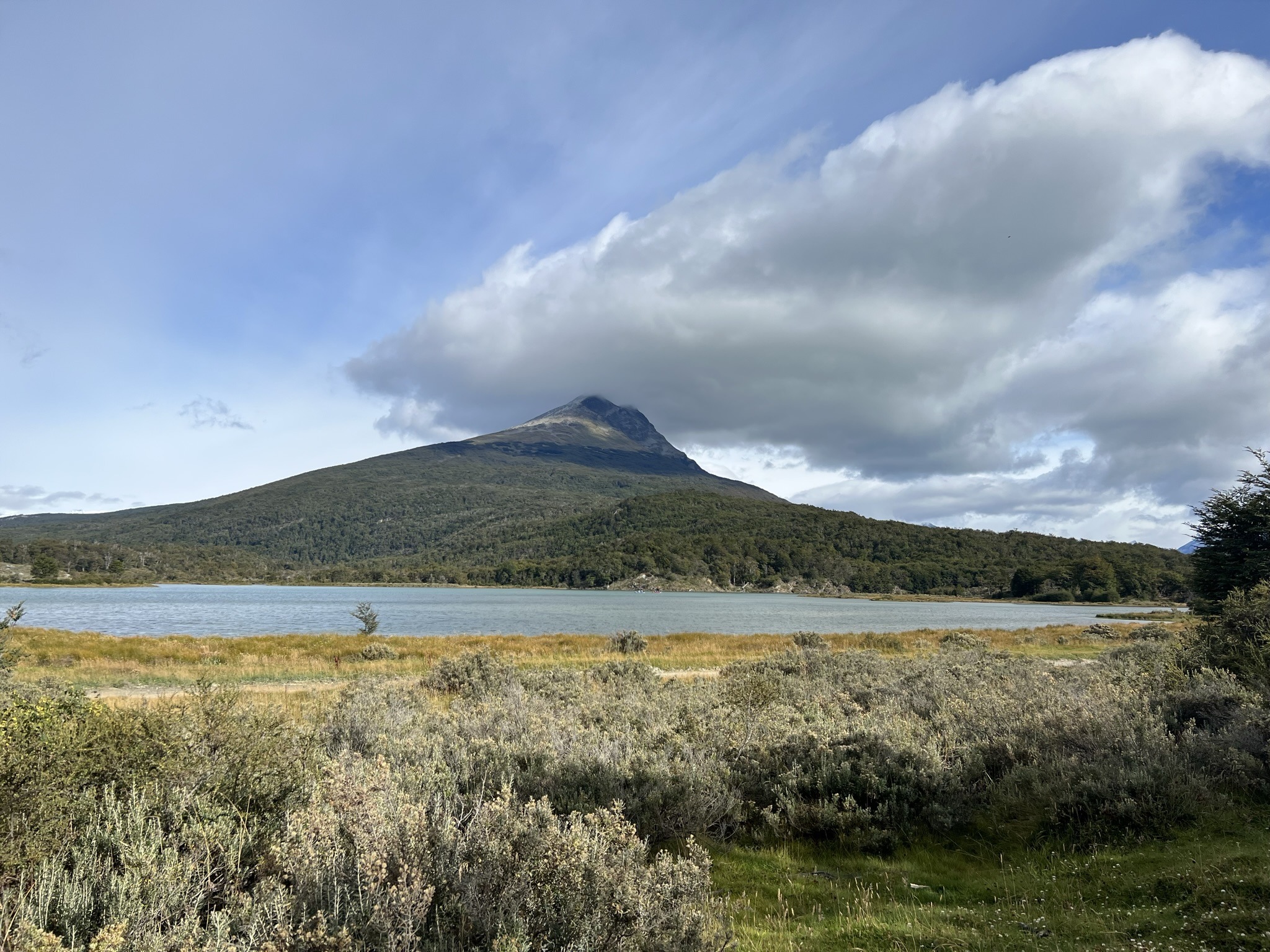
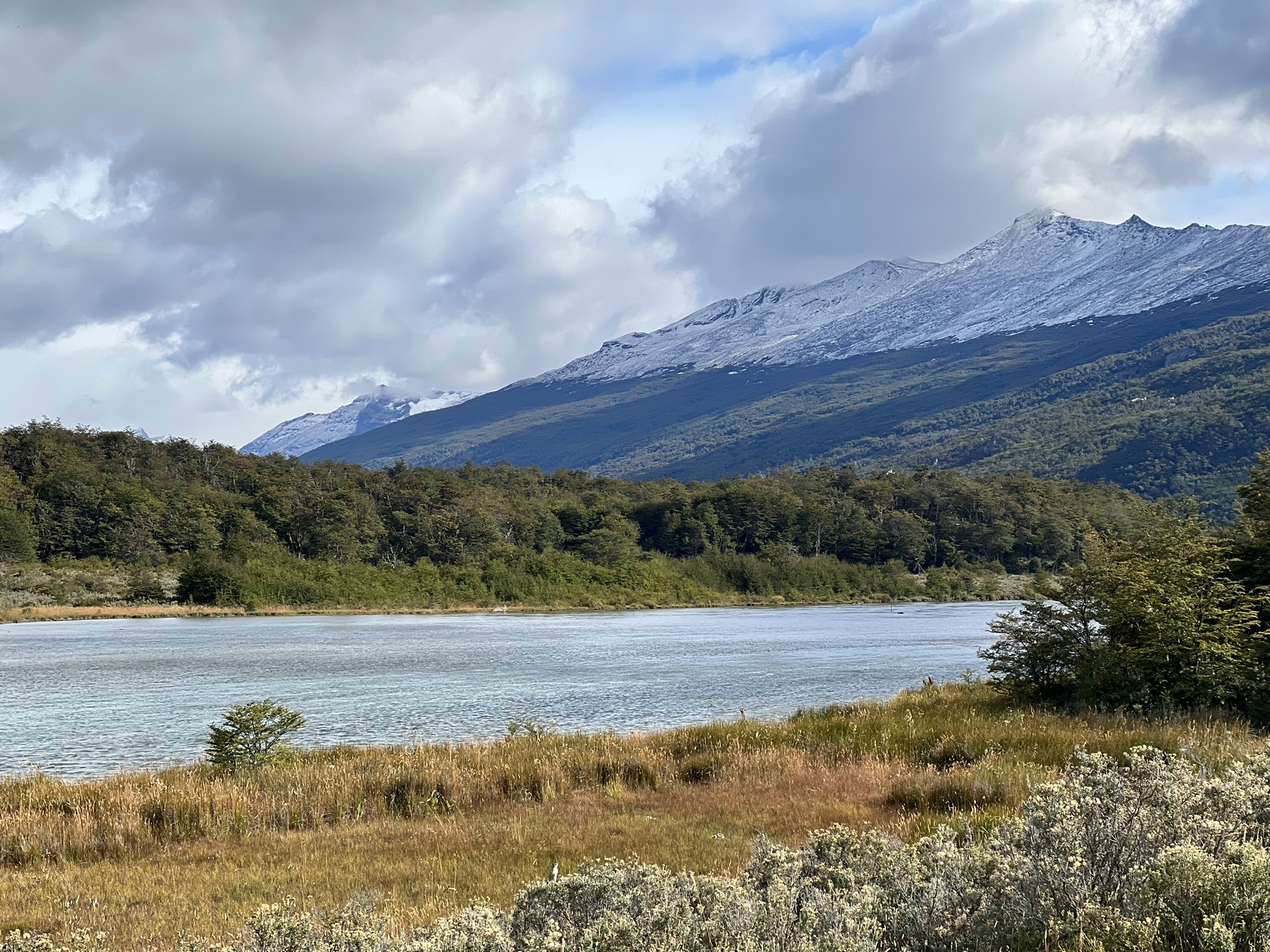
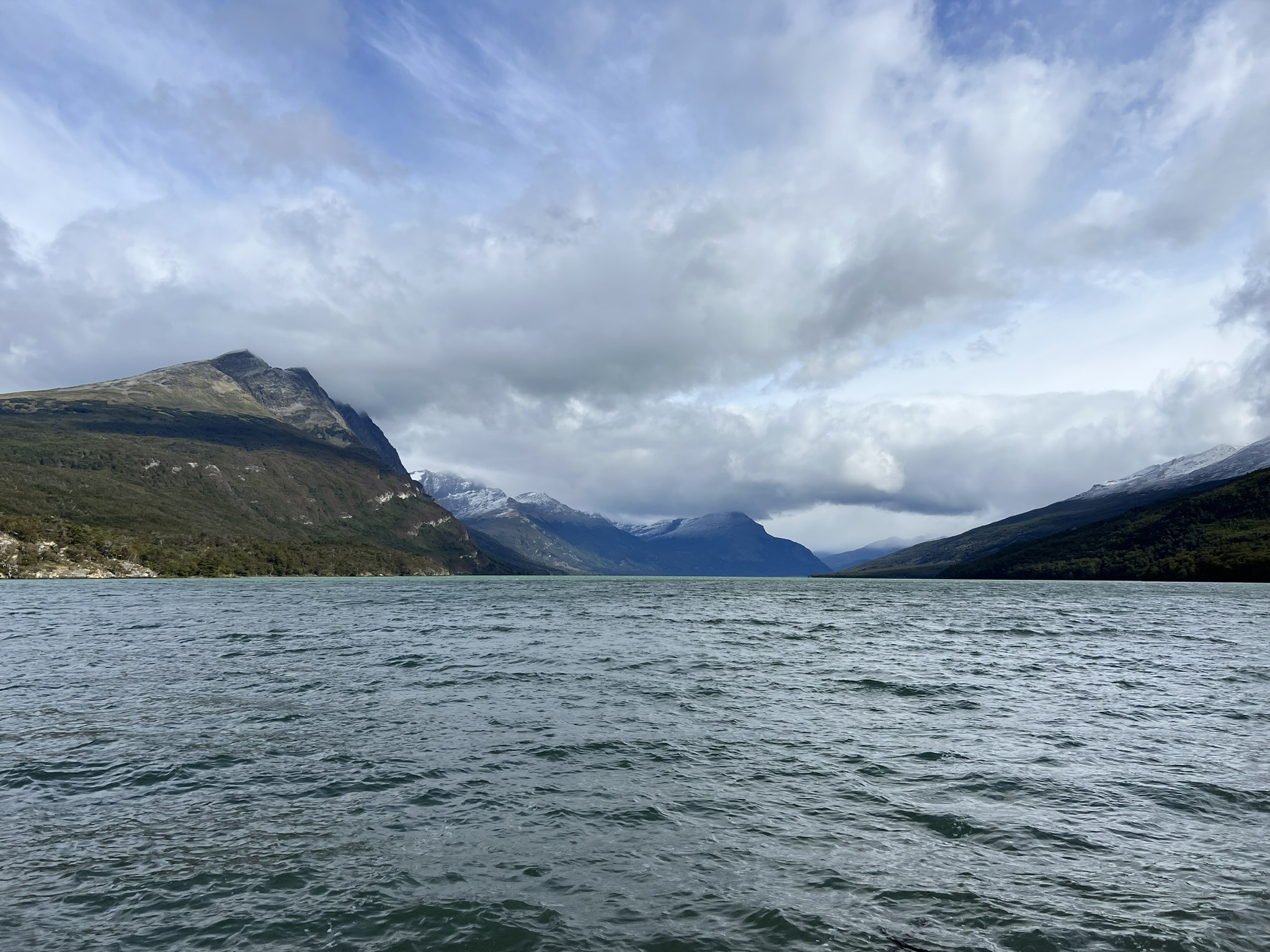
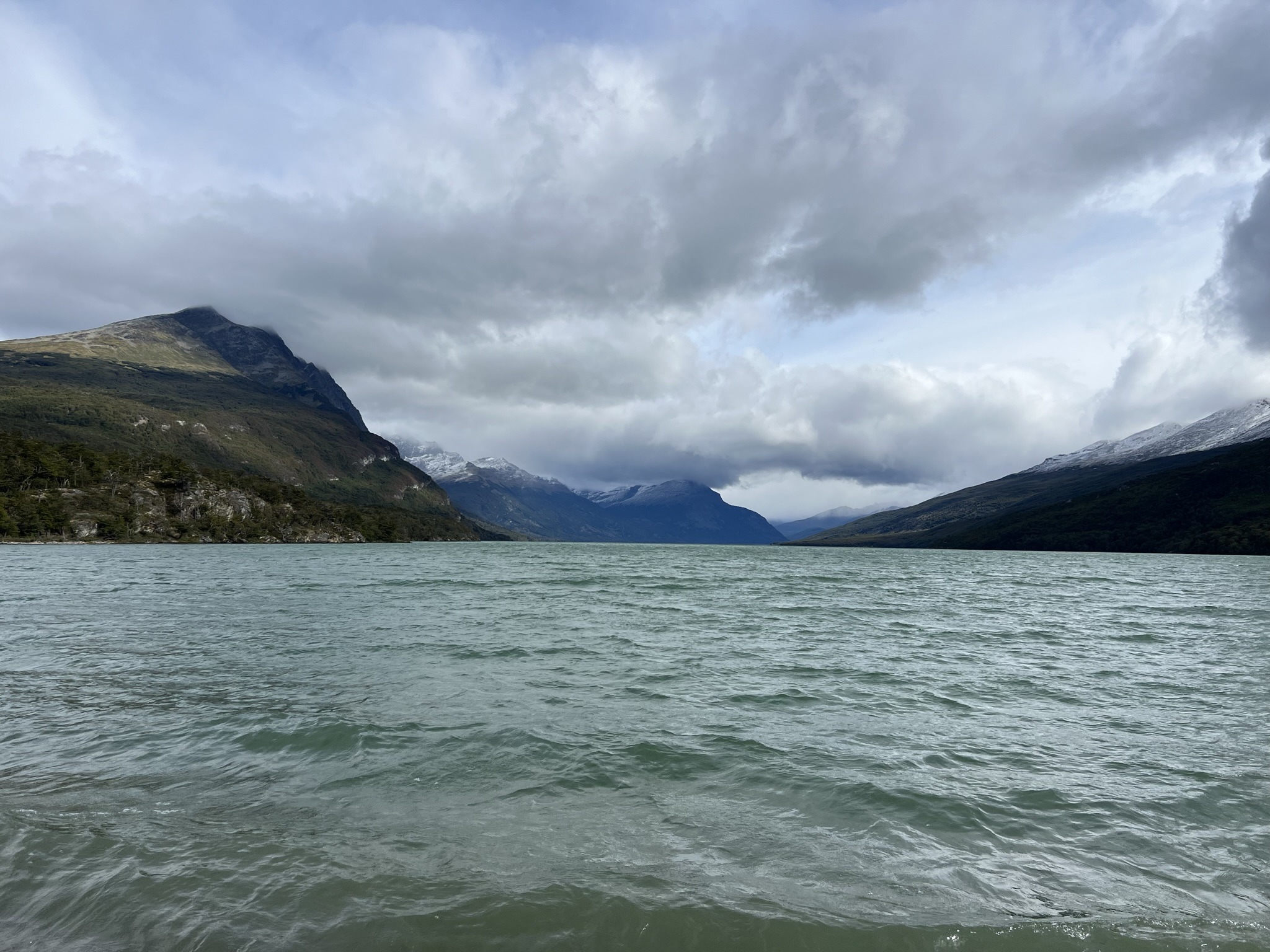
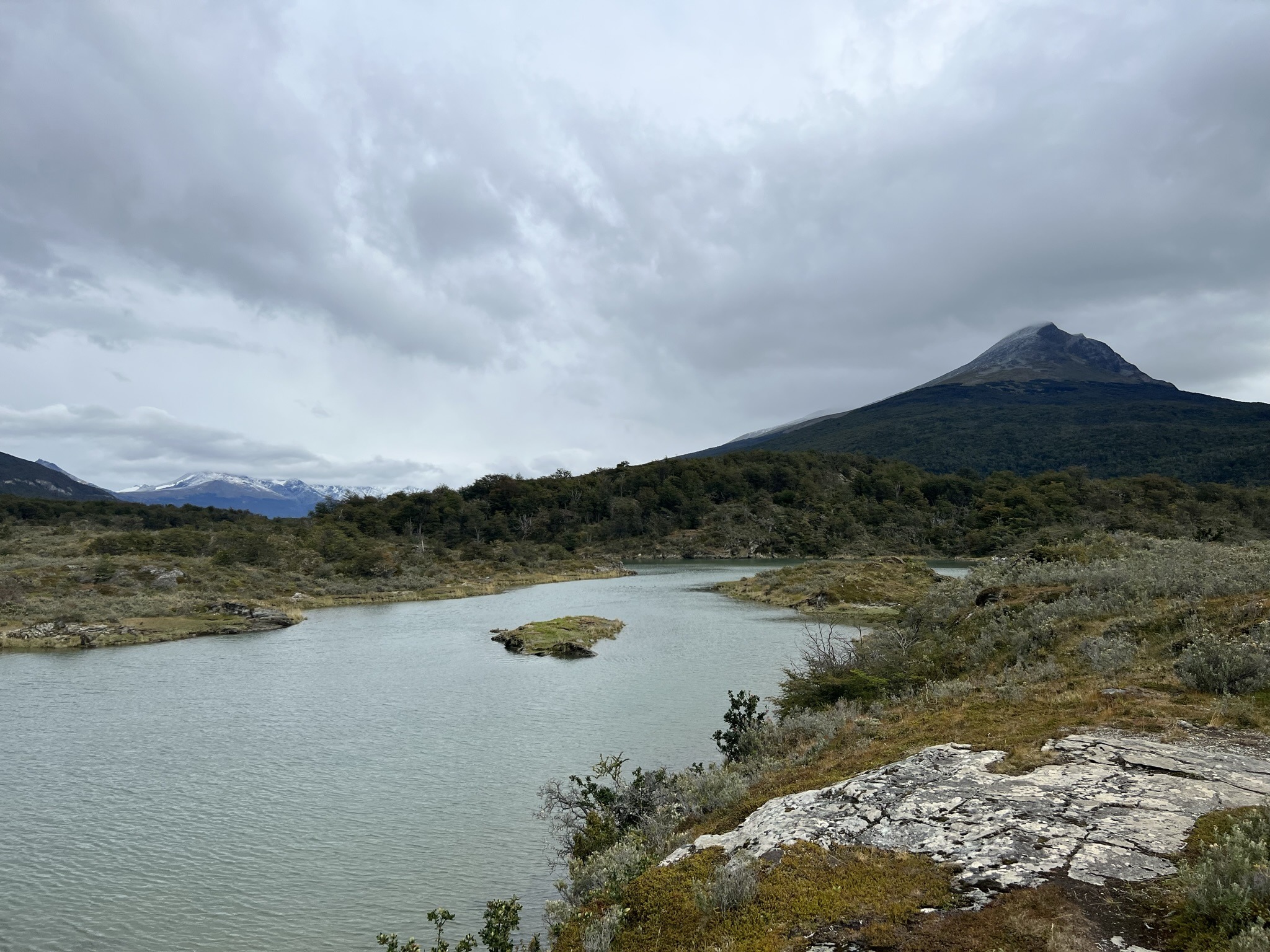
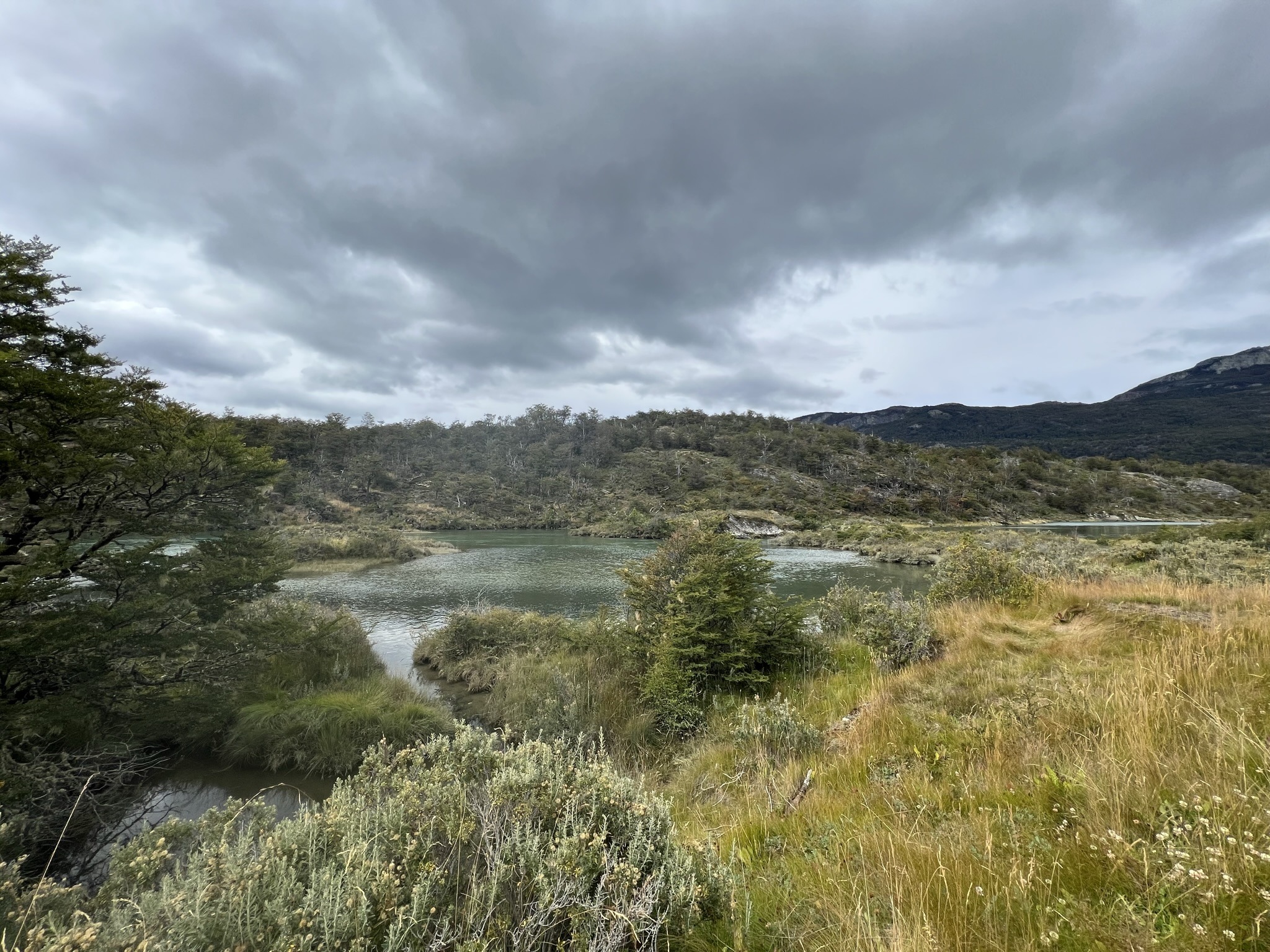
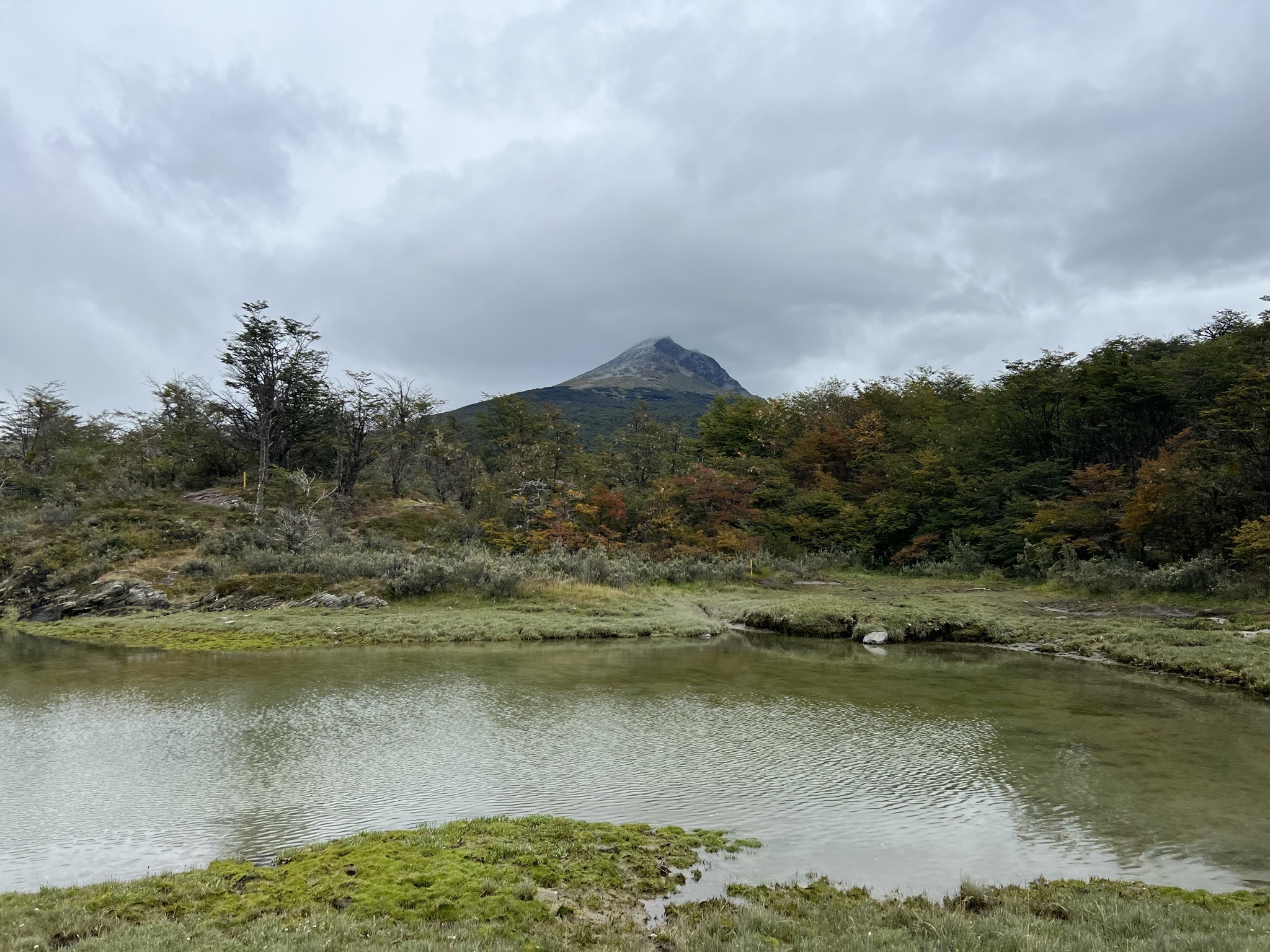
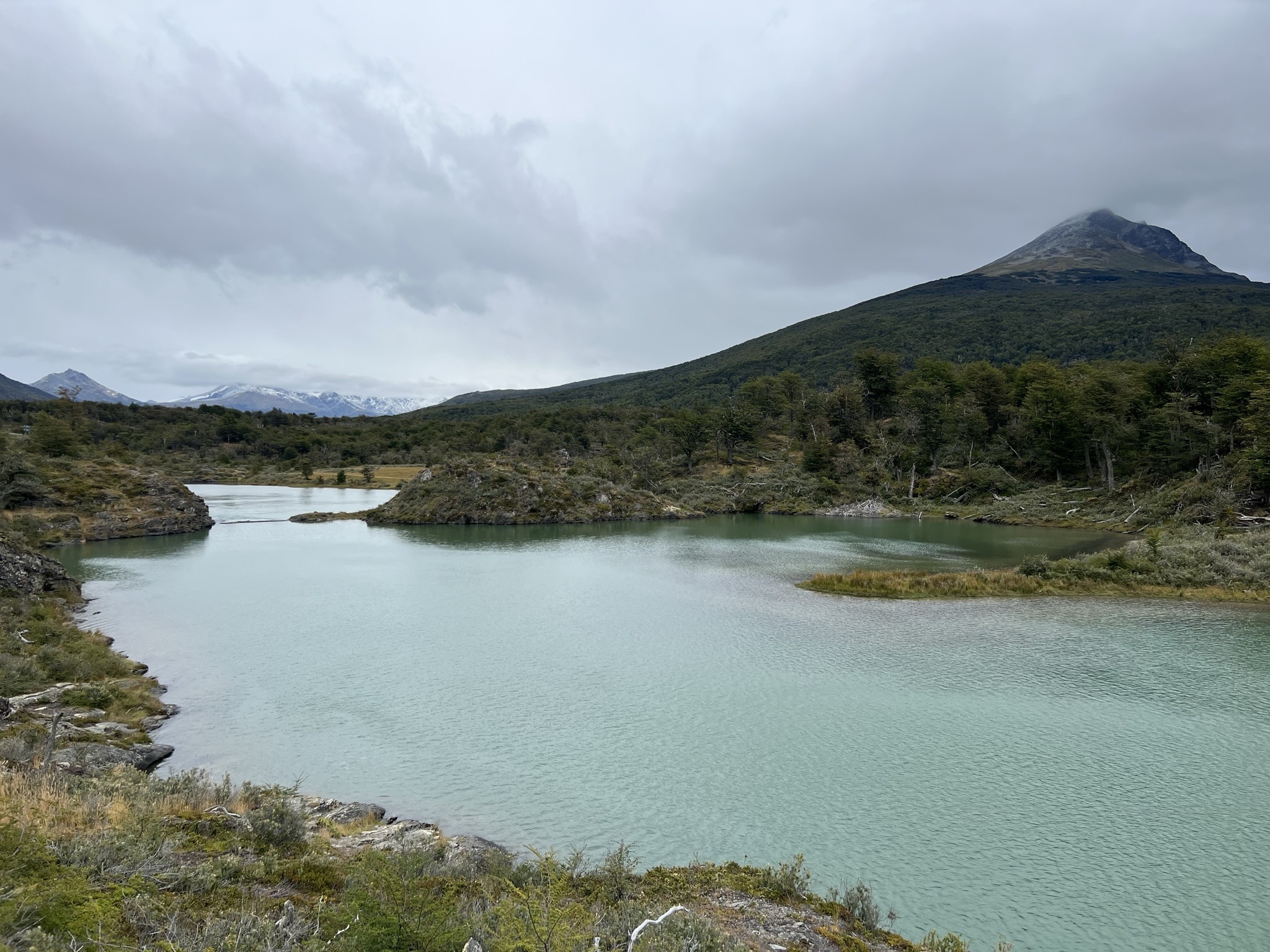
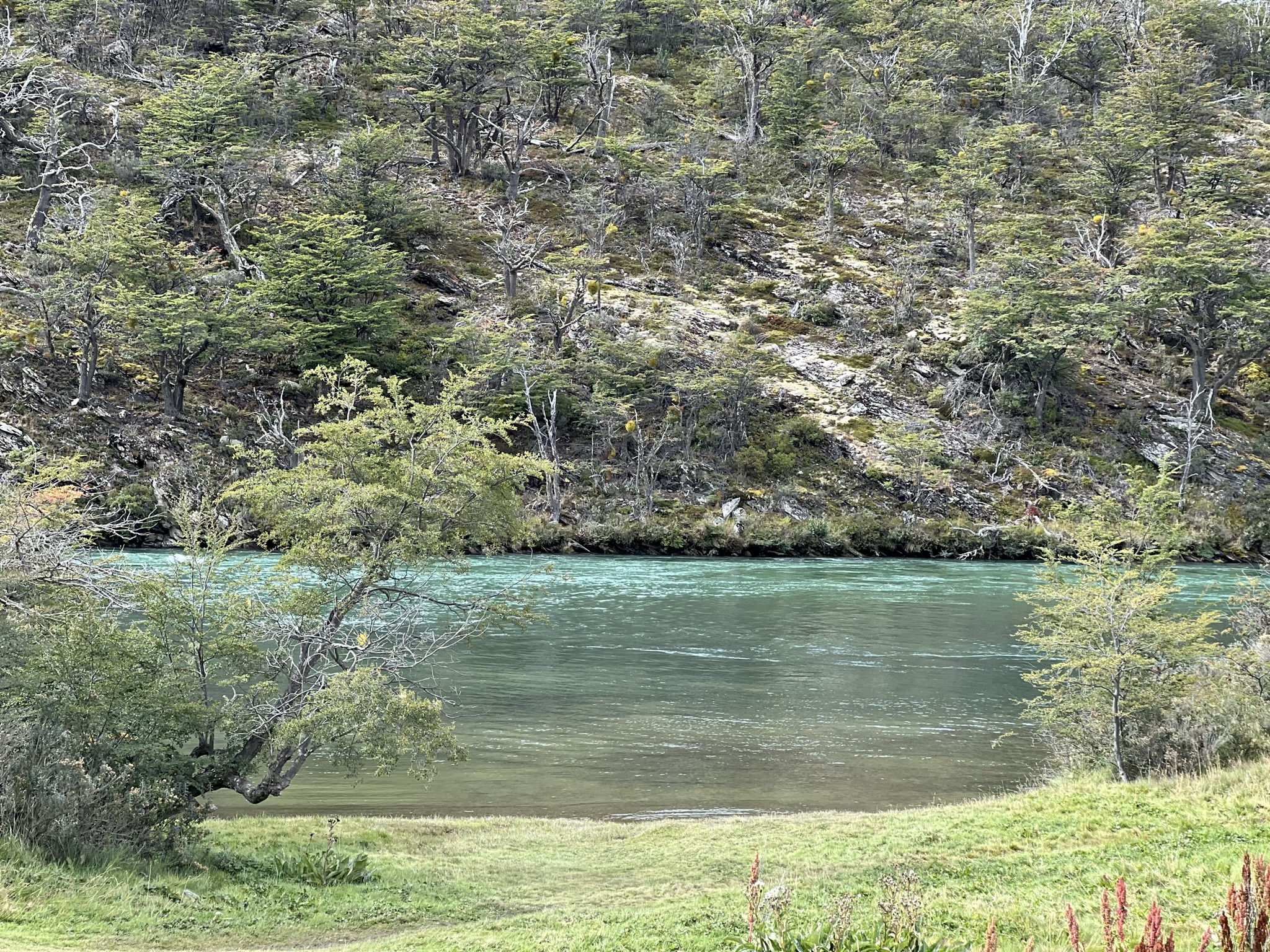
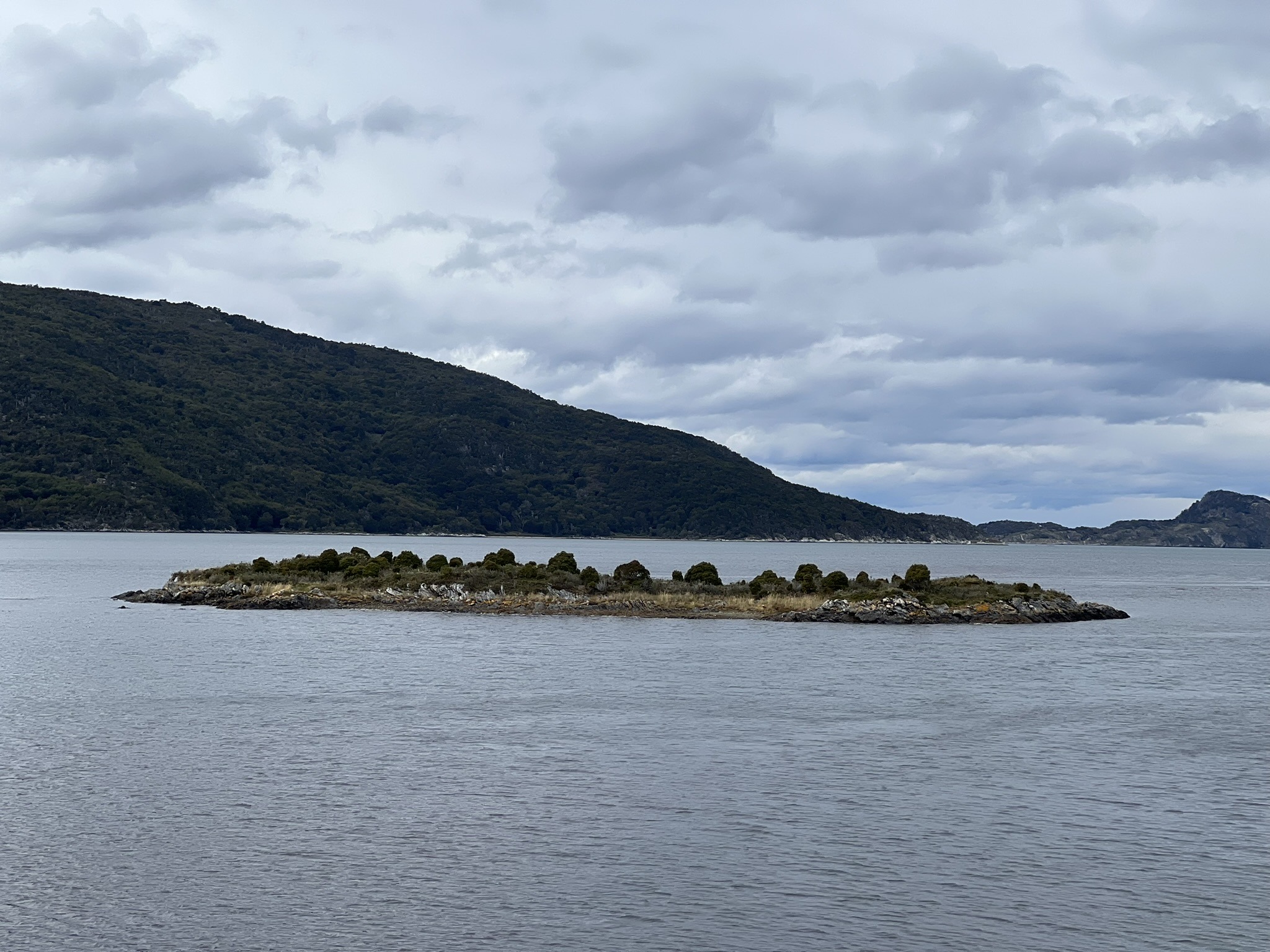
Another kilometre along the Senda Mirador Lapataia – this time through a forest of lenga and ñire – brought me to Bahía Lapataia, a scenic bay on the Beagle Channel near the Chilean border. A boardwalk here led to yet more viewpoints which, just to confirm, hadn’t grown old in the slightest, especially with Chile stretching out right in front of me.
After spending the day trekking through the Patagonian Andes, I couldn’t wait for more. For now though, I was simply happy to have completed my first solo, unguided trek – even if it was a short one, stitched together from trails I’d picked and chosen myself.
Stay wild,
Marius
Post-Scriptum
Covered in mud, and with my hostel not offering laundry services, I had to use the traditional wash-in-the-sink method I’d been relying on all trip. Just an FYI – central heating is way better than AC for drying clothes. Take it from me – an expert in frugal-style laundry by this point.