As always, we regretted all our partying and crazy antics the following day. We woke up late in the afternoon and, knowing we’d have to be hiking another couple of volcanoes in a few hours, we felt like killing ourselves.
“Why the hell do we do this to ourselves?!” we pleaded to each other. We even considered a joint suicide, but, given the circumstances, even that required more strength than we had. Somehow we scrounged up enough energy to get out of bed, went for a refreshing shower and lunch, and then managed to rest a bit again. It didn’t help.
Nelson, a tour guide we had met the previous day whilst roaming around the city, was by our door exactly on time. We were this close to sending him away, knowing we’d be completely unable to walk one step. “Relax, todo despacio!” he told us, reading our faces. We’d take it slow and go at our own pace – that’s all. Gotta give it to the guy, he’s pretty damn convincing!
Just like that, we got into his car and were on our merry way, dozing off the second we sat down. At one point, Amelia likened us to cymbal-banging monkeys – a perfectly accurate representation of how we both felt. The second we got to the national park’s entrance, we woke up to him offering us Nicaraguan churros (small sticks made of fried corn covered in sugar) and cajetas (cow’s milk fudge) – the most delicious sweets I’d tried in all of Central America. I swear, the second they touched our tongues, we were all up and awake, ready for the hike as if the previous night’s exhaustion had dissolved away.
The “Mouth of Hell” and a Tightrope Daredevil
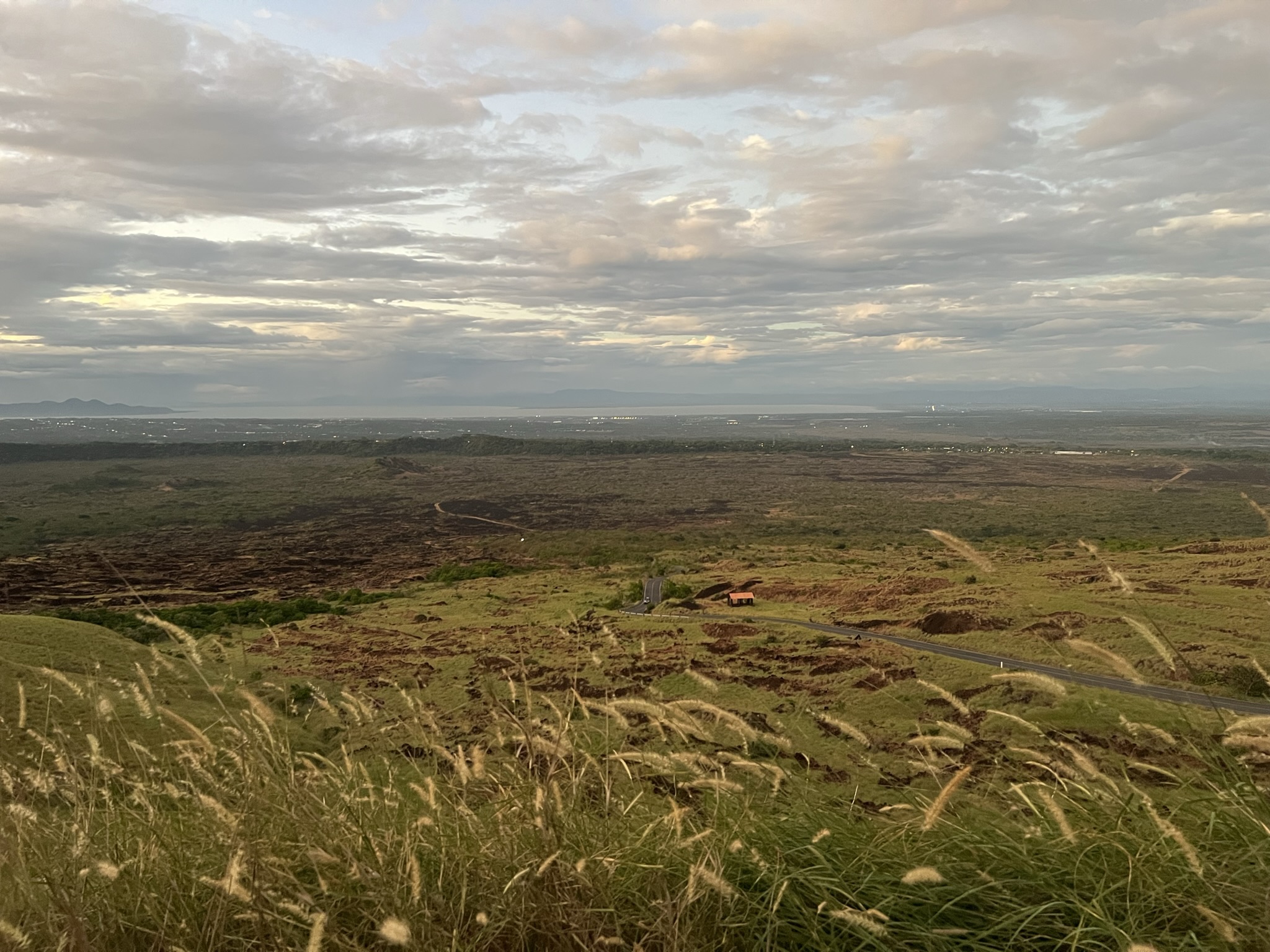
Masaya National Park, Nelson told us, is a 20-square-kilometre caldera that formed some 2,500 years ago following a huge eruption. This also gave rise to the Masaya and Nindirí cones; basaltic complexes with the latter still active.
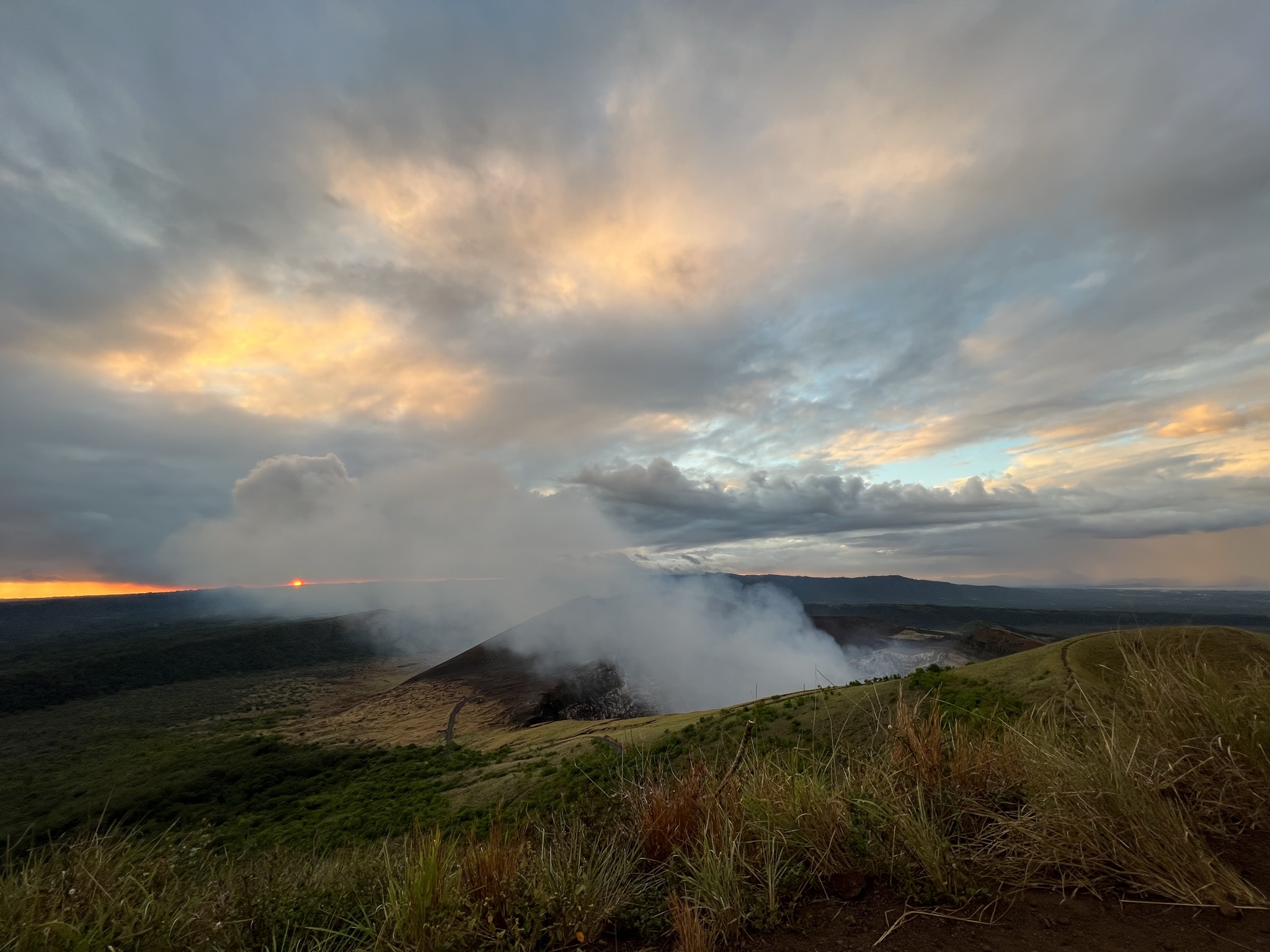
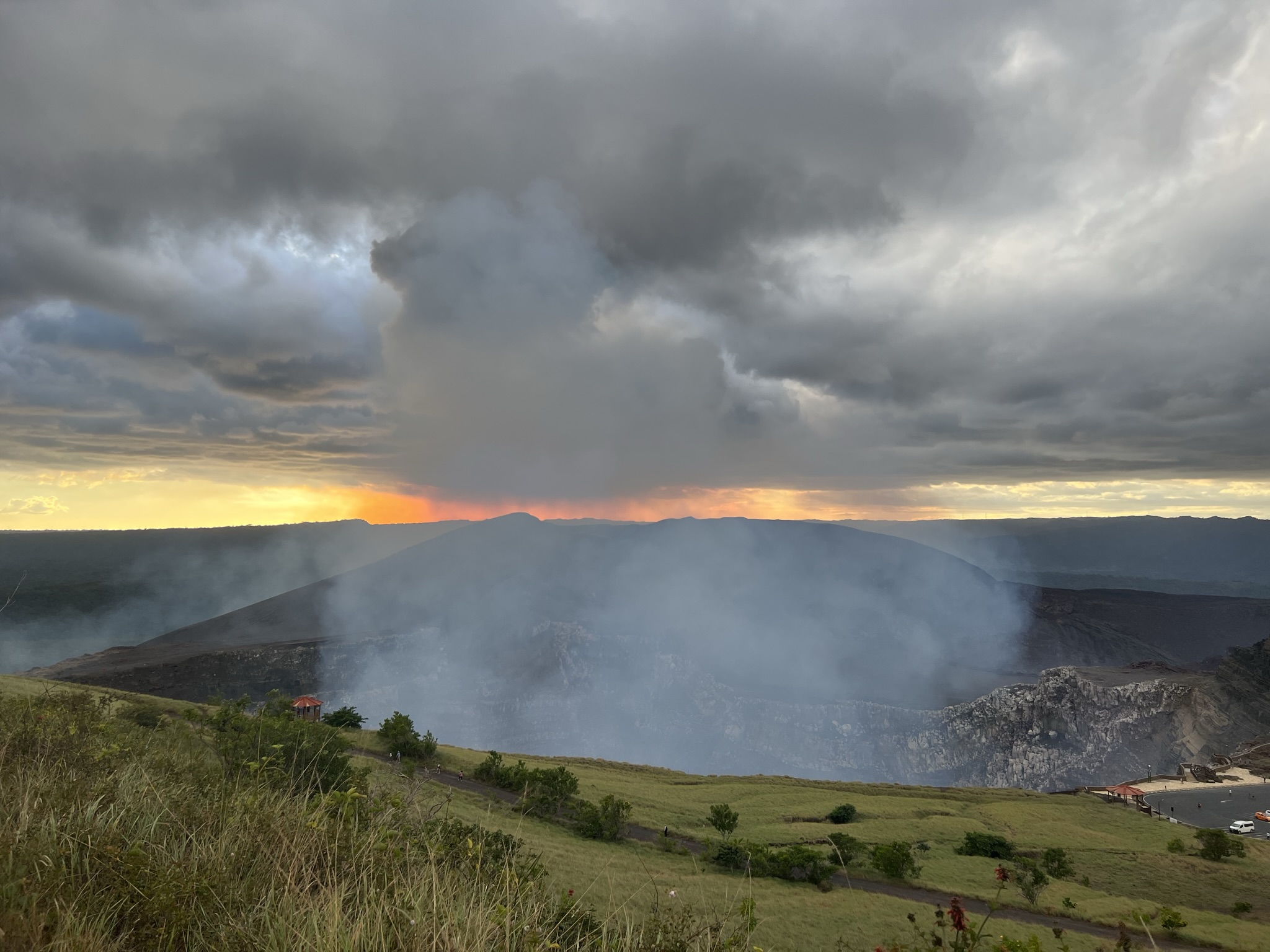
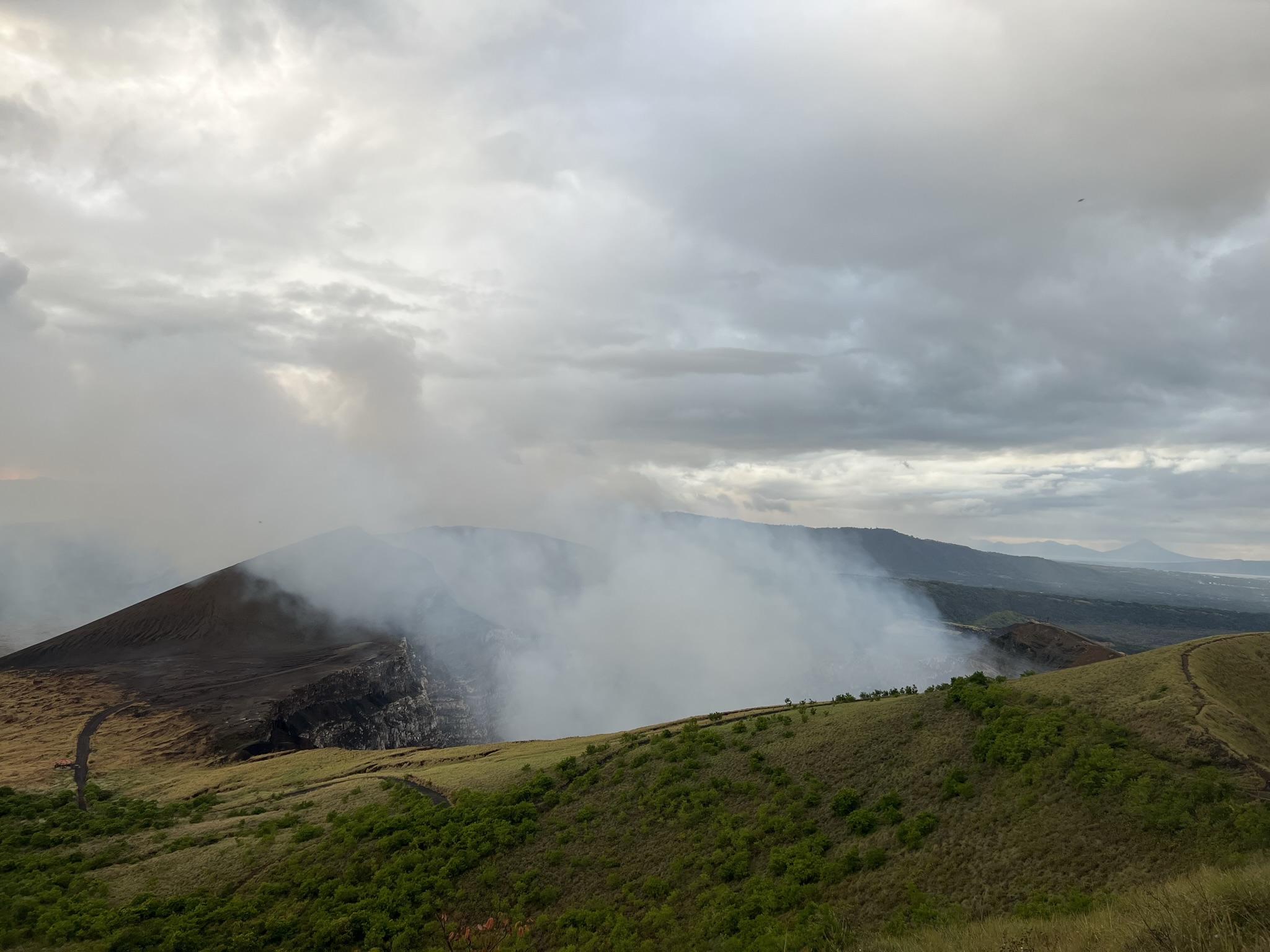
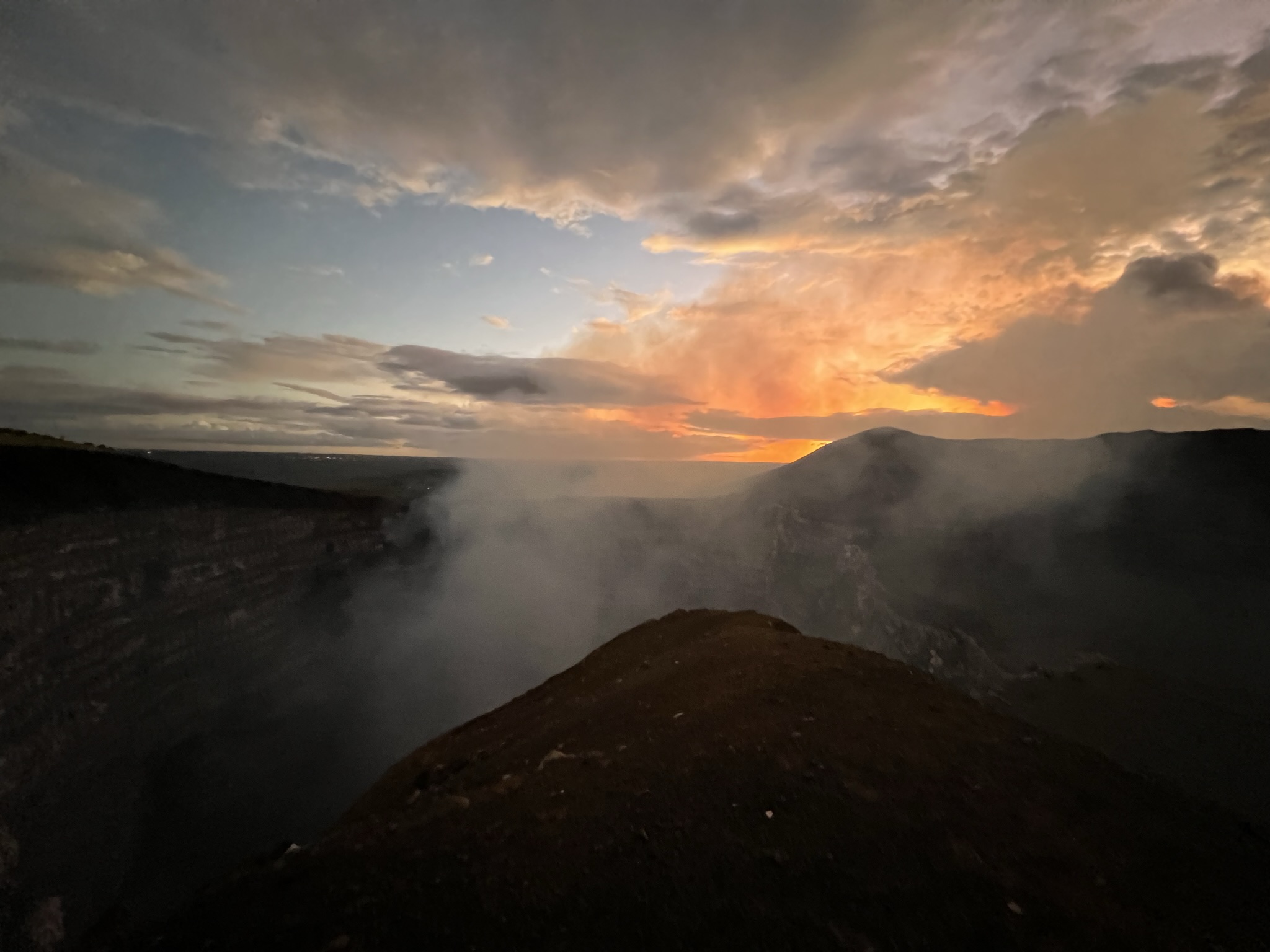
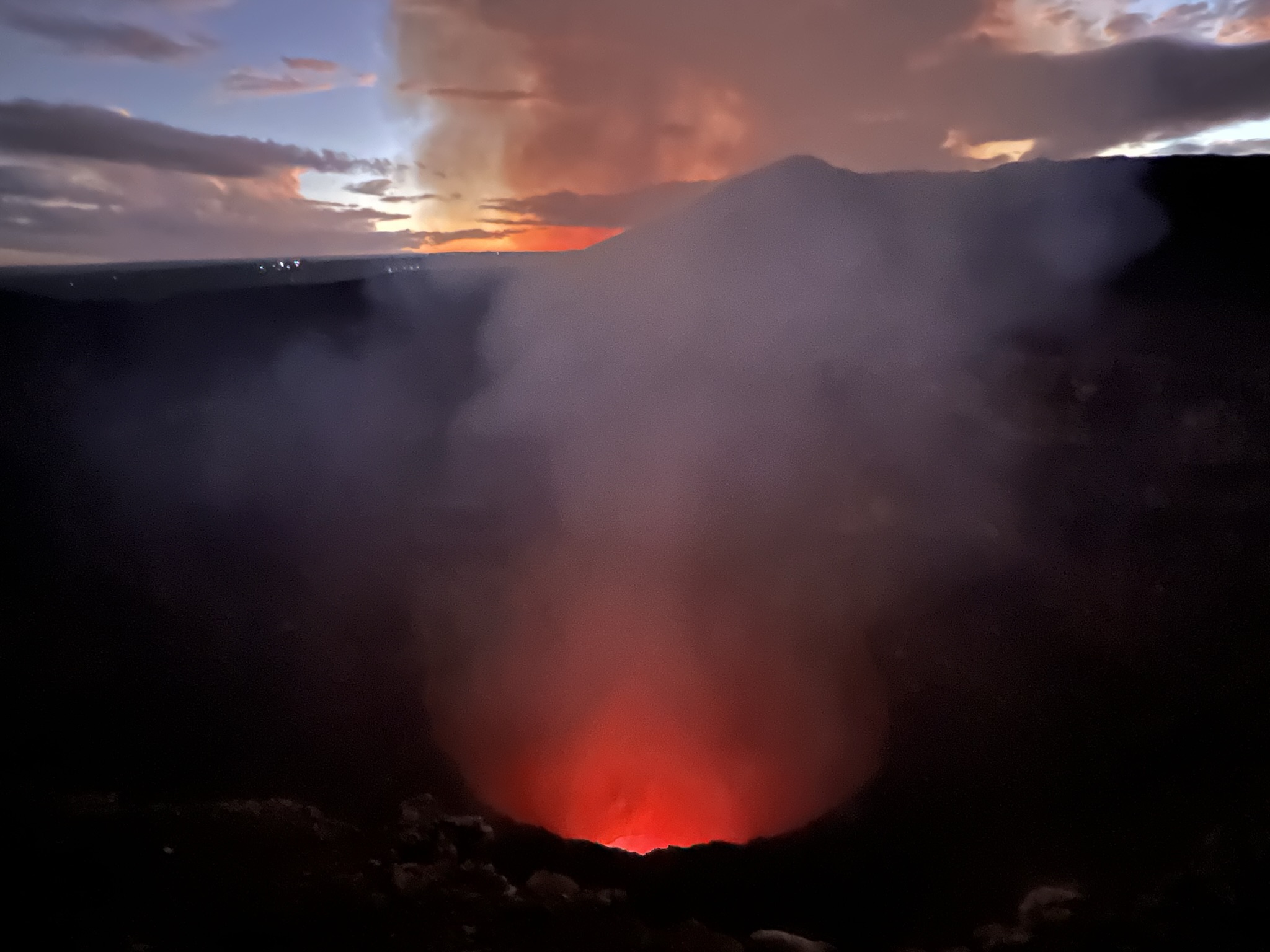
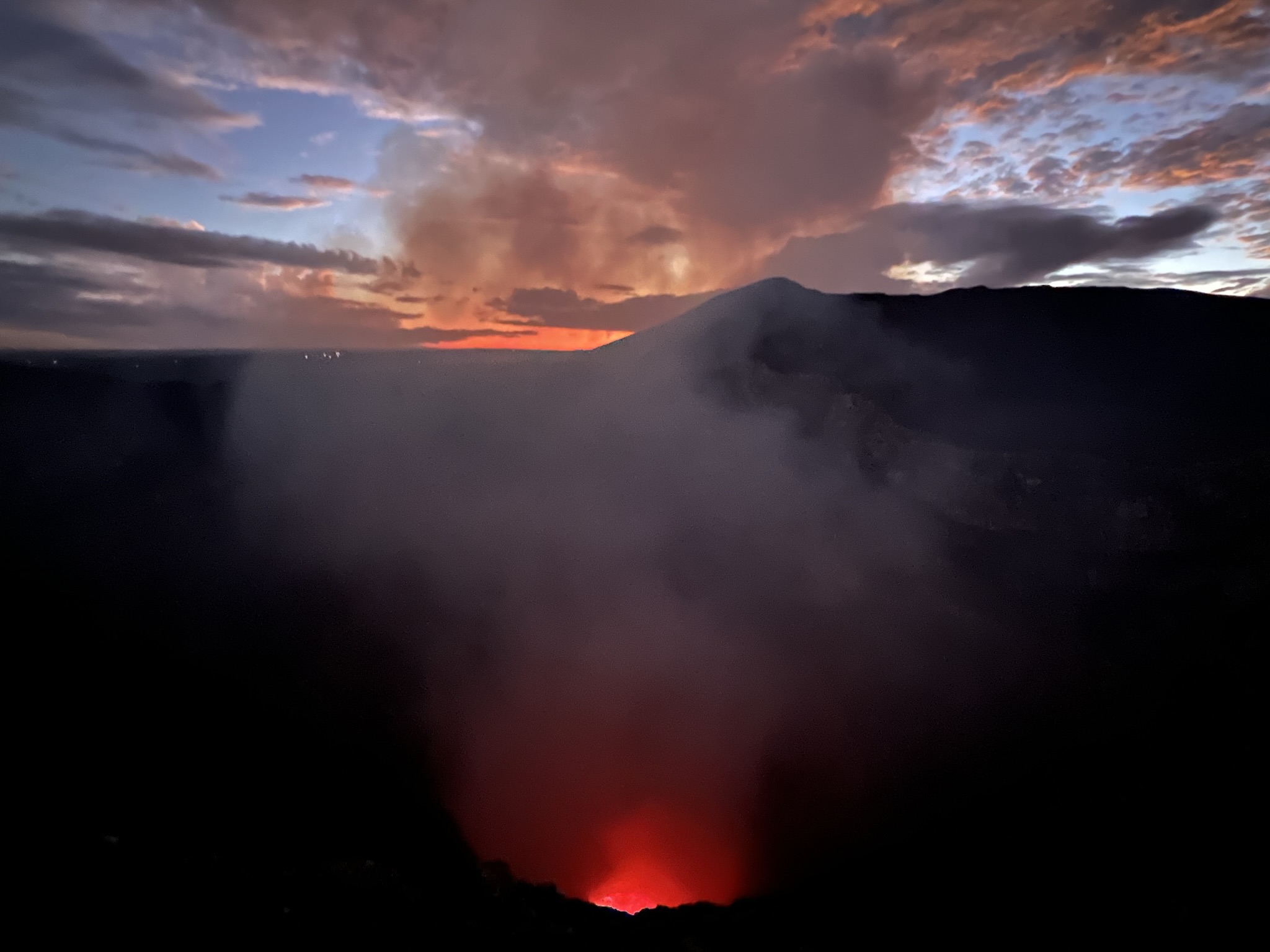
Conveniently situated right in front of the car park is the Nindirí volcano with its three craters: Santiago, Nindirí and San Pedro. The Santiago crater is the one that attracts most visitors, earning the name “The Mouth of Hell” due to the incandescent lava lake visible from the rim. What we saw at this point, however, wasn’t the lava pool. Instead, we were stupefied by the continuous emission of sulphur dioxide fumes rising from deep within the crater, the smell of rotten eggs making its way up our airways.
Even more stupefying was Nik Wallenda’s feat – the aerialist who walked a tightrope across the entire thing. I couldn’t believe Nelson until he showed us the video on his phone. Hot damn! He then told us we’d be returning after sunset, when a surprise would be waiting for us. Of course, it’d be anything but a surprise – that was the reason we had come here in the first place!
Climbing Masaya on Wobbly Legs
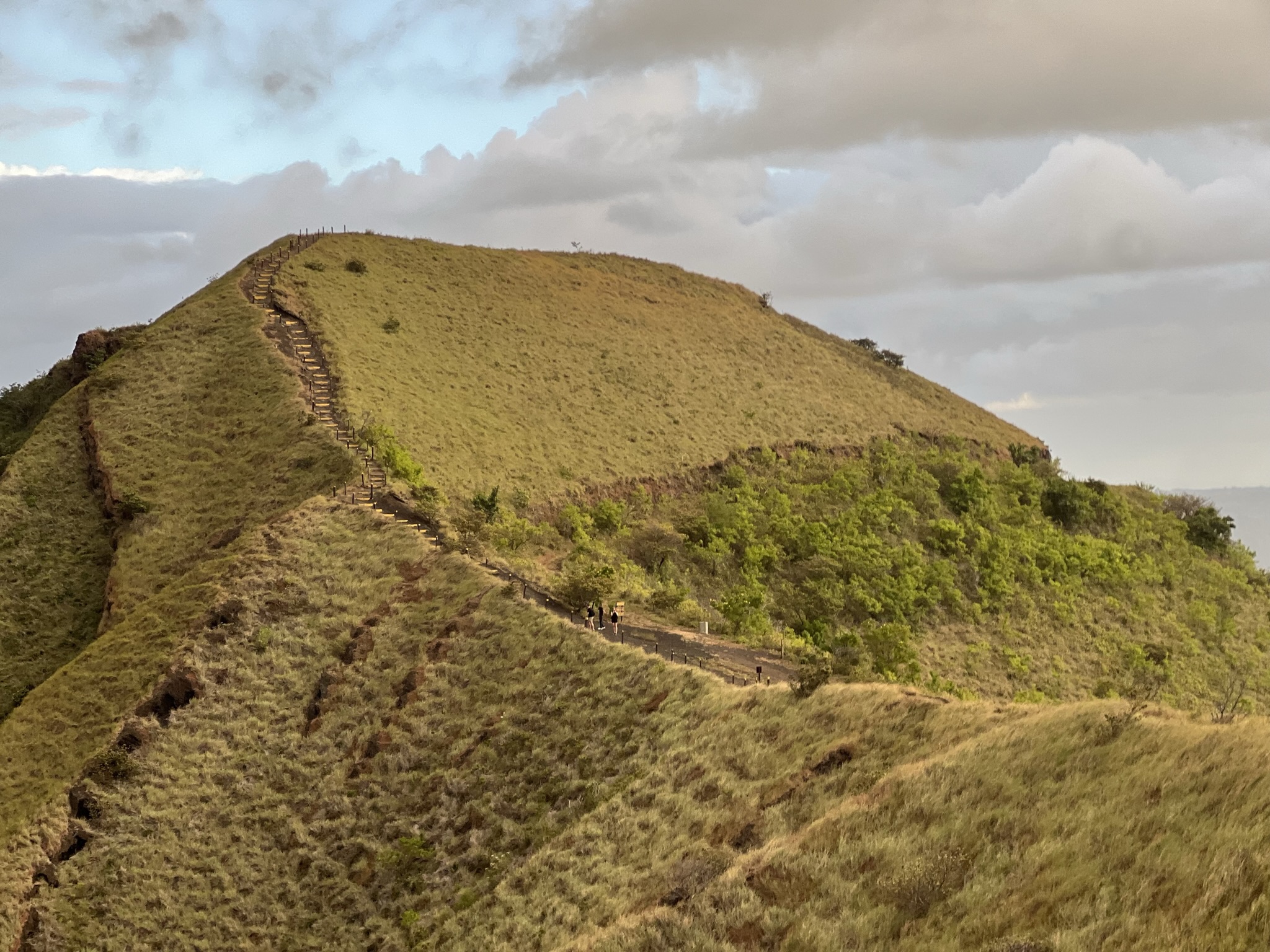
From thereon, we started the hike up Masaya volcano; a complex with two craters – San Fernando and San Juan. Upon looking at the steep trail leading to its top, Amelia and I turned white. “¡Tranquilo!” went Nelson before racing up the friggin path. Gotta admit, that’s one way to work off a come-down and a hangover.
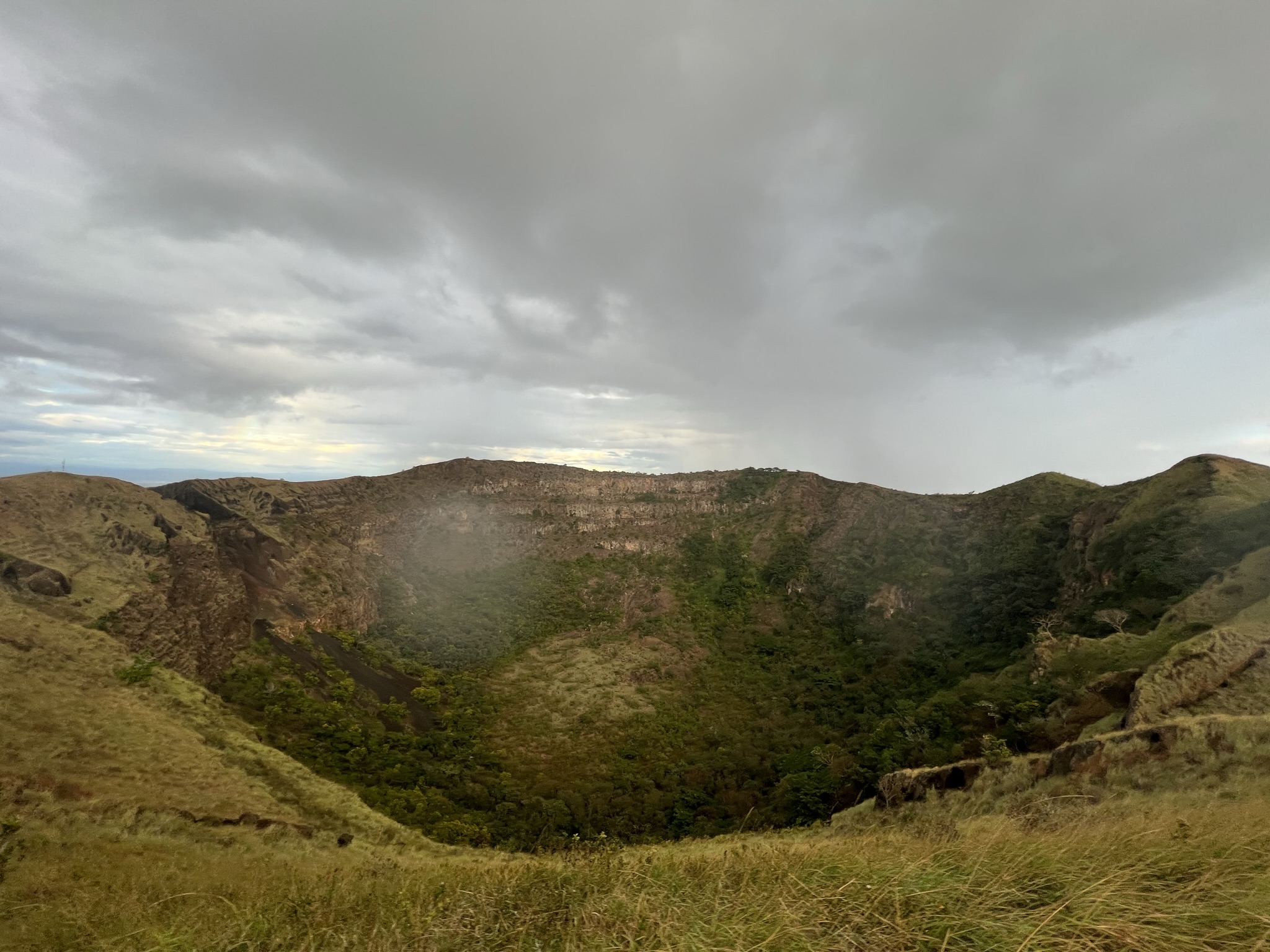
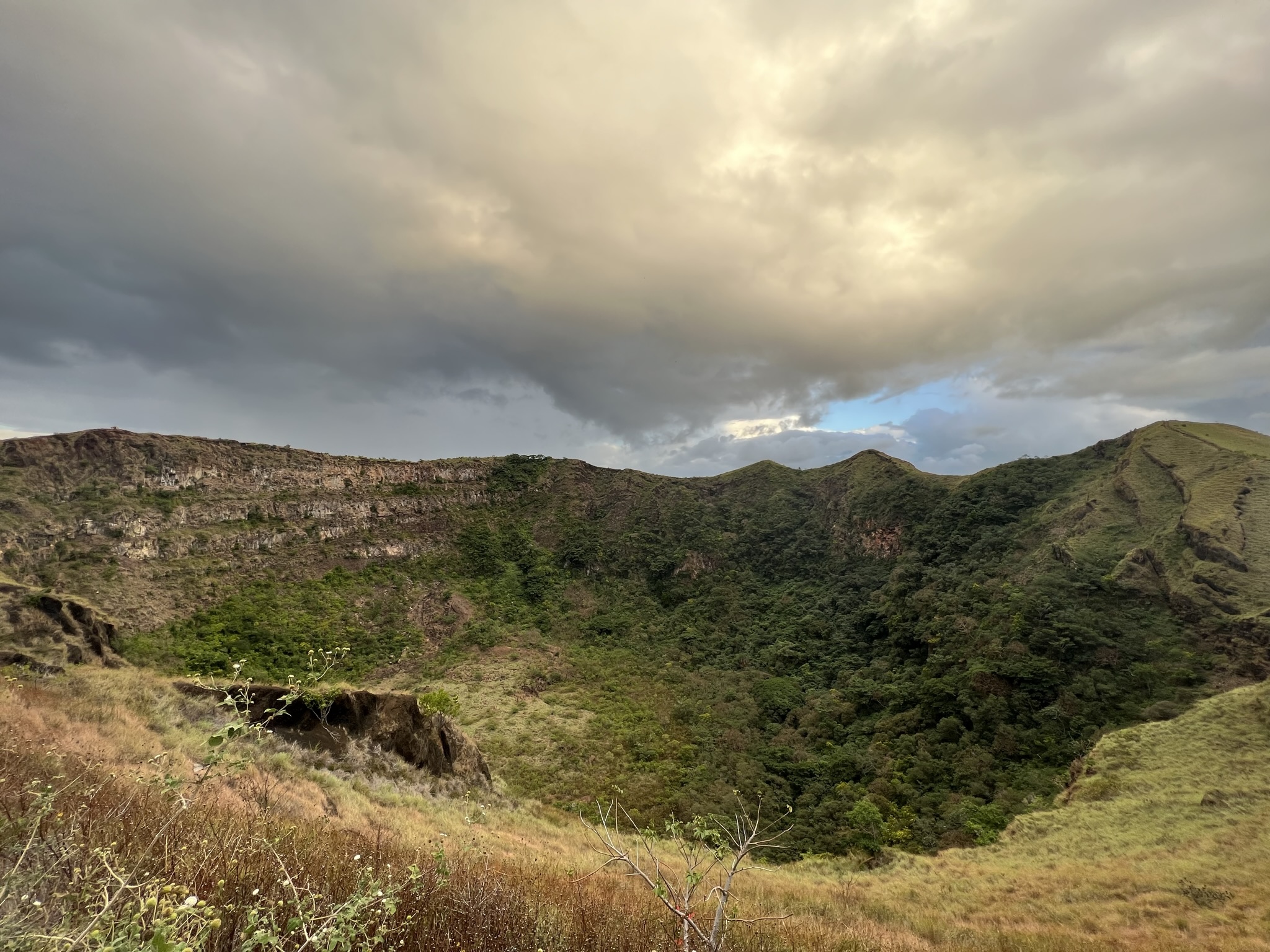
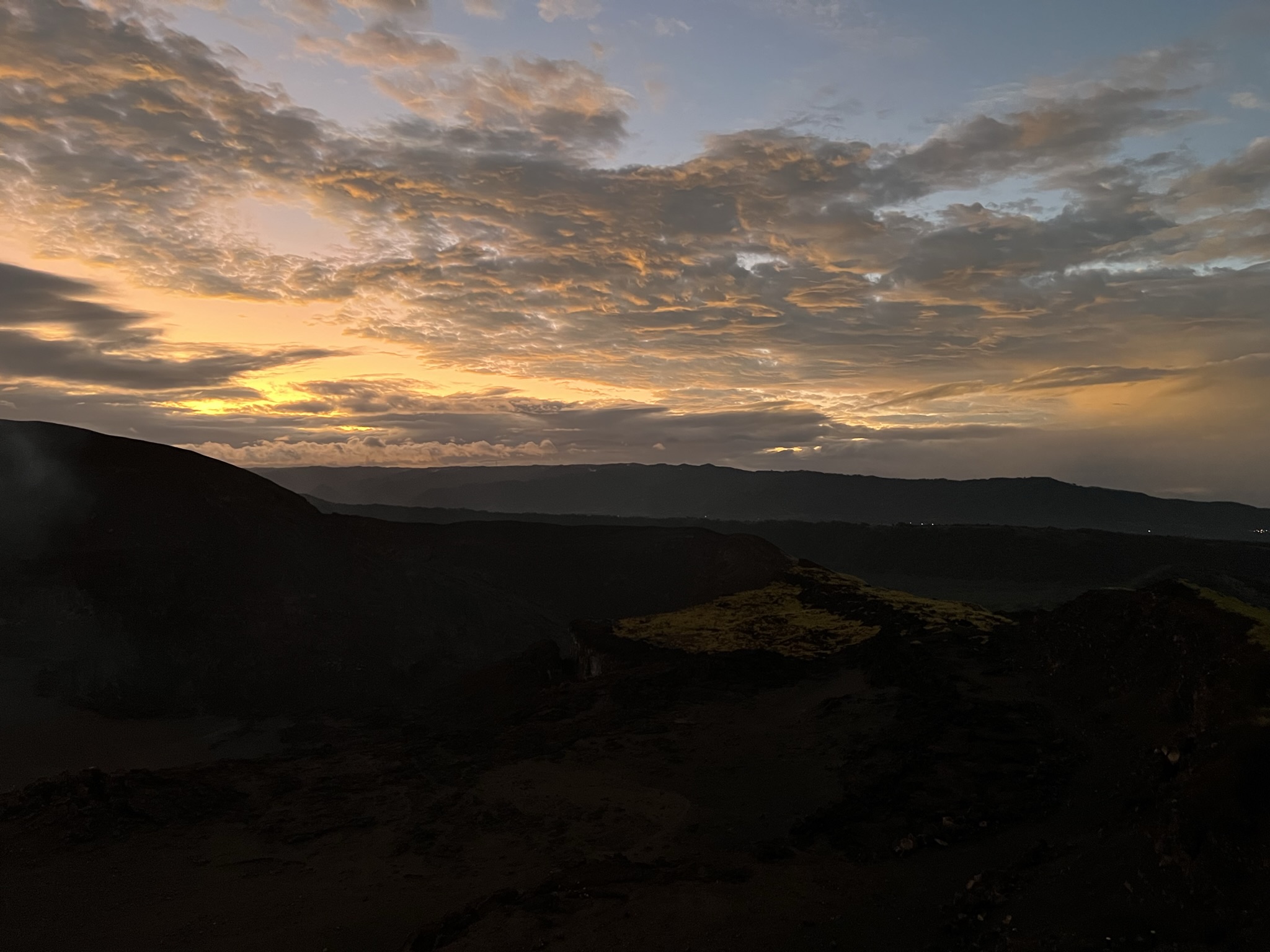
It was a relatively short hike, but, given our state of mind and body, it still took quite the toll on us. Was it worth the effort though? Hell yeah! At the top of the San Fernando crater waited a splendid vista of the overgrown, now inactive caldera – the last eruption occurring on 16 March 1772. From there, we circled the rim to the other side, overlooking both craters of Masaya volcano, with Lake Masaya and the Mombacho volcano in the background.
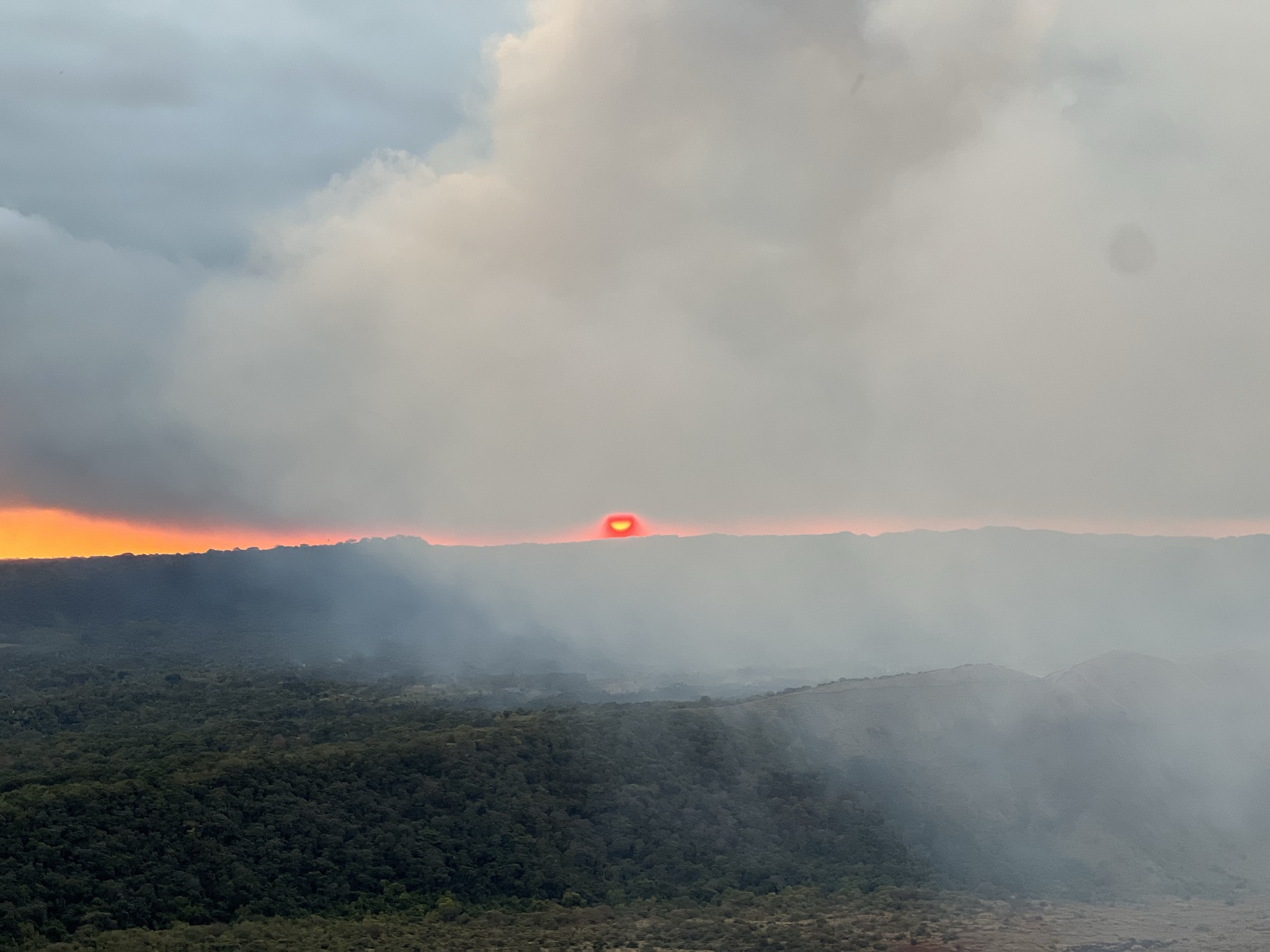
It was yet another spectacular view, with parakeets flying back into the craters to call it a night – the only species impervious to the fumes of the active vents. On the other side, the sun was setting right behind Nindirí, making us feel lucky and privileged to witness such a glorious scene – despite our bodies actively trying to give up on us.
Lava Magic Under the Rain
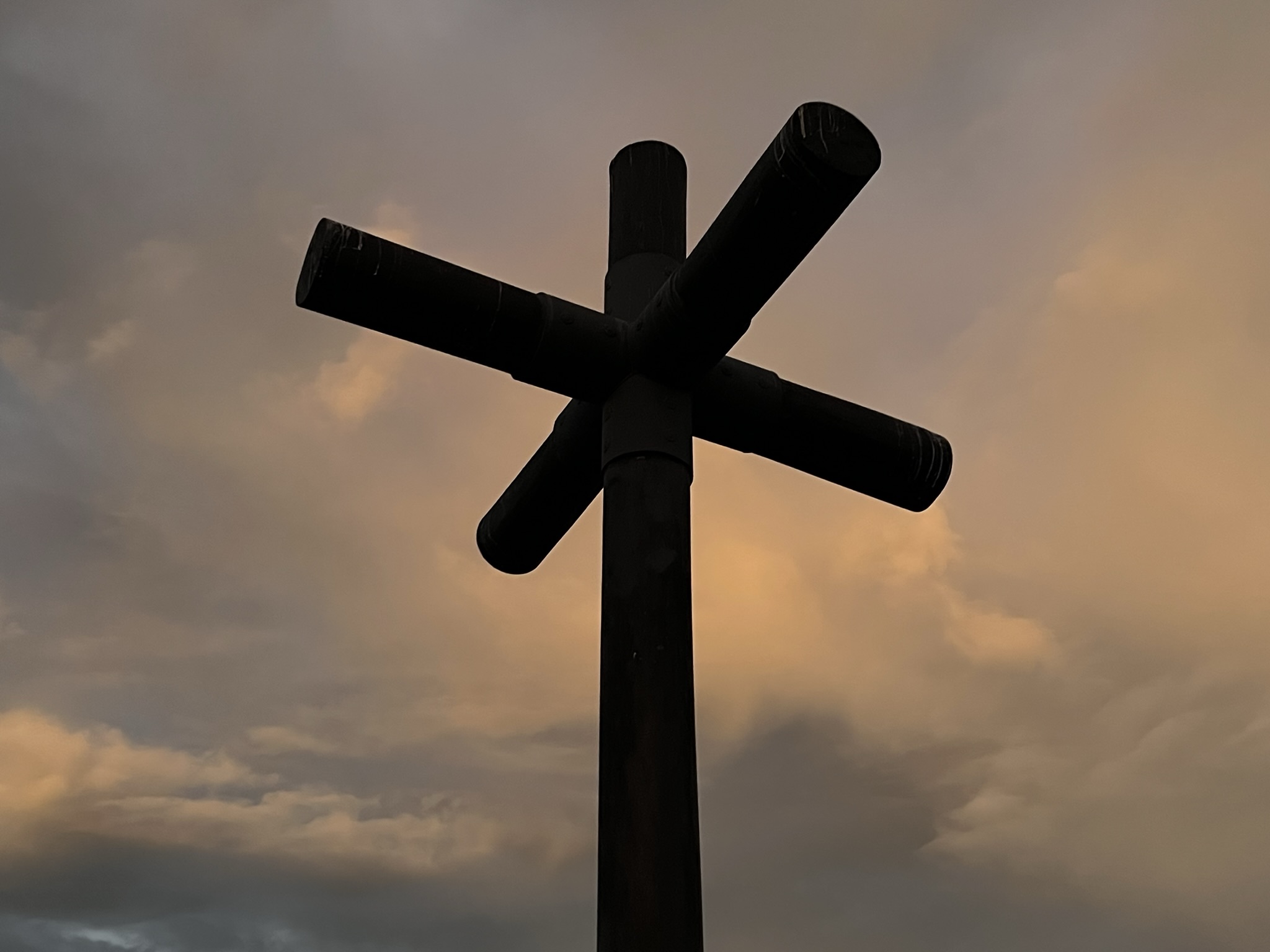
After this, we made our way back down to the car park and up to a cross standing above a hill overlooking the three craters of Nindirí.
This, Nelson explained, is a replica of a cross first placed here in 1529 by Francisco de Bobadilla, a friar, in an effort to exorcise the demons inhabiting the entrance to hell. Pretty ambitious and a lot to pin on a single cross, if you ask me. Apart from demons, Nelson added, the volcano houses thousands of bats and insects living in a system of lava tubes formed by ancient lava flows. Muy cool!
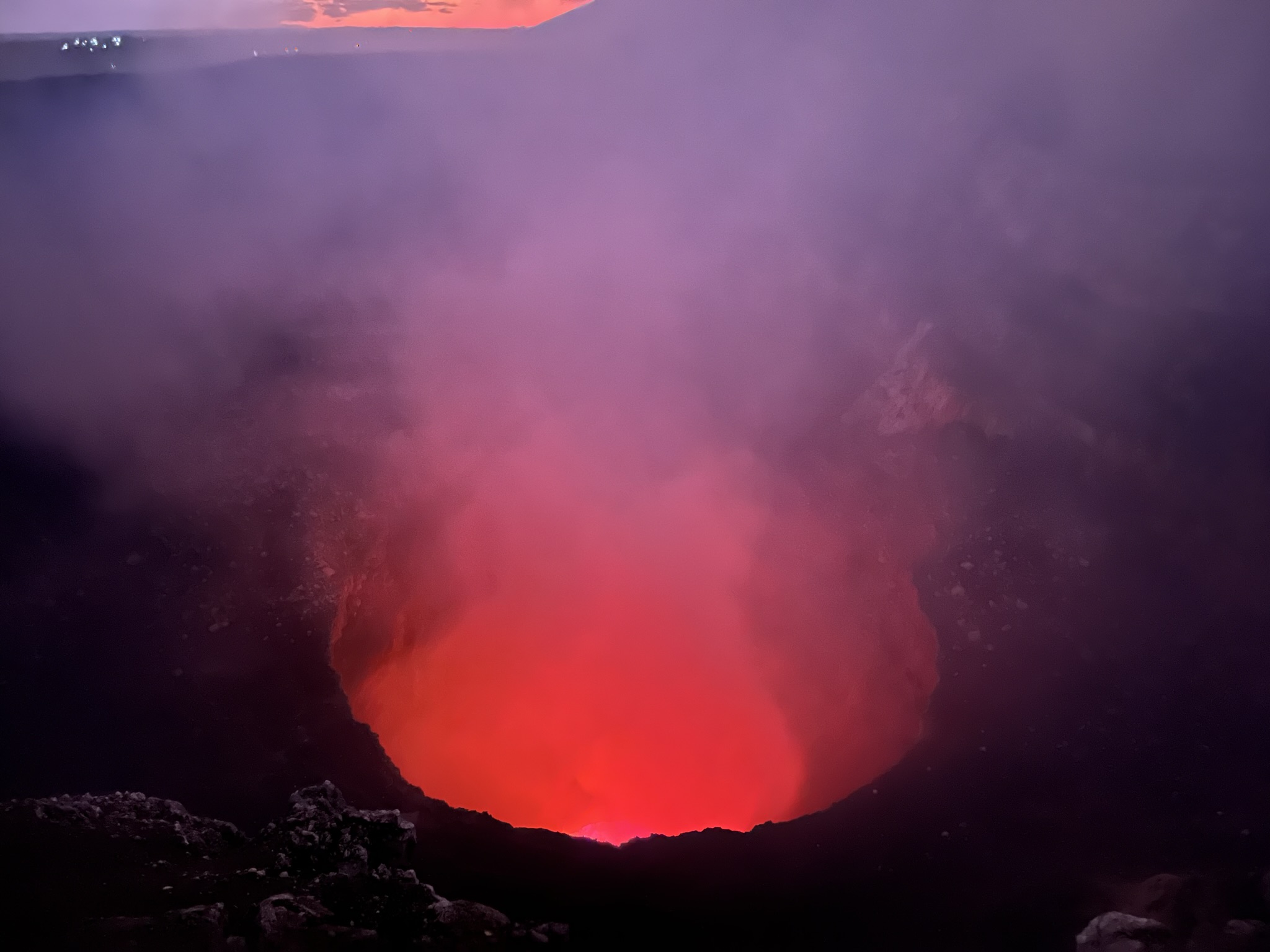
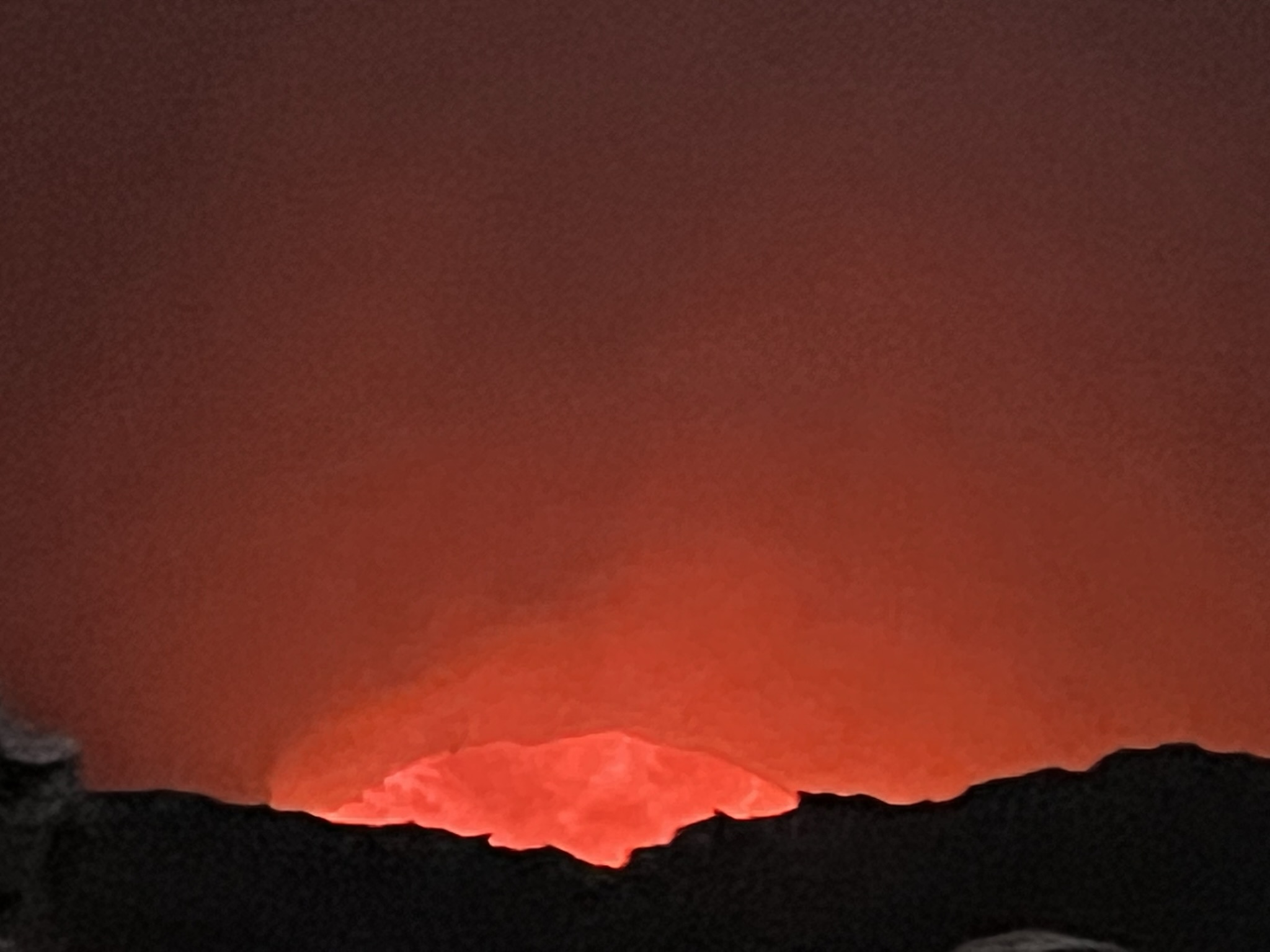
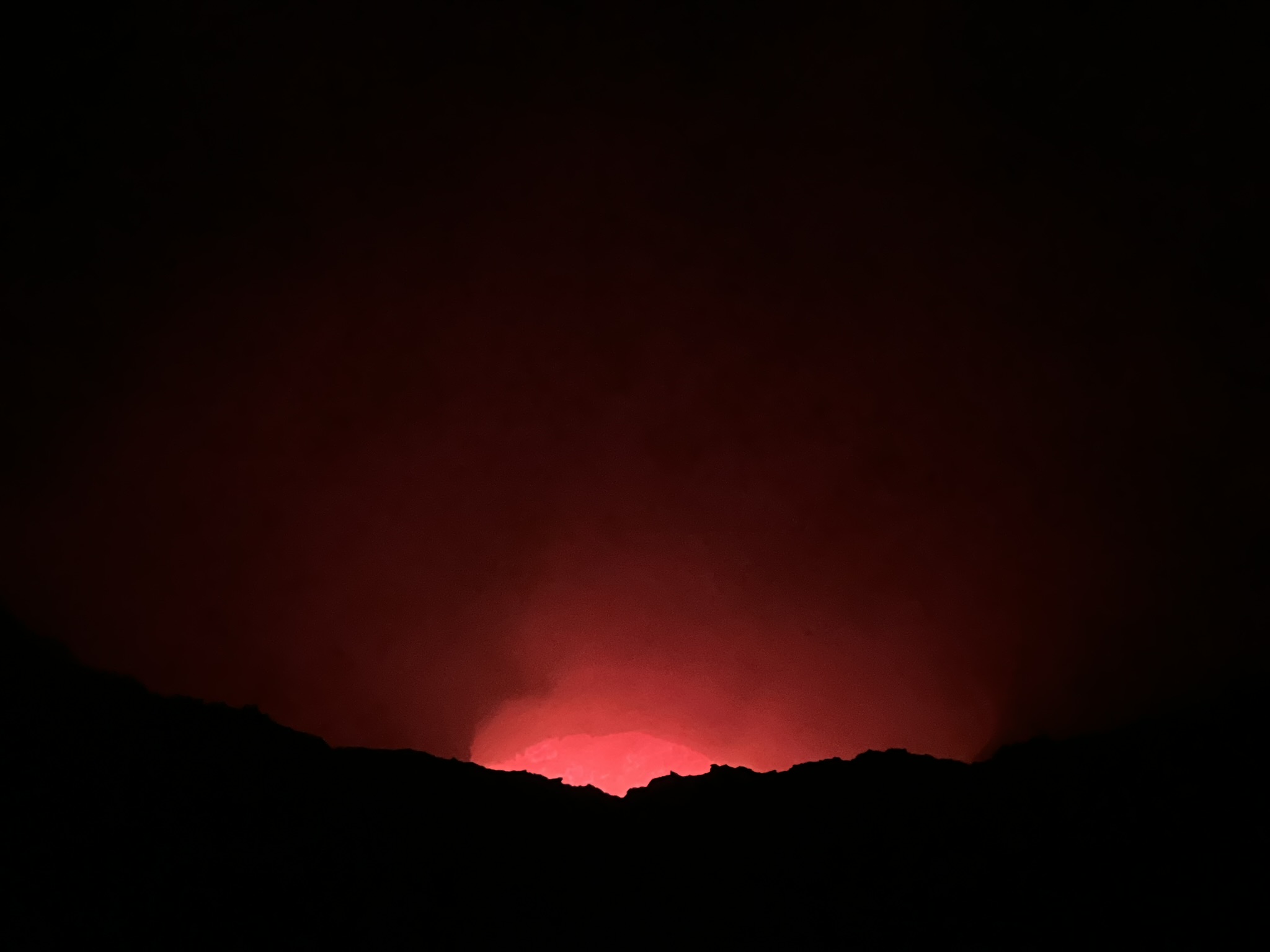
Now under the cover of darkness, we made our way down the hill and back to the rim of the Santiago crater, where the most incredible of views awaited us – the incandescent red lava pool at the bottom of the crater. I was genuinely mesmerised, unable to take my eyes off the glowing lake as different shades of red bubbled and mixed, plumes of gas constantly threatening to cloud our view. As a self-diagnosed pyromaniac, this was an absolute bucket-list moment for me. While I had seen red-hot lava sputtering from Acatenango back in Guatemala, seeing this pool was something else entirely.
By this point, it was raining so heavily we were drenched to the bone, but despite that, we wouldn’t have torn our gaze away from the magic unfolding right in front of us for anything else in the world. Until the park ranger told us our time was up and we had to make space for the next group of visitors, that is. I swear, I would’ve stared at that lava pool all night long if I could. It was one of the most incredible things I’ve ever seen.