Copán Ruinas – Day 2: Tunnels, Tombs and Hieroglyphs
COPÁN RUINAS
Day 2: Tunnels, Tombs & Hieroglyphs
November 05, 2022
The next day, I met up with Natalie and some fellow backpackers she’d met at her hostel. After enjoying a couple of baleadas – flour tortillas stuffed with all kinds of things like beans and cheese or eggs and meat – we made our way to the ruins of Copán.
As we walked to the ruins, it dawned on Natalie and me that these would be the last of the Mayan ruins we’d be visiting. Ruins had been a major highlight throughout our trip – we’d always tried to visit as many as possible to understand more about the ancient civilisation that built such wonders. And now, there’d be no more going forward. That realisation hit hard – mostly cause it hadn’t crossed our minds before then. As such, I swore I’d leave no stone unturned and made sure to take in every single detail of the ancient city.
The City of Eighteen Rabbit
Once at the site, we were met by Hugo, the best guide I’ve ever had the honour of showing me around. How fitting that my last stop in the Mundo Maya would be led by the best, huh?
The city of Copán, nestled in the lush valley and rainforest of the same name, was one of the most important cities in the Mayan world. While the first Olmec settlers arrived around 1400 BC, Copán rose to prominence in the Classic period, with the first ruler, K’inich Yax K’uk’ Mo’, founding a dynasty that lasted around 400 years and spanned 17 rulers.
The most notable of these was the thirteenth – Uaxaclajuun Ub’aah K’awiil, otherwise known as Eighteen Rabbit (a reference to the eighteen faces of the God of Power or to the fact that he was born on the 18th month of the Year of the Rabbit). During his 43-year reign, he expanded Copán’s territory and political influence – until he was captured and executed by one of his own vassals in Quiriguá, Guatemala, in 738 AD. After his death, the city declined rapidly. At its peak, Copán had a population of around 27,000, but by the 10th century, it had practically collapsed.
Stela of 18 Rabbit
As many guides had told me during this trip, the Maya didn’t simply disappear – they self-destructed, with deforestation and unsustainable practices leading to environmental disequilibrium and subsequent collapse. They had many treasures, but in the end, nothing to eat. When the gods stopped listening, the peasants stopped obeying.
The Hidden Wonders of Copán
As we entered the site, Hugo told us that if the city of Tikal was the NYC of the Maya with its towering buildings, then Copán was Paris – all about art and finesse. Though the site core covers some 150 square kilometres, much of it is still buried beneath mounds of earth, roots, and forest – with up to 80% still unexcavated.
https://themaritimeexplorer.ca/
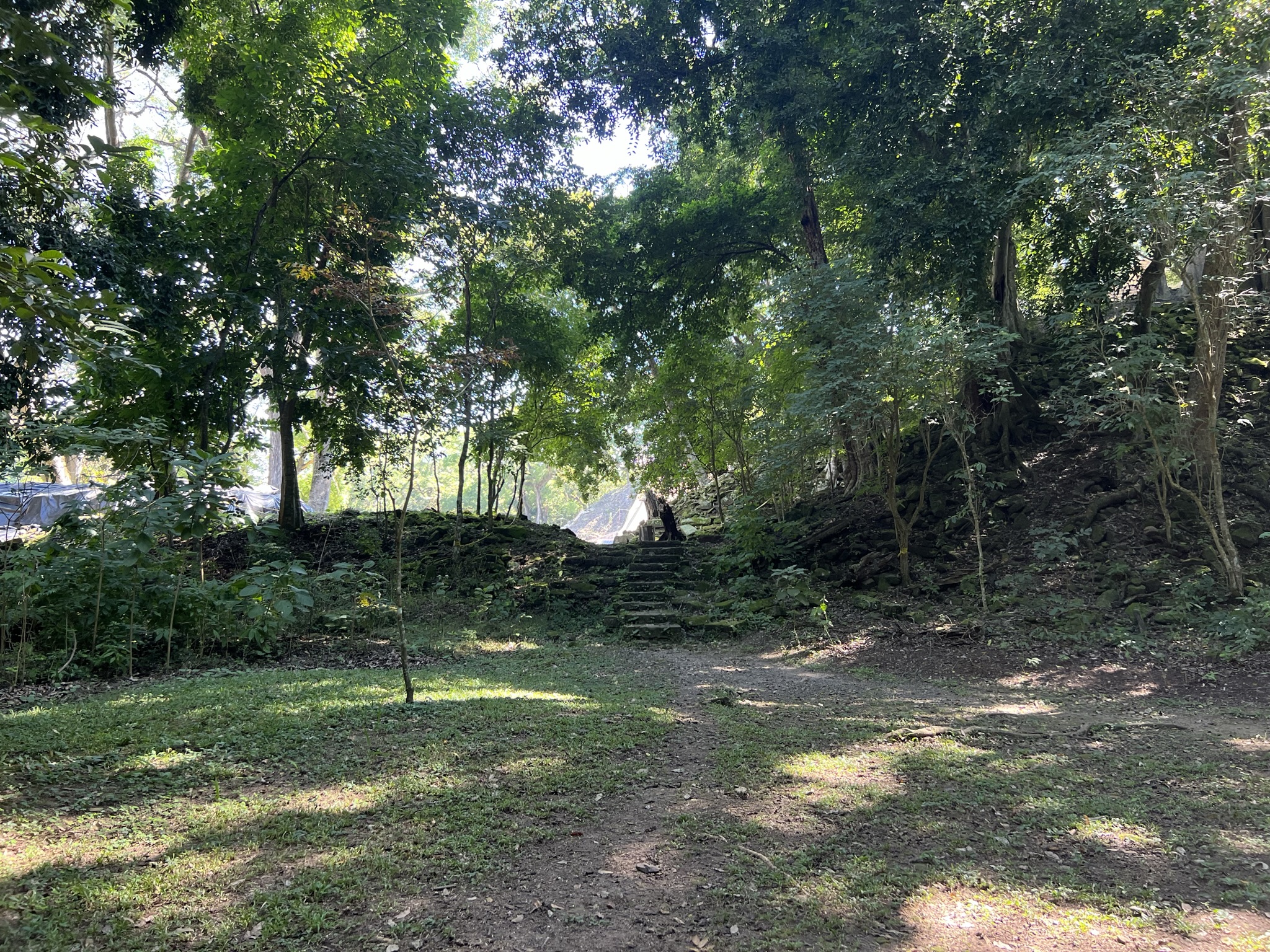
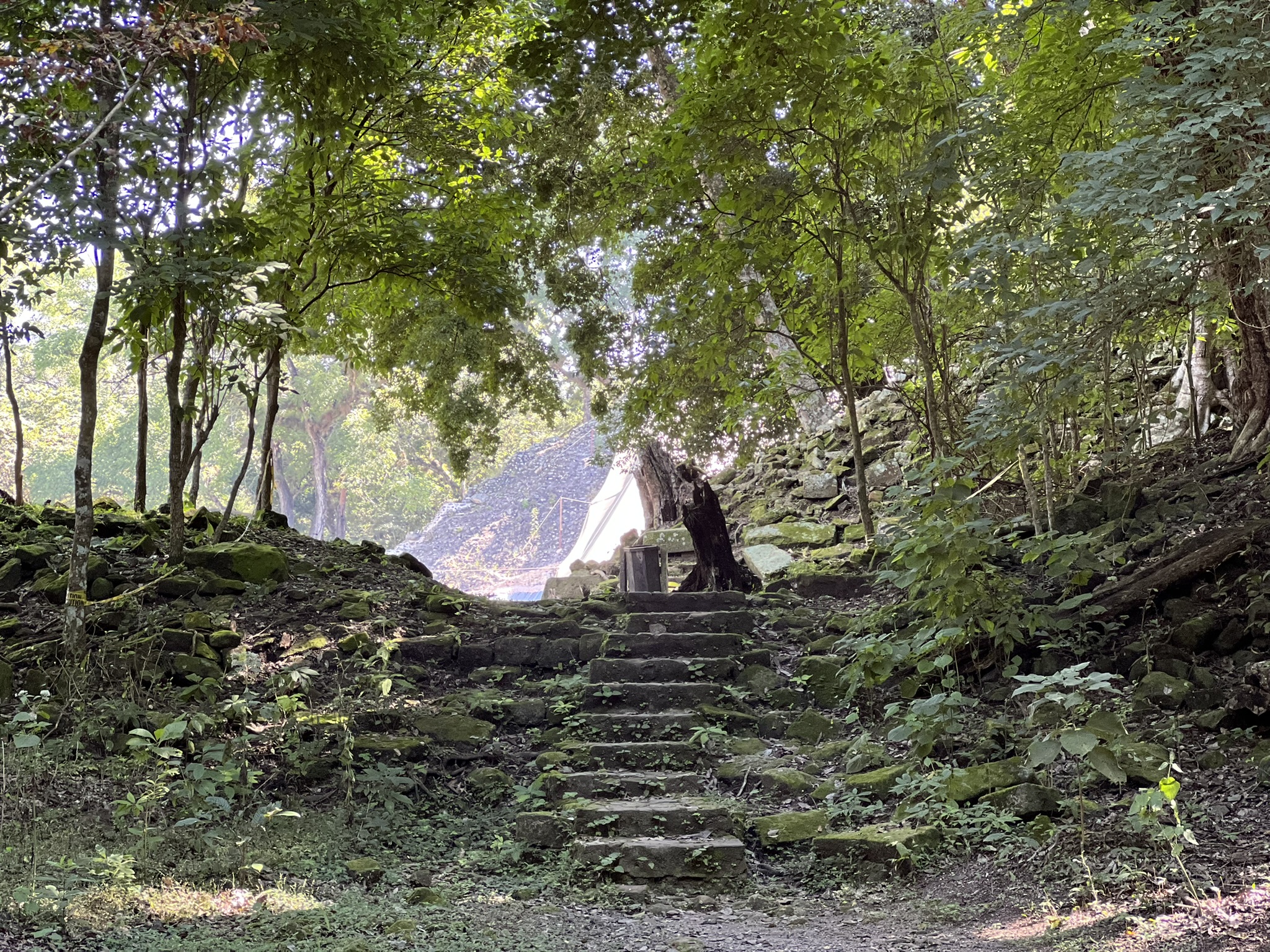
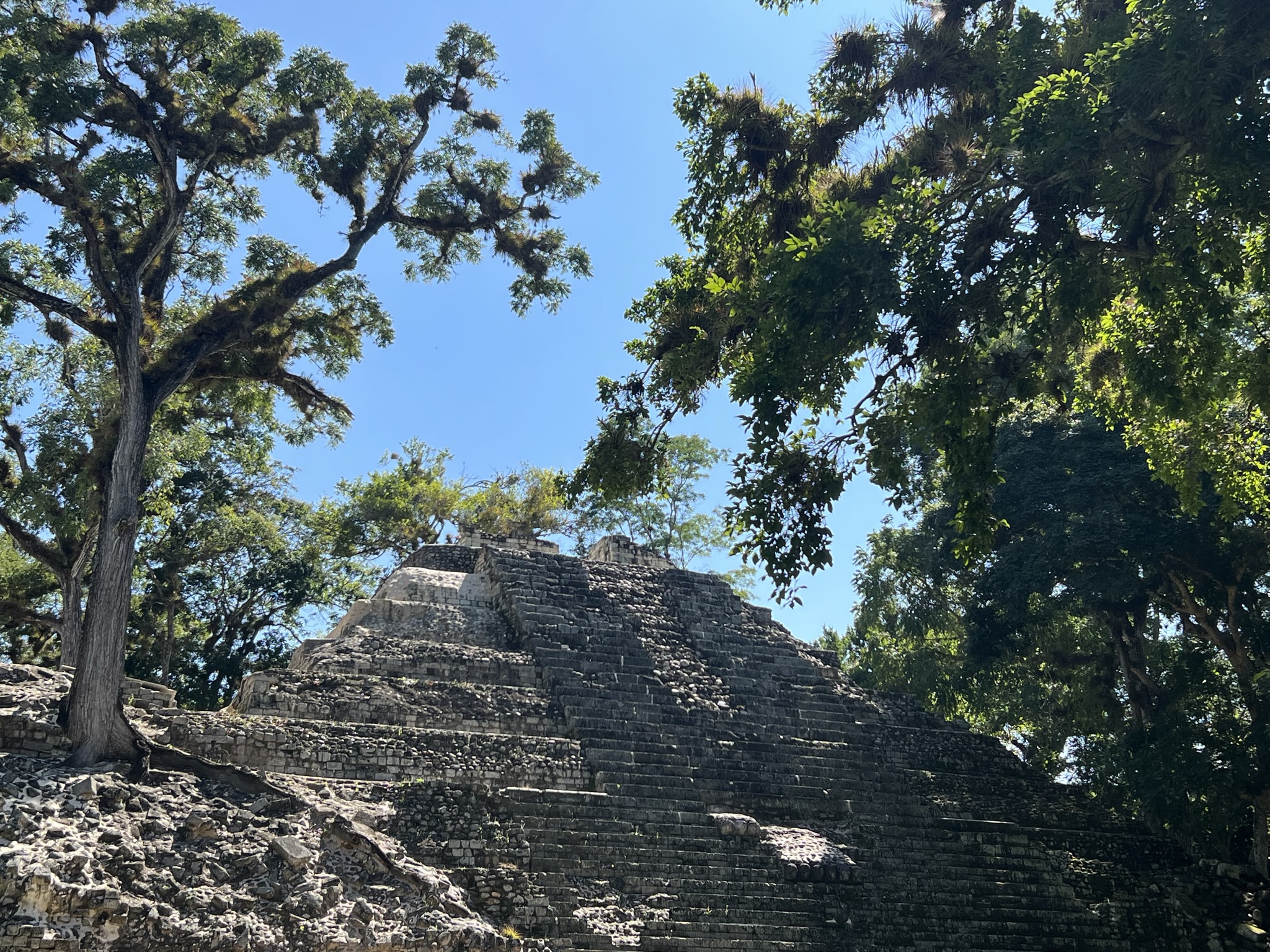
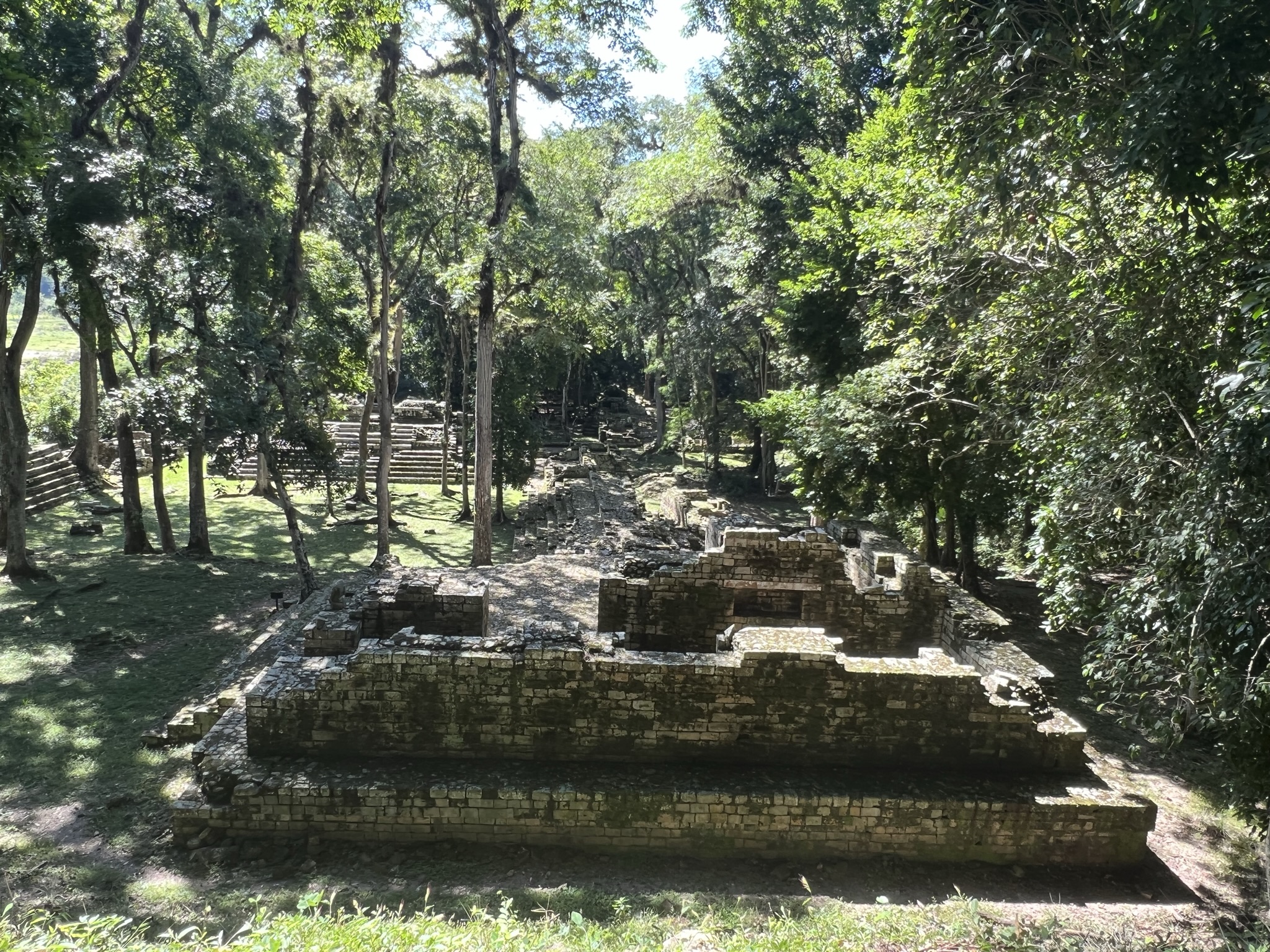
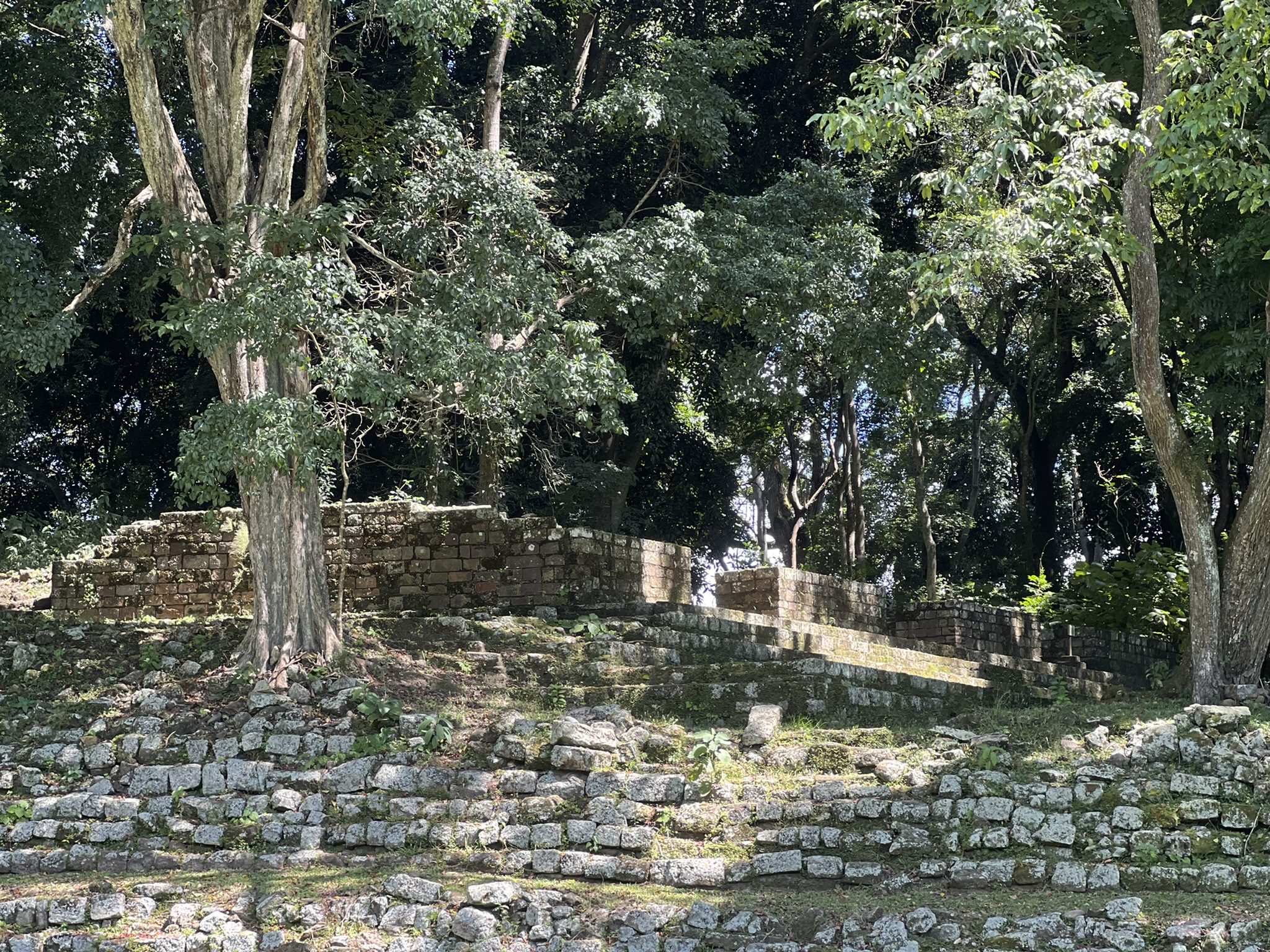
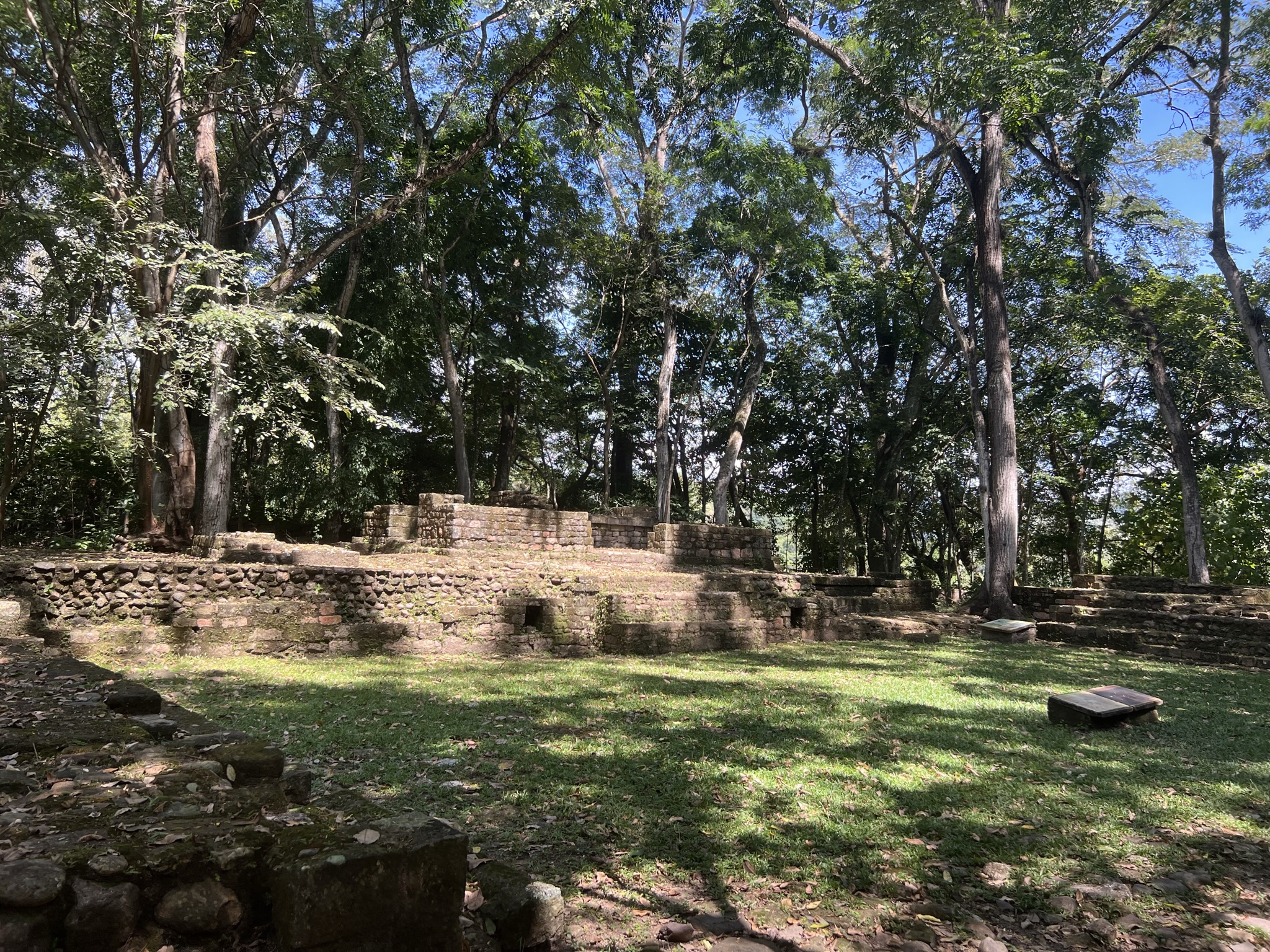
Our tour began deep in the jungle, stumbling over grassy mounds, ruins, ancient aqueducts and a drainage system once used to supply water and remove waste. Ceiba trees – sacred to the Maya and used to build canoes – lined our path as we climbed up to the Acropolis, a massive platform divided into the East Court and West Court, packed with temples, palaces, and monuments. This was the ceremonial and residential heart of the elite.
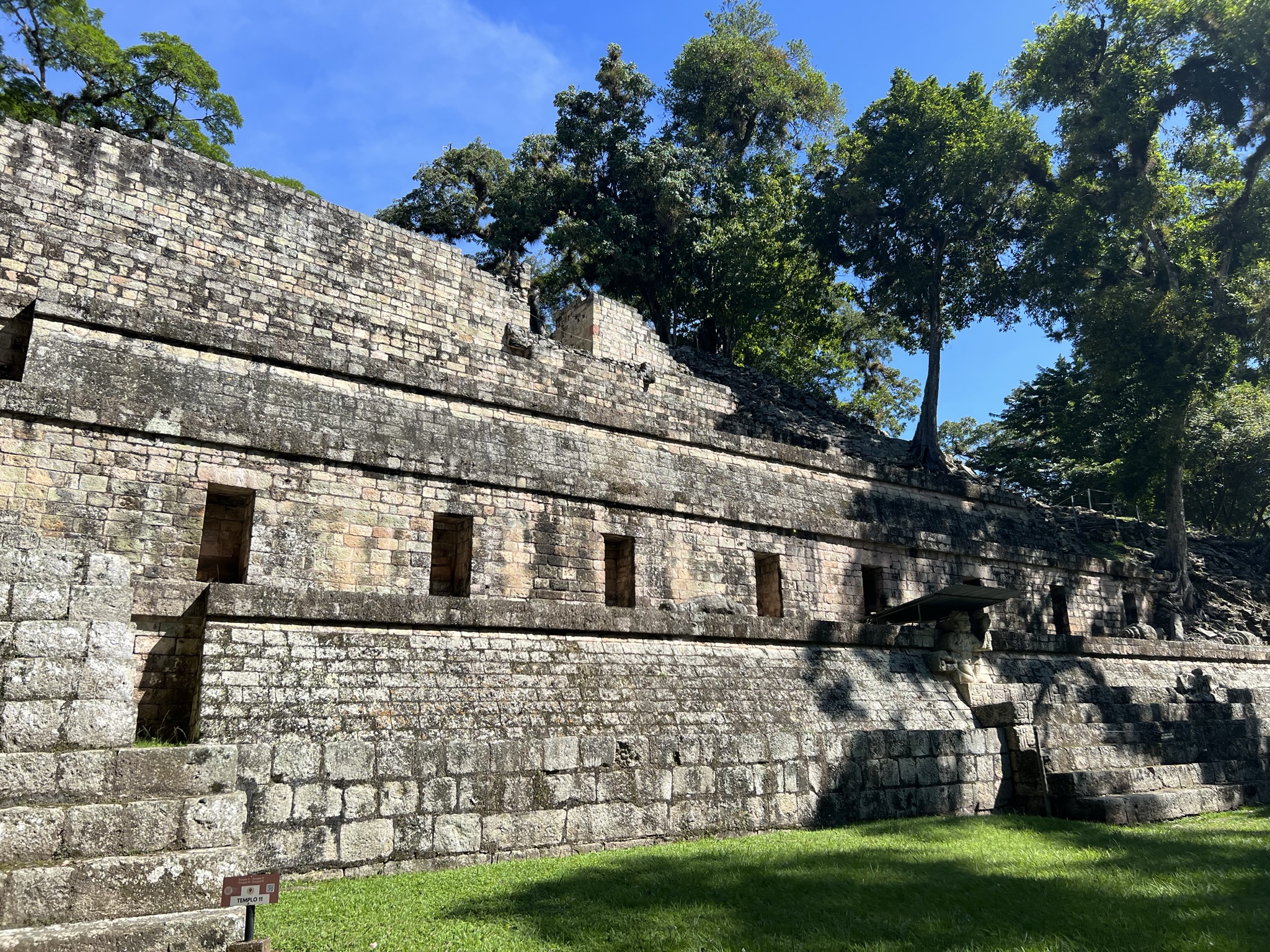
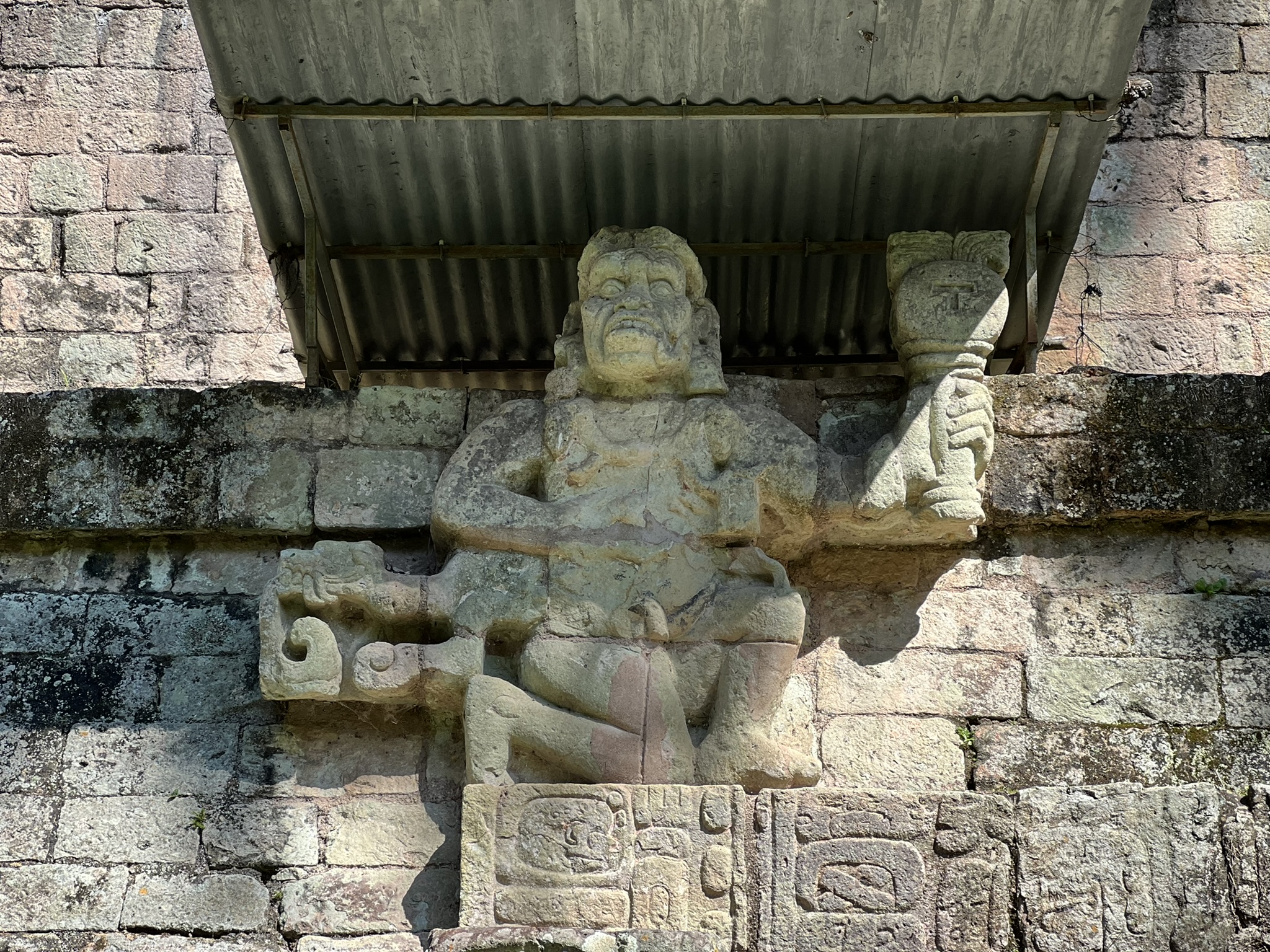
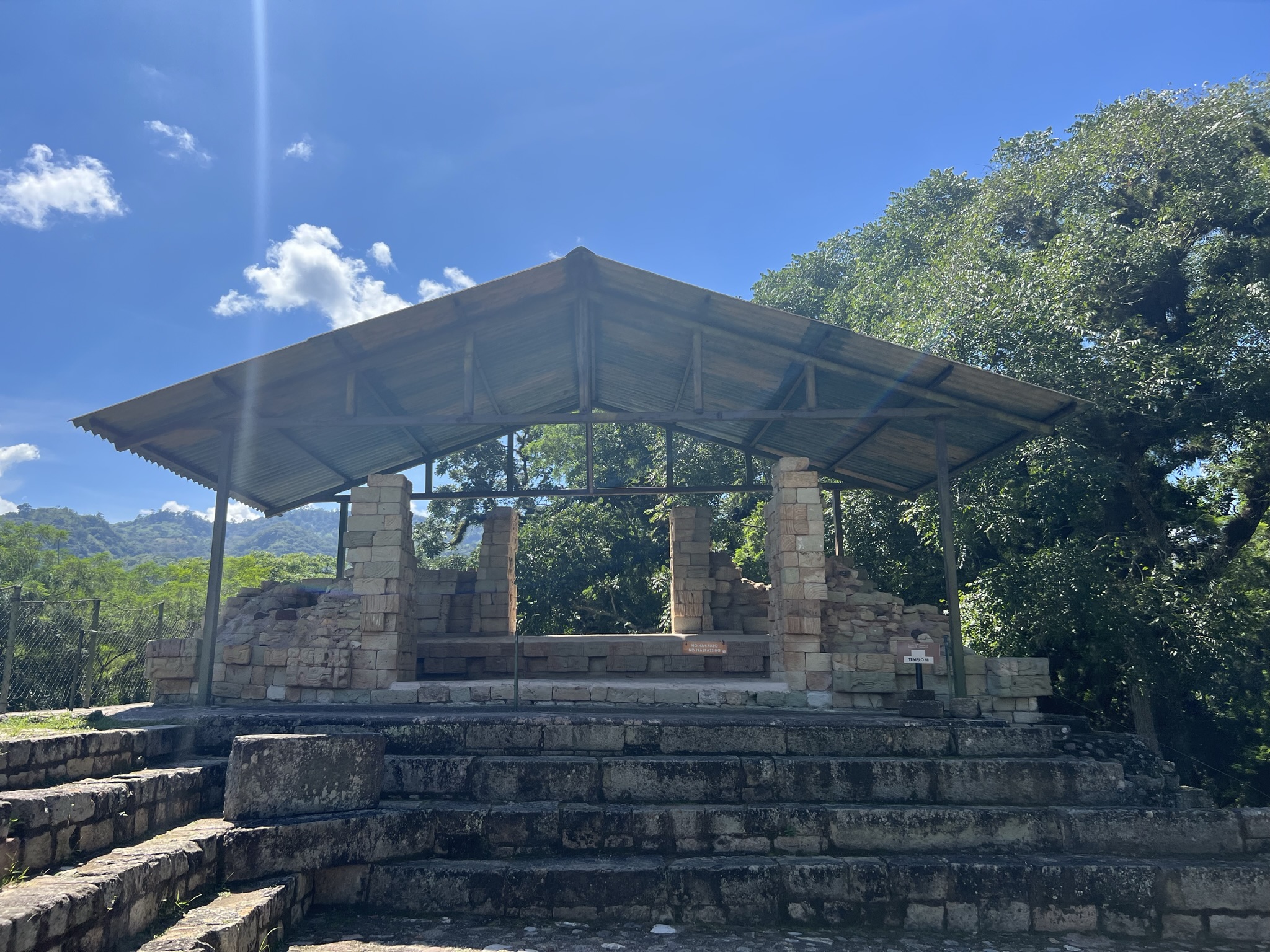
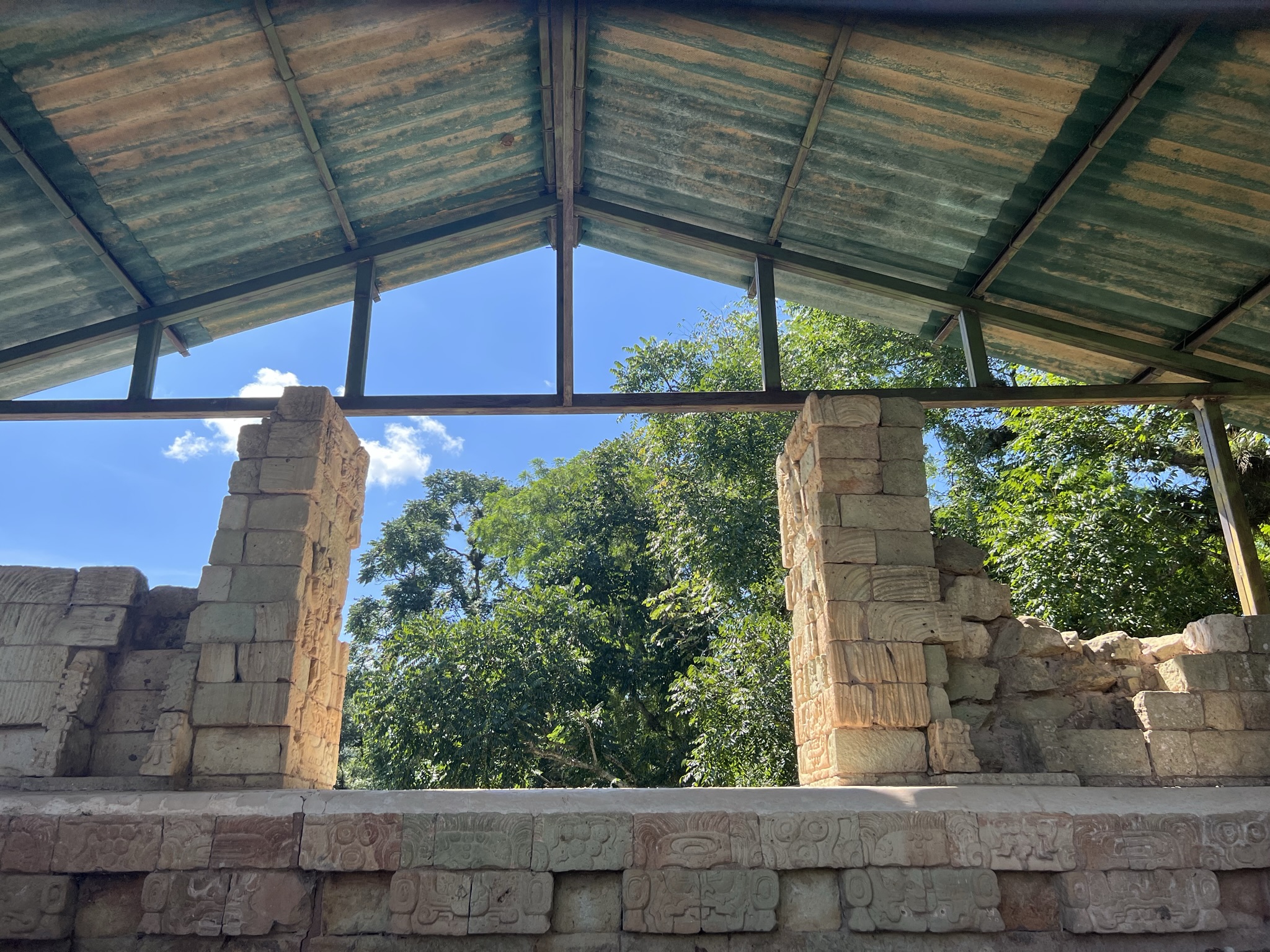
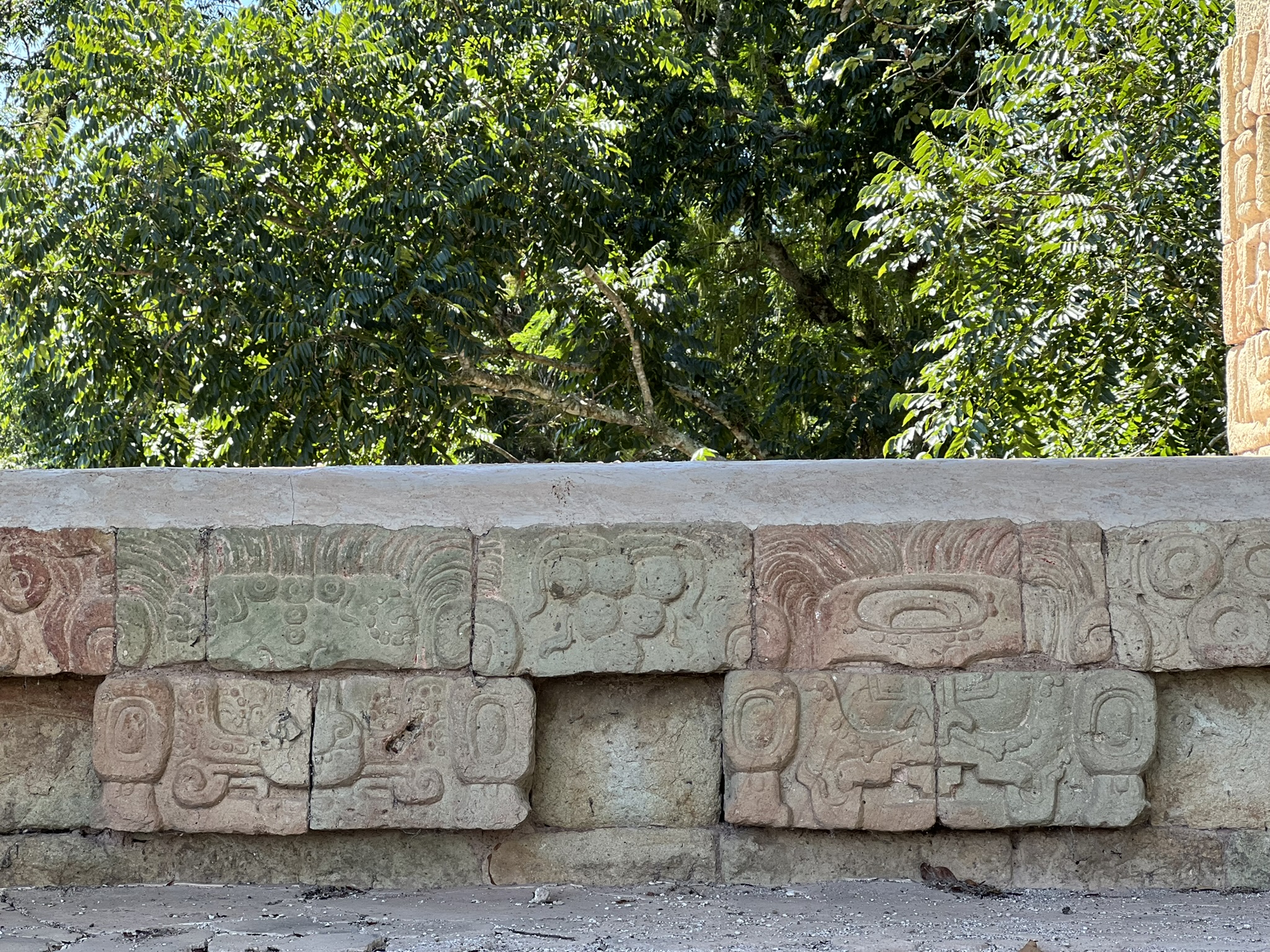
Starting in the West Court, we stood before the Temple of Inscriptions, a structure stretching along the southern edge of the Acropolis. A staircase once led to a second level (now destroyed), but the lower level remains, featuring multiple doorways and ornate panels: monkey-like creatures holding torches, snail statues symbolising the underworld, and other decorative reliefs. One of the most beautiful panels was taken to the British Museum. “If you want to keep the tour going,” said Hugo, “you’ll have to take me to London!” Funny guy.
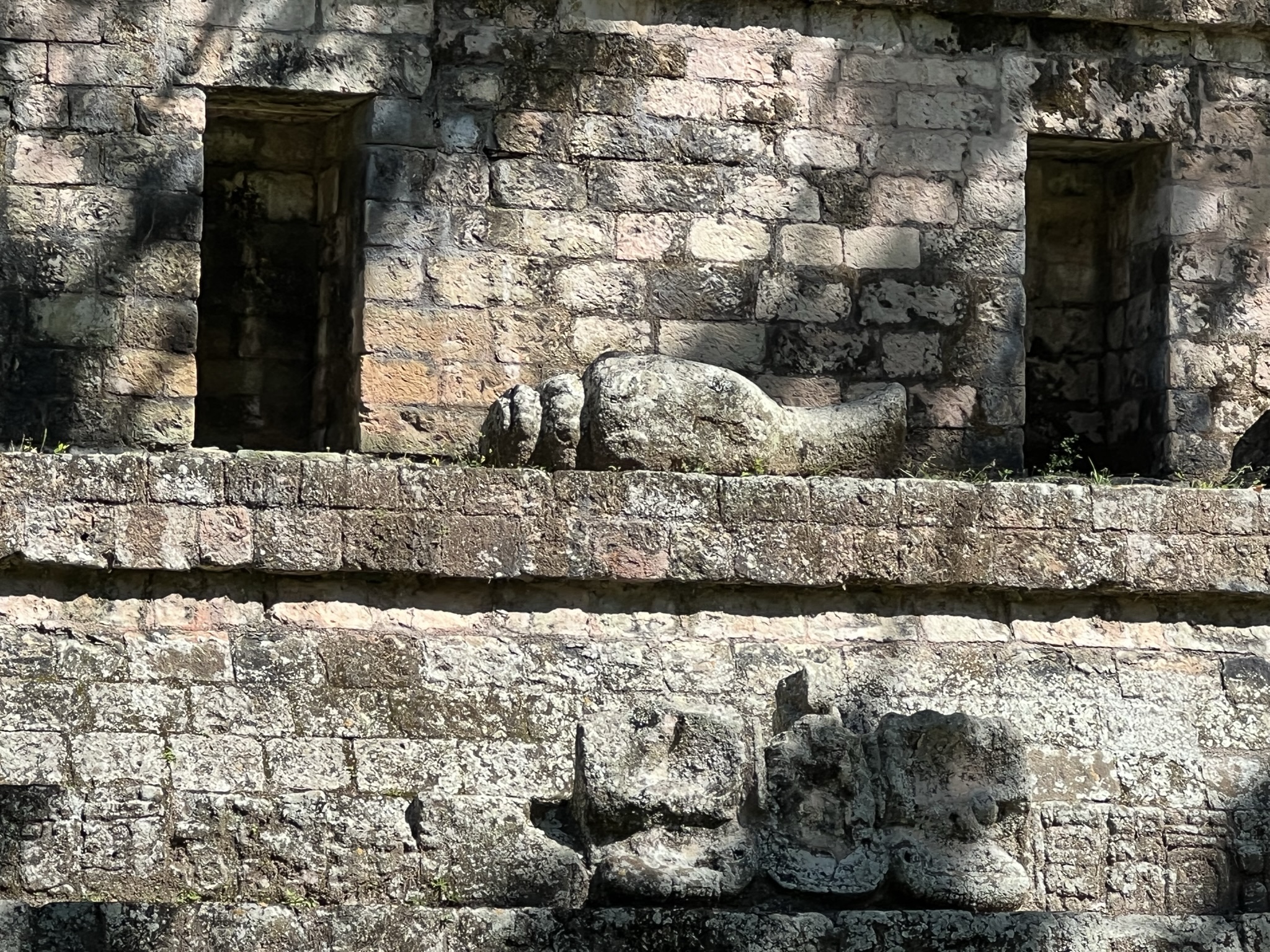
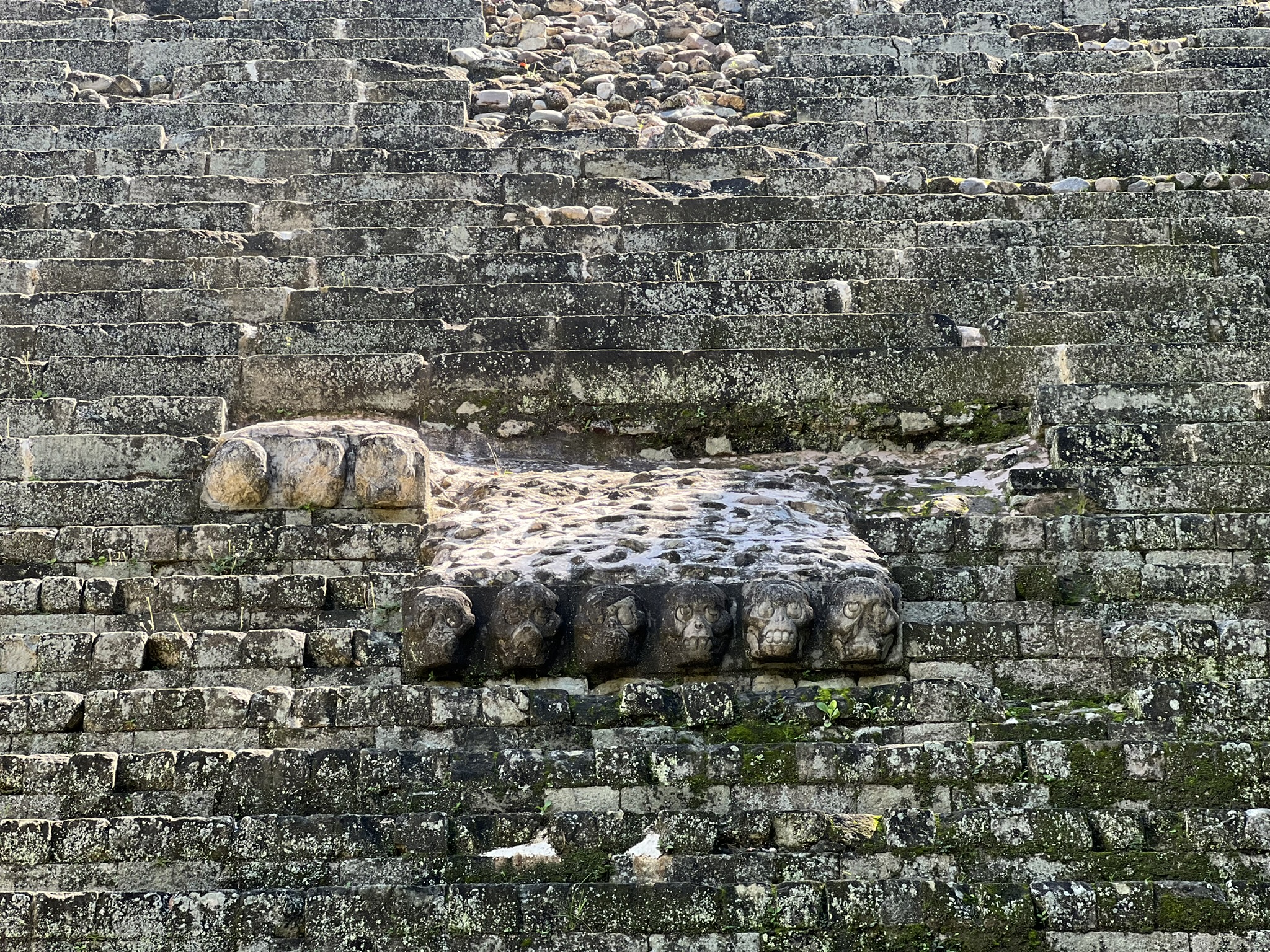
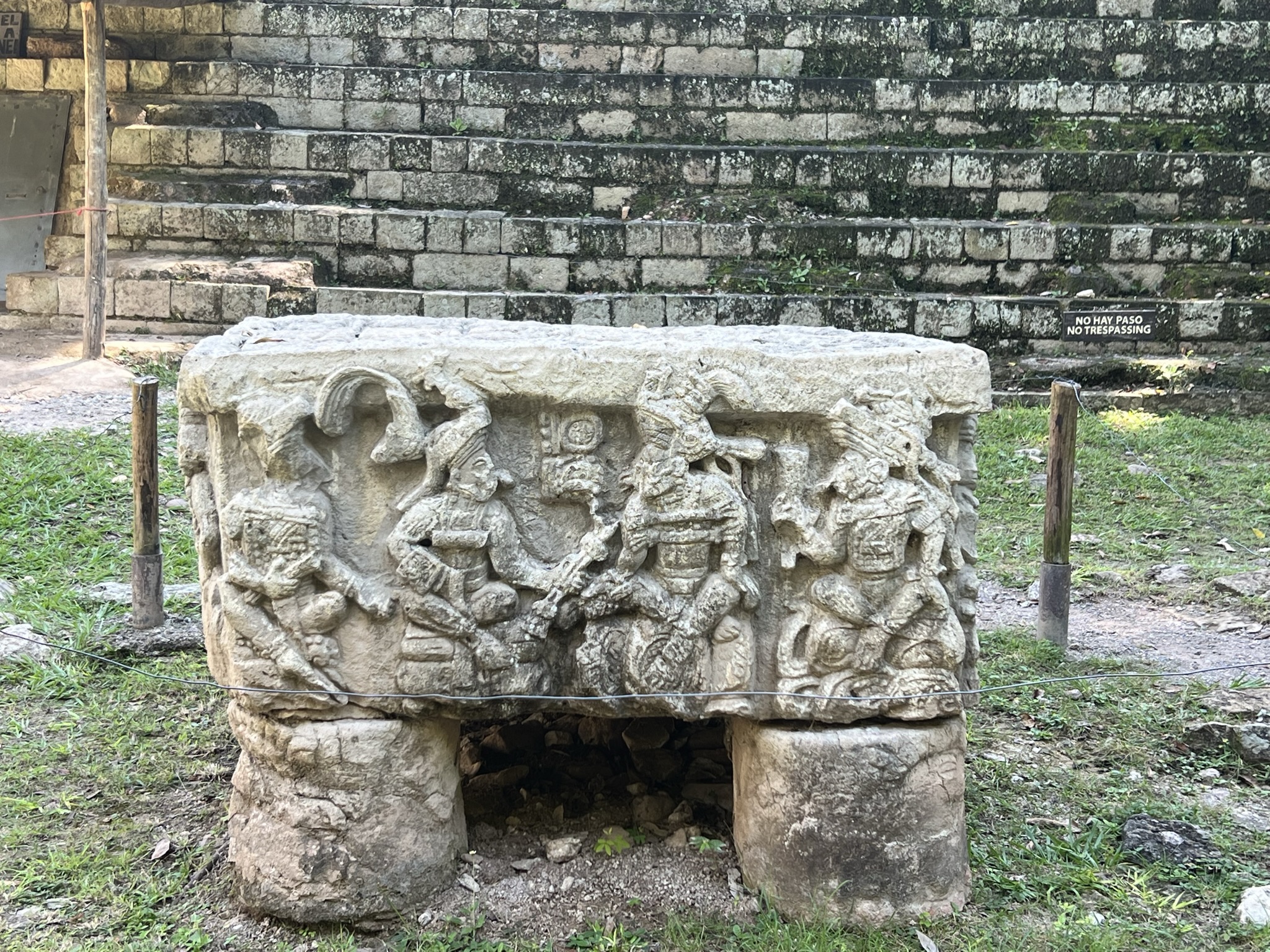
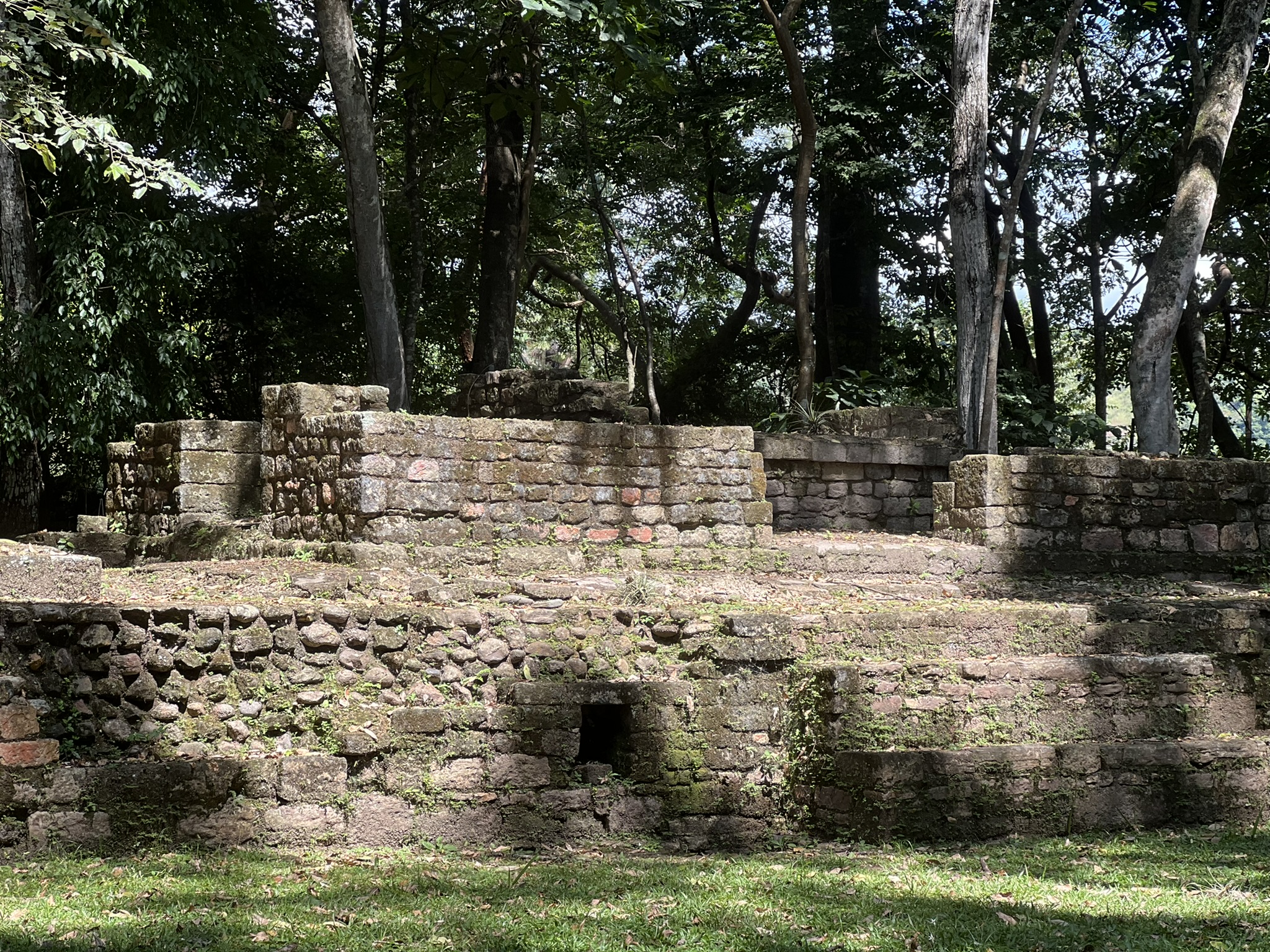
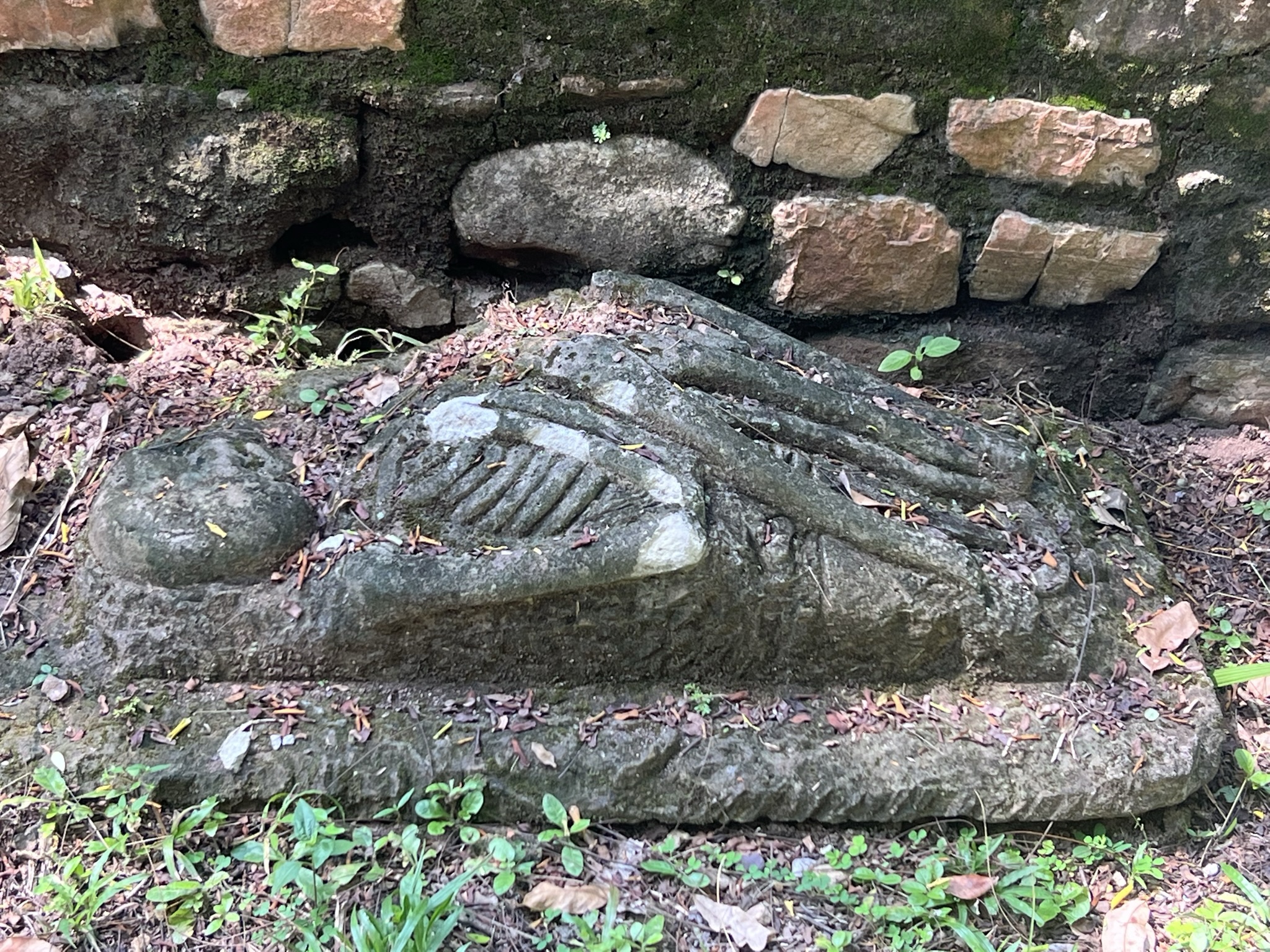
The most striking structure here is Temple 16 – the Temple of the Dead. It straddles both West and East Courts and, while it looks unassuming, it hides depth. Two jaguar paws and a panel with six skulls mark the site of ritual sacrifice. In front sits the famous Altar Q, showing the first ruler passing the sceptre to the last, Yax Pasaj Chan Yopaat. But this outer pyramid is just a shell – beneath it lies a series of earlier temples, including the burial of the city’s founder, a baby, and a female shaman to accompany him in the afterlife. Most treasures were looted by tomb raiders, likely through tunnels dug underneath.
Whilst the imposing pyramid is enough of a wonder in and of itself, what’s truly breathtaking is what lies within: the Rosalila Temple, found in the sixth layer of the pyramid. It’s a perfectly preserved structure with red stucco carvings of K’inich Yax K’uk’ Mo’ flanked by crocodiles and skeletons. Built over by Eighteen Rabbit and sealed away, it escaped centuries of erosion – giving us a rare glimpse of what ancient Maya cities once looked like. Sadly, we couldn’t go inside the tunnels, though Hugo’s vivid description of it practically felt like we had gone inside and explored every nook and cranny! Also, we did see a full-scale replica at the site museum later on, so I guess we didn’t miss out on it completely.
https://www.atlasobscura.com/
Bloody Altars and Jaguar Poses
We crossed over a platform above the Cemetery Group (a royal residential area – not actually a cemetery) and entered the East Court – likely used for military training.
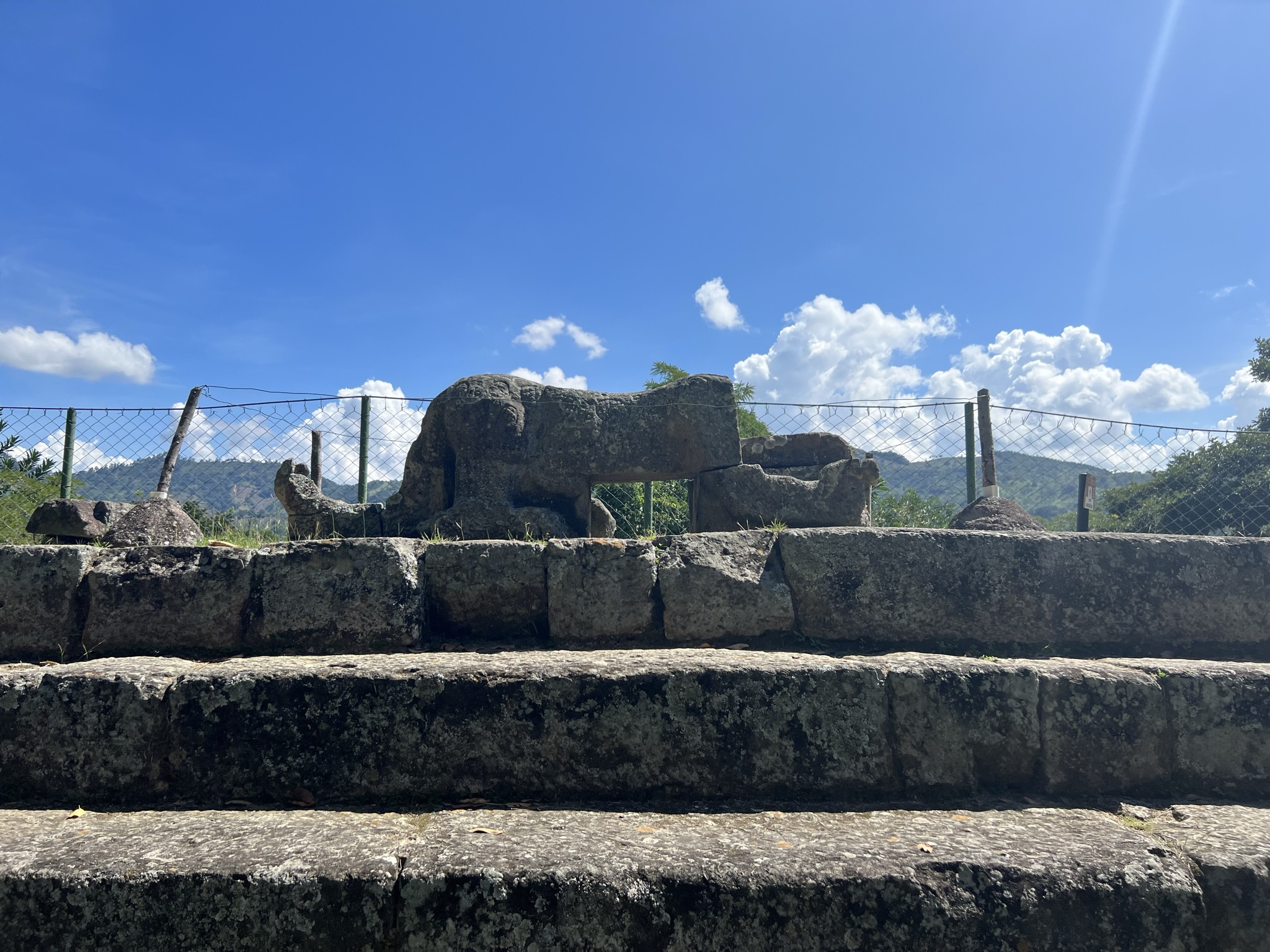
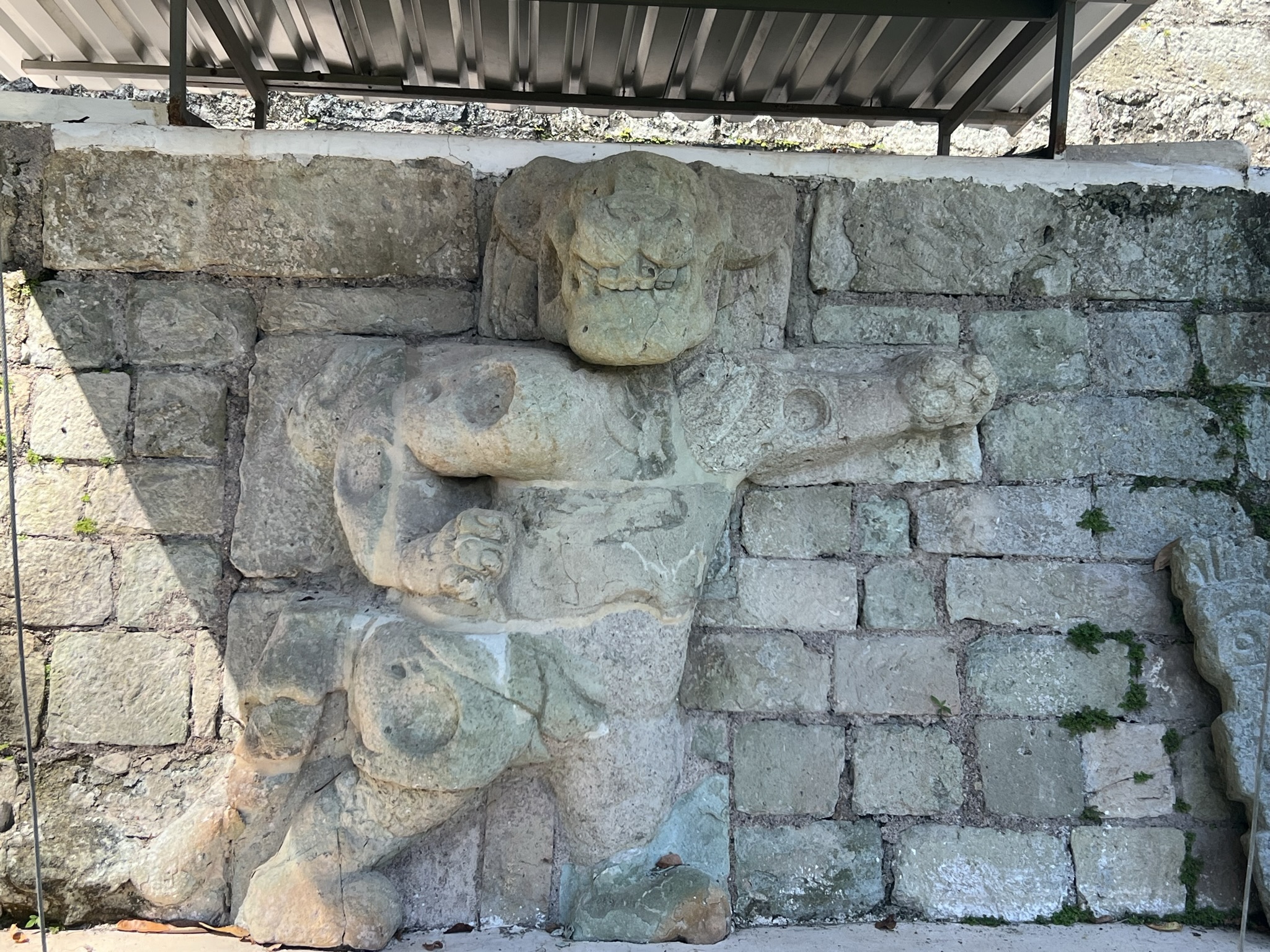
Sitting on some steps, Hugo pointed out the Temple of the Sculptured Doorway to the north which features stunning relief including those of the Earth Monster, the ruined Copán Valley temple complex to the east, and the Jaguar Stairway to the west, leading up to the Venus Altar. A carved panel shows a jaguar striking a dramatic pose in honour of the sun – left hand on hip, right hand out, legs wide apart. The photo of Natalie and I mimicking the stance kills me every time!
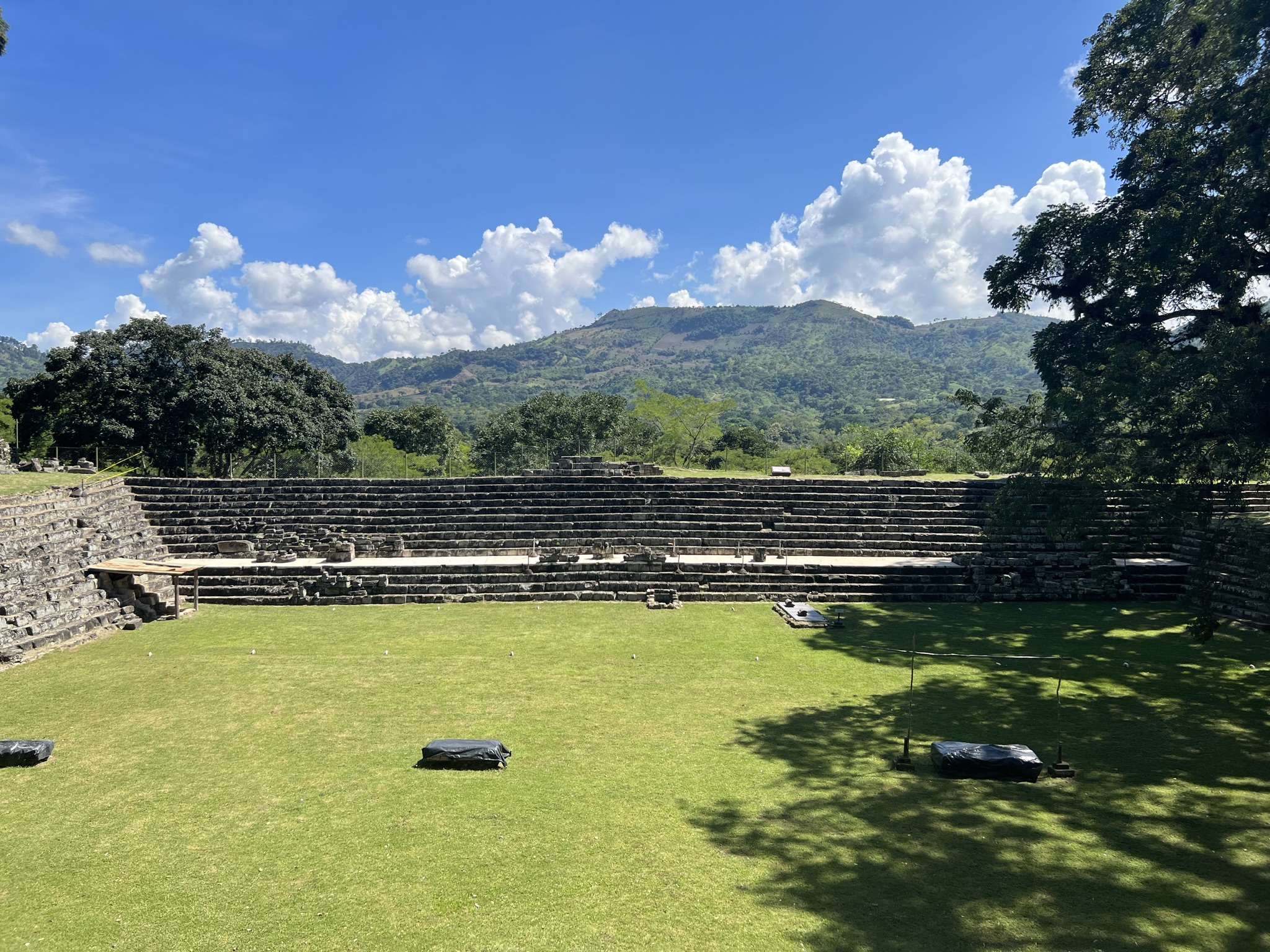
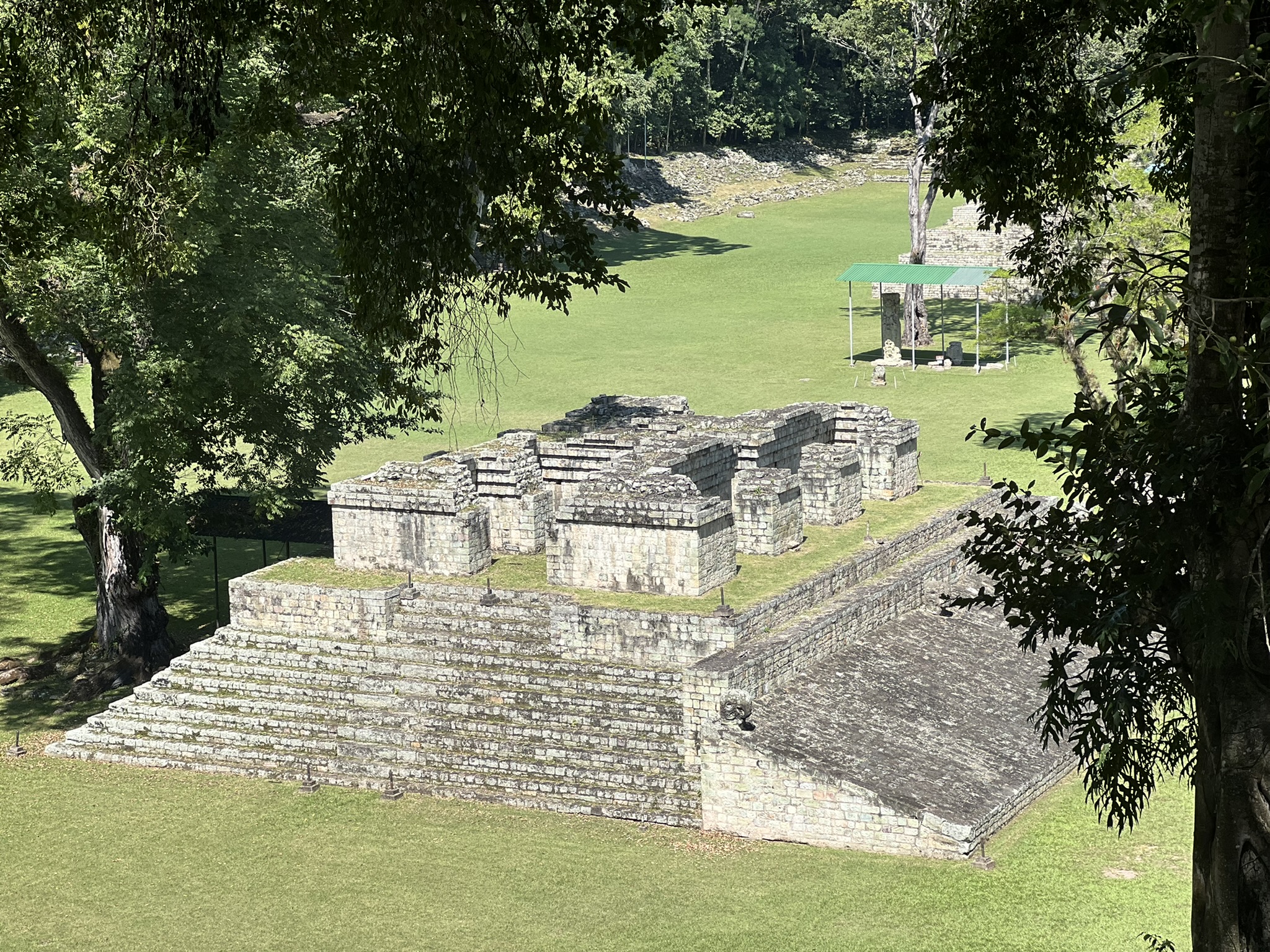
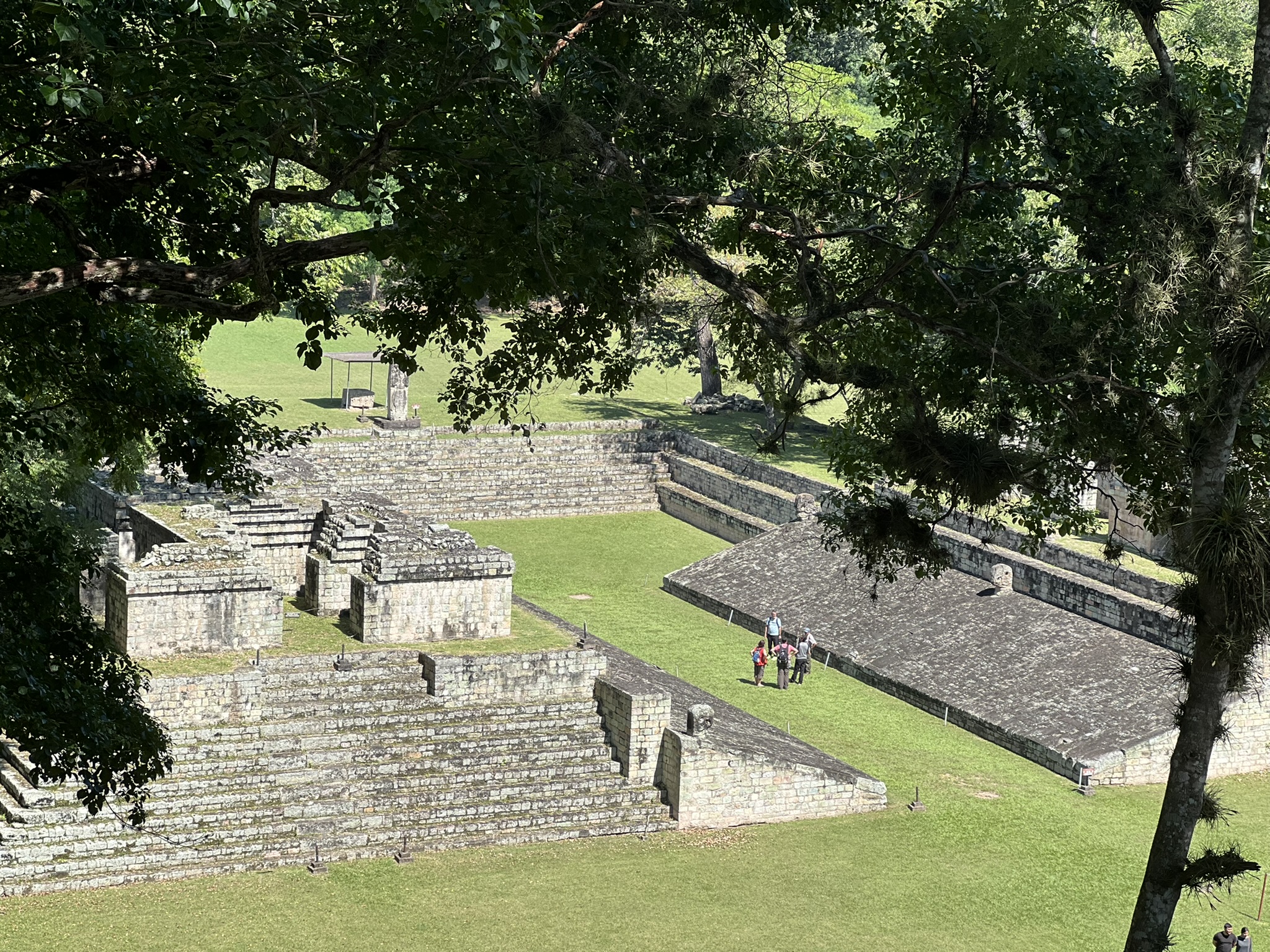
Next up: the Grand Plaza, the largest part of the site. Standing above it, Hugo pointed out the same view seen on the one Lempira bill – a truncated pyramid with stairs on all four sides likely used for astronomical purposes, and a ball court flanked by two changing rooms on either side.
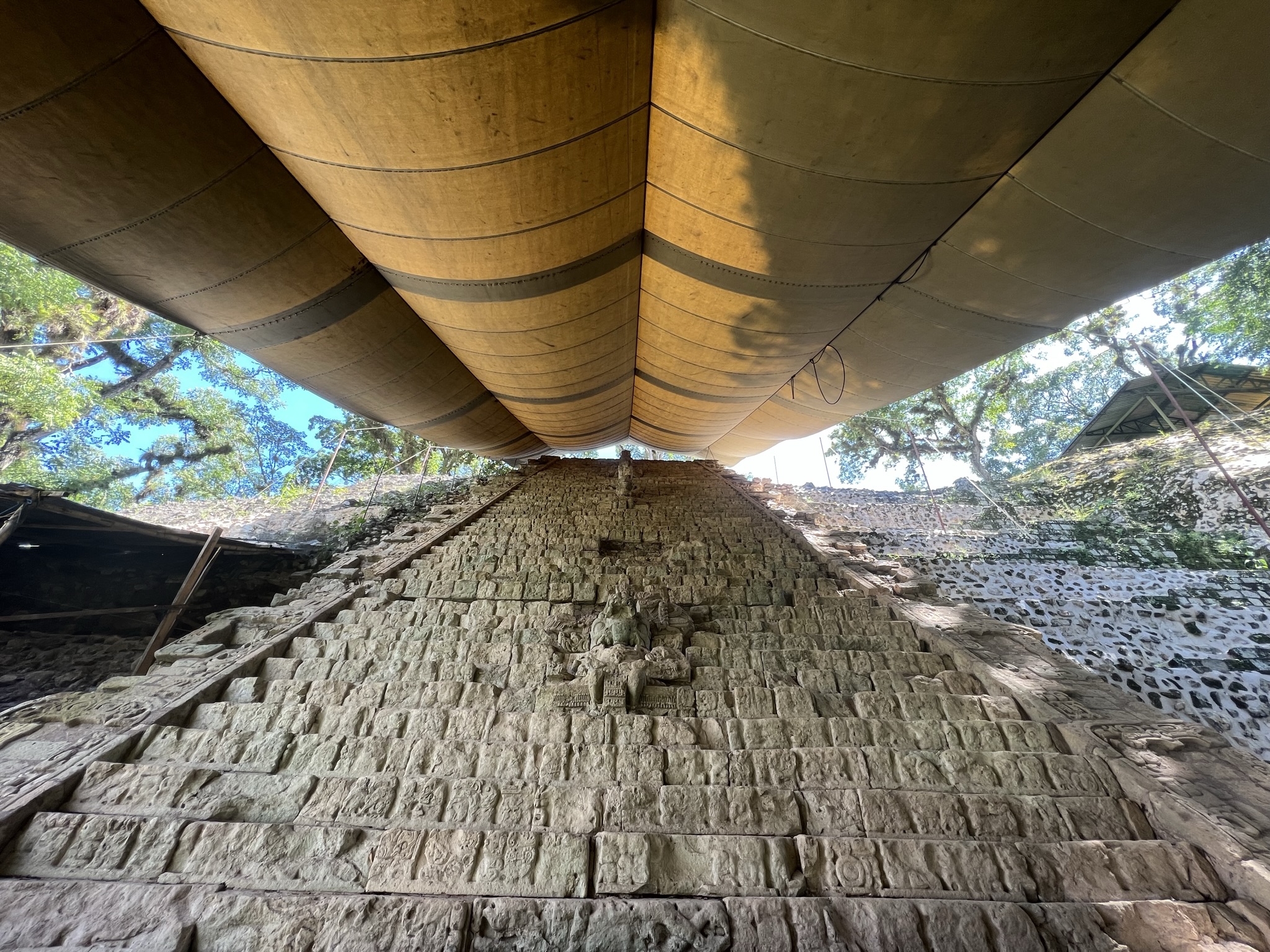
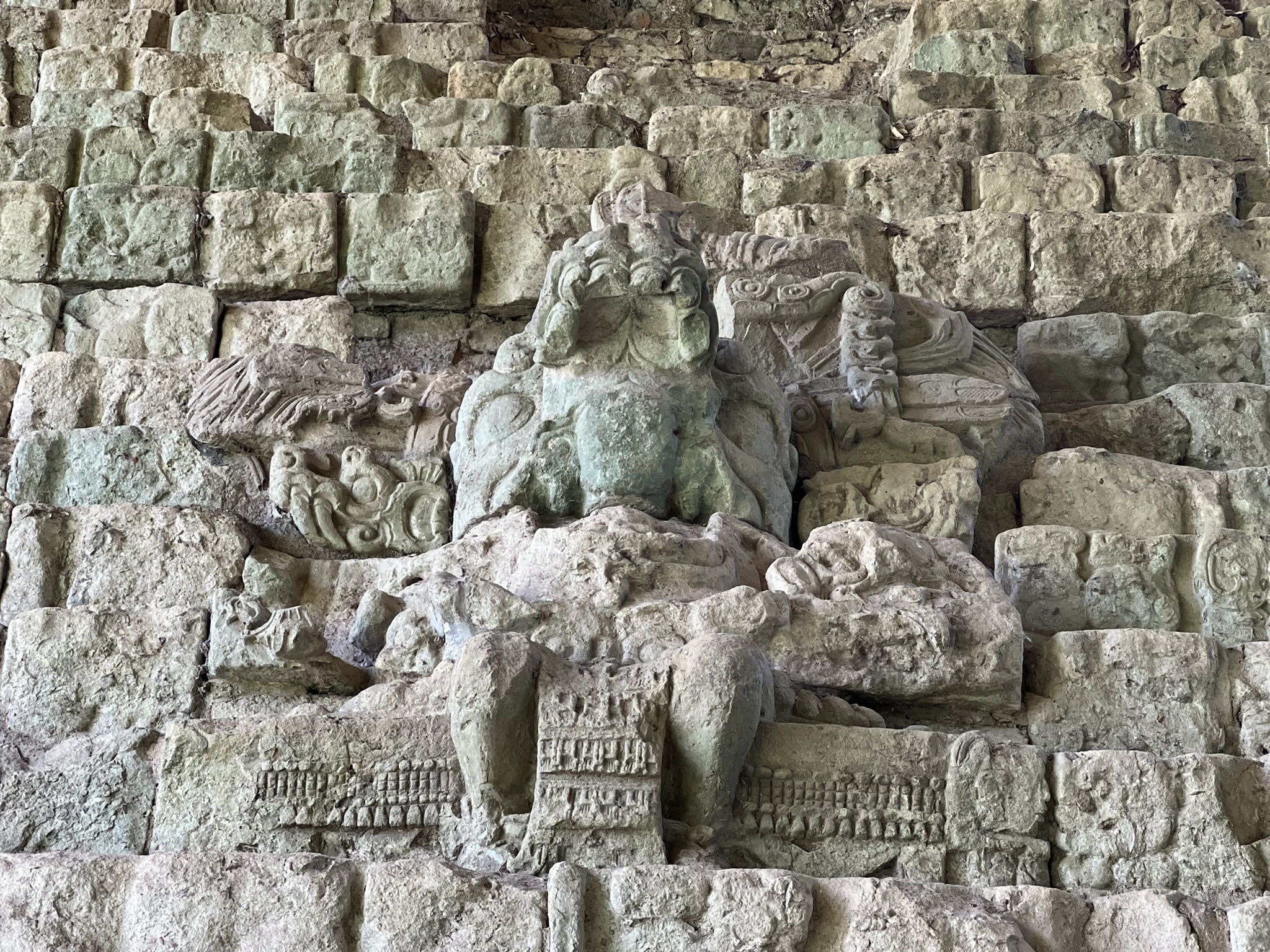
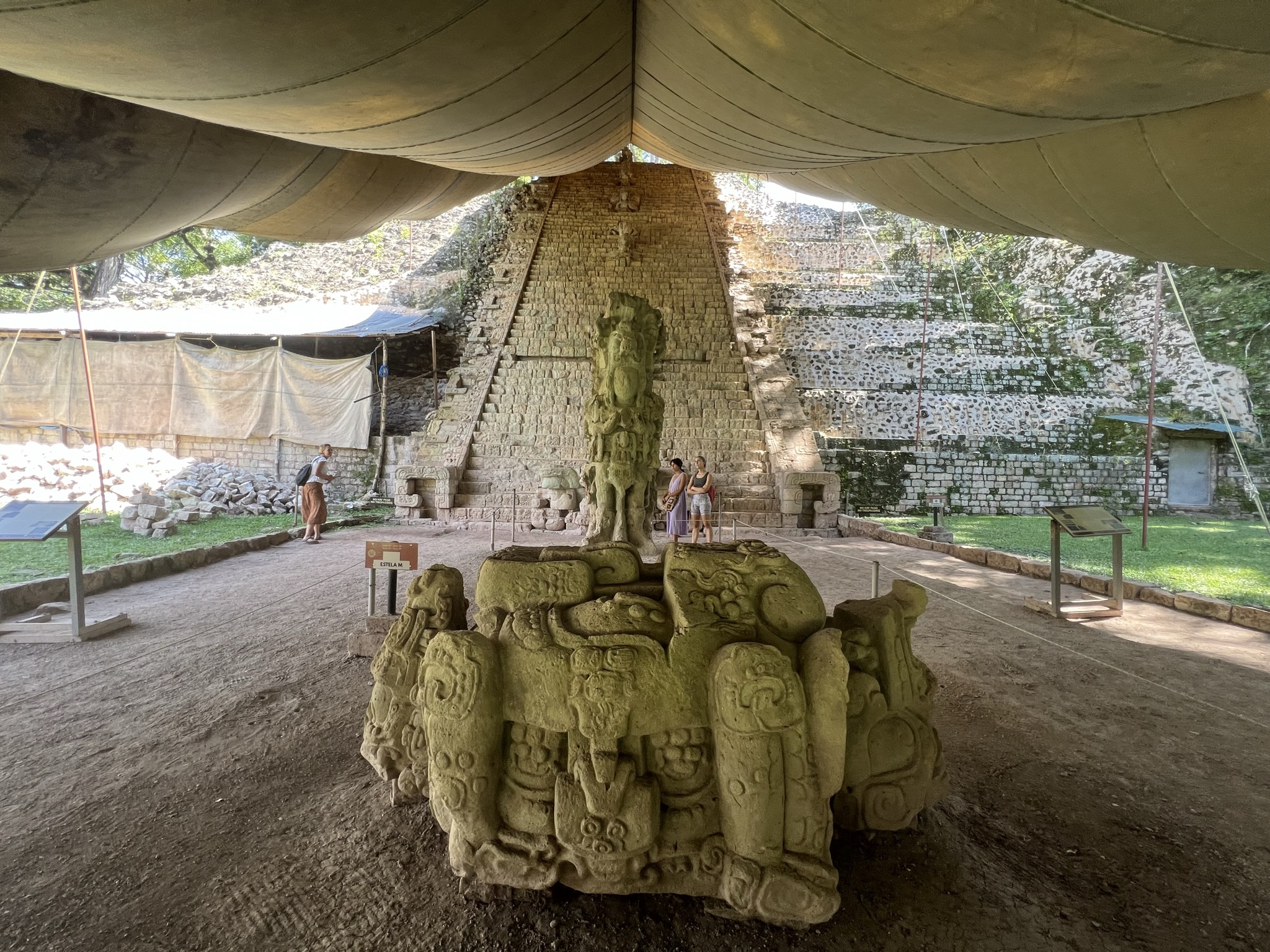
Once in the plaza, we started exploring the southern side, with the Hieroglyphic Plaza leaving us wonderstruck. Here, atowering 26-metre pyramid with a massive, ten-metre-wide staircase covered in 2,000 glyphs across 63 steps stands, with a series of five beautifully carved sculptures at its centre. A, flanked by five carved figures. This, Hugo explained, is the longest known Mayan inscription, built by Eighteen Rabbit to chronicle Copán’s royal lineage.
After spending an appreciable amount of time ogling at the historical masterpiece, we then headed northwards – the large open space at the east the location of a once thriving marketplace where most residents would gather. At the North Plaza, otherwise known as the Stelae Plaza, seven large stelae of Eighteen Rabbit still stand. One has feminine features, as he was said to rule with the strength of a man and the warmth of a woman (as sexist as that might be). Before these stelae are round altars with holes at the top – used to place severed heads during eclipse rituals, with the blood flowing through spiral grooves into a basin below.
Our last stop was the Núñez Chinchilla Residential Area, once home to the elite. Here, we explored Eighteen Rabbit’s home – a sprawling complex with individual rooms for each of his (up to 18) wives, a temazcal sauna, and communal areas. Women were seen as the heart of the Maya civilisation – with the most important wives being either former queens from other cities or those the ruler actually loved. After a king’s death, the widows would remarry and move to other homes in the zone to start new families.
I gotta admit, the ruins of Copán were among my favourites. Part of that, surely, had to do with Hugo, who was an exceptional guide and helped me appreciate the remains of a once-great city for what they once were and stood for. Not to mention, the city still features some of the most beautifully preserved stonework the Mayans ever produced.
It was also here that everything I’d learned about the ancient civilisation seemed to come together. In a way, my journey through dozens of Mayan sites across Mexico, Belize, Guatemala, El Salvador, and now Honduras, made me feel connected to them. It was a privilege and an honour getting to explore each and every one of them, with my short visits offering me a glimpse into the daily lives of a remarkable civilisation.
And so, after my tour of Copán, I had to say goodbye to the Mundo Maya. At least for the foreseeable future, anyway. History has always played a huge part in my travels, and Mayan history – right up there with the Incas of Peru – is one of my absolute favourites. Moving on from it… that was gonna be tough.