Río Dulce – Day 2: Garifuna Rhythms
RÍO DULCE
Day 2: Garifuna Rhythms
October 08, 2022
Fully restored and ready to go on with my journey, the following morning I planned a visit to a nearby town called Livingston – Angela’s recommendation. By then, what I had thought of as just ‘some rain’ turned out to be a fully-fledged tropical storm.
The sky and the river were grey, and – save for the blurry, swooshing white of the yachts that seemed this close to toppling over – one could barely see beyond their nose. And I’m talking an average-sized nose here, not a humongous one like mine. It was Hurricane Julia (by then only a tropical storm) in all her might. Half resigned, half elated, I had breakfast and then giddily ran to my room to continue journalling, assuming the tour would be cancelled. It only took me shaking off my writer’s block for Angela to come knocking on my door. “Your boat’s here!” she asserted.
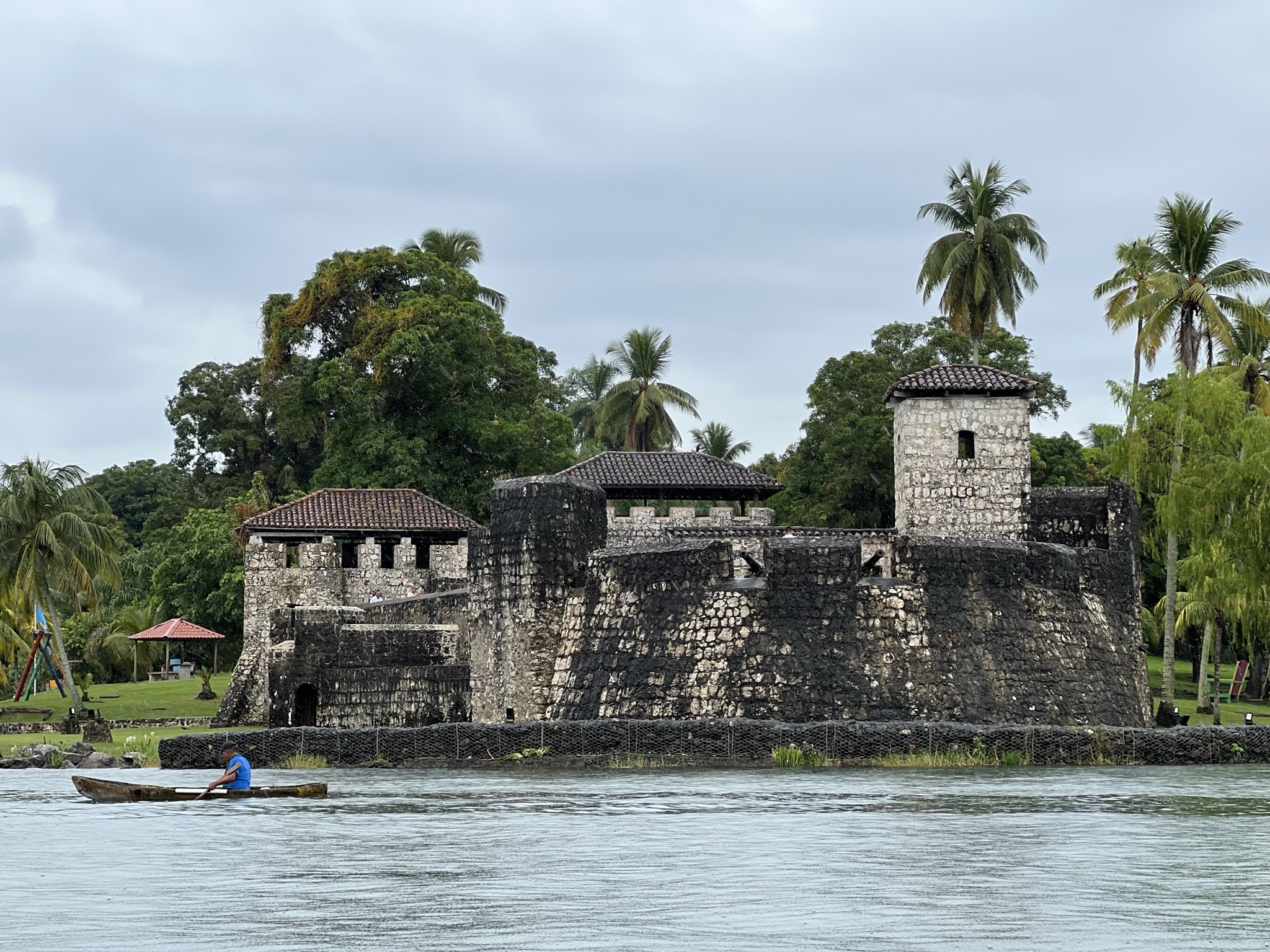
Fully equipped for an unwelcome shower, I stepped into the canoe and was promptly handed a tarp – which did nothing apart from getting me wetter. From the lodge, we headed deeper into the lake to gather some other people waiting by the riverbank – an excellent opportunity to see the Castillo de San Felipe de Lara; a colonial fort built to fend off the pirates of the Caribbean. At one point, it was an important hub for importing and exporting goods. In a way, it still is. Río Dulce, according to a couple of locals I met whilst going around town, is a key node for drug cartels in Central America, with Barranquilla in Colombia being the hub in South America. While most of this is anecdotal, it is pretty much common knowledge to the people living here.
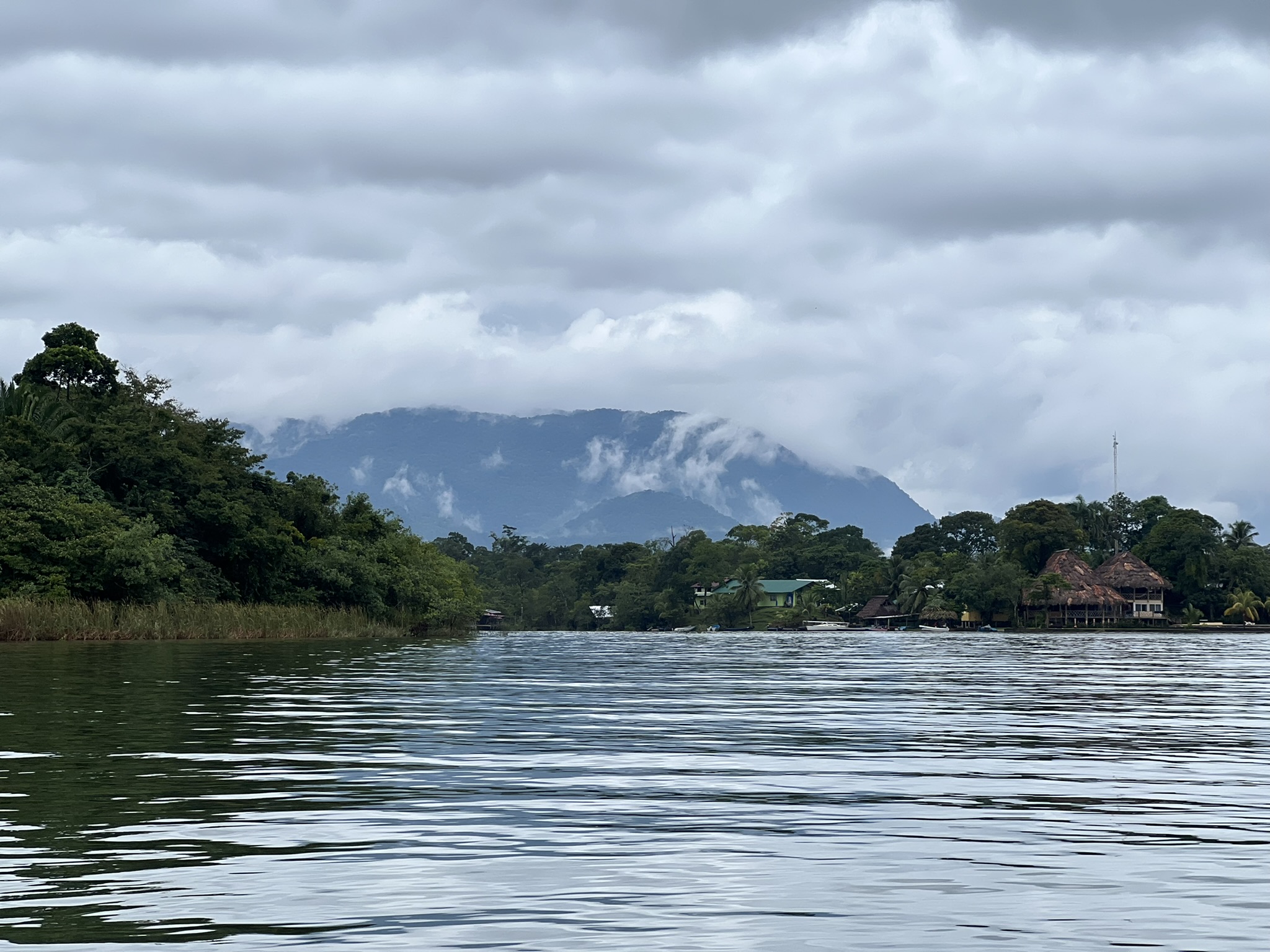
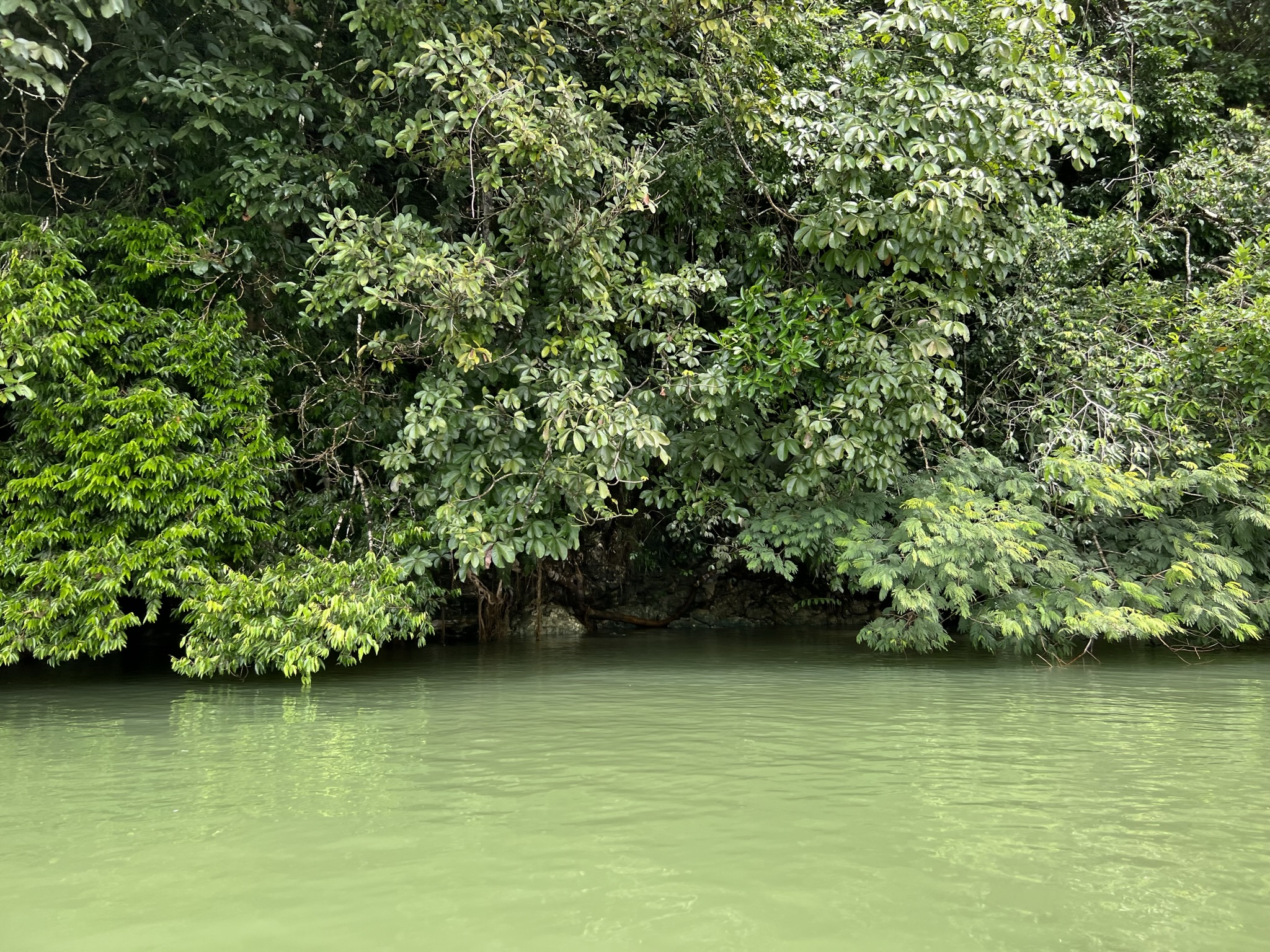
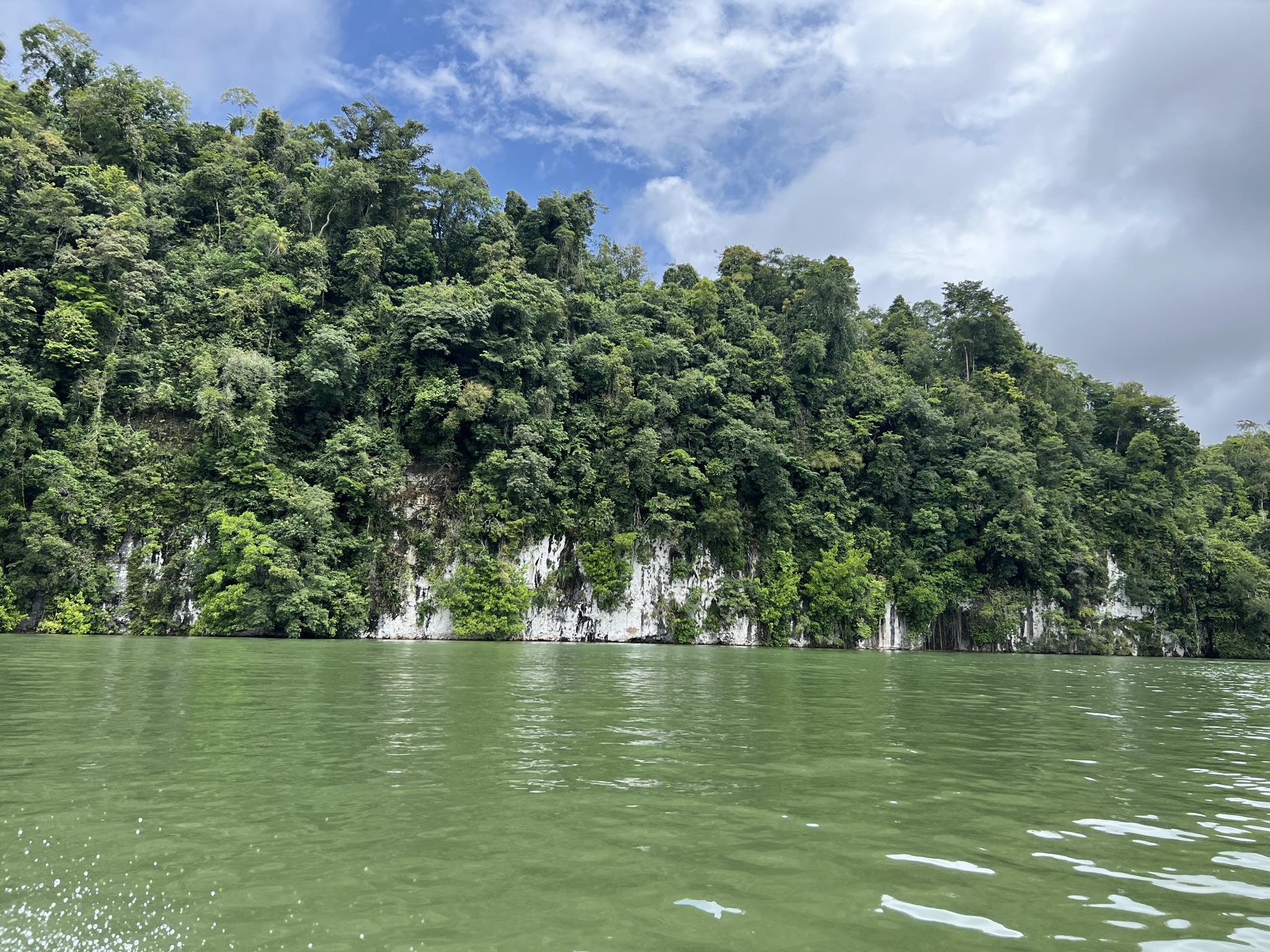
From thereon, we went eastward, right back under the bridge, and proceeded onto the river and over the narrow lake of El Golfete, which is found inside a stunning gorge as high as ninety metres and covered in all kinds of plants and trees – amongst which teak and mahogany are the most common. This took me right back to my boat trip through Sumidero Canyon in Mexico – without the torrential downpour, of course.
Livingston
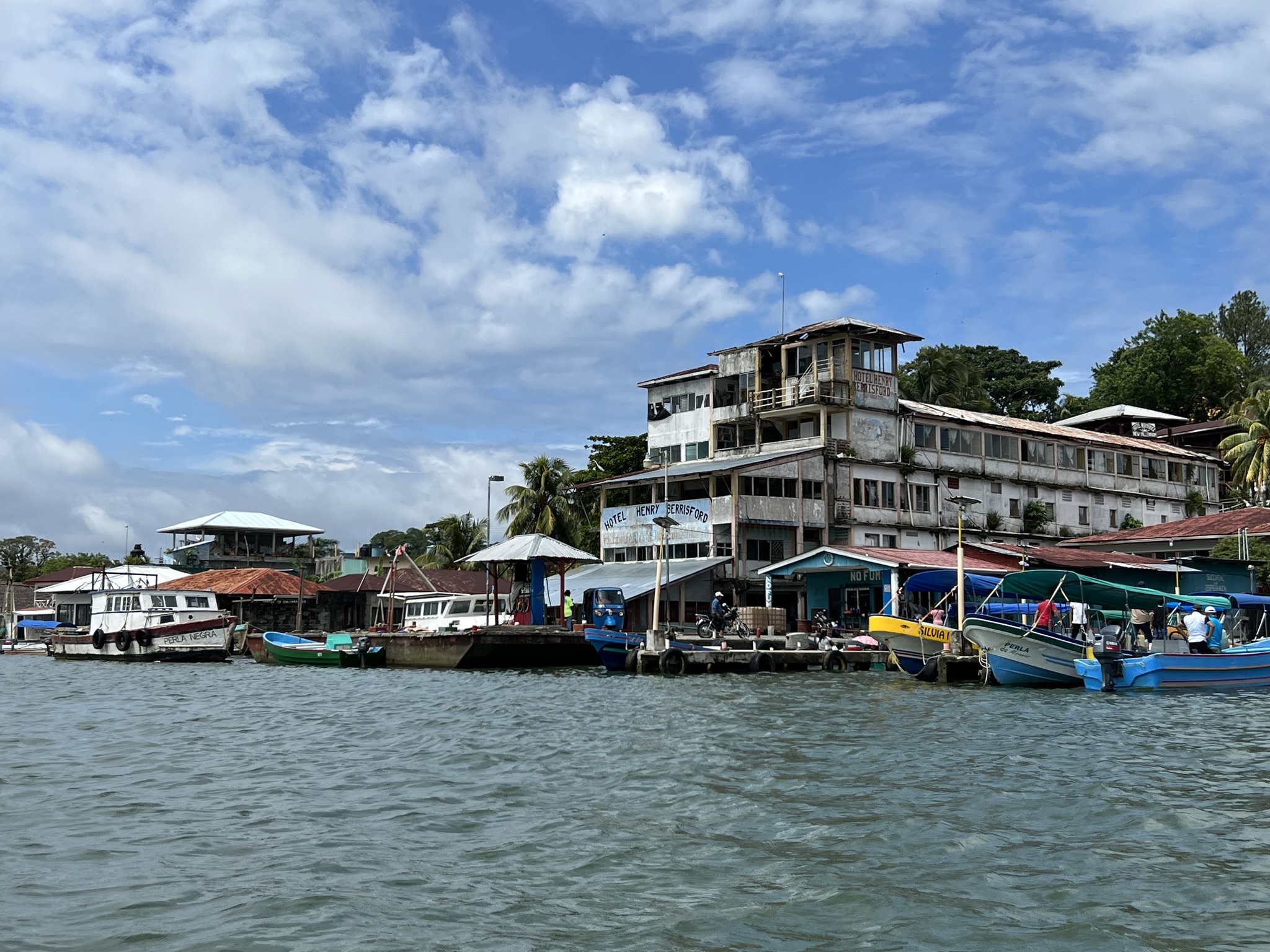
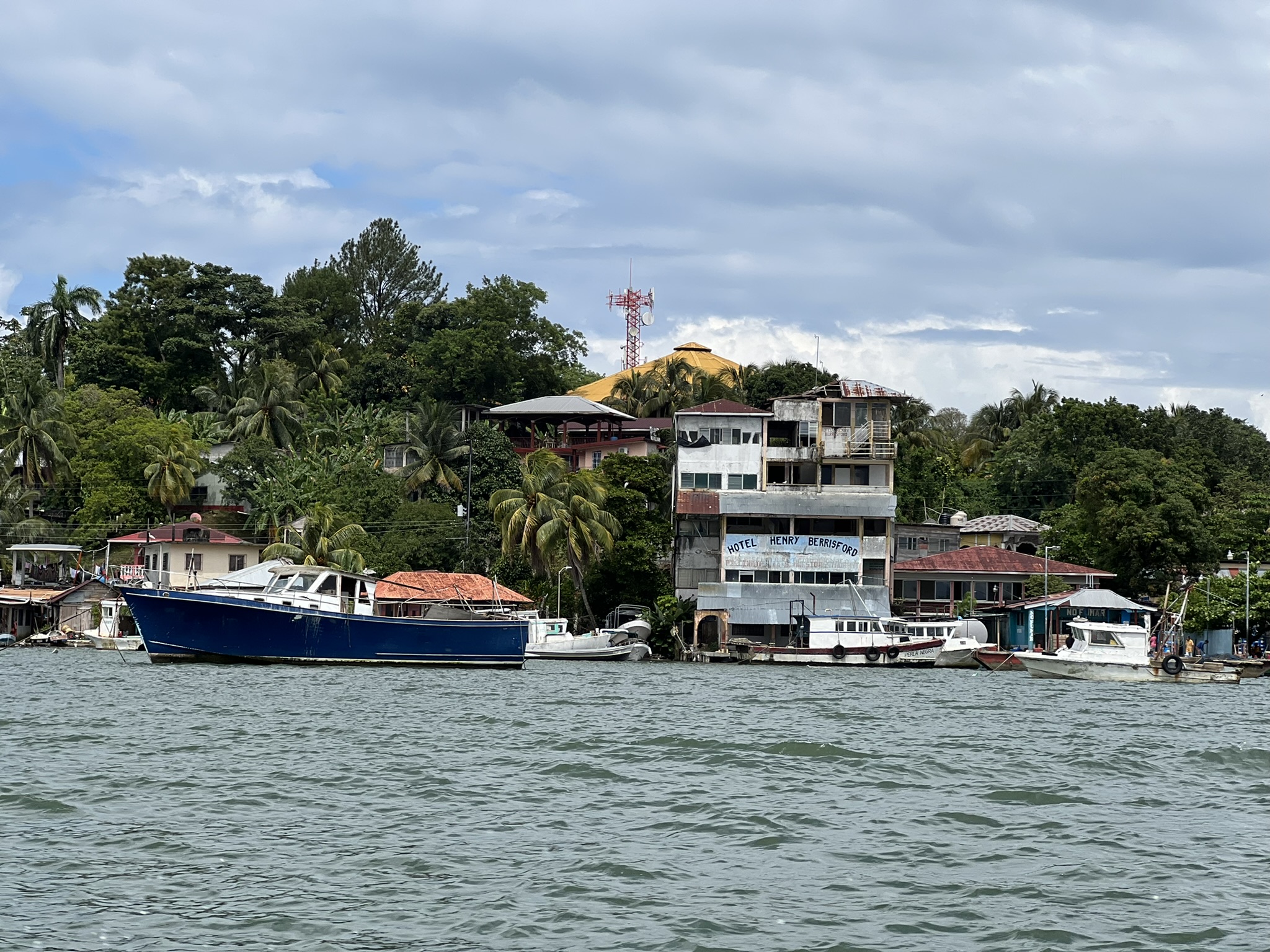
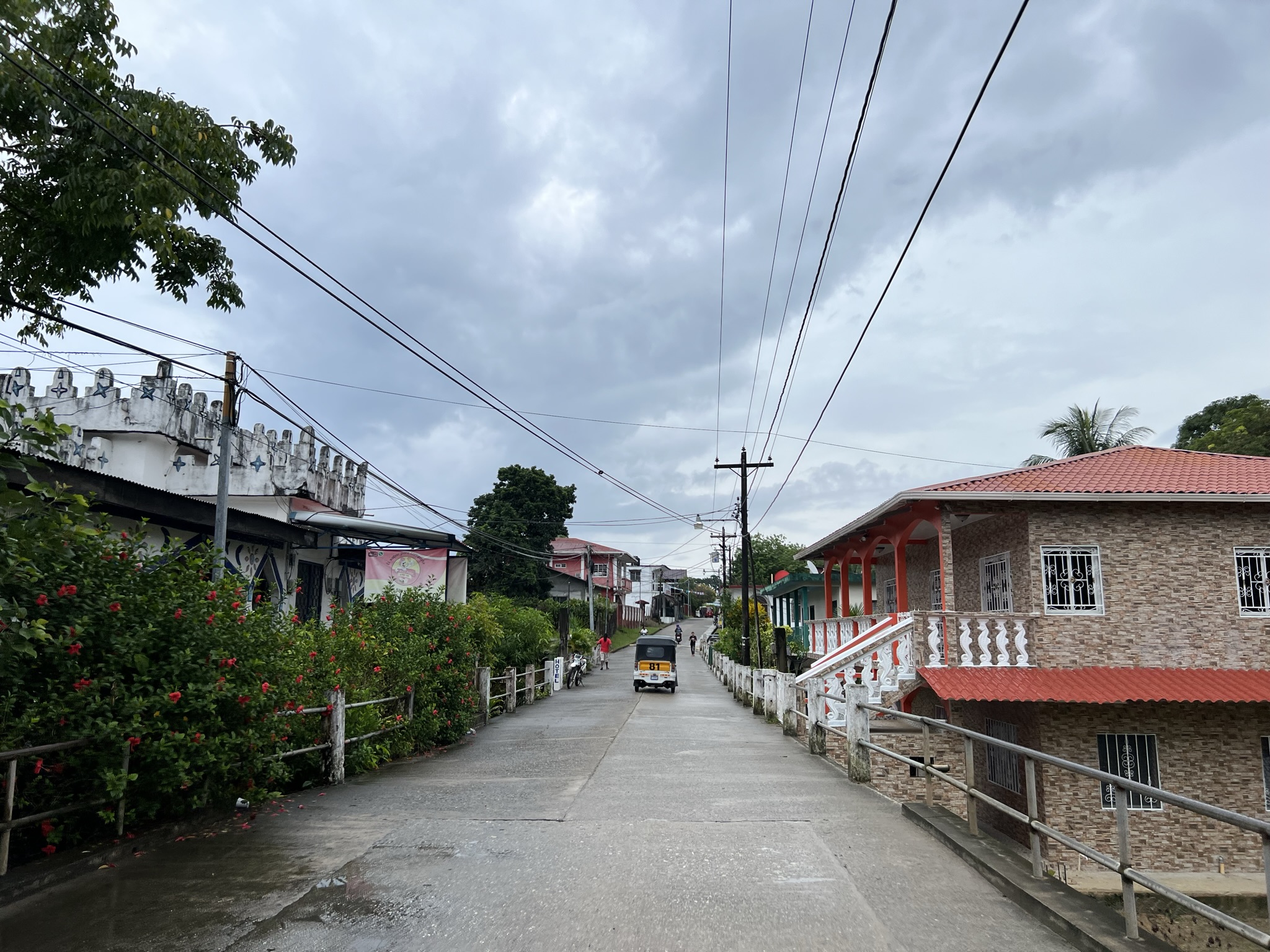
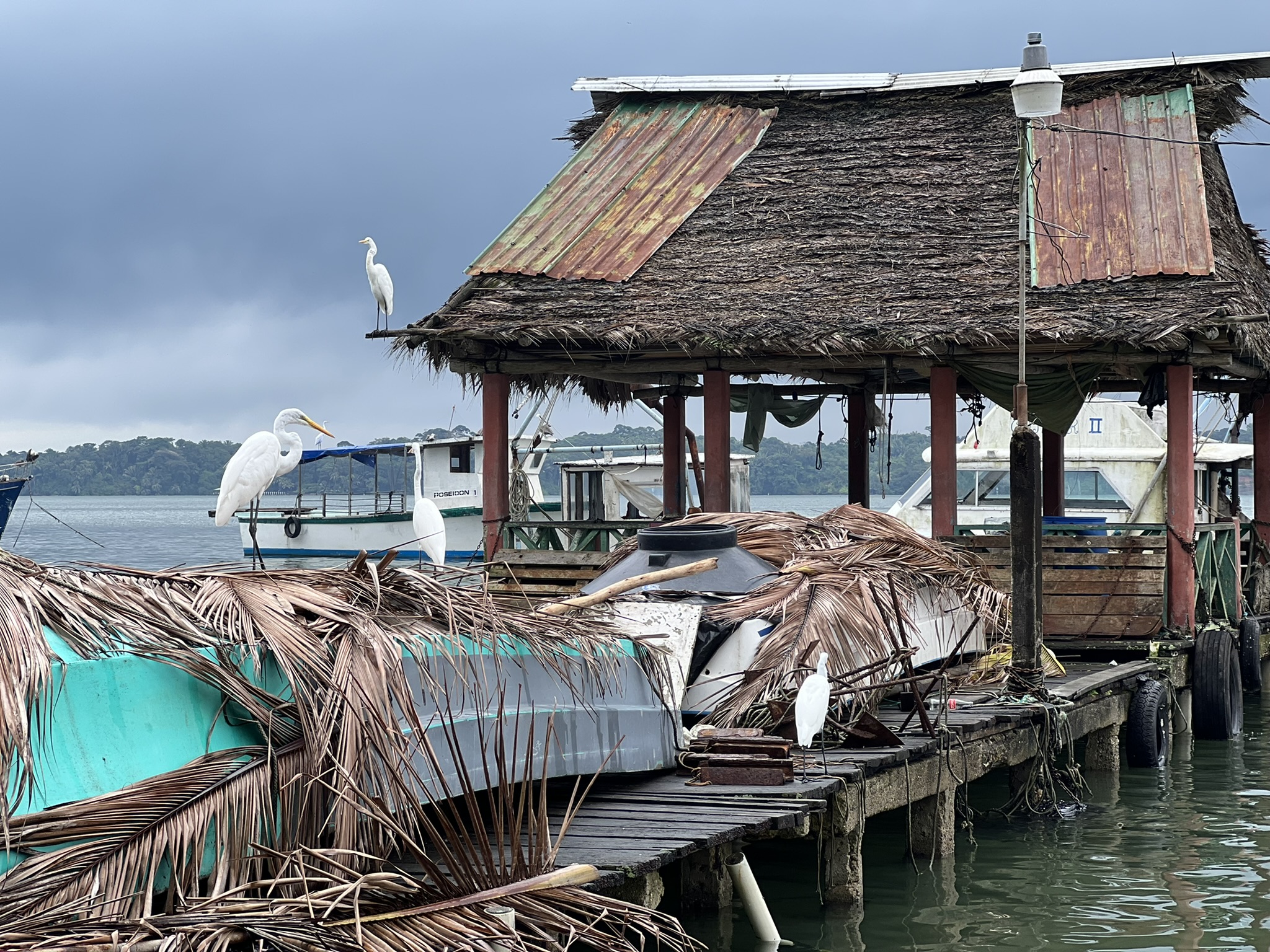
After an hour-long ride, the rain had somewhat lessened and we had arrived at our destination. “You!” a tall, dark guy screamed, pointing at me out of all the people in the boat. “Where are you from?!” I casually showed him I’d be willing to chat once I was off the boat and on the pier – and that was all it took for him to join me as my guide. For a hefty sum, of course.
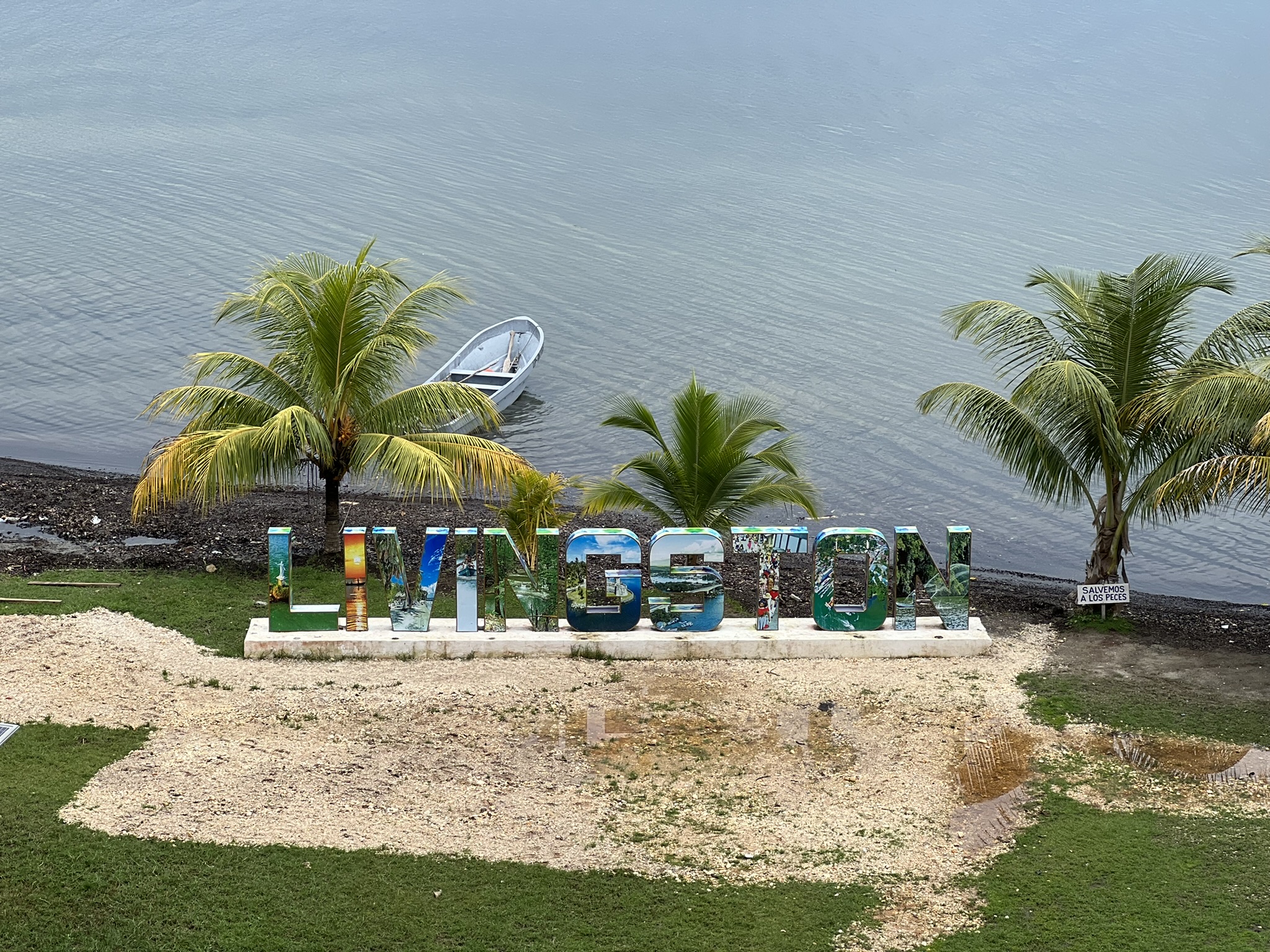
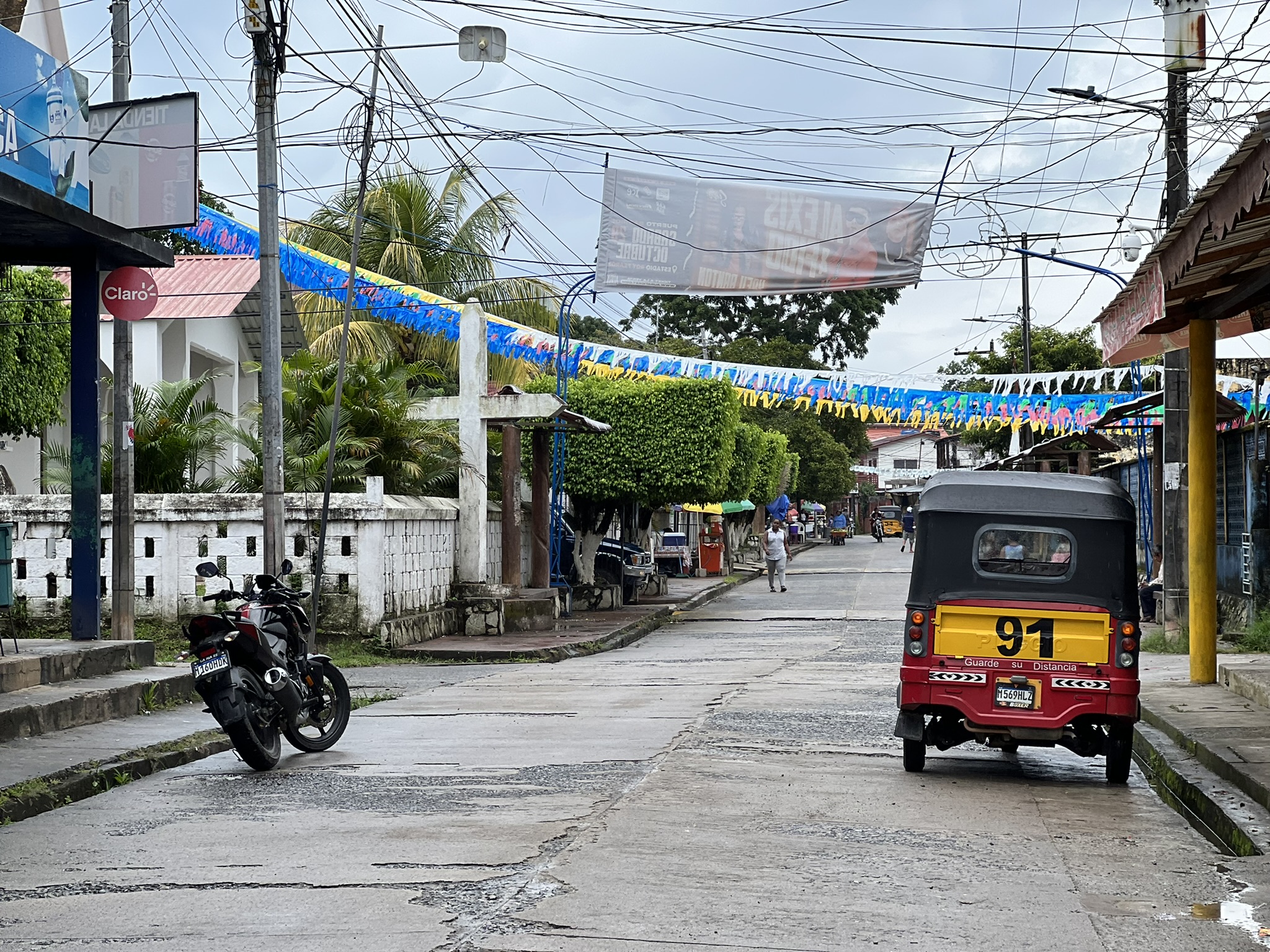
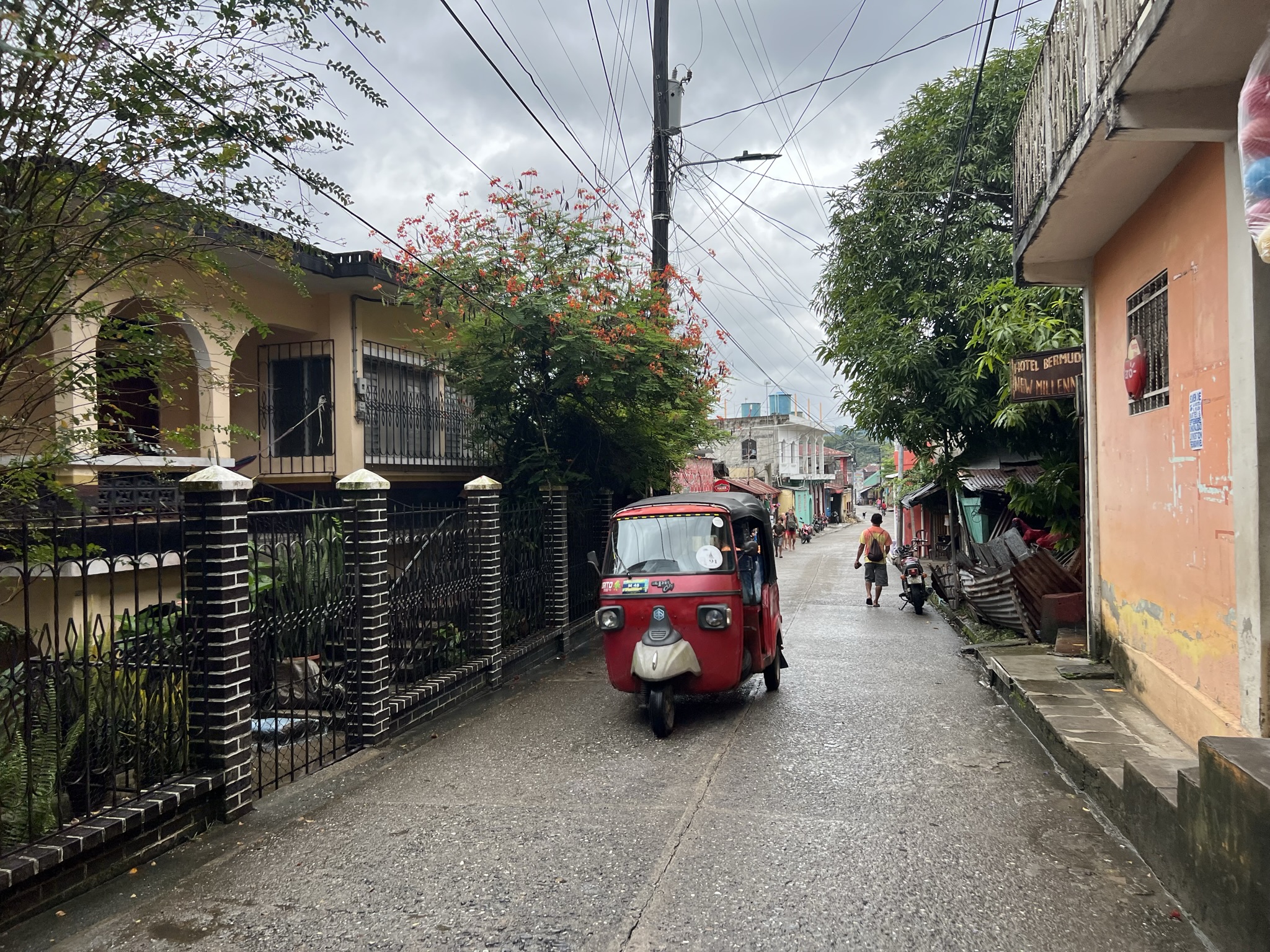
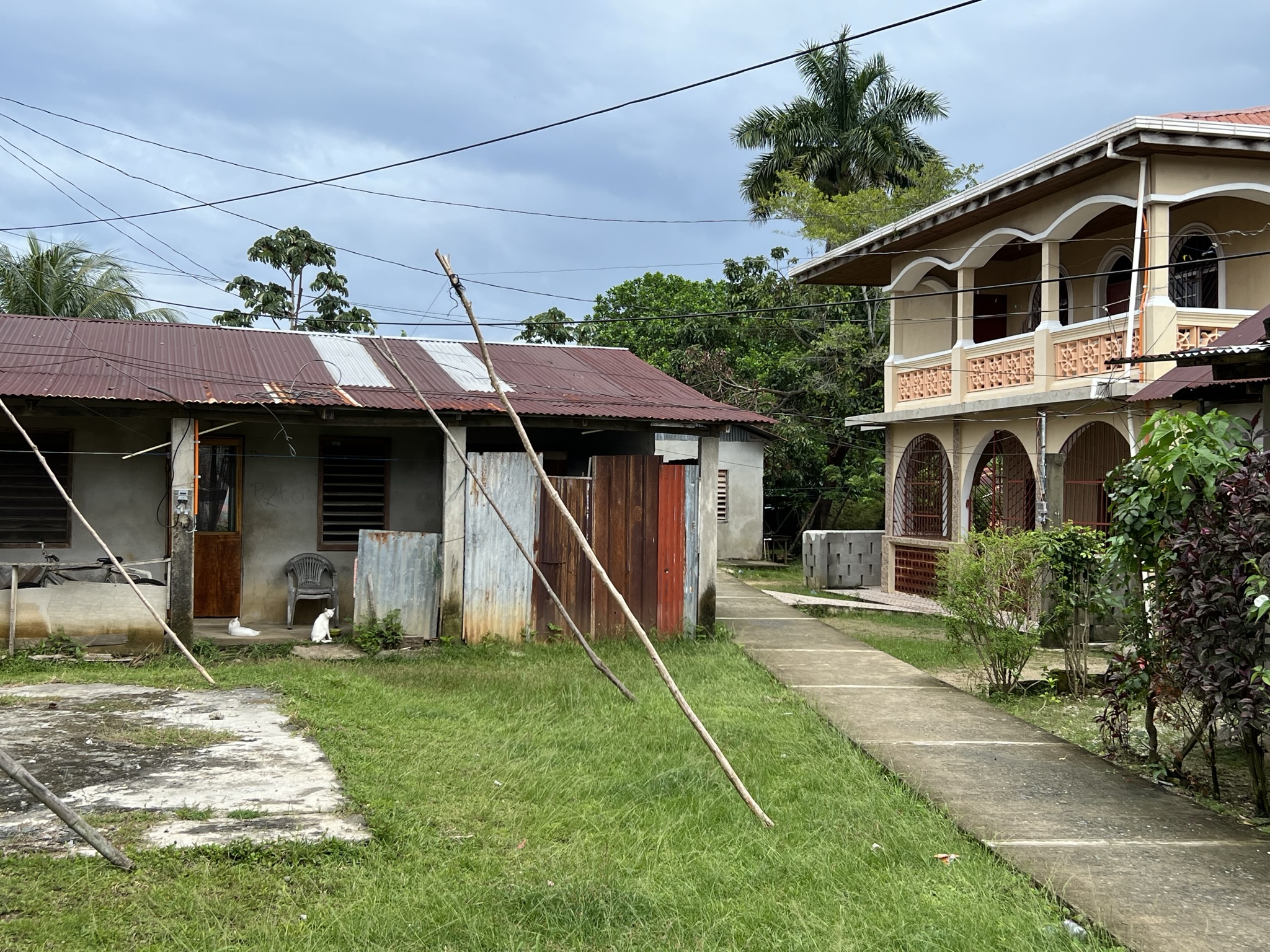
Tom, wearing a Rasta hat and t-shirt, seemed higher than a kite, slower than a sloth, and – candidly – not the best representative of his people, the Garifuna. But, he seemed nice and cool, so I just went with it. The town of Livingston, he told me, is one of the main Guatemalan ports in the Caribbean Sea and is known for its mix of cultures – mainly Guatemalans, Garifuna, Afro-Caribbean and Mayan. It was named after Edward Livingston, a politician who wrote laws for the Federal Republic of Central America. After this brief intro, he took me to the areas where the Garifuna live. There, we met a few locals and had a chat over a shot of gifiti – a rum-based bitters made from roots and herbs.
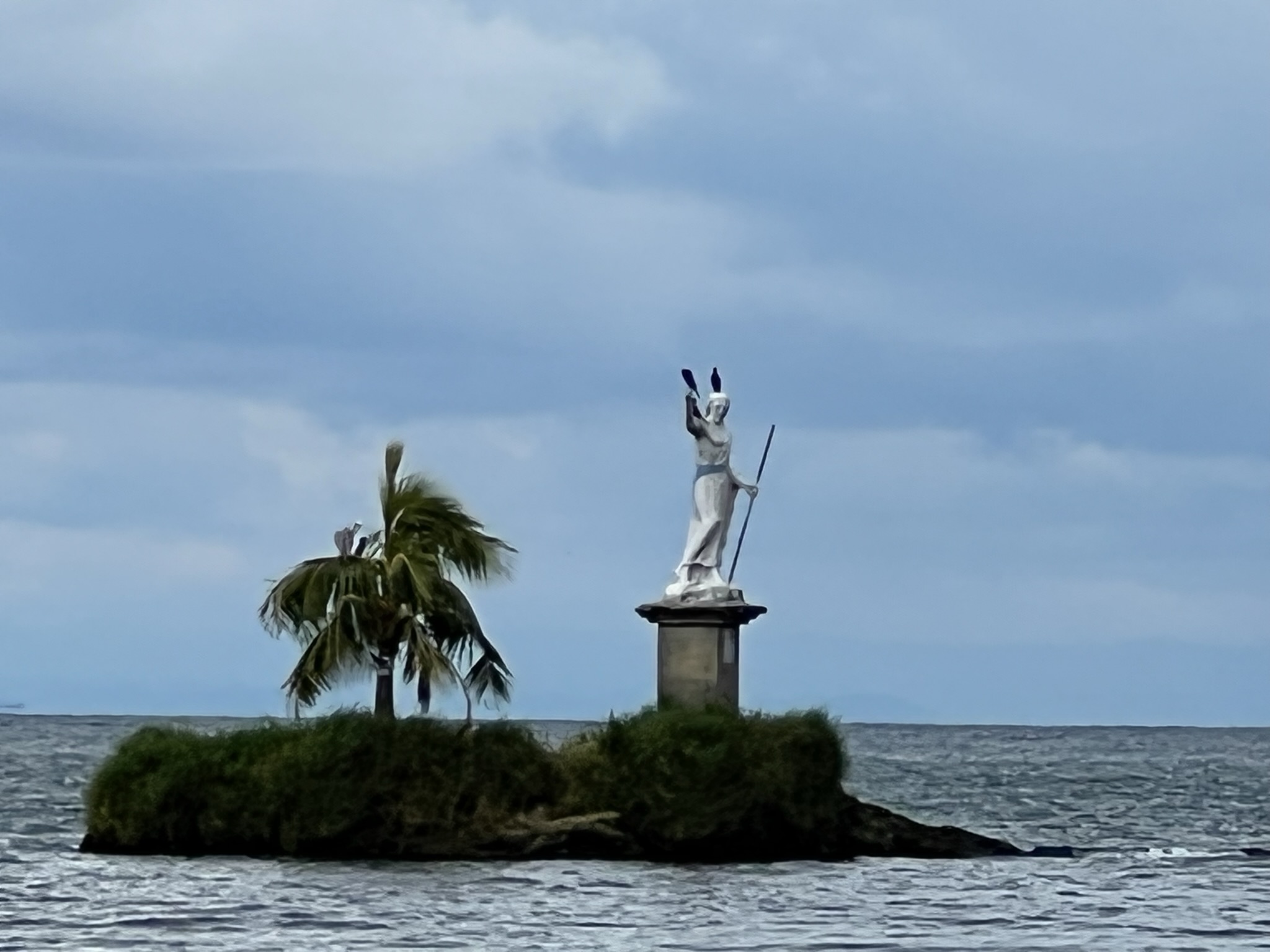
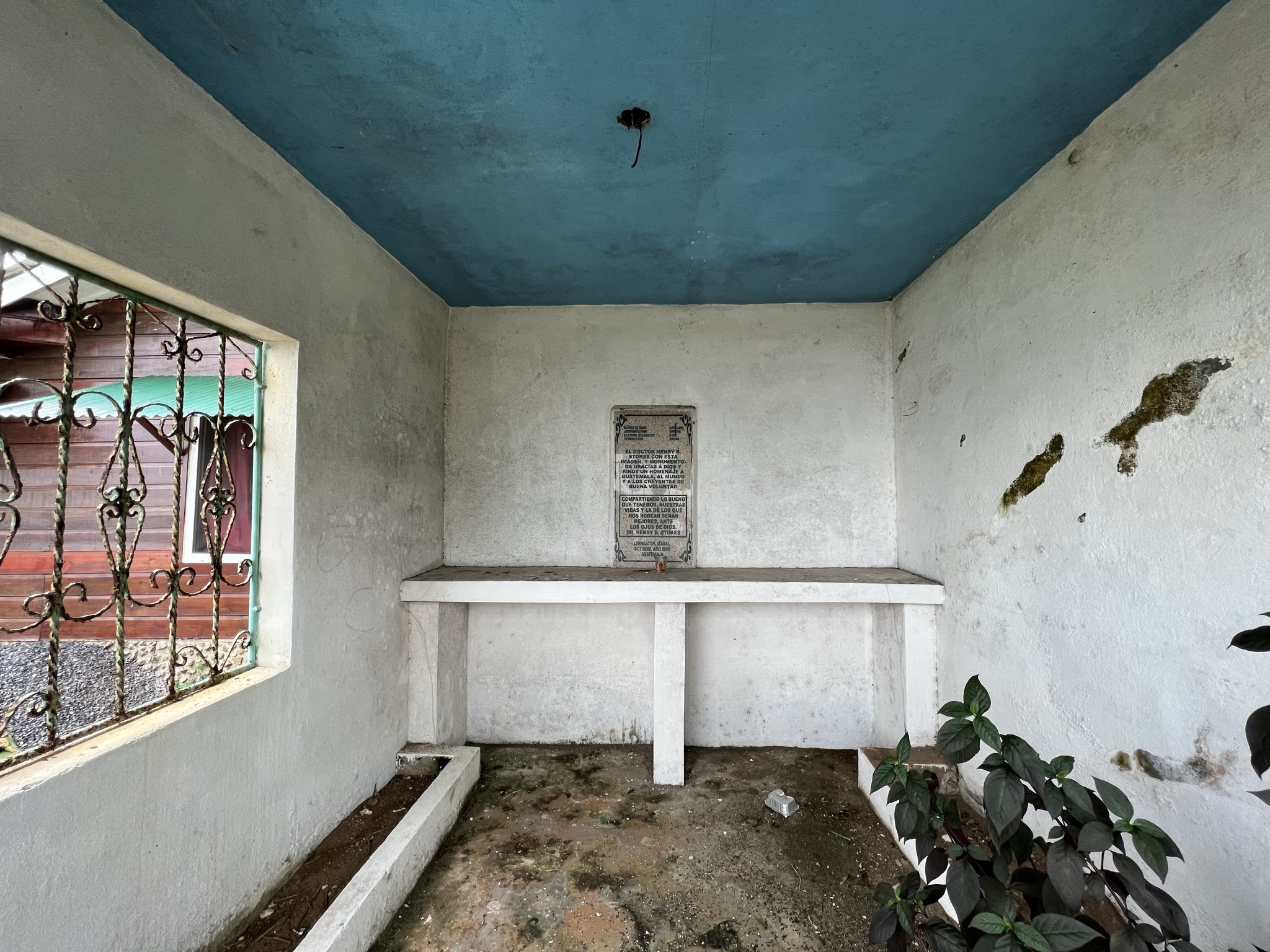
Walking along the coast, we stumbled upon the Salvador del Mundo statue – a man in robes holding a staff, stranded in the sea on a tiny island. A symbol of… a saviour? I’d elaborate, only Tom just knew the name, and Wikipedia is bloody useless in this regard.
A Bit on the Garifuna
As we went on, our ears were bombarded by the loud thumping of a drum. We approached the source to find people dancing and singing to traditional Punta music. Contrary to what I expected, the family was ‘mourning’ the death of their patriarch – someone Tom knew well.
In Garifuna culture, he explained, when someone dies, the family gathers at night and spends it eating, drinking, playing cards, singing, dancing, and sharing stories. Meanwhile, the older women of the family gather around the coffin and pray. This process lasts the entire night -otherwise, it’s believed to anger the dead. The following day, the family carries the coffin to the church where Catholic rituals are performed before the burial. The whole wake is repeated for nine days and nine nights, with an altar set up featuring the deceased’s favourite belongings and lit candles. Only after this can the soul begin its journey to the afterlife. Also, he added, relatives wear colourful clothing throughout. Wearing black is considered an ill omen, and red is worn only by those who hated the deceased. Cool, cool.
Another ritual is called the Dugu, used to cure people from ailments. Here, the Buyai (shaman) leads the community in a ritual that calls upon deceased ancestors through music and animal sacrifices to heal the sick. He also described the Yurumein, a ritual performed every 26th of November to commemorate the arrival of the Caribs from St. Vincent to Guatemala in the 19th century. On this day, the Garifuna gather at the beach before sunrise, simulate the arrival using canoes, then proceed with a procession of Punta music and dancing.
A Questionable Guide
The tour took a darker turn as we entered the not-so-dark cemetery, filled with colourful graves grouped by families. Here, Tom had me visit his father’s grave. It was touching, though a bit weird.
After our tour concluded, he recommended a nice place for lunch with typical Garifuna food. Turns out, my asking him if he was gonna join me was taken as an invite – him accepting lunch as my treat without so much as flinching. In trying to stick to my tight budget, there were plenty of days where I’d overspend on one thing or another and end up eating Doritos or plantain chips for both lunch and dinner. As such, I had fried and breaded bananas and a big ol’ glass of nothing. Meanwhile, Tom had chicken, rice and beans, two beers, and a Coke… Also, he bummed five cigarettes off me. Needless to say, he didn’t get a tip from me.

An Honourable Host
Another afternoon spent in my room, burying myself in words and sentences, and I finally felt like I was back in touch with myself. I’d go out for a cigarette (and get bitten by countless ants until my feet would go numb) and a coffee (man, Guatemalan coffee is excellent!), then run right back to journaling.
Famished despite the plantain chips, I stayed resolute about sticking to my budget. Dinner would mean one less place to visit or one less activity to do – so no compromises. I had the reputation of a notorious spendthrift among my friends. I had to prove them – and myself – wrong. I had to show I was in control of my finances.
It was at the height of my hunger and existential dread that I heard a knock on my door. It was Angela, with a hot bowl of pumpkin curry soup. She was worried I’d been stuck in my room all day with no dinner. Just like the stereotypical granny. Man, I love that lady…
Stay wild,
Marius
Post-Scriptum
Back at the lodge, Angela asked me about my day. After telling her all about my delightful tour with Tom, she told me she’d known him for years – and that his father still gives amazing tours to this day.
Uhm… So whose grave was that? Did he make up a sob story just to get a deluxe combo meal? Probably.