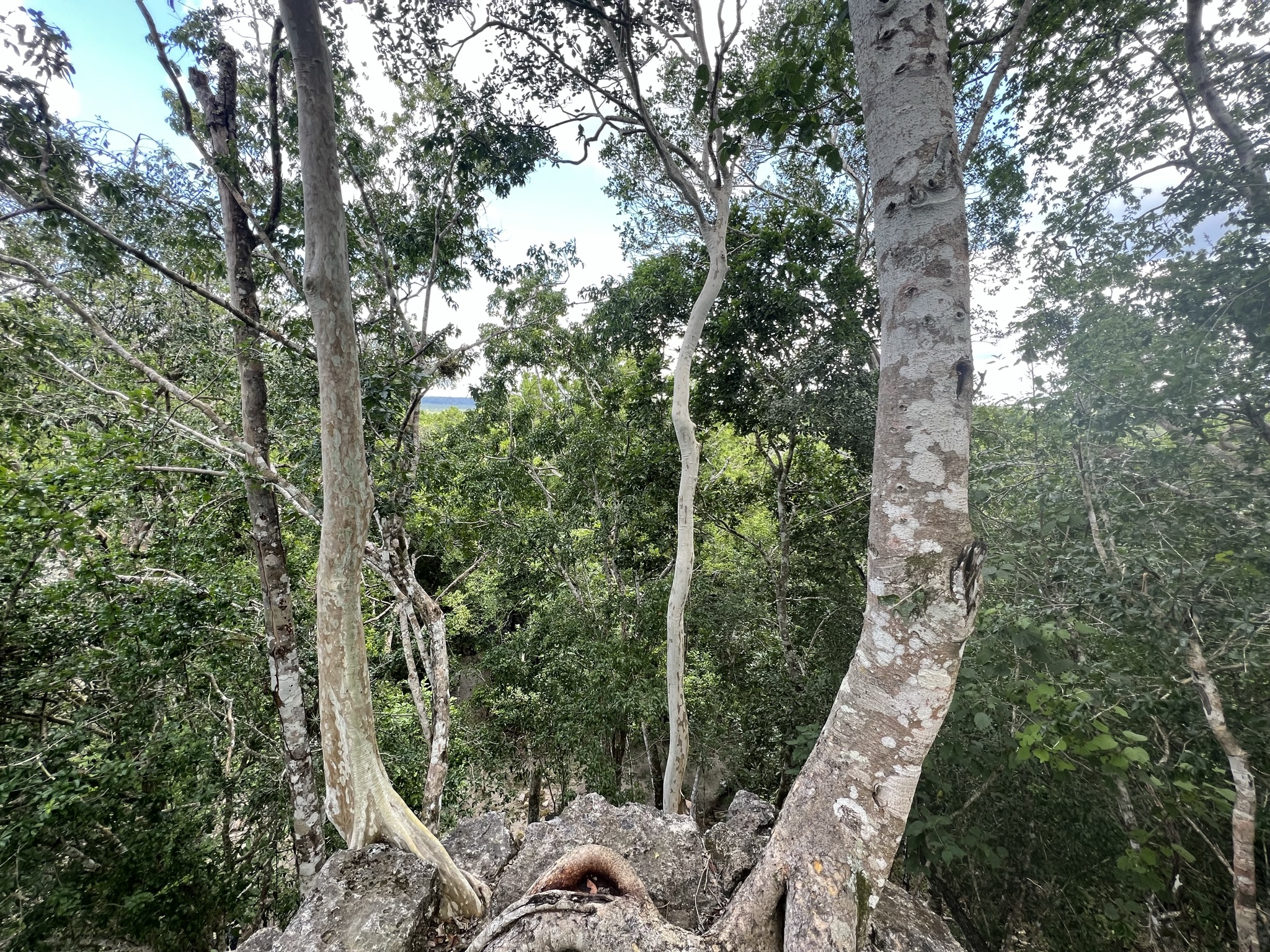
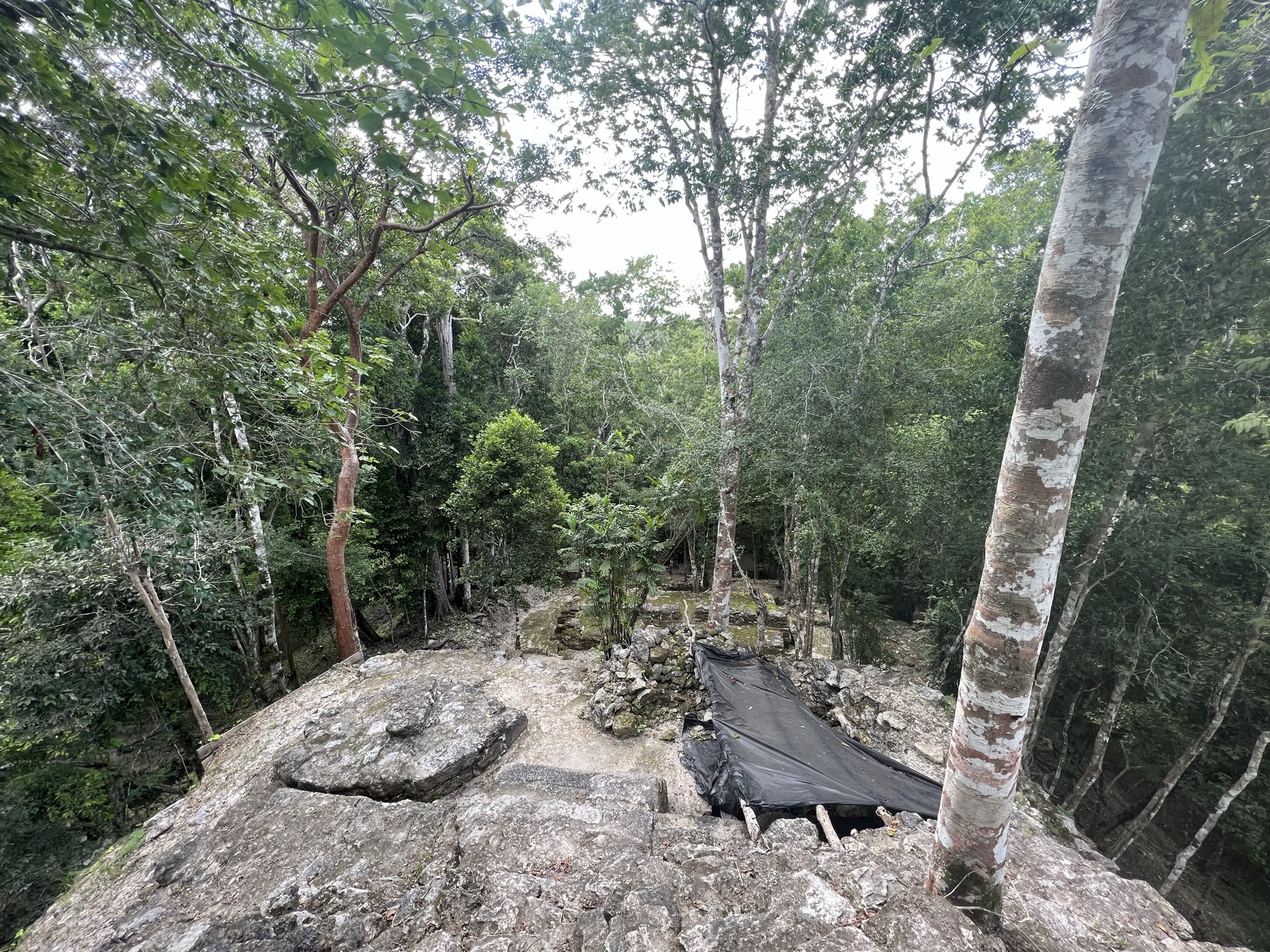
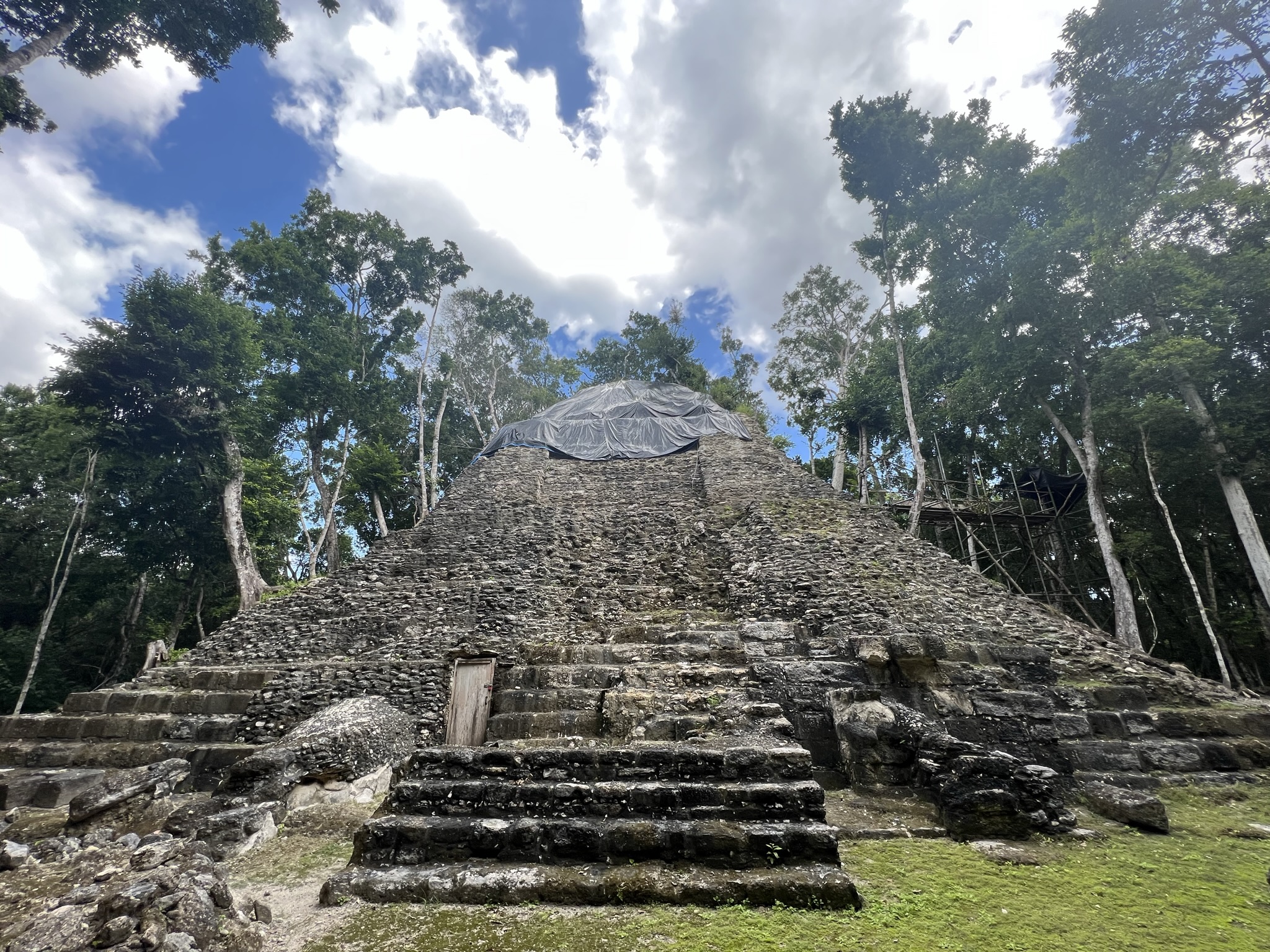
We woke up before the break of dawn, getting a head start before the sun rose in order to witness its ascent from atop El Tigre. Or at least, that was the plan. What we did witness, however, was a thick blanket of fog that swallowed the entire jungle.
While most would have been disappointed, I felt it actually complemented the mysticism of the place — a sea of dull grey draped over the vibrant green of the jungle, both hiding immense secrets and untold stories.
The Ruins of El Mirador
From then on, it was a full day exploring the city of El Mirador – or, as it is less commonly known, El Mirador de Reino Kan – the largest known Mayan site in the entire world The city was founded around 1000BC, reaching its peak at around 400 BC with an estimated population of 100,000 to 200,000 inhabitants.
The archaeological site comprises a larger West Group, of which El Tigre is the tallest structure, and an East Group, with La Danta standing as the tallest structure in the entire complex. A sacbe (white stone causeway) connects the West Group to El Tintal – the path we had taken – and another one links the East Group to the archaeological site of Nakbé.
www.latinamericanstudies.org
www.latinamericanstudies.org
The West Group
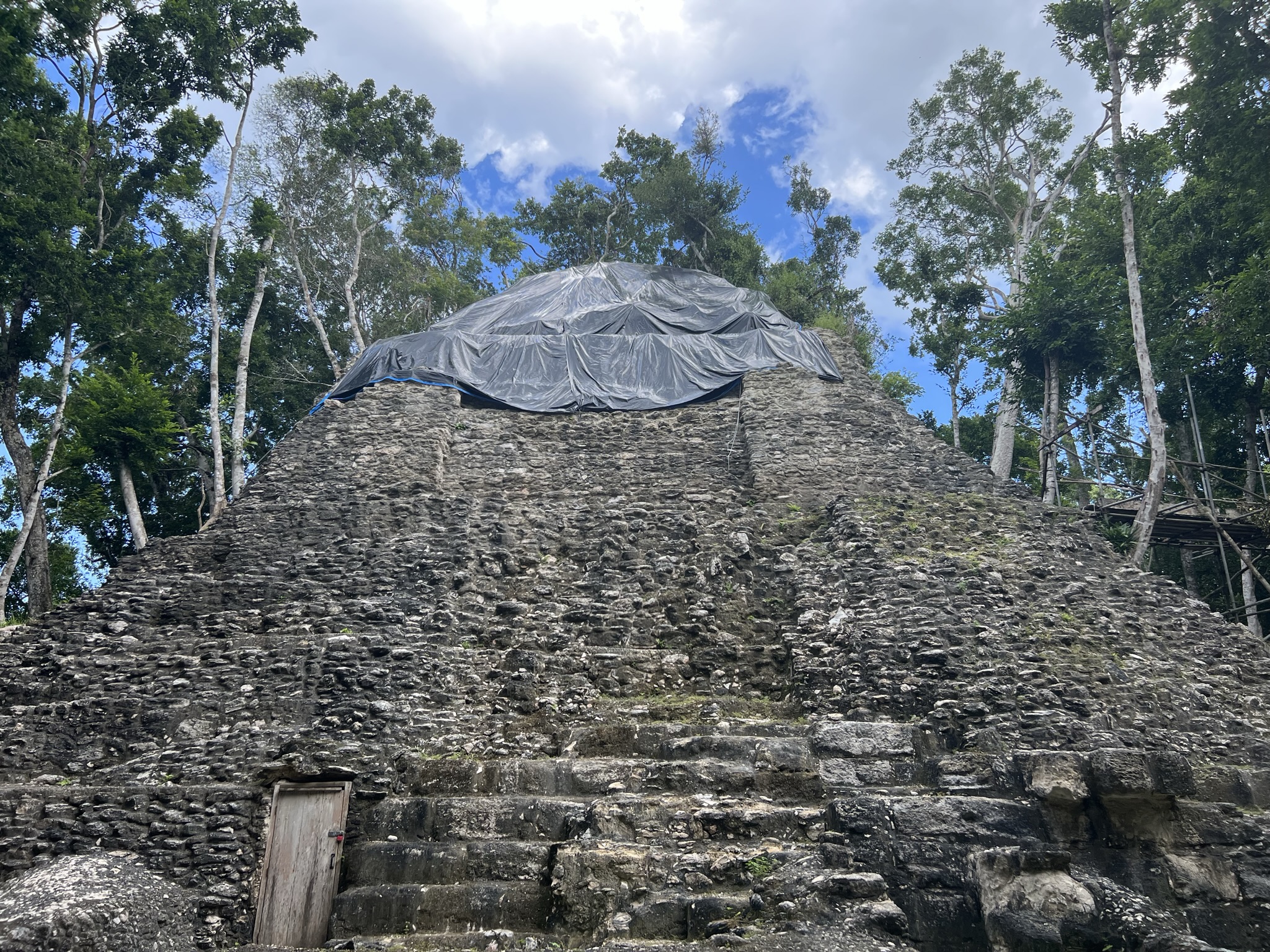
We started off at the West Group, whose buildings surround the Great Plaza – with the pyramid of El Tigre to the west, the Jaguar Paw Temple and the Great Central Acropolis to the south, the Chicharra Complex to the east, and finally, the León Complex to the north. Surrounding these are other smaller complexes and structures.
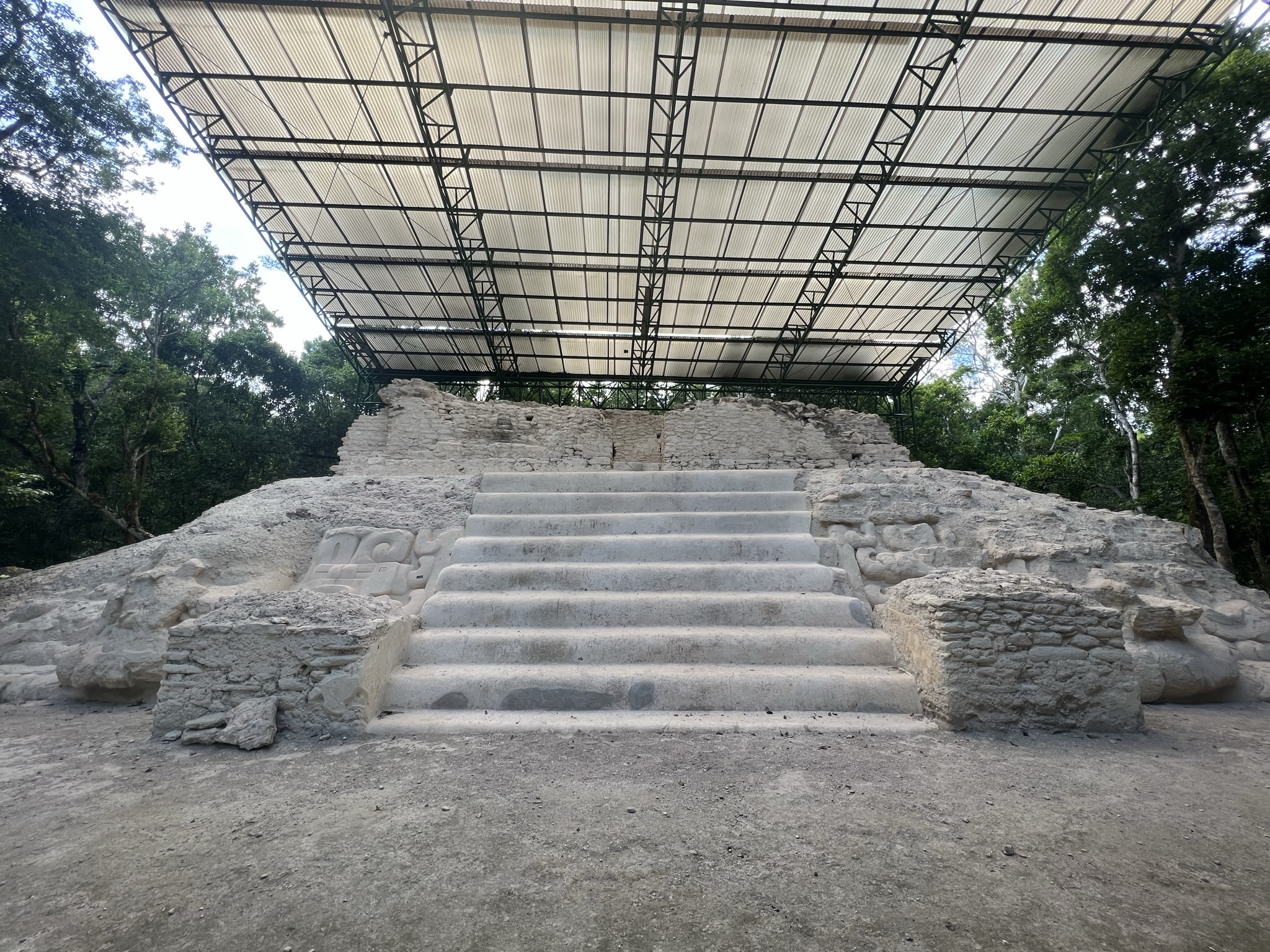
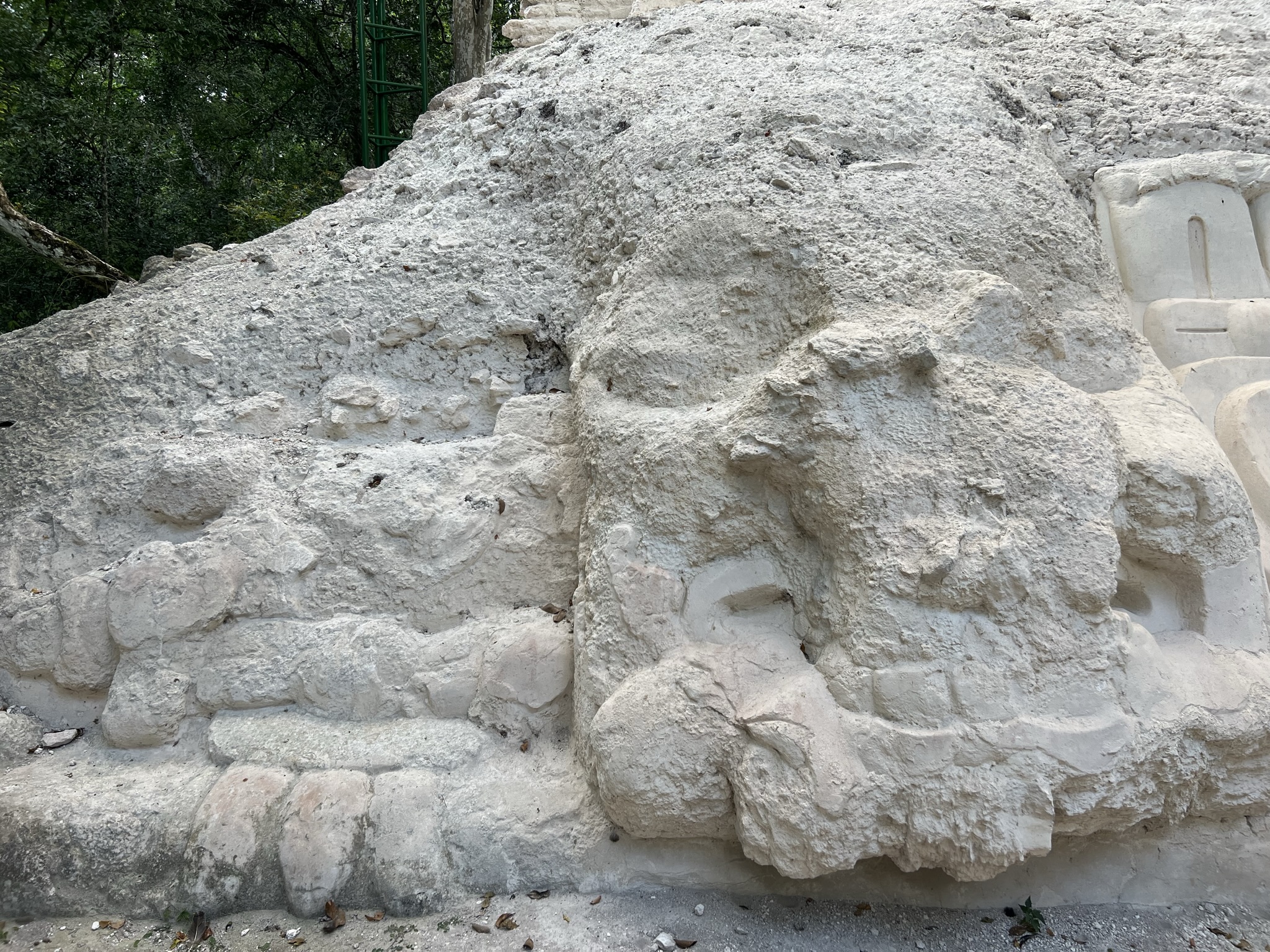
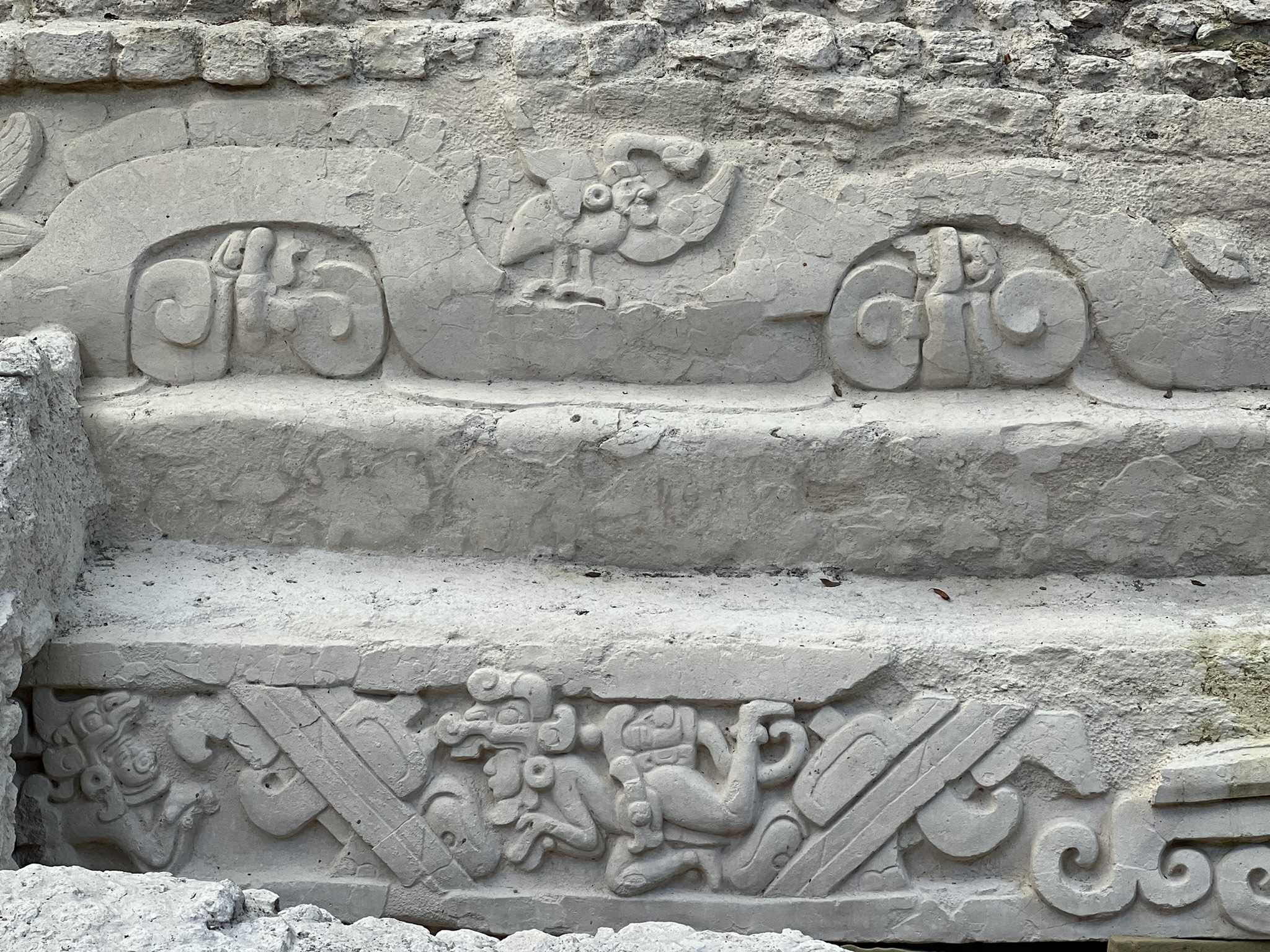
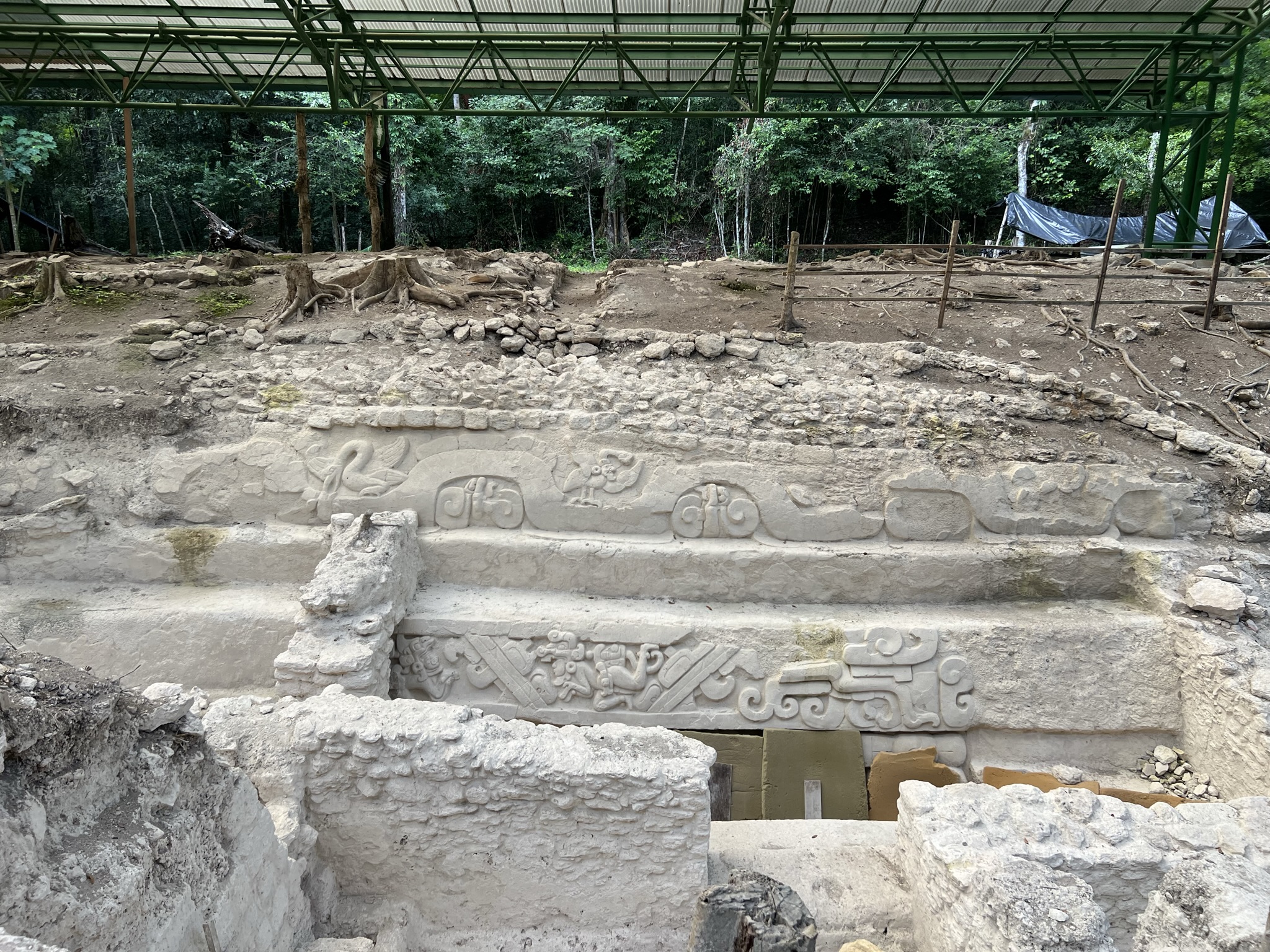
Our first stop was the Jaguar Paw Temple – a triadic structure with a central building and two others on the sides, featuring stucco reliefs of a jaguar paw and masks at its foundation. Then, we headed to the Great Central Acropolis – a complex with a large central building composed of several construction layers built by subsequent rulers, and two others flanking its sides. Here, a stucco relief of the Hero Twins – Hunahpu and Xbalanque – retrieving the head of their dead father from the underworld can be found. On a lower level, there’s also a frieze depicting a serpent head, which might possibly indicate a relationship with the great kingdom of Calakmul.
As we wandered through the site, I took great care in trying to observe the finest of details, trying to take it all in. It felt like such a privilege to be able to lay my eyes on such ancient works of art and architecture!
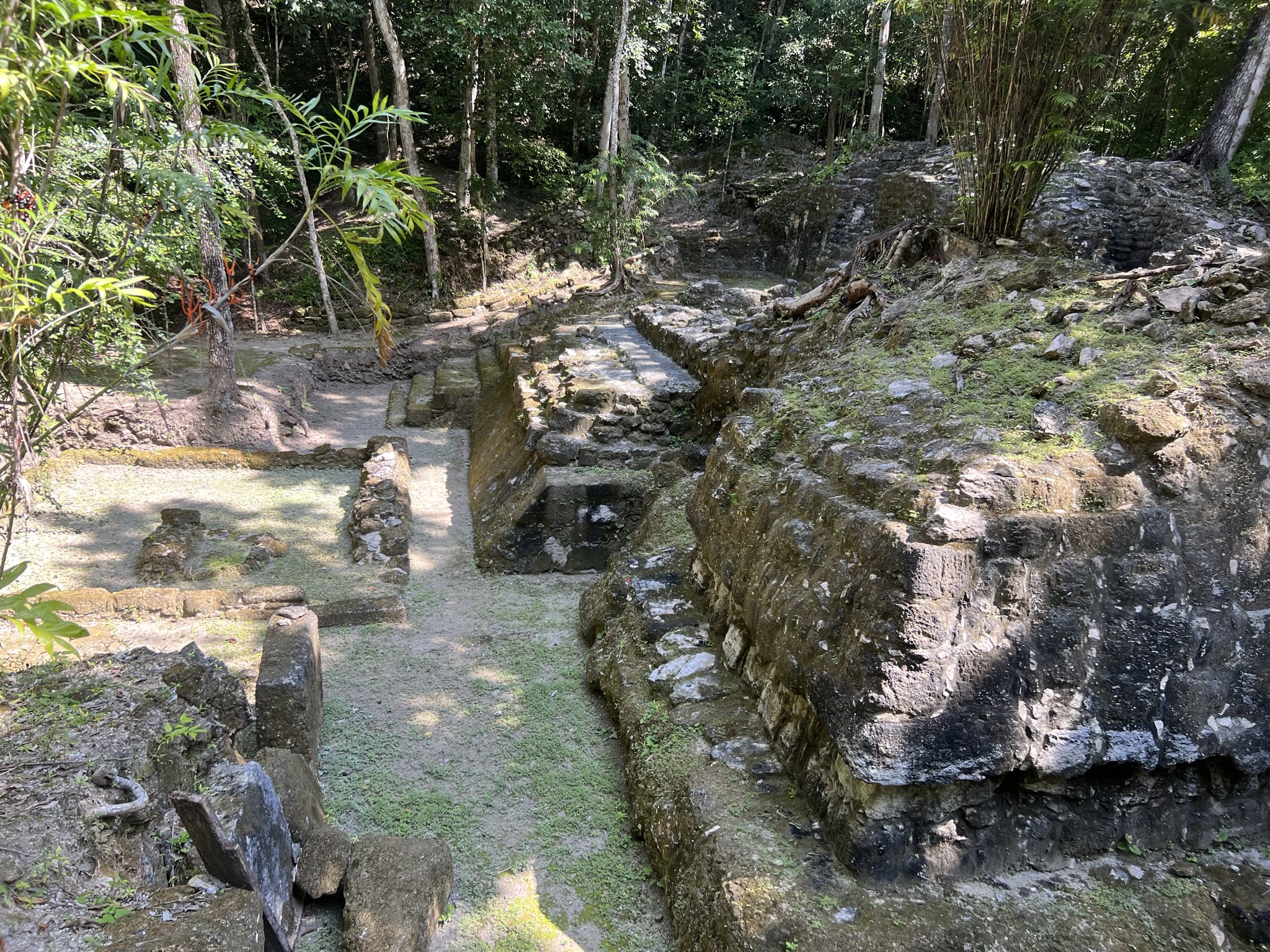
Surrounding the Acropolis is also a vast residential area. To cater for such a huge population, one would assume that the land was extremely fertile and produced a massive yield of crops. Well, one would be mistaken. Turns out, the soil in the surrounding region was quite arid, and it was thanks to the Mayans themselves that this all changed. They would gather tons of mud from the swamps near the distant rivers, lay it on agricultural terraces, add lime and voilà – fertile soil!
While this managed to keep the city thriving for hundreds of years, the depletion of mud from the rivers also resulted in increased water run-off, which ultimately led to a decrease in the region’s water storage capacity. You’d think this would stop them, but the Acropolis also contains a sophisticated water catchment system, complete with canals and pools that provided water to the entire city.
At the Acropolis, we also encountered a few small tombs – ones that would have easily accommodated the bodies of Mayans, who were, on average, around 1.6 metres tall. This fact led us to ask Luis how on earth they managed to carry such huge stones and build such massive structures despite their modest stature. While it is thought that they did so manually via labour-intensive methods or with wooden rollers, some archaeologists speculate that Mayans might have domesticated tapirs to help carry large stones – though this theory isn’t widely accepted.
Returning to the tombs, the remains were often buried with offerings such as pots and jewellery, meant to accompany them into the underworld – though most of these have since been looted.
From there, we proceeded to the plaza where three stelae can be found. One of these shows an eagle with a serpent in its mouth, which, according to Luis, served as a mark of victory by the ancient civilization of Teotihuacan after they won a war against the Mayans of El Mirador. Further evidence supporting this is a second stela showing Tlaloc, as well as the fact that obsidian spear tips found at the site coincide with those used by the warriors of Teotihuacan and their allies in Tikal. Archaeologists believe that the highland Mexicans laid siege to the city, trapping the Mayans there before one final, bloody battle which they won.
Fierce opponents of Teotihuacan and Tikal were the people of Calakmul, who were believed to be allies of El Mirador, using their resources to aid their fights and to improve the city. Having been to both Teotihuacan and Tikal, I found it hard to choose who to root for.
On the north side is the León complex, featuring yet another large pyramid – this one aligned to the four directions of the universe. It was used as an observatory, with the four days corresponding to the sun’s solstices and equinoxes being important for the Mayans. During these occasions, Luis told us, a shaman comes to the complex to hold a ritual, usually clad in traditional costumes and performing a special dance dedicated to the gods.
Then we moved further north to explore the Cascabel group – the oldest buildings at the site. On one of its pyramids sits a plate with a hole at its centre; a sign used by the Mayans to indicate that the temple was no longer in use – probably after La Danta had been built. Here, a vase featuring seventeen governors was also found; however, their remains are still undiscovered to this day.
The East Group
Having spent the entire morning roaming about, we headed back to camp for lunch and a siesta. Fully refreshed and ready to explore some more, we then made our way to the East Group, where the pyramid of La Danta stands.
While getting to the city of El Mirador was the primary goal for most of us, it had been a photo of the pyramid of La Danta that had drawn me to do this trek in the first place. And so, you can imagine how I felt before approaching the fabled pyramid. This was it. This was my goal. It had been my goal ever since I first laid eyes on it a few months back. And finally, I was there!
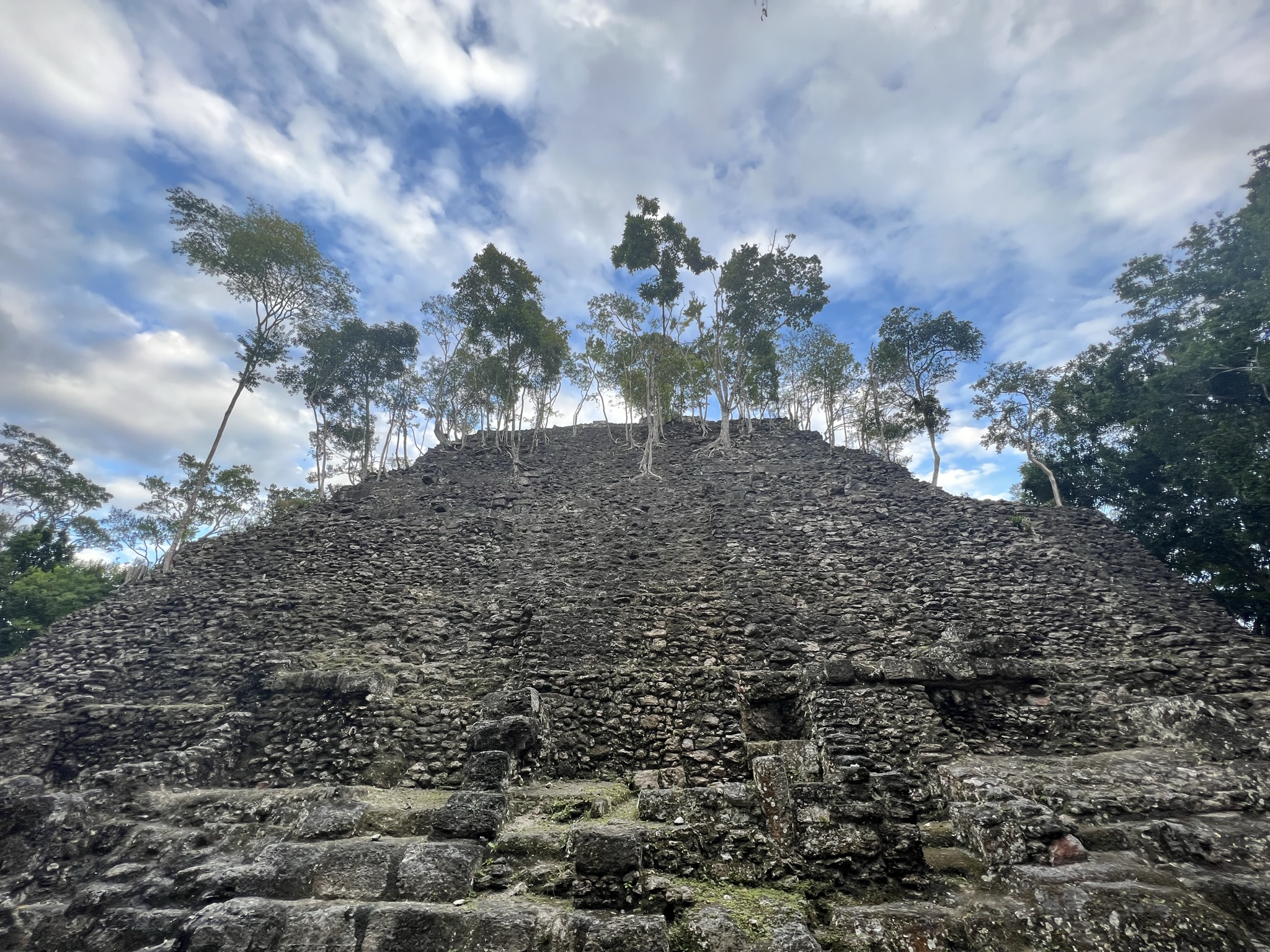
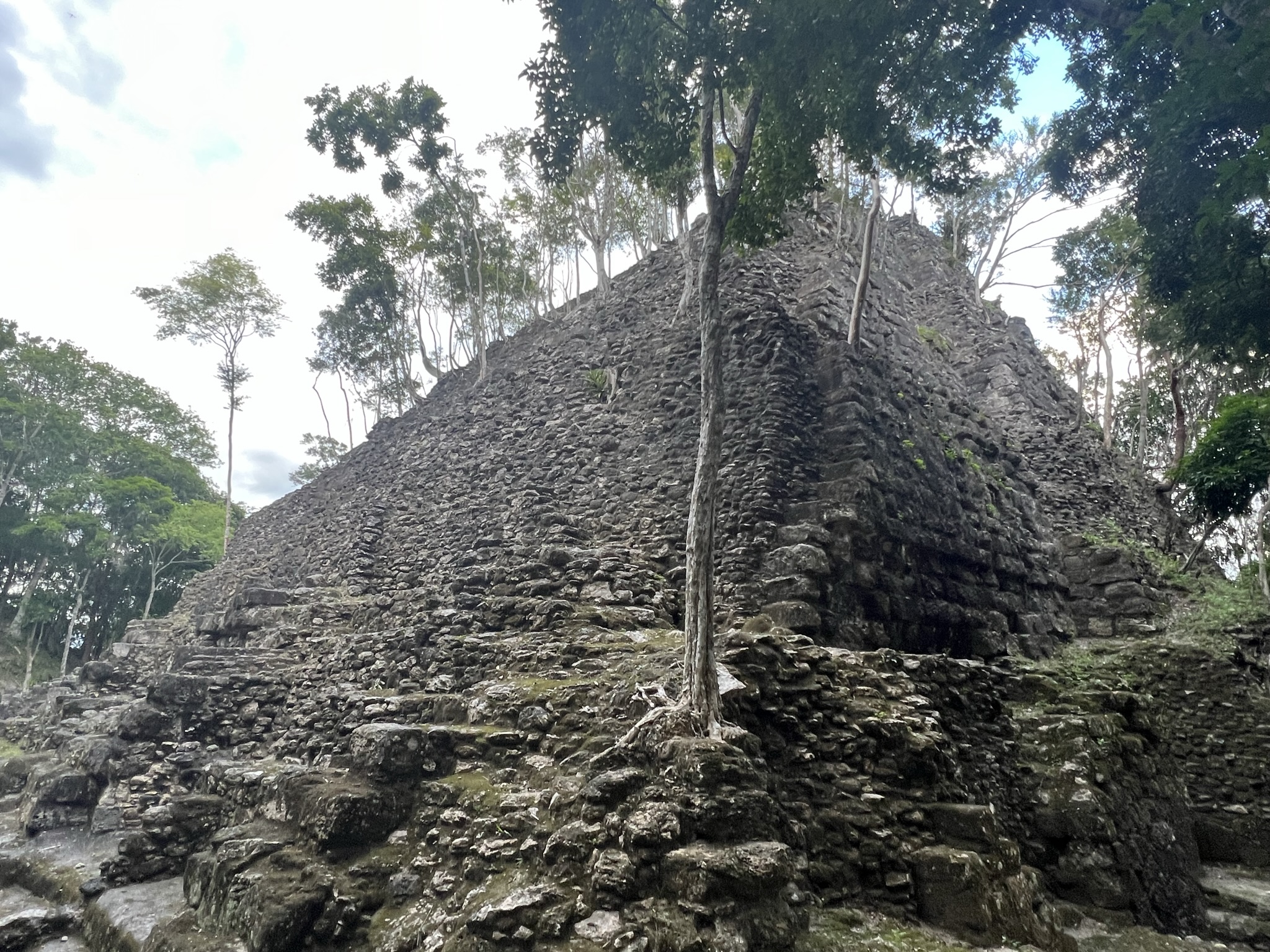
Upon getting to the East Group, we encountered a huge, raised platform. Over this, we could appreciate a plaza flanked by several triadic structures on all sides. The most notable of these is the pyramid of La Danta, which means ‘tapir’ in the Mayan language. This triadic structure is the largest ever built by the Mayans, standing 72 metres tall – its first layer alone covering the equivalent of seventeen football fields! Given its size, you can easily imagine the economic, political, and social importance of such an imposing temple. Climbing it was no walk in the park, but fuelled by the momentum we had gathered, we practically ran to the summit.
An Ancient Sunset
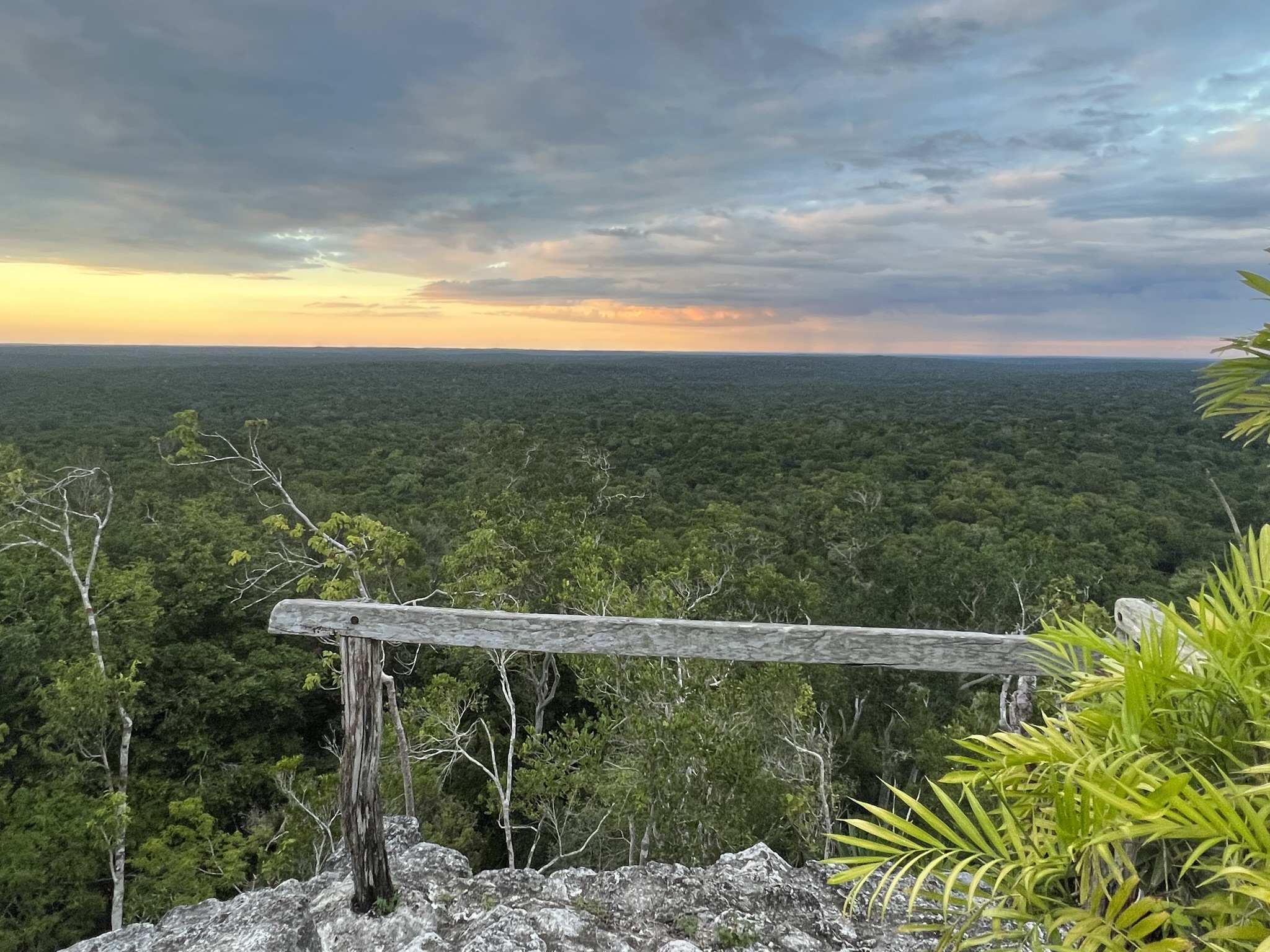
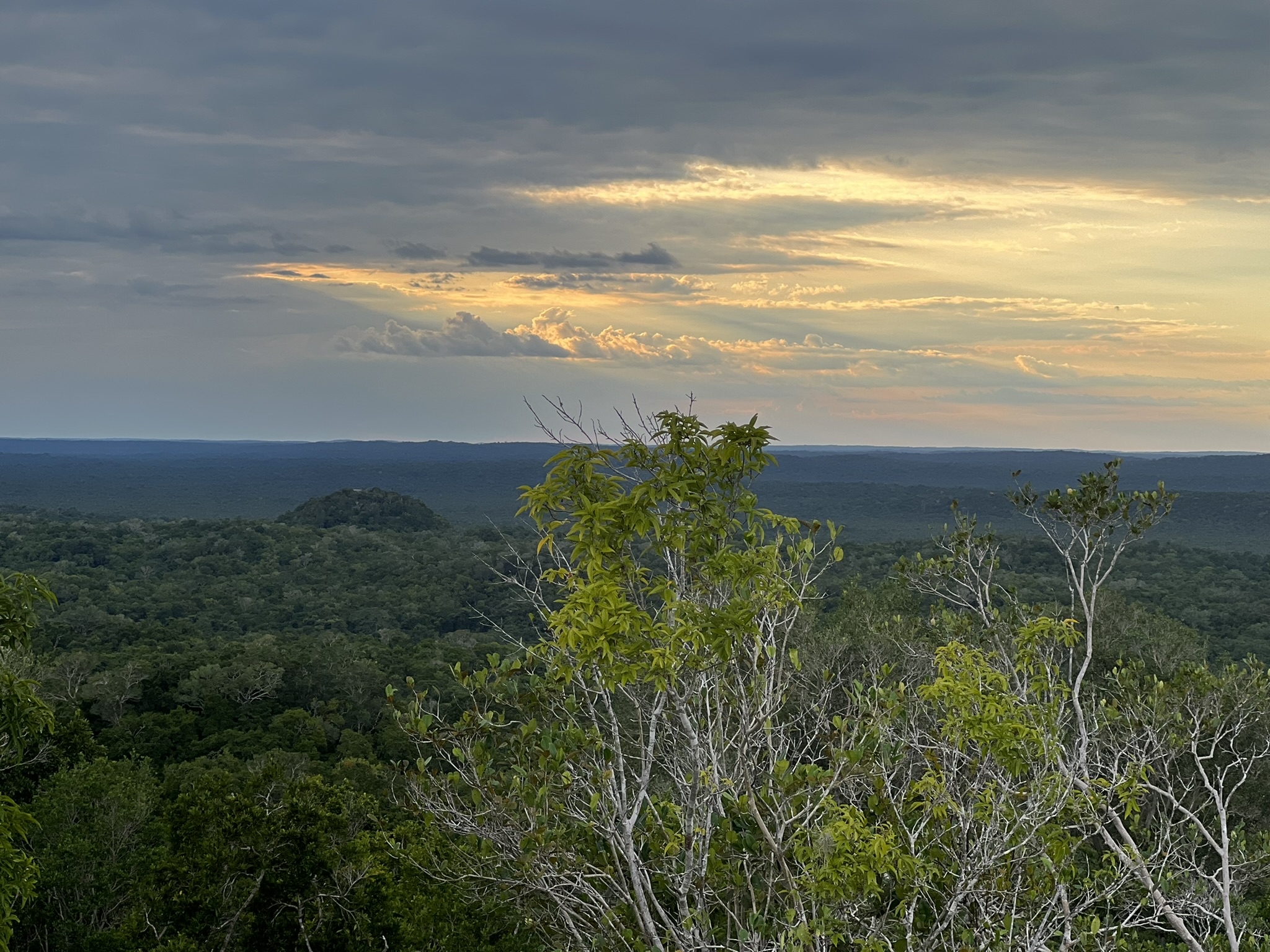
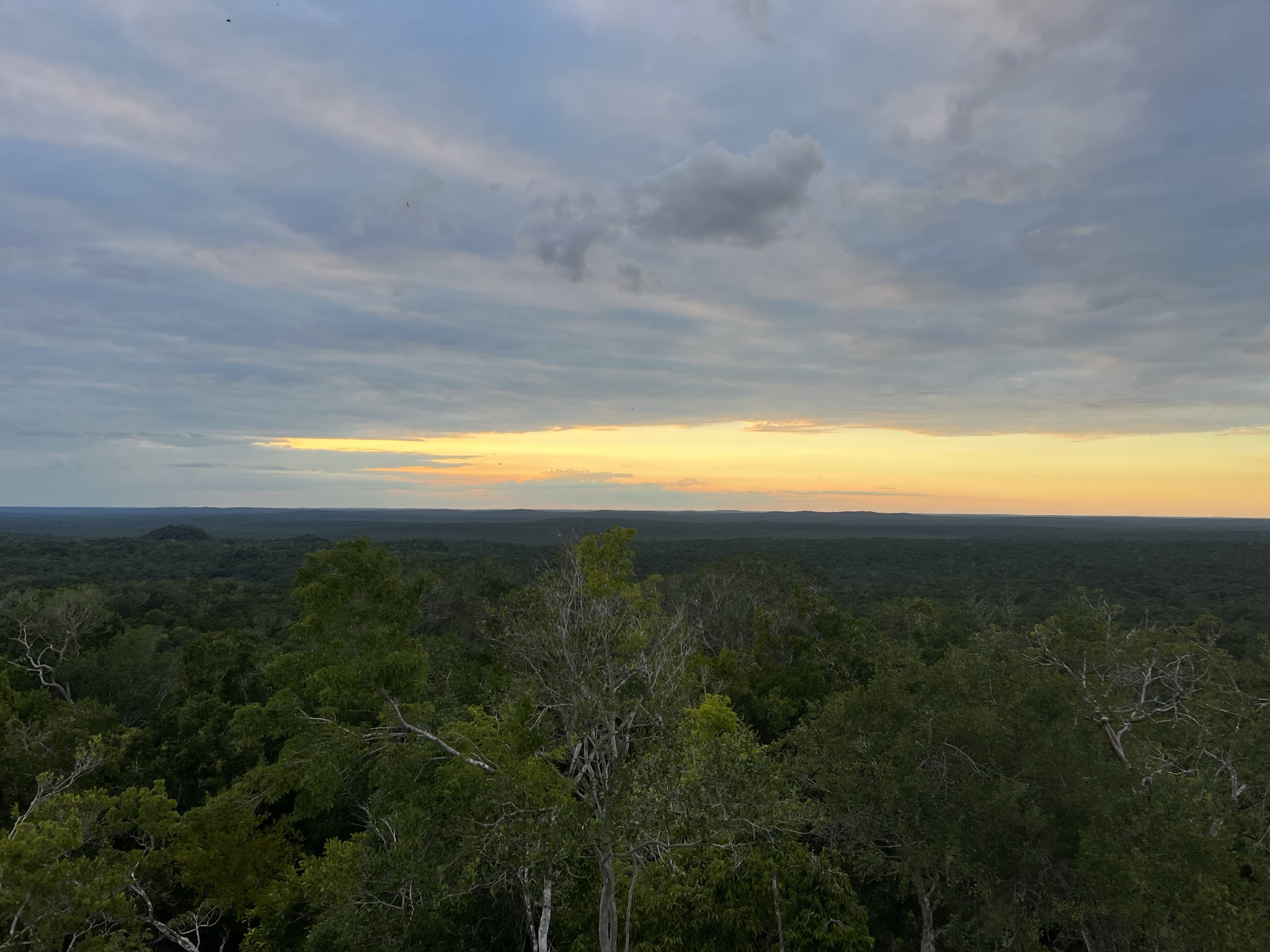
Once at the top, we were met with a spectacular view that left us speechless. The jungle spread far and wide beneath us, with the pyramids of Nakbé, El Tintal, and El Tigre disturbing the uniformity of the green sea.
It was very reminiscent of the views we had seen over the previous days, but this felt different. For starters, it was from a higher vantage point. But what truly made it feel different was the fact that this was our goal. This is what we had come for. And we had finally made it! There we were, all alone, yet in each other’s presence, in disbelief that we were actually standing there. It was pure joy and elation – satisfaction, peace, and calmness all rolled into one.
Here, we all took the opportunity to thank Luis for guiding us this far. He told us this is exactly why he does the job – he’d been coming here for the past 29 years, accompanying his dad, who worked as a tour guide just for fun. But back then, the walk was way harder. The routes were all covered by jungle and most structures were still unexcavated, so they’d have to walk from camp to camp following either the chicleros or the chicle trees, which showed marks on their bark. Everything changed once Dr Richard Hansen, the archaeologist who excavated and studied most of the site, stepped in back in 2003.
When his work started gaining ground and the site became visited more often, the government began planning to introduce an eco-park with a tourist train. This, of course, would bring major changes – some good, some bad. Of note, he mentioned the deforestation that would take place to make way for the park, as well as funds being directed away from El Carmelita, since most guides would be made redundant and tourists would bring their own food and supplies.
Luis also mentioned he’s part of a cooperative where everyone involved in the trek – from guides to cooks – divides the money earned. The cooperative also provides members with additional jobs, like carpentry during low seasons when there are no tours, as well as benefits like healthcare and education for their kids! Quite bitterly, he added that when tours are booked by agencies outside the cooperative (like ours were), more than half the money spent goes to those agencies, whose main role is usually just providing transport from Flores to El Carmelita. Despite that, he concluded, he’s happy. Happy that he earns enough to support his family. Happy to be showing us around. Happy to walk in a place so close to his heart. Happy to keep discovering new things about it!
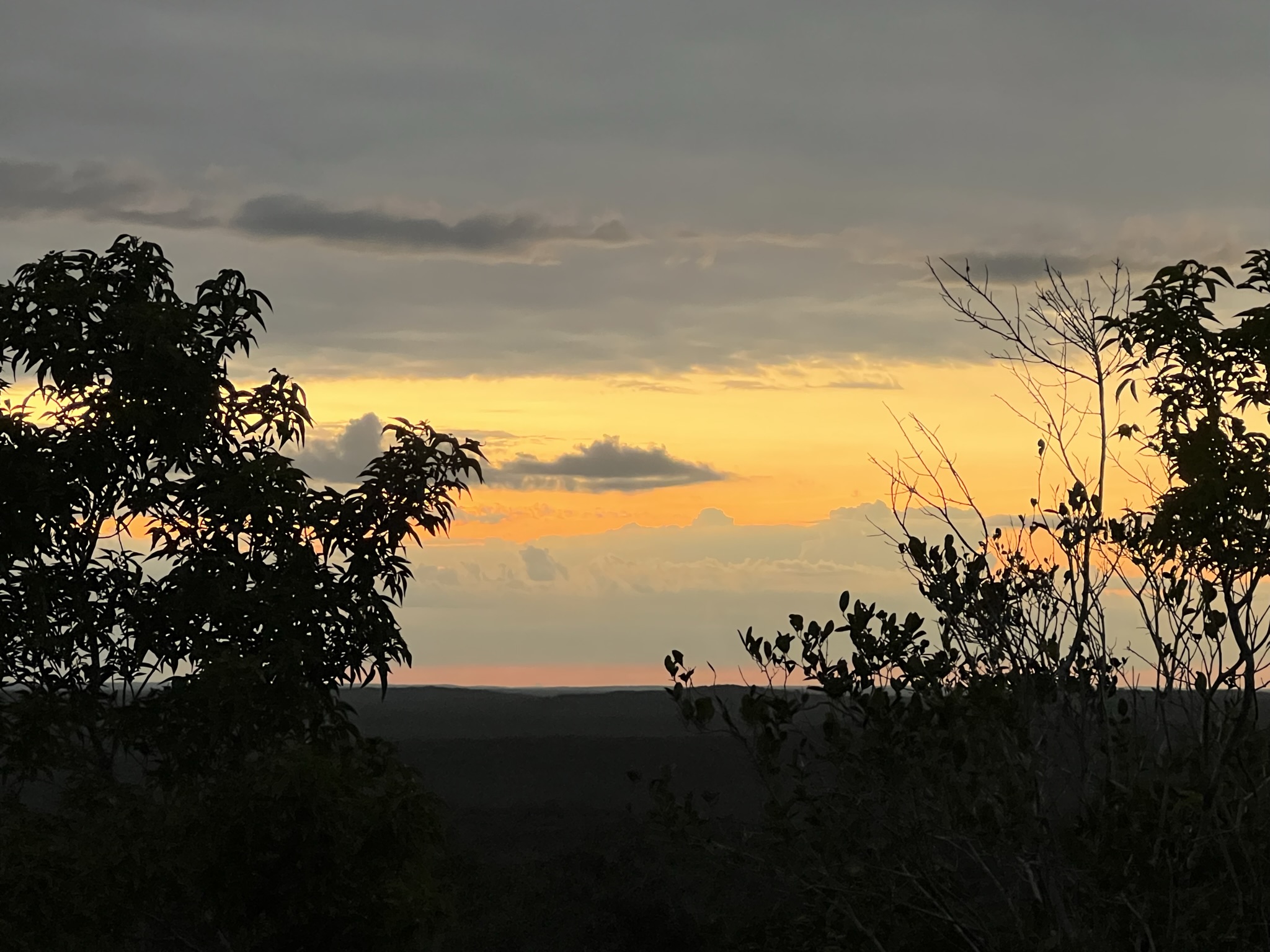
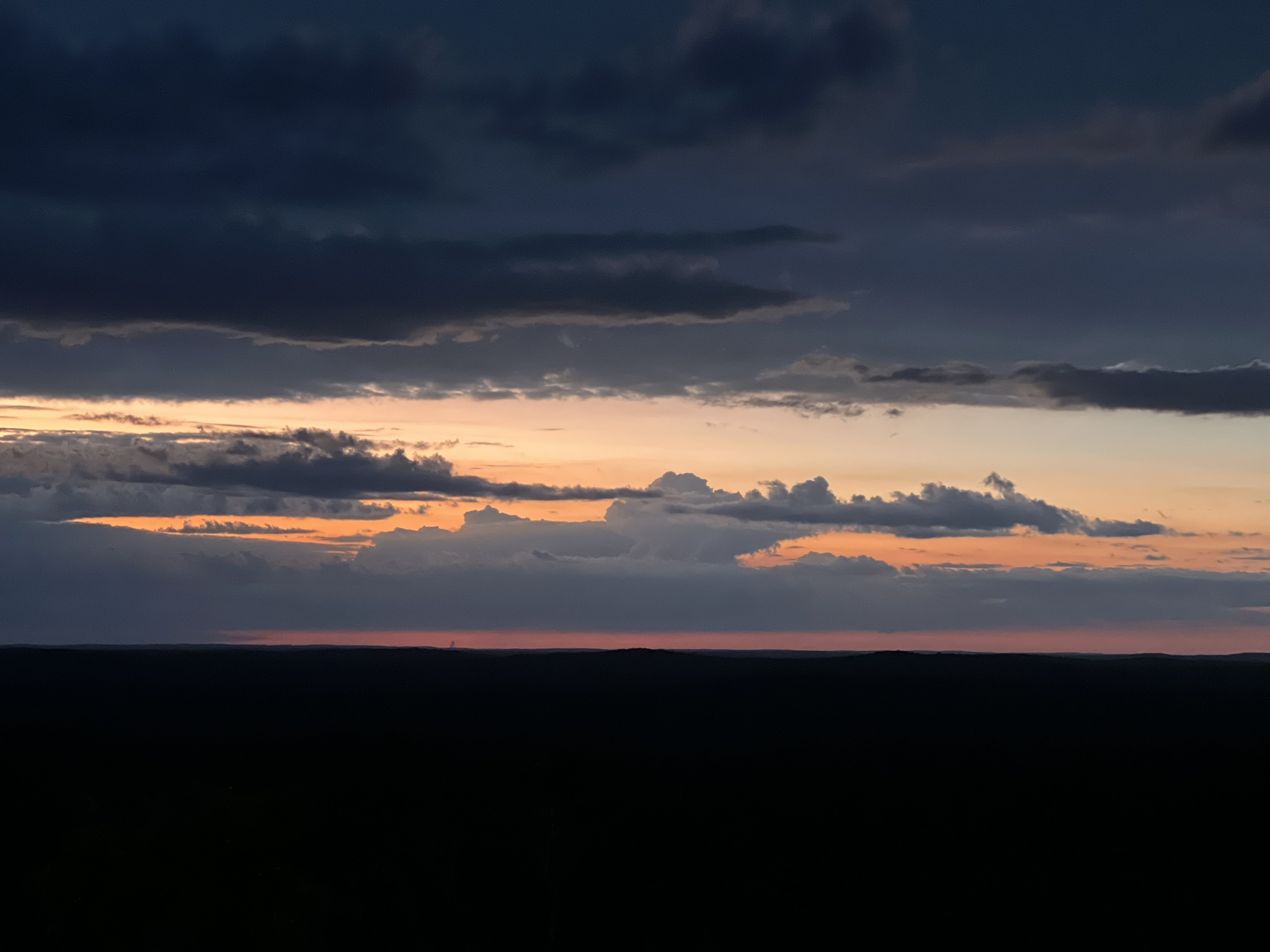
Hundreds of dragonflies zipped around us as we listened quietly, while an army of ants worked their way up a Sapodilla tree – the very same one we’ could see all the way back in El Tintal. Toucans and howler monkeys called from a distance, somehow bolstering the silence and tranquillity of the jungle. The sunset, washing away the blue sky to colour it anew with red and purple – an ephemeral moment that somehow transcends through time and lives strong within our memories. It was as if one side of the jungle went to sleep while another – a much louder, much darker – woke up. The moans of the monkeys, the chirping of the cicadas, the buzzing of the mosquitoes, the rustling of the leaves, the whooshing of the wind. In the dark, quite effortlessly, we felt one with the jungle.
Getting down didn’t feel demystifying. It was as if we still carried that aura of sanctity and peace with us. I still recall the deafening sound of cicadas that helped me tune out everything else – all the sounds and distractions. The glimmering fireflies lighting our way. The hundreds of thousands of stars suspended right above us. For the first time in years, I felt in touch with our planet once again. It was rejuvenating, freeing, liberating, energising.