El Mirador – Day 1: Mud and Mosquitoes
EL MIRADOR
Day 1: Mud & Mosquitoes
October 02, 2022
PART I
Oh. My. God. I couldn’t believe the time had finally come. Months before, when my itinerary was still in the works, I had stumbled upon one of the coolest things to do in Petén – and now it was finally time!
Among the many Mayan ruins in Guatemala, a few are hidden deep in the subtropical Mesoamerican rainforest – one of these is a city called El Mirador, or, as it is otherwise known, the Cradle of the Mayan Civilisation. The second I read about it, I knew I had to do it. It had been five years since my trek to the Ciudad Perdida in Colombia, and three years from that to Machu Picchu in Peru – probably the highlights of all my travels thus far.
And finally, the long-awaited day arrived. At the very inhumane hour of 5AM, the 4×4 carrying William (the driver) and three others pulled up in front of my homestay. Everyone promptly and giddily introduced themselves – Ethan and Hannah, a couple from Israel, and Natalie, a girl from the Netherlands. I thought I’d get some shut-eye along the way, but between Ethan’s constant yammering (boy, that guy talks), Hannah’s carsickness, and the overly bumpy ride, I didn’t even manage to get one Z in. Natalie seemed to be going through the same struggle, though she was too quiet and polite to complain.
It didn’t take long for me to forget all about my woes. Pretty soon, the sun started rising, revealing the until-then hidden beauty of our surroundings. By then, we had reached El Remate – the village bordering the north-eastern tip of Lake Petén Itzá – the sky all shades of purple and red reflecting in the lake.
Starting Line
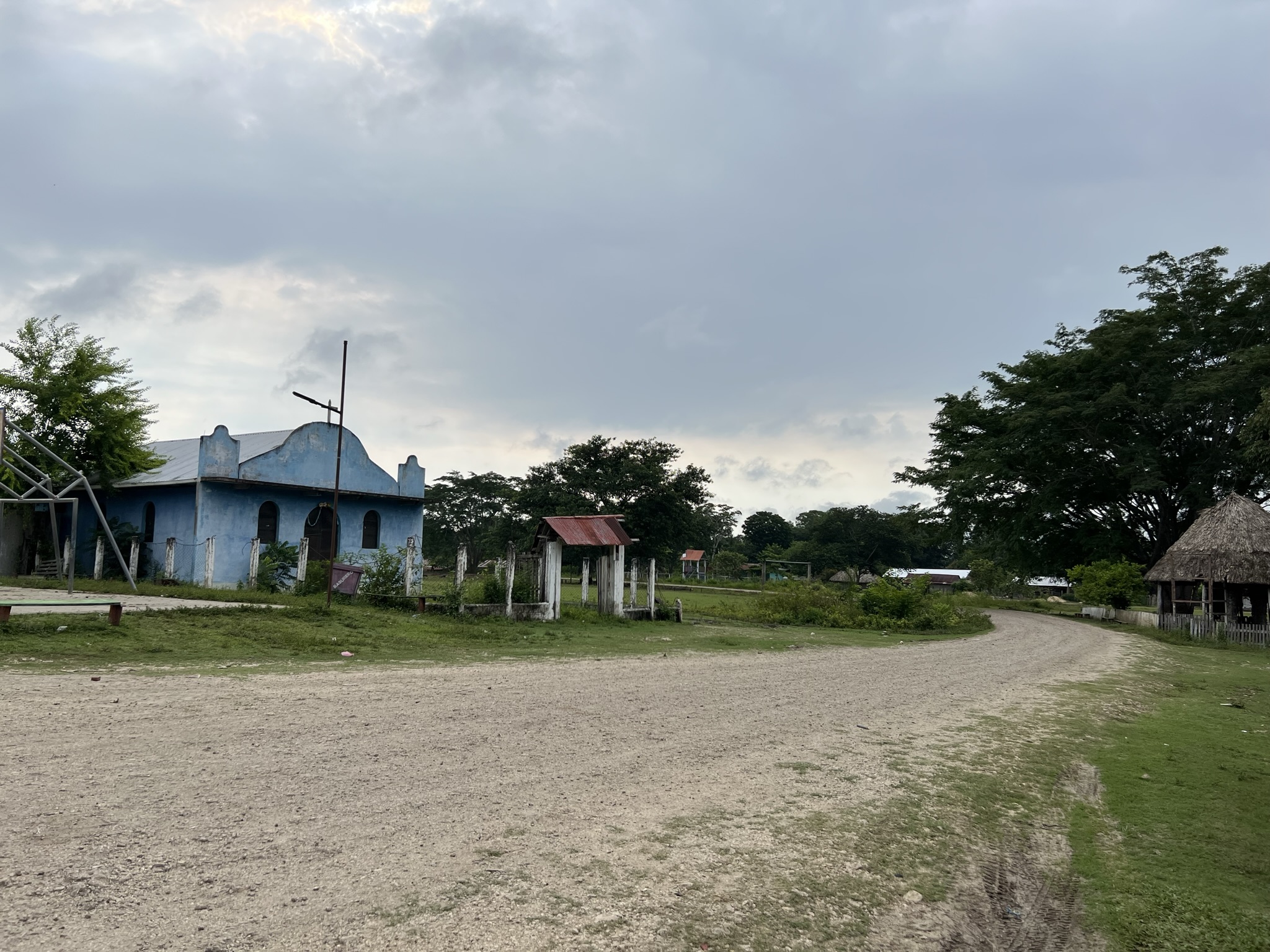
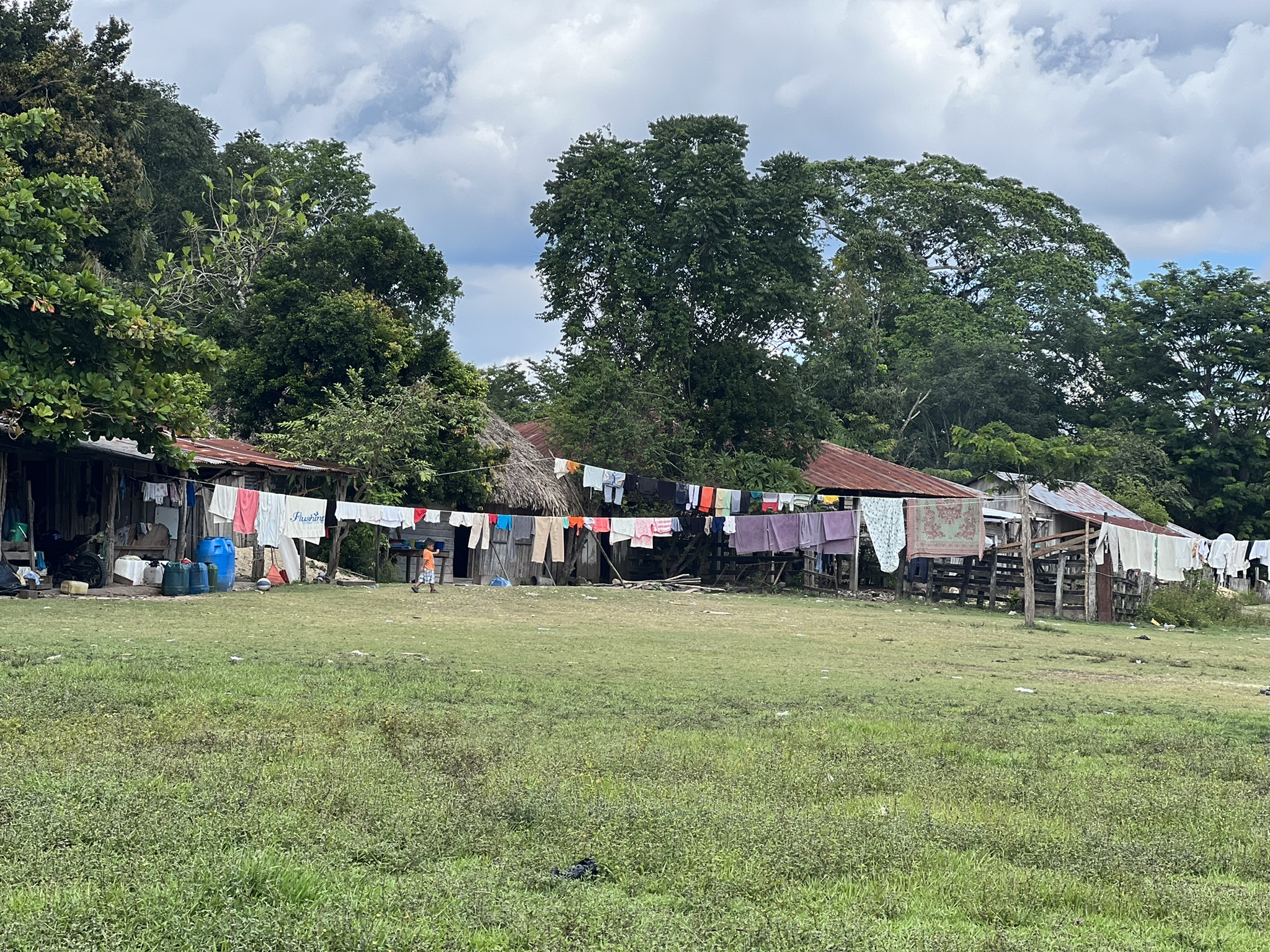
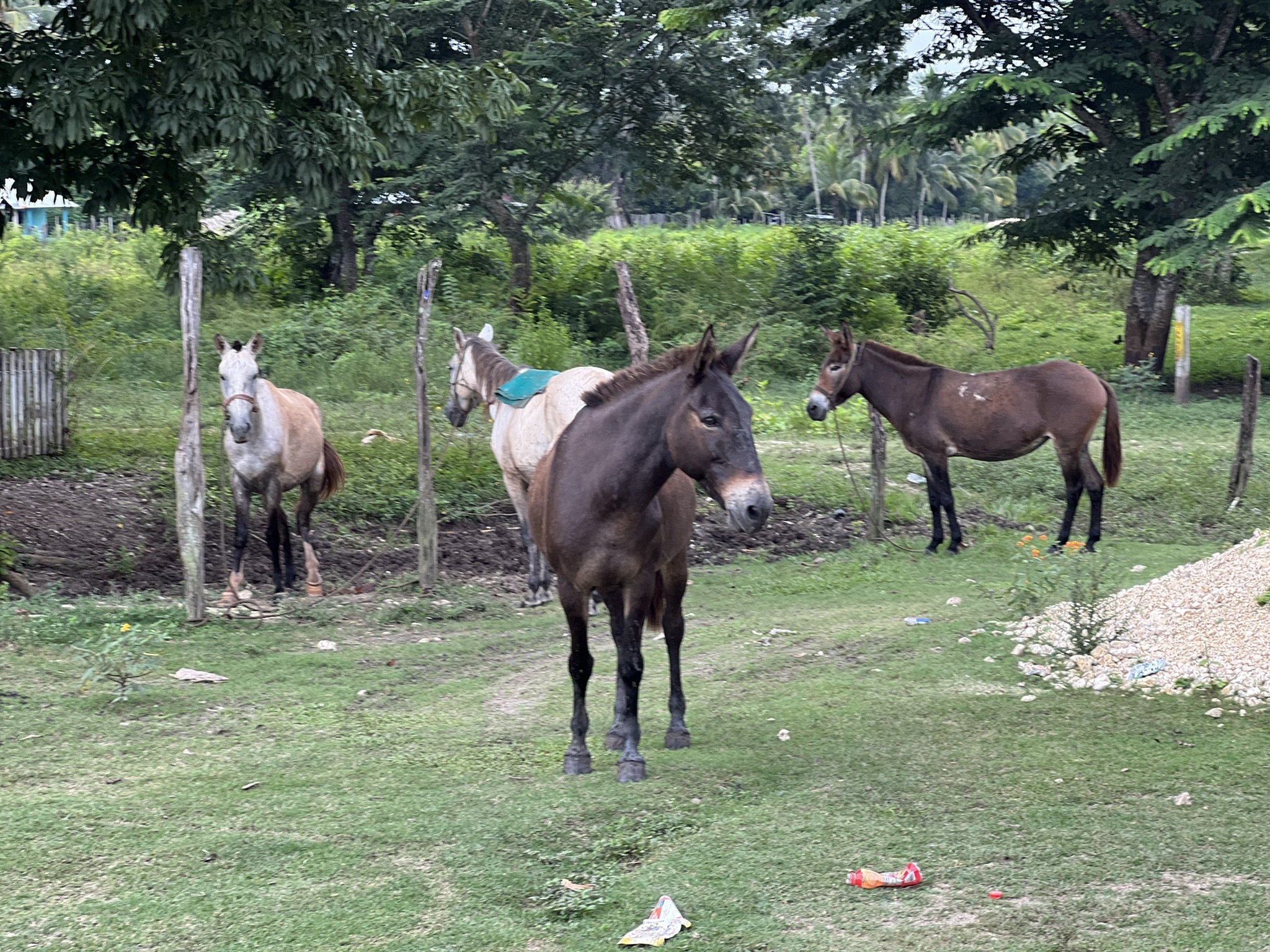
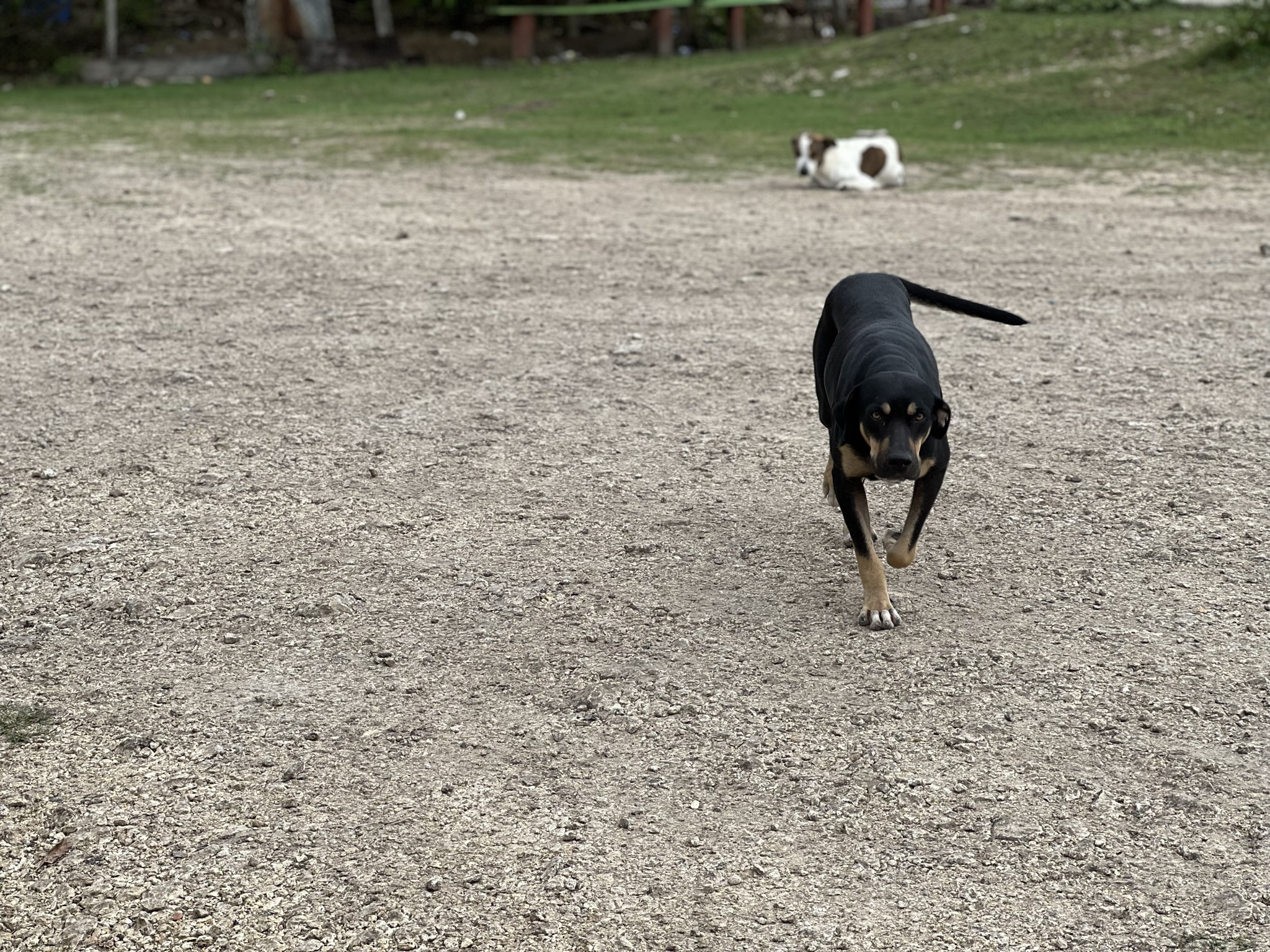
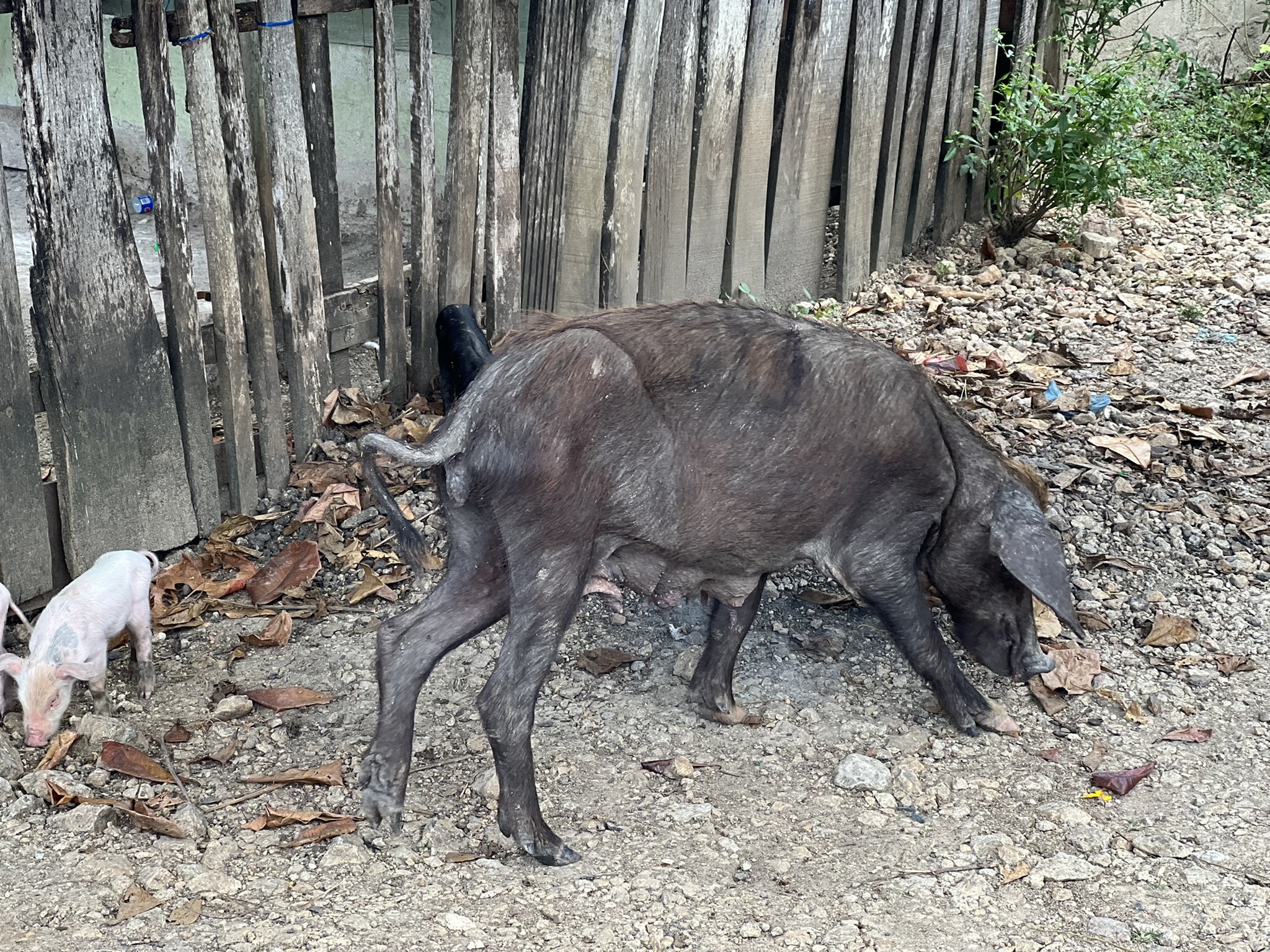
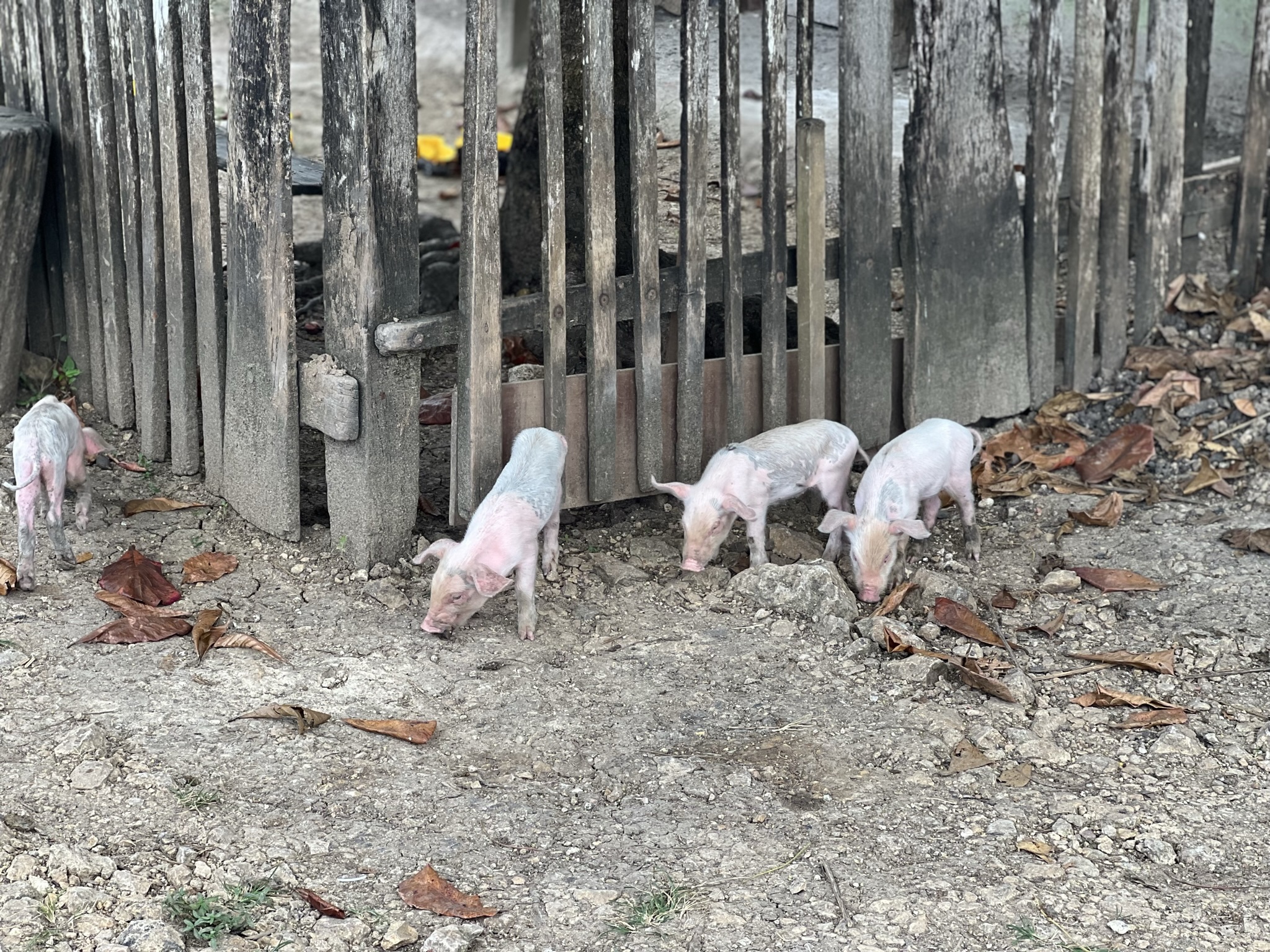
Two hours later, we arrived at the starting point of the trek – El Carmelita, a small rural village known for harvesting gum from trees. Chickens, pigs, and dogs dominated the scene, and the locals seemed to be enjoying the simplest of lives. Kids played in the middle of the road, while their parents went about their daily chores. Oh, and a couple of girls, surely younger than ten, were driving a motorbike like it was the most normal thing in the world.
It had me wondering about their parents. Is it criminal negligence, or are we just too spoiled? While common sense suggests the former, I’m inclined to say it’s the latter – having grown up in a family that took away my scooter after just one day, deeming it too risky. And yes, it was a Christmas present. They took away my Christmas present. On Boxing Day. I will never forgive them. Grr.
As soon as we arrived, the driver guided us to the office – a green-painted room covered in the scribbled signatures of previous trekkers. Ours would be up there in five days’ time! A map was also drawn on the wall, showing the course of the trek: 23 kilometres on the first day, followed by 27 kilometres on the second, a third day dedicated to exploring the ruins, and two more days to retrace our steps back to El Carmelita.
Waiting in the office were Lina and Manu – siblings from Guatemala who grew up in LA – together with Sol, their friend from Mexico. They had arrived the day before and spent the night in El Carmelita, savouring the relative comfort of rural life before delving into the jungle.
It was here that they all got their introduction to my blondeness, as I inquired where the country “EIVGLAVIO” was, having seen it written in the logbook we were made to sign. Turns out I had misread the horribly scribbled “ENGLAND” – and yeah, one can’t really peg that kind of mistake just on bad penmanship. Trying to self-extricate from the shame spiral that followed did serve as a good ice-breaker, though.
By the time we had had our breakfast, we already seemed to have clicked, despite everyone being half-asleep. Luis, the guide; Miguel, the assistant; and Doris, the cook, found us dozing at the table, surely expecting a better group. “¡Vamos!” Luis asserted, without any niceties – a man of few words, with ‘vamos’ being his favourite, as we’d come to learn. And with that, the adventure began.
The Deep Jungle
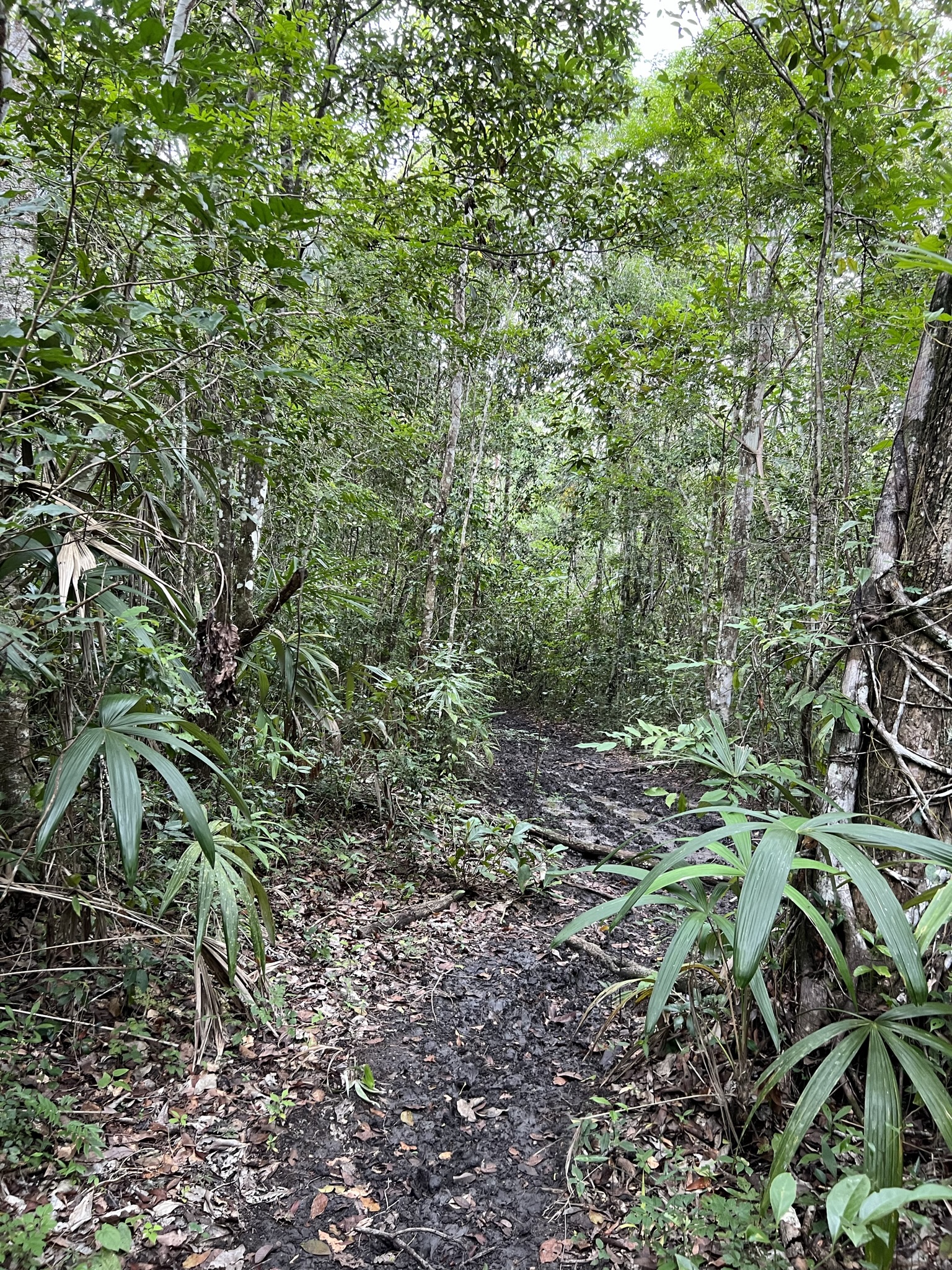
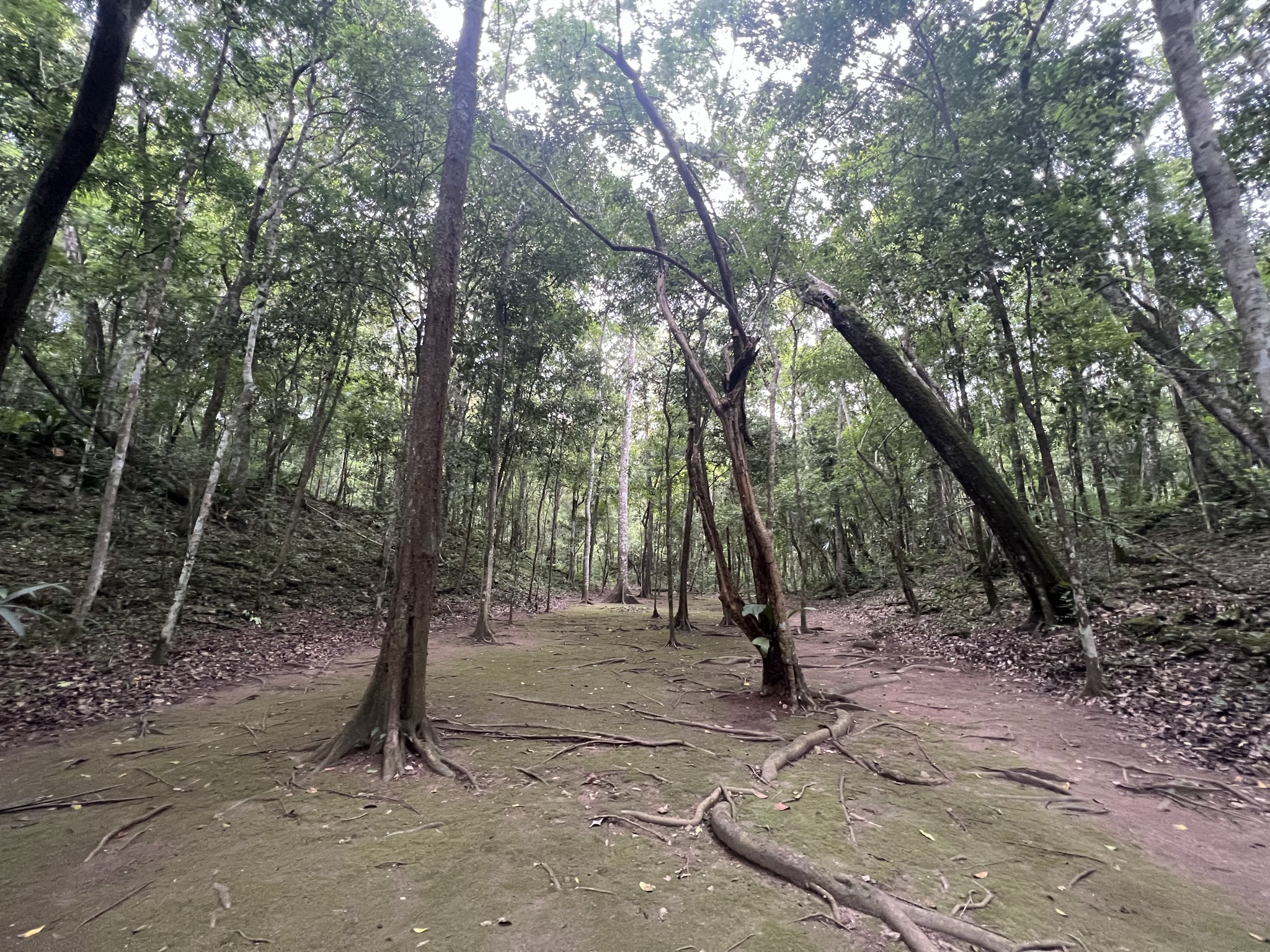
Right from the very start, I felt relieved. Luis immediately let us know that the trek wouldn’t have many uphills – or, as I like to call them, my natural enemy. It would be a pleasant, fast-paced hike through a multitude of trees, with our guide taking his time to explain each and every one of them.
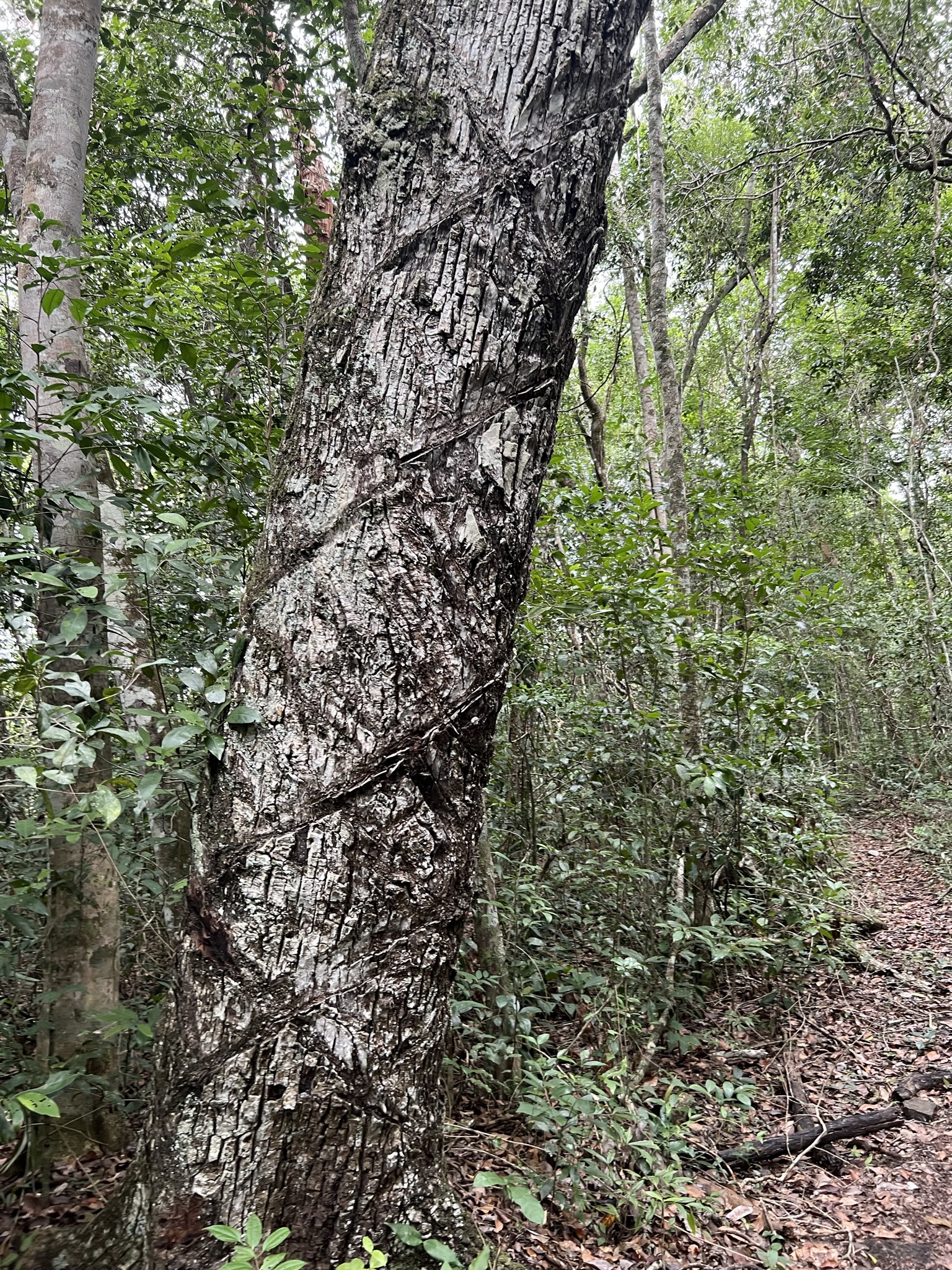
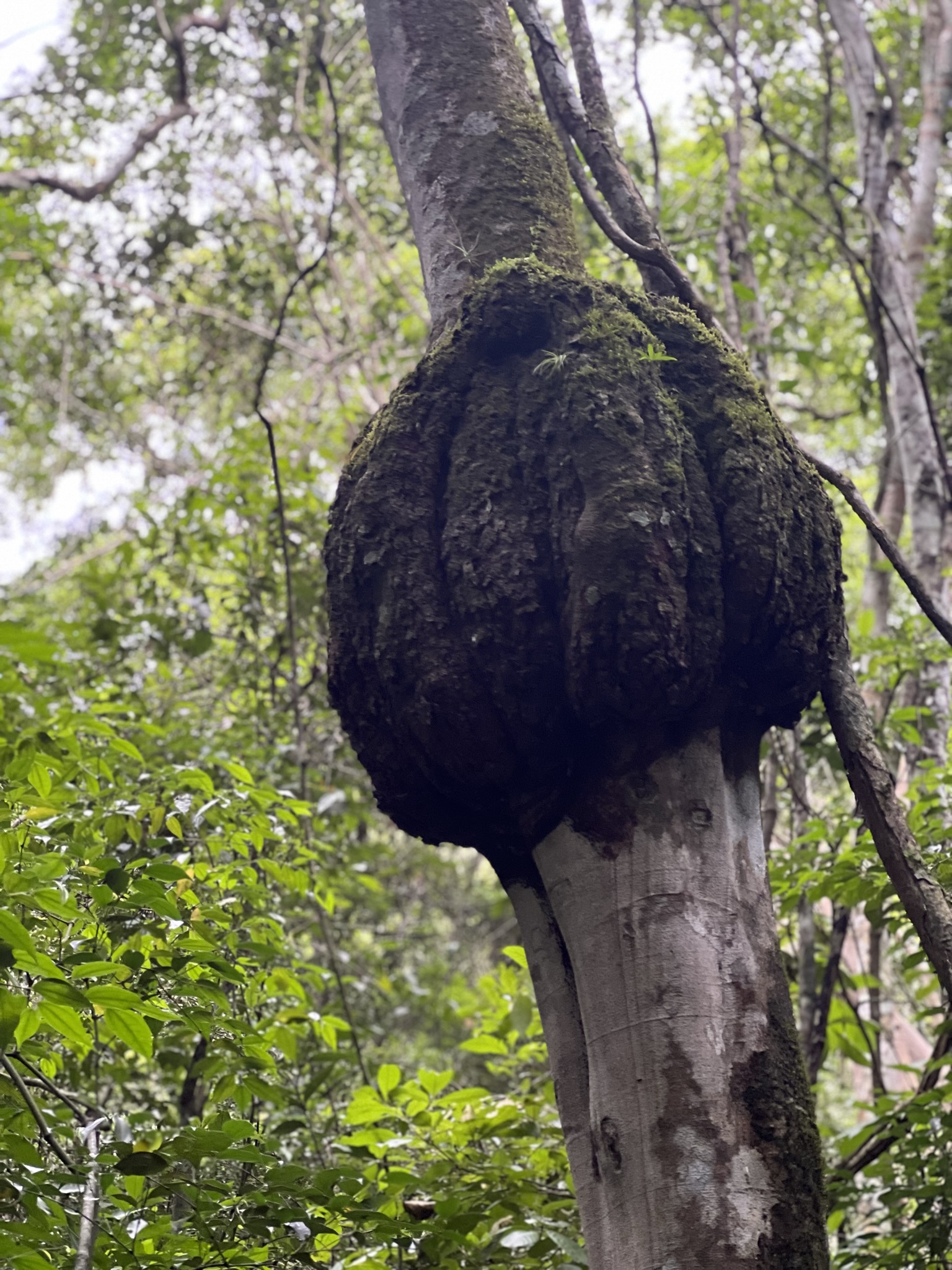
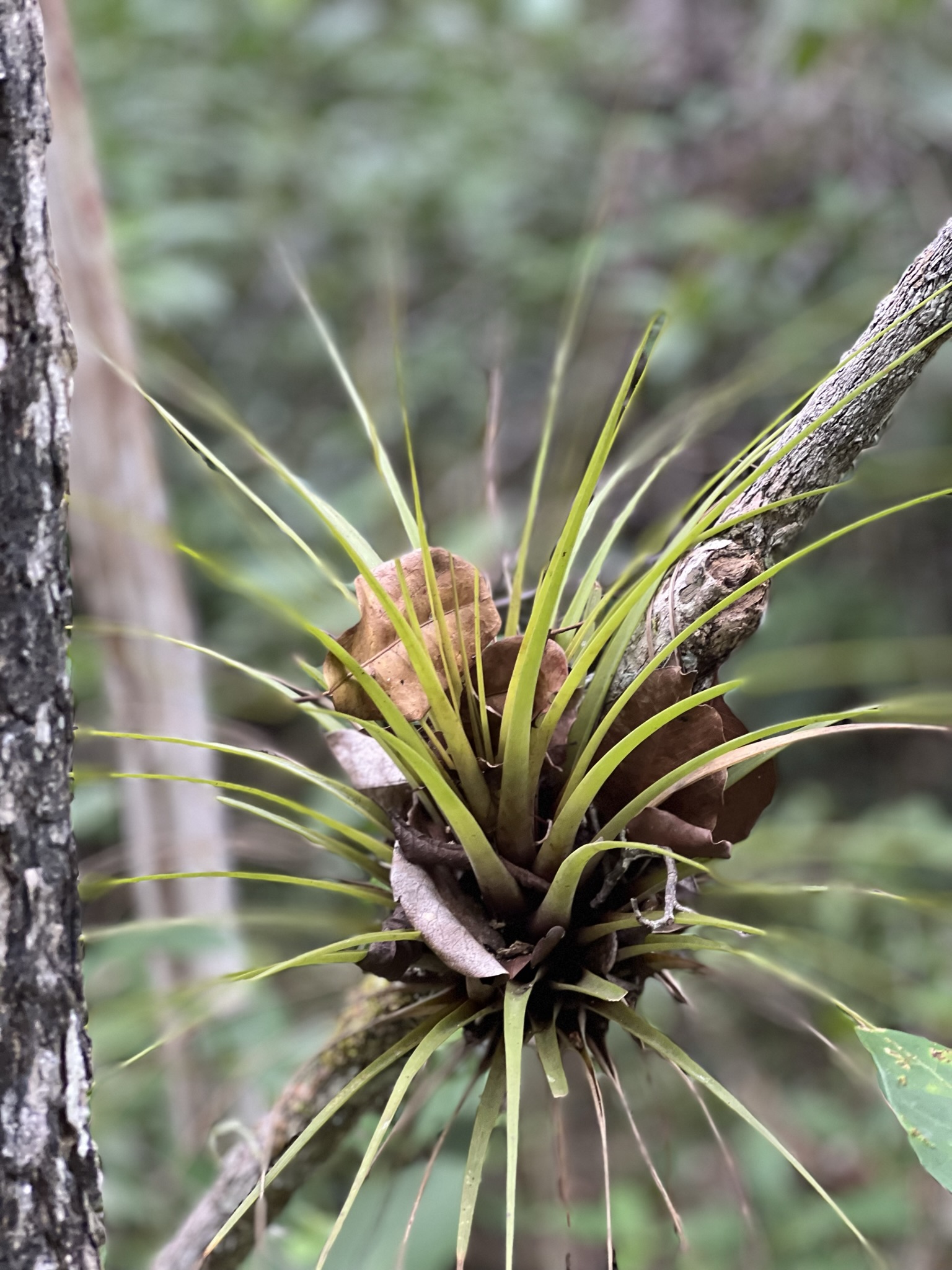
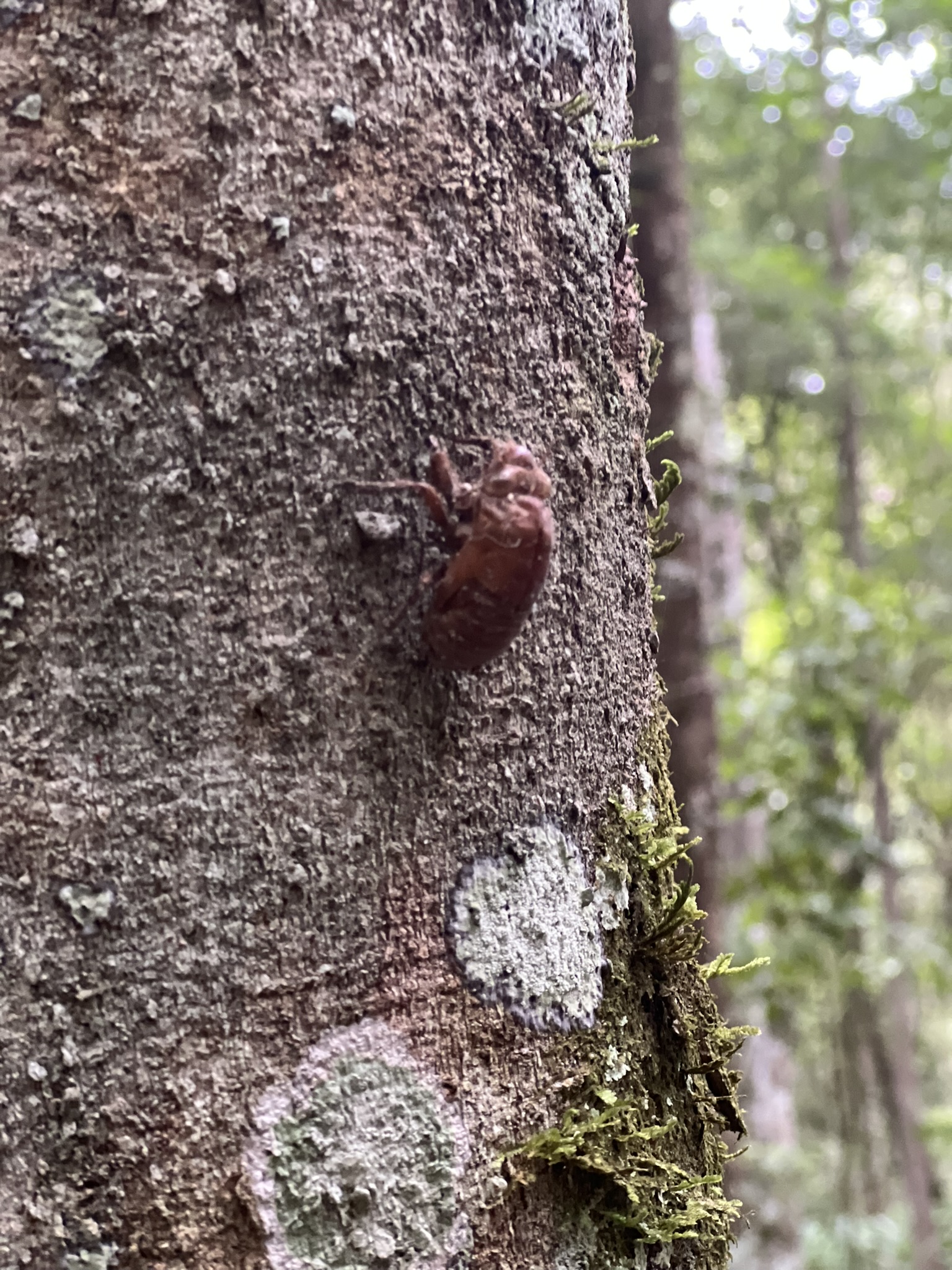
The sapodilla trees were easily identified by the slash marks on their bark, where chicleros extract sap to make chewing gum. Then there was the chechén tree, whose sap causes severe allergic reactions like rashes and itching – much like poison ivy, which, charmingly enough, can be found right next to it. Also growing nearby is the gumbo-limbo tree, or, as the locals call it, the “tourist tree” – its red, flaky bark resembling that of a sunburnt visitor under the scorching Guatemalan sun. Conveniently, the sap of the gumbo-limbo can be used as an antidote to the chechén tree. The two often grow side by side. Oh, and let’s not forget the Ramón breadnut tree, which can grow up to fifty metres tall!

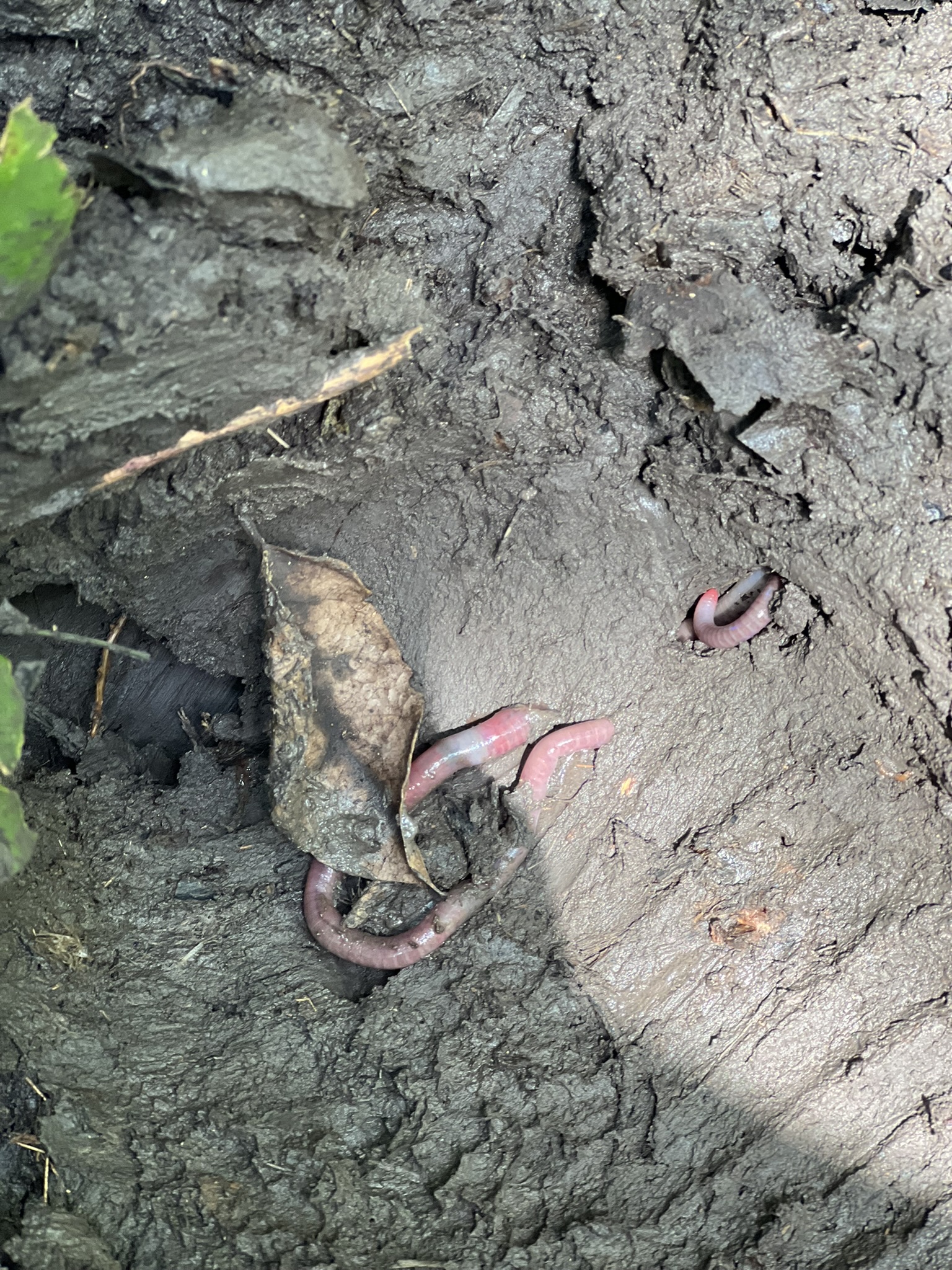
Of Mud and Mosquitoes...
It only took a few minutes of walking for us to forget all about the trees. Pretty soon, the flat, unproblematic ground gave way to large pools of water and long stretches of mud we’d have to cross. Now you see, normally I wouldn’t have a problem with this. But this time I did. I’d be on the road for another six months. Blister, my trusty hiking boots, would be in it with me for the long haul. We were in this together. But I’d have to throw it under the bus for this next part – or rather, under the mud. I had no idea how I’d be able to save it after putting it through such a predicament. No laundry service, no matter how expensive or grandiose, could ever restore it to its original splendour. Walking barefoot was not an option – the road was far too long and full of terrors, with many a sharp stone and murderous critter along the way.
The others carried on, embarking on this new journey, seemingly oblivious to their shoes’ demise. All resigned but still laundry-oriented, I proceeded to make my first step into the mud. A calculated one – using the footsteps of those who dared to brave the mud before me as a guide. One wrong step and my shoes would be as good as thrashed. I chose my path carefully. I sighed, closed my eyes, gulped, and put my foot forward – which steadily sank into the grey paste. RIP good ol’ Blister… Just like that, I knew I was screwed. I’d be spending the next five days walking in soggy, mud-caked boots. I’d go back to Flores with a useless chunk of earth. Blister – my companion, my kindred, my partner in crime – gone too soon. We had been through so much together!
I’m not one to exaggerate (okay, I’m definitely one to exaggerate) – but every single step felt like someone was driving a dagger deeper into my heart. But, much like an adulterous bastard who grows indifferent the more they cheat on their spouse, I felt less and less remorse with every step. I mean… I kinda had to. I couldn’t spend five days worrying about my boots! Plus, I wanted to enjoy the hike – which, by now, felt more like an obstacle course, the viscosity of the mud making it much harder to walk.
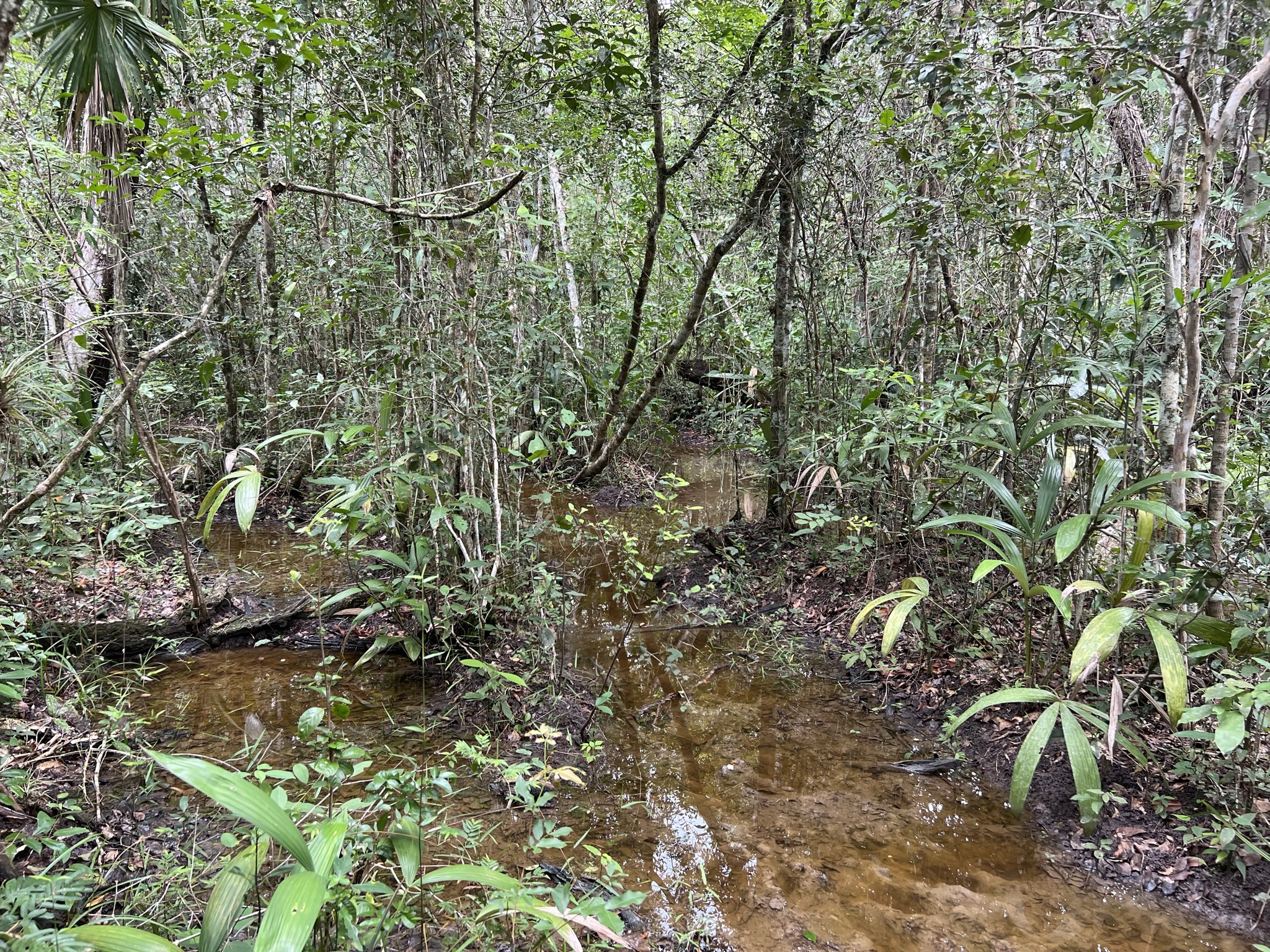
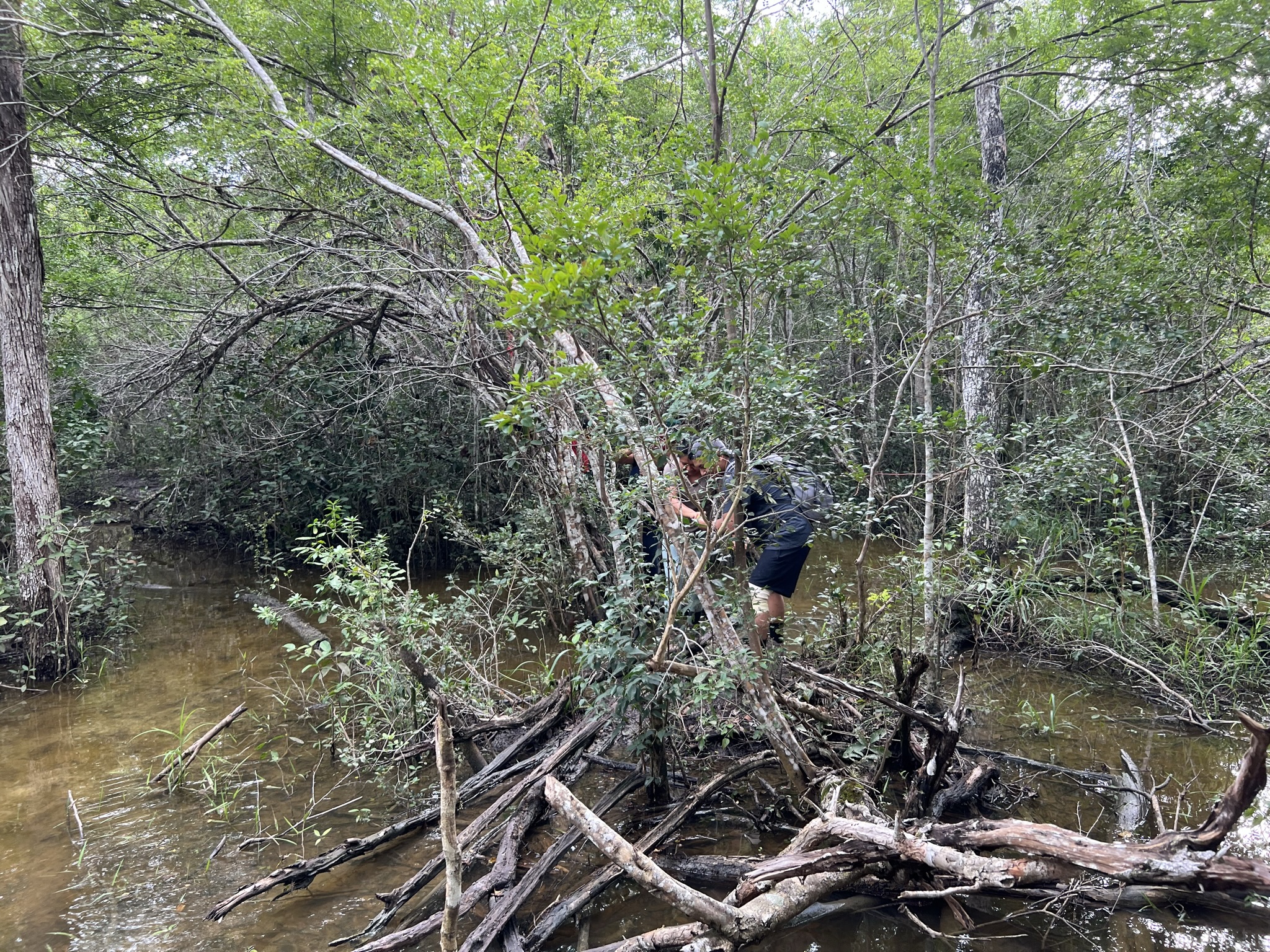
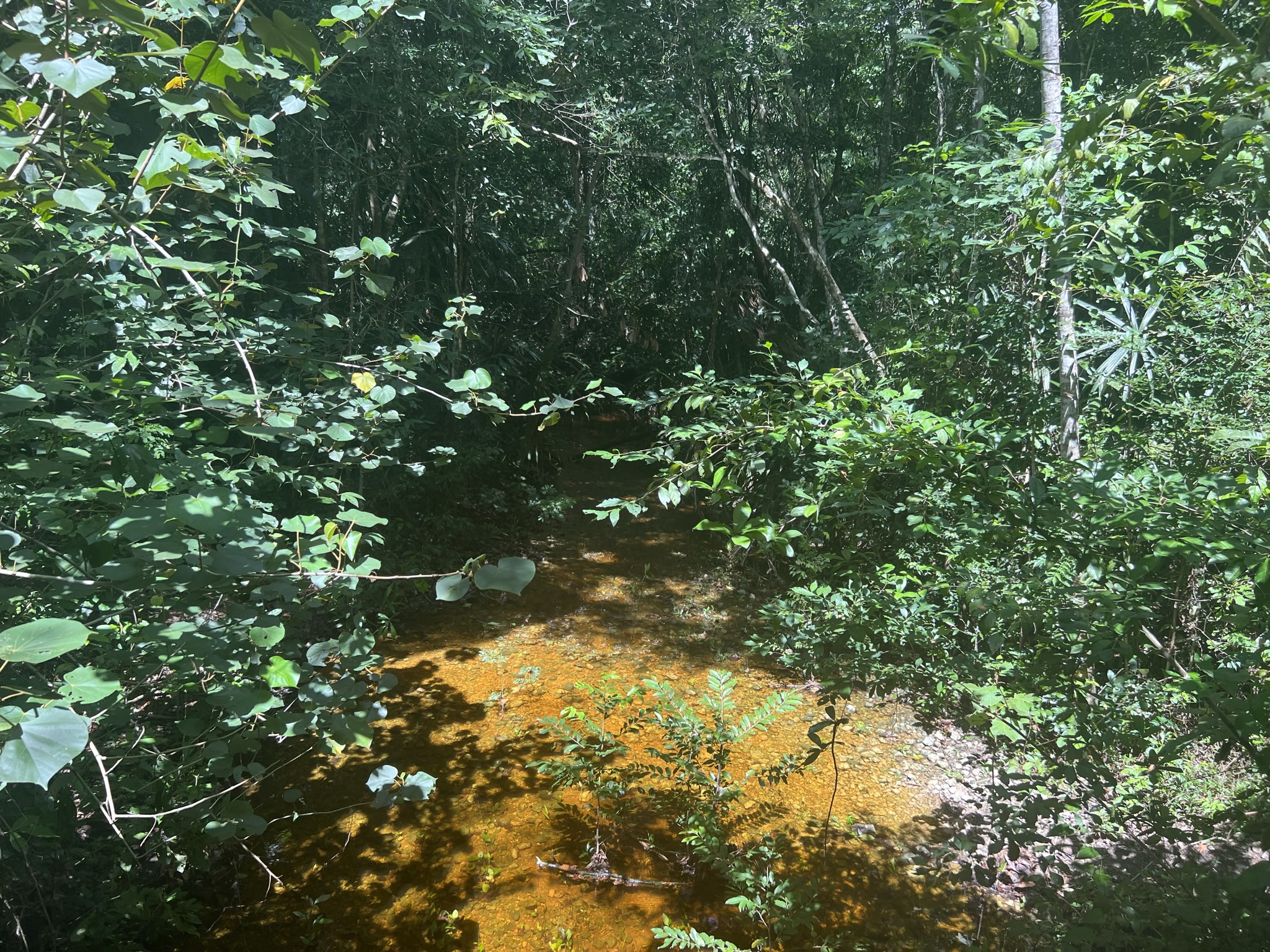
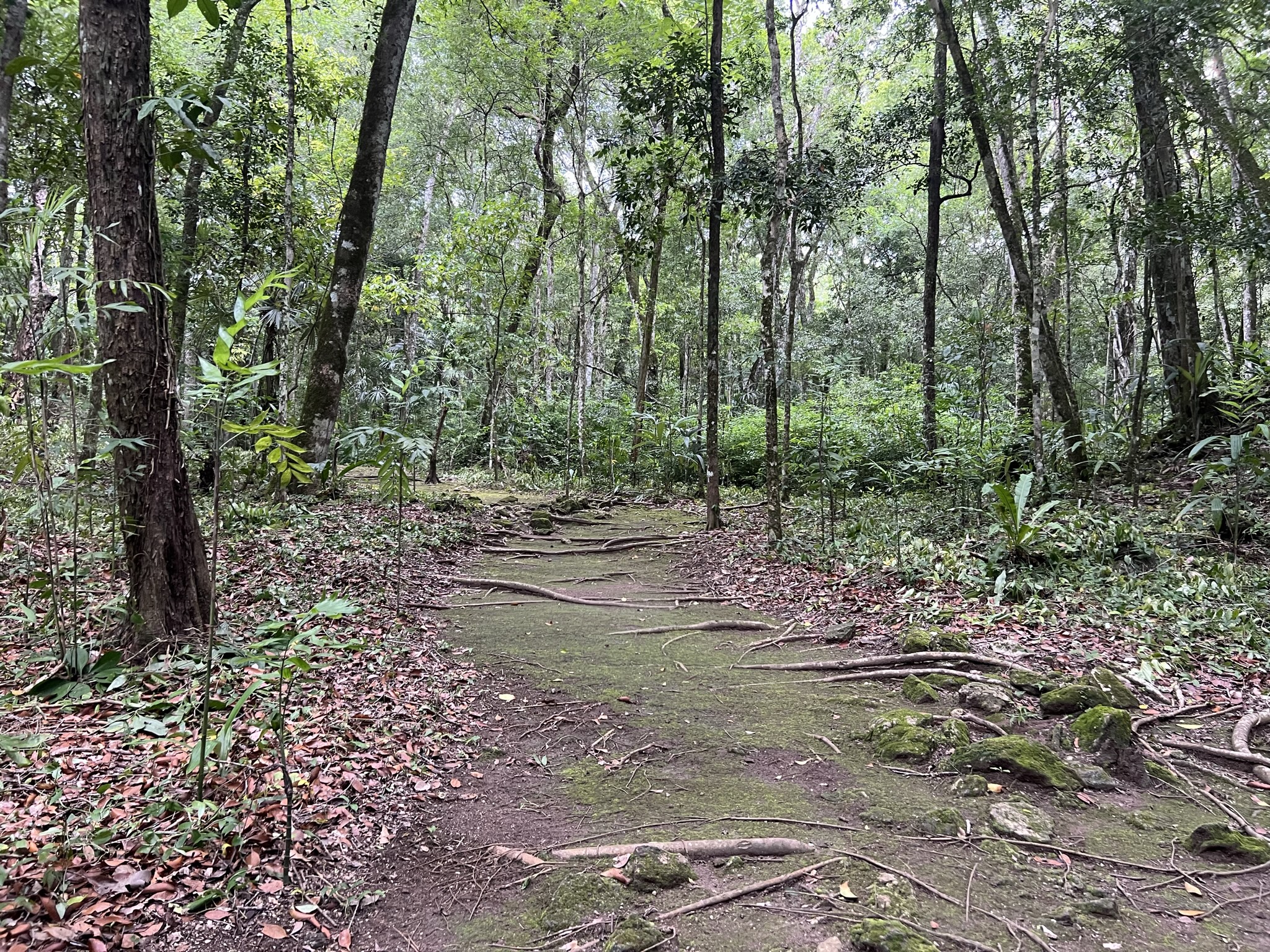
“Mas lodo?” we’d ask Luis over and over, in hopes of getting to the next, mudless part. Wading into ankle-deep mud and water alike, we kept at it, mocked by the hoofprints of the mules that had gone on effortlessly before us, despite being laden with the group’s camping supplies. Many a time, we’d encounter a large pool or swamp blocking our way, having to take a different route through the jungle, jump from one tree root to another (occasionally grabbing a spiky trunk by mistake), or build a makeshift bridge from wood and sticks lying around in order to continue. But we kept at it.
And to keep at it was the only way to rid ourselves of the heinous beasts from hell we call mosquitoes. Much throughout the first day, it felt like we were in a race, competing against these hateful creatures. Entire swarms – hundreds of them – chased every single body, waiting for their victims to pause and catch their breath. You stop, you lose, they win. The second you’re not moving, you can bet you’ll have at least fifty of the vile monsters sucking on whatever skin’s exposed at any one time. And that’s with the repellent.
Whilst I’m usually accustomed to being bit by these detestable demons, hearing their buzzing near my ears drives me into a wild frenzy, flapping my hands uncontrollably – an instinctual reaction that’s probably a remnant from when I had a mosquito stuck in my ear when I was twelve and had to get it out, piece by piece, using tweezers. You’d think tying my bandana over my ears would deter the little odious fiends. Only, they’d manage to pierce through it – seemingly more voracious than before. Did I mention I hate mosquitoes?

The Light at the End of the Jungle
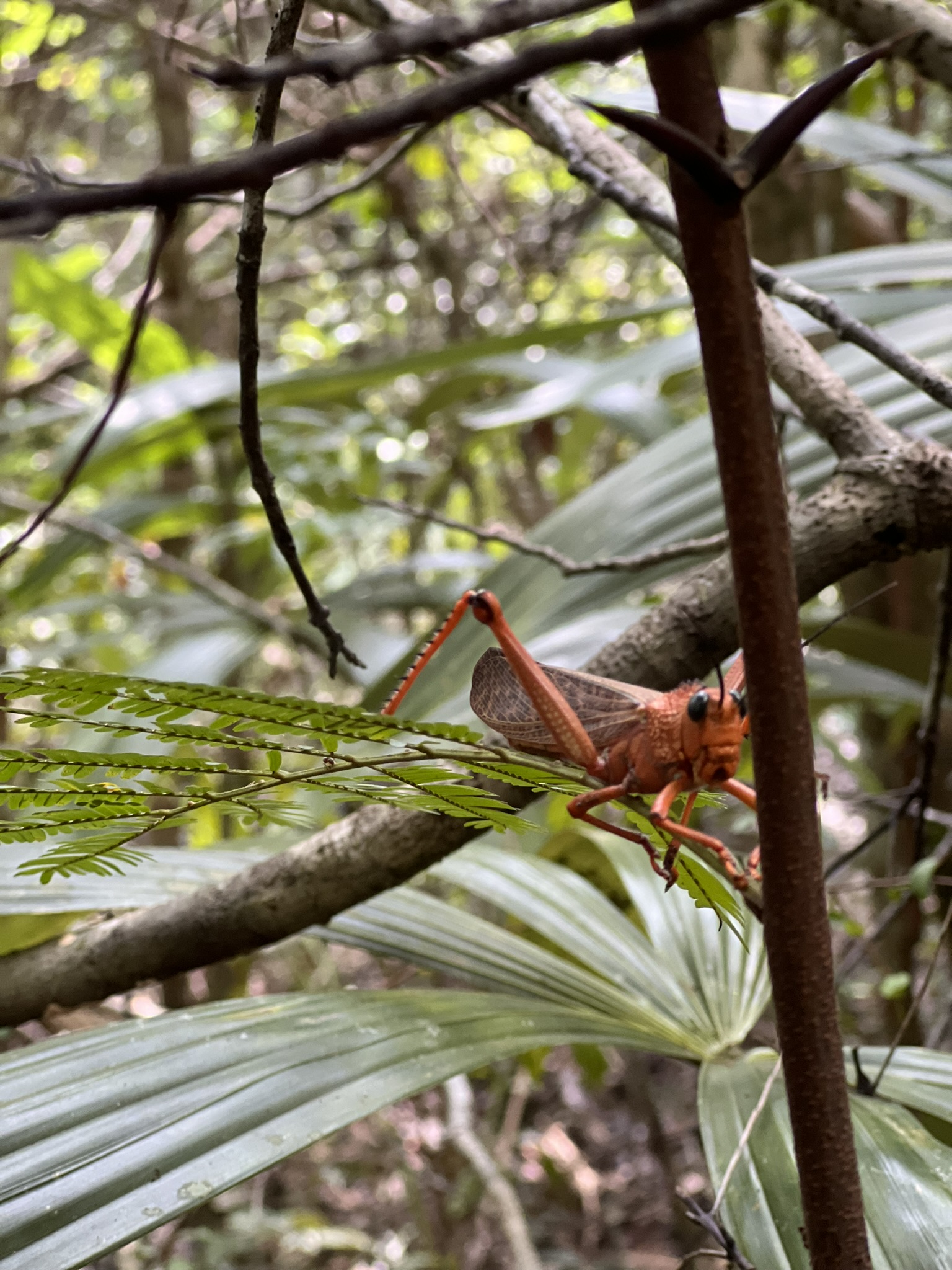
For some seven kilometres, it went on like this. Then the mud turned dry and craggy, then to soil, and then to soil covered by purple flowers that had fallen from the trees. Kinda like walking into an enchanted forest! Only instead of sparrows and Snow Whites, we set our eyes on the blue-green parrot snakes which would vanish the second you spotted them, spider monkeys that shook trees and ‘made it rain’, and crested guans whose cackles sounded just like the Evil Queen’s.
We did stumble upon a few creatures that looked as if they came straight out of a fairy tale though – like the turquoise-browed motmot (which happens to be the national bird of El Salvador and Nicaragua) and the blue-orange sunrise morpho butterflies.
Then there were the ordinary-looking leaf-cutter ants, whose existence is anything but. These marvels of nature, Luis told us, don’t eat the leaves they harvest – rather, they feed on the fungus that grows on them once back in the safe refuge of their colonies. Now that’s friggin’ extraordinary if you ask me!
Always ahead of the group with Natalie, we finally got to El Guacute, the first resting spot where we could kick back and enjoy a couple (or five) of Doris’ delicious sandwiches. Another sixteen kilometres to go, and we’d be at the first campsite – right next to some ruins we’d be exploring later that day.
PART II
El Tintal
The next part was by far easier, with less mud and fewer mosquitoes. After a few hours of steady walking, we finally got to our first goal: the ruins of El Tintal.
This city, which to this day is still mostly covered by jungle, dates back to the Preclassic period and is named after the tinto tree, whose bark releases a red colour when slashed, though some speculate it takes its name after the colour of the surrounding swamp waters. It has been heavily looted, and many trenches have been dug throughout the site in search of buried riches and artefacts – among which potsherds and human remains have been found. Its most notable area, the Mano de León complex, is a residential zone surrounded by a ditch that’s said to have been used both to supply water to the city and possibly for defensive purposes. The sacbé – a white stone causeway – connects the city to the nearby sites of Nakbé and El Mirador.
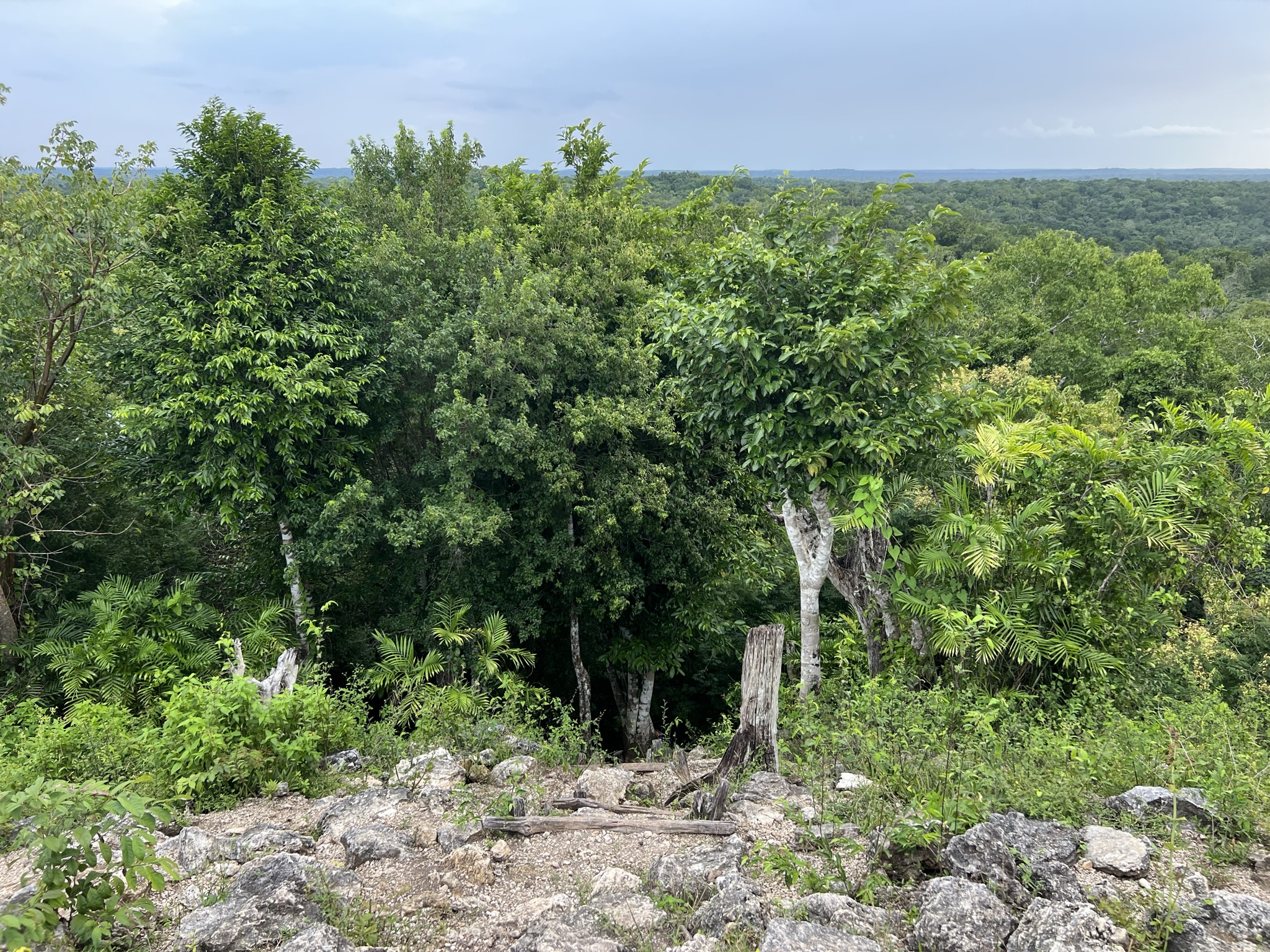
Much of this we couldn’t properly appreciate, what with all the jungle in the way. It even took us a moment or two to realise we were standing on a pelote court at one point, with the sides of the court completely covered in plants and the centre full of huge trees. Large pyramids were hidden under larger mounds of rubble and soil, the jungle unaware of its own treasures. Then we got to the main pyramid of El Tintal – one that towers above the canopy at 44 metres in height. Fortunately, this pyramid had been fully excavated, and we’d be able to climb it!
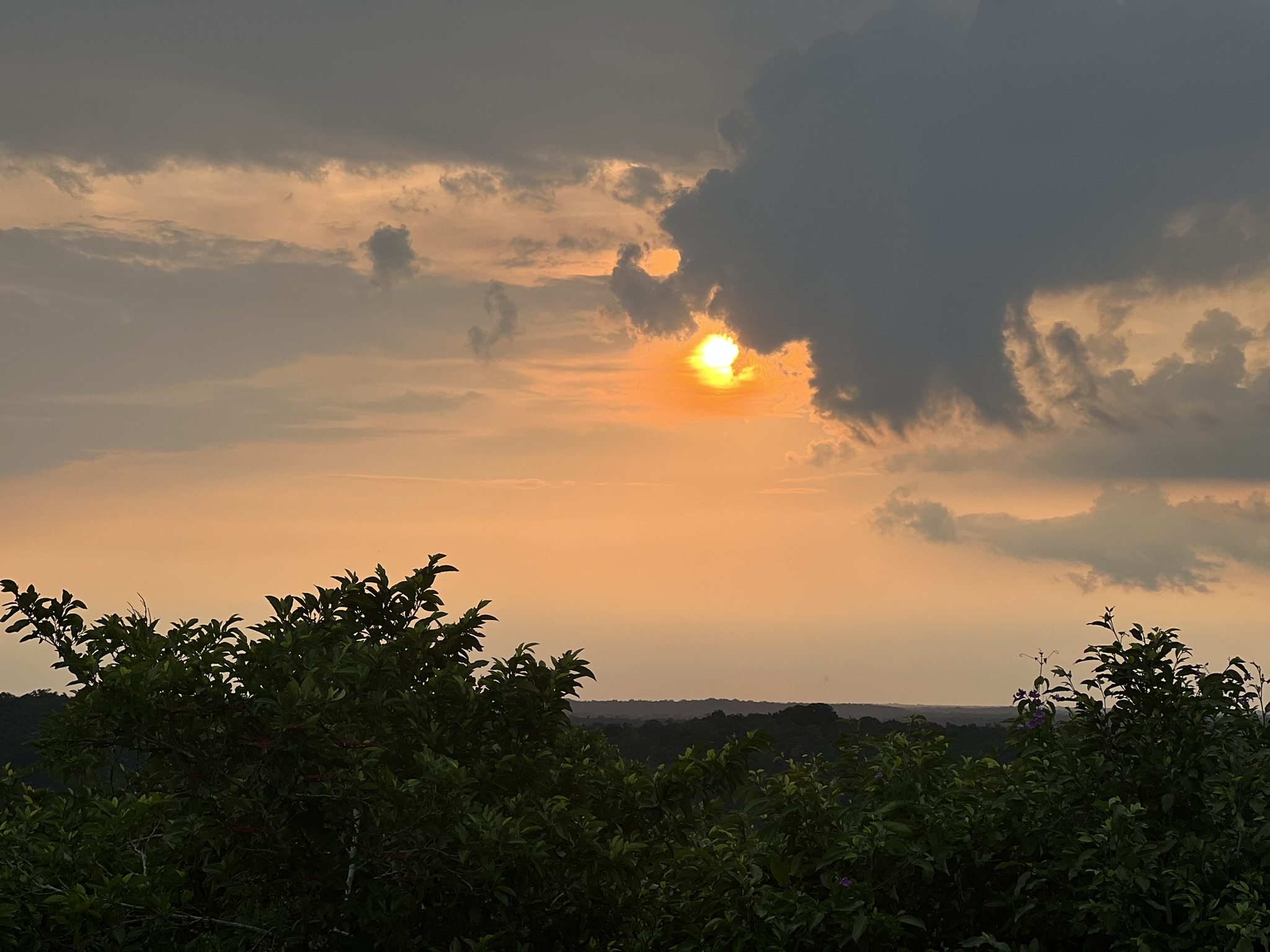
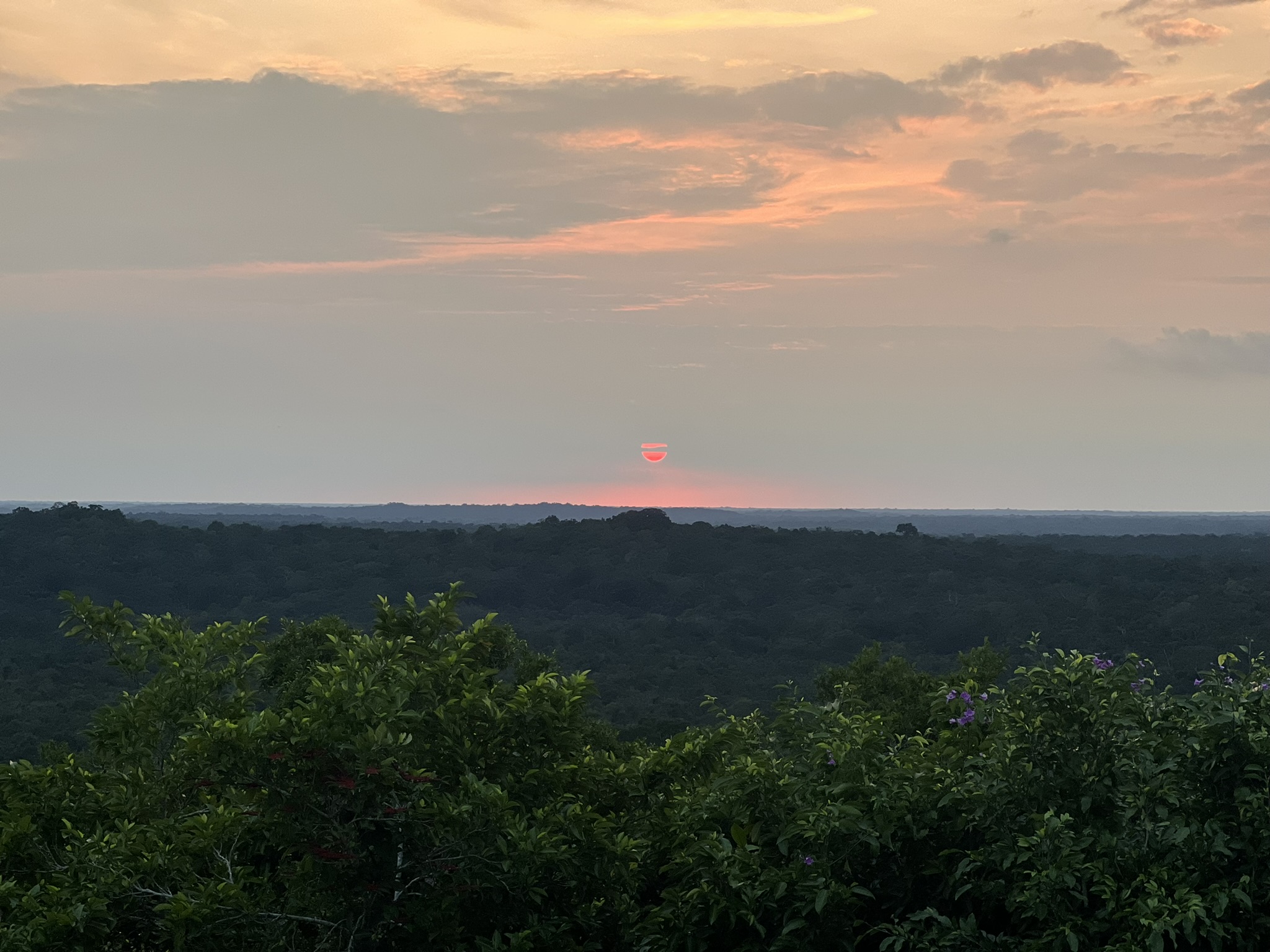
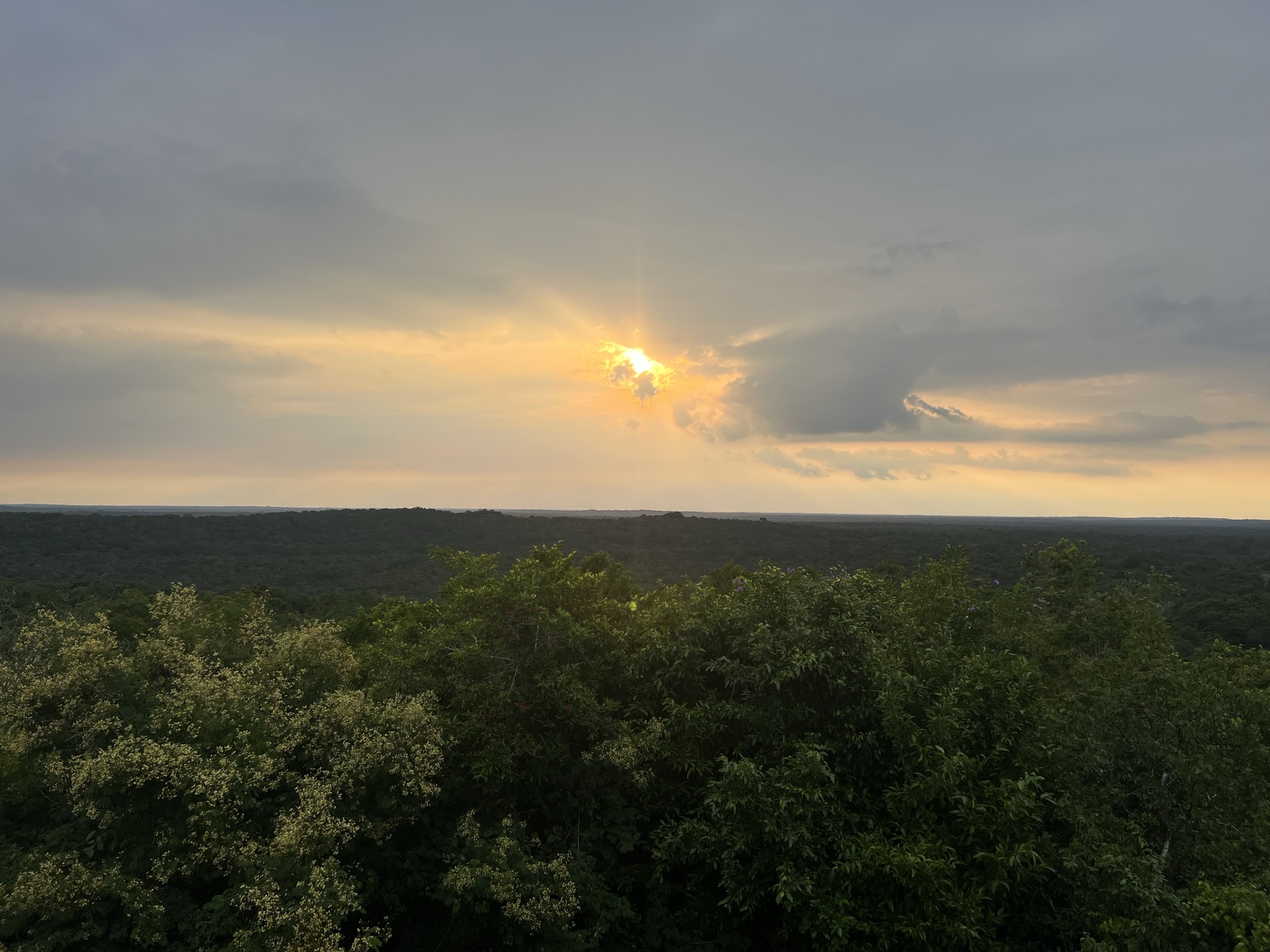
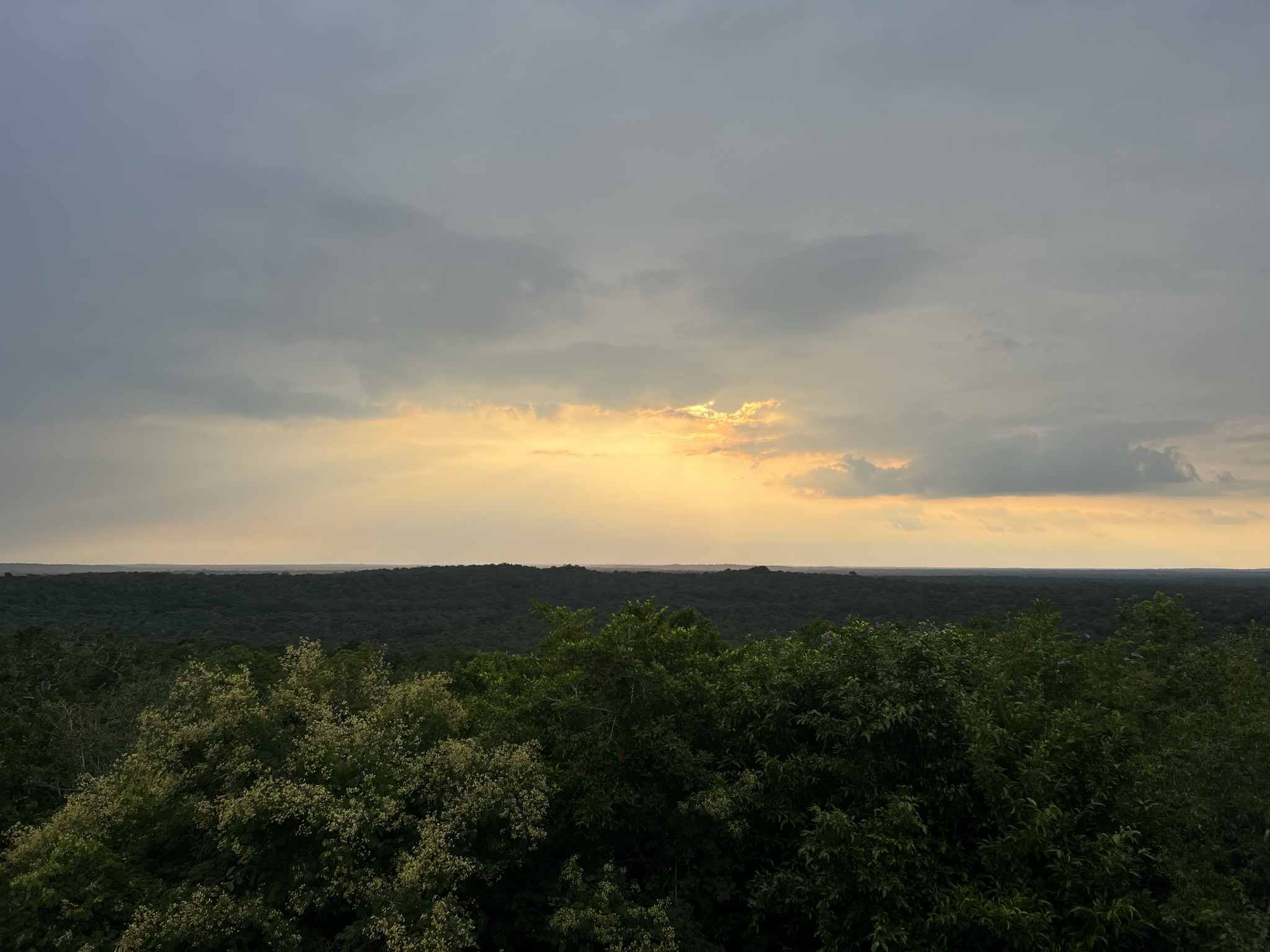
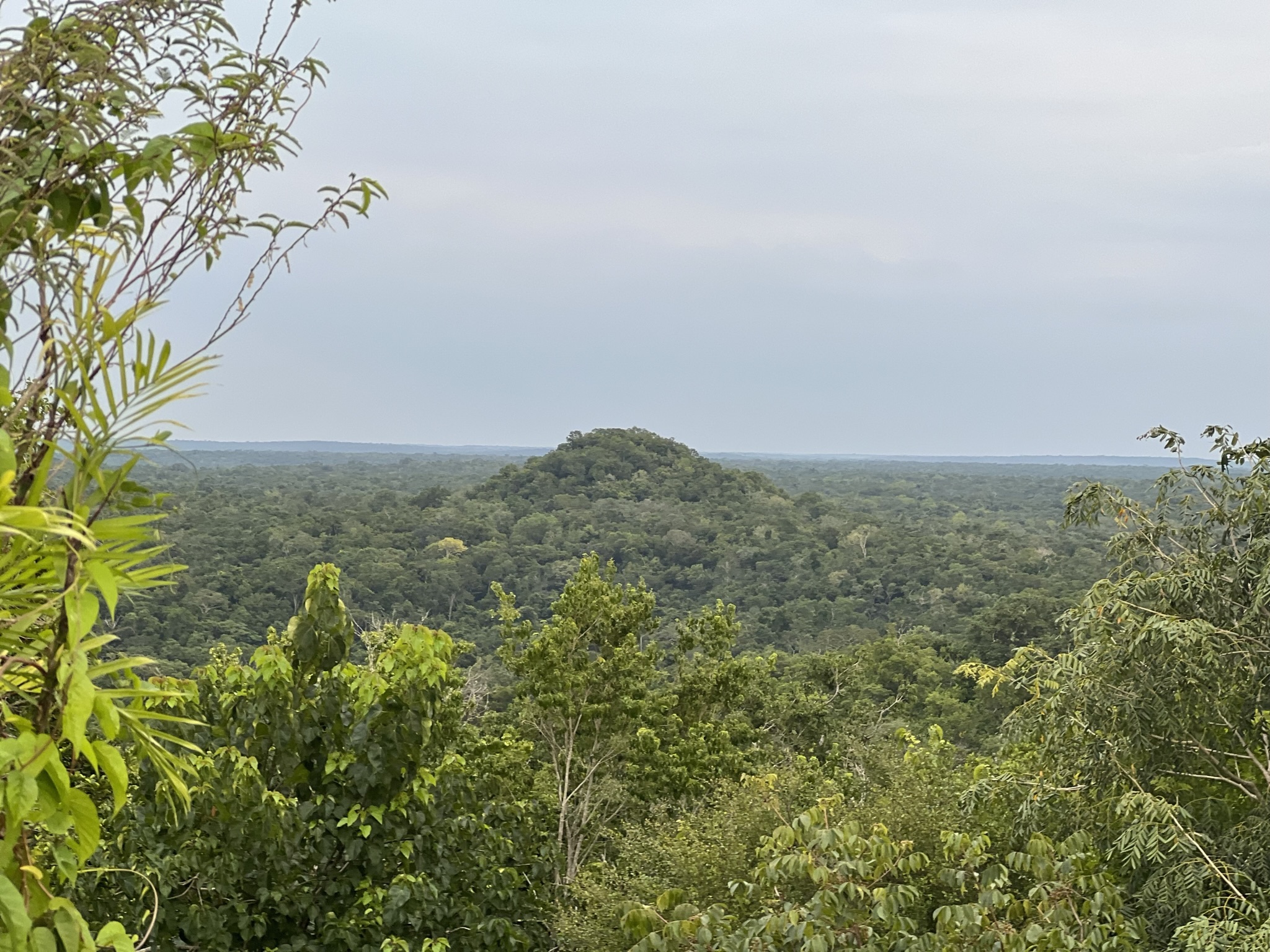
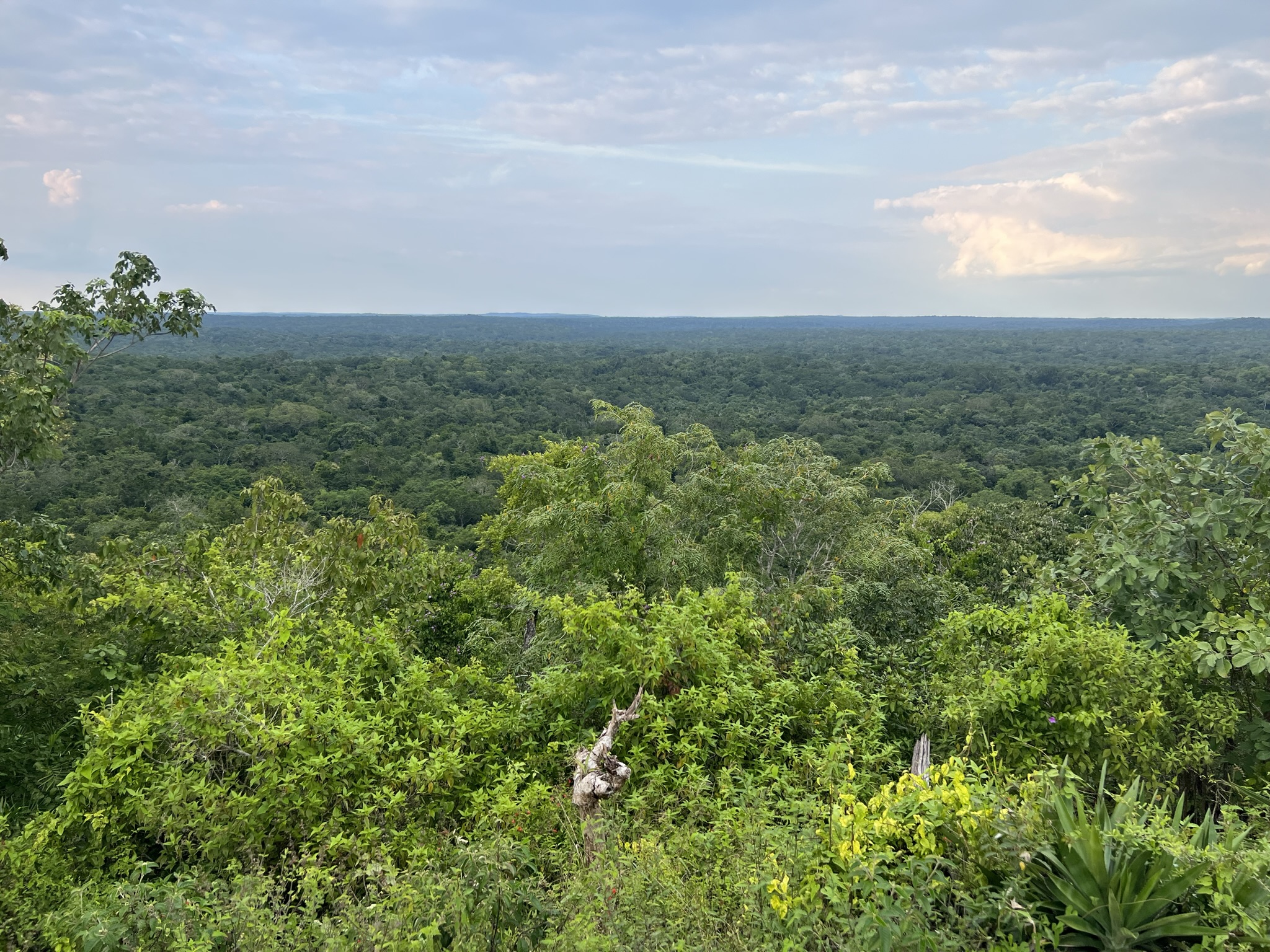
Normally, I would’ve complained about having to scale such a steep pyramid at the end of such a long day. But this was what we’d been walking towards all day! Natalie and I sped up to the top, where we were welcomed by one of the most incredible views I’ve ever seen in my life. The vast expanse of the verdant green jungle stretching further than the horizon, hummingbirds and dragonflies fluttering peacefully around us, the sounds of birds and monkeys disturbing the quiet yet somehow complementing it. There was just something almost sacred about it all. An entire city stood below us, yet no one would know save for the few remnants that have withstood the test of time…
Far away in the distance, Luis pointed out a hill with a single tree at its top. That was it – that was El Mirador. The following day, we’d be crossing the entire jungle to reach it. Trying not to think about how much walking we’d actually have to do to get there, I sat down facing the west, where the sun was busying itself before the great voyage into Xibalba. There’s just something about sunsets – especially the kind that come with a great view and are so well-earned – that’s very hard to explain. A mixture of anticipation, waiting to see the sky’s colours unfold, and apprehension, knowing how ephemeral it all is. That pretty soon, all those colours will turn to black. That the day is over. That the dark, bleak night is all that remains. Also, the fact that we’d have to climb all the way down the pyramid in the dark once it was over!
Respite
The rest was a walk in the park – literally. The campsite was a much-awaited sight after a day spent trekking through the jungle. There, we were greeted by a bunch of ocellated turkeys, the mules, Miguel and Doris, and another group of hikers who had just come back from El Mirador. Somehow, they seemed clean. Almost too clean. Suspiciously clean.
They assured us that the first day was the worst and that the next few days would be easier. Looking and smelling like zombies, we could only hope they were telling the truth.
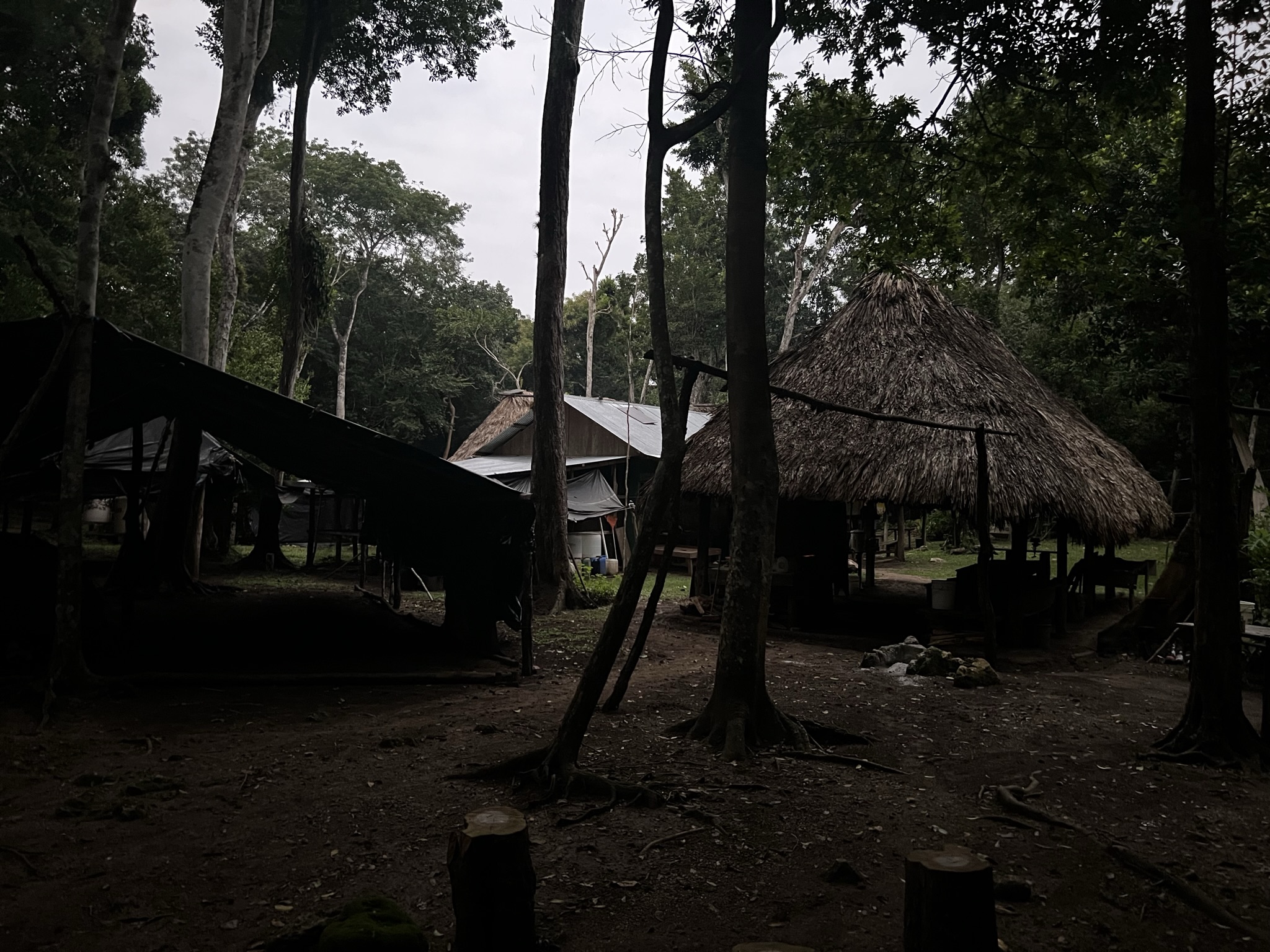
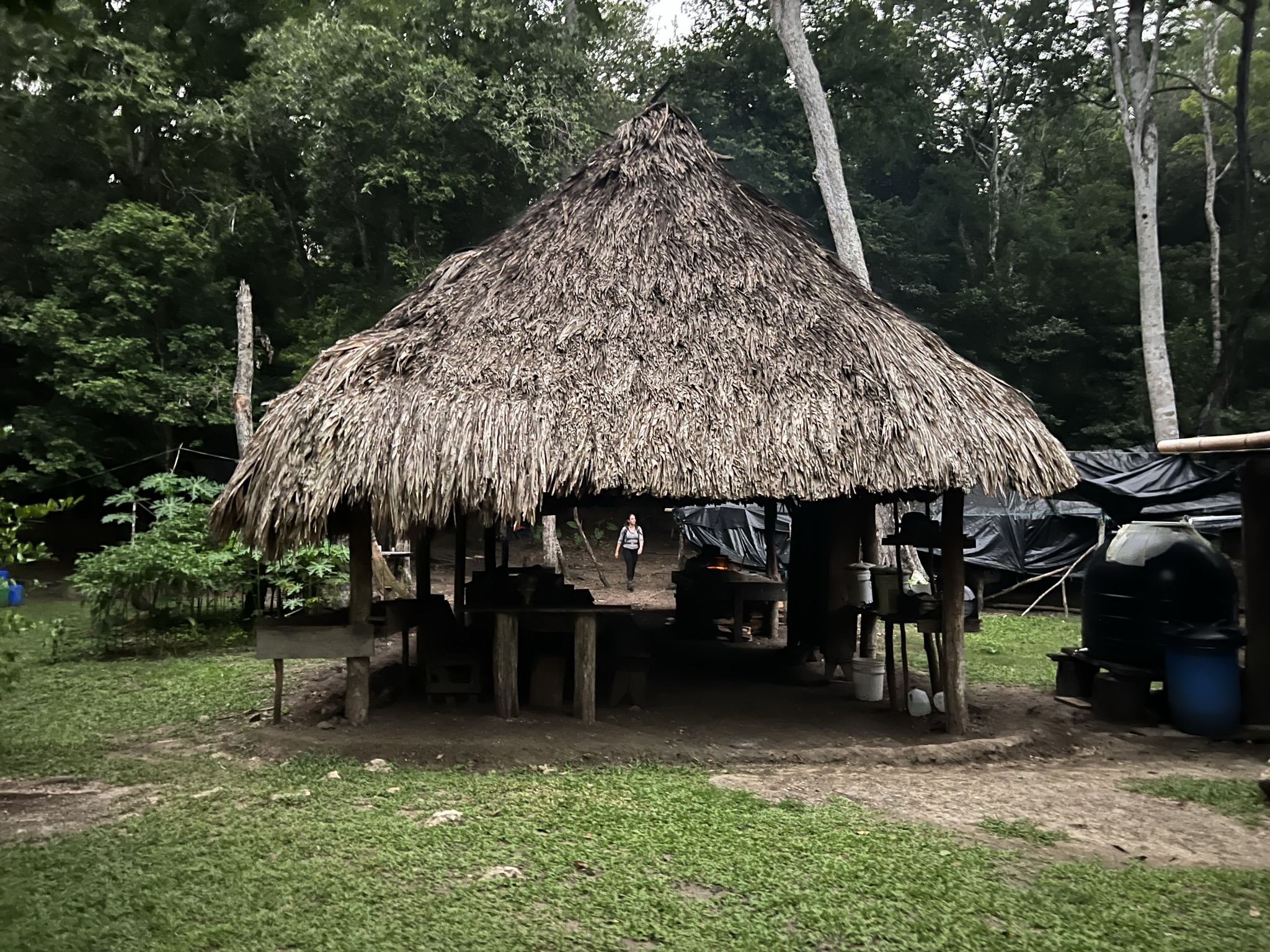
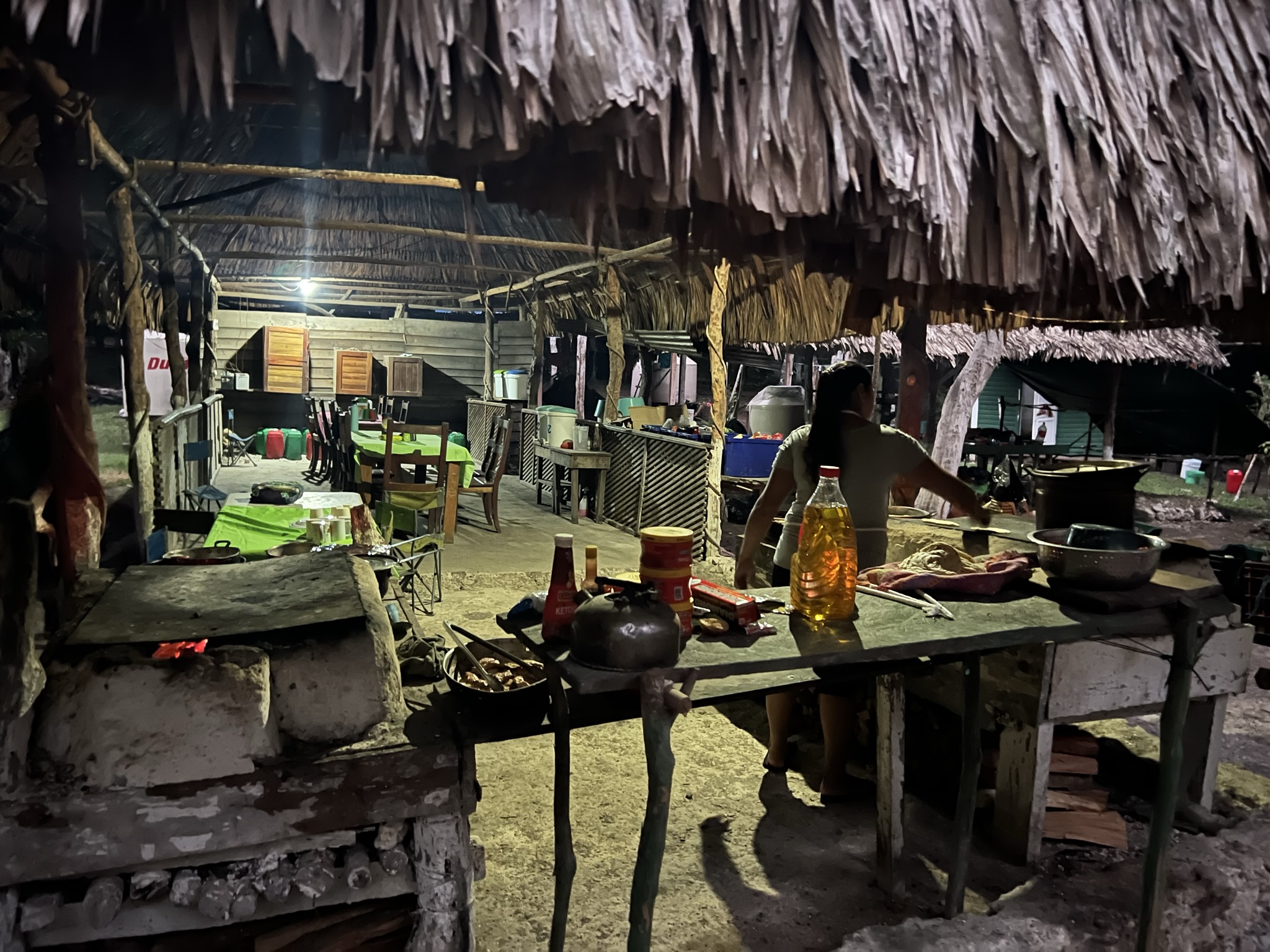
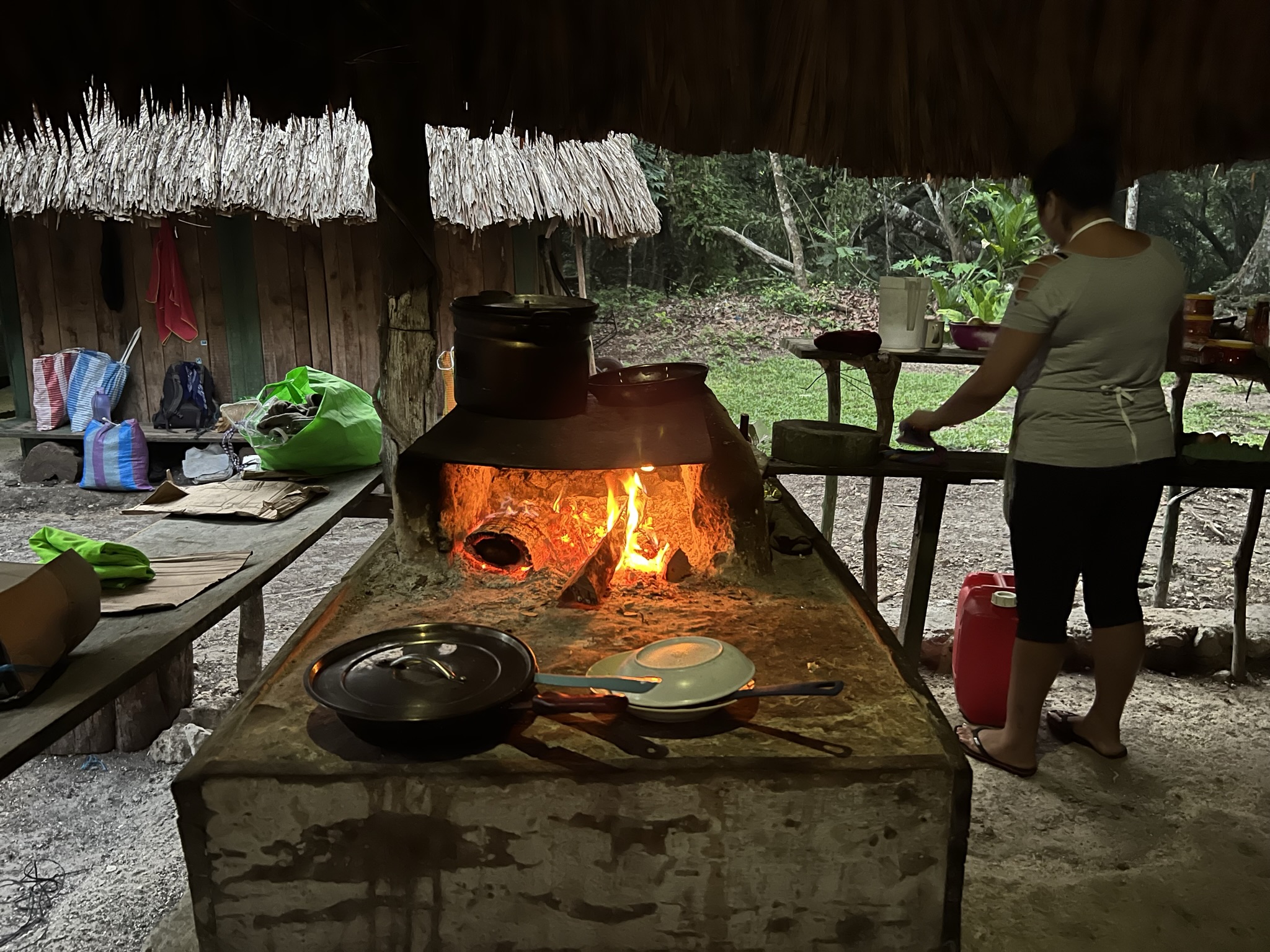
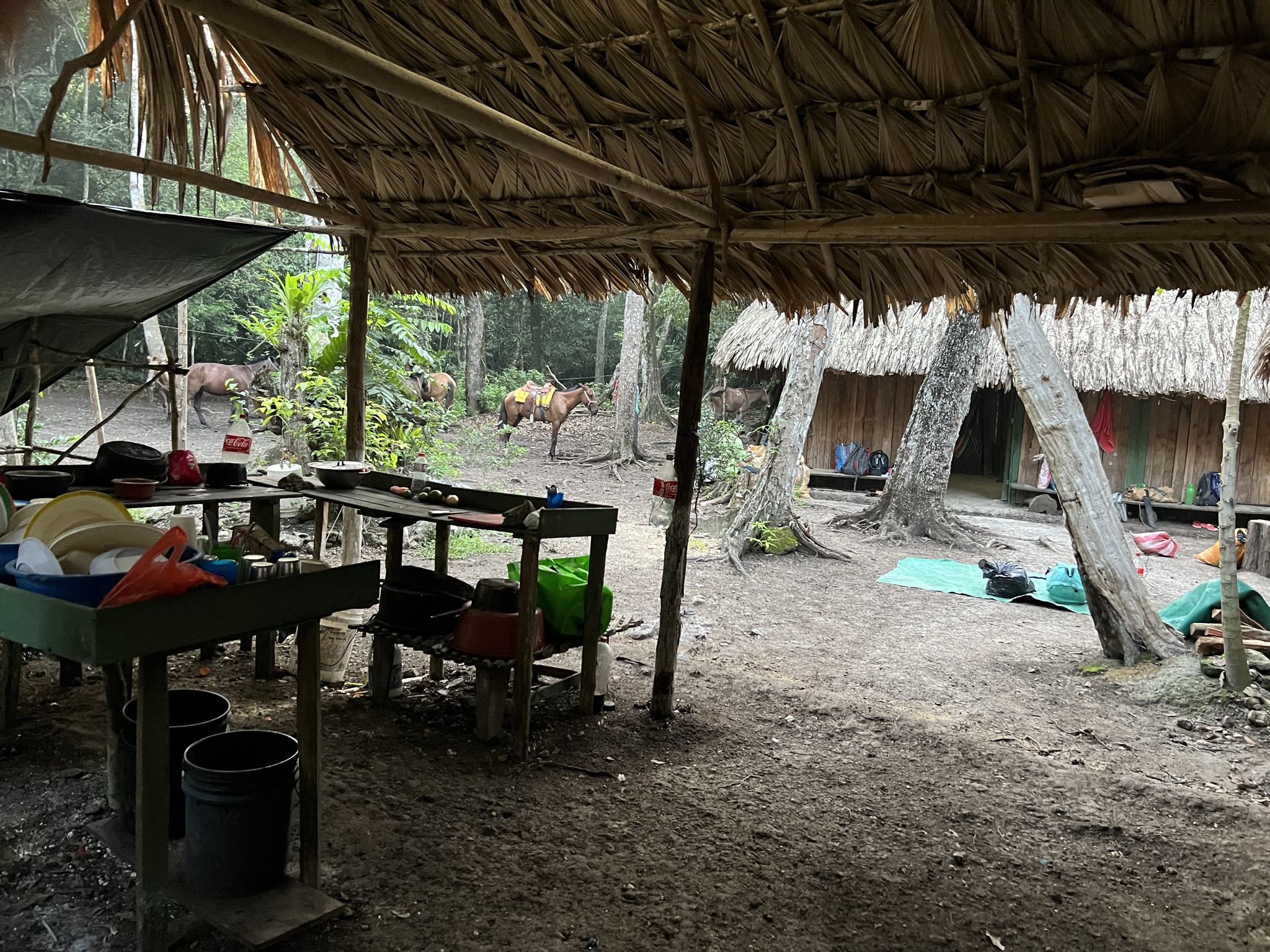
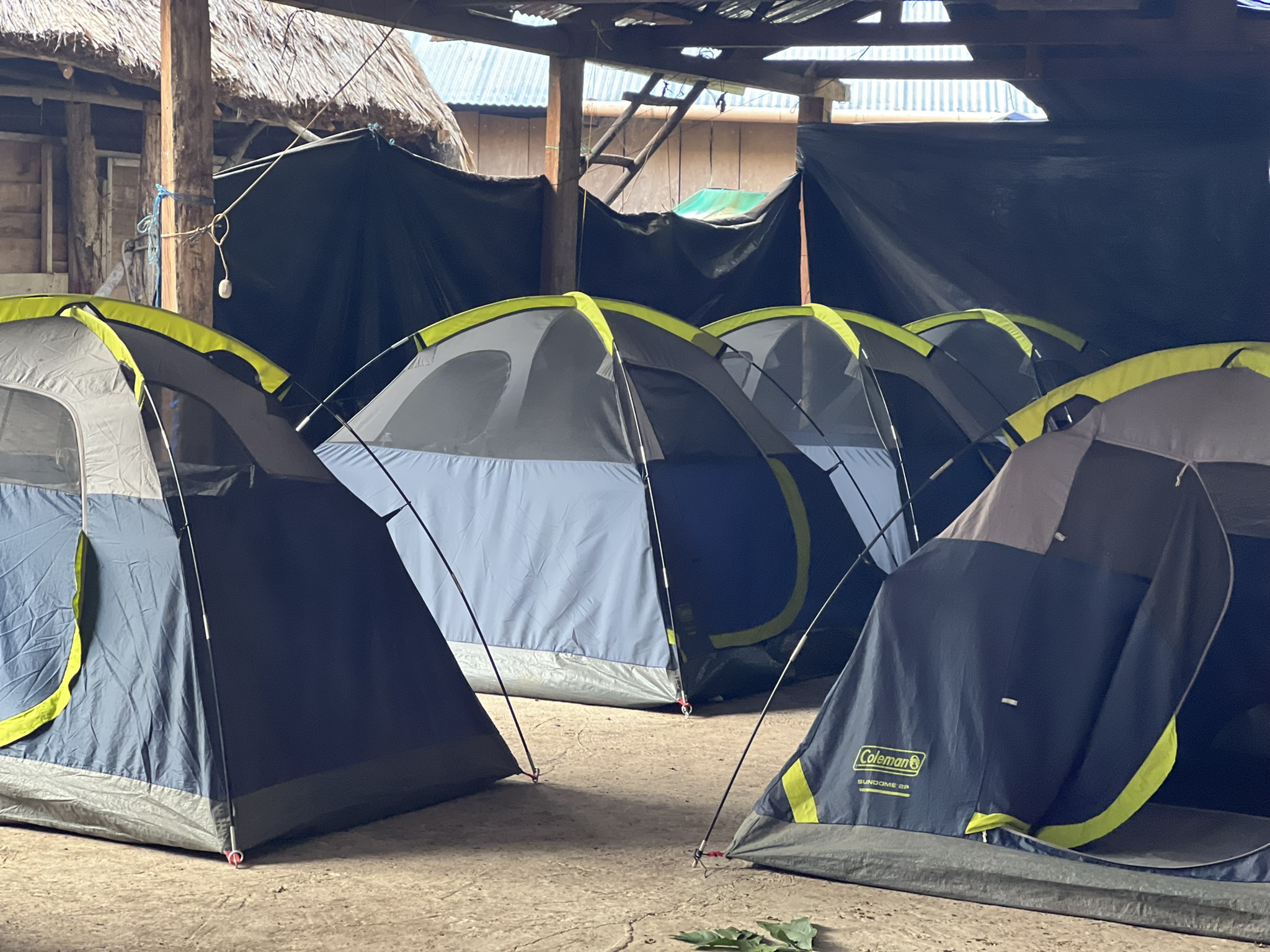
All sat down and ready after a day’s worth of walking, we finally got to enjoy a couple of Gallo beers and Doris’s grilled chicken, rice, and beans. By the time we finished, it was already dark, and our tents had been pitched by Miguel and Luis.
Having forgotten my headlamp, I somehow made my way to the ‘toilet’, which was well away from the campsite. Now mind you, by ‘toilet’ I’m referring to a wooden cube with a hole at the top that leads to an empty, underground vault. Undeterred by the overwhelming stench and the hundreds of flies swarming over the box, I approached the thing with as much caution as you would a white van with “free candy” written all over it in the middle of the night. And, for a reason I cannot even begin to fathom, I decided to flash my phone light over the hole. Yep, just like anyone would expect. A mound of excrement.
Then it was my turn to ‘shower’. And the ‘shower’? A cubicle where a bucket of water was waiting for each and every one of us. Yep, that’s right. A bucket. If there’s one thing I don’t quite compromise on, it’s hygiene. And there I was, all covered in sweat, mud, and mosquito remains, having to make do with a bucket of unfiltered rainwater. That said, it was still water, and it was definitely cleaner than the dirt I was covered in. And so, with one final leap of faith, I took the plunge – or really, plunged the entire thing over my head. And boy, was it the best thing ever. I scrubbed hard and fast, making the most out of every millilitre, washing the entire day’s exhaustion and grime away.
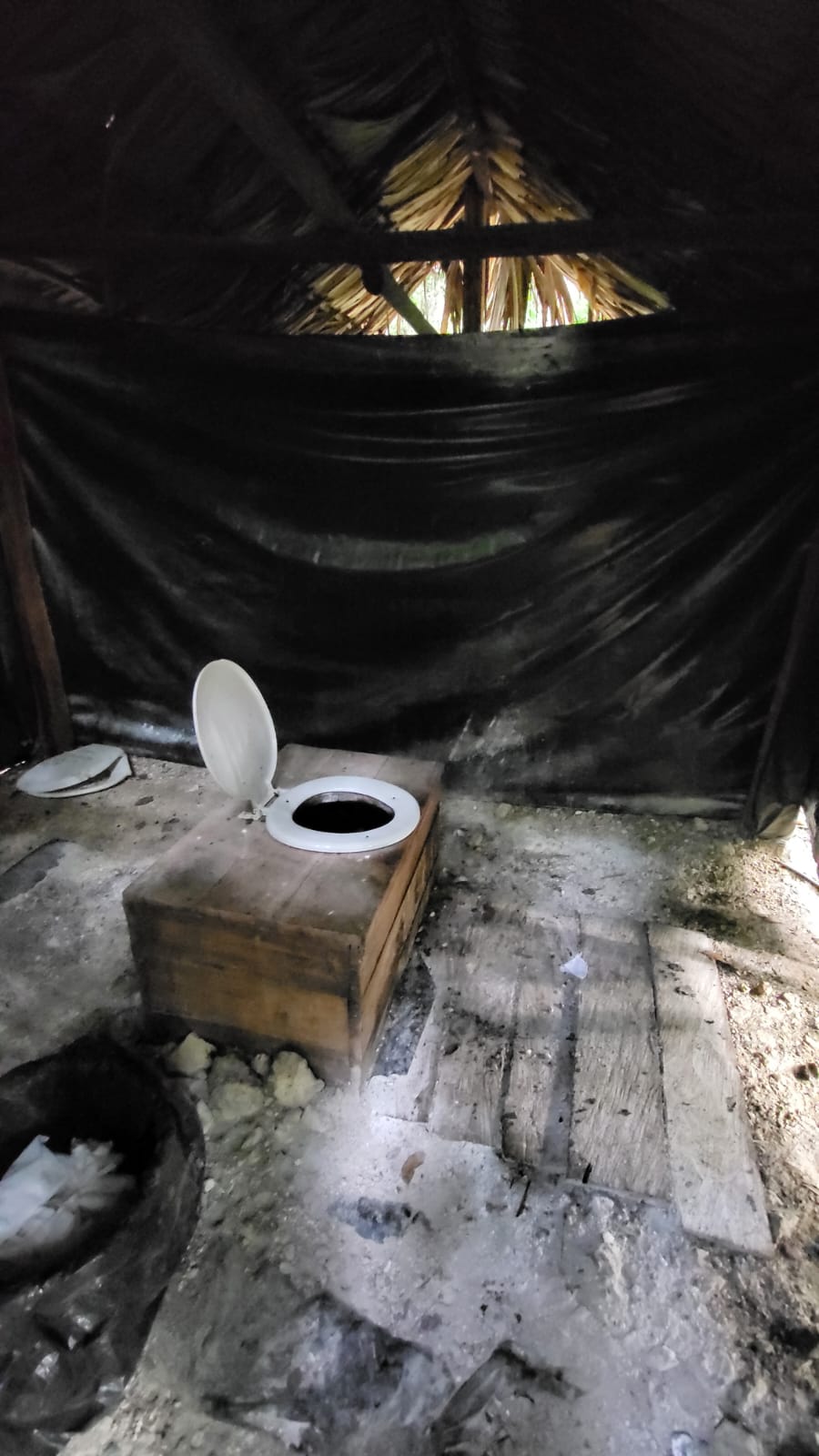
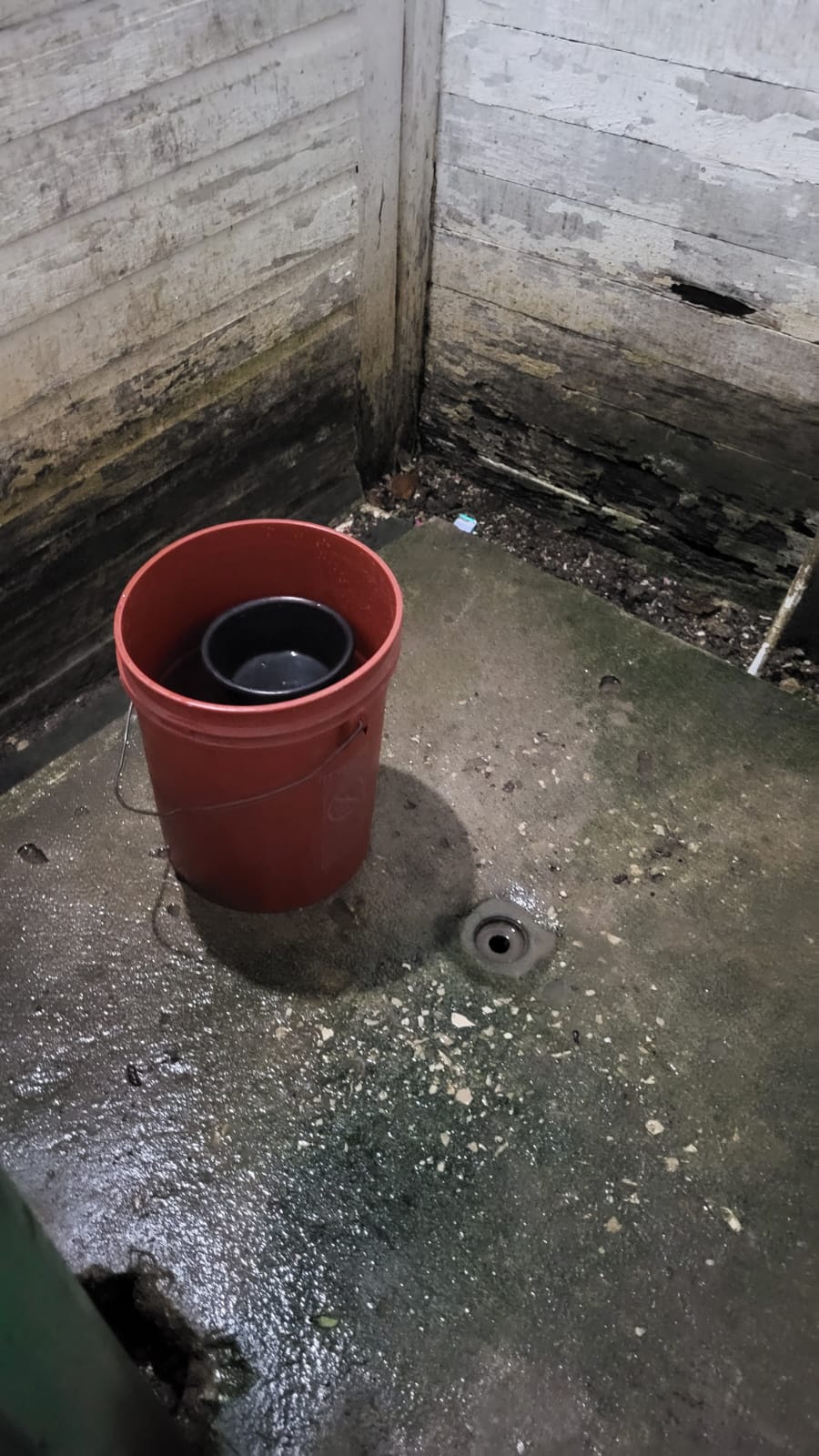
Pretty soon, we started referring to the bucket as the buckét and the toilet as the holé in an effort to make them sound fancier. Whilst to the others it didn’t seem like much of a big deal – considering some of them had done longer treks without any access to showers or toilets – I can’t say I quite shared their optimism. At the same time, they weren’t the ones who got jumped by a cockroach in the face whilst on the holé! Maybe I was being a tad overdramatic, or maybe -just maybe – I was the snowflake of the group…