Over the following two days, Kate, Szimon and I had four more dives with practical sessions that went over all the basic skills. I went from thinking I’d be unable to learn about such complex equipment and how to use it without killing myself to being unable to bear the anticipation from one dive to the next. It felt like I had unlocked another world – something I had heard over and over from friends who partook in this hobby and insisted I’d start. I was such a friggin’ idiot for having shrugged them off for so long!
But better late than never, and just like that, I was finally scuba certified. I could start checking off dive sites, one after the other. Which meant I could finally go on the long-awaited dive trip to one of Belize’s main attractions – the Great Blue Hole; a marine sinkhole that is circular in shape, around 300 metres in diameter and 125 metres deep. This, the divemaster explained, used to be a huge cave during the last Ice Age, with water trickling down to form stalactites and stalagmites. Over time, these collapsed, leading to the formation of a giant chasm, which in turn was flooded by the Caribbean Sea once the polar ice caps melted at the end of the Ice Age.
Today, the Blue Hole can be seen from above as a dark blue circle surrounded by the azure sea and a ring-shaped atoll with two breaks at its border, giving rise to an omega-shaped structure. Being such an incredible sight to behold, one of the most popular touristic activities in Belize is a flight over the entire thing on a propeller plane. Being super expensive, I’d decided to opt out and instead go for a dive there.
https://chabilmarvillas.com/
The Blue Hole
Two hours away from Caye Caulker by boat stands the Blue Hole. Once we crossed the coral reef close to the island, the waves got choppier than ever, some reaching around two metres in height. Two of the group retched and vomited throughout the whole two hours it took us to get there. But “it was all worth it in the end,” to quote them! Having said that, getting to the Blue Hole by boat is quite unimpressive. One can appreciate the different shades of blue, sure, but the wow factor isn’t quite the same as that accompanying the view you’d see from the sky.
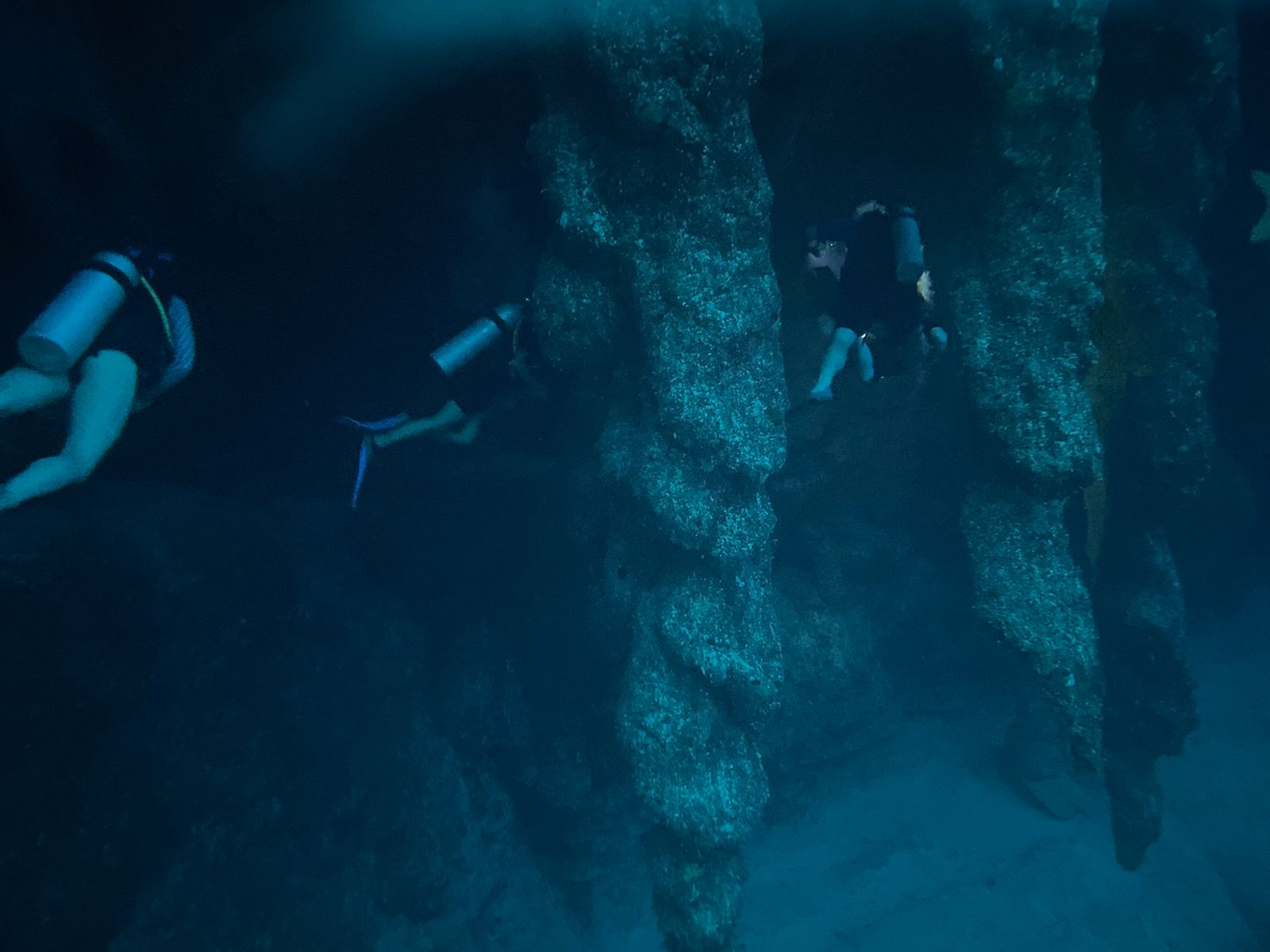
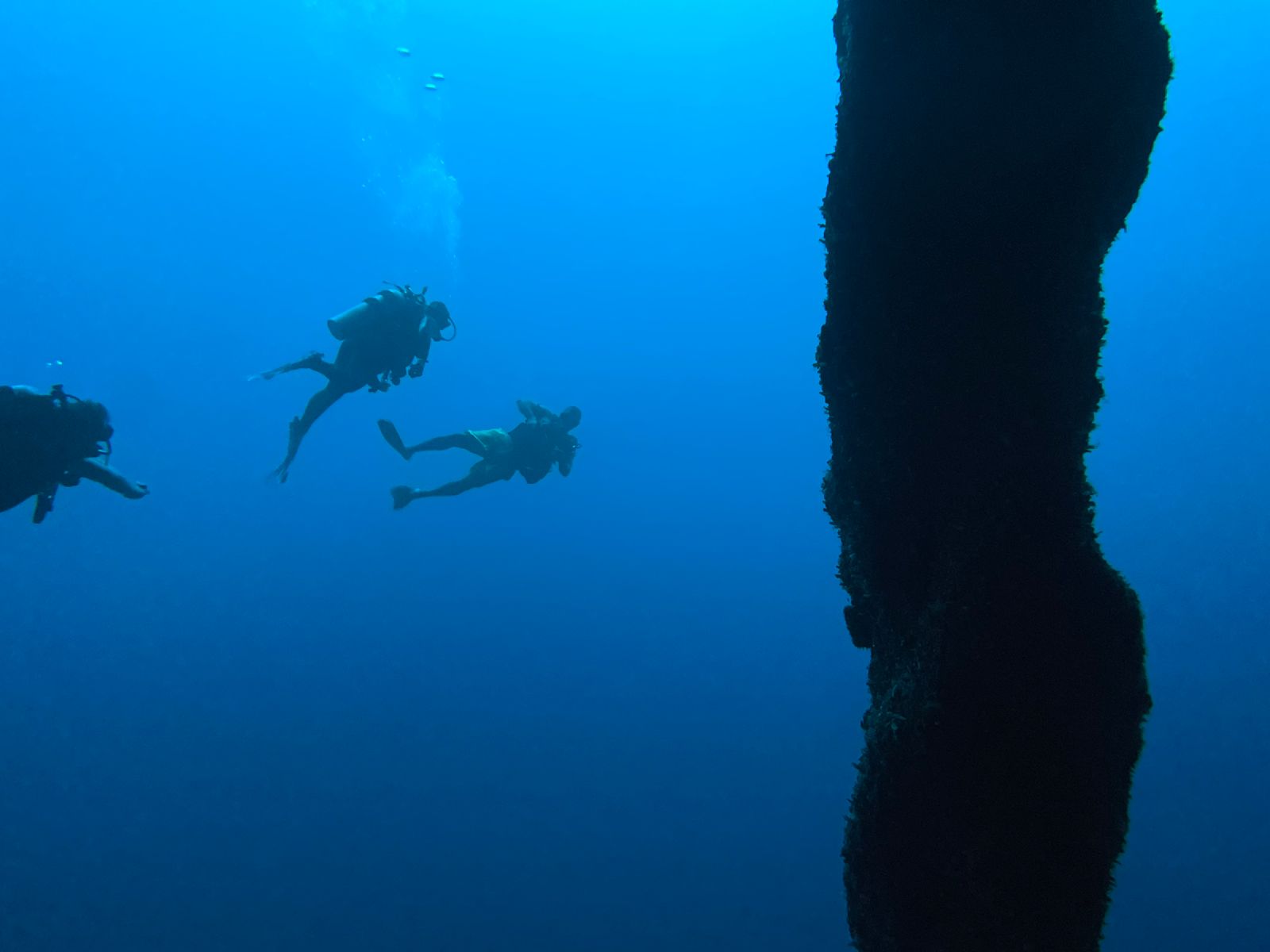
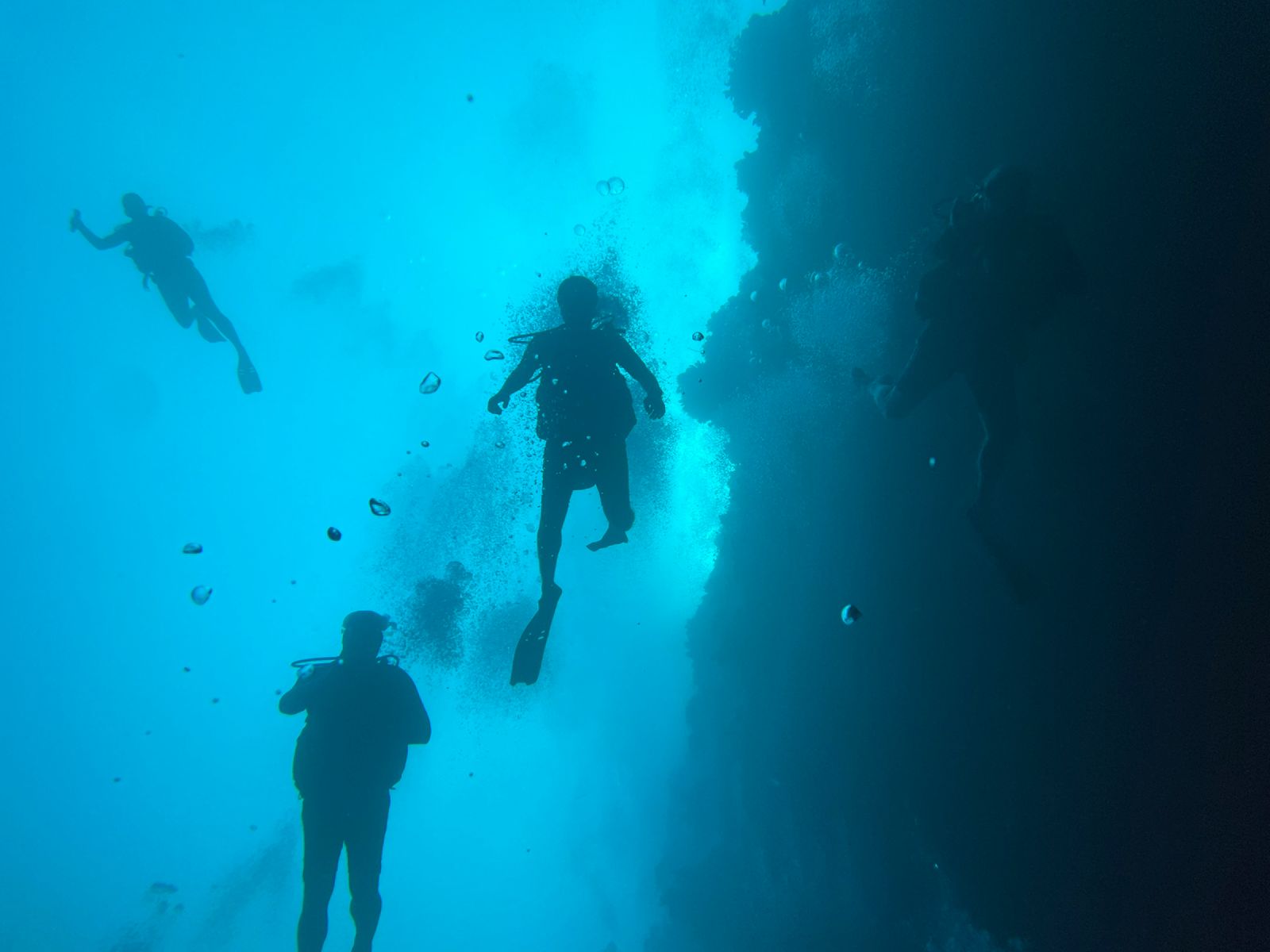
Finally there, we put on our BCDs and took a giant stride into the dark blue water. As we deflated the jackets and started going down, the coral reef came into view. But it wasn’t for that we were diving this time round. We continued to go down until finally, the side of what I had thought was the seafloor disappeared and gave way to a chasm topped by hundreds of stalactites. A friggin’ underwater cave… It felt surreal. Seeing thousands of fish swimming between the rock formations was something else. Being a baby diver myself, I was instructed to tag along with the other Open Water divers, meaning I couldn’t dive below 18 metres. Those with the Advanced Open Water certification could go even lower, diving in between the stalactites. The FOMO was very strong.
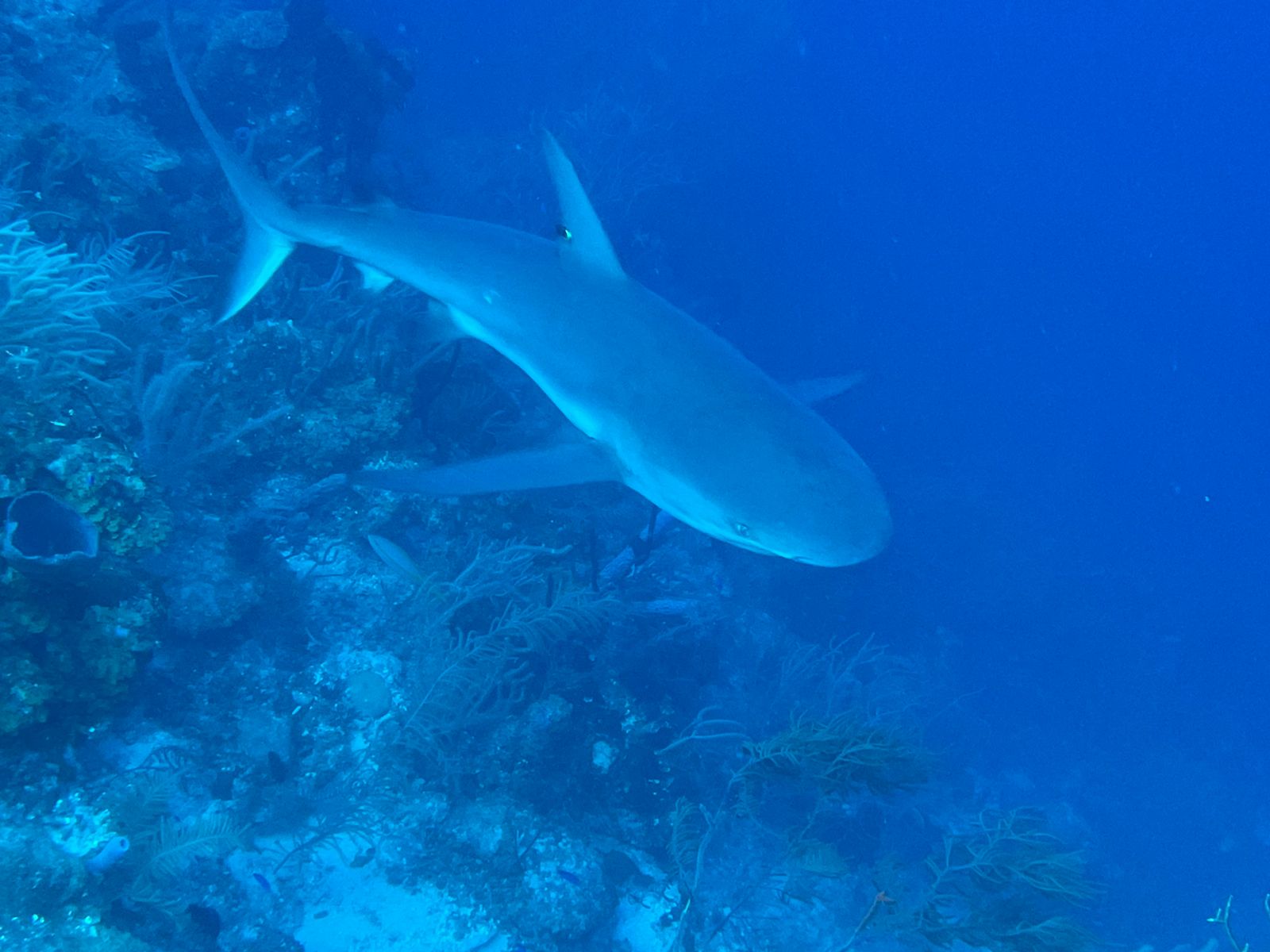
Whilst I was busy beating myself up for not having done my second course, something quickly took my mind off it. Around ten metres away from us was a giant fish. I couldn’t quite make out its shape, but I could definitely tell it was a giant fish of some sort. Only, the closer it got, the more it started to resemble something I didn’t quite want it to be. Especially since it was now getting closer. And closer. And cloooser. Da-dum. Da-dum. Da-dum da-dum da-dum! It was a friggin’ Caribbean reef shark! Standing at around 2.5 metres, the beautiful dusky creature with its two side fins, a short dorsal fin and a streamlined body paid us no mind whilst we laid there, stunned by such beauty (and perhaps a bit of fear). The divemaster made the ‘okay’ sign to show us we were, in fact, gonna be okay, with reef sharks being relatively indifferent to divers unless provoked.
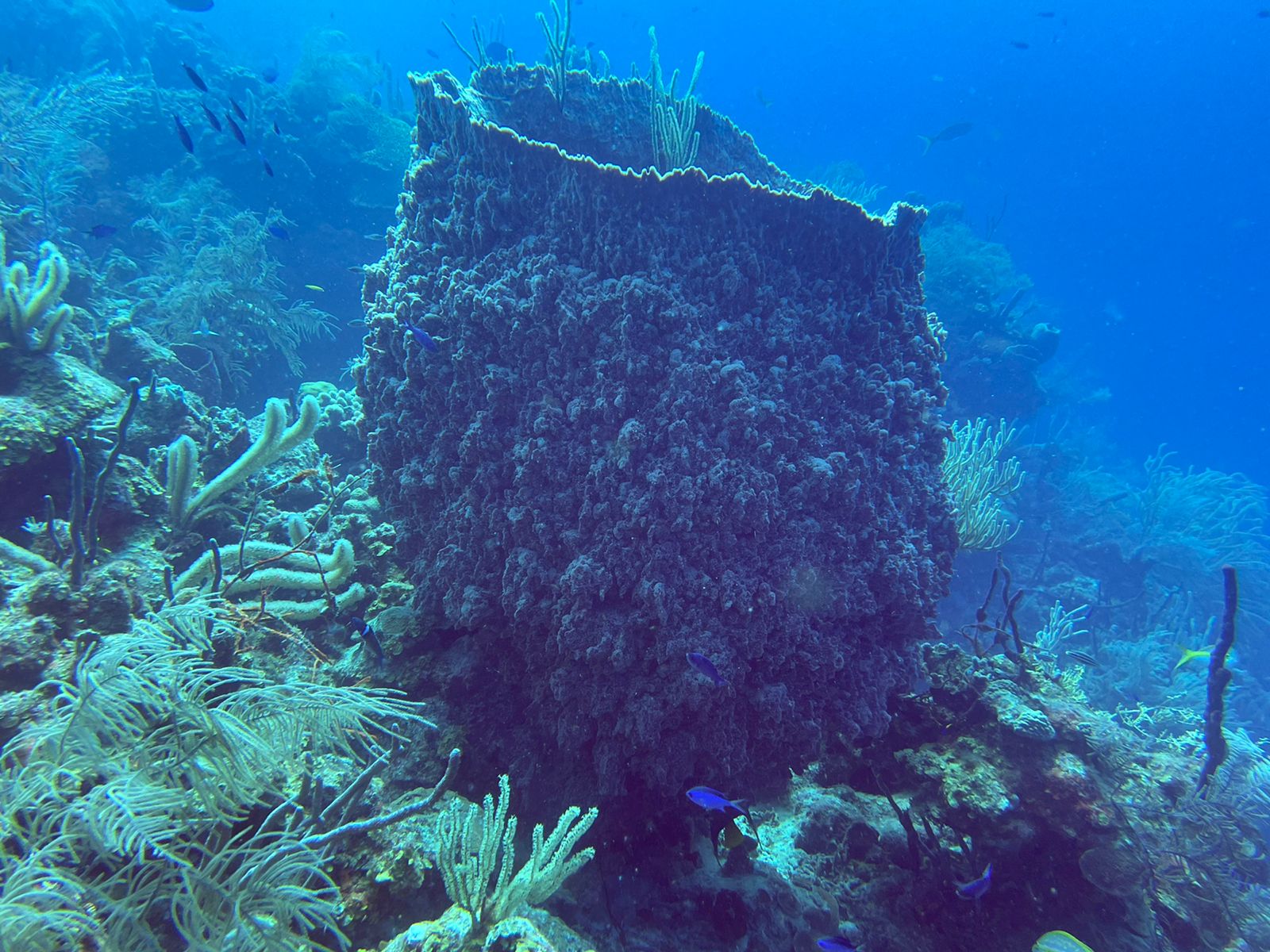
The dive in the actual Blue Hole was quite short. Mostly, we were told, to prevent nitrogen build-up and to be able to dive for a longer time in areas that are, in truth, much more visually pleasing. A short boat ride later took us to Half Moon Caye, its underwater side allegedly featuring the densest, most colourful coral wall around Caye Caulker. We dove and confirmed the above.
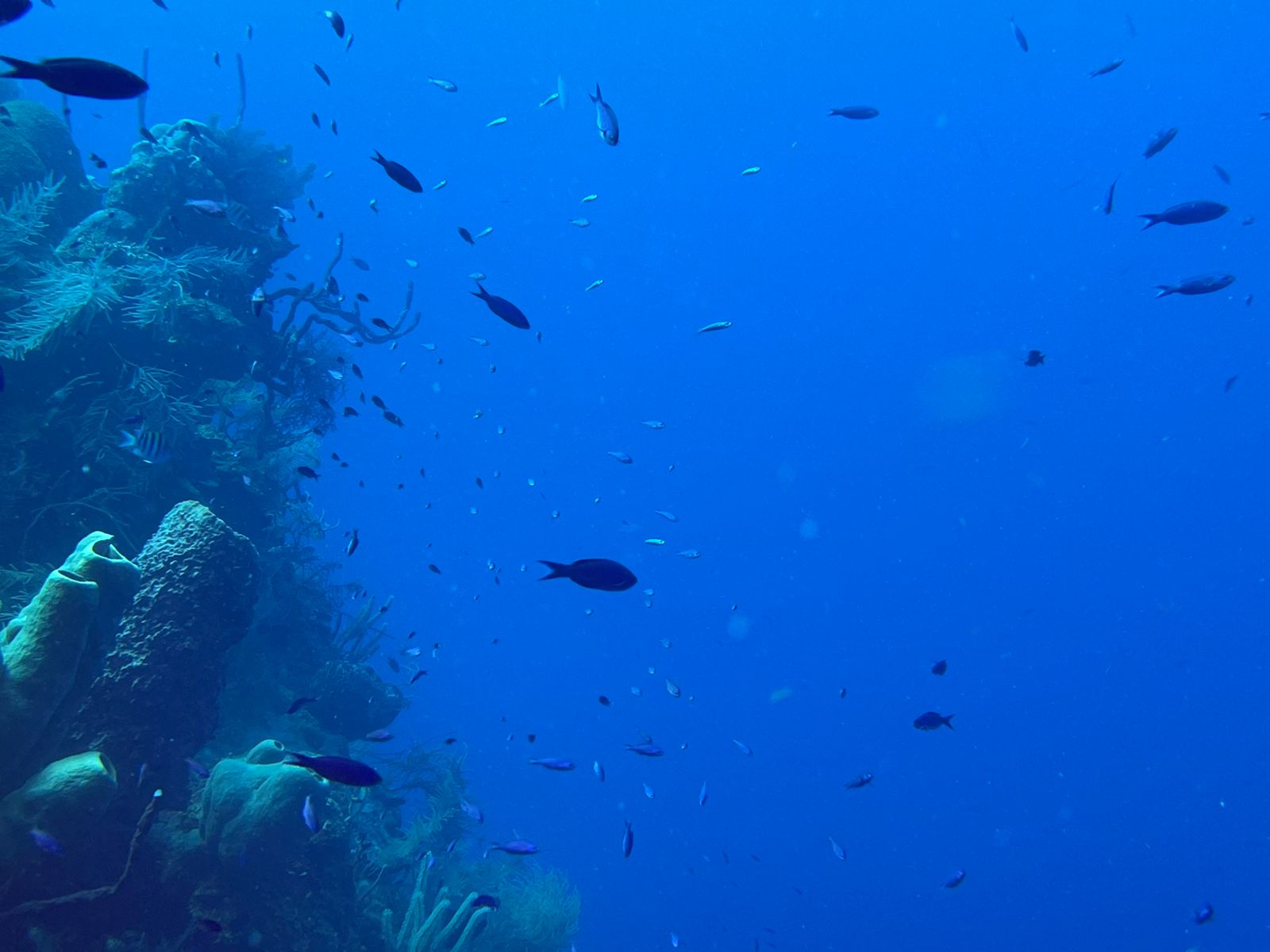
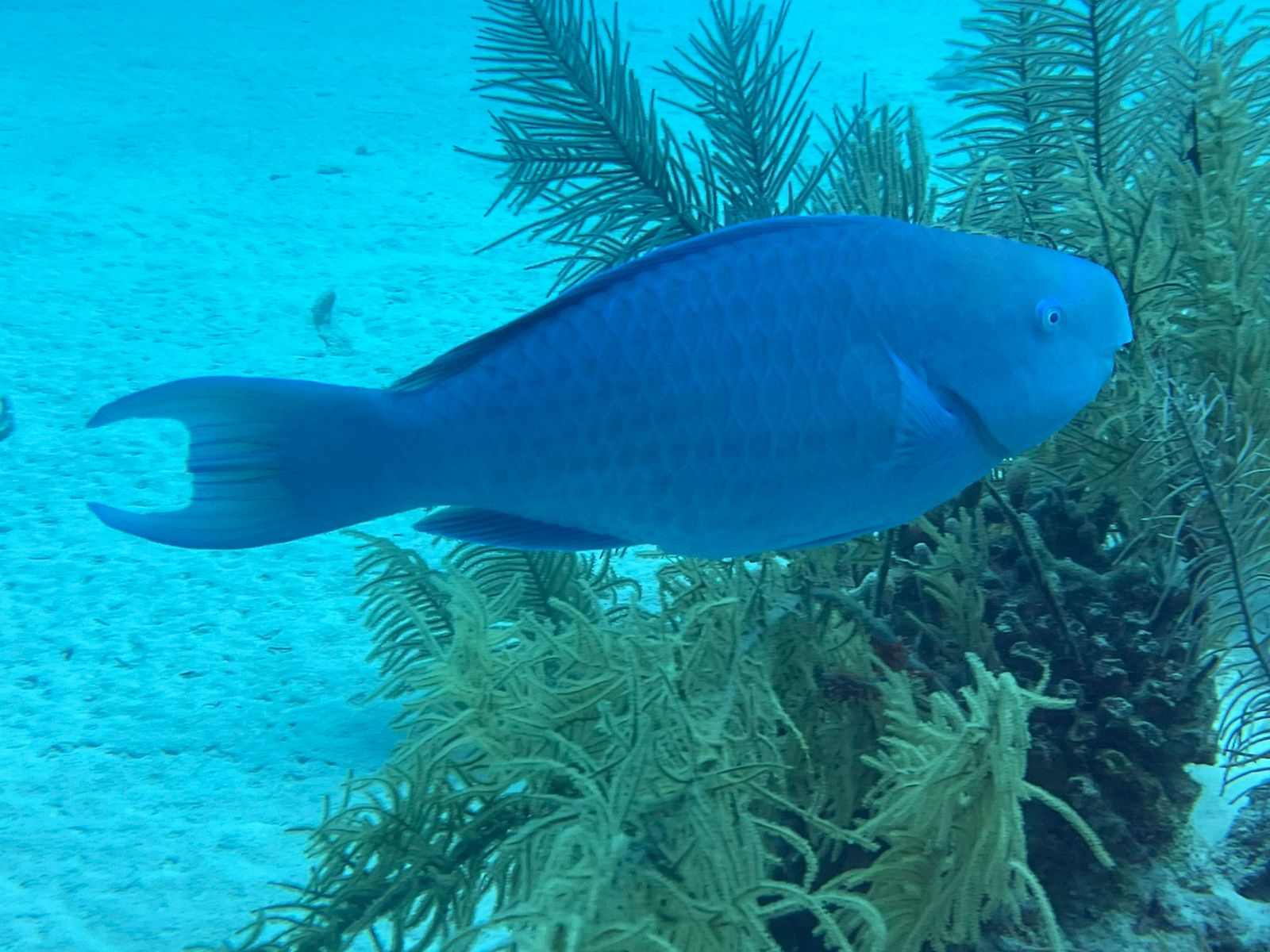
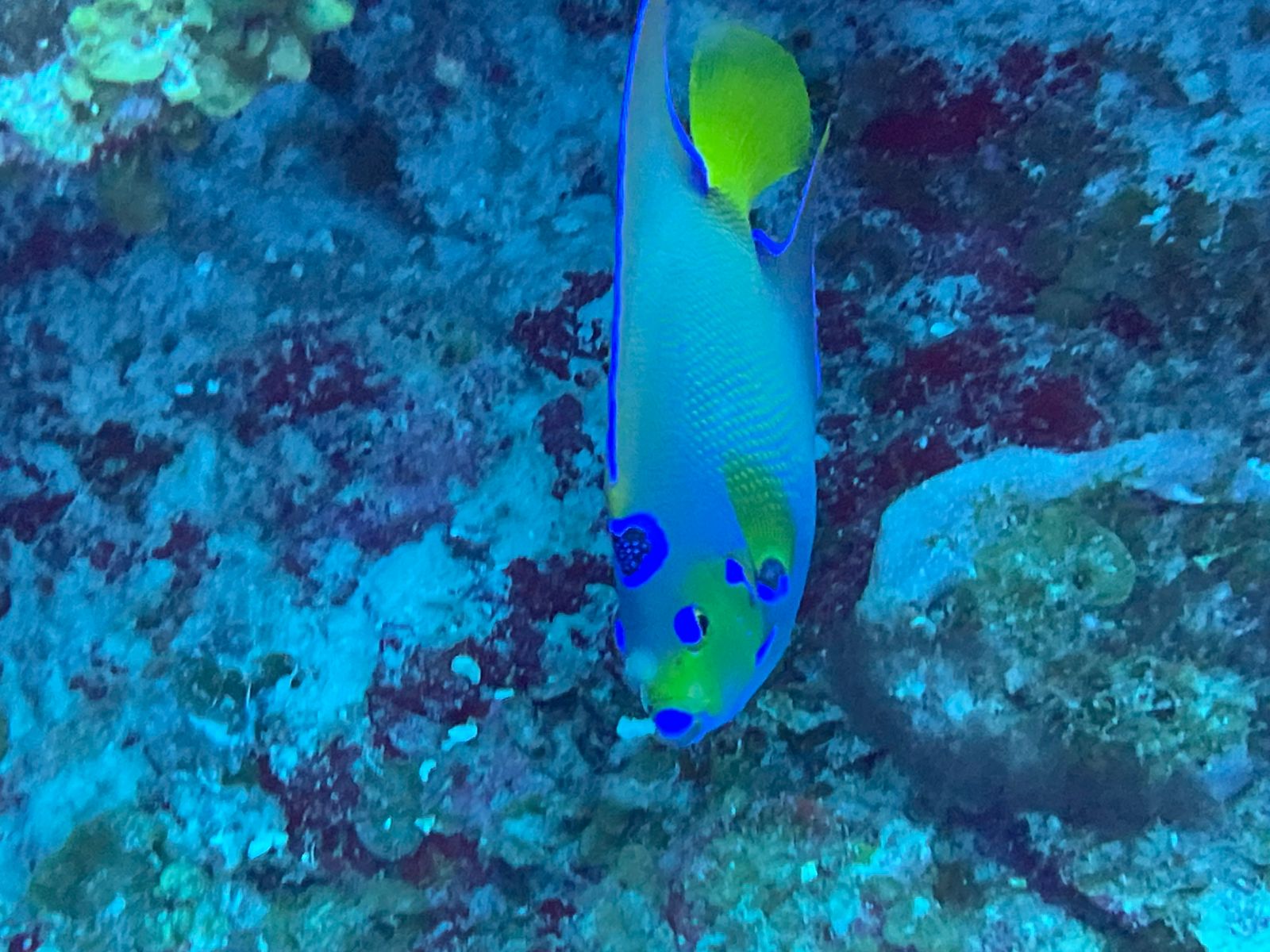
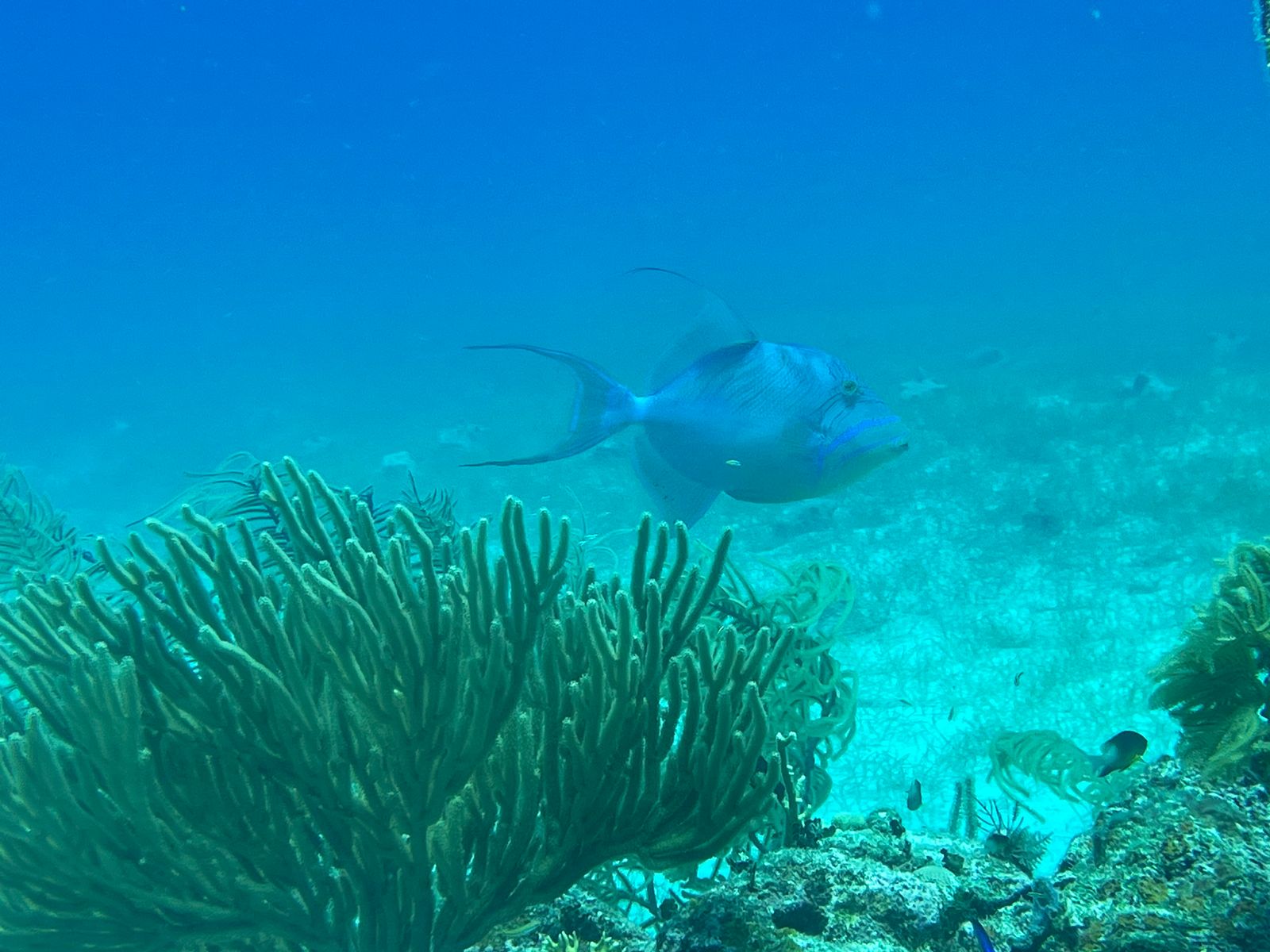
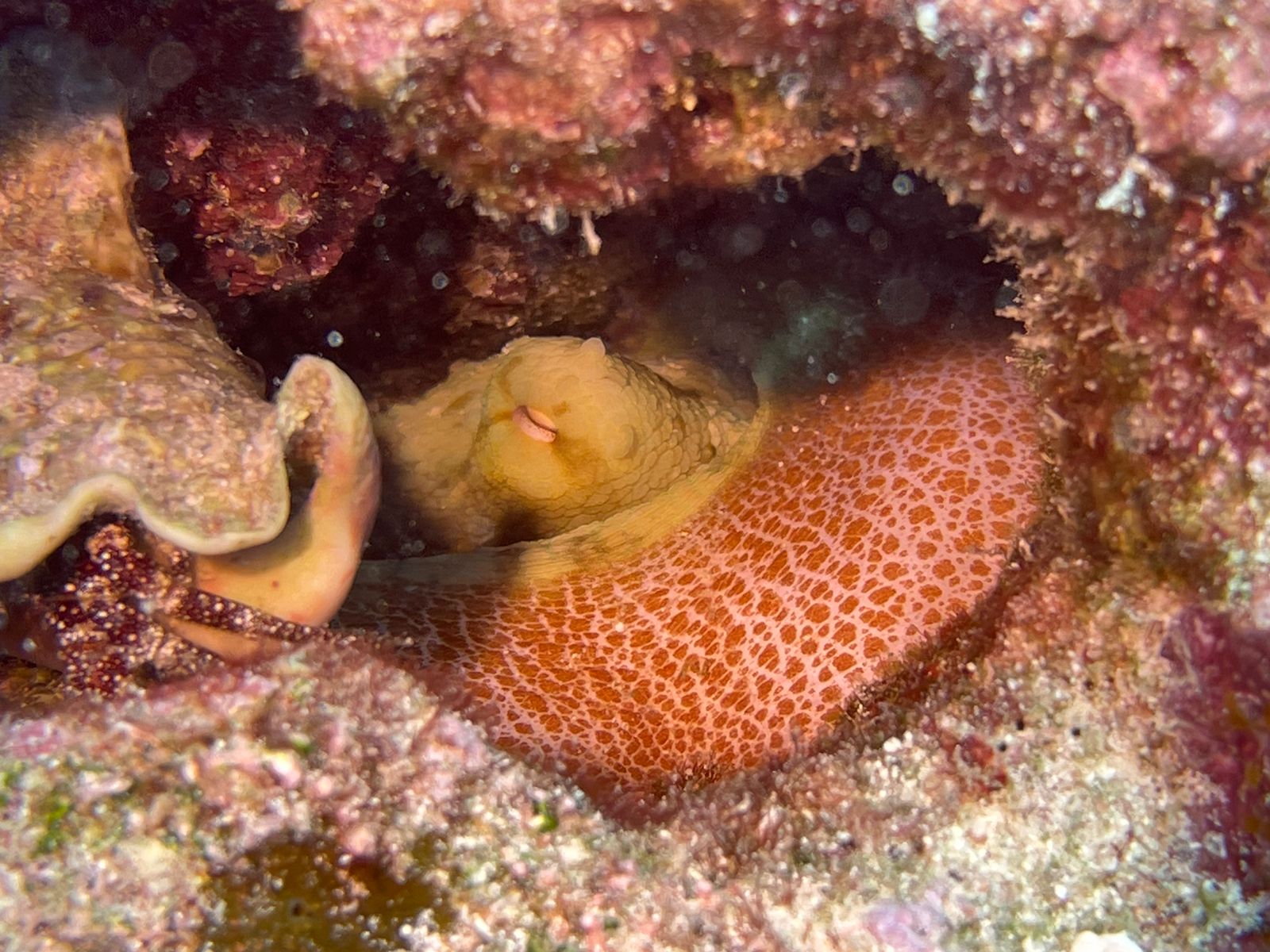
From queen triggerfish to rainbow parrotfish, from queen angelfish to hogfish, from spotted drums to blue tangs, butterflyfish, snappers, grunts, balloonfish, chromis, lionfish, flounders, trumpetfish, octopi — you name it, and there it was! At that point in time, my number one favourite fish was by far the black triggerfish — a black, blimp-shaped fish with two white lines running along its dorsal fins. Whilst its appearance is not too extraordinary, the way it swims is just too elegant and graceful. I’m sorry, Goldeen, but you’ve been bested!
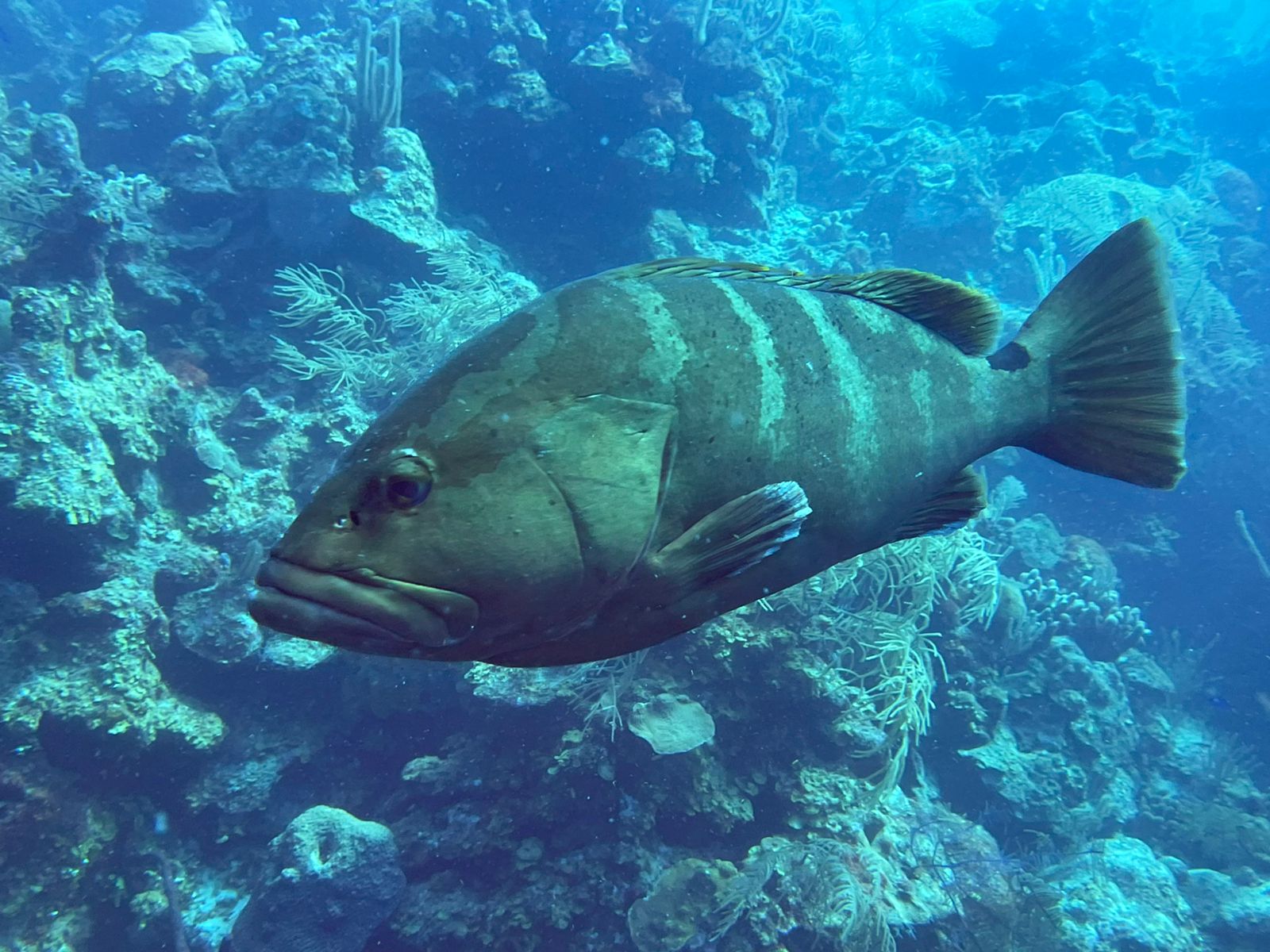
Another (more than) honourable mention is this one Nassau grouper that followed us all the way throughout the dive. The divemaster told us that a few years ago, some illegal fishing was taking place when they hit the grouper right in the head with a harpoon. The divemasters promptly took care of it, and it has since been following them around whenever they dive. How much of this is true, I have no idea.
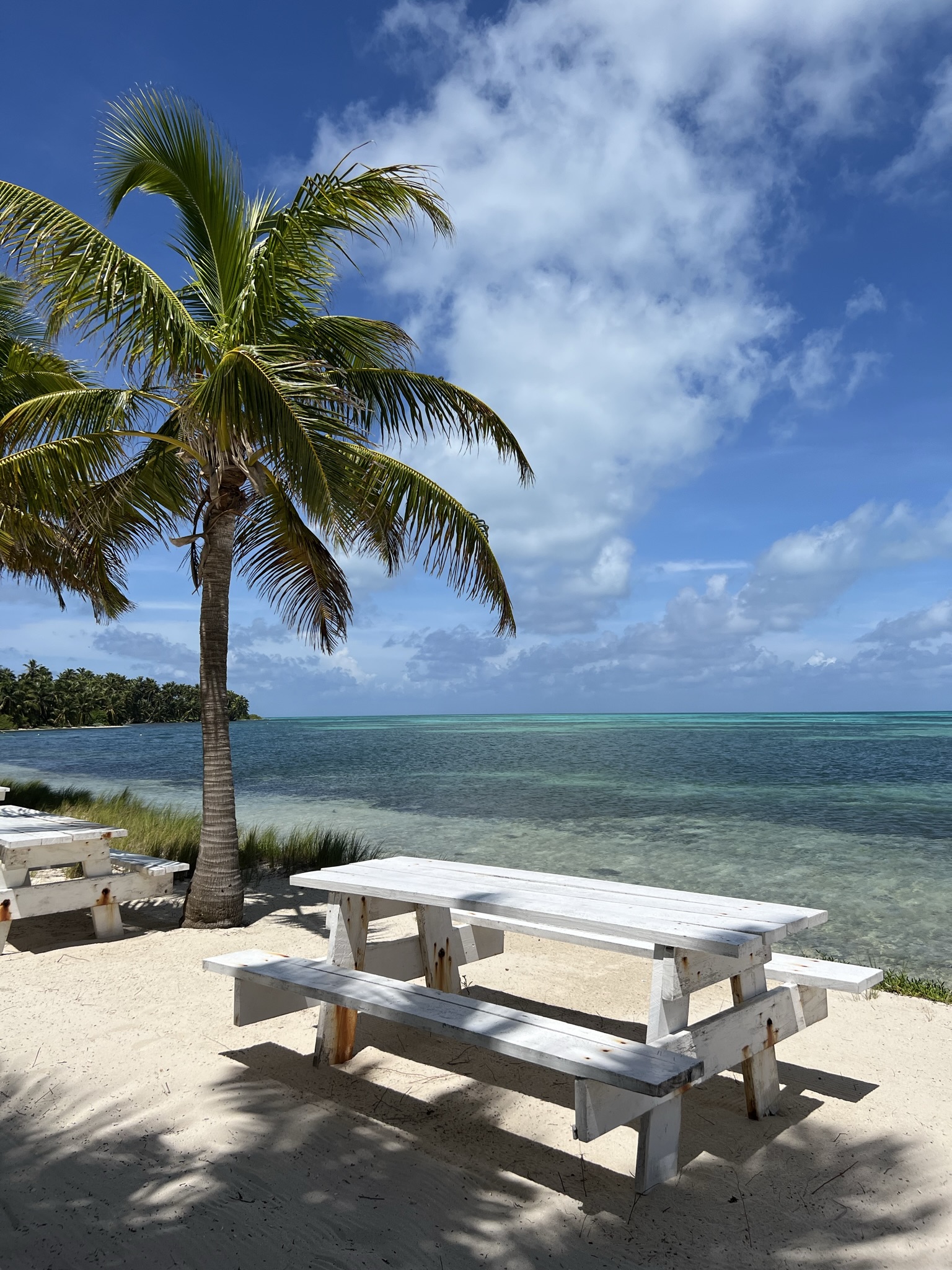
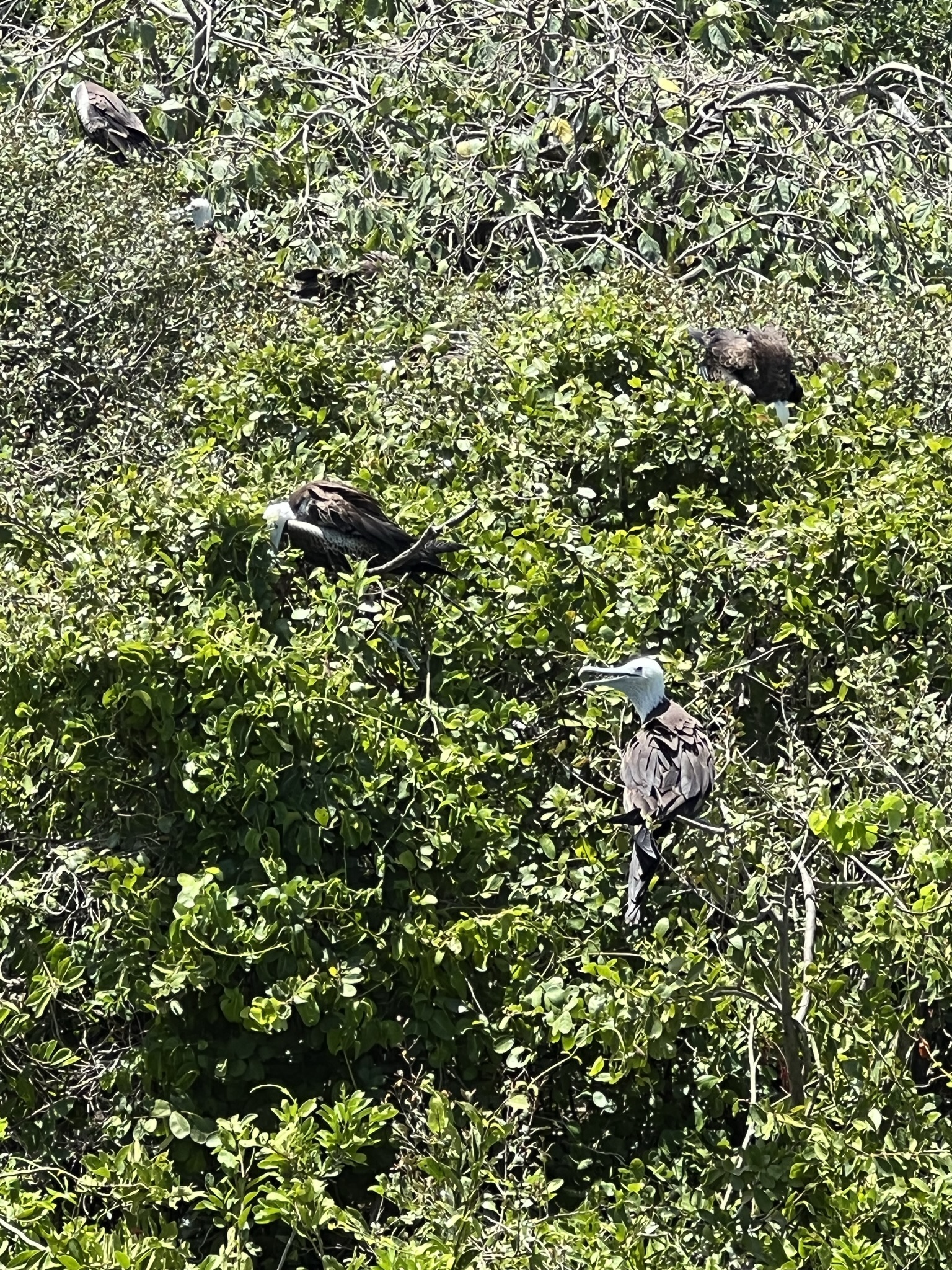
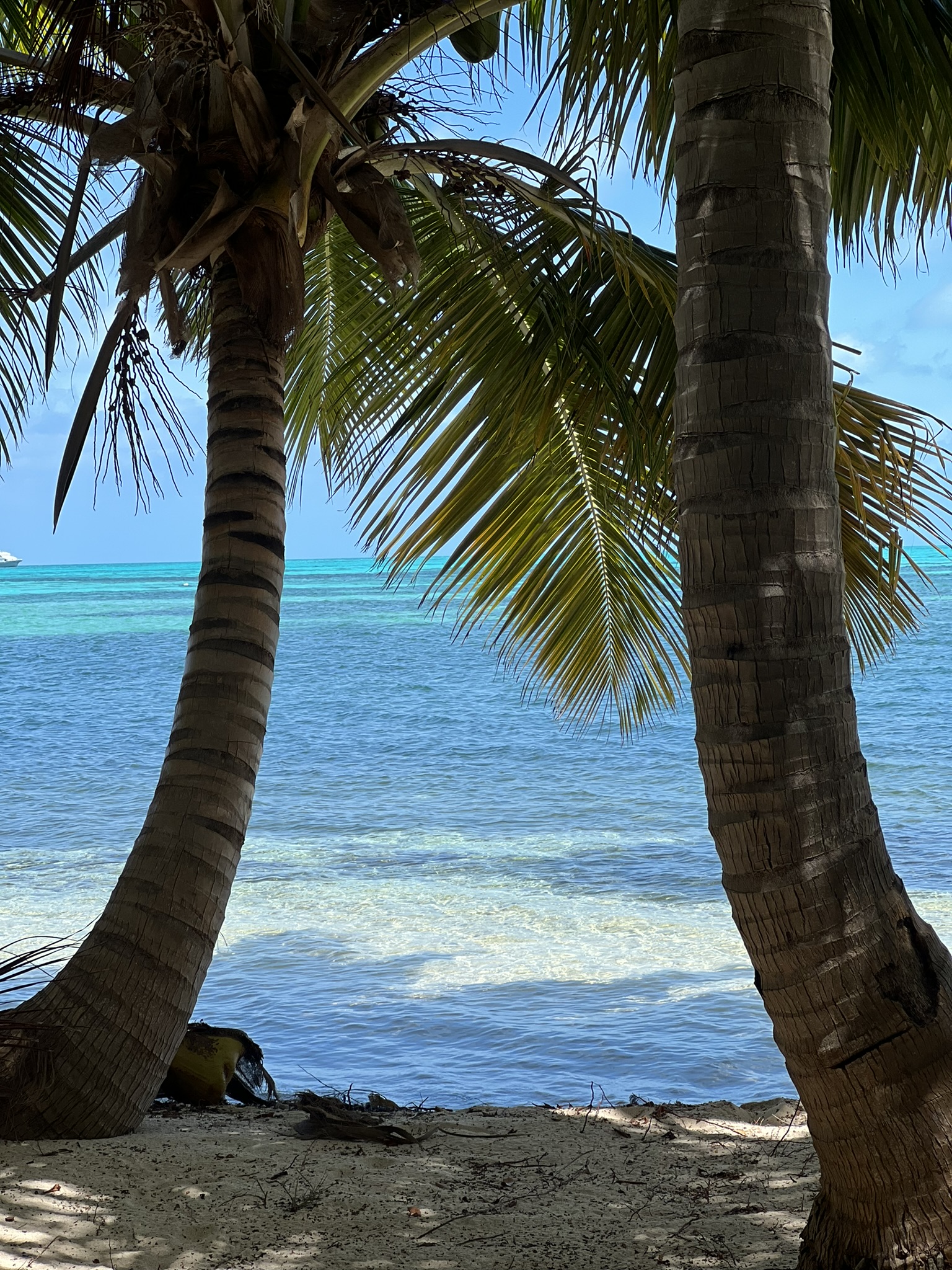
After the dive, we took a break on Half Moon Caye – a truly magnificent place that lives up to its title. Shaped like a crescent, the caye is the best example of what one would call a tropical island. It is Belize’s first nature reserve and Central America’s first protected marine reserve, serving as a bird sanctuary where red-footed booby colonies breed.
After a much-deserved break on the island and a short walk to the sanctuary, accompanied by hundreds of hermit crabs, we got back on the boat for one final dive at the Aquarium at Long Caye. Here, much like at Half Moon Caye, we got to see a vast variety of fish and coral, with even more sharks accompanying our swim-throughs.