Tulum – Day 2: Cobá Ruins and Jungle Tours
TULUM
Day 2: Cobá Ruins & Jungle Tours
September 06, 2022
The next day, I found myself on yet another unplanned tour, suggested by a local who worked at a restaurant I dined in. A beaten-down minivan picked me up in front of the travel agency, along with three other Dutch guys who’d be joining the tour.
After being dropped off in the middle of the jungle, Rogelio, our guide, explained that the first part of the tour would involve going around the jungle on an ATV, before chucking a set of keys at each of us. I hadn’t been on one of those contraptions since my trip to Turkey a few months back – only then, I had a celebrity sitting behind me. She joined us on this really amazing trip, and by the end, I had practically fallen in love with her. The time before that, it was on a tour in Peru where I rolled over with the entire thing and ended up with a concussion. What a tangent, huh? Anyways, I was really hoping it wouldn’t be as eventful this time round.
We drove through the jungle, the road bumpy as hell given all the roots and loose rocks. We spotted a couple of Yucatán rust-rump tarantulas along the way – terrestrial spiders that usually come out during the day when they haven’t eaten anything, becoming more aggressive in the afternoon due to the stress of the heat and hunger.
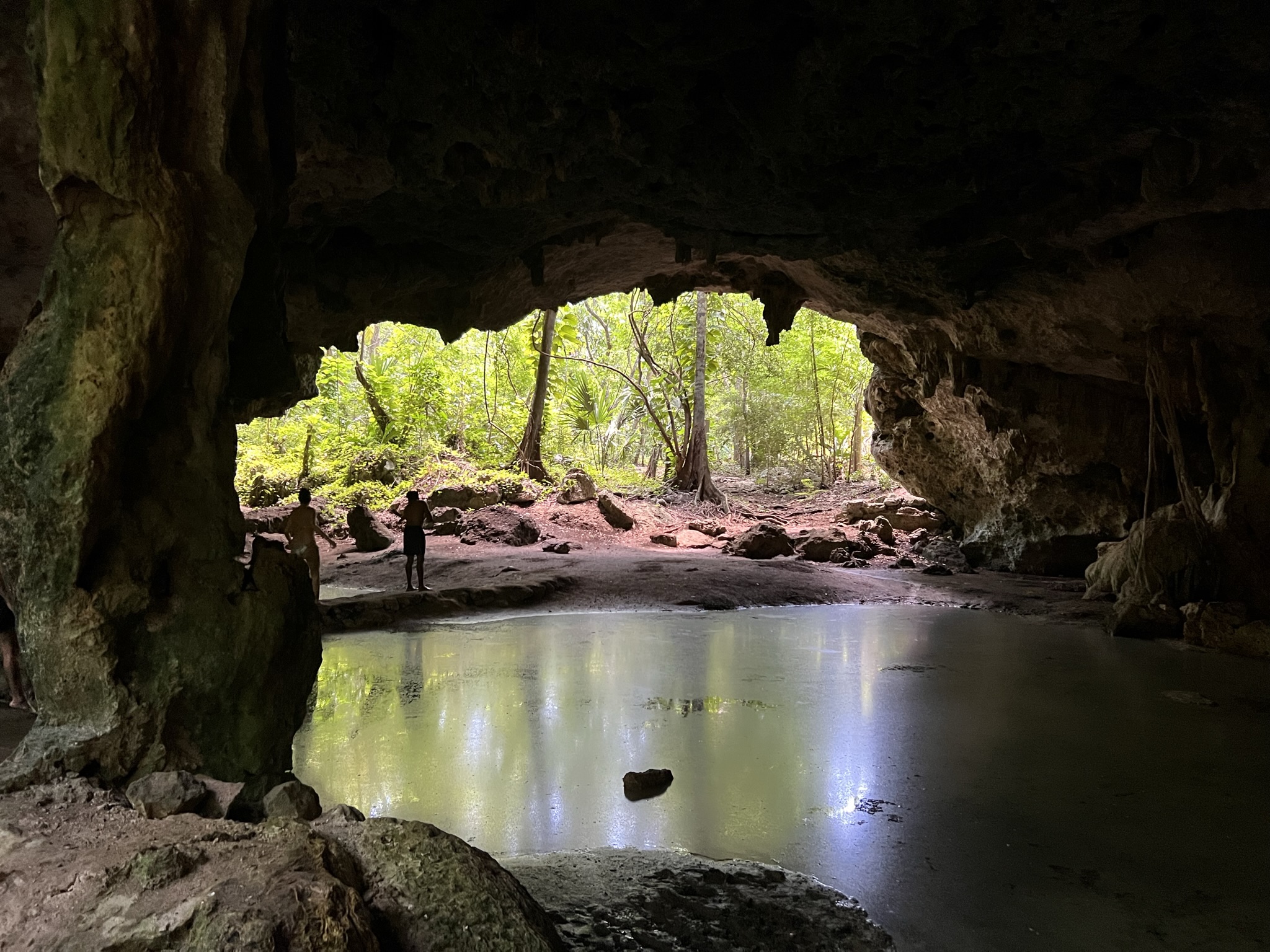
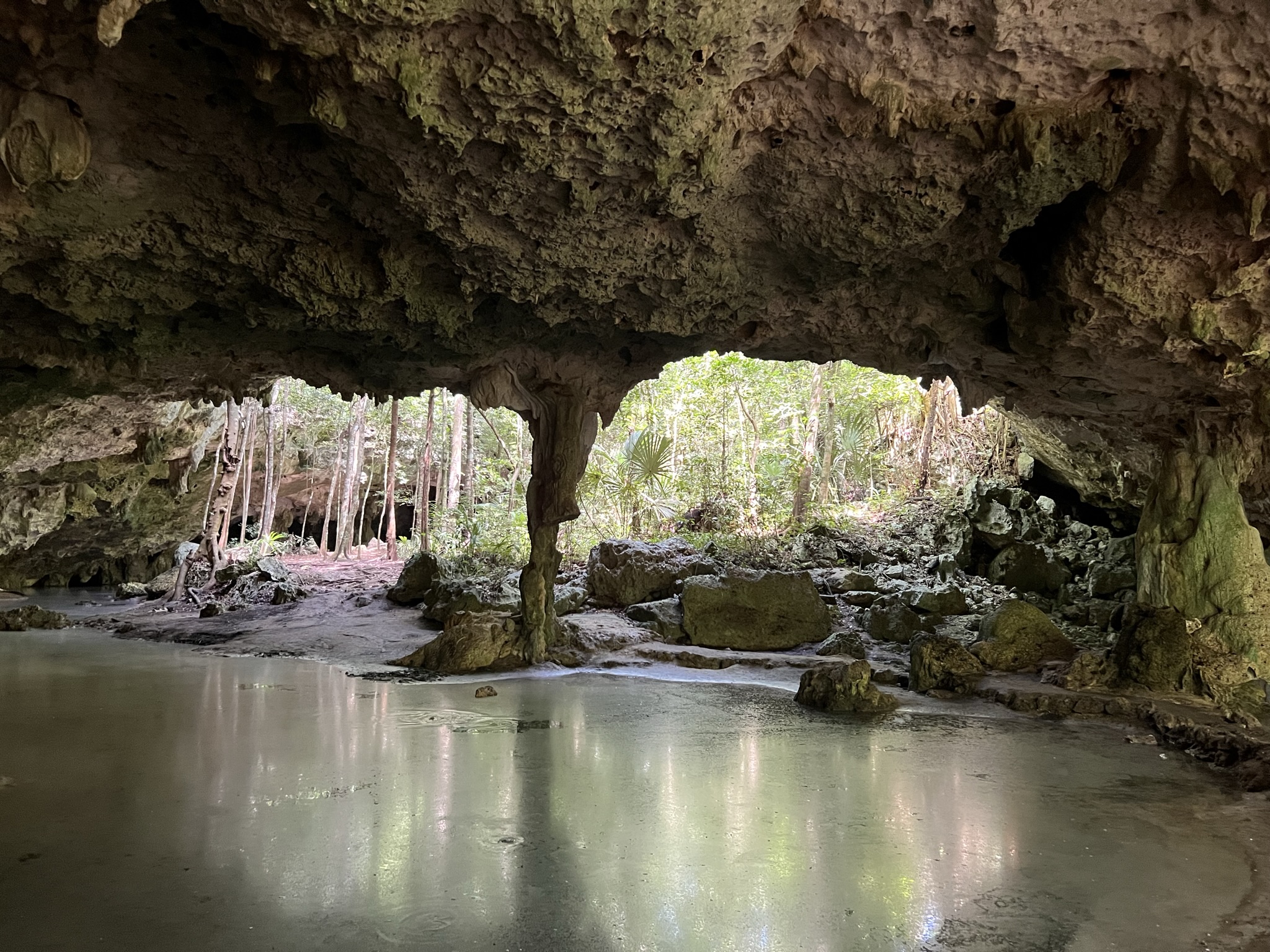
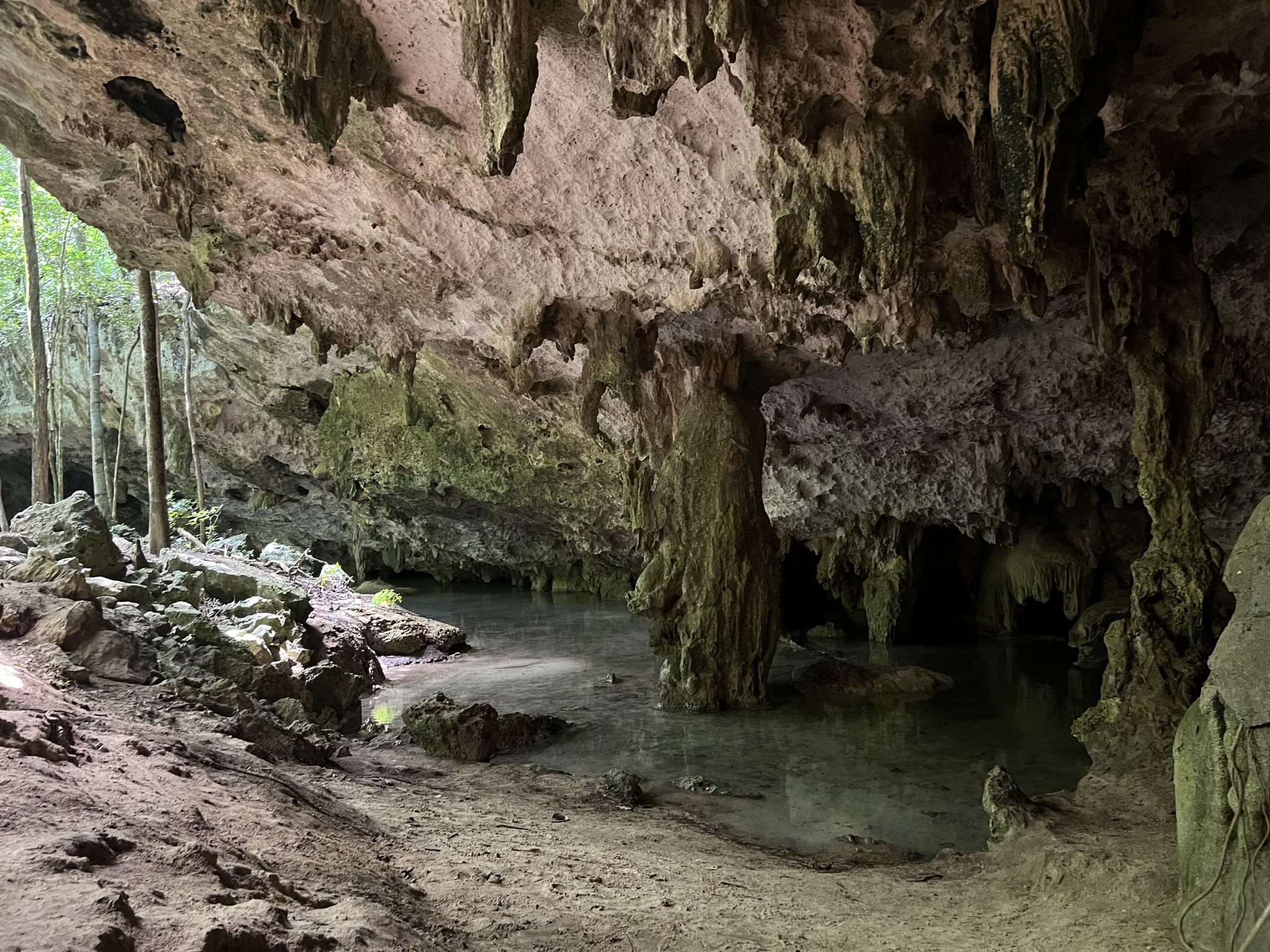
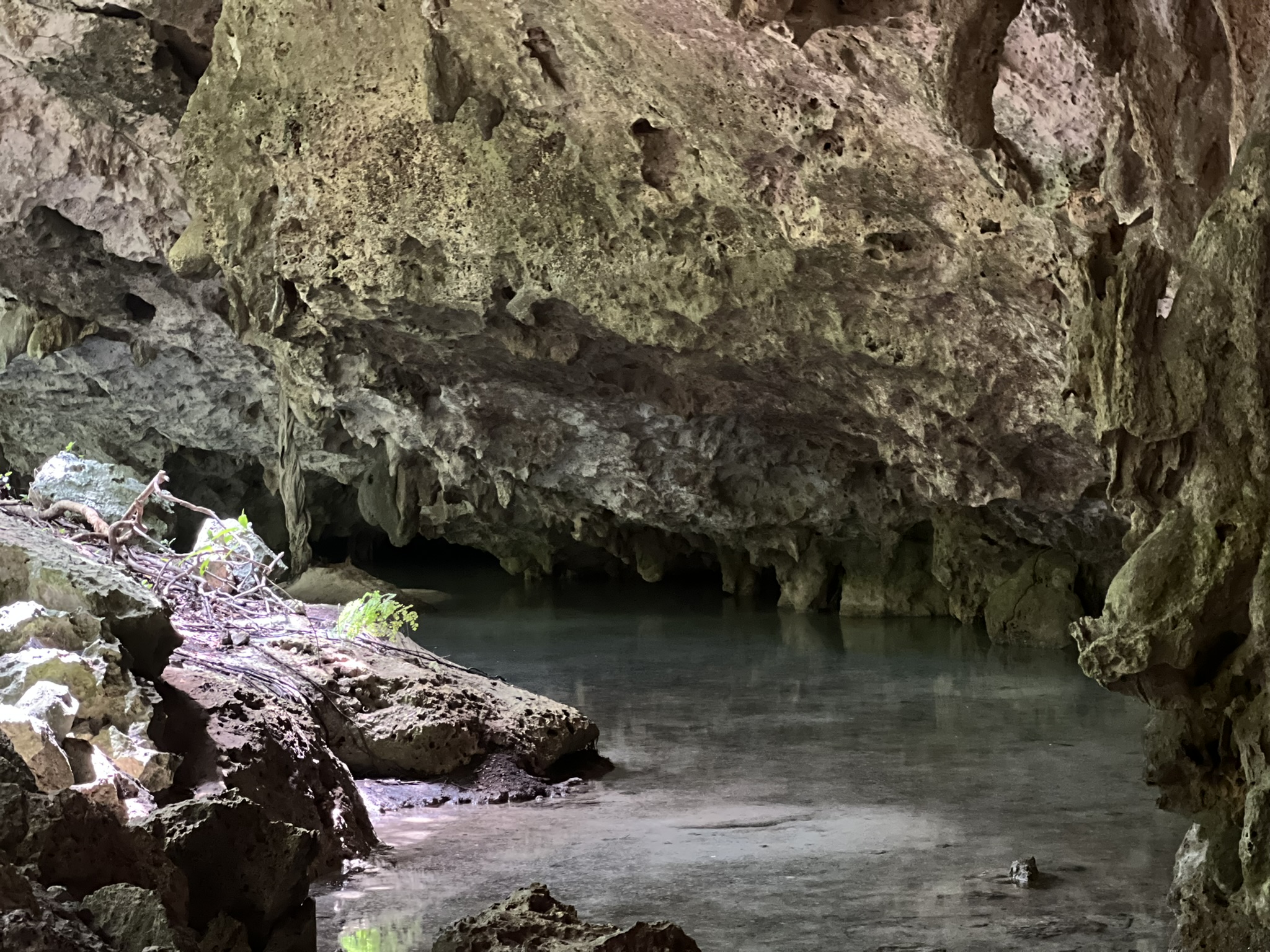
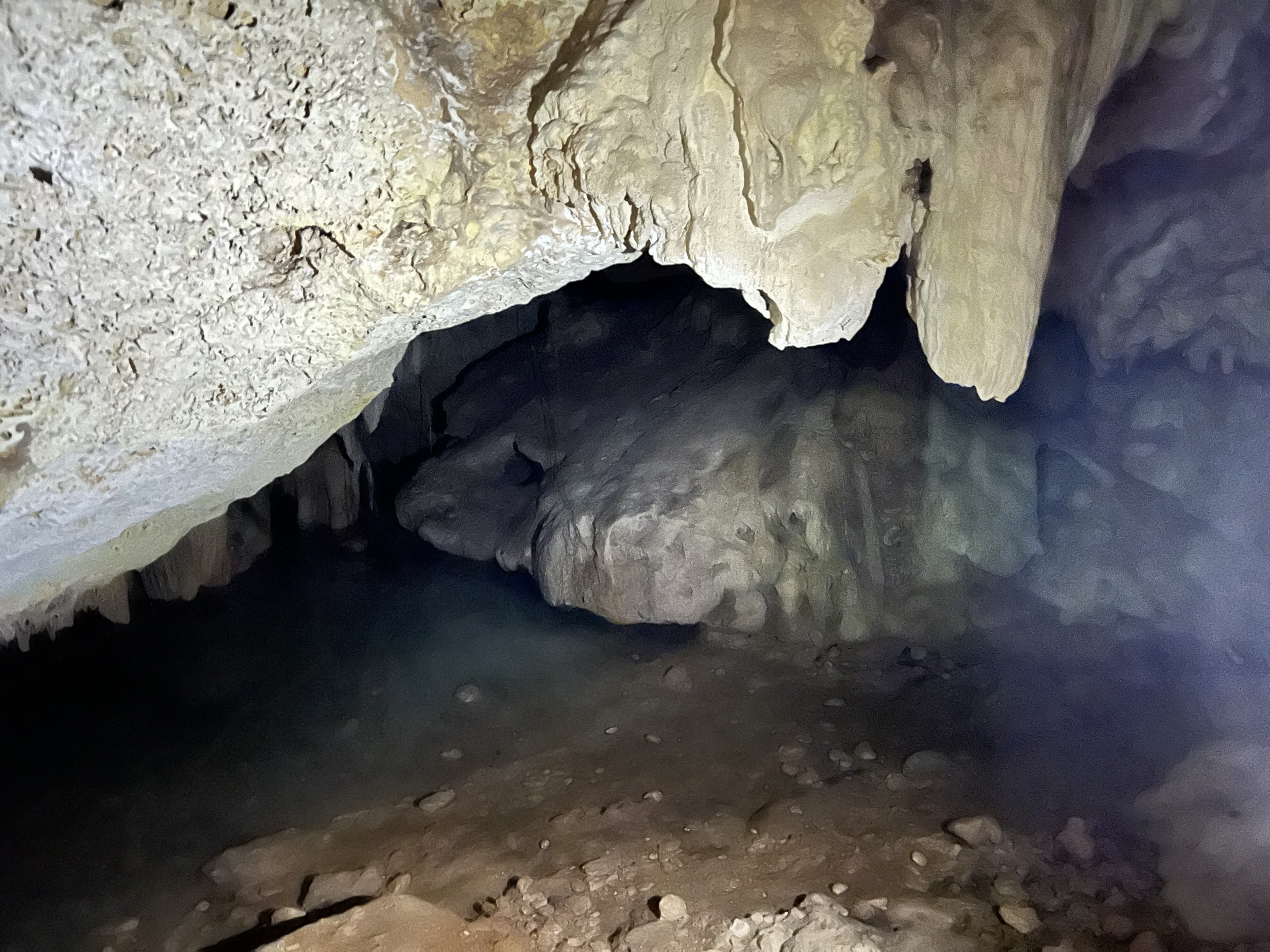
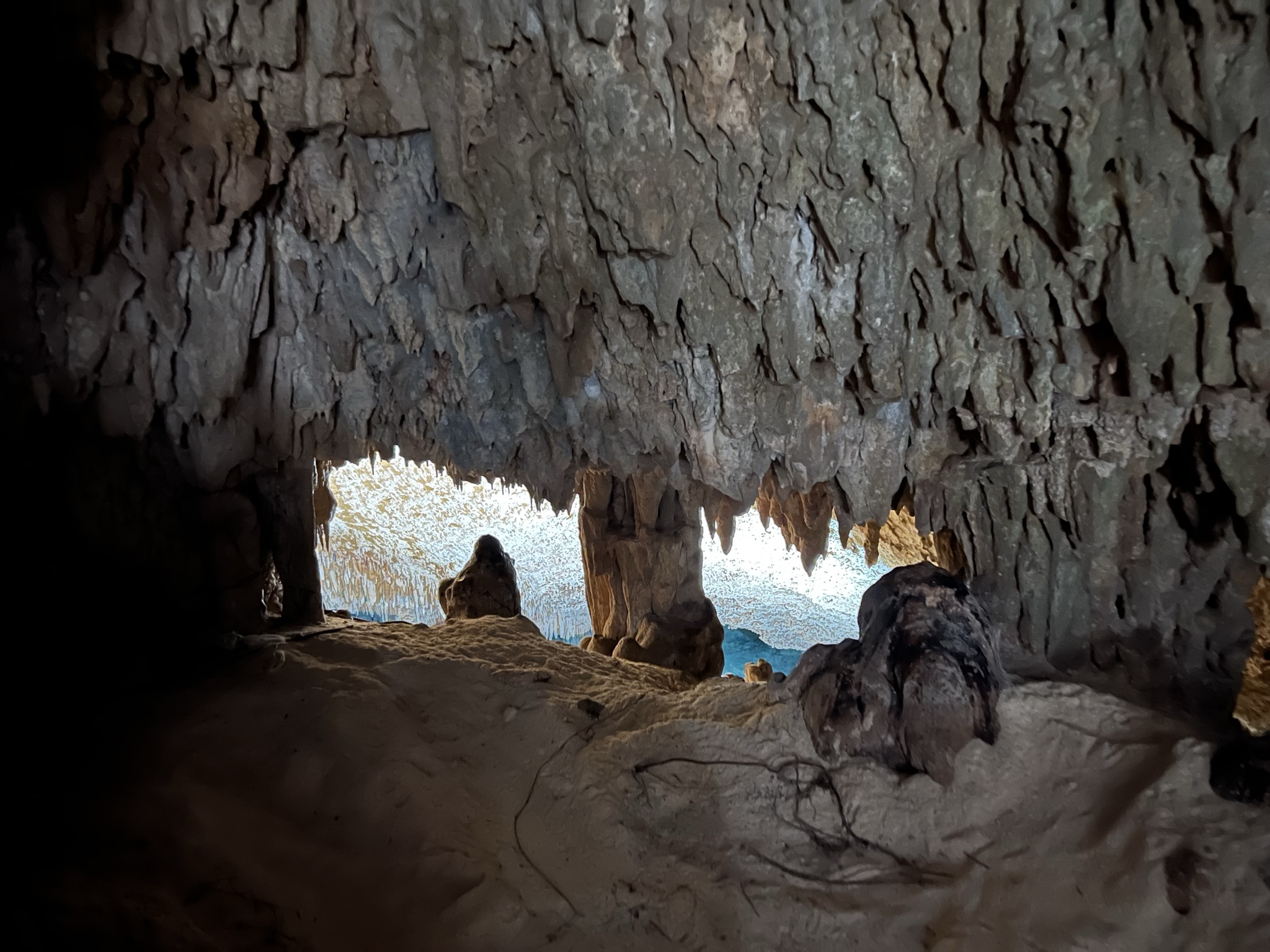
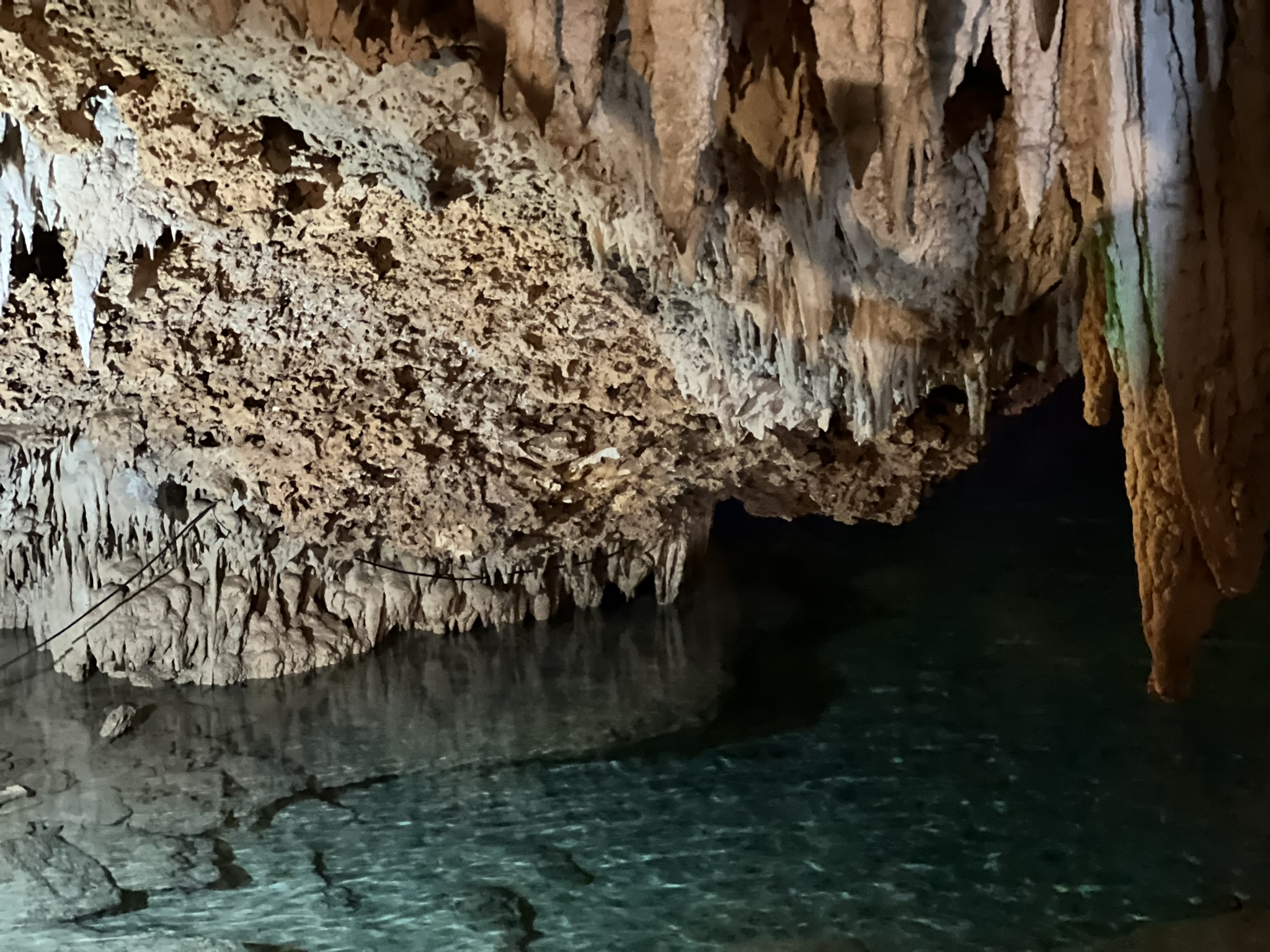
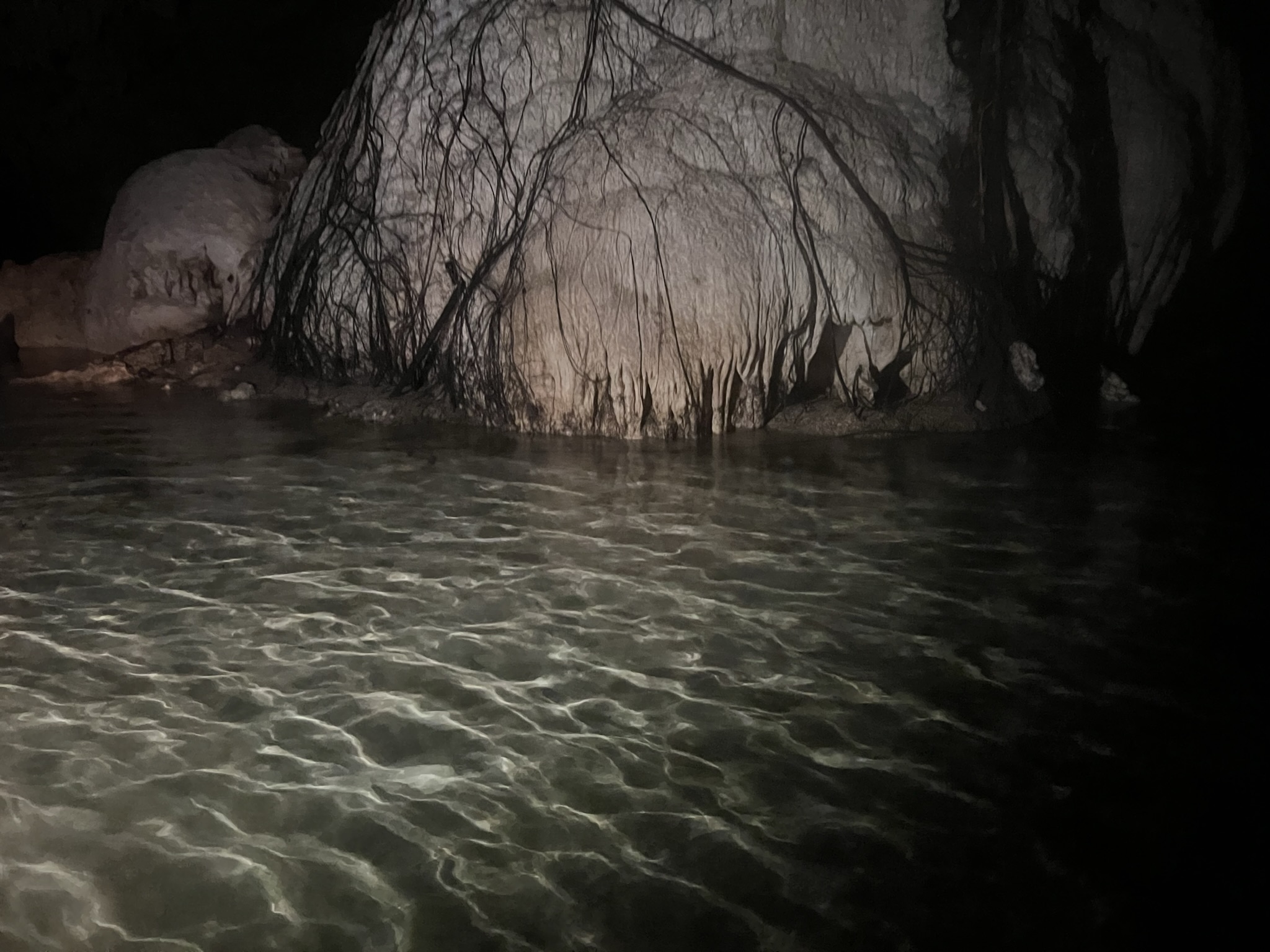
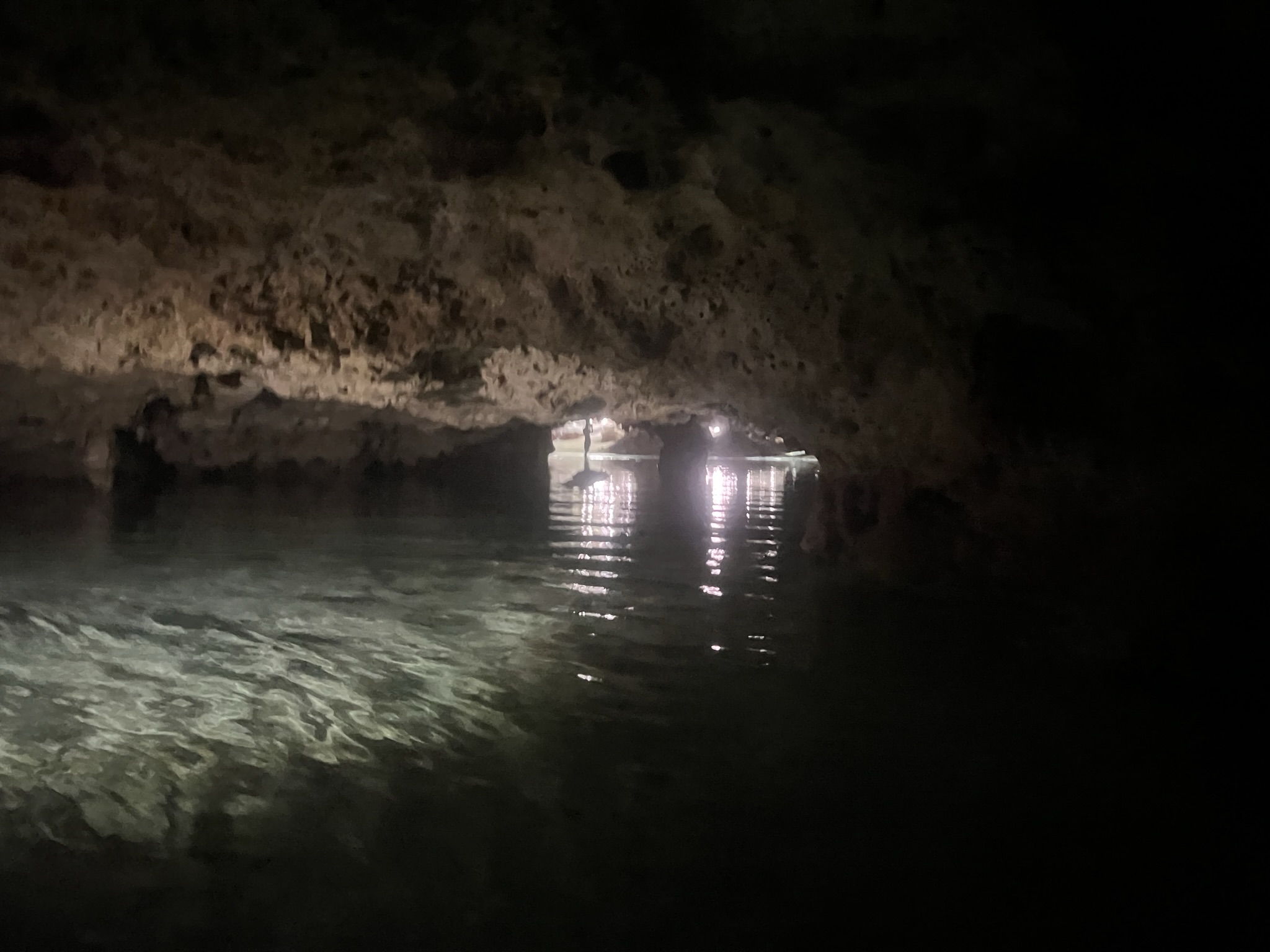
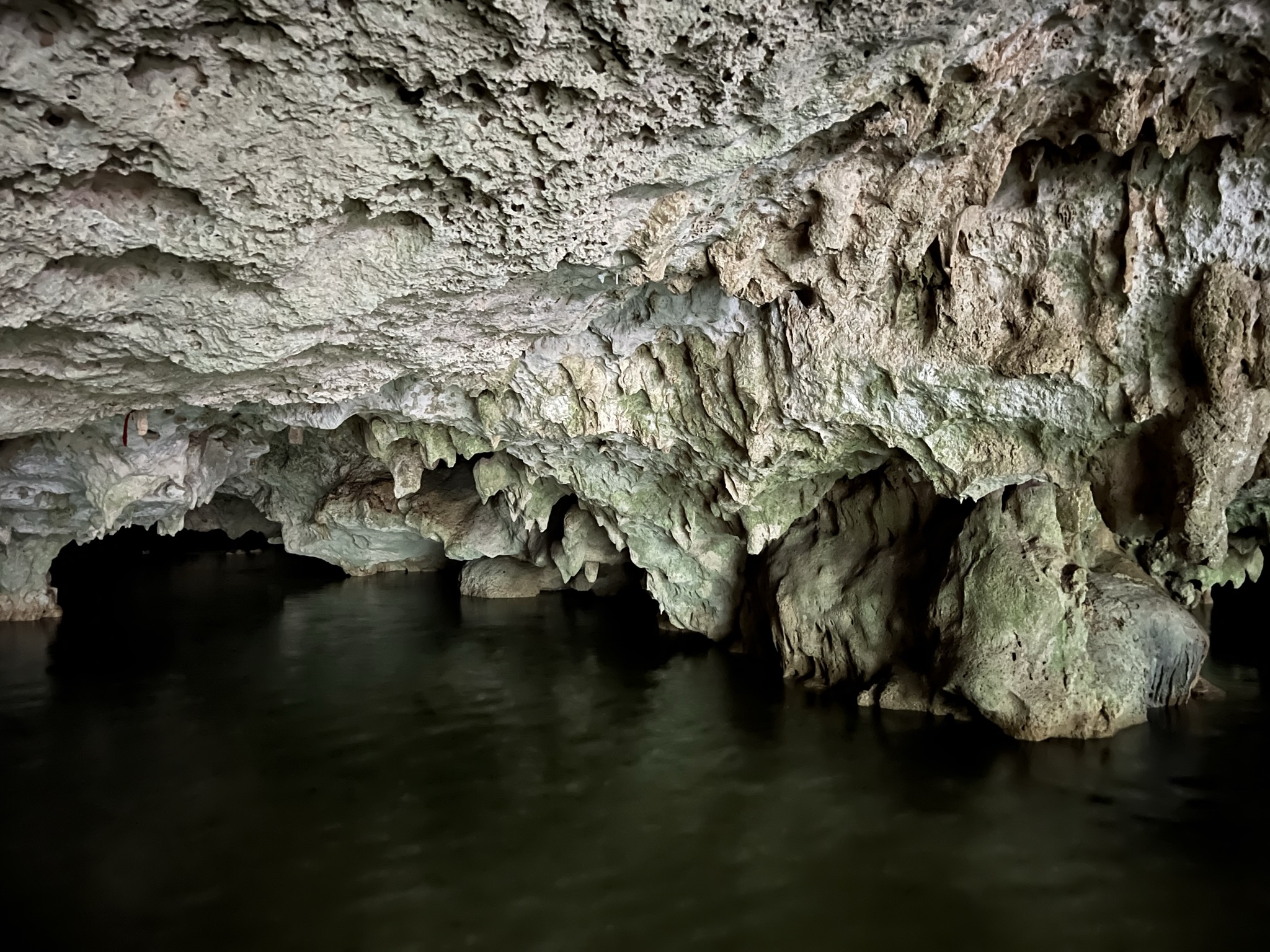
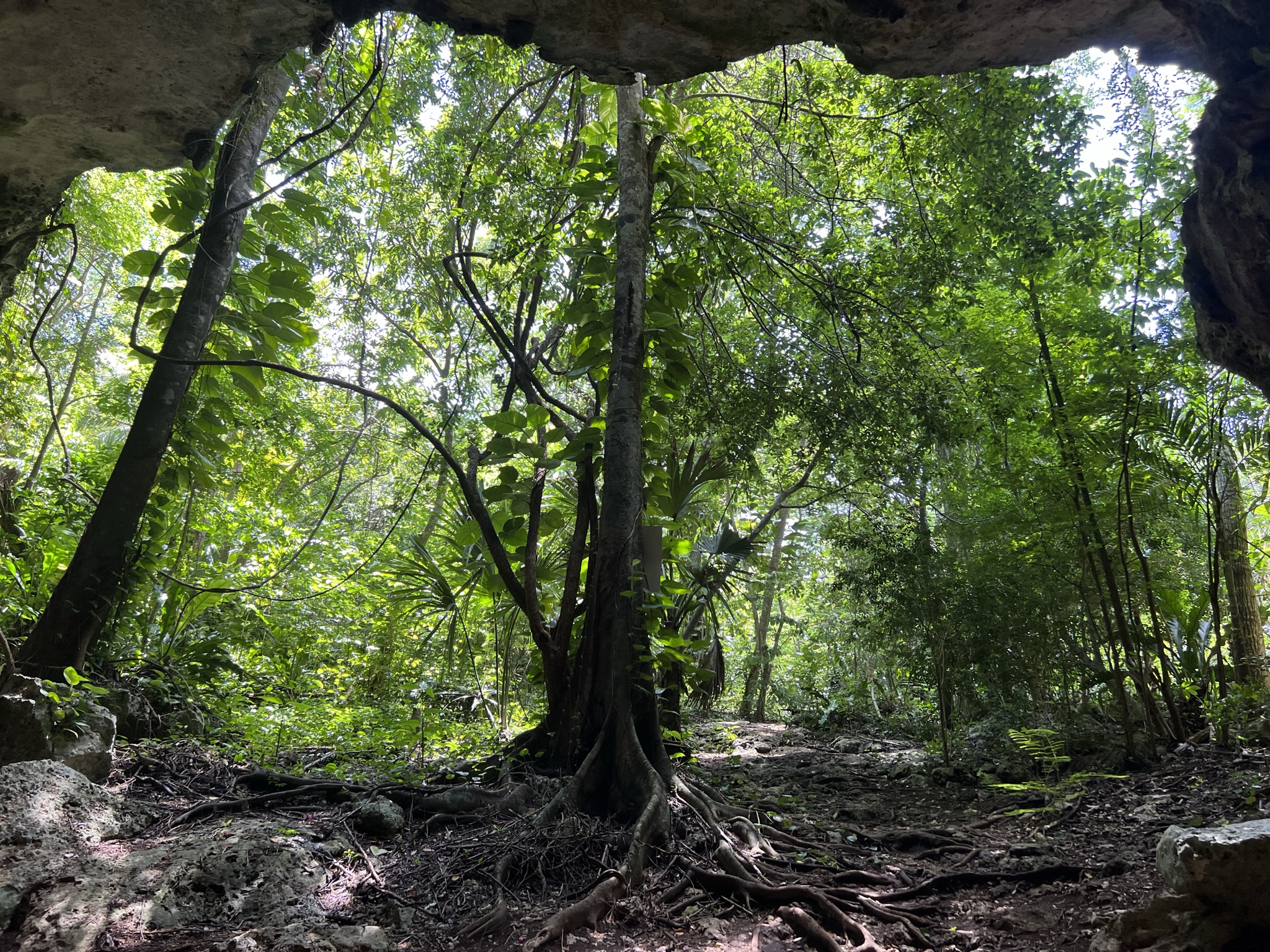
The trail led us to three cenotes, the first one being Cenote Aluxes – which means “cenote of the trolls”, as the ancient Mayans used to believe that it was guarded by such creatures. Conversely, some Mayans thought these small beings wreaked havoc and caused damage all around the peninsula. After this, we went to Cenote Gran Caverna – a huge underground complex through which we swam (very reminiscent of Río Secreto in Cancún) – and the Jaguar Cave, another underground cave system.
Cobá
Having refreshed ourselves with a nice underground swim, we then headed towards the ruins of Cobá. A very uninterested, unenthusiastic guide recounted a very brief, very basic summary of a couple of Mayan beliefs and traditions, and then proceeded to explain the bare minimum about the site.
The word Cobá, he told us, means “dirty water” – a reference to the two muddy green lagoons that surround the site: Lake Cobá and Lake Macanxoc. Owing in part to my trust issues and to the fact that he seemed unreliable, I later reconfirmed the meaning of the name, which, in reality, translates to “waters stirred by the wind.” The city was first settled around 300 BC but rose to prominence during the Early Classic period, with a population of around 50,000 at its peak. It is known for the large number of stelae found on site and is considered a nexus of the Mayan world, being connected to other major cities via a large network of sacbeob.

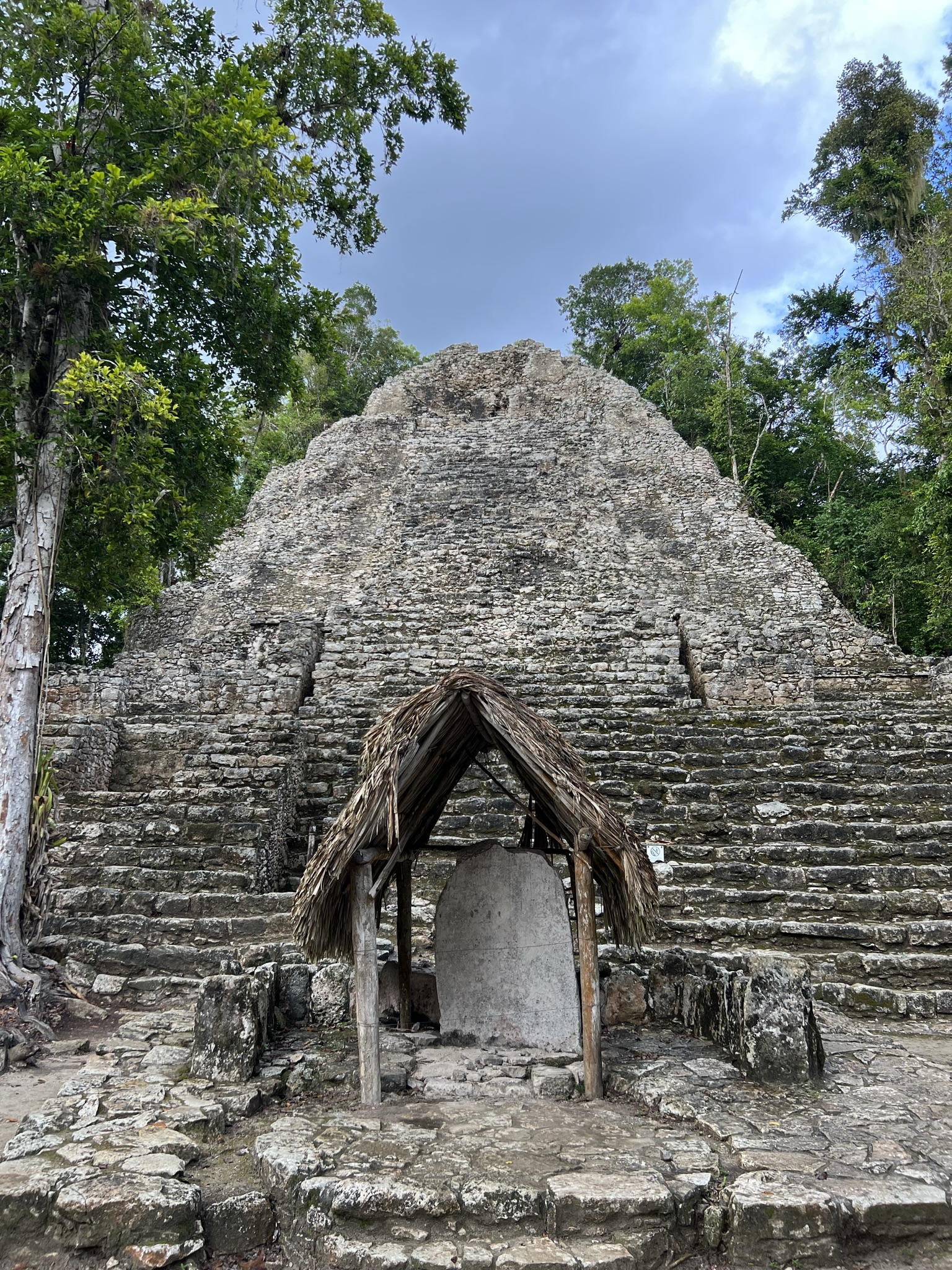
Upon entering the site, the Cobá Group can be seen immediately, nestled between the two lagoons. Here, the most impressive structure is the Acropolis, found to the east of a central plaza- an area containing over forty other structures, including rooms, stelae, and courtyards, all built atop a huge platform. Standing tall at 24 metres is the equally imposing pyramid of La Iglesia – a nine-tiered structure, each tier featuring numerous tiny steps, with a temple at its summit and a stela with a round altar at its base. This stela details the story of Xaman K’awiil and his ascent to the throne, with multiple jade artefacts discovered nearby.
The complex also features two pelote courts, with the one on the east retaining its original rings and panels depicting prisoners at the top of its walls. This court faces the Kan stairway, which has glyph blocks on its steps and two stucco skulls flanking its sides.

Self-Guided Tour
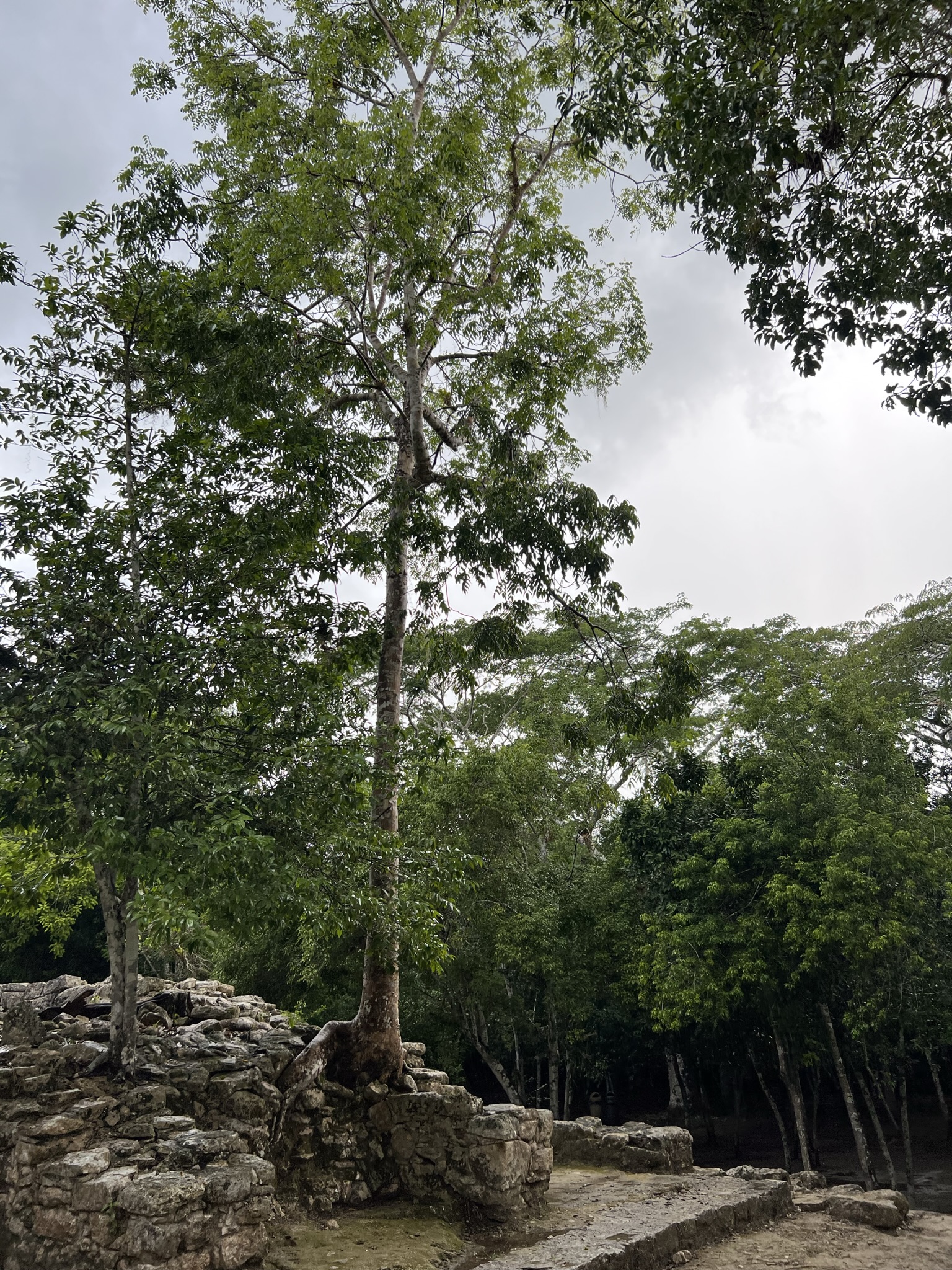
It was at this point that the guide left us to wander the ruins all alone. He literally showed us about a fourth of the site before abandoning us! But if I had come to learn one thing over the previous few weeks, it’s that no guide is better than a bad one. This meant we could roam around freely, appreciate the beauty of the place for however long we wanted, and learn by reading the information panels next to the structures.
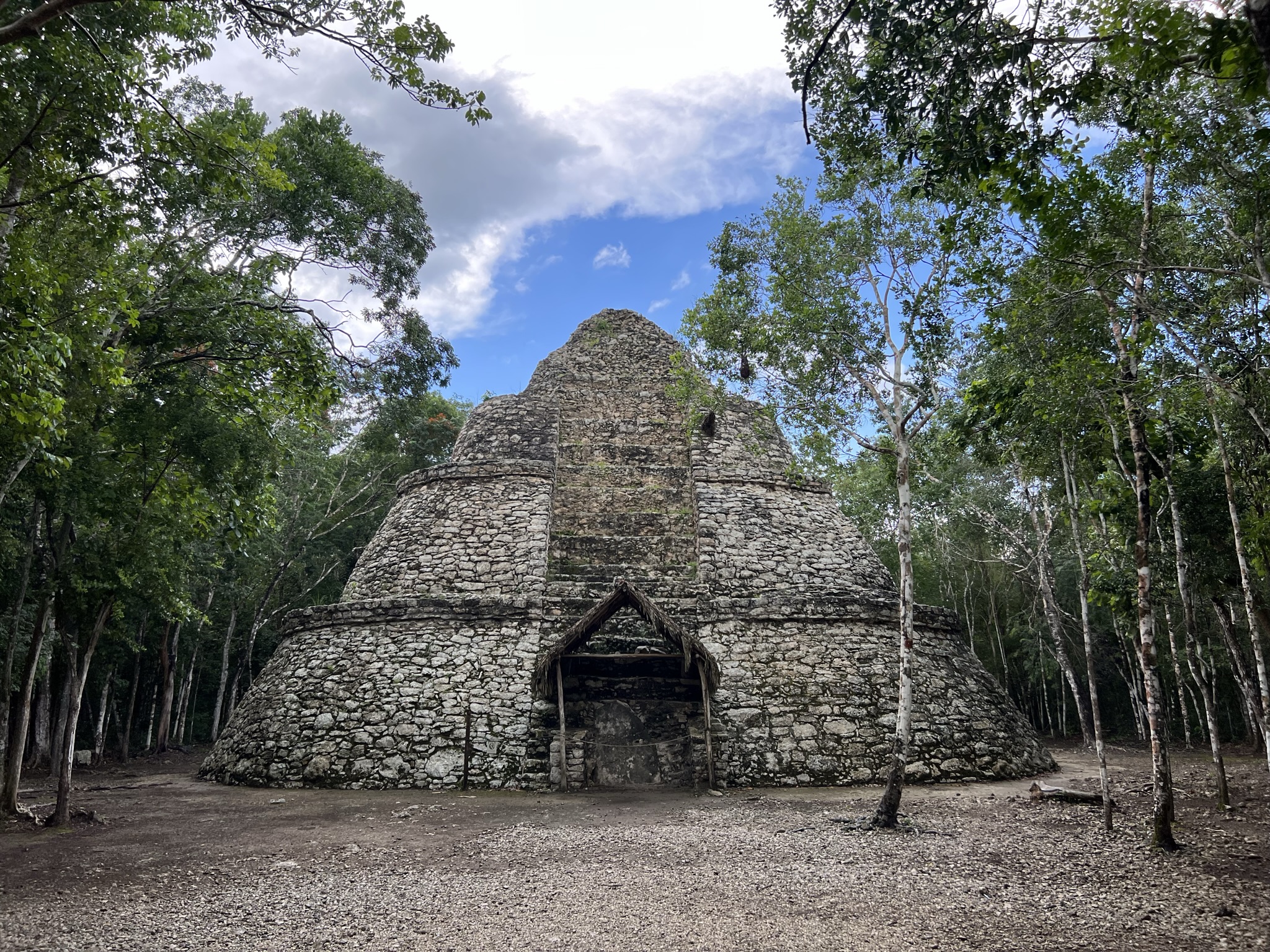
Walking to the northeast, we encountered a few structures from Block D, the most prominent being the Paintings Group, which features the East Coast style that reminded me of what I had seen at the ruins of Tulum the previous day. Here, a central plaza is surrounded by a number of buildings, including the Temple of the Paintings – a pyramid with a temple at the top containing painted murals, among others. Another plaza to the north, called Xaibé (meaning “crossroads”), contains a conical, four-sided pyramid and a number of sacbeob, including the longest sacbé in the Mayan world, which connects to the nearby city of Yaxuná.
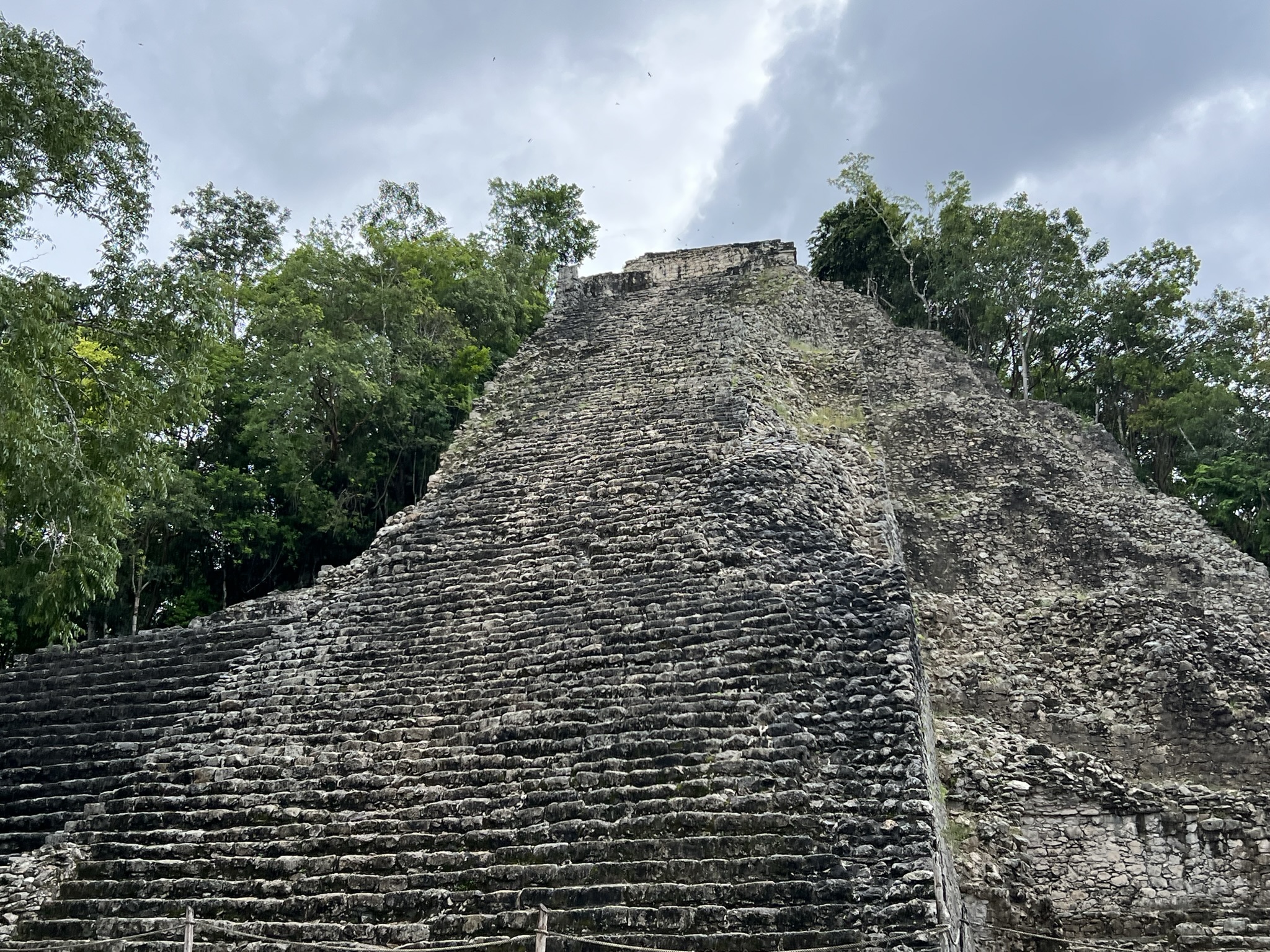
Further north lies arguably the most important complex – the Nohoch Mul Group. The walk there was one of the most pleasant, with a gentle breeze and light rain accompanying us, along with the chirping of hundreds of birds hidden in the surrounding jungle. After a few minutes, the imposing 42-metre pyramid of Ixmoja came into view, standing on top of an elevated area. The seven-tiered structure has characteristic rounded corners, making it look like a mound. On the ground and second levels, multiple vaulted rooms can be found, with a temple on the third level containing a stela, and another at the summit featuring depictions of… yes, again – the friggin Diving God! By that point, it felt like the universe was telling me I needed to start diving or something…
After roaming around the site a bit more and exploring to our heart’s content, we started making our way back, the rain by then unrelenting. Unfortunately, being guideless and without any signposts to lead the way, we skipped an entire complex – the Macanxoc Group – where more pyramids and stelae can be found. Admittedly, we all felt a bit bummed about missing out on a whole group, wanting to explore the entire site. Let’s just say the guide didn’t go home with an extra tip that day…
And that was Tulum. From there, I’d only be one bus ride away from my final destination in Mexico. And man, was I dreading it. Leaving Mexico after so many adventures would mean leaving home. I knew many more adventures would be waiting for me, but I had no guarantee they’d be that amazing.
Stay wild,
Marius
Post Scriptum
I don’t wanna give too much away, but while planning my entire gap year itinerary, I’d also decided to do the PADI diving course in Belize – mostly ’cause I’d read it’s a “must-do.” With diving, I’ve learned it can go one of two ways: people either love it or hate it.
Now, I always knew I loved the sea and snorkelling, but diving is another thing entirely, so I had no idea how it’d go. In hindsight, I reckon crossing paths with the Diving God so many times had something to do with how it all turned out. So yeah, thank you oh Descending God!