Shockingly, the next day had something quite unusual in store for me – some good ol’ Mayan ruins. My companions for the tour were Dominic – a local guide, and Andrea – a Mexican-born lawyer who left the country around ten years earlier to work in the US and had just quit her job to travel and find her purpose in life. I seemed to be hitting the jackpot of travel buddies!
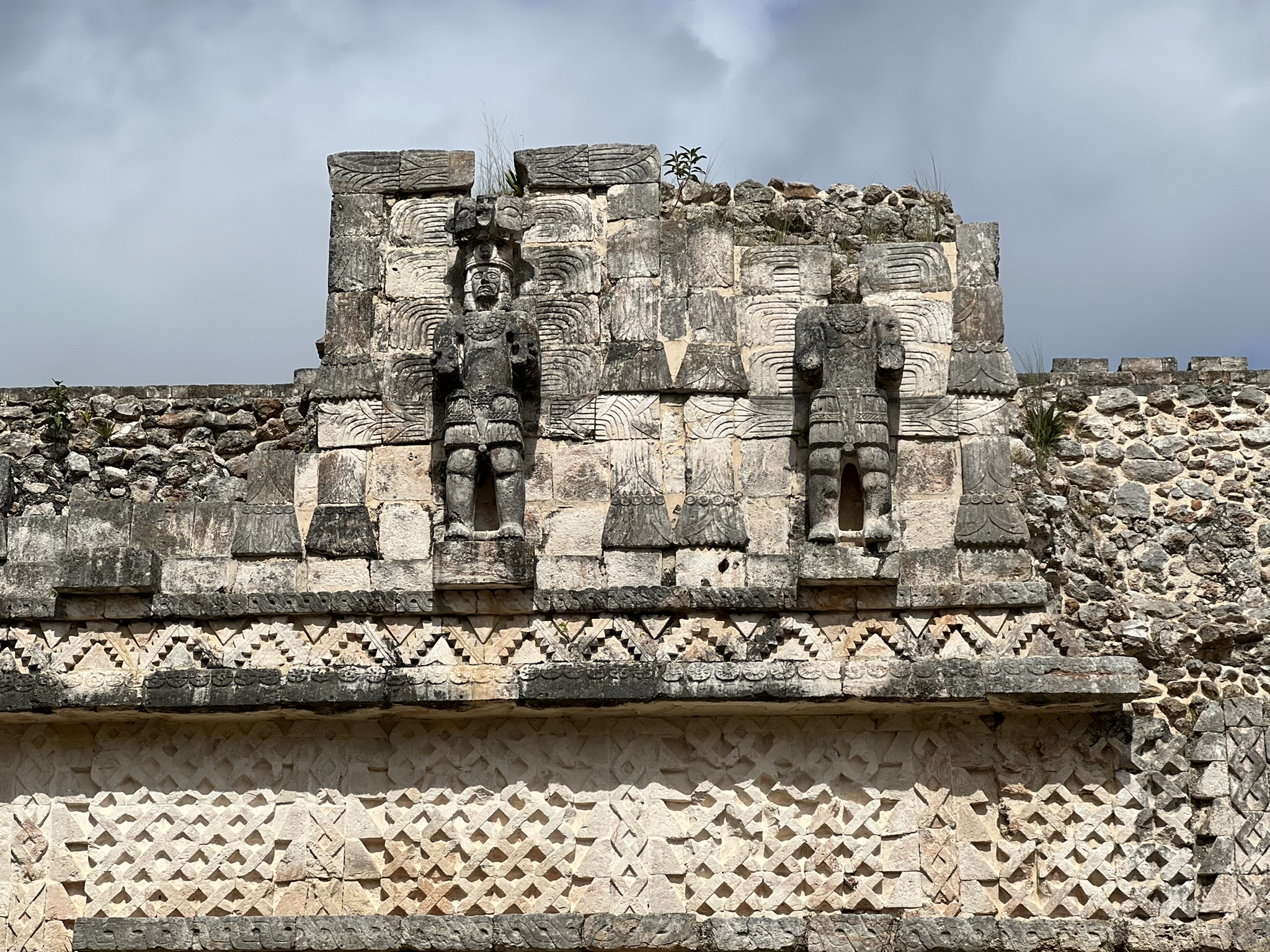
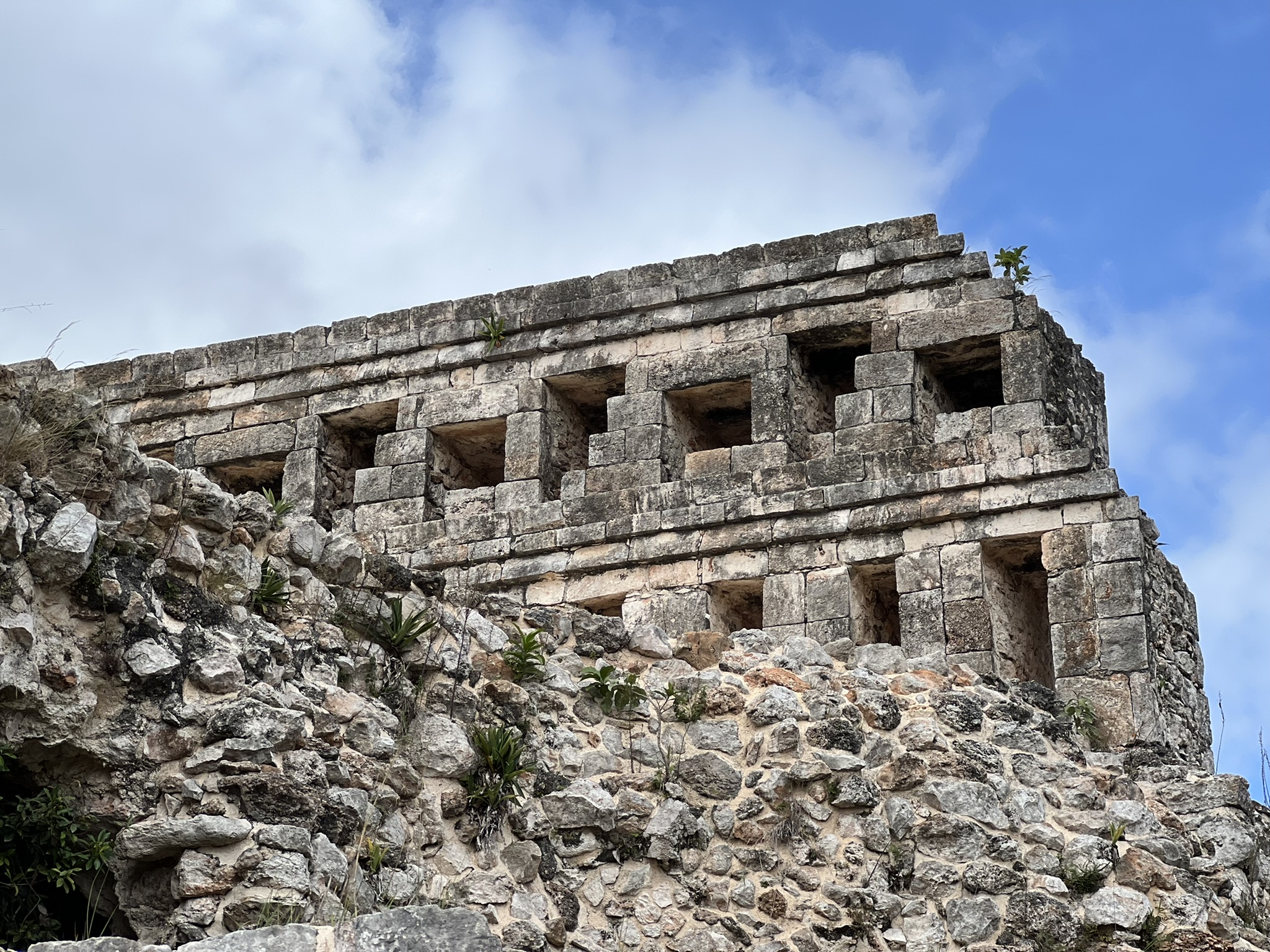
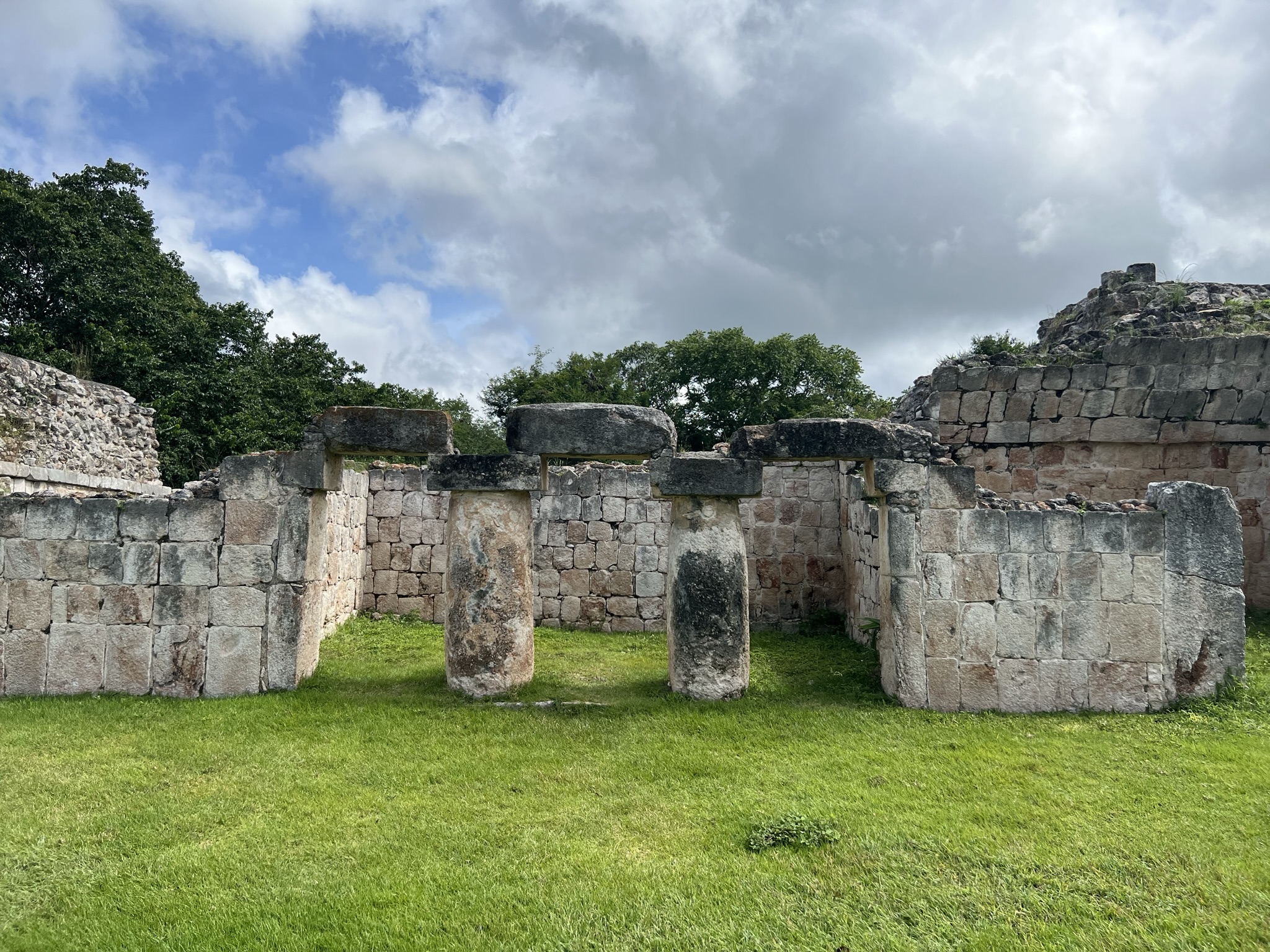
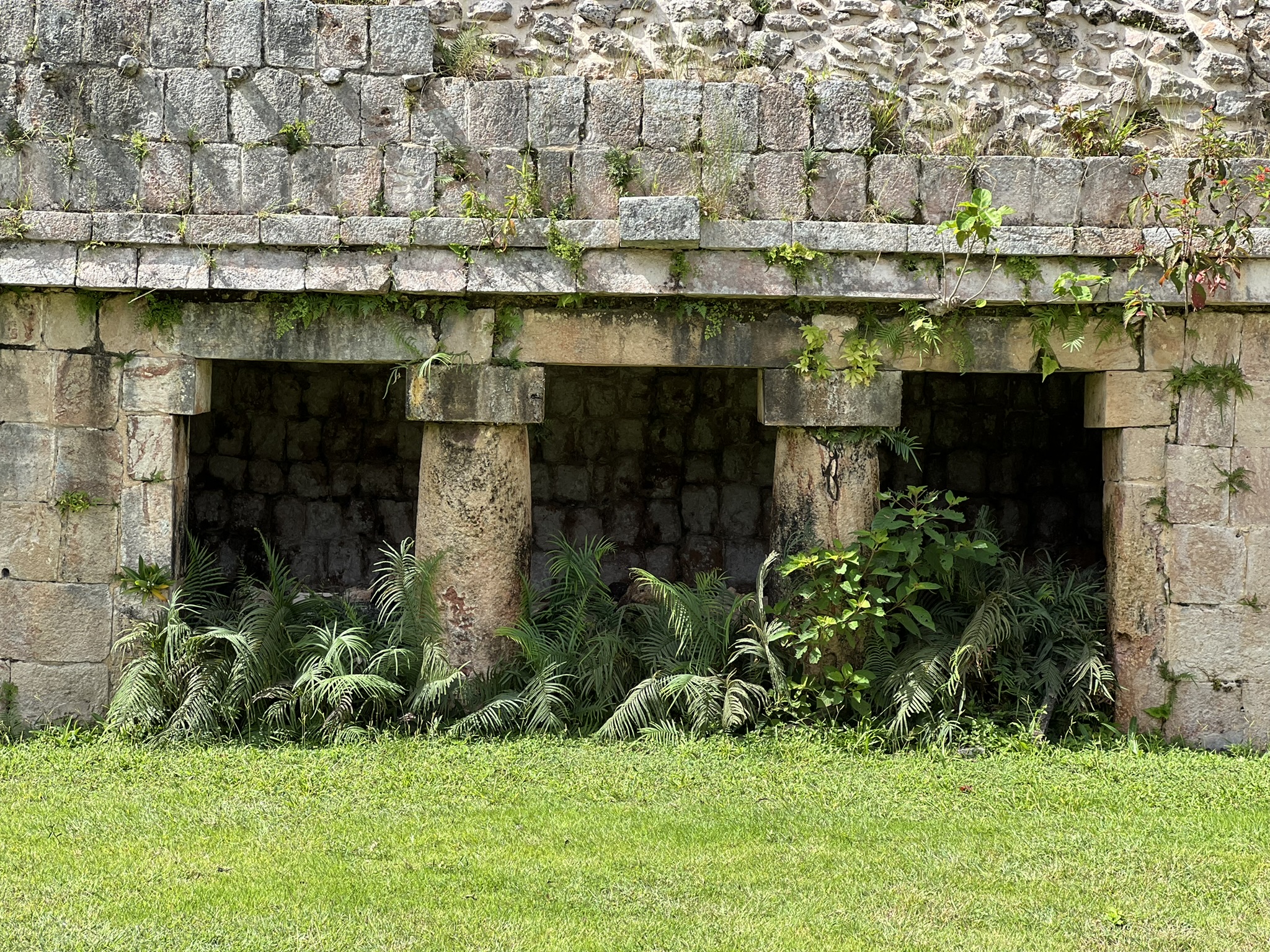
Unlike most archaeological day tours I had been on, this one would be taking us around a few sites. We started off with the ruins of the ancient city of Kabah. While this site might not be that popular with tourists, what’s striking about these ruins is its architecture – featuring the impressive Puucstyle. This, Dominic explained, involves finely crafted veneer stones set into a concrete core, featuring intricately carved shapes and patterns. Whilst the city was founded around 600 AD, the buildings seen today are from the Classic period later on – probably the reason why most of the façades are still intact.
https://lugares.inah.gob.mx
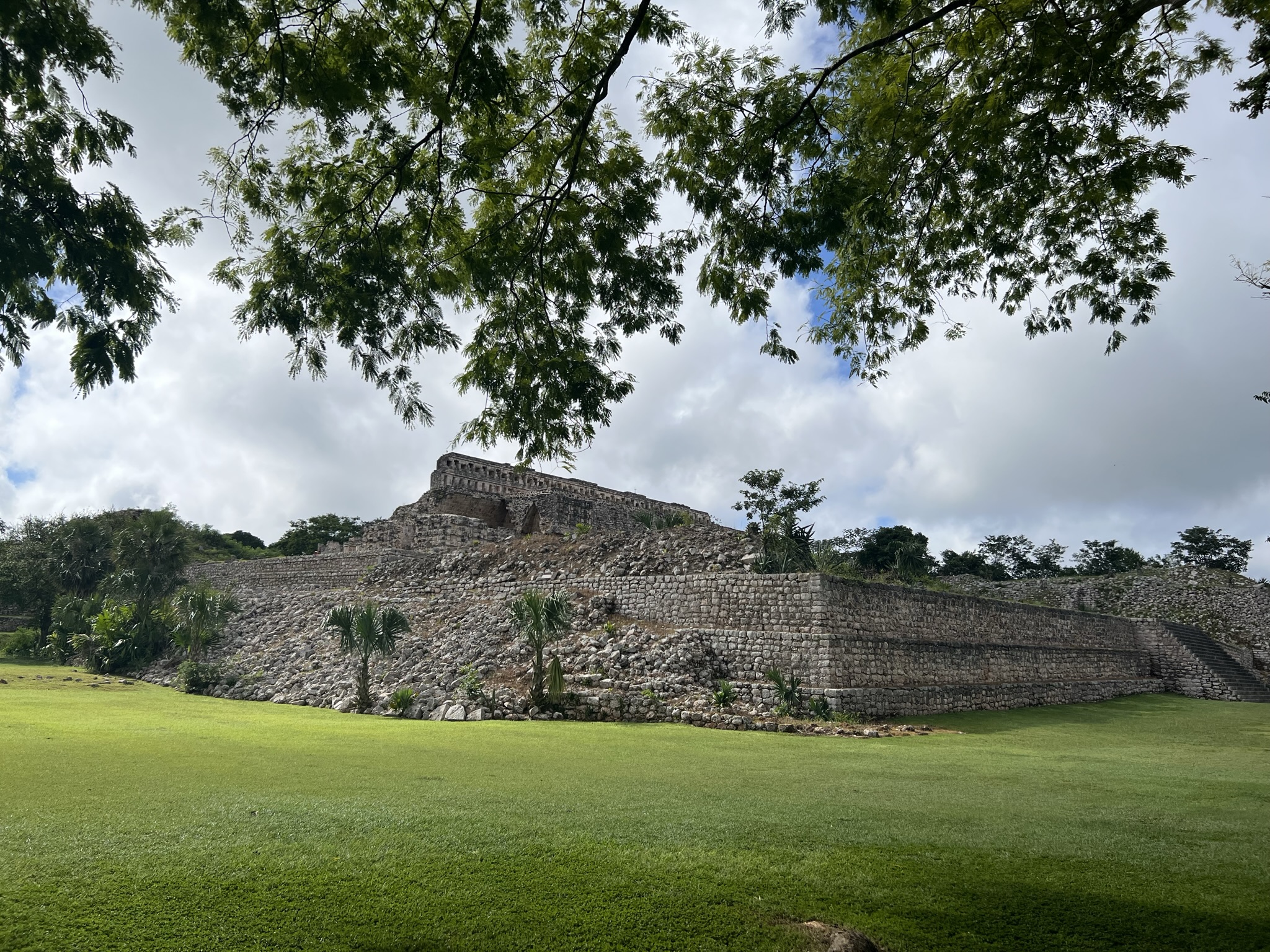
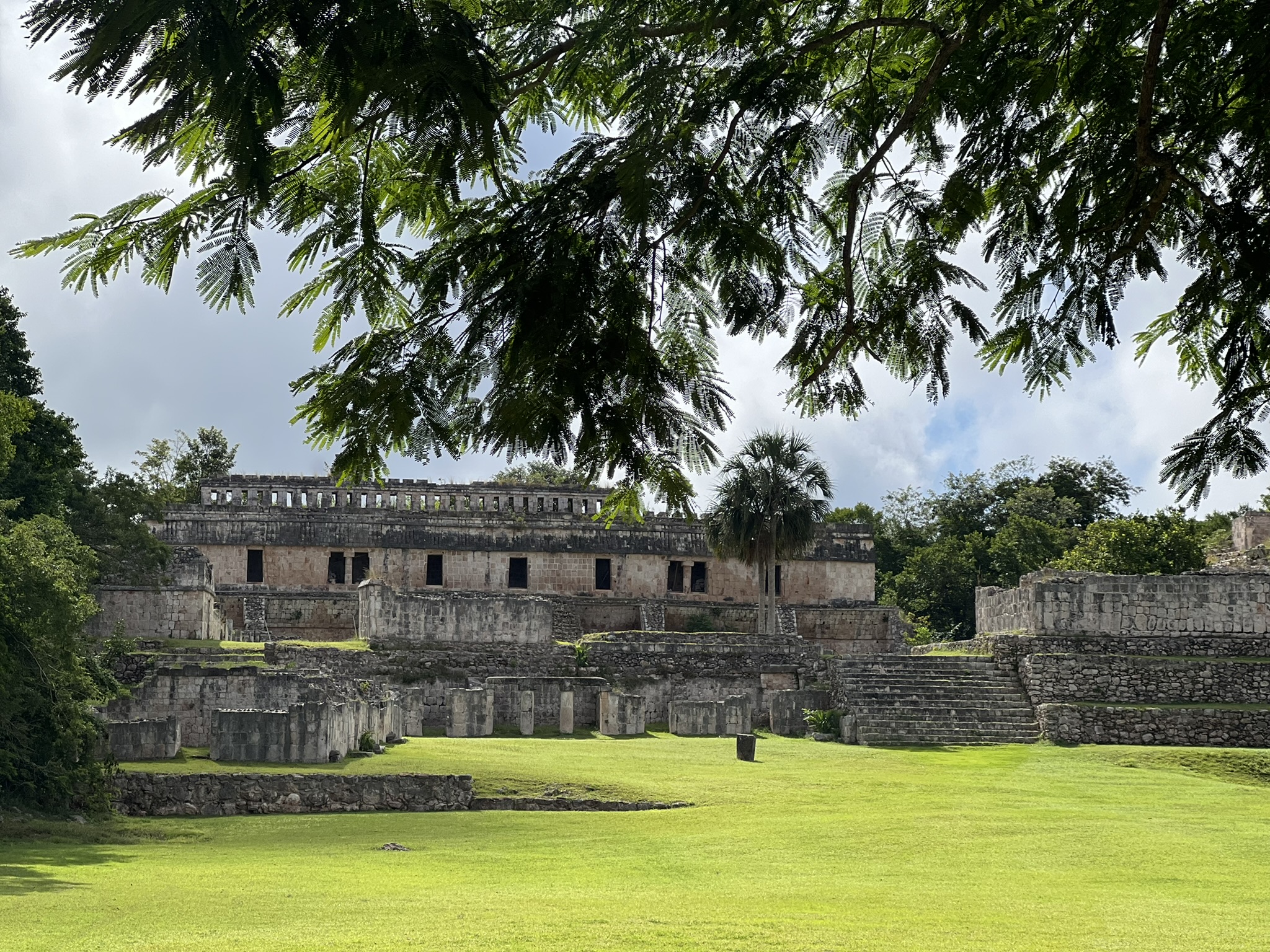
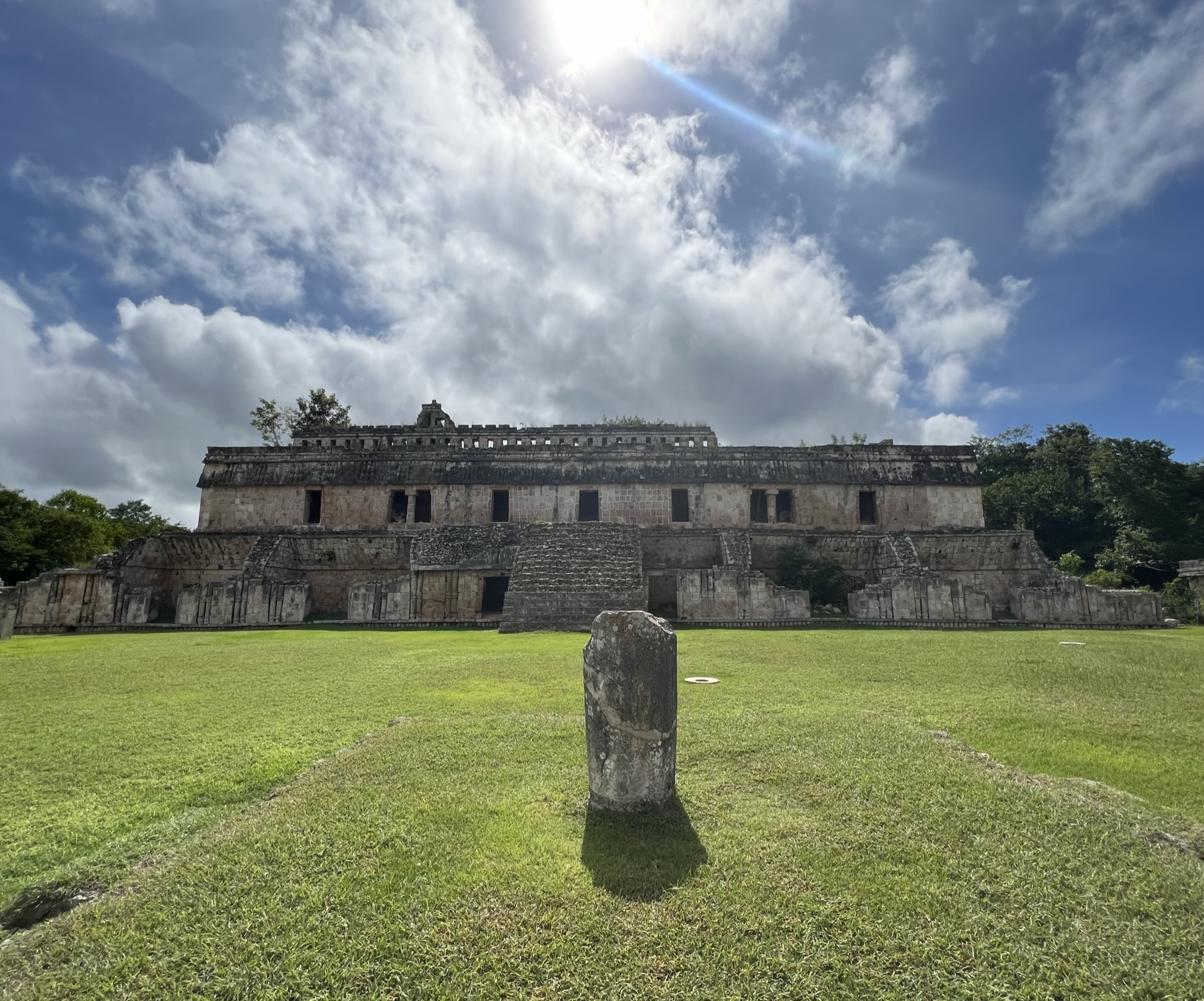
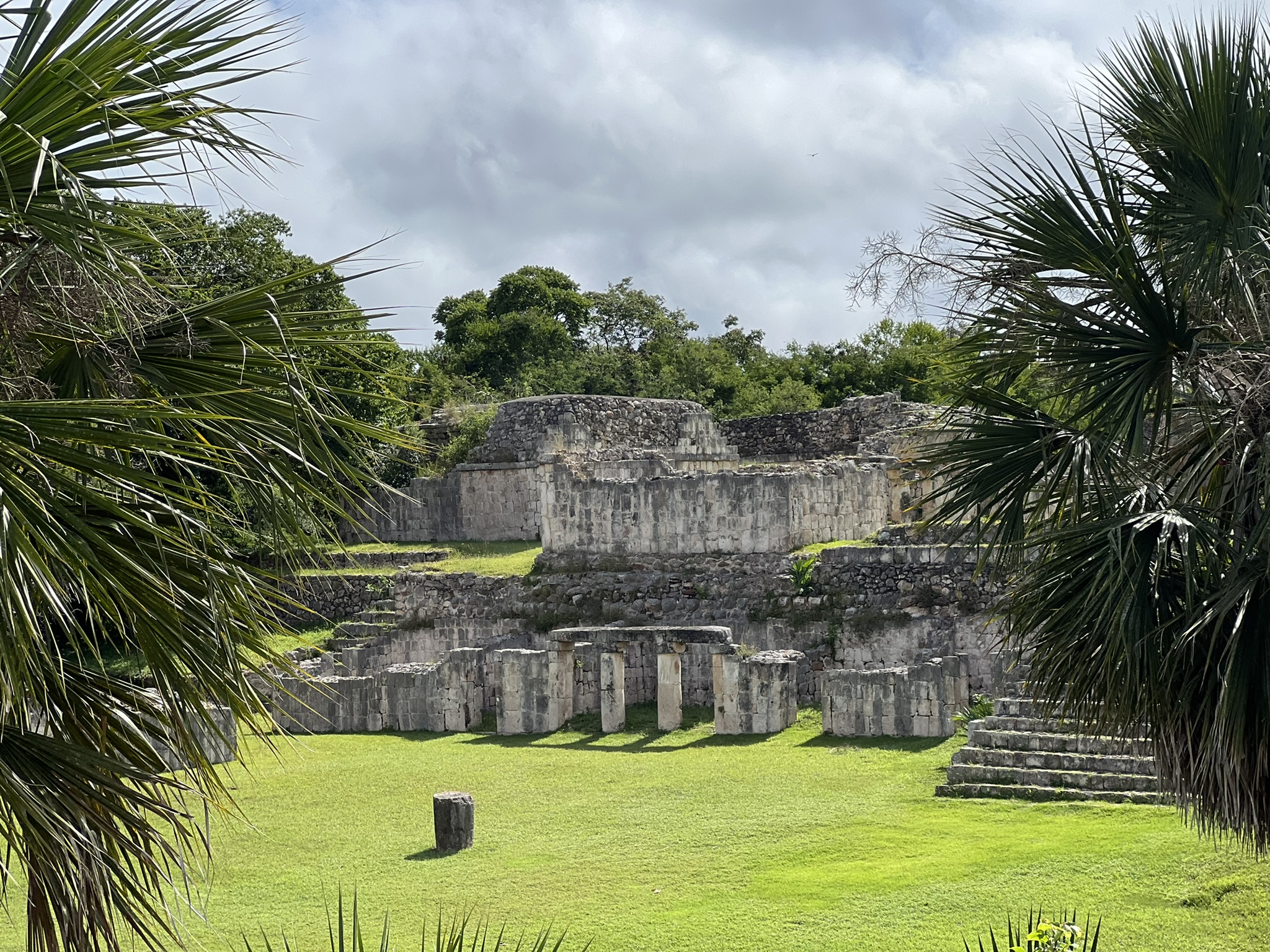
Upon entering the site, one is met with a number of impressive structures: a column-like shaft thought to represent fertility (thanks to its phallic shape), fragments of dismembered façades strewn across the grounds, and a series of colossal buildings that once marked the city’s grandeur.
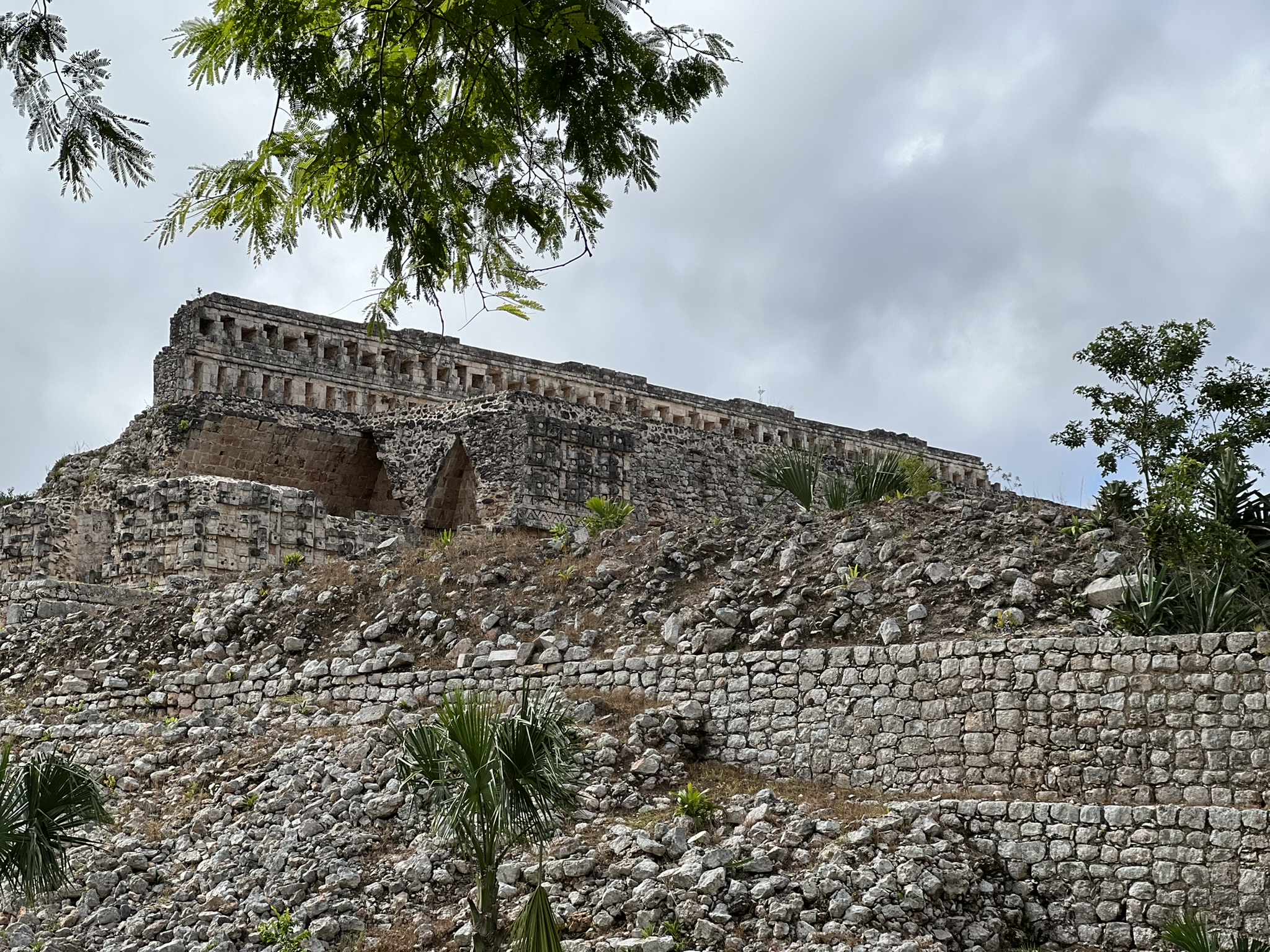
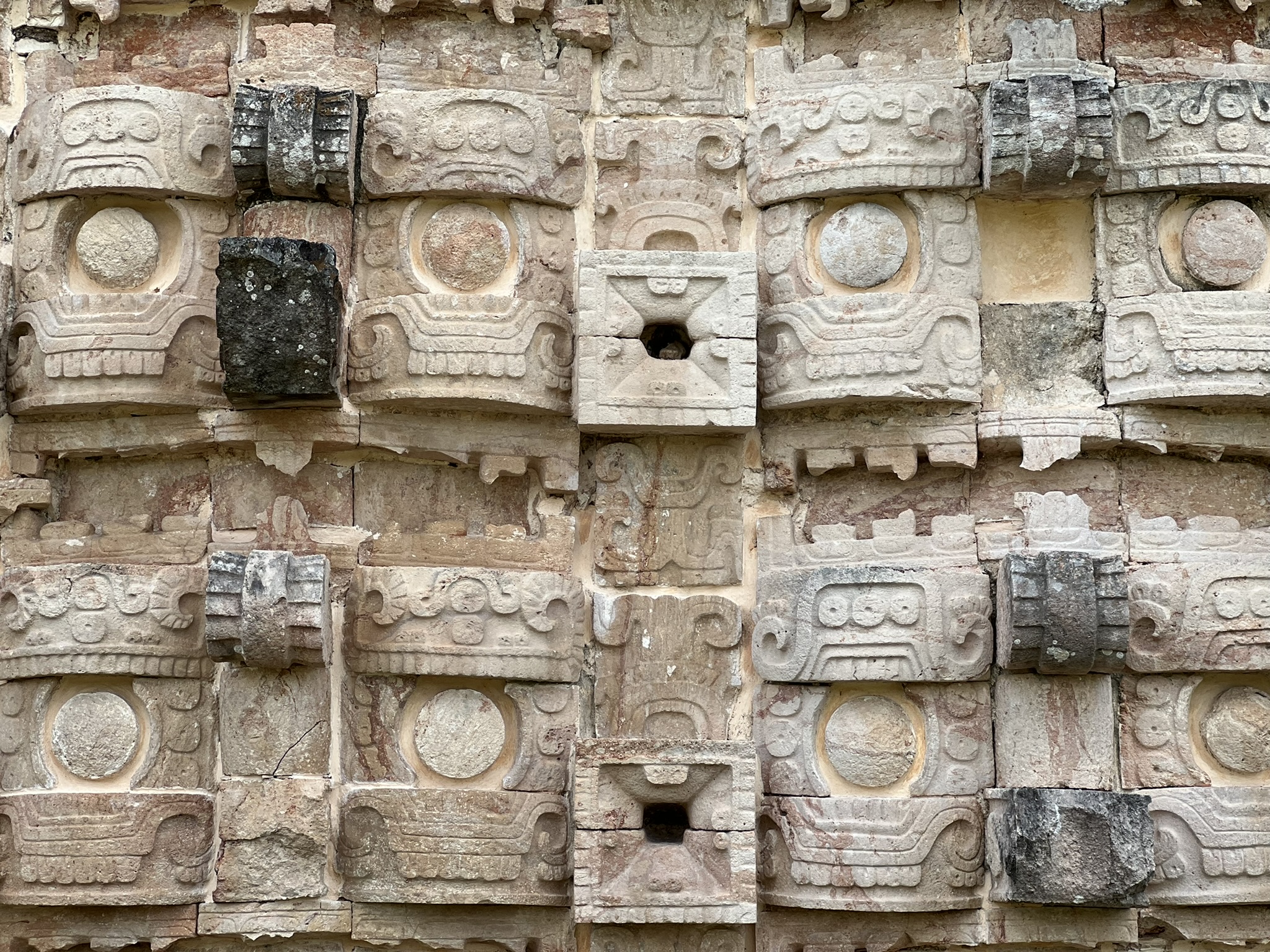
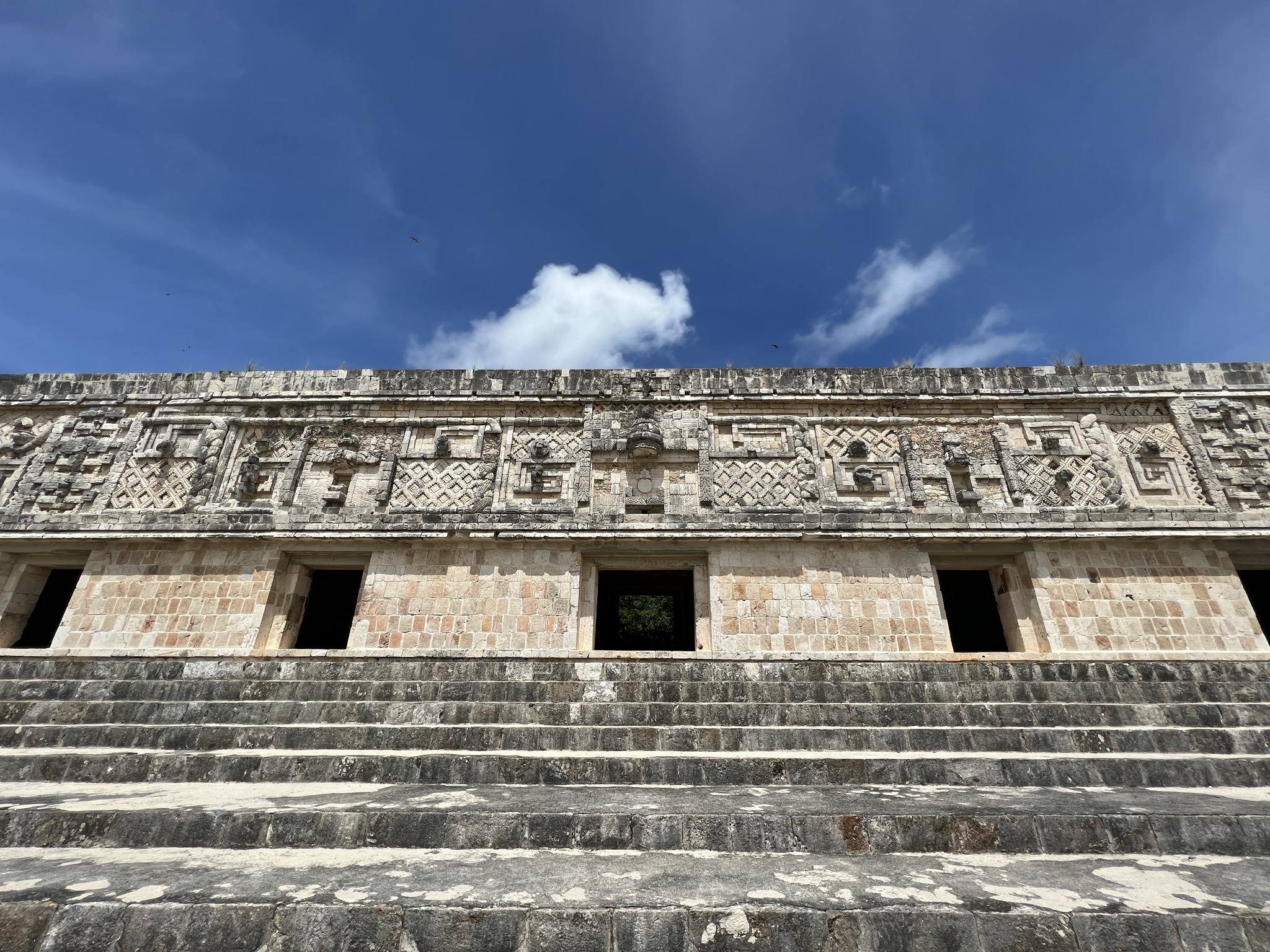
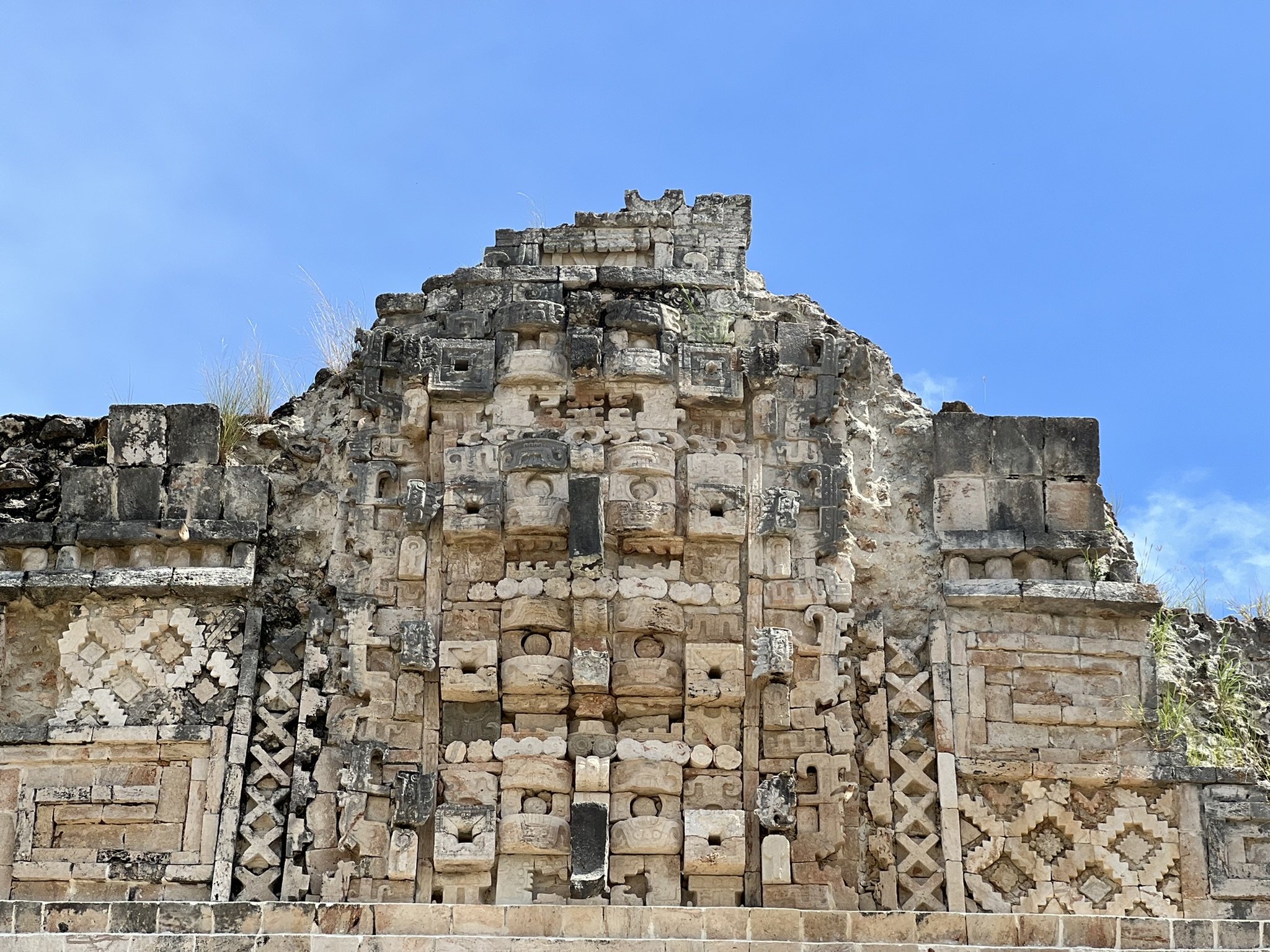
Amongst these is the Codz Poop – which, trust me, has nothing to do with its name. All giddy to explore the legendary temple, we made our way up the stairs leading to its base. Found on a three-tiered platform, the building’s west side features four doors and a combed roof, all facing a large plaza. Aptly known as the Palace of the Masks, the building features 250 masks of the long-nosed rain god Chaac on its façade – each composed of thirty stones in Chenesstyle. On its eastern façade, intricate mosaics and pedestals can be seen, with a number of chambers that have carvings of rulers on the door jambs.
After spending an appreciable amount of time trying to memorise as many details as possible, we then headed to the nearby Palace Plaza. Here, Dominic pointed out a number of recesses found on the ground. These, he explained, were chultuns: underground storage chambers that could hold anywhere from fifteen to a hundred litres of rainwater. Being far from natural water sources, the Maya of Kabah relied solely on rain – hence the multitude of Chaac masks and the cluster of chultuns lying around. Once again, this was a testament to the ancient civilisation’s incredible engineering prowess.
Though fascinating, the main highlight around the Palace Plaza, expectably so, is the Palace. The huge two-storey structure has an open roof comb and a stairway that leads to its second level, where nine vaults can be found. Although that’s the highlight of the square, much can be said about the Casa de la Insignia Real and the Teocalli temple that flank its sides, although we didn’t have enough time to fully explore them.
Unfortunately, the site has plenty of other hidden gems which we couldn’t get to see due to ongoing excavations. These include the Great Pyramid and a triangular arch that might have been the entrance to the city. As regrettable as missing out on all that was, it didn’t quite get us down – we had much, much more to see!
Up next? More ruins! The city of Uxmalis one of the most important Mayan archaeological sites, and its name is derived from Oxmal, meaning “thrice built”. The city was founded around 500 AD by Hun Uitzil Chac Tutul Xiu, with his descendants ruling over Uxmal for generations. Most of the buildings date back to around 600 AD, and it is thought to have housed at least 25,000 inhabitants. It is connected to Kabah – located nearby – by a sacbe: a stone causeway.
https://lugares.inah.gob.mx/
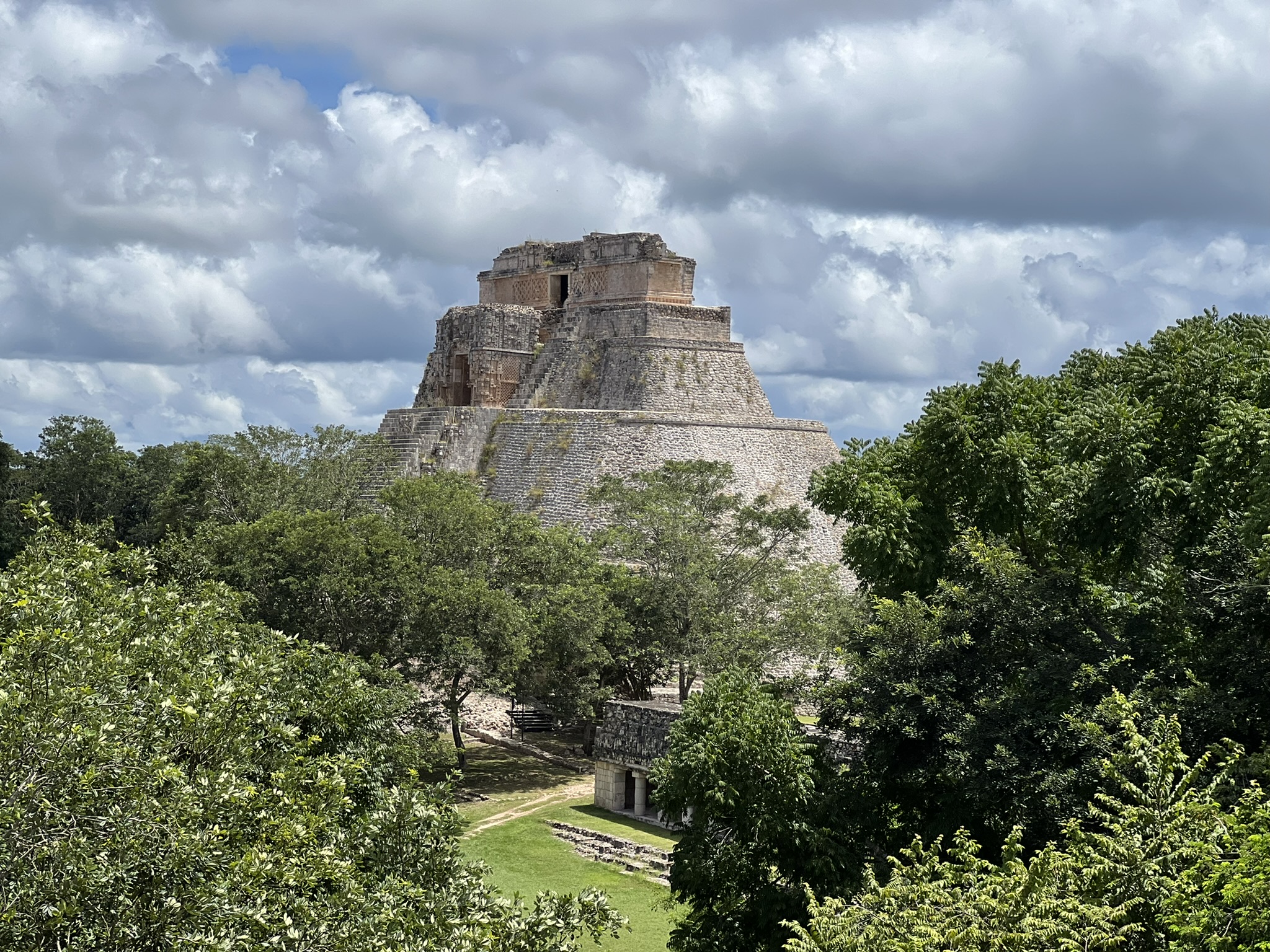
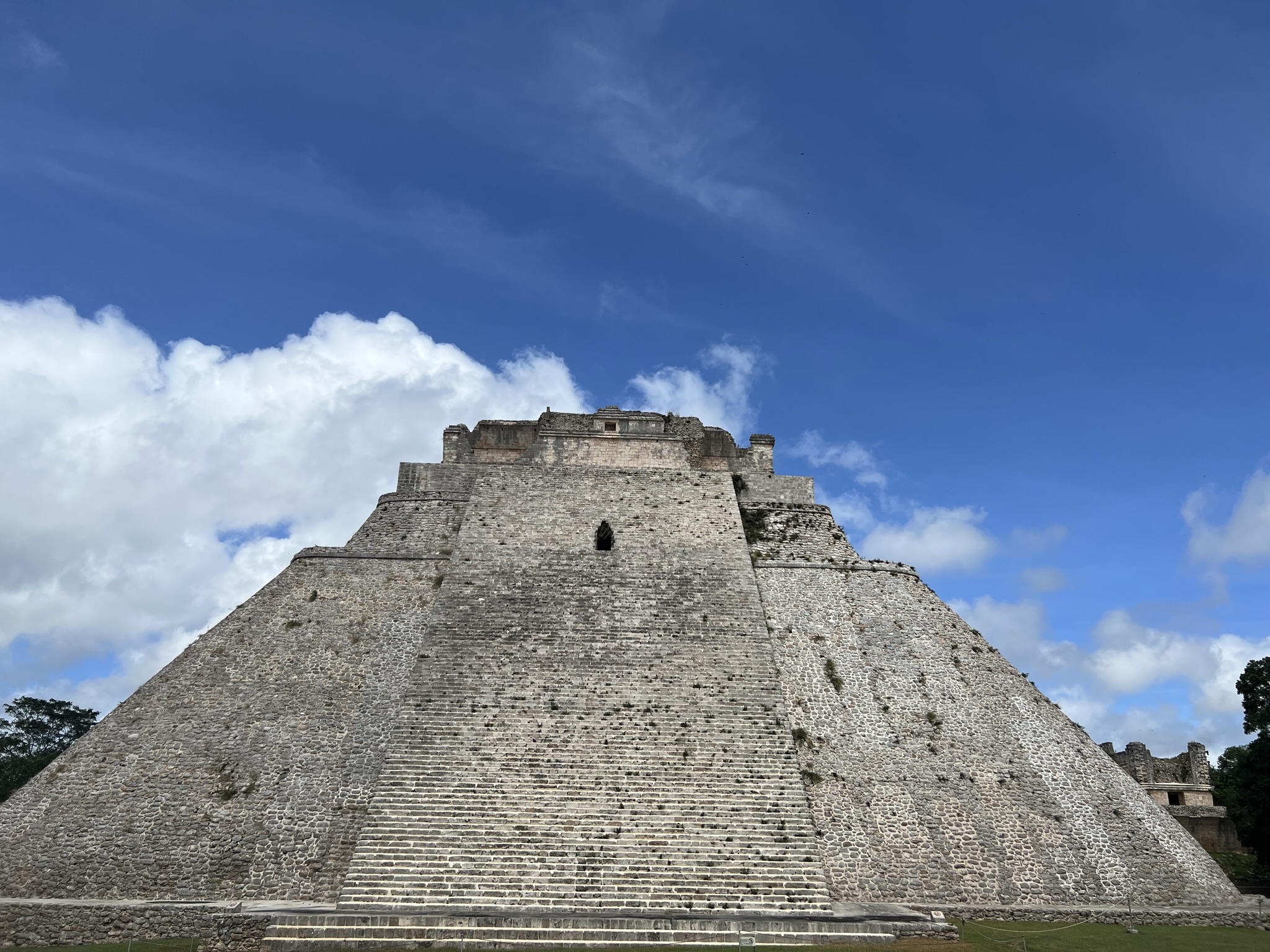
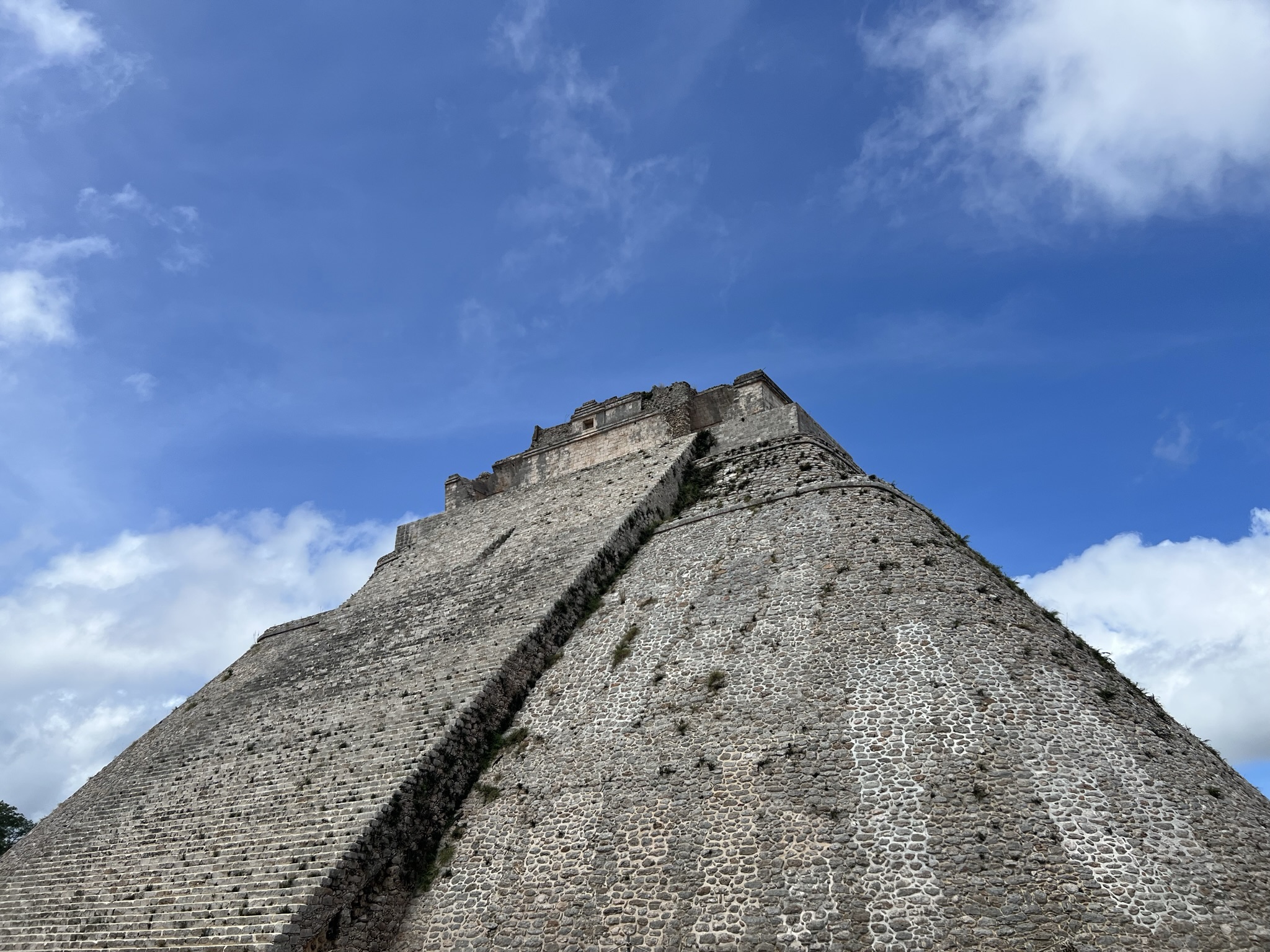
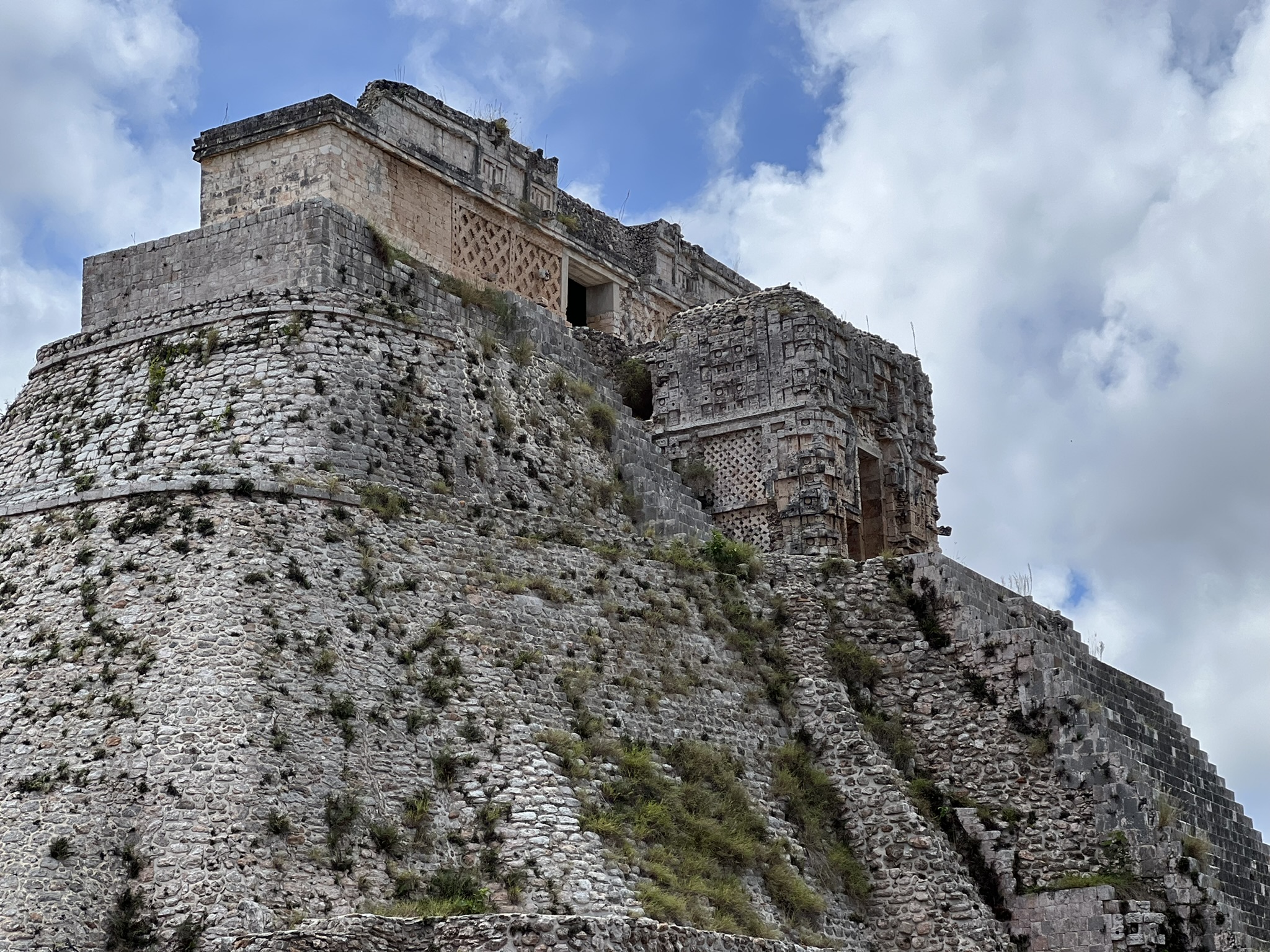
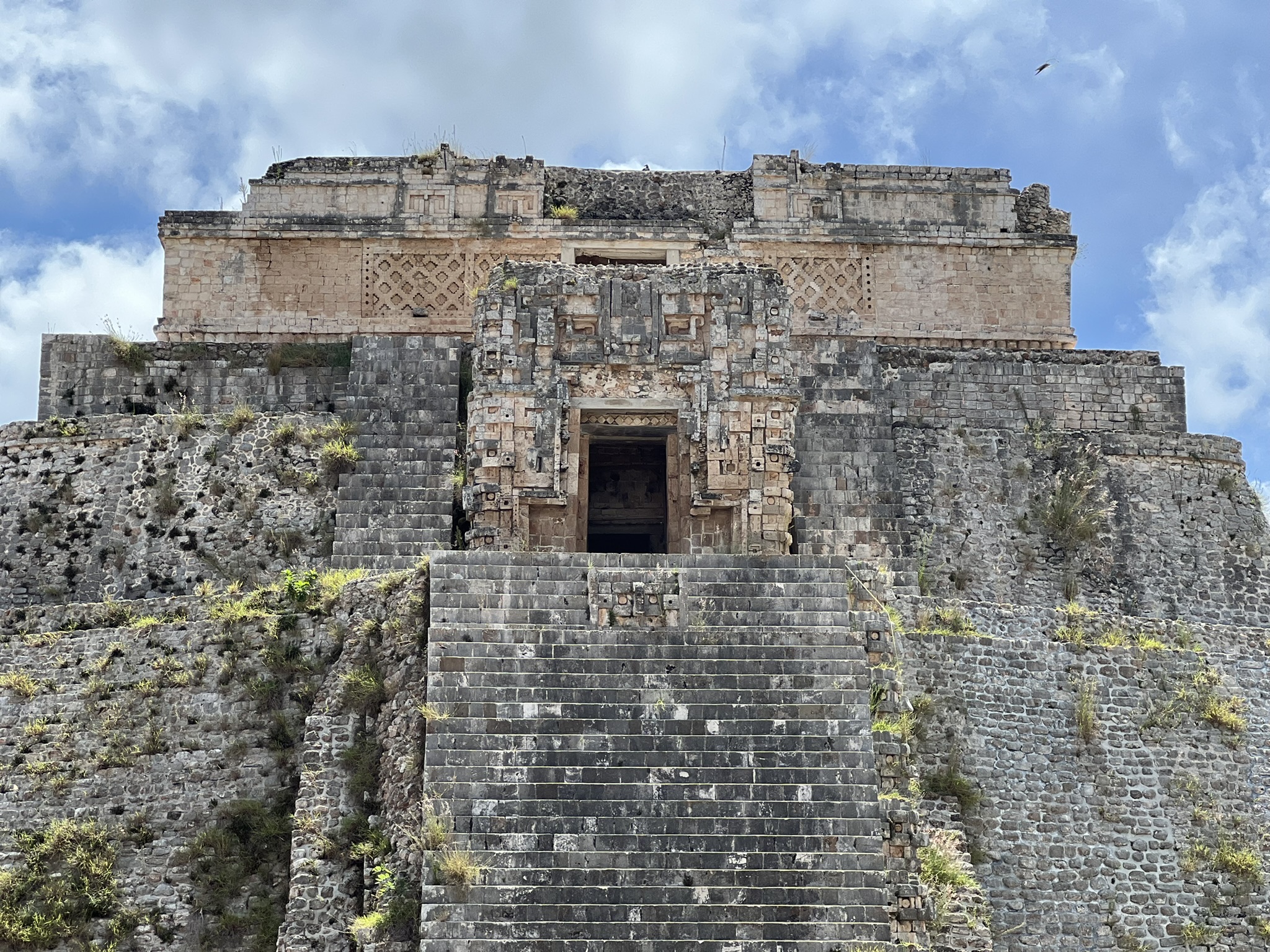
The first thing one sees as they enter the site is a large, majestic pyramid called the Pyramid of the Magician; a 35-metre high, extremely well-preserved, oval-shaped structure which has been built five times over, with multiple temples at its base and summit and intricately carved masks of Chaac. Another name for the structure is the Pyramid of the Dwarf.
The first thing one sees upon entering the site is a large, majestic structure called the Pyramid of the Magician: a 35-metre-high, remarkably well-preserved, ovaloid pyramid. It was built five times over, with multiple temples at both its base and summit, and intricately carved masks of Chaac adorning it.
Another name for the structure is the Pyramid of the Dwarf. Why’s that? Well, legend has it that a dwarf that hatched from an egg, grew up and built the entire thing overnight after completing a series of challenges issued by the ruler of Uxmal. His mother, Ixchel – who had longed for a child for many years before finding the egg and raising him – is said to have a pyramid and a Temple of Penises dedicated to her. Upon hearing this legend, I was left wondering whether the ancient Maya had a wild imagination… or access to some strong hallucinogenics. Probably both.
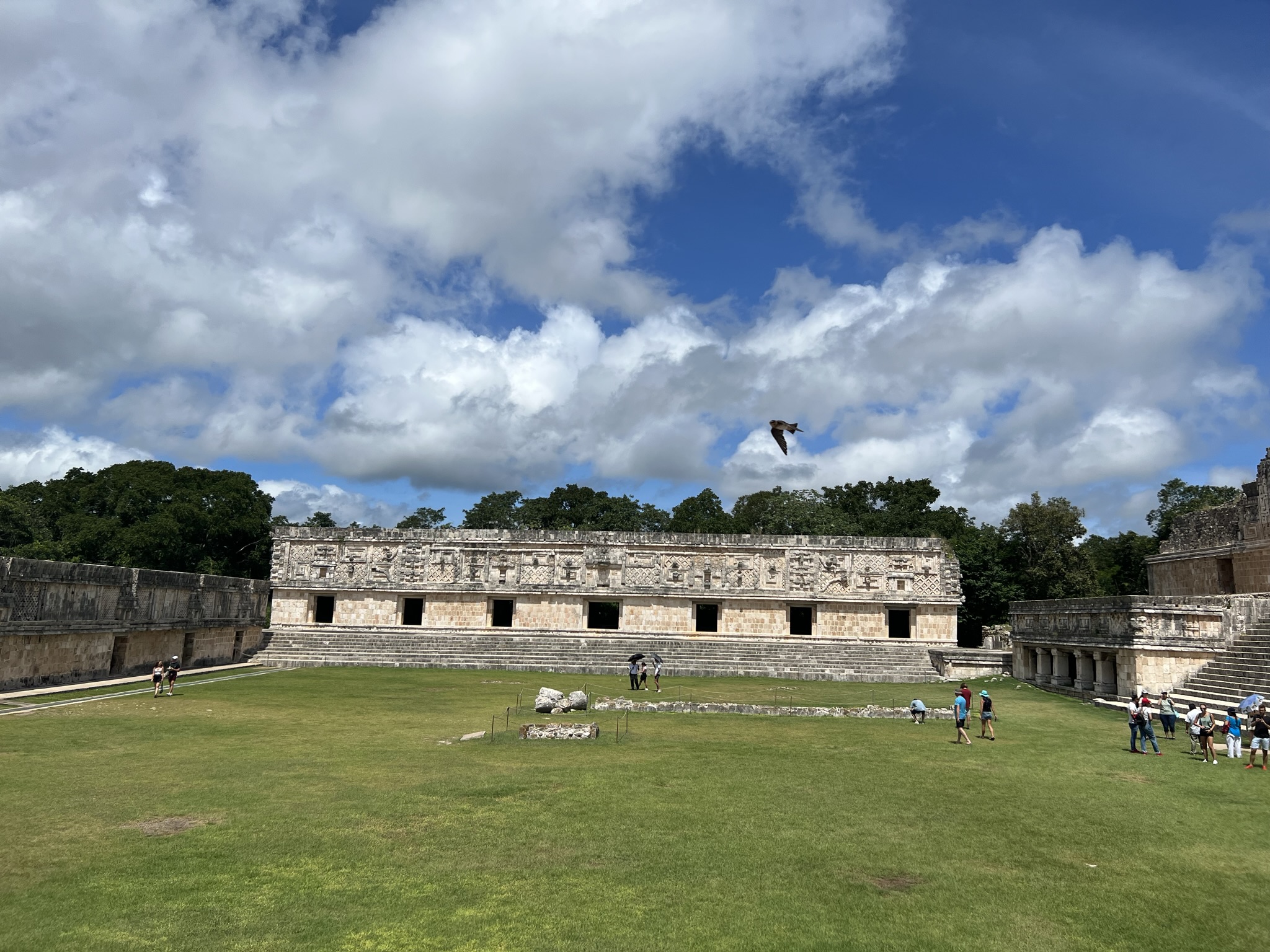
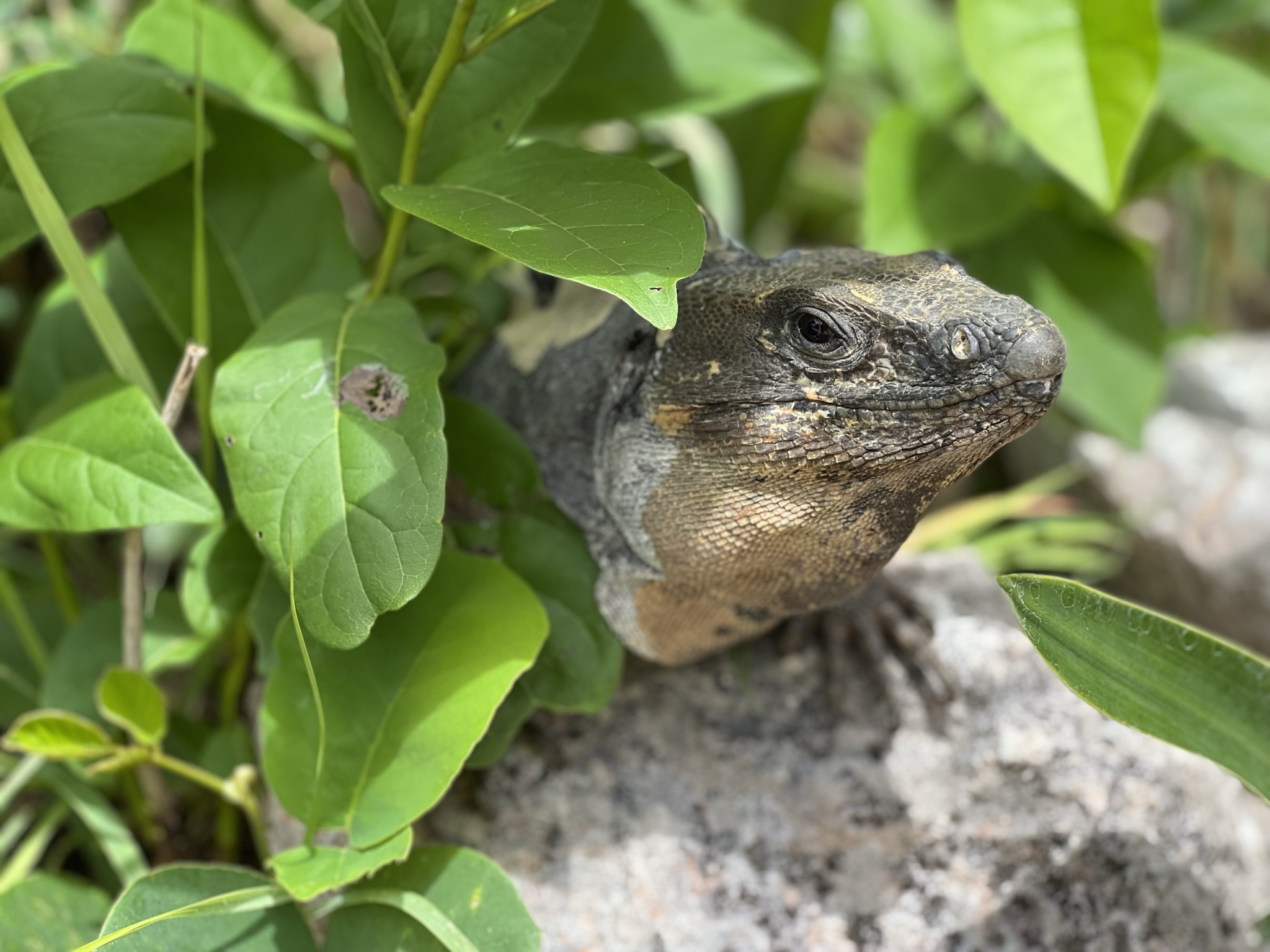
To the west of the oval pyramid is the Nunnery Quadrangle: a courtyard flanked on each side by impressive palaces. I couldn’t help but feel tranquil and connected while traipsing across the grass covering the courtyard, surrounded by the birds and iguanas that have replaced the Mayans as the city’s new inhabitants. Little do they know how rich in history their land is – an impression that becomes clear upon entering the palace on the west side: a structure adorned with several masks of Chaac and filled with chambers that reek of bird and bat droppings.
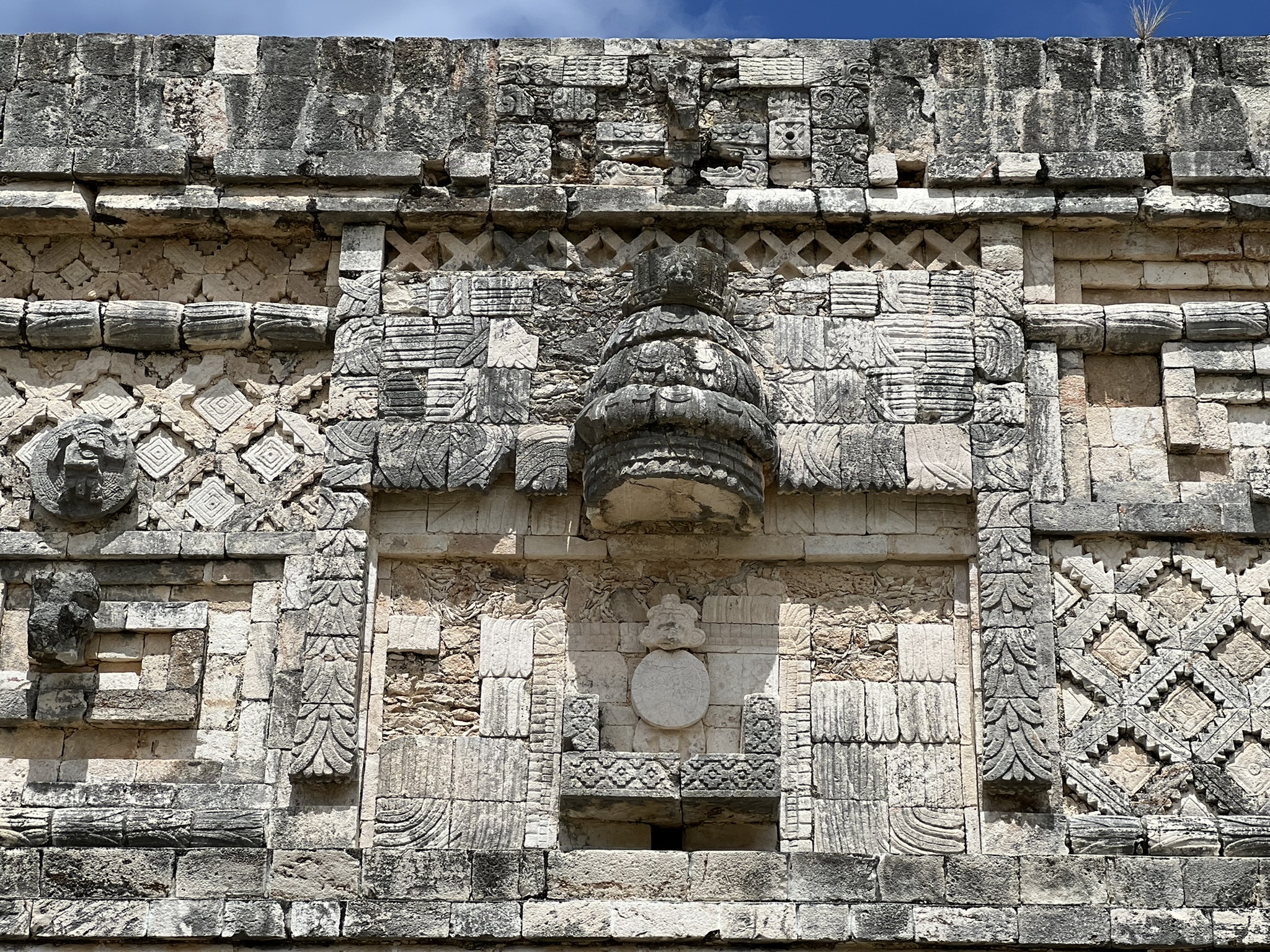
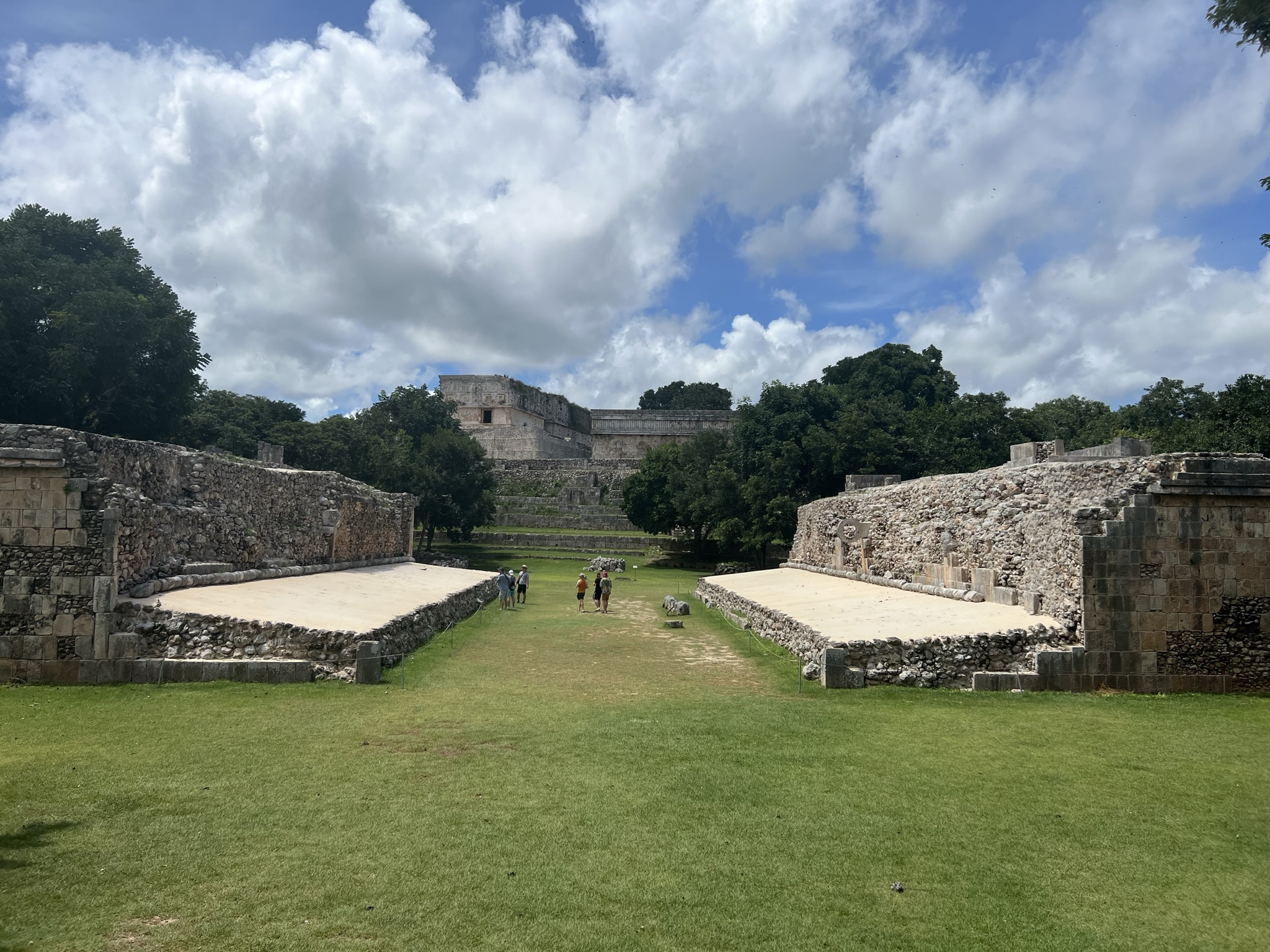
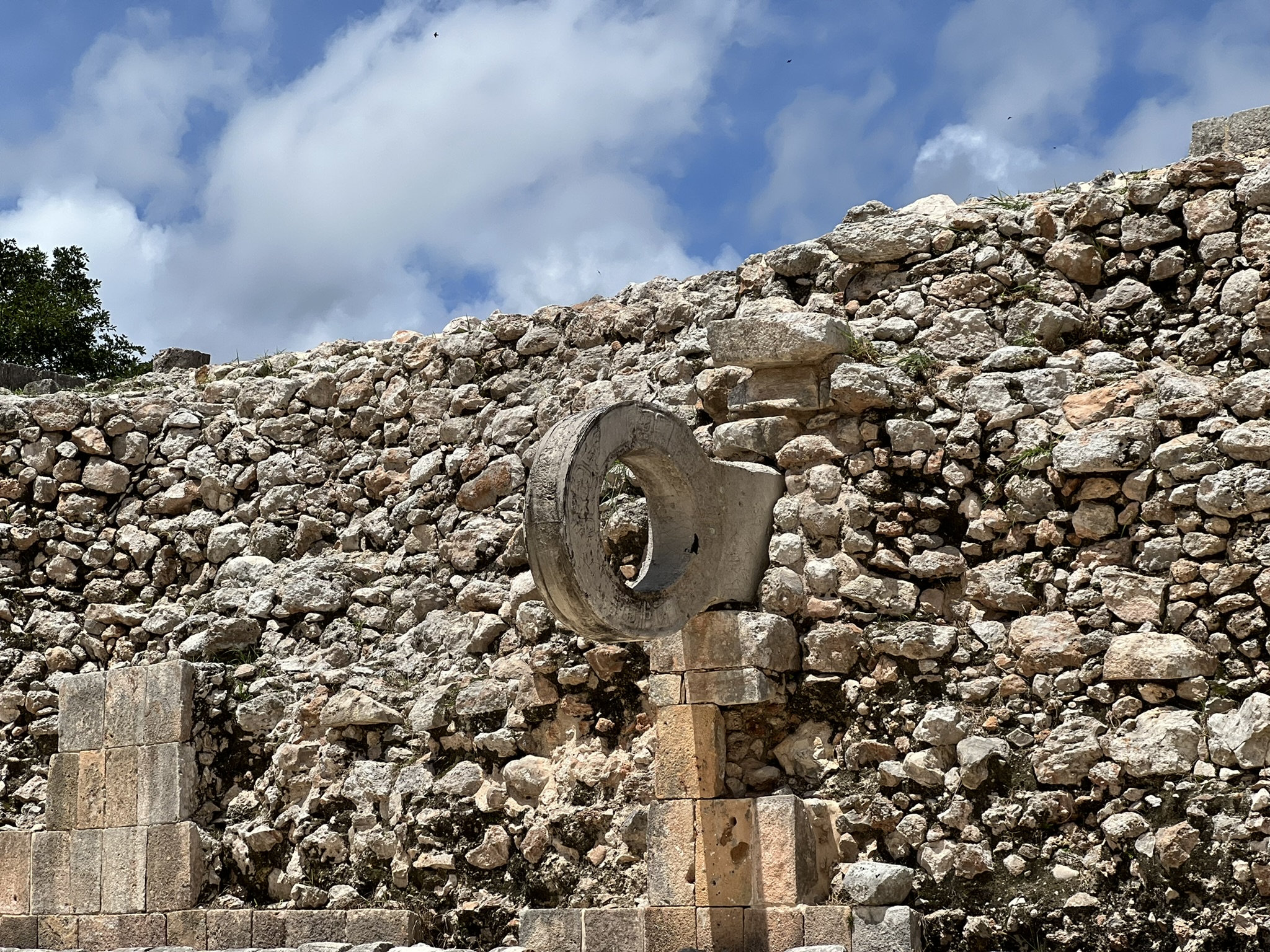
On the opposite side of the Quadrangle is another palace which, above the central doorway, features an intricate carving of a human figure flanked by serpents, with an anthropomorphic turtle and a seated man at the centre. On the north side lies the biggest and oldest palace. This structure is raised on a platform, and at its centre stands the Temple of Venus. Last but not least, the southern building features an undecorated triangular portal arch that connects to the rest of the site – namely, the pelote court and various other complexes, including the Great Pyramid.
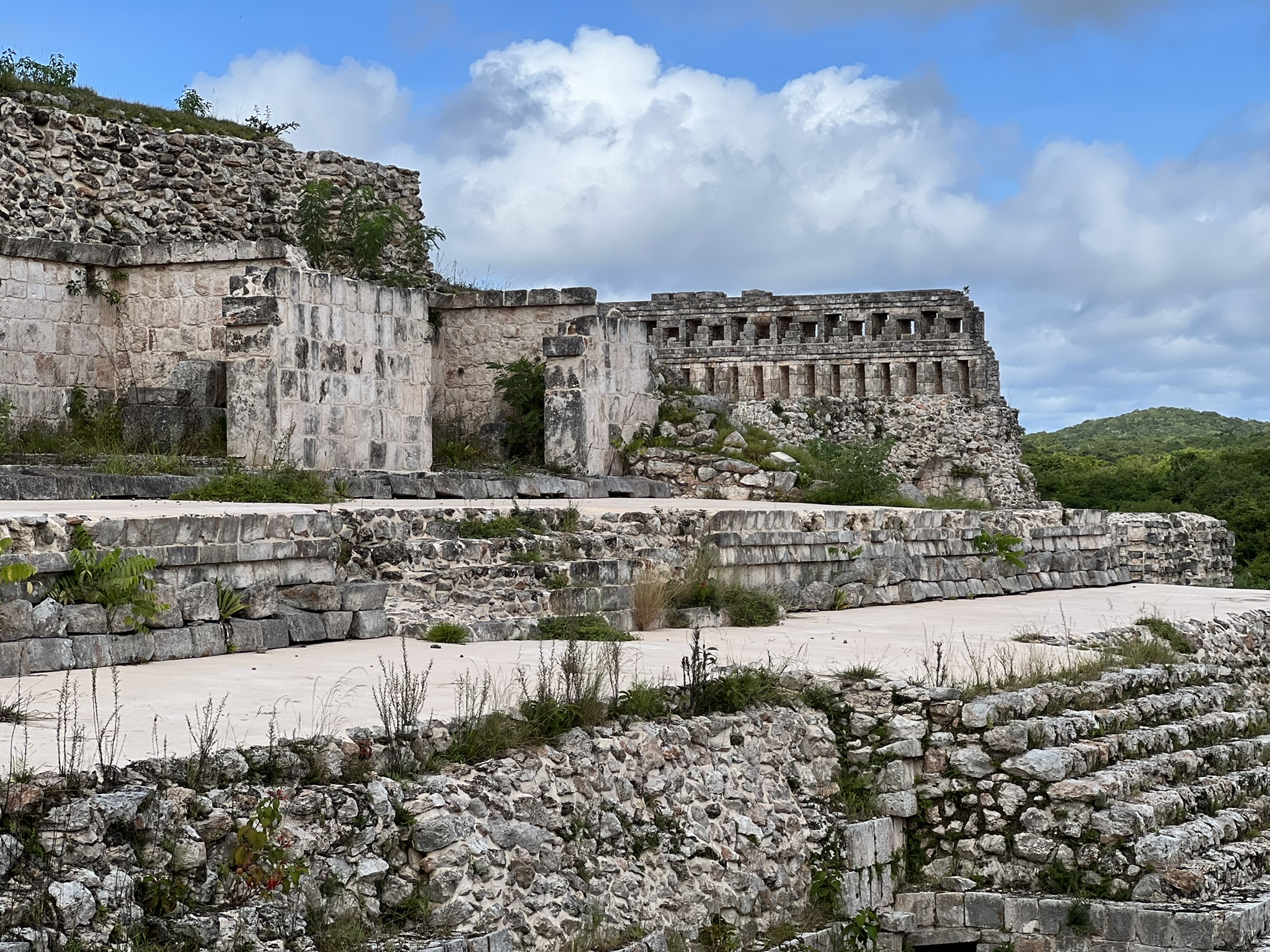
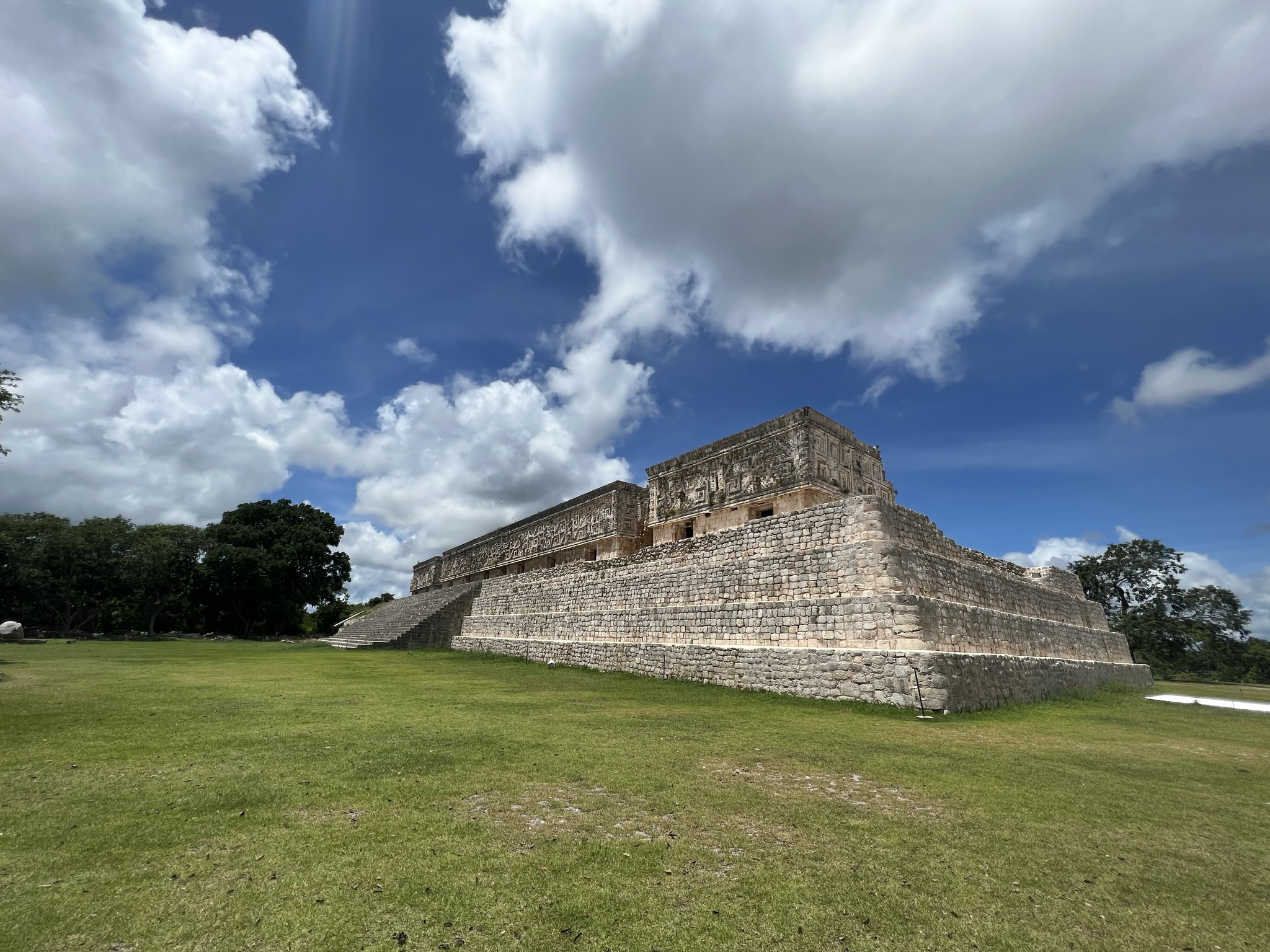
Another majestic and important building is the Palace of the Governor. It stands on a massive, three-tiered platform, is exceptionally long, and is impressively aligned with a pyramid located about five kilometres away. Every eight years, Venus sets behind the palace’s northern edge, marking the advent of the rainy season. For this reason, around 400 glyphs of the planet adorn the various Chaac masks. Also of note, Dominic told us that the Mayans believed Venus ate the sun during an eclipse – so they would perform human sacrifice to quell the god’s ire.
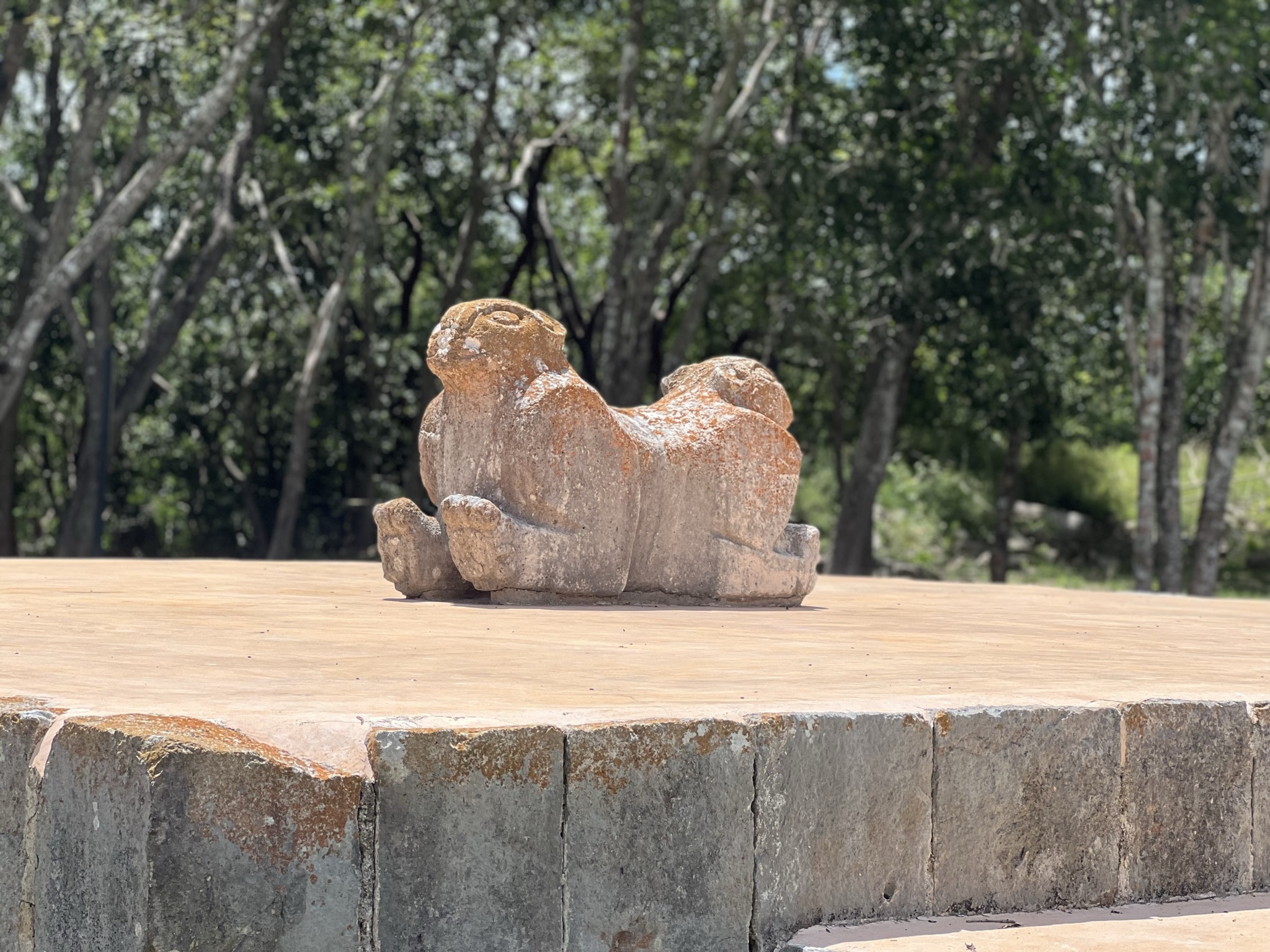
The palace also features two arches and a platform on the east side, at the top of which is the Throne of the Jaguar: a double-headed jaguar statue that once served as the seat of royal authority. As impressive as the structures on the platform are, one cannot help but remain speechless when looking at the view below – with the jungle enshrouding the entire site and the Pyramid of the Magician rising in the background.
After this, Andrea and I were dropped off at a chocolate museum. I wasn’t particularly looking forward to it, having already sat through about three other chocolate-making demonstrations on previous tours. That said, despite my initial scepticism, I was pleasantly surprised.
The museum consists of a circuit of six adobe huts, each with a different exhibition – one of which was used for chocolate tasting. Score! Between the huts were a mix of large gardens with descriptions of various trees and plants, a jaguar rescue area where I finally got to lay my eyes on the majestic beasts (albeit toothless ones!), a monkey conservation area, and a space where a traditional Mayan ceremony involving chocolate was performed.
Chocolate, I came to learn, wasn’t just something the ancient Maya appreciated for its taste. To them, the drink served many functions. It was used to please the gods during sacred ceremonies, acted as an aphrodisiac, and – quite fascinatingly – cocoa beans were used as currency!
Cenotes Sambulá
You’d think we would’ve had enough of touring around. However, there was one final stop we had to make. We finished the day off by visiting the cenote Sambulá. Finally – a cenote! I had heard so much about these damn things that, when the time came, I could hardly believe it!
The term cenote refers to natural sinkholes that form when limestone bedrock collapses, revealing a water source beneath. While similar formations can be found in other low-altitude regions with little soil, the word cenote specifically refers to those found in the Yucatán Peninsula. To the Mayans, cenotes were not only a source of water – they were also portals to Xibalba, the underworld. As such, they were considered sacred, and some were even used as sacrificial wells.
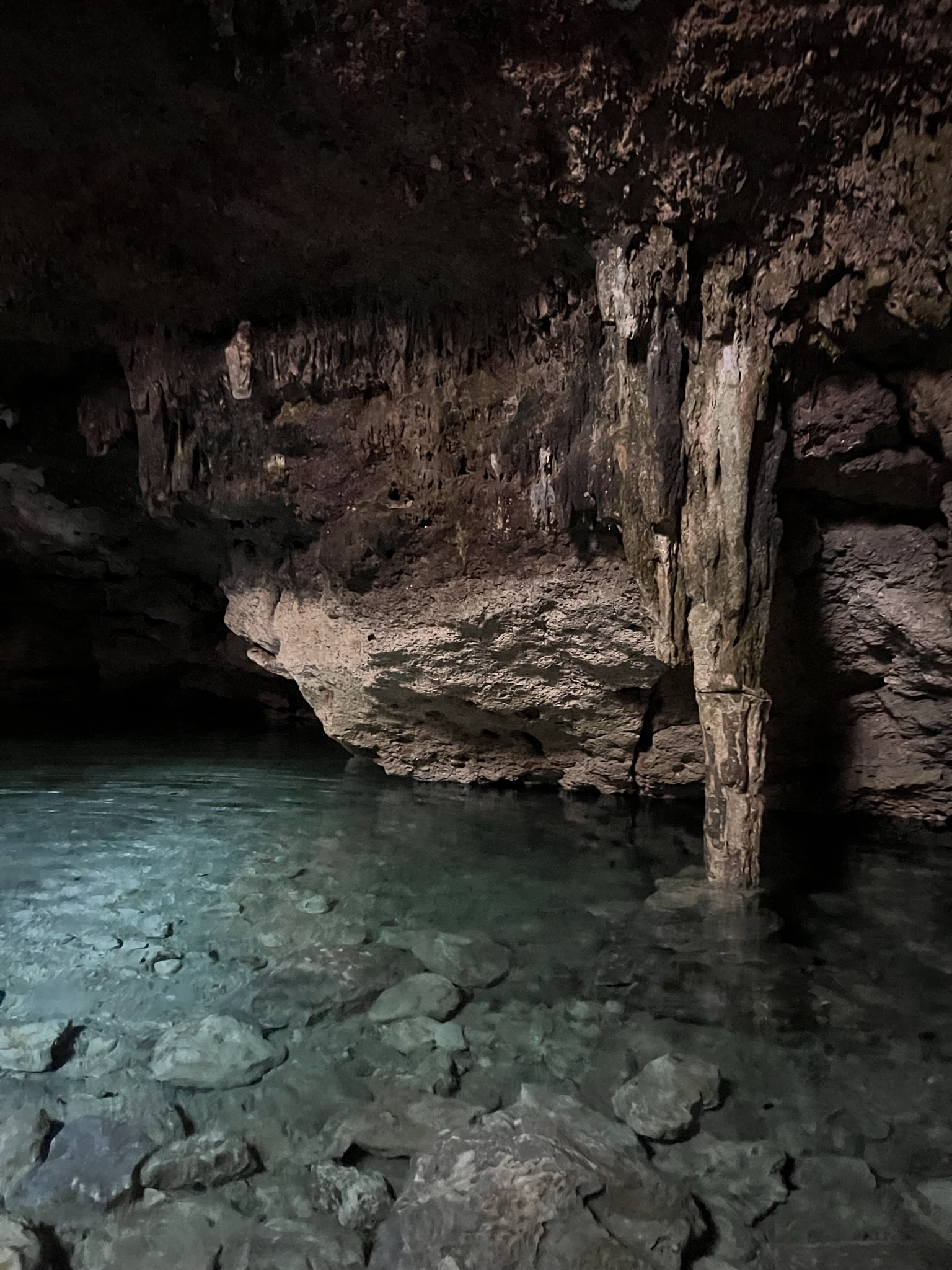
While some cenotes are large – such as the one in Chichen Itza – others have surface connections to subterranean water bodies that are less than a metre wide. Most have an almost intact roof, save for holes created by tree roots descending through the ground in search of water. These roots can pierce the surface and cause a collapse if they weaken a large enough area. As the water usually comes from rain that slowly filters through layers of earth, it’s typically crystal clear, containing suspended particulate matter and high levels of minerals. Open cenotes, on the other hand, are often connected to open water sources like the sea or lakes via underground cave systems – as is the case with the Blue Hole in Belize.
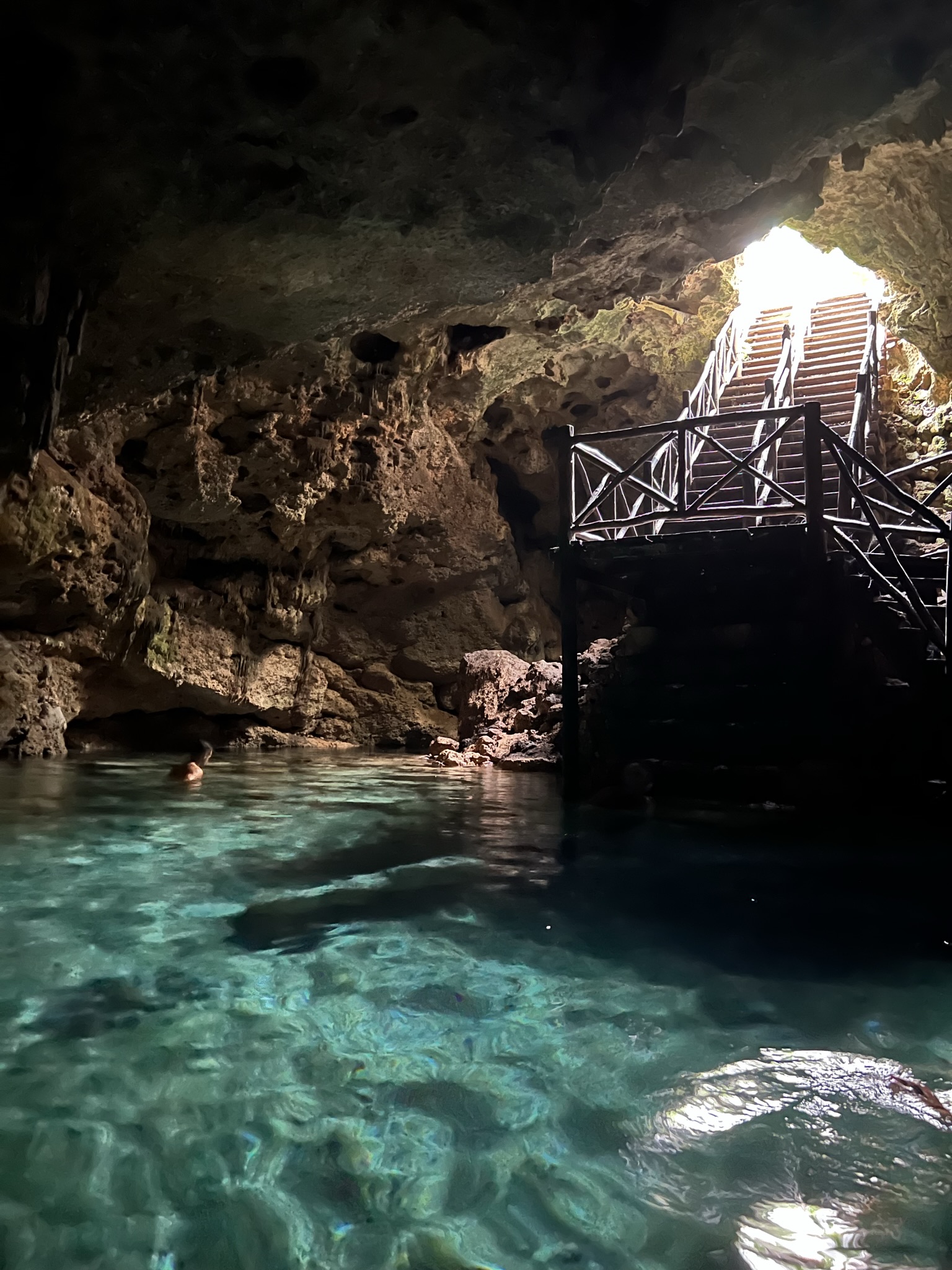
In Yucatán, there are around six thousand cenotes. Cenote Sambulá is a closed cenote located inside a cave, with a wooden staircase leading down to the pool. While the cave is dark, the little light that filters in is enough to reveal the crystalline, azure-blue water of the cenote. Andrea and I were lucky to have the place to ourselves – meaning we could appreciate the silence and stillness of the seemingly untouched space.
The second we got into the cave, it felt like we had entered somewhere sacred – the silence making us feel as if words would take something away from the sanctity of it all. It was completely quiet, except for the chirping of doves and the squeaking of bats. We dipped our toes cautiously into the freezing water, and then took the leap. It felt incredible to be able to swim in such a place. Whilst the pool itself is quite small and doesn’t allow for much swimming, sitting on a rock and trying to take it all in seemed more than enough.
And so, fully refreshed and enriched after such a long day of touring, we went back to the city. I might not have experienced Mérida to its fullest, but I can genuinely say I left that place full – full of knowledge and curiosity, wonder and awe, youth and energy, nostalgia and melancholy.